We commonly expect healing to arrive from the future — from a doctor’s prescription we’ll have in hand after an upcoming appointment, from an outpatient procedure in a clinic, from a series of therapy sessions or an interval of exercises.
We don’t expect healing to lie in the past, waiting for us to recognize it.
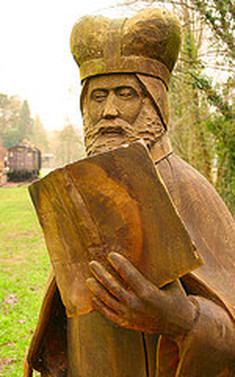
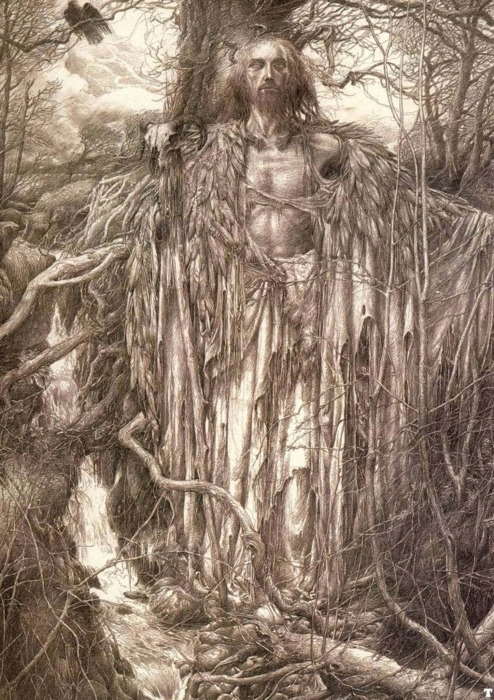
The historian-mythographer Geoffrey of Monmouth (1100-1155), whose glorious Historia Regum Britanniae (History of the Kings of Britain) blends history and legend almost seamlessly, is one primary source for the Arthurian legend. In the Eighth Book of this magnum opus, also gives us an early glimpse of legends about Stonehenge, supplying a foundation, however wobbly, for the idea that the stones originated in Ireland — or even further afield.
If we follow Geoffrey, in fact, the impetus behind Stonehenge is the desire for a war memorial:
The sight of the place where the dead lay made the king [Aurelius Ambrosius], who was of a compassionate temper, shed tears, and at last enter upon thoughts, what kind of monument to erect upon it. For he thought something ought to be done to perpetuate the memory of that piece of ground, which was honoured with the bodies of so many noble patriots, that died for their country [in the fighting against Hengist]. — Historia, Bk. 8, 10.
Unable to find among his own builders and engineers the technical ability to construct what he envisions, the king seeks out Merlin and asks for his help:
Merlin made answer:
Mysteries of this kind are not to be revealed but when there is the greatest necessity for it. If I should pretend to utter them for ostentation or diversion, the spirit that instructs me would be silent, and would leave me when I should have occasion for it. … [But] if you are desirous to honour the burying-place of these men with an everlasting monument, send for the Giant’s Dance, which is in Killare, a mountain in Ireland. For there is a structure of stones there, which none of this age could raise, without a profound knowledge of the mechanical arts. They are stones of a vast magnitude and wonderful quality; and if they can be placed here, as they are there, round this spot of ground, they will stand forever.
Merlin is, of course, just the person to manage this feat. The Giant’s Dance comes east to the plains of Salisbury, to “stand forever”. But wait — Merlin hasn’t finished. There’s more. The stones themselves are charmed, and of a provenance far from their apparently temporary Irish resting-place. Merlin declares:
They are mystical stones, and of a medicinal virtue. The giants of old brought them from the farthest coast of Africa, and placed them in Ireland, while they inhabited that country. Their design in this was to make baths in them, when they should be taken with any illness. For their method was to wash the stones, and put their sick into the water, which infallibly cured them. With the like success they cured wounds also, adding only the application of some herbs. There is not a stone there which has not some healing virtue. — Historia, Bk. 8, 11.
We seek for future cures, while the Merlins of our spiritual history attempt to alert us to sources of healing all around us. There is not a stone there which has not some healing virtue.
How many healings casually happen to me all the time? A scratch scabs over and even the mark fades with time. A cold passes and I recover, the hacking cough subsiding to a tickle and then to nothing. The purging of food poisoning wracks me and wrings me out, but my temperature control eventually leaves fevers and chills behind, I regain my appetite, and the memory of the nausea and dizziness and malaise slowly withdraws.
If we want the marvelous, the cause and occasion must match the healing outcome. The ordinary will not do: Mysteries of this kind are not to be revealed but when there is the greatest necessity for it.
What do we require? A wise guide and that guide’s counsel, certainly. But more: the conjunction of the potential and the place where it needs to be founded. The stones must be brought to a specific location for the desired result … if they can be placed here, as they are there …
It’s significant that the stones do not remain in Ireland. While giants placed them there for their own purposes, it takes human agency to bring them to their final location. Almost as if they had been waiting all along for human awareness to catch up to them, to finish their journey.
/|\ /|\ /|\
I don’t need to disdain modern medicine to avail myself of ancient healing. We do need the latter. Modern medicine often does an excellent job alleviating symptoms, but leaves the deeper roots of the problem untouched, often because invisible, underground. The taproot of an illness or other problem may nourish itself in causes invisible to a materialist eye. I may continue to feed its source even as I claim to long for healing. Why else is it, in our modern and supposedly healthier age, that so many Americans — more than ever before — rely on prescriptions (link to Harvard University studies) against anxiety, depression, insomnia, and so on? The stats have made headlines, but no one wants to address the root cause, because it’s sunk in the rich darkness of our cultural blindspots.
/|\ /|\ /|\
I add to my practice a henge-meditation. We needn’t bother ourselves to make any such claim as “Druids built Stonehenge” to make use of the spiritual dynamic it offers as a source of healing. Merlin sets the precedent: Stonehenge-as-symbol, in Geoffrey’s telling is older than its present home in southern England anyway. Not its origin but its power is what we need. Magic thrives when our intent makes the occasion a necessity: our focus is single and sharp not from force of will but from desire, emotion, need, want, hope, imagination, planning and preparation, ritual foundation, and love.
If I don’t move the stones here, their virtue can’t find me. Inner work is just as necessary as finding the right doctor, the proper regimen, the appropriate treatment.
Curious that the words of Jesus fit here so well: “The stone which the builders reject has become the cornerstone”. There is not a stone there which has not some healing virtue.
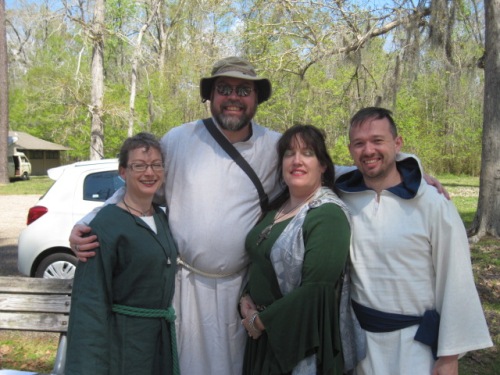
Highland Oak Nemeton, Fontainebleau State Park in Mandeville, LA, the magic of assembled Druids, and a sunny weekend of Gulf Coast weather in the 70s and 80s worked their cumulative spell on the 50 or so attendees of this year’s OBODGulf Coast Gathering. The spirits of the land witnessed Druids from OR, CT, VT, PA, FL, TX, LA, NE, VA, MI and other states make their way to the south-central U.S.
image courtesy Steve Cole
The workshops explored the Gathering theme “Opening The Seven Gifts” of Druidry. OBOD offers a lovely 2:30 video that presents the Seven Gifts more attractively than a bald recital could.
Our presenters kept the topics lively, sharing insights and fielding comments. Druidry needs no “outside experts” — the spiritual path generates its own.
Nonetheless, it’s always a draw to have a visiting speaker — and once again we welcomed the always-fabulous Kristoffer Hughes, one of Her Majesty’s Coroners, author, professional actor, OBOD Druid, and head of the Anglesey Druid Order in the U.K.
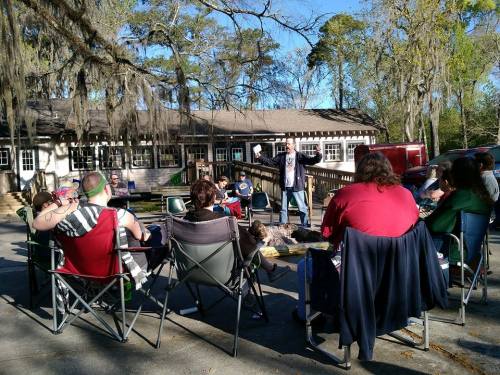
Kris spoke on “When the Last Leaf Falls: Death, an Awfully Big Adventure”, examining Western attitudes toward, and treatment of, the dead, and ways Druids can respond creatively and spiritually to the frequently dysfunctional nature of the Western “death industry” and its dehumanizing and ecologically destructive practices. He also urged us to bring each other in on, and discuss, our own plans for our deaths, disposal of remains, and the types of memorials we want.
Kris during his talk — photo courtesy Kezia Vandilo
Dana dispelled stereotypes of magic during her evening talk around the fire our first night, the opening ritual fresh in our memories. The following morning Richard addressed the core of Druidry — getting back in touch with nature.
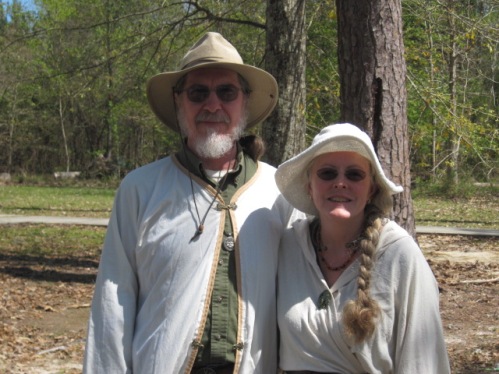
Richard and Dana
Lorraine helped many meet a new animal guide, Gabby drew us to consider healing, Jacob turned our thoughts to philosophy, and I explored the awen and the potentials for inspiration. Even if [below] my gesture at one point suggests a fish story — “the big one that got away”.
photo courtesy Kezia Vandilo
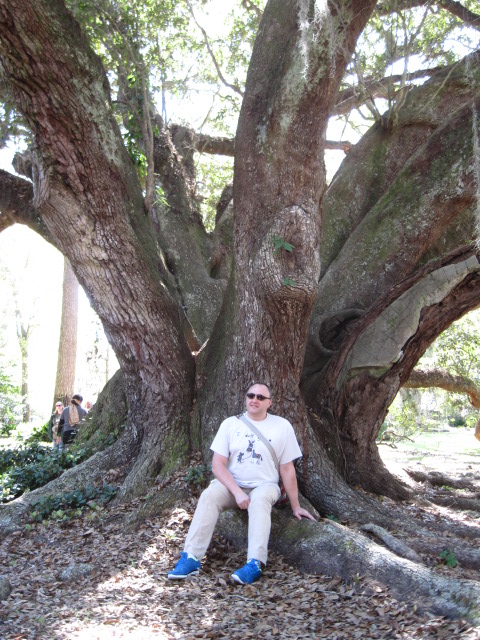
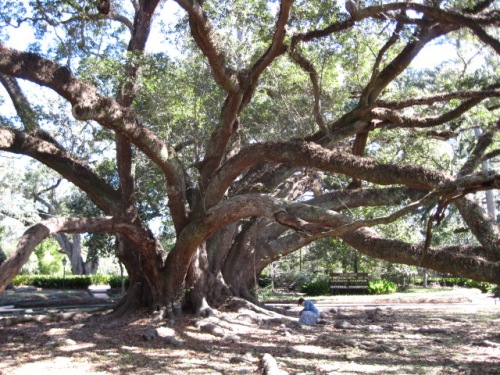
We initiated three Bards and five Ovates, held opening and closing rituals, along with the Seasonal Alban Eilir (Spring Equinox) ritual, went on nature walks, and visited the Seven Sisters Live Oak in nearby Mandeville, LA.
Below is our Welsh Druid guest communing with the tree, estimated to be over 1500 years old, and below that is a more distant shot to suggest something of its size.
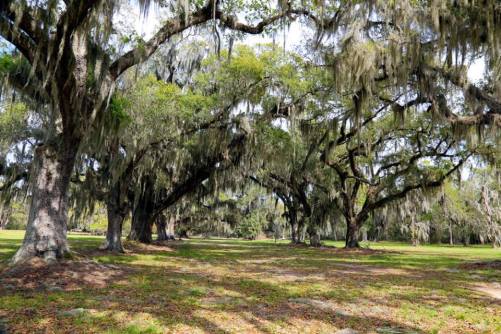
John Beckett captured an image of the atmospheric Spanish moss parasitic on so many trees south of the Mason-Dixon line.
photo courtesy John Beckett
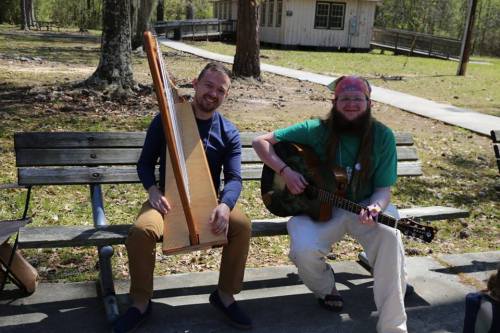
Storytellers and musicians, notably Jacob Pewitt and Brian Van Unen, made the slowly cooling evenings magical around the fire.
Jacob and Brian — photo courtesy John Beckett
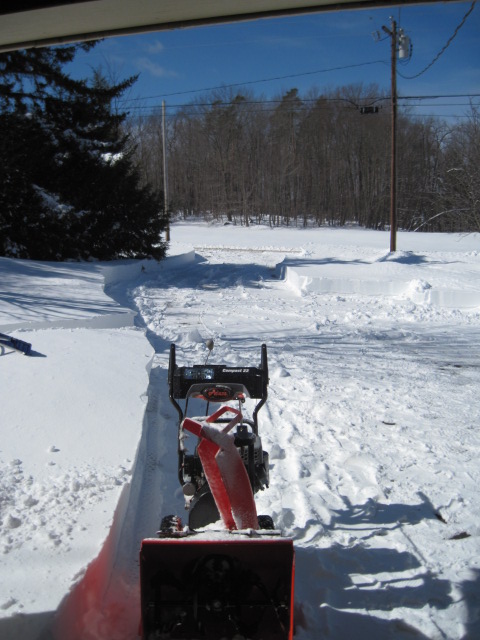
What better way to leave behind the 18″ of snow in Vermont from the recent March nor’easter?!
Always, always, it’s the faces, the reunions, the collapse of miles between us, and the conversations that make each Gathering so memorable.
Don’t know anyone before you arrive? You will before you leave!
All right — I’ll admit the title-as-opaque-acronym is at least a little clickbaity. (I do like the “dig” in the middle of it — it fits one of the themes for this post.)
But more importantly, this is the question I find my life keeps asking, in ways both small and large. What next?
Large: like many cancer survivors, I monitor numbers from regular blood tests. The slow rise I’ve seen over the past 5 years in undesirable antigens means I can’t grow complacent. “Leave nothing on the table,” counsels an elder I know who’s grappling with dementia. A life lived within limits isn’t a disaster: from everything I’ve seen, it’s the only way life happens. Nobody “does it all”. (The young adult novel I’ve got one-third finished won’t get completed on its own. It’s up, and down, to me.)
Small: a Meetup group I’ve been nurturing patiently is finally large enough to gather for an Equinox/Ostara potluck. A member’s offered her home, and we’ve got several people committed to bringing a dish to pass. One more chance to practice savoring the shoots and leaves of new growth that spring makes its specialty.
In-between: unable to afford to buy a bigger house (we opted 9 years ago for small), or encouraged by any leads to move out of state for jobs, my wife and I focused on asking how to flourish where we are. She eventually found part-time work, and we built an addition to give us breathing room. I’m getting good writing ideas faster than I can get them on paper or screen.
How to survive, yes, of course. But how to thrive, the deeper quest.
Sometimes the big picture isn’t what I need, though I thought it was. Sometimes, instead, it’s just the next step, it’s the phone call I remembered to make this afternoon, it’s the contemplation or ritual tomorrow morning. It’s the short walk that reveals sudden green beneath melting snow. It’s the porcelain hare my aunt gave me 50 years ago.
I think “half a century” and don’t know what I feel. Then I think “half a century” again, and I say to myself, “I’m still here, still wondering what comes next”. I take the delicate figure down from the shelf and blow from its pink and white ears the dust from a season of wood stove ash. The picture’s not quite in focus, but my camera doesn’t do closeups any better. A piece of wisdom: it doesn’t have to be perfect.
And I open for the 100th time the demanding draft of a workshop I’ll be giving at Gulf Coast Gathering on “30 Days and Ways to Tap the Awen”.
Well, I remind myself, you asked for them. The inward sap bucket fills, after a winter’s dry season. Now the trick of a moment (a life): to open my heart wide enough to receive.
I google “fallow” and the first entry (from dictionary.com) reads:
(of farmland) plowed and harrowed but left unsown for a period in order to restore its fertility as part of a crop rotation or to avoid surplus production
(of a sow) not pregnant
/|\ /|\ /|\
“Befores” we’re good at celebrating and often taking to extremes. Expectation ramps up busy-ness of all kinds. (Valentine’s chocolates and flowers fill cash registers even if they don’t always pair up hearts that hoped they would.) Imbolc gave us its foretaste, the simple melody that will add a harmony at the Equinox, then turn in its own time to a full-throated chorus at Beltane.
We know how hopes and dreams have inspired countless songs, battles, marriages, investments, acquiescence to impossibly long odds, and reams of bad verse. A longed-for future, person or event feeds endless fantasy and often remarkably sharp focus. Who hasn’t hungered for what seemed a sure thing? Advertising, debased popular magic that it is, targets us squarely in our weakest nooks and crannies with images and sensations built almost entirely of non-physical energies. We’ve almost all strapped ourselves into a jet-fueled “before” and launched ourselves heavenward.
In fact, anticipation draws many of us right into the astral plane where even the least imaginative among us find our inner senses heightened. “It’s so close I can almost taste it!” we exclaim. While it’s sight and hearing that line up to deliver the astral experiences we’re most accustomed to, every physical sense has its correlate — “As above, so below, dude!” whispers the demon in aviator sunglasses at my elbow. Ghostly encounters are filled with accounts of phantom limbs brushing our very physical bodies. Touched by god or devil, we know the planes open and blur at times. The “Great Eight” yearly festivals celebrate and take advantage of this palpable fact.
/|\ /|\ /|\
after the snow stopped yesterday
“Afters” on the other hand arrive far less domesticated. The let-down, the hangover, the next morning, the wake-up, the harsh light of day, the after-glow, after-image, aftermath — we know these well, even as we watch the outgoing tide surge past our ankles, that current that promised so richly, so gloriously, but dropped us forlorn among all the other flotsam and jetsam on the shore.
Riding the wave is a core skill that can demand a lifetime to master. We know those life-acrobats and artists who can step away from the wreckage and carry on as if little to nothing has happened. With everyone around shaking their heads in envy-tinged astonishment. We also know others who never recover. We ourselves may be one or the other of these.
Next month at the Equinox, as a portion of a Gulf Coast Gathering workshop on the awen and tapping our creative potential for transformation, I’ll take on our fallow times and dark nights and blocked intervals. Where do we find again the slow-burning love that never truly leaves us? How do we rekindle, re-ignite, plant ourselves in the hearth of the cosmos, plug into the Original Generator? Where are the embers we can blow again to living flame?
Dream chalice, spirit guide, cauldron sound, inner sap bucket, fire mirror — slowly I gather items from my toolkit, from experiment and fumble and learning, for the booklet I’ll distribute at the workshop. With time and further focus, it may become a book. I’ve mentioned several of these techniques on this blog, and will continue with them in future posts. Guard the mysteries, constantly reveal them, as the old Craft saying goes. Fallow is its own energy. Fallow is the way back. Fallow is a sure guide.
Honoring the dark times, the brooding, the fecund blackness, the inky abyss, the low and listless is a potent part of turning with the cycle. I re-learn (and re-learn) how important it is to “hallow the fallow”. Sometimes a cycle that’s finished here announces a new one on another plane. Fat lot of help that is to me here, now, I grumble. But the astral and other planes herald changes that may only show up later on the physical plane, so it’s an excellent place to look for insight, to peer down the road a little. But meanwhile the work here can be precisely to enter the fallow as completely as possible. Rather than resisting and thereby delaying the fulfillment of the cycle, acquainted with griefs and grief as I am in my 50s, I finally let myself sink into it.
I’m not talking drama or pity-me. This time, as it happens, I mourn no great tragic loss, merely the accumulation of small things that deserve memorializing and release. When my night dreams go dark as they have in the last week, and whole days find me depressed, there’s deflected grief and fallowing that begs for tending. No, it’s not just seasonal affective disorder! In the West we’re often busy enough we think we can leap from crest to crest and never endure a trough, a downturn, a rest. But then the flu, an accident, a lay-off, a family spat — something arrives to shove me into fallowing. Sometimes I even remember to make room for it instead of waiting till it insists. Slow learners, all of us.
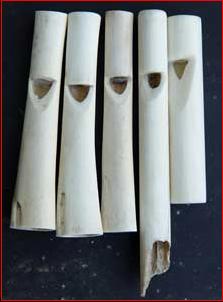
Waning (and especially dark) of the moon says fallow. February is Hunger Moon — Full Snow Moon, one of my sources calls it. Here in the ebb tide of Valentine’s Day, after the Full Moon, riding away from Imbolc, wintering out the second half of the month, I gingerly caress a small chunk of obsidian, I blow a short deer-bone whistle*, shrill and high. I find myself longing for touch, for texture, the skin of the world.
I make entries in my gratitude journal. I run — no, I walk — through the ways I ground myself. I seek out the solace of umami, that fifth taste, the savor of earth and wintering over and time. Fish, soy, cabbage, cured meat, tomato, cheese, spinach. The Wikipedia entry helpfully informs me that many of us first encounter it in our mother’s breast milk. Umami — taste of the Mother.
“The tree by the well in the wood” in Damh the Bard’s song from a few posts back sinks its roots into the earth, drinking from underground sources. I sit in that formless darkness we all have behind the eyes. From there I gaze out on slowly growing light.
/|\ /|\ /|\
*whistle: mine comes from the museum at Serpent Mound, Ohio.
Truth’s subject to leakage at any time. Mostly, though, when that happens — when truth does manage, against the odds, to seep in — we strive vigorously to plug the hole any time more than a little discomfort spills out into our lives.
Praise then such discomforts, for what they can, even occasionally, reveal to us.
/|\ /|\ /|\
A burst of activity from Canadian viewers has been showing up on the page stats — one of a few places more wintry than here. A shout-out to Canadians trying to feel spring in February. It’s there — just under the snow, and behind the patience that, with this most recent bout of storms, is wearing thin for all but the most ardent lovers of winter.
/|\ /|\ /|\
“The world is a spiritual vessel. It cannot be improved,” says the Tao Te Ching, ch. 29. Of all the books based on wise and penetrating observation of the world and its dynamics, for me the “TTC” holds a singular position. So I’ve pondered this verse ever since I encountered it as a teen-ager.
To speak to this assertion (which, if you follow the above link, can be read many ways), and unpack and qualify it for myself and my readers, here are two of John Michael Greer’s responses to comments on his recent Feb. 1, 2017 blogpost “Perched on the Wheel of Time“:
The notion that one person can transform the world is very deeply rooted in our culture, and it’s not entirely untrue; like most damaging beliefs, it’s a half-truth. Each of us can change the world, but how we can change it is determined by our cultural and historical context — and of course it’s also true that in a world in which everyone can change the world, no one person gets to change everything! It can be a real struggle, though, to break through the binary between “you can change everything” and “no one can change anything,” and grasp the many ways in which we all, to use a New Age term, help co-create the future.
It can be a valuable Druid practice to break through binaries, finding at least a third position between two poles. And discovering and walking the line revealed by repeated blundering into a damaging belief/half-truth — there’s another name for life, for the modest wisdom a person can accrue over several decades. How much can I co-create? Where are my energies best spent in trying? Can I co-operate with even one other person around me — like a friend or partner, for starters — to maximize our co-creative acts?
And if this world can’t be “improved”? Well, certainly local conditions improve and deteriorate all the time, shaped in considerable part by the actions of individuals. Any overall equilibrium, though? I must ruefully admit that does seem to remain the same. But that’s not a reason to disengage. Greer expands on his perspective in a later comment on the same post, which I find persuasive as well:
…the Druid teachings I follow hold that this world, the world of human beings experiencing greed and hunger and a distinct lack of the brotherhood of man, is a necessary stage or mode of consciousness through which every soul must pass in due time. When we outgrow it, we move to a different stage or mode of consciousness, and the world stays the way it is so that it can provide the same experience to those who need it. Thus there’s only so much change you can make in the world — though there’s some, and making such changes are an important part of grappling with this mode of being. The changes that matter are those you make to yourself.
If a succinct statement of my bias is possible, Greer captures it in his last sentence here. “The changes that matter (most) to me are those I make to myself.”
First, because in the grand scheme of things I find change difficult. I’m assuming you do, too.
Second, because the changes I actually pull off, ones I make to myself, usually affect my immediate environment, where they’re more visible than they would be elsewhere. That means I get more feedback from them on what I’ve done, and whether it’s what I actually wanted. You know: life as laboratory.
Third, because I continue to learn the hard way that my understanding is often so imperfect in so many domains that I’d rather improve it and share what I’ve learned than botch my immediate environment out of ignorance or stupidity — and more likely, both. Humility is a really useful tool in my kit. Almost always I’ve ignored it at my peril.
And as for matters of scale, I’ve also met wise individuals in my life. Not many, but a few, human and non-human. But very, very few wise local governments, and even fewer wise nations. And that gives me guidance for where my energies are best spent — at least for me, in this cycle.
/|\ /|\ /|\
So when anyone — whether Jesus or Donald Trump — offers up a version of “I alone can save you”, I need a lot of proof and demonstration before I’m willing to divert my energies to them from working in my own life.
I think I could turn and live with animals, they are so placid and
    self-contain'd,
I stand and look at them long and long.
They do not sweat and whine about their condition,
They do not lie awake in the dark and weep for their sins,
They do not make me sick discussing their duty to God,
Not one is dissatisfied, not one is demented with the mania of
    owning things,
Not one kneels to another, nor to his kind that lived thousands of
    years ago,
Not one is respectable or unhappy over the whole earth.
/|\ /|\ /|\
It’s not what you look at that matters, it’s what you see. — Henry David Thoreau/OBOD’s weekly “Inspiration for Life”.
The first stanza of Damh the Bard’s lovely song “Brighid” (below) places the goddess in the landscape of vision:
There’s a tree by the well in the wood,
That’s covered in garlands,
Clooties and ribbons that drift,
In the cool morning air.
That’s where I met an old woman,
Who came from a far land.
Holding a flame o’er the well,
And chanting a prayer.
Though here it’s the goddess who’s “chanting a prayer”, the bard has invoked her with song — his own prayer. And he’s gone to the “well in the wood” full of intention. Maybe not specifically to see the goddess, but knowing the tree and the well and the moment offer possibility waiting for human consciousness to activate. A gift of the gods, already given freely to us.
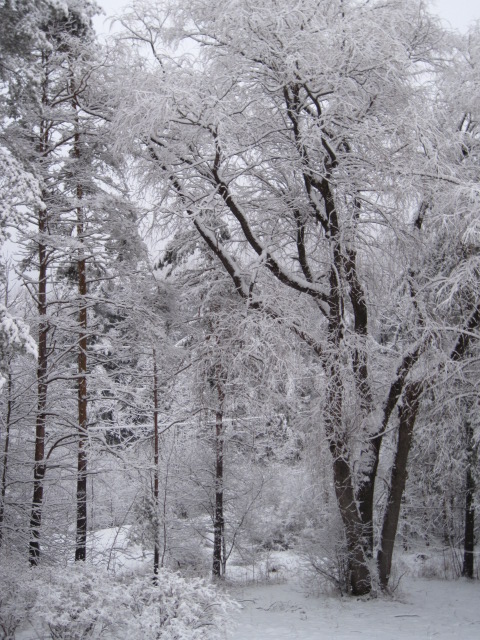
Here in Vermont a light snow falls as I write this, and I step away from the keyboard to take a picture.
By February here, snow itself can signal spring to come. You can feel the longer light, and moments of snowy beauty remind you that wonder is never far away. The sap will be running soon in the maples, the sugar shacks smoking all day and night as the sugarmen boil down the sweet juice to syrup. Green will burst forth, improbable as that seems right now in a world of cold whiteness. So Brighid comes from a “far land” that is also always near to attention, intention and devotion.
Here across the Pond from the Celtic homeland, some North American Pagans can feel removed from the “gods of Europe”, bewailing their distance. This place, we can feel, isn’t “Their” land. Yet anyone who’s encountered a spiritual presence knows that place is a convenience of the gods, not a requirement — a set of clothes, not the being who wears them.
Yes, it would be splendid, we imagine, to visit that “tree by the well in the wood”, simply by stepping out the back door to a landscape steeped in stories and legends of the goddess. Yet we also know what familiarity breeds. Or as an African proverb has it, “Those who live nearest the church arrive late”. The old saying that the gods like the offering of the salt of human sweat means effort is not wasted, devotion is repaid. Always, we have something we can offer them. And the gods give, but “not as the world gives”.
For you soon find that the gods are not merely passive reservoirs, to be drawn down whenever we happen to think of them and plug in for a re-charge, our rituals cannily crafted to work like the swipe of a credit card at a gas (petrol) pump. “Fill me up, Brighid!”
But wait, you say. Isn’t that just what we’re doing with ritual and song?
It’s really not a matter for argument, unless you need the exercise. Damh the Bard knows Brighid — you can hear it in the song. And out of love he’s traveled many times to the tree by the well in the wood. Brighid knows his name.
This, then, is one intention to cherish: may we serve them so that the gods know our names. Not to hold it up before others like a badge of pride, but as a spiritual resource to treasure and spend at worthy need. Or as Gandhi said, “If no one will walk with you, walk alone” knowing in truth you aren’t alone.
Ten years ago I didn’t honor Brighid. I didn’t “believe” in her, though I’d heard her name, thanks to all those who kept it alive in our world. Now I honor her, but I still don’t trouble myself about “belief”.
Instead, I take the hint and look. “I saw her reflection in the mirrored well”, Damh sings.
And I looked deep in her face,
The old woman gone, a maiden now knelt in her place,
And from my pocket I pulled a ribbon,
And in honour of her maidenhood,
I tied it there to the tree by the well in the wood.
[If the upshot of watching the video about Yury, the “Russian Hobbit” featured in yesterday’s post, has you most concerned about whether Petrushka, mentioned only in passing, is actually Yury’s rabbit, I’ve still achieved something. Something very small, but still something.]
/|\ /|\ /|\
ESCAPES and MODELS
This post examines some of the arguments, examples and ideas in a recent (Jan. 15, 2017) essay in The Atlantic with the unfortunate title “Seeking an Escape from Trump’s America.” I say “unfortunate”, because the problems the “escapees” face neither originate with Trump nor will they end with him. His name here is merely a red flag to a bull.
In the previous post, Yury aspires to, and achieves, a personal solution to his problem. For some, that may be enough. For others, community is a less selfish choice. It can also prove much more viable if you don’t have the means to drop out and move to Maine, as the previous post begins to suggest.
More importantly, the intentional communities the article investigates are not all “escapist” by any means. Rather than retreat, some attempt to engage the larger culture and model more viable and saner alternatives. Several got their start years and in some cases decades before Trump had entered the political fray. You could even call the title clickbait, because it does a disservice to the writer, who very probably didn’t choose it, and to the substance of the article, which grapples with some real and compelling concerns.
Twin Oaks, a community of some 100 members, celebrates its 50th anniversary this year. The community founded in 1967 can speak with particular authority — experience and evidence of its survival and “thrival” — about almost every issue facing intentional communities today. I believe the video below really is worth your next 16 minutes.
Now it may be that the video, or this post and some of the previous posts don’t speak to you. Perhaps you’re largely immune to the accumulating economic, political and cultural upheavals of our era. Possibly you’ve made your pile, your mortgage is paid, you have diversified investments, or other secure-enough sources of income. Along with those bulwarks against poverty and despair, you’re healthy enough to garden or handicraft your way through the next few decades until mortality relieves you of the challenges of this particular incarnation.
If so, please consider how you can help others. You don’t need to subscribe to false-Christian ideas of giving away all you own, unless you’re entering an intentional community, monastic or otherwise, for which this is the admission ticket. Why plunge yourself into poverty out of guilt or misguided perceptions that this will help someone else? Instead, use your position and privilege to accomplish something you choose to do for others.
ALTERNATIVES to “CONSUMPTION-HEAVINESS” and DESPAIR
One group has “given an official name to their search for an alternative to consumption-heavy American life: the Downstream Project, with the motto to ‘do unto those downstream as you would have those upstream do unto you.'”
That’s one measurable goal. Rather than trying to “change others”, live so that your life doesn’t make other lives harder. I know that’s certainly more than enough for me, some days. A negative goal troubles you? Think of the Hippocratic Oath: “Do no harm.”
Can we aim for something larger? Of course. “… instead of continuing in passive despair, as many Americans seem to do, the people in these communities decided to overhaul their lives.” What would a “life overhaul” look like for you? The beauty of the question is that the answer is wholly up to you, if you let it be. Why not your answer, rather than anyone else’s?
Many of the Druids I know give more than lip service to this ongoing question. Despair just gets boring after a while. And that’s one of the reasons I love them: they don’t merely go through the motions, but bring courage to their own lives, and find worthwhile challenges in engaging bigger questions than “Where will I vacation this year?” or “What’s on cable?”
If you still haven’t let go of “Trump?!”, consider this observation by one member of an intentional community the article considers: “When there’s a Democrat in power, social-justice-minded people go to sleep, because they feel validated by what they hear on NPR.”
We can even practice Trump-gratitudes: I thank Trump for waking me up, for kindling useful anger, for provoking self-examination, for puncturing my weak political stances, for making me doubt, for unsettling the false comforts of middle-class-dom, for X, Y, Z …
ALIENATION as a RESOURCE
So what can we do with these gratitudes once we affirm them? Feel just as alienated, if not more so?
Alienation is “othering”, and not all bad. (Trump himself is a delicious example of a Monty-Pythonesque “Now for something completely different”.) One thing becomes another anyway: it’s how the world works. Alienation? “The Living Energy Farm runs on a different philosophy of alienation: If they can prototype alternatives to modern life, they believe, they can eventually remake the world.”
Any real re-making happens at home:
In the summer, [members of one community] cook with a small solar dish and a rocket stove behind the kitchen; they’re building a bigger dish, taller than a grown man, nearby. They hooked up an exercise bike to a washing machine and rigged a pair of old tractors to run on wood gas rather than gasoline, although they aren’t quite functional. They built their own food-drying room off the kitchen, where they process vegetables grown on their 127 acres, and they graft fruit-tree branches onto wild stems.
‘We refer to it as neo-Amish, or Amish without the patriarchy,” another member says.
Some of what we see as solutions are inextricably bound up with the problem:
“The way we choose to live has far more impact in terms of our environment … than any particular technology,” [one community member says]. “If Americans bother to talk about the environment at all, it’s usually in terms of a technological perspective.”
We’re conditioned, after all, to expect technical fixes for most problems, when some of the best alternatives simply don’t originate in technology.
… mainstream environmentalism is too focused on incremental reform and modest lifestyle choices, like driving Priuses. “For us, the question is: How do I live comfortably with what renewable energy can do? … If you ask it that way, you can’t drive to D.C. and work in a cubicle,” he said. “But the environmental groups want to tell you that you can, because then you’ll send them donations.”
Ouch. But useful ouch, I hope. For Deanna, another community member,
“I envisioned being remote, being able to keep to ourselves, not being involved in whatever strife is going on in cities,” she said. She was glad to leave behind Boston and demonstrations like the ones that took place after Trump’s election; she’s also glad they now drink from a well, she said, because “it feels safer to be in a place where we have control over our water.” Hers is not a search for ideals, but for something tolerable—something better than what was available elsewhere.
If such retreats from what mass culture offers can provide something better, why not try them out? Another community named Cambia (“change”) isn’t just retreating.
To some extent, they’re trying to spread their knowledge and their project. They’re writing a wiki, nicknamed “commune in a box,” outlining legal and tax details for income-sharing communities—Cambia, it turns out, is both a commune and an LLC. They want people to be able to start new communities, tailored to their own needs; Cambia is not the model, they said, but a model.
Viable experimental models of alternatives are crucial at hinge points in the human experience. We certainly seem poised on one right now.
Another commentator concedes a signal challenge of making any change.” It takes a lot of cash to get off the grid,” he says. Putting it another way, you almost have to start rich to become poor.
… becoming untangled from capitalism also means becoming much more vulnerable. It’s tough to imagine a comprehensive way of replacing health insurance, not to mention programs like welfare, in a world without government.
“What we have now is an embryonic global civilization that’s totally ecologically, socially, and economically unsustainable. … There’s no escaping into your own little enclave.”
Once again, at the risk of sounding a theme many already know and others label a facile fiction, I’ll quote Tolkien’s Gandalf as he counsels Frodo: “The wide world is all about you: you can fence yourselves in, but you cannot forever fence it out.”
Some people use the term “lifestyle politics” to describe these communities—“the belief that if you live your values, then you will be able to make effective change, or at least express your political perspective,” [University of Washington professor of political science Karen] Litfin said. “I think that’s a good place to start, but if that’s where you end, you actually don’t have much impact at all.”
Meaningful change, I find, has to start with me, or it literally doesn’t mean anything, or not for long. It stays on the page (or the blogpost). I’m the center, just like everyone else is, where any transformation takes place.
An INVITATION to COMMENT
Reactions? How can we continue this conversation? (The most important arguments we have are with ourselves.)
[Updated 2 June 2020: see my Romuva Update of May 2020.
14 Dec 2018: minor editing.
29 Dec 2016: two links added: a tribute to Trinkunas and a video of Kulgrinda, a music group he founded.]
One of the expressions of love of the earth relatively unknown in the U.S. is Romuva, Baltic Paganism. It is better known but similar to Druwi, another Baltic Pagan practice whose name itself shows its obvious connections with Druidry.
I first encountered this mostly Lithuanian pre-Christian religion about a decade ago, and I’ve followed news of it intermittently since then. Lithuania was one of the regions that held on to its ancient Pagan roots longer than most of Europe. Pagan observances still flourished into the 1400s. A series of crusades over several hundred years aimed at stamping out such lingering practices were largely successful, but even in the 1400s under Grand Duke Gediminas, Lithuania was still officially Pagan.
While much has undoubtedly been lost, Romuva imagery, song, symbol and practice were and still are intertwined with Catholic observance to a considerable degree, and folk memory and practice has preserved much material, particularly songs and dances. The roots of modern Romuva date from the Romantic period that sparked Lithuanian nationalism and an interest in indigenous culture, as it did for so many other regions of Europe.
Like many cultural phenomena of the last few hundred years, Romuva as it exists today owes a great deal to one person — in this case, ethnologist and krivis (Romuva priest) Jonas Trinkunas, who was born in 1939.
Jonas Trinkunas
Trinkunas, who passed almost three years ago in early 2014 (you can find a tribute at the Wild Hunt here), was a folklorist and university lecturer in Vilnius, Lithuania. He founded the “Society of Friends of India” (Lithuanian Indijos Bičulių Draugija), and the similarities of practice he saw in “the traditions of India were what pushed him to search for the roots of Lithuanian culture and its spiritual meaning”, notes the Wikipedia article on Trinkunas.
Hounded during the Soviet period when Lithuania lay under Kremlin authority, he was barred from academic life for 15 years, and only with Lithuanian independence could he resume that work. But in that interval he continued to travel his country and collect songs and lore that nourished his commitment to Romuva practice.
Once the Soviets were gone, the first festival observance he organized was Rasos — the summer solstice — the Lithuanian name literally means “morning dew”.
On the outskirts of Žemaičių Alkas, a Lithuanian resort area with a historical town center, carved wooden pillars mark the close intermingling of Pagan and Christian observance. Note the runes on the middle pillar.
The archaism of Lithuanian practice extends to language as well: to cite just one example from literally hundreds available, Lithuanian dieva “god” comes from Proto-Indo-European *deiwos, and is related to Latin deus, Germanic Tiw (English Tue’s Day, Tuesday), Sanskrit deva, etc.
For a taste of Romuva in action, here’s a 4:28 video of a Romuva handfasting, with several dainas (traditional songs) sung as accompaniment to the images. I suspect most Druids would feel right at home here.
Finally, a link to Kulgrinda, a traditional music group Trinkunas founded:
From the OBOD “Inspiration for Life” for 26 October: “Our greatest responsibility is to become good ancestors” — Jonas Salk (1914-1995). Search for information on Salk and you’ll find, beyond his discovery of the life-saving polio vaccine, that the original quotation has “be” for “become,” but “become” fits. It gives us room to grow into the role.
Growth? I don’t know about you, but most days I need all the help I can get. We can be as literal as you like. My father had a mild case of polio in the 1930s when he was a young man, and it stunted the growth of his legs. He would have been as tall as I am at 6’2″. When we sat, we were the same height, but standing, he was six inches shorter than me. He made up for reduced stature by work and persistence (if you’re uncharitable you might have called it cussed stubbornness). Sometimes we can feel like we’re cast against type in our own lives. What now?
If I approach the day, the season, this life, as roles, I can often feel my way into possibility. We’ve all slipped in backstage. From there we tried out for this role — like almost all the others we’re offered — just by being born. Set aside for a moment the question of whether any of us asked to be here. If we do indeed get recycled from one part of this universe into another, perhaps our own ancestors called us, and our parents made bodies for us and brought us back to the longest-running show of them all. Have kids, and we’re doing the same for them. No kids this time around? You won’t escape that easy.
Live in this world more than a handful of years and you’ll meet others you instantly warm up or cool off to. Mere chance? Unlikely. Instead, one big noisy, contentious family reunion. You never liked Great-Uncle Louis, only now (s)he’s your one-year old niece Lucy who just spit up on your new silk shirt.
Or that annoying nephew Luke who always manages to bring back your car with a few more dings and scratches whenever he borrows it. You’d say no but you still owe his mother a few grand from that tight period some years back.
After all, karma’s one of the most efficient ways of polishing rough edges. Get back what you give out. Until you decide to play it differently. A different take. An original interpretation. A dramatic break-through. A sensitive and well-rounded performance that elicits sympathy for a potentially unlovable character.
What roles will I play in this ancestor ritual that is my life? Can I live large enough that I qualify as a “good ancestor”? Do my choices make the future lighter, wiser, more loving? (The signs tell me I’ll get to find out in person. Back in a century or three to check in and live my own consequence.)
Some days I get a foretaste. I wake, sliding slowly out of bed feeling I’m already halfway to ancestor status. You know, when your body’s now the best barometer for tomorrow morning’s weather. Low pressure and my lower back aches. Rain coming and my shoulder throbs. At such times it’s slender consolation that half a millennium hence my thighbone may decorate some family altar, or that my brother’s great-great-great-times-10 granddaughters will drink toasts from my lovingly preserved skull.
No, Salk probably meant something more. While not all of us will fall fighting to defend our land for our descendants, in every age too many of us do.
But just as many of our battles are inward, and many outwardly calm or seemingly easy faces conceal, it may be, most grievous private wars. It’s fitting, then — humbling, sobering and just — that we may well return to see what becomes of our own deeds.
For me there’s no better perspective. I find myself asked to forgive less than glorious forebears. “Judge not, lest you be judged” can cut painfully close. Knowing my own struggles and weaknesses, I’ll toast them with a generous measure of compassion — not because they may “deserve” it, but because they need it, and so do I — even as I honor the great among them, this weekend on Samhain.
Smithers, Lorna. The Broken Cauldron. Norfolk, UK: Biddles Books, 2016.
Change the names, goes the old Latin tag from Horace, and it’s a story about us.
Smithers, a Lancashire awenydd, poet, blogger at Signposts in the Mist, and devotee of Gwyn ap Nudd, has mediated in her latest book a challenging prophetic vision of psychic and environmental shattering in the image of the Cauldron, that ancient and present manifestation of birth, wisdom and regeneration. Spiritual vessel, military-industrial grail, the Cauldron contains both dream and nightmare.
Through prose retellings of Celtic myth and legend, through poems that grapple with this world and that Other that has always deeply haunted us, Smithers links voices, times and places. She revisits the central Druidic myth: Gwion Bach’s transformational encounter with — and theft of — the Three Drops of Inspiration. Holding it up for careful scrutiny, she underscores its immense cost to species and planet. In one retelling she speaks in the voice of Ceridwen’s grotesque son Afagddu, “Utter Darkness”. It is for him that Ceridwen has set the Cauldron brewing in the first place, hoping for his transformation, posting the hapless Gwion to tend it. In a painfully apt contemporary twist, Gwion’s a negligent employee at a chemical plant, daydreaming through a reactor disaster, though acquitted in the subsequent court case.
But Afagddu’s gifted with his own preternatural wisdom, knowing Ceridwen still apologizes for him, even as she dreams of him “suave, clean-shaven, the head of the company in a priceless suit with ironed-in creases” (pg. 74). How we persist in our stubborn lusts and blind dreams.
The five subtitled sections of the book capture something of its span: “The Broken Cauldron and the Flashing Sword”, “Ridiculous”, “Drowned Lands”, “Operation Cauldron” and “Uranium”.
What will we do, we whose minds are “shrunken and empty of gods”? Smithers’ patron deity accuses us all in the person of Arthur, whose profaning raids on the Otherworld have gained humanity a magical treasure, true, but loosed a devastating tide of death. In a triad of admonition to human raiders on Annwn, the Otherworld, Gwyn ap Nudd declares: “Lleog, lay down your sword. Taliesin, cast your mind from praise poems. Arthur, be true to your bear-skin past, hear your bones and the star of the north” (pg. 10).
Listen to our bones, heed the stars: a quest each of us may still accept or decline.
For it is the Otherworld that restrains the increasingly violent rebalancing we have brought on ourselves. And it is there we find “a cauldron that is whole and filled with stars, the infinite reflection of the womb of Old Mother Universe” (pg. 7).
As a solitary, Smithers turns here from a mythos that has long troubled her. She declares her preference for Afagddu, refusing “complicity in the mysteries of Taliesin” whose limitless hunger to despoil and pillage and consume “can only lead to the world’s end” (pg. 8).
It lies in grappling with the double edged-ness of the “flashing swords” of the raiders on Annwn, I would add, that we may at last learn wisdom. Can we learn to gauge and compensate for both gain and cost? Whether we do or no, the Otherworld will assert its balance. A unique book.
“Some people don’t understand when I say these are the things I believe.”
So Damh the Bard sings in his lovely song “The Hills They Are Hollow.” But his song begins, “As I walk upon this green land, this land that I love …”
For me, that’s where Druidry starts, not in belief, but in love and experience of the natural world and the land we live on.
Belief may or may not come later, when doors that will not open to intellect alone open to love. And if you feel the land is sacred, then quite naturally you feel like singing about it: “Let’s sing of the mystery of Sacred Land …”
Recently a visitor to this blog pm’d me to comment on what he perceives as the need for a Druid theology. It’s easy enough to feel that way, surrounded as most Pagans and Druids are by a larger culture still shaped by a religion where creeds matter much more than they do in Druidry.
My correspondent acknowledges he’s a solitary, and such a path can indeed be lonely at times. Alone, I may confront myself more directly and disconcertingly. Alone, I face truths that can be uncomfortable, inconvenient — and profoundly useful to discovery, creativity and growth. Groups can conceal and divert us from the necessary work of the self.
Yet one of the benefits of experiencing group practice is the reminder of the energies we all encounter and work with (or ignore). Yes, we can experience them all in solitary practice, sometimes more personally, vitally and intensely than in a group. Alone, I can move at my own pace, honor and learn from and serve the beings who speak to me, focus on what is meaningful and what lives within and around me.
But attend a Druid group event and you’ll find one of the hallmarks of Druidry is a wide diversity of belief arising out of that practice and experience. Such belief is almost always secondary — important certainly, coloring experience and shaping behavior, influencing interactions with others, nourishing opinions, and clarifying decisions about future practice. Standing together in a circle with your Tribe, belief matters much less. No one asks for a recital of your beliefs as part of any ticket of admission, or denies you because you don’t “believe in” the Morrigan, or you believe that the universe is a berry carried in the mouth of a trout swimming in a much larger ocean. After all, there are days I don’t believe in myself.
We face the altar, feel the sun and wind on our faces, acknowledge the always-turning year, hear the ritual words, and encounter through all our senses the reality of a marvelous cosmos alive with presences, forces and powers anyone can experience.
Walt Whitman says in his Leaves of Grass,
Stop this day and night with me and you shall possess the origin of all poems,
You shall possess the good of the earth and sun, (there are millions of suns left,)
You shall no longer take things at second or third hand, nor look through the eyes of the dead, nor feed on the spectres in books,
You shall not look through my eyes either, nor take things from me,
You shall listen to all sides and filter them from your self.
Polytheists, animists, atheists, duotheists, monotheists, henotheists, eclectics, chaos magicians consciously selecting beliefs appropriate to their goals at the time — in the face of such variety, what can a Druidic theology say about belief in deity, the core of most credal religions — which Druidry clearly isn’t? What would such a theology achieve that Druidry doesn’t already have?
Yes, in the OBOD Alban Elfed ritual, we say the ritual words and recite the Druid’s prayer “which unites all Druids.” But from everything I’ve seen, the unity isn’t one of belief but of willingness to try out ritual for what it is and can be, to honor the sacred moment, and to hear the awen singing in its many forms. “Grant, O Spirit/Goddess/God/Holy Ones, your protection …”
“Why do we use the same ritual each year?” ask some of the regular attendees at the East Coast Gathering. Well, we do and we don’t. One common and shared autumn ritual during a weekend filled with name ceremonies, grade initiations, peace rituals, workshops, songs and the ritual of eating together with new and familiar people isn’t too much to ask.
Because it’s a ground form, a common experience for everyone, nothing too daunting for a first-time attendee, whether OBOD member or visitor, familiar to the experienced ritualist who can fine-tune the ritual pacing, catch the moment when a squadron of hawks soars above the Gathering, or a cloud of dragonflies visits the circle, or owls hoot in the woods. The wind lifts from the east at exactly the moment East is invoked, and everyone can share the connection.
My correspondent says, “Until we have a theology, I fear druidism will not be taken seriously by those outside of our thought … I do believe our fantasy perceptions need crushing and only a theological work can place [our Druidry] alongside other faiths on a level of reality.”
But is reality in fact one thing? Is an insistence on one reality — always somebody else’s, I notice, never mine — what we need now, or have ever needed? Do “the Fae dance on Midsummer’s Eve”? Perhaps we need more, not fewer, “fantasy perceptions” in a world where a large portion of people routinely cannot see the stars at night because of light pollution, where a Guardiancolumnist notes that our language mirrors our declining ability to notice and name the natural world:
The same summer I was on Lewis, a new edition of the Oxford Junior Dictionary published. A sharp-eyed reader noticed that there had been a culling of words concerning nature. Under pressure, Oxford University Press revealed a list of the entries it no longer felt to be relevant to a modern-day childhood. The deletions included acorn, adder, ash, beech, bluebell, buttercup, catkin, conker, cowslip, cygnet, dandelion, fern, hazel, heather, heron, ivy, kingfisher, lark, mistletoe, nectar, newt, otter, pasture and willow. The words taking their places in the new edition included attachment, block-graph, blog, broadband, bullet-point, celebrity, chatroom, committee, cut-and-paste, MP3 player and voice-mail. As I had been entranced by the language preserved in the prose-poem of the “Peat Glossary”, so I was dismayed by the language that had fallen (been pushed) from the dictionary. For blackberry, read Blackberry.
“One of the most striking characteristics of Druidism,” writes Philip Carr-Gomm, “is the degree to which it is free of dogma and any fixed set of beliefs or practices” (What Do Druids Believe? Granta Publications, 2006, pg. 25). “It honours the uniqueness of each individual’s spiritual needs. In this way it manages to offer a spiritual path and a way of being in the world that avoids many of the problems of intolerance and sectarianism that the established religions have encountered.”
And so I submit that it’s always good to know what you believe, as a way of doing what Carr-Gomm describes: honoring the unique form of your spirituality. Get it down in writing for yourself, grapple with it — and keep it on hand so you can revise it as your life takes you in unseen and unforeseeable directions. But never suppose it can serve you as a club to beat others “for not doing it my way” unless you want others to beat you with theirs.
Why let a belief-reaction, a secondary response to the primacy of experience, dominate my consciousness? No, thanks. Beliefs change. Any religion which rests on a credal foundation will always be rocked by a world that shifts beneath it, by words that will forever need updating as understanding changes, by a nagging sense that reality stubbornly persists in not conforming to belief. Rather than blaming Satan or some evil Other, Druidry looks at the world and strives to learn from it. Imperfectly, humbly, joyfully.
Are there beliefs that most Druids share? Sure. But more interesting to me are my own experiences and the conclusions I draw from them. Below I offer part of a previous post from some eight months ago as an approximation of my own theology, always subject to change without notice, as any honest theology should be. Here are six things I believe:
/|\ I believe that to be alive is a chance, if I take it, to be part of something vastly larger than my own body, emotions, and thoughts (or if I’ve learned any empathy, the bodies, emotions and thoughts of people I care about). These things have their place, but they are not all.
/|\ I believe this because when I pay attention to the plants and animals, air, sky, water and the whole wordless living environment in and around me, I am lifted out of the small circle of my personal concerns and into a deeper kinship I want to celebrate. I discover this sense of connection and relationship is itself celebration. Because of these experiences, I believe further that if I focus only on my own body, emotions, and thoughts, I’ve missed most of my life and its possibilities. Ecstasy is ec-stasis, “standing outside.” Ecstatic experiences lift us out of the narrowness of the life that advertisers tell us should be our sole focus and into a world of beauty and harmony and wisdom.
/|\ I believe likewise that the physicality of this world is something to learn deeply from. The most physical experiences we know, eating and hurting, being ill and making love, dying and being born, all root us in our bodies and focus our attention on now. They take us to wordless places where we know beyond language. Even to witness these things can be a great teacher.
/|\ I believe in other worlds than this one because, like all of us, I’ve been in them, in dream, reverie, imagination and memory, to name only a few altered states. I believe that our ability to live and love and die and return to many worlds is what keeps us sane, and that the truly insane are those who insist this world is the only one, that imagination is dangerous, metaphor is diabolical, dream is delusion, memory is mistaken, and love? — love, they tell us, is merely a matter of chemical responses.
/|\ I believe that humans, like all things, are souls and have bodies, not the other way around — that the whole universe is animate, that all things vibrate and pulse with energy, as science is just beginning to discover, and that we are (or can be) at home everywhere because we are a part of all that is.
/|\ I believe these things because human consciousness, like the human body, is marvelously equipped for living in this universe, because of all its amazing capacities that we can see working themselves out for bad and good in headlines and history. In art and music and literature, in the deceptions and clarities, cruelties and compassions we practice on ourselves and each other, we test and try out our power.
The 7th OBODEast Coast Gathering (ECG) took place this last weekend with over 100 Druids, friends and family gathering at Camp Netimus in NE Pennsylvania. [Go here for accounts of previous Gatherings.]
Netimus, a girls’ summer camp, has welcomed us each autumn for Alban Elfed, the Autumn Equinox. The non-human staff of coyotes, hawks, dragonflies, chipmunks and owls lets us know they know we’re present, too, adding their own wild signatures to the rituals, the evening fire circles and the day and night-time hours.
Hex in his drumming workshop
This year we celebrated the turning of the year among ourselves, without the headline special guests that can make registration for the Gathering a matter of internet frenzy and growing wait-lists.
We initiated ten new Bards, two Ovates and two Druids into the Order, as well as holding workshops on fairies, crystal jewelry, drumming, moon wisdom and beekeeping, and gathering in the camp dining hall for meals our devoted kitchen crew volunteers prepare with love, laughter and long hours of hard work.
Each evening brings the fire circle, always a draw. And this year we organized a more competitive eisteddfod, showcasing our singers, storytellers, musicians, dancers, fire-spinners and mead-makers, culminating in a final round on Saturday.
photo courtesy Gabby Roberts
The Ovates gathered mugwort Saturday morning as we prepared our gift to the Tribe during the main Alban Elfed ritual Saturday afternoon. An invasive that can take over, mugwort nevertheless has healing properties, healthful in teas and soothing as a smoked herb, too (when it smells remarkably like pot!).
photo courtesy Krista Carter
Preparing for Ritual
photo courtesy Nadia Chauvet
A nearly full moon rose overhead each night, bathing the Gathering in light, and making the Camp paths and steps a little easier to navigate if, like me, you forgot all three nights to fetch your flashlight from your cabin before dark — needing a light to find your light!
photo courtesy Alec Mayer
The rain — thank you, Spirits of Place! — held off till shortly after the closing ritual Sunday morning.
/|\ /|\ /|\
The reason Camps like this happen at all is that enough people are willing to give of themselves. Rather than complain about what doesn’t happen to their own narrow liking, enough people contribute to what does.
And among the thanks, reminiscences and anecdotes that always leave us both smiling and teary during the final ritual, several comments stood out, like Frank’s. He thanked us for the opportunity to serve. Those people in our lives that we come to value the most are those who give without drama or ego display.
Our closing ritual talked of all four elements, including the humility of water, that takes whatever shape we ask. Alban Elfed, Light on the Water, is a festival of the West, of Water, of balance and change, the dynamic that Druids revere, and strive to navigate with all the grace and wisdom we can muster.
photo courtesy Alec Mayer
Thank you, everyone, two and four-footed, winged, scaled, legless, and unbodied, who made this ECG another splendid opportunity for the Tribe to gather and celebrate and grow.
The seasonal festivals may start to come upon you like the visits of old friends. You don’t need to be anything other than who you are for them, of course. Fat chance, anyway, of sustaining even a polite deception with someone who knows you this well. I can shove the unsorted laundry into a closet, ready the guest room with fresh sheets, maybe offer a vase of goldenrod and queen anne’s lace this time of year. Clear the top of a dresser or nightstand and set out a few found objects to share: quartz or shale or mica from a recent hike, driftwood from a stream or beach walk. Such gestures never go to waste. They welcome the guest and lift the mood of the host, if lifting is needed.
Sometimes it is. We felt a seasonal shift here in southern Vermont about a week ago, a subtle movement of energies and weather and light as they whisper together and ease us toward the equinox, the evocatively named Alban Elfed, “Light on the Water.” The birds knew it, too — maybe something in their song clued us in to pay attention in the first place.
Of course the linguist in me tries to quibble that neither word “actually means” light or water, but instead simply the quotidian equinox (of) autumn, but then rummaging around the OBOD website I’m caught up in wonder by Coifi’s observations in a lovely post:
This is the Feast of the Autumn Equinox. The Light of the Sun in the Wheel of the Year stands in the West, in the Place of balance between the Light and the Darkness. This is a time of the Great Tides. This is the Gateway of the Year.
This Feast is known by many names to many people, for the Truth is reflected from many mirrors. It has been celebrated as Alban Elfed and Harvest. Our ancestors called it by names long forgotten, and our children will call it by names as yet unconceived.
So it is that literal gets overtaken by the figurative, just as speech does by song. Or not overtaken, not exactly. Whether I let them or not, they start dancing, each bowing to the other. Here is one of the Earth’s truths that says listen. The ancestors gave it names, as do we with our Alban Elfed and Mabon and Harvest Home, and as will our descendants. Each will know it, both the waning light, and the promise of Return.
A further quibble that the festivals are “just modern inventions” dissolves when you can point to old stones and other markers: the earth, again, is a witness here. From the plains of Wiltshire with its over-famous Henge to a hilltop in southern Ohio with its Serpent Mound, the inhabitants of many lands have been drawn to find ways to mark off days and seasons with structures whose physical remains simultaneously hush and awaken the mind.
For “light on the water,” as it turns out to my now-placated left brain, is indeed apt, a festival that celebrates a brief balance of light and dark in the quarter of the ritual year that belongs to the west and to water. “Light on the water” brings with it a twilit mood, a sunset reminder of the reality of life on earth, both dark and bright.
For the whole planet, northern and southern hemispheres both, experiences a balance of light and dark before the days continue to shorten or lengthen, depending on where you stand. The time, friends, is a whole-planet festival. Come! Join in!
In the end we all do what we’re told. (It’s a backstage conversation.) We just differ on who we listen to, who we decide to heed. The cicadas from central casting announce August outside my window, under this overcast summer sky on a day of rain, and I sit grappling with this post. Somehow they’ll work their way in, because I listen to practically everything. Bards most of all, because they’re such electric company. Each cicada-Bard croons a Lunasa song, turning and tumbling toward the Equinox now, the days shortening at both ends, darkness nibbling at the warm hands of summer.
Do we really do what we’re told, and follow a script handed to us backstage? “No rehearsal. You’re on in 10 seconds.” Then Pow! Birth! And going off-script means following another script, the one titled rebel or train-wreck, fool or genius, or what have you. What do we have? “What is written is written,” runs the Eastern proverb about fate. “What can I say?” quips Buffy the Vampire Slayer. “I flunked the written.” So many scripts to choose, rehearse, try out. When we read for “human,” how many other lines do we forget? “I am a stag of seven tines,” sings Amergin, “I am a wide flood on a plain, I am a wind on the deep waters …” Memory and imagination, the same, or inversions of each other.
When poet Mary Oliver gives Bardic advice, “Instructions for living a life. Pay attention. Be astonished. Tell about it,” I want to shout “But attention and astonishment are both luxuries!” And they are: ultimate, essential luxuries. Yes, Socrates said, “The unexamined life is not worth living.” Writing teacher Robert McKee turns it around: “The unlived life isn’t worth examining.” Ouch! Take it personally like I do (though quickly I blunt the edge by applying it to characters I’ve written, all those understudies and stand-ins for my life) — take it personally and you may turn another way, determined perhaps this time to swallow life whole. This life is brand-new, never seen before. Old games, true, but new blood.
Backstage I overhear someone whispering, “Worry about living first, and if necessary, leave the examining to somebody else.” Is that meant for me? “You’re on! Break a leg!” Is that meant for me, too?
Broken. Stuckness. Does it happen more to people who overthink their lives, who need to see where each footstep will land before they take a step? Those who strive to word a version of their lives acceptable for a blogpost?
“When I am stuck in the perfection cog,” remarks author Anna Solomon,
–as in, I am rewriting a sentence a million times over even though I’m in a first draft or, I am freaking out and can’t move forward because I am not sure how everything is going to fit together—I find it helpful to tell myself: You will fail.
A soul after my own heart! Failure: our solid stepping stone to success. Because who IS sure how everything is going to fit together?
I have this written on a Post-it note. It might sound discouraging, but I find it very liberating. The idea is that no matter what I do, the draft is going to be flawed, so I might as well just have at it. I also like to look at pictures I’ve taken of all the many drafts that go into my books as they become books, which helps me remember that so much of what I am writing now will later change. When I am aware that my work is not as brave or true as it needs to be, I like to look at a particular photograph of myself as a child. I am about eight, sitting on a daybed in cut-off shorts, with a book next to me. I’m looking at the camera with great confidence, and an utter lack of self-consciousness. This photograph reminds me of who I am at my essence, and frees me up to write more like her. —Anna Solomon, author of Leaving Lucy Pear (Viking, 2016), in a Poets and Writers article:
No rehearsal — it’s all draft, to mix metaphors. And You will fail. But once you do the draft, paradoxically, it becomes rehearsal, revision. Re-seeing. We will look again in astonishment, memory or return, mirroring the same thing, and marvel differently. Our recognition when another tells the tale, when others speak for us because they can, they live here too, they see and speak our hearts’ truth. We know, partly, because of them. They’re versions of us, dying and being born together.
“When death comes,” Mary Oliver says in the poem of the same name,
like the hungry bear in autumn;
when death comes and takes all the bright coins from his purse
to buy me, and snaps his purse shut …
when death comes
like an iceberg between the shoulder blades,
I want to step through the door full of curiosity, wondering:
what is it going to be like, that cottage of darkness?
Oh, Mark Twain gathers himself to answer. I hold my breath. Maybe it’s both like and unlike anything you imagine. Can we fear only what we dimly remember? “I do not fear death,” Twain says. “I had been dead for billions and billions of years before I was born, and had not suffered the slightest inconvenience from it.”
Lunasa thoughts. The autumn in the bones and blood, while the young are dancing. Mead around the fire. We’re both grasshopper and ant in the old fable, gathering and spending it all so profligately. Expecting a pattern, a plan, we’re told to ignore the man behind the curtain. Sometimes there’s neither curtain nor man. Other times, both man and curtain, but as we approach, the spaces between each thread and cell, between each corpuscle and moment, each atom, have grown so large we can fly through appearances, into mystery, into daydream. Great Mystery drops us into the blossom before it’s open, we sip nectar, drowsing at the calyx, the Chalice. Mystery listens as the bees hum around us, gathering pollen. Stored up sweetness for the next season. To know itself, Mystery gazes from everything we meet, we see it in each others’ eyes, so it can see itself.
Attention, says Mary Oliver, attention is the beginning of devotion.

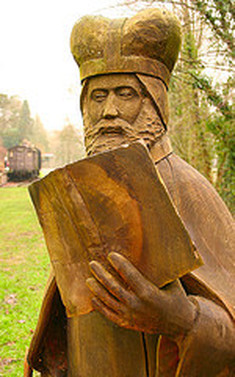 The historian-mythographer Geoffrey of Monmouth (1100-1155), whose glorious Historia Regum Britanniae (History of the Kings of Britain) blends history and legend almost seamlessly, is one primary source for the Arthurian legend. In the Eighth Book of this magnum opus, also gives us an early glimpse of legends about Stonehenge, supplying a foundation, however wobbly, for the idea that the stones originated in Ireland — or even further afield.
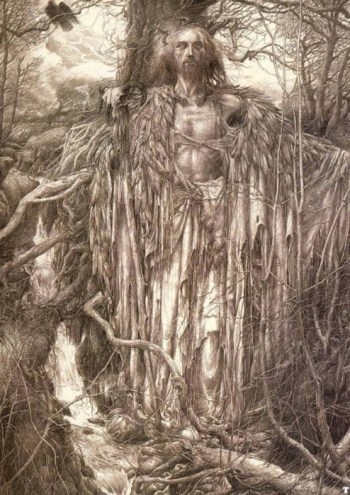 Unable to find among his own builders and engineers the technical ability to construct what he envisions, the king seeks out Merlin and asks for his help:

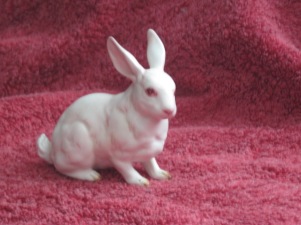 Sometimes the big picture isn’t what I need, though I thought it was. Sometimes, instead, it’s just the next step, it’s the phone call I remembered to make this afternoon, it’s the contemplation or ritual tomorrow morning. It’s the short walk that reveals sudden green beneath melting snow. It’s the porcelain hare my aunt gave me 50 years ago.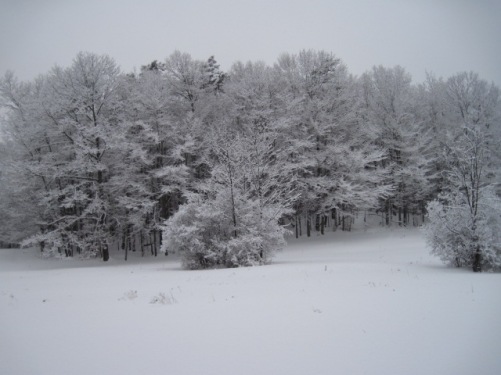
 Waning (and especially dark) of the moon says fallow. February is Hunger Moon — Full Snow Moon, one of my sources calls it. Here in the ebb tide of Valentine’s Day, after the Full Moon, riding away from Imbolc, wintering out the second half of the month, I gingerly caress a small chunk of obsidian, I blow a short deer-bone whistle*, shrill and high. I find myself longing for touch, for texture, the skin of the world.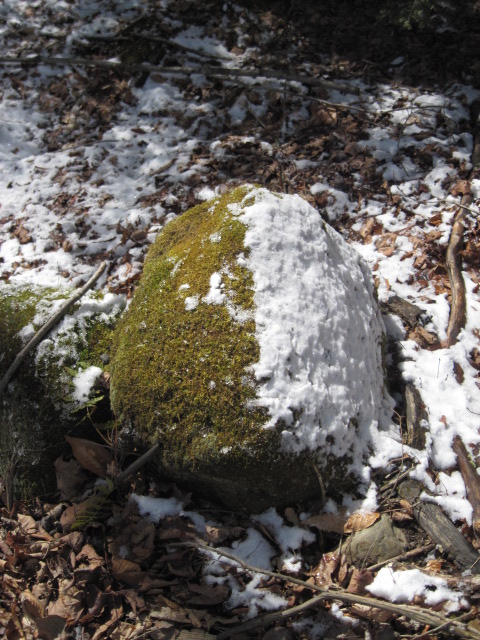
 [Updated 2 June 2020: see my

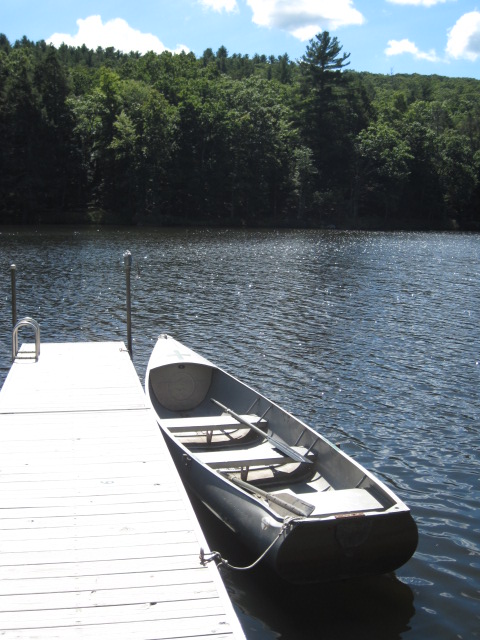




 For “light on the water,” as it turns out to my now-placated left brain, is indeed apt, a festival that celebrates a brief balance of light and dark in the quarter of the ritual year that belongs to the west and to water. “Light on the water” brings with it a twilit mood, a sunset reminder of the reality of life on earth, both dark and bright.


 A Druid Way