Archive for the ‘Druidry’ Category
[ 1 | 2 | 3 | 4 | 5 | 6 | 7 | 8 | 9 | 10 | 11 | 12 | 13 | 14 | 15 | 16 | 17 | 18 | 19 | 20 | 21 | 22 | 23 | 24 | 25 | 26 | 27 | 28 | 29 | 30]
A (dreamily): If you call, they will respond …
B (annoyed): Who are “they” and why should I care?
A: Oh, well, uh, you don’t need to care. I was just saying …
B: Then why mention it?
And thus another chance at discovery gets shut down. Yes, of course it’s happened to me as it no doubt has to you, and more than once. But I’m more interested in how often I’ve provided this unkind service for somebody else. If in the midst of human self-pity or fatigue or temper, I can’t muster enthusiasm for another manifestation of Spirit, can I at least offer silence? (These days that can count as an invitation.) My own actions I have some control over. I’m not answerable for other people’s, thank the gods.
Fortunately, the awen does not depend on human kindness or indifference. It flows from deeper wells, and it will out. I can slow it, temporarily shunt it aside from blessing me or the local situation or the whole cosmos, but never altogether block it. The Galilean Master knew this: “I tell you, if you keep quiet the stones will cry out.”*
/|\ /|\ /|\
The call went out and I responded. In this case, for afternoon “exploratories” — informal classes in a skill or craft at a neighborhood high school, after regular classes end for the day. I jumped through the hoops of paperwork, the routine police background check, got fingerprinted (digitally), so I could then offer a six-session class on conlanging.** I even went to a school meeting a week ago to talk it up with my “Top Ten Reasons to Join the Conlang Class.”*** Now I’m waiting to see if initial interest turns into enrollments and makes the class happen. The teacher who organizes the exploratories helped: he’s a fan of conlangs himself and knows a few kids he thinks might find them “just the right amount of weird to be cool,” as he put it.
So what’s particularly Druidic about conlangs? Well, not everything has to demonstrate an immediate link to Druidry, does it? Conlanging is something this Druid does, and you’ve read this post up to this point, so stay with me. But if you think about it, language and language craft are after all domains of the Bard, and my Bardic self is always responding to the call of language and words and sound and human awareness of the cosmos as we talk and think about it.
/|\ /|\ /|\
Take the Welsh phrase from a recent post, y gwir yn erbyn y byd, and you’ve got a fine example of conlanging to work with.
(Wait, you say. Welsh is a real language. Well, so are many conlangs, if by “real” you mean that they exist and people use them to communicate and you can say anything with them that you can say in your native language. How much more “real” can anything be? If by “real” you mean they have thousands or millions of speakers, well, Welsh stands around the 500,000 speaker mark, depending on who’s counting. Many Native American languages have only a few dozen speakers left. Mere numbers are just that. Besides, as a wise one once said, some of the same minds that created all human languages are at work on conlangs. At this point, the word real starts to look less than altogether useful and more like a comment on the person who uses it.)
One of the initially daunting things about a foreign language is simply that it “looks (and sounds) foreign.” But this Welsh phrase has almost a one-for-one correspondence to English. The different words mask vast similarities that make both Welsh and English human languages, and make them learnable and usable. Here’s a word-for- word rendering of the Welsh:
y gwir yn erbyn y byd
the truth in despite (of) the world
What this means for conlangers is that surface differences are one key to conlanging.
(The “fake glasses and a moustache” school of conlanging gets a lot of mileage out of surface differences. Make your conlang too much of a cleverly disguised English, though, and conlangers will call you on merely making a relexification, which is a learned way of saying you’re just replacing word by word, rather than creating a unique language where a one-for-one translation is usually impossible. But don’t worry: many conlangers go through a fascination with relexification. Tolkien himself made a childhood relex called Nevbosh, which means New Nonsense. He and his cousins played with it and even could make limericks in it. He probably also learned a fair deal from its making.)
Welsh and English both have articles: the and y(n). They both have nouns. They make phrases in a very similar way. And sentences. Yes, Welsh and English word order differs in a few important ways. Sounds interact somewhat differently. From a conlanger’s point of view, that’s window-dressing to play with.
In English we say “just add -s to make a noun plural.” What could be simpler? So you may shake your head when you hear that Welsh forms plurals in over a dozen different ways. But consider: English “cats” adds -s. But “dogs” adds a -z, though it’s still written -s. And “houses” adds an -iz, though it’s written -es. Add in ox/oxen, wolf/wolves, sheep/sheep, curriculum/curricula, and so on, and you get a different picture. Native speakers make most of these shifts instinctively. The same happens in other languages. That’s the reason that when a child says “I goed to school” we may think it’s cute. We may correct her (or not), but if we think about it a moment, we understand that she’s mastered the rule but not yet the exception.
All hail the awen of human intelligence!
Go a little ways into conlanging, and you may discover a taste for something different from (here British English requires “to” rather than “from”) SAE — “Standard Average European.” There’s a rather dismissive word for it in the conlanging world: a “Euroclone” — a language which does things that most other European languages do. Nothing wrong with it. I’ve spent years elaborating more than one of my own. But many other options are out there to try out, in the same way that the eight notes of an octave aren’t the only way to play the available sonic space.
Take Inuit or Inuktikut. Just the feel of the names shows they inhabit a different linguistic space than English does. I-nuk-ti-kut. For a conlanger, that’s a sensuous pleasure all its own, a kind of musical and esthetic delight in the differences, the revelation of another way to configure human perception and describe this “blooming buzzing confusion” as psychologist William James characterizes a baby’s first awareness of the world. But of course that “BBC” does get converted into human language. (Language origins continue to fascinate researchers.)
In the case of Inuktikut, “… words begin with a root morpheme to which other morphemes are suffixed. The language has hundreds of distinct suffixes, in some dialects as many as 700. Fortunately for learners, the language has a highly regular morphology. Although the rules are sometimes very complicated, they do not have exceptions in the sense that English and other Indo-European languages do.” (I’ll be lifting material wholesale from the Wikipedia entry.)
Agglutinating or polysynthetic languages like Inuktikut tend to be quite long as result of adding suffix to suffix. So you get words like tusaatsiarunnanngittualuujunga “I can’t hear very well” that end up as long as whole English sentences. As the entry innocently goes on to acknowledge, “This sort of word construction is pervasive in Inuit language and makes it very unlike English.”
Tusaatsiarunnanngittualuujunga begins with the word tusaa “to hear” followed by the suffixes tsiaq “well”; junnaq “be able to”; nngit “not”; tualuu “very much” and junga “1st person singular present indicative non-specific.” The suffixes combine with sound changes to make the word/sentence Tusaatsiarunnanngittualuujunga. So if you want to create something other than English or your average Euroclone, Inuktikut is one excellent model to study for a glimpse of the range of what’s possible.
Now if this sort of thing interests you, you’re still reading. If not, you’re saying “Well, he’s just geeked out on another post. Where’s the Druidry, man?” For me, Druidry has wisdom and insight about all human activity, and can deepen human experience. I’m in it for that reason. May you find joy and wisdom as you live your days and follow your ways.
/|\ /|\ /|\
*Luke 19:40
**conlanging: the making of con(structed) lang(uages). Tolkien’s one of our patron saints. You can find other posts about conlanging on this blog here. Here’s the obligatory Wikipedia entry. And here’s a link to the Language Creation Society., cofounded by David Peterson, one of the best-known conlangers working today, and creator of Dothraki, Castithan, Sondiv, and a dozen other conlangs.
***Top Ten Reasons to Join the Conlang Class
10: Languages are cool — conlangs are even cooler: Game of Thrones has Dothraki & Valyrian, Avatar has Na’vi, Star Trek has Klingon, Lord of the Rings & The Hobbit have Elvish, there’s Castithan in Defiance, Sondiv from Star-Crossed, Esperanto, Toki Pona, etc.
9: I’ve been conlanging for decades, can help you get started, gain a sense of the possibilities, & keep going after the class ends.
8. Making conlangs can help you go “inside language” (like Lewis said of Tolkien) & discover amazing things about our most powerful human tool.
7: Conlanging is one of the cheapest arts & crafts I know: all you really need is pen & paper. (Of course, a computer can help.)
6: Nerds need to stick together or our 3 big Nerd Secrets will get out — we’re all nerds in some way, nerds are cool, & nerds have more fun.
5: You’ll learn enough to participate in the international conlang community which is very active online & also in print.
4: You too can learn to say things like Klingon Tlingan Hol dajatlaH & Valyrian sikudi nopazmi & Elvish Elen sila lumen omentielvo — & more importantly, you’ll know what they actually mean.
3: You can join the Language Creation Society & create languages for others for fun & profit.
2: You can keep a secret diary or talk to friends in your conlang & no one else will know what you’re saying.
1: You’ll have your own conlang & script by the end of the last class.
[ 1 | 2 | 3 | 4 | 5 | 6 | 7 | 8 | 9 | 10 | 11 | 12 | 13 | 14 | 15 | 16 | 17 | 18 | 19 | 20 | 21 | 22 | 23 | 24 | 25 | 26 | 27 | 28 | 29 | 30]
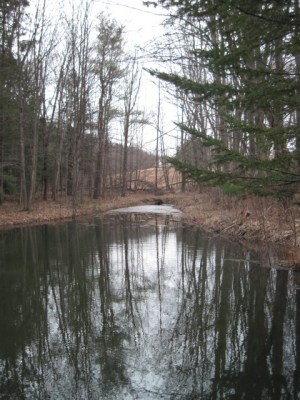
the pond earlier this morning
The fish-pond the previous owner built on the east side of our two and a half acres skews the elemental associations I inherit from my Euro-Druidry. So I read my pond-rune for its wisdom, in spite of the dislocation. Water to the East, the pond a surrogate for the Atlantic surging beyond it a mere hundred miles further off. Be ready to shift your perspective for what it can teach you, says my Druid guide.
Over-caffeinated this morning, I’m giddy as I try out this re-orientation, going for the literal first. Widdershins and we’re off, a banishing of the old order. Air to the North, then? Because nothing halts Canadian weather from turning intermittently south to us, troubling and training our meteorologists all year long to keep humble. It fits, too, because that first warm day of spring is air breathing its promise of new life, before the earth has quite let go its permafrost. Frost-heave warning signs still mark the worst of the bumps and dips in Vermont back-roads as the ground slowly gives up winter.
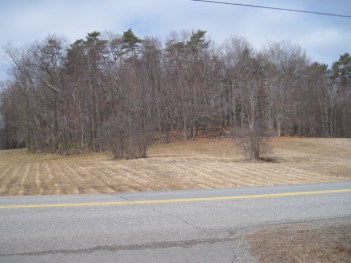
the grove to the west, as the sky clears
Earth to the West, a tree-covered rise just across the road in front of our house. From time to time I build a dream-shrine there, or imagine it alive with some rite in progress, all without disturbing in the least the neighbor who actually owns the land. For three seasons the trees gather the light each day at sunset, their branches embracing orange and peach and golden afterglow, except for summer’s green crowding out all other colors.
And last to the South and Fire. Most immaterial of the elements, only you remain unchanged. I’m intrigued. The polarities work, too. Earth and Water, both traditionally feminine, face each other across the east-west axis, as do Air and Fire, traditionally masculine, across the north-south one. In fact, the realignment accords reasonably well with Mike Nichols’ article “Rethinking the Watchtowers: 13 Reasons Air Should Be in the North.” Here’s the second from his list of reasons:
PARALLEL CULTURES: Although arguing from parallel cultures may not be as convincing, it is still instructive to examine other magical aboriginal cultures in the Western hemisphere. For example, the vast majority of Native American tribes (themselves no slouches in the area of magic!) place Air in the North, which they symbolize by the Eagle. (Aboriginal cultures lying south of the equator typically have different associations, for reasons I will discuss next.)
Here’s a set of new meditations ready to hand: what follows from such a re-alignment? What new insights? What new ritual possibilities? As Druids emerge across the planet and walk their own lands, how do we adapt our practices and teachings, and what do the adaptations and changes teach us in turn? The pulse of our world is one, yes, even as each vein and artery flows with its own unique current and energy and direction, nourishing distinct organs and tissues. The metaphor’s merely another tool, and the question as always is: does it help us feel our way into accord with the spirits of the land where we dwell?
/|\ /|\ /|\
Oh earth of my bones, earth of my ancestors’ abode, earth that my feet and this house and our lives all rest on, I give thanks for breath and blood and day, the four elements in their shifting guises now complete. The fifth, Spirit Within, Spirit at the Center, hail and always welcome.
[ 1 | 2 | 3 | 4 | 5 | 6 | 7 | 8 | 9 | 10 | 11 | 12 | 13 | 14 | 15 | 16 | 17 | 18 | 19 | 20 | 21 | 22 | 23 | 24 | 25 | 26 | 27 | 28 | 29 | 30]
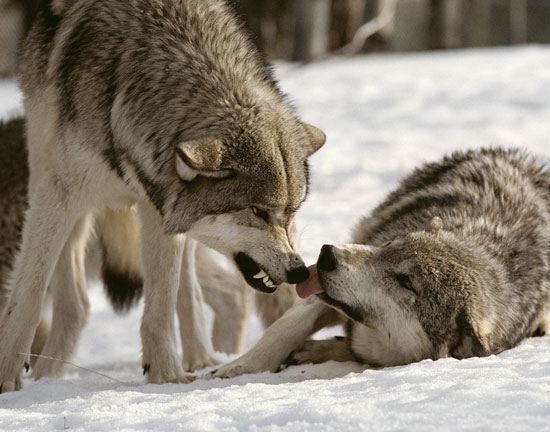
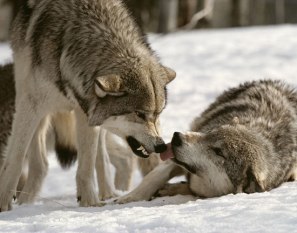 I take as my divination today an odd dream early this morning: I’m a member of a wolf pack, and my fellows have drawn me aside, possibly to be disciplined, after I am tested for truth-telling. The issue at stake, apart from truth, I don’t know. (There isn’t one?) But I feel the just authority and deserved power of my pack leader, I readily make my submission, lying flat on the ground, waiting patiently as I can, licking my chops, panting a little. At length I’m freed, though I lose the final threads of the dream and the actual issue in contention as I wake.
Who determines truth? Is it our pack? Often among social animals it’s indeed the group, for better and worse, like the words of the marriage vow, recognizing a truth about life. For submitting to a consensus is a form of contract. But such a formulation of truth results not just from others’ perceptions — a consensus averages them, bundles them together to even out the extremes, and not only may be no more accurate than my perception or yours, but may well be less.
Mere majority is no guarantor of value. “We all say so,” exclaim the Monkey People in Kipling’s Jungle Book, “and so it must be true.” Democracy, indeed, is the worst form of government — except for all the others. It’s a first approximation to that inner wisdom. Mix in other adulterating motives like the obscuring force of anger, envy, fear and so on, and the spinning moral compass still comes to rest to show that no group deserves more authority than the individual. A group may indeed have usurped such authority, snapped it up if we have ceded it, or claimed it in the absence of the rightful possessor, but that’s a different matter. The point persists behind Iolo Morgannwg’s Welsh aphorism Y gwir yn erbyn y byd — “the truth against the world” — regardless of whether we claim that inner sovereignty as our birthright, or heedlessly opt to forfeit it to whoever is the latest big noise to arrive on the scene.
A part of that sovereignty, true, urges us to seek wise counsel when our own vision falters (as it will from time to time), or does not offer sufficient guidance. But the choice to seek, follow, modify or ignore that counsel remains ours alone. It seems nowadays we’ve only a loose grip at best on the good meaning of discrimination: the ability to make vital distinctions that matter. For the opposite of discrimination is not indiscriminate approval or contempt. Rather it’s an abdication. Someone else, take up my crown and sceptre! It’s too hard! But as we come to know at cost, the only thing more difficult than struggling to uphold our sovereignty is the obscene suffering and atrocious despair we face when we let it slip through our fingers. Holocaust survivor and philosopher Elie Wiesel has said it well (adjust the pronouns to fit): “It is by his freedom that a man knows himself, by his sovereignty over his own life that he measures himself.” Without sovereignty, then, how can we know or measure accurately?
I offer as exhibits 1 and 2 most major headlines today and the lived experience of anyone over 10 years old. Among other wisdom paths, Druidry rightly asserts that it’s our inner sovereignty that comes first. All else follows from the state of our inner kingdom. It’s long work, this upholding of our sovereignty. And if like me you feel the evidence points towards reincarnation, well, we keep coming back till we get it right.Some things we know are true, against whatever the world throws down to snuff it out. Otherwise, what’s the cosmos doing, if not manifesting gloriously, excessively, magnificently, every single possibility along with a consciousness, feathered, finned, furred, to engage it, turn it back onto itself, plumb its depths, endlessly forming and re-forming.
 There’s a wooden chair in the Parliament House in Machynlleth, Wales, that bears those challenging words across the headpiece. For it too is a Siege Perilous, like that “perilous chair” at Arthur’s Round Table, that stands empty awaiting the one who wins through to the Grail, the seat that proves fatal, mortal, to the mortal who sits down unworthy. This life is perilous indeed — mortal — the Ancestors weren’t wrong about that in all their stories. We’re winning through, though by all appearances none of us have quite yet “won.” But we’ve come far enough, through both hardship and joy, to recognize the seat for what it is, to puzzle out the significance of the inscription there, to feel it in our bones. We’ve caught more than one glimpse of Grail in a human face, a landscape, plumbed it in the heart’s cry, caught echoes of the Grail Song, every one of us, against all the odds the world sets for us. We can even imagine sitting down eventually.
I suspect, too, that any endpoint is part of the model and not the reality it attempts to represent. It’s an asymptote, to get mathematical for a moment, if you recall that intriguing figure from school: undrawable, really — endlessly closing in on but never reaching a final point, a terminus, some ultimate destination. It’s the horizon infinitely receding. It’s the Mystery that lies behind and inside everything, the charge that impels all things. Taoists say it’s “like a well: used but never used up. It is like the eternal void: filled with infinite possibilities. It is hidden but always present. I don’t know who gave birth to it. It is older than God” (chapter 4).
/|\ /|\ /|\
Images: wolves; chair in Parliament House, Machynlleth, Wales.
[ 1 | 2 | 3 | 4 | 5 | 6 | 7 | 8 | 9 | 10 | 11 | 12 | 13 | 14 | 15 | 16 | 17 | 18 | 19 | 20 | 21 | 22 | 23 | 24 | 25 | 26 | 27 | 28 | 29 | 30]
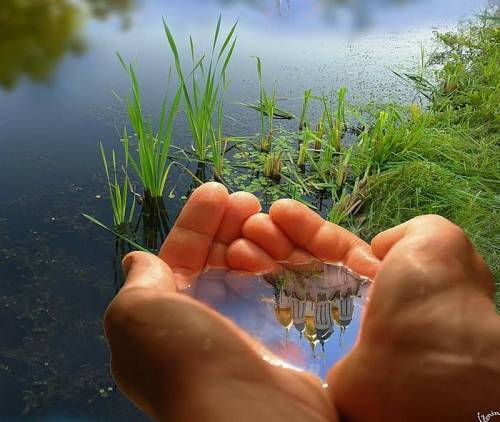
Sometimes an evocative line can serve up a good day’s worth of Druid meditation. An article on schizophrenia in the current New Yorker offers this fabulous paragraph on the development of the brain, with its potent last line:
The human eye is born restless. Neural connections between the eyes and the brain are formed long before a child is born, establishing the wiring and the circuitry that allow her to begin visualizing the world the minute she emerges from the womb. Long before the eyelids open, during the early development of the visual system, waves of spontaneous activity ripple from the retina to the brain, like dancers running through their motions before a performance. These waves reconfigure the wiring of the brain—rehearsing its future circuits, strengthening and loosening the connections between neurons. (The neurobiologist Carla Shatz, who discovered these waves of spontaneous activity, wrote, “Cells that fire together, wire together.”) This fetal warmup act is crucial to the performance of the visual system: the world has to be dreamed before it is seen.
I find myself wanting to draw out this image, to extend its reach, then try out those extensions to see whether and how they might be true. Dream a world and you can see it. Sing before you can hear anything, let alone the music of the spheres. Limn the deeds and character of a deity, and she begins to manifest at the invitation of this earliest devotion. Imagine with whatever awen drops into your awareness, and the transformation of that subtle primordial seed-stuff proceeds apace. We nurture energies and impulses, not merely passively experiencing them, and they weaken and die or grow and thrive in the womb of human consciousness. How many things are literally unthinkable until that first person somewhere thinks them? What can I give birth to today? (Schizophrenia, and creativity too, have physical correlates — according to research cited in the article they both issue from the processes mentioned of strengthening and loosening connections between neurons.)
Old Billy Blake, sometime-maybe Druid, maybe madman, says in the last lines of his poem “Auguries of Innocence“:
We are led to Believe a Lie
When we see [with] not Thro the Eye
Which was Born in a Night to perish in a Night
When the Soul Slept in Beams of Light
God Appears & God is Light
To those poor Souls who dwell in Night
But does a Human Form Display
To those who Dwell in Realms of day.
Praise be then to the Keepers — and Seekers — of such Double Vision. And I ask myself: Can we see the world whole in any other way? Hail, Day-dwellers, Night-dwellers, Walkers of Both Worlds!
/|\ /|\ /|\
Image: “Infinity”
[ 1 | 2 | 3 | 4 | 5 | 6 | 7 | 8 | 9 | 10 | 11 | 12 | 13 | 14 | 15 | 16 | 17 | 18 | 19 | 20 | 21 | 22 | 23 | 24 | 25 | 26 | 27 | 28 | 29 | 30]
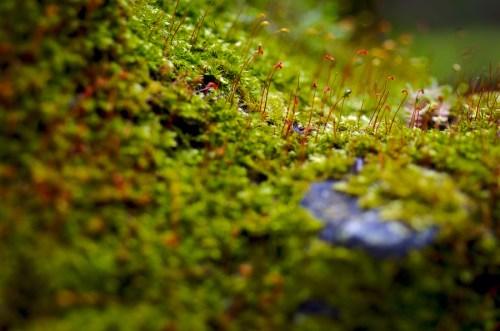
“Microcosm” — Mike Fletcher photography
We look for things that will acknowledge and value and nurture the overflowing spirit that is our humanity at its best. We literally grow larger than one self in our relationships with other beings. This isn’t merely a lonely, impotent and mortal self desperately seeking an echo, a mirror, before the dark comes on, though that can be one part of it. Our curiosity and empathy mean we can feel ourselves into the oddest and most splendid corners of the universe. And then keep going even further. Because we can. But just as much because those corners are there, endlessly inviting. The cosmos beckons. “House made of dawn,” says the Navaho night chant, “house made of the evening twilight …”
Of course, other humans offer a ready first “target” for this quest. We fall in love, we bond, we befriend, we seek connection. What’s remarkable to me is not the number of times we face disappointment or disaster in our human relationships. You might almost expect that, given the universe around us where fish spawn and the majority perish before reaching adulthood. Nestlings don’t all make it. Flowers and trees cast thousands of potential offspring to earth and wind and water, and how many survive?
But the number of times things actually go well can astonish. Life, quite simply, abounds. It beats the odds. And even looking narrowly for a moment at just the human world, at friends, family, co-workers, allies, strangers who perform those random kindnesses — well, live among other humans and we can strike you as a varied and quarrelsome bunch at times, to be sure, but more remarkable still for wanting to connect, to be counted, to know and be known. And we talk endlessly about it all, thinking words will bring us together. Sometimes, surprisingly, they do.
And the natural world? Both womb and tomb, it still manages to be other enough that our super-enlarged brains have plenty to do to figure out whether we do or don’t really “belong.” Hence the need for wisdom, for something more than the givens of a human life: birth, food, sleep, learning, sex, work, play, illness, joy and death. Because to the question “Is that all there is?” the answer is almost always “No.” That “no” is so reliable, in fact, that things like Druidry provide marvelous tools for exploring the “all that is.” But if Druidry or Plan B doesn’t happen to work for you, by all means find (or make) something that does.
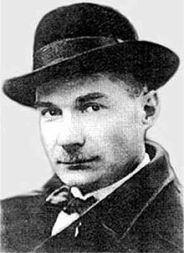
Yevgeny Zamyatin
We can go and quite readily have gone to other people’s faiths and ideologies and isms that offer answers and creeds and dogmas. But we can also look, more provocatively and more productively, for great questions. As the Russian writer and philosopher Yevgeny Zamyatin (1884-1937) remarked, “Dealing with answered questions is the privilege of brains constructed like a cow’s stomach, which, as we know, is built to digest cud.” Foolish questions are a risk along such a path, of course, but they are only “foolish to a civilized man who has a well-furnished European apartment with an excellent toilet and a well-furnished dogma.” Better a few foolish questions along with many more useful ones. And far better than no questions at all. Yes, that’s next door to a dogma in my book, if you want to know.
“In a storm,” Zamyatin observes, “you must have a man aloft. We are in the midst of storm today, and SOS signals come from every side.”* It’s no accident that new forms of spirituality sprang into existence over the last 50 years or so. From a Druid perspective, you might say, like a bird or bush moving into a new ecosystem, a niche opens and life explores it for fit, changing it or changing itself. Or both. A trust in the power of spirit to manifest new forms at need is one of the gifts of Druidry. And the lifelong learning to work with that spirit and those forms is a fitting Druidic quest.
/|\ /|\ /|\
Image: “Microcosm” — Mike Fletcher photography; Zamyatin.
*Zamyatin, Yevgeny. On Literature, Revolution, Entropy and Other Matters. 1923. The translations here appear in Ginsburg, Mirra, A Soviet Heretic : Essays by Yevgeny Zamyatin (1970).
[ 1 | 2 | 3 | 4 | 5 | 6 | 7 | 8 | 9 | 10 | 11 | 12 | 13 | 14 | 15 | 16 | 17 | 18 | 19 | 20 | 21 | 22 | 23 | 24 | 25 | 26 | 27 | 28 | 29 | 30]
After a complete slug-down from posting, brought on by a harsh bout of flu and subsequently a general lethargy, A Druid Way is back for a 30-day series on each day’s energies and perspectives. (Say awen, somebody. And all the freeze-dried grasses in my lawn say it, in their rustling speech. The tree limbs say it, and the twigs and branch-ends that have reddened and yellowed and greened with rising sap say it wordlessly, all night and all day long.)
/|\ /|\ /|\
Long-time readers know I largely shy away from big social issues of the day. You’ll see very few comments here about politics, gay rights, abortion, race, the primaries, terrorism, climate change — the stuff of American and world headlines and the churn of the news cycle. I’m more interested in the opportunities each of us has to grow and love more in the small chances and changes right here. You could say that’s a kind of pure selfishness. And it is. We’re all engaged in self-crafting, one way or another. One way doesn’t negate another, I hope.
And I find these moments most easily not in the noise of our sometimes poorly-wrought human world, but in the silences when our human chatter subsides. When we can’t hear ourselves think, we too often think things that aren’t worth hearing. Or saying, though we keep on talking. Consider this blog a partial fast from the noise of the moment. Of course it’s a a fast in words, but paradox should be an old friend by now.
Don’t worry — if you really miss the latest batch of outrage and disaster and doom, they’ll keep till you’re done here. Rest easy, now. A few clicks will bring you right back into the middle of them. Many traditions invite us into silence, not to live our entire lives there. Speech matters. But to live always next door to silence, to befriend it, to let it teach us, to be rest and a refuge for us, as a true friend can.
The noise of the moment is of course one more testing ground. You CAN find many valuable lessons there, and you can hone your sense of rightness and justice and value to a keen edge, burnish them to a high sheen. (How much does my activism activate?) But we live mostly in the spaces between such tension points, and there I find rich terrain that never grows stale or flat. A half hour in the air and light, with birdsong or fog or frost and wind, is enough to restore a balance point that can go badly awry if we neglect the spiritual recalibration nature offers. Getting and spending, we lay waste our powers, says the poet.* But that’s only because what we mostly expect and work to get and spend a bunch of things that do not serve our highest good. How does a tree spend its powers, and does it have anything to say to me today?
Here for a reason, I say. Others scoff. Well, make your own reason. Then improve it. Better than drifting without one at all. Been-there done-that material. BTDT, as my wife and I say to each other. So try something you haven’t done, go somewhere you haven’t gone, says the awen in me, the awen spread across this blue cool late March sky.
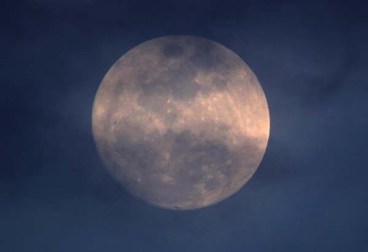 Equinox energy is real. You can feel it in the stirring of so many things, blood and light and dream, storm and desire and birdsong. Not by accident do many magical and spiritual orders align their rites and festivals to the Equinoxes. Initiate then, in any senses of the word, and you catch a wave that can take you very far indeed. Out to the far isles beyond the horizon, where the Otherworld beckons beyond the ninth wave. In to the inner-verse that is always waiting like a beach after storm, strewn with all manner of oddments and debris, the flotsam and jetsam and occasional treasure you’ll find nowhere else. The one thing you need right now, washed up on your own shore, ready for the receiving into your hands. The spring break of the spirit, drunk with fear and longing and possibility.
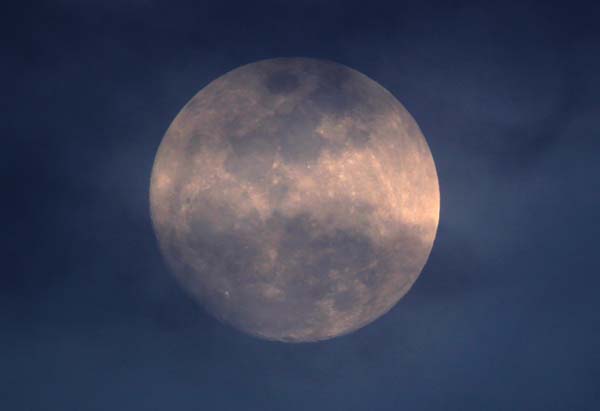
Ah, tonight, first full moon of spring, rising in us, mounting the sky, stepping toward mystery.
/|\ /|\ /|\
*Wordsworth.The Bards still keep trying to reach us, teach us, anything that doesn’t merely preach to us but means what we seek.
IMAGE: moon
With camera in coat pocket and a muddy 3-mile walk ahead, I set out to see what a Saturday afternoon in the 40s might have to show. I started to write “teach,” and that may be accurate, but as human instructors discover, to say “I taught them but they didn’t learn it” is problematic at best.
I call this stone wisdom because it is a teaching of the north, of the earth, of winter, of this day which is all these things. It is a day of thaw, which I will take for my divination. Thaw what is frozen, so the lessons may enter, so I can move with what they teach.
One thing I’ve learned in the class of this life is that I really need to pay attention, to bring all I am to the moment. That’s a gift to the teacher, as well as myself, that richly repays any cost.
But “all I am” isn’t always easy. It includes idiosyncrasies, personal associations, weaknesses, quirks and curiosities, a whole range of human flotsam and jetsam. Keep anything away, and I under-represent myself. I come away shortchanged, denied because I have also denied something. Without it the exchange can’t or won’t or just doesn’t resolve into completion. But attend long enough, and the moment begins to sift out all that isn’t needful, until insight is possible. How long I let that go on depends on me.
/|\ /|\ /|\

“Growing where you’re planted” can be hard work, depending on where you are. Friends who stand with you can help ease it, make it possible.
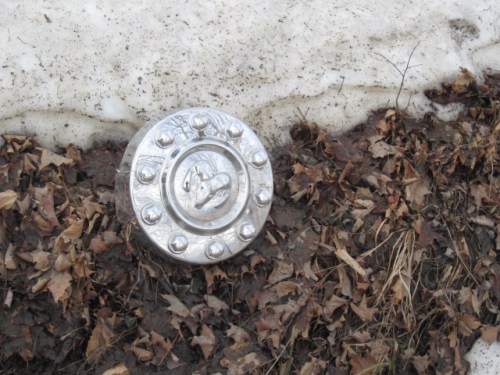
“a world of made is not a world of born” — e e cummings. They feel and behave and interact differently. It can be a peculiar human study how to bring these closer.

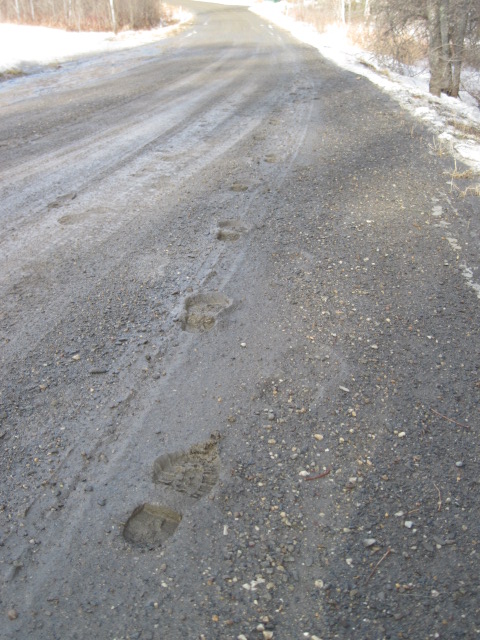
Everything leaves some kind of track. Not all deserve following. Look both forward and backward.
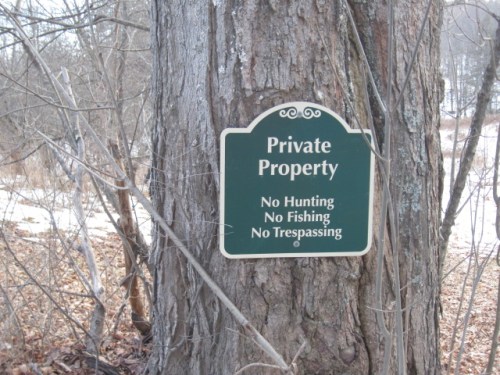
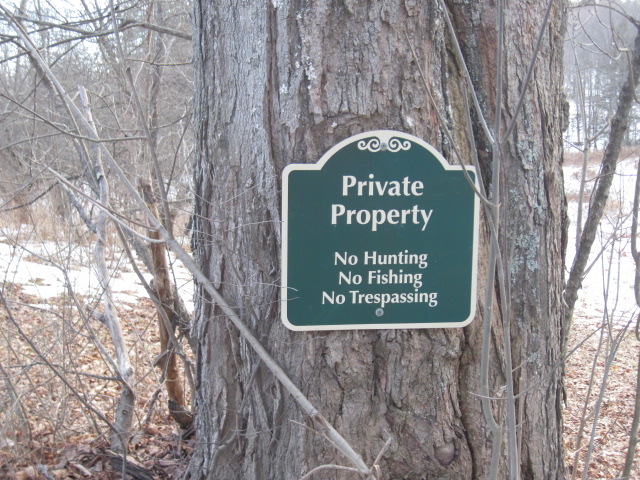
“Private” only begins when someone else notices.
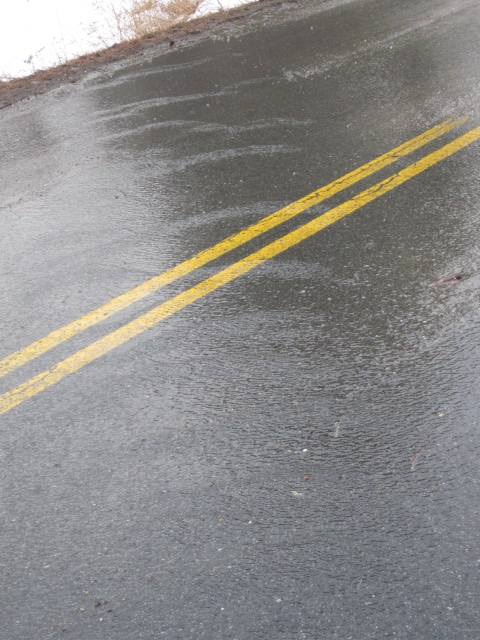
The Flow of things may well take you across lines and boundaries. Watch as you cross them, but follow the Flow. Let its energy draw you.
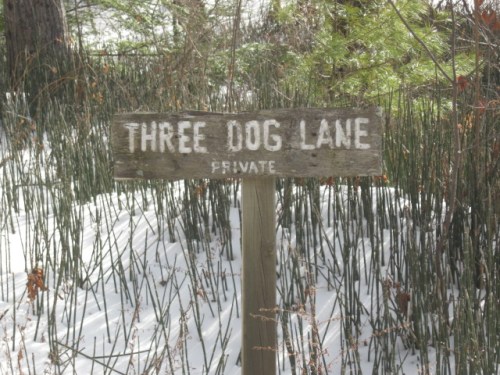
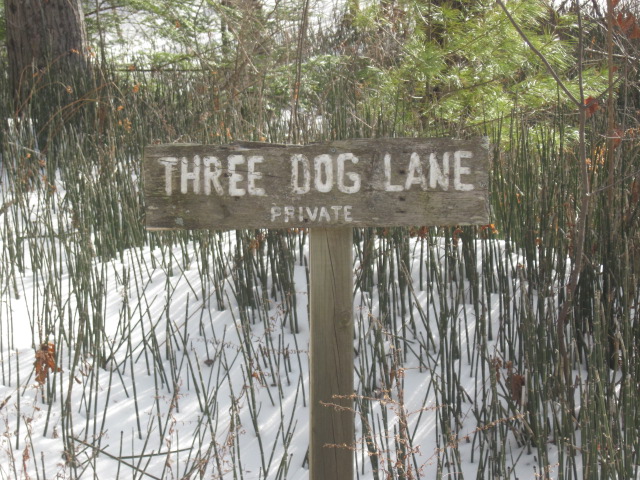
Triads are everywhere, and are never private. Is Cerberus, the 3-headed hound of Hell, lurking about? Not all teachers are easy ones, but all teach.

Lying around waiting for something to happen? “Practice resurrection,” like Wendell Berry says.
“are my greatest teachers.”
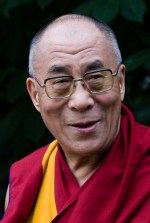
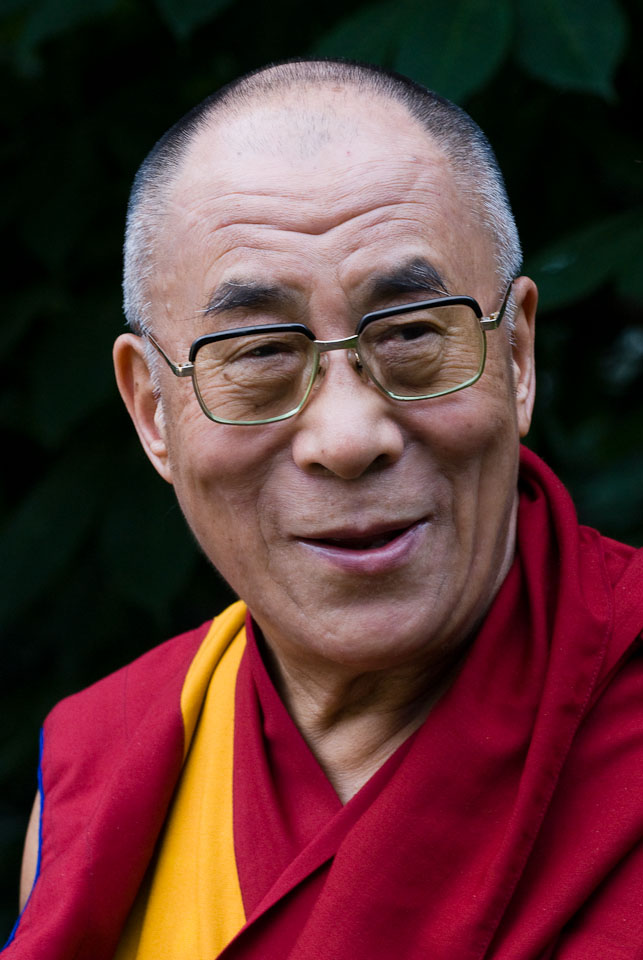
Dalai Lama as sage
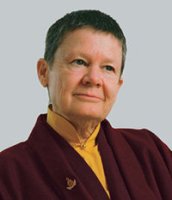
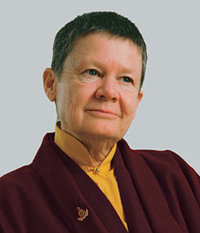
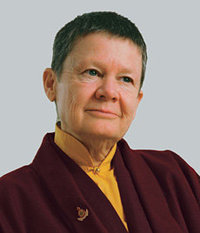
Pema Chodron as sage
Bear with me here. I’m doing some out-loud thinking again, to solidify it enough that I can see it and assess what’s rattling around in my head. The title quotation comes from a seminar I attended last fall. You may well have heard a version of this yourself. You’ll see I’m still mulling it over, trying to squeeze all the juice from it I can.
OK. Hmm. When something like this grabs me, I start trying it out, trying it on for size. What does my spiritual path do with it? Does it stir me, even — or especially — if I resist it? (I’ve found that’s one good test for the value of my path, too.) Do I want its insight with me over the next meters and miles, minutes — or months? Is there a place for it in my backpack or tool-kit? If so, what? If not, why not? Maybe it’s too much. Or it comes dragging cultural weight that obscures its value to me right now. Or …
If it sounds “off,” if it just doesn’t click with where I’m at, is there an equivalent truth that can reach me, has already reached in terms that work for me? Can I translate truths here, rather than just reject one because I don’t like the particular flavor or color or cut that it comes in? Why has it arrived on my doorstep at all? Has it come to me now, or in this particular form, because I’ve already rejected it at least once?! Will I at least remember to write it down in my journal, so when it knocks me upside the head again, sometime in the future, a review of what I write today will help the lesson sink deeper, enough that next time at least I’m able to act?
Most people can name at least a couple of publicly-acknowledged wise ones like the Dalai Lama or Pema Chödrön (I’m facing Buddhist here — insert your own favorite icon of sageness).
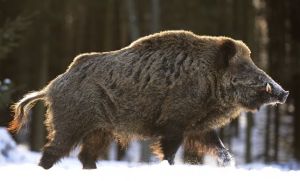
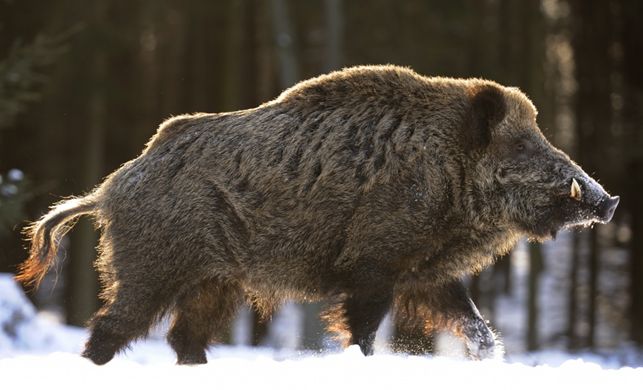
Boar is one of my animal teachers
I’m a Druid so I also count the non-human world among my teachers. That doesn’t mean I have to stay in class, or stick with the same teacher. It means, if I need to, that I can learn and move on. It means — thank the gods! — I have many teachers. It may well mean, if I really need to learn something, that the classwork I don’t finish here may reappear somewhere else, in another class, on another arm of the spiral. But it also means I can call on teachers I adore and who support me to help me with teachers who challenge me, rub me the wrong way — teachers who don’t make it easy, who can even just turn every class with them into a perfect, custom-made hell.
Sometimes it seems I specialize in hell. And if you’ve been around a while, you probably do too. The pesky habit that sabotages you again and again. The job or relationship that’s sunk its teeth into your jugular and just hangs there feeding happily. The spiritual cul-de-sac that’s all circle, no spiral growth, no way out or onward. The emotional desert that dries you crisp and crunchy as fried chicken or diner bacon and leaves your bleached bones as a warning for future travelers. (To paraphrase a Christian scripture too many Christians conveniently forget, though I make my bed in hell, the gods are there, too, with me*. No ending, only stations on the way.)
“Those I am with are my greatest teachers.” Sometimes I need to stay. Sometimes I need to walk (run!) away. How to know the difference is something I also have a teacher for. I just have to ask and do the work. If I do, nothing may happen for a while. But if I don’t, nothing keeps happening a whole lot longer.
A college teacher I deeply respected told me his greatest goal in life: “the avoidance of pain.” I gasped. I got depressed. I laughed. Not all at the same time. Not to his face or in his presence. But in varying sequences. Each response fits. But these three are a bad triad. They’re not enough. If all the growth is in the hassle and I’ve constantly avoided the hassle …
I get that his life may have had reserves of suffering I knew nothing about. I’m not judging, but his path wasn’t — no surprise — a good fit for mine. Now, some three decades later, I have something to say in response to him. He’s passed on to the Shining World to continue his own growth. But I’m checking in with him as an honored ancestor of spirit.
“Lessons are blessings with rocks attached.” (Same talk, a little later.)
 How many times have I dodged the rock — and missed the blessing? Can I dodge but be blessed too? Is the rock the blessing? My Druidry asks me, “How can you learn from the rock?” Rocks can be teachers too. Really?! says my inner imp. Let’s run with that …
Ah, and what can I offer the rock in return? Some stone wisdom coming up in the next post.
/|\ /|\ /|\
*Psalm 139:8
IMAGES: Dalai Lama; Pema Chodron; wild boar; stepping stone.
[Updated 10 December 2019]
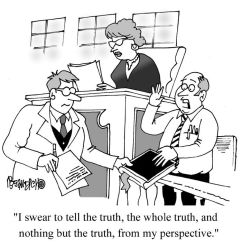 But (the blogger says, debating with what he wrote in the last line of his previous post) our witness is not always enough, though it is much.
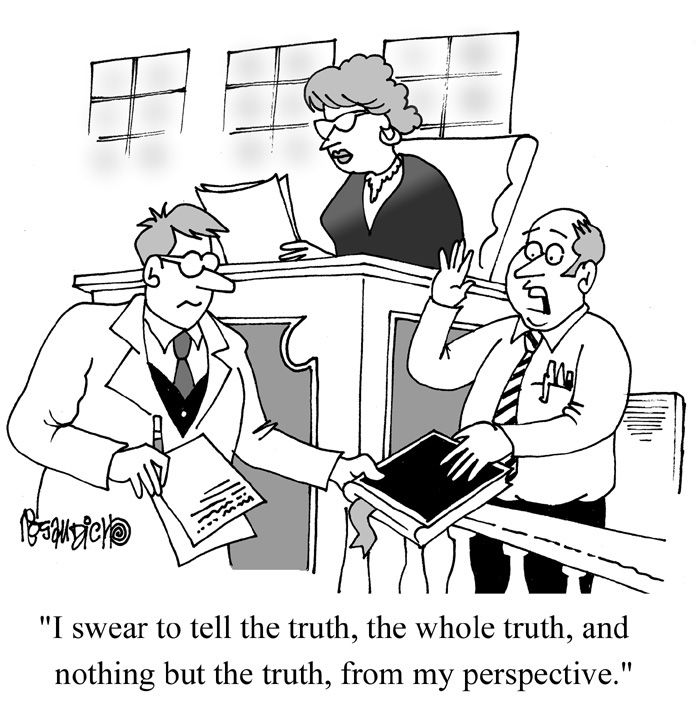
So, then, action: but what to do, and how to do it well? A triad for deciding: Is it true? Is it kind? Is it necessary? Almost always, one of these three stands out very clearly. It’s absolutely necessary. Or the truth of it is (at last) blindingly apparent and I can’t keep hidden any longer. But one or both of the remaining three points of the triad will inevitably catch me. Let’s say the words I have to tell my boss or coworker or partner are necessary. They’re true. But are they kind? OK, not really, not yet. So what can I do to make them (more) so?

Meerkats (just read the article!)
In a world short on ethical or moral algorithms or heuristics — I’m showing off here; they’re both simply ways to solve a problem — this triad has earned a place in my toolkit. (Yes, the Ten Commandments have their place as well, but frankly if you don’t already know that lying, stealing and killing are wrong, you’ve really got much larger issues to work on.) And when you’ve got headlines like “Zookeepers caught in love triangle,” you know the universe has a deeply bizarre sense of humor.
Need, logic and heart: another version. Though truth is bigger than logic. Anyone who’s loved another knows this. Love may not always be logical, but it’s deeply true. (Dogs get this, and cats in their sometimes greater and more temperamental reserve get it too.)
Like all formulations in language, this particular triad has limits. If all of its three points don’t line up, that’s not always a sign not to act. It may in fact be a time to act in the fullest awareness you can muster. Knowing, perhaps, you’re mostly flying blind, but acting anyway, in trust.
An example: in my first serious relationship after high school, I reached a point where, in an all-too-brief moment of clarity, I had to ask myself whether I should go any further. M., the woman I loved, was affectionate and intelligent. We were, as M. liked to point out, “physically compatible.” But she was emotionally manipulative. I asked my inner guide what to do. I even phrased it as a yes or no question about continuing or ending the relationship, expecting I’d get a clearer answer that way, since I can be pretty dense when Spirit tries to reach me. The reply surprised me (often a clue that the communication is genuine and not something I merely made up under pressure): “You’ll learn a lot.”
Under a heady mix of hormones, fear and curiosity, I went for it. And I learned a lot. But was it true, kind or necessary? I couldn’t accurately answer any of those three till many years afterward. Even asking the questions, though — testing the Triad — can put you in the way of helping to sort out the drama and challenge of everything from health to relationships to job opportunities. It’s a concentrated and dedicated version of “You work with what you get.”
Was it true? Our feelings were true. We felt what we felt. Was it necessary? Truth and necessity lay in the growth the two of us (and assorted friends and roommates who orbited with dismay and amusement our half-private passion-storm) experienced through all our ups and downs.
Well, then: was it kind? We valued each other’s presence. We mattered to each other. M. and I taught each other about selfishness and honesty. There’s ultimately a deep kindness when anyone risks being vulnerable in order to give and grow. Because, I ask myself, what’s the alternative?
Was it really necessary? Well, what things ARE necessary in the grand scheme of the universe? (Answer me that one and you’ve got a full-blown religion or politics or philosophy off the shelf and ready to roll.)
If the universe exists even in part to become aware of itself through all its many beings and forms and possibilities (and I feel deeply that it does), then that one relationship between two twenty-somethings, me inexperienced and in lust-love, M. more experienced and also in lust-love, counted as necessary. True, kind, necessary. Check, check, check. But not a way I could have heard or understood or acted on at the time. “You’ll learn a lot.” That was advice I could use. A good triad opens a door. I choose whether to walk through, or slam it shut.
/|\ /|\ /|\
IMAGES: tell the truth; meerkats.
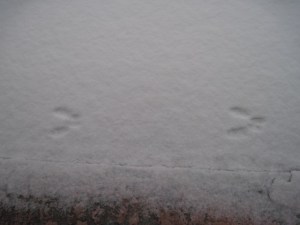
Rabbit tracks in early morning snow by our garage
All around me, the formless. Everywhere I look, the track of some local thing I mistake for itself only, when it’s also a sign of the Mystery. In the end, it can feel like all is sign, one “it,” then another and another, each ceaselessly signifying the whole, each the center of Mystery, because each points to itself but also beyond and back again.
Everything’s in motion, no final self to stop and reckon with. Not just one thing becoming another, but everything becoming everything else. People age almost before our eyes, and a year that seemed long may turn and whisk itself into the past. Snow, sun, wind, tides — the hands of Spirit always reshaping the world. Already we edge closer to the third decade of the 21st century. Everywhere I see the mark of one thing passing into others, leaving spoor and benediction for those to follow who will.
I stalk Spirit in its many guises. Just when I think I’ve cornered it, something slips past uncommonly like a bird or feathered thing. Its pinions brush my cheeks. But when I meditate, when I remember to let go of catching anything, it comes to nestle in my lap. I feel its breathing stir my hair, and unexpected warmth sends a shiver down my spine. Remember, the voiceless thing says in my ears. Remember. Witness.
“A seed, a seed, at Imbolc a seed!”
“Ah, the seed has long lain there fallow, only at Imbolc do you at last feel it stirring beneath the snows.”
/|\ /|\ /|\
Marie-Louise von Franz
“One must start where there is still a flow of energy, even if it is just a thin flow, even if it seems silly” — Mary-Louise von Franz, Animus and Anima in Fairytales (Inner City Books, 2002).
Before and at and around Imbolc, the god Lugh draws me powerfully. Naturally, because time isn’t linear, and the workshop talk I’ve agreed to at Lughnasadh, a six-month conjunction with Imbolc and another fire festival, is now at work (was, before I agreed to it), by the god’s hand, or my own, or — more confusing and interesting — both at once. Snow on the ground, the land still in the grip of the Frost Giants (I like mixing myths, personally, at least by season), and here comes Lugh to prod me into action with his spear. Or if not action, exactly, some kind of attention.
The shape of the talk as it comes to me now in bits and starts will deal among other thiings with the matter of encountering a god, but also of any new course of action, of imagination, of inspiration. These wear different cloaks, but from what I can see, under them they’re the same, or at least siblings, equal parts trust and terror at times. Energy — which is what we are at heart, intelligent energy on the move.
So the seed, the nudge to change, to move, to grow — it comes and roots itself in us. And when the root-strength that cracks sidewalks and shoves boulders aside and generally plays havoc with human ideas of permanence and endurance finally gets to work, things move.
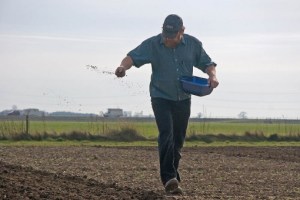 And often enough the seed then dies in the ground. What nourishes it? We stomp on it, uncomfortable thing, reminding us that something outside us wants to work its will with us, here, too. Right in the middle of streaming Netflix and election madness and ISIS and the woeful state of things and our own personal misery and joy, the particular flavor and color of crazy that the current year puts on each morning, mourning. Just because.
But let trickle reach seed and GERMINATION! Watch out! Funny, the vegetation god from the House of Bread (which is “Bethlehem” translated, as John Michael Greer obligingly reminds us) puts it this way in a Gospel, which really is supposed to be good news after all. Or as a Bard thinks of it, a song for the queens and kings we could be:
And he taught them many things by parables, and said unto them, Listen, a sower went out to sow: And it happened, as he sowed, some seed fell by the wayside, and the birds of the air came and devoured it. And some fell on stony ground, where not much earth was; and immediately the seed sprang up, because it had no depth of earth: But when the sun rose, it was scorched; and because it had no root, it withered away. And some fell among thorns, and the thorns grew up, and choked it, and it yielded no fruit. And other fell on good ground, and yielded fruit that sprang up and increased; and brought forth, some thirty, and some sixty, and some a hundredfold. And he said to them, Those who have ears to hear, let them hear.
/|\ /|\ /|\
We can play a part here in germination. (Says who? Well, I can argue about it, or I can try it out for myself. Which is more fun?) Where is my fertile ground? What god/dess is planting there? Where’s that trickle? Ah, there.
And so it begins. If I’ve learned anything to pass along, it’s the magic when seed and trickle meet. I can’t make seeds, but I can maintain a greenhouse for them. I can’t start the trickle, but I can pay attention when one comes — I’ve got ears to hear — and help it flow or block it. There. To work.
IMAGES: ML von Franz; sower.
Jedediah Purdy
In “The New Nature” (Boston Review, Jan 11, 2016), author Jedediah Purdy opens provocatively when he asserts that the current age “adds nature to the list of things we can no longer regard as natural.” His essay’s not easy going, but it definitely rewards close reading — and re-reading. Purdy’s ultimate argument is that with the profound impact of our human presence on the planet, “nature is now a political question.”
How he pushes beyond this seeming truism is significant. Those of us alive today “confront the absence of political institutions, movements, or even widely shared sentiments of solidarity and shared challenges that operate on the scale of the problems concerning resource use and distribution we now face.”
 Of course, the challenges that humans have faced throughout our history frequently outpace our existing institutions, wisdom and capacity to take effective action. That’s one workable definition of “crisis,” after all. And the compulsions and sufferings of a crisis often catalyze the formation of just those institutions, wisdoms and capacities. (They also fail to do this painfully often, as we’ve learned to our cost.)
But Purdy’s contention goes beyond apparent truism or the obvious. Our current ecological predicament takes its shape as part of the third of three “revolutions of denaturalization.” The first of these is the realization that any political order is a human choice. The “divine right of kings” is out; flawed human agency is in. Whatever is “natural” about “the way things are” is what we’ve made and accepted. It decidedly does not inhere in the universe. It is not the will of any deity. (The caliph of Daesh/ISIL has no more claim to legitimacy than a local mayor. Humans put both of them in power. Humans can take them out.)
The second revolution, not surprisingly, concerns economics. Like politics, the “natural order of things” in a given economy is anything but natural. People aren’t destined by some cosmic law to be laborers, leaders, warriors, wealth-bearers, priests, etc. Humans choose how to feed and house themselves, what things have value, and who can gain access to them. Though nowadays we define prosperity in narrow terms, as one of my favorite political writers C. Douglas Lummis points out, “How and when a people prospers depends on what they hope, and prosperity becomes a strictly economic term only when we abandon all hopes but the economic one.”* Hope for more than a paycheck means a life based on more than money.
The third revolution hinges on nature. Purdy notes, “Both politics and the economy remain subject to persistent re-naturalization campaigns, whether from religious fundamentalists in politics or from market fundamentalists in economics. But in both politics and economics, the balance of intellectual forces has shifted to artificiality.” So too is “nature” subject to deification and renaturalization, and here the implications for modern Paganism and Druidry hit home.
Given the modern reflex abhorrence in many “organic” quarters towards anything “artificial,” it may take you a moment, as it did me, to move past such associations and hear what Purdy is actually claiming. To put it another way, keep doing what we’re doing, and we’ll keep getting what we’re getting. No god or demon (or magical elemental, set of “market forces” or cosmos) orders things this way — we do. Gaia, the clear implication is, won’t come to our (or Her) aid.
A religious re-naturalization of nature is therefore insufficient, whether it’s the RDNA (Reformed Druids of North America) gospel of “Nature is good” or Pope Francis’s emphasis on a divinely-ordered world of which we ought to be more compassionate stewards. Insofar as such a renaturalization or resacralization is part of any Druid program or agenda, it’s insufficient and perhaps even an obstacle. Only a political response, Purdy maintains, can begin to be adequate to the challenges of the Anthropocene Epoch– the human era we’re now in.
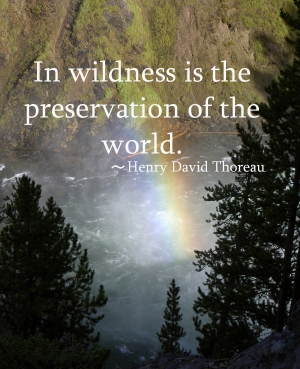 Thus, Purdy points out, “Even wilderness, once the very definition of naturalness, is now a statutory category in U.S. public-lands law.” The Sierra Club still markets this (outdated, in Purdy’s perspective) view as one of its touchstones: “In wilderness is the salvation of the world.” (By way of Aldo Leopold’s Sand County Almanac, paraphrasing Thoreau’s Walden; Thoreau actually wrote preservation.)
We often uncritically hold to a romantic (and Romantic) notion of the natural world as pure or unspoiled, a realm or order which is, at least in a few surviving locations, uncontaminated by human agency. But, Purdy continues, “as a practical matter, ‘nature’ no longer exists independent of human activity. From now on, the world we inhabit will be one that we have helped to make, and in ever-intensifying ways.”
Purdy is not anti-nature by any means, as a cursory reading of his essay might at first suggest. He’s not a foe to demonize or take down on Twitter, if you’re a radical Pagan/environmentalist. But the challenges he depicts are real. As a Druid I need to pay attention when he writes things like this:
To invoke nature’s self-evident meaning for human projects is to engage in a kind of politics that tries, like certain openly religious arguments, to lift itself above politics, to deny its political character while using that denial as a form of persuasion. It is akin in its paradox to partisan mobilization in favor of constitutional originalism, which legitimates solutions to political problems by recourse to extra-political criteria—in the present case, what nature was created to be, or self-evidently is.
Such arguments succeed by enabling their advocates to make the impossible claim that only their opponents’ positions are political, while their own reflect a profound comprehension of the world either as it is or was intended to be.
Is nature (or Nature) “self-evidently” anything? If so, what? Do Druids and Pagans generally have any special insight to share that can respond to views like Purdy’s with any kind of authority or credibility? Can we demonstrate a “profound comprehension of the world” in terms that matter and more importantly will shape policy? For environmentalists (and for Pagans, though Purdy doesn’t name them), “inspiration and epiphany in wild nature became both a shared activity and a marker of identity. They worked to preserve landscapes where these defining experiences were possible.”
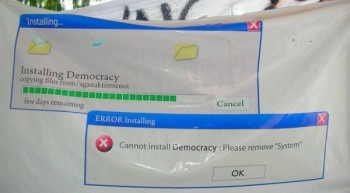 But throughout human history, Purdy notes, various and successively changing ideals of nature have underpinned diverse economic and political arrangements that always consistently disenfranchise a designated fraction of humans. Whether slaves, minorities, women, aboriginal peoples, immigrants, certain racial or ethnic groups, someone always gets the short end of the stick from these idealizations of “nature.” To hold the natural world to anything but a democratic politics, Purdy says, is to exclude, to perpetuate injustice, and to oppress.
However, Purdy goes on, if we abandon an idealized nature,
if we embrace not just the Anthropocene condition but also the insight—if we accept that there is no boundary between nature and human action and that nature therefore cannot provide a boundary around contestation—we may have the basis of a democratic future. It will be democratic in the double sense of thoroughly politicizing nature’s future and recognizing the imperative of political equality among the people who will together create that future.
Whether a thoroughly politicized nature can aid us in creating a just future is an experiential question. We’ll prove or disprove it by political action rather than by theologizing about nature. (Yet every time we’ve attempted to discount a religious or theological view, it has returned in surprising force. Should we abandon theology for activism?)
In attempting to outline what a future democratic politics of nature might look like, Purdy offers the Food Movement as a kind of Exhibit A. Though the movement can be reduced to or parodied as privileged (mostly white) humans indulging in artisanal cheeses and wines at prices no one outside the 10% can afford, it marks the beginnings of much more, and
includes a number of elements that might be generalized to help shape the politics of the Anthropocene. First, it recognizes that the aesthetically and culturally significant aspects of environmental politics are not restricted to romantic nature but are also implicated in economic and policy areas long regarded as purely utilitarian. For example, a beautiful landscape worth preserving so that people can encounter it need not be pristine: it could be an agricultural landscape—preserved under easements or helped along by a network of farmers markets and farm-to-table organizations—whose cultural contribution is that people can work on it.
One problem with past policy is a fragmentation that separates and de-couples landscape from economy. The land is not merely a neutral resource. “The most credible food politics would combine an aesthetic attention to landscape with a concern for power and justice in the work of food production … [and] “ask what kinds of landscapes agriculture should make and what kinds of human lives should be possible there, so that the food movement’s interest in landscape and work is not restricted to showpiece enclaves for the wealthy.”
This blog and many of its concerns come under critique when Purdy remarks
It is too easy to say that, in the Anthropocene, we have to get used to change—a bromide that comes most readily to those with some control over the changes they confront—when the real problem is precisely how to build politics that can make the next set of changes more nearly a product of democratic intent than they currently seem destined to be.
 I write from a decided position of privilege. So, of course, does Purdy. He and I both belong to that tiny minority on the planet “with some control over the changes they confront.” And if you’re literate and have time to read blogs and access to the technology where they appear, so do you. Though some days it may not feel like it, we have the luxury to question why and imagine how and even manifest what next.
Here on this blog I contemplate and explore a minority practice and belief, and try to make sense of my experience and the historical period I find myself in. To blog at all is to write from time left after making a living. How many of us have that? Besides, if everyone talks, who listens? Blogs ideally create dialog. But often a blogger like me can be guilty of doing more talking and less listening. (It’s ideally a balance rather than a binary opposition.)
Purdy notes in that last excerpt that he spies a definite trend or direction. He hopes “the next set of changes [will be] more nearly a product of democratic intent than they currently seem destined to be.” And he ends with a curious bow that seems to evoke much he has taken pains to empty of force.
Even that thought, however, is a reminder that this is only a fighting chance, part of a fighting future. The politics of the Anthropocene will be either democratic or horrible. That alternative is no guarantee that a democratic Anthropocene would be decorous, pleasant, or admirable, but only that it would be a shared effort to shape our more-than-human future with human hands.
Is there no alternative between democratic or horrible? Isn’t our own era an example of both? And what is that “more-than-human” future he says that we will shape with our own less than godlike human hands?!
/|\ /|\ /|\
IMAGES: Purdy; ostriches; “in wilderness” quotation; installing democracy; add new post.
*Lummis, C Douglas. Radical Democracy. Cornell University Press, 1997.
[I happened on Lummis years ago and have been grateful ever since. A professor of cultural studies at Tsuda University in Japan, Lummis, who has spent much of life overseas, ably critiques Western trends and politics from the vantage point of an inside-outsider. Most of his work has been published in Japan, and often in Japanese — and hence he’s not as widely known in the West as he deserves.]
 Much of our human anxiety clusters around an odd mental construct we call “tomorrow,” and sometimes those wacky futurists brought to us by odd institutes with funky acronyms and obscure sources of funding actually have something useful to contribute to earn their keep. Here’s Bruce Sterling on change (link to blog):
… as a futurist I just don’t do “positive” and “negative.” I actively avoid that kind of value judgment. Wishful thinking and fearful thinking gets in the way of an objective understanding of change-drivers. Change occurs from pent-up energies: it’s like asking if a battery’s voltage is “good” or “bad.” All potential change has positive or negative potential: otherwise it isn’t even “potential.”
 “Change occurs from pent-up energies.” Without a reservoir of energy, it simply doesn’t happen. Any equilibrium — I’m extrapolating out loud here, to see what the implications look like — any apparent equilibrium or stasis, then, is a kind of wallpaper over pending change and a cloak for accumulating energies. In other words, things don’t change, until they do. Watch the surface and I won’t catch the building forces for change. Equilibrium, rather than a kind of reset to normal, an all-clear, all-systems-go signal, can be seen as a boiler, a reactor, a container for accumulating change-energies. If change is the norm, equilibrium is a pivot, a hinge. It’s not a place to live, but to visit, to stop by, to rest in. It’s the next foothold, the plateau wide enough for a pause, along the ascent.
“All potential change has positive or negative potential …” Both at the same time, in every case? If the energies behind changes are anything like water or electricity, they find the easiest channel to flow. A habit is the smoothest channel — it’s been widened, deepened and swept clean by repeated use, so energies for change often dissipate if they can flow along the channel of a habit. Block the habit, even once, when change is about to happen, and the flow will seek another channel — maybe even a new one, if other habits don’t swallow the energy.
[Personal observation here: the habit I referred to in the previous post has yielded for now to image and sound work, but as part of what I’m seeing as realignment, I’ve been catching myself indulging more in other repetitive/obsessive behaviors. Compensation? The energy will flow. An old computer game, for instance, suddenly seemed irresistibly interesting — I’d play a typical 10-minute session again and again, between other more productive tasks. The “path of least resistance” applies profoundly to working with habit and change. Eliminate one habit and energy will flow into the next easiest channel. A key I’m learning: make a change that’s easy for energy to fill. How to do that is my practice.]
Can I avoid a value judgment, as Sterling claims he does? “Wishful thinking and fearful thinking gets in the way of an objective understanding of change-drivers.” Hmm. Often my wishes are negative: I want to escape/change/get away from/overcome X, and so X draws my attention, rather than the change I say I want to activate. Instead of spending energy on the change, I spend it on X. My attempt at change may actually be strengthening the habit.
Unlike the “get ___ quick/overnight/in just seven days!” promises of those with something to sell us, most permanent changes take longer to settle in. Everything I’ve learned from my habit can be used to build the energies of the changes I desire: visualization, sound, emotion, repetition. No doubt about it: change usually needs practice.
/|\ /|\ /|\
You might wonder what connection some of these recent posts have with Druidry. Good spiritual practice is good spiritual practice. Why else does “spiritual but not religious” resonate so deeply with so many? When religion gets in the way of spirituality, there’s a problem.

Ellen Hopman
Druid and author Ellen Evert Hopman offers this excerpt from her forthcoming book Legacy of the Druids.* Here is the voice of one of the many Druids she interviews. The attitude here, rather than the specifics, is what I cherish and practice in my own way. The fact that it assumes a Druidic form simply means you have yet another opportunity to translate good spiritual sense into your own particular tradition or idiosyncratic practice:
“The grandest moment of the year is on Imbolc, when I open up my door to the night and thank her for all that she has given, then pour milk across my threshold to the living world outside, inviting Her in, whoever She is, whatever deep and joyous mystery, whatever unplanned liberation she brings, even if it comes in the guise of loss and fear and death.
I believe in the abundance of life, through the most frightening and toilsome passages. I believe in the essential expansiveness of our souls, and these are encapsulated in Brigit, the patron of poetry, of healing, of smithcraft, the one who guides sailors through dark and turbulent seas, who sets the teats flowing and brings birth to the calves and lambs.
The world we inhabit is hidden in a tangle of veils – fear, rage, misunderstanding of who we are and how we are connected and how we can survive and flourish, human and nonhuman, wild and tame.
Facing our own tangles and emerging filled with that ability to give, to receive, to hope and love: that is how I see Her worship as functioning best. She is the beauty and She is the veils, and She is the freedom and unity I keep my eyes on when I struggle through.
Opening the door to Her on Imbolc, giving Her and Her world the nourishing gift of milk and inviting them more deeply into my heart – these are the most joyous religious acts I can ever commit.”
Mael Brigde
Vancouver, Canada
 It’s a portion of Druid wisdom to master change in our lives — not to dominate life, which we can never do, but to sail with it onto that endless golden sea that, whenever I pay attention, is sparkling and surging around and within.
/|\ /|\ /|\
IMAGES: tomorrow; reservoir; Hopman; golden sea.
*Hopman, Ellen Evert. A Legacy of Druids: Conversations With Druid Leaders Of Britain, The USA And Canada, Past And Present. Moon Books, 2016.
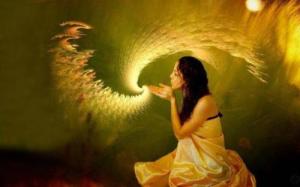 In the way of things, no sooner had I planned to explore further the transformative power of sound in response to comments on the last post than images, not sound, seized my attention.
Stay flexible, I told myself. Both inner and outer landscapes can turn out to be far more fluid that we expect. (Sometimes my inner voice can be a sanctimonious pain in the ass — especially when it’s also spot on.)
I’d struggled with a particularly troublesome habit which has persisted since my teens. It had been responding well to visualization and images. Problem was, that image practice seemed to siphon off energies that usually spark a new post for me. Nothing. The well was dry. Especially after recently re-dedicating myself to posting at least once weekly, this was distressing.
Finally, some two weeks later, with more than a little help from the awen, here’s that next post.
/|\ /|\ /|\
You feel a subject’s yours to write about when it falls in your lap. I subscribe to a weekly inspirational e-message from OBOD, and here’s what popped up in my emailbox one Monday morning about a month ago:
“The harmony that holds the stars on their courses and the flesh on our bones resonates through all creation. Every sound contains its echo. Before there was humankind, or even forest, there was sound. Sound spreads from the source in great circles like those formed when a stone is dropped in a pool.
We follow waves of sound from life to life. A dying man’s ears will hear long after his eyes are blind. He hears the sound that leads him to his next life as the Source of All being plucks the harp of creation.” — Morgan Llywelyn, Druids.*

Didgeridoo
You’d think with a prompt like that I’d suffer no lack of material. You’d assume the post would practically write itself. No such thing. (The universe effortlessly keeps us humble.)
Though it’s lovely and rich with insight, the very authoritativeness of this excerpt set me back on my heels. In Llywelyn’s novel, the Druid speaking these words knows these things viscerally. Sometimes a fictional character can project a greater presence and command higher respect than any historical sage or living pundit. Most of you, I hope, enjoyed just such enchantment many times in books and films.
/|\ /|\ /|\
“Every sound contains its echo.” Sound can lead directly to transverbal understanding. I know this powerfully, repeatedly, over years. So do most of us, if we stop to think about it. Like music, both chant and mantra can take us elsewhere. Rather than engaging the mind with its opinions, attitudes, assumptions and arguments, sound drives right through logic headlong into experience. Belief? Disbelief? Nope. You just know … at least until the music falls silent.
Echo, original, where are you? I long to hear you again. Always.
Try introducing someone to a new singer or band. “Oh, these lyrics are so inane,” your too-clever friend may whine. Meanwhile you sing along whenever the song plays, and the music just carries you with it. The words may fit poorly or well, but never mind. It’s the sound that carries them on its current. Your liking merely helps the sound reach deeper. All successful music resonates with such sympathetic magic.

Beatlemania
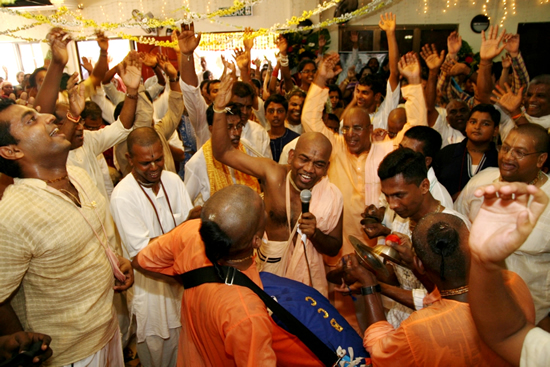
Great musicians often stand out in front of popular taste, expectation and consciousness. We have documented evidence from the last four centuries of music in the West, from crowds weeping at the premier of a new symphony by Beethoven, through the fear of the freedom and perceived license of the jazz age, Elvis “the pelvis” Presley, the continuous screaming that welcomed the Beatles’ performances, the blissed-out faces of Hare Krishnas engrossed in kirtan, and on to the Evangelical fears of Satanic influence in rock – the infamous claims of backmasking in songs like Led Zeppelin’s “Stairway to Heaven” only the most egregious among many examples.
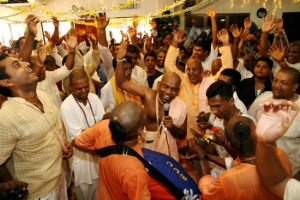
kirtan
I won’t claim all boundary-breaking is an unalloyed “good thing” — it’s not. But music – sound – possesses remarkable power to shift consciousness into new channels. We vibrate ultimately to what we long for and dream about, even if we resist it consciously. Our lives pick up and amplify the sympathetic vibrations, and start to manifest what we’ve set in motion. Imperfectly, sporadically at first, unless and until we learn to vibrate more consciously and healthily.
Much of what we do in chant and mantra is prime the pump, to mix metaphors. Start the vibration locally to attune to the vibration all around us, atoms alive with movement.
One of the best practices I know is to try out and compare different sounds, different vibrations, etc. Simply discover experimentally for yourself which ones actually work. Devote equal time to exploring awen, OM, HU, nam myoho renge kyo, the 99 Names of Allah, Gregorian chant, Tuvan shamanic throat singing, etc. — the extraordinarily rich human heritage of sound-working. Watch your mood, dreaming, creativity, insight and so on. In this way one can quickly dispose of much bad philosophizing with incontrovertible evidence from personal experience.
/|\ /|\ /|\
To return to my own experience these past few weeks: working with images helped tremendously in shifting my energy and attention away from the habit. Yet occasionally the desire would boil up and flood my awareness with all of its original force. What to do? Sound. Working with sound provides a way to re-tune the reservoir of energy that often accumulates behind a habit and begin to help it shift in new directions, into new channels of flow. Image alone won’t do it, I’m finding: it needs sound.
The “why” of the power of sound lies in demonstration. Like so many of our most potent and valuable experiences, we have to hear it to get near it, play it to say it, flow with it to know it most intimately.
/|\ /|\ /|\
*Llywelyn, Morgan. Druids. Del Rey, 1992.
IMAGES: female figure; didgeridoo; Beatles’ fans.; Hare Krishna kirtan.
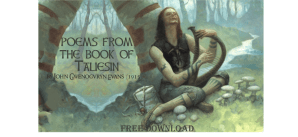 The Awen I sing,
From the deep I bring it,
A river while it flows,
I know its extent;
I know when it disappears;
I know when it fills;
I know when it overflows;
I know when it shrinks;
I know what base
There is beneath the sea.
(lines 170-179, Book of Taliesin VII, “The Hostile Confederacy“)
Oh, Taliesin, how do you know these things? I say to myself. How is it you enchant yourself into wisdom?
I have been a multitude of shapes,
Before I assumed a consistent form.
I have been a sword, narrow, variegated,
I have been a tear in the air,
I have been in the dullest of stars.
I have been a word among letters,
I have been a book in the origin.
OK, you know it because you’ve been it, I say to myself and the air.
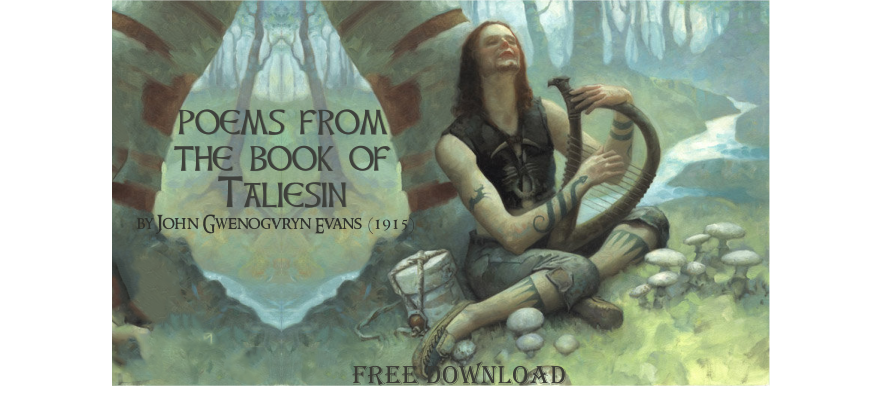
When I sing, I hear a music that both exists and does not exist until I open my mouth. We create in the moment of desire and imagination. “From the deep” we bring things that flow like rivers while we sing. But before the song, or after?
Contrary to what I may think in the moment, so many things are matters of doing rather than believing. Challenges behave much the same as joys. When I’m afraid, I have a chance to show courage. What else does courage mean but to be afraid — and to attempt the brave thing anyway?
And when I sing, that takes a kind of courage too. I mean by this that singing when the sun shines is easy enough. Necessary, too. A gift. But singing in the dark, singing in pain, singing in uncertainty — or singing in joy when joy itself is suspect and the times are bad — there’s a song of power Taliesin would recognize.
The Awen I sing,
From the deep I bring it.
Another tool for my tool-kit. Sing it and you bring it. Make it come true when before, without you, it not only hasn’t yet arrived, it won’t and can’t arrive until you do.
IMAGE: Taliesin.








 A Druid Way