Archive for the ‘spirituality’ Tag
[Part 1 | Part 2 | Part 3 | Part 4 | Part 5 | Part 6 | Part 7 | Part 8 | Part 9]
Wadin Tohangu has been in my thoughts these past few days — at first just a tickle of awareness, an overlay to thought. Then stronger, a gesture on his part for me to pay attention, a longing on my part to offer that readiness.
In the past a listening heart usually opened the way for him. Give my opinions and distractions a rest, and always something more worthwhile would fill the space they occupied. A poem, an idea for a blog-post, a phone call I needed to make or take, a chance conversation with a homesick student no one else notices, a shaft of sunlight or spectacular cloud at the moment I look out the window. The attention that draws Wadin is simple but not easy. Especially not today. Why not? I ask myself. I’m out of practice, for one thing. I mull over the past few weeks. Money is tight, and old medical bills, though we bring the balance down each month, still require that monthly check. We’ve just managed to pay municipal property taxes, and now the Ides of April loom, tax day part two, on the 15th. (We have as little taken out of the paycheck as possible, on the theory that it’s easier to pay later on our terms, rather than to try getting a refund on the government’s. We’re still, you might say, optimizing the theory.) Add to that some education expenses for my wife, plumbing repairs after basement pipes froze … the list goes on, one version or another all too familiar to many of us.
But through it all, things to celebrate as well. Yes, there will be balance. Birds back, singing. A few passing on the way north, offering unfamiliar snatches of melody on their layover. Daffodils pushing up pale and uncertain, the first wasps and flies buzzing around rather forlornly, that indefinable slant of light and the scent of earth that signal spring, whatever the thermometer shows. Longer days. A sky that says forever is still here, starting right beyond my skin.
Wadin Tohangu is companion to my thoughts again. What will he say to me this time? What do I need to hear?
/|\ /|\ /|\
Updated 23 April 2015
 Author, Episcopal priest and current professor Barbara Brown Taylor has written An Altar in the World, a splendid little book on simple, essential spiritual practices which anyone can begin right now. She writes from a refreshingly humble (close to the humus, the earth) Christian perspective, and a broad vision of spirituality pervades her words. Because of her insight and compassion, her awareness that we are whole beings — both spirits and bodies — because of the earthiness of her wisdom, and her refusal to set herself above any of her readers, she makes an excellent Druid of the Day. I hope I will always remember to apprentice myself gladly to whoever I can learn from. As the blurb on her website page for the book notes, “… no physical act is too earthbound to become a path to the divine.”
Taylor brings a worthy antidote to the bad thinking and fear-mongering so widespread today. Here’s a sample:
… it is wisdom we need to live together in this world. Wisdom is not gained by knowing what is right. Wisdom is gained by practicing what is right, and noticing what happens when that practice succeeds and when it fails. Wise people do not have to be certain what they believe before they act. They are free to act, trusting that the practice itself will teach them what they need to know … If you are not sure what to believe about your neighbor’s faith, then the best way to find out is to practice eating supper together. Reason can only work with the experience available to it. Wisdom atrophies if it is not walked on a regular basis.
Such wisdom is far more than information. To gain it, you need more than a brain. You need a body that gets hungry, feels pain, thrills to pleasure, craves rest. This is your physical pass into the accumulated insight of all who have preceded you on this earth. To gain wisdom, you need flesh and blood, because wisdom involves bodies–and not just human bodies, but bird bodies, tree bodies, water bodies and celestial bodies. According to the Talmud, every blade of grass has its own angel bending over it whispering, “Grow, grow.” How does one learn to see and hear such angels? (14)
/|\ /|\ /|\
Taylor, Barbara Brown. An Altar in the World. New York: Harper One, 2009.
When the phone call came, she was standing bent over the kitchen table, up to her elbows in pumpkin innards. A crop of volunteers had sprung up in a poorly-turned compost pile. She thanked Spirit for the gift, leaving wherever she harvested pumpkin a small bundle of dried thyme in exchange.
At the first ring, she looked down at her sticky hands, then out the window. A brief scatter of rain still sparkled on grass and leaves outside the kitchen window. Calls these days were almost always marketers. If it was Jack, she could call him back. They still needed to sort out a few things. But she would not rush the day, nor her mood, over answering the damn phone. She did pause at the third ring. Your worst arguments are with yourself, she remembered hearing. No, let the machine take it. She’d had it since high school, the black plastic housing cracked and duct-taped together. The sexless mechanical recording came on. She turned back to pale orange pulp and slimy seeds, slipped a couple into her mouth to chew, imagined them baked and salted. She waited, half expecting the caller to hang up.
The raspy voice on the machine straightened her back all by itself. Cassie, her father’s baritone said. And paused. Cigarette cough, the same. I want … I’d like to talk with you. She didn’t know how she felt. He’d kicked her out … eleven years ago, it was. They’d talked just twice since then. All that weekend’s worth of argument over a festival she’d been determined to attend. She couldn’t even remember its name.
No more of that Pagan crap in this house, he said, finally. I’m sick of it. You go and you don’t come back. They didn’t yell, at the end. Plenty beforehand. Fine with me, she said. She left about twenty minutes later. Didn’t even slam a door. And that was that. But you could have bottled the acid in the air and scoured steel with it.
I’m in Sacramento now. Oh, my number, it’s … She heard him stumble over it. I hope you’ll call back. Another long pause. As if he could hear her thinking, waiting. Not answering. Not wanting to. Cassie. The tug of her name again. Then a click and brief dial tone. She stared bleakly at the red digital 1 that appeared on the messages screen. How much of life was playback.
Outdoors the sky had darkened again, and her mood with it. She knew she needed to breathe and stand in the open air, to listen to something other than her own thoughts. Once outside, she knelt and rested her palms flat on the grass, to give her anger to the earth, not to carry it. Earth, take what I need no longer, teach through weakness what makes stronger. She breathed through the words, said them again, then a third time. She would call him back this evening. At nine, six o’clock his time. Sacramento. What was he doing there? Well, she could wait to find out.
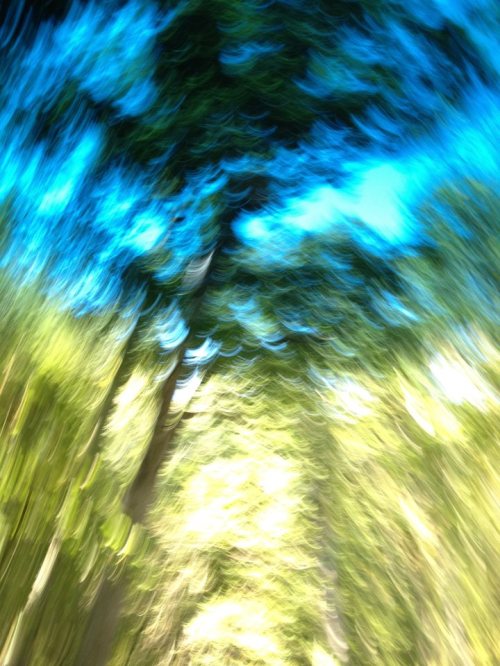 This unretouched image of trees and sky, courtesy of Druid Debbie Brodeur, was taken from a moving car. How much glory lies just behind the “ordinary.” Our eyes insist there’s “nothing new,” while all the time endless wonders dance past us. It’s possible to remember to “look again,” to re-vision things, even a few more times a day. Small steps, to see the world new again.
She was Druid. When she needed to know things, a way would open. She was learning to trust it. Sometimes an opening way asked for patience, and that took work, still. Waiting rarely looked hard when others did it, but she’d done enough herself to know better. A song made it easier, and when she listened a certain way, now and again songs came, tinkling on the air, or roaring out of someplace she didn’t know she’d gone to till she returned with a start, the phone ringing, or her cat Halfpint curled in her lap and kneading one thigh with paws tipped with needle claws. Often the words came later, the melody already running ahead of her, in and around her attention till she got a version down on paper or on her music program.
She was Druid, she knew. It was a long time coming, that knowledge. Sometimes she’d resisted, convinced she was done with paths, and seeking and god-stuff, anything like that. But through it all the gifts kept arriving. Hard ones, and easy ones too. Often enough it meant whatever the land gave her at the moment. For proof, all she had to do was look at her house, filled with stones, bird bones, animal skulls, pressed flowers, carved branches, vervain and basil and mint, garlic and St. John’s Wort and other herbs she was learning as she went. After Jack left with his secretary, she got the little ramshackle two-bedroom house and the six acres of pasture they’d planned to farm, and slowly the once-empty rooms filled with links to the green world outside the door. Inside, too. Spiders in the corners, mice in the walls, squirrels skittering across the tin roof, crows caucusing in the back yard.
Jack. One of the hard gifts. He left, and for a while the emptiness threatened to eat her alive. A big hole she had to stop looking into. No bottom, but walls dark with bitterness. So she stayed busy volunteering and running the food pantry and substituting at the local elementary school, until one day a boy complained about the smell of incense that seemed to follow her wherever she went. “Witch” was the real reason, she heard from a sympathetic colleague. Parents complaining about “that teacher.” Though when the principal called her in “for a little chat,” what he said was they just couldn’t rely on her to be on time. All she knew then was that her morning ritual had just cost her one needed source of income. Hard gift.
A month of therapy, and “you’re stuck in a box labelled ‘wife,'” until she knew she could give herself better advice, and cheaper. When the box is the whole world, then I’m Druid in a box, she thought. And thinking inside the box is a great place to start. Hardly anybody else is in here. They’re all outside, because that’s where they’ve been told they should be. That’s where the clever ones are, the ones who want to be ahead of the curve. Mostly people do what they’re told. But almost always something held her back from doing what everybody else did, shoved her or kicked her sideways. A kind of resistance, a suspicion, a compass set in her belly and spinning her some other way. Ahead of the curve? It was more than enough to be the curve, bird’s wing in the air, crescent moon, arc of water coursing over a falls. The backyard junipers and oaks and one old willow bowing at the sky.
Then it was October, her birth month, and in spite of turning 30 in a few more days, her mood lightened. She could feel a shift coming, something new trying to find her, a little blind, and maybe needing help. She could help it. Listen, she reminded herself. It was one thing she’d finally gotten good at.
To be continued …
New York Times columnist Dana Jennings wins the first “Druid of the Day” award particularly for this portion of his column in yesterday’s (7/10/12) Times:
Scenes From the Meadowlandscape
Monet had his haystacks, Degas had his dancers, and I have the New Jersey Meadowlands from the window of my Midtown Direct train as I travel to and from Manhattan.
But what, it’s fair to ask, does squinting out at the Meadowlands each day have to do with art, with culture? Well, as a novelist and memoirist for more than 20 years, I like to think that if I stare hard enough — even from a speeding train — I can freeze and inhabit the suddenly roomy moment. Through the frame that is my train window I’m able to discern and delight in any number of hangable still lifes.
And the Meadowlands never disappoints, no matter what exhibition is up.
Its shifting weave of light, color and texture hone and enchant the eye. The sure and subtle muscle of the Hackensack River is sometimes just a blue mirror, but when riled and roiled by wind and rain it becomes home to slate-gray runes. The scruff, scrub and brush are prickly and persistent, just like certain denizens of New Jersey. And the brontosaurus bridges, their concrete stumps thumped into the swamp, idly look down on it all.
For his focus, intentionality and the requisite quietness to see, and then — just as important — turn the results of that seeing into a window, an access point for others who read his column to do the same “noticing” in their own lives, Jennings earns my commendation as “Druid of the Day.” This seemed like a good series to launch, to help remind myself as well as my readers of ways we can be more attentive to beauty around us, particularly unexpected instances — free, a gift if we only notice them — and receive their transformative power.
City or country, it doesn’t matter: we can be witnesses of natural power and beauty, and learn what they may have to teach us, anywhere — including Manhattan, and from the window of the Midtown Direct train. These are no less — or more — “Druidic” than any other spots on the planet.
Know others who deserve recognition as “D of the D”? Please send them along to me and I’ll write them up and include an acknowledgement to you in the citation. Thanks in advance.
/|\ /|\ /|\
[Earth Mysteries 1 | 2 | 3 | 4 | 5 | 6 | 7]
Updated and edited 22 June 2017; 14 Dec 2017
Readers of this blog know I frequently quote John Michael Greer. As a writer, blogger, and leader of another Druid order, he challenges me to dig deeper into my own order and understanding of Druidry, and examine its teachings more critically, as well as ponder the implications of his cultural criticism. While his popular blog The Archdruid Report deals primarily with the consequences of Peak Oil, and offers productive strategies for thriving in the coming hard century or more of scarcity and turmoil, as we transition to a post-industrial age, most of his other writing centers on his spiritual journey until now.
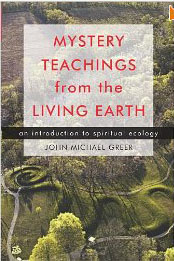
 As a case in point, his most recent book, Mystery Teachings from the Living Earth (Weiser, 2012), is a reimagining of The Kybalion*, published anonymously in 1912. Greer asserts as his book’s underlying principle that “The laws of nature are the laws of spirit; this is one of the great secrets of the Mysteries.” He reworks the seven principles of the earlier book into insightful observations about spiritual ecology, framed as spiritual law. Here’s the first one, the Law of Wholeness:
“Everything that exists is part of a whole system and depends on the health of the whole system for its own existence. It thrives only if the whole system thrives, and it cannot harm the whole system without harming itself.”
The American myth of rugged individualism and self-reliance, part of the cultural story we Yanks have told ourselves over the decades, has served its purpose, and possibly run its course: it may be more of an obstacle now, in an era when we need cooperation and interdependence more than we need stoic endurance. We’re interconnected, and what I do affects you. One of my teaching colleagues always used to laugh at the idea of non-smoking sections in restaurants. “It’s like imagining there’s a non-peeing end of the swimming pool,” he’d exclaim. “A feel-good label doesn’t make it so.” I cannot harm myself without harming the whole system. But anyone buying wholesale into the myth of individualism doesn’t want to hear that.
Rather than seeing the divine as standing outside nature, here’s a way of perceiving the universe as a single immense feedback loop. Suddenly the Golden Rule isn’t just a good moral guide, but also blindingly obvious common sense. What you do comes back to you. What goes around comes around — not because “God punishes me,” or because of “karma” or “sin” or anything other than what goes in, comes out. Computer programmers know it as GIGO: garbage in, garbage out. Maybe it’s time for LILO: love in, love out. As long as we see the world as a collection of separate, discrete individuals rather than an interconnected series of networks, we’ll kill, abuse, pollute, steal, etc. And likewise, as long as we believe that we should be free to do something that “doesn’t hurt anyone else,” we live in illusion. Everything that each of us does matters to all the rest of us. We’re interconnected, linked up to each other in astonishing ways that we’re only beginning to discover.
 At first this seems to dump all the guilt for why things suck squarely on our shoulders, and a lot of people today are sick of guilt. Rightly so: it doesn’t accomplish anything except to poison the heart and to distract us from moving forward. It’s only useful if it goads us into constructive action and that’s rarer than it should be. But guilt isn’t the same thing as responsibility. Accepting responsibility is the death of victimhood. If I begin to see that everything I do has an effect, a consequence, then my life matters in a way it may never have seemed to matter before.
To put it another way and quote a Wise One, “If nothing we do matters, then the only thing that matters is what we do.” In the midst of nihilism and cynicism and hopelessness, each word, thought, deed and feeling carries weight, shapes the universe for good or bad, and leaves a trail, a wake, a ripple, that will flow outward from my life now and also after I am gone. I matter, and so do you, simply by virtue of being alive and here in this place, now. To not choose to act, or to act foolishly and blindly is to waste a priceless opportunity to contribute to the commonwealth, the res publica, the Republic, this shared world of ours.
Who among us can deny that even small acts of kindness or cruelty committed by others have an effect on us out of all proportion to their apparent scale? Can we then imagine for a moment that our own acts don’t set in motion a similar set of ripples? We don’t have to be “big” to matter. Love has no size. Any is much. Blessed be this life, gift to others and ourselves, chance to act, to love, to participate in the Web, to leave ripples at our passing, to vibrate the strands with our existence and choices, to play on life and pluck its melody, note by note.
/|\ /|\ /|\
Image of Mystery Teachings: Amazon.com
You can read the Kybalion online and download a PDF of it.
Image: ripples.
Go to Part 1 | Part 2 | Part 3 | Part 4 | Part 5 | Part 6
I speak for myself, of course. It’s all that any of us can do. But as I approach what is most deeply true for me, I find I can begin to speak true for others, too. Most of us have had such an experience, and it’s an instance of the deep connections between us that we often forget or discount. I’m adding this Part Two because the site stats say the earlier post on initiation continues to be popular.
/|\ /|\ /|\
Within us are secrets. Not because anyone hides some truths from us, but because we have not yet realized them. The truest initiations we experience seem ultimately to issue from this inner realm of consciousness where the secrets arise. Deeper than any ocean, our inner worlds are often completely unknown to us. “Man is ‘only’ an animal,” we hear. Sometimes that seems the deepest truth we can know. But animals also share in profound connections we have only begun to discover. We can’t escape quite so easily.
Our truest initiations issue from inside us. Sometimes these initiations come unsought. Or so we think. Maybe you go in to work on a day like any other, and yet you come home somehow different. Or you’re doing something physical that does not demand intellect and in that moment you realize a freedom or opening of consciousness. Sometimes it can arrive with a punch of dismay, particularly if you have closed yourself off from the changes on the move in your life. In its more dramatic forms initiation can bring with it a curious sense of vulnerability, or even brokenness — the brokenness of an egg that cracks as this new thing emerges, glistening, trembling. You are not the same, can never be the same again.
The German poet Rilke tries to catch something of this in his poem “Archaic Torso of Apollo.” He’d been blocking at writing the poems he desired, poems of greater depth and substance, instead of the often abstract work he’d composed until then, and his friend the sculptor Rodin sets him to studying animals. Rilke admires Rodin’s intensely physical forms and figures, and Rilke ends up writing about a classic figure of Apollo that is missing the head. Yet this headless torso still somehow looks at him, holds him with eyes that are not there. Initiation is both encounter, and its after-effects.
We cannot know his legendary head
with eyes like ripening fruit. And yet his torso
is still suffused with brilliance from inside,
like a lamp, in which his gaze, now turned to low,
gleams in all its power. Otherwise
the curved breast could not dazzle you so, nor could
a smile run through the placid hips and thighs
to that dark center where procreation flared.
I may witness something that is simply not there for others, but nonetheless it is profoundly present for me. Or I see something that is not for the head to decipher, interpret, judge and comment on. There’s nothing there for the intellect to grasp. In the poem, the head of the sculpture of Apollo is missing, and yet it sees me, and I see or know things not available to my head. I feel the gaze of the sculpture. I encounter a god. Or just a piece of stone someone shaped long ago into a human figure, that somehow crystallizes everything in my life for me right now. Or both.
The sensation of initiation can be as intensely felt and as physical as sexuality, “that dark center where procreation flared.” It hits you in your center, where you attach to your flesh, a mortal blow from a sword or a gesture that never reaches you, but which still leaves you dizzy, bleeding or gasping for breath. Or it comes nothing like this, but like an echo of all these things which have somehow already happened to you, and you didn’t know it at the time — it somehow skipped right past you. But now you’re left to pick up the pieces of this thing that used to be your life.
Otherwise this stone would seem defaced
beneath the translucent cascade of the shoulders
and would not glisten like a wild beast’s fur:
would not, from all the borders of itself,
burst like a star: for here there is no place
that does not see you. You must change your life.
You feel Rilke’s discovery in those last lines*, the urgency, the knowledge arriving from nowhere we can track. I have to change, and I’ve already changed. I know something with my body, in my gut, that my head may have a thousand opinions about. I may try to talk myself out of it, but I must change. Or die in some way. A little death of something I can’t afford to have die. There is no place in my life that does not see me, that feeling rises that I can’t escape, and yet I must escape. It’s part of what drives some people to therapy. Sometimes we fight change until our last breath, and it takes everything from us. Or we change without knowing it, until someone who knows us says, “You’ve changed. There’s something different about you. I can’t put my finger on it,” or they freak at the changes and accuse us, as if we did it specifically to spite them. “You’re not the person you used to be,” meaning you’re no longer part of the old energy dynamic that helps them be who they are, and now they must change too. Initiation ripples outward. John Donne says, “No man is an island, entire of itself. Each man is a piece of the continent, a part of the main.” Sometimes it’s my own initiation, sometime I’m feeling the ripples from somebody else’s. The earthquake is in the neighborhood, right down the street, in the next room, here — or across the ocean. But ripples in each case.
Sometimes we “catch” initiation from others, like a fire igniting. We encounter a shift in our awareness, and now we see something that was formerly obscure. It was there all along, nothing has changed, and yet … now we know something we didn’t before. This happens often enough in matters of love. The other person may have been with us all along, nothing has changed … and yet now we feel today something we didn’t feel yesterday. We know it as surely as we know our bones. We can feel the shift under our skin. The inner door is open. Do we walk through?
Go to Part 1 | Part 2 | Part 3 | Part 4 | Part 5 | Part 6
/|\ /|\ /|\
*Mitchell, Stephen, trans. The Selected Poetry of Rainer Maria Rilke (English and German edition). Vintage, 1989.
Secrecy often emerges as a national issue in times of crisis. Recall the debate over the Patriot Act enacted in the wake of the Sept. 11th attacks, and the kinds of broad governmental powers the Act authorized, including significant reductions of citizen privacy. Secrecy can become central to state security, and exists in uneasy tension with the “need to know.”
President Kennedy declared in an April 27, 1961 speech that unjustifiable secrecy is repellent, dangerous, and virtually un-American:
The very word “secrecy” is repugnant in a free and open society; and we are as a people inherently and historically opposed to secret societies, to secret oaths and to secret proceedings. We decided long ago that the dangers of excessive and unwarranted concealment of pertinent facts far outweighed the dangers which are cited to justify it.*
Of course, he was addressing the American Newspaper Publishers Association, and also standing implicitly against the Communist bloc and its perceived threat to the West. (You can listen to a portion of Kennedy’s speech on Youtube here.) Nevertheless his points are well-made, and still almost painfully applicable today, in the wake of Wikileaks and similar events.
Yet secret societies, in spite of Kennedy’s assertions, do have a long and well-established place in the history of America, and many still thrive today. They flourish at many colleges like Yale, with its Skull and Bones the most famous — or notorious — of several societies for college seniors. Another similar and infamous example, though not affiliated with a school, is the Bohemian Grove. Both have generated entertaining conspiracy theories, books, films, and news articles, all of which occasionally offer pieces of the truth. Both exist, and both count among their membership some of the most powerful and influential people in the world. Bohemian Grove counts among its members George H. W. Bush, Clint Eastwood and the late Walter Cronkite, according to a Univ. of California Santa Cruz website.** Should we be worried?!

Opening Night at Bohemian Grove
Many sororities and fraternities also share elements of secret societies, depending on their charters and missions. Still other similar organizations enjoy spotless reputations, such as the PEO Sisterhood, mostly public in its support for education, but still retaining some secret aspects.
 Secret organizations are in fact particularly American, or were in the past. At the nation’s founding, all but two of the signers of the Declaration of Independence were by some accounts members of the Masons or other society. In the late 1800s, roughly 40% of the U.S. population belonged to the Freemasons, Odd Fellows, Knights of Pythias, the Grange, Knights of Columbus, Order of the Eastern Star, or other secret, service, fraternal or social organizations. The 19th century was in many ways the heyday of such groups, which have declined since, even as Americans began to lament the loss of community cohesiveness and devotion to public service, unaware of the irony.
To step even further back in time, secrecy was after all crucial to the survival of Christianity, which took form as a sect within Judaism, and within a generation was perceived as a threat to Rome. Suspected Christians were arrested, forced to worship the reigning Roman emperor (who in some cases claimed divinity) and recant their faith, or face execution in various bloody forms, including by wild animals, in the Circus Maximus, Colosseum or Amphitheater. Until the emperor Constantine in the 300s made the religion a recognized faith of the Empire, Christianity was often an underground practice, with the ichthys (sometimes called the “Jesus fish”) as one of its secret signs, by which fellow believers might recognize each other.
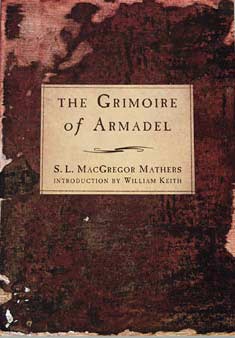 The range of contexts in which secrecy manifests can be surprisingly wide. The discipline of keeping a secret sometimes serves as a test for membership in a group. If you can keep a secret about something insignificant, then you may earn the right to gain access to the greater secrets of the group, because you’ve demonstrated your integrity. Shared secrets are a key element to defining in-groups and out-groups. In the Middle Ages, much knowledge was automatically assumed to be secret. If it was disseminated at all, it appeared in a learned language like Latin or Greek which only literate persons could read and access, and as often it was a zealously-guarded guild or trade secret which only guild members knew. Significantly, the Old French word gramaire meant both “grammar” and “magic book,” and is considered the most likely source of the word grimoire, also meaning a magic book. Inaccessible or secret language and hidden or secret knowledge were the same thing, and occult meant simply “hidden.”
Some kinds of knowledge are experiential and therefore in a different sense hidden or secret from anyone who hasn’t had the experience. Consider sex: there is no way to share such “carnal knowledge” — you simply have to experience it to know it. And thus Adam and Eve “know” each other in the Garden of Eden in order to conceive their children. Many languages routinely distinguish “knowing about” and “knowing” with different words, as for instance German kennen and wissen, French savoir and connaitre, Welsh gwybod and adnabod, Chinese hui/neng/zhidao. The kinds of experiential knowledge humans encounter in a typical lifetime are substantial and significant: first love, first death, first serious illness and so on. Note how these are often connected with the experience of initiation, discussed in a previous post.
It’s vital here to note that it is not secrecy itself but the nature of the secret that is crucial in assessing its significance accurately and dispassionately. I continue to cite J.M. Greer for his lucid and keen observations about the importance and potentials of secrets and secrecy, and the influence of his thinking pervades this series of posts. I mentioned in Part One that though we all take part in the web of communication, there are ways to see it from the outside and more objectively. We can occasionally and briefly free ourselves of its more negative effects and minimize its compulsions, then return to it for its positive benefits of human solidarity and companionship. As I’ve mentioned, solitude can temporarily ease its influence, and grant us a clearer space for reflection. Another group which experiences a consciousness apart from the web are sufferers of mental illness, who are sometimes involuntarily forced outside it. There they may perceive the arbitrary nature of cultural assumptions and behaviors, the “blind spots” inherent in every culture and human institution, and the hollowness of social convention. Their unwitting shift away from the web can make their perceptions, words and actions bizarre, frightening and difficult to manage. Clearly there is danger in breaking the web, or leaving its patterns of coherence that allow us to make sense of the world.
Greer observes:
To have a secret is to keep some item of information outside the web, so that it does not become a part of the map of the world shared by the rest of society. A gap is opened in the web, defined by the secret, and as long as the secret is kept the gap remains. If the secret in question is something painful or destructive, and if secrecy is imposed by force rather than freely chosen, this kind of breach in the web can be just as damaging as the kind opened by madness. If secrecy is freely chosen and freely kept, on the other hand, it becomes a tool for reshaping awareness, one with remarkable powers and a range of constructive uses.**
An examination in the next post of the conscious use of secrecy for positive ends will conclude this series.
/|\ /|\ /|\
*A transcript of Kennedy’s entire speech is available at the JFK Library here. (The quoted portion above begins in section 1, after the prefatory remarks.)
Bohemian Grove dinner image and article.
Grimoire image.
**Greer, John Michael. Inside a Magical Lodge. p. 116.
Go to Part 1 | Part 2 | Part 3 | Part 4 | Part 5 | Part 6
 With energies flowing around us from so many end-of-year holidays and celebrations, it seemed fitting to think and write about initiation. It’s one more piece of a Religious Operating System (ROS), it’s an important key to Druidry and — most importantly — it’s something we all experience. For good reason, then, the subject cuts a large swath through spiritual, religious and magical thought and practice. As author Isaac Bashevis Singer opens his book The Chosen, “Beginnings are difficult times.” That’s one reason New Year’s resolutions often end up on the cutting room floor of the film version of our lives. (Some ways to keep them alive and well and not merely part of the special extended version of our lives that may not see wide release into the “real” world will be the subject of a post upcoming in the next few days.)
Some opportunities for initiation recur each year, and are built into our cultures. Right now the festival holidays of Hanukkah, Christmas, Diwali, Kwanzaa and so on are opportunities for annual initiation — if we let their celebrations reach into us and change us. As breaks from “profane” or ordinary time, holidays take us into altered if not sacred space, and then return us to our lives somehow — ideally, anyway — changed. Of course, specific religions and spiritual paths each offer their own initiations. For Christians, it’s baptism (and for Catholics and some other denominations, confirmation as well). A Jew passes through a bar or bat mitzvah, and so on.
But we needn’t look so far or so formally. First kiss, first love, first sexual experience, first drink (consider the particular sequence of these in your own life). Driver’s license, prom, graduation, military draft. Each transforms as a rite of passage. We “pass through” and come out on the other side, different, in ways others may or may not notice. We ourselves may not fully absorb the changes until much later.
 As with the kinds of freedom I considered in a previous post, there seem to be both “transitive” and “intransitive” initiations — initiations which enable or empower the initiate to do something — typically in the future — and initiations which recognize a standard or awareness already attained, and put a “seal of approval” on it. Of course these need not be separate. Both kinds can occur simultaneously. Initiation is a “beginning” (from Latin initio “start, beginning”) both a path or direction that another agency, power or person starts us on, and also something one does or experiences oneself.
Some big initiations are inclusive. Like annual holidays, we all experience them. Though we may not often think of it, death — our own, or that of a loved one, or of a public figure with symbolic power, like a John F. Kennedy or a Princess Diana — can be a powerful, transformative initiation. Through the grief and the inevitable breaks in familiar routine that come with the first shock, the family gatherings, the arrangements and the funeral itself, we’re brought to face loss, change, mortality, and endings and beginnings in ways. We may take on new, unfamiliar roles, like caretaker, mourner, survivor, with all the challenge and growth they can bring. The first death we encounter (apart from pets), given the usual number of years between generations, comes almost like clockwork sometime in our teens, with the passing of a grandparent. In the freshman dorm at the boarding school where I teach and serve as adviser, there are four or five deaths of grandparents each year, and all the myriad changes they carry with them for those involved. It’s a close study in family dynamics (and our capacity as advisers to provide support) to witness how kids and their families deal with it all.
 Marriage often seems to occupy a sort of middle ground as far as these categories operate. On the one hand, no one is married in the eyes of either the law or a religious organization until they pass through the requisite ceremony. Yet we all know couples who are already “so married” that the ceremony confers nothing that they don’t already manifest in abundance. In this case, the initiation of marriage simply recognizes and formalizes a connection and a state of relationship that already exists and — if the ritual or ceremony still carries any power — blesses and charges the thing consecrated. My wife and I have two anniversaries, ten days apart, and each conveyed to us different energies. First was a spiritual ceremony by a cleric in our tradition, and second came the state ceremony, performed by a justice of the peace. Interesting, too, who we see as performing or undergoing the initiation. Ideally, to my mind, the one experiencing the initiation should play at least some part, if not an active role, in its enactment. For initiation takes place both outwardly, where it is often witnessed by the state if not also by family, and more importantly inwardly, on the subtle planes (which deserve their own post or series of posts).
“Where is wisdom to be found?” goes the old query. Initiation is one major source. Not all initiations “show” right away, or even ever. What we begin may never end. It can take a lifetime to sort out the effect of even “lesser” initiations, to say nothing of the big ones. Those “long” words, never and always, very much belong with initiations.
Go to Part 1 | Part 2 | Part 3 | Part 4 | Part 5 | Part 6
/|\ /|\ /|\
Image credits: Knighthood — “The Accolade” by Edmund Blair Leighton
Sex and love
Oriya Indian wedding
 “Whenever I get bored or depressed, I do laundry,” said an acquaintance. “Afterwards I may still be bored or depressed, but at least I’ve done something that needed doing. And often enough I feel better.” As a treatment, the success rate of this strategy may or may not equal that of therapy or medication, but as far as clean clothes production goes, it’s got the other two beat hands down. At least I can be depressed and dressed.
How different the quiet of depression and the quiet of peace! (I’m writing about peace and using exclamation points. Hm.) One deadens and stifles, the other ripples outward and invites attention, a kind of relaxed wakefulness. We say we want peace, and the holiday season bombards us with prayers and songs and sermons and wishes for it. There are prayers for peace in the ceremonies of many religious teachings and spiritual practices, Druidry included. But rather than asking somebody else for it, I can begin differently. Peace starts in the center, and that’s where I am — or where I can put myself, with the help of recollection and intent. “Come back to yourself,” my life keeps saying, “and remember who you are and what it is you want.” If I start peace (or anything else) within myself, however small, however tentative, it spreads from there outward. After all, it works for every other state I create, whether positive or negative — and I know this from sometimes painful experience! “Be the change you wish to see in the world” is still some of the best advice ever given. If I want change, who else do I expect to bring it about? And if someone else did, how in the world would such changes be right for me? Gandhi knew the secret lies in the approach.
 In my early twenties, Lou Gramm and Foreigner were singing “I want to know what love is. I want you to show me.” It’s a lovely ballad — I’ve got it playing on Youtube the second time through as I write this paragraph, nostalgia back in full force — but it’s precisely backward in the end. As loveless as I can sometimes feel, if I start the flow, jumpstart it if necessary, I prime the pump, and it will launch within me from that point. Do that, and I become more loveable in a human sense, because in the divine sense I’ve made myself another center for love to happen in, and from which it can spread.
But neither love nor peace are things I can hold on to as things. “We are not permitted to linger, even with what is most intimate,” says the German poet Rilke in his poem “To Holderin” (Stephen Mitchell, trans.)  “From images that are full, the spirit plunges on to others that suddenly must be filled; there are no lakes till eternity. Here, falling is best. To fall from the mastered emotion into the guessed-at, and onward.” Whatever I long for in a world of time and space needs to be re-won every day, though in that process of re-winning, not always successful, it begins to gather around me like a fragrance, a habit. Both the customary behavior, and the clothing a monk or nun wears, have the same name. The connection’s not accidental.
The American “farmer-poet” Wendell Berry captures it in these lines:
Geese appear high over us
pass, and the sky closes. Abandon,
as in love or sleep, holds
them to their way, clear
in the ancient faith: what we need
is here. And we pray, not
for a new earth or heaven, but to be
quiet in heart, and in eye,
clear. What we need is here.
So if we’re looking for a “religious operating system,” a ROS, we’ve got some design parameters that poets and others tell us are already in place. “What we need is here.” But try telling that to an unemployed person, or someone dying of a particularly nasty disease. And of course, if I tell someone else these things, I’ve missed the point. What they need is indeed here, but my work is to find out this truth for myself. I can’t do others’ work for them, and it wouldn’t be a good world if I could (though that doesn’t stop me sometimes from trying). I don’t know how their discoveries will change their lives. I only know, after I do the work, how my discoveries will change mine.
A recent article in the New York Times about the rise of the Nones, people who aren’t affiliated with any religion, but who aren’t necessarily atheists, offers this observation, from which I drew the title for this blog entry:
“We need a Steve Jobs of religion. Someone (or ones) who can invent not a new religion but, rather, a new way of being religious. Like Mr. Jobs’s creations, this new way would be straightforward and unencumbered and absolutely intuitive. Most important, it would be highly interactive. I imagine a religious space that celebrates doubt, encourages experimentation and allows one to utter the word God without embarrassment. A religious operating system…
I’ll be examining this further in upcoming posts.
/|\ /|\ /|\
Laundry, Foreigner album cover, and Rilke.












 A Druid Way