Part of my what is ancestor magic. And — no surprise — it’s not a fully-worked-out thing by any means. It doesn’t need to be, because unlike fully-worked-out and therefore dead things, my magic is alive. Sometimes like all living things it changes and shifts where I don’t expect it. Yes, my mind can still run circles around my practice, with arguments like But the ancestors have already reincarnated and they’re off on new adventures. They’re not just waiting around on the off-chance that maybe you’ll finally notice them and pay attention to them!
To which another part of me answers You’re thinking from a limited vantage-point. There’s no time in the place where we meet with the ancestors. Or rather, all of time opens up, if we allow it, for ancestors and descendants alike. What I did yesterday and will do today ripples back and forth through time, just like the actions of everyone else flow and eddy and wash across other lives. Yes, in some of what I do, I fulfill an ancestral goal or vision in my life today, and also launch my own projects, and sow my own dreams. I may work to rebalance excesses and extremes set in motion long ago, and extend long-term projects and plans, even as I add my own energies to the stream which others in their turn live and work in. And some of those others may be the ancestors themselves, returned to take up the Great Work.
A tool for my magic and my connection to ancestors:
Below is a picture from nearly a century ago in 1922, of three generations on my mother’s side. In the small-town Iowa living room, she’s the youngest, the dark-haired three-year-old near the center, looking down at the doll in her arms. Everyone’s standing in front of the fireplace — though all you can see are the bricks and the mantle above. On either side of my mother are my aunt and uncle, ten and five respectively. The young woman on the arm of the chair to the right is my grandmother Lila, with her father, my great-grandfather, ensconced in the wicker chair, the bald patriarch of the clan, calmly reading. Facing him is my great-grandmother in a dark dress, her laced boots mirroring her husband’s. It’s all carefully posed, an image of the white middle-class domestic ideal of the time.
What magical uses here? you ask. So many. What is remembered lives, runs the Pagan proverb. Another is the magic of images themselves — this image, both frozen and alive in time, potent to evoke. (Remember that image is any sense impression: yours may be a song, or a recipe, the taste of family. Or an heirloom, cherished family object whose touch rouses memory.)
Another piece of magic: I know everyone’s names here, and the lives of everyone but my great-grandparents overlapped with mine. But I don’t need names to evoke anyone, because any evocation is built-in to my bones and blood. With each heartbeat I evoke them. They are each already a presence for me, quite literal pieces of my DNA, as well as the stories and impressions I carry. Put a finger on my pulse and I have a practice: with each heartbeat I say the Names — I live because you lived, you live through me. You stand by the family hearth, the fire that still lights and kindles in me, that I pass on.
In any situation, they are a council of elders to consult, a family gathering both in and outside time. One key is to ritualize this, or it will most likely remain a vague impression at best. How to ritualize it matters less: the act of holding them in my attention vividly, aided by gesture, words, objects, and a commitment simply to do the ritual, matter more. I can’t do it “wrong”.
Put a question in meditation, for example, being sure to write it down as well, and watch for dreams and subsequent meditations to round out the query. So much wisdom to draw on, if I can begin to listen to hear it. Each of my ancestors lived out a life with its sorrows and joys. My aunt who never married, in a time when single-dom was much rarer, but built a quiet and modest career as an editor, keeping her sexuality under wraps for most of her life. My uncle, who at 12 years old drove my great-grandmother along country roads in the family car, while she literally “rode shot-gun”, bagging pheasants for Sunday dinner. My grandmother, widowed young, who raised three children. My great-grandfather, who hunted and fished and homesteaded in Sun Valley, Idaho in the late 19th century, before settling down to farm life “back east” in Iowa.
With all this richness of human experience to draw on, I can draw on it to amplify my own, make better choices, honor their lives by living mine more fully, paying forward the investment in family that each made, just by being alive. In such a family gathering, they shift and move from their places in the photo, and turn to take up their lives, before and after the brief flash of the camera that captures their forms in two dimensions. (Oh, let me supply the third dimension of time!)
Another key: I can make of their strengths several charms to strengthen and clarify my path, holding their images and memory as I say the words and lay the spell on myself most of all:
Aim of the hunter is mine, to hit my target. Singleness of purpose is mine, to achieve my goal. Sureness of place is mine, to flourish where I find myself …
Part of my honoring and my magic both is to recognize and embody their strengths. It may reach concrete magical form as a bind-rune or ogham lettering of their names.
Now this is a fragment of my mother’s side of my family. My father’s side, from my perspective, is less easy and comfortable. My relationships with those ancestors are more troubled. Love doesn’t flow as easily or readily. But magic rests there, too, more potent for any difficulty — because they also survived. A great-great uncle and great-grandmother who immigrated to the U.S. in their teens, just the two of them, brother and sister making their way as family servants where they boarded, learning English and acclimating to a strange new country. Survivors of wars and their traumas. My grandmother with the weak heart, knowing a widow’s struggle to keep going through the Great Depression. Illnesses and early deaths. Both common stories, and also utterly personal. We each inherit a full roster of them, and are adding our own right now. Their lives, and my life, are utterly our own, and also glyphs to read for insight and prophecy. Stomach issues on my father’s side, cancer and ulcers: a challenge quite literally to learn better how to stomach the ups and downs of life. Heart issues — what challenges my heart today?
Far more often than I imagine, such signs and wisdom are plain, not hidden at all. Through the concrete details of their lives, the ancestors can provide personalized “prescriptions for living” for their descendants, like this one: find ways to drop stress to clear the path for yourself. Otherwise blockages and barriers will eat you up inside. You eventually arrive at a point where you can see that your inheritance is neither weakness nor strength, but an insight into a long project you’re an integral part of, one that comes with certain parameters you’re working with, whether you choose to recognize them or not, work with them or ignore them.
Practicing ancestral magic means family relationships don’t end just because of death, any more than they do because of birth. Travel to a different era along the time-track, to their time, and I’m the one not yet real, as yet unborn, simply one possibility among many, a descendant whisper they may not hear as they live their lives under clouds and sun, shadow and brightness as vivid as ours today. Yet my birth and subsequent life did happen, and I’m here in my own time, even as I visit theirs, and they visit mine.
I take up the photo again, and in the magic of images and numbers, I’m the seventh element, the six in the photograph complete in themselves, yet also waiting for a missing factor. This is a paradox to work with and explore, how and where (and when) we fit in the cycles and spirals. And it’s a chance, to listen and discover where we find a place, and how we contribute. It comes with work and listening, with knowing all that family means.
Any number of sacred writings have wisdom to offer here: “Wisdom hath builded her house, she hath hewn out her seven pillars” (Proverbs 9:1). “The math and myth of seven”, notes Michael Schneider in his A Beginner’s Guide to Constructing the Universe, “the Heptad, are intimately related to those of twelve, the Dodekad. Both have in common the interplay of Triad and Tetrad, triangle and square. That is, 3 + 4 = 7, while 3 x 4 = 12” (pg. 233). Use your triangle of manifestation (1 | 2), find your triads, use your four elements, build your own 7 and 12.
But what about those perhaps harsh and bent branches of a family tree? Robert Frost, no stranger to difficult families or to the keenness of multiple personal losses, provides a key to a door that may seem shut and locked. Lest we think ancestral magic is closed to us because of breaking and broken families, he writes in one poem, “Home is the place where, when you have to go there,/They have to take you in”.
Not necessarily outwardly — that can indeed sometimes be too much to ask of anyone — but inwardly, where all magic is worked. Because Frost’s poem is a conversation between husband and wife about a hired man, someone who both does and doesn’t belong to the family, an increasingly common position many of us may find ourselves in. For the wife replies about home: “I should have called it/Something you somehow haven’t to deserve”.
Ancestral magic finds us where we are, if we care to let it in. It’s then that we may discover how we’ve been practicing it all along in some form, and can build on that practice more consciously, in ways uniquely fitted to our lives and circumstances. I hope that I’ve supplied some hints and suggestions for how to go about recognizing practices we already have, and where we might amplify them, turning up the volume to hear what family, or just one wise member of it, has to tell us that may be useful in these challenging days.
You can find any number of blogs that offer you a Druid or general Pagan what: what to do on Lunasa, what to include in a ritual for the full moon, what herbs can help with skin conditions, what to say to family members uncertain or fearful of your non-mainstream interests and practices, what medieval manuscripts tell us about older beliefs and practices, what a recently-published author gets wrong or right, what the presumed origins are for X, Y or Z. Regular readers here know I’ve written a fair number of posts like that myself. Yet I suspect the reason you visit this blog, or keep coming back, is not to track down a reliable source of practical what — others do that better and more regularly — but to see what this crazy old Druid is on about now. Maybe something here will be peculiarly useful this time …
With luck and persistence and the blessings of earth, sea and sky (and in many cases, a band of inward mentors that keep tabs on us in spite of our best efforts to ignore or discount them), you keep practicing and reading and dreaming till you learn how to suss out the kind of what you’re looking for. Through regular practice, you learn that practice itself will guide you to more of your own what, because it hones your inner senses, it magnetizes your inner compass, it locks-and-loads your crap-detector, it re-enchants the mundane taking out the trash and sweeping the floors. You’re doing magic, whether you know it or not, because magic is what humans do. You learn to sort wheat from chaff, gold from garbage. You gain inner confidence. You are, in sum, guided to what works for you. “The purpose of magical arts is to enable the changes within the individual by which he or she may apprehend these further methods inwardly” (1), notes musician and mage R. J. Stewart.
And a special blessing on those of you who do persist, who recognize firsthand the challenges of practice, but who manage to move beyond the “eternal beginner” stage, who do the work, who aspire to wisdom yourselves, to trust your own inner guidance and not always expect someone else to tell you what to do. Your struggle is itself service. Our world needs more Wise Ones like you, today more than yesterday, and tomorrow even more than today. You help hold the soil against the inevitable storms, so there’s something left to plant in, next season, so the next generation can not merely scrounge to survive, but can feast.
Anyone who reads — and even more, follows — this blog knows that the why and the how interest me at least as much as the what, and often far more. Or if you want to think of these as just another kind of what, then it’s the what that lies underneath and behind all the whats of practice. Because if you practice for any length of time, the experience of a practice starts to run thin and turn hollow, if you don’t have things of spiritual substance underlying it.
Pillar at Four Quarters Sanctuary, Artemas, PA, U.S.A.
So when I read R. J. Stewart’s assertion that “it is not the ritual that confers initiation, but initiation that generates the ritual” (2), I sit up and pay attention. We’ve all had the experience of the “right book at the right time”, or its equivalent — of situations, “chance” encounters, circumstances lining up and smoothly ushering us to growth, change, transformation, love, opportunity. That inner sensibility of ours, sharpened by practice, resonates with what the eyes or ears take in, and we find a new direction, an opening, a doorway.
If we’re alive at all, if we haven’t given up on our own lives as sources of renewal and creativity and possibility, if we still draw on the well-springs of this incarnation, we come to count on initiations. Anyone alive today has been through one already by being born, and most of us have been through several. We may still be sorting out the immediate consequences and long-term effects of ones we’ve passed or are now passing through, and though we may not always welcome the more challenging ones at first, we may well gain perspective that brings us to a point where we can view them as “difficult gifts”. A diagnosis of cancer, as a common example, though it brings suffering and fear and inevitable change, and sometimes a shorter life, can grow our compassion and bring us priceless experiences we would not know in any other way. Equal parts “gift” and “difficult”.
But what of the easier gifts, the initiations that don’t have to devastate us, that don’t drop us squarely into a Dark Night, or shred much of our lives just to get us to look at and live things differently? After all, love and joy, a new friendship, the birth of a child or grandchild, a fulfilling job, a true gift received, a profound insight unfolding, a period of intense creativity — these are initiations, because we’re not the same afterwards. “Initiation emphatically does not consist of powers mysteriously conferred on us during vague quasi-religious ceremonies” (3) — in spite of what New Age gurus suggest.
The what that I’m looking for here are practices that make initiations easier. Let’s look at an obvious big one: I’m going to die, so how can I make that transition smoother? Yes, another art we’ve lost: ars moriendi, the art of dying, was a serious study and practice, not so many centuries ago. And if that sounds too morbid for you, consider it an essential piece of ars vivendi, of living well. Not to garden as if the cherished spot just keeps producing forever, but what to do to take the garden through the autumn and winter, so it’s ready for next spring.
And that’s just one specific initiation. One of my teachers once remarked we’d have a hard time if we knew in advance only the good things coming our way. And though if you’re like me, there are times you’d welcome a chance to prove that teacher wrong, think of all the changes “just the good things” have made in your life. After all, can you really separate out the “bad” from the “good” in any meaningful way?
Stewart has a fix on our usual states of consciousness. “The normal flow of our life-energies is wasteful, vague, disorientated, and devoid of intent” (4). Often, it’s “Netflix-and-chill”, or “vegging on social media”. Nothing at all wrong with “letting off steam” — we all do it and need to do it — except that initiation itself flows in the opposite direction. Or as Stewart characterizes it, “a door is opened, or a gate created, both within the individual psyche and in imaginal (but not imaginary or false) worlds, through which the pressurised or shaped energies of the initiate are channeled” (5). Initiation changes us through either the willed or unintended discharge of accumulated energies, which is why “unplanned-for” initiations can so disrupt our lives. I get fired, my marriage ends, my lab test comes back positive, my brakes fail at the intersection. In some sense, then, a part of a sustained spiritual practice is “practice for disruption”. What can fall away, what do I no longer need, what holds me back? Asking for insight on these things, working with what comes, prepares me for smoother initiations that needn’t devastate my whole consciousness, that allow me to find my footing more quickly, and work with rather than against the energies released.
That this isn’t a pipe dream or unrealistic goal meets with confirmation in world-wide myth and legend. In Europe we see it in “the quest for the Grail, which is a vessel of perpetual regeneration, guarded by terrors and wonders that can and often do destroy the seeker. But the destruction is that of the false personality; the Grail then regenerates the initiate, brings him or her back from the dead” (6).
So any tools that make both needful and “optional” initiations more clearly defined, that help me work with rather than against them, are an increasing part of the what that I want to find, and that I write about here. When Stewart says that “initiation generates the ritual”, at least a piece of that means, for me at least, that I’ll recognize how to tweak my practice because I’ve been practicing along the way. The new directions, the additions and modifications I’m led to make, will arise from what I’ve been doing already. When in meditation some of my friends dedicate their session to sit by the bedside of those dying alone from covid, they serve powerfully and lovingly. We’ve been on the receiving end of such service countless times ourselves, though we may not always recognize it, and what a joy it can be to return the gift as part of a practice.
“In truth”, Stewart notes,
there is only one initiation, and if we were able to relate to it entirely at our first experience all subsequent art of magic would be unnecessary. In practice, however, we unfold and encounter the various harmonics of initiation through what appear to be a series of encounters and inner changes (7).
And often in the middle of such deep transformations we know a profound sense of recognition. We touch our lives stripped of illusions, and what we thought mattered no longer stands between us and the core of life. This sacred encounter, though I may make it accompanied by grief or pain or despair, is real like nothing else I know.
Part of my spiritual apprenticeship, then, is to minimize, around my own life-initiations, the unnecessary grief, shock, pain and despair — not to zero, because that’s almost always unrealistic, but to levels where the sacred encounter itself matters more, and shines through, becomes the dominant and most powerful aspect of the transformation. The next step is a turn toward gratitude for growth. Why waste any initiation, planned or unplanned?
This is a form of spiritual service, because if the changes of initiation throw me off balance, that will ripple to those around me. The first part of the service is to reduce the negative effects of my growth on others, and eventually learn how to help them do the same. And a portion of that service may take place inwardly, just as my friends sit by the bedsides of the dying in contemplation. For all of us are dying daily to the little selves we no longer need, in order to walk another spiral on the magnum opus, the Great Work of our lives.
/|\ /|\ /|\
(1) Stewart, R. J. Living Magical Arts. London: Blandford, 1987, pg. 3. (More recent reprints and editions available. Avoid ridiculous Amazon used prices. Just checked: Thoth Publications has the best price.)
“It takes night to see fire best”. / Photo by Drew Rae on Pexels.com
You want to know if there’s reincarnation? Well, here it is. This. Yep. You don’t have to believe it. You’re in it. And look: the real question isn’t ‘Is there life after death?’ The real question is ‘What are you gonna do with this life?’ If this one can’t engage you and fulfill you and challenge you, why should any future one do any better? Maybe you’ll bring all that you are right now along with you to the next life (along with a similar forgetting, like what happened this time around) or you’ll be so different in it, that it won’t be “you” in any real sense any longer, so it won’t “matter” either way. Sort of like how it feels when you’re born and start to grow up. Everything’s a mix of brand new and familiar at the same time. And everyone and everything else around us, if we can make a wild guess from the look of things, looks like it’s experiencing something pretty similar, that same strange, fascinating blend.
Cycle 2 “Recycling” isn’t even the right name for it. Nothing’s ever removed from the cycle. It just takes longer or shorter periods of time in its movement through the cycles it’s in, depending on what humans and other forces do with it. We don’t “choose” to recycle or not recycle. We just move things (or try to move them) from one kind of cycle to another for our convenience. Cut and dry wood for a fire. Garden and grow vegetables. Build an aquaduct, a fighter jet, a coffee-maker. Form a political party. Assassinate a rival. Cure a disease. Compose a song. Raise a family. Lick our wounds and hate and love and figure out how to manage another cycle or two. Just like how other things and people are trying to move us from one cycle to another for their benefit. Cycles within cycles.
So you might say the “bestest” thing, the wisest thing to do, is learn about the cycles, and which things move other things in and out of cycles, and how they do that, and how we (can) play a part in that. Sometimes that gets called science, and sometimes religion, and sometimes politics, and all three are pretty much hamstrung by leaving the other ones out. Each plays ‘king of the hill’ and ignores any of the other hills. Kind of like a kid’s version of the real work and play we’re engaged in. Wasn’t it some ancient Greek or Roman who said “The fox knows many things, but the hedgehog knows one thing well”? And neither one is (usually) held up as the example of how to tackle this thing called living.
For here or to go? Paper or plastic? Slab or slot? Trail marker on Mt. Ascutney, Vermont.
Cycle 3 Don’t get trapped in a single cycle. Well, unless you want to. You’ll tend to mirror and match the smaller cycles within that cycle if you do, and spin around several times in it, because it’s mostly a closed loop. People tend to do that, at least till they catch the trick of cycles, and it starts to feel like BTDT — been there done that. The more accurate movement and description of what we usually experience seems to be a spiral — cycle-jumping. Of course, you can spiral down just as easily as up (often more easily), but the usually movement is up. No, the arc of the cosmos doesn’t appear to ‘bend toward justice’. It bends towards equilibrium. It resets, or recalibrates, at the end of a cycle, but it doesn’t “advance” in any consistent way. Of course, it may shift or change. It usually does, just not in a way that we could call meaningful. Only individuals seem to advance or regress (or more often than we think, stay the same). Sorting out the significant and the random changes is a deal of work.
What does a cycle do? It cycles. Life and death, I notice, just keep on cycling, for example. The things in the cycle, they change, not the cycle. Or not much. Cycles cycle, and things “thing”. They’re not usually the same processes, though they move in similar ways. Because things thing by moving through cycles. After a while they can even start to look like cycles because of that. But they seem to hold on to their thing-ness pretty closely over small cycles. Only the bigger cycles show the changes, even make the changes possible. “Rolling with the changes” means using the shape and energy-form of a cycle to change more easily. If you don’t know how a cycle moves, how can you roll with it? Rolling just makes it easier than bumping and banging and thudding, or getting tarred and feathered, or just dragged along. Fewer broken bones and broken lives that way.
Cycle 4 You can think of a cycle like a song. It begins and ends, you can play or sing it several times, and the pleasure is usually in the movement of the cycle, not in finally “getting to the end”. (Unless you’re finishing a very long run of cycles, and finally leaving, and glad to get out.) Learn a few songs and a larger cycle often opens up. We jump to that cycle — we spiral. The smaller cycles often keep going though, sometimes for us and sometimes they just don’t include us any longer, though they may be alive and engaging for others. It’s not always our choice, either, because other choosers are at play in the cycles — other beings in this being-crammed cosmos. One way to think of it is that every thing is a collection of cycles, a working set of them, a larger cycle collecting and relinquishing smaller ones, something like a card player picking up and putting down cards in the game. A “winning” hand is a set of cards (cycles) that work well together. A set of well-chosen and harmonizing cycles that let the larger cycle spiral for the cycling being.
Many variations on the following theme exist. Socrates receives credit for it, among other thinkers. Sometimes it’s called the “Three-Way Filter”. So no, it’s not originality I’m claiming, but utility. As a simple but profound guide in these challenging times, this triad answers a deep and pervasive need. It asks us three questions, in a form so compact we can’t help but use it if we wish:
Is it true? Is it kind? Is it necessary?
Twitter would mostly dry up, if we followed this Triad. Social media as a whole would shrink to a more appropriate and sane size, and not co-opt reason and good sense. My wife and I attribute our durable marriage to both of us practicing this Triad with each other. Because where else do we live our lives most deeply except with our loved ones? If it works there, our way of life, it might even work elsewhere.
Imagine how our patterns of consumption and our interactions with others would approach something more conscious and intentional. Politics as we know it would change radically. And the shaming of others that we indulge in for not meeting standards we ourselves also fall short of would also shrink. (And again: if I can practice this with my partner whom I love, I gain skill for practicing it with others whom I may not love as much.)
Why?
Because often enough I can say “yes” to two of the three criteria. And though the song lyrics tell us “two outta three ain’t bad”, aiming for all three remains the goal. “Why not excellence?” asks ADF, one of the major Druid orders today. Why shouldn’t we aspire?!
When we push against this apparent world, and see it begin to pixelate, a new path can open for us …
It’s interesting to me that, of the three criteria, “kind” is most often the criterion that catches me. I don’t normally think of myself as a particularly heartless or cruel person, yet “kind” is often my sticking point. We reach to claim the moral high ground with “true” and “necessary”, but I end up where it’s kindness that’s lacking.
Try imagining this Triad as a political platform, I say to myself, whatever my place on the political spectrum. And if I can’t, what does that say about my politics, or about my hopes for any kind of justice?
Or as “the only morality I need”, how does it stand up? It’s remarkable how thoroughly the Triad reaches into choices, values, treatment of others — a whole range of ethical issues.
Now let’s couple this Triad with the famous Christian Triad of Jesus: I am the Way, the Truth and the Life. You can derive a whole series of useful meditations on the various pairings of the Three of Jesus with this other Three. And not just the obvious linkages, either — for instance, “Is it necessary?” is a truth we often toss aside, because in our self-indulgent age we feel justified simply if we want something. Voila — no further criteria needed! Likewise with freedom, at least in 21st-century America: if anything constrains me, it must violate my rights. Never mind that it’s good for the whole. Never mind that a whole range of behaviors are denied me, that laws constrain me and would have constrained me during most major civilizations we have knowledge of, because much of “what I want” may not be good for others. (We each have our lists.)
But is any of this Druidic? asks my pesky inner Druid. Well, consider the Instructions of King Cormac, and let me know how well this Triad of Truth, Kindness and Necessity lines up with the counsels of the King.
/|\ /|\ /|\
Which brings us to death, which can seem a very un-Druidic subject.
First ethics, then mortality. Wow, you really know how to market yourself to your readers, and offer upbeat blogposts.
So it’s fitting that one of the most irrepressibly cheerful Druids I know should speak about death, and from daily, intimate, firsthand knowledge. Here’s Welsh Druid Kristoffer Hughes speaking on the subject on the occasion of the re-issue of his meditation on mortality, under the new title As the Last Leaf Falls. As someone who deals professionally with dead bodies and the bereaved every day, as a mortuary worker (in the States we’d say morgue), he knows the death industry firsthand.
“You can tell an awful lot about a society just by the manner they deal with the dead”, notes Kristoffer. He traces much of our contemporary Western outlook, practice and ritual to Queen Victoria, who dressed in mourning for 40 years.
Dip in at any point in this half-hour talk and you’ll gain something of value. “The medicalization of death and grief profoundly impacts all of us in the West”, Hughes says, around the 8:00-mark. “Death always brings in the big questions and the Spirit — but that is not the domain of medicine … We’ve created institutions of death whereby the indignities of death can occur without offending the sensibilities of the living. And I see that every day quite viscerally …”
At the 9:00-point, he notes “A basic anxiety runs through humanity … we are all going to die. And that sound quite depressing, doesn’t it? I might need a mouthful of gin just to offset that. But please don’t judge me. I’ve been in a morgue since quarter past 7:00 this morning”.
“Life … a terminal sexually-transmitted infection …”
“There’s no fundamental universally-correct truth that will alleviate everyone’s anxiety …”
“We need meaning … significance … transcendence … When there’s no meaning, we find people under their desks sucking on Valium the size of their heads …”
“We’re told to conform to other people’s meaning … and that can be a frightfully difficult task”.
“So often when people shine too brightly, [other] people might want them to dim their light. And I say to you never dim your light. Ever. Shine. ‘Cause that’s the purpose you are here. Your eyes are windows through which the universe experiences itself. How can you not shine? If anybody tells you to dim your lights, tell ’em to buy a pair of shades …”
Later (around 16:25) he cites Taliesin: “Know what you are when you are sleeping. Are you a body or a spirit or an occult radiance?” Sleep, he says, the “little death” we each experience every night, is a prime key to insight and awareness about what death actually is.
Re the Covid-19 virus, he says, we lack meaningful rituals to cope that we used to have. “Ritual has fractured”, says Hughes. And the emotional relocation that is grief is far more difficult to navigate. So we need new rituals to help us travel the emotional relocation of grief, of honoring the living and the life of those who’ve left.
A mundane laundry triad: It needs doing, you do it regularly, and you see the benefit in practical terms: clean clothes.
elemental laundry: water, earth, air, fire …
While people have individual laundry rituals — you must fold clothes a certain way, or you can only wash certain items together, or you sort into whites and colors, while somebody else sorts by fabrics, or gentle versus regular machine cycle, or you use specific detergents on specific categories — laundry everywhere needs washing. It’s a deeply human activity.
I talk so much about spiritual practice for several reasons. Those who do it know its profound value, while those who don’t tend more often than not to busy our political landscape and to make headlines of various less-than-positive kinds. By “less-than-positive”, please note, I don’t mean less-than-comfortable. A spiritual practice worth doing should in fact unsettle us if we’re stuck — and that’s a good thing. If I’m entrenched in a rut, I need to be plucked from it, and a good spiritual practice is a rut-plucker.
Do laundry long enough and you begin to discover its seasons and rituals, its smaller and larger gestures. During warm weather, hanging clothes outdoors may be an option (as a rural and stingy Yankee, I get to save several hundred dollars each year drying clothes on a line from early April through late October, and gathering in wonderfully sun-breathed clothes besides. Ah, blessed sweat equity). You may wash more in cold weather because you wear more in cold weather. You may also begin at length to practice economies — better (and less) detergent, or scent-free choices, or more efficient machines, or certain days where doing the laundry just makes better sense. You may struggle against housing ordinances which prohibit clotheslines, or you may frequent laundromats or public laundries with their own rules and practices.
Travel or visit others (before these wry, random and ructious covidious times, and hopefully afterwards, too!) and you face different laundry adventures, washing items in a sink, or in your friends’ or sisters’ machines, or in a hotel laundry room. Leave the ritual you know and you discover how much of a habit it has become. Pack a suitcase, and you’re drawing on accumulated clean laundry to see you at least partway through the journey. A good practice grants you just such a reserve you can draw on.
Some practices will shrink or shred or discolor some of your laundry. Note that nothing in such a practice is “wrong” by itself: only the combining of actions and objects that don’t work well together causes the problem. How far I can extrapolate from that lesson is itself a useful meditation.
Water, air, earth … gifted already. Add the fire of my intention. / Photo by ArtHouse Studio on Pexels.com
And I ponder how the goal of laundry isn’t clean clothes by themselves, exactly. It’s more a person well-clothed in fresh apparel. We want to wear the clean clothes, not merely gaze at them in a pile. I can shower twice a day, but if I have to put on dirty clothes again after a shower, I’m working at cross-purposes with myself. Another reflection for meditation, for the place of a practice.
/|\ /|\ /|\
At a certain point, laundry can become a spiritual practice, an apparent reversal of the title of this post. But not really: a sound spiritual practice nourishes our capacity to make a practice out of more and more of our lives. If I’ve been doing a practice for a while, and I can detect how it has enlarged me in good ways, that’s a valuable indicator, a signpost along the way that we often do not learn in schools, or from those who by rights should be conveying to us the keys and secrets to making the most of our decades here in this strange and marvelous world. But I will not fault them: it may well be that they in their turn did not ever learn it themselves. If I’ve caught even a glimpse of that possibility, I’m blessed indeed. A ritual of compassion for the ancestors: share with them this gift, let them sense something of its resonance for me, let it flow backward and forward in time.
If we’re fortunate, we can number among our family or friends or teachers someone who makes a spiritual practice out of daily life. Their company is a gift and a pleasure, because whatever they do, they do with love. Children may experience this around a grandparent or other mentor. What we do in the presence of the loving spiritual practitioner matters far less than the doing of it in that presence. The quality of that presence outflows. It’s like a fragrance or vibration we take with us. Begin with something small that you do often, said my teacher one time. If it’s tying your shoelaces, tie them with love. When you’ve made that a practice, then slowly expand it to other things.
It’s good to take out our beliefs from time to time and lay ’em side by side with our practice. Good, because a disconnect between them is like dirt in an engine — friction wears things down. I can deal with it only if I know about it. We see it most readily in our relationships, but somehow look past it in our own psyches. We grow closer to another person, or we drift further apart, and we can often trace the causes and turning points, but we discern it less easily in other dimensions of our existence. At least in my own experience, such “grit in the works” burns energy, grows stress, sparks illness, ignites irritability, and seeds confusion over goals. So it’s good to pay attention and apply remedies.
Our inner worlds are sometimes less “in our faces”. Photo by Luis Quintero / Pexels.com
I say, for instance, that I want to improve dream recall, and I seem to believe it, yet I ignore my pre-sleep routine. Rather than affirmations, dream review, and care for my late-night reading choices, I read for pure entertainment, falling asleep with glasses on and my finger in a book. Many things lie outside my ability to manage and improve, so why not focus on those I can? Then, paradoxically, the number of things I can manage and improve often enlarges, because I’m not wasting energy on internal conflict.
Back in 2016 I outlined my principal beliefs as I could perceive them then, partly in response to a comment from a reader talking about his sense of the need for a Druid theology:
My correspondent acknowledges he’s a solitary, and such a path can indeed be lonely at times. Alone, I may confront myself more directly and disconcertingly. Alone, I face truths that can be uncomfortable, inconvenient — and profoundly useful to discovery, creativity and growth. Groups can conceal and divert us from the necessary work of the self.
If the tools of Druidry are worth anything, they’re up for the task of helping us grow, both in groups and alone. We find ourselves in a universe of ceaseless growth and change, so it makes sense that both our beliefs and practices should mirror this larger world we inhabit, if they’re to be of any use and value. Daily meditation, time outdoors in nature, ritual observance, ongoing study, and creative expression make up the lives of many Druids who find value in these practices.
Where’s my attention? (Mt. Ascutney, VT, looking southwest)
The “more perfect union” of the title (from the Preamble of the U.S. Constitution) doesn’t automatically mean that practice must conform to belief (or belief to practice, either), but simply that we attend to the harmony between them. That harmony means they can balance and inform and influence each other.
So here are those beliefs, with today’s notations, observations, etc. following after, indented.
/|\ I believe that to be alive is a chance, if I take it, to be part of something vastly larger than my own body, emotions, and thoughts (or if I’ve learned any empathy, the bodies, emotions and thoughts of people I care about). These things have their place, but they are not all.
Not only is it a chance, but my life experiences seem to push and prod me toward that awareness of a “something larger”. Most of my suffering, if I’m honest, also seems to issue from resisting that direction of growth. If compassion — literally, “feeling or suffering with” — doesn’t enlarge in me, I pay for it with a sense of futility, waste, depression, impatience, boredom. But how I might become part of the “something vastly larger” is as varied as each of us is. My practice is for discovering the “how” and embodying it.
/|\ I believe this because when I pay attention to the plants and animals, air, sky, water and the whole wordless living environment in and around me, I am lifted out of the small circle of my personal concerns and into a deeper kinship I want to celebrate. I discover this sense of connection and relationship is itself celebration. Because of these experiences, I believe further that if I focus only on my own body, emotions, and thoughts, I’ve missed most of my life and its possibilities. Ecstasy is ec-stasis, “standing outside.” Ecstatic experiences lift us out of the narrowness of the life that advertisers tell us should be our sole focus and into a world of beauty and harmony and wisdom.
Joy doesn’t get talked about much, but it’s at least as infectious as any virus. We’ve all known and experienced those moments of joy and “outlift”. Again, how I “lift out of the small circle of my personal concerns and into a deeper kinship” is my practice. If my practice isn’t currently helping me achieve that, that’s worth attending to, and changing.
“Stilling the pool of nwyfre is the task of the art of breathing” — J M Greer, The Druidry Handbook.
/|\ I believe likewise that the physicality of this world is something to learn deeply from. The most physical experiences we know, eating and hurting, being ill and making love, dying and being born, all root us in our bodies and focus our attention on now. They take us to wordless places where we know beyond language. Even to witness these things can be a great teacher.
I’ve written before about both the possibilities and limitations of language, out of personal experience and professional training. The “wordless places” we reach and explore don’t necessarily come to us by worry over names and words. Tearing down a Confederate monument, to use a current example, or renaming an airport to drop an association with a politically incorrect person, may apply a dollop of relief to pain, but it won’t address the underlying cause of that pain, which arose, and still arises, from a refusal to do the inner work required.
/|\ I believe in other worlds than this one because, like all of us, I’ve been in them, in dream, reverie, imagination and memory, to name only a few altered states. I believe that our ability to live and love and die and return to many worlds is what keeps us sane, and that the truly insane are those who insist this world is the only one, that imagination is dangerous, metaphor is diabolical, dream is delusion, memory is mistaken, and love? — love, they tell us, is merely a matter of chemical responses.
As inhabitants of multiple worlds, we often neglect the claims they make on us, and also forfeit the advantages they confer if we would only attend to those claims. This world is just one among many. Such statements seem either self-evident to people, or completely obscure. I find there’s almost never much middle ground.
/|\ I believe that humans, like all things, are souls and have bodies, not the other way around — that the whole universe is animate, that all things vibrate and pulse with energy, as science is just beginning to discover, and that we are (or can be) at home everywhere because we are a part of all that is.
“Being at home everywhere” is a kind of vairagya, or not putting all my eggs in a basket that isn’t designed for them. It’s a remarkable and deep practice I’ve been exploring for decades, in various forms, and have only begun to understand.
St. Paul talks about something similar, as far as I can tell, in a challenging passage in Philippians 4:11: “Not that I speak in respect of want: for I have learned, in whatsoever state I am, therewith to be content”. It’s definitely not indifference, or obliviousness to others’ suffering, but something much more profound. In fact it seems to enable me to help more, not less, when I get myself out of the way of what the other person or situation needs. One small example: rather than imposing what I think my hospice client needs, some of my greatest service lies in listening to him. And sometimes that’s very hard, when I want to “fix things”.
/|\ I believe these things because human consciousness, like the human body, is marvelously equipped for living in this universe, because of all its amazing capacities that we can see working themselves out for bad and good in headlines and history. In art and music and literature, in the deceptions and clarities, cruelties and compassions we practice on ourselves and each other, we test and try out our power.
The sense we have from time to time of being both natives and foreigners in our own lives reflects our varying capacity to work with this human consciousness, recognizing its limitations and also its great virtues for growth and discovery. And Druidry provides tools for working with it, and also discovering other kinds of consciousness, each with its own particular strengths. Why limit myself to just one?!
Solstice season, say the wights and spirits. Not just one day.
Ozoliņi, ozoliņi, sings the Latvian ensemble below. “Oaks, oaks …” A fine summer song, celebrating Jāņi, the Latvian summer solstice, June 23 and 24, and the strength of the oak.
TWO
I weave the cincture of protection, sings Caitlin Matthews in her Celtic Devotional for Wednesdays in the Summer, and for Winter Wednesdays, this:
I kindle my soul at the hearth-fires of Winter,
warmth of welcome,
warmth of working,
warmth of nurture,
be upon my lips, my hands, my being,
this Winter’s day,
till Winter’s night.
THREE
As distributors and sharers of the holy energies of the world, we forget to bless and offer them daily. I know I do. Just the recollection, the recall to do this, can become an essential part of a spiritual practice. Bless this day and those I serve, goes one succinct version. A helpful mantra in the middle of a tense situation, or one where I’m tired, stressed, irritable, and otherwise my tendency might be to snap, be short with another person. Instead — and how many “insteads” I find I need! — this recollection-habit can turn me at my less-than-best into a spiritual vehicle and an opportunity for blessing to happen. A space opens that wasn’t there before.
FOUR
WordPress obliges its bloggers with statistics and charts. Here’s one overview of the 9-year life of this blog as of this morning.
With 540 followers, and over 6000 visitors so far this year, I assume many find value in this blog. But how many of you have taken a few minutes to say it matters to you, in response to my recent request? Three. A lovely triad of supporters. But are there more of you?
This is, after all, a version of the ancient ritual wording whose Latin version runs like this: do ut des; da ut dem. “I give, so that you may give. Give, so that I will give (again)”. And so the exchange we agree to establish can continue.
For an explanation of this in Hellenic culture, as an example of ksenia, sacred hospitality, this article is excellent.
FIVE
Each of the four solar festivals in the ritual year, the solstices and equinoxes, is also a form of initiation. We can forget that planetary initiations come every year, releasing energy, subtly altering our spaces and awareness, whether we participate in them consciously or not. Spend any time out of doors and you can sense the shifts as they flow through us, and we through them, each year.
The same holds true with other initiations, sought and unsought, in the life of the cosmos. It’s through initiation that growth comes. From caterpillar to chrysalis to butterfly, one form is not the same as the previous or next one. Changes and movement occur in steps and grades.
Rather than accept such statements as some kind of wisdom for the ages, it’s a good idea to question them. Test them, try them out. If we knew what we were doing, it wouldn’t be called research, would it? goes the quotation attributed to Einstein. Except a spate of research can neither confirm or reject that attribution. Sometimes we don’t yet know. Turn the words a little, and rather than worrying who said it, what value does it have of itself, for me, today? Time to keep trying out this amazing life for what it might offer next.
SIX
Follow a spiritual path for any length of time, and you’ll pick up pieces of things that may not always “fit” (now, or quite yet, or ever). What you do with those things, how you assess which have value and which you can wisely let go, will change as you move through your life. A friend traveling a theistic path has stationery with a heading that reads “What does this have to do with God-realization?” In a form that fits what we each do, in language that resonates fo us, it’s a good question to ask from time to time. Like the stack of pizza boxes and pyramid of soda cans after a party, it may be time to clear away, just to see that table again.
Here’s the nine-pointed star of Thecu I’m incising on a sheet of metal for one of my altars. It may rest on the north face of an outside altar for at least part of the year — that’s not yet clear.
What does my study of this portion of my path, of a possible goddess from the past, and her symbolism, have to do with the rest of it? Is it a piece of Druidry? Exploring that question is itself part of my experience of it. Or in the slang of the past decade, is the juice worth the squeeze? Creating the star is part of my working with possible answers. A capacity for following through is such a large component of so many things — relationships, jobs, creativity, awareness, self-esteem — that I sometimes think it should be a graduation requirement, and a prerequisite for bringing children into the world.
is perhaps the most venerated number of the Dekad, the number par excellence of the ancient world … A group of seven comprises a complete unit, a whole event. But a group of seven is different from other wholes we’ve encountered, particularly the Monad, Triad and Hexad. The Heptad expresses a complete event having a beginning, middle and end through seven stages, which keeps repeating. Seven represents a complete yet ongoing process, a periodic rhythm of internal relationships.
It’s well known that the regular heptagon is the smallest polygon that cannot be constructed using only the three tools of the geometer, the compass, straightedge and pencil, the tools that mirror the methods of the cosmic creating process. In other words, an exact heptagon is not (and cannot be) “born” like the other shapes through the “womb” of the vesica piscis …
Use a calculator to divide each number one through ten by seven. They each yield the same result: the sequence of digits 1-4-2-8-5-7 cycling endlessly, although they each begin with a different digit. Six digits, like the six days of the week, are set in endless motion around the unseen Sabbath.
The common saying “at sixes and sevens with each other” refers to seven’s aloofness … (pgs. 222-226).
As a book of lore, a wise guide to numerological insight, a companion to the Tarot, a counsel for ritual patterning and form, a practice, a set of stories and images, Schneider’s book is a Druidic feast for those attuned to number.
With just a few changes, you can readily adapt my recent Beltane Solitary rite for the Solstices tomorrow, winter or summer.
Earth below me and in my bones, Sky above me and in my breath, Seas around me and in my blood, by the Power of these holy Three, I proclaim this to be sacred time and space …
A Solitary has the advantage of spontaneity. With the skeleton framework of a ritual as a guide, you’re free to improvise, to slow or quicken your pacing, to substitute words, drop or expand a section to fit the moment’s need. Just like with poetry and song-writing, you need just enough structure as a form to create with, and enough freedom not to feel boxed in. You find wings of a definite shape and size — they’re real, after all — and with them you can fly.
As with ritual, so with ritual politics: unlike the blood-curdling threats accompanying initiations in days not so long ago, the wiser rituals (and their ritual-writers) remind the initiate that no bindings are laid upon you, and should ever you, your guides or spirit wisdom counsel you to depart (or change the ritual, or strike out on your own path), do so with blessings. Anything else smacks of power-over.
/|\ /|\ /|\
The June Solstice here in central New England means our local snakes are finally active both day and night. Although we’ve seen the more aggressive cottonmouth in the area, it’s the common and docile garter snakes (thamnophis sirtalis) that usually hunt our lawns for bugs and frogs and the occasional mole, which have come to sun themselves on our driveway each morning. This supple fellow from yesterday was about 18 in/46 cm.
The Carr-Gomms write in their Druid Animal Oracle:
Although some legendary dragons are strongly linked with only one of the four elements, many of them happily partake of the characteristics of all the elements: sleeping in water holes, curling their bodies around hills by day, and flying through the air or breathing flames whenever they wish. Quintessentially alchemical, they speak of the energies and powers that exist both within our own selves and within the landscape around us (pg. 135).
A good reminder for the Solstices — the alchemy for transformation is always on hand, in encounters possible everywhere. After all, earth, sea and sky are all in me, too. We be of one kindred, o serpent.
And so when Jesus says wherever two or three are gathered in my name, there am I also, can you feel it? Spirit with us, around and inside us. May we gather in that awareness, wherever we are, by twos and threes, bird and beast, ancestor and neighbor.
/|\ /|\ /|\
Greetings to visitors from Brazil, whose numbers are up today! Muito obrigado!
Looking for a practice flexible enough for anyone to try at your upcoming Solstice event, Winter or Summer? Feeling the need to ground and center? Looking for guidance and access to your own inner wisdom?
The famous spiral stone entrance to Newgrange, Meath, Ireland/ image Wikipedia
The single most useful spiritual practice I’ve tried (and stuck with over four plus decades) is singing, chanting, whispering, etc. a sound known in many cultures. On this blog I’ve sometimes called it the “Cauldron Sound”, because it’s the central or middle sound of the awen. It’s long been known to the Sufis as hu, and religions of the inner sound current like Eckankar also give it a prominent place [link to a short description] in their practice and teachings. (Scroll to the bottom of the page and you can download a version to your phone.)
Knowledge of this sound, and more particularly of a specific pitch — 111 hertz — existed thousands of years ago, as evidenced by neolithic structures all across Europe that are tuned quite precisely to it, from Ireland to Malta and beyond.
Below is a Youtube video recorded on the Autumn Equinox in Cairn T [link to many detailed pics and descriptions of things shown only briefly in the video below], a neolithic monument from circa 3500 BCE, located in County Meath, Ireland.
A 1996 joint project with Cambridge and Princeton Universities measured the acoustic properties of numerous stone age chambers like Cairn T. [Update: original link disappeared; you can read more about similar projects here and here and here.] The article notes that
… the results fell within a very narrow band of acoustic wavelengths, between 95 Hertz and 120 Hertz, with the main proliferation between 110 Hertz and 112 Hertz. The average resonant frequency of the acoustically tested chambers was found to be 111 Hertz. Once this frequency is emitted in the chamber, the effect is to immerse the listener in sound, in this instance the sole frequency of 111 Hertz is amplified by the architecture, as it filters out other frequencies, creating an acoustic standing wave … 111 Hertz is lower male baritone in the human vocal range and can be comfortably hummed, sung or spoken.
(If the pitch is still a little too low for your voice, take it up an octave.) The benefits of immersing oneself in this sound are numerous:
This audible frequency … directly stimulates the right-hand prefrontal cortex of the brain, a problem area for autism and other emotional and development disorders such as anxiety and Obsessive Compulsive Disorder. This specific frequency is also associated with endorphin release, a potential non-addictive panacea for pain relief.
It has been observed that within a few minutes of exposure to 111Hertz, Alpha state trance is induced in the listener, as neuronal activity moves within the brain from the left hand frontal lobe to the right. At that point the language centers are ‘quietened’ along with increased Theta wave activity normally associated with sleep and cell regeneration, produced solely in the right hand prefrontal cortex. The overall effect is a subtle, altered state of consciousness, with the potential to train the brain to stimulate longer-term neuronal activity in the right hand hemisphere of the brain.
As a prescription for what so many of us are experiencing today, this looks spot on. Another article, this time from 2019, “Embracing the Benefits of 111 Hertz Frequency“, adduces MRI data indicating the frequency enhances “intuition, creativity, holistic processing” — all things we need and rely on to navigate the challenges of contemporary life.
111 Hertz, as noted above, is pitched to the human voice. It also approximates within about an octave the pitch of the average didgeridoo [link to David Hudson’s excellent 9:14 demo and teaching] | Jeremy Donovan’s shorter 1:40 demonstration, another cultural source of this ancient wisdom about sound.
I invite anyone who explores these sound techniques to post a brief comment about your experiences!
My friend B’s sauna stove — fire in midwinter, fire of midsummer.
Light balancing north and south, nights and days in their interchange, sleep and waking and the opportunities during each for connection and discovery. May we hear the earth speaking, may the Ancestors alive in us show us the good paths, may each encounter give us space to practice our hard-earned wisdom.
French Visitors
A burst of over 50 views from France so far today! Bienvenus, mes amis! Que les benedictions soient! A quick comment on any post is helpful — something you’re looking for, or would like to see more about in the posts here? Please let me know!
Winter and Summer Solstices
That time again … The solstices, winter and summer, are just a little over a week away. Our solstices — let’s claim them, not as something we “possess”, but as intervals and energies that embrace and sustain us. Alban Arthan, Alban Hefin [links to short posts on the OBOD Druidry.org site], the names OBOD uses for Winter and Summer Solstices, are often rendered respectively as the “Light of Arthur” and the “Light of the Shore”.
You can find some of my previous posts on Solstice here, for both Winter and Summer seasons. First, a three-part series from last winter, December 2019: Gifts of Solstice 1 | 2 | 3.
Solitaries, ritualists, O.B.O.D.-friendly Druids and anyone interested in ritual surrounding a transition of leadership in Druid Orders may find the recent OBOD installation of Eimear Burke worth time spent with this 25-minute Youtube audio-only recording. Close your eyes as the introduction suggests to increase your attention and you may gain additional insight from that focus.
Welcome, Eimear, and blessings to Philip for his 30+ years of service and leadership.
/|\ /|\ /|\
Please Support A Druid Way
If you’ve found value here, please help me continue to provide it! Visit Paypal.
From the heart of the awen to you, from the love each being manifests simply through existing in its uniqueness, from the possibility the cosmos is always showering forth to this moment in life.
/|\ /|\ /|\
One of the distinctive dynamics of our world is that it appears to function as a stable system. It continually seeks equilibrium or balance. How can that be, I hear myself mutter, when the last 200 years look like some of the most violent and tumultuous in human experience? After all, one of the foundational understandings of Druidry and some other spiritual paths is that human and natural worlds both unfold according to the same patterns and principles, because both exist as parts of the same dynamic flow. How I talk to and treat my garden plants and how I interact with my neighbors come to resemble each other. Douse my plants with pesticides against all manner of worms and bugs; gas, cuff, asphyxiate and shoot the vile Others — many make a direct equation between these acts.
In the words of the Dao De Jing, that old Chinese classic that attempts to make useful observations on how energy flows through both natural and human worlds and institutions, “extremes don’t last long”. Not because they’re “good” or “bad”, but because extremes are inherently unstable and unsustainable. Push for one extreme, and the planet’s tendency towards natural equilibrium will reassert itself. The world will rebalance in the opposite direction, often with just as much vigor as our initial push towards one extreme. Attempt to eliminate all bacteria, and superstrains of the pesky little fellows will emerge, literally to plague us. Oust the Foreign Devils, and then it’s the Communists/Nationalists who polarize the land. Throw off the imperial yoke of the British Empire, and in time those evil Party X or Party Y people will break into our new Eden and foul things up. Round up and imprison-exterminate-exile-convert all those evil Others, and a new Other will take shape. In a demonstrable sense, the (binary) door always slams us in the back on our way in or out.
OUR HUMAN GENIUS is MANIFESTATION
That decidedly does not mean we shouldn’t work for changes we desire. After all, we can each point to successes in manifesting at least some of the things we want — manifesting is what we do each day. It does mean that when we enter a binary dynamic and pursue one side too forcefully and unskillfully, the back-and-forth of rebalancing that results may end up strengthening both sides to roughly the same degree. The result is a feedback loop, a self-reinforcing polarization that builds and builds. But a binary isn’t our only choice, just one among a good range of ’em.
As Exhibit A of an active binary, examine media on both ends of the recent U.S. political spectrum, and you soon see how each pole has come to adopt apocalyptic rhetoric and characterize the victory of the other side, whether in November, or tomorrow, or right now, as “the end of America”. Each chooses a side, dons the appropriate Superman-Batman-Jedi Knight-Righteous Warrior-Crusader costume, and sallies forth to do battle. Eventually, regardless of my current score in the game, I stand convinced of my moral superiority, I keep fighting the good fight, and I exhort others to do the same, or shame them for an uncaring heartlessness almost as bad as siding outright with the Opposition.
Long-time readers of this blog know that over the decades I’ve grown to admire J. M. Greer for his useful and test-able insights. One of his more acute set of observations concerns the kind of polarization we now face. His “Getting Beyond the Narratives: An Open Letter to the Activist Community” is well worth studying. It’s a thoughtful response to a specific book, so you can see previous instances of what we’re facing today, but it’s also a good look at our ongoing tendency to entrap ourselves in binaries of Us vs. Them, Good vs. Evil, Civilians vs. Police — and at productive ways out from such binary prisons. Greer writes at one point:
When activists define their role wholly in terms of resistance and refusal, of “articulat[ing] a NO to the system” rather than pursuing a positive ideal, they guarantee that they’ll perpetually be scrambling to counter some new assault by the system, trying to maintain an inadequate status quo against the threat of further losses, rather than making the system and its defenders scramble to counter efforts to change the status quo for the better.
He reminds us of what Buddhists have called upaya, “skillful means” for moving forward. He looks at binaries, or reifications of a situation, but also at the remarkable energies that can be liberated for our use when we sidestep such polarizations. Such binaries, he notes,
are problematic because they can distract [people] from points of access where their actions can make a difference. Consider George Lakey’s fascinating account of the Otpor movement against Serbian dictator Slobodan Milosevic in his article “Strategizing for a Living Revolution” (pp. 135-160). One of the tactics Otpor members used to halt police violence against them was to take photos of their wounded and make sure the family members, neighbors, and children of the police got to see them. This was a brilliant bit of magic. The individual human beings who made up that reified abstraction, “the police,” were stripped of that identity by a spell of unnaming, and turned back into neighbors, husbands, children, parents: people who were part of civil society, and subject to its standards and social pressures. That couldn’t have been achieved if Otpor had reified and protested “police brutality,” since that act would have strengthened the reification of police as something other than ordinary members of society.
A STRATEGY for BOTH LARGE and SMALL
This potent strategy is one I can apply not only to the kinds of events now convulsing many places in the U.S. but also to other stagnated, reified situations where I’ve labeled myself into a dark place.
irises already flowering — early this year
A similar strategy of depolarization emerges in an NPR segment (link to recording and transcript) broadcast two days ago on 4 June. The segment’s titled “Police Officers, During Protests, Are Resembling Soldiers In War Zones”. In a short 5:02-minute interview, the NPR reporter speaks with Patrick Skinner, a former CIA officer, now a Savannah, Georgia police officer, who has chosen to live in the same neighborhood he polices. Skinner remarks:
But I think that instead of a war … you change it. You have a neighbor mindset. And it sounds really cheesy. (Laughter) It is cheesy. But it’s effective. And that’s what I’m looking for. I’m looking for whatever is kind and effective. I believe that instead of calling people civilians, call them your neighbor because they are. I live here. I work here. I don’t say that police should have to live where they work. This is a personal choice I made. But it really drives home the fact that the people I’m dealing with every day — it’s not a metaphor — they are my neighbors. And so I have to treat them as such.
So many current problems look intractable and unmanageable because we’ve imagined them in a particular way, pumped them full of our doubts and fears at least as much as our optimism and hope. We’re getting back what we’ve been putting in. Greer suggests:
Make an effort to experience the world around you as though today’s global corporate system isn’t a triumphant monster, but a brittle, ungainly, jerry-rigged contraption whose managers are vainly scrambling to hold it together against a rising tide of crises. See the issues that engage your activism in that light, not as though you’re desperate, but as though the system is. It’s a very different perspective from that of most activists, and reaching it even in imagination might take some work, but give it your best try.
The point I’d like to make, once you’ve tried on both stories of the future, is that both of them — the story of corporate triumph and the story of corporate failure — explain the past and present equally well. The actions of the IMF and the World Bank in the last decade or so, for example, can be explained as a power grab by a doomsday economy in the driver’s seat, but they can equally well be explained as desperation moves by a faltering elite faced with a world situation that’s more unsteady and ungovernable by the day.
Which of these stories is true? Wrong question. The events that define either story haven’t happened yet, and which story people believe could well determine which way the ending turns out …
Yet of course these aren’t the only two choices. Philosophers of science have agonized over the hard realization that any given set of facts can be explained by an infinite number of hypotheses. Mages, by contrast, revel in the freedom this implies. The freedom to reinterpret the world, to abandon a story of desperation for one of possibility and hope, is basic to the worldview of magic. It’s a freedom that today’s progressive community might find it useful to embrace as well.
Finally, Greer shifts gears to a magical alternative of a very practical and particular kind, one that opens up options to us for concrete action, rather than closing them down to the brute oppositions of a dysfunctional binary like some of the ones we’re in:
Toward the beginning of this letter I mentioned that the structures of consciousness are tools of magic. In the system of magic I practice, those structures are identified with the numbers from 1 to 10, understood not as quantities but as abstract relationships. You can experience anything through any number (though numbers above 10 denote relationships too complex for the human nervous system to handle). Each number has its strengths and its weaknesses. If you’re working deliberately with the structures of consciousness — which is to say, if you’re a mage — you choose the structure/number you use based on the effects you want to get. Most of the time, for reasons too complex to get into here, you choose one, two, or three.
Anything seen through the filter of the number one is called a unary. When you see something as a unary, you highlight qualities in it such as wholeness, indivisibility, and isolation. See it through the number two, as a binary, and you’ll highlight different qualities such as division, conflict, balance, and complementarity. See it through the number three and still different qualities such as change and complexity will be highlighted. All these have practical implications. If you want people to cooperate and build community, get them to think of themselves as part of a unary; if you want them to quarrel and resist change, convince them they’re on one side of a binary; if you want them to make change, make them think of their community and their world as a ternary.
/|\ /|\ /|\
May our practices, whatever they are, wherever we draw inspiration, help us grow and learn and act wisely and lovingly in the coming weeks and months. May we see and hear the wise teachers already in our lives. May we work for the good of the whole.
Some bloggers on spirituality are taking heat for not addressing the protests in the U.S., or the larger political context. At the same time, some of you have told me in personal communications that one reason you keep reading this blog is because it (usually) offers a refuge from current controversies, or supplies a perspective or practice you can use or try out as you consider you next steps, how you will spend your hours, what you will prioritize as most deserving of your time and energy and love.
John Beckett addresses the present moment in his June 3 post titled “Why My Practice Includes Both Devotion and Politics“. I admire John for his thoughtful writing, and if that title speaks to you, please do read it.
Equipment for Living
My purposes here on A Druid Way are specific. A spiritual path worth following equips us for living better, in my experience, than anything else. Such a path helps us explore the cosmos in light of what ideally are “best practices”, the accumulated wisdom and insight of centuries of trial and error, inspiration and discovery, perspective and growth. That includes political action, relationships, affiliations and memberships of all kinds, care for our bodily and environmental health, our means of livelihood, our stance toward a world of Others, and so on. I focus here on what can fortify and strengthen us to make good choices along whatever paths we choose to pursue.
front lawn this a.m.
For such reasons, this isn’t an education blog — I’m not urging you all to pursue a career in education and teaching as I have done. We obviously need more than just teachers if we want to eat, to clothe ourselves, to find shelter, and then to express our humanity through language and music, art and dance, games of physical skill and prowess, to improve and enrich the lives of our neighbors and ourselves, and to agree to law and good custom. In the same way, you may support a range of political candidates, and you may hold a number of different political opinions, but this isn’t a political blog, and I’m not running for office with solutions for political problems.
Clearing Your Way
If what I write here helps you do whatever you do more thoughtfully, compassionately, wisely, lovingly, skillfully, then I’ve achieved my principal goal. Any good teacher doesn’t try to dictate others’ choices, but to clear the way for them to make good ones. If you don’t already habitually desire and seek a path that encourages you to be thoughtful, compassionate, wise, loving, and skillful, then you’re probably not reading this blog anyway. Despite what we read and hear, there’s no “single path forward”, any more than evolution, as some sort of stand-in for deity, has “chosen” or will now “focus on” just a single species. Humans will continue to be as diverse and varied and contrary as we’ve ever been. But our genius and our unique “species-strength” has always been cooperation, compromise, consensus, collaboration, community. There’s a reason these are all “co-” words. They reflect what we do best, and we fall to pieces whenever we forget that fact, as our tumultuous histories show.
marigolds among the squash
A single crop is susceptible to pests and destruction. We know enough about agriculture to see how companion plantings work better — marigolds among the veggies, for instance. Likewise, a mono-myth rarely serves a culture well — multiple stories that demonstrate resourcefulness, that multiply our ways of perceiving and responding to life, almost always prepare a culture better for the flexibility and adaptability it will need to survive and thrive.
May’s full moon over our rooftop, looking east — night filter
The “equipment for living” of any valid spiritual path includes daily practices to build resilience and a reservoir of strength. It also sets before us a number of recurring seasonal and annual celebrations to mark planetary changes as we move through the personal and historical changes of lives lived in time and space. Such observances remind us to reconnect to the center and the heart of what matters most. The full moon tomorrow is one such opportunity, for those who look to patterns in the cosmos as guides for living, and each valid spiritual path offers many. Jesus offers an earthy, agricultural metaphor that accords with Druidic sensibilities as a means of identifying any good path: “By their fruits you shall know them”.
Whatever we may think of the present reality, things still manifest in accordance with the law of harmony. Like begets like. We see this in family patterns continuing from generation to generation, in the vegetables we harvest from the seed we sow, in the societies and civilizations we live in as a consequence of the structures we’ve established and the ideals we’ve prioritized. “As we sow, so shall we reap”: these can be hard words, a difficult principle to internalize and live from, but also a great signpost for how to proceed. We forget that any change we desire manifests in exactly the same way as our current reality has come about — through effort and choice, consensus and imagination on a large scale. And that’s a potentially joyful undertaking, working for what we desire.
The Qur’an, no surprise, echoes the same wisdom: “God will not change the condition of a people until they change what is in themselves” (Surah 13). The cynic in you might say “What’s a god for, then?” Or you can say that Spirit manifests precisely in the efforts at change we make when our previous agreements no longer serve us. (Certainly those dedicated to particular gods like the Morrigan don’t lack for divine prods to action from outside the self.) Political action can bring change, but it’s the spiritual foundation underlying any political action that will make that change a wise and loving one. Absent wisdom, it’s hit or miss.
Wikipedia — fair use.
“To be alive at all is a reflection on our character”, quips the wry Mario Belli in Samuel Shellabarger’s 1947 novel Prince of Foxes, a historical romance set in the medieval Italy of the Borgias, a time of violence and upheaval and change. Put another way, you might say that each of us is born during a particular historical harmonic because we’re attuned to its overarching dynamic. I’m here now, and not at any other time, and so are you — for a purpose. And we get to shape that purpose. It’s not imposed on us, not separate from who we are and what we do.
It’s an interesting possibility: our presence contributes to maximizing the effect of each moment on and for ourselves and others. My participation and yours stamp a particular character on each moment, giving it a unique shape and effect, a distinct contour and identity. When the times turn especially dark, we may well say, along with people like Hamlet: “O cursed spite, that ever I was born to set it right!” Or we resist or abdicate. But always we affect the time and place we live in. It’s our burden and our strength, our obstacle and our great opportunity.
How we live is what we choose. And vice-versa. We are always “responsible” in the sense that we are able to respond. We never wholly forfeit that power, no matter how harshly life batters us. Our strength lies in that choice, the one freedom we never wholly lose.
Clearing the way. What will I choose right now, and going forward?
The co-occurrence of astronomical events multiplies their psychological effect. Even if the new moon and the coming solstice (winter in the southern hemisphere, summer in the north) on this June 20-21 weekend offer no more than a psychological effect, they would be worth acknowledging and celebrating. But for many they offer much more.
As markers of both sacred and secular time, they locate us in the moment. No thanks, you might be saying. Any moment but this. It can help to think of what our ancestors had to bear, but that’s often easier when our own troubles don’t crowd around us and nip our heels. At such times we may not have the leisure or perspective to be grateful our forebears survived long enough to keep the line going, to pass along whatever wisdom they’d garnered, along with their DNA. The advice to “live always in the present moment, because it is the only one that’s real” sounds wonderful — until the present sucks. Then it’s anywhere and anywhen but here and now. So we time-travel with a vengeance, distracting ourselves through whatever means we can lay hands on. Sometimes it can seem like the best prayer we can offer for others is may your distractions bring you comfort. Wine, weed, wool-gathering, to name just a few.
But pursued with intention and love, moon and sun festivals lift us out of ourselves. We’ve all had the experience of playing sports, or gardening, or some other activity where we’re so intent on what we’re doing we don’t notice the cut or scratch or other injury until some time later, or until we spot the blood or bruise. Only then, with the coming of our attention, do we feel the sting or ache. For an interval, something else was more important and more interesting than pain. Celebrating seasonal and planetary cycles can help us focus where we choose to look, not where our circumstances pluck and tug at us to look. Always? No. Often enough to help us reset and recalibrate? Yes.
Sun and moon, they reconnect us. The jarring frequency of fluorescent lights can bother the eyes, and the hum of them overhead can be an irritant. Sunlight and moonlight don’t feel that way. They energize, unfolding us to ourselves and our surroundings. They bathe us in light, in a vibration billions of years old, native to our atoms.
Antelope Canyon, New Mexico — a play of light and form. Image: Pexels.com
As archetypes with physical analogues, moon and sun help tune us in to other archetypes, if we choose. We can begin with the physical realm, and let experiences accumulate without jettisoning our critical intelligence, taking us step by step more deeply into wonder and joy. Our ancestors painted animals on the walls of caves, danced the hunt, linked with a clan or tribal spirit, saw in animals a brother and sister that could guide and teach, advise and protect. An animal, they long ago discovered, isn’t “just an animal”. One of the large and wonderful lessons of Druidry, as in many other paths, is a simple and profound one: Things are more than they appear.
You might call it the iceberg principle. What’s immediately visible is a key to what’s underneath. We seem to get this with the people in our lives we know reasonably well. We see through a friend’s odd mood or gruffness or silence or manic laughter into a more underlying movement and wait or prod or listen as we’ve learned to do. Moon and sun reward a similar friendship and patience.
The next full moon arrives in just a few days, and I’m revising and tweaking the draft of my recent full moon ritual, and thinking about dark moon and new moon rituals, too. With the clearer skies much of the world is enjoying with the enforced reduction of traffic and travel, this could be an ideal time to deepen acquaintance with the Two Lights in our skies no one needs to plug in, or pay a utility to operate.
And so the voice of a Druid comes, and says to me, even as I say to you:
I bless you in each of your moons,
your fullnesses and your dark nights.
I bless you in your changing faces,
in the pearl shadows of your twilights.
Because who doesn’t need blessing, and to bless ourselves, and to bless others, and to welcome the blessings of others coming our way!
And we can say to ourselves, and to each other:
In between, when we dance or dream,
we trade places with tree,
beast, or spirit of the grove,
and soon or late we uncover
another doorway that opens
for us to walk the sky.
Some of our truest names are written in sun- and moonlight.
“Magical Properties and Benefits”, says the incense packet on my desk, and it then lists several qualities like “confidence” and “purification”, along with instructions to keep lit incense away from draperies, other flammable items, children, animals, etc. At the bottom, in small print, appears this brief notice: “Sold as curio only, no magical effects are guaranteed”.
The magic, as always, lies in our hands.
“Druidry”, says one book blurb, “puts you back in touch with wild wisdom”. It’s “a spiritual path, a philosophy, a way of life, or all three” says another. “It’s free and open to join”, proclaims a third.
Intrigued, you light your incense, meditate on these varied impressions of Druidry, and decide to visit the website of one of the better-known Druid orders. “You must be 18 years of age”, you read. “Basic membership is a one-time fee of $50”. Additional study has additional one-time fees. Startled, you decide to check out the websites of a few other Orders. The next one says “Register for free”. That’s more like it, you think. Nothing about a minimum age requirement, either. You’re interested in Bardic study, and click on the link. Then you see the words “course fee”, and discover it’s £150, (about $US 185 as of today).
On to the next site. This one lists an even higher price of £195 ($US 241). Free and open to join? you mutter to yourself.
One more site to investigate. Basic membership is $30 per year. OK, mostly doable, but definitely not ‘free’, you say to yourself. That includes the beginning training program required of everyone. But additional studies have additional costs. Interesting. So there’s a real range among orders. It’s worth investigating a little further to see what’s included for each of these outlays of your hard-earned money and time. Sometimes no other materials are required; sometimes you’ll need books not included in the Order course of study. Sometimes significant additional publications come your way for that fee.
/|\ /|\ /|\
It’s possible, of course, to find materials for extensive Druid study for free, or very inexpensively. You can locate remarkable amounts of material online, many introductory titles can be found at larger libraries, or through interlibrary loan, used bookshops can supply many unique and valuable resources no longer in print elsewhere, and you can join online forums and talk with other Druids and ask for their recommendations and reviews. (Ask three Druids, goes the saying, get ten answers.)
One advantage of a well-designed study program is its structure: much of the work described in the preceding paragraph has been done for you. Knowledgeable teachers have developed a meaningful sequence of materials, broken them up into manageable pieces, identified helpful ways to access additional information, explore outer and inner worlds, and advise you on how to avoid dead-ends and get more for the time and effort you put in.
Study programs of the four established Druid orders I name on Books and Links have been developed by experienced teachers, field-tested, used by many, and continue to be updated and refined. None of them are for-profit ventures. Druidry isn’t a cash cow. Printing and mailing and electricity for website servers and even small offices cost money. Travel to events where we want to see and hear speakers and leaders and musicians also costs money. Advertising, permits, minimal secretarial staff to answer phones, field questions, etc. — all additional costs.
Going it alone is cheaper, and you do get what you pay for, in both good and bad senses.
Leaders of all four groups know of each other, and generally speak well of others’ groups. Some of them have studied in more than one of the groups themselves, and can “speak from within”. Choosing membership will link you to exclusive member forums, alerts you to member-only information and events, and affords you just as much community as you would like. Some people make life-long friends. Some prefer to remain solitary. Among other things, shared rituals unite members of an Order; it’s a distinctive flavour, like the u in the British spelling, or cinnamon and cloves and allspice in a pie. It’s a recognizable style. It’s the stone steps along a well-worn path, walked by people you know. It’s never, however, the “only” way to go.
But if cost, or a distaste for group-think or others’ maps of reality, or an eremitic temperament, or physical isolation or some other reason obtrudes itself, no worries. Your study can begin the moment you notice your breathing and pulse, or look out a window.
Begin where you are. That’s how all knowledge and civilization began. If you should reinvent the wheel on occasion, well, that can teach you things about wheels nothing else will. Your learning and experience will carry the stamp of firsthand engagement. People whose opinions are worth hearing will recognize the authority of any wisdom you accrue.
Thirteen Paths for Self-Directed Druid Study (in no particular order)
1 — Learn the trees and plants, birds and animals of your region. Seek and encounter them where they live, learn to recognize them in every season, observe them, meditate near them, ask them for insight, and keep studying. This by itself can be a lifelong project. Herbalism and healing, natural cycles and ecosystems, knowledge of subtle and less subtle shifts in habitat and non-human populations as climate change makes itself felt are all very worthwhile, and will only become more valuable in the ensuing decades.
2 — Draw up a reading list with the help of online websites, reviews on Amazon, the many free texts at websites like the extensive Internet Sacred Text Archive, and personal recommendations. Any good librarian can help you identify basic titles to explore almost any topic. Set yourself a study calendar that you can follow, read what interests you, check bibliographies of those same books for other titles on specific topics that interest you, and you’re off. Druids, and Pagans generally, are definitely readers, and independent lifelong learners.
3 — Master a musical instrument — this includes the human voice — and if you feel inclined, compose new music that expresses your experiences. Humans enjoy a truly enormous musical heritage, and more and more music (and training in music) is available online for free, or for a reasonable price per song or composition or class.
4 — Learn another language that will help open up cultural communities and wisdom, practices and traditions that intrigue you. Many study a Celtic language, or you may have an ancestral connection to other cultures and languages, and here again the internet can help smooth your path, and aid you in finding resources, chat rooms, and ways to practice even if you live many miles and kilometers from the nearest speaker.
5 — Study the magic and traditions of another religion or spiritual path besides Druidry. This can be a valuable source of breadth and perspective when studying and understanding your own tradition, and it allows you an independence of thought not easily acquired in any other way. Insofar as you can do this respectfully, take part in the rituals and celebrations of the other tradition, ask questions, get to know the local community, and volunteer your help if it would be welcome.
6 — Seek out a deity whose stories, focus, symbolism, traditions and ritual speak to you. The deity may have called you, or you may be looking for a patron god or goddess. Or you may simply find it worth knowing more about the deity. Your level of engagement is a matter for you and your inner guidance, not a prescription or any kind of requirement. Nor is belief — encounter outweighs dogma.
7 — Study and practice with a set of symbolic elements. The classical four elements of European tradition, earth, air, fire and water (or five, with Spirit), have much to teach, and pervaded culture, myth, religion and science for over a thousand years, and still reverberate; other elemental symbolic systems have exerted similar influence. The four Orders I mentioned above make substantial use of these, and direct students to still other resources.
8 — Study a system of divination. More than one, if you’re so inclined, for the same reasons more than one of almost anything is worth knowing. What do you discover over time with regular practice? What would you teach another person? What remains largely unteachable? Runes, Tarot, ogham are just the beginning. Feeling constrained? Devise your own system of divination! Test it!
9 — Take up the study and practice of a system of sacred geometry. Though it’s fallen largely out of sight in the West, it remains alive and well in other parts of the world, and profound insights remain for the effort of learning and practicing. To name just one sub-study, architecture, especially of older structures across Europe, has much to teach about earth energies, proportion, symmetry, psychological effect, symbolism, etc.
10 — Study and practice ritual. We all do ritual already. Humans are a ritualizing species — so are many animals and birds. It repays richly to make at least some of our rituals more conscious and intentional, to learn and perform life-giving rites, and to develop new ones at need.
11 — Study and practice poetry, or word-awen. As with music, the field of poetry is vast. In spite of the bad experience many of us have with how “poetry” is taught in schools, the art is vital and alive and lives deep in our hearts in songs, sayings, chants, metaphors, idioms in language, and so on. Poetry slam competitions can be eye-opening for the power of spoken performance, and the best performers in most popular music are creative lyricists.
12 — A study and practice of astronomy and cosmology can open up literal and symbolic worlds. With some ingenuity and willingness to search for materials, inexpensive and partially home-made reflector telescopes are with the reach of many, and can help independent observers make useful and significant contributions to planetary and stellar science.
13 — Meditation, contemplation, dream-study and inner exploration complement the spiritual path anyone may take. The physiological benefits are well-established; the spiritual ones become apparent over time as well.
Things I’ve left off the list may be occurring to you even as you read this. But you get the idea. Druidry itself IS open and free. How you explore and what you choose to do with its many facets will involve you in different kinds of exchanges — time, money, study, effort, searching — for what you receive. Everyone can join and belong to DOYO — Druidry On Your Own.
In Arthur Myghtern I looked at the king at the heart of one resonant mythos still living in the consciousness of many in the West. “King who was and will be”, myghtern a ve hag a vyth, Arthur points us toward a profound magical and spiritual technique: we can walk up and down, back and forth in time. We become truly “royal”, goes one interpretation, when we accept this capacity, when we rise to the occasion, grasping our spiritual destinies with both hands. (Of course, I can always stay where I am for a few more cycles, if I choose, and accept what comes with that choice. How often I’ve done just that!)
Chinese tradition of Qing-ming ancestral observance, after the Spring Equinox. Image Source.
Now “time travel” is easy to say and write. But what about doing it? Well, simply being alive is one technique — the ancestors live through us in surprising ways. (Does that feel too “easy”?) We carry their DNA, and we carry on far more of their traditions and perspectives than we might think at first — as almost any couple discovers when birthdays, holidays and other traditions from two different families run headlong into each other.
But while “living through our descendants” is one way to be a time-walker, there are others. The traditions of Samhain, “when the veil between worlds thins”, is one of them. For some the romance of those words is enough. If you have something to say to me, now’s a good time, says my inner skeptic, more interested in keeping a distance than in doing any listening. (Some of the best conversations are whispered up close and personal.) For many, it usually feels fitting to remember the dead, even if it’s once a year. Most of the rest of the time we’re too busy just trying to survive ourselves.
Observing birthdays and anniversaries of those who’ve passed into the Otherworlds can bring us closer, as can photographs and family stories. What is remembered lives, indeed. Dreamwork around an ancestral photo, carried on over several days, together with journaling, drawing and meditation, can often open up new territory of insight and subtly shift our spiritual practice. I gain clarity and self-understanding by looking at what my ancestors have bequeathed me, bad and good. Some of the inheritance consists of difficult gifts, but everything can be a resource for moving on from here, if only as a guide for what to avoid.
Visuals meant to suggest “time travel”, especially those courtesy of Hollywood sci-fi, can both help and hinder. We don’t need to “see” anything, or “go anywhere”, for time travel to happen, so we may miss it if that’s the confirmation we’re expecting. “Nothing happened” is our most common experience, as we tend to label it, ignoring most of what actually does take place where we’re not looking. Time travel may not offer anything to “see”, but what of other senses?
/|\ /|\ /|\
What of the future? Using the image of the spiral of experiences and lifetimes, I’ve found that many of those portals that most readily open across time are those which are in harmony with this moment, both behind and ahead. When some people speak with conviction of past-life recall, there need not be any disjunct between that and a sense of ancestral influence — I may well “be” my own great-grandfather, whatever that “means”. More to the point, from the perspective of that past self, I am its future, and the two of us together converse with a combined past-future that is the same larger thing. You touch your past by wearing skin today, say the Ancestors. We touch our future the same way.
One of the more remarkable stories I’ve heard firsthand comes from a woman now in her 80s. She tells how her own past self, a Greek physician from centuries ago, healed her present self in a series of dream-visions. The sense of vertigo and time-shift I’ve felt as I enter such experiences is a valuable guide. We give ourselves wider permission to explore through such stories, and we start to break the hold that time-magic wields over us. They catch the imagination and liberate us, rather than chaining us to logic and binding us to present circumstances.
If I fear a future event — my cancer returning, the death of my wife or best friend, poverty and old age, whatever — I can begin to send strength and needed courage and inspiration to that future self, and rather than passively and fearfully dreading the arrival of the event, shift the quality of that experience through my efforts today. My present fear breaks up, and my future experience changes, too. At least if our ancestral recall has anything to say about it, my life today is the magic of my ancestors made manifest in the most concrete physical ways. I am their survival, their dreams come true, their hopes realized, their magic working still.
Various teachings and understandings of our human experience talk of M-E-S-T, matter, energy, space and time. (And “messed” it is, says my inner imp.) The harmonics of our common experience organize our worlds, but they needn’t be the only way we perceive. Each perspective offers gains and limits, and learning to shift among them broadens the field of “what’s possible”. In the process, we don’t “cheat death”, any more than we “cancel winter”, but we learn to walk with and through it into the following spring, both the “same” and utterly new.

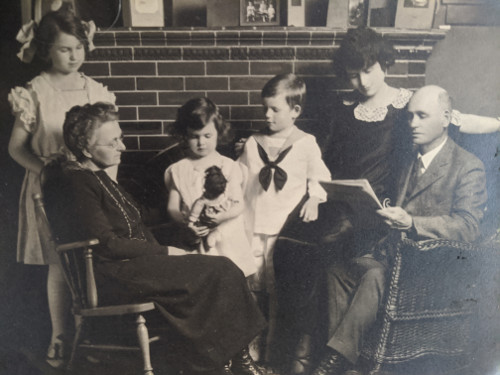

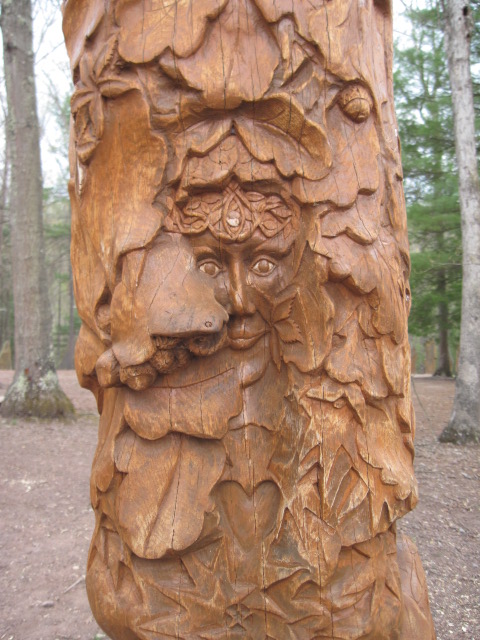
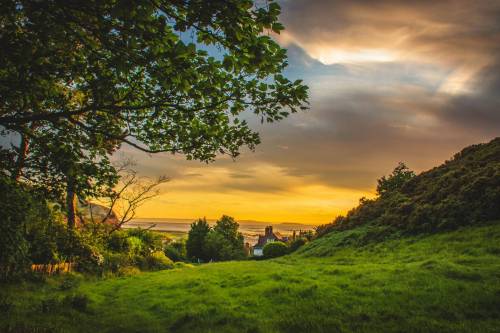
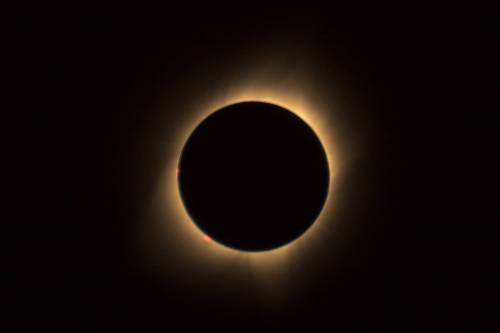
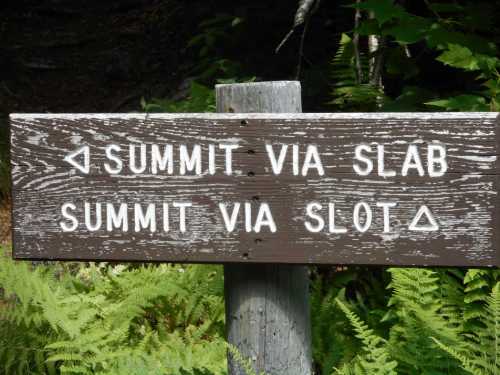
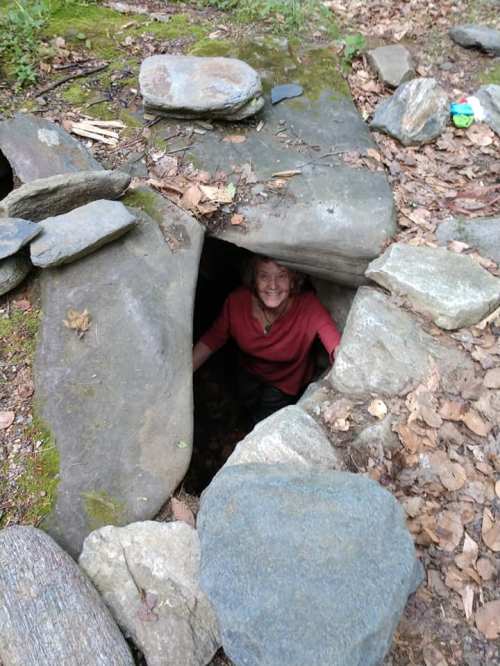


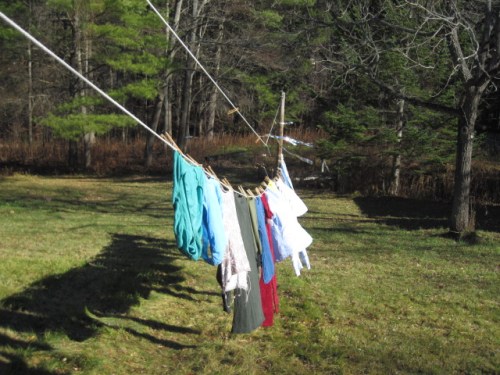



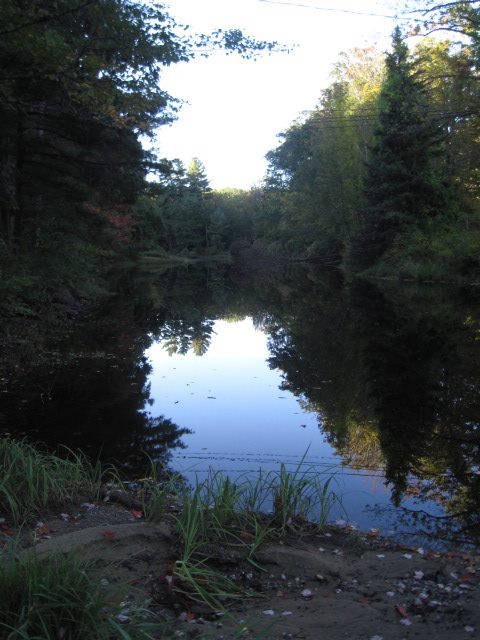


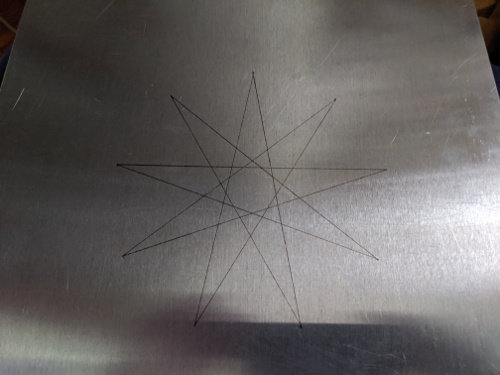
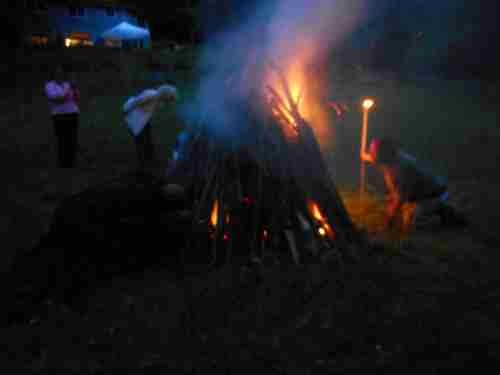
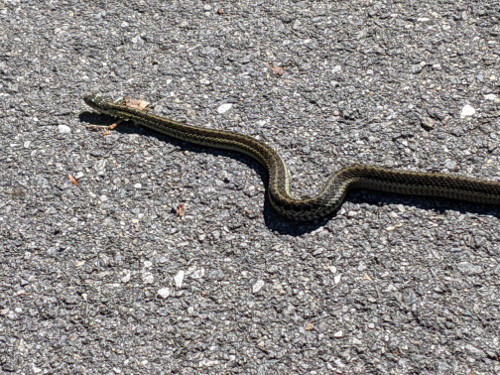
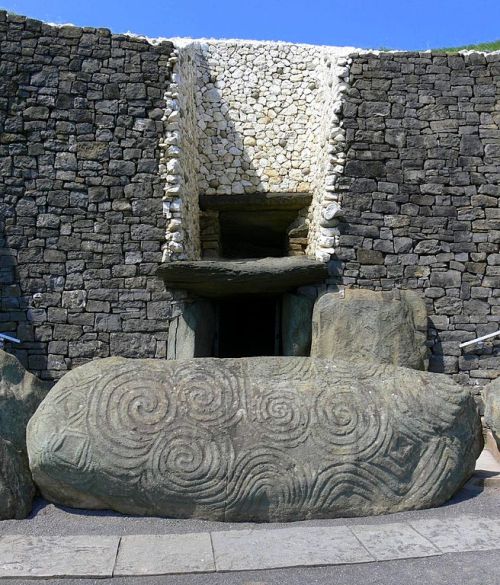


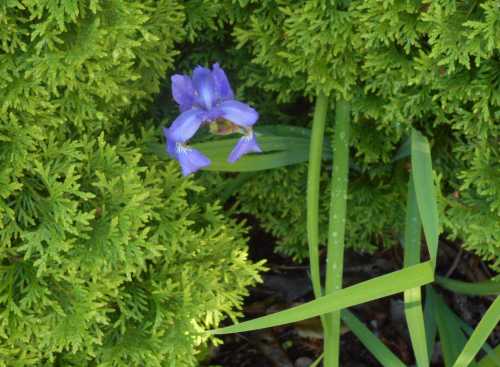








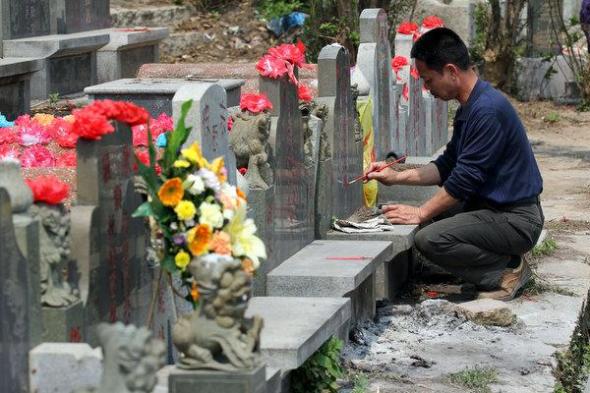



 A Druid Way
