Archive for the ‘spiritual practice’ Tag
 Much of our human anxiety clusters around an odd mental construct we call “tomorrow,” and sometimes those wacky futurists brought to us by odd institutes with funky acronyms and obscure sources of funding actually have something useful to contribute to earn their keep. Here’s Bruce Sterling on change (link to blog):
… as a futurist I just don’t do “positive” and “negative.” I actively avoid that kind of value judgment. Wishful thinking and fearful thinking gets in the way of an objective understanding of change-drivers. Change occurs from pent-up energies: it’s like asking if a battery’s voltage is “good” or “bad.” All potential change has positive or negative potential: otherwise it isn’t even “potential.”
 “Change occurs from pent-up energies.” Without a reservoir of energy, it simply doesn’t happen. Any equilibrium — I’m extrapolating out loud here, to see what the implications look like — any apparent equilibrium or stasis, then, is a kind of wallpaper over pending change and a cloak for accumulating energies. In other words, things don’t change, until they do. Watch the surface and I won’t catch the building forces for change. Equilibrium, rather than a kind of reset to normal, an all-clear, all-systems-go signal, can be seen as a boiler, a reactor, a container for accumulating change-energies. If change is the norm, equilibrium is a pivot, a hinge. It’s not a place to live, but to visit, to stop by, to rest in. It’s the next foothold, the plateau wide enough for a pause, along the ascent.
“All potential change has positive or negative potential …” Both at the same time, in every case? If the energies behind changes are anything like water or electricity, they find the easiest channel to flow. A habit is the smoothest channel — it’s been widened, deepened and swept clean by repeated use, so energies for change often dissipate if they can flow along the channel of a habit. Block the habit, even once, when change is about to happen, and the flow will seek another channel — maybe even a new one, if other habits don’t swallow the energy.
[Personal observation here: the habit I referred to in the previous post has yielded for now to image and sound work, but as part of what I’m seeing as realignment, I’ve been catching myself indulging more in other repetitive/obsessive behaviors. Compensation? The energy will flow. An old computer game, for instance, suddenly seemed irresistibly interesting — I’d play a typical 10-minute session again and again, between other more productive tasks. The “path of least resistance” applies profoundly to working with habit and change. Eliminate one habit and energy will flow into the next easiest channel. A key I’m learning: make a change that’s easy for energy to fill. How to do that is my practice.]
Can I avoid a value judgment, as Sterling claims he does? “Wishful thinking and fearful thinking gets in the way of an objective understanding of change-drivers.” Hmm. Often my wishes are negative: I want to escape/change/get away from/overcome X, and so X draws my attention, rather than the change I say I want to activate. Instead of spending energy on the change, I spend it on X. My attempt at change may actually be strengthening the habit.
Unlike the “get ___ quick/overnight/in just seven days!” promises of those with something to sell us, most permanent changes take longer to settle in. Everything I’ve learned from my habit can be used to build the energies of the changes I desire: visualization, sound, emotion, repetition. No doubt about it: change usually needs practice.
/|\ /|\ /|\
You might wonder what connection some of these recent posts have with Druidry. Good spiritual practice is good spiritual practice. Why else does “spiritual but not religious” resonate so deeply with so many? When religion gets in the way of spirituality, there’s a problem.
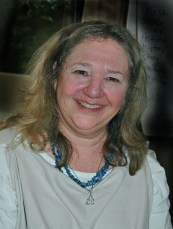
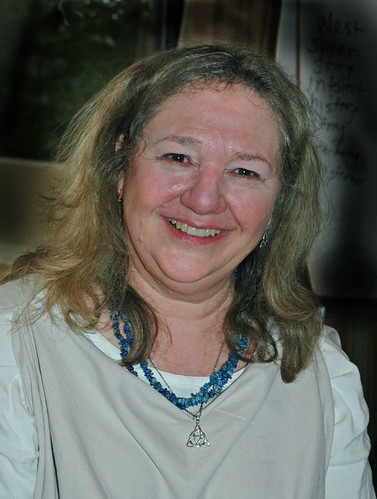
Ellen Hopman
Druid and author Ellen Evert Hopman offers this excerpt from her forthcoming book Legacy of the Druids.* Here is the voice of one of the many Druids she interviews. The attitude here, rather than the specifics, is what I cherish and practice in my own way. The fact that it assumes a Druidic form simply means you have yet another opportunity to translate good spiritual sense into your own particular tradition or idiosyncratic practice:
“The grandest moment of the year is on Imbolc, when I open up my door to the night and thank her for all that she has given, then pour milk across my threshold to the living world outside, inviting Her in, whoever She is, whatever deep and joyous mystery, whatever unplanned liberation she brings, even if it comes in the guise of loss and fear and death.
I believe in the abundance of life, through the most frightening and toilsome passages. I believe in the essential expansiveness of our souls, and these are encapsulated in Brigit, the patron of poetry, of healing, of smithcraft, the one who guides sailors through dark and turbulent seas, who sets the teats flowing and brings birth to the calves and lambs.
The world we inhabit is hidden in a tangle of veils – fear, rage, misunderstanding of who we are and how we are connected and how we can survive and flourish, human and nonhuman, wild and tame.
Facing our own tangles and emerging filled with that ability to give, to receive, to hope and love: that is how I see Her worship as functioning best. She is the beauty and She is the veils, and She is the freedom and unity I keep my eyes on when I struggle through.
Opening the door to Her on Imbolc, giving Her and Her world the nourishing gift of milk and inviting them more deeply into my heart – these are the most joyous religious acts I can ever commit.”
Mael Brigde
Vancouver, Canada
 It’s a portion of Druid wisdom to master change in our lives — not to dominate life, which we can never do, but to sail with it onto that endless golden sea that, whenever I pay attention, is sparkling and surging around and within.
/|\ /|\ /|\
IMAGES: tomorrow; reservoir; Hopman; golden sea.
*Hopman, Ellen Evert. A Legacy of Druids: Conversations With Druid Leaders Of Britain, The USA And Canada, Past And Present. Moon Books, 2016.
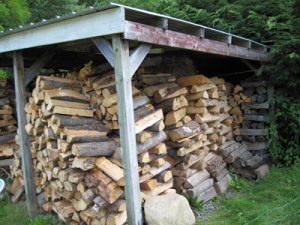
Our lean-to, with wood drying for next winter, ’16-’17.
After a long absence, Wadin Tohangu stopped by again to talk. The old Druid grinned broadly at my surprise in seeing him. Though I shouldn’t have been so surprised, I know. Usually, if I’ve been thinking about him, he appears sooner or later.
The unseasonably warm November weather in the 70s over the last few days made it a perfect time to be outdoors. I was carrying log lengths of willow to our woodpile after some trimming and pruning work by a tree service company we’d hired a few weeks ago. Willow is a soft wood and isn’t all that suitable for burning. It doesn’t provide much heat, but it can be useful to work with for other purposes. Some of it might form the edging for a new compost pile, and rot back into the earth itself.
Without any preamble, Wadin got to the point. “You’ve been doing some firming up of your understanding. I can see changes in you.”
“That’s … interesting,” I said, letting an armful of logs fall to stack later. “I feel less certain about a lot of things I thought I knew. Like what love is, and what my purpose or focus should be, for instance. You’re sure you’re not seeing doubt and uncertainty instead?”
He chuckled, and pushed a log into a firmer position between two others. “Part of deepening understanding can mean you rely less on ready verbal formulas and definitions, and in their place you turn more to any wisdom you’ve earned. It may feel less certain, because you can’t summon it in quite such a convenient mental form, or immediately rattle it off if someone asks. Do you do any cooking?”
“Um, yes,” I said, still surprised sometimes by Wadin’s quick shifts as he developed a point. “Mostly baking, actually.” I turned to walk back to the pile of fresh-cut willow lengths. The wheelbarrow I’d normally use to make quicker work of this had a flat tire. But I didn’t mind. The weather was just too splendid to miss.
“Well,” said Wadin, keeping pace beside me, “if you bake bread, for instance, you know at several points that familiarity with the process lets you make decisions about timing that you learn best by practice, not by rule.”
“True,” I said, grabbing an armful of logs. Wadin did the same. “Bread dough that’s going to rise well has a certain feel to it. And up to a point, there are tricks and back-ups you can do with a batch that’s not turning out so well.”
“But,” he said, shifting the logs into a more comfortable position, “that feeling and those tricks aren’t easy to put directly into words, even though you know them well.”
“True,” I said.
“People often treat understanding the same way. They may say, ‘I want answers,’ but they could find that a tool might be more useful to them in the end than any answer.” He dropped the logs and brushed his hands.
“Would you explain that a little more?” I asked him.
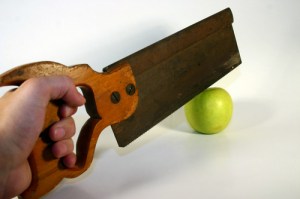 “Answers tend to have a compact form,” he replied. “Someone else has done at least part of the thinking, so when we ask a question, the answer arrives with a definite shape and size, and maybe even drags with it some definitions, or some do’s or don’t’s attached to it. It may not fit our needs and awareness. It can be like a key in a lock. Sometimes the key just doesn’t fit. Nothing turns. Even though that key may open plenty of other useful doors, it doesn’t open this one.”
“I guess I understand what you mean. So what about tools?” I picked up three more smaller logs. Wadin grabbed the last couple of strays.
“A tool isn’t meant to provide a final conclusion,” he said. “It simply helps with a particular step, or with a set of steps. It’s part of an open-ended process. A screwdriver applies force, or rather torque, in a way that the human hand unaided cannot. It doesn’t do this by itself — a human hand must wield it. But a screwdriver allows us to open or close things with screws, or do some light prying of covers, perhaps. The screwdriver goes back in its slot (at least in a neat work-area) until you need it again.”
“O.K.” I said, thinking.
“An answer, though, often implies a close, an ending.” He dropped his armful on the pile. “A tool keeps things moving. One helpful strategy is to practice seeing all your answers as tools. There’s nothing final about them, and neither is there anything wrong with that. They’re exactly what they’re supposed to be. They just help move you to the next step you need to take. Put them away when they don’t achieve that, keep them all in good condition, and find another tool that will do what you need at that moment.”
“So you’re talking about a kind of flexibility.” I leaned against a woodshed post.
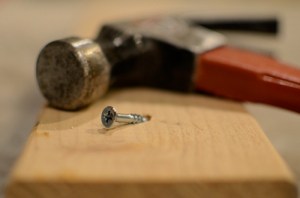 “Yes,” he said. “The same tools are generally available to everybody, but in the hands of a master craftsman, the right tool saves time, accomplishes the task smoothly, and contributes to the flow of work. The master doesn’t curse his tools, or despair when the tool he insists on using doesn’t do what he wants it to. He knows what each tool can do, just as he knows how each tool feels when he uses it. Part of his mastery is knowing from the feel of the tool in his hand whether it can accomplish what he intends.”
“And part of the joy of mastery is knowing there’s always more to learn. What would it mean, after all, if there was nothing more to aspire to? If you truly knew it all, you’d get bored. What’s the point? The beauty of mastery is its delight in always learning something new, not being discouraged by it, but inspired instead by endless possibility. Sharing what you have learned, communicating that delight simply by doing, and marveling how each person develops an individual style. All right. That’s enough for today.” He smiled and turned toward the afternoon sunlight. I blinked, and he was gone.
If I asked “Is he real?” or “Was he really here?” any answer I received probably wouldn’t be as useful as what I learned. His gift wasn’t some kind of proof that he “existed,” but simply a few more tools he left for me to work with. Answer, tool. A useful distinction. I sent out gratitude, confident it would reach its destination.
/|\ /|\ /|\
Images: hammer; saw.
[Part 1 | Part 2 | Part 3 | Part 4]
[To the tune of “The Twelve Days of Christmas”]
On the second day of Beltane, the Old Gods said to me:
Dance round the fire, and then say what you truly long to be …
I always find Beltane lasts longer than a single day. This year I’m celebrating it over three days, from yesterday, the “official” May-Day, through tomorrow, with the Full Moon at its peak at 11:42 pm, Eastern Standard Time in the U.S. (that’s 03:42 Greenwich Time, May 4).
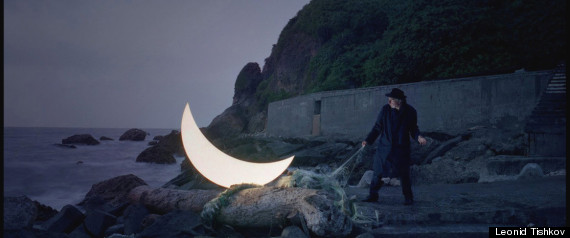
Do you carry a private moon with you? At times like these I feel I do. It’s tucked under my ribcage, trembling like a small forest creature that’s heard an owl: I have a lunar heart. Or in place of my mouth, a moon. No words, just white shadow wherever I turn to speak.
I do the original moonwalk, following shimmering paths visible at no other time. Or I hold out my hands and each palm glows with a hemisphere of unearthly light. I clap them together and the blow sparks new planets all up and down my spine.

Leonid Tishkov: “Private Moon”
Festival observances, like other rituals, can make us vulnerable to ourselves in powerful ways. Often we’re taught to leave dreams in childhood, as if adults don’t need to dream at all, let alone dream bigger than we ever dared as children.
Open myself to desire and dream, and longings I’ve shoved aside, sometimes for years, can rush back full-force. What I still dream and wish for are gifts my childhood has kept in store. Not just for the grown-up me, though it can feel that way. These gifts may have taken human or animal form, wandered homeless, raggedy and broken and weeping, or snarling, feral, wild things no child could understand. Things it runs from, things that hide under the bed, in the closet, that stretch and loom after the bedroom light gets turned off.
But the child also recognizes them as blood kindred, curls up with them each night, and each dawn they glimmer and vanish till the next twilight gathering. They reappear in that book you read and re-read till it fell apart in your hands, in the story no bedtime retelling could ever wear out. The childhood rituals that primed you for adult ones of deeper mystery: sex, death, creation.
What I do with them now are the gifts I give back to that younger self, some fulfilled, others still orphans. But I have brought them out and looked at them head on, and hugged them. I take them in even as I give them back. And in that circuit lies power.
Beltane pairs with Samhuinn across the ritual year, its opposite pole, and this Beltane-with-a-Scorpio-Moon I’m feeling it particularly strongly. No surprise, the astrologically-minded say:
The sun is now anchored in the sign of Taurus. Beltane occurs when it is precisely half way through the sturdy earth sign. The sign is symbolized by the fertile bull and, given its association with the fecundity of the springtime in the Northern hemisphere, Beltane in particular is a full-fledged celebration of life, creativity and the abundance of the upcoming summer season.
But, its polarity, Scorpio, is not.
Scorpio’s domain deals with matters that no one else wants to: the vile, the putrid, the petrifying, the intense, the rejected, the betrayed, the scorned, the scathing, the denied and the dead. Scorpio reminds us that we can repudiate anything for an eternity but that doesn’t mean it will be resolved, it doesn’t mean that it will be repaired, and it doesn’t mean that it will go away.
Ritual is one way to approach the difficult as well as the beautiful, to manage them in more bite-sized (ceremonial-sized) pieces. And sometimes, to discover the beautiful and the difficult, the deformed and the immensely powerful, amount to the same thing.
Beltane carries Samhuinn in its belly, or on its back. Or Samhuinn is Beltane turned inside-out. Both are fire-festivals, and fire does not always lie easily on the hearth. Sometimes it flames forth, blows past barriers and oppositions in its guise of wildfire.
More in the next post.
[Part 1 | Part 2 | Part 3 | Part 4]
/|\ /|\ /|\
Images: Leonid Tishkov/”Private Moon”;
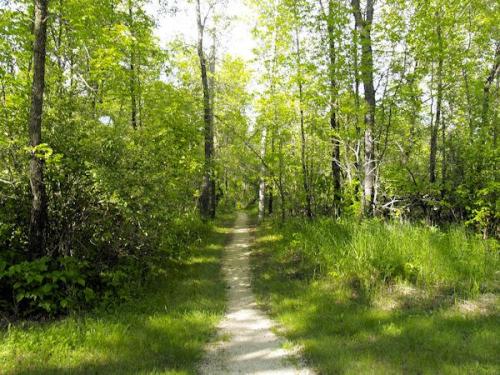
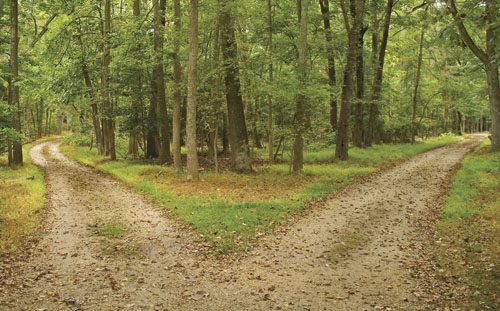
[This lovely image comes courtesy of mistressotdark. And in case you’re wondering: yes, the path sometimes IS this clear, lovely and straight. But we earn these glorious stretches during intervals when everything isn’t sweetness and light.]
Today’s post features an excerpt from Tommy Elf’s moving account of his Bardic journey, framed by his experiences at the first Gulf Coast Gathering in Louisiana this past weekend. His words dovetail with the previous post here about initiation — always a challenge, whether you’re journeying down a solitary path with its own obstacles and opportunities unique to your nature and history, or along a more public walk with Orders like OBOD.
Here are Tommy’s reflections:
Folks, I have been in my Bardic Grade studies for the last seven years. For those seven years, I believed that I could struggle through the material on my own. I rarely asked for help from my tutor/mentor, and stepped back and forth constantly as life had set into time requirements. At this gathering, I opted to have a Bardic Grade initiation – and I am glad that I did so. It has changed my perspective so much. I had the chance to talk with other Bardic Grade folks, as well as my fellow initiates, about their experiences. And I found out that I was not alone in those moments. Furthermore, one of the guests was Susan Jones, the Tutor Coordinator for OBOD. She held a session with all the Bardic Grade members to discuss pitfalls, and various other aspects concerning the course. Listening to other people discuss their experiences helped me to realize that our journeys may be unique to one another, but there are some aspects that are similar. For anyone currently in their Bardic Grade studies, I cannot stress how much help is actually available to you. You just have to reach out and grab it! There is your mentor/tutor, the discussion board, your own grove or study group (if one is near enough to you), as well as other folks within OBOD who are taking their Bardic grade or have already been through it.
Tommy’s openness here contrasts helpfully, I hope, with my own sometimes opaque references to my journey. There’s also a delightful symbolic resonance to his seven years in Druidry — at a crisis moment, the turn comes, and ways open before him. Seven it is. And now the challenge: what next? How do I incorporate this new thing into my life? How do I step into possibility, and not snuff it out by dragging along with me everything I DON’T need? What am I called to do? What CAN I do?
If time truly is what keeps everything from happening at once, and space is what keeps everything from happening here, we have ample reason to be grateful to both, pains though they both often are. Or more elegantly, as I’m fond of quoting Thoreau: “Time is the stream [we] go fishing in …”
/|\ /|\ /|\

Rook and partial eclipse, March 2015. Unretouched photo, Roger Brady, Kinsale College of Further Education, Kinsale, Co. Cork, Republic of Ireland
In this time of balanced energies, an image of bright and dark — rook and partial eclipse at the Spring Equinox.
This morning waking from dream, another image: a shining snake. A little poking around online brought up this fascinating connection from Greywolf’s blogpost for March 19, 2015 (bolded text is Greywolf’s):
The first Solar eclipse of 2015 happens with the New Moon in Pisces, joined by Mars and Ketu. Ketu is the tail of the celestial serpent, Rahu its head. Astrologically, they are the south and north nodes of the Moon. Eclipses occur when the serpent swallows the sun. This eclipse / New Moon will clarify and challenge our beliefs and spirituality, both Pisces themes. When Sun and Moon come together near the Node an eclipse results, producing a momentary disconnection and darkening our power source, the Sun. This literally leaves us feeling in the dark, and we may tempted to pursue the shadow side, or quick fix spiritual solutions, escaping into drug abuse or New Age fantasies. Be careful of such lazy, cynical options during the next 30 days. This eclipse happens in Uttara Bhadra Nakshatra, ruled by the God Ahi Bhudnya, the celestial serpent. This divine cosmic force is associated with clearing the last bits of dirt that are blocking the soul’s liberation.
I will accept this gratefully as divination, a clue to work with in the coming days, a time for (re)dedication.
Equinoxes are ideal times for initiation because of the access to energies they provide as the earth-moon-sun system shifts. A solar system triad!
While initiation can of course take place at any time, there is a formal and cosmic rightness to this twice-yearly period that can empower such rituals, as I know from experience.
Here is John Michael Greer on initiation. (You can read the full article online here — it forms part of a rough draft of his excellent book Inside a Magical Lodge.)
The idea that secrets will be revealed in an initiation creates a sense of expectancy, and can also give rise to a certain kind of fear; both of these are useful in the work of initiation.
The production of this receptive state forms the first phase of the initiatory process. Once it has been reached, the process of lodge initiation moves to a second phase, in which a set of carefully chosen images or events are experienced by the initiate, and then explained. These experiences and their explanations are heightened by the receptive state, and are intended to offer a new pattern for some portion of the initiate’s mental map of the world; the pattern may also be encoded, more subtly, in the underlying structure of the ritual itself. If the initiate accepts this new pattern — which does not always happen — the initiation has “taken.”
At this point, the process enters its third phase. The new initiate is given a set of conceptual, verbal and somatic triggers for the new pattern. Just as a memento from an emotionally charged event in the past can awaken not merely memories but states of emotion and consciousness, these triggers reinforce the new pattern every time they are used. They serve, in an important sense, as anchors for the initiation.
The three-phase process of initiation can be handled in various ways, and has been handled with various levels of effectiveness in the initiations used by different magical and fraternal orders. Like any other art, the art of initiation has its failures as well as its masterpieces. Making the situation more complex is the fact that most orders of both kinds use a series of initiations — the usual terms are “grades” or “degrees” — to carry out an extended program of transformation, each change building on the ones already made. In the fraternal orders, the goal of this program is typically nothing more profound (or more sinister) than basic personal maturity. In magical orders, by contrast, the possibilities for change are far greater.
/|\ /|\ /|\

to make thinking difficult.”
So run the final two lines from Charles Simic‘s poem “Letter.”
Except often it’s just not (only) about us. Trees loom and leaf for their own sake, expressions of energy just as valid without any human presence to comment on them or arrogate them for a poem, however talented or honored the poet (Simic won a Pulitzer in 1990). And I say this as a bard, a devotee of words and their crafting. I like some of Simic’s work very much.
Yes, human presences make their trails, but the seasons also have their say, wordless though it is.
Here’s an autumn view of a hill on a neighborhood walk that blesses my wife and me whenever we take it.
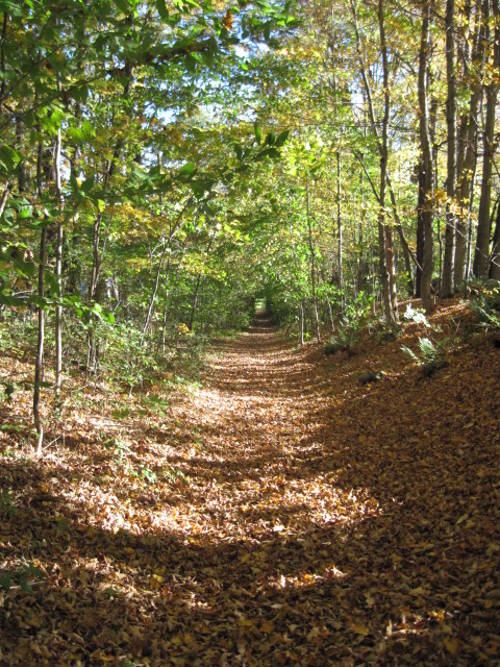
And here’s the same path as winter dresses it:

We make our paths through a world immeasurably larger than we are, a great comfort, I find. Sometimes the part of the Druid is listening, without comment. Of course, by itself listening doesn’t get the poems written, the blogposts online, the books and songs and stories heard and known and loved. But listening … oh, listening and looking, may you two always come first, springs of lasting wonder.
[Updated 28 May 2020]
[Part 1 | Part 2 | Part 3]

Is either choice more than blind?
Do choices ever present themselves clearly to the self?
You summon your judges of hunch and experience and logic and passion, your own High Court. Finally they’ve assembled, all robed and solemn, but when it comes down to it, often the choice is no choice at all. Or all choices are equally bad. Or indifferent. Nothing to distinguish between them. Or both are good, better in fact than whatever you’ve got right now.
No wonder we resort to oracles and soothsayers, or follow a prophet who shows more than half a chance of being right. Or at least less wrong than everyone else. We must choose, but we can’t. Or the choice itself doesn’t matter. Or it matters supremely. Our lives in the balance. You get it. Familiar human territory. A deep intiation all its own. How many choices you’ve faced — a measure of how far you’re being stretched.
(We say to our young people, “Make good choices.” Sounds wise, but how many of us start out by telling ourselves, “Yes, this time I’m definitely gonna make a bad choice”? OK, one night here and there you decide to throw caution to the winds. You accept things may go wrong — part of the thrill, in fact, till that kind of thrill gets old. But an actual good choice: how is it you make one, exactly?)
I use a Robert Frost poem for my divination today. (What? You have a better oracle? Use it then — but do let us know your results six months or a year from now. That’s only fair.) Frost has served me well in the past, and besides, with a name like that, how can I refuse?! The name itself is a rune, an ogham, a sybil-whisper on my skin. Sounds like he must have chosen it as a stagey pseudonym, part of a poet’s verbal bling, though he didn’t.
Of course, Frost and his poems aren’t garbed in the ivy blessing of centuries, like the Mabinogion is, or maybe the Colloquy of the Two Sages. The old New England sage and his poems can be homely, earthbound, regional. Names matter, yes. And if names are attached to something old and venerable, aren’t a lot of us willing to trust that something, regardless of its actual track record? Safe, familiar.
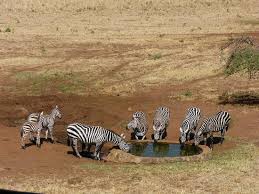 We troop to the old water hole, not because it has water right now at our need, but because it did in the past. Or so solemn voices among us say. But how many skeletons lie around the caked mud of the dried-up hole? And even now we crowd each other to stare and speculate when the water might return, bubbling up clear and fresh.
In “Two Tramps in Mud Time,” Frost writes about splitting wood. In the painful Vermont cold that stalks outside our windows right now, splitting wood and feeding our woodstove is about all I can manage. Set the log up, raise the axe, have at it. The rhythm gives you intervals to think in, and when the axe doesn’t hit a knot, and a single blow neatly drops and divides the wood, your bones and sinews know a rightness hard to find in other realms of living. The physical correlate to choosing, to making a good choice: you feel it.
How often the body knows and takes action before the mind can even begin to engage! How often reflex and instinct save our lives, sparking off the spinal cord before the slow processing of a choice can become a thought. We jump, duck, flinch, blink, dodge, twist, swerve, spin the wheel, slam the brakes — the body saves us so often we’re at a loss when the body itself fails, through sickness or injury or — eventually — death. Old Reptile Brain, we erect no altars to you, though you see us through more disasters averted than we can count. Here is your winter incense, your tribute, your prayers and offerings. Hot cocoa, stews and soups, curries, sauces, butter, wine, hearthstones warm to the touch, wool scarves, light and heat and familiar voices saying Come in, get warm.
Face a choice, and what does the body say? How is it that we know things “in our gut”? Can we “stomach” what we opt to do or not do? One guide for choice, right there. A spiritual barometer we often look past. Too homely, when we want glamour. But especially good at guiding us away from bad choices, if not always toward good ones. Go with your gut.
My choices can often look skewed even from the first moment I face them:
Out of the mud two strangers came
And caught me splitting wood in the yard,
And one of them put me off my aim
By hailing cheerily “Hit them hard!”
And the pause that choice may bring to me, if the spinal column hasn’t already intervened to propel me one way or another, as often as not muddies things rather than clarifying them. “Two tramps in mud time”: my choices.
Good blocks of oak it was I split,
As large around as the chopping block;
And every piece I squarely hit
Fell splinterless as a cloven rock.
The blows that a life of self-control
Spares to strike for the common good,
That day, giving a loose my soul,
I spent on the unimportant wood.
Getting and spending. Is my life only this log-splitting, this routine? It has its rightness and beauty — but right now I’m sick of them. Cabin-fever? Seasonal affective disorder? Hunger for the return of the Light? Sure. Have you felt it, the call to serve something more than this daily routine? Right now the power I might spend for any common good goes to splitting logs. At least it keeps me warm.
The sun was warm but the wind was chill.
You know how it is with an April day
When the sun is out and the wind is still,
You’re one month on in the middle of May.
But if you so much as dare to speak,
A cloud comes over the sunlit arch,
A wind comes off a frozen peak,
And you’re two months back in the middle of March.
Even before I choose, too often I sense the danger of choosing at all. Choice can stun us into inaction. Even thinking about it may throw everything into jeopardy — “if you so much as dare to speak.” But also, that’s just what the season does. One step forward, two back. (Right now, mid-February, I’ll take mid-March gladly.)
The time when most I loved my task
The two must make me love it more
By coming with what they came to ask.
You’d think I never had felt before
The weight of an ax-head poised aloft,
The grip of earth on outspread feet,
The life of muscles rocking soft
And smooth and moist in vernal heat.
Old love. There it is. “The time when I most loved my task” hits me when I see I must give it up. Or when it’s not mine anymore, but belongs to someone else. Or its shape has changed, and I must find it elsewhere, with few clues to guide me. Move along, move along. Oh, where? But no, that’s not yet the end of the story. (“Everything will be all right in the end … if it’s not all right, then it’s not yet the end,” says Sonny in The Best Exotic Marigold Hotel. Nope. Can’t manage sunny in the middle of winter. You ask too much.)
Out of the wood two hulking tramps
(From sleeping God knows where last night,
But not long since in the lumber camps).
They thought all chopping was theirs of right.
Men of the woods and lumberjacks,
The judged me by their appropriate tool.
Except as a fellow handled an ax
They had no way of knowing a fool.
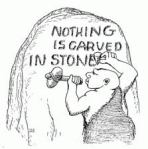 I long to “know a fool,” even if it turns out it’s me. I can take it. Know things for what they are — that’s half of choosing, right? Because if I can’t do that, how can I choose? Choices come, and everything I’m doing turns “theirs of right.” They claim it all, swamping my direction, my focus, my energy. So I turn to careful, linear logic. An “appropriate tool” for the moment?
Nothing on either side was said.
They knew they had but to stay their stay
And all their logic would fill my head:
As that I had no right to play
With what was another man’s work for gain.
My right might be love but theirs was need.
And where the two exist in twain
Theirs was the better right–agreed.
Here is the claim of need, stronger. After all, we pay attention — right has a price, right is a need. Spinal column says so. Gut may say so. You feel it, that need, creeping along nerves and veins, feathering your skin, the breath of something you can’t yet make out. But real. Hot real.
But yield who will to their separation,
My object in living is to unite
My avocation and my vocation
As my two eyes make one in sight.
That may be what I seek. Right now, though, I don’t even know. What am I yielding to? Separated, fractured, scattered, longing for two to be made one. Not sure I’m the one to achieve it. But worth achieving. We mate and strive to obliterate the division between us, if only for a brief interval. We choose and strive to make our choice the only thing worth doing. We live and strive to make a life worth more than the death that ends it. High stakes. Lower them, oh lower them any way I can.
In the last lines my oracle speaks more clearly. Not sure though if I can listen, if I can hear it.
Only where love and need are one,
And the work is play for mortal stakes,
Is the deed ever really done
For Heaven and the future’s sakes.
Love and need, two guides for choice. I can live with that. I do live with that. So do we all. Faces of the same thing?
This is the Initiation of Choice, sorting out need and love. Difficult initiation. Usually lifelong. We serve it as we struggle with it, and it opens, or delays us till we earn it.
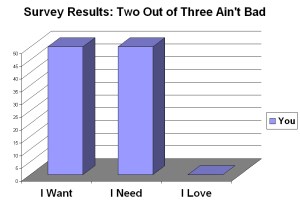 And want? Oh, love and need are enough to grapple with. Need and love will open a space to figure out want, which often takes third place. Probably should, if we’re honest. Though it rarely does, since we bundle need and want into a lump of trouble for ourselves. That old Meatloaf song: “Two Out of Three Ain’t Bad.” Ah, but which two?!
And two questions follow the initiation, which we answer as we can, from out of who we are: Can I love through the choice I need to make? Do I need what I’ve spent my life loving?
Those are the challenge questions of the initiation of choice. I serve my life by how I answer.
/|\ /|\ /|\
Images: choice — paths; carved in stone; two out of three.
 Sunrise, are you waiting for that sliver of moon to invite you? This time of year I’m up before you, and waiting in the perfect frozen peace of January pre-dawn.
Slowly our snow-covered fields flower from purple to gray to white, and then bloom golden with light. A cardinal with pinfeathers puffed against the cold ignites the snow when he lands beneath the bird-feeder, all impossible red. Ah, day at last, over the eastern hill you come, and here we are, in the eye of the sun, loving the light though we may forget to say so. I will say so now, while I remember. All praise for light inside and out!
Yes, I can be a Druid in the life of a day. But bring on night and darkness and my Druidry can suffer a sea-change. You know you’re a Druid when death moves you not at all, says a tendril of awareness. When you may not even notice you’ve changed realms. Well, but I’m not there yet, I reply. I have no trouble with death. I drop into darkness each time I fall asleep. It’s dying that troubles me. And others’ deaths that are hard to take, though with the gift of Sight we may know them after and visit them still. It’s the body comfort I miss, voice and touch and the daily-ness of a life lived next door to my own. I know you’re around, Ancestors without your skins on, but I miss you here.
I light this flame to gift the darkness, not contend with it. Each has its place, here in Abred*. “Know all things, be all things, experience all things”: some say this is our destiny, as we move through the circles of existence. Maybe. Not sure yet. Don’t need to be. This circle right now, right here, keeps me plenty occupied.
Nine awens for the day
for the day’s choices
and gifts easy and difficult.
Nine awens for the gods
unknown and known who grace us
with the Breath of Asu,
sound and light both.
Nine awens for you, little soul,
beast, bird or human, watching
at the gates of Abred*
for the flower of destiny
to unfold its next petal
as you become.
/|\ /|\ /|\
Images: sunrise.
*Abred. The great Revival Druid and brilliant forger, Iolo Morganwg, wrote in his compendium of wisdom and fabrication the Barddas that all beings move slowly from Annwn, the unformed, to Abred, the first world, our present circle, “probation,” and from there to Gwynvyd, the “white world” of the next advance and “perfect freedom,” and on from there to Ceugant, “infinity.” And the way there is long and full of experiences until, ripe with knowing all things each circle has to teach us, we take a step to the next.
Do I “believe” it? That’s not the important question to me, or to many Druids. How well does it explain things? What can I learn from it? Those are the important questions. Whether it’s “true” or not is quite beside the point. I’m not interested in creedal religion; that’s one reason I’m a Druid, after all. I don’t have a statement of faith; I have a practice that includes various beliefs that evolve as I do. I don’t want to sit in the restaurant and wait to be served from another’s choice, to use Philip Carr-Gomm’s image (go to 4th paragraph). I want to work in the kitchen, help it come together for myself. This is Abred, the world of probation, after all — of proving and testing and trying out. So I’m game — I try it out, try it on for size.
Updated 4 August 2015
 [Updated 28 May 2020]
[Part 1 | Part 2 | Part 3]
[For a previous series on this topic, go here.]
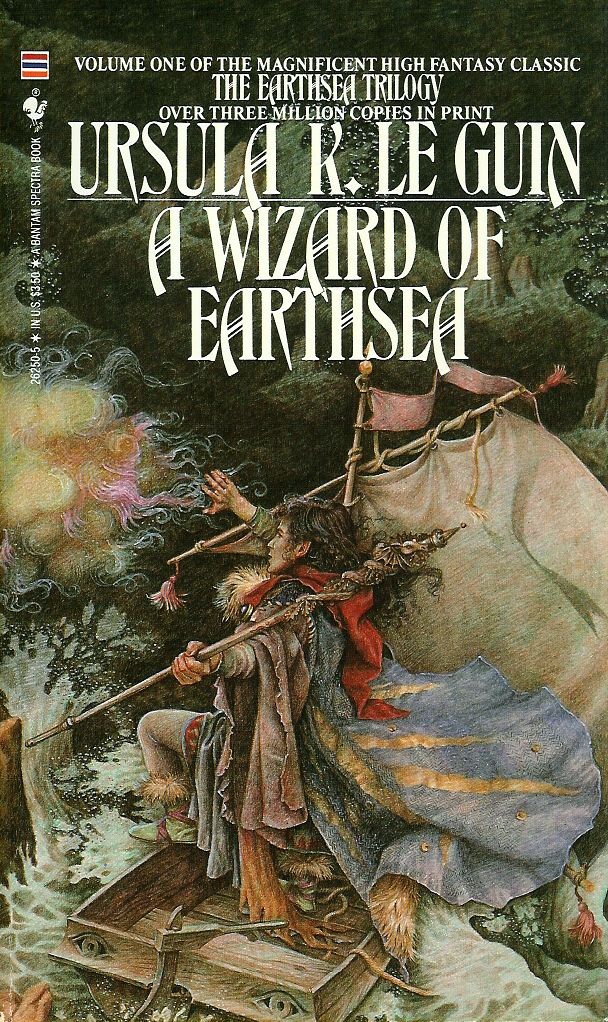
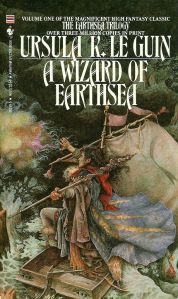
What I want to talk about here, others say well and beautifully, so this post will invoke quotation for these two potent magics. And in anticipation of what’s to come, if you haven’t given yourself the wise pleasure of reading Ursula LeGuin’s fantasy A Wizard of Earthsea, promise yourself you will soon — your library may well have its own copy or can get you one through interlibrary loan — a “magical familiar” as powerful as any in the pages of medieval grimoires.
A “young adult” fantasy, Wizard has as much to say about magical power as any book I know. If you haven’t read it, I’ve tried to avoid spoilers, and I feel I succeeded. And if you know of a book that teaches more than Wizard about these things, please send me the title!
Here’s more from J H Brennan as he continues to recount his first steps in magical training:
What actually attracted me to magic was not service but power. Nothing grandiose, of course. I had no burning ambition to rule the world or enslave hordes of beautiful women. (Well, maybe just one or two beautiful women…) But I was undoubtedly a prey to a disease which is becoming even more prevalent with the increasing complexity of modern society: a feeling of helplessness.
There are many reactions to such a feeling. Some people embrace political credos. Others get religion. A few (usually male) take to beating their spouses. I turned to magic, which seemed to me to be the ultimate antidote: for what is magic if not a secret system which promises control of damn near everything?
You will be desolate to learn it did not work. Although I spent some nine years in daily Qabalistic training and learned a great deal in the process, I remained Clark Kent: no amount of magical leaps into ritual phone boxes could turn me into Superman.
(J. H. Brennan, Foreword, The Ritual Magic Workbook, p. 4.)
If you’re honest, your first reaction to Brennan’s admission may well be, “Then why bother with magic?!”
In fact it’s a deeply legitimate response, tangled with helplessness. In so many peoples’ lives today — I’m thinking only of our own time — so much anger, pain, suffering, despair, all because we sense a deep truth about ourselves, but one that the world does much to discount, deny and distract us from: our spiritual selves are strong. LeGuin captures this wisdom at the outset, in the first chapter of A Wizard of Earthsea. Her mage hero Ged is still young, but even untrained, in a moment of crisis he draws on a profound truth about himself: “He … raged at his weakness, for he knew his strength” (A Wizard of Earthsea, Bantam Edition, 1975, p. 8).
Our detestable weakness never quite overwhelms that inner knowing, though we may well go under without a lifeline, without support, without confirmation, without some practice that sustains us, whether it has the label “spirituality” or not. Despair at not being able to get at our strength has destroyed many lives. It’s cruel, that despair. In our search for a door to the power in us that we dimly recognize, but which seems to elude us day after wretched day, we may clutch at a cause, as Brennan notes — politics, or religion, or magic — or, if we’re half-under already, at abusive behaviors that may not target others in our lives, but ourselves, though all abuse brings “collateral damage.” Which is double-talk for karma.
The appeal, the draw of power, is clear.
Ged’s teacher, a wizard named Ogion, tries to show Ged the realities he faces in a world where power can be used well or badly. After Ged encounters one who uses her power in a questionable way, and has had his own terrifying encounter with a dark spirit just before this conversation, Ogion admonishes him:
The powers she serves are not the powers I serve. I do not know her will, but I know she does not will me well. Ged, listen to me now. Have you never thought how danger must surround power as shadow does light? This sorcery is not a game we play for pleasure or for praise. Think of this: that every word, every act of our Art is said and is done either for good, or for evil. Before you speak or do, you must know the price that is to pay!
When we hear this, it’s too much. More evasion, more powerlessness! We’ve apprenticed ourselves to those who claim to know, and instead of — at last! — affording us even a little taste of power, they scold us for not knowing anything, and set us instead to memorizing, or visualizing, or some other repetitive task that smacks of elementary school drills. (For of course that’s where we are — in school, at a beginner’s level. Again. How long this time?!)
Predictably, Ged rebels. Note what motivates his response:
Driven by his shame, Ged cried, “How am I to know these things when you teach me nothing? Since I have lived with you I have done nothing, seen nothing–”
“Now you have seen something,” said the mage. “By the door, in the darkness, when I came in.”
We seek power, yet once we commit to a magical or spiritual path, often the first thing we meet is darkness. In ourselves. Distinctly not fun.
Ged was silent.
Ogion knelt down and built the fire on the hearth and lit it, for the house was cold.
There it is in plain words — Ogion demonstrates literally the “Path of the Hearth Fire” that is one of the magical and occult paths we can take. And he does it not in words but in actions LeGuin describes — the daily tasks of an “ordinary life” that can be done with magical awareness of their place and purpose, a responsibility that we can serve while we learn — a way that actually leads to our ideal “inner Hogwarts” without fleeing from the obligations of our “mundane” world which have far more to teach us than we know.
Then still kneeling [Ogion] said in his quiet voice, “Ged, my young falcon, you are not bound to me or to my service. You did not come to me but I to you. You are very young to make this choice, but I cannot make it for you. If you wish, I will send you to Roke Island, where all high arts are taught. Any craft you undertake to learn you will learn, for your power is great. Greater even than your pride, I hope. I would keep you here with me, for what I have is what you lack, but I will not keep you against your will. Now choose …”
(A Wizard of Earthsea, Bantam Edition 1975, pgs. 23-24.)
Power greater than pride: Ogion nails the issue. As J. H. Brennan notes, implicating many of us:
The problem with arrogance is that it is a quality for which I have a sneaking admiration. Consequently it plays a greater part in my character than it really should.
(J. H. Brennan, Foreword, The Ritual Magic Workbook, p. 4.)
There’s a whole book of wisdom to be unpacked from Ogion’s words, which deserve extended meditation. I’ll zero in on the last two: “Now choose.” How can we choose before we understand the consequences of choice? As Tolkien says (in talking about translation*), “We constantly need to know more than we do.”
Choice? That’s another post …
/|\ /|\ /|\
Images: A Wizard of Earthsea — cover.
*translating Beowulf. In J R R Tolkien (ed. Christopher Tolkien). Beowulf: A Translation and Commentary. New York: Houghton Mifflin Harcourt, 2014, pg. 191. For much more on this that you probably could EVER want to know, come to the International Medieval Congress in Kalamazoo, MI this May 2015, where I and many others will be delivering papers on Tolkien’s translation — and in my case, on his peculiar theories of “correct style” and how this intersects with his whole legendarium and the power of imagination.
[Updated 28 May 2020]
[Part 1 | Part 2 | Part 3]
During the year and a day of your training, you’ve studied, practiced, visualized, rehearsed, memorized, subjected yourself to physical and psychological tests and disciplines and — perhaps in spite of your own better judgment of your readiness — you’ve finally been chosen as a candidate for initiation.

The day of the ceremony arrives. You may be dressed in a particular ritual way, or you may have bathed and simply be wearing new clothes. Perhaps a single jewel or ring you now wear gives you something you find yourself toying with as you wait. Probably you’ve been given specific instructions to help prepare you and assist you in entering the desired state of consciousness. Or the absence of such instructions has the same effect.
You’re nervous, too, and the other members of the group who are participating in your initiation don’t do anything to dispel that nervousness. In fact, they may be sympathetic and kind to you, and their very kindness will only increase the mystery. What am I getting myself into? you ask yourself. This and other questions are good ones to ask — though they may have no answers.
In many occult and magical orders, potential new initiates face a challenge when they enter the ritual space where their initiation will take place. “What do you seek?” goes one variant of the verbal part of the challenge. Depending on what you’ve been taught or are expecting, the rumors you’ve heard, or the nature of the particular group you’re with, the question can catch you off guard. It’s meant to.
In an intro to an online magical training document by Dolores Ashcroft-Nowicki, J. H. Brennan relates his own experiences, and doubtless those of many other people, here (see pg. 4) . He comments wryly that, not surprisingly, why we seek is often a bigger determining factor in our experience than what.
We all do things for the best possible motives, of course; and nowhere more so than in the esoteric arts. It is relatively easy to discover that the only really acceptable excuse for magical study is embodied in the statement I desire to know in order to serve. That was the answer I was prompted to give to the ritual question during my own initiation. I dutifully gave it; and it was a lie.
What actually attracted me to magic was not service but power.
“I desire to know in order to serve” has its motivations all lined up for inspection. It’s a “good doggy” answer. It’s noble-sounding, and as the “really only acceptable excuse,” it’s comforting to give it and feel good about having such an answer to give. Because in this logical and scientific age of ours, don’t you need an excuse for something as wacky and bizarre as the study of magick — especially spelt with a -k — that doesn’t make you sound like a raving loony?!
So let’s reverse it. “I desire to serve in order to know.”
One of my teachers said this yesterday. It rang true to me because he demonstrates service in what he does, in how he listens to the people he meets, and in how he stills his own agendas and instead of what he thinks, he strives to hear what’s needed. He does these things with humility. And just as important, he models this for others, not as something he turns on to impress others and then drops once he’s “offstage,” but as something he’s continually practicing until it accompanies him, his words and his actions like a fragrance. And that makes you want to do the same.
A few months ago I encountered a goddess in contemplation. I heard her name, an epithet — Stormbringer — and a little more. The only way I can find out more about her is to serve her. Slowly I gain a clearer vision of who she is and why she is manifesting to me, now.
I can enlarge my understanding of service. I serve when I grow — a larger vision spreads its fermentation through human consciousness, because my actions emerge from what I hold in my heart and thoughts.
We serve when, rather than getting bogged down in irritation, anger and fear, we assume a playful approach to problems. Then the lightness of spiritual insight and creativity can lead us to solutions we might not have found on our own. And our playfulness, when it’s respectful of others, can help lighten their loads, too, and smile, if possible, or laugh. We serve in small things, done without thought for anything except the doing, and the doing well.
(OK. Got it. Dang — give you a soapbox and you just don’t let up, do you?)
I serve when I open myself to receive love from others , and find I must “enlarge my spirit to receive the gift,” as Ursula LeGuin describes it in her fantasy A Wizard of Earthsea.
 I serve when I ask to understand the causes underlying an issue or problem in my life, not just to remove the problem so I can get on with my agenda. (Often enough, my agenda is the problem. The apparent problem is a gift, to show me something I need to learn. Otherwise it wouldn’t keep coming back again. And again. Funny how much easier it is to see in other people’s lives.)
Difficult gift, what do you have to teach me? Can I enlarge my heart for you, too? Right now, when you come knocking again, when it’s really not convenient at all? Can I let my impatience dissolve and make my listening a gift to you?
We serve when we recognize ourselves in others, when we recognize others in ourselves, and see the Great Mystery, as the Lakota Sioux call it, the Wakan Tanka, in the eyes of those we meet every day.
We serve when we practice gratitude. A powerful practice I’ve proved to myself: keeping a gratitude journal, with daily entries. Just reading it over can jump start me out of depression and back into engaging my life. Gratitude grows and spreads to others its divine infection.
And so, in serving, what do I know that I didn’t before? Has knowing become less important, and service more?
Now, about power …
/|\ /|\ /|\
Images: guide and initiate; gift in hand.
Greer, John Michael. The Gnostic Celtic Church: A Manual and Book of Liturgy. Everett, WA: Starseed Publications (Kindle)/Lorian Press (paper), 2013. NOTE: All quotations from Kindle version.
Quick Take:
A valuable resource for those wishing to explore a coherent and profound Druid theology and to develop or expand a solitary practice. Greer offers pointers, reflections, principles — and a detailed set of rites, visualizations and images emerging from both AODA Druidry and Gnostic-flavored Celtic Christian magic practice.
Expansive Take:
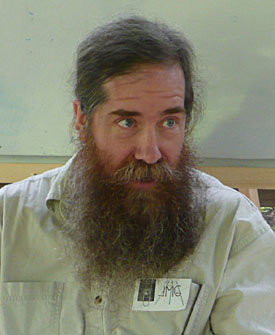
John Michael Greer
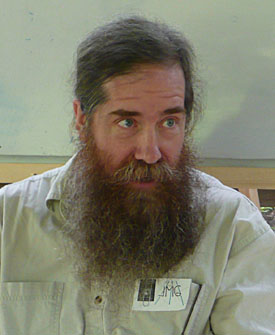
John Michael Greer continues to advance ideas and books that provoke and advocate thoughtful, viable alternatives to dysfunctional contemporary lifestyles and perspectives. The Gnostic Celtic Church takes its place among a growing and diverse body of work. Author of over thirty books, blogger (of the influential weekly Archdruid Report, among others), practicing magician, head of AODA (Ancient Order of Druids in America), “Green Wizard,” master conserver and longtime organic gardener, Greer wears lightly a number of hats that place him squarely in the ranks of people to read, consider, and take seriously, even if you find yourself, like I do, disagreeing from time to time with him or his perspectives. In that case, he can still help you clarify your stance and your beliefs simply by how he articulates the issues. In person (I met him at the 2012 East Coast Gathering), he is witty, articulate, widely informed, and quick to dispose of shoddy thinking. (As you can ascertain from the picture to the right, he’s also has acquired over the decades a decidedly Druidic beard …)
What all Gnostic traditions share, Greer notes, is that
personal religious experience is the goal that is set before each aspirant and the sole basis on which questions of a religious nature can be answered — certain teachings have been embraced as the core values from which the Gnostic Celtic Church as an organization derives its broad approach to spiritual issues. Those core teachings may be summarized in the words ‘Gnostic, Universalist, and Pelagian’ which are described in this book.
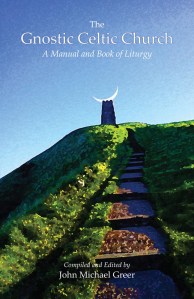 The Gnostic Celtic Church (GCC) may appear to step away from direct engagement with contemporary issues that have been the focus of Greer’s blog and recent books: peak oil, the decline of the West and its imperial overreach, and ways to begin laying the foundations and shaping a new, more balanced and truly green post-oil civilization that can arise over the next few centuries.
Instead of avoiding what amounts to an activist engagement, however, the book comes at these issues indirectly, outlining a set of core practices and perspectives for what AODA intends as “an independent sacramental church of nature spirituality.” The “independent sacramental movement ranks among the most promising stars now rising above the horizon of contemporary spirituality,” Greer observes in his introduction. Its freedom from the bonds of creed and doctrine has helped carry it to fresh insights and creativity, and deep applicability to the seeking that characterizes our era of “spiritual but not religious.”
What, you may be asking, does this have to do with Druidry? A lot. Or why would a Druid group include a “church” in the middle of its affairs? Read on, faithful explorer.
To examine in turn each of the three terms that Greer puts forth, the GCC is “Gnostic” because it affirms that “personal experience, rather than dogmatic belief or membership in an organization, can form the heart of a spiritual path.” This sensibility accords well with most flavors of Druidry today. While there is an admitted theme of ascetic dualism and world-hating in some currents of Gnostic thought, Greer provides useful context: “… this was only one aspect of a much more diverse and creative movement that also included visions of reality in which the oneness of the cosmos was a central theme, and in which the body and the material world were points of access to the divine rather than obstacles to its manifestation.”
 The GCC is also “Universalist.” Among other early Church leaders, the great mystic Origen (184-254 CE) taught that “communion with spiritual realities is open to every being without exception, and that all beings — again, without exception — will eventually enter into harmony with the Divine.” The Universalist strain in Christianity is perhaps most familiar to most people today in the guise of Unitarian Universalism, a relatively recent (1961) merger of two distinct movements in Christianity. A Universalist strain has been “central to the contemporary Druid movement since the early days of the Druid Revival” (ca. 1600s) and “may be found in many alternative spiritual traditions of the West.” Both Gnostic and Universalist links existed within AODA Druidry when Greer was installed as Archdruid in 2003. For another perspective, check out John Beckett’s blog Under the Ancient Oaks: Musings of a Pagan, Druid and Unitarian Universalist.
“Pelagian,” the third term, is perhaps the least familiar. This Christian heresy took its name from Pelagius (circa 354-420 CE), a Welsh mystic who earned the ire of the Church hierarchy because of his emphasis on free will and human agency. Pelagius taught, as Greer briskly characterizes it, that “the salvation of each individual is entirely the result of that individual’s own efforts, and can neither be gained through anyone else’s merits or denied on account of anyone else’s failings.” Of course this teaching put Pelagius at odds with an orthodoxy committed to doctrines of original sin, predestination, and the atonement of Christ’s death on the cross, and to policing deviations from such creeds. A Pelagian tendency remains part of Celtic Christianity today.
Greer draws on the history of Revival (as opposed to Reconstructionist) Druidry and notes that the former places at its center some powerful perspectives on individual identity and destiny.
Each soul, according to the Druid Revival, has its own unique Awen [link: an excellent (bilingual) meditation on Awen by Philip Carr-Gomm]. To put the same concept in terms that might be slightly more familiar to today’s readers, each soul has its own purpose in existence, which differs from that of every other soul, and it has the capacity — and ultimately the necessity — of coming to know, understand, and fulfill this unique purpose.
None of this is intended to deny the value of community — one of the great strengths of contemporary Druidry. But we each have work to do that no one else can do for us. In keeping with the Druid love of threes, what we do with the opportunities and challenges of a life determines where we find ourselves in the three levels of existence: Abred, Gwynfydd and Ceugant. These are a Druid reflection of an ancient and pan-cultural perception of the cosmos. Greer delivers profound Druid theology as a potential, a map rather than a dogma. “It is at the human level that the individual Awen may become for the first time an object of conscious awareness. Achieving this awareness, and living in accord with it, is according to these Druid teachings the great challenge of human existence.” Thus while the Awen pervades the world, and carries all life, and lives, in its melody and inspiration, with plants and animals manifesting it as instinct and in their own inherent natures, what distinguishes humans is our capacity to know it for the first time — and to respond to it with choice and intention.
Thus, Greer outlines the simplicity and depth of the GCC:
… the rule of life that the clergy of the Gnostic Celtic Church are asked to embrace may be defined simply by these words: find and follow your own Awen. Taken as seriously as it should be — for there is no greater challenge for any human being than that of seeking his or her purpose of existence, and then placing the fulfillment of that purpose above other concerns as a guide to action and life — this is as demanding a rule as the strictest of traditional monastic vows. Following it requires attention to the highest and deepest dimensions of the inner life, and a willingness to ignore all the pressures of the ego and the world when those come into conflict, as they will, with the ripening personal knowledge of the path that Awen reveals.
All well and good, you say. The basis for a mature Druidry, far removed from the fluff-bunny Pagan caricatures that Druids still sometimes encounter. But what about down-to-earth stuff? You know: rituals, visualizations, prompts, ways to manifest in my own life whatever realities may lie behind all this high-sounding language.
Greer delivers here, too. Though membership and ordination in the GCC require a parallel membership in AODA, the practices, rites and visualizations are set forth for everyone in the remainder of the book. That’s as it should be: a spiritual path can take either or both of these forms — outward and organizational, inward and personal — without diminution. And those interested in ordination in other Gnostic organizations will probably already know of the variety of options available today. Greer notes,
Receiving holy orders in the GCC is not a conferral of authority over others in matters of faith or morals, or in any other context, but an acceptance of responsibility for oneself and one’s own life and work. The clergy of the GCC are encouraged to teach by example, and to offer advice or instruction in spiritual and other matters to those who may request such services, but it is no part of their duty to tell other people how to live their lives.
If, upon reflection, a candidate for holy orders comes to believe that it is essential to his or her Awen to claim religious or moral authority over others as part of the priestly role he or she seeks, he or she will be asked to seek ordination from some other source. If one who is already ordained or consecrated in the GCC comes to the same belief, in turn, it will be his or her duty — a duty that will if necessary be enforced by the Grand Grove [of AODA] — to leave the GCC and pursue another path.
The ceremonies, rituals and meditations include the Hermitage of the Heart, the Sphere of Protection, the Calling of the Elements, the Sphere of Light, a Solitary Grove Ceremony (all but the first derive from AODA practice), and a Communion Ceremony that ritualizes the “Doctrine of the One”:
I now invoke the mystery of communion, that common unity that unites all beings throughout the worlds. All beings spring from the One; by One are they sustained, and in One do they find their rest. One the hidden glory rising through the realms of Abred; One the manifest glory rejoicing in the realms of Gwynfydd; One the unsearchable glory beyond all created being in Ceugant; and these three are resumed in One. (Extend your hands over the altar in blessing. Say …)
Included also are seasonal celebrations of the four solar festivals, the two Equinoxes and Solstices, ordination ceremonies for priests, deacons and bishops, advice on personal altars, morning prayer, evening lection or reading, and visualizations that recall Golden Dawn visualizations of rays, colors and symbols.
At a little over 100 pages, this manual in its modest length belies the wealth of material it contains — plenty to provide a full Gnostic Celtic spiritual practice for the solitary, enough to help lead to a well-informed decision if ordination is the Call of your Awen, and material rich for inspiration and spiritual depth if you wish to adapt anything here to your own purposes.
/|\ /|\ /|\
Images: John Michael Greer; GCC book cover; flame.
It’s the end of the year, and like you may be, I’m taking a look back. If A Druid Way inspires or helps or informs others, I’m grateful. My intent is to be a witness to the journey – quite as quirky as yours is, I imagine – opinionated, cranky, full of starts and stops, false steps and helpful insights, along with the odd cul-de-sac, or three, where the unexpected rots, or blooms. That’s where I want to keep my focus.
That’s said, if others opt to read what you write (and why else do people blog, rather than keep a private journal?), you’re no longer talking only to yourself. Obsessing about how to increase your page views isn’t normally conducive to the flowering of intuition and creativity. But knowing what others find interesting can serve as a guide for future topics that may still have some juice in them.
Here, then, counting down to number 1, are the ten most popular posts since I started this blog over three years ago in October 2011.
10. Voices of Modern Druidry. “Druidry is a lively and growing phenomenon, so the following list is by its nature incomplete … Included in the roster of people below are references and links to several of the most visible and influential Druid organizations active today.”
9. DRL – A Druid Ritual Language, Part 1. “Many spiritual and religious traditions feature a special language used for ritual purposes … The heightened language characteristic of ritual, such as prayer and chant, can be a powerful shaper of consciousness.”
8. The Fires of May, Green Dragons and Talking Peas. “Ah, Fifth Month, you’ve arrived. In addition to providing striking images like this one, the May holiday of Beltane on or around May 1st is one of the four great fire festivals of the Celtic world and of revival Paganism. Along with Imbolc, Lunasa and Samhain, Beltane endures in many guises.”
7. Opening the Gates: A Review of McCarthy’s Magic of the North Gate. McCarthy’s book is “characteristically humble, wise, unexpectedly funny, and profound – qualities too often lacking in books on magic. Add to these its emphasis on being of service to the land, and it is altogether a valuable resource.”
6. The Four Powers – Know, Dare, Will, Keep Silent – Part One. “‘All I know is a door into the dark,’ says Seamus Heaney in the first line of his poem “The Forge.” In some way that’s where we all begin. At three, four, five years old, some things come into our world already bright, illuminated, shining, on fire even. The day is aflame with sun, the golden hours pass until nightfall, and then come darkness and sleep and dreaming. We wander through our early days, learning this world, so familiar-strange all at once. We grow inwardly too, discovering trust, betrayal, lying, love, fear, the pleasure of imagination, the difference between visible and invisible worlds. Which ones do people talk about, admit to themselves? Which ones do people around us ignore, or tell us don’t matter?”
5. East Coast Gathering 2012. A good Gathering or Festival “offers a chance for Druids to walk among friends, attend workshops, and” — in our case — “(re)connect with a beloved landscape in northeastern Pennsylvania.”
4. A Portable Altar, a Handful of Stones. “An altar is an important element of very many spiritualities around the world. It gives a structure to space, and orients the practitioner, the worshiper, the participant (and any observers) to objects, symbols and energies. It’s a spiritual signpost, a landmark for identifying and entering sacred space. It accomplishes this without words, simply by existing.”
3. About Initiation. “With energies flowing around us from so many end-of-year holidays and celebrations, it seemed fitting to think and write about initiation. It’s one more piece of a Religious Operating System (ROS), it’s an important key to Druidry and — most importantly — it’s something we all experience. For good reason, then, the subject cuts a large swath through spiritual, religious and magical thought and practice. As author Isaac Bashevis Singer opens his book The Chosen, ‘Beginnings are difficult times.’ That’s one reason New Year’s resolutions often end up on the cutting room floor of the film version of our lives. (Some ways to keep them alive and well and not merely part of the special extended version of our lives that may not see wide release into the “real” world will be the subject of a post upcoming in the next few days.)”
2. Shinto—Way of the Gods. “Almost two decades ago now, in the early 1990s, my wife and I lived for a year in Hikone, a medium-sized city in central Japan, about an hour’s train ride north of Kyoto. The city’s most visible claim to fame is Hikone Castle, a 380-year-old wooden fortress that dominates the downtown skyline. But the most enduring memory I took from Japan and have never forgotten is the profound impression of its many Shinto shrines — roughly 80,000 of them, according to various sources — that dot the landscape and invite the casual visitor as well as the reverent worshiper.”
1. Fake Druidry and OGRELD. “I’m a fake Druid. So is everyone else who names Druidry as the path they walk. And I’ve come to love it.”
Thank you, everyone, for reading and following, for your comments, for over 21,000 page views and 500 likes, and for the encouragement these give me to keep exploring. (Early) Happy New Year to you all!
/|\ /|\ /|\
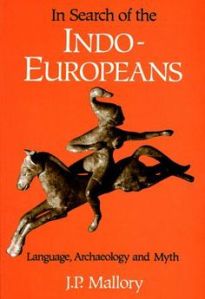 I’ve mentioned my obsession with Indo-European (IE) in previous posts, and given samples of a conlang I derived from IE and use in ritual. One of the many fascinations of this reconstructed language that’s the ancestral tongue of 3 billion people — half the people on the planet alive today — is the glimpses into the culture we can reconstruct along with the language. (Here’s a visual of the IE “family” and many of its members.) How, you thoughtfully ask, can we really know anything about a culture dating from some 6000 years ago – the very approximate time period when the speakers of the IE proto-language flourished? A good question — I’m glad you asked! – and one hotly contested by some with agendas to push – usually a nationalist or religious agenda intent on serving a worldview that excludes some group, worldview or idea. Hey kids, let’s define our club du jour by those we don’t let in!
But the most reasonable and also plausible answer to the question of IE language and culture is also simpler and less theatrical. Indo-European is the best and most thoroughly reconstructed proto-language on the planet — and it’s true there’s much still to learn. But after over two hundred years of steady increases in knowledge about human origins and of thoroughly debated and patient linguistic reconstruction, the techniques have been endlessly proven to work. And if a series of words that converge on a cultural point or practice can be reconstructed for IE, then the cultural practice or form itself is also pretty likely. Notice I don’t say merely a single word. Yes, to give a modest example, IE has the reconstructed word *snoighwos “snow” (the * indicates a reconstruction from surviving descendants — see footnote 1 below for a sample) – and that possibly suggests a region for an IE “homeland” that is temperate enough to get snow. After all, why have a word for a thing that’s not part of your world in any way? But wait — there’s more!
Here’s an uncontested (note 2) series of reconstructions – *pater, *mater, *sunu, *dukter, *bhrater and *swesor – all pointing to an immediate family unit roughly similar to our “nuclear family,” with father, mother, son, daughter, brother and sister all in place. It’s fairly safe on the basis of this cluster of reconstructed words – and others, if you still doubt, can be provided in painfully elaborate detail – that with a high degree of probability, an IE family existed all those millennia ago that would also be recognizable in modern times and terms.
[Side note: almost every reconstructed IE word listed in this post has a descendant alive in modern English. Want proof? Post a comment and I’ll be happy to provide a list!]
 Things understandably get touchier and more contentious when we move on to words and ideas like *deiwos “god”; *nmrtya “immortality”; *dapnos “potlatch, ritual gift-exchange”; *dyeu + *pater “chief of the gods” (and Latin Jupiter); *sepelyo– “perform the burial rites for a corpse”; and a few whole phrases like *wekwom tekson, literally “weaver of words, poet” and *pa- wiro-peku, part of a prayer meaning something like “protect people and cattle.”
What else can we conclude with considerable confidence about the IE peoples? Many lived in small economic-political units governed by a *reg– “king, chieftain” and lived in *dom– “houses.” Women *guna, *esor left their families at marriage and moved to live with their husbands *potis, *ner, *snubhos. A good name *nomen mattered then just as it does today – even with social media both exalting and trashing names with sometimes dizzying speed – though small-town gossip always filled and fills that role quite well, too. Heroes dominated the tales people told round household and ceremonial fires *pur, *ogni in the village *woikos, *koimos at night *nokwti. The most powerful and famous *klewes– heroes succeeded in slaying the serpent or monster of chaos: *oghwim eghwent “he slew the serpent” and thereby earned *klewos ndhghwitom “undying fame” (note 3). Special rites called for an *asa altar and offerings *spond-, because the universe was a place of an ongoing re-balancing of forces where the cosmic harmony *rti, *rta needed human effort to continue.
With Thanksgiving in the wings, it’s a good time for reflection (is it ever not?). Ways of being human have not changed as much as we might think or fear or be led to believe. Family, relationships, good food and drink, a home, meaningful work, self-respect – these still form the core of the good life that remains our ideal, though its surface forms and fashions will continue to shift, ebb and flow. Hand round the *potlom cup and the *dholis, the portion each person shares with others, so that all may live, and we can still do as our ancestors did: give thanks *gwrat– and praise for the gift *donom of life *gwita.
/|\ /|\ /|\
1. Linguistic reconstruction involves comparing forms in existing and recorded languages to see whether they’re related. When you gather words that have a strong family resemblance and also share similar or related meanings, they help with reconstructing the ancestral word that stands behind them, like an old oil portrait of great-great-great grandma in the hallway. Some descendant or other probably still walks around with her characteristic nose or brow or eyes, even if other details have shifted with time, marriage — or cosmetic surgery.
For *snoighwos, a sample of the evidence includes English snow, Russian snegu, Latin nix, niv-, Sanskrit sneha-, and so on. The more numerous the survivals in daughter languages, the more confident the reconstruction usually is. After a while you see that fairly consistent patterns of vowels and consonants begin to repeat from word to word and language to language, and help predict the form a new reconstruction could take.
A handful of reconstructed words have descendants in all twelve (depending on who does the counting) of the main IE family groups like Italic (Latin, Oscan, Umbrian, all the Romance languages, and others), Celtic (Irish, Welsh, Breton, Manx, etc.), Germanic (German, English, Dutch, Icelandic, Norwegian, Frisian, Swedish, Gothic, etc.), Baltic (Latvian, Lithuanian, Prussian), Slavic (Russian, Serbian, Polish, Czech, Ukrainian, Slovene, Polabian, Old Church Slavonic, etc.), Greek (Doric, Macedonian, Attic, etc.), Tocharian (A and B), and Indo-Iranian (Sanskrit, Pali, Avestan, Bengali, Hindi, Urdu, Sindhi, Kashmiri, Dari, Pashto, Farsi, Baluchi, Gujerati, etc.) and so on, to name roughly half of the families, but nowhere near all the members, which number well over 100, not counting dialects and other variants.
2. “Uncontested” means that words with approximately these forms and meanings are agreed on by the overwhelming majority of scholars. If you dip into Indo-European linguistics journals and textbooks, you’ll often see algebraic-looking reconstructions that include details I exclude here — ones having to do with showing laryngeals, stress, vowel length and quality, etc. indicated by diacritics, superscripts and subscripts.
3. Even without the details mentioned in note 2 above, some reconstructions can still look formidably unpronounceable: I challenge any linguist to give three consecutive oral renderings of the second element in the reconstructed phrase *klewos ndhghwitom! The point to remember is that these are usually cautious reconstructions. They generally “show what we know.” Vowels tend to be much more slippery and fickle than consonants in most languages, and so they’re also less often completely clear for IE than the consonantal skeleton is. Several people, me among them, have worked on versions of “Indo-European for daily use”!
Images: Mallory; Indiana Jones the linguist.
Corrected 18 Dec. 2014
 Back from a seminar this weekend on the art of spiritual dreaming, with a series of quirky, honest, challenging speakers and panelists. “Intimate” was a word I heard more than once to “describe the vibe”: the distance between speaker and audience collapsed in a remarkable way, so that we were all participants. Or as one speaker remarked, talking about his experience with dreaming and comedy and comedic training with the improv group Upright Citizens Brigade, “you show up, listen and tell the truth.” If the truth isn’t yet funny-sad at the same time, you keep showing up, listening, and telling and digging. You bring it with everything you are. ‘Cause otherwise, what’s the point? Except maybe chocolate.
But the statement I heard during the seminar that has stuck with me is the line that provided the title for this post: “Here, in these worlds of duality, everything has a container.” Or to put it another way, “soup needs a pot.” My wife and I riffed on this on the drive home. Relationships, stress, jobs, life: we’re just having “container issues.” The center around which the storms rage witnesses it all. Uncontained, it doesn’t get slimed or cracked, burnt or broken, stolen, ripped off, bungled, overpaid or underappreciated. Container issues, these. How to shift attention off the containers, even for a moment, is a source of great freedom and possibility. Don’t, say some. Can’t, say others. Shouldn’t, say still others. We listen, and we don’t, can’t — until we discover a “why not?” lying at the bottom of the bag, like a stale fortune cookie, or a light-switch felt for, in a strange house or hotel room, in the dark. And we do. And so it begins.
Hence the “art” part in the “Art of Spiritual Dreaming.” As an art, it needs practice. Really improves with trying out and adapting and personalizing, missing and picking up and proceeding in fits and starts, in the best human tradition.
The first stages of practice can be squeaky, atonal cries, like the noises from that violin you or your nine-year-old has just picked up and attempted to drag a bow across. Or grunts and groans, as when you move into that yoga posture, and you suddenly can count every damn one of the 206 bones, plus assorted tendons and ligaments, in the human body. Your body, thank you very much. Sometimes the art consists in not crying. Or doing so, with all the tears and sobs the situation calls for. If you’re a puddle, you’re sometimes half-way to “soup without the pot.” Then you climb back in. Repotted.
Your art may be different. “The Sabbath was made for man, not man for the Sabbath,” said a certain wise teacher not so many millennia ago. How your art comes to you is your life, what you’re doing today and tomorrow. And after that, maybe. But when this art we’re all practicing becomes dogma, the artist — who’s the point of it, after all — gets lost in the bans, inquisitions, burnings, purges, pogroms, reformations, downsizings and re-organizations. (Looked at one way, it’s all church/work.) Let me out, says the Artist. I need to breathe. And when we confuse cop-out with drop-out, we’ve confused what Tolkien called the “the flight of the deserter” with “escape of the prisoner.” One is weakness, though sometimes we need to acknowledge weakness, too, just like with crying. (Show up and tell the truth.) The other, the escape, is a necessity. The bush may survive in the prison yard, but it blossoms in open air. You and I dream every night (proven, documented, everyone single one of us, every night — remembering is just another art to practice) to escape the container into more open air.
We talked in the seminar about techniques. They’re not hidden, not anymore. Half a hundred schools and temples and ashrams, synagogues and retreats and workshops teach them, sometimes try to claim them, copyright them even, if they’re reeeeely insecure, or greedy and want your $ or other equivalent metal and paper tokens.
Silence. Chant, kirtan, song. Prayer, mantra, favorite refrigerator-magnet team-building-button go-to verbal icon for centering. Icon, image, idol, focus, mandala. Posture, breathing, zazen, yoga, tai chi, krav maga, judo, karate. Ritual, rite, gesture, mudra. Dream, metaphor, lucidity, shift, imaging, visualization. All of these can rattle the container, making us aware of it if we mistake container for real deal, for the truth of what’s going on right now. Pursued with sufficient discipline and zeal, they begin to open doors. Too many! you may say. I’ve just begun with this one, and you’re dumping a truck-load on me.
All you need is to master just one technique, says the Teacher. Just one, and that will be enough.
Enough for what? Suspicious that someone’s selling you something? For me that enough leads to pure experience. Opinions just not needed till after, if at all. Tolkien describes his sense of new/familiar in one of many instances in The Return of the King, in the chapter “The Houses of Healing”:
… as the sweet influence of the herb stole about the chamber it seemed to those who stood by that a keen wind blew through the window, and it bore no scent, but was an air wholly fresh and clean and young, as if it had not before been breathed by any living thing and came new-made from snowy mountains high beneath a dome of stars or from shores of silver far away washed by seas of foam.
And if this metaphor, which is simply another technique, happens to work for you, you catch another glimpse that can be strengthened by one of the techniques here. Or if you’ve swallowed long years or lives of dogma and you practice denial as one of your (powerful) techniques for self-defense against liars and their lies, or simply if your spiritual taste is nourished by other food, it may not work, and you need to look elsewhere, and maybe else-how. And like so many things that may have started for you way back in high school, “you’ll know it when you find it.”
All of this is simply a larger over-technique. And because it’s shaped in words in this post, it may trip you up as much as help you. So with that caveat I pass it along for what it’s worth. Sometimes even an echo is enough to keep us going down the hall and out the gate and along the next path.
/|\ /|\ /|\
 If you’ve been following my nano-progress in the last few posts, you’ll see by the numbers here (showing up and practicing my telling the truth) that I’m lagging in the numbers game. Words, word-count, Nanowrimo, this novel, writing — all containers. Necessary, but not the final story. I’ve got plenty to write, but it’s coming slower than usual, because it feels good to get it right.
Like the story’s already out there, Emily’s sitting here in the living room, curled up near the fire on a snowy, rainy, yucky Vermont day. She’s cradling a mug of tea in one hand, reading or sketching or listening to music, waiting for the next segment I’m just finishing up, and I’m trying to tell it accurately so she’ll recognize it. Or I’m transcribing from a dream what she told me in detail, in Dirnive, which she granted me a pass to enter last night, and I have to punch “replay” and re-enter that dream to check the experience one more time against what I’ve got so far.
It’s coming through like a dream, not linear — that’s for later, with editing — and with textures and colors and sounds that will loom up suddenly and ask for space and time I hadn’t anticipated. A scene with her parents and brother, casually shopping in an antiques store. A class at St. Swithins that seems to link to Emily’s absence for about two weeks’ earth time, but nearly a year on Dirnive. To conceive and give birth to a child there. Because if she doesn’t, given the difference in time passage between the two worlds, her love will age and die quite literally before she herself is out of her teens. Which makes her parents grandparents — her mother would adore a grandchild, only not so soon — but grandparents of a baby they will never see. Because Emily can come and go between worlds — her worlds — but no one else can. I think. Emily doesn’t want to risk it, yet. She says. See what a novel can do to you?!
/|\ /|\ /|\
Image: Art of Spiritual Dreaming — John Pritchard
In the lovely and iconic image below, courtesy of Cat Treadwell, Druids climb Glastonbury Tor earlier this month as part of OBOD’s Golden Anniversary. Fifty years ago, Ross Nichols (1902-1975) — poet, Druid and school-teacher — formed the Order of Bards, Ovates and Druids. As a member of the Bardic grade, of course I yearned to attend. For a delightful acccount of the event, go here for Joanna van der Hoeven’s 9 June 2014 post “Celebrating 50 Years of OBOD” on her blog “Down the Forest Path.”

OBOD 50th Celebration — Druids climb Glastonbury Tor. Image Courtesy of Cat Treadwell
Does it matter whether Druids and Glastonbury share a historical connection? Ultimately, only to historians. The lived experience of Druidry, as of any flourishing tradition, means that what we do today shapes our experience more than what may or may not have happened in the past. When my fellow Druids assembled in the town and on the Tor, the sense of community, the sharing of ritual, the reunion of friends, the inspiration of the talks and workshops, the sense of history, and the beauty and much-vaunted “vibe” of Glastonbury, all converged. And the same kind of convergence is true of personal experience as well.
Though OBOD’s Golden Anniversary celebration tugged deeply at me, my wife and I had already committed resources to a trip within the U.S. I couldn’t manage both, so I had to forgo what was by all accounts a moving and delightful celebration. But I couldn’t sustain much self-pity, because our own itinerary included a return to Serpent Mound in southern Ohio. I’d visited before in 2008, and experienced a strong past-life recall there. I saw and heard further details this time. Among them were a specific name (of a tribe? a person? I don’t — yet — know), voices singing, images of the tribe’s shaman, and of my death near the Mound in an inter-tribal conflict.
 But these details, while moving and significant to me, matter less than the impact which these kinds of experiences make in general. As an instance of “unverified personal gnosis,” my experiences don’t require any belief on my part, though of course I may choose to believe all sorts of things as a result. Nor do such experiences legitimize any attempts I may make to persuade others that my experience was “real” or that they should act differently towards me — or their own lives — as a result. What the experience did establish for me is a strong personal resonance with a place and a culture, and a doorway to potential future choices and insights about my life and personal circumstances that I might not have been able to access in any other way. Whether I choose to act on that experience is my responsibility. (What is significant to me right now is that the details of my experience form the basis for a decent historical novel, for instance — one way to dramatize my personal experience and — with further hisorical research — turn it into art. I feel I can explore and concretize its significance most vividly and vitally this way. And who knows what further confirmations such research may provide?)
 The Serpent is “a 1,348-foot (411 m)-long, three-foot-high prehistoric effigy mound located on a plateau of the Serpent Mound crater along Ohio Brush Creek in Adams County, Ohio” (Wikipedia entry, and the sign above). On the ground, it’s not a particularly impressive structure — at first. A 30-foot viewing tower near the tail of the Serpent allows some height and perspective for the kind of photos I took. Shadows in pictures taken early or late in the day help highlight the shape and outline of the Serpent.
Both the age and purpose of the Mound are a matter of debate. Many published sources estimate the time of its construction around 1000 or 1100 CE. But the Ohio Historical Society guide at the site assured us that recent archeological studies, due to be published later this month, revive the claim (with apparently solid evidence) that the mound dates from an earlier period around 2000 years ago. Artifacts recovered from the mound include charcoal, beads and other jewelry, flint knives and arrow-heads, and deer-bone tools.

Aerial shots like the one below begin to convey the size and significance of the mound:

Add to this the presence, both at Serpent Mound and elsewhere in Ohio, of separate conical mounds like the one below (the picnic table in the foreground gives an approximate yardstick to estimate its size), and for me at least the sense of Adena tribal presence and purposefulness grows in my heart, a living thing.

/|\ /|\ /|\
Image: Aerial shot of the Mound. All other images by me.


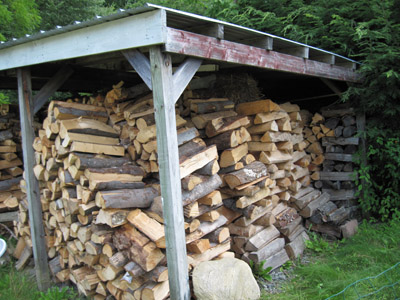
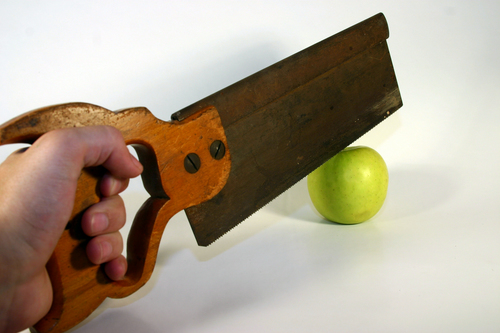
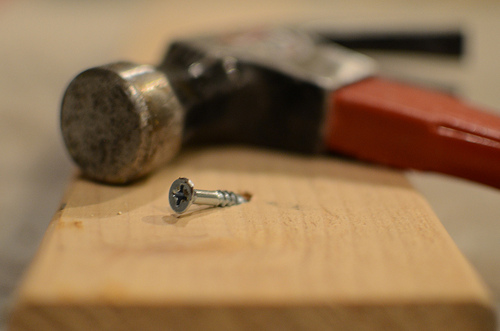
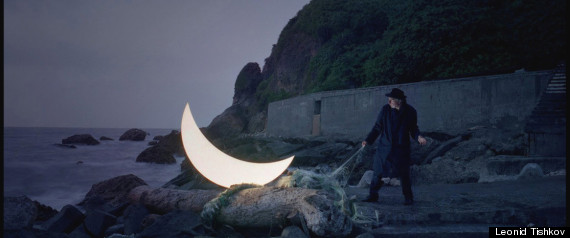
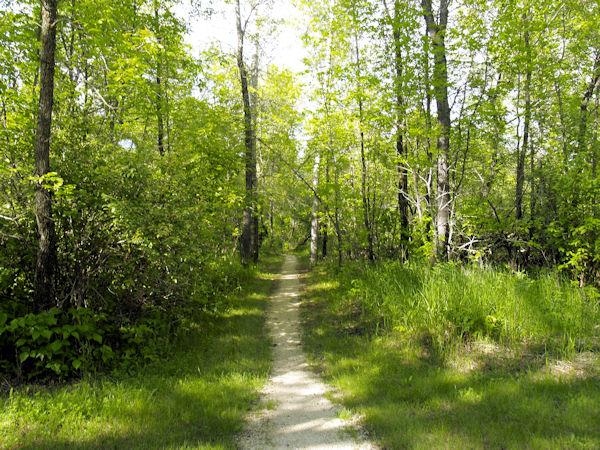

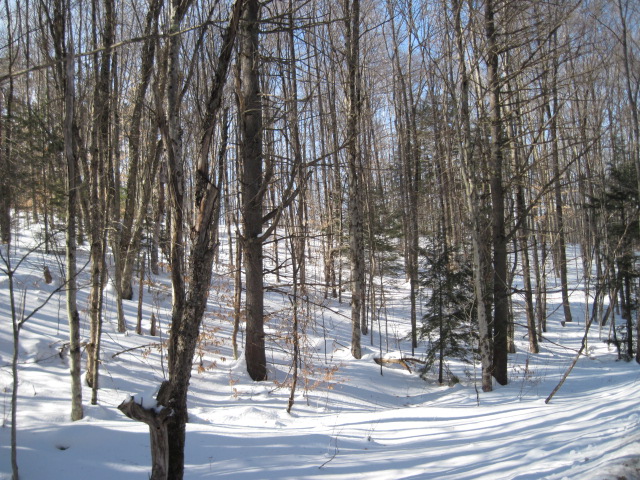
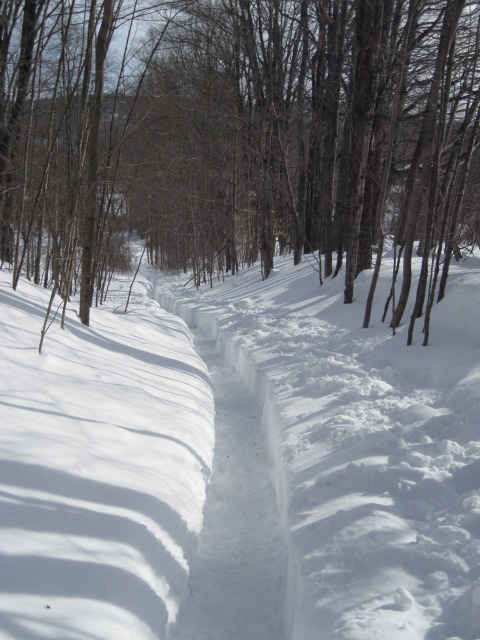
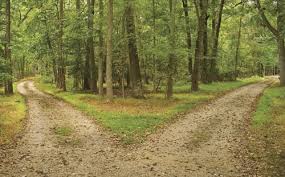
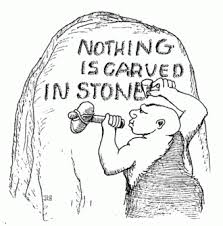


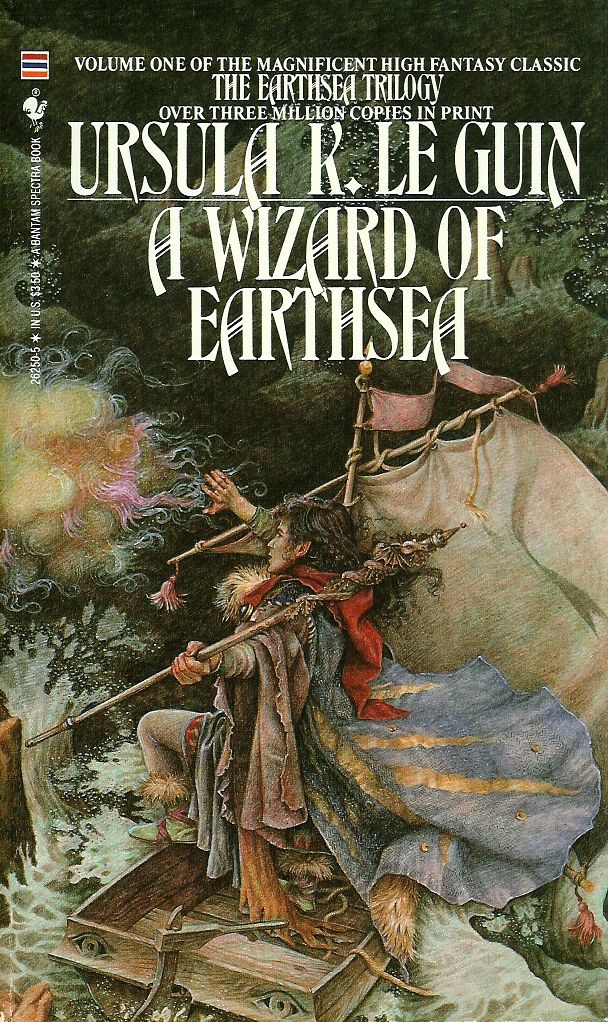



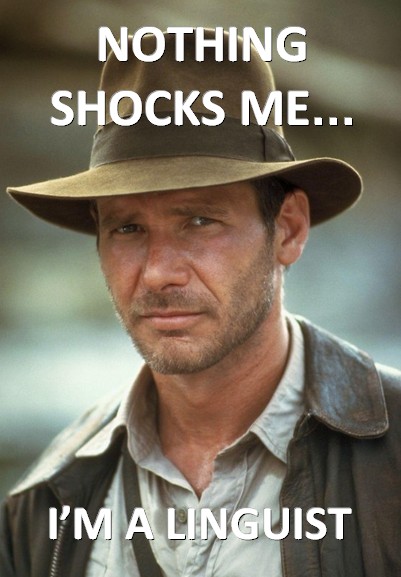


 A Druid Way