In his fine novel South of Broad, Pat Conroy writes:
His curiosity about the earth ennobled his every waking moment. His earth was billion-footed, unseen worlds in every drop of water and every seedling and every blade of grass. The earth was so generous. It was this same earth that he prayed to because it was his synonym for God (Pat Conroy, South of Broad, New York: Dial Press/Random House, pg. 3).
/|\ /|\ /|\
I’m adapting the 11 questions from Matt Auryn’s recent (May 27, 2017) post “Witchsplaining & How To Avoid It”, turning them around, upside down, and inside out, shaking them a little, and adding two more to make it 13 in total for this three-part series.
Matt’s original asks questions to help others avoid condescending or patronizing interactions – think “mansplaining” and apply it to Witchcraft. My adaptation repurposes the questions. (Who would condescend to themselves?!) It’s for myself and others who’d like a jumping off place for assistance and perspective in examining our interactions with Spirit. Among other things, I’ve modified the questions to make them into “hows” and “whys” along a continuum, rather than a matter of yes or no, all or nothing. You can think of a spiritual practice as an inward synonym for gods or God.
So here goes: if I feel Spirit or the Divine doesn’t seem to be speaking to me, here are some questions I try to remember to ask myself. Versions have been kicking around in my journal for a couple of decades. You might think of them as “13 Moons of Spirit”, a year’s worth of spiritual investigation. Because if I haven’t visited some version of these recently, I’ll discover — or get prodded into remembering — that it’s time to return and incorporate asking and listening to them into my practice.
1. How have I already been asking for and seeking a connection with Spirit?
Almost everyone has some kind of practice already in place, at least in embryo. Take a walk, a jog or a drive after work to unwind? Read a favorite author or listen to the same song to help you fall asleep? Get up before everyone else, or stay up after everyone else, to find some “alone time”? Seek a particular household task (dishes, laundry, window-washing, vacuuming, etc.) as much for its rhythm as for its usefulness? Recite a favorite saying, charm, poem, etc., at a particular moment of your day, just before sleep, right after waking? (For some years, out for a jog each morning a little before sunrise, I’d whisper to myself these words from the Odyssey at the dawn: “The sun rose on the flawless brimming sea into a sky all brazen–all one brightening for gods immortal and for mortal men”.) You’re on the way to a practice already.
Often we assume that with Spirit we start from zero and move from no connection to full connection. Or sometimes we evaluate spiritual practices or paths like we rate internet connections or sports cars: 0 to 60 in how many seconds? Not fast enough? Change brands or makes of car. Get the speed you need! Sticking with a practice and timing it for results is like watching a pot for when it starts to boil, like waiting for seedlings to germinate, break through the surface and send out their first leaves. It will happen, and it also takes way longer if I sit there just watching for it. Finding something else to do can be an important part of my after-practice.
2. How can I open myself further to Spirit? How can I strengthen my “essential welcome” (see previous post)?
Asking for connection, all by itself, is a great start. Listening for answers and trying out nudges and hints is a fine second step.
What will I do with greater access, increased flow? How will I pass it on? (Otherwise it bottlenecks, and all the openness in the world to “more” won’t pass it along until I find an outlet. In-flow, out-flow. We are lakes, reservoirs, oceans, capacitors. Or if I’m feeling particularly modest, a tea-cup. Once I’m full, “more” has no place to go but over the sides. I need to get bigger, too. I need to pass along the gift.
3. How have I responded when Spirit and I DO connect?
If I don’t record it somehow, it almost always disappears. Getting it down is a practice of gratitude all its own. Our minds are exquisitely this-world focused. That’s useful for driving a car, following a schedule, coloring within the lines. Want to keep a job, an appointment, a promise? Mind is your go-to guy.
Want to retain the touch of a god, the breath of Spirit, the thrill of broadened understanding, the trance of ritual, the gift of love between luminous beings? Mind drops what doesn’t fit on its notepad, its index, its time-card. Write it down, record your voice telling it, draw it, sing it, etc. This, I’ve found, helps train mind to hold on to just a little more. Every once in a while I get a glimpse of how much comes and how little I notice. And reviewing such records helps prime the pump, blows away the cobwebs and reminds us of past connections. One daydream including a glimpse of hilltop or temple may be a lapse of attention. Five or ten “daydreams” of the same location, recorded over a year or three, (mind WILL forget!) is something else entirely. How will I detect the difference if I lose the recall?
Response generates response. Thanks, with no other practice, can take me amazingly far into other worlds where gratitude is the sole pass-key. Thanks, wonder, generosity: a holy triad.
4. How, if at all, have I formally apprenticed myself to Spirit? How, if at all, have I agreed to make Spirit or any Wise Ones partners in my training?
Making these kinds of agreements can be of immense help in training a stubborn and lazy human consciousness to serve more widely. Once I begin to serve, the tools and resources and opportunities begin to open up. Make the request or promise seriously to grow and serve — they amount to the same thing — and Spirit will hold me to it. The training and the feedback in the form of quicker reactions to my actions all help sharpen awareness. If it gets to be too much, I can always take a break. Dial it back. Soon enough, I’m restless and eager to grow again. Because on an endless journey, there’s no rush. Only a holy rhythm.
Today I take for my divination the two rhododendrons blooming outside our bedroom window. One hasn’t wintered well, ungainly thing, and it needs pruning at the end of the season. Whether it was winter die-off or just increasing age, a good bit of the plant is brown and lifeless. But the blooming part is lovely as ever, the lush buds spilling open into flower at one with the birdsong that begins around 5:20 a.m. now, at first light.
It’s my mother’s birthday today — she’d be 98 if she were still with us, and I marvel each year as that number nears a full century. As many do, I’ve long found that spring and early summer can intermittently be times of intense nostalgia. Here again is new life, and in the midst of each lengthening day and its wonders, so many things seem intent on calling us to remember what has departed as well as what thrives and burgeons and grows. This is the Samhain-of-Beltane, the autumn in spring. Not a diminishment at all, but a deepening of each birth and renewal. All the earth, the dirt underfoot, is the substance of past life. In a very literal way, we could not live without the lives of those gone before us, their bodies nourishing and supporting ours, ours depending on theirs for every breath.
In her Celtic Devotional, Caitlin Matthews writes:
There are so many difficulties in our daily lives, so few incentives to act responsibly, so little support for personal spiritual growth that it is only within the broadest categories of spiritual hospitality that the soul can be encouraged to find its own natural pathway. This is especially so where the soul has been injured by intolerance and lack of charity, or scandalized by the unholy infighting of formal religion, or by its lack of respect for non-human life-forms and neglect of planetary and universal issues. These and many other reasons may drive people from formal religious adherence, but they do not stop the need for them to pray, to meditate or contemplate in union with the world …
The urge to follow a spiritual pathway comes in a variety of ways, but, in every case, the soul puts out its exploratory shoots in the context of personal devotion, testing the ground, discovering how Spirit responds, learning how true communion with the Divine can be brought about (Celtic Devotional, p. 8).
One of the many ironies of this period of human history is that while it can indeed be a time of difficulty and lack of support as Matthews describes, paradoxically it’s also a time where our need for a spiritual practice is all the more acute and obvious. Other supports for any inner life have been weakened or destroyed, and the emptiness of the available distractions shows all the more clearly. The outlines of what we need are clearer now than before.
Small wonder then that the spiritual power of authentic practice touches so many, and even a little bit can point the way forward. Whether it’s some form of Paganism or some other spiritual path that calls to us, the appeal is patent and powerful. In some form we feel the lack every day until we begin to nourish ourselves with a practice. The shape that practice takes will necessarily be our own. No one else can dictate what it should be for us. It will evolve with us as we set out on the journey.
For the beginning of a practice, then, a prayer-charm:
I weave the cincture of protection,
from the nine powers of nine trees,
strength of oak,
straightness of ash,
purity of birch,
absorbency of alder,
brightness of beech,
elegance of elm,
healing of willow,
power of holly,
everlastingness of yew.
Nine trees to circle me,
nine powers to guard me,
as the Summer song resounds.
(Matthews, Celtic Devotional, pg. 86)
May you live and grow and flourish in groves of protection.
/|\ /|\ /|\
Matthews, Caitlin. Celtic Devotional: Daily Prayers and Blessings. Rev’d ed. Gloucester, MA: Fairwinds Press, 2004. (First published by Godsfield Press, 1996.)
How do I keep the inward doors open? (How do I even begin to locate them and find their handles?) How do I pick up on subtle nudges? How do I hear the quiet inward speech of things — the “still small voice” as older versions of Christian scripture call it? We all get the big events — no need to go looking for them. They burst on the scene, kicking down the door a few times in a life, unmistakably loud and messy, whether good or bad, and usually a mix. But they break through, and everything shifts.
“Go out and stand on the mountain in the presence of the Lord, for the Lord is about to pass by.” Then a great and powerful wind tore the mountains apart and shattered the rocks before the Lord, but the Lord was not in the wind. After the wind there was an earthquake, but the Lord was not in the earthquake. After the earthquake came a fire, but the Lord was not in the fire. And after the fire came a gentle whisper. When Elijah heard it, he pulled his cloak over his face and went out and stood at the mouth of the cave. Then a voice said to him, “What are you doing here, Elijah?” (1 Kings 19:11-13).
With wind and earthquake and fire, how do we ever catch the whisper? And then, even if we manage to hear the “still small voice”, we may find that instead of resolution or insight or growth, we’re left with questions, like Elijah. Our own lives interrogate us. “What am I doing here? How did things end up like this?”
Most traditions urge a daily practice. As much of Christianity has become focused on belief rather than practice, it has lost much of what monastic practice has preserved. A site on Trappist monasticism notes:
The practice of lectio divina, (divine reading), is foundational to monastic life. So important is divine reading to the spiritual well-being of a monk that, traditionally, we devoted some of the best hours of the day to this practice. Lectio Divina is a discipline whose fruits are experienced over time. One needs to understand the practice and then commit to it with some regularity.
Practice matters. Not because it makes our lives “safe” or “easy”: no life is that I know of. If I think about it, most lives resemble the character throw in role-playing games (RPGs) like Dungeons and Dragons. You toss the game dice for talents, strengths and weaknesses. You may for instance roll a high intelligence, but your physical body is weak. You can’t rely on it. If you’re allowed to roll again, your strength, your vitality, may be high this time, but you’re none too bright. Or on the third throw, both intelligence and strength come up high, but your temper makes your life a train-wreck of impulse and blame.
A daily practice helps build spiritual stamina. It’s something like what our grandparents and great-grandparents used to call “inner resources”, though they may rarely have shown us how to develop ’em. (Merely “following the rules” doesn’t usually help.) But they knew enough to recognize people who had them. (In RPGs like Dungeons and Dragons, you can improve even weak qualities of your character over time, through experience. Funny thing!)
One of my teachers says that even if we could know the future, we’d have a hard time accepting just the good things to come in our lives. (That they might not always resemble “good things” from our present standpoint rarely occurs to us.) We build stamina over time, so that the big lifting is more manageable, and the daily lifting can become a small pleasure in itself.
A daily practice helps us hear that whisper, catch the still small voice. And that in turn can help us ride the worst of the big bad events, and make the most of the big good events (and little ones, too). And that can lead to all kinds of wonderful things. But the practice itself doesn’t deliver them. It catalyzes. It doesn’t guarantee.
One Druid I know makes it a point, whatever the weather, to visit a small outdoor shrine in his backyard each morning, before he heads off to work. He says a short prayer, or holds a meditation, makes an offering, etc. His practice builds over time, with things added or discarded. If, under pressure of a tight schedule or occasional family craziness, he misses his practice one morning, he feels the lack. But that in itself has deep value — it’s one way to recognize the value of a practice. It’s a good habit. The gods know we all cherish enough bad ones.
So working with the habit-forming tendencies we all have, we put them to work here and there. We start small. A daily practice can be a form of magic, of empowering ourselves to live more fully. Because really, what else is there? If we’re so sunk in difficulty that every day is a struggle just to survive, we’ve got nothing extra to share with anyone or anything. Our work is simply to endure. And sometimes that has to be enough. But beyond survival, one goal can be to spend our surplus as we choose, consciously, with intention. The goal is to find ways to get to a surplus in the first place, so we have something to spend, something to give back, to build on, to build up.
As Philip Carr-Gomm has written, “In a world sorely lacking in meaningful ritual, it can feel like a balm to the soul to engage in actions that are not obviously utilitarian, that are designed to help us enter into a deeper sense of engagement with life –- to give expression to our belief in a world of Spirit that infuses this physical world with energies that bring healing and inspiration.” If such ideas seem foreign or strange, that’s a measure of how far we’ve wandered from ways of living proven over millennia to help us make the most of our few decades here.
The Christian “Lord’s Prayer” is brief, and usefully so. Or if you’re a Catholic, the Rosary is comparably short. Most traditions offer short usable rites like prayers or visualizations. Along with similar prayers, OBOD Druids and others may practice a Light Body exercise.
Repetitions done mindfully can be remarkable in their effects over time, hard to describe until you try them out. Like any exercise, they build strength and stamina. We can propose to ourselves any number of fine practices, elaborate rituals, intense mystical exercises. But the small one we actually follow through on every day for a month will be the one that begins to convince us of its value, and of the value of a practice.
The key is to find what works, and what I can stick with. I keep a record. Did this for a week. Liked it. Kept it up for a year. Discarded it. Felt the lack. Picked it up again and added it back in to the mix a year later. Forgotten I’d made that experiment till I re-read my journal from that time.
Finding what works for me, ultimately, is a practice all its own, one of the most “practical practices” I can try.
/|\ /|\ /|\
I’ll close with a Youtube clip of “Pirililou”, which as its description states, is
an old Gaelic Chant sung at the Western ocean’s edge to the soul of the departed, in the first days after death, to assist the soul travelling from this world to the next ones. It is said to imitate the call of a shore bird … a bird dedicated to Bridhe and St Brigit, who assist the birth of souls in this world as well as the next.
As a meditation before sleep (that practice journey we all make nightly), this kind of meditation can lead to deep insight. Have we, after all, been fully born into this world, never mind any other one? Playing (singing, composing) a short devotional song that moves you deeply, and listening (performing) with intention, can make for the beginning of a profound practice.
So what do all these high (and abstract) sounding principles in the previous two posts actually mean in practical daily life terms? They mean much to me because they’re part of my practice. Yours will be different.
I talk a lot on this blog about the foundational importance of a regular practice — I’ve learned the value of one from years of experience, failures and successes. Part of your unfolding practice can consist of crafting prayers and rituals and deploying them to help empower you daily — hourly, if needed. Here’s a fine and succinct example (shared with permission) from Catriona Hughes:
Water on my left, fire on my right,
Cleanse and shield me through this fight.
Earth below and sky above,
Help me greet the world with love.
A great deal of the post-election reaction in the U.S. among many has been (and continues to be) fear, blame, anger and grief. Unless these energy flows serve to cause specific and useful changes in our behavior, they wantonly squander our energy without giving us anything like a worthy return. We can give a true gift to ourselves and dedicate the same energies behind them to something we choose, not something reactive — dependent on another’s actions. Otherwise we’re not only left with fear, etc., but we’ve squandered what personal power we do have for that hour or day or month that could have shaped a creative and positive response, and seeded still more over time. Replacement is essential. Our psyches, like nature, abhor a vacuum. Clearing them is the first part. Filling them with what we, not others, choose, is a vital second step.
Something like Frank Herbert’s fine “Litany against Fear” in his Dune series of novels can also answer this need:
I will face my fear. I will permit it to pass over me and through me. And when it has gone past I will turn the inner eye to see its path. Where the fear has gone there will be nothing. Only I will remain.
“Season to taste” fits a life even more than a meal. Find what actually works for you.
Build your own life first. Securing creative sources of shelter, heat, food and water answers our first animal and elemental needs. Ask for help from Spirit and the Four Quarters. Make a form and expression of gratitude part of that daily practice. Blessings and graces — bless the fire as you light it, the food as you eat it, the wind outside as it sweeps past you, the light from the sky as it pours down on you, the animal and plant life all around you, in every season.
Write, sing, dance these things–you choose. Window boxes with herbs or salad greens are within the capacity of all but the most physically restricted of us. Just having something green beside you in the winter months cheers the heart. Eating anything you’ve grown is a return you have gifted to yourself. Note its symbolic power as well — this accompanies any physical act and often matters at least as much to outcomes and influences.
Practices are just that — practice. Refine and adapt as needed. The “best practices” are ones that fit you and feed you. You’ll know this by the doing of it — and gain in confidence and self-knowledge when choosing future practices wisely and heart-fully.
Nurture relationships. Everyone has friends, family, pets, neighbors, co-workers, co-religionists, etc. who can accomplish more together than apart. You know best how to do this, when, on what scale, how often, in your own way.
Practice being an ancestor. Make a point of challenging your own perspectives, beliefs and practices so you can anticipate and ride changes more smoothly. Again, you know best how to do this. The coming days, years and decades will not slacken in the tests and challenges they will bring to us to face. Our ancestors survived their share — and we are living proof. We can do the same.
Know what matters to you, what you believe, what deserves your effort and love. Set it down in writing. Share it with those who matter to you. It may be a list or a theology or two or three practices you want in front of you, within a daily sightline, for a visual reminder as you go about your day. You choose.
Take stock and assess areas above (and others on your own list) — both those that continue to need more attention and those that already flourish and bring you energy and joy. Let your assessment focus on what you’ve learned and what your next steps can be. If you’re like most humans, you’ll benefit from putting these in writing and reviewing them regularly. Once a month — the full or new moon — is a sound time to do so.
There — the beginnings of a practice already, a focused response that will generate, I guarantee, positive results.
“Some people don’t understand when I say these are the things I believe.”
So Damh the Bard sings in his lovely song “The Hills They Are Hollow.” But his song begins, “As I walk upon this green land, this land that I love …”
For me, that’s where Druidry starts, not in belief, but in love and experience of the natural world and the land we live on.
Belief may or may not come later, when doors that will not open to intellect alone open to love. And if you feel the land is sacred, then quite naturally you feel like singing about it: “Let’s sing of the mystery of Sacred Land …”
Recently a visitor to this blog pm’d me to comment on what he perceives as the need for a Druid theology. It’s easy enough to feel that way, surrounded as most Pagans and Druids are by a larger culture still shaped by a religion where creeds matter much more than they do in Druidry.
My correspondent acknowledges he’s a solitary, and such a path can indeed be lonely at times. Alone, I may confront myself more directly and disconcertingly. Alone, I face truths that can be uncomfortable, inconvenient — and profoundly useful to discovery, creativity and growth. Groups can conceal and divert us from the necessary work of the self.
Yet one of the benefits of experiencing group practice is the reminder of the energies we all encounter and work with (or ignore). Yes, we can experience them all in solitary practice, sometimes more personally, vitally and intensely than in a group. Alone, I can move at my own pace, honor and learn from and serve the beings who speak to me, focus on what is meaningful and what lives within and around me.
But attend a Druid group event and you’ll find one of the hallmarks of Druidry is a wide diversity of belief arising out of that practice and experience. Such belief is almost always secondary — important certainly, coloring experience and shaping behavior, influencing interactions with others, nourishing opinions, and clarifying decisions about future practice. Standing together in a circle with your Tribe, belief matters much less. No one asks for a recital of your beliefs as part of any ticket of admission, or denies you because you don’t “believe in” the Morrigan, or you believe that the universe is a berry carried in the mouth of a trout swimming in a much larger ocean. After all, there are days I don’t believe in myself.
We face the altar, feel the sun and wind on our faces, acknowledge the always-turning year, hear the ritual words, and encounter through all our senses the reality of a marvelous cosmos alive with presences, forces and powers anyone can experience.
Walt Whitman says in his Leaves of Grass,
Stop this day and night with me and you shall possess the origin of all poems,
You shall possess the good of the earth and sun, (there are millions of suns left,)
You shall no longer take things at second or third hand, nor look through the eyes of the dead, nor feed on the spectres in books,
You shall not look through my eyes either, nor take things from me,
You shall listen to all sides and filter them from your self.
Polytheists, animists, atheists, duotheists, monotheists, henotheists, eclectics, chaos magicians consciously selecting beliefs appropriate to their goals at the time — in the face of such variety, what can a Druidic theology say about belief in deity, the core of most credal religions — which Druidry clearly isn’t? What would such a theology achieve that Druidry doesn’t already have?
Yes, in the OBOD Alban Elfed ritual, we say the ritual words and recite the Druid’s prayer “which unites all Druids.” But from everything I’ve seen, the unity isn’t one of belief but of willingness to try out ritual for what it is and can be, to honor the sacred moment, and to hear the awen singing in its many forms. “Grant, O Spirit/Goddess/God/Holy Ones, your protection …”
“Why do we use the same ritual each year?” ask some of the regular attendees at the East Coast Gathering. Well, we do and we don’t. One common and shared autumn ritual during a weekend filled with name ceremonies, grade initiations, peace rituals, workshops, songs and the ritual of eating together with new and familiar people isn’t too much to ask.
Because it’s a ground form, a common experience for everyone, nothing too daunting for a first-time attendee, whether OBOD member or visitor, familiar to the experienced ritualist who can fine-tune the ritual pacing, catch the moment when a squadron of hawks soars above the Gathering, or a cloud of dragonflies visits the circle, or owls hoot in the woods. The wind lifts from the east at exactly the moment East is invoked, and everyone can share the connection.
My correspondent says, “Until we have a theology, I fear druidism will not be taken seriously by those outside of our thought … I do believe our fantasy perceptions need crushing and only a theological work can place [our Druidry] alongside other faiths on a level of reality.”
But is reality in fact one thing? Is an insistence on one reality — always somebody else’s, I notice, never mine — what we need now, or have ever needed? Do “the Fae dance on Midsummer’s Eve”? Perhaps we need more, not fewer, “fantasy perceptions” in a world where a large portion of people routinely cannot see the stars at night because of light pollution, where a Guardiancolumnist notes that our language mirrors our declining ability to notice and name the natural world:
The same summer I was on Lewis, a new edition of the Oxford Junior Dictionary published. A sharp-eyed reader noticed that there had been a culling of words concerning nature. Under pressure, Oxford University Press revealed a list of the entries it no longer felt to be relevant to a modern-day childhood. The deletions included acorn, adder, ash, beech, bluebell, buttercup, catkin, conker, cowslip, cygnet, dandelion, fern, hazel, heather, heron, ivy, kingfisher, lark, mistletoe, nectar, newt, otter, pasture and willow. The words taking their places in the new edition included attachment, block-graph, blog, broadband, bullet-point, celebrity, chatroom, committee, cut-and-paste, MP3 player and voice-mail. As I had been entranced by the language preserved in the prose-poem of the “Peat Glossary”, so I was dismayed by the language that had fallen (been pushed) from the dictionary. For blackberry, read Blackberry.
“One of the most striking characteristics of Druidism,” writes Philip Carr-Gomm, “is the degree to which it is free of dogma and any fixed set of beliefs or practices” (What Do Druids Believe? Granta Publications, 2006, pg. 25). “It honours the uniqueness of each individual’s spiritual needs. In this way it manages to offer a spiritual path and a way of being in the world that avoids many of the problems of intolerance and sectarianism that the established religions have encountered.”
And so I submit that it’s always good to know what you believe, as a way of doing what Carr-Gomm describes: honoring the unique form of your spirituality. Get it down in writing for yourself, grapple with it — and keep it on hand so you can revise it as your life takes you in unseen and unforeseeable directions. But never suppose it can serve you as a club to beat others “for not doing it my way” unless you want others to beat you with theirs.
Why let a belief-reaction, a secondary response to the primacy of experience, dominate my consciousness? No, thanks. Beliefs change. Any religion which rests on a credal foundation will always be rocked by a world that shifts beneath it, by words that will forever need updating as understanding changes, by a nagging sense that reality stubbornly persists in not conforming to belief. Rather than blaming Satan or some evil Other, Druidry looks at the world and strives to learn from it. Imperfectly, humbly, joyfully.
Are there beliefs that most Druids share? Sure. But more interesting to me are my own experiences and the conclusions I draw from them. Below I offer part of a previous post from some eight months ago as an approximation of my own theology, always subject to change without notice, as any honest theology should be. Here are six things I believe:
/|\ I believe that to be alive is a chance, if I take it, to be part of something vastly larger than my own body, emotions, and thoughts (or if I’ve learned any empathy, the bodies, emotions and thoughts of people I care about). These things have their place, but they are not all.
/|\ I believe this because when I pay attention to the plants and animals, air, sky, water and the whole wordless living environment in and around me, I am lifted out of the small circle of my personal concerns and into a deeper kinship I want to celebrate. I discover this sense of connection and relationship is itself celebration. Because of these experiences, I believe further that if I focus only on my own body, emotions, and thoughts, I’ve missed most of my life and its possibilities. Ecstasy is ec-stasis, “standing outside.” Ecstatic experiences lift us out of the narrowness of the life that advertisers tell us should be our sole focus and into a world of beauty and harmony and wisdom.
/|\ I believe likewise that the physicality of this world is something to learn deeply from. The most physical experiences we know, eating and hurting, being ill and making love, dying and being born, all root us in our bodies and focus our attention on now. They take us to wordless places where we know beyond language. Even to witness these things can be a great teacher.
/|\ I believe in other worlds than this one because, like all of us, I’ve been in them, in dream, reverie, imagination and memory, to name only a few altered states. I believe that our ability to live and love and die and return to many worlds is what keeps us sane, and that the truly insane are those who insist this world is the only one, that imagination is dangerous, metaphor is diabolical, dream is delusion, memory is mistaken, and love? — love, they tell us, is merely a matter of chemical responses.
/|\ I believe that humans, like all things, are souls and have bodies, not the other way around — that the whole universe is animate, that all things vibrate and pulse with energy, as science is just beginning to discover, and that we are (or can be) at home everywhere because we are a part of all that is.
/|\ I believe these things because human consciousness, like the human body, is marvelously equipped for living in this universe, because of all its amazing capacities that we can see working themselves out for bad and good in headlines and history. In art and music and literature, in the deceptions and clarities, cruelties and compassions we practice on ourselves and each other, we test and try out our power.
The seasonal festivals may start to come upon you like the visits of old friends. You don’t need to be anything other than who you are for them, of course. Fat chance, anyway, of sustaining even a polite deception with someone who knows you this well. I can shove the unsorted laundry into a closet, ready the guest room with fresh sheets, maybe offer a vase of goldenrod and queen anne’s lace this time of year. Clear the top of a dresser or nightstand and set out a few found objects to share: quartz or shale or mica from a recent hike, driftwood from a stream or beach walk. Such gestures never go to waste. They welcome the guest and lift the mood of the host, if lifting is needed.
Sometimes it is. We felt a seasonal shift here in southern Vermont about a week ago, a subtle movement of energies and weather and light as they whisper together and ease us toward the equinox, the evocatively named Alban Elfed, “Light on the Water.” The birds knew it, too — maybe something in their song clued us in to pay attention in the first place.
Of course the linguist in me tries to quibble that neither word “actually means” light or water, but instead simply the quotidian equinox (of) autumn, but then rummaging around the OBOD website I’m caught up in wonder by Coifi’s observations in a lovely post:
This is the Feast of the Autumn Equinox. The Light of the Sun in the Wheel of the Year stands in the West, in the Place of balance between the Light and the Darkness. This is a time of the Great Tides. This is the Gateway of the Year.
This Feast is known by many names to many people, for the Truth is reflected from many mirrors. It has been celebrated as Alban Elfed and Harvest. Our ancestors called it by names long forgotten, and our children will call it by names as yet unconceived.
So it is that literal gets overtaken by the figurative, just as speech does by song. Or not overtaken, not exactly. Whether I let them or not, they start dancing, each bowing to the other. Here is one of the Earth’s truths that says listen. The ancestors gave it names, as do we with our Alban Elfed and Mabon and Harvest Home, and as will our descendants. Each will know it, both the waning light, and the promise of Return.
A further quibble that the festivals are “just modern inventions” dissolves when you can point to old stones and other markers: the earth, again, is a witness here. From the plains of Wiltshire with its over-famous Henge to a hilltop in southern Ohio with its Serpent Mound, the inhabitants of many lands have been drawn to find ways to mark off days and seasons with structures whose physical remains simultaneously hush and awaken the mind.
For “light on the water,” as it turns out to my now-placated left brain, is indeed apt, a festival that celebrates a brief balance of light and dark in the quarter of the ritual year that belongs to the west and to water. “Light on the water” brings with it a twilit mood, a sunset reminder of the reality of life on earth, both dark and bright.
For the whole planet, northern and southern hemispheres both, experiences a balance of light and dark before the days continue to shorten or lengthen, depending on where you stand. The time, friends, is a whole-planet festival. Come! Join in!
The most valuable and life-changing practice of all, though,
says Philip Carr-Gomm in last week’s OBOD “Inspiration for Life,”
evolves gradually and simply as a different way of being in the world.
If you’re like me and many others, whatever practice you have does keep evolving. Sometimes in spite of your best efforts. A practice doesn’t sit still any more than we do — even if we want it to. “Can’t something stay the same in this too-rapidly changing world?” Apparently not. And it’s helpful to come to see that as a good thing.
From rearranging the objects and cloths on your altar(s) to wholesale changes in your beliefs and suspicions (that’s what I call things I suspect are true, the same way I suspect rabbits or deer of perpetrating the damage in our garden. I don’t need to believe it: I suspect it, even if I’d rather not), change will have its way with you. You get born, promoted, pregnant, dead, partnered, relocated to the other side of the country or the planet, chosen for a god’s obscure mission, or dropped off to sit in the intersection as traffic blasts by you on all sides, just a nose-length away.
Or nothing happens for so long you feel the universe drugged you and left you on a sand bar and swam away long before you woke up with the tide lapping at you toes.
But look back on the path you’ve taken, and both it and you are different. Our adolescent longings to blend in and be like everybody else often lost out to our adolescent longings to follow our hearts, unlike all the seemingly worn-out and spiritually comatose people around us. We don’t need to fear change. And I suspect this is true for you, if you’re reading this blog or others like it. Even the longing for transformation counts. It lies that deep in us that years or decades of resisting the call haven’t stamped it out.
Through working with Druid teachings and ceremonies, changes occur in our attitudes, feelings and behavior which enable us to live more and more frequently in alignment with our sense of purpose and meaning, and with an awareness of the inherent spirituality of all life.
I hope whatever your path, Druid or Christian or atheist or animist or Pastafarian, (and yes, those are the only choices the universe has available at the moment — check back later), you’re “more in alignment with your sense of purpose and meaning.” If not, there’s still the rest of today and all of tomorrow and on from there to make a small change. Then another. And another. Make them so small they’re trivially easy, impossible NOT to make. You know, the sort of changes that come about by accident, by whim, by the energies stirring at the moment you make your choice. Paper or plastic. For here or to go. Mild or hot. Black or with cream.
More than anything else, I’ve found that a series of very small changes becomes a powerful road to success. Instead of the daunting prospect of hours of culling my shelf-groaning hoard of books, I pick just one book a day to consider and then either reshelve or drop into the box for the upcoming library book sale. Tomorrow, it’s two, or maybe three. (I don’t want to overdo it!) If I’m feeling sluggish, I can still manage an initial five push-ups today, then six tomorrow, then seven. Back to five, then ten the day after that, just for the hell of it.
Or a single sentence in a new journal. Then another tomorrow. And so on. Don’t worry, you can tell yourself. You’re not really making any changes. You’re just ___ . Status quo. Move along. The Censor whose vested interest is you, same-as-always unchanged, won’t notice. Be a micro-rebel. Break the rules, but in the smallest of ways. You know you want to.
I get writing done this way during what otherwise is a nasty case of writer’s block. It’s still nasty, but it’s become an ally: surprisingly often I find that some of the best material comes when I work with the block. Compost it. Test it for hidden dragons or home-canned jars of now-brandied peaches from 2004. Sell bags of it on Craigslist at bargain prices. Set a timer for 5 minutes and write without stopping — anything that comes. So many times, in fact, that I’ve lost count: gold and gods along with the garbage.
This may sound simple, but the consequences of achieving, or of working towards this state are profound. We enter a beneficent cycle, in which the more we express the core values of Druidry, the more we find those reflected back to us in the events and relationships in our life.
“Entering a beneficent cycle” sounds lovely. And for those among us who flee shrieking at the intimidation of possible, actual success (“that’s for everybody else but me!” we tell ourselves), note that even just working toward the state is transformational. More good news for the professionally self-sabotaging among us. We open to change like a flower beginning to exhale its perfume. Changes that have already happened waft their fragrance over small things that actually work out. (Every life has them!) Then larger ones. Watch for them. A (Druid) study in itself.
Cue the 1998 film “Shakespeare in Love.” Henslowe, a theatre owner, is talking to Fennyman, his backer, who expects payment. For “the theatre business,” read “our lives”:
Philip Henslowe: Mr. Fennyman, allow me to explain about the theatre business. The natural condition is one of insurmountable obstacles on the road to imminent disaster.
Hugh Fennyman: So what do we do?
Philip Henslowe: Nothing. Strangely enough, it all turns out well.
Hugh Fennyman: How?
Philip Henslowe: I don’t know. It’s a mystery.
Or better, Mystery. And if we’re honest, Great Mystery, as many Native American tribes call it. Or if you need grim dark humor, as my mother used to say, “Worrying about specifics is pointless. Something else will happen to you that you couldn’t have imagined anyway, so don’t waste your energies.”
“As this way of being evolves it becomes possible to find those elusive qualities of serenity and happiness, and to be of service to others and the world around us.”
This, more and more I’ve come to see, is the heart of it. As a recipe both for easing the neuroses and stresses of Daily Life, and for accomplishing something for others that “makes us feel good about ourselves,” you can’t beat service.
Or as my teacher said, take the Frank Sinatra song “It had to be you” and change the lyrics: “It’s not about you” the Universe whispers to us constantly. Time to do something with that.
Surprisingly, once I get attention off myself and onto something worth doing, I’m serving.
Or to draw on the words of still another Bard, here’s Marge Piercy‘s poem “To Be of Use” which closes:
The work of the world is common as mud.
Botched, it smears the hands, crumbles to dust.
But the thing worth doing well done
has a shape that satisfies, clean and evident.
Greek amphoras for wine or oil,
Hopi vases that held corn, are put in museums
but you know they were made to be used.
The pitcher cries for water to carry
and a person for work that is real.
This “different way” Philip talks about at the top of this post isn’t something to convert to, or at least not suddenly. It “evolves gradually and simply.” But it isn’t a facile or glibly tossed off platitude like “do what you love — the money will follow.” Now that may still be good advice, but it’s not something to begin tomorrow without divine guidance or a fat inheritance. The key part, though, is to forget about monetizing the service at all.
Do something, my guide says. Do something you love right now.
The inspirational email from OBOD for this week reads:
And above all, watch with glittering eyes the whole world around you because the greatest secrets are always hidden in the most unlikely places. Those who don’t believe in magic will never find it. — Roald Dahl
OK Roald, what are you saying? I’ll walk some of the way with you because of your magic. After all, it’s almost part of the definition that creative people have felt it, and pass along a hint of it, even as it slips between their fingers. But wait — belief comes first, and thenmagic? Seeing is believing, we’ve been told; believing is seeing. But what’s a glittering eye? Well, it seems it’s a useful technique.
Sometimes the world demands it of us — it’s the only option if we want to see at all.
On our return car trip from a Chicago wedding last weekend, we first drove north to Michigan’s Upper Peninsula — the UP, home of the “Yoopers” accustomed to delightfully cool summers and long, snowy* winters, nestled among three of the Great Lakes, Superior, Michigan and Huron. (For readers living in other lands, that’s the north central U.S.)
The UP is the area from Gogebic to Chippewa counties.
Here’s the morning sun on the water of Grand Island Harbor, Munising, on the south shore of Superior, where we stayed three nights ago.
The camera manages to capture what a normal human eye can’t look at directly. Only a “glittering eye” can see it — the sun demanded such an eye of anyone who wanted a look. Sometimes the whole world glitters and glimmers — too bright to look at any other way. At such moments it’s easier to admit even if only to oneself that gods must live in fire and shadow.
Or if you want some sort of equivalent in words, that impossible Bardic challenge, try this, courtesy of the 19th century poet Emily Dickinson:
Tell all the truth but tell it slant —
Success in Circuit lies
Too bright for our infirm Delight
The Truth’s superb surprise
As Lightning to the Children eased
With explanation kind
The Truth must dazzle gradually
Or every man be blind —
Oh Emily, we know some days how things do “dazzle us gradually” — the passing of time, each season’s gesture of beauty and change, the grace of a moment as it sashays or lumbers past us. Heartache, bittersweet — we can halfway name what it’s like to be alive. Whether or not we opt to honor these moments and seasons with ceremony or any kind of observance, the world’s ways tell their own truths, very far from headlines or gossip or what passes these days for “news.” The only really worthwhile news is always new, always the same, always old, too, and it begins just beyond our noses. An ancient story.
All it takes, sometimes, is a glittering eye, because the world glitters. Or sometimes an echoing ear, because the world also resounds and reverberates.
Rhododendron in bloom in our front yard, loud with bees
Since I laid out “Seven Shoulds” for Druids in the previous post, it’s only fair that I should account for how, and how well, I myself manage to do them. Here goes …
1–”Druids should have a practice.”
Ha! I laugh ruefully, because I follow two paths. Sometimes that seems double the challenge. Who needs it? I sometimes think.
But I find that if each day I can manage a practice from even one path, it “spills over” to the other path. They link — a topic for a whole book, I’m beginning to suspect.
I “get credit” on both paths, to put it crassly. Yes, practicing for “credit” means I’m pretty much scraping the bottom of the awen (inspiration) barrel, but sometimes ya gotta go with what you get. Not every day is Lucas Industrial Light and Magic. (If it was, I’d fry and blow away.)
Having a practice also means keeping the ball rolling, the flame burning, even and especially when you don’t feel like it. Then the gift comes, luck turns things around, chance plays things our way, and a god or two peers at me directly for a moment. Because of our efforts? Not always directly, like calculating a sum in math. The universe is more than a spreadsheet. But without the practice, it’s funny how whatever luck and chance and grace and gift I experience will begin to dwindle, dissipate and drain away.
The Galilean Teacher observed, “Those who have will be given more, and those who have little will lose the little they have.” At first encounter, this piece of gnomic wisdom sounded to me like some kind of nightmare economics. Punish the poor, reward the 1%, and all that. But when I look at it as an insight about gratitude — a practice all its own — it starts making a lot more sense. Unless we make room, there’s no space left in us for more. We have to give away to receive. It’s neither more blessed to receive or to give. Both are necessary for the cycle to operate at all.
If I blog or compose verse or do ritual, if I chant or contemplate or visualize, if I love one thing freely without reservation or thought of what’s in it for me, I’ve reached out to shake hands with Spirit. I find that “energy hand” is always held out to us, but unless I offer my half of the handshake and complete the circuit, nothing happens. “What’s the sound of one hand clapping?” goes the Zen koan. More often for me it’s “What’s the greeting of one hand offered?” Pure potential, till I do my part.
2–”Druids should be able to talk about Druidry.”
If inspiration fails, I fall back on John Michael Greer’s fine lines to prompt me into my own “elevator speech”: “Druidry means following a spiritual path rooted in the green Earth. It means embracing an experiential approach to religious questions, one that abandons rigid belief systems in favor of inner development and individual contact with the realms of nature and spirit” (1).
Of course, trot that out verbatim in reply to most casual inquiries, and you’ll probably shut people down rather than open up a conversation. I’m a book addict myself, but I don’t need to talk like one.
So here’s a more conversational version. “For me, Druidry means walking a spiritual path that’s based in the earth’s own rhythms. I try to take an experiential approach to questions big and small. That means I value inner growth and personal contact with nature and spirit.” I find something like that offers plenty of handles if anyone wants something to grab onto. It also has the Druidic virtue of consisting of three sentences.
3–”Druids should show their love of the earth.”
Sometimes this can be more far reaching than just what we ourselves do. Our choices reach more widely than that. Who we interact with also has consequences. We had a builder in recently to rescue our garage, which for every one of the eight years we’ve lived here has been sliding another half-inch down the slope of our back yard.
It took us a fair while to find him. Referrals and ads and word-of-mouth turned up people we eventually chose not to work with. But this fellow was different. Just one proof among several: his attention to reseeding the lawn and cleaning up construction waste after he’d completed the repairs helped us show our love of the earth through our choices of our interactions with others. We didn’t see or know this fully until after the fact, of course. But it was confirmation — the sign we needed. Some days it’s all we get to urge us to keep on keeping on.
I chose this example rather than any other because it was subtle in coming, though just as important as recycling or using less or any of the other things we try to do to “live lightly.” Druidry need not always “speak aloud” to have effects and consequences. Ripples spread outward, hit the far shore, and return. “What you do comes back to you.”
4–”Druids should keep learning.”
Many Druids made this a habit long ago. They have another book or five ready when they’re done with the current one. That’s me. It’s a competition, I’ve come to believe, who will win, my wife or me. She’s a weaver and has baskets and boxes of thread, heddles, wrenches, loom-parts, table-looms, tapestry manuals, and two car-sized looms, all striving for space with my shelves of language books, histories, Druidry and magic texts, boxes of novel and poem drafts, newspaper clippings, letters, and more.
But as J M Greer notes, “Druidry isn’t primarily an intellectual path.” Thank goodness! I’m saved from the limits of intellect, however well I’ve trained and domesticated it! Greer continues: “Its core is experiential and best reached through the practice of nature awareness, seasonal celebration, and meditation” (2).
Druids find themselves encountering people to learn from, the aging carpenter or herbalist or gardener who’d love for an apprentice willing to put in the hard work. So then we happen along and appreciate them and “apprentice for a moment” if not a decade. They’re often self-educated, regardless of what level of school they’ve completed. They seek out people to learn from, and recognize and honor the same impulse in others. Druidry, among all the other things it is, proves itself a wisdom path.
Companion rhododendron in rose, always blooming a week later
5–”Druids should respect their own needs.”
Oh! This is sometimes so large it’s like the air we breathe all our lives, easy to forget. Rather than scold ourselves for lapses, failings and limitations, celebrate what we have done. “More than before” is a goal I take as a mantra. Even two steps backwards gains me some insight, however painfully won, if I look and listen for it. And it gains me compassion for myself and others in our humanness– no small thing. As a Wise One once remarked, who would you rather have around you, someone right or someone loving?
Some six years out from cancer surgery and radiation treatment and I still don’t have the energy I once did. I’m also that much older. But I can rage against and mourn new physical limits, or I can find work-arounds for what I need to do, and set clearer priorities for what really matters, so as not to squander what I do have. Sure, it’s still a work in progress. But I find I can detect small-minded attitudes and deep-seated prejudices in myself more quickly, and do the daily work of limiting their influence and filling their space with more positive thoughts and actions. That’s a gain.
Ever danced your anger? All emotions are energy responses. But I don’t need to sit and stew in them. I can use them to propel myself to new places and spaces and states. It’s an older-person magic, perhaps, or maybe just one I’ve been a long time in realizing and appreciating and practicing.
6–”Druids should serve something greater than themselves.”
Looking back at the list I included — “a person, a spirit or god, a relationship, a practice, a community, a cause, an ideal, an institution, a way of life, a language” — I realize I’ve served all of ’em at some point. Some people stick with one their whole lives. It becomes their practice.
Right now, underemployed as I like to say, I’m more of a homebody than I’ve been, and consequently around the house more. If I find myself sparked to annoyance or anger at my wife for some petty thing, as can happen in the best of relationships, I try to remember to serve her, to serve the relationship. Again, can I use my anger, rather than just seethe? Can I remember to bless my anger, transform its energy and spend it to uncover an underlying issue? What’s the pattern I’ve been feeding? Do I want or need to keep feeding it? Serve myself in this way, in the deepest sense, and I serve others, and vice versa. No difference. To paraphrase, all things work together for good for those who love something that lifts them out of smallness and limitation.
7–”Druids should listen more than they talk — and we talk a lot!”
I’ve certainly demonstrated that here in this post, to say nothing of this whole blog.
Fortunately, one of my go-to practices is listening. Do I do it enough? Wrong question. “Some — any — is more than before.” Both paths I follow commend practices focused on sound as a steady daily method of re-tuning, so that Spirit can reach me through every barrier I may erect against it. Chanting awen, listening to music that opens me, finding literal in-spiration — ways to breathe in what is needed in the moment — letting the song roll through me and back out to others in quiet daily interactions — these are the practices I keep returning to. Listen for the music, whispers my life.
The Great Song keeps singing, blessedly, through my intermittent disregard and obliviousness, till I remember to listen again, and join in.
/|\ /|\ /|\
Greer, John Michael. The Druidry Handbook, qtd. in Carr-Gomm, Philip. What Do Druids Believe? London: Granta Books, 2006, p. 34.
New growth on the tips of our south boundary pines
[Thirty Days of Druidry 28]
“Should” is such a polarizing word. I write it here as a reminder most of all to myself. “Who are you to tell us what to do?!” Well, what difference does thatmake? If my suggestions are good, follow them. If they’re not, don’t. In the end, “who I am” really doesn’t matter much, does it? I’m not putting it out there as a distraction, so why let it be one for you? A road sign on a road you’re not travelling doesn’t apply to you, does it?
Besides, if my suggestions are good, you’re probably already practicing them in your own way.
(The next post will account for how well I follow my own advice.)
OK, here goes:
1–Druids should have a practice. I’m not saying what that is or should be, only that we each need one. Finding one we can stick with and make our own can be a deal of work. But without a practice, we lose focus, we fail to hear the hints — from others, from the green world, from dreams, from study and learning, from the nudge that comes in the shower or taking out the trash — that help keep us in balance. Otherwise, how are we more than armchair or coffee-table druids?
2–Druids should be able to talk about Druidry. Not proselytize. Not necessarily give interviews, record podcasts or lead workshops, unless that’s our thing. But if someone asks, a door is opening, and we can have an “elevator speech” ready. You know, an account of what we do, and how it makes a difference in our lives. One or two sentences can be enough. Otherwise, if we can’t manage that much, why are we doing what we do?
3–Druids should show their love of the earth. How we each do that is part of our own unique practice. Like all things, we have our birth and our bloom, our fruit and our fallow time. Otherwise, how do our lives build and contribute to this world we say we love?
4–Druids should keep learning. Neither we nor the world stands still, and much is stirring in many fields of learning that can enrich our practice, our knowledge, our awareness and our ability to work with the energies of the world for good. Otherwise, how else do we honor what we have been given?
5–Druids should respect their own needs. Our existences are such complex systems, and it becomes very difficult to fulfill the potential of our lives if pain, anger, illness, injury, or weakness overtakes us. It can be equally difficult to do more than we’re already doing if we have lives we live fully, without adding more than enough and driving us to a tipping point of imbalance. We should seek to know ourselves well enough to respect our own boundaries and limits, while asking which ones deserve to be there as supports, corner posts, roof-beams and garden fences, and which ones we can wisely transcend and grow beyond. Otherwise, how can we respect the same needs in others?
6–Druids should serve something greater than themselves. It may be a person, a spirit or god, a relationship, a practice, a community, a cause, an ideal, an institution, a way of life, a language — the possibilities are great. Otherwise, how do we give back and complete our half of the cycle?
7–Druids should listen more than they talk — and we talk a lot! By listening, we can hear music others miss, find beauty that others pass by, celebrate wonders that many children know but adults are coaxed to forget. Otherwise, how can we add our voices to the Great Song that sings each dawn, noon and sunset?
There’s my list. Anything you would delete, change, substitute? What “shoulds” do you follow on your own path?
[Talach is the Druid name of a member of the Order of the Green Companions. Because of his support for this blog and its reaching 300 posts today, this guest post is an opportunity for him to share insight on an interesting situation presented to him. We have permission from the person identified below as M. to print this email exchange, with minimal editing to protect privacy.]
Dear Talach,
When you spoke after our Beltane ritual about ritual and non-ritual realities, I felt you might understand this problem I’m struggling with and maybe help. My partner and I are both Pagans, I’m a Druid and he’s pretty definitely a solitary Witch, so he doesn’t come to our gatherings. That’s fine. Recently we’ve been talking a lot and fighting a lot about the gods. He’s had some profound experiences with the Lord and Lady and as a result of their guidance he says he wants to make some BIG changes in our life together. Move out of state, off the grid, become self-sufficient, open our relationship, begin teaching and accepting students, etc. etc. There’s a group in Colorado he’s been talking with and he’s pretty focused on them. He met a couple members at a festival last summer.
I love this man, but and it’s a MAJOR but, I haven’t got any confirmation of this even after several months of divination and meditation and ritual. We’ve had some major blow-ups during this time. Part of our fighting comes because he says I don’t work with the gods because I don’t believe in them. He’s right about that last part. I don’t believe. All honor to Brighid and Lugh and the goddess at rituals and as forms of power to work with. But I’ve never experienced them as REAL outside of rituals. I want to hold on to this person and relationship if we can make it work. But my partner wants to make these changes NOW, at the latest definitely before midsummer. Where do we go from here?
M.
Dear M.,
Thanks for your note. You’re dealing several challenges here. Your partner wants changes you’re clearly not sure about. You’re facing a deadline. And part of the decision has been made to hinge on your awareness of the gods who speak to your partner about these changes but not to you.
What’s the most important issue here? It sounds like for you it’s your relationship. Is that true for your partner, too? What’s between you and the gods, or whether life is better somewhere else than where you are, are separate things to consider. You don’t say anything about jobs or housing or other assets, which are a big factor for you yourself, here and now, not just in Colorado or other place you or he may go, alone or with a partner.
So you can ask yourself a hard question, M., and if you do, be ready for the answer: is your relationship important enough for both of you to make it the center of any decision? This is separate from the gods or any deadline. If you and your partner can’t agree on that, you need to work through that, apart from Colorado or your openness to divine guidance. If you’re still both committed to each other and you both have some flexibility, could you try out the Colorado possibility for just a few months to see how it might fit you both?
Of course you may not be able to just pick up and leave. Your partner is asking for many changes, not just one, and with a deadline. Why the rush? Why midsummer? If it’s just to get a big garden going, can you do that where you already are? Try becoming more self-sufficient now, apart from the Colorado decision. If neither of you have spent much time growing and preserving your own food, that’s also something to try out close to home first, if you can. That’s a big enough change by itself. Pots and window boxes can help you grow a fair bit even if you don’t have much or any garden space. I urge smaller steps if you can, to make any changes easier to look at and consider and work with one by one.
Could I be the Mage,
or might I be the Fool?
Should we learn to use our cards
like any kitchen tool?
When I search for wisdom,
when I peruse old lore,
do I seek just kicks and tricks
or something worth much more?
Is my quest a question,
things I already know,
or an “undiscovered country”
I rediscover as I grow?
/|\ /|\ /|\
If “playing the _____ – card” means to take (unfair) advantage of some given of our identities, what might it mean to play the Druid card? Well, it certainly gains us nothing with either the gods or local land spirits.
Druid-card Holder (DCH): “Hey! I’m a Druid!”
Land Wight (LW): “Welcome. Have you listened to the land, spent time hearing what it has to teach, growing a portion of your own food on it, and feeling how each season and its energies shape the lives of all the creatures on it, including you? Have you, in four words, lived where you live?”
DCH: Well, no …
LW: Go away and do not return until you learn reverence.
“I invoke you, goddess, for a change.”
Let me try again. If I live where I’ve lived, rather than almost anywhere else, I accept the gift of responsibility. Usually the word sounds heavy — something people try to flee rather than to welcome. But let me do my Bard word trick once more. I know I’ve often walked away from my response-ability, my ability to respond. I turn it off, drown it out, change channels, either because it’s painful or too demanding or or or. Third time’s the charm: find three or’s and I can successfully escape my ability to respond and maybe spend my whole life in someone else’s dream rather than one of my own. Success!
I often explore my own “weaknesses” because I find I learn more from them than from my strengths. (“Could that be one of their uses?! Hmm.”) We’re so accustomed to others being down on themselves that you may hear this as more of the same. No. I gain strength and insight from such cool, steady gaze. Don’t misunderstand. I’m as good at denial, deflection and depression as the next fellow. A 3-D life! A modern Western triad!
But what I want to get better at are the finely-tuned opportunities my weaknesses constantly point me toward. Lack something, and I sensitize myself to it everywhere around me. My lack magically energizes the thing to keep knocking at the door of my life. But rather than turning to my ability to respond, my responsibility, I do everything to reject the thing I said I wanted. But no worries, mate: it doesn’t actually vanish. It will keep knocking until I let it in. “Ask (I keep asking all the time) and it will be given to you; seek (we never really give up seeking, just take breaks for a day or a decade) and you will find; knock (oh, how it will knock back, friend!) and the door will be opened to you.”*
Bala Lake in Wales, where Gwion Bach begins his adventure of transformation
More and more it seems that rather than missed opportunities, there are only ones I keep rejecting. If I really do “miss” one, it will re-group and when necessary take another form in order to reappear down the road and insert itself into my life. Come around the next turn and — ah! There it is, possibly in a guise more difficult to ignore, less easy to escape at all.
My fate pursues me like yours does you, like Ceridwen pursues Gwion through all his transformations. I might even evade my fate for a life or two, come back in another body, gender, set of circumstances, with a “clean slate” so to speak. Except not really. My one life is with me, my responsibility sharpens, clarifies, till I can live it fully, because there’s nothing else I can do, even if I wanted to.
That’s one corner of my “Druid card” — at least, living where I’ve lived, as I understand it so far. What’s yours?
/|\ /|\ /|\
When I respond, link, connect, then I “beltane.” Let’s make it verb … Not to cheapen it, market it, no. To sanctify it. And you, my kin, my readers, when you last beltaned, what did you discover?
“Beltane is so much about the urge to connect, to blend and merge; to feel a part of something extraordinary; to at once lose one’s sense of self in that merging but also to paradoxically feel more absolutely and truly oneself because of it. In the desire to penetrate life’s mysteries, we need also to open ourselves to them, surrendering to the power of love that it may have the opportunity to transform us. Great things are born in us at such moments of union; this place of merging is where the tap root of our creativity feeds, without it we feel dry and disconnected. If that magical, alchemical moment of connection and merging were a colour, I suspect it might be perceived as many beautiful, vibrant shades but its foundation, I feel sure, would be the green of spring: ecstatically joyful – the irrepressible life and desire that leads us to love.” — Maria Ede-Weaving
“Now, my daughters and sons,” said the old woman, “because all things in this world dance with their opposites, and the Bright is the left hand of the Dark, it is meet that I, who am old and may not live to see the end of the next winter, should be the one who tells you of the Order of the Black Awen, Urdd Awen Ddu.”
She paused, and seeing her shiver I drew the blanket more closely around her. There was just a handful of us still gathered round the fire. Her words might have seemed overblown or contrived at any other time. But the fire and the evening and the mead had each done their work. We were ready to hear almost anything. The dew had descended a couple of hours ago, but the night chill only now was lapping at our skin. Dragon built up the fire again, and raked the coals together so the new logs would kindle sooner. The old woman smiled at us and continued.
“I give the Order its Welsh name, too, because it offers a valuable lesson. Taken apart from its meaning, the sound of it is lovely: oorth ah-wen thoo.* And so too its birth. All things carry in their breasts a spark of the Imperishable Flame at the heart of the world, the breath of the Formless. Anciently the Wise of the East knew this, and the Sage of the Way wrote in his book, ‘From the One comes Two; from the Two, Three; and from the Three the Ten Thousand Things.’ Without that balance, chaos follows. We might even welcome the appearance of the counterpart, the opposite, in a way, without doubting it will cost us dearly when we face it, as we eventually must. But it is the third of the Three that issue from the One which we will turn to for our way forward.”
She spoke now quite deliberately, not expecting questions as she had earlier, when a lot of good-natured banter enlivened the fire circle, and anyone who held forth and pontificated, never mind the subject, soon had to give it up and relearn if necessary the arts of true conversation, of actual give and take, rather than expecting a reverent silence from the rest of us. That earlier hour also saw the old woman depart for a nap after a brief appearance, so that she would be fresh for later. Which was now. And now we wanted her to hold forth, because she had something of considerable value to share with us, and because what she said was new to us. The singing and drinking carried us here, where we needed to listen. Night had shaped this place and space. So we were quite content mostly to listen and ponder her words.
Questions, however, bothered her not at all, and she sat at her ease when we occasionally asked them. Earlier she asked a good few of her own, though her hearing sometimes played tricks on her. Someone inquired where she had first encountered this Order, and this led to a sad but funny story that must keep for another time. Though she must have been in her late nineties and stooped, and the age-spotted skin of her hands slid loosely over her bones, her thought darted swift and sure, and her gaze out of eyes filmy with cataracts was nonetheless keen.
“Now this Order, dedicated as it is to things we must oppose who cherish the balance, comes into existence because we exist. Each thing calls forth its companion, its counterpart, and Dark is ever the companion and counterpart of Bright. It is a peculiar and perilous folly of these days to suppose we can all ‘just get along.’ We cannot. The world simmers always, and sometimes, as it must, it spills over into open conflict. When a Dark Order forms, the action of the Light has made some advance, yes, but it also stands in peril for that reason. The cause of the Light (or the Dark, for all that) is no mere cliche or child’s fantasy, and such a challenge from the Dark, one that claims and divides the awen, is one that we must answer.”
/|\ /|\ /|\
*the th of this respelling of the sound dd in Welsh urdd and ddu is voiced, as in English this, them, not as in thick, thin.
With camera in coat pocket and a muddy 3-mile walk ahead, I set out to see what a Saturday afternoon in the 40s might have to show. I started to write “teach,” and that may be accurate, but as human instructors discover, to say “I taught them but they didn’t learn it” is problematic at best.
I call this stone wisdom because it is a teaching of the north, of the earth, of winter, of this day which is all these things. It is a day of thaw, which I will take for my divination. Thaw what is frozen, so the lessons may enter, so I can move with what they teach.
One thing I’ve learned in the class of this life is that I really need to pay attention, to bring all I am to the moment. That’s a gift to the teacher, as well as myself, that richly repays any cost.
But “all I am” isn’t always easy. It includes idiosyncrasies, personal associations, weaknesses, quirks and curiosities, a whole range of human flotsam and jetsam. Keep anything away, and I under-represent myself. I come away shortchanged, denied because I have also denied something. Without it the exchange can’t or won’t or just doesn’t resolve into completion. But attend long enough, and the moment begins to sift out all that isn’t needful, until insight is possible. How long I let that go on depends on me.
/|\ /|\ /|\
“Growing where you’re planted” can be hard work, depending on where you are. Friends who stand with you can help ease it, make it possible.
“a world of made is not a world of born” — e e cummings. They feel and behave and interact differently. It can be a peculiar human study how to bring these closer.
Everything leaves some kind of track. Not all deserve following. Look both forward and backward.
“Private” only begins when someone else notices.
The Flow of things may well take you across lines and boundaries. Watch as you cross them, but follow the Flow. Let its energy draw you.
Triads are everywhere, and are never private. Is Cerberus, the 3-headed hound of Hell, lurking about? Not all teachers are easy ones, but all teach.
Lying around waiting for something to happen? “Practice resurrection,” like Wendell Berry says.
But (the blogger says, debating with what he wrote in the last line of his previous post) our witness is not always enough, though it is much.
So, then, action: but what to do, and how to do it well? A triad for deciding: Is it true? Is it kind? Is it necessary? Almost always, one of these three stands out very clearly. It’s absolutely necessary. Or the truth of it is (at last) blindingly apparent and I can’t keep hidden any longer. But one or both of the remaining three points of the triad will inevitably catch me. Let’s say the words I have to tell my boss or coworker or partner are necessary. They’re true. But are they kind? OK, not really, not yet. So what can I do to make them (more) so?
Meerkats (just read the article!)
In a world short on ethical or moral algorithms or heuristics — I’m showing off here; they’re both simply ways to solve a problem — this triad has earned a place in my toolkit. (Yes, the Ten Commandments have their place as well, but frankly if you don’t already know that lying, stealing and killing are wrong, you’ve really got much larger issues to work on.) And when you’ve got headlines like “Zookeepers caught in love triangle,” you know the universe has a deeply bizarre sense of humor.
Need, logic and heart: another version. Though truth is bigger than logic. Anyone who’s loved another knows this. Love may not always be logical, but it’s deeply true. (Dogs get this, and cats in their sometimes greater and more temperamental reserve get it too.)
Like all formulations in language, this particular triad has limits. If all of its three points don’t line up, that’s not always a sign notto act. It may in fact be a time to act in the fullest awareness you can muster. Knowing, perhaps, you’re mostly flying blind, but acting anyway, in trust.
An example: in my first serious relationship after high school, I reached a point where, in an all-too-brief moment of clarity, I had to ask myself whether I should go any further. M., the woman I loved, was affectionate and intelligent. We were, as M. liked to point out, “physically compatible.” But she was emotionally manipulative. I asked my inner guide what to do. I even phrased it as a yes or no question about continuing or ending the relationship, expecting I’d get a clearer answer that way, since I can be pretty dense when Spirit tries to reach me. The reply surprised me (often a clue that the communication is genuine and not something I merely made up under pressure): “You’ll learn a lot.”
Under a heady mix of hormones, fear and curiosity, I went for it. And I learned a lot. But was it true, kind or necessary? I couldn’t accurately answer any of those three till many years afterward. Even asking the questions, though — testing the Triad — can put you in the way of helping to sort out the drama and challenge of everything from health to relationships to job opportunities. It’s a concentrated and dedicated version of “You work with what you get.”
Was it true? Our feelings were true. We felt what we felt. Was it necessary? Truth and necessity lay in the growth the two of us (and assorted friends and roommates who orbited with dismay and amusement our half-private passion-storm) experienced through all our ups and downs.
Well, then: was it kind? We valued each other’s presence. We mattered to each other. M. and I taught each other about selfishness and honesty. There’s ultimately a deep kindness when anyone risks being vulnerable in order to give and grow. Because, I ask myself, what’s the alternative?
Was it really necessary? Well, what things ARE necessary in the grand scheme of the universe? (Answer me that one and you’ve got a full-blown religion or politics or philosophy off the shelf and ready to roll.)
If the universe exists even in part to become aware of itself through all its many beings and forms and possibilities (and I feel deeply that it does), then that one relationship between two twenty-somethings, me inexperienced and in lust-love, M. more experienced and also in lust-love, counted as necessary. True, kind, necessary. Check, check, check. But not a way I could have heard or understood or acted on at the time. “You’ll learn a lot.” That was advice I could use. A good triad opens a door. I choose whether to walk through, or slam it shut.


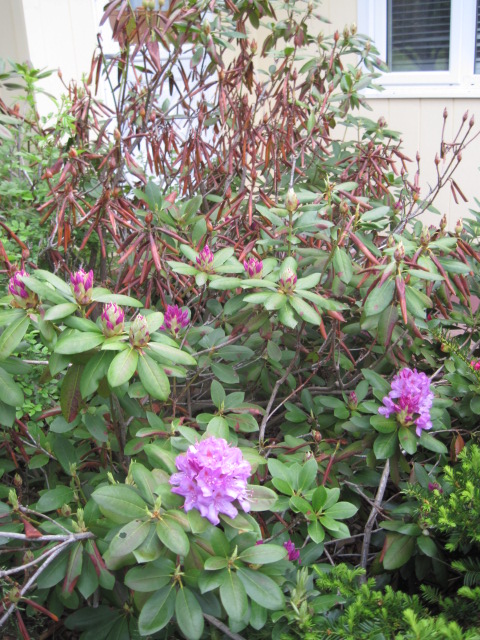
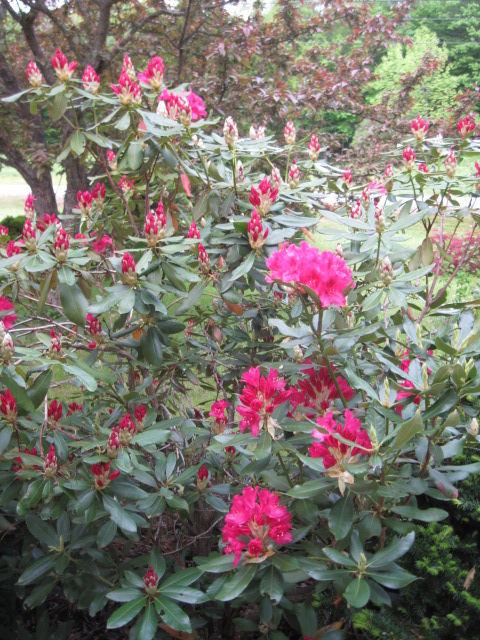

 For “light on the water,” as it turns out to my now-placated left brain, is indeed apt, a festival that celebrates a brief balance of light and dark in the quarter of the ritual year that belongs to the west and to water. “Light on the water” brings with it a twilit mood, a sunset reminder of the reality of life on earth, both dark and bright.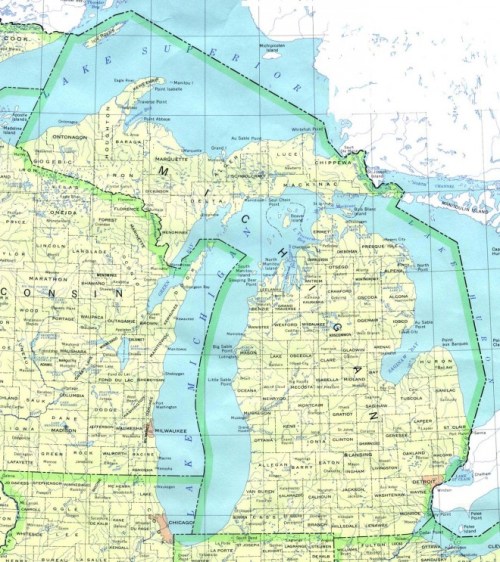

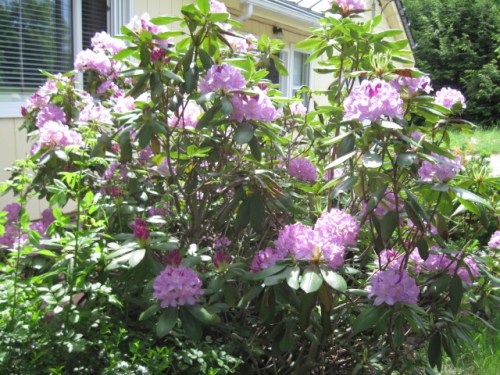
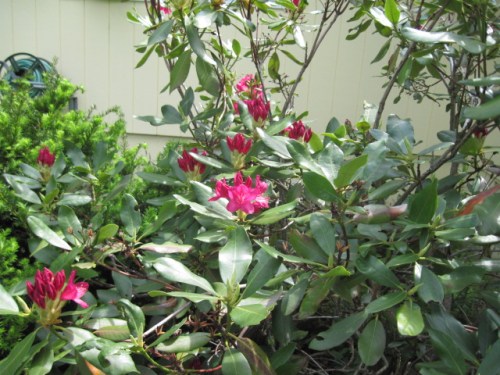
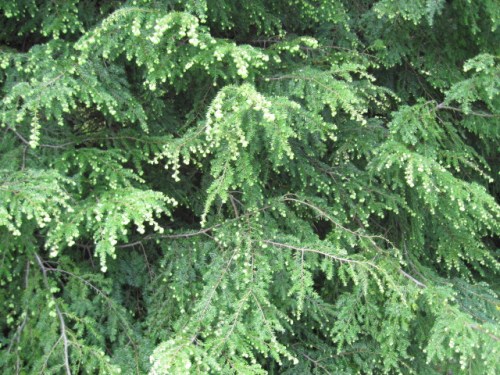
 When you spoke after our Beltane ritual about ritual and non-ritual realities, I felt you might understand this problem I’m struggling with and maybe help. My partner and I are both Pagans, I’m a Druid and he’s pretty definitely a solitary Witch, so he doesn’t come to our gatherings. That’s fine. Recently we’ve been talking a lot and fighting a lot about the gods. He’s had some profound experiences with the Lord and Lady and as a result of their guidance he says he wants to make some BIG changes in our life together. Move out of state, off the grid, become self-sufficient, open our relationship, begin teaching and accepting students, etc. etc. There’s a group in Colorado he’s been talking with and he’s pretty focused on them. He met a couple members at a festival last summer.
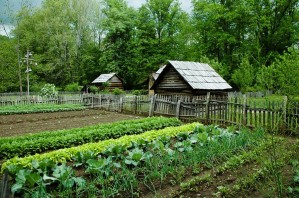 Of course you may not be able to just pick up and leave. Your partner is asking for many changes, not just one, and with a deadline. Why the rush? Why midsummer? If it’s just to get a big garden going, can you do that where you already are? Try becoming more self-sufficient now, apart from the Colorado decision. If neither of you have spent much time growing and preserving your own food, that’s also something to try out close to home first, if you can. That’s a big enough change by itself. Pots and window boxes can help you grow a fair bit even if you don’t have much or any garden space. I urge smaller steps if you can, to make any changes easier to look at and consider and work with one by one.
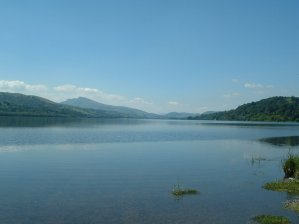

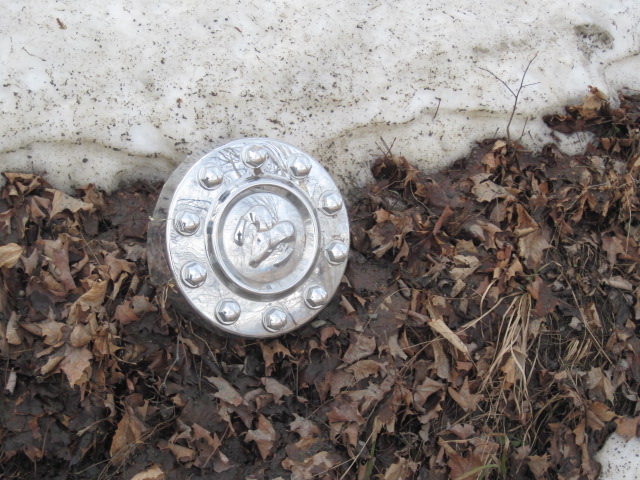
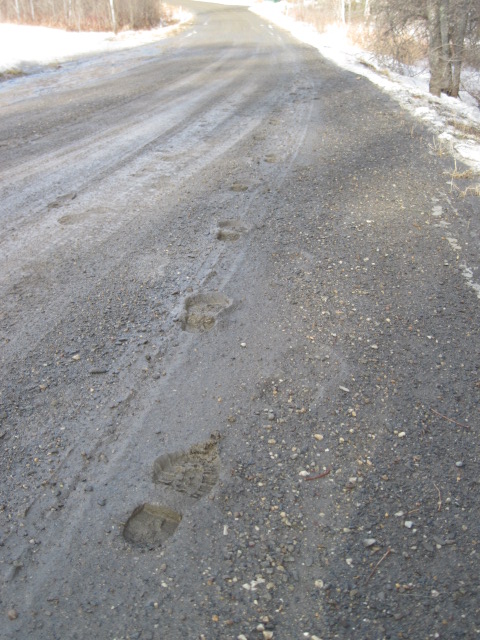
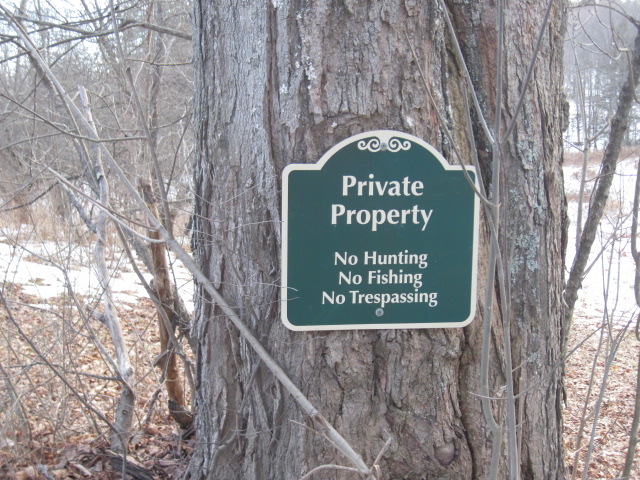
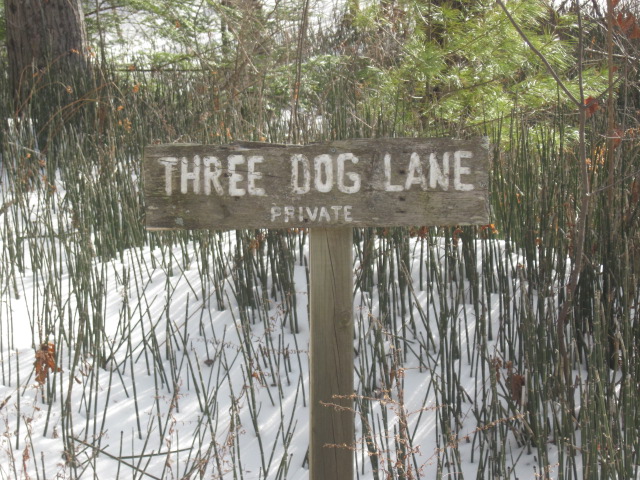
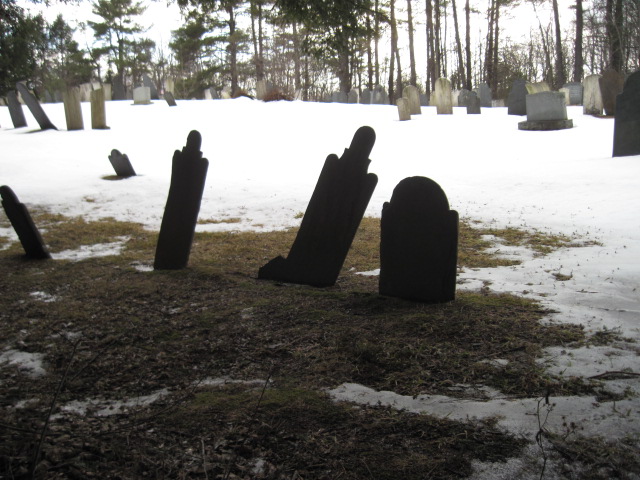



 A Druid Way