Archive for the ‘spirituality’ Category
This will be a sentimental “cute doggie” story only in passing. Not because I’m averse to sentimentality (I’m often a “softie” as my wife reminds me), or because emotion is somehow automatically suspect (it’s not), but because sentimentality on its own can be a distraction when there’s some other and more valuable discovery I can usually make. Such a discovery may underlie the sentiment it raises like a flag waving, a blush at sudden emotional vulnerability. But the discovery itself often reaches much deeper than sentiment can take us. Let sentiment always claim first dibs on my attention and I may never make the discovery that so often seems to slip past right under my nose. It’s like, well … licking off the dressing and throwing out the salad. OK, imperfect metaphor, but you get the idea.
Sentiment deserves its proper place. That’s a lesson on its own, I’ve found — figuring out what that place is in all the various experiences of our lives — and worth its own post. But this is a story about animals as our teachers, a theme in Druidry (and elsewhere, of course) that never grows old, at least for me. And it’s a story about one particular furred teacher, in this case a dog. Often animals are some of our earliest and best teachers.
Some time ago, while my wife Sarah was slowly recovering from cancer surgery, the after-effects of follow-up radiation, and the side-effects of long-term use of an anti-seizure med, she fulfilled a two-decade dream of getting another Newfoundland. For those of you who don’t know them, the Newf is the more mischievous cousin of the St. Bernard, with whom it is sometimes confused. Both are the giants of the dog world. And both drool pretty much continually.
Sarah’s first Newf, her beloved and mellow Maggie, saw her through a rough time in her teens. But her second Newf, Spree, was entirely different in temperament. Strong-willed and stubborn, unlike Maggie in the latter’s eagerness to please, and formidably intelligent, where Maggie could be somewhat dim, Spree simply demanded much more from both of us. Leash-training, house-breaking, socialization — all were more involved than either of us had experienced with previous dogs. Spree’s first mission seemed to be to wrench Sarah out of a lingering mild post-op depression — by canine force, if necessary. “I am now your black-furred, drooling world,” she insisted. Lesson One: “There’s more to pay attention to. Watch (me)!” A second Lesson followed closely on that one: “You can still trust this physical body (to take care of me, for a start.) There are years of use left in it. Now move that fanny!”
Maggie had suffered from severe hip-displasia, a weakness in many large and large-boned breeds like Newfs that can leave them effectively crippled. Sarah was determined by any means in her power to avoid this with Spree, if she could. She researched bloodlines and ancestries, kennels and breeding practices. Finally she made her choice from a recently-born litter in Ohio, eight hundred miles from our home. On top of that, Sarah was prepared to cook from scratch all of Spree’s food for her first two years, while her bones grew and she matured. Spree did in fact end up with good bones, as a couple of tests demonstrated to everyone’s satisfaction, and she never suffered from displasia, but she had a number of food allergies that plagued her the rest of her life. The next Lesson didn’t seem to be only “Guess what? First problem down. Next?” It was more like “In the decade or so I am with you, I will stretch you and teach you to love more. And you’ll be starting with me. Ready?”
During all but the first of the eleven years Spree was with us, we lived in a dorm apartment at the boarding school where we worked. Most of the freshman girls in our dorm adored her — certainly she was a great conversation starter for any visitors. We put up a dog gate to protect the dog-phobic minority, an obstacle Spree despised.
It’s true that at 124 pounds she did outweigh many of the girls. (More than once, out and about on campus with her, we heard pedestrians near us exclaim, “Oh my God, is that a bear?!”) And on evenings when I was on dorm duty, Spree had her many fans among the girls who just had to pet that soft lush black fur before they could settle down to study hours. And during breaks they’d come back to visit — Spree of course, not me. One of the lessons here, which she seemed to express with a contented doggy gaze at me as she received the girls’ caresses which she took as her due, was “Remember the wisdom of the body. It is after all your life in this world. We all need touch to thrive. (I volunteer to demonstrate. Pet me.) Remember good food. (Feed me.) Remember exercise. (Walk me.)”
The last few months of her life, Spree dealt with bone cancer that started in her neck and shoulder and spread, weakening bone and aching more and more. We always knew Spree had a very high tolerance for pain. A score of incidents throughout her life had shown us that. Injuries that would set other dogs crying or yelping she would bear in silence, and keep on running, playing, eating — whatever was more interesting than pain. We learned to slow her down for her own good many times, to minimize further damage, to check just what had happened, to bandage and treat and clean her. In her final weeks, however, even on medication, her suffering continued to increase. It was winter, and she would ask to go outside several times a day to lie in the snow, her great coat keeping the rest of her warm enough, as she chilled and eased the hurt, rolling slowly in the snow, then lying on her back and side for half an hour or more at a time. The three shallow back steps to our small yard were eventually agony for her to climb either up or down, but she refused the sling we’d borrowed to help her. She cried out only once, in her last days, when it simply hurt too much. A Lesson: “I stayed longer than my kind usually can. [The average Newf life-span is roughly 8 years.] Make the most of what you’re given. You two are obviously slow learners on that score. Why else do you think I hung around this long?”

Spree in her final springtime, age 11
The last hour of her life, at the vet’s office, was on a snowy winter day (she loved the snow). Dazed from a liberal dose of morphine, but as a result now blissfully free of pain, she enthusiastically greeted the three of us, Sarah and me and a fellow Newfie owner, who came to say goodbye as she was euthanized. Several difficult lessons. “There will be pains and pain. Guaranteed. You can still do much. There will be hurt, but there’s no need to grant it more power over you than it must have.”
Spree greeted the vet who came to administer the euthanasia with her typical curiosity and people-love. A wagging tail, a nose pressed into the person’s thigh. The last seconds before she passed, she lay full-length and at ease. The vet had earlier inserted a catheter in her left paw to make both morphine and euthanasia easier to give, fuss-free. Spree nosed the syringe that held the dose as the vet pushed the plunger. “What is this?” Always she had explored her world first through her exquisite sense of smell. Near-sighted as she was her whole life, smell was her go-to sense. It is of course the chief sense for most dogs, but so much more so, almost obsessively so, in her case. Each shopping trip we brought into the house required a comprehensive smell-check, each item sniffed and investigated completely, regardless of whether it was (to a Newf) fit for food. In part, the Lessons here seemed to be “Sniff out whatever comes into your orbit. Find out its nature, whether it directly concerns you or not. And enjoy the physical senses. They also do not last, but each will tell you much about this life.” And yet another lesson: “Dying may suck, true. Death, however, does not deserve our fear. Pain does not last forever. Be curious about everything. Friends, isn’t that a better way?”
Animals teach wordlessly, and therefore often more effectively, through their nature as other spiritual beings who share the planet with us. Here I have interpreted into language some of that teaching as best I could, without excessive anthropomorphizing. I send gratitude for this fur-teacher in our lives. And I thank old wisdom-teacher William Blake for writing, “Everything that lives is holy, life delights in life.”
/|\ /|\ /|\
I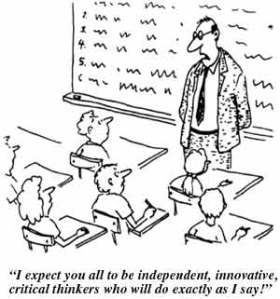 teach at a boarding school, and a few years ago, one of my freshman advisees asked a seemingly innocent question during one of our first meetings. I was still learning the scores of new names teachers must match with faces each fall, but Molly’s inquiry made her stand out from the other students: “What question should I ask, and what’s the answer?”
I vaguely remember replying that I’d have to give her question some thought, but I’d be sure to get back to her. As a bit of playfulness, the matter might have ended there. But Molly brought up the question again, almost every time we saw each other in fact, and it soon became a kind of inside joke. She graduated before I wrote this, but she’s on Facebook, so I’ll be sending this along to her, only half a decade late.
Ideally, teaching and learning invite questions. Good questions distinguish students who are thinking well, and they can move classes in rich and unforeseen directions. Good students and teachers distinguish themselves by the mileage they can get out of each other’s questions. How often I’ve shut students down by dismissing a question out of lack of time, answering it poorly, not hearing it as it was intended, or deferring it in the face of “more important things” and ultimately forgetting it. A class often comes alive with student questions. They break up a teacher monolog, and — better, often, than teacher questions — reveal student thinking, which may well be superior to anything the teacher has planned for the day. For me, following wherever such questions lead at least once a week has proven worth the time again and again.
For questions imply answers. Insofar as it can be put into language, a desire to know carries the seeds of its own response. Often we already “know” much of what an answer should “look like” – which some might say is a problem, because it conditions the kinds of answers we can receive, or those we will devote the most energy looking for. When the man searching for his lost key is asked why he’s looking under a streetlight, he replies, “Because that’s where the light is.”
If we ask simple informational questions, such as “What time is it?” we already know a great deal about the form of the answer. “Half a cup” or “Poughkeepsie” or “grayish green” won’t do for answers in this case. “Not yet” edges somewhat closer, since it has at least something to do with time. “4:18 pm” serves very well, whether or not it’s accurate, because it has the form of the kind of answer we seek. So it satisfies the formal requirement without necessarily satisfying the content requirement.
In the case of “large” questions, though, it can be more difficult to recognize whether an answer even satisfies the formal requirement. But as The Hitch Hiker’s Guide to the Galaxy insinuates, though we may have an answer, even one as specific as 42, without its “inciting” question to steady and direct it like a rudder on a boat, an answer by itself may not help us very much.
Mary Oliver notes in one of her poems, “there are so many questions more beautiful than answers.” Living in our questions is one way to keep a spiritual search alive. Resist the craving for an answer too soon. In her poem “Spring,” she asserts, “‘There is only one question:/how to love this world.” The biggest questions may not have an “answer” in any sense we expect or demand, but they may nonetheless propel us in necessary or powerful directions, ones we need to travel.
Molly’s inquiry is a meta-question – a question about questions. It asks about quality. It also assumes the listener might know more than the speaker, at least about questions and their answers. It implies that another can recognize – and provide – good or worthwhile questions worth asking, can anticipate the kinds of questions you may have, and has good answers.
Now all of this is unfair to load onto a probably offhand and casually teasing question. But by continuing to ask it, Molly slowly transformed it into a kind of riddle or meditation object, deepening its significance. What a lesson there!
One kind of answer to that question is also a general one, and sounds like advice for someone setting out on a journey: ask the best kinds of questions you can, and trust that you also need to seek out your own answers. Those anyone else can supply, except for day-to-day matters, aren’t really worth your time, except as provisional responses, first approximations to the answers you can best provide for yourself. Question authority, because some sacred cows stopped giving milk a long time ago. Question authority to find out if that authority deserves the name — does it feed you stock answers, or does it actually possess the power to lead you toward your own answers? And better, authorize questions — encourage yourself, and others, to keep asking.
/|\ /|\ /|\
Image: cartoon
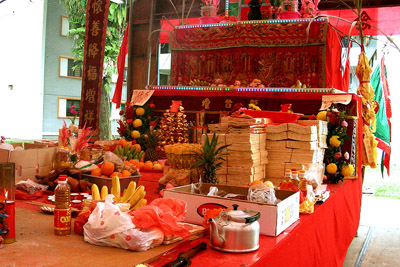
An altar is an important element of very many spiritualities around the world. It gives a structure to space, and orients the practitioner, the worshipper, the participant (and any observers) to objects, symbols and energies. It’s a spiritual signpost, a landmark for identifying and entering sacred space. It accomplishes this without words, simply by existing. The red color of the Taoist altar below immediately alerts the eye to its importance and energy.
As a center of ritual action and visual attention, an altar is positioned to draw the eye as much as any other sense. In Christian churches like the one below, everything is subordinated to the Cross and the altar immediately below it. Church architecture typically highlights this focus through symmetry and lighting. But in every case, enter the sacred space which an altar delineates, and it tells you what matters by how it is shaped and ordered and organized.

Part of OBOD* training is the establishment and maintenance of a personal altar as part of regular spiritual practice. Here’s a Druid altar spread on a tabletop. Nothing “mundane” or arbitrary occupies the space — everything has ritual or spiritual purpose and significance to its creator.

Such obviously physical objects and actions and their appeal to the senses as aids in spiritual practice all spring from human necessity. We need the grounding of our practices in the physical world of words, acts and sensations in order to “bring them home to us,” and make them real or “thingly,” which is what “real” (from Latin res “thing”) means.
Religions and spiritual teachings accomplish this in rich and diverse ways. We have only to think of Christian baptism, communion and the imposition of ashes at Easter; Hindu prasad and tilak; Jewish bris/brit (circumcision) and tallit (prayer shawl) and so on.
Atheists who focus exclusively on belief in their critiques and debates thus forget the very real, concrete and physical aspects of religious and spiritual practice which invest actions, objects and words with spiritual meaning that cannot be dismissed merely by pointing out any logical or rational cracks in a set of beliefs. Though you may present “evidence that God doesn’t exist” that seems irrefutable to you, you haven’t even begun to touch the beauty of an altar or spiritual structure, the warmth of a religious community of people you know and worship with, the power of a liturgy, the smell of incense, the tastes of ritual meals, the sounds of ritual music and song.
Just as we hear people describe themselves as “spiritual without being religious” as they struggle to sift forms of religion from the supposed “heart” of spirituality, plenty of so-called “believers” are “religious without being spiritual.” The forms of their spiritual and religious practice are rich with association, memory and community, and can be as important as — or more so than — a particular creed or set of beliefs.
Having said all of this, I’ve had a set of experiences that incline me away from erecting a physical altar for my Druid practice. So I’m working toward a solution to the spiritual “problem” this presents. Let me approach it indirectly. Once again, and hardly surprising to anyone who’s followed this blog or is as bookish as I am, the trail runs through books.

Damiano, the first volume in a fabulous (and sadly under-known) trilogy by R. A. MacAvoy, and recently reissued as part of an omnibus edition called Trio for Lute, supplies an image for today’s post. Damiano Delstrego is a young Renaissance Italian who happens to be both witch and aspiring musician. His magic depends for its focus on a staff, and we see both the strengths and limitations of such magical tools in various episodes in the novel, and most particularly when he encounters a Finnish woman who practices a singing magic.
When I read the trilogy at its first publication in the 80s, the Finnish magic sans tools seemed to me much superior to “staff-based” power. (Partly in the wake of Harry Potter and the prevalence of wands and wand-wielders in the books and films, there’s a resurgence of interest in this aspect of the art, and an interesting new book just published reflecting that “tool-based” bias, titled Wandlore: the Art of Crafting the Ultimate Magical Tool).
So when I then read news of church burnings, desecrated holy sites, quests for lost spiritual objects (like the Holy Grail) and so on, the wisdom of reposing such power in a physical object seemed to me dubious at best. For whatever your own beliefs, magic energy — whether imbued by intention, Spirit, habit, the Devil, long practice, belief in a bogus or real power — keeps proving perilously vulnerable to misplacement, loss or wholesale destruction. Add to this Jesus’ observation that we are each the temple of Spirit, and my growing sense of the potential of that inner temple of contemplation — also a feature of OBOD practice — and you get my perspective.
Carrying this admitted bias with me over the years, when I came last year to the lesson in the OBOD Bardic series that introduced the personal altar, I realized I would need both contemplation and creativity to find my way.
My solution so far is a work in progress, an alpha or possibly a beta version. My altar is portable, consisting of just five small stones, one for each of the classic European five elements — four plus Spirit. Of course I have other associations, visualizations and a more elaborate (and still evolving) practice I do not share here. But you get the idea. (If you engage in a more Native-American nourished practice, you might choose seven instead: the four horizontal directions, above [the zenith], below [the nadir] and the center.)
I can pocket my altar in a flash, and re-deploy it on a minimal flat space (or — in a pinch — right on the palm of my hand). One indulgence I’ve permitted myself: the stones originate from a ritual gift, so they do in fact have personal symbolic — or magical, if you will — significance for me. But each altar ritual I do includes both an invitation for descent and re-ascent of power or imagery or magic to and away from the particular stones that represent my altar. Lose them, and others can take their place for me with minimal ritual “loss” or disruption. Time and practice will reveal whether this is a serviceable solution.
This post is already long enough, so I’ll defer till later any discussion of the fitness of elemental earth/stone standing in for the other elements.
/|\ /|\ /|\
*OBOD — the particular “flavor” of Druidry I’m studying and practicing.
Images: Singapore Taoist altar; Christian altar; Druid altar; Amazon/Trio for Lute.
/|\ /|\ /|\
Updated: 27 July 2013
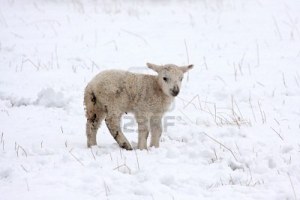 On first sight (or much later, depending on the particular script we’re following), the world can be a forbidding place. We all go through emotional and psychological winters at times. Nothing seems to provide warmth or comfort, so we hunker down and endure. And we can get so good at this kind of half-life that we mistake merely surviving for full-hearted thriving. Well-meaning friends or family who try to console us with various messages of hope or endurance (“This too shall pass”) can’t budge us from our heaviness.
The hidden changes implicit in the imminent shift of energy and consciousness which Druids symbolize and celebrate in Imbolc also find expression in the starkly beautiful lines of “First Sight” by British poet Philip Larkin.
First Sight
Lambs that learn to walk in snow
When their bleating clouds the air
Meet a vast unwelcome, know
Nothing but a sunless glare.
Newly stumbling to and fro
All they find, outside the fold,
Is a wretched width of cold.
As they wait beside the ewe,
Her fleeces wetly caked, there lies
Hidden round them, waiting too,
Earth’s immeasurable surprise.
They could not grasp it if they knew,
What so soon will wake and grow
Utterly unlike the snow.
 For that is how at least some changes arrive — immeasurable, ungraspable, unlike anything that went before, so that we can’t even anticipate or recognize them ahead of time. Nothing of the past prepares us. The new comes on us “utterly unlike” the present. Only long memory serves to recognize them sometimes, and hail and welcome them — memory often consciously denied to us in one human lifetime, but accessible through dream and intuition and the “far memory” that we may call “past lives” or the “collective unconscious” or the “knower behind the thoughts” or “gut instinct.” This is memory as trees know it, the rings of years that grow into the wood, the cell memory we humans also carry with us, the salts of ancient oceans that pulse in the same proportions in our blood.
This is the promise of light renewed, that miracle we often cynically dismiss but deeply long for, the story we are always telling ourselves: maybe this time, maybe next week, one more year. This marriage, that job, this new chance, here, now, finally, at last.
It’s important to note that this event is not “supernatural” or “religious” in the commonly understood sense of “coming from outside our world” or depending on a deity. We don’t need to look that far, though we’re welcome to if we wish. It is earth’s immeasurable surprise, after all, issuing from this world, this land, dirt under our feet, air that surrounds us, sun on our skin. Put another way, the whole world is telling us “Pay attention!”
Another Irish name for Imbolc is Oimelc — “ewe’s milk.” In the agrarian societies all our ancestors came from, the pregnant ewes have been preparing for the lambs to come, their udders swelling with milk. There are signs of change and renewal all around us, but in our rush towards “anywhere but here,” we’ve often lost sight of and contact with the markers that would center and align us with the natural order of balance and harmony we crave.
 In North America, the equivalent “secular” holiday is Groundhog’s Day, which one way or another says winter will in fact eventually end. Punxsutawney Phil emerges from the earth and his plump hibernation sleepiness to prophesy renewal, either seeing his shadow on a sunny day, or huddling under February clouds as secular augurs read the omens and declare them to the assembled faithful. (We don’t so much abandon ritual and religion as slip it past the censor of the modern and supposedly irreligious mind, clothing it in other guises less objectionable. If you doubt it, take a look at the grand mythologizing that surrounds Phil on sites like this one.)
Happy Groundcandleimbolcmasshogday!
/|\ /|\ /|\
Images: lamb; tree ring; Punxsutawney Phil.
 My wife and I returned late yesterday afternoon to a cold house — we heat only with wood — back from an overnight to Boston where we visited my wife’s cousin Sue in the hospital. She’s due to go home soon after stem-cell replacement therapy and chemo for lymphoma. So far the treatment’s working, and her toughness and optimism are heartening.
Our indoor thermometer read 49 degrees, and as we shivered in the last afternoon light and I rekindled a fire in our woodstove, I caught myself glancing a couple of times at a calendar, the way you do after a trip, to reorient yourself to times and days. Late January. The last glimmer of sun over our front yard showed a typical Vermont winter scene — new snow, bare trees, and that deceptive bright calm that makes you believe you really don’t need to bundle yourself up and protect every extremity against single-digit New England winter days. A single step outside offers a brisk corrective to that particular illusion.
Yes, frostbite lurks for the unwary, but there’s a subtle shift nonetheless. Birds know it, plumped against the cold, heads cocked and alert for anyone else finding food, and so does the ivy drowsing beside my wife’s loom.  It’s perked up recently, as if waking from its own vegetative hibernation.
Sue’s bright spirits, beyond her own brand of courage, are in keeping with the changing season. Imbolc approaches, the holiday also celebrated variously as Candlemas or St. Brigid’s Day on Feb. 1/2. The northeastern U.S. lies in the grip of winter, and yet the holiday looks forward to spring. The Irish word imbolc means “in the belly” — the fetal lambs growing and approaching the time of their birth into a larger world, full of darkness and light. Brigid draws devotees who keep shrines lit with light and fire. The Wikipedia entry nicely sums up her importance: “Saint Brigid is one of the few saints who stands on the boundary between pagan mythology, Druidism and Christian spirituality.”
Verses in her honor abound:
Fire in the forge that
shapes and tempers.
Fire of the hearth that
nourishes and heals.
Fire in the head that
incites and inspires.
You can feel the change with your eyes, on your skin, in your bones — a slightly different angle of light, longer days, a listening quality, if you go quiet enough to hear it. A reason to celebrate with light and flame.
 There’s an old Japanese saying I encountered while living and working in Tokyo two decades ago that often comes to my mind this time of year. “What is the bravest of living things? The plum tree, because it puts forth its blossoms in the snow.” There’s a bravery in certitude, a trust that, as Genesis 8 declares, “As long as the earth endures, seedtime and harvest, cold and heat, summer and winter, day and night will never cease.”
There’s deep comfort in homely things — things of home — the soapstone stove, the hearth stones that accumulate wood-ash and need sweeping a few times a day, the armfuls of oak logs I bring to feed our fire.
Late this morning as I finish the final draft of this post, the stove still ticking and pinging softly as it heats and cools with each charge of wood, the wall thermometer finally reads 67. My wife reads in bed, the sky lowers gray, and a fine snow clouds the air as it descends.
Light and blessings of the season to you.
So if you found my previous post about fear and death (and nerds — yay!) a bit too off-putting, here’s a reprieve. What else might a new “religious operating system” have on offer?  In a Huffington Post article from some time ago (Sept. 2010) titled “The God Project: Hinduism as Open Source Faith,” author Josh Schrei asserts that the principal distinction between Hinduism and other more familiar Western faiths is not that the former is polytheistic and the latter are monotheistic, but that “Hinduism is Open Source and most other faiths are Closed Source.” (We’re already increasingly familiar with the open-source approach from computer systems like Linux and community-edited resources like wikis.) In this series on what a more responsive and contemporary religious design might look like (here are previous parts one and two), this perspective can offer useful insight.
If we consider god, the concept of god, the practices that lead one to god, and the ideas, thoughts and philosophies around the nature of the human mind the source code, then India has been the place where the doors have been thrown wide open and the coders have been given free rein to craft, invent, reinvent, refine, imagine, and re-imagine to the point that literally every variety of the spiritual and cognitive experience has been explored, celebrated, and documented. Atheists and goddess worshipers, heretics who’ve sought god through booze, sex, and meat, ash-covered hermits, dualists and non-dualists, nihilists and hedonists, poets and singers, students and saints, children and outcasts … all have contributed their lines of code to the Hindu string. The results of India’s God Project — as I like to refer to Hinduism — have been absolutely staggering. The body of knowledge — scientific, faith-based, and experience-based — that has been accrued on the nature of mind, consciousness, and human behavior, and the number of practical methods that have been specifically identified to work with one’s own mind are without compare. The Sanskrit language itself contains a massive lexicon of words — far more than any other historic or modern language — that deal specifically with states of mental cognition, perception, awareness, and behavioral psychology.
 It’s important to note that despite Schrei’s admiration for Hinduism (and its sacred language Sanskrit — more in a coming post), the West has all of these same resources — we just have developed them outside explicitly religious spheres. Instead, psychology, so-called “secular” hard sciences, social experimentation, counter-cultural trends and other sources have contributed to an equally wide spread of understandings. The difference is that far fewer of them would be something we would tag with the label “religion,” especially since the pursuit of things like ecstatic experience — apart from some Charismatic and Pentecostal varieties — generally lies outside what we in the West call or perceive as “religion.”
The underlying principle that drives such a range of activity perceived as “religious” also stands in sharp contrast with religion in the West. (Of course there are exceptions. To name just one from “inside religion,” think of Brother Lawrence and his Practice of the Presence of God.) As Schrei remarks, “At the heart of the Indic source code are the Vedas, which immediately establish the primacy of inquiry in Indic thought.” To put it another way, India and Hinduism didn’t need their own version of the American 60s and its byword “question authority,” because implicit in open-source religion is “authorize questions.” Nor did they need debates over Creation or Evolution, because scientific inquiry could be seen as a religious undertaking. Schrei continues:
In the Rig Veda, the oldest of all Hindu texts (and possibly the oldest of all spiritual texts on the planet), God, or Prajapati, is summarized as one big mysterious question and we the people are basically invited to answer it. “Who really knows? Who will here proclaim it? Whence was it produced? Whence is this creation? The gods came afterwards, with the creation of this universe. Who then knows whence it has arisen?” While the god of the Old Testament was shouting command(ment)s, Prajapati was asking: “Who am I?”
This tendency to inquire restores authority to its rightful place. In an era in the West when so many faux authorities have been revealed as spiritually hollow or actively deceitful, we’ve arrived at a widespread cynical distrust of any claims to authority. But true authorities do still exist. Their hallmark is an invitation to question and find out for ourselves. Jesus says, “Ask and you will know, seek and you will find, knock and it will be opened to you.” These aren’t the words of one who fears inquiry. To paraphrase another of his sayings, when we can learn and know the truth about something, we will meet an increase of freedom regarding it. It will not intimidate us, or lead us to false worship, or mislead us. One identifier of truth is the freedom it conveys to us. 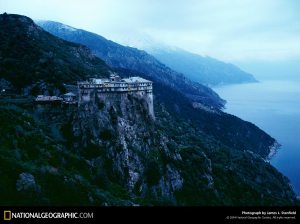
Authorities also benefit us because out of their experience they can guide us toward the most fruitful avenues of inquiry, and spare us much spinning in circles, pursuing wild geese, and squandering the resources of a particular lifetime. Whether we choose to follow good advice is a wholly separate matter. Authorities can point out pitfalls, and save us from reinventing the wheel. At a time when so many look East for wisdom, only recently have we been rediscovering the wisdom of the West hidden on our doorsteps.
Examples abound. The Eastern Orthodox church has preserved a wealth of spiritual practices and living exemplars in places like Mount Athos in Greece. The Pagan resurgence over the last decades has done much useful weeding and culling of overlooked and nearly forgotten traditions rich in valuable methods for addressing deeply the alienation, disruption, dis-ease, physical illness and spiritual starvation so many experience. Individuals within Western monotheisms like Rob Bell and his book Love Wins have served as useful agents for reform and introspection. While it may not be always true, as Dr. Wayne Dyer claims, that “every problem has a spiritual solution,” we’ve only just begun to regain perspectives we discounted and abandoned through the past several centuries, mostly through the seductions of our increasing mastery of a few select processes of the physical plane and their capacity to provide us with comforts, sensations, entertainments and objects unknown until about 75 years ago. We’ve self-identified as “consumers” rather than spiritual beings. Hamlet identified the problem centuries ago: “What is a man if his chief good and market of his time be but to sleep and feed?” Or as another of the Wise asked, “What does it profit a man, if he gain the whole world and lose his soul?” Let us be soul-finders and soul-nourishers. Otherwise, why bother?
/|\ /|\ /|\
Images: open-source cartoon; veda; Mount Athos
Nerds talk a lot, one way or another. If they don’t speak, they write. That’s annoying, because it’s often hard to get them to shut up. And now, armed as they are with blogs and email and Twitter and Facebook and Myspace and a myriad of other venues — well, you get where I’m going with this. More words than people on the planet, every single day.
But while not all of us are Nerds, or even nerds, one thing we all face, nerd or otherwise, is fear. Since we often do our level best not to talk about fear, why not put the nerd instinct to good use? Resist the flow. Be awkward, that thing nerds excel at, and talk about it. (Along the way I get to include a Youtube link, and references to the plague, Jesus, and a medieval poem. Good stuff — a regular pot-luck entry.)
One big fear, of course, is fear of death. Reader, if you’ve found a sure-fire way around it, get busy marketing. You’re set to make your fortune. And no, I’m not talking about any Afterwards. That’s a separate post. I mean the process, the whole sucky thang of the roof caving in on the house, the ground floor dropping away into the basement, and the walls tumbling down. The Demolition (or Eviction, depending on your take regarding a Landlord). The Snuff, the Blowout, the Final Exit, the Nobody Home of your life.
Have I got you thoroughly depressed, and on your weekend, too? Sorry for that, though I won’t apologize for the topic. If we’re going to be morbid, let’s do it right, with style and flair, and a literary reference. Here’s your serving for the day. There’s a well-known Middle English poem I keep coming across from time to time which partly inspired this post. I read it in college and I’ve taught it in high school in British Lit. Pause here for a digression — just skip the rest of this paragraph, and the next one, if you’re in an impatient mood when you read this.
Still with me? OK. Yes, I get it — unless you’re also a fan, Middle English is next door to Old English and Beowulf and all that other stuff your high school or college English teacher inflicted on you. Or if it wasn’t English, it was something else. Let’s just acknowledge that at one time or another you’ve been on the receiving end of, and made to suffer for, an intellectual enthusiasm or obsession you didn’t share. And no — I’ve never shed the geek/nerd label since it first attached itself sometime in high school — the difference nowadays is that I make my living from it as a teacher. It’s as if I wrote a book called Nerdiness for Fun and Profit. Which might actually sell. So I’ll apologize in advance for whatever my educational peers have put you through — you and my own students.
So here’s an excerpt from approximately the first half of the poem. The spelling’s been modernized, and the few words that haven’t made it through into modern English are clear enough in context that you should be able to catch the gist without me being even more nerdy and annotating the damn thing. But I’ll do it anyway. And one other note: the Latin tag in italics translates as “The fear of death disturbs me.”
In what estate so ever I be
Timor mortis conturbat me.
As I went on a merry morning,
I heard a bird both weep and sing.
This was the tenor of her talking: [substance, topic]
Timor mortis conturbat me.
I asked that bird what she meant:
“I am a musket both fair and gent; [sparrowhawk/nobly-born]
For dread of death I am all shent: [ashamed, confused]
Timor mortis conturbat me.
When I shall die, I know no day;
What country or place I cannot say;
Wherefore this song sing I may:
Timor mortis conturbat me.”
In medieval Europe death was everywhere. People died at home, people died young, and people died from — among other things — the series of perfectly nasty plagues that swept Europe and took out a good third of the population. Today we’ve got it easy in many ways. Our life expectancy is twice that of the 1400s, we can usually moderate pain through medication, and many medieval diseases have been eliminated. No, I’m not asking you to be ever so grateful and click on over to EasyDeath.com. But what’s interesting is that the speaker of the poem isn’t concerned with pain but with uncertainty. It’s that sense of being ambushed by an invisible assailant that adds to our fear.
There are several things to say, Druidic and otherwise, in response. First, those who’ve had out-of-body experiences often report that they’ve lost their fear of death. You may be one of those people yourself. To quote Genesis (the band this time–not the book–in their song “Carpet Crawlers”), “You’ve got to get in to get out.” Or in this case, get into other states of reality, see that this one is one among many, and that leaving this one is less of a Big Deal. These kinds of experiences are more common than we’re lead to believe, and those who’ve had them often keep quiet about it because of the general atmosphere of fear, skepticism, and materialism that denies whole facets of human existence. What I’ll say for victims of these mindsets is that they deserve compassion for living on the porch and never venturing into the house, never bothering to find out if there even is a house.
A powerful technique I’ve found is to send love to my fears. I can make it a daily prayer. If we’re worried about a difficult dying, send love to that future self which will die. Break down the patterns of fear that sap and sabotage our present possibilities for joy. As Jesus observed, “Perfect love casts out fear.” And don’t worry if your love isn’t “perfect.” Any love is a good start, an improvement on dread. Most fear is learned.
For those of us who believe in or have had experience of other lives, the sense of deja-vu often replaces fear. Gotta go through it all — again!
I’ll close with another citation, which I find Druidic in sensibility. This one I ran across in school, decades back, and copied down into my journal. The paper I’m reading from as I type this is yellowed and crinkling on the edges. It describes a kind of initiation. The quotation is long but I hope worthwhile for the “tough wisdom” it teaches.
The American Indian’s insistence on direct personal religious experience remains preserved when he comes into contact with Christianity: he finds it difficult to accept experiences of the other world which are said to have happened two millennia ago and which are attested to only by a book.
An empirical attitude toward the other world is a difficult one to put into action. It requires an emptying of the mind and the body, a humbling of the self before all other beings, “even the smallest ant.” It is not as though the Indian [you can substitute Druid here — ADW] is “close to nature” and therefore found such an experience easier to come by than ourselves; he speaks of the journey as carrying him “to the edge of the Deep Canyon,” and he feels it as nothing less than death itself. While he is there he sees a universe where everything is not only animate, but a person, and not only a person but a kinsman. On his return from the journey he is reborn; he is no longer the same person he was before. Having seen for himself the reality of the other world, he now has what William Blake called “the double vision,” as opposed to the single vision of Newton. Alfonso Ortiz describes this double vision in the teachings of his Tewa elders, who “saw the whole of life as consisting of the dual quest for wisdom and divinity.” It is not that the Indian has an older, simpler view of the world, to which we an Newtonian thinkers have added another dimension, but that he has a comprehensive, double view of the world, while we have lost sight of one whole dimension.
The way to his understanding is not found with the road maps of the measurable world. One begins by finding four roads that run side by side and choosing the middle one. The Road, once found, is cut by an impassable ravine that extends to the ends of the world. One must go right through. Then there is an impenetrable thicket. Go right through. Then there are birds making a terrible noise. Just listen. Then there is a place where phlegm rains down. Don’t brush it off. Then there is a place where the earth is burning. Pass right through. Then a great cliff face rises up, without a single foothold. Walk straight through. If you travel as far as this and someone threatens you with death, say, “I have already died.” (Teaching of the American Earth, xx.)
/|\ /|\ /|\
So there you have it — one of my stranger posts, oddly organized, with weird tonal shifts. Hope you get something useful from it. Thanks for reading.
The start of the year is a good time to look back and forward too, in as many ways as it fits to do so. If you’ve got a moment, think about what stands out for you among your hopes for this new year, and you strongest memories of the year past. What’s the link between them? Is there one? Here we are in the middle, between wish and memory. In his great and intellectually self-indulgent poem “The Waste Land,” Eliot said “April is the cruelest month, mixing memory and desire.” But April need not be cruel — we can make any month crueler, or kinder — and neither should January. Let’s take a sip of the mental smoothie of memory and desire that often passes for consciousness during most of our waking hours, and consider.
To recap from previous posts, if we’re looking for a workable and bug-free Religious Operating System, we can start with persistence, initiation and magic (working in intentional harmony with natural patterns). You’ll note that all of these are things we do — not things a deity, master or Other provides for us. While these latter sources of life energy, insight and spiritual momentum can matter a great deal to our growth and understanding, nothing replaces our own efforts. Contrary to popular understanding, no one else can provide salvation without effort on our part. We can “benefit” from a spiritual welfare program only if we use the shelter of the divine to build something of our own. Yes, a mother eats so she can feed the fetus growing within her, but only in preparation for it to become an independent being that can eat on its own. We may take refuge with another, but for the purpose of gaining or recovering our own spiritual stamina. If we’re merely looking for a handout and unwilling to do anything ourselves, we end up “running in our own debt,” Emerson termed it. We weaken, rather than grow stronger.
The recent SAT cheating scandal involving the Long Island students paying a particularly bright peer to take the tests for them is a case in point. We condemn such acts as dishonest on the societal and human level. Why do we imagine they’re any more ethical or viable on the spiritual level? Just as no other person can fall in love for us, undergo surgery in our place, eat for us, learn on our behalf, or do anything else for us that so intimately changes and affects us, so nobody else can do the necessary work we all end up doing whenever we’ve grown and changed. It takes effort, and it’s up to us. This usually comes both as a sobering realization and as a wonderfully liberating discovery. Our spirituality and growth are up to us, but that also means they’re in our hands, under our control, responsive to our initiative and effort and attention.
For a ROS to actually work, then, it needs to fit our own individual lives and circumstances. Jesus confronted this squarely when he observed, “The Sabbath was made for man, and not man for the Sabbath.” While we can overdo the jettisoning of old religious forms and habits, convinced they have nothing more to offer us, it can be a very good thing to haul out and burn the old stuff to make way for the new. What have we elevated to “god status” in our lives that, in spite of worship, offerings and adoration, is actually giving us little or nothing and holding us back from growing? For too long we have clutched old forms and outmoded beliefs and held them tightly to our hearts, convinced that forms can liberate us. But they have no more power than we give them. Belief is a ladder we construct. Reach the goal, and the ladder is merely extra weight to carry around. We don’t need it.
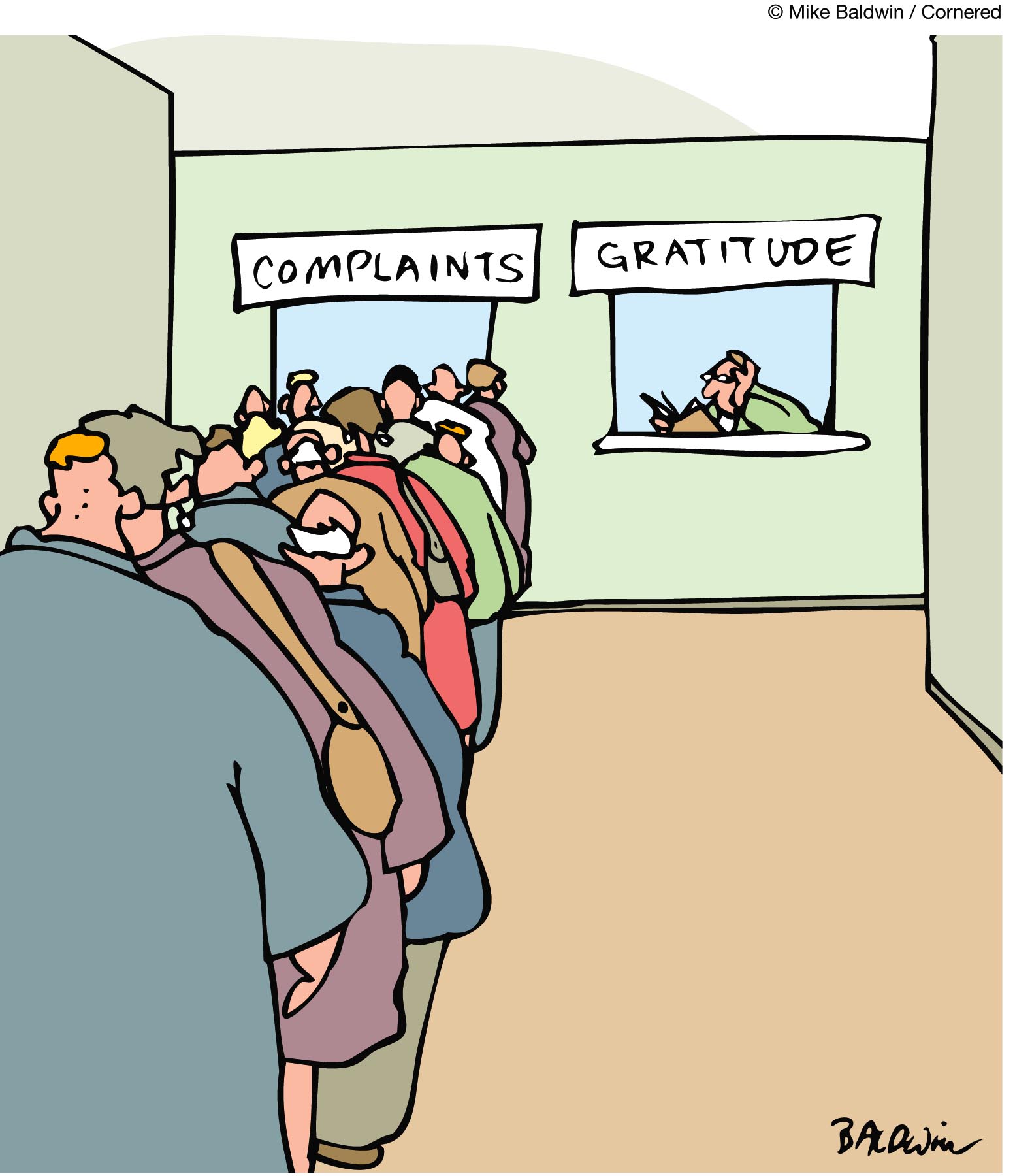
 So you say I’m just supposed to up and cull out-of-date beliefs and dump them? Easy to say (or write), harder to do. One of the most useful items in our spiritual tool-kits is gratitude, the WD-40 of spiritual life. As a solvent, it can loosen hard attitudes, stubborn beliefs, closed hearts and dead growth. We may think of gratitude as an often wimpy sentiment — something softhearted — but I like to call it the grr-attitude. It’s an attitude with teeth, and helps us build a “spiritual firewall” against destructive energies.* Every life without exception, no matter how hard, has something in it to praise and be thankful for. Gratitude, along with persistence, can show us how to make do when every other avenue seems closed. It’s the great “life-unsticker.” It moves us out of spiritual ruts and ravines like nothing else. In fact, an entire life spent in gratitude and persistence, without any other “spiritual garnish,” could carry us remarkably far. It would be a very full life.
I can be grateful for habits and attitudes that have brought me to where I am, and I can often let them go more easily by thinking kindly of them, rather than hating them and beating myself up for being unable to move on from them. But the value of gratitude isn’t just anecdotal. The field of positive psychology is producing significant research findings. Here’s just one example, from Prof. Robert Emmons’ book Thanks! on Amazon: “[R]egular grateful thinking can increase happiness by as much as 25 percent, while keeping a gratitude journal for as little as three weeks results in better sleep and more energy.”*
Every aspect of our lives has spiritual lessons to teach. I even feel gratitude for my cancer, because it has brought me back into balance with myself, revealed friends to me, brought me more love than I could handle, and reminded me again to make the best use of my time here that I can. And that’s just a start. Gratitude is a choice of consciousness. It definitely belongs in any religious operating system.
/|\ /|\ /|\
Cartoon source.
*Emmons’ book Thanks! deserves reading — it’s in paperback, and you can get cheap used copies online (and no, I have no connection with the author! The title was on the list of books for the course I took this fall — one of my subsequent favorites).
The term “spiritual firewall” I’ve derived from the excerpt below. The book helped strengthen my growing understanding of gratitude as a stance or posture toward life that has palpable strength in it, a kind of spiritual toughness and healthy resiliency — with powerful consequences, too — rather than an exercise of mere empty sentiment.
Grateful people are mindful materialists. Deliberate appreciation can reduce the tendency to depreciate what one has, making it less likely that the person will go out and replace what they have with newer, shinier, faster, better alternatives. The ability that grateful people have to extract maximum satisfaction out of life extends to material possessions. In contrast, there is always some real or imagined pleasure that stands in the way of the happiness of the ungrateful person. Consumerism fuels ingratitude. Advertisers purposely invoke feelings of comparison and ingratitude by leading us to perceive that our lives are incomplete unless we buy what they are selling. Here’s a frightening statistic: by the age of twenty one, the average adult will have seen one million TV commercials. By playing on our desires and fears, these ads fabricate needs and cultivate ingratitude for what we have and who we are. Human relationships are hijacked. Consumer psychologists argue that advertising separates children from their parents and spouses from each other. Parents are portrayed as uncool and out of touch with their teenage children, who are encouraged to reject the older generation’s preferences and carve out their own identity around materialistic values. Gratitude for our spouses can have a difficult time surviving the constant parade of perfectly sculpted bodies exuding perpetual sexual desire. In a classic study conducted in the 1980s, researchers found that men who viewed photographs of physically attractive women or Playboy centerfolds subsequently found their current mates less physically attractive, became less satisfied with their current relationships, and expressed less commitment to their partners. Gratitude can serve as a firewall of protection against some of the effects of these insidious advertizing messages. When a person wants what they have, they are less susceptible to messages that encourage them to want what they don’t have or what others have (Emmons, 42-43).
Go to Part 1 | Part 2 | Part 3 | Part 4 | Part 5 | Part 6
 With energies flowing around us from so many end-of-year holidays and celebrations, it seemed fitting to think and write about initiation. It’s one more piece of a Religious Operating System (ROS), it’s an important key to Druidry and — most importantly — it’s something we all experience. For good reason, then, the subject cuts a large swath through spiritual, religious and magical thought and practice. As author Isaac Bashevis Singer opens his book The Chosen, “Beginnings are difficult times.” That’s one reason New Year’s resolutions often end up on the cutting room floor of the film version of our lives. (Some ways to keep them alive and well and not merely part of the special extended version of our lives that may not see wide release into the “real” world will be the subject of a post upcoming in the next few days.)
Some opportunities for initiation recur each year, and are built into our cultures. Right now the festival holidays of Hanukkah, Christmas, Diwali, Kwanzaa and so on are opportunities for annual initiation — if we let their celebrations reach into us and change us. As breaks from “profane” or ordinary time, holidays take us into altered if not sacred space, and then return us to our lives somehow — ideally, anyway — changed. Of course, specific religions and spiritual paths each offer their own initiations. For Christians, it’s baptism (and for Catholics and some other denominations, confirmation as well). A Jew passes through a bar or bat mitzvah, and so on.
But we needn’t look so far or so formally. First kiss, first love, first sexual experience, first drink (consider the particular sequence of these in your own life). Driver’s license, prom, graduation, military draft. Each transforms as a rite of passage. We “pass through” and come out on the other side, different, in ways others may or may not notice. We ourselves may not fully absorb the changes until much later.
 As with the kinds of freedom I considered in a previous post, there seem to be both “transitive” and “intransitive” initiations — initiations which enable or empower the initiate to do something — typically in the future — and initiations which recognize a standard or awareness already attained, and put a “seal of approval” on it. Of course these need not be separate. Both kinds can occur simultaneously. Initiation is a “beginning” (from Latin initio “start, beginning”) both a path or direction that another agency, power or person starts us on, and also something one does or experiences oneself.
Some big initiations are inclusive. Like annual holidays, we all experience them. Though we may not often think of it, death — our own, or that of a loved one, or of a public figure with symbolic power, like a John F. Kennedy or a Princess Diana — can be a powerful, transformative initiation. Through the grief and the inevitable breaks in familiar routine that come with the first shock, the family gatherings, the arrangements and the funeral itself, we’re brought to face loss, change, mortality, and endings and beginnings in ways. We may take on new, unfamiliar roles, like caretaker, mourner, survivor, with all the challenge and growth they can bring. The first death we encounter (apart from pets), given the usual number of years between generations, comes almost like clockwork sometime in our teens, with the passing of a grandparent. In the freshman dorm at the boarding school where I teach and serve as adviser, there are four or five deaths of grandparents each year, and all the myriad changes they carry with them for those involved. It’s a close study in family dynamics (and our capacity as advisers to provide support) to witness how kids and their families deal with it all.
 Marriage often seems to occupy a sort of middle ground as far as these categories operate. On the one hand, no one is married in the eyes of either the law or a religious organization until they pass through the requisite ceremony. Yet we all know couples who are already “so married” that the ceremony confers nothing that they don’t already manifest in abundance. In this case, the initiation of marriage simply recognizes and formalizes a connection and a state of relationship that already exists and — if the ritual or ceremony still carries any power — blesses and charges the thing consecrated. My wife and I have two anniversaries, ten days apart, and each conveyed to us different energies. First was a spiritual ceremony by a cleric in our tradition, and second came the state ceremony, performed by a justice of the peace. Interesting, too, who we see as performing or undergoing the initiation. Ideally, to my mind, the one experiencing the initiation should play at least some part, if not an active role, in its enactment. For initiation takes place both outwardly, where it is often witnessed by the state if not also by family, and more importantly inwardly, on the subtle planes (which deserve their own post or series of posts).
“Where is wisdom to be found?” goes the old query. Initiation is one major source. Not all initiations “show” right away, or even ever. What we begin may never end. It can take a lifetime to sort out the effect of even “lesser” initiations, to say nothing of the big ones. Those “long” words, never and always, very much belong with initiations.
Go to Part 1 | Part 2 | Part 3 | Part 4 | Part 5 | Part 6
/|\ /|\ /|\
Image credits: Knighthood — “The Accolade” by Edmund Blair Leighton
Sex and love
Oriya Indian wedding
One of the appeals of earth-centered religions and spiritualities is their celebration of a world we can see and touch, smell and taste and hear right now. No membership in the right in-group, no attainment of a prerequisite spiritual state, no promised future to wait for. Instead, democratic access to the sacramental gifts of this life: the pleasures of simply being alive, of breathing air (assuming you have decent air to breathe), of eating and touching and loving the things of this world, of caressing the people you cherish, of hearing their voices and enjoying their physical presence. Transient, fragile, time-bound, brief — and all the more dear for that.
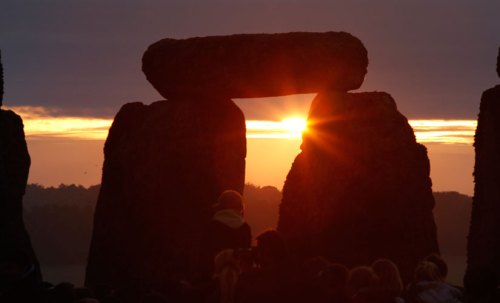 At the winter solstice our ancestors knew from studying the sky and watching the sunlight on markers of wood and stone that “when the days begin to lengthen, the cold begins to strengthen.” My father, a dairy farmer, used to repeat the old saying around this time of year with a kind of grim satisfaction. More frozen pipes in the barn, more days the tractors would start only with difficulty, more days to chip away ice and plow snow. But when I talk with my students, mostly dwellers of suburbia and “urbia,” and learn they don’t know this or many other pieces of earth-wisdom, I realize again that I stand as a member of a transitional generation. My parents and grandparents inherited much of the lore and skill of our agricultural past, and have passed a portion of it on to me. But so many of the rising generation have lost most of it.
Anyone can have that curious sensation of “secondary memory” that outreaches one’s own lifetime, grafted on through relatives and ancestors. The only grandmother I knew well was born in 1894, and so I can recall experiences that did not actually happen to me, but which — through her retelling, and with accompanying photos or other artifacts — have assumed the guise of shadowy half-memory, as if they indeed left their imprint directly on my own life and thought and perception, rather than through telling alone. But in the case of hard-earned knowledge of how to live and anticipate change and thrive on earth, they are not the incidents peculiar to one life only, but part of the lore of the tribe.
Solstice feels something like that to me. It’s the oldest pan-human holiday we can discern, predating those of particular cultures and religions by thousands of years. There’s nothing “pagan” about it — it’s a matter of observable fact, rather than belief, as are the equinoxes. Neolithic monuments and markers attest to the reach of such knowledge around the planet. An essay by scientist and author Arthur C. Clarke, the title of which has drifted out of reach of immediate recall, begins like this: “Behind every person now alive stand one hundred ghosts, for that is the ratio by which the dead outnumber the living.” The first time I read that, I felt a delicious shiver of mortality and awe. Yes, the ratio may have shifted (though I hope never to live on a world where that proportion favors the living over the dead — imagine for an instant the conditions that implies), but the image endures. And of those assembled dead, perhaps half or more knew and celebrated the solstice. For five hundred or a thousand or more generations, people acknowledged the shift of the planet in its relation to the sun. The southern hemisphere of course complements the northern in its seasons — their summer is well-launched, and now the days begin to shorten. The body knows these shifts, while the mind may take its own interval to catch up. We feel such changes in our bones, on our skin. In a couple of weeks, by mid-January, the change shows more clearly. Morning and evening commuters will enjoy more light, and the year turns.
Another of the keys, then, to connect to my previous post on a Religious Operating System, is lore itself: the knowledge of cycles and patterns we can measure and demonstrate for ourselves. No need for the fascination and hysteria surrounding 2012 and the supposed End of the World “predicted” by the Mayan calendars. Does no one remember Y2K?! Or any of half a hundred “prophecies” of the end over the last few millenia? The Maya were simply engrossed in the measure of time, and by their reckoning one major cycle ends and another begins. Their obsession made for precise astronomical reckoning. Changes are coming, certainly. Have they ever not come?
Lore includes some dross and superstition, which can almost always be dispatched by dint of careful observation and experiment. And while some generations may forsake the wisdom which their ancestors long thought worthy of preservation, it is — eventually — recoverable. If the peak- and post-oil folks are right, we face a sharp decline in material wealth and technology powered by a rapidly diminishing supply of cheap energy, and not enough people now know how, or are prepared, to flourish as people did for most of human history: wood fires, gardens and food animals, home remedies, animal and human labor, solar and wind power on a modest scale. But little or no electricity, or any of the hundreds of devices it powers, or petroleum products and technologies. We live with a false sense of security, as if the entire West were one large gated community. All it takes is a power outage of a day or two, as happened with Hurricane Irene for so many, to cast us out of our ease and return us to the human experience of all generations until the last few. We could see the real “99%” as all those who lived before the last century and its admittedly artificial standards of material luxury and abundance for a portion of the planet. But the solstice includes those hundred ghosts and the living, all witnesses of the day that signals the return of light and hope to the world. May it bring those things to you.
/|\ /|\ /|\
The solstice for the U.S. actually takes place at 12:30 am Eastern Standard Time on Thursday 12/22. So calendars favor the majority — for all but the east coast, the Solstice is indeed today rather than early tomorrow morning.
Henge image.
Persistence, and its twin patience, may be our greatest magic. Sacred writings around the globe praise its powers and practitioners. So it’s hardly surprising, here in the too-often unmagical West, with its suspicion of the imagination, and its demand for the instantaneous, or at least the immediate, that we are impatient, restless, insecure, harried, stressed, whiny, dissatisfied and ungrateful. We bustle from one “experience” to the next, collecting them like beads on a necklace. The ubiquitous verb “have” leaves it mark in our speech, on our tongues: we “have” dinner, we “have” class or a good time, we even “have” another person sexually, and one of the worst sensations is “being had.” We do not know self-possession, so other things and people possess us instead.

The “slow food” movement, the pace appropriate for savoring, craftsmanship, care, reflection, meditation and rumination (slow digestion!) all run counter to the ethos of speed, promptness, acceleration that drive us to a rush to orgasm, speeding tickets, the rat race, stress-related illness, and so on. None of these problems or the observations about them are new, of course. But we remain half-hearted in our efforts or understanding of how to “pursue” their remedy. We chase salvation as much as anything else, as a thing to collect or gather or purchase so we can be about our “real” business, whatever we think that is. Spirituality gets marketed along with orange juice. For a sum, you can be whisked off to a more exotic locale than where you live your life, spend time with a retreat leader or guru or master or guide, and “have” (or “take”) a seminar or class or workshop.
Anyone who has adopted a spiritual practice and stuck with it has seen benefits. Like regular exercise, it grants a resilience and stamina I can acquire in no other way. I sit in contemplation and nothing much happens. A week or a month goes by, and my temper might have subtly improved. Fortunate coincidences increase. My dream life, or a chance conversation, or a newspaper article, nudges me toward choices and options I might not have otherwise considered. But usually these things arrive so naturally that unless I look for them and document them, I perceive no connection between spiritual practice and the increased smoothness of my life. From a slog, it becomes more of a glide. But the very smoothness of the transition makes it too subtle for my dulled perceptions at first. It arrives naturally, like the grass greening in the spring, or that gentle all-day snow that mantles everything.
I abandoned a particular daily practice after many years, for complicated reasons deserving a separate post, and I needed only to read the notebooks I kept from that earlier time to recall vividly what I had lost, if my own life wasn’t enough to show me. My internal climate faced its own El Nino. I was more often short with my wife, mildly depressed, more often sick with colds, less inspired to write, less likely to laugh, more tired and more critical of setbacks and annoyances. Set down in writing this way, the changes sound more dramatic — didn’t I notice them at the time? — but as a gradual shift, they were hardly noticeable at any one point. I still had my share of good days (though I didn’t seem to value them as much), and my life was tolerable and rewarding enough. “But I was making good money!” may be the excuse or apology or justification we make to ourselves, and for a time it was true enough of me. Then came the cancer, the near-breakdown, the stretch of several years where I seemed to move from doctor to doctor, test to test, treatment to treatment. If you or anyone you know has endured this, you get what I’m talking about. It’s distinctly unfun. And while I won’t say lack of practice caused this, it’s an accompanying factor, a “leading indicator,” a constituent factor. Doctors might very profitably begin their diagnoses with the question, “So how’s your spiritual practice?” Our spiritual pulse keeps time with our physical lives. They’re hardly separate things, after all. Why should they be?
In the story of Taliesin I mentioned in my last post, the boy Gwion, so far from the future Taliesin he will become, is set by the goddess Cerridwen to watch a cauldron as it cooks a magical broth meant to transform her son Afagddu, a mother’s gift to her child. A year and a day is the fairy-story time Gwion spends at it. A full cycle. The dailiness of effort and persistence. The “same-old,” much of the time. Gwion’s a servant. The cauldron sits there each morning. The fire beneath it smoulders. Feed the fire, stir the liquid. It cooks, and Gwion “cooks” along with it, the invisible energy of persistence accumulating as surely as the magical liquor boils down and grows in potency. Through the spring and summer, insects and sweat. Through autumn and winter, frost and chill and ice. The cauldron has not changed. Still at it? Yes. The broth slowly thickens as it bubbles and spatters.
 One day a few drops (in some versions, three drops) fly out onto one of Gwion’s hands, burning. Instinctively he lifts the hand to his mouth, to lick and soothe it with his tongue. Immediately the magic “meant for another” is now his. He did, after all, put in the time. He sat there daily, through the seasons, tending the cauldron, stirring and keeping up the fire, swatting insects, breathing the smoke, batting sparks away, eyes reddened. Yes, the “accident” of the spattered drops was at least partly the result of “being at the right time in the right place.” It is “luck” as well as “grace,” both operative in his life. Part, too, was the simple animal instinct to lick a burn. And the greater portion was the effort, which catalyzed all the rest into a unified whole. Effort, timing, luck, chance, grace: the “package deal” of spirituality.
And the consequence? For Gwion, his growth has just begun. It is his initiation, his beginning. In his case it distinctly does NOT mean an easier path ahead for him. In fact, just the opposite — more on that in a coming post.
 The Hopi of the American Southwest call their ritual ceremonial pipe natwanpi, “instrument of preparing.” The -pi suffix means a vehicle, a means, a tool. Tales like this story of Gwion can become a natwanpi for us, if we choose — part of our preparation and practice, a tool, a way forward.
/|\ /|\ /|\
Fast food
Transformation
Hopi blanket
 Those inclined to criticize contemporary Druidry have made much about how the specific practices and beliefs of ancient Druids are forever lost to us simply because they left no written records, and because the references to Druids in the works of classical Greek and Roman authors are mostly based on secondhand accounts and sometimes markedly biased. Without such historical continuity, they claim, it is impossible to be a “real” Druid today, and thus all contemporary Druidry is a kind of whistling in the wind, at best a version of dress-up for adults. But what such writers and speakers often forget is the surviving body of legend, myth, teaching and wisdom in Celtic literature. Here is Druidry in compact and literary form, meant to be preserved as story, a link-up with the perennial wisdom that never dies.
To pick just one example, the stories from the Mabinogion, the Welsh collection of myth, legend and teaching have wonderful relevance and serve as a storehouse of much Druid teaching. Sustained meditation on these stories will reveal much of use and value to the aspirant after a Druidry that is authentic simply because it is grounded in knowledge and practice. As a pragmatist more than a reconstructionist, I’m much more interested in what works than in what may be historically accurate. The former leads one to inner discoveries. The latter is engaging as a worthwhile scholarly endeavor first, and only as a possible source of spiritual insight second. And that is as it should be. History is not spirituality, though it can inform it. But even if we can accurately deduce from an always incomplete archaeological record what a Bronze Age Druid may have done, it’s still not automatically fit and appropriate for a contemporary 21st century person to adopt. That’s a decision we must make apart from the reconstruction, which cannot guide us by itself. Stories, however, though formed in a particular culture, often reach toward universals far better than physical objects and actions.
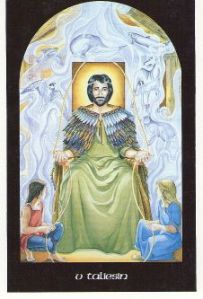 The story of Taliesin (this link is to a public domain text — more modern and well annotated versions are available) in the Mabinogion moves us into a world of myth and initiation. In the tale, the boy Gwion passes through ordeals and transformations, becoming at length the poet and sage Taliesin, whose name means “shining brow” — one who has a “fire in the head” and is alive with wisdom and poetic inspiration. As with figures from other traditions whose heads are encircled with halos, or shining with an otherworldly brightness, Taliesin belongs to the company of the “twice-born,” who have fulfilled their humanity by making the most of it. In my next post, I’ll talk about the first key in the story — persistence.
/|\ /|\ /|\
First image is a triskele or triskelion, a pan-European symbol associated with the Celts.
Second image is of Taliesin from Caitlin and John Matthews’ Arthurian Tarot.
/|\ /|\ /|\
Updated 9 September 2013
 “Whenever I get bored or depressed, I do laundry,” said an acquaintance. “Afterwards I may still be bored or depressed, but at least I’ve done something that needed doing. And often enough I feel better.” As a treatment, the success rate of this strategy may or may not equal that of therapy or medication, but as far as clean clothes production goes, it’s got the other two beat hands down. At least I can be depressed and dressed.
How different the quiet of depression and the quiet of peace! (I’m writing about peace and using exclamation points. Hm.) One deadens and stifles, the other ripples outward and invites attention, a kind of relaxed wakefulness. We say we want peace, and the holiday season bombards us with prayers and songs and sermons and wishes for it. There are prayers for peace in the ceremonies of many religious teachings and spiritual practices, Druidry included. But rather than asking somebody else for it, I can begin differently. Peace starts in the center, and that’s where I am — or where I can put myself, with the help of recollection and intent. “Come back to yourself,” my life keeps saying, “and remember who you are and what it is you want.” If I start peace (or anything else) within myself, however small, however tentative, it spreads from there outward. After all, it works for every other state I create, whether positive or negative — and I know this from sometimes painful experience! “Be the change you wish to see in the world” is still some of the best advice ever given. If I want change, who else do I expect to bring it about? And if someone else did, how in the world would such changes be right for me? Gandhi knew the secret lies in the approach.
 In my early twenties, Lou Gramm and Foreigner were singing “I want to know what love is. I want you to show me.” It’s a lovely ballad — I’ve got it playing on Youtube the second time through as I write this paragraph, nostalgia back in full force — but it’s precisely backward in the end. As loveless as I can sometimes feel, if I start the flow, jumpstart it if necessary, I prime the pump, and it will launch within me from that point. Do that, and I become more loveable in a human sense, because in the divine sense I’ve made myself another center for love to happen in, and from which it can spread.
But neither love nor peace are things I can hold on to as things. “We are not permitted to linger, even with what is most intimate,” says the German poet Rilke in his poem “To Holderin” (Stephen Mitchell, trans.)  “From images that are full, the spirit plunges on to others that suddenly must be filled; there are no lakes till eternity. Here, falling is best. To fall from the mastered emotion into the guessed-at, and onward.” Whatever I long for in a world of time and space needs to be re-won every day, though in that process of re-winning, not always successful, it begins to gather around me like a fragrance, a habit. Both the customary behavior, and the clothing a monk or nun wears, have the same name. The connection’s not accidental.
The American “farmer-poet” Wendell Berry captures it in these lines:
Geese appear high over us
pass, and the sky closes. Abandon,
as in love or sleep, holds
them to their way, clear
in the ancient faith: what we need
is here. And we pray, not
for a new earth or heaven, but to be
quiet in heart, and in eye,
clear. What we need is here.
So if we’re looking for a “religious operating system,” a ROS, we’ve got some design parameters that poets and others tell us are already in place. “What we need is here.” But try telling that to an unemployed person, or someone dying of a particularly nasty disease. And of course, if I tell someone else these things, I’ve missed the point. What they need is indeed here, but my work is to find out this truth for myself. I can’t do others’ work for them, and it wouldn’t be a good world if I could (though that doesn’t stop me sometimes from trying). I don’t know how their discoveries will change their lives. I only know, after I do the work, how my discoveries will change mine.
A recent article in the New York Times about the rise of the Nones, people who aren’t affiliated with any religion, but who aren’t necessarily atheists, offers this observation, from which I drew the title for this blog entry:
“We need a Steve Jobs of religion. Someone (or ones) who can invent not a new religion but, rather, a new way of being religious. Like Mr. Jobs’s creations, this new way would be straightforward and unencumbered and absolutely intuitive. Most important, it would be highly interactive. I imagine a religious space that celebrates doubt, encourages experimentation and allows one to utter the word God without embarrassment. A religious operating system…
I’ll be examining this further in upcoming posts.
/|\ /|\ /|\
Laundry, Foreigner album cover, and Rilke.
“Behold!”
In this single command, Jesus is profoundly Druidic. Catch the moment, he says. Watch the divine as it swirls around and in you. You can witness the marvelous if you simply pay attention. Listen! Look! Seeing and hearing are a good start. Now do more. Put yourself into your attention. Make it purposeful. Don’t just hear — listen. Don’t just see — look.
“If therefore thine eye be single, thy whole body shall be full of light” (Matthew 6:22). A wonderful assertion– one to test, to try out, to prove to oneself, not merely to accept passively. A promise. Singleness of vision, the devotion and dedication to witnessing what is really there, as opposed to what we assume or fear, wish or ignore. Some have seen this passage as a reference to the yogic “third eye” chakra, the Hindu Shiv Netra or Sufi Tisra Til. Why not both, and something else besides?
In the second half of her poem “The Summer Day,” Mary Oliver says:
I don’t know exactly what a prayer is.
I do know how to pay attention, how to fall down
into the grass, how to kneel down in the grass,
how to be idle and blessed, how to stroll through the fields,
which is what I have been doing all day.
Tell me, what else should I have done?
Doesn’t everything die at last, and too soon?
Tell me, what is it you plan to do
with your one wild and precious life?
Shouldn’t all attention bring to light more and better questions? Wouldn’t we be bored to tears with a life of all things answered? Give me bigger and deeper questions, give me earth whole again, give me all I already have. Give me birth in this moment. We are constantly being born, arriving at ourselves, a remembering, a finding out of the utter strangeness of being alive, and being human in this moment, our eternity, the only time there is. The past is only memory, and changing. The future is hopes and fears. Take the now with both hands.
“And some of the Pharisees from among the multitude said unto him, Master, rebuke thy disciples. And he answered and said unto them, I tell you that, if these should hold their peace, the stones would immediately cry out.” (Luke 19:39-40)
What shall we do till the stones start to speak,
or whom can we turn to and trust in these days?
Can we hear even echoes of truths that we seek,
catch mere flickers of fire to illumine our ways?
The stones broadcast secrets we now scarcely hear —
the earth bears true witness, though leaders stay mute,
to remind us of love that is stronger than fear.
Goal and path rise within us — there’s no other route.
The animals know much — in each neighboring eye
is the ghost of the knowledge hard-won from their days:
make the most of each moment, for this body will die —
tomorrow’s new compost, though it shouldn’t amaze
us when walls turn to doors: we walk through them to find
the doors of our hearts were more narrow by far.
Trust the paint-box you’re given, though your dear ones are blind,
though your culture berates you, fear sets up a bar.
We must watch as we journey, be mindful of stones
that mumble or shout, rousing sleepers to wake.
Learn to feel the right path in the set of our bones,
trust the deep self to know the next step to take.

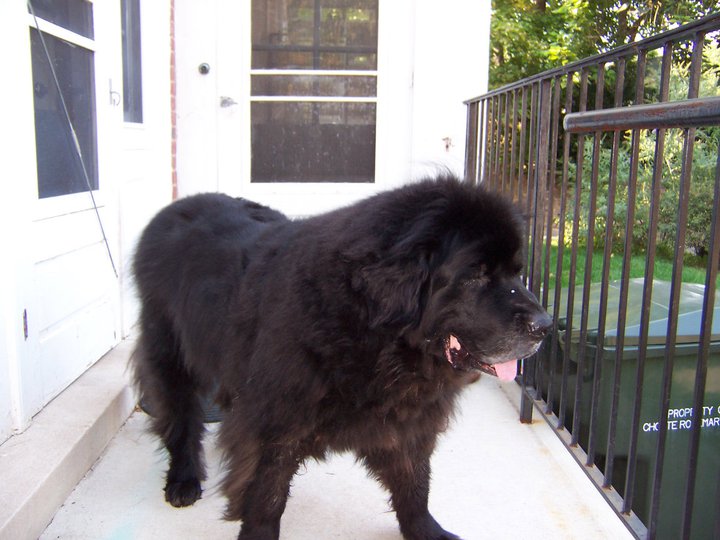
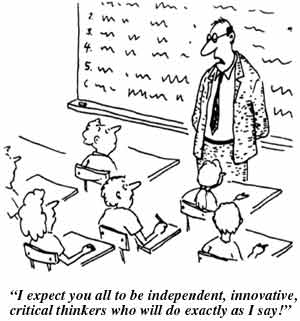

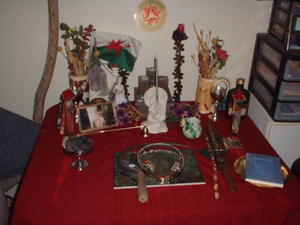
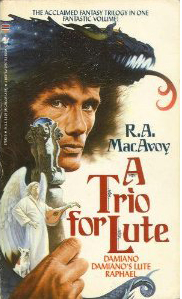
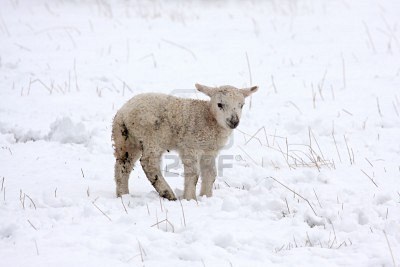
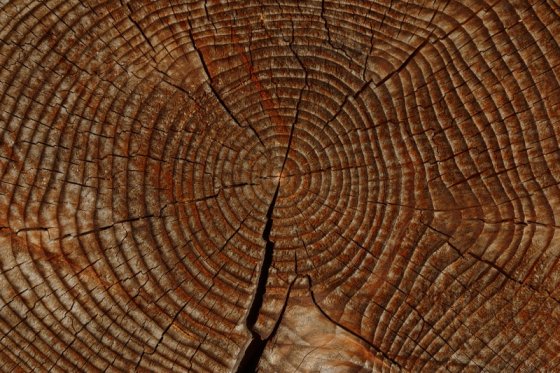
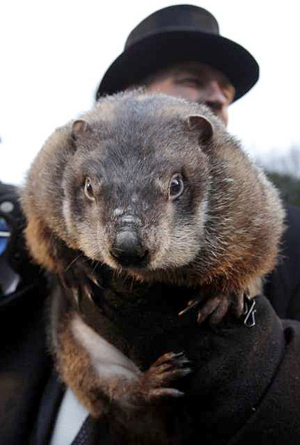

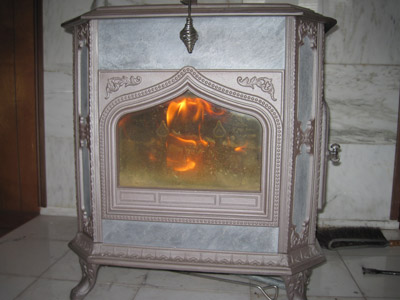


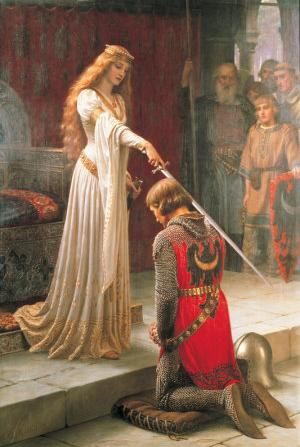
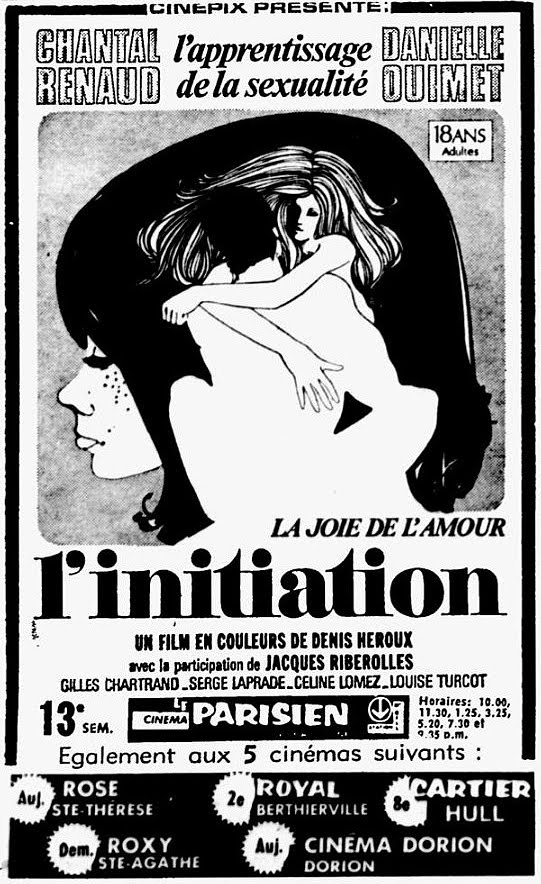




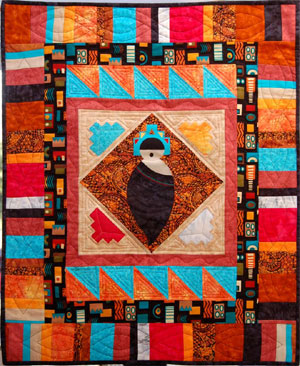

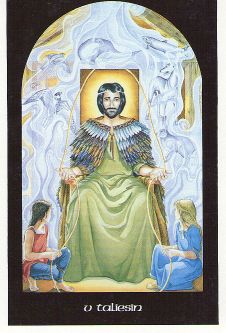




 A Druid Way