[Related posts: Shinto & Shrine Druidry 1 | 2 | 3 || Shinto — Way of the Gods || Renewing the Shrine 1 | 2 || Boku no Shinto — My Shinto 1 | 2 ]
Following the magical principle of polarity to wing myself toward what I really want to write about, in the title for this post I’ve done something quite un-Nihonteki, un-Japanese — un-Shinto, in fact. Japan’s native spirituality focuses on harmony between human and spiritual realms, a harmony which finds a powerful objective expression in the natural world. “Seek Spirit? Look around!” Yet I used boku, I wrote “I” — as if “I” could possessShinto, as if it were a thingamong other things that a person could own or control or claim. The i returns to its proper size in balanced relationship. An outsized I is part of the challenge the West currently faces, as well as each of us individually. Be yourself, we’re told. What the hell does that mean, anyway? Still too much. (Too much is not enough, says the lower-case zen master/fool in my ear.)
Sometimes I just need to back into it, the destination that feels nearby, though I can’t see it. “Returning is the motion of the Tao” (chapter 40). Because if I try it head-on, all the old defenses go up like a bad reflex. An old i holds on even as a new one moves in. They spar a little. But what are wood and water doing while I stare at an i?
“who are you, little i” asks e. e. cummings in a poem of that title, “(five or six years old)/peering from some high/ window; at the gold/of november sunset” — let’s make it May instead: we can, and e. e. won’t mind. Will cheer us on, I suspect — “(and feeling: that if day/has to become night/this is a beautiful way)”
Participate in our own becoming. A call, if we choose to hear and heed it. Make it day when it’s night (for our next trick, do it without using electricity). Or vice versa, turning off the glare of the spotlight on the self which isn’t the whole story.
After all, “five or six years old” is about right: didn’t that crazy Galilean say we need to become like little children again? Is that“being yourself”?
Like is important: we can all imagine it, approach it, approximate it. Journey towards it. Try out “yes” till it drops the ” ” — that little chicken scratch that distracts us from so much. Or become the chicken that makes the scratch. That’s a power we’re granted, too. Shape-shift at will and need. One thing becomes another, in the Mother, in the Mother. Thanks, Mom. Can faking it make it real? Well, the pressure’s off if all I need to do is fakeit.
(e. e., you saw it, said it elsewhere: “i thank You God for most this amazing/day: for the leaping greenly spirits of trees/and a blue true dream of sky; and for everything/which is natural which is infinite which is yes”). And if “You God” doesn’t work for you, insert your own addressee of choice.
Need a spell to make it happen? “Power of choice I grant thee, I grant thee, I grant thee.” O.K., proceed.
/|\ /|\ /|\
Entrance, Tsubaki Grand Shrine, Washington state
Site stats show that my previous posts on Shinto are among the most popular here at A Druid Way. The reason for that can’t be too far to find. We crave like a food-hunger a spiritual reality that does not depend on belief(or at least not on belief alone), but is present to us whenever we’re present to it — and even when we’re not. We may hunger for a Way or Ways, just like we yearn for dark chocolate or hot sauce or beef or fresh limes in guacamole (insert yourfavorite food hunger here), a harmony that we can begin to fall back into at any moment, wherever we are, just by shifting our attention, and restore a sense of balance and integrity. And not just a sense of them, but its reality — a poise for living that shows in our words and deeds. We’ve all known this harmony, witnessed it in others, however briefly, which is why we can feel so disheartened when we lack it, when we’ve lost it, fallen out of it. We know it’s possible because it’s there, in living memory, however far we stand from it right now, in this grubby, muddy present moment.
We’ve even got a Shinto shrine in the U.S., the Tsubaki Grand Shrine in Washington State, if we need the reminder. Which is what a shrine, among other things, persistently tries to be. It’s here, all around us, what we seek. And a few among us imported Shinto as a recognition of that consciousness, as a support for us when we lose our way. From it we can jump-start our own (there’s a possessive pronoun again) American Shinto, if we desire it, if we give it space to manifest. The kamiknow and dwell in America, too.
Though it’s not a perfect instrument, a song, a painting, a poem can remind us, point us in directions that can restore and heal. “The Spirit,” says Mary Oliver in her simply-titled “Poem,”
                        likes to dress up like this:
                          ten fingers,
                            ten toes,

                      shoulders, and all the rest
                        at night
                          in the black branches,
                            in the morning

                      in the blue branches
                        of the world.
                          It could float, of course,
                            but would rather

                      plumb rough matter.
                        Airy and shapeless thing,
                          it needs
                            the metaphor of the body,

                      lime and appetite,
                        the oceanic fluids;
                          it needs the body's world,
                            instinct

                      and imagination
                        and the dark hug of time,
                          sweetness
                            and tangibility,

                      to be understood,
                        to be more than pure light
                          that burns
                            where no one is--

                      so it enters us--
                        in the morning
                          shines from brute comfort
                            like a stitch of lightning;

                      and at night
                        lights up the deep and wondrous
                          drownings of the body
                            like a star.
(And so I ask myself, what isn’tSpirit?! Is thatbeing yourself?)
see shrines as both restful places filled with a sense of the sacred, and as the source of their spiritual vitality – they regard them as their spiritual home, and often attend the same shrine regularly throughout their lives. Shrines need not be buildings – rocks, trees, and mountains can all act as shrines, if they are special to kami.
Physical world as spiritual home: what a change that would make in us if we carried that knowing with us all day long.
A large shrine can contain several smaller sub-shrines. Shinto shrines can cover several thousand acres, or a few square feet. They are often located in the landscape in such a way as to emphasise their connection to the natural world, and can include sacred groves of trees, and streams.
How many of us find the kami in a garden, a window pot we lovingly water, a bird feeder stocked through winter, or whatever season in your area that otherwise challenges the small feathered lives around us?
Tsubaki Grand Shrine ritual
Various symbolic structures, such as torii gates and shimenawa ropes, are used to separate the shrine from the rest of the world.
Separation as a reminder— not that one exists like some line in the sand, but one we need, in order to notice what’s right in front of our noses.
And so I remember to bow at the willow at the bottom of the hill where our house sits. I talk to the crocuses. Sometimes I forget. Then I remember again. Muslim mystics chant the dhikr, literally the “Remembrance” of that one Name ringing just behind our day-to-day awareness. Or many names, each waiting to be cherished, each a kami, each a potential doorway to what we seek. In a world of seven billion persons, a grand synthesis, a God for everyone, may not be feasible at this point in our consciousness. But we can reverence that lopsided pine down at the corner, honor the robins and starlings on our lawn, respect our own bodies on this earth, and begin, again, to find our ways. Isn’t that much of the promise of spring (and of so many of our human stories) — starting over? The growing shout of green, the rising sap, birdsong and peepers calling into the night, what we call spring fever in our veins and nerves and sinews, obeying an old law we’ve almost forgotten.
In answer to a query about the viability of some form of American Shinto, about “What is Shinto to the West,” a Westerner observes,
Well, Shinto in the West is automatically different from Shinto in Japan. For some reason, Japanese immigrants and their descendents don’t seem to keep practicing Shinto very much, perhaps because of the difficulty in practicing a shrine-centered, community-oriented faith in a place with nearly no shrines (I can count the ones I know of on one hand!) and a very small and scattered community.
So, most of the North American practitioners I know of are of European ancestry, trying to practice Shinto alone and without shrines, and learning what they know from books. Many have some sort of cultural connection to Japan – either they’ve studied it academically like you, or else they have married a Japanese person, or they lived part of their life there, or have learned a bit about Japanese spirituality through the martial arts community. We have to adapt the religion to our new environment, e.g. finding replacements for unavailable supplies, translating prayers from Old Japanese into English, and trying to answer hard questions like, should we honour the spirits of Japan or try to identify the spirits of our own environment?
Druids have built their own shrines, and begun to listen to the spirits here on the North American continent, which differ from European or Asian ones. Just the act of listening opens many doors. What we often lack is the support of a community in our practice. Many have the strength of self-discipline to sustain a solitary practice, but others need the interaction, inspiration and community spirit that can help through the arid periods where nothing seems to be happening and we’re stopped dead in the water.
For that reason alone many Americans stick with Christianity or Judaism, because it offers that support, even if they also seek out other founts of spiritual nourishment in places their Abrahamic fellow-religionists might balk at. It’s the reason behind “spiritual but not religious,” which ultimately is often hard to pull off in practical terms, because spirit seeks a form, a practice, if only to come true to us, to enter our physical lives in manifest ways, as Oliver’s poem above reminds us. We do this and not that because it works. Any claims about earlier or better or more spiritual or, Goddess help us all, divinely inspired and uniquely true forever and always, come along after.
Steve, thanks for visiting and for your comment. I’d actually visited the site of your worthy Celtic conlang, Galathach, prior to writing my posts on “A Druid Ritual Language.” I would have included Galathach as well, but then along with other deserving candidates I might have mentioned, the post would have gone MUCH longer.
I know you’ve taken some flack by critics regarding the “authenticity” of your reconstruction and revival. From my perspective, the proof is in the passion: you’ve actually done the work and you have a well-elaborated language to show for it, while they quibble over details and apply criteria that I suspect never interested you in the first place! After all, you’re very clear and transparent about your process at the outset. As you note explicitly in your introduction,
Drawing on the existent available material, and making use of the surviving Brittonic languages, as well as the Gaelic languages, for support and comparative studies of such things as vocabulary, semantics and grammatic structure, a modernised version of the Gaulish language is here presented. Departing from the state in which Gaulish was last attested, that is Late Gaulish, the language of circa the fifth century CE, a series of sound changes, phonetic evolutionary processes and grammatic innovations are postulated. As such, a hypothetical evolution of the language is constructed, the proposed outcome of which is a practically useable modern Celtic language, to be situated in the framework of the modern Celtic languages.
While the process of reconstructing or reassembling a language is challenging, it has been done as conscientiously as possible, starting from the original material and attempting to stay as faithful as possible to it, while applying a set of changes which could have been reasonably expected to have happened to the language had it not ceased to be spoken. These changes are based on evolutionary processes which can be observed in the available authentic material, as well as on related processes which have occurred in the related surviving languages. As much as possible, justification for changes and adaptation is provided by drawing from the original material. Creative imagination, or, to put it differently, making up random stuff , has been kept to a minimum. These various changes, adaptations and processes will be discussed in detail in the various sections dealing with them in the body of this document.
The notable point is that Galathach now exists, when it didn’t before, and as you say, it has a full grammar and a (soon to be) dictionary. Nicely done!! Already that puts it in the top 5 or 10% of conlangs, hordes of which rarely get beyond a short wordlist, if that, or a provisional sketch of grammar. (Incidentally, there’s nothing wrong with that; most conlangers have many sketches and usually — unless you’re David Peterson of Dothraki/Game of Thrones fame — only one or two conlangs elaborated to any degree.) Your reconstruction/modernization of Galathach hAtheviu, “Revived Gaulish,” is documented, reasoned, consistent, and reflective of a devotion to things both Celtic and “conlang-y.”
So I’m happy to commend it and refer others to it (repeating that it IS a conlang rather than one of the six living Celtic tongues, just so everyone is clear). That said, it certainly is Celtic in blood and bone! And if a grove or an individual uses it for ritual, it becomes a living language by choice and art, equal to any other. As conlangers like to say, Fiat Lingua! Let there be (more) such languages! Humans made languages, so it’s a quibble of a peculiar kind to call one language “natural” and another “artificial.” (Conlanging has always seemed to me a particularly Druidic activity, but then I’m clearly doubly biased myself as both conlanger and Druid.) May Galathach thrive!
Kuklunomes. Karla, our ritual leader, half-sings, half-speaks the word in Priyosta Grove’s dedicated language. Let’s form the circle.
Swonago! says Russ, as he strikes a singing bowl forcefully. The sound ripples through the clearing. We’ve been experimenting with opening gestures and words. These seem to work for us now. I can feel without looking that the others are listening, as I am, as the sound fades.
Already the five of us who’ve gathered have been falling out of speech and into a ritual hush. April wind blows chill through our grove, though the sun in a cloudless sky feels blessedly warm on our faces. I open my eyes. Dry brown grass whispers around us and underfoot, but the rains have greened things as well. Almost everyone still wears long sleeves, though a few dare to bare a little more. Russ strikes the bowl a second time, and cries Swonago! just as Angie and Dan enter the grove. They’re somewhat flushed, and release hands as they separate to walk to opposite sides of the circle. Our resident young couple has plainly been making out. Karla smiles at Angie, who’s tousled and a little breathless.
For the invocation, Karla passes to Michelle the staff she’s handcarved. For each gathering she decorates it anew. This time, on one end of the staff, three bird feathers, and a neat braid of colored ribbons cut from scraps from the Beltane rite last year. Michelle raises it toward Karla in acknowledgement, than lifts it high over our heads. The words to come are hers. We each bring a piece of this rite, having rehearsed it through a flurry of emails and briefly in a conference call a week ago, fighting static over a bad connection. All becomes part of Grove tradition, stories to retell, to share with newcomers when the time is right, to remind us who we are.
Gods, spirits, ancestors of blood and the heart’s bond, Michelle chants in a minor-key singsong, we call you to sift our intent, to join our rite, and to bless what we share here and always.
The words ripple up and down my spine. I glance around the circle again, wanting to take it all in. Dan and Angie’s eyes are closed. Both their heads tilt slightly as they listen. To the casual observer, we’re just as casual: no robes or massive Pagan bling. Look closer and you might see a few discrete pentagrams, a few modest-sized pendants and earrings. One bearded fellow we know only as Dragon wears jeans and an embroidered white dress-shirt, a fluid Celtic pattern worked in red. Michelle has brought water in our lovely aquamarine offering bowl that she found some years ago at a household auction and gifted to Priyosta Grove. Friendship, it translates, or Amity. An ongoing goal for us, an intention. Michelle passed the bowl to Dragon when Karla handed her the staff. Some of the rite we’re improvising now, relaxed at what’s scripted and what arrives free-form.
Dragon steps forward to bless the circle with water. He’s at ease, smiling slightly, as he sprinkles each of us in turn.
Western gods and spirits, lakes and rivers, blood in our veins, oceans circling, he chants slowly, turning to each of us, we call you here, now.
Dragon’s name, I’m beginning to sense, fits him well after all. I remember how I rolled my eyes a little when I first heard him introduce himself, then scolded myself as a Pagan snob.
Now, briefly, I flash onto a serpentine form, awash in a frothy sea — a water dragon. Its arcing wings shoot a cascade of cool, refreshing water over us. I shudder involuntarily in surprise at the vividness of what I experience. A confirmation, something to tell him after, if it feels right.
I look around again at the others. All of us are in fact wearing ritual garb. The point is comfort and ritual dedication. We’ve changed into these clothes, but they’re modern, like our ritual. Priyosta has never come close to discussing anything like a “ritual dress code,” let alone tried to make one a formal policy — nobody has the balls, nor could they get it to stick anyway — but over our eight years of existence, we’ve established our own unwritten sensibility. One piece of jewelry you’ve dedicated and worn to many rites over time is almost always better than thirty pounds of robes and bling from “Auntie Gaia’s Mystyk Cauldron and Proud Pagan Emporium.” In big circles and at major festival gatherings, some of us might dress up more. For this and for our other local rituals, we dress “in” — that one piece of clothing or jewelry that helps remind us as we breathe the smoking sage, feel the water of the blessing, that solvas son yagnei — all things are holy.
We continue inviting the Quarters, and settle in to the Rite. We tell what feels appropriate, and pass over the rest, belonging to the Grove alone.
It’s not a major festival that’s brought us together this time. Priyosta doesn’t always manage to meet for every one of the “Eight Greats.” You follow the Wheel as you can. But it’s time for our own thanksgiving. The papers are signed and filed, the last check cleared our now very small grove bank account, the land title arrived on Monday. This little hilltop with its stand of birches is now officially “ours” to care for. A former hunter’s camp, much of it had been badly trashed, but we got it for back taxes and not a whole lot more. A trust, for our grove to hold and heal, and when the time comes, to pass on. We keep its location private, to preserve it from further heedless indifference.
So you still want not just a few phrases but a complete language dedicated to your rituals?! And you’re crazy enough not just to thinkabout this but to actually plan to pull it off! In spite of all the alternatives I mentioned in the previous post, like simply using a small number of individual words or phrases as ritual triggers, you’re still determined to acquire the complete ritual language package. You want to be able to composenew rites in this language, not just insert a few fixed phrases here and there in your rituals. And wrth gwrs (oorth goors) of course, your circle, grove, grotto, temple, fane, gathering or group is with entirely with you — 100%. Or they will be, once you browbeat or bribe or trick them to try it out, once they’re enchanted and seduced by the undeniable power and majesty and beauty of your fully-equipped ritual tafod (TAH-vohd) tongue. You know in your heart of hearts that soon enough they’ll be saying diolch (DEE-olkh) “thanks” to you for bringing them into the light (or the luminous darkness).
The First Candidate
Here’s the first ritual language candidate for your consideration, Welsh, along with some of the stronger arguments in its favor:
*It’s one of the six living Celtic languages, so you’ve got the authenticity thing covered. No one can accuse you of wimping out on that point.
*Hey, you already can say a couple of things in it, like wrth gwrs (oorth goors) “of course” and tafod (TAH-vohd) “tongue” and diolch (DEE-olkh) “thanks.”
*It’s from the “easier” side of the Celtic family: Welsh, along with Cornish and Breton (the P-Celtic branch), are considered easier to learn and speak (for English speakers) than Irish, Scots Gaelic, or Manx (the Q-Celtic branch) for a number of reasons: pronunciation, grammar, and spelling.
*The writing system uses a version of the Roman alphabet. True, because of the spelling of Welsh words like wrth gwrs and tafod and diolch, some have unkindly called written Welsh “alphabet vomit,” but Welsh offers a much better match between sound and symbol than does, say, English. Different doesn’t have to mean worse, and it can sometimes even mean better. Think about such oft-cited English examples like the pronunciation of -ough in through, rough, though, cough, and bough. You’ll be glad to know there’s extremely little of that in Welsh.
*It has a solid and well-documented literary history — the Mabinogion, that medieval collection of marvelous tales, is one of its chief glories — one which several modern Druid orders have used as a set of Druid teaching texts. Here for your delectation is the first line (in medieval Welsh) of Branwen, Daughter of Llyr:
Bendigeiduran uab Llyr, a oed urenhin coronawc ar yr ynys hon, ac ardyrchawc o goron Lundein.
“Bendigeidfran son of Llyr was the crowned king of this island, and exalted with the crown of London.”
[Bendigeidfran is pronounced roughly “ben-dee-GUIDE-vrahn”]
*There are numerous helpful learning aids available, including online materials like the Big Welsh Challenge. That means there’s plenty of assistance for students of the language, in large part because enough Welsh people themselves want to learn Welsh.
*Welsh is arguably doing as good a job at surviving the onslaught of English as any of the other Celtic languages. In other words, it’s not going away any time soon.
*Welsh makes a distinctive auditory impact on listeners — check out the short video below to hear several Welsh speakers:
Other Options — Proto-Indo-European
Or maybe Welsh still seems too much to tackle. (Did you catch the last word of the video — diolch [DEE-olkh] “thanks”?) You still want your own language, but something different. It doesn’t need to be a living language. In fact, a more private one might even serve better. You understand that ritual secrecy isn’t meant to exclude anyone but rather to focus and contain energies, like the Cauldron of the Goddess brewing those three drops of inspirational awen. Yes, there are still other options.
For instance, you could investigate Proto-Indo-European (PIE) — the Big Kahuna itself, the “Grandmother Tongue” of the speakers of all the hundred or so Indo-European languages alive today, spoken by more than 2 billion people. I’ve mentioned Ceisiwr Serith in a previous blog, whose fine book Deep Ancestors: Practicing the Religion of the Proto-Indo-Europeans offers much material for reflection, adaption and use. Serith writes and practices from an ADF perspective, emphasizing historical scholarship. You can also check out his website for more information and challenge.
Dictionaries and grammars of PIE are available online and through sellers like Amazon. With some hours of initial study and effort, you can begin to create short sentences like this one: yagnobi ognibi tum wikyo (YAHG-noh-bee OHG-nee-bee toom week-YOH) “I hallow you with sacred fire.” Using such resources I’ve fashioned these and other words and phrases for ritual. While scholars and amateur Indo-Europeanists can and will quibble quite endlessly* about “correct” or well-founded pronunciation and grammar, you’ll be exploring a ritual essence you can incorporate into your rites to enrich and empower them. Isn’t that the point?
(*It’s significant — and highly relevant for our purposes — that there’s much stronger consensus on PIE vocabularythan on grammar, details of pronunciation, or wider issues of culture, religious practice, original homeland, and so on. That’s as it should be: we intuitively understand that it’s in the names of things that we reach closest to the heart of any language, especially ritual language.)
The Celtic Conlang
Or you could go the Celtic conlang route, selecting from the pool of shared vocabulary that Welsh, Cornish and Breton (or Irish, Scots Gaelic and Manx) have in common, and build your language piece by piece. Books like D. B Gregor’s Celtic: A Comparative Study (Oleander Press, 1980) devote several chapters to — you guessed it — detailed comparisons of the six Celtic languages. If you have some skill with languages (and you do, or you wouldn’t be considering this route, would you?), you can adapt and regularize to your heart’s content. To give you some idea, with a couple of dictionaries and the running start of sites like Omniglot’s Celtic Connections page, you can devise your own language with as much Celtic flavor as you wish.
Three Existing and Well-developed Celtic Conlangs
There are other conlang options too, like Deiniol Jones’ detailed Arvorec, Andrew Smith’s Brithenig and Alex Middleton’s Kaledonag. All three of these are sufficiently elaborated that you could create ritual materials in them. And you’ve got living conlangers that you can consult — or hire — for help.
Commission Your Own Unique Language
If you or your grove have some cash on hand, there’s yet another option, if you want to commission a conlanger to make you a unique never-before-seen-or-spoken ritual conlang. As I mentioned in the previous post, you can call on the Language Creation Society for help. Here’s the relevant LCS page for requesting a conlanger to create a language to your specs. Note the following minimum costs, as of today, 3/26/14: “We require a minimum of $150 for a language sketch, $300 for a full language, and $300 for an orthography.” (Each term is explained further on the page.) The commissioning person or group gets to set a wide range of criteria — worth investigating if this option appeals to you. Self-disclosure: Yes, I’m a member of the LCS, because they’re the best such group around. Like the ADF motto says, “Why not excellence?”
(Almost) Last, Best, and Deepest …
It shouldn’t come (almost) last, but here it is. If you’d like a deeper ritual challenge, ask your spirits, guides or gods for help. I’ve gotten valuable material this way, including large portions of blog posts (see here and here for examples), and I’m certainly far from unique. Others have also received names, prayers, rituals and other spiritual material from contemplation, trance, and ritual itself. If the God/desses want you to use a special or dedicated language in your rites, they’ll help. Just ask. What is inspiration, after all?!
Another illustration may help. Several years ago, over the space of about six or seven weeks, an acquaintance of mine named Chris received an entire ritual conlang — several thousand words, names, grammatical ideas, and — how else to say it? — cultural practices, like gestures, ritual apparel, symbols, etc. — through a series of visions and inner communications. We talked about his method, his process. He’d record as much as he could recall from a given experience or vision, then ask for guidance in recovering whatever he’d missed or forgotten, trying out names and phrases, for example, to see if they were acceptable in prayers and rituals, if they sounded right to the gods and to his own growing sense of “fit,” based on what he’d been given so far. For instance, the name Nezu came through, an inner guide he could call on. Testing the name, modifying it from the initial version he’d received, until it “worked” and felt right, mattered to him, and the name grew in impact because he took the time (hours and hours!) and made the effort. In short, he sacrificed for what he desired; he hallowed his own efforts through his dedication and attention and love, and the gods hallowed them for him in turn. Rarely is it just one or the other, after all.
Now Chris was interested in conlangs and had some experience learning, or learning about, several different languages. He knows some Elvish, Klingon and Na’vi, and he’s studied several different human languages in varying degrees of depth. Such a background doesn’t hurt, of course. The gods work with what we give them. If you’re a musician, you may get inspiration for songs. If you’re a visual artist, you may get images, and so on. Nurture and encourage the ritual skills and human talents of the people in your group, and you’ll be surprised at what they can achieve.
So you’ve got it down — your ritual books (unless you and your grove are really devoted, and all of you memorizeyour rites) are meant to make using the language as easy as possible, both for members and any visitors who drop in for your Evocation, Consecration, Tranformation, Prognostication, etc. Just hold off on the big-screen Powerpoint version until you become a Mega-grove, along the lines of the Protestant Mall-Churches.
A Note on Compiling Ritual Booklets
You know you can get your grove members to pronounce almost anything unusual reasonably well, just like Catholics have been doing with pronunciation guides like the following example from Pray It in Latin (pg. 3) by Louis Pizzuti. (My apologies if you have bad Church memories.) If you haven’t been paying attention, I’ve given short examples of this strategy earlier in this blog with wrth gwrs and tafod and diolch. Now you’ll remember these three, right? You’ve seen them three times, that magic number of manifestation and long-term memory.
OK, now see how well you manage learning to pronounce some Ecclesiastical Latin:
HAIL MARY
Hail, Mary, full of grace, the Lord is with you. Blessed are you among women, and blessed is the fruit of your womb, Jesus. Holy Mary, Mother of God, pray for us sinners, now and at the hour of our death. Amen.
Ave Maria, gratia plena, Dominus tecum,
AH-vay Maria GRAHT-see-ah PLAY-nah DOH-mee-noos TAY-koom
Hail Mary filled with-grace Lord with-you
benedicta tu in mulieribus,
bay-nay-DEEK-tah too een moo-lee-AY-ree-boos
blessed you among women
et benedictus fructus ventris tui, Jesus.
ayt bay-nay-DEEK-toos FROOK-toos VAYN-trees TOO-ee YAY-soos.
and blessed fruit womb yours Jesus
Sancta Maria Mater Dei
SAHNK-tah Maria MAH-tayr DAY-ee
Holy Mary Mother of-God
ora pro nobis peccatoribus
OHR-ah proh NOH-bees payk-ah-TOH-ree-boos
pray for us sinners
nunc et in hora mortis nostrae. Amen
noonk ayt een HOR-ah MOHR-tees NOHS-tray AH-mayn
now and in hour of-death of-ours. Amen.
I’ll be covering a fair bit of ground in this post, and supplying a larger than usual number of links (distractions?), since so many of you, my readers, come from such diverse perspectives and experiences. Thus it is that while some of what I say here will be sure to irritate, confuse or bore some of you, there’s a very fair chance the same sections won’t be the same irritants for everybody. And with a liberal helping of what goes under the names of luck, awen, grace, and chance, some of it might actually be useful to you.
So what do you make of this video?!
Ritual and Ritual Language are Pan-human
One of my points in including the “Biker Blessing” — whatever you think of Pope Francis, the pontiff sure has his own style — is simply to illustrate two important points we keep forgetting: all humans participate in and perform rituals, and they’re both utterly common and rather strange, when you actually begin to examine them more closely.
To give just one common example, if you intend to get hitched in a church, you’re not yet married until right after the presiding clergy says some equivalent of the words “I now pronounce you man and wife.” So what do those words do?! (For the nerds among us, this has been called the performative aspect of language, according to the theory of speech acts in a book with the fine title of How to Do Things with Words by Brit J. L. Austin.)
It’s because the West in particular often lacks (read “threw the baby out with the bathwater over the last century”) meaningful ritual that ritual has come to preoccupy many Druids and Pagans generally. But it bears repeating that ritual isn’t merely a Druid or even a Pagan concern: ritual and ritual languages cover the planet.
Here’s a remarkably respectful video from a 3-minute 2010 BBC broadcast. (Title includes “OBOD” but no mention is made of it in the video itself, so don’t worry — I’m not proselytizing — really!):
“Ceremonies of Innocence”
Another common example. Depending on how you were raised, your parents taught you to say “thank you” and “excuse me.” In the process they likely also taught you that the forms themselves matter, as much as or often more than your heartfelt gratitude or apology. The discipline of saying the words themselves – often — was enough. (If you’re feeling cynical, you could argue that this is one of our first formal lessons in hypocrisy.) We may rail justifiably against “empty language,” but that’s not the fault of ritual. The emptiness of much empty talk issues from a lack of conviction or perspective behind it. As Yeats said in his poem “The Second Coming,” “The blood-dimmed tide is loosed, and everywhere/The ceremony of innocence is drowned;/The best lack all conviction, while the worst/Are full of passionate intensity.” So we get loudness and passion as the daily menu on far too many of our media of choice, while stillness and reflection flee for the hills. But (to mix metaphors) that’s where these two inexhaustible caves of treasures lie waiting. We can, if we desire to, recover the “ceremonies of innocence.”
A Side-note on Definitions
You may have noticed that I carefully sidestepped the issue of what “ritual” is and what a “language” is. If you want more information on these fascinating and often controversial topics than the quick-and-dirty Wikipedia links can give, and you don’t have a good town library handy, just search “magical use of ritual language” on Google Scholar. Earlier today (3/24/14) it returned 168,000 results. So even if upwards of 90% of these prove to be some combination of junk or dead links, you’ll find remarkable studies, academic and amateur and much in between. Enough in fact to launch you into a lifetime of fruitful reading and study on just this one topic, should you wish. (See the end of this post for a detailed excerpt of the Wikipedia entry for “magical language.”
All or Nothing
Of course, using ritual language doesn’t have to be an “all or nothing” proposition. A few words and phrases can often be sufficient to signal important parts of a ritual, or to heighten the charge of ritual atmosphere. Any decent magical training curriculum will show you this. Like all conscious acts, those performed with intention carry power. (Anyone reading this knows, for instance, the difference between a casually tossed-off “I love you” and the same words said with full attention and feeling. If you don’t, don’t come back here until you do. That part of your life obviously deserves more atttention than this blog.)
As an example of this “ritual sprinkle” approach, here’s an excerpt of the ritual use of Welsh from the “Grand Sword” page of the Gorsedd of the Bards (Museum of Wales online):
One of the Gorsedd’s oldest rites is the ceremony of partly unsheathing the Grand Sword. The Archdruid asks the following questions and the audience replies ‘Heddwch’ (Peace) three times:
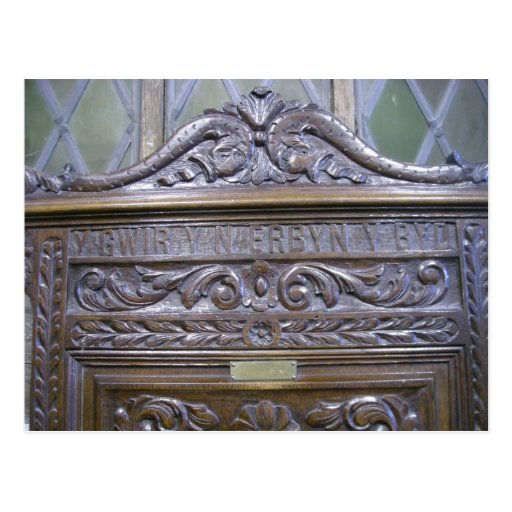
‘Y Gwir yn erbyn y Byd, A oes Heddwch? (The Truth against the World, Is there Peace?) Calon wrth Galon, A oes Heddwch? (Heart to Heart, Is there Peace?) Gwaedd uwch Adwaedd, A oes Heddwch? (Shout above responding Shout, Is there Peace?)’
Carrying a sword was one of the rites in Iolo Morganwg’s first Gorsedd in 1792. As a pacifist Iolo wanted to emphasise that the Bards met in peace and when a naked sword was placed on the Logan Stone they proceeded to sheath it as a symbol of peace in Gorsedd.
Bardic chair inscription: “the truth against the world”
With no more than this much Welsh in a ritual, or even just Y gwir yn erbyn y Byd [approximately “uh GWEER uhn EHR-been uh BEED”] “the Truth against the World,” you can clearly set apart the language of your rite from ordinary language, and help evoke the heightened state of consciousness characteristic of much (not all) successful ritual.
Benefits of Ritual Language
If you want the John F. Kennedy version – “what ritual language can do for you” – here’s a start.
An FAQ of the Latin Liturgy Association site lists several “important benefits of using Latin” as a “sacral” language, including its close association with worship, as with the Arabic of the Qur’an, the Sanskrit of Hinduism and the Hebrew of Judaism. It also “helps us overcome limitations of time and place” and “participate in the universal reality of the Catholic Church, linking us with the generations” who preceded us. As the language of a sacred musical tradition, it also gives access to the plainsong and chant of the Church.
So Why Use a Distinct Ritual Language?
Huston Smith
OK, you get that ritual and ritual language are powerful and widespread. But why not keep it to your own native tongue and skip the difficulty of learning another language besides? Who has the time for studying and mastering a dedicated language? Isn’t a dedicated practice more important? Aren’t ritual and worship and devotion in [insert your language here] better than none at all? This cry of the heart has a strong appeal. Its human roots are ancient. Huston Smith in his The World’s Religions (p. 34) cites a Hindu prayer, noting, “Even village priests will frequently open their temple ceremonies with the following beloved invocation:
O Lord, forgive three sins that are due to my human limitations:
Thou art everywhere, but I worship you here;
Thou art without form, but I worship you in these forms;
Thou needest no praise, yet I offer you these prayers and salutations,
Lord, forgive three sins that are due to my human limitations.
Surely this is justification, if indeed we need any? You may have seen this prayer incorporated into rituals as part of the reach toward the divine – I have. Of all human failings, surely what language we use in our quest must rank low on the scale of such things?
M. Isadora Forrest notes in her book Isis Magic, “Isis of the Ten Thousand Names provided Her ancient worshippers with a broad range of Divine aspects, functions and affinities” (pg. 8). So if we can approach spirit or divine realm using our own names for it, what’s the need for a separate ritual language? Can’t we reach and communicate with the Goddess [substitute your own preferred name here] using what is, after all, our “mother tongue,” the speech that is most intimate to us? Isn’t this language therefore among the most valid of tools we can use, if we wish to contact and plunge into the Otherworld, the divine realm? It reaches and extends from the heart.
Well, just like you generally appreciate home-baked over store-bought, deities show preferences. Among them are offerings, names and languages. That doesn’t mean that English or whatever your native language is won’t “work” as you lay the roses, pour the mead, light the cedar incense, offer the myrrh or dragonsblood or cinnamon, but it does mean that a more immediate connection is one benefit and advantage of using a ritual language. In part it’s a matter of dedication and devotion. Our efforts please the divine; as someone said – I’m quoting badly here – “the gods enjoy the taste of human sweat in their offerings.”
A tradition can have profound impact on our spiritual paths. Forrest observes (again, insert your preferred designation for “Goddess” and “Isis” as needed):
By examining the evidence this tradition has left us, modern devotees of the Goddess can be connected with and find inspiration in the ancient worship … We can discover the traditional ways Isis was worshipped and learn how her worshippers thought, talked and taught about her. In the stories they told, the religious purposes they agreed upon … we can follow the path of a very ancient religious tradition that can connnect us to our spiritual ancestors. By using the symbols they used and found meaningful– and by finding our own meaning in them – we are empowered by tradition. It can guide us, inpsire us, explain things to us. It provides potent archetypal symbols, sanctified by centuries of use, energized by the meaning invested in them. The devotion of thousands upon thousands of Isis worshippers before us can provide a path we can walk and a context for our own relationship
with the divine. Thus, “tradition can be an extremely valuable tool of connection with the Divine; yet it need not constrain us. Human religious history is a history of change” (9).
Ritual Language and Two Kinds of “Users”
The use of a special ritual language concerns two groups of ritualists in different ways. For writers or composers of rituals and liturgies, the language must be “composable in.” That is, it shouldn’t be so difficult to use that the creation of new rituals and liturgies is so challenging only a few can pull it off. This means that those who know the language can use it creatively. Need a new handfasting ritual, or a rite to plant potatoes? No problem! This also means that the first group can make the ritual accessible to the second and much larger group, the users or participants in rituals and liturgies. This latter groups includes not only the “usual suspects,” the regular participants in rituals, but also any visitors (assuming your rituals with a ritual language are open to them), and readers of any media like your group’s website that explains or presents rituals to a wider audience.
Which Ritual Language?
There are currently some 6000 human languages on the planet, though the number is decreasing dramatically. However, Celtic-inspired Druids need not sort through them; under a dozen ready and suitable options present themselves. (If you want to focus on Asatru and other similar northwestern European Heathen traditions, replace Celtic with Germanic tongues. Likewise, substitute some Slavic options, if you’re into Baltic Heathenism like Romuva, or Hellenismos if you’re a Greek Pagan.etc.).
Welsh, Irish Gaelic, Scots Gaelic, Breton, Cornish, Manx. Throw in Proto-Celtic if you wish. All but the latter have communities of speakers, grammars and dictionaries and various learning resources. (Proto-Celtic lets you try out an ancestral speech in a form that’s still being reconstructed as we speak. Enough exists to compose in it – barely. See the next section for more possibilities.) Admittedly you’re most likely to encounter the modern forms of these, but dive into the modern form, and you can begin to make use of preserved older forms in manuscripts, chronicles, epics and legends, rich with symbolism and myth for rituals, prayers, chants, song lyrics, etc. as yet unborn, unwritten, unchanted, unsung.
Conlangs, Arise!
Game of Thrones
Another option lies in the adaptation of a Celtic language to your purposes. Ritual language is already heightened, altered, shifted. Well, a conlang or constructed language may fit your needs. (For a detailed look at some possibilities, visit Mark Rosenfelder’s online Language Construction Kit.) Conlangers have been modifying adapting, regularizing, extending and creating out of whole cloth an astonishing range of languages. A significant number of them exist in forms complete enough to use for ritual. And you can actually commission a language from the Language Creation Society. You too can do just as the producers of Game of Thrones have done with Dothraki, whose creator David Peterson has created other languages. Visit his website for a sampling.
Perplexed by the contradiction between authentic or historical and concocted or created ex nihilo? You’ve arrived at the classic a priori versus a posteriori nexus – a lively point of debate in the conlang community.
J M Greer
Ends and Beginnings
Had enough? Need a break? Or want to sample the sounds of some 30 European languages? Below is a Youtube clip featuring Celtic, Romance, Germanic and Slavic languages, along with Greek, Albanian and Hungarian to round out the linguistic variety of Europe (see the note below for a complete list of languages and approximate times). You may have visceral reactions to accents, pitches, sounds. I urge you to make note of them. See if you can get down in words what it is that appeals or doesn’t appeal to you in the sounds and overall sprachgefühl, a wonderful German word that literally means “speech-feeling” — the character of a language. This can be helpful as you consider the sound of any ritual language you might want to use. It may also prove useful if you’re wondering what languages you might want to study in the future (if you’re following the language learning advice of John Michael Greer in his talk “A Magical Education”). And there’s a chance it may spark a dream of a past life when you may have spoken a form of one of these languages yourself.
Here’s the 32-language video:
A Next Step
In DRL — A Druid Ritual Language — Part 3, I’ll look specifically at Welsh and then at a couple of conlangs as candidates for ritual languages.
From the Wikipedia entry for “Magical Language“, accessed 3/23/14, which I cite below for its interest:
The performance of magic almost always involves the use of language. Whether spoken out loud or unspoken, words are frequently used to access or guide magical power. In “The Magical Power of Words” (1968) S. J. Tambiah argues that the connection between language and magic is due to a belief in the inherent ability of words to influence the universe. Bronisław Malinowski … suggests that this belief is an extension of man’s basic use of language to describe his surroundings, in which “the knowledge of the right words, appropriate phrases and the more highly developed forms of speech, gives man a power over and above his own limited field of personal action.”Magical speech is therefore a ritual act and is of equal or even greater importance to the performance of magic than non-verbal acts.
Not all speech is considered magical. Only certain words and phrases or words spoken in a specific context are considered to have magical power. Magical language … is distinct from scientific language because it is emotive and it converts words into symbols for emotions; whereas in scientific language words are tied to specific meanings and refer to an objective external reality. Magical language is therefore particularly adept at constructing metaphors that establish symbols and link magical rituals to the world.
Malinowski argues that “the language of magic is sacred, set and used for an entirely different purpose to that of ordinary life.” The two forms of language are differentiated through word choice, grammar, style, or by the use of specific phrases or forms: spells, songs, blessings, or chants, for example. Sacred modes of language often employ archaic words and forms in an attempt to invoke the purity or “truth” of a religious or a cultural “golden age”. The use of Hebrew in Judaism is an example.
Another potential source of the power of words is their secrecy and exclusivity. Much sacred language is differentiated enough from common language that it is incomprehensible to the majority of the population and it can only be used and interpreted by specialized practitioners (magicians, priests, shamans, even mullahs). In this respect, Tambiah argues that magical languages violate the primary function of language: communication. Yet adherents of magic are still able to use and to value the magical function of words by believing in the inherent power of the words themselves and in the meaning that they must provide for those who do understand them. This leads Tambiah to conclude that “the remarkable disjunction between sacred and profane language which exists as a general fact is not necessarily linked to the need to embody sacred words in an exclusive language.”
Video roster of languages and times; “FSI + a number” refers to the U.S. Foreign Service Institute ranking of difficulty for an English speaker, 1 being easier, and higher numbers being comparatively more difficult/requiring more hours of study:
Many spiritual and religious traditions feature a special language used for ritual purposes. The most visible example in the West is Latin. The Latin Mass remains popular, and though the mid-1960s reforms of Vatican II allowed the use of local vernacular languages for worship, they never prohibited Latin. For some Catholics, the use of vernacular reduced the mystery, the beauty and ultimately, in some sense, the sacredness of the rites. If you visit an Orthodox Christian or Jewish service, you may encounter other languages. Within an hour’s drive of my house in southern Vermont, you can encounter Greek, Hebrew, Russian, Arabic and Tibetan used in prayer and ritual.
Language as Sacrament
The heightened language characteristic of ritual, such as prayer and chant, can be a powerful shaper of consciousness. The 5-minute VedicSanskrit video below can begin to approximate for one watching it a worship experience of sound and image and sensory engagement that transcends mere linguistic meaning. The rhythmic chanting, the ritual fire, the sacrificial gathering, the flowers and other sacred offerings, the memory of past rituals, the complex network of many kinds of meaning all join to form a potentially powerful ritual experience. What the ritual “means” is only partly mediated by the significance of the words. Language used in ritual in such ways transcends verbal meaning and becomes Word — sacrament as language, language as sacrament — a way of manifesting, expressing, reaching, participating in the holy.
And depending on your age and attention at the time, you may recall the renewed popularity of Gregorian chant starting two decades ago in 1994, starting with the simply-titled Chant, a collection by a group of Benedictines.
Issues with Ritual Language
One great challenge is to keep ritual and worship accessible. Does the experience of mystery and holiness need, or benefit from, the aid of a special ritual language? Do mystery and holiness deserve such language as one sign of respect we can offer? Should we expect to learn a new language, or special form of our own language, as part of our dedication and worship? Is hearing and being sacramentally influenced by the language enough, even if we don’t “understand” it? These aren’t always easy questions to answer.
“The King’s English”
For English-speaking Christians and for educated speakers of English in general, the King James Bible* continues to exert remarkable influence more than 400 years after its publication in 1611. What is now the early modern English grammar and vocabulary of Elizabethan England, in the minds of many, contribute to the “majesty of the language,” setting it apart from daily speech in powerful and useful ways. Think of the Lord’s Prayer, with its “thy” and “thine” and “lead us not”: the rhythms of liturgical — in this case, older — English are part of modern Christian worship for many, though more recent translations have also made their way into common use. A surprising number of people make decisions on which religious community to join on the basis of what language(s) are, or aren’t, used in worship.
Druid and Pagan Practice
When it comes to Druid practice (and Pagan practice more generally), attitudes toward special language, like attitudes towards much else, vary considerably. Some find anything that excludes full participation in ritual to be an unnecessary obstacle to be avoided. Of course, the same argument can be made for almost any aspect of Druid practice, or spiritual practice in general. Does the form of any rite inevitably exclude, if it doesn’t speak to all potential participants? If I consider my individual practice, it thrives in part because of improvisation, personal preference and spontaneity. It’s tailor-made for me, open to inspiration at the moment, though still shaped by group experience and the forms of OBOD ritual I have both studied and participated in. Is that exclusionary?
Ritual Primers
Unless they’re Catholic or particularly “high”-church Anglican/Episcopalian, many Westerners, including aspiring Druids, are often unacquainted with ritual. What is it? Why do it? How should or can you do it? What options are there? ADF offers some helpful guidance about ritual more generally in their Druid Ritual Primer page. The observations there are well worth reflecting on, if only to clarify your own sensibility and ideas. To sum up the first part all too quickly: Anyone can worship without clergy. That said, clergy often are the ones who show up! In a world of time and space, ritual has basic limits, like size and start time. Ignore them and the ritual fails, at least for you. Change, even or especially in ritual, is good and healthy. However, “With all this change everyone must still be on the same sheet of music.” As with so much else, what you get from ritual depends on what you give. And finally, people can and will make mistakes. In other words, there’s no “perfect” ritual — or perfect ritualists, either.
(Re)Inventing Ritual Wheels
Let me cite another specific example for illustration, to get at some of these issues in a slightly different way. In the recent Druidcast 82 interview, host Damh the Bard interviews OBOD’s Chosen Chief, Philip Carr-Gomm, who notes that some OBOD-trained Druids seem compelled to write their own liturgies rather than use OBOD rites and language. While he notes that “hiving off” from an existing group is natural and healthy, he asks why we shouldn’t retain beautiful language where it already exists. He also observes that Druidry appeals to many because it coincides with a widespread human tendency in this present period to seek out simplicity. This quest for simplicity has ritual consequences, one of which is that such Druidry can also help to heal the Pagan and Non-Pagan divide by not excluding the Christian Druid or Buddhist Druid, who can join rituals and rub shoulders with their “hard polytheist” and atheist brothers and sisters. (Yes, more exclusionary forms of Druidry do exist, as they do in any human endeavor, but thankfully they aren’t the mainstream.)
About this attitude towards what in other posts I’ve termed OGRELD, a belief in “One Genuine Real Live Druidry,” Carr-Gomm notes, “The idea that you can’t mix practices from different sources or traditions comes from an erroneous idea of purity.” Yes, we should be mindful of cultural appropriation. Of course, as he continues, “Every path is a mixture already … To quote Ronald Hutton, mention purity and ‘you can hear the sound of jackboots and smell the disinfectant.'” An obsession with that elusive One Genuine Real Live Whatever often misses present possibilities for some mythical, fundamentalist Other-time Neverland and Perfect Practice Pleasing to The Powers-That-Be. That said, “there arecertain combinations that don’t work.” But these are better found out in practice than prescribed (or proscribed) up front, out of dogma rather than experience. In Druidry there’s a “recognition that there is an essence that we share,” which includes a common core of practices and values.
As a result, to give another instance, Carr-Gomm says, “If you take Druidry and Wicca, some people love to combine them and find they fit rather well together,” resulting in practices like Druidcraft. After all, boxes are for things, not people. Damh the Bard concurs at that point in the interview, asserting that, “To say you can’t [mix or combine elements] is a fake boundary.”
Yet facing this openness and Universalist tendency in much modern Druidry is the challenge of particularity. When I practice Druidry, it’s myexperience last week, yesterday and tomorrow of the smell of sage smoke, the taste of mead, wine or apple juice, the sounds of drums, song, chant, the feel of wind or sun or rain on my face, the presence of others or Others, Spirit, awen, the god(s) in the rite. The Druid order ADF, after all, is named Ár nDraíocht Féin — the three initials often rendered in English as “A Druid Fellowship” but literally meaning “Our Own Druidry” in Gaelic.
A Human Undersong
Where to go from here? Carr-Gomm notes what Henry David Thoreau called an “undersong” inside all of us, underlying experience. “We sense intuitively that there’s this undersong,” says Carr-Gomm. “It’s your song, inside you. The Order and the course and the trainings [of groups like OBOD] — it’s all about helping you to find that song. It’s universal.” As humans we usually strive to increase such access-points to the universal whenever historical, political and cultural conditions are favorable, as they have been for the last several decades in the West.
Paradoxes of Particularity
Yet the point remains that each of us finds such access in the particulars of our experience. (Christians call it the “scandal of particularity”; in their case, the difficulty of their doctrine that one being, Jesus, is the sole saviour for all people — the single manifestation of the divine available to us.**) And the use of heightened ritual language can be one of those “particulars,” a doorway that can also admittedly exclude, an especially powerful access point, because even ordinary language mediates so much human reality. We quite literally say who and what we are. The stroke victim who cannot speak or speaks only with difficulty, the aphasic, the abused and isolated child who never acquires language beyond rudimentary words or gestures, the foreigner who never learns the local tongue — all demonstrate the degree to which the presence or absence of language enfolds us in or excludes us from human community and culture. And that includes spirituality, where — side by side with art and music — we are at our most human in every sense.
In the second post in this series, I’ll shift modes, moving from the context I’ve begun to outline here, and look at some specific candidates for a DRL — a Druidic Ritual Language.
*Go here for a higher-resolution image of the title page of the first King James Bible pictured above.
**In a 2012 post, Patheos blogger Tim Suttle quotes Franciscan friar and Father Richard Rohr at length on the force of particularity in a Christian context. If Christian imagery and language still work for you at all, you may find his words useful and inspiring. Wonder is at the heart of it. Here Rohr talks about Christmas, incarnation and access to the divine in Christian terms, but pointing to an encounter with the holy — the transforming experience behind why people seek out the holy in the first place:
A human woman is the mother of God, and God is the son of a human mother!
Do we have any idea what this sentence means, or what it might imply? Is it really true? If it is, then we are living in an entirely different universe than we imagine, or even can imagine. If the major division between Creator and creature can be overcome, then all others can be overcome too. To paraphrase Oswald Chambers “this is a truth that dumbly struggles in us for utterance!” It is too much to be true and too good to be true. So we can only resort to metaphors, images, poets, music, and artists of every stripe.
I have long felt that Christmas is a feast which is largely celebrating humanity’s unconscious desire and goal. Its meaning is too much for the rational mind to process, so God graciously puts this Big Truth on a small stage so that we can wrap our mind and heart around it over time. No philosopher would dare to imagine “the materialization of God,” so we are just presented with a very human image of a poor woman and her husband with a newly born child. (I am told that the Madonna is by far the most painted image in Western civilization. It heals all mothers and all children of mothers, if we can only look deeply and softly.)
Pope Benedict, who addressed 250 artists in the Sistine Chapel before Michelangelo’s half-naked and often grotesque images, said quite brilliantly, “An essential function of genuine beauty is that it gives humanity a healthy shock!” And then he went on to quote Simone Weil who said that “Beauty is the experimental proof that incarnation is in fact possible.” Today is our beautiful feast of a possible and even probable Incarnation!
If there is one moment of beauty, then beauty can indeed exist on this earth. If there is one true moment of full Incarnation, then why not Incarnation everywhere? The beauty of this day is enough healthy shock for a lifetime, which leaves us all dumbly struggling for utterance.
[The following rite is freely adapted from Ceisiwr Serith‘s Deep Ancestors.* In particular, the Proto-Indo-European (in bold) differs in conception from Serith’s reconstructions. Serith knows both his PIE and his ritual; the changes here match my esthetics and inner sensibility, which I trust — for me. Your mileage may differ. I repeat the words I speak to close my own rites: Solwom wesutai syet! [sohl-WOHM WEH-soo-tie syeht] May it be for the good of all!]
Gumete gurtibos solwom deiwom.
[GOO-meh-teh goor-TEE-bohs sohl-WOHM day-WOHM]
Come to praise all the gods.
Usme keidont — klute tos. [OOS-meh KAY-dohnt — KLOO-teh tohs]
They are calling you — hear them.
Gumete ognim,
[GOO-meh-teh OHG-neem]
Come to the fire,
gumete spondetekwe!
[GOO-meh-teh spohn-deh-TEH-kweh]
come and worship!
Tusyomes, tusyomes, tusyomes! [toos-YOH-mehs, toos-YOH-mehs, toos-YOH-mehs!]
[Let us hush, hush, hush!]
May we all maintain a holy silence.
May we be pure
that we might cross through the sacred.
May we cross through the sacred
that we might attain the holy.
May we attain the holy
that we might be blessed in all things.
Goddess who burns on the hearth, in our homes,
we call you to join us here
bringing our prayers to the gods
forming the means by which we sacrifice.
May the holy arise in our midst, the pure and the blessing.
Shining Lady, unite us all,
for by worshiping at a common hearth
we are made one family, one people.
Asapotya**, Lady of the Hearth, your household is here.
Our soapstone stove, alight with Brigid’s blessing.
/|\ /|\ /|\
A blessed solstice to all!
/|\ /|\ /|\
*Serith, Ceisiwr. Deep Ancestors. Tucson, AZ: ADF Publishing, 2007. Pp. 122-124. Serith is a long-time and respected member of ADF who maintains the Nemos Ognios grove north of Boston.
**A possible reconstructed name of my own devising. The Proto-Indo-European (PIE) word *asa becomes (among other words) Latin ara “altar.”
The * indicates that the word is reconstructed — we have no written record of it — from actual words in one or more of the descendant or “daughter” languages. In general, the more extant “descendant” words deriving from a PIE “ancestor” word, the better the evidence for that particular PIE ancestor. Historical linguists have worked on PIE for over 200 years: we have a few thousand “restored” words that most agree on. One advantage Indo-Europeanists have in making such reconstructions is the large number of documents in older forms of languages like Greek, Sanskrit, Latin, Gothic, Avestan and Old Church Slavonic.
Image: fire on shore. Be sure to visit Richard Gingras’ fabulous images of fires at the URL indicated for the image.
[Related posts: Shinto & Shrine Druidry 1 | 2 | 3 || Shinto — Way of the Gods || Renewing the Shrine 1 | 2 || My Shinto 1 | 2 ]
What is it about renewal? We need and long for it, desperately, a hunger nothing else can satisfy, though we try to fill it with things rather than with actual transformation. Too often we get cynical when hopes and dreams don’t pan out. I saw a fair amount of this, sadly, in the adolescents I worked with as a high school teacher. Of course, some of it was learned from adults. Renewal and revitalization can seem remote, hard to access. Too often we mock the sentimentalist and the optimist for living in “another world.” Maybe that’s partly because we know deep down that the renewal we need is in this one.
In Part One I wrote about the Japanese Shinto practice of Shikinen Sengu, a ceremony that occurs every twenty years, in which the most important shrine in Japan, at Ise Jingu, is ritually rebuilt and renewed. The biggest shrine most of us have is our homes, where we erect a mirror for our lives by our choice of partners, children, pets, clothing, furnishings, beloved objects and spaces. So a ceremony in a foreign country, and one focusing on a foreign spiritual practice on top of that, may seem like a backwards way, to say no more, of getting at anything important or useful to say about living life in 21st century America. But bear with me.
Here wood for the new shrine is floated down the Isuzu River toward the site:
When we hear words like ‘globalization’ we may not realize how dramatic the changes have actually been, since we simply live through many of them in some form, often unawares. To give just one local example, the recent decision to close our nuclear plant, Vermont Yankee, was driven by economic forces more than anything else, but among those were the mounting costs of meeting a tightening of regulations by the Nuclear Regulatory Commission, in response to the disaster at the Fukushima nuclear plant in Japan following the tsunami two years ago. Our lives are already linked to those of many others we will never meet. Globalization isn’t a choice, it’s a phenomenon like the seasons — it’s part of living on earth in this era. We’re neighbors already — distances between us collapse to nothing.
The Roman writer Terence (Terentius) captures something of this in one of his plays with the wonderfully opaque title Heauton Timoroumenos, which can be translated as the “The Self-Tormentor.” In this short excerpt*, two country neighbors, Menedemus and Chremes, speak candidly to each other:
MENEDEMUS: Chremes, can you spare a moment from your own affairs to listen to someone else’s–even if they don’t really concern you?
CHREMES: I’m human, so any human interest is my concern. Call it solicitude or curiosity on my part, whichever you like. If you’re right I’ll copy you, and if you’re wrong I’ll try to make you mend your ways.
Where am I going with all this? Chremes’ attitude is a valuable one, if we’re to thrive. If I can learn something useful from Shinto, even from a crazy ceremony that rebuilds a perfectly good building right next door, I’ll try to pay attention and learn. Notice Chremes isn’t forfeiting his own judgment. In love with its own exceptionalism, America sometimes seems preoccupied with the second half of Chremes’ response: “if you’re wrong I’ll try to make you mend your ways” — while ignoring the possibility that the former might also be occasionally worthwhile: “If you’re right I’ll copy you.”
Shikinen Sengu is a family affair. Occurring as it does every two decades, the ceremony happens three to four times in the average person’s lifespan.
Another aspect of the Shikinen Sengu ceremony deserving mention is its “greenness.” In a footnote, the JNTO brochure I cited in Part One observes:
Many trees are felled in preparation for each Shikinen Sengu. These logs are carefully selected and then transported to the reconstruction site at Ise, where new life is endowed to the logs. Young trees are carefully planted to replace those fallen in order to perpetuate the forest. The timbers removed when the Shrine is rebuilt are distributed to shrines throughout Japan, where they are reused, particularly to disaster or earthquake-stricken regions. Some of the sacrificial offerings and other contents of the shrine are also distributed among other shrines. Following the 61st Shikinen Sengu, lumber and contents of the Shrine were distributed among 169 shrines throughout Japan.
In Shinto as in Druidry, spirituality is life — there’s no separation. What we do to maintain our connection with Spirit is what we do already as humans in living fully and well. Here’s how the Japanese themselves talk about the ceremony:
As food, clothing and shelter form the requisites of our life, we have to prepare similar requisites for the kami, if we wish to receive blessings from them. Therefore, the ceremony of the Shikinen Sengu includes the renewal of buildings (shelter) as well as the renewal of the treasures (clothing) and the offering of first fruits (food). By performing the Shikinen Sengu, we renew our minds by remembering that our ancestors had enshrined Amaterasu Omikami in Ise, and praying that the Emperor will live long, and that peace will prevail in Japan and the world. It also involves the wish that Japanese traditional culture should be transmitted to the next generation. The renewal of the buildings and of the treasures has been conducted in the same traditional way ever since the first Shikinen Sengu had been performed 1300 years ago. The scientific development makes manual technology obsolete in some fields. However, by performing the Shikinen Sengu, traditional technologies are preserved.
Ritual and ceremony still have important roles to play in keeping us balanced, connected and mindful of our heritage. Even more, ritual and ceremony remind us of our place in this world, as beings who share a planet with so many others. This is one way to understand the Japanese kami or spirit: not so much separate things or “gods” as they are personifications of the profound links we share with the world and the other beings in it. The links exist, and deserve our acknowledgement. Our culture has dispensed with much former ritual, not always to the bettering of our Western lives. We need the connections that ritual can help us form and maintain, and which help nourish and sustain us.
Of course, families usually make their own traditions and rituals instinctively, regardless of what the larger culture is doing. It’s the start of football season, and how many families do you know who have special recipes, traditions, gatherings, rites to celebrate their favorite teams and the hours of television ahead? We do ritual because we’re human. The old ceremonies that no longer hold meaning or value need to be updated, renewed, or replaced with others — but not abandoned, any more than we abandon our humanness merely because one way of being human needs refreshing, renewing or transforming. To do otherwise means living stunted, incomplete lives.
Here’s one of my favorite poems by the late William Stafford which addresses this human need for connection, renewal and watchfulness vividly:
A Ritual to Read to Each Other
If you don’t know the kind of person I am
and I don’t know the kind of person you are
a pattern that others made may prevail in the world
and following the wrong god home we may miss our star.
For there is many a small betrayal in the mind,
a shrug that lets the fragile sequence break
sending with shouts the horrible errors of childhood
storming out to play through the broken dyke.
And as elephants parade holding each elephant’s tail,
but if one wanders the circus won’t find the park,
I call it cruel and maybe the root of all cruelty
to know what occurs but not recognize the fact.
And so I appeal to a voice, to something shadowy,
a remote important region in all who talk:
though we could fool each other, we should consider–
lest the parade of our mutual life get lost in the dark.
For it is important that awake people be awake,
or a breaking line may discourage them back to sleep;
the signals we give–yes or no, or maybe–
should be clear: the darkness around us is deep.
[Related posts: Shinto & Shrine Druidry 1 | 2 | 3 || Shinto — Way of the Gods || Renewing the Shrine 1 | 2 || My Shinto 1 | 2 ]
In a post from a little over a year ago I wrote about Shinto, the “way of the kami” or nature spirits in Japan. One of the most important national Shinto events takes place throughout 2013 and especially this fall*, the Shikinen Sengu, which is the ritual rebuilding and re-dedication of parts of Ise Jingu, the most significant Shinto shrine in Japan. Shikinen Sengu takes place every twenty years, with 2013 marking the 62nd time the year-long ritual event has occurred. The ritual cycle originated in approximately 690 CE, more than 1300 years ago.
“And all this matters why?” you might ask. Perhaps the most visible reason is the sheer beauty of Shinto. If as a Westerner you want to encounter a foreign culture on its own terms, one of the vivid and memorable ways is through its physical manifestations in objects, tastes, sounds and smells. The atmosphere of Shinto is something anyone can begin to appreciate immediately, because Shinto shrines and ceremonies are so public. And in Shinto we can encounter a distinctive Japanese expression of what I have experienced as the spirit of Druidry, a love and reverence for the natural world, seen through the unique perspectives of an entire culture and nation. Shinto provides one model for doing earth-based religion on a large scale. And I hope you’ll see why I think it’s really cool.
Ise Jingu (ee-seh jeen-goo), the shrine at Ise in Mie Prefecture on the main island of Japan, covers more than 20 square miles of mostly forested land. You pass through the torii gate (above image), sign of a Shinto shrine, to enter. Shinto expresses a sense of the “permanent renewal of nature,” as a Mie tourist guide describes it, and Shikinen Sengu, literally the “Ceremonial Year Shrine Relocation,” renews the shrine quite literally, by rebuilding significant portions on an adjacent location. Imagine reconstructing your own house every twenty years, on the same lot, planning in advance and spending a year to do the job, with song and ceremony and all your family members visiting at some point during the year, with picnics and celebration and parties and priests to bless the proceedings, and you begin to get an idea on a very small scale of what’s involved.
Shinto is more practice than belief: what you do matters more than how you understand and talk about it, though of course that’s important too. Shinto focuses on harmony between people and the natural world. Get out of whack, and Shinto shows you things to do to resolve imbalances and restore the original state. Often it’s a case of not taking ourselves so bloody seriously. If you can’t recall when the last time was that the universe bowed to you, maybe that’s because you can’t remember the last time you bowed to the universe. And the latter is generally better for you than the former. Even if taking a cold outdoor shower under a stream doesn’t appeal to you, for instance, you still get how it might restore a healthier sense of proportion. The practice of misogior purification gets real, especially when you do it in winter, as practitioners do in Japan and in the U.S., like Rev. Koichi Barrish who is priest at the Tsubaki Shrine in Washington State. Note that I’m not rushing to be first in line for this particular practice.
I’ll be talking more about these things, and why I’m writing about them, in Part 2.
/|\ /|\ /|\
*My principal sources for the information in this post, beyond my experience of living in Japan for two years in the early ’90s, are this detailed PDF document about Shikinen Sengu, published by JNTO, the Japan National Tourist Organization, and the website for the Tsubaki Shrine in Granite Falls, Washington.
The OBOD East Coast Gathering offers a chance for Druids to walk among friends, attend workshops, and (re)connect with a beloved landscape in northeastern Pennsylvania. Here’s the OBOD banner, the color easy to see, the three-rayed Awen symbol of the Order a little harder to make out. (Photo by John Beckett)
The camp which hosts the Gathering offers both tent areas and basic cabins.
With more people attending this year than last, the ample space helped.
The area is splendid for large group rituals as well.
The rainstorm over the weekend brought with it cooler weather, which just made us all the more grateful for hot drinks and the varied meals our staff of Druid volunteers cooked for us.
(Dining room photo by John Beckett)
I didn’t arrive in time for the opening ritual. But the Closing was held on the same grounds, with the same altars. Here are shots of the two entry cairns seen looking south, along with the four directional altars and their banners: Stag of the South, Salmon of the West, Bear of the North and Hawk of the East.
One of the added pleasures this year was the attendance of more Druids from different orders, including ADF. Here are members of Cedar Light Grove assembled around their grove banner (photo by John Beckett).
OBOD groves brought banners too.
And this year, the third Gathering and my second, yet another draw was the chance to meet and learn from both OBOD’s Chosen Chief Philip Carr-Gomm, and AODA’s Archdruid John Michael Greer.
The first photo is of Philip giving a talk in Storyteller’s Grove a little north of camp.
The second shows John Michael during one of his morning talks in the Pavilion.
In the third, both join for a conversation and Q&A. (3 photos by John Beckett)
And of course no Druid gathering would feel complete without the ceremonial garb that makes the rituals visually distinctive and memorable.
Here are JM Greer and John Beckett:
Topping off each day were the evening fire-circles and drumming, music and song and ample home-brewed mead, cyser and sack from our resident firekeeper and brewer, Derek. Then came the Hour of Recall, truly. The Closing ritual, goodbye hugs, departures, promises to keep in touch, to plan events, to meet again. Another remarkable East Coast Gathering comes to an end, with opened hearts and subtle changes to take away and live through for the coming year. Till 2013!
Many people share a hunger for meaningful actions and deeds, choices and moments, in their lives. We especially seem to long for meaning in the face of so many acts in our daily experience that, without the gift of some kind of transformation, can seem so deadly, vacuous and meaningless. We wait in lines, we reflexively check Facebook and email countless times a day, we make the same daily drive to work, we pay the same endless bills month to month, and talk with the same acquaintances who never seem to grow and move beyond their original assumptions and opinions — we tire and bore even ourselves with our own personalities and routines and habits …
The world is too much with us; late and soon,
Getting and spending, we lay waste our powers;
Little we see in Nature that is ours;
We have given our hearts away
as 19th century British poet William Wordsworth remarks in a sonnet named for the first line. That sensation and the force that drives it have only intensified in the intervening two centuries. Whatever stimulant of choice we turn to, we need increasing doses just to keep going: stronger energy drinks, more vivid cybersex, the overhyped fake violence of summer blockbusters, the brief but lovely bliss of cutting and piercing. And if you agree as I do with the adage that anyone who points out a problem is also challenged at least to begin to offer a solution, and not just complain about it, here goes another reflection on initiation. Site stats continue to identify this topic as one of the most popular over the past months — and there are good reasons for this.
Shaw astutely diagnoses us: so often we’re addicted to severance, while never moving beyond it to the next stage of initiation. We know how to do this part; we’re severance experts. We endlessly cut ties, get divorced, quit jobs, abandon projects, dump friends, remaking ourselves any way we can, redecorating our homes, tatooing, starving and stuffing our bodies, changing styles, desperate for healing change, for “something more,” for the authentic, the genuine, the real, in a world that, whenever we touch it, feels increasingly plastic. Sometimes only pain feels anything like real. Once a core initial experience of initiation, the doorway, a “shock to the system” because it immersed us in something new, severance is now often the default setting of our lives.
Shaw then focuses on threshold, noting that
Any individual, deprived of certain staples and put into a ritually held disorientation, can open up to the time-honoured fruits of the experience. With Vision Quests, the focus is not on cultural costume or mythic inflation but a whittling away, a search for a certain ‘core’ of you. It is kept empty of any ethnic affectations, but seeks some universal ground of being that is ageless.
At some point in this period of liminality, perceptions of community are radically expanded; personal mirrors are held in moss and rock formations as well as the family and marketplace. The experience of separation from earth diminishes, it has information for you, you are related. This has huge implications in an era of climate change and global warming. It is from the edge of things that wisdom originates — the hope is that the edges of our imagination are porous enough for such dialogue to take place.
So this part of the process seems possible, viable, even crucial for re-negotiating (or re-membering) our relationship to wild nature. The emphasis has to be on the core spiritual and psychological opening initiation offers, rather than a self-conscious aping of cultural costume.
But it is return, Shaw observes, that has become for contemporary humans the hardest of the three stages.
Initiation is a process dependent on grief and focuses on a de-[s]cent, a pulling away, a going down. When we refuse to go down, we run the risk of anaesthetising ourselves. Cultural anaesthetics could be described as engendering a subtle trance, and so the shining and uncertain face of the returning initiate carries a kind of beauty that society is trying to defend itself from — the implications are simply too challenging.
Returnees from initiation threaten the status quo — they’ve seen what others refuse to acknowledge, they’ve confronted what others have no desire ever to face if they can possibly avoid it, because it will mean the end of their carefully constructed lives built on false foundations, on accommodating pain and suffering, on acclimating to misery. And no one wishes to support and nourish and sustain the awareness pouring out of the returnee, the new initiate with the “shining and uncertain face” — or even if they wished to help, they wouldn’t know how. The cultural mechanisms to feed the new initiates more of the kind of energized life they experienced at initiation, and especially the presence of older initiates who have themselves assimilated some of the lessons of their own initiations and can often help the most out of personal experience, are too often lacking.
Hence the prevalence and popularity of workshops, retreats, weekends, camps — any means by which initiation can be fostered and even temporarily encouraged to continue its transformation as long as the special group consciousness persists which acknowledges and cherishes and values it. We have an abundance of gurus and guides, true and false, reliable and negligent, like James Ray whose inexperience and carelessness led to deaths of three clients in a sweat lodge during a 2009 retreat. The impulse to induce severance was certainly valid, but its form was too extreme and poorly managed.
One place to begin is to reflect on past initiations and more fully absorb their lessons. Keeping a journal, blog or some kind of record of experience and reflection over time proves invaluable in accomplishing this. Today is a good day to begin. We obsess over what we still need to learn and explore, and if we can’t see these things in our own lives, often we can detect them in others’ — and they in ours. As we become more familiar with the ongoing effects of past initiations, we’re more likely to discern new ones as we enter them — and they exist in abundance in everyone’s lives.
The circle of a dozen or so Druids in the grove ahead wait in silence as I approach with my guide. Half are dressed in ceremonial garb, and the chief Druid, in addition to her white robe, wears a circlet on her brow. Just below it, three streaks of white descend and splay outward — the three rays of awen*, spiritual illumination and inspiration. They stand out on her tanned skin. In that instant, other faces flash in my awareness — followers of Vishnu and Shiva, who wear similar ritual tilak, facial markings that identify them as devotees of their god. I know from prior experiences that I have lived past lives in India. Initiation often links us to previous openings of consciousness, a reminder of this long path we walk.
In the same instant, my awareness shifts again. What we do here feels immemorially ancient — the grove, the gathered initiates, the ritual challenge, the spiritual power invoked to seal the rite, the sense of kinship with these people. The circle also feels larger than the number I can see — many who are present come “without their skins on.” The form of the rite is endlessly variable, and yet always the same at heart: Will I accept this opportunity to grow? Even as awe runs its cat-feet up and down my spine, I think how many times I have no doubt answered with my life: “No. I am afraid. Other things matter more. Doing nothing is easier. I don’t like change.” But from these half-beginnings and false starts, and from the times I did inch forward, I have built up a reservoir of spiritual momentum that serves me now. I have grown since those times, willingly and unwillingly. I can do more now, because of what I did then. How much still remains to be seen. But I am newly initiate. I have begun … again.
We cannot readily live in this consciousness all the time without training and discipline. But it serves as a foretaste of what is possible. This is, after all, initiation — a beginning, an open door. How and whether I move forward depends on me.
“You are the best you’ve ever been,” a Wise One tells the disciples gathered to listen and question. I measure this against a nagging sense of having lost much of what I once knew, and could do. Is this an echo of wisdom and achievement I threw away sometime in the past, or an inkling of what lies ahead? If I’m the best now, with the crap I know I have hanging off me, what kind of schmuck was I, oh, say a thousand years ago, or ten lives into the past?! And so we introvert and let our weaknesses decide who we are, rather than knowing they are merely guidelines for where to bring the light, where to put conscious intention rather than unthinking reaction. If I can perceive them, I’m part-way to no longer letting them rule.
*Awen (ah-wehn), a Welsh word meaning “inspiration, illumination,” also serves in OBOD some of the same purposes that OM does for meditators in other traditions. As an echo of primordial sound, it is chanted in ceremonies and in private.
The three rays of awen are sometime represented thus: /|\ (I use a triple awen as a text divider and as part of this site’s design.) OBOD uses a three-rayed awen, topped with three dots, as a logo and symbol of the Order.
One of the great gifts of Druidry is that when I feel like crap, and inclined to self-pity, Druid teaching reminds me it’s really not all about me. Not to say that I don’t matter, but that so many other things also do, and so I can gladly get lost in the immensity of worlds of other beings, and often enough regain perspective just from watching till the ego subsides again to some reasonable scale. Feel like crap? OK, then really feellike crap, docrap, be crap as only you can, then get it out of your system, the way you do with crap. Excrete! Crap isn’t forever. Even (or especially) recycled, it turns into something else, becomes nourishment and sustenance for beauty and glory and life. Give away your crap, gift that it can be, and let earth transmute it to feed something hungry precisely for what you can’t use, don’t want, can’t wait to get rid of. This is the gift of Earth, the alchemy this element offers. Blessed, fearful change.
Right now the neighbor’s dog, chained for an hour’s air to the railing on the front steps next door, is barking himself hoarse at something no doubt beyond his reach, but in between volleys, through the open living room window, I can also hear goldfinches calling near our niger-seed feeder. I look up to see five of them clustered on and around the tube of seed swaying from a tree-branch. It’s one of their favorite seeds, and my wife finally found a way to rig a feeder that keeps off our resident chipmunk family while still drawing birds.
Further in the distance, our neighbor up the hill has paused his Harley, which thrums and rumbles as it sits at the bottom of the hill drive on the far side of our yard. He’s doing his ritual last-minute check of gauges and gear before he heads out for an evening run. After he leaves, beyond that, the sound of a lawn mower fades in and out. And in the gaps of silence, wind in the trees. The true silence of dawn and late evening can feel like a cat curled up on itself, listening for its own purring. Then the downy woodpecker assaults the corrugated tin roof of our woodshed in quest of grubs. It sounds like gunfire, beak on metal, still startles us, though we’ve heard it maybe a dozen times over the last few months. Sometimes I think he does it for the pure rousing hell of it. I would.
I’ve just finished a one-week intensive at Hartford Seminary, Understanding and Engaging Religious Diversity. The class ran six day-long sessions broken only by buffet meals on-site that simply continued the discussions in a slightly different mode. Remarkable group. This last Friday morning, our final meeting, one of our classmates exclaimed seriously and humorously at the same time, “Damn you, people, you just keep changing me!” In the greenhouse of close proximity, intense engagement and curiosity, we managed to go very deep. How far are we willing to go in encounter and challenge to what we think we know and believe? What, as our instructor asked us, really is our core conviction, which — if we yielded to another’s truth, or gave ours up — would leave us different people? Can we touch that and walk away unchanged? What happens if we try to come as near as possible to that boundary? What was almost equally fascinating was where people were going right after the class ended. Some to another summer workshop, two to different destinies in India, some to new chaplaincy assignments, a couple of us on to more summer classes elsewhere, a few back to work, and I to days of recovering from a nasty bout of bronchitis, time to process it all, and to write this post. Time, the pause that earth can give. Sickness and healing, its punctuation.
Muslims, a Jain, Buddhists, Pagans, Christians, several of us of multiple faiths in one person, Jew-and-Hindu, a Buddhist-Wiccan-Sikh, and so on. And the simple and lovely ritual we spoke to each other, going round in a circle that closed out our time together: “Thank you for the blessing that you bring; thank you for the blessing that you are.” Vortex that has sanctified.
Ah, Fifth Month, you’ve arrived. In addition to providing striking images like this one, the May holiday of Beltane on or around May 1st is one of the four great fire festivals of the Celtic world and of revival Paganism. Along with Imbolc, Lunasa and Samhain, Beltane endures in many guises. The Beltane Fire Society of Edinburgh, Scotland has made its annual celebration a significant cultural event, with hundreds of participants and upwards of 10,000 spectators. Many communities celebrate May Day and its traditions like the Maypole and dancing (Morris Dancing in the U.K.). More generally, cultures worldwide have put the burgeoning of life in May — November if you live Down Under — into ritual form.
I’m partial to the month for several reasons, not least because my mother, brother and I were all born in May. It stands far enough away from other months with major holidays observed in North America to keep its own identity. No Thanksgiving-Christmas slalom to blunt the onset of winter with cheer and feasting and family gatherings. May greens and blossoms and flourishes happily on its own. It embraces college graduations and weddings (though it can’t compete with June for the latter). It’s finally safe here in VT to plant a garden in another week or two, with the last frosts retreating until September. At the school where I teach, students manage to keep Beltaine events alive even if they pass on other Revival or Pagan holidays.
The day’s associations with fertility appear in Arthurian lore with stories of Queen Guinevere’s riding out on May Day, or going a-Maying. In Collier’s painting above, the landscape hasn’t yet burst into full green, but the figures nearest Guinevere wear green, particularly the monk-like one at her bridle, who leads her horse. Guinevere’s affair with Lancelot eroticized everything around her — greened it in every sense of the word. Tennyson in his Idylls of the King says:
For thus it chanced one morn when all the court,
Green-suited, but with plumes that mocked the may,
Had been, their wont, a-maying and returned,
That Modred still in green, all ear and eye,
Climbed to the high top of the garden-wall
To spy some secret scandal if he might …
Of course, there are other far more subtle and insightful readings of the story, ones which have mythic power in illuminating perennial human challenges of relationship and energy. But what is it about green that runs so deep in European culture as an ambivalent color in its representation of force?
Anya Seton’s novel Green Darkness captures in its blend of Gothic secrecy, sexual obsession, reincarnation and the struggle toward psychic rebalancing the full spectrum of mixed-ness of green in both title and story. As well as the positive color of growth and life, it shows its alternate face in the greenness of envy, the eco-threat of “greenhouse effect,” the supernatural (and original) “green giant” in the famous medieval tale Sir Gawain and the Green Knight, the novel and subsequent 1973 film Soylent Green, and the ghostly, sometimes greenish, light of decay hovering over swamps and graveyards that has occasioned numerous world-wide ghost stories, legends and folk-explanations.
(Wikipedia blandly scientificizes the phenomenon thus: “The oxidation of phosphine and methane, produced by organic decay, can cause photon emissions. Since phosphine spontaneously ignites on contact with the oxygen in air, only small quantities of it would be needed to ignite the much more abundant methane to create ephemeral fires.”) And most recently, “bad” greenness showed up during this year’s Earth Day last month, which apparently provoked fears in some quarters of the day as evil and Pagan, and a determination to fight the “Green Dragon” of the environmental movement as un-Christian and insidious and horrible and generally wicked. Never mind that stewardship of the earth, the impetus behind Earth Day, is a specifically Biblical imperative (the Sierra Club publishes a good resource illustrating this). Ah, May. Ah, silliness and wisdom and human-ness.
We could let a Celt and a poet have (almost) the last word. Dylan Thomas catches the ambivalence in his poem whose title is also the first line:
The force that through the green fuse drives the flower
Drives my green age; that blasts the roots of trees
Is my destroyer.
And I am dumb to tell the crooked rose
My youth is bent by the same wintry fever.
The force that drives the water through the rocks
Drives my red blood; that dries the mouthing streams
Turns mine to wax.
And I am dumb to mouth unto my veins
How at the mountain spring the same mouth sucks.
The hand that whirls the water in the pool
Stirs the quicksand; that ropes the blowing wind
Hauls my shroud sail …
Yes, May is death and life both, as all seasons are. But something in the irrepressible-ness of May makes it particularly a “hinge month” in our year. The “green fuse” in us burns because it must in order for us to live at all, but our burning is our dying. OK, Dylan, we get it. Circle of life and all that. What the fearful seem to react to in May and Earth Day and things Pagan-seeming is the recognition that not everything is sweetness and light. The natural world, in spite of efforts of Disney and Company to the contrary, devours as well as births. Nature isn’t so much “red in tooth and claw” as it is green.
Yes, things bleed when we feed (or if you’re vegetarian, they’ll spill chlorophyll. Did you know peas apparently talk to each other?). And this lovely, appalling planet we live on is part of the deal. It’s what we do in the interim between the “green fuse” and the “dead end” that makes all the difference, the only difference there is to make. So here’s Seamus Heaney, another Celt and poet, who gives us one thing we can do about it: struggle to make sense, regardless of whether or not any exists to start with. In his poem “Digging,” he talks about writing, but it’s “about” our human striving in general that, for him, takes this particular form. It’s a poem of memory and meaning-making. We’re all digging as we go.
Digging
Between my finger and my thumb
The squat pen rests; as snug as a gun.
Under my window a clean rasping sound
When the spade sinks into gravelly ground:
My father, digging. I look down
Till his straining rump among the flowerbeds
Bends low, comes up twenty years away
Stooping in rhythm through potato drills
Where he was digging.
The coarse boot nestled on the lug, the shaft
Against the inside knee was levered firmly.
He rooted out tall tops, buried the bright edge deep
To scatter new potatoes that we picked
Loving their cool hardness in our hands.
By God, the old man could handle a spade,
Just like his old man.
My grandfather could cut more turf in a day
Than any other man on Toner’s bog.
Once I carried him milk in a bottle
Corked sloppily with paper. He straightened up
To drink it, then fell to right away
Nicking and slicing neatly, heaving sods
Over his shoulder, digging down and down
For the good turf. Digging.
The cold smell of potato mold, the squelch and slap
Of soggy peat, the curt cuts of an edge
Through living roots awaken in my head.
But I’ve no spade to follow men like them.
Between my finger and my thumb
The squat pen rests.
I’ll dig with it.
I speak for myself, of course. It’s all that any of us can do. But as I approach what is most deeply true for me, I find I can begin to speak true for others, too. Most of us have had such an experience, and it’s an instance of the deep connections between us that we often forget or discount. I’m adding this Part Two because the site stats say the earlier post on initiation continues to be popular.
/|\ /|\ /|\
Within us are secrets. Not because anyone hides some truths from us, but because we have not yet realized them. The truest initiations we experience seem ultimately to issue from this inner realm of consciousness where the secrets arise. Deeper than any ocean, our inner worlds are often completely unknown to us. “Man is ‘only’ an animal,” we hear. Sometimes that seems the deepest truth we can know. But animals also share in profound connections we have only begun to discover. We can’t escape quite so easily.
Our truest initiations issue from inside us. Sometimes these initiations come unsought. Or so we think. Maybe you go in to work on a day like any other, and yet you come home somehow different. Or you’re doing something physical that does not demand intellect and in that moment you realize a freedom or opening of consciousness. Sometimes it can arrive with a punch of dismay, particularly if you have closed yourself off from the changes on the move in your life. In its more dramatic forms initiation can bring with it a curious sense of vulnerability, or even brokenness — the brokenness of an egg that cracks as this new thing emerges, glistening, trembling. You are notthe same, can never bethe same again.
The German poet Rilke tries to catch something of this in his poem “Archaic Torso of Apollo.” He’d been blocking at writing the poems he desired, poems of greater depth and substance, instead of the often abstract work he’d composed until then, and his friend the sculptor Rodin sets him to studying animals. Rilke admires Rodin’s intensely physical forms and figures, and Rilke ends up writing about a classic figure of Apollo that is missing the head. Yet this headless torso still somehow looks at him, holds him with eyes that are not there. Initiation is both encounter, and its after-effects.
We cannot know his legendary head
with eyes like ripening fruit. And yet his torso
is still suffused with brilliance from inside,
like a lamp, in which his gaze, now turned to low,
gleams in all its power. Otherwise
the curved breast could not dazzle you so, nor could
a smile run through the placid hips and thighs
to that dark center where procreation flared.
I may witness something that is simply not there for others, but nonetheless it is profoundly present for me. Or I see something that is not for the head to decipher, interpret, judge and comment on. There’s nothing there for the intellect to grasp. In the poem, the head of the sculpture of Apollo is missing, and yet it sees me, and I see or know things not available to my head. I feel the gaze of the sculpture. I encounter a god. Or just a piece of stone someone shaped long ago into a human figure, that somehow crystallizes everything in my life for me right now. Or both.
The sensation of initiation can be as intensely felt and as physical as sexuality, “that dark center where procreation flared.” It hits you in your center, where you attach to your flesh, a mortal blow from a sword or a gesture that never reaches you, but which still leaves you dizzy, bleeding or gasping for breath. Or it comes nothinglike this, but like an echo of all these things which have somehow already happened to you, and you didn’t know it at the time — it somehow skipped right past you. But now you’re left to pick up the pieces of this thing that used to be your life.
Otherwise this stone would seem defaced
beneath the translucent cascade of the shoulders
and would not glisten like a wild beast’s fur:
would not, from all the borders of itself,
burst like a star: for here there is no place
that does not see you. You must change your life.
You feel Rilke’s discovery in those last lines*, the urgency, the knowledge arriving from nowhere we can track. I have to change, and I’ve already changed. I know something with my body, in my gut, that my head may have a thousand opinions about. I may try to talk myself out of it, but I must change. Or die in some way. A little death of something I can’t afford to have die. There is no place in my life that does not see me, that feeling rises that I can’t escape, and yet I must escape. It’s part of what drives some people to therapy. Sometimes we fight change until our last breath, and it takes everything from us. Or we change without knowing it, until someone who knows us says, “You’ve changed. There’s something different about you. I can’t put my finger on it,” or they freak at the changes and accuse us, as if we did it specifically to spite them. “You’re not the person you used to be,” meaning you’re no longer part of the old energy dynamic that helps thembe who theyare, and now they must change too. Initiation ripples outward. John Donne says, “No man is an island, entire of itself. Each man is a piece of the continent, a part of the main.” Sometimes it’s my own initiation, sometime I’m feeling the ripples from somebody else’s. The earthquake is in the neighborhood, right down the street, in the next room, here — or across the ocean. But ripples in each case.
Sometimes we “catch” initiation from others, like a fire igniting. We encounter a shift in our awareness, and now we see something that was formerly obscure. It was there all along, nothing has changed, and yet … now we know something we didn’t before. This happens often enough in matters of love. The other person may have been with us all along, nothing has changed … and yet now we feel today something we didn’t feel yesterday. We know it as surely as we know our bones. We can feel the shift under our skin. The inner door is open. Do we walk through?


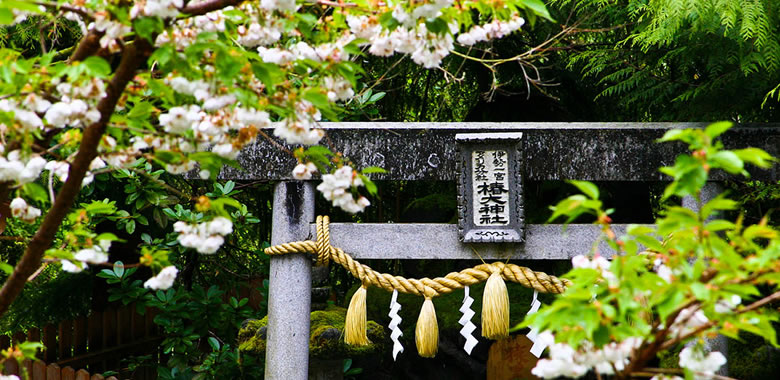
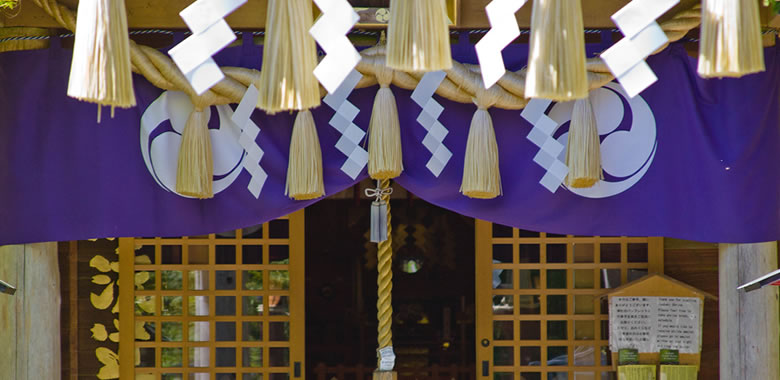
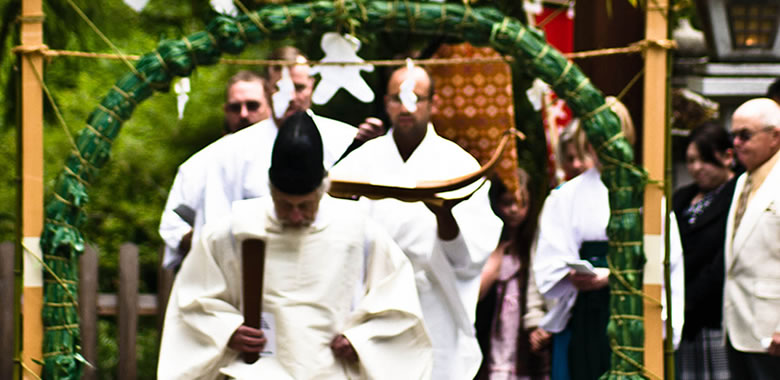


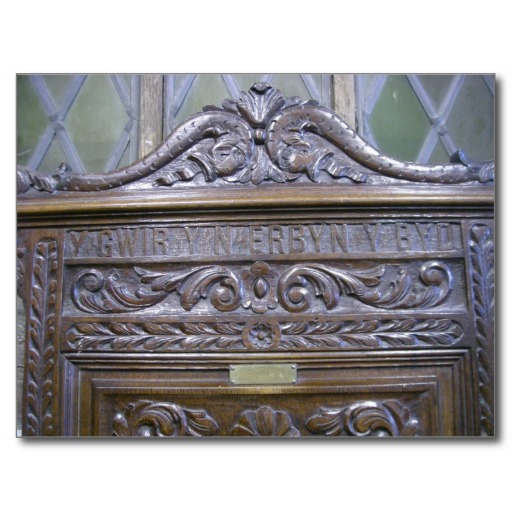


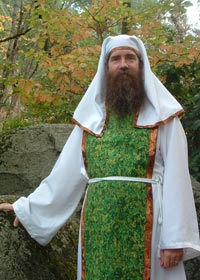
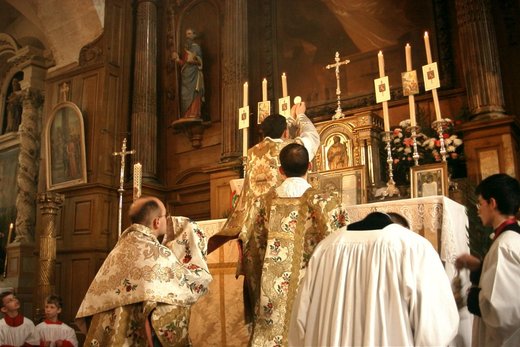
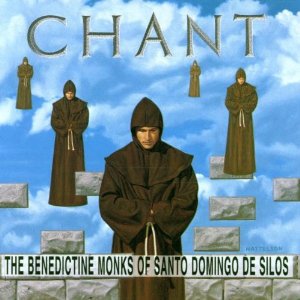

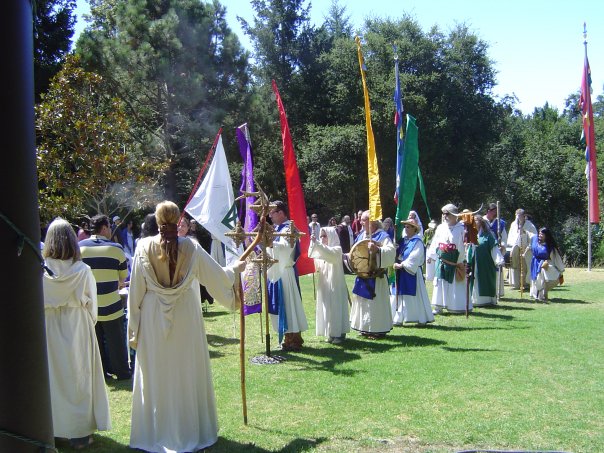

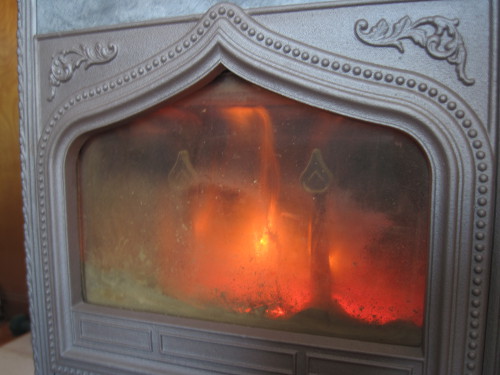
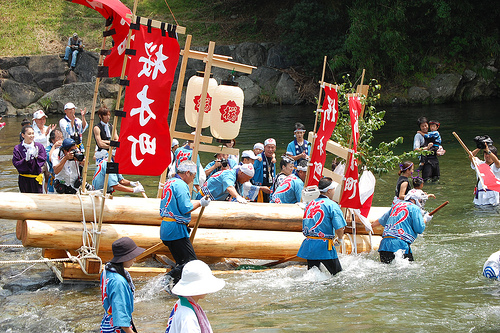
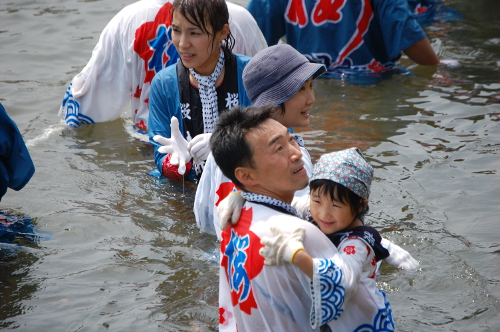
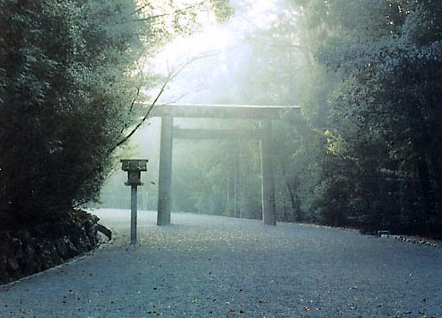
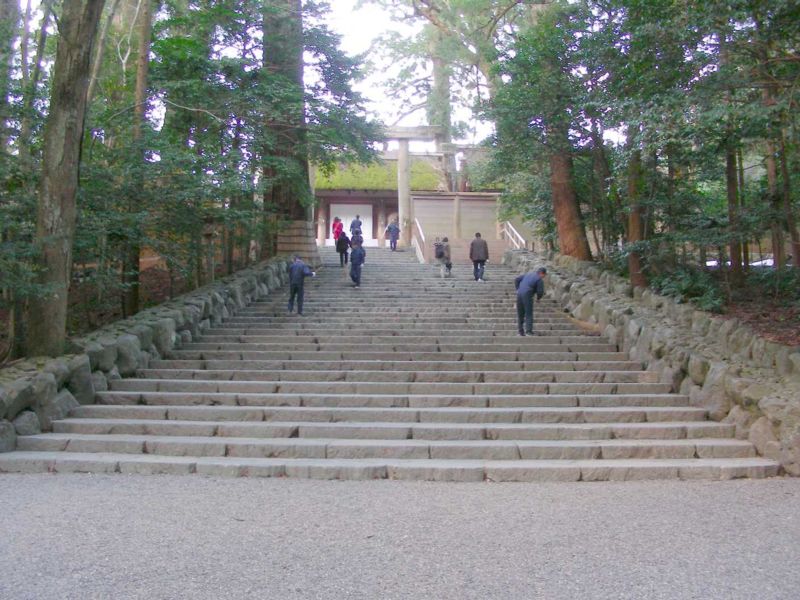

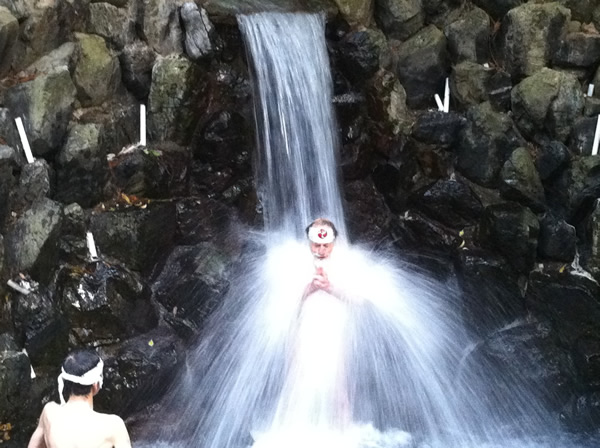
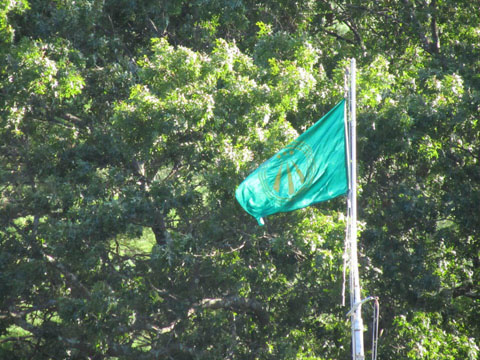

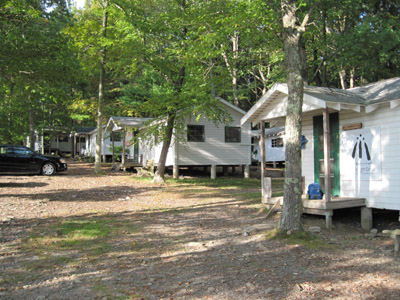
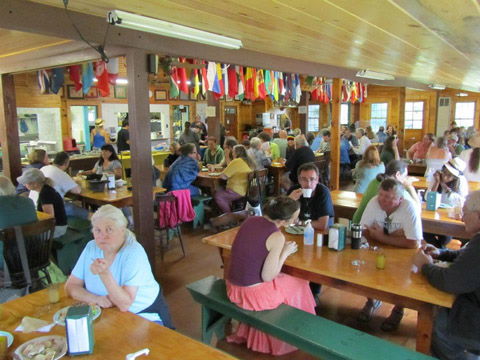


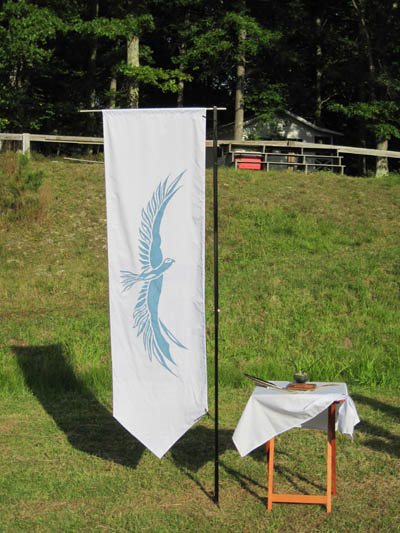

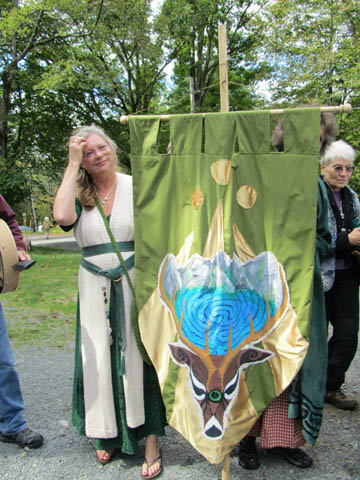


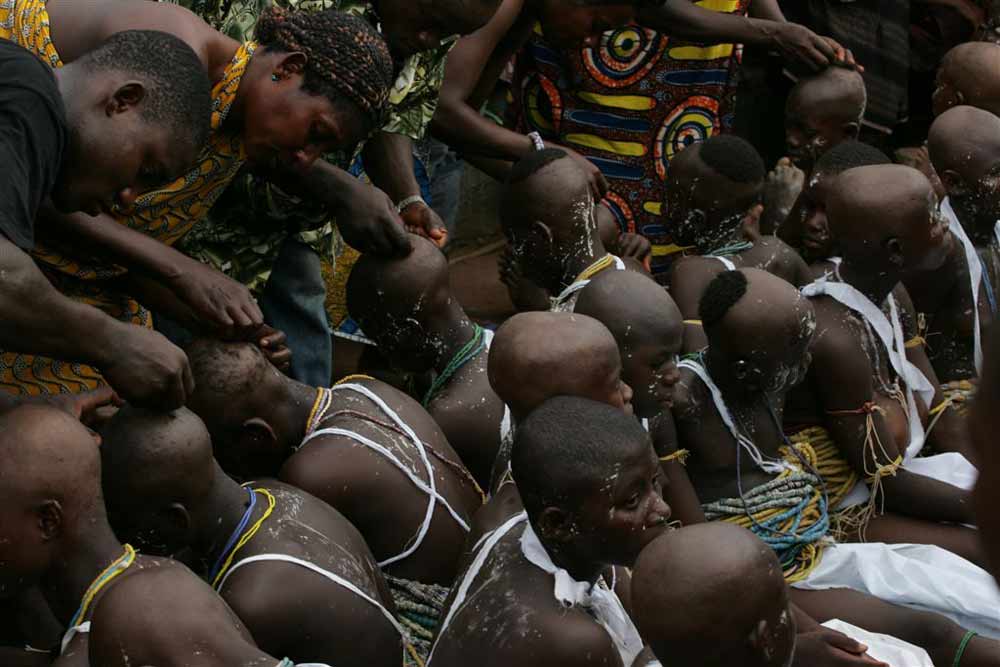
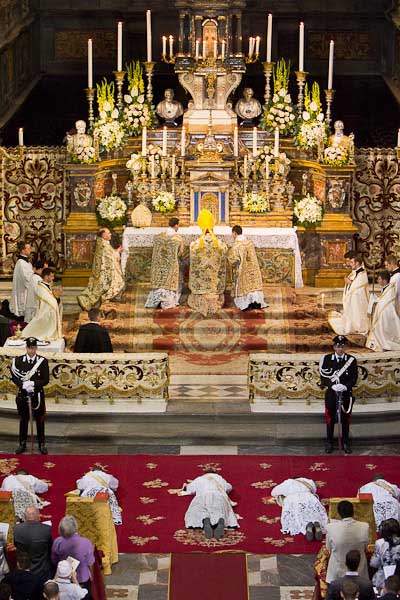


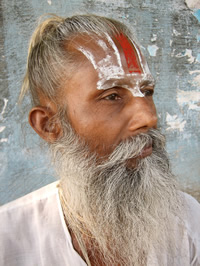

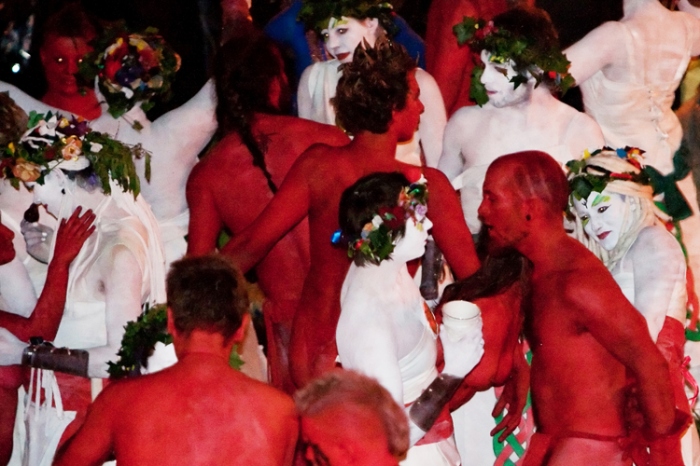


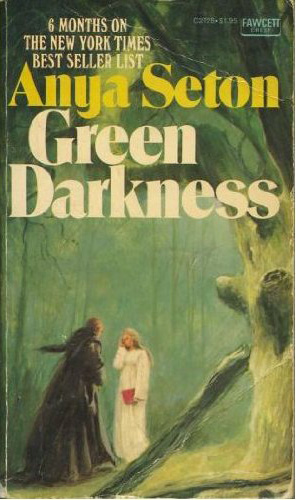


 A Druid Way