Sometimes we need to talk ourselves into our discoveries. That’s only fair, because we’ve talked ourselves out of them until now. When we listen to others’ counsel but ignore our own, when we look for dreams anywhere but in our own hearts, when we yield up our Sovereignty, precious possession, to anyone else, then in spite of a cosmos trying at every moment to get us to claim it, we just …
Ah, what to do with beings such as ourselves?
I turn to remembered wisdom, from a praying mantis, from a post in 2017: Often the best sacrifices are ones you can keep doing. The point isn’t burnout. Make it sacred, sacri-fice it, so you can make it sacred again.
One challenge of sacred time, of holy time, is re-integrating it back into what we are pleased to call our “daily lives”. Where to stash the spiritual uplift so I can draw on it when I really need it?
Part of the reason behind a spiritual practice is to help us begin to see just how the “mundane” is also absolutely overflowing with spiritual energy. (It’s another instance of easier said than known.) We need to re-charge, yes: so we can flow again. Or to put it another way, my ability to tune in to a seemingly “ordinary” interaction in line at the supermarket, or pumping gas, or climbing the steps at work can transform the apparently mundane into a spiritual connection. The “apparently mundane” in all its flatness and dullness is our workshop, laboratory, spiritual opportunity. Empty canvas.
It’s easy (or at least easi-er) to perceive and ride the spiritual currents during retreats, workshops, seminars, gatherings. Each of us throws our offerings into the common cauldron and voila! — energy stew. We sup from it throughout the weekend, workshop, gathering. Then I get to return, to practice during “everyday life”. I am transformer, I am catalyst, I am pathway in and of myself. It can always begin again with each of us. Oh, Spirit … just show me how again, one more time?
/|\ /|\ /|\
One of the site searches over the past several days has been in Cyrillic, for звезда шаблон из бумаги zvezda shablon iz bumagi or “star pattern made of paper” as Google-Translate clumsily renders it. Cutting a five-pointed solstice star is an excellent seasonal craft, for reasons that deserve contemplation. We’ve got the planetary conjunction (link to an informative PDF by the Astronomy Club of Asheville, NC) or “great convergence” coming up on the 21st, along with the Solstice, we have the traditional association with stars at Christmas, and we know the star or pentagram is a spiritual symbol with a world-wide spread long preceding modern Pagan associations.
So without further ado, here’s the clearest and most useful guide I’ve yet found for creating a near-perfect 5-pointed star from paper, with a series of folds, and a single snip of the scissors.
With a nor’easter building to the south of New England, and a forecast of several nights with temperatures in the single digits, I turn to Thecu Stormbringer. It feels like a good point to draw from today, because while the solstices (like the weather) are objective physical events anyone in the world can observe, celebrate, or ignore as they choose, one person’s subjective experiences, like mine of a goddess, simply aren’t. Even after you read my posts about Thecu, you may think nothing more about the matter. But enter “solstice” in a search engine and you’ll get a range of sites, some offering “all you need to know”. Inviting as that may sound, I tend to shy away. If I can find out everything I need to know from a website, why pay any attention to the actual event? But “knowing about” and “knowing” are two different things. One’s a head experience, the other we feel in our bones and blood.
One link between the objective and the subjective is awen, inspiration, the flow of spirit, which lets us evoke in others an echo of our original experience. Let the echo be strong enough, let our understanding of this thing called being human, and our skill in working with it, run equal to the task, and music, image, voice, story, object of craft can all serve to unite us in the experience of mystery. An echo from outside awakens a resonance within us.
Many things can open to the awen. Our inner awareness hums in sympathy with it, and the skill of our hands, the deep yearning of our hearts, rise to answer its call. Mystery, unlike mere obfuscation, only deepens as we explore it. We don’t exhaust the “meaning” of a forest by walking through it once or twice, any more than we do with a piece of music. Yes, I can obsess over a person or a fiction or a place, and in doing so lose much of the freshness which was so inviting at the outset that my obsession took shape there. But that doesn’t “use up” all mystery, merely one piece of it I’ve temporarily drunk dry. Time-walkers, awen-workers, we’re given capacities we’ve just begun to explore.
Solstice is one interval when can hear the original, after the echo has drawn us closer. Many religions offer a rule, or rules, for this. Initially the rules seemed designed to help this happen, to catalyze a connection. What I love about Druidry is that it sets out a rhythm, a melody, instead. Hear that Song, feel its rhythms as you move to them, and you’ll begin to follow it back to its source, to yearn for more of the original music.
The late Medievalist, theologian and fantasy author C. S. Lewis delivered a series of radio broadcasts and included a chapter in at least one of his books titled (more or less) “Right and wrong as a clue to the meaning of the universe”. At least as interesting and significant, to my mind, is relationship as a clue to the meaning of the universe. Right and wrong ultimately serve relationships, rather than the other way around. The former are means, the latter’s the goal. Hear the Song, learn how to work in increasing harmony with it, and these things start to fall in place with less struggle and effort. What we are relating to, and that music “on the edge of things”, begin to converge. Praise the Mystery!
/|\ /|\ /|\
“We are wise”, John Beckett writes about the process of discernment,
to focus our attention on our actions rather than on our beliefs. But our actions generate experiences, and in our attempt to interpret and understand our experiences we form beliefs. Our experiences may be so strong or so frequent we are certain our beliefs about them must be right, but if we are honest with ourselves, we can never be completely sure they are right.
But we can ask ourselves if our beliefs work, if they conform to known facts, and if they help us lead better lives. If we can answer yes to these three questions, we can be confident that they are as right as they can be.
So I return to experience, to relationship, to that Song behind all things.
Look ahead, look back, look to now. Following the nudge, I’m posting links to previous Solstice posts I’ve made, part of my own looking back, as well as other events I can recommend.
Here’s a Beltane ritual with notes and suggestions that can be readily adapted to a Solstice celebration.
A year ago in December 2019 I posted a three-parter called “Gifts of Solstice” 1 | 2 | 3.
Those of you interested in an OBOD Alban Arthan/Winter Solstice ritual can find this year’s on both Facebook and Youtube. You can also find a solo ritual here.
John Beckett of “Under the Ancient Oaks” is offering one on Friday evening, 18 December (link to his specific blogpost, with discussion) which you can watch on Youtube (link to ritual).
Massachusett’s Mystic River Grove is holding one via Zoom I’m participating in. Our fledgling Vermont seed group celebrates one on Sunday, the eve of the Winter Solstice.
You can watch Stonehenge Winter Solstice live here.
A reminder to check out these links in advance, in case of technical glitches, to minimize disappointment.
Pause for an Anglo-Saxon interlude. I’m tutoring a small group of students of Old English via Zoom, and yesterday we spent a pleasant hour discussing an Old English riddle. The richness and density of Old English is everywhere, and often subtle, and in it echoes of ancestral wisdom, if I listen. As I was drafting this post, the refrain from the Old English poem “Deor” came to my mind regarding our current challenges. The line gets widely quoted: Þæs oferéode; þisses swa mæg – “That’s passed by – so can this”. But to me it expresses more than a medieval version of “Just suck it up, baby!”
Yes, it’s true we’re often we’re called to patience and perseverance, invaluable spiritual practices our ancestors knew well — often because they had no other alternative. Patience and perseverance can be hard work, and those “Two P’s” can feel awfully small and negligible in times like these, though they’re huge.
The refrain notes that this can (mæg) pass by, not merely that it “may” pass, which is a mis-translation. There’s room in our situations for our own efforts, our mægen (approx. “mayen”) — a related word — our spiritual strength. It’s our “might and main“, the descendant of that word mægen, and pronounced almost the same. Our mægen can make a difference, even — and especially — if we can’t see it at the time.
Mægen is part of our inheritance as living beings. One way to think of it is the Western version of chi, and it also can vary widely in quantity. Trees respond to it, and can help us replenish it, as many Druids have discovered. They can also help take away the blocks and leaks in our reservoirs of mægen if we approach them respectfully, and offer a gift in return, to help build the relationship and serve the balance, rather than take and take and take. I can learn to hoard my mægen like any good dragon, because my stash of it can run low, get depleted — and also recharged and topped off by skilful means. If you’re reading this, you very likely already know a fair bit of what I’m talking about. If not, life is laboratory — you can test it and find out for yourself.
Today is Monday, day of the Moon. I seek móna-mægen — moon energy — which need not be wholly dependent on the physical moon phase. Our human ability as time-walking beings means that, living in time as we do, we can nevertheless walk outside of time as well, and connect with ancestors for help and relationship, although they already oferéodon — have passed over. In the same way I can also align to a phase of the moon inwardly that may not be in outer manifestation. Even the saying of it, and the playing with it, begin to manifest it.
And so Matthews offers a meditation for Mondays of the Winter Season:
“Wise-men, Wise-women, Holy Ones of all generations, I call to you to send a blessing upon all who are stuck in the past and walk the spirals of an inturning maze: may your wisdom lead them by fresh and fruitful pathways to the blessing of the present moment”.
As we begin to move into our own identities as Wise and Holy Ones ourselves, we begin to send — and receive — these blessings, among the most powerful things we can do for ourselves and others. For I am Wise and Holy, as well as stuck here and there in the past. I carry both identities within, learning from them as I go. What we do for ourselves, we do for Others.
May Solstice wisdom lead you by fresh and fruitful pathways to the blessing of the present moment.
This day of Sun begins in mist, and I’m in some discomfort. The aging body adds its voice to the chorus — so often you need to choose what deserves your attention most, a practice all its own. We may look to others for uplift when it’s hard to find on our own. I turn as I often do to Caitlin Matthews’ Celtic Devotional*, to the page of meditations and poems for Sundays in the winter season:
“Wise teachers and friends of my Winter’s pilgrimage, I seek to arrive in safety; please assist and inspire me through the dark Winter days, as I go on my pilgrim way, seeking the answers that my soul needs”.
So often others do help us. In addition to neighbours, friends, family, beloved animals, we have at hand the inspiration from centuries of singers and writers and painters available online. Yet as the plague rages across the lands, we still follow that pilgrim way, now from necessity, perhaps, rather than by choice. How often have our ancestors spoken and thought and felt these same words?
The other path I follow asks for a monthly written reflection, and it’s good practice. Often I find myself blocking as I sit to write, itself a useful signal: “Oh, I have nothing to say, or nothing’s been happening, or it’s just the same old stuff — nothing’s shifted or moved”. Really? “Which voice deserves my attention most?” becomes an even more valuable question in the face of acedia, that old devil of sloth and inertia and indifference and the doldrums that dog the heels of anyone on pilgrimage. If I want to sail, I can wait for good winds, I can tack across existing less-than-good winds, or if I’m utterly becalmed, I can unship my oars and start rowing. Sailors knew these things once, and the archaic language tells me both that the way is ancient and I haven’t used the words enough. I need to relearn them, or find a new idiom, and make it mine. On foot, it’s much the same. We all know it: “Can I even get out of bed to start the day’s journey?”
A friend shared his approach to the monthly ritual of reflection: he writes three things he’s grateful for, three insights, three requests or questions. A triple triad. Each month thus has the previous and the coming month as fuel and as a starting point. Often that’s enough to break the ice, to mix metaphors, but appropriate to this season, to drive off the acedia, and launch us well. Sometimes it’s possible to begin with real joy, and the discoveries mirror it as they come as the mist clears.
Then we take up the option of mailing in the reflection, or keeping it in our journals. A magical, spiritual act all its own, a trust that I can release it on its way to fulfillment.
I look at winter and mind the nearing peak of summer solstice in the Southern Hemisphere. It pays, I find, to attend to what the planet is doing “on the other side”. Maximum light and warmth, zenith, high point. And in the midst, the mist, whatever the season, I seek that still point, the spiritual hinge as I initiate the next step. The opportunity to begin is a priceless one, whatever the weather.
/|\ /|\ /|\
What do I need to “hold an initiation”? The idiom’s a profound one. To hold an initiation, to tend and cherish it, to brood it as a chicken does a clutch of eggs, to warm and birth it with my attention and intention, to make it mine, as it already is in embryo. Never do we start from nothing. Nature — and Spirit — “abhor a vacuum”. The Fool rushes in where angels fear to tread. Bless the Fool! S/he’s gone on ahead, to clear the way, even a little — a priceless gift.
So much that we do in what seems our “off-season”, like this winter season may seem to be, is the work of roots, beneath the surfaces. If “nothing” is happening, something is indeed happening. When all looks barren, that’s when to marvel at what lies hidden, in preparation, hibernating and dreaming. Yule in many ways is the completion of Samhain, its fulfillment. The center of activity has shifted, and my quest becomes tracking the hub of energies to its Castle, to the place it radiates from, to bring the Grail Quest imagery into play. What helpers and hinderers will I meet on the way? What companions travel with me, and (com– “with” –pan– “bread”) share my bread? What and who blesses my quest? What’s at stake? Do I know?
What soul needs is the quickening that will manifest more openly at Imbolc. Now is a time of preparation, and tools in hand.
As I did during the Samhain season this year, I’m planning a solstice series to honour Nine Days of Winter Solstice, starting tomorrow, Sunday 13 December, and continuing through the Solstice on the 21st. Because writing is one of my principal spiritual tools, it helps me deepen my awareness and gratitude for the gifts that are given to us each day, in the midst of all the tumult and discord we see around us on this planet. Without those gifts, our experience would be far more grim and difficult.
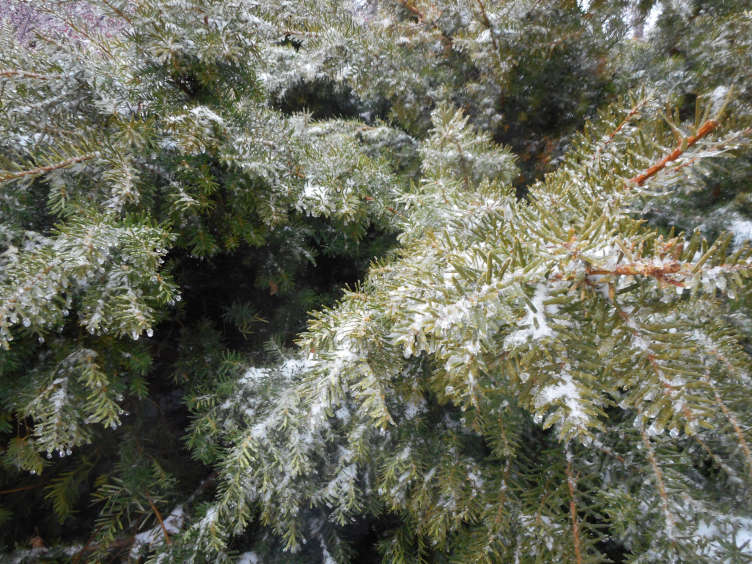
ice on our evergreens
Is there an “official” Nine Days of Solstice? No and yes. You can always find people asking questions like that. Sometimes it’s newcomers, wanting to “get it right” which is an impulse we can celebrate. But nobody needs permission for such things. Who would give it? The Ancient and Noble College of Druids? That’s fun to imagine — maybe a plot detail for a fantasy novel. How about a national government? Not for decades, if ever. And what would “official” mean? Wider recognition? Signs and decorations in public buildings? TV specials? News anchors on cable wishing each other “Happy Solstice”? Human interest stories about how others celebrate the Nine Days? Official lighting of candles or torches at public venues on each each of the Nine Days?
Yes, there could be pleasant acknowledgements of the season, ways to introduce children and young people and the Druid-adjacent and Druid-curious to its rhythms and dynamics. But the end-of-year holiday season is already crowded enough with numerous cultural events and celebrations. Many Druids already acknowledge and celebrate one or more other traditions. I find that acknowledging the days around a seasonal festival can provide useful private space for reflection and re-dedication. If the Nine Days of Solstice became a “thing” — if others celebrated it, too — that’s fine. But the initial impulse for me comes as an inner signal to pay attention.
Which, as someone said in an online forum recently, is 3/4 of Druidry.
238 abandoned drafts, 727 posts / screenshot 9 December 2020
In many ways the posts here at A Druid Way comprise a spiritual memoir. They’re not really a “how-to” for Druidry, though I do post suggestions from time to time, if the nudge comes through persistently enough that something in my experience may hold value for others. (On the other hand, you should see my backlog of about 200+ rough drafts of posts that will never see publication.) But I don’t usually write a “How to Read the Ogham” or “Becoming a Priest of Lugh” or “Three Land-spirits You Can Work With” kind of post. Others do that more competently.
Instead, by digging into my own experiences for the energies and portals, avenues and worlds they open into, I hope to document one small part of the wild landscape we can walk as Druids. “Small” isn’t false modesty but simply spiritual fact, given the vastness of our inner worlds. I also try to ask hard questions, because to me they’re some of the most useful things for where I am now. Don’t worry — Druidry is tough enough. It can take it. And so can we. I know my practice, my amazement and my gratitude have all deepened as a consequence.
TWO
I take for a valuable triad the “Three Questions to Ask of a Deed”: Is it true? Is it kind? Is it necessary? Rather than telling me what to do, this Triad turns me inward, prompting me to act with greater awareness of the spiritual identity of a person, of a situation. Often others can only see the action itself, not what led up to the moment of it, or what follows. Often I can say “yes” to two out of three points of the Triad, but that third Question will stop me in a most helpful way. And more than 33% of the time, it’s the Question of Kindness. The harsh letter of complaint to our used-car dealer I want to write, after over $3700 in repairs two months after we bought it, or the snarky comment to a stranger I just don’t need to make, especially over-caffeinated as I was — if a Triad can re-direct my energies to better purposes, it’s proven itself. All emotions are what they are — flows of energy. What I do with them, though — that’s my laboratory, my workshop, my opportunity, my spiritual arena. Molotov cocktail or spiritual illumination?
THREE
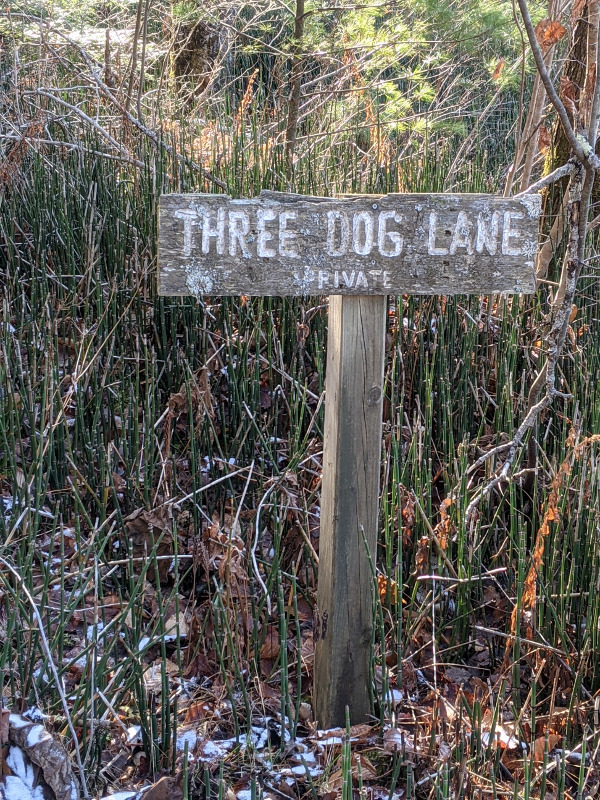
A private lane in southern Vermont/Tuesday, 8 Dec 2020.
There’s intermittent talk among Druids about signs and omens. “What do they mean? How can I tell?” I’ve noticed that the more compassionate and wiser listeners among us try to answer with some version of the following:
All things have multiple meanings. Some of them are part of consensus reality, and some are private and personal. We live in many worlds, and some of them are symbolic. If you had a bad or good experience with dogs, then a dog in a dream, or a vision, or on a solitary walk will mean something different for you than for the next person. Keeping a record of encounters, of signs and omens, can often help with understanding them, because patterns may emerge. Sometimes you will know. And sometimes you’ll need to be patient until you can see a pattern emerge.
In my more manic moments I test these responses with a potentially silly question to help me unpack them: “What does my wife mean, if I meet her unexpectedly when I’m out in our backyard?” The oddness of such a question helps reveal some of my attitudes about signs and omens. Does she “mean” anything? Yes and no. She’s a person like I am, and like the birds and trees and all the other beings in this cosmos that I may encounter. She has her own path, and while we’ve agreed out of love and shared interests and common goals to walk some of the same paths together, what she means to me isn’t all or even part of what “she means”. Or to put it another way, who she is is greater than “what she means”. Her existence can’t be contained in the definition of another person, even one who loves her, but by her going about her life, by the living of it.
FOUR
While signs and omens may exist partly or even wholly in our own subjective universes, I find that much (most? all?) of the physical world reflects the inner worlds. “As above, so below” is more than just a nice theory. (Sometimes you get the sense that the gods “really mean it” this time.)
Instructions for rituals or magic often include directions to “visualize”. For many that can be a challenge, so it’s helpful to have a physical map of an inner reality, something to get into your mind’s eye.
Part of the 3-mile walk we try to take a few times a week takes us past a neighbor’s maples, and the sugaring gear remains in place for the next season. Here then are the energy lines running from tree to tree, as they do between so many beings — in living color.
FIVE
From time to time Druidry (like Paganism generally) faces a critique, less common than it used to be, that it “has no ethics or moral principles”. Or if it does, they’re hedonistic and selfish. Fortunately, here we can heap some blame on old uncle Al, Aleister Crowley, with his widely bandied-about “Do what thou wilt shall be the whole of the law”, as if the sum total of all non-Christian thought amounted to a Nike commercial and “Just do it”.
That Crowley was talking about living from one’s True Will gets lost in all the noise, just like “You must be born again” too often gets turned into little more than emotional experience at a revival. That Crowley and Jesus might even be talking about something similarly transformative — that the spiritual terrain they both point to might be worth exploring so we begin to know it in person “with signs following” — such a thought might well rank up there on many people’s Top Ten Blasphemies list.
Apropos of this, you may have seen the recent ad(vert) for a video game featuring a pic of a CGI busty red-headed wench and the leering tagline “You’re allowed to do anything you want in this game!” As one commentator responded:
“Really, interactive porn grifter? I’m allowed to do ANYTHING I want in this game? Can I travel the world? Can I achieve self-actualization? Or do you assume that my imagination only extends as far as touching a cartoon boob? Because I’ll do that too, but there’s a lot of other shit I want!”
Rather than assuming all our wants and desires can be conveniently divided into pure and impure, or some other light/dark, good/bad dichotomy, why not employ the energy behind these surface manifestations to see what they look like in the other worlds? Sometimes the outer form of “what I want” overlays a very different contour on the inner map of who and what we are, and how far we extend into realms we didn’t know we walked in.
Or to frame it differently, what would my life look like if I operated under the postulate sometimes attributed to Chaos Magic — “Nothing is true and everything is permitted” — and which originates in the novel Alamut by Vladimir Bartol, also an inspiration for the book/film/game Assassin’s Creed? That theme and precept can fuel any number of thoughtful plunges into one’s assumptions and world-view.
And a Bonus SIX
Here we are, a little less than two weeks out from Yule / Solstice / Alban Arthan — that interval I keep noticing shimmers in my awareness whenever one of the “Great Eight” seasonal festivals approaches. Each of them has a pooling of forces and dynamics that calls to anyone who’s worked with that cycle of holy days — calls in varied ways. Is there an Inner Solstice taking place at or around the same time? A very good question for meditation. Would I like to join the inner celebration? Yes! Would you like to join me?
Indigenous spirituality draws its strength from what makes it “indigenous” — it comes from inside, not outside. It arises naturally on the land where we live, in the daily and sacred encounters people experience who live there. We breathe it in the air, and drink it in the water. No founder or prophet needs to arrive to announce its truth; no sacred scripture needs to proclaim its right way to live. These are other things, not “wrong”, but also not the same thing: they’re rooted in belief rather than practice.
We start where we are, by paying attention. That’s one reason so many common elements exist world-wide in indigenous forms of spirituality — why elders from different tribes, communities and nations can gather together and recognize in each other similar experiences of the power and spirit of place. They can speak with “one voice” because the Land does. It says similar things wherever we live. Listen! Do you hear its Song?
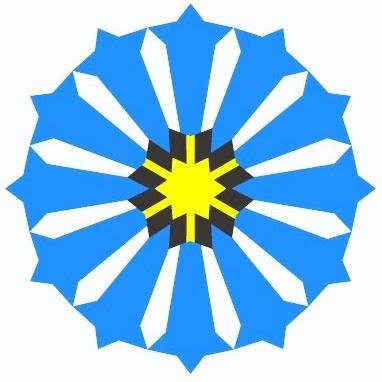
The Jumiois, a stylized cornflower and a symbol of Estonian nature spirituality. It is also the logo for the research and preservation efforts of Maavalla Koda “House of the Native Land”
Like many of the nations that once comprised the Soviet bloc, with the fall of communism and its official atheism, Estonia enjoyed a re-opening to older native traditions and a revitalization of its national culture. Because a significant part of indigenous spirituality is “paying attention to where you live”, it’s also possible for humans to ignore place for a time, but that doesn’t cause place to disappear or cease to matter. For the same reason, we can always re-connect: it’s still there.
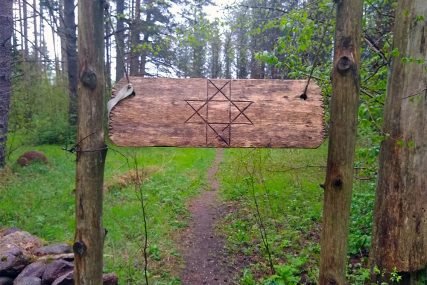
Entrance to Taamealusa Hiis, a sacred site (hiis) near Samma, Estonia, May 2019. / Photo courtesy of Religion News.
Encounter and learn the local gestures and practices, and you keep finding links to practices elsewhere. Sometimes journalists who help raise awareness about such connections are themselves perplexed by them, even as they report them. “While pagan and folk religions may seem archaic to the wider world, they are thriving across the Baltic states” notes a writer for a 2019 Religion News article. But often the “archaic” is part of just what people are seeking — something profoundly, instinctively human that we’ve been doing for centuries and millennia, out of a timeless natural awareness that the sacred is all around us. In that sense, the “archaic” is indeed “thriving”:
“Hiis” means “sacred grove” in Estonian. Past another wooden board with a runic symbol carved on it — it is customary to knock on this board — is a green clearing where visitors have tied ribbons around trees and placed eggs at their bases as a gift and left the dark remnants of a fire.
“All that is brought there has to be eaten there or burned in the ritual fire,” said 28-year-old Tõnu Rehela, who has been a member of Estonia’s nature-oriented, neopagan Maausk community since he was 16. “Through the fire, the gods eat. Through the holy tree, the gods drink.”
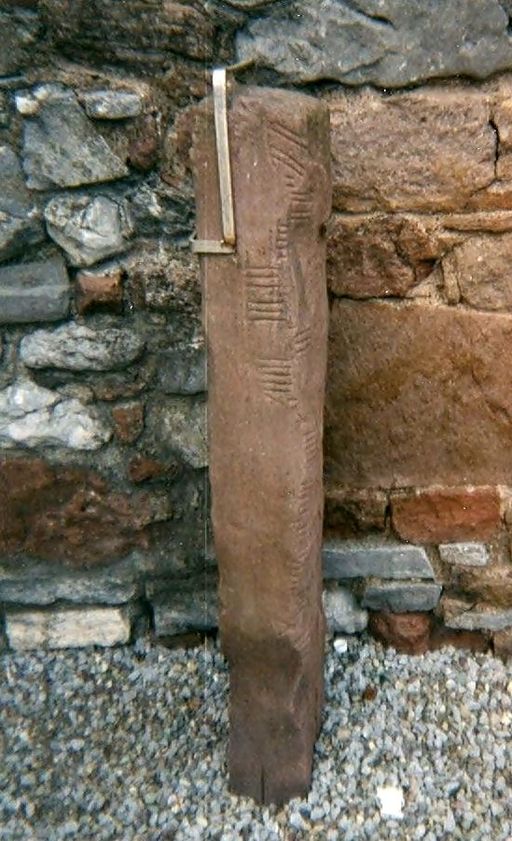
The ogham alphabet, which some contemporary Druids and Pagans use in divination, served writers of early Irish for about half a millennium, starting in the 400s. The writing system consists of mostly straight lines, well-adapted for incising letters on wood and stone, which keep saying “we don’t do curves”.
You can read scholarly speculation about ogham’s origins here on Wikipedia and elsewhere. Accounts in the later medieval Lebor Gabala Erenn (“The Book of the Taking of Ireland”) and the Ogam Tracts variously attribute its origins to the god Ogma/Ogmios and to wise Celtic ancestors.
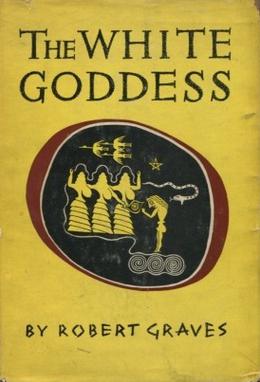
Among other modern writers, Robert Graves (1895-1985) launched the ogham into the modern world in his book, The White Goddess. Did he know what he was doing? Well, it’s subtitled A Historical Grammar of Poetic Myth. Depending on your point of view, that’s utterly contradictory, or an image of our common human reality. Things rarely have a single “cause” but instead are part of a web or network of beings and energies, each aspect or person or deity contributing its portion.
Whatever you make of its origins, as a proven divination system the ogham can open doors to insight.
But as a friend of mine recently discovered, it has some practical disadvantages in non-magical use. For one thing, it has no letter to represent p, in part because Irish had no need for a letter to represent this sound, which disappeared over the course of its development. Historical linguistics offers examples: Proto-Indo-European *pater “father” became early Irish *athir; PIE *pisk– “fish” became (modern) Irish iasc, and so on. (With Christianity, Irish came to adopt the Latin alphabet, convenient for all the words beginning with p that it eventually borrowed from Latin.)
I find in these things some helpful reminders. Sometimes what works — works well, works wonderfully — on one level of reality may not fit well or at all on another level. Deploying the gift of a magical alphabet like ogham, I might discover something profound about my purpose in this life, but not be able to write the word “purpose” using that same alphabet.
Though a p is a possible sound, you might say, I may not need it in particular — there are other sounds, a whole spectrum. (Arabic, for instance, doesn’t have a p either, and gets along fine. From the perspective of many other languages, how can English speakers possibly have a language without the “raspy throat sound” in Bach or Ḥanukkah? [That’s a velar or pharygneal fricative, if you want to show off.] English used to have that sound — the evidence lies in all those archaic spellings with -gh- like “night, light, sought, though, bright, laugh” etc. And the way languages keep changing, we could one day have that sound back again.)
I fall into a ready trap if I expect the cosmos to line up obediently according to my partial understanding of it. (Don’t ask me how many times I’ve had to re-learn that lesson. And by the looks of things, I’m not yet done, either.) When I asked Ogma for help with a constructed Celtic language, I attempted to align with an energy connected to language and words. The results reflect both the blessing the god was willing to offer, and also my human effort. Centuries from now, if someone attempts to “explain the origins” of “my” language, could they even come close to the muddy, messy reality of human interest, a spiritual door opening, a gift of inspiration, some experience with Celtic languages, time dedicated to manifestation, and who knows what else in the mix? I may want my magic pure and my life comprehensible, but they refuse to cooperate.
(Because when I pick up what I think is just one thing, a whole universe comes with it … Most days, that’s a good thing.)
You can of course find Proto-Celtic songs and their lyrics on Youtube. (What you do when you find them is another matter.) I say “of course” because if someone’s thought it, it already exists in some form, waiting for manifestation. A magical rule I keep forgetting.
Sometimes we inherit an instrument, sometimes a longing, sometimes an echo of the words or the tune. / Me with a reconstructed Anglo-Saxon hearpa or lyre.
“The three pillars of achievement”, as the old Welsh triad goes: “a daring aim, frequent practice, and plenty of failures”. Can I “fail” in a search? Only if I “give up”. And that’s the past — it says nothing about what I may do in the future. “Work in Progress” is the only t-shirt I need …
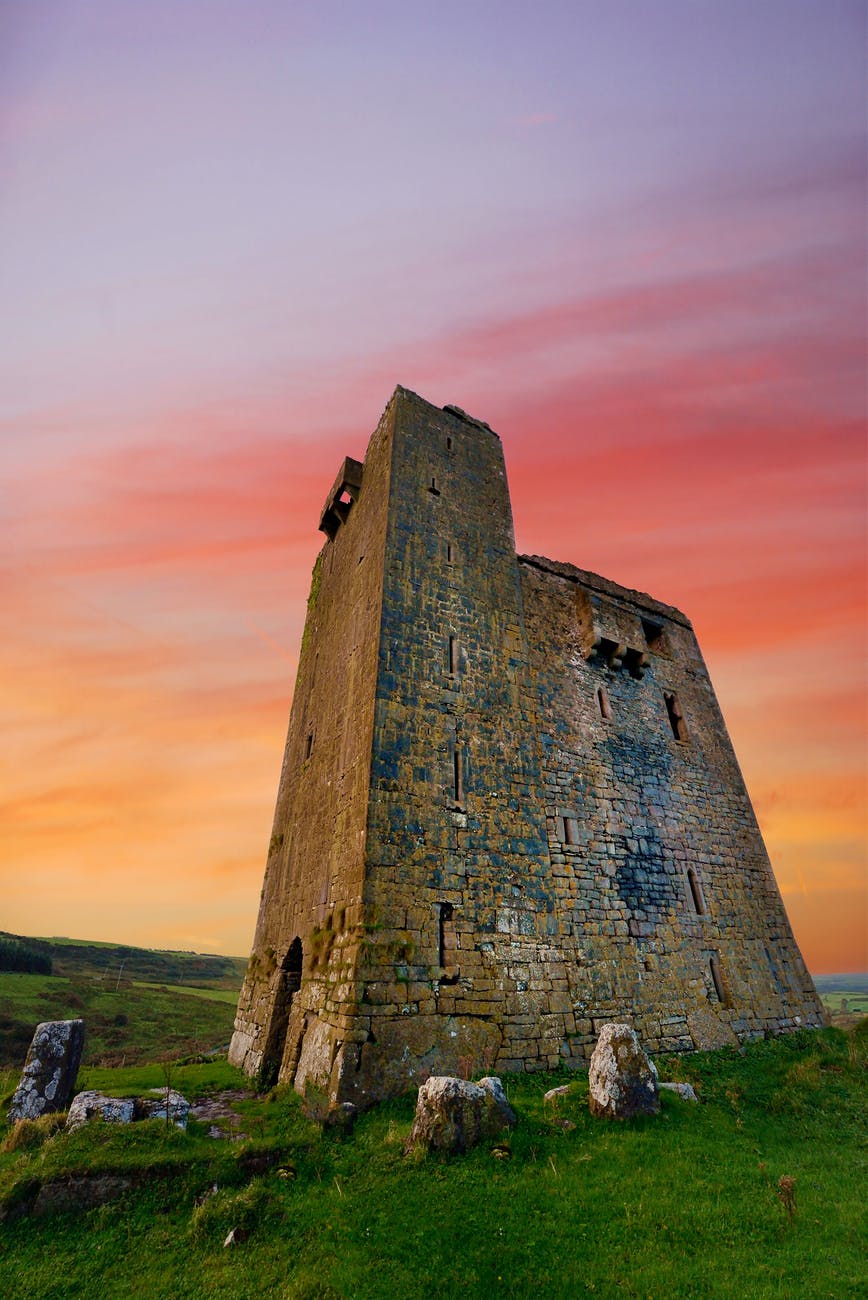
Tolkien’s metaphor of the tower — may it live forever! — fits here. It first appears in his seminal 1936 essay Beowulf: The Monsters and the Critics*, and he was one of the critics, so he should know. You can sense it already: he was gazing at something others simply did not see. Because of him, now we do. Anyone who works in a tradition (or wants to found one) confronts these challenges.
A man inherited a field in which was an accumulation of old stone, part of an older hall. Of the old stone some had already been used in building the house in which he actually lived, not far from the old house of his fathers. Of the rest he took some and built a tower. But his friends coming perceived at once (without troubling to climb the steps) that these stones had formerly belonged to a more ancient building. So they pushed the tower over, with no little labour, and in order to look for hidden carvings and inscriptions, or to discover whence the man’s distant forefathers had obtained their building material. Some suspecting a deposit of coal under the soil began to dig for it, and forgot even the stones. They all said: ‘This tower is most interesting.’ But they also said (after pushing it over): ‘What a muddle it is in!’ And even the man’s own descendants, who might have been expected to consider what he had been about, were heard to murmur: ‘He is such an odd fellow! Imagine using these old stones just to build a nonsensical tower! Why did not he restore the old house? he had no sense of proportion.’
But from the top of that tower the man had been able to look out upon the sea.
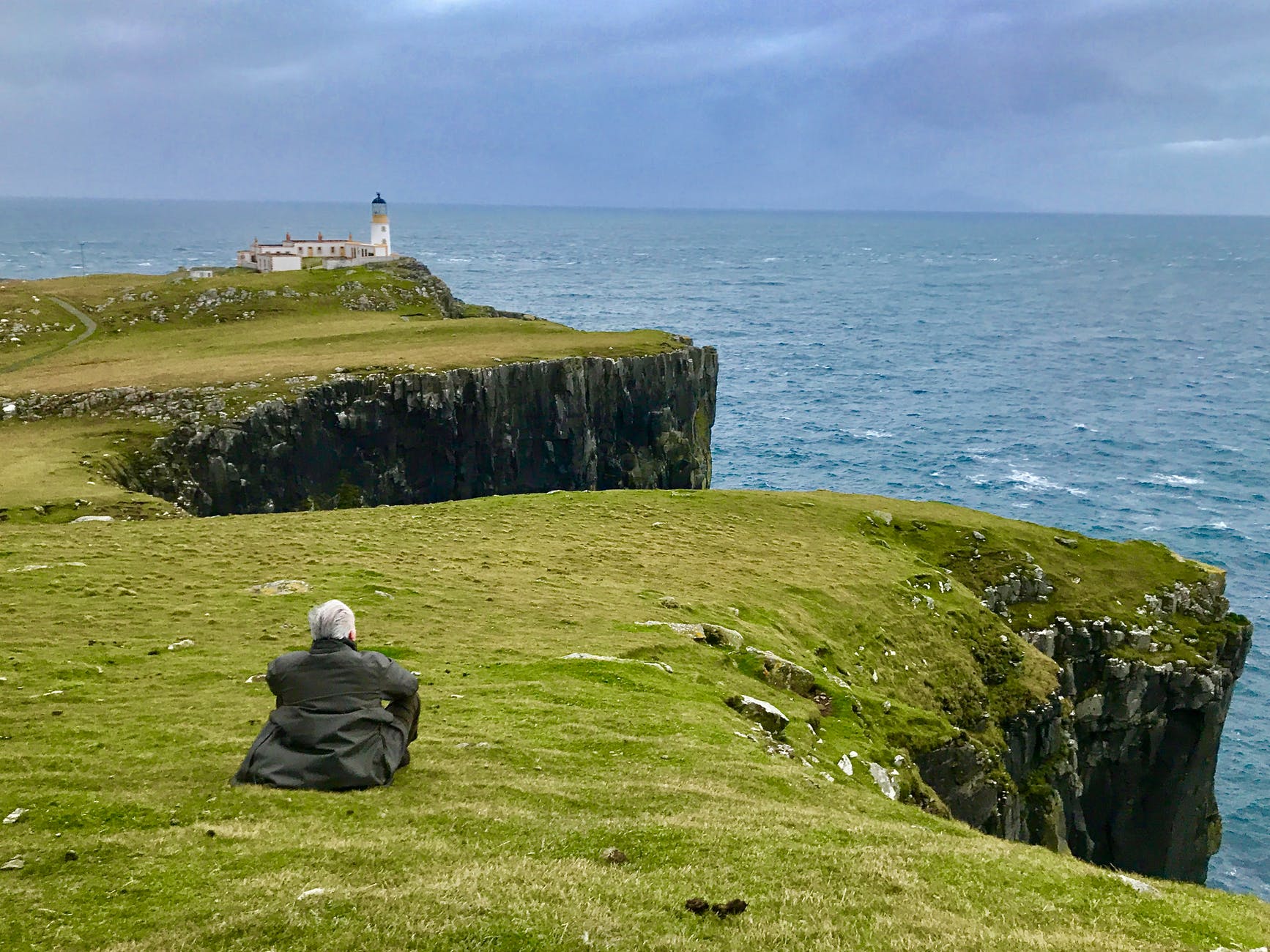
That’s the measure I want to use: does it let me “look out upon the sea”? On the face of it, that seems quite a modest goal, nothing like the “daring aim” that the triad describes. But in a world where some people seem intent only on pushing over towers, such an aim becomes strikingly subversive — even dangerous. Look out upon the waters for yourself, and you no longer need a “secondhand sea”. You’ve seen the waves yourself, heard the crash of surf on shore, felt the spray on your skin and the billows lapping at your bare toes, tasted its metallic salt.
About “restoring the old house”: sometimes that’s not possible. Sometimes what we’re restoring isn’t anything “old” at all. Or if it is: reviving a (nearly) extinct language is an enormous undertaking — a daring aim indeed. It can be done: Cornish, Hebrew, Manx — we have evidence before us. “Is the juice worth the squeeze”? Sometimes we won’t know till afterwards. Sometimes the deed itself is enough.
/|\ /|\ /|\
If I look at some of my own UPG, my unverified personal gnosis, like my experiences with Thecu Stormbringer, how does any of foregoing apply?
With Proto-Celtic we have considerable evidence from six Celtic languages. We have a science of historical linguistic reconstruction, tested on an increasingly widening sample of languages. We have a community, albeit small, interested in the results, whether they’re able to take part in the process or not.
The few words associated with Thecu that I’ve recovered — imagined — invented (can I always tell the difference? Can anyone?) are hardly enough to base an entire language on. Or are they? I have a friend who follows a different path, and who’s recovered? — received? — imagined? a language of several thousand words over the course of a few weeks. He uses it as a religious tongue, writes rituals in it, prays through it, writes about some of his most valued experiences with it. It continues to develop — or he keeps working at it, expanding and discovering it. For him it’s a living thing, part of his “tower”, to pick up Tolkien’s image again. The “sea he can look upon” exists in part because of that language. Validity? Authenticity? For him any answers lie in results. Such questions, he says, are theoretical beforehand, and irrelevant after. (In the process, their usually just distractions.)
Ireland — abandoned tower. Frans van Heerden / Pexels.com
“Of the old stone”, Tolkien counsels us, “some has already been used in building the houses in which we actually live, not far from the old houses of our fathers. Of the rest we can still take some and build towers …”
If we meet only silence in the face of our need, we can listen. If we listen with intention, knowing everything we bring to the moment, we may gain lyrics. From the deep I bring it, sings Taliesin. Words, after all, are one abode of the divine. And the melody? For the music, we have what awen and the gods open up for us. Where after all did our ancestors find their songs?
/|\ /|\ /|\
Sometimes we inherit an instrument, something the longing …
*Tolkien, J. R. R. The Monsters and the Critics and Other Essays. Harper-Collins, 2007.
Behind that particular recent search topic, among all the other searches that my blog utilities show are made on this site, lies a whole world of wonder.
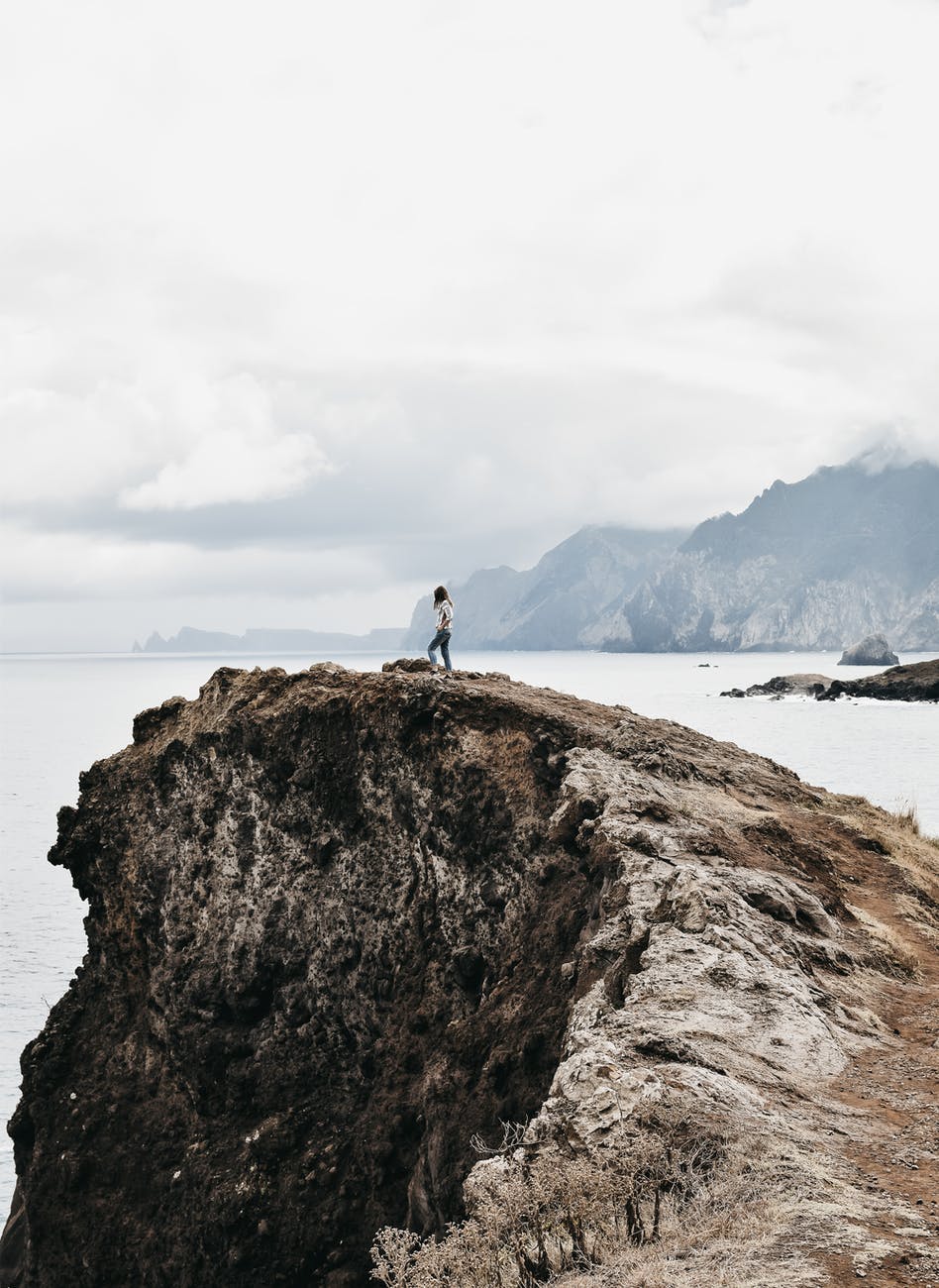
What’s the weather on your inner sea? / Photo by Lynda B. / Pexels.com
In spite of appearances — which I find myself saying a lot these days, appearances being the slippery things they are — we often have an intuitive sense of what we’re looking for. Would I recognize “Proto-Celtic song lyrics” if someone posted them online? What would they look like? What inner knowing would confirm them for me? And what melody or rhythm would I use to chant or sing them? Perhaps asking for and incubating a dream experience with them is one direction that could prove fruitful for the querent. I’ve add that to my daybook as a meditation theme for just before sleep.
Underlying these questions at least in part is a thirst for authenticity.
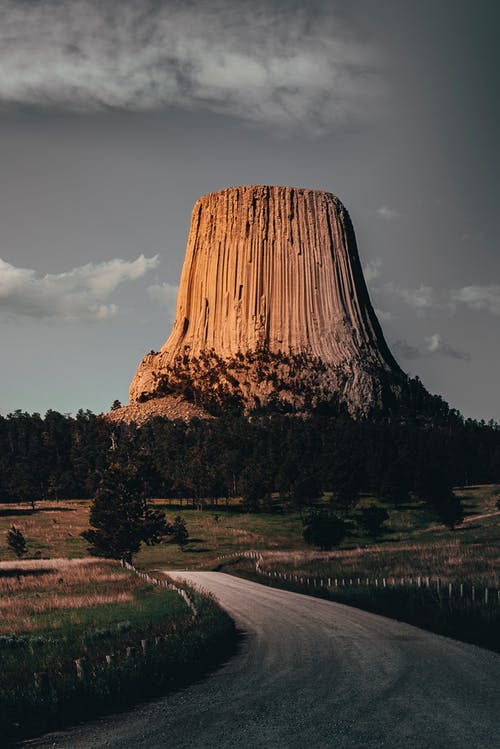
Wyoming — Devil’s Tower, but ‘Bear’s Tipi’ in Lakota/Todd Trapani/Pexels.com
For a useful parallel, I returned to a Youtube video I watched recently, on the native Lakota people of the north central U.S. “When I speak Lakota I feel connected”, says a young Lakota woman around the 1:10 mark. “I feel connected to all my relatives in the previous generations … There’s nothing to compare to the feeling of being Lakota, in Lakota country, speaking Lakota”.
Language and identity are core issues for many Lakota, as they are for many tribal peoples facing challenges to their existence. Do modern Druids feel that native speakers of Welsh or Irish or Scottish Gaelic or Manx or Breton or Cornish are somehow more authentic as Druids? How much of that feeling arises from the minority status and threats to survival that the Celtic languages also face, though on a different scale than those facing the Lakota? I have no answers here, but I have a lot of questions.
The same program “Rising Voices — Hótȟaŋiŋpi — Revitalizing the Lakota Language” includes a segment at around 6:10 where a Lakota TV interviewer announces the day’s program topic as “the Lakota language” and asks several young Lakota a series of questions: “Did anybody speak the language when you were growing up? How much of the language do you need to speak to be an Indian?”
Their answers range widely: “A lot. None. I don’t know. Lots and lots …”
The interviewer keeps probing: “What if you used to speak the language, but you forgot it?”
Confused looks. Nervous smiles. Different answers.
“OK”, the interviewer continues, “what if you don’t speak the language? Are you suddenly not an Indian?”
Again, bemused answers. “I guess. No. Maybe. My tribal card says I’m an Indian, so I guess … I don’t speak it …”
“OK”, says the interviewer, “how about if you speak the language, but you also shop at Walmart, and you drive a big American truck? Are you more or less of an Indian?”
“Depends on the kind of truck” says one person, with a smile. “[You’re] maybe more” [of an Indian], says another. “[Nervous laughter.] I don’t think you’re ‘more’ or ‘less’ … [In Lakota, with subtitles: ‘I love Walmart’] …”
The interviewer pushes on. “What if you’re white and you speak Lakota really well?”
OK, you get the idea.
Many of us are instinctively reaching for a vehicle or a means or an access-point that will help us achieve the sense of deep connection that the speakers of Lakota feel and expressed above. Insofar as this can mediated through language, then learning an ancestral language may help. Or if you’re of German descent, for example, but Irish calls to you, learning Irish may be a way to show respect to a tradition you value, and one you long to understand more fully, regardless of your bloodline or ancestry. (Besides, who knows who and what and whose you were in a previous lifetime?)
Druids on other continents, where other and non-European languages have long been spoken, confront similar issues. Fortunately, from what I’ve experienced on my own journey, the spiritual world senses, values and responds well to honesty, and searches our hearts and our intentions, not just the particular language we happen to be using. We needn’t wait for fluency in our chosen ritual or spiritual language before we can live a spiritual life. But we might consider how the act of learning a language with such associations and history is itself a ritual gesture with its own consequences. To say, write, and think certain words and not others has a power we can draw on for more than we imagine.
C. is a friend of mine with a doctorate in archaeology who’s worked with many North American tribal peoples as a trained consultant and is learning Ojibwe online from a Native teacher. The class includes both Ojibwe and non-Ojibwe students. For C. it’s a worthwhile use of his time in lockdown. Over the decades he has made friends among Ojibwe speakers, he appreciates the cultural insight, and it engages him because it’s about communication, something he’s spent much of his professional career doing. He’s testified as an expert in court cases, advocated for Native rights, worked on the repatriation of cultural objects and remains, and so on.
I’ve picked up the merest handful of Ojibwe words from him during our socially-distanced breakfasts that ended with Vermont’s recent stricter pandemic policies. So when he says something in Ojibwe and explains it — often a greeting or farewell — at least I can say gidash “you too”. I may say it wrong, it may not even mean exactly what I think from my brief acquaintance with it, or it may actually be used in different contexts than how I use it, but my intention remains, nonetheless: you matter. I learned this expression from him and I use it for that reason with him, for a small moment of human solidarity.
Spiritual solidarity spreads outward from there. What language do I use to make spiritual connections? Is my heart in it?
/|\ /|\ /|\
I value the teachings of Druidry, and appreciate the Celtic origins of many of them. But I also find myself drawn to Old English, a different “cultural stream”, though I don’t feel an equivalent draw or tug toward Anglo-Saxon Heathenry, or Asatru or anything similar. Here and there I’ve put pieces of OBOD ritual into Old English on this site, I teach Old English classes online, while I still work on a constructed form of a Celtic language, as I’ve also documented in past posts.
I wrote earlier in this post about “access-points” — portals or paths that give onto a realm where we can more easily connect to what we are seeking. While some spiritual teachings attempt this by holding out a specific sets of beliefs or a creed, Druidry and others suggest that a practice and a toolkit of techniques like an ancestral or cultural language may help in accomplishing this goal.
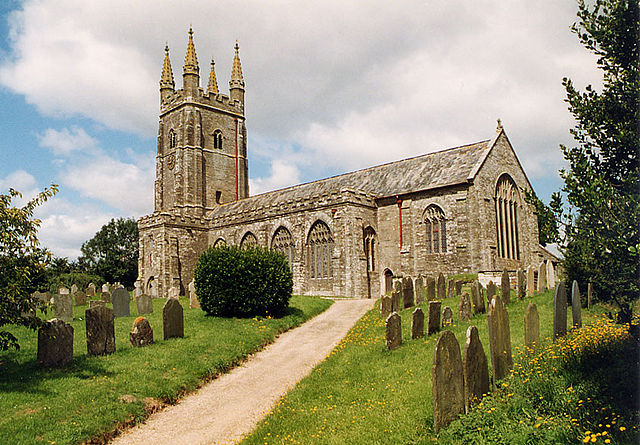
Thus, knowing that at least one branch of my family tree is rooted in Kingsbridge, England offers me one kind of access point, through a place and a people. Places can seem near-eternal, though anyone who’s lived to see strip malls, parking lots and new apartment buildings rise in a former pasture or woods knows how unreliable that sense can be. Still, when I encounter older versions of the town’s name in records — medieval Kyngysbrygge, Anglo-Saxon Cyningesbrycg — I know a connection to place, to where some of my ancestors are buried, though I may never set foot in it. And through the magic of the internet I even know what some of the landscape looks like, though I haven’t (yet) smelled the air or felt the earth beneath my feet.
Now that’s admittedly a tenuous and vague experience, compared to speaking an ancestral language. It can feel at times that people of European ancestry in this lifetime minimize or even disown their own ancestors, out of shame at colonialism, or simply because they’re “not interesting enough”.
Yet such experiences as tracing a family tree, and finally being able to name a place where one’s ancestors lived and died, can also be a portal, and I can use it to access much more. Names can take us far indeed. We know the power of being called by our name. Extending the principle of “as above, so below” to the same-plane version “as here, so there”, what do I imagine other beings and places experience when I know their names and use them with love and affection and a request for their wisdom and assistance? Calling a rock formation on your land Bear’s Tipi is qualitatively different from naming it Devil’s Tower, whatever language you use. If we don’t yet know that truth, it lies within our power to discover it.
In his most recent post, John Beckett writes of five of his mistakes as a Pagan. They’re instructive to reflect on, because most of us have made most of them in some form, regardless of our own unique journeys. (If I think any one of them doesn’t apply to me, I probably haven’t dug deeply enough.)
John names them like this: refusing to start at the beginning, trying to ignore the gods, waiting too long to start attending Pagan gatherings, not working more magic, and assuming other people share my vision. Or as I might paraphrase them to fit my circumstances, forgetting the foundations, ignoring spirit, resisting the gifts of community, renouncing my own power — and assuming other people share my vision.
Fortunately, “learning from my mistakes” is something we all are working on all the time. It’s one of the most magical things we can do, transforming a past mistake into a piece of wisdom for ourselves and for others. No mistakes, only ongoing projects.
We don’t have to “go anywhere” to contact the sacred.
“Everything that lives is holy”, William Blake declares. Fine, Billy, but how do I reconnect when I’m just not feeling it? In my better moments I may know it’s all holy, but I’m kinda down right now, dude, and I could use some help.
Druidry, after all, delights in “doing something” as a spiritual solution to many problems. Christianity may stereotypically insist “Ye must be born again!” as a prerequisite before anything else can happen, while Druidry as stereotypically suggests “Let’s go for a walk in the green world”.
What if neither of these is a viable option at the moment? Suicide hotlines get callers who’ve often tried every option they can lay hands on, and they’re still suicidal in part for that very reason: nothing’s working. And even those of us not in crisis at the moment can feel overwhelmed by events beyond our control.
If we step even one pace beyond the stereotypes, we find in counsel like “Be still and know that I am God” a place where Druidry and Christianity can draw closer. Something happens in stillness that all our elevator music and muzak and noise and ranting and partisanship try to overwhelm but cannot silence, because it is already silent. What is it?
In a post from Oct 2017 I wrote:
“The practice of sacramental spirituality can be pursued apart from the various pathologies of political religion”, notes John Michael Greer in his essay “The Gnostic Celtic Church“. In sacrament rather than creed lies one potent meeting-place for Druid and Christian.
What to do when one of our most human, instinctive and immediate responses — to touch each other in comfort with a hug, a hand on a shoulder — are actions dangerous to our health?
If the sacrament of touch is denied us, what other modes does spirit have?
The Sacrament of Hearing
“The Voice of the Beloved sustains us”. Whether it’s a telephone call to or from that particular person, or a special video, or piece of music, sound can carry us into spirit. The human capacity for memes and mantras and ear-worms is one we can use to our advantage. Set up what I actually want running through my inner worlds, and I’m halfway home.
And — paradox alert, because that’s much of human experience — in the sacrament of hearing, of listening, we may hear what is singing behind the silence …
Kaisenkaku Asamushi Onsen in Aomori prefecture, northern Japan / Wikipedia /
The Sacrament of Washing
Taking a bath or shower, and visualizing the gunk leaving our bodies down the drain and away can be a spiritual practice. Many traditions urge sacred bathing. (Besides, in lockdown we can let ourselves get pretty grody.)
A Hindu turns if possible to Mother Ganges, Catholics visit holy sites dedicated to manifestations of Mary, it’s a lovely Japanese custom to visit an onsen, and followers of Shinto and plenty of non-religious people as well find hot springs, saunas and mineral pools to be restorative.
The Sacrament of Blessing
Seven words make up a lovely blessing some of my friends use often: “Bless this day and those I serve”. If I live by myself, I’m one of the people I serve. Let’s remember to bless ourselves. We need it. Pets or other animals, and houseplants, may rely on me for food and shelter and affection, so I can add them to those I bless. Outward to friends, neighbors …
What else can I bless? Asking that question thoughtfully can open many doors.
The Sacrament of Prayer
Prayer has long been a potent sacrament in the lives of many. The words and sounds can help restore our connections to spirit, partly because they’ve done so in the past. Like a spiritual battery, they’ve accumulated a charge. We jump-start more often than we realize.
The words of the Druid’s Prayer, or of a song or poem not “officially recognized” as a prayer may turn out to be your prayer. Sometimes we need something even more compact — just a few words from a longer form, a sacred name, a whisper — or a shout. If you’re alone, that’s easier. Try it, and note the power of prayer at the top of our lungs.
One simple prayer available to everyone is simply breathing. We hear in the Gospel of John: “The wind blows wherever it wants. Just as you can hear the wind but can’t tell where it comes from or where it is going, so you can’t explain how people are born of the Spirit”. Experiencing the spirit in our own breathing is a doorway for some. It’s there — sacrament in the life action of our bodies.
You may see in several of the above sacraments how touch has managed to find its way to us. Hearing involves sound waves touching my ears, bathing makes me intimate with water, and so on.
The Sacrament of Cooking and Eating
Some of our most common acts are sacramental in potential, and we can activate them by according them the respect they’ve earned in our lives. Food and drink keep these bodies alive and moving. Preparing food has often been a holy activity, at least around our holy-days, if not every day. Combine eating with blessing, as many do, and I can heighten my awareness of spirit-in-substance. A blessing on the incarnate spirit which sustains us.
The Sacrament of the Image and Object
Photographs, statues, objects collected from a walk or a ritual or as gifts from another — all these things bear a power to tend us. They can evoke memory, their physical substance is imbued with all the times we’ve handled them before (touch seeks us out, once again!), and they have a power to shift our attention to specific places and times.
The Sacrament of Ritual
I talk a lot about ritual here, because we all do ritual constantly. Each of the sacraments above is a ritual, or has ritual elements in it. Part of the sacrament of ritual is to recognize how many things can become rituals — and more importantly, how much of their already-existent ritual power helps shape and influence and move our lives.
A barefoot Kris Hughes, recreating Iolo Morganwg’s simple summer solstice ritual on Primrose Hill in 1792, at East Coast Gathering 2015. Photo courtesy of Dana Wiyninger.
A friend of mine makes a ritual out of starting to write. He lights a candle, or some incense, and invites the muse of the moment to his writing project. A few other friends explore the meditative and sacramental power that wood-carving and weaving and knitting have, as well as enjoying their concrete manifestation, resulting in useful objects and garments.
May you find and feed your lives with sacraments that mean and matter to you.
A good metaphor gives you a form, a shape to attach stuff to. If you have a free mantle or shelf, you can arrange pictures and other beloved objects on it. On Halloween, out come the black cats and the carved pumpkins. With a Christmas tree, you’ve got a place for the decorations that live most of the year in a box, in a basement, closet, or attic. Here’s a menu — a useful metaphor for any spiritual tradition.
Sometimes we need to pass through a portal in order to see a new menu. Or sometimes just turn a page. What metaphor works for you? Which ones “become real”? Photo by Daria Shevtsova on Pexels.com.
Most traditions share at least one feature of their menus — they urge you to a daily practice. What shape that takes can be remarkably varied. But you generally know where you are with the daily menu. You’ve got your go-to’s. Like exercise, the morning or evening prayer or meditation or ritual or reading or other exercise or observance helps you keep in shape. Not only does each day tend to go better as a result of your improved spiritual and physical muscle-tone (you sleep better, you’re more flexible, you bounce back sooner), but you’re building a foundation for bigger things, too. You’ll be better able to handle the inevitable next set of changes.
That includes both challenges and blessings. Which is which can depend on my daily practice more than I anticipate. One thing becomes another, in the Mother, in the Mother, sing the Goddess-worshippers.
My wife and I do a short chant each morning to re-align and tune back in. (To what? you ask. Well, what do you want to connect to? There you go.) On those handful of days every month when we neglect it, we feel the lack. The reason doesn’t matter — the intrusion and bustle for a scheduled appointment, an unexpected phone call, a minor household emergency — something intervenes and calls us away from our routine. Both of us have our own individual practice, too — we just like to build couple energy as well. It’s something we’ve added to our lives, and now we can depend on what we call “positive inertia” to keep it up. Using our human habit-making tendencies to support a spiritual practice can be a winning strategy, especially if you tend toward laziness like I do.
The menu for my day is my regular practice, along with whatever longer-term project or planning I’m doing. A piece of that can be reading. It’s almost always writing, even if that’s just in the margins of my reading. Talking back to books, to other writers. Every few days, it includes posting here. (And thinking about and drafting posts, some of which will remain in draft form.) In cold weather, building a fire, which for me is both a practical and ritual act. In warm weather, hanging laundry on the line, which is likewise a form of concrete worship I’ve come to appreciate.
Sometimes the Specials are the “discoveries, insights and unexpecteds” that arrive in everyone’s day, if we give them even a little space to flower. A practice can help that to happen. The dream fragment, the chance comment, the meditation image or sensation or hunch, the phrase in my reading or in the day’s conversations gets into my journal, or not, depending. If it does, it’s one more help, one more gift. One and one and one and one and one do accumulate over time into a weight and a presence that have increasing value. And much of that value is how they talk to each other, echo and comment on and reinforce and confirm. Patterns, tendencies, directions, guidance, a path — a lifetime.
We encounter the Specials also in the larger events, like a full moon and a new moon every month, and every six weeks or so, one of the “Great Eight”, as I like to call them: the seasonal festivals of modern Pagan practice. They’re paired — the solstices and equinoxes that whole planet experiences, and the cross-quarter days of Celtic record, with their evocative names of Samhuin, Imbolc, Beltane and Lughnasadh — the four holidays of choice, you might say. Then all our individual and family birthdays and anniversaries, and the cultural holidays on the calendar of our nations.
These don’t come along every day, so their appearance pleasantly disrupts our routine in good ways. We human mysteries long for “something new” and “something familiar” in such varying and idiosyncratic proportions that no ritual calendar can wholly satisfy us. But let a friend message me with ideas for ritual, let a neighbour send a photo, let us hold a special Zoom with family far away or an online class or discussion or ritual, and the Special also takes shape. What’s on the menu? Ultimately, we are.
No, not Einstein’s famous equation: effect = mastery X cause2!
Our weird, worrisome and wondrous world is among many other things a laboratory for working out cause and effect. (In many ways, that’s what evolution is. Trial and error, with lots of discards. False starts, dead ends.)
“As above, so below” — just how far does it go? Can I ever really know?
Try out any current headline, fit it into the equation, and you see the same thing: lots of causing, little mastery, and voila! — a cascade of undesired effects from what initially might even have been a halfway-good idea. (We’ll discount our worst ideas here out of compassion for our own human shortsightedness.)
We introduce a natural predator to bring down the population of a creature we label a pest, and our solution becomes the new problem. [Wikipedia notes: “Harmonia axyridis (the harlequin ladybird) was introduced into North America from Asia in 1979 to control aphids, but it is now the most common species, outcompeting many of the native species” and is a pest itself in many areas.] We warm and cool ourselves with splendid new technologies, and end up overheating our world. We choose leaders trying out their own causes, and we become part of effects they set in motion that we did not anticipate.
If we work with the proportions that this version of the equation suggests, even a little bit of mastery goes a long way toward manifesting more of the effects we wish. A dash of cause and a truck-load of mastery looks like the way to go. Fewer broken dreams, broken bones, broken planets.
Because when I try changing the proportions — lots of cause, just a little mastery — the equation definitely shows how the effect will still be huge. It just won’t be what I wanted in the first place. Like almost any kitchen recipe, there’s some leeway once you know what you’re doing. You learn workable substitutions, you pick up subtle touches and turns and tricks, and in the process you learn a great deal of lore. (What does “season to taste” mean in this case? How much is a “dash” of cumin? How much longer should that turkey bake, since it’s bigger/smaller than last year’s bird, which took X hours? What does the dough feel like when it’s ready?)
Until then, though, I can’t exchange proportions of flour and salt “just because I want to” and expect anything other than disaster. Yes, freedom is my birthright; yes, I shape my universe and create my reality. So does every other being all around me. We’re all still learning, and our realities and universes keep banging into each other as we work through the lessons. (Often it looks like the trees and the bees already know valuable things we’re still figuring out, or are in serious danger of forgetting.)
What does mastery consist of in such situations, at least from a Druid perspective?
Much of Druidry, at least at the start, is a practice of learning how to harmonize with the many other causes all around us, human and non-human, before we barge in out of ignorance and arrogance and try to be causes ourselves. (In the old Greek myth, Prometheus stole fire from the gods and brought it to suffering mortals. In addition to cooking dinner, we’ve been burning ourselves and everything around us ever since. But is the point of the story that humans should give up fire?)
Part of it is simple math: the number of beings around me also launching causes into the cosmos far outnumbers me. Part of it is the very real possibility that over time some of these same beings may have learned things I don’t yet know, things I need to know before I set big causes in motion myself. And a third part, because threes are cool like that, is that as I learn about causes and effects from these other beings, I’ll also learn what I need for my own growing mastery.
A part of our practice is that as we learn about causes and effects from these other beings, we’ll also learn what we need for our own growing mastery.
“Doing Druidry” means we perform rituals, small or large, unintentional or highly planned, simply because we’re ritual beings. We strive to acknowledge and participate more consciously in the cycles of the seasons and our own lives. We meditate and pray, dream and imagine. We talk with trees, listening to their “slow gestures”, as U K LeGuin calls them. We study herbs, divination, the lives of birds and beast, bugs and branching things, out of amazement and empathy and neighbourliness, and simply because we find ourselves here alongside them, dying and living and experiencing what it’s like to walk around in these shapes of flesh. Occasionally a spirit or god flashes across or onto our path, and we try to find out what that means, too.
We’re called, in short, to pay attention.
Refusing to acknowledge cause and effect, yielding up our training for mastery, invites its own effects. Among the Wise in several traditions, it is said that the earth has rejected the initiation of cause and effect. In several of the older maps of the cosmos, the earth is the outermost realm. Within is the realm of emotion and imagination. And within that realm is the realm of cause and effect.
Now we “get” the physical world in many ways. We’ve become quite adept at working many of its laws of force, mass, acceleration and energy to achieve remarkable effects. And look at our cultures, with all our many images and arts and crafts, our music and stories.
We also get much of the second realm: we’ve learned how to evoke in other minds whole worlds of feeling and sensation and possibility. What we’ve just begun to do is work with the third realm, and choose whether the effects we can create should be created, and how to unravel tapestries we’ve woven that no longer serve us. We may say of the “next generation” of a thing that it’s both “new” and “improved”. While we do indeed get much of the “new”, we still struggle with the actually “improved”. Rapidly multiplying imbalances abound, and ripple outward all around us — unintended effects we often try to wish away, rather than owning. (We’re still calling many of them “side effects”, even when they’re fatal.)
One great beauty of Druidry is that it empowers people to find strategies and solutions from the bottom up. We’re directed to look to “what works”, which is an excellent rule of thumb. Druidry, you might say, is a way of domesticating a whole set of “rules of thumb” as a spiritual technology.
Cause and effect, which is our “classroom curriculum” for mastery, is also the thing that teaches us why we need mastery in the first place. And Druidry, which is after all a set of human understandings like anything else we may use to make our way through the curriculum, is one source of help with the challenges of mastery that lie before us.
/|\ /|\ /|\
Is all — or any — of this “true”? As many have said who’ve come before us, while we may never know if there “really are” gods and spirits, or magic (or a “curriculum”), the universe does often seem to behave as if they exist. I don’t know about you, but to me that’s well worth exploring for its own sake, far more interesting than spending time arguing whether or not it’s “true”. One test for truth is freedom; you know the old saying that “the truth shall make you free”. (Merely arguing about truth, without actually being free, doesn’t feel like freedom to me.) Part of my practice is acting as if I were free …
And “as if” seems right up there next to “cause and effect” as a important part of the curriculum.
The walnut, and particularly the black walnut (juglans nigra — Wikipedia link) growing in our back yard here in Vermont, isn’t included in the original oghamfews or ranks of European ritual trees and plants that Druids often work with. No surprise — the black walnut is native to North America, from where it’s been exported.
The name of the walnut itself, originally wealh hnutu “foreign nut” in Old English, supplies one hint as to why. Many Druids outside Celtic regions, where one particular set of native trees has acquired rich ritual significance, have explored sets of other trees and other attributions, sometimes coming to recognize the potential of their own local tree neighbours.
Native Americans, no slouches where natural wisdom is concerned, have their own tree lore that’s very worth delving into, and the same holds true for other regions of the globe. Trying out what actually works is a time-honoured Druid activity that can engage anyone, Druid or not, all our lives. Whether your tree neighbours are oaks and ashes, palms or olives, eucalyptus or baobab or deodar, getting to know them is often the truest part of ogham work.
One of “our” black walnuts in early October
I just finished shelling the first of two batches of nuts this morning. (The second batch arrived after a windy night of rain a few weeks ago, bringing down a second harvest from the nuts beyond our reach.) As anyone knows who’s worked with the fresh nuts, they’re messy to handle. The juices of the fleshy outer husks or drupes can stain the hands dark brown if you don’t wear gloves, and the maggots of a couple common insect pests often infest the drupe under the skin around the actual nut, without affecting the quality of nut itself.
You can find several helpful videos on Youtube about harvesting the nuts. Here’s one of the shorter and more straightforward ones that doesn’t suggest you need to buy unnecessary tools.
I choose to let the nuts sit a while before husking. They soon turn from the pale green and yellow in the video to a fairly uniform brown below. (The box lived in our breezeway for a few weeks.
The outer skins soften and the drupe may begin to decay. While husking is messier (juicier!), the skins often come off more readily.
Here are the husks from about 30 lbs. / 14 kg. of walnuts. You can readily see why the early North American settlers used the juice as a hair dye.
Several of the videos neglect to mention that you should take care where you discard the water from rinsing the husked nuts. The black walnut is allelopathic — as the Wikipedia entry notes, the tree “releases chemicals from its roots and other tissues that harm some other organisms and give the tree a competitive advantage”. For gardeners that means no garden plots within about 50 feet / 15 meters of the trunk. (With care, raised beds are exempt and can stand closer.) Blackberries and raspberries will do fine, but not much else. We learned the hard way our first year in the house, when a small plot of potatoes and corn near the walnuts amounted to nothing, yellowing within a month of germination.
Rinse the nuts a few times, then lay them out to dry and cure for several weeks. (Ours will season in the same room as our woodstove.)
Still wet from washing in our basement/utility bathroom.
Fresh or roasted, the nut meat is very flavorful. The oil is excellent in cooking, too, though we’ve never made it at home — the nuts disappear before that’s more than a passing thought.
Once dried, the nuts are admittedly hard to crack. A hammer is necessary, and even the dried nuts will still stain the fingers. There’s a reason they’re pricey in stores, and worth the effort to harvest them yourself when you can.
The two walnut trees on our small acreage are yet another reason to honour the former owner of our property, who planted so wisely. Though the USDA map above excludes New England from the tree’s range, our walnuts thrive in a natural dell in our back yard, sheltered by other trees, and watered by a small nearby stream. That personal and local association shapes part of my own walnut ogham: I too can grow and flourish outside my range, with care and attention to my surroundings and neighbours, and through the wise actions of those who came before me.
If you don’t already know Dana Driscoll’s excellent blog (Dana’s the Grand Archdruid of AODA, as well as a Druid graduate of OBOD), visit A Druid’s Garden for her wonderful post on the Black Walnut.
One of the main ogham qualities of the walnut lies in its “expelling” nature mentioned earlier because of the toxins in its roots and drupes, but many other “nutty” associations exist, which Dana mines and muses on in her blogpost.
Much of Druidry involves us in conversations. The teachings we’ve inherited point us towards potentially profound interactions with other living things in the world. Talking with trees is a perfectly normal activity for many Druids. And Druid or not, many of us know the deep connections we can experience with animals.
[Insert your favorite dog or cat or other pet picture here. You have one in your memory superior to anything I can supply.]
At the same time, we’re often occupied with exploring our inner worlds as well, engaging with everything that seems to shape our cosmos from inside out. Over 2000 years ago the old Roman-African playwright Terence wrote in one of his plays “I’m a person — nothing human is alien to me”, a line that since then has become famous on its own. With Druid sensibility, we may delete one word, change another, and simply say “I’m a Druid — nothing is alien to me”.
This doesn’t mean we love everything with a puppy love. Maybe dogs can — hence that expression — and genetic research points to genes that cause a genetic defect in people [Williams-Beuren Syndrome] but that make dogs hypersocial and capable of bonding with almost anything.
Now such affirmations (about Druids and puppies, too) are useful, because they can help keep us focused on what we’re doing, and why. We may find in them a definition of “doing Druidry”: enlarging our stock of wisdom and ability to live wisely and well in this marvelous and challenging world. With divinations either formal or gained through life experience, we ask ourselves, or get asked by our lives, two “big” questions: what’s my greatest talent or strength, and what’s my greatest weakness?
In some ways these aren’t “questions” in the usual sense. Much of our time in school rubs our faces in early answers to them. Of course, they’re mostly other people’s answers — teachers’ answers, and our families’ answers too. If they aren’t too disheartening or downright wrong — or sometimes if they are — we may take them and make them our own answers. “I’m good at X and not good at Y”. It’s even possible to live much of our lives without ever questioning those early assessments of “who we are”.
Druidry and Christianity have been talking for centuries. Study the Druid Revival, and it’s not an exaggeration to say that Christianity led to a rebirth of Druidry. For such things like strengths and weaknesses, a tradition like Christianity offers clear rules as a response, in particular its two great commandments. In the blogpost title above I call them “strategies”, because the word “commandment” often carries baggage with it. You can ignore or break a commandment, but a strategy is simply a strategy: you can try it out or not. Often, if you’re just easy with it, you may find it useful on a later spiral without any need for strain. You use it when it fits, and don’t worry about it when it doesn’t. Upaya, Buddhists call it — wise or skilful application of means. In shorthand Christian form, six words: love God and love your neighbor.
But what if you don’t believe in God, and you don’t know your neighbor?
It can be useful (“skilful means”, again) to recast such over-familiar things in new forms. Spirals, circling till we find a place to stand or sit. A Druidic version: cherish and value the living spirit that manifests in all things. And a visit to online Druid forums shows that most Druids do (if we can trust the sample size and generalize from it), in so many varying and fascinating ways. But what of the un-pretty and the less than appealing? I don’t have to “love” leeches and ticks, bacteria and viruses, but I can marvel at the ecological niche they manage to find and fill, the suppleness of their means of survival. The world abounds with life.
The corollary can be the harder strategy of the two, even in recast form: cherish the living spirit that manifests in other humans as much as you cherish it in yourself. Which becomes an amazing spiritual barometer, at least for me: my strength and my weakness revealed, linked, each circling the other like twin planets, like the yin and yang of a whole energy field.
How I treat others mirrors how I treat myself. John Donne, updated and Druidized: nobody’s an island, whole and complete, separate from other people. Each of us, peninsulas though we are, all jut out from a mainland into the ocean. If I think my “stuff”, bad and good, doesn’t feed into the common experience, I only have to recall how a colleague of mine liked to say, “Just try swimming in the non-peeing end of the swimming pool”.
One of the great gifts of Druidry is that it offers daily tasks and activities that are small enough they don’t feel overwhelming. I can sit under that tree. I can study this flower. I can read an old poem (or write a new one), practice a musical instrument, record my dreams, work with a divination system, garden, honor the spirit of the place I live, cook, paint, photograph, create beauty, and so on. Over time these crafts and disciplines and practices build into larger components of a spiritual life. Small spirals open naturally into larger ones, at their own pace. Love my cat or dog, and I’ve taken steps toward loving a difficult neighbor or family member. Love my cat or dog, and I may find things in myself I can release, live easier with, see differently, transmute. Love wisely, and I strengthen what was weak. And I can start to do this by sitting under a tree …
What are your questions and strategies? Naming them, getting them down in words, can be a gift you give yourself.
Visit a gathering of images of the human and planetary experience in places like the Photos of the Week in The Atlantic, and you soon discover the world is simply too large to swallow whole. We can’t “know it all”, or even “feel it all” in order make much of a sensible statement about it, but we can choose a part to cherish and honor and connect to, from which to view and understand the whole, precisely because everything is linked. It’s because things are linked that healing is possible. We might call that a form of Druid recognition, or humility before the awesomeness of the cosmos.



 Among other modern writers,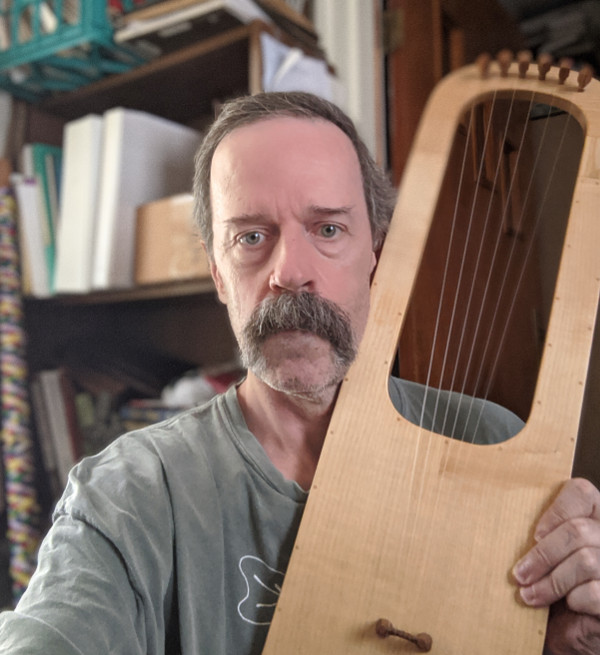





 A Druid Way


