Part of the point of this series is to put in a period of steady writing. As a spiritual practice, it has much to recommend it. The commitment gets things into words that wouldn’t otherwise arrive there. And if you’re a Druid on top of that, you naturally get at least some things that are Druidic into words, too.
The theme I thought would jump-start me was berrying. But all day, nothing was stirring. I found myself avoiding this blog altogether. (Just day three and he’s dead in the water, mutters the inner censor.) Yes, I probably could have gone out to our half-wild blackberry bushes in the back yard, taken a picture, and found in that interaction at least my triggering subject. Poet Richard Hugo writes in his delightful 1979 book The Triggering Town:
A poem can be said to have two subjects, the initiating or triggering subject, which starts the poem or “causes” the poem to be written, and the real or generated subject, which the poem comes to say or mean, and which is generated or discovered in the poem during the writing. That’s not quite right because it suggests that the poet recognizes the real subject. The poet may not be aware of what the real subject is but only have some instinctive feeling that the poem is done.
Young poets find it difficult to free themselves from the initiating subject. The poet puts down the title: “Autumn Rain.” He finds two or three good lines about Autumn Rain. Then things start to break down. He cannot find anything more to say about Autumn Rain so he starts making up things, he strains, he goes abstract, he starts telling us the meaning of what he has already said. The mistake he is making, of course, is that he feels obligated to go on talking about Autumn Rain, because that, he feels, is the subject. Well, it isn’t the subject. You don’t know what the subject is, and the moment you run out of things to say about Autumn Rain start talking about something else. In fact, it’s a good idea to talk about something else before you run out of things to say about Autumn Rain.
As with so many human crafts and skills, each has much that wise observers learn they can transfer — or maybe transpose — to living a life. The equation isn’t always one-to-one. We’ve become accustomed in the last century to photographs. We point to an image of ourselves frozen on a a flat phone screen or hard-copy print-out and declare “that’s me” without thinking much about how strange such a statement is. I can be both “here” and “there”, in the same way that human beings in the Hebrew Bible are made in the “image of God”, both divine and not at all. The image both is and isn’t the same as the thing it images. The triggering subject often works similarly, pointing us beyond. I start a blogpost about berrying and I know at this point that the title and possibly some ghosts of ideas will linger in the draft folder on WordPress. That idea got me onto my blog. A starting point, a seed crystal. A prompt. But that’s not the current title.
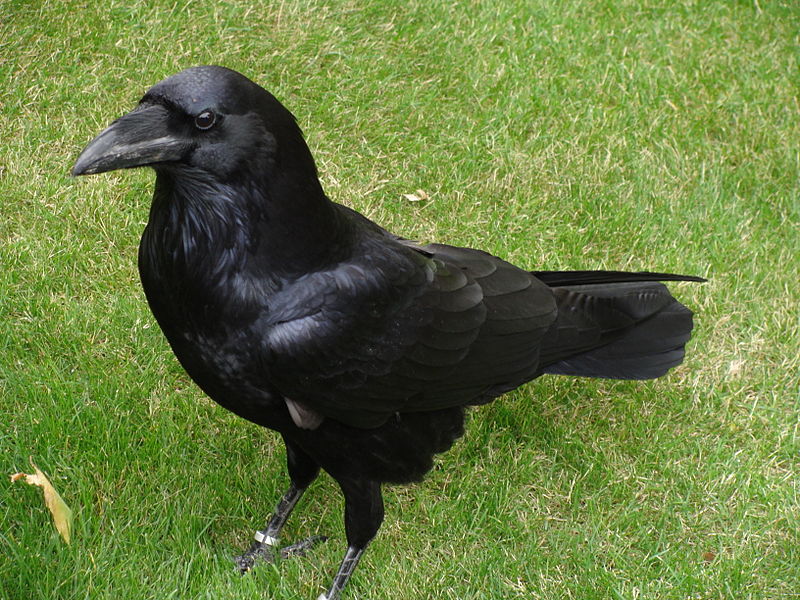
My wife and I were sitting out back eating diner an hour ago when we heard a series of gronks emanating from the front yard. She hadn’t paid much attention to such calls before, though I know she’s heard them, and she couldn’t identify the creature making them. What IS that? she said. As the calls became more insistent, I knew that Raven was asking for my focus. One call probably wouldn’t have been enough to break through. But a series of them did. What made the conversation even more interesting and significant is that we’d just been talking about ravens, among the other birds that frequent our hilltop, including waxwings as they migrate north and south, bluebirds that occasionally nest here, and an assortment of woodpeckers.
As a bird with world-wide associations and symbolism, the Raven naturally lends itself to varied interpretation. While we needn’t discount such ready hints and clues, we don’t need to ascribe to them invariant significance either. Google “the name raven” and you’ll dredge a surprisingly muddled set of potential meanings and mis-meanings suitable for any bias. Your best friend means something quite different to you than to his parents, children, co-workers, the pedestrian he or she cut off in traffic, and so on. An actual being interacts with so many others, and picks up meanings and interpretations like carrion attracts flies. The simile is intentional — the Raven is a messenger or guide between realms in very many cultures, including the realm of the dead. But as Hamlet quips to his mother, “Tis not alone my inky cloak … that can denote me truly”. Meanings can be slippery things. Check it out before you check it in.
This particular raven was going about his own business. While simultaneity put us both in proximity and brought my wife and me to hear his cries, the raven doesn’t have to “mean something” to have profound significance. What did my conversation with my wife “mean” to him? Is he now divining in a book of Raven Wisdom to learn what his recent interaction with two humans meant? (Maybe he is!) We were brief interactions in a cosmos stuffed with them every instant. Wisdom can help us learn from our interactions.
For one thing, a raven close by could be a sign that the owl pair nesting up the hill from us hasn’t decimated the local bird population. For another, “Crows, ravens, magpies, and jays are not just feathered machines, rigidly programmed by their genetics. Instead, they are beings that, within the constraints of their molecular inheritance, make complex decisions and show every sign of enjoying a rich awareness”, notes the Wikipedia entry for common raven. My inclination, rooted in decades of practice, is to remain alert for future appearances, other coincidences, (dis)confirmation of speculations, and direct inquiry in meditation. Raven, what do you want to say to me?
Call this “Raven divination” if you want to. It’s also a form of creative play. The universe seems to play catch with meanings, tossing them towards us to see how many we’ll even notice, let alone return.
As with the other “Great Eight” days of the Druid (and wider Pagan) calendar, I find the festivals are more whole seasons than individual days. While a full or new or dark moon is an obvious time-marker, for the rest of the month, time-keeping often isn’t exact. Our modern time sense that seems to require us to celebrate “on the day” can miss the larger energies of the season.
In this, I know I’ve been influenced by Caitlin Matthews and her Celtic Devotional, which also supplied the title for this post: “As you travel through the country of Autumn, relate your spiritual journey to the rich gifts available at this time” (pg. 97).
Of course, early August isn’t autumn yet in many ways. It’s still “high summer” with days of heat and languor and vacation for children and teachers before school resumes. But this country of a season, with its borders and boundaries different from its interior or far realms, still announces autumn with its first harvests, its shortening daylight hours, its subtly altered and shifting rhythms.
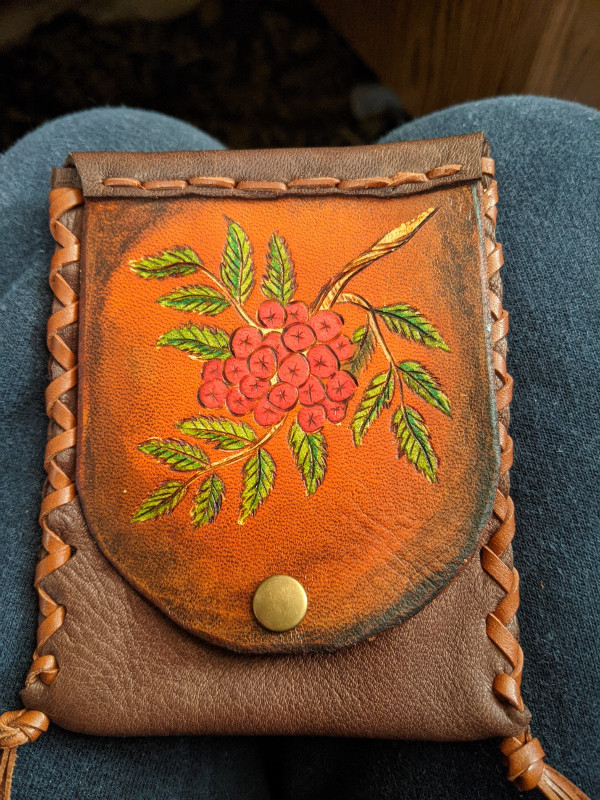
My go-to magical tree, our front-yard guardian Rowan, already has reddening berries, though the overcast sky dulls their hues. And as if to announce the season, I recently received from New Hampshire Druid friends a lovely personalized gift of a leather offering-pouch, crafted by AODA archdruid Dana Driscoll, featuring “my” Rowan in full red-berry mode. The Rowan dons its spring-in-autumn guise, having something to say in all its seasons, whether or not I’m listening.
Relate your spiritual journey to the gifts of the season. Wise counsel. I find as I age I need to resist a tendency to veer off on curmudgeonly tangents, defaulting to wry cynicism. The gifts of the season ARE my spiritual journey, and vice versa. A friend on an Old English site I moderate posted an excerpt from the Old English Herbarium on betony, which advises us to harvest it in August: þus þu hi niman scealt on Agustes monþe butan iserne “thus thou shalt take (or harvest) it in the month of August without iron”. Magical instruction, to forgo that metal hateful to the realms of otherkin? No knives, in other words. Harvest by hand.
You can usually wring both instruction and a laugh from the old herbals. The London herbalist John Gerard noted in 1597 that betony “maketh a man to pisse well” — a diuretic, if you need one. But the Herbarium is more to the point, suggesting different preparations for a range of ailments and maladies: Wiþ egene dymnesse genim þære ylcan wyrte … “against the dimness of the eyes, take that same herb …” How has my vision dimmed, or what afflicts my sight? Culpeper’s The English Physician, later named the Complete Herbal, ascribes substantial powers to the herb: “it preserves the liver and bodies of men from the danger of epidemical diseases, and from witchcraft also” and “this is a precious herb, well worth keeping in your house”. I’m not looking to betony for a physical panacea, but the spirit of betony may well be a potent ally to explore. Use your powers of discrimination, my guides whisper to me.
Yesterday, water: the image of the waterfall. Today, vision, across the elemental circle, from west to east, and air, intellectual activity and acuity. Is tomorrow north, or should I be particularly attentive to images of earth, the body, groundedness? Or let them come of themselves, if they will.
Blessed Lughnasadh to you! And a Blessed Imbolc to you in the South! This post begins a 30-day series for August 2021.
A theme that came to me in meditation this morning is caretaking. We ask others we cherish to “take care”. And these days, to take care of themselves. If you’re like me, you tend to think of taking care as a kind of opposite of passionate engagement. You take care when things, including yourself, need tending, need slowing down and nurturing. Caretaking becomes a form of caution.
The god Lugh for whom Lughnasadh is named has always manifested to me as a figure of passionate engagement. He’s given the epithet samildanach in Irish — equally skilled (in many things) — for a reason. Not much room for caution, when I consider the god. He throws himself into experience because that’s how you harvest it for what it offers. His caretaking is involvement, is testing himself against others — against the spiritual status quo?
When I don’t connect with one deity among a pantheon, it’s helpful to look at another. Longtime readers here know I’m not really polytheist so much as animist. The whole cosmos is talking, and different voices find me at different times. I’ve noted in previous posts how the hemispheres teach us to look at what’s happening across the world. As the north arrives at Lunasa, to give the more modern spelling, the south greets Brighid at Imbolc, as winter begins to yield to spring. The Lunasa harvest feeds awakening earth, awakening consciousness of Imbolc. What do my harvests feed? What do the fruits of my words, thoughts, deeds and feelings earn me and nourish in me? What awakens as a consequence? Where has my life shaped me to become more samildanach, more equally skilled, much as I may resist it at the time?
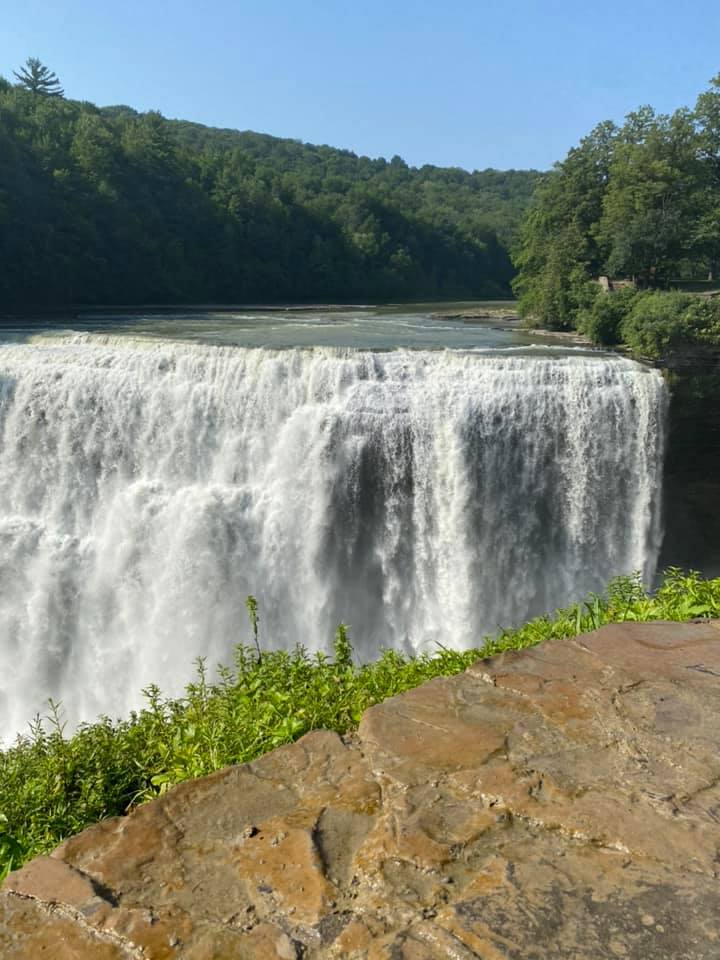
I include this image of the Middle Falls at Letchworth State Park in western New York because it’s my childhood spiritual home. A friend just took this shot on 26 July. A 20-minute bike ride from my father’s farm used to bring me to one of the park entrances, and another few minutes would bring me to this cascade. I’m a Druid today in part because I was blessed with such beauty in my youth.
Waterfalls signal abundance for me. The excess, the vast volume of water over a large falls like this one, reminds me how much happens every moment beyond my little circle of awareness. One of the benefits of ritual observance is its enlarging quality. We’re lifted, even if only briefly and momentarily, into larger worlds.
Woodenbreath makes a valuable point in his recent comment: “Why I didn’t write anything down, was because I’ve been caught in a deep feeling, like a meditation”. Me too. That in fact was my first experience, a signal that alerted me to things in words that became part of this two-part reflection.
You’ll obviously experience the video in Part 1 in different ways, depending on your previous life experience — and that itself is a valuable guide and reminder. In so much of human experience, “There’s no OSFA” — no ‘one size fits all’. Half of living is finding out and learning how — and how much — we need to adapt what we encounter to our own lives and circumstances. And another third is learning who to ignore and who to listen to for guidance. ‘The Sabbath was made for man, not man for the Sabbath’, said the wise Galilean, who might be expected to know what he was talking about. I’ve never encountered the sacred in the abstract, only in forms I can recognize, accept, work with. If it exists, it’s probably already embodied in my life.
rhododendrons, front lawn
/|\ /|\ /|\
Here are some of my notes and responses to the video in part 1. No real order here, because.
A single voice begins the music.
Sometimes I sing alone because I am alone. But mysteriously, the sound of a solitary so often echoes and resounds and draws others. In a paradox of the sacred, the more inward-focused I am, at times, the stronger the outward call I make to others who resonate with me. Others join the solo voice in community. Sometimes I hear those already singing with me, if I listen. And they may not always be human. If we’re Druids, the chances rise to very high that many of the voices will be other-kin.
The elements
Air, and song, inspiration. The pauses, silences and rhythms that make up music, especially music of the voice. The drone in the background, the awen always singing to us. The earth beneath the feet of the pilgrim walking, the stones she caresses so intimately, the body itself, in postures of reverence. Water, the surf against the shore, the springs and rivers, the hand dipping into the water, the mist. Fire, the human spirit, the sun glimpsed through the mist at the end, the red of the scarf or shawl on the pilgrim’s shoulders that wants to carry symbolic weight, if we let it. Earth my body, water my blood, air my breath and fire my spirit. The old chant still, deep in us.
Pilgrimage
An ancient practice, most apt and fit for our practice today. Many of us have a favorite walk. Pilgrimage. An annual or every-decade reunion. Pilgrimage. A daily practice. Pilgrimage. Coffee or tea each morning or afternoon or evening at a longed-for hour. A small pilgrimage of calm and centering.
Grounding
I loved the physical intimacy of touch in this video. Again and again the imagery is of grounding. Literal groundedness, feet touching the earth. Seeking out grounding, touching the stones. Bowing before the holy to touch the earth. Groundedness in chant and devotion and song. Groundedness in color, in taking in all the hues of our worlds. Acknowledgement of our own bodies, made of heavy, earthed substance.
Color
We’re beings that can perceive color, so it’s little surprise that colors evoke so much for us. How can we use color as part of sacramental experience? Many churches deploy color and changes of color as part of their liturgical year. Some Druids do the same.
A holy mountain
Every culture has one or more. “I will lift up my eyes unto the hills, from whence comes my help”, goes a prayer from the Jewish Bible. A good contemplation seed. In form, the holy mountain is often a kind of altar. Most of us have one of those, concealed as something else. A corner of the nightstand, or of the desk, part or all of a shelf, a cupboard, a backyard statue or rock or stone circle. If I don’t have one, and I feel the call to start one, it’s easy to begin right now.
Barefoot
Children know this practice instinctively, as soon as school is done or summer starts, as soon as the car door opens at the beach or grassy park. Only connect, writes E . M. Forster. The pilgrim in the video walks barefoot.
Earth’s crammed with heaven,/ And every common bush afire with God,/ But only he who sees takes off his shoes … Elizabeth Barrett Browning. Another contemplation seed. Or reverse a truth to test it, stretch it: Only those who take off their shoes may see …
Gesture
The praying hands of the vocalist partway through. The postures and gestures we make all our days. The prostration before the boulder. The raised arms to the air, the sun, the bird. The arms outstretched at the closing.
Altars and the Bardic Arts
What altar do I currently worship at? (Everybody has at least one.) Can I discern its shape? Do I worship there consciously or unconsciously? Is this a good altar for me? The bard has words, voice, chant, song, music, inspiration to explore other altars, to feel their shape, sample and savour them. The shape of the altar is the shape of your own consciousness, says one of the Wise. The bards carry us with them on their journeys, so that we may choose, if we wish, to begin to explore on our own.
Veil, clothing, fog
What do I veil, and how? What was veiled that has now become clearer to me? Which veils do I respect, and which do I need to part and pass through?
First, music and image. On June 21, the Irish group Rainbow Starlight released the ‘Hail Mary’ in Irish, set to new music.
Before you bother with anything that I have to say about this video, make a gift to yourself and write down your own reactions, thoughts, experiences. Listen a second or third time. (And obviously if you’ve experienced negative things surrounding Christianity, and this prayer to the Mother in a Christian guise remains inaccessible to you, claim your own wisdom by all means, and go do something else that heals and helps.)
/|\ /|\ /|\
I’m writing about this because words are a way I’ve used all my life to manifest what is speaking to me. And this video feels to me, among all the other things it is and can be, one example of a way forward, of manifesting the solstice blessings we’ve received, even of making ourselves aware of them in the first place, which is often the first needful step in manifestation. The video, in other words, suggests a practice.
But it’s all in Irish! Yes it is. I don’t know Irish, beyond a few words. I know enough to recognize a text as Irish, and I know how the language works linguistically as one of the six surviving Celtic tongues. Like many, I respond to its beauty as a vehicle for song. Traditional Irish music, prominently featuring many women as vocalists, can carry a current often missing in much of the contemporary musical scene. For lack of a better word, we can name that current the mystical, the introspective, the inward-facing. Though that isn’t exactly right, either. In this song, a profoundly Druidic meditation, we can experience it directly, as it opens into an engagement with a landscape.
After you’ve gotten down in writing — a whole practice in itself — your thoughts, experiences, insights, etc, consider how the video points toward a practice.
/|\ /|\ /|\
If you opted not to write down your experience with the video, ask yourself why. Then at least write down your answer, and return to it to ponder it more than once.
/|\ /|\ /|\
Sé do bheatha, a Mhuire, atá lán de ghrásta, Tá an Tiarna leat. Is beannaithe thú idir mná, Agus is beannaithe toradh do bhroinne; Íosa. A Naomh-Mhuire, a Mháthair Dé, guigh orainn na peacaigh, anois, agus ar uair ár mbáis.
Amen.
/|\ /|\ /|\
With my breath, with the tide beating on my shores, let me begin.
Still basking in Solstice glow, or want to be? You can find several hours of programming on Youtube from the recent OBOD Solstice celebration (links to separate videos follow), including the ritual itself, as well as talks by Ronald Hutton on “Sacred Waters” (around the 29:00 mark), John Matthews on “Druids and Fairies?“, Penny Billington on “Sacred Landscapes“, and the Eisteddfod (performing arts) portion. Eimear Burke, Chosen Chief of the order, opens the event (4:00 mark), then introduces Damh the Bard (7:00 mark) who as the Order’s Pendragon briefly describes what the typical in-person event feels like in Glastonbury, and reveals the Order’s sword:
Behold this, our Order’s sword, drawn from the lake of still meditation and returned to it again, ever sharp and ever with us, if our lake be still.
/|\ /|\ /|\
One of the profound bardic gifts is the discovery (accessible to anyone, more perceptible with some training) that what we first imagine, or encounter in the form of image or metaphor, can take on full reality in the other worlds. (It may manifest here as well, in poems, songs, crafts, groves, meditations, changed lives.) Are we creating it, or did it always exist, waiting to be realized? An important question, one to be answered individually through repeated experience with different worlds and their energies and realities. But even more vital is the effect on us of such experiences. They link us to what humans have always experienced, as Hutton’s and Matthews’ and Billington’s talks attest in their own ways.
The efforts and experiences of others across time pool with our own. Sometimes the solitary Druid may experience this sense of connection more vividly than the member of an active grove. The Sword is ever sharp and ever with us, if our lake be still.
/|\ /|\ /|\
You can hear an interview on the most recent episode (# 171) of Druidcast with Dana O’Driscoll, author of Sacred Actions which I recently reviewed here. In the interview Dana talks with the same grounded, practical, wise insight her book offers and which has won her devoted blog readers at The Druid’s Garden. (The interview begins around the 10:50 mark.)
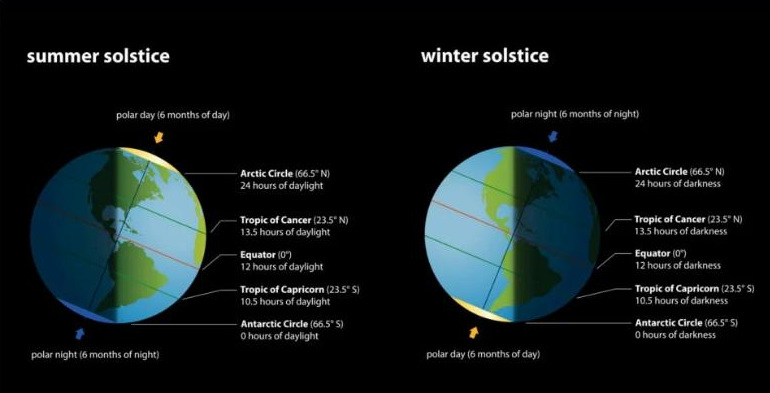
Whether North or South, Summer or Winter, the path the sun takes from the earth’s perspective stays virtually unchanged for some days on either side of the Solstice. Solstice is literally “standing sun”.
Each summer we witness the sun rising higher each day, reaching its highest point at the summer solstice and dropping to its lowest in the winter. For these Solstice days, then, we can rest and take shelter in one of the still points of the year. We can quite rightly speak of a solstice season. Even from the vantage point of three or four days on either side of a solstice, any change in the sun’s path is still difficult to detect without sophisticated instruments.
Dawn and twilight can be good times to listen deeply and draw in this energy. If it’s overcast where you are, or too hot today, there’s tomorrow or the next day. These liminal intervals, these times of transition, offer us both metaphorical and literal pauses in the flow. The Still Point of Solstice is more properly a wider swath of stillness laid down twice a year.
Blessed Solstice! I was searching for a term for the solstices that would include what the sun is up to in both North and South, and “Mid-Year” and “End-Year” make do until I find better ones.
This Farmer’s Almanac pic helps — one of the clearer and more informative diagrams I’ve encountered:
I’ve written several posts on the Solstice, just about evenly distributed between winter and summer, and assembled links to a few of them below:
What would a local Druidry look like if I built it from the ground up, from what I can perceive today, right now? What do I bring to this moment? What does this moment bring to me?
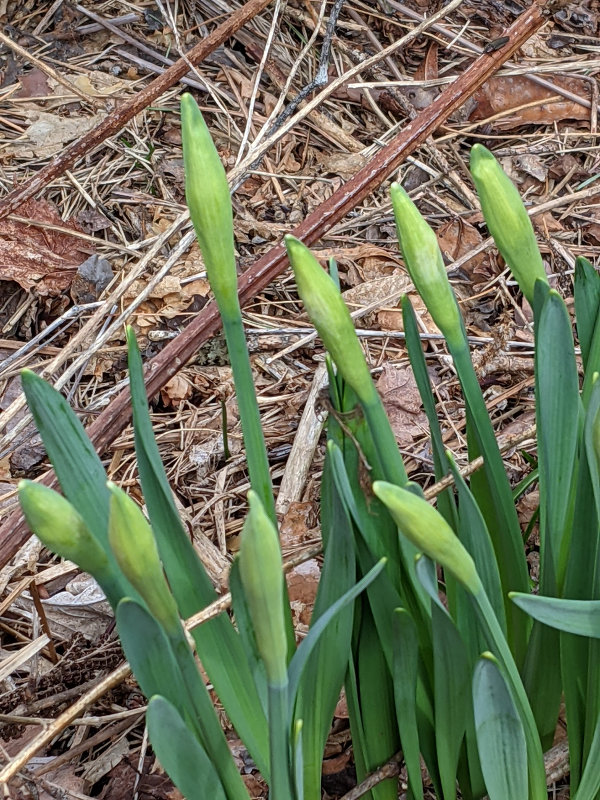
daffodils waiting, saying more than any blogpost can …
After all, Druidry begins like most spiritual paths with “Here I am — here we all are. Now what?”
One of the most obvious things we can acknowledge and celebrate is day and night. A walk at sunrise and sunset. Standing in the doorway or at a window, facing east at dawn or early morning, west at sundown or in the early evening. A photo or picture on the wall, a small shrine to the direction. A prayer, song, chant, charm or rhyme, for these times, or for just after waking, just before sleep. Write/collect a set of them, to vary them according to season or month or intention.
We learn to “curate our consciousness”. Because if I don’t, plenty of others will jump at the chance, telling me how to feel, what to think, what to buy, where and how to live. (Half of Druidry is exploring ways of using my life for the best purposes I can choose.)
What does this attention bring me? What do I see and hear, feel and smell and touch? What touches me?
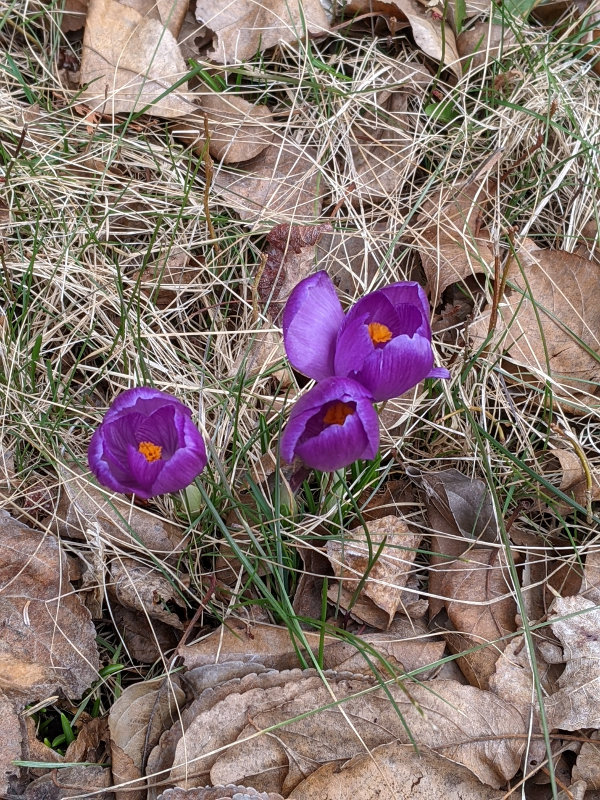
crocuses crocusing
Perhaps some other part of the cycles of your life interests you, or draws your attention. Maybe your lunch-hour or midday is most significant in your schedule. Or perhaps returning home each day after work. The specific rhythms of our lives offer an excellent place to offer honor and gratitude for their gifts, to acknowledge exchanges of energy, to honor the life in them. They’re ours, after all — we’re unique beings in unique circumstances, so why not build our practice from these experiences?
We may justifiably rebel from the ordinary, the mundane and humdrum and commonplace — until we find a key to transform them.
Waiting for that key … If you’re like me and practically everyone else on this planet, we can be quite passive toward our own lives, waiting for “something to happen”, till we begin to see how much we shape our experience by assumption and attitude and attention. A small step toward “making things happen” will have effects all out of proportion to its beginnings. Doubt it? Try it out and document your experiences. Yes, you’re on your way, a key in hand.
What keys are the apparent, mundane, ordinary facts of my life trying to hand me? Where am I turning them away? Again, rather than judgment, treat it as the story-line out of a fairy-tale. “I am the seventh child of the seventh child, and this time I will take the key … when all my sisters and brothers and cousins turned away …” Because right now the key awaits in the most unlikely likely place.
“The highest good is like water” — Tao Te Ching
What am I looking at right now, and does it deserve my attention, my time? What can I shape and beautify and charge with my desire and intention and joy? Because if I don’t, I’m simply yielding the floor to the desires and attentions of others, and they’re almost never more fitting for my life than my own. Not wrong, or bad or “evil”, necessarily — just not as appropriate. Bless them and let them go. Apply a triad to actions, a “sieve for consciousness” like one attributed to Rumi: “Is it true, is it kind, is it necessary?”
Sifting priorities. The time I spend online can be a sample illustration of this powerful tool. Because it affords a magnificent and piercing sieve of my actions and intentions and will. Let me log on consciously, with a blessing on my interactions. Let me stay as long as I need to, in order to check in with those I care about, to make worthwhile posts and comments. Let me pass by any distractions that don’t serve me. No judgment, just choice in action. Let me log off with another blessing.
The weather both today and seasonally invites me to other celebrations. Beltane in the wings …
Full moon, waxing, waning, new — we can also make attention to our sister planet part of our Druid practice, if we choose. What phase of the lunar cycle calls to you? Or if none do, pass by, without judgment, to where you are called.
Ready or not, here I come! says Moon, childhood companion of so many days and nights.
According to a handy online app, some 760 full moons have lit the sky since I arrived in this incarnation. How many of them have I even noticed? Of those, how many have I celebrated? Does that number matter? Or is celebration of what is, right now, a better focus?
It’s good to see readership for “Towards a Full Moon Ritual” climb each month in the days before a full moon. More of us seek out the “how” — we often have some sense of the “what” already. That post, and many others here, arose from my experiences of less and more effective ritual. Some of the “best” rituals are the ones that “didn’t work”, that provoked inquiry, or reflection that in spite of “appearances”, something happened that matters. Maybe I “didn’t feel it”, but it felt me, changed me in ways that the ritual helped shape. Experience remains the supreme teacher. (If you don’t believe it, just scan the day’s headlines. Slow learners, every one of us.)
How bright the darkness, how dark the light …
Google “What does the moon mean?” — because you’re bored, because procrastination is better than anything else on offer right now, because Google can entertain with such questions and their crowd-sourcing answers — and the first result may tell you something like “The moon is a feminine symbol”. Really? That would be news to the Anglo-Saxons a millennium ago. To speakers of Old English, the sun sēo sunne is feminine, and the moon se mōna is masculine. Ever hear of the Man in the Moon? Or consider the image of a woman some have identified as Mary in Revelation 12, “clothed with the sun …”
When we Druid the moon, we can discover our meanings, plural. When things mean, it’s we who are “doing the meaning”, after all. For if meanings inhere in things independently of our perception, where do they come from? Does each thing arrive on the scene with a full set of ’em, hanging off them like holiday decorations? Does the moon “represent a feminine symbol” to last night’s owl? Or to the pines and hemlocks swaying in the wind out my window right now, as a cold front works its way through the northeastern U.S.? Is the moon “meaningful” only to humans?
I stand in moonlight as I sing. Moonlight and shadow make a ring. The moon could mean most anything — don’t wait to find out …
That’s better. Too much thought, not enough song. Wait to find out and I could wait a long time. But song — that leads me straight to the heart of things.
/|\ /|\ /|\
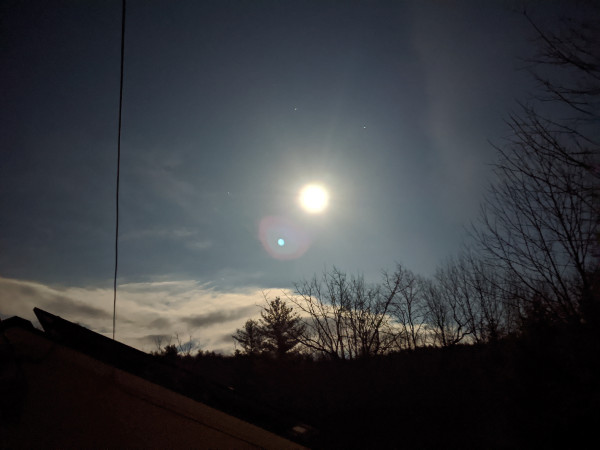
Often the moon is more of a mood than a meaning. There it is, mooning us all month long, silver arrows lodging in our hearts. Because some months, basking in moonlight may be all the ritual you need.
/|\ /|\ /|\
Here we are, just past the Equinox, just past Emnight [1 | 2]. Doth the moon shine that night we play our play? asks Snout in A Midsummer Night’s Dream. And Bottom answers, Find out moonshine, find out moonshine! — some of the best advice anyone could give me, whatever my season.
Moonlight is my ritual, says the Moon-Druid. Let the Moon sing me, the whole dream long.
Recently there was a heartfelt inquiry on a Druid forum asking for suggestions for adapting to a new home in an unfamiliar region. We all face this challenge in some form, either connecting to a landscape with ancestral presences, or finding our way in a new place. And how many times must our ancestors also have faced a similar experience?
Other helpful responses from commenters included making offerings, walking the land, asking for guidance, and — because Kris Hughes’ marvelous new book is still buzzing in my awareness — here’s this edited version of my response.
/|\ /|\ /|\
My instinct is to begin with individuals, along the lines some others have described. That particular tree, this stone, that stream, and so on. Often they can be an individual welcome-point. (Not all trees pay attention equally, at least where I live. Some don’t talk as much, either, while some talk a lot.)
Kris Hughes writes wonderfully about this in his latest book, Cerridwen: Celtic Goddess of Inspiration:
“I recall quite vividly a workshop where I was given the task to go and speak to a tree and glean any wisdom from it or anything indicative of communication. I failed miserably … How could I be a Pagan if I couldn’t speak to trees?”
“It took one sentence from someone completely unrelated to trees or Paganism to transform the way I perceived communication. It was a Welsh documentary about Bardism, and within it, one of the interviewees casually said that regardless of how different we may perceive ourselves to be from any other life form, we all have one thing in common: we all sing the song of Awen. The Awen’s music is the same in everyone and everything, it is the lyrics that differ according to one’s experience. The resulting song is unique, and it is the tool by which the Awen and, in turn, the universe experiences itself through the countless windows of expression. So I took to thinking that if I contain the music of Awen, then so would that rowan tree I was trying desperately to communicate with. The lyrics, of course, would be different, mine based on the fact that I am a human being … But how on earth would I hear her song?”
“It still didn’t make a lot of sense to me. I needed to do something that would bridge that logical side of my mind with the subtle, invisible spectrum. And the answer to that was to sing” (pgs. 241-242).
So I sing to the trees and the stones, the waters and the land.
/|\ /|\ /|\
Greetings to a first-time visitor from the Dominican Republic. (I find the flag counter app in the sidebar a great reminder every time I see it that Druidry and an interest in understanding and honoring and celebrating our home are worldwide.)
Part 2 — because how can a book of lore that also offers a path of initiation and suggestions for a regular practice be properly reviewed in a single take?
Kristoffer Hughes has helpfully made Youtube recordings of some of the Welsh that appears in this book, because the sound of the language is one approach among others to entering into sacred space with the goddess. As of today, there are four videos on his Youtube channel: “Ritual to meet Cerridwen”, “Welsh ritual phrases”, “Guide to Welsh pronunciation”, and “Cerridwen: glossary of words”.
The dedication page is brief: I Cerridwen — Mam yr Awen: “To Cerridwen — Mother of Awen”. And because she is Mother, Kris reminds us, we are Plant Cerridwen — the children of Cerridwen.
All of us, whether we’re Welsh or not? Of course. But a caveat … As Kris notes in the opening paragraphs of his first chapter, “The Quest for Cerridwen”:
The current New Age trend of spiritual commercialism has dissected the mysteries to their component parts … This has profoundly affected our relationship with the mysteries … The permanent individuation of the gods to the exclusion of the landscape in which they exist does them a disservice, for the landscape inspires and breathes life into the divine … (pgs. 1-2).
Yes, those wishing to enter relationship with Cerridwen and gain initiatory wisdom and insight from her mysteries can do so anywhere. No, she is not “a universal goddess, never mind what we call her”. So if we wish to avoid “damage to an archetype” as Kris calls it, a real possibility if we wield our indifference like a blunt instrument, and thereby miss much that Cerridwen asks of us and offers in return, there are several things we can put into practice. One that should come as no surprise is observance of the Wheel of the Year.
Such observance “causes us to stop, take heed, and observe a world that we believe we are familiar with. To those who fully engage, they begin to sense more to the world than first meets the eye” (pg. 202). The “apparent world fades”, as OBOD standard ritual reminds us — a world largely created by the inner chatter that, unchecked, fills our waking hours. “To sense the subtle and perceive the space between spaces that connects all beings, we must learn to be still and identify that space within our own beings. In my tradition we have a name for this process: we call it finding one’s taw” (pg. 202).
In a section titled “Appropriate Appropriation”, Kris addresses such concerns head on:
There is a strong possibility that you, reading this book right now, may not be Welsh or even have a connection to Wales. But somehow, by some means, you have found your way to reading this particular book. Cerridwen has found a way to seed within you the spark of Awen. You are the sum totality of all things that went before you, including the magic of the Welsh bardic tradition, which is held somewhere deep in the recesses of our species memory. By all means, learn a little Welsh or at least strive to understand the complexities of the history that brought Cerridwen into the light of twenty-first century Paganism. Know that you are equally expressive of the Plant Cerridwen and have as much right to claim that title as any Welsh person.
Whilst it is important to develop honest, nonappropriative practise, do not ever think that you don’t have the right to claim Cerridwen as a goddess that is valid for you … she is more alive today than she has been for the last four hundred years (pg. 261).
Kris then offers 13 excellent suggestions for ways to develop a non-appropriative practice that will not cramp anyone’s style. He also states clearly that any limitations we face as modern people can serve as opportunities for creative work-arounds:
I cannot see Cerridwen physically–she does not possess a carbon based physical body–so the manner by which I develop my relationship with her must somehow address these limitations. Nothing beats heading over to Bala for an afternoon spent at her lake, for there is a sense there that is different to anywhere else on earth–there is a tangibility to her presence in that location, as if the landscape holds a different kind of lyric. However, Bala is just over an hour from my home, and my schedule does not permit me the luxury of going there every day. Therefore I have re-created a sense of what I feel at Bala at home, and it is centred around my altar … (pgs. 264-5).
This book is rich in suggestion and opportunity, with keys Kris draws from personal experience. Visualization proves difficult for many, and Kris supplies a most helpful tool in the form of sigils — several appear throughout the text. As he notes, “… application of the magic will invariably have a physical aspect to it” (pg. 204). Just like humans need to ground and center, magic needs that grounding too, or it remains a mental head-trip the other parts of ourselves never take.
It is perhaps inevitable that some readers will merely skim the book and zero in on the section “Stirring the Cauldron”, with its wealth of suggestions for practice. But practice often runs dry without roots, which the text amply supplies, and a practice unmoored in understanding and respect for a tradition will soon leave the restless seeker wandering off to the next book. The fulfillment of anything that worthwhile books promise can only come from the same thing such books usually counsel us to remember and put into practice — full immersion.
For us to practice such immersion, the Welsh traditions of song and awen, poetry and inspiration, silence and speech have literal significance and application:
The Awen is active, and to sense its blowing through us, we must actively vocalise and energetically move into its power. We live on a unique world, a place where expression is facilitated by the atmosphere that surrounds and imbibes us. Breath is the bridge between the density of the physical and the lightness of spirit (pg. 246).
Quick take: In his latest book, Hughes gifts us with a marvelous resource. Drawing on native Welsh sources — his first language, his place of residence, his own spiritual practice, and the central Celtic myth of several Druid orders — he writes with passion and profound insight.
In-depth Take: Unlike my other book reviews, this one will have several parts, as I begin to work with and through the rich material Kris provides here and to offer what can only be provisional insights. That is as it should be.
A personal note: I’ve met Kris several times at Gatherings in the States, where he was the special guest and main speaker. Most recently, at East Coast Gathering 2018, he gave a Tarot workshop, with this book already very much on his mind — so much so, that when he spoke briefly but movingly of awen and Cerridwen, several of us begged for him to say more. “That’s another workshop”, he replied. “And another book — this one”, he might have added.
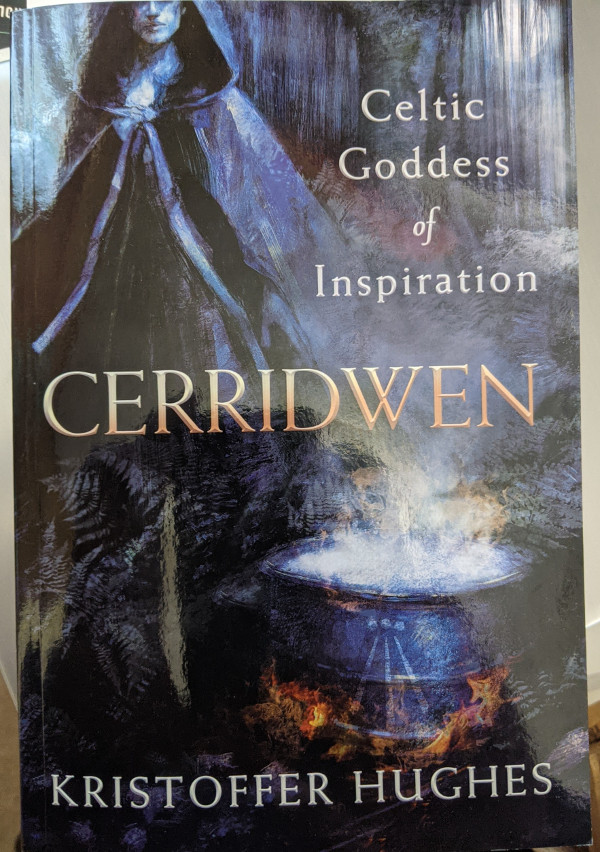
Let’s start with the cover: we see only part of Cerridwen’s face — fitting for a goddess of mystery and initiation. Whatever your stance toward the divine, Kris notes in the introduction,
“This book does not expect you to conform to the manner by which I work with and experience deity. There are a number of ways that people may develop relationship with what some may refer to as god or goddess, and neither is right or wrong. In that spirit, I do not expect you, the reader, to even be a theist, or an individual that works with deity. Cerridwen is flexible enough to be a psychological component to those who may be atheistic or nontheists. The rise of a figure to the status of deity is a process referred to as apotheosis, and this is important, for often the main complaint and criticism of modern-day Pagan practitioners is that they connect to and are often devoted to deities that may not ever have been identified as such in the past. I shall delve deeper into the function of apotheosis in the coming chapters” (pg. xix).
This richness of perspective and detail, drawn from personal experiences which Kris shares throughout, makes the book both a wisdom-meditation and a guide. Often in Druid books we get the distillation of insight, but without the personal component that lets us in sympathetically, imaginatively, emotionally. And “letting ourselves in” — in this case, into relationship with Cerridwen and similar deified energies and persons — is what this book accomplishes so well.
“The journey into relationship with Cerridwen and her myth is not safe — how can it be? For in so doing, one potentially positions oneself at the edge of the cauldron of inspiration and transformation. Your life may never be the same again” (pg. 27).
Of course many books promise much — good marketing is a part of how they sell, after all. But the substance that underlies any promise is where Kris prefers to focus. Issues of cultural heritage, appropriation and authenticity still loom large for much of the Pagan world. Ideally, such grappling will eventually lead to greater clarity and integrity.
Kris notes:
“The difficulties that people face when attempting to move into relationship with mythologies, particularly those that they may be culturally removed from, is the perception that the very words on paper contain the mystery. Modernity has preserved the words themselves whilst simultaneously causing many to consider that only the words themselves matter, and the eye is taken away from the vast space between the lines — wherein lies the magic” (pg. 16).
One key to crossing the river gorges and chasms along our paths is finding useful bridges. Not everything that “takes us across” leaves us where we want or need to be. Kris notes:
“The promise of sweet mystery may well turn sour during one’s exploration, particularly if one cannot make the content applicable in practice … The Pagan traditions work best when orthodoxy, something one believes in, is combined with orthopraxy, something that one does. This book will provide keys to effective and essential practice in order to transform myths from static stories to elements of spiritual practice, illumination and inspiration” (pgs. 13-14).
This core insight is a key that anyone can use, with any mythology — that is, with any story that makes sense of the cosmos. If we love and cherish the story, how do we light it up with life and fire? (That’s what can happen, what Kris wants to help happen for us, when we’re in relationship with a deity.) Christianity excels in orthodoxy, in instructing its communities of believers about what to believe, to the point where recitations of creeds have become the primary identifying feature of different denominations. What Christianity often lacks, and what has led people to find instruction elsewhere, are effective practices that make its teachings something one can actually begin to embody concretely, hour to hour, outside of “church”.
Do people nowadays “know Christians by their love”, as the Christian song lyrics say? It remains an open question. Likewise, do we recognize Druids by a characteristic wisdom and inspiration?
This morning, a post on a constructed language forum I frequent asked how one might go about expressing what we mean by “rights” in English. There’s a lot of talk these days about rights and freedoms, but much less about what these things are. Whenever we use unexamined words in such prominent ways, it pays to take a look at what we’re talking about. We often use words like “rights” and “freedom” to mean something we presume is self-evident, but it seems that much of our disagreement arises because they actually don’t mean the same thing to everyone.
Depending on the era and the culture, rights are given to us by gods or culture heroes; or they’re baked into The Mix from the outset; or they’re balanced — and dependent on — our fulfillment of obligations that are paired with each right we desire; or they’re human creations, meaning they’re entirely under our control. When I look at my own understandings, I see flavors of each of these perspectives. No wonder we’re struggling. (If you’ve figured it out, are you running for office? Or do you have a workshop we can attend for more money than we make in a month?)
If you see rights as something given, they’re not up for revision. But if you think we humans created them, you’re more inclined to tinker, and to recreate them to fit your current vision.
In older cultures like that of Vedic India, the cosmic order or rta is “the principle of natural order which regulates and coordinates the operation of the universe and everything within it”. Rta is something to find out, to discover, to align with. It can’t be legislated into or out of existence. Regardless of human law and laws which may come to overlay it, it persists as a foundation — or the foundation — for how the universe works. It takes in physics as well as morality. We can’t cancel gravity, in spite of its behavior. There may be comparable things at work within humans that we’ve overlooked.
There’s a certain Druidic sympathy for much of this view. The natural world embodies a significant expression of the harmony we aspire to. We choose nature as one of our teachers, birds and beasts and trees as fellow-travelers with us, each possessed of their own truths and gifts. Nature, we’re still learning, offers healing and wisdom for many of our ills, if we can learn to re-apprentice ourselves to it.
Many people feel that morality is much less (or not at all) “built into things” but instead more or entirely a matter of human choice, consciousness and active shaping. There are physical laws, but human society is a created thing, a part of human culture. That means, or should mean, that we can make it whatever we want it to be. Any injustice is a human choice, therefore, as are the inequalities of our social order. If we made them, the thinking goes, we can change and improve them. Resist such an obvious good, goes the thinking, and you’re just on the wrong side of history. You’re selfish, wrong, null and void, past your expiration date, hateful and evil, and above all you deserve to be outed and stopped.
One of the ancient insights of established religions is that there is a force, principle, entity, counter-balance — something or Someone, depending on your predilection to personify — that often causes our best-laid plans to go off the rails, turn awry, flounder and founder and crash and burn. Raven, Loki, Trickster, that strange neighbor — take your pick. We readily find reasons to blame some Other for mucking things up, not ourselves. But many ancient wisdoms would point us to tendencies within each of us that we need to face and work with. Gods know we’ve certainly all had long enough to get it right.
The fault, dear Brutus, is not in our stars but in ourselves, that we are underlings, says Cassius in Julius Caesar. What’s so wonderful about Cassius’ words is that they are both beautifully true in general and evilly true in particular. We want to revolt, but against whom?
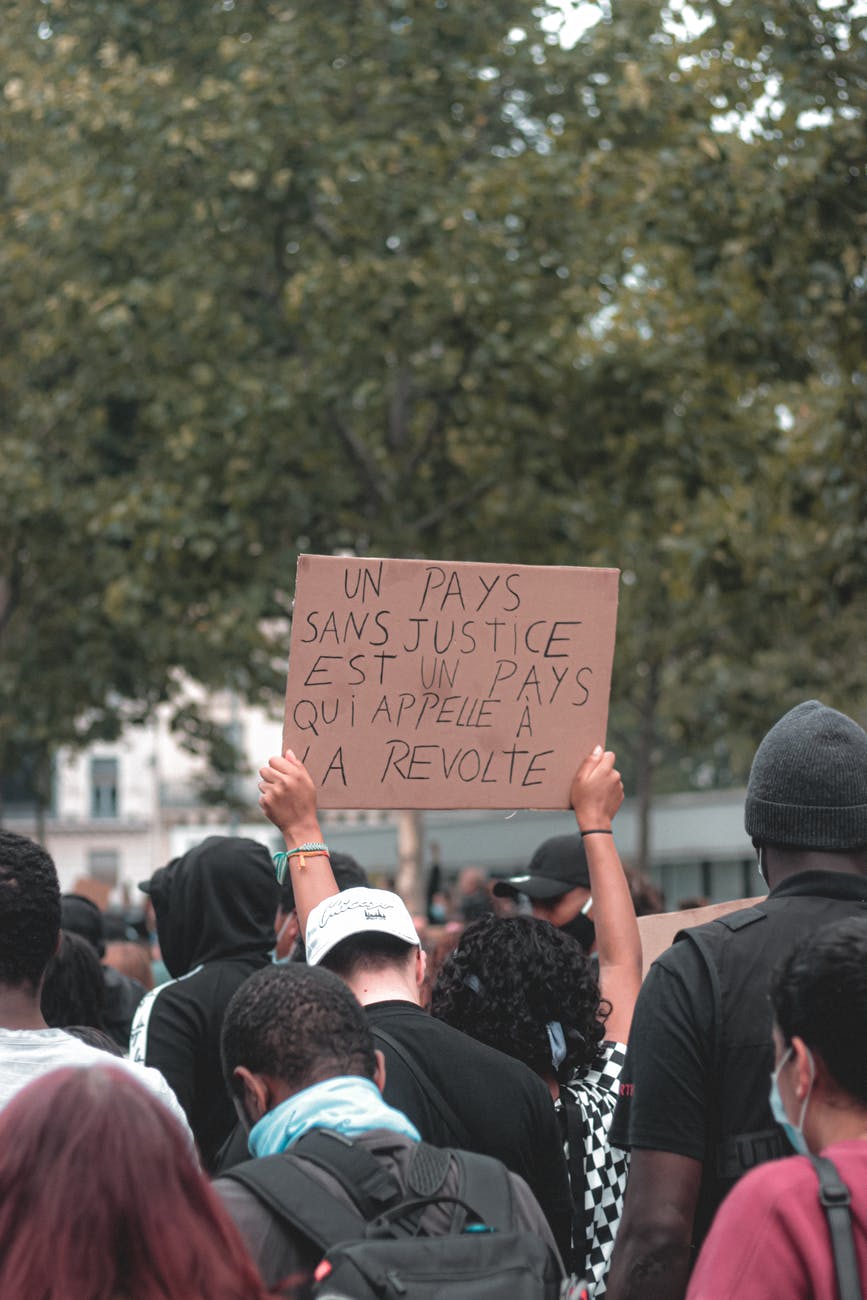
“A country without justice is a country that calls for a revolt …” Justice for who? How?
It’s certainly an accurate diagnosis that we often and too readily yield up our sovereignty to others — gods, partners, friends, corporations, the majority, the Party, The Man, the Patriarchy, the evil Leftists/Rightists/Centrists, etc. — and then we complain when they act in their own interests, and make us suffer, whether intentionally or not. We all repeatedly make ourselves “underlings” in amazingly short-sighted ways, then struggle long and bitterly to reclaim our power. Along the way, it seems we have to reinvent the wheel each time, making enough mistakes that at least half the time we’re Part of The Problem we’re trying to fix. Slow learners, every one of us.
Some religions call this tendency in us evil or sin. We might use vocabulary from physics or biology and just as reasonably call it inertia, finiteness, self-preservation and a number of other observable tendencies that carry less judgment with them. As Andy Dufresne says in The Shawshank Redemption, “you get busy living or get busy dying”. How often do we think we know which one we’re doing, only to discover to our dismay that we’ve been doing the opposite. The natural/organic/biologique food we pay more to buy turns out to be slathered in pesticides by an unscrupulous grower. The journalist we abused for critiquing our favorite new governor turns out to have been right after all. Someone oughta pay! Too often, it’s us. And along with us, the planet, the truth and others’ trust.
We’re constantly told to “just be ourselves”. Seems obvious. But do we know how? Why is that apparently so hard? Hundreds of solutions on tap, and not a single one working for everybody. Part of this — THIS — is that we have to find our own path. Though it will — blessedly — intersect many times with the paths of others.
One of the great insights of Druidry is that working with the awen, with our creativity, is a profound and pleasurable way to restore and reclaim much that we have lost. It is not The Sole Solution (though it’s a Soul solution), but it IS a practice that can lead us toward solutions more productively than much else we’ve tried. When we align with Spirit and our own genius and connection to the worlds, beautiful and inspiring things result.
We can always use more of that.
/|\ /|\ /|\
Welcome to Bangladesh as the newest first-time visitor!
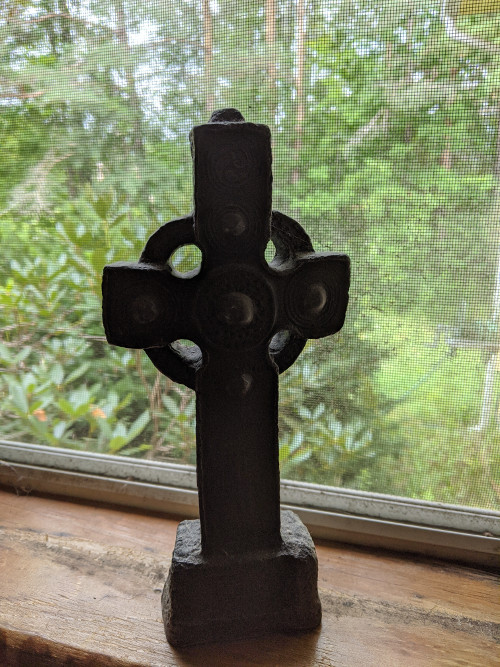
In the mornings, after I have prayed at my altar (which is in the East), I trace a Celtic Cross over my heart, then rise and take the candle from the altar, bow, then make my way sunwise round to the North and sing a prayer/blessing for the Directions: “May the Life and Hope of God, May the Light and Peace of Christ, May the Love and Healing of the Holy Spirit, be in the North…then South…West…East…bowing again to the altar in the East, then turning to face the Center…be throughout the Whole World”; then extinguish the candle for the spreading of the Light throughout the world. Carlo Carretto (1910-1988) wrote of the Trinity as Life, Light, and Love. I have found this way of understanding the Trinity to be very helpful and beautiful as I weave a Way of Being which honors all that is meaningful to me. I am very happy to have found your writings!
This is a wonderful illustration of finding ways to personalize what we do, and how we walk our paths. You can feel it as you read it.
“To honor all that is meaningful to us”: a piece of the Great Work each of us is called to do.
/|\ /|\ /|\
To those who find Christian imagery and language a useful guide, one might see in Cheryl Anne’s practice a concrete demonstration of the “priesthood of all believers”, practices that reflect a capacity for devotion and service. The phrase “priesthood of all believers” itself is one that some have developed based on 1 Peter 2:9. While the Wikipedia entry for “universal priesthood” highlights this belief and practice as something that’s more characteristic of Protestantism than other traditions in Christianity, one need not see priesthood as an “either-or”. Dedication, service and devotion are definitely not the exclusive possessions of any one tradition or practice.
A Druid, for instance, might well perceive that when we are in right relationship with Others, all beings, human and non, have the potential to minister to each other, to serve as the hands and feet and eyes and mouth and heart of Spirit. And we’ve all had experience of such harmony, though often only briefly. At our best, we mediate light and love, life and law to each other, four forces traditionally associated with the Four Directions. And at our worst — well, we know all too well what we’re capable of at our worst. One tradition I know asks its clerics to be intentional about displaying outward symbols and signs of their position. When they’re not at their best, they’re asked to remove any outward signs that mark them as clerics, until they’re able to honor the call once more. Priesthood in this sense is a renewable aspiration, and an ongoing opportunity for discernment, for re-dedication, for service.
The topic of priest(ess)hood comes up from time to time in Druidry. We may already know our formal and informal leaders. Some are authors and speakers and workshop leaders. Some are priested, and some are not. It can be easy to confuse charisma, or a gift for teaching, or leadership skills, or learning, with a call to priesthood. It’s helpful to remember that many priests, perhaps most, work in the background. So if I imagine myself as a priest, let me apply the first test of our crap detectors, the test of ego: does the appeal, the romance, the glamour of “priesthood” drop away, if no one else ever knows about the call I’ve answered? Does the call still sound its voice inwardly?
As Druidry develops, it will find appropriate tools to assist those with various spiritual calls. Christian training for priesthood begins with a process of discernment. Is what I’m experiencing in fact a call? Who is calling? Is the call still alive a year from today? How have I responded to the call, if at all? What practices do I have in place that may focus or scatter my awareness of the call, my commitment to respond? What do I imagine will happen if I ignore the call? And so on.
Here, too, is an opportunity to practice the “as if” principle. If I am a priest/ess right now, how does my life demonstrate that spiritual fact? Can I serve as a priest starting this moment, without the need for the label, the bling, the recognition of others? If I can and if I do, what does that look like in concrete terms?





 A Druid Way