Already you can tell the post is Druidy. Beyond the obviousness of “Druid” in the title, there’s a symbolic number involved. If not Seven, then Three. Yes, definitely Three.
a piece of code that modifies a computer program in a skillful or clever way OR breaking into a network, computer, file, etc., usually with malicious intent
a tip, trick, or efficient method for doing or managing something
Question: Wait … are these hacks to become a Druid, or to practice Druidry more effectively?
Answer: yes.
“Guard the mysteries. Constantly reveal them”.
/|\ /|\ /|\
ONE: Explore a habit — a piece of the human psychological code.
With the three definitions of hack available to suggest strategies, (a) cut, gash or notch the habit. That is, interrupt it in some way and see what happens and how it feels. If I favor one hand, try the other. Is it merely training that makes one easier or harder, or some other factor? (b) modify the habit in a skillful or clever way. See what else it can do. Or attack it with “malicious” intent. Sabotage my own habit. (c) Develop a new habit or modify an existing one as a strategy for managing something more efficiently.
To give a personal example, in breaking an undesirable habit, every time I felt a craving, I used the desire as a prompt to do a short meditative or imaginative practice. Not necessarily with the aim or replacing the habit, but borrowing its energy to launch a new one. Though in more than one case, the new practice became more interesting than the original habit, which eventually dried up.
This is just the beginning. Such exploration can reveal a great deal that was formerly half-conscious. And that can be useful — how much do I let myself be programmed unconsciously? Turns out quite a lot.
I make a set of “habit” cards, letting connections to the Tarot develop as I go. Turns out this is a much deeper practice than I’d anticipated. More on this in later posts.
TWO: Down with a pulled muscle in my back these last few days, I’ve had time to focus on what needs my attention next. And what kind of attention. Can I give love to aspects of my life I’ve labeled *bad*? Can I find reasons to stop liking something I now like? How much of *me* is merely whim, attraction and dislike. Is that *all* I am? No wonder people have a hard time understanding and experiencing immortality before they die, if they expect a self consisting of labels and whims to endure beyond physical death. Trees (most of them, anyway) drop their leaves each fall. What lesson is there in that for me? Hold on, then let go. Pulse. Rhythm. Cycle. Tree ritual: gather a handful of brown leaves in a basket. These are my “temporarily usefuls”. I drop them, one by one, back to the ground where I gathered them. A gust of wind whirls a bunch of them from the basket. Soon it’s empty. I bless the basket — it’s lighter now — then sit in meditation for an interval. When I get up, my back reminds me it needs love, too.
THREE: What’s on my altar right now? It doesn’t matter if I have a formal altar or not. (In a recent fit of cleaning and organizing, I don’t.) In fact, I’ve probably got more things on *invisible* altars than on *visible* ones. A prompt for meditation all its own.
Can I move one thing off an altar that doesn’t need to be there? Can I set one thing there that deserves a place of its own? Once it’s there, let me acknowledge and honor it in a short ritual. My wife, here is your presence on my altar, as in my life. A piece of quartz from a walk, for a start. Then under it, a card. What do I write on it? How will I decorate it? How often will I move, replace, re-dedicate it? Will the object take on a different symbolic form? Sea shell found on a beach walk together? Photograph? A note that *she* wrote to *me*?
FOUR: I had and have no idea beyond the title “Druid hack” where this post would and will go. I still don’t. Each new hack comes with some reflection and meditation after I finish the previous one. Here at Four, the midpoint of Seven, I still find myself disliking the word “hack”. For me it’s still too colored by its computer associations — a hacker is a vandal or thief. A “life hack” sounds like a cheap trick, a shoddy excuse for a valid strategy. Such an association is on me to work with.
For very different reasons I’ve resisted learning the ogham, though it’s a valid part of many Druid traditions. But piece by piece, quite literally — ogham sticks handed out in rituals, the most recent being saille ᚄ “willow” at the Spring Equinox — my resistance is wearing down. Where else am I resisting? Is it a productive resistance? By the slow magic of time, the self can change less traumatically than through abrupt shifts that can do needless violence to our lives. Brew my slow magic with me, o my days.
I find myself thinking of the variety of trees that live in the neighborhood that I can visit, ask for the gift of a twig, and offer a gift in return. That I can charge my ogham with meditations about the specific trees that contributed. Not merely ash, but this ash. That the use of ogham can be a conversation between a group of trees and the student of the ogham, of tree wisdom. What *IS* tree wisdom? I’m just beginning to learn. (Hence the long journey of the Ovate that many experience.) Willow ogham, gift in hand from the Equinox ritual, I begin again with the willow in the backyard, long a companion already.
FIVE: Creativity is messy. Manifestation in particular. Think baby being born, think art project, think carving, smelting, painting, sculpting, gardening. Think soul-making. I’m doing a month of daily writing as I work on a Nanowrimo novel that needs further work. 333 words a day is small enough I can manage that much even with the groans and delays of my Great Procrastinator, a bad back, and still the same household tasks as always. My wife’s off to a job interview; I stare at the computer screen. Window to magic.
Because creativity is messy, where can I celebrate my next mess of creation? In a novel that’s “about” two worlds meeting, among other things, where else are worlds meeting in my life already, without strain or struggle? Where and how can I celebrate that fact? (This Pagan says ritual! and gets all tingly at the thought.)
A poet friend performs a simple ritual each time he sits down to write. Invoking the Muse isn’t merely a metaphor, he says. I rise to build up the fire on this spring morning, a whispered acknowledgment to Brighid. Even the thought of gratitude can be invocation.
SIX: Where else can I dance? Turns out, everywhere. I hadn’t danced for twenty years — until I danced at a ritual around a fire, and enjoyed it. I look forward in a month to Beltane for this reason, among so many others. But I’m certainly not waiting that long. I’m learning to dance more often, and in places and ways I’d overlooked for a long time. I have a desk covered with papers, bank statements to file, notes to organize, pamphlets, copies of Green Living, old newspapers ready for transfer to the kindling box. There’s barely room for the computer where I write this. But I’m dancing as I clean, and it feels … different. No hurry, a rhythm inherent in the action itself, a song accompanying, a song that says things without words, and sometimes with them, without any need for meaning. Cleaning for me is always a matter of “more than before”. And the dance carries over to the writing, dancing with words. Because the words are already dancing. I match my rhythm to them, and they flow more easily. (Dancing, it turns out, also helps loosen up my back. It’s sitting still that doesn’t help me stay loose. Funny, though, that lyingstill, on an ice-pack, is just fine. “Chill before moving” is excellent advice in a number of human endeavors.)
SEVEN: Combine what’s isolated and separate what’s together. This can apply concretely to things like composting and recycling, of course. Not mere polarizing perversity, this. I look at the previous six hacks and consider how dancing a habit and its changes can reveal a unique rhythm, a song of power that can accompany the experimental shifting and play with habits. Consciousness itself is a series of settings we play with all day long, with food, stimulants, activity, rest, conversation, daydream, reading, work, listening to music, sleep, exercise, and so on. I can distinguish at least ten distinct states of consciousness in just an average day, without any particular attempt to shift. What about you? How effectively can I deploy the possibilities of one setting to accomplish something another setting cannot? Rather than butt my head against energetic barriers, shift the consciousness. A whole laboratory waiting for me to explore it.
The hack of creating new hacks is one of the most remarkable things humans do. It’s recursive — it loops onto itself, in a fractal kind of way, making patterns that can teach us things unknown before they take shape.
So there you have them — seven Druid hacks: exploring a habit (and the habit-making mechanism) and then Tarot-izing it, doing a tree-leaf ritual, “altar-izing” something not there before, trying out and consulting tree wisdom, welcoming the mess of creativity, dancing more than before, and playing with consciousness-settings.
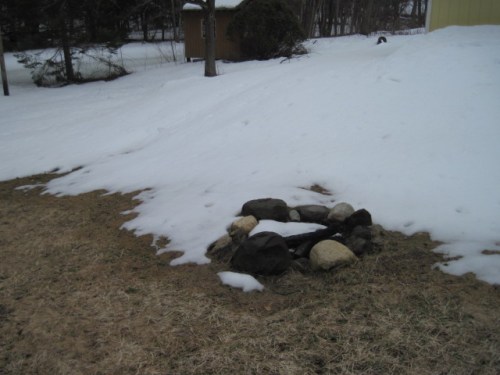
On an overcast, mild and rainy day, the stones of our backyard firepit emerge at last from the retreating snow. No thing exists “entire of itself” or for itself only. It also touches things around it, making and meaning for them a whole range of significances. For the moles in the lower yard, warming weather soaks the earth with snowmelt, and that means flooded burrows. For the deer who’ve survived the New England winter, fresh browse as the grass greens again under the strengthening sun, with the tender shoots of new growth burgeoning everywhere. For the returning birds, nesting material, the first bugs, and surfacing worms.
One of the core teachings explains that the macrocosm (literally ‘the great universe,’ the universe around us) and the microcosm (the ‘little universe,’ the universe within us) are mirror images of each other.
Thus, we can look to the world of nature around us for help in understanding our own nature, recognizing that if a theory about the nature of the universe proves to be a mistake when tested against the world around us, it will also prove to be a mistake when applied to the world within us (Greer, J. M. Mystery Teachings from the Living Earth, pg. 15).
Inner turmoil, strange dreams I can recall only fragments of on waking, a sense of being reminded of — and held to — a standard I agreed to long ago. A sense of being on the cusp of some ordination, relied on for a spiritual responsibility. “Ready or not, here I come”, says Spirit.
“Every human being is already a priest”, says John Plummer in his book Living Mysteries,
in a very primal sense. We stand between earth and sky, like pillars in an ever-moving temple. We find ourselves within and among other humans and many other orders of being (stones, plants, animals, elementals, angels, etc.) with energies flowing back and forth, consciously and not … Our outer personalities mediate the sacred presence at the core of our being, more or less well. We are all points in an extraordinarily complex web, through which divine power moves. That power … is much greater than us, and not particularly concerned about whether we understand how it is working, at any given moment (pg. 13).
Whether baptized or called by the spirits, pursued and confronted by an animal guardian, taught in dreams, initiated through suffering or illness or other trauma into a spiritual quest, roused by the shakti of a guru or the accumulated potency of intensive meditation, ignited by our own unanswered questions and a divine discontent, or turned off all spirituality by its many fakes and shams into a formidable and rationalistic atheism, we are called.
Plummer continues:
… we cannot turn our back on it. If we try, it will come knocking louder and louder, until we re-open the door. We have to feed it from our own substance, letting it grow through us, and then hand it forward to those who come after us, whoever they may be. To fail to transmit what we have received is to dam a stream until it becomes a stagnant pond, rather than free-flowing, clear water (pg. 15).
And so we come to this weekend, both April Fools’ Day and Easter, that lovely Pagan celebration — after all, it does take place on the first day of the Sun, after the first full moon, after the Spring Equinox — a true Pagan Triad of Light.
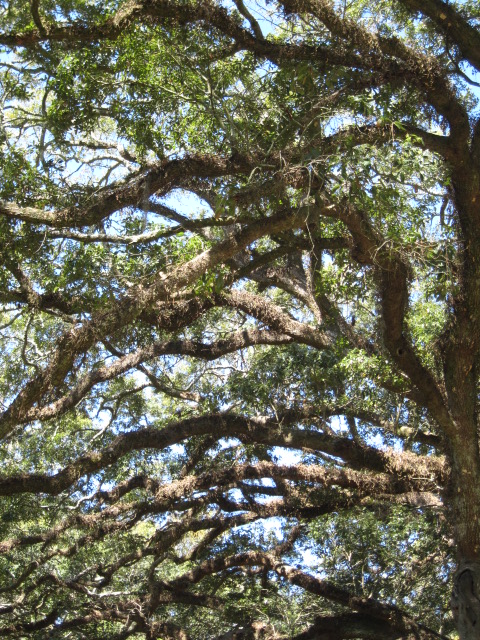
Gulf Coast Gathering ’17, Live Oak canopy
Water and Light, and the holy Trees as witnesses.
/|\ /|\ /|\
Greer, J. M. (2012). Mystery Teachings from the Living Earth: An Introduction to Spiritual Ecology. Weiser Books.
Plummer, John. (2006). Living Mysteries: a Practice Handbook for the Independent Priest. Berkeley, CA: Apocryphile Press.
OBOD Chosen Chief Phillip Carr-Gomm at this weekend’s Gulf Coast Gathering in Louisiana. The Alban Eilir/Equinox altar features Spanish moss and whelk shells. I didn’t attend, but through a magic as palpable and marvelous as any, an image consisting of light particles carries this moment from the event to all of us. Surely we can number images among our altars — beloved photographs of dear ones, of family and friends gathering, of the large moments and smaller ones of our lives.
And in the image below, Mystic River Grove’s Equinox celebration, which I was able to attend, processes through the March snow toward their ritual site in a Massachusetts park.
photo courtesy Anna Oakflower
Here are many altars: the altar of the event, held in imagination and expectation. The altar of the location, a park, a dedicated space of a different kind: the will existed to preserve a natural space from development and for the public, an acknowledgement of common wealth, re publica, for which the Commonwealth of Massachusetts is named in aspiration. The altar of each body present, beaver (broad tails slapping the water when we edged too near), birch, stone, water, human (about 25 of us gathered in eastern Mass.), avian (crows, and an owl hooting during an Ovate initiation preceding the main rite), canine (coyotes yipping just at the close of the ritual and as darkness settled in).
“I make of my intentions an altar”: something I can practice doing at any moment, if and when I remember. And how often the moment makes its own altar, if I pay attention: sunlight and silence on an afternoon walk, or a caucus of crows startled into flight and talk. A found stone that perfectly fits your hand. The first drops of needed rain finally beginning to fall. The greeting of a passing jogger or hiker out like you for word from the sun and the air and the world around us.
These are the democratic altars of existence, moments and openings of life and energy accessible to all. In them lie the origins of Druidry and so many other practices, a “momentary stay”, as Frost says, “against confusion”. Even the effort to “stay”, or simply to celebrate as it all passes by, is an altar, a focus.
We gather after the ritual at a long-time member’s home, another kind of ritual. Two soups go onto the stove, chicken and potato-leek. A salad comes together, and — warmed by a generous assortment of alcoholic contributions, an altar of bottles on the kitchen counter — several of us nibble at irresistible dessert cookies while the main course warms. We glow a little brighter in each other’s company, another altar we make by choice and effort. We could have stayed home for any reason, but we didn’t. An important altar. Others — a parent’s death last autumn, remembered; an upcoming surgery and a request for prayers; a first home and all the discoveries of ownership.
The “secular” is the “world” — Druidry recovers the world in all its sacredness, a human forgetting changed into human recollection.
Trees, humans too, we stand against the sky, a grove of profiles, outlines against the sky. Feeling our ways along, delighting — given half a chance, making one for ourselves — in all the altars of our worlds.
We stand a little past the Equinox, and here, east of the Green Mountains (a hopeful name!), the snow’s half-gone, or going. As of today where I live in southern Vermont, sunrise came at 6:46 am, and sunset tonight will clock in at 7:06 pm — the day now 20 minutes longer than the night.
As always and forever, the planet — and that includes our neighborhoods on it, wherever they are — matters more pervasively, and holds more true and enduring interest, than whatever’s shrieking for our attention in the media. Politicians trade places, and learn with us the pointed lessons of one kind of power. Meanwhile, another and greater power plays across the earth, in our marrow, in our hearts and the roots of things.
Here in the Northern Hemisphere, flocks of geese wing towards hatching grounds in Canada, foraging along the way in snow-fields, and shivering in half-frozen ponds and lakes. A mated pair of cardinals bob and swing at the feeder in the front yard, now up again after the bear alert.
The first brave flowers push through snow, snowdrops here, and a friend in Boston, two hours to the east and moderated by the Atlantic, reports honeysuckle and monkshood. In the back yard, boulders with their thermal mass warm each day in the strengthening sun and thaw a semicircle in the snow around them.
The willows everywhere hold out their green-yellow twigs, waiting, preparing. I stand for a moment with the great willow in our lawn. Last autumn a large upper branch snapped in a storm, and amazingly it hasn’t yet fallen, half-supported by a nearby pine. In another few weeks I’ll climb and saw it the rest of the way. Willow deadfall — the tree sheds like a Labrador — light and punky once it dries, has served as our principal kindling all winter long.
backyard blueberries, red sap rising
Here in Vermont, NG, a Druid in the north part of the state, has launched our first seed group, the initial step towards forming an OBOD grove. As with seedlings, the first steps of care ask for our regular attention. We may gather at midsummer to bless the young sprouts and tender shoots of that initial intention — it depends on whether we reach the critical mass all groups need in order to move from idea into manifestation. There are possibly a half-dozen of us so far around the state linked by a mailing list, a May website.
This afternoon I’ll gather with Mystic River Grove in Massachusetts for their Alban Eiler/Equinox rite. Members and friends come from Maine, Connecticut, New Hampshire and Vermont. After, it’s feast time, a chance to (re)connect with the many members of OBOD’s first and largest Grove in the U.S., see how we’ve all wintered, and celebrate the turn towards warmth and light. “By the power of star and stone …”
May the light, clarity and sanity of March bless you all.
As a practitioner of what the following podcast calls “blended spirituality”, I was particularly interested in Tapestry’s recent conversation with Rev. Shawn Beck.
You can find the entire podcast (38′) here, along with some print excerpts of the interview.
As an OBOD Druid and an ordained priest in the Anglican Church in Canada, Beck faces a range of reactions when people learn of his practices.
“Well, that’s sorta neat, but actually you can’t do that” go some of the responses, both Christian and Pagan.
“In fact, I’ve been practicing it for a while, and I can”.
Our human liking for boundaries shows clearly here.
“What I find so interesting is that you’re not dabbling … you’re committed to both traditions”, says interviewer Mary Heinz.
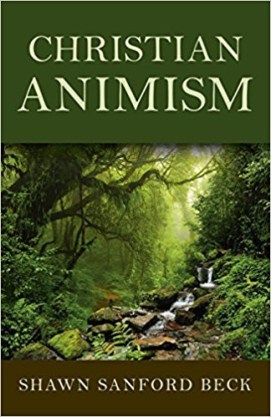
One of the occasions for the interview is the publication of Beck’s book Christian Animism, which promptly goes onto my reading list.
Beck remarks, “I do identify myself as primarily Christian — heavily influenced and really spiritually transformed by Neo-Paganism”.
Asked how these two paths impact his daily practice, he notes that bringing in the feminine divine, and the value of nature as sacred, touches both his daily prayer life and public ritual.
“If I give a blessing, I may say … ‘one God, creator and mother of us all'”, says Beck. For him, the blending of paths augments language and practice, expanding them and their sensibilities.
“What do your superiors in the Anglican Church have to say to you when they weigh in?” queries Heinz.
Besides keeping his bishop apprised of his work and thought (and his blog*), Beck notes, “As a priest, I need to be sensitive to what’s actually going to be helpful to the people that I’m with”. Whether it’s skipping a Starhawk reference with those who might find it frightening, or — in the other direction — “gently giving permission to people to explore that part if it’s helpful …”, Beck uses discrimination and experience to guide his priestly work.
Though he doesn’t currently serve a parish, he is responsible for the training of other Anglican priests — such is the continued confidence his superiors repose in him.
Converted to Christianity in his teens, while also exploring Eastern religions through reading, Beck observes that many of his teen peers at the time belonged to a Fundamentalist church. Even then, he learned and practiced discretion. “And so if I wanted to talk about not just Jesus but also some of these other things that I was reading and exploring, I would always know that the emotional tension in that room or in that relationship would get sky-high”.
“How much of this journey can I share with others?” is therefore one guiding question for him, as for so many of us.
“Alive — magical — responsive”: this is some of the language Beck uses of his Pagan practice that catches the interest of the interviewer.
“For the last five years, I’ve been blessed to live on a lake, on a farm, off the grid”, Beck replies (11:45). “In Saskatchewan … No running water … I run and get the water … It’s a life embedded within nature”.
What does that permit him? “Part of it for me is being attentive to presences within nature”. As a Christian animist, he says, “the world is filled with a myriad of neighbors … So it’s about recognizing that that tree that I’ve been praying beside is alive and conscious and praying with me … It’s not just a vague sense of spirit, but that the universe is comprised of persons, and these persons are my neighbors”.
“Christians when they see a person addressing a non-human person in any way, they assume that it’s worship”, Beck says.
“I ask things of my human neighbors all the time, and they ask things of me all the time. And we don’t call that praying to each other. We just call it talking to each other”.
For a decade his family has been hosting talking circles. Among the directions of these sharing opportunities, people answer the question, “Where have you found Sophia in your life this past moon? Lady Wisdom — where has she been at work in your life?”
These are some of the highlights from the first half of the interview — I hope you find it worth listening to the whole.
/|\ /|\ /|\
*Beck’s most recent blogpost as of this writing is from March 9th: “A ChristoPagan view of magic and prayer”.
The Tree is a world-wide wisdom-glyph, a potent symbol of connection and energy and life. The Tree features significantly in Druidry, among its many other appearances, with one reasonable explanation of the meaning of the word druid linked to trees, to a derivation from two reconstructed Indo-European roots *deru/*doru/*dru-, with its cluster of related meanings — “tree, oak, rooted, sturdy, true” — and a second root *wid-, “know, see, perceive, wise” [see the American Heritage Dictionary of Indo-European Roots]. This names — and challenges — Druids to be “wise knowers”, “truth-seers”, “tree-sages” and so on.
So the list of “Seven Trees” in this post is a selection from a vast root-stock alive in a metaphorical and literal First Forest, whose roots reach everywhere. Nonetheless, throughout time humans have found such selections to be useful, because their specificity nourishes inner seeds of creativity and encourages them to germinate. We lift a bucket from the wisdom-well and drink from it, marveling as it answers a deep thirst in us. A sapling puts forth leaves in the human psyche, so that new cultures, discoveries and insights can emerge. Choose your tree(s).
1) The Tree of Dreaming
Dreams often link us in unexpected ways to much that we push out of waking consciousness. Desires, fears, hopes, inner truths we deny or secretly suspect, creativity, inspiration, wisdom and insight and encounters with non-physical beings, enemies and friends, guides, companions, challengers and initiators and teachers. Each night we climb a branch, and we may retain something or nothing on waking. The leaves of the Tree brush against us, we drink from its sap, its branches lead to new possibilities, and we stir and wake and dream again.
I drink each morning from the forest pool, imbibing the wisdom of my dreams. What offering do I make in return? Gifts of self, gifts from my worlds.
As a meditation practice, I can commend this for recall and for wonder. The trees are mirrored in the pool, and their leaves blanket the forest floor beneath my feet. I sit on a tree trunk, and eat from the fruits and nuts around me. Before I return, I give thanks. A favorite tree nearby helps this manifest and concretize in my life.
2) The Tree of Kindred
The image here is obvious: the family tree. Linked as we ultimately are to everyone else on the planet, descended from common ancestors, we are this season’s leaves on the Tree, budding, greening, fading, falling and re-emerging on branches immemorially old. But because it is difficult to do more than express a general love for all things, we can begin more fruitfully if we love this leaf and that twig, slowly expanding our circle as we live and encounter new beings and extend our connections. The individual is a powerful key. Which ancestors have particular resonance and teachings for you in this life?
3) The Tree of Transformation
Humans transform trees into useful objects of wood, wood is a workable substance, and we respond to the beauty of the grain and warmth of wood in our homes and other structures. A tree is a living thing, growing throughout its life, which in some species can be very long indeed. All trees have their seasons, of fruit and flower, youth and maturity. Many species connect with other nearby individuals, and botanists are beginning to discover the central importance of tree species and individuals in the ecology of forests and woodlands. Trees are human cradles and coffins, doorways and walls, and have come naturally to represent all the experiences and choices that face a person in life. Christ was a carpenter, and died on a wooden cross, or in the language of some Christians, “God died on a Tree” — the most incorporeal linked to one of the most physical of living beings. Trees are doorways to other worlds, thresholds (also made of wood) to change and growth. In the distinction between transient leaf and lasting tree we have an image of what immortality might mean, the leaf of one personality among thousands, and the deeper link to the World Tree.
Yggdrasil, one example of the World-Tree
4) The Tree of the Worlds
In many cultures, trees link worlds, three or five, seven or nine. (In Norse mythology the World-Tree Yggdrasil links the Nine Worlds of Niflheim, Muspelheim, Asgard, Midgard, Jotunheim, Vanaheim, Alfheim, Svartalfheim, and Helheim.) We live on Middle-Earth, between upper and lower — or many other — worlds.
Many other regions and cultures also express images of a World-Tree, including Siberia, China, many African tribes, the Aboriginal Americas, and so on. The Tree holds the worlds together, and also keeps them distinct, and as a perceptual image makes travel between them possible. As below, so above: once you know where you are, it becomes a lot easier to go somewhere else. Abandon cultural markers, and I forsake a ready cultural visa — ignoring the admonition of the popular credit card advertisement, I “leave home without it” and not surprisingly, I may run into all kinds of trouble at the borders.
5) The Tree of Wisdom
In the Garden of Eden, the serpent tempts Eve with fruit from the Tree of the Knowledge of Good and Evil. Unlike mere knowledge, wisdom transcends polarities, and is rarer and all the more valuable for that reason. We cannot stay ignorant, but we do pay a price on the road to wisdom, often through pain and suffering, individually and culturally. Because unlike so much knowledge (nowadays increasingly accessible to anyone with an internet connection), wisdom must be earned. In the Biblical story, the two trees of Knowledge and Life grow in the center of the Garden, twinned expressions or manifestations of inner realities.
6) The Tree of Life
The “brain-stuff” of the cerebellum is called arbor vitae, the “tree of life”, in anatomical terminology, because of its branching structure. Several tree species popular with landscapers share the name arbor vitae — they’re ever-greens, always green, and so appropriately named. The medieval arbor vitae, tree of life, was deployed in Christian theology, linking human and divine worlds, the World or Cosmic Tree with the tree(s) of Eden and the tree of the Cross. In the teachings of the Qabbalah, adopted by Western magical traditions, the Tree of Life is a map of creation.
As one of my students once remarked, “Eve’s mistake wasn’t one of eating but one of sequence, paying attention to the right order of things. Eat from the Tree of Life first, and then eat from the Tree of Knowledge”.
7) The Tree of Silence
As I mentioned above, there are many trees we could include in any list like this, the tree being such a powerful collection of understandings, physical beings, symbols, images, experiences, and cultural and spiritual markers and maps. Those on quests often find themselves needing silence, retreat, withdrawal, fasting from superficial human interaction in search of deeper, more meaningful connection.
Both religious and secular literature abounds with stories and images of the sage, wise woman or man, spending a period of time, or an entire life, in a wilderness, desert, or forest. And the young initiate, seeker of wisdom, or adventurer, often must traverse the wilderness, venture into the forest, only to discover she or he is never truly “out of the woods”. The lessons, growth and discovery always continue. But then the rest we seek, the repose and restoration, are so often found in silence. Over and around and in these silences rises a tree, in whose shade we rest, listening to its wisdom. In the rustling of its branches, which only helps the silence deepen, birds and bug and beasts peep out from time to time, kindred on our way.
/|\ /|\ /|\
Gratitude to you, my readers, for the 401 of you who follow this blog. Numbers both don’t matter at all and also matter deeply. Some of you visit briefly, and some stay longer. Knowing you’re reading and thinking about these things helps me keep writing. A blessing on you and your houses, you and your dear ones, you and your own walks each day and always.
What? Well, we’ve heard a great deal, at least in the U.S., about trigger warnings— flags to alert you to media content that might possibly cause you distress.
(These days I find myself asking what doesn’tcause distress to somebody, somewhere.)
So why not look for trigger blessings instead?
You know — signs, clues, hints, flags that something out there (or in here) might possibly bring you joy, strength, inspiration, the will to carry on.
Do such things even exist?
They do. And often we mediate them to each other. Hello. I am your trigger blessing for today. Grandchild singing tunelessly, pet warm in your lap, neighbor waving on the way to work, kind stranger who lets you into line — many of our blessings come through persons. And we can be a blessing to others.
Not a bad goal, and prayer, for one day a week, to start: let me be a blessing to others. Then, having asked, watching for the moments I can make it happen.
Not for my sake (though serving brings its own rewards) but because it’s so clear others very much need blessing. Just as much, it turns out, as I do.
/|\ /|\ /|\
Since working with the Enchantments of Brighid, you could say I haven’t had anything remarkable to show for it. Led a workshop discussion on Past Lives, Dreams and Soul Travel. Caught a miserable sinus infection, along with my wife, after a weekend trip to celebrate her dad’s 85th birthday. (The old guy’s in better shape, in some ways, than I am.) Had a few dreams I’ll get to in a moment. Enjoyed the growing light that February brings to the northeast U.S., whatever the weather. Felt a stirring of creativity easily attributable to chance, or cycles of change. Nothing especially unusual here. Move along.
Except …
Enchantment often works best under cover. No one’s contacted Industrial Light and Magic, or WETA, or the local CGI crew, to mock up a trailer for the work of Brighid. The goddess, or our own life patterns if you prefer, can pull it off without the splashy special effects.
Though they’re present, if I look behind the glamours and bad mojo of our deeds, our headlines and our endlessly squawking media to all the other things, better ones, that are happening all the time.
My wife and I are making plans for a family and friends gathering to celebrate our 30th anniversary. An online Old English group I founded just held its first Skype meeting to practice the language, with 8 of us chatting awkwardly, with a good deal of laughter, for 40 minutes. Ideas are percolating, following on the Druid-and-Christian themes I’ve explored here in numerous posts, for a session at the 2nd Mid-Atlantic Gathering this coming May — a breakout discussion group I suggested will talk about the many intersections of the Druid and Christian experience.
Our finances, always interesting, continue to be interesting, but just in new ways. It turns out we won’t starve after all. (Or if we do, I’ll document it here.)
And the dreams …
In the first, from 31 January, I face Thecu, many-armed and -faced, pointing toward the east and to either the 4th or 3rd of her 9 runes of storm. Near her, a patch of intense darkness. My spiritual Guide and Teacher from my other path appears, says it’s always a choice: leave it alone or walk through. Bless the darkness — no reason to fear it. New fears, old fears: the old are a marker; the new, often, no more than distractions, unless I let them teach me something.
The second, from 4 February: I am warning others of an approaching tornado, but no one can hear me.
In the third, which my dream journal records for 9 February, I’m with a group of students from my former boarding school, though in the way of dreams I don’t recognize anyone. We’re talking about diversity, when one student shouts “Be careful!” Then I’m flying over trees, leading with my left toe. I arrive at an abandoned house somehow connected with my parents. I shout, “You never shared your pain with me!” and wake, at ease, reflective.
While going through old documents and photographs, I come on an image of my dad’s grandfather Albert whom I’ve never seen before, age and sepia blending, formal pose and 114 years all combining to distance him and bring him near. Yes, Ancestors, I’m still here, still listening.
Turns out more than enough is happening to keep any respectable Druid very well occupied.
One of the Enchantments of Brighid is openness to possibility. The goddess specializes in healing, poetry and smithcraft — skills of change, transformation and receptivity to powerful energies to fuel those changes and transformations. We seek inspiration and know sometimes it runs at high tide and sometimes low. As this month draws to a close, we have a moon waxing to full, an aid from the planets and the elements to kindle enchantments, transformations, shifts in awareness.
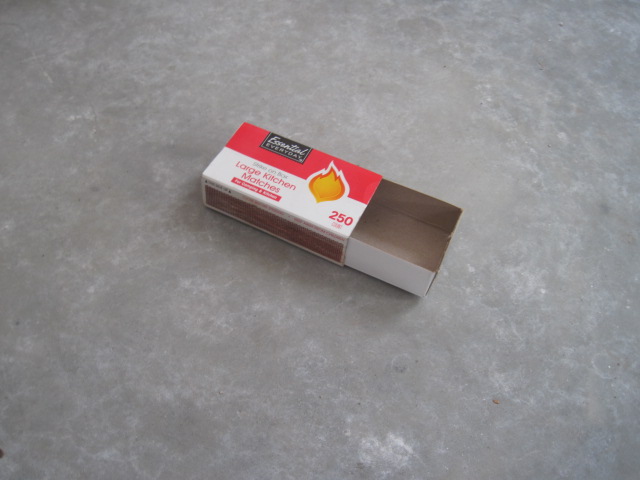
A day ago we finished a box of wooden matches. The box holds 250, and since we use them only for lighting our stove, that means we go through just part of a box every year. Emptying a box doesn’t happen that often, so it’s noticeable.
I like the imagery of the “empty” box. Though combustible itself, its main purpose is to contain matches and provide a strike surface. An old box has a worn strike surface, and one might be tempted to toss the whole thing in the fire. But I’m keeping it for these 19 days of Brighid, and it occurs to me now that it deserves a place on my altar. The sacredness of the everyday? Well, where else can the holy mystery abide in the worlds of matter, energy, space and time. As a friend likes to say, a mest (or messed) world can be a good and powerful stage for life and joy to happen.
Not to stretch things too far — how far is that, anyway? — I am a box, and so are you. Our spaces can hold all manner of things, and it’s our intention that determines what those might be. Insubstantial in itself, the box is nevertheless a potential locus for fire and mystery, or scores of other things. We take from the box a mood or a match, strike it and lay it to paper and kindling. We don’t create the fire, but without the box, the match, the intention and the movement to bring fire and kindling together, we don’t get flames.
To me the empty box is a “found” spiritual tool (my favorite kind), one I can work with physically and also in the imagination from where magic pours forth. Kitchen magic, or woodstove magic, if you will. What belongs inside it? What are some of the matches I wish to light? Where do I find them? (Where have I found them in the past? What new sources of them open up each day?)
/|\ /|\ /|\
On a small piece of paper I write a prayer to Brighid, and I fold and close it in the box.
We could subtitle this post “Druidry — the Ironic Survival”. Philip Carr-Gomm notes in his book Druid Mysteries:
Although Christianity ostensibly superseded Druidry, in reality it contributed to its survival, and ultimately to its revival after more than a millennium of obscurity. It did this in at least four ways: it continued to make use of certain old sacred sites, such as holy wells; it adopted the festivals and the associated folklore of the pagan calendar; it recorded the tales of the Bards, which encoded the oral teachings of the Druids; and it allowed some of the old gods to live in the memory of the people by co-opting them into the Church as saints. That Christianity provided the vehicle for Druidry’s survival is ironic, since the Church quite clearly did not intend this to be the case (p. 31).
Sacred sites, festivals and folklore, tales of the Bards, and the old gods: there you have the substance not only of Druidry but also of Druid and Christian linkages and considerable common ground.
Do we need all four to practice Druidry, or to honor Brighid?
Yes. We already have all four, to a degree that allows us to build on what we have, if we choose. While guided tours to sacred sites continue to make money for their organizers, we can gain access inwardly, through dedicated practice.
How?
On the day before the 19 Days of Brighid, we have many points of access, if we’re willing to explore them with attention, creativity and love.
1) Kildare is Cill Dara, “Church or Cell of the Oak”. Find an oak tree or leaf. “As above, so below. As within, so without”. Can you proceed from there? If you’ve been reading this blog, or have a practice of your own, you have an inkling or a clear idea of what you might do next. Here then is a first door to the Enchantment of Brighid.
Now for 18 more.
2) For a guided meditation, many songs exist. One I’ve posted about previously is Damh the Bard’s song “Brighid” . Enact the song, as your circumstances permit. Read through the lyrics first, or just listen through. Then do what comes to you to make the song come alive. What will you offer at the Well? If you have a bowl of water and a candle or tealight, enact the first appearance of the goddess. Say the prayer of the song’s chorus, or your own.
3) Using the help of the video in the previous post for making a Brighid’s cross, make the creation of your own cross — from reeds, strips of paper, fabric, etc. — an offering, a gift, an act of mindfulness, a devotion to Brighid.
4) Troubled by doubt? Blocked into inaction by hesitation, fear, or talking self telling you not to be ridiculous? Note the lines in Damh’s song: “But in her prison, she heard the spell the people were chanting: Three days of Summer, and snowdrops are flowering again”. The people — that’s you and me — help free her from prison. We imprison the divine, but we have the power to liberate it again in our lives. What chant comes to you? Listen for it as you go about your day, reading the headlines, listening to conversations, songs on the radio, and so on. Meditate, and write down what comes. This is a prayer the people are chanting.
5) Dance a dance you make up that has 19 steps. A circle, a square, some other shape or just steps as they come to you. Swing your arms, raise them, keep them at your sides, or clasped in prayer. Drum on a tabletop, a pot, a cup, bang two spoons together. Or step in silence. On the 19th step, say or whisper aloud or inwardly the name of the goddess. Dance when nobody’s watching. Except you and the goddess.
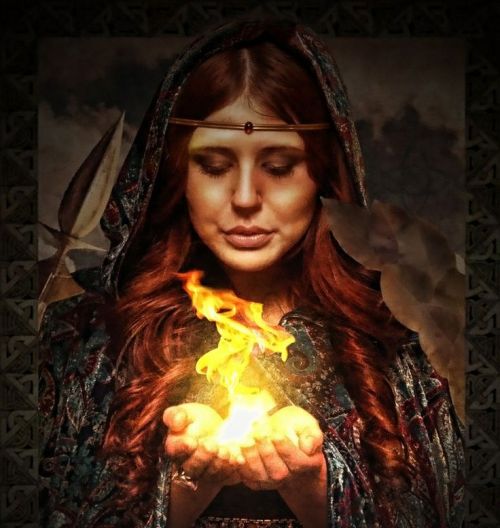
6) Brighid is goddess of fire. Light a flame and say “The fire is still burning. Nineteen priestesses tend the Eternal Flame. Oh but of you, my Lady, we are still learning”.
7) Educate yourself about Brighid. Here’s an easy “for-instance” — a short video (5 mins.) featuring Mary Meighan, who offers several clues to a practice.
Brighid’s Well
8) Volunteer at a homeless shelter, dedicating the service to Brighid, an offering, a way of helping to keep the human fire kindled in others. We think of such things around the big Christian holidays of Christmas and Thanksgiving and tend to drop them from memory at other times. I’ve just sent off an email to one of our local shelters, 8 miles away, requesting info on volunteering.
9) Dedicate a practice meaningful to you for each of the next 19 full moons. Ask for insight and resolution — in exact proportion to how well you keep your practice. Ready? Set … Go!
10) Following bpott’s comment on a recent post, “[P]lay (with serious thought) with enchantment”. What does enchantment look like to you? When have you experienced moments of enchantment? How did they manifest? What was going on when they did manifest? What can you do to welcome them again?
11) Again following another recent comment by bpott, take your practice outdoors, however briefly. Especially needful in the Northeastern US, because we get serious cases of cabin fever. (Our area organizes “Cabin Fever Dinners” to bring people out of hunker-down mode and into celebration over a communal meal. One of the more popular ones in our area draws 75-100 people and is held in a local church. Yes, plenty of non-church people attend. It doesn’t hurt that the menu and kitchen are overseen by the pastor’s husband, who’s a gourmet chef. It’s very much a Brighid experience, at least for me. Generosity, kindling the fire in others.) Enjoy the thaw that’s come to the region. And wherever you are, breathe outdoor air. Let the sun shine on your skin.
12) What can you kindle and smith, inspire and heal, in yourself and others? What wells and forges exist in your life? How can you use and serve them? What wells and forges have you possibly overlooked or taken for granted? Again, how can you serve and use them?
13) Set a dream intention each night for prophetic, healing or creative dreams. Record each morning what comes. If you think nothing came, write what you imagine coming. Read it that night before you go to sleep.
14) Choose a bowl of water or goblet, etc. as your Well of Brighid. Ask for the blessing of Brighid upon it. Drink from it each morning after sleep.
15) You visit the Fire Temple on the inner planes. What do you experience there? Write down what comes. Who greets you? What gets ignited? What gets burnt away? What kind of flame are you given to return with to your life?
16) Find a poem that inspires you. (Or write one.) Make the reading and saying aloud of the poem a practice for the 19 days. Make of your love for the poem an offering.
17) Practice intense devotion for a particular manifestation of the divine in the form of a god or goddess that draws you. In a post “Loop of Brighid: The Mysticism of Devotion“, Christopher Scott Thompson says,
Rather than talking in a hypothetical way about what the mystical experience actually is, I’m going to talk about how to get there yourself through your own relationship with the gods and goddesses you personally serve. This is not an attempt to import something like bhakti from Hinduism into modern western paganism, because devotional practice to specific deities is already naturally developing within the pagan revival. However, I will be using the concept of bhakti as an analogy for the most intense and mystical forms of modern devotional paganism, such as the mood expressed in this poem [included just above this extract in the original post].
For those of you incubating your own enchantment of Brighid to coincide with the upcoming 19 days of the goddess, you have the moon to aid you. Waxing now, it reaches full at nearly the midpoint of the 19 days, on the 31st of January — a fine symmetry, whether you choose to align with it or not.
The Solar Question for today, the 20th of the month, in Caitlin Matthews’ Celtic Devotional (Gloucester, MA: Fair Winds Press, 2004) asks “What is the source of your spiritual guidance?” The Lunar Meditation* for the fourth day of the moon (counting the New Moon, Jan. 17, as day 1) is “the wonder of life”. If I’m facing a period of spiritual dryness, if I have no other ready guidance, “the wonder of life” is a fitting source. Watching and listening, I can find in something small as the sun sparkling on an icicle a subtly radiant doorway into the Enchantment of Brighid.
Because magic so often starts small, no more than a tickle, a spark, a whisper. Till it builds.
Keep refreshing “home” and your browser gives you different results, your Facebook feed changes, etc., my wife said the other day.
If I’m paying attention, an inner bell goes off for me at such moments, an aha! of illumination. Spiritual practice is my way of refreshing home, of choosing — or asking for — something else than what the apparent or obvious may be telling or showing me. Some animals and insects excel in mimicry as a defense, or to lure prey. So too the human world, with its heartfelt truths and its cons, its bullshit and its profound beauties, its “characters” and “originals” and its gold standard friends.
Refreshing home is a kind of alertness that many animals retain, honed senses not dulled by noise from talking self. Don’t get me wrong — human speech is indeed a gift. But like many powerful gifts, it’s double-edged. It’s true, peace to Walt Whitman, that animals “do not make me sick discussing their duty to God … Not one kneels to another, nor to his kind that lived thousands of years ago”*
So when I write, as in the previous post, about things like devotion to Brighid, and you’re feeling particularly agnostic about, maybe, absolutely everything, consider J M Greer’s observations about egregor(e)s, the energy of group consciousness that forms around any regular gathering and gives it a distinct character, and especially around magical groups that work intentionally with charging and exploring its potentials. Is Brighid an egregor? Does your local parent-teacher association or book club or university class differ from other groups in any way? Of course. But is Brighid “merely” an egregor?
Richard Dawkins and Sam Harris and other atheists miss a very large point here. I won’t spell it out — you already know it, or else you’re not interested in knowing it.
Greer says, writing about magical lodges:
… egregors capable of carrying the highest levels of power can only be built up on the basis of the living patterns of the realm of meaning, outside space and time. These patterns are what some religions call gods, and what others call aspects of God. They have a reality and a power that have nothing to do with the egregors built up around them, but they use the egregors the way people use clothing or the way actors in many traditional societies use masks. Skillful, intelligent, ethical, and dedicated work with these egregors, according to tradition, can bring lodge members into a state of participation with the primal living powers of existence itself — a state that is the goal of most religions, and as well as the highest summit of the art of magic (Greer, Inside a Magical Lodge, Llywellyn Books, 1998, pgs. 109-110).
It’s the part of those willing to work with and within a tradition not to stop at the level of belief in it, but to test and explore its possibilities. We’re worlds away from credal faith here. But you may, if you’re around a devotee of Brighid, especially this time of year, overhear or encounter a song or poem or prayer of dedication, service, and love.
Imbolc, the February 1st or 2nd holiday, part of the seasonal cycle of the “Great Eight” Pagan festivals, has long been associated with Brighid. Goddess, saint, patron of poets, smiths and healers, Brighid is a potent presence for many Druids. Christian Druids can honor her in either or both traditions, and her legends and symbols — effective points of access to her — are many.
Among the traditions that have gathered around her is the significance of the number 19 — whether part of the ancient awareness of the moon’s Metonic cycle, or the Christian tradition for determining Easter, curiously associated with the full moon, or the 19 nuns at Kildare connected with Saint Brighid. Or the practice of 19 days of magic focused on devotion to the goddess-saint, which this post examines. As a Druid-Christian link, the number and practices associated with Imbolc and Brighid can join the others I’ve talked about in other posts here as yet another means to transcend argument or debate, and find blessing.
Nineteen days with Imbolc in the center (on Feb. 1), the 10th day, begin January 23 and take us to February 10.
As this circle is cast, the enchantment of the apparent world fades … We stand together in the eye of the sun here and now …
So goes part of OBOD standard ritual. Why, you might be asking, if Druids say they wish to attune themselves to the natural world, do they practice ritual that sees the natural world as both enchanted and apparent?
Well, we still stand “in the eye of the sun”. Partly it’s “talking self” (see this and this post) that distracts us, that enchants us in the sense of holding us spellbound (and self-bound) rather than freeing us to grow. Circles concentrate energy and attention, contain them for the duration of the ritual, and can help charge us as instruments of the divine in order that we may “know, dare, will and keep silent”, as the old adage goes. So we circle alone and together to watch that particular enchantment fade, so that others can manifest more clearly. It’s a choice of enchantments. Do you like the current ones at work in the world? “She changes everything she touches, and everything she touches changes”. Sign me up!
Spending the interval from now till the beginning of the 19 days, a week from today, determining what service to offer, what magic to work, is time well spent.
I’ll be following up here with my experiences.
/|\ /|\ /|\
Image: Brighid. My preference is for deity images that aren’t sentimental or “airbrush pretty”. Contemporary artists often portray sexy gods and goddesses, which is fine, but as an image for meditation I’d rather not use soft porn.
Here’s an edited compilation of responses to a recent online question in a forum I follow, with wonderful suggestions for cleansing and purifying after work. I’ve removed all identifying personal information.
Q:
I have a challenging job and need to leave it behind, along with all the emotions and difficulties people around me have to deal with. What kinds of practices do you all do to cleanse and purify yourself after work?
A:
I find that something I can touch, smell, hear in a way that relaxes me and centers me is a comfort. Ritual object, drinking goblet, sacred stone, etc.
A quick “light shower” exercise — visualizing/feeling light pouring down on the top of your head and washing off the energies of the day. Combine it with a physical shower for fuller effect.
Or the “snowball” exercise — another visualization — balling up everything you don’t want/need, packing it tightly as you would a snowball, and then tossing it into a golden river to be washed away. Sometimes I do a more intense version of this, raking, shoveling the stuff and bulldozing it into the river. Doing a version physically with a piece of paper (“write the crap away”), stone, etc., and then burying/burning it, letting the elemental energies take it and transmute it. Or some combo of these — these are among my quicker go-to strategies.
I find the entrance to my home is an important transitional portal. I keep things around the door that mean something to me. These may include crystals, Medicine Wheels, fresh and dried herbs and plants or flowers. I get a visual and spiritual boost from these items when they greet me each day returning to my sanctuary (home).
One Native custom is to leave a basket outside your door where guests and yourself ‘dump’ any negative or burdensome thought into the basket before entering. (It’s considered rude to enter a Native’s home and start spilling your problems on them.) Hope this helps in some way.
I also have a small covered porch at my front door and I load it up with seasonal greenery, plants, statuary, crystals, sage, sweetgrass, cedar etc. — all the things that bring me peace.
There are a couple of areas I jokingly call “psychic car washes” on the drive home — mainly white pine groves — that I use to recenter myself. As I drive through, I imagine the energies of the trees enfolding me and pulling away any gunk collected during the day. Tunnels and places where there are high rock walls on either side of the road also work well for this.
I always intention where “it” goes when it leaves me — body of water or into Mother Earth as fertilizer — not leaving it for an empathic type to stumble upon it!
You could clap around your aura to break up any stagnant energy and loosen up anything you want to release. Then do a body shake to shake it off. You could do this before you step into the house or upon entering the front door after you take off your coat and boots.
Some wonderful ideas here! Reading through all this, I had the feeling it is also good to get into a give/take balance. How about after getting rid of the stuff you say a prayer / blessing over a water bottle and drink it? For recharging yourself as part of the rite.
I love the idea of water as healer/cleanser — I like to charge up water in the 3 nights of the full moon!
Set up a “coming home” shrine. Add stuff to it you find soothing, Feathers, seashells, beach rocks — stuff that speaks to you about relaxation. When you get home, light some joss, spend 3-4 minutes with it.
I have so many inspired ideas from this great sharing. Here’s a variation on the ancient Jewish custom. Put something meaningful to you on the door frame. Kiss it each time you enter or leave your home!
I picture a ball of white light at my sternum and expand it quickly to the edges of my field — clearing away and neutralizing the negative and the energy that is not mine. At the edges of my field it dissolves.
I also sweep across myself cutting and removing all that doesn’t serve me and isn’t mine.
After either of these I ask the universe to neutralize the energy and release it.
On a Druidry Facebook group I’m a member of, the question arises a few times each year: what makes Druidry distinctive? In other words, if you’re looking over your options, “Why this and not that?”
Sustained contact with the green world is first practice, never abandoned, never out of date.
In a comment on the last post here, bpott said she was told in meditation to “practice devotionals to the gods outdoors. Lighting a candle to Brighid and sitting with her, or pouring water in a bowl for the moon to infuse its energy and listening to Manannan are such devotionals. There is indeed much to be gained through these spiritual practices”.
But this isn’t something for you to take anyone’s word for. It’s not that kind of observation. Words are meant guide us to own experience and back out again, to reflect so we can experience deeper.
Or as J M Greer puts it,
Druidry means following a spiritual path rooted in the green Earth. It means embracing an experiential approach to religious questions, one that abandons rigid belief systems in favor of inner development and individual contact with the realms of nature and spirit.
We regularly need reminders like these, because Talking Self sidetracks us.
“Talking Self” — you know, that chatty, sometimes neurotic self we use to read and post on Facebook, grumble at headlines we don’t like, and cheer for ones we do. It can often persuade us that it is all of who we are, because its medium is language and the thoughts and feelings language kindles in us. Name it, says Talking Self, trying to keep everything in its domain of names and words. (The Dao De Jing quietly reminds us “the nameless is the origin of heaven and earth”.)
Druidry says take yourself out of talking self and into Self — the being linked in its sinew and blood, bone and spirit, to all that is — rivers and streams, woods and meadows, valleys and hills, tundra and deserts, bird and beech, beast and bass and bug.
When you come back, you can turn Talking Self toward song or ritual, if you like — give it something to do that it does well — but in the service of something higher than reactive gossip and self-importance and anxiety.
And “going outdoors” doesn’t have to entail a frigid January plunge through a hole in the ice at the local lake. It may be as simple as smelling an evergreen twig you picked up yesterday on a walk, and now you hold it as you meditate, on the change of seasons, the incense of a living thing on your fingers and in your nose. Crafting a banner or a poem for the next time your Grove meets — at Imbolc in February. Baking and taking a gift to an elderly neighbor or the local soup kitchen. Grooming your dog or cat.
All these things re-engage the body and give Talking Self a break. Poor thing, it needs one. These practices help restore our connections. They gift us with balance. For these reasons they are, in a curious word more often associated with another tradition, incarnational. They literally put us into our bodies, even as they give Spirit shapes and forms we can experience.
Many forms of Spirit, many bodies to experience them: earth body and dream body and thought body and memory body. And others we haven’t begun to explore.
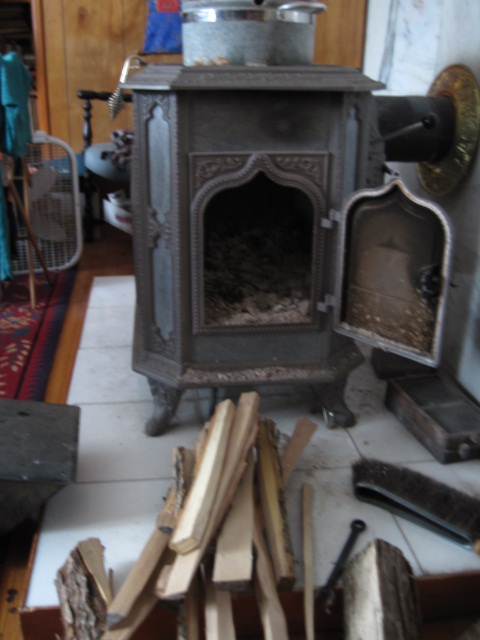
I lay the makings of a fire in our woodstove, crumpled newspaper and punky dry strips of willow from a fallen branch two years ago, and thin strips of a log split and split and split again. Wood’s our primary heat-source — we’re far too stingy to waste money on our electric backup, except in direst emergencies, and then the power may have gone out anyway. I can pause a moment before setting the match to the kindling and honor Brighid. The makings of a devotional. Not “believe in Her”, not “profess my faith She exists”, but honor Her. Often something quite different.
As someone once quipped, more important than me believing in Brighid is Brighid believing in me. What god would care to waste attention on a human who isn’t ever here? But if I’m here and as I honor Her I sense She’s here, what’s left to believe? It’s the honoring that’s important. The connection.
The Druid experience continually “abandons rigid belief systems in favor of inner development and individual contact with the realms of nature and spirit”. Continually, because my rigidity will creep back in, and fire and touch can warm and soften and free me from inflexible habits and open me to change and love.
I met Brighid most intimately through the task of firing up the woodstove when we settled in Vermont in 2008. Fire became a daily reality each winter (and much of spring and autumn, too). The wonder of fire and the opportunity of honor to Brighid needn’t be separate from the gathering of kindling and the match. Our winter-fires may not be the reverential fire of Kildare — though they can be. Every morning.
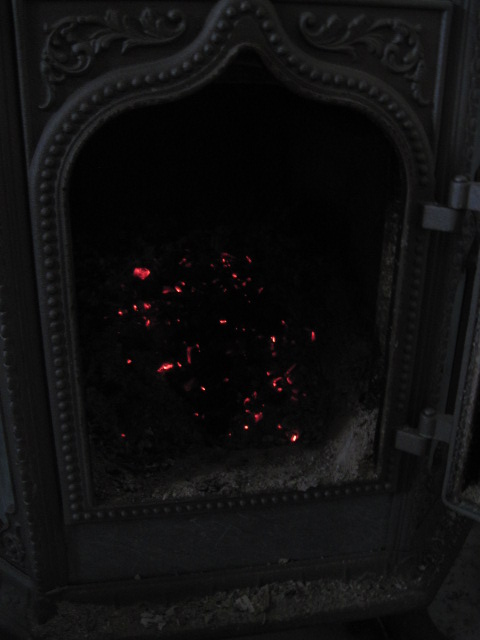
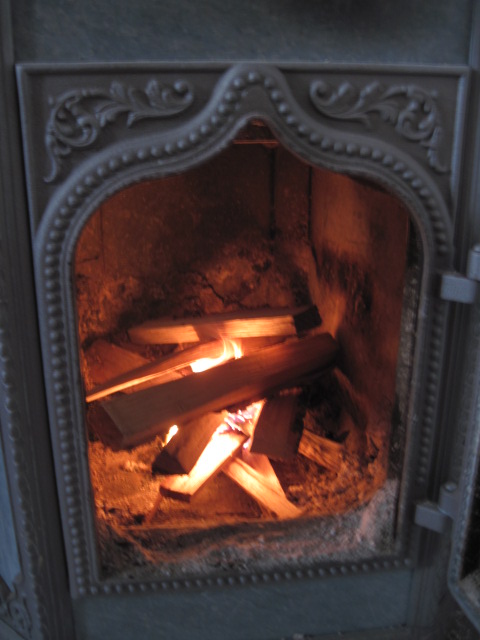
Today I’ll take out the ash to the compost pile, the midden, lovely old word. I let the freshly-removed ash sit out in the hod for a week, so I’m not dumping a pile of embers outdoors on a windy day. Old ash out, new ash to the hod, new fire to the stove ,whose walls are still warm to the touch. I set the kindling, whisper a sometimes wordless prayer to the goddess, and watch as flames grow and spread.
taking out the ash
new fire
My devotional has to take a particular, concrete form if it’s to exist at all for the body and senses to engage. Spiritual-but-not-religious knows this, instinctively keeps seeking but then abandoning forms, because it distrusts forms even as it senses their value. But it’s the dead form and the opinions-and-then-dogmas of Talking Self that are the obstacle to spiritual connection, not form itself.
Oh, Lord [goes one prayer] forgive three sins that are due to my human limitations.
Thou art Everywhere, but I worship thee here:
Thou art without form, but I worship thee in these forms;
Thou needest no praise, yet I offer thee these prayers and salutations.
Lord, forgive three sins that are due to my human limitations.
Except they’re not limitations at all: the way to do them in time and space is with temporal and spatial forms. I find little limitation in building a fire and honoring Brighid too. My devotional is a matter of intention, of choice. When I’m on another plane, I adopt its forms. (In dreams I fly, with dream-power my earth body doesn’t have.) But now, here (no need to apologize for limitations*), these forms.
Without a form, no transformation, whisper the Wise.
/|\ /|\ /|\
*The words “limit” and “limitations” are dirty words, far more obscene these days than any other. Obsessed with freedom, we miss what limits are and signify for us.
A shape is a limitation. Personally, I like shapes and forms. If I had no particular shape or form, I wouldn’t be “free” — I’d be monstrous, “de-formed”.
J M Greer notes in his Mystery Teachings from the Living Earth. 2012, pgs. 42-53:
A field mouse, for example, has teeth and a digestive system that are fine-tuned to get nutrients from seeds and other concentrated plant foods, and so that is what field mice eat. They do not eat crickets, even though crickets are very nourishing; they leave crickets to the garter snakes. They do not eat herbs, even though herbs are very abundant; they leave herbs to the rabbits. They limit themselves to one kind of food, and as a result their bodies and their behavior are exquisitely shaped to get and use that kind of food. Rather than jacks-of-all-trades, they are masters of one.
… the elegant lines of the blade [of grass] have evolved to make the most economical use of limited energy and resources, for example, and the curve at which it bends measures the limit of the blade’s strength in the presence of the wind. Remove the limits from the grass, and its beauty goes away. The same thing is true of all beauty, in nature as a whole and in the subset of nature we call human life: beauty is born when a flow of nature encounters firm limits, and the more perfect its acceptance of those limits, the greater the beauty will be.
… The same thing is true of all power, in nature as a whole and in that subset of nature we call human life: power is born when a flow of energy encounters firm limits, and the more narrow the outlet left open by those limits, the greater the power will be.
In a fit of New Year’s house-cleaning, I spent part of yesterday going through photos and papers my mother left to me. She passed sixteen years ago, but only now am I finally getting around to culling photo albums and memorabilia. Unlabeled pictures of ancestors I don’t recognize I’m discarding. (The clearest of them I’ll scan and post to ancestry.com — someone may perceive a link to their own story.) Together the images I’m discarding will make for a personal springtime ritual of memory, which feels now like it should be annual: to the unknown ancestors.
a known ancestor — my great-great-grandmother Ann
Among my mother’s effects was a sealed envelope, with a notation in fading Victorian script: “Worth County Eagle of Feb. 10, 1881”. Worth County is rural northern Iowa, where my mother was born and grew up.
The paper is just one quarter its usual size, and the Feb. 10th issue opens with an apology, explaining that the recent three-day blizzard has delayed their paper shipment, and so the present issue is small, a single sheet, folded in half to make four pages.
The railroads are all blockaded. Possibly the BCR & N [railroad] may get trains to Albert Lea [nearby in Minnesota] by Saturday night, if they have no bad luck. The Minneapolis & St. Louis [line] is in very bad shape. Six engines are dead at Hartland and the road is full of snow. They cannot clear the road this week.
But the most poignant column of the issue, appearing on the third page, is more personal:
Last Friday afternoon, Joe Fleming, of Kensett, came to Northwood, on horseback, for a coffin, for the only child of Chas. Christenson. It was late on his arrival, and he did not think it expedient to venture out again, so near dark, and remained over night. Our readers all know what a day Saturday was, and it was unsafe for one to be out on the road, so Joe waited until Sunday morning. By then it was impossible for him to get his horse out of the barn, on account of the deep snow. But he made up his mind that the trip must be made, and so had the coffin fastened securely to his back and started on foot, during that severe snow storm. He arrived at home safely.
What we do simply to survive is worthy of story. Let’s not diminish the lives we lead today. One-hundred thirty-seven years ago a child died, a human grief, and that death sparked the human determination that became this particular story. What is remembered lives. But we chose what we remember. Storms occasion such stories, markers of our lives. Everyone has one or more to tell.
May you be warm and safe and cherish your stories, however hard-won. By living them you’ve earned them. Such memories number among things that need to be born.




 Here in the Northern Hemisphere, flocks of geese wing towards hatching grounds in Canada, foraging along the way in snow-fields, and shivering in half-frozen ponds and lakes. A mated pair of cardinals bob and swing at the feeder in the front yard, now up again after the bear alert.
 “What I find so interesting is that you’re not dabbling … you’re committed to both traditions”, says interviewer Mary Heinz.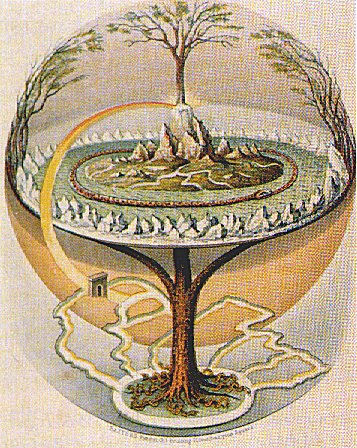
 As I mentioned above, there are many trees we could include in any list like this, the tree being such a powerful collection of understandings, physical beings, symbols, images, experiences, and cultural and spiritual markers and maps. Those on quests often find themselves needing silence, retreat, withdrawal, fasting from superficial human interaction in search of deeper, more meaningful connection.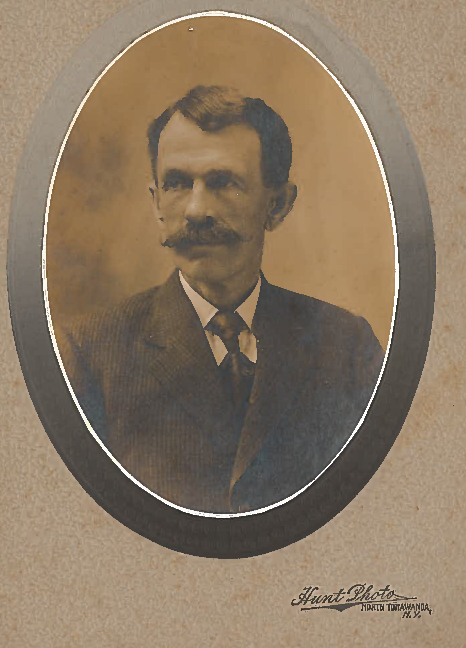




 A Druid Way
