There it is again, the nudge of an approaching Festival. Like the light of a full moon, it engenders a subtle wakefulness. The gods are stirring the embers, raking the coals, adding kindling and blowing across the hearth their living breath. Who wouldn’t spark into flame?
May, Beltane month, reminds us how every time is a liminal time. (Samhain certainly stands equal to the task of reminding us, if instead of Beltane, you’re Down Under.) Liminal, from Latin limen “threshold”. E-liminate something and you take it across a threshold and outdoors, and presumably leave it there. In that sense, Druids are always trying to eliminate themselves, crossing over and coming back, seeking expanse and connection with whatever is without, in the older sense of “outside, not within”. Several churches across Christendom have as part of their names “without the walls” — outside, e-liminated. If you’re outside, you make your own threshold.
Of course, once you’re outside, it’s the Within that may suddenly become attractive again. By a kind of spiritual gravity, what goes out comes back inside, and vice versa. Like a cat or dog that can’t decide which is better, and meows or barks to be let in and out and back in again, we look longingly at wherever we aren’t. Jesus gets it, knowing Self is the Gate: “They shall go in and out and find pasture” — on either side.
The grass is, in fact, always greenest wherever I am right now. “As above, so below; as within, so without”. It just often takes ritual to know it. We say the words, often without hearing ourselves, but do we mean them? Not to say that everything’s the same on both sides of the limen, but that they constantly talk to each other. And the limen is so often more interesting than the sides.
In some sense, festivals and ritual generally are opportunities and attempts to have it both ways. We get to make an inside and an outside wherever we are, out of the Möbius strip of reality, which has only the one side, though consciousness insists on two. And we get to be the boundary, the place of transformation, our native place. Practice it enough, and we get good at it. Become the exchange point, the crossing-over, the hinge. Then when a big event comes along like death or birth, disaster or first love, we don’t get thrown quite as hard. (Or maybe, we get better at throwing ourselves, so the cosmos doesn’t have to.)
By the power of star and stone, says the Herald at the opening of the standard OBOD ritual format. By the power of the land within and without, by all that is fair and free, be welcome! E-liminated at birth from the Land within, I emerge onto the Land without and stay awhile. At death I get re-liminated from the Land without, and turn back within. So it goes, till I can stand at the Hinge and look across births and deaths, springs and autumns, to What’s Really Going On, whatever that turns out to be. I aspire to be a hinge-Druid, bending rather than breaking.
Ritual is hinge-work. You and I write the ritual of our lives.
At Beltane, the hinges heat up in the growing sun. We long to touch, to connect, to be in communion. Virus or no, we still nurse at the breast of the cosmos. “Where the bee sucks, there suck I”, says Puck in A Midsummer Night’s Dream. Oh, who wouldn’t?!
Or take the case of Job in the Hebrew Bible. God dresses him down, and challenges him. The old King James/Authorized Version catches the flavor well, for all its increasing linguistic distance from us:
Canst thou draw out leviathan with an hook? or his tongue with a cord which thou lettest down?
Canst thou put an hook into his nose? or bore his jaw through with a thorn?
Will he make many supplications unto thee? will he speak soft words unto thee?
Will he make a covenant with thee? wilt thou take him for a servant for ever?
Wilt thou play with him as with a bird? or wilt thou bind him for thy maidens?
The ritual answer to these insistent questions is “Yes!” That’s one of the things ritual does: it lets us answer “yes” to a cosmos whose very strangeness and majesty and terror otherwise impel us to answer “no”. Who, me? Of course not! No!
Stand at the hinge, and we come into our own as Children of the Most High. For Christians, Jesus is that Hinge, that Gate. The advantage of Person-as-Hinge isn’t exclusive to any one religion or spiritual practice, of course. Talk to the cosmos and it talks back. Persons everywhere, spirit incarnating, doing its thing. We’ve just fallen out of the habit. Ritual is one way that re-awakens us to possibility. But so many us are un-hinged, lost, disconnected.
the “Mother Stone”, Four Quarters Sanctuary, Pennsylvania
Through the windows and doorways of ritual, we can see again what we lost sight of.
Four Quarters Sanctuary stone circle and altar
Sometimes the Face that Cosmos wears to reach us is familiar, sometimes not. Sometimes an Ancestor, sometimes an Other. We’re particularly bothered by things that speak to us that don’t have faces. Ritual can give a face to Things without them.
Ritual also opens an opportunity to organize my altars. Yours may look like this shelf of mine, all hodgepodge. Stones, peach pits, coins, figures, feathers.
Yes, the Wiccan chant reminds us, One thing becomes another, in the Mother, in the Mother. But not every thing, not all at once. Ritual says go with one thing, watch it change, celebrate the transformation. Be the hinge.
So we’ll gather (Zoom-Beltane, May 2 for us here in VT), and say the words: By the Power of Star and Stone …
An understanding of the power of naming is ancient and world-wide. During his lifetime, the Chinese sage Confucius was asked what he would do if he were a ruler, and he replied that he would “rectify the names” (Chinese zheng ming). He explained that words need to correspond to reality.
Damage that alignment, destroy the match-up between word and thing, he continued, and social order collapses. Or to jump ahead millennia and borrow from Hamlet’s most famous soliloquy, “enterprises of great pitch and moment,/With this regard their currents turn awry,/And lose the name of action”. In other words, to jump still further ahead in time to almost our century and to the much-quoted words of W. B. Yeats, “Turning and turning in the widening gyre/The falcon cannot hear the falconer;/Things fall apart; the centre cannot hold;/Mere anarchy is loosed upon the world …”. Bards get these things, and warn us sometimes centuries in advance of when we’ll need them.
Or to put it in the unpoetic jargon of our times, things suck cuz our names for them are wrong.
It’s not always wholly that simple, but it’s also not so far off.
“A rose by any other name Would get the blame For being what it is– The colour of a kiss, The shadow of a flame. A rose may earn another name, So call it love; So call it love I will, And love is like the sea, Which changes constantly, And yet is still The same” — Tanith Lee A test for each of us: does this poem clarify, or obscure?
Likewise in ancient Egypt, where knowing the true names of people and things gave you power over them. U. K. LeGuin develops this idea in her Earthsea books. There her characters have “use names”, and hold their true names secret. For mages as persons of power, this practice is even more essential. And aren’t we all “persons of power”, however unclaimed? (Disempowerment is the magic too many wield today, against themselves as much as against anyone else.)
Sparrowhawk, the use-name of the wizard hero of the Earthsea books, goes through a naming ceremony on the cusp of adolescence. The mage Ogion “reached out his hand and clasping the boy’s arm whispered to him his true name: Ged. Thus was he given his name by one very wise in the uses of power” (A Wizard of Earthsea).
Egyptians in the times of the Pharaohs as well as Native Americans and many other peoples took on new names after defining events or achievements. To cite just one example from contemporary culture, Lily Collins’ anorexic character in the 2017 film To the Bone is given a new name by her therapist to help her imagine and discover her identity as someone other than a sick young woman.
Some of us pick up nicknames from others (including ones we may loathe), as well as give them to beings that matter in our lives. Dog and cat owners know this well. We give our loved ones “pet names”. And again, among the Egyptians, if you can name someone or something accurately, write its name on a pottery shard or piece of parchment, and then destroy the object that bears the name, you lessen the power of the person or thing.
A common rationalist view (an egregore at work there, too, one claiming that reason alone is exempt from all bias) calls this the rankest superstition. But insofar as words and names matter — and you need only scan current headlines to see a myriad of examples that names do matter, and deeply — that’s exactly where we’re living, whether we think we participate or not. “Superstition” literally stands (Latin sta-, stit-) over (Latin super) us. Are government stay-at-home orders “safety precautions” or “tyranny”? What we call them matters in concrete, “real-world” ways.
Next door in New Hampshire, protesters against the virus lockdown rally in the state capital. An added poignancy or irony: the NH state motto is “Live free or die”. People are hurting, both from the virus directly, and from restrictions around it. Does the binary of “live free or die” offer a good path forward, or might the Druid practice of transforming a binary into a ternary prove beneficial?
Breitbart News, 18 April 2020
/|\ /|\ /|\
In the previous post in this series, I asked these questions:
What is your best name? (Do you have more than one?) How can you invite it into your awareness most beneficially? What reminders of it can you build into your days?
With some time spent in meditation, you can answer the first question for yourself. Make a name-giving ritual that’s meaningful to you — an opportunity to manifest your creativity. Consider both the power of writing down your name, or wearing it, perhaps in a locket or pouch around your neck, and also of keeping it secret, guarding its energy even as you build it, and never committing it to writing.
Maybe you take on a different name for each day of the week. More elaborately, you dedicate yourself to a month of name work. A different name for each day of the month. Watch for names you are taking into your awareness. What names are you giving to things? What names do you have for the events and circumstances and people you encounter during the day, week, or month? What power do you give them (or take from them) as a result of your naming?
If your birthday or another significant day is near, how can you consecrate that day and the names you’ve given it? “Oh, that’s the day that I ___ “. So what difference does that name make in your memory and experience? Try it out, with serious and also silly names.
Sticking with these practices, even if only for an hour at first, and then a whole day — or week — can demonstrate their efficacy and value better than anything I can write here.
What prayers can you create for your (new) name? Does that sound strange at first? Maybe a simple triad: “I shine the power of today’s sunlight on my name. I give the love of my ancestors to my name. I feed my name with the pungency of nutmeg” and so on. Work with this name, and spend time using it in contemplation. “By the power of my name, I ____ ”
May you find names of beauty, wisdom and freedom, and welcome them into your lives.
Novelist M. M. Kaye, who wrote so vividly about Indian life in the days of Her Majesty’s Raj, opens her novel Shadow of the Moon with this exchange about the name of one of her main characters:
“Winter! Who ever heard of such a name? It is not a name at all. Do pray be sensible, my dear Marcos. You cannot call the poor mite anything so absurd”.
“She will be christened Winter”.
“Then at least let her have some suitable second name. There are so many pretty and unexceptionable names to choose from”.
“No. Only Winter”.
Time change, as they used to say with less irony. These days, when we have actors with names like River Phoenix, and singers like Lady Gaga and Madonna and Prince, and thousands of Pagans named Raven, a name like Winter no longer stands out. (Here in southern Vermont lives the writer Crescent Dragonwagon.)
If like me you’ve puzzled at times over other people’s choices for religious or magical or craft or “inward-facing” names, we need look no further for diverse examples than the venerable tradition in many of the major religions for often unusual religious names. From Catholicism alone we get less-than-common saints’ names like Adjutor, Drogo and Lidwina. Buddhists also have cultural names to choose from, with Tibetan Chogden and Lobsang, and on to possibly multiple dharma names, if they practice in the Mahayana tradition.
Give yourself an unusual name and it sticks out, making you stick out, at least a little more. Not letting yourself be just a number, not permitting yourself to disappear into the background. You live with a chosen name differently than with one someone else gave you. More so when other people also know it and use it. More so when it bears rich associations, or ideals you now accept as goals to live up to. (For some useful insight, try chanting your own name for ten minutes. No one else needs to hear you. What do you discover?)
Camellia, April 2019, Charleston, NC. Flower names are popular for obvious reasons!
If like me and other Druids you look to the languages of your tradition for inspiration and examples, you happen on names like Welsh Twrch for the wild boar, one of the animals I work with. And since most people don’t know Welsh spelling conventions, they end up reading it something like twertch — decidedly not “the magical name I was looking for”. Yes, Twrch (with -ch as in Bach, something like toorkh) remains a name I might use in ritual, but not otherwise. The spiritual realm, I’ve discovered, can track me down well enough whatever my name is.
If we want to see the inverse of this, we need look no further than some people’s obsession over the pronouns others use for them. “My pronouns” only extend as far as other people’s willingness to indulge me. How far do I expect that to reach? Will my government legalize my choice of identity and pronouns? Perhaps. But why would I want to put one more piece of my freedom and identity into others’ hands? As head of the Anglesey Druid order Kris Hughes likes to say, “What other people think of you is none of your business”. You’ve got far better, more worthwhile and fun-ner things to do than beat your head against centuries of arbitrary linguistic habit.
Yes, of course oppression can often be encoded in language, but many languages that lack gender distinctions in their pronouns belong to cultures far more repressive than those in the West, where we may indulge superficial linguistic variations in the name of political correctness and identity politics. To offer just one example, Chinese has the invariant syllable ta* meaning either “he” or “she”: anyone who seriously imagines their identity will be respected and accommodated better in the People’s Republic of China is welcome to go live there and find out how far a unitary pronoun changes things on the ground.
(*As Bogatyr points out in his comment, the written language does distinguish between the characters 他 “he” and 她 “she” — both pronounced the same, but visually distinct.)
It is for these reasons that some people create an entire magical language to encode the meanings they desire, rather than merely accept those they inherit. For one (in)famous example of this, see the Enochian language and alphabet. Better still is an understanding of egregores and the work necessary to avoid their undue influence — see the previous post.
If in language we encode energies of oppression, can we also encode energies of liberation?
Among other ways, we do this with mantra, with holy words and names. Instead of troubling yourself that you “don’t or can’t believe” in a particular deity, try chanting that deity’s name one thousand times. (A rosary of some kind helps with the count.) After the fifteen or so minutes that this practice asks (depending on the name or word, and your rhythm), if you attempt it with even a moderate intention for true discovery, you will very likely come into a different understanding of “belief”, one more rooted in experience and less in mental formulation. Mantric power affects us in much the same way as music. We take the vibration into our atoms, and probably echo with it for some time after finishing the chant. Those of you with clairvoyant and clairaudient abilities may be in a position to confirm this.
What is your best name? (Do you have more than one?) How can you invite it into your awareness most beneficially? What reminders of it can you build into your days? The next post will take up these and similar topics.
I’ve been clearing out old papers, pictures, magazines, clippings, etc. from over a decade ago. Partly it’s self-quarantine work. Among the items I’m saving are these three, which deserve a post — partly because I have so little recollection of them that it’s like coming on them as new things. So I can be more objective, and maybe even say something useful about them. And also because it’s clear they retain value and efficacy.
First is a symbol, a quick and then a more elaborated version, to follow up on my post about sigils. It shows one way to work with a symbol, help it come into focus. There’s a definite change and clarification of energy in the second version.
I don’t recall for sure what I was aiming for — the word aksi under the second symbol is the Sanskrit word for “eye” and a good hint. So a stylized eye, a symbol for magical awareness and perception? Was I still working with my group at the time on symbols and logos?
I know I was using a homemade journal personalized with individual pages portraying my own sigil. Building associations with an image, as with a mantra or chant, helps “trigger” us — in a positive way. Doing this work with intention in a group, creating an egregore, grounds such chosen triggers much more powerfully. (For more info on egregores, see Mark Stavish’s Egregores: The Occult Entities That Watch Over Human Destiny. Inner Traditions, 2018.) Using more of the human psychological apparatus to our advantage like this is one further way to live more fully and consciously and richly, rather than at the whim of what Google and Amazon and “influencers”, the stock market or the Party or any Current Government want us to think and do and feel.
Hamlet confronts his former friends Rosencrantz and Guildenstern (Act 3, scene ii) after he discovers they have been informing against him to the King. By way of comparison he asks Guildenstern to play on a recorder he has obtained from the musicians who have just performed. “I have not the skill”, replies Guildenstern. And Hamlet nails them both to the floor with his next words:
Why, look you now, how unworthy a thing you
make of me! You would play upon me. You
would seem to know my stops. You would pluck
out the heart of my mystery. You would sound
me from my lowest note to the top of my
compass. And there is much music, excellent
voice, in this little organ, yet cannot you make it
speak. ‘Sblood, do you think I am easier to be
played on than a pipe? Call me what instrument
you will, though you can fret me, yet you cannot
play upon me.
Let this be our reply to those who would use us, squeezing from us whatever they can for their own benefit, then abandoning us when we have nothing more to give.
For the difference between your own will and another’s starts small, but soon enough with practice you can wedge your foot in doors you weren’t even aware of before. And then you can open them wider, and walk through. And you can shut other doors that do not lead to your best life.
What kind of doors? The email below details some of what was on my mind that January (email shows American order of month-date-year).
Finally, this “Opening Ritual” — who was this for? Besides being my practice that spring, I don’t recall. Did I do it as well with my magic group at the time?
I offer this to you as a short practice for this time. If as you try it out you find it helpful, adapt it to your use. It can help clear the way for prayer, for ritual, as well as serving as forms of these things on its own.
/|\ /|\ /|\
I’ve added a page of books and links on Druidry, as a stable reference I’ll revise over time. With more material appearing all the time, it’s helpful to refer inquirers to titles and websites I’ve found helpful and to update the document over time.
Like most of the posts here, use your spiritual discrimination. If what I write works for you, good. If it rubs you the wrong way, rather than fretting over it or wasting your valuable energy in anger, click away. (Anger can be an energy response that opens doors, but can also close them.) I try to write from different perspectives, and address different spiritual temperaments, and this may simply not match yours. Time with your dog or cat or partner or the spring or autumn sky or a beloved tree will do you much more good.
/|\ /|\ /|\
Often the spark or seed for a post comes from someone’s “chance” comment in a conversation, in person or online, or a phrase from my reading, or the nudge of a dream. I’ve found repeatedly from painful experience that so-called writer’s block, like spiritual block, usually means too much rather than too little. The door opens inward, and I’m standing in my own way.
This paradox can hurt. It can drive people in so many directions away from the exact thing they need. But for each of us, no one else can say what that needed thing is, only the person living that life. So much is pouring through us that we can’t make out a single handle or corner to grab onto and work with. It’s all just a blur, like standing under a torrent with a coffee-cup in hand. The surge of water can dash the cup from our hands in an instant and snatch it away in the flood.
In fact, when the “pour” is sufficiently loud and strong, like it is right now for so many people in these heightened times, it can feel, perversely, like the opposite, like nothing at all is shaping or coming, when in truth more pours through than ever. The triple frustration of greater need, constricted access, and a suspicion of all that possible abundance out there can make tempers flare, and drive despair.
/|\ /|\ /|\
The water is wide, I can’t cross o’er
And neither have I wings to fly,
But build me a boat that will carry two
and we will row, my love and I …
The words and tune of the old Scots or English folk song, in one of its variants, have stuck with me since I first learned them, years ago now. You may well know them. Several versions exist — here’s a plain and soulful one by James Taylor:
Making room for spirit is often a matter of singing a song, re-linking to the awen that is always flowing. If something like this simple melody, easily learned through repetition over several verses, helps calm you, you’re on your way. A visualization I use with it is seeing the boat, knowing what I love most deeply always travels with me, even and especially when it can seem like I’m alone in the boat on the wide water. Or when it feels like I don’t have a boat at all.
Songs, in other words, can launch and power a practice. You may well have your own favorites in play, close to your heart. You know their power. Sound can open us to possibility like nothing else.
The first stanza of “The Water is Wide” is lovely. Listen through the rest of the song, however, and you eventually reach words above love growing old. What?! you may be saying. Betrayed again?! That’s where many of us are right now. Even the most basic or profound solutions aren’t working for us any longer. Even love can seem like it’s not enough. But the chorus comes one last time, a reminder. A boat built to carry two will get us across. Who or what is the Other with us? Always, always, someone or something accompanies us. The hackneyed saying “we are never alone” remains scorchingly, absolutely valid still. Deny it as I may, I won’t get across without it. But what is it?
[If you’re anything like me (you are and you aren’t, of course, both at the same time, another paradox), you can spend a whole life in denial, till it’s one of your superpowers. I’m a master of denial, and I try to deploy it like the spiritual weapon it can be. But my challenge (it may not be yours) is not to let it wield me. Most of the time I need to sheathe it again, rather than keep waving it about.]
Sometimes letting go needs to be my practice, and a song can help then, too. Making whatever I’m feeling into a poem or song is powerful practice, an ancient tradition in many cultures. No one else ever needs to hear it. But some famous laments, and songs of celebration, and every other response to living in this world, have survived for us as models and springboards.
I can’t force the Other into the second spot in my boat. But a practice of knowing the Other is there, whether I’m aware or not, can go far to restoring me to the boat that will carry me across. Both need to row. I can’t get there alone. But build that boat through a practice, and I can cross over. (How often do I need to relearn that?)
Notice this isn’t a faith so much as a practice. I don’t need to believe something I can’t believe right now, where I’m in this moment. I need to practice something I can keep practicing, whatever I believe, the same way anyone gets better through practice. If I’m baking bread — the time is prime for it, people are home more, and hungry — I don’t need to believe the bread will make itself. But by mixing flour and water and yeast, working the dough, and putting it in the oven to bake, bread comes out. Yes, I get better at it through practice. The loaves will be better shaped, less lumpy, lighter. But my getting better, while a good thing, a needful thing, isn’t the final point. The bread is.
The water is wide. May your boats carry you over.
/|\ /|\ /|\
Thank-you’s to annaelleamaya for her recent likes. Knowing others read and value what I post here helps keep me going, especially in these times!
“What’s your ritual goal?” Celebrating on a beautiful evening? Performing moon magic? Attuning to the rhythms of earth’s nearest neighbor? Healing, banishing, blessing? Charging a ritual implement? Making the most of heightened sensitivity and emotion at this time? Singing a song, or writing a poem? Painting? Finally writing a difficult letter? Making love? A blend of several of these? Which ones are primary for you?
BAM Gathering, Full Moon, Sept. 2019
“What’s your moon?” Is it New, Full, Waxing, Waning? You can see the moon as a guide and also as a “map to manifestation”. What do each of its phases suggest to you?
With some preliminary answers to these two sets of questions, you’re already better prepared to proceed. Journal, do divinations, watch your dreams, doodle, pray, listen and watch the natural world holding your intent in your heart as ways to refine your preparation, and you’ll be rewarded with deepening insight and more possibilities that will come to you.
Moon Names
Different sources of lore will suggest a range of names and associations for each moon and month, depending on the tradition they draw from. One name for the April full moon just past is Pink Moon. Native American names can be evocative, and may help point you toward specific conditions and qualities present in your locale — if you live in North America. But Europe, Asia, Africa and Australia each have their own varied traditions and imagery that do the same thing. Images and stories give you material for your rites: they help you focus attention and emotion and imagination in the service of your ritual intent. They’re also fun!
Melody and Harmony
Just as important in a ritual as the words you choose are any musical instruments, dances, enactments, costumes, gestures. Or try an entire ritual without words. What can you do, rather than say, to perform your ritual? When I performed my Ovate self-initiation, by far the most significant components were flickering candlelight in my dark living-room, my ritual nakedness marked by charcoal runes on skin, and the silence. OBOD materials suggested a ritual. But it was the personal experience, including the details I just mentioned, that made mine memorable and transformative.
A Basic Script
Here’s a sample “barest-bones” mini-script you can elaborate with your own intent, setting, companions and creativity. Treat it as you would the grain of sand that becomes a pearl in an oyster — an irritant that can grow and take shape and become a thing of beauty. Don’t like part or all of it? That’s fine! Change it!
Full/new/dark Moon of (month name), I/we greet you here and now.
I/we bring (specific offering, intention, dedication, vow) as token(s) of my/our intent.
Bless/heal/enlighten (you, your gathered group, a project, an object, the coming day).
You could, for example, fit in non-verbal ritual elements before and after each spoken part. How will you signal your rite has begun? Bells, drums, horns, etc. each have distinctive voices to contribute. Lights, incense, candles, torches all have roles they can play. “Moon foods” — the ancient mangiare in bianco (literally, “to eat in white”) of Italy — comes to mind. White wine, pale fruit juices, bananas, nuts, pasta, pears, apples, beans, bread, other pastries, etc. can all serve — and be served at your rite! “Season to taste” in addition to being a cooking instruction is a wonderful piece of ritual advice.
A Local Lunar Calendar
Consider making a list of each moon for the current year — your own lunar calendar, with room for notes, pictures, additions, poems, etc. Note the dates of the moon phases each month, and also your local season. June in North America is sometimes called “Strawberry Moon” for the fruit coming into season then, but of course that doesn’t work in the Southern Hemisphere — it’s the middle of winter then!
Personalizing
What personal events and associations might you include in your rituals for each moon? May, for instance, is the Moon of my birth, and it’s also Beltane Moon, so any moon ritual with that moon will feel different to other moons, even if I used the “same” script each time. What’s the local weather during each moon? How might land and sky spirits be included? What other rites and celebrations happen where you live? Who do you want to invite to celebrate with you? If you’re typically “alone” for such things, what ancestors feel right to include? When will you walk/dance/play with your animal guide, guardian, etc?
“backyard birch” bark for ritual writing
What props do you already have that can be included, or perhaps dedicated, in a rite? The quartz you picked up on a walk, the statue or bowl or cup that caught your eye in a shop or at a flea market or antique auction and now rests on a shelf? That gift from a relative or friend you’ve had for ages? A ring you’ve inherited from an aunt or grandmother?
The strips of birchbark from our backyard tree, in addition to providing great kindling, are excellent for writing during a ritual: ogham, runes, blessings, “give-aways” of things participants don’t want, commemorations (stitched/bound while still supple into a booklet). These strips can be burnt, composted, or saved as appropriate.
hazelnut necklace
Our Vermont seed-group, the Well of Segais, features the hazel among its mythic associations and symbols — the nut that feeds the Salmon of Wisdom, which some OBOD groves use to represent the Power or Guardian of the West and of Water. Ground symbols in objects and you make the ritual that much more accessible to the senses, imagination and memory. As a group gift, Mary Anna drilled hazelnuts and made up packets with thread for us each to make our own necklaces: “nine hazels of wisdom”. An appropriate and personal piece of ritual gear for a moon ritual!
/|\ /|\ /|\
I bless you in each of your moons,
your fullness and your dark nights.
I bless you in your changing faces,
in the pearl shadow of your twilight.
In between, when I dance or dream,
both or neither, I trade places
with tree, beast, spirit of the grove,
soon or late uncovering
another doorway to your sky.
With even a little searching, you can of course find books and other resources for various ancestor practices.
Chances are good you’ve already begun one. Like so many things, the seeds — and often, the seedlings — already have taken root in your life.
With a family photo, an heirloom, a couple of stories, human memory, and experience of being alive, you’ve placed your hands on your own thread in the Weave, on a branch of the Great Tree, that surpasses any book.
Say you have an interest in genealogy. Or a relative frequently sends out clippings, photos, tidbits of biography about the family tree.
Maybe you’ve inherited old photos and letters, and they’ve sat on a shelf or at the back of a closet in a box or boxes because it’s hard to know what to do with the stuff. You can’t bring yourself to throw it out, but right now it’s just there, taking up space, one more tug whenever you’re looking for something else and there it is: history, image, memory, bonds of time and experience and emotion.
Or perhaps you have a difficult family history. You’re estranged from several living relatives, while deceased members left the scene with issues unresolved, and the family you have now aren’t blood relatives at all, but a family of choice you’ve managed in spite of things to assemble and cherish. Roommates, friends, mentors, colleagues, partners — people you’ve gathered and welcomed into your life at various points, who love and support you in turn.
With luck and grace and a strong constitution you may have one blood relative or spiritual ancestor you’ve started with. That person’s picture on an altar, or a wall, or stored on phone or laptop, serves as your launch point. Maybe not daily, or even weekly, but often enough, the images comes up and you have a moment to reflect on them, to remember.
Maybe you’ve signed up with one of the online genealogy sites, and your profile settings see to it you receive alerts whenever an ancestor date arrives. Your great-grandmother’s birthday, for example, or your great-great-grandfather’s wedding. The site obligingly emails you pictures of headstones, or some other electronic addition you might add to a memory altar, or discard or ignore.
All of these things may be enough. You’re busy, you don’t have time for “one more thing”, or that genealogically-obsessed relative more than makes up for whatever inattention you’ve been paying to the Right Noble Family Tree with their incessant gifs and jpegs and anecdotes, newspaper articles, questionnaires, memorabilia, and so forth.
Or you’re adopted, or orphaned, or otherwise almost entirely separated from your bloodline. Rather than an embarrassment of riches, you experience a dearth of ’em.
We all have arrived where we are today with the help of someone. That person is an ancestor, a fore-runner, a pathmaker, a hand to steady us on our way. And we have performed the same service for someone else, often enough without noticing.
Here are seven seeds for an ancestor practice I’ve explored over time.
1) “The Names of the Survivors”: We’re Here Now.
In my late teens I heard Rochester, NY poet Linda Allardt read her poem “The Names of the Survivors”, and the title as well as the closing lines have stayed with me. Survival makes do for grace, she closes, and at first that can sound grim or dark. But what is survival?
The best reason, if I need one, for an ancestor practice lies in one simple fact: I’m here today. If ever I’ve felt gratitude for simply being alive, there are roots of ancestor practice lying ready to hand. My existence today is tribute and vindication of their joys and struggles, in all their grotty and difficult human-ness. If you have a gratitude practice of any kind (or are looking at starting one), if you give thanks consciously at whatever frequency, it’s a sweet and simple thing to include those who have gone before and contributed to this moment.
2) Keeping up the Bone-House
Allied with my own being-here-now is a chance to do my best to honor and pass along that legacy. One of the Old English kennings or poetic expressions for the physical body is bánhús, bone-house. What I do with this bone-house life passes on my inheritance of it in the most concrete ways.
Every act matters, and an ancestor practice can paradoxically help me recall that. The deeds of now-nameless ancestors each helped bring me to here and now. It wasn’t the “big stuff” most days, though in hindsight each of these things is enormous: lighting a fire, cooking a meal, raising the children, tending the sick, burying the dead, butchering livestock, harvesting the crops, repairing the roof, honoring the lives they in turn received by living them fully. When I do the same, I celebrate and pass along the inheritance. Each life has a weight and presence of infinite value in the world.
When I smile at others and greet them, when I hold the door, pick up an empty soda can, drop off an abandoned wallet or phone to a lost-and-found, by performing such small gestures I lighten another’s life, no matter the degree. If one other person is glad I live today, I have helped branch the ancestral tree, and honored the gift I was given.
3) The Light-and-Shadow Tracery of Faces
You may or may not have (m)any photos of ancestors, depending on your family’s circumstances and the availability of cameras. Other objects may belong on your altar or other details can fill your remembrance.
Among my favorite family photos is this one of my uncle, aunt and mother, taken around 1921. (Yes, my mother was born in 1919 — she would have been 100 last year. She had me quite late — she was 40 when I was born, more unusual and risky then than now. An ancestor’s choice I’m obviously grateful for!)
All three have passed over now, all three are people I knew in this life, and I celebrate their birthdays still. How much further you take such celebrations — preparing their favorite foods, inviting them to join you as you partake, including family and ritualising the event in other ways — depends on your own inclination and guidance. Such choices can bring ancestors into our present in potent ways.
Though we live in time, I’ve found we also travel along it in memory and imagination and vision, and we can consciously bless our past and future selves, as well as our ancestors, and descendants. The strength I’ve found to carry on through difficult times — to survive at all — pours forth from the pooling blessings of countless others, including my own. By such acts of compassion, the boundaries between self and other, self-ish and self-less, fall away.
For the good of the whole I offer this to the Sacred Pool …
4) Houses of My Blood and Spirit
The places where my ancestors lived may lie remote from my own, or I may live near or in the same house as one or more of them. When we enlarge such “houses” to include those who have taught and guided and encouraged us, whether living recently or long ago, here or on another spiral of the great journey, such dwellings grow large indeed. I count among my ancestors of spirit those whose words and wisdom inspire me, so that my altar of ancestors potentially extends far and wide. Whose birthdays will I acknowledge, or whose lives will I otherwise recognize and celebrate? It may be a talent I share with an ancestor, an historical interest, a quirk of person and character that allows me unique access to realms a particular ancestor also explored.
When we consider the spiraling DNA of these bodies of ours, all of us still live in very old ancestral houses, heirs to millennia.
Pondering, listening and revisiting these points slowly, over time, can help each person develop an engaging, varied and personal ancestral practice, along with a calendar of “Big Family” observances, of the Trees we each branch from.
And those other trees, which may be the same trees: What else can they teach us, the Tree of Knowledge of Good and Evil, the Tree of Life?
5) The Telling
Recalling the quirks and twitches of our forebears, their idiosyncrasies along with their strengths, helps bring both into sharper focus, and diminishes our tendency to idealize them to the point where we can no longer aspire to be like them.
One of the purposes of ritual is the re-telling and re-enactment of stories. The central ritual feast of Communion or Eucharist in Christianity is anamnesis — “remembrance” in Greek. As often as you do this, says Jesus, do it in remembrance of me. For Christians, Jesus is the Great Ancestor of Spirit, and many traditions include remembrances of their own spiritual ancestors. When we re-member, we put the members back together, we reassemble a life and recount its impact.
Multiple stories mean multiple examples and models of choice and action. Each ancestor points to another possibility today.
6) Be(com)ing an Ancestor
Wants and desires define the ancestors, shape their legacy in us, as they define me and each of us and the legacies we leave. What I want is love and direction and purpose. What I desire may or may not bring me any closer to those things — may well change hour to hour, day to day, with an attractive face on the way to posting a letter, a split-second decision to take a different route through town, that impulse buy that leads to so many further consequences, the online comment that backfires or unfolds a friendship, the unplanned event that proves crucial to so much that follows.
Sorting these things out in worlds of time and space is what makes each of us an ancestor-in-training. What do I know, what do I need to review, what have I not yet discovered or explored?
More spirals await.
7) Regular Samhain
Samhain is the end of the Celtic year, and also — blessed paradox — the beginning of a new year. I witness the cycles of my life, its ends and beginnings, in spirals within spirals. Our normal short-term attention is between 3 and 10 seconds, and that window of awareness has a start and an end, a dimension and rhythm worth studying and exploring. So too does the cycle of waking, daytime experience and sleep.
Beyond that is the lunar cycle, so useful as a model for working with cycles on a scale most can manage, even in busy modern lives. The three days of dark in each monthly cycle encourage a practice of letting go and picking up again, can allow for a physical correlate to deep meditation, for other kinds of work with the pattern of Samhain of endings and beginnings, at different scales than just the calendar year.
Spirals within spirals form a spiritual reality and offer a model for a vital practice that proves flexible and adaptable to individual circumstances, shapes our lives however we live them, and links us to ancestral wisdom and presence in ways I’m still discovering, as are we all.
In recent days, one of the most frequent searches run on this site — no surprise — was for “equinox ritual”. While I don’t have a full rite posted here, it’s a good time to reflect again on crafting our own rites — on ways to access and craft a recognition and remembrance that fits who, and where, and also when we are.
I am a ritual too, says rock, and weather, and grass, and person looking
Awareness of this time of balance — especially in the face of so much upset, anxiety and disturbance around the globe — is ancient, and good to recall, and to bring forward again into conscious attention. A thousand years ago, the Anglo-Saxons observed, On emnihtes dæg, ðæt is ðonne se dæg and seo niht gelíce lange beoþ. On the day of the equinox, that is when the day and the night are equally long.
Emnight, the old word for equinox — a good word to bring back, from *ev(en)-night, Old English efen-niht, emniht, when darkness and light are paired and even.
It’s true that membership in a practicing group equips you with experience of a round of yearly rituals, and after participating in a few rounds, you may begin to play with local versions of your own. If you’re a solitary, there are rituals online to study and ponder. While certainly not everyone has ready access to the internet, and most groups have wisely curtailed physical gatherings for a season, that’s all the more reason to find our own ways to acknowledge and honor the seasons and the holy tides or times. And that includes our own personal times and seasons.
Where do we find balance in uncertain and difficult times? One way is by aligning ourselves with rhythms larger than any one person, but also part of each of us. In such ways we can glimpse and participate in those patterns and re-balancing flows, and re-set ourselves. And reset and reset, at need. For now the need is again great.
Reginald Ray, in his book The Indestructible Truth, puts it this way:
Through ritual, genuinely undertaken, one is led to take a larger view of one’s life and one’s world; one experiences a shift in perspective—sometimes subtle, sometimes dramatic. This shift feels like a diminishing of one’s sense of isolated individuality and an increase in one’s sense of connectedness with other people, with the nonhuman presences of our realm, and with purposes that transcend one’s usual self-serving motivations.
Ritual is a way of reconnecting with the larger and deeper purposes of life, ones that are oriented toward the general good conceived in the largest sense. Ironically, through coming to such a larger and more inclusive sense of connection and purpose, through rediscovering oneself as a member of a much bigger and more inclusive enterprise, one feels that much more oneself and grounded in one’s own personhood. Through ritual, one’s energy and motivation are roused and mobilized so that one can better fulfill the responsibilities, challenges and demands that life presents.
“So what’s my ritual?”, you ask.
Well, who and when and where are you? These answers can open and shape your rite.
I stand here and name your place and time. It’s the equinox, so declare it.
I/we stand here on this ancient land [all lands are ancient and holy when we know them so], gift of spirit, child(ren) of the ancestors, at this time of equal darkness and light.
If you have an image or object that represents the ancestors, so much the better. Or consecrate one as part of this rite: This stone, or cup (or picture, etc.), inheritance of my/our people, I/we place upon my altar.
In this time of equal dark and light, I/we welcome — who do you welcome? Whose presence blesses you? Whose taking-part matters to you right now?
Prayer is always appropriate — what’s your prayer at this moment? There’s a place both for scripted and spontaneous prayer. If you’re alone, a prayer or cry for help may spring to your lips without any forethought needed. You can mingle the two, the planned and the popping-up-in-the-moment. In fact, that’s often ideal.
What gifts can you offer? We all always bring something, even in potential, waiting to give. (Unexpressed, the ungiven can frustrate us. The gift needs to be given.) It may be a vow or promise, it may be continuing to do what you’re already doing — and naming that — it may be something that represents to you the heart of what you do and who you are. Any physical thing that signifies something of this to us can take part in our rite, because it offers a focus for our attention and one more access point for Spirit to reach us. Perhaps you yourself can take on and ritualize the image of someone who inspires you, and you can assume during the ritual the identity of that person, or of someone or something whose legacy you carry and continue. A mask, a word, a ritual gesture or action. It may be something you aspire to be and do over the coming weeks and months. It may be that writing this down is also an appropriate part of the rite itself, alone or with one or two family members, if you’re doing a small ritual together.
I am moving my altar stone into place, the massive mossy rock I’ve pictured in previous posts (not the one above — that’s the boulder in our front yard, spackled with snow). The physical effort and sweat is a principal part of my rite, the beginning is the first shifting, and the end is positioning it where it needs to be, and acknowledging it in its new place. They sang the stones of Stonehenge into place, goes the legend. Our days are equally legendary, if we let them be, equally redolent of the stuff of worlds speaking to each other, with us a part of it all.
Se emnihtes dæg, says the Leechdom, one of the old books, ys se feorþa dæg þissere worulde — Emnight’s day is the fourth day of this world. A bit cryptic — yes. Mysteries still unfold in our day, though we often turn away from them in search of what we think we already know.
Our equinoxes are beginnings, yes, and also completions, fulfillments. They are the fourth day, the full circle, the manifestation, the revealing of spirit in us, and us in spirit, whatever form that takes.
A blessing on you and your lives and rites, on the forms of revealing spirit.
I’ve written intermittently about links between Druidry and Jesus, though of course other traditions have riches of their own that overlap and can nourish Druid practice. I post about them less because I know them less, but one mudra or ritual gesture from Buddhism is asking for some time today. That’s the Bhūmisparśa Mudrā (approx. boo-mee-spar-shah moo-drah), literally the “earth-touching” gesture Buddha makes, calling on the earth to witness his enlightenment.
every level matters, none superior or inferior, all one greening
We need and benefit from witnesses. Legally of course they can help build a court case, but they matter in so many other ways. Friends witness our lives as they unfold, and they participate in that unfolding, just as we do in theirs. We know as we are known. The spiritual witness others offer helps us remember our lives and actions, and help them to matter more. Druidry is an earth religion because our spiritual witness and practice is where we find ourselves right now, here on earth, breathing and eating, sleeping and waking, dying and being born. Living.
Multiple Buddhist websites offer bhumisparsha mudra as a significant ritual gesture than anyone can try out. (Check out number 2 on this site). It features in Buddhist art and makes numerous Buddhist “top-ten” lists as a practice.
With this simple ritual act, Buddha touches the earth, or gestures towards it, with his right hand, all five fingers pointing downward. The other hand, the left, is palm upward in the lap. This is prajna mudra, or the wisdom gesture. Left hand palm up, resting in the lap, is a relaxing gesture. Try it and see.
Together, these two form an appropriate mini-ritual pairing for a person looking for “practical practices”, ones with immediate benefit, simple, easily incorporated into daily life, elements in a spiritual tool-kit that can be combined with other practices.
What you do with your attention as you practice the gestures is yours to explore. Prayer? A blessing? An offering of greeting, gratitude, salutation? Stilling of thoughts and emotions? Attention to birdsong, wind, your breathing?
Looking to calm yourself after too much social media, remembering the earth, opening to our innate human wisdom, these gestures can help us home. (You don’t need to include the lotus posture!) Sitting comfortably in a chair, on the floor, outdoors if you have even a bit of yard, can all help center and align you. If you have an altar, a grove, a ritual space, a candle — whatever scale of acknowledgment that your life is linked to the whole and the holy — here is another place to begin.
By such small steps we can approach and know the sacred (our life task) yet again.
A current article about an autistic boy denied First Communion (link to USA Today) in his family’s church raises interesting questions. The child is “100% non-verbal”, and the family’s priest says that speaking is an essential part of the ritual — participants in a First Communion must be able to say certain words as part of their preparation.
If the formof a rite is all-important, this makes sense: if you can’t access the form, the ritual benefit doesn’t accrue to you, so there’s no point in you participating.
Does Druid ritual work the same way? In many ways, and at first glance, it certainly does. While anyone who can respect a ritual space and other people in it is usually very welcome at any of the “Great Eight” seasonal rituals*, if those people are autistic, it’s true they may not be able to process — through language — all that takes place.
And a Druid group initiation typically relies even more on language: a set of questions and responses, verbal cues and directions to follow, speaking sacramental ritual words, and so on.
No words needed to reach for the moon …
But anyone who’s been moved non-verbally by an experience knows language is just one of many means at our disposal to experience and honor each other, access energy, manifest intent, link to spiritual presence, the sacred. People carry babies into both Christian and Pagan ritual spaces, cats and dogs often wander freely in and out of Pagan sacred circles, and small children are welcome as long they’re not disruptive.
If you’re in a sacred space and have silenced your own inner chatter enough to permit yourself some alertness to Others, you may know the presence of entities who don’t “talk” and can still communicate just fine. How many of us have heeded “nudges” and “gut feelings” to our advantage? We don’t “need” ritual to encounter the sacred: we all participate in it all the time. Life is sacrament: ritual helps to sharpen our consciousness of this spiritual fact.
Would a Druid Order or less formal Gathering “ban an autistic person from an initiation”? Instead, let’s reframe the question: how might Druids accommodate those who rely on other modes than language to access the sacred? Could we prepare them with appropriate modes of experience and instruction to participate? Could we then compose a ritual for them both to catalyze an experience and to welcome them into another state of awareness?
These questions begin to suggest their own answers. Creating “appropriate modes of experience and instruction” would most probably ask for close collaboration between a ritual designer and the families and friends of autistic people. After all, they possess crucial insight into means: they know better than anyone that the autistic person particularly likes this animal and has papered her bedroom walls with pictures of it, shows especial connection to X place, connecting to its trees and stones, has always preferred the colour Y, loves that song by Z, and so on.
Out of such things, both instruction and a “capstone” ritual can be drafted. Good ritual design means hallowing such associations, and making much of them. The personal details of our lives are already the rough material that spirit uses to reach us in a myriad of ways, and human differences like autism needn’t “make a difference” in this spiritual truth.
If we take it to heart, using the vehicle of Christian language, that the “Sabbath was made for man, and not man for the Sabbath”, we know that forms are secondary to spiritual purpose. Yes, a legalistic mindset can also quote scripture for its purpose — “For verily I say unto you, Till heaven and earth pass, one jot or one tittle** shall in no wise pass from the law, till all be fulfilled” — and we’ve seen all too often how the “jot-and-tittlers” of the world tend to latch onto power and lord it over others wherever they can.
But in the middle of where I am right now, rather than worrying over-much about what other people are doing, I can attend to my own life: how am I called today to help spirit flow into this situation, this moment, this time and place? My work is to answer that call, that question, that spiritual summons, with all the love and creativity I can muster.
/|\ /|\ /|\
*The approximate dates of the “Great Eight” seasonal rituals of the “Wheel of the Year” of much Druidry and modern Paganism:
Samhain/Hallowe’en/All Hallows, Oct. 31/Nov. 1
Yule/Winter Solstice/Alban Arthan, December 21
Imbolc/Groundhog Day/Candlemas, February 1/2
Spring Equinox/Alban Eilir/Ostara, March 21
Beltane/May Day, May 1
Summer Solstice/Litha/Alban Hefin, June 21
Lunasa/Lughnasadh/Lammas, August 1
Autumn Equinox/Mabon/Alban Elfed, September 21
**The English equivalent is “dotting your i’s and crossing your t’s”.
Three days into the new year, and the omen for Day 10 (3 January) is a Tarot reading I did on the 1st, but put aside for other tasks. But it’s been in my attention to return to it and take another look as I post it here. Third time, or third day in this case, is the charm.
The question I posed for the reading is this: What needs our attention in the coming year?
(In light of everything in play just past the start of this new year, this innocent-seeming question already feels more than over-loaded!) But how much of our task is focus, attention to what matters, without which we scatter and “lay waste our powers”. We can see much of the past decade as a painfully clear illustration of just such a scattering. But also, a gathering and centering in response, as we belatedly come, however imperfectly, to attention.
1. Significator or Self: Moon
2. Cross or cover: 2 of Cups
3. Basis: 7 of Pentacles
4. Recent past: Ace of Cups
5. Possible Outcome: 9 of Cups
6. Near Future: 10 of Pentacles
7. Self: 10 of Wands
8. Environment: Empress
9. Hopes and Fears: Queen of Pentacles
10. Outcome: 6 of Wands
Rather than attempting a point-by-point explication now, I’ll look for an overview I’ll return to and expand on through the coming months, refining and revising my understanding.
For now, then, the Moon:
The true task of the third line [of the Tarot major arcana] is not revelation but bringing that inner ecstasy back to consciousness. The Star [the card preceding Moon] contained no road back. It shows us dwelling in the glories of darkness transformed into light. To use that light, we must pass through distortion and fear.
The Star experience lies beyond words or even form, though it implies forms emerging with the streams of water. In the moon we see this process happening, as visions, myths and images. The Moon is the card of the imagination as it moulds the energy of the Star into shapes that the consciousness can apprehend. — Pollack, Seventy-eight Degrees of Wisdom, pg. 125.
How to “use that light” and “pass through distortion and fear” seems a fitting take on a principal challenge of 2020, and a concise answer to my question for the reading: “What needs our attention in the coming year?” I’ll take up the other cards in coming posts as explications of possible ways to go about this double task.
“Let moon meet answering fire”
DAY 11
For Omen Day 11 (4 January), a late-arriving Christmas card featuring the Star in the East. Sometimes we seek the omen, sometimes it seeks us. They meet in a handshake, an embrace, yin and yang of incarnate experience, with us the conduits, the lightning rods, and the capacitors of what we are pleased to call “our” lives.
Could we but see the whole, these mutual seekings comprise its two halves, yin and yang, which themselves contain the characters for sun and moon. In the character simplification that mainland China pursues, yin 阴 and yang 阳 clearly display their respective elements of 月 moon and 日 sun.
Several Druid orders draw on this ancient understanding and make it a formal part of their training, instructing students to pursue the Sun path and the Moon path, with the third component, the Earth path, the synthesis energized by the interaction of the first two. And in the intermingling of Threes and Fours, those ancient symbols and numerical powers that color much of modern Druidry, we could name four paths: earth, moon, sun and stars. It’s no accident that’s where Dante’s Divine Comedy ends: l’amor che move il sole e l’altre stelle — “the love which moves the sun and the other stars”.
Yesterday, too, the blogpage here on Magic received five views, so the omen feels confirmed — the “messy creativity” of five-star magic.
Christmas … What’s born in us? A magical birth, the Child of Light, image of the being always being born in us as we grow and love, die and are reborn in each moment, so a post on magic, a riff on another’s post from a couple of months ago, comes together here.
The Five Counsels of Magical Living
Use what’s on hand.
The hand — four fingers of the elements, a “fifth” of spirit: the five-pointed star of magic, symbol and potency of spiritual traditions Pagan and Christian both. Always a festival celebrating something both new in the world, and always present — divinity incarnate that we can touch and see and hear. (If this world is not a holy place flush with divinity, what world is?)
For balance, I gather the four elements, ask the blessing of the fifth that is always pouring forth unasked. (The asking helps me focus.) Earth my body, water my blood, yes. Words of the old chant. But earth also in each thing, solid and durable, whether difficult or easy, manifesting itself clearly to the senses, saying I am here. Water in the blood, and in snow, rain, clouds, sky, emotion and imagination, intuition and dream, possibility flowing all around me, saying I am here. Slightly less palpable, but only slightly.
Air my breath, and also the breathing of all things on and around us, wind on my face, speech and thought hastening past, wings across the skin, a hint of vista, and distances covered in a moment by thought fast as any falcon. Air saying I am here.
And fire …
Hallow your space-time.
What is the time? We’re always checking the clock, “reading the time”, parceling out our minutes and hours. But how do we hallow it, make it holy, sacred? Do I know? Where can I find out? It doesn’t happen by itself, except insofar as being here is a holy act on its own. Necessary, beautifully necessary: but not sufficient. We get a “minimum daily requirement” of the sacred, enough to keep us breathing, our hearts beating, and the planet spinning, not enough — without our own efforts — to achieve what we’re here to achieve. Don’t know what this is? Few do, completely. Run it “to earth” as the old hunting metaphor has it — such seeking is part of achieving. It is holy, the space-time of our lives that we and the gods together weave and clothe ourselves with.
Make me ever sky-clad to spirit, so I can know its nearness …
Focus (on) magic that’s already happening.
What’s already happening? Do I know? (Not from headlines, which rarely tell us what’s really happening, only its consequences. We look at mere symptoms and try to divine their causes, rather than starting with causes and working things out from there.)
Kindle a fire from “dead” trees and living flame bursts forth. Draw a breath and this body lives to move us through experience till it kindles, too, with spiritual energy. The awen is always singing. Am I listening? Where do I hear it? How can I listen more? From the deep we all bring it … How and where are we shaping it? In Annwfn, Abred, Gwynfyd, Ceugant? Where will my actions manifest? How can I improve my choosing?
Magic mirrors where my mind is, mortal and immortal merging …
Put words to it.
Name it, whisper my days. The magical journal, the blog, the diary, the impulse to record, to trace the path we’ve taken this far, is a spiritual one, whatever else may lie behind it. A good half of our naming becomes the next charm, the new spell, the in-cantation, where we sing ourselves into the Ancient Song of existence that is always arriving out of silence.
Name it and “hame” it — manifest it. The “hame”, Old English hama, is a covering, the “natural shape” of things, but also — magically — its astral form. In The Lord of the Rings, Gandalf gains the epithet Greyhame or “gray mantle” for the cloak he wears. But even as it cloaks or covers him, manifesting him so that others can perceive him, it also conceals his inner nature as one of the Maiar. He is a “spirit of fire” no less than Feanor.
Words make up the golden thread that links earth and the other worlds. Sound, shape, thought, figures carved in stone or wood, printed in ink, fashioned of electrons on a screen.
Let words hame me, let me hame my words, till I can draw the magic deeper into time and space and assist it to take form. Let the Word become flesh. Resist it, and it will take form anyway, but often a nightmarish one, out of the distortions our creative use of our power to block also makes of it. We see monuments of our mis-making all around us in this present world, to temper our future makings, if we choose to learn.
Aim for and with the hame to tame it, reclaim it, see it in others, the same It.
Renew how you ground.
Unbalanced, we fumble through our hours and lives. Ungrounded, we electrocute ourselves with stress, anger, fear, dis-ease. Without a steadying spiritual practice, how can we stay earthed? We all already have a practice — it’s time to explore it more deeply, draw on it, shift it where it needs shifting, reinforce it where it needs reinforcement, grow it and cherish it.
/|\ /|\ /|\
Pollack, Rachel. Seventy-eight Degrees of Wisdom. Element Books, 1997. (This is an omnibus edition of what were formerly published as two separate volumes.)
A dream this morning. I haven’t been sleeping well for the past several days, but with that wakefulness, it’s been easier to catch and record dreams before they fade into the next sleep cycle of the night. In the dream I’m trying to cross a stream flowing through a forest, but it takes me a bit until I find stepping stones, and even then, the first one’s half-submerged. The stream’s neither wide nor deep, but for some reason in the dream I don’t want to get my feet wet. The water runs very clear, and I know in the dream there’s something — what it is I can’t tell — something unusual about the forest.
Then this morning as I’m going out to fetch wood for the two fires, house and studio, I need to start: hornet’s nest on the eaves of the woodshed. I wasn’t thinking about this Omen Days practice until almost the moment I looked up, and then there it was. A nest of gray paper, empty now, but mostly intact, a season’s work to build a growing house that entomologists say the hornets almost never return to for the following year. In the photo everything’s shades of gray, though it’s a color shot: even the evergreen in the background comes across in black and white, rather than green.
Now it’s certainly easy enough to argue yourself out of as well as into a divination. There’s a kind of trust involved, that the universe really does talk to us, and not just through such crabbed and sometimes tortuous means as a divination can be, or as we can make it with all our second-guessing — the cosmos talking constantly, ceaselessly — wind in the trees, birds, beasts, clouds, our own skins, those touch-points where we seem to end and Everything Else begins, though we intermingle like high school students at a formal dance, awkwardly sometimes, though sometimes with heat in our blood. “How can we tell the dancer from the dance?”
Crossing a stream, leaving a house: like most signs and symbols, they mean best when they “mean personal”. You could, I suppose, go look them up in a symbol dictionary, the kind that sells for a couple of bucks in the checkout line at the grocery, or a pricier version summoned from deep in the bowels of Amazon. But why would I want somebody else’s take on what is, after all, mylife? I’m not mocking the impulse, only reining it in. Live a few decades, and your own hand-made symbol dictionary is better, for you, than anyone’s.
Like any good mount, a dream-interpretation horse, or a symbol-horse, needs a sensible rider, or what use is riding at all? I might as well walk. I can, it’s true, just let the animal-self roam free, and there are excellent times and places for that, too. (Take your animal guide for a run, if you haven’t done so recently. Mine’s sure eager for it.) But right now the journey asks the best of both of us, and so I ride my symbol-horse, and my horse carries me. Leaving a house can signify death, but just as important, transformation, and growth: the hermit-crab outgrowing the old shell and moving into a newer one — vulnerable during the change, true, but doing what it does, what it needs to do to live at all. And where is it, specifically, that I don’t want to “get my feet wet”? That’s sure kindling for another dream, another divination, a prayer, especially when I don’t usually pray.
Finding stepping-stones to cross a stream: earlier in the day yesterday, I’d done a tarot divination as a way to gain insight into a character for a novel I’m working on. The significator was the Wheel of Fortune — apt for the antagonist, who’s experimenting outright on his life — as we all are. And for such symbols and signs and communications — since I mentioned Dickens in the previous post, then I’ll invite him, since it looks like he’s along for the ride anyway — we can ask Scrooge’s question in A Christmas Carol: “Are these the shadows of the things that Will be, or are they shadows of the things that May be only?”
As with most divinations, if we think we’re asking a question of the future, then we get what we understand to be the future’s answer, which may be useful or not, or hard to read, or no answer at all. Scrooge has met with “ghosts” or spirits of Past, Present and Future, and not one of this Temporal Triad is the sole determining factor. Scrooge himself is. In his experience, the future gives no “answers”, but shows the shadows of things that are even now taking shape. These, in turn, interact with all the Ancestors have left us, and set in our hands for an inheritance.
/|\ /|\ /|\
This picture from a couple of days ago, looking out across the stone in our yard, reveals ice-sparkle I couldn’t see without the zoom that focuses this image. To the naked eye it’s a general glow. But this is hawk’s view, more sharp-eyed than I am unaided, without the help of lenses and devices — our human-craft. A different kind of divination, like the signs and symbols available when we look with a microscope, or telescope, or listen with a telephone, or stand in ritual and attend to those without skin on who just might have something to say to those of us wearing it for the moment. Look differently, and see anew. Every sense whispers “Try this”.
Earlier today my co-admin Steve on the Druid and Christianity Facebook group posted this link to one of Caitlin Matthews’ blogposts from several years back about “Omen Days” — the southern Celtic (Wales and Brittany) tradition of using the Twelve Days of Christmas for divination. As an intercalary period, one literally “between the calendar(s)”, from Christmas to Twelfth Night or Epiphany on January 6, the days have long been considered “time out of time”, and therefore especially apt for such practices. Like the holy space of a ritual, set aside from ordinary time, the Twelve Days are — or can be — magical.
In some versions of the divination, each day aligns with one month of the year: December 26th with January, December 27th with February, and so on, offering a particular flavor to the practice.
Looking, too, for a link between solar and lunar calendars, it seemed fitting to me to make it 13 days, starting on Christmas Day, rather than just 12 by starting the day-count after, on the 26th. But there is a new moon on the 26th this year, and that can play into any decision.
And when we consider that this period after the solstice is a liminal one, open as at Samhain to the Ancestors and the spiritual realm, it’s worth reflecting on Dickens’ choice to set his “sacred holiday ghost story” of A Christmas Carol during this interval, with its Druidic as well as Christian series of three spirits, and we can enjoy as well such a context for other stories, like those of the Wild Hunt, active in the winter and so around Yule, and the Medieval “Day of Misrule”, the inversion of “normal” order, on Twelfth Night itself.
In the same post, Matthews mentions dvoverie, a Russian word meaning dvo “two” ver–ie “faiths” — or holding “two beliefs”, a word to describe the persistence of an old worldview after the arrival of a new one. (The Russian ver– is cognate with our Latin-derived verity — “truth”. Two truths for one.)
For a while this cultural expression was thought to characterize or be unique to Russia, especially prevalent among folk practices. Think of our ongoing custom of treating the sun as if it rises and sets each day, in spite of astronomical awareness that it’s the earth that moves, not the sun. Though this source go so far as to call dvoverie “an academic myth”, as if dismissing something as a “myth” makes it untrue, rather than simply ahistorical, I’d argue we’re all quite “dvoverian”, and in more ways than we might imagine.
In some Christian circles, it’s true, the lament persists that certain symbols, practices and beliefs are “Pagan”, “not Biblical”, etc. Pagans sometimes return the favor. (Personally, I find such “purity tests” too often lead to sub-optimal results, just like they do for many women today in only slightly different circumstances, and for often similar reasons.) I’d prefer to ask those symbols, practices and beliefs: “Are you worthwhile? Do you grant insight, increase our understanding, grow our capacity for gratitude and love?”
(And lest we too quickly conclude that divination is never a Christian practice, we have only to look at the Apostles drawing lots in order to identify Matthias as a replacement for Judas Iscariot in the Book of Acts, or at ancient practices in Israel. St. Thomas Aquinas among many others exercised himself on the topic in his Summa Theologica.)
Let’s make Omen Days a “dvoverian” experiment.
/|\ /|\ /|\
My divination today follows the practice of asking my question outdoors, then spinning around eyes closed, opening them to the first thing seen, or asking the question indoors and then going outdoors to observe whatever offers itself. In either case, the sign or omen is what first comes to the attention.
“What can these divinations teach me?”
For me it was jet-trail and birdsong — the seen and the heard at the same time. I looked up to see the jet-trail, and then I became aware of the song. The trail had no sound, the song no visible bird. A useful reminder that a single sense rarely provides all the evidence, or any kind of “complete picture” (note the bias toward the visual in such expressions!).
If you live in an urban area near an airport, of course, this may prove no omen at all for you. (That’s why omens are not universal signs, in spite of our best attempts to codify the cosmos.) But in southern Vermont, a plane of any size passing over is unusual. Except for June or July, when the nearest airbase sometimes makes training runs for days at a time over Vermont (and usually seems to halt each time the complaints reach a certain threshold), a flyover merits attention.
The birdsong belonged to a song sparrow, a very common bird, a cheery voice for our northern winters. No, it wasn’t a Raven, or some other bird with mythic weight and portent to weigh down an omen till it crumbles under its own gravity. If I want to push it even a little, I might recall the Gospel verse: “Are not two sparrows sold for a penny? Yet not one of them will fall to the ground outside your Father’s care”.
Here’s a Youtube video of a song sparrow in our neighboring state of New York:
The worlds of human (jet) and animal (bird) need not be opposed, and aren’t at heart separate worlds at all, in spite of our unwise attempts to uphold such a false division. The Song all around and within us keeps rising, in spite of our jet-trails, in spite of our restlessness to be somewhere else other than where we are. We hear it. How can we heed it more fully?
2020: jet-trail and birdsong — a divination of our times.
If we change just one of F. Scott Fitzgerald’s words (“longest”) in The Great Gatsby, he has Daisy Buchanan, that quintessential summer person, exclaim, “Do you always watch for the shortest day of the year and then miss it? I always watch for the shortest day of the year and then miss it”. (Those of you in the southern hemisphere can take your Gatsby solstice straight up, summery, and un-revised.)
Because the “Great Eight” festivals of the calendar are worth remembering, let’s not “miss it”, but watch and celebrate the shortest day.
A day the whole planet shapes is one of the gifts of solstice.
Older festivals, and revived ones, acknowledge the otherworldly aspect of the season. The central European tradition of Krampus as the alter ego and companion of St. Nicholas balances the season with a parade of gruesome and frightening figures.
Likewise, the Welsh custom of wassailing with Mari Lwyd, the “Grey Mare”, is equal parts festive and otherworldly. Here’s one of the traditional Welsh songs, “Mari Lwyd”, by Carreg Lafar:
The first lines announce the wassailers:
Here we come
Dear friends
To ask permission to sing …
And here’s a very impromptu and lively short clip of outdoor singers and answering singers indoors:
We can say that such human responses to the seasonal change are another gift of the solstice.
The third gift is the monuments that cultures and civilizations have built worldwide to mark and commemorate the seasons — especially the solstices and equinoxes. Standing stone complexes like Stonehenge, menhirs, passage tombs like Newgrange, earthworks like Serpent Mound, and so on all celebrate and commemorate a planetary event many have long recognized as significant.
Here’s a 2013 video of the creation and lighting of a labyrinth made from 2500 tea-lights at the Holy Cross Church in Frankfurt am Main, Germany:
I’ve found there’s so often a link between “finding something to write about” and paying attention to whatever might be my spiritual “work of the day”. Start with one, and the other follows you like a stray, till you take it home and make it a member of your household.
These things circle back on themselves, or more accurately — like so much else — they spiral. They’re not exactly the same each time they reappear, because we’re not the same. No point in a lesson about something I’ve mastered, when there’s so much else a dream could tackle. (Yes, I’m a big believer that our dreams are intelligent and insightful, in spite of our best efforts to ignore them — maybe because we try to ignore them.)
I had a recurring dream throughout my 20s of being back in high school. This kind of thing — a dream-revisiting of a supposedly finished part of our lives — isn’t uncommon. (The worlds interweave much more than we often understand.) Even in the dreams, I often felt blocked, frustrated, sometimes knowing I’d already graduated, but was back because of unfinished business. Sometimes I recognized other people in the dreams, sometimes not.
I kept asking for clarity and resolution, and eventually I did “go back to high school”: I taught in one for a decade and a half. The dreams stopped shortly before the job offer came through: I finally graduated in one dream, years older than my dream classmates. Even in the dream I felt a vast sense of relief.
I’ve come to see that the past wasn’t the only thing I had to deal with. The dreams were offering preparation for the future, too. But it took re-reading of my dream journals from that period to make these connections, the shifting patterns of dozens of high school dreams, to understand part at least of what was happening.
The title of this post, “Winning the Dream”, is partly to point out (to myself, as much as anybody) how badly “winning” fits either our dreaming or waking selves. We dream the same way we live, not to beat off all competitors (though up to a point anyone can pursue this interesting but ultimately exhausting set of life choices), but because we’re here, and this is what we do. To live, to dream, with the awen thrumming in your blood is an amazing, daunting, humbling, unmissable thing.
/|\ /|\ /|\
Sometimes, the best transition is no transition at all. One minute you’re asleep, the next you’re awake. My dream, and my life, both leave it to me to figure out.
I suspect — one of my favorite words (rather than “believe”) — that awen is the link here — awen and genius. To work with these two (the same thing?) is to be what the Welsh call an awenydd (ah-WEHN-eeth) — one in touch with spirit: “Spirit energy in flow is the essence of life”, as Emma Restall Orr puts it in Living Druidry (Piatkus Books, 2004).
/|\ /|\ /|\
Genius. Funny word, much changed from its early sense compared to how we commonly use it these days.
Here’s a sample of the older usage, from Dickens’ A Christmas Carol. Scrooge is walking home in the evening shortly before Christmas:
The yard was so dark that even Scrooge, who knew its every stone, was fain to grope with his hands. The fog and frost so hung about the black old gateway of the house, that it seemed as if the Genius of the Weather sat in mournful meditation on the threshold.
In such older usage we hear something of the Latin origin of the word — genius as “spirit”, as in genius loci, or “spirit of place”. Places, families, individuals each had their associated genius or spirit. (Nowadays we might be more likely to say “atmosphere”, or “vibe”.) From there the meaning of genius grew to include a person connected to an especially impressive spirit — one way others could explain a person of exceptional talents, gifts, virtuosity, or unusual ability. Genius came to mean “great talent”: She’s a genius in the lab. And now it’s also an adjective, common in memes and advertising: Try this genius solution to all your storage challenges!
But if you and I and everybody else enjoys an associated genius, we might be wise to check in first with the genius each of us has, rather than chasing after ones that aren’t native to us. (In fact, as I look at my life, I could well characterize most of its events as a study in either chasing non-native genius, or checking in with native genius.)
Different traditions give the genius a frequently confusing range of names — guardian angels, daemons, jinn, and so on. Some of the more polarized traditions may label the spirits of other traditions as unequivocably evil, though they often viewed their own entities as a much more mixed bag. Acceptable former gods become saints, and vice-versa, while others get tarred with the label devils. (A god or goddess survives if they can ride such changes over centuries and millennia, and work creatively with openings when they arrive.)
/|\ /|\ /|\
Yesterday morning the hospice client I work with (scroll down to section 4 at the link, if you’re interested) was talking again about labyrinths as spiritual tools, and remarked, “You can only access the wisdom of place if you know the place you’re in”. Everything we experience is real, you might say, putting it another way. We just need to determine which world it’s real in. It doesn’t fit here? Change the this-here to other-here and it just might snap into place, complete the puzzle, fill in the mozaic, carry the melody to its close.
Know the place, know the person, and you know a great deal about the genius, or governing spirit.
In many ways, then, “winning the dream” means know the genius of whatever you’re doing, where you’re at, what you’re into.
Five questions for sussing out genius:
1) What spirit is driving it? Is it something familiar, something I’ve worked with before? Or something new? A song came through last fall, and I don’t do songs. But maybe that’s the point: it’s time to start singing. A new way spirit is striving to get through, to express what it is, what I am. Or I’m thrown in with people I normally wouldn’t talk with, because we don’t seem to have anything in common. Well, you’re both breathing, right? You share 95% of what’s happened ever since you both started with that in-breath, out-breath thing you’re both doing. The rest, as they say, is mere details.
I stopped off this last Monday for a one-time hospice volunteer respite-visit for the family of a neighborhood 92-year old. They had medical appointments themselves, and volunteers give them precious time away, knowing someone is staying with the family member.
His hearing is still pretty good, though his eyesight means he himself can’t read any more. But nine decades means you’ve seen a good deal. I read a little to him, and we talked. What you “read” at 92 is different than at 20 — but no less valid. As the body wears down, you’re already prepping for the transition, the next rung of the spiral. You can see it in his eyes, sharp and bright as any bird’s. He’s still taking it all in, alert to the surprise of the ordinary, as much as anything else: the taste of his lunch, the warmth of the nearby woodstove (they set his bed just a few feet away), the fall of clumps of snow melting from the roof as the temperature climbed well above freezing — to be here at all, to wear this body, even with its aches and pains, defeats and deficits. Sitting and talking with him, it feels like he’s mastered the skill of being present.
2. What apparent opposites are in play? Spirit so often manifests this way. Polarities set the stage, define the players of the game, map out a particular curve on the spiral, mediate energies at work in the situation. Identify with one or the other, and I may lose sight of the overall dynamic, where it’s actually going, and define myself solely by opposition or resistance. Which may well be the point, or it may completely miss it, depending … But do I know? Have I seen what’s in play, at play, what the drama is today?
3. What’s the flow? Polarities may set the charge moving, but it’s our presence that mediates spirit, that determines what flows toward and away from us. Taoism is a wise study of this particular aspect of being alive, and has much to teach about riding the currents, sailing where we need to go, surfing the waves of the cosmos as they manifest in the weather, the Others in our lives, the kiss of a dog’s nose, the aroma of cooking, the punch of cold air when I open the door to December.
4. What’s the form? The flow arrives into forms and beings, walls and doorways, shaped by awen and wyrd and choice and momentum. Form is a becoming, rather than anything like an endpoint. In worlds of time and space, form is “re-forming” constantly, whether on a slow scale of millennia, like a mountain, or much more rapidly, as in the stages of the life of a mayfly. Do I recognize the forms with and around me, and what energies are arriving through them? Have I included myself as one of those forms? (Exempt myself and I miss a good half of whatever’s going on, what it’s saying to me.)
5. What’s the alignment? What things are being adjusted, modified, “edited”, re-formed, and then opened up again to Spirit? (The cycle begins again, the spiral reforms on a different harmonic.) Where and how — and when? — can I join in, do my part, make a play, run with it?


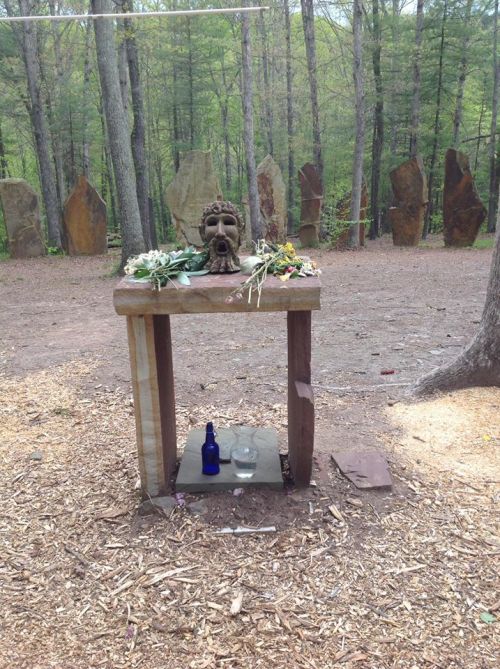
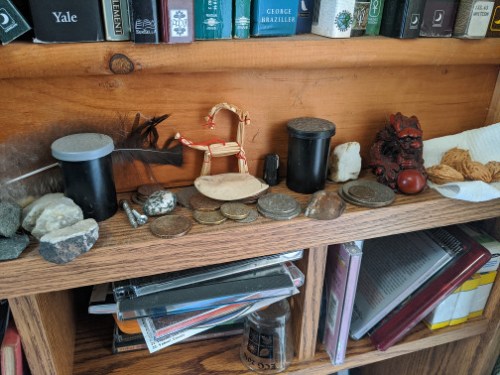

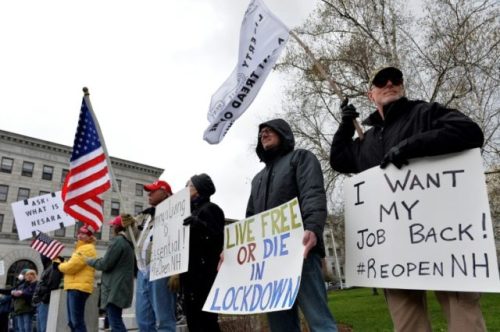
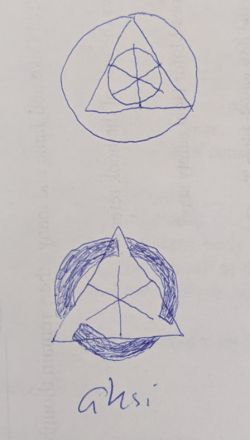
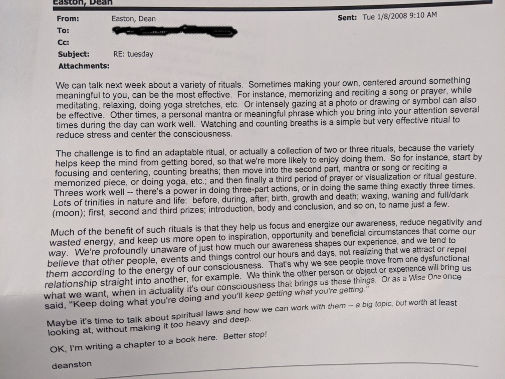
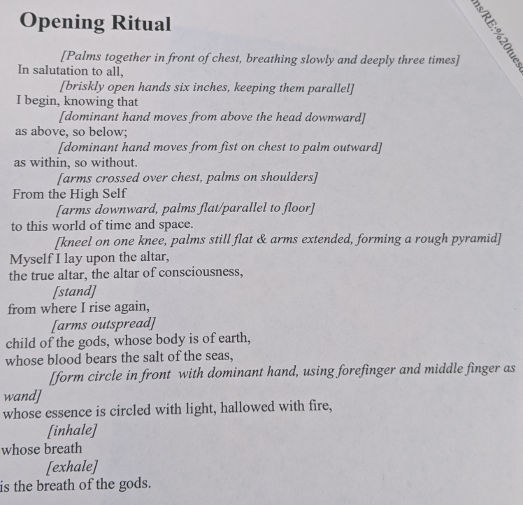
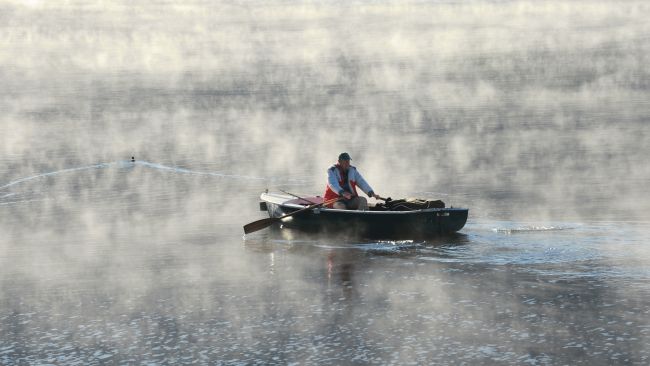
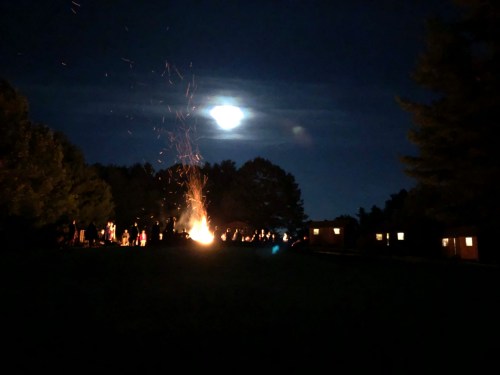


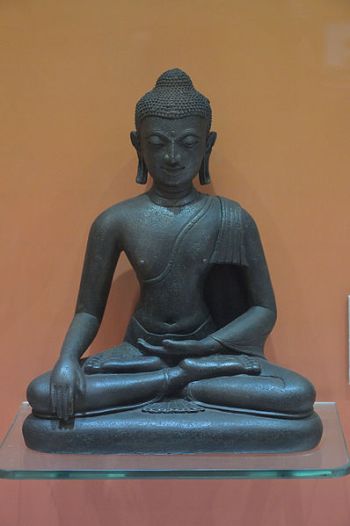
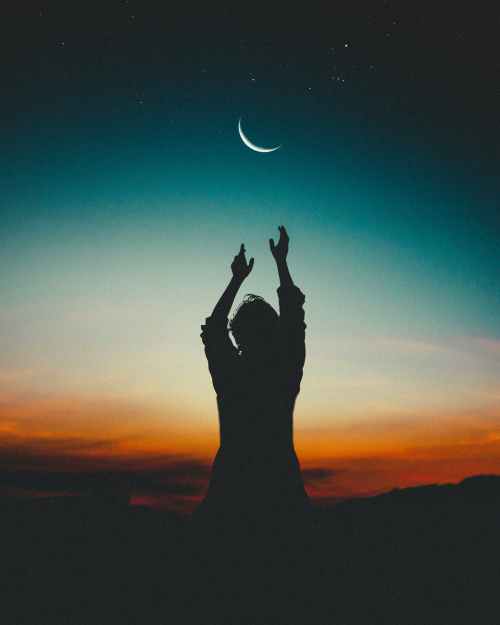
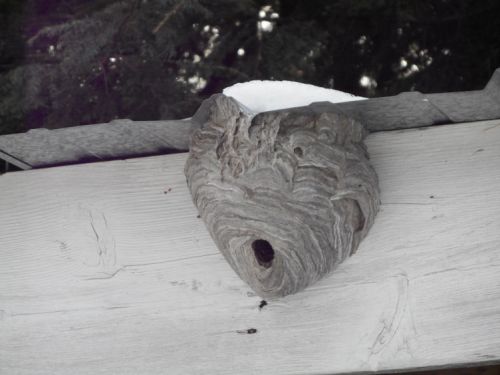
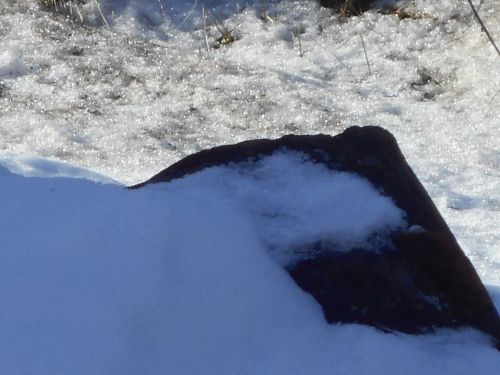




 A Druid Way
