“Our task”, says Rilke, “is to listen to the news that is always arriving out of silence”.
I usually avoid the political on this blog, and I’ll touch on it here only tangentially, because my purposes aren’t usually aligned with politics anyway. It’s simply not an arena where I work most effectively, having honed other skills for other goals. And by the time you’ve finished this post, you may be annoyed enough that you know as well as I do why I don’t “go political” any more often than I do. I usually irritate people on all sides.
It seems the job of our human ingenuity to rebel against absolutes, and against such tasks as others impose on us, even if they’re poets. Maybe especially if they’re poets. We turn away from our birthright, like a nursing infant fussing and refusing breast or bottle. Even the word “birthright” has gone out of fashion. (“Birthright? What’s that?”) And the cosmos spots us plenty of slack at first to rebel, to defy the augury, to “do it my way”. (After all, they say, “it takes all kinds to make a world”.)
True news a birthright?
So much of what passes for news isn’t even other people’s, but a kind of noise we make to fill up the silence, the same noise that rises up when we try to meditate or discover some silence in ourselves. And while it’s important to keep track of the world, up to a point, I often spin well past that point, leaving it far behind in the dust. When I return, I can’t even see it anymore, just my own footprints. On the trail of everything else but what and where I am, what else can I encounter but fake news?!
But “the news that’s always arriving out of silence” doesn’t originate from a partisan source, unless you feel the cosmos has recently turned partisan. I hear myself in it, my own deepest concerns, as much as anyone else’s. It doesn’t strive to convince me of anything. Like sun and rain, it exists, indifferent to whether I care or pay attention at all.
I don’t know about you, but my ancestors within my living memory talked of “inner resources”, and silence often was chief among them.
I note that Rilke doesn’t say we have to do anything beyond listening. (Did he know from experience that the initial choice and challenge to listen already demanded enough of us? And was it really any easier then, during his lifetime, to listen?) In listening, each person may hear something slightly or very different. But listening’s a place to begin. It’s a practice. Listen, and we apprentice ourselves to true news.
We also hear a lot about rights these days, with nearly everyone insisting on them, like children squabbling over cookies. We hear much less about responsibilities, about the tasks and practices Rilke and others among the Wise have set before us. As with prayer in the previous post, if we’re all saying “give” and holding out for gifts, who’s doing anything else? Who’s taking up the task of embodying rather than merely asking? There’s a place for petition. But if I first take up my responsibility, I find that rights begin to fall into place more readily. In fact, I submit that’s the only way it can happen. Responsibilities first, rights second. We can’t have one without the other. If I have to wait until “someone else gives me the right to …”, I must also wait until that someone else picks up the responsibility that underlies it.
The sequence of responsibility first and rights second can help sidestep obsessions with privilege and race and identity and all the other noises we’re distracting ourselves with these days. Insofar as Druidry is political, it says that what we need most deeply has always been with us. We don’t need to go looking elsewhere. The Wiccan Charge of the Goddess, subversive still, echoes this: “… if that which you seek, you find not within yourself, you will never find it without. For behold, I have been with you from the beginning, and I am that which is attained at the end of desire”. (The wisdom may have originated with Rumi: “If you find me not within you, you will never find me. For I have been with you from the beginning”.)
We may despise such wisdom and call it privilege or some other distracting name, without ever noticing it’s still true, and acting on it to find out how it might transform us.
We also don’t like prophets who tell us “The poor you will always have with you”. It seems an admission of defeat, or an acknowledgement of hopelessness. But it doesn’t mean that we ignore the issue. It can mean rather that we see it as characteristic of a predicament rather than a situation admitting a solution. There’s no “fix”, but there are stances, perspectives, approaches that work better than our present strategies. “There are no lakes till eternity”, Rilke says elsewhere.
We are not permitted to linger, even with what is most intimate. From images that are full, the spirit plunges on to others that suddenly must be filled; there are no lakes till eternity.
We face climate change and climate deniers, right and left, public and private, ecological and economic, old and young, male and female. We face fear in equal parts with love. Problems we thought solved haven’t gone away but instead sprout new thorns. We may wish these weren’t our challenges. “So”, says Gandalf, “do all who live to see such times. But that is not for them to decide. All we have to decide is what to do with the time that is given us”. Or refuse to. Native peoples in the Americas tried to make choices with the next seven generations in mind. We’re often choosing for just the next election cycle, let alone a single generation. In the end, diagnosis isn’t what we need. Prognosis would help. A course of treatment would help more. “Our task”, says Rilke …
And, peace to the pop Wizards among us, we do keep deciding. And deciding. Those decisions, not some imagined ideal, but what we actually do, are what shape our days. But this isn’t bad news. It can be liberating: we can choose, and do, differently if we will. It lies with us. We make, and break, and some live through it to remake again. Slow learners all. I’ve got snow to shovel.
If you join rituals of many of the contemporary Druid orders, you’ll encounter the Druid Prayer frequently. (In OBOD rituals it’s simply standard practice.) Some Reconstructionist Druid groups may eschew it because it originates during the “Druid Revival” period beginning in the 1600s, rather than from what we can recover of historical Druidry, but for all that, the claim often used to introduce it, that it “unites all Druids”, is more than wishful thinking. Or it could be.
back yard, facing east
Also called the Gorsedd Prayer (Welsh Gweddi’r Orsedd), it’s long been part of the Welsh National Eisteddfod as well. The “inspired literary scalliwag” Iolo Morganwg composed it, and you can find several versions of it, including the Welsh originals, here. It’s survived because of its power:
Grant, O God (or Goddess/Spirit/etc.), Thy protection;
And in protection, strength;
And in strength, understanding;
And in understanding, knowledge;
And in knowledge, the knowledge of justice;
And in the knowledge of justice, the love of it;
And in that love, the love of all existences;
And in the love of all existences,
the love of God (or Goddess/Spirit/etc.) and all goodness.
As a prayer of pure petition, it has value. The prayer makes no mention of reciprocity — the petitioner doesn’t promise to do anything in return for these very large gifts. In short, stripped of the politeness of the first word “grant”, the prayer says “Give.”
But if the Granter gives, the effects of the gift do provide a kind of return. If we’re protected, strengthened, granted understanding, knowledge, love of justice, of all existences and of God, you could argue that large transformative effects will doubtless follow, and constitute their own return. We certainly won’t be the same, act the same, or — most likely — pray the same. If we can’t get there any other way, sincere and heartfelt petition can do the trick.
As with so many elements of our group practice, we too rarely talk about them; first we’re busy preparing and then doingthem, and feasting and socializing after. The sense of having “held up our end” can be palpable after ritual: the atmosphere tingles with a sense of scales recalibrated yet again. Witnesses, petitioners, performers, vessels and channels for holy energies to enter the world through our own imperfect and holy lives, we’ve reconnected, remembered, listened.
But because I know how I can end up mouthing the words, even as their familiarity is a comfort and a part of the ritual energy flow, I keep returning to the practice of embodying rather than merely asking. I need something to stop me, shake me, take me out of myself, and yes, out of the ritual moment, while holding me to a higher standard than I came with. It’s a kind of second prayer, or personal ritual. It may take me 10 or 20 minutes to fulfill it, because I need to slow down to do it, whether I say the words aloud or bring them to awareness in some other way, feeling them in my bones, touching the earth, cupping a ritual flame, gazing at the horizon, repeating them till they sink in, carrying their vibration till a door opens inwardly, any and every one of these ritual gestures. “Do till it’s true”. I want to realize “as above, so below” however I can. All I know is that for me the energies of this different manner or form of prayer also differ — and I need that difference.
So here’s one version of the words, a small part of what feels to me more of an “embodying” prayer:
Holy Ones,
in your protection I stand here,
strengthened, understanding your ways,
knowing and loving your honor as the source of mine.
The justice I do today and every day
mirrors my love for the good things
you give, just as the love I receive
is justice, the sword of truth you raise
in my life, handle toward me.
Wherever I am, may I remember
and live these things always.
The prompt for this post comes from a Feb. ’16 article in The Week — nearly two years ago. The inevitable article or podcast or meme about how depressing the holidays can be merits a judicious counterbalance — it deserves an “on the other hand” in rebuttal. So here’s one contribution toward that goal. It may help to read the article in The Week first. Or not — your call.
Now the pop neuroscience that the article’s based on — “Neuroscience reveals 4 rituals that will make you happy”, the title crows — isn’t actually particularly astonishing in itself. But the “four rituals” are interesting because they’re behaviors every human already practices anyway. That means — to me anyway — I’ve already got something to start with and build on. The magical principle here: What we make conscious gains power from focus.
Snow, then ice: 23 December 2017
At this point those who think ritual doesn’t interest or concern them may be tempted to turn away. (There is after all a whole Net out there to click through. Go ahead if you need to!) But as anthropologists and neuro-folk have discovered, to be human is to ritualize our experience. It’s as if we each need to wear t-shirts that say: “What rituals are you practicing today?” You know, just to keep the activity in mind. If we’re ritualizing, what are its effects? Is it a helpful ritual? What are we doing?
From small rituals like shaking hands vs. bowing, or saying your culture’s equivalents of “please” and “thank you,” to family traditions at the holidays, and outward to public ceremonies like reunions, annual festivals, weddings, funerals, ship-launchings, inaugurations, dedications, etc., ritual pervades all human cultures.
Some of our most potent and invisible rituals shape our daily experience in profound ways. The trick, I conclude, is to domesticate my rituals, expand on the most effective ones, and put more of them to work on my behalf. (By the law of reversed effort, they may become much wilder as a result.)
In fact, we ritualize such a large portion of our days, that when something breaks our routines (read ritual as “habit” here), it may annoy or even anger us as much as it may pleasantly surprise or intrigue us. Let me find road work or a detour along a customary route, a power outage, a closed restaurant I was counting on (but hadn’t called ahead for, because it’s “always open”), and I’m thrown out of routine, forced to reshape something I’d previously planned and ritualized. We count on ritual to streamline and organize experience. Maybe that’s why we discount magical rituals. Ritual is so commonplace, after all, that it can feel “nothing special” by itself.
It’s what we do with it that counts.
So here’s a Druidified version of the four rituals, each now associated with an element and a direction. The ritually minded can expand on these “core four”, rearrange the associations, and so on. After all, if ritual or magic can’t deliver even a smidgen of happiness, it ain’t worth much.
Earth/North: Practice gratitude.
Give thanks for good things. Gratitude, as my longtime readers know, is one of my go-to techniques. Pairing it with appropriate action helps intensify it — write it down, etc. Earthy forms of gratitude may loom particularly prominently in your awareness right now — sweaters, wool socks, hot drinks, etc. Go for it. Earth the gratitude. Ground it in awareness and in gesture, in action, etc.
Air/East: Name the negatives.
Turns out our capacity for shame, guilt and worry can be productive, says the article. (Good thing, since so many of us specialize in one or more of these. Collect all Three!) And though labelling often comes in for a bad name in our politically distraught and extreme age, it’s one of the things that language is for, what it excels at. One key is the appropriate label: “Name it and tame it”. And “getting a handle on something” can include naming it accurately. And also knowing when to turn off language altogether for an interval — a magical technique all its own. Trance, music, daydream — we hold the reins in our hands.
Interrogating habits, whether “good” or “bad”, can reveal unsuspected wealth both for themes for meditation, and for material for ritual. What we really want can surprise us: going through the motions of a habit can block us from discovering what actually powers the habit in the first place. Studying the habit, revolving it in clear daylight, returning it to consciousness, can teach us much of value. Ritualizing it empowers us to live its full potential rather than shoving to one side, where it collects dust and rust and small rodents as it putrefies. A purified habit is a happy habit.
As J. M. Greer notes,
[t]he tools of magic are useful because most of the factors that shape human awareness are not immediately accessible to the conscious mind; they operate at levels below the one where our ordinary thinking, feeling, and willing take place. The mystery schools have long taught that consciousness has a surface and a depth. The surface is accessible to each of us, but the depth is not. To cause lasting changes in consciousness that can have magical effects on one’s own life and that of others, the depth must be reached, and to reach down past the surface, ordinary thinking and willing are not enough (J. M. Greer, Mystery Teachings from the Living Earth, Weiser Books, 2012, pg. 88)
Fire/South: Make a decision.
Starting with small decisions helps me access the spark that follows this act. After consciously telling myself I will do this after writing this sentence, I rise and go put in a load of laundry. I’m back, and the act of getting up literally and psychologically to carry out, to follow through on a decision, is useful to enact and then to examine critically for its effects. A magical insight here: switch hemispheres frequently!
(Perfectionists may want to aim for “good-enough” decisions. Consciously wallowing in mud, working up a sweat, or making some kind of a mess — your choice! — may help defuse some of the OCD tendencies of perfectionism — short circuit it intentionally. Hey, it’s worked for me! Making a conscious decision about something very small can open up clarity on the decision-making capacity itself, without the distraction of the incidental content of the decision.)
If “ordinary thinking and willing are not enough”, there’s plenty we can do.
Water: Touch living things.
So many … loved ones, pets, plants and trees, the green earth. Touch as the most concrete of the senses can take us out of heads and into our bodies, letting the other elements do their work more directly, without all the wards and barriers and avoidance strategies we deploy whenever we practice unconscious black magic on ourselves. Which we do constantly. Connection drags us out of the solitary hells that the West has come to specialize in helping us to manifest. “Only connect!” goes the magical refrain — “Live in fragments no longer” (E. M. Forster, Howards End).
/|\ /|\ /|\
Change up the elemental associations, and the rituals will shift subtly if not significantly. Armed with the earth of the body, the air of the breath, the fire of spirit and water of blood, we may ritualize our ways to places of surprise and delight. Happiness can’t be an endpoint anyway — it’s a practice to take up and improve.
Note on the Welsh stories of Taliesin as one source of widespread contemporary Druid training and myth:
[They] belong to the islands of Britain and to anyone who connects to them, regardless of one’s position on the planet. The tales arose from the landscape of Britain and were relevant to the inhabitants of these lands then as they are now, but the mysteries contained within them cannot be confined to location. The origins of the tales’ creation may well be locality-specific, but the mysteries they contain are soul-specific – they apply to anyone, anywhere …
— Kristoffer Hughes. From the Cauldron Born. “Introduction”
/|\ /|\ /|\
Fans of the Druid author, the wonderfully articulate Kristoffer Hughes, will particularly enjoy this 23-minute video, “Kris the Pagan”, in Welsh with English subtitles, from Welsh National TV. But anyone who’s been following this blog can find something of value and pleasure.
The video dates from the time Kris’s book From the Cauldron Born appeared (2012), and includes much of interest to Druids and Pagans generally, as well as friends of Kris: images of Solstice and Wassail celebrations, an overview of Druidry, a visit to the Pagan publisher Llewellyn Press in Minnesota, images of Kris on Anglesey, and Kris narrates the whole thing.
The video could also serve as a good introduction to the feel of Druidry, as distinct from a dry lecture, as Kris keeps it warmly personal and reflective. (And if you love the sound of Welsh, as I do, that’s just an added bonus!)
I’m borrowing the title for this post, a lovely question, from John Beckett’s recent article here.
As we approach the turn of the year, we have W. B. Yeats’s version, the evocative query ending his poem “The Second Coming“:
… what rough beast, its hour come round at last,
Slouches towards Bethlehem to be born?
For we give birth to all manner of things, and not always to our benefit. Like the young mage Ged in LeGuin’s A Wizard of Earthsea, “who raged at his weakness, for he knew his strength”, we sense an inchoate energy at work in so many things, if we could only align it to our purposes. Or is it time to listen more, and align ourselves with the energies of the intelligent universe all around us, that brings forth beasts and birds as well as humans who ask such questions?
And there’s our challenge: alignment. Complete the circuit. Our youth culture “hooks up” without finding satisfaction or connection. Loneliness, anxiety, depression afflict so many. Pain both physical and psychological drives an opioid crisis. What spiritual prescription can begin to address such heavy concerns?
If we’ve been paying attention, we know that no single solution works for everyone. This holds true in religion and spirituality, too, though plenty of one-true-wayers will beg to differ. So we turn again to do what we can, each in our own way.
As one of the Wise observes,
The ideal that you hope to achieve is always to be ready for an incarnation, whether it is in this world or those planes beyond. But unless an incarnation can be offered its birth through you, though, it is incapable of being brought into the manifestation of life. Therefore, your attitude should be one in which … you alone accept the responsibility of incarnating a new and greater value of yourself.*
Examining what needs to be born is a first step in bringing about a birth. (Following the metaphor further, we can of course rush to conception, and deal with the aftermath later. Some of us at least have learned that doesn’t always end well.)
1–What can we help be born in our homes and yards? I’ll start here with Earth. This time of year is perfect for dreaming with garden catalogs. What else? Is there a spot of backyard I can allow to grow wild, or at least wilder? The front lawn may feel more public, or be subject to various town or highway ordinances. But especially if you have even a couple acres like I do, consider whether a spot of wild is both “creature-kinder” and asks less mowing and upkeep. Brush from winter windfall can get it started. Erecting even a few birdhouses for the more shy species that favor cover can also help. We’re still shaping what we’ve received from the previous owner of our land. I’m less green-thumbed than many, but even a thoughtful neglect to mow absolutely everywhere can encourage many species. We have a working truce with our feisty moles, renewed each year with a ritual and a few conversations, to keep them from our garden areas.
Is the way open for berry bushes, which birds may have obligingly already started for you? Along fence lines and beneath their favorite perching and nesting shrubs and trees, birds drop seeds that will grow in a few seasons to a source of blackberries, raspberries, elderberries, and more. Staring at snowdrifts can serve up good practice for imagining spring and planting and new green.
2–What can be born in my spending habits? I’ve come to appreciate small changes, because they’re easiest to stick with. There’s more virtue and occasion to feed the ego (and thereby nurture a positive practice) if I follow through for a year, rather than think big but end up doing nothing. Combine errands and car trips? Recycle used oil, parts, tires, cardboard, glass? Many communities are moving toward better custodianship of resources, and starting to offer better options. Inherit a shed filled with rusting things, and badly-labelled containers of possibly petroleum substances? Any clean-up is “more than before”. Shop used when possible. The northeast U.S. reads a lot through the winter months, and well-patronized library book sales often have surprisingly current titles. With many large libraries so short-sightedly downsizing their collections, you can sometimes enjoy remarkable finds.
3–What can be born in my practice? By this I mean spiritual practice. Whatever yours is, feed it. Make it easier for you to do it, whatever form that may take. If you haven’t taken up a practice, the new year is a good time to try one out, if not today. Again, make it easy on yourself. Huge numbers of possibilities: five minutes for sacred reading (and you decide what’s sacred to you), stretching, breathing exercises, clearing a chest of drawers or closet or room, an artistic practice, listening to music, yoga, meditation, home renovation, volunteering, helping a neighbor, shoveling a driveway, driving someone to an appointment. Writing actual letters. Listening. Singing or playing an instrument. Cooking. Tending a household shrine. Photography. Weaving.
Whatever it is, I succeed most when I begin with such a small period of time I can’t NOT begin. As a writer, I practiced with 10 words a day during my busiest times. (Too small not to succeed! Easy to make up for the next day, with 20, if I “forgot” the previous day.)
4–What can be born in other quarters of my life? I’m often not a very social person. (My default mode is reading or writing, rather than hanging out and talking.) This blog is part of what I do to connect beyond my own immediate circle. I’m also not a major volunteer, either, but rather than guilt myself up about it, I choose options where volunteering at all will encourage me to do it again. A monthly open discussion series at a local library starting in January is one of my current outlets. Supporting my wife, who’s the current wage-earner in the family, is another. Laundry, dishes, fire (our heat source), snow removal from driveway and solar panels, and I’m serving, acting outside myself, encouraging flow.
5–And I make and find rituals for what needs to be born, to help keep the doorways open. What needs to be born?, I ask, and light a candle, gazing at its yellow flicker. What needs to be born in me?, I ask, and spend time writing in my journal the response that comes. What needs to be born that’s already taking shape, that I can help with? What’s about to be born, that I can work with, and foster, and celebrate? What’s born among friends, when we gather in two days on the 17th in their backyard, to light a fire, and talk and snack and sit on lawn chairs in the snow, feet toward December flames?
Asking the question as I go, keeping the fire of my attention burning, helps the new thing be born.
[No, I’m not talking about the “open-source analytics data store designed for OLAP queries on timeseries data”. How the word Druid ever got patented and copyrighted, I’m not sure. Imagine trying to do the same with Christian or Hindu or Muslim!]
Recently the word “privilege” has accrued all manner of emotional loading with connotations of wokeness and political correctness, while one of its primary meanings — advantage — remains largely untouched. While I do see the seven points below as privileges, an accurate synonym is advantage, and so it’s this sense I want to examine here. Note also that I’m not claiming these advantages belong only to Druidry. But in my experience, Druids seem aware of them in uniquely Druid ways that contribute much to the experience of Druidry.
1–Druids (and Pagans generally) are so clearly a minority in the West that they enjoy a built-in remedy against arrogance. The misconceptions about Druidry and Paganism still rampant can, at their best, make a person laugh. Yes, there’ll always be individuals who try on an inflated self to see just how far such a blimp will carry them. The cosmos deflates most swollen and bloated things in its own good time. But for the rest of us, humility is a useful place to begin almost any human activity. Except maybe politics. Minority status points Druids naturally towards humility and humor.
2–Druids do community about as well as anyone. (Visit a Druid camp or Gathering and test this firsthand.) While acknowledging the valleys and caves and hermitages our solitaries occupy — many community folks are solitaries, and vice-versa — we get plenty of practice in loving others. Because in the end, that’s why we connect. The currents and energies of the cosmos also dwell in other people. Looking to power a rite or discover a richer truth or share the inspiration of awen? When we attempt these things, we draw on each other at least as much as on the sun, moon, stars and spirits. Living things make up much of “the power of the land within and without”, as the OBOD invocation puts it. Druid community is practice for love.
3–With the practice of Druidry comes a discovery of the need for discipline. No one checks up on us. If we want something to happen, we need to be open to it and also help set it in motion. Achievement takes work, a basic truth we seem in danger of ignoring in Western culture. Through making a choice for a particular practice of discipline, we gain increased self-respect. We’ve earned what we know. (If we haven’t, someone will probably point it out to us.) The opportunities Druidry offers to practice self-discipline also build self-respect.
4–Because of the diversity of training, experience, location and heritage among Druids, our practices help keep us open to surprise. Whether we meet in community or keep in touch through books and online, we’re always encountering new insights, ideas, perspectives and techniques. We’ll never know it all, and that’s part of the wonder of the path. We gather in circles, and they always open into spirals. The path doesn’t stay the same, and neither do we. Druid practice helps keep us open to surprise.
5–An experimental mindset powers much of our practice, as it does our gardening and beast-craft and spiritual exploration. “If it’s operational, it’s true” goes the old tag from the 60s, and it still has validity for most Druids. From this attention to reality comes a particular integrity in the Druid experience. Dogma still creeps in from time to time, but attention to what’s happening to the land, to what the spirits and guides are showing us, to what our studies reveal, and what our dreams and visions and hunches direct us to consider, mean that unlike religions that center on professions of faith, Druids are busy exploring to find out for themselves. Once you know, you no longer need to believe. Belief’s often a useful tool, but it’s just one among many. The experimental mindset that Druidry encourages promotes spiritual integrity.
6–Druid teaching, ritual and practice spark many Druids to explore their artistic and creative sides. Yes, Druidry is a spiritual path that specially honors and fosters creativity. Meet and talk with Druids and you’ll also discover how creative people are drawn to Druidry because they seek a path where imagination plays a primary role in spiritual experience, rather than a suspect behavior leading to heresy, diabolic influence and poor choices. Druidry knows passion and vision and creative exploration are spiritual gifts.
7–The Great Mystery that lies at the heart of the manifest and unmanifest is what powers Druidry. It sparks humans and other creatures, burns at the heart of planets and stars, and shines out of the cosmos whenever we pay reverent attention. The open-endedness of Druidry, its sense of a new horizon beyond the next hilltop, make it both welcoming, exciting and challenging. The heart of Druidry is both spiritual welcome and provocative challenge.
One of the great discoveries we keep (re)making is that in and around doing the work and not doing the work, this winter season is crammed full of vision and dream and inward turns. Any physical slump we may feel often comes courtesy of ancient programming to conserve energy, store fat, distill insights and experiences, lick our wounds and wait for the Light to strengthen again. The cold doesn’t help either, though it’s a marvelous tonic once we slough off the inertia and bundle up and head out to breathe air sharper than our athames and paring knives.
I write from my time and place, New England in winter. Translate to your own environment. You know it, are learning it with each day, ground under your feet, shapes of trees or endless grasses, desert or horizon or mountains in the distance, ocean blue-gray-green and immense beyond your sight.
Samhain may mark with a ritual day a time when the veil thins, but for me the whole season is paper-thin, a Japanese shoji screen between me and Otherworld, a spidersweb thickness away, the same soft, uncanny brush against the cheek of everything that “daylight brain” pushes away. But night brain rejoices, says yes! says come! says I know you! and speaks in exclamation points and question marks and all the punctuation you rarely see in our scientific waking life of categories and forms and lists and schedules and business hours.
I slip into daydream over breakfast, at work, while driving. Night threatens to take over. We turn to (more) caffeine, chocolate, anything to prop awake the animal self that seeks to settle into that intermittent twilight drowse. The season has already lifted the cover and left the door ajar. The challenge isn’t to do either of these things — they’ve already been done for us, courtesy of biology and the annual ritual of sun and planets and time — but to stay out of the rabbit hole, avoid the Cave, do the daylight things we’re called to do and not slide off into othering. Because night brain sends us thoughts and feelings unbidden, and it can be a rich time to set down in paint or on paper or in fiber or other craft something of the energies at work in this dark half of the year.
One way to see it and work with it: the mulch and compost and ferment already begun in us mean that the ancestors are putting forth their voices and desires. As their descendants, we carry on some of the work of their blood and sinew. At the same time, being wholly ourselves and not our ancestors, changes seethe and bubble upward from within, brew of the Cauldron. We quit a job, or a relationship, or others do these things for and with and against us out of their own ferment. We cast about for “what next?” and any answers may come not in daylight terms, necessarily, but in hunches and doubts and the same turns that dogs and chickens make before they lie down to rest and nest. Only we do this inwardly. Turn, turn, walk down the new-old bed we’ve made to lie in. And we try it on and test it for fit. Or walk away.
Often we expect any vision to come clear, to walk before our inner sight like TV characters do, crisp in their makeup and perfect hair and wardrobe, when often what comes is all shadowy and indistinct as faces around a ritual circle by firelight. A half-turn or blink and then it’s a single face we see in profile, up close. But what we thinkis I need to breathe or I gotta make a change. But we don’t or can’t talk easily about such things with anyone else, because it’s hard to explain the link between what vision gives us and what we feel. Just like in a dream, the inner journey brings me to a field of sunflowers and suddenly I know I have to change my life. The dream logic between the two is undeniable, even if it bypasses daytime reasoning. It’s not cause and effect, or before and after. No, it’s all one thing. And we seem to know it all at once, too. (But talking about it requires us to examine it piecemeal, like trying to push a whale through a sieve. It just doesn’t work. So we fall back on trying to explain that, too, and soon we’re twice removed from the original experience.)
So we make our pilgrimages through winter, pondering the pieces of dark world wisdom that arrive like that touch of coolness when we wake and find we’ve kicked off a blanket. Or in the dark, up to get a drink in the night, we step on a marble or raisin or kernel of popcorn and the surprise feels all out of proportion to the actual size of the thing that we set a tender foot on. Old photo or yearbook or holiday letter from the past, object unearthed when we were looking for something else. We sit with it and an hour passes in reverie. We chew and digest our lives and come to perceive something of their value and nourishment in such moments, unplanned, perpendicular to schedules and calendars.
Let me honor the dark, I whisper to myself.
Let me draw darkness around me like a blanket, feeling its folds.
Let me say its names as they come to me, strange sounds, rumbles and squawks in the throat, thing animals say to each other and us.
Let me caress the soft animal of my life.
Let me linger in the dark and its warm silences, welcome its cold shivers.
Let me weep when tears are tribute, salt and water to bless and purify.
Let me hold myself like a child in the womb,
rocking under the heart’s own rhythm, fetal and new.
Let me wake to darkness as to light,
and feel at home and welcome.
Because sometimes, especially this time of year as we approach the Solstice, an animal lethargy creeps in and “what matters most” means eating and sleeping. You should be hibernating, whispers Oldest Brain. And I long to listen.
Not doing the work is familiar by now. And all around us flash examples too numerous to count. Headlines and posts and memes and Facebook feeds, what’s trending, and even our friends may not offer what we need. Or indeed be working actively against it. Peep at a partner and they’re no help either, most likely because they’re in the thick of their own version. Or will be soon enough. (Sometimes it’s the height of respect simply not to dump my load onto my wife’s.) To lift a few lines from Rilke for my purposes,
Often a star was waiting for you to notice it.
A wave rolled toward you out of the distant past,
or as you walked under an open window, a violin yielded itself to your hearing.
All this was mission. But could you accomplish it?
Look, if we want an easy Bard, then we need to tune to another channel. Rilke isn’t it.
Sometimes it’s not even clear what he’s naming for himself, for us by proxy, though we may feel it in our marrow. Possibility slips by and sleep calls, that easy drowse-and-wait. Sometimes, true enough, sleep is good strategy. Only you and you and I and she and he and they can tell, each by ourselves, if such a strategy fits right now, peering between a dream and a nightmare and the choices seen and unseen that keep tickling our skin and our blood.
For it seems that everything hides us.
Look: trees do exist; the houses that we live in still stand.
We alone fly past all things, as fugitive as the wind.
And all things conspire to keep silent about us, half out of shame perhaps, half as unutterable hope.
If we’re hidden, what luck finding anything else, or anything else finding us?! Especially what we feel we need most — that’s the most fugitive thing of the whole lot. I’m standing here looking and listening for a sign, but it turns out I’m it, tagged by the universe, which runs away — it wants to play — while I’ve got all this serious sh*t to deal with! If there’s a conspiracy, it’s a cosmic one, with shame and hope for fuel, a secret formula we’ve paradoxically always known.
So we take December mindsets like these with us as we go, turning them over to see where the light leaked out of what looked so very promising last week, or a month or year or decade ago.
Have I named it yet, this mood? Pause a moment and toss your own contribution onto the heap. Plenty of room.
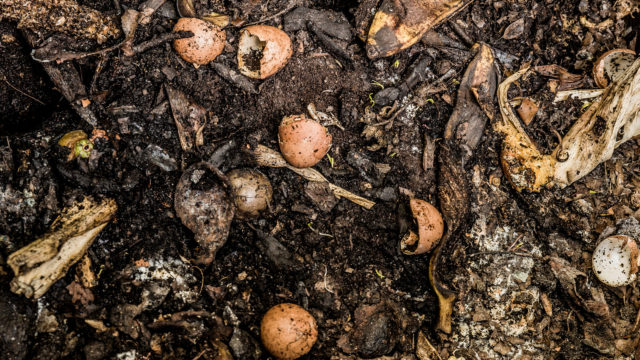
There’s nothing wrong with composting these things, though we can often feel ashamed of all the brown leaves and earthy smells. It’s the right season for it. Rot and spoilage and scraps, odds and ends of the year all go in, and earth begins its long work over again, and transmutes it. Serious sh*t and funny stuff, dead skin and ideas, fingernails and ashes and brown lettuce leaves and apple-cores and the last squash that never grew once the days turned cold. That deformed pumpkin from the front steps, mummified relic of Halloween, and the remarkable sludge from the back of the vegetable drawer in the fridge. Fling in those irritations and annoyances and petty snarks. Spites and attitudes all go in, rattling as they hit the sides and bounce around against the Cave of Souls and disappear deeper down its gullet. We see that yawning mouth of darkness that terrifies us, even if only a little or for an instant, then realize we were just standing too close to the mirror and caught a glimpse of ourselves up close. So we do the work anyway, just as it does us without our permission. Because to be alive at all, we’re in it.
It’s good to take these things out and air them, get them the turning and churning and the even exposure they need, basting them in earth, so they transmute all the more readily. Everyone’s got them. Think of them as the scraps at the end of the craft session, husks and shells and scurf and skin, bone and gristle dropped into the sink after the holiday dinner’s done and guests gone, before the grand cleanup begins. Shards left over after creation’s finished. What gets swept up from the garage and basement floor. What the kids tracked in from outdoors, the carcass the dog dragged around the yard and left near the mailbox, the small furred or feathered corpse that the cat so thoughtfully dropped on the doormat. We’re always putting a foot in it.
So we squawk and shrink and blanch at these things, disowning them if we could, turning away, dismayed the universe sends such awkwardness our way. Among difficult gifts, the mind of winter ranks pretty high, because it’s pretty (not pretty at all) rank. Overripe, expired, corrupt, foul, putrid, excremental, cadaverous in its open decay.
“This too is mission”. And I can achieve it. I grasp the shame by its least offensive corner, or shove my arm in up to the elbow and shuffle it along, helping it slither and slide into its next moment. And I might catch the eye of someone else doing the same. We nod stiffly at each other, almost imperceptibly. Earth blesses it, blesses us, accepting nothing short of all.
And I sigh and begin again, making room for that second part, unutterable hope. Which, as all Bards do, I keep trying to put into words.
I don’t talk directly about the other path I follow, and that’s principally for my own benefit, so I can keep clear about where I am and what I’m doing at the moment. Obviously I can’t keep them separate, and there’s no reason to try. They feed each other constantly anyway, and often unexpectedly, too. Like when a teacher from the other path shows up as a Druid guide in a dream or meditation. Or an exercise originating in OBOD does nothing Druidy, but opens a door I thought was locked tight, or didn’t realize was a door in the first place, and shows me a new landscape I couldn’t even have imagined in my understanding of the other path. And that’s the short version of why I keep practicing both. Do the work, say both paths.
Louisiana Live Oak near Gulf Coast Gathering, 1200+ years old
One of the practices of the other path, nothing particularly unique or esoteric in itself, is writing a monthly letter to one’s teacher surveying the past 30 days, noting discoveries and setbacks, places for focus, requests for help, dreams, encounters, insights from reading and study, and so on. It doesn’t have to get (e)mailed (though that can be its own practice), because the value is in the doing. No surprise, we receive in direct measure as we give.
I talk often here about the value of a daily practice, whatever form it may take. Certainly weekly and monthly cycles grow and build on that daily rhythm, whatever it is. (Start small, and with what feels appropriate.) Lapse in my daily discipline, and I see the larger cycles become more challenging. They have to pick up my slack. The weekly fast, physical or mental, that can be so cleansing, simply has more to clear away, and that can make it harder to move through. If it’s physical, food calls with an imperative clamor you would not believe unless you’ve tried it. If mental, every weakness seems to arrive and bid for attention. Or they take turns. And sitting to begin that monthly letter, which you might think would welcome such experiences as ready-made material to incorporate, instead throws up formidable writer’s block. I am called to do the work. Otherwise I sit still, and stagnate. No fun there.
Along with the letter, of immense value is working with a personal word or mantra. Many know and use traditional words and phrases — OM, amen, nam myoho renge kyo, allah hu akbar, and so on. And these practices prove their own worth, in groups and alone. But the personal word is a spiritual key, and it can unlock many doors, simply because it is tuned to my present consciousness. It echoes where I am today. And that means that if my current word wears down, as they do over time, asking for a new one is part of the practice.
Watching and listening for the new word is an exercise in itself. Sometimes it will present itself in contemplation, as if dropped in place like a stone in a pond. It may be an existing English word, or a non-English syllable or two or three. I try it out, the vibration engages, and I’m off. Testing it is an important part of using it. If I feel a habit loosen, a mood lift, an energy or pulse that shifts things usefully, I know it’s working. Other times, it appears in a newspaper headline, or on a billboard, or in casual conversation. A small inward chime goes off, and I recognize it. Or it comes calling multiple times, till I catch on and at last wake up to its persistent knocking.
These are just two of what we might call foundational practices, the kinds of things that can sustain a spiritual life, that less commonly examined flooring for ritual and ceremony, the underpinnings of magic for whatever is the next in the round of seasonal festivals, in this case Yule or the Alban Arthan rite at winter solstice, now less than a month away. Take on a daily practice and it usually will come to consist of a set of such foundations and supports, mini-rites or prayers or practices, recitations or visualizations, exercises or devotions that may range from lighting incense to offerings made to the four directions, to presenting oneself as a ready servant to a patron god or goddess, to community service, volunteer work, and so on.
A living practice evolves and shifts over time. This is a good thing. For some years because of my cancer, I couldn’t prudently practice a physical fast, so the mental one taught me something of what it has to teach. And teaching adolescents in a boarding school, while it was a job, also allowed me chances to serve, to listen, rather than fill other heads with my chatter all the time.
Doing the work each of us is called to do readies us for working together. (Is it any wonder we face such division and partisanship in the U.S. these days? How many of us if we’re filled with anger and distrust and fear are doing the work?) A wise OBOD Druid recently remarked, “When we commune together in song and revelry, we become friends. When we rise together in ritual, we become allies. When we take time and heart to initiate members into the order together, we become family”. Slowly I’m seeing more and more how friends, allies, family all depend on each of us doing the work.
I’m getting closer, though, to a place where fewer boundaries exist between my two paths. It used to be that tempera paint, egg-based, stayed separate from oil painting, till someone with sufficient mastery thought to combine them. I can see such a point in what one might call the future, though if I can see it at all, the future in some sense has already arrived. I just have to catch up to what is inwardly waiting. Isn’t that the story of our lives, the ongoing possibility of manifesting what already dances across the River, on the other side of the moonlight?
[5 May 2020 Update — Druid Magazine has been removed from online. Only paper copies remain.]
NOTE
A version of this post appeared on pg. 32 of the summer/fall 2017 issue (large PDF) of Druid Magazine. I’m grateful to the editors, and to their liberal policies that actually recognize the ownership of authors!
In the Southern Hemisphere, Beltane has recently passed, and we can, if we choose, draw on the “opposite” energies here in the North in November, in a six-month harmonic with the South. (Isn’t it always Opposite Day anyway?) It’s Spring in Autumn, Christmas in July, your six-month birthday.
Because when don’t we need sacred fire?
/|\ /|\ /|\
1–Finding Fire
Every Druid tradition I know of honors fire in some way. “It is the hour of recall”, go the closing lines of OBOD ritual. “As the fire dies down, let it be relit in our hearts”.
Here is the promise of elemental fire, never quenched, always ready to rekindle. But so often I find myself dry, cool, grounded, earthed—all excellent things after ritual, ideal for smooth re-entry into our lives, but hard to live from when we crave and need the flame again.
I’ve detected more than a fair portion of Earth in my makeup: a little reserved, suspicious of quick flares, with a tendency to solidity, inertia even. Does a spark still smolder in the heart of a person like that, waiting to be relit? Can I coax it to flame again? I hold the answers like twin children, one in each arm: of course, and not today. As I write this, I look out the window at fog and wet pavement. Where do I look for flame? In moments like these, it seems a more than reasonable question.
Yes, in the electrified West, we turn a key to start the car, we flip any number of switches all day along, expecting and usually seeing instantaneous lights, readouts, computers booting, phone screens lighting, and hums and rumbles of devices jumping into action. If, like me, you happen to heat with wood, you lay paper and kindling, strike a match, and flame obliges. Praise be to Brighid!
But for all that, I keep reminding myself, we do not command fire. In her The Way of Four Spellbook, Deborah Lipp notes:
Fire has always been set apart from the other elements, because Fire alone has no natural home on the earth; Air has the sky, Water the sea, and Earth the land, but only Fire stands apart from geography. In nature, Fire is the outsider; it is out of control, and it conforms to no known rules (pg. 10).
This is lovely and poetic, evocative and wise, and, as a friend remarked when I quoted it to him, it’s also bullshit. The only place fire happens is geography, just like with every other element. Heart, fire pit, computer screen, creativity—we light and relight them constantly. It’s our extensive craft with the fire principle that’s made much of civilization possible. But mastery in the end means service, and our wizardry rings hollow whenever we forget this.
2–Serving Fire
“I am a servant of the Secret Fire,” declares Gandalf in The Fellowship of the Ring (Tolkien, 2004, p. 330). Not a bad magical declaration. So I turn to the Indo-European past and summon reconstructed ancient words* to say something like it: *Ambikwolos esmi yagnos ogneyes [Ahm-BEE-kwoh-lohs EHS-mee YAHG-nohs OHG-neh-yes], which roughly translates to “I am a servant of the sacred fire.”
So I ask how I already serve fire, because contrary to an adolescent tendency in us to see our lives as all-or-nothing, we have a starting place within us for anything that can manifest—or so some Wise Ones have told me. How else can we recognize a lack or hole or void except by feeling the outline of what’s missing, of what’s supposed to be there?
Now, when I need to reignite the fire of the sacred, and that includes writing about it, my daily practice, my own “hour of recall”, hopefully guides me to embers that still throw off heat. (If it doesn’t, I know I need to fine-tune what I do each day.) I keep re-learning that we never really extinguish sacred fire. We merely smoor it—that lovely old Scottish word—not “smother” or “suffocate” as some dictionary entries render it, but bank it, setting it to smolder till morning, when it can be breathed and fed to flame again. Peat excels at smoldering, but so do woods like hickory, and so do our human spirits.
While preparing a fire workshop for MAGUS Beltane, out of ruminations like these, I made a list of questions I found I kept asking myself, so I shared them with attendees. Here are seven from that list you might use in your journal, or for a series of meditations. And if one or two of them call you away from reading this, go with them for a while along your own green and shining path. Your responses are more valuable, after all, than “finishing the article”.
1) What does it take—literally and intentionally—in order to kindle you, and in order for you to kindle other things in your life?
2) What offering, if any, do you make to help you kindle? What else could you bring into your practice? What could you discard?
3) What is sacred to you? How do you find, invite, welcome, increase the sacred? What sacred ways are a part of your life right now that can help you kindle?
4) What ways, if any, do you tend to discount, push away, ignore, or feel “aren’t my way of connecting with the sacred”? What can you learn from your attitude towards them?
5) Where are you already kindled? What is burning, warm, or fiery in your life right now?
6) Where do you desire kindling? (Where do you need to bank a fire and cool off?!) Or to put it another way, what needs to catch fire in your life?
7) How has sacred fire already honored your practice and flames inwardly for you?
3–Building a Ritual Fire
In reconstructed Indo-European, one of the words for “altar” is *asa. If you want to expand your ritual declarations and charm-making, you can say *asam kwero [AH-sahm KWEH-roh] “I build an altar”. And if you’re consecrating a talisman or another person, you might add *Yagnobi ognibi tum wikyo! [YAHG-noh-bee OHG-nee-bee toom wee-KYOH!] “I hallow you with sacred fire!”
What to burn on that altar? Here your judgment, tempered and instructed by divination, practice, dream, and study, matters more than anything I might suggest. But if you’re seeking such a suggestion, here is one. Druid and Pagan traditions speak of Nine Sacred Trees suitable for kindling sacred fires (Steward of the Woods, 2015).
What about an altar? You may well have one already, whether backyard fire pit or space cleared on a bookshelf for images, a piece of quartz found on a walk, Tarot card for the day, incense of the season, and so on.
Evidence from several different traditions tells us that squares of sod or turf were a common form that a ritual altar could take. The Aeneid (Mandelbaum, 1961, p. 117) mentions a sod altar. Records from the Scots in the 1700s (Frazer, 1929) talk of building May Day fires on an altar of sod. And the Æcerbōt, the Anglo-Saxon “Land Remedy Spell”, amounts to a ritual for creating sacred space and restoring the land’s fertility (Jolly, 1996). To do so, it instructs the ritual performer to take one sod from each of the four directions of the land to build the ritual altar. Ceisiwr Serith (2015), an experienced ADF ritualist, author, and Indo-Europeanist, gives more supporting info in an article on his excellent website, “Proto-Indo-European Religion”.
In closing, I turn for words to the Rig-Veda 1.26.8: “For when the gods have a good fire, they bring us what we wish for. Let us pray with a good fire” (Three Cranes Grove, 2007; To Pray with a Good Fire).
Note on reconstructed Proto-Indo-European:
The * asterisk is a conventional notation for indicating a reconstructed form. You can never know enough about linguistic prehistory to do more than mangle reconstructed languages. Even graduate study like mine in historical linguistics inoculates precisely nobody from error. (Though a professional career demands pursuing the unattainable.) So in releasing perfectionist worries over Indo-European reconstructions and pronunciations, I cherish the advice of the great medievalist scholar, teacher, and author John Gardner. In advising readers when trying to speak Middle English aloud, he remarks,
“Read aloud or recite with authority, exactly as when speaking Hungarian – if you know no Hungarian – you speak with conviction and easy familiarity. (This, I’m told by Hungarians, is what Hungarians themselves do.) This easy authority, however fake, gets the tone of the language …” (1978, p. 315).
Tone, we might say, covers a multitude of sins.
If you’d like to learn more, two readable, popular, and authoritative books are by West and Mallory, included in the bibliography. Work through them and you won’t need me or anyone else. You’ll be writing your own reconstructed Indo-European phrases and rituals with “conviction and easy authority”.
/|\ /|\ /|\
Gardner, John. (1978). The Life and Times of Chaucer. New York: Vintage Books.
Lipp, D. (2006). The Way of Four Spellbook. Woodbury, MN: Llewellyn Publications.
Mallory, J. P. & Adams, D. Q. (2006). The Oxford Introduction to Proto-Indo-European and the Proto-Indo-European World. Oxford: Oxford University Press.
OBOD’s weekly email “Inspiration for Life” offers good advice here, but frequently my question after reading is this: how exactly do I go about practicing any insight it contains? And of course part of any answer sends me back to digging through what I’ve learned. It prods me to open my spiritual toolkit once again.
Here’s a recent weekly prompt, as I think of it, for a possible focus I might take up during the week:
Don’t feel bad about feeling bad. Don’t be frightened of feeling afraid. Don’t be angry about getting angry. There is no need to give up when we are feeling depressed. Nor should we be dismayed at the grief which often accompanies the outgrowing of anything which needs outgrowing. We can be glad that our soul is speaking to us and pushing us onwards. We frequently need to persevere with a period of inner turmoil before the dust can settle and be swept out the door. — Donna Goddard
/|\ /|\ /|\
First comes an experience, and then any emotional response to it we may have. Sometimes there isn’t one, though often one comes, just not right away. My wife and I moved out of state for a promising new job, quit within a month, and moved back to Vermont in mid-September. In various ways I’ve been dealing with more fallout from that over the past thirty days than I did in late September, when the event happened, or shortly after we returned.
These delays frequently catch us off guard because of the time gap between initial event and response. Then we react to our reactions, without looking at the cause. Sometimes our secondary reaction takes up our attention and energy far more than the original experience or emotion. So we fill too many waking — and dreaming! — hours grappling with the effects of effects, rather than being cause in our own lives. And if like me you’ve truly mastered this peculiarly modern and dysfunctional art, you now feel guilty for a second, third or even fourth-level reaction: your response to your response at emotions stirred by the initial experience. How craftily we perform these perverse and twisted magics against ourselves!
Fortunately, the same skill we use in tying ourselves in knots can serve to aid us in climbing free. It needs only our fire to turn it to our purposes.
So I summon my magic, starting with the Law of Reversed Effort. Rather than resisting the guilt, inertia and listlessness, I realize they’ve become so heavy they start to drop off me, pulled by their own weight and gravity. They puddle in a mess around my feet. Stepping away, I begin to rise, calling for help if I wish from teacher, friend, familiar or other beneficent spiritual presence as I ascend.
As I rise, I pass through clouds, and then suddenly I’m above them. Here the sun shines with an intense brightness I can feel warming my skin. I continue to ascend, the earth growing smaller and smaller beneath me. It’s now a blue-green ball of coolness beneath me, the solar system around me. Then that too recedes. The whole galaxy swims around me, then clusters of galaxies, shining strands of stars and families of stars. Piercing the sphere of the cosmos like a soap bubble, I rise yet further, into another and larger universe. I slow and pause, absorbing the sense of light and freedom and expansiveness.
When I am ready, I descend back the way I came, through galaxies, back to the solar system, back to earth, and down into my body again. When I feel my physical form sitting on the chair, I savor the sense of lightness and ease, and give thanks. Then I open my eyes, savoring the gift, and record the experience.
/|\ /|\ /|\
In this world rich with experience, it’s fine that I am not always the cause. But it’s immensely helpful, in such an interconnected world, to remember that things don’t happen tome, as if I’m a stone, but for me, because I’m an integral part of the web. It’s feedback for what we’re all doing. Just this shift in awareness can begin to free me to find useful insights, spiritual tools, and paths forward, right in the middle of circumstances that otherwise may feel like dead-ends. Because choosing to be the effect of thoughts about experiences will return me to remarkably useless perceptions, like “That’s just your imagination!” which of course is perfectly true, but not, however, in the sense that this accusation comes.
Imagination is spiritual sight. It’s never just one thing. In fact, it constantly, unfailingly, eternally (internally!), tries to show us multiple, innumerable other ways to see, to perceive, to understand, to celebrate, to create. It shows us ourselves, and everyone and everything else, as we can be. Not in a Disney, fluff-bunny or Hallmark sense, but in the truer sense of potential buried and awaiting all the transformations that human consciousness is designed to achieve and manifest. Here, where it’s needed most. In the middle of the sturm and drang, the drama, the doom, the headlines, the media chatter. Yes, right in the middle of it all, a birth, a growth, a flowering.
Imagination at work is nudging the roll of the cosmic dice, when the Dungeon Master sets us to establishing who and what we will be in this iteration of the Great Game. Because we know we’re the dice, the throw that sets them rolling, the twinkle in the eye of the Master, and the numbers that come up which we then agree to play with, as well as the Players themselves.
/|\ /|\ /|\
Or if that package of metaphors doesn’t work for you, fire is always burning. Honor it. We decide what to use it to ignite, warm, inspire.
Air is always breathing and flowing around us. Respect it. We decide what to breathe on, and endow with careful attention, thought, planning, symbolism, imagery.
Water is always pooling and rippling. We decide what needs nourishing at the roots, where the true dream lives, what we deeply feel, and how our hearts guide us along the paths we instinctively know already. Acknowledge it.
Lastly and most kindly, earth is ready beneath us, supporting us, stage for manifesting all we make of our lives from this moment forward. Love it.
/|\ /|\ /|\
Peering out the windows of this train at strange new territory passing by, talking with curiously-attired strangers in the car, supping with voices and images of beasts and birds in my ears, dozing off with conversations still echoing. You know, the life of a writer obsessed for a time with characters and story.
At 27,201 words, I’m somewhat under my target word-count for Nanowrimo. The lovely impossible experience of any sustained period of writing means the simultaneous tyranny of daily word-sprints and counts and updates and bemoaning the calendar and days passing, along with a complete, blissful disregard for all these things, as I bathe in a refreshing pool under gentle sunlight, that has appeared in the middle of my story, a moment of solitude surrounded by moss and mists and a distant valley calling me to explore.
But what about the moments when something outside of us, without our conscious intention or instigation (or with it), announces itself to us?
You know — those times when no circle or congregation, no rite or prayer has claimed us in our striving, and something reaches out to us of itself.
Dream, presence, deva, spirit, ghost, exaltation, angel, mystery, expansiveness, ecstasy, cosmic consciousness, god/God — a hundred names for what well may be a hundred different things. But each or all of them qualitatively different from you and me. The shiver, the awe, the freaking out, the reverence, the fear, the adoration, the Other. Or so virtually every description of these encounters suggests. And yet we’re intimately linked to them somehow, or we could never experience them in the first place.
What to do with this mass (and mess) of human experience? Religions often attempt to categorize, naming some portion as legitimate or amicable or “good”, and others as impostures, as frauds, as inimical or “bad”, and setting forth ways to grapple with it, to formalize human interactions with it.
On the other hand, with almost no consistent measure except the subjective available to it, science has for a long time typically dismissed the whole category as incoherent, though psychology and recent advances in neuroscience have begun to rehabilitate the subjective as a domain for serious study and insight. Or to put it another way, “The visible clings to the invisible”, say the Wise. WTF? says science.
So we devise rituals as one way to tame and investigate the subjective. Whether we go to wild places on a vacation or a quest to find ourselves, whether we spend too much to attend weekends and workshops on soul retrieval or finding our inner warrior, whether we rise and kneel in the pews, stand in Pagan circles, or renew our prescription to the current drug of choice, we try out options to scratch the itch of the Holy. Sometimes it’s merely a single mosquito bite. Sometimes it’s a whole-body rash.
Looked at one way, then, by pursuing a Druid-Christian approach we’re doubling our odds of successful encounter and engagement. Looked at another way, we’re muddying the waters, profaning the well, treading the old syncretistic path that usually ends not in transformative encounter but at best in a bland, safe vanilla spirituality void of those tradition-specific commitments that give each tradition its spiritual punch.
How to experience both living god/God and living earth? We wouldn’t have endlessly fracturing Christian denominations if “Jesus people” had a lock on things. Nor would we continually feel the need to hive off and fracture and splinter and regroup in virtually every other way as Druid and Pagan practitioners, either. Rather than seeing these things as weaknesses, we could celebrate them, always asking for integrity in ourselves first and foremost: what do we seek? What purpose does it serve? Who benefits?
Funny how the same questions never lose their applicability. Avoid personal integrity, and we squander our time demonizing opponents rather than incarnating the Holy in our words and deeds. Both difficult to access and continually present, the Holy is a paradox singularly appropriate for humans, who rarely make things easy for themselves.
Whether it’s solstice dawn or empty tomb, death or birth or other experience of transcendence, we seek communion, drink from a common cup, listen to and watch each other’s words and faces for signs of that contact, that connection. And when a strange-familiar wordless joy overtakes us, we try to put it into words for each other, as I do here, to pass it on.
Front entrance — my office, where I write this blog. Winter ’16.
May the Holy light your roof and bathe you in itself.
May the season offer you its generous portion
and open the door for gratitude.
May you turn to joy rather than despair
to nourish and sustain you in your trials and triumphs.
The blessings of your life to you,
rooted in each day’s grace and gift.
“You can’t just draw a circle, step inside, and say it’s sacred. You just can’t!” said an acquaintance this last weekend.
In fact, you can.
“I can call spirits from the vasty deep”, says Glendower in Henry IV, Part 1 (Act III, sc. i).
“Why, so can I, or so can any man. But will they come when you do call for them?” responds Hotspur.
It’s a valid question.
We say “it’s sacred” the same way we say we love. It’s wishful thinking, or it’s meant to seduce, or it spills over from a heart already overflowing. Or a hundred other things. And we can usually tell the difference, being the fine-tuned crap detectors that millennia of gossip sessions rubbing shoulders with the neighbors have made us. If not, give it time. And as Zora Neale Hurston quipped (about love), “Everybody can do enough to satisfy themselves, though it may not impress the neighbors as being very much” (Dust Tracks on a Road, pg. 203). The same holds true for ritual.
Access to the sacred is the big-ticket item, and if you’re at all insecure about your own access, you’re more likely to try tearing down the competition.
But rather than argue from a position of dogma, if I really want to know rather than simply score cheap points, I need to join the circle numerous times, attend mass the same number of times and then — maybe — I might be able to compare notes. Adjust as needed to fit the two practices I’m intent on assessing. And most important of all, deserving of seeming to be tacked on at the end here, because I’m saving the best for last: I need to bring equivalent reverent attention and curiosity to each rite. Otherwise, why bother?
/|\ /|\ /|\
So we begin our rite together, Druid and Christian, Christian and Druid:
Now ask the beasts, and let them teach you,
and the birds of the heavens, and let them tell you.
Speak to the earth, and let it teach you,
and let the fish of the sea declare to you. [Job 12:7-8]
We call to the great bear in the starry heavens, power of the north …
We call to the hawk of dawn soaring in the clear pure air, power of the East …
We call to the great stag in the heat of the chase, power of the south…
We call to the salmon dwelling in the sacred pool, power of the west …
[OBOD ritual, adapted]
/|\ /|\ /|\
More than anyone else in recent decades, Isaac Bonewits looked at ways to improve liturgy. Yes, we can connect with spirit, with the holy, in any number of ways, and on our own. But when we do so publicly, communally, we usually do it in ritual. How can our rituals be good? And then, how can they be better?
Pacing is something that anyone familiar with the theater will tell you is absolutely crucial to the success of a performance … The only way to learn pacing is to experiment a lot with modular design and to rehearse the people in your group to find their skills and limits. A five-minute guided meditation may be too long for some groups, too short for others. Taking thirty seconds to bless each person in turn is fine if you only have a small group, but can be a disaster with a large one. A chant that naturally builds to a peak in three minutes should not be dragged out for ten. Many problems with pacing are solvable by artistic means, especially musical …
We may think one rite’s sacred and another isn’t, in other words, when what’s really going on is the holiness is leaking out of a rite through inattention to theater. It was, after all, a burning bush and not a burning blade of grass that God used to catch Moses’ attention.
For private rites, I ponder Jesus’s counsel:
When you pray, don’t be like the hypocrites. For they love to pray standing … on the street corners, so people can see them. Truly I tell you, they already have their reward. But when you pray, go into your inner room, shut your door, and pray …
Private circle, inner room: we set apart sacred space in order to perform a (second) sacred act, just as much as we perform a sacred act in order to set apart sacred space.
In a 2013 post I wrote that when I remember the ancestors,
I make my very own Samhain-on-the-spot, the veil between the worlds thins, and I converse with the dead, with the Otherworld, with the generations stored in my DNA and blood and bone. Perhaps you could call it racism in the best sense of the word — a celebration of all who have gone before me and who, by living, have delivered me to this moment of my own life, as I write these words. It doesn’t last, but it also endures forever.
Samhuinn is remembering and honoring connection. One reason it looms so large in Pagan practice is simply that the essence of ritual is connection, and successful ritual means good relationships. On social media like Facebook, we think that we decide if we’re “in a relationship” or not. Westerners in particular like to imagine we’re free, among many other things free to choose. But many of our relationships that matter most aren’t matters of choice. Our existence itself, as a part of this universe of beings, is the first and greatest example. So the biggest “relationship” question often isn’t whether but how: how will I maintain good relationships — with myself, with other beings, with the planet?
In language many Pagans would find congenial, Catholic priest and eco-theologian Thomas Berry writes* (in The Great Work):
…we will recover our sense of wonder and our sense of the sacred only if we appreciate the universe beyond ourselves as a revelatory experience of that numinous presence whence all things came into being. Indeed, the universe is the primary sacred reality. We become sacred by our participation in this more sublime dimension of the world about us.
“Religious naturalist” Loyal Rue makes an immense and related claim,** deserving (as I try to approach such things) neither acceptance or rejection at first, but simple meditation and reflection:
The most profound insight in the history of humankind is that we should seek to live in accord with reality. Indeed, living in harmony with reality may be accepted as a formal definition of wisdom. If we live at odds with reality (foolishly), we will be doomed, but if we live in proper relationship with reality (wisely), we shall be saved. Humans everywhere, and at all times, have had at least a tacit understanding of this fundamental principle.
And we see a movement among some Christians towards a center that Druids and other Pagans also strive towards. Michael Dowd, former fundamentalist and author of Thank God for Evolution!, writes:
I am an unabashed evidential mystic—a sacred realist, a Christian naturalist. Reality is my God and evidence is my scripture. Big History is my creation story and ecology is my theology. Integrity is my salvation and doing whatever I can to foster a just and healthy future for the full community of life is my mission.
In Arthurian tradition, the Lady of the Lake gives Arthur his sword, affirming his right to kingship, and she receives it back again when, mortally injured after the battle of Camlann, he is borne away to Avalon to be healed.
We can see the Lady as a exemplar of Sovereignty, right relationship to the cosmos. As a representative of the inward reality that lies behind our outward world, she initiates and instructs the king — metaphorically, the archetypal “royal line” in all of us. Demonstrating again and again through her actions that leader and land are one, she shows that psychic wholeness and healing can never be isolated or merely individual. We are communal beings. Hermits and recluses often report dreams filled with people, a compensation for their outward communal “drought”. The famous Grail question points to this same reality: “Who(m) does the Grail serve?” Not just the one who finds it or achieves it! The cheap and shallow English labels “winner” and “loser” simply do not apply.
If we connect with our ancestors in the largest sense of the word, with our physical forebears and also with anyone who has helped us to reach who we presently are and may become, we may begin to see that even in spite of what may be our best efforts to live only for ourselves, we still end up contributing to the entire cosmos. Whether that contribution makes us worthy ancestors to those who will come after us is another matter, and our individual and communal charge.
/|\ /|\ /|\
Interlude — a different preview of Edinburgh’s annual and marvelous Beltane Fire Society Samhuinn celebration. Samhuinn can provide us with a mirror to see ourselves as ancestors (don’t we all “see through a glass darkly”?).
Right relationship — the first ritual goal I will strive to keep in mind as I finish drafting my personal Samhain rite.
This evening my wife and I will gather with another couple a few miles away. We’ve shared several of the “Great Eight” festivals before, sometimes with a formal ritual, at others with that most ancient ritual of all, friendship, food and fire. One partner of the couple often faces a difficult time at Samhain, due to her psychic awareness and to past bad experiences with the day. So for us sometimes the kindest ritual is not to celebrate Samhuinn in any formal sense at all, but simply to be present and grounded ourselves, and to help be grounding for her.
A fire can help burn away negative energy, and making a practice of imaginally gathering and tossing into the fire any negative energy, to be consumed and returned to its elements for the cosmos to rebuild into healthy and balanced forms, is appropriate work. Doing it physically and unobtrusively can also be part of maintaining the fire.
A blessed Samhuinn to you all.
/|\ /|\ /|\
*Berry, Thomas. “The Wild and the Sacred,” in The Great Work. New York: Harmony/Bell Tower, 1999, pg. 49.
**Rue, Loyal. Religion Is Not About God. Piscataway, NJ: Rutgers University Press, 2005, pg. 135.
What would you teach a young person asking to apprentice with you for the wisdom, skills and insights you’ve gained in your life? And how would you go about teaching these things?
The season itself encourages me to be mindful of such things. With its focus on harvest, completion, the Ancestors, and with my own middle age upon me, it’s natural to take stock and ponder what’s most worthwhile out of all the experiences and insights a human accumulates over several decades.
Before going any further, why not take a few minutes and write down your responses to those questions in the first paragraph above?
/|\ /|\ /|\
What follows is one half of a possible conversation with the other person.
“Thank you for asking. You honor me by bringing these questions to me. In turn, I’ll start by asking you what you’ve learned so far. We build on what we already have discovered, so this is a good starting point. Let’s go for a walk — you choose the direction.”
“One way to begin to answer these things for yourself is to look at times in life when you are happy, or totally engrossed in whatever you are doing. What were you doing, and what did the experience feel like? No need to hurry toward an answer. We can talk again in a few days. Time for a cup of tea or coffee, right?”
“What would go on your ‘favorites’ list? You know — favorite colors, places, animals, people, activities, etc. These things can be a source of comfort, encouragement and energy when you need to recharge or rebalance. Turning to them consciously and gratefully and making them a regular part of your life can assist you greatly. And they can be keys to explore further, and develop as part of your personal toolkit for living. For instance, carving out space and time to practice them, and making a physical space where they are represented, can make a surprising difference in our experience of each day.”
“For some people, these can become doorways to a profession or career. For others, they become rituals and practices to restore and rebalance. For still other people, they can become spiritual symbols and subjects for meditation and insight. Here on my table altar is a hawk feather I found while my wife and I were looking at property here in Vermont. It was a teaching symbol that continues to remind me to pay attention to small signs. Because way beyond random probability, they can often turn out to be big signs.”
“What kinds of things are you good at? If you don’t know or aren’t sure, start asking and paying attention. Everyone has certain latent strengths, talents and abilities. It may be that others have already helped you find some of them, or have encouraged you if you’ve started showing or practicing them, but you can find them on your own as well. They may not always be things that others value right away, but you probably practice them anyway. In fact, some of the things we can be shy about are often things we deeply value and don’t want to expose to others’ opinions or judgments, so we keep them hidden. In spite of what Western culture tells us, there are such things as good secrets. Respect your own sense of when to open up about them, and when to keep them private. Or if I’m listening to the wisdom of plants and trees, build my root system first, then flower second.”
“If you’re wondering about what we’ve been talking about so far, or if you’re thinking they don’t seem very spiritual things, you’re partly right. We often undervalue such things, or think they don’t matter, or overlook them when we’re considering ‘matters of real significance’. Yet all these things make up part of the value of each individual. Each of us has importance, and each of us has core purposes we can discover and fulfill.”
“One powerful way to grow and learn is to serve. You hear a lot about service, and about ‘selfless service’. But I’ve found that the most balanced service is one that we may enter knowing we’ll benefit along with others, but not worrying about that either way. We serve because it’s another way to be grateful for what we’ve received. But we also serve because the universe makes us curious, and service takes us places we can reach in no other way. It connects us to people and places and other beings who we can help and who can help us. Service builds relationships. It’s a form of love. Though it may sound very strange to say it, loving another person can be a form of service. That includes loving ourselves. If we think about the numbers of unhappy people in the world today, loving ourselves is truly a vital and desperately needed form of service.”
“Finding something larger than myself and connecting to it is the only lasting source of happiness and fulfillment I’ve found. We long to feel deeply that our lives matter, and that kind of connection brings meaning and purpose and a deep sense of rightness. We may connect to a craft or art or skill, and we may connect to another person or organization or movement. During my life, I’ve moved around a bit among these at various times. Some people find one way to connect and spend their entire lives with that single way. But like everything else, there’s no single ideal way for everyone, but simply the way that works best for you right now. This isn’t something to believe, though you can if you want to, but it is something to test and try out and determine its validity for yourself.”
“Extending these insights into the practice of a craft, an art, a religion or spiritual path, an organization or cause or profession, are each natural developments of the initial urge and instinct to serve and to express our talents and abilities. A god or gods may help us focus our service, or become the center of what we do. But our service may not take that particular form. Our judgments about others’ choices will always be incomplete. To know our own purposes and priorities is the task of a whole life. We can honor others’ choices and give them the freedom to choose just as they give us that same freedom. There’s a deep test: does my practice afford others the freedom to choose? And does their practice offer me that same freedom?”
“In this world of time and space and change, there is a spiritual adage whose insight I’ve learned the hard way, repeatedly throughout my life. And it’s this: each day’s rhythm means we must re-win our spiritual freedom for that day. It’s an ongoing practice, not a single achievement. In fact, it’s the substance of our service.”

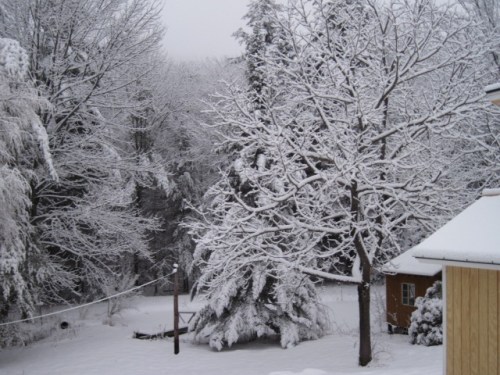

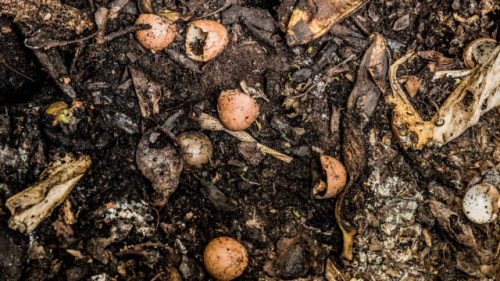
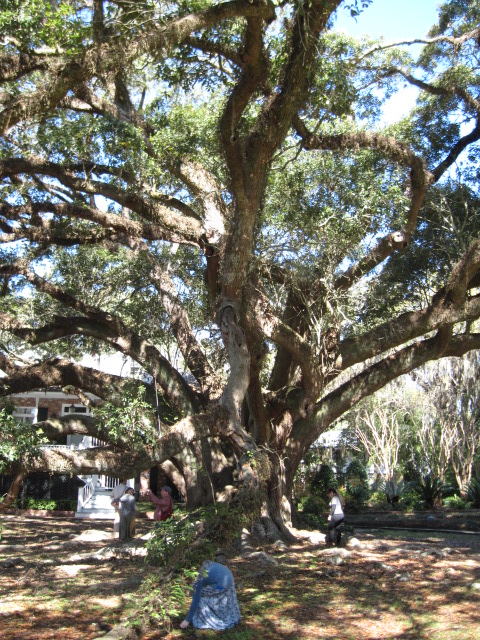
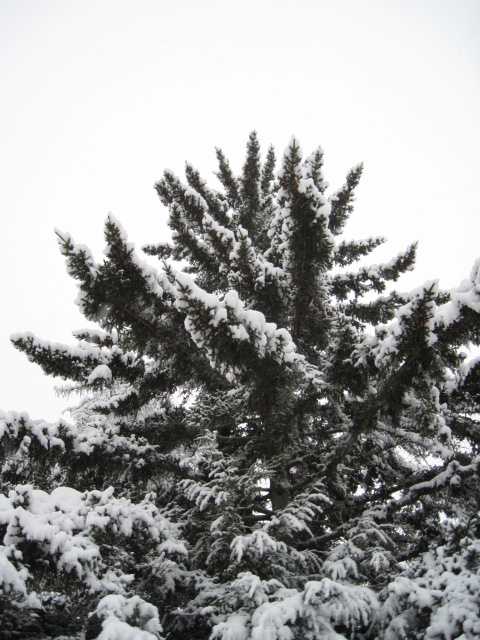

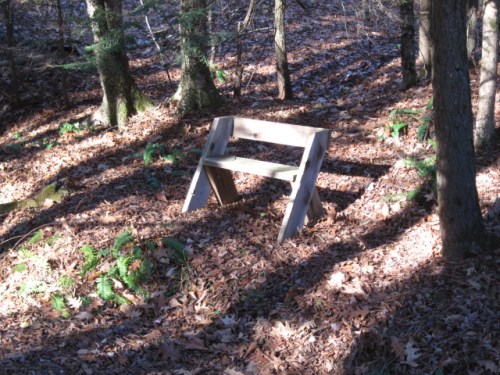
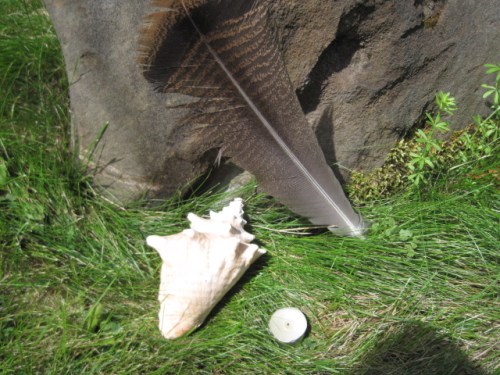


 A Druid Way