The co-occurrence of astronomical events multiplies their psychological effect. Even if the new moon and the coming solstice (winter in the southern hemisphere, summer in the north) on this June 20-21 weekend offer no more than a psychological effect, they would be worth acknowledging and celebrating. But for many they offer much more.
As markers of both sacred and secular time, they locate us in the moment. No thanks, you might be saying. Any moment but this. It can help to think of what our ancestors had to bear, but that’s often easier when our own troubles don’t crowd around us and nip our heels. At such times we may not have the leisure or perspective to be grateful our forebears survived long enough to keep the line going, to pass along whatever wisdom they’d garnered, along with their DNA. The advice to “live always in the present moment, because it is the only one that’s real” sounds wonderful — until the present sucks. Then it’s anywhere and anywhen but here and now. So we time-travel with a vengeance, distracting ourselves through whatever means we can lay hands on. Sometimes it can seem like the best prayer we can offer for others is may your distractions bring you comfort. Wine, weed, wool-gathering, to name just a few.
But pursued with intention and love, moon and sun festivals lift us out of ourselves. We’ve all had the experience of playing sports, or gardening, or some other activity where we’re so intent on what we’re doing we don’t notice the cut or scratch or other injury until some time later, or until we spot the blood or bruise. Only then, with the coming of our attention, do we feel the sting or ache. For an interval, something else was more important and more interesting than pain. Celebrating seasonal and planetary cycles can help us focus where we choose to look, not where our circumstances pluck and tug at us to look. Always? No. Often enough to help us reset and recalibrate? Yes.
Sun and moon, they reconnect us. The jarring frequency of fluorescent lights can bother the eyes, and the hum of them overhead can be an irritant. Sunlight and moonlight don’t feel that way. They energize, unfolding us to ourselves and our surroundings. They bathe us in light, in a vibration billions of years old, native to our atoms.
Antelope Canyon, New Mexico — a play of light and form. Image: Pexels.com
As archetypes with physical analogues, moon and sun help tune us in to other archetypes, if we choose. We can begin with the physical realm, and let experiences accumulate without jettisoning our critical intelligence, taking us step by step more deeply into wonder and joy. Our ancestors painted animals on the walls of caves, danced the hunt, linked with a clan or tribal spirit, saw in animals a brother and sister that could guide and teach, advise and protect. An animal, they long ago discovered, isn’t “just an animal”. One of the large and wonderful lessons of Druidry, as in many other paths, is a simple and profound one: Things are more than they appear.
You might call it the iceberg principle. What’s immediately visible is a key to what’s underneath. We seem to get this with the people in our lives we know reasonably well. We see through a friend’s odd mood or gruffness or silence or manic laughter into a more underlying movement and wait or prod or listen as we’ve learned to do. Moon and sun reward a similar friendship and patience.
The next full moon arrives in just a few days, and I’m revising and tweaking the draft of my recent full moon ritual, and thinking about dark moon and new moon rituals, too. With the clearer skies much of the world is enjoying with the enforced reduction of traffic and travel, this could be an ideal time to deepen acquaintance with the Two Lights in our skies no one needs to plug in, or pay a utility to operate.
And so the voice of a Druid comes, and says to me, even as I say to you:
I bless you in each of your moons,
your fullnesses and your dark nights.
I bless you in your changing faces,
in the pearl shadows of your twilights.
Because who doesn’t need blessing, and to bless ourselves, and to bless others, and to welcome the blessings of others coming our way!
And we can say to ourselves, and to each other:
In between, when we dance or dream,
we trade places with tree,
beast, or spirit of the grove,
and soon or late we uncover
another doorway that opens
for us to walk the sky.
Some of our truest names are written in sun- and moonlight.
In the previous post, I looked at thirteen facets of Doing Druidry that mostly revolve around inquiry and study. You can’t easily be a Druid without engaging in at least some form of one or more of them, because each of them connects you to the worlds where Druidry happens. (If that sounds restrictive or dogmatic or exclusive to you, just go back and look at the list! Got something to add that makes you a Druid? Tell us a little about your journey as you go for it!) The list doesn’t characterize only beginning Druidry, but serves as a rough outline for the kinds of studies that can occupy Druids their entire lives. However, that’s not the only thing happening in the life of a Druid.
In this second post on Doing Druidry without an Order, I want to look at five less tangible aspects of Druidry (and other traditions) that may have occurred to you as you read the previous post. These five are initiation, spiritual formation, community, proficiency and service. From the first glance it should be clear why they’re harder to talk about and describe in terms that people can identify. But that fact in itself makes it worthwhile to try. As you may come to see, these five aspects are closely linked things, almost versions of the same thing.
Initiation
Like other intensely personal experiences, initiation will always be a live issue for many of us. What it is, who can experience it, who can oversee, facilitate or “give” it, what happens when we undergo it, and what we become as a result, can all provoke passionate discussion and disagreement. Most spiritual traditions have an equivalent of one or more initiations among their practices, and the most non-religious among us still experience “built-in” initiation in human events like birth, death, sex, grief and creative flow. Change characterizes each of them. You’re not the same afterwards. When and how you discover this, however, can range very widely.
We could claim that one of the things that distinguishes modern Pagan practice from older traditions is the option of self and group initiation. As a comparison, Christians, for instance, can’t usually baptize themselves; to become a Muslim requires two witnesses to hear you recite the shahadah, and so forth.
Like other groups, OBOD succeeds tolerably well in having it both ways: the coursework for the grades of Bard, Ovate and Druid includes self-initiations that members can perform, and as a member of the Order you can request a group initiation with other members, and these two initiations aren’t “the same thing”. The rituals are different, the outcomes can be different, yet paradoxically they are in important ways “the same”.
You don’t need to do both a self and a group initiation, but it makes little sense to continue unless you do one of them. (Doing both gives you a feel for their interconnections and value.) They’re part of doing Druidry. If you’re doing Druidry without an Order, you’ll come quite naturally to initiation in your own way. Your life will see to that. You can seek out initiation, of course, adapting published rituals to your purposes, or crafting something unique to your own experience. Or you can wait until an experience shapes itself into an initiation, which you may not recognize until after the fact.
For an earlier 3-part series on initiation, go here.
Spiritual Formation
This largely Christian term has no ready Pagan equivalent, though this aspect of practice certainly exists in all spiritual traditions. Christian spiritual formation means molding or conforming one’s life to Christ. In Pagan terms it means moving beyond, diving deeper, maturing in practice and wisdom. You begin to embody more of what your tradition values and holds up as an ideal, of what your deepest spiritual connection opens up to you, and open you up to. Pagans speak of Elders, those with earned authority and sacred connection, in ways similar to how Christians speak of saints, of holy individuals that spirit shines through.
One of the joys of a practicing group is the heightened chances of encountering and knowing such people, learning from their example and growing through associating with them. Being around them can constitute a form of initiation. As a number of the Wise have remarked, spirituality is “caught” rather than “taught”. We’re all in training.
Community
The most obvious difference between the experience of the Solitary and the Order member might seem to revolve around community. Christians acknowledge the priceless gift of others. In Hebrews 12:1, for instance, the sense of a supporting community, many without bodies, pervades the verse: “Therefore, since we are surrounded by so great a cloud of witnesses, let us also lay aside every weight, and sin which clings so closely, and let us run with endurance the race that is set before us”. The interior worship spaces of Orthodox churches often have icons on almost every available surface, emphasizing this spiritual presence of a larger community than only those “with skin on”.
icons at Varlaam Monastery — image courtesy Andrea Kirkby
Pagans may talk of raising power, while Christians acknowledge the presence of the Holy Spirit. Isaac Bonewits notes:
If the people in a group have bonds of genuine friendship or love between them, their ability to perform ritual will be greatly enhanced. The psychic and psychological barriers that most people keep between themselves will be fewer and more easily breached. This is why Wiccans place so much emphasis on “perfect love and perfect trust” — love and trust, even when imperfect, tend to strengthen each other and increase a group’s psychological and psychic unity (Rites of Worship: A Neopagan Approach, pg. 105).
Of course, one of the discoveries Druids make is that they are never alone. Solitary, but not alone. A whole world of Others surrounds them, and if that is where community lies for that particular Druid, that is the call to answer.
Proficiency
We can become refined in the presence of others. Lifted out of our own concerns by the group energy, we can begin to “see larger” than when we arrived, and to take something of that enlarged perspective home with us like a fragrance or flavor to our hours and days. Elastic beings that we are, the company of other people “facing the same direction” can stretch us more than we can easily stretch ourselves, making us more flexible, adaptable, compassionate and empathetic. Think of the privilege of finding a good listener, someone who can still their own concerns and focus their attention on you and your world. How many of us know the love another can express in hearing and seeing us, even if they say little or nothing else? Our lives have been witnessed, our struggles acknowledged, we can walk from there a little lighter of heart.
By their fruits you shall know them, says Jesus, and a good test of a group or Order in the simplest of terms is the kind of people they produce. Are they enjoyable to be around? Do they lift you up or drag you down? Are they kind to each other?
Service
I desire to know in order to serve, runs the vow in more than one magical order of repute.
So I was struck when my teacher remarked one day that he serves in order to know. That’s how I grow and learn, he says. Offer yourself in “the unreserved dedication”, as some Orders call it, without qualification or expectation, and you will benefit. I get so tired of hearing about service, remarked one long-time member. Go apart for a while, counseled our teacher. You’ll be eager to return when you see how it’s a gift of love. You may just need to be on the receiving end for a time, for that to happen.
We may first begin to recognize the value of service when others serve us with love. If you’re like me, you may have a favorite restaurant (pre-virus, if necessary) where the food isn’t the main thing that draws you back. Yes, the meals are good. But it’s the ambience, the atmosphere, the attentiveness and welcome of the staff, the mood of other customers treated hospitably, that shapes your total experience. We go back for the service as much as anything, we say, when people ask.
/|\ /|\ /|\
In every case, Solitaries find ways to fulfill these aspects. It may demand more flexibility and creativity, or it may take the Solitary in directions others do not understand. Service to the non-human world, for instance, can often pass unseen, unacknowledged for an entire lifetime, known only to the “bird and beast, bug and beech” the Solitary serves.
“Magical Properties and Benefits”, says the incense packet on my desk, and it then lists several qualities like “confidence” and “purification”, along with instructions to keep lit incense away from draperies, other flammable items, children, animals, etc. At the bottom, in small print, appears this brief notice: “Sold as curio only, no magical effects are guaranteed”.
The magic, as always, lies in our hands.
“Druidry”, says one book blurb, “puts you back in touch with wild wisdom”. It’s “a spiritual path, a philosophy, a way of life, or all three” says another. “It’s free and open to join”, proclaims a third.
Intrigued, you light your incense, meditate on these varied impressions of Druidry, and decide to visit the website of one of the better-known Druid orders. “You must be 18 years of age”, you read. “Basic membership is a one-time fee of $50”. Additional study has additional one-time fees. Startled, you decide to check out the websites of a few other Orders. The next one says “Register for free”. That’s more like it, you think. Nothing about a minimum age requirement, either. You’re interested in Bardic study, and click on the link. Then you see the words “course fee”, and discover it’s £150, (about $US 185 as of today).
On to the next site. This one lists an even higher price of £195 ($US 241). Free and open to join? you mutter to yourself.
One more site to investigate. Basic membership is $30 per year. OK, mostly doable, but definitely not ‘free’, you say to yourself. That includes the beginning training program required of everyone. But additional studies have additional costs. Interesting. So there’s a real range among orders. It’s worth investigating a little further to see what’s included for each of these outlays of your hard-earned money and time. Sometimes no other materials are required; sometimes you’ll need books not included in the Order course of study. Sometimes significant additional publications come your way for that fee.
/|\ /|\ /|\
It’s possible, of course, to find materials for extensive Druid study for free, or very inexpensively. You can locate remarkable amounts of material online, many introductory titles can be found at larger libraries, or through interlibrary loan, used bookshops can supply many unique and valuable resources no longer in print elsewhere, and you can join online forums and talk with other Druids and ask for their recommendations and reviews. (Ask three Druids, goes the saying, get ten answers.)
One advantage of a well-designed study program is its structure: much of the work described in the preceding paragraph has been done for you. Knowledgeable teachers have developed a meaningful sequence of materials, broken them up into manageable pieces, identified helpful ways to access additional information, explore outer and inner worlds, and advise you on how to avoid dead-ends and get more for the time and effort you put in.
Study programs of the four established Druid orders I name on Books and Links have been developed by experienced teachers, field-tested, used by many, and continue to be updated and refined. None of them are for-profit ventures. Druidry isn’t a cash cow. Printing and mailing and electricity for website servers and even small offices cost money. Travel to events where we want to see and hear speakers and leaders and musicians also costs money. Advertising, permits, minimal secretarial staff to answer phones, field questions, etc. — all additional costs.
Going it alone is cheaper, and you do get what you pay for, in both good and bad senses.
Leaders of all four groups know of each other, and generally speak well of others’ groups. Some of them have studied in more than one of the groups themselves, and can “speak from within”. Choosing membership will link you to exclusive member forums, alerts you to member-only information and events, and affords you just as much community as you would like. Some people make life-long friends. Some prefer to remain solitary. Among other things, shared rituals unite members of an Order; it’s a distinctive flavour, like the u in the British spelling, or cinnamon and cloves and allspice in a pie. It’s a recognizable style. It’s the stone steps along a well-worn path, walked by people you know. It’s never, however, the “only” way to go.
But if cost, or a distaste for group-think or others’ maps of reality, or an eremitic temperament, or physical isolation or some other reason obtrudes itself, no worries. Your study can begin the moment you notice your breathing and pulse, or look out a window.
Begin where you are. That’s how all knowledge and civilization began. If you should reinvent the wheel on occasion, well, that can teach you things about wheels nothing else will. Your learning and experience will carry the stamp of firsthand engagement. People whose opinions are worth hearing will recognize the authority of any wisdom you accrue.
Thirteen Paths for Self-Directed Druid Study (in no particular order)
1 — Learn the trees and plants, birds and animals of your region. Seek and encounter them where they live, learn to recognize them in every season, observe them, meditate near them, ask them for insight, and keep studying. This by itself can be a lifelong project. Herbalism and healing, natural cycles and ecosystems, knowledge of subtle and less subtle shifts in habitat and non-human populations as climate change makes itself felt are all very worthwhile, and will only become more valuable in the ensuing decades.
2 — Draw up a reading list with the help of online websites, reviews on Amazon, the many free texts at websites like the extensive Internet Sacred Text Archive, and personal recommendations. Any good librarian can help you identify basic titles to explore almost any topic. Set yourself a study calendar that you can follow, read what interests you, check bibliographies of those same books for other titles on specific topics that interest you, and you’re off. Druids, and Pagans generally, are definitely readers, and independent lifelong learners.
3 — Master a musical instrument — this includes the human voice — and if you feel inclined, compose new music that expresses your experiences. Humans enjoy a truly enormous musical heritage, and more and more music (and training in music) is available online for free, or for a reasonable price per song or composition or class.
4 — Learn another language that will help open up cultural communities and wisdom, practices and traditions that intrigue you. Many study a Celtic language, or you may have an ancestral connection to other cultures and languages, and here again the internet can help smooth your path, and aid you in finding resources, chat rooms, and ways to practice even if you live many miles and kilometers from the nearest speaker.
5 — Study the magic and traditions of another religion or spiritual path besides Druidry. This can be a valuable source of breadth and perspective when studying and understanding your own tradition, and it allows you an independence of thought not easily acquired in any other way. Insofar as you can do this respectfully, take part in the rituals and celebrations of the other tradition, ask questions, get to know the local community, and volunteer your help if it would be welcome.
6 — Seek out a deity whose stories, focus, symbolism, traditions and ritual speak to you. The deity may have called you, or you may be looking for a patron god or goddess. Or you may simply find it worth knowing more about the deity. Your level of engagement is a matter for you and your inner guidance, not a prescription or any kind of requirement. Nor is belief — encounter outweighs dogma.
7 — Study and practice with a set of symbolic elements. The classical four elements of European tradition, earth, air, fire and water (or five, with Spirit), have much to teach, and pervaded culture, myth, religion and science for over a thousand years, and still reverberate; other elemental symbolic systems have exerted similar influence. The four Orders I mentioned above make substantial use of these, and direct students to still other resources.
8 — Study a system of divination. More than one, if you’re so inclined, for the same reasons more than one of almost anything is worth knowing. What do you discover over time with regular practice? What would you teach another person? What remains largely unteachable? Runes, Tarot, ogham are just the beginning. Feeling constrained? Devise your own system of divination! Test it!
9 — Take up the study and practice of a system of sacred geometry. Though it’s fallen largely out of sight in the West, it remains alive and well in other parts of the world, and profound insights remain for the effort of learning and practicing. To name just one sub-study, architecture, especially of older structures across Europe, has much to teach about earth energies, proportion, symmetry, psychological effect, symbolism, etc.
10 — Study and practice ritual. We all do ritual already. Humans are a ritualizing species — so are many animals and birds. It repays richly to make at least some of our rituals more conscious and intentional, to learn and perform life-giving rites, and to develop new ones at need.
11 — Study and practice poetry, or word-awen. As with music, the field of poetry is vast. In spite of the bad experience many of us have with how “poetry” is taught in schools, the art is vital and alive and lives deep in our hearts in songs, sayings, chants, metaphors, idioms in language, and so on. Poetry slam competitions can be eye-opening for the power of spoken performance, and the best performers in most popular music are creative lyricists.
12 — A study and practice of astronomy and cosmology can open up literal and symbolic worlds. With some ingenuity and willingness to search for materials, inexpensive and partially home-made reflector telescopes are with the reach of many, and can help independent observers make useful and significant contributions to planetary and stellar science.
13 — Meditation, contemplation, dream-study and inner exploration complement the spiritual path anyone may take. The physiological benefits are well-established; the spiritual ones become apparent over time as well.
Things I’ve left off the list may be occurring to you even as you read this. But you get the idea. Druidry itself IS open and free. How you explore and what you choose to do with its many facets will involve you in different kinds of exchanges — time, money, study, effort, searching — for what you receive. Everyone can join and belong to DOYO — Druidry On Your Own.
Greer, John Michael. The Mysteries of Merlin: Ceremonial Magic for the Druid Path. Woodbury, MN: Llewellyn, 2020.
Let me be clear up front that I’m reviewing this book as an interested reader, obviously not as someone who’s tried out over time the specific rituals Greer presents and can speak from that perspective. After all, the book just appeared in print this month. If you’ve already worked with the materials in his Celtic Golden Dawn, you’re well on your way to intuiting and valuing what he is doing here.
That means I’m reading and responding as sensitively as I can out of my own experiences with comparable ritual and magical practices. The best “review” of such a book, of course, is applying the rituals and techniques in the manner Greer recommends, over time, and only then assessing the results for oneself.
A mystery, as I need to remind myself as much as anybody, is something that simultaneously deepens and opens with steady practice. It emphatically does not mean something that remains obscure or inaccessible despite our best efforts. The Mysteries of Merlin as Greer presents them here are a comprehensive and cohesive set of rituals and techniques that point us toward discovery. Mysteries in the older sense of the word, as Greer points out, are “the traditional name for rituals of initiation linked to seasonal cycles and based on the mythic narratives of Pagan gods and goddesses” (pg. 2). Greer’s Mysteries of Merlin are founded on a variety of sources that he names and discusses. Chief among these are Medieval authors like the 12th-century Geoffrey of Monmouth, author of the TheHistory of the Kings of Britain (Historia Regum Brittaniae) and of the stranger Life of Merlin (Vita Merlini).
15th-century illustration for an edition of Geoffrey’s History. King Vortigern and the dragons. Lambeth Palace Library MS 6. Wikipedia public domain image.
The book, as Greer sets out in the very first sentence, presents what may seem an unusual marriage of practices: “a system of self-initiation that is based on ancient Celtic Pagan spirituality but uses the tools of modern ceremonial magic. That combination, though it has roots going back many centuries, may startle readers familiar with the attitudes of today’s Pagan and occult communities” (pg. 1) about magic. And Druidry, more than most revivals, has aroused suspicion in some quarters for its “awkward” (Greer’s word) position that straddles both worlds, incorporating elements from a variety of sources, magical and Pagan both. Furthermore, self-initiation, which has come under attack as a modern invention and a contradiction in terms, is something Greer reminds us was a valid and established ancient practice as well.
The proof, as always, lies in practice: quite simply, does it work? This is an experimental question, not one which armchair debate can answer. Work through the three grades of material, for Ovate, Bard and Druid (Greer prefers this older sequence) over the course of three years of seasonal practice with the “Great Eight” holy days of the Pagan year, and anyone can answer that question for themselves.
A book like this also necessarily relies on intelligent and wise reconstruction and improvisation. And that leads me to one of the things I’ve come to appreciate about Greer’s writing: how he contextualizes what he writes, while suggesting directions for further study and exploration. Rather than merely springing a new magical system on readers as if full-grown from the brow of Zeus, he clearly acknowledges its origins, and notes where he has “back-engineered” aspects of his material from documents or from intelligent surmise. This is an honesty rare in many modern books on magic. One of the advantages of working with the Merlin material is that interest in Arthur and the Matter of Britain has led to good translations of many original Medieval sources. Greer directs interested readers in many cases toward specific editions of these, as a way to deepen the engagement with and the effects of the rituals he has provided, as well as to build on them.
In this book, more than his earlier ones, Greer also suggests promising avenues of exploration for ways other sets of rituals could be developed. Much of this perspective arises from his earlier work in The Celtic Golden Dawn, which meshes very well with this one. Greer plainly reminds readers about what they are practicing, and in the process answers the criticisms by some Reconstructionists of Revival Druidry:
It’s probably necessary to state in so many words that the rituals, meditations and other practices that will be presented in the chapters that follow are not the same as the ones that were practiced on Bryn Myrddin in the waning years of Roman Britain. The mysteries of that time are lost forever. Even if somehow it became possible to recover the words and ritual actions that once made up the mysteries of the god Moridunos [explained earlier], for that matter, their meanings have passed beyond recovery. Like all meanings, spiritual and otherwise, they unfold from a context in which language, culture, and history all take part. No one alive today can possibly experience the world in the same way as a Roman Briton of the fifth century CE, and for exactly the same reason — even if the ancient mysteries of Moridunos were available in their original form — no one alive today could possibly experience those mysteries in the same way that a Roman Briton would have done in the fifth century CE.
Times change, and so do the mysteries. The Eleusinian mysteries themselves underwent countless changes, major and minor, over the period of more than a thousand years that they were celebrated. The transformations that apparently turned the mysteries of Merlin Caledonius into the Master Mason degree of modern Freemasonry are, as we’ve seen, far from unusual in the history of initiatory rites. What’s more, just as there were many different mysteries in ancient Greece that centered on the myth of Demeter and Persephone, using different rituals to do so, the mysteries of Merlin set out in this book are only one of many possibilities. In the work of initiation, there is no such thing as “only one right way” (pgs. 45-46).
Some specific details of Greer’s book that deserve brief mention:
+ complete rituals for each of the eight yearly holy days, for each of the grades of Ovate, Bard and Druid — pages 103-175.
+ the suggestion that Christian mysteries could be developed along similar lines (and that such a start has indeed already begun, citing John Plummer’s The Many Paths of the Independent Sacramental Movement).
+ the development of “The Rite of the Rays”, an awen mini-ritual, using the shape of the three-rayed awen /|\ for gesture and affirmation as part of the larger ritual for each holy day. On a personal note, this informs and confirms work I’ve been doing with the awen and its symbolism, as participants at Gulf Coast Gathering 2017 and MAGUS 2019 will discern.
+ Arthurian-themed visualizations and readings for inclusion in each of the seasonal rituals and for meditation and path-working. These seem to pair up well, I suggest, with Celtic and Arthurian tarot decks.
+ the use of a symbolic octagram throughout the eight seasonal rituals, and at the Druid level, an entire Octagram Ritual, with a detailed correspondence to a Celtic-themed and -named version of the universal Tree of Life.
+ the recognition that different levels of devotion and commitment to engagement and practice will naturally exist among practitioners, that this is a good and normal phenomenon, and that provision and recommendations for each level can help practitioners find what works best for them.
+ the flexibility of the ritual format provided here for both solitary and group practice. The focus is on solitary practice, but the rituals lend themselves to adaptation for group work if desired.
+ the value of continued working after having passed through all three grades. Practitioners can
decide whether to go on to become one of the epoptai, the initiates who continue to participate in the ceremonies after their initiation and gain the deeper dimensions of initiation that come with that experience. If you do, you will find — as the epoptai of the Eleusinian mysteries found in ancient times, and as members of other initiatory orders have found over and over again since that time — that repeated participation in a set of initiatory rites opens up portal after portal. Still, you and you alone can decide whether this choice is right for you (pg. 151).
+ the Appendix — “Other Mysteries, Other Gods”, which though clocking in at just seven pages, deserves careful meditation. Here again are humility and natural authority combined — something I savor! Greer observes,
The same process of revival and reworking I have applied to the legends of Merlin can, in fact, be applied to any suitable body of myth or legend to create a system of seasonal mysteries suited to regular performance by individuals or groups. Whatever deities or sacred figures you revere, whatever tradition of spirituality and magic you happen to practice, you can craft a set of mystery rituals suited to your own needs. If you’re prepared to put in the necessary work, the following steps will bring you to that goal (pg. 189).
+ the closing two sentences, which appear at the end of the Appendix just mentioned. Though Greer obviously completed the book before the virus launched on its current trajectory, the encouragement and value of his words in bolstering our spiritual effort is all the keener for its applicability in a time of choice, despair, distraction and spiritual need:
As you celebrate the mysteries, whether you choose the mysteries of Merlin set out in this book or a set of ceremonies you create yourself, you are participating in one of the great spiritual transformations of history: the rebirth of Pagan spirituality after more than sixteen centuries of violent suppression and persecution. The hard work and flexibility needed to make the mysteries you celebrate as rich and rewarding as they can be is a fitting contribution to that project (pg. 196).
Ye Gods, what does that say about the Above right now?!
backyard pond, Monday afternoon
The direction of flow, as I’m still learning, is pretty much from Above to Below. What we experience here is a mix of what we’ve been working on for a while and what’s shaping to come through now. We’re quarantined in our physical bodies in RSM — the Realm of Slow Manifestation — even as we sense realms of faster manifestation — RFMs.
Which is why this realm can be so amazingly frustrating, difficult, resistant at times. It’s sluggish, a world of inertia and equilibrium. It takes at least some effort to manifest (though we’ve all had those glorious moments where spirit dances through us and we’re not a separate thing from what’s taking on form). If you’ve ever edited a Wiki article, we’re in the Sandbox. It’s rough draft, workshop, not-yet-beta-version. It’s penciled in, a sketch. We tap into RFM in imagination, dream, vision, hunch, ritual, prayer, inspiration — then run straight back into the denser world of RSM when we work on bringing the vision into form, in a world of time and space. Creativity, like any ritual, asks me to ground and center.
old newspaper makes great ready-to-plant seed starters
The natural world generously sweeps me up into the possibilities of manifestation. The marvel is that it does this every year, in every season, regardless of whether I’m paying attention.
In the Northern hemisphere, spring’s taking center stage now. Trees put out new leaves, seed becomes sprout — the squash seedlings I started a few weeks ago from some hoarded three-year-old seed are rising to greet the light. Sometimes you can almost hear the nature spirits hovering over each green thing whispering Grow, grow.
Like you, I come back each morning into this world of manifestation, and depending on how the previous day went, what foods I took into my body, what thoughts I cherished, what memories glowed, what emotions I encouraged to spark through me, I may or may not look much more than a day older.
Here I am late last night, a bit zombified and stretched after a long day and too much coffee. We wake up each morning to resume this project of physical existence, so immersed in it that we forget nearly everything else that’s going on.
But even the surprise of coming back every day diminishes and leaves us after a while. (You can still see something of that astonishment in the faces of babies and young children.)
By our early teens, most of us take such arrivals for granted, a foundation we presume and build on, forgetting how astonishing it is that each new day things are pretty much as we left them. We’re only surprised when they aren’t, not when they are.
/|\ /|\ /|\
old year — maple leaves and pine needles
dandelions in spite of night-time frosts
lichens on pine stump
Moving my altar stone, even after asking the rock if wanted to move, is a matter of thirty minutes’ labor, counting breaks.
stages of manifestation 1 — the rock was too heavy to skid on a sheet of metal roofing
stages of manifestation 2
stages of manifestation 3
One advantage of this physical realm of weight, inertia, gravity, resistance, and so on is that things (mostly) stay put. I won’t have to re-imagine and re-visualize the rock in place tomorrow. In all likelihood, it will still be where I lugged it. (A magical postulate: car keys and cell phones are apparently exempt from this cosmic law.)
A disadvantage of this physical realm: because of that same weight, inertia, gravity and resistance, I may rush to conclude that things have to stay as they are, that they can only be as they currently manifest. That’s one reason I’m here (I don’t know about you): I’m still learning all the pieces of the art of manifestation, how to do it with grace and love and passion.
This post really combines two sections, Parts 2 and 3 of a series, so it’s longer than usual. But I wrote them as a single document, so for now they’re staying together, because they feel closely linked.
Depending on your interest, you might want to focus on one section and skim the other. The first looks at a specific mini Aladdin-ritual I’ve been exploring, as I draft larger rituals. The second examines the remarkable wider cultural context and background of Aladdin.
ONE
All magic is polarity magic, intone some Mages who should know better. On the evidence of her novels The Sea Priestess and Moon Magic, Dion Fortune could easily rank among that magical fraternity. (Popularizations of the idea include Berg and Harris’s 2003 Polarity Magic: The Secret History of Western Religion.) It is true that much magic can manifest through working with polarities of many kinds — it resembles electricity in this regard.
The idea of mystical marriage, of two balancing figures, is an ancient and pervasive one. Christians speak of Christ as groom and the Church as bride. Alchemy is replete with images of kings and queens, marriages and dissolutions symbolizing alchemical and spiritual transformations.
The 1550 Rosarium Philosophorum “Rosary of the Philosophers” includes images like the one to the right of the Red King and the White Queen, often used to represent sulfur and mercury, energizing and potential forces or modes. But polarities alone can settle into an equilibrium, or stasis. (We experience this in ourselves; though expressing both forces at least in potential, we may fear or favor one or the other. In some sense, then, we often short-circuit ourselves on our way to manifestation.) The needed third principle, here represented by the dove of Spirit, energizes the alchemical pair. For this reason among others, Druidry develops the principle of the Triad, sometimes represented in ritual as earth, sea and sky, as a reminder that Three are needed for manifestation. (Polarity, by itself, isn’t enough.)
One pole of a polarity learning to trust the other.
We can see in Aladdin a marriage of such magical currents. The Princess and Aladdin both catalyze each other. Aladdin’s “chance” meeting with Jasmine in the Agrabah market inspires him to pursue the connection they both experienced there. And Jasmine is able to demonstrate full Sultana authority through her association with this other “diamond in the rough” — she activates his potential, helping him become Prince Ali. As some critics have noted, in many ways the story of Aladdin, especially in the 2019 version, has become Princess Jasmine’s story. For she is the real center and heroine of the drama — a further manifestation and unfolding of the archetype.
Each character mirrors for the other the opportunity to transform and manifest who they already are. Aladdin would never have agreed to seek out the lamp for Jafar had the motivation to impress Jasmine not prodded him to act. And Jasmine would never have claimed her rightful identity without the unmasking of Jafar which Aladdin helps her achieve. Aladdin the skillful liar and “street rat” might never be able to tell the real story of himself without Jasmine. And Jasmine might remain “speechless”, without an equal and partner to help her be heard, to speak with the innate authority and force she already possesses.
The Princess summoning both the movie character and also her Inner Hakim
Check out the double and related meanings of the Arabic word/name hakim: “physician, wise man”; “ruler”. Jasmine summons these forces after the song “Speechless” which confirms she will be heard.
I’ve been exploring a simple mini-ritual that appears to catalyze this on a subtle level. It involves the hands, those magical implements ready to distribute energy, which feature in all manner of social interactions, theater, and human technology, as well as magic. Think of all the idioms in every human language that involve the hands …
Simply put, using the magical understanding of physical polarity in the human body, I can work with the currents of energy that flow through the hands. The right hand is typically charged opposite to the left, so that a circuit of force exists when we take the hands of a person standing opposite us, my right in the other’s left, my left in the other’s right. We can align this way because we mirror each other, irrespective of biological gender.
The mini-ritual I’m practicing involves that link-up with archetypes from the Aladdin story: manifest a connection with those energies through visualization of such a polarity connection. (Versions of this ritual involving another person assuming the identity of another character archetype from the Aladdin story are something I’m still developing.)
I sit, breathing to center and ground myself. Welcoming the particular figure I wish to work with, I hold out my right hand palm downward, imagining the Other’s left hand in mine, palm up. Likewise, I hold out my left hand palm upward, imagining the Other’s right hand in mine, palm down. Together we form a magical circuit, into which I place my intention, spending equal parts of the ritual listening and visualizing. At the close, I offer the “praying hands” gesture of palm to palm as a salute and closing of the ritual. A further visualization and ritual detail: here I join my polarities into a single gesture, acknowledging how I’ve added to my capacity, however subtly, for manifesting the spiritual wholeness that is my true identity.
This mini-ritual has already proven useful in manifesting changes in behavior I have been seeking, including a break with an old habit that no longer serves me as I age. Having “initialized” the gesture as a magical one with a specific intent, I can now make the gesture whenever I find old thought-forms in my awareness, and tap into the magical transformation associated with the gesture to break down the habits of thought and emotion that accompanied the behavior.
TWO
Even as the magical potential of the Aladdin story took hold of my interest and imagination, some obvious questions came with it. Why look outside the Celtic/Northern European world for magical imagery and practices, when that world is so rich and still not fully explored?
Several reasons. First, the Aladdin story is very widely known in the West — its imagery and symbolism are readily available. Beneath the Eastern setting, the story is one already familiar in the West, because it reflects universal elements found worldwide: the Poor Boy Who Makes Good, rising to the level of his inner qualities, the Quest, the Ruler Constrained by Tradition, the Animal Helpers, the Prince-and-Princess love story, the Evil Sorcerer, the Spirit Guide or Teacher, the Magical Object.
In other words, we’re dealing with archetypes.
Second, one of the strengths of Druidry is how we can adapt it to the land where we’re living. Or more accurately, how the Land teaches us to adapt, if we’re listening. This is one of the signal characteristics of Earth Spirituality. British Druidry isn’t the same as American Druidry, which isn’t identical with Australian or New Zealand practice. Names and places change. The seasons often don’t match up from region to region, the land itself has a different history, with different memories, presences, energies, patterns. No reason to keep a practice that doesn’t fit. Good reasons to adapt practices that do.
Building on the previous point, because Aladdin has Middle Eastern and Asian origins, aren’t these posts also instances of cultural appropriation?
In a 2018 Vox.com interview with Susan Scafidi, who authored Who Owns Culture?, Scafidi notes “there’s a spectrum of cultural appropriation, from harmful misappropriation to creative and often collaborative inspiration”. The interview offers several excellent examples and links, including controversies surrounding pop stars like Beyonce, Madonna and Bruno Mars that, not surprisingly, were sometimes misinterpreted, misreported, sensationalized and politicized.
Scafidi continues: “Source communities themselves are the best arbiters of what is or is not misappropriation … We would never [be able to] taste others’ traditional dishes, buy unfamiliar ingredients, or create fusion cuisines without this kind of permissive exchange”.
And that brings us to a most curious feature of the Aladdin story: the original 1001 Nights didn’t include the most famous stories associated with it — Aladdin, Ali Baba and Sinbad — until the first translation into a European language in 1704 by Frenchman Antoine Galland. Did Galland invent his own stories to add to the collection? Were his claims to hearing additional stories like Aladdin from the Maronite Christian Hanna Diyab truthful?
You can read historian Arafat Razzaque’s 2017 “Who Wrote Aladdin?”, one study of this fascinating history, here. And more generally, the stories that were mostly gathered into The Arabian Nights, or One Thousand and One Nights, have origins, antecedents and versions in Arabic, Chinese, Pali, Sanskrit, Farsi, etc., as well as a history dotted with forgeries, back-translations, reinterpretations, cultural exchanges between Europe and the Mediterranean, and all manner of intrigue, mysterious informants, lost and recovered manuscripts, and so forth.
Razzaque observes:
It is a shameful legacy of authorship that Galland never once bothered to name Hanna Diyab in his publications. In our haste to dismiss Aladdin as an Orientalist construct, we risk further perpetuating this erasure of someone who has been described as “probably the greatest modern storyteller known by name” (Marzolph 2012).
No doubt, it is important to see “the Arabian Nights as an Orientalist text,” as in Rana Kabbani’s classic critique, and to interrogate the ways in which the 1001 Nights has long been used to uphold absurd stereotypes, not least by Disney. Likewise, as even its Arabic printing history suggests, we must remember how the text’s modern production was often tied up in the power dynamics of European colonialism.
But these necessary critiques should not be at the cost of negating the agency and creative imagination of “Orientals” themselves.
If you’re interested in still more, consider the soon-to-be-published book cited at the end of this post. (Its price as listed is well beyond my means, but it should be available through interlibrary loans.)
Akel, Ibrahim, and William Grannara. The Thousand and One Nights: Sources and Transformations in Literature, Art, and Science (Studies on Performing Arts & Literature of the Islamicate World). Brill, 2020.
Publisher’s note: “The Thousand and One Nights does not fall into a scholarly canon or into the category of popular literature. It takes its place within a middle literature that circulated widely in medieval times. The Nights gradually entered world literature through the great novels of the day and through music, cinema and other art forms. Material inspired by the Nights has continued to emerge from many different countries, periods, disciplines and languages, and the scope of the Nights has continued to widen, making the collection a universal work from every point of view. The essays in this volume scrutinize the expanse of sources for this monumental work of Arabic literature and follow the trajectory of the Nights’ texts, the creative, scholarly commentaries, artistic encounters and relations to science. Contributors: Ibrahim Akel, Rasoul Aliakbari, Daniel Behar, Aboubakr Chraèibi, Anne E. Duggan, William Granara, Rafika Hammoudi, Dominique Jullien, Abdelfattah Kilito, Magdalena Kubarek, Michael James Lundell, Ulrich Marzolph, Adam Mestyan, Eyup Ozveren, Marina Paino, Daniela Potenza, Arafat Abdur Razzaque, Ahmed Saidy, Johannes Thomann and Ilaria Vitali”.
/|\ /|\ /|\
Images: Princess Jasmine from Aladdin; fair use for commentary/derived work; copyright Walt Disney Corporation, 2019.
In this post, I’ll be looking at the 2019 version of Aladdin as a source for magical images and practices. [WARNING: Spoilers abound!] On the surface, that may seem a strange and doubtful choice as a source for any kind of magical practice. You may well be asking the same question Jasmine asks in the screen capture above, just a few minutes into the film: Where are we, exactly?
After all, both the 1992 cartoon and the 2019 live-action remake issue from what Wikipedia calls an “American diversified multinational mass media and entertainment conglomerate headquartered at the Walt Disney Studios complex in Burbank, California”. On the face of it, you can’t get much less Druidic. Trees, introspection, fire circles and reverence for the Land would all seem to fall away before such a commercial and capitalist onslaught.
Dig a little deeper, though, and you start to discover remarkable things.
A–First Level: Questions and contemplation seeds from the script.
Even if you can’t bring yourself to consider a cartoon and then its subsequent commercial remake (what cynics term one instance in a series of blatant cash-grabs as Disney mines its old hits for reboots) as a source of powerful images and prompts for spiritual practice, it still contains some remarkable lines that deserve repeated attention. Here’s an obvious sampling, making up a symbolic initial set of Nine:
1. How do you find (and polish) – a “diamond in the rough”? (The Cave of Wonders during the opening, and later, and also Jafar’s obsession. Of course, he never applies it to himself. Can I?) 2. Where am I, exactly? (Princess Jasmine, on the walk to Aladdin’s ruined tower after they meet in the Market. How would I answer?) 3. Can you be bought? (Aladdin/Prince Ali’s fumbling suggestion in the Palace scene that he can buy the Princess — or her affection — with the gifts the Genie provides.) 4. Have you lost your country? (Jasmine’s provocative challenge to Aladdin/Prince Ali when Ababwa doesn’t show up on her maps. What is my “native land”? Where am I most “at home”?) 5. Are you who you say you are? (Jafar and Aladdin trade versions of this. Is Aladdin’s attempt to be Prince Ali a deception or an inspired piece of self-invention?) 6. Who/what is worthy of your admiration and sacrifice? (From Jasmine’s speech to Jafar and the assembled Court, and her challenge to Hakim.) 7. Where does your loyalty lie? (Jasmine’s direct challenge to Hakim, as Jafar seizes power. A revealing question!) 8. When did you last let your heart decide? (Aladdin’s famous question to Jasmine in the song “A Whole New World”. Can I answer this?) 9. How could I not recognize you? (Jasmine’s vulnerable — and valuable! — question to Aladdin near the end of their carpet ride, when he convinces her he is indeed “Prince Ali”. Is he? A question also to ask of our experiences: do we recognize them for what they actually are? How can we begin to do so? Being able to ask such questions is in itself a wonderful sign of readiness to grow.)
Princess Jasmine as a figure of transformation
If I take any one of these for a spin, applying it to myself, I have material for rich reflection and insight. These questions can also form hinge-points in a magical rite, offering ritual challenges for participants, opportunities for ritual responses and actions, and thus cues for writing and shaping ritual that leads outward from where I am right now.
B–Second Level: Companions and Doubles
Each of the three principal human characters has an animal familiar — Jasmine and Rajah, Aladdin and Abu, Jafar and Iago. Jasmine and Aladdin each have a further human counterpart or double: Dalia and the Genie, respectively. Their companions, human and animal, mirror their natures. Rajah channels Jasmine’s regal nature, her unexpected capacity for affection (Rajah stalks Aladdin, but then unexpectedly licks his face), and her fierceness. Abu reflects Aladdin’s own capacity for agility, thievery, initiative and improvisation. And Iago is cynical and sneering, as well as clever and observant. As a creature of Air, he goes up against the Carpet, Aladdin’s magical implement granting him the freedom and mobility of Air. The Carpet is torn, then repaired; Jafar-as-Genie sweeps Iago into confinement in his lamp.
Dalia is a servant to the Princess; Jasmine herself is a servant or captive to inflexible tradition, but also aspires to serve her kingdom as its compassionate leader. The Genie expresses (among many other things) the magical nature of imagination, the power of desire, the importance of openness to wonder and the imagination, and the magical riches available when we begin to explore our own diamond-in-the-roughness. He too is a servant, and like Dalia, in the end he is released from servitude — and made human in the bargain.
(For an “auditory overview” of Pathworking, in case you’re not familiar with it, check out Damh the Bard’s current Druidcast episode 157, and the first interview with Peter Jennings.)
With some time spent in contemplation, divination, imaginative practice and experimentation, it’s possible to derive multiple rituals we can name for the principal characters: Agrabah itself, Aladdin, Jasmine, Genie, Jafar and Sultan. What follows are condensed notes on each one of these.
For elemental balance within rituals, Agrabah as a port city representing and invoking Water (or Earth and Water), the stage and setting for a spiritual drama of transformation; the Genie/Jinni as a spirit of Fire; the Carpet as a vehicle and implement of Air; the Cave of Wonders, the markets, and the desert surrounding Agrabah as Earth.
Aladdin: Invoking the element of Air for inspiration, clarity, lightness and improvisation, I work with seeing these things as external to myself, and needing vehicles like lamp, carpet and Genie to manifest what I lack. Then a ritual transition and manifestation, where I can begin to express these things as aspects of myself, no longer props outside me that I need to acquire.
Jasmine: Invoking any one of the elements — perhaps in a series of Jasmine rites — for the stability of Earth against forces that would minimize, discount and dispossess her; Air for the inspiration and imagination to lead, and the vision that leadership asks; Fire for passion and will — things she reveals most powerfully in the staging of the new song written specifically for the 2019 film, “Speechless” (link to official video featuring Naomi Scott), that has earned over 170 million views since its release less than a year ago. (Still think Aladdin is nothing more than a commercial grab? What need does the song respond to?); Water for the port city and country, and for emotional balance and intuition in handling the new power and love that are coming into her life.
Genie: in early versions of the Aladdin story, there is no limit imposed on the number of wishes the Genie grants: own the lamp and the Genie’s magic is yours for the duration. Likewise, in earlier versions the Genie has no desire to escape limits on his existence and action — he doesn’t yearn to no longer be a Genie, or to become human, or to earn his freedom. He simply does what he is. How can I transform my assumptions and expectations and self-imposed limits on my magical nature? What is my Genie ritual? What would my three wishes be? (Or nine, or some other number?)
Jafar: as another figure representing a stage on the spiritual journey, Jafar is also me. Where can I claim power appropriate to my needs and purposes? Alternatively, Jafar could feature in a “Diamond in the Rough” ritual. How does my animal companion mirror to me what I am doing right now? Where am I imprisoned? What are the lamps that now contain me? What is my Shirabad, the city that made me suffer, and where I long to take my revenge? Is my marriage or linking up with other persons, things or attitudes an opportunity to demonstrate something other than the bonds of love (like Jafar’s almost-marriage to Jasmine would have done)?
Sultan: as a figure of maturity and renunciation, the Sultan is an excellent ritual figure for seeing to the heart, for renouncing power that has passed from me but which I may still be clinging to; for recognizing and honoring the emerging feminine forces in my life; for resistance to manipulation, magical or otherwise.
In the next post in this series, I’ll look at some wider issues that touch on magicking something like Aladdin, including cultural appropriation and Orientalism, casting, character names, and additional pieces of the surprising background of the Aladdin story.
/|\ /|\ /|\
Images: Princess Jasmine from Aladdin; fair use for commentary/derived work; copyright Walt Disney Corporation, 2019.
If you think about it, of course, you soon realize that words and names in every day use very often don’t have a single or “true” meaning. In that case, what becomes of the “right” or “true” name of a thing?
Bards reply with at least one answer to that: they show us how the sound of a name is a chief component of its fit or rightness. Almost all of us have had the experience of encountering a name that just doesn’t fit the person or thing it names.
In that sense, a rose by any other name obviously isn’t a rose — it can’t be — because the sound of the word rose is an essential part of the name of the thing. That’s where the magic comes in. Through the use of word, sound, song and chant, a magical space and state of consciousness transforms our experience of “the everyday”.
Everything She touches changes, sing the Goddess-worshippers. Jesus is Lord, and at his name every knee shall bow, celebrate the Christians. Nam Myōhō Renge Kyō, recite the Shingon Buddhists. Lā ʾilāha ʾillā llāh, proclaims the voice of the muezzin. Om mani padme hum, chant the Tibetans. Four score and seven years ago, writes Lincoln, on his way to the Gettsyburg Address. I’m on the right track, baby, I was born this way, choruses Lady Gaga, assuring herself and us. We both seek out special language to express what we’re experiencing, and we rely on such heightened language to help us move into states of awareness that match the experiences we seek. (In what ways are these sets of words “the same”? What would — or could — we do with an answer to that question?)
/|\ /|\ /|\
Though the rose, or more specifically the word/sound that is approximately rosa, roh-sah, is a widely-shared name in many European languages, in part because of its rich cultural associations over hundreds of years in European religion, literature, painting and music, we also have many other names on the planet for the flower, including Chinese méiguī, Turkish gül, Arabic warda, Swahili ilipanda, and many more. Are these still “roses”? Are any of them more “rose-like” than “rose”? And what do any answers to those questions like “yes” or “no” even mean?
You’ll have your own and better answers to that question after you chant warda or ilipanda or gül or méiguī for ten minutes. Does it make sense to ask whether an ilipanda “is” a warda or a méiguī?
In that case, what happens to a question like “Who am I?”
Especially in the presence of trees, Spirit, whatever god(s) we look to, and our own wonder, this can be a powerful theme for meditation, if held lightly in the attention, and turned like a gem or a flower in the sunlight, or a candle-flame in the dark.
/|\ /|\ /|\
Animals live in a largely pre-verbal world, and get along quite well without formal language. True, the more intelligent animals can interact with human symbol systems like language, because they have finite sets of symbols themselves, with calls, cries and intentional patterned behaviors. From time to time we read about apes able to manipulate quite complex symbol systems of hundreds of elements. And studies of bird intelligence suggest impressive equivalent capacities among the smartest birds. Perhaps the best current understanding sees animal communication existing along an evolutionary continuum, sharing some but not all of the key features of human language.
With the Druid love of threes, we can ask, if there’s a pre-verbal world and a verbal world, then is there a post-verbal realm? Intelligence, literally the ability to pick out or select (Latin legere) from between (Latin inter) things, to notice and make distinctions, is closely linked to language and awareness. Among other spiritual practices, Zen attempts to point to realms beyond words with its koans like this one: “What’s your original face, the one you had before you were born?” (You might find this insight productive if you attempt to draw, paint, etc., one or more responses to this question. That is, get out of your verbal head-space and try a different mode.)
For we know of other kinds of intelligence besides verbal intelligence, and these point to some of the possibilities of a post-verbal world. If, in some worlds, we don’t have physical bodies subject to time and space and the laws of physics, analogues of human language — and naming — may work quite differently, or not be needed at all.
All of us have had intuitions and hunches enter brain consciousness and only then arrive into some kind of language, even if it’s “I’m not sure, but I have a feeling that …” or “I don’t know why, but …”. In such cases, the non-verbal perception comes first, and only afterwards makes its way into words. Simultaneously such experiences point to the profound value of naming as a way of understanding and clarifying our choices and best directions, but also the impossibility of discussing things we cannot name. (For a related link, see apophatic thought — the idea that some things can only be hinted at in terms of what they are not — in the world’s major spiritual traditions.)
On a related theme, if you haven’t watched brain researcher and neuro-anatomist Jill Bolte Taylor’s marvelous TED talk about her experiences during and after a massive stroke, take a look at My Stroke of Insight. Here’s the 20-minute video:
Many spiritual practices are intended to open up consciousness to experience some of what Taylor talks about in her video — without the unwanted side-effects!
In the next post, as a way of illustrating some of what I’ve talked about in these posts, I’ll look at deriving magical and spiritual practices from a popular film from last year.
There it is again, the nudge of an approaching Festival. Like the light of a full moon, it engenders a subtle wakefulness. The gods are stirring the embers, raking the coals, adding kindling and blowing across the hearth their living breath. Who wouldn’t spark into flame?
May, Beltane month, reminds us how every time is a liminal time. (Samhain certainly stands equal to the task of reminding us, if instead of Beltane, you’re Down Under.) Liminal, from Latin limen “threshold”. E-liminate something and you take it across a threshold and outdoors, and presumably leave it there. In that sense, Druids are always trying to eliminate themselves, crossing over and coming back, seeking expanse and connection with whatever is without, in the older sense of “outside, not within”. Several churches across Christendom have as part of their names “without the walls” — outside, e-liminated. If you’re outside, you make your own threshold.
Of course, once you’re outside, it’s the Within that may suddenly become attractive again. By a kind of spiritual gravity, what goes out comes back inside, and vice versa. Like a cat or dog that can’t decide which is better, and meows or barks to be let in and out and back in again, we look longingly at wherever we aren’t. Jesus gets it, knowing Self is the Gate: “They shall go in and out and find pasture” — on either side.
The grass is, in fact, always greenest wherever I am right now. “As above, so below; as within, so without”. It just often takes ritual to know it. We say the words, often without hearing ourselves, but do we mean them? Not to say that everything’s the same on both sides of the limen, but that they constantly talk to each other. And the limen is so often more interesting than the sides.
In some sense, festivals and ritual generally are opportunities and attempts to have it both ways. We get to make an inside and an outside wherever we are, out of the Möbius strip of reality, which has only the one side, though consciousness insists on two. And we get to be the boundary, the place of transformation, our native place. Practice it enough, and we get good at it. Become the exchange point, the crossing-over, the hinge. Then when a big event comes along like death or birth, disaster or first love, we don’t get thrown quite as hard. (Or maybe, we get better at throwing ourselves, so the cosmos doesn’t have to.)
By the power of star and stone, says the Herald at the opening of the standard OBOD ritual format. By the power of the land within and without, by all that is fair and free, be welcome! E-liminated at birth from the Land within, I emerge onto the Land without and stay awhile. At death I get re-liminated from the Land without, and turn back within. So it goes, till I can stand at the Hinge and look across births and deaths, springs and autumns, to What’s Really Going On, whatever that turns out to be. I aspire to be a hinge-Druid, bending rather than breaking.
Ritual is hinge-work. You and I write the ritual of our lives.
At Beltane, the hinges heat up in the growing sun. We long to touch, to connect, to be in communion. Virus or no, we still nurse at the breast of the cosmos. “Where the bee sucks, there suck I”, says Puck in A Midsummer Night’s Dream. Oh, who wouldn’t?!
Or take the case of Job in the Hebrew Bible. God dresses him down, and challenges him. The old King James/Authorized Version catches the flavor well, for all its increasing linguistic distance from us:
Canst thou draw out leviathan with an hook? or his tongue with a cord which thou lettest down?
Canst thou put an hook into his nose? or bore his jaw through with a thorn?
Will he make many supplications unto thee? will he speak soft words unto thee?
Will he make a covenant with thee? wilt thou take him for a servant for ever?
Wilt thou play with him as with a bird? or wilt thou bind him for thy maidens?
The ritual answer to these insistent questions is “Yes!” That’s one of the things ritual does: it lets us answer “yes” to a cosmos whose very strangeness and majesty and terror otherwise impel us to answer “no”. Who, me? Of course not! No!
Stand at the hinge, and we come into our own as Children of the Most High. For Christians, Jesus is that Hinge, that Gate. The advantage of Person-as-Hinge isn’t exclusive to any one religion or spiritual practice, of course. Talk to the cosmos and it talks back. Persons everywhere, spirit incarnating, doing its thing. We’ve just fallen out of the habit. Ritual is one way that re-awakens us to possibility. But so many us are un-hinged, lost, disconnected.
the “Mother Stone”, Four Quarters Sanctuary, Pennsylvania
Through the windows and doorways of ritual, we can see again what we lost sight of.
Four Quarters Sanctuary stone circle and altar
Sometimes the Face that Cosmos wears to reach us is familiar, sometimes not. Sometimes an Ancestor, sometimes an Other. We’re particularly bothered by things that speak to us that don’t have faces. Ritual can give a face to Things without them.
Ritual also opens an opportunity to organize my altars. Yours may look like this shelf of mine, all hodgepodge. Stones, peach pits, coins, figures, feathers.
Yes, the Wiccan chant reminds us, One thing becomes another, in the Mother, in the Mother. But not every thing, not all at once. Ritual says go with one thing, watch it change, celebrate the transformation. Be the hinge.
So we’ll gather (Zoom-Beltane, May 2 for us here in VT), and say the words: By the Power of Star and Stone …
Novelist M. M. Kaye, who wrote so vividly about Indian life in the days of Her Majesty’s Raj, opens her novel Shadow of the Moon with this exchange about the name of one of her main characters:
“Winter! Who ever heard of such a name? It is not a name at all. Do pray be sensible, my dear Marcos. You cannot call the poor mite anything so absurd”.
“She will be christened Winter”.
“Then at least let her have some suitable second name. There are so many pretty and unexceptionable names to choose from”.
“No. Only Winter”.
Time change, as they used to say with less irony. These days, when we have actors with names like River Phoenix, and singers like Lady Gaga and Madonna and Prince, and thousands of Pagans named Raven, a name like Winter no longer stands out. (Here in southern Vermont lives the writer Crescent Dragonwagon.)
If like me you’ve puzzled at times over other people’s choices for religious or magical or craft or “inward-facing” names, we need look no further for diverse examples than the venerable tradition in many of the major religions for often unusual religious names. From Catholicism alone we get less-than-common saints’ names like Adjutor, Drogo and Lidwina. Buddhists also have cultural names to choose from, with Tibetan Chogden and Lobsang, and on to possibly multiple dharma names, if they practice in the Mahayana tradition.
Give yourself an unusual name and it sticks out, making you stick out, at least a little more. Not letting yourself be just a number, not permitting yourself to disappear into the background. You live with a chosen name differently than with one someone else gave you. More so when other people also know it and use it. More so when it bears rich associations, or ideals you now accept as goals to live up to. (For some useful insight, try chanting your own name for ten minutes. No one else needs to hear you. What do you discover?)
Camellia, April 2019, Charleston, NC. Flower names are popular for obvious reasons!
If like me and other Druids you look to the languages of your tradition for inspiration and examples, you happen on names like Welsh Twrch for the wild boar, one of the animals I work with. And since most people don’t know Welsh spelling conventions, they end up reading it something like twertch — decidedly not “the magical name I was looking for”. Yes, Twrch (with -ch as in Bach, something like toorkh) remains a name I might use in ritual, but not otherwise. The spiritual realm, I’ve discovered, can track me down well enough whatever my name is.
If we want to see the inverse of this, we need look no further than some people’s obsession over the pronouns others use for them. “My pronouns” only extend as far as other people’s willingness to indulge me. How far do I expect that to reach? Will my government legalize my choice of identity and pronouns? Perhaps. But why would I want to put one more piece of my freedom and identity into others’ hands? As head of the Anglesey Druid order Kris Hughes likes to say, “What other people think of you is none of your business”. You’ve got far better, more worthwhile and fun-ner things to do than beat your head against centuries of arbitrary linguistic habit.
Yes, of course oppression can often be encoded in language, but many languages that lack gender distinctions in their pronouns belong to cultures far more repressive than those in the West, where we may indulge superficial linguistic variations in the name of political correctness and identity politics. To offer just one example, Chinese has the invariant syllable ta* meaning either “he” or “she”: anyone who seriously imagines their identity will be respected and accommodated better in the People’s Republic of China is welcome to go live there and find out how far a unitary pronoun changes things on the ground.
(*As Bogatyr points out in his comment, the written language does distinguish between the characters 他 “he” and 她 “she” — both pronounced the same, but visually distinct.)
It is for these reasons that some people create an entire magical language to encode the meanings they desire, rather than merely accept those they inherit. For one (in)famous example of this, see the Enochian language and alphabet. Better still is an understanding of egregores and the work necessary to avoid their undue influence — see the previous post.
If in language we encode energies of oppression, can we also encode energies of liberation?
Among other ways, we do this with mantra, with holy words and names. Instead of troubling yourself that you “don’t or can’t believe” in a particular deity, try chanting that deity’s name one thousand times. (A rosary of some kind helps with the count.) After the fifteen or so minutes that this practice asks (depending on the name or word, and your rhythm), if you attempt it with even a moderate intention for true discovery, you will very likely come into a different understanding of “belief”, one more rooted in experience and less in mental formulation. Mantric power affects us in much the same way as music. We take the vibration into our atoms, and probably echo with it for some time after finishing the chant. Those of you with clairvoyant and clairaudient abilities may be in a position to confirm this.
What is your best name? (Do you have more than one?) How can you invite it into your awareness most beneficially? What reminders of it can you build into your days? The next post will take up these and similar topics.
Looking for tips on making a radical change in 2020? Here are some actually good ideas from The Guardian, in an article titled “Everyone thought I was mad — how to make a life-changing decision and stick to it” — not the usual “New Year’s Resolutions” clickbait. The 10 strategies it offers are, of course, all (un)common sense, that birthright so many of us abandon under the onslaught of dark-magic* advertising, politics, social media, bad education, lack of imaginative reading, etc. — the soul-less enterprise that infiltrates much of what we call life, but is really a bad substitute, sold and re-sold to us, when the Real Thing is always and forever free.
Yes, Others really do want to exploit our wills for their benefit — one of the good things coming out of our times is how transparently clear that’s finally become to many. And that need not lead us to despair, but can tell us how powerful we really are, or can be, unless and until we listen to numerous forms of bad counsel that run against our own better judgment. Yield too much, and it can take us lifetimes to regain and restore what we gave up. Or you may be a “just-this-one-life-that’s-it” kind of person, but you still see how far too many of us relinquish our sovereignty and holy self-hood to others who deserve it not at all.
Smartest radical change I ever made? Walking away from a teaching job at a private boarding school that included not only a high salary (for a school-teacher), but also health insurance and housing and utilities, but that was also quite literally making me sick (cancer diagnosis in 2009). At one point I was homeless and jobless, too — but alive.
Second smartest change? Marrying my wife, though at the time I was unemployed and broke, and had just returned from an overseas teaching job in Changsha, Hunan Province, China that paid me $250 U.S. per month. The strategies in the article are wise ones — take it from someone who’s made some radical changes in his life, and never regretted those he made (only those he didn’t!).
Third smartest change? Taking that China job I just referred to, though it paid so little. Because it opened doors to all the subsequent jobs I ever had, though I didn’t foresee that at the time. And the perspective of being a foreigner, going deep into another culture as speaking even some of the language can help you do, as well as seeing my country from a distance, from the outside, and as a foreigner myself for a short while after I returned — I can set no price on the profound value of those experiences.
/|\ /|\ /|\
The junco’s for Omen Day 7. Tuesday, on my way to drop off a draft of our labyrinth paper to my hospice client, I spotted a flock of juncos foraging near my car as I exited the community where my client lives. Juncos were such frequent wintertime companions in my childhood in upstate New York that I was pained but not surprised to read how their range has shrunk over 50% in the interim. Below’s an image of the dark-eyed subspecies I saw, clearly featured against the snow. Or as Linnaeus described it in his 18th-century classification, F[ringilla] nigra, ventre albo — “A black finch with white belly”.
What we take for granted is often the most vulnerable, or least permanent: whether it’s democracy, life, health, friendships or a bird, they can all prove equal in their fragility. We forget we are a part of this world, not apart from it. What we do matters, helping to shape the whole we all live in and through.
dark-eyed junco — junco hyemalis
Omen Day 8 didn’t even ask me to leave the house: the sourdough starter we revived for yesterday’s New Year’s Day breakfast of waffles. We’d refrigerated it for several days, and the night before, it was time to revive and feed it, ready it for another meal.
It’s natural to find the cute and furry things amenable to a nice, safe middle-class Druidry. But the prickly, grotesque, dangerous, or simply odd and invisible ones? Not so much. All praise, then, to the lactobacillus that gives all things sourdough their tangy character, and thrives together with us in our bodies all our lives, strengthening, healing and rebalancing so many of our essential biological systems! Three hurrahs for such mutualism!
Let me find ways, o Spirit of 2020, to be more surprised, and less fearful, more grateful, and less suspicious.
/|\ /|\ /|\
One of the traditional practices for the Omen Days is to go outdoors, close your eyes, spin yourself around, and take the omen from the first thing you see when you re-open your eyes. But of course there are many ways to read the cosmos. I’ve done it with dreams, with the “obvious/non-obvious” thing immediately underfoot, and so on. For me the deeper point of taking an omen is to pay attention, to actually attend to what I may have overlooked, to begin to explore the richness of the supposedly ordinary and everyday. If I’ve expanded where I look, noticed more of the daily amazement of living that offers itself to all of us, I count that omen a successful one.
Omen Day 9, looking for your sign, I finally see it.
Going out to the woodpile, I participate in its manifestation, by being alive, in this place, here, now. A log, the heartwood brown and rough. Nothing “special”, perhaps, but beauty, given freely. That counts in my book as “special”. I bring it indoors, the condensation damp on my hands, and set it on a side table to photograph. In the picture it looks like the lampshade’s growing out of the wood — fittingly enough: firewood, a source of heat and light.
/|\ /|\ /|\
Another bard offering words — William Stafford’s “The Dream Of Now”. This isn’t an expansive poem of the summer solstice, exulting in long days and heat and passion, but a poem about that core toughness in us, that sees us through winter along with all the other things fluffing out feathers and fur against the cold, or sleeping deep in the Earth till she warms again.
When you wake to the dream of now
from night and its other dream,
you carry day out of the dark
like a flame.
When spring comes north and flowers
unfold from earth and its even sleep,
you lift summer on with your breath
lest it be lost ever so deep.
Your life you live by the light you find
and follow it on as well as you can,
carrying through darkness wherever you go
your one little fire that will start again.
*dark-magic: magic that doesn’t let our own light in; magic practiced against our own better interests, something we almost always participate in, because our consent is required, until we notice and begin to wake up again. Always weaker than light-magic, though its power comes from convincing us otherwise by whatever means available: deceit, obscurity, false promises, appeals to our weaknesses (cleverly scouted out in advance) … Another reason to learn and practice magic: absolutely everyone and everything else all around us already practices it.
A dream this morning. I haven’t been sleeping well for the past several days, but with that wakefulness, it’s been easier to catch and record dreams before they fade into the next sleep cycle of the night. In the dream I’m trying to cross a stream flowing through a forest, but it takes me a bit until I find stepping stones, and even then, the first one’s half-submerged. The stream’s neither wide nor deep, but for some reason in the dream I don’t want to get my feet wet. The water runs very clear, and I know in the dream there’s something — what it is I can’t tell — something unusual about the forest.
Then this morning as I’m going out to fetch wood for the two fires, house and studio, I need to start: hornet’s nest on the eaves of the woodshed. I wasn’t thinking about this Omen Days practice until almost the moment I looked up, and then there it was. A nest of gray paper, empty now, but mostly intact, a season’s work to build a growing house that entomologists say the hornets almost never return to for the following year. In the photo everything’s shades of gray, though it’s a color shot: even the evergreen in the background comes across in black and white, rather than green.
Now it’s certainly easy enough to argue yourself out of as well as into a divination. There’s a kind of trust involved, that the universe really does talk to us, and not just through such crabbed and sometimes tortuous means as a divination can be, or as we can make it with all our second-guessing — the cosmos talking constantly, ceaselessly — wind in the trees, birds, beasts, clouds, our own skins, those touch-points where we seem to end and Everything Else begins, though we intermingle like high school students at a formal dance, awkwardly sometimes, though sometimes with heat in our blood. “How can we tell the dancer from the dance?”
Crossing a stream, leaving a house: like most signs and symbols, they mean best when they “mean personal”. You could, I suppose, go look them up in a symbol dictionary, the kind that sells for a couple of bucks in the checkout line at the grocery, or a pricier version summoned from deep in the bowels of Amazon. But why would I want somebody else’s take on what is, after all, mylife? I’m not mocking the impulse, only reining it in. Live a few decades, and your own hand-made symbol dictionary is better, for you, than anyone’s.
Like any good mount, a dream-interpretation horse, or a symbol-horse, needs a sensible rider, or what use is riding at all? I might as well walk. I can, it’s true, just let the animal-self roam free, and there are excellent times and places for that, too. (Take your animal guide for a run, if you haven’t done so recently. Mine’s sure eager for it.) But right now the journey asks the best of both of us, and so I ride my symbol-horse, and my horse carries me. Leaving a house can signify death, but just as important, transformation, and growth: the hermit-crab outgrowing the old shell and moving into a newer one — vulnerable during the change, true, but doing what it does, what it needs to do to live at all. And where is it, specifically, that I don’t want to “get my feet wet”? That’s sure kindling for another dream, another divination, a prayer, especially when I don’t usually pray.
Finding stepping-stones to cross a stream: earlier in the day yesterday, I’d done a tarot divination as a way to gain insight into a character for a novel I’m working on. The significator was the Wheel of Fortune — apt for the antagonist, who’s experimenting outright on his life — as we all are. And for such symbols and signs and communications — since I mentioned Dickens in the previous post, then I’ll invite him, since it looks like he’s along for the ride anyway — we can ask Scrooge’s question in A Christmas Carol: “Are these the shadows of the things that Will be, or are they shadows of the things that May be only?”
As with most divinations, if we think we’re asking a question of the future, then we get what we understand to be the future’s answer, which may be useful or not, or hard to read, or no answer at all. Scrooge has met with “ghosts” or spirits of Past, Present and Future, and not one of this Temporal Triad is the sole determining factor. Scrooge himself is. In his experience, the future gives no “answers”, but shows the shadows of things that are even now taking shape. These, in turn, interact with all the Ancestors have left us, and set in our hands for an inheritance.
/|\ /|\ /|\
This picture from a couple of days ago, looking out across the stone in our yard, reveals ice-sparkle I couldn’t see without the zoom that focuses this image. To the naked eye it’s a general glow. But this is hawk’s view, more sharp-eyed than I am unaided, without the help of lenses and devices — our human-craft. A different kind of divination, like the signs and symbols available when we look with a microscope, or telescope, or listen with a telephone, or stand in ritual and attend to those without skin on who just might have something to say to those of us wearing it for the moment. Look differently, and see anew. Every sense whispers “Try this”.
Earlier today my co-admin Steve on the Druid and Christianity Facebook group posted this link to one of Caitlin Matthews’ blogposts from several years back about “Omen Days” — the southern Celtic (Wales and Brittany) tradition of using the Twelve Days of Christmas for divination. As an intercalary period, one literally “between the calendar(s)”, from Christmas to Twelfth Night or Epiphany on January 6, the days have long been considered “time out of time”, and therefore especially apt for such practices. Like the holy space of a ritual, set aside from ordinary time, the Twelve Days are — or can be — magical.
In some versions of the divination, each day aligns with one month of the year: December 26th with January, December 27th with February, and so on, offering a particular flavor to the practice.
Looking, too, for a link between solar and lunar calendars, it seemed fitting to me to make it 13 days, starting on Christmas Day, rather than just 12 by starting the day-count after, on the 26th. But there is a new moon on the 26th this year, and that can play into any decision.
And when we consider that this period after the solstice is a liminal one, open as at Samhain to the Ancestors and the spiritual realm, it’s worth reflecting on Dickens’ choice to set his “sacred holiday ghost story” of A Christmas Carol during this interval, with its Druidic as well as Christian series of three spirits, and we can enjoy as well such a context for other stories, like those of the Wild Hunt, active in the winter and so around Yule, and the Medieval “Day of Misrule”, the inversion of “normal” order, on Twelfth Night itself.
In the same post, Matthews mentions dvoverie, a Russian word meaning dvo “two” ver–ie “faiths” — or holding “two beliefs”, a word to describe the persistence of an old worldview after the arrival of a new one. (The Russian ver– is cognate with our Latin-derived verity — “truth”. Two truths for one.)
For a while this cultural expression was thought to characterize or be unique to Russia, especially prevalent among folk practices. Think of our ongoing custom of treating the sun as if it rises and sets each day, in spite of astronomical awareness that it’s the earth that moves, not the sun. Though this source go so far as to call dvoverie “an academic myth”, as if dismissing something as a “myth” makes it untrue, rather than simply ahistorical, I’d argue we’re all quite “dvoverian”, and in more ways than we might imagine.
In some Christian circles, it’s true, the lament persists that certain symbols, practices and beliefs are “Pagan”, “not Biblical”, etc. Pagans sometimes return the favor. (Personally, I find such “purity tests” too often lead to sub-optimal results, just like they do for many women today in only slightly different circumstances, and for often similar reasons.) I’d prefer to ask those symbols, practices and beliefs: “Are you worthwhile? Do you grant insight, increase our understanding, grow our capacity for gratitude and love?”
(And lest we too quickly conclude that divination is never a Christian practice, we have only to look at the Apostles drawing lots in order to identify Matthias as a replacement for Judas Iscariot in the Book of Acts, or at ancient practices in Israel. St. Thomas Aquinas among many others exercised himself on the topic in his Summa Theologica.)
Let’s make Omen Days a “dvoverian” experiment.
/|\ /|\ /|\
My divination today follows the practice of asking my question outdoors, then spinning around eyes closed, opening them to the first thing seen, or asking the question indoors and then going outdoors to observe whatever offers itself. In either case, the sign or omen is what first comes to the attention.
“What can these divinations teach me?”
For me it was jet-trail and birdsong — the seen and the heard at the same time. I looked up to see the jet-trail, and then I became aware of the song. The trail had no sound, the song no visible bird. A useful reminder that a single sense rarely provides all the evidence, or any kind of “complete picture” (note the bias toward the visual in such expressions!).
If you live in an urban area near an airport, of course, this may prove no omen at all for you. (That’s why omens are not universal signs, in spite of our best attempts to codify the cosmos.) But in southern Vermont, a plane of any size passing over is unusual. Except for June or July, when the nearest airbase sometimes makes training runs for days at a time over Vermont (and usually seems to halt each time the complaints reach a certain threshold), a flyover merits attention.
The birdsong belonged to a song sparrow, a very common bird, a cheery voice for our northern winters. No, it wasn’t a Raven, or some other bird with mythic weight and portent to weigh down an omen till it crumbles under its own gravity. If I want to push it even a little, I might recall the Gospel verse: “Are not two sparrows sold for a penny? Yet not one of them will fall to the ground outside your Father’s care”.
Here’s a Youtube video of a song sparrow in our neighboring state of New York:
The worlds of human (jet) and animal (bird) need not be opposed, and aren’t at heart separate worlds at all, in spite of our unwise attempts to uphold such a false division. The Song all around and within us keeps rising, in spite of our jet-trails, in spite of our restlessness to be somewhere else other than where we are. We hear it. How can we heed it more fully?
2020: jet-trail and birdsong — a divination of our times.
If we change just one of F. Scott Fitzgerald’s words (“longest”) in The Great Gatsby, he has Daisy Buchanan, that quintessential summer person, exclaim, “Do you always watch for the shortest day of the year and then miss it? I always watch for the shortest day of the year and then miss it”. (Those of you in the southern hemisphere can take your Gatsby solstice straight up, summery, and un-revised.)
Because the “Great Eight” festivals of the calendar are worth remembering, let’s not “miss it”, but watch and celebrate the shortest day.
A day the whole planet shapes is one of the gifts of solstice.
Older festivals, and revived ones, acknowledge the otherworldly aspect of the season. The central European tradition of Krampus as the alter ego and companion of St. Nicholas balances the season with a parade of gruesome and frightening figures.
Likewise, the Welsh custom of wassailing with Mari Lwyd, the “Grey Mare”, is equal parts festive and otherworldly. Here’s one of the traditional Welsh songs, “Mari Lwyd”, by Carreg Lafar:
The first lines announce the wassailers:
Here we come
Dear friends
To ask permission to sing …
And here’s a very impromptu and lively short clip of outdoor singers and answering singers indoors:
We can say that such human responses to the seasonal change are another gift of the solstice.
The third gift is the monuments that cultures and civilizations have built worldwide to mark and commemorate the seasons — especially the solstices and equinoxes. Standing stone complexes like Stonehenge, menhirs, passage tombs like Newgrange, earthworks like Serpent Mound, and so on all celebrate and commemorate a planetary event many have long recognized as significant.
Here’s a 2013 video of the creation and lighting of a labyrinth made from 2500 tea-lights at the Holy Cross Church in Frankfurt am Main, Germany:
I’ve found there’s so often a link between “finding something to write about” and paying attention to whatever might be my spiritual “work of the day”. Start with one, and the other follows you like a stray, till you take it home and make it a member of your household.
These things circle back on themselves, or more accurately — like so much else — they spiral. They’re not exactly the same each time they reappear, because we’re not the same. No point in a lesson about something I’ve mastered, when there’s so much else a dream could tackle. (Yes, I’m a big believer that our dreams are intelligent and insightful, in spite of our best efforts to ignore them — maybe because we try to ignore them.)
I had a recurring dream throughout my 20s of being back in high school. This kind of thing — a dream-revisiting of a supposedly finished part of our lives — isn’t uncommon. (The worlds interweave much more than we often understand.) Even in the dreams, I often felt blocked, frustrated, sometimes knowing I’d already graduated, but was back because of unfinished business. Sometimes I recognized other people in the dreams, sometimes not.
I kept asking for clarity and resolution, and eventually I did “go back to high school”: I taught in one for a decade and a half. The dreams stopped shortly before the job offer came through: I finally graduated in one dream, years older than my dream classmates. Even in the dream I felt a vast sense of relief.
I’ve come to see that the past wasn’t the only thing I had to deal with. The dreams were offering preparation for the future, too. But it took re-reading of my dream journals from that period to make these connections, the shifting patterns of dozens of high school dreams, to understand part at least of what was happening.
The title of this post, “Winning the Dream”, is partly to point out (to myself, as much as anybody) how badly “winning” fits either our dreaming or waking selves. We dream the same way we live, not to beat off all competitors (though up to a point anyone can pursue this interesting but ultimately exhausting set of life choices), but because we’re here, and this is what we do. To live, to dream, with the awen thrumming in your blood is an amazing, daunting, humbling, unmissable thing.
/|\ /|\ /|\
Sometimes, the best transition is no transition at all. One minute you’re asleep, the next you’re awake. My dream, and my life, both leave it to me to figure out.
I suspect — one of my favorite words (rather than “believe”) — that awen is the link here — awen and genius. To work with these two (the same thing?) is to be what the Welsh call an awenydd (ah-WEHN-eeth) — one in touch with spirit: “Spirit energy in flow is the essence of life”, as Emma Restall Orr puts it in Living Druidry (Piatkus Books, 2004).
/|\ /|\ /|\
Genius. Funny word, much changed from its early sense compared to how we commonly use it these days.
Here’s a sample of the older usage, from Dickens’ A Christmas Carol. Scrooge is walking home in the evening shortly before Christmas:
The yard was so dark that even Scrooge, who knew its every stone, was fain to grope with his hands. The fog and frost so hung about the black old gateway of the house, that it seemed as if the Genius of the Weather sat in mournful meditation on the threshold.
In such older usage we hear something of the Latin origin of the word — genius as “spirit”, as in genius loci, or “spirit of place”. Places, families, individuals each had their associated genius or spirit. (Nowadays we might be more likely to say “atmosphere”, or “vibe”.) From there the meaning of genius grew to include a person connected to an especially impressive spirit — one way others could explain a person of exceptional talents, gifts, virtuosity, or unusual ability. Genius came to mean “great talent”: She’s a genius in the lab. And now it’s also an adjective, common in memes and advertising: Try this genius solution to all your storage challenges!
But if you and I and everybody else enjoys an associated genius, we might be wise to check in first with the genius each of us has, rather than chasing after ones that aren’t native to us. (In fact, as I look at my life, I could well characterize most of its events as a study in either chasing non-native genius, or checking in with native genius.)
Different traditions give the genius a frequently confusing range of names — guardian angels, daemons, jinn, and so on. Some of the more polarized traditions may label the spirits of other traditions as unequivocably evil, though they often viewed their own entities as a much more mixed bag. Acceptable former gods become saints, and vice-versa, while others get tarred with the label devils. (A god or goddess survives if they can ride such changes over centuries and millennia, and work creatively with openings when they arrive.)
/|\ /|\ /|\
Yesterday morning the hospice client I work with (scroll down to section 4 at the link, if you’re interested) was talking again about labyrinths as spiritual tools, and remarked, “You can only access the wisdom of place if you know the place you’re in”. Everything we experience is real, you might say, putting it another way. We just need to determine which world it’s real in. It doesn’t fit here? Change the this-here to other-here and it just might snap into place, complete the puzzle, fill in the mozaic, carry the melody to its close.
Know the place, know the person, and you know a great deal about the genius, or governing spirit.
In many ways, then, “winning the dream” means know the genius of whatever you’re doing, where you’re at, what you’re into.
Five questions for sussing out genius:
1) What spirit is driving it? Is it something familiar, something I’ve worked with before? Or something new? A song came through last fall, and I don’t do songs. But maybe that’s the point: it’s time to start singing. A new way spirit is striving to get through, to express what it is, what I am. Or I’m thrown in with people I normally wouldn’t talk with, because we don’t seem to have anything in common. Well, you’re both breathing, right? You share 95% of what’s happened ever since you both started with that in-breath, out-breath thing you’re both doing. The rest, as they say, is mere details.
I stopped off this last Monday for a one-time hospice volunteer respite-visit for the family of a neighborhood 92-year old. They had medical appointments themselves, and volunteers give them precious time away, knowing someone is staying with the family member.
His hearing is still pretty good, though his eyesight means he himself can’t read any more. But nine decades means you’ve seen a good deal. I read a little to him, and we talked. What you “read” at 92 is different than at 20 — but no less valid. As the body wears down, you’re already prepping for the transition, the next rung of the spiral. You can see it in his eyes, sharp and bright as any bird’s. He’s still taking it all in, alert to the surprise of the ordinary, as much as anything else: the taste of his lunch, the warmth of the nearby woodstove (they set his bed just a few feet away), the fall of clumps of snow melting from the roof as the temperature climbed well above freezing — to be here at all, to wear this body, even with its aches and pains, defeats and deficits. Sitting and talking with him, it feels like he’s mastered the skill of being present.
2. What apparent opposites are in play? Spirit so often manifests this way. Polarities set the stage, define the players of the game, map out a particular curve on the spiral, mediate energies at work in the situation. Identify with one or the other, and I may lose sight of the overall dynamic, where it’s actually going, and define myself solely by opposition or resistance. Which may well be the point, or it may completely miss it, depending … But do I know? Have I seen what’s in play, at play, what the drama is today?
3. What’s the flow? Polarities may set the charge moving, but it’s our presence that mediates spirit, that determines what flows toward and away from us. Taoism is a wise study of this particular aspect of being alive, and has much to teach about riding the currents, sailing where we need to go, surfing the waves of the cosmos as they manifest in the weather, the Others in our lives, the kiss of a dog’s nose, the aroma of cooking, the punch of cold air when I open the door to December.
4. What’s the form? The flow arrives into forms and beings, walls and doorways, shaped by awen and wyrd and choice and momentum. Form is a becoming, rather than anything like an endpoint. In worlds of time and space, form is “re-forming” constantly, whether on a slow scale of millennia, like a mountain, or much more rapidly, as in the stages of the life of a mayfly. Do I recognize the forms with and around me, and what energies are arriving through them? Have I included myself as one of those forms? (Exempt myself and I miss a good half of whatever’s going on, what it’s saying to me.)
5. What’s the alignment? What things are being adjusted, modified, “edited”, re-formed, and then opened up again to Spirit? (The cycle begins again, the spiral reforms on a different harmonic.) Where and how — and when? — can I join in, do my part, make a play, run with it?


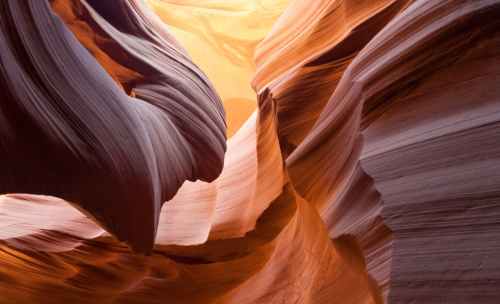
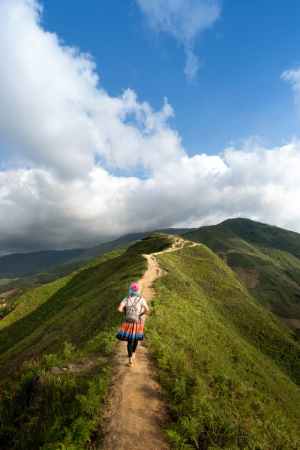 In the previous post, I looked at thirteen facets of Doing Druidry that mostly revolve around inquiry and study. You can’t easily be a Druid without engaging in at least some form of one or more of them, because each of them connects you to the worlds where Druidry happens. (If that sounds restrictive or dogmatic or exclusive to you, just go back and look at the list! Got something to add that makes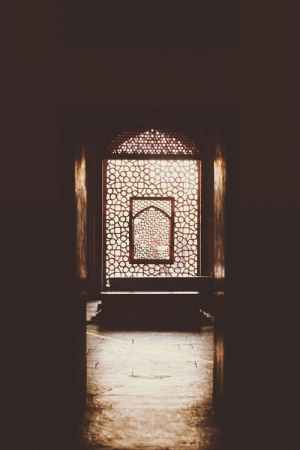


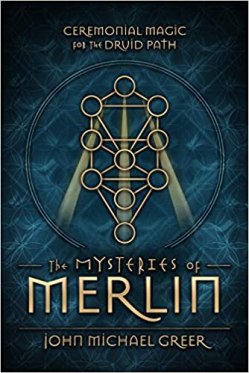
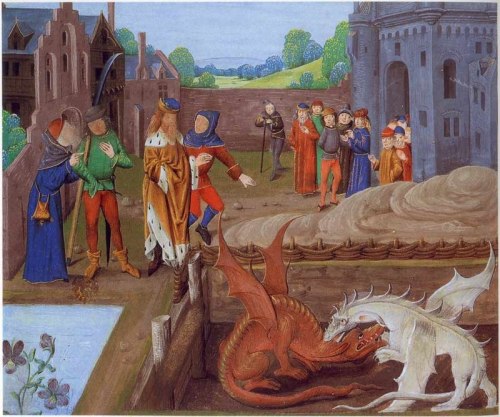
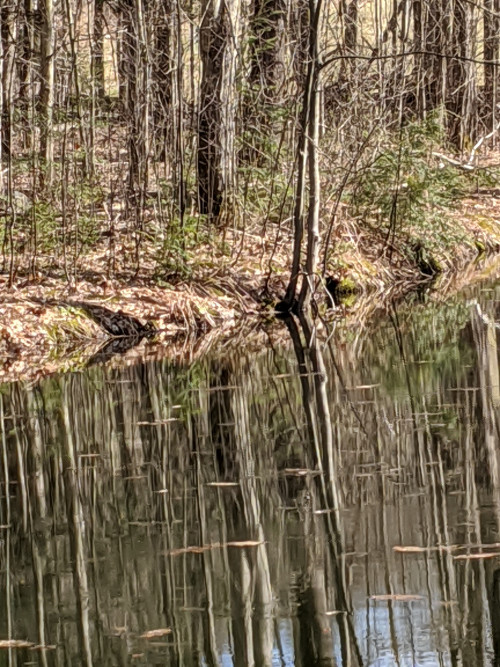
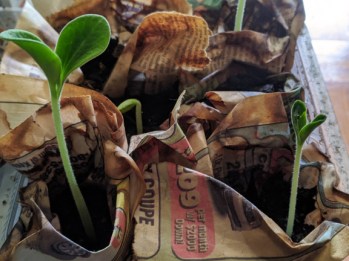
 Here I am late last night, a bit zombified and stretched after a long day and too much coffee. We wake up each morning to resume this project of physical existence, so immersed in it that we forget nearly everything else that’s going on.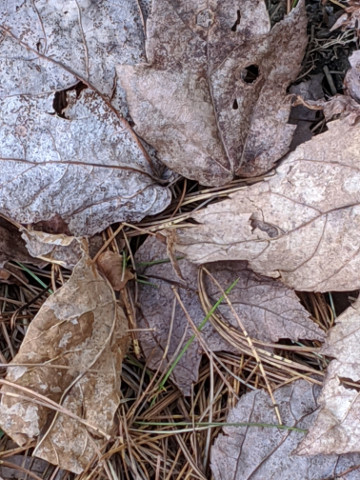
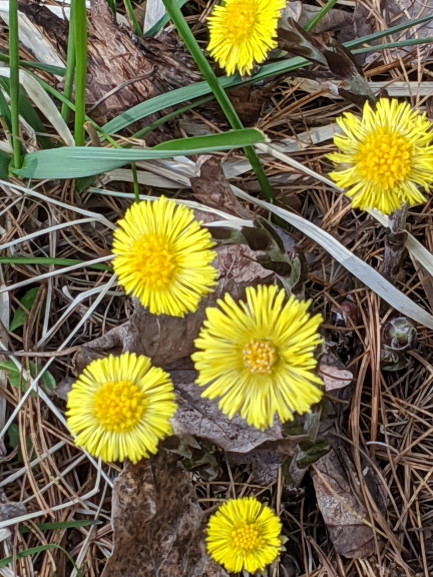
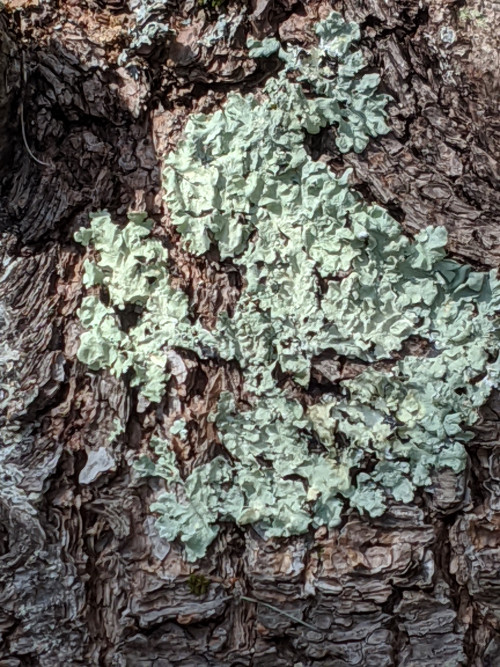
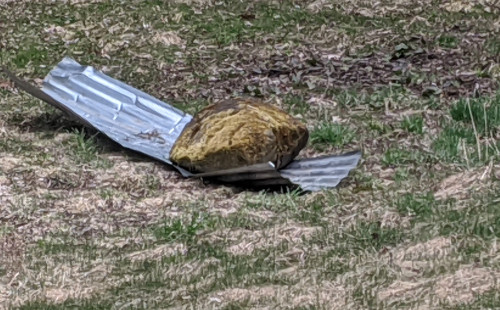
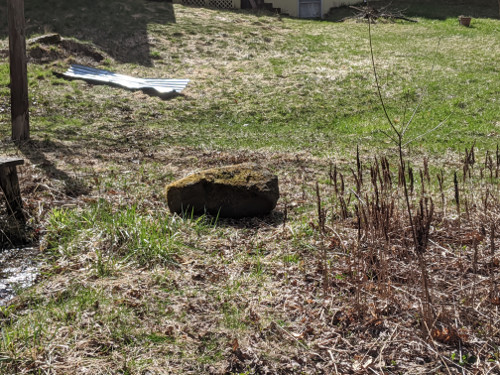
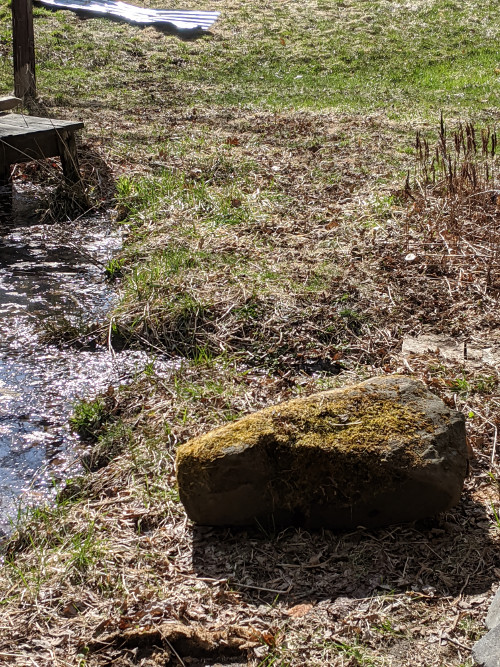
 All magic is polarity magic, intone some Mages who should know better. On the evidence of her novels The Sea Priestess and Moon Magic, Dion Fortune could easily rank among that magical fraternity. (Popularizations of the idea include Berg and Harris’s 2003 Polarity Magic: The Secret History of Western Religion.) It
 :max_bytes(150000):strip_icc():format(webp)/3_KING_2-58962fde3df78caebcf781d9.jpg) The 1550 Rosarium Philosophorum “Rosary of the Philosophers” includes images like the one to the right of the Red King and the White Queen, often used to represent sulfur and mercury, energizing and potential forces or modes. But polarities alone can settle into an equilibrium, or stasis. (We experience this in ourselves; though expressing both forces at least in potential, we may fear or favor one or the other. In some sense, then, we often short-circuit ourselves on our way to manifestation.) The needed third principle, here represented by the dove of Spirit, energizes the alchemical pair. For this reason among others, Druidry develops the principle of the Triad, sometimes represented in ritual as earth, sea and sky, as a reminder that Three are needed for manifestation. (Polarity, by itself, isn’t enough.)
The 1550 Rosarium Philosophorum “Rosary of the Philosophers” includes images like the one to the right of the Red King and the White Queen, often used to represent sulfur and mercury, energizing and potential forces or modes. But polarities alone can settle into an equilibrium, or stasis. (We experience this in ourselves; though expressing both forces at least in potential, we may fear or favor one or the other. In some sense, then, we often short-circuit ourselves on our way to manifestation.) The needed third principle, here represented by the dove of Spirit, energizes the alchemical pair. For this reason among others, Druidry develops the principle of the Triad, sometimes represented in ritual as earth, sea and sky, as a reminder that Three are needed for manifestation. (Polarity, by itself, isn’t enough.)


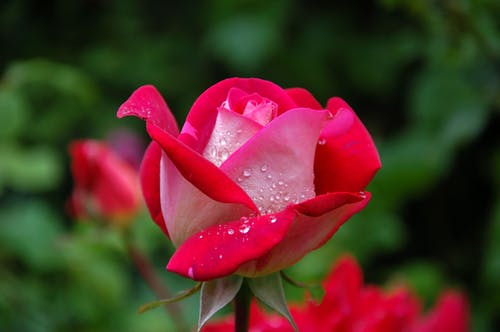

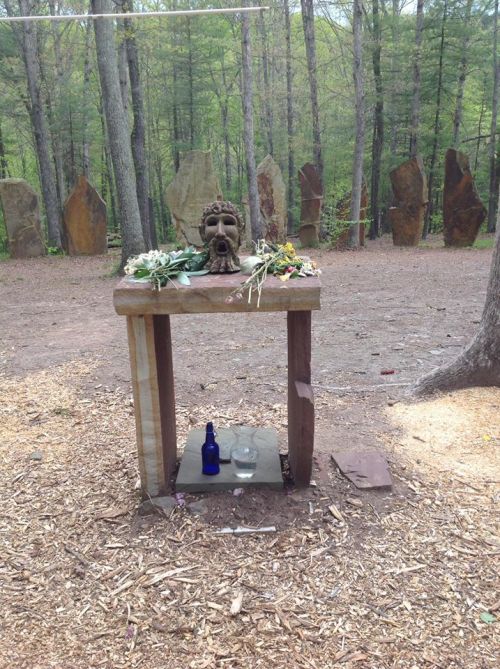
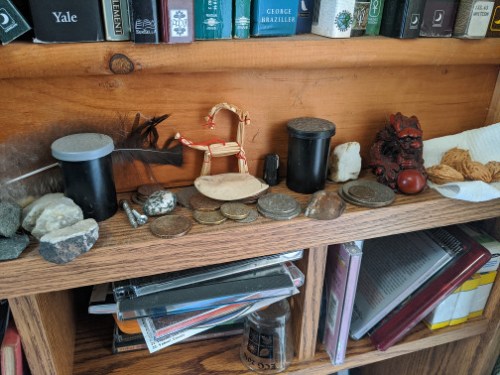


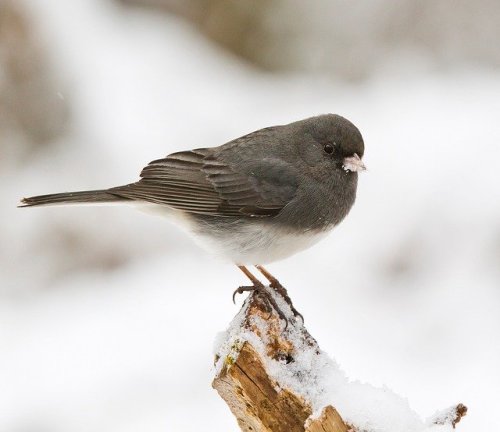
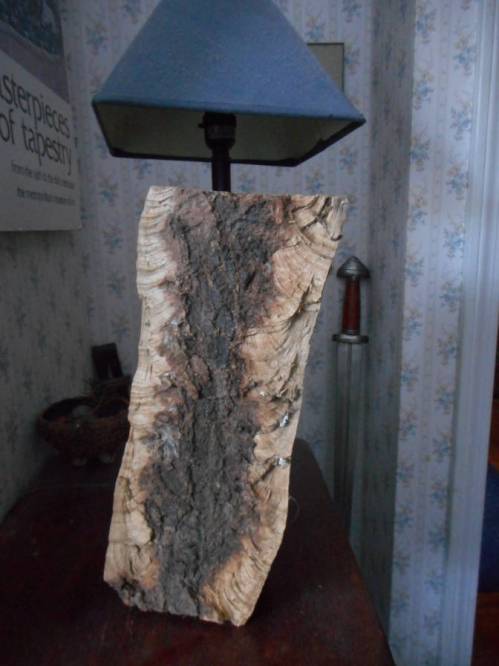
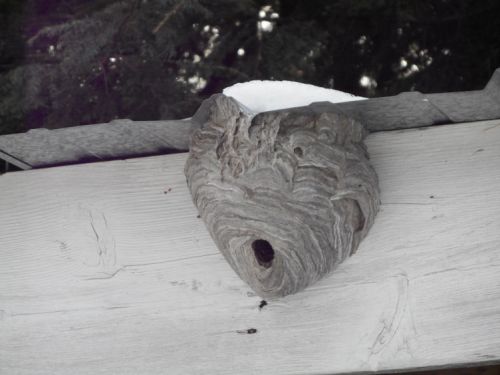


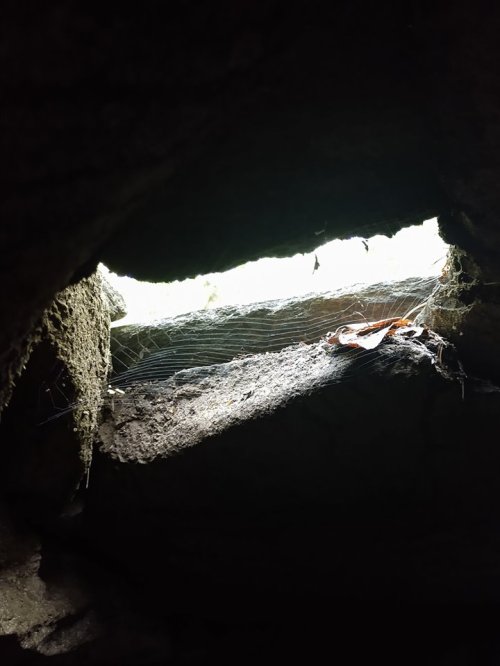


 A Druid Way