Archive for the ‘earth spirituality’ Tag
[ 1 | 2 | 3 | 4 | 5 | 6 | 7 | 8 | 9 | 10 | 11 | 12 | 13 | 14 | 15 | 16 | 17 | 18 | 19 | 20 | 21 | 22 | 23 | 24 | 25 | 26 | 27 | 28 | 29 | 30]
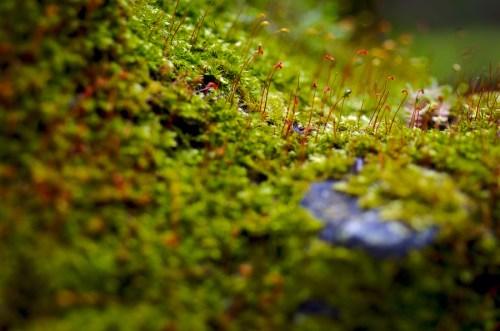
“Microcosm” — Mike Fletcher photography
We look for things that will acknowledge and value and nurture the overflowing spirit that is our humanity at its best. We literally grow larger than one self in our relationships with other beings. This isn’t merely a lonely, impotent and mortal self desperately seeking an echo, a mirror, before the dark comes on, though that can be one part of it. Our curiosity and empathy mean we can feel ourselves into the oddest and most splendid corners of the universe. And then keep going even further. Because we can. But just as much because those corners are there, endlessly inviting. The cosmos beckons. “House made of dawn,” says the Navaho night chant, “house made of the evening twilight …”
Of course, other humans offer a ready first “target” for this quest. We fall in love, we bond, we befriend, we seek connection. What’s remarkable to me is not the number of times we face disappointment or disaster in our human relationships. You might almost expect that, given the universe around us where fish spawn and the majority perish before reaching adulthood. Nestlings don’t all make it. Flowers and trees cast thousands of potential offspring to earth and wind and water, and how many survive?
But the number of times things actually go well can astonish. Life, quite simply, abounds. It beats the odds. And even looking narrowly for a moment at just the human world, at friends, family, co-workers, allies, strangers who perform those random kindnesses — well, live among other humans and we can strike you as a varied and quarrelsome bunch at times, to be sure, but more remarkable still for wanting to connect, to be counted, to know and be known. And we talk endlessly about it all, thinking words will bring us together. Sometimes, surprisingly, they do.
And the natural world? Both womb and tomb, it still manages to be other enough that our super-enlarged brains have plenty to do to figure out whether we do or don’t really “belong.” Hence the need for wisdom, for something more than the givens of a human life: birth, food, sleep, learning, sex, work, play, illness, joy and death. Because to the question “Is that all there is?” the answer is almost always “No.” That “no” is so reliable, in fact, that things like Druidry provide marvelous tools for exploring the “all that is.” But if Druidry or Plan B doesn’t happen to work for you, by all means find (or make) something that does.
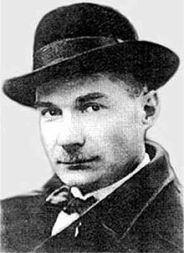
Yevgeny Zamyatin
We can go and quite readily have gone to other people’s faiths and ideologies and isms that offer answers and creeds and dogmas. But we can also look, more provocatively and more productively, for great questions. As the Russian writer and philosopher Yevgeny Zamyatin (1884-1937) remarked, “Dealing with answered questions is the privilege of brains constructed like a cow’s stomach, which, as we know, is built to digest cud.” Foolish questions are a risk along such a path, of course, but they are only “foolish to a civilized man who has a well-furnished European apartment with an excellent toilet and a well-furnished dogma.” Better a few foolish questions along with many more useful ones. And far better than no questions at all. Yes, that’s next door to a dogma in my book, if you want to know.
“In a storm,” Zamyatin observes, “you must have a man aloft. We are in the midst of storm today, and SOS signals come from every side.”* It’s no accident that new forms of spirituality sprang into existence over the last 50 years or so. From a Druid perspective, you might say, like a bird or bush moving into a new ecosystem, a niche opens and life explores it for fit, changing it or changing itself. Or both. A trust in the power of spirit to manifest new forms at need is one of the gifts of Druidry. And the lifelong learning to work with that spirit and those forms is a fitting Druidic quest.
/|\ /|\ /|\
Image: “Microcosm” — Mike Fletcher photography; Zamyatin.
*Zamyatin, Yevgeny. On Literature, Revolution, Entropy and Other Matters. 1923. The translations here appear in Ginsburg, Mirra, A Soviet Heretic : Essays by Yevgeny Zamyatin (1970).
[ 1 | 2 | 3 | 4 | 5 | 6 | 7 | 8 | 9 | 10 | 11 | 12 | 13 | 14 | 15 | 16 | 17 | 18 | 19 | 20 | 21 | 22 | 23 | 24 | 25 | 26 | 27 | 28 | 29 | 30]
After a complete slug-down from posting, brought on by a harsh bout of flu and subsequently a general lethargy, A Druid Way is back for a 30-day series on each day’s energies and perspectives. (Say awen, somebody. And all the freeze-dried grasses in my lawn say it, in their rustling speech. The tree limbs say it, and the twigs and branch-ends that have reddened and yellowed and greened with rising sap say it wordlessly, all night and all day long.)
/|\ /|\ /|\
Long-time readers know I largely shy away from big social issues of the day. You’ll see very few comments here about politics, gay rights, abortion, race, the primaries, terrorism, climate change — the stuff of American and world headlines and the churn of the news cycle. I’m more interested in the opportunities each of us has to grow and love more in the small chances and changes right here. You could say that’s a kind of pure selfishness. And it is. We’re all engaged in self-crafting, one way or another. One way doesn’t negate another, I hope.
And I find these moments most easily not in the noise of our sometimes poorly-wrought human world, but in the silences when our human chatter subsides. When we can’t hear ourselves think, we too often think things that aren’t worth hearing. Or saying, though we keep on talking. Consider this blog a partial fast from the noise of the moment. Of course it’s a a fast in words, but paradox should be an old friend by now.
Don’t worry — if you really miss the latest batch of outrage and disaster and doom, they’ll keep till you’re done here. Rest easy, now. A few clicks will bring you right back into the middle of them. Many traditions invite us into silence, not to live our entire lives there. Speech matters. But to live always next door to silence, to befriend it, to let it teach us, to be rest and a refuge for us, as a true friend can.
The noise of the moment is of course one more testing ground. You CAN find many valuable lessons there, and you can hone your sense of rightness and justice and value to a keen edge, burnish them to a high sheen. (How much does my activism activate?) But we live mostly in the spaces between such tension points, and there I find rich terrain that never grows stale or flat. A half hour in the air and light, with birdsong or fog or frost and wind, is enough to restore a balance point that can go badly awry if we neglect the spiritual recalibration nature offers. Getting and spending, we lay waste our powers, says the poet.* But that’s only because what we mostly expect and work to get and spend a bunch of things that do not serve our highest good. How does a tree spend its powers, and does it have anything to say to me today?
Here for a reason, I say. Others scoff. Well, make your own reason. Then improve it. Better than drifting without one at all. Been-there done-that material. BTDT, as my wife and I say to each other. So try something you haven’t done, go somewhere you haven’t gone, says the awen in me, the awen spread across this blue cool late March sky.
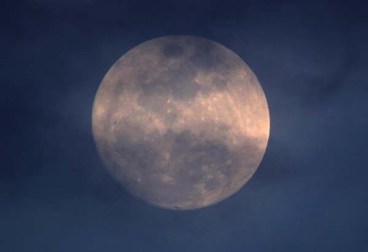 Equinox energy is real. You can feel it in the stirring of so many things, blood and light and dream, storm and desire and birdsong. Not by accident do many magical and spiritual orders align their rites and festivals to the Equinoxes. Initiate then, in any senses of the word, and you catch a wave that can take you very far indeed. Out to the far isles beyond the horizon, where the Otherworld beckons beyond the ninth wave. In to the inner-verse that is always waiting like a beach after storm, strewn with all manner of oddments and debris, the flotsam and jetsam and occasional treasure you’ll find nowhere else. The one thing you need right now, washed up on your own shore, ready for the receiving into your hands. The spring break of the spirit, drunk with fear and longing and possibility.
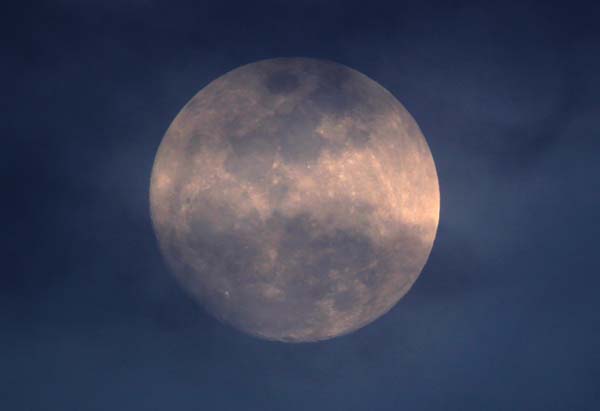
Ah, tonight, first full moon of spring, rising in us, mounting the sky, stepping toward mystery.
/|\ /|\ /|\
*Wordsworth.The Bards still keep trying to reach us, teach us, anything that doesn’t merely preach to us but means what we seek.
IMAGE: moon
 If I ask what? then I’m alone in a world of things, none of which says anything to me, though I may listen as long as I like. After all, why ask a thing?! Trying too hard, I can almost believe I’m just another thing myself.
But let me ask who? and then the world wakes to wonder. Atoms like me, earthed like me, kindred, sky-breathed like me this November afternoon. Yes, sparked like me, too, being here, in this place, now. Oh, let me lose no more songs that greet and open! You carry them, clouds — water too, and day gray on the hills.
/|\ /|\ /|\
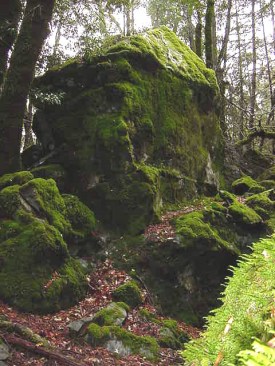
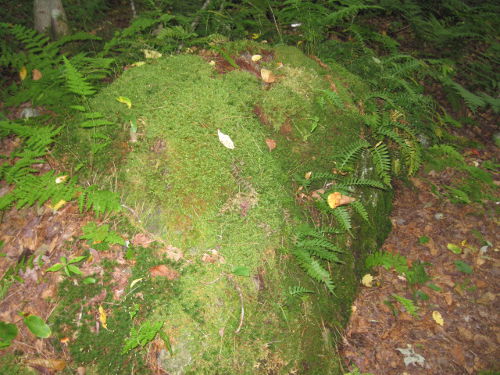
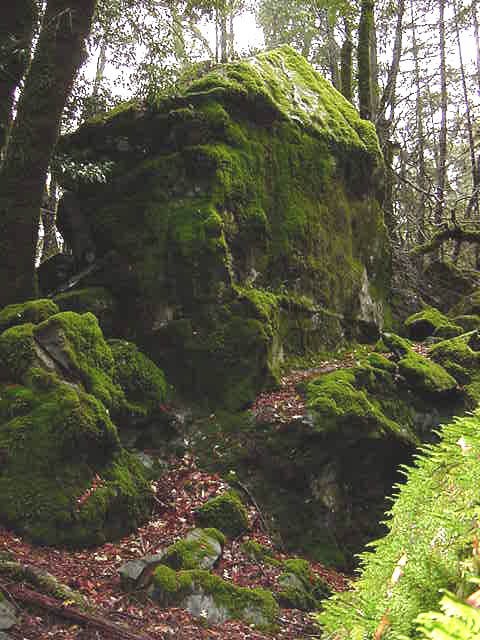
If I ask who, this stone
whirling with its billion atoms
mostly empty space they say (though
touching it you’d never believe)
its presence, its jacket of moss
this stone talks, not loud
if anyone listens.
Talks to itself, hasn’t yet
heard hey! from anyone else
through a skin thick
against weatherdance and stormscrape
I believe a free hand
on its rough cool reaches,
I begin to learn its witness
slow offshear in wind and heat,
flake and shard and century chip.
Stone long alone will not yield soon
but with a palm against a sunside flank
you can feel it heed sun nonetheless
warming at the distant inquiry of light.
/|\ /|\ /|\
Who? is a song that wakes worlds. I wake you, you wake me, we rouse together singing.
The questions matter, though they’re one half of it. Mouth and ear, at the proportion of one to two, right for wisdom when the oak lets fall its hard fruit. Earth, you know. Who says so? A sapling, in a spring or two.
/|\ /|\ /|\
Image: moss rock.
[Part 1 | Part 2 | Part 3 | Part 4]
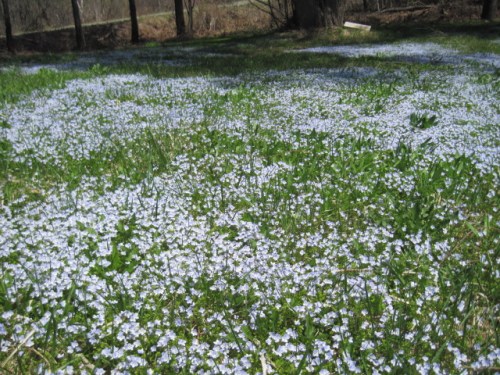
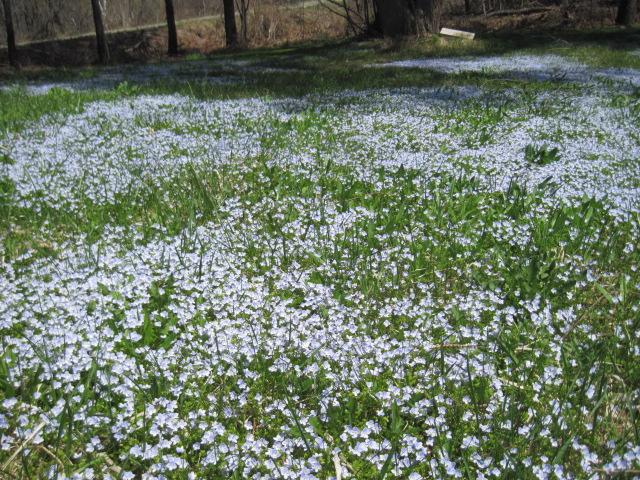
Bluets (houstonia caerulea) in our back yard
Bluets carpet our backyard lawn, an easy seduction into putting off the mowing I’ll need to do in another week. The air itself is a welcome. I no longer brace myself to step outside. Instead, I peel off an unnecessary extra layer and stand still, feeling my body sun itself in the coaxing warmth. Bumblebees chirm around the first blooms, goldfinches dart across the front yard, and our flock of five bluejay fledgelings from last year wintered over without a single loss and now sound a raucous reveille every morning.
In this last of a four-part series on Beltane, I want to look at our “found festivals” — how we also touch the sacred in the daily-ness of our lives. We don’t always have to go looking for it, as if it’s a reluctant correspondent or a standoffish acquaintance. When I attend to the season and listen to the planet around me, I touch the sacred without effort. The sacred encounter, like a handshake, is a two-part affair. How often do I extend my hand?
Susanne writes in a Druid Facebook group we both follow that finally in her northern location “the last bit of snow on the north side of the house melted away on Beltane day.” Gift of Beltane. Something to dance for.
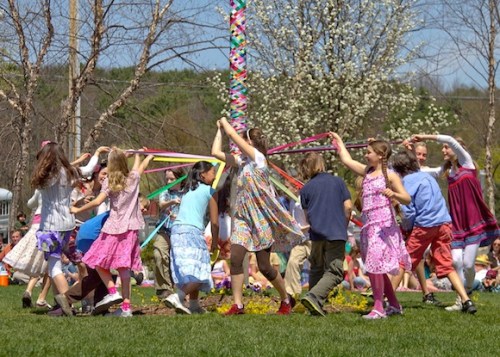
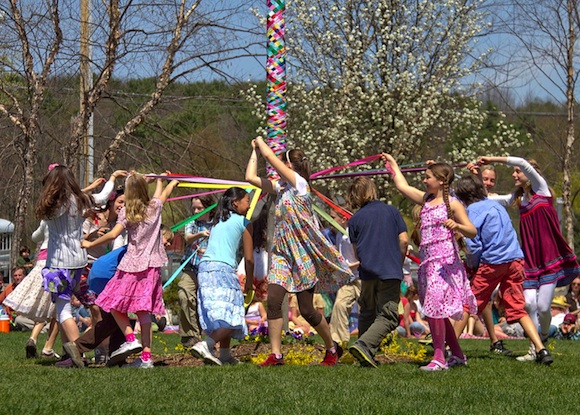
Rudolf Steiner school celebration in Great Barrington, MA
The ritual calendar of much modern Paganism meshes with the often milder climate of Western Europe where it originated. It doesn’t always fit as well in the northern U.S. or Canada, or other places that have adopted it. (So we tweak calendars and rituals and observances. Like all sensible recipes say, “Season to taste.”)
It’s a cycle that the medieval British poet Geoffrey Chaucer celebrates in the Canterbury Tales by singing (I’m paraphrasing lightly):
the showers of April have pierced the droughts of March to the root … the West Wind has breathed into the new growth in every thicket and field … the small birds make their melodies and sleep all night with open eyes …
A Vermonter like me looks at Beltane looming on May 1 and reads those lines of Chaucer’s and thinks, “About a month too early, Geoffrey.” Spring, not summer, begins at Beltane, though to feel the recent temperatures on your face you might well think Beltane is the start of summer indeed. Game of Thrones fans, never fear: Winter will come (again). But now … ah, now … Spring!
Susanne continues:
and even though they are a symbol of Imbolc, the snowdrops are blooming merrily followed closely by the daffodils. The peepers are peeping, the owls are hooting, the woodcocks are rasping ‘peent’ on the ground and twittering in flight.

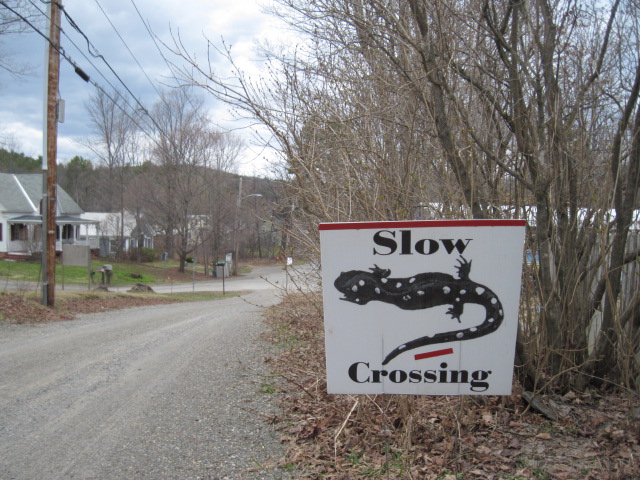
salamander crossing signs in our nearest town
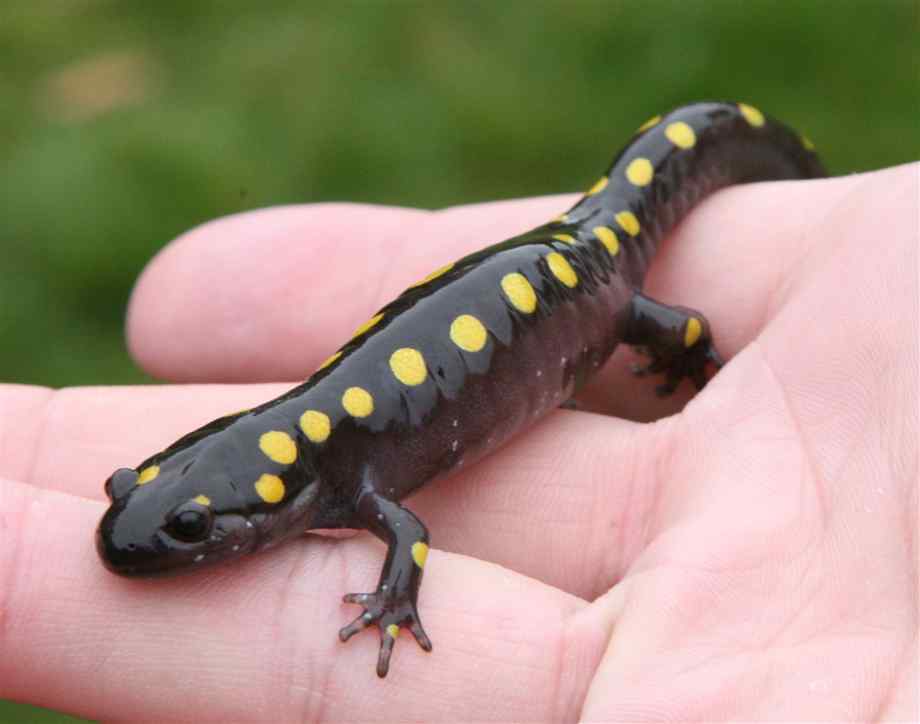
Late April and early May here in southern VT, and in your home area, too, means an annual migration of some sort. Here it’s spotted salamanders. After dark, volunteers with flashlights man the gullies and wet spots to escort the salamanders safely across roads, and slow the chance passing car to the pace of life.

Beltane finds Susanne with her hands in the earth, responding to the call of Spring:
The weekend was spent with Spring clean up, turning the soil and sowing the greens and peas in the garden. I was a bit disappointed in myself that I haven’t held a Beltane ritual but then I realized that this was the ritual…working with the soil, plants and spirits of the land, listening to my favorite songs …
May you all touch the sacred where you are.
[Part 1 | Part 2 | Part 3 | Part 4]
/|\ /|\ /|\
Images: bluets/houstonia caerulea — ADW; Great Barrington MA school celebration; salamander sign — ADW; yellow spotted salamander.
[Part 1 | Part 2 | Part 3 | Part 4]
In Part 1 I wrote about the approaching Festival of Beltane and our longing to touch or encounter the Sacred. It keeps calling to us, and will not be ignored.
Here I’ll talk about how we fulfill the call inside us to touch the Sacred.

Zora Neale Hurston, from her novel “Their Eyes Were Watching God”
One way to understand this call is as a sacred vow that our lives require each of us to fulfill. Being born means we agreed to it. Don’t remember making the vow? Each of us promised to make good on it. “Will you do what only you can do, because only you live your life? Will you listen to what there is for you to hear? Will you keep growing? Will you remember to celebrate all that can be celebrated?”
Our lives ask us such questions, and we answer with how we live. We honor the call, the sacred vow, when we’re fully alive. We catch intermittent glimpses of this in our lives. This joy is for you, it says.
Often we don’t trust it. A girl I was serious about before I met and married my wife was convinced we shouldn’t trust it. Every happiness has to be paid for with sorrow, she said.
Or we see it, this joy, in the lives of others. A light seems to shine around them, and in their presence you feel better, more balanced, more you. They seem to practice the sacred like a dance or song. That can be a powerful way to live. Life as practice. Not as a thing to be perfected. Life’s bigger than perfection, it seems to say. More ornery, stubborn, lovely and changeable.
But it’s something we can also study, perform, explore, try out, test, demonstrate, play with, give away and take back. Sometimes with each breath. Sometimes over nearly a century. Perfection’s a dead thing. Not alive, slippery, mysterious and intoxicating. Try out what lies on the other side of perfection. Not just play the hand I’m dealt, but take or drop a card. Reshuffle. Paint my own deck. And sometimes, change the game.
Right, says the skeptic. You just believe that if you want to. But ignore such hints and outright shoves, and likewise we can often feel both restless and spiritually dead, a truly wretched combination, when we’ve done less than our lives ask of us.
We all know this intimately, too, in one form or another. It prods young (and older) people to find themselves, it burns in those who are spiritual hungry to go on inner and outer quests that may take years or their entire lives, it launches many a mid-life crisis, a dark night or decade of the soul. It slaps you upside the head, and will not stop. It passes go, it drives up onto the sidewalk, it drops you off on the wrong side of town. Or it slows down, even stops, parks in a driveway, kills the engine, offers you the wheel — then tosses the keys into the bushes.

And the call troubles some people enough that they retreat into things in order to try to hush the call, to drown it out because they despair of ever being able to answer it. And the things — possessions, pleasures, addictions — being finite, can’t replace the call either. They just rub it raw. Who needs the sacred if it’s such torture?! No thanks, I say. These aren’t the droids I’m looking for.
Fortunately the sacred doesn’t just sit around waiting for us to find it like the fabled pot of gold at the rainbow’s end, like the toy in the bottom of the cereal box. It bounces and squirms and growls and seeks us out, constantly breaking through into our awareness. Hence the difficulty of avoiding the call, and the frequency with which we encounter it.
These Festivals like Beltane, or even newer observances, like Earth Day today — they don’t come out of nowhere. Sure they do, says your friendly neighborhood internet troll. OK: who ya gonna believe?
Where do we find the sacred — or where does it find us?
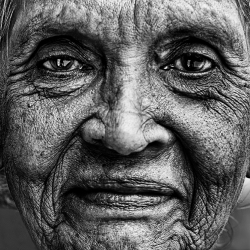
“Human Beauty”/Jano Stovka
We may touch the sacred when we experience beauty. And beauty not only meets us in familiar ways that marketers box and package and try to monetize, but also in less conventional ones, if we pay attention. And sometimes even when we don’t.
Experience beauty and we’re lifted out of ourselves, stopped in our tracks, slapped, arrested, pierced with Cupid’s arrow — the language we’ve used throughout history in poems and songs to describe the experience can sound violent, because we may not expect beauty, or recognize it when we face it, or want it when we do recognize it.
Or we do all of those things, and our hunger for it just grows and builds. Or it makes us weep or laugh, or act in other ways that don’t fit or which leave us uncomfortable. Wait, say our lives. You thought this was going to be easy or simple?!
Encounters with the sacred can come in isolation, too, of course — away from others. We may turn our backs on people who disappoint us or who are simply so loud in our lives that we need silence, or at least other sounds. Wind, crickets, birdsong, water. We set out by ourselves, convinced this is IT. This is the way.
Walk alone and some cultures, at some times, will understand and recognize and support you. They’ll assist the solitary walk in unique ways that other cultures may not be doing at that moment. Time, space, acceptance, easing the transition in or out.
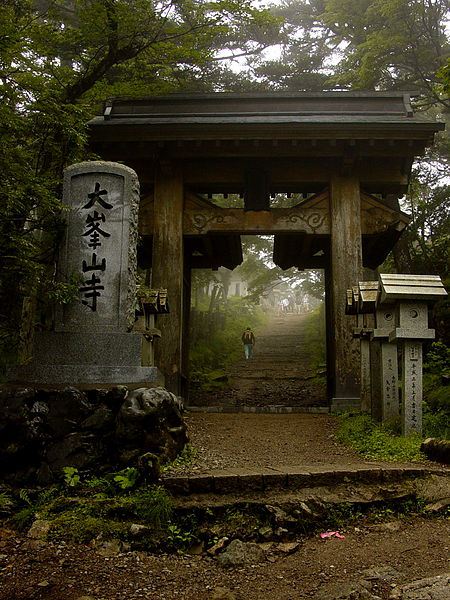
Stairs at Oominesanji, Kii Mountains, Japan
No single culture does it all — culture’s a human thing as much as anything else is. But the natural world is a powerful ally — what we’re born from, where these bodies end up after a few decades. The in-between, where we convince ourselves we’re not a part but apart: the natural world offers remedies for that illness that we recognize every time we let it.
In Part 3 I’ll look at some more ways we touch the sacred.
[Part 1 | Part 2 | Part 3 | Part 4]
/|\ /|\ /|\
Images: years that ask; addiction; Oominesanji Stairs; human beauty/Jano Stovka
[Part 1 | Part 2 | Part 3 | Part 4]
Here we are, about two weeks out from Beltane/May Day — or Samhuinn if you live Down Under in the Southern Hemisphere. And with a Full Moon on May 3, there’s a excellent gathering of “earth events” to work with, if you choose. Thanks to the annual Edinburgh Fire Festival, we once again have Beltane-ish images of the fire energy of this ancient Festival marking the start of Summer.
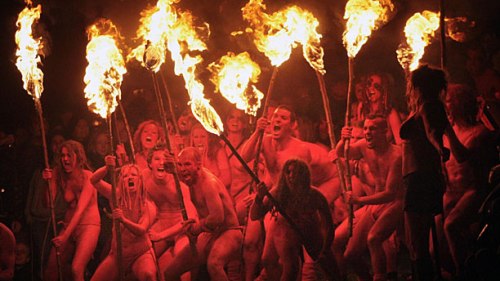
You may find like I do that Festival energies of the “Great Eight”* kick in at about this range — half a month or so in advance. A nudge, a hint, a restlessness that eases, a tickle that subsides, or shifts toward knowing, with a glance at the calendar. Ah! Here we are again!
For me, that’s regardless of whether I’m involved in any public gathering, or anticipating the time — because it’s never anything as rigid as one single day, but rather an elastic interval — on my own.
Yes, purists may insist on specifics, and calculate their moons and Festivals down to the hour, so as not to miss the supposed peak energies of the time. And if this gives you a psychological boost to know and do this that’s worth the fuss, go for it.
Below is Midnightblueowl’s marvelous painted “Wheel of the Year” (with Beltane at approximately 9 o’clock). With its colors and images, it captures something of the feeling of the Year as we walk it — a human cycle older than religions and civilizations. Or the cycle helped make us human, changing us as we began to notice and acknowledge and celebrate it. Try looking at it both ways, and see what comes of that.

Painted “Wheel of the Year” by Midnightblueowl. Licensed under CC BY-SA 3.0 via Wikimedia Commons
/|\ /|\ /|\
For today I take as divination the message below, which got promptly diverted to the spam folder: “This page decidedly has whole of the information I precious astir this dependent and didn’t make love who to ask.”
O crazy spam-scribe of the ethers, you stumbled onto one of the Great Paradoxes, best stated by William Blake, with his “infinity in the palm of your hand, eternity in an hour.” In that sense, yes: this page “decidedly has whole of the information” though it is also what it is, a finite thing. Like each of us, like the tools we use to connect to What Matters, like the sneaking suspicion that will not go away that there’s Something More. (Even if it’s just an explanation of what’s up with all these capital letters, anyway?)
And since Beltane’s approaching, there is indeed a “precious astir” at work as the energies swirl. Who or what is “dependent”?! The writer of the spam, not knowing “who to ask” and even acknowledging he “didn’t make love.” And all of us, dependent on the earth and each other.
I bless you, oh Visitor to this e-shrine, workshop, journal — the many-selfed thing that blogs can be and become. Who to ask? you inquire. Your inward Guide, always present and waiting for you where you are most true. Or the face of the Guide as it manifests again and again in your life — stranger at the market who smiles at you, bird that catches your eye, tune you find yourself humming.
How to get there, that place we all long for, that colors our thinking and follows and leads us in day- and night-dreams? Place that Festivals and holidays and time and pain and love and living all — sometimes — remind us of? Ah, you mean The Question! Love, gratitude, service — all things any of us can begin today; all things, it’s important to remember, we already do in some measure, or we would die. Too easy? Or you already know that? There’s also ritual — finite, imperfect ritual, our human dance. Mark, O Spirit, and hear us now, confirming this our sacred vow …
What’s your sacred vow? Don’t know yet? Got some work to do? Tune in to the next post for more.
[Part 1 | Part 2 | Part 3 | Part 4]
/|\ /|\ /|\
Image: Beltane Edinburgh Fire Festival; painted Wheel of the Year by Midnightblueowl
*The “Great Eight” yearly festivals with their OBOD names: Imbolc, Alban Eilir/Spring Equinox, Bealteinne, Alban Hefin/Summer Solstice, Lughnasadh, Alban Elfed/Autumn Equinox, Samhuinn, Alban Arthan/Winter Solstice. Many alternate names exist, and almost every one has a Christian festival on or near it, too.
[Updated 28 May 2020]
[Part 1 | Part 2 | Part 3]
During the year and a day of your training, you’ve studied, practiced, visualized, rehearsed, memorized, subjected yourself to physical and psychological tests and disciplines and — perhaps in spite of your own better judgment of your readiness — you’ve finally been chosen as a candidate for initiation.

The day of the ceremony arrives. You may be dressed in a particular ritual way, or you may have bathed and simply be wearing new clothes. Perhaps a single jewel or ring you now wear gives you something you find yourself toying with as you wait. Probably you’ve been given specific instructions to help prepare you and assist you in entering the desired state of consciousness. Or the absence of such instructions has the same effect.
You’re nervous, too, and the other members of the group who are participating in your initiation don’t do anything to dispel that nervousness. In fact, they may be sympathetic and kind to you, and their very kindness will only increase the mystery. What am I getting myself into? you ask yourself. This and other questions are good ones to ask — though they may have no answers.
In many occult and magical orders, potential new initiates face a challenge when they enter the ritual space where their initiation will take place. “What do you seek?” goes one variant of the verbal part of the challenge. Depending on what you’ve been taught or are expecting, the rumors you’ve heard, or the nature of the particular group you’re with, the question can catch you off guard. It’s meant to.
In an intro to an online magical training document by Dolores Ashcroft-Nowicki, J. H. Brennan relates his own experiences, and doubtless those of many other people, here (see pg. 4) . He comments wryly that, not surprisingly, why we seek is often a bigger determining factor in our experience than what.
We all do things for the best possible motives, of course; and nowhere more so than in the esoteric arts. It is relatively easy to discover that the only really acceptable excuse for magical study is embodied in the statement I desire to know in order to serve. That was the answer I was prompted to give to the ritual question during my own initiation. I dutifully gave it; and it was a lie.
What actually attracted me to magic was not service but power.
“I desire to know in order to serve” has its motivations all lined up for inspection. It’s a “good doggy” answer. It’s noble-sounding, and as the “really only acceptable excuse,” it’s comforting to give it and feel good about having such an answer to give. Because in this logical and scientific age of ours, don’t you need an excuse for something as wacky and bizarre as the study of magick — especially spelt with a -k — that doesn’t make you sound like a raving loony?!
So let’s reverse it. “I desire to serve in order to know.”
One of my teachers said this yesterday. It rang true to me because he demonstrates service in what he does, in how he listens to the people he meets, and in how he stills his own agendas and instead of what he thinks, he strives to hear what’s needed. He does these things with humility. And just as important, he models this for others, not as something he turns on to impress others and then drops once he’s “offstage,” but as something he’s continually practicing until it accompanies him, his words and his actions like a fragrance. And that makes you want to do the same.
A few months ago I encountered a goddess in contemplation. I heard her name, an epithet — Stormbringer — and a little more. The only way I can find out more about her is to serve her. Slowly I gain a clearer vision of who she is and why she is manifesting to me, now.
I can enlarge my understanding of service. I serve when I grow — a larger vision spreads its fermentation through human consciousness, because my actions emerge from what I hold in my heart and thoughts.
We serve when, rather than getting bogged down in irritation, anger and fear, we assume a playful approach to problems. Then the lightness of spiritual insight and creativity can lead us to solutions we might not have found on our own. And our playfulness, when it’s respectful of others, can help lighten their loads, too, and smile, if possible, or laugh. We serve in small things, done without thought for anything except the doing, and the doing well.
(OK. Got it. Dang — give you a soapbox and you just don’t let up, do you?)
I serve when I open myself to receive love from others , and find I must “enlarge my spirit to receive the gift,” as Ursula LeGuin describes it in her fantasy A Wizard of Earthsea.
 I serve when I ask to understand the causes underlying an issue or problem in my life, not just to remove the problem so I can get on with my agenda. (Often enough, my agenda is the problem. The apparent problem is a gift, to show me something I need to learn. Otherwise it wouldn’t keep coming back again. And again. Funny how much easier it is to see in other people’s lives.)
Difficult gift, what do you have to teach me? Can I enlarge my heart for you, too? Right now, when you come knocking again, when it’s really not convenient at all? Can I let my impatience dissolve and make my listening a gift to you?
We serve when we recognize ourselves in others, when we recognize others in ourselves, and see the Great Mystery, as the Lakota Sioux call it, the Wakan Tanka, in the eyes of those we meet every day.
We serve when we practice gratitude. A powerful practice I’ve proved to myself: keeping a gratitude journal, with daily entries. Just reading it over can jump start me out of depression and back into engaging my life. Gratitude grows and spreads to others its divine infection.
And so, in serving, what do I know that I didn’t before? Has knowing become less important, and service more?
Now, about power …
/|\ /|\ /|\
Images: guide and initiate; gift in hand.
In this, the dark half of the year, we may face things that don’t have faces. One way we deal with this is by telling stories.
Royal One, born at midwinter, Yule King, in the deepest darkness, our need is great. In us is the royal child born; some faiths make that story their own and turn its wisdom to their own ends. But no story is the final one, because each captures only an echo, and needs to be retold, for the echo to sound out again, and all too soon it also will fade, and need renewing in turn. But even an echo of home can be enough to lead us there at last.
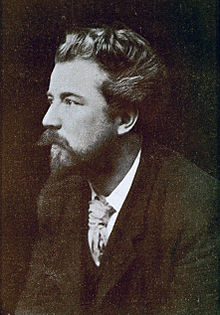
William Sharp in 1894
Here is a gift of old wisdom, a story that seeks to link two traditions, Druidry and Christianity. It comes from William Sharp (1855–1905), a member of the Hermetic Order of the Golden Dawn and a contemporary of the Irish poet William Butler Yeats. Here he is writing as Fiona Macleod in The Washer at the Ford. New York: Stone and Kimball, 1896. (Follow the title link to a free online Project Gutenburg text of Sharp’s book.) It’s a quaint and unusual volume, but in the excerpt below and elsewhere he accesses a current that makes us restless and stirs our blood and bones to seek what nothing else can satisfy. (Or if the story does nothing for you, simply move on. The awen that is your particular gift lies elsewhere.)
/|\ /|\ /|\
Long, long ago a desert king, old and blind, but dowered with ancestral wisdom beyond all men that have lived, heard that the Son of God was born among men. He rose from his place, and on the eve of the third day he came to where Jesus sat among the gifts brought by the wise men of the East. The little lad sat in Mary’s lap, beneath a tree filled with quiet light; and while the folk of Bethlehem came and went He was only a child as other children are. But when the desert king drew near, the child’s eyes deepened with knowledge.
“What is it, my little son?” said Mary the Virgin.
“Sure, Mother dear,” said Jesus, who had never yet spoken a word, “it is Deep Knowledge that is coming to me.”
“And what will that be, O my Wonder and Glory?”
“That which will come in at the door before you speak to me again.”
Even as the child spoke, an old blind man entered, and bowed his head.
“Come near, O tired old man,” said Mary that had borne a son to Joseph, but whose womb knew him not.
With that the tears fell into the old man’s beard. “Sorrow of Sorrows,” he said, “but that will be the voice of the Queen of Heaven!”
But Jesus said to his mother: “Take up the tears, and throw them into the dark night.” And Mary did so: and lo! upon the wilderness, where no light was, and on the dark wave, where seamen toiled without hope, clusters of shining stars rayed downward in a white peace.
Thereupon the old king of the desert said:
“Heal me, O King of the Elements.”
And Jesus healed him. His sight was upon him again, and his gray ancientness was green youth once more.
“I have come with Deep Knowledge,” he said.
“Aye, sure, I am for knowing that,” said the King of the Elements, that was a little child.
“Well, if you will be knowing that, you can tell me who is at my right side?”
“It is my elder brother the Wind.”
“And what colour will the Wind be?”
“Now blue as Hope, now green as Compassion.”
“And who is on my left?”
“The Shadow of Life.”
“And what colour will the Shadow be?”
“That which is woven out of the bowels of the earth and out of the belly of the sea.”
“Truly, thou art the King of the Elements. I am bringing you a great gift, I am: I have come with Deep Knowledge.”
And with that the old blind man, whose eyes were now as stars, and whose youth was a green garland about him, chanted nine runes.
The first rune was the Rune of the Four Winds.
The second rune was the Rune of the Deep Seas.
The third rune was the Rune of the Lochs and Rivers and the Rains and the Dews and the many waters.
The fourth rune was the Rune of the Green Trees and of all things that grow.
The fifth rune was the Rune of Man and Bird and Beast, and of everything that lives and moves, in the air, on the earth, and in the sea: all that is seen of man, and all that is unseen of man.
The sixth rune was the Rune of Birth, from the spawn on the wave to the Passion of Woman.
The seventh rune was the Rune of Death, from the quenching of a gnat to the fading of the stars.
The eighth rune was the Rune of the Soul that dieth not, and the Spirit that is.
The ninth rune was the Rune of the Mud and the Dross and the Slime of Evil—that is the Garden of God, wherein He walks with sunlight streaming from the palms of his hands and with stars springing beneath his feet.
Then when he had done, the old man said: “I have brought you Deep Knowledge.” But at that Jesus the Child said:
“All this I heard on my way hither.”
The old desert king bowed his head. Then he took a blade of grass, and played upon it. It was a wild, strange air that he played.
“Iosa mac Dhe*, tell the woman what song that is,” cried the desert king.
“It is the secret speech of the Wind that is my Brother,” cried the child, clapping his hands for joy.
“And what will this be?” and with that the old man took a green leaf, and played a lovely whispering song.
“It is the secret speech of the leaves,” cried Jesus the little lad, laughing low.
And thereafter the desert king played upon a handful of dust, and upon a drop of water, and upon a flame of fire; and the Child laughed for the knowing and the joy. Then he gave the secret speech of the singing bird, and the barking fox, and the howling wolf, and the bleating sheep: of all and every created kind.
“O King of the Elements,” he said then, “for sure you knew much; but now I have made you to know the secret things of the green Earth that is Mother of you and of Mary too.”
But while Jesus pondered that one mystery, the old man was gone: and when he got to his people, they put him alive into a hollow of the earth and covered him up, because of his shining eyes, and the green youth that was about him as a garland.
And when Christ was nailed upon the Cross, Deep Knowledge went back into the green world, and passed into the grass and the sap in trees, and the flowing wind, and the dust that swirls and is gone.
/|\ /|\ /|\
*Iosa mac Dhe: Jesus, son of God.
Image: William Sharp;
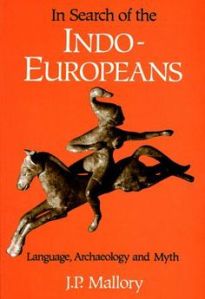 I’ve mentioned my obsession with Indo-European (IE) in previous posts, and given samples of a conlang I derived from IE and use in ritual. One of the many fascinations of this reconstructed language that’s the ancestral tongue of 3 billion people — half the people on the planet alive today — is the glimpses into the culture we can reconstruct along with the language. (Here’s a visual of the IE “family” and many of its members.) How, you thoughtfully ask, can we really know anything about a culture dating from some 6000 years ago – the very approximate time period when the speakers of the IE proto-language flourished? A good question — I’m glad you asked! – and one hotly contested by some with agendas to push – usually a nationalist or religious agenda intent on serving a worldview that excludes some group, worldview or idea. Hey kids, let’s define our club du jour by those we don’t let in!
But the most reasonable and also plausible answer to the question of IE language and culture is also simpler and less theatrical. Indo-European is the best and most thoroughly reconstructed proto-language on the planet — and it’s true there’s much still to learn. But after over two hundred years of steady increases in knowledge about human origins and of thoroughly debated and patient linguistic reconstruction, the techniques have been endlessly proven to work. And if a series of words that converge on a cultural point or practice can be reconstructed for IE, then the cultural practice or form itself is also pretty likely. Notice I don’t say merely a single word. Yes, to give a modest example, IE has the reconstructed word *snoighwos “snow” (the * indicates a reconstruction from surviving descendants — see footnote 1 below for a sample) – and that possibly suggests a region for an IE “homeland” that is temperate enough to get snow. After all, why have a word for a thing that’s not part of your world in any way? But wait — there’s more!
Here’s an uncontested (note 2) series of reconstructions – *pater, *mater, *sunu, *dukter, *bhrater and *swesor – all pointing to an immediate family unit roughly similar to our “nuclear family,” with father, mother, son, daughter, brother and sister all in place. It’s fairly safe on the basis of this cluster of reconstructed words – and others, if you still doubt, can be provided in painfully elaborate detail – that with a high degree of probability, an IE family existed all those millennia ago that would also be recognizable in modern times and terms.
[Side note: almost every reconstructed IE word listed in this post has a descendant alive in modern English. Want proof? Post a comment and I’ll be happy to provide a list!]
 Things understandably get touchier and more contentious when we move on to words and ideas like *deiwos “god”; *nmrtya “immortality”; *dapnos “potlatch, ritual gift-exchange”; *dyeu + *pater “chief of the gods” (and Latin Jupiter); *sepelyo– “perform the burial rites for a corpse”; and a few whole phrases like *wekwom tekson, literally “weaver of words, poet” and *pa- wiro-peku, part of a prayer meaning something like “protect people and cattle.”
What else can we conclude with considerable confidence about the IE peoples? Many lived in small economic-political units governed by a *reg– “king, chieftain” and lived in *dom– “houses.” Women *guna, *esor left their families at marriage and moved to live with their husbands *potis, *ner, *snubhos. A good name *nomen mattered then just as it does today – even with social media both exalting and trashing names with sometimes dizzying speed – though small-town gossip always filled and fills that role quite well, too. Heroes dominated the tales people told round household and ceremonial fires *pur, *ogni in the village *woikos, *koimos at night *nokwti. The most powerful and famous *klewes– heroes succeeded in slaying the serpent or monster of chaos: *oghwim eghwent “he slew the serpent” and thereby earned *klewos ndhghwitom “undying fame” (note 3). Special rites called for an *asa altar and offerings *spond-, because the universe was a place of an ongoing re-balancing of forces where the cosmic harmony *rti, *rta needed human effort to continue.
With Thanksgiving in the wings, it’s a good time for reflection (is it ever not?). Ways of being human have not changed as much as we might think or fear or be led to believe. Family, relationships, good food and drink, a home, meaningful work, self-respect – these still form the core of the good life that remains our ideal, though its surface forms and fashions will continue to shift, ebb and flow. Hand round the *potlom cup and the *dholis, the portion each person shares with others, so that all may live, and we can still do as our ancestors did: give thanks *gwrat– and praise for the gift *donom of life *gwita.
/|\ /|\ /|\
1. Linguistic reconstruction involves comparing forms in existing and recorded languages to see whether they’re related. When you gather words that have a strong family resemblance and also share similar or related meanings, they help with reconstructing the ancestral word that stands behind them, like an old oil portrait of great-great-great grandma in the hallway. Some descendant or other probably still walks around with her characteristic nose or brow or eyes, even if other details have shifted with time, marriage — or cosmetic surgery.
For *snoighwos, a sample of the evidence includes English snow, Russian snegu, Latin nix, niv-, Sanskrit sneha-, and so on. The more numerous the survivals in daughter languages, the more confident the reconstruction usually is. After a while you see that fairly consistent patterns of vowels and consonants begin to repeat from word to word and language to language, and help predict the form a new reconstruction could take.
A handful of reconstructed words have descendants in all twelve (depending on who does the counting) of the main IE family groups like Italic (Latin, Oscan, Umbrian, all the Romance languages, and others), Celtic (Irish, Welsh, Breton, Manx, etc.), Germanic (German, English, Dutch, Icelandic, Norwegian, Frisian, Swedish, Gothic, etc.), Baltic (Latvian, Lithuanian, Prussian), Slavic (Russian, Serbian, Polish, Czech, Ukrainian, Slovene, Polabian, Old Church Slavonic, etc.), Greek (Doric, Macedonian, Attic, etc.), Tocharian (A and B), and Indo-Iranian (Sanskrit, Pali, Avestan, Bengali, Hindi, Urdu, Sindhi, Kashmiri, Dari, Pashto, Farsi, Baluchi, Gujerati, etc.) and so on, to name roughly half of the families, but nowhere near all the members, which number well over 100, not counting dialects and other variants.
2. “Uncontested” means that words with approximately these forms and meanings are agreed on by the overwhelming majority of scholars. If you dip into Indo-European linguistics journals and textbooks, you’ll often see algebraic-looking reconstructions that include details I exclude here — ones having to do with showing laryngeals, stress, vowel length and quality, etc. indicated by diacritics, superscripts and subscripts.
3. Even without the details mentioned in note 2 above, some reconstructions can still look formidably unpronounceable: I challenge any linguist to give three consecutive oral renderings of the second element in the reconstructed phrase *klewos ndhghwitom! The point to remember is that these are usually cautious reconstructions. They generally “show what we know.” Vowels tend to be much more slippery and fickle than consonants in most languages, and so they’re also less often completely clear for IE than the consonantal skeleton is. Several people, me among them, have worked on versions of “Indo-European for daily use”!
Images: Mallory; Indiana Jones the linguist.
Corrected 18 Dec. 2014
 Not responsible for spontaneous descent of Awen or manifestation of the Goddess. Unavailable for use by forces not acting in the best interests of life. Emboldened for battle against the succubi of self-doubt, the demons of despair, the phantoms of failure. Ripe for awakening to possibilities unforeseen, situations energizing and people empowering.
Catapulted into a kick-ass cosmos, marked for missions of soul-satisfying solutions, grown in gratitude, aimed towards awe, mellowed in the mead of marvels. Optimized for joy, upgraded to delight, enhanced for happiness. Witness to the Sidhe shining, the gods gathering, the Old Ways widening to welcome.
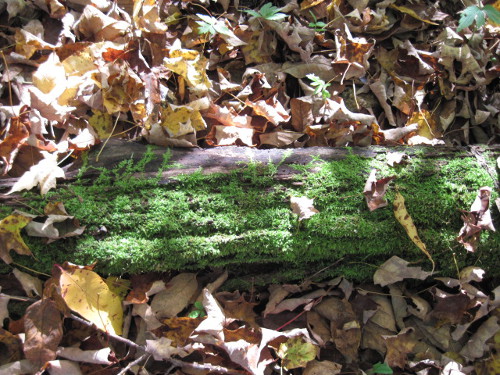 Primed for passionate engagement, armed for awe-spreading, synchronized for ceremonies of sky-kissed celebration. Weaned on wonder, nourished by the numinous, fashioned for fabulousness. Polished for Spirit’s purposes, dedicated to divine deliciousness, washed in the waters of the West, energized in Eastern airs, earthed in North’s left hand, fired in South’s right. Head in the heavens, heart with the holy, feet in flowers, gift of the Goddess, hands at work with humanity. Camped among the captives of love, stirred to wisdom in starlight, favored with a seat among the Fae, born for beauty, robed in the world’s rejoicing, a voice in the vastness of days.
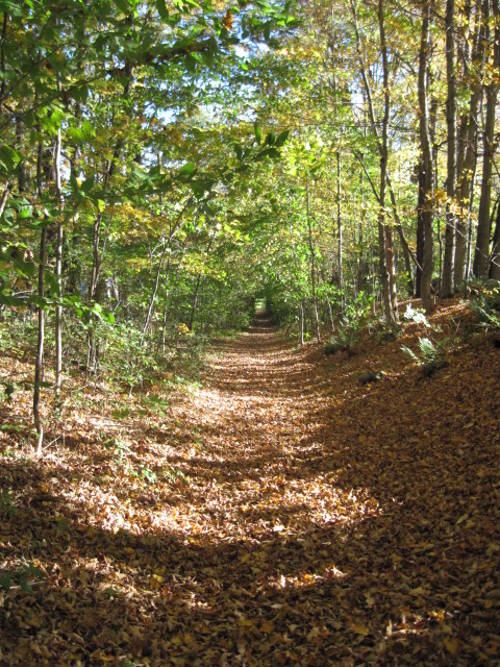
Knowing, seeing, sensing, being all this, you can never hear the same way again these two words together: “only human”!
/|\ /|\ /|\
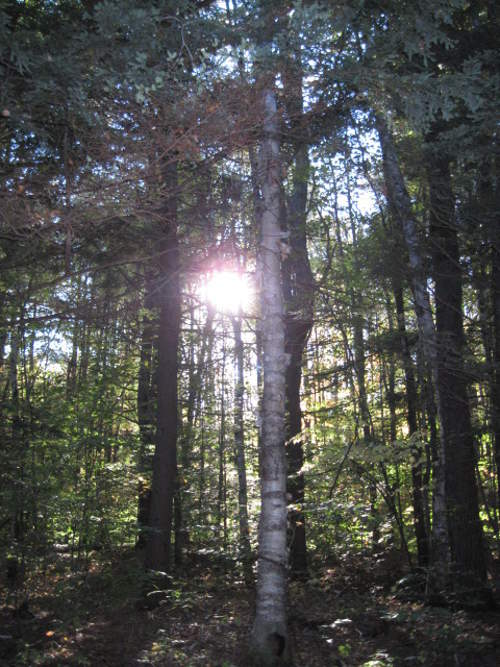
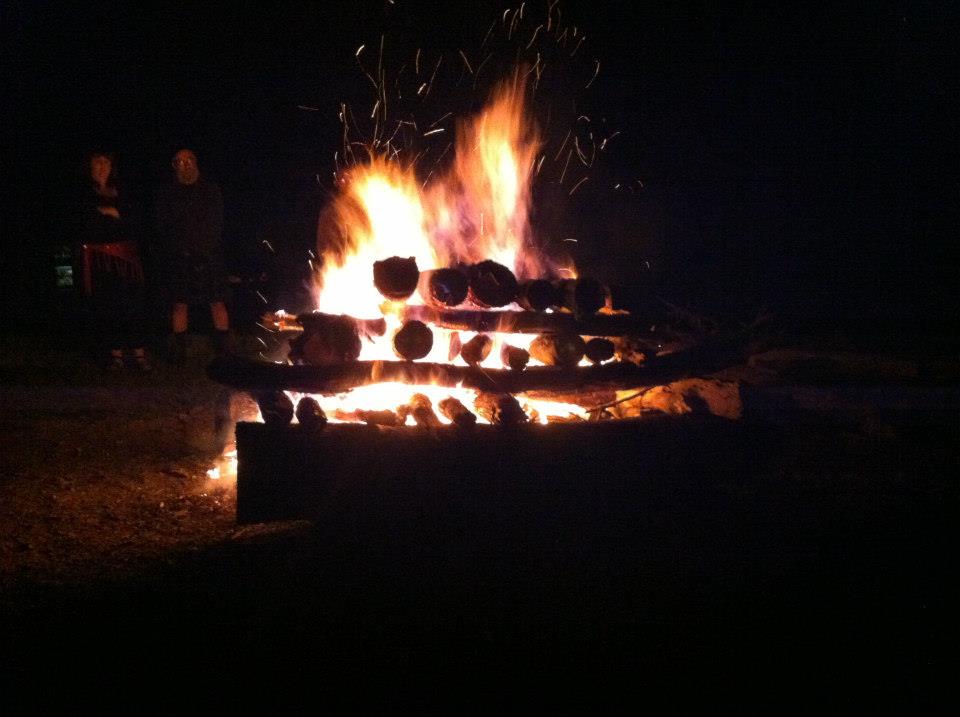
Images: three from a sequence taken yesterday, 3 Oct 14, on a blessed autumn day in southern Vermont two miles from my house.
I’ll return to A Druid Way (and the fourth post in the “American Shinto” series) when I get back from the annual East Coast Gathering (ECG) this coming weekend. This year’s 5th ECG shares in some of the energy of the OBOD 50th anniversary earlier this summer in Glastonbury, UK. For many U.S. Druids, the Gathering is the principal festival event of the year, a chance to renew old friendships, enter sacred time and space, and reaffirm ties to the special landscape of Camp Netimus in NE Pennsylvania. This year’s Gathering theme is “Connecting with the Goddess.”
In the interim, here are three images from last year’s Gathering — a visual invocation of the Alban Elfed/Autumnal Equinox energies of the Camp.
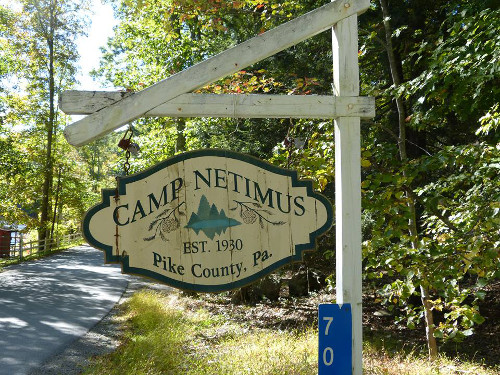
Camp Netimus sign — photo courtesy Krista Carter

Steps up to fire circle from Main Lodge — photo courtesy of Wanda GhostPeeker

The evening bonfire
[Related posts: Shinto & Shrine Druidry 1 | 2 | 3 || Shinto — Way of the Gods || Renewing the Shrine 1 | 2 || My Shinto 1 | 2 ]
Below are images from our recent visit to Spirit in Nature in Ripton, VT, some eight miles southeast of Middlebury as the crow flies. An overcast sky that day helped keep temperature in the very comfortable low 70s F (low 20s C). At the entrance, Spirit in Nature takes donations on the honor system. The website also welcomes regular supporters.
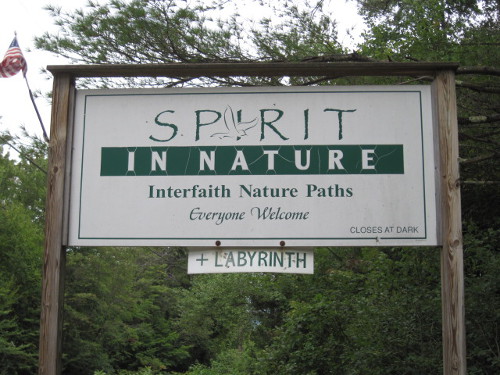
As an interfaith venture, Spirit in Nature offers an example of what I’ve been calling Shrine Druidry, one that allows — encourages — everyone into their own experience. Everyone who chooses to enter the site starts out along a single shared path.

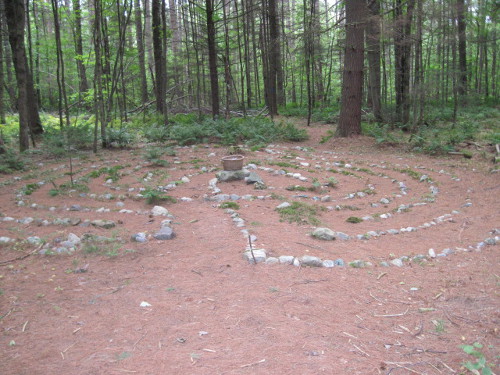
The labyrinth helps engage the visitor in something common to many traditions worldwide: the meditative walk. The labyrinth imposes no verbal doctrine, only the gentle restraint of its own non-linear shape on our pace, direction and attention.
Beyond the labyrinth, a fire circle offers ritual and meeting space. Here again, no doctrine gets imposed. Instead, opportunity for encounter and experience. Even a solitary and meditative visitor can perceive the spirit of past fires and gatherings, or light and tend one to fulfill a present purpose.
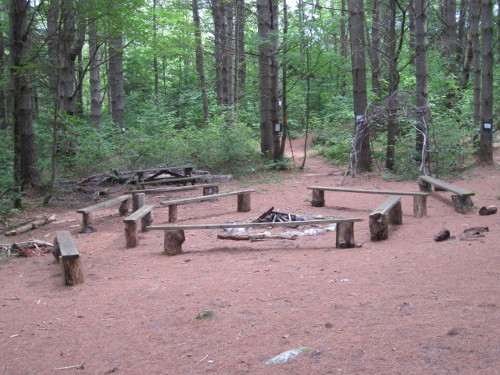
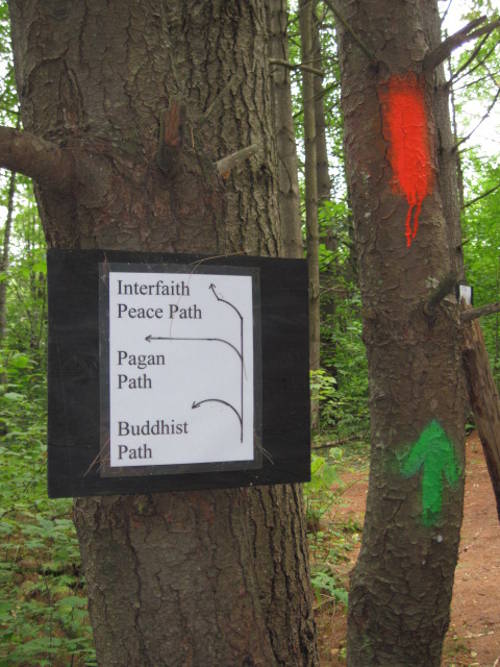
Beyond the circle, the paths begin to diverge — color-coded on tree-trunks at eye-level — helpful in New England winters, when snow would soon blanket any ground-level trail markers. When we visited, in addition to the existing paths of 10 traditions, Native American and Druid paths branched off the main way, too new to be included on printed visitor trail maps, but welcome indicators that Spirit in Nature fills a growing need, and is growing with it.
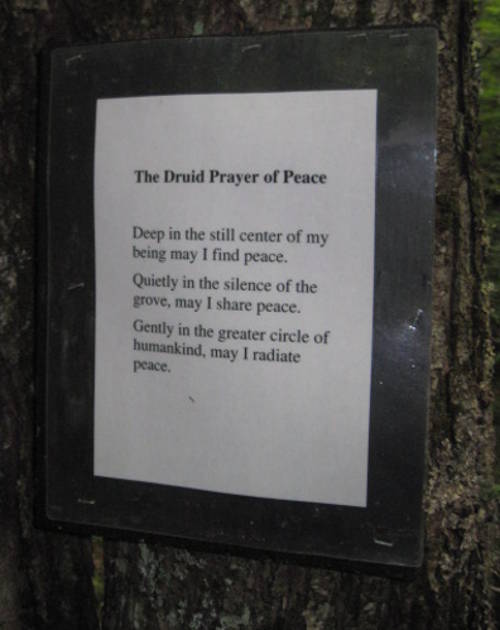
The Druid Prayer captures a frequent experience of the earth-centered way: with attention on stillness and peace, our human interior and exterior worlds meet in nature.
The trails we walked were well-maintained — the apparently light hand that brings these trails out of the landscape belies the many hours of volunteer effort at clearing and maintenance, and constructing bridges and benches.
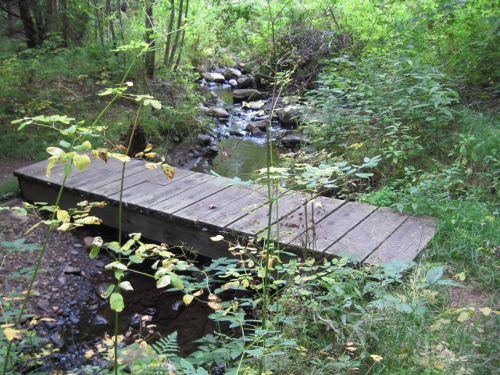
A bench, like a fire pit and a labyrinth, encourages a pause, a shift in consciousness, a change, a dip into meditation — spiritual opportunities, all of them. But none of them laid on the visitor as any sort of obligation. And as we walk the trail, even if I don’t embrace the offered pause, the chance itself suggests thoughts and images as I pass that the silence enlarges. I sit on that bench even as I walk past; I cross the bridge inwardly, even if it spans a trail I don’t take.
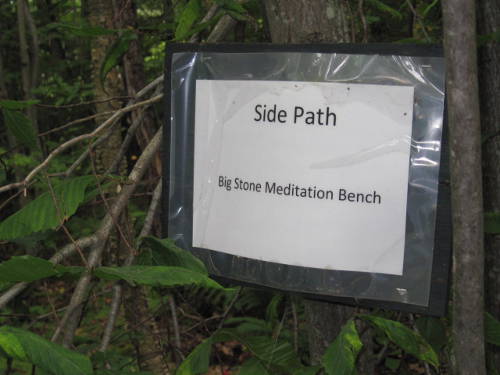
Sometimes a sign presents choices worthy of Yogi Berra’s “When you come to a fork in the road, take it.”
Perhaps it’s fitting to close with the North, direction of earth, stone, embodiment, manifestation — all qualities matching the interfaith vision of this place.
/|\ /|\ /|\
This is the 200th post at A Druid Way. Thanks, everyone, for reading!
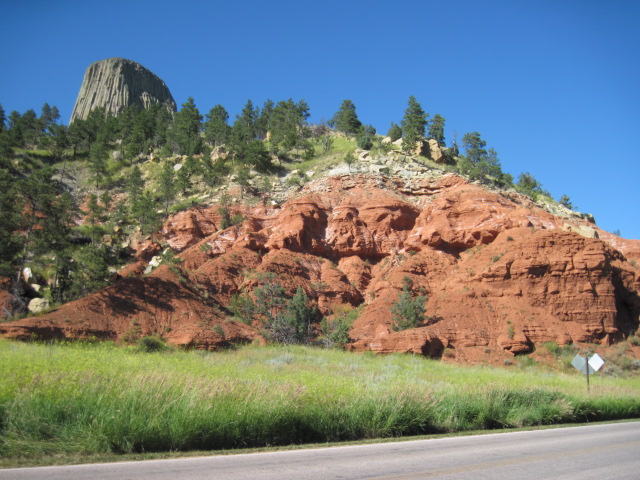
From a distance, Devil’s Tower National Monument in Wyoming looms over the landscape, prominent against the horizon, but once you enter the park surrounding it, it seems to vanish, only to reappear in fits and starts at first, peeping over colorful hills and cliff faces.
Geologically, we’re told, the tower is properly an igneous intrusion or eroded laccolith, two fun pieces of scientific jargon, technically descriptive, but lacking something nonetheless. And “Devil’s Tower”? Why should the baddie of Judeo-Christianity get any credit at all for this splendid rock formation? Let him stick to devilled eggs and devil’s food cake.
Those of us over a certain age may recall the Tower’s appearance as dramatic staging in the final portion of the ’77 Spielberg sci-fi film Close Encounters of the Third Kind, a pop-culture association that now seriously dates us.
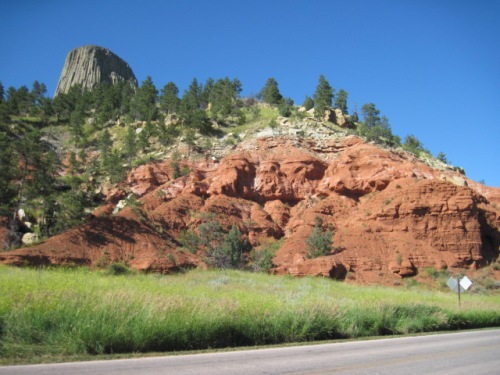
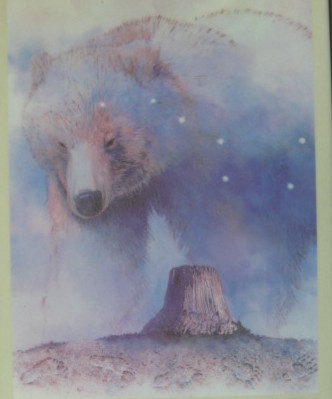
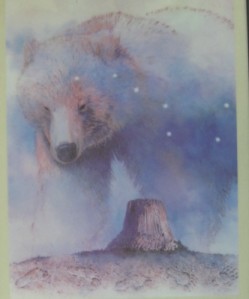 My wife and I arrived late in the day, which helped throw the tower’s dramatic vertical striations into high relief. A park information kiosk quietly points out that the English name “Devil’s Tower” is comparatively recent. Native names from several different tribes associate the formation with the bear — the Cheyenne, Arapaho, Crow and Lakota all call it some variation of “Bear’s Lodge” or “Bear’s House” and their traditional stories describe bears marking the great stone with their claws.* (You can read several versions under the section “Native American Folklore” here.)
Both name and thing started shifting for me as I read this: a good name illuminates the thing, and the thing itself lives more brightly and fully under a good name. I can still feel the association “stick” — now a piece at least of that older (and to me more apt) story has become part of this landscape. Devil’s Tower, yes. But the “real” name, well, that’s a different matter. Invoke the place in memory by the older name — in this case a good one — and its naming story comes with it. Misname something, or someone, and you may not be able to see that thing or person clearly or truthfully.
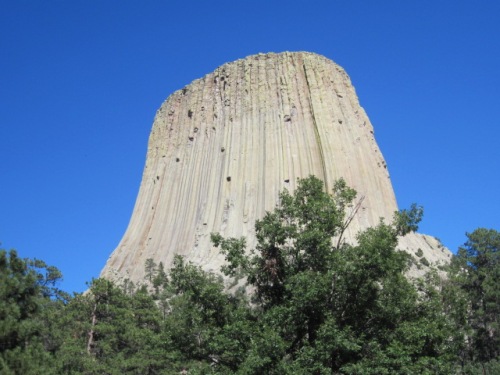
Bear’s Lodge, now I pass along a little of your story to others, so they too may enjoy the rightness of a good name.
/|\ /|\ /|\
*The tower remains a sacred site for several tribes. “In 2005,” the Wikipedia article notes, “a proposal to recognize several Native American ties through the additional designation of the monolith as Bear Lodge National Historic Landmark” faced political opposition and the argument that a “name change will harm the tourist trade and bring economic hardship to area communities.”
Image: Bear over Devil’s Tower — park info kiosk.
As visual creatures we’re programmed to respond to faces. We project faces and human figures onto landscapes, the moon’s surface, cloud formations, etc. We make quick judgments about others on the basis of their faces and habitual facial expressions. And up to a point, we’re often justified in doing so. After all, we feel most comfortable around those who look like us. The “looking” part is key. Eyes tell us a great deal, and who hasn’t wanted at some point to remove the sunglasses from a stranger’s face so we can “read” the person’s eyes?

Hello Kitty
In particular, the properties of “cuteness” — large eyes relative to head size, rounded features, a set of proportions frequently common to young animals and humans — induce a “cuddle response” which the Austrian Konrad Lorenz asserted motivates adults to care for the young. Subsequent study has confirmed that the response is universal, crossing cultures — and incidentally allowing such things as Japanese cartoons like Hello Kitty to catch on in the West.
Of course there’s a large element of “warm and fuzzy” sentimentality in such images, and in how we react to them. Marketers know this and capitalize on it. And environmentalists, not surprisingly, find they can succeed more easily in garnering support to protect an endangered bird or animal that happens to have some features of cuteness over one that may be grotesque or otherwise off-putting. The Ugly Animal Preservation Society makes this point through its official mascot, the Blobfish. As the UAPS president notes, the group is “dedicated to raising the profile of some of Mother Nature’s more aesthetically challenged children. The panda gets too much attention.”

Blobfish
Perhaps this is why cultural images that actually possess real power can shock and startle us into waking up a little, because our increasingly sentimental cultures seem to have produced fewer of them in recent times. We may even fear the archetypal and subconscious energies that emerge in such images, because they can reveal the hollowness of much of our emotional and spiritual lives, as well as pointing out ways towards greater depth and integrity. We don’t know where we are with such images, and we may turn away in discomfort or disgust, or accuse the visionary or artist who helps manifest them, or misunderstand our own dreams where such archetypal images and figures may also appear, instead of understanding them as prompts to look inward.
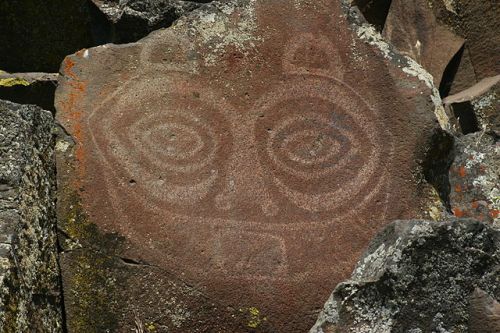
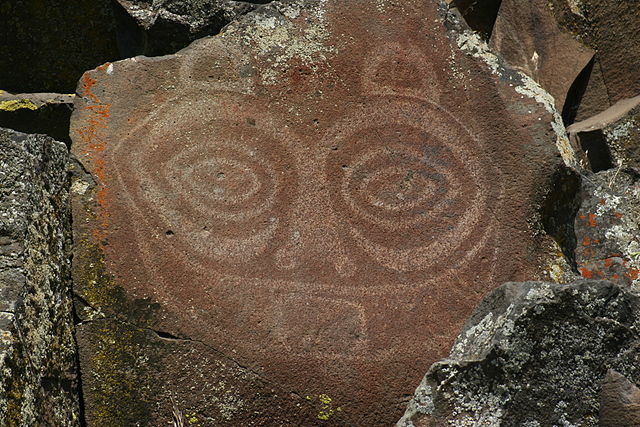
Tsagaglalal
The Wishram Indians of Oregon U.S. tell a story about Tsagaglalal (tsah-GAHG-lah-lahl) “she who watches,” whose image appears on a stone above the site of an ancient village. In part it’s also a story about Coyote, the archetypical Trickster figure of the Americas. Warning Tsagaglalal of a coming time when women will no longer be chiefs, Coyote tests Tsagaglalal’s resolve to protect her people. When he finds her worthy, he changes her to stone to guard the village she overlooks.
Visitors can see the combined petroglyph/pictograph of “She Who Watches” at Columbia Hills State Park near Dallesport, Washington. A guide now accompanies you — the image has been vandalized in the past.
[On a side note, when we lose our connection to the sacred, we may access a subsidiary glimmer of the original energy through the act of profaning it. Degradation and blasphemy do generate power of a sort. Human spiritual history testifies to this in figures and movements who have explored their possibilities. If they were too public in their explorations, they outraged the sensibilities of the wider culture. In the end, such practices seem consistently not to deliver what it is we seek anyway. Like the “withering away of the state” in Communism, human limitations sully the abstract ideal.]
/|\ /|\ /|\
Images: Hello Kitty; Blobfish; Tsagaglalal;

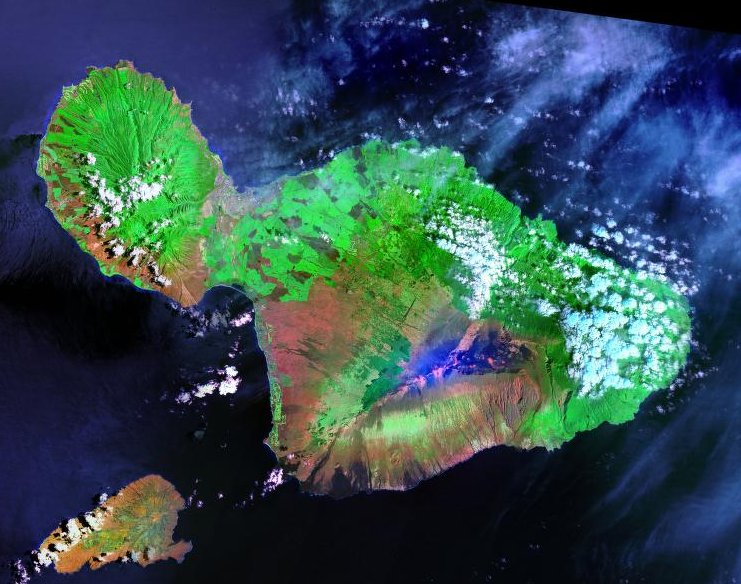
Maui — Landsat satellite view. Blue area is Haleakala — max. elev. 10, 023 ft.
Hi Lorna — thanks for your recent comment on “The Land is a Chief.” As usual, you dig beneath the surface and grapple with good challenges. You note, “To return … a sense of the sacred to landscapes … that have been viewed as profane” — that’s surely a major goal, if not one of THE central goals, of much Pagan and earth-based spirituality. At least I hope it is, or will be — it still feels like it’s in embryo form nowadays, in many places. Because there’s also a strong self-oriented strain that sometimes overshadows physical and spiritual work with the health of the land. It prioritizes self-fulfillment and personal realization and growth — important processes, yes — over the healing of the place(s) we find ourselves.
Of course it shouldn’t be an either-or: “You can’t have one without the other.” Many people struggle with spiritual ills that are manifesting, among other forms, as health challenges. Our honoring and reverencing of the old gods and spirits is one healthy “symptom” of practices for healing the land AND ourselves. We can’t hear and communicate and work with them if we’re too out of balance with ourselves and the land.
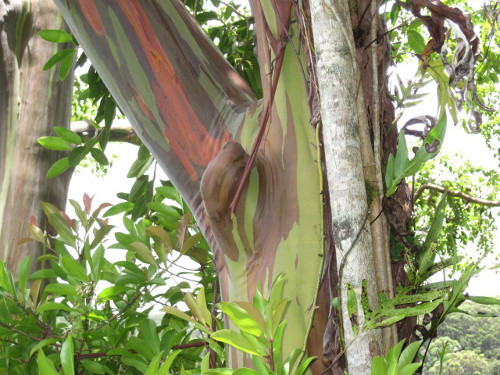
BELOW: Eucalyptus* near Huelo, East Maui, Hawai’i
I wonder, though, how much we’ve romanticised “traditional” cultures for their practices and beliefs — beyond what the “average” person in those cultures may actually have done or thought or believed. But maybe such romanticizing is part of a healthy corrective, needed today, to help re-balance our attitudes and motivations towards our treatment of the planet over the past two centuries. At least it gives us an ideal to work for: if we’ve damaged a landscape, we can heal it, and redeem our obligation, fulfilling our ancient commitment and responsibility as spiritual and physical beings in this world.
That sounds and feels right. We (often) say and dream it and proclaim it. But like you, I’m not sure whether or how (or how much) it will happen. For you rightly phrase it as an open question: will it “ever be possible to return such a sense of the sacred to landscapes that for at least the last couple of centuries have been viewed as profane?” We’ll answer that question with our lives, not just our words. And people of the next couple of centuries will judge and live with the results.
/|\ /|\ /|\
Image: Maui satellite view.
*My wife took this vivid image as part of a color study she is doing of native hues and patterns. Eucalyptus trees flourish along the Hana Highway, a very winding road along the northeastern coastline of Maui. Much of the area is tropical rainforest, though if you continue beyond Hana along the highway, the land transitions to desert in the southeast. One of the marvels of Maui and the other islands in the Hawai’ian chain is just how much climate diversity they exhibit over just a handful of miles in planetary terms.










 A Druid Way


.jpg)