First, music and image. On June 21, the Irish group Rainbow Starlight released the ‘Hail Mary’ in Irish, set to new music.
Before you bother with anything that I have to say about this video, make a gift to yourself and write down your own reactions, thoughts, experiences. Listen a second or third time. (And obviously if you’ve experienced negative things surrounding Christianity, and this prayer to the Mother in a Christian guise remains inaccessible to you, claim your own wisdom by all means, and go do something else that heals and helps.)
/|\ /|\ /|\
I’m writing about this because words are a way I’ve used all my life to manifest what is speaking to me. And this video feels to me, among all the other things it is and can be, one example of a way forward, of manifesting the solstice blessings we’ve received, even of making ourselves aware of them in the first place, which is often the first needful step in manifestation. The video, in other words, suggests a practice.
But it’s all in Irish! Yes it is. I don’t know Irish, beyond a few words. I know enough to recognize a text as Irish, and I know how the language works linguistically as one of the six surviving Celtic tongues. Like many, I respond to its beauty as a vehicle for song. Traditional Irish music, prominently featuring many women as vocalists, can carry a current often missing in much of the contemporary musical scene. For lack of a better word, we can name that current the mystical, the introspective, the inward-facing. Though that isn’t exactly right, either. In this song, a profoundly Druidic meditation, we can experience it directly, as it opens into an engagement with a landscape.
After you’ve gotten down in writing — a whole practice in itself — your thoughts, experiences, insights, etc, consider how the video points toward a practice.
/|\ /|\ /|\
If you opted not to write down your experience with the video, ask yourself why. Then at least write down your answer, and return to it to ponder it more than once.
/|\ /|\ /|\
Sé do bheatha, a Mhuire, atá lán de ghrásta, Tá an Tiarna leat. Is beannaithe thú idir mná, Agus is beannaithe toradh do bhroinne; Íosa. A Naomh-Mhuire, a Mháthair Dé, guigh orainn na peacaigh, anois, agus ar uair ár mbáis.
Amen.
/|\ /|\ /|\
With my breath, with the tide beating on my shores, let me begin.
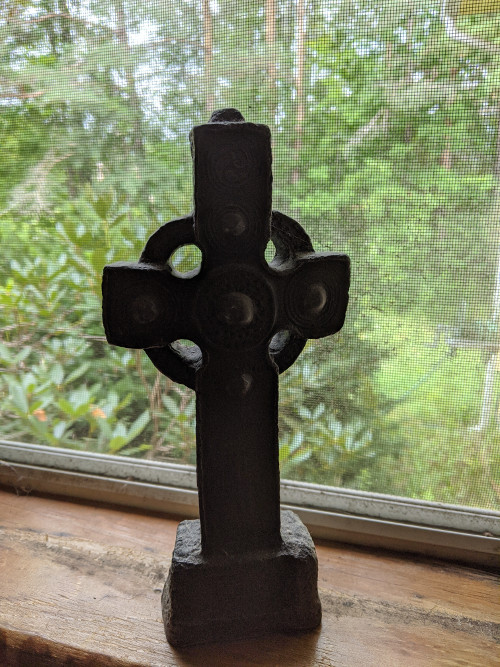
In the mornings, after I have prayed at my altar (which is in the East), I trace a Celtic Cross over my heart, then rise and take the candle from the altar, bow, then make my way sunwise round to the North and sing a prayer/blessing for the Directions: “May the Life and Hope of God, May the Light and Peace of Christ, May the Love and Healing of the Holy Spirit, be in the North…then South…West…East…bowing again to the altar in the East, then turning to face the Center…be throughout the Whole World”; then extinguish the candle for the spreading of the Light throughout the world. Carlo Carretto (1910-1988) wrote of the Trinity as Life, Light, and Love. I have found this way of understanding the Trinity to be very helpful and beautiful as I weave a Way of Being which honors all that is meaningful to me. I am very happy to have found your writings!
This is a wonderful illustration of finding ways to personalize what we do, and how we walk our paths. You can feel it as you read it.
“To honor all that is meaningful to us”: a piece of the Great Work each of us is called to do.
/|\ /|\ /|\
To those who find Christian imagery and language a useful guide, one might see in Cheryl Anne’s practice a concrete demonstration of the “priesthood of all believers”, practices that reflect a capacity for devotion and service. The phrase “priesthood of all believers” itself is one that some have developed based on 1 Peter 2:9. While the Wikipedia entry for “universal priesthood” highlights this belief and practice as something that’s more characteristic of Protestantism than other traditions in Christianity, one need not see priesthood as an “either-or”. Dedication, service and devotion are definitely not the exclusive possessions of any one tradition or practice.
A Druid, for instance, might well perceive that when we are in right relationship with Others, all beings, human and non, have the potential to minister to each other, to serve as the hands and feet and eyes and mouth and heart of Spirit. And we’ve all had experience of such harmony, though often only briefly. At our best, we mediate light and love, life and law to each other, four forces traditionally associated with the Four Directions. And at our worst — well, we know all too well what we’re capable of at our worst. One tradition I know asks its clerics to be intentional about displaying outward symbols and signs of their position. When they’re not at their best, they’re asked to remove any outward signs that mark them as clerics, until they’re able to honor the call once more. Priesthood in this sense is a renewable aspiration, and an ongoing opportunity for discernment, for re-dedication, for service.
The topic of priest(ess)hood comes up from time to time in Druidry. We may already know our formal and informal leaders. Some are authors and speakers and workshop leaders. Some are priested, and some are not. It can be easy to confuse charisma, or a gift for teaching, or leadership skills, or learning, with a call to priesthood. It’s helpful to remember that many priests, perhaps most, work in the background. So if I imagine myself as a priest, let me apply the first test of our crap detectors, the test of ego: does the appeal, the romance, the glamour of “priesthood” drop away, if no one else ever knows about the call I’ve answered? Does the call still sound its voice inwardly?
As Druidry develops, it will find appropriate tools to assist those with various spiritual calls. Christian training for priesthood begins with a process of discernment. Is what I’m experiencing in fact a call? Who is calling? Is the call still alive a year from today? How have I responded to the call, if at all? What practices do I have in place that may focus or scatter my awareness of the call, my commitment to respond? What do I imagine will happen if I ignore the call? And so on.
Here, too, is an opportunity to practice the “as if” principle. If I am a priest/ess right now, how does my life demonstrate that spiritual fact? Can I serve as a priest starting this moment, without the need for the label, the bling, the recognition of others? If I can and if I do, what does that look like in concrete terms?
How might I incorporate insights from the recent “Cruce Celtica” post into my practice?
(As with other posts here, if you’re still working through negative associations and experiences with Christianity, you’re better off just passing by this post. No need to irritate or anger your emotional body. Your other bodies will thank you.)
ONE
Make the sign of the cross as a way to call the Four Directions. After all, that’s what much Druid ritual does already: the opening rite of the standard OBOD format moves us from North to South, from West to East. Depending on where you’re facing, crossing yourself, that’s forehead to heart, left shoulder to right shoulder. Much Hermetic magic also relies on such gestural associations, symbolism and visualizations with Medieval and Biblical symbolism.
TWO
Visualize the presence of spirit in nature, Hebrew immanu-‘el “with-us God”, Emmanuel, in each of the Four Quarters. If you’d like a more Druid focus, use a set of common associations: for instance, bear of the North, hawk of the east, stag of the south, salmon of the West.
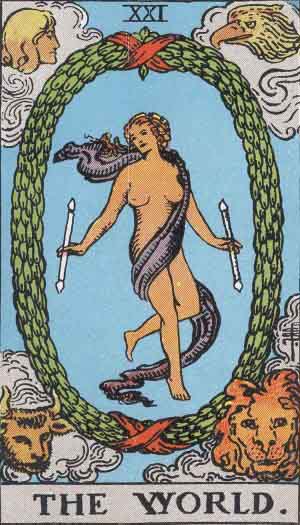
For a more Christian focus, try the Four Evangelists (or Archangels), or their ancient symbols: an angel for Saint Matthew, a lion for Saint Mark, an ox for Saint Luke and an eagle for Saint John. These symbols come from the first chapter of Ezekiel, appearing again in the fourth chapter of Revelation. The early Church Fathers interpreted, explored and developed them further.
In the Tarot, the World card depicts these four, one in each corner disposed around the central human figure. This card might serve as a meditation focus.
A more explicitly Christian opening could use “The earth is the Lord’s and the fullness thereof” from Psalm 24.
Spirit fills the worlds, and everything in them.
THREE
These gestures, visualizations and forms could serve for a house blessing, one for each of the four corners (that’s assuming you’re not living in a geodesic dome, or a yurt, or some other non-four-sided dwelling!). Looking for a particular verse that’s more appropriate? Consider Psalm 127: “Except the Lord build the house …” Or Psalm 118: “The stone which the builders rejected has become the cornerstone …”
FOUR
These forms also offer themes for portions of an hour (15 minutes each) or a day (6 hours each). Or for a month’s worth of workings, ritual, blessings, meditations, etc. Try them out as a preliminary shape or container for prayer, meditation, ritual,
FIVE
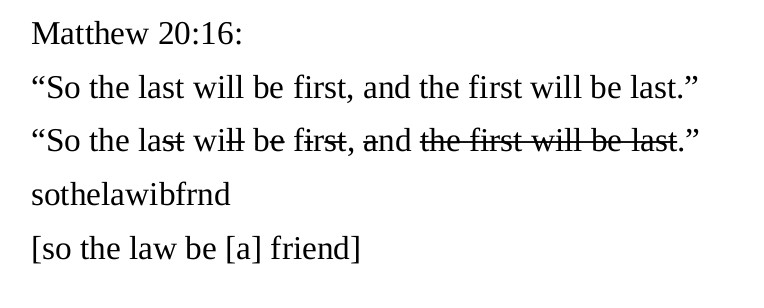
From a favorite verse in each of the four Gospels, make a directional sigil. Here’s Matthew 20:16 for an example.
First, cross out any repeated letters …
In the making of the sigil, you may sometimes “find” a second “hidden” verse — here, “so the law be a friend” suggests itself fairly transparently — which can spark further meditation. What law? How a “friend”?
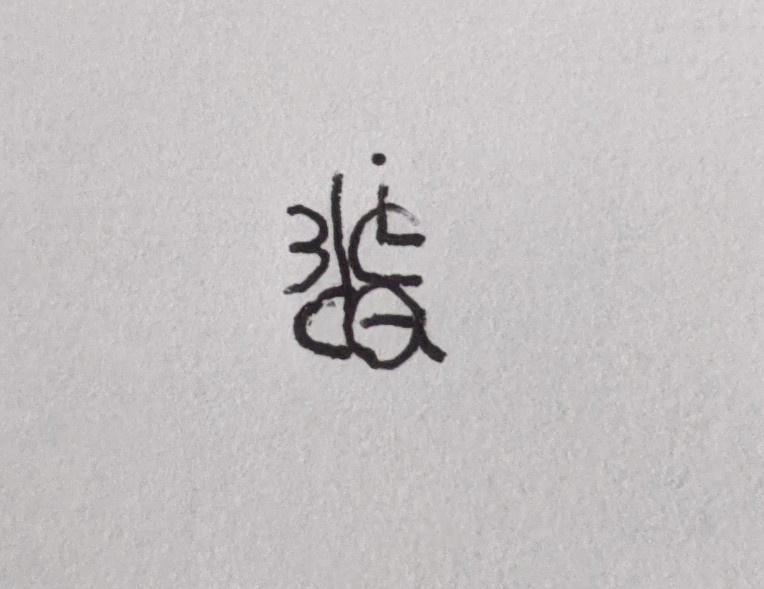
Then make the sigil. Freehand is often best. Let the shapes of both lower and upper case blend. After all, you’re doing this for you, not for anyone else. The making of a sigil can be a meditative and ritual act. Here’s my freehand sigil of the 14 letters s-o-t-h-e-l-a-w-i-b-f-r-n-d.
SIX
Once you have the sigil, you can use it in a wide variety of ways. Again, the making of sigils is itself a magical and blessed act — or it can be. The resulting sigil may be a focus for meditation, a tattoo, a ritual object to place in an appropriate place, a mark to consecrate another object, etc. Write it with safe vegetable inks on skin and it can be licked off and swallowed. Or ground up and incorporated into an oil for anointing. Or kept in a pendant as a charm. And so on.
If your first reaction to any of these suggestions is surprise, suspicion, repugnance, disgust, etc., ask yourself why. Nothing in any of these acts is inherently different than decorating a birthday cake, signing a name, initialing a form, writing shorthand, etc. Most of us have swallowed pills, capsules, etc. with trademarks on them. Why not hallow, bless, consecrate, sanctify?
SEVEN
I invite you to try out and experiment with further uses yourself. In such exploration you may find inspiration from doing one or more of the foregoing as a starting point — a priming of the pump — as with the found verse, or the final appearance of the sigil, the original verse or other piece of language that you sigilized, and so on. Any of these are things you could do with children, too. They are ways to materialize, concretize, manifest, make palpable, things which can otherwise seem too abstruse, ethereal, incorporeal, transient.
Part of our magic as makers — Tolkien’s “we make still by the law in which we’re made” — is to bring spirit into forms we can experience and apprehend more immediately and readily than before.
At the Cross, God entered and transformed time and space.
When we balance the Four Directions and their cardinal qualities and energies, spirit can more easily manifest through us and in our lives.
In such statements we can see both the overlaps and distances between Druidry and Christianity. Some of the distances rest in human language. (How many? And how important are they?) We move from talking about an experience using certain words, to expecting those words, and then to requiring only those words and no others when we talk. Then anyone who “doesn’t use our words” by definition “isn’t one of us”. The same with forms of ritual. And so tribalism slams shut another doorway to spiritual encounter and discovery.
For those seeking to reconcile the spiritual truths they perceive in both traditions, and wondering just how far they might proceed in such reconciliation, the Celtic Cross can be a profound object of meditation.
All the more if it moves us beyond words. (Never fear, I reassure the fearful part of myself — words will be there, before and after.)
/|\ /|\ /|\
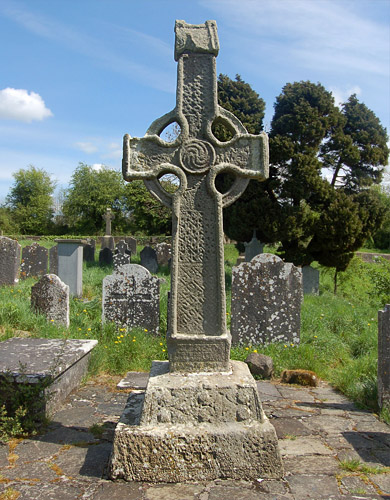
What are we to make of artefacts like the Killamery Cross below in a Kilkenny graveyard? Megalithic Ireland provides this image of its western face, with the spiral at the intersection of the vertical and horizontal arms:
As an image for meditation for both Christians and Druids, this cross is a potent one. Rather than creed alone, are we ready for encounter? Can both parties acknowledge that each has more to grow into, that the infinite is boundless, inexhaustible? Can the Christian perceive the profound invitation and expanse of the spiral, welcoming all? Can the Druid enter the meeting-place of sacrifice and recovery?
Can we first talk about and then enter spaces the others may know, without quite so many of our filters and lenses? (Never fear, says spirit, your tools will remain for you, before and after.) Will we choose to enter these spaces, knowing both we and the others may be transformed, with neither seeing the others or ourselves quite the same if and when we do?
We don’t have to “go anywhere” to contact the sacred.
“Everything that lives is holy”, William Blake declares. Fine, Billy, but how do I reconnect when I’m just not feeling it? In my better moments I may know it’s all holy, but I’m kinda down right now, dude, and I could use some help.
Druidry, after all, delights in “doing something” as a spiritual solution to many problems. Christianity may stereotypically insist “Ye must be born again!” as a prerequisite before anything else can happen, while Druidry as stereotypically suggests “Let’s go for a walk in the green world”.
What if neither of these is a viable option at the moment? Suicide hotlines get callers who’ve often tried every option they can lay hands on, and they’re still suicidal in part for that very reason: nothing’s working. And even those of us not in crisis at the moment can feel overwhelmed by events beyond our control.
If we step even one pace beyond the stereotypes, we find in counsel like “Be still and know that I am God” a place where Druidry and Christianity can draw closer. Something happens in stillness that all our elevator music and muzak and noise and ranting and partisanship try to overwhelm but cannot silence, because it is already silent. What is it?
In a post from Oct 2017 I wrote:
“The practice of sacramental spirituality can be pursued apart from the various pathologies of political religion”, notes John Michael Greer in his essay “The Gnostic Celtic Church“. In sacrament rather than creed lies one potent meeting-place for Druid and Christian.
What to do when one of our most human, instinctive and immediate responses — to touch each other in comfort with a hug, a hand on a shoulder — are actions dangerous to our health?
If the sacrament of touch is denied us, what other modes does spirit have?
The Sacrament of Hearing
“The Voice of the Beloved sustains us”. Whether it’s a telephone call to or from that particular person, or a special video, or piece of music, sound can carry us into spirit. The human capacity for memes and mantras and ear-worms is one we can use to our advantage. Set up what I actually want running through my inner worlds, and I’m halfway home.
And — paradox alert, because that’s much of human experience — in the sacrament of hearing, of listening, we may hear what is singing behind the silence …
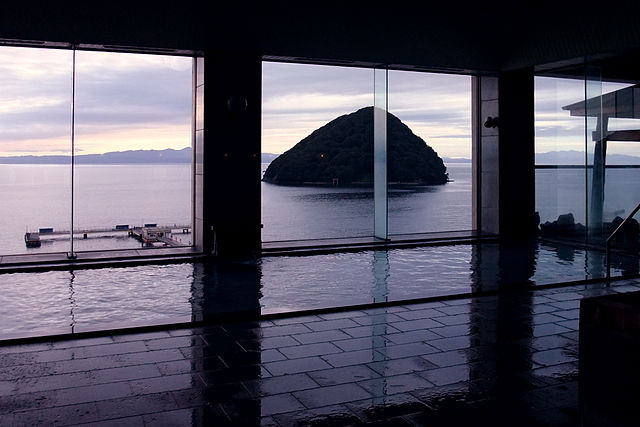
Kaisenkaku Asamushi Onsen in Aomori prefecture, northern Japan / Wikipedia /
The Sacrament of Washing
Taking a bath or shower, and visualizing the gunk leaving our bodies down the drain and away can be a spiritual practice. Many traditions urge sacred bathing. (Besides, in lockdown we can let ourselves get pretty grody.)
A Hindu turns if possible to Mother Ganges, Catholics visit holy sites dedicated to manifestations of Mary, it’s a lovely Japanese custom to visit an onsen, and followers of Shinto and plenty of non-religious people as well find hot springs, saunas and mineral pools to be restorative.
The Sacrament of Blessing
Seven words make up a lovely blessing some of my friends use often: “Bless this day and those I serve”. If I live by myself, I’m one of the people I serve. Let’s remember to bless ourselves. We need it. Pets or other animals, and houseplants, may rely on me for food and shelter and affection, so I can add them to those I bless. Outward to friends, neighbors …
What else can I bless? Asking that question thoughtfully can open many doors.
The Sacrament of Prayer
Prayer has long been a potent sacrament in the lives of many. The words and sounds can help restore our connections to spirit, partly because they’ve done so in the past. Like a spiritual battery, they’ve accumulated a charge. We jump-start more often than we realize.
The words of the Druid’s Prayer, or of a song or poem not “officially recognized” as a prayer may turn out to be your prayer. Sometimes we need something even more compact — just a few words from a longer form, a sacred name, a whisper — or a shout. If you’re alone, that’s easier. Try it, and note the power of prayer at the top of our lungs.
One simple prayer available to everyone is simply breathing. We hear in the Gospel of John: “The wind blows wherever it wants. Just as you can hear the wind but can’t tell where it comes from or where it is going, so you can’t explain how people are born of the Spirit”. Experiencing the spirit in our own breathing is a doorway for some. It’s there — sacrament in the life action of our bodies.
You may see in several of the above sacraments how touch has managed to find its way to us. Hearing involves sound waves touching my ears, bathing makes me intimate with water, and so on.
The Sacrament of Cooking and Eating
Some of our most common acts are sacramental in potential, and we can activate them by according them the respect they’ve earned in our lives. Food and drink keep these bodies alive and moving. Preparing food has often been a holy activity, at least around our holy-days, if not every day. Combine eating with blessing, as many do, and I can heighten my awareness of spirit-in-substance. A blessing on the incarnate spirit which sustains us.
The Sacrament of the Image and Object
Photographs, statues, objects collected from a walk or a ritual or as gifts from another — all these things bear a power to tend us. They can evoke memory, their physical substance is imbued with all the times we’ve handled them before (touch seeks us out, once again!), and they have a power to shift our attention to specific places and times.
The Sacrament of Ritual
I talk a lot about ritual here, because we all do ritual constantly. Each of the sacraments above is a ritual, or has ritual elements in it. Part of the sacrament of ritual is to recognize how many things can become rituals — and more importantly, how much of their already-existent ritual power helps shape and influence and move our lives.
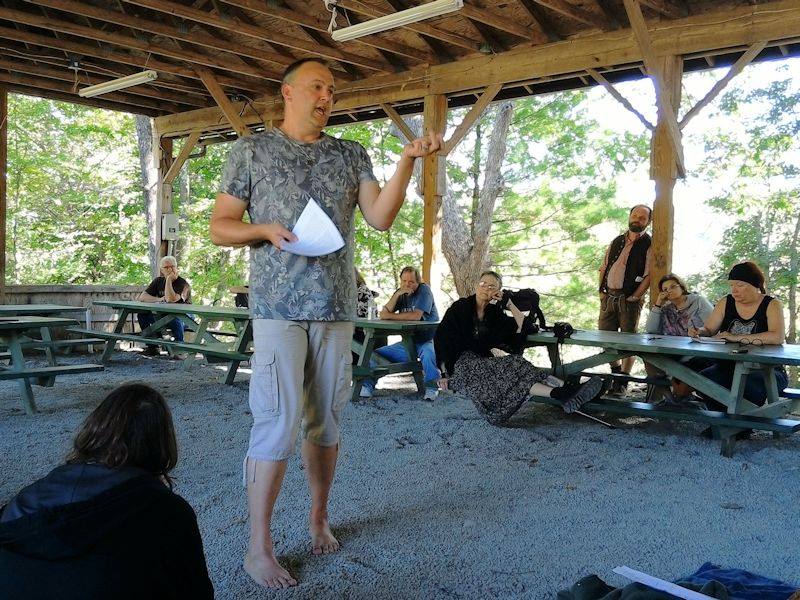
A barefoot Kris Hughes, recreating Iolo Morganwg’s simple summer solstice ritual on Primrose Hill in 1792, at East Coast Gathering 2015. Photo courtesy of Dana Wiyninger.
A friend of mine makes a ritual out of starting to write. He lights a candle, or some incense, and invites the muse of the moment to his writing project. A few other friends explore the meditative and sacramental power that wood-carving and weaving and knitting have, as well as enjoying their concrete manifestation, resulting in useful objects and garments.
May you find and feed your lives with sacraments that mean and matter to you.
1 — First of all, you, my readers. Forget superficial social-media “likes” (though on occasion it’s true they’re heartening to receive). Many of the most-read posts here are curiously “liked” the least, or not at all — from which I conclude you’re too busy reading and thinking about them to worry overmuch about “liking” them, thank the gods.
Older posts I haven’t referenced in years still get “views” — some of you are either referring friends to them, or systematically reading backwards and sifting through all the wordage here for anything that has value for you. Knowing how, with a little persistence, I can find a window into something of value in the odd or throw-away reference or turn of phrase in my all varied reading on- and off-line, it’s good to know some of you do the same.
2 — Further, you come from all over — from 102 nations, if I can trust WordPress site analytics. That means that important ideas I grapple with here, and get wrong as well as right, are reaching a wide readership, and provoking reflection. Not surprisingly, the U.S. and the U.K. are the most frequent source of readers, but other nations both expected and more surprising appear on this July’s roster of “Top 20” sources of page views — Turkey, the Philippines, Hong Kong, Japan (Germany and India also normally both feature among the Top 10 when I look at rosters for whole years but for whatever reason didn’t make it last month; Hong Kong isn’t a separate nation — why WordPress treats it as one is interesting to contemplate):
3 — Our much-abused, misunderstood, but still persistent human instinct for the spiritually real, the true, the valid, the potent. To choose just one topic, if your sustained interest in a cluster of posts on Druidry and Christianity on this blog is any indication at all, we sense an intersection there that deserves our attention and exploration. Powerful stuff (a highly technical term) still flows into our worlds and consciousnesses from both traditions and practices, and particularly from their cultural-symbolic-magic conjunction. The Grail, we can say, has never ceased to nourish us.
4 — Our hunger for new — and newly-revitalized — spiritual and pragmatic forms into which we can pour our hopes, dreams, emotions, energies, practices and magic. Rituals, perspectives, prayers, songs, communities — these forms take a multitude of shapes, but any vaunted “decline” in religion that our media love to examine from time to time is very far from the lived experience of many people — we still long to re-link to the numinous, the sacred, the holy, the universal, as much right now as we ever did. Maybe more.
5 — How writing for an audience has helped shape both my writer’s craft and my spiritual practice. What I share, and what I keep private, have shifted over time. You’ve tolerated my moods, my humours, my obsessions, my sometimes narrow or limited perspectives, and you still keep coming back. Sounding my experiences and trying to understand them out loud has given me insight into what can and should be shared, and what shouldn’t or can’t. In this, our deeply confessional era in the West, silence is even more golden — as one of the old “Four Powers”* of the Magus (or of the Sphinx), it retains its place and purpose.
*”to know, to dare, to will, to keep silent” — in Latin: noscere, audere, velle, tacere.



 A Druid Way
