Go to Part 1 | Part 2 | Part 3 | Part 4 | Part 5 | Part 6
 With energies flowing around us from so many end-of-year holidays and celebrations, it seemed fitting to think and write about initiation. It’s one more piece of a Religious Operating System (ROS), it’s an important key to Druidry and — most importantly — it’s something we all experience. For good reason, then, the subject cuts a large swath through spiritual, religious and magical thought and practice. As author Isaac Bashevis Singer opens his book The Chosen, “Beginnings are difficult times.” That’s one reason New Year’s resolutions often end up on the cutting room floor of the film version of our lives. (Some ways to keep them alive and well and not merely part of the special extended version of our lives that may not see wide release into the “real” world will be the subject of a post upcoming in the next few days.)
Some opportunities for initiation recur each year, and are built into our cultures. Right now the festival holidays of Hanukkah, Christmas, Diwali, Kwanzaa and so on are opportunities for annual initiation — if we let their celebrations reach into us and change us. As breaks from “profane” or ordinary time, holidays take us into altered if not sacred space, and then return us to our lives somehow — ideally, anyway — changed. Of course, specific religions and spiritual paths each offer their own initiations. For Christians, it’s baptism (and for Catholics and some other denominations, confirmation as well). A Jew passes through a bar or bat mitzvah, and so on.
But we needn’t look so far or so formally. First kiss, first love, first sexual experience, first drink (consider the particular sequence of these in your own life). Driver’s license, prom, graduation, military draft. Each transforms as a rite of passage. We “pass through” and come out on the other side, different, in ways others may or may not notice. We ourselves may not fully absorb the changes until much later.
 As with the kinds of freedom I considered in a previous post, there seem to be both “transitive” and “intransitive” initiations — initiations which enable or empower the initiate to do something — typically in the future — and initiations which recognize a standard or awareness already attained, and put a “seal of approval” on it. Of course these need not be separate. Both kinds can occur simultaneously. Initiation is a “beginning” (from Latin initio “start, beginning”) both a path or direction that another agency, power or person starts us on, and also something one does or experiences oneself.
Some big initiations are inclusive. Like annual holidays, we all experience them. Though we may not often think of it, death — our own, or that of a loved one, or of a public figure with symbolic power, like a John F. Kennedy or a Princess Diana — can be a powerful, transformative initiation. Through the grief and the inevitable breaks in familiar routine that come with the first shock, the family gatherings, the arrangements and the funeral itself, we’re brought to face loss, change, mortality, and endings and beginnings in ways. We may take on new, unfamiliar roles, like caretaker, mourner, survivor, with all the challenge and growth they can bring. The first death we encounter (apart from pets), given the usual number of years between generations, comes almost like clockwork sometime in our teens, with the passing of a grandparent. In the freshman dorm at the boarding school where I teach and serve as adviser, there are four or five deaths of grandparents each year, and all the myriad changes they carry with them for those involved. It’s a close study in family dynamics (and our capacity as advisers to provide support) to witness how kids and their families deal with it all.
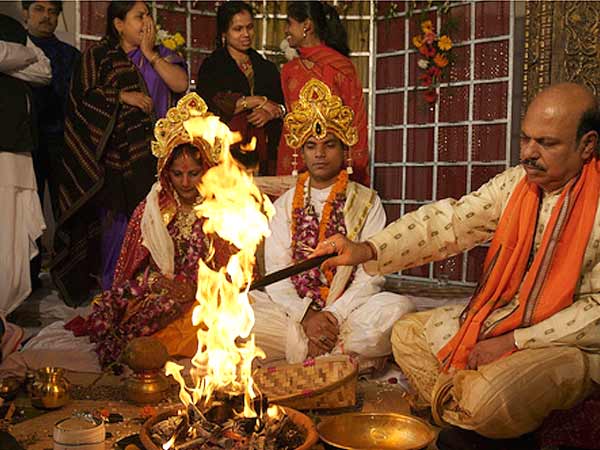
 Marriage often seems to occupy a sort of middle ground as far as these categories operate. On the one hand, no one is married in the eyes of either the law or a religious organization until they pass through the requisite ceremony. Yet we all know couples who are already “so married” that the ceremony confers nothing that they don’t already manifest in abundance. In this case, the initiation of marriage simply recognizes and formalizes a connection and a state of relationship that already exists and — if the ritual or ceremony still carries any power — blesses and charges the thing consecrated. My wife and I have two anniversaries, ten days apart, and each conveyed to us different energies. First was a spiritual ceremony by a cleric in our tradition, and second came the state ceremony, performed by a justice of the peace. Interesting, too, who we see as performing or undergoing the initiation. Ideally, to my mind, the one experiencing the initiation should play at least some part, if not an active role, in its enactment. For initiation takes place both outwardly, where it is often witnessed by the state if not also by family, and more importantly inwardly, on the subtle planes (which deserve their own post or series of posts).
“Where is wisdom to be found?” goes the old query. Initiation is one major source. Not all initiations “show” right away, or even ever. What we begin may never end. It can take a lifetime to sort out the effect of even “lesser” initiations, to say nothing of the big ones. Those “long” words, never and always, very much belong with initiations.
Go to Part 1 | Part 2 | Part 3 | Part 4 | Part 5 | Part 6
/|\ /|\ /|\
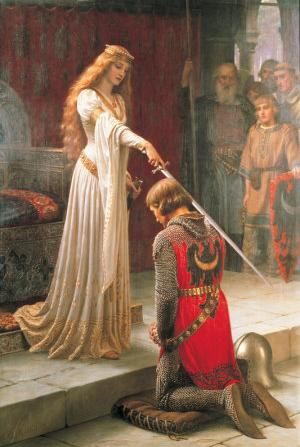
Image credits: Knighthood — “The Accolade” by Edmund Blair Leighton
Sex and love
Oriya Indian wedding
One of the appeals of earth-centered religions and spiritualities is their celebration of a world we can see and touch, smell and taste and hear right now. No membership in the right in-group, no attainment of a prerequisite spiritual state, no promised future to wait for. Instead, democratic access to the sacramental gifts of this life: the pleasures of simply being alive, of breathing air (assuming you have decent air to breathe), of eating and touching and loving the things of this world, of caressing the people you cherish, of hearing their voices and enjoying their physical presence. Transient, fragile, time-bound, brief — and all the more dear for that.
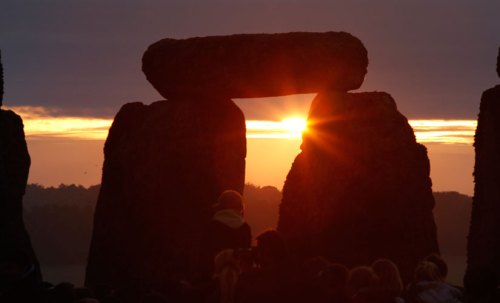 At the winter solstice our ancestors knew from studying the sky and watching the sunlight on markers of wood and stone that “when the days begin to lengthen, the cold begins to strengthen.” My father, a dairy farmer, used to repeat the old saying around this time of year with a kind of grim satisfaction. More frozen pipes in the barn, more days the tractors would start only with difficulty, more days to chip away ice and plow snow. But when I talk with my students, mostly dwellers of suburbia and “urbia,” and learn they don’t know this or many other pieces of earth-wisdom, I realize again that I stand as a member of a transitional generation. My parents and grandparents inherited much of the lore and skill of our agricultural past, and have passed a portion of it on to me. But so many of the rising generation have lost most of it.
Anyone can have that curious sensation of “secondary memory” that outreaches one’s own lifetime, grafted on through relatives and ancestors. The only grandmother I knew well was born in 1894, and so I can recall experiences that did not actually happen to me, but which — through her retelling, and with accompanying photos or other artifacts — have assumed the guise of shadowy half-memory, as if they indeed left their imprint directly on my own life and thought and perception, rather than through telling alone. But in the case of hard-earned knowledge of how to live and anticipate change and thrive on earth, they are not the incidents peculiar to one life only, but part of the lore of the tribe.
Solstice feels something like that to me. It’s the oldest pan-human holiday we can discern, predating those of particular cultures and religions by thousands of years. There’s nothing “pagan” about it — it’s a matter of observable fact, rather than belief, as are the equinoxes. Neolithic monuments and markers attest to the reach of such knowledge around the planet. An essay by scientist and author Arthur C. Clarke, the title of which has drifted out of reach of immediate recall, begins like this: “Behind every person now alive stand one hundred ghosts, for that is the ratio by which the dead outnumber the living.” The first time I read that, I felt a delicious shiver of mortality and awe. Yes, the ratio may have shifted (though I hope never to live on a world where that proportion favors the living over the dead — imagine for an instant the conditions that implies), but the image endures. And of those assembled dead, perhaps half or more knew and celebrated the solstice. For five hundred or a thousand or more generations, people acknowledged the shift of the planet in its relation to the sun. The southern hemisphere of course complements the northern in its seasons — their summer is well-launched, and now the days begin to shorten. The body knows these shifts, while the mind may take its own interval to catch up. We feel such changes in our bones, on our skin. In a couple of weeks, by mid-January, the change shows more clearly. Morning and evening commuters will enjoy more light, and the year turns.
Another of the keys, then, to connect to my previous post on a Religious Operating System, is lore itself: the knowledge of cycles and patterns we can measure and demonstrate for ourselves. No need for the fascination and hysteria surrounding 2012 and the supposed End of the World “predicted” by the Mayan calendars. Does no one remember Y2K?! Or any of half a hundred “prophecies” of the end over the last few millenia? The Maya were simply engrossed in the measure of time, and by their reckoning one major cycle ends and another begins. Their obsession made for precise astronomical reckoning. Changes are coming, certainly. Have they ever not come?
Lore includes some dross and superstition, which can almost always be dispatched by dint of careful observation and experiment. And while some generations may forsake the wisdom which their ancestors long thought worthy of preservation, it is — eventually — recoverable. If the peak- and post-oil folks are right, we face a sharp decline in material wealth and technology powered by a rapidly diminishing supply of cheap energy, and not enough people now know how, or are prepared, to flourish as people did for most of human history: wood fires, gardens and food animals, home remedies, animal and human labor, solar and wind power on a modest scale. But little or no electricity, or any of the hundreds of devices it powers, or petroleum products and technologies. We live with a false sense of security, as if the entire West were one large gated community. All it takes is a power outage of a day or two, as happened with Hurricane Irene for so many, to cast us out of our ease and return us to the human experience of all generations until the last few. We could see the real “99%” as all those who lived before the last century and its admittedly artificial standards of material luxury and abundance for a portion of the planet. But the solstice includes those hundred ghosts and the living, all witnesses of the day that signals the return of light and hope to the world. May it bring those things to you.
/|\ /|\ /|\
The solstice for the U.S. actually takes place at 12:30 am Eastern Standard Time on Thursday 12/22. So calendars favor the majority — for all but the east coast, the Solstice is indeed today rather than early tomorrow morning.
Henge image.
Persistence, and its twin patience, may be our greatest magic. Sacred writings around the globe praise its powers and practitioners. So it’s hardly surprising, here in the too-often unmagical West, with its suspicion of the imagination, and its demand for the instantaneous, or at least the immediate, that we are impatient, restless, insecure, harried, stressed, whiny, dissatisfied and ungrateful. We bustle from one “experience” to the next, collecting them like beads on a necklace. The ubiquitous verb “have” leaves it mark in our speech, on our tongues: we “have” dinner, we “have” class or a good time, we even “have” another person sexually, and one of the worst sensations is “being had.” We do not know self-possession, so other things and people possess us instead.

The “slow food” movement, the pace appropriate for savoring, craftsmanship, care, reflection, meditation and rumination (slow digestion!) all run counter to the ethos of speed, promptness, acceleration that drive us to a rush to orgasm, speeding tickets, the rat race, stress-related illness, and so on. None of these problems or the observations about them are new, of course. But we remain half-hearted in our efforts or understanding of how to “pursue” their remedy. We chase salvation as much as anything else, as a thing to collect or gather or purchase so we can be about our “real” business, whatever we think that is. Spirituality gets marketed along with orange juice. For a sum, you can be whisked off to a more exotic locale than where you live your life, spend time with a retreat leader or guru or master or guide, and “have” (or “take”) a seminar or class or workshop.
Anyone who has adopted a spiritual practice and stuck with it has seen benefits. Like regular exercise, it grants a resilience and stamina I can acquire in no other way. I sit in contemplation and nothing much happens. A week or a month goes by, and my temper might have subtly improved. Fortunate coincidences increase. My dream life, or a chance conversation, or a newspaper article, nudges me toward choices and options I might not have otherwise considered. But usually these things arrive so naturally that unless I look for them and document them, I perceive no connection between spiritual practice and the increased smoothness of my life. From a slog, it becomes more of a glide. But the very smoothness of the transition makes it too subtle for my dulled perceptions at first. It arrives naturally, like the grass greening in the spring, or that gentle all-day snow that mantles everything.
I abandoned a particular daily practice after many years, for complicated reasons deserving a separate post, and I needed only to read the notebooks I kept from that earlier time to recall vividly what I had lost, if my own life wasn’t enough to show me. My internal climate faced its own El Nino. I was more often short with my wife, mildly depressed, more often sick with colds, less inspired to write, less likely to laugh, more tired and more critical of setbacks and annoyances. Set down in writing this way, the changes sound more dramatic — didn’t I notice them at the time? — but as a gradual shift, they were hardly noticeable at any one point. I still had my share of good days (though I didn’t seem to value them as much), and my life was tolerable and rewarding enough. “But I was making good money!” may be the excuse or apology or justification we make to ourselves, and for a time it was true enough of me. Then came the cancer, the near-breakdown, the stretch of several years where I seemed to move from doctor to doctor, test to test, treatment to treatment. If you or anyone you know has endured this, you get what I’m talking about. It’s distinctly unfun. And while I won’t say lack of practice caused this, it’s an accompanying factor, a “leading indicator,” a constituent factor. Doctors might very profitably begin their diagnoses with the question, “So how’s your spiritual practice?” Our spiritual pulse keeps time with our physical lives. They’re hardly separate things, after all. Why should they be?
In the story of Taliesin I mentioned in my last post, the boy Gwion, so far from the future Taliesin he will become, is set by the goddess Cerridwen to watch a cauldron as it cooks a magical broth meant to transform her son Afagddu, a mother’s gift to her child. A year and a day is the fairy-story time Gwion spends at it. A full cycle. The dailiness of effort and persistence. The “same-old,” much of the time. Gwion’s a servant. The cauldron sits there each morning. The fire beneath it smoulders. Feed the fire, stir the liquid. It cooks, and Gwion “cooks” along with it, the invisible energy of persistence accumulating as surely as the magical liquor boils down and grows in potency. Through the spring and summer, insects and sweat. Through autumn and winter, frost and chill and ice. The cauldron has not changed. Still at it? Yes. The broth slowly thickens as it bubbles and spatters.
 One day a few drops (in some versions, three drops) fly out onto one of Gwion’s hands, burning. Instinctively he lifts the hand to his mouth, to lick and soothe it with his tongue. Immediately the magic “meant for another” is now his. He did, after all, put in the time. He sat there daily, through the seasons, tending the cauldron, stirring and keeping up the fire, swatting insects, breathing the smoke, batting sparks away, eyes reddened. Yes, the “accident” of the spattered drops was at least partly the result of “being at the right time in the right place.” It is “luck” as well as “grace,” both operative in his life. Part, too, was the simple animal instinct to lick a burn. And the greater portion was the effort, which catalyzed all the rest into a unified whole. Effort, timing, luck, chance, grace: the “package deal” of spirituality.
And the consequence? For Gwion, his growth has just begun. It is his initiation, his beginning. In his case it distinctly does NOT mean an easier path ahead for him. In fact, just the opposite — more on that in a coming post.
 The Hopi of the American Southwest call their ritual ceremonial pipe natwanpi, “instrument of preparing.” The -pi suffix means a vehicle, a means, a tool. Tales like this story of Gwion can become a natwanpi for us, if we choose — part of our preparation and practice, a tool, a way forward.
/|\ /|\ /|\
Fast food
Transformation
Hopi blanket
 Those inclined to criticize contemporary Druidry have made much about how the specific practices and beliefs of ancient Druids are forever lost to us simply because they left no written records, and because the references to Druids in the works of classical Greek and Roman authors are mostly based on secondhand accounts and sometimes markedly biased. Without such historical continuity, they claim, it is impossible to be a “real” Druid today, and thus all contemporary Druidry is a kind of whistling in the wind, at best a version of dress-up for adults. But what such writers and speakers often forget is the surviving body of legend, myth, teaching and wisdom in Celtic literature. Here is Druidry in compact and literary form, meant to be preserved as story, a link-up with the perennial wisdom that never dies.
To pick just one example, the stories from the Mabinogion, the Welsh collection of myth, legend and teaching have wonderful relevance and serve as a storehouse of much Druid teaching. Sustained meditation on these stories will reveal much of use and value to the aspirant after a Druidry that is authentic simply because it is grounded in knowledge and practice. As a pragmatist more than a reconstructionist, I’m much more interested in what works than in what may be historically accurate. The former leads one to inner discoveries. The latter is engaging as a worthwhile scholarly endeavor first, and only as a possible source of spiritual insight second. And that is as it should be. History is not spirituality, though it can inform it. But even if we can accurately deduce from an always incomplete archaeological record what a Bronze Age Druid may have done, it’s still not automatically fit and appropriate for a contemporary 21st century person to adopt. That’s a decision we must make apart from the reconstruction, which cannot guide us by itself. Stories, however, though formed in a particular culture, often reach toward universals far better than physical objects and actions.
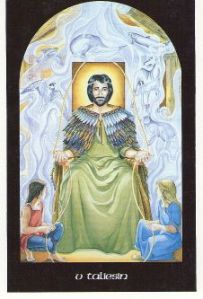 The story of Taliesin (this link is to a public domain text — more modern and well annotated versions are available) in the Mabinogion moves us into a world of myth and initiation. In the tale, the boy Gwion passes through ordeals and transformations, becoming at length the poet and sage Taliesin, whose name means “shining brow” — one who has a “fire in the head” and is alive with wisdom and poetic inspiration. As with figures from other traditions whose heads are encircled with halos, or shining with an otherworldly brightness, Taliesin belongs to the company of the “twice-born,” who have fulfilled their humanity by making the most of it. In my next post, I’ll talk about the first key in the story — persistence.
/|\ /|\ /|\
First image is a triskele or triskelion, a pan-European symbol associated with the Celts.
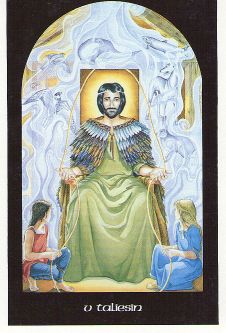
Second image is of Taliesin from Caitlin and John Matthews’ Arthurian Tarot.
/|\ /|\ /|\
Updated 9 September 2013
 “Whenever I get bored or depressed, I do laundry,” said an acquaintance. “Afterwards I may still be bored or depressed, but at least I’ve done something that needed doing. And often enough I feel better.” As a treatment, the success rate of this strategy may or may not equal that of therapy or medication, but as far as clean clothes production goes, it’s got the other two beat hands down. At least I can be depressed and dressed.
How different the quiet of depression and the quiet of peace! (I’m writing about peace and using exclamation points. Hm.) One deadens and stifles, the other ripples outward and invites attention, a kind of relaxed wakefulness. We say we want peace, and the holiday season bombards us with prayers and songs and sermons and wishes for it. There are prayers for peace in the ceremonies of many religious teachings and spiritual practices, Druidry included. But rather than asking somebody else for it, I can begin differently. Peace starts in the center, and that’s where I am — or where I can put myself, with the help of recollection and intent. “Come back to yourself,” my life keeps saying, “and remember who you are and what it is you want.” If I start peace (or anything else) within myself, however small, however tentative, it spreads from there outward. After all, it works for every other state I create, whether positive or negative — and I know this from sometimes painful experience! “Be the change you wish to see in the world” is still some of the best advice ever given. If I want change, who else do I expect to bring it about? And if someone else did, how in the world would such changes be right for me? Gandhi knew the secret lies in the approach.
 In my early twenties, Lou Gramm and Foreigner were singing “I want to know what love is. I want you to show me.” It’s a lovely ballad — I’ve got it playing on Youtube the second time through as I write this paragraph, nostalgia back in full force — but it’s precisely backward in the end. As loveless as I can sometimes feel, if I start the flow, jumpstart it if necessary, I prime the pump, and it will launch within me from that point. Do that, and I become more loveable in a human sense, because in the divine sense I’ve made myself another center for love to happen in, and from which it can spread.
But neither love nor peace are things I can hold on to as things. “We are not permitted to linger, even with what is most intimate,” says the German poet Rilke in his poem “To Holderin” (Stephen Mitchell, trans.)  “From images that are full, the spirit plunges on to others that suddenly must be filled; there are no lakes till eternity. Here, falling is best. To fall from the mastered emotion into the guessed-at, and onward.” Whatever I long for in a world of time and space needs to be re-won every day, though in that process of re-winning, not always successful, it begins to gather around me like a fragrance, a habit. Both the customary behavior, and the clothing a monk or nun wears, have the same name. The connection’s not accidental.
The American “farmer-poet” Wendell Berry captures it in these lines:
Geese appear high over us
pass, and the sky closes. Abandon,
as in love or sleep, holds
them to their way, clear
in the ancient faith: what we need
is here. And we pray, not
for a new earth or heaven, but to be
quiet in heart, and in eye,
clear. What we need is here.
So if we’re looking for a “religious operating system,” a ROS, we’ve got some design parameters that poets and others tell us are already in place. “What we need is here.” But try telling that to an unemployed person, or someone dying of a particularly nasty disease. And of course, if I tell someone else these things, I’ve missed the point. What they need is indeed here, but my work is to find out this truth for myself. I can’t do others’ work for them, and it wouldn’t be a good world if I could (though that doesn’t stop me sometimes from trying). I don’t know how their discoveries will change their lives. I only know, after I do the work, how my discoveries will change mine.
A recent article in the New York Times about the rise of the Nones, people who aren’t affiliated with any religion, but who aren’t necessarily atheists, offers this observation, from which I drew the title for this blog entry:
“We need a Steve Jobs of religion. Someone (or ones) who can invent not a new religion but, rather, a new way of being religious. Like Mr. Jobs’s creations, this new way would be straightforward and unencumbered and absolutely intuitive. Most important, it would be highly interactive. I imagine a religious space that celebrates doubt, encourages experimentation and allows one to utter the word God without embarrassment. A religious operating system…
I’ll be examining this further in upcoming posts.
/|\ /|\ /|\
Laundry, Foreigner album cover, and Rilke.
“Behold!”
In this single command, Jesus is profoundly Druidic. Catch the moment, he says. Watch the divine as it swirls around and in you. You can witness the marvelous if you simply pay attention. Listen! Look! Seeing and hearing are a good start. Now do more. Put yourself into your attention. Make it purposeful. Don’t just hear — listen. Don’t just see — look.
“If therefore thine eye be single, thy whole body shall be full of light” (Matthew 6:22). A wonderful assertion– one to test, to try out, to prove to oneself, not merely to accept passively. A promise. Singleness of vision, the devotion and dedication to witnessing what is really there, as opposed to what we assume or fear, wish or ignore. Some have seen this passage as a reference to the yogic “third eye” chakra, the Hindu Shiv Netra or Sufi Tisra Til. Why not both, and something else besides?
In the second half of her poem “The Summer Day,” Mary Oliver says:
I don’t know exactly what a prayer is.
I do know how to pay attention, how to fall down
into the grass, how to kneel down in the grass,
how to be idle and blessed, how to stroll through the fields,
which is what I have been doing all day.
Tell me, what else should I have done?
Doesn’t everything die at last, and too soon?
Tell me, what is it you plan to do
with your one wild and precious life?
Shouldn’t all attention bring to light more and better questions? Wouldn’t we be bored to tears with a life of all things answered? Give me bigger and deeper questions, give me earth whole again, give me all I already have. Give me birth in this moment. We are constantly being born, arriving at ourselves, a remembering, a finding out of the utter strangeness of being alive, and being human in this moment, our eternity, the only time there is. The past is only memory, and changing. The future is hopes and fears. Take the now with both hands.
“Behold, I send you forth as sheep in the midst of wolves: be ye therefore wise as serpents, and harmless as doves.” (Matthew 10:16)
A regular menagerie of a sentence! Sheep, wolves, serpents and doves. If inanimate things like stones can testify to divinity (see previous post) and proclaim truth in the face of human delusion, then certainly birds and beasts can do the job, too.
Here Jesus is admonishing his followers, as he commissions them to spread his teaching, that the world is full of wolves. His disciples won’t appear on the scene with an army at their beck and call. They don’t carry letters of introduction, or a case of free product samples to tempt the potential client. No email blast or flurry of tweets precedes their arrival. No, if they’re to succeed, they’ll need specific attributes which he characterizes as the wisdom of serpents and the harmlessness of doves. And note that you can’t transpose those qualities; who would welcome a person “wise as a dove” or “harmless as a serpent”?! Bad advertizing. It’s a recipe for disaster. But more importantly, would serpent-wisdom and dove-harmlessness actually work? Hold that thought.
A persistent tradition in the UK at least eight centuries old has Jesus spending some of the “lost” years — between his appearance in the temple at 12 and the start of his public ministry around age 30 — in Britain, studying with Druids. William Blake, associated with revival Druidry during his lifetime in the 19th century, penned the famous hymn “Jerusalem” (this version hails from the last night of the ’09 Proms, a popular annual summer music series in the U.K.). The lyrics were put to music about a century later, and the piece has become a perennial favorite, a kind of unofficial British national anthem:
And did those feet in ancient times
walk upon England’s mountains green?
and was the holy lamb of God
on England’s pleasant pastures seen?
These lines of the opening stanza seem innocuous enough, if fanciful. A Middle-Easterner would surely have it rough during a British winter — it isn’t always “green.” The tradition continues from there, claiming that after Christ’s death, Joseph of Arimathea (who provided a tomb for the body) either sent part of the Grail to England, or made the journey himself and founded a church in Glastonbury, or planted there a thorn tree long venerated as holy.* Whatever the truth of these events, it makes for a striking symbol and image.
But Blake continues, and this is when his poem turns odd:
And did the Countenance Divine,
Shine forth upon our clouded hills?
And was Jerusalem builded here,
Among these dark Satanic Mills?
Bring me my Bow of burning gold;
Bring me my Arrows of desire:
Bring me my Spear: O clouds unfold!
Bring me my Chariot of fire!
I will not cease from Mental Fight,
Nor shall my Sword sleep in my hand:
Till we have built Jerusalem,
In England’s green & pleasant Land.
As a proto-Druid, Blake gets his ecological digs in here: the “dark Satanic mills” of the early industrial revolution are already at work spewing smoke and ash over London. While most Druids today have no intention of attempting to “build Jerusalem in England’s green & pleasant land,” the song brings divinity one step closer. Who complains if some versions of our ancient history bring with them a delicious shiver of magic or imaginative religious reconstruction? But is the way to achieve divinity on our shores through “mental fight” and metaphorical battle? The sudden shift to the quadruple imperative of “Bring … bring … bring … bring” summons up images of a bronze-age charioteer. But what of the “arrows of desire”? Here the image is of Eros, Cupid, the piercing quality of sudden strong feeling. Is it the poet speaking as “I” in the last stanzas? Or as someone else? Is it Blake’s idea of Jesus?
You may not remember, but I asked you a few paragraphs back to hold the thought of serpent-wisdom and dove-harmlessness. Some of the “wisdom” accrues from the belief that serpents are uncanny beasts, for they are able to shed their skin and achieve a kind of rebirth or immortality. And the serpent in the Garden that haunts the Western pysche tempted Eve not to the Tree of Life (Eve! EVE!! The other tree! Eat from the OTHER tree!!) but the Tree of Knowledge. As I tease my students, “Major mistake. Become immortal first, and then get the knowledge of good and evil.” The harmlessness of doves is less problematic. Though city dwellers may have their foremost associations with pigeons as flocking beggars in parks, or as producers of statue-staining and public-building-defacing birdshit.
But consider again. If you know something — I mean really know something of life-changing power — you need to come across as seriously harmless. Otherwise people have this nasty tendency to string you up, burn you at the stake, remove the supreme discomfort of your ideas and presence at all costs. Your wisdom puts you in mortal danger. So reassure people first, and work your changes quietly, harmlessly. A major piece of strategy! Some devious or disgusting trick you’d expect to discover about that other political party — the one you don‘t belong to and affect to despise as the epitome of all things vile and loathsome. Is that why this year’s political reality-show contestants (I mean presidential candidates) come across as less than competent? (Repeat after me: “All candidates vile and and loathsome, all con-men big or small, all morons foul and putrid, Democrats/Republicans have them all!”**)
So animals embody a divinely-commissioned strategy for survival. The wisdom of the serpent, long despised, is not dead, but sleeps in each of us, waiting the touch of the divine longing to rouse and waken it in the service of life. The son of God (we are all children of the divine) summons it forth from us. It lives, tree of knowledge and tree of life united, identical, twining its way around our hearts, which know — when our heads deny it — which way to go, what we need, where to find answers others say are “forbidden” or “not for mortals to know.” On the contrary — they’re specifically intended for mortals to realize.
/|\ /|\ /|\
*The Glastonbury thorn has lately made headlines. It (there are actually several in the area, believed to spring from a single parent) was hacked down two years ago this month (with some historical precedent, if you read the article) and then recovered enough by March of 2011 to put forth a new shoot. Another demonstration, as if we needed it, that old things do not just disappear because we hack at them or find them out of place or inconvenient. They have a habit of return, of springing back to life. Another habit from the natural world for us to imitate …
**This uncharacteristically acerbic side-note is not part of the actual blog.
“And some of the Pharisees from among the multitude said unto him, Master, rebuke thy disciples. And he answered and said unto them, I tell you that, if these should hold their peace, the stones would immediately cry out.” (Luke 19:39-40)
What shall we do till the stones start to speak,
or whom can we turn to and trust in these days?
Can we hear even echoes of truths that we seek,
catch mere flickers of fire to illumine our ways?
The stones broadcast secrets we now scarcely hear —
the earth bears true witness, though leaders stay mute,
to remind us of love that is stronger than fear.
Goal and path rise within us — there’s no other route.
The animals know much — in each neighboring eye
is the ghost of the knowledge hard-won from their days:
make the most of each moment, for this body will die —
tomorrow’s new compost, though it shouldn’t amaze
us when walls turn to doors: we walk through them to find
the doors of our hearts were more narrow by far.
Trust the paint-box you’re given, though your dear ones are blind,
though your culture berates you, fear sets up a bar.
We must watch as we journey, be mindful of stones
that mumble or shout, rousing sleepers to wake.
Learn to feel the right path in the set of our bones,
trust the deep self to know the next step to take.
[Updated 1 July 2020]
[Part 1 | 2 | 3 ]
More freedom – can I handle it? Can there be too much freedom? I don’t mean lack of restraint – I mean freedom. Is there a difference? What is it?
In his baccalaureate address at Earlham College from about a quarter-century ago (1987), philosophy professor Peter Suber distinguishes among several freedoms:
There are many kinds of freedom. I do not wish to speak about all of them, or to give the impression that all of them reduce to one type. There is political liberty, or the freedom from coercion by public power. There is the political freedom of enfranchisement, or the distribution of public power through the vote. There is freedom as independence, or freedom from the power and opinions of others, which tends to reinforce and isolate individuality. There is freedom from pain, hunger, cold, illness, violence, and ignorance: a freedom that can only be purchased by institutions that limit independence and liberty. There is the freedom to enjoy one’s time or friends in peace, which requires cooperation more than independence for, as James Branch Cabell said, you can live at peace only as long as your neighbor chooses. There are freedoms, then, that individuals claim against communities and freedoms that only communities can create for their members.
These are freedoms of the body, and they’re vital. Without them, our lives reduce to an animal struggle, below the level of anything one calls civilization. Think of films like The Road or any of a growing number of post-apocalypse films and novels over the past century. Without some basic physical freedoms, it’s true, we’re too occupied with survival to accomplish much else. They’re some version of “life, liberty and the pursuit of happiness.” But they’re also necessary without being sufficient. There are further freedoms we eventually learn we need with an almost instinctive bodily hunger. Without them we’re malnourished.

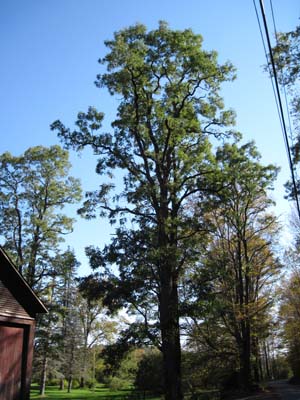
A neighborhood elm — free in autumn
Suber goes on to make an important observation about kinds of freedom from a different perspective, one sometimes downplayed or ignored in current discussion of rights and freedoms.
“A distinction first made explicit by Kant is that between positive and negative freedom. Negative freedom is freedom from —from coercion, constraint, compulsion. Positive freedom is freedom to —to guide oneself from within without taking one’s rule from outside, to be one’s own master and legislator.”
Negative freedom is the kind of freedom many people seem to mean, if they talk about freedom at all. It’s the kind of freedom that libertarians typically build their platforms around. However, one kind doesn’t automatically guarantee the other will arrive with the burgers and the beer, so we can all party. As Suber notes,
“Kierkegaard seems to have been the first to notice that one can attain negative without positive freedom. One can cut oneself loose from enslaving influences and yet have developed no internal or home-grown sources of guidance at all. Kierkegaard in fact finds this state, beyond negative freedom and short of positive freedom, to be a recurring predicament for human beings in the modern world. He calls it hovering, to be free from everything, hence to have no basis for the choices one is then free to make; to be independent but empty.”
“A basis for the choices one is free to make.” Now we’re getting a little closer to what freedom is for. And I’m setting the stage for one kind of freedom we’ve neglected so far and Suber at first seems to leave out. This is spiritual freedom. The word “spiritual” gets bitch-slapped around a lot, so let me explain what I mean here. When people are centered on “a path with heart,” they can endure remarkable physical setbacks and obstacles and still achieve their goals, or die trying without feeling they have failed. Throw them in jail, torture them, exile them, they just keep rolling and rising back up, like the old 70s “weebles wobble but they won’t fall down” ads. Think Gandhi, think Aung San Suu Kyi in Myanmar, think any number of freedom fighters, rebels (whether we like their politics or not), ornery patriots, and similar cussedly independent folks. There’s an integrity to their choices we can admire, even if the choices themselves happen to be abhorrent to us.
Yes, we can call to mind great spiritual heroes — some of them end up as founders of religions – but we have examples closer to home. Most of us know, or know about, people who are “survivors.” They get ill, they go broke, their families desert them, business goes bad, marriages fail, kids land in jail — but they bounce back. They have what an older generation called “inner resources.” We don’t hear about those kinds of resources much, maybe because we don’t have them much in evidence. But the seeds of them are still in us (and seem to emerge most often in hardship). The rest of the time they just make us restless, usually because we’re often living less than authentically. Face it, I get lazy when my life is easy. I want things to stay the same, which they almost always resolutely, infuriatingly, refuse to do. Like they’re refusing to do right now in the West, not to mention many other parts of the world.
What is needed, then, is the judgment to decide what to do with the freedoms we already have, and Suber proceeds to examine what that kind of judgment looks like.
A surprising test for freedom of judgment, in fact, is whether complexity overpowers, intimidates, and defeats us, or challenges, arouses, and incites us to comprehend it. In our spiritual apprenticeship complexity prevents us from feeling our power or wanting to control our own fate. We are happy to learn more first. Freedom before this point is merely self-assertion without the foundation of judgment needed for making choices. But as Hobbes said, if he spent his life reading books by other people, he’d never know more than they did. When we emerge from this dependency into our own freedom it is because we are ready to direct ourselves and make the decisions that this requires.

Bald Eagle — flight as freedom
So are we really free in the U.S. right now? Ignore for a moment whatever your local conspiracy theorist or naysayer or grumpy partisan has to say. The vast majority of Americans have food and shelter. Most of us have a car, won’t get stopped at state borders, and so have freedom of movement (if we can afford the gas). We have freedom from pain and suffering to a larger degree than any other time in history, with all the painkillers and routine buffers from the hard corners of reality that our heated and air-conditioned and work-saving-device-crammed houses and cars and buses and planes can provide. Most Americans live better and longer than medieval kings and queens, with a vast array of entertainments at our command.
Are we free? Material things are enjoyable — you don’t see me volunteering to give mine up just yet — but they can’t help us “emerge from this dependency into our own freedom … because we are ready to direct ourselves and make the decisions that this requires.” When our things get threatened, we complain out of a supposed “freedom” that is “merely self-assertion without the foundation of judgment needed for making choices.” We have the freedom to complain and criticize. But where is the judgment for the choices and changes we need to make?
There is one more factor I want to consider. I mentioned Aung San Suu Kyi earlier, the Myanmar freedom fighter and legally elected official confined to house arrest for years. One of her most famous speeches is her “Freedom From Fear” speech, which begins: “It is not power that corrupts but fear. Fear of losing power corrupts those who wield it and fear of the scourge of power corrupts those who are subject to it.” This is one of the last great “unfreedoms” we face. Think how much fear there is in headlines, on talk shows, in the news, in people’s faces. Suber observes:
The larger kinds of unfreedom abroad in the world and within … are not affected in the slightest until people who recognize them as unfreedom rouse themselves to challenge them.
Religions aren’t always up to the job of helping people wake up and “recognize unfreedoms,” either. I’m including Druidry here along with the rest. One problem with Christianity (to pick on a religion I know and which has had longer to make an impact) is that it has defined freedom theologically and thus very narrowly. That is, until I am saved, I am a slave to sin and subject to its penalties of wasted chances and dissatisfaction and emptiness, and ultimately to damnation. After I am saved by the substitutionary atonement of Christ, who died in my place and paid the price for sin that otherwise I would have had to pay myself, I am free from the penalties of sin, and therefore able to go to heaven at death. But I am no more free immediately after salvation than I was before from the responsibility of judgment, and the consequences of my own and others’ bad and good judgments. My dissatisfaction with Christianity isn’t that it doesn’t save people; it’s that it seems to transform too few of them into better versions of themselves. Where’s the “new creature” promised in the New Testament? A saved jackass or a damned jackass is still a jackass. Salvation may get you to heaven, but we have to live with you till then.
To offer you any kind of definitive “answer” to what freedom is for is to promote an unfreedom. I’m working closer to my own answers, but you need to find your own. Suber acknowledges this:
To take one’s judgments from others is exactly the unfreedom to be avoided. To negate the judgments of others, without more, takes one just as directly to dependency and enslavement, though by a path that is one step longer. To judge by standards that one finds inescapable is still bad faith, for one has chosen to adhere to them, and is not taking responsibility for that choice. To recognize that we are responsible for all our judgments, including our standards of judgment, is the beginning of positive freedom and self-direction. Then we will recognize that all the noisy certitudes of the world are not primarily candidates for truth but appeals to our judgment.
That is, all these supposed “certitudes” are jumping up and down, waving flags, cheering and whistling and shouting and saying to us, “Here I am. What do you think?” rather than “Here I am. Do what I tell you.”
For me, more and more I find as the years pass, freedom is for loving more. Nothing else matches up, noting else offers the challenge and delight and fulfillment. It’s life-long. I’m most loving of myself and others when I’m free, and — paradoxically? — I’m most free when I’m loving. What’s freedom for in your life?
/|\ /|\ /|\
Eagle image credit
 Did it! Amazing experience, helped by the online Nanowrimo forum, with 200,000 other people doing the same thing all around the world. Dutch high-schoolers and Malaysian retirees and New Zealand farmers, Singapore lawyers and Hong Kong engineers. Everyone talking about it as they’re doing it. Egging each other on. Telling funny stories. Making and soliciting suggestions. Cries for help. Competitions. Excerpts for critiquing. How-to’s for people writing about medieval French history, chameleons, murder by deuterium, dragon mating, the proper warping and beaming of looms, the spices in chicken tikka, etc. Writing Buddies. The online support videos and posts from published authors. The sense of an immense online community engaged in huge set of magical creative hopeful acts against the naysayers and wannabes and critics, and our own doubts and inner censors and resistance and procrastination and sloth.
Word by word. And now, 50,260 words of the first draft of a fantasy novel. Or 106 pages in a Word document. A month of writing. Virtually no editing whatsover, beyond what spell-check does in true robot fashion.
Haven’t looked back at it. Not sure I want to. In any case I need to spend some time away from it. Catch up on this blog, on laundry, dishes.
Free at last! No, not free at all: finished with the first step. Let down a bit, to tell the truth. Adrenaline and all. Time to rest up, pull back from writing for a week, so the first symptoms of carpal tunnel subside (mostly my left arm).
Most productive day — over 5000 words. Had about five of those during the month. Nice to know I can do it. Wow. OK, onward. Get a fire built later (it’s sunny and in the 40s outside), shave, take a shower, write a letter, pay bills. Take a walk. Breathe.
Thank you, Powers of the Worlds, human and incorporeal. Wife, friends, the earth, the gods. And you, my readers, for all good thoughts. (It feels good to thank, to be grateful. An annual holiday for it isn’t often enough, of course. Daily.)
/|\ /|\ /|\
[Part 1 | 2 | 3 ]

B F Skinner
Years ago now, I remember furiously reading behaviorist B. F. Skinner’s Beyond Freedom and Dignity on a plane. I was making lots of notes and highlighting the text and writing exclamation points in the margins — at one point my seat-mate, who hadn’t spoken to me otherwise, asked if I was prepping for a class. I still have that copy, a cheap paperback, yellowing on my shelf.
But I wasn’t reading to complete an assignment. I loathed Skinner’s conclusions, and I was gathering ammunition against them — all the false premises and counter-points and fallacies and over-generalizations I could muster. The most egregious of Skinner’s conclusions were that since — apart from genetics — we are machines controlled by our environment, there was no need to sustain delusional beliefs in freedom and dignity. There is no such thing as an “autonomous” person who thinks and decides and chooses. Any talk of political rights, a “soul,” consciousness, or freedom or any of a large number of other psychological states, was pointless, unfounded — an obstacle, in fact, to human progress. We’re formed and motivated by reward and punishment, by reinforcement, Skinner claimed. And he asserted that a “science of human behavior” made designing any human culture we wished both a possibility and a demonstration of his conclusions.
A few years later I found out that linguist and critic Noam Chomsky had already done the job of demolition years before — 40 years ago, now — in a 1971 article in the New York Review of Books. Chomsky takes Skinner down quite unapologetically:
Skinner is saying nothing about freedom and dignity, though he uses the words “freedom” and “dignity” in several odd and idiosyncratic senses. His speculations are devoid of scientific content and do not even hint at general outlines of a possible science of human behavior. Furthermore, Skinner imposes certain arbitrary limitations on scientific research which virtually guarantee continued failure.
I mention my personal story here because at the time I didn’t feel “free” to ignore Skinner — another way of saying I didn’t want to. My freedom in this case was a choice, though one strongly influenced by emotion.
Here’s why I didn’t feel free — why I “had to” critique Skinner — again in Chomsky’s words:
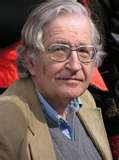
Noam Chomsky
There is, of course, no doubt that behavior can be controlled, for example, by threat of violence or a pattern of deprivation and reward. This much is not at issue, and the conclusion is consistent with a belief in “autonomous man.” If a tyrant has the power to require certain acts, whether by threat of punishment or by allowing only those who perform these acts to escape from deprivation (e.g., by restricting employment to such people), his subjects may choose to obey — though some may have the dignity to refuse. They will understand the difference between this compulsion and the laws that govern falling bodies.
Of course, they are not free. Sanctions backed by force restrict freedom, as does differential reward. An increase in wages, in Marx’s phrase, “would be nothing more than a better remuneration of slaves, and would not restore, either to the worker or to the work, their human significance and worth.” But it would be absurd to conclude merely from the fact that freedom is limited, that “autonomous man” is an illusion, or to overlook the distinction between a person who chooses to conform, in the face of threat or force or deprivation, and a person who “chooses” to obey Newtonian principles as he falls from a high tower.
The inference remains absurd even where we can predict the course of action that most “autonomous men” would select, under conditions of extreme duress and limited opportunity for survival. The absurdity merely becomes more obvious when we consider the real social world, in which determinable “probabilities of response” are so slight as to have virtually no predictive value. And it would be not absurd but grotesque to argue that since circumstances can be arranged under which behavior is quite predictable — as in a prison, for example, or the concentration camp society “designed” above — therefore there need be no concern for the freedom and dignity of “autonomous man.” When such conclusions are taken to be the result of a “scientific analysis,” one can only be amazed at human gullibility.
OK, there we have the arguments of two white Euro males. We’re equally gullible, of course, when we think freedom is some absolute thing, so that if we “have” it, it can’t be “taken” from us except by violating our “rights.” Societies organize and provide some things at the cost of others. It’s always a trade-off. Security in exchange for loss of freedom of movement has been a hot-button issue for some time now, with gated communities, and recent talk of a fence across the southern U.S. border, with the Dept. of Homeland Security scanning us every time we want to fly on a plane, opening our luggage, and fondling our pill bottles and mini-toothpaste tubes. Have I tried to take away your freedom by slanting my comments here, to influence you and nudge you in the direction I want, so I can manipulate you later on? Do you have the freedom to stop reading right now, or send me a nasty message? You know the answers. But how valuable is that freedom?
Changing gears, we have the pop version of freedom in Kris Kristofferson’s song “Me and Bobby McGee.” Here’s the chorus:
Freedom’s just another word for nothing left to lose
Nothing, I mean nothing honey if it ain’t free, no no
Yeah feeling good was easy Lord when he sang the blues
You know feeling good was good enough for me
Good enough for me and my Bobby McGee.
Is freedom “feeling good”? To repeat, if we feel good, are we “free”? After a medical misdiagnosis of mental illness, electroshock therapy cured my mother of some “delusions” that were actually caused by the onset of dementia, but I can’t ever say she was more free as a result. Something in her shifted after that treatment. It certainly sharpened the decline already under way. It didn’t matter if she “felt good,” though of course I didn’t want to deprive her of whatever positives we could salvage from the situation. In the other sense the song mentions, she was nearly “free.” She had (almost) “nothing left to lose.”
But the song doesn’t exactly say that. The lyrics assert, “Feeling good was easy when he sang the blues.” In other words, if I have an antidote for my pain, or an outlet or expression for it like the Blues, it’s at least somewhat easier for me to feel good. But actual freedom is a wash in this case, when I’m suffering. Take away the suffering, and then I can begin to consider whether or not I’m “free.” Until then, I got “nothing.”
The radically down and out, the homeless, the street crazies, the druggies — they’re free in many senses that I’m not. Far fewer obligations, responsibilities, commitments, possessions. Little of the self-building we do by putting on the right clothes, driving the right car, working at the right job, eating lunch with the right colleagues, and so on. (I can see it start early, in school, with the cliques and claques and in-out groups.)
But I’m in no hurry for that kind of freedom, at least at the cost the homeless pay.
I’ve allowed myself to ramble a bit in this post, rather than arguing closely toward a conclusion. Is that freedom?
More to come in Part III.
 With just under two thousand words to get down tomorrow, I can finally see the finish line and the completion of a month of Nano writing. I started with a character-driven story, knowing that with a vivid enough character, things would start to happen, and she was strong enough to make things happen herself. Now plot detail has been flowing in abundance, complexities I hadn’t foreseen or imagined, backstory and unusual motivations and sacred mathematics and a dream sequence that foreshadows all hell about to break loose.
A singe grosbeak inspects our feeder, and as I look out through the living room picture window at the bird plumped against the cold, there’s a reflection in the glass of flames from the woodstove inside. In its orange vigor, my fire faces west, Druidically inappropriate, but very welcome on this grade A gray day.
In the northern U.S. that’s an image of this time of year: reflections, of heat inside, of life still proceeding outdoors and in, of the time of year itself.
The interval between Thanksgiving and the December holidays can be a delicious space, a “meanwhile” or middle-time for re-tooling and starting to close up shop on the current year. To feel that it’s often too busy, or merely filled with worsening weather forecasts, as though that is all it has to offer, is to miss something profoundly meditative about these days. What’s the opposite of miss? Attend, intercept, catch, be there. Whatever it is, that’s what I want to do.
There is as well in November and early December a late-autumnal melancholy, it’s true. The peak of Thanksgiving has passed, and some may see the next months as a pretty solid trudge through the valleys (in our boots, scarves and gloves, and hauling snow-shovels) until the climb to the next holiday.
So when I can take a look from this end of the year at a season at the other side of summer, I do. Off to that start of spring transience which mirrors something in us now as well. I followed a link from an article in today’s NY Times and there on the page was the sudden pure pleasure of “Sakura Park,” a poem by the late Rachel Wetzsteon (pronounced “wet-stone”). Take a visit to late spring, six months ago, or six months to come. The cherry trees (the sakura of the title) are in bloom …
Sakura Park
The park admits the wind,
the petals lift and scatter
like versions of myself I was on the verge
of becoming; and ten years on
and ten blocks down I still can’t tell
whether this dispersal resembles
a fist unclenching or waving goodbye.
But the petals scatter faster,
seeking the rose, the cigarette vendor,
and at least I’ve got by pumping heart
some rules of conduct: refuse to choose
between turning pages and turning heads
though the stubborn dine alone. Get over
“getting over”: dark clouds don’t fade
but drift with ever deeper colors.
Give up on rooted happiness
(the stolid trees on fire!) and sweet reprieve
(a poor park but my own) will follow.
There is still a chance the empty gazebo
will draw crowds from the greater world.
And meanwhile, meanwhile’s far from nothing:
the humming moment, the rustle of cherry trees.
Yes, that’s a poet for you — insisting on a connection between cherry petals and the growth of self, when all the cherry need do is be a self beautifully ready to attract bees, produce fruit and fulfill its cherry-tree-ness.
And yes, there’s a whiff of early middle-aged cynicism creeping in here (Wetzsteon died at 42), the dry rot that afflicts so many who tell themselves to be content with meanwhiles. “Give up on rooted happiness!” she urges. There is still green chance and raw luck and sweet grace in the world, but until they salvage something greater than what’s at hand, be content with meanwhiles, the poet advises, the “far from nothing” moments that hum with possibility even now. So it’s back to trees, where maybe we should have remained.
Too often we are literally “self-important.” We worry about the self like a barefoot child abandoned in a parking lot, or an opened can of tuna that will spoil unless we eat or cook or refrigerate it. The cherry tree sends out blossoms unworried about November. Not because November won’t come, but because it’s not November when it’s April. And when November comes, the tree will be a cherry in November, awaiting the next humming moment.
And yes, if I meditate among the swaying branches and crackling leaves this time of year (trying to fluff myself against the cold like an outsized bird, so I can sit or kneel a few minutes without shivering and breaking my focus), the “stolid tree on fire” matters more than it did before, and my own concerns matter less. Restoration that we seek, visit all who long for it. Find it in the silent witnesses of trees. We who listen for “a voice that will save us” forget what burns in front of us, the fire in the stove in the living room, this day passing with us into “later” and darkness and tomorrow, the trees wintering, summering and wintering again, the air itself, with its metallic crispness on the tongue and in the nose, the fire that burns in all things.
/|\ /|\ /|\
 The 50,000-word deadline this Wednesday 11/30 at midnight looms before us “wrimos,” and I’m finally within range. Woo-hah! The Nanowrimo site obligingly lets participants grab icons of progress — anything to keep us writing. Much of what I’m drafting now is detail, filling in missing scenes, background, snatches of dialog with disembodied characters, pieces of Harhanu physiology and psychology — and I suppose, not surprisingly, a brand-new and potentially primary character — because of course what I expressly did not need at this point is a strong new presence telling me “when you are done, you are not done, for I have more” — to paraphrase Omar Khayyam in his Rubaiyat. He already has a name (Tehengin) which he obligingly repeated to me till I got it right. But, probably, I do need him — in some way which I’m sure he’ll inform me about. In detail.
So anyway, here I dance at 44212 words, taking a break to blog, before I return to dance some more. Wish me well in this home stretch.
 With the Thanksgiving holiday, travel to my in-laws in FL, and nano-ing, it’s been a busy week. I’m in the home stretch as far as writing, with 38,177 words completed. Huzzah!! 5000 words came through yesterday, including a draft of the ending, while I was tucked away and mostly out of earshot of happily noisy relatives.
Back to regular (full) blog posts soon!
[Part 1 | 2 | 3 ]
With so much attention to freedom these days, both freedom from and freedom to (they can feel like — and amount to — very different things), it’s strange there’s so little discussion of what to do with it once we get it. We’re supposed to know intuitively, like eating or breathing. Let me “do my own thing,” “don’t fence me in,” “don’t tread on me,” “a man’s home is his castle,” “do what you want,” and countless other phrases and proverbs and old saws and aphorisms to capture that sense of a supposedly “inalienable right” to do — what? Along with life and the often asymptotic* happiness we’re supposedly in pursuit of, this third leg of the American Independence tripod got declared and delivered to us and we haven’t done a paternity test to see whether it’s our baby. Liberty. As in “see Statue of.” As in Patrick Henry, who gave himself and his audience only two choices (“liberty or death”), proving he was definitely not a true American, because as we all know, Americans love their choices. “Have it your way,” goes the old Burger King advertizing jingle. OK, my way. But once I get it, how do I know I have it? Is it like a lottery ticket — changing in value by the day, and up to me to claim it if I won it? And then what? What’s freedom for?
More to come in Part II.
*An asymptote, if the Wikipedia definition above doesn’t do it for you, is a curve that keeps edging ever closer to a line, but never actually arrives. (Unless you want to count infinity.) Think of it as a geometric tease.
/|\ /|\ /|\
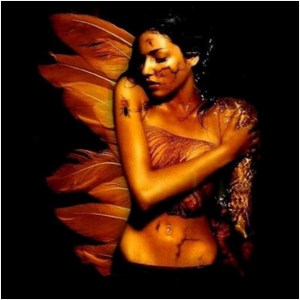
Passing the halfway mark of 25,000 words a couple of days ago felt as big this year as reaching 10K last year did — a milestone. Inevitably I’ve fallen behind — this time by about 5000 words. Got nothing written at all on Monday, and Tuesday was little better. Today’s quota is 30K. I’ve gotten down 3000 words so far, in a burst of catching up, and hope for another few hundred by day’s end, which will bring me within striking distance. I’m at 28,125 as I write this. (Yes, my break from writing a novel is writing a blog entry.) Definitely some interesting material has come through. I’ve put my poor succubus Alza in a number of implausible, erotic, challenging, historical and dangerous situations, just to see what sticks.
I’ve also found out that in order for an important historical meeting to occur, she needs to be about a century older than I’d made her. Not sure how she feels about that. Will no doubt find out. And I’ve gotten down a description of her original appearance that she has just discovered, the “face she had before she was born,” as the Zen masters like to say — before she shape-shifted the first time in her life among humans. That discovery seems to give her a stability and sense of self nothing else has. Here’s a striking image I found online and used for inspiration as Alza. It comes, both appropriately and ironically at once, from an Australian evangelical website, in the form of a pamphlet providing counsel to victims of Incubi and Succubi.

 With energies flowing around us from so many end-of-year holidays and celebrations, it seemed fitting to think and write about initiation. It’s one more piece of a Religious Operating System (ROS), it’s an important key to Druidry and — most importantly — it’s something we all experience. For good reason, then, the subject cuts a large swath through spiritual, religious and magical thought and practice. As author Isaac Bashevis Singer opens his book The Chosen, “Beginnings are difficult times.” That’s one reason New Year’s resolutions often end up on the cutting room floor of the film version of our lives. (Some ways to keep them alive and well and not merely part of the special extended version of our lives that may not see wide release into the “real” world will be the subject of a post upcoming in the next few days.)
 As with the kinds of freedom I considered in a previous post, there seem to be both “transitive” and “intransitive” initiations — initiations which enable or empower the initiate to do something — typically in the future — and initiations which recognize a standard or awareness already attained, and put a “seal of approval” on it. Of course these need not be separate. Both kinds can occur simultaneously. Initiation is a “beginning” (from Latin initio “start, beginning”) both a path or direction that another agency, power or person starts us on, and also something one does or experiences oneself.
 Marriage often seems to occupy a sort of middle ground as far as these categories operate. On the one hand, no one is married in the eyes of either the law or a religious organization until they pass through the requisite ceremony. Yet we all know couples who are already “so married” that the ceremony confers nothing that they don’t already manifest in abundance. In this case, the initiation of marriage simply recognizes and formalizes a connection and a state of relationship that already exists and — if the ritual or ceremony still carries any power — blesses and charges the thing consecrated. My wife and I have two anniversaries, ten days apart, and each conveyed to us different energies. First was a spiritual ceremony by a cleric in our tradition, and second came the state ceremony, performed by a justice of the peace. Interesting, too, who we see as performing or undergoing the initiation. Ideally, to my mind, the one experiencing the initiation should play at least some part, if not an active role, in its enactment. For initiation takes place both outwardly, where it is often witnessed by the state if not also by family, and more importantly inwardly, on the subtle planes (which deserve their own post or series of posts).









 A Druid Way