Go to Part 1 | Part 2 | Part 3 | Part 4 | Part 5 | Part 6
I speak for myself, of course. It’s all that any of us can do. But as I approach what is most deeply true for me, I find I can begin to speak true for others, too. Most of us have had such an experience, and it’s an instance of the deep connections between us that we often forget or discount. I’m adding this Part Two because the site stats say the earlier post on initiation continues to be popular.
/|\ /|\ /|\
Within us are secrets. Not because anyone hides some truths from us, but because we have not yet realized them. The truest initiations we experience seem ultimately to issue from this inner realm of consciousness where the secrets arise. Deeper than any ocean, our inner worlds are often completely unknown to us. “Man is ‘only’ an animal,” we hear. Sometimes that seems the deepest truth we can know. But animals also share in profound connections we have only begun to discover. We can’t escape quite so easily.
Our truest initiations issue from inside us. Sometimes these initiations come unsought. Or so we think. Maybe you go in to work on a day like any other, and yet you come home somehow different. Or you’re doing something physical that does not demand intellect and in that moment you realize a freedom or opening of consciousness. Sometimes it can arrive with a punch of dismay, particularly if you have closed yourself off from the changes on the move in your life. In its more dramatic forms initiation can bring with it a curious sense of vulnerability, or even brokenness — the brokenness of an egg that cracks as this new thing emerges, glistening, trembling. You are not the same, can never be the same again.
The German poet Rilke tries to catch something of this in his poem “Archaic Torso of Apollo.” He’d been blocking at writing the poems he desired, poems of greater depth and substance, instead of the often abstract work he’d composed until then, and his friend the sculptor Rodin sets him to studying animals. Rilke admires Rodin’s intensely physical forms and figures, and Rilke ends up writing about a classic figure of Apollo that is missing the head. Yet this headless torso still somehow looks at him, holds him with eyes that are not there. Initiation is both encounter, and its after-effects.
We cannot know his legendary head
with eyes like ripening fruit. And yet his torso
is still suffused with brilliance from inside,
like a lamp, in which his gaze, now turned to low,
gleams in all its power. Otherwise
the curved breast could not dazzle you so, nor could
a smile run through the placid hips and thighs
to that dark center where procreation flared.
I may witness something that is simply not there for others, but nonetheless it is profoundly present for me. Or I see something that is not for the head to decipher, interpret, judge and comment on. There’s nothing there for the intellect to grasp. In the poem, the head of the sculpture of Apollo is missing, and yet it sees me, and I see or know things not available to my head. I feel the gaze of the sculpture. I encounter a god. Or just a piece of stone someone shaped long ago into a human figure, that somehow crystallizes everything in my life for me right now. Or both.
The sensation of initiation can be as intensely felt and as physical as sexuality, “that dark center where procreation flared.” It hits you in your center, where you attach to your flesh, a mortal blow from a sword or a gesture that never reaches you, but which still leaves you dizzy, bleeding or gasping for breath. Or it comes nothing like this, but like an echo of all these things which have somehow already happened to you, and you didn’t know it at the time — it somehow skipped right past you. But now you’re left to pick up the pieces of this thing that used to be your life.
Otherwise this stone would seem defaced
beneath the translucent cascade of the shoulders
and would not glisten like a wild beast’s fur:
would not, from all the borders of itself,
burst like a star: for here there is no place
that does not see you. You must change your life.
You feel Rilke’s discovery in those last lines*, the urgency, the knowledge arriving from nowhere we can track. I have to change, and I’ve already changed. I know something with my body, in my gut, that my head may have a thousand opinions about. I may try to talk myself out of it, but I must change. Or die in some way. A little death of something I can’t afford to have die. There is no place in my life that does not see me, that feeling rises that I can’t escape, and yet I must escape. It’s part of what drives some people to therapy. Sometimes we fight change until our last breath, and it takes everything from us. Or we change without knowing it, until someone who knows us says, “You’ve changed. There’s something different about you. I can’t put my finger on it,” or they freak at the changes and accuse us, as if we did it specifically to spite them. “You’re not the person you used to be,” meaning you’re no longer part of the old energy dynamic that helps them be who they are, and now they must change too. Initiation ripples outward. John Donne says, “No man is an island, entire of itself. Each man is a piece of the continent, a part of the main.” Sometimes it’s my own initiation, sometime I’m feeling the ripples from somebody else’s. The earthquake is in the neighborhood, right down the street, in the next room, here — or across the ocean. But ripples in each case.
Sometimes we “catch” initiation from others, like a fire igniting. We encounter a shift in our awareness, and now we see something that was formerly obscure. It was there all along, nothing has changed, and yet … now we know something we didn’t before. This happens often enough in matters of love. The other person may have been with us all along, nothing has changed … and yet now we feel today something we didn’t feel yesterday. We know it as surely as we know our bones. We can feel the shift under our skin. The inner door is open. Do we walk through?
Go to Part 1 | Part 2 | Part 3 | Part 4 | Part 5 | Part 6
/|\ /|\ /|\
*Mitchell, Stephen, trans. The Selected Poetry of Rainer Maria Rilke (English and German edition). Vintage, 1989.
“Thou met’st with things dying, I with things new-born” says the Shepherd in Shakespeare’s The Winter’s Tale. And his words seem a perfect description of spring. Not all is new growth. Much has died. Sometimes we remember our own dead most vividly when life returns to the world around us. We’re still here, but they will not share another spring with us, and sorrow is renewed along with the grass underfoot and the buds on the trees. A bittersweet time. A time of compost and ashes and dandelion greens in salads. A time of sunlight growing, of life rising in the spine like sap in trees. Spring, you old tonic.
Out of state and away from computers for several days, I return with a series of vivid impressions: visiting my now retired cousins in Madison, Wisconsin, seeing them on their third of an acre lot, the earth bursting with literally scores of varieties of flowers, everything up and blooming more than a month early. Their care over two decades in restoring an old and abused house to pristine condition (doing much of the dirtiest and hardest work themselves), the spaces full of lovely wood paneling and doors and moldings, and full as well of light on all sides from triple-paned windows. Above ten degrees outdoors and their furnace goes off, if they get any sun. A Druidic care for the space they live in, the house and grounds they beautify not only for themselves, but all who pass by and witness.
Longing for light. Opening blinds to a few wasps at the window, sluggish with morning cold. The hazy spring moon growing each night, that Pagan moon by which Christians reckon the date for Easter according to that strange formula of “first Sunday after the first full moon after the vernal equinox.” (A perfectly Pagan calculation, when you think about it at all, even considering that the early Church wished for Easter to follow Passover, itself subject to a combined lunar and solar calendar.) People outdoors worshiping the sun on their skin, sitting in sidewalk cafes, heads leaned back and eyes closed. Mild days and cool nights. Love of this old world, with all its pains and joys. Love renewed, spring’s gift, waiting to ripen in fruit and flower and heart.
Sometimes you have experiences that just don’t fit. They’re orphans, and like orphans, too often they’re left to fend for themselves, so they end up on the street. Or else they’re stuck in a home by some well-meaning authority, where they may subsist uncomfortably for years in places where everyone else looks and acts and talks different. There may not be enough love to go around, either, and like Oliver in Dickens’ novel Oliver Twist, they’re reduced to pleading, “Please, sir, may I have some more?”
Monday night, before the hard freeze here (19 and windy) that threatened all the burgeoning flowers and trees, I offered up a prayer. I don’t usually pray in this way, but I found myself praying for all the wordless Rooted Ones busy putting out buds and leaves and new growth in response to the warm spell that caressed so much of the U.S. “I cry to the Powers,” I found myself saying. A little more love here, please. The great willow in our back yard has pale leafy fronds. The currants are budding. Crabgrass pushes up from dead mats of last year’s growth. The stems of bushes and the twigs of trees show reddish with sap. At the same time, I took stock in what I knew in some traditions about plant spirits, the personifications of energies that help individual species thrive.* Let the devas and plant guardians sort it out. Serve the larger balance — that sort of thing. Then the nudge to pray came, so I honored it. Everyone has a role to play. Then the goddess Skaði presented herself.
All this took place while I was driving down and then back home with my wife from an out-of-state trip to CT. Bookends to the day. We’d tried to be efficient with our driving and gas use, like the good Greenies that on occasion we actually are, and schedule several appointments for the same day. So we rose early, drove through welcome morning sun and glorious light to have a thermostat and brakes replaced on our car, get eye exams and prescriptions and glasses before a sale ended on April 1, drop off a gift at a friend’s house, and get to an admissions interview for a certificate program I’m interested in. (More about that as it progresses.)
We’d scheduled ourselves fairly loosely, but still the sequence of appointments mattered for times and distances to travel to the next stop. So when the car service that we’d been assured would take no more than two hours now promised to consume most of the day, we got a loaner car from the dealership, rescheduled and shuffled some of our meetings. Ah, modern life. Maybe it’s no more than imagination, but at such times recall of past lives makes horse-and-buggy days seem idyllic and stress-free by contrast. Back then we didn’t do so much because we simply couldn’t. Does being able to do more always mean we should?
So, Skaði.** Not to belabor you with too much detail: she’s a Scandinavian goddess of winter, hunting, mountains and skiing. A sort of northern Diana of the snows, an Artemis of the cold heights and crags. I’d run across her a few years ago, when I was doing some reading and meditation in Northern traditions. She loomed in my consciousness then, briefly. Frankly I found Bragi, the god of eloquence and poetry and patron of bards, much more to my taste. But there she was, for a short time.
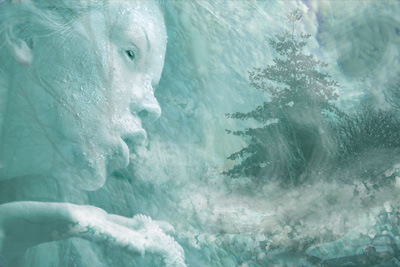 I flashed on an image of Skaði then, and she seemed — and still seems to me — quite literally cold, implacable, uninterested in humans, remote, austere, elegant in the way ice formations and mountain snows and the Himalayas are elegant — and utterly forbidding. Not someone even slightly interested in exchange, in human interaction. Now here she was. If you’ve been pursued by any of the Shining Folk, whether the Morrigan or Thor, Jesus or Apollo, you know that often enough they choose you rather than the other way around. So you make do. You pay no attention. Or you can’t help it and now you have a patron deity. Or something in between. If you’re a bloody fool, you blab about it too much, insisting, and the nice men in white coats fit you for one too. Or maybe you and Thorazine become best friends. It’s at times like this that I’m glad of the comparative anonymity of this blog. I can be that bloody fool, up to a point, and the people who need to will pass me off as just another wacko blogger. And then this post will recede behind the others, and only one or two people will happen on it in another month or two. The gods are out there, and they’re in our heads, too. Both/and. So we deal with it. And I can step back to my normal life. Or not. I’ll keep you posted.
So Skaði of the daunting demeanor wants something. I prayed to the Powers, almost in the Tolkien Valar = “Powers” sense — to anyone who was listening. Open door. Big mistake? I’m a Druid, but here’s the Northern Way inserting itself into my life. My call goes out, and Skaði picks up and we’re having this conversation in my head while I drive north on I-91 with my wife. I’ve gotten used to these kinds of things over time, as much as you can, which often isn’t so much. In a way I suppose it’s revenge — I used to laugh out loud at such accounts when I read them and shake my head at what were “obviously people’s mental projections.” Now I’ve got one saying if you want protection for your shrubbery (God help me, I’m also hearing the scene from Monty Python and the Holy Grail at this point. The Knights of Ni: “Bring me a shrubbery!”), then do something for me. What? I said. A blog post, first, then a website shrine. So here’s the blog post first. I’ll provide the shrine link when I’ve set it up.
/|\ /|\ /|\
*If you’re interested in an excellent account of this, check out The Findhorn Garden, originally published in 1976. This Scottish community, established on a barren piece of land, “inexplicably” flourished with the help of conscious cooperation with nature spirits. It’s documented in photographs and interviews. There are several books with similar titles and later dates, also published by Findhorn Community.
**The ð in her name is the “th” sound in with. I’m slowly realizing that part of my fussing over words, the urge to get it right, the annoyance at others who seem not to care about linguistic details, can be transformed to a gift. So for me part of honoring Skaði is getting her name right.
Image: Skaði. I can’t draw or paint to save my life, so when I came across this stunning representation, a shiver slalomed down my back. Skaði’s footsteps, I guess I should say. This is in the spirit of my experience of the goddess.
“Only what is virgin can be fertile.” OK, Gods, now that you’ve dropped this lovely little impossibility in my lap this morning, what am I supposed to do with it? Yeah, I get that I write about these things, but where do I begin? “Each time coming to the screen, the keyboard, can be an opportunity” — I know that, too. But it doesn’t make it easier. Why don’t you try it for a change? Stop being all god-dy and stuff and try it from down here. Then you’ll see what it’s like.
OK, done? Fit of pique over now?
I never had much use for prayer. Too often it seems to consist either of telling God or the Gods what to do and how to do it (if you’re arrogant) or begging them for scraps (if they’ve got you afraid of them, on your knees for the worst reasons). But prayer as struggle, as communication, as connecting any way you can with what matters most — that I comprehend. Make of this desire to link an intention. A daily one, then hourly. Let if fill, if if needs to, with everything in the way of desire, and hand that back to the universe. Don’t worry about Who is listening. Your job is to tune in to the conversation each time, to pick it up again. And the funny thing is that once you stop worrying about who is listening, everything seems to be listening (and talking). Then the listening rubs off on you as well. And you finally shut up.
That’s the second half, often, of the prayer. To listen. Once the cycle starts, once the pump gets primed, it’s easier. You just have to invite and welcome who you want to talk with. Forget that little detail, and there can be lots of other conversations on the line. The fears and dreams of the whole culture. Advertisers get in your head, through repetition. (That’s why it’s best to limit TV viewing, or dispense with it altogether, if you can. Talk about prayer out of control. They start praying you.) They’ve got their product jingle and it’s not going away. Sometimes all you’ve got in turn is a divine product jingle. It may be a song, a poem, a cry of the heart. The three Orthodox Christian hermits of the great Russian novelist Tolstoy have their simple prayer to God: “We are three. You are three. Have mercy on us!” Over time, it fills them, empowers them. They become nothing other than the prayer. They’ve arrived at communion.
/|\ /|\ /|\
Equi-nox. Equal night and day. The year hanging, if only briefly, in the balance of energies. Spring, a coil of energy, poised. The earth dark and heavy, waiting, listening. The change in everything, the swell of the heart, the light growing. Thaw. The last of the ice on our pond finally yields to the steady warmth of the past weeks, to the 70-degree heat of Tuesday. The next day, Wednesday, my wife sees salamanders bobbing at the surface. Walk closer, and they scatter and dive, rippling the water.
/|\ /|\ /|\
I once heard a Protestant clergywoman say to an ecumenical assembly, “We all know there was no Virgin Birth. Mary was just an unwed, pregnant teenager, and God told her it was okay. That’ s the message we need to give girls today, that God loves them, and forget all this nonsense about a Virgin birth.” … I sat in a room full of Christians and thought, My God, they’re still at it, still trying to leach every bit of mystery out of this religion, still substituting the most trite language imaginable …
The job of any preacher, it seems to me, is not to dismiss the Annunciation because it doesn’t appeal to modern prejudices, but to remind congregations of why it might still be an important story (72-73).
So Kathleen Norris writes in her book Amazing Grace: A Vocabulary of Faith. She goes on to quote the Trappist monk, poet and writer Thomas Merton, who
describes the identity he seeks in contemplative prayer as a point vierge [a virgin point] at the center of his being, “a point untouched by illusion, a point of pure truth … which belongs entirely to God, which is inaccessible to the fantasies of our own mind or the brutalities of our own will. This little point … of absolute poverty,” he wrote, “is the pure glory of God in us” (74-5).
So if I need to, I pull away the God-language of another tradition and listen carefully “why it might still be an important story.” Not “Is it true or not?” or “How can anybody believe that?” But instead, why or how it still has something to tell me. Another kind of listening, this time to stories, to myths, our greatest stories, for what they still hold for us.
One of the purest pieces of wisdom I’ve heard concerns truth and lies. There are no lies, in one sense, because we all are telling the truth of our lives every minute. It may be a different truth than we asked for, or than others are expecting, but it’s pouring out of us nonetheless. Ask someone for the truth, and if they “lie,” their truth is that they’re afraid. That knowledge, that insight, may well be more important than the “truth” you thought you were looking for. “Perfect love casteth out fear,” says the Galilean. So it’s an opportunity for me to practice love, and take down a little bit of the pervasive fear that seems to spill out of lives today.
Norris arrives at her key insight in the chapter:
But it is in adolescence that the fully formed adult self begins to emerge, and if a person has been fortunate, allowed to develop at his or her own pace, this self is a liberating force, and it is virgin. That is, it is one-in-itself, better able to cope with peer pressure, as it can more readily measure what is true to one’s self, and what would violate it. Even adolescent self-absorption recedes as one’s capacity for the mystery of hospitality grows: it is only as one is at home in oneself that one may be truly hospitable to others–welcoming, but not overbearing, affably pliant but not subject to crass manipulation. This difficult balance is maintained only as one remains [or returns to being] virgin, cognizant of oneself as valuable, unique, and undiminishable at core (75).
/|\ /|\ /|\
This isn’t where I planned to go. Not sure whether it’s better. But the test for me is the sense of discovery, of arrival at something I didn’t know, didn’t understand in quite this way, until I finished writing. Writing as prayer. But to say this is a “prayer blog” doesn’t convey what I try to do here, or at least not to me, and I suspect not to many readers. A Druid prayer comes closer, it doesn’t carry as much of the baggage as the word “prayer” may carry for some readers, and for me. “I’m praying for you,” friends said when I went into surgery three years ago. And I bit my tongue to keep from replying, “Just shut up and listen. That will help both us a lot more.” So another way of understanding my blog: this is me, trying to shut up and listen. I talk too much in the process, but maybe the most important part of each post is the silence after it’s finished, the empty space after the words end.
/|\ /|\ /|\
Norris, Kathleen. Amazing Grace: A Vocabulary of Faith. New York: Riverhead Books, 1998.
This post is self-indulgent, so if you’re not feeling mellow enough to tolerate such things, best move on and come back another time. OK, you’ve been warned.
Beside me as I write this lies a thick paperback copy of J. P. Mallory’s cumbersomely titled The Oxford Introduction to Proto-Indo-European and the Proto-Indo-European World. Since it’s a week-end day like today, and nothing presses me to get up and pretend to accomplish anything, I pull it from the nightstand and lie abed thumbing through it. Yes, I’ll say it first: “Nerds ‘R’ Us.”
I confess to abject weakness for books like this one about Proto-Indo-European, the reconstructed mother tongue of everyone who speaks one of the approximately 100 languages descended from it — roughly half the planet, three billion people, give or take a few million. I open the book and pause at a list of less well-known extinct language names — Illyrian, Dacian, Thracian, Macedonian, Phrygian — that evoke salad dressings, or obscure vintages, or mysterious bloodlines of characters in an occult novel. To anyone wired just a little differently, the whole thing must just scream B O R I N G. Though if you’re such a person, you’ve probably stopped reading this already.
My addiction occasions sighs from my wife, because my corridor of facing bookcases dominates a little-used hallway which has now transformed into a single-file passage to the front door of our house. Language books fill one whole bookcase. No, not for the most part languages I speak or know in any worldly useful way, but languages I drink from, for their beauty and architecture and sound (and ideas for my own conlangs*). I know things about them not even their native speakers know, but I couldn’t speak most of them to save my life. So this is language as first morning coffee, as comfort food, as fix. Even the abbreviation PIE, for Proto-Indo-European, is comforting. Pie. Whipped cream. Dessert. Maybe for breakfast. Flaky crust and steaming freshly baked fruit. Ah.
The underlying draw of such things (beyond the sensuous indulgence I confess to above) seems quest-like. After a long climb I crest a hilltop, the mist clears, and there before me are the ruins, thousands of years old. Only instead of fallen pillars, abandoned steps, doorways opening on empty air, the ruins are words. Ancient words, weathered, yet often still bearing a family likeness. Wiros, gwena, brater, swesor. Man, woman, brother, sister. Mus, gwous, deiwos. Mouse, cow, god. Sedo, bhero. I sit, I bear. Oinos, dwou, treyes, kwetwor, penkwe. One, two, three, four, five. The likenesses grow if you know even a little Latin or a Romance language, or one of their cousins in India.
Some of the same fascination with this proto-language stirred in the first linguists who considered the verbal ruins they were painstakingly excavating and reconstructing. Word by word, through comparisons of living languages and their structures and patterns, the older ancestral language was and is rebuilt. See where the stones are notched, worn, and smudged with soot, and reassemble the fireplace they once made. And there’s part of a wheel, an urn, a head-dress. August Schleicher, who flourished in the first half of the 1800s, “sifted through the reconstructed Indo-European of his day for enough usable words to compose a short narrative tale … published in 1868” (Mallory, 45). His colleagues caught something of the same fever, kept tweaking Schleicher’s story over the ensuing decades, and here’s a contemporary “version of their version” of the first sentence that I’ve made somewhat more pronounceable for English speakers by taking a few small liberties. Linguists will see the changes at once and cluck their tongues at me, and no one else will care:
Gurei owis, kwesyo ulna ne est, ekwons speket, oinom ge gurum wogom wegontem, oinom-kwe megam borom, oinom-kwe gumenem oku berontem.
“A sheep that had no wool saw [some] horses, one pulling a heavy wagon, one a heavy load, and another swiftly bearing a man” (ibid).
Maybe it comes down to this: through such reconstructions we can come closer to talking with the ancestors — and maybe join them in their drinking songs, rather than expecting them just to sing along with ours.
/|\ /|\ /|\
*My most developed conlang or constructed language is called Thosk. (The name is cognate with Old English theod “people,” Oscan teuta “people,” Latin teutonicus, and German Deutsch.) Its word-stock and grammar are very Indo-European, and so it’s a sibling of English, Spanish, Latin, Hindi, Armenian, Greek, Pashto, French, Latvian, Swedish, Russian, Bengali, Serbian, Danish, Romanian, Ukrainian, Sanskrit, Farsi, Albanian, Dutch, Gujerati … you get the idea. Here’s a simple sentence in Thosk: Men ta tha moi urht bev ahi sumbend no meve klase. “I give more work to anyone sleeping in my classes.”
Mallory, J. P. and D. Q. Adams. The Oxford Introduction to Proto-Indo-European and the Proto-Indo-European World. New York: Oxford University Press, 2006.
Some teachings run you through their rituals.
Find your own way – individuals
know what works beyond the shown way:
try out drinking with the Ancestors.
Chat ‘em up — don’t merely greet ‘em;
such rites are chummy: do more than meet ’em.
(Spend your weekends with a mummy?)
But I like drinking with my Ancestors.
Another round of pints and glasses
will have us falling on our asses.
Leave off ritual when they’re calling —
you’ll be drinking with your Ancestors.
By and with the spirits near us —
“Don’t invoke us if you fear us” —
good advice: if you lose focus
though you’re drinking with your Ancestors,
in the morning you’ll be uncertain
if you just dreamed or drew the curtain
on some world where it more than seemed
that you were drinking with your Ancestors.
Alcohol works its own magic,
and not all good – it’s downright tragic
if you’re just hung over from what could
have been you drinking with your Ancestors.
They come in all shapes, and in all sizes:
some are heroes, some no prizes
(they’re like us in all our guises).
Listen: they are singing, they are cussing,
they can advise us if we’re fussing
over where our lives might go
or put on a ghostly show.
We’re the upshot, on the down low.
We’re the payoff, crown and fruit
(we got their genetic trash, and loot),
we’re their future – “build to suit.”
So start drinking with your ancestors.
* * *
Ancestor “worship” is sometimes a misnomer, though not always — some cultures do in fact pray to, propitiate and appease the spirits of the ancestral dead in ways indistinguishable from worship. But others acknowledge what is simply fact — an awful lot (the simple fact that we’re here means our ancestors for the most part aren’t literally “an awful lot”) of people stand in line behind us. Their lives lead directly to our own. With the advent of photography it’s become possible to see images beyond the three- or four-generation remove that usually binds us to our immediate forebears. I’m lucky to have a Civil War photo of my great-great grandfather, taken when he was about my age, in his early fifties. In the way of generations past, he looks older than that, face seamed and thinned and worn.
The faces of our ancestral dead are often rightfully spooky. We carry their genetics, of course, and often enough a distant echo of their family traditions, rhythms, expectations, and stories in our own lives — a composite of “stuff,” of excellences and limitations, that can qualify as karma in its most literal sense: both the action and the results of doing. But more than that, in the peculiar way of images, the light frozen there on the photograph in patches of bright and dark is some of the purest magic we have. My great-great-grandfather James looks out toward some indeterminate distance — and in the moment of the photo, time — and that moment is now oddly immortal. Who knows if it was one of his better days? He posed for a photo, and no doubt had other things on his mind at the time, as we all do. We are rarely completely present for whatever we’re doing, instead always on to the next thing, or caught up in the past, wondering why that dog keeps barking somewhere in the background, wondering what’s for dinner, what tomorrow will bring, whether any of our hopes and ambitions and worries justify the energy we pour into them so recklessly.
And I sit here gazing at that photo, or summoning his image from what is now visual memory of the photo, as if I met him, which in some way I now have. Time stamps our lives onto our faces and here is his face. No Botox for him. Every line and crease is his from simply living. And around him in my imagination I can pose him with his spouse and children (among them my great-grandfather William) and parents, and so on, back as far — almost unimaginably far — as we are human. Fifty thousand years? Two hundred thousand? A million? Yes, by the time that strain reaches me it’s a ridiculously thin trickle. But then, if we look back far enough for the connection, it’s the same trickle, so we’re told, that flows in the veins of millions of others around us. If we can trust the work of evolutionary biologists and geneticists, a very large number of people alive on the planet today descend from a relative handful of ultimate ancestors. Which seems at first glance to fly in the face of our instinct and of simple mathematics, for that spreading tree of ancestors which, by the time it reaches my great-great-grandfather’s generation, includes thirty people directly responsible for my existence (two parents, four grandparents, eight great-grandparents and sixteen great-great grandparents). Someone called evolution the “ultimate game of survivor.” And now I break off one line, stalling forever this one particular evolutionary parade, because my wife and I have no children.
The poem of mine that opened this entry, “Drinking with the Ancestors,” suggests we can indeed meet and take counsel with members of this immense throng through the exercise of inhibition-lowering and imagination-freeing imbibing of alcohol. Of course there are also visualization exercises and still other techniques that are suitably alcohol-free — more decorous and tame. Depending on who you want to talk to among your clan, you can have an experience as real as most face-to-face talks with people who have skin on. The difference between us in-carnate and ex-carnate folks is indeed the carne. No sudden dispensation of wisdom automatically accrues to us just because we croak. A living idiot becomes a dead idiot. Likewise a wise soul is wise, in or out of flesh.
It seems fitting to end with an experience of the ancestors. Not mine, this time — I keep such things close, because often when we experience them, they are for us alone, and retain their significance and power only if we do not diminish them by laying them out for others who may know nothing of our circumstances and experiences. Wisdom is not a majority vote. Even my wife and I may not share certain inner discoveries. We’ve both learned the hard way that some experiences are for ourselves alone. But it’s a judgment call. Some things I share.
So in my place I give you Mary Stewart’s Merlin, in her novel The Hollow Hills*, recounting his quest for Excalibur, and an ancestor dream-vision that slides into waking. The flavor of it captures one way such an ancestral encounter can go, the opposite end of the easy beery camaraderie that can issue from making the libations that welcome ancestral spirits to a festival or party, as in my poem. Note the transition to daytime consciousness, the thin edge of difference between dream and waking.
I said “Father? Sir?” but, as sometimes happens in dreams, I could make no sound. But he looked up. There were no eyes under the peak of the helmet. The hands that held the sword were the hands of a skeleton … He held the sword out to me. A voice that was not my father’s said, “Take it.” It was not a ghost’s voice, or the voice of bidding that comes with vision. I have heard these, and there is no blood in them; it is as if the wind breathed through an empty horn. This was a man’s voice, deep and abrupt and accustomed to command, with a rough edge to it, such as comes from anger, or sometimes from drunkenness; or sometimes, as now, from fatigue.
I tried to move, but I could not, any more than I could speak. I have never feared a spirit, but I feared this man. From the blank of shadow below the helmet came the voice again, grim, and with a faint amusement, that crept along my skin like the brush of a wolf’s pelt felt in the dark. My breath stopped and my skin shivered. He said, and I now clearly heard the weariness in the voice: “You need not fear me. Nor should you fear the sword. I am not your father, but you are my seed. Take it, Merlinus Ambrosius. You will find no rest until you do.”
I approached him. The fire had dwindled, and it was almost dark. I put my hands out for the sword and he reached to lay it across them … As the sword left his grip it fell, through his hands and through mine, and between us to the ground. I knelt, groping in the darkness, but my hand met nothing. I could feel his breath above me, warm as a living man’s, and his cloak brushed my cheek. I heard him say: “Find it. There is no one else who can find it.” Then my eyes were open and it was full noon, and the strawberry mare was nuzzling at me where I lay, with her mane brushing my face (226-7).
/|\ /|\ /|\
*Stewart, Mary. The Hollow Hills. New York: Fawcett Crest Books, 1974.
This warmth won’t last, though it makes me say
earth feels like home on a sunny day.
But let sky darken and wind turn chill
And old winter wields dominion still.
* * *
While the warm hours last, birds try out songs we haven’t heard for months, and the woodworkers appear. Not carpenters or cabinet-makers, but those people who come out of the woodwork on fine days like this, delightfully odd folks you swear you’ve never seen before, or at least not on this planet. Probably I play the role myself for at least one other person, with my day’s stubble and turtleneck, wool socks with Birkenstocks. “There are things more important than comfort,” says author Ursula LeGuin, “unless you are an old woman or a cat.” Though I can’t qualify as the former, I’ve been feeling feline these last few days, so I pay no mind.
In our co-op parking lot an old woman is singing to herself, a rhythmic song in another language that keeps time with her cane striking the ground. A sky-blue 60s Cadillac makes its way around the parking lot, then subsides with a splutter. A couple climb out, then look up like they’ve never seen sky before and, heads tilted back, they drink it in for a full minute or more. Their pleasure is contagious. It’s a day people greet strangers simply because we’ve resurfaced, emerged from the bunker of ice and snow and cold and hunkering down, into a world of thaw and mud and sudden warmth on the skin.
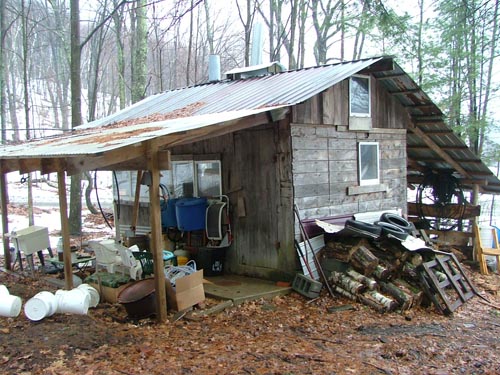 Sugar shacks smoke trough the night as the sap rises and the “sweet trees” yield their juice. You pass what you think is just a stand of trees, and there’s a faint square glow from a shack window, someone patiently (or impatiently) at work through the evening. Boil down the sap over a low heat, a wood fire as often as not, more and still more, then just keep going beyond all reason, and you eventually get a single lovely brown gallon for every thirty to forty of pale sap you’ve lugged in. If you do sugaring for more than yourself and family and maybe a few friends, you upgrade and invest in an evaporator. And if through the hours and days you manage not to scorch the slowly condensing syrup, that first taste on pancakes (or over a bowl of crisp new snow, a northern treat more rare this year) makes sore muscles and bloodshot eyes and smoky clothing worth it.
The French further north have their cabanes a sucre, where the temperatures haven’t risen quite so high and more of the white stuff remains.
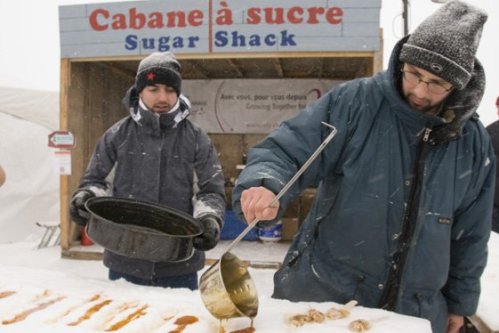
And sweeter still, in less than ten days, the vernal equinox, with day then overtaking night. Hail, growing light!
/|\ /|\ /|\
Images: Sugar shack; cabane.
“I heard you saw the movie yesterday. So what’s it about?” “Jean and Bill are arguing again. What’s that about?” “OK, he tried to explain and it still doesn’t make sense to me. But you understand those kinds of things, so tell me about it.” And there’s the old-time newspaper seller’s cry: “Extra, extra! Read all about it!!”
This elusive quality of aboutness is core to so many of our ways and days. We spend years in education (and life) dividing things up into their parts and labeling them, and then at least as much time putting them back together, searching for the links and connections between them, so that we can “grasp” them, “get” them, understand them. Re-assemble and it might resemble what it used to be. We crave community, fellowship and friends along the way at least as much as we prize our American individualism and independence and self-reliance. We long for aboutness.
About is near, close, approximately, almost — good enough for daily reckoning, for horseshoes and hand-grenades. It’s about five miles. We’re about out of time. About is sometimes the guts, the innards, the details, all the juicy pieces. About is also the whole, the overview, the heart of the matter. If you know about cars or cooking, you don’t need to know every specific model or recipe to “know your way around them.” What you don’t know you can usually pick up quickly because of family similarities they share. If you under-stand, you know the sub-stance. Position yourself in the right place and time (apparently beneath what you desire to comprehend, according to the peculiar English idiom), and you’ll get the gist.
Layers, strata. This onion-like reality keeps messing us up with its levels. Its aboutness won’t stay put as just one thing, but consists of stuff piled on other stuff below it. Often you gotta dig down through the fossil layer to reach the starting point. Peel it all away, though, and sometimes all you have is peel. You may know the simple and lovely blessing — there are several versions extant:
Back of the loaf is the snowy flour,
back of the flour is the mill;
back of the mill is the wheat and the shower,
the sun and the Maker’s will.
Sometimes if you pay attention you can catch it like a melody on the wind, something that lingers behind the sunlight. We know more than we know we know. This is the natural mysticism that comes with living, however hard we may try to ignore it. This is the aboutness that underlies our lives and our days, while we scurry from one thing to another, in pursuit of happiness. So it follows us, shaking its head at our antics. It could catch up to us if we stopped, looked and listened, if we made space for it to live with us, rather than renting out a room next door, trying vainly to catch our attention.
Robert Frost is one of my go-to guys for insight, as readers of this blog discover. In “Directive” he begins with that sense of constriction, and our partial memory of a past that shines brighter because of what we’ve forgotten about its difficulties. Yes, the poem’s “about” dying New England towns and abandoned houses, but also about us:
Back out of all this now too much for us,
Back in a time made simple by the loss
Of detail, burned, dissolved, and broken off
Like graveyard marble sculpture in the weather …
If there’s a place and home for us, he goes on to say, it’s reachable only by misdirection. “You can’t get there from here,” because the “here” has no more substance than anything else. It won’t serve as a starting point. Time has wrenched it free of its moorings. Things drift.
The road there, if you’ll let a guide direct you
Who only has at heart your getting lost,
May seem as if it should have been a quarry—
Great monolithic knees the former town
Long since gave up pretense of keeping covered.
And there’s a story in a book about it …
Yes, there’s a story, maybe several stories, a hint or two that maybe somewhere else, or someone else, will do it for it us, will finally deliver to us what we’ve been seeking. The stories of art, of music, of the great myths we want to believe even when we can’t. Sometimes the hints are maddening, sometimes the only comfort we can lay hands on in our seeking.
Make yourself up a cheering song of how
Someone’s road home from work this once was,
Who may be just ahead of you on foot
Or creaking with a buggy load of grain.
Aren’t we almost there? Or is it merely illusion? Is this a path anyone else has traveled and succeeded in the end, or our own unique interstate roaring straight toward disaster? What lies are we telling ourselves today? And are we waking up to them at last? You gotta get in to get out, go the Genesis lyrics (the band, not the Bible). You have to get lost in order to be found. That experience is necessary, though painful. Not one of us is the son who stays at home. We’re all prodigals.
And if you’re lost enough to find yourself
By now, pull in your ladder road behind you
And put a sign up CLOSED to all but me.
Then make yourself at home.
Might as well get comfortable being lost, because it’s gonna last a while. Though we never can be wholly comfortable in illusions. No end in sight. The problem is that we don’t know this until the end actually IS in sight. What illusions do we need that will actually bring comfort for a time, at least? They’re not illusions until we outgrow them, live through and past them. In fact we need truths now that only later become illusions precisely because they will be too small for us anymore.
First there’s the children’s house of make-believe,
Some shattered dishes underneath a pine,
The playthings in the playhouse of the children.
Weep for what little things could make them glad.
Then for the house that is no more a house,
But only a belilaced cellar hole,
Now slowly closing like a dent in dough.
This was no playhouse but a house in earnest.
Our house in earnest, playhouse in our childhood, has collapsed, or will. Our old selves won’t do. They don’t fit. We shuffle them off like snake-skins that bear the imprint of what lived in them, down to scar and scale, and we mourn and mistake them for ourselves, another illusion, standing there in the mirror that consciousness provides.
Who then can show us the way? From this perspective, we need, not salvation, but someone to show us where we can walk on our own two feet. Not out of vanity or stiff-necked pride, but because we have to make our way ourselves. Otherwise it doesn’t stick. It vanishes like a dream on waking. Yes, others have carried us there briefly, by art or alcohol or sex or those moments of ecstasy that come on us unannounced and unsought, glimpses of home through the fog.
Tolkien has Gandalf and Pippin touch on it briefly in The Lord of the Rings:
Gandalf: The grey rain-curtain of this world rolls back, and all turns to silver glass. And then you see it.
Pippin: What? Gandalf? See what?
Gandalf: White shores … and beyond, a far green country under a swift sunrise.
Frost continues, wise old poet-guru. (Sigmund Freud once remarked, “Everywhere I go, I find that a poet has been there before me.”)
Your destination and your destiny’s
A brook that was the water of the house,
Cold as a spring as yet so near its source,
Too lofty and original to rage.
We keep flowing — we’re not meant to stay put. Heaven as stasis, as a static destination, an endpoint, a final arrival, nothing beyond, is a false heaven. Enchantments of different kinds surround us. Some deceive, and some actively conceal what we know we must have in order to live at all. Yet what we seek also and paradoxically lies hidden in plain sight. The water was “the water of the house.” It’s right here. What can we use to gather it up?
I have kept hidden in the instep arch
Of an old cedar at the waterside
A broken drinking goblet like the Grail
Under a spell so the wrong ones can’t find it,
So can’t get saved, as Saint Mark says they mustn’t.
(I stole the goblet from the children’s playhouse.)
Here are your waters and your watering place.
Drink and be whole again beyond confusion.
Be whole again. What was lost is now found. Restoration. Return to what is native to you — your watering place. This is the command that drives us onward, the quest buried in our blood and bones. Reach for it. Whole again beyond confusion.
/|\ /|\ /|\
 Yes, secrets can be dangerous. But live long enough and you notice that most things which may be dangerous under certain conditions are often for that very reason also potential sources of valuable insight and energy. Poisons can kill, but also cure. Light can disinfect, and also burn. Different societies almost instinctively identify and isolate their favorite different sources of energy as destructive or at the least unsettling, just as the physical body isolates a pathogen, and for much the same reason: self-preservation.
For many Americans and for our culture in general, sex is one great “unsettler.” We need only look at our history. Problems with appropriate sexual morality have dogged our culture for centuries, and show no signs of letting up, if the current gusts of contention around contraception, abortion, homosexuality and abstinence education mean anything at all. Wall up sexuality and let it out only on a short leash, if at all, our culture seems to say. Release it solely within the bonds of heterosexual monogamy. Then you may escape the worst of its dangerous, unsettling, even diabolical power. You can identify this particular cultural fixation by the attention that even minor sexual miss-steps command, surpassing murder and other far more actually destructive crimes. Let but part of a breast accidentally escape its covering on TV or in a video, even for a moment, and you’d think the end of the world had truly arrived.

a Mikvah -- ritual bath
Other cultures diagnose the situation differently and thus choose different energy sources to obsess about and wall up, or shroud in ritual and doctrine and taboo. For some, it’s ritual purity. At least some flavors of Judaism focus on this, with the mikvah or ritual bath, various prohibitions and restrictions around menstruation, skin diseases and other forms of impurity, and the importance of continuing the family along carefully recorded bloodlines. The first five Biblical books, from Genesis to Deuteronomy, list such practices and taboos in often minute detail.
The Bible also testifies, in some of its more well-known stories, to the fate of individuals like Jacob’s brother Esau, who married outside the family, and thus forfeited God’s blessings and promises that came with blood descent from their grandfather Abraham. And one need only consider Ishmael, son of Abraham but not of an approved female, who is driven out into the wilderness with his mother Hagar, a slave and not a Hebrew. This Jewish Biblical story accounts for the origins of the Muslims, descendants of Ishmael or Ismail. (The Qur’an, not surprisingly, preserves a different account.) The flare-ups of animosity and sometimes visceral hatred between Jews and Muslims thus originate quite literally in a family inheritance squabble, if we take these stories at their word.
If secrets have at their heart a source of potent energy and culture-shattering power, no wonder Americans in particular suspect them. We like to think we can domesticate everything and turn it to our purposes: name it, own it, market it, even cage it and sell tickets for tourists to see it in captivity, properly chastened by our mastery. But the numinosity of existence defies taming.
Such an oppositional stance of course almost guarantees conflict and misunderstanding and ongoing lack of harmony. But the experience of some human cultures tells us that we can learn to discern, respect and work with primordial forces that do not bow to human will and cleverness. (Likewise, Western and American culture have demonstrated that fatalism and passivity are not the only possible responses to disease, natural disasters, and so on.) Master and servant are not the only relations possible. For a culture that prizes equality, we are curiously indifferent to according respect to sex, divinity, mortality and change, consciousness and dream, creativity and intuition as forces beyond our control, but wonderfully amenable to cooperation and mutual benefit.
So how do secrets fit in here? The ultimate goals of both magical and spiritual work converge. As J. M. Greer characterizes it,
… the work that must be done is much the same–the aspirant has to wake up out of the obsession with purely material experience that blocks awareness of the inner life, resolve the inner conflicts and imbalances that split the self into fragments, and come into contact with the root of the self in the transcendent realms of being (Greer, John Michael. Inside a Magical Lodge, 98).
Of course, much magical and spiritual practice does not (and need not) habitually operate at this level — but it could. “By the simple fact of its secrecy, a secret forms a link between its keeper and the realities that the web does not include; a bridge to a space between worlds,” Greer notes. This space makes room for inner freedom, and so the effort of maintaining secrecy can pay surprising psychological dividends.
Keeping a secret requires keeping a continual watch over what one is saying and how one is saying it, but the process of keeping such a watch has effects that reach far beyond that of simply keeping something secret. Through this kind of constant background attention certain kinds of self-knowledge become not only possible but, in certain situations, inevitable. Furthermore, this same kind of attention can be directed to other areas of one’s life, extending the reach of conscious awareness into fields that are too often left to the more automatic levels of our minds … Used in this way, secrecy is a method of reshaping the self … (Greer, 116-117).
Thus, the actual content of the secret may be quite insignificant, a fact that baffles those who “uncover” secrets and then wonder what the fuss was all about. Is that all there is? they ask, usually missing another aspect of secrecy: “things can be made important–not simply made to look important, but actually made important–by being kept secret” (Greer, 118). The effort of maintaining secrecy and the discoveries that effort allows can mean that the supposed secrets themselves are often next to meaningless without that effort and discovery.
In this case, the danger of secrecy lies in what it reveals rather than what it conceals. Once we discover the often arbitrary and always incomplete nature of the web of communication (and the cultural standards based on that web), we perceive their limitations and ways to step beyond them. Here secrecy has
a protective function on several different levels. To challenge the core elements of the way a culture defines the world is to play with dynamite, after all. There’s almost always a risk that those who benefit from the status quo will respond to too forceful a challenge with ridicule, condemnation or violence. Secrecy helps prevent this from becoming a problem, partly by makng both the challenge and the challengers hard to locate, but also by making the threat look far smaller than it may actually be (Greer, 127).
 Secrecy forms part of the “cauldron of transformation”* available to us all. Most of us balk at true freedom and change. We may have to relinquish comforting illusions — about ourselves and our lives and the priorities we have set for ourselves. So like a mouse I take the cheese from the trap and get caught by the head — I yield up the possibility of growth in consciousness in return for some comfort that seems — and is — easier, less demanding. All it costs is my life.
Guard the mysteries; constantly reveal them, goes an old saying of the Wise. The deepest secrets we already know. That is why awakening confers the sensation of coming home, of return, of reclaiming a birthright, of dying to an old self, of extinction of something small that held us back — so many metaphors that different traditions and cultures and religious and spiritual paths hold out to us, to suggest something of the profound, marvelous and most human experience we can have.
/|\ /|\ /|\
Images: cartoon; mikvah; cauldron;
* See John Beckett’s excellent blog post on this topic here.
 Goddesses are possible again — the word is spreading even to those who aren’t paying attention. The new dream is all about shapes arising where before we thought there was only darkness pooling around our fears and our faces. The old forms aren’t always the ones the goddesses are re-animating. It’s also something new this time, answer to the severity of our need. Need more, and the Goddess answers. How much we need. It’s called her forth.
Who is she? an old man asks. He’s never had truck with goddesses before. I don’t know anything about ’em. You can see it in his face, in his posture. He holds himself like a piece of cloth, something that can spread or crumple easily, at will or whim. But then who has dealt with goddesses recently? Ask around and what answer do you probably get? Yes, a good Catholic says the Rosary, prays to Mary because she’s vastly more approachable than that God made in the image of the old men of the Magisterium. Goddesses are possible, the old man says, doubting his own words, indicted along with the pedophile priests because we can no longer distinguish truth from truthiness, what is from what we wish to exist, to serve our weakness as a shield, so that we needn’t change. The Goddess opens one door after another, doors rusty on their hinges. You can hear them squeaking, maybe late at night when the only other sound is the breathing of sleepers near you in the dark. Who has dealt with goddesses before? We all have.
To breathe in the dark, awake. There you can feel the Goddess. It’s a start, a beginning like the edge of a blade, something sharp you can sense without trying. She is more than possible, more than a shape companionable in the darkness, one that doesn’t move and so isn’t a threat, isn’t alive, but rather a piece of furniture, something you can count on to stay the same as you make your way around in the dark. God the Father, in whom there is no variableness or shadow of turning, the Bible says. Everything she touches changes, say those who have encountered the Goddess. And she touches everything. So how can these two co-exist without canceling each other out, matter and anti-matter colliding and releasing some intense humongous cosmic energy to rival the Big Bang.
And the Cosmic Trickster lounging somewhere near the back door of our brains says That’s it exactly. Put God and Goddess together and you get the Big Bang, the ecstatic copulation, the first orgasm that even now continues, sustaining all that is, energy streaming out from both of them, because we need both. God without Goddess turns out to be a dry old stick, a petty tyrant peering in people’s windows and clicking his tongue at s s s i n. But ignore him long enough and he sends his grunts and heavies to round you up, to snatch you out and shove you up against a wall and shoot you, because you’re not holy enough, because you doubted, because you’re too real for the god-museum image that everybody worships and nobody lives. And tell the truth and it’s only a toss-up whether you’re on the shooting side, or the shot side. Not much difference in the end, it’s you or your best friend, opposite sides. Then neither side is worth the game.
 But the Goddess alone is no better. It’s not the Fear of Feminism you see among some men, as if the ladies will replace us gentlemen in the fine art of hypocrisy and murder. Those men, they’re afraid they’ll get what’s coming to them, because they know deep down what goes around really does come around. But it won’t be like that. Instead, it all collapses into orgy, and everything comes. The definition of a puritan, remember, is a person with the horrible fear that somebody somewhere is actually having fun. God without Goddess is a stick, but Goddess without God is a soft gooey center that melts in your hands, not in your mouth.
Goddesses are possible again because we’ve earned them. We’re opening the door we’re petrified to open, terrified to walk through, but we can’t help it because the imperative we all follow eventually is growth, and if Goddess will give when God holds back, then we need to meet and embody the divine as Goddess in order to live at all. The prod of the god/dess is love for all existence, and we cannot both love and fear. So much fear nowadays, you can smell it.
And love? The Charge of the Goddess reminds us that all acts of love and pleasure are Her rituals. This life is sacrament. Priestess and Priest, be welcome to the rite. Come before the Lord and Lady with gladness and thanksgiving. Not in obedience, but in desire to celebrate what you know to be true, that each day is a gift, that this incarnation, in spite of all its troubles, is a blessing and worth that trouble. Potest Dea. The Goddess is potent, the Goddess can. Praise God, the Goddess is.
/|\ /|\ /|\
Blue Madonna by Carlo Dolci, Ringling Museum, Sarasota, Florida.
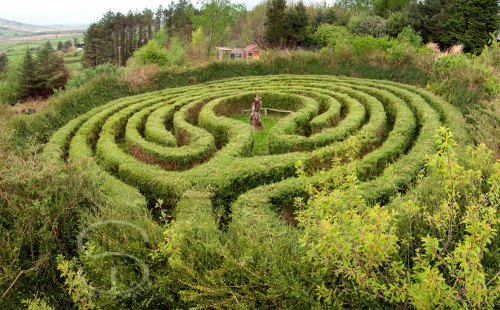
Labyrinth at Hagal’s Farm.
Edited for spelling and grammar 5 Oct 2013
Secrecy often emerges as a national issue in times of crisis. Recall the debate over the Patriot Act enacted in the wake of the Sept. 11th attacks, and the kinds of broad governmental powers the Act authorized, including significant reductions of citizen privacy. Secrecy can become central to state security, and exists in uneasy tension with the “need to know.”
President Kennedy declared in an April 27, 1961 speech that unjustifiable secrecy is repellent, dangerous, and virtually un-American:
The very word “secrecy” is repugnant in a free and open society; and we are as a people inherently and historically opposed to secret societies, to secret oaths and to secret proceedings. We decided long ago that the dangers of excessive and unwarranted concealment of pertinent facts far outweighed the dangers which are cited to justify it.*
Of course, he was addressing the American Newspaper Publishers Association, and also standing implicitly against the Communist bloc and its perceived threat to the West. (You can listen to a portion of Kennedy’s speech on Youtube here.) Nevertheless his points are well-made, and still almost painfully applicable today, in the wake of Wikileaks and similar events.
Yet secret societies, in spite of Kennedy’s assertions, do have a long and well-established place in the history of America, and many still thrive today. They flourish at many colleges like Yale, with its Skull and Bones the most famous — or notorious — of several societies for college seniors. Another similar and infamous example, though not affiliated with a school, is the Bohemian Grove. Both have generated entertaining conspiracy theories, books, films, and news articles, all of which occasionally offer pieces of the truth. Both exist, and both count among their membership some of the most powerful and influential people in the world. Bohemian Grove counts among its members George H. W. Bush, Clint Eastwood and the late Walter Cronkite, according to a Univ. of California Santa Cruz website.** Should we be worried?!

Opening Night at Bohemian Grove
Many sororities and fraternities also share elements of secret societies, depending on their charters and missions. Still other similar organizations enjoy spotless reputations, such as the PEO Sisterhood, mostly public in its support for education, but still retaining some secret aspects.
 Secret organizations are in fact particularly American, or were in the past. At the nation’s founding, all but two of the signers of the Declaration of Independence were by some accounts members of the Masons or other society. In the late 1800s, roughly 40% of the U.S. population belonged to the Freemasons, Odd Fellows, Knights of Pythias, the Grange, Knights of Columbus, Order of the Eastern Star, or other secret, service, fraternal or social organizations. The 19th century was in many ways the heyday of such groups, which have declined since, even as Americans began to lament the loss of community cohesiveness and devotion to public service, unaware of the irony.
To step even further back in time, secrecy was after all crucial to the survival of Christianity, which took form as a sect within Judaism, and within a generation was perceived as a threat to Rome. Suspected Christians were arrested, forced to worship the reigning Roman emperor (who in some cases claimed divinity) and recant their faith, or face execution in various bloody forms, including by wild animals, in the Circus Maximus, Colosseum or Amphitheater. Until the emperor Constantine in the 300s made the religion a recognized faith of the Empire, Christianity was often an underground practice, with the ichthys (sometimes called the “Jesus fish”) as one of its secret signs, by which fellow believers might recognize each other.
 The range of contexts in which secrecy manifests can be surprisingly wide. The discipline of keeping a secret sometimes serves as a test for membership in a group. If you can keep a secret about something insignificant, then you may earn the right to gain access to the greater secrets of the group, because you’ve demonstrated your integrity. Shared secrets are a key element to defining in-groups and out-groups. In the Middle Ages, much knowledge was automatically assumed to be secret. If it was disseminated at all, it appeared in a learned language like Latin or Greek which only literate persons could read and access, and as often it was a zealously-guarded guild or trade secret which only guild members knew. Significantly, the Old French word gramaire meant both “grammar” and “magic book,” and is considered the most likely source of the word grimoire, also meaning a magic book. Inaccessible or secret language and hidden or secret knowledge were the same thing, and occult meant simply “hidden.”
Some kinds of knowledge are experiential and therefore in a different sense hidden or secret from anyone who hasn’t had the experience. Consider sex: there is no way to share such “carnal knowledge” — you simply have to experience it to know it. And thus Adam and Eve “know” each other in the Garden of Eden in order to conceive their children. Many languages routinely distinguish “knowing about” and “knowing” with different words, as for instance German kennen and wissen, French savoir and connaitre, Welsh gwybod and adnabod, Chinese hui/neng/zhidao. The kinds of experiential knowledge humans encounter in a typical lifetime are substantial and significant: first love, first death, first serious illness and so on. Note how these are often connected with the experience of initiation, discussed in a previous post.
It’s vital here to note that it is not secrecy itself but the nature of the secret that is crucial in assessing its significance accurately and dispassionately. I continue to cite J.M. Greer for his lucid and keen observations about the importance and potentials of secrets and secrecy, and the influence of his thinking pervades this series of posts. I mentioned in Part One that though we all take part in the web of communication, there are ways to see it from the outside and more objectively. We can occasionally and briefly free ourselves of its more negative effects and minimize its compulsions, then return to it for its positive benefits of human solidarity and companionship. As I’ve mentioned, solitude can temporarily ease its influence, and grant us a clearer space for reflection. Another group which experiences a consciousness apart from the web are sufferers of mental illness, who are sometimes involuntarily forced outside it. There they may perceive the arbitrary nature of cultural assumptions and behaviors, the “blind spots” inherent in every culture and human institution, and the hollowness of social convention. Their unwitting shift away from the web can make their perceptions, words and actions bizarre, frightening and difficult to manage. Clearly there is danger in breaking the web, or leaving its patterns of coherence that allow us to make sense of the world.
Greer observes:
To have a secret is to keep some item of information outside the web, so that it does not become a part of the map of the world shared by the rest of society. A gap is opened in the web, defined by the secret, and as long as the secret is kept the gap remains. If the secret in question is something painful or destructive, and if secrecy is imposed by force rather than freely chosen, this kind of breach in the web can be just as damaging as the kind opened by madness. If secrecy is freely chosen and freely kept, on the other hand, it becomes a tool for reshaping awareness, one with remarkable powers and a range of constructive uses.**
An examination in the next post of the conscious use of secrecy for positive ends will conclude this series.
/|\ /|\ /|\
*A transcript of Kennedy’s entire speech is available at the JFK Library here. (The quoted portion above begins in section 1, after the prefatory remarks.)
Bohemian Grove dinner image and article.
Grimoire image.
**Greer, John Michael. Inside a Magical Lodge. p. 116.
If you believe that everything should be “out in the open,” you’ll probably admit to a certain impatience with concealment and secrecy. We’ve heard the old saw: “If you’ve got nothing to hide, you’ve got nothing to fear” and up to a point we believe it. Particularly in the U.S., we equate openness with being “aboveboard” and honest. “Don’t beat around the bush.” “Say what you mean.” “Be upfront about it.” We admire “straight talk.”
The Freedom of Information Act helped make at least some government activities more transparent, and we often welcome “full disclosure” in a variety of situations. We still think of ours as an “Open Society,” and the current practice of large and anonymous campaign contributions from corporate sponsors has some American citizens up in arms. We’re wary of the con, and we tend to suspect anyone who doesn’t “tell it like it is.” We’ve got talk shows where people “spill it all,” and public figures starting at least with Jimmy Carter who began a confessional politics by admitting he had “lust in his heart.” But not all secrets are sinister. They do not automatically concern information anyone else needs to know. Each of us has some things that are innocently private. And in fact, well beyond this concession, secrecy can serve remarkable purposes that conspiracy theorists and even regular citizens rarely acknowledge.
Some secrets, of course, appear to be built into the stuff of the Cosmos. Robert Frost captures this in a brief two-line poem, “The Secret Sits”:
We dance round in a ring and suppose,
But the Secret sits in the middle and knows.
We circle the thing we’re after, all the while convinced it’s there, that something will answer to our seeking, but somehow we still persist in missing it. In spite of a couple of hundred years of scientific exploration, and prior to that, millennia of religious and spiritual investigation, existence and meaning and purpose often remain mysterious and not easily accessible. What matters most to us springs from sources and energies we can’t simply subject to laboratory scrutiny and then write up in learned journals and magazines. As some of the Wise have put it, “the eye sees, but cannot see itself” (at least not without a mirror). Something about the nature of consciousness blocks us from easily comprehending it.
In our search, we reduce matter to atoms (literally, “unsplittables”) and think we’ve arrived at the true building blocks of the universe, only to learn that atoms can indeed split, and that they’re composed of subatomic particles. Quantum physics further reveals that these particles are probabilities and exist only with the help of an observer. Space-time itself is generated by consciousness. We live in a “nesting doll” universe, worlds inside other worlds, an onion-like cosmos of endless layers. True secrets, it appears, can’t be told. They’re simply not part of the world of words. As the Tao Te Ching wryly has it, “The Way that can be talked about isn’t the real Way.” If that doesn’t have you pulling your hair out, it can at least cast you down into a terminal funk. Where can a person get a clear answer?
Serious seekers in every generation come to experiment with some form of solitude, and if they persist, they may discover some very good reasons that underlie the practice of removing themselves even briefly from consensus reality and the web of communication we’re all born into. This web helps us live with each other by building enough common ground that we can understand each other and cooperate in achieving common goals. But it also builds our entire world of consciousness in ways we may not always want to assent to. However, solitude by itself isn’t reasonable for most people as a lifestyle. As my mother liked to remind me, “You have to live in the real world.”
But this “real world” runs surpassingly deep and wide in its influence. Author, blogger and Druid J. M. Greer notes,
The small talk that fills up time at social gatherings is an obvious example. There might seem to be little point in chatting about the weather, say, or the less controversial aspects of politics, business, and daily life, but this sort of talk communicates something crucial. It says, in essence, “I live in the same world you do,” and the world in question is one defined by a particular map of reality, a particular way of looking at the universe of human experience.*
We need maps – there’s a reason we developed them. But they limit as much as they guide. We could even say that this is their genius and power – they guide by limiting, by reducing the “blooming buzzing confusion” of life to something more manageable. Advertizing does this by simplifying our desire for meaning and connection and significance into a desire for an object that will grant us these things. Trade one symbol – money or credit cards, paper or plastic – for another symbol, a status symbol, an object sold to us with a money-back promise to grant wishes like a genie’s lamp or the cintamani, the “wish-fulfilling” gem of the East. (If that’s not magic, and a questionable kind at best, I don’t know what is. How much more wonderful it would be – how much closer it would come to “true magic” — if it actually succeeded in quenching that original desire, which is merely sidetracked for a time, and will re-emerge, only to be distracted again, by another “new and improved”** model, spouse, diet, house, product or lifestyle. We need a remarkably small minimum of things to flourish and be happy. In a territory far beyond the blessed realm of that minimum, the market survives, yes, while the heart slowly dies.***)
Greer continues,
We thus live in an extraordinarily complex web of communication, one that expresses and reinforces specific ways of thinking about the world. This is not necessarily a problem, but it can easily become one whenever the presence and effects of the web are unnoticed. To absorb the web’s promptings without noticing them, after all, is also to absorb the web’s implied world-view without being aware of the process – and what we do not notice we usually cannot counteract.
The very common habit of passivity toward our own inner lives, a habit that is responsible for a very large portion of human misery, shows itself clearly here. It’s one thing to accept a map of the world as a useful convenience, one that can be replaced when it’s no longer useful, and quite another to accept it unthinkingly as the only map there is—or worse, to mistake the map for the world itself.*
A secret breaks the web. It remains something apart, the fragment that doesn’t fit. It’s the puzzle piece left over that doesn’t match the gap in the nearly-finished picture staring up at you, that one annoying bolt or washer or other component remaining after you’ve put together the “easy to assemble” appliance or device. It’s the hangnail, the sore thumb, the mosquito bite of awareness that something’s off-kilter, out of whack, out of step, no longer in synch. We have words for these things — we can name them, at least — because they happen to us frequently enough to break into the web. And we struggle to fix them as soon as we can, or barring that, ignore them as much as possible, that uncomfortable fact, that inconvenient discovery. As Churchill quipped, “Men occasionally stumble over the truth, but most of them pick themselves up and hurry off as if nothing happened.”
I’ll continue this topic in Part Two.
/|\ /|\ /|\
*Greer, John Michael. Inside a Magical Lodge, pp. 114-115. I reread this book about once a year, and its lucid style makes this pleasurable apart from its subject matter. In addition to being a “guided tour” of the workings of lodge dynamics (fraternal, magical and social) and group magical practice (with an example magical lodge that Greer examines in considerable detail), the book is a clear, demystifying meditation on group consciousness, secrecy, and the magical egregore or “group mind” at work in all human organizations, institutions and collectives, including families, churches, political parties, companies, clubs, sports teams — the scope is immense.
**As comedian Chris Rock says, “Which is it, new or improved?!”
***As a teacher at an expensive private school for students whose parents expect them to gain admission to the top colleges and universities in the country, I here acknowledge that I myself participate in another kind of wish-fulfilling enterprise marketed to a considerable degree to that now widely suspect 1%. In defense of the school, however, if not of myself, every year scholarship students are admitted solely on merit. They succeed out of all proportion to their numbers in earning top class rankings and coveted admission letters to the best schools.
This will be a sentimental “cute doggie” story only in passing. Not because I’m averse to sentimentality (I’m often a “softie” as my wife reminds me), or because emotion is somehow automatically suspect (it’s not), but because sentimentality on its own can be a distraction when there’s some other and more valuable discovery I can usually make. Such a discovery may underlie the sentiment it raises like a flag waving, a blush at sudden emotional vulnerability. But the discovery itself often reaches much deeper than sentiment can take us. Let sentiment always claim first dibs on my attention and I may never make the discovery that so often seems to slip past right under my nose. It’s like, well … licking off the dressing and throwing out the salad. OK, imperfect metaphor, but you get the idea.
Sentiment deserves its proper place. That’s a lesson on its own, I’ve found — figuring out what that place is in all the various experiences of our lives — and worth its own post. But this is a story about animals as our teachers, a theme in Druidry (and elsewhere, of course) that never grows old, at least for me. And it’s a story about one particular furred teacher, in this case a dog. Often animals are some of our earliest and best teachers.
Some time ago, while my wife Sarah was slowly recovering from cancer surgery, the after-effects of follow-up radiation, and the side-effects of long-term use of an anti-seizure med, she fulfilled a two-decade dream of getting another Newfoundland. For those of you who don’t know them, the Newf is the more mischievous cousin of the St. Bernard, with whom it is sometimes confused. Both are the giants of the dog world. And both drool pretty much continually.
Sarah’s first Newf, her beloved and mellow Maggie, saw her through a rough time in her teens. But her second Newf, Spree, was entirely different in temperament. Strong-willed and stubborn, unlike Maggie in the latter’s eagerness to please, and formidably intelligent, where Maggie could be somewhat dim, Spree simply demanded much more from both of us. Leash-training, house-breaking, socialization — all were more involved than either of us had experienced with previous dogs. Spree’s first mission seemed to be to wrench Sarah out of a lingering mild post-op depression — by canine force, if necessary. “I am now your black-furred, drooling world,” she insisted. Lesson One: “There’s more to pay attention to. Watch (me)!” A second Lesson followed closely on that one: “You can still trust this physical body (to take care of me, for a start.) There are years of use left in it. Now move that fanny!”
Maggie had suffered from severe hip-displasia, a weakness in many large and large-boned breeds like Newfs that can leave them effectively crippled. Sarah was determined by any means in her power to avoid this with Spree, if she could. She researched bloodlines and ancestries, kennels and breeding practices. Finally she made her choice from a recently-born litter in Ohio, eight hundred miles from our home. On top of that, Sarah was prepared to cook from scratch all of Spree’s food for her first two years, while her bones grew and she matured. Spree did in fact end up with good bones, as a couple of tests demonstrated to everyone’s satisfaction, and she never suffered from displasia, but she had a number of food allergies that plagued her the rest of her life. The next Lesson didn’t seem to be only “Guess what? First problem down. Next?” It was more like “In the decade or so I am with you, I will stretch you and teach you to love more. And you’ll be starting with me. Ready?”
During all but the first of the eleven years Spree was with us, we lived in a dorm apartment at the boarding school where we worked. Most of the freshman girls in our dorm adored her — certainly she was a great conversation starter for any visitors. We put up a dog gate to protect the dog-phobic minority, an obstacle Spree despised.
It’s true that at 124 pounds she did outweigh many of the girls. (More than once, out and about on campus with her, we heard pedestrians near us exclaim, “Oh my God, is that a bear?!”) And on evenings when I was on dorm duty, Spree had her many fans among the girls who just had to pet that soft lush black fur before they could settle down to study hours. And during breaks they’d come back to visit — Spree of course, not me. One of the lessons here, which she seemed to express with a contented doggy gaze at me as she received the girls’ caresses which she took as her due, was “Remember the wisdom of the body. It is after all your life in this world. We all need touch to thrive. (I volunteer to demonstrate. Pet me.) Remember good food. (Feed me.) Remember exercise. (Walk me.)”
The last few months of her life, Spree dealt with bone cancer that started in her neck and shoulder and spread, weakening bone and aching more and more. We always knew Spree had a very high tolerance for pain. A score of incidents throughout her life had shown us that. Injuries that would set other dogs crying or yelping she would bear in silence, and keep on running, playing, eating — whatever was more interesting than pain. We learned to slow her down for her own good many times, to minimize further damage, to check just what had happened, to bandage and treat and clean her. In her final weeks, however, even on medication, her suffering continued to increase. It was winter, and she would ask to go outside several times a day to lie in the snow, her great coat keeping the rest of her warm enough, as she chilled and eased the hurt, rolling slowly in the snow, then lying on her back and side for half an hour or more at a time. The three shallow back steps to our small yard were eventually agony for her to climb either up or down, but she refused the sling we’d borrowed to help her. She cried out only once, in her last days, when it simply hurt too much. A Lesson: “I stayed longer than my kind usually can. [The average Newf life-span is roughly 8 years.] Make the most of what you’re given. You two are obviously slow learners on that score. Why else do you think I hung around this long?”

Spree in her final springtime, age 11
The last hour of her life, at the vet’s office, was on a snowy winter day (she loved the snow). Dazed from a liberal dose of morphine, but as a result now blissfully free of pain, she enthusiastically greeted the three of us, Sarah and me and a fellow Newfie owner, who came to say goodbye as she was euthanized. Several difficult lessons. “There will be pains and pain. Guaranteed. You can still do much. There will be hurt, but there’s no need to grant it more power over you than it must have.”
Spree greeted the vet who came to administer the euthanasia with her typical curiosity and people-love. A wagging tail, a nose pressed into the person’s thigh. The last seconds before she passed, she lay full-length and at ease. The vet had earlier inserted a catheter in her left paw to make both morphine and euthanasia easier to give, fuss-free. Spree nosed the syringe that held the dose as the vet pushed the plunger. “What is this?” Always she had explored her world first through her exquisite sense of smell. Near-sighted as she was her whole life, smell was her go-to sense. It is of course the chief sense for most dogs, but so much more so, almost obsessively so, in her case. Each shopping trip we brought into the house required a comprehensive smell-check, each item sniffed and investigated completely, regardless of whether it was (to a Newf) fit for food. In part, the Lessons here seemed to be “Sniff out whatever comes into your orbit. Find out its nature, whether it directly concerns you or not. And enjoy the physical senses. They also do not last, but each will tell you much about this life.” And yet another lesson: “Dying may suck, true. Death, however, does not deserve our fear. Pain does not last forever. Be curious about everything. Friends, isn’t that a better way?”
Animals teach wordlessly, and therefore often more effectively, through their nature as other spiritual beings who share the planet with us. Here I have interpreted into language some of that teaching as best I could, without excessive anthropomorphizing. I send gratitude for this fur-teacher in our lives. And I thank old wisdom-teacher William Blake for writing, “Everything that lives is holy, life delights in life.”
/|\ /|\ /|\
[Related posts: Shinto & Shrine Druidry 1 | 2 | 3 || Shinto — Way of the Gods || Renewing the Shrine 1 | 2 || My Shinto 1 | 2 ]
 Almost two decades ago now, in the early 1990s, my wife and I lived for a year in Hikone, a medium-sized city in central Japan, about an hour’s train ride north of Kyoto. The city’s most visible claim to fame is Hikone Castle, a 380-year-old wooden fortress that dominates the downtown skyline. But the most enduring memory I took from Japan and have never forgotten is the profound impression of its many Shinto shrines — roughly 80,000 of them, according to various sources — that dot the landscape and invite the casual visitor as well as the reverent worshiper. I usually found myself somewhere between the two. But this wasn’t ever a problem. Visitors, including foreigners, are welcome.
 Shinto shrines are impressive for their openness. Many (especially the smaller and rural ones) are free to visit (though of course donations are gratefully accepted), wonderfully peaceful, and lovingly tended. Not once did I see any graffiti or vandalism in the dozen or so shrines I frequented, in either countryside or city. Often enough I was the only person present, which allowed for a meditative experience of the grounds and atmosphere. Here’s a shot of the entrance to Taga Taisha, about 20 minutes from our apartment in Hikone.
During matsuri or festivals, however, a shrine can be absolutely mobbed, and that’s a wholly different experience, also not to be missed! You can catch something of the energy of a festival in this shot below of Tenso Jinja shrine. The celebrants in the background carry a mikoshi, a portable shrine, back to Tenso Jinja after a day of parading it around the town. Usually there’s a musical accompaniment, and the bearers of the mikoshi can get very enthusiastic in their chants, drawing quite a crowd. In retrospect, the experience felt very Druidic — all that energy, all the communal good feeling, everyone included.

Shinto is the “way of the kami,” the Japanese word used to translate both English “god” (and “God”) as well as “spirit,” “ancestor” or “essence.” From the Shinto perspective, the world of the kami overlaps with ours. Everything has its kami, and the natural world is full of places that manifest the particularly strong presence of kami.
 Thus, natural objects pervaded with kami often receive a small marker shrine and sometimes other identifying signs, like at Hatagoiwa just off the coast in Ishikawa prefecture. Note the rope linking the large ocean rocks, as well as the small red shrine atop the larger rock.
 Shinto focuses on practice more than belief. One of its key practices is purification, so that we can participate in the world of the kami more consciously and harmoniously. For that reason, the entrance to a Shinto shrine typically includes a temizuya (literally “hand-water-spot”) or basin for ritual washing before proceeding further. Here you can see the basin and the bamboo dippers for washing.
 The marker signalling the sacred space of a shrine is the torii gate, through which all visitors pass. The torii may be simple, like this wooden one at Ise, one of the oldest and most famous shrines.
Or it can be wonderfully elaborate, like the main entrance of Fushimi-Inari Jinja near Kyoto, and inside, its sloping corridor of seemingly endless red torii.


Lest you feel this is all well and good, but for all that still remote from your life, there’s a major Shinto shrine in Washington state, near Seattle, named Tsubaki Grand Shrine. And among its kami is Kokudo Kunitama-no-Kami, who protects the North American continent.
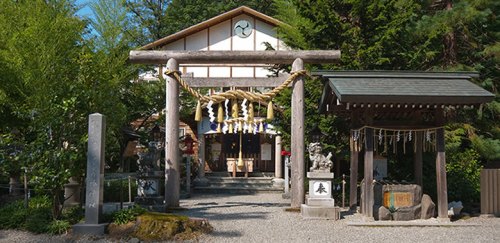
Here’s a shot of the interior of a shrine, featuring dosojin, or kami representing an ancestral married couple. Dosojin are protective spirits, and often placed along borders and boundaries.

The last shot is of a dosojin more recognizably human, marking a field border.

/|\ /|\ /|\
Images: Hikone-jo; Taga Taisha; Tenso; Hatagoiwa; Ise torii; Fushimi-Inari; Tsubaki; dosojin; dosojin2.
“When I wake up, the other side of the bed is cold,” says Katniss Everdeen, opening Suzanne Collins’ novel The Hunger Games as both narrator and protagonist, and launching a major theme and complex of imagery in the book.
 The widely-anticipated movie version of the novel arrives in a little over a month, in late March. The transformation of novel into film, with its inevitable directorial choices, budgetary limitations and too-specific casting of too-attractive young actors, will enchant some and disappoint others. No film can perfectly incarnate the word-world of a book to everyone’s satisfaction. (Here’s a link to an official trailer, in case you’re curious and haven’t yet seen it.) But it’s the novel I wish to focus on here.
The presence or absence of warmth is a recurring theme: heat — passion — violence — fire continually trade places throughout the story. Human warmth is, after all, what initially launches Katniss into the story. She volunteers on the spur of the moment to take the place of her beloved sister Prim, in the annual national lottery that selects a pair of youths from each of the twelve districts of a future North America and drops them into a televised death match. It’s blood sport with a vengeance.
**Spoiler Alert**
Prim is now safe, thanks to Katniss. But once Katniss is taken from her home, along with the other chosen youths who are now her rivals, she is pampered, buffed, polished, trained — and made over to show off an explicit fire imagery her stylists have conceived for her. As part of the lead-up to the competition, along with her rivals, she is interviewed and paraded on a nationally broadcast special program. But first, the finishing touches.
The team works on me until late afternoon, turning my skin to glowing satin, stenciling patterns on my arms, painting flame designs on my twenty perfect nails. Then Venia goes to work on my hair, weaving strands of red in a pattern that begins at my left ear … They erase my face with a layer of pale make-up and draw my features back out. Huge dark eyes, full red lips, lashes that throw off bits of light when I blink. Finally, they cover my entire body in a powder that makes me shimmer in gold dust. (127-128, pprbk. edition)
After the makeover, Katniss is dressed in her costume for the evening.
I can feel the silken inside as they slip it down over my body, then the weight. It must be forty pounds … The creature standing before me in the full length mirror has come from another world. Where skin shimmers and eyes flash and apparently they make their clothes from jewels … the slightest movement gives the impression I am engulfed in tongues of fire. (128)
I’m not perceiving something new here — other authors have gone further — there’s a book out titled The Girl Who Was on Fire which explores this theme in the novel in depth. Soon the gritty, violent death-match will replace this world of artifice and polish, and with the starkest contrast leave a trail of bodies dispatched bloodily, and even the survivors gashed, burnt, deafened, half-poisoned, dehydrated and starving. But the elemental world the novel has conjured persists in these sharply unglamorous forms. Fire of the spirit, the singular drive to survive. Fire of anger at the political motivation underlying the contest which deploys needless violence and death. Fire for cooking, fire as weapon, water for thirst and bathing, earth — a cave — for protection. Fire of human passion, whether genuine or contrived for show.
 The Hunger Games has already achieved the dubious distinction of banned book status, as if it advocated violence instead of patently demonstrating against it. But violence nevertheless permeates our world, and the younger readers who have taken this book to heart and made it into a phenomenon respond enthusiastically to a story and an author who acknowledges this fact honestly. Further, Katniss offers a strong female protagonist in place of the one-dimensional tag-along female romantic interest more typical of plot-driven stories with male leads. She manages to confront imminent death, make hard choices, and still retain her integrity in the face of what is after all adult manipulation and advocacy of institutionalized violence for political ends. The same human capacity for strong feeling that draws us toward violence can also lead us to bonds of strong affection and loyalty that are one antidote to violence. If that is fighting fire with fire, it often works.
Images: cover; banned.





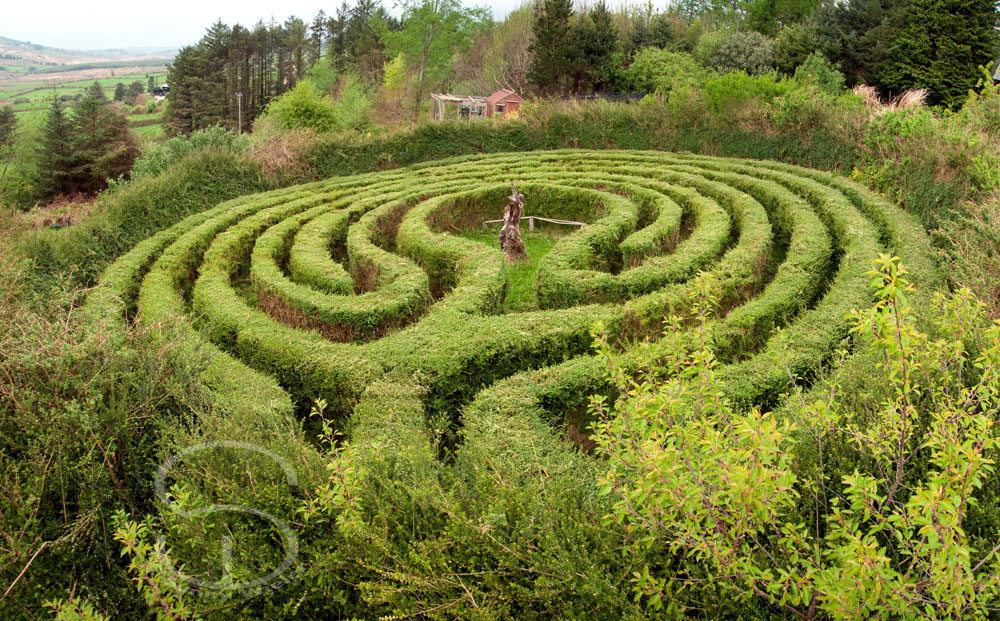


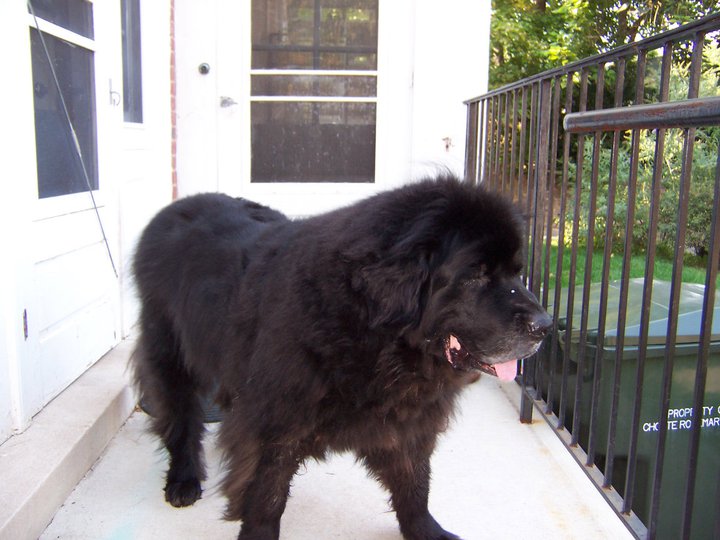








 A Druid Way