
Three sparks that require kindling to flame: spark in the heart, spark in the head, and spark in the spirit.
A Triad: Three Sparks
About Initiation, Part 6
Go to Part 1 | Part 2 | Part 3 | Part 4 | Part 5 | Part 6 If we long for transformation and seek initiation, we’re looking for it in a culture which, at least in North America, seems short of ready options. One alternative, however, remains open for most people, and that is pilgrimage. Spring stirs it in us. Feel it?  Start small: weekend out of town, morning walk to work, afternoon run around the block. I jog my neighborhood, making it by intention and action a ritual as well as exercise. I greet the morning sun with a line from the Odyssey that resonates for me: “All one brightening for gods and men.” As I round the first corner, I move from brisk walk to jog. Down the hill towards woods and swamp the town must have set aside as unbuildable or protected — no one has tried, at any rate. A blessing on the spirits there, blessings in return back at me. Past the front yard garden of a lovely retired couple, a plot no more than 60 or 70 square feet, that will bloom in another month or so with all manner of flowers, then grow into a climbing, sprawling wonder of vines and stalks and pods, with sunflowers towering golden above the rest. Past the small trim house of the Latino family who has done fine stonework on a retaining wall out front, though they still face snowmelt every winter from neighbors with lots uphill from them, so now I leap puddles gathered in the cracked sidewalk. Each one lush with billions of invisible lives, even in the coolness of early spring, paramecia and bacilli and rotifers. Past juniper and ash and aspen, past the 150-year-old copper beech the school has, thanks be to the Powers who helped, chosen to save and build around rather than over. Here are battles epic and acts heroic, if I only look. Across the main campus intersection, which at this hour is mostly empty, the students still on break. Hundreds making plans to return, my colleagues emerging to photocopy and staple, recharge iPad, dust off class text, take down old classroom posters and put up new ones. The lacrosse fields and baseball diamonds still spotted with nubbly snow. A car passes, the driver waving. I wave back, not recognizing either vehicle or person, but glance at the bumper to see if it’s stickered and marked as a school vehicle. This is my community, my tribe of work.
  Past the chapel, pines spindly and lopped from a hundred years of pruning and thinning, but still there in spite of a campaign to “open up” the campus. But the cut trees once shaded buildings in summer, and cooling bills rose after that. There is my myth, ogre in the far land, troll at the bridge, orc to dodge and trick and slay. Each time I run I tell myself another story, and the landscape holds up each one briefly, then settles it in, saying, “This too belongs, that one also seeks its home.” After about a mile, a turn and a steep hill, the houses shouldering each in miniature plateaus up the incline. I drop to a walk at top — I haven’t run this for a couple of weeks, since the last heavy snowfall, and my loss of wind and tone shows. The next mile flat, past the downtown, the post office and diner and banks. Thousands of lives, feet, hands, eyes seeing much of what I now see, ears hearing earlier sounds of horse and buggy, wagon and cart, and sounds that never change: children, wind, voices we hear from two worlds that are also one. Want bigger myths? Find larger stories to tell, meanings that invest your landscape. I start small, for practice, then turn my thoughts toward Derby, VT, home of my father’s ancestors, a small town north of here by some five hours. I’ve never been; I’m visiting this summer, to walk the graveyard where some of my ancestors are buried. Because at a “cabin-fever” dinner in southern Vermont last weekend, I chanced to hear (there are no chances; everything is chance) a story set in Derby that I took to heart, from Joan who taught there, years ago. Everything, they say, is connected. Not so much a matter of believing as finding out how it’s true. Now the name of the town has been kindled for me. I will visit. Pilgrim, says my life, look around.
/|\ /|\ /|\
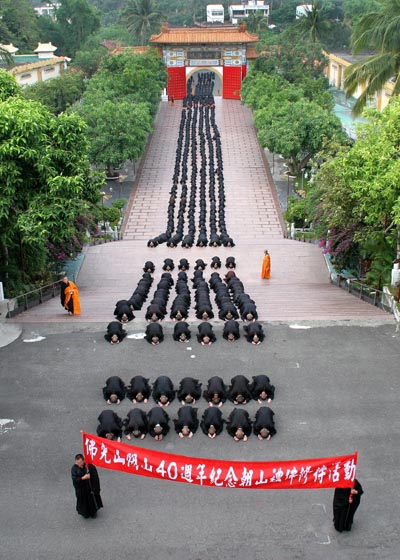
Images: Saint Helier, isle of Jersey; Fo Guang Shan; 2009 spring pilgrimage
Three Welcomes: a Triad
Three welcomes I know: babe to breast, body to earth, and spirit to cosmos.
Know by Fact, Believe by Love
The title for this post comes from an entry by fellow Druid John Beckett on his blog Under the Ancient Oaks, which is well worth frequenting. John closes with these beautiful words: “What I cannot know by fact, I believe by love.”
So here’s my riff on it, a prayer-song and a poem and a question. I know the hawk flies overhead; I believe he is kin to me because we arise from the same world, share the same earth, water and air, and will return to them. I know my heart still beats as I write this; I believe I will have more opportunities to love before it finally stops. I know the touch of my beloved; I believe what love has taught me outweighs college degrees and years in school. I know the gifts of time and silence; I believe I can make use of them not only for my own benefit but to give back to life. I know the sun shines behind this afternoon of cloud; I believe the shade to be necessary as the sun. I know gratitude is a choice; I believe it is one of the most powerful choices I can make. I know the snow covers part of a world once green; I believe it will turn green again for many millenia yet, the cycles continuing. I know the spider I rescued from the bathtub yesterday counts for little against the hundred of bugs I have killed at other times; I believe life cannot be valued in numbers alone. I know many things hard to believe; I believe some things I may never know. And I am content that this should be so.
/|\ /|\ /|\
Inconvenient Courage
 I’m still learning courage, just as we all are. Tests along the way, but no endpoint, no “I’m as brave now as I can be.” Courage is a practice. And I’ve learned that I miss opportunities for bravery where I need to, and can, practice it daily — in the face of my lazinesses and indulgences. These opportunities don’t look particularly heroic or brave, but that’s because I’m still learning what courage is. Too often I think it’s something somebody else has, or needs to have. Or I bewail its lack in others to whom I give power over my life, giving away the courage I already have. I slip into fear, and then into denial as soon as someone points it out, makes me aware, that I’m acting out of fear.
These are not words of self-blame. They’re words of clearing away, of washing the dishes, polishing the silver, emptying the ash from the woodstove. They are words of working the soil, turning the compost, preparing the growing space for the season to come. Actions that make room for courage to happen. As I prepare for health reasons to leave this teaching career of almost two decades at a private boarding high school, I look for new work. Some of it, some of what I know I need to do, doesn’t offer a paycheck. Some asks me for payment instead, and of a different kind.
Sometimes courage is just inconvenient. I’ll do it, whatever has to be done. If I’m the penguin next off the ice floe, I know that water’s cold. I’m not looking forward to it, but I know it’s necessary. I bring the best heart to it I can, if not for my own sake at this moment, then for others, as I move forward. Plunge. Afterward, I discover — maybe — that was courage. At the time I thought it was “just living my life.” “Guess what,” my life says back at me. “No difference.”
In the end, curiosity is stronger than fear. If I can imagine something different, I’m halfway there. Just catch a hint of it, a flavor, a whisper of something new yet also oddly familiar. There it is again …
Teacher, counselor and author Stephen Jenkinson has become a voice I listen to (“Yes, I hear voices”), to see what I can learn from him. He speaks, among many other things, about our need for elders — for people who have done the work and learned and earned wisdom. He talks about cultural death and the need for witness:
There is a lot of work to be done now, right now, in our time. Some of it is ecological, some political and economic, but all of it is cultural. Work I think is best understood as ‘the thing you’re least inclined to do’, and so we have our work cut out for us. The dominant culture, as near as I can tell, is in the beginnings of a terminal swoon. I don’t think it can be avoided. It’s end can only be prolonged or prompted, veiled or midwifed; those are our choices. The dominant culture was not built as if the last five hundred years on these shores had happened; it was built in spite of those years. It was built with a shrug to the past, and with the view that the past is gone. That is the principal reason for its ending. A culture unwilling to know its ragged, arbitrary origins is fated to a kind of perpetual, uninitiated adolescence, and it is by this adolescent spirit of privilege and entitlement and dangerous amnesia that our culture is known in the world.
We have to be in the culture making business, and soon. Real culture is not built on bad myths of superiority or inevitability or victory. It is built by people willing to learn and remember the stories that slipped from view, the rest of the truth that the empire won’t authorize. That learning and remembering costs people dearly. The work of building culture is learning and remembering how things have come to be as they are, without recourse to premature, temporary fixes, or to depression and despair. The way things are now, despair is a laziness no one can afford.*
That’s useful: knowing what I can afford. Fear leaves, despair leaves, when I know I can’t afford them any longer. Not a matter of will, or often even of anything other than a realization one day. A judgment, wisdom coming at last. Something taking its place — the place of fear — but also something taking its own place, its rightful position all along. Something bigger, more important. Fear turns out to be just a temporary place-holder, a filler, padding, a zero that ultimately let me count how many spaces have room for something more, native from the beginning. Return.
/|\ /|\ /|\
*From “There’s grief in coming home“.
Thanks to Philip Carr-Gomm for sending me a link to Griefwalker, a moving and provocative video about some of Stephen’s work. You can watch a trailer here:
http://www.youtube.com/watch?feature=player_embedded&v=xLQWM2j3AVg
You can watch the whole film, approximately 70 minutes long, here:
http://www.cultureunplugged.com/documentary/watch-online/play/7728/GRIEFWALKER–
Geeks, Greeks, Dudes and Druids
[Updated 24 Feb 2013; 26 June 2020]
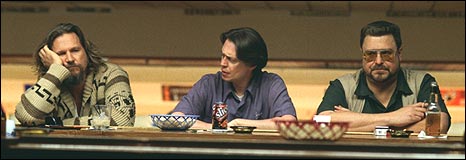 Sometimes I can contrive nothing better to say or do on this blog than simply pass along something I’ve been reading for its surprise or its insight — or at best, both at once. (Why begin with an image of Jake, Donny and Walt? Keep reading. Or call it a Druidic obsession with triads…)
Today’s shamelessly self-indulgent instance of such a something comes from a post on another blog, where I encountered the following passage from The Greek Commonwealth by British scholar, utopian and idealist Alfred Zimmern, first published 1911, and now available online. (It’s also been reprinted at least five times by Oxford, the latest edition I’ve found dating from 1977. Yes, I spent time tracking that info down. It’s better than grading the mountain of essays that sit on my desk and desktop. Call it rationalized procrastination.) In a chapter on poverty, noted the poster, Zimmern “tries to get the reader to imagine, in a poetic passage, the daily life of the Greeks in Classical times.”
Here, then, is Zimmern himself:
We think of the Greeks as pioneers of civilisation and unconsciously credit them with the material blessings and comforts in which we moderns have been taught, and are trying to teach Asiatics and Africans, to think that civilisation consists.
We must imagine houses without drains, beds without sheets or springs, rooms as cold, or as hot, as the open air, only draftier, meals that began and ended with pudding, and cities that could boast neither gentry nor millionaires. We must learn to tell the time without watches, to cross rivers without bridges, and seas without a compass, to fasten our clothes (or rather our two pieces of cloth) with two pins instead of rows of buttons, to wear our shoes or sandals without stockings, to warm ourselves over a pot of ashes, to judge open-air plays or lawsuits on a cold winter’s morning, to study poetry without books, geography without maps, and politics without newspapers. In a word we must learn how to be civilized without being comfortable. Or rather we must learn to enjoy the society of people for whom comfort meant something very different from motor-cars and armchairs, who, although or because they lived plainly and austerely and sat at the table of life without expecting any dessert, saw more of the use and beauty and goodness of the few things which were vouch-safed them – their minds, their bodies and Nature outside and around them.
Greek literature, like the Gospels, is a great protest against the modern view that the really important thing is to be comfortable…
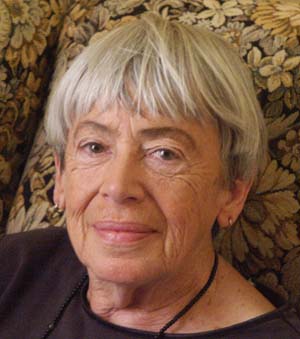
How many Druids would hold this up as an ideal as well, at least at first? But would — or could — we be as happy? Somehow I can imagine Jake Lebowski (from the Coen brothers’ ’98 film The Big Lebowski) would manage better in such conditions than I would. The Stoner might just beat out the Loner. “There are things more important than comfort”, says fantasy author Ursula LeGuin, “unless one is an old woman or a cat.” She’s now an old woman, as her image here shows; I confess that for some years, I’ve noticed a creeping feline-ness of (dis)inclination invade my once radical and rebellious bones …
/|\ /|\ /|\
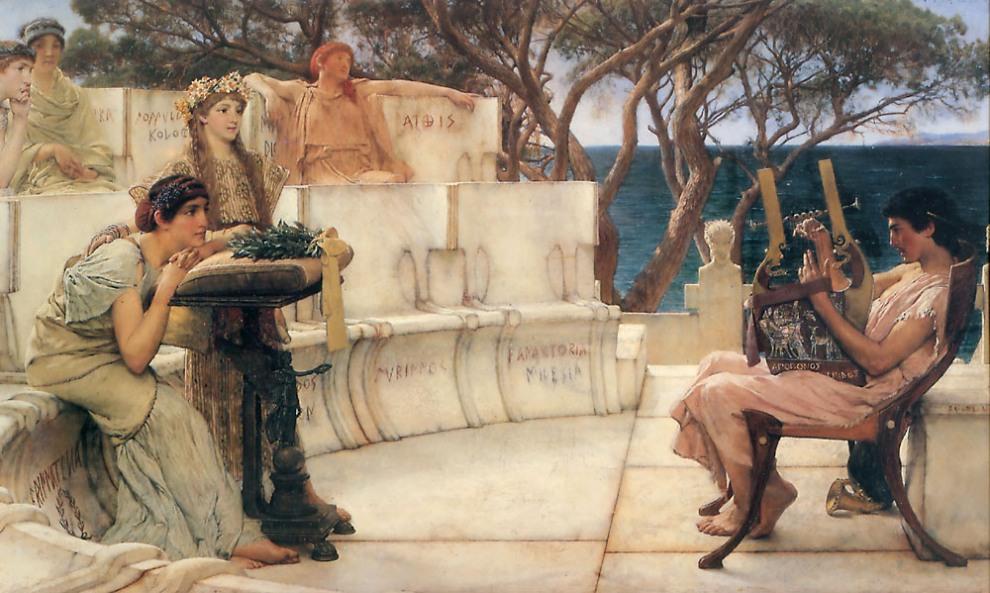
Images: BBC News article on The Big Lebowski (worth reading!); Plato’s Academy; Ursula LeGuin.
Christian spam, “cheap grace” and Commitment
Most spam to this site gets deleted without me ever seeing it. Some slips past the filters and I manually delete it after scanning it. The following piece that arrived earlier today felt like I could squeeze it for something bloggy:
“Cheap grace is the grace we bestow upon ourselves. Cheap grace is the preaching of forgiveness without requiring repentance, baptism without church discipline, Communion without confession…Cheap grace is grace without discipleship, grace without the cross, grace without Jesus Christ, living and incarnate…When Christ calls someone, he bids them come and die.” – Dietrich Bonhoeffer.
We like things to be easy. We don’t want to have to think or commit too much to anything. We want to get the most reward for the least amount of effort. We expect it from our technology, our education, and from our God. “I went to church and I even put money in the offering, so we’re cool, right, God?” We did the minimum and we think that should be good enough. Yes, you’re still saved through grace; grace that is a free gift. But that grace is hollow, because you didn’t put yourself on the line for it. For years, our experience of church has been safe. Sit, stand, sing, bread, wine, Jesus loves you. Being a follower of Jesus is mainstream and acceptable. In most cases, we don’t risk anything by being a Christian. We proclaim a cotton candy gospel (that is, mostly sugar and air) and nobody gets stoned to death, crucified, or drawn and quartered. Do you see what I’m getting at? I’m not saying you have to defy the Roman Empire to validate your faith, but if you’re not willing to stand up for it, what is it really worth? What are we worth if we let intolerance and injustice rule over us without a fight?
The message intrigues me. (Learn wherever you can, I tell myself. Don’t turn away from a teacher just because you don’t like the color of her skin or the accent of his voice or the flavor of her wisdom. You might pass up something valuable.) It also spurred a set of responses.
One is how contrary to much preaching, but how common-sensical, it is: ya gotta work at anything worthwhile. Salvation in Christian terms is a gift, unearned, but this post tells a deeper truth. Salvation isn’t enough; it’s just the start. In eco-spiritual terms, Christians may get saved, but Druids get recycled.
The second probably arises out of the time of year. A good number of us are halfway into hibernation mode right now. Yes, we often want the easy path, because we’re lazy. Why expend energy pointlessly? Laziness makes good animal sense, up to a point. Devote your hours and muscles to acquiring food, finding a mate and — later — protecting your offspring. Anything else is likely not worth the effort. If you’re human, add in a few comforts you may have come to expect, if they don’t cost you or the planet too much trouble. Beyond that, it’s almost always diminishing returns for your efforts. OK, that’s one view.
Another is the universality of suffering, as Buddhists like to remind us. It’s not like Christians have any corner on resisting intolerance and injustice. To point out just one example, can anyone say Arab Spring? Any person can reach the tipping point of disgust with tyranny or suffering or despair and rise up to fight it. It need not be a specifically religious struggle at all — though it can be a profoundly spiritual act.
A fourth response (in case you’re counting): plenty of Pagans and Druids are also easy in their practices, just like the “cheap-grace” Christians in the spam above. And we can opt to let them enjoy a space and time where they may practice undisturbed. But others, depending on what part of the world they live in, may face considerable daily risk. Does that make them “better” Druids and Pagans — or Christians? Not necessarily. Maybe more careful, or stronger, or more committed. But these are character traits, present in some practitioners of all spiritualities and religions — and none.
A fifth response: the natural world calls Druids and Pagans to live consciously in it. We all die and are born, along with everything else. We’re compost after just a handful of decades. When the path of Druidry calls, it says wake up to the world we’re in right now. Whether or not it’s the only one, it’s this one, and our lives here, as long as we’re still breathing, are our answers every day. Figuring out what the questions are — well, that’s a task for a lifetime.
/|\ /|\ /|\
updated 22:15 EST 11 Feb 2013
Fake Druidry, Part 2
Since the topic of “fake Druidry” sparked several hundred page views, I’m including as a post a link from my Ancient Druids page. Among other ancient writers, Julius Caesar refers at some length to the Druids in his military memoir De Bello Gallico. Other classical authors provide additional information — you can follow links to the originals from the Ancient Druids page.
Here’s a translation of the relevant passage, followed by the original: you can see that the term Druid definitely existed at the time. What it referred to seems clear enough to Caesar, by his description. Whether we would want to resurrect everything he describes I will leave to you to decide.
De Bello Gallico 6.13
Throughout Gaul there are two classes of persons of definite account and dignity. As for the common folk, they are treated almost as slaves, venturing naught of themselves, never taken into counsel. The more part of them, oppressed as they are either by debt, or by the heavy weight of tribute, or by the wrongdoing of the more powerful men, commit themselves in slavery to the nobles, who have, in fact, the same rights over them as masters over slaves. Of the two classes mentioned above, one consists of Druids, the other of knights. The former are concerned with divine worship, the due performance of sacrifices, public and private, and the interpretation of ritual questions: a great number of young men gather about them for the sake of instruction and hold them in great honor. In fact, it is they who decide in almost all disputes, public and private; and if any crime has been committed, or murder done, or there is any dispute about succession or boundaries, they also decide it, determining rewards and penalties: if any person or people does not abide by their decision, they ban such from sacrifice, which is their heaviest penalty. Those that are so banned are reckoned as impious and criminal; all men move out of their path and shun their approach and conversation, for fear that they may get some harm from their contact, and no justice is done if they seek it, no distinction falls to their share. Of all those Druids one is chief, who has the highest authority among them. At his death, either any other that is pre-eminent in position succeeds, or, if there are several of equal standing, they strive for the primacy by the vote of the Druids, or sometimes even with armed force. These Druids, at a certain time of the year, meet within the borders of the Carnutes, whose territory is reckoned as the centre of Gaul, and sit in conclave in a consecrated spot. Thither assemble from every side all that have disputes, and they obey the decisions and judgments of the Druids. It is believed that their discipline was discovered in Britain and transferred thence to Gaul; and today those who would study the subject more accurately journey, as a rule, to Britain to learn it.
In omni Gallia eorum hominum, qui aliquo sunt numero atque honore, genera sunt duo. Nam plebes paene servorum habetur loco, quae nihil audet per se, nullo adhibetur consilio. Plerique, cum aut aere alieno aut magnitudine tributorum aut iniuria potentiorum premuntur, sese in servitutem dicant nobilibus: in hos eadem omnia sunt iura, quae dominis in servos. Sed de his duobus generibus alterum est druidum, alterum equitum. Illi rebus divinis intersunt, sacrificia publica ac privata procurant, religiones interpretantur: ad hos magnus adulescentium numerus disciplinae causa concurrit, magnoque hi sunt apud eos honore. Nam fere de omnibus controversiis publicis privatisque constituunt, et, si quod est admissum facinus, si caedes facta, si de hereditate, de finibus controversia est, idem decernunt, praemia poenasque constituunt; si qui aut privatus aut populus eorum decreto non stetit, sacrificiis interdicunt. Haec poena apud eos est gravissima. Quibus ita est interdictum, hi numero impiorum ac sceleratorum habentur, his omnes decedunt, aditum sermonemque defugiunt, ne quid ex contagione incommodi accipiant, neque his petentibus ius redditur neque honos ullus communicatur. His autem omnibus druidibus praeest unus, qui summam inter eos habet auctoritatem. Hoc mortuo aut si qui ex reliquis excellit dignitate succedit, aut, si sunt plures pares, suffragio druidum, nonnumquam etiam armis de principatu contendunt. Hi certo anni tempore in finibus Carnutum, quae regio totius Galliae media habetur, considunt in loco consecrato. Huc omnes undique, qui controversias habent, conveniunt eorumque decretis iudiciisque parent. Disciplina in Britannia reperta atque inde in Galliam translata esse existimatur, et nunc, qui diligentius eam rem cognoscere volunt, plerumque illo discendi causa proficiscuntur.
/|\ /|\ /|\
Fake Druidry and Ogreld
I’m a fake Druid. So is everyone else who names Druidry as the path they walk. And I’ve come to love it.
In a guest essay on the ADF website, J. M. Greer notes,
The very last of the ancient Druids went extinct in the ninth century, and the surviving scraps of their teachings and lore are so fragmentary, diffuse, and contradictory that they don’t form anything like a workable system. All modern Druid groups—OBOD, ADF, and everyone else—were invented in the last three centuries by people who used some mix of scholarly writings, personal spiritual insight, speculation, and sheer fantasy as raw material for their concoctions.
Thus if “real Druidry” is defined as the sort that was practiced by Druids in Celtic countries before the arrival of Christianity, all modern Druids practice fake Druidry. That can’t be avoided, since “real Druidry” hasn’t existed anywhere for more than a millennium. What differentiates one modern Druid tradition from another is the particular kind of “fake Druidry” each practices.
Of course, Greer writes here as an outsider might see it, to try on a truth many still feel uncomfortable to admit. As Archdruid of AODA, he obviously doesn’t habitually dwell on his particular flavor of Druidry as “fake.” And when I practice my Druidry, it doesn’t feel like a “concoction” at all. It coheres, because like anything used — steps, coins, dishes, skin, planets — the edges get smoothed, a few chips and dents show up, and everything takes on that “lived-in” look, that patina that makes antiques look antique, that gives worry-stones their shine, and faces their habitual smile or frown lines. I make an offering at an altar, I join my Druid brothers and sisters at a festival, I sit for an hour in moonlight meditating, and whether a group of people 300 years ago rediscovered things most traditional peoples have long known doesn’t really concern me. Clearly, the moment itself offers me better things to do.
Greer continues:
The Druid community has on occasion been racked by squabbles between traditions, caused as often as not by simple misunderstandings that could have been quickly cleared up by people familiar with more than their own tradition. Since none of us have any right to claim possession of the One Genuine Real Live Druidry, a willingness to share the world with other Druid traditions, and to participate with them in celebrating the cycles of nature and the miracle of the living Earth, is a virtue that may well be worth cultivating by Druids of all kinds.
Ah, “One Genuine Real Live Druidry” — Ogreld, I’ll call it. My new tradition, founded right now as you’re reading this. Here we go … unlike every other practice and belief on the planet, Ogreld sprang into existence full-grown and perfect, without parents or kin. To get that essential temporal edge over other faiths and practices, Ogreld is the original “source faith” of humanity, practiced when people first became human. In fact, to top it off, it was Ogreld that made them human. Now we’re cooking! … This is faking with a vengeance. “I’m faker than you are. Na-na-na-na-na!”
In the Egyptian afterlife, the human heart is weighed against the feather of Maat, who personifies truth and justice. The Wise among us understand that whether I acknowledge three elements of earth, water and air, or four elements of earth, air, fire and water, or a god whose elements are bread and wine, my rituals will still work in accordance with the reverence and love I bring to them, and the holy presences that empower them. Whether I have helped or hurt the earth and its inhabitants will matter a lot more than the color of my robes, the rank I’ve achieved, or the number of gods I pray to. The only real Druidry is a “path with heart,” a way of walking the earth that wisely honors all paths with heart. I’m busy faking that wisdom, practicing till I get it “righter” than before. Insofar as faking is doing something, it’s generally better than not doing anything at all. So yes, I’m a fake Druid. Have you met any other kind?!
Notes on Magic

What follows are brief notes from a short talk I recently gave on magic.
Dion Fortune’s definition of magic: “the art and science of causing change in consciousness in accordance with will.”
“… most of us, most of the time, are content to use the imaginations of others to define the world around us, however poorly these may fit our own experiences and needs; most of us, most of the time, spend our lives reacting to feelings, whims and biological cravings rather than acting on the basis of conscious choice; most of us, most of the time, remember things so poorly that entire industries have come into existence to make up for the failures and inaccuracies of memory” (J. M. Greer, Circles of Power, 52).
We can, however, choose to imagine – & remember – ourselves differently. When we do so with focused attention, changes happen, both subjectively & objectively.
/|\ /|\ /|\
Magic stems from an experiential fact, an experimental goal, & an endlessly adaptable technique.
The fact is that each day we all experience many differing states of consciousness, moving from deep sleep to REM sleep to dream to waking, to daydream, to focused awareness & back again. We make these transitions naturally & usually effortlessly. They serve different purposes, & what we cannot do in one state, we can often do easily in another. The flying dream is not the focus on making a hole in one, nor is it the light trance of daydream, nor the careful math calculation.
The goal of magic is transformation – to enter focused states of awareness at will & through them to achieve insight & change.
The technique is the training & work of the imagination. This work typically involves the use of ritual, meditation, chant, visualization, concentration, props, images & group dynamics to catalyze transformations in awareness.
/|\ /|\ /|\
Magic is also “a set of methods for arranging awareness according to patterns.”
We live our lives according to patterns. Some patterns are limiting & may be unmasked as restrictive. Other patterns can help bring about transformation. “[T]he purpose of magical arts is to enable changes within the individual by which he or she may apprehend further methods [of magic & transformation] inwardly.”
“… [O]ur imagination is our powerhouse … certain images tap into the deeper levels of imaginative force within us; when these are combined with archetypal patterns they may have a permanent transformative effect.”
– R. J. Stewart, Living Magical Arts
/|\ /|\ /|\
Image source: sunset.
Imbolc 2013
 All I know is cold, and Imbolc kindles the heart.
All I know is sun too far, and Imbolc reminds me of inner fire still burning.
All I know is winter darkness, and Imbolc pours gold light over it.
Praise for eternal return.
/|\ /|\ /|\
Image source: unknown. If you know, please drop me a note and I’ll gladly give credit.
A Ghost-Druid Dialog
[Part 1 | Part 2 | Part 3 | Part 4 | Part 5 | Part 6 | Part 7 | Part 8 | Part 9]
To see a World in a Grain of Sand
And a Heaven in a Wild Flower
Hold Infinity in the palm of your hand
And Eternity in an hour.
—William Blake, “Auguries of Innocence”
That kind of seeing and holding requires a special focus, a clear attention, I think, as I hurry to lunch, distinctly UN-focused, a dozen thoughts jangling, after two very different conversations with students during conference period. My freshman advisee Walt has asked about the intricacies of some scheduling for sophomore year, while Ann, a junior and a former student, has come to talk about polishing a remarkable piece of journal writing from her freshman year for possible publication.
At the dining hall table where I often sit, Mr. Madden, Mr. Ritter and Mr. Delahunt are chuckling about an old piece of school gossip concerning the previous administration. Ms. Valenti joins us, and the conversation soon shifts to the deer that appear early almost every morning in the yards of the faculty residences on the campus periphery, where Ms. Valenti and Mr. Madden live in senior faculty houses. Ms. Valenti describes the ten- or eleven-point buck she saw standing motionless in her driveway earlier in the week. Mr. Delahunt mentions that he’s learned a small herd of deer beds down each night in a wooded gully between the new science building and the peripheral faculty housing. I cheer silently for these animal lives thriving, often just beyond our knowledge, in this apparently suburban part of the world.
At first I think all of this is mere distraction, but Blake reminds me yet again there’s a whole world here, eternity and infinity too, if I only see and touch them. We all gobble our food, and I hurry back to my first afternoon class with my seniors. So many grains of sand: underfoot, on the stairwell carpets of the English building, in my second-floor office when I reach down to pick up a fallen paperclip from the floor. Each one a world, if I had time to see it. Next year I will have time, because this is my last here. Voluntary poverty, or insanity, or more than a little of both.
Class goes fast with my fifth period Brit Lit seniors. Many of them read from the satires they’ve written in imitation of Jonathan Swift’s “A Modest Proposal.” We don’t work on Blake, but here is eternity, too. For a few moments we’re all paying attention, laughing at a satire of college admissions, or the sleep deprivation so many students face, not thinking about anyone or anything else — about the test next period, the sick friend, the college rejection letter, deadlines, schedules, midterm tomorrow, the weather, or whether a visionary dead white male Romantic poet may or may not have anything useful to say to us.
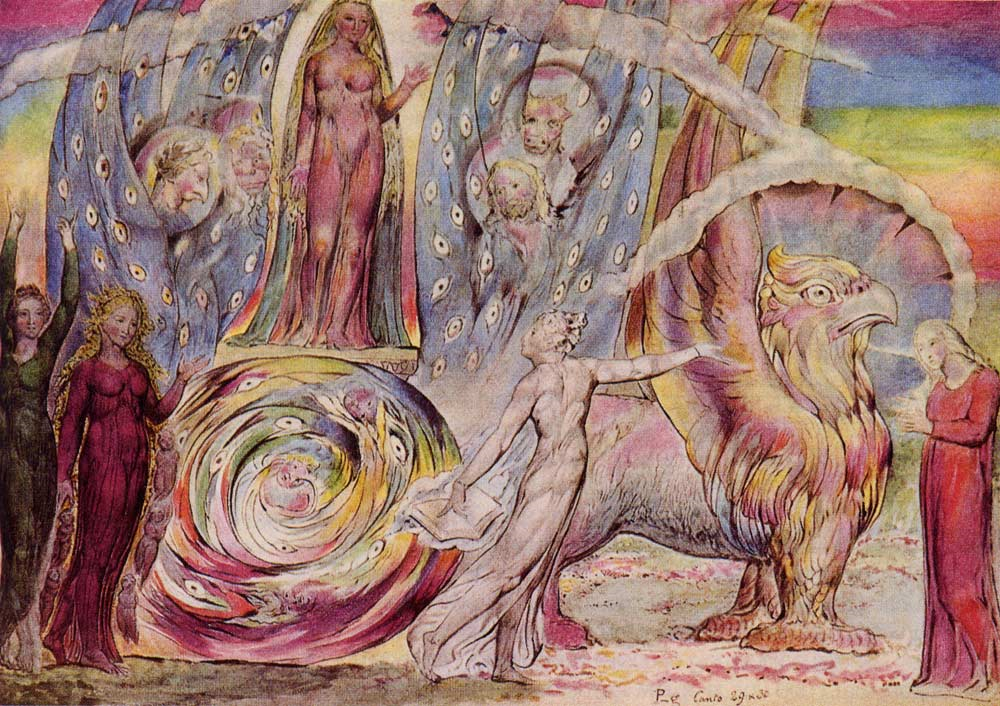
Mr. Blake, we survived the 2012 fake apocalypse, I feel like crowing. His ghost seems to nod, looking out the window at the light fog that huddles over the nearest quad. Maybe that’s the best we can do, right now, our version of eternity: bad apocalypse.
Unwilling to share their satires, the sixth period seniors struggle with Blake. We work through a couple of the easier poems, and soon I can tell it’s “drag” time. I drag them through a few more, trying to open up the sometimes seeming-simplistic usually-complex lines. Blake’s ghost sighs heavily. An uphill climb for everyone, even though I’m working harder than usual to exhume the poet from two centuries of cultural and historic static that seems to buzz between the words on the page and the lives of my students. I give them a creative writing exercise, and one soft-spoken girl produces a lovely poem inspired by the lines at the top of this post. Her lines offer almost all sensory detail, a lovely lyric, with none of the teen angst that normally trails after much adolescent poetry like a homeless dog. I give thanks for such things.
Blake, old sage, tyger-burner, Jerusalem-singer, painter and poet of the 19th century as strange and full of possibility as our 21st … what else do you have to tell me? I listen as I write, content for a moment to hear the voice of silence in and around the clicks and taps of the keyboard. “Hear the voice of the Bard, who past, present and future sees …” With the view out my window circumscribed to the present only, I can tell I have my work cut out for me. Blake’s ghost nods encouragingly. Time to begin again.
/|\ /|\ /|\
image: “Beatrice addresses Dante”; William Blake
Updated 23 April 2015
Listening and the Land, Part 1
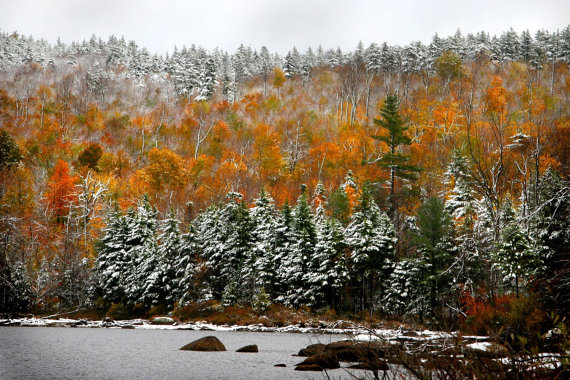
Much of my learning before and during the Bardic grade of OBOD Druidry has been about listening. I’ve walked different landscapes here and abroad over the last couple decades, and almost always when there are negative energies, they seemed to issue from human presences that felt negative to me, or disrupted the native energy. The land itself is simply the land, with all its other lives and forces and history and presences. It may not always feel comfortable or easy or familiar, but it has an integrity that asks me to pay attention. And yes, I’ve done that with varying success. But the human is always an overlay, unless the place has been inhabited for a very long time, and the humans there learned to attend to and respect the place they lived. Which is sadly not often enough, though places exist here and there which are dearly loved and cherished, places in which the land spirits dance their joy.
California Druid Gwynt-Siarad tackles this directly in his blog entry, “The Curious Case of American Land Spirits.” I’ve taken the liberty of reposting the whole of his short entry here (Druids are always talking to beings they can’t see):
Recently I was involved in a discussion about land spirits. As the discussion progressed it touched on what I feel is a very important issue to us druids living in the Americas. That being, land spirits are more often then not, tied to the land and thus couldn’t come to us from Europe, and thus how do we treat with the spirits of this “new” land? The natives of this place have a long and good history of working with the land spirits here. Sadly, in most places, and certainly here on the west coast of the lower 48 the natives are almost completely gone. This is a very sad thing, but not the focus of this post. The question is, can those of us of European descent summon, honor, call, and treat with American land spirits? It was suggested that the spirits here are used to being summoned with certain type of ritual, that being those of the local natives. That the land spirits here have native names, and should only be addressed as such. ok…what if the name is not known, and can’t be learned? And what of the idea that they can only be summoned with native American style evocations? Where does this leave the modern druid? Even if I were able to learn, say the dances of the Umpqua Indians to summon the spirit of the Umpqua river, that would most likely be considered cultural appropriation and that’s just not P.C.
I have been tumbling these thoughts over in my head for several days now, and here is what I have come up with. First off, spirits are as individual in personality as people are. What might be ok with one spirit won’t be ok with another. How do we find out? I vote for good old fashioned trial and Error. Go out there and do what druids do in the way druids do it. If the spirit doesn’t like it, I am sure it will let you know, if you bother to listen. Let the spirits be our teacher. I think and feel with but a few exceptions so long as the spirits are approached with offerings, respect and love they are not going to be over critical if you said the right name, pronounced in the correct native dialect or be upset if you didn’t dance in the native way. Using a name the spirit is familiar with would be very helpful in treating with it, but not critical. So those druids that are inclined to work with such spirits, I say do your homework and get out there and get to know your spiritual neighbors!
No surprise that the spiritual world resembles this one — the spirits wish to be treated as individuals, because that’s what they are. What of spirits of a species which was transplanted to the New World by Europeans? Is it the “same” plant or animal? The best way to find out, as Gwynt-Siarad observes, is to start the conversation.
/|\ /|\ /|\
image credit: http://www.etsy.com/listing/59674255/fall-autumn-photography-new-england
(Check out their gorgeous prints.)
On Not Straightening a Bent Genius
Full Moon Reflection 2: More and Less
Compassion has no religion. Silence is not always indifference. O great, listening, witnessing world, you too have something to say, something you always are saying, without words. What comfort we can offer, miles and lives away from the families of the Sandy Hook school victims, and from other, newer sufferers since then, may consist of not filling the airwaves and spiritual spaces further, with our own shock or anger or sadness or dismay, or whatever other responses events may next provoke in us. Even if we do not know the families or victims or any of those touched by an event, we may send sympathy, because we are not stones. This is prayer, too. But every turn of the world changes us because we’re in it together. A great service is to love those who need love, and not merely to feel, to emote. We can do more than relive pain, especially another’s pain, or make it ours. Suffering needs no extra rehearsals, no practice. There’s always more than enough to go around.
We’re not stones, but we may raise them into a cairn, a act that by its solidity and palpable weight can lift suffering even a little, if it may, stone by stone. Let earth bear a portion of the weight. Allow this elemental power of Earth to transmute, to compost and transform, as it does all else that comes to it. The turning of the year again toward light in the middle of winter, the planet doing again what the planet does each year, can be solace too, earth re-establishing its balance. Soothing motion of the familiar, wordless touch with its animal comfort. Moon growing again towards fullness, light on the world in the middle of darkness.
But sometimes we hate comfort. Too often solace can reek of appeasement. We stiffen. One more easing is too many. Intolerable. Like words — already more than enough. With no ready target we seek out whatever will serve, anything to shut up the noise, the roar of raw nerves jangling. Anodyne. Oblivion, even, at least for a while.
Grief is too steady a companion. It knows us, it seems, deeper than a lover. OK, we get it. Pain too has something to say that will not be denied. We make a place for it, and it moves in, gets comfortable, settles down for too long. (How long is memory? Is recollection what we consist of? Do we relive, instead of living new? Does this become our only, instead of our also?)
When words do not do, I bring silence to the altar. When I cannot pray, then that is my prayer, just the act of moving toward the altar, a center, a focus.
/|\ /|\ /|\
The house has cooled overnight when I get up to write this. In between the last two paragraphs, I open the door of the woodstove to put in another two logs. In a turtleneck and sweats, I sit on the floor, feet toward the fire, with my laptop where its name says. Warmth, says the body, unrepentant in loving what it loves. Warmth too, radiating from the electrical current flowing through the machine I write with. So little, but a little. A start.


 A Druid Way
