[Related posts: Shinto & Shrine Druidry 1 | 2 | 3 || Shinto — Way of the Gods || Renewing the Shrine 1 | 2 || My Shinto 1 | 2 ]
In a post from a little over a year ago I wrote about Shinto, the “way of the kami” or nature spirits in Japan. One of the most important national Shinto events takes place throughout 2013 and especially this fall*, the Shikinen Sengu, which is the ritual rebuilding and re-dedication of parts of Ise Jingu, the most significant Shinto shrine in Japan. Shikinen Sengu takes place every twenty years, with 2013 marking the 62nd time the year-long ritual event has occurred. The ritual cycle originated in approximately 690 CE, more than 1300 years ago.
 “And all this matters why?” you might ask. Perhaps the most visible reason is the sheer beauty of Shinto. If as a Westerner you want to encounter a foreign culture on its own terms, one of the vivid and memorable ways is through its physical manifestations in objects, tastes, sounds and smells. The atmosphere of Shinto is something anyone can begin to appreciate immediately, because Shinto shrines and ceremonies are so public. And in Shinto we can encounter a distinctive Japanese expression of what I have experienced as the spirit of Druidry, a love and reverence for the natural world, seen through the unique perspectives of an entire culture and nation. Shinto provides one model for doing earth-based religion on a large scale. And I hope you’ll see why I think it’s really cool.
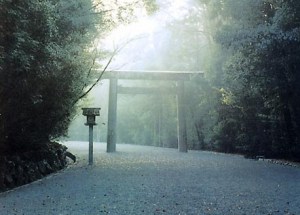
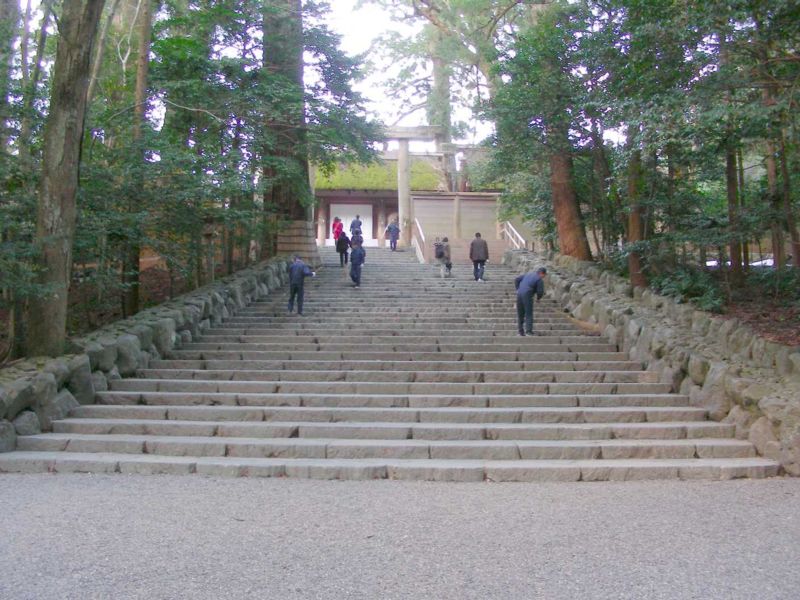
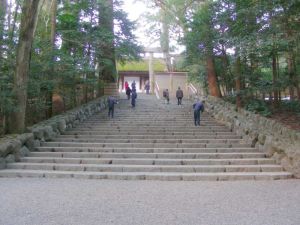 Ise Jingu (ee-seh jeen-goo), the shrine at Ise in Mie Prefecture on the main island of Japan, covers more than 20 square miles of mostly forested land. You pass through the torii gate (above image), sign of a Shinto shrine, to enter. Shinto expresses a sense of the “permanent renewal of nature,” as a Mie tourist guide describes it, and Shikinen Sengu, literally the “Ceremonial Year Shrine Relocation,” renews the shrine quite literally, by rebuilding significant portions on an adjacent location. Imagine reconstructing your own house every twenty years, on the same lot, planning in advance and spending a year to do the job, with song and ceremony and all your family members visiting at some point during the year, with picnics and celebration and parties and priests to bless the proceedings, and you begin to get an idea on a very small scale of what’s involved.
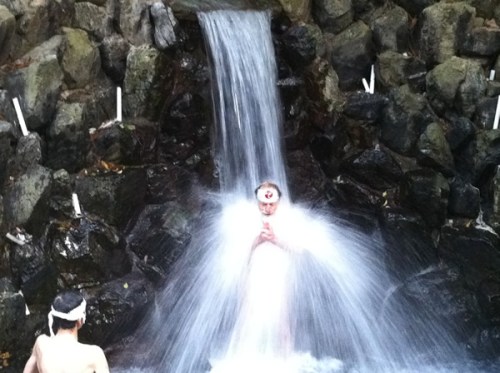
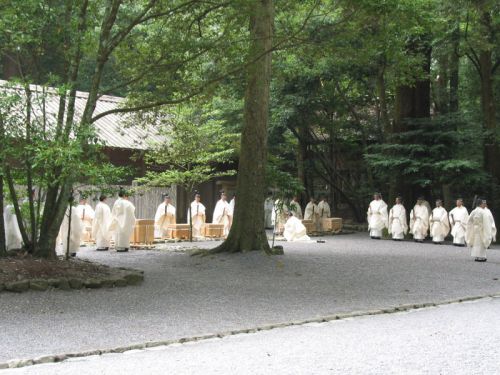 Shinto is more practice than belief: what you do matters more than how you understand and talk about it, though of course that’s important too. Shinto focuses on harmony between people and the natural world. Get out of whack, and Shinto shows you things to do to resolve imbalances and restore the original state. Often it’s a case of not taking ourselves so bloody seriously. If you can’t recall when the last time was that the universe bowed to you, maybe that’s because you can’t remember the last time you bowed to the universe. And the latter is generally better for you than the former. Even if taking a cold outdoor shower under a stream doesn’t appeal to you, for instance, you still get how it might restore a healthier sense of proportion. The practice of misogi or purification gets real, especially when you do it in winter, as practitioners do in Japan and in the U.S., like Rev. Koichi Barrish who is priest at the Tsubaki Shrine in Washington State. Note that I’m not rushing to be first in line for this particular practice.
I’ll be talking more about these things, and why I’m writing about them, in Part 2.
/|\ /|\ /|\
*My principal sources for the information in this post, beyond my experience of living in Japan for two years in the early ’90s, are this detailed PDF document about Shikinen Sengu, published by JNTO, the Japan National Tourist Organization, and the website for the Tsubaki Shrine in Granite Falls, Washington.
Images: Ise torii (gate); Naiku steps; kazahinomisai
updated: 23 Dec. 2013
With a title like that, you might expect shocking revelations, secret tips, insider advice, or something — anything — designed to titillate or distract a readership. Or perhaps I could offer some variation on “what people want” — if we try to deduce that incoherent impossibility from reports on Google’s most popular search terms.
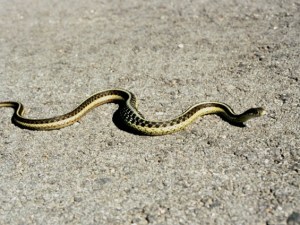 Instead, I’ll start with the literal. Our west-facing driveway warms up during the day, and on late spring and early fall mornings like yesterday’s and today’s, when we open the overhead garage door, as often as not one or more garter snakes will have curled up on the concrete during the night to warm themselves on the residual heat. Each morning they’re sluggish and need to be coaxed with a toe from their stupor to move and so avoid getting run over by our car. Thus the “serpent under the door.”
But as with all other things (Druids like to claim), coincidences can be teachers, too. Take our power outage yesterday afternoon. I saw a flash of light, heard a popping sound, and our electricity died as I was starting to draft this post. Green Mountain Power arrived a couple of hours later and promptly fixed the problem. With an extensible pole, the line workman loosened something small and dark from the overhead transformer which plummeted to our lawn, and then he apparently reset a surge protector or trip device. Problem solved. When he came to the door to report success — I was watching all this from our living room window and stepped out to meet him — he said a bird had shorted out the line, tripping the transformer. The small dark object that had fallen was the burnt corpse of the unfortunate. Wholly unperturbed, our resident pair of mourning doves resumed their perches nearby on the power line soon after the GMP service truck departed.
Serpents and doves: be shrewd as the former, and gentle as the latter, counsels the Galilean master*. To put it more bluntly, avoid getting fried, or run over — each grisly fate available, significantly enough, through human agency. So it’s fitting that any shrewdness and gentleness I can wring from these two instances should issue from the same animal world.
As I write, goldfinches brighten our feeder, squabbling with the jays and an acrobatic chipmunk for seed. Today’s late morning humidity and temperature already climb toward midsummer highs, just a few days after night-time frost warnings in our area. The serpent under the door is my instinct, the bird on the power grid my arrogant ignorance. No, that’s not it. Something else, something other. Yes, the danger of allegory is its all-too-easiness, its tendency toward glib preachiness. A welcome Buddhist and pragmatic strain in some contemporary Druidry reminds me that sometimes a dead bird is just a bird, a sluggish serpent just a snake. It’s the “and yet” that rears up and insists on making bigger meanings from small ones that is a sometimes annoying blessing.
But why shouldn’t we squeeze every event and experience for all it might be worth? Equipped with overactive brains and growing out of a world we have tried to name and explicate, it’s a natural tendency, one literally native to us, crafted by nature, by natural selection and chance, by the divine at work with these, their alter ego, their personification, their image. Tolkien’s elves, the Quendi, named things and tried to wake them. In this they followed their nature: Quendi** means “those who speak with voices,” the verbal echoes of their name present in words like bequeath and loquacious, query and quest, inquisitive and require. Kweh, kwoh, kw-, kw- … Human deeds, human cries, human needs. The same world that wiggles and flutters in snakes and birds has shaped and turned itself to allow humans to name — and endanger — them. Because we can do something may not mean we should. So we look to our animal kin for direct lived insight into how to thrive in this world, their wordless gestures rich as words. In an early poem, Mary Oliver captures Druidic wisdom:
Sleeping in the Forest
I thought the earth remembered me,
she took me back so tenderly,
arranging her dark skirts, her pockets
full of lichens and seeds.
I slept as never before, a stone on the river bed,
nothing between me and the white fire of the stars
but my thoughts, and they floated light as moths
among the branches of the perfect trees.
All night I heard the small kingdoms
breathing around me, the insects,
and the birds who do their work in the darkness.
All night I rose and fell, as if in water,
grappling with a luminous doom. By morning
I had vanished at least a dozen times
into something better.
At first we might think it’s death she’s talking about, but as she says in other poems, it’s deeper and more significant than just that particular transition, that magnified human fear and obsession. Death, yes: but there are many more marvelous things in addition to that. We can imagine ourselves different, “better” — what that may mean. “The world offers itself to your imagination,/calls to you like the wild geese, harsh and exciting–/over and over announcing your place/in the family of things.” Gratitude to bird and beast; this, my offering.
/|\ /|\ /|\
Image: garter snake
*Matthew 10:16.
** encyclopedia of Arda
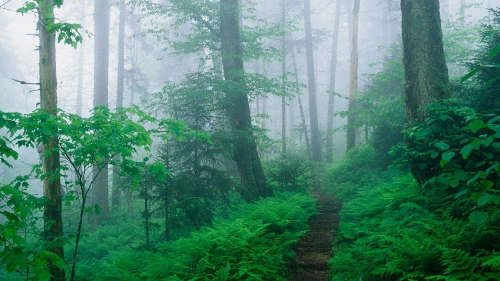
Make a bridge of rain
the hour says, so sky and I do —
water and sight, slant
of light to dance on,
firm enough (sure as breath,
fine as the fleece of stars
you spun last night, sky)
we glide from hilltop to top,
this gray company and I.
Not looking we walk side by side.
Footfalls hush in the thrum of rain.
It’s only staring that puts us off
each choosing to doubt the other, as if
real is something to decide alone
not our song together. Mist sheer
as deep leaves clothes us all,
with waking only another dream,
this way we cross over.
/|\ /|\ /|\
image: forest
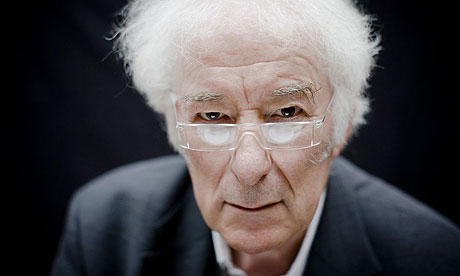
Irish poet, Nobel Prize winner, essayist and translator Seamus Heaney died earlier today in Dublin at 74. More than once I’ve quoted Heaney on this blog, not least because his work is accessible without being Hallmark-y, literate but not stuffy, and redolent of earth and earthy intelligence. In other words, delightfully Druidical. Rather than go all lit-critic here, I’ll give a tribute in the form of a modest personal anecdote. If I need any justification, we’re both farmers’ sons.
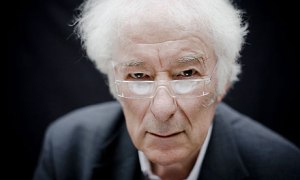 In January 1984 Heaney offered a 7:00 pm reading and book-signing as part of the long-running Brockport Writers Forum at the College of Brockport, a school that’s part of the State University of New York (SUNY) system. I mention this because at the time I held an unhealthy disdain for the SUNY schools. They weren’t Ivies, and though a farmer’s son, I cultivated a decided snobbery that looks simply ludicrous now. I also didn’t know then about the caliber of writers who read at the Forum. Nevertheless a SUNY school reading series was sponsoring a poet I greatly admired, so there was nothing for it but to sidestep my arrogance if I wanted to hear him. (Picture him nearly three decades younger, with graying rather than white hair.)
I recall the date in part because that winter I was in my mid-20s, between schools, waiting to hear on college applications, and back to working on my dad’s dairy farm, a hard though sane life I’d largely escaped during my undergrad years. Our herd of some fifty Holsteins meant we were a “family farm” which only signifies that everyone in the family has to chip in for the farmer to make a go of it at all. That winter day was typical Western New York January: cold, blustery, with a spatter of snow gusting through a short gray Wednesday a scant month past the solstice and the shortest day. I’d have to leave after evening milking if I wanted to attend at all. The drive sounds easy enough, some 40 miles almost due north of us, and all on decent paved roads, but what with winter, night and traffic, that meant over an hour, if I was lucky.
 In spite of a late start milking, and the worsening weather, I determined to go, cursing slow drivers most of the way. By the time I arrived, found campus parking and located the venue, the reading had ended. It was standing room only in the auditorium, so I leaned against the wall at the back. The moderator was thanking Heaney, who had moved to a cafeteria lunch table set up down front for the signing. With no time to change before I left home, I was still dressed in work pants, steel-toed boots (anyone casually stepped on by a half-ton cow gets the why), stained winter jacket and stocking hat — still fragrant of cows, corn silage and manure.
I debated whether it would be worth staying. I’d brought with me a worn paperback of Heaney’s Selected Poems, though I’m not usually one to collect author signatures. But the crowd was thinning rapidly because of the deteriorating weather, so I made up my mind to salvage something from the trip. By the time I joined the signing line against the mostly departing crowd, I held a spot near the end. From what I could see of him as we slowly inched forward, Heaney looked tired, a half-finished bottle of whiskey at his elbow. When I finally stood before him, though, he must have caught a whiff of barn on me. He raised his head, took my measure, his gaze sharpening, and grinned at me, then wordlessly signed with a flourish. At that moment and after, the trip was worth it, not because I got his signature, but because we had connected, however briefly. It was worth it because it forms part of my own vocation as poet. Many are called, but few are chosen. But still, many are called.
I like to think he took my presence as a compliment, a plowboy poetry-reader come to hear the poet-speaker for our human tribe, the stamp of farm still on my clothes. I like to think of him doing something similar as a boy or young man. I like to think in a small way my presence mirrored what he wrote with and about: words as part of this world of darkness and light, of sky and soil and storms and time, of blood stirring at these things as we walk through them all our days.
And that’s it, except of course it’s never finished till breath is. The story is more about me than Heaney, but I remember the day and the details because of Heaney, so they belong at least a little to him too, to his memory, now. I’ll atone for the self-indulgence here; Heaney deserves the last words — these, from his poem “Postscript,” cited in full:
And some time make the time to drive out west
Into County Clare, along the Flaggy Shore,
In September or October, when the wind
And the light are working off each other
So that the ocean on one side is wild
With foam and glitter, and inland among stones
The surface of a slate-grey lake is lit
By the earthed lightning of a flock of swans,
Their feathers roughed and ruffling, white on white,
Their fully grown headstrong-looking heads
Tucked or cresting or busy underwater.
Useless to think you’ll park and capture it
More thoroughly. You are neither here nor there,
A hurry through which known and strange things pass
As big soft buffetings come at the car sideways
And catch the heart off guard and blow it open.
/|\ /|\ /|\
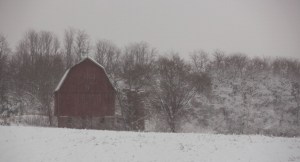
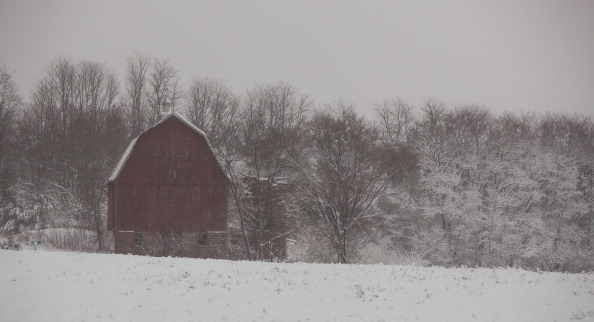
Images: Heaney; barn in winter.
Updated 1:31 pm 30 Aug 13
[Part 1 | Part 2 | Part 3 | Part 4]
 One of the great benefits of silence, at least about one’s inner work or “self-work,” is that no one will dump their opinions and energies onto what you are doing, and distract you, or load you with their attitudes and claims, weaknesses and dreams, if you limit their access to your work of changes. (Let them see the results instead.) Choose your audience wisely if you feel you must talk about such experiences and insights. American culture in particular suffers at this time from a compulsive confessional mode. Purge, share, spill, vent! it says. But keep silent by default, at least at first, and you will have many fewer obstacles to deal with. Ignore this ancient counsel to keep silent, and you’ll find out from experience why it’s an integral part of magical training, and one of the four powers.
That said, the magical journal is a fine outlet for a “space to talk.” Not surprisingly, many who keep a journal find it useful to write at least some entries in a code or cipher, in another language, etc., to maintain the veil of privacy necessary to maximizing effort and energy put into the work. As with most paradoxes, “guard the mysteries; constantly reveal them”* illustrates valuable teaching. Say nothing; get it down in words. More about the journal later.
Sometimes the strain of inner work can lead to imbalances; we choose means and modes of change and growth that cost us more than they deliver. The French poet Arthur Rimbaud (1854-1891) records his struggles for insight and inspiration and poetic fire through a program of conscious “derangement of the senses” through means both culturally acceptable and unacceptable (his life bears study!). I quote here from his youthful letters**:
I am lousing myself up as much as I can these days. Why? I want to be a poet, and I am working to make myself a seer … the point is, to arrive at the unknown by the disordering of all the senses. The sufferings are enormous, but one has to be strong, to be born a poet, and I have discovered that I am a poet. It is not my fault at all. It is a mistake to say: I think. One ought to say: I am thought.
I is for somebody else. So much the worse for the wood if it find itself a violin.
I witness the unfolding of my own thought: I watch it, I listen to it: I make the stroke of the bow: the symphony begins to stir in the depths, or springs onto the stage …
I say that one must be a seer, make oneself a seer.
The poet makes himself a seer by a long, prodigious, and rational disordering of all the senses. Every form of love, of suffering, of madness; he searches himself, he consumes all the poisons in him, and keeps only their quintessences. This is unspeakable torture during which he needs all his faith and superhuman strength, and during which he becomes the great patient, the great criminal, the great accursed — and the great learned one! — among men — For he arrives at the unknown! Because he has cultivated his own soul — which was rich to begin with — more than any other man. He reaches the unknown; and even if, crazed, he ends up by losing the understanding of his visions, at least he has seen them. Let him die charging through those unutterable, unnameable things: other horrible workers will come; they will begin from the horizons where he has succumbed!
So, then, the poet is the thief of fire …
Rimbaud wrote this in 1871, when he was just 16.
/|\ /|\ /|\
Much to note here — more than I will address in this post. First, his age: in fact he composed all of his poetry before he was twenty, when he abandoned further creative work, though he was to live almost two more decades after that. Some of his furious intensity, drive — and imbalance — stem from the energies loosed in adolescence, which most of us deal with to varying degrees of success as we mature. The Victorian magician, poet, mountaineer, addict and occultist Aleister Crowley engaged in similar practices, perhaps surviving them better in the short run, and gaining more from them, while still suffering from partly self-cultivated imbalances and excesses along his chosen path. Many Westerners crave intensity — we struggle with a deep desire to feel powerfully, and sometimes, to feel anything at all — and the broken lives that result from our excesses, binges, addictions and self-destructive choices testify painfully and graphically to that desire, and to a yawning lack in our cultures that cannot answer or satisfy it. Hence our compulsion to seek such nourishment elsewhere, in productive and unproductive ways.
Rimbaud’s last line quoted above — “the poet is the thief of fire” — also echoes adolescent rebellion, defiance and fascination with one’s own seemingly Promethean forces and capacities that can make teenagers so self-involved and oblivious of others. The thrill-seeking, the experimentation, the moodiness all mirror tremendous inner changes as the foundations for adult life are laid. To plumb our inner darkness — we can see it exteriorized in film after film of violence, sex, death and the depths of traumatic emotion — is to encounter the threshold of the unconscious, the lower astral plane, the scraps and debris left over from that initial self-making that we mistake for all of what we “really” are, when it is simply a part, but not the whole. Why let any one thing define us? Yes, a certain wisdom can indeed issue from intense and “heavy” experience. But — and again, how many of us can speak from experience! — it is not conducive to enduring happiness or balance or a capacity to grow and experience as much as possible. We cannot kick out the walls of our world and then expect any sort of roof to remain preternaturally suspended over our heads (unless we’ve put in the time to build it). Better to walk out the door and at least for a time to wander in the woods, with just sky above us.
Silence in some cases can of course be destructive. After every gun-related “incident” in the U.S., the shooter is subjected to endless scrutiny for “signs” of imbalance, paranoia, anomie, psychopathic tendencies, and so on. Our cultural sense of disconnect repeatedly festers and spawns terrible destruction and suffering. Or as novelist E. M Forster says in Howard’s End:
Only connect! That was the whole of her sermon.
Only connect the prose and the passion, and both will be exalted,
And human love will be seen at its height.
Live in fragments no longer.
Only connect…
In every culture individuals arise who both confront its darkness and lose their way, as well as see a way through.
/|\ /|\ /|\
The magical journal is a priceless aid in the work of transformation. Think of it as an alter ego, a second self or at least a second memory. Occultist Paul Foster Case illustrates its value in the following passage***. He speaks about learning the significance of the first ten numbers, 0 – 9, but his words apply much more widely:
I have been instructed by a teacher who could not speak my language, wholly by means of numeral and pictorial symbols. In a few hours I received enough material from that man to last me for years. Indeed, I don’t suppose I shall ever exhaust the significance of what I learnt from him in a few summer afternoons. Thus, were there no other reasons, the fact that number symbols are so useful a time-saving device should recommend them to you in this busy age. When you have fixed the fundamental ideas in memory, you will soon learn that none are arbitrary. Then you will begin to see the connection between these ideas …
Get a notebook. Divide it into ten sections. Head the first page of each section with one of the ten numeral signs. Then copy the attributions … into your book. This is important. To copy anything is to make it more surely yours than if you merely read it. The act of copying increases the number of remembered sensations connected with that particular item of knowledge … Once you begin the notebook, you will be surprised at the amount of material that will begin to flow in your direction. It will seem that a mysterious power has begun to send you information about numbers from all sorts of sources. You will also discover that as soon as you provide a means for recording them, many ideas about numbers which you will recognize as coming from a higher, yet interior, source will enter your field of consciousness. After a year, the notebook will be an index of your progress … and by that time you will have learned to regard it as one of the most useful works of reference in your library.
As with so many pairs of opposites, balancing silence with its useful counterpart of keeping a written record will reward the effort made. Duality is an energetic system that can work like a spiritual generator.
/|\ /|\ /|\
The first post in this series looks at kinds of knowledge. The second shows how wanting to know leads to discoveries about our real selves. The third looks at daring and how it is a kind of freedom. The fourth focuses on the importance and potency of imagination.
/|\ /|\ /|\
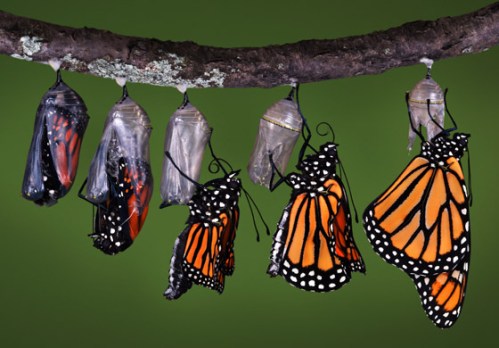
Images: butterfly;
*Beat and Pagan poet Lew Welch: “Theology,” 1969.
The True Rebel never advertises it,
He prefers his joy to Missionary Work.
Church is Bureaucracy,
no more interesting than any Post Office.
Religion is Revelation:
all the Wonder of all the Planets striking
all your Only Mind
Guard the Mysteries!
Constantly reveal Them!
**Arthur Rimbaud, Collected Poems. (trans. Oliver Bernard). Penguin Classics, 1986, pp. 6-12.
***Paul Foster Case, Occult Fundamentals and Spiritual Unfoldment, Vol. 1: Early Writings. Fraternity of the Hidden Light, 2008. p. 72.
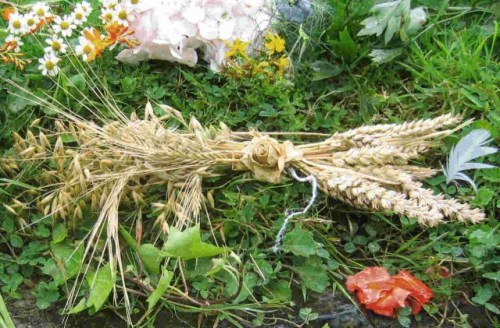 “The god Lugh is honored by many at this time, and gentle rain on the day of the festival is seen as his presence and his bestowing of blessings.” — Wikipedia entry for Lunasa (older Irish spelling: Lughnasadh)
/|\ /|\ /|\
Assembly of Lugh
Rain this afternoon your omen,
your day the spear in me to know my Tribe,
to learn their ways, to choose from them
what holds value: metal of truth, gold of our past
cast into refining fire, cauldron of time,
everything molten. Now, always, for forge:
the mold ready for each life streaming
from its pool of glowing metal,
from its pool of cool water
where my people drink.
I look across time’s circle to where it begins
anew with each life. You cast the spear:
our Lunasa dancers grasp it, fling it toward the center
where it lands, quivering. From it lifts and streams
the banner of summer sky: I will take flame
and run with it: your August,
moon before dawn this morning
slender as cupped palms,
ready to receive water, quicksilver,
fire in the sky dipping down
on us all.
/|\ /|\ /|\
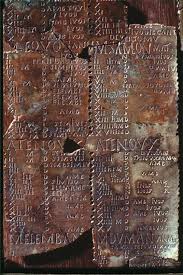 “[F]rom France we have evidence of a Druid calendrical system in the Coligny calendar, although scholars are divided as to the degree we can consider it purely Druidic, since it is engraved in Roman letters, leading some to believe it represents the product of an attempt to Romanise the native religion. Dated to the first century AD, it consists of fragments of engraved bronze which have been carefully pieced together to show a system which reckoned the beginning of each month from the full moon … The names of the months are wonderfully evocative of a time when humanity lived closer to nature:
Seed-fall: October-November
Darkest Depths: November-December
Cold-time: December-January
Stay-home time: January-February
Time of Ice: February-March
Time of Winds: March-April
Shoots-show: April-May
Time of Brightness: May-June
Horse-time: June-July
Claim-time: July-August
Arbitration-time: August-September
Song-time: September-October
… Horse-time indicates the month in which people went traveling — in the good weather, and Claim-time indicates the month in which the harvest festival of Lughnasadh falls, and at which time marriages were contracted and disputes presented before judges. The following month, Arbitration-time in August-September, represents the time when the disputes and claims have been adjudicated and when the reckonings were given. At Song-time in September-October the Bards completed their circuits, and chose where they would settle for the winter season.” — Philip Carr-Gomm, Druid Mysteries. London: Rider Books, 2002, pp. 118-119.
/|\ /|\ /|\
images: Lughnasadh; Coligny calendar
[Part 1 | Part 2 | Part 3 | Part 5]
 Daily you call me to pray — not the prayer of asking, of importunity, but the prayer of communion, of celebrating blood flowing through veins, of life moving in lungs and belly. In the cool of dawn this morning I slip outdoors for air plush with oxygen, newly breathed out from the green lungs of the trees. I gaze on the mist-shrouded pines and maples and scrub oaks, hear the neighbor’s rooster break into the sheared metal cry that is his morning’s call. The other birds are already about, the jay chicks now big as their parents, and noisier, in their cries to be fed. A fox bitch slinks back into the woods, cat-footed and deft as she threads her way through tall grass and brambles. Dampness clings to my skin. Life-prayer, what the birds and wind and water and morning light are saying.
I say “you” call me to pray: there’s a presence I address, though it’s not a person. I could call it the echo of listening, the ambit of my attention, some kind of answer or reverberation to the pressure of a human walking the land and caressing the world with hominid consciousness that wants to talk, to name, to engage, to encounter as a person, to bring down to size a world that resolutely will not yield to whim, or whimsy. But that’s not quite it, either. “You” is the best I can do, to honor and salute the world I encounter, particularly when it glows or sparkles or hums or burns. Others have called it god or gods, Spirit or numina. We know a little better, in some places at least, how names can trip us up. But names can be good talk. It is awen, too: that Welsh word for “inspiration” that is also the presence of Spirit.
/|\ /|\ /|\
Wadin Tohangu comes unbidden, unless it’s a prayer to the universe which alerts him as well that I’m actually paying attention again. Fallow time has “done it,” though merely “going fallow” as I mentioned in the previous entry doesn’t cause a change to happen, but it often accompanies it. Something about the will is involved. Sometimes the greatest magic is to set aside the will and be open to change. I don’t like surrender because I can’t claim credit when the change comes. I want it to be under my control. Stereotypically to surrender is a male difficulty and a female strength, but there are plenty of strong-willed women who find surrender difficult, and weak-willed men who need to work on self-assertion. So that’s not it altogether either.
“Are you finished talking to yourself about this?” Wadin asks, his mouth crinkled in a smile. I realize he has been sitting there for some time now as I swam and splashed in my thoughts. I smile back, unable to respond right away — or rather, my mind spins over a thousand responses, none of them particularly graceful or useful or true. But I do know I’m glad he has come. That’s something I hold onto in gratitude, and the whirling of thought slows enough that I can say it.
“It’s good to see you.”
His smile widens — he seems perfectly at ease in the moment, as if he came expressly to do nothing else than sit and listen to me think. Not in an obtrusive way, not eavesdropping, but simply how he is, awake to what goes on around him.
“You’re struggling,” he says, “with how to talk about the will, and that’s also been a focus for you for some time.”
“That’s definitely true,” I answer. “I guess inner and outer worlds do line up from time to time.”
“What happens when they do?” he asks.
“I’m freed up to write about it, for one thing,” I say. “I get unstuck.”
“The stuckness often comes from pushing with the will,” he says. He leans forward a little, resting his elbows on his knees. “It’s a common confusion to think that will involves strain.”
“Sometimes we push through, and we can accomplish a lot. And athletes push against fatigue all the time,” I say.
He nods. “That’s true for the physical body, of course. Muscular effort moves objects.” He pauses before continuing.

“We feel pain and can push through it with the will. Sometimes that means we ‘win.’ And of course sometimes that means we end up with a sprain or torn ligament or some other injury, too.”
He gazes at me. “So what causes the difference?” he asks.
“I’d say, listening to the body. Not fighting it, but working with it.”
“Good,” he says. “Certainly listening can spare you injury or tension or strain.” He runs a sandaled toe over a design on the carpet, and I realize we’re sitting in my living room. I write “sitting in my living room,” and look up from the keyboard, and of course there’s “no one there.”
“Come back to our conversation,” he says, reaching to prod me with a forefinger. “There’s more to talk about.” He looks at me with interest. “What did that feel like just now, when you returned from ‘no one there’ to our meeting?”
“I could feel an energy shift,” say. “I got interested again. And I wanted to keep going.”
“All of these are important,” he says. “The shift is something you ‘do,’ but it’s not a strain or a push of what we normally call the ‘will.’ And your interest and curiosity also matter. They draw you in, rather than you pushing against resistance.”
I say nothing, waiting for him to continue.
“Imagination is effortless. You can ‘try to imagine,’ of course. Or you can simply imagine. This is the difference between will or imagination, and strain, which is what most people mean by ‘will’ or ‘willpower.'”
“What about people who say they ‘can’t’ imagine?” I ask.
“They’re usually telling the truth. Fear blocks them, or their straining against their habit or desire keeps them from accomplishing what they ‘try’ to do. That’s what they’re imagining instead. Imagination runs ahead of ‘will’ in that sense. It’s already ‘there,’ at work in the ‘future,’ long before ‘will’ arrives. While ‘will’ is still waking up, imagination has already constructed a palace or dungeon for you to inhabit, according to your focus. Not everyone imagines in pictures, of course. For many it’s often feeling instead. We already feel a certain way about something, and that ‘colors our experience,’ as we say.”
“But where’s the element of choice in that?” I ask. “It sounds like will or imagination is just a reaction to circumstances, rather than a conscious decision to focus on what we choose. Isn’t that the will? What we choose, rather than what we simply let happen?”
“Discipline of the imagination is the key to life,” he says, looking at me steadily. “What you attend to, what you look at or focus on, and how you look at it, determine your experience to a great extent. That’s the actual ‘will,’ not the strain to do something against our intention.”
“Would you explain that?” I say.
“Remember your own experience a short time ago,” he answers. “As you looked where I was sitting, you ‘realized’ that I ‘wasn’t there.’ Then your attention shifted, and our conversation continued. I’m ‘here,’ though I’m not ‘here.’ Which do you focus on, my presence or my absence?”
“You mean both are true?” I say.
“Yes. Though ‘true’ is a distracting word. You activate one or the other with your attention. That’s will, or intention.”
“But what about human suffering?” I say. “We don’t choose to suffer or experience hardship or disasters or …”
He was smiling at me again. “The challenge is that our habitual attention gives lasting reality to our imagination. ‘As a man thinketh in his heart, so is he,”* goes one way of expressing it. ‘What you do comes back to you.'”
“But what about people born into horrendous circumstances? You can’t say they imagined them into being!” I could hear the hint of outrage creeping into my voice. “The circumstances happened to them. They certainly didn’t choose them. Who would choose pain and suffering?”
“That’s an important question,” he says. “Do you know anyone who keeps making ‘bad choices,’ as they are called? And keeps getting painful results? That’s a fairly severe example of such choices at work. Of course we often face the accumulated consequences of long imagining. Lifetimes of imagination can solidify into exceptionally firm and unyielding circumstances. In such cases, an hour or day or even a year of change and effort may bring only surface alteration. Deeper transformation can take longer.”
“Aren’t we blaming the victim in such cases?” I say.
“You see, there is no blame here. We are talking about growth. You may know the story of the Galilean master who is questioned about the man born blind. “Who sinned?” his followers asked him. ‘The man himself, or his parents — what caused him to be born blind?’ And the Master answers them and says, ‘Neither one. All this happened so that the work of God might be shown in his life.’** A circumstance can be destiny, and we can lament limitation, or it can be opportunity, and we can move and build from there. It depends on which direction you look. One way to understand it is that a disciplined imagination is one that is ready to accomplish the ‘work of God.’ Imagination is a powerful tool of Spirit.”
“But where does it all start?” I say.
“Often the fledgling falls from the nest and learns to fly the ‘hard way,'” he says. then pauses at my expression.
“But gravity is not ‘evil,” he continues, “though it may hurt, if the chick tumbles onto a branch or onto the ground. But when the eagle has mastered using gravity to move through the air, it can soar.”
“Is that the price we pay?” I say.
“You hoped it would be painless, I see,” he says, smiling again. “Pain does get the attention in a way nothing else can. Maybe that’s why it’s still useful as a spiritual tool.”

“Pain as a tool? I’ll have to think about that some more.”
“You think a lot. Everything can be a tool,” he says. “You just need to decide how to use it, rather than getting stopped by it.”
/|\ /|\ /|\
The first post in this series looks at kinds of knowledge. The second shows how wanting to know leads to discoveries about our real selves. The third looks at daring and how it is a kind of freedom.
/|\ /|\ /|\
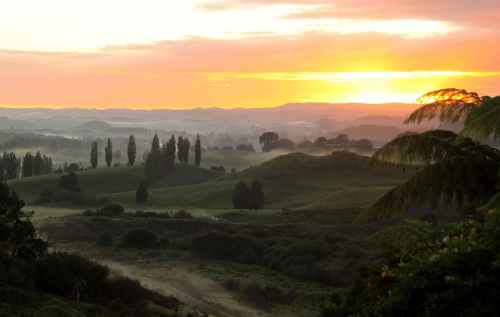
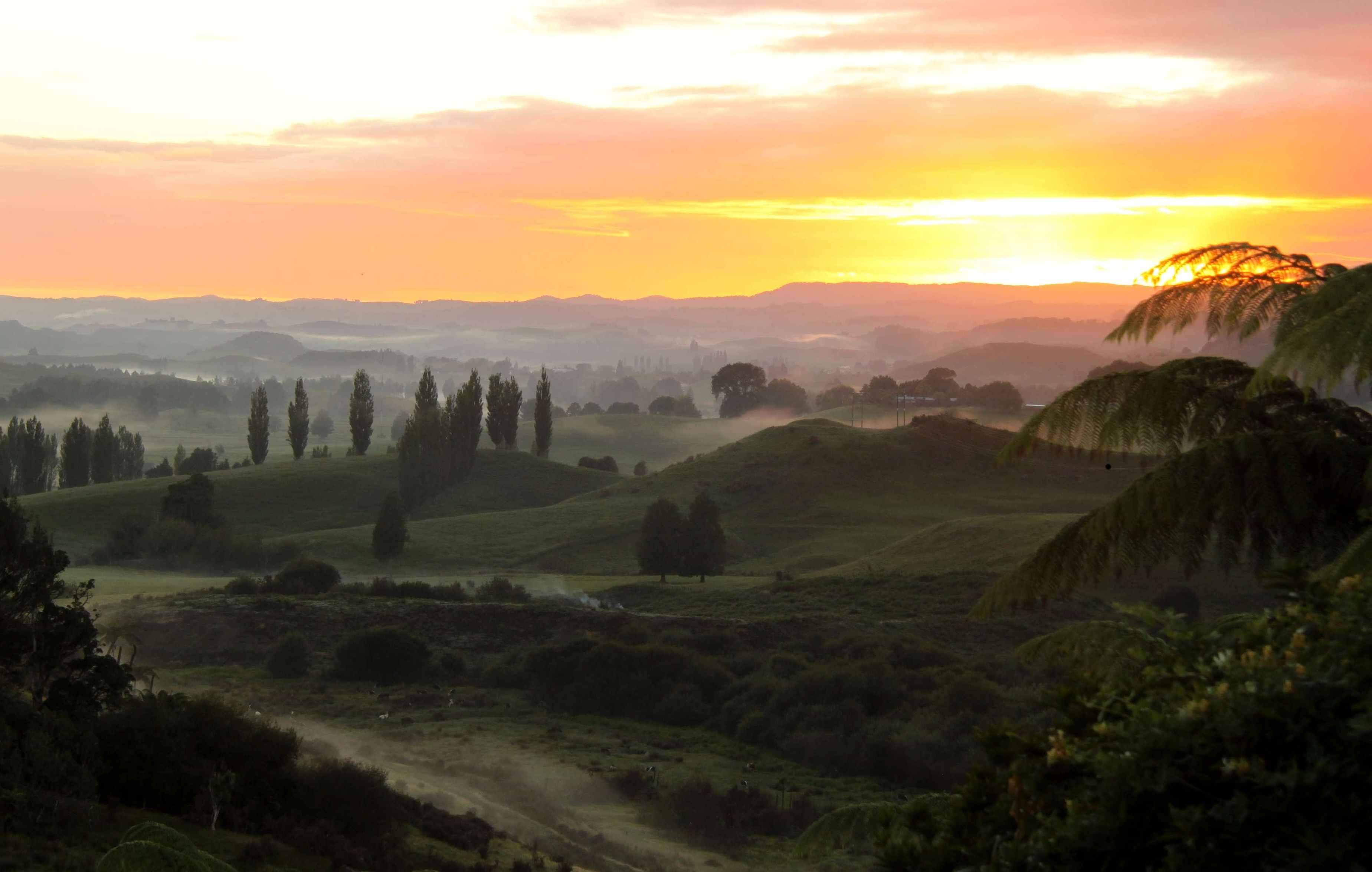
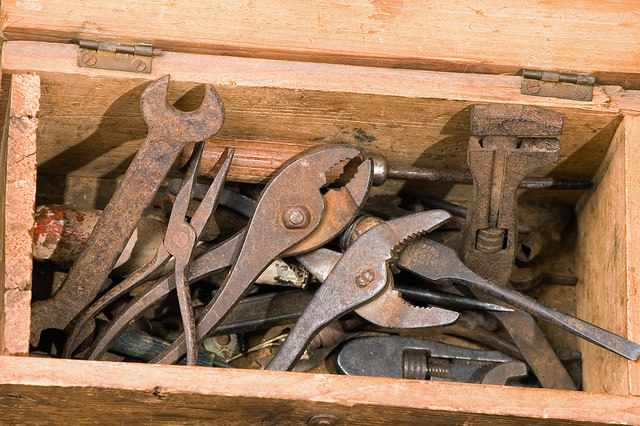
Images: Waitomo Dawn by Richard Tulloch; athlete; toolbox.
*Proverbs 23:7
**John 9:1-3
Updated 30 Sept. ’14
It’s been a fallow time. I look at our back lawn — unlike the front, which we mow, and which edges up to the county road, the back slopes down towards a small pond and seasonal stream. Often we leave it unmowed — why waste gas and time? A proper Druid view, or a rationalization for laziness? We’re letting the ferns take over in the shade, and looking at how the sun moves to consider the best plantings for other places. We have a decent mix of trees — black walnut (bad for root vegetables, but we can work around that), mountain ash, willow, Eastern pine, crab apple, sugar maple — and now a start on berries — currants, raspberries, blackberries, elderberries, blueberries.
So when I say fallow, I mean for me. The green world all about is flourishing and calling in its many voices of bullfrog, mosquito, baby jays squawking for food, mourning doves, wind in the trees, rain — always rain, these last weeks. I wait and prepare. The Hopi call their ritual pipe natwanpi — the “instrument of preparation.” For me right now, patience and watching are my natwanpi.
 Awen* comes on me no matter, air heavy with summer, my wife at the papers as she sits in the recliner beside the desk where I type this, and awen comes, the great flow pierces me head downward, like a run of honey pain from crown through the heart to the feet. Sometimes the rush runs so loud I can hear only it and nothing else, a music like thunder roaring in my ears. Other times it’s spiderweb on the skin, slightest sense of presence, fruit of dreaming, the daring comes. Aaaaah-ooooo-ennnn.
/|\ /|\ /|\
The song bodies make moving through times, through spaces is awen. The note in deep silence, life’s own soundtrack. What the stars say when no one’s listening, the whispers between the trees as they breathe out oxygen after dusk, the wind in their branches. The quiet sigh you didn’t know you sighed till someone asks you about it — these are awen. Awen trips me forward into fullness, catches me breathless just before great beauty, or after. And beauty opens more — and more often — the more I listen for awen.
/|\ /|\ /|\
I sit to write and words must make do for Spirit. In the interval between one in-rush of awen and the next, I wait. In the trough between expectation and fulfillment, I rest. On the hilltop between cloud and cloud, blazing with late afternoon sun, full of golden mystery constantly moving, shifting, I stand, watching. Just before sleep, in the cradle of stillness and warmth, the darkness sweet, I hear it still.
/|\ /|\ /|\
*”Awen is the wisdom, truth and most of all the inspiration. Awen is Nature, the universal power behind life, yet it is never born and shall never die. Awen is a force or energy forged from an indivisible source that is the power behind the physical and non-physical or spirit forms. Existence, and distinction between the natural and the super-natural becomes meaningless, as both are the personification of Awen. Every link which is a part of nature, be it a man, animal, plant or elemental force, each holds its own little piece and together make up the whole chain which is Awen. Awen is the spirit of Druidry itself, it is knowing, sensing and feeling it in your essence and true being, it is the freedom to accept one’s nature” (“Awen”; minor editing).
/|\ /|\ /|\
Image: Salar de Uyuni, Bolivia. At the right moments when no wind disturbs the surface, the very shallow lake can hold a near-perfect reflection of whatever the sky is doing. The illusion of the human figure walking on water illustrates just how shallow the lake is.
[Part 1 | Part 2 | Part 4 | Part 5]
This is the third in a series of posts about magic. The first looked at two kinds of knowledge. The second showed how, once we start really wanting to know, we run smack into uncomfortable discoveries about our real selves, not the glossy selfies we post like signposts to our most glorious dream of ourselves. But self-knowing, a most valuable and prickly, disconcerting kind of knowledge. This post is about the second of the four powers: daring.
/|\ /|\ /|\
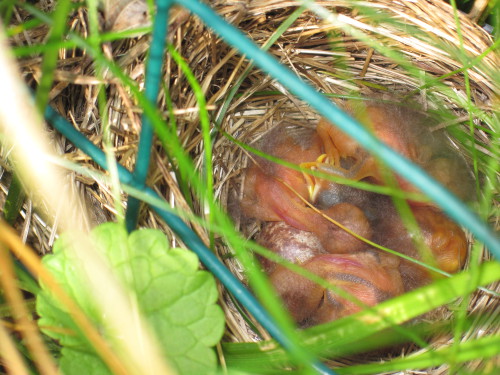 A solstice gift from our front yard — four nestlings, blind and nearly featherless, born on the solstice in a nest the mother built between layers of fencing around part of our garden. Still identifying the species (eggs look like a cowbird’s, but the mother is approximately sparrow-sized, dull brown and as a ground-nester, quite understandably shy and hard to photograph — a kind of thrush?). You can just make out one remaining brown-speckled egg, unhatched, to the left, below the beaky fellow. Any ideas, those of you who know birds well?
/|\ /|\ /|\
I’d drafted a third post in this series, about daring, several weeks ago. Problem was, it had no spark, no daring at all. No juice. Ya gotta know it to show it — or to show it well, at any rate.
Then along comes the inner whisper I’ve learned to listen to. Rarely does it disappoint: All beginnings are sacred. Does that mean daring can embody holy force, blessed by the gods and equal to the risk? Well, isn’t this one of our earliest lessons?!
An example: Oh, the Places You’ll Go! was the last book Dr. Seuss published before his death in 1991, and it bears a youthful energy and excitement. He hadn’t exhausted himself at all over the course of his career. Was this premonition (as well as a final gift for us all)? Death itself, one more adventure, a change, a beginning. Daring. You can watch a fine Youtube video of the poem recited by various attendees at the 2011 Burning Man. Something more to light a fire under us, set to burning that inward itch that can never quite be scratched.
The German poet Goethe said,
“Whatever you can do, or dream you can, begin it.
Boldness has genius, power and magic in it.”
Daring means looking large, but also sometimes looking small, right underfoot. OK, got the lesson. Birth at the Solstice, time of greatest light, the position of due south on the Wheel of the Year, the place of fire — and daring. These nestlings hardly seem daring — too small and helpless — and they’re not the traditional media image of Stonehenge and various camera-eager painted faces and eccentrics.
And along with them, those hungry for something they haven’t figured out yet, but which stalks and seduces them at times and places like Stonehenge at the Solstice, because — or in spite of — the crowds and muddled energies moving every which way at an old sacred site. Now the Henge is beginning to get a little more care from English Heritage, which administers and tends to such locales, and will be re-routing the A344 motorway, grassing over its current nearby transit, and constructing a more distant visitors’ center to restore more of the atmosphere and quiet to the place. Those of us with a sea between us and the Enclosure of Merlin, as Britain was once called, can view Stonehenge here with a 360-degree panoramic viewer at the English Heritage website, placed so that you stand and look outward from the center of the Henge. No people present in the images — just you and the stones.
What takes birth in us during this time of light and heat and sun? (And moon — the recent “supermoon,” which is just the largest moon of each calendar year, when our companion planet looms a little closer in its ellipse around the earth.) The planets themselves prod me monthly, yearly, to dream and act.
/|\ /|\ /|\
Daring to question may seem easy. Americans claim it almost as a birthright to “question authority” — at least if you believe the bumper stickers. Daring to question others matters, if it’s not merely mindless — there are plenty of self-styled authorities these days who deserve challenge. But what is more excellent and harder is to question what we ourselves think we know, but may never have actually tested. The Queen in Alice in Wonderland admits, “Why, sometimes I’ve believed as many as six impossible things before breakfast,” and she was just getting started. The second step involves daring to follow through on the answers, the consequences. What’s on the other side? What am I most afraid of? What don’t I even know enough to fear? How can I use fear to motivate me and move me where I want to go? “Fear it and you’re near it.” Stare down a single fear, and you can often uncover remarkable energy to be released. Fear takes work — work is energy — face the fear and recover the energy it grabs.
Then comes daring to make the most of this life, because it’s worth daring. One of our greatest powers is to imagine, so much that I often feel that to imagine should be among the four powers, or included if five were listed instead of the love affair with fours found in so much of Western magic.
Too often we think of daring as what we do when we’re young and stupid — we feel that daring is fine “until we know better.” Do we know better? Or have I just given up on daring like I have on much else, not because it’s stupid — or I am — but because it asks too much of me, it’s easier to sit back, let others, rest on my laurels — be that older-wiser-sadder person.
Daring keeps me from resting easy once I get bored. Those are two great guides: fear of change and boredom with the same-old, same-old. Daring works equally well with either, prods me to move beyond both.
“Everything is permitted, provided you accept the consequences of what you do.” Imagination is fuel for daring, both for a glimpse of a step off the beaten path, and for a vision of what stepping off will mean.
Dare well, and I am free. Can I live in that new open space, or do I run back, slam the door behind me? Do I dare to love my freedom more than my pain?
/|\ /|\ /|\
Updated 30 September 2014
to write about it, what with end of term and a move back to VT. And now solstice preparations call … more soon, I promise.
[Part 1 | Part 3 | Part 4 | Part 5]
This is the second in a series of posts about magic. The first looked at two kinds of knowledge, one of which we often discount in a world where knowledge of a thing counts for more: “Just the facts, ma’am. Just the facts.” Other kinds of knowing exist beyond these two, but we build on these.
/|\ /|\ /|\
In the past, for almost anyone who sought out magical training, a teacher offered the surest guidance. Few people were literate, so other than learning through trial and error, a guide or mentor was immensely useful. Little was committed to writing anyway — too risky, impractical, wasteful of materials for a minuscule readership — pointless really. Shaman, witch, hoodoo man or woman, conjurer, curandera, priestess, mystic, sorcerer, mage, wizard, druid — a panoply of names to call what a seeker might be looking for.
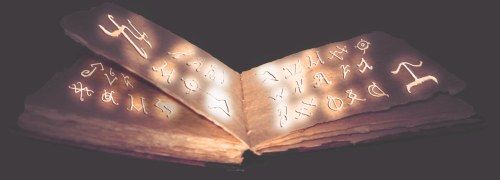 Nowadays, as an aspiring mage, I can locate and open a beginning magic textbook — one that actually sets out a course of training for new magicians, as opposed to one that assuages the ego by offering vague reassurances and “instant magic.” When I do, I run head-long into the hidden first lesson: my undisciplined attention needs training and focus. But I skim the chapter, or look ahead at one that seems to promise more. Soon the first excitement of a promising title or author — or, gods help us, a flashy cover with a robed figure — begins to wane. I want The Big Secret; instead, the first chapter sets me to doing a couple of modest-seeming exercises I am to practice for a month and record the results. Too much like work. Where are the glowing runes and mysterious passwords to infinite realms of gold and shadow and silver? Where are the guardians with amethyst crowns and rings of adamant? I want the symphony, and this book has me practicing scales.
More than anything else it does, magic even half-practiced bring me face to face with myself. “Gnothi seauton,” said Socrates. “Know yourself.” We aren’t altogether what we think we are — both more and less, we discover the prime tool of magic: the self. All other powers pale in comparison to what we already are, what we bring right now to the art of magic. We are marvelous beings, with dimensions, capacities and talents unexplored. Discovering the truth of this firsthand ideally will not puff up the ego, but engage the curiosity, another tool the mage never stops using. I will need that curiosity to help me through the first month. By the end of the first week or so, if I’ve actually stuck with the exercises that long, the first aura of wonder has dimmed. But in its place, a glimmer, usually no more, of things I didn’t know I knew, of aspects of consciousness, of a window opening where before there was only a wall, of passage through, where before was only cul-de-sac. It’s faint, that sense of expansion, and if I don’t write it down, it dwindles to nothing. Gone. Easy to forget, easy to minimize, discount, ignore altogether. Hence the advice to record it. The hard evidence of pages of experience accumulates into a consistent realm of action and reaction and consequence that the mind cannot so easily argue away any longer. A house divided against itself cannot stand. I need to unify my forces if I am to accomplish anything worth doing.
 The first lessons of magic use and highlight abilities we possess in the service of clarifying the task ahead. Knowledge, memory, discipline, attention, imagination. And persistence. I discover both more — and less — than I’d hoped for. I learn what a slippery, supple and potent thing consciousness is. I learn in spite of myself and in spite of the biases of many current cultures that consciousness isn’t all I am, and it may not even be the most valuable or striking aspect of my identity. Or rather I learn that day-to-day consciousness is to the full spectrum of possible consciousness what the visible wavelengths of light are to the full electromagnetic spectrum — a small slice out of an enormous bandwidth. I learn that other beings may prefer and reside in other portions of the spectrum, the way insects can see ultraviolet and infrared beyond the human range, the way dogs hear pitches of sound and smell an olfactory melange we never register, the way countless worlds are stuffed with possibilities we never notice at all.
Some knowing is remembering, is recollection. Where did I encounter this before? And who was with me when I did?
Read about any of this too soon, however, and instead of learning it, I’m convinced I already “know” it. Next cool thing, please, says the mind. Next one. As if magic, somehow different from eating or love-making or listening to music, were a matter of hurrying to the end, rather than practicing the delight of being present in the moment, noticing all we can, taking it in, marveling.
So I begin to know differently, more broadly. Go slow, says the Master. What’s the rush?
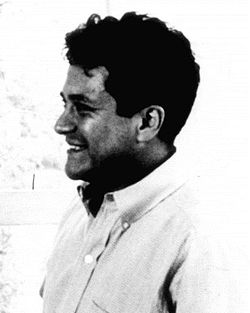
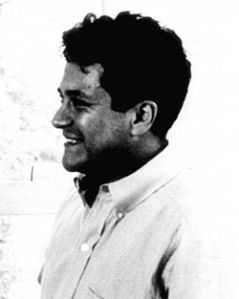 Don Juan, the Yaqui shaman or brujo made famous in Carlos Castaneda‘s controversial book series*, remarks of the magical journey, “For me there is only the traveling on paths that have heart, on any path that may have heart, and the only worthwhile challenge is to traverse its full length–and there I travel looking, looking breathlessly.”
/|\ /|\ /|\
*Castaneda, Carlos. The Teachings of Don Juan: A Yaqui Way of Knowledge. Berkeley: University of California Press, 1968; 1998 (30th edition).
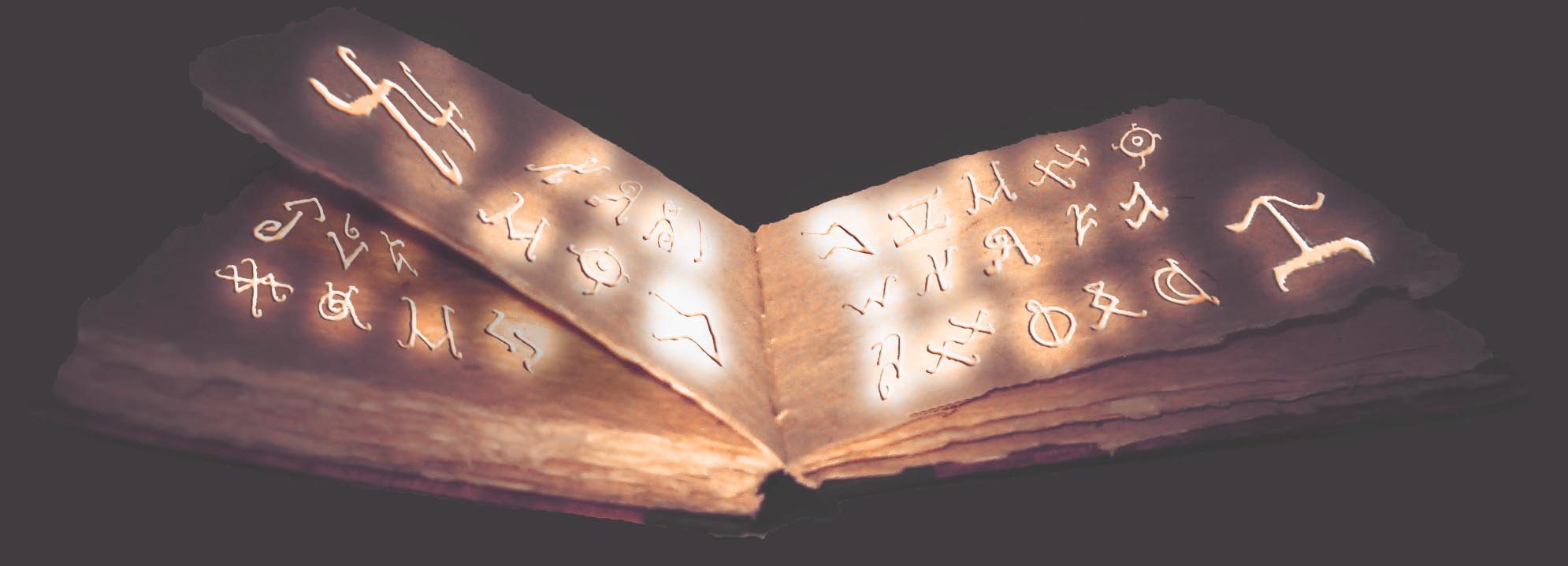
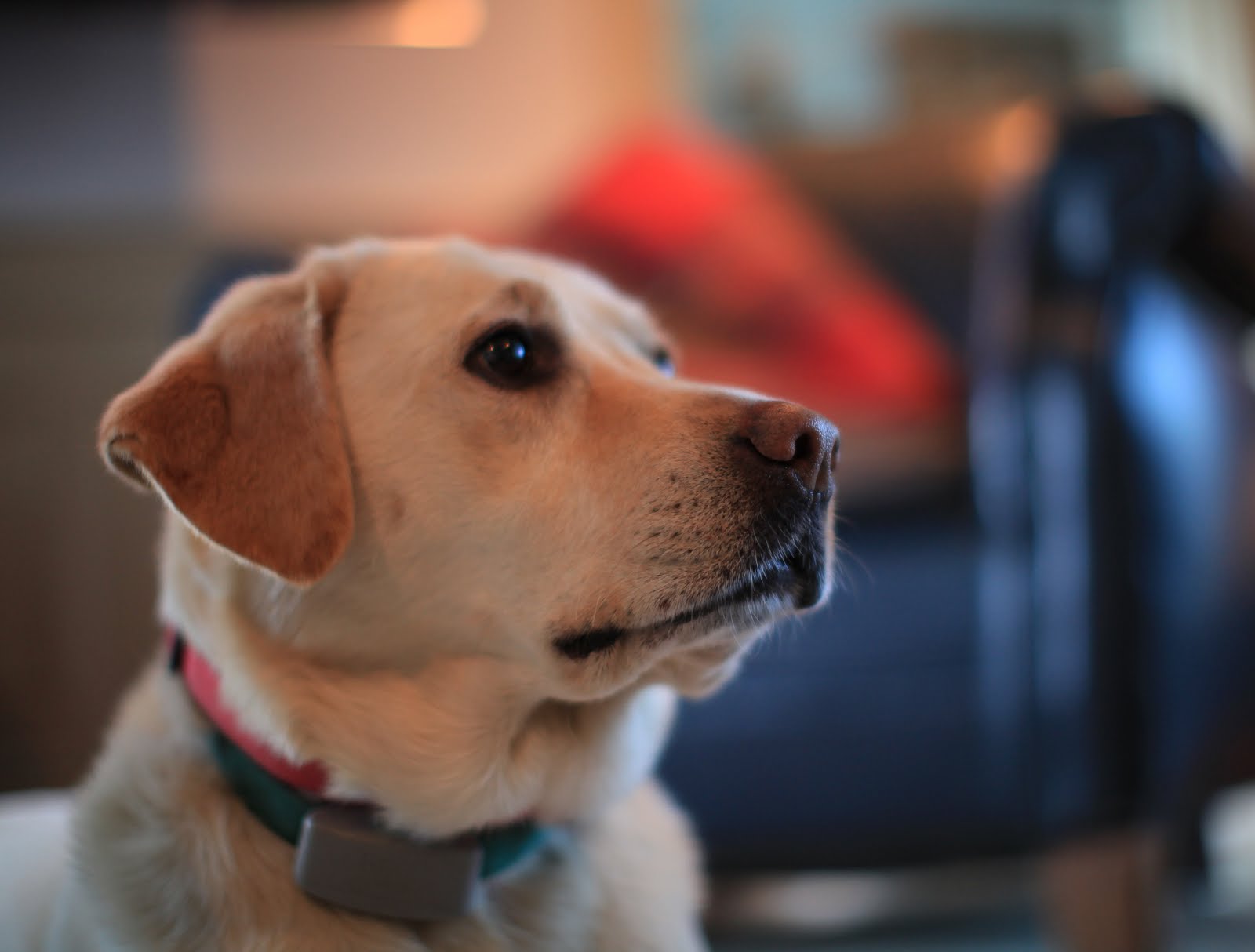
images: book; dog; Castaneda.
Updated 8 May 2013
[Part 2 | Part 3 | Part 4 | Part 5]
This is the first of a series on the powers of magic.
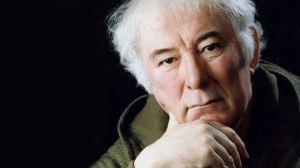 “All I know is a door into the dark,” says Seamus Heaney in the first line of his poem “The Forge.” In some way that’s where we all begin. At three, four, five years old, some things come into our world already bright, illuminated, shining, on fire even. The day is aflame with sun, the golden hours pass until nightfall, and then come darkness and sleep and dreaming. We wander through our early days, learning this world, so familiar-strange all at once. We grow inwardly too, discovering trust, betrayal, lying, love, fear, the pleasure of imagination, the difference between visible and invisible worlds. Which ones do people talk about, admit to themselves? Which ones do people around us ignore, or tell us don’t matter?
Much of our knowing is experiential during those years. We learn about the physical laws of our planet, the bumps and bruises and sometimes breaks of childhood a testament to the hard edges of this world. We learn some of its softnesses too: favorite foods, the touch of loved ones, the warm fur of pets, a dog’s nose meeting ours, the new air on the skin that spring and summer bring, the delight of rain and puddles and baths and fresh-laundered clothes.
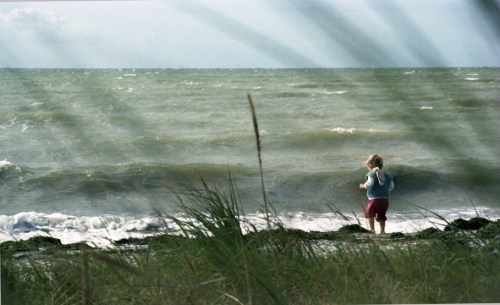 Then in some parts of the world comes another learning, one that typically fills much of our days for the next decade or so: a knowing about, the accumulation in school of facts and statistics and words and ideas, math and languages and art, science and history. Still some experiential learning comes through as a matter of course — Bunsen burners glowing, magnesium and potassium in chemistry doing their flaming and bubbling tricks mixed with other elements. The practice of basketball, baseball, volleyball, football and soccer, the sprints and catches and throws and spins and tricks, the correct forms and personal styles. Wrestling, dance, music, track and field, teaching the body to know beyond thought, to form and shape habits useful precisely when they become habit and no longer demand our full attention.
And other knowledge of the body, too: the awakening of sexuality, the chemical prods and prompts of hormones to stir the body into further change, the powers of attraction and desire, the experimentation with consciousness-altering that seems a universally human practice, whether “naturally” through exercise and pushing one’s physical limits, through chant, prayer, meditation, dance, song, music, or through “assisted alteration” with certain herbs, drugs, alcohol. Even into adulthood much of this knowledge rumbles and whispers just below the level of conscious thought much of the time. Without socially-approved times and places to discuss many of these experiences, we withhold them from daily conversation, we “fit in” and accommodate, we commit to being just like everyone around us, and the nudge of what feels like difference becomes part of the background hum of living, an itch we scratch haphazardly, or learn to tune out.
We forget how valuable this kind of knowing is, how it persists throughout our lives. This used to be wisdom of a kind we valued precisely because it took lived experience to acquire. You couldn’t rush it, couldn’t buy it or fake it, at least not without so much practice you almost recreated for yourself the original source experience anyway.
In a previous post on this blog, I noted:
Some kinds of knowledge are experiential and therefore in a different sense hidden or secret from anyone who hasn’t had the experience. Consider sex: there is no way to share such “carnal knowledge” – you simply have to experience it to know it. And thus Adam and Eve “know” each other in the Garden of Eden in order to conceive their children. Many languages routinely distinguish “knowing about” and “knowing” with different words, as for instance German kennen and wissen, French savoir and connaitre, Welsh gwybod and adnabod, Chinese hui/neng/zhidao. The kinds of experiential knowledge humans encounter in a typical lifetime are substantial and significant: first love, first death, first serious illness and so on.
Back to the poem I mentioned in the first line of this post. Reading it can be, in a small way, a re-initiation back into some experiences and kinds of knowing we may have forgotten or waylaid. It’s “just words,” but also — potentially — more.
The Forge
by Seamus Heaney
All I know is a door into the dark.
Outside, old axles and iron hoops rusting;
Inside, the hammered anvil’s short-pitched ring,
The unpredictable fantail of sparks
Or hiss when a new shoe toughens in water.
The anvil must be somewhere in the centre,
Horned as a unicorn, at one end and square,
Set there immoveable: an altar
Where he expends himself in shape and music.
Sometimes, leather-aproned, hairs in his nose,
He leans out on the jamb, recalls a clatter
Of hoofs where traffic is flashing in rows;
Then grunts and goes in, with a slam and flick
To beat real iron out, to work the bellows.
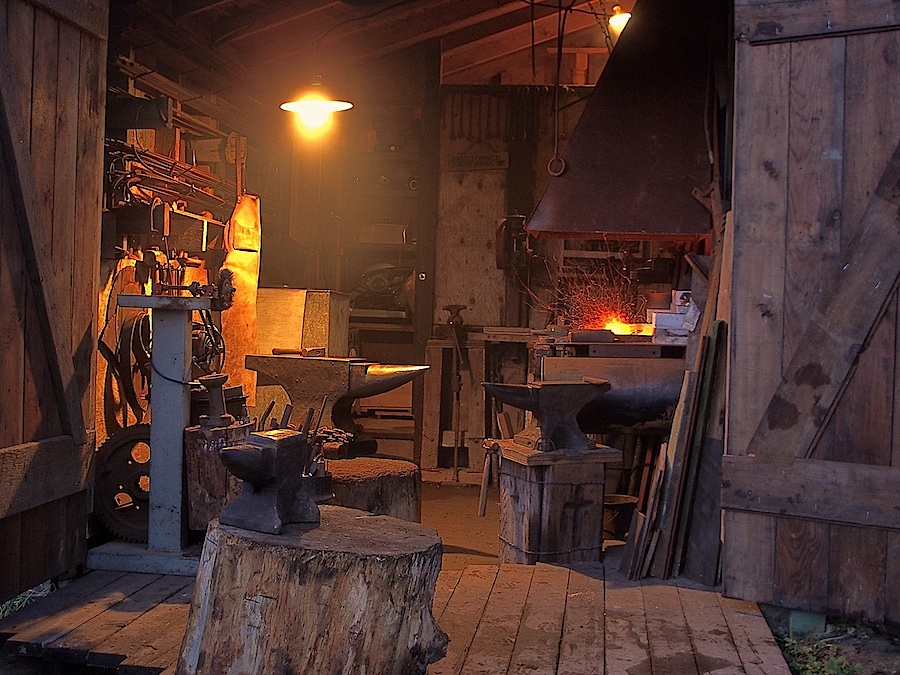
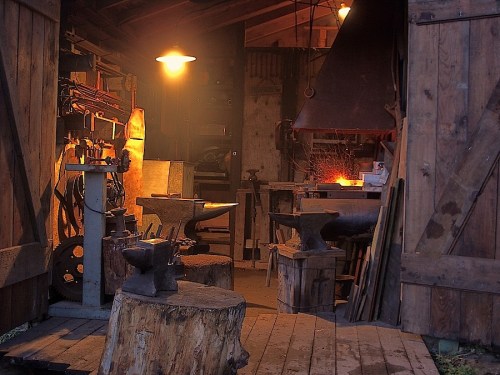 Here’s one opportunity of our human life (there are others) — a door into darkness, a world inside us that is a forge, a place of shaping and molding, of hammering material into a desired form, a place of work and energy and transformation. The door leads to a place where we can find an altar, where we can “expend ourselves in shape and music” and “beat real iron out.” Sometimes it appears others stand there before us; at times, we stand alone, tools scattered about, not always sure of how to proceed, dimly aware, or not at all, of anything like an altar or metal or tools. But here lies a chance at the magnum opus, the “great work” many of us seek, that task finally worthy of all that we are and can do and dream of, a labor that is pleasure and work and art, all at once or at different times.
Even to know this in some small way, to imagine it or suspect it, is a start. The door into the dark may not stand open, but we discern the outlines of something like a door, and maybe grope towards a handle, a yielding to an inner call, something that answers to a hand on the doorknob, or shifts like a latch, clicks open. To know this much is a priceless beginning.
How magic can build on this beginning, and assist in self-making, will be the subject of the next post.
/|\ /|\ /|\
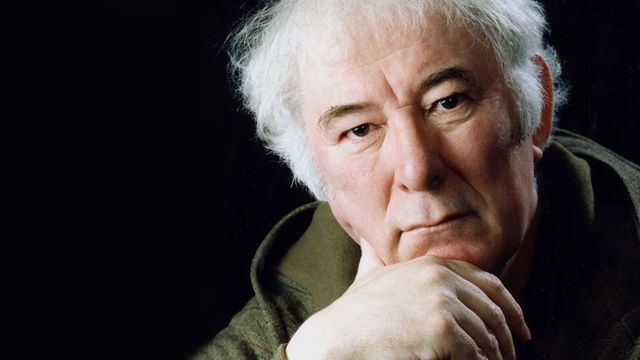
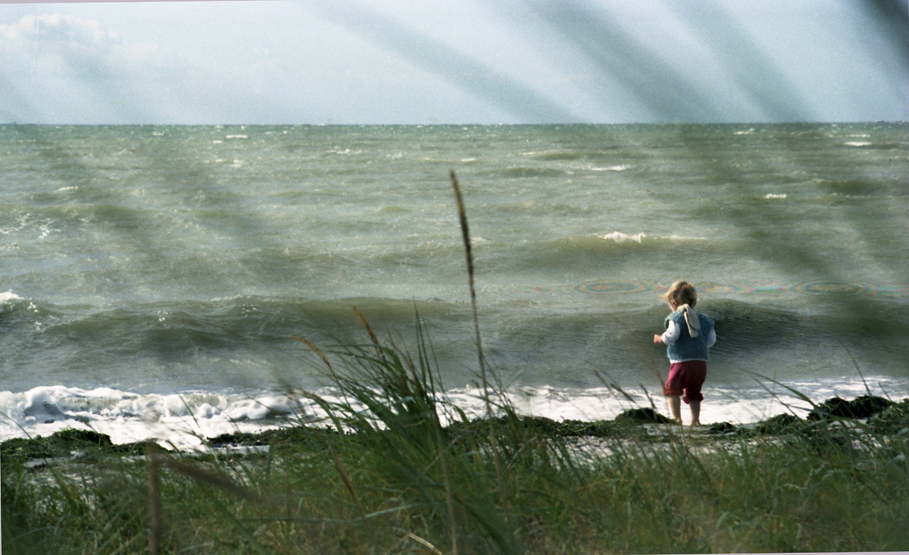
Images: Seamus Heaney; child at shore; forge.
Updated 3 July 2014
A couple weeks ago I read a blog post I’ve been carrying around with me ever since — it pops up at odd moments, because it touches on a profound experience of the divine familiar to many Druids and other Pagans. But it goes deeper than that, too, in its perception of the nature of divinity. You can find it over at Banshee Arts, courtesy of blogger Morpheus Ravenna. She reflects on her patron deity, the war goddess Morrigan, and receives wisdom from her that we need to hear and contemplate.
Here’s Morpheus’ post for March 22, 2013, “Voice of the Sacrificed,” which I cite verbatim in its entirety, so you can read it all here. The italics are original with her post:
This week brought my 37th birthday, and with it the tenth anniversary of the US invasion of Iraq.
Yes, it was my good fortune ten years ago, to watch as my country preemptively invaded another and lit its skies on fire with “shock and awe”, on my birthday. I remember it vividly. Though I knew the war wasn’t launched on my birthday for any reasons to do with me, somehow that coinciding still did make it more personal and even more unsettling to me than it already was. My oldest friend had recently joined the army and I knew she would soon be deployed there; I’d been worrying about that all winter as the war loomed inevitably closer. And then it launched on my birthday.
That war felt terribly intimate, as though it had attached itself to me; as though by inaugurating on my name-day it had taken my name and was ruthlessly marching its destructive way in my name. Well, it was. Not just me, of course. It was destruction in all our names, all American citizens.
And I suppose it also felt intimate because I was eyeballs deep in a personal moral struggle over my devotion to a war Goddess. As the country stomped its bombastic way toward war, I had been engaging in a series of deep meditations communicating with the Morrígan. I was confused, scared, disturbed. I had always felt some unease about my devotional relationship with a war Goddess – had wondered if on some level I was condoning the brutality of war by worshiping Her. Now those questions haunted me irrepressibly as the war began. I went to my altar and prayed, chanted, begged for answers. She spoke.
I recorded my memories of those conversations in my journal (to the extent that direct nonverbal communications with a divinity can be translated into words). Here are a few fragments:
Why have I been chosen to have this connection with you? You know I am ill at ease with your warlike aspect.
It is in your blood. You are descended from invaders, violent warring Celts. Warfare and violence are part of who you are. You cannot run from this. You must understand it, and it is through me that you can understand this part of your being.
I am troubled about this war, about the justice of it. How can we tell a just war from an unjust war?
There are no just wars. For each individual who experiences it, war is an injustice. It is an injustice to those who suffer and die when they should have lived; it is an injustice to those who find themselves doing violence to their human kin in the service of war. War is always an injustice. The Gods cannot tell you whether your war is right or wrong by the standards of your justice; you must count the cost and choose, though you are blind. And sometimes it will come on you without your choosing, and that too is an injustice. Your task, when you do choose to make war, is to pursue it swiftly and strike with certainty. You must recognize that every life destroyed is in your hands and it is up to you to make that sacrifice worth something.
The reason your ancestors revered their enemies so much is this: when you slay your opponent in battle, the spilling of their blood is a sacrifice to your sword. It is required that you honor their sacrifice by dedicating it to a worthy purpose.
The law of human life is that you are only capable of solving your problems within the set of ways your culture contains. I arose in the form you know me among the old Celts. Their culture was shaped and defined by tribal warfare. You, and your culture, are the inheritors of this in many ways. When you alter your culture to contain a different set of possible actions, then you may be able to solve your problems without bloodshed. Until then, I will always be present. My role in war is to make it swift and terrible, and effective; to carry for you the knowledge that you could learn from your actions if you choose to listen; and to mourn the cost.
Unlike most gods of monotheism, the Pagan gods specialize (though often enough Jehovah gets his war on, so we can be excused for thinking he’s principally a war god, too). But what wisdom Morpheus (and the Morrigan) offers here: “The law of human life is that you are only capable of solving your problems within the set of ways your culture contains.”
Or to paraphrase so apparently unrelated a thinker as Muslim reformer Irshad Manji, “There is nothing wrong with a culture that cannot be corrected from what has been historically right with the culture.”* Or to go to the Qur’anic source that inspires Manji: “Allah will not change the condition of a people until they change what is in themselves” (Qur’an 13:11). But I would add that the change may alter the culture sufficiently so that many feel uprooted, or even perceive that their culture has “died.” All things are subject to change, and human creations like cultures don’t stand exempt. Certainly we walk today in the midst of deep change in many of the world’s cultures. This is a time rife with change, and also ripe for change and possibility.
/|\ /|\ /|\
*Check out a half-hour interview with Manji by Canadian talk show host and Conservative pundit Allan Gregg on Youtube — the line cited above is paraphrased from Manji’s comment around 13:00 in the video.
[Part 1 | Part 2 | Part 3 | Part 4 | Part 5 | Part 6 | Part 7 | Part 8 | Part 9]
Wadin Tohangu has been in my thoughts these past few days — at first just a tickle of awareness, an overlay to thought. Then stronger, a gesture on his part for me to pay attention, a longing on my part to offer that readiness.
In the past a listening heart usually opened the way for him. Give my opinions and distractions a rest, and always something more worthwhile would fill the space they occupied. A poem, an idea for a blog-post, a phone call I needed to make or take, a chance conversation with a homesick student no one else notices, a shaft of sunlight or spectacular cloud at the moment I look out the window. The attention that draws Wadin is simple but not easy. Especially not today. Why not? I ask myself. I’m out of practice, for one thing. I mull over the past few weeks. Money is tight, and old medical bills, though we bring the balance down each month, still require that monthly check. We’ve just managed to pay municipal property taxes, and now the Ides of April loom, tax day part two, on the 15th. (We have as little taken out of the paycheck as possible, on the theory that it’s easier to pay later on our terms, rather than to try getting a refund on the government’s. We’re still, you might say, optimizing the theory.) Add to that some education expenses for my wife, plumbing repairs after basement pipes froze … the list goes on, one version or another all too familiar to many of us.
But through it all, things to celebrate as well. Yes, there will be balance. Birds back, singing. A few passing on the way north, offering unfamiliar snatches of melody on their layover. Daffodils pushing up pale and uncertain, the first wasps and flies buzzing around rather forlornly, that indefinable slant of light and the scent of earth that signal spring, whatever the thermometer shows. Longer days. A sky that says forever is still here, starting right beyond my skin.
Wadin Tohangu is companion to my thoughts again. What will he say to me this time? What do I need to hear?
/|\ /|\ /|\
Updated 23 April 2015

 “And all this matters why?” you might ask. Perhaps the most visible reason is the sheer beauty of Shinto. If as a Westerner you want to encounter a foreign culture on its own terms, one of the vivid and memorable ways is through its physical manifestations in objects, tastes, sounds and smells. The atmosphere of Shinto is something anyone can begin to appreciate immediately, because Shinto shrines and ceremonies are so public. And in Shinto we can encounter a distinctive Japanese expression of what I have experienced as the spirit of Druidry, a love and reverence for the natural world, seen through the unique perspectives of an entire culture and nation. Shinto provides one model for doing earth-based religion on a large scale. And I hope you’ll see why I think it’s really cool.
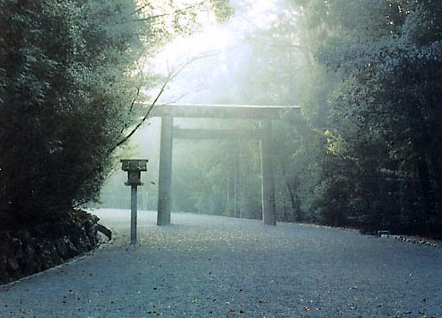
 Ise Jingu (ee-seh jeen-goo), the shrine at Ise in Mie Prefecture on the main island of Japan, covers more than 20 square miles of mostly forested land. You pass through the torii gate (above image), sign of a Shinto shrine, to enter. Shinto expresses a sense of the “permanent renewal of nature,” as a Mie tourist guide describes it, and Shikinen Sengu, literally the “Ceremonial Year Shrine Relocation,” renews the shrine quite literally, by rebuilding significant portions on an adjacent location. Imagine reconstructing your own house every twenty years, on the same lot, planning in advance and spending a year to do the job, with song and ceremony and all your family members visiting at some point during the year, with picnics and celebration and parties and priests to bless the proceedings, and you begin to get an idea on a very small scale of what’s involved.
 Shinto is more practice than belief: what you do matters more than how you understand and talk about it, though of course that’s important too. Shinto focuses on harmony between people and the natural world. Get out of whack, and Shinto shows you things to do to resolve imbalances and restore the original state. Often it’s a case of not taking ourselves so bloody seriously. If you can’t recall when the last time was that the universe bowed to you, maybe that’s because you can’t remember the last time you bowed to the universe. And the latter is generally better for you than the former. Even if taking a cold outdoor shower under a stream doesn’t appeal to you, for instance, you still get how it might restore a healthier sense of proportion. The practice of misogi or purification gets real, especially when you do it in winter, as practitioners do in Japan and in the U.S., like Rev. Koichi Barrish who is priest at the Tsubaki Shrine in Washington State. Note that I’m not rushing to be first in line for this particular practice.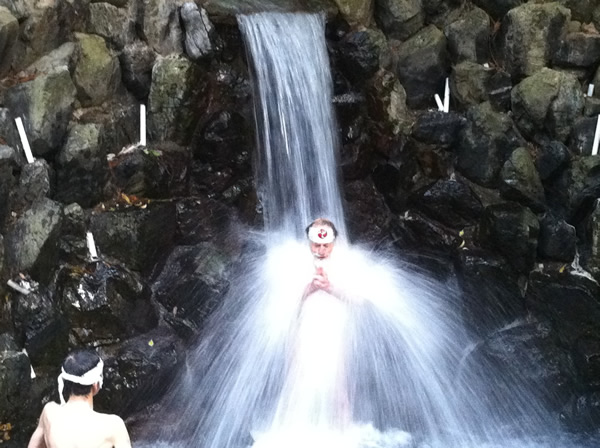






 A Druid Way


