In early June my wife noticed a particularly vigorous shoot rising from an old compost pile beside our woodshed. The squash plant it eventually revealed itself to be has flourished joyfully, spreading in two directions, while the pitiful growths in one of our new raised beds refuse to be coaxed into thriving.
If life gives you lemons, you could make cleaning supplies, ant repellent, pickles, sore throat medicine, laundry whitener, stain remover, fruit preservative, copper cookware restorative, disinfectant — and if you insist, lemonade, too. The dead (cliche) comes to life when our attention lies elsewhere. Practice resurrection, and get used to it.
We hear a lot about growing where you’re planted, but what about everywhere else? The surprise that is our universe so often arrives with the unexpected, the new pattern, the shift, the change. Life does a one-off. It does what it is. (Isn’t that what you are, too — individual, unique, nothing else quite like you? The trouble comes when I or somebody else insists you should be like the rest of us. The universe never “conforms.” It’s simply itself. That’s our pattern too. We are where we come from.) We stand amazed at the burgeoning of vitality in places we doubted it could exist. If we have different plans, life may upset them. A young Christian couple I know, just married, decided they would leave conceiving a child “up to God.” A friend from their congregation remarked, with considerable glee, “They gave it to the Lord, and he gave it right back to them.” She got pregnant six weeks after the wedding.
In the mass of asphalt and concrete that is Route 91, like any superhighway, a few weeds have taken root on the meter-high divider between northbound and southbound lanes, a little way north of Hartford, Connecticut. They’re particularly visible because they happen to be growing just about at eye level as you drive by, and the highway department hasn’t yet set upon them with weedkiller. I give a silent cheer each time I pass, though I know my tax dollars support their eventual extinction. Still … Give them a few years and their roots will begin to split and break down the rigidity of man-made material into the beginnings of something more closely resembling soil. If there’s an “agenda” at work here, it isn’t always a “human” one, though humans are born into such a world, have grown and evolved within and through its shaping patterns, and have lived in it for millenia before they thought to try permanence on a scale the universe doesn’t really support.
Instead of worrying about “what the financial situation will support,” or what our many and often distinctly weird human institutions “demand,” why not ask what moves in harmony with the patterns of the universe? The main reason is we wouldn’t always like the answer. Sometimes we would. But we might find more balanced and sustainable ways of living that would approach “permanence,” which is just a weak version of natural equilibrium. Could we devise a “financial permaculture” that might not jolt us from crisis to crisis? Sure. Will we?
The Dao De Jing winks at us when it makes its observations:
Not exalting the gifted prevents quarreling.
Not collecting treasures prevents stealing.
Not seeing desirable things prevents
confusion of the heart.
The wise therefore rule by emptying hearts
and stuffing bellies, by weakening ambitions
And strengthening bones.
If men lack knowledge and desire, then clever
people will not try to interfere.
If nothing is done, then all will be well.
“Doing nothing” isn’t exactly what Daoism teaches; it’s more along the lines of “unforced action,” or “going with the flow”: wu-wei in Chinese. And can we expect people to succeed by weakening their ambitions? I don’t know; have we ever tried it? In all this there’s a wink and a smile, too. As if that wise voice is saying, “I don’t always mean this literally, of course, but you get the idea …” And who knows?! “Emptying hearts (in a good way) and stuffing bellies” might just pay off. Fill our stomachs, not our heads …
Or take this advice, surely perfect for our U.S. political season:
To talk little is natural.
High winds do not last all morning.
I’ll let Ursula Le Guin’s version of Chap. 27 have the final say here, a kind of diagnosis of how we’ve “gone astray,” that peculiar human thing we can do that the rest of the natural world doesn’t:
Good walkers leave no tracks.
Good talkers don’t stammer.
Good counters don’t use their fingers.
The best door is unlocked and unopened.
The best knot is not in a rope and can’t be untied.
So wise souls are good at caring for people,
never turning their back on anyone.
They’re good at looking after things,
never turning their back on anything.
There’s a light hidden here.
Good people teach people who aren’t good yet;
the less good are the makings of the good.
Anyone who doesn’t respect a teacher or cherish a student
may be clever, but has gone astray.
There’s deep mystery here.
/|\ /|\ /|\
There are many free versions of the Dao De Jing online; the site from which I drew these few excerpts provides several reasonably reputable versions to sample. Sustained meditation on the text (get a couple of versions and let them talk across to each other) can ease stress and open up many doorways and paths. It’s one of my most beloved Druid written resources. Wikipedia’s entry for Tao Te Ching captures some of its qualities: “The written style is laconic … and encourages varied, even contradictory interpretations. The ideas are singular; the style poetic. The rhetorical style combines two major strategies: short, declarative statements and intentional contradictions. The first of these strategies creates memorable phrases, while the second forces us to create our own reconciliations of the supposed contradictions.” If you recall, resolution of supposed contradictions, or finding the tertiary that resolves the binary of “either-or,” is a technique and strategy of wisdom taught in several Druid paths.
Our green world and ready contact with its natural rhythms can sometimes feel remote in urban settings. Because so many people live in one of the “mega-metro” areas on the planet, their appreciation of the natural world may often burn more brightly than it does for the small-towner who has lived all her life surrounded by cows and trees. With Tokyo, Seoul, Mexico City, New York and Mumbai heading the list at over 20 million souls each (counting their greater metro areas), it’s good to celebrate the green world particularly when it makes itself known among the girders and concrete. The first entry in my “Druid of the Day” series, just started, was a nod in that direction. Manhattanhenge is another one, and much larger:
If you follow Yahoo, you probably caught it. The caption for yesterday’s image reads “The sun sets during ‘Manhattanhenge’ on July 12, 2011 in New York City. The Manhattan Solstice is a semiannual occurrence in which the setting sun aligns west-east with the street grid of the city.” There’s a short sequence of similar images worth visiting.
We need such rhythms — to calibrate our biological clocks, to remind us how the world nourishes and sustains us, and how we need to remember it in our daily decisions — not out of piety for the Earth Mother (though nothing’s wrong with that, of course) but for the very real reason that this world is home. Whenever we can truly celebrate, our hearts open. And in a time when so much “news” doesn’t help us live better, stopping to enjoy the sun looking down the city streets is a good thing.
/|\ /|\ /|\
For those interested in astronomical details and explanations, Wikipedia’s entry for Manhattanhenge helps. The event occurs twice a year, in May and July, on either side of the planetary solstice, as the sun makes its (apparent) journey north and then south again after the solstice.
New York Times columnist Dana Jennings wins the first “Druid of the Day” award particularly for this portion of his column in yesterday’s (7/10/12) Times:
Scenes From the Meadowlandscape
Monet had his haystacks, Degas had his dancers, and I have the New Jersey Meadowlands from the window of my Midtown Direct train as I travel to and from Manhattan.
But what, it’s fair to ask, does squinting out at the Meadowlands each day have to do with art, with culture? Well, as a novelist and memoirist for more than 20 years, I like to think that if I stare hard enough — even from a speeding train — I can freeze and inhabit the suddenly roomy moment. Through the frame that is my train window I’m able to discern and delight in any number of hangable still lifes.
And the Meadowlands never disappoints, no matter what exhibition is up.
Its shifting weave of light, color and texture hone and enchant the eye. The sure and subtle muscle of the Hackensack River is sometimes just a blue mirror, but when riled and roiled by wind and rain it becomes home to slate-gray runes. The scruff, scrub and brush are prickly and persistent, just like certain denizens of New Jersey. And the brontosaurus bridges, their concrete stumps thumped into the swamp, idly look down on it all.
For his focus, intentionality and the requisite quietness to see, and then — just as important — turn the results of that seeing into a window, an access point for others who read his column to do the same “noticing” in their own lives, Jennings earns my commendation as “Druid of the Day.” This seemed like a good series to launch, to help remind myself as well as my readers of ways we can be more attentive to beauty around us, particularly unexpected instances — free, a gift if we only notice them — and receive their transformative power.
City or country, it doesn’t matter: we can be witnesses of natural power and beauty, and learn what they may have to teach us, anywhere — including Manhattan, and from the window of the Midtown Direct train. These are no less — or more — “Druidic” than any other spots on the planet.
Know others who deserve recognition as “D of the D”? Please send them along to me and I’ll write them up and include an acknowledgement to you in the citation. Thanks in advance.
Compromises. They get bad press. In this time of American public life, compromise is among the worst of bad words. It’s true that we often seem weakest where we make one. That’s OK, as long as we aren’t blindsided by them, as long as our compromises aren’t destructive to us, as long as we can make them and live with them as conscious acts. But any one of those challenges can pierce us to the core.
As a case in point, I want to address a “local” issue that echoes everywhere. Last December, over a thousand residents in Vermont, New Hampshire and Massachusetts gathered to protest the continued operation of the Vermont Yankee (VY) Nuclear Plant beyond its original 40-year licensing period. There were over 130 arrests, though the protest remained orderly — both protesters and police had prepared months in advance.
As Vermont transplants rather than natives, my wife and I inherited the controversy when we settled here over a decade ago. So first, some details — as unbiased as I can make them, from sources on both sides. A Druid tries to find the multiple tertiaries or neglected alternatives between two opposed binaries, so bear with me here.
First, the pros: VY has been through $400 million of upgrades since it was first commissioned in 1972. These include a 2006 retrofit that allows the reactor to generate approximately 20% more energy than its original design specifies, obviating the need to build other plants or increase fossil fuel use. Vermont relies on the plant for about 30% of its current energy use, and when VY is down for refueling, increased consumption of gas and oil must make up the difference. Decommissioning the plant would require finding other (and mostly more expensive) energy sources to make up the shortfall. Published estimates put the pollution savings over the past four decades of operation at 50 million tons of carbon that VY’s nuclear capacity has avoided dumping into our atmosphere. That clean operation contributes heavily to keeping our famously pristine Vermont air famously pristine. Employment statistics put the number of jobs directly connected with the plant and its operation at around 650 people, and the impact on the state economy in the hundreds of millions of dollars. Obviously, shutting down the plant isn’t just a matter of pulling the plug.
Second, the cons: VY’s design closely resembles the Fukushima reactor in Japan that failed in the 2011 earthquake and subsequent tsunami. The 2006 upgrade that allows VY to generate approximately 20% more energy beyond its original design specs imposes unknown and unstudied stresses on a reactor structure deteriorating in spite of repairs — uncertainties the U.S. Nuclear Regulatory Commission (NRC) admits. The plant stores its spent fuel in containment tanks that are now already at 95% capacity, yet the scheduled recommissioning is for another 20 years. VY sits on the Connecticut River, whose waters ultimately empty into Long Island Sound. An accident to either the reactor or fuel containment pools would not only affect the immediate area of mostly small towns, but carry radiation and waste downstream directly into the middle of major centers of population like Springfield and Hartford, and numerous smaller towns like Greenfield, Deerfield, Northampton and Holyoke, MA, and Enfield, Middletown and Old Saybrook, CT. It would then spread into the Long Island Sound and quickly impact eastern Long Island. Tucking the spent rods and other waste away in “remote locations” like Yucca Mountain is no real solution, only a poor stop-gap measure.
Critics cite a string of mostly minor incidents at the plant over the years — small leaks, structural failures, and accidental discharges, as well as cover-ups, lies, bribery and arrogance in responses by the parent company Entergy, which runs eleven other nuclear plants around the country. Vermont governor Peter Shumlin openly says he wants VY shut down. Entergy’s own website for VY (at www.safecleanreliable.com) addresses safety, somewhat obliquely, with a list of emergency contact numbers and the statement: “The area approximately 10 miles around the Vermont Yankee is called the Emergency Planning Zone. Plans have been developed for warning and protecting people within this 10-mile area.” Within this 10 mile radius live approximately 35,000 people. Yet after the Fukushima reactor meltdown in Japan, the NRC recommended that Japan extend its emergency safety zone radius to 50 miles. The number of people within a 50 mile radius of VY is 1,500,000.
Here’s an aerial view of VY, courtesy of Entergy:
VY may well be shut down in some future election cycle, or it may face a spate of incidents that call into question its safety. It may even run safely (for a nuclear plant) until its all of its operating extensions expire. Until then, unless I and everyone else who benefits from the plant volunteer to cut our energy usage by that 30% that VY generates, and help subsidize a transfer to alternate sources of energy, can we justify our self-righteous claims to “shut it down” with no further personal sacrifice? What are we willing to give in order to get what we want?
Though some people deride our Druid rituals and mock our perspectives about the earth, what we do to the world we do to ourselves in very real ways. The facts can be disputed — the principle operates in full force as it always has. What goes around comes around: we know this, which is why such sayings have penetrated the common language and consciousness. We alive today are part of the world’s karma — our karma, the choices we make and actions we take every day. I turned on the oven to heat my lunch earlier today. Would I be willing to make do with a solar oven, or eat my meal cold, or … any of a number of alternatives?
A Wise One observed that in the last decade the entire world had the opportunity to accept a major initiation — a step forward in consciousness, based in large part on our accepting greater responsibility for our actions and their consequences. As a single aware corporate entity, the world consciousness refused this opportunity. (Was it majority vote?!) Individually we still all grow at our own paces, but we also take part in a world shaped by planetary consciousness as a whole, to which we each contribute a part. We can plainly see the results all around us right now, and whatever we may think of the ultimate causes, they began in human choices. As Gandalf observes (and why shouldn’t a decent movie Druid get his share of press?), if we regret the choices we see and the consequences of those choices which we know many will suffer, “so do all who live to see such times, but that is not for them to decide. … All we have to decide is what to do with the time that is given to us.” And that is enough for any film character, or four-dimensional beings like ourselves. Each life improved is a life improved, and within our circles we can accomplish much of value before we leave this world. It is not our task to redeem the planet. World-saviors appear in flesh and myth to do such tasks. (Unless you’re signing up for the job, in which case you should have been told where to go and what to do. Just don’t ask me.) The time that is given to us is enough to fill with the best that is in us right now — not in some imagined future “when we — or our people — have the power.” To leave the last words again to Gandalf: “[I]t is not our part to master all the tides of the world, but to do what is in us for the succour of those years wherein we are set, uprooting the evil in the fields that we know, so that those who live after may have clean earth to till. What weather they shall have is not ours to rule.”
“Everything that exists is the effect of causes at work in the whole system of which each thing is a part, and everything becomes, in turn, the cause of effects elsewhere in the whole system. In these workings of cause and effect, there must always be a similarity of kind between an effect and at least one of its causes, just as there must be a similarity of scale between an effect and the sum total of its causes.”*
Under the guise of karma, this principle is superficially familiar to more people, perhaps, than the other six laws. Though not exactly what some people have in mind when they wish you “good karma,” as if it were the same thing as luck. Where does luck fit in a world system of cause and effect? Worth considering. A Wise One once remarked that it’s not always possible to be the cause in every situation — to initiate, to be the active force, to get things moving — but that if we must be effect, at least we can strive to be conscious effect. Recognize the cause, and respond consciously, rather than be manipulated by it unconsciously. Because who knows? — it may not have your best interests at heart.
That’s not to say that a cause is necessarily actively malevolent or is seeking you out to destroy you and unmake you. But it may simply be a cause you or someone else set in motion at random, unconsciously, unintentionally. If you’re its unconscious effect, it’s suddenly detour time. Willing to go for a ride with a strange cause, one that beckons to you, flashing those stunning looks, that oh so beguiling smile? Have fun! Just don’t expect things to be the same when you get back. Whenever that turns out to be …
You can be spontaneous and conscious too. But be the cause. Otherwise, what’s consciousness for? I find that a fascinating, troubling question.
So many beings get along fine without the human excess of self-consciousness, that strange echo-chamber or feedback loop that tells us our thoughts, our feelings, our thoughts about our feelings, and our feelings about the thoughts we’re having about our feelings. How often we long for pure experience, without that inner narrator who insists on supplying second thoughts, doubts, fears, insecurities, grubby little (or big) desires, and so on. It’s like a bad voice-over in a film, a jangling mess that some spiritual traditions remedy with meditation to calm the “monkey of the mind,” so we can get at whatever of value may lie underneath the noise of consciousness.
OK, that’s human consciousness, and specifically self-consciousness, at its least attractive. But what of consciousness itself? It’s not all bad. In fact, it seems to confer some evolutionary advantages. A conscious being can make choices, react with more than instinct — maybe even live through challenging situations where instinct isn’t enough. If you’ve observed animals, you can sometimes catch reflection and thinking. Dogs and cats give evidence of it. Both birds and mammals can learn and adapt, maximizing their ability to survive, and to pass on their genetic material to their offspring. But is there more than evolutionary advantage to the species? How about to the individual?
In more conscious creatures, play and possibly even pleasure are gifts that consciousness also seems to confer. Otters play for hours, and birds — if you’re convinced by people like David Rothenberg — sing not only to defend their territory, attract mates and warn off rivals, but also to express joy. Is that too human? Are we anthropomorphizing?
And creativity … to me that’s the greatest gift of consciousness. We’re problem solvers. We love smooth sailing for sure, long for it deeply in the trough of trouble, but we’re often at our best when challenged, when pushed to grow. Even our attempts at avoiding growth are frequently clever, creative, inspired. We procrastinate, rationalize, justify, repress, suppress, distract ourselves, get addicted to something too small for the love we’re driven to express, and our suffering is outrageous, ridiculous, painful, outsized, exaggerated — often because we’ve made it just that way in our struggles to escape what we know we must do eventually.
And here’s the kicker: even — and maybe especially — our avoidance just makes us stronger for when we finally do face down the problem or issue or challenge. We’ve tried everything else, all the other options, and they’ve failed in some way. So we bring to that eventually unavoidable moment of growth a head of anger and frustration, true, but also a chunk of wisdom and strength that we got precisely because we’ve resisted for so long. That momentum, that power and wisdom with a glow of a little anger and a dash of curiosity under the fear — this very mixed package of preparation — may not always get us through the challenge. It still may not be enough this time around. Now we’re still effect, but we’re on the way to becoming cause.
The failure to meet the challenge this time, to pass the test, signals to us what we still need to do to be ready next time. And the heightened emotion clinging to the lesson, the issue, and the events and people around it, flags it for us. Never again will we completely be able to avoid it, to shove it entirely back into the shadows, and let ourselves slide into unconsciousness. A tail sticking out of the box, or paw scratching at the door, or fur on the carpet, will be evidence of this animal self, our helper, our “trouble double,” that we’ve tried to hide. We willbe cause, even if we can’t yet pull it off. Something in us knows this. Our growth will seem to pursue us on its own — because we’ve made it ours by being cause even to a limited degree, and cause must, inevitably, unavoidably, have its effect.
All this time, we’ve not been idle; we’ve also been building up strength for our next attempt: by more avoiding, maybe (if we’re really good at that), but also by a slowly growing awareness that growth is what we’re destined for, that we can actually work toward it, even if our own lives have to drag us there kicking and biting and howling the whole way, functioning as some of the causes we ourselves have set in motion. There’s more strength building in us, and if there’s a cost, then we’ll pay. (Another cause, another effect.) We’re slow learners, because sometimes that’s the only way the lesson sinks in deep enough that we really get it good, get it down pat, and run with it. One way or another …
And so the causes we absolutely needed to set in motion will become just the effects we need to experience down the road. But because we grow as a result, the effects which were “everything we ever wanted” at the time will eventually come to box us in, because we’ve grown, and so they’re no longer enough for us. Then they start to strand us, and constrict and blind and infuriate us, until we arise from them stronger and are again able to set new causes in motion. Open-ended growth. Our ideas of perfection often seem to involve stasis: at some point we imagine we’ll “arrive” and not need to grow anymore. Heavenly choirs and streets of gold, no telemarketers or spam or mosquitos or flu, and sitting around all day in Paradise Lounge, plucking at harps and sipping (virgin) daiquiris and margaritas. Likewise our perspective on setbacks often doesn’t take in enough time to see the causes and effects playing out. Sometimes we can’t see them all, if they span multiple lives. Or parallel ones, if you’re not prone to reincarnate like I am.
But back to perfection as stasis: from what I’ve seen, that misses how the system works. “Everything becomes, in turn, the cause of effects elsewhere in the whole system.” No final perfection — that’s just another trap or sidestep. Which is fine, if you’d like that experience: then it’s no trap or sidestep so much as interesting or even productive diversion. (Having your cake iseating it too, after all. Otherwise it just sits there.) We don’t arrive at long last at any unchanging endpoint. That’s not perfection. We’re travelers. We may get rest stops, but the growth is endless. “Eden bears those footprints leading out …”
/|\ /|\ /|\
*Greer, John Michael. Mystery Teachings from the Living Earth. Weiser, 2012.
Here, in the third of this series on J. M. Greer’s principles from his book Mystery Teachings, we come to the Law of Balance:
“Everything that exists can continue to exist only by being in balance with itself, with other things, and with the whole system of which it is a part. That balance is not found by going to one extreme or the other or by remaining fixed at a static point; it is created by self-correcting movements to either side of a midpoint.”*
The Dao de Jing (Tao Te Ching), another keen guide to the natural order of things, observes, “Extremes do not last long.” After storm, sun. After destruction, rebirth. But what are we to make of natural disasters? How in hell, literally, are we supposed to “live in harmony” with an earthquake or hurricane or tornado?
Our science, which is just another word for knowing or wisdom, has only begun to recover some of the nature wisdom of our ancestors and spiritual traditions. And perhaps too much time, at least in some of the “hard” sciences, is spent in pursuit of a grand theory, where close observation might serve our immediate purposes better. But we’re recovering lost ground as we can.
The horrific tsunami of December 2004 in southeast Asia makes for a good study. Here and there, among the human and natural devastation in its wake, are curious and instructive stories. The case of 10-year Tilly Smith, vacationing with her parents in Phuket, Thailand, merits recounting. According to the Telegraph‘s article, Tilly saw the tide drop unnaturally, remembered a recent geography lesson about tsunami warning signs from her school back in the U.K., and alerted her parents. They were wise enough to listen to their daughter, warned the hotel where they were staying to evacuate inland, and over a hundred lives were saved as a result.
Another story comes from off the coast of India, in the Andaman Islands. One of the aboriginal peoples living there is the Onge, who still practice hunting-gathering. When the sea level dropped abruptly, the tribe responded immediately. After a quick ritual scattering of pig and turtle skulls to propitiate the evil spirits they perceived at work, they retreated inland. Unsuspecting tourists and local fisherman walked the exposed beach and gathered the fish floundering there, only to perish in the approaching monster waves. The National Geographic account from about a month afterwards includes commentary from Bernice Notenboom, president of a travel company specializing in indigenous cultural tourism and one of the few westerners to have visited the area. She observed of the Onge, “Their awareness of the ocean, earth, and the movement of animals has been accumulated over 60,000 years of inhabiting the islands.”
While this isn’t exactly expert testimony, every member of the tribe did survive, and her reasoning is sound. The commercial influence of Western culture has uprooted many tribes, and this is something Notenboom does know, since she’s on the forefront of it with her tour company. She remarked that one day in another nearby village, an old man approached her and said, “It is great to have you here, but let’s not make it a habit.” There can be a cost to careless physical ease and the acquisition of material abundance, and if we “gain the whole world and lose our souls,” to paraphrase the renowned Galilean master, we may be swallowed up, figuratively or literally.
Balance doesn’t mean stagnation. Many Westerners have felt the stirrings of a vague dis-ease with their own lives. We point to this or that cause, shuffle our politicians and opinions, our allegiances and subscriptions to cable, but to reuse the almost-cliche, it’s another version of rearranging deck chairs on the Titanic. When the problem is systemic, tinkering with symptoms won’t help. The “solution” is not one single thing to apply like a band-aid, but it will indeed involve changes of heart, which will come in different ways for different people over time. Anyone who has a single prescription for the troubles that ail us is frankly talking out his ass. Getting the ____ into or out of political office won’t budge the problem.
The “self-correcting movements to either side of a midpoint” of the Law of Balance sound so innocent. But whenever the balance shifts, the corrections come just as predictably and inevitably. Whether we like them or not, welcome or resist them, is another matter entirely. We forget that we’re not “in control”: there’s no helm to manage, no boss to prop up in place so that “things keep going the way they always have.” Already they aren’t, and they won’t. We’re part of a whole: whatever happens to the whole happens to us, and what happens to us happens to the whole. This is good news for those who work with the whole, and bad news for those who think this particular rule doesn’t apply to them.
There issuch a thing as natural “justice” — it’s another name for rebalancing — but not always as humans would have it. There’s no court of appeal when we’ve fouled the air and water, destroyed local economies with mega-corporations, junk-fed ourselves sick, fought our way to a glutton’s share of the world’s resources which are running out, and tried to rationalize it all. Now we have to find ways to live through the re-balancing. What tools do we need? The inner resources are still available, though we’ve burnt through so many outer ones. The classic question of “Where is wisdom to be found?” really needs to be answered individually. It’s a fine quest to devote a life to, one that I happen to think is far better than anything else you can name. Right now especially, money certainly doesn’t look like it’s worth the game. I know that I feel more alive looking for wisdom, and finding a piece of it I can test and try out in my own life, than I do swallowing anybody else’s brand of fear and paranoia and cynicism. This blog is a piece of that quest for me. Whose life is this, anyway? Make of life a laboratory for truth.
In the end, balance really is a matter of the heart. One Egyptian image of the after-world that’s stuck with me is the Scales of Anubis. The jackal-god of the Underworld places the human heart of the deceased in his scales, to weigh it against the feather of truth, of Ma’at, the natural order, cosmic justice or balance. (For inquiring minds, that’s Anubis to the right of the support post.) Only a light heart, literally one not weighted down by human heaviness (you can fill in the ____ with your favorite kinds), can pass muster. One distinguishing quality of the truly holy or wise ones that we encounter in their presence is a lightness of being, a kind of expansion and opening up. There is always possibility, a way forward. Whatever happens, we can face it better with that kind of heart beating in our chests. Look for that, in others and yourself, in your quest.
Druid teaching, both historically and in contemporary versions, has often been expressed in triads — groups of three objects, perceptions or principles that share a link or common quality that brings them together. An example (with “check” meaning “stop” or “restrain”): “There are three things not easy to check: a cataract in full spate, an arrow from a bow, and a rash tongue.” Some of the best preserved are in Welsh, and have been collected in the Trioedd Ynys Prydein (The Triads of the Island of Britain*, pronounced roughly tree-oyth un-iss pruh-dine). The form makes them easier to remember, and memorization and mastery of triads were very likely part of Druidic training. Composing new ones offers a kind of pleasure similar to writing haiku — capturing an insight in condensed form. (One of my favorite haiku, since I’m on the subject:
Don’t worry, spiders —
I keep house
casually.
— Kobayashi Issa**, 1763-1827/translated by Robert Hass)
A great and often unrecognized triad appears in the Bible in Matthew 7:7 (an appropriately mystical-sounding number!). The 2008 edition of the New International Version renders it like this: “Keep asking, and it will be given to you. Keep searching, and you will find. Keep knocking, and the door will be opened for you.”
Apart from the obvious exhortation to persevere, there is much of value here. Are all three actions parallel or equivalent? To my mind they differ in important ways. Asking is a verbal and intellectual act. It involves thought and language. Searching, or seeking, may often be emotional — a longing for something missing, a lack or gap sensed in the soul. Knocking is concrete, physical: a hand strikes a door. All three may be necessary to locate and uncover what we desire. None of the three is raised above the other two in importance. All of them matter; all of them may be required.
And what are we to make of this exhortation to keep trying? Many cite scripture as if belief itself were sufficient, when verses like this one make it clear that’s not always true. Spiritual achievement, like every other kind, demands effort. Little is handed to us without diligence on our part.
And though the three modes of investigation or inquiry aren’t apparently ranked, it’s long seemed to me that asking is lowest. If you’ve got nothing else, try a simple petition. It calls to mind a child asking for a treat or permission, or a beggar on a street-corner. The other two modes require more of us — actual labor, either of a quest, or of knocking on a door (and who knows how long it took to find?).
It’s possible to see the three as a progression, too — a guide to action. First, ask in order to find out where to start, at least, if you lack other guidance. With that hint, begin the quest, seeking and searching until you start “getting warm.” Once you actually locate what you’re looking for — the finding after the seeking — it’s time to knock, to try out the quest physically, get the body involved in manifesting the result of the search. Without this vital third component of the quest, the “find” may never actually make it into life where we live it every day.
Sometimes the knocking is initiated “from the other side” In Revelations, the Galilean master says, “I stand at the door and knock.” Here the key seems to be to pay attention and to open when you hear a response to all your seeking and searching. The universe isn’t deaf, though it answers in its own time, not ours. The Wise have said that the door of soul opens inward. No point in shoving up against it, or pushing and then waiting for it to give, if it doesn’t swing that way …
/|\ /|\ /|\
*The standard edition of the Welsh triads for several decades is the one shown in the illustration by Rachel Bromwitch, now in its 3rd edition. The earliest Welsh triads appearing in writing date from the 13th century.
**Issa (a pen name which means “cup of tea”) composed more than 20,000 haiku. You can read many of them conveniently gathered here.
Ah, Fifth Month, you’ve arrived. In addition to providing striking images like this one, the May holiday of Beltane on or around May 1st is one of the four great fire festivals of the Celtic world and of revival Paganism. Along with Imbolc, Lunasa and Samhain, Beltane endures in many guises. The Beltane Fire Society of Edinburgh, Scotland has made its annual celebration a significant cultural event, with hundreds of participants and upwards of 10,000 spectators. Many communities celebrate May Day and its traditions like the Maypole and dancing (Morris Dancing in the U.K.). More generally, cultures worldwide have put the burgeoning of life in May — November if you live Down Under — into ritual form.
I’m partial to the month for several reasons, not least because my mother, brother and I were all born in May. It stands far enough away from other months with major holidays observed in North America to keep its own identity. No Thanksgiving-Christmas slalom to blunt the onset of winter with cheer and feasting and family gatherings. May greens and blossoms and flourishes happily on its own. It embraces college graduations and weddings (though it can’t compete with June for the latter). It’s finally safe here in VT to plant a garden in another week or two, with the last frosts retreating until September. At the school where I teach, students manage to keep Beltaine events alive even if they pass on other Revival or Pagan holidays.
The day’s associations with fertility appear in Arthurian lore with stories of Queen Guinevere’s riding out on May Day, or going a-Maying. In Collier’s painting above, the landscape hasn’t yet burst into full green, but the figures nearest Guinevere wear green, particularly the monk-like one at her bridle, who leads her horse. Guinevere’s affair with Lancelot eroticized everything around her — greened it in every sense of the word. Tennyson in his Idylls of the King says:
For thus it chanced one morn when all the court,
Green-suited, but with plumes that mocked the may,
Had been, their wont, a-maying and returned,
That Modred still in green, all ear and eye,
Climbed to the high top of the garden-wall
To spy some secret scandal if he might …
Of course, there are other far more subtle and insightful readings of the story, ones which have mythic power in illuminating perennial human challenges of relationship and energy. But what is it about green that runs so deep in European culture as an ambivalent color in its representation of force?
Anya Seton’s novel Green Darkness captures in its blend of Gothic secrecy, sexual obsession, reincarnation and the struggle toward psychic rebalancing the full spectrum of mixed-ness of green in both title and story. As well as the positive color of growth and life, it shows its alternate face in the greenness of envy, the eco-threat of “greenhouse effect,” the supernatural (and original) “green giant” in the famous medieval tale Sir Gawain and the Green Knight, the novel and subsequent 1973 film Soylent Green, and the ghostly, sometimes greenish, light of decay hovering over swamps and graveyards that has occasioned numerous world-wide ghost stories, legends and folk-explanations.
(Wikipedia blandly scientificizes the phenomenon thus: “The oxidation of phosphine and methane, produced by organic decay, can cause photon emissions. Since phosphine spontaneously ignites on contact with the oxygen in air, only small quantities of it would be needed to ignite the much more abundant methane to create ephemeral fires.”) And most recently, “bad” greenness showed up during this year’s Earth Day last month, which apparently provoked fears in some quarters of the day as evil and Pagan, and a determination to fight the “Green Dragon” of the environmental movement as un-Christian and insidious and horrible and generally wicked. Never mind that stewardship of the earth, the impetus behind Earth Day, is a specifically Biblical imperative (the Sierra Club publishes a good resource illustrating this). Ah, May. Ah, silliness and wisdom and human-ness.
We could let a Celt and a poet have (almost) the last word. Dylan Thomas catches the ambivalence in his poem whose title is also the first line:
The force that through the green fuse drives the flower
Drives my green age; that blasts the roots of trees
Is my destroyer.
And I am dumb to tell the crooked rose
My youth is bent by the same wintry fever.
The force that drives the water through the rocks
Drives my red blood; that dries the mouthing streams
Turns mine to wax.
And I am dumb to mouth unto my veins
How at the mountain spring the same mouth sucks.
The hand that whirls the water in the pool
Stirs the quicksand; that ropes the blowing wind
Hauls my shroud sail …
Yes, May is death and life both, as all seasons are. But something in the irrepressible-ness of May makes it particularly a “hinge month” in our year. The “green fuse” in us burns because it must in order for us to live at all, but our burning is our dying. OK, Dylan, we get it. Circle of life and all that. What the fearful seem to react to in May and Earth Day and things Pagan-seeming is the recognition that not everything is sweetness and light. The natural world, in spite of efforts of Disney and Company to the contrary, devours as well as births. Nature isn’t so much “red in tooth and claw” as it is green.
Yes, things bleed when we feed (or if you’re vegetarian, they’ll spill chlorophyll. Did you know peas apparently talk to each other?). And this lovely, appalling planet we live on is part of the deal. It’s what we do in the interim between the “green fuse” and the “dead end” that makes all the difference, the only difference there is to make. So here’s Seamus Heaney, another Celt and poet, who gives us one thing we can do about it: struggle to make sense, regardless of whether or not any exists to start with. In his poem “Digging,” he talks about writing, but it’s “about” our human striving in general that, for him, takes this particular form. It’s a poem of memory and meaning-making. We’re all digging as we go.
Digging
Between my finger and my thumb
The squat pen rests; as snug as a gun.
Under my window a clean rasping sound
When the spade sinks into gravelly ground:
My father, digging. I look down
Till his straining rump among the flowerbeds
Bends low, comes up twenty years away
Stooping in rhythm through potato drills
Where he was digging.
The coarse boot nestled on the lug, the shaft
Against the inside knee was levered firmly.
He rooted out tall tops, buried the bright edge deep
To scatter new potatoes that we picked
Loving their cool hardness in our hands.
By God, the old man could handle a spade,
Just like his old man.
My grandfather could cut more turf in a day
Than any other man on Toner’s bog.
Once I carried him milk in a bottle
Corked sloppily with paper. He straightened up
To drink it, then fell to right away
Nicking and slicing neatly, heaving sods
Over his shoulder, digging down and down
For the good turf. Digging.
The cold smell of potato mold, the squelch and slap
Of soggy peat, the curt cuts of an edge
Through living roots awaken in my head.
But I’ve no spade to follow men like them.
Between my finger and my thumb
The squat pen rests.
I’ll dig with it.
I’ve been thinking over the last several weeks about the NBC midseason replacement series Awake. Maybe you’ve seen it or at least heard about it. (With the continually growing number of networks and choices, it’s become harder to find media experiences to talk about that most of us have in common. Besides, each of us is busy enough as it is, pursuing our own reality show called Life.)
In its eighth episode as of this post, the drama stars Jason Isaacs as L.A. detective Michael Britten. The premise is an intriguing one: after a car accident involving Britten, his wife and son, his reality splits: on alternating mornings he wakes to one life in which his wife Hannah survived the accident but not his son Rex, and in the other reality to a life in which Rex has survived, but not Hannah.
Britten is seeing two different therapists, one in each reality, each attempting to convince him that the current reality is the only “real” one. Britten experiences some “bleed-through” of both similar and different details and situations from each reality to the other. This naturally confuses him at times, but also gives him odd clues and insights into criminal cases he is working on, and into family dynamics that previously had too easily slid past him, until the accident forced him to pay more attention to the surviving family member in each alternate reality.
The series concept is a provocative one on several levels. Who among us hasn’t wondered at least a little how things would be different if (fill in your own blank here)? But more significant in Britten’s case is the immediate matter of his sanity. Is this schizophrenia? Can both of his realities be “real”? Or is one destined to win out, forcing the detective to abandon what one of his therapists insists is an unhealthy clinging to an illusion that is preventing Britten from healing? Which reality might prove “false” — one in which his wife Hannah is gradually coming to terms with their son’s death and planning a new life for them both, or the other, in which Britten is slowly learning to be a better father and to connect with the teenage Rex for the first time? Who could ask a person to choose between these two?
Both realities are internally consistent, and as far as Britten can tell, neither offers any evidence of being “more real.” Several spiritual traditions describe this consensus reality of ours as a kind of dream. By itself, however, that’s never been a useful piece of information as far as I can see. More helpful is guidance about how to live the dream fully and gracefully, and to shift in and out of this dream and other dreams. Most of us try not to leave a trail of dead bodies or broken lives behind us, and we generally see this as a good and admirable thing — not something we’d worry about if this were “merely a dream.”
I remember going through a period in my twenties of perhaps six months of very violent dreams, featuring me both as victim and perpetrator, but the experience didn’t disturb my waking world. No one arrested me as a serial killer, and the dream dismemberments, stabbings, shootings, beheadings and so on didn’t disturb my digestion or emotional life. (They didgive me useful material for contemplation and growth, but that’s a separate post.) The whole time of the dreams I was both actor and disinterested spectator in that curious way dreams can have. Obviously the quality of realities is different: waking and dreaming matter as category distinctions. If they didn’t, most of us would face radically different waking lives as a consequence of what we’ve dreamed! Unless you’re seriously repressing, you’ve had at least some dreams that would probably garner an X film rating. And if you don’t remember them, you’re missing out …
So if Britten is truly “awake” in both realities, he doesn’t need to choose, but simply to keep them straight. If you’ve ever had a lucid dream, however, in which internal consistency and conscious awareness approach, equal or even surpass that of waking reality, the distinctions can become much harder to sustain. Britten wears different colored wristbands to help him distinguish which reality he’s currently in. (Curiously, we don’t hear about his dreams. Perhaps “waking twice” consumes enough energy that he doesn’t need to — or can’t — dream.)
I have no idea how the writers of Awake intend to play this through. But it seems to me that it would be an enormous and series-destroying mistake ever to call one reality “true” and the other “false.” For better or worse, Britten logs parallel lives.
For most of us, both dream and waking are normally discontinuous. Each has its own interval of duration, and each eventually ceases before the other resumes. Under the influence of extreme fatigue, illness, or psychotropic substances, we can hallucinate and experience a “bleed-through” of dream-like perception into waking reality. For most of us this is a temporary state of affairs, perhaps useful or insight-producing up to a point, but not something we desire to sustain permanently. A good night’s sleep, a return to health, or the exit from an altered state of consciousness resets consciousness. Generally this is a good thing!
Yet when life goes flat, when the “same-old” of our daily experience — which is almost always a symptom of our inattention and soul-sickness — threatens to bore us literally to death, we need those moments of “awake now!” that may arrive with an accident, death in the family, close escape, or other major transition. Drama is punctuation to life — I don’t seek it habitually (unless I’m a bored teenage girl). Regular spiritual practice, as I’ve learned from experience (positive and negative, in the doing and in the ignoring), can both defuse the sense of “same old” and deliver us to smaller and less life-upsetting moments of insight, inspiration and — yes — transformation. We all dream of becoming more, better, greater, wiser, more loving, more fulfilled. Now is the always and only time to awaken in that dream — to “live twice,” awake both times.*
*Many of us “get” small bursts of at least the potential for transformation from art and music, or from sheer beauty on the playing field, or in a craft or manual skill. The Chinese poet Li Po exchanged poems with his contemporary and friend Tu Fu, and on one occasion exclaimed, “Thank you for letting me read your new poems. It was like being alive twice.”
“I heard you saw the movie yesterday. So what’s it about?” “Jean and Bill are arguing again. What’s that about?” “OK, he tried to explain and it still doesn’t make sense to me. But you understand those kinds of things, so tell me about it.” And there’s the old-time newspaper seller’s cry: “Extra, extra! Read all about it!!”
This elusive quality of aboutness is core to so many of our ways and days. We spend years in education (and life) dividing things up into their parts and labeling them, and then at least as much time putting them back together, searching for the links and connections between them, so that we can “grasp” them, “get” them, understand them. Re-assemble and it might resemble what it used to be. We crave community, fellowship and friends along the way at least as much as we prize our American individualism and independence and self-reliance. We long for aboutness.
About is near, close, approximately, almost — good enough for daily reckoning, for horseshoes and hand-grenades. It’s about five miles. We’re about out of time. About is sometimes the guts, the innards, the details, all the juicy pieces. About is also the whole, the overview, the heart of the matter. If you know about cars or cooking, you don’t need to know every specific model or recipe to “know your way around them.” What you don’t know you can usually pick up quickly because of family similarities they share. If you under-stand, you know the sub-stance. Position yourself in the right place and time (apparently beneath what you desire to comprehend, according to the peculiar English idiom), and you’ll get the gist.
Layers, strata. This onion-like reality keeps messing us up with its levels. Its aboutness won’t stay put as just one thing, but consists of stuff piled on other stuff below it. Often you gotta dig down through the fossil layer to reach the starting point. Peel it all away, though, and sometimes all you have is peel. You may know the simple and lovely blessing — there are several versions extant:
Back of the loaf is the snowy flour,
back of the flour is the mill;
back of the mill is the wheat and the shower,
the sun and the Maker’s will.
Sometimes if you pay attention you can catch it like a melody on the wind, something that lingers behind the sunlight. We know more than we know we know. This is the natural mysticism that comes with living, however hard we may try to ignore it. This is the aboutness that underlies our lives and our days, while we scurry from one thing to another, in pursuit of happiness. So it follows us, shaking its head at our antics. It could catch up to us if we stopped, looked and listened, if we made space for it to live with us, rather than renting out a room next door, trying vainly to catch our attention.
Robert Frost is one of my go-to guys for insight, as readers of this blog discover. In “Directive” he begins with that sense of constriction, and our partial memory of a past that shines brighter because of what we’ve forgotten about its difficulties. Yes, the poem’s “about” dying New England towns and abandoned houses, but also about us:
Back out of all this now too much for us,
Back in a time made simple by the loss
Of detail, burned, dissolved, and broken off
Like graveyard marble sculpture in the weather …
If there’s a place and home for us, he goes on to say, it’s reachable only by misdirection. “You can’t get there from here,” because the “here” has no more substance than anything else. It won’t serve as a starting point. Time has wrenched it free of its moorings. Things drift.
The road there, if you’ll let a guide direct you
Who only has at heart your getting lost,
May seem as if it should have been a quarry—
Great monolithic knees the former town
Long since gave up pretense of keeping covered.
And there’s a story in a book about it …
Yes, there’s a story, maybe several stories, a hint or two that maybe somewhere else, or someone else, will do it for it us, will finally deliver to us what we’ve been seeking. The stories of art, of music, of the great myths we want to believe even when we can’t. Sometimes the hints are maddening, sometimes the only comfort we can lay hands on in our seeking.
Make yourself up a cheering song of how
Someone’s road home from work this once was,
Who may be just ahead of you on foot
Or creaking with a buggy load of grain.
Aren’t we almost there? Or is it merely illusion? Is this a path anyone else has traveled and succeeded in the end, or our own unique interstate roaring straight toward disaster? What lies are we telling ourselves today? And are we waking up to them at last? You gotta get in to get out, go the Genesis lyrics (the band, not the Bible). You have to get lost in order to be found. That experience is necessary, though painful. Not one of us is the son who stays at home. We’re all prodigals.
And if you’re lost enough to find yourself
By now, pull in your ladder road behind you
And put a sign up CLOSED to all but me.
Then make yourself at home.
Might as well get comfortable being lost, because it’s gonna last a while. Though we never can be wholly comfortable in illusions. No end in sight. The problem is that we don’t know this until the end actually IS in sight. What illusions do we need that will actually bring comfort for a time, at least? They’re not illusions until we outgrow them, live through and past them. In fact we need truths now that only later become illusions precisely because they will be too small for us anymore.
First there’s the children’s house of make-believe,
Some shattered dishes underneath a pine,
The playthings in the playhouse of the children.
Weep for what little things could make them glad.
Then for the house that is no more a house,
But only a belilaced cellar hole,
Now slowly closing like a dent in dough.
This was no playhouse but a house in earnest.
Our house in earnest, playhouse in our childhood, has collapsed, or will. Our old selves won’t do. They don’t fit. We shuffle them off like snake-skins that bear the imprint of what lived in them, down to scar and scale, and we mourn and mistake them for ourselves, another illusion, standing there in the mirror that consciousness provides.
Who then can show us the way? From this perspective, we need, not salvation, but someone to show us where we can walk on our own two feet. Not out of vanity or stiff-necked pride, but because we have to make our way ourselves. Otherwise it doesn’t stick. It vanishes like a dream on waking. Yes, others have carried us there briefly, by art or alcohol or sex or those moments of ecstasy that come on us unannounced and unsought, glimpses of home through the fog.
Tolkien has Gandalf and Pippin touch on it briefly in The Lord of the Rings:
Gandalf: The grey rain-curtain of this world rolls back, and all turns to silver glass. And then you see it.
Pippin: What? Gandalf? See what?
Gandalf: White shores … and beyond, a far green country under a swift sunrise.
Frost continues, wise old poet-guru. (Sigmund Freud once remarked, “Everywhere I go, I find that a poet has been there before me.”)
Your destination and your destiny’s
A brook that was the water of the house,
Cold as a spring as yet so near its source,
Too lofty and original to rage.
We keep flowing — we’re not meant to stay put. Heaven as stasis, as a static destination, an endpoint, a final arrival, nothing beyond, is a false heaven. Enchantments of different kinds surround us. Some deceive, and some actively conceal what we know we must have in order to live at all. Yet what we seek also and paradoxically lies hidden in plain sight. The water was “the water of the house.” It’s right here. What can we use to gather it up?
I have kept hidden in the instep arch
Of an old cedar at the waterside
A broken drinking goblet like the Grail
Under a spell so the wrong ones can’t find it,
So can’t get saved, as Saint Mark says they mustn’t.
(I stole the goblet from the children’s playhouse.)
Here are your waters and your watering place.
Drink and be whole again beyond confusion.
Be whole again. What was lost is now found. Restoration. Return to what is native to you — your watering place. This is the command that drives us onward, the quest buried in our blood and bones. Reach for it. Whole again beyond confusion.
Yes, secrets can be dangerous. But live long enough and you notice that most things which may be dangerous under certain conditions are often for that very reason also potential sources of valuable insight and energy. Poisons can kill, but also cure. Light can disinfect, and also burn. Different societies almost instinctively identify and isolate their favorite different sources of energy as destructive or at the least unsettling, just as the physical body isolates a pathogen, and for much the same reason: self-preservation.
For many Americans and for our culture in general, sex is one great “unsettler.” We need only look at our history. Problems with appropriate sexual morality have dogged our culture for centuries, and show no signs of letting up, if the current gusts of contention around contraception, abortion, homosexuality and abstinence education mean anything at all. Wall up sexuality and let it out only on a short leash, if at all, our culture seems to say. Release it solely within the bonds of heterosexual monogamy. Then you may escape the worst of its dangerous, unsettling, even diabolical power. You can identify this particular cultural fixation by the attention that even minor sexual miss-steps command, surpassing murder and other far more actually destructive crimes. Let but part of a breast accidentally escape its covering on TV or in a video, even for a moment, and you’d think the end of the world had truly arrived.
a Mikvah -- ritual bath
Other cultures diagnose the situation differently and thus choose different energy sources to obsess about and wall up, or shroud in ritual and doctrine and taboo. For some, it’s ritual purity. At least some flavors of Judaism focus on this, with the mikvah or ritual bath, various prohibitions and restrictions around menstruation, skin diseases and other forms of impurity, and the importance of continuing the family along carefully recorded bloodlines. The first five Biblical books, from Genesis to Deuteronomy, list such practices and taboos in often minute detail.
The Bible also testifies, in some of its more well-known stories, to the fate of individuals like Jacob’s brother Esau, who married outside the family, and thus forfeited God’s blessings and promises that came with blood descent from their grandfather Abraham. And one need only consider Ishmael, son of Abraham but not of an approved female, who is driven out into the wilderness with his mother Hagar, a slave and not a Hebrew. This Jewish Biblical story accounts for the origins of the Muslims, descendants of Ishmael or Ismail. (The Qur’an, not surprisingly, preserves a different account.) The flare-ups of animosity and sometimes visceral hatred between Jews and Muslims thus originate quite literally in a family inheritance squabble, if we take these stories at their word.
If secrets have at their heart a source of potent energy and culture-shattering power, no wonder Americans in particular suspect them. We like to think we can domesticate everything and turn it to our purposes: name it, own it, market it, even cage it and sell tickets for tourists to see it in captivity, properly chastened by our mastery. But the numinosity of existence defies taming.
Such an oppositional stance of course almost guarantees conflict and misunderstanding and ongoing lack of harmony. But the experience of some human cultures tells us that we can learn to discern, respect and work with primordial forces that do not bow to human will and cleverness. (Likewise, Western and American culture have demonstrated that fatalism and passivity are not the only possible responses to disease, natural disasters, and so on.) Master and servant are not the only relations possible. For a culture that prizes equality, we are curiously indifferent to according respect to sex, divinity, mortality and change, consciousness and dream, creativity and intuition as forces beyond our control, but wonderfully amenable to cooperation and mutual benefit.
So how do secrets fit in here? The ultimate goals of both magical and spiritual work converge. As J. M. Greer characterizes it,
… the work that must be done is much the same–the aspirant has to wake up out of the obsession with purely material experience that blocks awareness of the inner life, resolve the inner conflicts and imbalances that split the self into fragments, and come into contact with the root of the self in the transcendent realms of being (Greer, John Michael. Inside a Magical Lodge, 98).
Of course, much magical and spiritual practice does not (and need not) habitually operate at this level — but it could. “By the simple fact of its secrecy, a secret forms a link between its keeper and the realities that the web does not include; a bridge to a space between worlds,” Greer notes. This space makes room for inner freedom, and so the effort of maintaining secrecy can pay surprising psychological dividends.
Keeping a secret requires keeping a continual watch over what one is saying and how one is saying it, but the process of keeping such a watch has effects that reach far beyond that of simply keeping something secret. Through this kind of constant background attention certain kinds of self-knowledge become not only possible but, in certain situations, inevitable. Furthermore, this same kind of attention can be directed to other areas of one’s life, extending the reach of conscious awareness into fields that are too often left to the more automatic levels of our minds … Used in this way, secrecy is a method of reshaping the self … (Greer, 116-117).
Thus, the actual content of the secret may be quite insignificant, a fact that baffles those who “uncover” secrets and then wonder what the fuss was all about. Is that all there is? they ask, usually missing another aspect of secrecy: “things can be made important–not simply made to look important, but actually made important–by being kept secret” (Greer, 118). The effort of maintaining secrecy and the discoveries that effort allows can mean that the supposed secrets themselves are often next to meaningless without that effort and discovery.
In this case, the danger of secrecy lies in what it reveals rather than what it conceals. Once we discover the often arbitrary and always incomplete nature of the web of communication (and the cultural standards based on that web), we perceive their limitations and ways to step beyond them. Here secrecy has
a protective function on several different levels. To challenge the core elements of the way a culture defines the world is to play with dynamite, after all. There’s almost always a risk that those who benefit from the status quo will respond to too forceful a challenge with ridicule, condemnation or violence. Secrecy helps prevent this from becoming a problem, partly by makng both the challenge and the challengers hard to locate, but also by making the threat look far smaller than it may actually be (Greer, 127).
Secrecy forms part of the “cauldron of transformation”* available to us all. Most of us balk at true freedom and change. We may have to relinquish comforting illusions — about ourselves and our lives and the priorities we have set for ourselves. So like a mouse I take the cheese from the trap and get caught by the head — I yield up the possibility of growth in consciousness in return for some comfort that seems — and is — easier, less demanding. All it costs is my life.
Guard the mysteries; constantly reveal them, goes an old saying of the Wise. The deepest secrets we already know. That is why awakening confers the sensation of coming home, of return, of reclaiming a birthright, of dying to an old self, of extinction of something small that held us back — so many metaphors that different traditions and cultures and religious and spiritual paths hold out to us, to suggest something of the profound, marvelous and most human experience we can have.
If you believe that everything should be “out in the open,” you’ll probably admit to a certain impatience with concealment and secrecy. We’ve heard the old saw: “If you’ve got nothing to hide, you’ve got nothing to fear” and up to a point we believe it. Particularly in the U.S., we equate openness with being “aboveboard” and honest. “Don’t beat around the bush.” “Say what you mean.” “Be upfront about it.” We admire “straight talk.”
The Freedom of Information Act helped make at least some government activities more transparent, and we often welcome “full disclosure” in a variety of situations. We still think of ours as an “Open Society,” and the current practice of large and anonymous campaign contributions from corporate sponsors has some American citizens up in arms. We’re wary of the con, and we tend to suspect anyone who doesn’t “tell it like it is.” We’ve got talk shows where people “spill it all,” and public figures starting at least with Jimmy Carter who began a confessional politics by admitting he had “lust in his heart.” But not all secrets are sinister. They do not automatically concern information anyone else needs to know. Each of us has some things that are innocently private. And in fact, well beyond this concession, secrecy can serve remarkable purposes that conspiracy theorists and even regular citizens rarely acknowledge.
Some secrets, of course, appear to be built into the stuff of the Cosmos. Robert Frost captures this in a brief two-line poem, “The Secret Sits”:
We dance round in a ring and suppose,
But the Secret sits in the middle and knows.
We circle the thing we’re after, all the while convinced it’s there, that something will answer to our seeking, but somehow we still persist in missing it. In spite of a couple of hundred years of scientific exploration, and prior to that, millennia of religious and spiritual investigation, existence and meaning and purpose often remain mysterious and not easily accessible. What matters most to us springs from sources and energies we can’t simply subject to laboratory scrutiny and then write up in learned journals and magazines. As some of the Wise have put it, “the eye sees, but cannot see itself” (at least not without a mirror). Something about the nature of consciousness blocks us from easily comprehending it.
In our search, we reduce matter to atoms (literally, “unsplittables”) and think we’ve arrived at the true building blocks of the universe, only to learn that atoms can indeed split, and that they’re composed of subatomic particles. Quantum physics further reveals that these particles are probabilities and exist only with the help of an observer. Space-time itself is generated by consciousness. We live in a “nesting doll” universe, worlds inside other worlds, an onion-like cosmos of endless layers. True secrets, it appears, can’t be told. They’re simply not part of the world of words. As the Tao Te Ching wryly has it, “The Way that can be talked about isn’t the real Way.” If that doesn’t have you pulling your hair out, it can at least cast you down into a terminal funk. Where can a person get a clear answer?
Serious seekers in every generation come to experiment with some form of solitude, and if they persist, they may discover some very good reasons that underlie the practice of removing themselves even briefly from consensus reality and the web of communication we’re all born into. This web helps us live with each other by building enough common ground that we can understand each other and cooperate in achieving common goals. But it also builds our entire world of consciousness in ways we may not always want to assent to. However, solitude by itself isn’t reasonable for most people as a lifestyle. As my mother liked to remind me, “You have to live in the real world.”
But this “real world” runs surpassingly deep and wide in its influence. Author, blogger and Druid J. M. Greer notes,
The small talk that fills up time at social gatherings is an obvious example. There might seem to be little point in chatting about the weather, say, or the less controversial aspects of politics, business, and daily life, but this sort of talk communicates something crucial. It says, in essence, “I live in the same world you do,” and the world in question is one defined by a particular map of reality, a particular way of looking at the universe of human experience.*
We need maps – there’s a reason we developed them. But they limit as much as they guide. We could even say that this is their genius and power – they guide by limiting, by reducing the “blooming buzzing confusion” of life to something more manageable. Advertizing does this by simplifying our desire for meaning and connection and significance into a desire for an object that will grant us these things. Trade one symbol – money or credit cards, paper or plastic – for another symbol, a status symbol, an object sold to us with a money-back promise to grant wishes like a genie’s lamp or the cintamani, the “wish-fulfilling” gem of the East. (If that’s not magic, and a questionable kind at best, I don’t know what is. How much more wonderful it would be – how much closer it would come to “true magic” — if it actually succeeded in quenching that original desire, which is merely sidetracked for a time, and will re-emerge, only to be distracted again, by another “new and improved”** model, spouse, diet, house, product or lifestyle. We need a remarkably small minimum of things to flourish and be happy. In a territory far beyond the blessed realm of that minimum, the market survives, yes, while the heart slowly dies.***)
Greer continues,
We thus live in an extraordinarily complex web of communication, one that expresses and reinforces specific ways of thinking about the world. This is not necessarily a problem, but it can easily become one whenever the presence and effects of the web are unnoticed. To absorb the web’s promptings without noticing them, after all, is also to absorb the web’s implied world-view without being aware of the process – and what we do not notice we usually cannot counteract.
The very common habit of passivity toward our own inner lives, a habit that is responsible for a very large portion of human misery, shows itself clearly here. It’s one thing to accept a map of the world as a useful convenience, one that can be replaced when it’s no longer useful, and quite another to accept it unthinkingly as the only map there is—or worse, to mistake the map for the world itself.*
A secret breaks the web. It remains something apart, the fragment that doesn’t fit. It’s the puzzle piece left over that doesn’t match the gap in the nearly-finished picture staring up at you, that one annoying bolt or washer or other component remaining after you’ve put together the “easy to assemble” appliance or device. It’s the hangnail, the sore thumb, the mosquito bite of awareness that something’s off-kilter, out of whack, out of step, no longer in synch. We have words for these things — we can name them, at least — because they happen to us frequently enough to break into the web. And we struggle to fix them as soon as we can, or barring that, ignore them as much as possible, that uncomfortable fact, that inconvenient discovery. As Churchill quipped, “Men occasionally stumble over the truth, but most of them pick themselves up and hurry off as if nothing happened.”
I’ll continue this topic in Part Two.
/|\ /|\ /|\
*Greer, John Michael. Inside a Magical Lodge, pp. 114-115. I reread this book about once a year, and its lucid style makes this pleasurable apart from its subject matter. In addition to being a “guided tour” of the workings of lodge dynamics (fraternal, magical and social) and group magical practice (with an example magical lodge that Greer examines in considerable detail), the book is a clear, demystifying meditation on group consciousness, secrecy, and the magical egregore or “group mind” at work in all human organizations, institutions and collectives, including families, churches, political parties, companies, clubs, sports teams — the scope is immense.
**As comedian Chris Rock says, “Which is it, new or improved?!”
***As a teacher at an expensive private school for students whose parents expect them to gain admission to the top colleges and universities in the country, I here acknowledge that I myself participate in another kind of wish-fulfilling enterprise marketed to a considerable degree to that now widely suspect 1%. In defense of the school, however, if not of myself, every year scholarship students are admitted solely on merit. They succeed out of all proportion to their numbers in earning top class rankings and coveted admission letters to the best schools.
This will be a sentimental “cute doggie” story only in passing. Not because I’m averse to sentimentality (I’m often a “softie” as my wife reminds me), or because emotion is somehow automatically suspect (it’s not), but because sentimentality on its own can be a distraction when there’s some other and more valuable discovery I can usually make. Such a discovery may underlie the sentiment it raises like a flag waving, a blush at sudden emotional vulnerability. But the discovery itself often reaches much deeper than sentiment can take us. Let sentiment always claim first dibs on my attention and I may never make the discovery that so often seems to slip past right under my nose. It’s like, well … licking off the dressing and throwing out the salad. OK, imperfect metaphor, but you get the idea.
Sentiment deserves its proper place. That’s a lesson on its own, I’ve found — figuring out what that place is in all the various experiences of our lives — and worth its own post. But this is a story about animals as our teachers, a theme in Druidry (and elsewhere, of course) that never grows old, at least for me. And it’s a story about one particular furred teacher, in this case a dog. Often animals are some of our earliest and best teachers.
Some time ago, while my wife Sarah was slowly recovering from cancer surgery, the after-effects of follow-up radiation, and the side-effects of long-term use of an anti-seizure med, she fulfilled a two-decade dream of getting another Newfoundland. For those of you who don’t know them, the Newf is the more mischievous cousin of the St. Bernard, with whom it is sometimes confused. Both are the giants of the dog world. And both drool pretty much continually.
Sarah’s first Newf, her beloved and mellow Maggie, saw her through a rough time in her teens. But her second Newf, Spree, was entirely different in temperament. Strong-willed and stubborn, unlike Maggie in the latter’s eagerness to please, and formidably intelligent, where Maggie could be somewhat dim, Spree simply demanded much more from both of us. Leash-training, house-breaking, socialization — all were more involved than either of us had experienced with previous dogs. Spree’s first mission seemed to be to wrench Sarah out of a lingering mild post-op depression — by canine force, if necessary. “I am now your black-furred, drooling world,” she insisted. Lesson One: “There’s more to pay attention to. Watch (me)!” A second Lesson followed closely on that one: “You can still trust this physical body (to take care of me, for a start.) There are years of use left in it. Now move that fanny!”
Maggie had suffered from severe hip-displasia, a weakness in many large and large-boned breeds like Newfs that can leave them effectively crippled. Sarah was determined by any means in her power to avoid this with Spree, if she could. She researched bloodlines and ancestries, kennels and breeding practices. Finally she made her choice from a recently-born litter in Ohio, eight hundred miles from our home. On top of that, Sarah was prepared to cook from scratch all of Spree’s food for her first two years, while her bones grew and she matured. Spree did in fact end up with good bones, as a couple of tests demonstrated to everyone’s satisfaction, and she never suffered from displasia, but she had a number of food allergies that plagued her the rest of her life. The next Lesson didn’t seem to be only “Guess what? First problem down. Next?” It was more like “In the decade or so I am with you, I will stretch you and teach you to love more. And you’ll be starting with me. Ready?”
During all but the first of the eleven years Spree was with us, we lived in a dorm apartment at the boarding school where we worked. Most of the freshman girls in our dorm adored her — certainly she was a great conversation starter for any visitors. We put up a dog gate to protect the dog-phobic minority, an obstacle Spree despised.
It’s true that at 124 pounds she did outweigh many of the girls. (More than once, out and about on campus with her, we heard pedestrians near us exclaim, “Oh my God, is that a bear?!”) And on evenings when I was on dorm duty, Spree had her many fans among the girls who just had to pet that soft lush black fur before they could settle down to study hours. And during breaks they’d come back to visit — Spree of course, not me. One of the lessons here, which she seemed to express with a contented doggy gaze at me as she received the girls’ caresses which she took as her due, was “Remember the wisdom of the body. It is after all your life in this world. We all need touch to thrive. (I volunteer to demonstrate. Pet me.) Remember good food. (Feed me.) Remember exercise. (Walk me.)”
The last few months of her life, Spree dealt with bone cancer that started in her neck and shoulder and spread, weakening bone and aching more and more. We always knew Spree had a very high tolerance for pain. A score of incidents throughout her life had shown us that. Injuries that would set other dogs crying or yelping she would bear in silence, and keep on running, playing, eating — whatever was more interesting than pain. We learned to slow her down for her own good many times, to minimize further damage, to check just what had happened, to bandage and treat and clean her. In her final weeks, however, even on medication, her suffering continued to increase. It was winter, and she would ask to go outside several times a day to lie in the snow, her great coat keeping the rest of her warm enough, as she chilled and eased the hurt, rolling slowly in the snow, then lying on her back and side for half an hour or more at a time. The three shallow back steps to our small yard were eventually agony for her to climb either up or down, but she refused the sling we’d borrowed to help her. She cried out only once, in her last days, when it simply hurt too much. A Lesson: “I stayed longer than my kind usually can. [The average Newf life-span is roughly 8 years.] Make the most of what you’re given. You two are obviously slow learners on that score. Why else do you think I hung around this long?”
Spree in her final springtime, age 11
The last hour of her life, at the vet’s office, was on a snowy winter day (she loved the snow). Dazed from a liberal dose of morphine, but as a result now blissfully free of pain, she enthusiastically greeted the three of us, Sarah and me and a fellow Newfie owner, who came to say goodbye as she was euthanized. Several difficult lessons. “There will be pains and pain. Guaranteed. You can still do much. There will be hurt, but there’s no need to grant it more power over you than it must have.”
Spree greeted the vet who came to administer the euthanasia with her typical curiosity and people-love. A wagging tail, a nose pressed into the person’s thigh. The last seconds before she passed, she lay full-length and at ease. The vet had earlier inserted a catheter in her left paw to make both morphine and euthanasia easier to give, fuss-free. Spree nosed the syringe that held the dose as the vet pushed the plunger. “What is this?” Always she had explored her world first through her exquisite sense of smell. Near-sighted as she was her whole life, smell was her go-to sense. It is of course the chief sense for most dogs, but so much more so, almost obsessively so, in her case. Each shopping trip we brought into the house required a comprehensive smell-check, each item sniffed and investigated completely, regardless of whether it was (to a Newf) fit for food. In part, the Lessons here seemed to be “Sniff out whatever comes into your orbit. Find out its nature, whether it directly concerns you or not. And enjoy the physical senses. They also do not last, but each will tell you much about this life.” And yet another lesson: “Dying may suck, true. Death, however, does not deserve our fear. Pain does not last forever. Be curious about everything. Friends, isn’t that a better way?”
Animals teach wordlessly, and therefore often more effectively, through their nature as other spiritual beings who share the planet with us. Here I have interpreted into language some of that teaching as best I could, without excessive anthropomorphizing. I send gratitude for this fur-teacher in our lives. And I thank old wisdom-teacher William Blake for writing, “Everything that lives is holy, life delights in life.”
[Related posts: Shinto & Shrine Druidry 1 | 2 | 3 || Shinto — Way of the Gods || Renewing the Shrine 1 | 2 || My Shinto 1 | 2 ]
Almost two decades ago now, in the early 1990s, my wife and I lived for a year in Hikone, a medium-sized city in central Japan, about an hour’s train ride north of Kyoto. The city’s most visible claim to fame is Hikone Castle, a 380-year-old wooden fortress that dominates the downtown skyline. But the most enduring memory I took from Japan and have never forgotten is the profound impression of its many Shinto shrines — roughly 80,000 of them, according to various sources — that dot the landscape and invite the casual visitor as well as the reverent worshiper. I usually found myself somewhere between the two. But this wasn’t ever a problem. Visitors, including foreigners, are welcome.
Shinto shrines are impressive for their openness. Many (especially the smaller and rural ones) are free to visit (though of course donations are gratefully accepted), wonderfully peaceful, and lovingly tended. Not once did I see any graffiti or vandalism in the dozen or so shrines I frequented, in either countryside or city. Often enough I was the only person present, which allowed for a meditative experience of the grounds and atmosphere. Here’s a shot of the entrance to Taga Taisha, about 20 minutes from our apartment in Hikone.
During matsuri or festivals, however, a shrine can be absolutely mobbed, and that’s a wholly different experience, also not to be missed! You can catch something of the energy of a festival in this shot below of Tenso Jinja shrine. The celebrants in the background carry a mikoshi, a portable shrine, back to Tenso Jinja after a day of parading it around the town. Usually there’s a musical accompaniment, and the bearers of the mikoshi can get very enthusiastic in their chants, drawing quite a crowd. In retrospect, the experience felt very Druidic — all that energy, all the communal good feeling, everyone included.
Shinto is the “way of the kami,” the Japanese word used to translate both English “god” (and “God”) as well as “spirit,” “ancestor” or “essence.” From the Shinto perspective, the world of the kami overlaps with ours. Everything has its kami, and the natural world is full of places that manifest the particularly strong presence of kami.
Thus, natural objects pervaded with kami often receive a small marker shrine and sometimes other identifying signs, like at Hatagoiwa just off the coast in Ishikawa prefecture. Note the rope linking the large ocean rocks, as well as the small red shrine atop the larger rock.
Shinto focuses on practice more than belief. One of its key practices is purification, so that we can participate in the world of the kami more consciously and harmoniously. For that reason, the entrance to a Shinto shrine typically includes a temizuya (literally “hand-water-spot”) or basin for ritual washing before proceeding further. Here you can see the basin and the bamboo dippers for washing.
The marker signalling the sacred space of a shrine is the torii gate, through which all visitors pass. The torii may be simple, like this wooden one at Ise, one of the oldest and most famous shrines.
Or it can be wonderfully elaborate, like the main entrance of Fushimi-Inari Jinja near Kyoto, and inside, its sloping corridor of seemingly endless red torii.
Lest you feel this is all well and good, but for all that still remote from your life, there’s a major Shinto shrine in Washington state, near Seattle, named Tsubaki Grand Shrine. And among its kami is Kokudo Kunitama-no-Kami, who protects the North American continent.
Here’s a shot of the interior of a shrine, featuring dosojin, or kami representing an ancestral married couple. Dosojin are protective spirits, and often placed along borders and boundaries.
The last shot is of a dosojin more recognizably human, marking a field border.
I teach at a boarding school, and a few years ago, one of my freshman advisees asked a seemingly innocent question during one of our first meetings. I was still learning the scores of new names teachers must match with faces each fall, but Molly’s inquiry made her stand out from the other students: “What question should I ask, and what’s the answer?”
I vaguely remember replying that I’d have to give her question some thought, but I’d be sure to get back to her. As a bit of playfulness, the matter might have ended there. But Molly brought up the question again, almost every time we saw each other in fact, and it soon became a kind of inside joke. She graduated before I wrote this, but she’s on Facebook, so I’ll be sending this along to her, only half a decade late.
Ideally, teaching and learning invite questions. Good questions distinguish students who are thinking well, and they can move classes in rich and unforeseen directions. Good students and teachers distinguish themselves by the mileage they can get out of each other’s questions. How often I’ve shut students down by dismissing a question out of lack of time, answering it poorly, not hearing it as it was intended, or deferring it in the face of “more important things” and ultimately forgetting it. A class often comes alive with student questions. They break up a teacher monolog, and — better, often, than teacher questions — reveal student thinking, which may well be superior to anything the teacher has planned for the day. For me, following wherever such questions lead at least once a week has proven worth the time again and again.
For questions imply answers. Insofar as it can be put into language, a desire to know carries the seeds of its own response. Often we already “know” much of what an answer should “look like” – which some might say is a problem, because it conditions the kinds of answers we can receive, or those we will devote the most energy looking for. When the man searching for his lost key is asked why he’s looking under a streetlight, he replies, “Because that’s where the light is.”
If we ask simple informational questions, such as “What time is it?” we already know a great deal about the form of the answer. “Half a cup” or “Poughkeepsie” or “grayish green” won’t do for answers in this case. “Not yet” edges somewhat closer, since it has at least something to do with time. “4:18 pm” serves very well, whether or not it’s accurate, because it has the form of the kind of answer we seek. So it satisfies the formal requirement without necessarily satisfying the content requirement.
In the case of “large” questions, though, it can be more difficult to recognize whether an answer even satisfies the formal requirement. But as The Hitch Hiker’s Guide to the Galaxy insinuates, though we may have an answer, even one as specific as 42, without its “inciting” question to steady and direct it like a rudder on a boat, an answer by itself may not help us very much.
Mary Oliver notes in one of her poems, “there are so many questions more beautiful than answers.” Living in our questions is one way to keep a spiritual search alive. Resist the craving for an answer too soon. In her poem “Spring,” she asserts, “‘There is only one question:/how to love this world.” The biggest questions may not have an “answer” in any sense we expect or demand, but they may nonetheless propel us in necessary or powerful directions, ones we need to travel.
Molly’s inquiry is a meta-question – a question about questions. It asks about quality. It also assumes the listener might know more than the speaker, at least about questions and their answers. It implies that another can recognize – and provide – good or worthwhile questions worth asking, can anticipate the kinds of questions you may have, and has good answers.
Now all of this is unfair to load onto a probably offhand and casually teasing question. But by continuing to ask it, Molly slowly transformed it into a kind of riddle or meditation object, deepening its significance. What a lesson there!
One kind of answer to that question is also a general one, and sounds like advice for someone setting out on a journey: ask the best kinds of questions you can, and trust that you also need to seek out your own answers. Those anyone else can supply, except for day-to-day matters, aren’t really worth your time, except as provisional responses, first approximations to the answers you can best provide for yourself. Question authority, because some sacred cows stopped giving milk a long time ago. Question authority to find out if that authority deserves the name — does it feed you stock answers, or does it actually possess the power to lead you toward your own answers? And better, authorize questions — encourage yourself, and others, to keep asking.

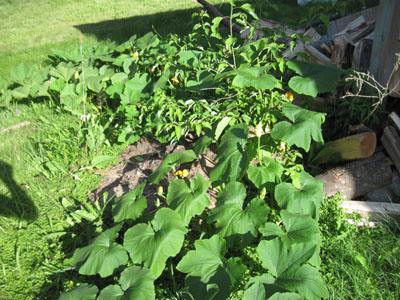 In early June my wife noticed a particularly vigorous shoot rising from an old compost pile beside our woodshed. The squash plant it eventually revealed itself to be has flourished joyfully, spreading in two directions, while the pitiful growths in one of our new raised beds refuse to be coaxed into thriving.
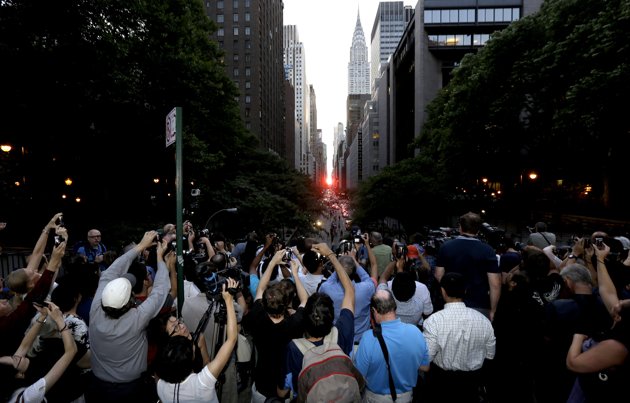

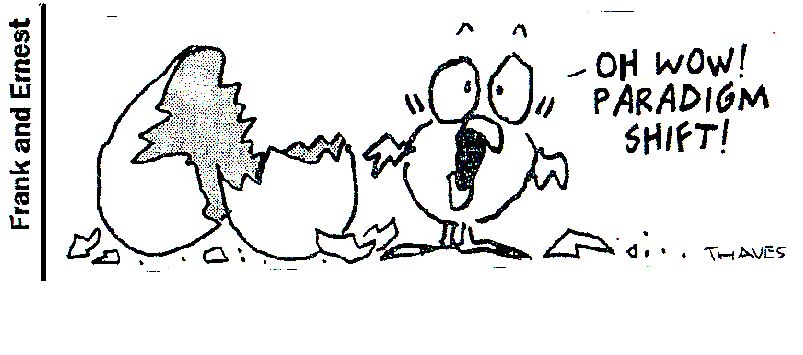
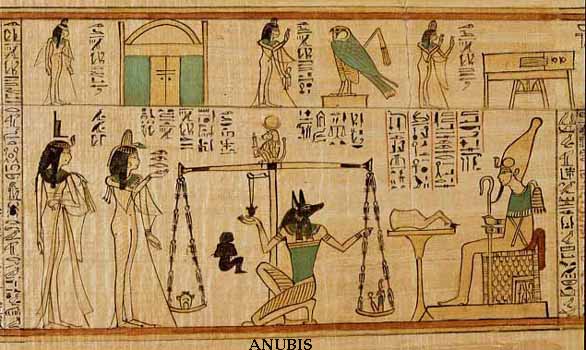







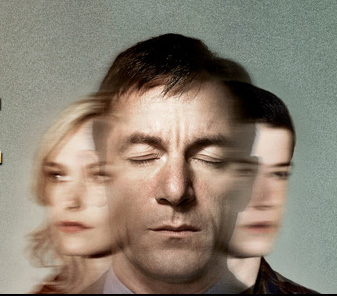



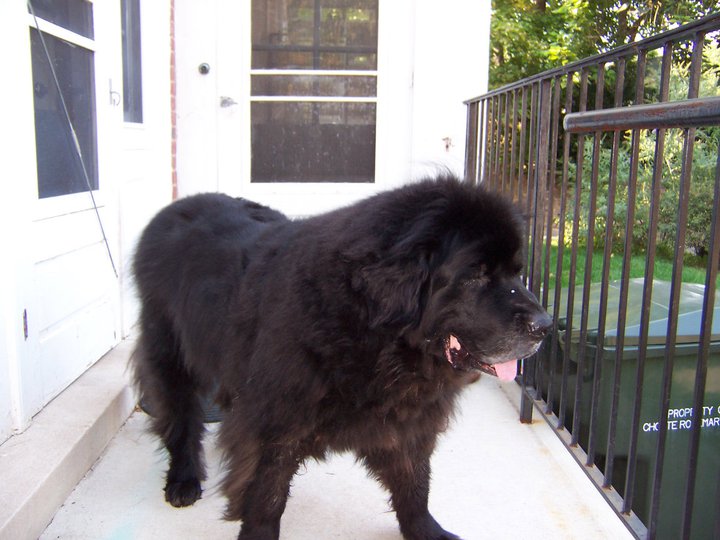




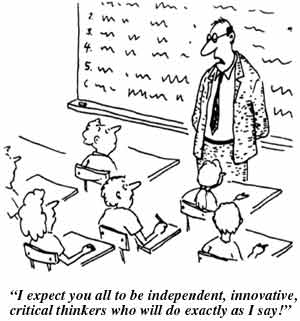


 A Druid Way