Archive for the ‘spirituality’ Category
 Author, Episcopal priest and current professor Barbara Brown Taylor has written An Altar in the World, a splendid little book on simple, essential spiritual practices which anyone can begin right now. She writes from a refreshingly humble (close to the humus, the earth) Christian perspective, and a broad vision of spirituality pervades her words. Because of her insight and compassion, her awareness that we are whole beings — both spirits and bodies — because of the earthiness of her wisdom, and her refusal to set herself above any of her readers, she makes an excellent Druid of the Day. I hope I will always remember to apprentice myself gladly to whoever I can learn from. As the blurb on her website page for the book notes, “… no physical act is too earthbound to become a path to the divine.”
Taylor brings a worthy antidote to the bad thinking and fear-mongering so widespread today. Here’s a sample:
… it is wisdom we need to live together in this world. Wisdom is not gained by knowing what is right. Wisdom is gained by practicing what is right, and noticing what happens when that practice succeeds and when it fails. Wise people do not have to be certain what they believe before they act. They are free to act, trusting that the practice itself will teach them what they need to know … If you are not sure what to believe about your neighbor’s faith, then the best way to find out is to practice eating supper together. Reason can only work with the experience available to it. Wisdom atrophies if it is not walked on a regular basis.
Such wisdom is far more than information. To gain it, you need more than a brain. You need a body that gets hungry, feels pain, thrills to pleasure, craves rest. This is your physical pass into the accumulated insight of all who have preceded you on this earth. To gain wisdom, you need flesh and blood, because wisdom involves bodies–and not just human bodies, but bird bodies, tree bodies, water bodies and celestial bodies. According to the Talmud, every blade of grass has its own angel bending over it whispering, “Grow, grow.” How does one learn to see and hear such angels? (14)
/|\ /|\ /|\
Taylor, Barbara Brown. An Altar in the World. New York: Harper One, 2009.
Go to Part 1 | Part 2 | Part 3 | Part 4 | Part 5 | Part 6
 Much of what we can do with initiation consists of bringing the inner experience outward, establishing it in consciousness, so that we can begin to live in and from the new awareness. That can often mean we find ourselves expressing it through light, sound, color, form, in painting, drawing, photography, dance, music, writing, embroidery, etc. — some way to bring that inside stuff into this realm of touch and smell and contact and physical sensation. The correlation doesn’t need to be, won’t be, exact. Doesn’t matter. It’s a bridge to somewhere over the rainbow, where the sidewalk ends, where the path disappears into a pool of still water. Pick(le) your metaphor.

Believing, as the (transformed) saying goes, is seeing. We see it through, we manifest it, because we’ve seen it before, maybe via an inner sense that doesn’t always feel like sight but may come as some other way of knowing. Do we need to be told “what to look for and when” as the cartoon suggests? Only if we’re focused on proof rather than transformation. Only if we’re trying to see somebody else’s vision. Ours, however, is ours — it doesn’t require tricks. (True, it may sneak up on us, or we may be the ones doing the sneaking.) Others may well “believe” it when they see it in our lives, when they have something they can contact that reassures them we’re still grounded here. Even if — or especially when — we’re not, anymore. Or not like we were, exclusively. We’re not freaks (at least usually not obvious ones). But the life that flows through us when we complete the circuit and connect to both poles comes across to everyone. Each person is charged at least a little, whenever any one of us is. The democracy of spirit. The changes come, and with a measure of luck and grace and good weather, we survive this life again, and enough of our loved ones are still with us to carry on.
If it’s a difficult initiation — unwanted or unsought — we may resist the awareness. The divorce, the scary diagnosis, the death of a friend, the chronic pain. But even if it’s the events and timing of the outward initiation that seem to be the launch-pad, the dividing line between our old and new selves, almost always, in my experience, sign-posts and markers of the inner preparation and change have shown up beforehand. We just may not recognize them till later, if at all. Scant consolation when your life falls apart all around. And even less welcome are the well-meaning Others in your life who may let slip that they “saw that one coming a mile away.” (But could we listen, could we hear the warning? Nope. Absolutely not. Don’t want to, don’t tell me, I don’t want to hear it!) Sometimes deafness is protection, the only shield we have at the moment. Compassion for ourselves, for others in that moment, and after.
One of the reasons I maintain this blog is the opportunity it gives me to test and measure some part of my inner worlds against this outer one. After all, this is the world I live in with a physical body, and if I want to use here what I’ve experienced elsewhere and inwardly, it needs to be adapted to the dynamics of this world. This physical life is one pole of the circuit that is our existence. The other pole lies in our inner worlds, but that’s no reason either to discount it or to grant it a superiority over everything else that it doesn’t deserve. Who has explored “everything life has to offer”? I’ve been around for several decades, and I still feel like a rank beginner, like I’m only just starting to do more than scratch the surface. And yet at the same time as doors open, a strange-familiar welcome lies on the other side, like I’m returning to something I’ve always known but haven’t yet walked. Now (first time? second time?) I’m setting foot there.
 In the first branch of the Mabinogion, Pwyll prince of Dyfed encounters Arawn, Lord of the Otherworld, and the exchanges that develop between the two realms profit both of them. It’s a circuit both literal and figurative, as most things are: accessible to the metaphorical part of our minds, but also to our inner senses, if not our physical ones. And sometimes the division falls away and no longer separates the worlds. In the Western Tradition, Samhain or Hallowe’en celebrates just such a thinning of the veil. The Otherworld enters this one, or we journey there in dream or vision, and we become walkers in both worlds. Sometimes this world can then go transparent, and we see both worlds simultaneously, that old double vision that dissolves time and distance and the game of mortality. Then the veil falls again, easy concourse between the worlds slips away, and we resume to our regularly scheduled lives. Except not quite. We’ve changed.
As the old U.S. Emergency Broadcast System (now the EAS) used to say, more or less, “Had this been an actual emergency, you would have received instructions about what to do next,” except that instructions are already hard-wired in our hearts. Listen without listening, and all we get is static. The station has nothing more to say to us. No instructions. It seems like no one’s at the controls. No directions. If we can’t easily access them any longer, out of neglect or fear or ignorance, sometimes there’s a gap between learning about the “emergency” and “receiving instructions ” — a gap of hours, months, years, lives even. Where to go, what to do, how to go on, all become unknowable, impossible, lost to us. And so the ferment works in us, till we’re driven to find out, to quest for wisdom, to cry for vision. And what we ask for, we receive — eventually — as the Great Triad records: Ask and you will receive; seek and you will find; knock and it will open to you. Eventually. Patience, old teacher, maybe the earliest and longest lesson of all. Another face of that strange love that sometimes seems (dare we admit it?) built into things, that will not ever let us go.
Go to Part 1 | Part 2 | Part 3 | Part 4 | Part 5 | Part 6
Updated 15 March 2013
/|\ /|\ /|\
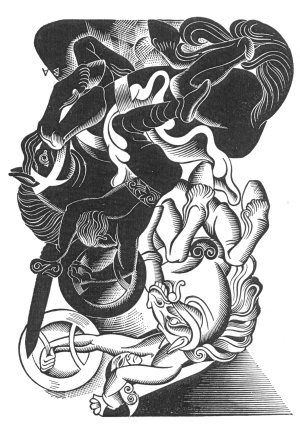
Images: mystical dancer initiation; proof; b&w figures
[Part 1 | Part 2 | Part 3 | Part 4 | Part 5 | Part 6 | Part 7 | Part 8 | Part 9]
Crying for vision, I step into the forest. Early twilight cloaks me, and mist cloaks everything else. A shiver stalks my spine. I feel something tread nearby with feet heavy as horses’ hooves, yet subtle and delicate as cloud. How it can be both I don’t know. Something breathes on my neck, though when I spin around I know nothing will show. Yet. I know I can freak myself out — I’ve done it lots of times. This is different. It is not fear, at least not fear as I know it. Instead it comes as joy and awe mixed, like the charge of touching the bark of a towering redwood a thousand years old, or the first glimpse of a landscape wholly remade by a night’s snow — beauty unlooked for, encounter with something awake and vital and ancient that I’m paying attention to at last.
How to explain it? Almost anyone listening would think I’m crazy, when all I can do is say “Look! Don’t you see them?!” as they dance and stalk and whirl themselves all around us both. And all the other person can do is shake his head at me, totally ignoring them as they gaze at him and size him up — perplexed, annoyed, amused, indifferent — depending on their natures. I shrug and turn back to them, watching, listening, enjoying and returning their welcome.
/|\ /|\ /|\
Updated 23 April 2015
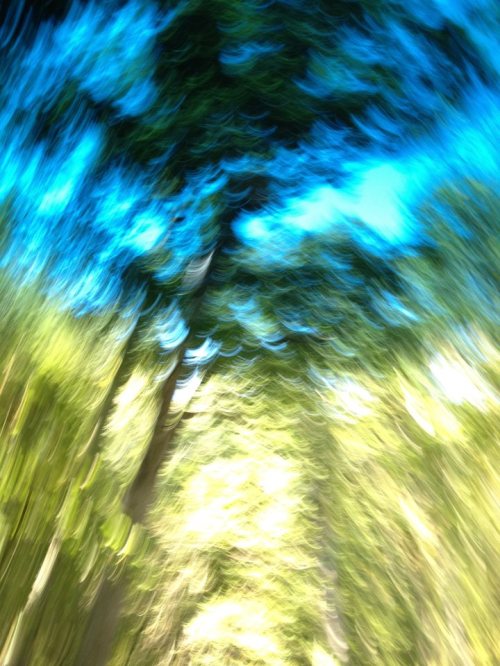 This unretouched image of trees and sky, courtesy of Druid Debbie Brodeur, was taken from a moving car. How much glory lies just behind the “ordinary.” Our eyes insist there’s “nothing new,” while all the time endless wonders dance past us. It’s possible to remember to “look again,” to re-vision things, even a few more times a day. Small steps, to see the world new again.
She was Druid. When she needed to know things, a way would open. She was learning to trust it. Sometimes an opening way asked for patience, and that took work, still. Waiting rarely looked hard when others did it, but she’d done enough herself to know better. A song made it easier, and when she listened a certain way, now and again songs came, tinkling on the air, or roaring out of someplace she didn’t know she’d gone to till she returned with a start, the phone ringing, or her cat Halfpint curled in her lap and kneading one thigh with paws tipped with needle claws. Often the words came later, the melody already running ahead of her, in and around her attention till she got a version down on paper or on her music program.
She was Druid, she knew. It was a long time coming, that knowledge. Sometimes she’d resisted, convinced she was done with paths, and seeking and god-stuff, anything like that. But through it all the gifts kept arriving. Hard ones, and easy ones too. Often enough it meant whatever the land gave her at the moment. For proof, all she had to do was look at her house, filled with stones, bird bones, animal skulls, pressed flowers, carved branches, vervain and basil and mint, garlic and St. John’s Wort and other herbs she was learning as she went. After Jack left with his secretary, she got the little ramshackle two-bedroom house and the six acres of pasture they’d planned to farm, and slowly the once-empty rooms filled with links to the green world outside the door. Inside, too. Spiders in the corners, mice in the walls, squirrels skittering across the tin roof, crows caucusing in the back yard.
Jack. One of the hard gifts. He left, and for a while the emptiness threatened to eat her alive. A big hole she had to stop looking into. No bottom, but walls dark with bitterness. So she stayed busy volunteering and running the food pantry and substituting at the local elementary school, until one day a boy complained about the smell of incense that seemed to follow her wherever she went. “Witch” was the real reason, she heard from a sympathetic colleague. Parents complaining about “that teacher.” Though when the principal called her in “for a little chat,” what he said was they just couldn’t rely on her to be on time. All she knew then was that her morning ritual had just cost her one needed source of income. Hard gift.
A month of therapy, and “you’re stuck in a box labelled ‘wife,'” until she knew she could give herself better advice, and cheaper. When the box is the whole world, then I’m Druid in a box, she thought. And thinking inside the box is a great place to start. Hardly anybody else is in here. They’re all outside, because that’s where they’ve been told they should be. That’s where the clever ones are, the ones who want to be ahead of the curve. Mostly people do what they’re told. But almost always something held her back from doing what everybody else did, shoved her or kicked her sideways. A kind of resistance, a suspicion, a compass set in her belly and spinning her some other way. Ahead of the curve? It was more than enough to be the curve, bird’s wing in the air, crescent moon, arc of water coursing over a falls. The backyard junipers and oaks and one old willow bowing at the sky.
Then it was October, her birth month, and in spite of turning 30 in a few more days, her mood lightened. She could feel a shift coming, something new trying to find her, a little blind, and maybe needing help. She could help it. Listen, she reminded herself. It was one thing she’d finally gotten good at.
To be continued …

The Equinox is upon us. Still the Druid Prayer of the Revival echoes from last weekend at the East Coast Gathering:
Grant, O God/dess, thy protection,
And in protection, strength,
And in strength, understanding,
And in understanding, knowledge,
And in knowledge, the knowledge of justice,
And in the knowledge of justice, the love of it,
And in that love, the love of all existences,
And in the love of all existences, the love of God/dess and all goodness.
The lake in the picture (photo credit Sara Corry) is at the base of Camp Netimus, where the East Coast Gathering assembled for its third year this last weekend. In the presence of such moments, it’s easier to perceive that the physical world is one face of the holy, or as Jung expressed it, “Spirit is the living body seen from within, and the body the outer manifestation of the living spirit—the two being really one” (253). Humans respond to beauty and to such transparent intervals as this, often in spite of what they may consciously believe or claim about reality. We cannot help but be moved because we are part of what we witness. We may witness a score of hierophanies, visions of the divine, each day. Whatever our beliefs, these openings to the sacred nourish and help sustain us.
The rebalancing we hope to accomplish depends on our state of consciousness, on our ability to accept a gift given. And so in a workshop last weekend, “The Once and Future Druid: Working with the Cauldron of Rebirth,” we repeatedly turned to another seed-passage, this time from Neville’s The Power of Awareness: “The ideal you hope to achieve is always ready for an incarnation, but unless you yourself offer it human parentage, it is incapable of birth.” I carried that with me for several days, marveling at its ability to focus the attention. Whenever I found myself falling into old patterns of thought, I return to its simple truth. The power of such meditations and seed-exercises reaches beyond their apparent simplicity or even simplisticness.
In one sense we are consciously meme-planting, even if it’s on a personal level. Why not plant our own, rather than be subject to others’ constructs, which may not suit us? Yes, these seed-thoughts and heart-songs may remain lifeless if we do not ignite them with our attention and desire. But properly sustained, like a campfire (sorry … the camp images stick with me!), fed and banked and tended, it can pour out a healing and transformative warmth all out of scale to its visible size.
/|\ /|\ /|\
Jung, Carl. Modern Man in Search of a Soul. London: Routledge and Kegan Paul/Ark Paperbacks, 1984.
Updated 9/28/12
Go to Part 1 | Part 2 | Part 3 | Part 4 | Part 5 | Part 6
 Many people share a hunger for meaningful actions and deeds, choices and moments, in their lives. We especially seem to long for meaning in the face of so many acts in our daily experience that, without the gift of some kind of transformation, can seem so deadly, vacuous and meaningless. We wait in lines, we reflexively check Facebook and email countless times a day, we make the same daily drive to work, we pay the same endless bills month to month, and talk with the same acquaintances who never seem to grow and move beyond their original assumptions and opinions — we tire and bore even ourselves with our own personalities and routines and habits …
The world is too much with us; late and soon,
Getting and spending, we lay waste our powers;
Little we see in Nature that is ours;
We have given our hearts away
as 19th century British poet William Wordsworth remarks in a sonnet named for the first line. That sensation and the force that drives it have only intensified in the intervening two centuries. Whatever stimulant of choice we turn to, we need increasing doses just to keep going: stronger energy drinks, more vivid cybersex, the overhyped fake violence of summer blockbusters, the brief but lovely bliss of cutting and piercing. And if you agree as I do with the adage that anyone who points out a problem is also challenged at least to begin to offer a solution, and not just complain about it, here goes another reflection on initiation. Site stats continue to identify this topic as one of the most popular over the past months — and there are good reasons for this.
How can we start to open up a way forward? In the 24 November 2009 post on his blog, The School of Myth, Martin Shaw identifies three common stages of initiation: severance, threshold, and return — a sacred triad all its own.
Shaw astutely diagnoses us: so often we’re addicted to severance, while never moving beyond it to the next stage of initiation. We know how to do this part; we’re severance experts. We endlessly cut ties, get divorced, quit jobs, abandon projects, dump friends, remaking ourselves any way we can, redecorating our homes, tatooing, starving and stuffing our bodies, changing styles, desperate for healing change, for “something more,” for the authentic, the genuine, the real, in a world that, whenever we touch it, feels increasingly plastic. Sometimes only pain feels anything like real. Once a core initial experience of initiation, the doorway, a “shock to the system” because it immersed us in something new, severance is now often the default setting of our lives.
Shaw then focuses on threshold, noting that
Any individual, deprived of certain staples and put into a ritually held disorientation, can open up to the time-honoured fruits of the experience. With Vision Quests, the focus is not on cultural costume or mythic inflation but a whittling away, a search for a certain ‘core’ of you. It is kept empty of any ethnic affectations, but seeks some universal ground of being that is ageless.
At some point in this period of liminality, perceptions of community are radically expanded; personal mirrors are held in moss and rock formations as well as the family and marketplace. The experience of separation from earth diminishes, it has information for you, you are related. This has huge implications in an era of climate change and global warming. It is from the edge of things that wisdom originates — the hope is that the edges of our imagination are porous enough for such dialogue to take place.
So this part of the process seems possible, viable, even crucial for re-negotiating (or re-membering) our relationship to wild nature. The emphasis has to be on the core spiritual and psychological opening initiation offers, rather than a self-conscious aping of cultural costume.
But it is return, Shaw observes, that has become for contemporary humans the hardest of the three stages.
Initiation is a process dependent on grief and focuses on a de-[s]cent, a pulling away, a going down. When we refuse to go down, we run the risk of anaesthetising ourselves. Cultural anaesthetics could be described as engendering a subtle trance, and so the shining and uncertain face of the returning initiate carries a kind of beauty that society is trying to defend itself from — the implications are simply too challenging.
Returnees from initiation threaten the status quo — they’ve seen what others refuse to acknowledge, they’ve confronted what others have no desire ever to face if they can possibly avoid it, because it will mean the end of their carefully constructed lives built on false foundations, on accommodating pain and suffering, on acclimating to misery. And no one wishes to support and nourish and sustain the awareness pouring out of the returnee, the new initiate with the “shining and uncertain face” — or even if they wished to help, they wouldn’t know how. The cultural mechanisms to feed the new initiates more of the kind of energized life they experienced at initiation, and especially the presence of older initiates who have themselves assimilated some of the lessons of their own initiations and can often help the most out of personal experience, are too often lacking.
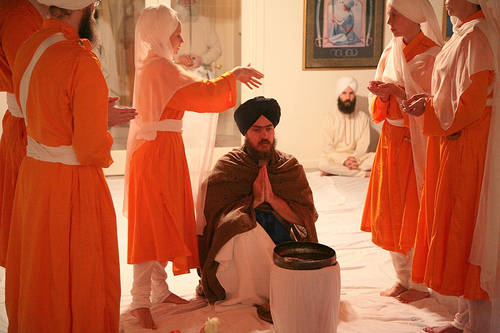 Hence the prevalence and popularity of workshops, retreats, weekends, camps — any means by which initiation can be fostered and even temporarily encouraged to continue its transformation as long as the special group consciousness persists which acknowledges and cherishes and values it. We have an abundance of gurus and guides, true and false, reliable and negligent, like James Ray whose inexperience and carelessness led to deaths of three clients in a sweat lodge during a 2009 retreat. The impulse to induce severance was certainly valid, but its form was too extreme and poorly managed.
One place to begin is to reflect on past initiations and more fully absorb their lessons. Keeping a journal, blog or some kind of record of experience and reflection over time proves invaluable in accomplishing this. Today is a good day to begin. We obsess over what we still need to learn and explore, and if we can’t see these things in our own lives, often we can detect them in others’ — and they in ours. As we become more familiar with the ongoing effects of past initiations, we’re more likely to discern new ones as we enter them — and they exist in abundance in everyone’s lives.
More in coming posts.
Go to Part 1 | Part 2 | Part 3 | Part 4 | Part 5 | Part 6
/|\ /|\ /|\
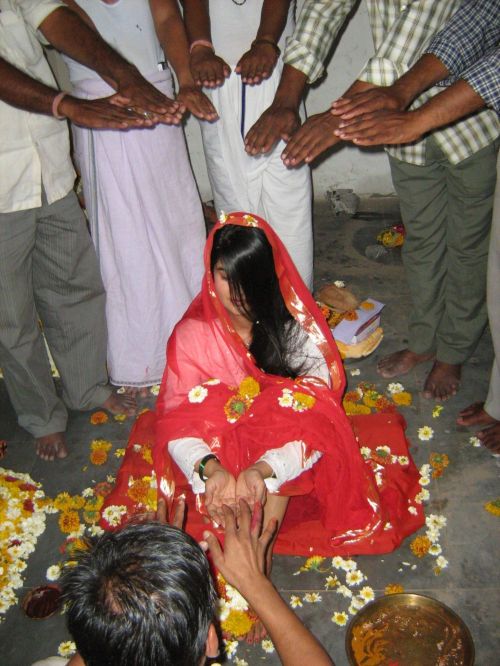
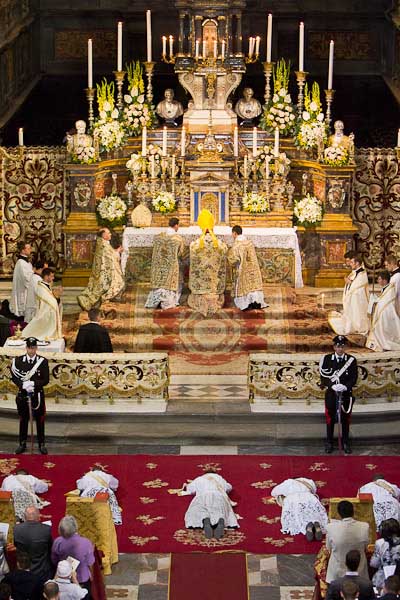
Images: Ghana initiation; Catholic ordination; Sikh Amrit Sanchar.
After my father passed away in the winter of 2008, I wasn’t able to scatter his ashes the following spring as I’d planned. A cancer diagnosis laid me low soon after his final decline, and his childhood home in Niagara Falls in western NY state, as well as the farms he had owned and worked for decades, and where I grew up, were 450 miles from my wife’s and my home and jobs in CT. During my medical journey, we’d also bought a house in VT, and with follow-up radiation and a personal leave from our work, along with numerous loose ends to tie up, there’d simply been no good time. And the task and my intention, if not my father’s, deserved good time.
My dad had always been indifferent about the whole thing. Beyond asking to be cremated, he seemed to feel, perhaps from the many animal deaths and births that inevitably accrue in a lifetime of farming, that one more dead body was something to dispose of, but nothing worth much fuss. “Throw me on the manure spreader when you go out next, and toss me at the back of the cornfield,” he’d always say in his wry way, whenever I asked him one more time about his wishes. That was what we did with the occasional calf that died of pneumonia or scours. In six months, crows and time would eventually leave just whitening bones. But at the time of my dad’s death, we no longer owned the farm, and in any case, beyond a certain undeniable fitness to his request, a desire to make that one last gesture for the good of the land, as human fertilizer, there was the small matter of legality.)
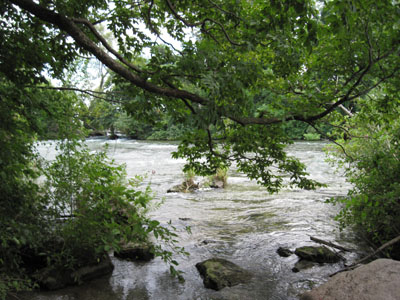
This summer a family reunion in Pittsburgh provided the opportunity to attend to this final matter. My wife and I drove there and back, and on the way out last Friday afternoon, after a slow cruise along Lakeshore Drive that hugs the south shore of Lake Ontario, we made our way to downtown Niagara Falls and then over the bridge onto Goat Island. So around 2:00 pm or so, you could have seen me squatting at the edge of the Niagara River, a few hundred yards above the Falls, on the second of the Three Sisters islands that cling to rocky outcrops in the rapids. The day was overcast but pleasant — typical of western NY, with its delightfully mellow lake-effect summers. Between my feet rested the heavy plastic bag of dad’s ashes, in the plain box the funeral home had provided.
I had nothing to say — no particular ceremony in mind. Words earlier, words around and after his death, words a week or so ago in a dream, but nothing now. This was for experiencing, not talking. Six years before, I’d returned my mother’s ashes to the Shellrock River in the small Iowa town of her childhood. That day, the easy meander of the river, the June sun on my back, the midday stillness, and the intermittent buzz of dragonflies skimming the water lent the moment a meditative calm. As my wife and two of my mother’s cousins watched, I slowly poured the powdery ashes into the river, and the water eddied and swirled as it bore them downstream. Watching the ash disperse downstream, I felt peace. Thus we can go home.
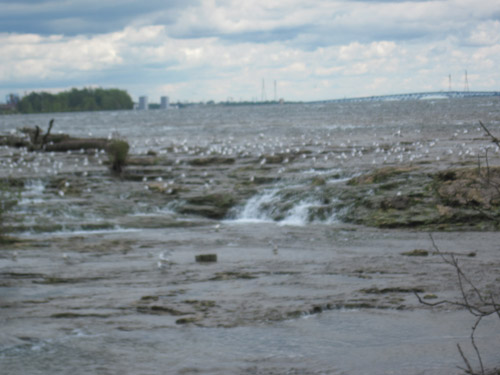
This day was different. A steady damp breeze rustled the leaves of the trees. On another treeless outcrop a short way upriver, the harsh voices of the flock of gulls were only intermittently inaudible over the tumble of water and the dull roar of the falls downriver.
I sat, heels in mud, watching the current on its endless course past and away. When I opened the bag of ashes, a sudden gust of wind caught some and dusted my left arm, which startled me, then made me smile. It was as if my father approved — that behind his gruffness, the elemental beauty of the spot, a family favorite, might matter after all. I brushed off my arm, and then poured the chalky ash into the spinning waters and watched it spread and then, eventually, the water cleared as it washed away.
/|\ /|\ /|\
Today’s “Druid of the Day” also happens to be a Druid full-time: presenting Cat Treadwell, a British Druid who lives in Derbyshire, UK. (That’s “Darbyshire” for us Yanks who might actually trust English spelling, along with “clerk” and “Berkeley” as they’re pronounced in the mother country.) Cat’s out about her Druidry, her blog The Catbox is worth reading, she’s just published a book based on her experiences, and there’s a fine interview of her at the Wiccan Pagan Times. So if you’re inclined, there’s some reading for you. I won’t spoil it by discussing it here.
Most of all I honor Cat because she exemplifies the spirit in the villanelle by Theodore Roethke, “The Waking”:
The Waking
I wake to sleep, and take my waking slow.
I feel my fate in what I cannot fear.
I learn by going where I have to go.
We think by feeling. What is there to know?
I hear my being dance from ear to ear.
I wake to sleep, and take my waking slow.
Of those so close beside me, which are you?
God bless the Ground! I shall walk softly there,
And learn by going where I have to go.
Light takes the Tree; but who can tell us how?
The lowly worm climbs up a winding stair;
I wake to sleep, and take my waking slow.
Great Nature has another thing to do
To you and me, so take the lively air,
And, lovely, learn by going where to go.
This shaking keeps me steady. I should know.
What falls away is always. And is near.
I wake to sleep, and take my waking slow.
I learn by going where I have to go.
“Great Nature” always has other things to do, and doesn’t hold back but simply does them. And for three of them right now — you, me, and Cat Treadwell — I’m grateful, and offer this short post in thanksgiving.
/|\ /|\ /|\
[Part 1 | Part 2 | Part 3 | Part 4 | Part 5 | Part 6 | Part 7 | Part 8 | Part 9]
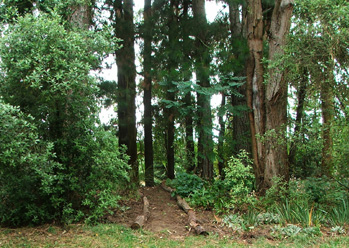
In the grove the Druid sits. In my grove, the one I’ve constructed in an inner world, via imaginal energies. With the tall slender trees of entrance standing on either side of the portal, a space between them wide enough for a single person to pass through. And he is welcome here, though I don’t remember inviting him. He is always welcome, a friend who will never presume.
Today he indulges me by wearing Druid robes — they make him familiar, with his dark brown skin, that homely, beautiful face I would know anywhere — and I relax into our conversation. I know him from somewhere else, too, someplace on the edge of awareness, a realm or time not quite pushing through to full consciousness. He does what he needs to in order to reach those under his guidance, and to put them at ease so that he can work with them. Awe or fear or worship is useless to him. Attention? That he can use.
His words issue from a place quiet and full of listening. I’ve come to trust him instinctively, the way wild animals do in the hands of those who love them with touch and gentleness, a welcome of care and compassion for a fellow being in the worlds. They know that touch, that presence, and their knowing has nothing of the talking human about it. It’s a language older than words.
He knows when to use words, too, and now he’s speaking about a past I’d forgotten. I remember it as he speaks, things I didn’t know I knew, things I have not needed to remember until now, because until now they would find no place in me to live, or have any value or significance. They would feel like they belonged to somebody else, foreign to me, alien, no more at home than a bird of the air caught in a small chamber, fluttering at the windows. What is it that stands between me and freedom, this transparent flat barrier I never knew was there, blocking me, hard as thought? But no, I have no wings, I’m not the bird. But for a moment, there …
The Druid turns to me, a look deep as evening in his gaze. “You are all you have ever been. Do you remember our first meeting, long ago?”
“It was a market,” I said. “And I remember. I was … I was drunk.”
“Sitting slumped against a wall. When I walked by, though, you spoke to me.”
“What was it I said? ‘Keep walking, don’t talk to me now. I don’t have anything left in this life for you.’ Something like that. I was embarrassed. I didn’t even know you.”
“Yet you gave me some fruit from your stand …
“Yes, I remember. A handful of marula.”
“Where were we?” he asked me softly.
“It was … West Africa. Africa was my home then.”
“Yes. What else do you remember?”
But somewhere in the distance a dog is barking. My focus falters, pulls me away from this place and back to my room in our Vermont house. The neighbor’s dog, Jim’s — barking as he always does, every afternoon, impatient for Jim to get home, release him from the chain and walk him, feed him, let him back into the house.
Damn, I think. It’s all gone, the vision’s gone.
But he’s still with me.
“Dogs bark on all the planes,” he’s saying. “They’ll bark, and then for a time they’ll be silent again. You can use them as a guide, or a distraction. Is there a dog barking near this grove?”
I listen. “No,” I say.
“Good. You’re back. Now, let’s continue …”
/|\ /|\ /|\
Image
Updated 23 April 2015
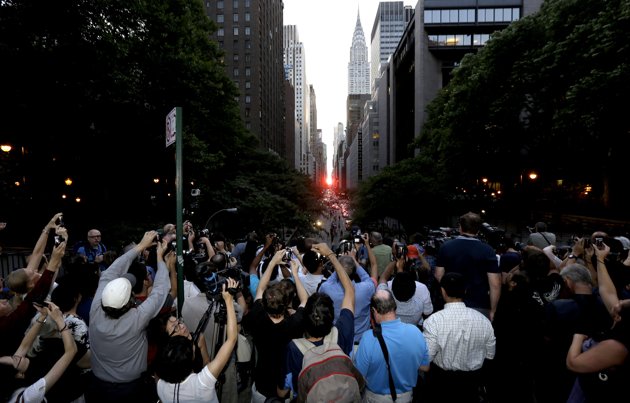
Our green world and ready contact with its natural rhythms can sometimes feel remote in urban settings. Because so many people live in one of the “mega-metro” areas on the planet, their appreciation of the natural world may often burn more brightly than it does for the small-towner who has lived all her life surrounded by cows and trees. With Tokyo, Seoul, Mexico City, New York and Mumbai heading the list at over 20 million souls each (counting their greater metro areas), it’s good to celebrate the green world particularly when it makes itself known among the girders and concrete. The first entry in my “Druid of the Day” series, just started, was a nod in that direction. Manhattanhenge is another one, and much larger:

If you follow Yahoo, you probably caught it. The caption for yesterday’s image reads “The sun sets during ‘Manhattanhenge’ on July 12, 2011 in New York City. The Manhattan Solstice is a semiannual occurrence in which the setting sun aligns west-east with the street grid of the city.” There’s a short sequence of similar images worth visiting.
We need such rhythms — to calibrate our biological clocks, to remind us how the world nourishes and sustains us, and how we need to remember it in our daily decisions — not out of piety for the Earth Mother (though nothing’s wrong with that, of course) but for the very real reason that this world is home. Whenever we can truly celebrate, our hearts open. And in a time when so much “news” doesn’t help us live better, stopping to enjoy the sun looking down the city streets is a good thing.

/|\ /|\ /|\
For those interested in astronomical details and explanations, Wikipedia’s entry for Manhattanhenge helps. The event occurs twice a year, in May and July, on either side of the planetary solstice, as the sun makes its (apparent) journey north and then south again after the solstice.
New York Times columnist Dana Jennings wins the first “Druid of the Day” award particularly for this portion of his column in yesterday’s (7/10/12) Times:
Scenes From the Meadowlandscape
Monet had his haystacks, Degas had his dancers, and I have the New Jersey Meadowlands from the window of my Midtown Direct train as I travel to and from Manhattan.
But what, it’s fair to ask, does squinting out at the Meadowlands each day have to do with art, with culture? Well, as a novelist and memoirist for more than 20 years, I like to think that if I stare hard enough — even from a speeding train — I can freeze and inhabit the suddenly roomy moment. Through the frame that is my train window I’m able to discern and delight in any number of hangable still lifes.
And the Meadowlands never disappoints, no matter what exhibition is up.
Its shifting weave of light, color and texture hone and enchant the eye. The sure and subtle muscle of the Hackensack River is sometimes just a blue mirror, but when riled and roiled by wind and rain it becomes home to slate-gray runes. The scruff, scrub and brush are prickly and persistent, just like certain denizens of New Jersey. And the brontosaurus bridges, their concrete stumps thumped into the swamp, idly look down on it all.
For his focus, intentionality and the requisite quietness to see, and then — just as important — turn the results of that seeing into a window, an access point for others who read his column to do the same “noticing” in their own lives, Jennings earns my commendation as “Druid of the Day.” This seemed like a good series to launch, to help remind myself as well as my readers of ways we can be more attentive to beauty around us, particularly unexpected instances — free, a gift if we only notice them — and receive their transformative power.
City or country, it doesn’t matter: we can be witnesses of natural power and beauty, and learn what they may have to teach us, anywhere — including Manhattan, and from the window of the Midtown Direct train. These are no less — or more — “Druidic” than any other spots on the planet.
Know others who deserve recognition as “D of the D”? Please send them along to me and I’ll write them up and include an acknowledgement to you in the citation. Thanks in advance.
/|\ /|\ /|\
Compromises. They get bad press. In this time of American public life, compromise is among the worst of bad words. It’s true that we often seem weakest where we make one. That’s OK, as long as we aren’t blindsided by them, as long as our compromises aren’t destructive to us, as long as we can make them and live with them as conscious acts. But any one of those challenges can pierce us to the core.
As a case in point, I want to address a “local” issue that echoes everywhere. Last December, over a thousand residents in Vermont, New Hampshire and Massachusetts gathered to protest the continued operation of the Vermont Yankee (VY) Nuclear Plant beyond its original 40-year licensing period. There were over 130 arrests, though the protest remained orderly — both protesters and police had prepared months in advance.
As Vermont transplants rather than natives, my wife and I inherited the controversy when we settled here over a decade ago. So first, some details — as unbiased as I can make them, from sources on both sides. A Druid tries to find the multiple tertiaries or neglected alternatives between two opposed binaries, so bear with me here.
First, the pros: VY has been through $400 million of upgrades since it was first commissioned in 1972. These include a 2006 retrofit that allows the reactor to generate approximately 20% more energy than its original design specifies, obviating the need to build other plants or increase fossil fuel use. Vermont relies on the plant for about 30% of its current energy use, and when VY is down for refueling, increased consumption of gas and oil must make up the difference. Decommissioning the plant would require finding other (and mostly more expensive) energy sources to make up the shortfall. Published estimates put the pollution savings over the past four decades of operation at 50 million tons of carbon that VY’s nuclear capacity has avoided dumping into our atmosphere. That clean operation contributes heavily to keeping our famously pristine Vermont air famously pristine. Employment statistics put the number of jobs directly connected with the plant and its operation at around 650 people, and the impact on the state economy in the hundreds of millions of dollars. Obviously, shutting down the plant isn’t just a matter of pulling the plug.
Second, the cons: VY’s design closely resembles the Fukushima reactor in Japan that failed in the 2011 earthquake and subsequent tsunami. The 2006 upgrade that allows VY to generate approximately 20% more energy beyond its original design specs imposes unknown and unstudied stresses on a reactor structure deteriorating in spite of repairs — uncertainties the U.S. Nuclear Regulatory Commission (NRC) admits. The plant stores its spent fuel in containment tanks that are now already at 95% capacity, yet the scheduled recommissioning is for another 20 years. VY sits on the Connecticut River, whose waters ultimately empty into Long Island Sound. An accident to either the reactor or fuel containment pools would not only affect the immediate area of mostly small towns, but carry radiation and waste downstream directly into the middle of major centers of population like Springfield and Hartford, and numerous smaller towns like Greenfield, Deerfield, Northampton and Holyoke, MA, and Enfield, Middletown and Old Saybrook, CT. It would then spread into the Long Island Sound and quickly impact eastern Long Island. Tucking the spent rods and other waste away in “remote locations” like Yucca Mountain is no real solution, only a poor stop-gap measure.
Critics cite a string of mostly minor incidents at the plant over the years — small leaks, structural failures, and accidental discharges, as well as cover-ups, lies, bribery and arrogance in responses by the parent company Entergy, which runs eleven other nuclear plants around the country. Vermont governor Peter Shumlin openly says he wants VY shut down. Entergy’s own website for VY (at www.safecleanreliable.com) addresses safety, somewhat obliquely, with a list of emergency contact numbers and the statement: “The area approximately 10 miles around the Vermont Yankee is called the Emergency Planning Zone. Plans have been developed for warning and protecting people within this 10-mile area.” Within this 10 mile radius live approximately 35,000 people. Yet after the Fukushima reactor meltdown in Japan, the NRC recommended that Japan extend its emergency safety zone radius to 50 miles. The number of people within a 50 mile radius of VY is 1,500,000.
Here’s an aerial view of VY, courtesy of Entergy:
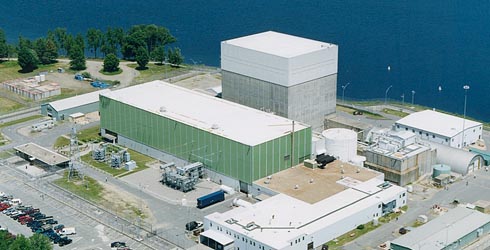
VY may well be shut down in some future election cycle, or it may face a spate of incidents that call into question its safety. It may even run safely (for a nuclear plant) until its all of its operating extensions expire. Until then, unless I and everyone else who benefits from the plant volunteer to cut our energy usage by that 30% that VY generates, and help subsidize a transfer to alternate sources of energy, can we justify our self-righteous claims to “shut it down” with no further personal sacrifice? What are we willing to give in order to get what we want?
Though some people deride our Druid rituals and mock our perspectives about the earth, what we do to the world we do to ourselves in very real ways. The facts can be disputed — the principle operates in full force as it always has. What goes around comes around: we know this, which is why such sayings have penetrated the common language and consciousness. We alive today are part of the world’s karma — our karma, the choices we make and actions we take every day. I turned on the oven to heat my lunch earlier today. Would I be willing to make do with a solar oven, or eat my meal cold, or … any of a number of alternatives?
A Wise One observed that in the last decade the entire world had the opportunity to accept a major initiation — a step forward in consciousness, based in large part on our accepting greater responsibility for our actions and their consequences. As a single aware corporate entity, the world consciousness refused this opportunity. (Was it majority vote?!) Individually we still all grow at our own paces, but we also take part in a world shaped by planetary consciousness as a whole, to which we each contribute a part. We can plainly see the results all around us right now, and whatever we may think of the ultimate causes, they began in human choices. As Gandalf observes (and why shouldn’t a decent movie Druid get his share of press?), if we regret the choices we see and the consequences of those choices which we know many will suffer, “so do all who live to see such times, but that is not for them to decide. … All we have to decide is what to do with the time that is given to us.” And that is enough for any film character, or four-dimensional beings like ourselves. Each life improved is a life improved, and within our circles we can accomplish much of value before we leave this world. It is not our task to redeem the planet. World-saviors appear in flesh and myth to do such tasks. (Unless you’re signing up for the job, in which case you should have been told where to go and what to do. Just don’t ask me.) The time that is given to us is enough to fill with the best that is in us right now — not in some imagined future “when we — or our people — have the power.” To leave the last words again to Gandalf: “[I]t is not our part to master all the tides of the world, but to do what is in us for the succour of those years wherein we are set, uprooting the evil in the fields that we know, so that those who live after may have clean earth to till. What weather they shall have is not ours to rule.”
/|\ /|\ /|\
[Earth Mysteries 1 | 2 | 3 | 4 | 5 | 6 | 7]
So here we are at the last installment of this seven-parter. Indigestion and too much caffeine. No, not the series, though you may be thinking or feeling that, too. Looking back over earlier ones I realize each post has gotten more random than the preceding one. Not sure if I’ve done Greer a favor, writing about his seven keys — keys belonging to all of us — but doing it in such a way that they’re more “notes for a revolution” than anything like a review. You can’t just dump a bunch of principles by themselves on people and expect them to see how they fit, exactly. Which is what I’ve sorta done anyway. Inoculation by reading.
Like I said, they’re more notes for a revolution, so that when it comes, you’ll recognize the advance guard and maybe the sound of the explosions and know you’ve seen and heard something like this before, and maybe deal with it better or more inventively than your brother or neighbor out here panhandling and prospecting with the rest of us. “Look what I found! It’s a … well, I don’t have a name for it, but it might be useful at the weekly swap-and-steal.” Heaven consists of the spare parts of creation that didn’t get used elsewhere. We’re destined to mine the scrap heaps for the gold everyone’s tossed there by mistake.
Here goes with the last Law. (Of course it’s never the last law. There’s always another one, like yet another stray that won’t leave, moping around for scraps. Throw it a bone, or a filet. Watch what it does with it.)
“Everything that exists comes into being by a process of evolution. That process starts with adaptation to changing conditions and ends with the establishment of a steady state of balance with its surroundings, following a threefold rhythm of challenge, response and reintegration. Evolution is gradual rather than sudden, and it works by increasing diversity and accumulating possibilities, rather than following a predetermined line of development.”*
A shiver of awe and delight coursed through me when I first read this one. Maybe nobody knows where humanity is headed — it’s not something mapped out beforehand. “The wind blows where it wishes and you hear the sound of it, but do not know where it comes from and where it is going; so is everyone who is born of the Spirit,” says the Beloved Disciple in the eighth verse of his third chapter. (What, you didn’t know portions of the Bible are a Druid stealth device? Look twice before crossing.)
Sure, our DNA has something to say about it, and so do the causes we’re always setting in motion. These will shape our experience and our future. But they’re our causes. We can change. And we want to “accumulate possibilities” because these mean freedom. The dead-end singleness of conformity and bland homogeneity leave us hankering for the quaint, the queer, the mysterious, the odd, the doesn’t-fit, the original, the new, the surprising, the fresh. After all, we left Eden (some versions have us kicked out, but the result’s the same) and we’ve been on quest ever since. But “pave paradise and put up a parking lot”? Not what we really want, is it?
In “To Holderin,” the German poet Rilke writes to a compatriot:
Lingering, even among what’s most intimate,
is not our option. From fulfilled images
the spirit abruptly plunges towards ones to be filled:
there are no lakes until eternity. Here falling
is our best. From the mastered emotion we fall over
into the half-sensed, onward and onward …
We suspect so much more of reality than we let on. Or than it does. It’s not safe to do so, but it’s right, in the best senses of the word. Who ever wanted what is merely safe, when fuller life offers itself to us? Well, some people do, and often enough they get what they desire, and before long beg to be freed of it. Poetry means “making” in Greek, and we all make, we’re all makers, poets of our lives. Song is our native tongue, or could be. It’s that melody playing just beyond hearing that we’re always trying to capture, to get back to. That crashing sound? That’s just another person banging around the music room in the dark, trying to pound out a melody.
While we’re listening to Germans, here’s Martin Heidegger: “To be a poet in a destitute time means to attend, singing, to the trace of the fugitive gods. This is why the poet in the time of the world’s night utters the holy.” Cool, just so long as we know the holy really isn’t safe at all. No place to hide. Here’s Rilke again:
Here is the time for the sayable, here is its homeland.
Speak and bear witness. More than ever
the Things that we might experience are vanishing, for
what crowds them out and replaces them is an imageless act.
An act under a shell, which easily cracks open as soon as
the business inside outgrows it and seeks new limits.
Between the hammers our heart
endures, just as the tongue does
between the teeth and, despite that,
still is able to praise …
Sometimes you get the sense from Rilke, like from other madmen and seers, that you’ve always known what he means, that in fact you’ve done what he’s saying, even though you may not be able to say it yourself. But he manages to. We leave saying to the poets as if they’re somebody, but not us, who forgets you aren’t supposed to say these things, or that nobody expected you could say them. But you say them anyway. And get inconveniently booted to the curb by your neighbors, who take over “for your own good,” and after you comes flying what you thought was your life.
So you pick yourself up, brush off the worst of the dust, and keep going, without a life if you have to. Not as if nothing has happened, but as if everything has, and it keeps on happening. Who else do things happen to, but us? We’re mistaken if we think that disconcerting little factoid that reaches the news but which happens in “some other part of the world” — outer Don’t-bug-me, central I-don’t-care-yo! — isn’t our concern. Next week I’ll find refugees from there in my basement, peering up at me. My new psychic friends, walking my dreams, if I don’t see them actually fishing through my garbage, desperate for food or love or those pieces of my life I decided weren’t worth my time.
Oh, Druids are a little bit crazy, more so on certain days of the week than others, and most of all under certain phases of the moon. We’d cry if we weren’t laughing so hard, and sometime it sounds much the same. But the spirit lightens a little, and we see the outlines of a Friend where before was only a little mannikin of sadness or despair. We keep doing this for each other just often enough to go on, suspecting ourselves of the worse motives, and probably right to do so. But there’s a fire over the horizon, and singing, and the party’s going on without us. It’s the same fire in our heads.
Shapes move and stumble around the fire, vaguely familiar, so that after joining them it seems we know them, we left them years ago, but this is a reunion where we see everyone’s suffered and grown, though some have become knotty and twisted, like old trees. But there’s a few among us brave enough to hug them anyway, and bring them into the Dance. And so we dance, all night, the last stars twinkling when we finally stumble home to bed and a delicious, bone-weary sleep. And later, who knows what waking?
/|\ /|\ /|\
*Greer, John Michael. Mystery Teachings from the Living Earth. Weiser, 2012.
[Earth Mysteries 1 | 2 | 3 | 4 | 5 | 6 | 7]
“Everything in existence exists and functions on one of several planes of being or is composed of things from more than one plane acting together as a whole system. These planes are discrete, not continuous, and the passage of influence from one plane to another can take place only under conditions defined by the relationship of the planes involved.”*
One “map” of the planes I’ve found useful also features in many other spiritual teachings (mystical Christianity, Neo-Platonism, and some forms of Hinduism among them), including one I’ve followed for over thirty years, and identifies the physical universe as just one of several other planes. Besides the physical plane which we experience with our physical bodies, we experience the astral (see the third paragraph of Earth Mysteries — 4 of 7) or emotional plane (also sometimes called the etheric plane), the causal plane of memory, and the mental plane of thought. These last two also sometimes have different names — not surprising, considering they can seem more removed from immediate physical sensation and experience — and thus, understanding. Yet we exist in and experience these planes all the time.
Who’s doing the experiencing here? According to this way of perceiving things, that’s the real you, soul or spirit who wears these other bodies like clothes appropriate to different seasons and climates. So if we say “my soul,” who is talking? The experiencer or consciousness is soul, using the mind to think, the causal body to remember, the astral body to feel and imagine, and the physical body to experience physical reality.
While we can’t directly experience the astral world with our physical bodies, given the close proximity of the two planes, we certainly can feel the effects of strong emotions with our physical bodies and the “atmospheres” of places likewise charged with feeling. We’ve all walked into a room where there’s just been an argument, where religious observance has been performed over a sustained period of time, etc. We may pick up the vibe of such places — vibrating at a characteristic frequency, physics tells us, is what everything is doing already anyway — and if we’re inattentive we may internalize it, harmonize with it, and then not understand why we ourselves may feel tired, energized, angry, calm, etc. after spending some time there.
But our astral body is fully capable of experiencing the astral plane, and doing neat things like flying, changing form, and generally responding rapidly to thought, as it does in dreams. (Our physical bodies also respond to thought, but being of a slower vibrational rate, they more often take years or decades to show the effect. You’ve heard the expression “to worry yourself sick,” and that’s one of the more negative uses of focused and intense emotion — a kind of magic turned against ourselves.) The astral is the plane of imagination, where we may see things in “the mind’s eye,” or with “rose-colored glasses,” if we’re particularly optimistic, because pink or rose is one of the dominant colors there, just as green is characteristic (though by no means ubiquitous) in the physical world with its plants and chlorophyll.
The astral plane, according to many traditions, is where most of us transfer our consciousness after the death of our physical bodies. It is certainly possible to open our astral awareness (often without much control, which can make it dangerous without proper guides) with alcohol or drugs. Safer techniques include drumming and trance work, dance (like certain Dervish orders do, for instance), chant, mantra, ritual, physical exhaustion, daydreaming, meditation, creative visualization, and so on.
The causal plane of memory, like the astral plane, has its own rules and qualities, as does the mental plane. We say “that rings a bell” when we’re reminded of something, and each plane has characteristic sounds associated with it as well as colors. When we focus attention on these other planes while physically awake, we tend to tune out the physical world and its body, and are “lost in thought,” or “in another world.” In these and other instances, our languages preserve fragments of ancient wisdom our modern world tends to ignore, though we often intuitively know something of its truth in spite of the habitual skepticism of our current age.
Our contemporary default position of disbelief is no better than the habitual credulity of previous ages, when people believed all sorts of things which, while they may have been true of some other plane, weren’t usually true of this one. And in our turn toward the currently widespread religion of science, we’ve adopted its characteristic blind spots just as wholeheartedly. Ask scientists why the universe exists, for instance, and you can usually reduce them to speechlessness. It’s simply not a question science is equipped to answer.
The ability to manifest consciously the realities of one plane in another — and since we’re focused heavily on the physical world, for the sake of this discussion that usually means bringing something into physical form — is a supremely human accomplishment. Yes, animals are wired with instinct to reproduce their own kind, and in the case of birds and mammals, care for their young, but in addition to such instinctive drives, humans create cultures, with their languages, arts, crafts, technologies, rules, perspectives, and ways of living in the world.
In each of these posts on the seven Laws, I’ve barely scratched the surface. Each Law deserves repeated meditation, and in his book Greer makes several suggestions for experiencing the creative force of each Law and some of its far-reaching implications. Alone, the Laws can seem rather abstract, hard to apply to daily concerns and problems, too generalized to match the specifics of our individual situations. This itself is a powerful realization: to bring things into manifestation, we need the individual, the distinct and unique set of qualities, experiences, memories, talents, perspectives and strengths, in order to achieve what makes and keeps us human.
If it seems that the Laws swallow up individuality in statements about general tendencies, groups and patterns larger than one human life, it’s important to remember that it was humans who first noticed these principles, and humans can choose either to disregard them or to work consciously with them. Conscious and creative cooperation with the spiritual principles of existence is the fulfillment of humanity. Through such means, we can manifest what has not yet been seen or experienced or even imagined, in forms of power and beauty and usefulness, for others as well as for ourselves. That’s one way to repay the gifts we’ve been given.
/|\ /|\ /|\
*Greer, John Michael. Mystery Teachings from the Living Earth. Weiser, 2012.

 Author, Episcopal priest and current professor Barbara Brown Taylor has written An Altar in the World, a splendid little book on simple, essential spiritual practices which anyone can begin right now. She writes from a refreshingly humble (close to the humus, the earth) Christian perspective, and a broad vision of spirituality pervades her words. Because of her insight and compassion, her awareness that we are whole beings — both spirits and bodies — because of the earthiness of her wisdom, and her refusal to set herself above any of her readers, she makes an excellent Druid of the Day. I hope I will always remember to apprentice myself gladly to whoever I can learn from. As the blurb on her website page for the book notes, “… no physical act is too earthbound to become a path to the divine.”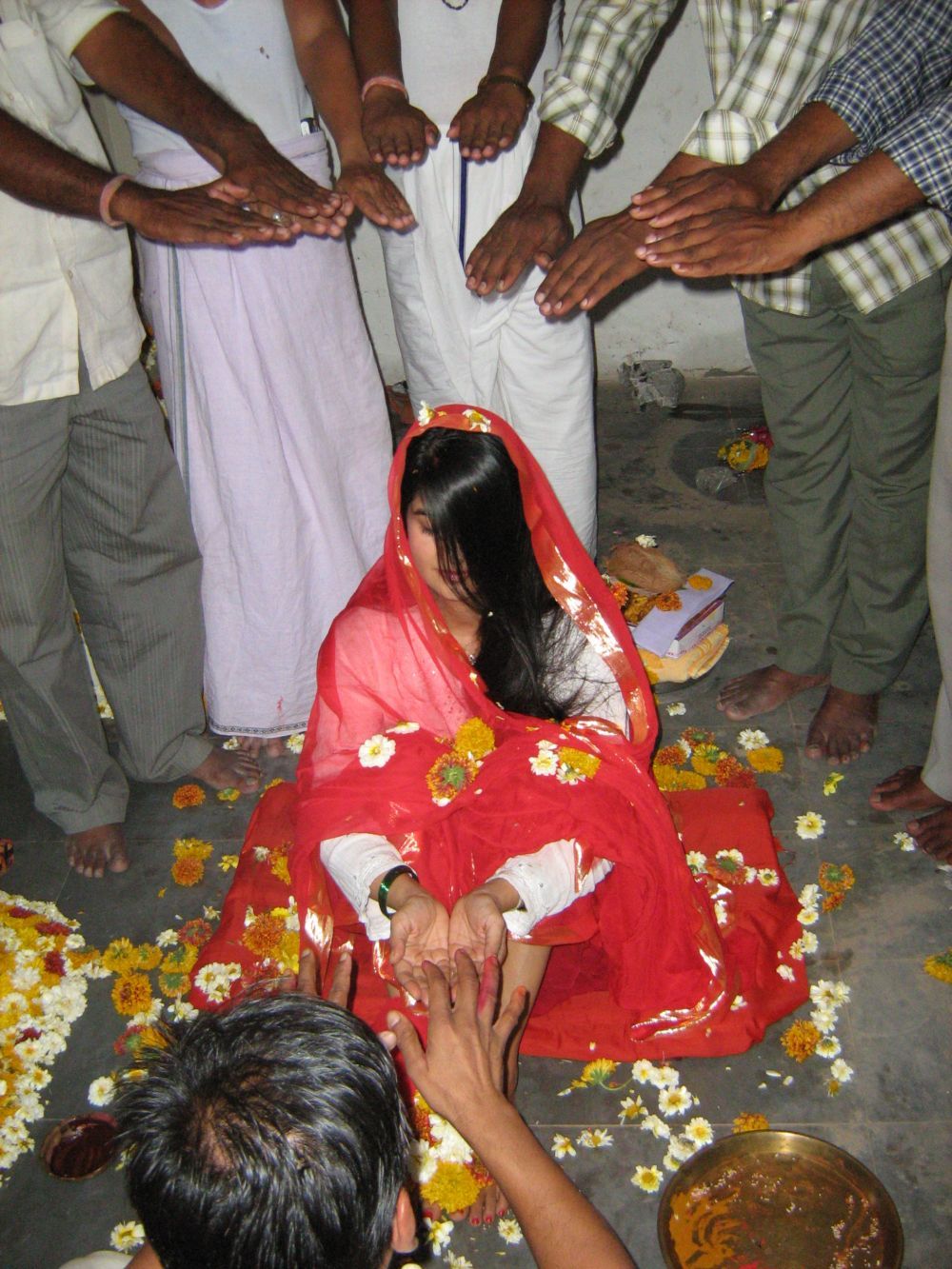








 A Druid Way