I wrote a few years back about toasts, boasts and oaths as part of a Lúnasa ritual at Mystic River Grove in Massachusetts, and I’m revisiting the topic here, because it’s a rich one to explore further. Anyone interested in Lugh, his Welsh counterpart Lleu Llaw Gyffes, and associations with Lunasa need only Google for more info than any ritualist could use in 50 rituals. Use the search box on this site for my other posts on the subject.
This triad of ritual actions is especially fitting now, because Lugh is the god whose nasadh “assembly” gives us the name of our current seasonal festival Lughnasadh, or Lúnasa in reformed Irish spelling. Lugh is described as samildánach — “equally skilled in many arts” — certainly reason enough for boasts, toasts and oaths as components of Lunasa ritual. Emulate the god and celebrate the pluses in our lives. His festival includes games of skill, a kind of Celtic Olympics.
Without much squeezing or distortion, we can also see each action as associated with a specific time: past, present and future.
Boasting generally looks to the past, to something already accomplished. “I’ve done it before (and so I’ll do it again)”. We could even see the modern job resume as a kind of contemporary and restrained boast — it highlights our relevant employment history, our training and experience. Likewise, a good job interview is a delicate balance between touting our accomplishments and demonstrating our self-awareness, an understanding of our weaknesses — cleverly transformed, of course, into opportunities for growth in the service of our next employer.
The Flyting of Loki
A boast naturally seeks recognition and praise, or acknowledgement at the very least. (A suspicion of pride and an awareness of its dangers pervade the Judeo-Christian moral heritage of the West, so a Pagan restoration of justified pride is long overdue. The point, after all, is to do something praiseworthy, something that fully deserves boasting about.) As a result, it can also be an occasion that calls for responses from others that tease the boaster, as much as for compliments on an achievement done well. A roast, another rhyming theme that fits well here, is an invitation for just such teasing and carefully-tuned mockery. Through it we test the self-confidence of the boaster, their ability to “take it”, and check their anger, and sometimes to respond in kind. African-American playing the dozens and the Norse, Celtic and Anglo-Saxon flyting each ritualize an exchange of insults. The Norse Lokasenna, sometimes called the Flyting of Loki, is just one historical and literary example. In one form or another, the “rap battle” has long been alive and well.
Toasts are often expressions of gratitude or celebration for something that’s happening now in the present. We salute and celebrate another, whether person or object, event or location. In some way it’s a form of blessing. We toast a newly-married couple, we christen and launch a boat, we hold a ribbon-cutting ceremony for a completed factory or auditorium or museum. As with boasts, toasts often ask for toasts in response, and some cultures formalize such exchanges. Further highlighting the link between boasts and toasts, it’s often considered “good form” to lightly tease a person or couple we’re toasting, as a way of showing affection.
Oaths usually look toward the future, to something we intend to achieve. As a promise or vow, an oath can be an acknowledgement of a debt we’ve garnered in the past, but oriented towards a general time to come. Or it can be more like a promissory note, specifying terms of repayment, the conditions for fulfillment, etc. In the oral cultures where they mostly originate, oaths are a matter of public memory. We make them publicly so that others witness them. A sense of a commitment made with others’ knowledge often helps the oath-maker to fulfill the oath. It’s a way to utilize any shame, any fear of loss of face if we fail, to motivate us, just like we imagine the praise if we succeed, the enhanced reputation and public standing.
This triad of ritual behaviors can feel somewhat contrived in the West, because each is a ritual action less common today than in the past. As an opportunity to revive ceremonial forms and a chance to explore a triad of potent group ritual gestures, boasts, toasts and oaths deserve to be incorporated in our rites and celebrations.
/|\ /|\ /|\
These ritual acts are also chances for growth. Part of the cultural change we’ve undergone in the West over the past several centuries has been a shift toward internalizing these three rites. Rather than boasting publicly, we read books on motivation and struggle to deal with self-esteem issues. We take workshops on resume-building and interview skills and networking. We internalize our weaknesses and strengths, though we now hand over to social media an increasing share of our once-private lives, in a curious reversion to the older cultural patterns of turning towards a community for much of our identity.
The pecking order of birds, the ranking among herd animals, a usually stylized aggression to establish social position, can shade into bullying among humans, a specific form of cruelty. Animals generally stop once one of them establishes dominance over the other. We see animal rituals in the submissive gestures of wolves, stags, chimps, etc. who yield to a stronger opponent. A human bully doesn’t stop, and equivalent gestures of submission may simply encourage greater cruelty. The point of bullying is not merely to establish dominance, which is the goal of most alphas, both female and male, but to cause pain.
Specifically Druidic responses to bullying are often rooted in community. We look for our values to nature and to what we have in common, and a response to a bully is often a communal one. Isolation, banning, shunning, communal expressions of disgust and repulsion, all can have their effect in awakening shame and regret, or at the minimum ending the behavior and any opportunities for it to continue.
Just as important, however, are opportunities for clearing one’s name, for redemption, for forgiveness, for reparations and restoration. Ritual has a place in this as well. The fear and anger that often underlie bullying behavior can be dis-empowered. Elemental re-balancing can play its part — earth can eat the heaviness and sense of blockage and obstruction that comes from wrong-doing acknowledged. Water can cleanse and purify, air can lift and lighten, and fire can purge and burn away.
is the one you’re actually practicing, as opposed to any ideal in your head. Or least so it looks from where I’m walking through the woods, or sitting at the kitchen table.
From new Druids on one of the OBOD Facebook sites introducing themselves, asking questions, sharing their sense of discovery on this new journey, to battle-scarred Christians on the Druidry and Christianity site, recounting their journeys out of toxic groups and towards a Jesus who’s always been praying in the forest, as well as blessing the tidal basins along the seashore and listening in the desert sands, or standing there in the next room, gazing at the statue of his brother Lugh, or his sister Brighid, we’re walking any number of possible and imagined paths to see what the next steps reveal.
Can we map out some of the characteristics of what “true Druidry” might look like?
incense / Pexels.com
ONE
For a start, we can lay claim to the sense of the Hippocratic oath (NIH website). Though the oath doesn’t include the explicit words “First, do no harm” that are often attributed to it, the sense behind those words is clearly present. One of the signal advantages to walking a solitary path is that no dysfunctional group will muck up your journey. Add to that the reassurances in the study materials of responsible Orders to do what feels right, and simply to set aside any exercises or materials that don’t. Most people connect with a group, if at all, through a friend or acquaintance, and that’s as good a way as most. Likewise, the practice of Druidry should be the practice of non-harming.
Of course, Druidry like any other valid path can be an instrument to help unstick us if we’re stuck. It tends to do this gently, pointing us toward sources of balance and healing. More vigorous and rigorous forms and practices are also available. As we come into healthier balance, we often are drawn to find ways to lighten any undesirable impact of our words, actions, thoughts and feelings. Just as taking up the study of Druidry should do no harm to us, our practice of Druidry should do no harm to Others.
TWO
Good teaching supplies options to students: you can find ways to adapt the course of instruction to your interests, circumstances, and so on. A water-loving tree mentioned in your reading, for instance, may not grow anywhere near you in your home climate, a dry one unlike the British isles, but another tree in your yard or town piques your interest and attention, and can teach you much. Your local tree becomes your teacher for the month (and beyond) as much as your formal written study materials. Knowing this, authors of good materials generally point you toward such teachers, who constitute a central part of earth spirituality. “The Land is your greatest teacher”.
A Druid proverb here might be “Do not overlook teachers you may not expect, or who don’t match your preconceived notions of what a teacher should look like. For these include some of the best teachers you will meet”. Or more succinctly: “Expect the best teachers, whatever forms they may take”.
THREE
Many people recount experiences of synchronicity in their study: the lesson on animal guides arrives when you’ve encountered or been dreaming of an animal, perhaps the animal mentioned in the lesson. A book reaches your hand that opens up a topic you’ve just been thinking about. A conversation with a friend touches on an issue you’ve been struggling with, and that brings its own comfort. Any focus maintained over time tends to provoke such experiences. Are we simply more alert to things already present in our lives? Does our study “cause” them to arrive when we need them? Is the green world listening in some sense to our spoken and unspoken wishes and thoughts? Pondering such questions is also part of Druidry, and helps to shape our response to the synchronicities.
“It takes night to see fire best”. Full moon at BAM gathering, Sept. 2019.
FOUR
Ritual observances as the tides and seasons change, something as simple as a blessing over a harvest, or a libation to the full or new moon in recognition of its beauty and mystery as a door to spirit, deepen our experience of living in time, and also afford us glimpses of timelessness. “The apparent world fades”, says OBOD ritual. (Don’t worry, whisper the flowers on the altar. It hasn’t gone away. It’ll still be there when you return.)
Ritual both intensifies our awareness of the “ordinary” and opens us to the non-ordinary. Often ordinary and non-ordinary share qualities, or merge and blend and shift in ways we hadn’t noticed before. (Are they the “same”? Both no and yes seem true or accurate answers. Compare Tolkien’s proverb: “Go not to the Elves for counsel, for they will say both no and yes” — The Fellowship of the Ring.)
At Lunasa or Imbolc, Brighid may have something to say to Lugh, and vice-versa, and via ritual we find we can listen in to their conversation. Or we turn our words, gestures and ritual elements to one of them and it seems that the other answers. As the Wise have reminded us, just because Brighid or Lugh may not exist, that doesn’t mean they have nothing valuable to say to us. Such categories of things get re-arranged. We start to realize how large and multi-form and marvelous the cosmos can be — a blessing of freedom and possibility in itself.
FIVE
“Guard the mysteries! Constantly reveal them!” wrote Beat poet Lew Welch some 51 years ago now, in 1969, in his poem “Theology”. In one sense, that’s what the experience of doing Druidry feels like. The really profound things can’t be conveyed to other people anyway, but only experienced. Any mystery we “guard” is also something we’re trying to reveal to anybody interested, through our rituals and actions, our stories and our own practices, our urging to others to practice for themselves so they can have the experiences, too.
The act of revealing often takes the form of a kind of guarding. With both mirth and reverence, as Doreen Valiente puts it in her Charge of the Goddess, we approach the sacred at the heart of the world, in ourselves and in other things. We model this as best we can because of our own repeated experiences.
Our approach is a participation and honoring; our participation is an approach. The guarding itself is an invitation — apart from initiations, our Circles are typically open to respectful visitors, and we do what we do “in the eye of the sun” unless the event runs into evening hours, as feels right for Samhain.
SIX
Curiosity seems a common trait many Druids share. Almost always there’s something that sparks their interest. Often it’s an avocation, something done as an amateur in the original sense of the word — out of love. There are many remarkably accomplished and educated people among Druids I know. They take up new studies and practices, pursue training through more formal diploma-ed and certificate programs, as well as less formally, through reading, apprenticing, experimenting, returning to and building on a hobby, study, or passion of their youth or acquiring a new one.
“So many things worth knowing” could serve as a motto for many. Like Gandalf, they often enjoy digging, learning things in the process not yet generally known or accepted. “Among the Wise I am the only one that goes in for hobbit-lore”, remarks Gandalf in The Fellowship of the Ring. The wizard’s specialty proves to be “an obscure branch of knowledge, but full of surprises. Soft as butter as they can be, and yet sometimes as tough as old tree-roots. I think it likely that some would resist the Rings far longer than most of the Wise would believe”.
SEVEN
Transformation and spiraling seem to characterize living teachings. We change, the teachings themselves seem to morph and change and shift, what we thought we were and knew transforms, and we spiral to see the same old things in new ways, encountering higher harmonics of the no longer “same old thing”, so that our experience and wisdom deepen as a result. Another common proverb expresses this well: One thing becomes another in the Mother …
We hear about computer software and hardware, and the humorously-named wetware, that pink and sloshy stuff inside our skulls.
I propose the term spirit-ware for all the applications that run without physical forms. Just as you don’t need to believe in Apple or Linux or Google or Microsoft to use their applications and other products, you can get along fine without belief in spiritware and yet still try it out. In fact, we all do that every day. Belief is just one technique among many.
Walpole-Westminster Bridge over the CT River, Bridgehunter.com/Library of Congress
Experience of the four elements can often provide a bridge for those seeking to understand both lowercase and uppercase spirit/Spirit. Ritual can help us focus in on how North feels different from East, bringing it home with earth and air as ritual experiences, and also with the enlarged awareness of presence that ritual can facilitate.
Or to give a local geographical and political example, does anyone believe that “Vermont” and “New Hampshire” are anything more than very powerful symbols and metaphors that we agree on for the sake of convenience? (When I cross the bridge at Westminster, VT and drive east to Walpole, NH, what’s much more “real” than any change of state boundaries, to me anyway, is my encounter with the Connecticut River that defines most of the eastern Vermont border and western New Hampshire border.)
Go back a few hundred years and pieces of what are now two New England states belonged to Canada, France, New York, and so on. Go back a few more centuries, and the whole region is Wabanahkik, the Dawn Land of the Abenaki people. “So which is it?” Any answer depends on time and place.
/|\ /|\ /|\
Over on the Druidry and Christianity Facebook site, a member posted a question about “false gods” in connection with those who worship Brighid and similar figures. How do we know what they are?
Waxing moon, two evenings ago
For better and worse, I tend towards a pragmatic approach towards Others, especially Others without their skins on.
I understand that such an approach may not work for everyone, particularly for those who’ve committed to a specific creed and worldview. The longer I live, though, the less I believe I know what “false god” even means any more. Yes, I know how such expressions get used, but often that seems like finger-pointing and competitiveness between different religious factions. There are so many kinds of beings, some with skin and some without. And from what I’ve seen, they’re a real mix of good, bad and in-between, so that my criterion tends to be Jesus’s wise standard: “by their fruits you shall know (i.e., distinguish) them”. Which is how I also tend to discriminate between a good and a bad used-car salesperson, plumber, restaurant, potential life-partner, etc.
I also don’t think I really “worship” anyone or anything. Some people do — it’s an important part of their spiritual and religious life. But what I do know is that some beings earn my respect and attention, and others don’t. I find I’m more interested in relationships than worship, and as with any worthwhile relationship, I need to listen, be available to do what’s needful, pay attention, show my gratitude, go with the flow, and live my commitment in my actions.
And I find that demands more from me than most of my beliefs do, which my life keeps revising on me anyway, often when I least expect it.
/|\ /|\ /|\
The early Church made a distinction between three kinds of reverence/worship: the Greek terms doulia, hyperdoulia, and latria, or reverence, great reverence and worship (https://en.wikipedia.org/wiki/Latria). Latria is for God alone, while saints may receive lesser devotion. Well and good.
But I don’t know how to apply such labels realistically to what I do each day, no matter what it may look like on paper. If a dear friend helps me out when I’m down, spends time with me, listens, checks in to follow up on me, takes me out to dinner, etc., the ways I’d show my deep gratitude in response, at least to someone watching from the outside, would probably look an awful lot like latria, or worship/sacrifice. Yet I’m not “worshiping” my friend (or at least not any more than I worship any close friends) when I give a gift in return, or write them a poem or song in gratitude.
sunset two nights ago, from our front yard
Is writing and singing a love song to someone else a form of worship, or simply expressing love? Does it have to be one or the other? We can attempt to define and prescribe which actions fall in which category, but the person’s intent seems far more important to me, and that’s often where doctrine has least to say, since its purpose, often, is to direct behavior, something visible and measurable, so that we may begin to achieve a glimpse of the result of holy intentions and actions. It can be an indirect way to catalyze a spiritual practice, but for some it’s a useful one.
One of the loveliest modern songs of devotion to Brighid is by Damh the Bard. It’s a favorite of mine and of many. Listening to it, I’m not concerned with doctrine but with the love he expresses: https://www.youtube.com/watch?v=vMxeYEhUxYw
Granted, Damh isn’t a Christian Druid. The distinction between human and god matters less in both song and the experience of many Pagans. You’ll note if you listen that Brighid is both “old woman” and “goddess”. (Maybe if we let go that distinction our care and treatment of the elderly might improve.)
One commenter at Druidry and Christianity observed:
But when it comes to pagan gods (let’s assume for the moment that there was a goddess Bridget and a Saint Bridget and that it’s possible not to conflate the two), I think it’s not so much a question of what constitutes “worship,” as it is a question of who/what pagan gods actually are. Are they spiritually beings set up against God? Are they under God? Are they unaligned? Is it even possible to have an unaligned spirit?
There are different kinds of answers to such questions, and which ones satisfy anyone asking the questions seem to depend in turn on the intention, expectation, experience, belief and individuality of those asking. Ultimately, one goes with what accords with one’s inmost sense of truth. No one else can supply that, but only influence how much we trust it.
Prayer may supply an answer individually, though we’ve always seen different and sometimes diametrically opposite answers to apparently the “same” prayer. In response to prayer guidance, some join one church that others condemn — also as a response to guidance received in prayer.
The experience of God’s sovereignty for others means that Biblical verses like Romans 8:28 “And we know that all things work together for good to them that love God, to them who are the called according to his purpose” are sufficient answer. God’s creation is good, and his Word is fulfilled.
Medieval European angelology suggests a whole range of spiritual beings — evil, unaligned and good. Much Christian magic of that time involves cooperation with the good ones against the evil ones. Or sometimes evoking and extorting from the more dubious ones as much occult knowledge as you can, before banishing them back to their respective realms. You just had to make sure your magic circle was as secure as possible, so you wouldn’t get eaten. (For a contemporary fantasy take on various ways you can get eaten, among many other things, see Leigh Bardugo’s Ninth House, set among Yale University’s secret societies, featuring an anti-heroine named Alex, who’s able to see spirits — much to her dismay.)
Divination can help as well, though from a Christian perspective it can be just as suspect as the subject of potentially evil or non-aligned spiritual beings themselves.
Ultimately, I find, it seems to come down to a paraphrase of C. S. Lewis’s observation: “You can’t really study people [or gods]; you can only get to know them, which is quite a different thing …”
Part of my what is ancestor magic. And — no surprise — it’s not a fully-worked-out thing by any means. It doesn’t need to be, because unlike fully-worked-out and therefore dead things, my magic is alive. Sometimes like all living things it changes and shifts where I don’t expect it. Yes, my mind can still run circles around my practice, with arguments like But the ancestors have already reincarnated and they’re off on new adventures. They’re not just waiting around on the off-chance that maybe you’ll finally notice them and pay attention to them!
To which another part of me answers You’re thinking from a limited vantage-point. There’s no time in the place where we meet with the ancestors. Or rather, all of time opens up, if we allow it, for ancestors and descendants alike. What I did yesterday and will do today ripples back and forth through time, just like the actions of everyone else flow and eddy and wash across other lives. Yes, in some of what I do, I fulfill an ancestral goal or vision in my life today, and also launch my own projects, and sow my own dreams. I may work to rebalance excesses and extremes set in motion long ago, and extend long-term projects and plans, even as I add my own energies to the stream which others in their turn live and work in. And some of those others may be the ancestors themselves, returned to take up the Great Work.
A tool for my magic and my connection to ancestors:
Below is a picture from nearly a century ago in 1922, of three generations on my mother’s side. In the small-town Iowa living room, she’s the youngest, the dark-haired three-year-old near the center, looking down at the doll in her arms. Everyone’s standing in front of the fireplace — though all you can see are the bricks and the mantle above. On either side of my mother are my aunt and uncle, ten and five respectively. The young woman on the arm of the chair to the right is my grandmother Lila, with her father, my great-grandfather, ensconced in the wicker chair, the bald patriarch of the clan, calmly reading. Facing him is my great-grandmother in a dark dress, her laced boots mirroring her husband’s. It’s all carefully posed, an image of the white middle-class domestic ideal of the time.
What magical uses here? you ask. So many. What is remembered lives, runs the Pagan proverb. Another is the magic of images themselves — this image, both frozen and alive in time, potent to evoke. (Remember that image is any sense impression: yours may be a song, or a recipe, the taste of family. Or an heirloom, cherished family object whose touch rouses memory.)
Another piece of magic: I know everyone’s names here, and the lives of everyone but my great-grandparents overlapped with mine. But I don’t need names to evoke anyone, because any evocation is built-in to my bones and blood. With each heartbeat I evoke them. They are each already a presence for me, quite literal pieces of my DNA, as well as the stories and impressions I carry. Put a finger on my pulse and I have a practice: with each heartbeat I say the Names — I live because you lived, you live through me. You stand by the family hearth, the fire that still lights and kindles in me, that I pass on.
In any situation, they are a council of elders to consult, a family gathering both in and outside time. One key is to ritualize this, or it will most likely remain a vague impression at best. How to ritualize it matters less: the act of holding them in my attention vividly, aided by gesture, words, objects, and a commitment simply to do the ritual, matter more. I can’t do it “wrong”.
Put a question in meditation, for example, being sure to write it down as well, and watch for dreams and subsequent meditations to round out the query. So much wisdom to draw on, if I can begin to listen to hear it. Each of my ancestors lived out a life with its sorrows and joys. My aunt who never married, in a time when single-dom was much rarer, but built a quiet and modest career as an editor, keeping her sexuality under wraps for most of her life. My uncle, who at 12 years old drove my great-grandmother along country roads in the family car, while she literally “rode shot-gun”, bagging pheasants for Sunday dinner. My grandmother, widowed young, who raised three children. My great-grandfather, who hunted and fished and homesteaded in Sun Valley, Idaho in the late 19th century, before settling down to farm life “back east” in Iowa.
With all this richness of human experience to draw on, I can draw on it to amplify my own, make better choices, honor their lives by living mine more fully, paying forward the investment in family that each made, just by being alive. In such a family gathering, they shift and move from their places in the photo, and turn to take up their lives, before and after the brief flash of the camera that captures their forms in two dimensions. (Oh, let me supply the third dimension of time!)
Another key: I can make of their strengths several charms to strengthen and clarify my path, holding their images and memory as I say the words and lay the spell on myself most of all:
Aim of the hunter is mine, to hit my target. Singleness of purpose is mine, to achieve my goal. Sureness of place is mine, to flourish where I find myself …
Part of my honoring and my magic both is to recognize and embody their strengths. It may reach concrete magical form as a bind-rune or ogham lettering of their names.
Now this is a fragment of my mother’s side of my family. My father’s side, from my perspective, is less easy and comfortable. My relationships with those ancestors are more troubled. Love doesn’t flow as easily or readily. But magic rests there, too, more potent for any difficulty — because they also survived. A great-great uncle and great-grandmother who immigrated to the U.S. in their teens, just the two of them, brother and sister making their way as family servants where they boarded, learning English and acclimating to a strange new country. Survivors of wars and their traumas. My grandmother with the weak heart, knowing a widow’s struggle to keep going through the Great Depression. Illnesses and early deaths. Both common stories, and also utterly personal. We each inherit a full roster of them, and are adding our own right now. Their lives, and my life, are utterly our own, and also glyphs to read for insight and prophecy. Stomach issues on my father’s side, cancer and ulcers: a challenge quite literally to learn better how to stomach the ups and downs of life. Heart issues — what challenges my heart today?
Far more often than I imagine, such signs and wisdom are plain, not hidden at all. Through the concrete details of their lives, the ancestors can provide personalized “prescriptions for living” for their descendants, like this one: find ways to drop stress to clear the path for yourself. Otherwise blockages and barriers will eat you up inside. You eventually arrive at a point where you can see that your inheritance is neither weakness nor strength, but an insight into a long project you’re an integral part of, one that comes with certain parameters you’re working with, whether you choose to recognize them or not, work with them or ignore them.
Practicing ancestral magic means family relationships don’t end just because of death, any more than they do because of birth. Travel to a different era along the time-track, to their time, and I’m the one not yet real, as yet unborn, simply one possibility among many, a descendant whisper they may not hear as they live their lives under clouds and sun, shadow and brightness as vivid as ours today. Yet my birth and subsequent life did happen, and I’m here in my own time, even as I visit theirs, and they visit mine.
I take up the photo again, and in the magic of images and numbers, I’m the seventh element, the six in the photograph complete in themselves, yet also waiting for a missing factor. This is a paradox to work with and explore, how and where (and when) we fit in the cycles and spirals. And it’s a chance, to listen and discover where we find a place, and how we contribute. It comes with work and listening, with knowing all that family means.
Any number of sacred writings have wisdom to offer here: “Wisdom hath builded her house, she hath hewn out her seven pillars” (Proverbs 9:1). “The math and myth of seven”, notes Michael Schneider in his A Beginner’s Guide to Constructing the Universe, “the Heptad, are intimately related to those of twelve, the Dodekad. Both have in common the interplay of Triad and Tetrad, triangle and square. That is, 3 + 4 = 7, while 3 x 4 = 12” (pg. 233). Use your triangle of manifestation (1 | 2), find your triads, use your four elements, build your own 7 and 12.
But what about those perhaps harsh and bent branches of a family tree? Robert Frost, no stranger to difficult families or to the keenness of multiple personal losses, provides a key to a door that may seem shut and locked. Lest we think ancestral magic is closed to us because of breaking and broken families, he writes in one poem, “Home is the place where, when you have to go there,/They have to take you in”.
Not necessarily outwardly — that can indeed sometimes be too much to ask of anyone — but inwardly, where all magic is worked. Because Frost’s poem is a conversation between husband and wife about a hired man, someone who both does and doesn’t belong to the family, an increasingly common position many of us may find ourselves in. For the wife replies about home: “I should have called it/Something you somehow haven’t to deserve”.
Ancestral magic finds us where we are, if we care to let it in. It’s then that we may discover how we’ve been practicing it all along in some form, and can build on that practice more consciously, in ways uniquely fitted to our lives and circumstances. I hope that I’ve supplied some hints and suggestions for how to go about recognizing practices we already have, and where we might amplify them, turning up the volume to hear what family, or just one wise member of it, has to tell us that may be useful in these challenging days.
Many variations on the following theme exist. Socrates receives credit for it, among other thinkers. Sometimes it’s called the “Three-Way Filter”. So no, it’s not originality I’m claiming, but utility. As a simple but profound guide in these challenging times, this triad answers a deep and pervasive need. It asks us three questions, in a form so compact we can’t help but use it if we wish:
Is it true? Is it kind? Is it necessary?
Twitter would mostly dry up, if we followed this Triad. Social media as a whole would shrink to a more appropriate and sane size, and not co-opt reason and good sense. My wife and I attribute our durable marriage to both of us practicing this Triad with each other. Because where else do we live our lives most deeply except with our loved ones? If it works there, our way of life, it might even work elsewhere.
Imagine how our patterns of consumption and our interactions with others would approach something more conscious and intentional. Politics as we know it would change radically. And the shaming of others that we indulge in for not meeting standards we ourselves also fall short of would also shrink. (And again: if I can practice this with my partner whom I love, I gain skill for practicing it with others whom I may not love as much.)
Why?
Because often enough I can say “yes” to two of the three criteria. And though the song lyrics tell us “two outta three ain’t bad”, aiming for all three remains the goal. “Why not excellence?” asks ADF, one of the major Druid orders today. Why shouldn’t we aspire?!
When we push against this apparent world, and see it begin to pixelate, a new path can open for us …
It’s interesting to me that, of the three criteria, “kind” is most often the criterion that catches me. I don’t normally think of myself as a particularly heartless or cruel person, yet “kind” is often my sticking point. We reach to claim the moral high ground with “true” and “necessary”, but I end up where it’s kindness that’s lacking.
Try imagining this Triad as a political platform, I say to myself, whatever my place on the political spectrum. And if I can’t, what does that say about my politics, or about my hopes for any kind of justice?
Or as “the only morality I need”, how does it stand up? It’s remarkable how thoroughly the Triad reaches into choices, values, treatment of others — a whole range of ethical issues.
Now let’s couple this Triad with the famous Christian Triad of Jesus: I am the Way, the Truth and the Life. You can derive a whole series of useful meditations on the various pairings of the Three of Jesus with this other Three. And not just the obvious linkages, either — for instance, “Is it necessary?” is a truth we often toss aside, because in our self-indulgent age we feel justified simply if we want something. Voila — no further criteria needed! Likewise with freedom, at least in 21st-century America: if anything constrains me, it must violate my rights. Never mind that it’s good for the whole. Never mind that a whole range of behaviors are denied me, that laws constrain me and would have constrained me during most major civilizations we have knowledge of, because much of “what I want” may not be good for others. (We each have our lists.)
But is any of this Druidic? asks my pesky inner Druid. Well, consider the Instructions of King Cormac, and let me know how well this Triad of Truth, Kindness and Necessity lines up with the counsels of the King.
/|\ /|\ /|\
Which brings us to death, which can seem a very un-Druidic subject.
First ethics, then mortality. Wow, you really know how to market yourself to your readers, and offer upbeat blogposts.
So it’s fitting that one of the most irrepressibly cheerful Druids I know should speak about death, and from daily, intimate, firsthand knowledge. Here’s Welsh Druid Kristoffer Hughes speaking on the subject on the occasion of the re-issue of his meditation on mortality, under the new title As the Last Leaf Falls. As someone who deals professionally with dead bodies and the bereaved every day, as a mortuary worker (in the States we’d say morgue), he knows the death industry firsthand.
“You can tell an awful lot about a society just by the manner they deal with the dead”, notes Kristoffer. He traces much of our contemporary Western outlook, practice and ritual to Queen Victoria, who dressed in mourning for 40 years.
Dip in at any point in this half-hour talk and you’ll gain something of value. “The medicalization of death and grief profoundly impacts all of us in the West”, Hughes says, around the 8:00-mark. “Death always brings in the big questions and the Spirit — but that is not the domain of medicine … We’ve created institutions of death whereby the indignities of death can occur without offending the sensibilities of the living. And I see that every day quite viscerally …”
At the 9:00-point, he notes “A basic anxiety runs through humanity … we are all going to die. And that sound quite depressing, doesn’t it? I might need a mouthful of gin just to offset that. But please don’t judge me. I’ve been in a morgue since quarter past 7:00 this morning”.
“Life … a terminal sexually-transmitted infection …”
“There’s no fundamental universally-correct truth that will alleviate everyone’s anxiety …”
“We need meaning … significance … transcendence … When there’s no meaning, we find people under their desks sucking on Valium the size of their heads …”
“We’re told to conform to other people’s meaning … and that can be a frightfully difficult task”.
“So often when people shine too brightly, [other] people might want them to dim their light. And I say to you never dim your light. Ever. Shine. ‘Cause that’s the purpose you are here. Your eyes are windows through which the universe experiences itself. How can you not shine? If anybody tells you to dim your lights, tell ’em to buy a pair of shades …”
Later (around 16:25) he cites Taliesin: “Know what you are when you are sleeping. Are you a body or a spirit or an occult radiance?” Sleep, he says, the “little death” we each experience every night, is a prime key to insight and awareness about what death actually is.
Re the Covid-19 virus, he says, we lack meaningful rituals to cope that we used to have. “Ritual has fractured”, says Hughes. And the emotional relocation that is grief is far more difficult to navigate. So we need new rituals to help us travel the emotional relocation of grief, of honoring the living and the life of those who’ve left.
With just a few changes, you can readily adapt my recent Beltane Solitary rite for the Solstices tomorrow, winter or summer.
Earth below me and in my bones, Sky above me and in my breath, Seas around me and in my blood, by the Power of these holy Three, I proclaim this to be sacred time and space …
A Solitary has the advantage of spontaneity. With the skeleton framework of a ritual as a guide, you’re free to improvise, to slow or quicken your pacing, to substitute words, drop or expand a section to fit the moment’s need. Just like with poetry and song-writing, you need just enough structure as a form to create with, and enough freedom not to feel boxed in. You find wings of a definite shape and size — they’re real, after all — and with them you can fly.
As with ritual, so with ritual politics: unlike the blood-curdling threats accompanying initiations in days not so long ago, the wiser rituals (and their ritual-writers) remind the initiate that no bindings are laid upon you, and should ever you, your guides or spirit wisdom counsel you to depart (or change the ritual, or strike out on your own path), do so with blessings. Anything else smacks of power-over.
/|\ /|\ /|\
The June Solstice here in central New England means our local snakes are finally active both day and night. Although we’ve seen the more aggressive cottonmouth in the area, it’s the common and docile garter snakes (thamnophis sirtalis) that usually hunt our lawns for bugs and frogs and the occasional mole, which have come to sun themselves on our driveway each morning. This supple fellow from yesterday was about 18 in/46 cm.
The Carr-Gomms write in their Druid Animal Oracle:
Although some legendary dragons are strongly linked with only one of the four elements, many of them happily partake of the characteristics of all the elements: sleeping in water holes, curling their bodies around hills by day, and flying through the air or breathing flames whenever they wish. Quintessentially alchemical, they speak of the energies and powers that exist both within our own selves and within the landscape around us (pg. 135).
A good reminder for the Solstices — the alchemy for transformation is always on hand, in encounters possible everywhere. After all, earth, sea and sky are all in me, too. We be of one kindred, o serpent.
And so when Jesus says wherever two or three are gathered in my name, there am I also, can you feel it? Spirit with us, around and inside us. May we gather in that awareness, wherever we are, by twos and threes, bird and beast, ancestor and neighbor.
/|\ /|\ /|\
Greetings to visitors from Brazil, whose numbers are up today! Muito obrigado!
My friend B’s sauna stove — fire in midwinter, fire of midsummer.
Light balancing north and south, nights and days in their interchange, sleep and waking and the opportunities during each for connection and discovery. May we hear the earth speaking, may the Ancestors alive in us show us the good paths, may each encounter give us space to practice our hard-earned wisdom.
French Visitors
A burst of over 50 views from France so far today! Bienvenus, mes amis! Que les benedictions soient! A quick comment on any post is helpful — something you’re looking for, or would like to see more about in the posts here? Please let me know!
Winter and Summer Solstices
That time again … The solstices, winter and summer, are just a little over a week away. Our solstices — let’s claim them, not as something we “possess”, but as intervals and energies that embrace and sustain us. Alban Arthan, Alban Hefin [links to short posts on the OBOD Druidry.org site], the names OBOD uses for Winter and Summer Solstices, are often rendered respectively as the “Light of Arthur” and the “Light of the Shore”.
You can find some of my previous posts on Solstice here, for both Winter and Summer seasons. First, a three-part series from last winter, December 2019: Gifts of Solstice 1 | 2 | 3.
Solitaries, ritualists, O.B.O.D.-friendly Druids and anyone interested in ritual surrounding a transition of leadership in Druid Orders may find the recent OBOD installation of Eimear Burke worth time spent with this 25-minute Youtube audio-only recording. Close your eyes as the introduction suggests to increase your attention and you may gain additional insight from that focus.
Welcome, Eimear, and blessings to Philip for his 30+ years of service and leadership.
/|\ /|\ /|\
Please Support A Druid Way
If you’ve found value here, please help me continue to provide it! Visit Paypal.
Holding (and returning to) the highest moment I know as a flavor for the day. Hearing the awen in the songs of birds, the rush of wind in the branches, the rumble of trucks passing down the road. Opening the door to Spirit in this moment, to welcome the transformations I long for, and have worked to manifest.
/|\ /|\ /|\
I don’t know about you, but I need to keep grounding and centering all day long. It’s a way to show myself love, when love can seem in short supply.
The practice of “ground and center” often finds its way into ritual, as part of the “set-up” for the group, to help bring everyone together, to welcome everyone into the ritual space. It also features as part of many group exercises and workshops. A good group facilitator or group leader will include it up front, and often again at the close, to bring everyone fully back into the moment.
Often it takes the simplest form, a short reminder in words. “Let’s take a moment to ground and center”. The act of recalling the need for it becomes the practice of it — think it and you’re starting to do it.
Maybe there’s a little elaboration to guide you: “Feel your roots going into the earth, your branches rising into the air and sun.” But often we assume everyone knows what “ground and center” means, why we do it, what it’s for. Like all fundamentals and basics, it’s good to take it out and look at it from time to time. Probably our understanding of it has deepened and changed over the months and years.
At BAM Gathering preparation campout, Oct. 2018.
Do it enough, and grounding and centering (“G & C”) begins to broaden and take on new forms. A word, a brief prayer, a gesture made with intention can all help (re-)establish attention on the heart. If a ritual or exercise has taken us out of physical awareness, coming fully back to the body is grounding and centering. Stamping the foot (lightly, if you’re in a group) can help. If you practice a ritual of gesture, the opposite gesture for opening ritual space may serve to close it, and “bring you back”. Recording an experience in your journal, eating and drinking, standing up and walking around the ritual space or the room you’re in, can all serve to ground and center.
Christian worship builds in such moments of “G & C” with prayers and affirmations, songs and recitations that “tell you where you are” in the movement through the ritual of worship. The Latin Mass ends with ite, missa est “Go — (the Congregation) is dismissed”. The Wikipedia entry for mosque, citing the Encyclopedia of Islam, notes that “Any act of worship that follows the Islamic rules of prayer can be said to create a mosque, whether or not it takes place in a special building”. The act of grounding and centering can establish our center if we’ve lost it. It returns us to our “native land”, our spiritual home.
The practice of grounding and centering can open up still more. Out of a daily spiritual practice, new doors open to ways of grounding and centering. The guidance can be so subtle I don’t perceive it as anything separate from myself. It becomes what’s now being called “self-care”. Recognizing I need a break from social media, taking a nap, getting outdoors to encounter the elements, walking in the rain, connecting with a friend — these nourish the heart and guide us to do what’s right for us to do. They’re essential ways to ground and center — in that particular moment. From these elements of practice, more hunches, nudges and intuitions may come. Go here, not there. Try this book, resource, doctor, treatment. Reconnect with this person, spend a little more time with that one. Greet the clerk at the store checkout with my full attention, without rush. Ask how to serve quietly (or noisily!) in this moment, then the next. Listening for such answers is itself grounding and centering.
In a kind of paradox that starts to become familiar to us along any spiritual path, grounding and centering can help us discover when we need to ground and center, when we’ve lost balance, thrown ourselves out of whack. They ease us back “in whack”.
With all the talk of out-of-body experiences, sometimes I need in-body contact with the elements. Touching the cool earth with the palms of my hands, taking three deep breaths and releasing carbon dioxide and tension both, drinking a few sips of water, lighting a candle or passing my hand smoothly through flame, can all ground me. With my physical body composed of the elements, each element assists in the centering I need. As above, so below — yes! But also as below, so above. Full-circuit spirituality.
/|\ /|\ /|\
In some ways, grounding and centering is the only practice there is. Out of groundedness, out of centeredness, we think and feel, speak and act with integrity, with wholeness. Rather than lamenting what I did badly a moment ago, I can ground and center right now.
In the previous post, I looked at thirteen facets of Doing Druidry that mostly revolve around inquiry and study. You can’t easily be a Druid without engaging in at least some form of one or more of them, because each of them connects you to the worlds where Druidry happens. (If that sounds restrictive or dogmatic or exclusive to you, just go back and look at the list! Got something to add that makes you a Druid? Tell us a little about your journey as you go for it!) The list doesn’t characterize only beginning Druidry, but serves as a rough outline for the kinds of studies that can occupy Druids their entire lives. However, that’s not the only thing happening in the life of a Druid.
In this second post on Doing Druidry without an Order, I want to look at five less tangible aspects of Druidry (and other traditions) that may have occurred to you as you read the previous post. These five are initiation, spiritual formation, community, proficiency and service. From the first glance it should be clear why they’re harder to talk about and describe in terms that people can identify. But that fact in itself makes it worthwhile to try. As you may come to see, these five aspects are closely linked things, almost versions of the same thing.
Initiation
Like other intensely personal experiences, initiation will always be a live issue for many of us. What it is, who can experience it, who can oversee, facilitate or “give” it, what happens when we undergo it, and what we become as a result, can all provoke passionate discussion and disagreement. Most spiritual traditions have an equivalent of one or more initiations among their practices, and the most non-religious among us still experience “built-in” initiation in human events like birth, death, sex, grief and creative flow. Change characterizes each of them. You’re not the same afterwards. When and how you discover this, however, can range very widely.
We could claim that one of the things that distinguishes modern Pagan practice from older traditions is the option of self and group initiation. As a comparison, Christians, for instance, can’t usually baptize themselves; to become a Muslim requires two witnesses to hear you recite the shahadah, and so forth.
Like other groups, OBOD succeeds tolerably well in having it both ways: the coursework for the grades of Bard, Ovate and Druid includes self-initiations that members can perform, and as a member of the Order you can request a group initiation with other members, and these two initiations aren’t “the same thing”. The rituals are different, the outcomes can be different, yet paradoxically they are in important ways “the same”.
You don’t need to do both a self and a group initiation, but it makes little sense to continue unless you do one of them. (Doing both gives you a feel for their interconnections and value.) They’re part of doing Druidry. If you’re doing Druidry without an Order, you’ll come quite naturally to initiation in your own way. Your life will see to that. You can seek out initiation, of course, adapting published rituals to your purposes, or crafting something unique to your own experience. Or you can wait until an experience shapes itself into an initiation, which you may not recognize until after the fact.
For an earlier 3-part series on initiation, go here.
Spiritual Formation
This largely Christian term has no ready Pagan equivalent, though this aspect of practice certainly exists in all spiritual traditions. Christian spiritual formation means molding or conforming one’s life to Christ. In Pagan terms it means moving beyond, diving deeper, maturing in practice and wisdom. You begin to embody more of what your tradition values and holds up as an ideal, of what your deepest spiritual connection opens up to you, and open you up to. Pagans speak of Elders, those with earned authority and sacred connection, in ways similar to how Christians speak of saints, of holy individuals that spirit shines through.
One of the joys of a practicing group is the heightened chances of encountering and knowing such people, learning from their example and growing through associating with them. Being around them can constitute a form of initiation. As a number of the Wise have remarked, spirituality is “caught” rather than “taught”. We’re all in training.
Community
The most obvious difference between the experience of the Solitary and the Order member might seem to revolve around community. Christians acknowledge the priceless gift of others. In Hebrews 12:1, for instance, the sense of a supporting community, many without bodies, pervades the verse: “Therefore, since we are surrounded by so great a cloud of witnesses, let us also lay aside every weight, and sin which clings so closely, and let us run with endurance the race that is set before us”. The interior worship spaces of Orthodox churches often have icons on almost every available surface, emphasizing this spiritual presence of a larger community than only those “with skin on”.
icons at Varlaam Monastery — image courtesy Andrea Kirkby
Pagans may talk of raising power, while Christians acknowledge the presence of the Holy Spirit. Isaac Bonewits notes:
If the people in a group have bonds of genuine friendship or love between them, their ability to perform ritual will be greatly enhanced. The psychic and psychological barriers that most people keep between themselves will be fewer and more easily breached. This is why Wiccans place so much emphasis on “perfect love and perfect trust” — love and trust, even when imperfect, tend to strengthen each other and increase a group’s psychological and psychic unity (Rites of Worship: A Neopagan Approach, pg. 105).
Of course, one of the discoveries Druids make is that they are never alone. Solitary, but not alone. A whole world of Others surrounds them, and if that is where community lies for that particular Druid, that is the call to answer.
Proficiency
We can become refined in the presence of others. Lifted out of our own concerns by the group energy, we can begin to “see larger” than when we arrived, and to take something of that enlarged perspective home with us like a fragrance or flavor to our hours and days. Elastic beings that we are, the company of other people “facing the same direction” can stretch us more than we can easily stretch ourselves, making us more flexible, adaptable, compassionate and empathetic. Think of the privilege of finding a good listener, someone who can still their own concerns and focus their attention on you and your world. How many of us know the love another can express in hearing and seeing us, even if they say little or nothing else? Our lives have been witnessed, our struggles acknowledged, we can walk from there a little lighter of heart.
By their fruits you shall know them, says Jesus, and a good test of a group or Order in the simplest of terms is the kind of people they produce. Are they enjoyable to be around? Do they lift you up or drag you down? Are they kind to each other?
Service
I desire to know in order to serve, runs the vow in more than one magical order of repute.
So I was struck when my teacher remarked one day that he serves in order to know. That’s how I grow and learn, he says. Offer yourself in “the unreserved dedication”, as some Orders call it, without qualification or expectation, and you will benefit. I get so tired of hearing about service, remarked one long-time member. Go apart for a while, counseled our teacher. You’ll be eager to return when you see how it’s a gift of love. You may just need to be on the receiving end for a time, for that to happen.
We may first begin to recognize the value of service when others serve us with love. If you’re like me, you may have a favorite restaurant (pre-virus, if necessary) where the food isn’t the main thing that draws you back. Yes, the meals are good. But it’s the ambience, the atmosphere, the attentiveness and welcome of the staff, the mood of other customers treated hospitably, that shapes your total experience. We go back for the service as much as anything, we say, when people ask.
/|\ /|\ /|\
In every case, Solitaries find ways to fulfill these aspects. It may demand more flexibility and creativity, or it may take the Solitary in directions others do not understand. Service to the non-human world, for instance, can often pass unseen, unacknowledged for an entire lifetime, known only to the “bird and beast, bug and beech” the Solitary serves.
In what follows, among other things I’m setting out elements from my own peculiar spiritual journey. So if what I write irritates or angers you, that’s probably a good signal to stop reading and go do (or eat) something else. When it’s not to your taste, any more than a mayonnaise and peanut butter sandwich, there’s no need to take a second bite. Or even a first one!
/|\ /|\ /|\
A recent comment on an old post asking “What’s the spiritual meaning of X?” is what launched this post. In some ways, the question asks, “What’s appropriate action in this moment?” Or maybe, “How might I respond to this appeal to my attention?” or “Should I even bother to pay attention?” (Maybe we should start with “What’s the physical meaning of X?”)
The X in the question above isn’t the main point (Yeah it is! shouts the seeker in me), for though it’s what snags my attention and draws a lion’s share of the drama, the meat of the question is about meaning, about how and where my attention is focused, and about what if anything happens as a result of that focus.
One of the discoveries we can slowly make in worlds of time and space is that few things have a single meaning, spiritual or otherwise. At the most literal level, a good dictionary will list several meanings for almost every word. Even deceptively “little” words (“Those? They’re the absolute worst!”) like English a, an, the have numerous meanings, as learners of English discover to their dismay, and writers have attempted to catalog. (Alan Brender’s Three Little Words: A, An, The lists 52 meanings and uses for ’em — one for every week of the year.) What to do with a universe so perverse? says the rationalist in my spleen. Hey, you rhymed! says the bard at my elbow.
Meanings are almost always plural. OK, but does that in turn mean that it’s just “Pick a card, any card”? Well, it’s true that some days, or some whole lifetimes, can feel that way.
Usually if I’m noticing something, it’s communicating to me, and further, I usually already have a hunch or suspicion of some possible meaning(s) of that communication. These two go together, usually so intertwined I can’t separate them. We’re trained to sift and sort all the input from our senses and select only what we need to notice. If something’s already risen to my conscious awareness, the “meaning filter” has let it through. The “Ten Thousand Things” can fade into background. The particular thing or event or person now stands center stage.
My right shoulder and forearm have been bothering me on and off for over a month. Exercise helps some, but I’m still fine-tuning which exercises. As we age, the cartilage in the shoulder and spine, the facet joints, start to deteriorate, says my wife, with her physical therapy training. In fact, the shoulder is often the first to go.
And I can leave it at that. But I can also choose to listen how my experience opens up insight, including insight about the experiences of others.
If something’s already communicating to me, how can I respond?
Meaning-bearer, I greet you. Thank you for arriving in my world with your messages. As they unfold with my intention, may I honor and fulfill them with my life.
“Wait just a minute”, says another of the selves I wear. I can hear the outrage grow in his voice. “Do you mean I should be grateful for shoulder pain?!”
That’s not what I’m saying. Pain sucks. But like the X of the opening question, pain isn’t the final point. “If the world were only pain and logic”, says Mary Oliver in her poem “Singapore”, “who would want it?”
One of our great skills as humans is to bring the hidden into manifestation and to clothe the non-physical with form and shape. We do it throughout our lives, constantly. No surprise, we’re pretty good at it. (Wedding planners, investment bankers, gardeners, contractors, parents, janitors, children, athletes, generals, lovers, daydreamers, cooks, doodlers, singers … OK, you get the idea.) We bring into existence something that wasn’t there before. It’s also how we fall in love.
That spark of attention that events kindle in us also ignites our attempts to put them into words. For this reason many cultures consider speech a holy thing — words as spiritual objects are not to be lightly disrespected or misused. The Queen of Faerie tells Thomas the Rhymer to hold to silence in her realm, “so that his speech might store up power” for his return. In many cultures, songs and stories tell how speech is a divine gift, how creation happens through words, and knowing the right word, the true name for a thing, is a key that opens many doors.
Insofar as I think with words, then, I can hallow thinking through conscious intention. My attention and my intention, my noticing and the shaping of my consciousness in return, can be choices. (They’re also a deal of work, as anybody knows who’s tried.) They can be gifts to myself and to others around me, because they change me. Such holy things are never in vain. Even this much, just the attempt, although the fullness of meanings may not yet have come clear to me, takes me into sacred territory. With the sacred in my heart, I start to become a holy meaning maker with the materials of my attention and intention. These are among my return gifts to the sacred within and around me.
Stranger on earth, thy home is Otherworld. Pilgrim, thou are the guest of gods.
/|\ /|\ /|\
The Céile Dé, Celtic Christian heirs to older teachings I mentioned in a previous post, offer on their website this article “Advice at the Threshold“, including the questions below, as a gauge to some of the challenges of conscious awareness of the awen:
In the course of what would be a typical week, would you say that you are very likely to experience one or more of the following?
+ hurt feelings
+ feel offended or insulted
+ lose your temper
+ act or react on impulse and regret it soon afterwards
+ complain about your lot
+ blame others for your inward state
If you want a clear account of my recent emotional geography, look no further than the list! (That unfriendly planetary virus that’s currently making the rounds doesn’t help.) But if I move beyond that threshold into realms of awen, I’m no longer a passive recipient of someone or something else’s meaning, floundering and struggling to figure out “what it all means”.
Oh, she meant well, we sometimes say. Or he didn’t mean it, we remark. But we usually offer these as excuses, rather than opportunities. J. M. Greer, citing the Barddas, that 19th century compilation of Druid Revival teachings, notes:
… a unique Awen is said to be present in each soul from the moment it comes into being, and guides it on its long journey up through the Circle of Abred — the realm of incarnate life in all its myriad forms — to the human level of existence. It is at the human level that the individual Awen for the first time may become an object of conscious awareness (Greer, The Gnostic Celtic Church, pg. 12)
As above, so below: we share in our humanity as individuals precisely because awen is present within each of us, but in each of us it’s a unique awen. To be a person is to be “awenized”, but also to be an awenizer. The Welsh call this awenydd, one filled with awen, a poet or bard.
Wait, you say. I’m not a poet or a bard.
Greer continues:
… the individual Awen for the first time may become an object of conscious awareness. Achieving this awareness, and living in accord with it, is according to these Druid teachings the great challenge of human existence.
Another way to approach it: You might say “awen isn’t just for poets anymore”.
When something comes into my awareness, catching my attention and seeming to signify s o m e t h i n g, “does it mean it”? One way to answer: Only if I respond and make meaning along with it.
Things “mean”, and “have meaning” for us, because in some way they are pointing us toward greater awareness of our awen, prodding us to become more conscious of it. Human existence provides a spiritual opportunity to make our awen a mode of consciousness — our prime mode of consciousness.
If I and my life could mean anything right now, in addition to whatever they already mean, what do I want that to be?
One way to grapple with this enormous question is to reply with a question: How and where — because I can’t know it unless I’m already in touch with it — is my awen already emerging and appearing?
For me, oddly enough, resistance is a key component. (Like so many people with mixed motives, I’m often working against my own destiny — a brutally efficient way to discover what it is when it smacks me in the face.)
“What are you rebelling against?” asks a character in The Wild One.
And Marlon Brando’s character Johnny Strabler replies, “What have you got?”
Johnny’s point underscores how rebellion or resistance is reactive — it takes a mechanical response to meaning-making, rather than a creative one. That is, the event, circumstance, or other person is still in control of what I do.
But once I get even some glimmers of my own awen, I start to know what’s right for me. Of course we can still confuse “what’s right for me” with ego, impulse, reactiveness and so on, but it’s a big step. Yes, I can cherry-pick meanings from the events in my life and miss larger beneficial meanings — we witness each other doing this all the time, while remaining half-blind when we do it ourselves.
But I sometimes think our resistance helps us from capsizing our lives with too much change all at once. The sailor’s strategy in heavy weather of deploying a sea anchor can stabilize a boat, keeping it pointed in the desired direction even as it slows forward movement. A little resistance can be a good thing, a way to try out the meanings I’m making, giving them a test drive.
“Find and follow your own awen” eventually becomes the foundation of each of our individual ways of life. That’s what gives them their integrity, power and beauty. And in the words of that wonderfully ambiguous expression current when I was in secondary school and still heard occasionally today, “It takes one to know one”.
Sometimes it takes one very far indeed.
/|\ /|\ /|\
Can anyone identify either of the flowers above? The first is from a tree in our front yard that eventually produces a firm reddish-brown berry about the size and shape of a small olive. They remain on the boughs through the winter. Cedar waxwings come through in February and devour them all, usually in a single day.
The second, I’ve been told, is some kind of hyacinth, but I haven’t yet found a variety that matches. (Same color alone isn’t enough for identification!) Any ideas?
Does anyone here have experience with liminal spaces? someone asked recently on one of the online Druid forums I frequent.
Potentially, we all do: at dawn and twilight — during ritual — waking and falling asleep — walking on a foggy or snowy day alone — in meditation, prayer, etc. And sometimes during illness, or extreme exhaustion, as well. Liminal, threshold — neither word particularly common, though our experience of them is. (We hear about the sub-liminal more than the liminal.) Cultures vary in how they help or discourage us from seeking and navigating liminal spaces. Or even talking about them.
One of the purposes of ritual is to help us enter them and begin to explore their potentials.
In many older cultures at least some kinds of limen or threshold are places to watch and to guard: you may hang a charm at the doorway to your home or work. Your culture helps establish who is or isn’t allowed to touch your skin — the threshold of your body — and when. Shrines and temples have liminal areas in the form of sacred precincts, which you try to avoid profaning — literally, standing near the fane or holy place at the wrong time, or in the wrong state, unprepared. And if you think you have no fanes in your life to profane, think again — we all run into restricted or no-access areas — playing fields, stages, “authorized personnel only” zones, member-only forums and groups, relationships that allow you to say and do things with, to and for each other that no one else can.
What about seeking out and crossing into a liminal space consciously?
In many traditions, fasting from sex, or certain foods, or all food and drink for a designated period, are all time-honored ways to prepare to cross a threshold. Almost anything that shifts our habits — our “everyday-ness” — and that we can pursue with single-mindedness, can serve as a means of preparation, because the single-mindedness is the larger goal. Focus helps manifest the liminal.
Wikipedia calls the liminal the “boundary of perception”
Medieval knights-to-be kept nightlong vigil with their weapons in preparation for receiving knighthood. Holy days, as thresholds of sacred time, often acquire their own rites of preparation. Even in supposedly “secular” settings, we have ritualized requirements for behavior, dress, speech, etc., that accompany threshold events, especially changes of status. The job interview, wedding, graduation, birthday or retirement party, all signal the crossing of a threshold, each with its appropriate ritual accompaniment.
You can imagine a t-shirt with the words “Tame the Liminal!” except of course that’s the one thing we never do. The liminal says “possibility!” The liminal sweeps us to the brink of change. The poet Rilke gives us the experience of falling into the liminal “merely” by studying a famous statue in his poem “Archaic Torso of Apollo”, a figure that is missing its head:
We cannot know his legendary head with eyes like ripening fruit. And yet his torso is still suffused with brilliance from inside, like a lamp, in which his gaze, now turned to low,
gleams in all its power. Otherwise the curved breast could not dazzle you so, nor could a smile run through the placid hips and thighs to that dark center where procreation flared.
Otherwise this stone would seem defaced beneath the translucent cascade of the shoulders and would not glisten like a wild beast’s fur:
would not, from all the borders of itself, burst like a star: for here there is no place that does not see you. You must change your life.
Rilke struggles in similes with how to express this consciousness: “eyes like ripening fruit … torso with brilliance like a lamp … skin like a wild beast’s fur … stone’s borders bursting like a star”. In other and theistic traditions, it’s said you can experience God-realization by looking into the heart of a flower. The point is the same. Or in fact the point is often different for each of us. What does remain the same is preparation. (The Hopi call one of their ritual tools natwanpi — “instrument of preparation”.) Take that step with intention, and anything can draw us into such awareness.
And so “our mission, should we choose to accept it”, is to interrogate the borders, our own most of all, to investigate just where our cultures draw their lines, and what lies across them. Not to rebel against those lines mindlessly, but to understand any limen is there for a purpose, and to determine how far that purpose applies to us — and when it might stop applying. So if I quote that famous Socratic proverb, “The unexamined life is not worth living”, I also need to cite the corollary of script-writer and brilliant teacher Robert McKee, “The unlived life is not worth examining”. Ouch!
Lighting the woodstove this morning after the past nights’ cold moved through New England (8″ of snow in northern Vermont!), I encounter the liminal in a way everyone can experience. A fire, a candle, brings us into contact with that most liminal of physical things. But any of the four elements can: a waterfall or lake or stream; clouds or the sound of wind in the trees. Earth, too — a mountain or valley or meadow, or an unusual large stone, a piece of quartz or shale held in the hand.
And I also jump-start my awen from Bards, as frequent readers here know well. Here’s my man Thoreau, who closes Walden with a series of four potent and linked meditations that can serve as Druidic natwanpi, as preparation for the liminal:
The light which puts out our eyes is darkness to us. Only that day dawns to which we are awake. There is more day to dawn. The sun is but a morning star.
Greer, John Michael. The Mysteries of Merlin: Ceremonial Magic for the Druid Path. Woodbury, MN: Llewellyn, 2020.
Let me be clear up front that I’m reviewing this book as an interested reader, obviously not as someone who’s tried out over time the specific rituals Greer presents and can speak from that perspective. After all, the book just appeared in print this month. If you’ve already worked with the materials in his Celtic Golden Dawn, you’re well on your way to intuiting and valuing what he is doing here.
That means I’m reading and responding as sensitively as I can out of my own experiences with comparable ritual and magical practices. The best “review” of such a book, of course, is applying the rituals and techniques in the manner Greer recommends, over time, and only then assessing the results for oneself.
A mystery, as I need to remind myself as much as anybody, is something that simultaneously deepens and opens with steady practice. It emphatically does not mean something that remains obscure or inaccessible despite our best efforts. The Mysteries of Merlin as Greer presents them here are a comprehensive and cohesive set of rituals and techniques that point us toward discovery. Mysteries in the older sense of the word, as Greer points out, are “the traditional name for rituals of initiation linked to seasonal cycles and based on the mythic narratives of Pagan gods and goddesses” (pg. 2). Greer’s Mysteries of Merlin are founded on a variety of sources that he names and discusses. Chief among these are Medieval authors like the 12th-century Geoffrey of Monmouth, author of the TheHistory of the Kings of Britain (Historia Regum Brittaniae) and of the stranger Life of Merlin (Vita Merlini).
15th-century illustration for an edition of Geoffrey’s History. King Vortigern and the dragons. Lambeth Palace Library MS 6. Wikipedia public domain image.
The book, as Greer sets out in the very first sentence, presents what may seem an unusual marriage of practices: “a system of self-initiation that is based on ancient Celtic Pagan spirituality but uses the tools of modern ceremonial magic. That combination, though it has roots going back many centuries, may startle readers familiar with the attitudes of today’s Pagan and occult communities” (pg. 1) about magic. And Druidry, more than most revivals, has aroused suspicion in some quarters for its “awkward” (Greer’s word) position that straddles both worlds, incorporating elements from a variety of sources, magical and Pagan both. Furthermore, self-initiation, which has come under attack as a modern invention and a contradiction in terms, is something Greer reminds us was a valid and established ancient practice as well.
The proof, as always, lies in practice: quite simply, does it work? This is an experimental question, not one which armchair debate can answer. Work through the three grades of material, for Ovate, Bard and Druid (Greer prefers this older sequence) over the course of three years of seasonal practice with the “Great Eight” holy days of the Pagan year, and anyone can answer that question for themselves.
A book like this also necessarily relies on intelligent and wise reconstruction and improvisation. And that leads me to one of the things I’ve come to appreciate about Greer’s writing: how he contextualizes what he writes, while suggesting directions for further study and exploration. Rather than merely springing a new magical system on readers as if full-grown from the brow of Zeus, he clearly acknowledges its origins, and notes where he has “back-engineered” aspects of his material from documents or from intelligent surmise. This is an honesty rare in many modern books on magic. One of the advantages of working with the Merlin material is that interest in Arthur and the Matter of Britain has led to good translations of many original Medieval sources. Greer directs interested readers in many cases toward specific editions of these, as a way to deepen the engagement with and the effects of the rituals he has provided, as well as to build on them.
In this book, more than his earlier ones, Greer also suggests promising avenues of exploration for ways other sets of rituals could be developed. Much of this perspective arises from his earlier work in The Celtic Golden Dawn, which meshes very well with this one. Greer plainly reminds readers about what they are practicing, and in the process answers the criticisms by some Reconstructionists of Revival Druidry:
It’s probably necessary to state in so many words that the rituals, meditations and other practices that will be presented in the chapters that follow are not the same as the ones that were practiced on Bryn Myrddin in the waning years of Roman Britain. The mysteries of that time are lost forever. Even if somehow it became possible to recover the words and ritual actions that once made up the mysteries of the god Moridunos [explained earlier], for that matter, their meanings have passed beyond recovery. Like all meanings, spiritual and otherwise, they unfold from a context in which language, culture, and history all take part. No one alive today can possibly experience the world in the same way as a Roman Briton of the fifth century CE, and for exactly the same reason — even if the ancient mysteries of Moridunos were available in their original form — no one alive today could possibly experience those mysteries in the same way that a Roman Briton would have done in the fifth century CE.
Times change, and so do the mysteries. The Eleusinian mysteries themselves underwent countless changes, major and minor, over the period of more than a thousand years that they were celebrated. The transformations that apparently turned the mysteries of Merlin Caledonius into the Master Mason degree of modern Freemasonry are, as we’ve seen, far from unusual in the history of initiatory rites. What’s more, just as there were many different mysteries in ancient Greece that centered on the myth of Demeter and Persephone, using different rituals to do so, the mysteries of Merlin set out in this book are only one of many possibilities. In the work of initiation, there is no such thing as “only one right way” (pgs. 45-46).
Some specific details of Greer’s book that deserve brief mention:
+ complete rituals for each of the eight yearly holy days, for each of the grades of Ovate, Bard and Druid — pages 103-175.
+ the suggestion that Christian mysteries could be developed along similar lines (and that such a start has indeed already begun, citing John Plummer’s The Many Paths of the Independent Sacramental Movement).
+ the development of “The Rite of the Rays”, an awen mini-ritual, using the shape of the three-rayed awen /|\ for gesture and affirmation as part of the larger ritual for each holy day. On a personal note, this informs and confirms work I’ve been doing with the awen and its symbolism, as participants at Gulf Coast Gathering 2017 and MAGUS 2019 will discern.
+ Arthurian-themed visualizations and readings for inclusion in each of the seasonal rituals and for meditation and path-working. These seem to pair up well, I suggest, with Celtic and Arthurian tarot decks.
+ the use of a symbolic octagram throughout the eight seasonal rituals, and at the Druid level, an entire Octagram Ritual, with a detailed correspondence to a Celtic-themed and -named version of the universal Tree of Life.
+ the recognition that different levels of devotion and commitment to engagement and practice will naturally exist among practitioners, that this is a good and normal phenomenon, and that provision and recommendations for each level can help practitioners find what works best for them.
+ the flexibility of the ritual format provided here for both solitary and group practice. The focus is on solitary practice, but the rituals lend themselves to adaptation for group work if desired.
+ the value of continued working after having passed through all three grades. Practitioners can
decide whether to go on to become one of the epoptai, the initiates who continue to participate in the ceremonies after their initiation and gain the deeper dimensions of initiation that come with that experience. If you do, you will find — as the epoptai of the Eleusinian mysteries found in ancient times, and as members of other initiatory orders have found over and over again since that time — that repeated participation in a set of initiatory rites opens up portal after portal. Still, you and you alone can decide whether this choice is right for you (pg. 151).
+ the Appendix — “Other Mysteries, Other Gods”, which though clocking in at just seven pages, deserves careful meditation. Here again are humility and natural authority combined — something I savor! Greer observes,
The same process of revival and reworking I have applied to the legends of Merlin can, in fact, be applied to any suitable body of myth or legend to create a system of seasonal mysteries suited to regular performance by individuals or groups. Whatever deities or sacred figures you revere, whatever tradition of spirituality and magic you happen to practice, you can craft a set of mystery rituals suited to your own needs. If you’re prepared to put in the necessary work, the following steps will bring you to that goal (pg. 189).
+ the closing two sentences, which appear at the end of the Appendix just mentioned. Though Greer obviously completed the book before the virus launched on its current trajectory, the encouragement and value of his words in bolstering our spiritual effort is all the keener for its applicability in a time of choice, despair, distraction and spiritual need:
As you celebrate the mysteries, whether you choose the mysteries of Merlin set out in this book or a set of ceremonies you create yourself, you are participating in one of the great spiritual transformations of history: the rebirth of Pagan spirituality after more than sixteen centuries of violent suppression and persecution. The hard work and flexibility needed to make the mysteries you celebrate as rich and rewarding as they can be is a fitting contribution to that project (pg. 196).
[Updated 19:55 EST 30 April 2020] The following is meant merely as a ritual template. With practice, we naturally reshape what we do. There’s no particular advantage to holding on to a tradition, or to any ritual expressions of it, that don’t nourish and sustain us. If the language feels too formal in places, or just isn’t you, change it to fit. Like a new pair of jeans or shoes, you’ll work them in.
[For a contrasting Beltane rite, see John Beckett’s 2015 blogpost.]
Read through your rite aloud at least once. You can begin to approximate the sound and flow of the ritual in this way, visualizing, as you read, the space where you will perform it, the objects and actions you choose to include, any ritual gestures, and the central part, where your intentions, prayers, songs, etc. will come from your circumstances and choices and intention. If you have one or two other people joining you, experiment with ways of dividing up the lines among you. Rehearse that ritual!
Time spent in meditation, or in the space where you’ll hold the rite, as well as time gathering the materials you will need, are all part of the larger ritual we perform. In some senses, ritual is simply an intermittent and concentrated reminder of the greater temple of sacred time and space we inhabit all our days.
Ritual Preparations: bathe beforehand. Alternatively, if you have a ritual fire space, use the ash to mark yourself before your ritual. A particular piece of jewelry, a sash or headband, a musical accompaniment like a bell, chime, drum or rattle, can help make your rite more vivid. Perhaps you have a special incense, or herbal tincture to use.
Materials: flat space, table or rock for altar; container of earth, sand or a pinch of salt for North; a container of water for West, a feather, fan or incense for East; a torch, candle or lamp for South; any gifts, offerings, objects for blessing, poems, songs, etc.; matches or lighter; ritual objects to decorate the space; ritual jewelry or clothing; musical instruments or playback devices.
The Rite
[Choose where you will stand to begin. Many ancient rites position the celebrant in the West, facing East. Your location may suggest other possibilities.]
Earth below me and in my bones, Sky above me and in my breath, Seas around me and in my blood, by the Power of these holy Three, I proclaim this to be sacred time and space.
[Strike a bell, gong, or drum
or make some other ritual gesture to mark this moment.]
Here the deep dark of Annwn* [AHN-noon], here the shining of Gwynvid [GWIN-veed], Here also Abred [AH-bred], middle realm, and mortal — I stand in all three worlds.
I welcome all of good will, bird and bug, beast and bough, friends, teachers, ancestors of blood and spirit, Guardians of this Land.
[With forefinger and middle finger extended outward
as the wand we always carry, walk (or turn) clockwise and imagine,
or feel, a shining circle appear as you turn, saying these words] For the good of all beings, I call on your aid as I cast the Circle of this rite.
[Turning clockwise to face the North] With this earth [or salt] I bless and hallow this circle. Be welcome, power of the North.
[Pause and inwardly welcome the North.]
[Turning clockwise to face the South] With this fire, I bless and hallow this circle. Be welcome, power of the South.
[Pause and inwardly welcome the South.]
[Turning clockwise to face the East] With this feather/fan/incense, I bless and hallow this circle. Be welcome, power of the East.
[Pause and inwardly welcome the East.]
[Turning clockwise to face the West] With this water I bless and hallow this circle. Be welcome, power of the West.
[Pause and inwardly welcome the West.]
[Depending on the time of day, turn East (early), South middle part of day), or West (afternoon/evening). Slowly open your arms as you say the words] With the blessings of all, I open the Beltane Gates of Fire!
[Here belongs the heart of your rite, and so it is fitting to speak and act from the heart: any prayers, offerings, remembrances, songs, poems. You may wish to dedicate yourself, announce an intention, bless an object, burn a symbol of something that no longer sustains you in your life, and so forth. Perhaps it is now that you light your Beltane fire. You may wish to thank ancestors, teachers, mentors. You may want to make offerings in gratitude, to share in good things you have received. You can include the Druids’ Prayer, the Peace Prayer, the Druid Vow**, or some other formal recitation, as it feels right to do.]
[The close of the rite reverses the opening.] Now is the time of return. [Pause.]
[Turn West.] Power of the West, I thank you for your presence and blessings.
[Turn East.] Power of the East, I thank you for your presence and blessings.
[Turn South.] Power of the South, I thank you for your presence and blessings.
[Turn North.] Power of the North, I thank you for your presence and blessings.
[With forefinger and middle finger extended outward, walk (or turn) counter-clockwise and imagine, or feel, the shining circle disappear as you turn.] As I uncast the Circle, let goodwill go forth and outward to all beings.
May there be blessings and balance in all three realms, Annwn [AHN-noon], Gwynvid [GWIN-veed], and Abred [AH-bred].
By the Power of these holy Three, Seas around me and in my blood, Sky above me and in my breath, Earth below me and in my bones [stomp once], It is complete and whole!
/|\ /|\ /|\
*For an interesting take on these realms of existence, see this link: Annwn, Gwynvid, Abred.
**The Druid Vow
We swear by peace and love to stand,
Heart to heart and hand in hand.
Mark, O Spirit, and hear us now,
Confirming this, our sacred vow.
Ye Gods, what does that say about the Above right now?!
backyard pond, Monday afternoon
The direction of flow, as I’m still learning, is pretty much from Above to Below. What we experience here is a mix of what we’ve been working on for a while and what’s shaping to come through now. We’re quarantined in our physical bodies in RSM — the Realm of Slow Manifestation — even as we sense realms of faster manifestation — RFMs.
Which is why this realm can be so amazingly frustrating, difficult, resistant at times. It’s sluggish, a world of inertia and equilibrium. It takes at least some effort to manifest (though we’ve all had those glorious moments where spirit dances through us and we’re not a separate thing from what’s taking on form). If you’ve ever edited a Wiki article, we’re in the Sandbox. It’s rough draft, workshop, not-yet-beta-version. It’s penciled in, a sketch. We tap into RFM in imagination, dream, vision, hunch, ritual, prayer, inspiration — then run straight back into the denser world of RSM when we work on bringing the vision into form, in a world of time and space. Creativity, like any ritual, asks me to ground and center.
old newspaper makes great ready-to-plant seed starters
The natural world generously sweeps me up into the possibilities of manifestation. The marvel is that it does this every year, in every season, regardless of whether I’m paying attention.
In the Northern hemisphere, spring’s taking center stage now. Trees put out new leaves, seed becomes sprout — the squash seedlings I started a few weeks ago from some hoarded three-year-old seed are rising to greet the light. Sometimes you can almost hear the nature spirits hovering over each green thing whispering Grow, grow.
Like you, I come back each morning into this world of manifestation, and depending on how the previous day went, what foods I took into my body, what thoughts I cherished, what memories glowed, what emotions I encouraged to spark through me, I may or may not look much more than a day older.
Here I am late last night, a bit zombified and stretched after a long day and too much coffee. We wake up each morning to resume this project of physical existence, so immersed in it that we forget nearly everything else that’s going on.
But even the surprise of coming back every day diminishes and leaves us after a while. (You can still see something of that astonishment in the faces of babies and young children.)
By our early teens, most of us take such arrivals for granted, a foundation we presume and build on, forgetting how astonishing it is that each new day things are pretty much as we left them. We’re only surprised when they aren’t, not when they are.
/|\ /|\ /|\
old year — maple leaves and pine needles
dandelions in spite of night-time frosts
lichens on pine stump
Moving my altar stone, even after asking the rock if wanted to move, is a matter of thirty minutes’ labor, counting breaks.
stages of manifestation 1 — the rock was too heavy to skid on a sheet of metal roofing
stages of manifestation 2
stages of manifestation 3
One advantage of this physical realm of weight, inertia, gravity, resistance, and so on is that things (mostly) stay put. I won’t have to re-imagine and re-visualize the rock in place tomorrow. In all likelihood, it will still be where I lugged it. (A magical postulate: car keys and cell phones are apparently exempt from this cosmic law.)
A disadvantage of this physical realm: because of that same weight, inertia, gravity and resistance, I may rush to conclude that things have to stay as they are, that they can only be as they currently manifest. That’s one reason I’m here (I don’t know about you): I’m still learning all the pieces of the art of manifestation, how to do it with grace and love and passion.
This post really combines two sections, Parts 2 and 3 of a series, so it’s longer than usual. But I wrote them as a single document, so for now they’re staying together, because they feel closely linked.
Depending on your interest, you might want to focus on one section and skim the other. The first looks at a specific mini Aladdin-ritual I’ve been exploring, as I draft larger rituals. The second examines the remarkable wider cultural context and background of Aladdin.
ONE
All magic is polarity magic, intone some Mages who should know better. On the evidence of her novels The Sea Priestess and Moon Magic, Dion Fortune could easily rank among that magical fraternity. (Popularizations of the idea include Berg and Harris’s 2003 Polarity Magic: The Secret History of Western Religion.) It is true that much magic can manifest through working with polarities of many kinds — it resembles electricity in this regard.
The idea of mystical marriage, of two balancing figures, is an ancient and pervasive one. Christians speak of Christ as groom and the Church as bride. Alchemy is replete with images of kings and queens, marriages and dissolutions symbolizing alchemical and spiritual transformations.
The 1550 Rosarium Philosophorum “Rosary of the Philosophers” includes images like the one to the right of the Red King and the White Queen, often used to represent sulfur and mercury, energizing and potential forces or modes. But polarities alone can settle into an equilibrium, or stasis. (We experience this in ourselves; though expressing both forces at least in potential, we may fear or favor one or the other. In some sense, then, we often short-circuit ourselves on our way to manifestation.) The needed third principle, here represented by the dove of Spirit, energizes the alchemical pair. For this reason among others, Druidry develops the principle of the Triad, sometimes represented in ritual as earth, sea and sky, as a reminder that Three are needed for manifestation. (Polarity, by itself, isn’t enough.)
One pole of a polarity learning to trust the other.
We can see in Aladdin a marriage of such magical currents. The Princess and Aladdin both catalyze each other. Aladdin’s “chance” meeting with Jasmine in the Agrabah market inspires him to pursue the connection they both experienced there. And Jasmine is able to demonstrate full Sultana authority through her association with this other “diamond in the rough” — she activates his potential, helping him become Prince Ali. As some critics have noted, in many ways the story of Aladdin, especially in the 2019 version, has become Princess Jasmine’s story. For she is the real center and heroine of the drama — a further manifestation and unfolding of the archetype.
Each character mirrors for the other the opportunity to transform and manifest who they already are. Aladdin would never have agreed to seek out the lamp for Jafar had the motivation to impress Jasmine not prodded him to act. And Jasmine would never have claimed her rightful identity without the unmasking of Jafar which Aladdin helps her achieve. Aladdin the skillful liar and “street rat” might never be able to tell the real story of himself without Jasmine. And Jasmine might remain “speechless”, without an equal and partner to help her be heard, to speak with the innate authority and force she already possesses.
The Princess summoning both the movie character and also her Inner Hakim
Check out the double and related meanings of the Arabic word/name hakim: “physician, wise man”; “ruler”. Jasmine summons these forces after the song “Speechless” which confirms she will be heard.
I’ve been exploring a simple mini-ritual that appears to catalyze this on a subtle level. It involves the hands, those magical implements ready to distribute energy, which feature in all manner of social interactions, theater, and human technology, as well as magic. Think of all the idioms in every human language that involve the hands …
Simply put, using the magical understanding of physical polarity in the human body, I can work with the currents of energy that flow through the hands. The right hand is typically charged opposite to the left, so that a circuit of force exists when we take the hands of a person standing opposite us, my right in the other’s left, my left in the other’s right. We can align this way because we mirror each other, irrespective of biological gender.
The mini-ritual I’m practicing involves that link-up with archetypes from the Aladdin story: manifest a connection with those energies through visualization of such a polarity connection. (Versions of this ritual involving another person assuming the identity of another character archetype from the Aladdin story are something I’m still developing.)
I sit, breathing to center and ground myself. Welcoming the particular figure I wish to work with, I hold out my right hand palm downward, imagining the Other’s left hand in mine, palm up. Likewise, I hold out my left hand palm upward, imagining the Other’s right hand in mine, palm down. Together we form a magical circuit, into which I place my intention, spending equal parts of the ritual listening and visualizing. At the close, I offer the “praying hands” gesture of palm to palm as a salute and closing of the ritual. A further visualization and ritual detail: here I join my polarities into a single gesture, acknowledging how I’ve added to my capacity, however subtly, for manifesting the spiritual wholeness that is my true identity.
This mini-ritual has already proven useful in manifesting changes in behavior I have been seeking, including a break with an old habit that no longer serves me as I age. Having “initialized” the gesture as a magical one with a specific intent, I can now make the gesture whenever I find old thought-forms in my awareness, and tap into the magical transformation associated with the gesture to break down the habits of thought and emotion that accompanied the behavior.
TWO
Even as the magical potential of the Aladdin story took hold of my interest and imagination, some obvious questions came with it. Why look outside the Celtic/Northern European world for magical imagery and practices, when that world is so rich and still not fully explored?
Several reasons. First, the Aladdin story is very widely known in the West — its imagery and symbolism are readily available. Beneath the Eastern setting, the story is one already familiar in the West, because it reflects universal elements found worldwide: the Poor Boy Who Makes Good, rising to the level of his inner qualities, the Quest, the Ruler Constrained by Tradition, the Animal Helpers, the Prince-and-Princess love story, the Evil Sorcerer, the Spirit Guide or Teacher, the Magical Object.
In other words, we’re dealing with archetypes.
Second, one of the strengths of Druidry is how we can adapt it to the land where we’re living. Or more accurately, how the Land teaches us to adapt, if we’re listening. This is one of the signal characteristics of Earth Spirituality. British Druidry isn’t the same as American Druidry, which isn’t identical with Australian or New Zealand practice. Names and places change. The seasons often don’t match up from region to region, the land itself has a different history, with different memories, presences, energies, patterns. No reason to keep a practice that doesn’t fit. Good reasons to adapt practices that do.
Building on the previous point, because Aladdin has Middle Eastern and Asian origins, aren’t these posts also instances of cultural appropriation?
In a 2018 Vox.com interview with Susan Scafidi, who authored Who Owns Culture?, Scafidi notes “there’s a spectrum of cultural appropriation, from harmful misappropriation to creative and often collaborative inspiration”. The interview offers several excellent examples and links, including controversies surrounding pop stars like Beyonce, Madonna and Bruno Mars that, not surprisingly, were sometimes misinterpreted, misreported, sensationalized and politicized.
Scafidi continues: “Source communities themselves are the best arbiters of what is or is not misappropriation … We would never [be able to] taste others’ traditional dishes, buy unfamiliar ingredients, or create fusion cuisines without this kind of permissive exchange”.
And that brings us to a most curious feature of the Aladdin story: the original 1001 Nights didn’t include the most famous stories associated with it — Aladdin, Ali Baba and Sinbad — until the first translation into a European language in 1704 by Frenchman Antoine Galland. Did Galland invent his own stories to add to the collection? Were his claims to hearing additional stories like Aladdin from the Maronite Christian Hanna Diyab truthful?
You can read historian Arafat Razzaque’s 2017 “Who Wrote Aladdin?”, one study of this fascinating history, here. And more generally, the stories that were mostly gathered into The Arabian Nights, or One Thousand and One Nights, have origins, antecedents and versions in Arabic, Chinese, Pali, Sanskrit, Farsi, etc., as well as a history dotted with forgeries, back-translations, reinterpretations, cultural exchanges between Europe and the Mediterranean, and all manner of intrigue, mysterious informants, lost and recovered manuscripts, and so forth.
Razzaque observes:
It is a shameful legacy of authorship that Galland never once bothered to name Hanna Diyab in his publications. In our haste to dismiss Aladdin as an Orientalist construct, we risk further perpetuating this erasure of someone who has been described as “probably the greatest modern storyteller known by name” (Marzolph 2012).
No doubt, it is important to see “the Arabian Nights as an Orientalist text,” as in Rana Kabbani’s classic critique, and to interrogate the ways in which the 1001 Nights has long been used to uphold absurd stereotypes, not least by Disney. Likewise, as even its Arabic printing history suggests, we must remember how the text’s modern production was often tied up in the power dynamics of European colonialism.
But these necessary critiques should not be at the cost of negating the agency and creative imagination of “Orientals” themselves.
If you’re interested in still more, consider the soon-to-be-published book cited at the end of this post. (Its price as listed is well beyond my means, but it should be available through interlibrary loans.)
Akel, Ibrahim, and William Grannara. The Thousand and One Nights: Sources and Transformations in Literature, Art, and Science (Studies on Performing Arts & Literature of the Islamicate World). Brill, 2020.
Publisher’s note: “The Thousand and One Nights does not fall into a scholarly canon or into the category of popular literature. It takes its place within a middle literature that circulated widely in medieval times. The Nights gradually entered world literature through the great novels of the day and through music, cinema and other art forms. Material inspired by the Nights has continued to emerge from many different countries, periods, disciplines and languages, and the scope of the Nights has continued to widen, making the collection a universal work from every point of view. The essays in this volume scrutinize the expanse of sources for this monumental work of Arabic literature and follow the trajectory of the Nights’ texts, the creative, scholarly commentaries, artistic encounters and relations to science. Contributors: Ibrahim Akel, Rasoul Aliakbari, Daniel Behar, Aboubakr Chraèibi, Anne E. Duggan, William Granara, Rafika Hammoudi, Dominique Jullien, Abdelfattah Kilito, Magdalena Kubarek, Michael James Lundell, Ulrich Marzolph, Adam Mestyan, Eyup Ozveren, Marina Paino, Daniela Potenza, Arafat Abdur Razzaque, Ahmed Saidy, Johannes Thomann and Ilaria Vitali”.
/|\ /|\ /|\
Images: Princess Jasmine from Aladdin; fair use for commentary/derived work; copyright Walt Disney Corporation, 2019.

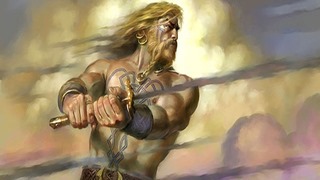

 The pecking order of birds, the ranking among herd animals, a usually stylized aggression to establish social position, can shade into bullying among humans, a specific form of cruelty. Animals generally stop once one of them establishes dominance over the other. We see animal rituals in the submissive gestures of wolves, stags, chimps, etc. who yield to a stronger opponent. A human bully doesn’t stop, and equivalent gestures of submission may simply encourage greater cruelty. The point of bullying is not merely to establish dominance, which is the goal of most alphas, both female and male, but to cause pain.
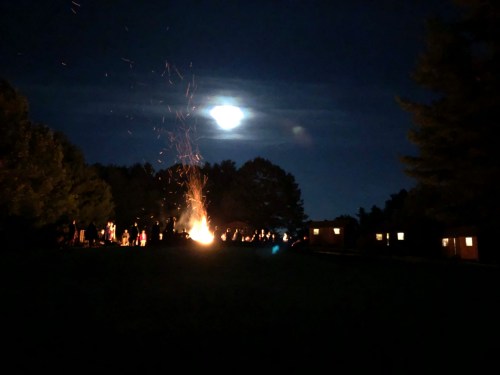

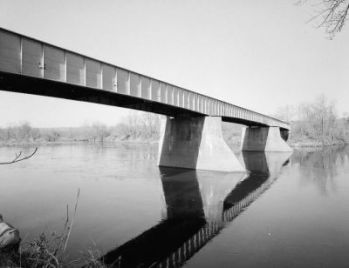


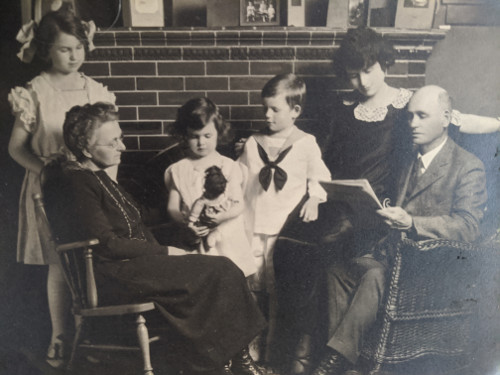


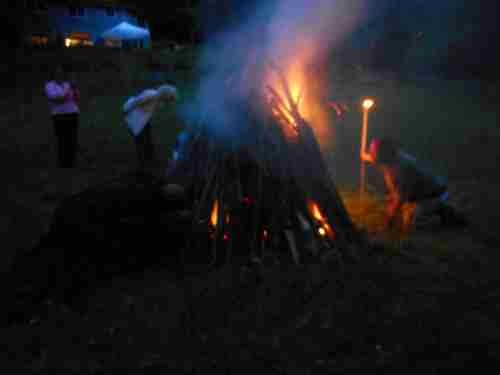
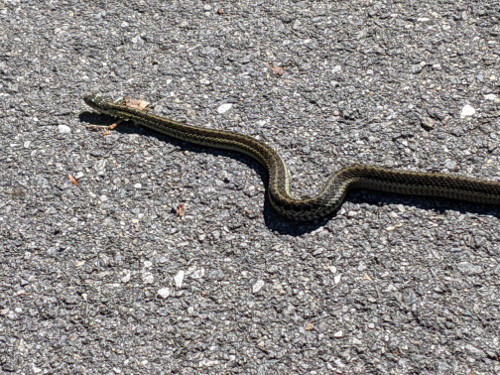


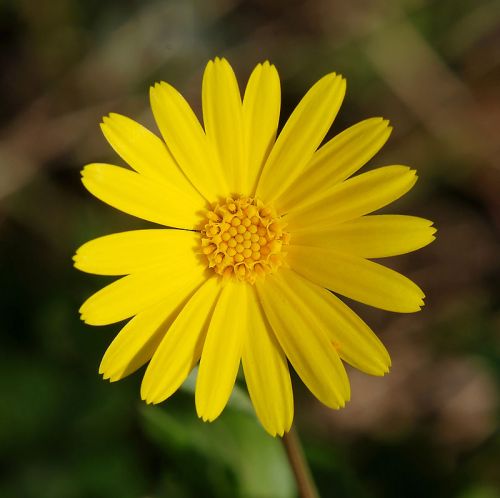
 In the previous post, I looked at thirteen facets of Doing Druidry that mostly revolve around inquiry and study. You can’t easily be a Druid without engaging in at least some form of one or more of them, because each of them connects you to the worlds where Druidry happens. (If that sounds restrictive or dogmatic or exclusive to you, just go back and look at the list! Got something to add that makes


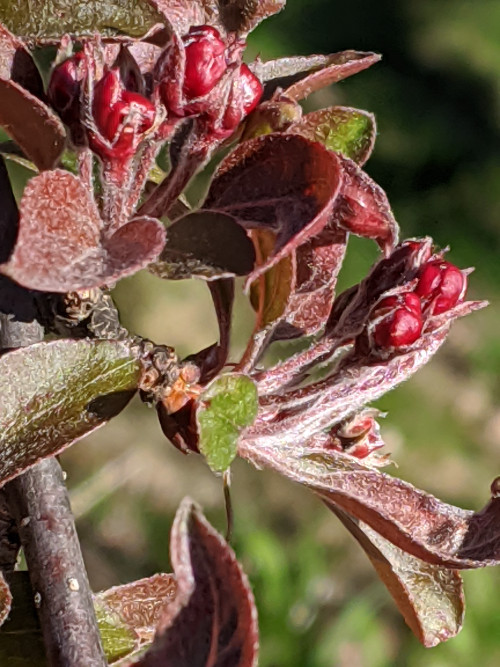
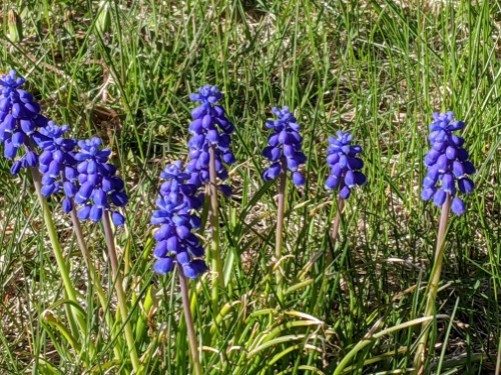


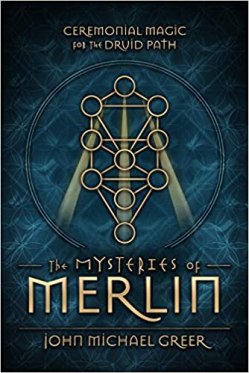
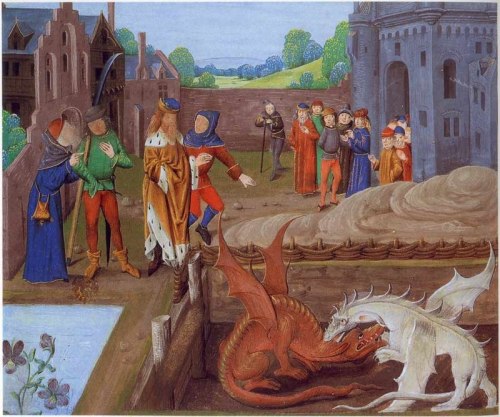
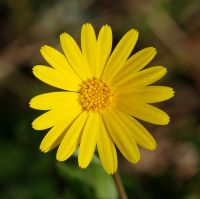 The following is meant merely as a ritual template. With practice, we naturally reshape what we do. There’s no particular advantage to holding on to a tradition, or to any ritual expressions of it, that don’t nourish and sustain us. If the language feels too formal in places, or just isn’t you, change it to fit. Like a new pair of jeans or shoes, you’ll work them in.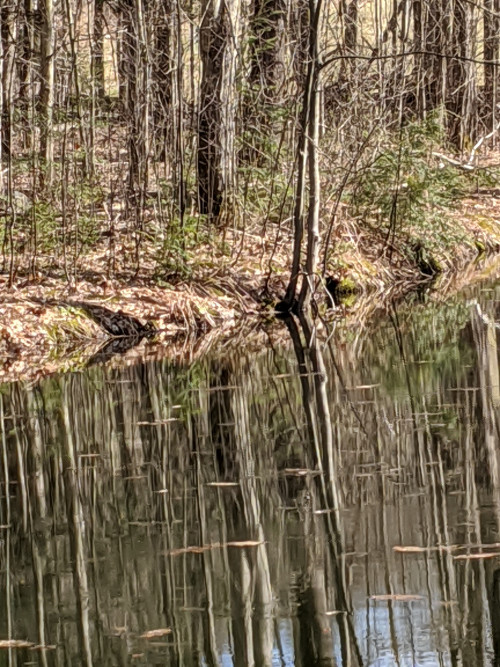
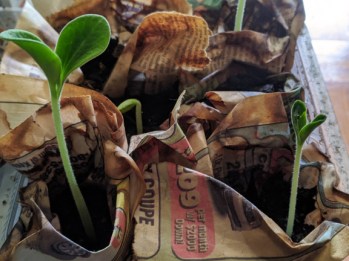
 Here I am late last night, a bit zombified and stretched after a long day and too much coffee. We wake up each morning to resume this project of physical existence, so immersed in it that we forget nearly everything else that’s going on.
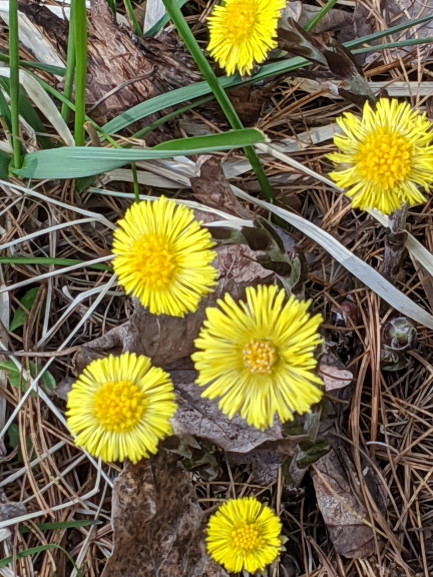
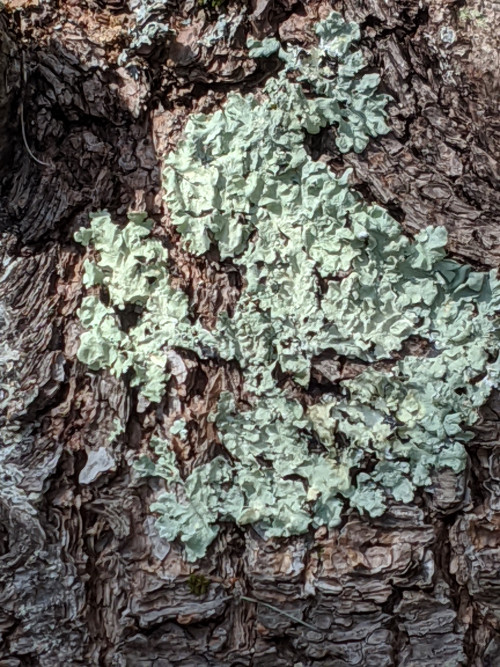
 All magic is polarity magic, intone some Mages who should know better. On the evidence of her novels The Sea Priestess and Moon Magic, Dion Fortune could easily rank among that magical fraternity. (Popularizations of the idea include Berg and Harris’s 2003 Polarity Magic: The Secret History of Western Religion.) It
 :max_bytes(150000):strip_icc():format(webp)/3_KING_2-58962fde3df78caebcf781d9.jpg) The 1550 Rosarium Philosophorum “Rosary of the Philosophers” includes images like the one to the right of the Red King and the White Queen, often used to represent sulfur and mercury, energizing and potential forces or modes. But polarities alone can settle into an equilibrium, or stasis. (We experience this in ourselves; though expressing both forces at least in potential, we may fear or favor one or the other. In some sense, then, we often short-circuit ourselves on our way to manifestation.) The needed third principle, here represented by the dove of Spirit, energizes the alchemical pair. For this reason among others, Druidry develops the principle of the Triad, sometimes represented in ritual as earth, sea and sky, as a reminder that Three are needed for manifestation. (Polarity, by itself, isn’t enough.)
The 1550 Rosarium Philosophorum “Rosary of the Philosophers” includes images like the one to the right of the Red King and the White Queen, often used to represent sulfur and mercury, energizing and potential forces or modes. But polarities alone can settle into an equilibrium, or stasis. (We experience this in ourselves; though expressing both forces at least in potential, we may fear or favor one or the other. In some sense, then, we often short-circuit ourselves on our way to manifestation.) The needed third principle, here represented by the dove of Spirit, energizes the alchemical pair. For this reason among others, Druidry develops the principle of the Triad, sometimes represented in ritual as earth, sea and sky, as a reminder that Three are needed for manifestation. (Polarity, by itself, isn’t enough.)


 A Druid Way