Archive for the ‘OBOD’ Category

one tree, two trunks — our old willow
We stand a little past the Equinox, and here, east of the Green Mountains (a hopeful name!), the snow’s half-gone, or going. As of today where I live in southern Vermont, sunrise came at 6:46 am, and sunset tonight will clock in at 7:06 pm — the day now 20 minutes longer than the night.
As always and forever, the planet — and that includes our neighborhoods on it, wherever they are — matters more pervasively, and holds more true and enduring interest, than whatever’s shrieking for our attention in the media. Politicians trade places, and learn with us the pointed lessons of one kind of power. Meanwhile, another and greater power plays across the earth, in our marrow, in our hearts and the roots of things.
 Here in the Northern Hemisphere, flocks of geese wing towards hatching grounds in Canada, foraging along the way in snow-fields, and shivering in half-frozen ponds and lakes. A mated pair of cardinals bob and swing at the feeder in the front yard, now up again after the bear alert.
The first brave flowers push through snow, snowdrops here, and a friend in Boston, two hours to the east and moderated by the Atlantic, reports honeysuckle and monkshood. In the back yard, boulders with their thermal mass warm each day in the strengthening sun and thaw a semicircle in the snow around them.
The willows everywhere hold out their green-yellow twigs, waiting, preparing. I stand for a moment with the great willow in our lawn. Last autumn a large upper branch snapped in a storm, and amazingly it hasn’t yet fallen, half-supported by a nearby pine. In another few weeks I’ll climb and saw it the rest of the way. Willow deadfall — the tree sheds like a Labrador — light and punky once it dries, has served as our principal kindling all winter long.

backyard blueberries, red sap rising
Here in Vermont, NG, a Druid in the north part of the state, has launched our first seed group, the initial step towards forming an OBOD grove. As with seedlings, the first steps of care ask for our regular attention. We may gather at midsummer to bless the young sprouts and tender shoots of that initial intention — it depends on whether we reach the critical mass all groups need in order to move from idea into manifestation. There are possibly a half-dozen of us so far around the state linked by a mailing list, a May website.
This afternoon I’ll gather with Mystic River Grove in Massachusetts for their Alban Eiler/Equinox rite. Members and friends come from Maine, Connecticut, New Hampshire and Vermont. After, it’s feast time, a chance to (re)connect with the many members of OBOD’s first and largest Grove in the U.S., see how we’ve all wintered, and celebrate the turn towards warmth and light. “By the power of star and stone …”
May the light, clarity and sanity of March bless you all.
/|\ /|\ /|\
Maybe you are (or you know you prefer to be) an Order of one. It’s simplicity itself. Spontaneous rituals can be, well, spontaneous. Or you live far from any group you know of, your work nights and sleep days, you’ve been burned by groups in the past, your spirits or guides take you where no group goes … Whatever the reason, you feel allergic to Orders, groups, traditions, the whole degrees and status and rules and standard-ritual-format thing. You honor your own life and its direction by walking and practicing alone.
I hear you. And for 350 days out of each year, we could be twins. Or at least close cousins. As a mostly-solitary, most if not all of your reasons are also mine.
Except.
Even solitaries belong to a Tribe. We’re distant kin. If evolutionary biologists have read the genomes right, we can all trace our ancestry back to a few ultimate grandmothers, and possibly even just one. So cousins it is.
People need people. Even (or especially) if your ideal dosage is low.
I’ve written of my experiences with Gatherings on several occasions. I “belong” to OBOD, the Order of Bards, Ovates and Druids, in the sense that I study with them through a postal course. No membership card, no annual dues beyond the cost of coursework mailings. I’ve completed the work of the Bard, the first of OBOD’s three grades, and I have a tutor in the U.K.. for my current Ovate study. Apart from any Gatherings I choose to attend once or twice a year, that’s the extent of my group involvement. It’s almost as solitary as it gets. And I certainly don’t restrict my reading or practice or ritual work to OBOD. Nor am I ever asked to.
I maintain a lively interest in several other orders — from a distance. I know several people who have studied with more than one Order. And compilers of the course materials of several of the larger Orders like OBOD and BDO, the British Druid Order, have consciously designed their coursework to be complementary. Study with more than one group and you’ll gain from different emphases. And any overlap, beyond serving as useful review, can deepen understanding because it issues from a different perspective and experience and set of practices.
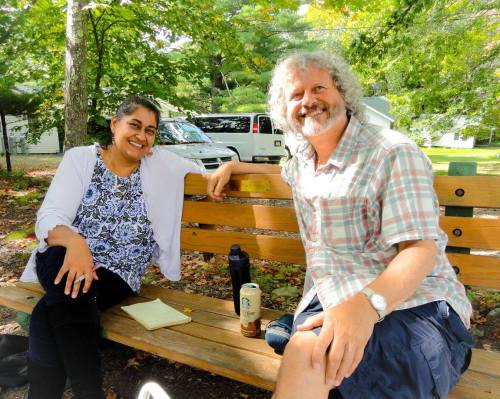
Renu Aldritch, OBOD Druid and founder and editor of Druid Magazine*, interviewing OBOD Chosen Chief Philip Carr-Gomm at East Coast Gathering ’17. Photo courtesy Gerfalc Hun.
The current leader of OBOD, Philip Carr-Gomm, has wisely observed that OBOD is a “flat hierarchy”. What matters are individual Druids and their love of the earth. Beyond them, any Groves they may opt to form or associate with. Philip is respected — and teased — and held in generally solid affection by most OBODies I know. But I could complete all three grades of OBOD coursework, never meet him, and never need to meet him or know anything about him. I could self-initiate, and practice on my own, with the useful focus that the study materials of an Order can offer, and never encounter hierarchy at all. Unless you count correspondence with the home office about mailings, or subscribing to the Order’s journal Touchstone, or exchanging letters or emails with a tutor.
I know four other Vermont OBODies, as members informally call themselves. Two of them live three hours away to the north. Another two live 10 minutes to the south. The “Northerners” attended the recent East Coast Gathering. I hadn’t seen them for a year or more. One member 10 minutes to the south joined me and we celebrated Lunasa about two months ago. But we three local OBODies have never managed to get together for coffee, in two years of trying. Solitary, often, right in the middle of being “members of an Order”. As they say, organizing Druids is like herding cats.
In the end, whether you’re an Order-member or a Solitary isn’t an either-or thing. Seeing it as such presents us with a false choice. On the strength of my limited experience as one person, I’d assert that everyone needs both in some form.
Because if I don’t spend time alone with trees and beasts, and energies of human and planetary existence that I can acknowledge and learn from and participate in, I won’t be more than half a Druid at best. And if I don’t learn from others — whether in the quiet company of books, the conversations we all have with “teachers of the moment” that we meet wherever we go, or in the noisier online worlds we’ve made, or the physical Gatherings that can provide so much recharging and good energy and fellowship and new friends — then I miss out on half that the Druid path can offer.
/|\ /|\ /|\
*Druid Magazine is published online free, three time annually. You can find the current issue, as well as more information, here.
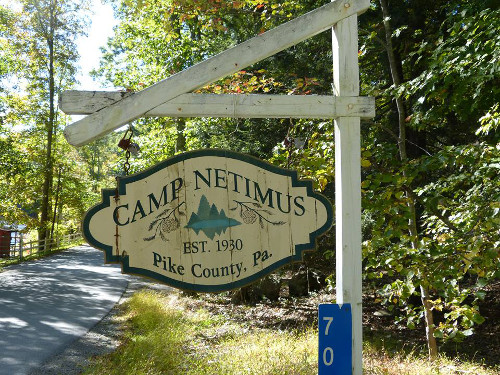
East Coast Gathering’s host camp. Photo courtesy Krista Carter-Smith.
Once again the Tribe — as many as could attend — converged on a hilltop in northeastern Pennsylvania near the autumn equinox for the 2017 OBOD East Coast Gathering. Some travelers contended with the after-effects of Hurricane Irma, others with more personal challenges. If you can make the effort, you experience the reward.
This year featured a Croning Ritual honoring nine women who requested this rite of passage, and a coming of age ritual for a young member. As Druid (and other Pagan) groups mature, similar opportunities will continue to arise to commemorate and honor such capstone events of our lives.
/|\ /|\ /|\
The spirits of the Land know us and often have a message for those among us who can hear them. And this weekend in particular we were urged simply to listen — more on that later.
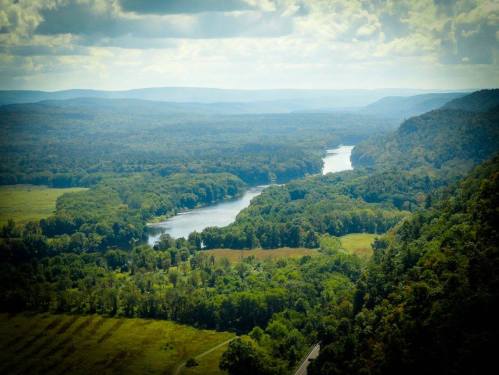
The Land near ECG. Photo courtesy Gerfalc Hun.
The overriding theme this year, twinned with our official theme “Discovering Awen: The Bardic Arts”, was clearly gratitude. Our delight poured forth on the several Facebook pages we frequent. Again and again, attendees wrote of their thanks to others for simply coming. With their presence and conversation, workshops and smiles, they reminded us of the beauty, fellowship and vitality of our chosen path.
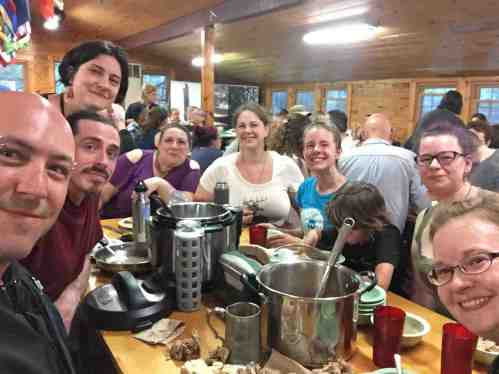
Members of Mystic River Grove. Photo courtesy Dana Driscoll.
This year marked my seventh Gathering in the PA hills. ECG opened its gates in 2010 and has subsequently given birth to the Gulf Coast Gathering and, last year, to MAGUS as well, the Mid-Atlantic Gathering (my review here).
Once again the event sold out quickly, and once again part of the draw, besides reconnecting with friends, was our special guest, this year the Chosen Chief of OBOD, Philip Carr-Gomm.
Philip and his wife Stephanie had been in the States longer this time. They’d just come off the previous weekend of giving workshops with the Green Mountain Druid Order in north central Vermont.

OBOD Chosen Chief Philip Carr-Gomm with attendees. Photo credit Elysia Cook
/|\ /|\ /|\
Partly to honor the Chief, the Opening Ritual received special attention. Mystic River Grove, with members across New England, prepared thoroughly.
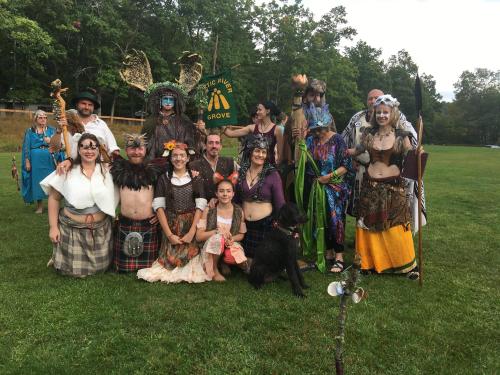
Mystic River Grove prepares for Opening Ritual. Photo courtesy Gerfalc Hun.
Because of a new job, Saturday was the only day I could attend, so I made the most of it, rising early and driving to camp to arrive at breakfast.
Saturday included the main Equinox ritual, as well as a lunchtime talk by Philip, Ovate initiations, and as always the bonfires to draw the Tribe together after nightfall. I missed the Opening Ritual, ably led by Mystic River Grove, the oldest OBOD group in the States. The pictures hint at how marvelous it was.
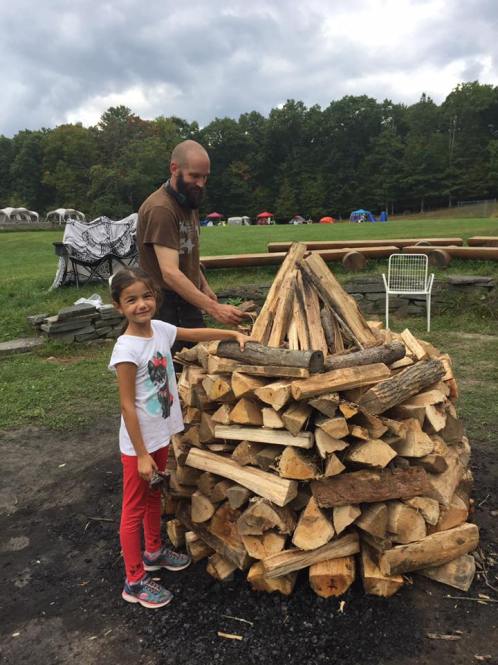
Brom putting the final touches on another masterpiece, with Alkandra helping. Photo courtesy Nadia Chauvet-Thanasoulas.

Interior of a camp cabin — home for the Gathering. Photo courtesy Jo Ami.
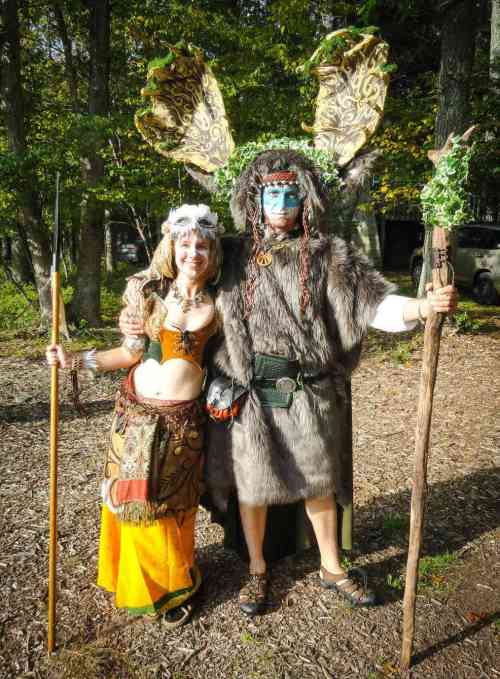
Cat and Gerfalc of Mystic River Grove in ritual garb as Owl and Moose. Photo courtesy Gerfalc Hun.
Loam introduced us to the Indian practice of rangolee or kolam, a form of ritual painting with rice flour. Below you can see the rangolee ogham (a splendid merger of Hindu and Druid traditions!) taking shape in the fire circle.
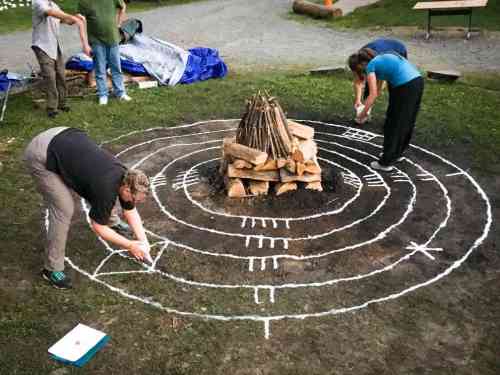
Loam and a friend laying rangolee, ritual painting with rice flour, around the firewood. Photo courtesy Gerfalc Hun.
The unusual warmth of the weekend spurred me to stay robed from the afternoon ritual all the way through until the evening Ovate initiations. (Thank-you’s again to my wife for choosing a very breathable fabric when she fashioned my robe!) I’m sitting and gazing into the fire below. The rangolee remain vivid in firelight.
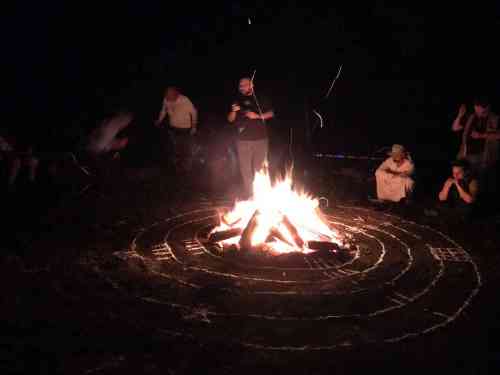
After the Saturday evening Ovate initiations. Photo courtesy Steve Cole.
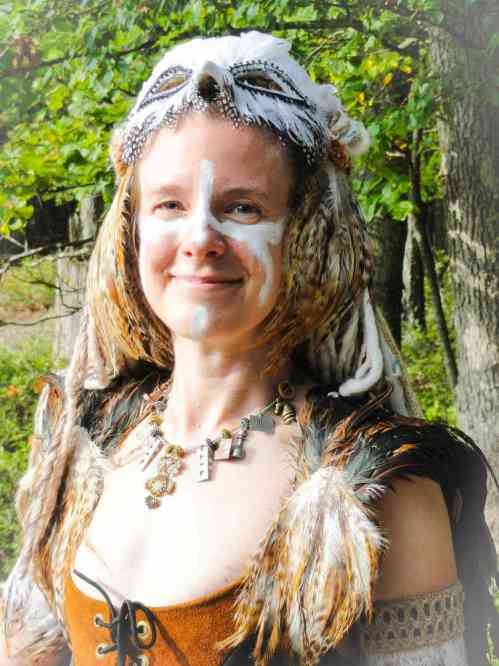
Cat spearheaded the ritual planning and mask-making for Mystic River Grove’s Opening Ritual. Here she is as Owl. Photo courtesy Gerfalc Hun.
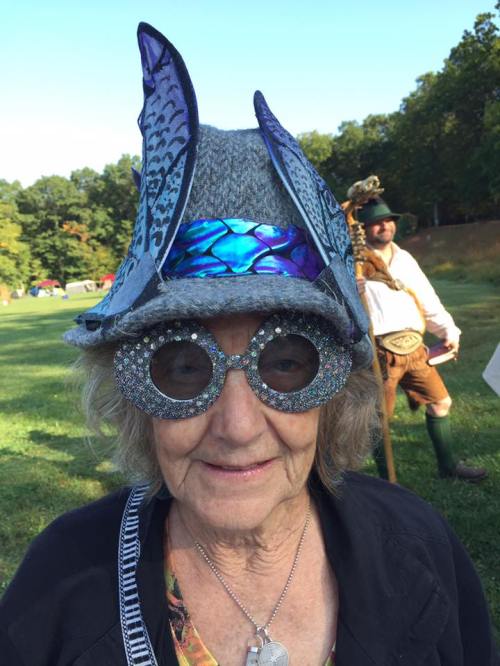
Sarah F. as Salmon for Mystic River Grove’s Opening Ritual; she also served as Grove Mother during initiations. Her long-running astrology blog always has something to teach. Photo courtesy Gerfalc Hun.
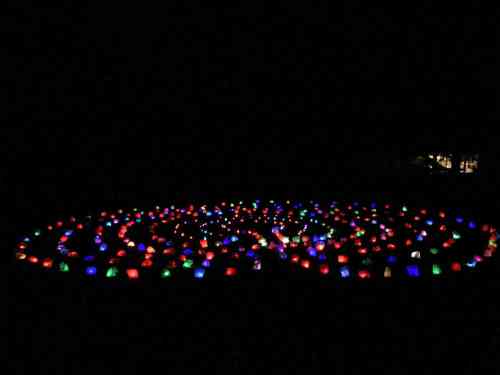
“Again the Labyrinth” — Cat gathers a team to set up the scores of electric tea lights in paper bags, switching them on and later off each night. Photo courtesy Steve Cole.
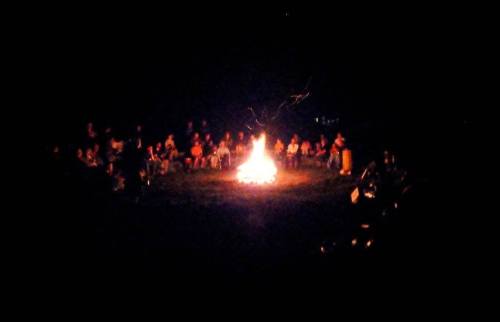
Late Saturday — last night of the Gathering, people linger
“May the harmony of our circle be complete” go the words of standard OBOD ritual. If we’re growing at all as Druids, we keep getting reminded just how large our circle is.
Those who attend the Camp before and after us each year all contribute their energies, and not everything meshes automatically. But in particular, Druids can imagine themselves more in tune than others, and this in turn can lead to an arrogant obliviousness to what the Land is actually saying, and to a disrespect of the expressed wishes of the non-human inhabitants. As guests, the messages ran, we can do better.
As a result of the experience of past years and this year in particular, by both organizers and some attendees, and messages received from the land spirits of the Camp, next year’s Gathering will reflect a change in approach and perspective. These changes will appear on the ECG website. Listen, respect, celebrate. Old lessons, perennially new.
Here’s to the spiral of 2018!
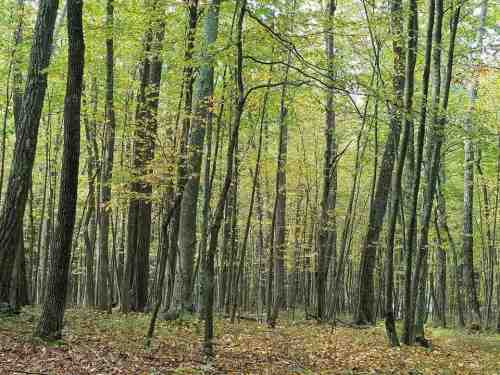
Trees of Camp Netimus. Photo courtesy Elysia Cook.
 “So how did the ritual go?”
Site statistics for the last post drew readers from surprisingly varied lands: Vietnam, South Africa, Argentina, Ukraine and Latvia among them. I highlight these simply because their national languages aren’t English (with the exception of S. Africa). Not only are readers there interested in Druidry, but they’re seeking out English-language media that talk about it.
“Show us applied Druidry and we’ll pay attention”, you’re saying.
Here’s a follow-up, an excerpt from my “post-mortem” journal entry after the ritual. Because “feels” don’t really tell the whole story, as you’ll see. How I think a ritual progressed, and the whole picture with every factor included, can be two different things.
First off is the ritual set. You know: state of mind, weather, time of day, preparation. Alert. Noticing many animal presences, especially ants, flies, aphids, grasshoppers. Slightly edgy, the way I often feel when stuff’s going on I know I don’t otherwise notice. (Material for later meditation there.) Weather sunny and clear, 73 F (23 C). Approximately 2:00 pm. Preparation minimalist, with a few objects I was led to choose in meditation earlier that day. (Barely visible, behind and below the cup to the left/north sits a black Cherokee owl cup, containing objects from my first OBOD initiation, along with a symbol of the wild boar, one of my animal guides. (Yes, in one sense this wasn’t “minimalist” at all; I’d pulled out all the stops for this rite.)
Below is an image with the fire lit, a little more than halfway through the rite. I began with a standard OBOD ritual opening: “By the power of star and stone, by the power of the land within and without …”

In the picture I’m facing East. Directly in front of me is the blue bowl of water for West. To the right, South, the dragon candle-holder, with a green candle.
“Green for South?” I hear the purists gasp. Yup. Why? As one of my friends might say (and spell) it, that’s the color of “the green fyre” of nature. I’d been nudged to use green at our Midsummer ritual. More than the sun, how the Land flourishes under the sun at the solstice says “summer” to me. Your climate and tools differ? Excellent! We’re both learning to listen to what’s in our faces and under our feet and in our hearts.
On the far side of the circle in the East is a deer-bone whistle from Serpent Mound. Its high pitch matched the cry of birds overhead, the wind in the trees. Finally, to the left and North is my Ovate anchor stone and one of several offerings, a cup of milk and a slice of bread (already offered by the time of this picture), white for the northern snow, for Lugh Lord of Light, and for Thecu Stormbringer*, for fertility and harvest both, how we are all nourished from the time we are born, “the fat of the land”. What is it that fire burns, after all?
Dry wood lay ready, kindling and newspaper, too. I’d just said these words “I ask your aid in consecrating this fire circle and the greater circle, that has its center here, its circumference everywhere.”
Out with the book of matches. One after another. Nothing. The fire wouldn’t light.
So back into the house for wooden matches. “Disaster! Bad omens abound! No fire means no passion, no energy for your work. AND you broke your ritual circle!”
Well, no. Remember the part above about the “greater circle”? I was still in it. I pondered the nudge to include this line as I wrote it earlier in the day. And if such “ritual breakage” distresses you in your own rites, you know what to do: cut yourself a ritual doorway, The circle won’t blow away during the few minutes you’re gone.
Sometimes a break in the ritual points to a specific focus for the ritualist to attend to. I took the need to get better matches as a ritual message: when I tend any fire — energy — passion — heat — will — decision — I need to pay particular attention to beginnings, to my tools, to an extra step that might be necessary to assist with manifestation. Fire spoke: any ritual worth its salt links self-as-home together with the ritual action. Fire comes from within as much as from without. Much more useful and to the point than irrational fear of bad ritual mojo.
“I kindle this fire in honor of all the elements, earth and form and north the altar, air and breath and east the means, water and cauldron and west the capacity.”
At length, after a meditation I’m still reflecting on, the closing, again adapted from OBOD ritual: “As the outer fire dies down, may it remain a pure flame within. This circle is closed in the apparent world. May its inspiration continue within us all, a gift”.
/|\ /|\ /|\
*In the next post, an update on my work with Thecu of the Nine Paths of Storm.
[Updated/edited 2 December 2020]
On Friday, Mystic River Grove, an OBOD group based in Massachusetts, celebrated a Summer Solstice ritual inspired by the Anglo-Saxon symbel or feast, and built around toasts, boasts and oaths. I couldn’t attend, but I want to reflect on these three components of celebration, apart from however Mystic River chose to celebrate beyond those three elements.
 With a toast, boast and oath, you could certainly hold a fine solo rite. Toast your gods, land spirits, ancestors, teachers, living kin — whoever you’re called to honor. Then on to a boast, a celebration of excellence, a claim to honor for ourselves, for something we have achieved. Like gratitude, boasting’s a skill we neither teach or practice enough. My default boast is survival. I’m still here. But I can definitely claim more; this blog, my other writings, a good marriage, years of teaching young people, a circle of friends I admire and enjoy.
A solo rite still has witnesses: our own selves, hearing the words. Powers and beings of the world who attend because they were “in the neighborhood” so to speak, unless we explicitly ban them. And anyone we did invite to join us. But what’s the value of our community witnessing when we do these things? Why do these things publicly?
Toasts others make can remind us who we honor and who we might include next time. We learn of others’ gratitude. What I’m grateful for carries a story with it. It’s a window into a life, and speaking gratitude in a circle opens us to each other and our stories.
Boasts tell us something of the commitments and dedications of time and energy in others’ lives. If I’m proud of it, I’ve spent myself on it in some way, poured myself into it, and probably sacrificed in some way to accomplish it. Boasts also let us laugh — we can boast about silly things, or make fun of ourselves for how much even a small achievement may have cost us.
Oaths tell us what will matter in the coming days and months. What are others binding themselves to do? How does publicly announcing an intention, having others witness it, help energize us to accomplish it? An oath may include a spell of finding or binding, of opening the way, or shutting down obstacles, resistances, barriers, and so on. When I took part in Nanowrimo in past years, for instance, and wrote my 1600 words a day, announcing my progress online helped me keep going. You helped me persevere because you knew I’d set out to do it.
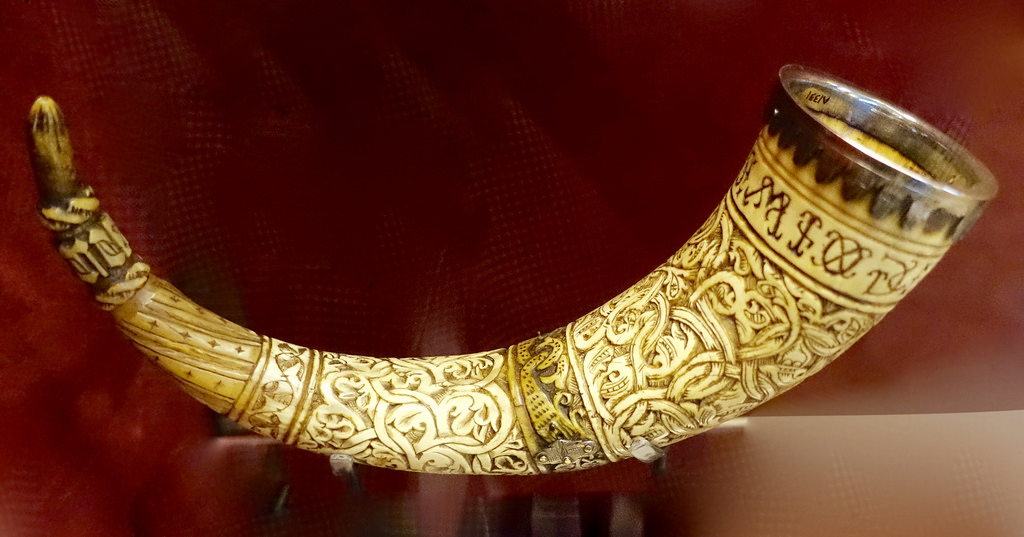
Depending on the size of the horn passed round the circle for each of the toasts, boasts and oaths, and the kind of drink you quaff each time, you may find your tongue loosened and the three acts easier to pull off!
Here the rhymer in me wants to add a fourth word, wrecking the lovely triad of toast, boast and oath, but creating in its place a new and balanced pair of rhymes: toast, boast, oath and growth. After all, a rite moves us to a new place and space, never the same as where we were before. As with yesterday and tomorrow, the difference from today may or may not seem like much, but just as the daylight lengthens and shortens each year, depending on which side of the solstice I’m on, so do the energies at play in my life. I can do things today not possible yesterday or tomorrow. And that’s worth a toast, a boast, an oath and the growth that comes with them.
Finally, if we’re going to be Anglo-Saxon about things, the Old English Maxims 1, lines 138-140, offer relevant insight here:
Ræd sceal mon secgan, rune writan, leoþ gesingan, lofes gearnian, dom areccan, dæges onettan.
Keeping to the spirit I feel lies behind these proverbial expressions, and unpacking their compactness and concision*, I take this to mean, roughly, “Let your speech be words of good counsel to others, write runes of wisdom, sing as epically as you can, deserve praise, test and expand your judgment, while holding nothing back each day”.
/|\ /|\ /|\
*With even a little Old English, you can explore meanings and fashion your own translation with the help of the online Bosworth-Tollers Anglo-Saxon Dictionary here.
rǣd: accus. of se rǣd; advice, counsel, prudence, deliberation
sceal, 3rd sg. of sculan: shall, ought, be obliged, must
mon, Wessex dialect nominative of se man: one, person, human, mortal, man
secgan: to say, speak, express
rūne, accus. plural of sēo rūn: whisper (speech not intended to be overheard, confidence, counsel, consultation), mystery, secret, rune
wrītan: to write, cut, draw, form letters (on wood, stone, parchment, etc.)
lēoþ: accus. of þæt lēoþ; song, poem, ode, lay, verses
gesingan: to sing
lofes, gen. of þæt lof: praise, glory, hymn
gearnian: to earn, merit
dōm: accus. of se dōm; doom, judgment, judicial sentence, decree, ordinance, law
areccan: to put forth, relate, recount, speak out, express, explain, interpret, translate
dæges, gen. of se dæg: day, daytime
onettan: to hasten, anticipate, be active or diligent
I’m going all lore-y in this post, so if plants and herbal history aren’t really your thing, move along.
Vervain (Verbena spp) — “leafy branch” — known among herbalists since at least the time of dynastic Egypt, has associations with midsummer, most obviously because in the British climate where we get much of herbal lore in the English-speaking West, that’s approximately when it flowers. The 11th-century Old English Herbarium (Ann Van Arsdall, Routledge, 2010) describes gathering vervain, using the Latin name uermenaca, at Midsummer. (Any left over from the previous year was to be tossed into the Midsummer bonfire.) Fans of The Vampire Diaries know it for its colorful flowers and anti-vampiric powers. The TV series showed the variety Blue Vervain (Verbena hastata), an American species, and dramatized the herb’s toxicity to vamps and its ability to protect a mortal from compulsion by vampires. Who says pop television has no wisdom to offer?!
The range of vervain’s nicknames also indicates something of how firmly fixed it is in herbal history: enchanter’s plant, holy herb, herb of the cross, herb of Saint Anne (yerba del Santa Ana), Juno’s tears, pigeon’s grass, pigeonweed, turkeygrass, herb of grace, etc.
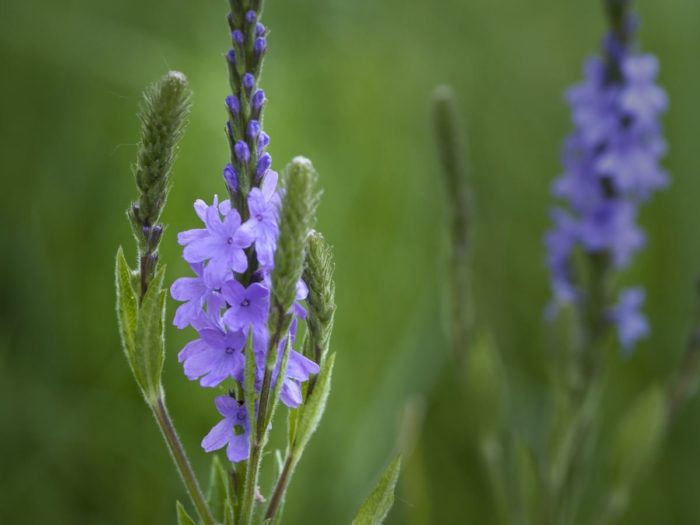
Blue (or Swamp) Vervain (Verbena hastata)
I’ve been on an intermittent local quest to spot some growing wild. Many North American varieties of the plant are originally native to Europe and were brought by early colonists. In the sometimes quaint and often rewarding language of herbals and herbalists, vervain “has enough garden presence of a rustic kind to justify its inclusion, being in no way boorish or uncivil, and it is easy to start from seed and easy to grow” (Henry Beston*, Herbs and the Earth, David Godine, 2014).
Vervain varieties (over 250!) have been prized for numerous benefits, depending on dose and preparation, along with a few qualifications of sensitivity and toxicity at higher levels. It has tonic, diuretic, and anti-parasitic properties, and can stimulate both dopamine and serotonin, meaning it lifts you up and also slows you down. Leaves, roots and flowers, again depending on variety (harvest early in the season to avoid strong, even rank flavor!), make a soothing tea.
In herblore, vervain sprang, according to one story, from the tears of the goddess Isis as she wept at the death of Osiris. Greeks and Romans both used it as a sacred herb, sweeping it across their altars. In Christian Europe the story runs that vervain was used to slow the flow of blood from Christ’s wounds (though logically this would merely have prolonged his agony), and so thereby the plant gained another of its nicknames — herb-on-the-cross.
Western medicine officially disdains to acknowledge much value to the plant. One site (drugs.com, sourced from Harvard Health Topics), notes “There is no clinical evidence to support specific dose recommendations for vervain. Traditional use for its astringent properties required 2 to 4 g daily in an infusion … Research reveals little or no information regarding adverse reactions with the use of this product” but adds that for pregnant and nursing women, “Documented adverse reactions. Avoid use”.
Nonetheless, many sites include recipes for nursing mothers, such as this one:
Combine 1 quart of water with 1 teaspoon of vitex berries, 1 teaspoon blessed thistle leaves, 1/2 teaspoon vervain leaves, 1/2 teaspoon nettle leaves, 1/4 teaspoon fenugreek seeds, and 1/4 teaspoon anise seeds; steep for 20 minutes; drink 1 to 3 cups a day.
I’m leaving out the source, perhaps to protect the guilty. But anyone who’s benefitted from herbal remedies, as I have, especially if nothing else has worked, can readily attest to their value from personal experience, in the face of official disdain and ignorance.
With all this history and attention, it’s little surprise that among the plants set forth for study in OBOD’s Ovate grade work, vervain occupies pride of place.
/|\ /|\ /|\
Sources (besides personal experience): Organicfacts; Drugs.com; Mother Earth Living.
*Henry Beston (1888-1968) wrote, “Nature is part of our humanity, and without some awareness of that divine mystery man ceases to be man”.
The first of what richly promises to be an annual event, the Mid-Atlantic Gathering U.S. (MAGUS) took place over this last weekend, Thursday to Sunday, at Four Quarters Sanctuary in Artemas, Pennsylvania.
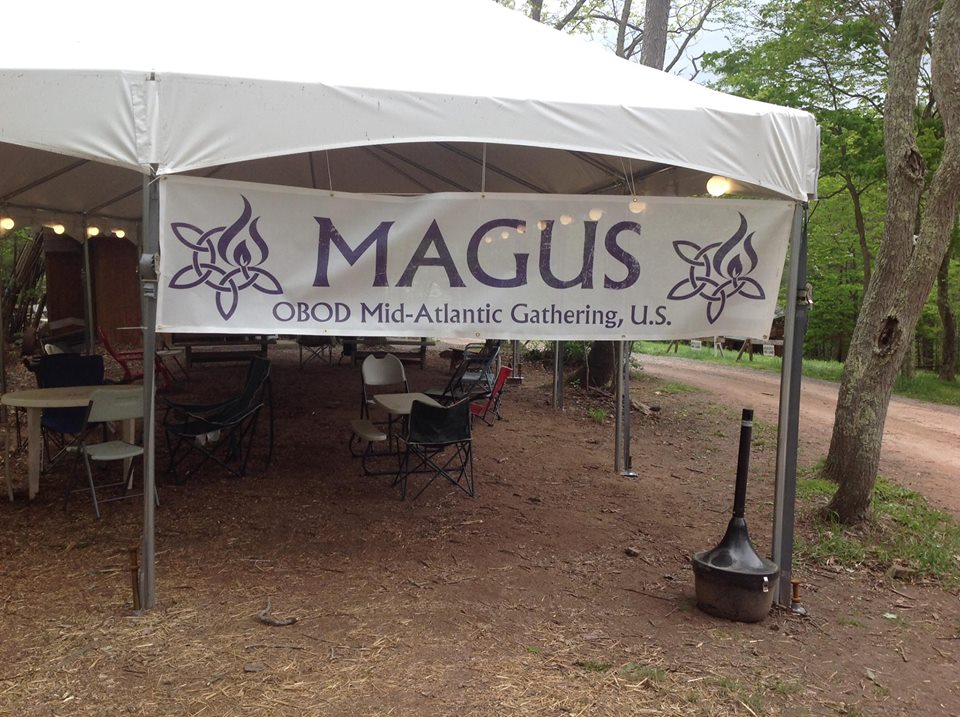
photo courtesy Wanda Flaherty
The initial inward glimpse of the Gathering came to one of the organizers almost a decade ago. There’s yet another indication, if I need the reminder, of the possible time-gap between first seed and outward manifestation.
And our hosting venue, Four Quarters, an interfaith sanctuary launched in 1994, was the perfect place to hold a Beltane Gathering. As the Four Quarters home page observes, it’s
a membership-driven non-profit, a vibrant community of real people living real lives. And Four Quarters actually owns the Land, buildings and equipment that make our work possible, forever set aside from the vagaries of private ownership.
The lovely and wild 150 acres of the sanctuary lie in the Allegheny foothills in southern PA, just miles from the Maryland border. Home to a stone circle, labyrinth, retreat center with bunkhouse and dining pavilion, a brewery, a drum and dance circle, sweat lodge, a handful of permanent residents, and the clean-flowing Siding Creek defining part of its periphery, Four Quarters strives to
honor the many world traditions that reflect an Earth Based Spirituality, and we work to support those traditions and welcome their people. We do not teach “One Way” of belief. We do not have “The Answer”. We do have good questions.
Here’s the Stone Circle seen from the north, a work in progress (with annual megalithic-style stone raisings open to anyone willing to join the rope-pulling and log-rolling stone lifting team). Note the nearly three-foot-long camp bell suspended from the tripod in the foreground — a deep voice audible throughout the property.
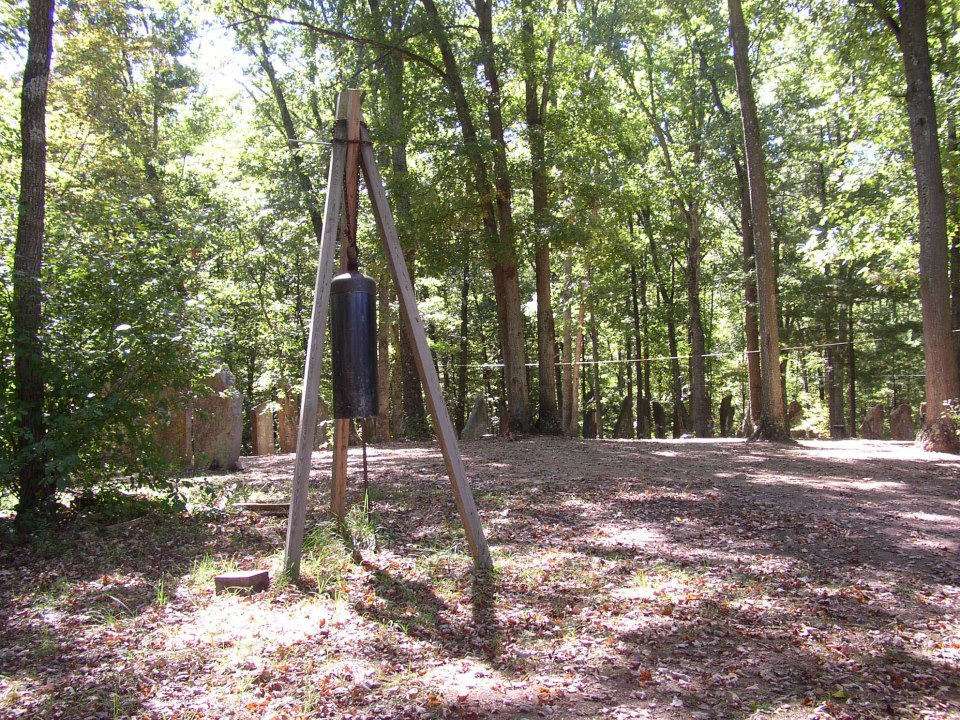
photo courtesy Wanda Flaherty
A wide-angle shot can’t capture the majesty of the stones or the power of the circle. Here’s a closer view of some of the lovely rough surfaces, mottled with rust in places, asking for touch and communion.

photo courtesy Wanda Flaherty
The first time I walked the circle Thursday evening, I sensed a quiet hum of presence. The next time I came more at ease, eager to touch and listen to the land and the inner voices. By the time I reached the eighth stone, sudden tears filled my eyes. The circle holds indisputable power.
Here’s one of the altars near the center of the stone circle. The ancestors speak strongly here, if I give even half an ear.
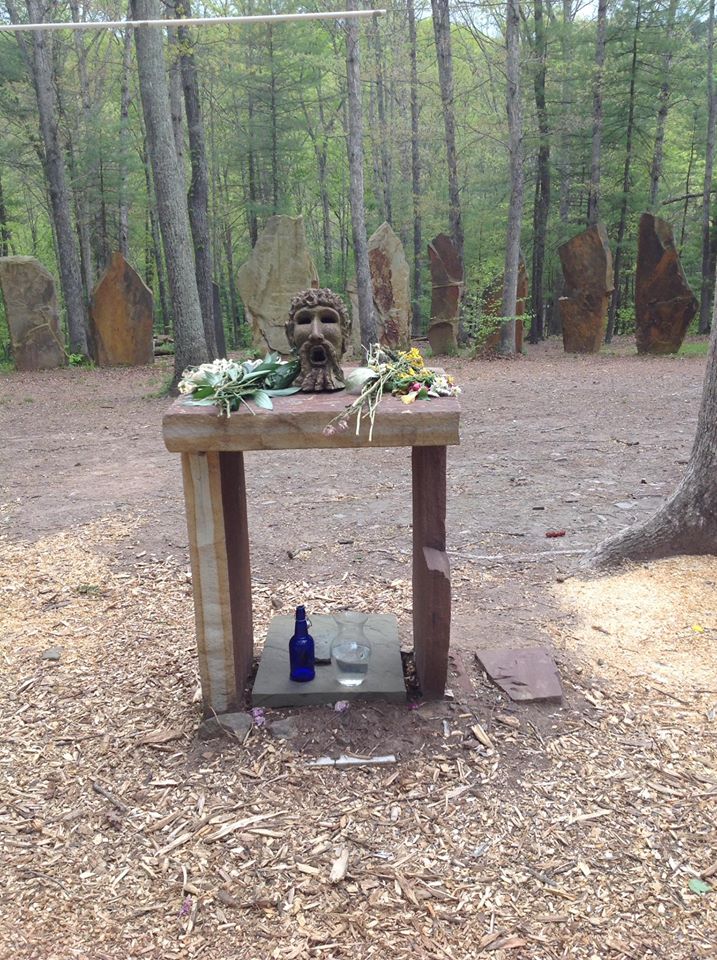
photo courtesy Wanda Flaherty
How to convey the blend of the speaking land, the personal and the tribal at such Gatherings?! You come as someone new to Paganism, or to OBOD more specifically. Or you come knowing you’ll reunite with your people once more, across the miles. If we saw each other every day, we might begin to forget the human and spiritual wealth that surrounds us. In ritual, in conversations in the dining pavilion (below) or over coffee during breaks, we’re reminded that we’re never alone, no matter how solitary we may live the rest of the year. Inner connection exists over any distance.

dining pavilion — photo courtesy Wandy Flaherty
Typically when I reflect on a Gathering a few days after, one or two things stand out sharply. But when I started naming them over breakfast this morning, I ended with a list of a score of items — nearly the entire weekend as I experienced it, a blend not to be parcelled out in soundbites or highlights.
From the place, with its cool air crackling with oxygen from the vigorous trees, to the faces and energy of the Tribe and its rituals, formal and informal, to the songs of spiritual presence that all places offer, everything stands out in memory. Impossible to narrow down. This post is a small attempt to hint at that Everything — to urge you, if you want a taste of a particular kind of marvelous, to attend a Gathering if you can.
The way of the Solitary can indeed be a blessed one, but the Tribe also offers a great deal to reinvigorate even the most hermetic of Solitaries. A Gathering can paradoxically reaffirm the Solitary, because you meet other Solitaries. You witness the integrity of the individual path, as well as the gift of the Tribal way. Gatherings have changed me into an avid Tribe-seeker, at least a few times each year, so that when I retreat to my own smaller circle, the closing words of OBOD ritual echo true: “May our memories hold what the eye and ear have gained.”
/|\ /|\ /|\
“Kindling the Flame” was our Gathering theme. We apparently also needed the blessing of Water, in the form of steady rain from late Thursday afternoon through the night, and intermittently all Friday, to help remind us that all the elements gather, whenever any one of them is invoked. “Thus is balance preserved”.
Thursday included an opening orientation by our special guest OBOD Druid Renu Aldritch, a workshop I delivered on “Kindling Our Sacred Fires”, the opening ritual, and preparation for Bardic initiations the next morning.
After breakfast Friday, we initiated 12 Bards. Like many others, I’ve come to see how priceless it is to support initiations and attend whenever I can, regardless of whether I have an assigned “role”. The rite washes over us all, renews the experience each of us had during our own initiation, helps us rededicate, and allows us to greet the newly initiated within ritual space.
Always there are small hiccups and endearing glitches during a ritual. I think without them we’d have to make sure we added them. And we come to expect them: they humanize a dramatic moment, when someone with a major or minor role misplaces a prop or drops a ritual spoken line, topples the incense or bowl of water, mispronounces a magical name, and so on. We laugh, disarmed, and then the next part of the ritual can reach deeper, because we’ve opened up that much more. Each initiation is unique: tears, laughter, the presence of Spirit, the call of bird or beast to punctuate a word or silence.
Friday gave us Renu’s workshop, “Kindling the Spiritual Warrior”, a theme that bears ongoing attention. Dana’s workshop “Land Healing on the Inner and Outer Planes”, her ritual later that afternoon, “Ogam Tree Galdr in the Northern Tradition”, her generous personal readings using her own tree divination system, and her conversation fired many with renewed love and commitment to this path. That evening also brought initiation to three Ovates under moonlight and the background throb of drums from a drum workshop. We couldn’t have asked for a better ritual setting.
Downhill from the Labyrinth, prepping for the evening Ovate initiation in the open air: Renu, Dave, Ahote, me and Cat. (We opted later for a covered stage, in case the rain continued.)
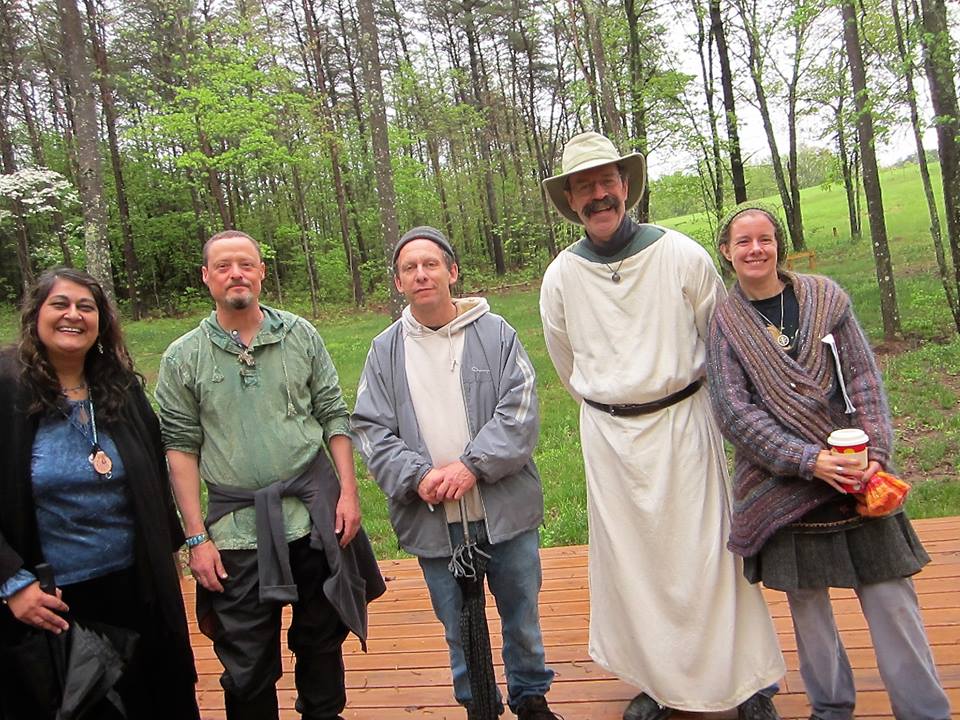
photo courtesy Gail Nyoka
Saturday gave us Wanda’s workshop, “Awakening Your Beltane Sensuality” with its creative chance to heighten one sense by muting the others. Now that the rain had ceased, we could hold our main Beltane rite in the stone circle.
Here’s an evocative pic from Saturday night, the Fire Circle alight, a few dancers visible, along with Brom, our Fire Master, tending the flames.
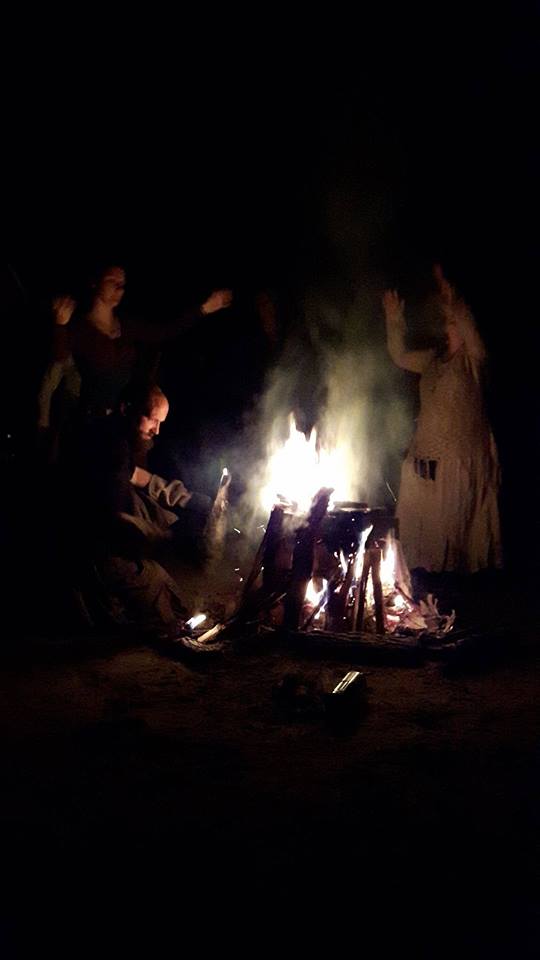
photo courtesy Wendy Rose Scheers
By Saturday night I’d mostly finished my other ritual responsibilities, including providing a glitch for the main Beltane ritual where I had a speaking part — I dropped a line. “When that ritual pause goes on a little too long and you look around, you’re probably what’s missing”, as someone quipped over the weekend.
I was looking forward to enjoying the Fire Circle without performing for the eisteddfod, the Bardic arts portion of most OBOD festivals that welcomes the evening fires and the awen-inspiration of a Gathering and offers it back again in song and poetry and story.
But as Bards know from experience, the awen sometimes has other ideas. Fire gave me an opening line a few hours earlier during dinner. And it kept gathering more lines to it, right up to the evening Fire Circle. Verses kept changing and I didn’t have pen and paper handy, so I kept playing with lines and rhymes and their order. “Fire says improvise” came the first line. I’d invoked fire, after all, during my workshop, in several different ways. What did I expect?! Here’s the poem:
Fire says improvise —
no surprise,
when such orange wonder
seeks out skin and eyes.
Fire can burn all to black
but before,
that hot roar lifts me
to soar beyond
anything I thought to think I lack.
Most times I’m no fool —
how does this jewel
get to be so hot and cool?
Old rule, it says.
Burn madly, gladly,
or — if you must — sadly:
one way only among those other two.
For I will heat you from your crown
to your open-toed shoe.
The fire, friend,
the fire is in you.
Just get up and say it, came the nudge. Doesn’t have to be polished. I delivered the lines, gazing at the flames the whole time, then stumbled back fire-blind to my seat on one of the Fire Circle benches. The version here is close to what I remember saying, probably edited a little. Fire didn’t want an editor. Just flame, large or small. The other Bards obliged, and this eisteddfod was among the most varied and interesting I’ve known.
One of the oldest pieces of spiritual counsel in the Indo-European tradition is this: “Pray with a good fire”.
/|\ /|\ /|\
Below is an informal altar by Siding Creek, which curls around Four Quarters, another voice audible through much of the Sanctuary as a background whisper.
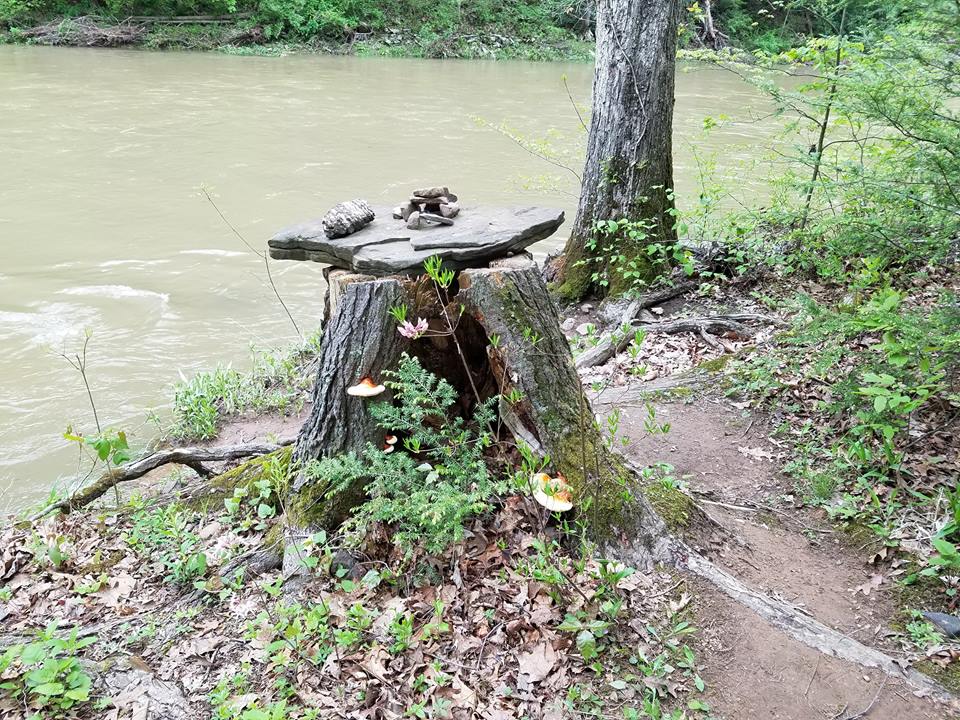
photo courtesy Renu Aldritch
Four Quarters brews its own mead, a taste of the Land to take inside the body. Warmed by place, fire and fellowship, we return to our lives richer by each person who attended. Long live MAGUS!
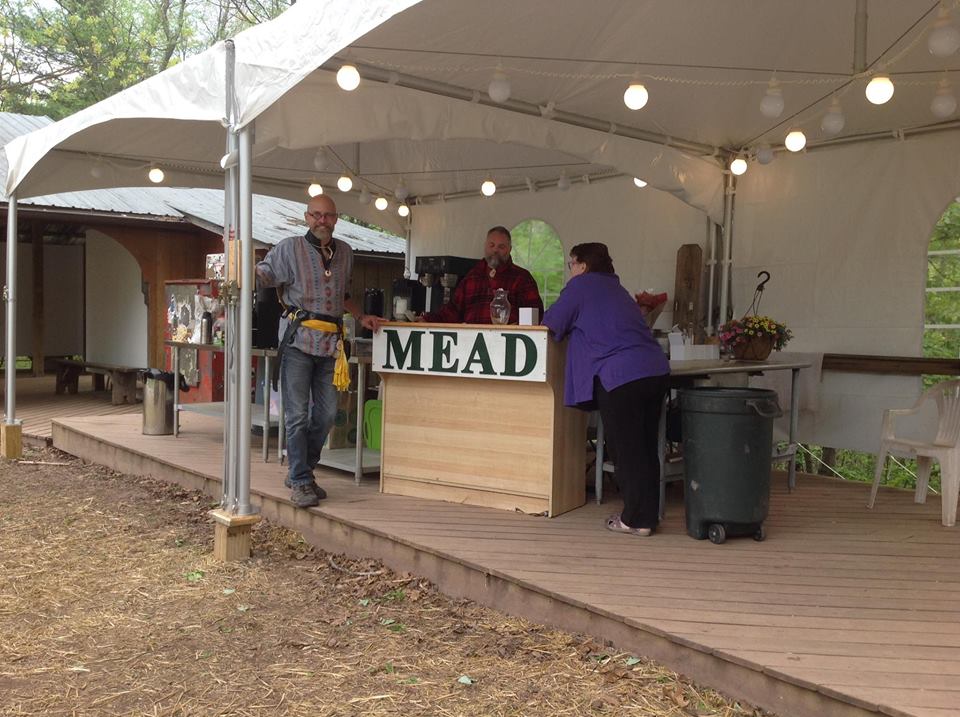
photo courtesy Wanda Flaherty
A final view of the Circle through the eye of the Mother Stone:
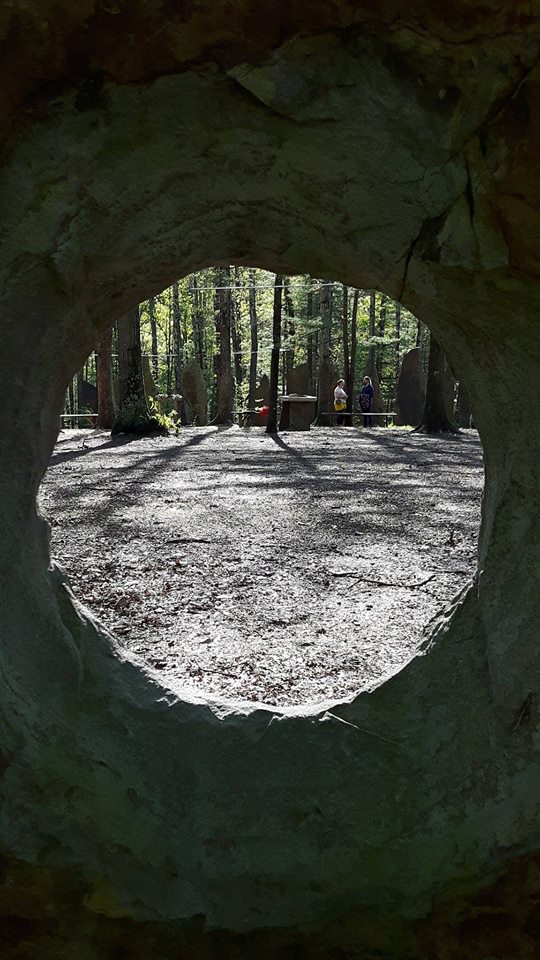
photo courtesy Wendy Rose Scheers
[Part 1 | Part 2 | Part 3]
In this post you’ll find me wearing my hat of the linking, connecting and informing Druid, so salt to taste.

Iona Abbey
“My Druid is Christ,” wrote Saint Columba (521-597), among other things the founder of the abbey on Iona. Ask yourself what to make of such a remark from this early Irish missionary, working in what is now Scotland. You can even be Bardic about it, and shape your meditation into a triad of insights. Out of one of my meditations emerged a triad that begins: “Three things we serve, who love both flaming Star and branching Tree …”
/|\ /|\ /|\
And out of such echoes from a distant past comes the Romantic conception that Druidry and Christianity initially co-existed in amity. Evidence exists both to support and refute such a view. But whatever the reality of that period, which we may never know, we can certainly identify its spiritual gold and and continue to create with it in the present.
OBOD Chief Philip Carr-Gomm notes in his book Druid Mysteries:
Although Christianity ostensibly superseded Druidry, in reality it contributed to its survival, and ultimately to its revival after more than a millennium of obscurity. It did this in at least four ways: it continued to make use of certain old sacred sites, such as holy wells; it adopted the festivals and the associated folklore of the pagan calendar; it recorded the tales of the Bards, which encoded the oral teachings of the Druids; and it allowed some of the old gods to live in the memory of the people by co-opting them into the Church as saints. That Christianity provided the vehicle for Druidry’s survival is ironic, since the Church quite clearly did not intend this to be the case (pg. 31).
As I poke around “ironic survival” further in this third (Part 1 | Part 2) reflection on Jesus and Druidry, I note one quite obvious thing many others have of course commented on. The Galilean master is at his most Druidic when he speaks with images of the natural cycle of things:
Truly, I tell you, unless a kernel of wheat falls to the ground and dies, it remains only a seed; but if it dies, it bears much fruit (John 12:24).
An extensive Druid-Christian liturgy could be written with just the nature images that pervade Christian and Jewish scripture. Already many such resources exist. The OBOD website provides “Resources for Exploring Christian Druidry“, which include music, ritual calendars, books, and links to organizations like Forest Church.
Life and death are ironic, paradoxical. As integral gestures and movements of the cosmos, they’re also a “human thing”: we long for and fear the change that comes in death as in all such transformations. Initiation prefigures it, and life delivers it without fail. We all live and change, die and change. Druidry offers itself as a prime example of what it teaches, living, dying, changing and living again.
And Druidry, or at least Orders like OBOD, aren’t above borrowing and adapting rich language, Christian or not, attentive to the powers of Three. Nuinn (the Druid name of Ross Nichols, OBOD’s founder) writes:
Druidry is the Western form of an ancient universal philosophy, culture or religion, dating from the days of early man when the three were one (pg. 19).
This careful attention to triads and unities means that their presence in other traditions makes them attractive to Druid ceremony and ritual. Some OBOD rites include versions of the following Trinitarian as well as Druidic language:
May the blessing of the Uncreated One, of the Created Word and of the Spirit that is the Inspirer be always with us. May the world be filled with harmony and Light.
Rev. Alistair Bate, author of the OBOD website article “Reflections on Druidic Christology“, comments from a sensitivity to the contact points of the two traditions:
A more orthodox rendering of Chief Nuinn’s triadic formula might be “May the blessing of the Uncreated One, of the Creative Word and of the Spirit that is the Inspirer be always with us”. This, I believe, would not only be more truly in tune with the bardic experience, but would also resonate with the Om/Creation idea found in the Hindu tradition. As we envision Awen, the primordial sound, echoing out of the void, we connect with our own creative inspiration as part of that first creative Word, which is in Christian terms, at once Christ and his Spirit.
And with greater enthusiasm, perhaps, than comparative or historical theological accuracy, Bate concludes his article, summoning to his aid the words of probably the single most influential Christian thinker and writer:
In the 4th century St Augustine declared, “That which is called the Christian Religion existed among the Ancients, and never did not exist, from the beginning of the Human Race until Christ came in the flesh, at which time true religion, which already existed began to be called Christianity”. That the religion of our most ancient ancestors is in essence very similar to that of our more recent ancestors is the conviction that keeps some of us simultaneously both Druid and Christian.
/|\ /|\ /|\
A Footnote on Orders and Flavors of Druidry
Some readers, writes Philip Carr-Gomm in his foreword to Nuinn’s Book of Druidry,
might be pleased to learn of such a dialogue between Druidry and Christianity, particularly when it results in specific action being taken to initiate a new impulse within the Christian movement. Others might be disappointed, hoping Druidry was exclusively ‘pagan’. But Druidry is a way of working with the natural world, and is not a dogma or religion … Druidry honours, above all, the freedom of the individual to follow his own path through life, offering only guides and suggestions, schemes of understanding, methods of celebration and mythical ideas — which can be used or not as the practitioner sees fit (pg. 14).
It’s important to note that OBOD Druidry differs here from Druid Orders like ADF which are more explicitly religious. There are of course also members of OBOD who practice it as their religion. Carr-Gomm writes from the same universalist Druid strain that shows up repeatedly in OBOD and in its stance toward other traditions and religions. Visit the current ADF homepage and you read:
Ár nDraíocht Féin: A Druid Fellowship (ADF) is a Pagan church based on ancient Indo-European traditions expressed through public worship, study, and fellowship.
Explore further and you find specifics of ADF belief and activity that would exclude dual membership in ADF and a Christian church for all but the most liberal Christian. Among these are
the ADF Initiate Program, a course of training into the ways of magic, seership and trance for ADF, and with it a current of spiritual initiation
together with a cultivation of ancestral seership and contact, and an explicitly duotheistic ritual structure:
As a part of the work of growing our spiritual current the clergy of ADF have been exploring an otherworldly locale and inner Nemeton where we have been forming relationships with beings we call the ‘Ancient Wise’, those of the Sacred Dead who were poets, magicians and priests, and who would be willing to join with us to help us all walk the elder ways. This has been done through the good offices of the two deities who we honor in every sacrifice, the Warders of the Ways, the Earth Mother and the Keeper of Gates.
Compare this to the frequent shifting of language in the opening of OBOD’s “prayer which unites all Druids” but which ADF labels (accurately) a creation of the Druid Revival of the last 300 years, and thus from their perspective inauthentic. Listen closely at any OBOD gathering and you’ll hear these variations and others:
Grant, O Spirit(s)/God/Goddess/Holy Ones, thy protection …
/|\ /|\ /|\
Image: Iona Abbey.
says Canadian poet Charlotte Hussey.
Now this proves very useful advice, I’ve found. All the materialist skepticism to the contrary, imagination springs from an inward compost and leaf-mold, yes, and also a vital, creative capacity we all possess as our human birthright. Even those of us who’ve tried to cast it away, if only because to nourish dream and hope can hurt much more than indulgence in flat despair. That means almost all of us. Maybe our singers and poets and wild-eyed prophets number among those who simply can’t forget any longer.*
And some of the Wise will tell you that imagination is the astral sight: we see by other means than merely light rays reaching the retina and dashing up neurons to the brain. Light everywhere has its place, but physical light does not account for those familiar or haunting landscapes we’ve never visited, companionable (or challenging) beings we have never met, and so on. Or indeed, landscapes and beings we have met before. Just not here.
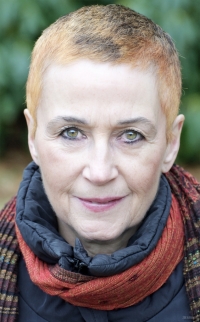 And Hussey’s Ecobardic Manifesto asserts, among its other points, both the return of and our singular need for “the prophetic vocation to look into the inner truth of things and speak, on behalf of the community, what need[s] to be spoken.”
But do we even want to hear “what needs to be spoken”? And if we opt to listen, how do we distinguish this needful message in the midst of the clamor and noise of all the other increasingly hysterical voices around us?
Small steps. I keep returning to this most helpful strategy. Our own practice of silence is a beginning (and advanced) step that helps with discernment of an inner truth we each know for ourselves, if we listen. If we can’t discern it, we can imagine it. Finding a still point beyond the mind chatter. Walk along a quiet sidewalk with trees, find a park, a quiet corner of your apartment or condo or neighborhood. Stillness as practice.
Focus or mantra or prayer. For Christians, scripture like “Be still and know that I am God” makes a powerful start. Pagans have an equivalent range of seed-verses and prayer-songs.
Sometimes the name of deity, or a suitable word like awen or om or amen.
Song or chant in a language you don’t know, to take you out of your talking head (and anybody else’s, too).
Symbol or mandala or image, for those who prefer the non-verbal. Cross, triskele, star, Platonic form, face of a beloved.
Counting your breaths.
Worship kinetically: pick up colorful leaves, play in the mud, lie on your back and watch the clouds. The skills we practiced effortlessly as children have not abandoned us, though we may have “put away childish things” as we raced off to concern ourselves with “matters of importance” and the wide word of adult stress and doubt and angst.
Substances used reverently, like various smudges and smoking herbs, fermented drinks, and so on, have featured in worship and ritual and self-care for millennia.
More important than what I do is doing it often enough that it becomes for me a spiritual practice.
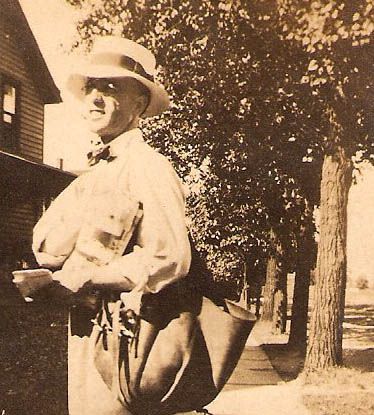 I cannot remember the paternal grandfather I was named for: he died 14 years before I was born. All I have of him are three yellowing photos and a handful of stories. But I imagine him when I honor my ancestors of blood and spirit, and he’s more alive to me as a result. A link, however tenuous, that I (and he, from his side) can strengthen at will.
One of the OBOD Bardic practices is the inner sacred grove. So what kind of place will I make as a spiritual sanctuary for myself and any inner guide whose counsel I seek? I resort to this place to leave a symbol, a dream recalled I want to ponder, or to begin a poem, resolve a problem, express my gratitude, build an altar, light an inner flame, begin and end a ritual, recall during moments of challenge and joy. What I imagine can become as real as anything I build with lumber and mortar, nails and plaster and insulation. (And the grass there doesn’t need weekly mowing. Though the trees, oak and birch, rowan and ash among them, are growing well.)
Imagine, and I remember.
/|\ /|\ /|\
IMAGES: Charlotte Hussey; D W Easton, circa 1925, on his mail route in Niagara Falls, NY.
*”I think we’re living in a culture that’s so demanding: You never feel like you’re good enough. It wears people down. People are exhausted at the end of the day. They go home and have a drink as a way to cope with all of this—a lot of people have to self-medicate because it would be hard for them to look in the mirror otherwise. The whole concept of being conscious—that’s hard work. A lot of people just don’t want to sign up for it.” “Alcohol as an Escape from Perfection.” Atlantic, 10/13, accessed 10/4/16.
[ 1 | 2 | 3 | 4 | 5 | 6 | 7 | 8 | 9 | 10 | 11 | 12 | 13 | 14 | 15 | 16 | 17 | 18 | 19 | 20 | 21 | 22 | 23 | 24 | 25 | 26 | 27 | 28 | 29 | 30]
Beltane’s nearly upon us, and Alison Lilly’s most recent blogpost “Holy Adoration: Fire as Prayer” catches the energy behind this fire festival. For it is after all the day of the Fires of the Celtic solar god Bel, as even a traditional source like the BBC calmly informs us on their website. Some seasons you’ve just had enough of the world, and most of all yourself as a tame fire, to paraphrase Alison. Do check out her blog. She evokes and invokes Beltane in a personal and poetic meditation.
You too may long to spark, flare, burn and roar. Heap the kindling of my life and ignite, you whisper — or shout. Beltane is here for you.
Part of the Bardic training of Druid groups like OBOD and others, and much of the initial work in the outer grades of the magical Order of the Golden Dawn focuses on exploring and balancing the elemental energies flowing in and around us. We don’t — normally — want to burn up or out. But a healthy conflagration may burn off the wintry torpor that clings to our mood and outlook. Beltane is tonic, purgative, exhiliration, ignition.
The symbolism of the four physical elements of earth, water, air and fire persists in the cultural and magical imagination of the West because they express important truths about human life. They serve as a powerful shorthand for a whole cluster of ideas, images, experiences and memories, and their presence in ritual and story, song and myth will endure as long as we inhabit the same worlds where they manifest.
Their existence as physical entities endows them with the further potential to serve as sacraments. As always, though we keep forgetting, reverence and engagement are our choice, an opportunity like any other that we may welcome or reject. Here, too, fire can kindle us to possibility and change.
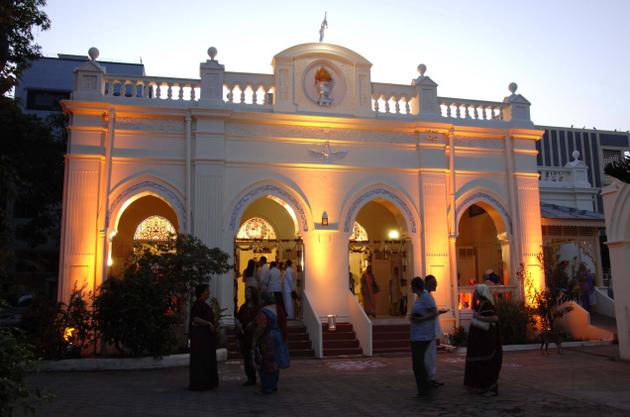
Fire Temple, Chennai, India
Further afield from Celtic-flavored European Druidry, fire is also central to the religious practice of Zoroastrians, the people popularly known as Parsis. Their Fire Temples offer just one more illustration of why reducing fire to an explanation like “rapid oxidation in an oxygen-rich environment like earth’s atmosphere” says nothing about our actual experience of fire, its light and warmth and flickering presence, and its long association in human consciousness with spiritual reality, energy and life. Anyone who’s experienced a good bonfire knows this to some degree. It’s our human art to extend these experiences and celebrate their effect as spiritual opportunities for transformation and joy.

Zoroastrian Sadeh Festival
Fire calls to ancestral human memory. Cultural practices and beliefs that center on it only endow it with additional significance and power. Druids may say as part of ritual “Let us pray with a good fire,” an invocation traceable to the worship of the Hindu Agni and a hymn in the Rig Veda (Bk. 1, 26). And Wendy Doniger in her translation* notes that “When Agni becomes the priest, his robes are both the flames and prayers.” Thousands of years of human experience with fire has not dulled its power.
/|\ /|\ /|\
Whether you’re part of an OBOD Beltane gathering that follows the traditional ritual, or some other group and ceremony, or you’re a solitary celebrating alone in your own way, may you too share that shiver of anticipation and delight as the day and the rite opens for you at the birth of summer. May you and the Sun both grow in strength. “By the power of star and stone, by the power of the land within and without, by all that is fair and free, we welcome you to this rite of Beltane …”
/|\ /|\ /|\
IMAGES: Fire Temple in Chennai, India; Sadeh Festival;
*Doniger, Wendy. The Rig Veda: An Anthology. One Hundred Eight Hymns, Selected, Translated and Annotated. Penguin Books, 1981, pg. 100.
This last weekend marks the 5th East Coast Gathering I’ve attended, the 6th since its launch in 2010, and another gift of Spirit and mortal effort.
You can read my accounts of three of the previous years: 2012 | 2013 | 2014. A special thank-you to John Beckett, several of whose professional photographs illustrate this post. You can visit John’s own articulate and insightful blog “Under the Ancient Oaks: Musings of a Pagan Druid and Unitarian Universalist” over at Patheos here.
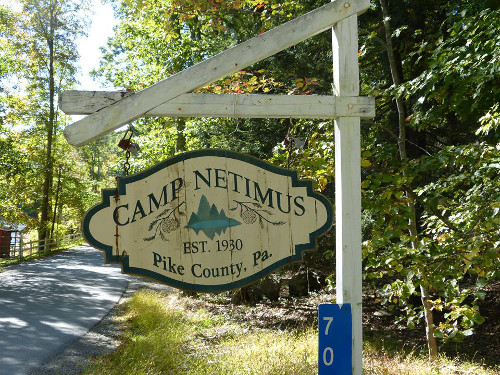
Camp Netimus — site of the ECG. Photo courtesy Krista Carter
Registration for the weekend filled within 20 hours of opening this last spring. Gatherings like this answer an obvious need in the Druid and Pagan community, and more are in the works in other locations. It’s on us to help make them happen. A dedicated team can bring the same joy, support, inspiration and community to other regions.
Yes, we’re all solitaries some or much of the time, but every solitary benefits from celebrating and learning in the company of others. That chance conversation, ritual insight, day- or night-dream, word or phrase that lights up just for you, the hugs you give and receive, the opportunities to serve the community through offering a workshop, cooking, cleaning, organizing, driving — these make Gatherings like this such richly rewarding experiences. The dark and light halves of each year are real, and we need all the help and laughter we can find to thread our way through the labyrinth of time.
/|\ /|\ /|\
I arrived Thursday afternoon early enough to check in and unpack before the opening ritual. My cabin mates had already hoisted a banner, which also made the building easier to distinguish from the others in the dark, when the “9” on the door was no longer readily visible.
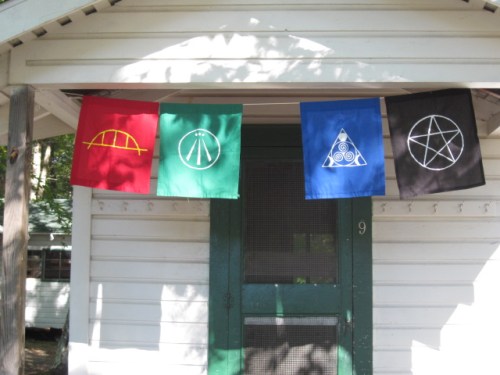
Cabin banner. Photo by A Druid Way
Equinox marks the shifting energies of days and nights, rebalancing the world. A lovely moon bore witness, waxing each evening through wonderfully clear skies, lighting the path to evening events like the Ovate initiation ritual and illuminating the short uphill walk from the cafeteria to the nightly fire circle.
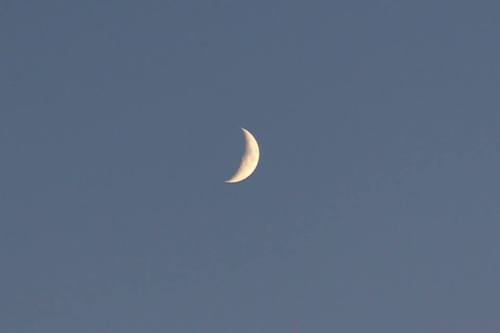
Crescent moon in a twilit sky. Photo courtesy John Beckett
The theme this year was ritual, and the whole weekend focused our attention on its magical possibilities through a dozen workshops, demonstrations and ceremonies. You can get a sense of the range of approaches from the list of workshops here. We also welcomed returning U. K. guests Damh the Bard, Cerri Lee, and Kristoffer Hughes.
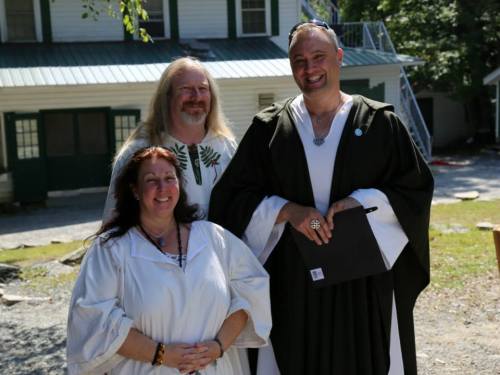
Cerri Lee, Damh the Bard and Kris Hughes. Photo courtesy John Beckett
/|\ /|\ /|\
Damh’s workshop on “The Bardic Voice” underscored the centrality of the Bard in Druidry. Like many Druid groups, OBOD orders its teaching in the sequence of Bard, Ovate and Druid. But they do not form a linear progress or erect a hierarchy of achievement. They spiral. In an Ovate breakout group a day later, several people mentioned how they often return to the Bardic coursework, its insights deepening through their Ovate practice. And likewise with the work of the Druid grade.
Damh is a fine teacher, an animated storyteller and ritualist of deep experience. With his wife Cerri he leads Anderida Grove. [For an audio inspiration, listen to his hour-long recording for inner journeying here.]
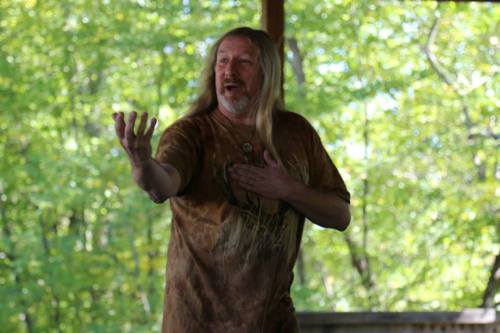
Damh in teaching mode. Photo courtesy John Beckett
/|\ /|\ /|\
Reminders of ritual possibility filled the weekend. Below is a picture of a labyrinth, another gift of the weekend, lovingly constructed by Cat Hughes and friends.
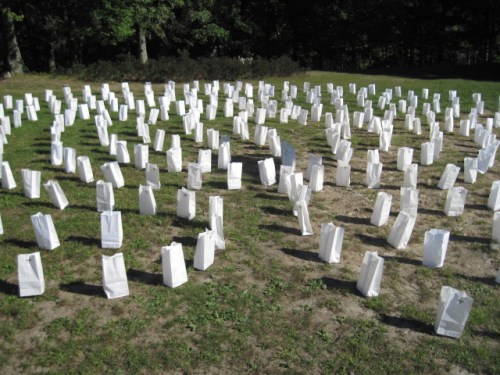
Labyrinth by day — entrance. Photo by A Druid Way.
Volunteers switched on each light every evening, then turned them off again when everyone else had gone to bed.
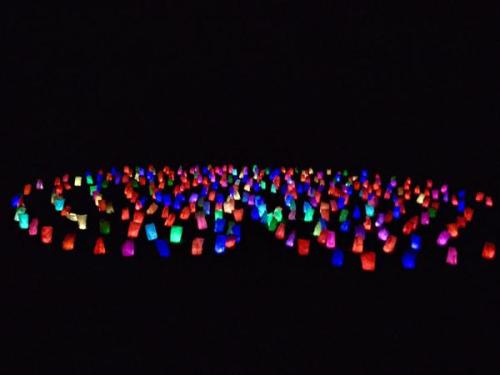
Labyrinth by night. Photo courtesy Damh the Bard.
/|\ /|\ /|\
Kris’s workshop, “Laudanum, Literature and Liturgy — the Ritual Legacy of Iolo Morganwg,” featured the ritual — in Welsh — that Morganwg first performed on the Summer Solstice on Primrose Hill (London) in 1792, launching the Druid Revival and establishing the Welsh Gorsedd of Bards. Morganwg is also the author of the Druid’s Prayer, still used in many modern Druid groups including OBOD, and a major influence on generations of Druids from his time to the present. Kris’s Celtic eloquence in praise of Morganwg and his passion for Druidry took him off script and left many of us with tears in our eyes.
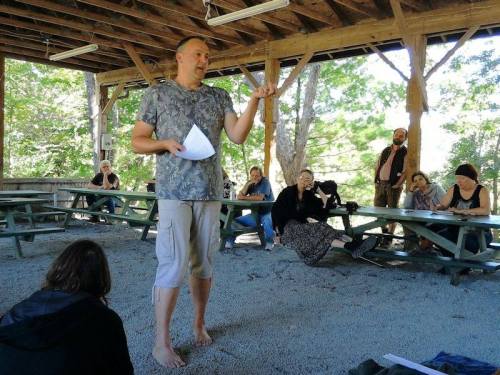
Kris during his workshop on Iolo Morganwg. Photo courtesy of Dana Wiyninger.
/|\ /|\ /|\
Bill Streeter from the Delaware Valley Raptor Center, the charity designated for this year’s Gathering donation, brought six birds and made a fine presentation on raptors, their abilities, the dangers (mostly human) facing them, and the challenges of rehabilitating injured birds.
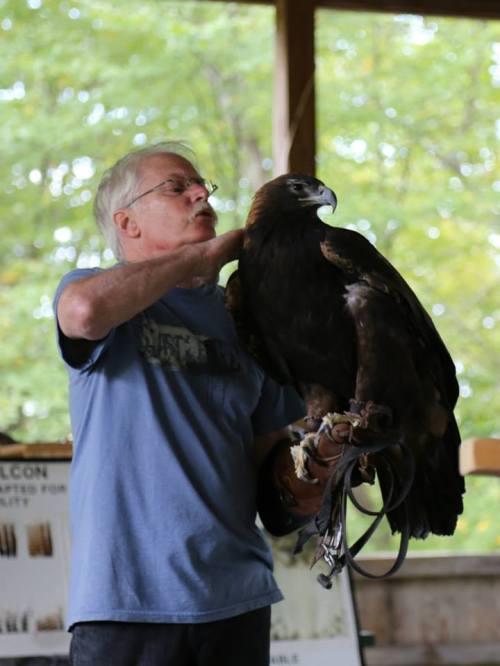
Bill Streeter of the DVRC with a golden eagle. Photo courtesy John Beckett.
These magnificent birds have often suffered neurological injuries that worsen over time. Though both the eagle above and the owl below look normal, both are blind in one or both eyes, or suffer other injuries like crippled wings, and thus could not survive in the wild. But the birds help save the lives of their kin through their appearances in info sessions like this one.
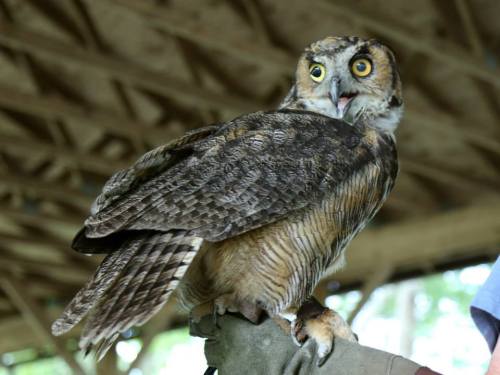
Great Horned Owl. Photo courtesy John Beckett.
/|\ /|\ /|\
The Alban Elfed ritual celebrating the Equinox includes gifts from children, guests and each of the three grades of Bards, Ovates and Druids. Here are Chris and I holding bowls of acorns, part of the Ovates’ ritual gift, just before the ritual procession into the Circle.
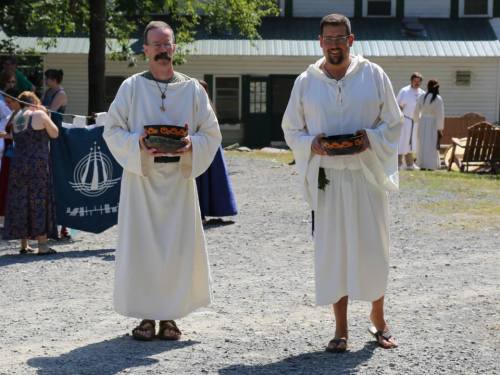
Chris (r) and I (l) just before Alban Elfed ritual. Photo courtesy John Beckett.
The evening eisteddfod (music and poetry circle) one night featured a splendid duet from Kris and Damh — see the image below.

Kris and Damh singing at the fire circle. Photo courtesy Hex Nottingham.
Below is another pic of the fire circle one night. Our enthusiastic and skilful fire-makers Derek and Brom love large, carefully-constructed bonfires.
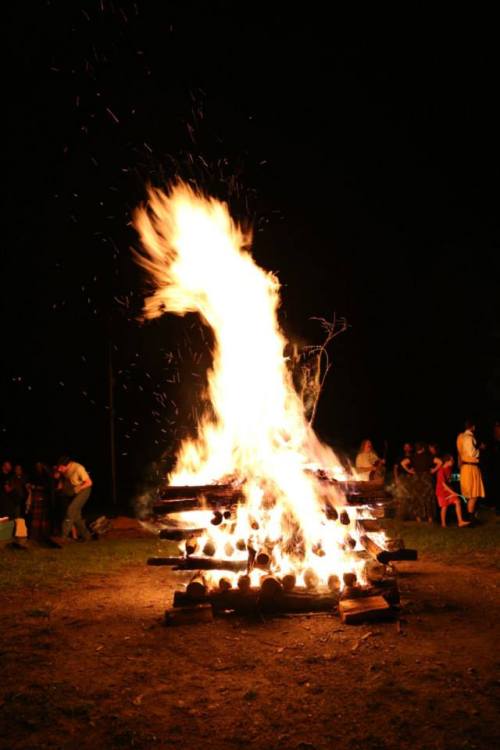
Evening bonfire. Photo courtesy John Beckett.
Once again Dana set up her meditation tent on the campground for all to visit and enjoy.
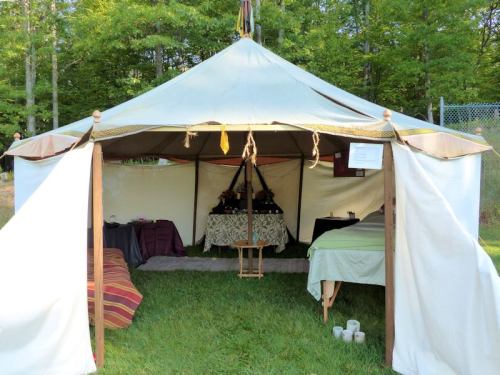
Approaching the tent. Photo courtesy Dana Wiyninger

Altar in Dana’s meditation tent on the camping field. Photo courtesy Hex Nottingham.
A small group made a side excursion to nearby Raymondskill Falls. Here’s a view of one of the waterfalls.

Raymondskill Falls. Photo courtesy Gabby Batz Roberts.
/|\ /|\ /|\
And for those of us who can’t wait an entire year, the Gulf Coast Gathering will celebrate its second year in March 2016. Blessings of the Equinox to all!

Selfless trilithons
Will Self’s June ’14 article in The Guardian (“Has English Heritage Ruined Stonehenge?“) has recently been (re)making the rounds on Facebook groups I frequent, and the author’s lively reportage offers generous “blog-bites” to quote (starting with that title), so it’s ready grist for the mill of A Druid Way.
In fact, if you just jump straight to his article, read it and — in the way of our Net-lives, surf on to the Next Interesting Thing (a NIT to pick, if there ever was one) — if you neglect to return here, I’ll not only not be hurt but will rest content that I’ve served one of my purposes.
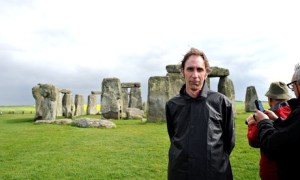
“Selfies with Trilithons”: Will Self visits Stonehenge. Image Mike Pitts, The Guardian.com
I admit to a fondness for titles that use questions.They successfully play on our inherent OCD, setting themselves up like an itch begging to be scratched. They’re Zen koans for the non-Zen types among us. You read them to find out the answer, or at least what the author thinks is the answer, and so you relieve the itch, even if the particular scratch the article provides ultimately irritates you further.
New, worse itch? No problem. The latest diet, scandal, must-see series, sex technique, disaster or investment opportunity all await you, just a click away, and many will use questions to draw you in. The “Top 10” list relies on a similar strategy: human experience boiled down to a concentrate. Just add water! Maybe at best our lives are indeed “selfies with trilithons” and everything else slips downhill from there. Or so a great part of the Western world’s surface culture would have you believe.
The article byline asks, “The summer solstice, King Arthur, the Holy Grail … Stonehenge is supposed to be a site of myths and mystery. But with timed tickets and a £27m visitor centre, does it herald a rampant commercialisation of our heritage?”
You’re being wholly reasonable if you guess Self’s answer is “yes.”
English Heritage earns decidedly mixed reviews here. It’s the U.K. organization that oversees such sites as Stonehenge, and for Self it serves a very mixed role as an institution whose “very raison d’etre consists in preventing the childish public from chipping away at stuff they don’t understand much – beyond the bare fact that it’s very old – so they can cart off a free souvenir, rather than shelling out for a Stonehenge snow globe in the superbly appointed new gift shop.”
“Stonehenge snow globe” works fine as an alternative title for this post.
Self’s wit attacks a range of easy targets besides English Heritage. It’s little surprise Druidry comes in for a smackdown, too. “As inventions of bogus deep-time traditions go, British druidism has to be one of the most enduringly successful.” Except that unlike Stonehenge, all modern forms of Druidry that expect to be taken seriously assert precisely the opposite. They’re comparatively new on the scene, and they dispense with bogusness. They’re no older than the Druid revival of the past few centuries because that’s their real origin story — and this revival coincides point-for-point with rediscovering and wondering about and valuing things like Stonehenge and Avebury and Newgrange. You know — those Neolithic things that have always lurked in the neighborhood and have been with us for a very long time. We just never paid them much attention.
Until we did.
[Even Reconstructionist Pagan groups — who point with some justifiable pride at archaeological and other scholarly evidence to back up their practices and who sometimes sniff disdainfully at groups like OBOD, which draw on both legend and myth and on Druid Revival writings — benefit in the end from the scientific investigations ultimately launched by those same enthusiasms and, yes, those initial misconceptions of the Revival.]
We like our monuments and religions old, though we want our gossip and news “live, local and late-breaking” and our technology to be version X.X + 1 — whatever’s one higher than last week’s version (unless it’s Windows). “Selfie with a trilithon” pretty much sums it up.
But if modern Druids are the philosophical and spiritual equivalent of “the childish public … chipping away at stuff they don’t understand much – beyond the bare fact that it’s very old,” then what is it that we “cart off” from it? A reflected glory from old things? A fine wild-goose-chase for the ego? The illusion of connection with something larger and more lasting? (“All this and more for twelve easy payments of just $39/month! Our representatives are standing by for your call now!”)
These are the surface manifestations of vital and unquenchable hungers that have wakened in large numbers of people, however much a passel of hucksters manages to package and market empty and pricey facsimiles of them. Self does concede that “in important ways the [P]agans and the archaeologists retain a common cause: both groups, after all, venerate the monument, even if it’s in radically different ways.”
Self also contrasts Stonehenge at present with ancient sites:
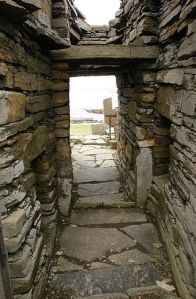
Midhowe broch
… in the Orkney islands, where I lived over the winter of 1993-4 – I’ve returned many times since – Neolithic remains can seem more significant than the contemporary built environment. A couple of miles from the house I stayed in on the island of Rousay, there’s the ruin of an iron age broch, or fortified dwelling, and beyond this there’s a Neolithic chamber tomb, Midhowe, that’s dated to the third millennium BCE. Midhowe is a large and complex structure, although by no means as obviously important as Stonehenge. It was fully excavated in the 1930s and 40s by Walter Grant (of the distilling family) who owned the Trumland estate on Rousay, which included this site and several other important tombs. Since the roof of Midhowe has long since gone, Grant covered up the exposed stonework with hangar-like structure, but the curious thing is that this doesn’t detract at all from its powerful and brooding atmosphere.
During my times in Orkney I’ve visited a great many of the Neolithic sites. I’ve sat in tombs, laid in them, dreamed in them, and tried to grasp the sort of mindset – whether individual or collective – that’s implied by buildings that took shape over thousands of years, and were built by people with life-spans far shorter than our own. I have felt the wonder – felt it most of all, because at Midhowe there is hardly any of the furniture and signage associated with the modern tourist attraction: no ticket office, no custodian, and only discreet information boards. Apart from in high season, you can visit Midhowe and most of the other great Orkney sites with the confident expectation that you’ll see scarcely another human being.
If, as Self notes, “archaeologists seem fairly convinced that implicit in the Stonehenge’s design is some form of ancestor worship; for us there can be no doubt: we revere the idea of their reverence, we are engaged in a degraded form of meta‑ancestor worship,” then we can also see, in our longing to (re)connect, a “degraded” form of magic. “I don’t want anything to do with magic,” we often say, as we unwittingly absorb endless hours of advertising and political language which constantly attempt to manipulate our desires and emotions with crude magical techniques. We let ourselves be “magicked” but refuse to learn how to practice any “defense against the Dark Arts” — or learn how to do magic well and for our benefit rather than someone else’s.
“No magic — that’s for kids,” we say, as our lives propel us willy-nilly along a path of magical initiation tailor-made for us out of the circumstances of our lives, our likes and dislikes, and our choices. Fate, or freedom? Yes! “When you come to a fork in the road, take it,” as Yogi Berra is reputed to have said.
“I don’t believe in magic,” we say, all the while daydreaming and planning, imagining and remembering — magical techniques in embryo, every one of them. Christian, atheist, Muslim, Pagan, SBNR, or “those who just don’t roll that way” — we all make our ways through these mortal lives which are also lives of manifestation and transformation, the essence of magic.
Author and practicing magician Josephine McCarthy, whose book “Magic of the North Gate” I reviewed here, notes that people react variously to the relative powerlessness that life in Western culture urges onto so many. But often a (paradoxically) powerful personal experience, an abrupt break with the past or the every-day world, sets some of them on a journey. In the first book of her Magical Knowledge series, McCarthy observes:
When a person chooses not to play a part in that circus, they look elsewhere. Some people begin … in search of their own power, some begin in search of knowledge, and some approach that path from a sense of deep instinct.
The beginning of the path … is very much about personal development, be it spiritual, intellectual or self-determination … This is the first rung of the ladder and has many dead ends woven into it … designed to trap and teach them a lesson that is needful for their development … The ‘dead ends’ … are often related to our relationship to power, glamour and ego. We all go through it in one form or another and most climb out of it with a very red face, ready to move on, lesson well learned. There is nothing wrong in making mistakes and doing silly things, it is all part of the learning process. The first rung teaches us about ourselves, our weaknesses and strengths, our true desires and fears, and the real extent of our ability to be honest with ourselves. Remember the words over the door to the temple: Man, know thyself.* The threshold of the temple must be crossed with the intention to be willing to look in the mirror with an open mind and see what is really there. (McCarthy, Magical Knowledge: Book 1, pgs. 30-31)
In the end you cannot study “men,” as C. S. Lewis once observed. “You can only get to know them, which is quite a different thing.” And current trends notwithstanding, we very much need each other’s compassion along the way, given the difficulties and joys of life. That’s an act of High Magic. Given how we all will face death, it’s fair to say we also deserve that compassion from each other. And death? Death is one more potential magical initiation.
/|\ /|\ /|\
Image: selfless trilithon; Midhowe broch.
*Translation of the sign over the Temple of Apollo in Delphi, Greece that read “gnothi seauton.” [Gno- related to English know, Latin cognitio, Greek gnosis. Seauton related to English and Greek auto- meaning “self.”]
McCarthy, Josephine. (2013). Magical Knowledge: Book 1 — Foundations. Oxford: Mandrake of Oxford.
Updated 9 August 2015
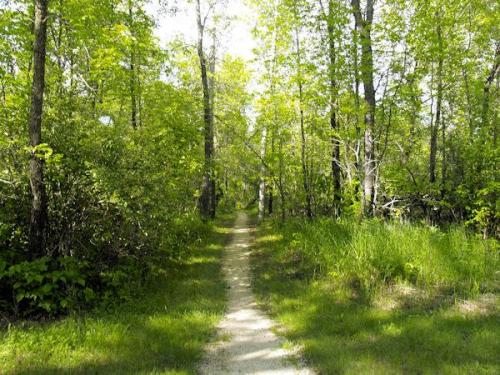
[This lovely image comes courtesy of mistressotdark. And in case you’re wondering: yes, the path sometimes IS this clear, lovely and straight. But we earn these glorious stretches during intervals when everything isn’t sweetness and light.]
Today’s post features an excerpt from Tommy Elf’s moving account of his Bardic journey, framed by his experiences at the first Gulf Coast Gathering in Louisiana this past weekend. His words dovetail with the previous post here about initiation — always a challenge, whether you’re journeying down a solitary path with its own obstacles and opportunities unique to your nature and history, or along a more public walk with Orders like OBOD.
Here are Tommy’s reflections:
Folks, I have been in my Bardic Grade studies for the last seven years. For those seven years, I believed that I could struggle through the material on my own. I rarely asked for help from my tutor/mentor, and stepped back and forth constantly as life had set into time requirements. At this gathering, I opted to have a Bardic Grade initiation – and I am glad that I did so. It has changed my perspective so much. I had the chance to talk with other Bardic Grade folks, as well as my fellow initiates, about their experiences. And I found out that I was not alone in those moments. Furthermore, one of the guests was Susan Jones, the Tutor Coordinator for OBOD. She held a session with all the Bardic Grade members to discuss pitfalls, and various other aspects concerning the course. Listening to other people discuss their experiences helped me to realize that our journeys may be unique to one another, but there are some aspects that are similar. For anyone currently in their Bardic Grade studies, I cannot stress how much help is actually available to you. You just have to reach out and grab it! There is your mentor/tutor, the discussion board, your own grove or study group (if one is near enough to you), as well as other folks within OBOD who are taking their Bardic grade or have already been through it.
Tommy’s openness here contrasts helpfully, I hope, with my own sometimes opaque references to my journey. There’s also a delightful symbolic resonance to his seven years in Druidry — at a crisis moment, the turn comes, and ways open before him. Seven it is. And now the challenge: what next? How do I incorporate this new thing into my life? How do I step into possibility, and not snuff it out by dragging along with me everything I DON’T need? What am I called to do? What CAN I do?
If time truly is what keeps everything from happening at once, and space is what keeps everything from happening here, we have ample reason to be grateful to both, pains though they both often are. Or more elegantly, as I’m fond of quoting Thoreau: “Time is the stream [we] go fishing in …”
/|\ /|\ /|\
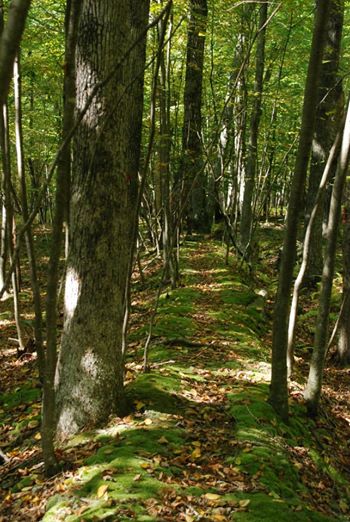
Camp Netimus path — photo courtesy of Carolyn Batz
I’ve reached a watershed in my Druidic studies with OBOD — the completion of the Bardic course. The real training runs life-long, of course. No one stops talking (or starts bowing) now that I’ve learned and practiced a little more than I knew before. Except those who always bow to me, just as I bow to them: beloved trees moving even when no wind stirs their branches, sky as I exult in its blues and grays, birds when I approach slowly and smoothly enough not to startle them, Mystery that surrounds and haunts me.
As I draft and revise my Bardic Review, I’m grateful for this partial record of my journey here, online, one I’ve shared with regular readers and one-time visitors both. Much that I could not say here, I recall from the prompts to memory that ARE here: reminders of the outer experiences that pair with inner ones, links and steps that often clarify over time and through further reflection into more than I imagined. A test for the path you’re on: it’s larger than you guess, and keeps revealing and concealing as you walk, small circle of flame that rounds your feet in the dark.
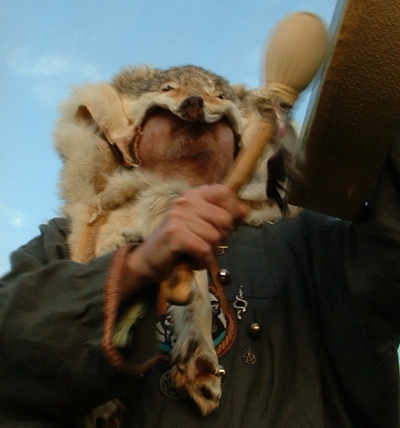
For some time now I’ve carried an image with me for the Ovate Grade: Greywolf — Philip Shallcrass, head of the British Druid Order — in his “wolf-hame” — the Druid as shaman. As a Bard I’ve luxuriated in words, but what I find now draws me to Ovate is space, a place for silence, and presences I do not see but sense otherwise than with sight.
A friend who entered the Bardic grade with me in 2011, shortly before I began this blog, and who has preceded me into Ovate remarked at the 2014 East Coast Gathering that for him as Ovate the guideposts and mile-markers are fewer now. I look forward to a place that rests behind and around the words. Oh, they’re still there, this set of lovely and quicksilver tools. But now the dark has its say as well, and all the Bardic brightness has paradoxically opened onto the place beyond the firelight and delivered me where, as I am readied further, I follow a path more by touch of foot than sound of words.
/|\ /|\ /|\
Image: Greywolf.
Our bodies already know the Goddess – this is our oldest magic.
I relied on this insight in planning for the workshop at this year’s East Coast Gathering, whose theme was “Connecting with the Goddess.”
/|\ /|\ /|\
Goals and plans I had for the workshop:
The heart of the workshop is a hands-on look at various ways to make a physical book/scroll/altar object that explores/invites/incorporates ritual, ogham/runes, art, prayer, poems, questions, magic and daydreaming into a concrete “link” to the Goddess as we experience Her — or desire to experience Her. Think “book” as “portable paginated/folding/roll-up ongoing altar-in-process.” I’ll talk about inspiration, nudges, hints and ways to listen, inviting and hoping for participant sharing and input! The seed for the workshop comes out of the fact that I’m a prime example of somebody who doesn’t have a consistent Goddess practice (though She’s seeing to it that’s shifting, too), but when She wants my attention, She gets it, like with this book, and workshop.
It’s probably a good thing we don’t always hear how ambitious we sound. Young or old, you eventually learn to deal with the inevitable gap between vision and manifestation. If you’ve managed to hold on to any of that original and wonderful idealism of youth, you also realize that the gap isn’t a reason to despair, or to dispense with vision, but rather a sign of just how important vision is.
The physical world, so important for manifestation, by its nature tends to lag behind the swiftness with which vision can appear. But that lag is precisely part of this world’s immense value: its inertia and density allow for greater permanency and resistance to change, so that we can experience the results of vision over time — and fine-tune it if we choose. Unlike in dream, where the subtle stuff of vision or imagination can wisp away so quickly, physical manifestation tries to linger.
/|\ /|\ /|\
The Goddess is generous. Or alternatively, if you prefer the cynical version, I belong to the OCD Order of Druids. Creativity, as the saying goes, is messy. I over-planned for the workshop, ending up with far more material than any mortal could begin to do justice to in a mere hour, and this post is my penance, or confession. Or further indulgence. And maybe — in the way it often arrives when we’re not paying attention, even in spite of ourselves — a spark of awen.
/|\ /|\ /|\
 “Creating A Goddess Book,” with focus on “book” in order to free it from the psychological shrine many Druids, and Pagans generally, tend to put books in. Instead of paper, a book of leather, or metal, or cloth — individual sheets, or a single longer scroll. A nudge to try out the qualities of other substances than paper, than the admittedly inviting blank books on sale in chain bookstores, or even Ye Friendlie Lokal Paygan Shoppe.
Each workshop participant received a packet to practice with, consisting of a rectangle (approx. 3″ x 4″) of vegetable-cured leather and a similar-sized rectangle of .019″ aluminum, wrapped in a larger swath of canvas cut from a shop drop-cloth from Home Depot. A wood- and leather-burning tool, a few screwdrivers, some markers of various kinds, a few words about inspiration and the importance of working to manifest things on the physical plane as one powerful way to connect with the Goddess. Suggestions for inscribing/writing/ incising a short prayer, vow, magical name, etc. Reference tables of Ogham and runes for those who wanted to inscribe words with some privacy, as a personal meditation. I pointed out that you could cut all three materials with kitchen scissors. Besides the wood-burner, no fancy tools required. Then I shut up and let participants have at the materials. Done!
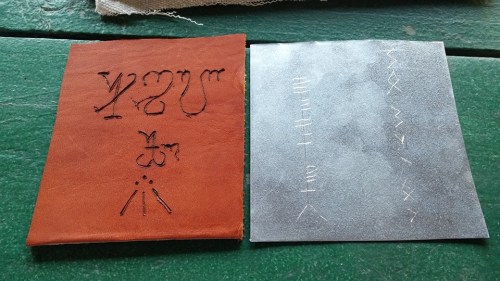
Hex Nottingham’s leather and metal “pages” — photo courtesy Hex Nottingham
Except for the next flash of inspiration in the planning process, which would not let go: a “Nine-Fold Star of the Goddess” you can try out here at one of several websites that illustrate the steps.
/|\ /|\ /|\
A sampling, with some commentary and additions, from the workshop handout:
“Spirit must express itself in the world of matter or it accomplishes nothing. Insights of meditation and ceremony gain their full power and meaning when reflected in the details of everyday life.” — J. M. Greer, The Druidry Handbook, p. 138.
This world, here, is the realm of mystery. Spirit is simple — it’s this world that’s so surprising and complex in its changes and ripples, its folds and spirals and timings. Make something, I tell myself, labor with the body, and then I can often approach the Goddess more easily, dirt under my fingernails, sweat on my face. She likes bodies. I’m the one who keeps forgetting this, not her.
“Work with a Goddess long enough and you learn to hear Her call. You learn to pick her voice out above the noise of contemporary society, above the words of teachers and friends, and even above your own thoughts and feelings. Sometimes what you hear is not what you expect.” — John Beckett, “A Rite of Sacrifice,” Mar. 4, 2014.
“Shaper, you have made and shaped me. Honor and serenity are yours. I am your garment, you the indwelling spirit. Work with me in everything I do, that all may know you. Energizer, quicken me. Measurer, clear my path. Protector, guard me safely. Initiator, take my hand. Challenger, transform me. Savior, be my help. Weaver, make my pattern bright. Preserver, heal me. Empowerer, make me wise.” — adapted from Caitlin Matthews, Elements of the Goddess, p. 118.
Rilke’s fragment, a whole meditation in itself, or a daily morning prayer.
Oh, I who long to grow,
I look outside myself, and the tree
inside me grows.
— Rainer Maria Rilke
And Larkin’s poem “Water”:
Water
If I were called in
To construct a religion
I should make use of water.
Going to church
Would entail a fording
To dry, different clothes;
My liturgy would employ
Images of sousing,
A furious devout drench,
And I should raise in the east
A glass of water
Where any-angled light
Would congregate endlessly.
— Philip Larkin
After delighting in this poem, make an exercise of it. Choose one of the elements. It can be water, as in the poem, or one of the others. Finish the sentence: “If I were called in to construct a _____, I should make use of [element].” Keep going: a series of statements, a meditation on the one you just wrote, a free association. Whatever gets you putting words down. You can try this over several days with all the elements, or at a different pace, if you’re working with the elements on your own.
The ECG schedule this year put the Goddess Book workshop immediately after Thursday’s Opening Ritual, so people arrived still bubbling from the ceremonial jump-start for the weekend.
“In every world, in every form, in every way, I am near you, I uphold you, I comfort you, I guide you, I deliver you from each limitation until my freedom is yours. Your body is my chalice, your heart my echo, your form my shadow, your pulse my footstep, your breath my passing.” — from my own Goddess book.
/|\ /|\ /|\
1. Once you hold the Star of the Goddess in your hand, write the names of the four elements and Spirit, one near each of the points. Complete this step before reading further.
2. Which elements sit on either side of Spirit? Contemplate on their positions there. Are they elements that help support your spiritual life? Are they especially active? Are these the elements that need extra attention and balance?
3. Consider a section in your Goddess book for vows: experiment with them, not as harsh, unyielding obligations, but as tools for studying resolve, testing experience, practicing manifestation of your intent, and so on. They need not be “public” – write them in ogham, runes, etc. Start small and easily achievable.
/|\ /|\ /|\
Dedicating a Goddess Book: Blood, sweat, tears, spit, etc. can mark our books with our earthiness: a commitment to be honest with the Goddess about our path, its ups and downs, to remember her presence with us, and to acknowledge what we need, what we doubt, what we’re willing to work for – whatever feels right to include. Make a ritual of it. Do it quietly, simply, without fanfare, with silence making its own ritual. Or call out all the stops, bells and whistles. Then dance, feast and celebrate.
/|\ /|\ /|\
Allow a Goddess book — it could be a single sheet or “page” specifically intended for this purpose — to return slowly to the elements on an outdoor altar. Or bury it in the Mother’s good earth. Thus is the vow fulfilled that the Mother takes into Herself, as She will take all things back in time, and return them again.
“All things are holy to you. This book like all things lies among the faces you show to me; may I learn from you daily, drink deep from your well, and body you forth as your child.” — from my Goddess book.
/|\ /|\ /|\
A small ritual. Take a few deep breaths. Sing the awen, or other name or word that grounds and focuses you. Holding your cupped hands in front of you, say: “I make this altar for the Goddess, a space where she may act in my life.”
Holding the Star, or your journal, or other ritual object meaningful to you, or nothing else at all, ask yourself: What specific space or doorway exists in my life for the Goddess to manifest or to act in? Pay attention to hints, images and answers as they come.
/|\ /|\ /|\
And again: Our bodies already know the Goddess – this is our oldest magic.
/|\ /|\ /|\
Images: ogham; star.

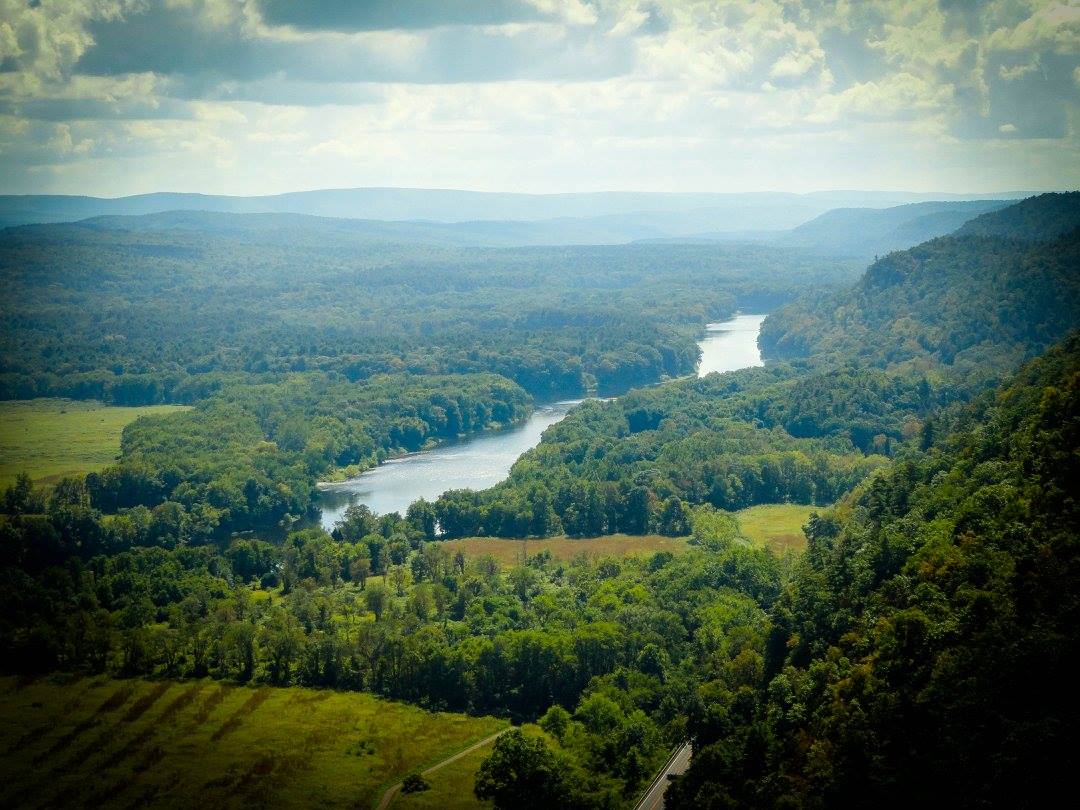
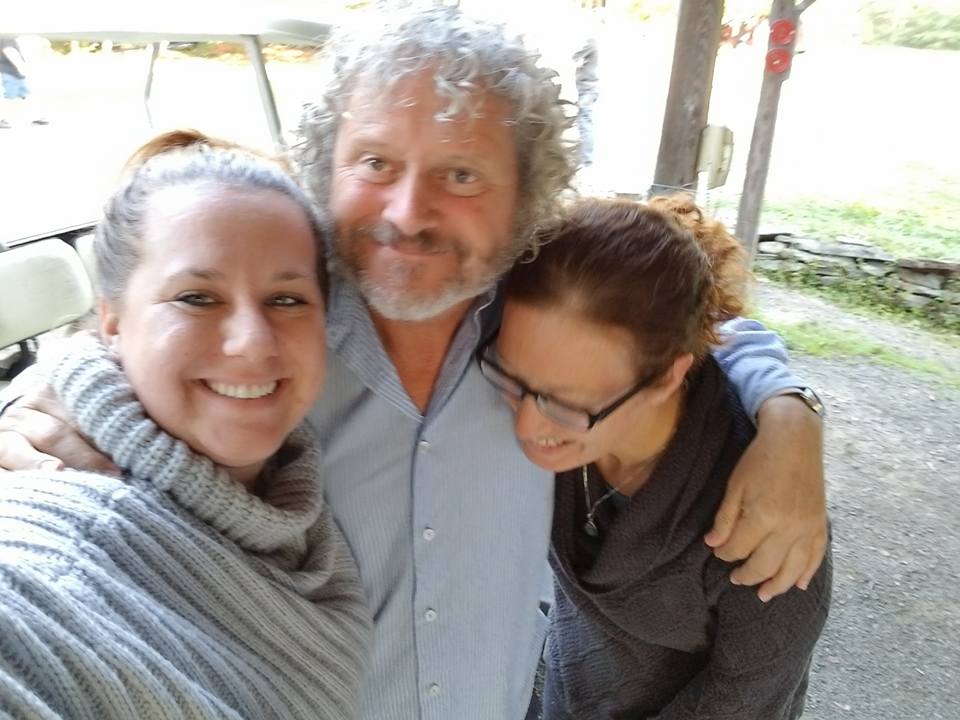
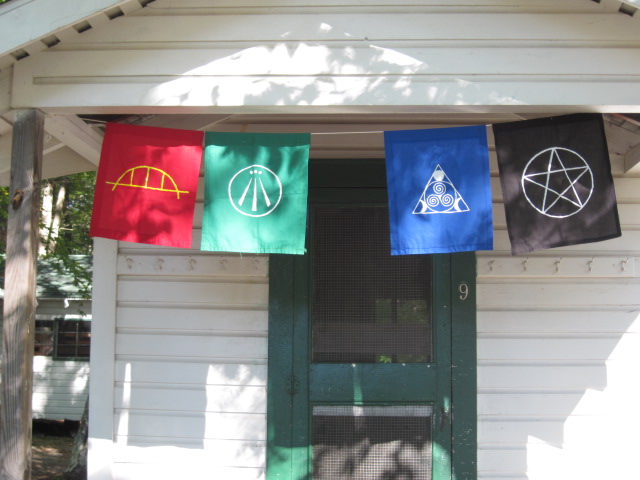
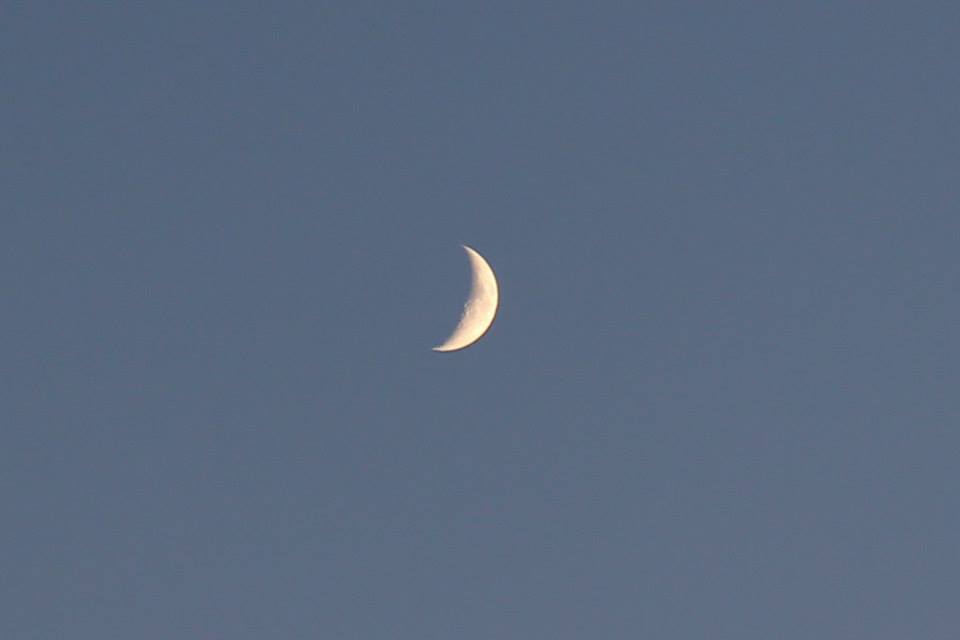
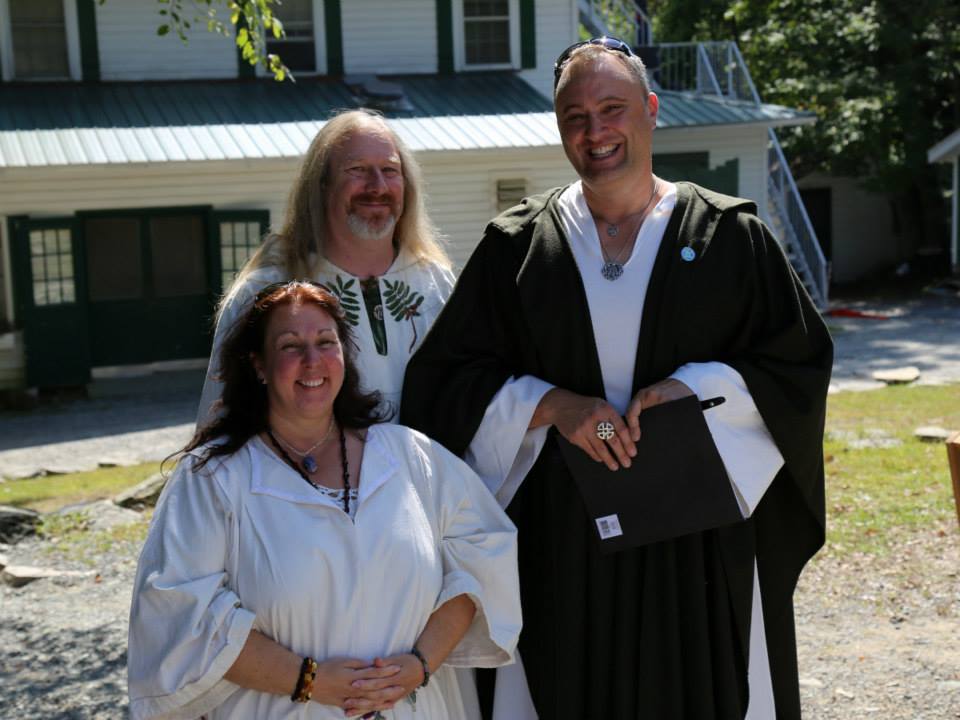
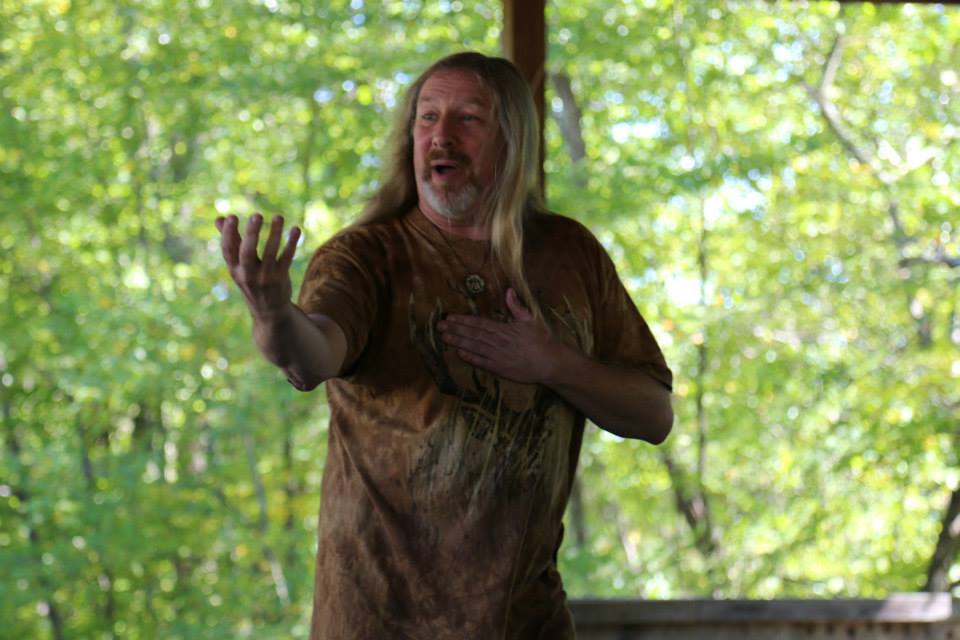
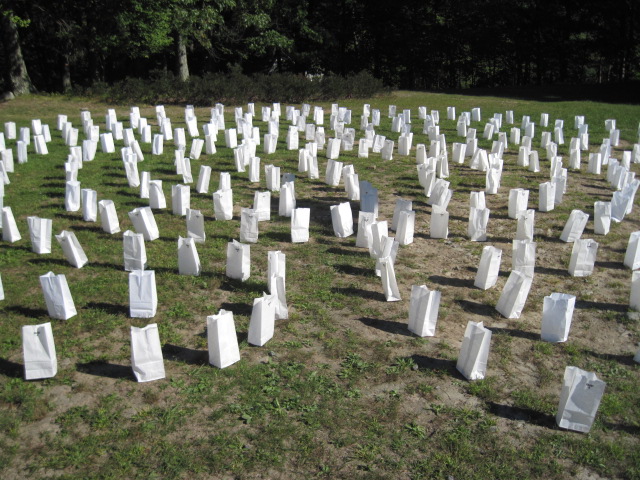
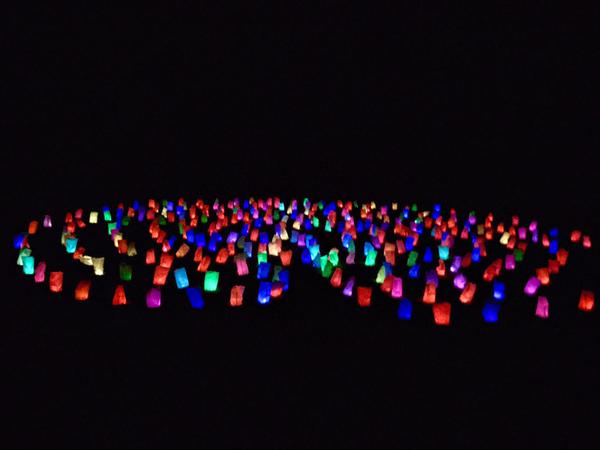
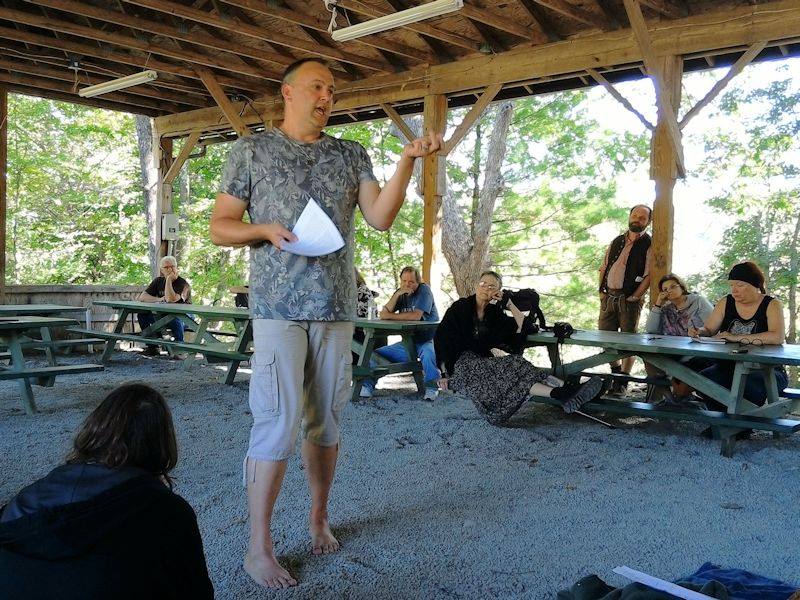
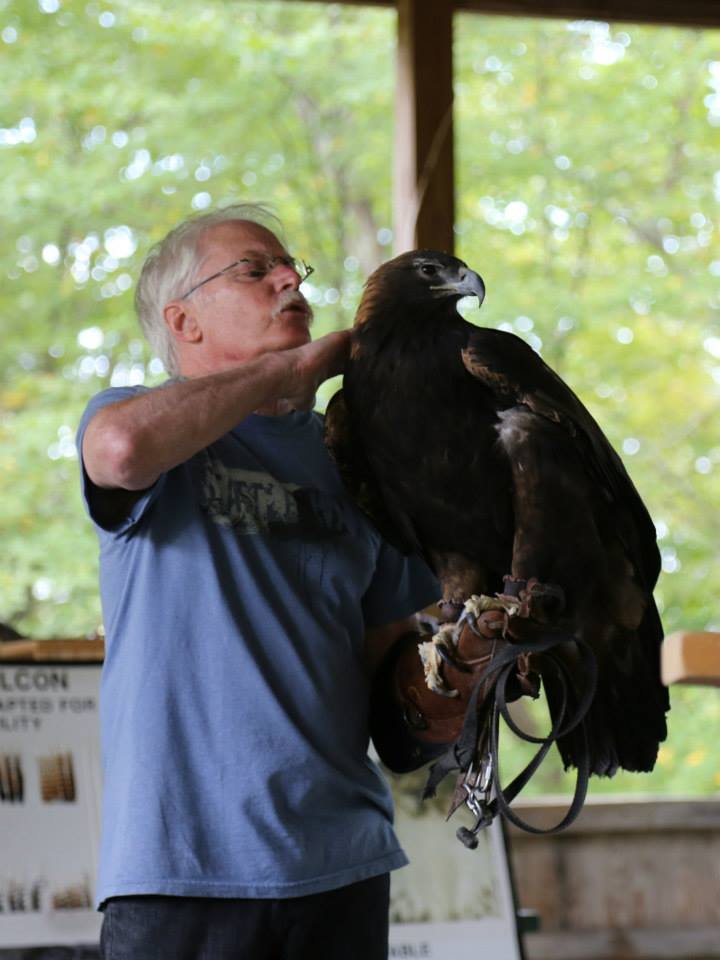
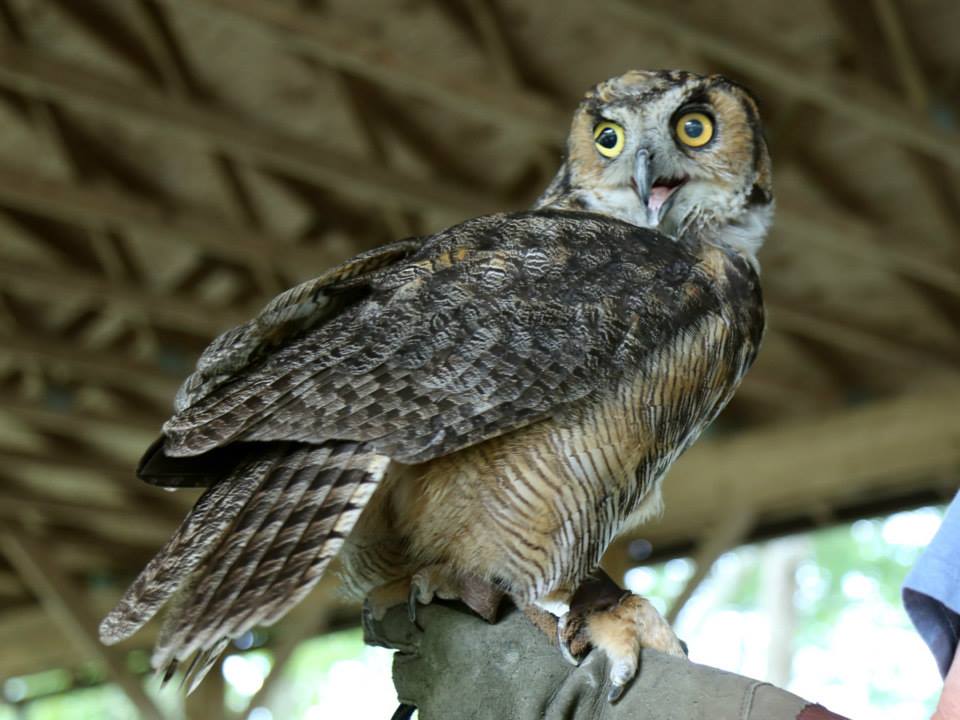
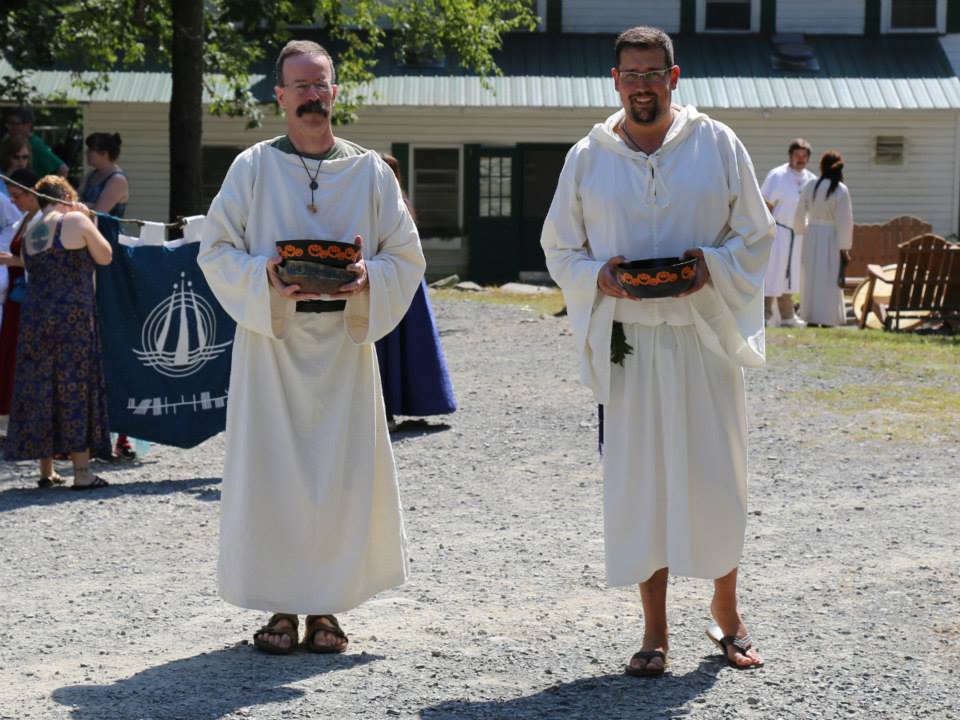
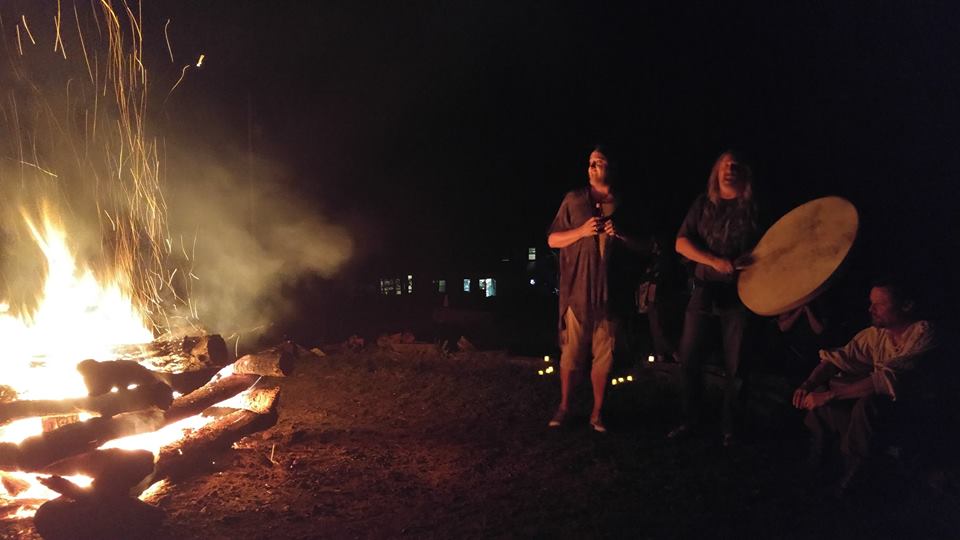
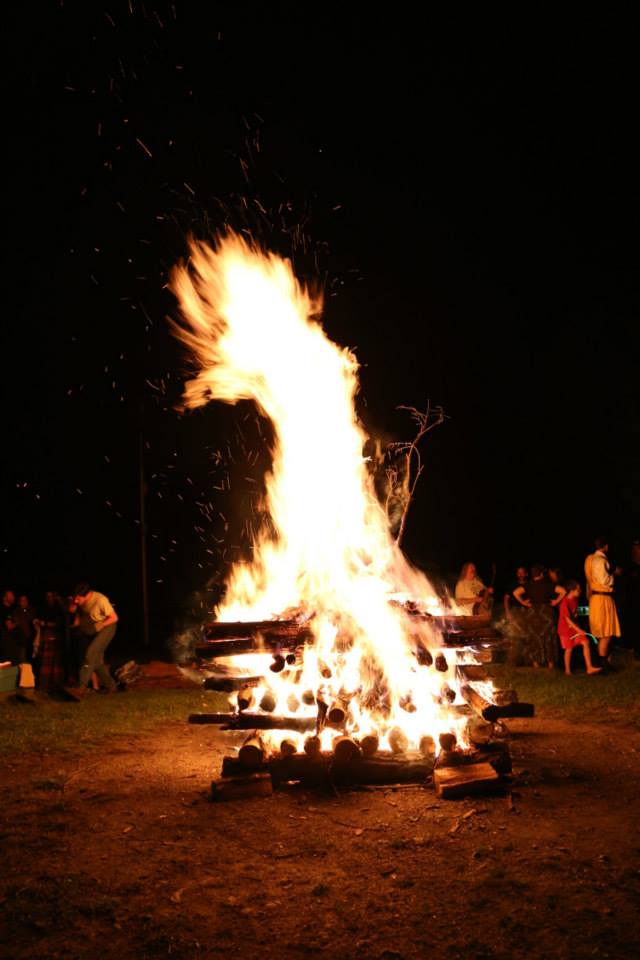
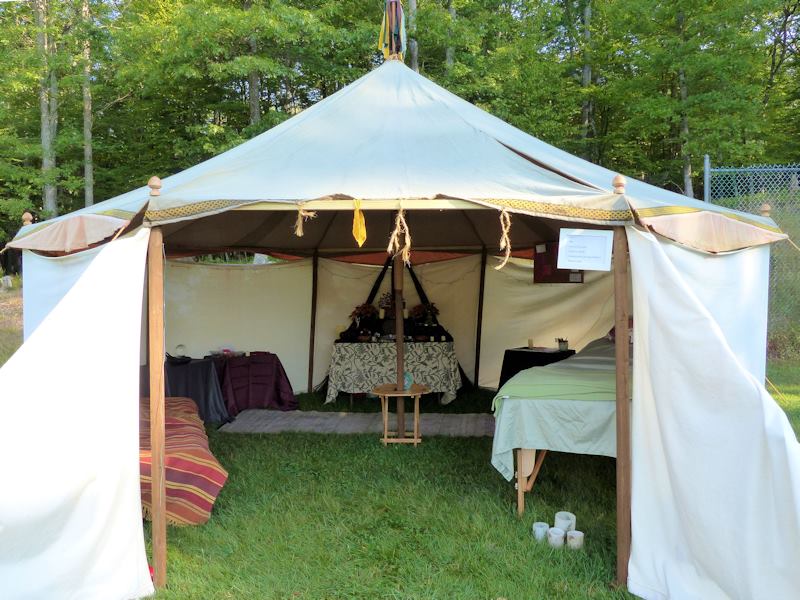
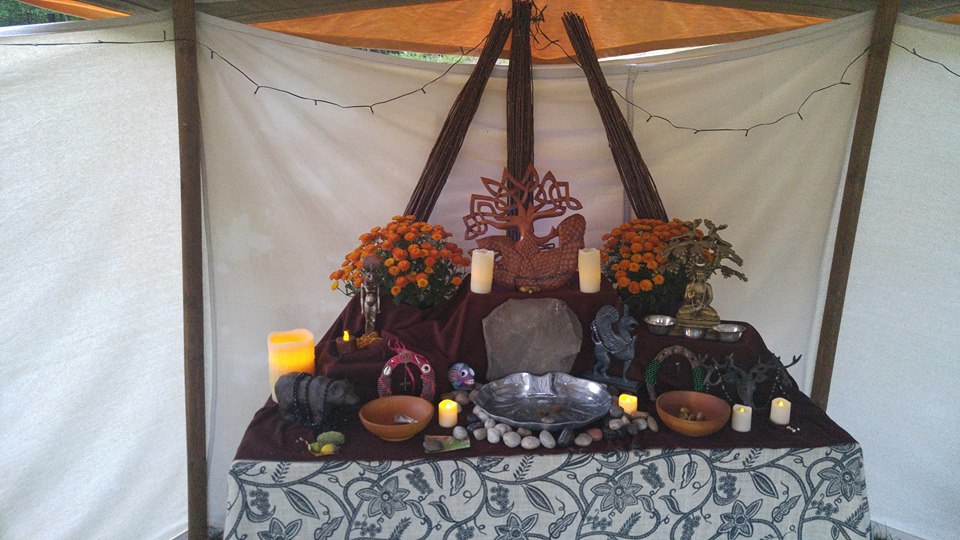
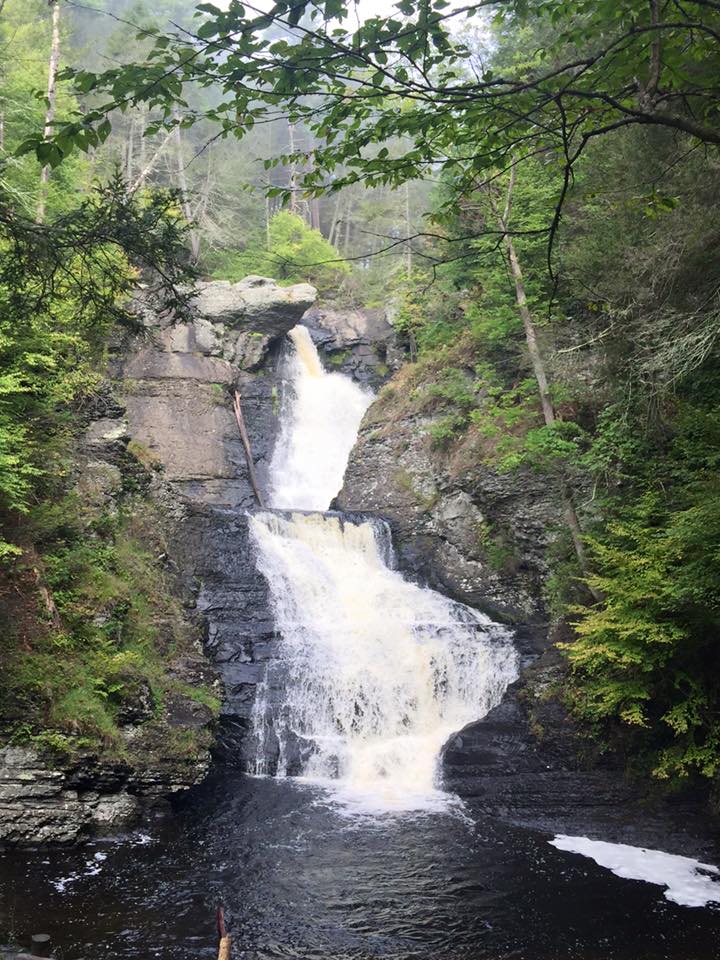
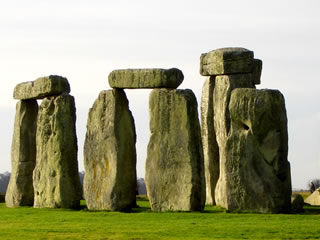
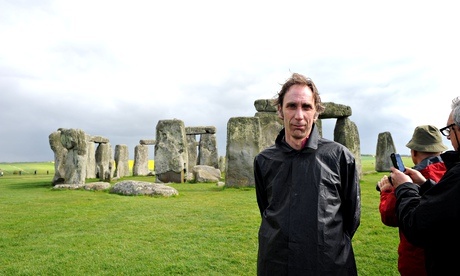
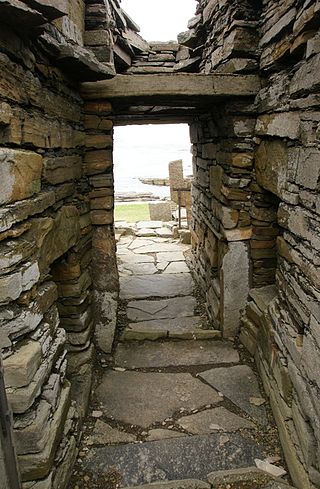
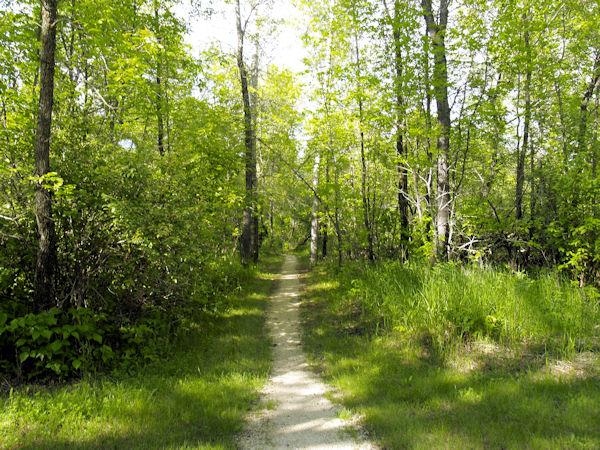


 A Druid Way

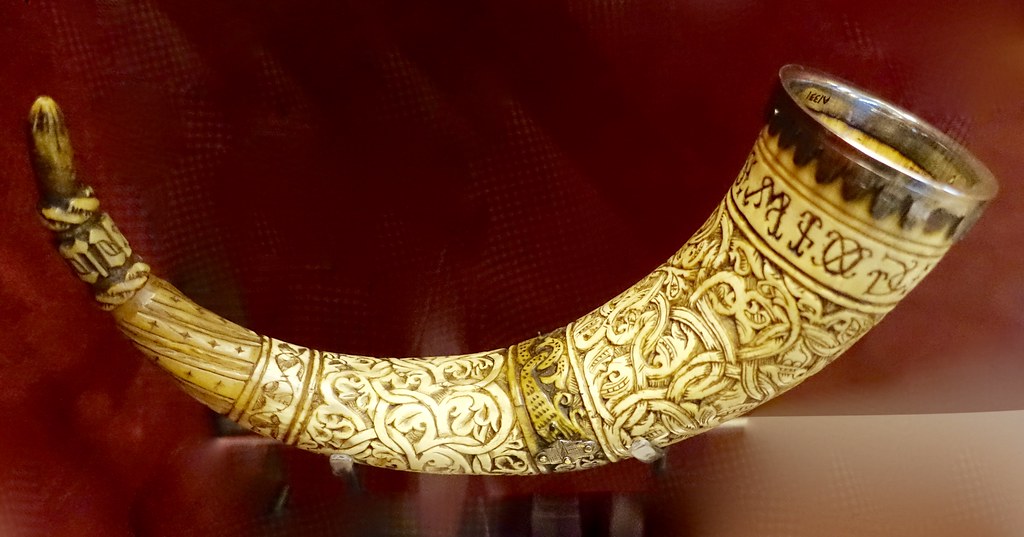

.jpg)