Archive for the ‘magic’ Category
 One of the more useful skills I’m practicing with Druidry (we all learn our lessons from many sources, in different guises and from different teachers, throughout our lives) concerns binary thinking. It’s easier to recognize when we’re not practicing it ourselves. You’re with us or you’re against us. It’s good or it’s bad. You’re young or you’re old. Hot or cold. 1% or 99%. And so on. Next door in New Hampshire, the state license plates famously read “Live free or die.”
We can get distinctly uncomfortable around ambiguity that doesn’t fall into one or the other of two neat categories. Advertisers after all market to categories, and spend time labeling both products and consumers so they can target their products. WordPress asks for tags and categories. If you have something to sell that doesn’t fit under a label, you can have a devil of a time getting it on the shelves or in front of people’s noses. Likewise, if you want to locate something that doesn’t fit a category, it can sometimes be a long challenge to track it down.
Of course, we can see plenty of this dualistic patterning in action now on a large scale in the States, and without needing to look any further than our presidential primaries. Just tune in, and you’re sure to hear some variant of the following, especially across party lines: one candidate’s or party’s ideas and proposals constitute all Goodness and Light and Upright Living, while the other threatens our very way of life. Filled with greed, selfishness, and all signs of true evil, that Evil Other will — if we make the mistake of listening to/believing in/voting for them, deliver us individually and as a nation into the hands of utter darkness, despair and destruction.

 Of course the drift into binary or polar thinking doesn’t originate or end with politics. As author, blogger and Druid J. M. Greer notes, “Binaries exert a curious magnetism on the human mind. Once we get caught up in thoughts of yes or no, right or wrong, love or hate, truth or falsehood, or any other binary, it can be hard to realize that the two poles of the binary don’t contain all of reality … Druid philosophy offers a useful tactic in situations of this kind. When you encounter a binary, you simply look for a third factor that is not simply a midpoint between the two poles. Find the third factor and you convert the binary into a ternary, a balanced threefold relationship that allows freedom and flexibility.”*
We all know numerous proverbs and images of three-ness. “Third time’s the charm”; the three parts of a syllogism (thesis, antithesis and synthesis); beginning, middle and end; the Three Blind Mice; Brahma, Vishnu and Shiva; Father, Son and Holy Ghost; the examples are nearly endless. What they amount to is a widespread recognition of the liberating and creative power of Three. As the Tao Te Ching says (Ch. 42), “From the One comes Two, from the Two Three, and from the Three the Ten Thousand Things” of existence in this world. The key is not to stop at two if we want to create. Move on to three.
Greer amplifies the discussion of binary thinking in a post on his weekly blog. He notes that
… the hardwired habit of snap judgments in binary form is always right below the surface. In most cases all it takes is a certain amount of stress to trigger it. Any kind of stress will do, and over the years, practitioners of mass thaumaturgy have gotten very good at finding ways to make people feel stressed so that the binary reaction kicks in and can be manipulated to order.
That’s when thinking in binaries goes haywire, the middle ground becomes invisible, and people think, say, and do resoundingly stupid things because they can only see two extreme alternatives, one of which is charged to the bursting point with desire … or fear … Watch the way that many people on the American right these days insist that anybody to the left of George W. Bush is a socialist, or tfor that matter the way that some people on the American left insist that anybody to the right of Hillary Clinton is a fascist. Equally, and more to the point in our present context, think of the way the peak oil debate was stuck for so long in a binary that insisted that the extremes of continued progress and sudden catastrophic collapse were the only possible shapes of the postpetroleum future.
Binary thinking is evolutionarily useful, Greer notes, because it allows us to make snap judgments that can save our lives in crises. But in situations where more careful thinking is not only possible but necessary, our ancient wiring and programming can leave us stranded at one pole or another, in stalemate, with no sense of the way forward.
Greer continues, observing that (in various kinds of Druid and magical training) “Back in the day, beginning students used to be assigned the homework of picking up the morning paper each day, writing down the first nine binaries they encountered, and finding a third option to each binary.” This bit of training can offer a salutary unlocking and rebalancing of the debates of the day — or of any complex problem handicapped and hampered by sharply polarized thinking.
This useful little exercise [of identifying and expanding binaries] has at least three effects. First of all, it very quickly becomes apparent to the student just how much binary thinking goes on in the average human society. Second, it very quickly becomes at least as apparent to the student how much of an effort it takes, at least at first, to snap out of binary thinking. Third and most crucial is the discovery, which usually comes in short order, that once you find a third option, it’s very easy to find more—a fourth, a ninety-fourth, and so on—and they don’t have to fit between the two ends of the binary, as most beginners assume.
Ternary thinking isn’t just a liberating technique for the person who practices it. It carries with it a desirable ripple effect, for
… when a discussion is mired in reactive binary thinking, it only takes one person resolutely bringing up a third option over and over again, to pop at least some of the participants out of the binary trap, and get them thinking about other options. They may end up staying with the option they originally supported, but they’re more likely to do it in a reasoned way rather than an automatic, unthinking way. They’re also more likely to be able to recognize that the other sides of the debate also have their points, and to be able to find grounds for mutual cooperation, because they aren’t stuck in a mental automatism that loads a torrent of positive emotions onto their side of the balance and an equal and opposite torrent of negative emotions onto the other side.
Given how shrill our political dialog has become, and how intransigent and loath to compromise the principal players remain, we could use a healthy dose of such thinking. As one of the Wise has said, “God is what opposites have in common.” For me that means that the “truth” of a matter is less than likely to lie at either extreme of a binary, but somewhere else — not “in the middle” necessarily, as though God were a moderate or centrist deity. The Tao Te Ching also notes (somewhat wryly, I’ve often felt) that “Extremes do not last long.”
But beyond the political sphere, the ternary in other settings leads us directly to the Ten Thousand Things, the world of possibility and options and freedom. To give just one personal example, after my cancer surgery and the follow-up radiation months later, I was weak and suffering from uncomfortable and chronic internal radiation burns in the lower colon. “I’ve got to get better or I’ll have to quit my job,” I thought. “I can’t work like this,” when almost every bathroom visit brought blood and pain. Binary alert! I was able to arrange a medical leave, during which a change of diet, specific exercise, rest, an inspiring class I audited, and several new activities and spiritual practices have helped with healing.
One of the latter is the subtly powerful principle of “both-and.” Rather than stalling in a binary, embrace the whole. So often I hear people saying, “I’m so upset!” or “I can’t believe it!” or some other incantation. The more often they repeat it, the more forceful their mental and emotional state seems to become for them. (Our most common targets of “black magic” are typically ourselves.)
“Both-and” works like this. “I’m upset and I can also be calm.” Both are true. Rather than denying what may be a very real state or situation, include it and move outward to include more. This avoids the resistance or denial that often plagues affirmations or stubbornness or exertions of the will, as if we could force the universe to do what we’re simultaneously insisting it must not to! (I want to be calm, but “I’m so upset!”)
 Whitman, our old American proto-Druid, gets it. “I am as bad as the worst, but, thank God, I am as good as the best.” Both-and, alive and well. And as he also and famously said in “Song of Myself,” “Do I contradict myself? Very well then I contradict myself. I am large, I contain multitudes.”
The Ten Thousand Things all are moving about on their many and beautiful ways. Come walk with me, and with them.
/|\ /|\ /|\
*J. M. Greer, The Druid Magic Handbook, 19.
Images: NH license; Obama; Gingrich; Whitman.
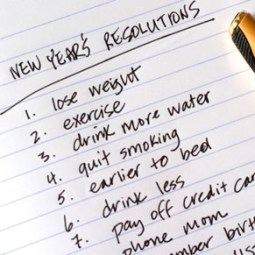 It’s no accident that this time of year turns us toward thoughts of resolutions. After the family gatherings and excess of the holidays — and let’s be honest, some excess and abandon can be fun, or would be, if our Puritan strain didn’t kick in, and kick us — we can feel slack and listless. We’ve crested the peak of seemingly endless sugar and fat in our holiday diet — unless New Year’s Eve is the bigger holiday for you, in which case you’re just getting in training. In the shadow of the sugar low, just combine these things with cloudy days, at least here in the northeast U.S., and you face a perfect storm of sloth and dejection and mild to severe loathing. At some point our usually inevitable American self-improvement gene then steps forward, and it’s off to fix ourselves.
Whenever we push happiness or improvement into the future, we can be in trouble. If it’s in the form of satisfaction with ourselves, twice the trouble. How many times have we started and quit some scheme of fix-up? Lose weight, get in shape, hold your temper with the left- or right-wing relative who always gets under your skin, forgive your neighbor, keep a diary, save more money each month, clean the basement or garage — paper for all the lists of vows and resolutions could keep Staples in business all by itself. And if you truly enjoy flogging yourself, you key in your list to your favorite electronic device, so you can torture yourself with it several times a day.
You should know I tend not to make many resolutions. Partly, my personal standards are lower, I’ll admit — and that makes things easier. I confess to a startling capacity for indolence. Both my wife and I have had years where we’re either flat out — busy, or flat out — in sloth. Partly as a result of that, I’m a pragmatist. No use flailing and contorting to begin something I won’t finish. Shorten the list, I tell myself. Throw it out altogether. Delete the to-do’s accumulating on your virtual or actual desktop. Be realistic. You’ll be happier not making yourself miserable with what you fail to accomplish. Or just keep it off the list in the first place. Guilt may be a Catholic specialty, but most Americans, regardless of religious ancestry or affiliation, have managed to add it to their personal repertoire of masochism and psychological waterboarding. Thus do I lower expectations. And I’m only exaggerating slightly. Low expectations let me rejoice in walking down a hallway and back — once — after my cancer surgery. Then twice. And so on. In three months I was jogging three miles a day. Which was not my intention, and would have seemed daunting at the outset. I just increased my distance a little each day. The gifts of fresh air and daily sunrise were more than half of my success.
Which brings me to magic.
Not a transition you saw coming, I imagine. Enough for at least a couple of readers to stop in disgust. We’ll ignore the fact that what gets called “magical thinking” is exactly what propels many of our resolutions to change. Such thinking is indeed unrealistic, because — to use the physical metaphor — we try to do the equivalent of the Boston Marathon without first taking up merely a short daily walk. Too often we simply crash and burn.
So let’s define magic as most actual practitioners do: the art of creating changes in consciousness in conformity with the will.
This isn’t the “will” of willpower, as if we could compel the universe to do anything it isn’t already inclined to do. That kind of will is the popular image of the witch or magician, however, muttering arcane mantras and spells, and perhaps waving a wand. It’s Harry Potter magic, which is why many practicing magicians found the Evangelical Christian hysteria (here’s a more balanced overview) over the book series and its supposed promotion of “Satanism” and “witchcraft” to be hysterical, as in funny. See how far you get waving a wand and shouting “Expelliarmus” or “Avada Kedavra.” (“Expecto Patronum”* might get you incrementally closer to achieving something, if only because it may lead you to focus on a positive.)
Actual — as opposed to Hollywood or popular — magic is a matter of discerning the patterns and tendencies of the natural world and its powers and forces, and then aligning oneself with them. Quite simply, any other approach is highly unlikely to succeed. As Druid and occult author J. M. Greer observes, if it “ignores the momentum and flow of natural patterns, it’s clumsy and wasteful of energy. It’s much like trying to cross a lake on a rowboat without paying attention to the winds and the currents. If you ignore these, you can put plenty of effort into rowing and make very little headway, or even end up further away from your goal than you started” (The Druid Magic Handbook, 18). Blindly asserting the will is rowing while oblivious to movements and energies of the larger world. Far from being supernatural, magic is thus deeply involved with the natural world.
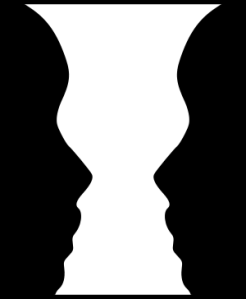 The will involved in magic is much better identified as intentionality, and it’s intentionality that helps our New Year’s resolutions actually succeed. Greer continues: “Real will is effortless. It corresponds, not to struggle and strain, but to what philosophers call ‘intentionality,’ the orientation of the mind that locates meaning in objects of experience” (20). He gives the example of choosing to look at a window, or through a window at something on the other side. The well-known image of faces or a vase offers a similar instance. It’s by intention that we shift our perception. Strain has nothing to do with it. You perceive the two dark faces in profile looking at each other, or you perceive a white vase on a black background. It’s hard to see both simultaneously. But intentionality lets you shift between them. It’s a choice.
One technique, therefore, for training the will or the intentionality, is to do something simple and comparatively effortless. Set yourself a ridiculously easy task, follow through on it, and record your results. The purpose of this training is to reveal and separate all our defeatist and negative self-sabotaging attitudes from an actual act of intentionality. For instance, five times during the day, stand up, turn three times in a circle and sit back down again. Record the date and time on each instance that you do this.
Now presumably nothing interfered with your success, except perhaps a mild feeling of embarrassment. But you set up an intention, and manifested it without strain. You simply did it. Yoda’s words are apropos here: “Do, or do not. There is no try.” The “trying” is the strain, the effort of will to do something you actually don’t want to do. Intentionality bypasses that. You simply do it because you decided to. This is a form of preliminary magical training: doing small, effortless, things you know you can achieve without strain, in order to gain confidence in intention.
Because intentionality is a choice, not a struggle, many aspects of our lives can come under its influence. Greer continues,
If you face a challenge with confidence, for example, you chances of success are much better than if you face the same challenge full of doubts and worries. Intentionality is the reason why. What the confident person sees as potential opportunities, the worried person sees as potential obstacles, and they are both right, because whether something is an opportunity or an obstacle usually depends on how you choose to approach it (Greer, 21)
— that is, on your intentionality.
We use a form of magic whenever we make a resolution — in this sense, we’re all magicians at work.
The difference between intentionality and ordinary ideas of willpower explains many of the failures that bedevil beginners. When you try to use magic to will the world into obedience [in the case of a resolution, you will yourself to change your own behaviors and habits — ADW], you set up an intentionality of conflict between yourself and the world … The harder you try to make the world obey, the more it fights back, because all your efforts reinforce the intentionality and amplify the conflict. Change your intentionality to one of moving in harmony with the world, and the conflict disappears (Greer, 21).
This is not unfamiliar territory to Christians, either, or shouldn’t be. Jesus says, “Agree with thine adversary quickly, while thou art in the way with him.” “Turn the other cheek,” and so on. In other words, don’t make additional and entirely unnecessary trouble for yourself. Don’t stand in your own way.
Because we often practice “black magic” on ourselves, sabotaging and short-circuiting our own best intentions with negative thinking and self-limiting behavior, and setting up conflicting, opposing intentionalities, we waste time and energy “rowing against the current.” Many beginning magicians
try to use magic to achieve financial prosperity, and it’s common for their efforts to backfire and leave them poorer than they started. Why? In many cases, their magic focuses on wanting what they don’t have. This sets up an intentionality of wanting and not having, and so they end up wanting money and not having it. As with so many things in life, the more energy they put into chasing something, the faster it runs away (Greer, 22).
Because Greer has such insightful and useful things to say about intentionality — and thus resolutions — I want to let him have (almost) the final word:
If you want to use magic to become prosperous, your intentionality has to focus on being prosperous, not on wanting to be prosperous. One effective approach starts with noticing the prosperity already in your life — if you have a roof over your head, three meals a day, and the leisure to read this book, after all, you have more prosperity than half the people on this planet — and letting the change in focus from wanting to having gently redefine your intentionality toward wealth. Another useful strategy focuses on seeing opportunities for abundance around you. This redefines your surroundings as a source of opportunity, and as [our life energy] follows intentionality, and shapes experience, opportunities appear (Greer, 22).
So to sum up, practice intentionality with actions that don’t haul negative habits of thinking along with them. Focus on having and being, rather than on wanting and lacking. Experiment. Use the power of choice to shift consciousness — to see the vase, the faces, or whatever your intentionality is. Repeat as needed.
/|\ /|\ /|\
Images: resolutions and faces/vase
Postscript: when I was searching for the first image, a list of resolutions, I came across pictures of computer screens, too — another meaning of resolution — the pixel resolution or clarity of image that a screen possesses. Likewise, my clarity in visualizing the goal — of having or being what I desire — is key to “keeping” my resolutions. Imagining what it is like being and having what I desire is halfway to my manifesting it. I already know something of what it feels like to succeed. (I’m using this strategy as I revise my nanowrimo draft.)
*”Expecto patronum” — (Latin, literally, “I await a patron/protector”) summons a familiar or symbolic representation of the self to protect one against negative energies, such as Dementors in the HP series. Harry’s patronus is a stag, as was his father’s. Of the three spells I cite above, this one is good defensive magic and actually works well against nightmares. The following is part of the entry from the Harry Potter wiki on the Patronum spell:
A Patronus is a kind of positive force, and for the wizard who can conjure one, it works something like a shield, with the Dementor feeding on it, rather than him. In order for it to work, you need to think of a memory. Not just any memory, a very happy memory, a very powerful memory… Allow it to fill you up… lose yourself in it… then speak the incantation “Expecto Patronum”.
-
—Remus Lupin teaching Harry Potter the Patronus Charm
Go to Part 1 | Part 2 | Part 3 | Part 4 | Part 5 | Part 6
 With energies flowing around us from so many end-of-year holidays and celebrations, it seemed fitting to think and write about initiation. It’s one more piece of a Religious Operating System (ROS), it’s an important key to Druidry and — most importantly — it’s something we all experience. For good reason, then, the subject cuts a large swath through spiritual, religious and magical thought and practice. As author Isaac Bashevis Singer opens his book The Chosen, “Beginnings are difficult times.” That’s one reason New Year’s resolutions often end up on the cutting room floor of the film version of our lives. (Some ways to keep them alive and well and not merely part of the special extended version of our lives that may not see wide release into the “real” world will be the subject of a post upcoming in the next few days.)
Some opportunities for initiation recur each year, and are built into our cultures. Right now the festival holidays of Hanukkah, Christmas, Diwali, Kwanzaa and so on are opportunities for annual initiation — if we let their celebrations reach into us and change us. As breaks from “profane” or ordinary time, holidays take us into altered if not sacred space, and then return us to our lives somehow — ideally, anyway — changed. Of course, specific religions and spiritual paths each offer their own initiations. For Christians, it’s baptism (and for Catholics and some other denominations, confirmation as well). A Jew passes through a bar or bat mitzvah, and so on.
But we needn’t look so far or so formally. First kiss, first love, first sexual experience, first drink (consider the particular sequence of these in your own life). Driver’s license, prom, graduation, military draft. Each transforms as a rite of passage. We “pass through” and come out on the other side, different, in ways others may or may not notice. We ourselves may not fully absorb the changes until much later.
 As with the kinds of freedom I considered in a previous post, there seem to be both “transitive” and “intransitive” initiations — initiations which enable or empower the initiate to do something — typically in the future — and initiations which recognize a standard or awareness already attained, and put a “seal of approval” on it. Of course these need not be separate. Both kinds can occur simultaneously. Initiation is a “beginning” (from Latin initio “start, beginning”) both a path or direction that another agency, power or person starts us on, and also something one does or experiences oneself.
Some big initiations are inclusive. Like annual holidays, we all experience them. Though we may not often think of it, death — our own, or that of a loved one, or of a public figure with symbolic power, like a John F. Kennedy or a Princess Diana — can be a powerful, transformative initiation. Through the grief and the inevitable breaks in familiar routine that come with the first shock, the family gatherings, the arrangements and the funeral itself, we’re brought to face loss, change, mortality, and endings and beginnings in ways. We may take on new, unfamiliar roles, like caretaker, mourner, survivor, with all the challenge and growth they can bring. The first death we encounter (apart from pets), given the usual number of years between generations, comes almost like clockwork sometime in our teens, with the passing of a grandparent. In the freshman dorm at the boarding school where I teach and serve as adviser, there are four or five deaths of grandparents each year, and all the myriad changes they carry with them for those involved. It’s a close study in family dynamics (and our capacity as advisers to provide support) to witness how kids and their families deal with it all.
 Marriage often seems to occupy a sort of middle ground as far as these categories operate. On the one hand, no one is married in the eyes of either the law or a religious organization until they pass through the requisite ceremony. Yet we all know couples who are already “so married” that the ceremony confers nothing that they don’t already manifest in abundance. In this case, the initiation of marriage simply recognizes and formalizes a connection and a state of relationship that already exists and — if the ritual or ceremony still carries any power — blesses and charges the thing consecrated. My wife and I have two anniversaries, ten days apart, and each conveyed to us different energies. First was a spiritual ceremony by a cleric in our tradition, and second came the state ceremony, performed by a justice of the peace. Interesting, too, who we see as performing or undergoing the initiation. Ideally, to my mind, the one experiencing the initiation should play at least some part, if not an active role, in its enactment. For initiation takes place both outwardly, where it is often witnessed by the state if not also by family, and more importantly inwardly, on the subtle planes (which deserve their own post or series of posts).
“Where is wisdom to be found?” goes the old query. Initiation is one major source. Not all initiations “show” right away, or even ever. What we begin may never end. It can take a lifetime to sort out the effect of even “lesser” initiations, to say nothing of the big ones. Those “long” words, never and always, very much belong with initiations.
Go to Part 1 | Part 2 | Part 3 | Part 4 | Part 5 | Part 6
/|\ /|\ /|\
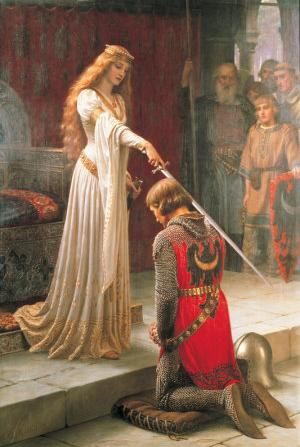
Image credits: Knighthood — “The Accolade” by Edmund Blair Leighton
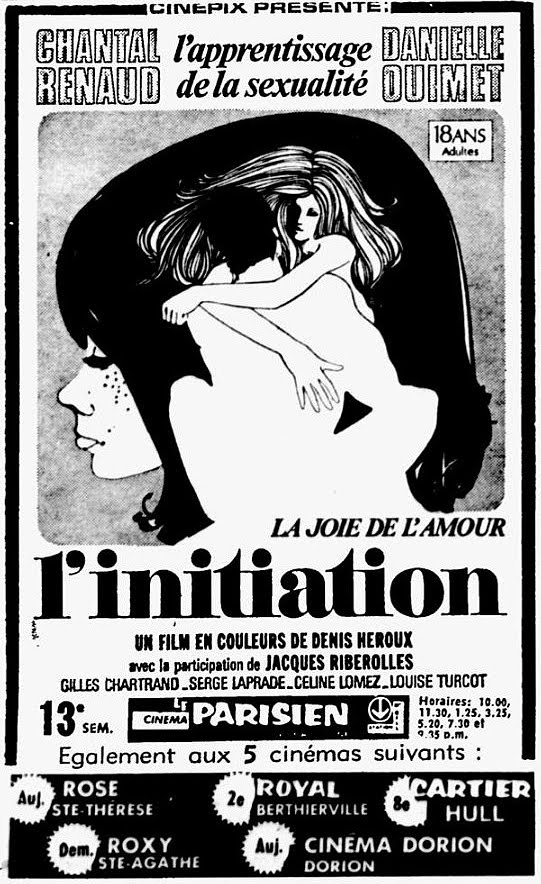
Sex and love
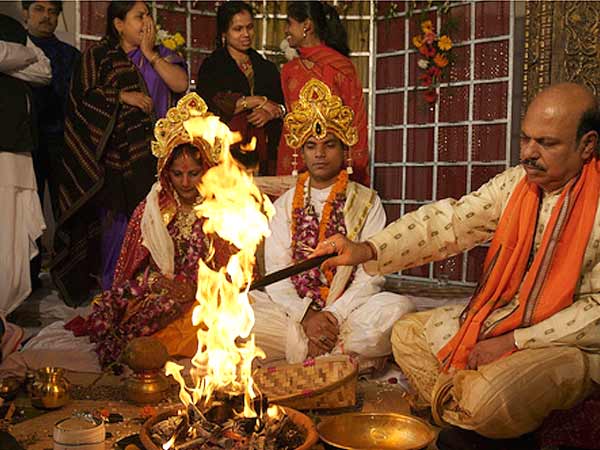
Oriya Indian wedding
Persistence, and its twin patience, may be our greatest magic. Sacred writings around the globe praise its powers and practitioners. So it’s hardly surprising, here in the too-often unmagical West, with its suspicion of the imagination, and its demand for the instantaneous, or at least the immediate, that we are impatient, restless, insecure, harried, stressed, whiny, dissatisfied and ungrateful. We bustle from one “experience” to the next, collecting them like beads on a necklace. The ubiquitous verb “have” leaves it mark in our speech, on our tongues: we “have” dinner, we “have” class or a good time, we even “have” another person sexually, and one of the worst sensations is “being had.” We do not know self-possession, so other things and people possess us instead.

The “slow food” movement, the pace appropriate for savoring, craftsmanship, care, reflection, meditation and rumination (slow digestion!) all run counter to the ethos of speed, promptness, acceleration that drive us to a rush to orgasm, speeding tickets, the rat race, stress-related illness, and so on. None of these problems or the observations about them are new, of course. But we remain half-hearted in our efforts or understanding of how to “pursue” their remedy. We chase salvation as much as anything else, as a thing to collect or gather or purchase so we can be about our “real” business, whatever we think that is. Spirituality gets marketed along with orange juice. For a sum, you can be whisked off to a more exotic locale than where you live your life, spend time with a retreat leader or guru or master or guide, and “have” (or “take”) a seminar or class or workshop.
Anyone who has adopted a spiritual practice and stuck with it has seen benefits. Like regular exercise, it grants a resilience and stamina I can acquire in no other way. I sit in contemplation and nothing much happens. A week or a month goes by, and my temper might have subtly improved. Fortunate coincidences increase. My dream life, or a chance conversation, or a newspaper article, nudges me toward choices and options I might not have otherwise considered. But usually these things arrive so naturally that unless I look for them and document them, I perceive no connection between spiritual practice and the increased smoothness of my life. From a slog, it becomes more of a glide. But the very smoothness of the transition makes it too subtle for my dulled perceptions at first. It arrives naturally, like the grass greening in the spring, or that gentle all-day snow that mantles everything.
I abandoned a particular daily practice after many years, for complicated reasons deserving a separate post, and I needed only to read the notebooks I kept from that earlier time to recall vividly what I had lost, if my own life wasn’t enough to show me. My internal climate faced its own El Nino. I was more often short with my wife, mildly depressed, more often sick with colds, less inspired to write, less likely to laugh, more tired and more critical of setbacks and annoyances. Set down in writing this way, the changes sound more dramatic — didn’t I notice them at the time? — but as a gradual shift, they were hardly noticeable at any one point. I still had my share of good days (though I didn’t seem to value them as much), and my life was tolerable and rewarding enough. “But I was making good money!” may be the excuse or apology or justification we make to ourselves, and for a time it was true enough of me. Then came the cancer, the near-breakdown, the stretch of several years where I seemed to move from doctor to doctor, test to test, treatment to treatment. If you or anyone you know has endured this, you get what I’m talking about. It’s distinctly unfun. And while I won’t say lack of practice caused this, it’s an accompanying factor, a “leading indicator,” a constituent factor. Doctors might very profitably begin their diagnoses with the question, “So how’s your spiritual practice?” Our spiritual pulse keeps time with our physical lives. They’re hardly separate things, after all. Why should they be?
In the story of Taliesin I mentioned in my last post, the boy Gwion, so far from the future Taliesin he will become, is set by the goddess Cerridwen to watch a cauldron as it cooks a magical broth meant to transform her son Afagddu, a mother’s gift to her child. A year and a day is the fairy-story time Gwion spends at it. A full cycle. The dailiness of effort and persistence. The “same-old,” much of the time. Gwion’s a servant. The cauldron sits there each morning. The fire beneath it smoulders. Feed the fire, stir the liquid. It cooks, and Gwion “cooks” along with it, the invisible energy of persistence accumulating as surely as the magical liquor boils down and grows in potency. Through the spring and summer, insects and sweat. Through autumn and winter, frost and chill and ice. The cauldron has not changed. Still at it? Yes. The broth slowly thickens as it bubbles and spatters.
 One day a few drops (in some versions, three drops) fly out onto one of Gwion’s hands, burning. Instinctively he lifts the hand to his mouth, to lick and soothe it with his tongue. Immediately the magic “meant for another” is now his. He did, after all, put in the time. He sat there daily, through the seasons, tending the cauldron, stirring and keeping up the fire, swatting insects, breathing the smoke, batting sparks away, eyes reddened. Yes, the “accident” of the spattered drops was at least partly the result of “being at the right time in the right place.” It is “luck” as well as “grace,” both operative in his life. Part, too, was the simple animal instinct to lick a burn. And the greater portion was the effort, which catalyzed all the rest into a unified whole. Effort, timing, luck, chance, grace: the “package deal” of spirituality.
And the consequence? For Gwion, his growth has just begun. It is his initiation, his beginning. In his case it distinctly does NOT mean an easier path ahead for him. In fact, just the opposite — more on that in a coming post.
 The Hopi of the American Southwest call their ritual ceremonial pipe natwanpi, “instrument of preparing.” The -pi suffix means a vehicle, a means, a tool. Tales like this story of Gwion can become a natwanpi for us, if we choose — part of our preparation and practice, a tool, a way forward.
/|\ /|\ /|\
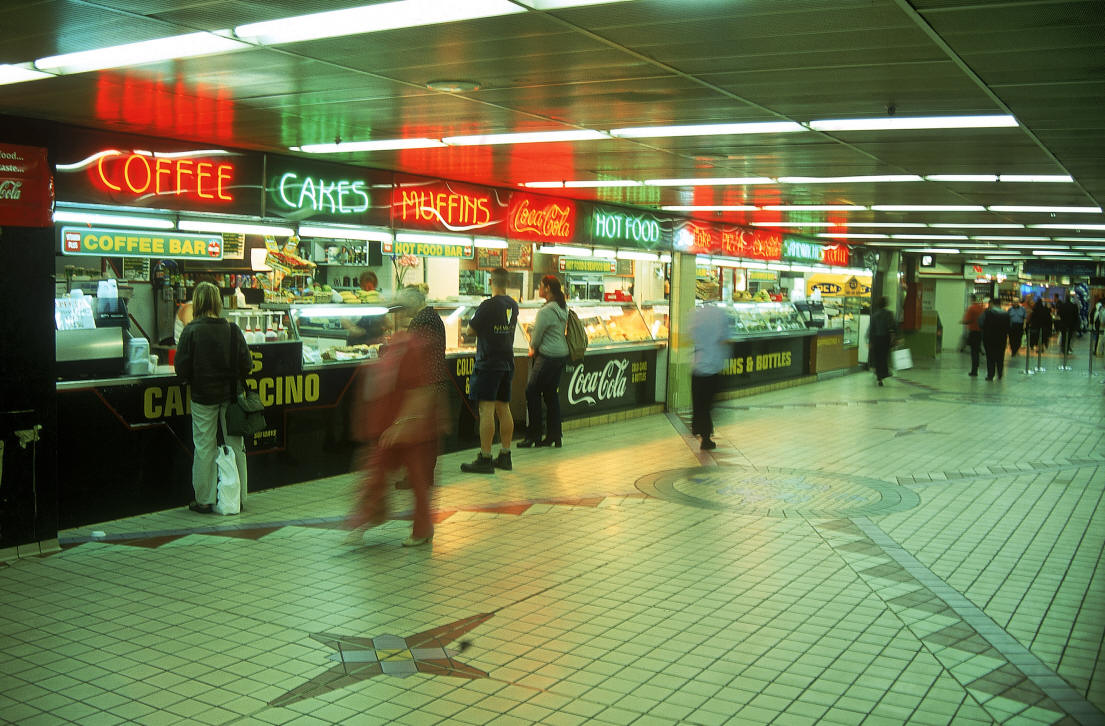
Fast food
Transformation
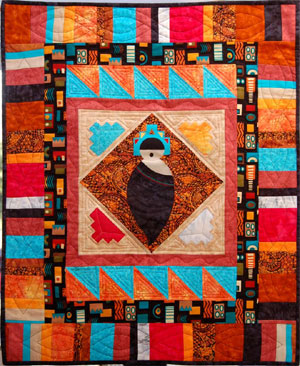
Hopi blanket
“Behold!”
In this single command, Jesus is profoundly Druidic. Catch the moment, he says. Watch the divine as it swirls around and in you. You can witness the marvelous if you simply pay attention. Listen! Look! Seeing and hearing are a good start. Now do more. Put yourself into your attention. Make it purposeful. Don’t just hear — listen. Don’t just see — look.
“If therefore thine eye be single, thy whole body shall be full of light” (Matthew 6:22). A wonderful assertion– one to test, to try out, to prove to oneself, not merely to accept passively. A promise. Singleness of vision, the devotion and dedication to witnessing what is really there, as opposed to what we assume or fear, wish or ignore. Some have seen this passage as a reference to the yogic “third eye” chakra, the Hindu Shiv Netra or Sufi Tisra Til. Why not both, and something else besides?
In the second half of her poem “The Summer Day,” Mary Oliver says:
I don’t know exactly what a prayer is.
I do know how to pay attention, how to fall down
into the grass, how to kneel down in the grass,
how to be idle and blessed, how to stroll through the fields,
which is what I have been doing all day.
Tell me, what else should I have done?
Doesn’t everything die at last, and too soon?
Tell me, what is it you plan to do
with your one wild and precious life?
Shouldn’t all attention bring to light more and better questions? Wouldn’t we be bored to tears with a life of all things answered? Give me bigger and deeper questions, give me earth whole again, give me all I already have. Give me birth in this moment. We are constantly being born, arriving at ourselves, a remembering, a finding out of the utter strangeness of being alive, and being human in this moment, our eternity, the only time there is. The past is only memory, and changing. The future is hopes and fears. Take the now with both hands.
As editor of a collection of essays, The Rebirth of Druidry, OBOD‘s Chosen Chief Philip Carr-Gomm attempts to characterize something of the appeal of the spirit of Druidry in human terms. I quote his article at length because in its effect it is all of a piece, and because it provides a suitable introduction to some things I want to say about the Goddess:
Druidry is the perfect lover. You fall in love with her so easily because she is so romantic. She whispers to you of the magic and mystery of the turning stars and seasons. She loves trees and Nature above all things, and you yearn for these too. She tells you stories of Gods and Goddesses, the Otherworld and fairies, dragons and giants. She promises secret lore — of sacred trees and animals, of herbs and plants. She points deep into the past, and ahead towards a future which is lived in harmony with the natural world. But just when you are convinced you will marry her, because she is so beautiful, so tantalizing, so romantic, she turns around and there she is, with rotten teeth and hideous face, cackling and shrieking at your naivety. And she disappears, leaving you with just her tattered cloak, made up of a few strands: some lines from the classical authors, whose accounts are probably inaccurate anyway, a few inferences drawn from linguistic and archaeological research, which could be wrong, with the rest of the cloth woven from material written from the eighteenth century onwards, replete with speculation, forgery and fantasy.
You feel a fool. You don’t tell your friends about your lover. You feel tricked and defrauded, and decide to follow something more authentic, more established, more substantial — like Buddhism, or Christianity, or Sufism, or Taoism — something serious. But then you go out walking. You follow the old trackways, you come to the old places. You see the chalk gods and stone circles. You pause and open yourself to the Land, and there She is again. But this time she is even more enchanting because you can see that she is not just a beautiful woman, full of romance and seduction, you can see that she is also a wise woman, who will provoke as well as seduce you, who will make you think as well as make you feel. And then you suddenly know why she has been the object of fascination for so many through the ages. She is the Muse, the Goddess behind Druidry, the bestower of Awen, of inspiration.
Obviously the imagery here from a male author conveys part of how a man may first encounter the “Goddess behind Druidry”; it may not appeal to women, who find their own powerful ways of connecting with Her. In mythic terms, however, this account very much reflects the changeability of the Goddess — what has inaccurately been called her fickleness, and which has caused many accustomed to meeting deity in a single, invariant form to confuse variety with unreliability or untrustworthiness. Westerners in particular have largely been cut off from experience with aspectual deity, which the Goddess so clearly manifests. Rather than manifesting a loving and compassionate presence, “[t]he deity may appear in wrathful or challenging forms, but these should not be considered hostile. She is the kernel of truth at the heart of everything, and if she appears in challenging forms to you, look more deeply, considering why this may be so,” suggests Caitlin Matthews in her slim but potent book, The Elements of the Goddess. “Many of those who venerate the Goddess are unhappy with her supposedly dark aspects because they associate ‘dark’ with ‘evil.’ In order to save her child about to do something dangerous or silly, a mother will get angry, shout or scream, but this doesn’t mean to say she loves her child any less.”
My first encounter with the Goddess came unbidden, unsought, when I was 25. (You need to know: I’m not especially sensitive or psychic. Friends who are say anyone who wants to reach me has to raise quite a ruckus to get my attention. If you’d asked me then I’d say — still would probably, even today — that half of what people experience in such situations is imagination. But now by “imagination” I mean something considerably larger and more potent than I did then. More about that later.) It was a frosty autumn day, and I was wandering the fields and scattered woods of a farm my father had recently bought in western New York, south of Rochester. I paused in a swampy grove of trees, with several fallen and decaying trunks to sit on. A mood or atmosphere of autumn pervaded the place, almost palpable. The air lay perfectly still. The musty-sweet smell of dried dead leaves filled the air, along with a tang of rot and manure from a nearby field, and a hint of woodsmoke. Over the hills from a distance came the faint roar of some town maintenance vehicle — they were always patching roads in the area. But distant sounds simply deepened the stillness by contrast. As this meditative silence spread and enveloped me, I became aware of a presence that filled the grove and towered over me, fifty, sixty feet tall. Immense. One face of the Goddess. Conscious encounter. Her.
She didn’t knock me on my ass, though that might have been useful too, given how dense I can be. But though I describe it here in mild enough terms, the experience was unforgettable, not for any one detail, but for its undeniable — and familiar — quality. This was someone I knew. Not someone or something alien, or to be feared, or a matter of belief, any more than I need to believe in the tree-trunk I sat on. It was like finding a limb which, when you found it, you knew had always been a part of you all along. You just hadn’t been aware of it. As if it had been asleep, but for its waking you finally twitched a muscle in it, and in feeling it respond you felt it.
So what’s the big deal, you say? “He met the Goddess, in some ways it was an anticlimax though also somehow memorable, he got over it, it was years ago. So?”
A year later I was in the throes of my first love affair (can anyone say “late bloomer”?), a tumultuous relationship in which I did get knocked on my ass. Among all the other things this Goddess encounter was, it was preparation, or warning. I needed greater emotional experience, insight, maturity. I was about to get it.
In between the divine and human realms is an archetypal one — a place, often, of dream and vision, and the idealized images of Others for men and women which “haunt our imagination and often make our love-lives incredibly tortuous until we realize that these daimons will never become physical realities. They are messengers between the divine realms and the human levels of our experience” (Matthews, 13). This was part of what I needed to learn firsthand. No book knowledge this time. It was an initiation of its own.
So this fall at OBOD’s East Coast Gathering, in a meditation involving an encounter with the Goddess in her guise as Cerridwen, I felt a surge of panic — again. “Cerridwen is bad. She tricked Gwion Bach in the old Welsh tale.” But it was old programming. Incomplete knowledge. Fear of that “fickleness” I mentioned earlier. “The old, outworn, dualistic concept of the Goddess as cruel and capricious must be viewed for what it is: a reflection of our shadow-side, a terrible polarization of social responsibility with which women have been burdened as a sex” (Matthews, 24). But now I had more tools to begin to deal with it. At Samhain I did specific work with the Goddess. I needed to. Is it any wonder I also spent 15 years working in a freshman girls dorm as a house parent? Training up close and personal. “The Goddess stands at the heart of life, death and further existence and she will assume the forms which are most appropriate in her dealings with our world” (Matthews, 24). Or as a teacher in the other path I follow related, when he talked about his own experiences with inner and outer realities, “They had to get me to stop bowing every time they appeared, so they could actually work with me and get some work out of me.”
Matthews continues, in ways particularly useful for a male bard like me. “Men experience the Goddess through their creative side. She makes manifest their ideas by animating their dormant creativity. There is a strong sense of ebb and flow about these energies which give men an experience of the cyclical nature of the feminine menstrual cycle. This kind of relationship is rarely recognized for what it is, yet all men can discover and welcome this experience. Although the effect of a Goddess upon a man is less immediately physical than in a woman, it is nonetheless potent” (15).
There is much misunderstanding of gender and sexuality, and what constitutes the self and its connection to the world, perhaps nowhere more so than in the West, with its addiction to pornography, its fear of homosexuality, its violence against women, and its frequent indifference to children. I’ll let Matthews have her last word here. “Every human being is a child of the Goddess … The way of the Goddess is one of natural law and natural wisdom … It is primarily the people of the West who are orphans of the Goddess. The social and political reasons for this desolation have been documented in many books … Both women and men need to find their Mother, relating to her and her creation in fresh and balanced ways, for every one of us needs to drink of her wisdom and realign ourselves with her natural laws.” This is not a matter of belief but of incarnation — our own — to live fully, gratefully and passionately in this world, until we leave it.
/|\ /|\ /|\
 Nano update time. Is it any wonder, in light of this post, that I’m writing about a succubus?! And sympathetically — as a main character?! Must be some sort of assignment from the Goddess. Further training. God knows if it’s publishable. (Goddess may know, but if she does, she ain’t tellin’.) Reached 17,804 words: over 1/3 of the way there. Need to hit 20,000 today to be fully caught up, including today’s work. Should be able to do it. Major scene yesterday, in which Alza connected with the man she needs for her magical work, showed him her nature in a brief feed and reversal of energies to restore him, bypassing the mental level altogether, where the idea of a succubus would have completely flipped him, and left him with a medallion magically linked to her — ongoing physical contact to reinforce the dynamic. The resulting reactions when he deals mentally and emotionally with what he already knows will be interesting to capture, but the heavy lifting for that scene is done.
I’d been including more fire imagery in description and action, since Alza’s succubus nature seemed increasingly to resemble that of a fire demon. And then, as a break yesterday, doing some research on demons and succubi in other cultures, I happened on this quotation from the Qur’an: “And the jinn, We created aforetime from the smokeless flame of fire” (Al-Hijr, 15:27). And in an email yesterday from the university where I’m taking a seminar, advertising a weekend workshop for men: “FRIDAY, 11/11/11 – SUNDAY, 11/13/11 – ON THE EDGE OF FIRE: A MEN’S SPIRITUALITY RETREAT.” Right between the eyes — the kind of serendipity and synchronicity and happy accident one hopes for in writing. So I’m on some kind of track. I’m just still discovering what it is. And that’s much of the deep pleasure of this verbal marathon.
“We are many sets of eyes staring out at each other from the same living body” — Freeman House, Totem Salmon
We are many sets of eyes, staring out
at each other from the same living body.
We are ears listening to each other
across valleys of skin.
Heat of the other’s blood
warming the air we breathe,
air that filled the other’s lungs
not long before, and will again,
ruffling our hair, rippling this field
of frost-gray grass.
We touch earth that touches each other,
life-print curling at our fingertips and lips,
world (a piece of it) digesting in our bellies,
swept along in blood and spit,
spice of it in our marrow,
essential you in everything
I eat and love and do,
essential me in you.
/|\ /|\ /|\
So there’s a poem provoked (I say “provoked” rather than “inspired” because that’s the sensation — I encounter a piece of language not my own that becomes the grain around which oyster tries to form a pearl. It won’t let go until I respond, and try to shape the sensation into something in words.)
Nano update: I’m catching up at 13,527 words and counting, but still a little more behind than I’d like. We’ll see what 2 and 1/2 cups of coffee this morning helps me accomplish. I don’t usually drink it, since I’m hypersensitive to caffeine and it keeps me up most of the night following the day I drink it, but I was cold this morning, and the smell! … well, anyway, I’m caffeinated and writing.
Found an interesting passage in a medieval author yesterday, Walter de Mapis. (If you’re gonna procrastinate, I say, why not procrastinate tangentially? I researched historical refs to succubi.) So now I know something about rumors surrounding Pope Silvester. The pontiff flourished around the year 1000, and his legacy includes the story of a certain succubus, who was said to give him advice, and who was reputed to be his lover. Supposedly he repented on his deathbed. Traitor. I’m expecting my succubus main character Alza will have something to say about that. Who knows — maybe she was there. Maybe she was the succubus …
Just discovered she has a mantra or prayer or verbal talisman she recites frequently. Maria, one of her worshippers (from her “cult” phase), overheard her this morning talking quietly to herself, and asked about it. Here are the words Alza said (part of the charm is to speak about oneself in third person):
Alzakh ne utayal gashem muk dafa.
May Alzakh grow in this surrounding fire,
may Fire know her for its own,
may Fire fill her in all she does,
burning away what blocks her,
burning toward what is native to her,
what is or will become or has been Fire,
time the Fire that moves all things into being.
Always fun to get a piece of the original in Harhanu. You need to know: among my other odd hobbies is conlanging. So I hear bits of languages, like I imagine musicians and songwriters hear snatches of songs and musical phrases. Here are the italicized words phonetically, as I heard them from Alza’s mouth: ahl-zahkh NEH oo-tah-YAHL gah-SHEM mook dah-FAH. [Literally, Alza this surrounding fire-in grow-imperative.]
Alza’s name in Harhanu is actually Alzakh, with the kh the raspy sound in loch and Bach — a voiceless velar fricative, to be all linguistic-y and precise about it. Alza’s name got truncated over the years, to match what people thought they heard, or thought it should be. Much as men around Alza imagine the woman they want, which she can then use to seduce them. Most men are, frankly, pretty seducible, she learns. So that part’s easy.
You want Druidry? Find it here, or go bother somebody else. (Now maybe you have some idea why I don’t overdo the caffeine. It makes me all cranky-creative and snarky and stuff.)
“Don’t get me wrong, I like your reality; it’s way more interesting than mine. It’s just that mine seems to be the one everyone else is in.” Courtesy of ivebecomemyparents.com
When I was in my teens, conversations with my mother about the future usually ended with her saying, “You have to live in the real world.” This usually amused me, and sometimes annoyed me. How little I knew at the time that her statement was loaded, that stuff was hanging off it and dripping into the reality overflow collection vat at the bottom of the psychic stairs.
1) She never once claimed that she lived in a real world. But I had to. Why was this? The question isn’t as naive as it sounds. And how could she tell I wasn’t already in the — or a — real world? “It takes one to know one,” as we used to say. What was the give-away, I wonder?
2) Where did the compulsion to live in a real world come from? Only from parents? “You have to live there.” Funny — if I hadn’t been living there, then I’d already disproved such a claim. I didn’t have to live there, which was clear because I’d been living someplace else. But she wanted me too. Probably “for my own good,” which is along the lines of “this hurts me more than it hurts you.” (To their credit, my parents never said that to me.)
3) What is a real world? How do you tell the difference between a real and an unreal world? Is there more than one world, as this statement implies? Sure seems like it. Then what’s the other world like? How did she know? And how did she decide or discover that this one is more real? Simple majority vote? “We live in this world, you — a single person — live in that one. We win.”
4) Is it a whole world? (Sometimes life seems like jumping from one to another of a subset of all possible worlds.) There could be and probably are worlds far better, worse, uglier, stranger and more comfortable than this one. Then again, maybe not.
It feels like we do live in several worlds, all of them real on their own terms. Like we shift worlds all day long, moving from one to another with such ease we forget, we don’t notice, we assume reality is unitive and discrete, rather than a series of interpenetrating planes and grades and places. Waking. Fully awake. Deeply focused. Spacing in front of a video. Lost in music. Making love. Eating. Daydreaming. Sleeping. Dreaming. Tell me those are all identical states of consciousness, identical worlds! I’ve had flying dreams, felt the wind rushing by around me. Last I looked, trying to fly in this world lands you six feet under, or heavily medicated.
Judy Cannato in her book Radical Amazement observes that it’s always time for transformation. To delay just makes the need for change more imperative and harder to ignore (though we’re pretty good at that). Our widespread sense of dis-ease and general “stuckness” and malaise and dis-spiritedness arise from discernible causes and have discernible solutions:
Our attitudes and behaviors are rooted in a way of thinking that is no longer reflective of the real. So much of the time we are stuck in the dualistic, hierarchical, either-or thinking that has created the very problems that threaten us. We are not mechanisms with separate parts, but interconnected holons that are mutually dependent. Yet far too often we cling to the individualism and dysfunctional systems that have “parented” us, molding obedient offspring carrying on the “family” tradition in a way that continues to devastate all life, others’ as well as our own. Shifting to a new paradigm takes commitment and hard work. It requires gut-wrenching honesty and the willingness to give up fear-filled control. We al know what a difficult undertaking this is, but we are capable of the challenge and perhaps more ready than we think. (14)
For me one key here is that this is inner work as much as anything else. I can start it, and I can start working on myself. In fact, that’s the only place any of us will find a lasting and satisfying solution. “Be the change you wish to see in the world” is not wishful thinking or unrealistic. It’s in the copy of Life: An Owner’s Manual that was tied to my umbilical cord when I dropped in, a little over five decades ago. Have you checked your copy recently?
/|\ /|\ /|\
Nanorimo update! Speaking of real and unreal: I’ve cleared 11,000 words — over one fifth of the way there! With 2800 words today, I’m catching up, but today’s goal is 13336, so I need to get another thousand down by day’s end to be in the ballpark and be able to catch up in another day or so. I now find myself writing some semi-detached scenes — backstory for my FMC — Nano-speak, I learned, for “female main character.”
Her name is Alza, and she’s a Harhanu — a succubus. Why a succubus? I’m finding out as I write, and I’ll let you know if I arrive at a definitive answer. Right now, though, it seems to have something to do with desire and empathy and our capacity for both deluding ourselves into disaster and enchanting ourselves into freedom and discovery. Oh, and she’s 947 years old. But she can be really hot when she chooses. Like when she’s hungry. Her most recent feed was from a German tourist named Konstant. He’s one of two humans who know her real nature. Their relationship is reciprocal. Sort of. Do I believe in succubi? I do when I’m writing Alza’s voice, when she’s draining a victim, when she searches like we all do for meaning and purpose. In some ways she’s the most human of my characters. Which may be a problem I’ll need to work on.
That number (of people who know her) is about to change. She’s made an entirely accidental (hah! so she thinks!) connection with a younger man (everyone is younger when you’re 947) named Nick who she’s discovering is crucial to her plans for living. And dying. Both of which she’s seriously considering. She’s also seduced a priest or two in her long life, and once allowed a cult to form around her. Now she’s more interested in laughing at Cosmo and Playboy and figuring out why one human should so dominate her thoughts when she’s used to doing the dominating. Or at least getting what she wants. Which is what men think they’re getting from her. OK, some of this is pretty self-indulgent. It’s also indicative of the space you get into when you’ve been writing all day!
So how does this connect with Druidry? Who knows?! I started writing on Nov. 1 with the small cluster of ideas that came to me, about three days before Nanowrimo began. You go with what you get. Years ago I started a historical novel set in Pre-Roman Etruria. But that’s not what came calling this time, saying “write me!” Hence, my current work.
In her blog, Alison Leigh Lily writes beautifully about the human body as a holy thing, an altar:
So, too, my body is the altar in the nemeton [sacred grove–ADW] of my soul — that small, solid piece of world that settles down like a stone into my awareness. And that awareness in turn is carved by the spiraling torrents of the sacred world, the sun that crafts the seasons out of mud and wind, the moon that pushes the sea to its extremes, the stars that draw the eye into the great distances that yawn open between us, the deer, the jay, the badger, the rustling oak and every being and body that dances through its longing, hunger, fear, curiosity and sleep. All these things turn about the sculpted edge of my nemeton, the sanctuary my soul has made of itself, the self that calls itself “I” and reaches out into the world to touch the chaos that has given birth to it. Sitting in the center of that nemeton is my body, all surface, the appearance of skin and hair and angles and soft curves of fat and loose muscle. Like a ladder that reaches into the dark. A spine, a wellspring, a single tree, a tongue of flame. My body is the altar around which my spirit gathers itself into stillness. Not a temple, but only a simple, useful table where I sit down to do my work.
And some of the work we are called to do is to recognize that altar. In the Bible I read, “I will go up into the altar of God” — introibo ad altare dei in Latin. I use it as a mantra, a chant, to be mindful of the altar as a place to ascend to. For it feels like we do actually rise up, into the body, out of thought, out of waking, out of the distractions and worries and daily obsessions, the small news that passes for important events that other people call “headlines,” but which are mostly just footnotes — out of the image and into the reality, into this body that is part of the world, not a thought or an idea or a remove from the thing itself, but the place where we experience a universe.
I strive to occupy this body, this world, as fully as I can, to be fully incarnate. Not to forsake this great, unheralded, impossibly large opportunity to know, to dare, to will and to be silent, to listen for the voices of the Others who move all around me, chickadee at the feeder, crows scavenging a dead squirrel on the road early this morning as my wife and I drove through the dark and the fog to her weaving apprenticeship.
And Tom, who introduced himself yesterday afternoon — a neighbor, out chopping wood. He paused from his work and called to my wife and me, walking slowly over to where we were unloading our car. “It’s something I can still do, and it needs doing,” he said to us, as he stood before us, dressed in blue sweat pants, a gray sweatshirt, a blue hoodie, pieces of leaves and bark plastered to this clothes. “I was just recovering from knee surgery when I had a stroke. And I was recovering from the stroke when I lost my job. But I can still chop wood, as long as I don’t have to bend my legs too much.” So I touch that friendliness, and something of the spirit in him, that brought him to our doorstep to chat in the fading afternoon light of a day in early November. Is any song more wonderful?
“Sanctuary my soul has made of itself,” Alison says — a poem, a song, a prayer for this life, this world.
“Prayer is about being hopeful,” says Sister Alice Martin. “It is not a phone call to God’s hotline. It’s not about waiting around for an answer you like, especially since sometimes the answer you’re going to get is NO!” And she continues, “If you are going to pray, then don’t worry. And if you are going to worry, then don’t bother praying. You can’t be doing both.” I know which one I want to choose, often as I can, prayer at this altar of my body.
As we near Samhain (see previous post), I want to do some thinking out loud about sacrifice. And that includes moving randomly, and in less than smooth gestures, as thought moves (at least mine does), and leaving some avenues for later reflection. And input from readers, too.
Sacrifice literally means something that makes sacred or holy, though a sacrifice in contemporary usage has come to signify as well a loss or voluntary giving-up, in return for some advantage. Why should the holy link with a giving up? Something good, in exchange for something better. It carries with it associations of unpleasantness or suffering — the difficulty or pain involved in the giving up, even if the advantage is fully worthwhile.
But need the sacrifice always entail giving up? The making sacred of each moment may involve my giving up scattered attention, or a bad mood, but these are not usually things I’ll miss.
I go to my altar during a ceremony or ritual, and give in offering something I have purchased, grown or made — most recently, some home-made incense. It has “objective” value, as far as that can be measured, in dollars or in what dollars can purchase. But it has “subjective” value in terms of what it’s worth to me. I hope it may have value as well to whoever receives the sacrifice. Even more, if it costs me something essential to provide it, people often consider it a more “true” sacrifice. And if it’s a fair exchange, I’ll gain an equivalent for what I give. Well and good. Many sacrifices stop there. But what of sacrifice that gives all and expects nothing?
There is a joy in that kind of giving, if the sacrifice is voluntary. Much was made in ancient cultures of the “sacrifice that goes consenting.” A sacrificial animal delivered a bad omen if it resisted axe or blade, or shied away from the sacrificer. Human offerings, though apparently fairly rare, might have their senses dulled with drugs, so that the pain or apprehension — or defiance — did not taint or diminish the sacrifice. Does this reduce its value? Does the sacrifice still go “consenting”?
So far I’ve looked at this entirely from (my) human point of view. If I make an offering to a god or thought-form or some higher wavelength of consciousness (and these may or may not be the same thing), I change the situation by my actions, even if only in a small way. As a marker in memory, ritual breaks the flow of “profane” time with a division or irruption into consciousness of another kind of act. Actions done consciously, with intention, in formal words and gestures and attitudes of mind and body, are simply different from our daily-life consciousness. They feel different, and we remember them differently. They mark time as altars, chapels, shrines, temples, churches and sanctuaries mark space. Whether “holy” or not, they are different and distinctive for that reason. They don’t fit the pattern. In terms of consciousness, they are marked, while the “ordinary” is un-marked, the default mode of most of our experience.
But what of the view “from the other side”? Apart from whether gods exist, the universe tends towards an equilibrium, at least locally. Extremes don’t last, and we return to “normal.” Almost. The short span of “not normal,” of marked, of ritual time, of sacrificial consciousness, has left things changed, however small the change. Does a god perceive such human action and awareness? If so, how? And does what I’ve called ritual or sacrificial consciousness come across any differently to That Which Watches?
In crude terms, a sacrifice is a claim on another. Roman culture expressed this as do ut des: “I give, so that you may give.” I’ll scratch your back if you will later scratch mine. The initiative in this case comes from me: if I act, you are obliged in some sense to respond. There is trust here, a kind of faith in “how the universe works.” Many moderns might be utterly perplexed at this kind of thinking. All I can say is, don’t knock it till you’ve tried it.
In mainland Chinese culture, everyone is conscious of guanxi, the obligation or connection they have with others. In fact, one way of saying “you’re welcome” is mei guanxi — “no obligation or connection.” You don’t owe me; there’s no need to repay. On the flip side is the the incidence of one Chinese literally chasing another down the street with a gift the first person does not wish to accept. Take the gift and you acknowledge connection, obligation. If the sacrifice is accepted, you’ve built up some credit with Another, with the divine, with Otherworld energies. (Can we make a sacrifice without expecting anything, even if it’s just a sense of satisfaction or wholeness in the act of making the sacrifice?)
But the sense of sacrificial debt or obligation does not stop there. Again in Roman culture, the flip side, the necessary correspondence, is da ut dem: “You give, so that I may give (in the future).” Complete the cycle. Establish reciprocity, build the relationship. We depend on each other, gods on humans as much as humans on gods. Note that the goal isn’t to pay off the debt, or reach a new equilibrium, but to establish a connection through mutual commitment and generosity — to build a history together. In other words, to keep the exchanges going.
Eventually we may begin to see all our actions as ritual and as sacrifice. Whatever we sanctify comes into to our lives through reciprocity, because we are inevitably part of the whole, in relationship with the cosmos. “What you do comes back to you,” for the simple reason that you asked it to, by placing attention on it, by performing the ritual of desire and attention, and often, the dedication of resources, of the holy substance of the living world, to achieve or create or earn or win (or steal) whatever it was you thought you wanted.
But the act of desiring something, of investing energy and consciousness into it, changes us. We all know the old saying: be careful what you wish for, because you just might get it. When “it” comes, we’ve often moved on to other goals and desires, and no long wish for it, or even recognize it when it arrives. We’re on to the next thing, and the consequences of one of our old wishes or desires may no longer fit us where we are. We may even see it as a kind of obstacle, some piece of bad luck, a bump in the road, not knowing we asked for at some earlier point.
Here magic has its place, not as stage showmanship and illusion, not as Harry-Potter wand-waving, not as Hollywood “spfx” or special effects, but as a way of clarifying our desires and our consciousness, as well as reducing the occasions when we randomly or less than consciously send out desires for things we don’t actually want, or which won’t serve our best interests. Instead, we learn (how slowly and often painfully!) to act with intention, to change consciousness through ritual, discipline, focused psycho-drama, meditation, making ourselves the center of change, which then ripples outward from our own changed awareness into the wider world around us. All things flee from us, or come to us, in accordance with our state of awareness.
As a wise person said, “The only miracle is a changed consciousness.” That is the chief form of the plenitude that comes with true sacrifice — a test for its validity.
OK — now I’ve given myself lots of abstractions to test with specific concrete examples from daily life. Any comments or observations?

 One of the more useful skills I’m practicing with Druidry (we all learn our lessons from many sources, in different guises and from different teachers, throughout our lives) concerns binary thinking. It’s easier to recognize when we’re not practicing it ourselves. You’re with us or you’re against us. It’s good or it’s bad. You’re young or you’re old. Hot or cold. 1% or 99%. And so on. Next door in New Hampshire, the state license plates famously read “Live free or die.”
 Of course the drift into binary or polar thinking doesn’t originate or end with politics. As author, blogger and Druid J. M. Greer notes, “Binaries exert a curious magnetism on the human mind. Once we get caught up in thoughts of yes or no, right or wrong, love or hate, truth or falsehood, or any other binary, it can be hard to realize that the two poles of the binary don’t contain all of reality … Druid philosophy offers a useful tactic in situations of this kind. When you encounter a binary, you simply look for a third factor that is not simply a midpoint between the two poles. Find the third factor and you convert the binary into a ternary, a balanced threefold relationship that allows freedom and flexibility.”*
 Whitman, our old American proto-Druid, gets it. “I am as bad as the worst, but, thank God, I am as good as the best.” Both-and, alive and well. And as he also and famously said in “Song of Myself,” “Do I contradict myself? Very well then I contradict myself. I am large, I contain multitudes.”





 A Druid Way