In I Remember Nothing*, one of the last things screenwriter Nora Ephron wrote before her death in June 2012, the final short chapter is titled “What I Will Miss.” It’s simply a list, tinged with an anticipatory nostalgia that became clear in retrospect after her passing — and testimony to a life in which the most memorable things aren’t really things (unless you count people as mere objects — if you do, go away) so much as experiences. Here’s the entire list:
My kids
Nick [her husband of twenty years, Nicolas Pileggi]
Spring
Fall
Waffles
The concept of waffles
Bacon
A walk in the park
Shakespeare in the Park
The bed
Reading in bed
Fireworks
Laughs
The view out the window
Twinkle lights
Butter
Dinner at home just the two of us
Dinner with friends
Dinner with friends in cities where none of us lives
Paris
Next year in Istanbul Pride and Prejudice
The Christmas tree
Thanksgiving dinner
One for the table
The dogwood
Taking a bath
Coming over the bridge to Manhattan
Pie
The wonder and beauty of this list is that however different your list is, you get the love here. Yes, Ephron’s financial success means that among her items are Paris and Istanbul and more dining out than many of us can afford. But there’s no disagreeing about what should or shouldn’t be on Ephron’s list, because we each have our own list. Her list doesn’t negate mine. It celebrates her life while it leaves room for everyone else’s — it positively invites me, in fact, to celebrate mine, just by being a list, a tally, a memoir of pleasure.
Earth religion calls us to celebrate and cherish the things of this world because this is where and when we live. The brute acid irony of the present age, filled as it is with increasing numbers of people who say this life is the only one we get, is that it is also an age of the greatest ongoing and criminal destruction of the planet. If we will miss the things on our lists, and the quality of our fondness, if not the exact identity of our items, closely resembles that of everyone else alive now, it should make the same kind of deep visceral sense that a warm breeze on the skin or a cool drink in the throat does to help each other increase our fondness and spread the capacity for delight, and to preserve their sources, instead of denying joy to others while simultaneously pissing in the common well. If we were even one tenth the materialists we think we are, we’d worship the material, revere the physical, treating it lovingly and respectfully, rather than bitch-slapping it like an abusive spouse.
Now it’s true that if my wife and I indulged more often in even some of the things on our own lists, we’d be what her grandmother used to say of others with a sniff: “fat and happy.” And the sum of earth religion doesn’t mean merely to stuff ourselves silly with everything Dr. Oz says is bad for us, or vacuum up experiences like we’re snorting coke. But not enjoying the world is along the lines of holding your breath to get what you want. After you wake with a touch of headache, you may be no closer to getting what you want, and you’ll have missed out on pie, or butter, or bacon, or time spent with friends, or whatever your pleasure of the moment was, while you went ahead and had your tantrum. And you’ll have denied pleasure and joy to others, one of the cheapest and deepest forms of joy out there.
/|\ /|\ /|\
When I consider what if anything may survive my death (yes, even here the possessive creeps in, as though I own my death, one among the many other objects to bequeath to my heirs and assigns), it’s very likely that a love of these things won’t be among them. While I adore blueberries, and that love connects me to a weekend when I was five and I stayed with my grandmother who fed them to me while my parents attended the World’s Fair in New York City, it’s not an essential piece of me. Even my love of silence, which we might reasonably expect to run deeper, is in part a reaction to the noise of nearly two decades of working with adolescents in groups. So what IS essential?
A leap and a turn: stay with me. Much is made of finding one’s True Will in magic, the Hermetic equivalent of salvation or realization or enlightenment people seek elsewhere. As Frater Acher remarks in his introduction to Josephine McCarthy’s Magic of the North Gate, “Isn’t peeling away layer after layer of ego-driven wishes and desires to finally find and fulfill my True Will what drove mages for at least … well, at least since Crowley succeeded in establishing the highly ambiguous term “True Will” as the most successful fig leaf since the philosophy of hedonism to turn your life into a self-centered journey of narcissism?”** We can take a clue from Blake (as long-time readers know, one of my go-to figures among the Wise) who said “Eternity is in love with the productions of time.” This life matters. It’s not a rehearsal, though it is practice, in the sense that musicians and artists practice to keep growing and to continually refine their art. Infinity in the palms of our hands, eternity in our hours: we’ve all had a taste, a hint, the briefest glimpse, though it slips away again into yesterday and tomorrow. Here and now is where and when we always begin again.
In his poem “Love calls us to the things of this world,” Richard Wilbur echoes St. Augustine, who with Christian diffidence in his love of the physical, exclaims of his awareness of the divine, “I have learnt to love you late, Beauty at once so ancient and new! I have learnt to love you late! You were within me, and I was in the world outside myself. I searched for you outside myself and, disfigured as I was, I fell upon the lovely things of your creation. You were with me, but I was not with you. The beautiful things of this world kept me far from you and yet, if they had not been in you, they would have no being at all.” (Book X, paragraph 27), trans. R. S. Pine-Coffin. Augustine struggles to reconcile the paradox of the physical as both distraction and divine presence — incarnation. Here is Wilbur’s poem in response, in conversation, a fine coda for this entry:
*Ephron, Nora. I Remember Nothing: and Other Reflections. New York: Vintage Books, 2010, pp. 134-5.
**McCarthy, Josephine. Magic of the North Gate. Oxford, UK: Mandrake of Oxford, 2013, pp. 7-8.
Updated 5 October 2013; corrected works to productions in Blake quotation “Eternity is in love with the productions of time.” Same idea, faulty memory for exact wording.
One of the great benefits of silence, at least about one’s inner work or “self-work,” is that no one will dump their opinions and energies onto what you are doing, and distract you, or load you with their attitudes and claims, weaknesses and dreams, if you limit their access to your work of changes. (Let them see the results instead.) Choose your audience wisely if you feel you must talk about such experiences and insights. American culture in particular suffers at this time from a compulsive confessional mode. Purge, share, spill, vent! it says. But keep silent by default, at least at first, and you will have many fewer obstacles to deal with. Ignore this ancient counsel to keep silent, and you’ll find out from experience why it’s an integral part of magical training, and one of the four powers.
That said, the magical journal is a fine outlet for a “space to talk.” Not surprisingly, many who keep a journal find it useful to write at least some entries in a code or cipher, in another language, etc., to maintain the veil of privacy necessary to maximizing effort and energy put into the work. As with most paradoxes, “guard the mysteries; constantly reveal them”* illustrates valuable teaching. Say nothing; get it down in words. More about the journal later.
Sometimes the strain of inner work can lead to imbalances; we choose means and modes of change and growth that cost us more than they deliver. The French poet Arthur Rimbaud (1854-1891) records his struggles for insight and inspiration and poetic fire through a program of conscious “derangement of the senses” through means both culturally acceptable and unacceptable (his life bears study!). I quote here from his youthful letters**:
I am lousing myself up as much as I can these days. Why? I want to be a poet, and I am working to make myself a seer … the point is, to arrive at the unknown by the disordering of all the senses. The sufferings are enormous, but one has to be strong, to be born a poet, and I have discovered that I am a poet. It is not my fault at all. It is a mistake to say: I think. One ought to say: I am thought.
I is for somebody else. So much the worse for the wood if it find itself a violin.
I witness the unfolding of my own thought: I watch it, I listen to it: I make the stroke of the bow: the symphony begins to stir in the depths, or springs onto the stage …
I say that one must be a seer, make oneself a seer.
The poet makes himself a seer by a long, prodigious, and rational disordering of all the senses. Every form of love, of suffering, of madness; he searches himself, he consumes all the poisons in him, and keeps only their quintessences. This is unspeakable torture during which he needs all his faith and superhuman strength, and during which he becomes the great patient, the great criminal, the great accursed — and the great learned one! — among men — For he arrives at the unknown! Because he has cultivated his own soul — which was rich to begin with — more than any other man. He reaches the unknown; and even if, crazed, he ends up by losing the understanding of his visions, at least he has seen them. Let him die charging through those unutterable, unnameable things: other horrible workers will come; they will begin from the horizons where he has succumbed!
So, then, the poet is the thief of fire …
Rimbaud wrote this in 1871, when he was just 16.
/|\ /|\ /|\
Much to note here — more than I will address in this post. First, his age: in fact he composed all of his poetry before he was twenty, when he abandoned further creative work, though he was to live almost two more decades after that. Some of his furious intensity, drive — and imbalance — stem from the energies loosed in adolescence, which most of us deal with to varying degrees of success as we mature. The Victorian magician, poet, mountaineer, addict and occultist Aleister Crowley engaged in similar practices, perhaps surviving them better in the short run, and gaining more from them, while still suffering from partly self-cultivated imbalances and excesses along his chosen path. Many Westerners crave intensity — we struggle with a deep desire to feel powerfully, and sometimes, to feel anything at all — and the broken lives that result from our excesses, binges, addictions and self-destructive choices testify painfully and graphically to that desire, and to a yawning lack in our cultures that cannot answer or satisfy it. Hence our compulsion to seek such nourishment elsewhere, in productive and unproductive ways.
Rimbaud’s last line quoted above — “the poet is the thief of fire” — also echoes adolescent rebellion, defiance and fascination with one’s own seemingly Promethean forces and capacities that can make teenagers so self-involved and oblivious of others. The thrill-seeking, the experimentation, the moodiness all mirror tremendous inner changes as the foundations for adult life are laid. To plumb our inner darkness — we can see it exteriorized in film after film of violence, sex, death and the depths of traumatic emotion — is to encounter the threshold of the unconscious, the lower astral plane, the scraps and debris left over from that initial self-making that we mistake for all of what we “really” are, when it is simply a part, but not the whole. Why let any one thing define us? Yes, a certain wisdom can indeed issue from intense and “heavy” experience. But — and again, how many of us can speak from experience! — it is not conducive to enduring happiness or balance or a capacity to grow and experience as much as possible. We cannot kick out the walls of our world and then expect any sort of roof to remain preternaturally suspended over our heads (unless we’ve put in the time to build it). Better to walk out the door and at least for a time to wander in the woods, with just sky above us.
Silence in some cases can of course be destructive. After every gun-related “incident” in the U.S., the shooter is subjected to endless scrutiny for “signs” of imbalance, paranoia, anomie, psychopathic tendencies, and so on. Our cultural sense of disconnect repeatedly festers and spawns terrible destruction and suffering. Or as novelist E. M Forster says in Howard’s End:
Only connect! That was the whole of her sermon. Only connect the prose and the passion, and both will be exalted, And human love will be seen at its height. Live in fragments no longer. Only connect…
In every culture individuals arise who both confront its darkness and lose their way, as well as see a way through.
/|\ /|\ /|\
The magical journal is a priceless aid in the work of transformation. Think of it as an alter ego, a second self or at least a second memory. Occultist Paul Foster Case illustrates its value in the following passage***. He speaks about learning the significance of the first ten numbers, 0 – 9, but his words apply much more widely:
I have been instructed by a teacher who could not speak my language, wholly by means of numeral and pictorial symbols. In a few hours I received enough material from that man to last me for years. Indeed, I don’t suppose I shall ever exhaust the significance of what I learnt from him in a few summer afternoons. Thus, were there no other reasons, the fact that number symbols are so useful a time-saving device should recommend them to you in this busy age. When you have fixed the fundamental ideas in memory, you will soon learn that none are arbitrary. Then you will begin to see the connection between these ideas …
Get a notebook. Divide it into ten sections. Head the first page of each section with one of the ten numeral signs. Then copy the attributions … into your book. This is important. To copy anything is to make it more surely yours than if you merely read it. The act of copying increases the number of remembered sensations connected with that particular item of knowledge … Once you begin the notebook, you will be surprised at the amount of material that will begin to flow in your direction. It will seem that a mysterious power has begun to send you information about numbers from all sorts of sources. You will also discover that as soon as you provide a means for recording them, many ideas about numbers which you will recognize as coming from a higher, yet interior, source will enter your field of consciousness. After a year, the notebook will be an index of your progress … and by that time you will have learned to regard it as one of the most useful works of reference in your library.
As with so many pairs of opposites, balancing silence with its useful counterpart of keeping a written record will reward the effort made. Duality is an energetic system that can work like a spiritual generator.
/|\ /|\ /|\
The first post in this series looks at kinds of knowledge. The second shows how wanting to know leads to discoveries about our real selves. The third looks at daring and how it is a kind of freedom. The fourth focuses on the importance and potency of imagination.
Daily you call me to pray — not the prayer of asking, of importunity, but the prayer of communion, of celebrating blood flowing through veins, of life moving in lungs and belly. In the cool of dawn this morning I slip outdoors for air plush with oxygen, newly breathed out from the green lungs of the trees. I gaze on the mist-shrouded pines and maples and scrub oaks, hear the neighbor’s rooster break into the sheared metal cry that is his morning’s call. The other birds are already about, the jay chicks now big as their parents, and noisier, in their cries to be fed. A fox bitch slinks back into the woods, cat-footed and deft as she threads her way through tall grass and brambles. Dampness clings to my skin. Life-prayer, what the birds and wind and water and morning light are saying.
I say “you” call me to pray: there’s a presence I address, though it’s not a person. I could call it the echo of listening, the ambit of my attention, some kind of answer or reverberation to the pressure of a human walking the land and caressing the world with hominid consciousness that wants to talk, to name, to engage, to encounter as a person, to bring down to size a world that resolutely will not yield to whim, or whimsy. But that’s not quite it, either. “You” is the best I can do, to honor and salute the world I encounter, particularly when it glows or sparkles or hums or burns. Others have called it god or gods, Spirit or numina. We know a little better, in some places at least, how names can trip us up. But names can be good talk. It is awen, too: that Welsh word for “inspiration” that is also the presence of Spirit.
/|\ /|\ /|\
Wadin Tohangu comes unbidden, unless it’s a prayer to the universe which alerts him as well that I’m actually paying attention again. Fallow time has “done it,” though merely “going fallow” as I mentioned in the previous entry doesn’t cause a change to happen, but it often accompanies it. Something about the will is involved. Sometimes the greatest magic is to set aside the will and be open to change. I don’t like surrender because I can’t claim credit when the change comes. I want it to be under my control. Stereotypically to surrender is a male difficulty and a female strength, but there are plenty of strong-willed women who find surrender difficult, and weak-willed men who need to work on self-assertion. So that’s not it altogether either.
“Are you finished talking to yourself about this?” Wadin asks, his mouth crinkled in a smile. I realize he has been sitting there for some time now as I swam and splashed in my thoughts. I smile back, unable to respond right away — or rather, my mind spins over a thousand responses, none of them particularly graceful or useful or true. But I do know I’m glad he has come. That’s something I hold onto in gratitude, and the whirling of thought slows enough that I can say it.
“It’s good to see you.”
His smile widens — he seems perfectly at ease in the moment, as if he came expressly to do nothing else than sit and listen to me think. Not in an obtrusive way, not eavesdropping, but simply how he is, awake to what goes on around him.
“You’re struggling,” he says, “with how to talk about the will, and that’s also been a focus for you for some time.”
“That’s definitely true,” I answer. “I guess inner and outer worlds do line up from time to time.”
“What happens when they do?” he asks.
“I’m freed up to write about it, for one thing,” I say. “I get unstuck.”
“The stuckness often comes from pushing with the will,” he says. He leans forward a little, resting his elbows on his knees. “It’s a common confusion to think that will involves strain.”
“Sometimes we push through, and we can accomplish a lot. And athletes push against fatigue all the time,” I say.
He nods. “That’s true for the physical body, of course. Muscular effort moves objects.” He pauses before continuing.
“We feel pain and can push through it with the will. Sometimes that means we ‘win.’ And of course sometimes that means we end up with a sprain or torn ligament or some other injury, too.”
He gazes at me. “So what causes the difference?” he asks.
“I’d say, listening to the body. Not fighting it, but working with it.”
“Good,” he says. “Certainly listening can spare you injury or tension or strain.” He runs a sandaled toe over a design on the carpet, and I realize we’re sitting in my living room. I write “sitting in my living room,” and look up from the keyboard, and of course there’s “no one there.”
“Come back to our conversation,” he says, reaching to prod me with a forefinger. “There’s more to talk about.” He looks at me with interest. “What did that feel like just now, when you returned from ‘no one there’ to our meeting?”
“I could feel an energy shift,” say. “I got interested again. And I wanted to keep going.”
“All of these are important,” he says. “The shift is something you ‘do,’ but it’s not a strain or a push of what we normally call the ‘will.’ And your interest and curiosity also matter. They draw you in, rather than you pushing against resistance.”
I say nothing, waiting for him to continue.
“Imagination is effortless. You can ‘try to imagine,’ of course. Or you can simply imagine. This is the difference between will or imagination, and strain, which is what most people mean by ‘will’ or ‘willpower.'”
“What about people who say they ‘can’t’ imagine?” I ask.
“They’re usually telling the truth. Fear blocks them, or their straining against their habit or desire keeps them from accomplishing what they ‘try’ to do. That’s what they’re imagining instead. Imagination runs ahead of ‘will’ in that sense. It’s already ‘there,’ at work in the ‘future,’ long before ‘will’ arrives. While ‘will’ is still waking up, imagination has already constructed a palace or dungeon for you to inhabit, according to your focus. Not everyone imagines in pictures, of course. For many it’s often feeling instead. We already feel a certain way about something, and that ‘colors our experience,’ as we say.”
“But where’s the element of choice in that?” I ask. “It sounds like will or imagination is just a reaction to circumstances, rather than a conscious decision to focus on what we choose. Isn’t that the will? What we choose, rather than what we simply let happen?”
“Discipline of the imagination is the key to life,” he says, looking at me steadily. “What you attend to, what you look at or focus on, and how you look at it, determine your experience to a great extent. That’s the actual ‘will,’ not the strain to do something against our intention.”
“Would you explain that?” I say.
“Remember your own experience a short time ago,” he answers. “As you looked where I was sitting, you ‘realized’ that I ‘wasn’t there.’ Then your attention shifted, and our conversation continued. I’m ‘here,’ though I’m not ‘here.’ Which do you focus on, my presence or my absence?”
“You mean both are true?” I say.
“Yes. Though ‘true’ is a distracting word. You activate one or the other with your attention. That’s will, or intention.”
“But what about human suffering?” I say. “We don’t choose to suffer or experience hardship or disasters or …”
He was smiling at me again. “The challenge is that our habitual attention gives lasting reality to our imagination. ‘As a man thinketh in his heart, so is he,”* goes one way of expressing it. ‘What you do comes back to you.'”
“But what about people born into horrendous circumstances? You can’t say they imagined them into being!” I could hear the hint of outrage creeping into my voice. “The circumstances happened to them. They certainly didn’t choose them. Who would choose pain and suffering?”
“That’s an important question,” he says. “Do you know anyone who keeps making ‘bad choices,’ as they are called? And keeps getting painful results? That’s a fairly severe example of such choices at work. Of course we often face the accumulated consequences of long imagining. Lifetimes of imagination can solidify into exceptionally firm and unyielding circumstances. In such cases, an hour or day or even a year of change and effort may bring only surface alteration. Deeper transformation can take longer.”
“Aren’t we blaming the victim in such cases?” I say.
“You see, there is no blame here. We are talking about growth. You may know the story of the Galilean master who is questioned about the man born blind. “Who sinned?” his followers asked him. ‘The man himself, or his parents — what caused him to be born blind?’ And the Master answers them and says, ‘Neither one. All this happened so that the work of God might be shown in his life.’** A circumstance can be destiny, and we can lament limitation, or it can be opportunity, and we can move and build from there. It depends on which direction you look. One way to understand it is that a disciplined imagination is one that is ready to accomplish the ‘work of God.’ Imagination is a powerful tool of Spirit.”
“But where does it all start?” I say.
“Often the fledgling falls from the nest and learns to fly the ‘hard way,'” he says. then pauses at my expression.
“But gravity is not ‘evil,” he continues, “though it may hurt, if the chick tumbles onto a branch or onto the ground. But when the eagle has mastered using gravity to move through the air, it can soar.”
“Is that the price we pay?” I say.
“You hoped it would be painless, I see,” he says, smiling again. “Pain does get the attention in a way nothing else can. Maybe that’s why it’s still useful as a spiritual tool.”
“Pain as a tool? I’ll have to think about that some more.”
“You think a lot. Everything can be a tool,” he says. “You just need to decide how to use it, rather than getting stopped by it.”
/|\ /|\ /|\
The first post in this series looks at kinds of knowledge. The second shows how wanting to know leads to discoveries about our real selves. The third looks at daring and how it is a kind of freedom.
This is the third in a series of posts about magic. The first looked at two kinds of knowledge. The second showed how, once we start really wanting to know, we run smack into uncomfortable discoveries about our real selves, not the glossy selfies we post like signposts to our most glorious dream of ourselves. But self-knowing, a most valuable and prickly, disconcerting kind of knowledge. This post is about the second of the four powers: daring.
/|\ /|\ /|\
A solstice gift from our front yard — four nestlings, blind and nearly featherless, born on the solstice in a nest the mother built between layers of fencing around part of our garden. Still identifying the species (eggs look like a cowbird’s, but the mother is approximately sparrow-sized, dull brown and as a ground-nester, quite understandably shy and hard to photograph — a kind of thrush?). You can just make out one remaining brown-speckled egg, unhatched, to the left, below the beaky fellow. Any ideas, those of you who know birds well?
/|\ /|\ /|\
I’d drafted a third post in this series, about daring, several weeks ago. Problem was, it had no spark, no daring at all. No juice. Ya gotta know it to show it — or to show it well, at any rate.
Then along comes the inner whisper I’ve learned to listen to. Rarely does it disappoint: All beginnings are sacred. Does that mean daring can embody holy force, blessed by the gods and equal to the risk? Well, isn’t this one of our earliest lessons?!
An example: Oh, the Places You’ll Go! was the last book Dr. Seuss published before his death in 1991, and it bears a youthful energy and excitement. He hadn’t exhausted himself at all over the course of his career. Was this premonition (as well as a final gift for us all)? Death itself, one more adventure, a change, a beginning. Daring. You can watch a fine Youtube video of the poem recited by various attendees at the 2011 Burning Man. Something more to light a fire under us, set to burning that inward itch that can never quite be scratched.
“Whatever you can do, or dream you can, begin it.
Boldness has genius, power and magic in it.”
Daring means looking large, but also sometimes looking small, right underfoot. OK, got the lesson. Birth at the Solstice, time of greatest light, the position of due south on the Wheel of the Year, the place of fire — and daring. These nestlings hardly seem daring — too small and helpless — and they’re not the traditional media image of Stonehenge and various camera-eager painted faces and eccentrics.
And along with them, those hungry for something they haven’t figured out yet, but which stalks and seduces them at times and places like Stonehenge at the Solstice, because — or in spite of — the crowds and muddled energies moving every which way at an old sacred site. Now the Henge is beginning to get a little more care from English Heritage, which administers and tends to such locales, and will be re-routing the A344 motorway, grassing over its current nearby transit, and constructing a more distant visitors’ center to restore more of the atmosphere and quiet to the place. Those of us with a sea between us and the Enclosure of Merlin, as Britain was once called, can view Stonehenge here with a 360-degree panoramic viewer at the English Heritage website, placed so that you stand and look outward from the center of the Henge. No people present in the images — just you and the stones.
What takes birth in us during this time of light and heat and sun? (And moon — the recent “supermoon,” which is just the largest moon of each calendar year, when our companion planet looms a little closer in its ellipse around the earth.) The planets themselves prod me monthly, yearly, to dream and act.
/|\ /|\ /|\
Daring to question may seem easy. Americans claim it almost as a birthright to “question authority” — at least if you believe the bumper stickers. Daring to question others matters, if it’s not merely mindless — there are plenty of self-styled authorities these days who deserve challenge. But what is more excellent and harder is to question what we ourselves think we know, but may never have actually tested. The Queen in Alice in Wonderland admits, “Why, sometimes I’ve believed as many as six impossible things before breakfast,” and she was just getting started. The second step involves daring to follow through on the answers, the consequences. What’s on the other side? What am I most afraid of? What don’t I even know enough to fear? How can I use fear to motivate me and move me where I want to go? “Fear it and you’re near it.” Stare down a single fear, and you can often uncover remarkable energy to be released. Fear takes work — work is energy — face the fear and recover the energy it grabs.
Then comes daring to make the most of this life, because it’s worth daring. One of our greatest powers is to imagine, so much that I often feel that to imagine should be among the four powers, or included if five were listed instead of the love affair with fours found in so much of Western magic.
Too often we think of daring as what we do when we’re young and stupid — we feel that daring is fine “until we know better.” Do we know better? Or have I just given up on daring like I have on much else, not because it’s stupid — or I am — but because it asks too much of me, it’s easier to sit back, let others, rest on my laurels — be that older-wiser-sadder person.
Daring keeps me from resting easy once I get bored. Those are two great guides: fear of change and boredom with the same-old, same-old. Daring works equally well with either, prods me to move beyond both.
“Everything is permitted, provided you accept the consequences of what you do.” Imagination is fuel for daring, both for a glimpse of a step off the beaten path, and for a vision of what stepping off will mean.
Dare well, and I am free. Can I live in that new open space, or do I run back, slam the door behind me? Do I dare to love my freedom more than my pain?
This is the second in a series of posts about magic. The first looked at two kinds of knowledge, one of which we often discount in a world where knowledge ofa thing counts for more: “Just the facts, ma’am. Just the facts.” Other kinds of knowing exist beyond these two, but we build on these.
/|\ /|\ /|\
In the past, for almost anyone who sought out magical training, a teacher offered the surest guidance. Few people were literate, so other than learning through trial and error, a guide or mentor was immensely useful. Little was committed to writing anyway — too risky, impractical, wasteful of materials for a minuscule readership — pointless really. Shaman, witch, hoodoo man or woman, conjurer, curandera, priestess, mystic, sorcerer, mage, wizard, druid — a panoply of names to call what a seeker might be looking for.
Nowadays, as an aspiring mage, I can locate and open a beginning magic textbook — one that actually sets out a course of training for new magicians, as opposed to one that assuages the ego by offering vague reassurances and “instant magic.” When I do, I run head-long into the hidden first lesson: my undisciplined attention needs training and focus. But I skim the chapter, or look ahead at one that seems to promise more. Soon the first excitement of a promising title or author — or, gods help us, a flashy cover with a robed figure — begins to wane. I want The Big Secret; instead, the first chapter sets me to doing a couple of modest-seeming exercises I am to practice for a month and record the results. Too much like work. Where are the glowing runes and mysterious passwords to infinite realms of gold and shadow and silver? Where are the guardians with amethyst crowns and rings of adamant? I want the symphony, and this book has me practicing scales.
More than anything else it does, magic even half-practiced bring me face to face with myself. “Gnothi seauton,” said Socrates. “Know yourself.” We aren’t altogether what we think we are — both more and less, we discover the prime tool of magic: the self. All other powers pale in comparison to what we already are, what we bring right now to the art of magic. We are marvelous beings, with dimensions, capacities and talents unexplored. Discovering the truth of this firsthand ideally will not puff up the ego, but engage the curiosity, another tool the mage never stops using. I will need that curiosity to help me through the first month. By the end of the first week or so, if I’ve actually stuck with the exercises that long, the first aura of wonder has dimmed. But in its place, a glimmer, usually no more, of things I didn’t know I knew, of aspects of consciousness, of a window opening where before there was only a wall, of passage through, where before was only cul-de-sac. It’s faint, that sense of expansion, and if I don’t write it down, it dwindles to nothing. Gone. Easy to forget, easy to minimize, discount, ignore altogether. Hence the advice to record it. The hard evidence of pages of experience accumulates into a consistent realm of action and reaction and consequence that the mind cannot so easily argue away any longer. A house divided against itself cannot stand. I need to unify my forces if I am to accomplish anything worth doing.
The first lessons of magic use and highlight abilities we possess in the service of clarifying the task ahead. Knowledge, memory, discipline, attention, imagination. And persistence. I discover both more — and less — than I’d hoped for. I learn what a slippery, supple and potent thing consciousness is. I learn in spite of myself and in spite of the biases of many current cultures that consciousness isn’t all I am, and it may not even be the most valuable or striking aspect of my identity. Or rather I learn that day-to-day consciousness is to the full spectrum of possible consciousness what the visible wavelengths of light are to the full electromagnetic spectrum — a small slice out of an enormous bandwidth. I learn that other beings may prefer and reside in other portions of the spectrum, the way insects can see ultraviolet and infrared beyond the human range, the way dogs hear pitches of sound and smell an olfactory melange we never register, the way countless worlds are stuffed with possibilities we never notice at all.
Some knowing is remembering, is recollection. Where did I encounter this before? And who was with me when I did?
Read about any of this too soon, however, and instead of learning it, I’m convinced I already “know” it. Next cool thing, please, says the mind. Next one. As if magic, somehow different from eating or love-making or listening to music, were a matter of hurrying to the end, rather than practicing the delight of being present in the moment, noticing all we can, taking it in, marveling.
So I begin to know differently, more broadly. Go slow, says the Master. What’s the rush?
Don Juan, the Yaqui shaman or brujo made famous in Carlos Castaneda‘s controversial book series*, remarks of the magical journey, “For me there is only the traveling on paths that have heart, on any path that may have heart, and the only worthwhile challenge is to traverse its full length–and there I travel looking, looking breathlessly.”
/|\ /|\ /|\
*Castaneda, Carlos. The Teachings of Don Juan: A Yaqui Way of Knowledge. Berkeley: University of California Press, 1968; 1998 (30th edition).
This is the first of a series on the powers of magic.
“All I know is a door into the dark,” says Seamus Heaney in the first line of his poem “The Forge.” In some way that’s where we all begin. At three, four, five years old, some things come into our world already bright, illuminated, shining, on fire even. The day is aflame with sun, the golden hours pass until nightfall, and then come darkness and sleep and dreaming. We wander through our early days, learning this world, so familiar-strange all at once. We grow inwardly too, discovering trust, betrayal, lying, love, fear, the pleasure of imagination, the difference between visible and invisible worlds. Which ones do people talk about, admit to themselves? Which ones do people around us ignore, or tell us don’t matter?
Much of our knowing is experiential during those years. We learn about the physical laws of our planet, the bumps and bruises and sometimes breaks of childhood a testament to the hard edges of this world. We learn some of its softnesses too: favorite foods, the touch of loved ones, the warm fur of pets, a dog’s nose meeting ours, the new air on the skin that spring and summer bring, the delight of rain and puddles and baths and fresh-laundered clothes.
Then in some parts of the world comes another learning, one that typically fills much of our days for the next decade or so: a knowing about, the accumulation in school of facts and statistics and words and ideas, math and languages and art, science and history. Still some experiential learning comes through as a matter of course — Bunsen burners glowing, magnesium and potassium in chemistry doing their flaming and bubbling tricks mixed with other elements. The practice of basketball, baseball, volleyball, football and soccer, the sprints and catches and throws and spins and tricks, the correct forms and personal styles. Wrestling, dance, music, track and field, teaching the body to know beyond thought, to form and shape habits useful precisely when they becomehabit and no longer demand our full attention.
And other knowledge of the body, too: the awakening of sexuality, the chemical prods and prompts of hormones to stir the body into further change, the powers of attraction and desire, the experimentation with consciousness-altering that seems a universally human practice, whether “naturally” through exercise and pushing one’s physical limits, through chant, prayer, meditation, dance, song, music, or through “assisted alteration” with certain herbs, drugs, alcohol. Even into adulthood much of this knowledge rumbles and whispers just below the level of conscious thought much of the time. Without socially-approved times and places to discuss many of these experiences, we withhold them from daily conversation, we “fit in” and accommodate, we commit to being just like everyone around us, and the nudge of what feels like difference becomes part of the background hum of living, an itch we scratch haphazardly, or learn to tune out.
We forget how valuable this kind of knowing is, how it persists throughout our lives. This used to be wisdom of a kind we valued precisely because it took lived experience to acquire. You couldn’t rush it, couldn’t buy it or fake it, at least not without so much practice you almost recreated for yourself the original source experience anyway.
Some kinds of knowledge are experiential and therefore in a different sense hidden or secret from anyone who hasn’t had the experience. Consider sex: there is no way to share such “carnal knowledge” – you simply have to experience it to know it. And thus Adam and Eve “know” each other in the Garden of Eden in order to conceive their children. Many languages routinely distinguish “knowing about” and “knowing” with different words, as for instance German kennen and wissen, French savoir and connaitre, Welsh gwybod and adnabod, Chinese hui/neng/zhidao. The kinds of experiential knowledge humans encounter in a typical lifetime are substantial and significant: first love, first death, first serious illness and so on.
Back to the poem I mentioned in the first line of this post. Reading it can be, in a small way, a re-initiation back into some experiences and kinds of knowing we may have forgotten or waylaid. It’s “just words,” but also — potentially — more.
The Forge
by Seamus Heaney
All I know is a door into the dark.
Outside, old axles and iron hoops rusting;
Inside, the hammered anvil’s short-pitched ring,
The unpredictable fantail of sparks
Or hiss when a new shoe toughens in water.
The anvil must be somewhere in the centre,
Horned as a unicorn, at one end and square,
Set there immoveable: an altar
Where he expends himself in shape and music.
Sometimes, leather-aproned, hairs in his nose,
He leans out on the jamb, recalls a clatter
Of hoofs where traffic is flashing in rows;
Then grunts and goes in, with a slam and flick
To beat real iron out, to work the bellows.
Here’s one opportunity of our human life (there are others) — a door into darkness, a world inside us that is a forge, a place of shaping and molding, of hammering material into a desired form, a place of work and energy and transformation. The door leads to a place where we can find an altar, where we can “expend ourselves in shape and music” and “beat real iron out.” Sometimes it appears others stand there before us; at times, we stand alone, tools scattered about, not always sure of how to proceed, dimly aware, or not at all, of anything like an altar or metal or tools. But here lies a chance at the magnum opus, the “great work” many of us seek, that task finally worthy of all that we are and can do and dream of, a labor that is pleasure and work and art, all at once or at different times.
Even to know this in some small way, to imagine it or suspect it, is a start. The door into the dark may not stand open, but we discern the outlines of something like a door, and maybe grope towards a handle, a yielding to an inner call, something that answers to a hand on the doorknob, or shifts like a latch, clicks open. To know this much is a priceless beginning.
How magic can build on this beginning, and assist in self-making, will be the subject of the next post.
What follows are brief notes from a short talk I recently gave on magic.
Dion Fortune’s definition of magic: “the art and science of causing change in consciousness in accordance with will.”
“… most of us, most of the time, are content to use the imaginations of others to define the world around us, however poorly these may fit our own experiences and needs; most of us, most of the time, spend our lives reacting to feelings, whims and biological cravings rather than acting on the basis of conscious choice; most of us, most of the time, remember things so poorly that entire industries have come into existence to make up for the failures and inaccuracies of memory” (J. M. Greer, Circles of Power, 52).
We can, however, choose to imagine – & remember – ourselves differently. When we do so with focused attention, changes happen, both subjectively & objectively.
/|\ /|\ /|\
Magic stems from an experiential fact, an experimental goal, & an endlessly adaptable technique.
The fact is that each day we all experience many differing states of consciousness, moving from deep sleep to REM sleep to dream to waking, to daydream, to focused awareness & back again. We make these transitions naturally & usually effortlessly. They serve different purposes, & what we cannot do in one state, we can often do easily in another. The flying dream is not the focus on making a hole in one, nor is it the light trance of daydream, nor the careful math calculation.
The goal of magic is transformation – to enter focused states of awareness at will & through them to achieve insight & change.
The technique is the training & work of the imagination. This work typically involves the use of ritual, meditation, chant, visualization, concentration, props, images & group dynamics to catalyze transformations in awareness.
/|\ /|\ /|\
Magic is also “a set of methods for arranging awareness according to patterns.”
We live our lives according to patterns. Some patterns are limiting & may be unmasked as restrictive. Other patterns can help bring about transformation. “[T]he purpose of magical arts is to enable changes within the individual by which he or she may apprehend further methods [of magic & transformation] inwardly.”
“… [O]ur imagination is our powerhouse … certain images tap into the deeper levels of imaginative force within us; when these are combined with archetypal patterns they may have a permanent transformative effect.”
“there is an altar to a different god,” wrote the Portuguese poet Fernando Pessoa (1888-1935). Perhaps that’s some explanation for the often mercurial quality of being this strange thing we call the self, ourselves. We can’t easily know who we are for the simple reason that (often, at least) we aren’t just one thing — we consist of multiple selves. We’re not individuals so much as hives of all our pasts buzzing around together. Whether you subscribe to the reality of past lives or see it as a possibly useful metaphor, we’re the sum of all we’ve ever been, and that’s a lot of being. And with past lives (or the often active impulses to make alternate lives for ourselves within this one through the dangerous but tempting choices we face) we’ve known ourselves as thieves and priests, saints and villains, women and men, victims and aggressors, ordinary and extraordinary. When we’ve finally done it all, we’re ready to graduate, as a fully-experienced self, a composite unified after much struggle and suffering and delight. All of us, then, are still in school, the school of self-making.
Doesn’t it just feel like that, some days at least?! Even only as a metaphor, it can offer potent insight. The Great Work or magnum opus of magic, seen from such a perspective, is nothing more or less than to integrate this cluster of selves, bang and drag and cajole all the fragments into some kind of coherence, and make of the whole a new thing fit for service, because that’s what we’re best at, once we’ve assembled ourselves into a truly workable self: to give back to life, to serve an ideal larger than our own momentary whims and wishes, and in the giving, to find — paradoxically — our best and deepest fulfillment. “He who loses himself will find it gain,” said a Wise One with a recent birthday we may have noticed. We all learn the hard way, for the most part, because it’s the most profound learning. Certainly it sticks in a way that most book learning alone does not.
OK, be forewarned … this runs long. If you’re more in the mood for bon-bons than for jerky, come back later. This ended up pretty chewy. It’s also provisional, a lot more tentative than it sounds. Now I’ve told you, so don’t get cranky with me later. Here goes …
/|\ /|\ /|\
In her poem “Circe’s Power,” Louise Glück speaks in the voice of the sorceress who transforms the crew of Odysseus into swine when they arrive on her island. Even the great war-leader and trickster Odysseus himself would have fallen under her spell, but for a charm the god Hermes gives him. (“Some people have all the luck,” “the gods favor them,” etc.) So it’s dueling magics at work, divine and mortal enchantments competing for supremacy. (Sort of feels like life at times. Like we’re adrift in a hurricane, or trying to build a house on a battlefield.) Circe speaks to Odysseus, to all of us, in a kind of explanation of life seen from the vantage point of magic. Or not.
I never turned anyone into a pig.
Some people are pigs; I make them
look like pigs.
I’m sick of your world
that lets the outside disguise the inside.
Your men weren’t bad men;
undisciplined life
did that to them. As pigs,
under the care of
me and my ladies, they
sweetened right up.
Then I reversed the spell,
showing you my goodness
as well as my power. I saw
we could be happy here,
as men and women are
when their needs are simple. In the same breath,
I foresaw your departure,
your men with my help braving
the crying and pounding sea. You think
a few tears upset me? My friend,
every sorceress is
a pragmatist at heart; nobody sees essence who can’t
face limitation. If I wanted only to hold you
I could hold you prisoner.
Oddly, this poem always cheers me up, with what I take to be its hard realism. That may sound funny, since part of the time Circe’s talking about magic, and she has a cynic’s view of much of life. Or maybe a minimalist’s. How do thosetwo things go together?! But it’s a magic we’re born into, the nature of a world in which the outside does indeed often “disguise the inside.” Here, almost everything wears a mask. Even truth hides as illusion, and illusion as truth. The god of this world, we’re told in the Christian Bible, has the face and name of Liar. We learn this soon enough, discovering quite young the great power of lying. It’s a magic of its own, up to a point — a beguiling enchantment. Some of us never recover. It’s lies all the way. But there are other worlds, and other magics as potent, if not more so. If Circe is “sick of this world,” what can she tell us of others?
Another way of looking at it can come to us in an Emily Dickinson poem. (What is it with these poets, anyway?! Liars, magicians, many of them. Enchant us into the real.) “Tell all the truth, but tell it slant,” says the Amherst visionary, and we’re off to the nature of truth seen in a world of illusion: paradox. (Maybe truth needs a mask, to exist here at all.) “The only way out is through,” insists Frost in yet another poem, but in spite of our longing for the Old Straight Path, it’s fallen away from us, and the world is now “bent,” as in the Tolkien mythos. We can’t get out so easily.
“Success in circuit lies,” Dickinson goes on to say. In other words, “you can’t get there from here”: the directions are all scrambled, even the best of them. You travel in a cosmic roundabout and end up somewhere else, not just on a road lesstraveled, but one apparently nevertraveled before, until you set foot on it. Who can help you as you journey there? No one? Anyone? One paradox is that you’re walking the same path everyone else is, too. Everyone’s having an experience of being on their own. What we share is what keeps us separate. Paradox much? Useful at all?
“Too bright for our infirm Delight/The Truth’s superb surprise,” says Dickinson. OK, so what the hell does thatmean? Well, Circe knows, or seems to. If every sorceress is indeed a “pragmatist at heart”, then she and all the others who deal in truths and illusions may have something useful to tell us in the end. Certainly our encounters with truth can have a surprising quality of sudden opening and revelation. Whether the surprise is “superb” depends in part on you. But what are we to make of her next assertion? “Nobody sees essence who can’t face limitation.” The two negatives “spin your head right round.” Is it still true if we remove them? “Everyone sees essence who can face limitation.”
This is without doubt a world of limits, of hard edges, of boundaries we run into all the time, however much we try to ignore them. Inconvenient truths aren’t the same as illusions. (We just wish they were.) Some of the edges cut, some leave scars. We get away with very little, in the end. Most of our illusions get stripped away, in this world of illusions. What’s left? Emily, Louise, mother-wit, “the sense God gave gravel,” somebody (anybody!), help us out here!!
“As Lightning to the Children eased/With explanation kind/The Truth must dazzle gradually/Or every man be blind –” Emily concludes. (Maybe the dash says it all.) Is there any “kindness” in this world of disguises? Well, if some truth really is, or can be, as potent as the words here suggest, then one kindness is precisely the illusion we complain about. It’s protection, insulation, a hot-pad between us and the Real, to keep it from scorching our skin, burning our vision. Mortal eyes cannot behold the infinite. “No one can see the face of God, and live,” Moses is told. Things get scaled down in this world. The hot turns lukewarm, tepid. You want scalding? You were warned.
So what might we take away as a provisional set of guidelines to test and try out, and maybe use, if and when they fit?
1. Know your worlds.
This ain’t the only one. Don’t mix ’em, or expect one to work like any of the others. “When in Rome, do as the Romans do,” and all that. This world in particular revels in concealment. Spring lies in the lap of winter, and unlikely as it seems, green and warmth will return to this world gone gray and white and cold. Neither winter nor spring is the whole truth, but each is true in its season. Time works out truth in a world built of time and space. “Dazzle gradually,” so you can surprise and startle and reveal intensely … in the end.
2. Essence and limitation are linked.
“Nobody sees essence who can’t face limitation.” If we want the truth we seek, and desperately need, and deep-down know already (a particularly maddening truth we reject whenever we can), we find it here in this world, in limits and seeming dead-ends and walls and obstacles and finales. Death’s a big one. These are our teachers still, till we’re able to move beyond them. Really? That’s the best you can do for us? Well, got any other world handy? Yes? Then you know what I mean. You don’t need this. No? Then you’re right where you need to be. Understand that I’m not speaking from any privileged or superior place. I know what you know, and vice versa. Deal. You’ll notice that I’m here in this right beside you. As my wife and I remind each other whenever necessary, those too good for this world are adorning another.
3. Truth ain’t so much obscure or impossible or unavailable or “an empty category,” but it ISoften different than we think or want it to be.
We manifest it as we discover it. We know it when we see it, like pornography or good taste. Just don’t ask for someone else’s version to guide you, or you’re back to square one. (As a clue, OK. As absolute authority over your life? Don’t even think about it!)
4. In the end, it’s all Square One.
5. And that’s a good thing.
6. To quote The Best Exotic Marigold Hotel, “Everything will be all right in the end. If it’s not all right, then it’s not yet the end.” Patience is one of the primal and most subtle of magics.
7. Your version of “all right” will keep changing.
If it hasn’t changed recently, check your brain for clogs. You may have missed an important message the universe has been trying to tell you.
8. Everything wants to make a gift of itself to you.
The distance between your current reality and that truth is the measure of the Great Work ahead. This one’s taken me for a couple of l o n g walks indeed. Everything. Gift. If I resist it, it comes back in an ugly or terrifying or destructive “un-gift” form. There are hard gifts. Each life ends with one. Still a gift.
9. Ah, the triple three of nine, a piece of Druid perfection.
The ultimate four-letter word is love. “A love for all existences,” goes the Druid Prayer. Get there, and life begins in earnest. We’ve all been there, briefly. Time to make it longer than brief. “Reverse the spell to see the goodness and the power,” to reword Circe only a little. Still working on these.
Here are Yin and Yang, our two rhododendrons — a single red flower grows on the pink bush in the foreground, with a branch of the red bush showing in the background. Plant envy? Unfortunately the red bush doesn’t have a single pink flower, or the image would be complete. In a month they’ll be back to their usually ungainly woody scraggly selves, with no hint of the glory they present each May. Is the aftermath the only time we appreciate what we had — when it’s finally gone?
The aftermath is the consequences, the results, the outcome. But we never hear of a “foremath,” whatever it is that stands before the event, the “math” — literally the “mowing” in Old English.
Most of our yard is the typical rural patch of grass, which given half a chance will turn to sumac, crabgrass, chicory, dandelions and even slender saplings inside six months. In the few years that we’ve owned the house, we’ve let whole quadrants go uncut for a season. Sometimes it’s from pure practical laziness — we’ve no one to impress, after all, and no condo association to yelp at us — and it saves gas and time, until we get around to putting in more of the permanent plantings that won’t require cutting. Until then, we’re getting the lay of the land, seeing how soil and drainage and sun all work together (our three blueberry bushes, visible in the background in the second photo, thrive on the edge of our septic leachfield), and which local species lay claim first when we give them a chance to grow and spread. The moles that love our damp soil also tunnel madly when we leave off mowing for the summer. We think of it as natural aeration for the earth.
The northwest corner, shown here, shaded by the house itself for part of the day, yields wild strawberries if we mow carefully, first exposing the low-lying plants to sun, and then waiting while the berries ripen. Patches of wildflowers emerge — common weeds, if you’re indifferent to the gift of color that comes unlabored-for. I like to hold off till they go to seed, helping to ensure they’ll come back another year, and making peace with the spirits of plant species that — if you can believe the Findhorn experience and the lore of many traditional cultures — we all live with and persistently ignore to our own loss.
This year we’ve “reclaimed” most of the lawn for grass, as we expand the cultivated portion with raised beds and berry patches. But I remind myself that we haven’t left any of it “undeveloped” — the unconscious arrogance of the word, applied to land and whole countries, suggests nature has no intention or capacity of its own for doing just fine without us. Who hasn’t seen an old driveway or parking lot reverting to green? Roots break up the asphalt remarkably fast, and every crack harbors a few shoots of green that enlarge the botanical beach-head for their fellows. Tarmac and concrete, macadam and bitumen are not native species.
And what would any of us do, after all, without such natural events like the routine infection of our guts by millions of beneficial bacteria to help with digestion? A glance at the entry for gut flora at Wikipedia reveals remarkable things:
Gut flora consist of microorganisms that live in the digestive tracts of animals and is the largest reservoir of human flora. In this context, gut is synonymous with intestinal, and flora with microbiota and microflora.
The human body, consisting of about 10 trillion cells, carries about ten times as many microorganisms in the intestines. The metabolic activities performed by these bacteria resemble those of an organ, leading some to liken gut bacteria to a “forgotten” organ. It is estimated that these gut flora have around 100 times as many genes in aggregate as there are in the human genome.
Bacteria make up most of the flora in the colon and up to 60% of the dry mass of feces. Somewhere between 300 and 1000 different species live in the gut, with most estimates at about 500. However, it is probable that 99% of the bacteria come from about 30 or 40 species. Fungi and protozoa also make up a part of the gut flora, but little is known about their activities.
Research suggests that the relationship between gut flora and humans is not merely commensal (a non-harmful coexistence), but rather a mutualistic relationship. Though people can survive without gut flora, the microorganisms perform a host of useful functions, such as fermenting unused energy substrates, training the immune system, preventing growth of harmful, pathogenic bacteria, regulating the development of the gut, producing vitamins for the host (biotin and vitamin K), and producing hormones to direct the host to store fats.
Such marvels typically set off echoes in me, and because much of my training and predilection is linguistic in nature, the echoes often run to poems. A moment’s work with that marvelous magician’s familiar Google brings me the lines of “Blind” by Harry Kemp:
The Spring blew trumpets of color;
Her Green sang in my brain–
I hear a blind man groping
“Tap-tap” with his cane;
I pitied him in his blindness;
But can I boast, “I see”?
Perhaps there walks a spirit
Close by, who pities me–
A spirit who hears me tapping
The five-sensed cane of mind
Amid such unsensed glories
That I am worse than blind.
Isn’t this all a piece of both the worst and the best in us? We can be fatally short-sighted and blind, but we can also imagine our own blindness, see our own finitude — and move beyond it to a previously unimagined larger world.
“I heard you saw the movie yesterday. So what’s it about?” “Jean and Bill are arguing again. What’s that about?” “OK, he tried to explain and it still doesn’t make sense to me. But you understand those kinds of things, so tell me about it.” And there’s the old-time newspaper seller’s cry: “Extra, extra! Read all about it!!”
This elusive quality of aboutness is core to so many of our ways and days. We spend years in education (and life) dividing things up into their parts and labeling them, and then at least as much time putting them back together, searching for the links and connections between them, so that we can “grasp” them, “get” them, understand them. Re-assemble and it might resemble what it used to be. We crave community, fellowship and friends along the way at least as much as we prize our American individualism and independence and self-reliance. We long for aboutness.
About is near, close, approximately, almost — good enough for daily reckoning, for horseshoes and hand-grenades. It’s about five miles. We’re about out of time. About is sometimes the guts, the innards, the details, all the juicy pieces. About is also the whole, the overview, the heart of the matter. If you know about cars or cooking, you don’t need to know every specific model or recipe to “know your way around them.” What you don’t know you can usually pick up quickly because of family similarities they share. If you under-stand, you know the sub-stance. Position yourself in the right place and time (apparently beneath what you desire to comprehend, according to the peculiar English idiom), and you’ll get the gist.
Layers, strata. This onion-like reality keeps messing us up with its levels. Its aboutness won’t stay put as just one thing, but consists of stuff piled on other stuff below it. Often you gotta dig down through the fossil layer to reach the starting point. Peel it all away, though, and sometimes all you have is peel. You may know the simple and lovely blessing — there are several versions extant:
Back of the loaf is the snowy flour,
back of the flour is the mill;
back of the mill is the wheat and the shower,
the sun and the Maker’s will.
Sometimes if you pay attention you can catch it like a melody on the wind, something that lingers behind the sunlight. We know more than we know we know. This is the natural mysticism that comes with living, however hard we may try to ignore it. This is the aboutness that underlies our lives and our days, while we scurry from one thing to another, in pursuit of happiness. So it follows us, shaking its head at our antics. It could catch up to us if we stopped, looked and listened, if we made space for it to live with us, rather than renting out a room next door, trying vainly to catch our attention.
Robert Frost is one of my go-to guys for insight, as readers of this blog discover. In “Directive” he begins with that sense of constriction, and our partial memory of a past that shines brighter because of what we’ve forgotten about its difficulties. Yes, the poem’s “about” dying New England towns and abandoned houses, but also about us:
Back out of all this now too much for us,
Back in a time made simple by the loss
Of detail, burned, dissolved, and broken off
Like graveyard marble sculpture in the weather …
If there’s a place and home for us, he goes on to say, it’s reachable only by misdirection. “You can’t get there from here,” because the “here” has no more substance than anything else. It won’t serve as a starting point. Time has wrenched it free of its moorings. Things drift.
The road there, if you’ll let a guide direct you
Who only has at heart your getting lost,
May seem as if it should have been a quarry—
Great monolithic knees the former town
Long since gave up pretense of keeping covered.
And there’s a story in a book about it …
Yes, there’s a story, maybe several stories, a hint or two that maybe somewhere else, or someone else, will do it for it us, will finally deliver to us what we’ve been seeking. The stories of art, of music, of the great myths we want to believe even when we can’t. Sometimes the hints are maddening, sometimes the only comfort we can lay hands on in our seeking.
Make yourself up a cheering song of how
Someone’s road home from work this once was,
Who may be just ahead of you on foot
Or creaking with a buggy load of grain.
Aren’t we almost there? Or is it merely illusion? Is this a path anyone else has traveled and succeeded in the end, or our own unique interstate roaring straight toward disaster? What lies are we telling ourselves today? And are we waking up to them at last? You gotta get in to get out, go the Genesis lyrics (the band, not the Bible). You have to get lost in order to be found. That experience is necessary, though painful. Not one of us is the son who stays at home. We’re all prodigals.
And if you’re lost enough to find yourself
By now, pull in your ladder road behind you
And put a sign up CLOSED to all but me.
Then make yourself at home.
Might as well get comfortable being lost, because it’s gonna last a while. Though we never can be wholly comfortable in illusions. No end in sight. The problem is that we don’t know this until the end actually IS in sight. What illusions do we need that will actually bring comfort for a time, at least? They’re not illusions until we outgrow them, live through and past them. In fact we need truths now that only later become illusions precisely because they will be too small for us anymore.
First there’s the children’s house of make-believe,
Some shattered dishes underneath a pine,
The playthings in the playhouse of the children.
Weep for what little things could make them glad.
Then for the house that is no more a house,
But only a belilaced cellar hole,
Now slowly closing like a dent in dough.
This was no playhouse but a house in earnest.
Our house in earnest, playhouse in our childhood, has collapsed, or will. Our old selves won’t do. They don’t fit. We shuffle them off like snake-skins that bear the imprint of what lived in them, down to scar and scale, and we mourn and mistake them for ourselves, another illusion, standing there in the mirror that consciousness provides.
Who then can show us the way? From this perspective, we need, not salvation, but someone to show us where we can walk on our own two feet. Not out of vanity or stiff-necked pride, but because we have to make our way ourselves. Otherwise it doesn’t stick. It vanishes like a dream on waking. Yes, others have carried us there briefly, by art or alcohol or sex or those moments of ecstasy that come on us unannounced and unsought, glimpses of home through the fog.
Tolkien has Gandalf and Pippin touch on it briefly in The Lord of the Rings:
Gandalf: The grey rain-curtain of this world rolls back, and all turns to silver glass. And then you see it.
Pippin: What? Gandalf? See what?
Gandalf: White shores … and beyond, a far green country under a swift sunrise.
Frost continues, wise old poet-guru. (Sigmund Freud once remarked, “Everywhere I go, I find that a poet has been there before me.”)
Your destination and your destiny’s
A brook that was the water of the house,
Cold as a spring as yet so near its source,
Too lofty and original to rage.
We keep flowing — we’re not meant to stay put. Heaven as stasis, as a static destination, an endpoint, a final arrival, nothing beyond, is a false heaven. Enchantments of different kinds surround us. Some deceive, and some actively conceal what we know we must have in order to live at all. Yet what we seek also and paradoxically lies hidden in plain sight. The water was “the water of the house.” It’s right here. What can we use to gather it up?
I have kept hidden in the instep arch
Of an old cedar at the waterside
A broken drinking goblet like the Grail
Under a spell so the wrong ones can’t find it,
So can’t get saved, as Saint Mark says they mustn’t.
(I stole the goblet from the children’s playhouse.)
Here are your waters and your watering place.
Drink and be whole again beyond confusion.
Be whole again. What was lost is now found. Restoration. Return to what is native to you — your watering place. This is the command that drives us onward, the quest buried in our blood and bones. Reach for it. Whole again beyond confusion.
Yes, secrets can be dangerous. But live long enough and you notice that most things which may be dangerous under certain conditions are often for that very reason also potential sources of valuable insight and energy. Poisons can kill, but also cure. Light can disinfect, and also burn. Different societies almost instinctively identify and isolate their favorite different sources of energy as destructive or at the least unsettling, just as the physical body isolates a pathogen, and for much the same reason: self-preservation.
For many Americans and for our culture in general, sex is one great “unsettler.” We need only look at our history. Problems with appropriate sexual morality have dogged our culture for centuries, and show no signs of letting up, if the current gusts of contention around contraception, abortion, homosexuality and abstinence education mean anything at all. Wall up sexuality and let it out only on a short leash, if at all, our culture seems to say. Release it solely within the bonds of heterosexual monogamy. Then you may escape the worst of its dangerous, unsettling, even diabolical power. You can identify this particular cultural fixation by the attention that even minor sexual miss-steps command, surpassing murder and other far more actually destructive crimes. Let but part of a breast accidentally escape its covering on TV or in a video, even for a moment, and you’d think the end of the world had truly arrived.
a Mikvah -- ritual bath
Other cultures diagnose the situation differently and thus choose different energy sources to obsess about and wall up, or shroud in ritual and doctrine and taboo. For some, it’s ritual purity. At least some flavors of Judaism focus on this, with the mikvah or ritual bath, various prohibitions and restrictions around menstruation, skin diseases and other forms of impurity, and the importance of continuing the family along carefully recorded bloodlines. The first five Biblical books, from Genesis to Deuteronomy, list such practices and taboos in often minute detail.
The Bible also testifies, in some of its more well-known stories, to the fate of individuals like Jacob’s brother Esau, who married outside the family, and thus forfeited God’s blessings and promises that came with blood descent from their grandfather Abraham. And one need only consider Ishmael, son of Abraham but not of an approved female, who is driven out into the wilderness with his mother Hagar, a slave and not a Hebrew. This Jewish Biblical story accounts for the origins of the Muslims, descendants of Ishmael or Ismail. (The Qur’an, not surprisingly, preserves a different account.) The flare-ups of animosity and sometimes visceral hatred between Jews and Muslims thus originate quite literally in a family inheritance squabble, if we take these stories at their word.
If secrets have at their heart a source of potent energy and culture-shattering power, no wonder Americans in particular suspect them. We like to think we can domesticate everything and turn it to our purposes: name it, own it, market it, even cage it and sell tickets for tourists to see it in captivity, properly chastened by our mastery. But the numinosity of existence defies taming.
Such an oppositional stance of course almost guarantees conflict and misunderstanding and ongoing lack of harmony. But the experience of some human cultures tells us that we can learn to discern, respect and work with primordial forces that do not bow to human will and cleverness. (Likewise, Western and American culture have demonstrated that fatalism and passivity are not the only possible responses to disease, natural disasters, and so on.) Master and servant are not the only relations possible. For a culture that prizes equality, we are curiously indifferent to according respect to sex, divinity, mortality and change, consciousness and dream, creativity and intuition as forces beyond our control, but wonderfully amenable to cooperation and mutual benefit.
So how do secrets fit in here? The ultimate goals of both magical and spiritual work converge. As J. M. Greer characterizes it,
… the work that must be done is much the same–the aspirant has to wake up out of the obsession with purely material experience that blocks awareness of the inner life, resolve the inner conflicts and imbalances that split the self into fragments, and come into contact with the root of the self in the transcendent realms of being (Greer, John Michael. Inside a Magical Lodge, 98).
Of course, much magical and spiritual practice does not (and need not) habitually operate at this level — but it could. “By the simple fact of its secrecy, a secret forms a link between its keeper and the realities that the web does not include; a bridge to a space between worlds,” Greer notes. This space makes room for inner freedom, and so the effort of maintaining secrecy can pay surprising psychological dividends.
Keeping a secret requires keeping a continual watch over what one is saying and how one is saying it, but the process of keeping such a watch has effects that reach far beyond that of simply keeping something secret. Through this kind of constant background attention certain kinds of self-knowledge become not only possible but, in certain situations, inevitable. Furthermore, this same kind of attention can be directed to other areas of one’s life, extending the reach of conscious awareness into fields that are too often left to the more automatic levels of our minds … Used in this way, secrecy is a method of reshaping the self … (Greer, 116-117).
Thus, the actual content of the secret may be quite insignificant, a fact that baffles those who “uncover” secrets and then wonder what the fuss was all about. Is that all there is? they ask, usually missing another aspect of secrecy: “things can be made important–not simply made to look important, but actually made important–by being kept secret” (Greer, 118). The effort of maintaining secrecy and the discoveries that effort allows can mean that the supposed secrets themselves are often next to meaningless without that effort and discovery.
In this case, the danger of secrecy lies in what it reveals rather than what it conceals. Once we discover the often arbitrary and always incomplete nature of the web of communication (and the cultural standards based on that web), we perceive their limitations and ways to step beyond them. Here secrecy has
a protective function on several different levels. To challenge the core elements of the way a culture defines the world is to play with dynamite, after all. There’s almost always a risk that those who benefit from the status quo will respond to too forceful a challenge with ridicule, condemnation or violence. Secrecy helps prevent this from becoming a problem, partly by makng both the challenge and the challengers hard to locate, but also by making the threat look far smaller than it may actually be (Greer, 127).
Secrecy forms part of the “cauldron of transformation”* available to us all. Most of us balk at true freedom and change. We may have to relinquish comforting illusions — about ourselves and our lives and the priorities we have set for ourselves. So like a mouse I take the cheese from the trap and get caught by the head — I yield up the possibility of growth in consciousness in return for some comfort that seems — and is — easier, less demanding. All it costs is my life.
Guard the mysteries; constantly reveal them, goes an old saying of the Wise. The deepest secrets we already know. That is why awakening confers the sensation of coming home, of return, of reclaiming a birthright, of dying to an old self, of extinction of something small that held us back — so many metaphors that different traditions and cultures and religious and spiritual paths hold out to us, to suggest something of the profound, marvelous and most human experience we can have.
Secrecy often emerges as a national issue in times of crisis. Recall the debate over the Patriot Act enacted in the wake of the Sept. 11th attacks, and the kinds of broad governmental powers the Act authorized, including significant reductions of citizen privacy. Secrecy can become central to state security, and exists in uneasy tension with the “need to know.”
President Kennedy declared in an April 27, 1961 speech that unjustifiable secrecy is repellent, dangerous, and virtually un-American:
The very word “secrecy” is repugnant in a free and open society; and we are as a people inherently and historically opposed to secret societies, to secret oaths and to secret proceedings. We decided long ago that the dangers of excessive and unwarranted concealment of pertinent facts far outweighed the dangers which are cited to justify it.*
Of course, he was addressing the American Newspaper Publishers Association, and also standing implicitly against the Communist bloc and its perceived threat to the West. (You can listen to a portion of Kennedy’s speech on Youtube here.) Nevertheless his points are well-made, and still almost painfully applicable today, in the wake of Wikileaks and similar events.
Yet secret societies, in spite of Kennedy’s assertions, do have a long and well-established place in the history of America, and many still thrive today. They flourish at many colleges like Yale, with its Skull and Bones the most famous — or notorious — of several societies for college seniors. Another similar and infamous example, though not affiliated with a school, is the Bohemian Grove. Both have generated entertaining conspiracy theories, books, films, and news articles, all of which occasionally offer pieces of the truth. Both exist, and both count among their membership some of the most powerful and influential people in the world. Bohemian Grove counts among its members George H. W. Bush, Clint Eastwood and the late Walter Cronkite, according to a Univ. of California Santa Cruz website.** Should we be worried?!
Opening Night at Bohemian Grove
Many sororities and fraternities also share elements of secret societies, depending on their charters and missions. Still other similar organizations enjoy spotless reputations, such as the PEO Sisterhood, mostly public in its support for education, but still retaining some secret aspects.
Secret organizations are in fact particularly American, or were in the past. At the nation’s founding, all but two of the signers of the Declaration of Independence were by some accounts members of the Masons or other society. In the late 1800s, roughly 40% of the U.S. population belonged to the Freemasons, Odd Fellows, Knights of Pythias, the Grange, Knights of Columbus, Order of the Eastern Star, or other secret, service, fraternal or social organizations. The 19th century was in many ways the heyday of such groups, which have declined since, even as Americans began to lament the loss of community cohesiveness and devotion to public service, unaware of the irony.
To step even further back in time, secrecy was after all crucial to the survival of Christianity, which took form as a sect within Judaism, and within a generation was perceived as a threat to Rome. Suspected Christians were arrested, forced to worship the reigning Roman emperor (who in some cases claimed divinity) and recant their faith, or face execution in various bloody forms, including by wild animals, in the Circus Maximus, Colosseum or Amphitheater. Until the emperor Constantine in the 300s made the religion a recognized faith of the Empire, Christianity was often an underground practice, with the ichthys (sometimes called the “Jesus fish”) as one of its secret signs, by which fellow believers might recognize each other.
The range of contexts in which secrecy manifests can be surprisingly wide. The discipline of keeping a secret sometimes serves as a test for membership in a group. If you can keep a secret about something insignificant, then you may earn the right to gain access to the greater secrets of the group, because you’ve demonstrated your integrity. Shared secrets are a key element to defining in-groups and out-groups. In the Middle Ages, much knowledge was automatically assumed to be secret. If it was disseminated at all, it appeared in a learned language like Latin or Greek which only literate persons could read and access, and as often it was a zealously-guarded guild or trade secret which only guild members knew. Significantly, the Old French word gramaire meant both “grammar” and “magic book,” and is considered the most likely source of the word grimoire, also meaning a magic book. Inaccessible or secret language and hidden or secret knowledge were the same thing, and occult meant simply “hidden.”
Some kinds of knowledge are experiential and therefore in a different sense hidden or secret from anyone who hasn’t had the experience. Consider sex: there is no way to share such “carnal knowledge” — you simply have to experience it to know it. And thus Adam and Eve “know” each other in the Garden of Eden in order to conceive their children. Many languages routinely distinguish “knowing about” and “knowing” with different words, as for instance German kennen and wissen, French savoir and connaitre, Welsh gwybod and adnabod, Chinese hui/neng/zhidao. The kinds of experiential knowledge humans encounter in a typical lifetime are substantial and significant: first love, first death, first serious illness and so on. Note how these are often connected with the experience of initiation, discussed in a previous post.
It’s vital here to note that it is not secrecy itself but the nature of the secret that is crucial in assessing its significance accurately and dispassionately. I continue to cite J.M. Greer for his lucid and keen observations about the importance and potentials of secrets and secrecy, and the influence of his thinking pervades this series of posts. I mentioned in Part One that though we all take part in the web of communication, there are ways to see it from the outside and more objectively. We can occasionally and briefly free ourselves of its more negative effects and minimize its compulsions, then return to it for its positive benefits of human solidarity and companionship. As I’ve mentioned, solitude can temporarily ease its influence, and grant us a clearer space for reflection. Another group which experiences a consciousness apart from the web are sufferers of mental illness, who are sometimes involuntarily forced outside it. There they may perceive the arbitrary nature of cultural assumptions and behaviors, the “blind spots” inherent in every culture and human institution, and the hollowness of social convention. Their unwitting shift away from the web can make their perceptions, words and actions bizarre, frightening and difficult to manage. Clearly there is danger in breaking the web, or leaving its patterns of coherence that allow us to make sense of the world.
Greer observes:
To have a secret is to keep some item of information outside the web, so that it does not become a part of the map of the world shared by the rest of society. A gap is opened in the web, defined by the secret, and as long as the secret is kept the gap remains. If the secret in question is something painful or destructive, and if secrecy is imposed by force rather than freely chosen, this kind of breach in the web can be just as damaging as the kind opened by madness. If secrecy is freely chosen and freely kept, on the other hand, it becomes a tool for reshaping awareness, one with remarkable powers and a range of constructive uses.**
An examination in the next post of the conscious use of secrecy for positive ends will conclude this series.
/|\ /|\ /|\
*A transcript of Kennedy’s entire speech is available at the JFK Library here. (The quoted portion above begins in section 1, after the prefatory remarks.)
If you believe that everything should be “out in the open,” you’ll probably admit to a certain impatience with concealment and secrecy. We’ve heard the old saw: “If you’ve got nothing to hide, you’ve got nothing to fear” and up to a point we believe it. Particularly in the U.S., we equate openness with being “aboveboard” and honest. “Don’t beat around the bush.” “Say what you mean.” “Be upfront about it.” We admire “straight talk.”
The Freedom of Information Act helped make at least some government activities more transparent, and we often welcome “full disclosure” in a variety of situations. We still think of ours as an “Open Society,” and the current practice of large and anonymous campaign contributions from corporate sponsors has some American citizens up in arms. We’re wary of the con, and we tend to suspect anyone who doesn’t “tell it like it is.” We’ve got talk shows where people “spill it all,” and public figures starting at least with Jimmy Carter who began a confessional politics by admitting he had “lust in his heart.” But not all secrets are sinister. They do not automatically concern information anyone else needs to know. Each of us has some things that are innocently private. And in fact, well beyond this concession, secrecy can serve remarkable purposes that conspiracy theorists and even regular citizens rarely acknowledge.
Some secrets, of course, appear to be built into the stuff of the Cosmos. Robert Frost captures this in a brief two-line poem, “The Secret Sits”:
We dance round in a ring and suppose,
But the Secret sits in the middle and knows.
We circle the thing we’re after, all the while convinced it’s there, that something will answer to our seeking, but somehow we still persist in missing it. In spite of a couple of hundred years of scientific exploration, and prior to that, millennia of religious and spiritual investigation, existence and meaning and purpose often remain mysterious and not easily accessible. What matters most to us springs from sources and energies we can’t simply subject to laboratory scrutiny and then write up in learned journals and magazines. As some of the Wise have put it, “the eye sees, but cannot see itself” (at least not without a mirror). Something about the nature of consciousness blocks us from easily comprehending it.
In our search, we reduce matter to atoms (literally, “unsplittables”) and think we’ve arrived at the true building blocks of the universe, only to learn that atoms can indeed split, and that they’re composed of subatomic particles. Quantum physics further reveals that these particles are probabilities and exist only with the help of an observer. Space-time itself is generated by consciousness. We live in a “nesting doll” universe, worlds inside other worlds, an onion-like cosmos of endless layers. True secrets, it appears, can’t be told. They’re simply not part of the world of words. As the Tao Te Ching wryly has it, “The Way that can be talked about isn’t the real Way.” If that doesn’t have you pulling your hair out, it can at least cast you down into a terminal funk. Where can a person get a clear answer?
Serious seekers in every generation come to experiment with some form of solitude, and if they persist, they may discover some very good reasons that underlie the practice of removing themselves even briefly from consensus reality and the web of communication we’re all born into. This web helps us live with each other by building enough common ground that we can understand each other and cooperate in achieving common goals. But it also builds our entire world of consciousness in ways we may not always want to assent to. However, solitude by itself isn’t reasonable for most people as a lifestyle. As my mother liked to remind me, “You have to live in the real world.”
But this “real world” runs surpassingly deep and wide in its influence. Author, blogger and Druid J. M. Greer notes,
The small talk that fills up time at social gatherings is an obvious example. There might seem to be little point in chatting about the weather, say, or the less controversial aspects of politics, business, and daily life, but this sort of talk communicates something crucial. It says, in essence, “I live in the same world you do,” and the world in question is one defined by a particular map of reality, a particular way of looking at the universe of human experience.*
We need maps – there’s a reason we developed them. But they limit as much as they guide. We could even say that this is their genius and power – they guide by limiting, by reducing the “blooming buzzing confusion” of life to something more manageable. Advertizing does this by simplifying our desire for meaning and connection and significance into a desire for an object that will grant us these things. Trade one symbol – money or credit cards, paper or plastic – for another symbol, a status symbol, an object sold to us with a money-back promise to grant wishes like a genie’s lamp or the cintamani, the “wish-fulfilling” gem of the East. (If that’s not magic, and a questionable kind at best, I don’t know what is. How much more wonderful it would be – how much closer it would come to “true magic” — if it actually succeeded in quenching that original desire, which is merely sidetracked for a time, and will re-emerge, only to be distracted again, by another “new and improved”** model, spouse, diet, house, product or lifestyle. We need a remarkably small minimum of things to flourish and be happy. In a territory far beyond the blessed realm of that minimum, the market survives, yes, while the heart slowly dies.***)
Greer continues,
We thus live in an extraordinarily complex web of communication, one that expresses and reinforces specific ways of thinking about the world. This is not necessarily a problem, but it can easily become one whenever the presence and effects of the web are unnoticed. To absorb the web’s promptings without noticing them, after all, is also to absorb the web’s implied world-view without being aware of the process – and what we do not notice we usually cannot counteract.
The very common habit of passivity toward our own inner lives, a habit that is responsible for a very large portion of human misery, shows itself clearly here. It’s one thing to accept a map of the world as a useful convenience, one that can be replaced when it’s no longer useful, and quite another to accept it unthinkingly as the only map there is—or worse, to mistake the map for the world itself.*
A secret breaks the web. It remains something apart, the fragment that doesn’t fit. It’s the puzzle piece left over that doesn’t match the gap in the nearly-finished picture staring up at you, that one annoying bolt or washer or other component remaining after you’ve put together the “easy to assemble” appliance or device. It’s the hangnail, the sore thumb, the mosquito bite of awareness that something’s off-kilter, out of whack, out of step, no longer in synch. We have words for these things — we can name them, at least — because they happen to us frequently enough to break into the web. And we struggle to fix them as soon as we can, or barring that, ignore them as much as possible, that uncomfortable fact, that inconvenient discovery. As Churchill quipped, “Men occasionally stumble over the truth, but most of them pick themselves up and hurry off as if nothing happened.”
I’ll continue this topic in Part Two.
/|\ /|\ /|\
*Greer, John Michael. Inside a Magical Lodge, pp. 114-115. I reread this book about once a year, and its lucid style makes this pleasurable apart from its subject matter. In addition to being a “guided tour” of the workings of lodge dynamics (fraternal, magical and social) and group magical practice (with an example magical lodge that Greer examines in considerable detail), the book is a clear, demystifying meditation on group consciousness, secrecy, and the magical egregore or “group mind” at work in all human organizations, institutions and collectives, including families, churches, political parties, companies, clubs, sports teams — the scope is immense.
**As comedian Chris Rock says, “Which is it, new or improved?!”
***As a teacher at an expensive private school for students whose parents expect them to gain admission to the top colleges and universities in the country, I here acknowledge that I myself participate in another kind of wish-fulfilling enterprise marketed to a considerable degree to that now widely suspect 1%. In defense of the school, however, if not of myself, every year scholarship students are admitted solely on merit. They succeed out of all proportion to their numbers in earning top class rankings and coveted admission letters to the best schools.
An altar is an important element of very many spiritualities around the world. It gives a structure to space, and orients the practitioner, the worshipper, the participant (and any observers) to objects, symbols and energies. It’s a spiritual signpost, a landmark for identifying and entering sacred space. It accomplishes this without words, simply by existing. The red color of the Taoist altar below immediately alerts the eye to its importance and energy.
As a center of ritual action and visual attention, an altar is positioned to draw the eye as much as any other sense. In Christian churches like the one below, everything is subordinated to the Cross and the altar immediately below it. Church architecture typically highlights this focus through symmetry and lighting. But in every case, enter the sacred space which an altar delineates, and it tells you what matters by how it is shaped and ordered and organized.
Part of OBOD* training is the establishment and maintenance of a personal altar as part of regular spiritual practice. Here’s a Druid altar spread on a tabletop. Nothing “mundane” or arbitrary occupies the space — everything has ritual or spiritual purpose and significance to its creator.
Such obviously physical objects and actions and their appeal to the senses as aids in spiritual practice all spring from human necessity. We need the grounding of our practices in the physical world of words, acts and sensations in order to “bring them home to us,” and make them real or “thingly,” which is what “real” (from Latin res “thing”) means.
Religions and spiritual teachings accomplish this in rich and diverse ways. We have only to think of Christian baptism, communion and the imposition of ashes at Easter; Hindu prasad and tilak; Jewish bris/brit (circumcision) and tallit (prayer shawl) and so on.
Atheists who focus exclusively on belief in their critiques and debates thus forget the very real, concrete and physical aspects of religious and spiritual practice which invest actions, objects and words with spiritual meaning that cannot be dismissed merely by pointing out any logical or rational cracks in a set of beliefs. Though you may present “evidence that God doesn’t exist” that seems irrefutable to you, you haven’t even begun to touch the beauty of an altar or spiritual structure, the warmth of a religious community of people you know and worship with, the power of a liturgy, the smell of incense, the tastes of ritual meals, the sounds of ritual music and song.
Just as we hear people describe themselves as “spiritual without being religious” as they struggle to sift forms of religion from the supposed “heart” of spirituality, plenty of so-called “believers” are “religious without being spiritual.” The forms of their spiritual and religious practice are rich with association, memory and community, and can be as important as — or more so than — a particular creed or set of beliefs.
Having said all of this, I’ve had a set of experiences that incline me away from erecting a physical altar for my Druid practice. So I’m working toward a solution to the spiritual “problem” this presents. Let me approach it indirectly. Once again, and hardly surprising to anyone who’s followed this blog or is as bookish as I am, the trail runs through books.
Damiano, the first volume in a fabulous (and sadly under-known) trilogy by R. A. MacAvoy, and recently reissued as part of an omnibus edition called Trio for Lute, supplies an image for today’s post. Damiano Delstrego is a young Renaissance Italian who happens to be both witch and aspiring musician. His magic depends for its focus on a staff, and we see both the strengths and limitations of such magical tools in various episodes in the novel, and most particularly when he encounters a Finnish woman who practices a singing magic.
When I read the trilogy at its first publication in the 80s, the Finnish magic sans tools seemed to me much superior to “staff-based” power. (Partly in the wake of Harry Potter and the prevalence of wands and wand-wielders in the books and films, there’s a resurgence of interest in this aspect of the art, and an interesting new book just published reflecting that “tool-based” bias, titled Wandlore: the Art of Crafting the Ultimate Magical Tool).
So when I then read news of church burnings, desecrated holy sites, quests for lost spiritual objects (like the Holy Grail) and so on, the wisdom of reposing such power in a physical object seemed to me dubious at best. For whatever your own beliefs, magic energy — whether imbued by intention, Spirit, habit, the Devil, long practice, belief in a bogus or real power — keeps proving perilously vulnerable to misplacement, loss or wholesale destruction. Add to this Jesus’ observation that we are each the temple of Spirit, and my growing sense of the potential of that inner temple of contemplation — also a feature of OBOD practice — and you get my perspective.
Carrying this admitted bias with me over the years, when I came last year to the lesson in the OBOD Bardic series that introduced the personal altar, I realized I would need both contemplation and creativity to find my way.
My solution so far is a work in progress, an alpha or possibly a beta version. My altar is portable, consisting of just five small stones, one for each of the classic European five elements — four plus Spirit. Of course I have other associations, visualizations and a more elaborate (and still evolving) practice I do not share here. But you get the idea. (If you engage in a more Native-American nourished practice, you might choose seven instead: the four horizontal directions, above [the zenith], below [the nadir] and the center.)
I can pocket my altar in a flash, and re-deploy it on a minimal flat space (or — in a pinch — right on the palm of my hand). One indulgence I’ve permitted myself: the stones originate from a ritual gift, so they do in fact have personal symbolic — or magical, if you will — significance for me. But each altar ritual I do includes both an invitation for descent and re-ascent of power or imagery or magic to and away from the particular stones that represent my altar. Lose them, and others can take their place for me with minimal ritual “loss” or disruption. Time and practice will reveal whether this is a serviceable solution.
This post is already long enough, so I’ll defer till later any discussion of the fitness of elemental earth/stone standing in for the other elements.
/|\ /|\ /|\
*OBOD — the particular “flavor” of Druidry I’m studying and practicing.

 In I Remember Nothing*, one of the last things screenwriter Nora Ephron wrote before her death in June 2012, the final short chapter is titled “What I Will Miss.” It’s simply a list, tinged with an anticipatory nostalgia that became clear in retrospect after her passing — and testimony to a life in which the most memorable things aren’t really things (unless you count people as mere objects — if you do, go away) so much as experiences. Here’s the entire list:


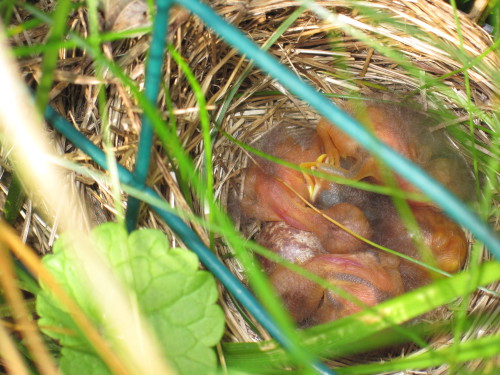

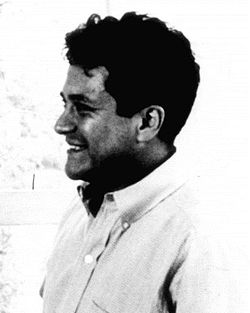
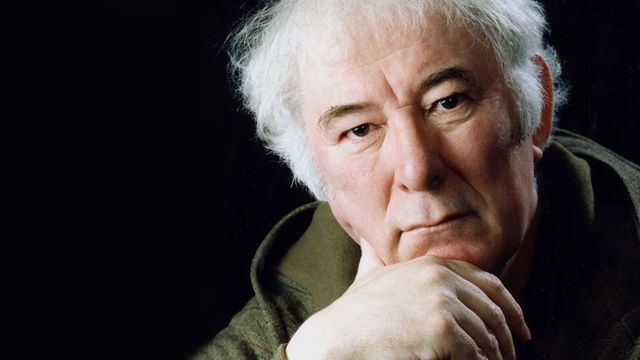
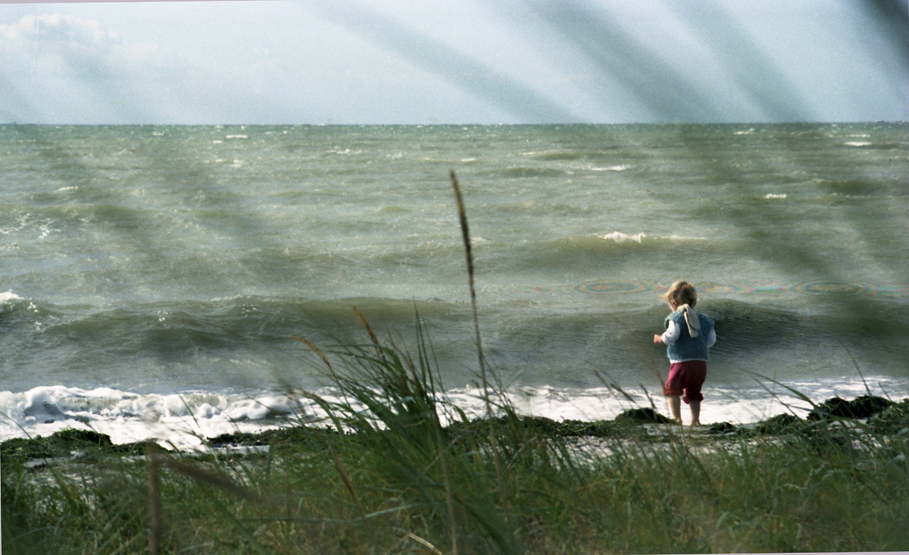
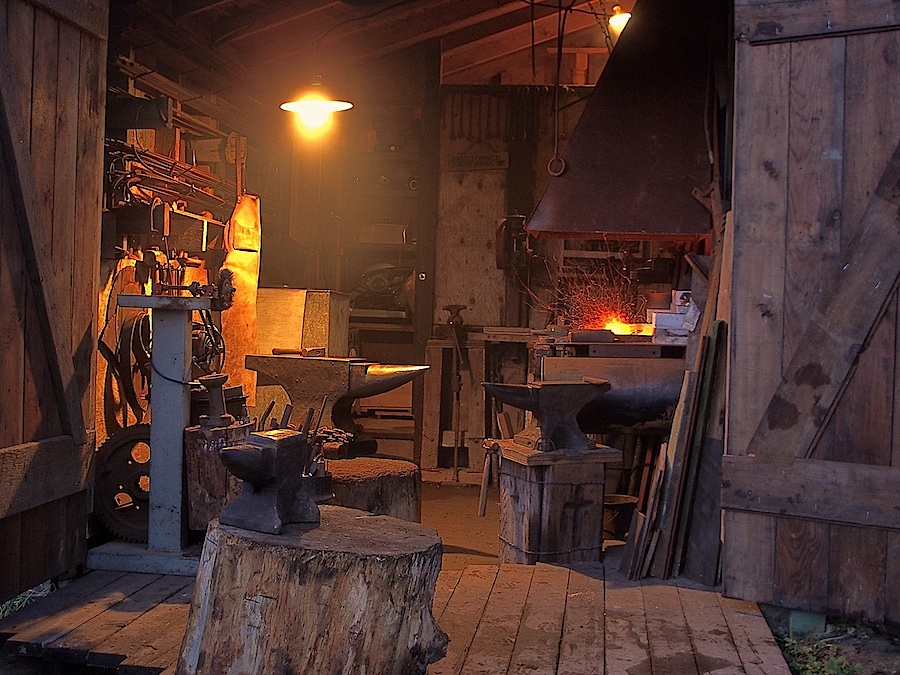

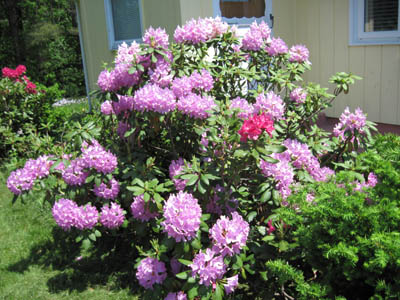
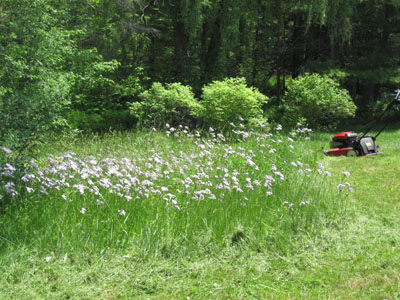

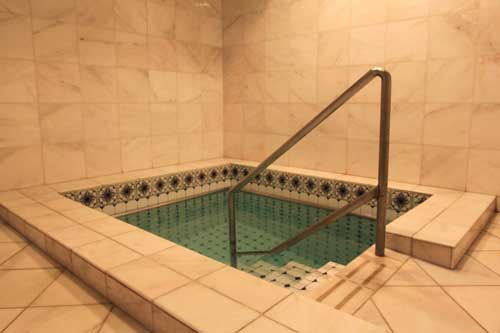





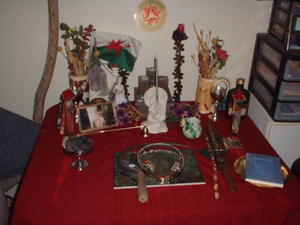


 A Druid Way


