Devotees of Brighid, fans, and the simply “Brighid-curious” may enjoy John Beckett’s post “Solas Bhride: A Goddess Speaks Softly in Many Forms”, a reflection on his recent pilgrimage to Ireland.
/|\ /|\ /|\
In 2015, I posted the still-popular “Beltane and Touching the Sacred.” In it I said (updated for the current next Full Moon at the end of April 2018):
Here we are, about two weeks out from Beltane/May Day — or Samhuinn if you live Down Under in the Southern Hemisphere. And with a Full Moon on April 29 (0058 GMT April 30) there’s a excellent gathering of “earth events” to work with, if you choose. Thanks to the annual Edinburgh Fire Festival, we once again have Beltane-ish images of the fire energy of this ancient Festival marking the start of Summer.
You may find like I do that Festival energies of the “Great Eight”* kick in at about this range — half a month or so in advance. A nudge, a hint, a restlessness that eases, a tickle that subsides, or shifts toward knowing, with a glance at the calendar. Ah! Here we are again!
I’m off again in a few weeks for the 2nd Mid-Atlantic Gathering — MAGUS 2018, with the theme “Sacred Time, Sacred Space”. Looking for a fore-/after-taste? Here’s last year’s post.
/|\ /|\ /|\
Effective people, says Philip Carr-Gomm in his little book Lessons in Magic, “use both their cauldrons and their wands”.
Often a short quote like that is enough to launch me, set me off on reflection and contemplation and experimentation. (Echoing the near-endless spate of how-to books and guides to personal transformation, the idea of being “more effective” underlies the Protestant work ethic, its distortions in the American disdain for the poor as deserving their struggle, and much besides of bad and good.)
Put “effective” into the most crass terms: how to get what you want.
We often assume creativity — inspiration — comes first, and any manifestation second. But just as with so many things, it can be illuminating to examine assumptions as much for what they leave out as in. What can we learn, I ask, from both its truths and falsehoods?
The most famous creation story portrays both a creator and an “earth without form and void, and darkness … on the face of the deep”. Some translations suggest we can reasonably render the first few lines like this: “When God was creating the heavens and the earth, the earth was formless and empty, and darkness hovered over the waters”. In other words, creativity needs material to work on. And the material in this version of the story is already present. Creation in such a case is a forming and shaping of cosmic substance already in existence.
You could say the cauldron is the scene — the stage for creation, the setting. Without it, no workshop, no lab, no tubes of paint and brushes and palettes. No place for anything to “take place” — an idiom itself full of significance and teaching. Everything hovering, like the spirit of the god over the waters in the Genesis account, but no entry-point into manifestation. Waiting in creative tension, but with no results. Brooding on the nest, but no eggs to sit and warm and hatch.
And here’s the wand — or a compass in this case. Some kind of magical tool or instrument helps focus our creative energy.
French — ca. 1250
But Carr-Gomm rightly lists the cauldron first. Cauldron — Grail — womb of Mary in the Christian story — these precede creation. And they’re not passive, either, Mary is invited — not compelled — to nurture and carry the divine child. Her assent isn’t automatic, or pro-forma. Blessing our materials — inviting their participation — helps our creative process. Indeed, some kind of blessing is the key that makes creativity possible. We just often do it unconsciously. Ritual can help prod us to greater awareness. (As with all careless acts, ritual done badly can send us deeper asleep.)
For the Grail in the Arthurian mythos truly “has a mind of its own”. Though it may seem to be “just an object” — the goal of male knightly questing — it’s the Grail that chooses who ultimately satisfies its steep requirements, who may catch a glimpse, and when it will materialize and manifest.
The Wikipedia entry for “Holy Grail” notes that Chrétien de Troyes, the first to put the story in its Medieval form in the 1100s with Perceval as questing knight,
… refers to this object not as “The Grail” but as “a grail” (un graal), showing the word was used, in its earliest literary context, as a common noun. For Chrétien a grail was a wide, somewhat deep dish or bowl, interesting because it contained not a pike, salmon, or lamprey, as the audience may have expected for such a container, but a single Mass wafer which provided sustenance for the Fisher King’s crippled father. Perceval, who had been warned against talking too much, remains silent through all of this and wakes up the next morning alone. He later learns that if he had asked the appropriate questions about what he saw, he would have healed his maimed host, much to his honour.
So much of value here to note: the importance of a middle way between extremes, applicable to easily perceived tools in hand as well as more subtle tools like language. Don’t talk too much, but don’t shut up entirely..
With the slipperiness inherent in non-physical things and experiences, and the names we give to them, the san graal or “holy grail” becomes in Medieval French also the sang real “royal blood”, launching one of the oldest conspiracy theories still popular today concerning the possible existence of surviving lineal descendants of Jesus and Mary Magdalene. Add to this the World War II legends of a struggle between Hitler and “the forces of Light” for possession of the historical Grail and its immense powers, and you set the stage for the flowering of a new generation of Grail myths and legends. Archetypes continually regenerate; indeed, the Grail is among many other things an illustration of just such archetypal power.
And as we know from our own experiences with creativity, there are indeed many grails each time we manifest something — even if you prefer that they’re all subsidiary to a single magical One and Holy Grail. (Which in a certain sense they are.) Another question to ask, practice to experiment with: “What is the grail in this situation?”
Now this is all well and good, you say. Good fun, diverting, the stuff of fat best-sellers and million-dollar movie scripts and much silliness in pop culture and media. What of the wand? And what does any of this have to do with me?
Fear not. The wand gets at least its fair share of star billing before the end.
To take a turn through pop culture, why does Harry Potter take Hagrid’s advice and seek out Ollivander’s, apart from Hagrid’s plug that “there ain’t no place better”? Harry needs a wand. He survived the attack on him as an infant, with the scar as mute but vivid testimony of its potency.
But for any serious and conscious creative-magical work (all creativity is inherently magical), he’ll need a wand. It’s simply a matter of time before we ourselves come to the same conclusion.
“I wondered when I’d be seeing you, Mr. Potter!” says Ollivander.
And as with active Grail, the wand, we learn from Ollivander’s, and elsewhere, “chooses the wizard”. [Note how tall the interior of the shop is in the video clip — the airiness and “head-space” appropriate to a wand. And it’s at Ollivander’s words “I wonder” as he goes for the third wand that we hear again the hallmark and mysterious musical theme.]
And of course, with the tradition of clusters of three long associated with things magical, the third wand’s the charm.
Franz Bardon, no slouch when it comes to personal experience, magic and occult instruction, observes in his fine text Initiation into Hermetics that
Everything that can be found in the universe on a large scale is reflected in a human being on a small scale” (pg. 31) and “A true initiate will never force anyone who has not reached a certain level of maturity to accept his truth” (pg. 55).
Again, as with so many things, truth is better treated as experimental — to be tested through our own direct experience, rather than either swallowed credulously, or rejected out of hand — both falling short of the magical quality inherent in threes. Either-or too often simply misses the point we seek.
A wand extends and sharpens the creative ability — the inspiration and clarity of East, the dawn, air, what a bird sees when it flies, the overview, the big picture, the influx of Light from the sun. Its time is spring — the perfect tool in the hand of a gardener, whose version may take the form of trowel or spade.
Consult the recent and masterly exposition Wandlore and you’ll discover a major key:
The most basic hidden secret of magic is that the wizard must go within … inside the mind, and there, encountering Hermes, lord of communication, be led into the otherworlds.
As Carr-Gomm notes in The Druid Tradition, talking of Iolo Morgannwg, the brilliant creative mind behind much of the Druid Revival, but with important teaching more widely applicable and relevant to today’s headlines,
… when it comes to working with the esoteric, we are to large extent under the influence of Mercury, or Lugh, the god of communication between human and divine worlds … But Mercury is also the god of thieves and of deception — of stage magic, and the manipulation of illusion as well as of high magic — the manipulation of consciousness and the causal world. Those who have not clarified their relationship with Mercury fall prey to both aspects of his influence, and it is then hard for the academic [or anyone! — ADW] to understand how the same person can combine genuine material with the fraudulent, how they can channel both divinely inspired insights into Druidry and complete nonsense, how they can be upright and honest and engage in deception or delusion (pg. 27).
And rather than belabor the benefits of walking a spiritual path, and also to cover a truly immenseamount of ground, the end result, recorded in T. S. Eliot’s grand poem The Four Quartets, in the last line of the final section “Little Gidding“, is that “the fire [of wand and purified will] and the rose [of the Grail and the perception of spiritual unity] are one”.
/|\ /|\ /|\
Image: Christ with compass: “he set a compass upon the face of the depth” (Proverbs 8:27)
Carr-Gomm, Philip. Lessons in Magic. Lewes, East Sussex: Oak Tree Press, 2016.
Bardon, Franz. Initiation into Hermetics. Merkur Publishing, Inc., 2016.
MacLir, Alferian Gwydion. Wandlore: The Art of Crafting the Ultimate Magical Tool. Woodbury, MN: Llewellyn Books, 2011.
Carr-Gomm, Philip. The Druid Tradition. Rockport, MA: Element Books, Inc. 1991.
For an evocative single-page note of just some of the material behind Eliot’s poem, see here.
As a practitioner of what the following podcast calls “blended spirituality”, I was particularly interested in Tapestry’s recent conversation with Rev. Shawn Beck.
You can find the entire podcast (38′) here, along with some print excerpts of the interview.
As an OBOD Druid and an ordained priest in the Anglican Church in Canada, Beck faces a range of reactions when people learn of his practices.
“Well, that’s sorta neat, but actually you can’t do that” go some of the responses, both Christian and Pagan.
“In fact, I’ve been practicing it for a while, and I can”.
Our human liking for boundaries shows clearly here.
“What I find so interesting is that you’re not dabbling … you’re committed to both traditions”, says interviewer Mary Heinz.
One of the occasions for the interview is the publication of Beck’s book Christian Animism, which promptly goes onto my reading list.
Beck remarks, “I do identify myself as primarily Christian — heavily influenced and really spiritually transformed by Neo-Paganism”.
Asked how these two paths impact his daily practice, he notes that bringing in the feminine divine, and the value of nature as sacred, touches both his daily prayer life and public ritual.
“If I give a blessing, I may say … ‘one God, creator and mother of us all'”, says Beck. For him, the blending of paths augments language and practice, expanding them and their sensibilities.
“What do your superiors in the Anglican Church have to say to you when they weigh in?” queries Heinz.
Besides keeping his bishop apprised of his work and thought (and his blog*), Beck notes, “As a priest, I need to be sensitive to what’s actually going to be helpful to the people that I’m with”. Whether it’s skipping a Starhawk reference with those who might find it frightening, or — in the other direction — “gently giving permission to people to explore that part if it’s helpful …”, Beck uses discrimination and experience to guide his priestly work.
Though he doesn’t currently serve a parish, he is responsible for the training of other Anglican priests — such is the continued confidence his superiors repose in him.
Converted to Christianity in his teens, while also exploring Eastern religions through reading, Beck observes that many of his teen peers at the time belonged to a Fundamentalist church. Even then, he learned and practiced discretion. “And so if I wanted to talk about not just Jesus but also some of these other things that I was reading and exploring, I would always know that the emotional tension in that room or in that relationship would get sky-high”.
“How much of this journey can I share with others?” is therefore one guiding question for him, as for so many of us.
“Alive — magical — responsive”: this is some of the language Beck uses of his Pagan practice that catches the interest of the interviewer.
“For the last five years, I’ve been blessed to live on a lake, on a farm, off the grid”, Beck replies (11:45). “In Saskatchewan … No running water … I run and get the water … It’s a life embedded within nature”.
What does that permit him? “Part of it for me is being attentive to presences within nature”. As a Christian animist, he says, “the world is filled with a myriad of neighbors … So it’s about recognizing that that tree that I’ve been praying beside is alive and conscious and praying with me … It’s not just a vague sense of spirit, but that the universe is comprised of persons, and these persons are my neighbors”.
“Christians when they see a person addressing a non-human person in any way, they assume that it’s worship”, Beck says.
“I ask things of my human neighbors all the time, and they ask things of me all the time. And we don’t call that praying to each other. We just call it talking to each other”.
For a decade his family has been hosting talking circles. Among the directions of these sharing opportunities, people answer the question, “Where have you found Sophia in your life this past moon? Lady Wisdom — where has she been at work in your life?”
These are some of the highlights from the first half of the interview — I hope you find it worth listening to the whole.
/|\ /|\ /|\
*Beck’s most recent blogpost as of this writing is from March 9th: “A ChristoPagan view of magic and prayer”.
One of the formative books of my adolescence is R S de Ropp’s The Master Game. First published in the late 60s, long before some of the shadier margins of the New Age self-help movement earned a few hustlers some big bucks (you can see his “names for their games” in the third paragraph below), de Ropp flattered, cajoled or profited from nobody’s ego as he examined what we spend our lives loving.
If I had to sum up his book, I’d cite this from the first page: “… what people really need and demand from life is not wealth, comfort or esteem, but games worth playing” (pg. 11; italics in original). We witness, to say it tactfully as I can, many dysfunctional life-choices that arise from lack of worthwhile games.
Some of the less commendable games de Ropp names are “Cock on Dunghill” and “Hog in Trough”. We’ve seen plenty of players of both those games over the last few decades. The 2008 global financial crisis resulted directly from “Hog in Trough” players. “Verily”, said a long-ago Galilean Druid, “they have their reward”.
Some play nobler games, like the Householder Game — raising a family. Some opt for the Art Game (beauty). We have the late Stephen Hawking as a premier example of a player of the Science Game (knowledge). Many go in for — and here de Ropp shows a monotheistic bias — the Religion Game (salvation). None of these are completely mutually exclusive, but people sort themselves by the games they play as much as by anything else. As you might expect, though, the game de Ropp favors, and calls the “Master Game” of his title, is awakening.
If WordPress’s stats for this site over the last three days can be trusted, you are residents of Australia, Belgium, Brazil, Canada, Denmark, Finland, Germany, Italy, Japan, Kenya, Netherlands, Philippines, Poland, Russia, Slovakia, Spain, Sri Lanka, Turkey, UK and USA.
So what do you know, how have you learned it, and how do you apply it in your lives today?!
/|\ /|\ /|\
Denise observes (commenting on the previous post), “There is only one rule: treat others as you wish to be treated. When I remember that ‘others’ doesn’t only mean human others, the rest falls into place” [punctuated for clarity–ed.].
The law of love deservedly tops many lists of rules, sometimes in surprising ways. If you’ve raised children, you’ve probably deployed some version of tough love. That can mean letting others learn the hard way, or directly from consequences, if they’ve disregarded repeated warnings, instruction, examples, and loving requests. It can also mean not letting sentiment get in the way of responsibility. We do few favors by enabling bad behavior. But oh, it can be hard to put into practice!
Yesterday I removed a dead mouse we’d caught that had been living in and crapping all over our car for the past year. If you’ve listened and attended to the non-human world that chooses to live in close proximity with humans, you know the remarkable negotiations that can happen — on both sides. Ask spiders to leave a bedroom, and sometimes they will. Contact the moles in the yard and request they leave the garden alone, and sometimes they will.
It works both ways. Clean up the trash the previous owner left in our woods, came the message shortly after we moved in. Leave the undergrowth along your property lines, for habitat. Let the backyard weeds flower and go to seed. Then you can mow — just later in the season.
Sometimes we can reach an accord and live harmoniously. Sometimes one or the other side steps across, and learns the hard way. The non-human world has been asking us to clean up our messes for quite some time. We haven’t bothered, for the most part, and the payback continues to come due with each passing year.
Is this love?
Like you, like us all, I’m a work in progress. Love is a gift of attention and work, energy and time. You might call this the law of reciprocity, or balance, or harmony. Maybe a law guiding us on the way to love.
Other rules for this game of living arise in the world’s wisdom. One that’s bandied about a lot in New Age and Pagan circles, but too often without adequate exploration, is “As above, so below”. From what I’ve seen, it often works the other way, too, in ways I’m still discovering: “as below, so above”, insofar as what I do today has a definite effect on other planes, not just this physical one. Cultivate a negative habit, and it spills over into the quality of relationships, into opportunities missed, into other self-defeating behaviors, into dreams, and so on. The universe builds in multiple directions, not just top-down. It may be a uni-verse, a single turning, a whole in itself, from a certain perspective, but it’s poly-valent, too.
The law of paradox has also taught me a lot. “The opposite of an ordinary truth is a falsehood, but the opposite of a profound truth is, often, another profound truth”. I’ve carried that one around for decades, and it’s proven its value. It seems like a harmonic linking us with another plane, part of “as above, so below”. It teaches me to look more deeply at my own life, to mine it down to the marrow for meaning. And it’s a helpful first rule of thumb for testing a truth in the first place. (Do its opposites generate corollaries?)
Then there’s the law of unity, appropriate for a uni-verse — not any of our superficial, political unities, or a politically-correct drive for equality (limited and partial harmonics as they are), but a demonstrable unity, at work whether or not we believe in it or enforce it with merely human laws. It precedes us; it’s a thread in the pattern, part of the Web. It means, among so many other things, that the human sense of isolation and loneliness, of separation, doesn’t mirror the truth of things, but is rather a deception, a learned and self-reinforcing lie. It also means that whatever we do has consequences. We matter in so many ways to the whole and to each other, beyond our capacities to comprehend. The Hindu mystics put it in theistic terms:
The one Godhead, secret in all beings, the inner Self of all, presiding over all action, witness, conscious knower and absolute … the One … fashions one seed in many ways (Svetasvatara Upanishad).
But we all have sensed it, fragmented it may be, refracted, momentary, transient, flickering past — or sometimes longer, depending occasionally on a chemical or alcoholic lift, yes; or in meditation or ritual, or arriving unlooked for, unawares; or at the birth of a child, the death of a parent, in love, wonder, awe, deep emotion. Given all our many backgrounds, perspectives, filters, worldviews, we understandably give it different names, explain it variously. But it’s a near-universal in human experience.
In 2012, on the centennial of the anonymous 1912 publication of the Kybalion [free pdf/public domain], J. M. Greer published a reworking of the seven spiritual laws it explores in his Mystery Teachings from the Living Earth: An Introduction to Spiritual Ecology. In Greer’s latter version, the seven laws re-emerge as statements of an ecological spirituality. [See here for posts examining each law].
Note that these aren’t things anyone is called to believe: they’re scientific facts, that much-abused word. One of the things that means in practice is that anyone can witness them in action, and draw their own conclusions from them. Turns out what we need to know has been around under our noses for at least as long as we’ve been here.
Other laws or rule for the game? If you took up my suggestion in the previous post to write down your own rules, you have some in hand. Denise did: for her, love tops the list.
Our understanding of life has the greatest impact when it’s put in terms we can grasp — especially when we put it in those terms for ourselves. Mine won’t work completely for you, simply because they’re mine. Yours are for you. We need individual understandings, because we’re individuals.
It’s because of the law of unity that we’re each individual, each one. For this reason we can also (learn to) value another’s freedom, even as they acknowledge ours. So the law of freedom also ranks high on my list. Grant others the freedom to be who they are, in accord with their granting me my own. This one much of the planet is still learning, to judge by daily headlines and our widespread experience of life in this world. “Your freedom ends where mine begins”, goes one popular formulation, and vice versa.
Tomorrow, to round out this discussion, I’ll post “Eleven Strands of Educational and Life Philosophy”, which I composed as part of my application with a teacher’s placement agency some two years ago.
Love, unity, reciprocity, paradox, and freedom — some of my rules. And my game? Druidry helps to keep waking me up, though I still drowse a lot.
The Tree is a world-wide wisdom-glyph, a potent symbol of connection and energy and life. The Tree features significantly in Druidry, among its many other appearances, with one reasonable explanation of the meaning of the word druid linked to trees, to a derivation from two reconstructed Indo-European roots *deru/*doru/*dru-, with its cluster of related meanings — “tree, oak, rooted, sturdy, true” — and a second root *wid-, “know, see, perceive, wise” [see the American Heritage Dictionary of Indo-European Roots]. This names — and challenges — Druids to be “wise knowers”, “truth-seers”, “tree-sages” and so on.
So the list of “Seven Trees” in this post is a selection from a vast root-stock alive in a metaphorical and literal First Forest, whose roots reach everywhere. Nonetheless, throughout time humans have found such selections to be useful, because their specificity nourishes inner seeds of creativity and encourages them to germinate. We lift a bucket from the wisdom-well and drink from it, marveling as it answers a deep thirst in us. A sapling puts forth leaves in the human psyche, so that new cultures, discoveries and insights can emerge. Choose your tree(s).
1) The Tree of Dreaming
Dreams often link us in unexpected ways to much that we push out of waking consciousness. Desires, fears, hopes, inner truths we deny or secretly suspect, creativity, inspiration, wisdom and insight and encounters with non-physical beings, enemies and friends, guides, companions, challengers and initiators and teachers. Each night we climb a branch, and we may retain something or nothing on waking. The leaves of the Tree brush against us, we drink from its sap, its branches lead to new possibilities, and we stir and wake and dream again.
I drink each morning from the forest pool, imbibing the wisdom of my dreams. What offering do I make in return? Gifts of self, gifts from my worlds.
As a meditation practice, I can commend this for recall and for wonder. The trees are mirrored in the pool, and their leaves blanket the forest floor beneath my feet. I sit on a tree trunk, and eat from the fruits and nuts around me. Before I return, I give thanks. A favorite tree nearby helps this manifest and concretize in my life.
2) The Tree of Kindred
The image here is obvious: the family tree. Linked as we ultimately are to everyone else on the planet, descended from common ancestors, we are this season’s leaves on the Tree, budding, greening, fading, falling and re-emerging on branches immemorially old. But because it is difficult to do more than express a general love for all things, we can begin more fruitfully if we love this leaf and that twig, slowly expanding our circle as we live and encounter new beings and extend our connections. The individual is a powerful key. Which ancestors have particular resonance and teachings for you in this life?
3) The Tree of Transformation
Humans transform trees into useful objects of wood, wood is a workable substance, and we respond to the beauty of the grain and warmth of wood in our homes and other structures. A tree is a living thing, growing throughout its life, which in some species can be very long indeed. All trees have their seasons, of fruit and flower, youth and maturity. Many species connect with other nearby individuals, and botanists are beginning to discover the central importance of tree species and individuals in the ecology of forests and woodlands. Trees are human cradles and coffins, doorways and walls, and have come naturally to represent all the experiences and choices that face a person in life. Christ was a carpenter, and died on a wooden cross, or in the language of some Christians, “God died on a Tree” — the most incorporeal linked to one of the most physical of living beings. Trees are doorways to other worlds, thresholds (also made of wood) to change and growth. In the distinction between transient leaf and lasting tree we have an image of what immortality might mean, the leaf of one personality among thousands, and the deeper link to the World Tree.
Yggdrasil, one example of the World-Tree
4) The Tree of the Worlds
In many cultures, trees link worlds, three or five, seven or nine. (In Norse mythology the World-Tree Yggdrasil links the Nine Worlds of Niflheim, Muspelheim, Asgard, Midgard, Jotunheim, Vanaheim, Alfheim, Svartalfheim, and Helheim.) We live on Middle-Earth, between upper and lower — or many other — worlds.
Many other regions and cultures also express images of a World-Tree, including Siberia, China, many African tribes, the Aboriginal Americas, and so on. The Tree holds the worlds together, and also keeps them distinct, and as a perceptual image makes travel between them possible. As below, so above: once you know where you are, it becomes a lot easier to go somewhere else. Abandon cultural markers, and I forsake a ready cultural visa — ignoring the admonition of the popular credit card advertisement, I “leave home without it” and not surprisingly, I may run into all kinds of trouble at the borders.
5) The Tree of Wisdom
In the Garden of Eden, the serpent tempts Eve with fruit from the Tree of the Knowledge of Good and Evil. Unlike mere knowledge, wisdom transcends polarities, and is rarer and all the more valuable for that reason. We cannot stay ignorant, but we do pay a price on the road to wisdom, often through pain and suffering, individually and culturally. Because unlike so much knowledge (nowadays increasingly accessible to anyone with an internet connection), wisdom must be earned. In the Biblical story, the two trees of Knowledge and Life grow in the center of the Garden, twinned expressions or manifestations of inner realities.
6) The Tree of Life
The “brain-stuff” of the cerebellum is called arbor vitae, the “tree of life”, in anatomical terminology, because of its branching structure. Several tree species popular with landscapers share the name arbor vitae — they’re ever-greens, always green, and so appropriately named. The medieval arbor vitae, tree of life, was deployed in Christian theology, linking human and divine worlds, the World or Cosmic Tree with the tree(s) of Eden and the tree of the Cross. In the teachings of the Qabbalah, adopted by Western magical traditions, the Tree of Life is a map of creation.
As one of my students once remarked, “Eve’s mistake wasn’t one of eating but one of sequence, paying attention to the right order of things. Eat from the Tree of Life first, and then eat from the Tree of Knowledge”.
7) The Tree of Silence
As I mentioned above, there are many trees we could include in any list like this, the tree being such a powerful collection of understandings, physical beings, symbols, images, experiences, and cultural and spiritual markers and maps. Those on quests often find themselves needing silence, retreat, withdrawal, fasting from superficial human interaction in search of deeper, more meaningful connection.
Both religious and secular literature abounds with stories and images of the sage, wise woman or man, spending a period of time, or an entire life, in a wilderness, desert, or forest. And the young initiate, seeker of wisdom, or adventurer, often must traverse the wilderness, venture into the forest, only to discover she or he is never truly “out of the woods”. The lessons, growth and discovery always continue. But then the rest we seek, the repose and restoration, are so often found in silence. Over and around and in these silences rises a tree, in whose shade we rest, listening to its wisdom. In the rustling of its branches, which only helps the silence deepen, birds and bug and beasts peep out from time to time, kindred on our way.
/|\ /|\ /|\
Gratitude to you, my readers, for the 401 of you who follow this blog. Numbers both don’t matter at all and also matter deeply. Some of you visit briefly, and some stay longer. Knowing you’re reading and thinking about these things helps me keep writing. A blessing on you and your houses, you and your dear ones, you and your own walks each day and always.
What? Well, we’ve heard a great deal, at least in the U.S., about trigger warnings— flags to alert you to media content that might possibly cause you distress.
(These days I find myself asking what doesn’tcause distress to somebody, somewhere.)
So why not look for trigger blessings instead?
You know — signs, clues, hints, flags that something out there (or in here) might possibly bring you joy, strength, inspiration, the will to carry on.
Do such things even exist?
They do. And often we mediate them to each other. Hello. I am your trigger blessing for today. Grandchild singing tunelessly, pet warm in your lap, neighbor waving on the way to work, kind stranger who lets you into line — many of our blessings come through persons. And we can be a blessing to others.
Not a bad goal, and prayer, for one day a week, to start: let me be a blessing to others. Then, having asked, watching for the moments I can make it happen.
Not for my sake (though serving brings its own rewards) but because it’s so clear others very much need blessing. Just as much, it turns out, as I do.
/|\ /|\ /|\
Since working with the Enchantments of Brighid, you could say I haven’t had anything remarkable to show for it. Led a workshop discussion on Past Lives, Dreams and Soul Travel. Caught a miserable sinus infection, along with my wife, after a weekend trip to celebrate her dad’s 85th birthday. (The old guy’s in better shape, in some ways, than I am.) Had a few dreams I’ll get to in a moment. Enjoyed the growing light that February brings to the northeast U.S., whatever the weather. Felt a stirring of creativity easily attributable to chance, or cycles of change. Nothing especially unusual here. Move along.
Except …
Enchantment often works best under cover. No one’s contacted Industrial Light and Magic, or WETA, or the local CGI crew, to mock up a trailer for the work of Brighid. The goddess, or our own life patterns if you prefer, can pull it off without the splashy special effects.
Though they’re present, if I look behind the glamours and bad mojo of our deeds, our headlines and our endlessly squawking media to all the other things, better ones, that are happening all the time.
My wife and I are making plans for a family and friends gathering to celebrate our 30th anniversary. An online Old English group I founded just held its first Skype meeting to practice the language, with 8 of us chatting awkwardly, with a good deal of laughter, for 40 minutes. Ideas are percolating, following on the Druid-and-Christian themes I’ve explored here in numerous posts, for a session at the 2nd Mid-Atlantic Gathering this coming May — a breakout discussion group I suggested will talk about the many intersections of the Druid and Christian experience.
Our finances, always interesting, continue to be interesting, but just in new ways. It turns out we won’t starve after all. (Or if we do, I’ll document it here.)
And the dreams …
In the first, from 31 January, I face Thecu, many-armed and -faced, pointing toward the east and to either the 4th or 3rd of her 9 runes of storm. Near her, a patch of intense darkness. My spiritual Guide and Teacher from my other path appears, says it’s always a choice: leave it alone or walk through. Bless the darkness — no reason to fear it. New fears, old fears: the old are a marker; the new, often, no more than distractions, unless I let them teach me something.
The second, from 4 February: I am warning others of an approaching tornado, but no one can hear me.
In the third, which my dream journal records for 9 February, I’m with a group of students from my former boarding school, though in the way of dreams I don’t recognize anyone. We’re talking about diversity, when one student shouts “Be careful!” Then I’m flying over trees, leading with my left toe. I arrive at an abandoned house somehow connected with my parents. I shout, “You never shared your pain with me!” and wake, at ease, reflective.
While going through old documents and photographs, I come on an image of my dad’s grandfather Albert whom I’ve never seen before, age and sepia blending, formal pose and 114 years all combining to distance him and bring him near. Yes, Ancestors, I’m still here, still listening.
Turns out more than enough is happening to keep any respectable Druid very well occupied.
Keep refreshing “home” and your browser gives you different results, your Facebook feed changes, etc., my wife said the other day.
If I’m paying attention, an inner bell goes off for me at such moments, an aha! of illumination. Spiritual practice is my way of refreshing home, of choosing — or asking for — something else than what the apparent or obvious may be telling or showing me. Some animals and insects excel in mimicry as a defense, or to lure prey. So too the human world, with its heartfelt truths and its cons, its bullshit and its profound beauties, its “characters” and “originals” and its gold standard friends.
Refreshing home is a kind of alertness that many animals retain, honed senses not dulled by noise from talking self. Don’t get me wrong — human speech is indeed a gift. But like many powerful gifts, it’s double-edged. It’s true, peace to Walt Whitman, that animals “do not make me sick discussing their duty to God … Not one kneels to another, nor to his kind that lived thousands of years ago”*
So when I write, as in the previous post, about things like devotion to Brighid, and you’re feeling particularly agnostic about, maybe, absolutely everything, consider J M Greer’s observations about egregor(e)s, the energy of group consciousness that forms around any regular gathering and gives it a distinct character, and especially around magical groups that work intentionally with charging and exploring its potentials. Is Brighid an egregor? Does your local parent-teacher association or book club or university class differ from other groups in any way? Of course. But is Brighid “merely” an egregor?
Richard Dawkins and Sam Harris and other atheists miss a very large point here. I won’t spell it out — you already know it, or else you’re not interested in knowing it.
Greer says, writing about magical lodges:
… egregors capable of carrying the highest levels of power can only be built up on the basis of the living patterns of the realm of meaning, outside space and time. These patterns are what some religions call gods, and what others call aspects of God. They have a reality and a power that have nothing to do with the egregors built up around them, but they use the egregors the way people use clothing or the way actors in many traditional societies use masks. Skillful, intelligent, ethical, and dedicated work with these egregors, according to tradition, can bring lodge members into a state of participation with the primal living powers of existence itself — a state that is the goal of most religions, and as well as the highest summit of the art of magic (Greer, Inside a Magical Lodge, Llywellyn Books, 1998, pgs. 109-110).
It’s the part of those willing to work with and within a tradition not to stop at the level of belief in it, but to test and explore its possibilities. We’re worlds away from credal faith here. But you may, if you’re around a devotee of Brighid, especially this time of year, overhear or encounter a song or poem or prayer of dedication, service, and love.
But what about the moments when something outside of us, without our conscious intention or instigation (or with it), announces itself to us?
You know — those times when no circle or congregation, no rite or prayer has claimed us in our striving, and something reaches out to us of itself.
Dream, presence, deva, spirit, ghost, exaltation, angel, mystery, expansiveness, ecstasy, cosmic consciousness, god/God — a hundred names for what well may be a hundred different things. But each or all of them qualitatively different from you and me. The shiver, the awe, the freaking out, the reverence, the fear, the adoration, the Other. Or so virtually every description of these encounters suggests. And yet we’re intimately linked to them somehow, or we could never experience them in the first place.
What to do with this mass (and mess) of human experience? Religions often attempt to categorize, naming some portion as legitimate or amicable or “good”, and others as impostures, as frauds, as inimical or “bad”, and setting forth ways to grapple with it, to formalize human interactions with it.
On the other hand, with almost no consistent measure except the subjective available to it, science has for a long time typically dismissed the whole category as incoherent, though psychology and recent advances in neuroscience have begun to rehabilitate the subjective as a domain for serious study and insight. Or to put it another way, “The visible clings to the invisible”, say the Wise. WTF? says science.
So we devise rituals as one way to tame and investigate the subjective. Whether we go to wild places on a vacation or a quest to find ourselves, whether we spend too much to attend weekends and workshops on soul retrieval or finding our inner warrior, whether we rise and kneel in the pews, stand in Pagan circles, or renew our prescription to the current drug of choice, we try out options to scratch the itch of the Holy. Sometimes it’s merely a single mosquito bite. Sometimes it’s a whole-body rash.
Looked at one way, then, by pursuing a Druid-Christian approach we’re doubling our odds of successful encounter and engagement. Looked at another way, we’re muddying the waters, profaning the well, treading the old syncretistic path that usually ends not in transformative encounter but at best in a bland, safe vanilla spirituality void of those tradition-specific commitments that give each tradition its spiritual punch.
How to experience both living god/God and living earth? We wouldn’t have endlessly fracturing Christian denominations if “Jesus people” had a lock on things. Nor would we continually feel the need to hive off and fracture and splinter and regroup in virtually every other way as Druid and Pagan practitioners, either. Rather than seeing these things as weaknesses, we could celebrate them, always asking for integrity in ourselves first and foremost: what do we seek? What purpose does it serve? Who benefits?
Funny how the same questions never lose their applicability. Avoid personal integrity, and we squander our time demonizing opponents rather than incarnating the Holy in our words and deeds. Both difficult to access and continually present, the Holy is a paradox singularly appropriate for humans, who rarely make things easy for themselves.
Whether it’s solstice dawn or empty tomb, death or birth or other experience of transcendence, we seek communion, drink from a common cup, listen to and watch each other’s words and faces for signs of that contact, that connection. And when a strange-familiar wordless joy overtakes us, we try to put it into words for each other, as I do here, to pass it on.
Front entrance — my office, where I write this blog. Winter ’16.
May the Holy light your roof and bathe you in itself.
May the season offer you its generous portion
and open the door for gratitude.
May you turn to joy rather than despair
to nourish and sustain you in your trials and triumphs.
The blessings of your life to you,
rooted in each day’s grace and gift.
“You can’t just draw a circle, step inside, and say it’s sacred. You just can’t!” said an acquaintance this last weekend.
In fact, you can.
“I can call spirits from the vasty deep”, says Glendower in Henry IV, Part 1 (Act III, sc. i).
“Why, so can I, or so can any man. But will they come when you do call for them?” responds Hotspur.
It’s a valid question.
We say “it’s sacred” the same way we say we love. It’s wishful thinking, or it’s meant to seduce, or it spills over from a heart already overflowing. Or a hundred other things. And we can usually tell the difference, being the fine-tuned crap detectors that millennia of gossip sessions rubbing shoulders with the neighbors have made us. If not, give it time. And as Zora Neale Hurston quipped (about love), “Everybody can do enough to satisfy themselves, though it may not impress the neighbors as being very much” (Dust Tracks on a Road, pg. 203). The same holds true for ritual.
Access to the sacred is the big-ticket item, and if you’re at all insecure about your own access, you’re more likely to try tearing down the competition.
But rather than argue from a position of dogma, if I really want to know rather than simply score cheap points, I need to join the circle numerous times, attend mass the same number of times and then — maybe — I might be able to compare notes. Adjust as needed to fit the two practices I’m intent on assessing. And most important of all, deserving of seeming to be tacked on at the end here, because I’m saving the best for last: I need to bring equivalent reverent attention and curiosity to each rite. Otherwise, why bother?
/|\ /|\ /|\
So we begin our rite together, Druid and Christian, Christian and Druid:
Now ask the beasts, and let them teach you,
and the birds of the heavens, and let them tell you.
Speak to the earth, and let it teach you,
and let the fish of the sea declare to you. [Job 12:7-8]
We call to the great bear in the starry heavens, power of the north …
We call to the hawk of dawn soaring in the clear pure air, power of the East …
We call to the great stag in the heat of the chase, power of the south…
We call to the salmon dwelling in the sacred pool, power of the west …
[OBOD ritual, adapted]
/|\ /|\ /|\
More than anyone else in recent decades, Isaac Bonewits looked at ways to improve liturgy. Yes, we can connect with spirit, with the holy, in any number of ways, and on our own. But when we do so publicly, communally, we usually do it in ritual. How can our rituals be good? And then, how can they be better?
Pacing is something that anyone familiar with the theater will tell you is absolutely crucial to the success of a performance … The only way to learn pacing is to experiment a lot with modular design and to rehearse the people in your group to find their skills and limits. A five-minute guided meditation may be too long for some groups, too short for others. Taking thirty seconds to bless each person in turn is fine if you only have a small group, but can be a disaster with a large one. A chant that naturally builds to a peak in three minutes should not be dragged out for ten. Many problems with pacing are solvable by artistic means, especially musical …
We may think one rite’s sacred and another isn’t, in other words, when what’s really going on is the holiness is leaking out of a rite through inattention to theater. It was, after all, a burning bush and not a burning blade of grass that God used to catch Moses’ attention.
For private rites, I ponder Jesus’s counsel:
When you pray, don’t be like the hypocrites. For they love to pray standing … on the street corners, so people can see them. Truly I tell you, they already have their reward. But when you pray, go into your inner room, shut your door, and pray …
Private circle, inner room: we set apart sacred space in order to perform a (second) sacred act, just as much as we perform a sacred act in order to set apart sacred space.
In a 2013 post I wrote that when I remember the ancestors,
I make my very own Samhain-on-the-spot, the veil between the worlds thins, and I converse with the dead, with the Otherworld, with the generations stored in my DNA and blood and bone. Perhaps you could call it racism in the best sense of the word — a celebration of all who have gone before me and who, by living, have delivered me to this moment of my own life, as I write these words. It doesn’t last, but it also endures forever.
Samhuinn is remembering and honoring connection. One reason it looms so large in Pagan practice is simply that the essence of ritual is connection, and successful ritual means good relationships. On social media like Facebook, we think that we decide if we’re “in a relationship” or not. Westerners in particular like to imagine we’re free, among many other things free to choose. But many of our relationships that matter most aren’t matters of choice. Our existence itself, as a part of this universe of beings, is the first and greatest example. So the biggest “relationship” question often isn’t whether but how: how will I maintain good relationships — with myself, with other beings, with the planet?
In language many Pagans would find congenial, Catholic priest and eco-theologian Thomas Berry writes* (in The Great Work):
…we will recover our sense of wonder and our sense of the sacred only if we appreciate the universe beyond ourselves as a revelatory experience of that numinous presence whence all things came into being. Indeed, the universe is the primary sacred reality. We become sacred by our participation in this more sublime dimension of the world about us.
“Religious naturalist” Loyal Rue makes an immense and related claim,** deserving (as I try to approach such things) neither acceptance or rejection at first, but simple meditation and reflection:
The most profound insight in the history of humankind is that we should seek to live in accord with reality. Indeed, living in harmony with reality may be accepted as a formal definition of wisdom. If we live at odds with reality (foolishly), we will be doomed, but if we live in proper relationship with reality (wisely), we shall be saved. Humans everywhere, and at all times, have had at least a tacit understanding of this fundamental principle.
And we see a movement among some Christians towards a center that Druids and other Pagans also strive towards. Michael Dowd, former fundamentalist and author of Thank God for Evolution!, writes:
I am an unabashed evidential mystic—a sacred realist, a Christian naturalist. Reality is my God and evidence is my scripture. Big History is my creation story and ecology is my theology. Integrity is my salvation and doing whatever I can to foster a just and healthy future for the full community of life is my mission.
In Arthurian tradition, the Lady of the Lake gives Arthur his sword, affirming his right to kingship, and she receives it back again when, mortally injured after the battle of Camlann, he is borne away to Avalon to be healed.
We can see the Lady as a exemplar of Sovereignty, right relationship to the cosmos. As a representative of the inward reality that lies behind our outward world, she initiates and instructs the king — metaphorically, the archetypal “royal line” in all of us. Demonstrating again and again through her actions that leader and land are one, she shows that psychic wholeness and healing can never be isolated or merely individual. We are communal beings. Hermits and recluses often report dreams filled with people, a compensation for their outward communal “drought”. The famous Grail question points to this same reality: “Who(m) does the Grail serve?” Not just the one who finds it or achieves it! The cheap and shallow English labels “winner” and “loser” simply do not apply.
If we connect with our ancestors in the largest sense of the word, with our physical forebears and also with anyone who has helped us to reach who we presently are and may become, we may begin to see that even in spite of what may be our best efforts to live only for ourselves, we still end up contributing to the entire cosmos. Whether that contribution makes us worthy ancestors to those who will come after us is another matter, and our individual and communal charge.
/|\ /|\ /|\
Interlude — a different preview of Edinburgh’s annual and marvelous Beltane Fire Society Samhuinn celebration. Samhuinn can provide us with a mirror to see ourselves as ancestors (don’t we all “see through a glass darkly”?).
Right relationship — the first ritual goal I will strive to keep in mind as I finish drafting my personal Samhain rite.
This evening my wife and I will gather with another couple a few miles away. We’ve shared several of the “Great Eight” festivals before, sometimes with a formal ritual, at others with that most ancient ritual of all, friendship, food and fire. One partner of the couple often faces a difficult time at Samhain, due to her psychic awareness and to past bad experiences with the day. So for us sometimes the kindest ritual is not to celebrate Samhuinn in any formal sense at all, but simply to be present and grounded ourselves, and to help be grounding for her.
A fire can help burn away negative energy, and making a practice of imaginally gathering and tossing into the fire any negative energy, to be consumed and returned to its elements for the cosmos to rebuild into healthy and balanced forms, is appropriate work. Doing it physically and unobtrusively can also be part of maintaining the fire.
A blessed Samhuinn to you all.
/|\ /|\ /|\
*Berry, Thomas. “The Wild and the Sacred,” in The Great Work. New York: Harmony/Bell Tower, 1999, pg. 49.
**Rue, Loyal. Religion Is Not About God. Piscataway, NJ: Rutgers University Press, 2005, pg. 135.
In the previous post I wrote: “In sacrament rather than creed lies one potent meeting-place for Druid and Christian”. It’s this junction that I’ll continue to explore here.
What’s a sacrament? A means of perceiving the sacred. Though every culture has them, in the West our access points to the holy can feel few and far between, even more precious because of their rarity. Of course we’ve trimmed and peeled many of them away ourselves — some too soon, others well after their expiration dates.
Fire worship among the Yi people in Kunming, China. Xinhua News.
Nonetheless, as a doorway, sacrament itself isn’t holy, except by association. It acquires a secondary patina of holiness that makes up part of the uplift we can experience when we turn its way, if it’s still working. For it can indeed be profaned, though the underlying sacred reality it points to is immune to human tampering. That reality wouldn’t be worth much, after all, if we could trample it in the mud. (And we do our share of trampling. One of the more startling instances comes from Quebecois French, which intentionally repurposes Catholic vocabulary for profanity — including the word sacrament itself.)
Hence, when “the barbarians are at the gates”, they (we) can destroy things of beauty, reverence and spiritual power, but the reality that gave them birth remains untouched. It will burst forth again in new forms and guises to open the eyes and the hearts of people yet unborn.
Will it? We certainly say and believe such things. Are they merely a kind of whistling in the dark?
One test lies in sacraments themselves. Many of them may receive scant acknowledgement in a given culture. Yet who among us who has deeply loved another person doubts that there is a sacrament made manifest? We can and do sentimentalize it, in part to avoid its sacramental power.
Other examples abound, instances that many cultures hedge about with rituals of word and action. A meal shared with others, a birth, a death, a “first” in a young life: first love, first kill, first sexual experience, first assumption of other adult roles and responsibilities. The fact that in so-called secular cultures we still institutionalize and legalize such things as drinking alcohol, driving cars, voting, joining the military, merely confirms a spiritual fact — awkwardly, perhaps, and blindly groping for its deeper truth, no doubt. That we confer grades of status by age attests to our discomfort with other criteria — ones that require wisdom, vision, insight. It’s easier to grant status mechanically, by the calendar, than to search a heart.
A sacrament, then, because it’s “an outward and visible sign of an inward and invisible grace” as the 5th century St. Augustine perceived, acknowledges something that already exists. We don’t create it, though we allow it to take shape and form, to have an impact, because we make room for it in our lives. (There seems to be a Minimum Sacramental Quotient, an MSQ, in every life: we’re all born, eat, and die, even if we shy away from, and struggle to avoid, every other divine intrusion on our human busy-ness.) We can midwife the sacred, and catalyze and welcome it, then, or resist it, but only up to a point. Grace is gratia, gift — and ample reason for gratitude.
When Druids initiate a new Bard, something happens that allows a sacrament that outward manifestation. When a Christian experiences the presence of God in prayer or Communion, the connection with the sacred moves from inner potential to outer expression. We can sense it, often, with our physical bodies. Or in the words of one of the repeating songs from Beauty and the Beast, “There’s something there that wasn’t there before”. Lacking other means of access, many people experience sacraments, or at least a sacramental flavor, in the “profane” world of Hollywood and the entertainment “industry”. So let’s be more profane, not less: pro-fane, standing near a fane or shrine, rubbing shoulders with gods and spirits outside, if not in the fane, or making a fane of our bodies and lives.
/|\ /|\ /|\
One common friction-point in midwifing a sacrament is means. “What’s your fane?” Deny another’s access-points to the sacred by discrediting their sacraments, and you attempt to own and control and box in what is not, in the end, wholly subject to human will. Extra ecclesiam nulla salus, “No salvation outside the Church”, just doesn’t work for many people any more. (Not to mention that sometimes what you’re looking for isn’t salvation but something else entirely.)
There’s a Pagan movement towards what has been critiqued as “inflation”, and a Christian one that has been likewise critiqued as “deflation”, of the human self. Pagans appear to deify, and Christians to abase, the self, Both meta-techniques strive to open the doors to the sacred by removing obstacles to sacraments. And making a proper container for what is holy can be a deal of work. Latter-day solutions like “spiritual-but-not-religious” attempt to bypass the need for containers altogether, but they offer their own problems, and containers tend to creep back in.
/|\ /|\ /|\
Samhain. Hallowed Evening. Masses, rituals for the Dead-who-live. Calling out their names, those who have passed in the previous year. Hear them named around the evening fire.
“Look in the mirror, Ancestor. The veil is always thin.”
“What we have received, we pass on.”
“What do you bring from the Otherworld? And what can we offer you?”
“Assist me to erect the ancient altar at which in days past all worshipped, the great altar of all things” run the words of one Pagan rite.
Introibo ad altare Dei, intones the Catholic priest, using the words from Psalm 42:4. “I will go into the altar of God”.
“Look at the shape of the altar; it is your own consciousness”, says one of the Wise.
/|\ /|\ /|\
Can we see here the faint outlines of a shared set of sacraments for Christian Druids and Druid Christians? What links followers of Grail, Cross and Star, who long to extend what each does best, sacramental elements, elemental sacraments in the broader sense of components, basic parts, building materials for the Door that is always open, the “Door without a Key”? Jesus says “I stand at the door and knock”, and Merlin waves and beckons from the other side. Earth and water, air and fire, blood and mistletoe, wine and breath, we bring you to our altars.
In our awkward groping ways, we all stumble on and into sacraments. For those looking to learn from these two neighboring traditions, ones with Trees at their centers, maybe one of the first sacraments to celebrate is humility with each other, humilis, an attitude and approach close to the earth, humus. “Earth my body, fire my spirit …”
In this post I’m more cranky than usual, so I invite you to read with compassion rather than judgment — for your own sake, never mind mine.
/|\ /|\ /|\
Where’s the real “Good News”, Jesus? Why is it so hard to find it in the churches with your name attached? Saints still appear, but more often in spite of Christendom than because of it. “Jerusalem, we have a problem”. (The problem, of course, is limited human consciousness, not the example of spiritual mentors and teachers, whom we keep deifying rather than actually following. Slow learners, all of us.)
“Be not simply good but good for something”, Henry David Thoreau exhorts his readers. Like what, Henry?
“A Christian must be esoteric!” exclaims Father Heinz Naab, in David Lindholm’s article, “Meeting a Modern Druid Christian in the Garden of Delights“. But what that esotericism means is left to the spiritual discretion of the seeker.
“The practice of sacramental spirituality can be pursued apart from the various pathologies of political religion”, notes John Michael Greer in his essay “The Gnostic Celtic Church“. In sacrament rather than creed lies one potent meeting-place for Druid and Christian.
/|\ /|\ /|\
In Christian tradition, Jesus is about 33 when completes his mission, dying on a Roman cross and afterward appearing to his followers, still spiritually alive. His “actual” age matters less than its metaphorical value, just as dogma matters less than experience. In Christian and Jewish terms, he was the right age to enter the priesthood (see Numbers 4:3).
In terms of the tarot, that much disputed and profoundly useful tool, we can gain further perspective. With Caitlin and John Matthews’ version, the Hallowquest Arthurian deck, the numerological practice of adding the numbers of his age together gives us 6, the card of Taliesin (who assumes forms human and animal before he is devoured by Ceridwen and nine months later is born again as the future bard). A fruitful theme for meditation — I could, for instance, see Taliesin as an avatar of the divine incarnating in creation, a model for human transformation through spiritual practice.
Or we can add the 11 years’ difference between the 22nd and last card of a traditional deck and Jesus’ age, and taking a second passage through the deck, arrive at the 11th card, which in Matthews’ version is the Round Table.
Da Vinci, “The Last Supper”. Wikipedia — public domain
So many of the paintings depicting the Last Supper present Jesus not at the head of the table, but at its center, fulfilling his words (John 15:15) and dissolving the distance between them: “I no longer call you servants, because a servant does not know his master’s business. Instead, I have called you friends, for everything that I learned from my Father I have made known to you”.
And the medieval Round Table, which the 13th century French poet Robert de Boron‘s Merlin creates in conscious imitation of that Passover table of Jesus and his followers, also seats 12, with an empty seat left by Judas and only to be filled when a worthy knight achieves the Grail. (In later versions of the story, it’s Sir Galahad who earns the right to sit in the Siege Perilleux, the Perilous Seat.)
Galahad taking the Perilous Seat. Painting by Evrard d’Espinques (15th c). Wikipedia public domain. Words in red: “… assist galaad au siege …”
Jesus does not establish a hierarchy but abolishes it instead. He is immanu-el — god with us, present in humanity and in the natural world. And as a model for such fellowship — no one can claim a dominant seat at a round table — the object is a fitting symbol. Merging human and divine in his own person, Jesus offers a powerful exemplar. This is how creation is healed: we manifest our true identity instead of cowering behind our imagined powerlessness. For we are fearful of nearly everything — the future, the world, disease, death, and each other perhaps most of all. “There is no fear in love. But perfect love drives out fear, because fear has to do with punishment. The one who fears is not made perfect in love” (1 John 4:18).
We see how distant we are from such manifestation if we attempt it through such avenues as “identity politics” today, for this spiritual achievement is precisely what politics of any sort can never deliver. Nor, in the end, is it intended to, though “life, liberty and the pursuit of happiness” fail without the spirit. (Humans as political animals have had long enough, after all: centuries, millennia! And nothing better within “Christian states” than non-Christian ones. Advantages of geography and resources, yes. But does anyone sane imagine America as a “fully Christian nation” (in the terms its Dominionist advocates propose) could provide such consciousness?)
Instead we have a model, a guide and a set of images from a blend of Druid and Christian sources that point toward a profound spiritual practice common to both traditions. But if we would follow it, we also need to hear the scale of things where it happens most readily: “where two or three are gathered together in the name of divinity in creation …” Let what we incarnate today be a sacrament that we share with others we meet.
/|\ /|\ /|\
Images: Last Supper; Siege Perilleux/Perilous Seat, by Evrard d’Espinques (fl. 1440-1494), Wikipedia public domain.
“Everything is energy and that’s all there is to it. Match the frequency of the reality you want” – Einstein.
Gandhi in that oft-deployed admonition “Be the change you wish to see in the world” urges me to see the power of accepting responsibility for what I want, and helping it first manifest, however tentatively, within me. But Einstein gives me an inkling — no more! — of how. I don’t even care if it’s a case of “do as I say, not as I do”. I read crazy old Albert’s words and they ring true for me, call me to extend their resonance into action, into practice to see what they’re worth. Because how else can I know?
“Everything is energy …”
If you’ve read a number of my previous posts, you know by now it’s one of my ongoing obsessions to find out how others achieve what they do, and then, if I can possibly pull it off, to beg, adapt, borrow, or steal what I can from approaches, mindsets, techniques, strategies, work-arounds. (Oh, just give the old Druid a tool, already!)
Because belief, almost the sole technique on offer these days in the great monotheistic faiths, just ain’t enuf for me. (The spiritual riches of most traditions sadly lie ignored.) Or rather, it’s a powerful tool, but it needs material to work on, logic and motive as much as emotion.
We get another inkling of what matching frequencies can be like from human sexuality. The drive to mate and merge, instinctive in animals, can become more conscious in humans. (I say can. If you’ve approached such consciousness, you know the weight and force of that word can. How it slips away, how messed up and yet delighted we become in the presence of the “urge to merge”.)
A committed couple, the Judeo-Christian scriptures tell us, unites in a special way. Matthew (10:8) says, “… the two will become one flesh.So they are no longer two, but one …” If you’re reading this and you’ve known that particular blessing of unity, you get it. If even for a short interval, human sexual union gives us a direct experience of unity. It’s no surprise that we say we’re “in tune” with others, that we seek as well a wider “harmony”, that we long to be “in sync” — our languages mirror truth when they can, when we don’t muck about with them too much. (Ideologues and advertisers have much to answer for!)
So matching frequencies gets us “on the same wavelength”. We vibrate together, and with sympathetic vibrations each intensifies and reinforces the other. How to do this?
Mantra, sacred song, chant all aim for attunement. (All music aims to attune us to something. It just may or may not be a vibration in harmony with what I truly want. What does it help me manifest? What am I getting? What frequency have I matched? Where do I habitually vibrate?)
What is it about people and places that it just feels good to be around? What’s the quality that produces that comfort, that pleasure, that delight?
I want to tune myself in more consciously. That doesn’t mean I turn into some plastic saint, Druid or otherwise. It means in fact that if I want to express anger, I can do it consciously and responsibly, not passive-aggressively and unintentionally. I don’t need to summon into my life even more fallout from the random consequences of an already negative frequency buzzing in my head or heart. This, I know from hard experience and from looking almost everywhere at my fellow humans, is a core lesson.
I can take annoyance, irritation, and dump it through cranking a good headbanging song on speakers or headphones. Or do a ritual — ad hoc can be perfect — that lets me purge myself by dumping said negativity into an object I then bury in the earth. (Earth, take this from me. I transmute! says Earth.)
Or I do a quick visualization, one of my go-to’s, in fact: gathering my crap into a snowball and casting it into a river that sweeps it away and dissolves it. Gone. Even the turning of attention to such a visualization helps break an undesirable frequency, and guides me toward something that I initiate, not something thrown at me, dropped on me, spun within me. I become cause. Or at least, conscious effect.
Do these things, says my guide, and you open ways to fulfill your destinies. Because we all have more than one.
And if I remember to temper excitement at any new spiritual tool with useful clarity about the nature of the physical plane, and its inherent stability, I’ll learn to extend my practice to all planes, not just this one where change is — safely! — slow, most of the time.
Earth is a great laboratory for experimentation. Because then I won’t destroy every single new thing I mean to create, until I’ve learned my howthrough practice. And by then I’ll have seen how much more fluid the astral and other planes can be, how frequency-matching can be closer to instantaneous. How earth provides a useful counterweight to newbie mistakes and goofs. The ancestors, the gods, the spirits, the land — all help, all watch, all wait to be invited to the only adventure there is.
Part 2, in which I examine the time lag and solidity of Earth, coming soon.
Long-time readers of this blog know my admiration for Henry David Thoreau (who rhymed his name with “borrow”). I’m well into a new biography* of him, and reminded by a New York Times book review that today is his 200th birthday.
*Walls, Laura Dassow. Thoreau: A Life. Chicago: The University of Chicago Press, 2017. (Go for the Kindle edition; hardcover is $35!)
Partly from Thoreau (1817-1862) and his Transcendentalist circle, but also of course from vivid Medieval conceptions, Westerners get Nature-with-a-capital-N, that idealized if not deified Presence. In the same millennium-old perception, we get two Books of Wisdom as well. The Book of Scripture, the Bible, yes. But also the Book of Nature. (Ah, but which is volume one and which is sequel?)
From the Concord, Massachusetts man and his most famous book, we learn his credo: “In Wildness is the preservation of the world”. For there is a tameness that allows us to live together at all, that is much but not all of what we mean by “civilization”, and another (or perhaps the same) tameness that makes us lie down in front of the onrushing disasters of the day, provided they don’t touch us too directly and painfully.
Or at least not right away. (Boil me gradually, and I’m a happy frog or lobster.) A few posts ago, I wrote of making coffee in an analogy for doing ritual: any trade deal made or broken is fine with me — until it deprives me of a ready supply of overseas beans. Or let’s say I do step forward, full of fire and righteous indignation (is there any other kind?!) to protest a worthy Druid-y cause, putting my life on the line, what then? Isn’t my life always on the line? As one follower* of a certain wilderness prophet cautioned us long ago: “I may even give away all that I have to the poor, and give up my body to be burned. But if I don’t have love, none of these things will help me”. More to the point, I’d say, will they help anyone else?
There’s also a wildness in “a certain forest god”, as John Beckett calls Cernunnos. As without, so within. There’s a wildness in each of us that politicians are eager to sedate and numb to stasis with material consumption and soundbites and spin. There’s a wildness like that of the Wild Hunt of European legend and myth, which modern Pagans, among others, have elaborated in provocative directions. The wildness of Nature isn’t Sunday-afternoon safe, and direct contact with it (if we survive) can strip away our pretences and excuses, can initiate us into powerful awareness and lasting change.
But like Tolkien’s Ents, we don’t like to be “roused”. I’ll fight tooth and claw for a comfortable cage, if one’s on offer, rather than for freedoms I claim I desire. For someone like Thoreau, Walls declares, “The dilemma that pressed upon him was how to live the American Revolution not as dead history but as living experience that could overturn, and keep overturning, hidebound convention and comfortable habits”. For we humans stand at the hinge, the pivot, the axis, in and of nature and yet able for a time to hold ourselves apart from it. Because where else is there?
Still, we strive to contrive and survive, little Sarumans every one of us. “Once out of nature”, writes W B Yeats in his almost infamous poem “Sailing to Byzantium”,
I shall never take
My bodily form from any natural thing,
But such a form as Grecian goldsmiths make
Of hammered gold and gold enamelling …
Artifice, civilization, nature, justice? Just let me live forever, something in me cries. Just that, and I’ll sacrifice everything else to achieve it. You too can sail to Byzantium — for a price.
“Send lawyers, guns, and money”, says Warren Zevon in a song with the same title. “I’m the innocent bystander. Somehow I got stuck between the rock and a hard place. And I’m down on my luck …” Solutions present themselves. Not all deserve us. Few have anything to do with luck. And innocence or guilt completely misses the point of now. We’re all in it.
But wait …
“Once outof nature”? Are we now in that impossible place? Is that the legacy of the much-bandied about “Anthropocene“, our mythical present day, that time when human action carries geological force? “Health”, said Thoreau, “is a sound relation to nature”. “Physician”, says the Galilean master, quoting wisdom already proverbial in his time, “heal thyself”.
Oh Yeats, let me take bodily form from every living thing, let me know form, let me inhabit nature fully, and I will understand better, I will heal, and I will be healed.
Now that I’ve reached the end of this series on some possible shared spaces between Druids and Christians, I’d like to pause and take stock.
How many of us have experienced anger, frustration or a kind of spiritual PTSD from our contacts with Christianity? How many have found one or more of these posts irritating or painful? Yet how many still feel drawn to something alive in Christianity or Christian practice?
From the wild stats this particular series has generated, I have to conclude it’s provoked a whole complex, difficult medley of thoughts and feelings. Consider, as I have, new readers from outside the circle of the most common visitors — North Americans and a few western Europeans, with the occasional Australian or New Zealander. This series, however, has drawn readers from Iraq, China, Turkey, India, Japan, Hungary, Singapore, Greece, Pakistan — and a readership from all of these nations showed up not just for single post but for most of this series.
And what should appear here as the 9th theme? Magic? Prayer? Initiation? Heresy — the right to choose — along with heterodox beliefs and practices? The Otherworld? Divine kingship? All promise rich materials as fitting ways to close. I’ll probably tackle at least a few of these in the coming weeks. If only because a series like this, like a devotional practice undertaken with love over time, almost always generates a momentum no finite thing can contain.
Or what about a shift of terminology? Would that help at all with any of these themes? If instead of “Baptisms of the Elements”, we called them “Elemental Sacraments”, would that easier name make a difference? Would it make it any easier to move beyond instinctive antipathies and past traumas?
Christian Druids and Druid Christians have already found ways to integrate their practice and ritual, celebrating spirit as it actually manifests, regardless of creeds. Some of the best links happen in community and fellowship. We experience something together beyond words, even as we struggle to embody it in language. But it’s that initial encounter, not the subsequent formulation in speech or writing, that constitutes the source of spiritual energy.
Praised be You, my Lord, through Brothers Wind and Air,
And fair and stormy, all weather’s moods,
by which You cherish all that You have made.
Praised be You my Lord through Sister Water,
So useful, humble, precious and pure.
Praised be You my Lord through Brother Fire,
through whom You light the night
and he is beautiful and playful and robust and strong.
Praised be You my Lord through our Sister,
Mother Earth
who sustains and governs us …
Here is insight and wisdom and reverence indeed, one that may find resonance for both Druids and Christians.
An “incarnational” Druidry, one that shares with Christians a deep gratitude for natural beauty and for the mystery of birds and beasts, for the holy gifts of choice and speech, thought and reason, for birth and dying and rebirth, and for the voice of the sacred in dream, vision, prayer and ritual, and for the transformational power that a spirit-filled person can manifest, whatever the tradition, will earn respect and a hearing in any quarter a Druid would want to find one.
Likewise, a humble Christianity, one which seeks first to model love of self and other, of spiritual freedom, of service and stewardship of the created world, of care for the body, and delight in our kinship with the natural world, one which reads with reverence the Book of Nature, will move and persuade and welcome Druids and other Pagans far more than any scriptural proofs or the tongue of condemnation, doctrine or preaching.
“Let our deeds and our shining faces be our testimony”.
anamnesis (Greek ἀνάμνησις; English an-am-NEE-sis) 1) the Platonic principle that people retain knowledge from past lives and that our present learning involves a recollection of that past knowledge. 2) the Christian principle of recalling the events of Christ’s sacrificial death in the words and actions of the liturgy, especially during Communion or the Eucharist*.
/|\ /|\ /|\
One way into the Greek word that may serve as a link between Druid and Christian practice is the English borrowed word amnesia, literally “forgetting”. An-amnesis is its opposite: “unforgetting, recall, recollection, remembrance, memorial action”. And I’m going on from there for a moment and, at least for the purposes of this post, forming the adjective anamnetic “having to do with ritual remembrance”.
Druidry and Christianity both acknowledge the importance of anamnesis. Anamnetic deeds depend for their effect on both ritual and memory — actions intended to evoke a sacred event or time. Perform the ritual and bring to mind the holy. Sacrifice is “making sacred”, and we only “know” the sacred because in some way we re-cognize it: we know it again. Anamnetic acts acknowledge that even the best memory fades, so they recharge it with symbolic words and deeds.
At the “hour of recall” in OBOD ritual, we’re reminded that the rite is both timeless and bound by time. Its effect comes in part through memory: “let memory hold what the eye and ear have gained”. We’re also reminded that the apparent world and the inner world may overlap, but they’re not the same. Ritual sets aside a space for the inner and the sacred, acknowledges it, increases the overlap, and then reverses all those actions in the farewell, in order to safely restore the participants to the profane, mundane, “real” world of everyday life. (Because trying to function here while still in ritual consciousness is dangerous. We’re “spacey” and attentive to other things, not traffic lights, the blender’s sharp blades, those three steps down, our co-worker’s question, the toddler who darts into the intersection just ahead.)
I take part in a ritual, and its effects follow in time and memory. Likewise in Christianity, depending on how the word “this” is understood, whether once during the annual Passover (the setting where he spoke the words), or at every meal, or something in between, Christ commands his followers to “do this … in remembrance of me” — in a word, to practice anamnesis. “Proclaim the Lord’s death till he come again”.
A sacred meal shared with others is among the best kinds of fellowship. It’s an anamnetic act common to many traditions and cultures as a sign of religious faith, because it also expresses friendly hospitality and generosity. These acts of giving and giving back are inherently sacred. We can choose to recognize this by ritualizing them, or by foregoing the opportunity they offer.
How much of human consciousness, after all, is memory? How do we sustain the transformative power of any event we choose to value, except through recalling it, naming it, celebrating it, re-enacting it in order to vivify it and make it real again in some way in the present? “What is remembered, lives”.
Thus we celebrate anniversaries, birthdays, historical events, and so on. We tell stories of the living and of the ancestors. We even make up fictions the rest of the time, in order to remind ourselves what life is like, in case we lose sight of its shape and nature. And when we enter the mythic realm, the question to ask is not “Is it true? Did it really happen?” but “What truth does it teach? What holy thing does it help us remember?” When we com-memorate something, we remember it together.
And what we value, we dramatize. Greek theater began as religious worship: “Until the Hellenistic period [roughly 320 to 30 BCE], all tragedies were unique pieces written in honour of Dionysus and played only once, so that today we primarily have the pieces that were still remembered well enough to have been repeated when the repetition of old tragedies became fashionable …” notes the Wikipedia entry on the theater of ancient Greece. Until later times, the theater was a sacred precinct. Weapons were banned, and actors were masked because their human identities, at least during the performance, was subsumed under the characters, often gods or heroes, whom they portrayed.
What might all this mean for possible Druid and Christian convergences? Ritual is grounded in theater, in a dramatic portrayal of the memorable. “Let us remember the holy” is one piece of common ground where both can stand. Accepting that no one “owns” the holy is another. Why this is should be obvious, though it’s sometimes ignored in claims of “my god(s) and your god(s)”. But sacred energy continually bursts free of limiting containers, and seeks new forms that refresh and rekindle and feed the spirit. if anything, it’s very much the other way around: the holy owns us. Sometimes it simply breaks through and claims us. You and I have no say in the matter. Other times, we may.
Old or new, liturgies can move us, but they are no substitute for direct contact with the sacred. We need no idolatry of rite placed above spiritual reality. The word’s not the thing it names. Much as I love words, I love the silences of the Great Mystery more. “Be still, and know …” counsels Psalm 46. Because there is that ability within us all that’s able to do this — to be still and come in contact with the holy. It’s our human birthright, and has nothing to do with belief.
Paradoxically (and what would many things amount to, without a touch of paradox?), old ways can come closer to Spirit than newer ones. “Stand at the crossroads and look; ask for the ancient paths, ask where the good way is, and walk in it, and you will find rest for your souls”.** The Hebrew prophet Jeremiah says these words, looking back at ways already old in his time. Pagan and Christian can find more to share than either may often imagine — in silence, in ritual, in remembrance.
/|\ /|\ /|\
*Like anamnesis, eucharist derives from Greek — in this case, from eucharistia “thanksgiving, gratitude”. Modern Greek still uses a related word (changed a little in pronunciation) to say “thank you”: ευχαριστώ [ehf-khah-ree-STOH]
**Jeremiah 6:16. The prophet gives these words to God to say.


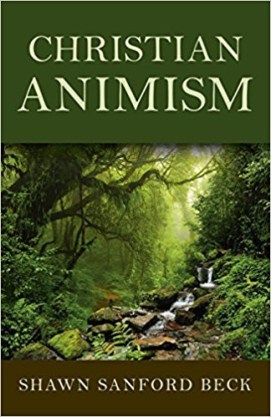 “What I find so interesting is that you’re not dabbling … you’re committed to both traditions”, says interviewer Mary Heinz.
 Some of the less commendable games de Ropp names are “Cock on Dunghill” and “Hog in Trough”. We’ve seen plenty of players of both those games over the last few decades. The 2008 global financial crisis resulted directly from “Hog in Trough” players. “Verily”, said a long-ago Galilean Druid, “they have their reward”.
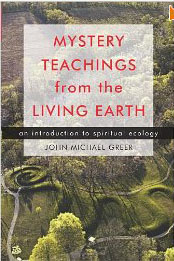 In 2012, on the centennial of the anonymous 1912 publication of the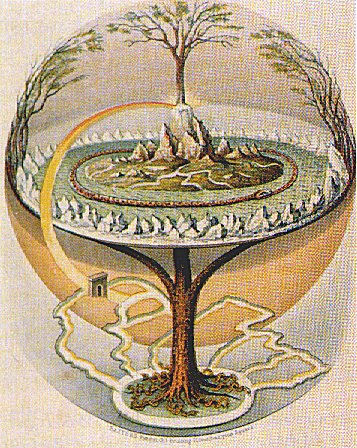
 As I mentioned above, there are many trees we could include in any list like this, the tree being such a powerful collection of understandings, physical beings, symbols, images, experiences, and cultural and spiritual markers and maps. Those on quests often find themselves needing silence, retreat, withdrawal, fasting from superficial human interaction in search of deeper, more meaningful connection.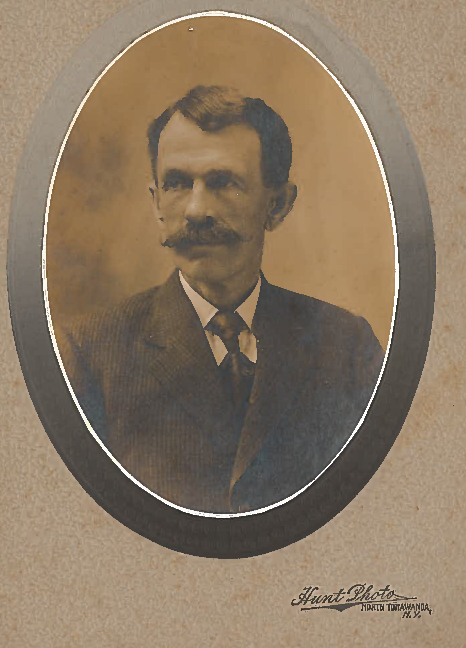

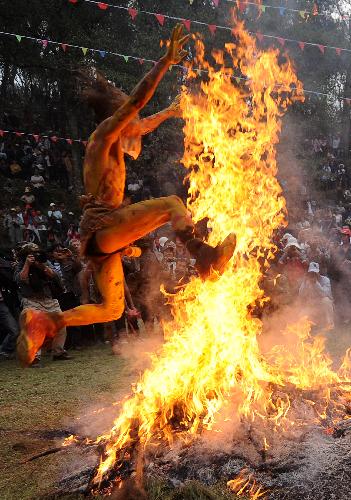
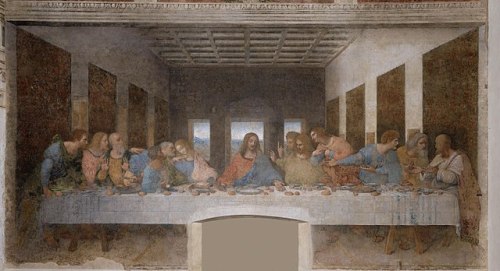
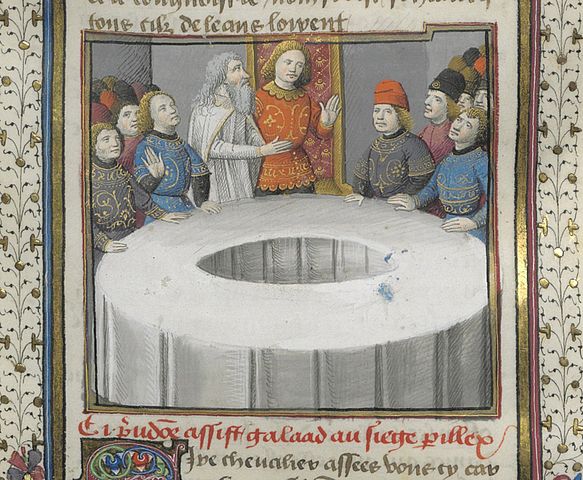
 Long-time readers of this blog know my admiration for Henry David Thoreau (who rhymed his name with “borrow”). I’m well into a new biography* of him, and reminded by a New York Times book review that today is his 200th birthday.
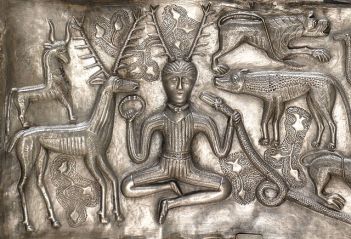 There’s also a wildness in “a certain forest god”, as John Beckett calls
  Or what about a shift of terminology? Would that help at all with any of these themes? If instead of “Baptisms of the Elements”, we called them “Elemental Sacraments”, would that easier name make a difference? Would it make it any easier to move beyond instinctive antipathies and past traumas?


 A Druid Way


.jpg)