Archive for the ‘gratitude’ Category
Urban Dictionary (check it out if you haven’t yet visited it) obliges with this definition of “sick nasty”: “This word is to be used when no other word can be used to describe the cool factor, greatness, or overwhelming emotion of something. However, the something is neither sick, nor nasty. The combination of the words sick and nasty provide a higher connotation of coolness then even the words tight or wicked can provide. It is kind of ghetto.”
Since I’m going for the literal rather than the metaphoric, I’ll bypass the ghetto, and the slang meanings of “ill,” too, and head straight for “body in misery.” (It’s worth considering what connection coolness has with physical sickness, because when you’re in it, it’s distinctly not cool at all.)
Food poisoning can leave you half alive, no longer trusting your organs and bones. My wife and I had been out of state to attend our niece’s high school graduation, and bad food choices dropped me into my own private third level of hell (that’s for the gluttons, which seems appropriate). I won’t gross you out with gastrointestinal details: enough to say that the aftermath left me with aching joints, residual fever and chills, a nasty headache, and no desire ever to eat again. To add insult to injury, we’d scheduled medical check-ups back home the next day. Sometimes you feel rotten enough that a doctor is the last person you want to see. And on top of that, he insisted it was time I had another digital rectal exam, part of the follow-through since my prostate surgery. Necessary, maybe, but oh so evil.
OK, enough self-pity. You get the idea. This is a blog, after all, that’s supposed to provide plenty of buck (see the 5/18/12 entry). No time to slack off now.
What illness can offer, besides a physical cleansing and rebalancing (we get sick when something’s out of whack, off kilter, messed up), is clarity, humility and gratitude. At least that’s what I often get (when the worst of the symptoms have subsided), if I’m lucky.
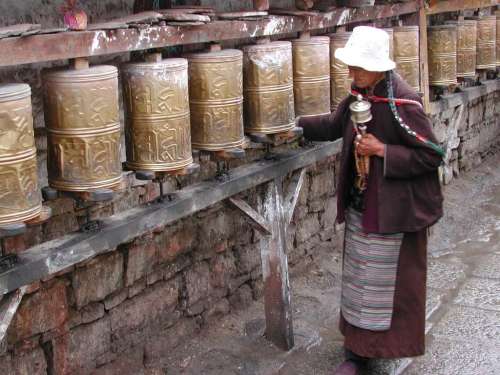 Clarity first. Flat on your back, you’ve got time to reflect. If you’re not unconscious or delirious, reasonably free of pain, and cable is unavailable, you’re thrown back on yourself. Time to make friends with the body, to coax it back to health if you can. This marvelous machine of flesh now sits in the garage, lies in drydock, has gone off-line. Time to adjust the timing belt, scrape off the barnacles, repair the hull, and reboot. You get all kinds of ideas, some of which might even be useful. You get to watch your thoughts spin like a Tibetan prayer wheel, only more gooey. And through and above and below and within it all, you realize there are limits. You get reacquainted with the fact that you will die. Your time here is limited. You can’t have it all, do it all, own it all. You get your turn, and then it’s the next person’s. What you do with your life is your gift to yourself.
And yes — I can get didactic and preachy, kinda. Bear with me.
The humility part is good. You have to rely on others. When your body’s in meltdown, somebody else has to bring the drugs and the drinks, or you don’t get them. You can’t get up without the world playing spin the bottle with your brain, or chills racking you, or legs turning to water. That backrub to ease the crying vertebrae, the cool washcloth so welcome on hot skin, the light turned off because it hurts your eyes, the curtains drawn for the same reason, the soup that’s the only thing you can keep down — all of these are gifts that either others give you, or you don’t get them. They’re out of your control. Your minute-to-minute life is discomfort, interrupted by the kindness of someone caring for you.
Which brings you to gratitude. You certainly have time for it. If you have to be sick, at least there’s some good that comes of it — later, if not right away. As you start to feel better, you recall how you took so much for granted. You resolve to try to do better. Maybe the first stirrings of belief in immortality begin here, with recovery from illness. You’re aren’t dying after all. This too shall pass. You rise again. You will live to enjoy life again.
/|\ /|\ /|\
prayer wheel
 My wife and I returned late yesterday afternoon to a cold house — we heat only with wood — back from an overnight to Boston where we visited my wife’s cousin Sue in the hospital. She’s due to go home soon after stem-cell replacement therapy and chemo for lymphoma. So far the treatment’s working, and her toughness and optimism are heartening.
Our indoor thermometer read 49 degrees, and as we shivered in the last afternoon light and I rekindled a fire in our woodstove, I caught myself glancing a couple of times at a calendar, the way you do after a trip, to reorient yourself to times and days. Late January. The last glimmer of sun over our front yard showed a typical Vermont winter scene — new snow, bare trees, and that deceptive bright calm that makes you believe you really don’t need to bundle yourself up and protect every extremity against single-digit New England winter days. A single step outside offers a brisk corrective to that particular illusion.
Yes, frostbite lurks for the unwary, but there’s a subtle shift nonetheless. Birds know it, plumped against the cold, heads cocked and alert for anyone else finding food, and so does the ivy drowsing beside my wife’s loom.  It’s perked up recently, as if waking from its own vegetative hibernation.
Sue’s bright spirits, beyond her own brand of courage, are in keeping with the changing season. Imbolc approaches, the holiday also celebrated variously as Candlemas or St. Brigid’s Day on Feb. 1/2. The northeastern U.S. lies in the grip of winter, and yet the holiday looks forward to spring. The Irish word imbolc means “in the belly” — the fetal lambs growing and approaching the time of their birth into a larger world, full of darkness and light. Brigid draws devotees who keep shrines lit with light and fire. The Wikipedia entry nicely sums up her importance: “Saint Brigid is one of the few saints who stands on the boundary between pagan mythology, Druidism and Christian spirituality.”
Verses in her honor abound:
Fire in the forge that
shapes and tempers.
Fire of the hearth that
nourishes and heals.
Fire in the head that
incites and inspires.
You can feel the change with your eyes, on your skin, in your bones — a slightly different angle of light, longer days, a listening quality, if you go quiet enough to hear it. A reason to celebrate with light and flame.
 There’s an old Japanese saying I encountered while living and working in Tokyo two decades ago that often comes to my mind this time of year. “What is the bravest of living things? The plum tree, because it puts forth its blossoms in the snow.” There’s a bravery in certitude, a trust that, as Genesis 8 declares, “As long as the earth endures, seedtime and harvest, cold and heat, summer and winter, day and night will never cease.”
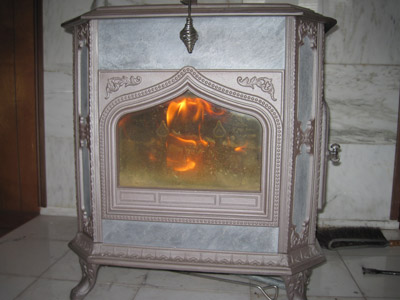
There’s deep comfort in homely things — things of home — the soapstone stove, the hearth stones that accumulate wood-ash and need sweeping a few times a day, the armfuls of oak logs I bring to feed our fire.
Late this morning as I finish the final draft of this post, the stove still ticking and pinging softly as it heats and cools with each charge of wood, the wall thermometer finally reads 67. My wife reads in bed, the sky lowers gray, and a fine snow clouds the air as it descends.
Light and blessings of the season to you.
The start of the year is a good time to look back and forward too, in as many ways as it fits to do so. If you’ve got a moment, think about what stands out for you among your hopes for this new year, and you strongest memories of the year past. What’s the link between them? Is there one? Here we are in the middle, between wish and memory. In his great and intellectually self-indulgent poem “The Waste Land,” Eliot said “April is the cruelest month, mixing memory and desire.” But April need not be cruel — we can make any month crueler, or kinder — and neither should January. Let’s take a sip of the mental smoothie of memory and desire that often passes for consciousness during most of our waking hours, and consider.
To recap from previous posts, if we’re looking for a workable and bug-free Religious Operating System, we can start with persistence, initiation and magic (working in intentional harmony with natural patterns). You’ll note that all of these are things we do — not things a deity, master or Other provides for us. While these latter sources of life energy, insight and spiritual momentum can matter a great deal to our growth and understanding, nothing replaces our own efforts. Contrary to popular understanding, no one else can provide salvation without effort on our part. We can “benefit” from a spiritual welfare program only if we use the shelter of the divine to build something of our own. Yes, a mother eats so she can feed the fetus growing within her, but only in preparation for it to become an independent being that can eat on its own. We may take refuge with another, but for the purpose of gaining or recovering our own spiritual stamina. If we’re merely looking for a handout and unwilling to do anything ourselves, we end up “running in our own debt,” Emerson termed it. We weaken, rather than grow stronger.
The recent SAT cheating scandal involving the Long Island students paying a particularly bright peer to take the tests for them is a case in point. We condemn such acts as dishonest on the societal and human level. Why do we imagine they’re any more ethical or viable on the spiritual level? Just as no other person can fall in love for us, undergo surgery in our place, eat for us, learn on our behalf, or do anything else for us that so intimately changes and affects us, so nobody else can do the necessary work we all end up doing whenever we’ve grown and changed. It takes effort, and it’s up to us. This usually comes both as a sobering realization and as a wonderfully liberating discovery. Our spirituality and growth are up to us, but that also means they’re in our hands, under our control, responsive to our initiative and effort and attention.
For a ROS to actually work, then, it needs to fit our own individual lives and circumstances. Jesus confronted this squarely when he observed, “The Sabbath was made for man, and not man for the Sabbath.” While we can overdo the jettisoning of old religious forms and habits, convinced they have nothing more to offer us, it can be a very good thing to haul out and burn the old stuff to make way for the new. What have we elevated to “god status” in our lives that, in spite of worship, offerings and adoration, is actually giving us little or nothing and holding us back from growing? For too long we have clutched old forms and outmoded beliefs and held them tightly to our hearts, convinced that forms can liberate us. But they have no more power than we give them. Belief is a ladder we construct. Reach the goal, and the ladder is merely extra weight to carry around. We don’t need it.
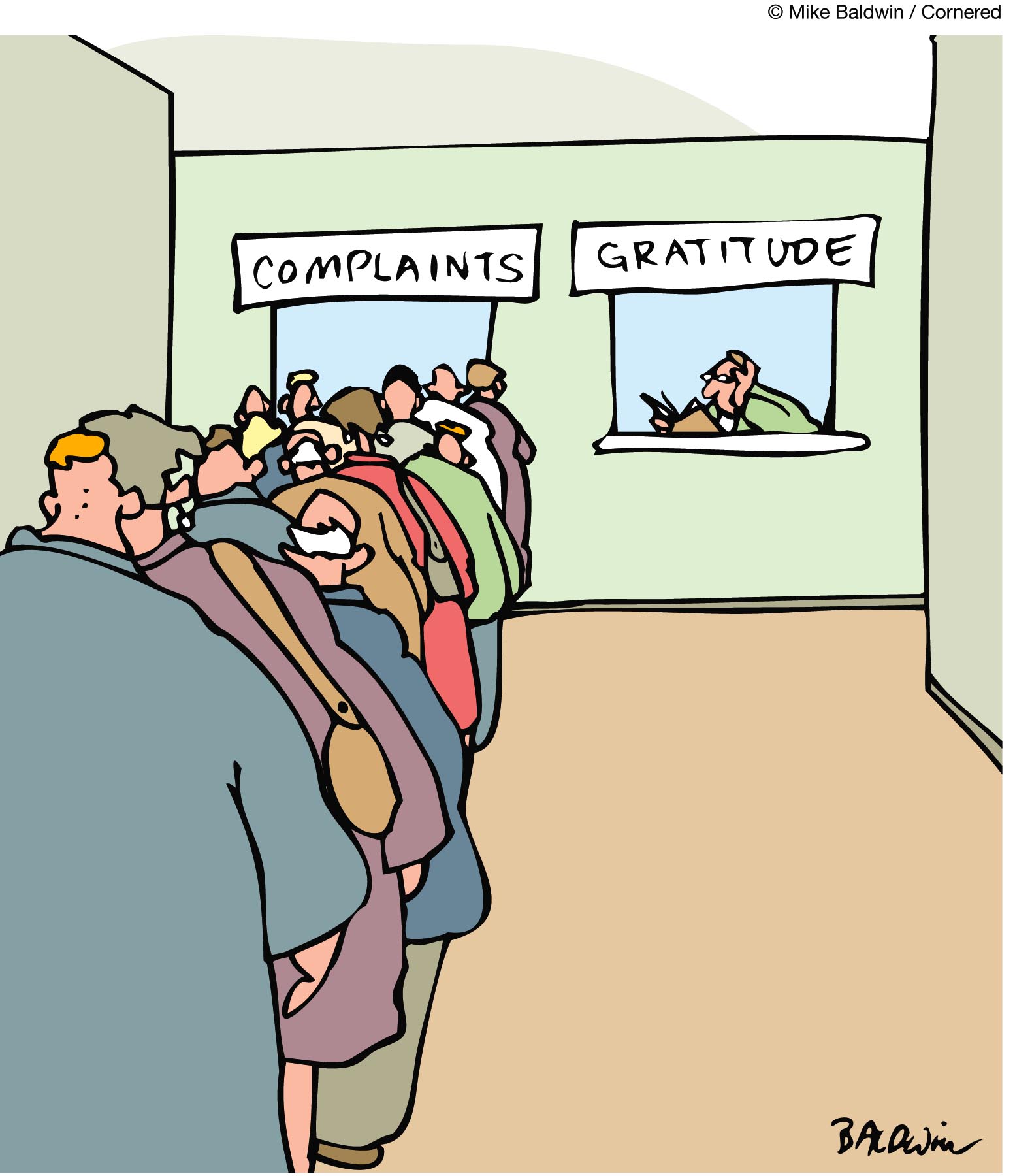
 So you say I’m just supposed to up and cull out-of-date beliefs and dump them? Easy to say (or write), harder to do. One of the most useful items in our spiritual tool-kits is gratitude, the WD-40 of spiritual life. As a solvent, it can loosen hard attitudes, stubborn beliefs, closed hearts and dead growth. We may think of gratitude as an often wimpy sentiment — something softhearted — but I like to call it the grr-attitude. It’s an attitude with teeth, and helps us build a “spiritual firewall” against destructive energies.* Every life without exception, no matter how hard, has something in it to praise and be thankful for. Gratitude, along with persistence, can show us how to make do when every other avenue seems closed. It’s the great “life-unsticker.” It moves us out of spiritual ruts and ravines like nothing else. In fact, an entire life spent in gratitude and persistence, without any other “spiritual garnish,” could carry us remarkably far. It would be a very full life.
I can be grateful for habits and attitudes that have brought me to where I am, and I can often let them go more easily by thinking kindly of them, rather than hating them and beating myself up for being unable to move on from them. But the value of gratitude isn’t just anecdotal. The field of positive psychology is producing significant research findings. Here’s just one example, from Prof. Robert Emmons’ book Thanks! on Amazon: “[R]egular grateful thinking can increase happiness by as much as 25 percent, while keeping a gratitude journal for as little as three weeks results in better sleep and more energy.”*
Every aspect of our lives has spiritual lessons to teach. I even feel gratitude for my cancer, because it has brought me back into balance with myself, revealed friends to me, brought me more love than I could handle, and reminded me again to make the best use of my time here that I can. And that’s just a start. Gratitude is a choice of consciousness. It definitely belongs in any religious operating system.
/|\ /|\ /|\
Cartoon source.
*Emmons’ book Thanks! deserves reading — it’s in paperback, and you can get cheap used copies online (and no, I have no connection with the author! The title was on the list of books for the course I took this fall — one of my subsequent favorites).
The term “spiritual firewall” I’ve derived from the excerpt below. The book helped strengthen my growing understanding of gratitude as a stance or posture toward life that has palpable strength in it, a kind of spiritual toughness and healthy resiliency — with powerful consequences, too — rather than an exercise of mere empty sentiment.
Grateful people are mindful materialists. Deliberate appreciation can reduce the tendency to depreciate what one has, making it less likely that the person will go out and replace what they have with newer, shinier, faster, better alternatives. The ability that grateful people have to extract maximum satisfaction out of life extends to material possessions. In contrast, there is always some real or imagined pleasure that stands in the way of the happiness of the ungrateful person. Consumerism fuels ingratitude. Advertisers purposely invoke feelings of comparison and ingratitude by leading us to perceive that our lives are incomplete unless we buy what they are selling. Here’s a frightening statistic: by the age of twenty one, the average adult will have seen one million TV commercials. By playing on our desires and fears, these ads fabricate needs and cultivate ingratitude for what we have and who we are. Human relationships are hijacked. Consumer psychologists argue that advertising separates children from their parents and spouses from each other. Parents are portrayed as uncool and out of touch with their teenage children, who are encouraged to reject the older generation’s preferences and carve out their own identity around materialistic values. Gratitude for our spouses can have a difficult time surviving the constant parade of perfectly sculpted bodies exuding perpetual sexual desire. In a classic study conducted in the 1980s, researchers found that men who viewed photographs of physically attractive women or Playboy centerfolds subsequently found their current mates less physically attractive, became less satisfied with their current relationships, and expressed less commitment to their partners. Gratitude can serve as a firewall of protection against some of the effects of these insidious advertizing messages. When a person wants what they have, they are less susceptible to messages that encourage them to want what they don’t have or what others have (Emmons, 42-43).

 Clarity first. Flat on your back, you’ve got time to reflect. If you’re not unconscious or delirious, reasonably free of pain, and cable is unavailable, you’re thrown back on yourself. Time to make friends with the body, to coax it back to health if you can. This marvelous machine of flesh now sits in the garage, lies in drydock, has gone off-line. Time to adjust the timing belt, scrape off the barnacles, repair the hull, and reboot. You get all kinds of ideas, some of which might even be useful. You get to watch your thoughts spin like a Tibetan prayer wheel, only more gooey. And through and above and below and within it all, you realize there are limits. You get reacquainted with the fact that you will die. Your time here is limited. You can’t have it all, do it all, own it all. You get your turn, and then it’s the next person’s. What you do with your life is your gift to yourself.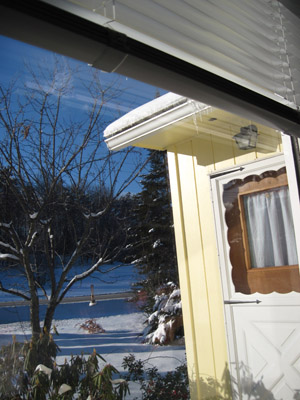



 A Druid Way