[Related posts: Shinto & Shrine Druidry 1 | 2 | 3 || Shinto — Way of the Gods || Renewing the Shrine 1 | 2 || Boku no Shinto — My Shinto 1 | 2 ]
Following the magical principle of polarity to wing myself toward what I really want to write about, in the title for this post I’ve done something quite un-Nihonteki, un-Japanese — un-Shinto, in fact. Japan’s native spirituality focuses on harmony between human and spiritual realms, a harmony which finds a powerful objective expression in the natural world. “Seek Spirit? Look around!” Yet I used boku, I wrote “I” — as if “I” could possessShinto, as if it were a thingamong other things that a person could own or control or claim. The i returns to its proper size in balanced relationship. An outsized I is part of the challenge the West currently faces, as well as each of us individually. Be yourself, we’re told. What the hell does that mean, anyway? Still too much. (Too much is not enough, says the lower-case zen master/fool in my ear.)
Sometimes I just need to back into it, the destination that feels nearby, though I can’t see it. “Returning is the motion of the Tao” (chapter 40). Because if I try it head-on, all the old defenses go up like a bad reflex. An old i holds on even as a new one moves in. They spar a little. But what are wood and water doing while I stare at an i?
“who are you, little i” asks e. e. cummings in a poem of that title, “(five or six years old)/peering from some high/ window; at the gold/of november sunset” — let’s make it May instead: we can, and e. e. won’t mind. Will cheer us on, I suspect — “(and feeling: that if day/has to become night/this is a beautiful way)”
Participate in our own becoming. A call, if we choose to hear and heed it. Make it day when it’s night (for our next trick, do it without using electricity). Or vice versa, turning off the glare of the spotlight on the self which isn’t the whole story.
After all, “five or six years old” is about right: didn’t that crazy Galilean say we need to become like little children again? Is that“being yourself”?
Like is important: we can all imagine it, approach it, approximate it. Journey towards it. Try out “yes” till it drops the ” ” — that little chicken scratch that distracts us from so much. Or become the chicken that makes the scratch. That’s a power we’re granted, too. Shape-shift at will and need. One thing becomes another, in the Mother, in the Mother. Thanks, Mom. Can faking it make it real? Well, the pressure’s off if all I need to do is fakeit.
(e. e., you saw it, said it elsewhere: “i thank You God for most this amazing/day: for the leaping greenly spirits of trees/and a blue true dream of sky; and for everything/which is natural which is infinite which is yes”). And if “You God” doesn’t work for you, insert your own addressee of choice.
Need a spell to make it happen? “Power of choice I grant thee, I grant thee, I grant thee.” O.K., proceed.
/|\ /|\ /|\
Entrance, Tsubaki Grand Shrine, Washington state
Site stats show that my previous posts on Shinto are among the most popular here at A Druid Way. The reason for that can’t be too far to find. We crave like a food-hunger a spiritual reality that does not depend on belief(or at least not on belief alone), but is present to us whenever we’re present to it — and even when we’re not. We may hunger for a Way or Ways, just like we yearn for dark chocolate or hot sauce or beef or fresh limes in guacamole (insert yourfavorite food hunger here), a harmony that we can begin to fall back into at any moment, wherever we are, just by shifting our attention, and restore a sense of balance and integrity. And not just a sense of them, but its reality — a poise for living that shows in our words and deeds. We’ve all known this harmony, witnessed it in others, however briefly, which is why we can feel so disheartened when we lack it, when we’ve lost it, fallen out of it. We know it’s possible because it’s there, in living memory, however far we stand from it right now, in this grubby, muddy present moment.
We’ve even got a Shinto shrine in the U.S., the Tsubaki Grand Shrine in Washington State, if we need the reminder. Which is what a shrine, among other things, persistently tries to be. It’s here, all around us, what we seek. And a few among us imported Shinto as a recognition of that consciousness, as a support for us when we lose our way. From it we can jump-start our own (there’s a possessive pronoun again) American Shinto, if we desire it, if we give it space to manifest. The kamiknow and dwell in America, too.
Though it’s not a perfect instrument, a song, a painting, a poem can remind us, point us in directions that can restore and heal. “The Spirit,” says Mary Oliver in her simply-titled “Poem,”
                        likes to dress up like this:
                          ten fingers,
                            ten toes,

                      shoulders, and all the rest
                        at night
                          in the black branches,
                            in the morning

                      in the blue branches
                        of the world.
                          It could float, of course,
                            but would rather

                      plumb rough matter.
                        Airy and shapeless thing,
                          it needs
                            the metaphor of the body,

                      lime and appetite,
                        the oceanic fluids;
                          it needs the body's world,
                            instinct

                      and imagination
                        and the dark hug of time,
                          sweetness
                            and tangibility,

                      to be understood,
                        to be more than pure light
                          that burns
                            where no one is--

                      so it enters us--
                        in the morning
                          shines from brute comfort
                            like a stitch of lightning;

                      and at night
                        lights up the deep and wondrous
                          drownings of the body
                            like a star.
(And so I ask myself, what isn’tSpirit?! Is thatbeing yourself?)
see shrines as both restful places filled with a sense of the sacred, and as the source of their spiritual vitality – they regard them as their spiritual home, and often attend the same shrine regularly throughout their lives. Shrines need not be buildings – rocks, trees, and mountains can all act as shrines, if they are special to kami.
Physical world as spiritual home: what a change that would make in us if we carried that knowing with us all day long.
A large shrine can contain several smaller sub-shrines. Shinto shrines can cover several thousand acres, or a few square feet. They are often located in the landscape in such a way as to emphasise their connection to the natural world, and can include sacred groves of trees, and streams.
How many of us find the kami in a garden, a window pot we lovingly water, a bird feeder stocked through winter, or whatever season in your area that otherwise challenges the small feathered lives around us?
Tsubaki Grand Shrine ritual
Various symbolic structures, such as torii gates and shimenawa ropes, are used to separate the shrine from the rest of the world.
Separation as a reminder— not that one exists like some line in the sand, but one we need, in order to notice what’s right in front of our noses.
And so I remember to bow at the willow at the bottom of the hill where our house sits. I talk to the crocuses. Sometimes I forget. Then I remember again. Muslim mystics chant the dhikr, literally the “Remembrance” of that one Name ringing just behind our day-to-day awareness. Or many names, each waiting to be cherished, each a kami, each a potential doorway to what we seek. In a world of seven billion persons, a grand synthesis, a God for everyone, may not be feasible at this point in our consciousness. But we can reverence that lopsided pine down at the corner, honor the robins and starlings on our lawn, respect our own bodies on this earth, and begin, again, to find our ways. Isn’t that much of the promise of spring (and of so many of our human stories) — starting over? The growing shout of green, the rising sap, birdsong and peepers calling into the night, what we call spring fever in our veins and nerves and sinews, obeying an old law we’ve almost forgotten.
In answer to a query about the viability of some form of American Shinto, about “What is Shinto to the West,” a Westerner observes,
Well, Shinto in the West is automatically different from Shinto in Japan. For some reason, Japanese immigrants and their descendents don’t seem to keep practicing Shinto very much, perhaps because of the difficulty in practicing a shrine-centered, community-oriented faith in a place with nearly no shrines (I can count the ones I know of on one hand!) and a very small and scattered community.
So, most of the North American practitioners I know of are of European ancestry, trying to practice Shinto alone and without shrines, and learning what they know from books. Many have some sort of cultural connection to Japan – either they’ve studied it academically like you, or else they have married a Japanese person, or they lived part of their life there, or have learned a bit about Japanese spirituality through the martial arts community. We have to adapt the religion to our new environment, e.g. finding replacements for unavailable supplies, translating prayers from Old Japanese into English, and trying to answer hard questions like, should we honour the spirits of Japan or try to identify the spirits of our own environment?
Druids have built their own shrines, and begun to listen to the spirits here on the North American continent, which differ from European or Asian ones. Just the act of listening opens many doors. What we often lack is the support of a community in our practice. Many have the strength of self-discipline to sustain a solitary practice, but others need the interaction, inspiration and community spirit that can help through the arid periods where nothing seems to be happening and we’re stopped dead in the water.
For that reason alone many Americans stick with Christianity or Judaism, because it offers that support, even if they also seek out other founts of spiritual nourishment in places their Abrahamic fellow-religionists might balk at. It’s the reason behind “spiritual but not religious,” which ultimately is often hard to pull off in practical terms, because spirit seeks a form, a practice, if only to come true to us, to enter our physical lives in manifest ways, as Oliver’s poem above reminds us. We do this and not that because it works. Any claims about earlier or better or more spiritual or, Goddess help us all, divinely inspired and uniquely true forever and always, come along after.
[A version of this post appeared in my column in the online Druid magazine Amethyst. My thanks to the editors for providing their well-edited forum for OBOD’s East Coast Gathering (ECG) community.]
I offer this post on the chance it may prove useful if you’re grappling with some aspect of animal guides, power animals, personal totems — the usages and terminologies haven’t settled down yet.
Last September, as I sat engrossed in the ECG 2013 workshop on Animal Guides, I simply had to laugh at myself. It had become clear to me over the weekend that sometimes your animal guide pursues you, rather than the other way around. In my case I’ve learned that gods, spirits, and guides often have to shout and do handstands to get me to notice at all. I’m just grateful they think it’s worth Their while.
With Boar, my obliviousness ran deeper than usual, and lasted much longer. Maybe (I say, trying to excuse myself in any way I can find) it’s only because I’ve looked at my obtuseness more closely than usual. Maybe following two paths has scrambled the inner circuits. Maybe my inner discipline needs work (whose doesn’t?!). Laughter may be appropriate – and fitting for Boar, who can be a bit of a trickster anyway. As long as laughing isn’t all you do, I hear inwardly. Clues pile up. Here are some I’ve managed to account for so far.
My father, a city boy who grew up in Niagara Falls, NY, became a full-time dairy farmer a few years before I was born. For some reason he could judge pigs well, recognize the outstanding animal, pick out the prize pig. In fact he won several judging competitions when I was still a baby. But the ability perplexed him. He’d mention it from time to time, amused. (Now I ask myself, is Pig or Boar some kind of family or ancestral totem? One more quest to add to my list of quests.)
I was born in the year of the Boar, according to the Eastern 12-year calendar. OK, I thought. Interesting piece of trivia. Entertainment, really. Chinese restaurant lore. Fortune cookie material. My nominally Christian family never paid any attention to such things. And in my adolescent arrogance and ignorance, I considered myself professionally immune to astrology, which I was sure was for wackadoos. It didn’t help that it was part of the national conversation at the time. If you’re old enough to remember the Reagan presidency and the First Lady’s Nancy Reagan’s admitted fascination with astrology, you know what I’m talking about.
When I was in my early teens, and walking the Wyoming County fairgrounds in late August, a show pig at our local county fair lunged at me as I passed – a serious, front-legs-over-the-top-of-the-pen, get-to-you-if-I-could attempt. I was passing by a good ten feet away, one person in a crowd of visitors to the week-long fair in our agricultural county. What set the pig off? Something I was wearing? A scent of sweat or lunch or shampoo? Pitch or timbre of my voice? I never did find out. But I’ll note that I was fascinated around this time by the Greek myth of the Calydonian Boar Hunt, and the relationship between Meleager and Atalanta, a fleet-footed huntress sent by the goddess Artemis, who had also sent the boar. Why? To punish the king of Calydon for his neglect of the rites due to the gods. (You have to understand: goddesses feature in another of my lists of embarrassing interactions with the universe. Sometimes when I get it down on paper it’s just downright embarrassing. But, I can hope, maybe my embarrassment will be useful to others.)
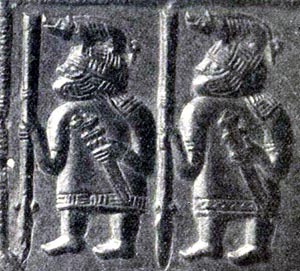
I reflect, too, on my long* fascination with Old English, Anglo-Saxon society, and the war (and boar) themes in poems like Beowulf. To the left you can see the stylized (and outsized) boars on the warriors’ helms.
To cite just two instances from one poem, at one point the poet equates the warriors directly to the boar and to its symbolic importance as a fighter: “The armies clashed — boar struck boar” (lines 1327-8). And some hundred lines later, Beowulf’s own helmet is described in detail: “A smith crafted it, set boar-images around it, so that ever after no sword or war-axe could bite it” (1452-1454).
Fast forward a decade and I’m teaching English in Japan in Musashino, a western suburb of Tokyo. One weekend my wife and I were visiting Asakusa Jinja, a large Shinto shrine in downtown Tokyo. As I was poring over trinkets for a cheap souvenir, a servant of the shrine insisted that I take a small carved wooden boar token. It didn’t appeal to me at the time – I thought some of the other images were more artistic renderings. But I made a small offering and went home with the image.
The Wild Boar serves as the mascot at a private high school where I taught for almost two decades. Every day classes were in session, I entered the campus dining hall passing beneath a stuffed head of a wild boar mounted over the entrance. The animal had been shot decades ago by one of the first headmasters of the school, an avid hunter.
About a dozen years ago, my wife and I took a vacation to Italy and the Tuscan hill country, where not once but twice I ate wild boar, and was sick both times. You’d think at some point it might have dawned on me that I shouldn’t eat my animal guide.
In fact, a few years ago an alum donated to the school a replica of Il Porcellino, a famous boar figure from Florence, Italy by the Renaissance sculptor Pietro Tacca. I now walked past Boar twice a day, outdoors and in. I can’t claim the universe rearranged itself for my benefit (or embarrassment), but the effect was the same.
Why such resistance on my part? I still don’t know entirely. But Boar appeared in a vision during the East Coast Gathering drumming session with Thomas Deerheart and Maya Minwah, and gave me some very specific health advice for a longstanding issue I’m dealing with. Ever since then I’ve been drawn to touch Boar, run my hands over his coarse fur, feel the ridge along his back.
The Druid Animal Oracle entry for Torc, the Boar, notes: “… he is a representative of the Goddess—his skin can heal you” (Philip and Stephanie Carr-Gomm, The Druid Animal Oracle, Fireside/Simon and Schuster, 1994, p. 39). It’s important to note I finally read the Oracle only after I wrote a second draft of this column (yet another resistance – I’ve had the volume on my shelves for over a year).
We say “my guide” or “my power animal,” but I’m finding that for me at least it’s the other way around. I belong to them. Whatever I think I’m looking for, it’s been looking for me even longer. The hunter is hunted. They track me down till I’m cornered and I have to listen, till I can’t ignore them any longer.
Recently Magpie has caught my attention again. I’m trying to listen better this time to whatever this new guide wants to communicate. What with running with Boar, and flying with Magpie, at least I’ve got the opportunity for plenty of inner exercise.
/|\ /|\ /|\
As I look over these notes, several points stand out. (I’ll put them in first person and speak only for myself, not to presume too much about who you are, or what your experience may be.) First, to my mind, is the desire (I don’t know how else to put it) of the Other — Spirit or spirits, guides, deities, totems — to connect with me. Second I must concede my own obliviousness. I ask for help, or a “sign,” but even when it lies down in front of me and trips me up, I STILL manage to ignore it.
Next is the likelihood that once I start looking, the coincidences begin stacking up until it’s clear there’s more than coincidence going on. Common themes emerge. The animal I seek is also seeking me — in dreams, “accidents,” images, unaccountable emotional reactions to seemingly “unimportant” things– in all the different ways it can reach me, in case one or more channels of communcation are blocked (usually on my end).
Animal images in poems also cry and echo for the nerd-Bard that I am. We repress the animal guides in and around us, so that like other repressed things, they eventually spring, animal-like, into our psyches elsewhere, in sometimes strange and nightmarish images, in art, dream, eventually, even, in national obsessions and pathologies. If they pool and accumulate enough cultural energy, they manifest in personal and societal outward circumstances, in political and cultural movements, in wars and other conflicts. Think of W. B. Yeats’ apocalyptic poem “The Second Coming,” which famously ends “what rough beast, its hour come round at last,/Slouches towards Bethlehem to be born?”
Or consider Philip Levine’s “Animals are Passing from Our Lives” in the voice of a pig approaching its slaughter. Apocalyptic and angry poems like these, like most art, aren’t “about” only one thing. Run them to earth and they keep meaning something more. We use animals (animals use us) to communicate what we sometimes cannot say directly. Among all the other things they do, animals help us express that deep love, that bitter grief, anger and darkness, comfort and healing, that simply may not be able to manifest in any other way.
*Like many English majors, I studied Old English as an undergrad and grad student. Like some others, my interests in things Tolkien and Old English stimulate and nourish each other. Since then I’ve kept up my amateur’s interest by attending conferences, writing and presenting papers, shoring up my grasp of the language in discussions and translations on online forums, and in rendering portions of OE poems and prose into modern English, as with the lines above. I say “amateur,” because with the exception of occasionally teaching the poem in translation to high schoolers, I pursue my interest out of personal obsession rather than professional necessity.
Steve, thanks for visiting and for your comment. I’d actually visited the site of your worthy Celtic conlang, Galathach, prior to writing my posts on “A Druid Ritual Language.” I would have included Galathach as well, but then along with other deserving candidates I might have mentioned, the post would have gone MUCH longer.
I know you’ve taken some flack by critics regarding the “authenticity” of your reconstruction and revival. From my perspective, the proof is in the passion: you’ve actually done the work and you have a well-elaborated language to show for it, while they quibble over details and apply criteria that I suspect never interested you in the first place! After all, you’re very clear and transparent about your process at the outset. As you note explicitly in your introduction,
Drawing on the existent available material, and making use of the surviving Brittonic languages, as well as the Gaelic languages, for support and comparative studies of such things as vocabulary, semantics and grammatic structure, a modernised version of the Gaulish language is here presented. Departing from the state in which Gaulish was last attested, that is Late Gaulish, the language of circa the fifth century CE, a series of sound changes, phonetic evolutionary processes and grammatic innovations are postulated. As such, a hypothetical evolution of the language is constructed, the proposed outcome of which is a practically useable modern Celtic language, to be situated in the framework of the modern Celtic languages.
While the process of reconstructing or reassembling a language is challenging, it has been done as conscientiously as possible, starting from the original material and attempting to stay as faithful as possible to it, while applying a set of changes which could have been reasonably expected to have happened to the language had it not ceased to be spoken. These changes are based on evolutionary processes which can be observed in the available authentic material, as well as on related processes which have occurred in the related surviving languages. As much as possible, justification for changes and adaptation is provided by drawing from the original material. Creative imagination, or, to put it differently, making up random stuff , has been kept to a minimum. These various changes, adaptations and processes will be discussed in detail in the various sections dealing with them in the body of this document.
The notable point is that Galathach now exists, when it didn’t before, and as you say, it has a full grammar and a (soon to be) dictionary. Nicely done!! Already that puts it in the top 5 or 10% of conlangs, hordes of which rarely get beyond a short wordlist, if that, or a provisional sketch of grammar. (Incidentally, there’s nothing wrong with that; most conlangers have many sketches and usually — unless you’re David Peterson of Dothraki/Game of Thrones fame — only one or two conlangs elaborated to any degree.) Your reconstruction/modernization of Galathach hAtheviu, “Revived Gaulish,” is documented, reasoned, consistent, and reflective of a devotion to things both Celtic and “conlang-y.”
So I’m happy to commend it and refer others to it (repeating that it IS a conlang rather than one of the six living Celtic tongues, just so everyone is clear). That said, it certainly is Celtic in blood and bone! And if a grove or an individual uses it for ritual, it becomes a living language by choice and art, equal to any other. As conlangers like to say, Fiat Lingua! Let there be (more) such languages! Humans made languages, so it’s a quibble of a peculiar kind to call one language “natural” and another “artificial.” (Conlanging has always seemed to me a particularly Druidic activity, but then I’m clearly doubly biased myself as both conlanger and Druid.) May Galathach thrive!
Kuklunomes. Karla, our ritual leader, half-sings, half-speaks the word in Priyosta Grove’s dedicated language. Let’s form the circle.
Swonago! says Russ, as he strikes a singing bowl forcefully. The sound ripples through the clearing. We’ve been experimenting with opening gestures and words. These seem to work for us now. I can feel without looking that the others are listening, as I am, as the sound fades.
Already the five of us who’ve gathered have been falling out of speech and into a ritual hush. April wind blows chill through our grove, though the sun in a cloudless sky feels blessedly warm on our faces. I open my eyes. Dry brown grass whispers around us and underfoot, but the rains have greened things as well. Almost everyone still wears long sleeves, though a few dare to bare a little more. Russ strikes the bowl a second time, and cries Swonago! just as Angie and Dan enter the grove. They’re somewhat flushed, and release hands as they separate to walk to opposite sides of the circle. Our resident young couple has plainly been making out. Karla smiles at Angie, who’s tousled and a little breathless.
For the invocation, Karla passes to Michelle the staff she’s handcarved. For each gathering she decorates it anew. This time, on one end of the staff, three bird feathers, and a neat braid of colored ribbons cut from scraps from the Beltane rite last year. Michelle raises it toward Karla in acknowledgement, than lifts it high over our heads. The words to come are hers. We each bring a piece of this rite, having rehearsed it through a flurry of emails and briefly in a conference call a week ago, fighting static over a bad connection. All becomes part of Grove tradition, stories to retell, to share with newcomers when the time is right, to remind us who we are.
Gods, spirits, ancestors of blood and the heart’s bond, Michelle chants in a minor-key singsong, we call you to sift our intent, to join our rite, and to bless what we share here and always.
The words ripple up and down my spine. I glance around the circle again, wanting to take it all in. Dan and Angie’s eyes are closed. Both their heads tilt slightly as they listen. To the casual observer, we’re just as casual: no robes or massive Pagan bling. Look closer and you might see a few discrete pentagrams, a few modest-sized pendants and earrings. One bearded fellow we know only as Dragon wears jeans and an embroidered white dress-shirt, a fluid Celtic pattern worked in red. Michelle has brought water in our lovely aquamarine offering bowl that she found some years ago at a household auction and gifted to Priyosta Grove. Friendship, it translates, or Amity. An ongoing goal for us, an intention. Michelle passed the bowl to Dragon when Karla handed her the staff. Some of the rite we’re improvising now, relaxed at what’s scripted and what arrives free-form.
Dragon steps forward to bless the circle with water. He’s at ease, smiling slightly, as he sprinkles each of us in turn.
Western gods and spirits, lakes and rivers, blood in our veins, oceans circling, he chants slowly, turning to each of us, we call you here, now.
Dragon’s name, I’m beginning to sense, fits him well after all. I remember how I rolled my eyes a little when I first heard him introduce himself, then scolded myself as a Pagan snob.
Now, briefly, I flash onto a serpentine form, awash in a frothy sea — a water dragon. Its arcing wings shoot a cascade of cool, refreshing water over us. I shudder involuntarily in surprise at the vividness of what I experience. A confirmation, something to tell him after, if it feels right.
I look around again at the others. All of us are in fact wearing ritual garb. The point is comfort and ritual dedication. We’ve changed into these clothes, but they’re modern, like our ritual. Priyosta has never come close to discussing anything like a “ritual dress code,” let alone tried to make one a formal policy — nobody has the balls, nor could they get it to stick anyway — but over our eight years of existence, we’ve established our own unwritten sensibility. One piece of jewelry you’ve dedicated and worn to many rites over time is almost always better than thirty pounds of robes and bling from “Auntie Gaia’s Mystyk Cauldron and Proud Pagan Emporium.” In big circles and at major festival gatherings, some of us might dress up more. For this and for our other local rituals, we dress “in” — that one piece of clothing or jewelry that helps remind us as we breathe the smoking sage, feel the water of the blessing, that solvas son yagnei — all things are holy.
We continue inviting the Quarters, and settle in to the Rite. We tell what feels appropriate, and pass over the rest, belonging to the Grove alone.
It’s not a major festival that’s brought us together this time. Priyosta doesn’t always manage to meet for every one of the “Eight Greats.” You follow the Wheel as you can. But it’s time for our own thanksgiving. The papers are signed and filed, the last check cleared our now very small grove bank account, the land title arrived on Monday. This little hilltop with its stand of birches is now officially “ours” to care for. A former hunter’s camp, much of it had been badly trashed, but we got it for back taxes and not a whole lot more. A trust, for our grove to hold and heal, and when the time comes, to pass on. We keep its location private, to preserve it from further heedless indifference.
So you still want not just a few phrases but a complete language dedicated to your rituals?! And you’re crazy enough not just to thinkabout this but to actually plan to pull it off! In spite of all the alternatives I mentioned in the previous post, like simply using a small number of individual words or phrases as ritual triggers, you’re still determined to acquire the complete ritual language package. You want to be able to composenew rites in this language, not just insert a few fixed phrases here and there in your rituals. And wrth gwrs (oorth goors) of course, your circle, grove, grotto, temple, fane, gathering or group is with entirely with you — 100%. Or they will be, once you browbeat or bribe or trick them to try it out, once they’re enchanted and seduced by the undeniable power and majesty and beauty of your fully-equipped ritual tafod (TAH-vohd) tongue. You know in your heart of hearts that soon enough they’ll be saying diolch (DEE-olkh) “thanks” to you for bringing them into the light (or the luminous darkness).
The First Candidate
Here’s the first ritual language candidate for your consideration, Welsh, along with some of the stronger arguments in its favor:
*It’s one of the six living Celtic languages, so you’ve got the authenticity thing covered. No one can accuse you of wimping out on that point.
*Hey, you already can say a couple of things in it, like wrth gwrs (oorth goors) “of course” and tafod (TAH-vohd) “tongue” and diolch (DEE-olkh) “thanks.”
*It’s from the “easier” side of the Celtic family: Welsh, along with Cornish and Breton (the P-Celtic branch), are considered easier to learn and speak (for English speakers) than Irish, Scots Gaelic, or Manx (the Q-Celtic branch) for a number of reasons: pronunciation, grammar, and spelling.
*The writing system uses a version of the Roman alphabet. True, because of the spelling of Welsh words like wrth gwrs and tafod and diolch, some have unkindly called written Welsh “alphabet vomit,” but Welsh offers a much better match between sound and symbol than does, say, English. Different doesn’t have to mean worse, and it can sometimes even mean better. Think about such oft-cited English examples like the pronunciation of -ough in through, rough, though, cough, and bough. You’ll be glad to know there’s extremely little of that in Welsh.
*It has a solid and well-documented literary history — the Mabinogion, that medieval collection of marvelous tales, is one of its chief glories — one which several modern Druid orders have used as a set of Druid teaching texts. Here for your delectation is the first line (in medieval Welsh) of Branwen, Daughter of Llyr:
Bendigeiduran uab Llyr, a oed urenhin coronawc ar yr ynys hon, ac ardyrchawc o goron Lundein.
“Bendigeidfran son of Llyr was the crowned king of this island, and exalted with the crown of London.”
[Bendigeidfran is pronounced roughly “ben-dee-GUIDE-vrahn”]
*There are numerous helpful learning aids available, including online materials like the Big Welsh Challenge. That means there’s plenty of assistance for students of the language, in large part because enough Welsh people themselves want to learn Welsh.
*Welsh is arguably doing as good a job at surviving the onslaught of English as any of the other Celtic languages. In other words, it’s not going away any time soon.
*Welsh makes a distinctive auditory impact on listeners — check out the short video below to hear several Welsh speakers:
Other Options — Proto-Indo-European
Or maybe Welsh still seems too much to tackle. (Did you catch the last word of the video — diolch [DEE-olkh] “thanks”?) You still want your own language, but something different. It doesn’t need to be a living language. In fact, a more private one might even serve better. You understand that ritual secrecy isn’t meant to exclude anyone but rather to focus and contain energies, like the Cauldron of the Goddess brewing those three drops of inspirational awen. Yes, there are still other options.
For instance, you could investigate Proto-Indo-European (PIE) — the Big Kahuna itself, the “Grandmother Tongue” of the speakers of all the hundred or so Indo-European languages alive today, spoken by more than 2 billion people. I’ve mentioned Ceisiwr Serith in a previous blog, whose fine book Deep Ancestors: Practicing the Religion of the Proto-Indo-Europeans offers much material for reflection, adaption and use. Serith writes and practices from an ADF perspective, emphasizing historical scholarship. You can also check out his website for more information and challenge.
Dictionaries and grammars of PIE are available online and through sellers like Amazon. With some hours of initial study and effort, you can begin to create short sentences like this one: yagnobi ognibi tum wikyo (YAHG-noh-bee OHG-nee-bee toom week-YOH) “I hallow you with sacred fire.” Using such resources I’ve fashioned these and other words and phrases for ritual. While scholars and amateur Indo-Europeanists can and will quibble quite endlessly* about “correct” or well-founded pronunciation and grammar, you’ll be exploring a ritual essence you can incorporate into your rites to enrich and empower them. Isn’t that the point?
(*It’s significant — and highly relevant for our purposes — that there’s much stronger consensus on PIE vocabularythan on grammar, details of pronunciation, or wider issues of culture, religious practice, original homeland, and so on. That’s as it should be: we intuitively understand that it’s in the names of things that we reach closest to the heart of any language, especially ritual language.)
The Celtic Conlang
Or you could go the Celtic conlang route, selecting from the pool of shared vocabulary that Welsh, Cornish and Breton (or Irish, Scots Gaelic and Manx) have in common, and build your language piece by piece. Books like D. B Gregor’s Celtic: A Comparative Study (Oleander Press, 1980) devote several chapters to — you guessed it — detailed comparisons of the six Celtic languages. If you have some skill with languages (and you do, or you wouldn’t be considering this route, would you?), you can adapt and regularize to your heart’s content. To give you some idea, with a couple of dictionaries and the running start of sites like Omniglot’s Celtic Connections page, you can devise your own language with as much Celtic flavor as you wish.
Three Existing and Well-developed Celtic Conlangs
There are other conlang options too, like Deiniol Jones’ detailed Arvorec, Andrew Smith’s Brithenig and Alex Middleton’s Kaledonag. All three of these are sufficiently elaborated that you could create ritual materials in them. And you’ve got living conlangers that you can consult — or hire — for help.
Commission Your Own Unique Language
If you or your grove have some cash on hand, there’s yet another option, if you want to commission a conlanger to make you a unique never-before-seen-or-spoken ritual conlang. As I mentioned in the previous post, you can call on the Language Creation Society for help. Here’s the relevant LCS page for requesting a conlanger to create a language to your specs. Note the following minimum costs, as of today, 3/26/14: “We require a minimum of $150 for a language sketch, $300 for a full language, and $300 for an orthography.” (Each term is explained further on the page.) The commissioning person or group gets to set a wide range of criteria — worth investigating if this option appeals to you. Self-disclosure: Yes, I’m a member of the LCS, because they’re the best such group around. Like the ADF motto says, “Why not excellence?”
(Almost) Last, Best, and Deepest …
It shouldn’t come (almost) last, but here it is. If you’d like a deeper ritual challenge, ask your spirits, guides or gods for help. I’ve gotten valuable material this way, including large portions of blog posts (see here and here for examples), and I’m certainly far from unique. Others have also received names, prayers, rituals and other spiritual material from contemplation, trance, and ritual itself. If the God/desses want you to use a special or dedicated language in your rites, they’ll help. Just ask. What is inspiration, after all?!
Another illustration may help. Several years ago, over the space of about six or seven weeks, an acquaintance of mine named Chris received an entire ritual conlang — several thousand words, names, grammatical ideas, and — how else to say it? — cultural practices, like gestures, ritual apparel, symbols, etc. — through a series of visions and inner communications. We talked about his method, his process. He’d record as much as he could recall from a given experience or vision, then ask for guidance in recovering whatever he’d missed or forgotten, trying out names and phrases, for example, to see if they were acceptable in prayers and rituals, if they sounded right to the gods and to his own growing sense of “fit,” based on what he’d been given so far. For instance, the name Nezu came through, an inner guide he could call on. Testing the name, modifying it from the initial version he’d received, until it “worked” and felt right, mattered to him, and the name grew in impact because he took the time (hours and hours!) and made the effort. In short, he sacrificed for what he desired; he hallowed his own efforts through his dedication and attention and love, and the gods hallowed them for him in turn. Rarely is it just one or the other, after all.
Now Chris was interested in conlangs and had some experience learning, or learning about, several different languages. He knows some Elvish, Klingon and Na’vi, and he’s studied several different human languages in varying degrees of depth. Such a background doesn’t hurt, of course. The gods work with what we give them. If you’re a musician, you may get inspiration for songs. If you’re a visual artist, you may get images, and so on. Nurture and encourage the ritual skills and human talents of the people in your group, and you’ll be surprised at what they can achieve.
So you’ve got it down — your ritual books (unless you and your grove are really devoted, and all of you memorizeyour rites) are meant to make using the language as easy as possible, both for members and any visitors who drop in for your Evocation, Consecration, Tranformation, Prognostication, etc. Just hold off on the big-screen Powerpoint version until you become a Mega-grove, along the lines of the Protestant Mall-Churches.
A Note on Compiling Ritual Booklets
You know you can get your grove members to pronounce almost anything unusual reasonably well, just like Catholics have been doing with pronunciation guides like the following example from Pray It in Latin (pg. 3) by Louis Pizzuti. (My apologies if you have bad Church memories.) If you haven’t been paying attention, I’ve given short examples of this strategy earlier in this blog with wrth gwrs and tafod and diolch. Now you’ll remember these three, right? You’ve seen them three times, that magic number of manifestation and long-term memory.
OK, now see how well you manage learning to pronounce some Ecclesiastical Latin:
HAIL MARY
Hail, Mary, full of grace, the Lord is with you. Blessed are you among women, and blessed is the fruit of your womb, Jesus. Holy Mary, Mother of God, pray for us sinners, now and at the hour of our death. Amen.
Ave Maria, gratia plena, Dominus tecum,
AH-vay Maria GRAHT-see-ah PLAY-nah DOH-mee-noos TAY-koom
Hail Mary filled with-grace Lord with-you
benedicta tu in mulieribus,
bay-nay-DEEK-tah too een moo-lee-AY-ree-boos
blessed you among women
et benedictus fructus ventris tui, Jesus.
ayt bay-nay-DEEK-toos FROOK-toos VAYN-trees TOO-ee YAY-soos.
and blessed fruit womb yours Jesus
Sancta Maria Mater Dei
SAHNK-tah Maria MAH-tayr DAY-ee
Holy Mary Mother of-God
ora pro nobis peccatoribus
OHR-ah proh NOH-bees payk-ah-TOH-ree-boos
pray for us sinners
nunc et in hora mortis nostrae. Amen
noonk ayt een HOR-ah MOHR-tees NOHS-tray AH-mayn
now and in hour of-death of-ours. Amen.
I’ll be covering a fair bit of ground in this post, and supplying a larger than usual number of links (distractions?), since so many of you, my readers, come from such diverse perspectives and experiences. Thus it is that while some of what I say here will be sure to irritate, confuse or bore some of you, there’s a very fair chance the same sections won’t be the same irritants for everybody. And with a liberal helping of what goes under the names of luck, awen, grace, and chance, some of it might actually be useful to you.
So what do you make of this video?!
Ritual and Ritual Language are Pan-human
One of my points in including the “Biker Blessing” — whatever you think of Pope Francis, the pontiff sure has his own style — is simply to illustrate two important points we keep forgetting: all humans participate in and perform rituals, and they’re both utterly common and rather strange, when you actually begin to examine them more closely.
To give just one common example, if you intend to get hitched in a church, you’re not yet married until right after the presiding clergy says some equivalent of the words “I now pronounce you man and wife.” So what do those words do?! (For the nerds among us, this has been called the performative aspect of language, according to the theory of speech acts in a book with the fine title of How to Do Things with Words by Brit J. L. Austin.)
It’s because the West in particular often lacks (read “threw the baby out with the bathwater over the last century”) meaningful ritual that ritual has come to preoccupy many Druids and Pagans generally. But it bears repeating that ritual isn’t merely a Druid or even a Pagan concern: ritual and ritual languages cover the planet.
Here’s a remarkably respectful video from a 3-minute 2010 BBC broadcast. (Title includes “OBOD” but no mention is made of it in the video itself, so don’t worry — I’m not proselytizing — really!):
“Ceremonies of Innocence”
Another common example. Depending on how you were raised, your parents taught you to say “thank you” and “excuse me.” In the process they likely also taught you that the forms themselves matter, as much as or often more than your heartfelt gratitude or apology. The discipline of saying the words themselves – often — was enough. (If you’re feeling cynical, you could argue that this is one of our first formal lessons in hypocrisy.) We may rail justifiably against “empty language,” but that’s not the fault of ritual. The emptiness of much empty talk issues from a lack of conviction or perspective behind it. As Yeats said in his poem “The Second Coming,” “The blood-dimmed tide is loosed, and everywhere/The ceremony of innocence is drowned;/The best lack all conviction, while the worst/Are full of passionate intensity.” So we get loudness and passion as the daily menu on far too many of our media of choice, while stillness and reflection flee for the hills. But (to mix metaphors) that’s where these two inexhaustible caves of treasures lie waiting. We can, if we desire to, recover the “ceremonies of innocence.”
A Side-note on Definitions
You may have noticed that I carefully sidestepped the issue of what “ritual” is and what a “language” is. If you want more information on these fascinating and often controversial topics than the quick-and-dirty Wikipedia links can give, and you don’t have a good town library handy, just search “magical use of ritual language” on Google Scholar. Earlier today (3/24/14) it returned 168,000 results. So even if upwards of 90% of these prove to be some combination of junk or dead links, you’ll find remarkable studies, academic and amateur and much in between. Enough in fact to launch you into a lifetime of fruitful reading and study on just this one topic, should you wish. (See the end of this post for a detailed excerpt of the Wikipedia entry for “magical language.”
All or Nothing
Of course, using ritual language doesn’t have to be an “all or nothing” proposition. A few words and phrases can often be sufficient to signal important parts of a ritual, or to heighten the charge of ritual atmosphere. Any decent magical training curriculum will show you this. Like all conscious acts, those performed with intention carry power. (Anyone reading this knows, for instance, the difference between a casually tossed-off “I love you” and the same words said with full attention and feeling. If you don’t, don’t come back here until you do. That part of your life obviously deserves more atttention than this blog.)
As an example of this “ritual sprinkle” approach, here’s an excerpt of the ritual use of Welsh from the “Grand Sword” page of the Gorsedd of the Bards (Museum of Wales online):
One of the Gorsedd’s oldest rites is the ceremony of partly unsheathing the Grand Sword. The Archdruid asks the following questions and the audience replies ‘Heddwch’ (Peace) three times:
‘Y Gwir yn erbyn y Byd, A oes Heddwch? (The Truth against the World, Is there Peace?) Calon wrth Galon, A oes Heddwch? (Heart to Heart, Is there Peace?) Gwaedd uwch Adwaedd, A oes Heddwch? (Shout above responding Shout, Is there Peace?)’
Carrying a sword was one of the rites in Iolo Morganwg’s first Gorsedd in 1792. As a pacifist Iolo wanted to emphasise that the Bards met in peace and when a naked sword was placed on the Logan Stone they proceeded to sheath it as a symbol of peace in Gorsedd.
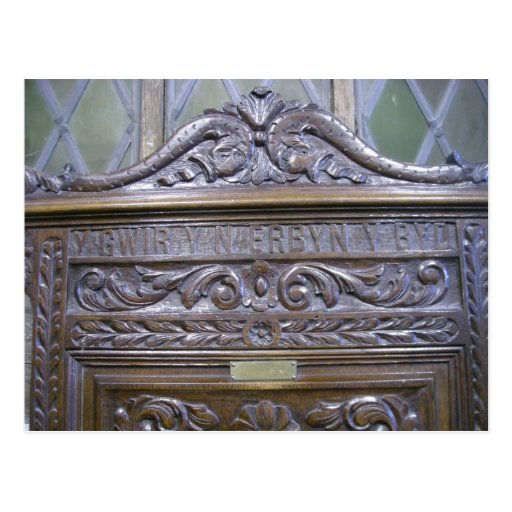
Bardic chair inscription: “the truth against the world”
With no more than this much Welsh in a ritual, or even just Y gwir yn erbyn y Byd [approximately “uh GWEER uhn EHR-been uh BEED”] “the Truth against the World,” you can clearly set apart the language of your rite from ordinary language, and help evoke the heightened state of consciousness characteristic of much (not all) successful ritual.
Benefits of Ritual Language
If you want the John F. Kennedy version – “what ritual language can do for you” – here’s a start.
An FAQ of the Latin Liturgy Association site lists several “important benefits of using Latin” as a “sacral” language, including its close association with worship, as with the Arabic of the Qur’an, the Sanskrit of Hinduism and the Hebrew of Judaism. It also “helps us overcome limitations of time and place” and “participate in the universal reality of the Catholic Church, linking us with the generations” who preceded us. As the language of a sacred musical tradition, it also gives access to the plainsong and chant of the Church.
So Why Use a Distinct Ritual Language?
Huston Smith
OK, you get that ritual and ritual language are powerful and widespread. But why not keep it to your own native tongue and skip the difficulty of learning another language besides? Who has the time for studying and mastering a dedicated language? Isn’t a dedicated practice more important? Aren’t ritual and worship and devotion in [insert your language here] better than none at all? This cry of the heart has a strong appeal. Its human roots are ancient. Huston Smith in his The World’s Religions (p. 34) cites a Hindu prayer, noting, “Even village priests will frequently open their temple ceremonies with the following beloved invocation:
O Lord, forgive three sins that are due to my human limitations:
Thou art everywhere, but I worship you here;
Thou art without form, but I worship you in these forms;
Thou needest no praise, yet I offer you these prayers and salutations,
Lord, forgive three sins that are due to my human limitations.
Surely this is justification, if indeed we need any? You may have seen this prayer incorporated into rituals as part of the reach toward the divine – I have. Of all human failings, surely what language we use in our quest must rank low on the scale of such things?
M. Isadora Forrest notes in her book Isis Magic, “Isis of the Ten Thousand Names provided Her ancient worshippers with a broad range of Divine aspects, functions and affinities” (pg. 8). So if we can approach spirit or divine realm using our own names for it, what’s the need for a separate ritual language? Can’t we reach and communicate with the Goddess [substitute your own preferred name here] using what is, after all, our “mother tongue,” the speech that is most intimate to us? Isn’t this language therefore among the most valid of tools we can use, if we wish to contact and plunge into the Otherworld, the divine realm? It reaches and extends from the heart.
Well, just like you generally appreciate home-baked over store-bought, deities show preferences. Among them are offerings, names and languages. That doesn’t mean that English or whatever your native language is won’t “work” as you lay the roses, pour the mead, light the cedar incense, offer the myrrh or dragonsblood or cinnamon, but it does mean that a more immediate connection is one benefit and advantage of using a ritual language. In part it’s a matter of dedication and devotion. Our efforts please the divine; as someone said – I’m quoting badly here – “the gods enjoy the taste of human sweat in their offerings.”
A tradition can have profound impact on our spiritual paths. Forrest observes (again, insert your preferred designation for “Goddess” and “Isis” as needed):
By examining the evidence this tradition has left us, modern devotees of the Goddess can be connected with and find inspiration in the ancient worship … We can discover the traditional ways Isis was worshipped and learn how her worshippers thought, talked and taught about her. In the stories they told, the religious purposes they agreed upon … we can follow the path of a very ancient religious tradition that can connnect us to our spiritual ancestors. By using the symbols they used and found meaningful– and by finding our own meaning in them – we are empowered by tradition. It can guide us, inpsire us, explain things to us. It provides potent archetypal symbols, sanctified by centuries of use, energized by the meaning invested in them. The devotion of thousands upon thousands of Isis worshippers before us can provide a path we can walk and a context for our own relationship
with the divine. Thus, “tradition can be an extremely valuable tool of connection with the Divine; yet it need not constrain us. Human religious history is a history of change” (9).
Ritual Language and Two Kinds of “Users”
The use of a special ritual language concerns two groups of ritualists in different ways. For writers or composers of rituals and liturgies, the language must be “composable in.” That is, it shouldn’t be so difficult to use that the creation of new rituals and liturgies is so challenging only a few can pull it off. This means that those who know the language can use it creatively. Need a new handfasting ritual, or a rite to plant potatoes? No problem! This also means that the first group can make the ritual accessible to the second and much larger group, the users or participants in rituals and liturgies. This latter groups includes not only the “usual suspects,” the regular participants in rituals, but also any visitors (assuming your rituals with a ritual language are open to them), and readers of any media like your group’s website that explains or presents rituals to a wider audience.
Which Ritual Language?
There are currently some 6000 human languages on the planet, though the number is decreasing dramatically. However, Celtic-inspired Druids need not sort through them; under a dozen ready and suitable options present themselves. (If you want to focus on Asatru and other similar northwestern European Heathen traditions, replace Celtic with Germanic tongues. Likewise, substitute some Slavic options, if you’re into Baltic Heathenism like Romuva, or Hellenismos if you’re a Greek Pagan.etc.).
Welsh, Irish Gaelic, Scots Gaelic, Breton, Cornish, Manx. Throw in Proto-Celtic if you wish. All but the latter have communities of speakers, grammars and dictionaries and various learning resources. (Proto-Celtic lets you try out an ancestral speech in a form that’s still being reconstructed as we speak. Enough exists to compose in it – barely. See the next section for more possibilities.) Admittedly you’re most likely to encounter the modern forms of these, but dive into the modern form, and you can begin to make use of preserved older forms in manuscripts, chronicles, epics and legends, rich with symbolism and myth for rituals, prayers, chants, song lyrics, etc. as yet unborn, unwritten, unchanted, unsung.
Conlangs, Arise!
Game of Thrones
Another option lies in the adaptation of a Celtic language to your purposes. Ritual language is already heightened, altered, shifted. Well, a conlang or constructed language may fit your needs. (For a detailed look at some possibilities, visit Mark Rosenfelder’s online Language Construction Kit.) Conlangers have been modifying adapting, regularizing, extending and creating out of whole cloth an astonishing range of languages. A significant number of them exist in forms complete enough to use for ritual. And you can actually commission a language from the Language Creation Society. You too can do just as the producers of Game of Thrones have done with Dothraki, whose creator David Peterson has created other languages. Visit his website for a sampling.
Perplexed by the contradiction between authentic or historical and concocted or created ex nihilo? You’ve arrived at the classic a priori versus a posteriori nexus – a lively point of debate in the conlang community.
J M Greer
Ends and Beginnings
Had enough? Need a break? Or want to sample the sounds of some 30 European languages? Below is a Youtube clip featuring Celtic, Romance, Germanic and Slavic languages, along with Greek, Albanian and Hungarian to round out the linguistic variety of Europe (see the note below for a complete list of languages and approximate times). You may have visceral reactions to accents, pitches, sounds. I urge you to make note of them. See if you can get down in words what it is that appeals or doesn’t appeal to you in the sounds and overall sprachgefühl, a wonderful German word that literally means “speech-feeling” — the character of a language. This can be helpful as you consider the sound of any ritual language you might want to use. It may also prove useful if you’re wondering what languages you might want to study in the future (if you’re following the language learning advice of John Michael Greer in his talk “A Magical Education”). And there’s a chance it may spark a dream of a past life when you may have spoken a form of one of these languages yourself.
Here’s the 32-language video:
A Next Step
In DRL — A Druid Ritual Language — Part 3, I’ll look specifically at Welsh and then at a couple of conlangs as candidates for ritual languages.
From the Wikipedia entry for “Magical Language“, accessed 3/23/14, which I cite below for its interest:
The performance of magic almost always involves the use of language. Whether spoken out loud or unspoken, words are frequently used to access or guide magical power. In “The Magical Power of Words” (1968) S. J. Tambiah argues that the connection between language and magic is due to a belief in the inherent ability of words to influence the universe. Bronisław Malinowski … suggests that this belief is an extension of man’s basic use of language to describe his surroundings, in which “the knowledge of the right words, appropriate phrases and the more highly developed forms of speech, gives man a power over and above his own limited field of personal action.”Magical speech is therefore a ritual act and is of equal or even greater importance to the performance of magic than non-verbal acts.
Not all speech is considered magical. Only certain words and phrases or words spoken in a specific context are considered to have magical power. Magical language … is distinct from scientific language because it is emotive and it converts words into symbols for emotions; whereas in scientific language words are tied to specific meanings and refer to an objective external reality. Magical language is therefore particularly adept at constructing metaphors that establish symbols and link magical rituals to the world.
Malinowski argues that “the language of magic is sacred, set and used for an entirely different purpose to that of ordinary life.” The two forms of language are differentiated through word choice, grammar, style, or by the use of specific phrases or forms: spells, songs, blessings, or chants, for example. Sacred modes of language often employ archaic words and forms in an attempt to invoke the purity or “truth” of a religious or a cultural “golden age”. The use of Hebrew in Judaism is an example.
Another potential source of the power of words is their secrecy and exclusivity. Much sacred language is differentiated enough from common language that it is incomprehensible to the majority of the population and it can only be used and interpreted by specialized practitioners (magicians, priests, shamans, even mullahs). In this respect, Tambiah argues that magical languages violate the primary function of language: communication. Yet adherents of magic are still able to use and to value the magical function of words by believing in the inherent power of the words themselves and in the meaning that they must provide for those who do understand them. This leads Tambiah to conclude that “the remarkable disjunction between sacred and profane language which exists as a general fact is not necessarily linked to the need to embody sacred words in an exclusive language.”
Video roster of languages and times; “FSI + a number” refers to the U.S. Foreign Service Institute ranking of difficulty for an English speaker, 1 being easier, and higher numbers being comparatively more difficult/requiring more hours of study:
Many spiritual and religious traditions feature a special language used for ritual purposes. The most visible example in the West is Latin. The Latin Mass remains popular, and though the mid-1960s reforms of Vatican II allowed the use of local vernacular languages for worship, they never prohibited Latin. For some Catholics, the use of vernacular reduced the mystery, the beauty and ultimately, in some sense, the sacredness of the rites. If you visit an Orthodox Christian or Jewish service, you may encounter other languages. Within an hour’s drive of my house in southern Vermont, you can encounter Greek, Hebrew, Russian, Arabic and Tibetan used in prayer and ritual.
Language as Sacrament
The heightened language characteristic of ritual, such as prayer and chant, can be a powerful shaper of consciousness. The 5-minute VedicSanskrit video below can begin to approximate for one watching it a worship experience of sound and image and sensory engagement that transcends mere linguistic meaning. The rhythmic chanting, the ritual fire, the sacrificial gathering, the flowers and other sacred offerings, the memory of past rituals, the complex network of many kinds of meaning all join to form a potentially powerful ritual experience. What the ritual “means” is only partly mediated by the significance of the words. Language used in ritual in such ways transcends verbal meaning and becomes Word — sacrament as language, language as sacrament — a way of manifesting, expressing, reaching, participating in the holy.
And depending on your age and attention at the time, you may recall the renewed popularity of Gregorian chant starting two decades ago in 1994, starting with the simply-titled Chant, a collection by a group of Benedictines.
Issues with Ritual Language
One great challenge is to keep ritual and worship accessible. Does the experience of mystery and holiness need, or benefit from, the aid of a special ritual language? Do mystery and holiness deserve such language as one sign of respect we can offer? Should we expect to learn a new language, or special form of our own language, as part of our dedication and worship? Is hearing and being sacramentally influenced by the language enough, even if we don’t “understand” it? These aren’t always easy questions to answer.
“The King’s English”
For English-speaking Christians and for educated speakers of English in general, the King James Bible* continues to exert remarkable influence more than 400 years after its publication in 1611. What is now the early modern English grammar and vocabulary of Elizabethan England, in the minds of many, contribute to the “majesty of the language,” setting it apart from daily speech in powerful and useful ways. Think of the Lord’s Prayer, with its “thy” and “thine” and “lead us not”: the rhythms of liturgical — in this case, older — English are part of modern Christian worship for many, though more recent translations have also made their way into common use. A surprising number of people make decisions on which religious community to join on the basis of what language(s) are, or aren’t, used in worship.
Druid and Pagan Practice
When it comes to Druid practice (and Pagan practice more generally), attitudes toward special language, like attitudes towards much else, vary considerably. Some find anything that excludes full participation in ritual to be an unnecessary obstacle to be avoided. Of course, the same argument can be made for almost any aspect of Druid practice, or spiritual practice in general. Does the form of any rite inevitably exclude, if it doesn’t speak to all potential participants? If I consider my individual practice, it thrives in part because of improvisation, personal preference and spontaneity. It’s tailor-made for me, open to inspiration at the moment, though still shaped by group experience and the forms of OBOD ritual I have both studied and participated in. Is that exclusionary?
Ritual Primers
Unless they’re Catholic or particularly “high”-church Anglican/Episcopalian, many Westerners, including aspiring Druids, are often unacquainted with ritual. What is it? Why do it? How should or can you do it? What options are there? ADF offers some helpful guidance about ritual more generally in their Druid Ritual Primer page. The observations there are well worth reflecting on, if only to clarify your own sensibility and ideas. To sum up the first part all too quickly: Anyone can worship without clergy. That said, clergy often are the ones who show up! In a world of time and space, ritual has basic limits, like size and start time. Ignore them and the ritual fails, at least for you. Change, even or especially in ritual, is good and healthy. However, “With all this change everyone must still be on the same sheet of music.” As with so much else, what you get from ritual depends on what you give. And finally, people can and will make mistakes. In other words, there’s no “perfect” ritual — or perfect ritualists, either.
(Re)Inventing Ritual Wheels
Let me cite another specific example for illustration, to get at some of these issues in a slightly different way. In the recent Druidcast 82 interview, host Damh the Bard interviews OBOD’s Chosen Chief, Philip Carr-Gomm, who notes that some OBOD-trained Druids seem compelled to write their own liturgies rather than use OBOD rites and language. While he notes that “hiving off” from an existing group is natural and healthy, he asks why we shouldn’t retain beautiful language where it already exists. He also observes that Druidry appeals to many because it coincides with a widespread human tendency in this present period to seek out simplicity. This quest for simplicity has ritual consequences, one of which is that such Druidry can also help to heal the Pagan and Non-Pagan divide by not excluding the Christian Druid or Buddhist Druid, who can join rituals and rub shoulders with their “hard polytheist” and atheist brothers and sisters. (Yes, more exclusionary forms of Druidry do exist, as they do in any human endeavor, but thankfully they aren’t the mainstream.)
About this attitude towards what in other posts I’ve termed OGRELD, a belief in “One Genuine Real Live Druidry,” Carr-Gomm notes, “The idea that you can’t mix practices from different sources or traditions comes from an erroneous idea of purity.” Yes, we should be mindful of cultural appropriation. Of course, as he continues, “Every path is a mixture already … To quote Ronald Hutton, mention purity and ‘you can hear the sound of jackboots and smell the disinfectant.'” An obsession with that elusive One Genuine Real Live Whatever often misses present possibilities for some mythical, fundamentalist Other-time Neverland and Perfect Practice Pleasing to The Powers-That-Be. That said, “there arecertain combinations that don’t work.” But these are better found out in practice than prescribed (or proscribed) up front, out of dogma rather than experience. In Druidry there’s a “recognition that there is an essence that we share,” which includes a common core of practices and values.
As a result, to give another instance, Carr-Gomm says, “If you take Druidry and Wicca, some people love to combine them and find they fit rather well together,” resulting in practices like Druidcraft. After all, boxes are for things, not people. Damh the Bard concurs at that point in the interview, asserting that, “To say you can’t [mix or combine elements] is a fake boundary.”
Yet facing this openness and Universalist tendency in much modern Druidry is the challenge of particularity. When I practice Druidry, it’s myexperience last week, yesterday and tomorrow of the smell of sage smoke, the taste of mead, wine or apple juice, the sounds of drums, song, chant, the feel of wind or sun or rain on my face, the presence of others or Others, Spirit, awen, the god(s) in the rite. The Druid order ADF, after all, is named Ár nDraíocht Féin — the three initials often rendered in English as “A Druid Fellowship” but literally meaning “Our Own Druidry” in Gaelic.
A Human Undersong
Where to go from here? Carr-Gomm notes what Henry David Thoreau called an “undersong” inside all of us, underlying experience. “We sense intuitively that there’s this undersong,” says Carr-Gomm. “It’s your song, inside you. The Order and the course and the trainings [of groups like OBOD] — it’s all about helping you to find that song. It’s universal.” As humans we usually strive to increase such access-points to the universal whenever historical, political and cultural conditions are favorable, as they have been for the last several decades in the West.
Paradoxes of Particularity
Yet the point remains that each of us finds such access in the particulars of our experience. (Christians call it the “scandal of particularity”; in their case, the difficulty of their doctrine that one being, Jesus, is the sole saviour for all people — the single manifestation of the divine available to us.**) And the use of heightened ritual language can be one of those “particulars,” a doorway that can also admittedly exclude, an especially powerful access point, because even ordinary language mediates so much human reality. We quite literally say who and what we are. The stroke victim who cannot speak or speaks only with difficulty, the aphasic, the abused and isolated child who never acquires language beyond rudimentary words or gestures, the foreigner who never learns the local tongue — all demonstrate the degree to which the presence or absence of language enfolds us in or excludes us from human community and culture. And that includes spirituality, where — side by side with art and music — we are at our most human in every sense.
In the second post in this series, I’ll shift modes, moving from the context I’ve begun to outline here, and look at some specific candidates for a DRL — a Druidic Ritual Language.
*Go here for a higher-resolution image of the title page of the first King James Bible pictured above.
**In a 2012 post, Patheos blogger Tim Suttle quotes Franciscan friar and Father Richard Rohr at length on the force of particularity in a Christian context. If Christian imagery and language still work for you at all, you may find his words useful and inspiring. Wonder is at the heart of it. Here Rohr talks about Christmas, incarnation and access to the divine in Christian terms, but pointing to an encounter with the holy — the transforming experience behind why people seek out the holy in the first place:
A human woman is the mother of God, and God is the son of a human mother!
Do we have any idea what this sentence means, or what it might imply? Is it really true? If it is, then we are living in an entirely different universe than we imagine, or even can imagine. If the major division between Creator and creature can be overcome, then all others can be overcome too. To paraphrase Oswald Chambers “this is a truth that dumbly struggles in us for utterance!” It is too much to be true and too good to be true. So we can only resort to metaphors, images, poets, music, and artists of every stripe.
I have long felt that Christmas is a feast which is largely celebrating humanity’s unconscious desire and goal. Its meaning is too much for the rational mind to process, so God graciously puts this Big Truth on a small stage so that we can wrap our mind and heart around it over time. No philosopher would dare to imagine “the materialization of God,” so we are just presented with a very human image of a poor woman and her husband with a newly born child. (I am told that the Madonna is by far the most painted image in Western civilization. It heals all mothers and all children of mothers, if we can only look deeply and softly.)
Pope Benedict, who addressed 250 artists in the Sistine Chapel before Michelangelo’s half-naked and often grotesque images, said quite brilliantly, “An essential function of genuine beauty is that it gives humanity a healthy shock!” And then he went on to quote Simone Weil who said that “Beauty is the experimental proof that incarnation is in fact possible.” Today is our beautiful feast of a possible and even probable Incarnation!
If there is one moment of beauty, then beauty can indeed exist on this earth. If there is one true moment of full Incarnation, then why not Incarnation everywhere? The beauty of this day is enough healthy shock for a lifetime, which leaves us all dumbly struggling for utterance.
Almost a month ago now I got the nudge to visit the major peaks in the area — Monadnock (NH), Hogback and Ascutney (VT) — starting on Alban Eilir, the spring equinox. Energy-lines and Native American paths have been in my thoughts since the new year, and yesterday I climbed through snow and ice to within bowshot of Monadnock’s stony peak at 3165 feet. The mountain is a New Hampshire state park, and lies a short distance north of the Massachusetts-New Hampshire border, southeast of Keene and west of Jaffrey, NH.
Monadnock, or Grand Monadnock, to distinguish it from other lesser monadnocks in the region, has the reputation for being one of the most-climbed peaks in the world. Thogh my wife and I have lived off and on in the area since 1991, I’d never visited. From what I saw yesterday, a summer climb would still be strenuous, but I’m glad that with the ice and cold, I had the mountain nearly all to myself. Or, more accurately, the mountain had me. All wild places have a presence, and the berg-geist or “mountain spirit” of Monadnock made itself known most of all in a listening silence. I met just six other people, and all in the first half hour of my climb. All were descending. After that, no one but the mountain and me.
The first leg of the southeast ascent rises gradually, just enough to get you conscious of your breathing. The temp at this point was in the low 40s — it just looks colder in these shots.
The new season really is here, though a 4″ fall of heavy wet snow two days ago seemed to give the lie to that. When I left the ranger station at the foot, the sun shone through scattered clouds. Ice doesn’t rule everything any more. A small spring had broken free of ice and ran across the trail.
The climb begins in earnest once the trail splits into White Cross and White Dot. The trail map showed similar elevations and roughly equal distances, so I opted for White Cross.
Besides, to paraphrase Frost, “it was snowy and waited there.” As the map warned, “trails are not necessarily marked for winter use.” Painted arrows and keys on the rocks often lay below the snowline. Markers on a few exposed boulders showed and the prints of those ahead of me provided enough guidance. But I was mindful of the sky — a quick change could easily leave me lost in fog or snow showers, as the map also warned. It was easier, not just prudent, to pay attention, because I was alone.
/|\ /|\ /|\
Many states in the U.S. still retain versions of Native American place-names. Vermont and New Hampshire bristle with them: Bomoseen, Skatutakee, Memphremagog, Ascutney, Monadnock. The Wikipedia entry obliges with the following information about the mountain’s name:
… “monadnock” is an Abenaki-derived word used to describe a mountain. Loosely translated it means “mountain that stands alone,” although the exact meaning of the word (what kind of mountain) is uncertain. The term was adopted by early settlers of southern New Hampshire and later by American geologists as an alternative term for an inselberg or isolated mountain.
As I climbed, the temperature dropped at least 15 degrees. No birds here, unlike at the foot where a few sang tentatively overhead. The higher elevation showed visibly in pines coated with ice.
I didn’t wear crampons or any special footwear beyond a pair of good winter boots. Only in a few places was ice a problem. The snowfall of the day before was a gift — it coated the ice of thaws and freezes beneath it, and made for easier going. The ascent continued to sharpen, and I remembered bones and muscles I’d forgotten about since late fall.
Vistas offered compensation. Here’s the view to the west and south, during a particularly clear interval.
White Cross and White Dot rejoin about half a mile below the peak. I was tired by now, though I chuckled at the mixed message of this sign:
It was soon time to descend. The rock of the final 500 feet was too slick, the weather worsened by the minute, and leaving now would bring me to the foot again before twilight. Here is the peak over the treetops.
I’m including this final image, though it’s blurred, because this is the highest I climbed, and it captures the berg-geist in winter: I have been here a long time, and I am still here. You are flesh — I am stone.
Little ceremony — that wasn’t my intent when I climbed. A few words and gestures to the trees, the sky, the rocks, the snow and brisk fresh air. The mountain, always answering, said nothing.
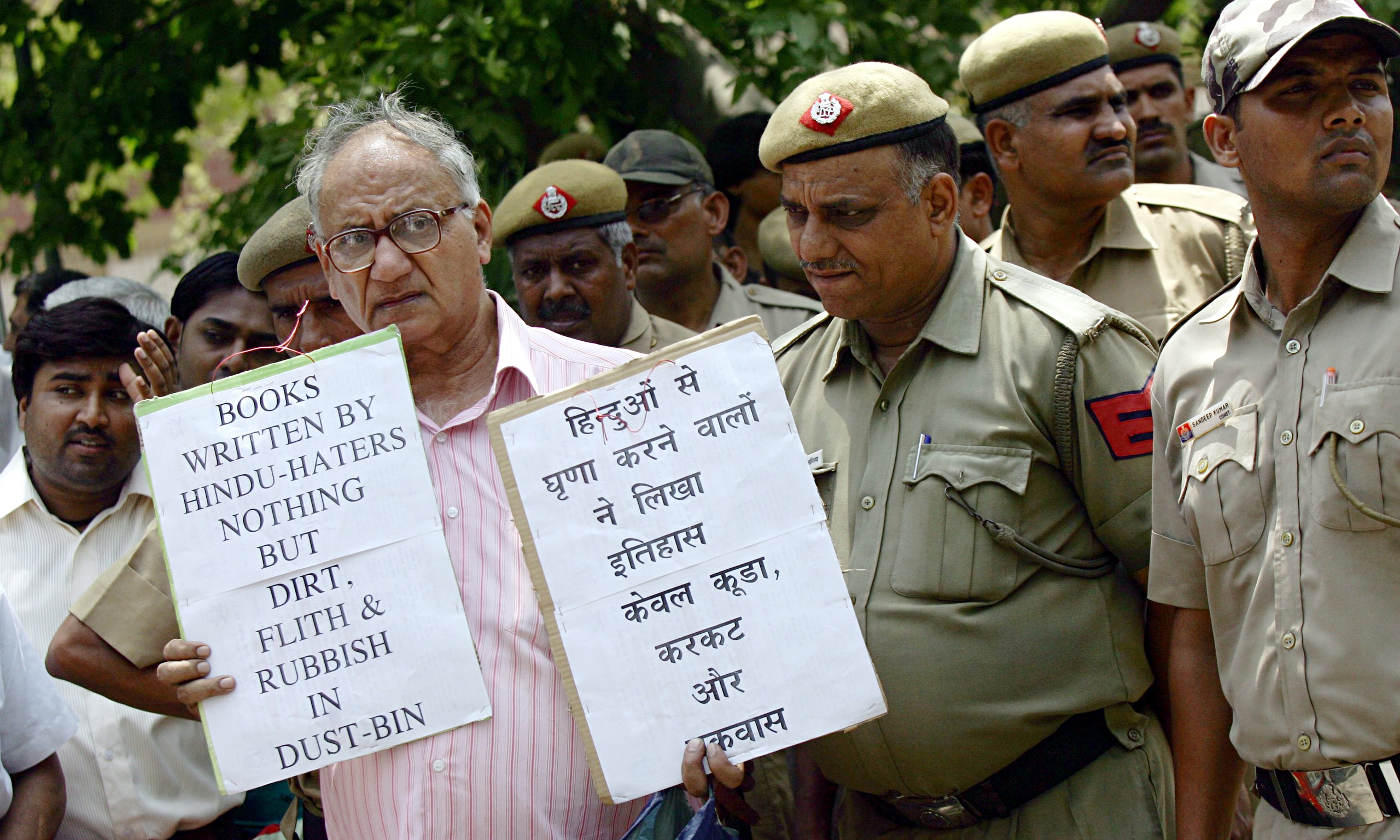
Wendy Doniger’s gotten some extensive press lately. Not on the scale of Kim Kardashian, but still … Whether or not Doniger or anyone accepts the half-truth that “all press is good press,” recent books by this University of Chicago professor of Hinduism have aroused the ire of vocal Hindus variously called fundamentalists, conservatives and Hindutva-vadis, supporters of Hindutva or “Hindu-ness.”
Penguin Books in India recently recalled Doniger’s 2009 study, The Hindus: An Alternative History, because the Delhi-based group SBAS — Shiksha Bachao Andolan Samiti (“Save Education Movement”) — characterized the book as “malicious,” “derogatory and offending to Hinduism” and containing “faulty representation of Indian history and historical figures.” SBAS advanced its case with a successful push for the withdrawal of a second book of Doniger’s as well, On Hinduism, published in 2013.
The legal footing that SBAS stands on appears in the Indian Penal Code. SBAS spokeperson Dinanath Batra benefits from the code which states that “deliberate and malicious acts intended to outrage religious feelings of any class by insulting its religion or religious beliefs shall be punished with imprisonment or fine, or both.”* We’ll sidestep for now the apparent dangers of granting such strong legal recourse to anyone whose sensibilities might be offended. After all, outrage is the stance du jour of much of the political conversation in the States.
Of course, censors and free-speechers have been waging these and similar battles for a long time, with no likely end in sight. When Mark Twain’s The Adventures of Huckleberry Finn is still the fourth most frequently banned book in the U.S., as well as a “Great American Novel,” such controversy comes as no surprise. (A 2011 edition of the Twain classic removes the 200+ instances of the word “nigger” and replaces them with “slave.”)**
Doniger, now 73, is a respected scholar, having taught at Chicago for 36 years, and published dozens of books and hundreds of scholarly articles. Even before publication in India, she worked with editors to soften potentially inflammatory wording. But as Doniger remarks in a February ’14 New York Timesarticle, her focus is on popular Hinduism. She wanted “to tell a story of Hinduism that’s been suppressed and was increasingly hard to find in the media and textbooks … It’s not about philosophy, it’s not about meditation, it’s about stories, about animals and untouchables and women. It’s the way that Hinduism has dealt with pluralism.” The Times article continues: “Asked if she could sympathize at all with those offended by her work, Ms. Doniger said: ‘In general, I don’t like people saying nasty things about other people’s religion, but this is something else. This is fundamentalism, which says that parts of its own religion are bad. In a sense, I’m defending their religion, and they’re attacking it.’”
As Slate notes, “The Hindus, which is still available internationally, is currently the number 11 bestselling book on Amazon, which is not too shabby for a four-year old religious history book by a University of Chicago divinity professor. The worst enemy of censorship is always curiosity.”
Columnist Swati Sharma in the 20 Feb. ’14 Washington Postconcludes,
There are some concerns when it comes to Doniger and Western media articles about the backlash against her work. While you can disagree with the book and still want it published, Doniger repeatedly blames any criticism of her work on the right wing, sweeping aside any real concerns about it. It’s almost too easy to frame those who are religious as religious fundamentalists — when some on the far right try to ban “On the Origin of Species” in the United States, it doesn’t mean all Christians support such drastic measures. In the same sense, there are many Hindus, scholars and academics who disagree with her writings but believe the book should be published. Those voices get trampled by an easily digestible battle between religious fundamentalists and secular liberals. But that’s what happens when a book is basically banned; the debate on the actual content is lost and is focused instead on free speech. That’s where Doniger is in the right.
That doesn’t mean the right-wing party isn’t pushing this debate — after all, elections are coming in May. That said, Penguin’s decision to not wait for a judgment and to settle is disappointing. It’s easy to publish books that are safe. It’s for the ones that challenge us that the concept of free speech exists.
Doniger doesn’t shy away from the provocative remark. She gets off a few zingers, for instance, in her article in yesterday’s 5 March ’14) NY Times, “Banned in Bangalore“:
I must apologize for what may amount to false advertising on my behalf by Mr. Batra, who pronounced my book “filthy and dirty.” Readers who bought a copy in hope of finding such passages will be, I fear, disappointed. “The Hindus” isn’t about sex at all. It’s about religion, which is much hotter than sex.
“Hotter than Sex” would make a great book or blog title. Yes, you’re welcome.
But the goddess feminists are whistling in the dark when they argue, first, that everyone used to worship goddesses (some people did, but many did not) and, second, that this was a Good Thing for women, indeed for everyone, their assumption being that women are more compassionate than men.
In fact, when men as well as women do worship goddesses, as they have done for centuries in many parts of India, the religious texts and rituals clearly express the male fear of female powers, and the male authors of those texts therefore make even greater efforts to control women, as if to say, “god help us all if these naturally powerful women get political power as well.”
There is generally, therefore, an inverse ratio between the worship of goddesses and the granting of rights to human women. Nor are the goddesses by and large compassionate; they are generally a pretty bloodthirsty lot.
Goddesses are not, therefore, the solution. Equal respect for human men and women is the solution.
But if our deities mirror ourselves, as they seem to do, we can be grateful for changes in both. We can be grateful that slavery is now illegal, that racism no longer gets such an easy pass, that women’s rights are a live issue, that the beginnings and ends of life are being examined critically, despite our weariness with the wars of political correctness and with conservative-liberal polarization. Does morality evolve? Just what absolutes are you looking for?
I like to let my subjects have the last words (even if I chose them to illustrate my own post rather than letting them make only their own points). So here’s an excerpt from another of Doniger’s blog-posts, “The Mutual Dream,” which offers a polytheist perspective worth examining for its explanatory power:
A better idea, I think, is captured by several of India’s many philosophies of reality and illusion, which suggest that we do indeed create god (and therefore religion) in our imaginations, as we create all of our reality, but that at the same time god creates us in god’s imagination, that god is, like us, constantly dreaming into existence a reality that includes us imagining god. We are mutually dreaming, mutually existing.
A modified, slightly rationalized, version of this belief would be the assertion that, although we do not make god ex nihilo, nor does god make us ex nihilo, we are the ones who bring god fully to life, while god in turn is what brings us truly to life, makes us fully alive to the phenomenal world, dream world though it may be.
This is not an idea that is easy for people trained in Western philosophical ideas to swallow, and it all depends upon how you define god, but for me it is rich in meaning.
/|\ /|\ /|\
*Times of India 2 March ’14 article and 11 Feb. ’14 article.
“For I too am Efnisien.” The rite closes, each man of us — for this is a men-only event — repeating the words, hands lifting from between our feet the small black cauldrons, and cupping them. They’re warm to the touch still, from when they sat in the central fire-pit. Owning our rage, not looking away from it. Seeing its destructiveness, children and women often its first victims, men themselves its last. Acknowledging the difficult gift of anger, accepting what it might have to teach. Allowing the possibility of transformation, gift of the Goddess whose symbol is the cauldron. Echoes of another country, sun-kissed and prone to earthquakes. Echoes of another story, the same story, permeated with male anger, opening with dark words: “Rage — Goddess, sing the rage of Peleus’ son Achilles, murderous, doomed, that cost the Achaeans countless losses …”*
/|\ /|\ /|\
The army of Bran is enormous, as if all of Wales has emptied itself and spilled onto the eastern shore of Ireland. The beaches lie dark with men’s shadows. So great is the full extent of their coming that the heart runs out of the Irish, knowing they can never win in open battle. It must be by trickery. So they raise a great house to receive Bran and his men, and the outcome hangs in the balance. Perhaps we can avert war after all, run the rumors, at least among those who don’t know that in the towering new hall, a hundred bags hang from the rafters. And each holds and conceals an Irish warrior. The bulging sacks of coarse cloth supposedly contain merely flour, part of the provisioning for the enemies-turned-guests. A great feast this night, promise the Irish. We will mend this rancor between us.
More and still more of the Welsh forces pour into the camp. Among the leaders one stays suspicious. Efnisien, prince, brother of Bran and Branwen. Never an easy man, this twin of gentle Nisien. The muscles ripple beneath his shoulders, and his hands twitch. Do nothing, brother, till I return, he finally mutters to Bran, and stalks off scowling to reconnoiter the hall. The last of the Welsh have finally joined the main body of warriors when Efnisien returns. His hands and torso drip now with blood, and a fierce grin splits his face. Dead now, he says, exulting. Scores of them, waiting to fall on us at the feast. He has crushed upwards of a hundred Irish skulls like walnuts. His eyes glow with it.
The second part of the Irish plan for the night, the feast, still proceeds on schedule. In the center of the hall a great fire burns, the andirons orange in the heat. In the flickering glow, a hall full of warriors whose armbands and bracelets throw back the light, a glitter of silver, jewels and red gold. No more room indoors, men find a place outside. Under torchlight they mingle and stare at each other. Amid the roasts and savories, the mead and forced cheer along the benches, the Irish plot is a whisper that will not die, that no one admits to hearing. A call for everyone’s attention, and Gwern, the young prince and heir, child of Matholwch and Branwen, is presented. Here is one path to peace, a child who unites the two nations in his own flesh. Bran makes much of him. Nephew, sister’s son, certain blood kin, a hallowed relationship since time out of mind. But Bran also gazes at his sister sitting beside his brother-in-law Matholwch, notes the painful thinness of her figure, the faint yellow of old bruises on her skin, a tightness around her mouth that does not go away. Their eyes meet again and again, and they need no words to speak whole histories to each other. Well, brother? says her look. I have come, says his.
The feast does no good, even if either side wished it. The Irish, their plot foiled, are touchy, all nerves, and warriors on both sides take every feasting jest the worst way. Tempers run high, spiked with strong drink, and a scuffle breaks out, unsurprisingly, around Efnisien. It spreads, and in the reckless fighting, Gwern, the shining prince, gets thrown into the massive firepit.** By Efnisien. His and Bran’s nephew, Branwen’s boy.
At this, both sides drop all pretense. The fighting spreads, ferocious. The Irish just keep coming, endlessly, until Efnisien spies the magic cauldron, the gift of Bran for the now accursed wedding between Welsh and Irish royals. Matholwch’s men have turned it to good purpose, deploying it to revive their fallen fighters. What use, what hope is it to kill men who don’t stay dead?!
Efnisien shakes his head to clear away some of the battle lust. Think! he commands himself. The red fog that clouds his mind thins briefly. And then he’s got it, a way forward. He flings away his own sword, grabbing one of Irish make, and throws himself among the Irish corpses awaiting resurrection. He lies still as he can, trying to slow his heavy breathing. The cauldron itself must go. Soon enough, as he foresaw, the Irish don’t stop to pick and choose, but toss each Irish corpse into the cauldron, hurrying on to the next. From the depths of the magic vessel comes a deep hum. Steam rises from it, along with a roar of distant voices that shakes its sides.
Efnisien feels himself lifted, then dropped. How long he seems to fall! Then a sudden heat hugs him, burning along each nerve and vein. Everywhere his skin seems to melt into agony. The death-destroying power of the cauldron — but he is already alive! With a last surge of strength, he somehow finds his feet, shoving his arms out to both sides, the cauldron a scalding quicksilver fury against palms and soles. He heaves hard, harder. The cauldron, and Efnisien too, shrieks, cracks and shatters. Then blackness.
/|\ /|\ /|\
Bran carrying the body of his nephew Gwern/Harlech Castle, Wales
How many others can be dead, and none matter but two? Bran thinks. Gwern lost, and his sister Branwen all but dead from grief. On all sides, heap upon heap of bodies lies. The Irish who had assembled against them? All slain. And the endless army of the Welsh? Of those lines and squads and battalions of men who crossed the Irish Sea with him, just seven survive.
Part Four recounts the return of the Seven to Wales.
/|\ /|\ /|\
*Fagles, Robert. The Iliad. Penguin Classics, 1999.
**This act of Efnisien’s is explained by one source as “avoiding the geasagainst shedding kinsmen’s blood.”
But what of the Galilean Rabbi himself? Enough about trends, which I said last time I wasn’t really interested in. We may forget that Jesus is a common enough religious name of the time — a version of Joshua — “God saves.” (It’s a name still popular today among Hispanics.) Thirty, and he’s still not married. A disappointment to his culture, his family. After all, both count immortality at least in part through heirs and bloodlines. His mother tries to understand, received a sign when she conceived him, has her suspicions and hopes.
Reconstruction of Solomon’s Temple in Jerusalem
An itinerant teacher and preacher, one of many, traveling the countryside. On festival days, when he can, like many of his countrymen, he visits the great Temple in Jerusalem. A short career: just a few years. A group of followers who scatter at his death, denying him repeatedly. A promising life, cut short by an ill-timed visit to the capital. The one who betrays him comes from among his own followers. Roman overlords, touchy at the major festival of Passover, the city bulging with visitors and pilgrims, a powder-keg, awaiting a spark to flame into chaos. A summary arrest and trial for the young Rabbi, followed by an ignominious and agonizing death.
Except unlike so many other such preachers, after his death Jesus is not forgotten, is eventually deified, gets elevated to membership in the theologically-problematic Trinity that Christians insist isn’t polytheistic. (If it looks like a duck, and sounds like a duck …) What was it about him that came across as godlike?
As with other spiritual teachers, we can see his divine intoxication ebbing and flowing, peaking and falling away again, a common enough human phenomenon. Most of us have known a peak experience at least once; we’ve also sadly watched it slip away.
At times Jesus is a poor Rabbi working for justice and compassion, firmly ensconced in the tangle that is 1st century Judea, with its liberal agnostic Sadducees, conservative legalistic Pharisees and radical Zealots. Israel, a stand-out nation, with its peculiar and demanding monotheism, an island of faith and practice in a sea of surrounding nations with their many gods. A politically contentious region, one the Romans occupy, “pacifying” it in typically straightforward Roman style, with local career politicians like Pilate. The Romans crucify troublemakers, tax the province for whatever they can squeeze out of it, and garrison it as a staging point for patrolling other legs of an Empire increasingly wobbly and quarrelsome and groping towards revolt.
More and more, this Rabbi draws a crowd when he stops to preach. He’s a vivid speaker, his rural Galilean-accented Aramaic familiar to his audience. He’s one of us, Joseph’s son. Did you hear what he said earlier today, last night, a week ago? Almost always something memorable.
Show me a coin, he asks those gathered around him one day. A natural teacher, using whatever’s on hand to make a point.
Whose image appears on it? he asks them now.
It’s Caesar’s, they answer.
Exactly so, he says. Distinguish rightly what goes where. The coin, the tax, that goes to Caesar. The divine , however, requires something different.
Like what? his listeners wonder.
Good master, somebody else asks him, intent on his own issues. What do I have to do to inherit eternal life?
Don’t call me “good,” the Rabbi replies, after a pause. I’m not. Call nobody good, except God. And that’s not me, not me, not me the silence echoes, in case anyone was wondering.
The fig tree, when he reaches it, has no figs. Of course not — it’s not the season for them. Jesus, hungry, tired and discouraged, curses it anyway, goes to bed with an empty belly. Real son of God material. Not likely. Word of it gets written down, too.
I’ve been with you this long and you still don’t get it? he scolds his closest followers one day. How long must I endure you? Almost losing it. In public. Another low point. Another note that rings humanly true.
Sea of Galilee
That’s “this-world” Jesus. He sweats in the Mediterranean summers, shivers in the damp, rainy winters. Cries when his friend Lazarus dies. Bellows at the merchants and money-changers in the Temple.
Sheep and goats wander the roads as he walks from town to town. It’s hot and dusty, it’s raining, it’s stormy. The Sea of Galilee can turn to whitecaps in a minute, threatening the small fishing boats that work its coves and depths. Workmen hail him, stop and question him, ponder his words. His own people. Fishermen, slaves, tax collectors, soldiers, prostitutes, farmers, widows, children. The sick, the street people, the lepers and beggars, the homeless. His message first of all must reach them, before anybody else. They need it so badly.
But at times we hear a different voice, sense a very different presence. The Otherworld vivid, all around. (“Earth’s crammed with heaven, and every common bush afire with God; but only he who sees, takes off his shoes …” writes Elizabeth Barrett Browning, nineteen centuries later.) The Kingdom, here, now. This Jesus, so drenched with the divine that the rocks sing to him with it. He can be wrapped in a shining cloud and commune with the ex-carnate Moses. Perceive the spiritual temptations of worldly power, available to anyone who begins to walk into the heart of the Great Mystery. He can say, Satan! but he’s really talking to his own human capacity to choose for good or bad. The power that goes with deep awareness and choice.
This Jesus says The divineand I are one. I came to testify to the truth. If you see me, you see the face of the divine. I came so that people can have more abundant lives. I came for you all. And you are all my sisters and brothers. All children of God, all walking the fields and forests of the Kingdom.
This Jesus knows the divine is all-present, that the flow of Spirit sustains everything, that there’s always enough.
How to capture this inner truth in stories? A huge crowd, fed, with left-overs. A leper healed. A poor woman looking for love or a livelihood, taken in adultery or prostitution, forgiven — and no one to say “But wait!” or argue the letter of the law with the Rabbi with the shining eyes. The accusing crowd, unsettled, disperses.
The hick Rabbi, dying a criminal’s death on the cross, thieves and murderers on both sides pf him, gasping as he asks God to forgive those who nailed him up to die a slow death. The palpable sense of his presence after his death.
His consciousness rising and falling in its breadth of awareness of its own divine potential, its union with all things, its kinship with mustard seeds, with the birds of heaven and the foxes of earth and trees that clap their hands. What could be more human? What could be more Druidic?
The world has three levels: heaven, earth and hell. The leaven is divided into three portions and hidden for a time. All things will be revealed. The divine is both different and the same, yesterday, today and forever. Ask, seek, knock. Druidic triads everywhere, once we start looking. No, the carpenter’s son wasn’t necessarily a Druid. No, Jesus maybe didn’t “in ancient time walk upon on England’s mountains green,” as Blake imagines it in his poem “Jerusalem.” Another story to convey the sense of the divine, here. No reason to claim kinship where it doesn’t exist. But every reason to celebrate links and commonalities and similar wisdom, wherever, whenever they appear.
A man who touches the divine and tries to express it in a culture steeped in a monotheistic tradition of necessity will draw on monotheist images and tropes. How else to express his sense of profound communion, except by an image of a family, father and children? How else to communicate the sense of despair and agony of being cut off from every hope and healing, except by images of lasting hell? How else to convey the divine promise rich inside every breathing moment, except by saying something like It’s the Father’s good pleasure to give you the Kingdom?
The gift, already given, given every day, dawn, noon and sunset. The divine never offers less than all. We strain to catch and carry the ocean in a coffee mug. We gaze at dawn and can never hold all that light. We go for water, and it changes to wine, intoxicatingly alive. Each spring, the world practices resurrection. And yes, even the rocks are singing.
Midwinter greetings to you all! It’s sunny and bitter cold here in southern VT. The mourning doves and chickadees mobbing our feeder have fluffed themselves against the chill — the original down jackets — the indoor thermometer says 62, and my main task today, besides writing this post, is keeping our house warm and fussing over the woodstove like a brood hen sitting a nest of chicks. Hope you’re bundled and warm — or if you live on the summer side of the globe, you’re making the most of the sun and heat while it lasts.
/|\ /|\ /|\
The long and complex associations between a dominant religion like Christianity and minority faiths and practices within the dominant religious culture, like Druidry, won’t be my primary focus in this post. I’m more interested in personalities and practices anyway. It’s from spiritual innovators that any transformation of consciousness spreads, and that includes people like Jesus. Or as George Bernard Shaw (1856-1950) quipped in his play Man and Superman, “The reasonable man adapts himself to the world: the unreasonable one persists in trying to adapt the world to himself. Therefore all progress depends on the unreasonable man.” I’m asserting that in the best sense of the word, we can count Jesus among the “unreasonable” men and women we depend on for progress.
Mostly reasonable people like me don’t make waves. Cop out? Maybe. If I chose to stand in the front lines of protests against practices like fracking, wrote blogs and letters decrying the bought votes and cronyism of specific members of Congress, targeted public figures with letter campaigns, founded and led a visible magical or spiritual group or movement, made headlines and provided a ready source of colorful sound-bites, I’d win my quarter-hour of fame, and probably an FBI or NSA file with my name on it.* Maybe it would make a difference. Maybe not. Material for an upcoming post.
Back to the main topic of Jesus and Druidry. As Philip Carr-Gomm notes in his book Druid Mysteries,
Although Christianity ostensibly superseded Druidry, in reality it contributed to its survival, and ultimately to its revival after more than a millennium of obscurity. It did this in at least four ways: it continued to make use of certain old sacred sites, such as holy wells; it adopted the festivals and the associated folklore of the pagan calendar; it recorded the tales of the Bards, which encoded the oral teachings of the Druids; and it allowed some of the old gods to live in the memory of the people by co-opting them into the Church as saints. That Christianity provided the vehicle for Druidry’s survival is ironic, since the Church quite clearly did not intend this to be the case (p. 31).
One somewhat obscure but intriguing survival is the Scots poet Sir Richard Holland’s Buke of the Howlat(e) (Book of the Owlet), dating from the 1450s. Holland’s satirical poem is peopled with birds standing in for humans, and it stars an unhappy owl which has traveled to the Pope (a peacock) to petition for an improved appearance.
In the process of considering the owl’s request, the Pope orders a banquet, and among the entertainments during the feast is a “Ruke” (a rook or raven) in the stanza below, which represents the traditional satirical and mocking bard (named in the poem as Irish, but actually Scots Gaelic), deploying the power of verse to entertain, assert his rights, and reprimand the powerful. Thus, some two centuries before the start of the Druid Revival, Holland’s poem preserves memory of the old bardic tradition. Bear with my adaptation here of stanza 62 of Holland’s long poem. Here, the Rook gives a recitation in mock Gaelic, mixed with the Scots dialect** of the poem, demanding food and drink:
So comes the Rook with a cry, and a rough verse:
A bard out of Ireland with beannachaidh Dhe [God’s blessings (on the house)]
Said, “An cluinn thu guth, a dhuine dhroch, olaidh mise deoch.
Can’t you hear a word, evil man? I can take a drink.
Reach her+ a piece of the roast, or she+ shall tear thee.
[+the speaker’s soul — a feminine noun in Gaelic]
Mise mac Muire/Macmuire (plus indecipherable words)
I am the son of Mary/I am Macmuire.
Set her [it] down. Give her drink. What the devil ails you?
O’ Diarmaid, O’ Donnell, O’ Dougherty Black,
There are Ireland’s kings of the Irishry,
O’ Conallan (?), O’ Conachar, O’ Gregor Mac Craine.
The seanachaid [storyteller], the clarsach [harp],
The ben shean [old woman], the balach [young lad],
The crechaire [plunderer], the corach [champion],
She+ knows them every one.”
[+again, the soul of the speaker]
If you can for a moment overlook the explicit Protestant mockery of the Papacy (the Pope as a Peacock, after all), here, then, is an early Renaissance indication that the Bardic tradition was still recalled and recognized widely enough to work in a poem. Holland’s poem is itself a satire, and in it, the bard demands food and drink as his right as a professional, shows off his knowledge of famous names, and generally makes himself at home, both satirizing and being satirized in Holland’s depiction of bardic arrogance. (For in the following stanza, he’s kicked offstage by two court fools, who then spend another stanza quarreling between themselves.)
Thus, when the first Druid Revivalists began in the 1600s to search for the relics and survivals and outlying remains of Druidry to pair up with what they knew Classical authors had said about the Druids, things like Holland’s poem were among the shards and fragments they worked with. I’ve written (here, here and here) about the tales from the Mabinogion which, as Carr-Gomm points out above, preserve much Druid lore, passed down in story form and preserved by Christian monastics long after the oral teachings (and teachers) apparently passed from the scene. OK, .
More about Revival Druidry, the Revivalists, and Druidic survivals, coming soon.
*It’s likely such a file already exists anyway: I lived and worked for a year in the People’s Republic of China, I had to be fingerprinted and cleared by the Dept. of State for a month-long teaching job in South Korea (a requirement of my S. Korea employer, not the U.S.) a couple of summers ago, and I practice not just one but two minority religions. If you’re reading this, O Agents of Paranoia, give yourselves a coffee break — nothing much continues to happen here.
**Below is Holland’s original stanza 62 from his Buke of the Howlate. With the help of a dated commentary on Google Books, and the online Dictionary of the Scots Language, I’ve worked on a rough translation/adaptation. If you know the poem (or know Scots), corrections are welcome!
Sae come the Ruke with a rerd, and a rane roch,
A bard owt of Irland with ‘Banachadee!’,
Said, ‘Gluntow guk dynyd dach hala mischy doch,
Raike here a rug of the rost, or so sall ryive the.
Mich macmory ach mach mometir moch loch,
Set here doune! Gif here drink! Quhat Dele alis the?
O Deremyne, O Donnall, O Dochardy droch
Thir ar his Irland kingis of the Irischerye,
O Knewlyn, O Conochor, O Gregre Makgrane,
The Schenachy, the Clarschach,
The Ben schene, the Ballach,
The Crekery, the Corach,
Scho kennis thaim ilk ane.
Carr-Gomm, Philip. Druid Mysteries: Ancient Wisdom for the 21st Century. London: Rider, 2002.
Diebler, Arthur. Holland’s Buke of the Houlate, published from the Bannatyne Ms, with Studies in the Plot, Age and Structure of the Poem. Chemnitz, 1897. Google Books edition, pp. 23-24.
And so the tale unfolds, its apparent focus on the actions of men. But what of Branwen, sister of Bran? She is not merely passive, an unwitting pawn in the hands of her brother, her family.
In her story a second and hidden teaching lies in plain sight, so to speak.
“She tames a starling and teaches it human speech,” goes one version. Such an innocent line. Does she achieve this before her mistreatment begins at the hands of her new husband, Matholwch king of Ireland? During? In either case, her deed stands as a marvel.
The -wen affix in Welsh is one way to form feminine names: Branwen, no less than Bran, is a leader, a bridge. A Raven. For if she tames the starling before she needs it so desperately, foresight and guidance are hers because she listened and acted on them. And if after, to her belong inspiration and determination and a singular courage. To win the trust of a wild creature, to teach it speech, even if it is mimicry, to impress on it the urgency of her plight, to teach or guide it where to fly to find Bran, and on finding him, to repeat the message — each is remarkable alone, to say nothing of all of them together, while being abused and degraded. This is the power of the animal in us, of Raven wisdom.
I do a quick internet search for “raven wisdom” and through a marvel worthy of the story, within seconds “A Bit about the Raven” appears among the links. What are some characteristics of Raven Wisdom, according to the site?
Rebirth without fear
Ability to tear down what needs to be rebuilt
Renewal
Ability to find light in darkness
Courage of self-reflection
Introspection
Comfort with self
Honoring ancestors
Connection to the Crone
Divination
Change in consciousness
New occurrences
Eloquence
Each of these is apt and fitting, without forcing the issue. Deserving of meditation. Fear would rule you if it could. In Branwen’s case, with abuse and pain and betrayal at the hands of your husband, trapped in another country, all your blood kin, except for your child, across the sea, out of reach. Raven brings rebirth without fear. Branwen realizes the gift of self-possession, and “possessing” the self, a kind of paradox, she — we — have all that is needed.
I’d take a good Black Ops team any day, or barring that, a revolver, you think. And in the short term, these advantages would serve. But how well would they serve? Rescued, delivered, you return to your old life. No change, no growth to speak of, only new sorrow, and harrowing memory. A resolve not to be married off without your consent? Maybe it started as a love match, not just a political marriage. Who can say, from what the story itself offers?
But if you “learn” from the experience, but do not also transform as a result, you learn not to trust your own judgment, not to trust the judgment of your family who supposedly love you, who launch you into such a disastrous marriage. Not to trust life to bring you home.
Raven offers more. It asks us about our own consciousness, about our attitudes to kinds of wisdom we may not (yet) value, or which we may even disdain or abuse, but which remain as gifts given before we can see and claim them as ours. Raven is nowadays ubiquitous as a Craft name, a Pagan nickname, or initiatory identity. Raven was the first degree of initiation among the devotees of Mithras. And Raven is the trickster and initiator par excellence among traditional peoples of many cultures.
Here begins an old tale from the Second Branch of the Mabinogion, told on the Island of the Mighty — Prydein or Britain. It starts small, like many tales that grow at length to something greater. This particular story begins with a bird …
A flutter of wings, a small dark shadow overhead. You look up. With a Welsh name like Bran, which means Raven, you’ve grown used to such encounters. Like calls to like, after all. The bird, a starling, circles you, its breast heaving with the double strain, it turns out, of a hasty sea journey and the urgent message it has for you. It alights on the windowsill of your chamber. Claws scuttle on the stone, as it gazes at you expectantly. The charcoal feathers shift and settle. As king of Britain, you’ve learned to listen.
The bird chirps its news. The message, it seems, comes from your sister Branwen …
Some years past, Branwen married Matholwch, the king of Ireland. A canny match. True, their wedding didn’t come off without a hitch, but then what wedding does? Efnisien, your difficult half-brother, arrived in the middle of the betrothal feast and made a stink at not being consulted. More than peeved, he acted, mutilating some of Matholwch’s prize horses. Ah, brothers-in-law. Men on both sides lunge for their weapons. From feast to fight on the same day.
Quickly you hit on a fitting response: a gift from the royal treasury. A conciliatory gift, a magic cauldron you give Matholwch that has the power to revive fallen warriors. The Irish king, appeased by the marvelous gift, looks calmer. His jaw unclenches. At a gesture, swords are sheathed. Spears grounded. Blood cools, as the court bard strikes up a soothing song. Crisis avoided.
Over the months and those first years, messages come. Time for a child and heir born to the royal couple, your nephew Gwern — check. Time for the memory of the wedding embarrassment of an unruly relative to die down — check. Time for healing …
A sharp squawk brings you back to the present. The starling’s news is dark. The shadow of Efnisien’s deed, it appears, still pricks the Irish pride and honor. The Irish king, your brother-in-law, is mistreating Branwen, in spite of the fine heir she has provided him. He beats her daily and has banished her to the kitchens. Nothing for it, you know, but to set out with a troop of warriors to resolve the problem — personally. You summon men from all 154 cantrefs (districts) of Wales. With you travel your brothers Manawydan and Efnisien. You will not be ignored.
You cross the Irish Sea, and even before you beach your boats and stand on the eastern shore of Ireland, word of your coming has spread. The Irish, determined to slow if not halt your advance, have taken out some of their own key bridges.
Your great stature makes you a giant among your subjects. Literally. Leaning across each river and valley as you come to it, you lay your own body down for your men to cross over. As you do, you say the words, “A fo ben, bid bont” — “He who would be a leader, let him be a bridge.”
Magpie religion says pick it up if it’s shiny. Add it to your collection. Don’t worry if it “matches” or “fits” — shininess is its own category. It stands out from everything else.
Magpie religion is normally practiced alone, though its origin lies in the genetic stamp all Magpies carry. Aloneness is not a bad thing — the Magpie, at least the Eurasian variety, passes the mirror test for self-awareness. Magpie doesn’t need a flock to find its own way. The world of shiny awaits.
Magpie religion says don’t worry so much about God, an afterlife, and so on. Magpie religion means be a Magpie as best you can, and that means “do Magpie things.” You’ll begin to see that God comes to you. Sometimes wearing feathers. Sometimes not.
Magpie religion means, while you sit on your branch, if you can, sing.
Magpie religion seeks no converts. If you’re born a Magpie, you’re already a member. You belong. If you’re something else, BE that something else. No copy-cats, or copy-birds. Everything belongs, has its shiny. Go find it, says Magpie religion. Bring it back to the nest.
Magpie religion says beautiful exists on its own terms. It needs no excuses. It also doesn’t need a runway, an ad campaign, backers or models. It doesn’t go in or out of style.
Magpie religion says “Magpie” doesn’t signify anything, even if death or bad weather happens to come along. Other beings signify using “Magpie.” Magpie doesn’t mind. It could mean more shiny.
Magpie religion says the order is important: magpie first, then religion. Remember that when you sort your shiny.
Magpie religion says don’t worry if others call you Magpie, which is a silly name, after all. By BEING Magpie, you make the name beautiful. Ruffle those feathers, preen a little. You’ve earned it.
Magpie religion says if someone wants to make an animal guide out of you, introduce the Trickster. Then fly away.
Magpie religion says you carry bright and dark in your own bodies. No need to go far to seek them, to “understand” them. You stand under them already. Literally. Without trying. Want a vision, check a mirror, see yourself — recognize it.
Magpie religion says “Magpie religion” is a set of sounds, a set of ripples and sparks in your nervous system. Where are you flying today?
The Eurasian magpie, the variety studied more extensively, also appears to possess episodic memory — the ability to recall/distinguish “what, where, when.” Magpies have been observed using tools, and groups of Magpies showing what has been interpreted as grief over the death of one of their number. The Magpie is not only one of the most intelligent of birds, but of all animals — an intelligence now recognized to have arisen independently in both corvids (crow and magpie-like birds) and primates. See Eurasian magpie for more info.


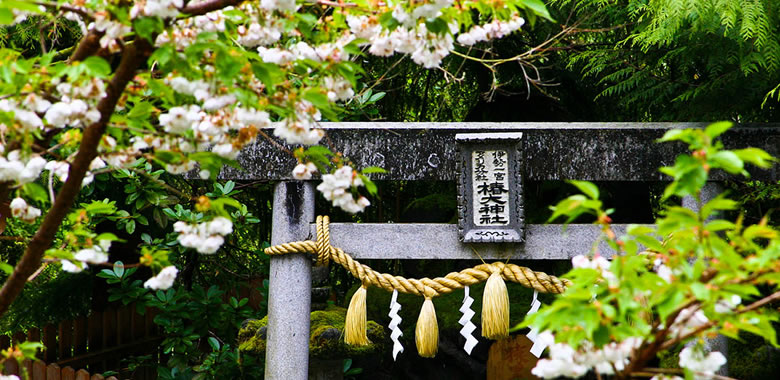
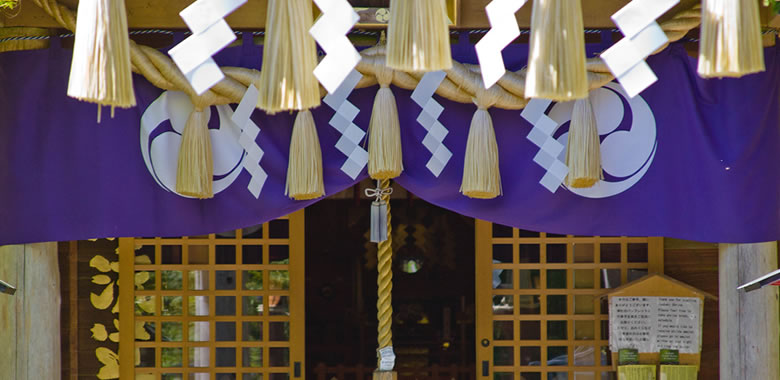
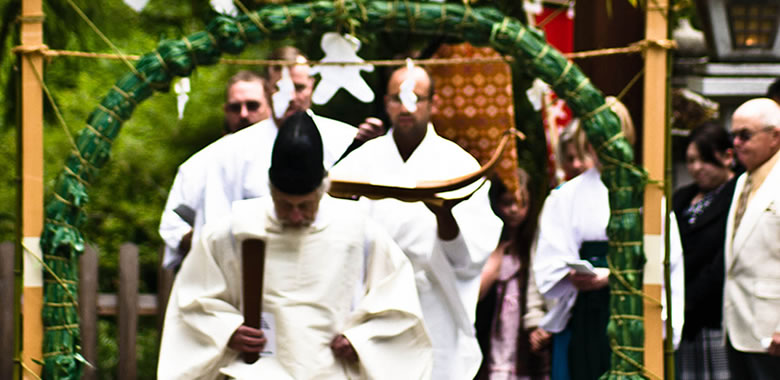


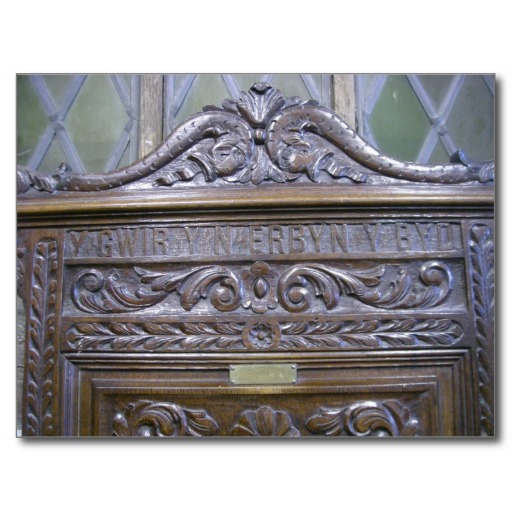


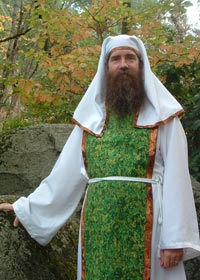
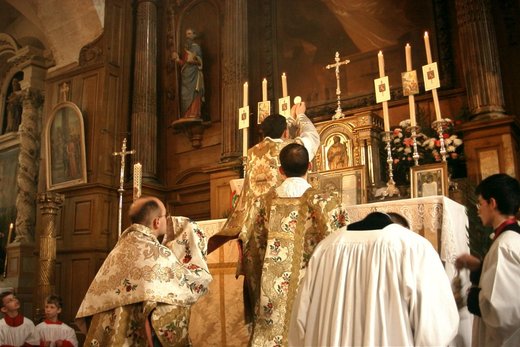
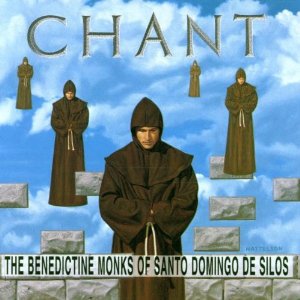
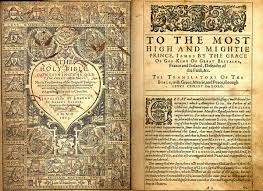
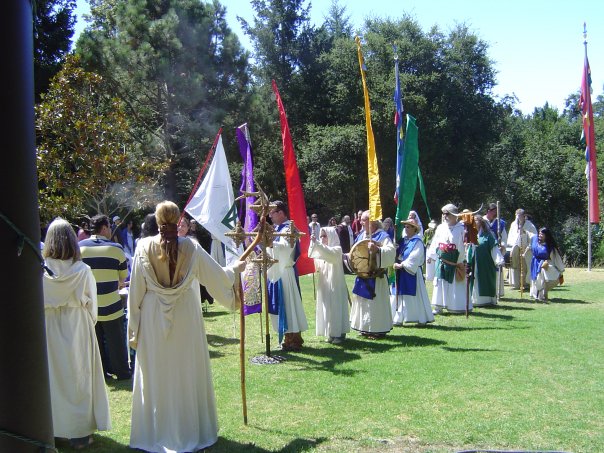


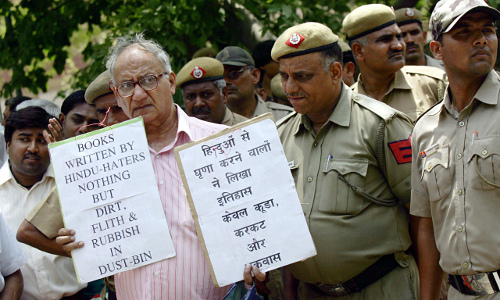
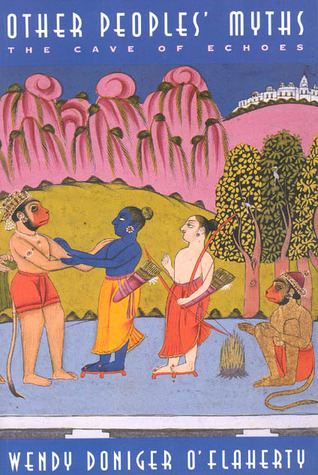
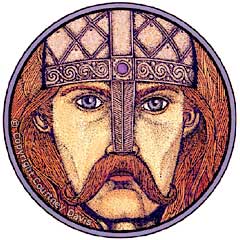
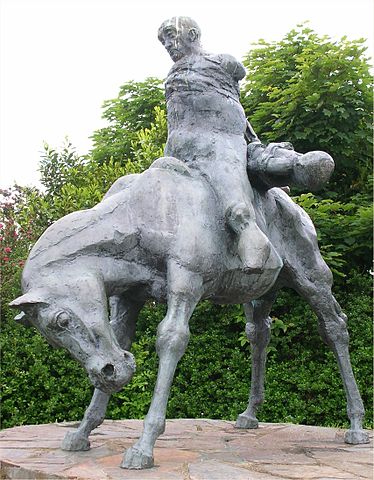

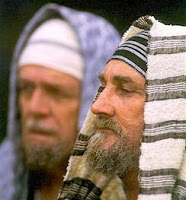
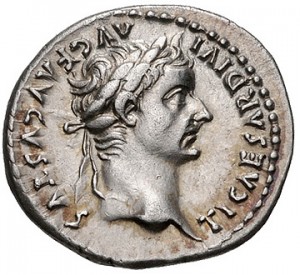






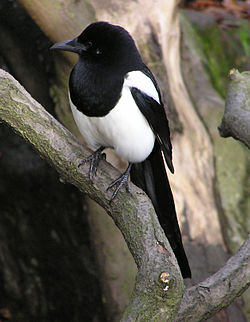
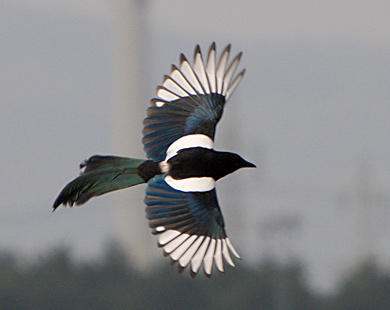


 A Druid Way