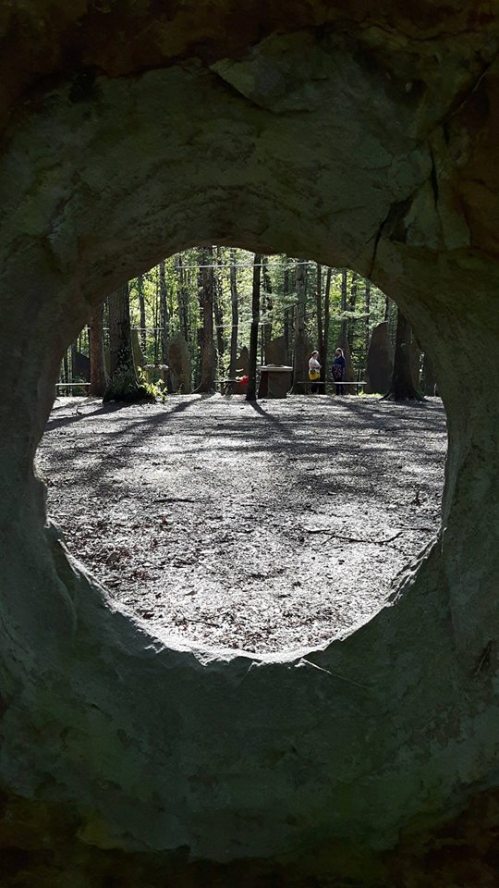
One of the groups I gather with to observe at least some of the “Great Eight” festivals has been searching for a meeting place for our upcoming Lunasa/Lughnasadh celebration.
So, I ask myself, what does my teacher of Daily Druidry have on hand to show me this time?
Turns out, a lot. One member of our group whom I’ll call V has generously hosted our past three festivals in her spacious back yard. From the Spring Equinox to Midsummer, she provided cooking space as well as an altar. And plates, cups, and tableware.
And, on more than one occasion, burgers and sausage to contribute to our potluck meals, and a bottle of wine, too. So it’s well past time for a change of host and venue, if only not to impose any more on V’s hospitality. Even though she was willing to offer her home yet again, this time for Lunasa. Until her life rearranged and changes blew through it — good ones! — and now she can’t host us after all (or attend).
So I pour a double libation to Mundana and Mundanus, twin deities of this world where we launch so many spiritual vessels, never noticing how our “ordinary” realities matter at least as much as any other.
As a for-instance: the day of ritual dawns on all-day rain, and we scramble to move indoors, or reschedule.
Or the quiet fellow who agreed at the last gathering to take on writing the ritual script for this one falls sick the day before, with just a skeleton outline he was waiting to complete with the adrenalin/awen inspiration of last-minute-ness, and so we scurry to come up with an alternative ritual, offer up energies to aid him in dealing with his physical reality, and ponder again the key role of those twin gods of the mundane.
Need a hull or anchor, a current or shore to set out from, wind in your sails, fire in your belly, water in your canteens or buoying you up, tide and moon and sun? Hail, gods of the Mundane! We honor and salute you, without whom this world cannot shape the Spiral, playing its part in manifesting anything at all in the world of form. Right and Left Hands of Spirit, we offer these gifts and salutations.
It’s fitting that Lugh whose festival is upon us bears the epithet Samildanach: “equally skilled in many arts”. The god stands out not for any particular excellence but for all of them.
And that includes — fully, rightfully, honorably, deservedly — the forms that Spirit takes in its guise as the “mundane”: the gifts of welcome, an open hearth, food and laughter and good company.
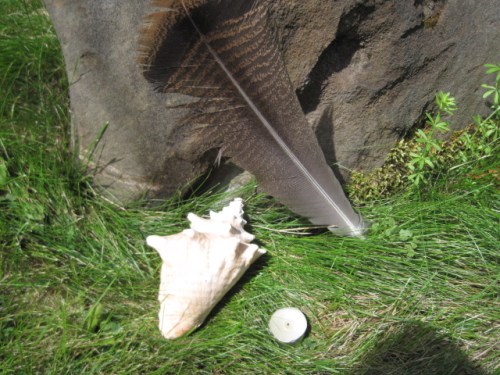
“mundane” altar: stone (N), feather (E), candle (S), shell
/|\ /|\ /|\
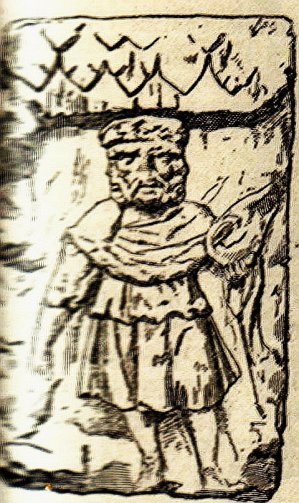
Images: ancient three-headed image of Lugh found in Paris in 1800s.
When I wrote earlier this year in May, reviewing the first Mid-Atlantic MAGUS Beltane Gathering, I noted briefly how “the initial inward glimpse of the Gathering came to one of the organizers almost a decade ago. There’s yet another indication, if I need the reminder, of the possible time-gap between first seed and outward manifestation.”
For this post, let’s substitute “frequent” for “possible”. Life on earth often means adapting to that pace — that’s a large part of “growing up”, working patiently with the gaps between seed and manifestation. Life in the “fast lane” is precisely that — unearthed, out of harmony with the planet, with embodied existence in general. The old tradition of letting the land lie fallow, to restore its fertility as well as to rest, testifies to this ancient understanding. Even as we try to increase the pace of change here for our own benefit, the land, like humans, need breaks from busy-ness. Land unbusied by humans is “wild” going about its own concerns that do not need humans. So much that we find restorative in wilderness stems from its rootedness in its own rhythms, in a pace it sustains through countless ages. Attuning to that pace, as so many traditional cultures show us, is health-giving. Yet all wild landscapes change, too.
photo courtesy Wendy Rose Scheers
Earth following its own nature brings things forth “in season”. There’s a time for everything, and everything in its time — and we say the same thing, even more, about place. Even at death, that instant of change, we work with liturgies which (re)assign places: we hear “earth to earth, ashes to ashes, dust to dust”. Pagans regularly “ground and center”. Humans attempt to earth changes, to ground or integrate or heal them with the sovereign power of physical stability and constancy. Terra firma. The fixed and reliable earth. Back on solid ground.
Many qualities of earth match the same ones we cherish in other people. “You can always count on her”; “He’s solid — you know where you are with him”; “I feel safe and protected around him”; “She’s a total earth-mother”; “She’s a really well-grounded person”; “He’s the salt of the earth”. Earth-home. This old “bone-house”, bānhūs, as the Anglo-Saxons called it, the skeleton of the physical body that mirrors earthiness, that holds the flesh up. Backbone, spine — good things. Courage of earth. Resilience.
If an inner threat encroaches on me, if I need respite and retreat, I open my practical tool-kit and deploy a triple protection exercise. As I turn from what troubles me, I ask for the protection of earth. In vision I approach a golden mountain. Set in the rock are enormous, heavy double doors. I walk through and they close protectively behind me. I proceed, coming to a second set of doors, even larger and more massive than the first, which also thud shut after I pass. I feel the echo in my bones. On through the final set of doors, greatest of the three, which close with a resounding boom. Safe behind these triple doors, I regroup. Here I can regain balance and poise, seek insight and perspective. I will emerge only when I’m damn good and ready.
And we make games of change because in contrast to earth’s stability, change still does happen. We notice it most clearly against the “background” of the land, of the concrete, the manifest, the dense material world. And so we flirt with change and chance, we attempt to build, or flee from, a “house of cards”, we enshrine reminders to ourselves in proverbs like the “straw that broke the camel’s back”, we see (or miss) the approach of a “tipping point”, we witness the point itself in volcanoes, earthquakes, those sudden and massive shifts in previously reliable earth, we lament it in accidents, injuries, illnesses. We gamble, take risks, bet on our intuitions of what will last and what will lurch and abruptly buckle. We “time the market”, watch for that “point of no return”, and so on and on.
In a word or two, then, much of the time we get it. We’re good at earth.
But earth’s just one of the elements. Also breathed on by air, washed by water, flamed with fire, we manifest spirit — we’re that quintessence, those five points of essence, of existence. “Every man and woman”, says Aleister Crowley, “is a star”.
When our “lives rearrange in the winds of change”, as one song goes, when we set sail on the ancient sea within us, when that slow-burning fire flares up and heats everything, when spirit nudges us through all these forms, then change happens. A key: the elements working in concert usher in smoother change than the kinds that shatter the worlds of form. But as a transformer of spirit myself, I may choose to ignore the ebb and flow of energies. When I cast the elements aside, ignore spirit, turn my face from all things around me speaking what I need to know, then I invite more violent change. Nothing, nothing, nothing — WHAM!
But there, in the broken soil of change, a seed germinates, splits open, sends forth its first pale tendrils, and begins again the long game of living. How will it, how will I, manifest this time?
/|\ /|\ /|\
From an earlier post — “Creating a Goddess Book“: “The physical world, so important for manifestation, by its nature tends to lag behind the swiftness with which vision can appear. But that lag is precisely part of this world’s immense value: its inertia and density allow for greater permanency and resistance to change, so that we can experience the results of vision over time — and fine-tune it if we choose. Unlike in dream, where the subtle stuff of vision or imagination can wisp away so quickly, physical manifestation tries to linger.”
“Everything is energy and that’s all there is to it. Match the frequency of the reality you want” – Einstein.
Gandhi in that oft-deployed admonition “Be the change you wish to see in the world” urges me to see the power of accepting responsibility for what I want, and helping it first manifest, however tentatively, within me. But Einstein gives me an inkling — no more! — of how. I don’t even care if it’s a case of “do as I say, not as I do”. I read crazy old Albert’s words and they ring true for me, call me to extend their resonance into action, into practice to see what they’re worth. Because how else can I know?
“Everything is energy …”
If you’ve read a number of my previous posts, you know by now it’s one of my ongoing obsessions to find out how others achieve what they do, and then, if I can possibly pull it off, to beg, adapt, borrow, or steal what I can from approaches, mindsets, techniques, strategies, work-arounds. (Oh, just give the old Druid a tool, already!)
Because belief, almost the sole technique on offer these days in the great monotheistic faiths, just ain’t enuf for me. (The spiritual riches of most traditions sadly lie ignored.) Or rather, it’s a powerful tool, but it needs material to work on, logic and motive as much as emotion.
We get another inkling of what matching frequencies can be like from human sexuality. The drive to mate and merge, instinctive in animals, can become more conscious in humans. (I say can. If you’ve approached such consciousness, you know the weight and force of that word can. How it slips away, how messed up and yet delighted we become in the presence of the “urge to merge”.)
A committed couple, the Judeo-Christian scriptures tell us, unites in a special way. Matthew (10:8) says, “… the two will become one flesh.So they are no longer two, but one …” If you’re reading this and you’ve known that particular blessing of unity, you get it. If even for a short interval, human sexual union gives us a direct experience of unity. It’s no surprise that we say we’re “in tune” with others, that we seek as well a wider “harmony”, that we long to be “in sync” — our languages mirror truth when they can, when we don’t muck about with them too much. (Ideologues and advertisers have much to answer for!)
So matching frequencies gets us “on the same wavelength”. We vibrate together, and with sympathetic vibrations each intensifies and reinforces the other. How to do this?
Mantra, sacred song, chant all aim for attunement. (All music aims to attune us to something. It just may or may not be a vibration in harmony with what I truly want. What does it help me manifest? What am I getting? What frequency have I matched? Where do I habitually vibrate?)
What is it about people and places that it just feels good to be around? What’s the quality that produces that comfort, that pleasure, that delight?
I want to tune myself in more consciously. That doesn’t mean I turn into some plastic saint, Druid or otherwise. It means in fact that if I want to express anger, I can do it consciously and responsibly, not passive-aggressively and unintentionally. I don’t need to summon into my life even more fallout from the random consequences of an already negative frequency buzzing in my head or heart. This, I know from hard experience and from looking almost everywhere at my fellow humans, is a core lesson.
I can take annoyance, irritation, and dump it through cranking a good headbanging song on speakers or headphones. Or do a ritual — ad hoc can be perfect — that lets me purge myself by dumping said negativity into an object I then bury in the earth. (Earth, take this from me. I transmute! says Earth.)
Or I do a quick visualization, one of my go-to’s, in fact: gathering my crap into a snowball and casting it into a river that sweeps it away and dissolves it. Gone. Even the turning of attention to such a visualization helps break an undesirable frequency, and guides me toward something that I initiate, not something thrown at me, dropped on me, spun within me. I become cause. Or at least, conscious effect.
Do these things, says my guide, and you open ways to fulfill your destinies. Because we all have more than one.
And if I remember to temper excitement at any new spiritual tool with useful clarity about the nature of the physical plane, and its inherent stability, I’ll learn to extend my practice to all planes, not just this one where change is — safely! — slow, most of the time.
Earth is a great laboratory for experimentation. Because then I won’t destroy every single new thing I mean to create, until I’ve learned my howthrough practice. And by then I’ll have seen how much more fluid the astral and other planes can be, how frequency-matching can be closer to instantaneous. How earth provides a useful counterweight to newbie mistakes and goofs. The ancestors, the gods, the spirits, the land — all help, all watch, all wait to be invited to the only adventure there is.
Part 2, in which I examine the time lag and solidity of Earth, coming soon.
Holy Ones I know, you grasp
the thread of my life. Sometimes
I feel your fingers drawing
me tight against the soundboard.
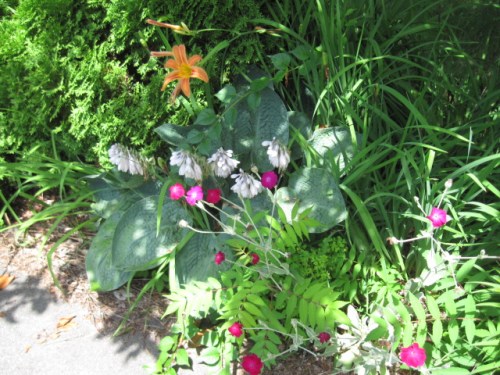
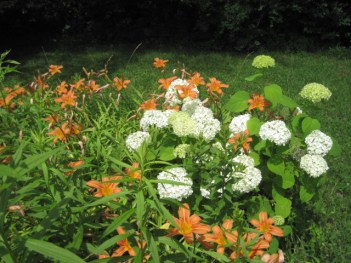
lilies & hydrangeas, NW lawn
Can I sing for all of us, or does the song come for me alone? We don’t always want another to sing for us any more, though it was once a chief pleasure at the gatherings of a people. Once we knew the songs, sought to renew them when they flagged in us, when we lost the tunes from time to time. Pick them up again, friends. Then tell, tell the Tribe.
First stanzas. They can arrive in an echo, a line or two, teasing me to follow. Sometimes the whole thing turns out in an hour of listening and trial. Sometimes I fold the first words away for the next look, when maybe a day has turned and tuned me closer to where the words will go best this time. Always and never the same as last time.
Wake from a dream of speaking to those who don’t wear bodies like this, my wife rousing from a kindred dream, my parents (gone this past decade and more) in a house we have built and furnished together with them.
Sometimes I’m left ahead, not behind. It’s things that need to catch up to where I am, things that will turn round a few more turns before I understand. Then they’ll rush on ahead again.
/|\ /|\ /|\
“Lady of the Land, open the door,
Lord of the Forest, come you in”
Here in New England, you can hear the Land singing a version of this Lunasa greeting. In the distance, a lawn mower, a chainsaw. And just outside my door, for almost the last hour now, swallows sing and chatter practically in my ears. They’ve commandeered for their nest the space on top of the outdoor light above the front steps, less than a meter from where I write, the front entry-way I made into a womb-like office.
A coming weekend program of workshops and talks on the other path I take, titled “How to Survive Spiritually in Our Times”.
It’s an excellent topic to explore, and I invite you, before you read any further, to look aside from the screen you’re on, grab pen and paper (or open a doc on your desktop) and write down some of the strategies you’ve learned. How have you survived spiritually so far? And what have you learned the hard way, perhaps the deepest and wisest and most valuable among your resources?
Did you stop to make at least a few notes? Did you include questions among your strategies?
Taking at least a few minutes for this is worth doing. (You can still do it, right now …)
I list among my own strategies getting my experience(s) down in writing, keeping a record. Both this blog and a bedside notebook help me place the downs and ups and make sense of why? and what next? My computer desktop fills with notes I date obsessively, and gather roughly once a month into another kind of journal. That one often I revisit perhaps just once or twice a year — as valuable as the others for patterns and themes I’d otherwise miss. A hoard of unattached dream fragments, poem notes, quotations, lines from my reading, a song lyric that’s dogged my heels and probably is asking for attention, long-term and refreshed to-do lists, scraps of conlangs, orphaned things that I’ve learned will find their homes and families if only I take them in and find them clothes and beds.
And what is spiritual survival, anyway? We get physical survival, we learn both fast and slow, throughout our lives, what we need to sustain ourselves, what we need to live. Fast, because if we miss those first lessons, we never live long enough for any others. Stay out of traffic. Respect hot and electrified things. Don’t take into your body absolutely everything (substance, person, idea, spirit) that presents itself.
Not long after these — learning them a little more slowly, but not much — come later lessons. Just as you don’t take into your body everything on offer, take into your heart even less. Give, instead. (Loving others as self-defense!) Cherish good measures. Learn which lines it’s truly wise not to cross. Learn which other lines actually are, in fact negotiable, despite what others tell you. (Study which lines keep moving.)
Learn whose approval and disapproval truly matters. Learn to wield your own approval and disapproval. Sell yourself not short but long. Label idols carefully. Review regularly. Love, four-letter word and practice, not just in spite of anyone or anything that comes at you, but as the idiom goes, “for good”.
Is anything not spiritual survival? How I’m spending today continues to manifest whatever spiritual truths I’m learning.
/|\ /|\ /|\
“You”, said Apollo to the German poet Rilke, “must revise your life”.
Holy Ones we know, you grasp
the threads of our lives. Sometimes
we feel your fingers glide, drawing
us tight against the soundboard.
You pluck from us those first notes
of song. They rise, we rise, and …
A lot of talk these days about truth or reality and fakeness, almost as if our era was the only one ever so burdened, so challenged, so troubled by discerning the difference. So I cheer when I find a key to help me along the way, one I can hold up to the light and turn in my hands and consider, one I can offer to you and see whether it serves your need, too.
Es ist alles wahr wodurch du besser wirst, runs a German proverb Thoreau quotes in his journal entry for October, 1837 — “Everything is true through which we become better.”
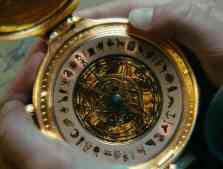
I love this as a test for truth. No abstraction here, but rather a laboratory prompt, a calibration on our internal alethiometers, to use the example of Philip Pullman’s delicate device for measuring truth.
In the first volume of the fantasy trilogy His Dark Materials, Pullman describes the alethiometer like this:
It was very like a clock, or a compass, for there were hands pointing to places around the dial, but instead of the hours or the points of the compass there were several little pictures, each of them painted with the finest and slenderest sable brush (Northern Lights, 1995).
(Do you have your own alethiometer already? You do? Is it in good working order? Or are you looking for one?)
And that in turn should tell me something. As much as it is anything else, truth is an image, a whole set of images, that I carry around. From childhood onward, from experience, from stories, movies and the examples of others, from my culture and the era I was born and grew up in, I gather up and walk with a museum of images. Does what I see and experience right now match those pictures? If not, can it be true? How can it be true?
Everything is true through which we become better. Should I walk around asking, “Have you become better yet?” Well, no: unless I start first with myself. You know this is my principal strategy for avoiding insufferable arrogance, spiritual myopia and self-righteousness. Turn the edge on myself first, before urging the blade on others. A better question is “How did you do it? And can I generalize a principle, extract a technique from your answer, so that I can pull it off, too?”
What am I doing, what have I done, and has it helped? Have I become better? If so, can I do more of it? How Druidic! Rather than an eternal and external standard to which I must somehow conform but which is native, apparently, to nobody, instead I practice one dependent on my life and my experience. Yet we can recognize a shared quality in both our experiences, even though they’re different. What can that tell us? What are we perceiving? Part of an answer seems to lie in the relationship between honoring my own experience even as I honor another’s.
To give a specific example, echinacea consistently upsets my system, but my wife finds it a wonderful aid. My truth doesn’t trump hers, but neither does hers negate mine. One principle does for both: if it helps, if through it I become better, it’s true for me. As with freedom, so with truth: yours ends where mine begins, and vice versa. Force either on me and they cease being what they are, but become their own opposites. (We still endlessly practice this negative magic on ourselves and each other.)
I do ritual alone, or with others, and stand together in a circle with the Visible and the Invisible to welcome the sacred. My wife and I work at our marriage, and it has its good and better years, like anything planted and cultivated, watered and weeded. I fell out of touch with a college friend, and we’ve drifted apart. I remember others regularly, and our relationship still holds true.
I find truth in the quality of such relationships. Improving a relationship is one way I become better.
Oh, uniformity or conformity has its place. Build a house and you want dimensions as close as you can measure and cut them. We also speak of angles, materials and directions as true. True north. We’re dismayed, or gratified, when potentials and promises come true. In a ritual it’s helpful if we work together. The chant grows stronger when we say or sing the words in unison, like any chorus. Unity can be … fun.
Alan Watts (1915-1973)
The principle remains, whatever the design of the structure you build, house or ritual, song or life. As Alan Watts quipped decades ago — I can’t locate the source offhand — most creatures on the planet are endless variations on a single design: tubes with various attachments. (We’re improvisations, like jazz, like the unrepeatable concert version your favorite band performs of its signature song.) What wonderful diversity elaborating and playing with that unitary principle!
But what’s diversity for? I remember my first years at the school where I taught, serving as international student adviser. “Students from 38 countries!” the school brochures and website crowed at the time. “OK,” I said at one faculty meeting, feeling out the parameters of my new position. “We’ve got diversity. Now what do we do with it?” I genuinely wanted to know. No one answered. But I wasn’t being rhetorical. Was “having” diversity enough? Was that the goal, now achieved, box checked, on to the next item on some larger list? Was the school, were we, with our vaunted diversity, somehow now better? If so, how?! Could we measure it? Could we be or do something, anything, better as a result?
“I desire”, says Thoreau in Walden,
that there may be as many different persons in the world as possible; but I would have each one be very careful to find out and pursue his own way, and not his father’s or his mother’s or his neighbor’s instead.
If we respect ourselves in all our quirky uniqueness and individuality, how can we not respect everything else? Your difference affirms mine. The world and all its creatures, the Chinese wan wu, “Ten Thousand Things”, announce this principle every moment. How can we not glory in such diversity?!
Apparently, to judge by what’s happening in so many places, we often can’t. Is it because we don’t trust our own uniqueness? Do we fear ourselves as distinct and free beings, and therefore fear everyone else who is also a unique self, different from us?
Does your difference help me become better? No, it must be said, not if I run from it in fear, or if I feel I must attack you to protect myself, or deny you any way to live your difference, so that it leaves mine alone. Shortsightedly, I could even claim your difference makes me worse, not better, because I don’t like it, or because you remind me of my own freedom and uniqueness. Because all difference urges me to the responsibility to live from that knowledge. No, I don’t want to become better. Save me from any such transformations! I want to be, not become.
I find truth in the quality of relationship. I want to connect to others who help me become, just as I want to help them become more of who they are.
Selfishly, I readily admit, they’re more fun to be around when they’re becoming than when they’re locked in fear and desperately trying to remain who they are. And paradoxically, they become more of who they are when they keep changing and growing. And so, they tell me, do I.
Yes, the Great Self of the Cosmos first says Be! But then its continues, saying Become! I want to hear those Words and live them. Because what else is there? Serving something larger than the self, another paradox here, fulfills the self. All the many species around me live and flourish and die and return because they and I are what the cosmos does.
And ritual, song, art, creativity in solving problems, joy, relationships with other unique beings, are all ways to express and take part in and complete that doing.
Yes, to be national for a moment, the motto on our U.S. currency proclaims E pluribus unum — “Out of many, one”. When you start with states that are nearly independent nations, unity can hold great allure.
In other contexts, too, of course, we seek that uni-verse, that “one-turning”, of one-ness. But if we seek a more whole truth, a “single turning” through which we might become better, we also recognize and acknowledge and begin to live from its other half, too — its complement, which we’ve often overlooked: Ex uno plures — “Out of One, many”. As the old song goes, echo of a cosmic melody, you can’t have one without the other.
Long-time readers of this blog know my admiration for Henry David Thoreau (who rhymed his name with “borrow”). I’m well into a new biography* of him, and reminded by a New York Times book review that today is his 200th birthday.
*Walls, Laura Dassow. Thoreau: A Life. Chicago: The University of Chicago Press, 2017. (Go for the Kindle edition; hardcover is $35!)
Partly from Thoreau (1817-1862) and his Transcendentalist circle, but also of course from vivid Medieval conceptions, Westerners get Nature-with-a-capital-N, that idealized if not deified Presence. In the same millennium-old perception, we get two Books of Wisdom as well. The Book of Scripture, the Bible, yes. But also the Book of Nature. (Ah, but which is volume one and which is sequel?)
From the Concord, Massachusetts man and his most famous book, we learn his credo: “In Wildness is the preservation of the world”. For there is a tameness that allows us to live together at all, that is much but not all of what we mean by “civilization”, and another (or perhaps the same) tameness that makes us lie down in front of the onrushing disasters of the day, provided they don’t touch us too directly and painfully.
Or at least not right away. (Boil me gradually, and I’m a happy frog or lobster.) A few posts ago, I wrote of making coffee in an analogy for doing ritual: any trade deal made or broken is fine with me — until it deprives me of a ready supply of overseas beans. Or let’s say I do step forward, full of fire and righteous indignation (is there any other kind?!) to protest a worthy Druid-y cause, putting my life on the line, what then? Isn’t my life always on the line? As one follower* of a certain wilderness prophet cautioned us long ago: “I may even give away all that I have to the poor, and give up my body to be burned. But if I don’t have love, none of these things will help me”. More to the point, I’d say, will they help anyone else?
There’s also a wildness in “a certain forest god”, as John Beckett calls Cernunnos. As without, so within. There’s a wildness in each of us that politicians are eager to sedate and numb to stasis with material consumption and soundbites and spin. There’s a wildness like that of the Wild Hunt of European legend and myth, which modern Pagans, among others, have elaborated in provocative directions. The wildness of Nature isn’t Sunday-afternoon safe, and direct contact with it (if we survive) can strip away our pretences and excuses, can initiate us into powerful awareness and lasting change.
But like Tolkien’s Ents, we don’t like to be “roused”. I’ll fight tooth and claw for a comfortable cage, if one’s on offer, rather than for freedoms I claim I desire. For someone like Thoreau, Walls declares, “The dilemma that pressed upon him was how to live the American Revolution not as dead history but as living experience that could overturn, and keep overturning, hidebound convention and comfortable habits”. For we humans stand at the hinge, the pivot, the axis, in and of nature and yet able for a time to hold ourselves apart from it. Because where else is there?
Still, we strive to contrive and survive, little Sarumans every one of us. “Once out of nature”, writes W B Yeats in his almost infamous poem “Sailing to Byzantium”,
I shall never take
My bodily form from any natural thing,
But such a form as Grecian goldsmiths make
Of hammered gold and gold enamelling …
Artifice, civilization, nature, justice? Just let me live forever, something in me cries. Just that, and I’ll sacrifice everything else to achieve it. You too can sail to Byzantium — for a price.
“Send lawyers, guns, and money”, says Warren Zevon in a song with the same title. “I’m the innocent bystander. Somehow I got stuck between the rock and a hard place. And I’m down on my luck …” Solutions present themselves. Not all deserve us. Few have anything to do with luck. And innocence or guilt completely misses the point of now. We’re all in it.
But wait …
“Once outof nature”? Are we now in that impossible place? Is that the legacy of the much-bandied about “Anthropocene“, our mythical present day, that time when human action carries geological force? “Health”, said Thoreau, “is a sound relation to nature”. “Physician”, says the Galilean master, quoting wisdom already proverbial in his time, “heal thyself”.
Oh Yeats, let me take bodily form from every living thing, let me know form, let me inhabit nature fully, and I will understand better, I will heal, and I will be healed.
I wrote up a version of the following for my journal, a practice in itself, and now for this post.
John Beckett’s helpful article “A Pagan Framework for Discernment” suggests a three-part approach for anyone doing the hard work of sifting experience and belief for their weight and significance and value. “Religious and spiritual ideas”, he observes, “are notoriously resistant to proof, as our atheist friends like to remind us. But if we wait on absolute proof, we’ll end up abandoning beliefs and practices that are meaningful and helpful to us.”
Divination is a useful practice at such a juncture, for several reasons. First, it acknowledges a need for help. I’m never alone, though too often I face challenges as if I am. [As that Christian triad (Matthew 7) has it, “Ask, and it shall be given you; seek, and ye shall find; knock, and it shall be opened unto you”. No, really!]
Second, divination gives me “something to do” that often relaxes the inner channels sufficiently that I’ll receive guidance “before” I actually do the divination. There’s little support or comprehension in our culture for anyone who talks about “voices in the head” — that kind of talk is one step toward getting you committed. So be careful who you talk to, I hear. Maybe if you started out committed, I hear, you’d know better how to respond to “voices in the head”. Rather than ignoring them, freaking, or heeding them unthinkingly, we’d assume there’s a wider range of options from which to choose.
Third, divination offers suggestions and potential wisdom apart from the usual gossipy, opinionated mechanical self that pretends to conscious awareness most days. Wisdom received often has a qualitative difference from what I’d usually say to myself.
“A belief is true if it works”, Beckett continues, “if it conforms to known facts, and if it’s helpful. But some factors have no bearing on truth even though we might wish they did.”
With such things in my thought as I consider how Thecu initiated communication a couple years ago, and then again recently, I ask for guidance on divination, figuring I’ll draw a card or three from a deck to assess possible directions. To my surprise I’m told to makean impromptu “deck” of nine folded pieces of paper. “Let each be a doorway”, I hear. That’s not quite right; there are no audible words. But the sensation is the same; the words are in my mind.
After I prepare the papers and document the moment with a photograph, almost before I can ask for the next step, I’m given nine words or names to write on them: hampu, lutec, nef, abal, tahilte, renha, lam, tseme, umun. Then, as smoothly as the sense of guidance arrived, it falls away, and I’m left with no further sense of direction. Upheld, then let down.
While the linguist in me putters in the background, turning over the names for a clue to their origin and meanings, I light a small candle and some incense, as much to forestall disappointment as anything else. The incense is homemade, from a workshop some years ago. It needs intermittent relighting, but that’s OK. I send out a silent “thanks and query” with each relighting. It feels right to do so.
Perhaps half an hour later, I receive further instruction, as I’m making some notes about a job lead: “The nine words are associated with the numbers 1 to 9. They are not numbers themselves, but they belong with them. Write the numbers on the cards you made in the order the words came.”
The following day I light candle and incense again, and add a spoken element. As I listen, I try pairing Thecu’s name with each of the nine words, in an impromptu chant, each pair repeated twice, with some playful riffs: “hampu Thecu, hampu Thecu, lutec Thecu, tec, tec Thecu, etc.” In one way, it’s nonsense, but all sound has a quality and an effect, so the practice is not a waste of time in any sense, unless I stupidly insist it is. I will practice this and listen again several more times to test it.
“We are wise”, Beckett closes, repeating his opening assertion,
to focus our attention on our actions rather than on our beliefs. But our actions generate experiences, and in our attempt to interpret and understand our experiences we form beliefs. Our experiences may be so strong or so frequent we are certain our beliefs about them must be right, but if we are honest with ourselves, we can never be completely sure they are right.
But we can ask ourselves if our beliefs work, if they conform to known facts, and if they help us lead better lives. If we can answer yes to these three questions, we can be confident that they are as right as they can be.
How do I pray to you, goddess of storms? Let this my prayer be a litany of questions.
How do I pray to you, goddess of storms?
Let this my prayer be a litany of questions.
How may I best honor you?
You gave me a glimpse, no more,
of landscape, cliffs lapped with green,
mist-hung and mournful,
with this foreign name to call you.
What is your service, what
may I do for you? Why
make yourself known to me?
Unlikely am I, no familiar of shrines,
a god’s service, formal prayer.
Then, too, I know so little of you.
Does naming you for others answer
your purposes? How do I answer you,
goddess of storms? Here are words,
intention, listening. Let this litany
of doubts and questions be first prayer.
/|\ /|\ /|\
In the single experience (see recent post) I had of her, Thecu was particular about the sound of her name: TEH-koo, spelt with a c, not a k. Something bleeding through here of eastern Europe: Thracian, Dacian, Illyrian, Macedonian Greek, Etruscan?
The linguist in me still turns over these very scant details. This is one of those shadowy regions of Europe, where we know so little, mostly echoes from the written histories of neighbors, along with a few hundred words, a handful of inscriptions.
So here’s the task I set myself in the previous post:
… I’ll take up ritual and its close alliance with emotion. Through rite and ritual, powered by where emotion can guide me, I can begin to (1) find out what I need to know (Air), (2) clear the way for the will to act (Fire), (3) empower my imagination (Water), and (4) help myself heal (Earth).
This morning, after fasting from coffee for three days, my wife and I dove back into our joint addiction. That meant, in addition to washing the carafe, cleaning the coffee mill of the remains of a brand that we found irritated our stomachs and left us with weird dreams. In spite of an organic label and a source we trusted, that particular brand goes on our NO list.
Yes, I’ll readily admit it: we’re coffee snobs. I say, if you have a habit, addict responsibly. Why pay a barista to do what we can do at home much more cheaply and satisfyingly.
Thus armed with our indulgence and our insufferably caffeinated arrogance, we perform the daily ritual. First, the banishing, or cleaning. Then the invoking, or grinding and brewing. Finally, the savoring, black or with milk or half-and-half. Or sometimes, if a new brand turns out especially bitter, a spoonful of maple syrup. This is also known as the sense of ritual well-performed. In other words, as with most cooking — and magic — season to taste. There are recipes to learn, and then there are local variations and individual adjustments. Both prove needful.
Coffee invites assessment and comparison. (My mistyped original read “incites”, which is also true.) So should ritual. We brew coffee almost daily, because we like it enough to find it worth the effort. Anticipation heightens the preparation, the performance. Not all batches are the same, and I can always fine-tune what I do. Feeling can guide me well, but not exclusively.
If it’s to have any benefit, ritual (or magic) needs similar practice, and the doing of it IS the ritual, IS the practice of magic. I should enjoy the experience enough that it’s worth the effort, the outlay of time, material, and energy.
Otherwise, why do it? Can I answer that question sensibly? (A lack of common sense has oft defeated many an evil overlord.) A more modest Druid like me has much to learn from the great and (ig)noble. Success, for evil or good, depends on feet planted on the good earth, first of magics. (After all, Yesod, “Foundation”, is a low, easily-reachable branch on the Tree of Life. It’s “a vehicle allowing movement from one thing or condition to another …” says Wikipedia. Or as Basics in Kabbalah puts it, “The foundation (yesod) of a building is its ‘grounding’, its union with the earth (malchut).” A measure and sounding of our time: you can find such formerly hidden knowledge simply by following an internet link. Do we dismiss such magical familiars because they have made our lives too easy?)
What will I write onto and into my skin? What will I invite deeper?
So back to the four elements, to the task enumerated at the start of this post. I learn (Air) which coffee to buy — and whether today is even a coffee day — apply the heat (Fire) to water (Water!) and ground the rite (coffee, Earth, pun included) at its conclusion — a pour of hot black nectar into our two waiting mugs. Any excess of thinking or willing gets balanced by this cauldron of feeling, of desire and pleasure and outcome. Hold the mugs in our hands, warmth and aroma as much a part of it all as taste on the tongue. Incidental effects, like the temporary sharpening of attention, the rise of blood pressure (I’m chronically low), the motivational effects to a sluggish intestinal tract, are all side benefits not to be disdained.
OK — I’ve taken the analogy further than it can bear, or perhaps not far enough. We tend to think of ritual and magic in abstract terms, when in fact they’re a series of concrete choices and actions and manifestations. Humans are magical transformers, with time and space our field of play. Whatever we manifest has its causes: as with the universe outside our skin, so with the universe inside. This isn’t just metaphysics but actual physics. If the definition of insanity is to expect different results from doing the same thing, then sanity can begin simply by trying something new.
And “old-new” might be a very good alternative name for our uni-verse, our “one-turning” which offers ritual as one of its keys and clues.
And what of healing? I wrote in March of this year, in the post “Healing From the Past“:
I add to my practice a henge-meditation. We needn’t bother ourselves to make any such claim as “Druids built Stonehenge” in order to make use of the spiritual dynamic it offers as a source of healing. Merlin sets the precedent: Stonehenge-as-symbol, in Geoffrey’s telling is older than its present home in southern England anyway. Not its origin but its power is what we need. Magic thrives when our intent makes the occasion a necessity: our focus is single and sharp not from force of will but from desire, emotion, need, want, hope, imagination, planning and preparation, ritual foundation, and love.
A final note: to make ritual “economical” in terms of any wear and tear on the practitioner, which means us, (1) start small, (2) keep records, (3) experiment to find what works and what doesn’t. As with coffee, check in frequently: how does it feel? Does the brew need tweaking? Make this aspect part of the process — though not its sole determinant. Ritual and magic, done skilfully, are among the most scientific as well as loving things we do.
Who knows when odd reading can lead to insight — and material for a blogpost?
Take, for instance, this delicious (to me, anyway) fragment:
“Emotions alert us to specific issues, and they do so without any subterfuge. If we are aware enough … our emotions will be able to contribute the energy we need to move into and out of any situation imaginable, because they contribute the specific energy and information we need to heal ourselves” (Karla McLaren. Emotional Genius: Discovering he Deepest Language of Soul. Laughing Tree Press, 2001).
This kind of statement makes me sit up and pay attention. Partly because any large claim switches on my crap detector, but also because I immediately want to try it out. You know, set up an experiment to test the claim.
In this case, like most of us, I’ve got a running start on just such a test. We can all name stories, movies, songs that grab us and move us. Even — if they reach deep enough, if we’re open and vulnerable to their magic — on the fifth, tenth or thirtieth read, viewing, hearing. Among your top contenders you may count a childhood favorite. The quality of these repeated experiences, at least for me, leaves no doubt: gods are alive, magic is afoot. Magic is alive, gods are afoot. (Leonard Cohen nails it again.)
In fact, so completely may the magic live for you that you guard it zealously and jealously. You watch who you choose to tell about it, because you’ve learned the hard way how another’s misunderstanding or mockery can sting, and even, if it’s carefully targeted, ruin a beloved experience for you.
The number and quality of claims McLaren makes are quite remarkable. Here they are again in list form. Emotions:
— alert us to specific issues.
— don’t lie or mislead — they offer no subterfuge.
— contribute the energy we need to move into and out of any situation imaginable.
— contribute the specific energy and information we need to heal ourselves.
Or, to put it elementally and alchemically, emotions identify what we need to know (Air), clear the way for the will to act (Fire), empower the imagination (Water), and help us heal (Earth).
McLaren also wisely includes a kicker, escape clause, out, safety switch: If we are aware enough … Of course. Isn’t that always the issue at the heart of things?
Stay with me here. (As the Rocky Horror narrator exclaims, “It’s just a jump to the left!”) Working with adolescents in a boarding school for sixteen years let me reflect on my own emotional growth or lack of it, even as I served as an adviser to hundred of students over the years. Because I advised freshman and senior girls, I frequently saw emotion more openly expressed than I might have with boys. How often I’d witness some variation of “I’m so upset/amazed/impressed/in love! Oh my god, I can’t believe X. I was A and now I’m B. I’m so upset/amazed/impressed/in love!”
The lesson here is emotion can be so strong that at first we have no distance from it, no perspective or comparison. We recycle it, loop with it, rehearse it. “All or nothing” is the adolescent’s stereotypical default setting, partly because so many experiences arefirsts and really don’t offer any basis for comparison: first love, first significant failure, first challenging success, first death of a close friend or family member, first major social embarrassment, first large moral choice, and so on. Emotions don’t lie, but when the tide sweeps in and then out again, how do you make your way through the wreckage to picking yourself up and drying out and moving forward?
With some progress towards maturity comes that invaluable ability to detach, step back, gain perspective on one’s own situation and experience. (We might say that IS maturity.) Only then can emotion alert us to specific issues. (If you look at the media and the world right now, we see repeated spikes of emotion with far too little detachment, reflection, proportion, perspective. Keep a person, a community or a nation in the first stage of emotion and they’ll never reach the second stage, let alone any of others. That way mature judgment dies.)
While cooler heads may lament the manipulation of whole groups by the technique of constantly lighting new fires, all while stoking the flames of old ones, there’s a useful lesson in the power of emotion. To lift a line from “Storybook Love”, the theme song to The Princess Bride, “it’s as real as the feelings I feel”.*
And it is. Emotion is real. The gifts of emotion, however, come in what we find after strong feeling. Feel the feeling, yes, I’ve learned. (Can’t do much if I’m repressing it. Genii still in a bottle, that trick.) Then work with it — from outside. Return whenever I need to fine-tune my understanding by checking in with the authenticity of the feeling. Just don’t invite it to take up residence and watch as it tracks in dirt and hangs its laundry over my windows.
Anger. Fear. Lust. Self-pity. Doubt. Feel any of these lately? These are among my top five most potent negative emotions. They’re also five of my teachers. I’ve learned more from anger and fear than I could tell you in any reasonable-sized book.
Awe. Curiosity. Amazement. Gratitude. Love. Another five, among the most potent positive emotions. Also fabulous teachers. Alchemized versions of the preceding negatives, shaped by the spiritual work we’re each called to do in our lives.
Emotion, our elemental Guide of the West, serves us best when we respect its proper domain. Its role is not to usurp our sovereignty by taking the throne.
In the next post I’ll take up ritual and its close alliance with emotion. Through rite and ritual, powered by where emotion can guide me, I can begin to (1) find out what I need to know (Air), (2) clear the way for the will to act (Fire), (3) empower my imagination (Water), and (4) help myself heal (Earth).
That is, I can begin to take McLaren at her word, and try out the claims she makes.
Listening for names. I spend a significant amount of time doing that, between my spiritual practice and my fiction. It’s a curious endeavor, hard to explain, but one a surprising number of people have experience with. What is it we’re hearing?!
Some two years ago in meditation I heard the name of a Storm Goddess, two syllables, beginning with the letter T. I don’t know about you, but the first time I encounter a deity, especially unsought, a being I don’t know, I can feel like I’ve just landed on an island no one’s visited before. No maps, no tourist description, no information to help the next person, because I’m the first one to arrive there. No other footprints on the beach. No electricity. When the sun goes down, I’m left only with this fire I choose to build, a new climate, night noises I don’t recognize, a night sky whose constellations have shifted, or wheel above me wholly new.
Subsequent listening brought me a little more information, a complete name I’m keeping back for now while I pursue additional ritual work and meditation. I do have a general location in eastern Europe where her worship originated. But not a lot more. I’m returning after this interval to pick up the thread, to think out loud here, to see if there’s more to discover. For me, writing about something often activates it in ways nothing else does, blowing hidden embers to flame. (A strong reason for keeping a journal, as I’ve learned. I confess I needed to track down the entry to recover her name. I only have it because I wrote it down.)
Black Sea and eastern Mediterranean
My title for this post isn’t meant to be serious — I have no sense of T “replacing” any other deity. She’s simply new to me, and as far as I can tell, her presence has left no written record. Barring a trip — beyond my resources at this point — to plant my feet on the ground and walk the region west of Black Sea where my meditation showed me her worship once flourished, I’m left with what I can discover from here. No report of divine possession resulting from touching a barrow rising through the mist and contacting ancestors or land spirits. No blaze of insight, no recognizable historical scene unfolding in inner vision. No Hollywood or Bollywood or CGI to dramatize a blogpost. No Industrial Light and Magic courtesy of the Otherworld.
That doesn’t hamstring my search, but it does direct it inward, fitting for a deity whose worship has apparently withdrawn to inner realms.
Why did she make herself known two years ago? That itself forms part of my search. It’s the nature of UPG, unverified personal gnosis, that I can’t yet rule out being played by a spirit. That’s no different than how a phishing advertisement or a fake news article snags a portion of its readers who part with money, belief, a sliver of common sense and integrity. What distinguishes my experience is the approach, if you want to call it that, of T. Reserved, as if testing me. No requests. A trickle of information, a flash image of green and rocky landscape. Enough to hang a meditation session on, enough to ask for a return on the investment of energy involved in making contact with an incarnate being, me, with lots of other demands on his attention and time. Enough to provoke this post.
Now part of the experience is that the writer in me immediately, inevitably jumps aboard and starts playing. Imagine! he says. You were her devotee in a past life and she’s contacting you to revive her worship! Decent premise for a story, right?! Or, or … it’s an inner warning of outer storms to come. Or this isn’t the goddess but a priestess of the goddess reaching out to you for a Dion-Fortuneque revivification of a spiritual energy whose time has now come again to wash over the earth. See what I mean? What to do with such a companion?!
Yes, my writer self is more than a bit of a quicksilver imp, a drama queen, a runaway dreamer who’d sooner spend an hour in reverie than getting words on paper or screen.
But for all that, he’s opened doors and given me words I don’t get any other way. He’s part of the package. I’m talking about all these things to give you a sense of my process. Yours, of course, is your own.
“Go ahead”, writes travel writer Rosie Schaap in an article in today’s (27 June 2017) New York Times, “say their names:”
Avalon and Tintagel. Believe deeply enough, and they might emerge from the mouth as through an enchantment-induced vapor, as though borne on the breath of a dragon. (Especially after at least four people have corrected your pronunciation of Tintagel: Be gentle with that “g,” it’s tin-TAJ-l.) And, indeed, these two sites in the southwest of England are epic and romantic, the stuff of myth and mystery.
Strip this opening paragraph of its hemming and hedging, its “mights” and “as thoughs”, and you have a compact magical working, a true spell, ready made. You know what setting you need, that will invite and launch you, right? Light incense or a candle, invoke with the two names, visualize being borne on the breath of a dragon, and you arrive in the southwest of England without the need for British Airways, Heathrow or Gatwick, customs or currency exchange.
Feel the mist cool on your skin, see the green and pleasant land, hear the clash of swords as you pass the guard, hear seagulls and curlews crying, as you walk out onto the spit of land where the gray stones of Tintagel Castle tower again. Yes, you’ve been here before. What’s the message for you this time? What do you need to know that has brought you here? What offering will you make in return for the gift you receive? Offer it with your thanks. Then return, return, return.
If even a feather of the wing of magic brushed your cheeks, you felt it. What is “real” on the other planes, after all, but what we pay attention to, what we animate with our love and creativity, our desire and energy? We practice the real to make it real, or else we let it go for something else that draws us more strongly. Our call.
“Myth and mystery” are “stuff” indeed — the potent formative ingredients for an “enchantment-induced” reality. (Aren’t ALL realities induced by something? Why not choose and shape for ourselves what that something is, rather than accepting a mass-produced substitute? We’ve given too much away, and now feel the lack yawning and gnawing inside. Reclaim!)
Leap with me here, to that old Foreigner song from the 70s — “I want to know what love is”. It always struck me with its odd assumption that anybody else must know better than I do what love is. Why?
I wanna know what love is
I want you to show me
I wanna feel what love is
I know you can show me.
I’ve got just one question: Who’s this “you”?! With my experience of love as with my reality: why let anyone else ever determine it, at the very least until I know theirs is superior to mine?! Take a look around: just how worthy are many of these other claims to a superior reality? Do we like what we’re seeing?!
Indeed, as Lou Gramm goes on to sing, “I gotta take a little time, a little time to think things over. I gotta read between the lines …”
I swear this on the midsummer Sword of Light: I will not abdicate my spiritual sovereignty to anyone for anything less. I will practice love, as I practice reality, accepting the best I can achieve. Because as Lou also sings for us all, “I’ve traveled so far to change this lonely life …”
I have this sneaking suspicion that they’re versions of the same thing, love and reality, siblings of the same mother. Funny how love and reality so often harmonize. What we love is what is real for us. If one’s going well, usually the other is, too. They’re what I do to myself, for myself, as I do to and for others. And as they do to and for me. You who teach me, I keep learning from You what love is.)
Yearning is the first step that lets us know we need more — you hear something of that yearning as Lou sings — that we’re dying a little each day without it, that what yearn for is something we’ll recognize when we experience it. But we have a say in how we get there, and that effort will shape what we experience when we arrive. As we do, every day.
On Friday, Mystic River Grove, an OBOD group based in Massachusetts, celebrated a Summer Solstice ritual inspired by the Anglo-Saxon symbel or feast, and built around toasts, boasts and oaths. I couldn’t attend, but I want to reflect on these three components of celebration, apart from however Mystic River chose to celebrate beyond those three elements.
With a toast, boast and oath, you could certainly hold a fine solo rite. Toast your gods, land spirits, ancestors, teachers, living kin — whoever you’re called to honor. Then on to a boast, a celebration of excellence, a claim to honor for ourselves, for something we have achieved. Like gratitude, boasting’s a skill we neither teach or practice enough. My default boast is survival. I’m still here. But I can definitely claim more; this blog, my other writings, a good marriage, years of teaching young people, a circle of friends I admire and enjoy.
A solo rite still has witnesses: our own selves, hearing the words. Powers and beings of the world who attend because they were “in the neighborhood” so to speak, unless we explicitly ban them. And anyone we did invite to join us. But what’s the value of our community witnessing when we do these things? Why do these things publicly?
Toasts others make can remind us who we honor and who we might include next time. We learn of others’ gratitude. What I’m grateful for carries a story with it. It’s a window into a life, and speaking gratitude in a circle opens us to each other and our stories.
Boasts tell us something of the commitments and dedications of time and energy in others’ lives. If I’m proud of it, I’ve spent myself on it in some way, poured myself into it, and probably sacrificed in some way to accomplish it. Boasts also let us laugh — we can boast about silly things, or make fun of ourselves for how much even a small achievement may have cost us.
Oaths tell us what will matter in the coming days and months. What are others binding themselves to do? How does publicly announcing an intention, having others witness it, help energize us to accomplish it? An oath may include a spell of finding or binding, of opening the way, or shutting down obstacles, resistances, barriers, and so on. When I took part in Nanowrimo in past years, for instance, and wrote my 1600 words a day, announcing my progress online helped me keep going. You helped me persevere because you knew I’d set out to do it.
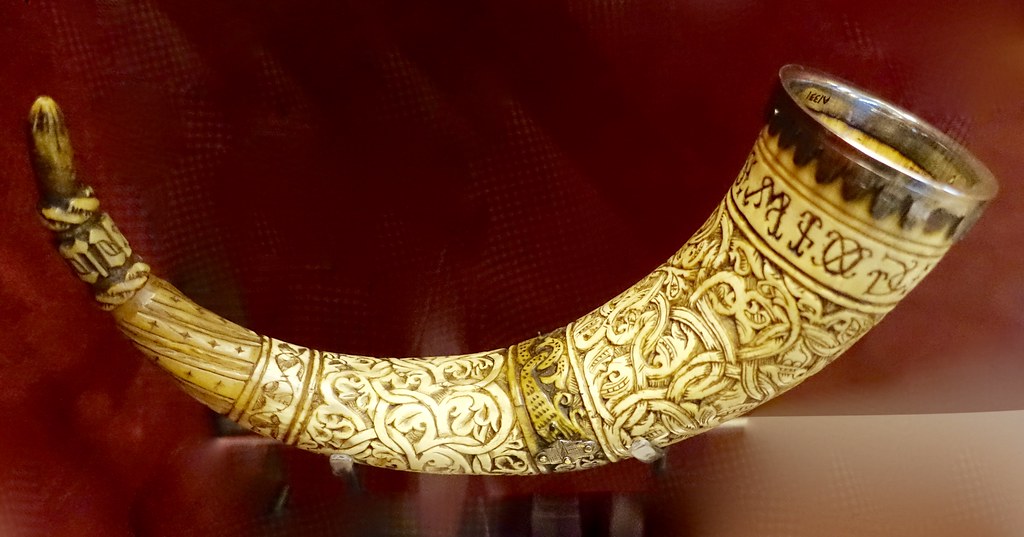
Depending on the size of the horn passed round the circle for each of the toasts, boasts and oaths, and the kind of drink you quaff each time, you may find your tongue loosened and the three acts easier to pull off!
Here the rhymer in me wants to add a fourth word, wrecking the lovely triad of toast, boast and oath, but creating in its place a new and balanced pair of rhymes: toast, boast, oath and growth. After all, a rite moves us to a new place and space, never the same as where we were before. As with yesterday and tomorrow, the difference from today may or may not seem like much, but just as the daylight lengthens and shortens each year, depending on which side of the solstice I’m on, so do the energies at play in my life. I can do things today not possible yesterday or tomorrow. And that’s worth a toast, a boast, an oath and the growth that comes with them.
Finally, if we’re going to be Anglo-Saxon about things, the Old English Maxims 1, lines 138-140, offer relevant insight here:
Keeping to the spirit I feel lies behind these proverbial expressions, and unpacking their compactness and concision*, I take this to mean, roughly, “Let your speech be words of good counsel to others, write runes of wisdom, sing as epically as you can, deserve praise, test and expand your judgment, while holding nothing back each day”.
/|\ /|\ /|\
*With even a little Old English, you can explore meanings and fashion your own translation with the help of the online Bosworth-Tollers Anglo-Saxon Dictionary here.
rǣd: accus. of se rǣd; advice, counsel, prudence, deliberation sceal, 3rd sg. of sculan: shall, ought, be obliged, must mon, Wessex dialect nominative of se man: one, person, human, mortal, man secgan: to say, speak, express rūne, accus. plural of sēo rūn: whisper (speech not intended to be overheard, confidence, counsel, consultation), mystery, secret, rune wrītan: to write, cut, draw, form letters (on wood, stone, parchment, etc.) lēoþ: accus. of þæt lēoþ; song, poem, ode, lay, verses gesingan: to sing lofes, gen. of þæt lof: praise, glory, hymn gearnian: to earn, merit dōm: accus. of se dōm; doom, judgment, judicial sentence, decree, ordinance, law areccan: to put forth, relate, recount, speak out, express, explain, interpret, translate dæges, gen. of se dæg: day, daytime onettan: to hasten, anticipate, be active or diligent
I’m going all lore-y in this post, so if plants and herbal history aren’t really your thing, move along.
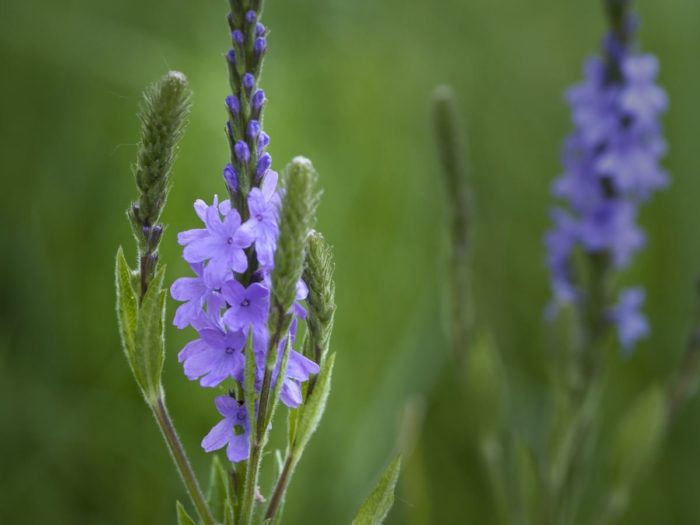
Vervain (Verbena spp) — “leafy branch” — known among herbalists since at least the time of dynastic Egypt, has associations with midsummer, most obviously because in the British climate where we get much of herbal lore in the English-speaking West, that’s approximately when it flowers. The 11th-century Old English Herbarium (Ann Van Arsdall, Routledge, 2010) describes gathering vervain, using the Latin name uermenaca, at Midsummer. (Any left over from the previous year was to be tossed into the Midsummer bonfire.) Fans of The Vampire Diaries know it for its colorful flowers and anti-vampiric powers. The TV series showed the variety Blue Vervain (Verbena hastata), an American species, and dramatized the herb’s toxicity to vamps and its ability to protect a mortal from compulsion by vampires. Who says pop television has no wisdom to offer?!
The range of vervain’s nicknames also indicates something of how firmly fixed it is in herbal history: enchanter’s plant, holy herb, herb of the cross, herb of Saint Anne (yerba del Santa Ana), Juno’s tears, pigeon’s grass, pigeonweed, turkeygrass, herb of grace, etc.
Blue (or Swamp) Vervain (Verbena hastata)
I’ve been on an intermittent local quest to spot some growing wild. Many North American varieties of the plant are originally native to Europe and were brought by early colonists. In the sometimes quaint and often rewarding language of herbals and herbalists, vervain “has enough garden presence of a rustic kind to justify its inclusion, being in no way boorish or uncivil, and it is easy to start from seed and easy to grow” (Henry Beston*, Herbs and the Earth, David Godine, 2014).
Vervain varieties (over 250!) have been prized for numerous benefits, depending on dose and preparation, along with a few qualifications of sensitivity and toxicity at higher levels. It has tonic, diuretic, and anti-parasitic properties, and can stimulate both dopamine and serotonin, meaning it lifts you up and also slows you down. Leaves, roots and flowers, again depending on variety (harvest early in the season to avoid strong, even rank flavor!), make a soothing tea.
In herblore, vervain sprang, according to one story, from the tears of the goddess Isis as she wept at the death of Osiris. Greeks and Romans both used it as a sacred herb, sweeping it across their altars. In Christian Europe the story runs that vervain was used to slow the flow of blood from Christ’s wounds (though logically this would merely have prolonged his agony), and so thereby the plant gained another of its nicknames — herb-on-the-cross.
Western medicine officially disdains to acknowledge much value to the plant. One site (drugs.com, sourced from Harvard Health Topics), notes “There is no clinical evidence to support specific dose recommendations for vervain. Traditional use for its astringent properties required 2 to 4 g daily in an infusion … Research reveals little or no information regarding adverse reactions with the use of this product” but adds that for pregnant and nursing women, “Documented adverse reactions. Avoid use”.
Nonetheless, many sites include recipes for nursing mothers, such as this one:
Combine 1 quart of water with 1 teaspoon of vitex berries, 1 teaspoon blessed thistle leaves, 1/2 teaspoon vervain leaves, 1/2 teaspoon nettle leaves, 1/4 teaspoon fenugreek seeds, and 1/4 teaspoon anise seeds; steep for 20 minutes; drink 1 to 3 cups a day.
I’m leaving out the source, perhaps to protect the guilty. But anyone who’s benefitted from herbal remedies, as I have, especially if nothing else has worked, can readily attest to their value from personal experience, in the face of official disdain and ignorance.
With all this history and attention, it’s little surprise that among the plants set forth for study in OBOD’s Ovate grade work, vervain occupies pride of place.
Solstice blessings to everyone! What are they? Read on!
devil’s paintbrush, 21 June 2017
Solstice time is sacred time. That picnic or party you’re holding on the Solstice, alone or with friends, is just as sacred as my Druid ritual, or the monk or nun at prayer, if you’re comparing (un)conventional symbols and images.
As much as anything, I’m found, the sacred is a habit. It’s not only a habit, of course. But a desire to experience the sacred, and the placing of yourself in spaces where experience of the sacred can happen, help it along.
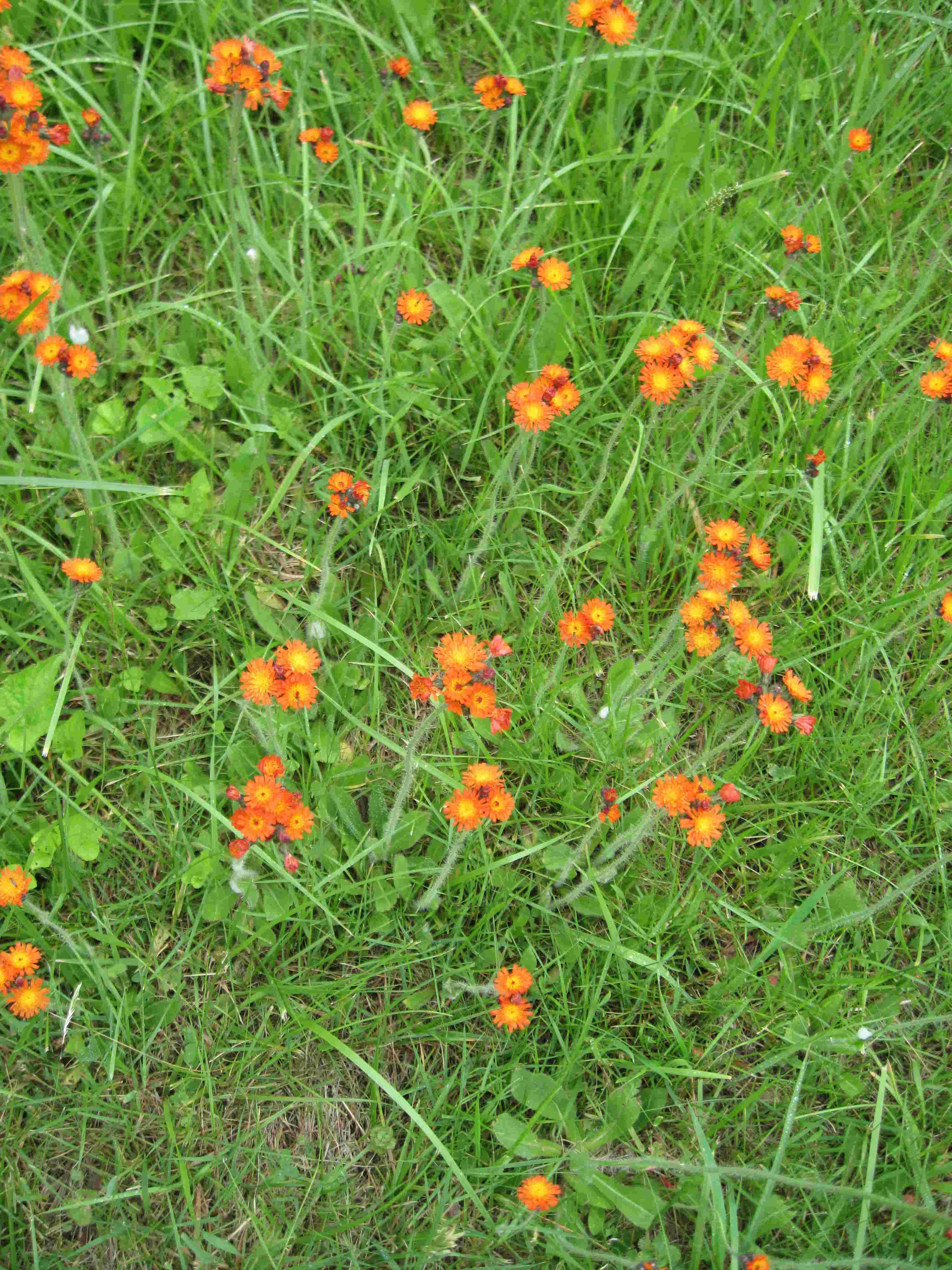
The front lawn I’ve resisted mowing for two weeks now flares with devil’s paintbrush (Pilosella aurantiaca), a weed here in the U.S., though protected in parts of Europe. Also called fox-and-cubs, orange hawkweed, and other names, for me it’s been a harbinger of high summer since I was in my mid single digits, just old enough to ask and remember its name.
I sit on the lawn and begin to count other plant species nearby. Quickly the number extends beyond my skill to name. The first wild strawberries of a few posts ago yield their lovely tartness when I reach for a few to taste. Clover is spreading over the north lawn, and I welcome it, since both bumble- and honey-bees love it, and it crowds out weeds and nitrogenizes the soil. When I was a boy we re-seeded our pastures every few years with clover because it’s such good food for cows and other grazing animals.
The sacred is a kind of love. It feels always new. Sitting on the lawn I forget everything else as I look around, breathe, listen, and feel the warm earth beneath me. Six months from now the ground here may be frozen, perhaps covered in snow, but that will not negate the marvel of earth underfoot, air in the lungs, the sky always changing overhead. Who has not longed for and known the kiss of the beloved? With these bodies and senses we greet the world each day.
The sacred is a celebration. Cultures throughout human history set aside days and places to witness and commemorate seedtime and harvest, greatest light and deepest dark. The solstices and equinoxes are human events as much as astronomical ones, and predate any written scripture by thousands of years. We likewise mark births and deaths, and we make vows and promises to uphold our marriages, friendships, communities and nations.
Moses (ever tried a desert solstice celebration?!) gets to say it in Deuteronomy 30, that what we seek
isn’t too difficult for you or beyond your reach. It’s not up in heaven, so that you have to ask, “Who’ll ascend into heaven to get it and proclaim it to us so we may do it?” Nor is it beyond the sea, so that you have to ask, “Who’ll cross the sea to get it and proclaim it to us so we may do it?” No, the word is very near you; it’s in your mouth and in your heart so you may obey it.
Oh, hear talk of “obeying” and perhaps you resist. I know I often do. Too many times we’ve been ruinously misled by over-trust and heedless obedience. (Republican or Democrat, or whatever the party platform, it hasn’t let up yet.)
As author Peter Beagle describes it, “We are raised to honor all the wrong explorers and discoverers—thieves planting flags, murderers carrying crosses. Let us at last praise the colonizers of dreams” (“Introduction”, The Tolkien Reader). What we can rightly obey shares an affinity with dream. It’s what resounds in us most deeply, if we turn off the jangle of the other voices. Rightly, if not always safely. The sacred is no more “safe” than love is. Both can lead very far from where we thought our lives would go. But the “wrong” voices? What is mass culture but a form of consciously-accepted schizophrenia, if we end up listening to every voice except the first one, the original?
For any authority the sacred wields is not a “command” so much as the first law of our being. To “disobey” it, or attempt to deny or ignore the sacred, is like trying to live outside our own skins. A human without the sacred is exactly that — something eviscerated, no longer alive. We use the sacred itself when we deny it — we employ energies on loan to us even as we refuse them or cast them aside. What else will we do with them?
A habit, a love, a celebration. These are among the keys to the temple. “In every generation” (can’t you hear the movie trailer voiceover for that summer blockbuster, as it proclaims the words?!) whether we throw the keys in the grass, or take them up, use them to open marvels, and pass them along to those who come after us, the temple — oh blessedly and forever! — the temple always awaits.


 A lot of talk these days about truth or reality and fakeness, almost as if our era was the only one ever so burdened, so challenged, so troubled by discerning the difference. So I cheer when I find a key to help me along the way, one I can hold up to the light and turn in my hands and consider, one I can offer to you and see whether it serves your need, too.
 In the first volume of the fantasy trilogy His Dark Materials, Pullman describes the alethiometer like this:
 Yes, to be national for a moment, the motto on our U.S. currency proclaims E pluribus unum — “Out of many, one”. When you start with states that are nearly independent nations, unity can hold great allure.
 Long-time readers of this blog know my admiration for Henry David Thoreau (who rhymed his name with “borrow”). I’m well into a new biography* of him, and reminded by a New York Times book review that today is his 200th birthday.
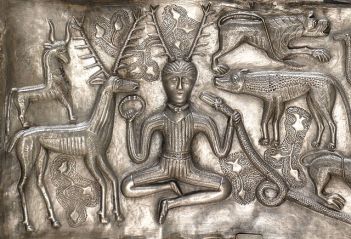 There’s also a wildness in “a certain forest god”, as John Beckett calls
  After I prepare the papers and document the moment with a photograph, almost before I can ask for the next step, I’m given nine words or names to write on them: hampu, lutec, nef, abal, tahilte, renha, lam, tseme, umun. Then, as smoothly as the sense of guidance arrived, it falls away, and I’m left with no further sense of direction. Upheld, then let down.
 In the single experience (see recent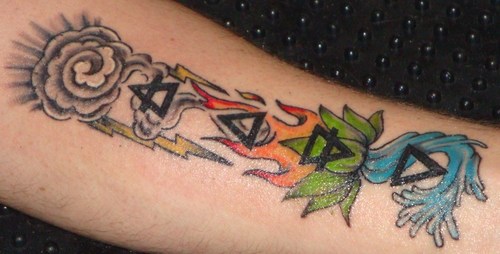

 Listening for names. I spend a significant amount of time doing that, between my spiritual practice and my fiction. It’s a curious endeavor, hard to explain, but one a surprising number of people have experience with. What is it we’re hearing?!
 With a toast, boast and oath, you could certainly hold a fine solo rite. Toast your gods, land spirits, ancestors, teachers, living kin — whoever you’re called to honor. Then on to a boast, a celebration of excellence, a claim to honor for ourselves, for something we have achieved. Like gratitude, boasting’s a skill we neither teach or practice enough. My default boast is survival. I’m still here. But I can definitely claim more; this blog, my other writings, a good marriage, years of teaching young people, a circle of friends I admire and enjoy.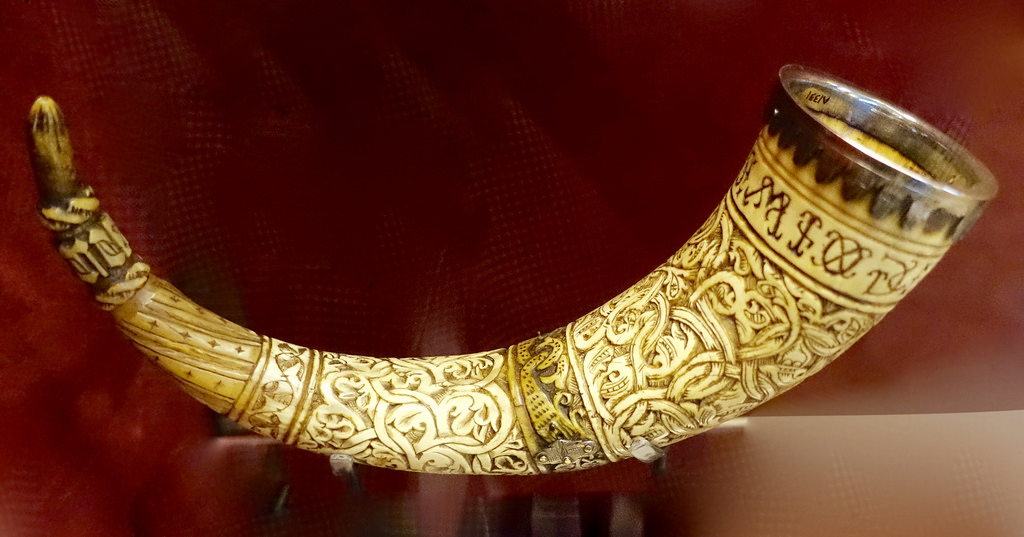


 A Druid Way


.jpg)