One of the formative books of my adolescence is R S de Ropp’s The Master Game. First published in the late 60s, long before some of the shadier margins of the New Age self-help movement earned a few hustlers some big bucks (you can see his “names for their games” in the third paragraph below), de Ropp flattered, cajoled or profited from nobody’s ego as he examined what we spend our lives loving.
If I had to sum up his book, I’d cite this from the first page: “… what people really need and demand from life is not wealth, comfort or esteem, but games worth playing” (pg. 11; italics in original). We witness, to say it tactfully as I can, many dysfunctional life-choices that arise from lack of worthwhile games.
Some of the less commendable games de Ropp names are “Cock on Dunghill” and “Hog in Trough”. We’ve seen plenty of players of both those games over the last few decades. The 2008 global financial crisis resulted directly from “Hog in Trough” players. “Verily”, said a long-ago Galilean Druid, “they have their reward”.
Some play nobler games, like the Householder Game — raising a family. Some opt for the Art Game (beauty). We have the late Stephen Hawking as a premier example of a player of the Science Game (knowledge). Many go in for — and here de Ropp shows a monotheistic bias — the Religion Game (salvation). None of these are completely mutually exclusive, but people sort themselves by the games they play as much as by anything else. As you might expect, though, the game de Ropp favors, and calls the “Master Game” of his title, is awakening.
If WordPress’s stats for this site over the last three days can be trusted, you are residents of Australia, Belgium, Brazil, Canada, Denmark, Finland, Germany, Italy, Japan, Kenya, Netherlands, Philippines, Poland, Russia, Slovakia, Spain, Sri Lanka, Turkey, UK and USA.
So what do you know, how have you learned it, and how do you apply it in your lives today?!
/|\ /|\ /|\
Denise observes (commenting on the previous post), “There is only one rule: treat others as you wish to be treated. When I remember that ‘others’ doesn’t only mean human others, the rest falls into place” [punctuated for clarity–ed.].
The law of love deservedly tops many lists of rules, sometimes in surprising ways. If you’ve raised children, you’ve probably deployed some version of tough love. That can mean letting others learn the hard way, or directly from consequences, if they’ve disregarded repeated warnings, instruction, examples, and loving requests. It can also mean not letting sentiment get in the way of responsibility. We do few favors by enabling bad behavior. But oh, it can be hard to put into practice!
Yesterday I removed a dead mouse we’d caught that had been living in and crapping all over our car for the past year. If you’ve listened and attended to the non-human world that chooses to live in close proximity with humans, you know the remarkable negotiations that can happen — on both sides. Ask spiders to leave a bedroom, and sometimes they will. Contact the moles in the yard and request they leave the garden alone, and sometimes they will.
It works both ways. Clean up the trash the previous owner left in our woods, came the message shortly after we moved in. Leave the undergrowth along your property lines, for habitat. Let the backyard weeds flower and go to seed. Then you can mow — just later in the season.
Sometimes we can reach an accord and live harmoniously. Sometimes one or the other side steps across, and learns the hard way. The non-human world has been asking us to clean up our messes for quite some time. We haven’t bothered, for the most part, and the payback continues to come due with each passing year.
Is this love?
Like you, like us all, I’m a work in progress. Love is a gift of attention and work, energy and time. You might call this the law of reciprocity, or balance, or harmony. Maybe a law guiding us on the way to love.
Other rules for this game of living arise in the world’s wisdom. One that’s bandied about a lot in New Age and Pagan circles, but too often without adequate exploration, is “As above, so below”. From what I’ve seen, it often works the other way, too, in ways I’m still discovering: “as below, so above”, insofar as what I do today has a definite effect on other planes, not just this physical one. Cultivate a negative habit, and it spills over into the quality of relationships, into opportunities missed, into other self-defeating behaviors, into dreams, and so on. The universe builds in multiple directions, not just top-down. It may be a uni-verse, a single turning, a whole in itself, from a certain perspective, but it’s poly-valent, too.
The law of paradox has also taught me a lot. “The opposite of an ordinary truth is a falsehood, but the opposite of a profound truth is, often, another profound truth”. I’ve carried that one around for decades, and it’s proven its value. It seems like a harmonic linking us with another plane, part of “as above, so below”. It teaches me to look more deeply at my own life, to mine it down to the marrow for meaning. And it’s a helpful first rule of thumb for testing a truth in the first place. (Do its opposites generate corollaries?)
Then there’s the law of unity, appropriate for a uni-verse — not any of our superficial, political unities, or a politically-correct drive for equality (limited and partial harmonics as they are), but a demonstrable unity, at work whether or not we believe in it or enforce it with merely human laws. It precedes us; it’s a thread in the pattern, part of the Web. It means, among so many other things, that the human sense of isolation and loneliness, of separation, doesn’t mirror the truth of things, but is rather a deception, a learned and self-reinforcing lie. It also means that whatever we do has consequences. We matter in so many ways to the whole and to each other, beyond our capacities to comprehend. The Hindu mystics put it in theistic terms:
The one Godhead, secret in all beings, the inner Self of all, presiding over all action, witness, conscious knower and absolute … the One … fashions one seed in many ways (Svetasvatara Upanishad).
But we all have sensed it, fragmented it may be, refracted, momentary, transient, flickering past — or sometimes longer, depending occasionally on a chemical or alcoholic lift, yes; or in meditation or ritual, or arriving unlooked for, unawares; or at the birth of a child, the death of a parent, in love, wonder, awe, deep emotion. Given all our many backgrounds, perspectives, filters, worldviews, we understandably give it different names, explain it variously. But it’s a near-universal in human experience.
In 2012, on the centennial of the anonymous 1912 publication of the Kybalion [free pdf/public domain], J. M. Greer published a reworking of the seven spiritual laws it explores in his Mystery Teachings from the Living Earth: An Introduction to Spiritual Ecology. In Greer’s latter version, the seven laws re-emerge as statements of an ecological spirituality. [See here for posts examining each law].
Note that these aren’t things anyone is called to believe: they’re scientific facts, that much-abused word. One of the things that means in practice is that anyone can witness them in action, and draw their own conclusions from them. Turns out what we need to know has been around under our noses for at least as long as we’ve been here.
Other laws or rule for the game? If you took up my suggestion in the previous post to write down your own rules, you have some in hand. Denise did: for her, love tops the list.
Our understanding of life has the greatest impact when it’s put in terms we can grasp — especially when we put it in those terms for ourselves. Mine won’t work completely for you, simply because they’re mine. Yours are for you. We need individual understandings, because we’re individuals.
It’s because of the law of unity that we’re each individual, each one. For this reason we can also (learn to) value another’s freedom, even as they acknowledge ours. So the law of freedom also ranks high on my list. Grant others the freedom to be who they are, in accord with their granting me my own. This one much of the planet is still learning, to judge by daily headlines and our widespread experience of life in this world. “Your freedom ends where mine begins”, goes one popular formulation, and vice versa.
Tomorrow, to round out this discussion, I’ll post “Eleven Strands of Educational and Life Philosophy”, which I composed as part of my application with a teacher’s placement agency some two years ago.
Love, unity, reciprocity, paradox, and freedom — some of my rules. And my game? Druidry helps to keep waking me up, though I still drowse a lot.
Now that I’ve chased away, as I usually manage to do every few weeks, a few incautious new readers who thought they’d follow my blog — until I said something indigestible to them — you and I remain to take stock. It’s part of my job description, in fact: blogger must intermittently provoke, offend or banish a portion of readership, if only to establish and maintain some semblance of integrity. That’s one route, anyway, to blogger bona fides.
Otherwise I’m just a spiritual politician, telling people mostly what they want to hear, scrambling for votes or likes. Please don’t merely “like” me. We’re not in primary school, right? Life isn’t, despite what the weak magic of social media enchants us to believe, a popularity contest. We’re not even in secondary school any longer. Read and ponder what I’ve said, and test it — not just with your opinions, but with your life. As I try to do, in spite of that annoying and near-universal tug toward hypocrisy.
So there really aren’t any rules? my inner teenager asks. The previous post was a feel-good piece. Love is all you need. All paths lead to the same destination. We’re all in this together.
And we are. Except.
Anyone who practices an art or craft knows that rules, especially rules-of-thumb gained over long experience, can be really useful. Gardening? Plant marigolds with tomatoes. Tuning your guitar? Start with your sixth string, the Youtube video instructs, held down on the fifth fret. Guidelines for what to do, how to tackle challenges and complexities. Received wisdom. Even, if I can use the word, a tradition. We rarely need to start from scratch.
When we’re young, we’re told to color inside the lines. What happens if you color outside the lines? Nothing. You’ve colored outside the lines. What you do is what you get. Maybe a well-meaning adult scolds you, or not. A little later, perhaps a reward or penalty. We know how early such patterns and personality traits get set. Some kids without prompting will color up to the lines so neatly an adult couldn’t better it. And they’ll get praise for neatness and attention and whatever other labels get put on noticing boundaries and respecting what they have to teach. Because they do have much to teach. Just not everything.
All right, teenaged self. What do you want rules for, anway? To push against, so you can declare yourself an original? To piss off a special adult, or adults in general? To run roughshod over, ’cause you’re such a rebel? Win the attention of possible partners, producers or profit-sharers? Welcome to inverse conformity: you’ve still let the rules define you. Can you make your own liveable set?
Robert Frost said writing free verse is like playing tennis without a net. He meant it disparagingly, but it’s actually just another game. Handball. Without a single thing labeled “net”, nearly every surface becomes playable. Players don’t stand opposite each other, but — often — side by side. The rules: changed, but still present. Because that’s what a game is. It’s hard to make “whatever” into a game very many folks want to play.
Yesterday John Beckett posted “Get Over Your Fear of Religion!” tackling the frequent superficiality of much contemporary spirituality. On at least one online forum I visit, his post predictably sent some into a tailspin. Beckett notes, “Some of this [the “spiritual but not religious” movement] is an understandable reaction against negative religion, but much is an avoidance of the work required to build any real spiritual or religious depth”. Some scolding is good for me.
Of course, our reaction against stifling religiosity also has ancient roots in human experience. It will never go away as long as we face complacency and laziness in our cultural institutions and practices. As a certain rabbi once observed a score of centuries ago, “The letter kills, but the spirit gives life”.
But beyond the pleasurable intoxication of a numinous moon or molten sunset or gold-drenched sunny afternoon, there’s more. “If you want a deep spiritual practice”, John continues, “that will help you handle life’s challenges, build deep and meaningful relationships, and change yourself and the world, you’re going to need religion”.
The first part sounds like what many people say they want. The last clause, though, tosses a dead mouse into the punch bowl.
Whatever else needs to happen as a consequence of mouse or punchbowl or tossing, reactions to the incident will reveal something to me in my own thinking and practice that I need to work on. Maybe you or I will take the bowl to the kitchen and bring out a fresh one. Maybe we’ll just cringe a little, and wait for somebody else to fix things. Maybe we’ll fish out the mouse, or shame the tosser, or ask for better punch-bowl covers, or mouse-traps. Or we’ll take to raising larger mice. Whatever our roles, the incident jolts us. Your outrage is yours. I do mine just fine, without help. But I don’t want to stop there, but start.
Over the decades, I’ve noticed life becomes custom-fitted to teach each of us what we need to learn. It gets to know us, scouts us right up to our weaknesses. I’m not always talking “fair” or “easy” or “blessed”, either. What I hold on to most tightly I’ll probably be compelled to relinquish. Rigid things tend to break. The gods prodding humans to grow. Or evolution fine-tuning a whole complex of eco-systems, sharpening the ability of each species to thrive by choosing the most adaptable individuals and going forward with them because — quite simply — they can change. A hundred thousand lemmings die, but one, slightly different, flourishes and becomes the progenitor of a new species. Ancestral lemming, I salute you.
If we’re changing, how could all the old rules possibly serve? Because rules can change, too, and most of the ones that trouble us and dog our heels are ones we’ve made for ourselves that haven’t changed with us. A few other parameters we encounter, like this pesky aging-and-mortality thing, and finite planetary resources, and cause and effect, we’re still learning to work with. It’s just that from time to time we confuse human rules with spiritual law. Confuse them so successfully we think they’re the same thing, until we find they’re not.
Imagine your ideal set of rules for how you’d play the game. Or laws, if you’re going for large-scale. Work to get down in writing at least three or four of them — you may uncover more — then try them out on your life, checking for fit, and then try them on the lives of a few other beings. Revise as needed.
“It’s a good thing to give thanks, whatever your tradition, or none. So we’ll have a moment of quiet. Simply listen, if you like, to the others near you, breathing”, says the pastor opening last night’s community dinner.
One of the joys of rural New England life is the Cabin Fever dinner tradition. These early spring events are a true “moveable feast” — held in churches, cafeterias, grange halls, schools — sometime in March or April, anywhere there’s a willing core of people dedicated to making community happen. Neighbors get called together from the more private hunkering down we all do each winter, watching wood-piles diminish, the inevitable March storms re-establish banks of snow that had been shrinking after the midwinter thaw, squinting at sky and trees, feeling the light linger a few minutes more at either end of day, scolded by the indomitable chickadees, uplifted at the distant honking of a flock of geese winging north again, at long last.
We’re crammed, atheist and Pagan, Christian and agnostic, Jew and animist, into the sanctuary of the local Congregational Church for the 13th spring in a row — a lunar year of springs. Tables and chairs from a local high school have been set up, filling the space to the stairwell. There are no pews. After the original church burned down years ago, our community vowed to rebuild a maximally flexible space, church and community center both.
Our local Cabin Fever dinner draws attendees from half a dozen nearby towns, in part because the pastor’s husband is a trained master chef who volunteers his skills for each year’s feast, but also because of the tradition of storytelling that proceeds throughout the dinner, as neighbors rise, take the microphone — there are over 200 of us here this evening, and for the first time the pastor had to turn away a few score later-comers — intermittently interrupt conversations, and regale us with stories of the quirks and humors of country living, encounters with moose and fisher cats, chimney fires, deaths and births, lost cows and sheep, found dogs and children.
The evening opens and ends with announcements, car lights left on, alerts that the bears have begun to emerge again from hibernation, hungry and ill-humored as always, that the Green Team meeting has been moved to Friday afternoons, that tryouts for the world music chorus will take place the following Saturday.
A few of us scurry to the basement kitchen after the announcement that packaged leftovers are available for an open donation. We leave with two cartons of roasted vegetables for the next day’s lunch.
Here is our prayer and our praise, our magic and our offering: we manage to come together again, we learn anew that it’s worth listening to each other for the sad-funny turns life takes us all on, that we can recognize in each other, for all the differences of temperament and history and desire, a common table, light and talk and laughter into a cold spring evening.
There’s been no preaching or teaching, only what we bring to each other out of our lives and stories, the best kind, lived last month, yesterday, in the parking lot before coming in.
With such things we do not solve or resolve, so much as we celebrate as we struggle. We sing as we go on.
Have you seen them? The ridiculous (to my mind, anyway) articles, often partial advertisements or product placements, that purport to instruct the reader. They arrive in a simple format, usually with the same clear lead: “You’re doing X wrong”.
(I strive to avoid yielding my attention, as much as possible, to things that can’t instruct me, however I may initially feel about them. So let’s see what we can gain here, for I would exploit all things that seek to manipulate me, and wring from them something both needful and utile. You know: just to turn them back on themselves, and fulfill my part in manifesting the ancient wisdom that says all thing work together for good for those that love. Because, to exploit another more recent piece of wisdom, “Everything will be all right in the end. If it’s not all right, it is not yet the end”*. We are, after all, actors in a 10 billion-year-old play. Just gotta get through thisparticular scene. Find your character’s mark, don’t bump into the furniture, deliver your lines with feeling. Ah, there now.)
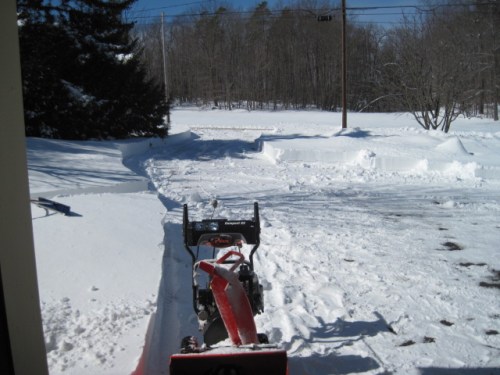
Public? private? Is there a difference, if both need clearing?
Now it may be Americans in particular who are susceptible to this form of social insecurity — wanting desperately to fit in, do the right thing (wear and drive and own and think the right things), be hip, be au courant, woke, and all the other necessary adjustments that our national Puritanism tells us are necessary for secular salvation. And so perhaps only Americans are doing our planetary Druidry wrong. Or not.
(Anyone outside the petri dish-circus-nuclear meltdown-barbecue that is America can spot a number of necessary adjustments Americans should be making for our own good and the good of the planet, but which we somehow inexplicably and wilfully ignore, but that’s another matter. We all have our own to-do lists.)
If there was money in it, somebody somewhere would be telling me I’m doing Druidry wrong.
And I am. Because all that means is I’m not doing meprecisely like you’re doing you.
The tree-wisdom that is Druidry means living our lives on earth, in these earth-bodies, whatever else may be going on with us, whatever other realms we inhabit. All we can do is go with what we get — through the senses and training and experience, memory and genetics, personality and character, hints and clues and dreams, the nudges and examples of friends who wish us well, inner and outer gods and neighbors, animals and the blessed trees.
Quite a package. When we say we don’t know what to do, how to choose, what matters, how to go on, it’s not for lack of choices and possibilities, but from a super-abundance. And no clue, key or compass ready to hand.
So when I say I’m doing Druidry wrong, I mean by that what Thoreau says (pronouns expanded): “I desire that there may be as many different persons in the world as possible; but I would have each one be very careful to find out and pursue their own ways, and not their father’s or their mother’s or their neighbor’s instead”.
That is, I ignore or defy peer pressure (insofar as I can) where it really matters — not in the obvious outward ways of young people discovering for the first time what it means to have a self, choosing hair or makeup or clothing or other faddishness at odds with arbitrary norms that superficially reassure us all is well, that the walls are secure, that wakeful sentries guard the gates. Not outwardly but inwardly I wander and marvel, where as yet the Thought Police do not patrol. (Though cookies and bots, Google and Amazon are scratching at the windows.)
What cookies have I swallowed whole lately?
It’s because we do not trust each other to “be very careful to find out and pursue their own ways, and not their father’s or their mother’s or their neighbor’s instead” that we feel we must lay out tracks and paths for all, lest the heedless deeds of a few bring down the whole ramshackle scaffold that passes for civilization. And the few are never us but always Somebody Else. Until the trees finally reach me and teach me differently.
Ya gotta go wrong to go right.
“You gotta get in to get out”, Genesis sings in “The Carpet Crawlers”.
Ah, Outback Steakhouse, guru of the moment, with its tag “No rules, just right” — there’s a form of my own credo: that somehow, in the spiritual Outback we’re each exploring, I suspect there’s a path that’s right, apart from (other’s) rules, one for each of us. My evidence: we’re all walking our own paths anyway, in case you haven’t noticed.
Something of what all this can mean in turn I’ll be addressing in the next post.
The Tree is a world-wide wisdom-glyph, a potent symbol of connection and energy and life. The Tree features significantly in Druidry, among its many other appearances, with one reasonable explanation of the meaning of the word druid linked to trees, to a derivation from two reconstructed Indo-European roots *deru/*doru/*dru-, with its cluster of related meanings — “tree, oak, rooted, sturdy, true” — and a second root *wid-, “know, see, perceive, wise” [see the American Heritage Dictionary of Indo-European Roots]. This names — and challenges — Druids to be “wise knowers”, “truth-seers”, “tree-sages” and so on.
So the list of “Seven Trees” in this post is a selection from a vast root-stock alive in a metaphorical and literal First Forest, whose roots reach everywhere. Nonetheless, throughout time humans have found such selections to be useful, because their specificity nourishes inner seeds of creativity and encourages them to germinate. We lift a bucket from the wisdom-well and drink from it, marveling as it answers a deep thirst in us. A sapling puts forth leaves in the human psyche, so that new cultures, discoveries and insights can emerge. Choose your tree(s).
1) The Tree of Dreaming
Dreams often link us in unexpected ways to much that we push out of waking consciousness. Desires, fears, hopes, inner truths we deny or secretly suspect, creativity, inspiration, wisdom and insight and encounters with non-physical beings, enemies and friends, guides, companions, challengers and initiators and teachers. Each night we climb a branch, and we may retain something or nothing on waking. The leaves of the Tree brush against us, we drink from its sap, its branches lead to new possibilities, and we stir and wake and dream again.
I drink each morning from the forest pool, imbibing the wisdom of my dreams. What offering do I make in return? Gifts of self, gifts from my worlds.
As a meditation practice, I can commend this for recall and for wonder. The trees are mirrored in the pool, and their leaves blanket the forest floor beneath my feet. I sit on a tree trunk, and eat from the fruits and nuts around me. Before I return, I give thanks. A favorite tree nearby helps this manifest and concretize in my life.
2) The Tree of Kindred
The image here is obvious: the family tree. Linked as we ultimately are to everyone else on the planet, descended from common ancestors, we are this season’s leaves on the Tree, budding, greening, fading, falling and re-emerging on branches immemorially old. But because it is difficult to do more than express a general love for all things, we can begin more fruitfully if we love this leaf and that twig, slowly expanding our circle as we live and encounter new beings and extend our connections. The individual is a powerful key. Which ancestors have particular resonance and teachings for you in this life?
3) The Tree of Transformation
Humans transform trees into useful objects of wood, wood is a workable substance, and we respond to the beauty of the grain and warmth of wood in our homes and other structures. A tree is a living thing, growing throughout its life, which in some species can be very long indeed. All trees have their seasons, of fruit and flower, youth and maturity. Many species connect with other nearby individuals, and botanists are beginning to discover the central importance of tree species and individuals in the ecology of forests and woodlands. Trees are human cradles and coffins, doorways and walls, and have come naturally to represent all the experiences and choices that face a person in life. Christ was a carpenter, and died on a wooden cross, or in the language of some Christians, “God died on a Tree” — the most incorporeal linked to one of the most physical of living beings. Trees are doorways to other worlds, thresholds (also made of wood) to change and growth. In the distinction between transient leaf and lasting tree we have an image of what immortality might mean, the leaf of one personality among thousands, and the deeper link to the World Tree.
Yggdrasil, one example of the World-Tree
4) The Tree of the Worlds
In many cultures, trees link worlds, three or five, seven or nine. (In Norse mythology the World-Tree Yggdrasil links the Nine Worlds of Niflheim, Muspelheim, Asgard, Midgard, Jotunheim, Vanaheim, Alfheim, Svartalfheim, and Helheim.) We live on Middle-Earth, between upper and lower — or many other — worlds.
Many other regions and cultures also express images of a World-Tree, including Siberia, China, many African tribes, the Aboriginal Americas, and so on. The Tree holds the worlds together, and also keeps them distinct, and as a perceptual image makes travel between them possible. As below, so above: once you know where you are, it becomes a lot easier to go somewhere else. Abandon cultural markers, and I forsake a ready cultural visa — ignoring the admonition of the popular credit card advertisement, I “leave home without it” and not surprisingly, I may run into all kinds of trouble at the borders.
5) The Tree of Wisdom
In the Garden of Eden, the serpent tempts Eve with fruit from the Tree of the Knowledge of Good and Evil. Unlike mere knowledge, wisdom transcends polarities, and is rarer and all the more valuable for that reason. We cannot stay ignorant, but we do pay a price on the road to wisdom, often through pain and suffering, individually and culturally. Because unlike so much knowledge (nowadays increasingly accessible to anyone with an internet connection), wisdom must be earned. In the Biblical story, the two trees of Knowledge and Life grow in the center of the Garden, twinned expressions or manifestations of inner realities.
6) The Tree of Life
The “brain-stuff” of the cerebellum is called arbor vitae, the “tree of life”, in anatomical terminology, because of its branching structure. Several tree species popular with landscapers share the name arbor vitae — they’re ever-greens, always green, and so appropriately named. The medieval arbor vitae, tree of life, was deployed in Christian theology, linking human and divine worlds, the World or Cosmic Tree with the tree(s) of Eden and the tree of the Cross. In the teachings of the Qabbalah, adopted by Western magical traditions, the Tree of Life is a map of creation.
As one of my students once remarked, “Eve’s mistake wasn’t one of eating but one of sequence, paying attention to the right order of things. Eat from the Tree of Life first, and then eat from the Tree of Knowledge”.
7) The Tree of Silence
As I mentioned above, there are many trees we could include in any list like this, the tree being such a powerful collection of understandings, physical beings, symbols, images, experiences, and cultural and spiritual markers and maps. Those on quests often find themselves needing silence, retreat, withdrawal, fasting from superficial human interaction in search of deeper, more meaningful connection.
Both religious and secular literature abounds with stories and images of the sage, wise woman or man, spending a period of time, or an entire life, in a wilderness, desert, or forest. And the young initiate, seeker of wisdom, or adventurer, often must traverse the wilderness, venture into the forest, only to discover she or he is never truly “out of the woods”. The lessons, growth and discovery always continue. But then the rest we seek, the repose and restoration, are so often found in silence. Over and around and in these silences rises a tree, in whose shade we rest, listening to its wisdom. In the rustling of its branches, which only helps the silence deepen, birds and bug and beasts peep out from time to time, kindred on our way.
/|\ /|\ /|\
Gratitude to you, my readers, for the 401 of you who follow this blog. Numbers both don’t matter at all and also matter deeply. Some of you visit briefly, and some stay longer. Knowing you’re reading and thinking about these things helps me keep writing. A blessing on you and your houses, you and your dear ones, you and your own walks each day and always.
Fake Druidry and OGRELD and OGRELD Redux are two previous semi-satirical posts taking a look at an imagined “One Genuine Real Live Druidry” (OGRELD). The prompt — and the acronym — come from a comment from J. M. Greer quoted in the first post: “… none of us have any right to claim possession of the One Genuine Real Live Druidry …”
With post titles like that, of course, it’s hard to be surprised when they provoke some predictable responses, from careful readers, and from careless ones, too; from readers assuming I was saying modern Druidry is somehow fake or invalid — or more offensively, that I was somehow saying their particular flavor of Druidry was fake, etc.
After all, if we’re indulging in reaction-mode to contemporary headlines, we know how “fake” gets bandied about as an attack word, almost superseding the “original” F-word. “If in doubt, try both out” — in public (or, worse, on Facebook or Twitter) and see which raises the general temperature sooner.
I submit that if you’re looking for spiritual guidance, a sense of your life’s mission, social media may not be your ideal first pick or best go-to.
What then are we to make of the expression “fake it till you make it”? Are we so provoked by the word “fake” because in fact so many of us feel slightly or very insubstantial, a “thing of nothing”, and we need the sense of outraged ego to weigh us down and keep us from floating away entirely?
Might there possibly be better ways of grounding and centering, of returning my ego to a sane place, where it can serve the whole of me?
We’re in the process of making, and in particular of self-making, and fakery (like bakery) does begin with experimentation. But if I’m polite, I just don’t subject others to my practice unless they ask. (You visit this blog, and you’ve asked.)
/|\ /|\ /|\
So how do I go about faking it till I make it? What tools lie at hand?
This coming Saturday I facilitate an afternoon discussion, third in a series, this one on the topic “How to Bring More Love into Your Life”. This is an opportunity for service on my other path, and as I’ve noted, my paths intersect constantly. So, Druid self, standing in the intersection, what do you witness?
In the way of such things, I start to hear questions in reply to the implied question of the topic. (Answer the question with a question.) A week or so before such an event, I begin to pick up on clues, and gather impressions. If I’m alert, I get them down, longhand or in a computer note. Or, to put it another way that sounds less woo-hoo, “it just occurred to me that …” And yesterday, I also asked my wife.
Often she doesn’t like to be ambushed by big questions out of the blue, especially if she’s in the middle of a weaving project (which she often is), and her focus in on patterns, and thread-counts and the young weaver she mentors each Friday. But I also find she often gives the best answers then, spontaneously, so I keep asking, at the risk of occasional spousal fallout.
A pause. Then she says, “Before I look at anything, or put my attention on anything else, I try to focus first on the highest I can find”. Do you see why I married her?
The “highest I can find” is a worthy meditation topic. Then a practice, one I can keep enlarging. And I don’t mean all abstract or “light only”. The highest this morning may well be the chickadees and returning songbirds singing outdoors, the steady drip of snowmelt off the eaves, the slant of light that says longer days, yes — and also the nights, with their stars and a waxing moon. Often it takes night to see fire best.
One way to bring more love in, in other words, is to honor and cherish what you have. If those words recall for you as for me the now old-fashioned marriage service, that’s worth pondering. We’re each married to the cosmos, after all. We’re always “in a relationship”. Why let my carelessness diminish it?
What other ways can I open the door to a greater flow of spirit, which is another way of saying the same thing?
Make room for it. If more is to come in, it will need a place to call its own. “Standing room only” doesn’t appeal much as an invitation. What can I clear away? “Room, fairy: here comes Oberon!” says Puck in A Midsummer Night’s Dream. What access do I offer spirit to the heart of who I am? What practices can help me be more grateful and open?
Much of what I do each day, like washing dishes, building the fire, doing laundry, is a ready opportunity. If I “do it till it sings”, I might even find myself singing along with it. “Pure cheese!” screeches my censor, my inner cynic. Well, cynics and censors need love too.
Singing points to another clue. Like all things, we vibrate in harmony with the things around us. Vibrate with love, and we invite love in, we make room for it. (If in doubt, I whisper to my inner cynic, try it out.) That may mean playing music rather than indulgence in a sad mood. Though sadness can be instructive too, if I don’t overdo it. With so much light and singing in the world, I want to let more in.
On an Old English Facebook group I co-admin, I posted a brief entry earlier today: On ðǣm forman dæġe Hrēðmōnaþes sēoð wē fulne mōnan. “On the first day of Hrethmonth, we (will) see a full moon”. (Hrethmonth is the month of the goddess Hrethe about whom not much is known. If you’re looking for a meditation topic, there’s a new one. Hrethmonth is also “Wild Month”, and the month for Mad March Hares. Practice wildness often. Druidry is, after all, wild wisdom.) The full moon brings the time for the monthly Peace Meditation that OBOD encourages. Lunatic, lover, poet, the gods and the wild world know your name.
Yes, we each practice our One Genuine Real Live Druidry. That is, we each respond to the unique circumstances as we live these lives on earth, making bad and better choices and ignoring or learning from the consequences.
If you seek counsel, friend, do what opens your heart.
“There’s nothing new under the sun” — traditional proverb.
But under the moon …
In Caitlin Matthews’ Celtic Devotional, the lunar meditation for Imbolc for this day is “Your Spiritual Quest Thus Far”. Rather than trying to assess how well I’m growing (what measures would I use?), or where my weaknesses lie (how often have you benefited from focusing on your shortcomings?), this meditation asks for something different: How’s my quest going?
It’s a great question, and it can be a tough one to answer adequately. If you’ve been on a quest for any length of time, you’ve noticed its quality has changed. As I grow, what I notice and look for and value will grow and shift as well. Maybe you’ve always sought the same thing, being the unswervingly upright, single-minded, and clear-eyed quester that you are, but I’d suspect the whole shebang (a profoundly scientific term) if my path didn’t reveal new vistas and challenges as I travelled along it.
Because I walk two different paths (though my suspicions just keep deepening that they’re really versions of the same journey, if only because they steal images, teachers, symbols, dreams, and everything else from each other) — because I walk two paths, as I’ve mentioned, the question feels particularly useful.
When I’m in doubt, I ask questions in turn. So is there anything I even idly imagine, let alone seriously think, would be more fulfilling and worthwhile? Because daydreams and fantasies are telling. Repressed material surfaces, seemingly random wishes and desires take form, and I can learn surreptitiously from what hasn’t yet stood careful scrutiny. I just have to be careful not to scare it off, timid woodland creature that it often is.
I let a delicious laziness steal up on me and cradle me for a moment, and imagine no need to take up a spiritual quest. I have friends, after all, who live their lives untroubled by the questions and practices and experiences that fill my days. They look at me as the odd man out. Perhaps, to judge by the great masses of my compatriots, they’re right.
Of course, I counter with the observation that the suffering I perceive in the lives of so many of my countrymen, to say nothing of anyone elsewhere in the world, in spite of the supposed luxuries of American life and its vast consumption of resources, is a clear symptom of spiritual hollowness, so it turns out we’re all on quest for something. Since the widespread perception in the West is of decline rather than improvement, an inkling of something rotten in Denmark, and D.C., of a gnawing sensation of something gone or going wrong, I venture to assert that numbing my doubts and unhappinesses with an even bigger gulp of more of the things frantic advertisers want me to buy won’t take away the pain. If there’s ever a Been-There-Done-That moment, then endless and mindless consumption surely qualifies.
So, to answer my own question, is there anything that calls to me, that proposes itself in place of the current spiritual quest I engage in?
Sure: going back to sleep. Blissful, untroubled slumber. Sleep is the theme of much social media — especially dreaming someone else’s dream (nightmare), less complicated than my own, or — sometimes — dreaming nothing at all. Letting myself be anesthetized by a waiting troupe of ready diversions — endless music and video-on-demand, newly-legal weed, endless waves of porn, another no-money-down adventure, the new-and-improved life that American society always dangles just beyond my cash-strapped nose. Even spirituality has been boxed, buffed, polished and marketed to the discerning (clueless) consumer: for a (hefty) price, you too can enjoy enlightenment in a weekend workshop, or a crash course of empowerments, blessings, trainings, practices, etc. God, nirvana, orgasm, all just a phone call and credit card away. Don’t believe in magic? Why would you? We’re already bespelled, magicked, ensorcelled, enchanted in a truly grim fairy tale, and it’s part of the spell to weaken our ability to detect its presence.
Is it any wonder so many people fast from social media, from advertising, from the Noise that strives to drown out our still small voices, those whispers of divine dissatisfaction that bless each of us and make the spiritual quest the best adventure of them all?
If you’re reading this blog, if you’ve initiated any kind of a spiritual quest at all, congratulations. You’ve already scored your first victory against distraction.
What? Well, we’ve heard a great deal, at least in the U.S., about trigger warnings— flags to alert you to media content that might possibly cause you distress.
(These days I find myself asking what doesn’tcause distress to somebody, somewhere.)
So why not look for trigger blessings instead?
You know — signs, clues, hints, flags that something out there (or in here) might possibly bring you joy, strength, inspiration, the will to carry on.
Do such things even exist?
They do. And often we mediate them to each other. Hello. I am your trigger blessing for today. Grandchild singing tunelessly, pet warm in your lap, neighbor waving on the way to work, kind stranger who lets you into line — many of our blessings come through persons. And we can be a blessing to others.
Not a bad goal, and prayer, for one day a week, to start: let me be a blessing to others. Then, having asked, watching for the moments I can make it happen.
Not for my sake (though serving brings its own rewards) but because it’s so clear others very much need blessing. Just as much, it turns out, as I do.
/|\ /|\ /|\
Since working with the Enchantments of Brighid, you could say I haven’t had anything remarkable to show for it. Led a workshop discussion on Past Lives, Dreams and Soul Travel. Caught a miserable sinus infection, along with my wife, after a weekend trip to celebrate her dad’s 85th birthday. (The old guy’s in better shape, in some ways, than I am.) Had a few dreams I’ll get to in a moment. Enjoyed the growing light that February brings to the northeast U.S., whatever the weather. Felt a stirring of creativity easily attributable to chance, or cycles of change. Nothing especially unusual here. Move along.
Except …
Enchantment often works best under cover. No one’s contacted Industrial Light and Magic, or WETA, or the local CGI crew, to mock up a trailer for the work of Brighid. The goddess, or our own life patterns if you prefer, can pull it off without the splashy special effects.
Though they’re present, if I look behind the glamours and bad mojo of our deeds, our headlines and our endlessly squawking media to all the other things, better ones, that are happening all the time.
My wife and I are making plans for a family and friends gathering to celebrate our 30th anniversary. An online Old English group I founded just held its first Skype meeting to practice the language, with 8 of us chatting awkwardly, with a good deal of laughter, for 40 minutes. Ideas are percolating, following on the Druid-and-Christian themes I’ve explored here in numerous posts, for a session at the 2nd Mid-Atlantic Gathering this coming May — a breakout discussion group I suggested will talk about the many intersections of the Druid and Christian experience.
Our finances, always interesting, continue to be interesting, but just in new ways. It turns out we won’t starve after all. (Or if we do, I’ll document it here.)
And the dreams …
In the first, from 31 January, I face Thecu, many-armed and -faced, pointing toward the east and to either the 4th or 3rd of her 9 runes of storm. Near her, a patch of intense darkness. My spiritual Guide and Teacher from my other path appears, says it’s always a choice: leave it alone or walk through. Bless the darkness — no reason to fear it. New fears, old fears: the old are a marker; the new, often, no more than distractions, unless I let them teach me something.
The second, from 4 February: I am warning others of an approaching tornado, but no one can hear me.
In the third, which my dream journal records for 9 February, I’m with a group of students from my former boarding school, though in the way of dreams I don’t recognize anyone. We’re talking about diversity, when one student shouts “Be careful!” Then I’m flying over trees, leading with my left toe. I arrive at an abandoned house somehow connected with my parents. I shout, “You never shared your pain with me!” and wake, at ease, reflective.
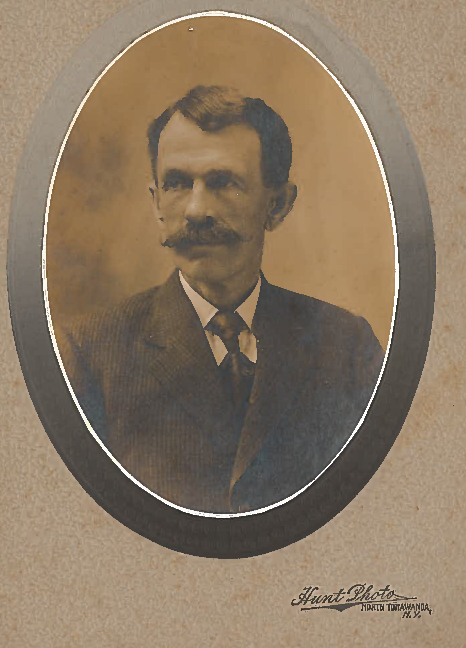
While going through old documents and photographs, I come on an image of my dad’s grandfather Albert whom I’ve never seen before, age and sepia blending, formal pose and 114 years all combining to distance him and bring him near. Yes, Ancestors, I’m still here, still listening.
Turns out more than enough is happening to keep any respectable Druid very well occupied.
All things listen to each other, even if they don’t intend to, because they share one world. As if on cue, New Republic‘s deputy editor Ryu Spaeth devoted a 6 February 2018 article to “An Education Through Earthsea“.
Admiring and condescending by turns, Spaeth opens with a strong claim: “The most beguiling promise of fantasy fiction is that of self-knowledge”. Maybe. Let’s see where Spaeth wants to go with this.
Because such stories typically feature young adults perceiving that promise and striving to claim it, their characters and plotlines can become hackneyed and cliched. Spaeth asserts that “Although rooted in our oldest legends, they hold less appeal to adults in the twenty-first century than Le Guin’s more critically celebrated works” that treat of gender, social structures and mores — human worlds and all their potential to limit as much as to liberate. Quoting Le Guin, Spaeth observes, “Enchantment alters with age, and with the age”. Odd, then, that it’s our oldest legends that have re-surfaced and that continue to appeal to so many.
But does “enchantment alter with age”, in any sense Spaeth would have us understand?
“In our age, movies and television have taken over the enchantment business”, he says. Taken it over? Yes, in many quarters. But often badly — ruling it no better than contemporary political parties and social movements do our human worlds. Enchantment is no “business”. Le Guin also wrote for the ones who walk away from the Omelas* of mass society and its blindnesses, of its imbalances in our times of ravening consumption and cold indifference to “all our relatives”, as the Dakota Sioux call them, these many Others who share our worlds, furred, finned and feathered.
nearby February snowfield
Spaeth ultimately condemns the fantasy quest for wisdom as a product of a particular time and place:
It is an approach that may be out of step with the times; to treat life as a mission to discover oneself can read like solipsism, especially when we know that so much of identity is shaped by factors beyond our control, by race, gender, class. Perhaps only a white American in the postwar period could have written the Earthsea books, could speak of an autonomous self within its own narrative, waiting to blaze forth; writers and filmmakers are more conscious now of systemic forces and the undertow of history.
Both a seemingly “woke” critique and also a deeply oblivious and superficial one: neither Le Guin nor her Earthsea wizard-hero Ged, after all, stop at self-knowledge as any kind of endpoint, but continue on an arc that ultimately finds him old, stripped of the glamours and powers of the difficult wizardry he has practiced much of his life, and at length “done with doing” in Tehanu which follows the trilogy. And each of these things, just as Ged’s beginning does, arises from “systemic forces and the undertow of history” present in Earthsea. Different ones, but hardly absent! To take just one instance, Ged is dark-skinned; the foreign Kargs who attack his village, and spur him to his first act of magic, are white. It’s because of “systemic forces and the undertow of history” that we need self-knowledge and wisdom, along with the strength to quest for them — in spite of the distractions and barriers every age has provided.
The same book Tehanu ends with mortal rescue by a dragon (and not some contrived deus-ex-machina salvation, but one motivated by and in response to human love for a child), followed by an even larger revelation of magic at the very heart of Earthsea which I will not spoil here, and lastly with a woman’s dream of planting a garden — not in some newly-recovered Eden, but a late planting, “right away if they wanted any vegetables of their own this summer” (Tehanu, Bantam 1991 edition, pg. 252). The oldest of magics, dragon and green world, rooted squarely in the midst of human life.
Any worthwhile enchantment survives Spaeth’s dismissal wholly unscathed.
The old stories flourish because they have something to say to us we’re not getting from Washington and Hollywood and Industrial Light and Magic, however temporarily beguiling they may be. Enchantment in the end can never be an “industry” or “business”, whatever glamours its often debased versions toss our way. We earn them, but we can’t purchase them.
And because we each do have our “own narratives”, whatever else we may be, we do have choices, however hard, and at least in part we are our stories, especially if we know and tell them well enough that we do not merely justify all our choices, but grow through them into something more than we were before.
In these days of growing light, along with a typical February snowstorm coming to the Northeastern U.S., the Enchantment of Brighid continues to unfold.
/|\ /|\ /|\
*A discussion of Le Guin’s genre-defying “The Ones Who Walk Away from Omelas”.
One of the Enchantments of Brighid is openness to possibility. The goddess specializes in healing, poetry and smithcraft — skills of change, transformation and receptivity to powerful energies to fuel those changes and transformations. We seek inspiration and know sometimes it runs at high tide and sometimes low. As this month draws to a close, we have a moon waxing to full, an aid from the planets and the elements to kindle enchantments, transformations, shifts in awareness.
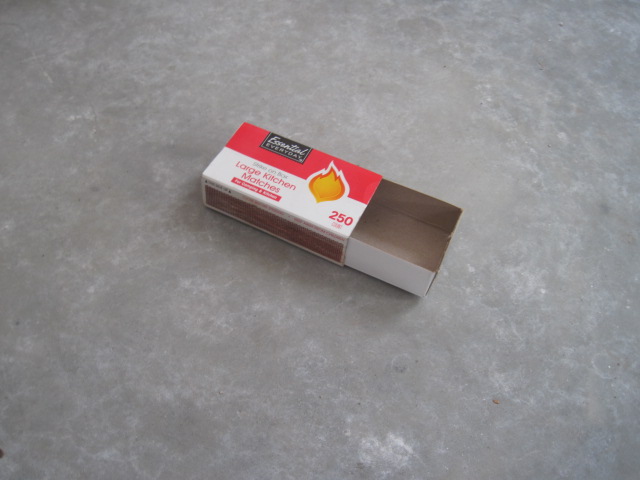
A day ago we finished a box of wooden matches. The box holds 250, and since we use them only for lighting our stove, that means we go through just part of a box every year. Emptying a box doesn’t happen that often, so it’s noticeable.
I like the imagery of the “empty” box. Though combustible itself, its main purpose is to contain matches and provide a strike surface. An old box has a worn strike surface, and one might be tempted to toss the whole thing in the fire. But I’m keeping it for these 19 days of Brighid, and it occurs to me now that it deserves a place on my altar. The sacredness of the everyday? Well, where else can the holy mystery abide in the worlds of matter, energy, space and time. As a friend likes to say, a mest (or messed) world can be a good and powerful stage for life and joy to happen.
Not to stretch things too far — how far is that, anyway? — I am a box, and so are you. Our spaces can hold all manner of things, and it’s our intention that determines what those might be. Insubstantial in itself, the box is nevertheless a potential locus for fire and mystery, or scores of other things. We take from the box a mood or a match, strike it and lay it to paper and kindling. We don’t create the fire, but without the box, the match, the intention and the movement to bring fire and kindling together, we don’t get flames.
To me the empty box is a “found” spiritual tool (my favorite kind), one I can work with physically and also in the imagination from where magic pours forth. Kitchen magic, or woodstove magic, if you will. What belongs inside it? What are some of the matches I wish to light? Where do I find them? (Where have I found them in the past? What new sources of them open up each day?)
/|\ /|\ /|\
On a small piece of paper I write a prayer to Brighid, and I fold and close it in the box.
Author and activist Ursula Kroeber Le Guin, most famous for her Earthsea trilogy and for The Dispossessed and The Left Hand of Darkness, passed on Monday, aged 88.
To hear Le Guin in her own words, a keen delight for her many fans, here [Vimeo link] is the 2014 National Book Award introduction by Neil Gaiman and a 5-minute acceptance speech by Le Guin, with her wit and sharp intelligence on full display [her remarks begin around 5:27].
Among other salient points, Le Guin observes in her short speech, “I think hard times are coming when we will be wanting the voices of writers who can see alternatives to how we live now, and can see through our fear-stricken society and its obsessive technologies, and can even imagine some real grounds for hope”.
Le Guin’s masterwork for many will remain A Wizard of Earthsea, the book that brought us a school for wizards decades before Rowling’s Hogwarts. No, it’s not a competition, but first loves hold a special place in the heart. The first installment of the Earthsea trilogy, Wizard is 50 years old this year, appearing in 1968.
Everyone has their justifiably favorite passages; mine remains this one. The main character Ged has recovered from the stupor of severely overspending his power in an attempt to save a dying child, the son of his friend. Without the touch of his pet otak, he realizes he might never have awakened.
It was only the dumb instinctive wisdom of the beast who licks his hurt companion to comfort him, and yet in that wisdom Ged saw something akin to his own power, something that went as deep as wizardry. From that time forth he believed that the wise man is one who never sets himself apart from other living things, whether they have speech or not, and in later years he strove long to learn what can be learned, in silence, from the eyes of animals, the flight of birds, the great slow gestures of trees (A Wizard of Earthsea, 1984 Bantam Edition, pg. 82).
With a clear moral vision of profound responsibility we hold along with our power, Le Guin cuts through the lies we tell ourselves, and reminds us with her clean and powerful prose of our birthright, our duty and our promise.
We could subtitle this post “Druidry — the Ironic Survival”. Philip Carr-Gomm notes in his book Druid Mysteries:
Although Christianity ostensibly superseded Druidry, in reality it contributed to its survival, and ultimately to its revival after more than a millennium of obscurity. It did this in at least four ways: it continued to make use of certain old sacred sites, such as holy wells; it adopted the festivals and the associated folklore of the pagan calendar; it recorded the tales of the Bards, which encoded the oral teachings of the Druids; and it allowed some of the old gods to live in the memory of the people by co-opting them into the Church as saints. That Christianity provided the vehicle for Druidry’s survival is ironic, since the Church quite clearly did not intend this to be the case (p. 31).
Sacred sites, festivals and folklore, tales of the Bards, and the old gods: there you have the substance not only of Druidry but also of Druid and Christian linkages and considerable common ground.
Do we need all four to practice Druidry, or to honor Brighid?
Yes. We already have all four, to a degree that allows us to build on what we have, if we choose. While guided tours to sacred sites continue to make money for their organizers, we can gain access inwardly, through dedicated practice.
How?
On the day before the 19 Days of Brighid, we have many points of access, if we’re willing to explore them with attention, creativity and love.
1) Kildare is Cill Dara, “Church or Cell of the Oak”. Find an oak tree or leaf. “As above, so below. As within, so without”. Can you proceed from there? If you’ve been reading this blog, or have a practice of your own, you have an inkling or a clear idea of what you might do next. Here then is a first door to the Enchantment of Brighid.
Now for 18 more.
2) For a guided meditation, many songs exist. One I’ve posted about previously is Damh the Bard’s song “Brighid” . Enact the song, as your circumstances permit. Read through the lyrics first, or just listen through. Then do what comes to you to make the song come alive. What will you offer at the Well? If you have a bowl of water and a candle or tealight, enact the first appearance of the goddess. Say the prayer of the song’s chorus, or your own.
3) Using the help of the video in the previous post for making a Brighid’s cross, make the creation of your own cross — from reeds, strips of paper, fabric, etc. — an offering, a gift, an act of mindfulness, a devotion to Brighid.
4) Troubled by doubt? Blocked into inaction by hesitation, fear, or talking self telling you not to be ridiculous? Note the lines in Damh’s song: “But in her prison, she heard the spell the people were chanting: Three days of Summer, and snowdrops are flowering again”. The people — that’s you and me — help free her from prison. We imprison the divine, but we have the power to liberate it again in our lives. What chant comes to you? Listen for it as you go about your day, reading the headlines, listening to conversations, songs on the radio, and so on. Meditate, and write down what comes. This is a prayer the people are chanting.
5) Dance a dance you make up that has 19 steps. A circle, a square, some other shape or just steps as they come to you. Swing your arms, raise them, keep them at your sides, or clasped in prayer. Drum on a tabletop, a pot, a cup, bang two spoons together. Or step in silence. On the 19th step, say or whisper aloud or inwardly the name of the goddess. Dance when nobody’s watching. Except you and the goddess.
6) Brighid is goddess of fire. Light a flame and say “The fire is still burning. Nineteen priestesses tend the Eternal Flame. Oh but of you, my Lady, we are still learning”.
7) Educate yourself about Brighid. Here’s an easy “for-instance” — a short video (5 mins.) featuring Mary Meighan, who offers several clues to a practice.
Brighid’s Well
8) Volunteer at a homeless shelter, dedicating the service to Brighid, an offering, a way of helping to keep the human fire kindled in others. We think of such things around the big Christian holidays of Christmas and Thanksgiving and tend to drop them from memory at other times. I’ve just sent off an email to one of our local shelters, 8 miles away, requesting info on volunteering.
9) Dedicate a practice meaningful to you for each of the next 19 full moons. Ask for insight and resolution — in exact proportion to how well you keep your practice. Ready? Set … Go!
10) Following bpott’s comment on a recent post, “[P]lay (with serious thought) with enchantment”. What does enchantment look like to you? When have you experienced moments of enchantment? How did they manifest? What was going on when they did manifest? What can you do to welcome them again?
11) Again following another recent comment by bpott, take your practice outdoors, however briefly. Especially needful in the Northeastern US, because we get serious cases of cabin fever. (Our area organizes “Cabin Fever Dinners” to bring people out of hunker-down mode and into celebration over a communal meal. One of the more popular ones in our area draws 75-100 people and is held in a local church. Yes, plenty of non-church people attend. It doesn’t hurt that the menu and kitchen are overseen by the pastor’s husband, who’s a gourmet chef. It’s very much a Brighid experience, at least for me. Generosity, kindling the fire in others.) Enjoy the thaw that’s come to the region. And wherever you are, breathe outdoor air. Let the sun shine on your skin.
12) What can you kindle and smith, inspire and heal, in yourself and others? What wells and forges exist in your life? How can you use and serve them? What wells and forges have you possibly overlooked or taken for granted? Again, how can you serve and use them?
13) Set a dream intention each night for prophetic, healing or creative dreams. Record each morning what comes. If you think nothing came, write what you imagine coming. Read it that night before you go to sleep.
14) Choose a bowl of water or goblet, etc. as your Well of Brighid. Ask for the blessing of Brighid upon it. Drink from it each morning after sleep.
15) You visit the Fire Temple on the inner planes. What do you experience there? Write down what comes. Who greets you? What gets ignited? What gets burnt away? What kind of flame are you given to return with to your life?
16) Find a poem that inspires you. (Or write one.) Make the reading and saying aloud of the poem a practice for the 19 days. Make of your love for the poem an offering.
17) Practice intense devotion for a particular manifestation of the divine in the form of a god or goddess that draws you. In a post “Loop of Brighid: The Mysticism of Devotion“, Christopher Scott Thompson says,
Rather than talking in a hypothetical way about what the mystical experience actually is, I’m going to talk about how to get there yourself through your own relationship with the gods and goddesses you personally serve. This is not an attempt to import something like bhakti from Hinduism into modern western paganism, because devotional practice to specific deities is already naturally developing within the pagan revival. However, I will be using the concept of bhakti as an analogy for the most intense and mystical forms of modern devotional paganism, such as the mood expressed in this poem [included just above this extract in the original post].
For those of you incubating your own enchantment of Brighid to coincide with the upcoming 19 days of the goddess, you have the moon to aid you. Waxing now, it reaches full at nearly the midpoint of the 19 days, on the 31st of January — a fine symmetry, whether you choose to align with it or not.
The Solar Question for today, the 20th of the month, in Caitlin Matthews’ Celtic Devotional (Gloucester, MA: Fair Winds Press, 2004) asks “What is the source of your spiritual guidance?” The Lunar Meditation* for the fourth day of the moon (counting the New Moon, Jan. 17, as day 1) is “the wonder of life”. If I’m facing a period of spiritual dryness, if I have no other ready guidance, “the wonder of life” is a fitting source. Watching and listening, I can find in something small as the sun sparkling on an icicle a subtly radiant doorway into the Enchantment of Brighid.
Because magic so often starts small, no more than a tickle, a spark, a whisper. Till it builds.
Keep refreshing “home” and your browser gives you different results, your Facebook feed changes, etc., my wife said the other day.
If I’m paying attention, an inner bell goes off for me at such moments, an aha! of illumination. Spiritual practice is my way of refreshing home, of choosing — or asking for — something else than what the apparent or obvious may be telling or showing me. Some animals and insects excel in mimicry as a defense, or to lure prey. So too the human world, with its heartfelt truths and its cons, its bullshit and its profound beauties, its “characters” and “originals” and its gold standard friends.
Refreshing home is a kind of alertness that many animals retain, honed senses not dulled by noise from talking self. Don’t get me wrong — human speech is indeed a gift. But like many powerful gifts, it’s double-edged. It’s true, peace to Walt Whitman, that animals “do not make me sick discussing their duty to God … Not one kneels to another, nor to his kind that lived thousands of years ago”*
So when I write, as in the previous post, about things like devotion to Brighid, and you’re feeling particularly agnostic about, maybe, absolutely everything, consider J M Greer’s observations about egregor(e)s, the energy of group consciousness that forms around any regular gathering and gives it a distinct character, and especially around magical groups that work intentionally with charging and exploring its potentials. Is Brighid an egregor? Does your local parent-teacher association or book club or university class differ from other groups in any way? Of course. But is Brighid “merely” an egregor?
Richard Dawkins and Sam Harris and other atheists miss a very large point here. I won’t spell it out — you already know it, or else you’re not interested in knowing it.
Greer says, writing about magical lodges:
… egregors capable of carrying the highest levels of power can only be built up on the basis of the living patterns of the realm of meaning, outside space and time. These patterns are what some religions call gods, and what others call aspects of God. They have a reality and a power that have nothing to do with the egregors built up around them, but they use the egregors the way people use clothing or the way actors in many traditional societies use masks. Skillful, intelligent, ethical, and dedicated work with these egregors, according to tradition, can bring lodge members into a state of participation with the primal living powers of existence itself — a state that is the goal of most religions, and as well as the highest summit of the art of magic (Greer, Inside a Magical Lodge, Llywellyn Books, 1998, pgs. 109-110).
It’s the part of those willing to work with and within a tradition not to stop at the level of belief in it, but to test and explore its possibilities. We’re worlds away from credal faith here. But you may, if you’re around a devotee of Brighid, especially this time of year, overhear or encounter a song or poem or prayer of dedication, service, and love.
Imbolc, the February 1st or 2nd holiday, part of the seasonal cycle of the “Great Eight” Pagan festivals, has long been associated with Brighid. Goddess, saint, patron of poets, smiths and healers, Brighid is a potent presence for many Druids. Christian Druids can honor her in either or both traditions, and her legends and symbols — effective points of access to her — are many.
Among the traditions that have gathered around her is the significance of the number 19 — whether part of the ancient awareness of the moon’s Metonic cycle, or the Christian tradition for determining Easter, curiously associated with the full moon, or the 19 nuns at Kildare connected with Saint Brighid. Or the practice of 19 days of magic focused on devotion to the goddess-saint, which this post examines. As a Druid-Christian link, the number and practices associated with Imbolc and Brighid can join the others I’ve talked about in other posts here as yet another means to transcend argument or debate, and find blessing.
Nineteen days with Imbolc in the center (on Feb. 1), the 10th day, begin January 23 and take us to February 10.
As this circle is cast, the enchantment of the apparent world fades … We stand together in the eye of the sun here and now …
So goes part of OBOD standard ritual. Why, you might be asking, if Druids say they wish to attune themselves to the natural world, do they practice ritual that sees the natural world as both enchanted and apparent?
Well, we still stand “in the eye of the sun”. Partly it’s “talking self” (see this and this post) that distracts us, that enchants us in the sense of holding us spellbound (and self-bound) rather than freeing us to grow. Circles concentrate energy and attention, contain them for the duration of the ritual, and can help charge us as instruments of the divine in order that we may “know, dare, will and keep silent”, as the old adage goes. So we circle alone and together to watch that particular enchantment fade, so that others can manifest more clearly. It’s a choice of enchantments. Do you like the current ones at work in the world? “She changes everything she touches, and everything she touches changes”. Sign me up!
Spending the interval from now till the beginning of the 19 days, a week from today, determining what service to offer, what magic to work, is time well spent.
I’ll be following up here with my experiences.
/|\ /|\ /|\
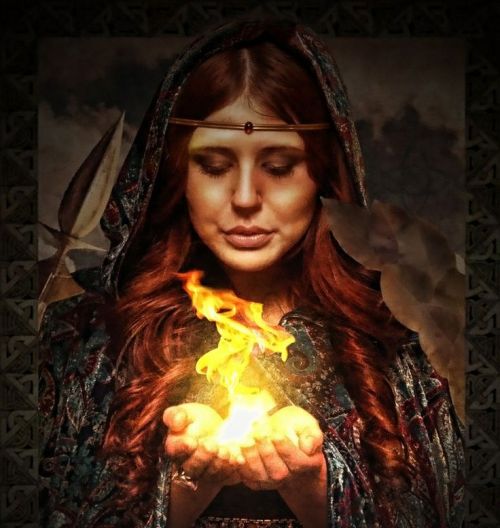
Image: Brighid. My preference is for deity images that aren’t sentimental or “airbrush pretty”. Contemporary artists often portray sexy gods and goddesses, which is fine, but as an image for meditation I’d rather not use soft porn.

 Some of the less commendable games de Ropp names are “Cock on Dunghill” and “Hog in Trough”. We’ve seen plenty of players of both those games over the last few decades. The 2008 global financial crisis resulted directly from “Hog in Trough” players. “Verily”, said a long-ago Galilean Druid, “they have their reward”.
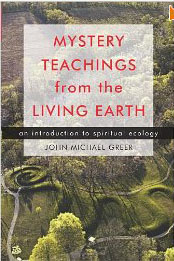 In 2012, on the centennial of the anonymous 1912 publication of the Kybalion [free pdf/public domain], J. M. Greer published a reworking of the seven spiritual laws it explores in his Mystery Teachings from the Living Earth: An Introduction to Spiritual Ecology. In Greer’s latter version, the seven laws re-emerge as statements of an ecological spirituality. [See here for posts examining each law].

 Ah, Outback Steakhouse, guru of the moment, with its tag “No rules, just right” — there’s a form of my own credo: that somehow, in the spiritual Outback we’re each exploring, I suspect there’s a path that’s right, apart from (other’s) rules, one for each of us. My evidence: we’re all walking our own paths anyway, in case you haven’t noticed.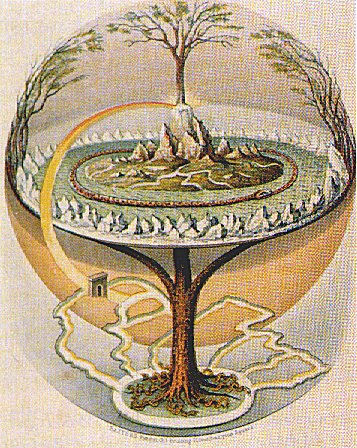
 As I mentioned above, there are many trees we could include in any list like this, the tree being such a powerful collection of understandings, physical beings, symbols, images, experiences, and cultural and spiritual markers and maps. Those on quests often find themselves needing silence, retreat, withdrawal, fasting from superficial human interaction in search of deeper, more meaningful connection.





 A Druid Way

