Archive for the ‘consciousness’ Category
 Yes, secrets can be dangerous. But live long enough and you notice that most things which may be dangerous under certain conditions are often for that very reason also potential sources of valuable insight and energy. Poisons can kill, but also cure. Light can disinfect, and also burn. Different societies almost instinctively identify and isolate their favorite different sources of energy as destructive or at the least unsettling, just as the physical body isolates a pathogen, and for much the same reason: self-preservation.
For many Americans and for our culture in general, sex is one great “unsettler.” We need only look at our history. Problems with appropriate sexual morality have dogged our culture for centuries, and show no signs of letting up, if the current gusts of contention around contraception, abortion, homosexuality and abstinence education mean anything at all. Wall up sexuality and let it out only on a short leash, if at all, our culture seems to say. Release it solely within the bonds of heterosexual monogamy. Then you may escape the worst of its dangerous, unsettling, even diabolical power. You can identify this particular cultural fixation by the attention that even minor sexual miss-steps command, surpassing murder and other far more actually destructive crimes. Let but part of a breast accidentally escape its covering on TV or in a video, even for a moment, and you’d think the end of the world had truly arrived.

a Mikvah -- ritual bath
Other cultures diagnose the situation differently and thus choose different energy sources to obsess about and wall up, or shroud in ritual and doctrine and taboo. For some, it’s ritual purity. At least some flavors of Judaism focus on this, with the mikvah or ritual bath, various prohibitions and restrictions around menstruation, skin diseases and other forms of impurity, and the importance of continuing the family along carefully recorded bloodlines. The first five Biblical books, from Genesis to Deuteronomy, list such practices and taboos in often minute detail.
The Bible also testifies, in some of its more well-known stories, to the fate of individuals like Jacob’s brother Esau, who married outside the family, and thus forfeited God’s blessings and promises that came with blood descent from their grandfather Abraham. And one need only consider Ishmael, son of Abraham but not of an approved female, who is driven out into the wilderness with his mother Hagar, a slave and not a Hebrew. This Jewish Biblical story accounts for the origins of the Muslims, descendants of Ishmael or Ismail. (The Qur’an, not surprisingly, preserves a different account.) The flare-ups of animosity and sometimes visceral hatred between Jews and Muslims thus originate quite literally in a family inheritance squabble, if we take these stories at their word.
If secrets have at their heart a source of potent energy and culture-shattering power, no wonder Americans in particular suspect them. We like to think we can domesticate everything and turn it to our purposes: name it, own it, market it, even cage it and sell tickets for tourists to see it in captivity, properly chastened by our mastery. But the numinosity of existence defies taming.
Such an oppositional stance of course almost guarantees conflict and misunderstanding and ongoing lack of harmony. But the experience of some human cultures tells us that we can learn to discern, respect and work with primordial forces that do not bow to human will and cleverness. (Likewise, Western and American culture have demonstrated that fatalism and passivity are not the only possible responses to disease, natural disasters, and so on.) Master and servant are not the only relations possible. For a culture that prizes equality, we are curiously indifferent to according respect to sex, divinity, mortality and change, consciousness and dream, creativity and intuition as forces beyond our control, but wonderfully amenable to cooperation and mutual benefit.
So how do secrets fit in here? The ultimate goals of both magical and spiritual work converge. As J. M. Greer characterizes it,
… the work that must be done is much the same–the aspirant has to wake up out of the obsession with purely material experience that blocks awareness of the inner life, resolve the inner conflicts and imbalances that split the self into fragments, and come into contact with the root of the self in the transcendent realms of being (Greer, John Michael. Inside a Magical Lodge, 98).
Of course, much magical and spiritual practice does not (and need not) habitually operate at this level — but it could. “By the simple fact of its secrecy, a secret forms a link between its keeper and the realities that the web does not include; a bridge to a space between worlds,” Greer notes. This space makes room for inner freedom, and so the effort of maintaining secrecy can pay surprising psychological dividends.
Keeping a secret requires keeping a continual watch over what one is saying and how one is saying it, but the process of keeping such a watch has effects that reach far beyond that of simply keeping something secret. Through this kind of constant background attention certain kinds of self-knowledge become not only possible but, in certain situations, inevitable. Furthermore, this same kind of attention can be directed to other areas of one’s life, extending the reach of conscious awareness into fields that are too often left to the more automatic levels of our minds … Used in this way, secrecy is a method of reshaping the self … (Greer, 116-117).
Thus, the actual content of the secret may be quite insignificant, a fact that baffles those who “uncover” secrets and then wonder what the fuss was all about. Is that all there is? they ask, usually missing another aspect of secrecy: “things can be made important–not simply made to look important, but actually made important–by being kept secret” (Greer, 118). The effort of maintaining secrecy and the discoveries that effort allows can mean that the supposed secrets themselves are often next to meaningless without that effort and discovery.
In this case, the danger of secrecy lies in what it reveals rather than what it conceals. Once we discover the often arbitrary and always incomplete nature of the web of communication (and the cultural standards based on that web), we perceive their limitations and ways to step beyond them. Here secrecy has
a protective function on several different levels. To challenge the core elements of the way a culture defines the world is to play with dynamite, after all. There’s almost always a risk that those who benefit from the status quo will respond to too forceful a challenge with ridicule, condemnation or violence. Secrecy helps prevent this from becoming a problem, partly by makng both the challenge and the challengers hard to locate, but also by making the threat look far smaller than it may actually be (Greer, 127).
 Secrecy forms part of the “cauldron of transformation”* available to us all. Most of us balk at true freedom and change. We may have to relinquish comforting illusions — about ourselves and our lives and the priorities we have set for ourselves. So like a mouse I take the cheese from the trap and get caught by the head — I yield up the possibility of growth in consciousness in return for some comfort that seems — and is — easier, less demanding. All it costs is my life.
Guard the mysteries; constantly reveal them, goes an old saying of the Wise. The deepest secrets we already know. That is why awakening confers the sensation of coming home, of return, of reclaiming a birthright, of dying to an old self, of extinction of something small that held us back — so many metaphors that different traditions and cultures and religious and spiritual paths hold out to us, to suggest something of the profound, marvelous and most human experience we can have.
/|\ /|\ /|\
Images: cartoon; mikvah; cauldron;
* See John Beckett’s excellent blog post on this topic here.
If you believe that everything should be “out in the open,” you’ll probably admit to a certain impatience with concealment and secrecy. We’ve heard the old saw: “If you’ve got nothing to hide, you’ve got nothing to fear” and up to a point we believe it. Particularly in the U.S., we equate openness with being “aboveboard” and honest. “Don’t beat around the bush.” “Say what you mean.” “Be upfront about it.” We admire “straight talk.”
The Freedom of Information Act helped make at least some government activities more transparent, and we often welcome “full disclosure” in a variety of situations. We still think of ours as an “Open Society,” and the current practice of large and anonymous campaign contributions from corporate sponsors has some American citizens up in arms. We’re wary of the con, and we tend to suspect anyone who doesn’t “tell it like it is.” We’ve got talk shows where people “spill it all,” and public figures starting at least with Jimmy Carter who began a confessional politics by admitting he had “lust in his heart.” But not all secrets are sinister. They do not automatically concern information anyone else needs to know. Each of us has some things that are innocently private. And in fact, well beyond this concession, secrecy can serve remarkable purposes that conspiracy theorists and even regular citizens rarely acknowledge.
Some secrets, of course, appear to be built into the stuff of the Cosmos. Robert Frost captures this in a brief two-line poem, “The Secret Sits”:
We dance round in a ring and suppose,
But the Secret sits in the middle and knows.
We circle the thing we’re after, all the while convinced it’s there, that something will answer to our seeking, but somehow we still persist in missing it. In spite of a couple of hundred years of scientific exploration, and prior to that, millennia of religious and spiritual investigation, existence and meaning and purpose often remain mysterious and not easily accessible. What matters most to us springs from sources and energies we can’t simply subject to laboratory scrutiny and then write up in learned journals and magazines. As some of the Wise have put it, “the eye sees, but cannot see itself” (at least not without a mirror). Something about the nature of consciousness blocks us from easily comprehending it.
In our search, we reduce matter to atoms (literally, “unsplittables”) and think we’ve arrived at the true building blocks of the universe, only to learn that atoms can indeed split, and that they’re composed of subatomic particles. Quantum physics further reveals that these particles are probabilities and exist only with the help of an observer. Space-time itself is generated by consciousness. We live in a “nesting doll” universe, worlds inside other worlds, an onion-like cosmos of endless layers. True secrets, it appears, can’t be told. They’re simply not part of the world of words. As the Tao Te Ching wryly has it, “The Way that can be talked about isn’t the real Way.” If that doesn’t have you pulling your hair out, it can at least cast you down into a terminal funk. Where can a person get a clear answer?
Serious seekers in every generation come to experiment with some form of solitude, and if they persist, they may discover some very good reasons that underlie the practice of removing themselves even briefly from consensus reality and the web of communication we’re all born into. This web helps us live with each other by building enough common ground that we can understand each other and cooperate in achieving common goals. But it also builds our entire world of consciousness in ways we may not always want to assent to. However, solitude by itself isn’t reasonable for most people as a lifestyle. As my mother liked to remind me, “You have to live in the real world.”
But this “real world” runs surpassingly deep and wide in its influence. Author, blogger and Druid J. M. Greer notes,
The small talk that fills up time at social gatherings is an obvious example. There might seem to be little point in chatting about the weather, say, or the less controversial aspects of politics, business, and daily life, but this sort of talk communicates something crucial. It says, in essence, “I live in the same world you do,” and the world in question is one defined by a particular map of reality, a particular way of looking at the universe of human experience.*
We need maps – there’s a reason we developed them. But they limit as much as they guide. We could even say that this is their genius and power – they guide by limiting, by reducing the “blooming buzzing confusion” of life to something more manageable. Advertizing does this by simplifying our desire for meaning and connection and significance into a desire for an object that will grant us these things. Trade one symbol – money or credit cards, paper or plastic – for another symbol, a status symbol, an object sold to us with a money-back promise to grant wishes like a genie’s lamp or the cintamani, the “wish-fulfilling” gem of the East. (If that’s not magic, and a questionable kind at best, I don’t know what is. How much more wonderful it would be – how much closer it would come to “true magic” — if it actually succeeded in quenching that original desire, which is merely sidetracked for a time, and will re-emerge, only to be distracted again, by another “new and improved”** model, spouse, diet, house, product or lifestyle. We need a remarkably small minimum of things to flourish and be happy. In a territory far beyond the blessed realm of that minimum, the market survives, yes, while the heart slowly dies.***)
Greer continues,
We thus live in an extraordinarily complex web of communication, one that expresses and reinforces specific ways of thinking about the world. This is not necessarily a problem, but it can easily become one whenever the presence and effects of the web are unnoticed. To absorb the web’s promptings without noticing them, after all, is also to absorb the web’s implied world-view without being aware of the process – and what we do not notice we usually cannot counteract.
The very common habit of passivity toward our own inner lives, a habit that is responsible for a very large portion of human misery, shows itself clearly here. It’s one thing to accept a map of the world as a useful convenience, one that can be replaced when it’s no longer useful, and quite another to accept it unthinkingly as the only map there is—or worse, to mistake the map for the world itself.*
A secret breaks the web. It remains something apart, the fragment that doesn’t fit. It’s the puzzle piece left over that doesn’t match the gap in the nearly-finished picture staring up at you, that one annoying bolt or washer or other component remaining after you’ve put together the “easy to assemble” appliance or device. It’s the hangnail, the sore thumb, the mosquito bite of awareness that something’s off-kilter, out of whack, out of step, no longer in synch. We have words for these things — we can name them, at least — because they happen to us frequently enough to break into the web. And we struggle to fix them as soon as we can, or barring that, ignore them as much as possible, that uncomfortable fact, that inconvenient discovery. As Churchill quipped, “Men occasionally stumble over the truth, but most of them pick themselves up and hurry off as if nothing happened.”
I’ll continue this topic in Part Two.
/|\ /|\ /|\
*Greer, John Michael. Inside a Magical Lodge, pp. 114-115. I reread this book about once a year, and its lucid style makes this pleasurable apart from its subject matter. In addition to being a “guided tour” of the workings of lodge dynamics (fraternal, magical and social) and group magical practice (with an example magical lodge that Greer examines in considerable detail), the book is a clear, demystifying meditation on group consciousness, secrecy, and the magical egregore or “group mind” at work in all human organizations, institutions and collectives, including families, churches, political parties, companies, clubs, sports teams — the scope is immense.
**As comedian Chris Rock says, “Which is it, new or improved?!”
***As a teacher at an expensive private school for students whose parents expect them to gain admission to the top colleges and universities in the country, I here acknowledge that I myself participate in another kind of wish-fulfilling enterprise marketed to a considerable degree to that now widely suspect 1%. In defense of the school, however, if not of myself, every year scholarship students are admitted solely on merit. They succeed out of all proportion to their numbers in earning top class rankings and coveted admission letters to the best schools.
 One of the more useful skills I’m practicing with Druidry (we all learn our lessons from many sources, in different guises and from different teachers, throughout our lives) concerns binary thinking. It’s easier to recognize when we’re not practicing it ourselves. You’re with us or you’re against us. It’s good or it’s bad. You’re young or you’re old. Hot or cold. 1% or 99%. And so on. Next door in New Hampshire, the state license plates famously read “Live free or die.”
We can get distinctly uncomfortable around ambiguity that doesn’t fall into one or the other of two neat categories. Advertisers after all market to categories, and spend time labeling both products and consumers so they can target their products. WordPress asks for tags and categories. If you have something to sell that doesn’t fit under a label, you can have a devil of a time getting it on the shelves or in front of people’s noses. Likewise, if you want to locate something that doesn’t fit a category, it can sometimes be a long challenge to track it down.
Of course, we can see plenty of this dualistic patterning in action now on a large scale in the States, and without needing to look any further than our presidential primaries. Just tune in, and you’re sure to hear some variant of the following, especially across party lines: one candidate’s or party’s ideas and proposals constitute all Goodness and Light and Upright Living, while the other threatens our very way of life. Filled with greed, selfishness, and all signs of true evil, that Evil Other will — if we make the mistake of listening to/believing in/voting for them, deliver us individually and as a nation into the hands of utter darkness, despair and destruction.

 Of course the drift into binary or polar thinking doesn’t originate or end with politics. As author, blogger and Druid J. M. Greer notes, “Binaries exert a curious magnetism on the human mind. Once we get caught up in thoughts of yes or no, right or wrong, love or hate, truth or falsehood, or any other binary, it can be hard to realize that the two poles of the binary don’t contain all of reality … Druid philosophy offers a useful tactic in situations of this kind. When you encounter a binary, you simply look for a third factor that is not simply a midpoint between the two poles. Find the third factor and you convert the binary into a ternary, a balanced threefold relationship that allows freedom and flexibility.”*
We all know numerous proverbs and images of three-ness. “Third time’s the charm”; the three parts of a syllogism (thesis, antithesis and synthesis); beginning, middle and end; the Three Blind Mice; Brahma, Vishnu and Shiva; Father, Son and Holy Ghost; the examples are nearly endless. What they amount to is a widespread recognition of the liberating and creative power of Three. As the Tao Te Ching says (Ch. 42), “From the One comes Two, from the Two Three, and from the Three the Ten Thousand Things” of existence in this world. The key is not to stop at two if we want to create. Move on to three.
Greer amplifies the discussion of binary thinking in a post on his weekly blog. He notes that
… the hardwired habit of snap judgments in binary form is always right below the surface. In most cases all it takes is a certain amount of stress to trigger it. Any kind of stress will do, and over the years, practitioners of mass thaumaturgy have gotten very good at finding ways to make people feel stressed so that the binary reaction kicks in and can be manipulated to order.
That’s when thinking in binaries goes haywire, the middle ground becomes invisible, and people think, say, and do resoundingly stupid things because they can only see two extreme alternatives, one of which is charged to the bursting point with desire … or fear … Watch the way that many people on the American right these days insist that anybody to the left of George W. Bush is a socialist, or tfor that matter the way that some people on the American left insist that anybody to the right of Hillary Clinton is a fascist. Equally, and more to the point in our present context, think of the way the peak oil debate was stuck for so long in a binary that insisted that the extremes of continued progress and sudden catastrophic collapse were the only possible shapes of the postpetroleum future.
Binary thinking is evolutionarily useful, Greer notes, because it allows us to make snap judgments that can save our lives in crises. But in situations where more careful thinking is not only possible but necessary, our ancient wiring and programming can leave us stranded at one pole or another, in stalemate, with no sense of the way forward.
Greer continues, observing that (in various kinds of Druid and magical training) “Back in the day, beginning students used to be assigned the homework of picking up the morning paper each day, writing down the first nine binaries they encountered, and finding a third option to each binary.” This bit of training can offer a salutary unlocking and rebalancing of the debates of the day — or of any complex problem handicapped and hampered by sharply polarized thinking.
This useful little exercise [of identifying and expanding binaries] has at least three effects. First of all, it very quickly becomes apparent to the student just how much binary thinking goes on in the average human society. Second, it very quickly becomes at least as apparent to the student how much of an effort it takes, at least at first, to snap out of binary thinking. Third and most crucial is the discovery, which usually comes in short order, that once you find a third option, it’s very easy to find more—a fourth, a ninety-fourth, and so on—and they don’t have to fit between the two ends of the binary, as most beginners assume.
Ternary thinking isn’t just a liberating technique for the person who practices it. It carries with it a desirable ripple effect, for
… when a discussion is mired in reactive binary thinking, it only takes one person resolutely bringing up a third option over and over again, to pop at least some of the participants out of the binary trap, and get them thinking about other options. They may end up staying with the option they originally supported, but they’re more likely to do it in a reasoned way rather than an automatic, unthinking way. They’re also more likely to be able to recognize that the other sides of the debate also have their points, and to be able to find grounds for mutual cooperation, because they aren’t stuck in a mental automatism that loads a torrent of positive emotions onto their side of the balance and an equal and opposite torrent of negative emotions onto the other side.
Given how shrill our political dialog has become, and how intransigent and loath to compromise the principal players remain, we could use a healthy dose of such thinking. As one of the Wise has said, “God is what opposites have in common.” For me that means that the “truth” of a matter is less than likely to lie at either extreme of a binary, but somewhere else — not “in the middle” necessarily, as though God were a moderate or centrist deity. The Tao Te Ching also notes (somewhat wryly, I’ve often felt) that “Extremes do not last long.”
But beyond the political sphere, the ternary in other settings leads us directly to the Ten Thousand Things, the world of possibility and options and freedom. To give just one personal example, after my cancer surgery and the follow-up radiation months later, I was weak and suffering from uncomfortable and chronic internal radiation burns in the lower colon. “I’ve got to get better or I’ll have to quit my job,” I thought. “I can’t work like this,” when almost every bathroom visit brought blood and pain. Binary alert! I was able to arrange a medical leave, during which a change of diet, specific exercise, rest, an inspiring class I audited, and several new activities and spiritual practices have helped with healing.
One of the latter is the subtly powerful principle of “both-and.” Rather than stalling in a binary, embrace the whole. So often I hear people saying, “I’m so upset!” or “I can’t believe it!” or some other incantation. The more often they repeat it, the more forceful their mental and emotional state seems to become for them. (Our most common targets of “black magic” are typically ourselves.)
“Both-and” works like this. “I’m upset and I can also be calm.” Both are true. Rather than denying what may be a very real state or situation, include it and move outward to include more. This avoids the resistance or denial that often plagues affirmations or stubbornness or exertions of the will, as if we could force the universe to do what we’re simultaneously insisting it must not to! (I want to be calm, but “I’m so upset!”)
 Whitman, our old American proto-Druid, gets it. “I am as bad as the worst, but, thank God, I am as good as the best.” Both-and, alive and well. And as he also and famously said in “Song of Myself,” “Do I contradict myself? Very well then I contradict myself. I am large, I contain multitudes.”
The Ten Thousand Things all are moving about on their many and beautiful ways. Come walk with me, and with them.
/|\ /|\ /|\
*J. M. Greer, The Druid Magic Handbook, 19.
Images: NH license; Obama; Gingrich; Whitman.
So if you found my previous post about fear and death (and nerds — yay!) a bit too off-putting, here’s a reprieve. What else might a new “religious operating system” have on offer?  In a Huffington Post article from some time ago (Sept. 2010) titled “The God Project: Hinduism as Open Source Faith,” author Josh Schrei asserts that the principal distinction between Hinduism and other more familiar Western faiths is not that the former is polytheistic and the latter are monotheistic, but that “Hinduism is Open Source and most other faiths are Closed Source.” (We’re already increasingly familiar with the open-source approach from computer systems like Linux and community-edited resources like wikis.) In this series on what a more responsive and contemporary religious design might look like (here are previous parts one and two), this perspective can offer useful insight.
If we consider god, the concept of god, the practices that lead one to god, and the ideas, thoughts and philosophies around the nature of the human mind the source code, then India has been the place where the doors have been thrown wide open and the coders have been given free rein to craft, invent, reinvent, refine, imagine, and re-imagine to the point that literally every variety of the spiritual and cognitive experience has been explored, celebrated, and documented. Atheists and goddess worshipers, heretics who’ve sought god through booze, sex, and meat, ash-covered hermits, dualists and non-dualists, nihilists and hedonists, poets and singers, students and saints, children and outcasts … all have contributed their lines of code to the Hindu string. The results of India’s God Project — as I like to refer to Hinduism — have been absolutely staggering. The body of knowledge — scientific, faith-based, and experience-based — that has been accrued on the nature of mind, consciousness, and human behavior, and the number of practical methods that have been specifically identified to work with one’s own mind are without compare. The Sanskrit language itself contains a massive lexicon of words — far more than any other historic or modern language — that deal specifically with states of mental cognition, perception, awareness, and behavioral psychology.
 It’s important to note that despite Schrei’s admiration for Hinduism (and its sacred language Sanskrit — more in a coming post), the West has all of these same resources — we just have developed them outside explicitly religious spheres. Instead, psychology, so-called “secular” hard sciences, social experimentation, counter-cultural trends and other sources have contributed to an equally wide spread of understandings. The difference is that far fewer of them would be something we would tag with the label “religion,” especially since the pursuit of things like ecstatic experience — apart from some Charismatic and Pentecostal varieties — generally lies outside what we in the West call or perceive as “religion.”
The underlying principle that drives such a range of activity perceived as “religious” also stands in sharp contrast with religion in the West. (Of course there are exceptions. To name just one from “inside religion,” think of Brother Lawrence and his Practice of the Presence of God.) As Schrei remarks, “At the heart of the Indic source code are the Vedas, which immediately establish the primacy of inquiry in Indic thought.” To put it another way, India and Hinduism didn’t need their own version of the American 60s and its byword “question authority,” because implicit in open-source religion is “authorize questions.” Nor did they need debates over Creation or Evolution, because scientific inquiry could be seen as a religious undertaking. Schrei continues:
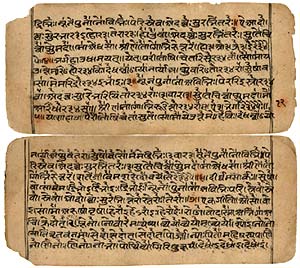
In the Rig Veda, the oldest of all Hindu texts (and possibly the oldest of all spiritual texts on the planet), God, or Prajapati, is summarized as one big mysterious question and we the people are basically invited to answer it. “Who really knows? Who will here proclaim it? Whence was it produced? Whence is this creation? The gods came afterwards, with the creation of this universe. Who then knows whence it has arisen?” While the god of the Old Testament was shouting command(ment)s, Prajapati was asking: “Who am I?”
This tendency to inquire restores authority to its rightful place. In an era in the West when so many faux authorities have been revealed as spiritually hollow or actively deceitful, we’ve arrived at a widespread cynical distrust of any claims to authority. But true authorities do still exist. Their hallmark is an invitation to question and find out for ourselves. Jesus says, “Ask and you will know, seek and you will find, knock and it will be opened to you.” These aren’t the words of one who fears inquiry. To paraphrase another of his sayings, when we can learn and know the truth about something, we will meet an increase of freedom regarding it. It will not intimidate us, or lead us to false worship, or mislead us. One identifier of truth is the freedom it conveys to us. 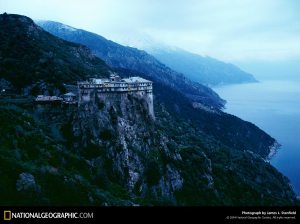
Authorities also benefit us because out of their experience they can guide us toward the most fruitful avenues of inquiry, and spare us much spinning in circles, pursuing wild geese, and squandering the resources of a particular lifetime. Whether we choose to follow good advice is a wholly separate matter. Authorities can point out pitfalls, and save us from reinventing the wheel. At a time when so many look East for wisdom, only recently have we been rediscovering the wisdom of the West hidden on our doorsteps.
Examples abound. The Eastern Orthodox church has preserved a wealth of spiritual practices and living exemplars in places like Mount Athos in Greece. The Pagan resurgence over the last decades has done much useful weeding and culling of overlooked and nearly forgotten traditions rich in valuable methods for addressing deeply the alienation, disruption, dis-ease, physical illness and spiritual starvation so many experience. Individuals within Western monotheisms like Rob Bell and his book Love Wins have served as useful agents for reform and introspection. While it may not be always true, as Dr. Wayne Dyer claims, that “every problem has a spiritual solution,” we’ve only just begun to regain perspectives we discounted and abandoned through the past several centuries, mostly through the seductions of our increasing mastery of a few select processes of the physical plane and their capacity to provide us with comforts, sensations, entertainments and objects unknown until about 75 years ago. We’ve self-identified as “consumers” rather than spiritual beings. Hamlet identified the problem centuries ago: “What is a man if his chief good and market of his time be but to sleep and feed?” Or as another of the Wise asked, “What does it profit a man, if he gain the whole world and lose his soul?” Let us be soul-finders and soul-nourishers. Otherwise, why bother?
/|\ /|\ /|\
Images: open-source cartoon; veda; Mount Athos
The start of the year is a good time to look back and forward too, in as many ways as it fits to do so. If you’ve got a moment, think about what stands out for you among your hopes for this new year, and you strongest memories of the year past. What’s the link between them? Is there one? Here we are in the middle, between wish and memory. In his great and intellectually self-indulgent poem “The Waste Land,” Eliot said “April is the cruelest month, mixing memory and desire.” But April need not be cruel — we can make any month crueler, or kinder — and neither should January. Let’s take a sip of the mental smoothie of memory and desire that often passes for consciousness during most of our waking hours, and consider.
To recap from previous posts, if we’re looking for a workable and bug-free Religious Operating System, we can start with persistence, initiation and magic (working in intentional harmony with natural patterns). You’ll note that all of these are things we do — not things a deity, master or Other provides for us. While these latter sources of life energy, insight and spiritual momentum can matter a great deal to our growth and understanding, nothing replaces our own efforts. Contrary to popular understanding, no one else can provide salvation without effort on our part. We can “benefit” from a spiritual welfare program only if we use the shelter of the divine to build something of our own. Yes, a mother eats so she can feed the fetus growing within her, but only in preparation for it to become an independent being that can eat on its own. We may take refuge with another, but for the purpose of gaining or recovering our own spiritual stamina. If we’re merely looking for a handout and unwilling to do anything ourselves, we end up “running in our own debt,” Emerson termed it. We weaken, rather than grow stronger.
The recent SAT cheating scandal involving the Long Island students paying a particularly bright peer to take the tests for them is a case in point. We condemn such acts as dishonest on the societal and human level. Why do we imagine they’re any more ethical or viable on the spiritual level? Just as no other person can fall in love for us, undergo surgery in our place, eat for us, learn on our behalf, or do anything else for us that so intimately changes and affects us, so nobody else can do the necessary work we all end up doing whenever we’ve grown and changed. It takes effort, and it’s up to us. This usually comes both as a sobering realization and as a wonderfully liberating discovery. Our spirituality and growth are up to us, but that also means they’re in our hands, under our control, responsive to our initiative and effort and attention.
For a ROS to actually work, then, it needs to fit our own individual lives and circumstances. Jesus confronted this squarely when he observed, “The Sabbath was made for man, and not man for the Sabbath.” While we can overdo the jettisoning of old religious forms and habits, convinced they have nothing more to offer us, it can be a very good thing to haul out and burn the old stuff to make way for the new. What have we elevated to “god status” in our lives that, in spite of worship, offerings and adoration, is actually giving us little or nothing and holding us back from growing? For too long we have clutched old forms and outmoded beliefs and held them tightly to our hearts, convinced that forms can liberate us. But they have no more power than we give them. Belief is a ladder we construct. Reach the goal, and the ladder is merely extra weight to carry around. We don’t need it.
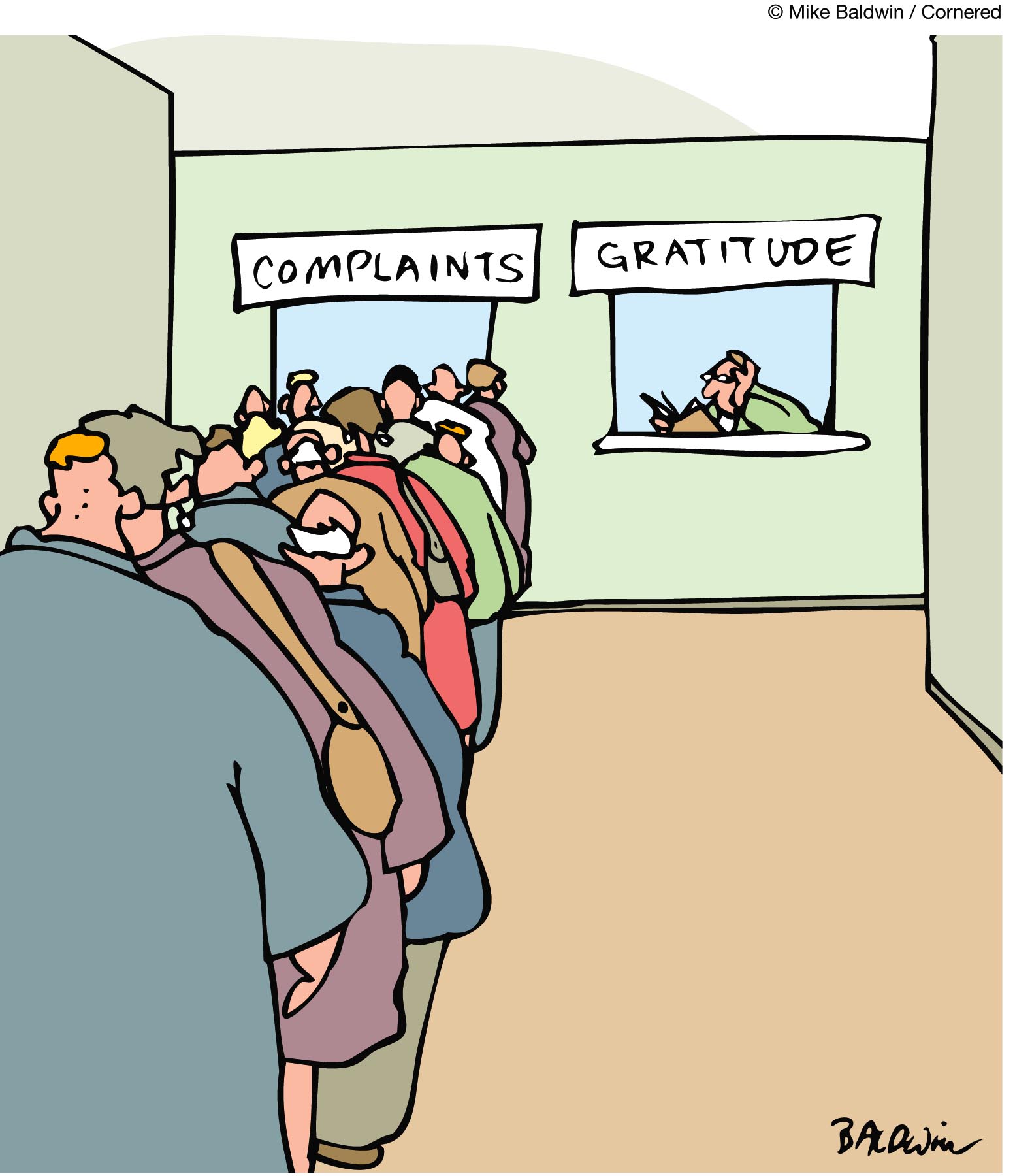
 So you say I’m just supposed to up and cull out-of-date beliefs and dump them? Easy to say (or write), harder to do. One of the most useful items in our spiritual tool-kits is gratitude, the WD-40 of spiritual life. As a solvent, it can loosen hard attitudes, stubborn beliefs, closed hearts and dead growth. We may think of gratitude as an often wimpy sentiment — something softhearted — but I like to call it the grr-attitude. It’s an attitude with teeth, and helps us build a “spiritual firewall” against destructive energies.* Every life without exception, no matter how hard, has something in it to praise and be thankful for. Gratitude, along with persistence, can show us how to make do when every other avenue seems closed. It’s the great “life-unsticker.” It moves us out of spiritual ruts and ravines like nothing else. In fact, an entire life spent in gratitude and persistence, without any other “spiritual garnish,” could carry us remarkably far. It would be a very full life.
I can be grateful for habits and attitudes that have brought me to where I am, and I can often let them go more easily by thinking kindly of them, rather than hating them and beating myself up for being unable to move on from them. But the value of gratitude isn’t just anecdotal. The field of positive psychology is producing significant research findings. Here’s just one example, from Prof. Robert Emmons’ book Thanks! on Amazon: “[R]egular grateful thinking can increase happiness by as much as 25 percent, while keeping a gratitude journal for as little as three weeks results in better sleep and more energy.”*
Every aspect of our lives has spiritual lessons to teach. I even feel gratitude for my cancer, because it has brought me back into balance with myself, revealed friends to me, brought me more love than I could handle, and reminded me again to make the best use of my time here that I can. And that’s just a start. Gratitude is a choice of consciousness. It definitely belongs in any religious operating system.
/|\ /|\ /|\
Cartoon source.
*Emmons’ book Thanks! deserves reading — it’s in paperback, and you can get cheap used copies online (and no, I have no connection with the author! The title was on the list of books for the course I took this fall — one of my subsequent favorites).
The term “spiritual firewall” I’ve derived from the excerpt below. The book helped strengthen my growing understanding of gratitude as a stance or posture toward life that has palpable strength in it, a kind of spiritual toughness and healthy resiliency — with powerful consequences, too — rather than an exercise of mere empty sentiment.
Grateful people are mindful materialists. Deliberate appreciation can reduce the tendency to depreciate what one has, making it less likely that the person will go out and replace what they have with newer, shinier, faster, better alternatives. The ability that grateful people have to extract maximum satisfaction out of life extends to material possessions. In contrast, there is always some real or imagined pleasure that stands in the way of the happiness of the ungrateful person. Consumerism fuels ingratitude. Advertisers purposely invoke feelings of comparison and ingratitude by leading us to perceive that our lives are incomplete unless we buy what they are selling. Here’s a frightening statistic: by the age of twenty one, the average adult will have seen one million TV commercials. By playing on our desires and fears, these ads fabricate needs and cultivate ingratitude for what we have and who we are. Human relationships are hijacked. Consumer psychologists argue that advertising separates children from their parents and spouses from each other. Parents are portrayed as uncool and out of touch with their teenage children, who are encouraged to reject the older generation’s preferences and carve out their own identity around materialistic values. Gratitude for our spouses can have a difficult time surviving the constant parade of perfectly sculpted bodies exuding perpetual sexual desire. In a classic study conducted in the 1980s, researchers found that men who viewed photographs of physically attractive women or Playboy centerfolds subsequently found their current mates less physically attractive, became less satisfied with their current relationships, and expressed less commitment to their partners. Gratitude can serve as a firewall of protection against some of the effects of these insidious advertizing messages. When a person wants what they have, they are less susceptible to messages that encourage them to want what they don’t have or what others have (Emmons, 42-43).
Persistence, and its twin patience, may be our greatest magic. Sacred writings around the globe praise its powers and practitioners. So it’s hardly surprising, here in the too-often unmagical West, with its suspicion of the imagination, and its demand for the instantaneous, or at least the immediate, that we are impatient, restless, insecure, harried, stressed, whiny, dissatisfied and ungrateful. We bustle from one “experience” to the next, collecting them like beads on a necklace. The ubiquitous verb “have” leaves it mark in our speech, on our tongues: we “have” dinner, we “have” class or a good time, we even “have” another person sexually, and one of the worst sensations is “being had.” We do not know self-possession, so other things and people possess us instead.

The “slow food” movement, the pace appropriate for savoring, craftsmanship, care, reflection, meditation and rumination (slow digestion!) all run counter to the ethos of speed, promptness, acceleration that drive us to a rush to orgasm, speeding tickets, the rat race, stress-related illness, and so on. None of these problems or the observations about them are new, of course. But we remain half-hearted in our efforts or understanding of how to “pursue” their remedy. We chase salvation as much as anything else, as a thing to collect or gather or purchase so we can be about our “real” business, whatever we think that is. Spirituality gets marketed along with orange juice. For a sum, you can be whisked off to a more exotic locale than where you live your life, spend time with a retreat leader or guru or master or guide, and “have” (or “take”) a seminar or class or workshop.
Anyone who has adopted a spiritual practice and stuck with it has seen benefits. Like regular exercise, it grants a resilience and stamina I can acquire in no other way. I sit in contemplation and nothing much happens. A week or a month goes by, and my temper might have subtly improved. Fortunate coincidences increase. My dream life, or a chance conversation, or a newspaper article, nudges me toward choices and options I might not have otherwise considered. But usually these things arrive so naturally that unless I look for them and document them, I perceive no connection between spiritual practice and the increased smoothness of my life. From a slog, it becomes more of a glide. But the very smoothness of the transition makes it too subtle for my dulled perceptions at first. It arrives naturally, like the grass greening in the spring, or that gentle all-day snow that mantles everything.
I abandoned a particular daily practice after many years, for complicated reasons deserving a separate post, and I needed only to read the notebooks I kept from that earlier time to recall vividly what I had lost, if my own life wasn’t enough to show me. My internal climate faced its own El Nino. I was more often short with my wife, mildly depressed, more often sick with colds, less inspired to write, less likely to laugh, more tired and more critical of setbacks and annoyances. Set down in writing this way, the changes sound more dramatic — didn’t I notice them at the time? — but as a gradual shift, they were hardly noticeable at any one point. I still had my share of good days (though I didn’t seem to value them as much), and my life was tolerable and rewarding enough. “But I was making good money!” may be the excuse or apology or justification we make to ourselves, and for a time it was true enough of me. Then came the cancer, the near-breakdown, the stretch of several years where I seemed to move from doctor to doctor, test to test, treatment to treatment. If you or anyone you know has endured this, you get what I’m talking about. It’s distinctly unfun. And while I won’t say lack of practice caused this, it’s an accompanying factor, a “leading indicator,” a constituent factor. Doctors might very profitably begin their diagnoses with the question, “So how’s your spiritual practice?” Our spiritual pulse keeps time with our physical lives. They’re hardly separate things, after all. Why should they be?
In the story of Taliesin I mentioned in my last post, the boy Gwion, so far from the future Taliesin he will become, is set by the goddess Cerridwen to watch a cauldron as it cooks a magical broth meant to transform her son Afagddu, a mother’s gift to her child. A year and a day is the fairy-story time Gwion spends at it. A full cycle. The dailiness of effort and persistence. The “same-old,” much of the time. Gwion’s a servant. The cauldron sits there each morning. The fire beneath it smoulders. Feed the fire, stir the liquid. It cooks, and Gwion “cooks” along with it, the invisible energy of persistence accumulating as surely as the magical liquor boils down and grows in potency. Through the spring and summer, insects and sweat. Through autumn and winter, frost and chill and ice. The cauldron has not changed. Still at it? Yes. The broth slowly thickens as it bubbles and spatters.
 One day a few drops (in some versions, three drops) fly out onto one of Gwion’s hands, burning. Instinctively he lifts the hand to his mouth, to lick and soothe it with his tongue. Immediately the magic “meant for another” is now his. He did, after all, put in the time. He sat there daily, through the seasons, tending the cauldron, stirring and keeping up the fire, swatting insects, breathing the smoke, batting sparks away, eyes reddened. Yes, the “accident” of the spattered drops was at least partly the result of “being at the right time in the right place.” It is “luck” as well as “grace,” both operative in his life. Part, too, was the simple animal instinct to lick a burn. And the greater portion was the effort, which catalyzed all the rest into a unified whole. Effort, timing, luck, chance, grace: the “package deal” of spirituality.
And the consequence? For Gwion, his growth has just begun. It is his initiation, his beginning. In his case it distinctly does NOT mean an easier path ahead for him. In fact, just the opposite — more on that in a coming post.
 The Hopi of the American Southwest call their ritual ceremonial pipe natwanpi, “instrument of preparing.” The -pi suffix means a vehicle, a means, a tool. Tales like this story of Gwion can become a natwanpi for us, if we choose — part of our preparation and practice, a tool, a way forward.
/|\ /|\ /|\
Fast food
Transformation
Hopi blanket
 “Whenever I get bored or depressed, I do laundry,” said an acquaintance. “Afterwards I may still be bored or depressed, but at least I’ve done something that needed doing. And often enough I feel better.” As a treatment, the success rate of this strategy may or may not equal that of therapy or medication, but as far as clean clothes production goes, it’s got the other two beat hands down. At least I can be depressed and dressed.
How different the quiet of depression and the quiet of peace! (I’m writing about peace and using exclamation points. Hm.) One deadens and stifles, the other ripples outward and invites attention, a kind of relaxed wakefulness. We say we want peace, and the holiday season bombards us with prayers and songs and sermons and wishes for it. There are prayers for peace in the ceremonies of many religious teachings and spiritual practices, Druidry included. But rather than asking somebody else for it, I can begin differently. Peace starts in the center, and that’s where I am — or where I can put myself, with the help of recollection and intent. “Come back to yourself,” my life keeps saying, “and remember who you are and what it is you want.” If I start peace (or anything else) within myself, however small, however tentative, it spreads from there outward. After all, it works for every other state I create, whether positive or negative — and I know this from sometimes painful experience! “Be the change you wish to see in the world” is still some of the best advice ever given. If I want change, who else do I expect to bring it about? And if someone else did, how in the world would such changes be right for me? Gandhi knew the secret lies in the approach.
 In my early twenties, Lou Gramm and Foreigner were singing “I want to know what love is. I want you to show me.” It’s a lovely ballad — I’ve got it playing on Youtube the second time through as I write this paragraph, nostalgia back in full force — but it’s precisely backward in the end. As loveless as I can sometimes feel, if I start the flow, jumpstart it if necessary, I prime the pump, and it will launch within me from that point. Do that, and I become more loveable in a human sense, because in the divine sense I’ve made myself another center for love to happen in, and from which it can spread.
But neither love nor peace are things I can hold on to as things. “We are not permitted to linger, even with what is most intimate,” says the German poet Rilke in his poem “To Holderin” (Stephen Mitchell, trans.)  “From images that are full, the spirit plunges on to others that suddenly must be filled; there are no lakes till eternity. Here, falling is best. To fall from the mastered emotion into the guessed-at, and onward.” Whatever I long for in a world of time and space needs to be re-won every day, though in that process of re-winning, not always successful, it begins to gather around me like a fragrance, a habit. Both the customary behavior, and the clothing a monk or nun wears, have the same name. The connection’s not accidental.
The American “farmer-poet” Wendell Berry captures it in these lines:
Geese appear high over us
pass, and the sky closes. Abandon,
as in love or sleep, holds
them to their way, clear
in the ancient faith: what we need
is here. And we pray, not
for a new earth or heaven, but to be
quiet in heart, and in eye,
clear. What we need is here.
So if we’re looking for a “religious operating system,” a ROS, we’ve got some design parameters that poets and others tell us are already in place. “What we need is here.” But try telling that to an unemployed person, or someone dying of a particularly nasty disease. And of course, if I tell someone else these things, I’ve missed the point. What they need is indeed here, but my work is to find out this truth for myself. I can’t do others’ work for them, and it wouldn’t be a good world if I could (though that doesn’t stop me sometimes from trying). I don’t know how their discoveries will change their lives. I only know, after I do the work, how my discoveries will change mine.
A recent article in the New York Times about the rise of the Nones, people who aren’t affiliated with any religion, but who aren’t necessarily atheists, offers this observation, from which I drew the title for this blog entry:
“We need a Steve Jobs of religion. Someone (or ones) who can invent not a new religion but, rather, a new way of being religious. Like Mr. Jobs’s creations, this new way would be straightforward and unencumbered and absolutely intuitive. Most important, it would be highly interactive. I imagine a religious space that celebrates doubt, encourages experimentation and allows one to utter the word God without embarrassment. A religious operating system…
I’ll be examining this further in upcoming posts.
/|\ /|\ /|\
Laundry, Foreigner album cover, and Rilke.
“Behold!”
In this single command, Jesus is profoundly Druidic. Catch the moment, he says. Watch the divine as it swirls around and in you. You can witness the marvelous if you simply pay attention. Listen! Look! Seeing and hearing are a good start. Now do more. Put yourself into your attention. Make it purposeful. Don’t just hear — listen. Don’t just see — look.
“If therefore thine eye be single, thy whole body shall be full of light” (Matthew 6:22). A wonderful assertion– one to test, to try out, to prove to oneself, not merely to accept passively. A promise. Singleness of vision, the devotion and dedication to witnessing what is really there, as opposed to what we assume or fear, wish or ignore. Some have seen this passage as a reference to the yogic “third eye” chakra, the Hindu Shiv Netra or Sufi Tisra Til. Why not both, and something else besides?
In the second half of her poem “The Summer Day,” Mary Oliver says:
I don’t know exactly what a prayer is.
I do know how to pay attention, how to fall down
into the grass, how to kneel down in the grass,
how to be idle and blessed, how to stroll through the fields,
which is what I have been doing all day.
Tell me, what else should I have done?
Doesn’t everything die at last, and too soon?
Tell me, what is it you plan to do
with your one wild and precious life?
Shouldn’t all attention bring to light more and better questions? Wouldn’t we be bored to tears with a life of all things answered? Give me bigger and deeper questions, give me earth whole again, give me all I already have. Give me birth in this moment. We are constantly being born, arriving at ourselves, a remembering, a finding out of the utter strangeness of being alive, and being human in this moment, our eternity, the only time there is. The past is only memory, and changing. The future is hopes and fears. Take the now with both hands.
A singe grosbeak inspects our feeder, and as I look out through the living room picture window at the bird plumped against the cold, there’s a reflection in the glass of flames from the woodstove inside. In its orange vigor, my fire faces west, Druidically inappropriate, but very welcome on this grade A gray day.
In the northern U.S. that’s an image of this time of year: reflections, of heat inside, of life still proceeding outdoors and in, of the time of year itself.
The interval between Thanksgiving and the December holidays can be a delicious space, a “meanwhile” or middle-time for re-tooling and starting to close up shop on the current year. To feel that it’s often too busy, or merely filled with worsening weather forecasts, as though that is all it has to offer, is to miss something profoundly meditative about these days. What’s the opposite of miss? Attend, intercept, catch, be there. Whatever it is, that’s what I want to do.
There is as well in November and early December a late-autumnal melancholy, it’s true. The peak of Thanksgiving has passed, and some may see the next months as a pretty solid trudge through the valleys (in our boots, scarves and gloves, and hauling snow-shovels) until the climb to the next holiday.
So when I can take a look from this end of the year at a season at the other side of summer, I do. Off to that start of spring transience which mirrors something in us now as well. I followed a link from an article in today’s NY Times and there on the page was the sudden pure pleasure of “Sakura Park,” a poem by the late Rachel Wetzsteon (pronounced “wet-stone”). Take a visit to late spring, six months ago, or six months to come. The cherry trees (the sakura of the title) are in bloom …
Sakura Park
The park admits the wind,
the petals lift and scatter
like versions of myself I was on the verge
of becoming; and ten years on
and ten blocks down I still can’t tell
whether this dispersal resembles
a fist unclenching or waving goodbye.
But the petals scatter faster,
seeking the rose, the cigarette vendor,
and at least I’ve got by pumping heart
some rules of conduct: refuse to choose
between turning pages and turning heads
though the stubborn dine alone. Get over
“getting over”: dark clouds don’t fade
but drift with ever deeper colors.
Give up on rooted happiness
(the stolid trees on fire!) and sweet reprieve
(a poor park but my own) will follow.
There is still a chance the empty gazebo
will draw crowds from the greater world.
And meanwhile, meanwhile’s far from nothing:
the humming moment, the rustle of cherry trees.
Yes, that’s a poet for you — insisting on a connection between cherry petals and the growth of self, when all the cherry need do is be a self beautifully ready to attract bees, produce fruit and fulfill its cherry-tree-ness.
And yes, there’s a whiff of early middle-aged cynicism creeping in here (Wetzsteon died at 42), the dry rot that afflicts so many who tell themselves to be content with meanwhiles. “Give up on rooted happiness!” she urges. There is still green chance and raw luck and sweet grace in the world, but until they salvage something greater than what’s at hand, be content with meanwhiles, the poet advises, the “far from nothing” moments that hum with possibility even now. So it’s back to trees, where maybe we should have remained.
Too often we are literally “self-important.” We worry about the self like a barefoot child abandoned in a parking lot, or an opened can of tuna that will spoil unless we eat or cook or refrigerate it. The cherry tree sends out blossoms unworried about November. Not because November won’t come, but because it’s not November when it’s April. And when November comes, the tree will be a cherry in November, awaiting the next humming moment.
And yes, if I meditate among the swaying branches and crackling leaves this time of year (trying to fluff myself against the cold like an outsized bird, so I can sit or kneel a few minutes without shivering and breaking my focus), the “stolid tree on fire” matters more than it did before, and my own concerns matter less. Restoration that we seek, visit all who long for it. Find it in the silent witnesses of trees. We who listen for “a voice that will save us” forget what burns in front of us, the fire in the stove in the living room, this day passing with us into “later” and darkness and tomorrow, the trees wintering, summering and wintering again, the air itself, with its metallic crispness on the tongue and in the nose, the fire that burns in all things.
/|\ /|\ /|\
 The 50,000-word deadline this Wednesday 11/30 at midnight looms before us “wrimos,” and I’m finally within range. Woo-hah! The Nanowrimo site obligingly lets participants grab icons of progress — anything to keep us writing. Much of what I’m drafting now is detail, filling in missing scenes, background, snatches of dialog with disembodied characters, pieces of Harhanu physiology and psychology — and I suppose, not surprisingly, a brand-new and potentially primary character — because of course what I expressly did not need at this point is a strong new presence telling me “when you are done, you are not done, for I have more” — to paraphrase Omar Khayyam in his Rubaiyat. He already has a name (Tehengin) which he obligingly repeated to me till I got it right. But, probably, I do need him — in some way which I’m sure he’ll inform me about. In detail.
So anyway, here I dance at 44212 words, taking a break to blog, before I return to dance some more. Wish me well in this home stretch.
[Part 1 | 2 | 3 ]
With so much attention to freedom these days, both freedom from and freedom to (they can feel like — and amount to — very different things), it’s strange there’s so little discussion of what to do with it once we get it. We’re supposed to know intuitively, like eating or breathing. Let me “do my own thing,” “don’t fence me in,” “don’t tread on me,” “a man’s home is his castle,” “do what you want,” and countless other phrases and proverbs and old saws and aphorisms to capture that sense of a supposedly “inalienable right” to do — what? Along with life and the often asymptotic* happiness we’re supposedly in pursuit of, this third leg of the American Independence tripod got declared and delivered to us and we haven’t done a paternity test to see whether it’s our baby. Liberty. As in “see Statue of.” As in Patrick Henry, who gave himself and his audience only two choices (“liberty or death”), proving he was definitely not a true American, because as we all know, Americans love their choices. “Have it your way,” goes the old Burger King advertizing jingle. OK, my way. But once I get it, how do I know I have it? Is it like a lottery ticket — changing in value by the day, and up to me to claim it if I won it? And then what? What’s freedom for?
More to come in Part II.
*An asymptote, if the Wikipedia definition above doesn’t do it for you, is a curve that keeps edging ever closer to a line, but never actually arrives. (Unless you want to count infinity.) Think of it as a geometric tease.
/|\ /|\ /|\
 Passing the halfway mark of 25,000 words a couple of days ago felt as big this year as reaching 10K last year did — a milestone. Inevitably I’ve fallen behind — this time by about 5000 words. Got nothing written at all on Monday, and Tuesday was little better. Today’s quota is 30K. I’ve gotten down 3000 words so far, in a burst of catching up, and hope for another few hundred by day’s end, which will bring me within striking distance. I’m at 28,125 as I write this. (Yes, my break from writing a novel is writing a blog entry.) Definitely some interesting material has come through. I’ve put my poor succubus Alza in a number of implausible, erotic, challenging, historical and dangerous situations, just to see what sticks.
I’ve also found out that in order for an important historical meeting to occur, she needs to be about a century older than I’d made her. Not sure how she feels about that. Will no doubt find out. And I’ve gotten down a description of her original appearance that she has just discovered, the “face she had before she was born,” as the Zen masters like to say — before she shape-shifted the first time in her life among humans. That discovery seems to give her a stability and sense of self nothing else has. Here’s a striking image I found online and used for inspiration as Alza. It comes, both appropriately and ironically at once, from an Australian evangelical website, in the form of a pamphlet providing counsel to victims of Incubi and Succubi.

A spiral differs from a circle. There’s motion in it, and change. The track or trail of movement is itself motionless. (Well, comparatively: the boat’s wake dissolves in ripples, the jet trail fades, but some time after, at least; the jet’s long gone.) It records the journey. But journey in a spiral is not repetition. It’s recognition, re-encounter from a fresh perspective. History, planetary or personal, doesn’t repeat itself, but it does often spiral.
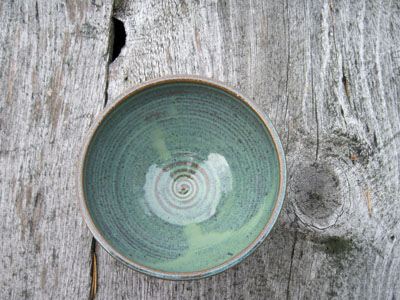
[Originally when I took the photo I was simply looking for a background that would contrast with the bowl. Only later after I’d uploaded the photo did I realize that the grain of the wood holds at least as much interest as the spiral design of the bowl. Talk about not seeing the obvious.]
You may remember the chorus in Joni Mitchell’s lovely song “The Circle Game”:
And the seasons they go round and round
and the painted ponies goes up and down
We’re captive on the carousel of time
We can’t return we can only look behind
from where we came
and go round and round and round
in the circle game.
Joni, it’s lovely, and it’s easy to be seduced by the beauty of your song, but you’re wrong. Or at least, you’re right only about one choice among many. It’s a game, and therefore we’re no more captive than any player is who agrees to the rules in order to play at all.
We can choose to play the game this way and be participants in time. That’s the only way to live in a material world anyway, from what I’ve seen: in time. Once we release the drive to “get ahead” or “win the race,” we can begin to jump through time, from moment to moment, recognizing “infinity in a grain of sand, and eternity in an hour,” as William Blake has it. Time is illusion, yes — but in the sense of play (Latin ludere, lusus, illusio = in+ lusio — “in the game”): a set of rules to make sense or pattern out of the flow of experience, which is e-lusive. We need “before” and “after” in order to begin (or return) to experience “now.” The moment of illusion, of play, then broadens and deepens.
“Time is the stream I go fishing in,” says Thoreau. I use this as a mantra when I get stressed about deadlines, minutes ticking, the illusion gaining hold in a way that’s no longer a game, no longer pleasant to be playing. There’s nothing wrong or cruel about time, once we let go the fear that comes with clinging to any particular moment — of resisting the play because life is supposedly such a serious thing. “Eternity is in love with the productions of time,” Blake says in another poem.
These “long lessons” are ones I keep learning. Most of us do — most of us are slow learners — earth’s a place for those with “special needs.”
To live any other way is to suffer needlessly — never my favorite thing to do, anyway — and to be trapped in regret and loss. We’ll all have a taste of these if we live long enough, as part of the balance that comes with fullness of life — why seek out more, and worse, elevate them to a kind of icon of authenticity? “I’m not human unless I make a fetish of my suffering,” some people seem to say. “I AM my suffering,” say others.
The Circle Game goes best when we treat it as a game, as a shape of experience. But it’s not the ONLY one. We hear of people being “lost in the past.” How about seeing what it’s like to lose yourself in the present? Nowhere is now here, to make a linguistic jest with wisdom at its core.
Robert Frost was on to it in “Birches.”
I’d like to get away from earth awhile
And then come to it and begin over.
May no fate willfully misunderstand me
And half grant what I wish and snatch me away
Not to return. Earth’s the right place for love:
I don’t know where it’s likely to go better.
If I don’t experience it on this curve of the spiral, it won’t be there for me the next time to “come to and begin over” in that “can-be-delightful” encounter of the “familiar-new” that often flavors our experiences. I cheat myself of so much joy, thinking there’s someplace “where it’s likely to go better.” Now, here, is when and where it’s at.
As editor of a collection of essays, The Rebirth of Druidry, OBOD‘s Chosen Chief Philip Carr-Gomm attempts to characterize something of the appeal of the spirit of Druidry in human terms. I quote his article at length because in its effect it is all of a piece, and because it provides a suitable introduction to some things I want to say about the Goddess:
Druidry is the perfect lover. You fall in love with her so easily because she is so romantic. She whispers to you of the magic and mystery of the turning stars and seasons. She loves trees and Nature above all things, and you yearn for these too. She tells you stories of Gods and Goddesses, the Otherworld and fairies, dragons and giants. She promises secret lore — of sacred trees and animals, of herbs and plants. She points deep into the past, and ahead towards a future which is lived in harmony with the natural world. But just when you are convinced you will marry her, because she is so beautiful, so tantalizing, so romantic, she turns around and there she is, with rotten teeth and hideous face, cackling and shrieking at your naivety. And she disappears, leaving you with just her tattered cloak, made up of a few strands: some lines from the classical authors, whose accounts are probably inaccurate anyway, a few inferences drawn from linguistic and archaeological research, which could be wrong, with the rest of the cloth woven from material written from the eighteenth century onwards, replete with speculation, forgery and fantasy.
You feel a fool. You don’t tell your friends about your lover. You feel tricked and defrauded, and decide to follow something more authentic, more established, more substantial — like Buddhism, or Christianity, or Sufism, or Taoism — something serious. But then you go out walking. You follow the old trackways, you come to the old places. You see the chalk gods and stone circles. You pause and open yourself to the Land, and there She is again. But this time she is even more enchanting because you can see that she is not just a beautiful woman, full of romance and seduction, you can see that she is also a wise woman, who will provoke as well as seduce you, who will make you think as well as make you feel. And then you suddenly know why she has been the object of fascination for so many through the ages. She is the Muse, the Goddess behind Druidry, the bestower of Awen, of inspiration.
Obviously the imagery here from a male author conveys part of how a man may first encounter the “Goddess behind Druidry”; it may not appeal to women, who find their own powerful ways of connecting with Her. In mythic terms, however, this account very much reflects the changeability of the Goddess — what has inaccurately been called her fickleness, and which has caused many accustomed to meeting deity in a single, invariant form to confuse variety with unreliability or untrustworthiness. Westerners in particular have largely been cut off from experience with aspectual deity, which the Goddess so clearly manifests. Rather than manifesting a loving and compassionate presence, “[t]he deity may appear in wrathful or challenging forms, but these should not be considered hostile. She is the kernel of truth at the heart of everything, and if she appears in challenging forms to you, look more deeply, considering why this may be so,” suggests Caitlin Matthews in her slim but potent book, The Elements of the Goddess. “Many of those who venerate the Goddess are unhappy with her supposedly dark aspects because they associate ‘dark’ with ‘evil.’ In order to save her child about to do something dangerous or silly, a mother will get angry, shout or scream, but this doesn’t mean to say she loves her child any less.”
My first encounter with the Goddess came unbidden, unsought, when I was 25. (You need to know: I’m not especially sensitive or psychic. Friends who are say anyone who wants to reach me has to raise quite a ruckus to get my attention. If you’d asked me then I’d say — still would probably, even today — that half of what people experience in such situations is imagination. But now by “imagination” I mean something considerably larger and more potent than I did then. More about that later.) It was a frosty autumn day, and I was wandering the fields and scattered woods of a farm my father had recently bought in western New York, south of Rochester. I paused in a swampy grove of trees, with several fallen and decaying trunks to sit on. A mood or atmosphere of autumn pervaded the place, almost palpable. The air lay perfectly still. The musty-sweet smell of dried dead leaves filled the air, along with a tang of rot and manure from a nearby field, and a hint of woodsmoke. Over the hills from a distance came the faint roar of some town maintenance vehicle — they were always patching roads in the area. But distant sounds simply deepened the stillness by contrast. As this meditative silence spread and enveloped me, I became aware of a presence that filled the grove and towered over me, fifty, sixty feet tall. Immense. One face of the Goddess. Conscious encounter. Her.
She didn’t knock me on my ass, though that might have been useful too, given how dense I can be. But though I describe it here in mild enough terms, the experience was unforgettable, not for any one detail, but for its undeniable — and familiar — quality. This was someone I knew. Not someone or something alien, or to be feared, or a matter of belief, any more than I need to believe in the tree-trunk I sat on. It was like finding a limb which, when you found it, you knew had always been a part of you all along. You just hadn’t been aware of it. As if it had been asleep, but for its waking you finally twitched a muscle in it, and in feeling it respond you felt it.
So what’s the big deal, you say? “He met the Goddess, in some ways it was an anticlimax though also somehow memorable, he got over it, it was years ago. So?”
A year later I was in the throes of my first love affair (can anyone say “late bloomer”?), a tumultuous relationship in which I did get knocked on my ass. Among all the other things this Goddess encounter was, it was preparation, or warning. I needed greater emotional experience, insight, maturity. I was about to get it.
In between the divine and human realms is an archetypal one — a place, often, of dream and vision, and the idealized images of Others for men and women which “haunt our imagination and often make our love-lives incredibly tortuous until we realize that these daimons will never become physical realities. They are messengers between the divine realms and the human levels of our experience” (Matthews, 13). This was part of what I needed to learn firsthand. No book knowledge this time. It was an initiation of its own.
So this fall at OBOD’s East Coast Gathering, in a meditation involving an encounter with the Goddess in her guise as Cerridwen, I felt a surge of panic — again. “Cerridwen is bad. She tricked Gwion Bach in the old Welsh tale.” But it was old programming. Incomplete knowledge. Fear of that “fickleness” I mentioned earlier. “The old, outworn, dualistic concept of the Goddess as cruel and capricious must be viewed for what it is: a reflection of our shadow-side, a terrible polarization of social responsibility with which women have been burdened as a sex” (Matthews, 24). But now I had more tools to begin to deal with it. At Samhain I did specific work with the Goddess. I needed to. Is it any wonder I also spent 15 years working in a freshman girls dorm as a house parent? Training up close and personal. “The Goddess stands at the heart of life, death and further existence and she will assume the forms which are most appropriate in her dealings with our world” (Matthews, 24). Or as a teacher in the other path I follow related, when he talked about his own experiences with inner and outer realities, “They had to get me to stop bowing every time they appeared, so they could actually work with me and get some work out of me.”
Matthews continues, in ways particularly useful for a male bard like me. “Men experience the Goddess through their creative side. She makes manifest their ideas by animating their dormant creativity. There is a strong sense of ebb and flow about these energies which give men an experience of the cyclical nature of the feminine menstrual cycle. This kind of relationship is rarely recognized for what it is, yet all men can discover and welcome this experience. Although the effect of a Goddess upon a man is less immediately physical than in a woman, it is nonetheless potent” (15).
There is much misunderstanding of gender and sexuality, and what constitutes the self and its connection to the world, perhaps nowhere more so than in the West, with its addiction to pornography, its fear of homosexuality, its violence against women, and its frequent indifference to children. I’ll let Matthews have her last word here. “Every human being is a child of the Goddess … The way of the Goddess is one of natural law and natural wisdom … It is primarily the people of the West who are orphans of the Goddess. The social and political reasons for this desolation have been documented in many books … Both women and men need to find their Mother, relating to her and her creation in fresh and balanced ways, for every one of us needs to drink of her wisdom and realign ourselves with her natural laws.” This is not a matter of belief but of incarnation — our own — to live fully, gratefully and passionately in this world, until we leave it.
/|\ /|\ /|\
 Nano update time. Is it any wonder, in light of this post, that I’m writing about a succubus?! And sympathetically — as a main character?! Must be some sort of assignment from the Goddess. Further training. God knows if it’s publishable. (Goddess may know, but if she does, she ain’t tellin’.) Reached 17,804 words: over 1/3 of the way there. Need to hit 20,000 today to be fully caught up, including today’s work. Should be able to do it. Major scene yesterday, in which Alza connected with the man she needs for her magical work, showed him her nature in a brief feed and reversal of energies to restore him, bypassing the mental level altogether, where the idea of a succubus would have completely flipped him, and left him with a medallion magically linked to her — ongoing physical contact to reinforce the dynamic. The resulting reactions when he deals mentally and emotionally with what he already knows will be interesting to capture, but the heavy lifting for that scene is done.
I’d been including more fire imagery in description and action, since Alza’s succubus nature seemed increasingly to resemble that of a fire demon. And then, as a break yesterday, doing some research on demons and succubi in other cultures, I happened on this quotation from the Qur’an: “And the jinn, We created aforetime from the smokeless flame of fire” (Al-Hijr, 15:27). And in an email yesterday from the university where I’m taking a seminar, advertising a weekend workshop for men: “FRIDAY, 11/11/11 – SUNDAY, 11/13/11 – ON THE EDGE OF FIRE: A MEN’S SPIRITUALITY RETREAT.” Right between the eyes — the kind of serendipity and synchronicity and happy accident one hopes for in writing. So I’m on some kind of track. I’m just still discovering what it is. And that’s much of the deep pleasure of this verbal marathon.
“We are many sets of eyes staring out at each other from the same living body” — Freeman House, Totem Salmon
We are many sets of eyes, staring out
at each other from the same living body.
We are ears listening to each other
across valleys of skin.
Heat of the other’s blood
warming the air we breathe,
air that filled the other’s lungs
not long before, and will again,
ruffling our hair, rippling this field
of frost-gray grass.
We touch earth that touches each other,
life-print curling at our fingertips and lips,
world (a piece of it) digesting in our bellies,
swept along in blood and spit,
spice of it in our marrow,
essential you in everything
I eat and love and do,
essential me in you.
/|\ /|\ /|\
So there’s a poem provoked (I say “provoked” rather than “inspired” because that’s the sensation — I encounter a piece of language not my own that becomes the grain around which oyster tries to form a pearl. It won’t let go until I respond, and try to shape the sensation into something in words.)
Nano update: I’m catching up at 13,527 words and counting, but still a little more behind than I’d like. We’ll see what 2 and 1/2 cups of coffee this morning helps me accomplish. I don’t usually drink it, since I’m hypersensitive to caffeine and it keeps me up most of the night following the day I drink it, but I was cold this morning, and the smell! … well, anyway, I’m caffeinated and writing.
Found an interesting passage in a medieval author yesterday, Walter de Mapis. (If you’re gonna procrastinate, I say, why not procrastinate tangentially? I researched historical refs to succubi.) So now I know something about rumors surrounding Pope Silvester. The pontiff flourished around the year 1000, and his legacy includes the story of a certain succubus, who was said to give him advice, and who was reputed to be his lover. Supposedly he repented on his deathbed. Traitor. I’m expecting my succubus main character Alza will have something to say about that. Who knows — maybe she was there. Maybe she was the succubus …
Just discovered she has a mantra or prayer or verbal talisman she recites frequently. Maria, one of her worshippers (from her “cult” phase), overheard her this morning talking quietly to herself, and asked about it. Here are the words Alza said (part of the charm is to speak about oneself in third person):
Alzakh ne utayal gashem muk dafa.
May Alzakh grow in this surrounding fire,
may Fire know her for its own,
may Fire fill her in all she does,
burning away what blocks her,
burning toward what is native to her,
what is or will become or has been Fire,
time the Fire that moves all things into being.
Always fun to get a piece of the original in Harhanu. You need to know: among my other odd hobbies is conlanging. So I hear bits of languages, like I imagine musicians and songwriters hear snatches of songs and musical phrases. Here are the italicized words phonetically, as I heard them from Alza’s mouth: ahl-zahkh NEH oo-tah-YAHL gah-SHEM mook dah-FAH. [Literally, Alza this surrounding fire-in grow-imperative.]
Alza’s name in Harhanu is actually Alzakh, with the kh the raspy sound in loch and Bach — a voiceless velar fricative, to be all linguistic-y and precise about it. Alza’s name got truncated over the years, to match what people thought they heard, or thought it should be. Much as men around Alza imagine the woman they want, which she can then use to seduce them. Most men are, frankly, pretty seducible, she learns. So that part’s easy.
You want Druidry? Find it here, or go bother somebody else. (Now maybe you have some idea why I don’t overdo the caffeine. It makes me all cranky-creative and snarky and stuff.)
“Don’t get me wrong, I like your reality; it’s way more interesting than mine. It’s just that mine seems to be the one everyone else is in.” Courtesy of ivebecomemyparents.com
When I was in my teens, conversations with my mother about the future usually ended with her saying, “You have to live in the real world.” This usually amused me, and sometimes annoyed me. How little I knew at the time that her statement was loaded, that stuff was hanging off it and dripping into the reality overflow collection vat at the bottom of the psychic stairs.
1) She never once claimed that she lived in a real world. But I had to. Why was this? The question isn’t as naive as it sounds. And how could she tell I wasn’t already in the — or a — real world? “It takes one to know one,” as we used to say. What was the give-away, I wonder?
2) Where did the compulsion to live in a real world come from? Only from parents? “You have to live there.” Funny — if I hadn’t been living there, then I’d already disproved such a claim. I didn’t have to live there, which was clear because I’d been living someplace else. But she wanted me too. Probably “for my own good,” which is along the lines of “this hurts me more than it hurts you.” (To their credit, my parents never said that to me.)
3) What is a real world? How do you tell the difference between a real and an unreal world? Is there more than one world, as this statement implies? Sure seems like it. Then what’s the other world like? How did she know? And how did she decide or discover that this one is more real? Simple majority vote? “We live in this world, you — a single person — live in that one. We win.”
4) Is it a whole world? (Sometimes life seems like jumping from one to another of a subset of all possible worlds.) There could be and probably are worlds far better, worse, uglier, stranger and more comfortable than this one. Then again, maybe not.
It feels like we do live in several worlds, all of them real on their own terms. Like we shift worlds all day long, moving from one to another with such ease we forget, we don’t notice, we assume reality is unitive and discrete, rather than a series of interpenetrating planes and grades and places. Waking. Fully awake. Deeply focused. Spacing in front of a video. Lost in music. Making love. Eating. Daydreaming. Sleeping. Dreaming. Tell me those are all identical states of consciousness, identical worlds! I’ve had flying dreams, felt the wind rushing by around me. Last I looked, trying to fly in this world lands you six feet under, or heavily medicated.
Judy Cannato in her book Radical Amazement observes that it’s always time for transformation. To delay just makes the need for change more imperative and harder to ignore (though we’re pretty good at that). Our widespread sense of dis-ease and general “stuckness” and malaise and dis-spiritedness arise from discernible causes and have discernible solutions:
Our attitudes and behaviors are rooted in a way of thinking that is no longer reflective of the real. So much of the time we are stuck in the dualistic, hierarchical, either-or thinking that has created the very problems that threaten us. We are not mechanisms with separate parts, but interconnected holons that are mutually dependent. Yet far too often we cling to the individualism and dysfunctional systems that have “parented” us, molding obedient offspring carrying on the “family” tradition in a way that continues to devastate all life, others’ as well as our own. Shifting to a new paradigm takes commitment and hard work. It requires gut-wrenching honesty and the willingness to give up fear-filled control. We al know what a difficult undertaking this is, but we are capable of the challenge and perhaps more ready than we think. (14)
For me one key here is that this is inner work as much as anything else. I can start it, and I can start working on myself. In fact, that’s the only place any of us will find a lasting and satisfying solution. “Be the change you wish to see in the world” is not wishful thinking or unrealistic. It’s in the copy of Life: An Owner’s Manual that was tied to my umbilical cord when I dropped in, a little over five decades ago. Have you checked your copy recently?
/|\ /|\ /|\
Nanorimo update! Speaking of real and unreal: I’ve cleared 11,000 words — over one fifth of the way there! With 2800 words today, I’m catching up, but today’s goal is 13336, so I need to get another thousand down by day’s end to be in the ballpark and be able to catch up in another day or so. I now find myself writing some semi-detached scenes — backstory for my FMC — Nano-speak, I learned, for “female main character.”
Her name is Alza, and she’s a Harhanu — a succubus. Why a succubus? I’m finding out as I write, and I’ll let you know if I arrive at a definitive answer. Right now, though, it seems to have something to do with desire and empathy and our capacity for both deluding ourselves into disaster and enchanting ourselves into freedom and discovery. Oh, and she’s 947 years old. But she can be really hot when she chooses. Like when she’s hungry. Her most recent feed was from a German tourist named Konstant. He’s one of two humans who know her real nature. Their relationship is reciprocal. Sort of. Do I believe in succubi? I do when I’m writing Alza’s voice, when she’s draining a victim, when she searches like we all do for meaning and purpose. In some ways she’s the most human of my characters. Which may be a problem I’ll need to work on.
That number (of people who know her) is about to change. She’s made an entirely accidental (hah! so she thinks!) connection with a younger man (everyone is younger when you’re 947) named Nick who she’s discovering is crucial to her plans for living. And dying. Both of which she’s seriously considering. She’s also seduced a priest or two in her long life, and once allowed a cult to form around her. Now she’s more interested in laughing at Cosmo and Playboy and figuring out why one human should so dominate her thoughts when she’s used to doing the dominating. Or at least getting what she wants. Which is what men think they’re getting from her. OK, some of this is pretty self-indulgent. It’s also indicative of the space you get into when you’ve been writing all day!
So how does this connect with Druidry? Who knows?! I started writing on Nov. 1 with the small cluster of ideas that came to me, about three days before Nanowrimo began. You go with what you get. Years ago I started a historical novel set in Pre-Roman Etruria. But that’s not what came calling this time, saying “write me!” Hence, my current work.
Sunlit November trees.
A scarf of woodsmoke curls between the mountains.
Look long enough at beauty, someone says.
You’ll begin to see more things as they are.
/|\ /|\ /|\
So, Nano writing update: was out of town at a conference yesterday, and got no writing done. That means today’s a triple push: tomorrow I have a class, a car appointment, and a (late) Samhain celebration with a friend, so there’ll be less time to write. And catch up from yesterday, along with today’s 1667 words.
I’m grateful they keep coming. You know a story is launched — and this says nothing about its quality, only about whether it’s alive for the author, at least — when characters invade your dreams and begin telling you stuff about themselves. And while exercising this morning on our secondhand treadmill in our breezeway (45 degrees, but warmer than outside), I got another piece of plot. Rather, more a set of questions to ask (and answer), and a couple of flashes of image-ideas. By the end of today, I should be at least at the 10,000 word mark if I’m to stay on track.
My main character has retreated to her house in Santa Fe to take stock. (Why Santa Fe? I’ve no idea. Never been there. Would like to, yes. Have to do some research, to see how I might use the locale.) Now to avoid merely lengthy exposition and instead make things happen. I might be able to get away with some flashback, dramatize bits of the past that are now relevant. I keep picking up the stray question here and there that won’t let go, and it generates backstory — in some cases, gobs of backstory. But no stopping to worry about whether the story should begin somewhere else. That’s for a revision. Right now the point is to keep going, keep seeing new pieces I wouldn’t encounter any other way. In that way it’s like any creative process. The road rises to meet your feet as you keep walking.
Maybe you’ve had the dream version: you’re dreaming, you come to a cliff, you’re aware enough to say, “It’s a dream — I can jump and nothing will happen! Woo-hoo!” So you toss yourself in complete abandon, enjoying the thrill of that reckless plunge you would never take awake, but just as the cliff edge spins away above and behind you, you terrify yourself by asking: what if it’s NOT a dream?!
With luck, at this point, you don’t wake yourself up, heart pounding, breathing hard. Instead, you watch to see how you will land, and where, whether you will sprout wings and fly someplace else, etc. In other words, you’re hungry to know what will happen next?! Don’t let me wake up yet!
Curiosity’s one of the best tools I know.

 Yes, secrets can be dangerous. But live long enough and you notice that most things which may be dangerous under certain conditions are often for that very reason also potential sources of valuable insight and energy. Poisons can kill, but also cure. Light can disinfect, and also burn. Different societies almost instinctively identify and isolate their favorite different sources of energy as destructive or at the least unsettling, just as the physical body isolates a pathogen, and for much the same reason: self-preservation.
 Secrecy forms part of the “cauldron of transformation”* available to us all. Most of us balk at true freedom and change. We may have to relinquish comforting illusions — about ourselves and our lives and the priorities we have set for ourselves. So like a mouse I take the cheese from the trap and get caught by the head — I yield up the possibility of growth in consciousness in return for some comfort that seems — and is — easier, less demanding. All it costs is my life.











 A Druid Way