We could subtitle this post “Druidry — the Ironic Survival”. Philip Carr-Gomm notes in his book Druid Mysteries:
Although Christianity ostensibly superseded Druidry, in reality it contributed to its survival, and ultimately to its revival after more than a millennium of obscurity. It did this in at least four ways: it continued to make use of certain old sacred sites, such as holy wells; it adopted the festivals and the associated folklore of the pagan calendar; it recorded the tales of the Bards, which encoded the oral teachings of the Druids; and it allowed some of the old gods to live in the memory of the people by co-opting them into the Church as saints. That Christianity provided the vehicle for Druidry’s survival is ironic, since the Church quite clearly did not intend this to be the case (p. 31).
Sacred sites, festivals and folklore, tales of the Bards, and the old gods: there you have the substance not only of Druidry but also of Druid and Christian linkages and considerable common ground.
Do we need all four to practice Druidry, or to honor Brighid?
Yes. We already have all four, to a degree that allows us to build on what we have, if we choose. While guided tours to sacred sites continue to make money for their organizers, we can gain access inwardly, through dedicated practice.
How?
On the day before the 19 Days of Brighid, we have many points of access, if we’re willing to explore them with attention, creativity and love.
1) Kildare is Cill Dara, “Church or Cell of the Oak”. Find an oak tree or leaf. “As above, so below. As within, so without”. Can you proceed from there? If you’ve been reading this blog, or have a practice of your own, you have an inkling or a clear idea of what you might do next. Here then is a first door to the Enchantment of Brighid.
Now for 18 more.
2) For a guided meditation, many songs exist. One I’ve posted about previously is Damh the Bard’s song “Brighid” . Enact the song, as your circumstances permit. Read through the lyrics first, or just listen through. Then do what comes to you to make the song come alive. What will you offer at the Well? If you have a bowl of water and a candle or tealight, enact the first appearance of the goddess. Say the prayer of the song’s chorus, or your own.
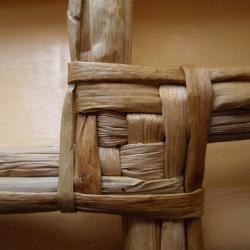
3) Using the help of the video in the previous post for making a Brighid’s cross, make the creation of your own cross — from reeds, strips of paper, fabric, etc. — an offering, a gift, an act of mindfulness, a devotion to Brighid.
4) Troubled by doubt? Blocked into inaction by hesitation, fear, or talking self telling you not to be ridiculous? Note the lines in Damh’s song: “But in her prison, she heard the spell the people were chanting: Three days of Summer, and snowdrops are flowering again”. The people — that’s you and me — help free her from prison. We imprison the divine, but we have the power to liberate it again in our lives. What chant comes to you? Listen for it as you go about your day, reading the headlines, listening to conversations, songs on the radio, and so on. Meditate, and write down what comes. This is a prayer the people are chanting.
5) Dance a dance you make up that has 19 steps. A circle, a square, some other shape or just steps as they come to you. Swing your arms, raise them, keep them at your sides, or clasped in prayer. Drum on a tabletop, a pot, a cup, bang two spoons together. Or step in silence. On the 19th step, say or whisper aloud or inwardly the name of the goddess. Dance when nobody’s watching. Except you and the goddess.
6) Brighid is goddess of fire. Light a flame and say “The fire is still burning. Nineteen priestesses tend the Eternal Flame. Oh but of you, my Lady, we are still learning”.
7) Educate yourself about Brighid. Here’s an easy “for-instance” — a short video (5 mins.) featuring Mary Meighan, who offers several clues to a practice.
Brighid’s Well
8) Volunteer at a homeless shelter, dedicating the service to Brighid, an offering, a way of helping to keep the human fire kindled in others. We think of such things around the big Christian holidays of Christmas and Thanksgiving and tend to drop them from memory at other times. I’ve just sent off an email to one of our local shelters, 8 miles away, requesting info on volunteering.
9) Dedicate a practice meaningful to you for each of the next 19 full moons. Ask for insight and resolution — in exact proportion to how well you keep your practice. Ready? Set … Go!
10) Following bpott’s comment on a recent post, “[P]lay (with serious thought) with enchantment”. What does enchantment look like to you? When have you experienced moments of enchantment? How did they manifest? What was going on when they did manifest? What can you do to welcome them again?
11) Again following another recent comment by bpott, take your practice outdoors, however briefly. Especially needful in the Northeastern US, because we get serious cases of cabin fever. (Our area organizes “Cabin Fever Dinners” to bring people out of hunker-down mode and into celebration over a communal meal. One of the more popular ones in our area draws 75-100 people and is held in a local church. Yes, plenty of non-church people attend. It doesn’t hurt that the menu and kitchen are overseen by the pastor’s husband, who’s a gourmet chef. It’s very much a Brighid experience, at least for me. Generosity, kindling the fire in others.) Enjoy the thaw that’s come to the region. And wherever you are, breathe outdoor air. Let the sun shine on your skin.
12) What can you kindle and smith, inspire and heal, in yourself and others? What wells and forges exist in your life? How can you use and serve them? What wells and forges have you possibly overlooked or taken for granted? Again, how can you serve and use them?
13) Set a dream intention each night for prophetic, healing or creative dreams. Record each morning what comes. If you think nothing came, write what you imagine coming. Read it that night before you go to sleep.
14) Choose a bowl of water or goblet, etc. as your Well of Brighid. Ask for the blessing of Brighid upon it. Drink from it each morning after sleep.
15) You visit the Fire Temple on the inner planes. What do you experience there? Write down what comes. Who greets you? What gets ignited? What gets burnt away? What kind of flame are you given to return with to your life?
16) Find a poem that inspires you. (Or write one.) Make the reading and saying aloud of the poem a practice for the 19 days. Make of your love for the poem an offering.
17) Practice intense devotion for a particular manifestation of the divine in the form of a god or goddess that draws you. In a post “Loop of Brighid: The Mysticism of Devotion“, Christopher Scott Thompson says,
Rather than talking in a hypothetical way about what the mystical experience actually is, I’m going to talk about how to get there yourself through your own relationship with the gods and goddesses you personally serve. This is not an attempt to import something like bhakti from Hinduism into modern western paganism, because devotional practice to specific deities is already naturally developing within the pagan revival. However, I will be using the concept of bhakti as an analogy for the most intense and mystical forms of modern devotional paganism, such as the mood expressed in this poem [included just above this extract in the original post].
For those of you incubating your own enchantment of Brighid to coincide with the upcoming 19 days of the goddess, you have the moon to aid you. Waxing now, it reaches full at nearly the midpoint of the 19 days, on the 31st of January — a fine symmetry, whether you choose to align with it or not.
The Solar Question for today, the 20th of the month, in Caitlin Matthews’ Celtic Devotional (Gloucester, MA: Fair Winds Press, 2004) asks “What is the source of your spiritual guidance?” The Lunar Meditation* for the fourth day of the moon (counting the New Moon, Jan. 17, as day 1) is “the wonder of life”. If I’m facing a period of spiritual dryness, if I have no other ready guidance, “the wonder of life” is a fitting source. Watching and listening, I can find in something small as the sun sparkling on an icicle a subtly radiant doorway into the Enchantment of Brighid.
Because magic so often starts small, no more than a tickle, a spark, a whisper. Till it builds.
Keep refreshing “home” and your browser gives you different results, your Facebook feed changes, etc., my wife said the other day.
If I’m paying attention, an inner bell goes off for me at such moments, an aha! of illumination. Spiritual practice is my way of refreshing home, of choosing — or asking for — something else than what the apparent or obvious may be telling or showing me. Some animals and insects excel in mimicry as a defense, or to lure prey. So too the human world, with its heartfelt truths and its cons, its bullshit and its profound beauties, its “characters” and “originals” and its gold standard friends.
Refreshing home is a kind of alertness that many animals retain, honed senses not dulled by noise from talking self. Don’t get me wrong — human speech is indeed a gift. But like many powerful gifts, it’s double-edged. It’s true, peace to Walt Whitman, that animals “do not make me sick discussing their duty to God … Not one kneels to another, nor to his kind that lived thousands of years ago”*
So when I write, as in the previous post, about things like devotion to Brighid, and you’re feeling particularly agnostic about, maybe, absolutely everything, consider J M Greer’s observations about egregor(e)s, the energy of group consciousness that forms around any regular gathering and gives it a distinct character, and especially around magical groups that work intentionally with charging and exploring its potentials. Is Brighid an egregor? Does your local parent-teacher association or book club or university class differ from other groups in any way? Of course. But is Brighid “merely” an egregor?
Richard Dawkins and Sam Harris and other atheists miss a very large point here. I won’t spell it out — you already know it, or else you’re not interested in knowing it.
Greer says, writing about magical lodges:
… egregors capable of carrying the highest levels of power can only be built up on the basis of the living patterns of the realm of meaning, outside space and time. These patterns are what some religions call gods, and what others call aspects of God. They have a reality and a power that have nothing to do with the egregors built up around them, but they use the egregors the way people use clothing or the way actors in many traditional societies use masks. Skillful, intelligent, ethical, and dedicated work with these egregors, according to tradition, can bring lodge members into a state of participation with the primal living powers of existence itself — a state that is the goal of most religions, and as well as the highest summit of the art of magic (Greer, Inside a Magical Lodge, Llywellyn Books, 1998, pgs. 109-110).
It’s the part of those willing to work with and within a tradition not to stop at the level of belief in it, but to test and explore its possibilities. We’re worlds away from credal faith here. But you may, if you’re around a devotee of Brighid, especially this time of year, overhear or encounter a song or poem or prayer of dedication, service, and love.
Imbolc, the February 1st or 2nd holiday, part of the seasonal cycle of the “Great Eight” Pagan festivals, has long been associated with Brighid. Goddess, saint, patron of poets, smiths and healers, Brighid is a potent presence for many Druids. Christian Druids can honor her in either or both traditions, and her legends and symbols — effective points of access to her — are many.
Among the traditions that have gathered around her is the significance of the number 19 — whether part of the ancient awareness of the moon’s Metonic cycle, or the Christian tradition for determining Easter, curiously associated with the full moon, or the 19 nuns at Kildare connected with Saint Brighid. Or the practice of 19 days of magic focused on devotion to the goddess-saint, which this post examines. As a Druid-Christian link, the number and practices associated with Imbolc and Brighid can join the others I’ve talked about in other posts here as yet another means to transcend argument or debate, and find blessing.
Nineteen days with Imbolc in the center (on Feb. 1), the 10th day, begin January 23 and take us to February 10.
As this circle is cast, the enchantment of the apparent world fades … We stand together in the eye of the sun here and now …
So goes part of OBOD standard ritual. Why, you might be asking, if Druids say they wish to attune themselves to the natural world, do they practice ritual that sees the natural world as both enchanted and apparent?
Well, we still stand “in the eye of the sun”. Partly it’s “talking self” (see this and this post) that distracts us, that enchants us in the sense of holding us spellbound (and self-bound) rather than freeing us to grow. Circles concentrate energy and attention, contain them for the duration of the ritual, and can help charge us as instruments of the divine in order that we may “know, dare, will and keep silent”, as the old adage goes. So we circle alone and together to watch that particular enchantment fade, so that others can manifest more clearly. It’s a choice of enchantments. Do you like the current ones at work in the world? “She changes everything she touches, and everything she touches changes”. Sign me up!
Spending the interval from now till the beginning of the 19 days, a week from today, determining what service to offer, what magic to work, is time well spent.
I’ll be following up here with my experiences.
/|\ /|\ /|\
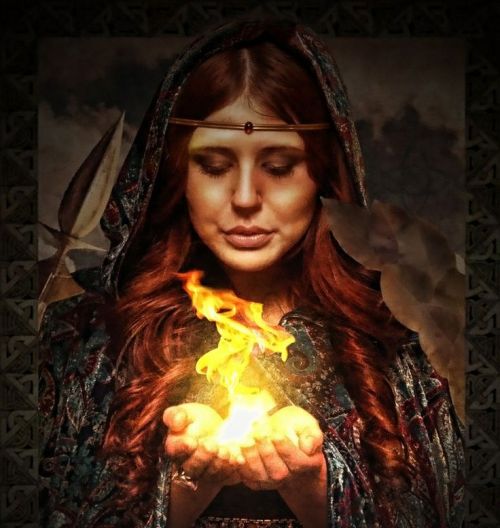
Image: Brighid. My preference is for deity images that aren’t sentimental or “airbrush pretty”. Contemporary artists often portray sexy gods and goddesses, which is fine, but as an image for meditation I’d rather not use soft porn.
On a Druidry Facebook group I’m a member of, the question arises a few times each year: what makes Druidry distinctive? In other words, if you’re looking over your options, “Why this and not that?”
Sustained contact with the green world is first practice, never abandoned, never out of date.
In a comment on the last post here, bpott said she was told in meditation to “practice devotionals to the gods outdoors. Lighting a candle to Brighid and sitting with her, or pouring water in a bowl for the moon to infuse its energy and listening to Manannan are such devotionals. There is indeed much to be gained through these spiritual practices”.
But this isn’t something for you to take anyone’s word for. It’s not that kind of observation. Words are meant guide us to own experience and back out again, to reflect so we can experience deeper.
Or as J M Greer puts it,
Druidry means following a spiritual path rooted in the green Earth. It means embracing an experiential approach to religious questions, one that abandons rigid belief systems in favor of inner development and individual contact with the realms of nature and spirit.
We regularly need reminders like these, because Talking Self sidetracks us.
“Talking Self” — you know, that chatty, sometimes neurotic self we use to read and post on Facebook, grumble at headlines we don’t like, and cheer for ones we do. It can often persuade us that it is all of who we are, because its medium is language and the thoughts and feelings language kindles in us. Name it, says Talking Self, trying to keep everything in its domain of names and words. (The Dao De Jing quietly reminds us “the nameless is the origin of heaven and earth”.)
Druidry says take yourself out of talking self and into Self — the being linked in its sinew and blood, bone and spirit, to all that is — rivers and streams, woods and meadows, valleys and hills, tundra and deserts, bird and beech, beast and bass and bug.
When you come back, you can turn Talking Self toward song or ritual, if you like — give it something to do that it does well — but in the service of something higher than reactive gossip and self-importance and anxiety.
And “going outdoors” doesn’t have to entail a frigid January plunge through a hole in the ice at the local lake. It may be as simple as smelling an evergreen twig you picked up yesterday on a walk, and now you hold it as you meditate, on the change of seasons, the incense of a living thing on your fingers and in your nose. Crafting a banner or a poem for the next time your Grove meets — at Imbolc in February. Baking and taking a gift to an elderly neighbor or the local soup kitchen. Grooming your dog or cat.
All these things re-engage the body and give Talking Self a break. Poor thing, it needs one. These practices help restore our connections. They gift us with balance. For these reasons they are, in a curious word more often associated with another tradition, incarnational. They literally put us into our bodies, even as they give Spirit shapes and forms we can experience.
Many forms of Spirit, many bodies to experience them: earth body and dream body and thought body and memory body. And others we haven’t begun to explore.
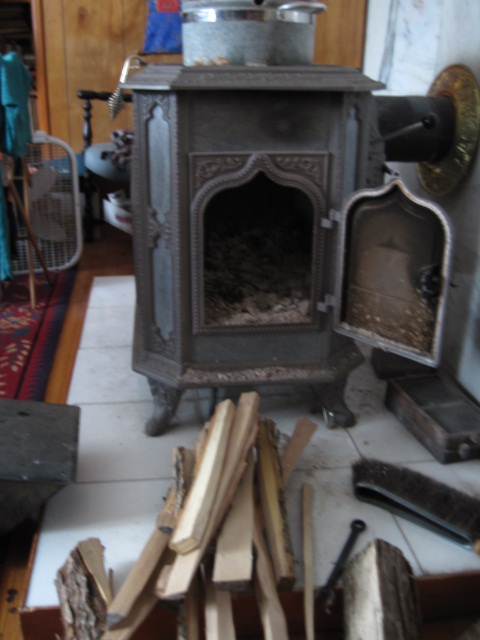
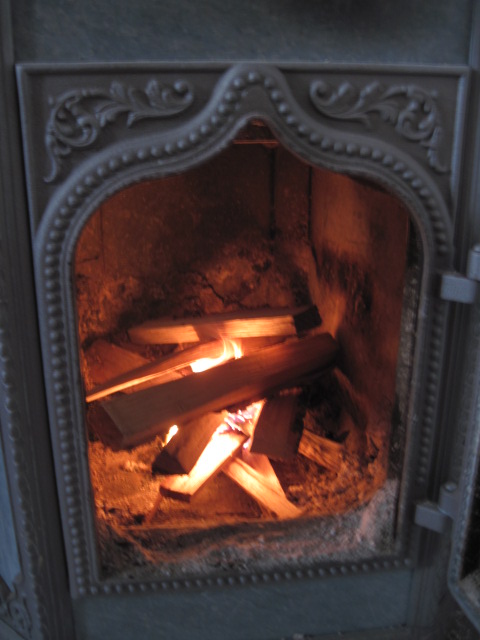
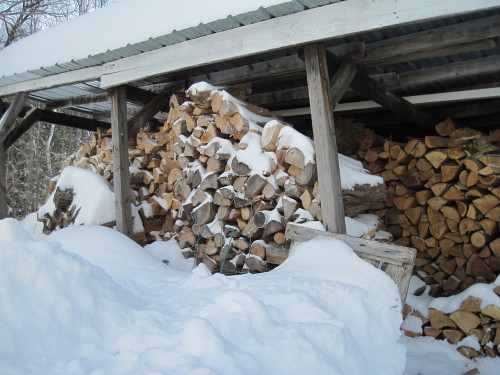
I lay the makings of a fire in our woodstove, crumpled newspaper and punky dry strips of willow from a fallen branch two years ago, and thin strips of a log split and split and split again. Wood’s our primary heat-source — we’re far too stingy to waste money on our electric backup, except in direst emergencies, and then the power may have gone out anyway. I can pause a moment before setting the match to the kindling and honor Brighid. The makings of a devotional. Not “believe in Her”, not “profess my faith She exists”, but honor Her. Often something quite different.
As someone once quipped, more important than me believing in Brighid is Brighid believing in me. What god would care to waste attention on a human who isn’t ever here? But if I’m here and as I honor Her I sense She’s here, what’s left to believe? It’s the honoring that’s important. The connection.
The Druid experience continually “abandons rigid belief systems in favor of inner development and individual contact with the realms of nature and spirit”. Continually, because my rigidity will creep back in, and fire and touch can warm and soften and free me from inflexible habits and open me to change and love.
I met Brighid most intimately through the task of firing up the woodstove when we settled in Vermont in 2008. Fire became a daily reality each winter (and much of spring and autumn, too). The wonder of fire and the opportunity of honor to Brighid needn’t be separate from the gathering of kindling and the match. Our winter-fires may not be the reverential fire of Kildare — though they can be. Every morning.
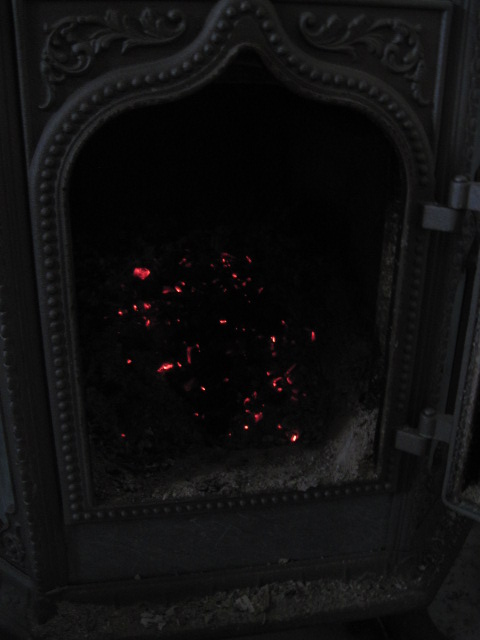
Today I’ll take out the ash to the compost pile, the midden, lovely old word. I let the freshly-removed ash sit out in the hod for a week, so I’m not dumping a pile of embers outdoors on a windy day. Old ash out, new ash to the hod, new fire to the stove ,whose walls are still warm to the touch. I set the kindling, whisper a sometimes wordless prayer to the goddess, and watch as flames grow and spread.
taking out the ash
new fire
My devotional has to take a particular, concrete form if it’s to exist at all for the body and senses to engage. Spiritual-but-not-religious knows this, instinctively keeps seeking but then abandoning forms, because it distrusts forms even as it senses their value. But it’s the dead form and the opinions-and-then-dogmas of Talking Self that are the obstacle to spiritual connection, not form itself.
Oh, Lord [goes one prayer] forgive three sins that are due to my human limitations.
Thou art Everywhere, but I worship thee here:
Thou art without form, but I worship thee in these forms;
Thou needest no praise, yet I offer thee these prayers and salutations.
Lord, forgive three sins that are due to my human limitations.
Except they’re not limitations at all: the way to do them in time and space is with temporal and spatial forms. I find little limitation in building a fire and honoring Brighid too. My devotional is a matter of intention, of choice. When I’m on another plane, I adopt its forms. (In dreams I fly, with dream-power my earth body doesn’t have.) But now, here (no need to apologize for limitations*), these forms.
Without a form, no transformation, whisper the Wise.
/|\ /|\ /|\
*The words “limit” and “limitations” are dirty words, far more obscene these days than any other. Obsessed with freedom, we miss what limits are and signify for us.
A shape is a limitation. Personally, I like shapes and forms. If I had no particular shape or form, I wouldn’t be “free” — I’d be monstrous, “de-formed”.
J M Greer notes in his Mystery Teachings from the Living Earth. 2012, pgs. 42-53:
A field mouse, for example, has teeth and a digestive system that are fine-tuned to get nutrients from seeds and other concentrated plant foods, and so that is what field mice eat. They do not eat crickets, even though crickets are very nourishing; they leave crickets to the garter snakes. They do not eat herbs, even though herbs are very abundant; they leave herbs to the rabbits. They limit themselves to one kind of food, and as a result their bodies and their behavior are exquisitely shaped to get and use that kind of food. Rather than jacks-of-all-trades, they are masters of one.
… the elegant lines of the blade [of grass] have evolved to make the most economical use of limited energy and resources, for example, and the curve at which it bends measures the limit of the blade’s strength in the presence of the wind. Remove the limits from the grass, and its beauty goes away. The same thing is true of all beauty, in nature as a whole and in the subset of nature we call human life: beauty is born when a flow of nature encounters firm limits, and the more perfect its acceptance of those limits, the greater the beauty will be.
… The same thing is true of all power, in nature as a whole and in that subset of nature we call human life: power is born when a flow of energy encounters firm limits, and the more narrow the outlet left open by those limits, the greater the power will be.
9. How well does my spiritual interaction pass through the “Three Gates”?
This, I’ve slowly learned, is a great question to ask both before and after. In other words, any time.
As Matt Auryn notes in his original blogpost, “Rumi is credited with wisdom about three gates of speech. ‘Before you speak, let your words pass through three gates: At the first gate, ask yourself “Is is true?” At the second gate ask, “Is it necessary?” At the third gate ask, “Is it kind?”‘”
These gates, I’ve found over the years, work splendidly as a guide for my spoken interactions and for any other kind, too. They also form a powerful Triad for making decisions.
I need to include myself in the Triad: is my speech, action or decision also true, needful and kind — to me? What about my thoughts? And my feelings?
Often, whatever I’m testing with the Triad, I can get two out of three. Often it’s true and necessary. But it’s not kind. Return, return. Start over.
Standards tighten, I’m discovering. It’s not necessary anymore merely to “do no harm”. Someone — god, ancestor, higher self (same, different?) demands more. As elastic beings, staying where we are almost guarantees that the past stretching we’ve suffered through and learned from and grown into will weather down into slack. I can read the signs — tedium, stagnation and listlessness, if I don’t keep on stretching, letting myself be stretched, seeking out opportunities to stretch not just further, but wisely.
10. What’s my goal for interaction with Spirit? What is Spirit’s goal for me?
Important questions. Sometimes I know, or think I know, what’s needed at the moment. Sometimes it takes some digging to get to honesty with myself.
Other times the answer’s easy: no clue.
Usually that’s an excellent place for me to be. It means I need to listen first, before anything else. Instead of a ready cliche or a stock answer or something I dredge up from my own most recent spiritual slackness, I practice patience.
Sit, sing and wait, counsels one of the Wise. So I find different places and perspectives to sit in. The front entry of our house does duty for a small but useful office. Or a tree-stump from a powerline clearing that Green Mountain Power left beneath the row of hemlocks on our north property line. I sing a word, a name for spirit, a line from a song or poem, a spoken fragment from a dream. And I watch as this moment crystallizes into the next, and shapes of possibility begin to form. Often they scatter, birdlike, flying somewhere along the horizon, not where I’m gazing at all. I stand up and go about my day, and a whisker of insight, if I honor the handshake of spirit, comes.
11. How can I see and describe my understanding as a perspective?
Matt Auryn observes, “One of the best ways to keep your ego in check when discussing different methods and ideas is to claim them as your perspective and not as the dogmatic way to do things”.
So I try to remember to tell myself rather than believing X or Y that I suspect X or Y. Because whether it’s a ripple in the apparent world or a flash in the Otherworld, I almost always under-perceive it. I miss something, and often a lot. I kneel down to study a large footprint in our muddy backyard, never seeing the bear that made it lumbering away to forage among early blackberries. But knowing there’s alway more to perceive doesn’t discourage me. It makes it a game, even and especially when the stakes are high. Sometimes my best contemplations take wing when I begin by asking So what did I miss this time?
backyard black walnut coming into leaf
12. What hints and nudges has spirit sent to me already about fine-tuning my practice?
Every week or so, there’s a tonic that Spirit throws me down for and forces me to swig. “Take as indicated”, the label reads. And the fine print says:
“You’re a slow learner. That’s ample reason to practice humility. Everyone else is a slow learner, too. That’s an excellent reason to practice compassion.”
Funny how I haven’t yet overdosed on either of these.
13. What examples and teaching from the natural world greet and guide me today, right here and now?
A question I need never cease asking.
Yesterday and today, rain. The power out for about 90 minutes. The thermometer reads 46 F (8 C). I lit a fire about an hour ago. And as I set a match to the wadded newspaper and kindling, breathing the faint cold ash of the last fire, I knew Brighid was present, whether I’d invoked her this time or not.
Invocation, I heard/thought as the flame took hold, is my privilege. The gods welcome my service, but they move in the worlds just fine without me. And where there is privilege, and service, there is also wonder.
The first stanza of Damh the Bard’s lovely song “Brighid” (below) places the goddess in the landscape of vision:
There’s a tree by the well in the wood,
That’s covered in garlands,
Clooties and ribbons that drift,
In the cool morning air.
That’s where I met an old woman,
Who came from a far land.
Holding a flame o’er the well,
And chanting a prayer.
Though here it’s the goddess who’s “chanting a prayer”, the bard has invoked her with song — his own prayer. And he’s gone to the “well in the wood” full of intention. Maybe not specifically to see the goddess, but knowing the tree and the well and the moment offer possibility waiting for human consciousness to activate. A gift of the gods, already given freely to us.
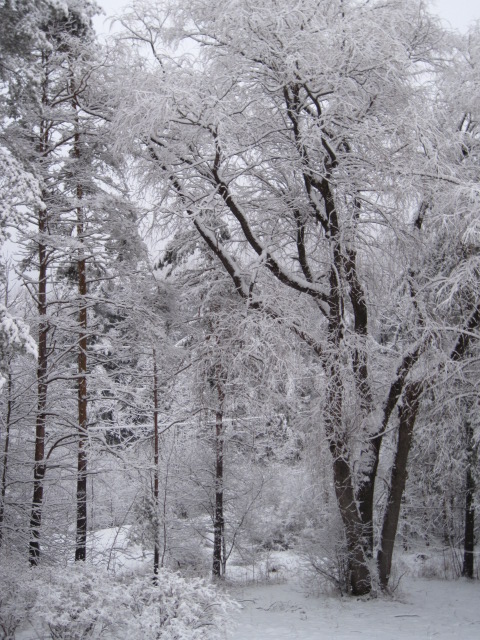
Here in Vermont a light snow falls as I write this, and I step away from the keyboard to take a picture.
By February here, snow itself can signal spring to come. You can feel the longer light, and moments of snowy beauty remind you that wonder is never far away. The sap will be running soon in the maples, the sugar shacks smoking all day and night as the sugarmen boil down the sweet juice to syrup. Green will burst forth, improbable as that seems right now in a world of cold whiteness. So Brighid comes from a “far land” that is also always near to attention, intention and devotion.
Here across the Pond from the Celtic homeland, some North American Pagans can feel removed from the “gods of Europe”, bewailing their distance. This place, we can feel, isn’t “Their” land. Yet anyone who’s encountered a spiritual presence knows that place is a convenience of the gods, not a requirement — a set of clothes, not the being who wears them.
Yes, it would be splendid, we imagine, to visit that “tree by the well in the wood”, simply by stepping out the back door to a landscape steeped in stories and legends of the goddess. Yet we also know what familiarity breeds. Or as an African proverb has it, “Those who live nearest the church arrive late”. The old saying that the gods like the offering of the salt of human sweat means effort is not wasted, devotion is repaid. Always, we have something we can offer them. And the gods give, but “not as the world gives”.
For you soon find that the gods are not merely passive reservoirs, to be drawn down whenever we happen to think of them and plug in for a re-charge, our rituals cannily crafted to work like the swipe of a credit card at a gas (petrol) pump. “Fill me up, Brighid!”
But wait, you say. Isn’t that just what we’re doing with ritual and song?
It’s really not a matter for argument, unless you need the exercise. Damh the Bard knows Brighid — you can hear it in the song. And out of love he’s traveled many times to the tree by the well in the wood. Brighid knows his name.
This, then, is one intention to cherish: may we serve them so that the gods know our names. Not to hold it up before others like a badge of pride, but as a spiritual resource to treasure and spend at worthy need. Or as Gandhi said, “If no one will walk with you, walk alone” knowing in truth you aren’t alone.
Ten years ago I didn’t honor Brighid. I didn’t “believe” in her, though I’d heard her name, thanks to all those who kept it alive in our world. Now I honor her, but I still don’t trouble myself about “belief”.
Instead, I take the hint and look. “I saw her reflection in the mirrored well”, Damh sings.
And I looked deep in her face,
The old woman gone, a maiden now knelt in her place,
And from my pocket I pulled a ribbon,
And in honour of her maidenhood,
I tied it there to the tree by the well in the wood.
Mantle of Brighid about me,
Memory of Brighid within me,
Protection of Brighid around me
keeping me from harm,
from ignorance, from heartlessness,
this day and night,
from dawn till dark,
from dark till dawn.
— John O’Donohue (adapted), The Four Elements, Transworld Ireland, 2010, pg. 109. (Also available in Random House editions.)
I find in this poem a prayer most fitting for these darkening days till Yule and sun-return (never mind the ritual season). I add to it these visualizations as I say the opening triad of actions:
I see and feel the soft, warm cloak of Brighid furl and drop around me. I touch the weave of the cloth. I see the mantle extend outward, expanding the presence of Brighid all around me. “Beneath your mantle you gather us.”
I feel the memory of Brighid arrive as I whisper her name, her presence in thought and feeling, in the hearth-fire, in human warmth and affection, in animal caresses, in the sun’s brightness, hidden behind clouds or yellow in the December sky. Her mantle means we help manifest her, bring her here. “Remind us how to kindle the hearth.”
I feel the awen of the divine kindling in and around me whenever I put off despair and choose better. I sense the awen in others, upholding me even as I uphold them. I name them now, sitting or standing before any fire or flame or light, which I declare Brighid’s fire and flame and light.
O’Donohue writes: “One of the reasons for the modern poverty of spirit is amnesia. Even though there is a great harvest of healing energy within memory, people seem to make so little use of it. Rather than living from this harvest within them, they seem in the demented rush of modern life to live more out of their poverty” (pg. 113).
I hold my hands up before me and say more of this prayer-poem:
To keep it bright,
to preserve the flame,
your hands are ours,
our hands in yours
to kindle the light
both day and night.
And then I close, repeating the opening triad once or twice more as it feels right.
Mantle of Brighid about me,
Memory of Brighid within me,
Protection of Brighid around me.
And I see Brighid’s cross, feel it foursquare, if I receive no other intimation of the goddess. I sein my thoughts, feelings, and actions of the day with it, sometimes continuously through the hours if I need it, to preserve, preserve, preserve the flame.
Over the last several cold damp nights and cool partly cloudy days here in New England, many of us who heat with wood have lit the first fires of autumn. (Some days building and feeding a fire is the best theology I can muster.)
More than one Vermont Druid I know makes it an autumn ritual, invoking Brighid and celebrating the turning of the year in this private, immediately practical and also beautifully symbolic way. Way more fun than turning up a thermostat. You celebrate starting from where you are and what you’re doing. Where else, after all, can I begin?
Stay alert, I tell myself. This can be one of the times Druidry demonstrates its wonder and power and joy. We don’t always need the big ritual circles and dords* sounding their ancient welcomes, though these, too, can be apt and lovely. Sometimes, though, the best Druidry for the moment is pocket-sized.
Pocket Druidry. At last year’s East Coast Gathering, Kris Hughes led a workshop demonstrating another form of it. In the early days of Revival Druidry, the Welsh poet and Druid Iolo Morganwg conceived a literal pocket Druidry, constructing a ritual circle for a gathering of friends on the Summer Solstice of 1792, out of stones drawn from his pocket.
World in your hand, circle in your pocket. Our lives, especially in the last century or so, seem to repeat a pattern: demonstrate our immense power to shape and re-create the world, then withdraw, standing back in dismay and doubt when it doesn’t turn out as we hoped. We’re still practicing, still in the elementary grades, with all the meanings that suggests. Learning to use the elements at hand, still in the early stages.
With the love of triads and threes that marks so much of Celtic art and story, it’s no surprise that the Celtic conception of our spiritual journeys should mirror this same triplicity. From the starting point of Annwn, the Celtic Otherworld, we move forth and back through three states of manifestation and consciousness, in a kind of dance that sees us revisiting old lessons until we’ve fully mastered the material, spiralling through different forms and perspectives.
Most of us hang out for a considerable time in this present world of Abred, this place of testing and proving. From here we proceed to Gwynfyd, a world of liberty and freedom beyond the pale shadows of these forces in our present world. Back and forth between Abred and Gwynfyd, with dips into Annwn here and there. And last comes Ceugant, an unbounded, infinite realm. By definition, no end point, but a new beginning. The horizon recedes.
Morganwg’s compilation Barddas (section 227) explains this cosmology through a kind of Druidic catechism of question and answer. I’ve modernized some of the archaic language in the following excerpt:
Q. What were you before you became human in the circle of Abred?
A. I was in Annwn, the least possible thing capable of life, and the nearest possible to absolute death, and I came in every form, and through every form capable of a body and life, to the state of human in the circle of Abred, where my condition was severe and grievous during the age of ages, ever since I was parted in Annwn from the dead.
Q. Through how many forms have you come?
A. Through every form capable of life, in water, in earth, and in air.
As the Beatles sing it, “It’s a long and winding road …”
One of my teachers notes that human beings recently refused a chance to rise to the next level of awareness by accepting responsibility for themselves and their actions. Some days it feels like we’re throwing tantrums because we didn’t get what we thought we wanted. Rather than awareness, we default to outrage.
In the circle we’re presently in, we refuse to accept cause and effect, continuing to live on a merely emotional, reactive level, without fuller consciousness, at least very often. We’ll readily respond to the energy tides sweeping around us, and contribute to them willingly, but deny that any of them has longer-term effects we need to weigh before leaping in, or that we always have a choice. But that’s how I feel, we say. Yes. So now own it, and go from there, counsel our guides and sages. Maybe not by diving immediately into the very next feeling that presents itself just because it knocks at the door of consciousness.
Ask why? Ask who benefits? Ask how do I live from a place of honor?
Don’t think, say our advertisers and politicians and insta-gurus galore. Don’t think. React!
Seedtime and harvest, whispers the wisdom of the earth.
The glory and wonder and marvel of it all, in the face of the sufferings we keep bringing on ourselves and each other, are the possibilities of joy unbounded that we glimpse too rarely — that view through the window, over the next hill, in a day- or night-dream, which nevertheless keep us going in spite of everything.
This — the Barddas counsels us — this is simply the way we get there. (If you find another and better way, please do let me know!) Through experiencing fully every possibility and option and choice, and living their consequences.
Less comforting that I was looking for, but a provocative insight, nonetheless. It goes remarkably far in explaining the predicaments (plural) we’re in. They’re the lesson at hand. The necessary lesson. Whatever comes, though, matters less than what we do with it. Especially with the sense of deja-vu that we’ve faced this all before. Wait, I say. Sometimes it feels like I’m still in somebody else’s lesson. Why do I have to sit in class waiting for them to get it?
For some, yes, the lesson’s familiar, a kind of review. Others need to go through the whole thing, maybe for the first time. They may never have encountered it before. But the final piece I know I’m still working on, the piece that keeps me here (I can’t speak for you), is that I have the choice to learn and show compassion. To serve. It’s not about me after all.
That’s all? I ask, grumbling or swearing, depending. Obviously I do need to be here, I say ruefully, a moment later, if only because I’ll need compassion from others soon enough, when a hard lesson comes my way. As it will, guaranteed.
Along with each lesson, that peculiar joy: This isn’t all there is. Keep going. Keep loving, in spite of all evidence to contrary. It’s human evidence, says the sage in the heart. You made it, you live it, you learn it, you move on.
And the goal? I ask. Ah, now. The big question. Your answer today is more important than anybody else’s. Because it will shape what you do next …
/|\ /|\ /|\
IMAGE: Brighid in her form as triple goddess of healing, smithcraft and fire.
*A Youtube video of a large dord being played — sounding remarkably like a didgeridoo.
Earlier today my wife and I walked through the brilliant winter sunlight on the neighborhood loop that took us past snowfields already blue with late afternoon shadows.
Looking southeast around 3:30 pm
I’ve quoted the Philip Larkin poem “First Sight” before, but today it seemed perfect as a tribute to the goddess whose hearth (or in our case, woodstove) I worship at particularly intensely on these frigid midwinter days.
Imbolc as guide: more than half our wood remains.
Spring will come, and as goddess of fire and smithing, Brighid warms and heals and shapes us. Lack of any promising evidence for that change bothers her not at all.
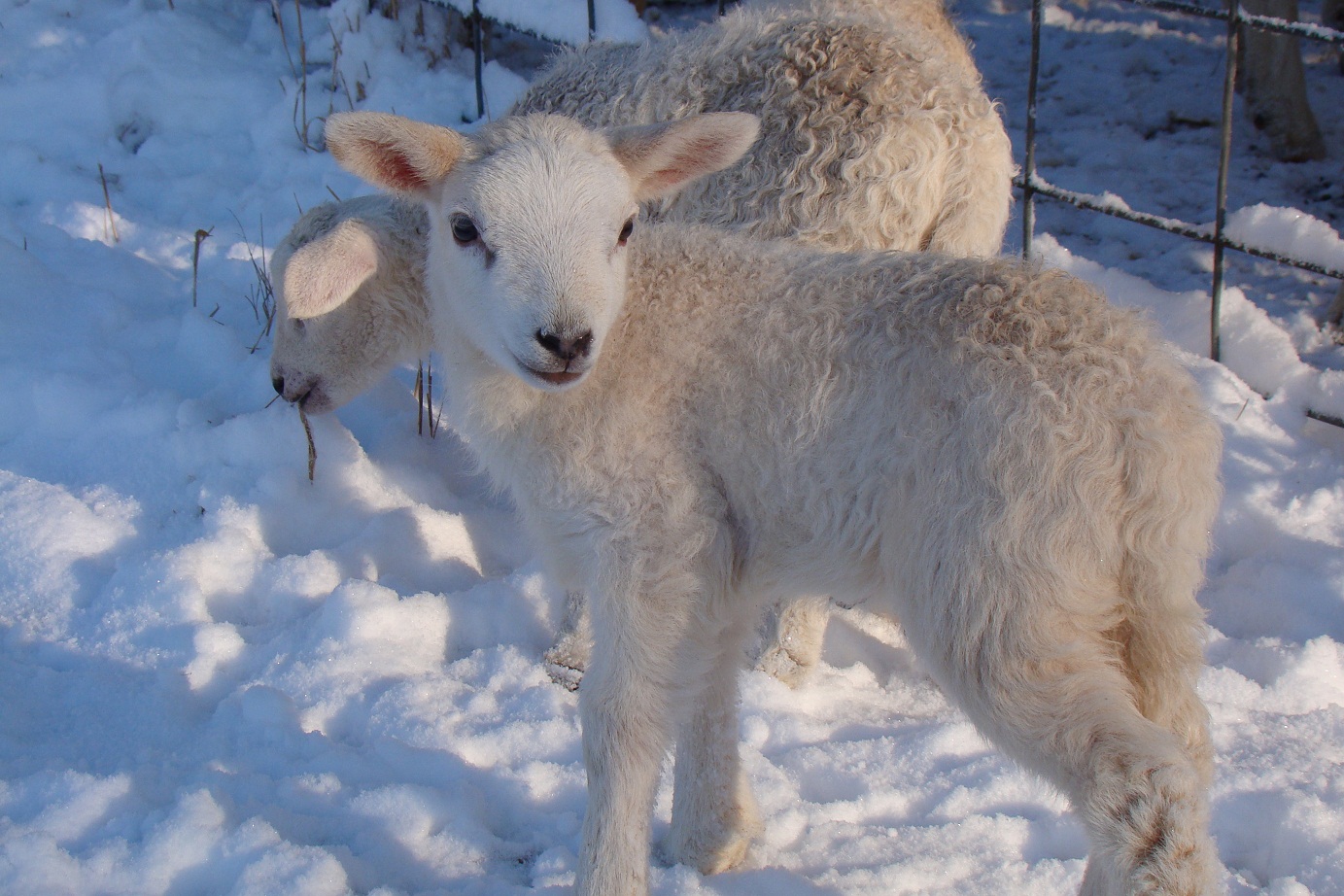
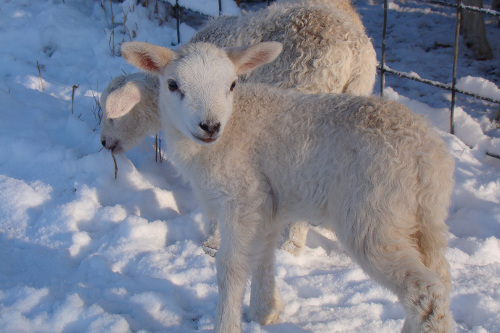
Larkin’s poem means more to us, because just four miles from our house a local farmer milks his herd of some 90 sheep and sells a variety of sweet, rich cheeses in a little shed halfway down the lane to his milk barn. Lambing season is usually later than February in the Northeast, for the simple reason that it’s too cold for the newborns in anything other than a heated shelter. Push the ewes to conceive too early in the fall, and you’ll end up with dead lambs. Larkin captures this time of change in a somewhat milder climate, but still snowy. Memory had me reciting his lines again to myself as we walked. I had to come back and locate the poem to fill in the gaps I couldn’t bring to mind:
Lambs that learn to walk in snow
When their bleating clouds the air
Meet a vast unwelcome, know
Nothing but a sunless glare.
Newly stumbling to and fro
All they find, outside the fold,
Is a wretched width of cold.
As they wait beside the ewe,
Her fleeces wetly caked, there lies
Hidden round them, waiting too,
Earth’s immeasureable surprise.
They could not grasp it if they knew,
What so soon will wake and grow
Utterly unlike the snow.
This always moves me — a transfomation we simply cannot see coming merely by looking around us. No evidence here, at least none we can make out. Even, sometimes, a “vast unwelcome.” Life in this world is catalyst. It never leaves us alone. What gifts of the gods and spirits and our own ancestors will wake and grow in us? Will we let ourselves be surprised? Brighid, may it always be so!
/|\ /|\ /|\
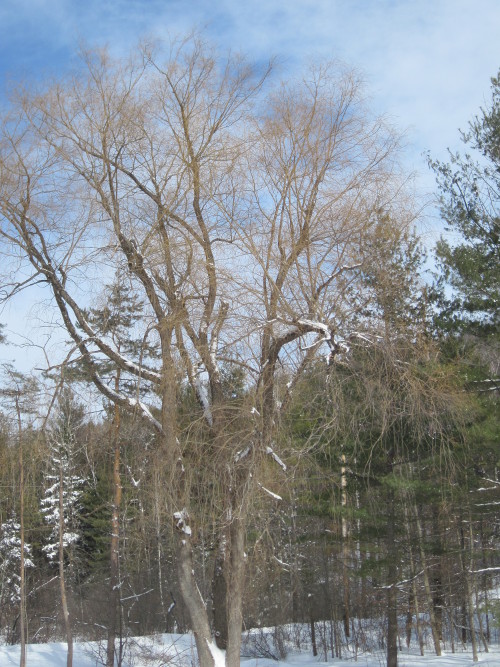
The rangy willow in our backyard has been feeling the sun these past several days. Even with its branches garbed in snow, you can make just make out in the crown of the tree the first faint reddish-green hint of spring in the depths of this February cold. Imbolc upon us. “They could not grasp it if they knew,/What so soon will wake and grow.” Memory of other Februaries wakes and hints at what will return, against the odds.
Backyard willow
With the triplet of Imbolc, Groundhog Day (in the U.S.), and a full moon tonight on Feb 3, it seemed right to celebrate today and tonight, the third day of the three. And this evening my wife and I enjoyed homemade potato soup rich with leeks and garlic and sour cream — we practiced the traditional Italian “mangiare in bianco” — literally, “to eat in white” in observance of the moon, without also “eating blandly or lightly,” as the expression can indicate, too.
The hill to our east, cresting perhaps four hundred yards above our roof, delays sunrise and moonrise both. Moonrise tonight “officially” hit Brattleboro VT at 5:09 pm. We wait for it longer here.
At first I thought the image below was a discard. A tree-trunk obscures one edge of the moon, and the horizon is hazy. But then I saw it perfectly captured our Imbolc experience. Slowly the sky cleared as the temperature continued to drop towards 0 (-18 C), as it has the last several nights. Hunger Moon* rose higher, and the moon-shadow of a pine in the backyard leaned out dark against the snow in the moonlight. I took another shot.
Moon around 6:45 pm, shortly after clearing our hilltop
Praise to Brighid and life and light, warmth human and divine in our veins, in the animals and plants around us! May our vision of the Whole become clear as the moon this night.
Moon around 8:00 pm
/|\ /|\ /|\
*Hunger Moon” is one of the Native American names for February — and never fails to make me shiver.



 I find in this poem a prayer most fitting for these darkening days till Yule and sun-return (never mind the ritual season). I add to it these visualizations as I say the opening triad of actions: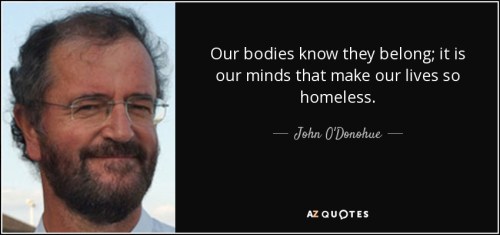
 Over the last several cold damp nights and cool partly cloudy days here in New England, many of us who heat with wood have lit the first fires of autumn. (Some days building and feeding a fire is the best theology I can muster.)


 A Druid Way