Ah, Emnight — that word I’ve lifted wholesale from Old English emniht, from *efenniht “even-night, equal night (and day); equinox”. (Hail, Kin Down Under at the official start of Spring)!
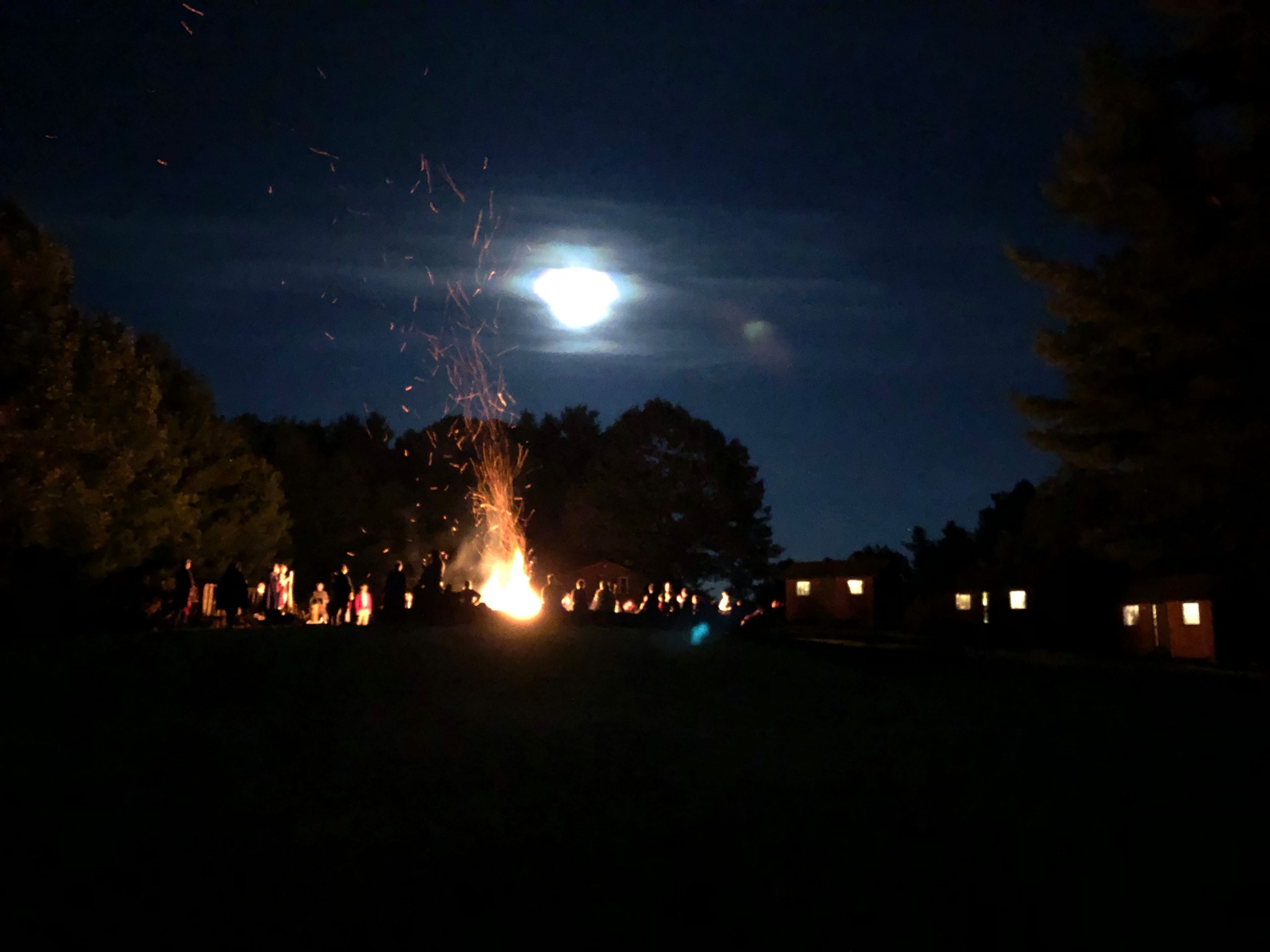
A good word to revive in modern English, as the waxing full moon (se fulla mōna) strives to match it in our September skies. On emnihtes dæg, ðæt is ðonne se dæg and sēo niht gelīce lange bēoþ, writes Bede in the 700s in his De Natura Rerum. “On the day of equinox, that is when the day and the night be equally long”.
It’s fruitful to consider as well that the moon is a planet-wide marker, independent of season (though it signals different seasons in different lands). Here’s a celestial object that (barring fog or cloud or smoke) everyone on the planet can see within a single 24-hour period.
So here at this 2021 equinox we have the sun and moon together. If you already celebrate a moon ritual, why not combine it with the equinox in a couple days?
[Cool, dude. So where’s your equinox ritual?]
Many magical groups traditionally took special note of the energies around the equinox. J. M. Greer notes in Golden Dawn-focused book Circles of Power:
The spring and fall equinoxes are points of special importance in the Golden Dawn tradition, and are celebrated with special ceremonies in Golden Dawn temples. During the forty-eight hours to each side of the actual moment of the equinox—the moment when the Sun crosses the celestial equator—Sun and Earth stand in a relationship which allows a much more intense flow of energy between them, and the etheric body of the earth is charged and renewed. (Circles of Power: An Introduction to Hermetic Magic, 3rd edition, London: Aeon Books, 2017, pg. 39).
You may feel a number of reactions to this, including indifference, complete mystification, ridicule, curiosity, or even palpable envy that someone, somewhere, is celebrating special empowering ceremonies you know nothing about.
Let me step back a moment. One of the challenges of living in time is an intermittent and creeping sense of “same-old same-old”. This can burn fiercely enough that some people will feel driven to throw off a “perfectly good set of personal circumstances”, changing houses, spouses, sexual orientations, jobs, friends, beliefs, countries of residence and much more. (Before anyone chides me about the unwokeness of “changing sexual orientations at whim”, remember that their reality and impact, versus our awareness of them, can diverge widely. It’s the latter I’m talking about. Isn’t the same thing true about so much in our lives?)
[My patience is wearing thin, dude. Where’s the ritual, and this ‘opportunity’ of the post title?]
The point of mentioning this is to remind myself first, and secondly anyone else who reads this far, that what has been called in the Judeo-Christian tradition the “sanctification of time” is a major strategy of most if not all spiritual paths. That is, how can we vividly mark what matters in life? How do we acknowledge and celebrate — and consecrate — those moments of transcendence we all experience, even if only a handful of times in a typical life? How — for those hungry for more such moments, more connection, more “wow” — do we accommodate such hunger? How can I start to be a little less “typical”, because I’m simply weary of it? What, to sum up, can we do about “all this”?
“Do something about all this” addresses in potentially profound ways the sense of “same-old same-old” that I mentioned above. It’s even more applicable in such WTF* times as these. If we look at societies undergoing profound transformation, as so many are these days (and as the U.S. where I live certainly is), the stress and distress that such changes cause can be eased and understood more clearly, even anticipated to a considerable degree, through spiritual practices that correspond with our lived experience. We can suffer less, and help those we love survive and thrive, if we attend to our deepest wellsprings and connections to the cosmos. We can find renewal, energy, hope, inspiration.
The secret here, if there is one, is that “there’s no OSFA” — no “one size fits all”. The ritual or ceremony or spiritual practice that lights one person up like a flame leaves another scowling or giving up on all spirituality as a stinking puddle of hooey. But with deep misery and anger and, most of all, the widespread fear in these times, we might even begin with the “Litany Against Fear” from Frank Herbert’s Dune series (and past and current films):
I must not fear. Fear is the mind-killer. Fear is the little-death that brings total obliteration. I will face my fear. I will permit it to pass over me and through me. And when it has gone past, I will turn the inner eye to see its path. Where the fear has gone there will be nothing. Only I will remain.”
The initial value of the “Litany Against Fear” is that it gives us something to do besides fear. We can apply the same principle to other rituals and practices. (Often the shift of attention off the problem or issue or concern is an immediate gift of ritual. Another gift is the shift of attention onto something positive, desirable, appealing, wise, lovable, etc. If ritual did nothing else, these two gifts would be considerable. “But wait! There’s more!”)
What am I already doing that I can and want to do more of? (Try to write down five things. Or three. Or seven.)
What can I celebrate that I already do, that has value or importance in my life? (How might I celebrate it? Food, music, a walk, time with family, friends, neighbors, a pet?)
When are there intervals, minutes or transitions in my daily, weekly, monthly life that I can give myself the gift of downtime, however brief, to do these first two things?
The shapes that these acts and rituals take, then, will depend on you, your choices, circumstances, resources. That’s a good thing, because they will fit you better than somebody else’s choices, circumstances, resources. You can start so small it feels almost too easy. In fact, if you find yourself asking Is that all? that can be a good sign to add one more thing. But the first practice should indeed feel almost too easy. Too easy not to do it. And then to do it again.
You may want to consider doing more than this. the regular practice of meditation is the most basic practice in most systems of magical initiation, and for good reason. It develops skills that make every other kind of magical work easier and more powerful, and also brings the kind of self-knowledge and self-awareness that keep the initiatory process on track. Ten or fifteen minutes a day of meditation will take you further, faster, than any other practice that exists (J. M. Greer. The Mysteries of Merlin, Llewellyn, 2020, pgs. 80-81).
Here Greer is writing about meditation as an aid to benefiting from ritual practices focused around the figure of Merlin, but the counsel is sound, as anyone who follows through and sees the benefits he describes can attest.
Another step to deepen the ritual I’ve sketched above — your answers to the three prompts — is to include that detail from Greer’s observations about the Golden Dawn: “Sun and Earth stand in a relationship which allows a much more intense flow of energy between them, and the etheric body of the earth is charged and renewed”.
Using your creativity and imagination, what do these feel like? Look like? Sound like? Make your answers part of your ritual. As with your moon ritual, what tools, props, objects, music, costumes, locales, actions can assist in making this experience more concrete?
As you continue to practice your ritual, ask how the ritual itself can deepen, or change, or spin off and lead to other rituals. Note down any answers before they flee, which they will often do, like dreams when you first wake up. Greer notes:
One core advantage … is that the newcomer to the work can start with a simple form …, work at that level for a period, then use the skills developed at that stage of the work to add higher and deeper dimensions to the practice if he or she wishes to do so (Mysteries of Merlin, pg. 63).
/|\ /|\ /|\
*WTF is a flexible acronym with a good range of applicable meanings. Beyond its four-letter word version are versions like these: Who to follow? What to fix? Where to flee? Why this fits? Ways to flourish, wisdom to find … keep going with your own versions!
Here are “eight things on the eighth” in my attention. Is one or more of them as valuable as the historic piece of eight? “You be the judge!”
The FIRST is the celebration of a New England Druid gathering called BAM, happening this weekend. Many of my favorite people will be there. It’s been kept intentionally small as a balanced response to Covid, and the autumn season here in the northern hemisphere means most of it can take place outdoors. (I won’t be attending, unfortunately. It’s a choice; both my wife and I have pre-existing conditions, and we’re trying to stay healthy for each other, and “minimize the avoidables”. We’re aware not everyone has that luxury, and everyone adapts to these global circumstances in their own ways.)
Previous BAM, photo courtesy Cat McDonald
The other SEVEN are from a previous post that served as notes for this post. Often I write that way, talking about something in my attention, but needing a second run at it to firm it up and make it accessible and possibly useful for my readers.
/|\ /|\ /|\
ONE — As with so much ritual, Pagan or otherwise, it’s useful to reflect from time to time on what still carries meaning, and what we may have retained simply “because it’s always been done this way”.
What’s one thing “I’ve always done this way” that I could do differently, in order to try out a consciously-chosen change that might be advantageous?
TWO — The potency that ritual often celebrates may merge with elements of the ritual itself, and we can end up revering the elements over the original potency, with or without good cause.
Where have I spent energy in transference that I could reclaim or redirect for the benefit of the whole?
THREE — At times we may find ourselves noticing that the ritual begins to feel flat, dim, empty. (It’s the same principle that underlies sympathetic magic, which we’re witnessing in weakened forms in vast swathes of current events, as influences bleed almost uncontrollably from one person and thing to another and another, like a pandemic or flash flood or wild fire. These are both metaphors and realities that have much to teach, if we could begin to listen.)
What (else) are the metaphor and reality trying to teach?
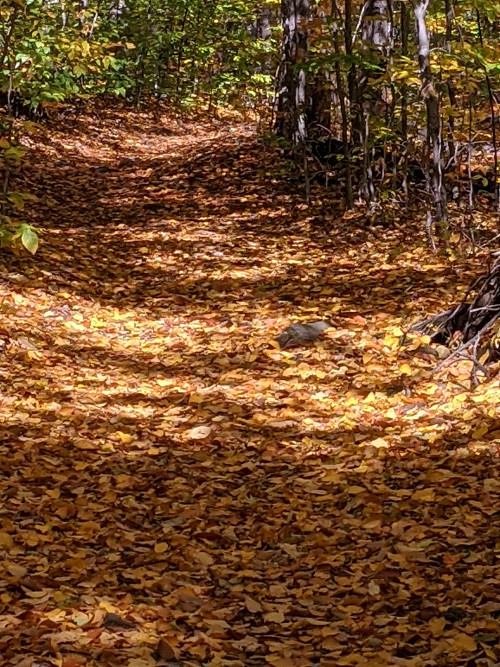
FOUR — Regeneration so often occurs from the roots, so it’s good to examine what these are, and whether we’re caretaking the dead leaves of one season, or nourishing a vital root-stock that sends out green shoots and runners each spring.
What are the roots in my life? Do I know? Can I name them and make them a more conscious part of each day and its tasks and joys?
FIVE — For care-taking is a large part of what we’re called to do, less in the way the word gets used today, where we’re “merely” standing in for the “real owners”, and more in the literal sense: a taking-care, a cherishing and nurturing.
What needs cherishing and nurturing? How am I particularly situated to tend to the cherishing I can do?
SIX — Give the fear and stress and suffering of much of the planet, we might begin with taking care of ourselves, and as it grows, let that care flow outward. Like any valid spiritual practice, Druidry offers tools to do just that.
What tools have I found effective? What other tools could I explore, or am being led to explore?
SEVEN — The commitment of the two people hand-fasting in the presence of the community assembled as witnesses, and with their love and support for the commitment the couple undertakes, and the acknowledgement of the mirth and reverence, the beauty and mystery that characterize the event, offer useful models for action. Which of those elements can I practice today in my life?
Where and how do I (already) support others’ commitments? Where can I further acknowledge mirth and reverence?
I’m posting this update in part because one of the videos on my first post about Romuva is no longer available. The several hundred views that original post enjoys each year say you’re still interested. The video below celebrates a handfasting/wedding with image and music in the tradition of the revived ancient Romuva faith (Wikipedia link) and practiced in Lithuania.
From the outdoor ceremony on a wooded hilltop, to the symbolism of the rite and the lovely handcrafted objects and garments of attendees and participants, to the presence of the Romuva priestess officiating, this wedding video is both a smooth professional production and an illustration of the vibrancy and appeal of much Pagan practice. The first six minutes in particular capture the ritual. (The rest of the video continues the celebration with friends and family, dancing and cake.)
As with so much ritual, Pagan or otherwise, it’s useful to reflect from time to time on what still carries meaning, and what we may have retained simply “because it’s always been done this way”. The potency that ritual often celebrates may merge with elements of the ritual itself, and we can end up revering the elements over the original potency. At times we may find ourselves noticing that the ritual begins to feel flat, dim, empty. (It’s the same principle that underlies sympathetic magic, which we’re witnessing in weakened forms in vast swathes of current events, as influences bleed almost uncontrollably from one person and thing to another and another, like a pandemic or flash flood or wild fire. These are both metaphors and realities that have much to teach, if we could begin to listen.)
Regeneration so often occurs from the roots, so it’s good to examine what these are, and whether we’re caretaking the dead leaves of one season, or nourishing a vital root-stock that sends out green shoots and runners each spring.
For care-taking is a large part of what we’re called to do, less in the way the word gets used today, where we’re “merely” standing in for the “real owners”, and more in the literal sense: a taking-care, a cherishing and nurturing.
Give the fear and stress and suffering of much of planet, we might begin with taking care of ourselves, and as it grows, let that care flow outward. Like any valid spiritual practice, Druidry offers tools to do just that.
The commitment of the two people hand-fasting in the presence of the community assembled as witnesses, and with their love and support for the commitment the couple undertakes, and the acknowledgement of the mirth and reverence, the beauty and mystery that characterize the event, offer useful models for action. Which of those elements can I practice today in my life?
As I begin this post, I borrow the title of U K LeGuin’s book of exercises for writers — “for the Lone Navigator or the Mutinous Crew”, as she subtitles it. At this point I have little more than a nudge, a kind of “sunburn of the attention” that I’ve learned is one signal of an impulse that, for writers, becomes writing seeking to take form. We all receive such impulses, and channel them according to our individuality, our training and imagination and skill-set and desire.
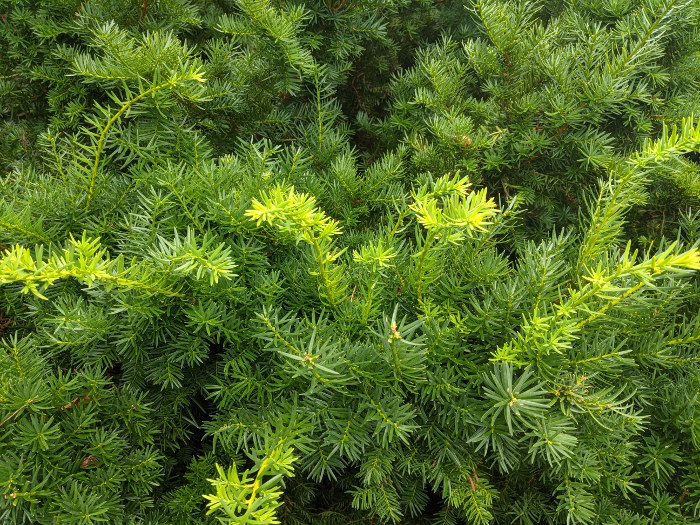
evergreen with new growth
And so this blog is often partly about bard-craft as I experience it. Of all the myths we tell about the ordinary people we call artists, those we tell about inspiration and creativity are some of the least helpful. The bulk of any greatness resides in persistence. But we comfort ourselves that it’s “talent” instead, and let ourselves off easy, not really wanting to commit to the long haul that any creative mastery requires. Look at anything you’ve mastered. The same pattern holds, regardless of the focus. You keep at it till you get better. Or you turn aside for something else.
LeGuin’s words about writing apply to the craft of Druidry:
Once we’re keenly and clearly aware of these elements of our craft, we can use and practice them until — the point of all practice — we don’t have to think about them consciously at all, because they have become skills.
A skill is something you know how to do.
Skill in writing frees you to write about what you want to write. It may also show you what you want to write. Craft enables art.
There’s luck in art. There’s the gift. You can’t deserve it. But you can learn skill, you can earn it. You can learn to deserve your gift (pg. xi).
If I take this frame and turn it and play with it to see whether and how it applies to Druidry, it shimmers and wriggles and pulses in my hands. See what you think:
How do you learn the craft of Druidry? (Notice it’s not “What do I have to believe?”) I learn Druidry by using and practicing its elements. What will I have to show for it if I do? Skills — things I know how to do. Crafts I can apply to my life as I live it. Skill in Druidry frees me to live what I want to live — my truth, my experience. It may also show me what that truth and experience are. The craft of Druidry enables the art of living.
The range of skills spans wide. I’ve met Druids who are skilled musicians, who have created and published their own tarot decks, who live sustainable lifestyles off-grid or on, who raise children strong and sane enough to survive the futures we’re creating, who keep Druid workshops and other events and community going through difficult times like covid, who open their lives and pocketbooks and hearts to others, who don’t need politicians of any party to tell them what freedom is or isn’t, who are ornery and blessed enough to live true in ways that inspire and nourish, and in ways others may never know directly but may feel, like sunlight on skin on a winter afternoon.
Would they do these things if they “weren’t Druids”? In many ways it’s not a useful question. People drawn to Druidry are also people who tend to do these things. It’s more a symbiosis than a causal connection. One catalyzes the other.
We all “steer the craft”, the craft or vessel of our lives, yes, as well as the craft of living, of associated tricks and turns, knacks and know-how, the crafts and skills that ease the journey, smooth it for ourselves and those we touch.




 A Druid Way