
We don’t have to “go anywhere” to contact the sacred.
“Everything that lives is holy”, William Blake declares. Fine, Billy, but how do I reconnect when I’m just not feeling it? In my better moments I may know it’s all holy, but I’m kinda down right now, dude, and I could use some help.
Druidry, after all, delights in “doing something” as a spiritual solution to many problems. Christianity may stereotypically insist “Ye must be born again!” as a prerequisite before anything else can happen, while Druidry as stereotypically suggests “Let’s go for a walk in the green world”.
What if neither of these is a viable option at the moment? Suicide hotlines get callers who’ve often tried every option they can lay hands on, and they’re still suicidal in part for that very reason: nothing’s working. And even those of us not in crisis at the moment can feel overwhelmed by events beyond our control.
If we step even one pace beyond the stereotypes, we find in counsel like “Be still and know that I am God” a place where Druidry and Christianity can draw closer. Something happens in stillness that all our elevator music and muzak and noise and ranting and partisanship try to overwhelm but cannot silence, because it is already silent. What is it?
In a post from Oct 2017 I wrote:
“The practice of sacramental spirituality can be pursued apart from the various pathologies of political religion”, notes John Michael Greer in his essay “The Gnostic Celtic Church“. In sacrament rather than creed lies one potent meeting-place for Druid and Christian.
What to do when one of our most human, instinctive and immediate responses — to touch each other in comfort with a hug, a hand on a shoulder — are actions dangerous to our health?
If the sacrament of touch is denied us, what other modes does spirit have?
The Sacrament of Hearing
“The Voice of the Beloved sustains us”. Whether it’s a telephone call to or from that particular person, or a special video, or piece of music, sound can carry us into spirit. The human capacity for memes and mantras and ear-worms is one we can use to our advantage. Set up what I actually want running through my inner worlds, and I’m halfway home.
And — paradox alert, because that’s much of human experience — in the sacrament of hearing, of listening, we may hear what is singing behind the silence …
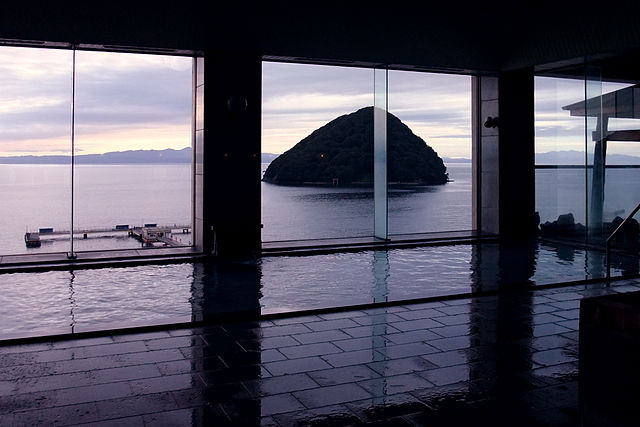
The Sacrament of Washing
Taking a bath or shower, and visualizing the gunk leaving our bodies down the drain and away can be a spiritual practice. Many traditions urge sacred bathing. (Besides, in lockdown we can let ourselves get pretty grody.)
A Hindu turns if possible to Mother Ganges, Catholics visit holy sites dedicated to manifestations of Mary, it’s a lovely Japanese custom to visit an onsen, and followers of Shinto and plenty of non-religious people as well find hot springs, saunas and mineral pools to be restorative.
The Sacrament of Blessing
Seven words make up a lovely blessing some of my friends use often: “Bless this day and those I serve”. If I live by myself, I’m one of the people I serve. Let’s remember to bless ourselves. We need it. Pets or other animals, and houseplants, may rely on me for food and shelter and affection, so I can add them to those I bless. Outward to friends, neighbors …
What else can I bless? Asking that question thoughtfully can open many doors.
The Sacrament of Prayer
Prayer has long been a potent sacrament in the lives of many. The words and sounds can help restore our connections to spirit, partly because they’ve done so in the past. Like a spiritual battery, they’ve accumulated a charge. We jump-start more often than we realize.
The words of the Druid’s Prayer, or of a song or poem not “officially recognized” as a prayer may turn out to be your prayer. Sometimes we need something even more compact — just a few words from a longer form, a sacred name, a whisper — or a shout. If you’re alone, that’s easier. Try it, and note the power of prayer at the top of our lungs.
Grant, O Spirit, your protection …
One simple prayer available to everyone is simply breathing. We hear in the Gospel of John: “The wind blows wherever it wants. Just as you can hear the wind but can’t tell where it comes from or where it is going, so you can’t explain how people are born of the Spirit”. Experiencing the spirit in our own breathing is a doorway for some. It’s there — sacrament in the life action of our bodies.You may see in several of the above sacraments how touch has managed to find its way to us. Hearing involves sound waves touching my ears, bathing makes me intimate with water, and so on.
The Sacrament of Cooking and Eating
Some of our most common acts are sacramental in potential, and we can activate them by according them the respect they’ve earned in our lives. Food and drink keep these bodies alive and moving. Preparing food has often been a holy activity, at least around our holy-days, if not every day. Combine eating with blessing, as many do, and I can heighten my awareness of spirit-in-substance. A blessing on the incarnate spirit which sustains us.
The Sacrament of the Image and Object
Photographs, statues, objects collected from a walk or a ritual or as gifts from another — all these things bear a power to tend us. They can evoke memory, their physical substance is imbued with all the times we’ve handled them before (touch seeks us out, once again!), and they have a power to shift our attention to specific places and times.
The Sacrament of Ritual
I talk a lot about ritual here, because we all do ritual constantly. Each of the sacraments above is a ritual, or has ritual elements in it. Part of the sacrament of ritual is to recognize how many things can become rituals — and more importantly, how much of their already-existent ritual power helps shape and influence and move our lives.
A friend of mine makes a ritual out of starting to write. He lights a candle, or some incense, and invites the muse of the moment to his writing project. A few other friends explore the meditative and sacramental power that wood-carving and weaving and knitting have, as well as enjoying their concrete manifestation, resulting in useful objects and garments.
May you find and feed your lives with sacraments that mean and matter to you.
/|\ /|\ /|\
 Or what about a shift of terminology? Would that help at all with any of these themes? If instead of “Baptisms of the Elements”, we called them “Elemental Sacraments”, would that easier name make a difference? Would it make it any easier to move beyond instinctive antipathies and past traumas?


 A Druid Way
