With a dramatic title like that, this post really has to deliver! But all I mean by it are the usually small ways we destroy, unmake, sabotage, undermine and discourage … ourselves.
Successful psychic attacks by others are remarkably rare. Those we work against ourselves are all too common. I can’t. I shouldn’t. I don’t. I won’t. And of course, let’s not discount the low-level psychic garbage of much contemporary media, with its insistence that it knows better than we do what the truth is about the world, its prospects, our futures in it, the roots of our safety and happiness, and so on. You can almost feel “know, dare, will, be silent” seeping out of you and spinning down the drain. “If it bleeds, it leads” may sell advertising space and draw viewers and readers, but it’s less than optimal energy to nourish ourselves with, to try to live on.
One of Best Buy’s holiday logos
The solution isn’t merely to surround ourselves with a silver shield, though that’s often a good starting visualization. Whatever comes at you that you don’t want or need reflects off and away. Such a technique works well in traffic, in public places with a stew of emotions, like airports, bus stations — and any Black Friday shopping you’re daredevil enough to attempt. You can read the mindset already in place with advertising from sources like Best Buy and AARP that proclaim “Win the Holidays.” Can we make this season any more stressful?! Yes, but we don’t have to. This too is a choice we make.
And the desire I’ve witnessed in myself and many others from time to time, to retreat, withdraw, barricade the gates, is all too hobbit-like in its naivete. “The wide world is all about you,” Gandalf reminds Frodo. “You can fence yourselves in, but you cannot for ever fence it out.” The Survivalist mentality is understandable, but wrong-headed. What to do?
elemental laundry magic — water, earth, air, fire
Sometimes the best magic there is to practice a simple shift of attention. Instead of someone else controlling what I will think and image and focus on, I can choose, if I wish. We all surrender this power of choice much too often, and daily. Does any advertizer, for instance, really have my best interests at heart?! But love purifies the market of the heart.
One of the most soothing of day-to-day tasks for me is laundry, especially when I can hang it outdoors and it comes in later, dry and sun-spiced — for free.
Laundry?, you say, more than a little outraged, perhaps. Consider the sly admonition of the Tao Te Ching, chap. 8:
The highest good is like water. Water gives life to the ten thousand things and does not strive. It flows in places men reject and so is like the Tao. In dwelling, be close to the land. In meditation, go deep in the heart. In dealing with others, be gentle and kind. In speech, be true. In ruling, be just. In business, be competent. In action, watch the timing. No fight: No blame.
We reject what can be most helpful, because it is simple. It doesn’t appeal to our vanity, to our sense that our problems must be large and important, because we are, so we may dismiss it.
Some of these recent sunny November days have seen our backyard with laundry magic at work, bowing in a cool breeze. But even the drying racks near the woodstove work their own charm. Elemental powers, I have summoned you, and you have served me well. I thank you for your gifts of earth, water, air and fire. Both the laundry basket and my heart come away lighter, cleaner. Hail, and farewell.
Such daily magic has more power than we suspect. I smile even as I write about this, and you may too, scoffing at my innocence or simple-mindedness. But in fact simplicity can be another most potent magic. The clear, simple task, with its attainable objective, is one key to using energy well. Breaking down more complex challenges into simpler tasks is good practice, as any successful efficiency expert, organizational consultant, psychologist, trainer, businessperson, housekeeper — and magician — knows.
When we reclaim such small spaces for ourselves, we witness small successes. Of such small successes and satisfactions is a good day built, and then a week, a month, a life. I don’t need to “win” any holiday. The spaces for love and celebration are always open for us, gifts we can then give to ourselves and each other, possibilities to reclaim in the small but cumulative and thereby powerful ways that magic usually works. To end on a final Tolkienian note and paraphrase Gildor Inglorion’s words to Frodo, “Joy (like courage) is found in unlikely places.”
An excursus on tradition, culture and purpose follows. If you’re not interested and you just want to pick up the story of Gawain and his deadly appointment where the last post left off, scroll down to the first break below marked by the triple awen /|\.
You’re still here? Part of my intent in this series of posts about Arthur and Gawain is to begin examining a native source of wisdom that’s not wholly Celtic in origin. The story of Taliesin from the Welsh tradition has been fruitfully mined by many modern Druid orders. But we can also seek more widely and find fertile sources of insight, wisdom and technique within other English language traditions, demonstrating how much of our lore, Arthurian and other, truly is a marvelous mix of multi-cultural magic. And this holds true with many cultural and linguistic traditions — what we need are explorers to locate and bring these half-forgotten treasures back to wider awareness. The sense of restlessness, rootlessness and apathy that beleaguers many people today has both real causes and real solutions.
In other words, as vital and growing traditions like Wicca and Druidry already have demonstrated, we don’t need to focus our spiritual journey only on Shamballa, or join an ashram in India, or sit under a Bo tree in meditation in a quest for wisdom and enlightenment beyond the physical and financial means of most people outside those traditions. These are all fine and worthy resources — but closer ones have also always stood lurking shadow-like on the edge of our vision.
Of course, it’s not a case of either-or, but both-and. The cultural garb that wisdom occupies, and the training any one culture gives in moving within that specific garb, properly belong to that culture. Wearing that cultural garb, to continue the metaphor, when I’m not entitled to it by participation in that culture, is indeed a kind of impostership. That’s cultural (mis)appropriation.
Tlingit totem and community house
But the wisdom which the cultural garb clothes is the common inheritance of all of humanity. I can’t rightly erect a Tlingit totem in my living room or front yard, to cite a single example, and claim to be a Tlingit shaman empowered to pass on Tlingit cultural forms to cash-flush weekenders looking for a quick psychological pick-me-up in a workshop — or even a serious course of study. But shamanism itself is a worldwide phenomenon with common features across cultures, and it can be learned without raiding anyone’s cultural heritage.
And so stories like Sir Gawain and the Green Knight offer immediate hints of ways that Druidic and Christian themes, images, precepts and practices may be fruitfully explored and adapted to modern life without injury to or theft from either tradition. Even questions like “But can you be both Christian and Druid?” are found to dissolve in actual practice, when each way illuminates the other. It’s typically those on the outside of a practice who ask that question, after all. We’d rather justify our opinions to others than genuinely test their validity for ourselves.
It betrays an unseemly and groundless fear of a universe permeated with the divine, if we shy from investigating any of its corners and crannies. Certainly such fears have no place in modern Paganism, nor should they find any home in Christianity either. For the latter tradition, to put the matter in explicit Christian and Biblical language, such fears betray a painful lack of faith in an all-powerful God who declared his original creation “good,” whose Son incarnates out of love of that creation in order to redeem all things, and whose divine will is sovereign.
The fact that whole traditions like Christianity have become toxic for many people is actually a most helpful guide when we come to look at Celtic Christianity, and particularly at movements like the Gnostic Celtic Church, which gently points out that the practice of sacramental nature spirituality “can be pursued apart from the various pathologies of political religion” (article at GCC link above) and serve all life, not just an in-group.
Beyond such immediate hints, then, deeper study, practice and contemplation of stories like Sir Gawain and the Green Knight reveal a wealth of images, lessons, techniques and perspectives useful not just to “those on a spiritual path” but to anyone alive today.
All right — back to our regularly scheduled program.
/|\ /|\ /|\
Over the next three days at Bertilak’s Castle, Dec. 29th, 30th and 31st, Gawain faces a perfect triad of temptation, reward and opportunity. It’s just hard for him (and us) to tell which is which. On each of the three days Bertilak returns from the hunt, he has different game to offer his guest, and though his wife plays the same game of flirtation with Gawain while her lord is away, she skilfully ratchets up the sexual tension each time. She speaks:
And right here you lie. And we are left all alone,
with my husband and his huntsman away in the hills
and the servants snoring and my maids asleep
and the door to this bedroom barred with a bolt.
She should know — she’s the one who barred it behind her!
I have in my house an honored guest
so I’ll take my time; I’ll be talking to him for a while.
You’re free to have my all,
do with me what you will.
I’ll come just as you call
and swear to serve your will.
(Armitage translation, pg. 103)
The Middle English of those last four lines is even more explicit: ” Ye ar(e) welcum to my cors (body)”!
The delicate challenge of the situation, as the original audience to this poem knew well, is one founded in the Medieval traditions of Courtly Love: if Gawain is to uphold his reputation and preserve both his own honor and the Lady’s, he must do what she asks, while at the same time not giving in to the temptation she clearly offers him.
Toward the end, before they negotiate things to just a kiss, she even scolds him: you can’t be the famous Gawain, she exclaims, or you would have acted long before now and taken what I offered.
Well, then, he replies, “I schal kysse at your comaundement … so pleade it no more.” Thus he succeeds this first time in walking a very fine line. His good name and the Lady’s still secure, he bounds up from bed, dresses and dashes off to Mass.
Immediately the scene shifts to the hunt, with explicit details over some 40 lines of the gutting, butchering and feeding of the innards to the dogs, with the dressed carcass at length hauled back to the Castle. The first day the hunters bring back deer — a haul of venison the biggest Gawain’s “seen in seven years.” And in exchange he gives Bertilak a kiss — all he’s had from the Lady. They renew their pact.
Day Two moves things along, with the hunt in pursuit of a boar this time, and the same graphic description of flaying the carcass and butchering it. “Back at the Castle” in Gawain’s chamber, the lovely Lady makes it clear to Gawain that he should take from her what he wants and what she’s already offered, and if he’s rebuffed, why then he’s certainly got the youthful strength to take by force.
But that’s not the custom in my land, replies Gawain, nor the practice for “each gift that is geven not with good wylle.” The Lady chides him again: For somebody so famous, lord, can it be you’re truly ignorant of love, or don’t know how to take full advantage of a lady who’s shown she’s interested?
But at last they bargain things down to two kisses this time, and so once again Gawain barely escapes with reputation and honor intact.
That evening, on Bertilak’s return, Gawain delivers the two kisses according to their pact, which they again renew. He resists all teasing inquiries about the how’s and who’s of the kisses.
The Lady, meanwhile, is still so intent on Gawain, “so loving … with stolen glances and secret smiles,/ that it muddled his mind and sent him half mad …” (Armitage, pg. 131). Somehow he keeps his composure — it’s a near thing — and does not turn from her rudely for his own self-preservation, but courteously engages her all evening.
Edmund Leighton’s God Speed!
Bertilak for his part delights in his guest’s honor — so far. Gawain begs to leave early the next morning to be sure of arriving on time, but Bertilak will hear none of it. He declares to his guest: You’ll reach the Chapel well before dawn in the light of the first day of the New Year, so don’t concern yourself with that. “For I have fraysted [tested] you twice, and faythful I fynd thee. Now ‘third time throw best,’ think in the morn./ Make we merry while we may!” and they drink and at length agree to fulfill their original pact through the third day. If you’re thinking at this point that Bertilak has a pretty good idea what goes on at home while he’s out on his winter hunts — well, you’re not wrong!
It’s Day Three, the third hunt takes Bertilak and company off on the trail of a fox, and we know from prior experience with threes and with past stories that this third time will be the true test.
And so it is. The Lady certainly pulls out all the stops. The next morning she arrives at Gawain’s chamber scantily clothed, her shoulders and back both bare, the cut of her shimmering robe scarcely covering her breasts, clusters of tiny gems sparkling in the tresses of her hair. As before, she bars the door from inside, and in Gawain “a passionate heat takes hold in his heart” (Armitage, pg. 137). The Lady lowers herself onto him and kisses him, and when he doesn’t take things further, berates him for not loving her now that things have gone so far between them. “Telle me that now trwely,” she insists: there must be somebody else. Another lady, perhaps?
No! says Gawain. No one!
“That is a worde,” answers the Lady, “that worst is of alle.” You reject me for no other reason than myself. But surely then you have some gift, some token to give me, to ease the ache of memory when I recall you and our meeting?
Alas, Gawain replies, on this journey I brought nothing to such an unknown land that would serve. The best I could do would be one of my gloves.
Well, says the lovely Lady, “though I have naught of yours, yet shall you have of mine.”
First she offers a ring, which he refuses. And then a green silk girdle, which he treats likewise — until she reveals something of its worth:
“And now he sends back my silk,” the lady responded,
“so simple in itself, or so it appears,
so little and unlikely, worth nothing, or less.”
But if he only knew its value: “the body which keeps it
buckled robustly around him,
will be safe against those who seek to strike him
against any trickery in the world.
Gawain finally relents at that, hoping, we understand, to up his chances at surviving the axe-blow tomorrow. Then tell my lord nothing, the Lady entreats him. Gawain consents to this as well, and
His thanks are heartfelt then.
No sooner can he say
how much it matters, when
three kisses come his way.
(Armitage, pgs. 144-5)
Bertilak returns, receives from Gawain the three kisses (and nothing else), and laments he has only a stinking fox-hide to offer in return. They feast and drink again, the lord celebrates Gawain’s perfect gift of three kisses, agrees to offer him a guide to the Chapel in the morning, and they part to their bed-chambers.
The Medieval poet closes this third of four “fitts” or sections of his poem like this:
If Gawain sleeps soundly or not, I can’t say.
For he had muche in the morn to mind, if he would, in thought.
Let him lie there stille,
he has near what he sought;
If you will a while be stylle,
I schall telle you how they wrought.
In the previous post, in the tradition of cliff-hangers everywhere, we left Gawain in Camelot, no doubt in a daze. He’s just accepted and accomplished the first half of the challenge of the beheading game from the Green Knight.
The unseely green holiday visitor to the fabled court of Arthur has, in turn, taken Gawain’s best blow and withstood it. He both lost his head and retrieved it, apparently none the worse for wear. Clearly he’s magical, or divine (when did those two split, to our great loss?), though the poet makes no mention of this. No need, when the deed speaks for itself.
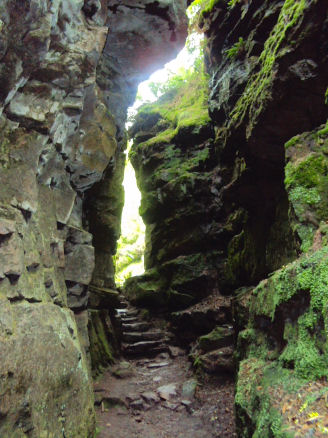
“Lud’s Church,” Staffordshire, UK — one possible candidate for the “Green Chapel”
And in a year and a day — an interval both long enough and one that will spin by all too quickly — Gawain must present himself at the Green Chapel, somewhere vaguely to the north of Camelot, to fulfill the second half of the challenge game. This time it’s his neck that goes under the axe. “Come, or be called coward forever!” The Green Knight’s words still ring in his memory.
And the devil of it all is that Gawain’s clearly asked for this. Nobody else he can blame. He rose from among the gathered court to seize both challenge and axe from the hands of his uncle the king. Clearly both men thought the challenge would end then and there, with the foolish visitor’s head bouncing across the floor. But you never know for sure when magic will intervene, nor how it will shape what comes next.
So the Medieval poet’s got the “death” part of the title already in play. We all know we’ll die, somehow, someday. As for sex, so far we can find plenty in the lively and erotic holiday atmosphere of the court, lords and ladies celebrating together in a two-week-long revel, food and drink in abundance. A Christian holiday, indeed, but not one that excludes the secular delights of feasting and dancing, flirtation and dalliance. For Gawain, there’s added pleasure in his seat of honor beside the lovely Guinevere, Queen and chivalric ideal.
But wait, as the poet might have said, there’s more and better to come.
/|\ /|\ /|\
A brief magical interlude here. Alert to what we can learn from the “wisdome of olde bookes,” we can consider a portion of what this story may have to teach us. From one point of view, Arthur has set up magical intentions and chosen the moment. After all, the time is right for them, with all the swirl of energies around the winter solstice and new year.
The king, the male half of the royal spiritual self, will not eat until all are served, opening his heart with generosity and fellow-feeling. All parts of our own kingdoms benefit from this. And he likewise won’t eat till either a marvel manifests or — another kind of marvel — some challenge or “game” presents itself. It’s surprising what we may chance to discover and experience, when we choose to look with such preparation. And the Queen? She is a chess-piece in the larger game, but also the most powerful figure, once the pawns and knights move out of her way.
/|\ /|\ /|\
A year and a day lasts long enough to permit some really magnificent bouts of denial and procrastination. As a period of magical testing, it can sort the committed from the undisciplined, the patient from the reckless.
At Michaelmas, late September, the poet tells us that the moon itself signals to Gawain that his appointment draws near. Yet a month later, on All Saints, the Christian Samhain, Gawain lingers still at the court, reluctant to depart. Finally, after more feasting, and loads of unsolicited advice from other knights at court, Gawain presents himself to Arthur and asks for permission to go: “Now, liege lord of my lyfe, leave I you ask.”
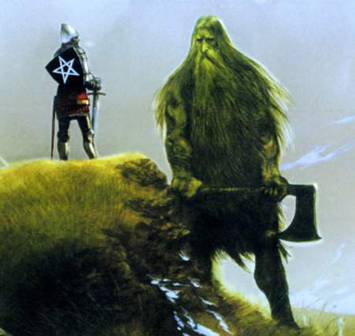
Here in a modern conception, the Green Knight is clearly a giant. Note Gawain’s shield adorned with pentacle/pentagram.
And the poet moves on to describe Gawain’s apparel and weaponry in splendid detail, focusing for some 30 lines on a careful exposition of the meaning of the pentangle on Gawain’s shield, though he concedes it “must tarry him in his telling.”
This passage alone, in a poem plainly dating from the 1400s, should at least temper the silly hubbub that arises every year around Halloween from certain quarters about Satanists and their evil pentagrams or pentacles. But of course, it won’t.
Here, centuries before Anton LaVey with his Church of Satan was even a twinkle in his ancestors’ eyes, the pentagram is clearly a Christian symbol. Thus, among other things, the five points of this “pure pentaungel” signify here “the fyve woundes that Cryst caught on the cross, as the Creed telles.” As a holy symbol of power, it’s been around for much longer than Christianity, of course, and will be long after Christianity is a legend and other faiths overtake it. And it will continue to acquire and shed secondary associations that may help or hinder any seeker from recognizing the pentagram as nothing less, and nothing more, than a symbol of spiritual reality beyond human opinion and (mis)perception.
Off Gawain goes on his faithful steed Gringolet, through the land of Logres — a Welsh word for England, and famous over centuries in legend and stories both old and more recent, such as C. S. Lewis’s Narnia and Susan Cooper’s Over Sea, Under Stone.
After some eight weeks of winter travel north — no modern M5 and M6 motorways for him to gallop along — Gawain arrives, weary and weather-stained, by chance as it seems on Christmas Eve, at a noble castle whose inhabitants welcome him warmly.
Three persons hold his particular regard — the castle’s lord Bertilak, an obvious focus, but also two noble women, one ancient, who notably sits at the table in the seat of highest honor, and the young and lovely lady of the lord — so fair in “her face, her flesh, her complexion, her quality, her bearing, her body, more glorious than Guinevere, or so Gawain thought” (Armitage translation, pg. 85).
After Mass they “feast and dance” for three days, and on the 27th of December, St. John’s Day, other guests depart, and Gawain, explaining his purpose to Bertilak in detail, announces he must also set out on the final leg of his journey to find the mysterious Green Chapel, and fulfill his pledge with the strange knight.
But there’s no need, exclaims the lord, laughing. “Ye schal be in your bed at thyne ease” till “the first of the yere.” As for the “grene chapayle … it is not two miles hence.”
Now let’s attend to the time till then, Bertilak continues. You promised to obey my will here, and you may linger in bed till morning Mass, then pass the day with my lovely wife, while I’m off hunting away from the castle. But let’s agree to a game of exchange. Whatever I win while I’m out, I’ll give you on my return, and just so, you must give me whatever you receive.
Agreed! says Gawain, always — we’re beginning to understand — up for a game or challenge, however much he may come to regret it later.
And so they each raise a glass together to drink on it to seal their pact.
Now at his ease after weary weeks of travel, Gawain has already taken much comfort in the lovely lady, enjoying her conversation, and sitting head to head sharing confidences. It’s innocent up to this point. Courtly love shows here at its best — no “foulness,” the poem emphasizes, attaches itself either to their words or manner. Reputations and honor have held them both to clear boundaries. But they do grow increasingly intimate and relaxed under the influence of youth, proximity, holiday revels, and the easy hand with which Bertilak holds his realm.
From the original manuscript: the Lady and Gawain
Bertilak leaves with the hunt early next morning, and Gawain, still abed, hears “a lyttel din at his door.” So he “heaves up his hed out of the clothes. A corner of the curtain he caught up a lyttel, and waits warily thitherward what it be might. It was the lady, loveliest to beholde, that drew the door after her dernly [secretly] and stille.” Less innocent now … and definitely more interesting!
The story will continue in Part Three.
/|\ /|\ /|\
Images: the Sir Gawain manuscript, formally named MS Cotton Nero A X, located at the British Museum; Lud’s Church, Gradbach, Staffordshire, UK — one of the possible sites of the poem’s “Green Chapel”; Gawain, shield and Knight; The Lady and Gawain, from MS Cotton Nero A X
*For the curious, the first line of the mauscript in the top image above reads: “Sithen [since] the s(i)ege and the assau(l)t was sesed [ceased] at Troye …” The anonymous poet opens by giving his poem a Classical backstory.
Armitage, Simon. Sir Gawain and the Green Knight. New York: W. W. Norton and Company, 2007.
Like their kindred words in the other Celtic tongues, the syllables* of this Cornish saying still echo, telling of the “Once and Future King.” They assert a living archetype of a king born in fulfillment of prophecy, a ruler recognized and granted kingship by the Lady of the Lake, a leader who struggles, fights and dies for his people. The king is the land.
Arthur from the Matthews’ deck
Nyns yu marow Arthur myghtern. “He is not dead, king Arthur,” the story continues, but sleeps, and will wake at his country’s direst need, and return. The king is the land.
Arthurian tarot decks like John and Caitlin Matthews’ Hallowquest, Anna-Marie Ferguson’s Legend and Stephanie and Philip Carr-Gomm’s Druidcraft packs often depict the archetypal king as card 4, the Emperor. This is Arthur as anointed ruler, secure in his kingship, enthroned, crowned and robed in power.
But surely what moves us more is not merely this static image, forceful though it can be. The young Arthur, ignorant of his destiny, is also the seeker, the Fool, the first card in the deck, a numerical 0. In Ferguson’s Legend deck he is Percivale, the callow and naive youth. With both Guinevere (Welsh Gwenhwyfar, “White Shadow”) and his own sister Morgan (with several other variants of her name) he is one half of the Lovers. And at least in the Matthews’ conception, he is the Wounded King, and also the Sleeping Lord.
The progression, as in most tarot decks, is the journey of the self toward fulfillment, wisdom, self-awareness.
As a tool for Druidic meditation and ritual, the Arthurian mythos offers rich and profound material. Map our lives onto such a mythic pattern, and we can animate energies to manifest the next step on our spiritual journey. At every point we spiral. We can look at all the steps, all the places on the curves and whorls of the spiral, as potentials for us — right now. Not later. Not after we do or learn or master or win X. Now. The king who will be, but sleeps, is a potential which can guide the questing boy who will be — and who also already has been — king. What might the king say to his younger self? What gift might our older selves pass to us right now, insight or wisdom or counsel we need as we grapple with problems, as it can often feel, in the dark?
So many traditions around our planet speak in their own ways of time and space as illusions. This need not mean they are not real, but rather that we need not accept our agreement with an illusion as the last and defining word about our lives. They don’t have to be the only reality. By playing a game with time, we can slip into past or future through memory and daydream, to the point of no longer “being here” but “someplace else” instead. And we’ve all experienced this.
For we do this effortlessly, ever since childhood, a natural talent, a birthright, a skill we keep all our lives, unless it’s been largely chased away and beaten out of us by our culture, teachers, parents, our own self-limitation, habits of thought, and so on. “Head in the clouds, dreamer, impractical, unfocused”: words so many of us may have seen in school reports, job assessments, personal evaluations. Or maybe we suffer from the opposite pole, and more and more of the lightness and joy has been leached from our days through routine, day to day cares, deadlines and installments and bills and mortgages and the nightmarish hope of someday “catching up” or “getting ahead” or “arriving.” Always, it can seem, one pole or the other. But polarized things gather power. That’s why an illusion can grab and hold us. But that’s also why change and growth and exploration are also — always — possibilities. Poles hold the energy for entrapment, but also for transformation.
The Sleeping Lord (form outlined in the hillside under the hawk)
These images and this millennium-old mythos provide a wealth of meditation seeds, portals to discovery, and material for ritual that Arthurian orders of ritual and magic explore, but which are also perfect for solitary work, too.
Arthur myghtern a ve hag a vyth can be a contemplation seed (it’s one of mine), a cue to open the imagination to possibility. (I use it as a tool, a charm, a spell, a mantra of magical power. Pair it with an image, an object, an intention — intention being the flame which, I find, lights everything up.)
And if I’m willing to step across one more boundary, ritually priming myself with a “For behold: now am I ____ !” I can explore all the characters in the Arthurian realm. Taliesin-like, I can be the Green Knight, invulnerable to mortal blows, and Morgan and Merlin, Nimue and Mordred, too. What does it feel like to die as you kill your uncle-father (Shakespeare’s Hamlet knows!) in fulfillment of a prophecy from a time before your birth? What does it mean to lie asleep, waiting to fulfill a royal destiny? What part of me sleeps right now, that I can rouse if I choose? Or like Ygraine, Arthur’s mother, to carry an unborn child in my belly, a king, gestating and brooding and nourishing new and royal life from within? Or what can I see as Merlin in his cave or tower, looking up and down time itself, living backward as in T. H White’s version of the Arthurian boyhood story, The Sword in The Stone?
Then to close the rite, the meditation: “And now have I returned.” A simple formula, but helpful, to ground the meditation, to signal a shift of reality. (Return is as important as departure.) Open your eyes, and record what you experienced. In this way, over days and weeks, you build an increasingly persuasive document that can help loosen the hold of the illusion of this time, this place. Each time I sit to meditate, the pages telling of my previous journeys in front of me, the grip of illusion eases. For these two things, time and space, can be potential gifts, or they can remain prison walls. They’re a choice, if I choose them, rather than a given, if I merely accept them.
The Seeker from Matthews’ deck. Before us all lies the Rainbow Path.
Figures as diverse as Henry Ford and physicist John Wheeler get credit for versions of the saying “Time is what keeps everything from happening at once.” It’s a way of ordering experience, making it intelligible to human consciousness. And so is space, which — to follow through on the whimsically powerful definition and construct its corollary — “keeps everything from happening here.”
Starting small, with the trick, if you will, of imaginative magic, will begin to unfasten the iron clasps around consciousness. It’s just one way, of course. Traditions in and outside of a whole range of religions and spiritual paths offer many tools and strategies for accomplishing this change, if we wish it. But these particular images and this story have spoken for a thousand years to many people, and the Arthurian drama that can be a mirror and key to our mortal and spiritual lives shows little sign of a diminishment of its power to move and inspire — and transform. Sleeper, whispers a whole nation of people inside each of us that we have been and are being today and will be someday, a multitude of selves. Sleeper, awaken to your crown and to your destiny.
/|\ /|\ /|\
Images: Matthews’ Arthur, card 4; Matthews Sleeping Lord; Matthews’ Seeker (Fool in other decks) with three choughs (a raven-like bird) overhead.
*Note on pronunciation: The -gh- of the Cornish word myghtern “king” is essentially the same sound as in German “Bach” and close to English “h” in “aha!”: mikh-tayrn comes reasonably close for ritual purposes: AHR-thoor MIKH-tayrn ah VEH hahg ah VEETH.
Will Self’s June ’14 article in The Guardian (“Has English Heritage Ruined Stonehenge?“) has recently been (re)making the rounds on Facebook groups I frequent, and the author’s lively reportage offers generous “blog-bites” to quote (starting with that title), so it’s ready grist for the mill of A Druid Way.
In fact, if you just jump straight to his article, read it and — in the way of our Net-lives, surf on to the Next Interesting Thing (a NIT to pick, if there ever was one) — if you neglect to return here, I’ll not only not be hurt but will rest content that I’ve served one of my purposes.
“Selfies with Trilithons”: Will Self visits Stonehenge. Image Mike Pitts, The Guardian.com
I admit to a fondness for titles that use questions.They successfully play on our inherent OCD, setting themselves up like an itch begging to be scratched. They’re Zen koans for the non-Zen types among us. You read them to find out the answer, or at least what the author thinks is the answer, and so you relieve the itch, even if the particular scratch the article provides ultimately irritates you further.
New, worse itch? No problem. The latest diet, scandal, must-see series, sex technique, disaster or investment opportunity all await you, just a click away, and many will use questions to draw you in. The “Top 10” list relies on a similar strategy: human experience boiled down to a concentrate. Just add water! Maybe at best our lives are indeed “selfies with trilithons” and everything else slips downhill from there. Or so a great part of the Western world’s surface culture would have you believe.
The article byline asks, “The summer solstice, King Arthur, the Holy Grail … Stonehenge is supposed to be a site of myths and mystery. But with timed tickets and a £27m visitor centre, does it herald a rampant commercialisation of our heritage?”
You’re being wholly reasonable if you guess Self’s answer is “yes.”
English Heritage earns decidedly mixed reviews here. It’s the U.K. organization that oversees such sites as Stonehenge, and for Self it serves a very mixed role as an institution whose “very raison d’etre consists in preventing the childish public from chipping away at stuff they don’t understand much – beyond the bare fact that it’s very old – so they can cart off a free souvenir, rather than shelling out for a Stonehenge snow globe in the superbly appointed new gift shop.”
“Stonehenge snow globe” works fine as an alternative title for this post.
Self’s wit attacks a range of easy targets besides English Heritage. It’s little surprise Druidry comes in for a smackdown, too. “As inventions of bogus deep-time traditions go, British druidism has to be one of the most enduringly successful.” Except that unlike Stonehenge, all modern forms of Druidry that expect to be taken seriously assert precisely the opposite. They’re comparatively new on the scene, and they dispense with bogusness. They’re no older than the Druid revival of the past few centuries because that’s their real origin story — and this revival coincides point-for-point with rediscovering and wondering about and valuing things like Stonehenge and Avebury and Newgrange. You know — those Neolithic things that have always lurked in the neighborhood and have been with us for a very long time. We just never paid them much attention.
Until we did.
[Even Reconstructionist Pagan groups — who point with some justifiable pride at archaeological and other scholarly evidence to back up their practices and who sometimes sniff disdainfully at groups like OBOD, which draw on both legend and myth and on Druid Revival writings — benefit in the end from the scientific investigations ultimately launched by those same enthusiasms and, yes, those initial misconceptions of the Revival.]
We like our monuments and religions old, though we want our gossip and news “live, local and late-breaking” and our technology to be version X.X + 1 — whatever’s one higher than last week’s version (unless it’s Windows). “Selfie with a trilithon” pretty much sums it up.
But if modern Druids are the philosophical and spiritual equivalent of “the childish public … chipping away at stuff they don’t understand much – beyond the bare fact that it’s very old,” then what is it that we “cart off” from it? A reflected glory from old things? A fine wild-goose-chase for the ego? The illusion of connection with something larger and more lasting? (“All this and more for twelve easy payments of just $39/month! Our representatives are standing by for your call now!”)
These are the surface manifestations of vital and unquenchable hungers that have wakened in large numbers of people, however much a passel of hucksters manages to package and market empty and pricey facsimiles of them. Self does concede that “in important ways the [P]agans and the archaeologists retain a common cause: both groups, after all, venerate the monument, even if it’s in radically different ways.”
Self also contrasts Stonehenge at present with ancient sites:
Midhowe broch
… in the Orkney islands, where I lived over the winter of 1993-4 – I’ve returned many times since – Neolithic remains can seem more significant than the contemporary built environment. A couple of miles from the house I stayed in on the island of Rousay, there’s the ruin of an iron age broch, or fortified dwelling, and beyond this there’s a Neolithic chamber tomb, Midhowe, that’s dated to the third millennium BCE. Midhowe is a large and complex structure, although by no means as obviously important as Stonehenge. It was fully excavated in the 1930s and 40s by Walter Grant (of the distilling family) who owned the Trumland estate on Rousay, which included this site and several other important tombs. Since the roof of Midhowe has long since gone, Grant covered up the exposed stonework with hangar-like structure, but the curious thing is that this doesn’t detract at all from its powerful and brooding atmosphere.
During my times in Orkney I’ve visited a great many of the Neolithic sites. I’ve sat in tombs, laid in them, dreamed in them, and tried to grasp the sort of mindset – whether individual or collective – that’s implied by buildings that took shape over thousands of years, and were built by people with life-spans far shorter than our own. I have felt the wonder – felt it most of all, because at Midhowe there is hardly any of the furniture and signage associated with the modern tourist attraction: no ticket office, no custodian, and only discreet information boards. Apart from in high season, you can visit Midhowe and most of the other great Orkney sites with the confident expectation that you’ll see scarcely another human being.
If, as Self notes, “archaeologists seem fairly convinced that implicit in the Stonehenge’s design is some form of ancestor worship; for us there can be no doubt: we revere the idea of their reverence, we are engaged in a degraded form of meta‑ancestor worship,” then we can also see, in our longing to (re)connect, a “degraded” form of magic. “I don’t want anything to do with magic,” we often say, as we unwittingly absorb endless hours of advertising and political language which constantly attempt to manipulate our desires and emotions with crude magical techniques. We let ourselves be “magicked” but refuse to learn how to practice any “defense against the Dark Arts” — or learn how to do magic well and for our benefit rather than someone else’s.
“No magic — that’s for kids,” we say, as our lives propel us willy-nilly along a path of magical initiation tailor-made for us out of the circumstances of our lives, our likes and dislikes, and our choices. Fate, or freedom? Yes! “When you come to a fork in the road, take it,” as Yogi Berra is reputed to have said.
“I don’t believe in magic,” we say, all the while daydreaming and planning, imagining and remembering — magical techniques in embryo, every one of them. Christian, atheist, Muslim, Pagan, SBNR, or “those who just don’t roll that way” — we all make our ways through these mortal lives which are also lives of manifestation and transformation, the essence of magic.
Author and practicing magician Josephine McCarthy, whose book “Magic of the North Gate” I reviewed here, notes that people react variously to the relative powerlessness that life in Western culture urges onto so many. But often a (paradoxically) powerful personal experience, an abrupt break with the past or the every-day world, sets some of them on a journey. In the first book of her Magical Knowledge series, McCarthy observes:
When a person chooses not to play a part in that circus, they look elsewhere. Some people begin … in search of their own power, some begin in search of knowledge, and some approach that path from a sense of deep instinct.
The beginning of the path … is very much about personal development, be it spiritual, intellectual or self-determination … This is the first rung of the ladder and has many dead ends woven into it … designed to trap and teach them a lesson that is needful for their development … The ‘dead ends’ … are often related to our relationship to power, glamour and ego. We all go through it in one form or another and most climb out of it with a very red face, ready to move on, lesson well learned. There is nothing wrong in making mistakes and doing silly things, it is all part of the learning process. The first rung teaches us about ourselves, our weaknesses and strengths, our true desires and fears, and the real extent of our ability to be honest with ourselves. Remember the words over the door to the temple: Man, know thyself.* The threshold of the temple must be crossed with the intention to be willing to look in the mirror with an open mind and see what is really there. (McCarthy, Magical Knowledge: Book 1, pgs. 30-31)
In the end you cannot study “men,” as C. S. Lewis once observed. “You can only get to know them, which is quite a different thing.” And current trends notwithstanding, we very much need each other’s compassion along the way, given the difficulties and joys of life. That’s an act of High Magic. Given how we all will face death, it’s fair to say we also deserve that compassion from each other. And death? Death is one more potential magical initiation.
*Translation of the sign over the Temple of Apollo in Delphi, Greece that read “gnothi seauton.” [Gno- related to English know, Latin cognitio, Greek gnosis. Seauton related to English and Greek auto- meaning “self.”]
McCarthy, Josephine. (2013). Magical Knowledge: Book 1 — Foundations. Oxford: Mandrake of Oxford.
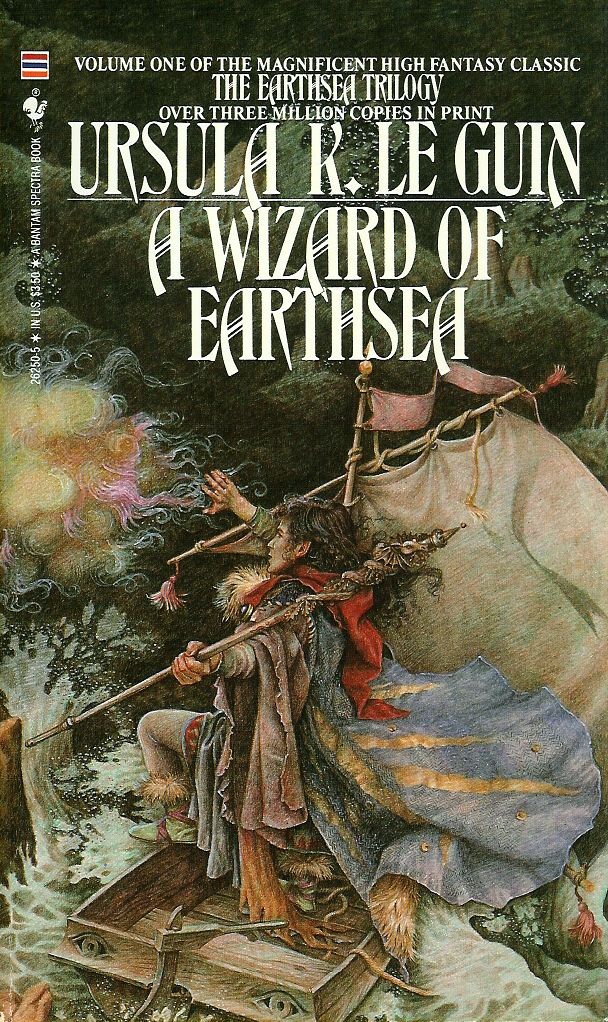
What I want to talk about here, others say well and beautifully, so this post will invoke quotation for these two potent magics. And in anticipation of what’s to come, if you haven’t given yourself the wise pleasure of reading Ursula LeGuin’s fantasy A Wizard of Earthsea, promise yourself you will soon — your library may well have its own copy or can get you one through interlibrary loan — a “magical familiar” as powerful as any in the pages of medieval grimoires.
A “young adult” fantasy, Wizard has as much to say about magical power as any book I know. If you haven’t read it, I’ve tried to avoid spoilers, and I feel I succeeded. And if you know of a book that teaches more than Wizard about these things, please send me the title!
Here’s more from J H Brennan as he continues to recount his first steps in magical training:
What actually attracted me to magic was not service but power. Nothing grandiose, of course. I had no burning ambition to rule the world or enslave hordes of beautiful women. (Well, maybe just one or two beautiful women…) But I was undoubtedly a prey to a disease which is becoming even more prevalent with the increasing complexity of modern society: a feeling of helplessness.
There are many reactions to such a feeling. Some people embrace political credos. Others get religion. A few (usually male) take to beating their spouses. I turned to magic, which seemed to me to be the ultimate antidote: for what is magic if not a secret system which promises control of damn near everything?
You will be desolate to learn it did not work. Although I spent some nine years in daily Qabalistic training and learned a great deal in the process, I remained Clark Kent: no amount of magical leaps into ritual phone boxes could turn me into Superman.
(J. H. Brennan, Foreword, The Ritual Magic Workbook, p. 4.)
If you’re honest, your first reaction to Brennan’s admission may well be, “Then why bother with magic?!”
In fact it’s a deeply legitimate response, tangled with helplessness. In so many peoples’ lives today — I’m thinking only of our own time — so much anger, pain, suffering, despair, all because we sense a deep truth about ourselves, but one that the world does much to discount, deny and distract us from: our spiritual selves are strong. LeGuin captures this wisdom at the outset, in the first chapter of A Wizard of Earthsea. Her mage hero Ged is still young, but even untrained, in a moment of crisis he draws on a profound truth about himself: “He … raged at his weakness, for he knew his strength” (A Wizard of Earthsea, Bantam Edition, 1975, p. 8).
Our detestable weakness never quite overwhelms that inner knowing, though we may well go under without a lifeline, without support, without confirmation, without some practice that sustains us, whether it has the label “spirituality” or not. Despair at not being able to get at our strength has destroyed many lives. It’s cruel, that despair. In our search for a door to the power in us that we dimly recognize, but which seems to elude us day after wretched day, we may clutch at a cause, as Brennan notes — politics, or religion, or magic — or, if we’re half-under already, at abusive behaviors that may not target others in our lives, but ourselves, though all abuse brings “collateral damage.” Which is double-talk for karma.
The appeal, the draw of power, is clear.
Ged’s teacher, a wizard named Ogion, tries to show Ged the realities he faces in a world where power can be used well or badly. After Ged encounters one who uses her power in a questionable way, and has had his own terrifying encounter with a dark spirit just before this conversation, Ogion admonishes him:
The powers she serves are not the powers I serve. I do not know her will, but I know she does not will me well. Ged, listen to me now. Have you never thought how danger must surround power as shadow does light? This sorcery is not a game we play for pleasure or for praise. Think of this: that every word, every act of our Art is said and is done either for good, or for evil. Before you speak or do, you must know the price that is to pay!
When we hear this, it’s too much. More evasion, more powerlessness! We’ve apprenticed ourselves to those who claim to know, and instead of — at last! — affording us even a littletaste of power, they scold us for not knowing anything, and set us instead to memorizing, or visualizing, or some other repetitive task that smacks of elementary school drills. (For of course that’s where we are — in school, at a beginner’s level. Again. How long this time?!)
Predictably, Ged rebels. Note what motivates his response:
Driven by his shame, Ged cried, “How am I to know these things when you teach me nothing? Since I have lived with you I have done nothing, seen nothing–”
“Now you have seen something,” said the mage. “By the door, in the darkness, when I came in.”
We seek power, yet once we commit to a magical or spiritual path, often the first thing we meet is darkness. In ourselves. Distinctly notfun.
Ged was silent.
Ogion knelt down and built the fire on the hearth and lit it, for the house was cold.
There it is in plain words — Ogion demonstrates literally the “Path of the Hearth Fire” that is one of the magical and occult paths we can take. And he does it not in words but in actions LeGuin describes — the daily tasks of an “ordinary life” that can be done with magical awareness of their place and purpose, a responsibility that we can serve while we learn — a way that actually leads to our ideal “inner Hogwarts” without fleeing from the obligations of our “mundane” world which have far more to teach us than we know.
Then still kneeling [Ogion] said in his quiet voice, “Ged, my young falcon, you are not bound to me or to my service. You did not come to me but I to you. You are very young to make this choice, but I cannot make it for you. If you wish, I will send you to Roke Island, where all high arts are taught. Any craft you undertake to learn you will learn, for your power is great. Greater even than your pride, I hope. I would keep you here with me, for what I have is what you lack, but I will not keep you against your will. Now choose …”
(A Wizard of Earthsea, Bantam Edition 1975, pgs. 23-24.)
Power greater than pride: Ogion nails the issue. As J. H. Brennan notes, implicating many of us:
The problem with arrogance is that it is a quality for which I have a sneaking admiration. Consequently it plays a greater part in my character than it really should.
(J. H. Brennan, Foreword, The Ritual Magic Workbook, p. 4.)
There’s a whole book of wisdom to be unpacked from Ogion’s words, which deserve extended meditation. I’ll zero in on the last two: “Now choose.” How can we choose before we understand the consequences of choice? As Tolkien says (in talking about translation*), “We constantly need to know more than we do.”
*translating Beowulf. In J R R Tolkien (ed. Christopher Tolkien). Beowulf: A Translation and Commentary. New York: Houghton Mifflin Harcourt, 2014, pg. 191. For much more on this that you probably could EVER want to know, come to the International Medieval Congress in Kalamazoo, MI this May 2015, where I and many others will be delivering papers on Tolkien’s translation — and in my case, on his peculiar theories of “correct style” and how this intersects with his whole legendarium and the power of imagination.
During the year and a day of your training, you’ve studied, practiced, visualized, rehearsed, memorized, subjected yourself to physical and psychological tests and disciplines and — perhaps in spite of your own better judgment of your readiness — you’ve finally been chosen as a candidate for initiation.
The day of the ceremony arrives. You may be dressed in a particular ritual way, or you may have bathed and simply be wearing new clothes. Perhaps a single jewel or ring you now wear gives you something you find yourself toying with as you wait. Probably you’ve been given specific instructions to help prepare you and assist you in entering the desired state of consciousness. Or the absence of such instructions has the same effect.
You’re nervous, too, and the other members of the group who are participating in your initiation don’t do anything to dispel that nervousness. In fact, they may be sympathetic and kind to you, and their very kindness will only increase the mystery. What am I getting myself into? you ask yourself. This and other questions are good ones to ask — though they may have no answers.
In many occult and magical orders, potential new initiates face a challenge when they enter the ritual space where their initiation will take place. “What do you seek?” goes one variant of the verbal part of the challenge. Depending on what you’ve been taught or are expecting, the rumors you’ve heard, or the nature of the particular group you’re with, the question can catch you off guard. It’s meant to.
In an intro to an online magical training document by Dolores Ashcroft-Nowicki, J. H. Brennan relates his own experiences, and doubtless those of many other people, here (see pg. 4) . He comments wryly that, not surprisingly, whywe seek is often a bigger determining factor in our experience than what.
We all do things for the best possible motives, of course; and nowhere more so than in the esoteric arts. It is relatively easy to discover that the only really acceptable excuse for magical study is embodied in the statement I desire to know in order to serve. That was the answer I was prompted to give to the ritual question during my own initiation. I dutifully gave it; and it was a lie.
What actually attracted me to magic was not service but power.
“I desire to know in order to serve” has its motivations all lined up for inspection. It’s a “good doggy” answer. It’s noble-sounding, and as the “really only acceptable excuse,” it’s comforting to give it and feel good about having such an answer to give. Because in this logical and scientific age of ours, don’t you need an excuse for something as wacky and bizarre as the study of magick — especially spelt with a -k — that doesn’t make you sound like a raving loony?!
So let’s reverse it. “I desire to serve in order to know.”
One of my teachers said this yesterday. It rang true to me because he demonstrates service in what he does, in how he listens to the people he meets, and in how he stills his own agendas and instead of what he thinks, he strives to hear what’s needed. He does these things with humility. And just as important, he models this for others, not as something he turns on to impress others and then drops once he’s “offstage,” but as something he’s continually practicing until it accompanies him, his words and his actions like a fragrance. And that makes you want to do the same.
A few months ago I encountered a goddess in contemplation. I heard her name, an epithet — Stormbringer — and a little more. The only way I can find out more about her is to serve her. Slowly I gain a clearer vision of who she is and why she is manifesting to me, now.
I can enlarge my understanding of service. I serve when I grow — a larger vision spreads its fermentation through human consciousness, because my actions emerge from what I hold in my heart and thoughts.
We serve when, rather than getting bogged down in irritation, anger and fear, we assume a playful approach to problems. Then the lightness of spiritual insight and creativity can lead us to solutions we might not have found on our own. And our playfulness, when it’s respectful of others, can help lighten their loads, too, and smile, if possible, or laugh. We serve in small things, done without thought for anything except the doing, and the doing well.
(OK. Got it. Dang — give you a soapbox and you just don’t let up, do you?)
I serve when I open myself to receive love from others , and find I must “enlarge my spirit to receive the gift,” as Ursula LeGuin describes it in her fantasy A Wizard of Earthsea.
I serve when I ask to understand the causes underlying an issue or problem in my life, not just to remove the problem so I can get on with my agenda. (Often enough, my agenda isthe problem. The apparent problem is a gift, to show me something I need to learn. Otherwise it wouldn’t keep coming back again. And again. Funny how much easier it is to see in other people’s lives.)
Difficult gift, what do you have to teach me? Can I enlarge my heart for you, too? Right now, when you come knocking again, when it’s really not convenient at all? Can I let my impatience dissolve and make my listening a gift to you?
We serve when we recognize ourselves in others, when we recognize others in ourselves, and see the Great Mystery, as the Lakota Sioux call it, the Wakan Tanka, in the eyes of those we meet every day.
We serve when we practice gratitude. A powerful practice I’ve proved to myself: keeping a gratitude journal, with daily entries. Just reading it over can jump start me out of depression and back into engaging my life. Gratitude grows and spreads to others its divine infection.
And so, in serving, what do I know that I didn’t before? Has knowing become less important, and service more?
It’s the end of the year, and like you may be, I’m taking a look back. If A Druid Way inspires or helps or informs others, I’m grateful. My intent is to be a witness to the journey – quite as quirky as yours is, I imagine – opinionated, cranky, full of starts and stops, false steps and helpful insights, along with the odd cul-de-sac, or three, where the unexpected rots, or blooms. That’s where I want to keep my focus.
That’s said, if others opt to read what you write (and why else do people blog, rather than keep a private journal?), you’re no longer talking only to yourself. Obsessing about how to increase your page views isn’t normally conducive to the flowering of intuition and creativity. But knowing what others find interesting can serve as a guide for future topics that may still have some juice in them.
Here, then, counting down to number 1, are the ten most popular posts since I started this blog over three years ago in October 2011.
10. Voices of Modern Druidry. “Druidry is a lively and growing phenomenon, so the following list is by its nature incomplete … Included in the roster of people below are references and links to several of the most visible and influential Druid organizations active today.”
9. DRL – A Druid Ritual Language, Part 1. “Many spiritual and religious traditions feature a special language used for ritual purposes … The heightened language characteristic of ritual, such as prayer and chant, can be a powerful shaper of consciousness.”
8. The Fires of May, Green Dragons and Talking Peas. “Ah, Fifth Month, you’ve arrived. In addition to providing striking images like this one, the May holiday of Beltane on or around May 1st is one of the four great fire festivals of the Celtic world and of revival Paganism. Along with Imbolc, Lunasa and Samhain, Beltane endures in many guises.”
7. Opening the Gates: A Review of McCarthy’s Magic of the North Gate. McCarthy’s book is “characteristically humble, wise, unexpectedly funny, and profound – qualities too often lacking in books on magic. Add to these its emphasis on being of service to the land, and it is altogether a valuable resource.”
6. The Four Powers – Know, Dare, Will, Keep Silent – Part One. “‘All I know is a door into the dark,’ says Seamus Heaney in the first line of his poem “The Forge.” In some way that’s where we all begin. At three, four, five years old, some things come into our world already bright, illuminated, shining, on fire even. The day is aflame with sun, the golden hours pass until nightfall, and then come darkness and sleep and dreaming. We wander through our early days, learning this world, so familiar-strange all at once. We grow inwardly too, discovering trust, betrayal, lying, love, fear, the pleasure of imagination, the difference between visible and invisible worlds. Which ones do people talk about, admit to themselves? Which ones do people around us ignore, or tell us don’t matter?”
5. East Coast Gathering 2012. A good Gathering or Festival “offers a chance for Druids to walk among friends, attend workshops, and” — in our case — “(re)connect with a beloved landscape in northeastern Pennsylvania.”
4. A Portable Altar, a Handful of Stones. “An altar is an important element of very many spiritualities around the world. It gives a structure to space, and orients the practitioner, the worshiper, the participant (and any observers) to objects, symbols and energies. It’s a spiritual signpost, a landmark for identifying and entering sacred space. It accomplishes this without words, simply by existing.”
3. About Initiation. “With energies flowing around us from so many end-of-year holidays and celebrations, it seemed fitting to think and write about initiation. It’s one more piece of a Religious Operating System (ROS), it’s an important key to Druidry and — most importantly — it’s something we all experience. For good reason, then, the subject cuts a large swath through spiritual, religious and magical thought and practice. As author Isaac Bashevis Singer opens his book The Chosen, ‘Beginnings are difficult times.’ That’s one reason New Year’s resolutions often end up on the cutting room floor of the film version of our lives. (Some ways to keep them alive and well and not merely part of the special extended version of our lives that may not see wide release into the “real” world will be the subject of a post upcoming in the next few days.)”
2. Shinto—Way of the Gods. “Almost two decades ago now, in the early 1990s, my wife and I lived for a year in Hikone, a medium-sized city in central Japan, about an hour’s train ride north of Kyoto. The city’s most visible claim to fame is Hikone Castle, a 380-year-old wooden fortress that dominates the downtown skyline. But the most enduring memory I took from Japan and have never forgotten is the profound impression of its many Shinto shrines — roughly 80,000 of them, according to various sources — that dot the landscape and invite the casual visitor as well as the reverent worshiper.”
1. Fake Druidry and OGRELD. “I’m a fake Druid. So is everyone else who names Druidry as the path they walk. And I’ve come to love it.”
Thank you, everyone, for reading and following, for your comments, for over 21,000 page views and 500 likes, and for the encouragement these give me to keep exploring. (Early) Happy New Year to you all!
(Special thanks to Amethyst, where a version of this review first appeared in the November issue.)
Magic of the North Gate is an intriguing book for those like me who have studied McCarthy’s previous works and might have expected another in the same vein. An inviting departure from her involvement in more temple-oriented magic, this book reflects a change of lifestyle as well for its author. A teacher, ritual magician and Hermeticist, McCarthy now resides in Dartmoor National Park in the southwest of the U.K. Think of a Golden Dawn mage taking up residence in Yellowstone or Yosemite. The book remains characteristically humble, wise, unexpectedly funny, and profound – qualities too often lacking in books on magic. Add to these its emphasis on being of service to the land, and it is altogether a valuable resource.
Throughout the book’s nine chapters, McCarthy recounts her rich experiences over the years of working with land spirits and nature magic. A resident for a time in the western U.S., she passes along many helpful observations in her stories and suggestions applicable both for the typically more settled inner and outer terrain of the United Kingdom, and the wilder landscapes of North America. To put it another way, her book often prompts a reader to meditate, reflect and then adapt her many ideas to the reader’s own landscape, circumstances, abilities and experience. No mere recipe book, this.
Nevertheless, along the way you discover that you’ve gained valuable insights on how to approach gardening and building outdoor shrines, advice on honoring the fairies and welcoming local deities, or strategies to deal with approaching storms and “death alleys” on infamous stretches of highways. She discusses ways of honoring old bones you may unearth, effecting a “deity transfer” to a statue, and interacting with Native American peoples, sanctuaries and spirits who will respect your heritage and ancestors if you own them outright, in keeping with how you respect theirs. The eighth chapter, “The Dead, the Living and the Living Dead,” offers much material for exploration and contemplation. As McCarthy observes, “A major skill to learn in life that has major bearing on the death of a magician is discipline of controlling wants and needs … it is a major tool” in making the transition through death (230).
The final chapter, “Weaving Power into Form,” likewise provides ample material to explore in one’s own practice. McCarthy’s Hermeticist training and experience re-emerge, particularly in her emphases and terminology in later chapters, to good effect, since she has contextualized what she says there by establishing a foundation in preceding chapters for her particular flavor of earth magic. Her insights into ways of working with the energies of the temples of the directions and elements are also helpful.
McCarthy’s writing style is both conversational and reflective. Her book reads in part like a journal and follows its own organic and occasionally circular order, though her nine chapters do deliver what their titles promise. Often, though not always, the points she makes are less a “how-to” – though she offers much advice clearly grounded in experience – than a “what-happens-when.” To give just a few for-instances across the chapters, here are some excerpts:
“Magic in its depth creates boundaries of energetic opposition and tension. This is part and parcel of how power works – it also protects the integrity of the inner worlds as well as beefing up the magician … It can also act as an idiot filter …” (17-18).
“If I had known about [the impact on the physical body] beforehand, I would still have explored, but would have looked after my body better and would have made a point of reaching for inner contacts to help teach me about how to handle my body through this work. Hence this part of the chapter” (39).
“Land spirits don’t do ‘sorry’; if you break a promise then the deal is off” (130).
“You may notice that your home or building does not appear upon the land, which is normal if it is a modern building. Buildings, unless they are consecrated spaces or temples, tend to take hundreds of years to fully appear in the inner landscape of the land” (133).
I will return to this book to re-consider and annotate the portions I’ve highlighted and queried in a different way than I will her other books, The Work of the Hierophant, and the Magical Knowledge trilogy (Foundations, The Initiate, and Adepts). The latter texts help fill in gaps in my more intellectual understanding of kinds of work I will very likely not pursue in this life, though there, too, McCarthy’s earned wisdom transfers to other kinds of practice. But Magic of the North Gate is a more immediate companion and touchstone for what I am exploring already, in my own way, on my handful of acres on the New England hilltop where I live and anywhere else I set foot.
/|\ /|\ /|\
McCarthy, Josephine. Magic of the North Gate. Oxford: Mandrake of Oxford, 2013.
In this post I enthuse about an early and continuing inspiration in my practice, and inevitably drag in other more idiosyncratic but hopefully still relevant associations along the way. So first, the “old magician” of the title. Scottish-born R. J. Stewart (b. 1949), a composer and author, is among the handful of contemporary practicing magicians whose work has done much to clear away accumulated Medieval and Victorian superstition and obscurity from magic. Why, for instance, should I intone or vibrate a particular name during a ritual, unless I know what it is and what it’s meant to accomplish?
Inspired by Celtic tradition and the teachings of his mentor Ronald Heaver (1900-1980), Stewart has developed practices designed to heal both magician and environment, among other reasons Druids may be interested in him. (His website deserves a visit if you want to learn more about him and his magic.) Along the way, with his Inner Convocations and Inner Traditions practices, he’s also helped to articulate a comprehensible theory of how magic works and can be effectively practiced, reflected in workshops, audio projects, and books like Living Magical Arts (hereafter LMA). That book was my first deep introduction to magic more than two decades ago, and I sit with my dog-eared copy in front of me now.
I value LMA in part because in it Stewart states basic truths succinctly and clearly — truths I find I need to come back to again and again. His work derives from personal experience. That means that unlike too many texts on “magic,” it is no pastiche of the work of others, or a mere catalog of magical correspondences that do little by themselves to advance actual magical practice. On the page, correspondences may look nice (or scary, depending on your own personal fear factor) and decorative for the armchair magician — and who isn’t one of those, with all the books on magic you could read and leave lying around to impress or intimidate guests?! But anyone half-way into a serious first-year study of magic can (re)create from experience their own list of equally effective correspondences. That doesn’t render them somehow invalid or useless, but shows that they’re dependent variables rather than constants. I wanted the constants, “unrealist” that I can sometimes be.
The fact that magical traditions worldwide share much common ground in things like tables of correspondences, while annoyingly refusing to agree on some presumed “basics,” like which direction is associated with which element, should of course give us a clue about what “matters,” what’s convention, and what the difference is. (For more on this, see Mike Nichols’ wonderful “13 Reasons Why Air Should Be North,” now promoted to the status of a “Sacred Text” at ISTA, the Internet Sacred Text Archive, which if you don’t know, you should know, if only to “waste” large amounts of time exploring.)
In LMA, Stewart offers overviews, rationales, and a coherent and profound magical philosophy for what he presents. As he defines it, “magic is a set of methods for arranging awareness according to patterns.” Worked with consciously, these patterns can help catalyze a transformation: “the purpose of magical arts is to enable changes within the individual by which he or she may apprehend further methods [of magic and transformation] inwardly.” This transformation can come about because “magic attempts to relate human consciousness to divine consciousness through patterns inherent in each.”
One reason for the magical dimension of human reality is simply that, as biologists have been discovering, we’re pattern-seekers and pattern-makers in profound ways. That’s how we make sense of the world, the “one great bloomin’ buzzin’ confusion” of things*. Find the pattern — or impose one, if nothing helpfully steps forward as a clue to whatever’s going on in front of our noses. Note that this predilection towards pattern-making is neither “good” or “bad” by itself — though it makes sense to assume, as at least a provisional view of reality, that if pattern-recognition is so successful as a survival strategy across so many species, it may actually have something to say about what “reality” is like, or how it comes across to consciousnesses still evolving to “grok” it.
For we share this “blueprint of consciousness” with other mammals, which is why I suspect we were ever able to domesticate animals like dogs, cats, sheep, geese, ducks, chickens, cows, horses, and pigs that have contributed so hugely to human civilization. They’ve served us as sources of food, clothing, transportation, power for machines, defense, pest control, and companionship. (Growing up, I remember a picture my dad displayed prominently in our house of five cows, each one representing a different breed of dairy cattle, with the caption “Foster Mothers of the Human Race.” We kept a herd of the familiar black and white Holsteins, the most common breed in the U.S., the breed most people think of when they think “cow,” but the other four breeds were still important enough to our farm family that as a child I also knew Brown Swiss, Jersey, Ayrshire and Guernsey cattle on sight.) If domestication isn’t a marvelous and far-reaching act of magic, what is?
So pattern-making is a “keeper” in our toolkit of magical strategies and techniques. I sense the shades of my born-again and otherwise Christian ancestors flinching and cringing and flagellating themselves. But magic is not a religion, and is certainly not anti-religion, but rather “a coherent set of traditions regarding human potential.” Or it’s becoming one, in the hands of competent modern magicians like Stewart. And he goes on to assert that the god and goddess images of religion are imaginative images “engineered to a high standard of performance.” What that means is that magicians, without ever denying the power or value of such images, work through and beyond them because they want to experience and work with the reality which lies behind images and which energizes them.
Stewart’s style both in LMA and later books is educated and not a breezy, colloquial one. If you’re hearing worship in my words, try again. I don’t expect everyone will (or should) agree with Stewart. I don’t always. But his common-sense, grounded, characteristically practical outlook is refreshing and unusual when you look at the sometimes careless, unscholarly, irresponsible and misleading books on the market which promise a lot and don’t deliver. Use your reason and intelligence fully, as Stewart would urge, because they’re tools too. He remarks late in the book, “if the intellect can be turned to prove to itself that conditioned life patterns are false, it becomes a useful tool towards liberation.” No quick fixes here (I’m usually suspicious of books which promise those anyway), but a path worthy of prolonged dedication.
/|\ /|\ /|\
Stewart, R. J. Living Magical Arts. Blandford Press, U.K. 1987.
*attributed to author and psychologist William James (1842-1910)
In I Remember Nothing*, one of the last things screenwriter Nora Ephron wrote before her death in June 2012, the final short chapter is titled “What I Will Miss.” It’s simply a list, tinged with an anticipatory nostalgia that became clear in retrospect after her passing — and testimony to a life in which the most memorable things aren’t really things (unless you count people as mere objects — if you do, go away) so much as experiences. Here’s the entire list:
My kids
Nick [her husband of twenty years, Nicolas Pileggi]
Spring
Fall
Waffles
The concept of waffles
Bacon
A walk in the park
Shakespeare in the Park
The bed
Reading in bed
Fireworks
Laughs
The view out the window
Twinkle lights
Butter
Dinner at home just the two of us
Dinner with friends
Dinner with friends in cities where none of us lives
Paris
Next year in Istanbul Pride and Prejudice
The Christmas tree
Thanksgiving dinner
One for the table
The dogwood
Taking a bath
Coming over the bridge to Manhattan
Pie
The wonder and beauty of this list is that however different your list is, you get the love here. Yes, Ephron’s financial success means that among her items are Paris and Istanbul and more dining out than many of us can afford. But there’s no disagreeing about what should or shouldn’t be on Ephron’s list, because we each have our own list. Her list doesn’t negate mine. It celebrates her life while it leaves room for everyone else’s — it positively invites me, in fact, to celebrate mine, just by being a list, a tally, a memoir of pleasure.
Earth religion calls us to celebrate and cherish the things of this world because this is where and when we live. The brute acid irony of the present age, filled as it is with increasing numbers of people who say this life is the only one we get, is that it is also an age of the greatest ongoing and criminal destruction of the planet. If we will miss the things on our lists, and the quality of our fondness, if not the exact identity of our items, closely resembles that of everyone else alive now, it should make the same kind of deep visceral sense that a warm breeze on the skin or a cool drink in the throat does to help each other increase our fondness and spread the capacity for delight, and to preserve their sources, instead of denying joy to others while simultaneously pissing in the common well. If we were even one tenth the materialists we think we are, we’d worship the material, revere the physical, treating it lovingly and respectfully, rather than bitch-slapping it like an abusive spouse.
Now it’s true that if my wife and I indulged more often in even some of the things on our own lists, we’d be what her grandmother used to say of others with a sniff: “fat and happy.” And the sum of earth religion doesn’t mean merely to stuff ourselves silly with everything Dr. Oz says is bad for us, or vacuum up experiences like we’re snorting coke. But not enjoying the world is along the lines of holding your breath to get what you want. After you wake with a touch of headache, you may be no closer to getting what you want, and you’ll have missed out on pie, or butter, or bacon, or time spent with friends, or whatever your pleasure of the moment was, while you went ahead and had your tantrum. And you’ll have denied pleasure and joy to others, one of the cheapest and deepest forms of joy out there.
/|\ /|\ /|\
When I consider what if anything may survive my death (yes, even here the possessive creeps in, as though I own my death, one among the many other objects to bequeath to my heirs and assigns), it’s very likely that a love of these things won’t be among them. While I adore blueberries, and that love connects me to a weekend when I was five and I stayed with my grandmother who fed them to me while my parents attended the World’s Fair in New York City, it’s not an essential piece of me. Even my love of silence, which we might reasonably expect to run deeper, is in part a reaction to the noise of nearly two decades of working with adolescents in groups. So what IS essential?
A leap and a turn: stay with me. Much is made of finding one’s True Will in magic, the Hermetic equivalent of salvation or realization or enlightenment people seek elsewhere. As Frater Acher remarks in his introduction to Josephine McCarthy’s Magic of the North Gate, “Isn’t peeling away layer after layer of ego-driven wishes and desires to finally find and fulfill my True Will what drove mages for at least … well, at least since Crowley succeeded in establishing the highly ambiguous term “True Will” as the most successful fig leaf since the philosophy of hedonism to turn your life into a self-centered journey of narcissism?”** We can take a clue from Blake (as long-time readers know, one of my go-to figures among the Wise) who said “Eternity is in love with the productions of time.” This life matters. It’s not a rehearsal, though it is practice, in the sense that musicians and artists practice to keep growing and to continually refine their art. Infinity in the palms of our hands, eternity in our hours: we’ve all had a taste, a hint, the briefest glimpse, though it slips away again into yesterday and tomorrow. Here and now is where and when we always begin again.
In his poem “Love calls us to the things of this world,” Richard Wilbur echoes St. Augustine, who with Christian diffidence in his love of the physical, exclaims of his awareness of the divine, “I have learnt to love you late, Beauty at once so ancient and new! I have learnt to love you late! You were within me, and I was in the world outside myself. I searched for you outside myself and, disfigured as I was, I fell upon the lovely things of your creation. You were with me, but I was not with you. The beautiful things of this world kept me far from you and yet, if they had not been in you, they would have no being at all.” (Book X, paragraph 27), trans. R. S. Pine-Coffin. Augustine struggles to reconcile the paradox of the physical as both distraction and divine presence — incarnation. Here is Wilbur’s poem in response, in conversation, a fine coda for this entry:
*Ephron, Nora. I Remember Nothing: and Other Reflections. New York: Vintage Books, 2010, pp. 134-5.
**McCarthy, Josephine. Magic of the North Gate. Oxford, UK: Mandrake of Oxford, 2013, pp. 7-8.
Updated 5 October 2013; corrected works to productions in Blake quotation “Eternity is in love with the productions of time.” Same idea, faulty memory for exact wording.
One of the great benefits of silence, at least about one’s inner work or “self-work,” is that no one will dump their opinions and energies onto what you are doing, and distract you, or load you with their attitudes and claims, weaknesses and dreams, if you limit their access to your work of changes. (Let them see the results instead.) Choose your audience wisely if you feel you must talk about such experiences and insights. American culture in particular suffers at this time from a compulsive confessional mode. Purge, share, spill, vent! it says. But keep silent by default, at least at first, and you will have many fewer obstacles to deal with. Ignore this ancient counsel to keep silent, and you’ll find out from experience why it’s an integral part of magical training, and one of the four powers.
That said, the magical journal is a fine outlet for a “space to talk.” Not surprisingly, many who keep a journal find it useful to write at least some entries in a code or cipher, in another language, etc., to maintain the veil of privacy necessary to maximizing effort and energy put into the work. As with most paradoxes, “guard the mysteries; constantly reveal them”* illustrates valuable teaching. Say nothing; get it down in words. More about the journal later.
Sometimes the strain of inner work can lead to imbalances; we choose means and modes of change and growth that cost us more than they deliver. The French poet Arthur Rimbaud (1854-1891) records his struggles for insight and inspiration and poetic fire through a program of conscious “derangement of the senses” through means both culturally acceptable and unacceptable (his life bears study!). I quote here from his youthful letters**:
I am lousing myself up as much as I can these days. Why? I want to be a poet, and I am working to make myself a seer … the point is, to arrive at the unknown by the disordering of all the senses. The sufferings are enormous, but one has to be strong, to be born a poet, and I have discovered that I am a poet. It is not my fault at all. It is a mistake to say: I think. One ought to say: I am thought.
I is for somebody else. So much the worse for the wood if it find itself a violin.
I witness the unfolding of my own thought: I watch it, I listen to it: I make the stroke of the bow: the symphony begins to stir in the depths, or springs onto the stage …
I say that one must be a seer, make oneself a seer.
The poet makes himself a seer by a long, prodigious, and rational disordering of all the senses. Every form of love, of suffering, of madness; he searches himself, he consumes all the poisons in him, and keeps only their quintessences. This is unspeakable torture during which he needs all his faith and superhuman strength, and during which he becomes the great patient, the great criminal, the great accursed — and the great learned one! — among men — For he arrives at the unknown! Because he has cultivated his own soul — which was rich to begin with — more than any other man. He reaches the unknown; and even if, crazed, he ends up by losing the understanding of his visions, at least he has seen them. Let him die charging through those unutterable, unnameable things: other horrible workers will come; they will begin from the horizons where he has succumbed!
So, then, the poet is the thief of fire …
Rimbaud wrote this in 1871, when he was just 16.
/|\ /|\ /|\
Much to note here — more than I will address in this post. First, his age: in fact he composed all of his poetry before he was twenty, when he abandoned further creative work, though he was to live almost two more decades after that. Some of his furious intensity, drive — and imbalance — stem from the energies loosed in adolescence, which most of us deal with to varying degrees of success as we mature. The Victorian magician, poet, mountaineer, addict and occultist Aleister Crowley engaged in similar practices, perhaps surviving them better in the short run, and gaining more from them, while still suffering from partly self-cultivated imbalances and excesses along his chosen path. Many Westerners crave intensity — we struggle with a deep desire to feel powerfully, and sometimes, to feel anything at all — and the broken lives that result from our excesses, binges, addictions and self-destructive choices testify painfully and graphically to that desire, and to a yawning lack in our cultures that cannot answer or satisfy it. Hence our compulsion to seek such nourishment elsewhere, in productive and unproductive ways.
Rimbaud’s last line quoted above — “the poet is the thief of fire” — also echoes adolescent rebellion, defiance and fascination with one’s own seemingly Promethean forces and capacities that can make teenagers so self-involved and oblivious of others. The thrill-seeking, the experimentation, the moodiness all mirror tremendous inner changes as the foundations for adult life are laid. To plumb our inner darkness — we can see it exteriorized in film after film of violence, sex, death and the depths of traumatic emotion — is to encounter the threshold of the unconscious, the lower astral plane, the scraps and debris left over from that initial self-making that we mistake for all of what we “really” are, when it is simply a part, but not the whole. Why let any one thing define us? Yes, a certain wisdom can indeed issue from intense and “heavy” experience. But — and again, how many of us can speak from experience! — it is not conducive to enduring happiness or balance or a capacity to grow and experience as much as possible. We cannot kick out the walls of our world and then expect any sort of roof to remain preternaturally suspended over our heads (unless we’ve put in the time to build it). Better to walk out the door and at least for a time to wander in the woods, with just sky above us.
Silence in some cases can of course be destructive. After every gun-related “incident” in the U.S., the shooter is subjected to endless scrutiny for “signs” of imbalance, paranoia, anomie, psychopathic tendencies, and so on. Our cultural sense of disconnect repeatedly festers and spawns terrible destruction and suffering. Or as novelist E. M Forster says in Howard’s End:
Only connect! That was the whole of her sermon. Only connect the prose and the passion, and both will be exalted, And human love will be seen at its height. Live in fragments no longer. Only connect…
In every culture individuals arise who both confront its darkness and lose their way, as well as see a way through.
/|\ /|\ /|\
The magical journal is a priceless aid in the work of transformation. Think of it as an alter ego, a second self or at least a second memory. Occultist Paul Foster Case illustrates its value in the following passage***. He speaks about learning the significance of the first ten numbers, 0 – 9, but his words apply much more widely:
I have been instructed by a teacher who could not speak my language, wholly by means of numeral and pictorial symbols. In a few hours I received enough material from that man to last me for years. Indeed, I don’t suppose I shall ever exhaust the significance of what I learnt from him in a few summer afternoons. Thus, were there no other reasons, the fact that number symbols are so useful a time-saving device should recommend them to you in this busy age. When you have fixed the fundamental ideas in memory, you will soon learn that none are arbitrary. Then you will begin to see the connection between these ideas …
Get a notebook. Divide it into ten sections. Head the first page of each section with one of the ten numeral signs. Then copy the attributions … into your book. This is important. To copy anything is to make it more surely yours than if you merely read it. The act of copying increases the number of remembered sensations connected with that particular item of knowledge … Once you begin the notebook, you will be surprised at the amount of material that will begin to flow in your direction. It will seem that a mysterious power has begun to send you information about numbers from all sorts of sources. You will also discover that as soon as you provide a means for recording them, many ideas about numbers which you will recognize as coming from a higher, yet interior, source will enter your field of consciousness. After a year, the notebook will be an index of your progress … and by that time you will have learned to regard it as one of the most useful works of reference in your library.
As with so many pairs of opposites, balancing silence with its useful counterpart of keeping a written record will reward the effort made. Duality is an energetic system that can work like a spiritual generator.
/|\ /|\ /|\
The first post in this series looks at kinds of knowledge. The second shows how wanting to know leads to discoveries about our real selves. The third looks at daring and how it is a kind of freedom. The fourth focuses on the importance and potency of imagination.
Daily you call me to pray — not the prayer of asking, of importunity, but the prayer of communion, of celebrating blood flowing through veins, of life moving in lungs and belly. In the cool of dawn this morning I slip outdoors for air plush with oxygen, newly breathed out from the green lungs of the trees. I gaze on the mist-shrouded pines and maples and scrub oaks, hear the neighbor’s rooster break into the sheared metal cry that is his morning’s call. The other birds are already about, the jay chicks now big as their parents, and noisier, in their cries to be fed. A fox bitch slinks back into the woods, cat-footed and deft as she threads her way through tall grass and brambles. Dampness clings to my skin. Life-prayer, what the birds and wind and water and morning light are saying.
I say “you” call me to pray: there’s a presence I address, though it’s not a person. I could call it the echo of listening, the ambit of my attention, some kind of answer or reverberation to the pressure of a human walking the land and caressing the world with hominid consciousness that wants to talk, to name, to engage, to encounter as a person, to bring down to size a world that resolutely will not yield to whim, or whimsy. But that’s not quite it, either. “You” is the best I can do, to honor and salute the world I encounter, particularly when it glows or sparkles or hums or burns. Others have called it god or gods, Spirit or numina. We know a little better, in some places at least, how names can trip us up. But names can be good talk. It is awen, too: that Welsh word for “inspiration” that is also the presence of Spirit.
/|\ /|\ /|\
Wadin Tohangu comes unbidden, unless it’s a prayer to the universe which alerts him as well that I’m actually paying attention again. Fallow time has “done it,” though merely “going fallow” as I mentioned in the previous entry doesn’t cause a change to happen, but it often accompanies it. Something about the will is involved. Sometimes the greatest magic is to set aside the will and be open to change. I don’t like surrender because I can’t claim credit when the change comes. I want it to be under my control. Stereotypically to surrender is a male difficulty and a female strength, but there are plenty of strong-willed women who find surrender difficult, and weak-willed men who need to work on self-assertion. So that’s not it altogether either.
“Are you finished talking to yourself about this?” Wadin asks, his mouth crinkled in a smile. I realize he has been sitting there for some time now as I swam and splashed in my thoughts. I smile back, unable to respond right away — or rather, my mind spins over a thousand responses, none of them particularly graceful or useful or true. But I do know I’m glad he has come. That’s something I hold onto in gratitude, and the whirling of thought slows enough that I can say it.
“It’s good to see you.”
His smile widens — he seems perfectly at ease in the moment, as if he came expressly to do nothing else than sit and listen to me think. Not in an obtrusive way, not eavesdropping, but simply how he is, awake to what goes on around him.
“You’re struggling,” he says, “with how to talk about the will, and that’s also been a focus for you for some time.”
“That’s definitely true,” I answer. “I guess inner and outer worlds do line up from time to time.”
“What happens when they do?” he asks.
“I’m freed up to write about it, for one thing,” I say. “I get unstuck.”
“The stuckness often comes from pushing with the will,” he says. He leans forward a little, resting his elbows on his knees. “It’s a common confusion to think that will involves strain.”
“Sometimes we push through, and we can accomplish a lot. And athletes push against fatigue all the time,” I say.
He nods. “That’s true for the physical body, of course. Muscular effort moves objects.” He pauses before continuing.
“We feel pain and can push through it with the will. Sometimes that means we ‘win.’ And of course sometimes that means we end up with a sprain or torn ligament or some other injury, too.”
He gazes at me. “So what causes the difference?” he asks.
“I’d say, listening to the body. Not fighting it, but working with it.”
“Good,” he says. “Certainly listening can spare you injury or tension or strain.” He runs a sandaled toe over a design on the carpet, and I realize we’re sitting in my living room. I write “sitting in my living room,” and look up from the keyboard, and of course there’s “no one there.”
“Come back to our conversation,” he says, reaching to prod me with a forefinger. “There’s more to talk about.” He looks at me with interest. “What did that feel like just now, when you returned from ‘no one there’ to our meeting?”
“I could feel an energy shift,” say. “I got interested again. And I wanted to keep going.”
“All of these are important,” he says. “The shift is something you ‘do,’ but it’s not a strain or a push of what we normally call the ‘will.’ And your interest and curiosity also matter. They draw you in, rather than you pushing against resistance.”
I say nothing, waiting for him to continue.
“Imagination is effortless. You can ‘try to imagine,’ of course. Or you can simply imagine. This is the difference between will or imagination, and strain, which is what most people mean by ‘will’ or ‘willpower.'”
“What about people who say they ‘can’t’ imagine?” I ask.
“They’re usually telling the truth. Fear blocks them, or their straining against their habit or desire keeps them from accomplishing what they ‘try’ to do. That’s what they’re imagining instead. Imagination runs ahead of ‘will’ in that sense. It’s already ‘there,’ at work in the ‘future,’ long before ‘will’ arrives. While ‘will’ is still waking up, imagination has already constructed a palace or dungeon for you to inhabit, according to your focus. Not everyone imagines in pictures, of course. For many it’s often feeling instead. We already feel a certain way about something, and that ‘colors our experience,’ as we say.”
“But where’s the element of choice in that?” I ask. “It sounds like will or imagination is just a reaction to circumstances, rather than a conscious decision to focus on what we choose. Isn’t that the will? What we choose, rather than what we simply let happen?”
“Discipline of the imagination is the key to life,” he says, looking at me steadily. “What you attend to, what you look at or focus on, and how you look at it, determine your experience to a great extent. That’s the actual ‘will,’ not the strain to do something against our intention.”
“Would you explain that?” I say.
“Remember your own experience a short time ago,” he answers. “As you looked where I was sitting, you ‘realized’ that I ‘wasn’t there.’ Then your attention shifted, and our conversation continued. I’m ‘here,’ though I’m not ‘here.’ Which do you focus on, my presence or my absence?”
“You mean both are true?” I say.
“Yes. Though ‘true’ is a distracting word. You activate one or the other with your attention. That’s will, or intention.”
“But what about human suffering?” I say. “We don’t choose to suffer or experience hardship or disasters or …”
He was smiling at me again. “The challenge is that our habitual attention gives lasting reality to our imagination. ‘As a man thinketh in his heart, so is he,”* goes one way of expressing it. ‘What you do comes back to you.'”
“But what about people born into horrendous circumstances? You can’t say they imagined them into being!” I could hear the hint of outrage creeping into my voice. “The circumstances happened to them. They certainly didn’t choose them. Who would choose pain and suffering?”
“That’s an important question,” he says. “Do you know anyone who keeps making ‘bad choices,’ as they are called? And keeps getting painful results? That’s a fairly severe example of such choices at work. Of course we often face the accumulated consequences of long imagining. Lifetimes of imagination can solidify into exceptionally firm and unyielding circumstances. In such cases, an hour or day or even a year of change and effort may bring only surface alteration. Deeper transformation can take longer.”
“Aren’t we blaming the victim in such cases?” I say.
“You see, there is no blame here. We are talking about growth. You may know the story of the Galilean master who is questioned about the man born blind. “Who sinned?” his followers asked him. ‘The man himself, or his parents — what caused him to be born blind?’ And the Master answers them and says, ‘Neither one. All this happened so that the work of God might be shown in his life.’** A circumstance can be destiny, and we can lament limitation, or it can be opportunity, and we can move and build from there. It depends on which direction you look. One way to understand it is that a disciplined imagination is one that is ready to accomplish the ‘work of God.’ Imagination is a powerful tool of Spirit.”
“But where does it all start?” I say.
“Often the fledgling falls from the nest and learns to fly the ‘hard way,'” he says. then pauses at my expression.
“But gravity is not ‘evil,” he continues, “though it may hurt, if the chick tumbles onto a branch or onto the ground. But when the eagle has mastered using gravity to move through the air, it can soar.”
“Is that the price we pay?” I say.
“You hoped it would be painless, I see,” he says, smiling again. “Pain does get the attention in a way nothing else can. Maybe that’s why it’s still useful as a spiritual tool.”
“Pain as a tool? I’ll have to think about that some more.”
“You think a lot. Everything can be a tool,” he says. “You just need to decide how to use it, rather than getting stopped by it.”
/|\ /|\ /|\
The first post in this series looks at kinds of knowledge. The second shows how wanting to know leads to discoveries about our real selves. The third looks at daring and how it is a kind of freedom.
This is the third in a series of posts about magic. The first looked at two kinds of knowledge. The second showed how, once we start really wanting to know, we run smack into uncomfortable discoveries about our real selves, not the glossy selfies we post like signposts to our most glorious dream of ourselves. But self-knowing, a most valuable and prickly, disconcerting kind of knowledge. This post is about the second of the four powers: daring.
/|\ /|\ /|\
A solstice gift from our front yard — four nestlings, blind and nearly featherless, born on the solstice in a nest the mother built between layers of fencing around part of our garden. Still identifying the species (eggs look like a cowbird’s, but the mother is approximately sparrow-sized, dull brown and as a ground-nester, quite understandably shy and hard to photograph — a kind of thrush?). You can just make out one remaining brown-speckled egg, unhatched, to the left, below the beaky fellow. Any ideas, those of you who know birds well?
/|\ /|\ /|\
I’d drafted a third post in this series, about daring, several weeks ago. Problem was, it had no spark, no daring at all. No juice. Ya gotta know it to show it — or to show it well, at any rate.
Then along comes the inner whisper I’ve learned to listen to. Rarely does it disappoint: All beginnings are sacred. Does that mean daring can embody holy force, blessed by the gods and equal to the risk? Well, isn’t this one of our earliest lessons?!
An example: Oh, the Places You’ll Go! was the last book Dr. Seuss published before his death in 1991, and it bears a youthful energy and excitement. He hadn’t exhausted himself at all over the course of his career. Was this premonition (as well as a final gift for us all)? Death itself, one more adventure, a change, a beginning. Daring. You can watch a fine Youtube video of the poem recited by various attendees at the 2011 Burning Man. Something more to light a fire under us, set to burning that inward itch that can never quite be scratched.
“Whatever you can do, or dream you can, begin it.
Boldness has genius, power and magic in it.”
Daring means looking large, but also sometimes looking small, right underfoot. OK, got the lesson. Birth at the Solstice, time of greatest light, the position of due south on the Wheel of the Year, the place of fire — and daring. These nestlings hardly seem daring — too small and helpless — and they’re not the traditional media image of Stonehenge and various camera-eager painted faces and eccentrics.
And along with them, those hungry for something they haven’t figured out yet, but which stalks and seduces them at times and places like Stonehenge at the Solstice, because — or in spite of — the crowds and muddled energies moving every which way at an old sacred site. Now the Henge is beginning to get a little more care from English Heritage, which administers and tends to such locales, and will be re-routing the A344 motorway, grassing over its current nearby transit, and constructing a more distant visitors’ center to restore more of the atmosphere and quiet to the place. Those of us with a sea between us and the Enclosure of Merlin, as Britain was once called, can view Stonehenge here with a 360-degree panoramic viewer at the English Heritage website, placed so that you stand and look outward from the center of the Henge. No people present in the images — just you and the stones.
What takes birth in us during this time of light and heat and sun? (And moon — the recent “supermoon,” which is just the largest moon of each calendar year, when our companion planet looms a little closer in its ellipse around the earth.) The planets themselves prod me monthly, yearly, to dream and act.
/|\ /|\ /|\
Daring to question may seem easy. Americans claim it almost as a birthright to “question authority” — at least if you believe the bumper stickers. Daring to question others matters, if it’s not merely mindless — there are plenty of self-styled authorities these days who deserve challenge. But what is more excellent and harder is to question what we ourselves think we know, but may never have actually tested. The Queen in Alice in Wonderland admits, “Why, sometimes I’ve believed as many as six impossible things before breakfast,” and she was just getting started. The second step involves daring to follow through on the answers, the consequences. What’s on the other side? What am I most afraid of? What don’t I even know enough to fear? How can I use fear to motivate me and move me where I want to go? “Fear it and you’re near it.” Stare down a single fear, and you can often uncover remarkable energy to be released. Fear takes work — work is energy — face the fear and recover the energy it grabs.
Then comes daring to make the most of this life, because it’s worth daring. One of our greatest powers is to imagine, so much that I often feel that to imagine should be among the four powers, or included if five were listed instead of the love affair with fours found in so much of Western magic.
Too often we think of daring as what we do when we’re young and stupid — we feel that daring is fine “until we know better.” Do we know better? Or have I just given up on daring like I have on much else, not because it’s stupid — or I am — but because it asks too much of me, it’s easier to sit back, let others, rest on my laurels — be that older-wiser-sadder person.
Daring keeps me from resting easy once I get bored. Those are two great guides: fear of change and boredom with the same-old, same-old. Daring works equally well with either, prods me to move beyond both.
“Everything is permitted, provided you accept the consequences of what you do.” Imagination is fuel for daring, both for a glimpse of a step off the beaten path, and for a vision of what stepping off will mean.
Dare well, and I am free. Can I live in that new open space, or do I run back, slam the door behind me? Do I dare to love my freedom more than my pain?
This is the second in a series of posts about magic. The first looked at two kinds of knowledge, one of which we often discount in a world where knowledge ofa thing counts for more: “Just the facts, ma’am. Just the facts.” Other kinds of knowing exist beyond these two, but we build on these.
/|\ /|\ /|\
In the past, for almost anyone who sought out magical training, a teacher offered the surest guidance. Few people were literate, so other than learning through trial and error, a guide or mentor was immensely useful. Little was committed to writing anyway — too risky, impractical, wasteful of materials for a minuscule readership — pointless really. Shaman, witch, hoodoo man or woman, conjurer, curandera, priestess, mystic, sorcerer, mage, wizard, druid — a panoply of names to call what a seeker might be looking for.
Nowadays, as an aspiring mage, I can locate and open a beginning magic textbook — one that actually sets out a course of training for new magicians, as opposed to one that assuages the ego by offering vague reassurances and “instant magic.” When I do, I run head-long into the hidden first lesson: my undisciplined attention needs training and focus. But I skim the chapter, or look ahead at one that seems to promise more. Soon the first excitement of a promising title or author — or, gods help us, a flashy cover with a robed figure — begins to wane. I want The Big Secret; instead, the first chapter sets me to doing a couple of modest-seeming exercises I am to practice for a month and record the results. Too much like work. Where are the glowing runes and mysterious passwords to infinite realms of gold and shadow and silver? Where are the guardians with amethyst crowns and rings of adamant? I want the symphony, and this book has me practicing scales.
More than anything else it does, magic even half-practiced bring me face to face with myself. “Gnothi seauton,” said Socrates. “Know yourself.” We aren’t altogether what we think we are — both more and less, we discover the prime tool of magic: the self. All other powers pale in comparison to what we already are, what we bring right now to the art of magic. We are marvelous beings, with dimensions, capacities and talents unexplored. Discovering the truth of this firsthand ideally will not puff up the ego, but engage the curiosity, another tool the mage never stops using. I will need that curiosity to help me through the first month. By the end of the first week or so, if I’ve actually stuck with the exercises that long, the first aura of wonder has dimmed. But in its place, a glimmer, usually no more, of things I didn’t know I knew, of aspects of consciousness, of a window opening where before there was only a wall, of passage through, where before was only cul-de-sac. It’s faint, that sense of expansion, and if I don’t write it down, it dwindles to nothing. Gone. Easy to forget, easy to minimize, discount, ignore altogether. Hence the advice to record it. The hard evidence of pages of experience accumulates into a consistent realm of action and reaction and consequence that the mind cannot so easily argue away any longer. A house divided against itself cannot stand. I need to unify my forces if I am to accomplish anything worth doing.
The first lessons of magic use and highlight abilities we possess in the service of clarifying the task ahead. Knowledge, memory, discipline, attention, imagination. And persistence. I discover both more — and less — than I’d hoped for. I learn what a slippery, supple and potent thing consciousness is. I learn in spite of myself and in spite of the biases of many current cultures that consciousness isn’t all I am, and it may not even be the most valuable or striking aspect of my identity. Or rather I learn that day-to-day consciousness is to the full spectrum of possible consciousness what the visible wavelengths of light are to the full electromagnetic spectrum — a small slice out of an enormous bandwidth. I learn that other beings may prefer and reside in other portions of the spectrum, the way insects can see ultraviolet and infrared beyond the human range, the way dogs hear pitches of sound and smell an olfactory melange we never register, the way countless worlds are stuffed with possibilities we never notice at all.
Some knowing is remembering, is recollection. Where did I encounter this before? And who was with me when I did?
Read about any of this too soon, however, and instead of learning it, I’m convinced I already “know” it. Next cool thing, please, says the mind. Next one. As if magic, somehow different from eating or love-making or listening to music, were a matter of hurrying to the end, rather than practicing the delight of being present in the moment, noticing all we can, taking it in, marveling.
So I begin to know differently, more broadly. Go slow, says the Master. What’s the rush?
Don Juan, the Yaqui shaman or brujo made famous in Carlos Castaneda‘s controversial book series*, remarks of the magical journey, “For me there is only the traveling on paths that have heart, on any path that may have heart, and the only worthwhile challenge is to traverse its full length–and there I travel looking, looking breathlessly.”
/|\ /|\ /|\
*Castaneda, Carlos. The Teachings of Don Juan: A Yaqui Way of Knowledge. Berkeley: University of California Press, 1968; 1998 (30th edition).


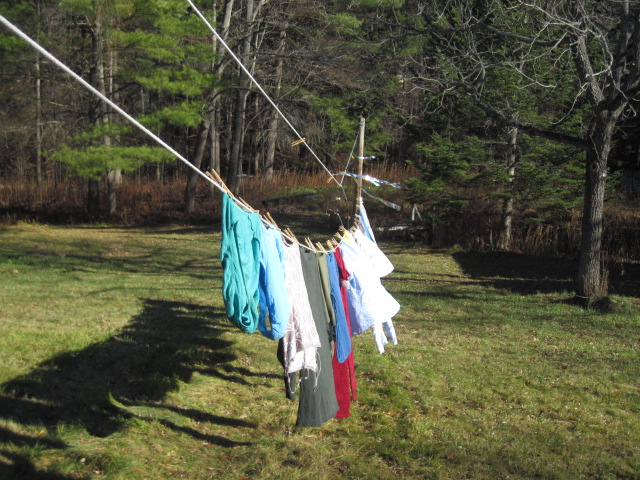
 Such daily magic has more power than we suspect. I smile even as I write about this, and you may too, scoffing at my innocence or simple-mindedness. But in fact simplicity can be another most potent magic. The clear, simple task, with its attainable objective, is one key to using energy well. Breaking down more complex challenges into simpler tasks is good practice, as any successful efficiency expert, organizational consultant, psychologist, trainer, businessperson, housekeeper — and magician — knows.

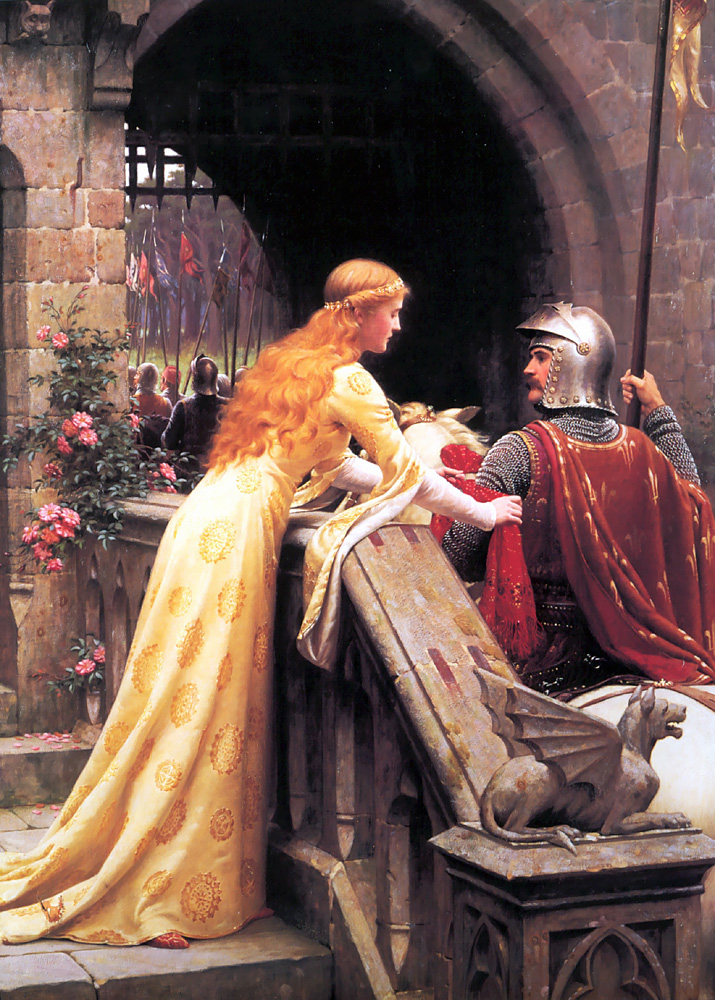


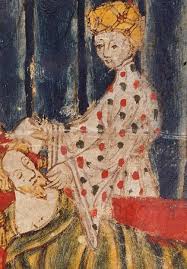
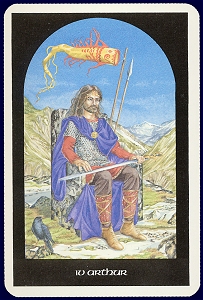
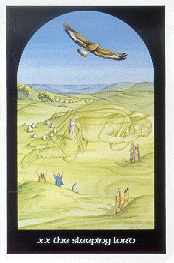
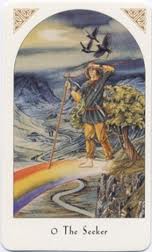
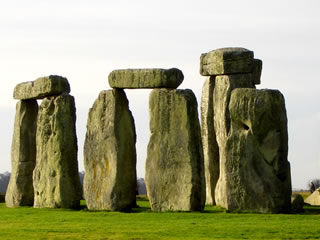
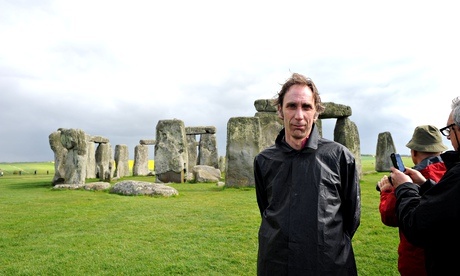
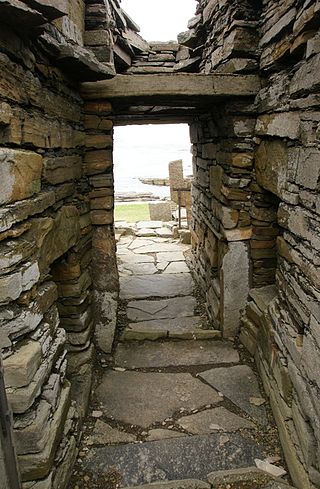
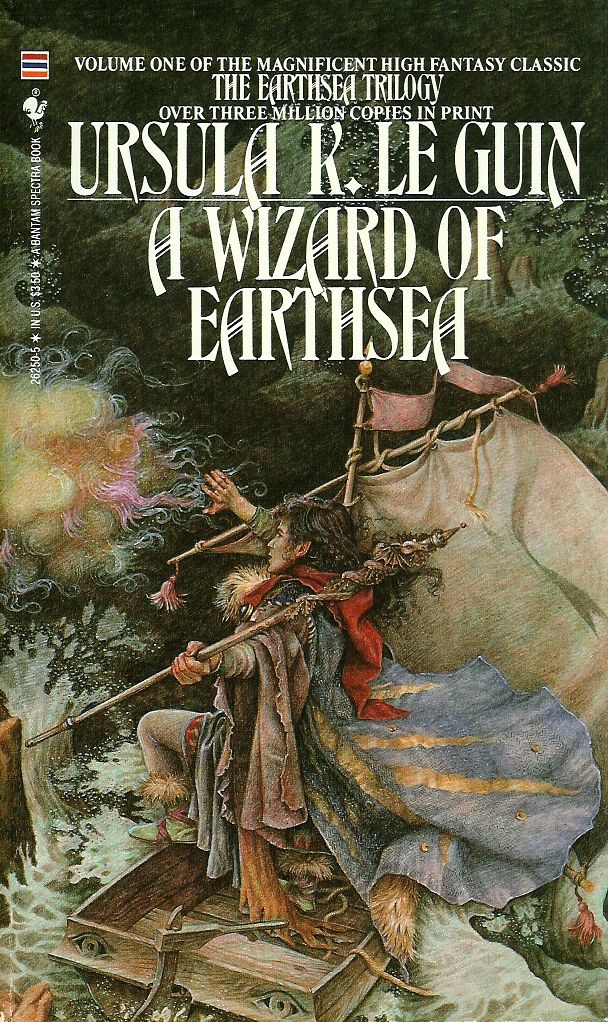



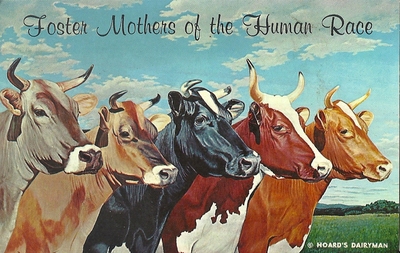




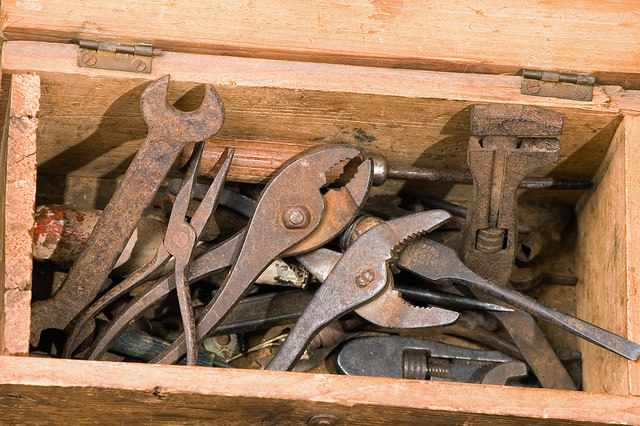
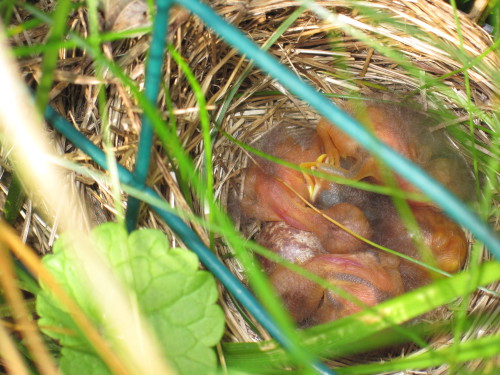
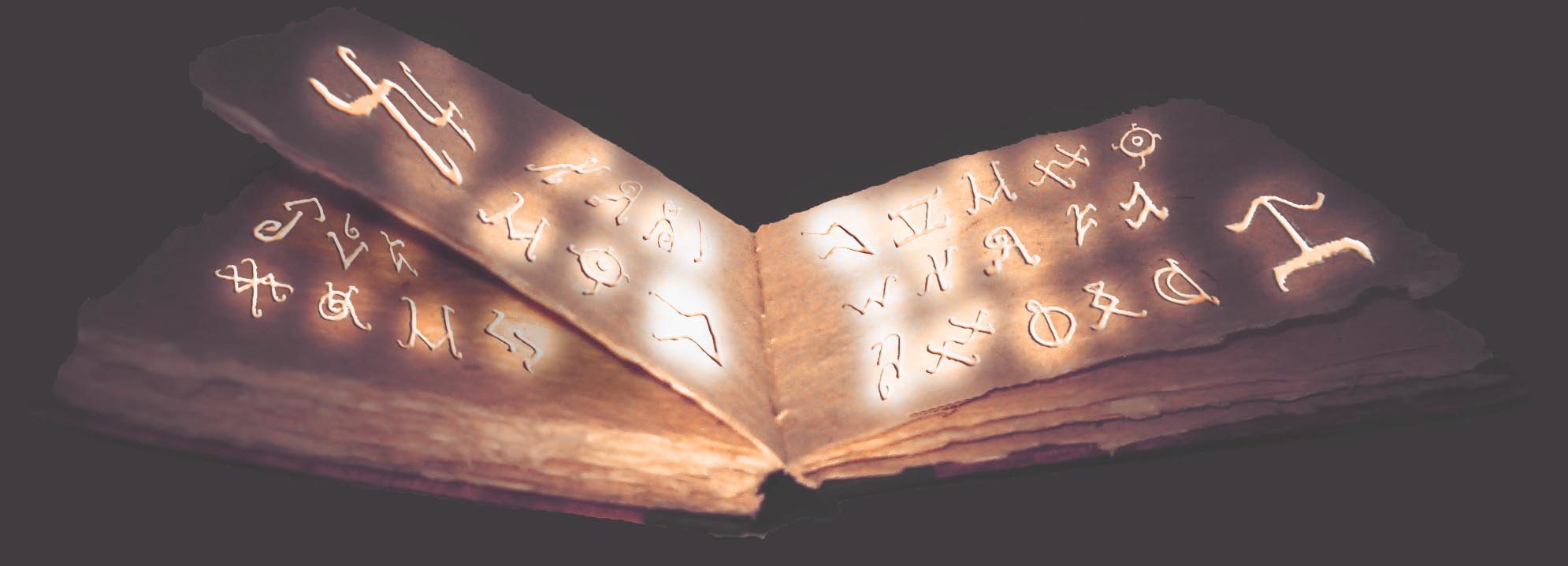



 A Druid Way