In the previous post I looked at the beginnings of a Druid-Christian ritual, letting the two traditions talk to each other through their images, rather than drawing on theology or metaphysics. (Druids and Pagans generally do have theologies — many of us just haven’t explored them in great depth or gotten them down in writing yet. Practice usually is more interesting, anyway.)
Name a purpose, and we can draft a Druid-Christian rite for it. Want a wedding, or a blessing, or an initiation? Both traditions have rich materials to draw on. Among other references and resources, Isaac Bonewits discusses ritual design at length in his book Neopagan Rites: A Guide to Creating Public Rituals that Work. Note Isaac’s focus on public: I use private Druid-Christian rituals that might not appeal to others, given our different histories and experiences with religions.
Shansui, the Chinese word for landscape: “mountains (and) water”
Already tired from too much thinking? Use the image above. Enter the scene. Walk that beach. Feel the warm, wet sand between your toes. Feel the wind play through your hair. Listen to the awen of the waves, calling. Salt air, seagulls.
Looking for a calendar, a whole set of practices and observances? The Pagan festival year lines up quite well with classical Christianity, for reasons that have been thoroughly (endlessly) explored and documented. Who knows how many Pagans sit in pews with Christian relatives at Yule and Easter, knowing other names, and sensing both kindred and at times estranged presences and energies?
For foundations for daily practice, one need look no further than the example of J M Greer’s The Gnostic Celtic Church, where Greer notes:
… personal religious experience is the goal that is set before each aspirant and the sole basis on which questions of a religious nature can be answered.
Greer also asserts as a piece of (Universalist) belief:
… that communion with spiritual realities is open to every being without exception, and that all beings — again, without exception — will eventually enter into harmony with the Divine.
What do I want and need? Do I even know? How can I find out?
The world’s spiritual traditions offer hundreds of variations on practices to answer just such questions. It’s good to check in from time to time, asking such things, living with the questions till they bud and leaf into answers, or into more beautiful questions.
As Mary Oliver sings, “So many questions more beautiful than answers …”
We change, and our practices need to keep up. Singing the awen, or other sacred word, is one tested and proven practice most traditions put forth for those seeking a new path, or a new branching along a path we know already. I sing till things clarify. Often for me this may take weeks, or months even … “Patience”, says one of the Wise. “Is not this our greatest practice?”
(But I just want to get to patience NOW …)
Smudge the whole cosmos, if necessary
Greer outlines practices for those interested in exploring a “Gnostic, Universalist, and Pelagian” Druidry. The ceremonies, rituals and meditations include the Hermitage of the Heart, the Sphere of Protection, the Calling of the Elements, the Sphere of Light, a Solitary Grove Ceremony (all but the first deriving from Druid AODA practice), and a Communion Ceremony that ritualizes the “Doctrine of the One”:
I now invoke the mystery of communion, that common unity that unites all beings throughout the worlds. All beings spring from the One; by One are they sustained, and in One do they find their rest. One the hidden glory rising through the realms of Abred; One the manifest glory rejoicing in the realms of Gwynfydd; One the unsearchable glory beyond all created being in Ceugant; and these three are resumed in One. (Extend your hands over the altar in blessing. Say …)
If you tried out Greer’s prayer above, who or what did you bless? If you didn’t, why not try it now? Say the words aloud …
Looking for a short form? Abred (AH-bred), Gwynfydd (GWEEN-veeth), Ceugant (KAY-gant).
/|\ /|\ /|\
I’ve looked before at these lovely Welsh names for the levels of being according to Celtic lore:
With the love of triads and threes that marks so much of Celtic art and story, it’s no surprise that the Celtic conception of our spiritual journeys should mirror this same triplicity. From the starting point of Annwn, the Celtic Otherworld, we move forth and back through three states of manifestation and consciousness, in a kind of dance that sees us revisiting old lessons until we’ve fully mastered the material, spiralling through different forms and perspectives.
Most of us hang out for a considerable time in this present world of Abred, this place of testing and proving. From here we proceed to Gwynfyd, a world of liberty and freedom beyond the pale shadows of these forces in our present world. Back and forth between Abred and Gwynfyd, with dips into Annwn here and there. And last comes Ceugant, an unbounded, infinite realm. By definition, no end point, but a new beginning. The horizon recedes.
/|\ /|\ /|\
And lest someone coming to the beginnings of Druid-Christian practice from the Christian side wonders how to begin with all of this stuff, consider this.
Nicholas Whitehead opens his curious book Patterns in Magical Christianity like this:
Christianity is a magical religion. This is not so controversial a statement as some might think. For all religious traditions are potentially magical by the simple fact that they embody or employ symbols, myths and rites that are mediatory, that intend or enable the translation of spiritual energies between levels of reality (pg. 13).
The author outlines a set of characteristics of such magical symbols, noting they
“are inherently appropriate”. He gives the example of a plant, with roots in earth, flower in the air, and “within its stem the life bearing sap rises and falls. Because of its intrinsic structure, the plant is a symbol for the ideal spiritual life … we live upon the earth, with our roots within the land. We are nurtured by the soil in which we live. Yet, without losing our connection to it, it is our destiny to rise above the land, to flower in the crowning glory of the light … Again note that we cannot make the plant into a symbol. It is simply is a magical symbol by virtue of its inherent structure and its role in the rhythmic life of the cosmos”.
“always participate in a greater reality”.
“enable the translation of energies between levels of reality”.
“are trans-rational”.
“are polyvalent”.
“tend to assemble in groups” (pg. 16).
Of course there’s a tremendous amount to unpack here — which is why it takes Whitehead a book to do so, along with a set of exercises he has developed in a workshop in order to put these precepts to the experimental test. Rather than debate them, which is a head trip I (mostly) don’t plan to take, they’re worth simply trying out, just as one would test the statement that water freezes at a certain temperature, rather than debating whether the claim is true. Of course adding salt, raising a wind over the surface, setting the container in a vacuum, and so on, all change the experimental parameters.
In the same way, my beliefs, intention, mindset when I experiment, past experiences, and spiritual awareness will all figure quite largely in any results I achieve. I’ve found I’m more interested in learning how certain things are valid or operational for me. That is, do they help me get somewhere worth reaching? Otherwise, an inner nudge or whisper usually alerts me: Move along — these aren’t the droids you’re looking for. Later I can play the thought and reason game for what it’s worth. Sometimes a lot, sometimes quite little.
/|\ /|\ /|\
IMAGES: Pexels.com
Greer, John Michael. The Gnostic Celtic Church: A Manual and Book of Liturgy. Everett, WA: Starseed Publications (Kindle)/Lorian Press (paper), 2013.
Whitehead, Nicholas. Patterns in Magical Christianity. Sunchalice Books, 1996. (More recent editions exist, though I haven’t yet been able to find one.)
Knight, Gareth. The Secret Tradition in Arthurian Legend. Aquarian Press/Thorsons, 1983. [More recent reprints available from other publishers.]
I’m reading Knight’s book as I draft a workshop proposal for the 2019 Mid-Atlantic Gathering. In spite of my tendency to discount such coincidences, I’ve found scant evidence for them. More often than chance could ever explain, two events will turn out to be not just linked in some way, but in a way I can learn from and grow by. And if you conclude I simply haven’t dug below my claims of coincidence into the sheer pervasiveness of chance that underlies it and rules the universe, I’d chuckle at the depth of your superstitious belief in chance, and continue learning from coincidence, a much richer journey altogether. Events talk to each other, and I want in on the conversation.
Maybe you can explain it by my suspicion of the universe, one of my admitted biases. I find this an odd but useful approach. It sounds like I’m a skeptic, still a popular stance in a world that nevertheless keeps on not conforming to our desires, whims and wishes, in spite of things like the Law of Attraction (which tends to operate inwardly, I’ve found, not in the world of physical form). I apparently get to keep a doubting and superior viewpoint, which is what so many unexamined beliefs afford — protection for the ego. But deep down, a part of me knows there’s almost always much more going on than meets my ill-trained eye. My ego’s been pummeled often enough along the way to discovery that I take yet another instance of it as a good sign I’m getting warm. This universe, it turns out, has a will of its own.
I say “ill-trained”: raised in some of the materialist and psychically-polluted environments that pass for much of what is called Western civilization*, it’s little wonder I don’t see things for what they are. It took me the longest time to determine that most of the illusion is in me, not in things. We’ve been trained away from much of the truth of things. Like death and rebirth, polarity, spirit guides and companions, energy centers in the earth, the power of ritual, the centrality of the imagination in our emotional and physical health, the daily magic we all practice, the value of a spiritual discipline, the power of mass belief for good and ill. Basically everything you can find in that section of many bookstores, however obscured by bad writing and incomplete knowledge. And much more importantly, it’s our vast human heritage, the largely unwritten world of experience our ancestors keep whispering we really need to pay attention to, in our DNA, our dreams, our daily lives.
Veteran comedian Steve Martin used to mock human pretension and idiocy in his 70’s routines with references to things like “how I turned a million in real estate into twenty-five dollars in cash” or “how to make money off the mentally ill”. Perhaps unsurprisingly, the problem of mental illness was less acute then or at least less visible, though its roots lengthened daily underground. Of course, large numbers of writers still practice this lucrative trade, on both sides of the bookstore aisles, and on the workshop circuit, stumping for stop-gap measures to make the status quo more quo. We thought the karmic consequences of Western civilization’s less happy choices would all appear on the physical plane, which is where, after all, we’d apparently set them in motion. But we didn’t expect the damage to ourselves to take form before the physical-world effects fully caught up with us. Or as the Wise say, all the planes of existence are connected. We couldn’t despoil a physical world without having already despoiled our own inner worlds.
What does the foregoing rant have to do with Arthur, or a secret tradition? Knight gets right to it on his first page. He explains “the hold that the legends of Arthur and his Knights exercises on the imagination … they enshrine a secret Mystery tradition … which was also the guiding force behind the old stone circles and trackways of Western Europe”.
Or as Mara Freeman puts it in the first line of her book, “The Holy Grail won’t go away” (Grail Alchemy: Initiation in the Celtic Mystery Tradition. Rochester VT: Destiny Books, 2014).
Thank the gods for that.
As the French knight in Monty Python and the Holy Grail tells Arthur, who has just pompously invited his master to join his Quest for the Holy Grail (and you can hear the capital letters in his voice), “He’s already got one” (around the 1:10 mark).
If I come at the Grail with a team of knights, appropriately theatrical music suitable to my nobility accompanying me on my way, and mounted like Arthur, I too may be met with the taunting the French knight offers Arthur and his companions. Grails are, paradoxically, a dime a dozen. One on every street corner. In every castle.
Nonplussed, Arthur asks diffidently, “Can we come up and have a look?”
Of course, no single source of healing will meet our need, given that we’re such a various and noisy and difficult tribe. (Or as the French knight replies to Arthur’s request for a look, “Of course not! You are English types”.) From so many paths and tracks, we converge at this present moment, and do what we will. And learn from that.
Knight outlines what he calls the Lesser Mysteries of Arthur, Merlin and Guinevere: lessons and practices for the individual, for the group, and for polarity working with both individual and group as part of spiritual service. But, you might say — and Knight does — that this is the introductory material. The Greater Mysteries concern the Grail, the old Celtic Cauldron of Regeneration we meet with in myth and legend.
My intermittent dissatisfaction with OBOD ritual and practice, as I’ve shared here, has slowly led me to developing my own practices connected with the Grail, in an idiosyncratic form and tailored to my quirky nature. It’s hardly a system**. Spend too much time systematizing anything, I keep re-learning, and too often it dies in your hands. (Knight notes (pg. 175) provocatively that “archetypes, like individuals, are capable of redemption”.) I’d rather practice what seems to work.
Pieces of it that may be of use to others I’ll try to share in the next series of posts.
/|\ /|\ /|\
*Every civilization offers much to admire, and ours is no exception. The best music and art the West has produced rival the best of other civilizations. Coming to terms with the corresponding limits and faults of a civilization is part of the work of its maturation. No civilization lasts forever. This simple fact still seems to shock many, who apparently believe the West, or at least the United States, is somehow exempt. But if anyone doesn’t also glimpse the weaknesses of the West by now, that person simply hasn’t been paying attention. It’s doubtful, in fact, that such a one has even been conscious for the last 75 years. As with preceding civilizations, we will corporately (if not individually) deny our problems until they overtake us and execute harsh justice on its false suppositions and its deeds, and on those inheriting both their benefits and drawbacks. Which is all of us.
Arthurian legend as Knight examines it addresses such cultural and civilizational collapse as one means of renewal and rebirth.
Social justice warriors: we appreciate at least the relatively sane among you for sounding the alarm and putting a few of your fingers in the dike, but karmic payback on a scale you can’t achieve is already starting to take shape.
**Those seeking a system may find Freeman’s book and its associated practices and workings help answer that search.
Why now? Well, this fourth and final installment was promised “soon”, at the end of Part Three — on October 14, 2015. “Soon” can apparently mean more than three years later. Are we on that much-abused term Pagan Tyme here?
Also, someone recently visited one of the posts, reminding me of the series. Thank you, anonymous reader.
A third reason? Perhaps the best: both the quest and the poem of Sir Gawain and the Green Knight end shortly after New Year’s Day.
/|\ /|\ /|\
Sex, death, magic — none of these are alien to whatever spirit pervades things, God on high, or pervading Mystery; Goddess who wears all things as her forms in this world, or spirits, devas, demons; Platonic archetypes, or thought-forms who share and shape the cosmos with us.
How do I know? Because these things — sex, death and magic — haven’t been added to the mix. They’re part and parcel of it, part of its shaping, its innermost warp and woof, dynamic, its movement and melody. There’s no break in the continuity among the many ways life propagates here. Things vibrate to each other, so that more of them can join the show, even as the older ones yield the stage, so that the human and world family continues.
/|\ /|\ /|\
“But wild-looking weather was about in the world”, as Simon Armitage* translates the poem, rousing his hero Sir Gawain on a wet and windy New Year’s Day (like yesterday was, here in New England!), the day of his deadly appointment with the fearsome Green Knight. Enough of feasting and dalliance! We get some 40 lines of the dressing of both knight and his trusty steed Gringolet — anything to delay the inevitable — until finally nothing remains for it but to depart.
Let’s pause for a moment, and recall the twists and turns the tale has taken:
The Green Knight came to Camelot a year ago at Christmas, a fabulous two-week affair of feasts and revelry. The enormous stranger crashes the party. He bursts in on the court uninvited, unannounced, and taunts the assembly. He and his horse, too, people keep noticing, are green. Entirely green. Uncannily green. Magic’s clearly afoot.
The Green Knight has offered a great ax, and the first blow, to whoever has the guts to take him up on his challenge. No one answers. “What, is this Arthures hous?” scoffs the Knight. A pathetic showing from such legendary fighters!
From the British Library manuscript, showing the beheaded Green Knight. (MS Cotton Nero A X, art. 3, fol. 90v.)
The King himself, his blood up at the interruption, the rudeness and the mockery of the man, is ready to answer and seizes the ax. But the king’s nephew Gawain rises and claims the challenge for himself: “This melee must be mine”.
“I schall stand hym a stroke”, says the Green Knight, as long as Gawain agrees to one in return — in a year and day. Repeat the terms, just so we’re entirely clear. And Gawain does.
Hit the green bloke hard enough now, his uncle the King advises Gawain, and you needn’t worry about any future payback. And Gawain heaves the ax and strikes the Green Knight a fearsome blow that does in fact behead him.
But decapitation is small inconvenience when you’re magical. Picking up his own head, the Knight calmly reminds Gawain he’s now bound to take a return blow, a year and a day hence.
“Thou shalt seek me thyself, wherever thou hopest I may be found” says the green head the Knight holds in one hand.
But “What is thy place?” asks Gawain in considerable dismay. “I know not thee, knight, thy court nor thy name”.
The Knight turns the head toward Gawain. “To the Green Chapel … I charge thee” to receive “such a dint as thou dealt”. Many men know me, “the knyght of the Grene Chapel”.
A year and a day. “So come, or be called a coward forever”, as Armitage renders it. At that, the Knight swings up into the saddle and rides off.
/|\ /|\ /|\
For a long while, procrastination serves Gawain quite well. In fact, he delays his departure and delays it again, until finally bad weather has returned the following December. Set yourself a year and a day to accomplish a task, and you too may feel, as I have, that it’s too much time. Too much, too little. Find a balance. Isn’t that what magic’s about?
Gawain sets off at last, and after many travails arrives at a court that he’s told lies very near the Green Chapel. No need to seek further. So he can spend the final few days at his ease.
Once again, the holiday entertainments at court are lavish. Each day the lord of the region goes out hunting, while Gawain remains in the castle, increasingly tempted by the lord’s lovely, charming wife. Her boldness and obvious wish to sample the love of a knight from the famous court of Camelot become harder and harder to resist with each passing day. Nothing like sex-and-death to blend and kindle our heightened awareness of each. Not quite a liebestod, a “love-death”, an operatic aria or duet preceding the suicide of lovers. Or maybe agreeing to such an insane challenge as an exchange of blows with edged weapons is indeed a form of suicide, when your opponent is magical.
“Strangely enough, it all turns out well”, says Henslowe in Shakespeare in Love.
“How?!” demands Shakespeare, as do other characters in their turn.
“I don’t know”, Henslowe admits. “It’s a mystery”.
Mystery or not, on the third and last day of these temptations, the lady convinces Gawain to wear her girdle at his fateful appointment. “No hero under heaven might hew him” who wears it, she urges him, and so at last he relents. Succumbs to fear. Cheats. “What should we call it but what it is?” But what is it, really? Has Gawain forfeited his honour? Squandered his good name as a knight of Arthur’s court for merely personal safety?
The poem itself offers a number of delicious clues to an answer different from any expected yes or no, and as it does so, to use film-making terms, it pans neither right nor left, but draws back and offers a wide-angle shot.
First is the fact that Gawain does yield to the Lady. He’s no “perfect knight”, whatever that means — not some bloodless ideal, but rather a mortal man.
Next is the triple blow the Green Knight offers him. As with a year and a day, we’re in magical territory with this set of threes. At the first blow, Gawain flinches, and the Knight chides him for it. At the second blow, a test of his resolve, Gawain holds firm. He readies himself for the third, which the Knight delivers, but this time merely to nick his neck, just enough to make it bleed a little.
The challenge, by its own strict terms, has been fulfilled. Gawain stood a blow in return for the one he gave the Knight a year and a day before.
But hold a moment. Gawain has also fulfilled the terms of the second contract, between himself and Bertilak, returning kisses — all he received — in exchange for the wild game the lord brings home each day. Except for this morning, when the Lady gave him the girdle, but Gawain offered no exchange to Bertilak for that.
Third is the Green Knight’s behavior here, at Gawain’s resorting to the trick of the girdle. The Knight reveals himself, and calls Gawain on his failure — but gently!
At the third time thou failed …
And therefor that tappe [of the ax] touched thee.
For it is my wede [garment] thou wearest, that same woven girdle —
My own wife weaved it for thee, I wot [know] well …
I know well thy kisses and thy conduct also,
And the wooing of my wife — I wrought it myself.
I sent her to assay thee …
Thou art the most faultless fellow that ever went on foot …
A little thing you lacked, loyalty …
Not for wooing, or any other wild work,
But that you loved your life, so I blame you less.
Fourth is Gawain’s own overblown sense of shame at being found out: “I am fawlty and falce, and have been ever”, he exclaims. Has he even heard the proportion and balance in the Knight’s estimation of him? As the ground shifts with the Knight’s revelations, both we and Gawain learn that the lady, the Knight and the whole of Bertilak’s castle are all players in a larger play — which Gawain wants nothing to do with, now that he’s been found wanting, even a little.
For Bertilak/the Green Knight reveals still more. Keep the girdle, he urges. Behind all this show is Morgan Le Fay, your uncle king Arthur’s half-sister — and thus your aunt — she who learned magic from Merlin. Come back to the Castle and finish out the New Year’s feast with us. You’ll be most welcome, all trickery now done with.
But Gawain declines. I’ll wear this girdle, yes, and thank you. But as a token of my weakness and sin. And then follows a traditional Christian catalog of men tricked by women, from Adam and Eve on down.
However, the poem’s not yet done. Gawain returns to Camelot and confesses everything to the assembled court, resolving to wear the girdle openly as a penance for the rest of his life. The court holds deep affection for him. Arthur comforts him, and everyone laughs — laughs! Then the knights of Camelot all agree that each of them will also wear a green belt as well, slanting across the chest — for Gawain’s sake! For that was acorded the renoun of the Rounde Table. And so the girdle becomes the sign and symbol of the Order of the Garter, founded in 1350. What good is your shame, if others transform it to honor?
And last is the subsequently-added French tag that closes the poem, the motto of the Order of the Garter, and an admonition to the reader: honi soit qui mal y pense — “shame to anyone who thinks it bad”, we might say. What goes around comes around, say others, centuries later than the Medieval poet.
Perhaps you hear it differently, but in these multiple ending moments I hear Pagan laughter. Tolerant, forgiving, intimately familiar with human weakness and pride, capable of the long view, able to shape good from misfortune, and delighting in the often ironic reversals that achieve these things.
/|\ /|\ /|\
*Armitage, Simon. Sir Gawain and the Green Knight. New York: W. W. Norton and Company, 2007.
On the first day of Solstice, the Goddess said to me …
I go looking for words, sometimes, to make do for deeds. But as I practice over these short midwinter days, as I celebrate them — the same thing, if I hold space for the desire to make it so — I find words coming both before and after the actions.
Slowly I start looking for guidance in more places, rather than shutting it down before it ever has a chance to reach me, wing of a bird-thought across the cheek, merest touch of feather-feeling brushing away dullness and lighting the heart to wonder, if I don’t turn away out of fear, or doubt, or — worst of all — busy-ness. Guest-guidance, I might call it, the stranger knocking, briefest word from a passer-by, bird across the sky, squirrel darting over the drifts in the backyard, woolly-bear caterpillar sluggish in the cold, clinging to the wood I carry in for the fire. Two fires today, for main house and weaving studio.
Josephine McCarthy wryly remarks, “Most of the jobs of a magician [I substitute “person” here, my fellow magicians, readers all] are about restoring balance — very simple, very unglamorous and not very useful if you want to get laid or have a new car”*. Gods know we need re-balancing almost everywhere. We’ve got our work cut out for the new year.
I reach for a natwanpi, lovely Hopi word, “instrument of preparation”, tool or implement or aid. [Go here for a post from 5 months back that talks a little about natwanpi.] For my wife, often, her natwanpi-of-the-moment is in the kitchen, whisk or blender or saute-pan. Much of her magic is a love of cooking, paired with an exquisite sense of taste that can detect herbs and spices in almost anything we eat, from our own kitchen or another’s. Other natwanpis at hand? Her looms, her warping mills, her heddles and stocks of fiber. And further out: her gift for friendship, her generosity. A wide and rich palette, a set of living natwanpi she cares for and delights in and deploys regularly.
I reach for a natwanpi, so many of them it’s an embarrassment of riches, though a bout of melancholy or seasonal affective disorder or depression can seem to raid memory of the treasure-house and make me forget or deny all I have to draw on. Google “natwanpi” and images come up from this blog, a hint of what I carry around, but also of what we each have our own versions of, and that’s just the treasure-house of images. Add in memories of people, places, animals, experiences that rest in other senses, smell and touch, sound and emotion.
McCarthy writes:
My deepest personal experience of that is with the lighting and tuning of the candle flame. The intent to light a candle to prepare the space for a ritual act developed from that simple stance, to an act of bringing into physical manifestation an elemental expression that lights through all worlds and all times: it becomes the light of divinity within everything (Magical Knowledge, pg. 70).
Or what seems almost the opposite to flame: I reach for a stone to hold in hand, door to memory, cool to the touch, scented with earth and mud and time, piece of the planet in my palm. The same, not the same: I build our house- or studio-fire, humming quietly to Brighid, the path of the act of building the fire paralleling the path the fire itself takes through the wood. I kindle, but whether it’s my spirit or the wood that’s burning starts to matter less: it’s both.
Oh, how to say these things we all know so intimately, yet often lack the words for? How to get at them? Much of magic is activating what and who we are already, what sloughs off with time if not renewed, what we can re-ignite with intention and love.
Or this, appropriately enough from Shakespeare’s A Winter’s Tale: “Thou met’st with things dying, I with things new-born”. What he doesn’t say is this: they’re the same things. What’s different is me.
Here for you is a spark of Solstice light: the vocal group Antiphony, singing “Solstice Carol”:
CAOS — that’s Netflix’s The Chilling Adventures of Sabrina, in case you’re blissfully off the grid, out of contact with modern media, and indifferent to fandom’s predilection for abbreviations. Six “problems” — does this mean I won’t or don’t watch it? No. Otherwise, I couldn’t write about it here with anything valid to say. I’m on my second viewing, in fact. I want to like it, and to give it a fair chance. (I’m even holding out very shallow hopes for the Holiday Special tomorrow.) But too many things about it trouble me, and if you’re a sympathetic reader of blogs like this one, at least some of them should trouble you, too.
Come on, I hear you grumble. It’s just a show. OK, don’t waste your time reading this, then. Allow me my occasional rant. Pop culture holds tremendous shaping power over our psyches — it deploys light, sound, imagery, metaphor, archetypes, emotion — a type of magic all its own.
*****SPOILER ALERT*****
1–Let’s start with the show’s name: I can form my own judgments and supply my own adjectives, thank you. Not that there’s much really chilling here. Some stuff in poor taste, yes. Sometimes out of character, inconsistent, aiming for cheap thrills at the expense of story. New Adventures of Sabrina? Fine. Actually descriptive. Sabrina: The Dark Years? Justifiable, and usefully vague. But chilling? It’s not even accurate as irony.
2–High Priest Faustus Blackwood’s pronunciation in Episode 2 of Samhain as “Sam-main”: Really?! Let me grab my athame “ay-thame”! A minute’s Google search, by showrunner or writer, would have avoided that absurd mistake. It’s a known Irish and Pagan word. A smallish detail? Maybe, but representative of a larger sloppiness. The High Priest of the Church of Night can’t get it right? What authority does he deserve to hold? You don’t want to be jerked out of a created, secondary world by careless errors like this. The Norman Conquest … in 1067. Lincoln assassinated … in Chevrolet’s Theater. You get the idea. A small wrongness like that mangles the whole scene, out of all proportion to its size. I don’t know about you, but that predisposes me to distrust future, larger details. I had a long-term substitute high school English teacher who pronounced epitome as “eppy-tome”. Sorry, but some errors are so blatant they deserve to be pilloried.
Click-baity posts like Screenrant.com’s “20 Things Fans Forgot about the Original Teenage Witch” might more aptly be titled “20 Things Producers and Jaded Viewers Simply Don’t Give a Damn About Today”. A better and much more informative read is Indiewire’s guide to all the references, episode by episode. The show actually includes many such references, to the delight of allusion-hunters everywhere. Why be sloppy with such a prominent one as Samhain?
3–The worst stereotypes of medieval witchcraft and magic-as-Satanism: Book of the Beast. Dark baptism. Blood sacrifice. Covens. (And oddly, patriarchy intact. Why no High Priestesses? Witch Queens?) Goth fashion, out of date well over two centuries ago, but continuously retweaked, now for the 21st century. Magic for selfish reasons, not the good of the whole. Treachery. Betrayal. Magic dependent on outside forces, not mirroring energies found within the self. Magic, in a word, as … dark. The stuff of monsters under the bed. Low astral dreams. Bad trips. Christian nightmares, not the universal, world-wide spiritual technology that’s the birthright of all.
Cast of the original Sabrina, 1996-2003
4–Sabrina, apparently sprung full-grown from Artemis’s brow, second-decade-of-the-21st-century wokeness (mostly) intact. Girl-power rampant, speaking truth to patriarchal school principals and Witch Priests, fighting injustice, moral code pure and untainted — despite an upbringing by her two often clueless and Satanically-bound aunts, one of whom happens to murder the other occasionally. Not the role models that would ever have produced this prodigy. Not the role-models of the original series, who served as mentors to their niece. Despite a sit-com trend fishing for irony or social commentary, with feckless adults raising enlightened children, it hardly ever works out that way. Add actor Kiernan Shipka’s preternatural maturity lending her portrayal of Sabrina a curious post-Puritan moral absoluteness — until it must conveniently fail, whenever the plot requires chilling. See next point.
5–Justice for all — except apparently when memories need purging, or throats need slitting. Sabrina erases her boyfriend Harvey’s memory when it could prove troublesome — though we’re led to believe she really does love him — and in Episode 8 sacrifices Agatha, one of her Academy of Unseen Arts classmates, without hesitation or reflection, by ritually slitting her throat. In Buffy the Vampire Slayer, as in real life, actions have real, fascinating and plot-thickening consequences. Not so, too often, for Sabrina. In some ways that’s the most — well, not chilling — perplexing aspect of the show: cause and effect are often in abeyance. What cosmos is this, anyway?
6–“Magic’s not for Mortals”. But for half-mortals like Sabrina, it’s fine! See John Beckett’s Dec. 2 post, “My Biggest Complaint with Magical Fiction”. All right: you’ve read my takes on magic in previous posts — no need to rehash them here.
Is anybody disposed to argue on behalf of the show and tell me where and why I’m over-reacting?
If you’ve ever planned for the future, you’ve practiced a form of magic. Wait a minute, you say. That’s not magic.
Sure it is. You have an intention or goal, and you imagine it, seeing, hearing, feeling, tasting it in ways that seem so ordinary and commonplace we mostly pay no attention to the marvel of what we’re doing. Only when we find ourselves saying “But it didn’t turn out like I thought it would!” do we encounter a mismatch between the picture we painted and carried around with us, and the reality as it finally manifested. Obviously we held a pattern, image, blueprint, plan, etc. in our awareness. It took a few side-roads on the way to appearing here, where we can see and interact with it. No matter. More than before. Do it differently. Revise, modify, experiment.
I may be a visual person, or an auditory or a kinesthetic one, or some other kind of perceiver and manifester, by predilection and experience, that doesn’t have a ready label. Further, the event I manifested may or may not match what I expected or hoped, but it did manifest — as it never would have, if I hadn’t set it in motion in the first place. “As above, so below” — in this case, the above was my plan, and the below was the physical form it took. Schools that could teach us how to get better at this ability instead teach almost everything else but that. Often that’s because the teachers themselves have had the ability taught right out of ’em.
Plenty of folks would like to deny us recognition and use of this basic ability altogether, because it’s the key to freedoms and joys of many kinds, and so it cuts into their power plays. Our politicians insist that only they can fix what’s ailing the town, province or planet, our partners insist they’re essential to our happiness (or we are, to theirs). Priests, pastors and imams would prefer we not discover how independent of them we actually can be, so the ability gets labeled evil, sinful, diabolical, dangerous, forbidden, and any other convenient and manipulative name, even though every one of us alive uses it daily in its simplest forms. But the more advanced levels in particular, the ones that grant larger abilities to change and grow, are naturally more dangerous to the stable order of things, and to those who ardently desire to profit from “the way things are”.
That’s one reason fear is such a popular tool for control, and so widespread today. Keep people ignorant and afraid, keep them from using or even knowing the potentials of their own ability, keep them dependent on a big mommy or daddy for a pitiful, reduced version of life, liberty and the pursuit of happiness, and you’re halfway home to power — of a sort.
Cover up the push into ignorance and dependency with a skillful blend of threats and promises, of magicking up a useful opponent to take the fall, the blame, the consequences of the fear you’ve sown in people’s hearts and minds — and there are so many opponents ready to hand — to distract people from what you’re doing to them, and you’re home free.
If you can attack the very freedom you’re taking away as the cause of the troubles the people face, you’ve graduated to “excellent dictator” status. Congratulations! You’ve mastered one form of debased magic, depriving other people of their birthright. No need to argue whether it’s successful — just look at today’s headlines.
If such low and often negative magic can accomplish so much, what of more positive varieties?
Experiment with learning more about your animal familiar — an ancient and worldwide practice. Animal guardians and teachers abound in myth, legend and folktale for good reason. Many of us know instinctively why we keep pets, and every year we learn more about the health benefits and remarkable abilities domesticated animals bring into our lives. The tarot Fool sets out on the long journey toward wisdom already accompanied by an animal. Who are your companions and what can they teach you?
Formal study and practice of traditional magic may not be for you, temperamentally or practically. But if you decorate your living space with harmonious colors, bringing in plants and pictures that uplift you and establish an oasis of harmony and balance, you’ve magicked your dwelling to aid you in daily life. Or look at your musical tastes and contemplate the harmonics of sound that feed and nourish you. Investigate the effects and use of song, chant, rhythm, pitch, etc. Drums, bells, musical instruments of many kinds can assist you in sound magic. Again, many religious and spiritual traditions speak to the power of the word, voice, sound of creation, music of the spheres, names of gods and angels, etc. Long human wisdom testifies to the potency of sound magic.
Dream work can help put us in touch with levels of experience and consciousness beyond the daily news awareness that can seem like all there is. Plenty of resources exist for studying dreams, recording them, analyzing them, and learning from what they have to teach us. And inspire us. Work on anything that asks you for creativity, and if you focus long enough, the work will follow you into dream. Write, and your characters will begin to talk to you. Paint seriously, and you’ll eventually see patterns, colors, worlds of beauty inwardly nearly impossible to render with earth tones and hues. Garden, and you may be led to plantings and pairings you hadn’t anticipated, or to resources to help you and your plants flourish. Many gardeners know how restorative the work can be. And so with many professions and occupations. It’s hard in fact to think of one that lies outside the purview of dream power and exploration.
Rachel Pollack
The Tarot is a course of magical (and life) instruction all by itself. Find a good overview or book of practical exercises. Two texts I can recommend from long work with them are 78 Degrees of Wisdom by Rachel Pollack and 21 Ways to Read a Tarot Card by Mary Greer. They pair well together, these masterworks by acknowledged masters of the Tarot, complementing each other’s perspectives. When I just checked a few minutes ago, both were available used for $8 or less. Rachel Pollack’s pocket admonition: “To learn to play seriously is one of the great secrets of spiritual exploration”.
Another excellent and quite painless way to acquire a set of vantage points for a magical understanding is to immerse yourself in fantasy and mythology, while practicing visualizations and ritual work with the archetypes present in the latter in particular. Fantasy propels us into alternate realities through the written word, already a magical act. Add the further dimensions that film affords, combining sound and color and embodiment by (usually) skilled actors, and you expand the experience into one quite close to ritual. It’s no surprise that the magical and visionary arts have enjoyed a resurgence in the last century, when we have such preliminary training on hand in these popular forms.
To sum up, then, magic is our birthright, something we practice already, and can explore and refine, like any talent. We shift states of consciousness every day, and what we can’t do in one state, we can often do easily in another. The methods and techniques for shifting, because they bring us to face locks on consciousness, as the previous post indicated, allow us to begin to circumvent, break down or dissolve these impediments.
Then we begin to discover that there are many worlds, and at the same time we discover how to gain access to them, since we intermittently inhabit them already, in moments of heightened experience, in grief, joy, love, exaltation, intense focus and creativity. Each of us is and has a doorway, eventually multiple ones, that we can activate to explore and grow and delight in. And it is there that we meet and shape and begin to fulfill our destinies.
A broader definition of magic sounds interesting, especially when compared with some of the ideas about it I have encountered over the years.
Do you have a working definition you could share or is this something you have developed in your blog?
I do have a working definition of magic, and I’ve also written about it in various forms fairly frequently, though not always under that label. But it’s good to regularly take out opinions and understandings, dust them off, rattle them, note what shakes free, scrape off the rust, and buff and polish the rest. So with the spur that Steve’s comment provides, that’s what I’ll do in this post.
Yevgeny Zamyatin / Wikipedia / public domain
Our definitions come, mostly, after experiences. Before that, we don’t have much to attach them to, and if anyone who’s reading this is anything like me, your definitions at that point may not match things that you later DO experience. So then we get mired in the mismatch, rather than referring back to the original experience. Or — even better than looking backward — experiencing more, other, wilder. So I open up once again a page where I can re-read irascible old revolutionary Yevgeny Zamyatin (1884-1937), whose essay “On Literature, Revolution, Entropy, and Other Matters” reminds me: “Dealing with answered questions is the privilege of brains constructed like a cow’s stomach, which, as we know, is built to digest cud”.
“Privilege”? Tired of a too-steady diet of cud, I aim to forage more widely.
So I’ll begin by asserting we all practice magic, and work outward from there, using this as a core assumption and seeing how it holds up. We do much of our magic half-consciously, so that we often don’t perceive the patterns, causes and effects of what we set in motion as clearly as we might. After all, like most of us, I insist on who I am: in my case, straight, white, male, employed, married, healthy, intelligent, rational. But when even one of these breaks down, as every one of them has for at least some of us over a lifetime, my world trembles violently, even if it doesn’t collapse outright, and I scurry and latch on to explanations for what’s going on.
Isn’t such an interval about the least likely time for any of us to notice the patterns, causes and effects of what we’ve set in motion? And even if and when we do, we tend to account for them only with naturalistic explanations (Pagans may add supernatural but not necessarily more accurate ones), including blaming other people, fatigue, stress, illness, the government, conspiracies, the Man, our reptilian overlords, a loveless marriage, plain bad luck, and so on, forgetting how much even of our conscious experience at the very moment of our explaining has been programmed by education, habit, expectation, culture, practice, a “reasonable explanation”, and a simple, overriding human desire not … to … be … weird.
But … magic?!
At the heart of this often-inaccurate accounting is a precept that disturbs and offends Westerners in particular, taught as we are that we are free and independent beings, with wills and choices subject to our conscious attention. We are not so free after all, but if we can’t even examine this assertion in the first place, what are we to do? If we all practice magic, as I claim, we all need to, because as musician and mage R. J. Stewart observes:
With each phase of culture in history, the locks upon our consciousness have changed their form or expression, but in essence remain the same. Certain locks are contrived from willed patterns of suppression, control, propaganda, sexual stereotyping, religious dogma; these combine with and reinforce the old familiar locks restraining individual awareness; laziness, greed, self-interest, and, most pernicious of all, willful ignorance. This last negative quality is the most difficult of all to transform into a positive; if we truly will ourselves to be ignorant, and most of us do in ways ranging from the most trivial to the most appallingly irresponsible and culpable, then the transformation comes only through bitter experience. It may seem to be hardship imposed from without, almost at random, but magical tradition suggests that it flows from our own deepest levels of energy, which, denied valid expression by the locks upon our consciousness, find an outlet through exterior cause and effect (Stewart, Living Magical Arts, pg. 20-21).
“[D]enied valid expression by the locks upon our consciousness”: we might think such a “locked-up” person simply needs re-education, or better training, maybe positive reinforcement, a decent opportunity. (I note here that it’s almost always some other person who’s the problem, or needs the help — never me. After all, I’m awake and in charge of my life.) This is also where we get much of the American program of self-improvement, “pulling ourselves up by our own bootstraps”, as it used to be called. Those who can afford it try therapy, or weekend retreats and workshops. Those who can’t may rely on pharmaceuticals or liquor or increasingly available weed. As the evidence mounts, as the growing dysfunction, suffering, addiction, unhappiness and all-around misery attest, something’s not working.
So why magic, of all things? Surely any number of other options would be preferable to something so half-baked, superstitious, irrational, etc., etc. — the list of slanders, some of them justified by pernicious snake-oil salesmen, is long.
J. M. Greer, ecologist, blogger, conservationist and mage, puts it this way:
[t]he tools of magic are useful because most of the factors that shape human awareness are not immediately accessible to the conscious mind; they operate at levels below the one where our ordinary thinking, feeling, and willing take place. The mystery schools have long taught that consciousness has a surface and a depth. The surface is accessible to each of us, but the depth is not. To cause lasting changes in consciousness that can have magical effects on one’s own life and that of others, the depth must be reached, and to reach down past the surface, ordinary thinking and willing are not enough (J. M. Greer, Mystery Teachings from the Living Earth, Weiser Books, 2012, pg. 88).
To put it another way, in what is not a particularly poetic magical Druid triad: Magic stems from an experiential fact, an experimental goal, and an endlessly adaptable technique.
The fact is that each day we all experience many differing states of consciousness, moving from deep sleep to REM sleep to dream to waking, to daydream, to focused awareness and back again. We make these transitions naturally and usually effortlessly. They serve different purposes, and what we cannot do in one state, we can often do easily in another. The flying dream is not the focus on making a hole in one, nor is it the light trance of daydream, nor the careful math calculation. What we do mechanically and often without awareness, we can learn to do consciously.
The goal of magic is transformation – to enter focused states of awareness at will and through them to achieve insight and change. Often, for me anyway, this is nothing more mysterious than moving out of a negative, depressed or angry headspace at will into a more free, imaginative one, where I can problem-solve much more effectively, and also be much more pleasant to be around. Or so my wife tells me.
“The major premise of magic,” says R. J. Stewart, “is that there are many worlds, and that the transformations which occur within the magician enable him or her to gain access to these worlds” (R. J. Stewart, Living Magical Arts, pg. 7).
The technique — a cluster, really, of practices and techniques — is the training and work of the imagination. This work typically involves the use of one or more of the following: ritual, meditation, chant, visualization, concentration, props, images and group dynamics to catalyze transformations in awareness. “… [O]ur imagination is our powerhouse …” says Stewart. “… certain images tap into the deeper levels of imaginative force within us; when these are combined with archetypal patterns they may have a permanent transformative effect”.
Even mundanely, golfers visualize a hole in one, carpenters see the finished design long before it emerges from the blueprint, chemists rely as much on inspiration as any artist for discoveries like that of August Kekule, who dreamt of the structure of the benzene ring via the archetypical image of a snake swallowing its tail.
Furnish the imagination with the food it needs, and it can be a powerful tool and guide. Abandon it to others who do not know us, nor have our best interests at heart, and we cast away our birthright.
How to convey the distinctive experience of a Gathering? Perhaps you come for a group initiation, having already performed the solo rite.
initiates and officiators, after the Bardic initiations
ECG initiated 10 Bards, 4 Ovates, and 1 Druid in three rituals over the four-day weekend.
Nearly-full moon on the night of Ovate initiations — photo courtesy Gabby Roberts
Or maybe the title of a particular workshop or the reputation of a presenter draws you. Though registration records for ECG show that each year about 40% of the attendees are first-timers, guest speakers and musicians play a role in swelling the numbers of multi-year attendees.
Kris Hughes
Returning special guest Kristoffer Hughes gave two transformative talks: “Taw, Annwfn and the Hidden Heart of Awen”, and “Tarot Masterclass”.
The first talk effectively conveyed how awen is much more than we typically conceive it. As the “Heart-song of the World”, it pervades existence, from Annwfn, often translated as the Celtic “Otherworld” but more accurately rendered the “Deep World” (which the Welsh word literally means), through Abred — this world we live in and conventionally treat as reality, and which Annwfn underpins, all the way through Gwynfyth and Ceugant. As for “the hidden magic that swims within the currents of Awen”, excerpted from the description of the talk on the ECG website, awen is available to us and links us to other beings resting and moving in the Song. And “one practice that can open these connections is to sing to things. Sometimes trees talk, and sometimes they listen. Especially when we sing to them. And we may find they sing back”, Kris remarked.
With his characteristic wit and insight, Kris illustrated parallels between the secular Welsh eisteddfod bardic competitions and the work and practice of Druidry. We want to practice ways to increase the flow of awen, whether we’re poets in a competition or living our everyday lives. “You’re Druids. You’re busy. You’ve got sh*t to do and trees to talk to”.
At the height of the bardic competition, if no poems that year meet the eisteddfod standard, the eisteddfod assembly hears the terrible cry of the Archdruid — “There is no awen here. Shame!” But in most years, when a winner does succeed and is crowned, the Archdruid “whispers a secret into the Bard’s ear, changing him or her forever. Learn what that secret is”. The “appeal of the secret” flourishes long after childhood; Kris remarked that the secret is a three-vowel chant a-i-o, one form of the “sound of the awen”, without consonants, which cut off the flow of sound. So we practiced vowels, with Kris remarking that even the word awen itself, minus the final -n, can serve very well as one form of the chant.
What of the taw of the talk title? It’s the Welsh word for silence, or more especially, tranquillity, translatable, Kris writes in a related blogpost, “as a deep inner silence, stillness and peacefulness … not simply the external expression or desire for Hedd (peace) alone, but rather how Hedd transforms the internal constitution of the individual. And to achieve this we utilise Taw“.
I took extensive notes for the Tarot talk, for which Kris relied to some degree on his Celtic Tarot book, but for this talk on awen and taw, I listened. Kris writes, “Taw is when I sit in the woods, or on the edge of my local beach, with starlight painting dreams in the night sky. Within it I sit in the delicious currents of Awen and allow it to flow through me. What sense I make of that comes later. How can I hope to bring Hedd into the world if I cannot find the Hedd within myself? If I cannot inspire myself, how on earth can I inspire anyone else? I need Taw to cause me to remember who I am and what I am”.
And he closed this talk, saying, “I’ve been Kristoffer Hughes, and you’ve been … the awen”.
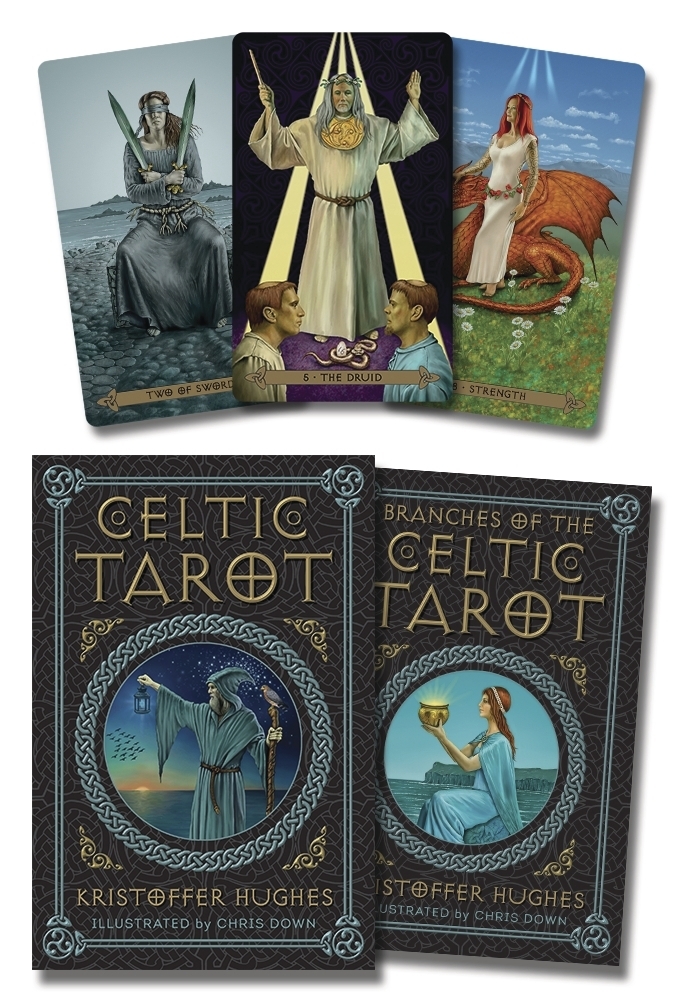
Image at Llywellyn Press site for Celtic Tarot:
I include this because I asked Kris about his experiences with publishers and about where best to order the book (I like to meditate and ask if I need a particular book rather than buying it on the spot.) Kris said, “Through Llywellyn I earn about $1.40 for each book. Through Amazon, because of their deal with Llywellyn, I earn about 12 cents”. So if you’re inclined to purchase this stunning set and learn Kris’s no-nonsense and eminently usable techniques — “you don’t have to be psychic; you need to be able to tell stories, which is something Druids do” — bear those numbers in mind.
/|\ /|\ /|\
This year for the first time, rather the ECG staff manning the kitchen, the Netimus Camp staff took over meals, freeing up camp volunteers and doing an excellent job of feeding and nourishing us.
Chris Johnstone’s Sound Healing workshop greeted us Thursday, the first day, an excellent antidote to the stresses of travel to reach the camp, and a reminder, always needed, that we never abandon foundational practices of centering and meditation, ritualizing and balance.
“pasta awen” — Druid humor. Photo courtesy Russell Rench.
Gabby Roberts’ workshop, “Energy work–Grounding, Centering and Releasing”, deepened the reminder, and gifted us each with polished onyxes to take with us. “Awareness and Connection with the Land: A Druidic Perspective”, with Thea Ruoho and Erin Rose Conner, detailed the many unconscious moments we can transform in order to be more conscious and mindful living on the earth. Thea and Erin ended their talk with an invitation for us to recycle, burn in the fire circle, or give back the “sacred crap” we can accumulate, that litters our shelves and altars, but contributes no energy.
Gathering attendee prepping for Druid Staff workshop
I missed Christian Brunner’s provocatively titled “A Journey to the Very Old Gods” due to an important conversation I needed to continue; the same thing happened a second time with Frank Martinez’s “Connecting with the Plant Community Through a Druid’s Staff”. Thus go the rhythms of a Gathering, which for me, anyway, almost seem to require a rhythm that may take you away from one or two sessions to something or someone else, calling you with imperatives all their own.
Most days of the year, of course, we’re all solitaries, whether we practice alone by choice or necessity, or enjoy the intermittent company of a few others in a local Pagan community, an OBOD Seed Group, or a full Grove. Each day we greet the light and air and season, attend to bird and beast and bee and tree, and our own bodies and lives, and listen for that heartsong. So a Gathering, camp, retreat, etc., is no panacea, but it does give us a chance to reconnect, recharge, recalibrate what we do and where we’re heading. Its ripples persist after the “hour of recall” comes at the close of a Gathering.
On Saturday, the last evening, the ECG organizer announced at dinner that this 9th year of the Gathering has seen the fulfillment of its initial goals and will be the last year. ECG has served newcomers well, linked practitioners over the years, offered a family-friendly space (which not all camps choose to do), helped us forge friendships, seeded new camps and Gatherings — including Gulf Coast Gathering and Mid-Atlantic Gathering U.S. (MAGUS), and provided a supportive venue for group initiations for those wishing that experience.
A Council is already in place to help organize a new event that will launch next year, with new energy, goals, and intentions. As the organizer exclaimed, “Watch for it!”
OBOD standard ritual closes with these words: “As the fire dies down, may it be relit in our hearts. May our memories hold what the eye and ear have gained”.
“Human cognitive powers have a seasonal rhythm, and for those living in temperate regions in the northern hemisphere they are strongest in late summer and early autumn”, says an article in the 4 Sept 2018 New Scientist (subscription req’d for full article).
We can assume, in spite of the article’s “hemispherism” (a tendency to privilege the northern hemisphere, or exclude the southern one from consideration altogether), that a similar rhythm holds true for the southern hemisphere in their late summer and early autumn, while the north slumbers uneasily beneath snow and cold in late winter and early spring. Southern friends, if you’re so inclined, bookmark this and return to read it when it’s more seasonally appropriate for your Land.
It stands to reason that harvest, with its demands for food preparation, its expanded food sources and increased nutrition, its social gatherings and preparations for the coming winter, would draw on and amplify human capacities of every kind, cognitive powers included. The lethargy of the heat of high summer has passed, and that crisp tang in the air and the red and golds that blanket hillsides in New England in particular, and draw so many to name autumn our favorite season, all conspire to spur us to activity. In the U.S., schools re-open, and you can feel the tilt and shift of the change from summer from late August through September.
Pagan and Magical Orders have long identified the equinoxes as times of particular inner activity. Initiations in many Orders take advantage of this heightening for its boost to ritual. By pairing our actions with what happens to the planet, we harmonize with currents deeper and more lasting than “what’s new” or what reaches the headlines or media-feeds on our preferred sources of gafs— gossip, advertising, fear-mongering, and sensationalism — that we still call “news”.
For what is truly “new” has of course been going on just beyond our noses all the while. The earth shifts and rebalances every moment. Plants renew the air, and we can keep breathing; they send forth seed and fruit, and we can keep eating. In spite of human assumptions, they’re under no obligation to do so, yet they gift us with their own substance year after year, just as we feed them with our breathing and our waste and our own bodies when they wear out. Break the cycle we’ve built together over eons, each learning the others’ gestures and energies and characters, and the relationship falters, like any relationship we no longer tend.
The initiation of cause and effect, which the Wise tell us we have repeatedly rejected corporately as a planet, has not disappeared or been switched off, or cast aside for something better. It still awaits our preparation and acceptance. With it, we can heal and create and thrive and change. That doesn’t mean it leads to heaven, or the apocalypse, or the Singularity. It’s simply life. And without it, we do what we always do when we reject growth. We stagnate, suffer strange outbreaks of dis-ease, regress, accumulate toxins, bloat, stifle, blame, blunder, and flail about. We cannot stand still, so if we don’t progress, we lurch backward, trampling new growth. The cosmos mirrors itself back in our awareness. We get what we give.
dew on spiderwebs earlier this a.m.
The first glimmers of acceptance of the initiation spring up around us in individuals who have taken another step. And each of us has, in small and larger ways. Chickens come home to roost politically and environmentally. Mass consciousness shifts by fits and starts, even as individual consciousnesses grapple with change, whether each welcomes or fears it, resists it or works with it. The tipping point, however, is not yet. What we cannot force for the planet, however, we can navigate and midwife for ourselves and our closer circles. This will help more than almost anything else, because it prepares us to weather and grow through further changes and trials, even to flourish, and find joy.
Autumn renews in a different fashion than Spring. We are not seeding, at least not right away. Instead, we gather seed. We take stock, store up, brew, reap, glean. We’re weatherizing, stock-piling, fermenting, pickling, consolidating. We are, in the fuller old sense of the word, brooding, as a hen does its eggs. The soft yet edged light of September bathes days when the sun shows, a goldenrod month, a month of falcons.
Septem is “seven” in the older Roman calendar, the seventh month, counting from the similarly old beginning of the year in March. Seven is fullness, the sum of the 4 of the earth’s quarters and the 3 of the eternal cycle. Now that it’s also the ninth month in most current calendars, it draws as well on the magical symbolism of that number, a three of threes.
Rather than troubling overmuch about whether such associations are “true”, it can be more fruitful to see how and when they might be useful or accurate or faithful metaphors or maps or representations, and for which of the many different states of consciousness we all pass through.
Autumn, like every season, offers itself as a contour map of brains that have evolved over millions of autumns. What we see mirrors the tool with which we see it.
As the second tree of the Celtic ogham “tree alphabet”, the Rowan, ogham ᚂ and Old Irish luis, is associated with Ovates, the second of the three Druidic grades in much of modern Druidry.
Rowan, or Mountain Ash, is certainly up to that role, both physically and symbolically.
In Europe one common native variety is sorbus aucuparia; in the U.S. it’s usually sorbus americana. The rowan’s leaves resemble those of the ash, but the two trees belong to different families, the rowan being a relative of the rose. Standing out front of our southern Vermont house, “our” rowan was the first tree to alert me to the attention the previous owner, a native of Austria, devoted to certain plantings on the land. Not hard to notice, when our rowan stands near the road, offering its protection. In fact, roadsides are a common location for the rowan, often planted by bird droppings containing the seeds. Its European species name aucuparia means “bird-catcher” — the rowan attracts birds like cedar waxwings — we often see a flock of them come through in late winter, and strip any remaining berries for their sugars and vitamin C.
(A little digging uncovers research demonstrating the rowan’s central importance for humans as well, particularly in Austrian folk medicine, as an anti-inflammatory and treatment for respiratory disorders, as well as “fever, infections, colds, flu, rheumatism and gout” according to the article at the link.)
The sky was overcast a few minutes ago when I took this picture. The red-orange berries are still ripening, and will be ready for harvest in October or early November, after a frost. Though our tree bears the brunt of winter’s north winds and a spray of snow and sand at each pass of the snowplow in winter, it’s a tough, scrappy species and still flourishes. Wikipedia notes:
Fruit and foliage of S. aucuparia have been used by humans in the creation of dishes and beverages, as a folk medicine, and as fodder for livestock. Its tough and flexible wood has traditionally been used for woodworking. It is planted to fortify soil in mountain regions or as an ornamental tree.
The rowan’s Old English name is cwic-beam, “quick” or “living” tree, which has survived into modern English as the variant name quickbeam. The name of one of Tolkien’s Ents in Lord of the Rings, Quickbeam is “hasty”; his Elvish name Bregalad translates to roughly the same thing — “quick” or “living” tree.
As a tree sacred to Brighid, the rowan also produces five-petalled flowers and fruit with tiny pentagrams opposite the stem — barely visible in some of the berries below, especially at the bottom left:
What put the tree before my attention now in particular is an invitation to serve in the Ovate initiations at East Coast Gathering in a few weeks. A rowan stave with a ᚂ on it will make a good gift to each of the new initiates.
The rowan shrugs off cold weather — it can be found at remarkably high altitudes; it flowers in white blossoms in spring and produces red berries in autumn. Thus it earns its nickname “delight to the eye” in the 7th century Irish Auraicept na n-Éces. As a tree to represent the toughness, persistence, and changing work in each season required to pursue the spiritual journey we’re all on, the rowan is a worthy candidate. It is often named the “most magical” of all the trees. As protection against another’s enchantment, it can aid us in creating our own.
Its mythological and folkloric associations are many. (You can find another rich link on the rowan here.) As a “portal tree” facilitating entry and return from other-worlds, the rowan invites contemplation under its branches.
[Solstice light and fire can fill us with energy to tackle the big stuff. At least, that’s my sense of this post, after drafting and revising it. Here goes.]
MAGUS ’18 fire circle. Photo courtesy Crystal Collins.
The title for this post comes from a line in a recent column in the UK paper The Guardian. (I routinely skim the foreign press both as an escape from the breathless hyper-partisanship of U.S. media and also for key perspectives often wholly absent from American consciousness.)
Every age has ’em: the issues screeching for our attention, promising imminent peril and world-flattening disaster if we don’t ramp up our paranoia, doubt, fear and despair to the pitch of the writer, pol, preacher, activist, etc., etc. If you haven’t developed a nervous twitch just from hearing certain triggering labels in the 24-hour news-cycle, you obviously haven’t been paying attention.
Which is exactly what I try to practice and quietly urge on others, if they choose to give me space to talk. Often they don’t, and I don’t insist. Stop paying attention, which is a form of our energy, to absolutely everything, just because it asks for it. Pay attention specifically to what builds, to what gives joy and life to you and others. Otherwise, why bother?
What follows is geek-talk, if you’re not a Tolkien-fan. You might as well use the search box at the top left to find a topic that interests you, or wander elsewhere on the Net to track down what will feed and nourish your powers. Surf well.
OK, you’ve been warned.
Remember the Council of Elrond in The Lord of the Rings? In that remarkable extended scene with its many speakers, Gloin recounts how an emissary from Mordor comes to Dain Ironfoot, king of the Dwarves in Moria, and demands Dain’s compliance with a request. Dain answers prudently:
“I say neither yea nor nay. I must consider this message and what it means under its fair cloak.”
“Consider well, but not too long,” said he [the emissary].
“The time of my thought is my own to spend,” answered Dain.
“For the present,” said he, and rode off into the darkness.
We’re always asked to decide, to react — preferably as-quickly-as-possible — but certainly notto spend our time considering the messages we receive, or to originate a response that’s not simply a manipulated reaction for or against.
The time of our thought is our own to spend, if we reclaim it, which is precisely what we need to do if we’re to find a balance and poise that will let us act prudently, navigate our own lives with a measure of confidence and joy, avoid inadvertently assisting the dis-eases of our times, and possibly aid the forces of light. (Yes, sometimes the admittedly exalted and grandiloquent language of fantasy has its place in a realist view of things. In times that feel over-the-top, eloquence and dramatic language fit perfectly. If they move us in any way to preserve our own integrity, they merit a place in the action.)
And we each need to do this in our own ways, which means no single formula that I or anyone else proposes will suit us all. No OSFA.* The Druid tradition of the triad quietly tells us to look beyond crippling polarities — it bids us ask where the third factor lies, and what it contributes to the situation — but it’s far from the “only solution”. Other factors shape any situation, but threes at least have the virtue of avoiding the potential deadlock of twos. A tie-breaker is built-in, so to speak. Freed from the grip of either-or, many a situation opens onto unexpected possibilities and directions.
I refuse — with the defiant gesture of Galadriel repulsing the Shadow — to spend my hours in despair, like Denethor, who thought he saw truly with his palantir, when all he perceived were the visions Sauron fed him. And a corollary: If I can’t contribute effectively to matters I care about, I will work where I cancreate and originate something positive, however modest. Instead of complaint, muddying the atmosphere for myself and those around me, I will build as much as I can.
And I vow — with the wisdom of the exchange of Elrond and Gimli following the Council — to keep faith with my own ideals, even as I test their validity.
“Faithless is he that says farewell when the road darkens,” said Gimli.
“Maybe,” said Elrond. “But let him not vow to walk in the dark, who has not seen the nightfall.”
“Yet sworn word may strengthen quaking heart,” said Gimli.
“Or break it,” said Elrond. “Look not too far ahead, But go now with good hearts!”
But what does that mean in my case? Showing up to write this blog, I reach 400+ people who find some value in what I say. If I can help raise spirits, I’ve found one way to serve. We each have many, and to identify them and give them attention can be a revelatory experience. We each matter much more than we believe or feel most days. (What dark magic have we allowed to enspell us that we think so little of ourselves?)
Lastly, I swear fealty to what I know of the highest and best, trusting that any purgation I face, should I fall short of my own ideals — as I have and will again, no doubt — will necessarily restore me at length to the commitment and service I aspire to.
There, a triad for myself, and for any others who may find value in adapting it to their situation, experience and capacities.
/|\ /|\ /|\
*OSFA: “one size fits all” — a personal meme reminding me to suspect the single fix, the one answer, the sole acceptable response, the cloned ideal, the mono-culture, etc.
Inspiration, the awen of the Bard, isn’t all or nothing. Sometimes you get one corner, a kind of foothold, a vantage point, enough to see more, to see a whole landscape through a window just before the window closes.
The house of fire —
no closed doors —
only porches and windows
opening onto flame.
A few notes for other stanzas, and that was it. But sometimes a fragment is enough. You can jump-start with it, from it, months afterward.
/|\ /|\ /|\
Sometimes, likewise, if we’re open and available, the trees really do tell us what we need.
I help oak, and oak helps me —
we’ll join to hold the energy.
This little rhyme came to me while we meditated at the foot of an oak — part of our ritual prep for the main ley-line rite at MAGUS ’18 last weekend. As much as the oak ogham stave in my hand, the rhyme helped me focus during the ritual. Our outer duir oak ring was charged with gathering and holding the energy the ritual would generate, until the moment our ring moved to the center altar and charged the stones waiting there. One fellow outer-ring participant said it felt at first like a very small pup trying to corral a very large beach ball. But then we joined together to “become one big-ass dog that could tackle it”.
Not surprisingly, the carefully-planned ritual generated a lot of power. I know I can often be slow in picking up on magical energies flowing around me. “Obtuse” wouldn’t be too harsh a word, much of the time. So I knew I had to deal with doubts about my usefulfulness as well as concerns about my vulnerability.
Now it’s easy to rationalize almost all magic. I do it myself, and I often do it well. But rather than debating whether it — or any other experience — is “real” or “genuine”, I can opt to apply different criteria and free myself for more useful tasks. A good logic-fest can be fun at times, but it’s often a tail-chasing exercise. Whether we’re falling in love, writing a song, painting, gardening, caring for others, or working with a dream journal, logic typically isn’t the first or the best tool to employ. A chisel, sandpaper, a potter’s wheel — all produce markedly different effects. They’re so notinterchangeable!
Philip Carr-Gomm addresses the issue in his characteristically understated way. In this short Youtube clip he proposes something other than logic for looking at and assessing experience:
Rather than obsessing over whether an experience is true or genuine, I can contemplate its effect on me and my life. Have I benefited from the experience? While not all experiences are easy or painless, is the insight, perspective or compassion for others than I have gained worth it? “Is the juice worth the squeeze?”
Sometimes, a full answer to those questions may not come for months or years. And that’s OK. By themselves, experiences can resemble an afternoon at an amusement park. Pay your money, get your experiences. But their long-term effect and value is a more helpful measure of their worth.
After a hard winter in much of the U.S., a vigorous flourish of Spring greeted participants of MAGUS 2018 arriving in south-central Pennsylvania at Four Quarters Sanctuary. Blessings of Beltane!
photo courtesy Srinivas Anand
photo courtesy Fae Hanks
photo courtesy Srinivas Anand
EMBODYING SACRED TIME and SPACE
The 2018 Gathering theme “Sacred Time, Sacred Space” emerged in a closely-linked series of workshops preparing the ground for the main ritual of the Gathering.
The saying “If you build it, they will come” has now passed into common lore, but a variation of it is also beautifully true: “If they come, you can build it.” Plan thoroughly, call the Tribe, put your heart into it all, and group magic happens with each person contributing. This holds true each summer for Four Quarters’ “Stones Rising” festival, when another stone is erected in the Stone Circle using neolithic methods, sweat and determination. And it certainly held true this Beltane.
View of a portion of the Stone Circle. Photo courtesy Anna Oakflower.
THURSDAY
After an 12-hour drive from Vermont to Pennsylvania, broken by a stop-over in Binghamton Wednesday night at the house of an OBOD friend also attending the Gathering, we arrived in time to settle into tent and bunkhouse, and attend the first workshop Thursday afternoon, “Envisioning the Future of American Druidry”.
Dana led us to examine what, after all, we do as Druids in the 21st century in this land. What matters to us? What tasks come to our hands as a result of being alive now and here, rather than at any other time and place? How do we acknowledge and interact with a sacred landscape?
After opening ritual later that evening, several of us gathered briefly in the dining pavilion with seven Bards asking for group initiation the next morning, in order to answer questions and attend to final details.
I was privileged once again to participate as a initiation celebrant. As I’ve written elsewhere, this is joyful service. As we perform the ritual of initiation, we strengthen the bonds with our community, we open the circle of Druidry to another person who wishes to stand with us, and we renew our own commitment.
“We swear”, go the ritual words,
by peace and love to stand,
heart to heart and hand in hand.
Mark, O Spirit, and hear us now,
confirming this, our sacred vow.
FRIDAY
The morning dawned warm and mostly sunny, and celebrants welcomed new Bards one by one in the Stone Circle, a powerful setting for initiation. Recognize and invite the ancestors over time, and not surprisingly you begin to pay attention to them more carefully, and sense their presence.
wood pillar, northeast quarter of Stone Circle.
WIth the blessings and active involvement of Four Quarters staff, each MAGUS attendee found a stone for the main ritual, and many attended Forest’s Stone Carving workshop Friday afternoon to incise on them one of four ogham of the sacred trees we were working with in preparation for the ritual — birch, white pine, elder and oak.
Forest’s Stone Carving workshop. Photo courtesy Patricia Woodruff.
After dinner Friday evening came the workshop “Chanting for Sacred Time and Space”, with Tom and Loam helping us to tune to the land and to each other with group songs and melodies.
Later, several of us gathered by Sideling Creek for the night-time Ovate initiations. A few brief spatters of rain refreshed rather than soaked us. Peepers and owls sang the initiates through the rite.
The Fire Circle that evening was livelier than Thursday’s. I longed to stay, but I couldn’t keep my eyes open for more than another half hour, so voices and drums and laughter saw me off to bed.
Photo courtesy Crystal Collins.
Forest models a t-shirt. Photo courtesy Patricia Woodruff.
SATURDAY
Cat’s morning workshop, “Terra Incognita: Mapping the Sacred”, helped expand our sense of maps and spaces, and led us deeper into the energy ley lines can carry.
Cat’s workshop on mapping the Sacred. Photo courtesy Patricia Woodruff.
That afternoon, in “Creating an American Ley Line Network”, Dana focused us further, letting us draw an ogham stave with one of the four tree ogham. Now grouped with the others who drew the same staves, together with our group leaders we practiced chanting galdr, the tree/ogham name, and meditated to strengthen our connection to our specific tree.
MAIN RITUAL
Preparing the Main Ritual space. Photo courtesy Dana Driscoll.
By 4:30 pm Saturday we’d assembled in the Stone Circle, transformed earlier in the day by the ritual team who marked out the sacred space. Now it was sparking with energy from the bright yellow cornmeal rangoli. [For a picture of the rangoli at ECG 2017, go here, and scroll down to the ninth image.]
Participants each brought their stones to lay in the center of the ritual circle, ready for charging in the powerful galdr ritual that followed.
Below, Sue and I stand together briefly after ritual and our group’s grounding session, the ogham duir “oak” in white on our foreheads.
Photo courtesy Anna Oakflower.
Careful attention by the ritual leaders kept us all grounded and centered, though you can see we still look a little dazed. The Four Quarters kitchen staff made sure we had a meat option at dinner a quarter hour later, to help us earth any remaining energy.
EISTEDDFOD
And of course no Druid Gathering is complete without the Bardic arts of music, poetry, drama, etc. This year MAGUS added a visual arts eisteddfod to celebrate a wider array of skill. Below, the eisteddfod continues in spite of rain, indoors in the dining pavilion.
Photo courtesy Patricia Woodruff.
SUNDAY
Linked now by magical intention and the physical key of a sacred rock each will take home, we closed the weekend in a gentle rain with our final ritual. An extended acknowledgment of each person who had contributed to the weekend helped ground us and speak our gratitude as the MAGUS team recognized workshop leaders, ritualists, support staff, organizers and Four Quarters staff.
We said our goodbyes, and departed. I know I will return, in the meantime “singing up the ley lines”, as the verse of one of our chants reminds us to do. I whisper the words as we drive home in the spring rain.
As I wrote for MAGUS ’17,
How to convey the blend of the speaking land, the personal and the tribal at such Gatherings?! You come as someone new to Paganism, or to OBOD more specifically. Or you come knowing you’ll reunite with your people once more, across the miles. If we saw each other every day, we might begin to forget the human and spiritual wealth that surrounds us. In ritual, in conversations in the dining pavilion, or over coffee during breaks, we’re reminded that we’re never alone, no matter how solitary we may live the rest of the year. Inner connection exists over any distance.
/|\ /|\ /|\
[For those interested in further details and the perspective of one of the principal Gathering ritual organizers and leaders, here’s the most recent of Dana’s posts on “An American Ley Line Network: A Ritual Of Creation”.]
It’s Unverified Personal Gnosis, of course, but I have a sneaking suspicion that the mic is always hot. The universe — intelligent Web that it is (after all, it gave birth to you and me, right?) — is always listening, manifesting and responding to us.
Often it can feel like we pray and get no response. For that reason, some — many — may have sensibly dispensed with prayer. No surprise there, since asking has never done much in isolation. Oh, it does a little. It opens a few windows and doors, but if we don’t look out or walk through, they soon close again. Follow-through, follow-through, I say to myself.
What about the prayers the universe prays to us? Do I really think it only goes one way?! How many prayers have I left unanswered? What is my part in manifesting? If I’m god-like, then what’s god like?
Part of the magic (it’s all “mostly magic”) is a matter of scale. Hot mic Druidry, just like hot mic Christianity (and hot mic atheism, for that matter) is partly a responsiveness to being alive, a sensitivity to here and now, this moment. So much of the time I’m anywhere but here. We use the future as a substitute for a larger present.
I shrink the present into the longest I can pay attention before something better takes its place. But (one of the handful of truly powerful and magical words in English, along with yes and if, why? and thanks! and even our own names, magical or mundane, chanted with intention, until the potential of what we are starts to resonate and I gasp at large we all really are) — but with loving attention, the present can expand to contain everything else. And I know that’s when the magic happens.
Most of us experience this intermittently, in “flow” moments. To taste this is to experience the “kingdom within”, as José the Carpenter put it. The old Hermeticists and Qabbalists spoke of Malkuth, kingdom, just below Yesod, foundation. The kingdom is just that close, and once the windows and doors open, we have the Foundation for everything else. And the “eye of the needle”, so easy or hard to pass through, depending? Well, that’s the eye of our own perception, clenched tight from disuse, or opening to let in the Light and Voice of the Silence. We don’t need any more teaching at this point. We need prods and reminders to put into practice what we already know.
What metaphor will catch my attention this time? Which one will work for me and aid me in taking that next step? Truth-of-this-Moment, enough to jump start the next one.
So I keep catching pieces, fragments, glimpses, echoes. Sometimes it’s downright embarrassing how much of my time here I squander, until I recall that this too is mission. There’s no hurry along the spiral. Only the Fire burning in each of us. Sit still warming myself a little too long, and that part gets scorched. On to the next, in turn. (The “best” among us just get basted more evenly.)
In this season of the approaching fire festival of Beltane, it’s no surprise our images and metaphors are fire. Cold can burn, too. If we can fight fire with fire, can we not welcome fire with fire?
As I write, the sleet and rain of a mid-April winter storm blanket southern Vermont, patter on the roof, and coat our driveway and solar panels.
Dana Driscoll in her wonderful Druidgarden blog writes:
This unseasonably cold spring offers a number of powerful lessons. The first is in studying people’s reactions to the cold vs. the land’s reactions to the cold. Humans have grown to expect predictable certainty; the certainty of the seasons coming on a schedule that we could depend on, the certainty of USDA* zones and last frost dates. But that’s not what this planet can offer us anymore. Predictable certainty says that by mid April, we “should be” firmly in the spring months. There “should be” buds and flowers. There “should be” warmth. But climate change prediction models say otherwise–-the East Coast of the USA, where I live, is likely to see shorter springs and longer winters, particularly as the jet stream continues to shift. The truth is that spring will come, but it may take longer than any of us would like. Spring will come and frost will come, and summer and fall will also come-–but no longer on predictable schedules. The daffodils understand this-–they simply wait. The animals and insects understand this–-they wait. The flowers and seeds understand this–-they, too, wait.
[*United States Department of Agriculture zones for estimating growing seasons, planting dates, plant hardiness, etc.]
Such patience is cauldron and wand working together.
/|\ /|\ /|\
I recently obtained a copy of Hewson’s Dictionary of Proto-Algonquian (Canadian Ethnology Service Mercury Series Paper 125). If we’re serious about wanting to talk with the spirits and land-wights in North America, and we also want to avoid cultural appropriation of living languages and practices, why not go to the source?! Just like with Proto-Indo-European for Europe, we can learn Proto-Algonquian! (Right now I’m looking at how place-names are constructed.)
Except.
One of the fallacies we cherish involves continuity and change. In our search for authenticity we often grant an unconscious, and sometimes conscious, primacy and superiority to “languages-spoken-when”: we study Old English or Old Icelandic if we’re Heathens or Asatruar, we turn to Irish or Welsh or Gaelic to be truer to the Celtic tradition, just as Catholics may pick up some Latin if they attend Catholic schools or regularly attend a traditional Mass, and more conservative Jews acquire some Hebrew as a language of their heritage and tradition for Bar and Bat Mitzvahs and Seders and Synagogue prayer and ritual. Languages of lore and wisdom are valuable gifts from the past, from the ancestors.
But just as speakers of English no longer speak Old English as a native tongue to greet the dawn and the land, or pass the bread and butter, the spirits and land wights can connect through our modern tongues just as well with us, and we with them, as we ever could in the past.
Robert Frost, old bard of the land, like any true bard, had access to Otherworld wisdom. You can hear it in “The Gift Outright” (which I often return to when this topic comes up), through the views and stances and limits of his time — as through ours, limits which we cannot yet wholly see — when he peers into that deeper well for vision and understanding:
The land was ours before we were the land’s.
She was our land more than a hundred years
Before we were her people. She was ours
In Massachusetts, in Virginia,
But we were England’s, still colonials,
Possessing what we still were unpossessed by,
Possessed by what we now no more possessed.
Something we were withholding made us weak
Until we found out that it was ourselves
We were withholding from our land of living …
Possession, possessed by, withholding — we carry deep attitudes and archetypes not lightly to be dismissed. Indeed, they are part of our work. But for all that, the Land where I live here in New England doesn’t “withhold” itself from me because I say Lake Champlain rather than Bitawbakw, or Burlington rather than Winooski. Rather I withhold myself through heedlessness. It’s my intent and practice that make up any difference.
view of Nubanusit from Hancock, NH
Every land has seen many people on it come and go. The language — any language — is for my comfort and focus — for any act of consciousness. If out of respect I devote energy to learning old ways of address, the Otherworld (and this world) accepts that gift in the spirit it is given. Let it outweigh other considerations, though, and I’ve stepped out of balance. To use the terms of the previous post, my speech and ritual are my cauldron and wand.
Yes, it’s still a pleasure to say the New Hampshire Abenaki lake names Skatutakee [skah-TOO-tah-kee], Nubanusit [noo-bah-NOO-sit] and Winnepesaukee [win-neh-peh-SAH-kee], even if they’re poorly Anglicized.
Names matter. Echoes remain. That’s how we fashioned a modern Druidry. Trust the echoes, if they’re all I have at the moment, follow them, and they lead to the originals.
Wiccan ritual often demonstrates an instinctive understanding of the power and wealth of names and naming. The Charge of the Goddess reminds us to attend to echoes and inner music:
Listen to the words of the Great Mother; she who of old was also called among men Artemis, Astarte, Athene, Dione, Melusine, Aphrodite, Cerridwen, Cybele, Arianrhod, Isis, Dana, Bride and by many other names …
Here we’re close to the Jewish Psalm 137, a song of exile sung in Babylon:
How shall we sing the LORD’S song in a strange land? If I forget thee, O Jerusalem, let my right hand forget her cunning. If I do not remember thee, let my tongue cleave to the roof of my mouth; if I prefer not Jerusalem above my chief joy.
If I do not recall and recite the old names, may I lose the power of speech as proper penalty. A curse, just as with a blessing, is not a thing to be summoned lightly.
/|\ /|\ /|\
To paraphrase the old adage of the Hermetic Mysteries: “Pilgrim on earth, thy home lies in all the worlds; stranger, thou are the guest of gods”.
MacLir (cited below and in the previous post) notes:
We find other wands in myths that are the sources for our modern wands. One wand user, the Greek god Hermes (Roman Mercury), has long been linked to passage between earth and the higher realms. The staff or rod … the caduceus of Hermes-Mercury has come to be associated with healing and the medical profession due to its similarity to the rod topped with a brazen serpent employed in the Bible by Moses to work healing magic. It has also been mixed up with the wand of Asklepios, a Greek demigod closely associated with medicine and healing. Asklepios used a wand that is usually depicted as a rough branch with a single snake spiraling around it (Wandlore, pg. 7).
Wand, staff, ogham stave, intention to plant, to sow and to manifest, I honor you.
Spring, east, dawn, wind, intelligence, will, knowledge, wand-realm — cauldron has called you forth, evoked and invoked you. Kundalini, serpent power always coiled, wand and cauldron, now I will work with you both, doing the work humans are uniquely called to do, standing between earth and heaven, foot and hand in so many worlds.


 What does the foregoing rant have to do with Arthur, or a secret tradition? Knight gets right to it on his first page. He explains “the hold that the legends of Arthur and his Knights exercises on the imagination … they enshrine a secret Mystery tradition … which was also the guiding force behind the old stone circles and trackways of Western Europe”.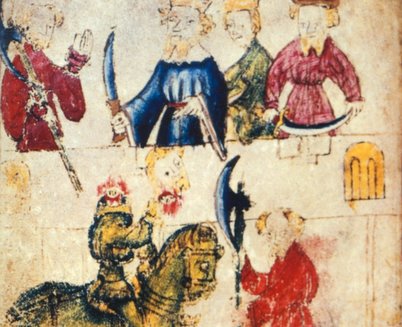
 Or what seems almost the opposite to flame: I reach for a stone to hold in hand, door to memory, cool to the touch, scented with earth and mud and time, piece of the planet in my palm. The same, not the same: I build our house- or studio-fire, humming quietly to Brighid, the path of the act of building the fire paralleling the path the fire itself takes through the wood. I kindle, but whether it’s my spirit or the wood that’s burning starts to matter less: it’s both.
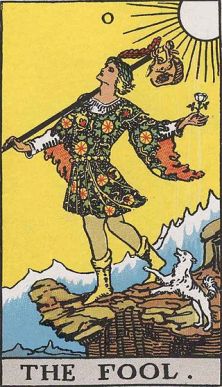 Experiment with learning more about your animal familiar — an ancient and worldwide practice. Animal guardians and teachers abound in myth, legend and folktale for good reason. Many of us know instinctively why we keep pets, and every year we learn more about the health benefits and remarkable abilities domesticated animals bring into our lives. The tarot Fool sets out on the long journey toward wisdom already accompanied by an animal. Who are your companions and what can they teach you?

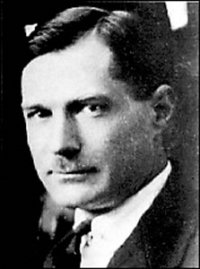

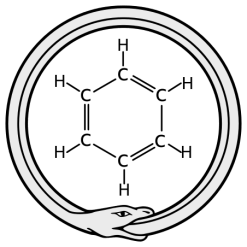 Even mundanely, golfers visualize a hole in one, carpenters see the finished design long before it emerges from the blueprint, chemists rely as much on inspiration as any artist for discoveries like that of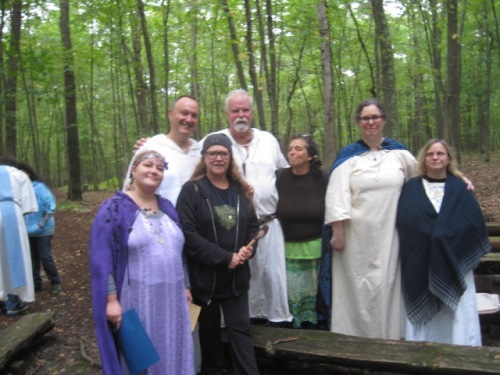
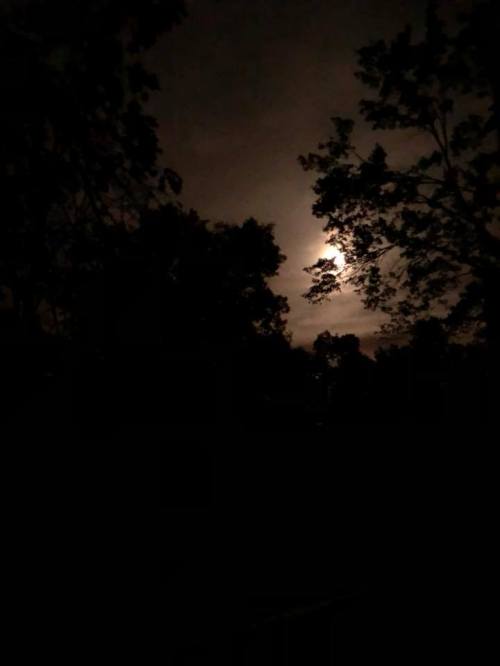

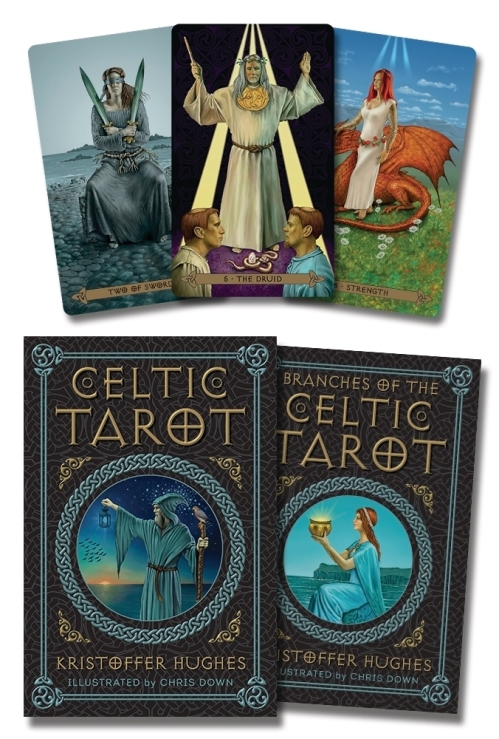
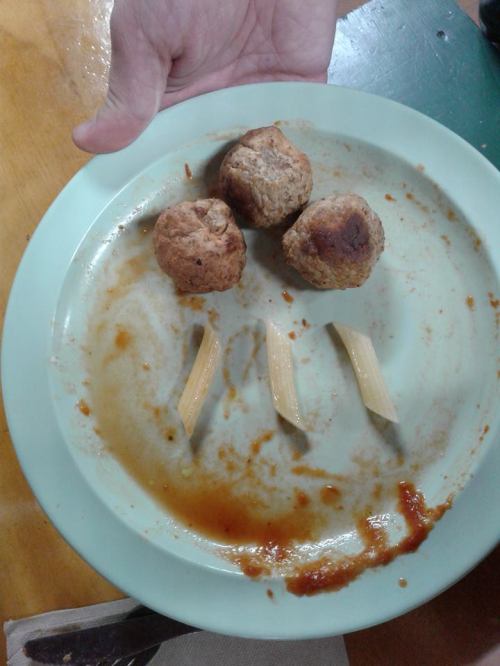
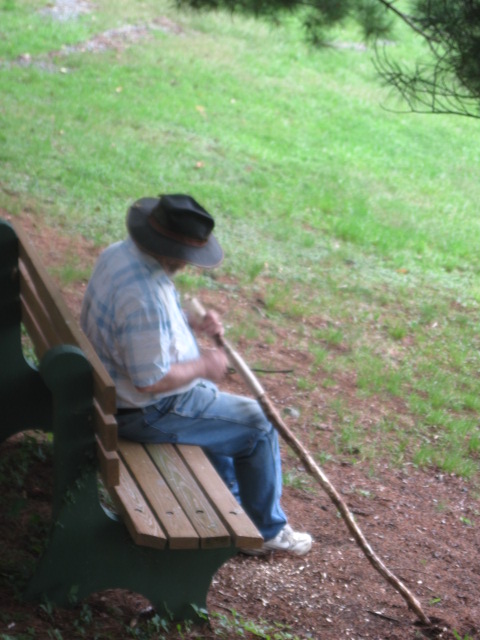

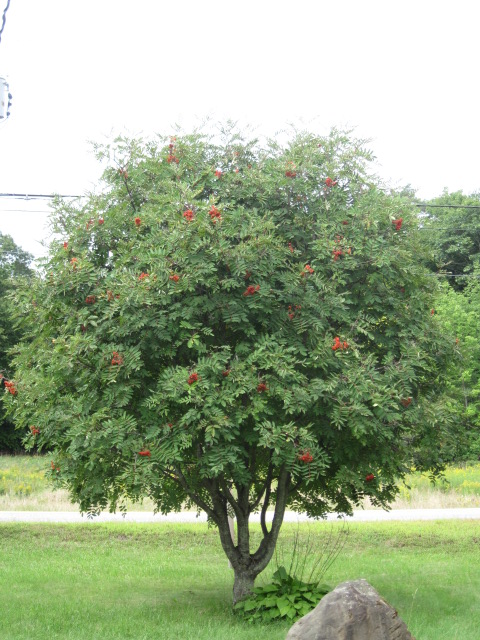
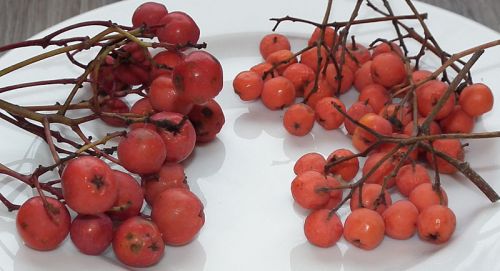


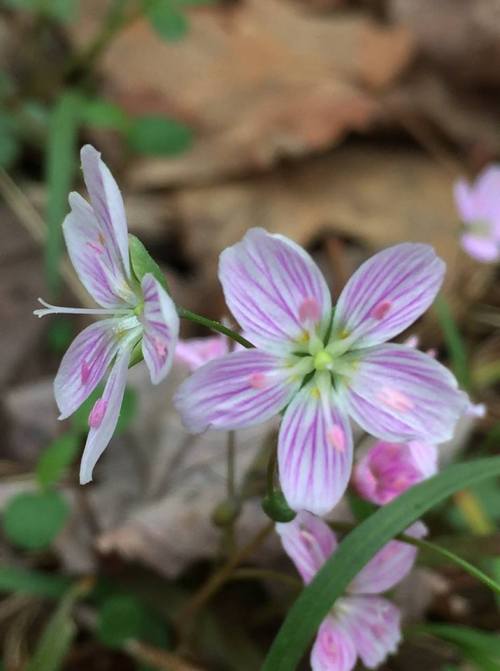
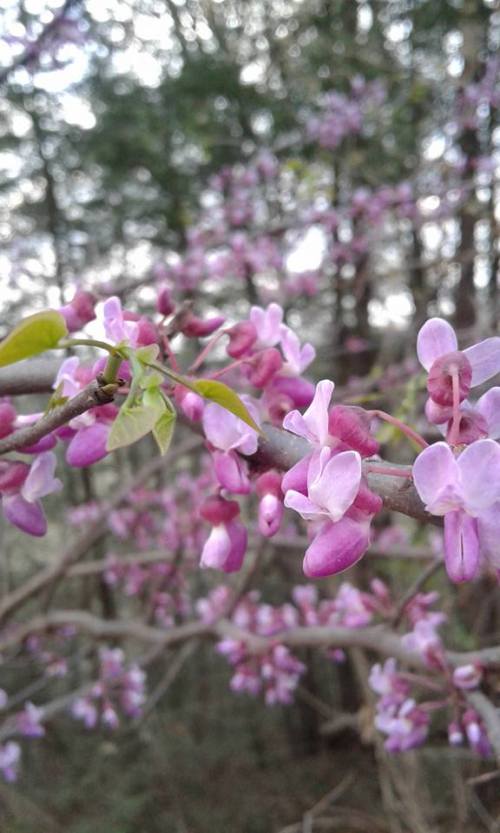
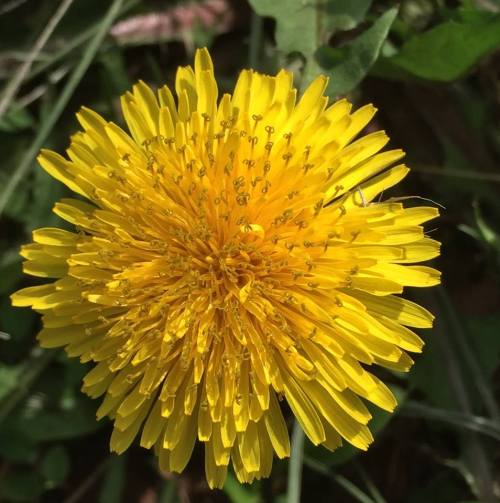
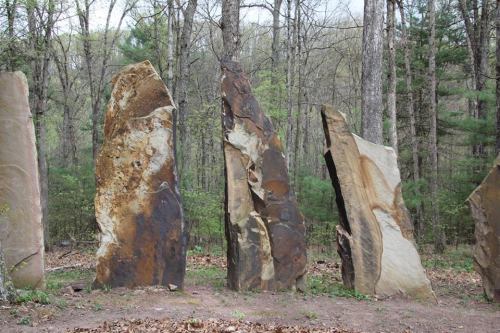
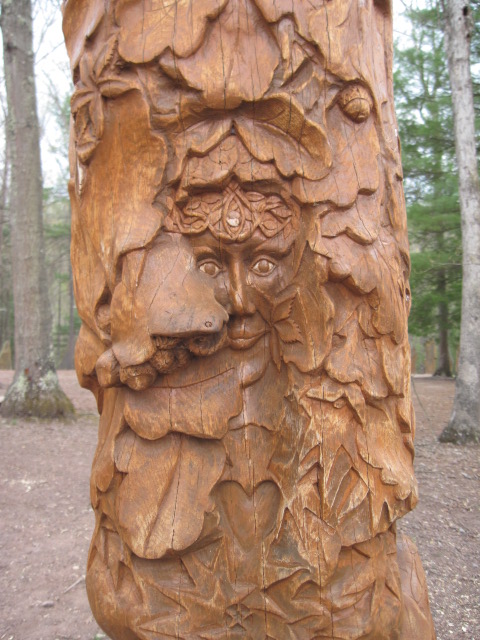
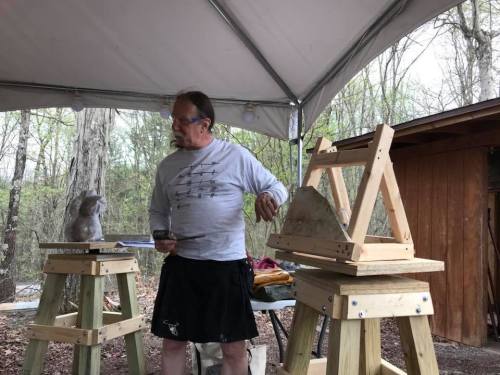


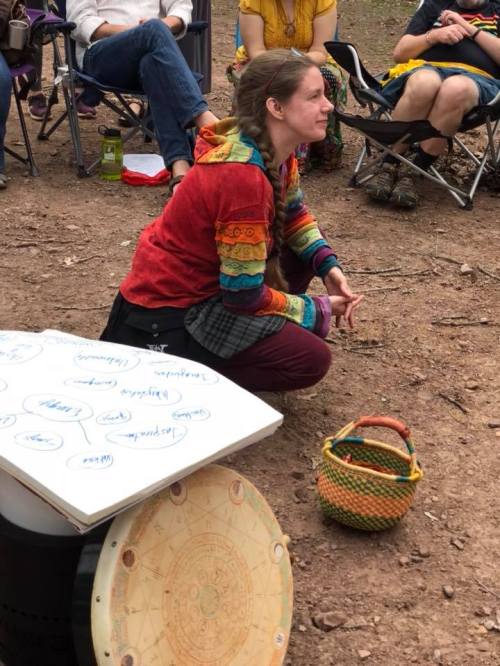

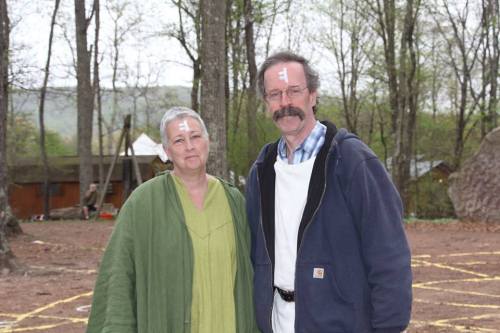
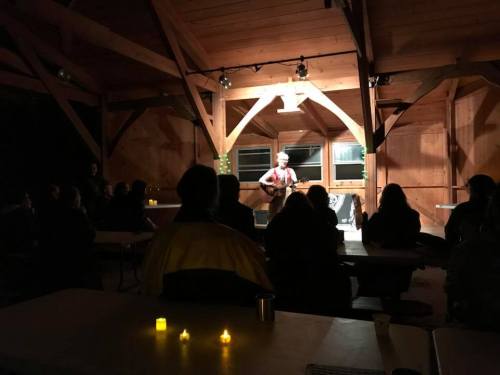

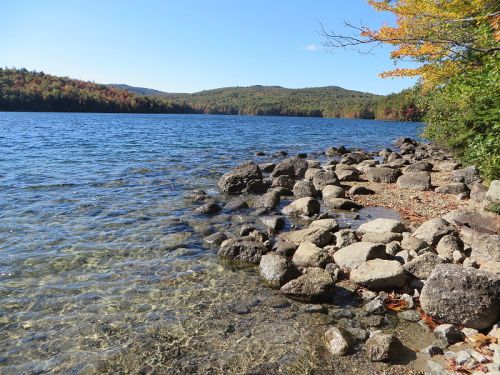


 A Druid Way