In a 2013 post I wrote that when I remember the ancestors,
I make my very own Samhain-on-the-spot, the veil between the worlds thins, and I converse with the dead, with the Otherworld, with the generations stored in my DNA and blood and bone. Perhaps you could call it racism in the best sense of the word — a celebration of all who have gone before me and who, by living, have delivered me to this moment of my own life, as I write these words. It doesn’t last, but it also endures forever.
Samhuinn is remembering and honoring connection. One reason it looms so large in Pagan practice is simply that the essence of ritual is connection, and successful ritual means good relationships. On social media like Facebook, we think that we decide if we’re “in a relationship” or not. Westerners in particular like to imagine we’re free, among many other things free to choose. But many of our relationships that matter most aren’t matters of choice. Our existence itself, as a part of this universe of beings, is the first and greatest example. So the biggest “relationship” question often isn’t whether but how: how will I maintain good relationships — with myself, with other beings, with the planet?
In language many Pagans would find congenial, Catholic priest and eco-theologian Thomas Berry writes* (in The Great Work):
…we will recover our sense of wonder and our sense of the sacred only if we appreciate the universe beyond ourselves as a revelatory experience of that numinous presence whence all things came into being. Indeed, the universe is the primary sacred reality. We become sacred by our participation in this more sublime dimension of the world about us.
“Religious naturalist” Loyal Rue makes an immense and related claim,** deserving (as I try to approach such things) neither acceptance or rejection at first, but simple meditation and reflection:
The most profound insight in the history of humankind is that we should seek to live in accord with reality. Indeed, living in harmony with reality may be accepted as a formal definition of wisdom. If we live at odds with reality (foolishly), we will be doomed, but if we live in proper relationship with reality (wisely), we shall be saved. Humans everywhere, and at all times, have had at least a tacit understanding of this fundamental principle.
And we see a movement among some Christians towards a center that Druids and other Pagans also strive towards. Michael Dowd, former fundamentalist and author of Thank God for Evolution!, writes:
I am an unabashed evidential mystic—a sacred realist, a Christian naturalist. Reality is my God and evidence is my scripture. Big History is my creation story and ecology is my theology. Integrity is my salvation and doing whatever I can to foster a just and healthy future for the full community of life is my mission.
In Arthurian tradition, the Lady of the Lake gives Arthur his sword, affirming his right to kingship, and she receives it back again when, mortally injured after the battle of Camlann, he is borne away to Avalon to be healed.
We can see the Lady as a exemplar of Sovereignty, right relationship to the cosmos. As a representative of the inward reality that lies behind our outward world, she initiates and instructs the king — metaphorically, the archetypal “royal line” in all of us. Demonstrating again and again through her actions that leader and land are one, she shows that psychic wholeness and healing can never be isolated or merely individual. We are communal beings. Hermits and recluses often report dreams filled with people, a compensation for their outward communal “drought”. The famous Grail question points to this same reality: “Who(m) does the Grail serve?” Not just the one who finds it or achieves it! The cheap and shallow English labels “winner” and “loser” simply do not apply.
If we connect with our ancestors in the largest sense of the word, with our physical forebears and also with anyone who has helped us to reach who we presently are and may become, we may begin to see that even in spite of what may be our best efforts to live only for ourselves, we still end up contributing to the entire cosmos. Whether that contribution makes us worthy ancestors to those who will come after us is another matter, and our individual and communal charge.
/|\ /|\ /|\
Interlude — a different preview of Edinburgh’s annual and marvelous Beltane Fire Society Samhuinn celebration. Samhuinn can provide us with a mirror to see ourselves as ancestors (don’t we all “see through a glass darkly”?).
Right relationship — the first ritual goal I will strive to keep in mind as I finish drafting my personal Samhain rite.
This evening my wife and I will gather with another couple a few miles away. We’ve shared several of the “Great Eight” festivals before, sometimes with a formal ritual, at others with that most ancient ritual of all, friendship, food and fire. One partner of the couple often faces a difficult time at Samhain, due to her psychic awareness and to past bad experiences with the day. So for us sometimes the kindest ritual is not to celebrate Samhuinn in any formal sense at all, but simply to be present and grounded ourselves, and to help be grounding for her.
A fire can help burn away negative energy, and making a practice of imaginally gathering and tossing into the fire any negative energy, to be consumed and returned to its elements for the cosmos to rebuild into healthy and balanced forms, is appropriate work. Doing it physically and unobtrusively can also be part of maintaining the fire.
A blessed Samhuinn to you all.
/|\ /|\ /|\
*Berry, Thomas. “The Wild and the Sacred,” in The Great Work. New York: Harmony/Bell Tower, 1999, pg. 49.
**Rue, Loyal. Religion Is Not About God. Piscataway, NJ: Rutgers University Press, 2005, pg. 135.
In the previous post I wrote: “In sacrament rather than creed lies one potent meeting-place for Druid and Christian”. It’s this junction that I’ll continue to explore here.
What’s a sacrament? A means of perceiving the sacred. Though every culture has them, in the West our access points to the holy can feel few and far between, even more precious because of their rarity. Of course we’ve trimmed and peeled many of them away ourselves — some too soon, others well after their expiration dates.
Fire worship among the Yi people in Kunming, China. Xinhua News.
Nonetheless, as a doorway, sacrament itself isn’t holy, except by association. It acquires a secondary patina of holiness that makes up part of the uplift we can experience when we turn its way, if it’s still working. For it can indeed be profaned, though the underlying sacred reality it points to is immune to human tampering. That reality wouldn’t be worth much, after all, if we could trample it in the mud. (And we do our share of trampling. One of the more startling instances comes from Quebecois French, which intentionally repurposes Catholic vocabulary for profanity — including the word sacrament itself.)
Hence, when “the barbarians are at the gates”, they (we) can destroy things of beauty, reverence and spiritual power, but the reality that gave them birth remains untouched. It will burst forth again in new forms and guises to open the eyes and the hearts of people yet unborn.
Will it? We certainly say and believe such things. Are they merely a kind of whistling in the dark?
One test lies in sacraments themselves. Many of them may receive scant acknowledgement in a given culture. Yet who among us who has deeply loved another person doubts that there is a sacrament made manifest? We can and do sentimentalize it, in part to avoid its sacramental power.
Other examples abound, instances that many cultures hedge about with rituals of word and action. A meal shared with others, a birth, a death, a “first” in a young life: first love, first kill, first sexual experience, first assumption of other adult roles and responsibilities. The fact that in so-called secular cultures we still institutionalize and legalize such things as drinking alcohol, driving cars, voting, joining the military, merely confirms a spiritual fact — awkwardly, perhaps, and blindly groping for its deeper truth, no doubt. That we confer grades of status by age attests to our discomfort with other criteria — ones that require wisdom, vision, insight. It’s easier to grant status mechanically, by the calendar, than to search a heart.
A sacrament, then, because it’s “an outward and visible sign of an inward and invisible grace” as the 5th century St. Augustine perceived, acknowledges something that already exists. We don’t create it, though we allow it to take shape and form, to have an impact, because we make room for it in our lives. (There seems to be a Minimum Sacramental Quotient, an MSQ, in every life: we’re all born, eat, and die, even if we shy away from, and struggle to avoid, every other divine intrusion on our human busy-ness.) We can midwife the sacred, and catalyze and welcome it, then, or resist it, but only up to a point. Grace is gratia, gift — and ample reason for gratitude.
When Druids initiate a new Bard, something happens that allows a sacrament that outward manifestation. When a Christian experiences the presence of God in prayer or Communion, the connection with the sacred moves from inner potential to outer expression. We can sense it, often, with our physical bodies. Or in the words of one of the repeating songs from Beauty and the Beast, “There’s something there that wasn’t there before”. Lacking other means of access, many people experience sacraments, or at least a sacramental flavor, in the “profane” world of Hollywood and the entertainment “industry”. So let’s be more profane, not less: pro-fane, standing near a fane or shrine, rubbing shoulders with gods and spirits outside, if not in the fane, or making a fane of our bodies and lives.
/|\ /|\ /|\
One common friction-point in midwifing a sacrament is means. “What’s your fane?” Deny another’s access-points to the sacred by discrediting their sacraments, and you attempt to own and control and box in what is not, in the end, wholly subject to human will. Extra ecclesiam nulla salus, “No salvation outside the Church”, just doesn’t work for many people any more. (Not to mention that sometimes what you’re looking for isn’t salvation but something else entirely.)
There’s a Pagan movement towards what has been critiqued as “inflation”, and a Christian one that has been likewise critiqued as “deflation”, of the human self. Pagans appear to deify, and Christians to abase, the self, Both meta-techniques strive to open the doors to the sacred by removing obstacles to sacraments. And making a proper container for what is holy can be a deal of work. Latter-day solutions like “spiritual-but-not-religious” attempt to bypass the need for containers altogether, but they offer their own problems, and containers tend to creep back in.
/|\ /|\ /|\
Samhain. Hallowed Evening. Masses, rituals for the Dead-who-live. Calling out their names, those who have passed in the previous year. Hear them named around the evening fire.
“Look in the mirror, Ancestor. The veil is always thin.”
“What we have received, we pass on.”
“What do you bring from the Otherworld? And what can we offer you?”
“Assist me to erect the ancient altar at which in days past all worshipped, the great altar of all things” run the words of one Pagan rite.
Introibo ad altare Dei, intones the Catholic priest, using the words from Psalm 42:4. “I will go into the altar of God”.
“Look at the shape of the altar; it is your own consciousness”, says one of the Wise.
/|\ /|\ /|\
Can we see here the faint outlines of a shared set of sacraments for Christian Druids and Druid Christians? What links followers of Grail, Cross and Star, who long to extend what each does best, sacramental elements, elemental sacraments in the broader sense of components, basic parts, building materials for the Door that is always open, the “Door without a Key”? Jesus says “I stand at the door and knock”, and Merlin waves and beckons from the other side. Earth and water, air and fire, blood and mistletoe, wine and breath, we bring you to our altars.
In our awkward groping ways, we all stumble on and into sacraments. For those looking to learn from these two neighboring traditions, ones with Trees at their centers, maybe one of the first sacraments to celebrate is humility with each other, humilis, an attitude and approach close to the earth, humus. “Earth my body, fire my spirit …”
In this post I’m more cranky than usual, so I invite you to read with compassion rather than judgment — for your own sake, never mind mine.
/|\ /|\ /|\
Where’s the real “Good News”, Jesus? Why is it so hard to find it in the churches with your name attached? Saints still appear, but more often in spite of Christendom than because of it. “Jerusalem, we have a problem”. (The problem, of course, is limited human consciousness, not the example of spiritual mentors and teachers, whom we keep deifying rather than actually following. Slow learners, all of us.)
“Be not simply good but good for something”, Henry David Thoreau exhorts his readers. Like what, Henry?
“A Christian must be esoteric!” exclaims Father Heinz Naab, in David Lindholm’s article, “Meeting a Modern Druid Christian in the Garden of Delights“. But what that esotericism means is left to the spiritual discretion of the seeker.
“The practice of sacramental spirituality can be pursued apart from the various pathologies of political religion”, notes John Michael Greer in his essay “The Gnostic Celtic Church“. In sacrament rather than creed lies one potent meeting-place for Druid and Christian.
/|\ /|\ /|\
In Christian tradition, Jesus is about 33 when completes his mission, dying on a Roman cross and afterward appearing to his followers, still spiritually alive. His “actual” age matters less than its metaphorical value, just as dogma matters less than experience. In Christian and Jewish terms, he was the right age to enter the priesthood (see Numbers 4:3).
In terms of the tarot, that much disputed and profoundly useful tool, we can gain further perspective. With Caitlin and John Matthews’ version, the Hallowquest Arthurian deck, the numerological practice of adding the numbers of his age together gives us 6, the card of Taliesin (who assumes forms human and animal before he is devoured by Ceridwen and nine months later is born again as the future bard). A fruitful theme for meditation — I could, for instance, see Taliesin as an avatar of the divine incarnating in creation, a model for human transformation through spiritual practice.
Or we can add the 11 years’ difference between the 22nd and last card of a traditional deck and Jesus’ age, and taking a second passage through the deck, arrive at the 11th card, which in Matthews’ version is the Round Table.
Da Vinci, “The Last Supper”. Wikipedia — public domain
So many of the paintings depicting the Last Supper present Jesus not at the head of the table, but at its center, fulfilling his words (John 15:15) and dissolving the distance between them: “I no longer call you servants, because a servant does not know his master’s business. Instead, I have called you friends, for everything that I learned from my Father I have made known to you”.
And the medieval Round Table, which the 13th century French poet Robert de Boron‘s Merlin creates in conscious imitation of that Passover table of Jesus and his followers, also seats 12, with an empty seat left by Judas and only to be filled when a worthy knight achieves the Grail. (In later versions of the story, it’s Sir Galahad who earns the right to sit in the Siege Perilleux, the Perilous Seat.)
Galahad taking the Perilous Seat. Painting by Evrard d’Espinques (15th c). Wikipedia public domain. Words in red: “… assist galaad au siege …”
Jesus does not establish a hierarchy but abolishes it instead. He is immanu-el — god with us, present in humanity and in the natural world. And as a model for such fellowship — no one can claim a dominant seat at a round table — the object is a fitting symbol. Merging human and divine in his own person, Jesus offers a powerful exemplar. This is how creation is healed: we manifest our true identity instead of cowering behind our imagined powerlessness. For we are fearful of nearly everything — the future, the world, disease, death, and each other perhaps most of all. “There is no fear in love. But perfect love drives out fear, because fear has to do with punishment. The one who fears is not made perfect in love” (1 John 4:18).
We see how distant we are from such manifestation if we attempt it through such avenues as “identity politics” today, for this spiritual achievement is precisely what politics of any sort can never deliver. Nor, in the end, is it intended to, though “life, liberty and the pursuit of happiness” fail without the spirit. (Humans as political animals have had long enough, after all: centuries, millennia! And nothing better within “Christian states” than non-Christian ones. Advantages of geography and resources, yes. But does anyone sane imagine America as a “fully Christian nation” (in the terms its Dominionist advocates propose) could provide such consciousness?)
Instead we have a model, a guide and a set of images from a blend of Druid and Christian sources that point toward a profound spiritual practice common to both traditions. But if we would follow it, we also need to hear the scale of things where it happens most readily: “where two or three are gathered together in the name of divinity in creation …” Let what we incarnate today be a sacrament that we share with others we meet.
/|\ /|\ /|\
Images: Last Supper; Siege Perilleux/Perilous Seat, by Evrard d’Espinques (fl. 1440-1494), Wikipedia public domain.
“Everything is energy and that’s all there is to it. Match the frequency of the reality you want” – Einstein.
Gandhi in that oft-deployed admonition “Be the change you wish to see in the world” urges me to see the power of accepting responsibility for what I want, and helping it first manifest, however tentatively, within me. But Einstein gives me an inkling — no more! — of how. I don’t even care if it’s a case of “do as I say, not as I do”. I read crazy old Albert’s words and they ring true for me, call me to extend their resonance into action, into practice to see what they’re worth. Because how else can I know?
“Everything is energy …”
If you’ve read a number of my previous posts, you know by now it’s one of my ongoing obsessions to find out how others achieve what they do, and then, if I can possibly pull it off, to beg, adapt, borrow, or steal what I can from approaches, mindsets, techniques, strategies, work-arounds. (Oh, just give the old Druid a tool, already!)
Because belief, almost the sole technique on offer these days in the great monotheistic faiths, just ain’t enuf for me. (The spiritual riches of most traditions sadly lie ignored.) Or rather, it’s a powerful tool, but it needs material to work on, logic and motive as much as emotion.
We get another inkling of what matching frequencies can be like from human sexuality. The drive to mate and merge, instinctive in animals, can become more conscious in humans. (I say can. If you’ve approached such consciousness, you know the weight and force of that word can. How it slips away, how messed up and yet delighted we become in the presence of the “urge to merge”.)
A committed couple, the Judeo-Christian scriptures tell us, unites in a special way. Matthew (10:8) says, “… the two will become one flesh.So they are no longer two, but one …” If you’re reading this and you’ve known that particular blessing of unity, you get it. If even for a short interval, human sexual union gives us a direct experience of unity. It’s no surprise that we say we’re “in tune” with others, that we seek as well a wider “harmony”, that we long to be “in sync” — our languages mirror truth when they can, when we don’t muck about with them too much. (Ideologues and advertisers have much to answer for!)
So matching frequencies gets us “on the same wavelength”. We vibrate together, and with sympathetic vibrations each intensifies and reinforces the other. How to do this?
Mantra, sacred song, chant all aim for attunement. (All music aims to attune us to something. It just may or may not be a vibration in harmony with what I truly want. What does it help me manifest? What am I getting? What frequency have I matched? Where do I habitually vibrate?)
What is it about people and places that it just feels good to be around? What’s the quality that produces that comfort, that pleasure, that delight?
I want to tune myself in more consciously. That doesn’t mean I turn into some plastic saint, Druid or otherwise. It means in fact that if I want to express anger, I can do it consciously and responsibly, not passive-aggressively and unintentionally. I don’t need to summon into my life even more fallout from the random consequences of an already negative frequency buzzing in my head or heart. This, I know from hard experience and from looking almost everywhere at my fellow humans, is a core lesson.
I can take annoyance, irritation, and dump it through cranking a good headbanging song on speakers or headphones. Or do a ritual — ad hoc can be perfect — that lets me purge myself by dumping said negativity into an object I then bury in the earth. (Earth, take this from me. I transmute! says Earth.)
Or I do a quick visualization, one of my go-to’s, in fact: gathering my crap into a snowball and casting it into a river that sweeps it away and dissolves it. Gone. Even the turning of attention to such a visualization helps break an undesirable frequency, and guides me toward something that I initiate, not something thrown at me, dropped on me, spun within me. I become cause. Or at least, conscious effect.
Do these things, says my guide, and you open ways to fulfill your destinies. Because we all have more than one.
And if I remember to temper excitement at any new spiritual tool with useful clarity about the nature of the physical plane, and its inherent stability, I’ll learn to extend my practice to all planes, not just this one where change is — safely! — slow, most of the time.
Earth is a great laboratory for experimentation. Because then I won’t destroy every single new thing I mean to create, until I’ve learned my howthrough practice. And by then I’ll have seen how much more fluid the astral and other planes can be, how frequency-matching can be closer to instantaneous. How earth provides a useful counterweight to newbie mistakes and goofs. The ancestors, the gods, the spirits, the land — all help, all watch, all wait to be invited to the only adventure there is.
Part 2, in which I examine the time lag and solidity of Earth, coming soon.
Long-time readers of this blog know my admiration for Henry David Thoreau (who rhymed his name with “borrow”). I’m well into a new biography* of him, and reminded by a New York Times book review that today is his 200th birthday.
*Walls, Laura Dassow. Thoreau: A Life. Chicago: The University of Chicago Press, 2017. (Go for the Kindle edition; hardcover is $35!)
Partly from Thoreau (1817-1862) and his Transcendentalist circle, but also of course from vivid Medieval conceptions, Westerners get Nature-with-a-capital-N, that idealized if not deified Presence. In the same millennium-old perception, we get two Books of Wisdom as well. The Book of Scripture, the Bible, yes. But also the Book of Nature. (Ah, but which is volume one and which is sequel?)
From the Concord, Massachusetts man and his most famous book, we learn his credo: “In Wildness is the preservation of the world”. For there is a tameness that allows us to live together at all, that is much but not all of what we mean by “civilization”, and another (or perhaps the same) tameness that makes us lie down in front of the onrushing disasters of the day, provided they don’t touch us too directly and painfully.
Or at least not right away. (Boil me gradually, and I’m a happy frog or lobster.) A few posts ago, I wrote of making coffee in an analogy for doing ritual: any trade deal made or broken is fine with me — until it deprives me of a ready supply of overseas beans. Or let’s say I do step forward, full of fire and righteous indignation (is there any other kind?!) to protest a worthy Druid-y cause, putting my life on the line, what then? Isn’t my life always on the line? As one follower* of a certain wilderness prophet cautioned us long ago: “I may even give away all that I have to the poor, and give up my body to be burned. But if I don’t have love, none of these things will help me”. More to the point, I’d say, will they help anyone else?
There’s also a wildness in “a certain forest god”, as John Beckett calls Cernunnos. As without, so within. There’s a wildness in each of us that politicians are eager to sedate and numb to stasis with material consumption and soundbites and spin. There’s a wildness like that of the Wild Hunt of European legend and myth, which modern Pagans, among others, have elaborated in provocative directions. The wildness of Nature isn’t Sunday-afternoon safe, and direct contact with it (if we survive) can strip away our pretences and excuses, can initiate us into powerful awareness and lasting change.
But like Tolkien’s Ents, we don’t like to be “roused”. I’ll fight tooth and claw for a comfortable cage, if one’s on offer, rather than for freedoms I claim I desire. For someone like Thoreau, Walls declares, “The dilemma that pressed upon him was how to live the American Revolution not as dead history but as living experience that could overturn, and keep overturning, hidebound convention and comfortable habits”. For we humans stand at the hinge, the pivot, the axis, in and of nature and yet able for a time to hold ourselves apart from it. Because where else is there?
Still, we strive to contrive and survive, little Sarumans every one of us. “Once out of nature”, writes W B Yeats in his almost infamous poem “Sailing to Byzantium”,
I shall never take
My bodily form from any natural thing,
But such a form as Grecian goldsmiths make
Of hammered gold and gold enamelling …
Artifice, civilization, nature, justice? Just let me live forever, something in me cries. Just that, and I’ll sacrifice everything else to achieve it. You too can sail to Byzantium — for a price.
“Send lawyers, guns, and money”, says Warren Zevon in a song with the same title. “I’m the innocent bystander. Somehow I got stuck between the rock and a hard place. And I’m down on my luck …” Solutions present themselves. Not all deserve us. Few have anything to do with luck. And innocence or guilt completely misses the point of now. We’re all in it.
But wait …
“Once outof nature”? Are we now in that impossible place? Is that the legacy of the much-bandied about “Anthropocene“, our mythical present day, that time when human action carries geological force? “Health”, said Thoreau, “is a sound relation to nature”. “Physician”, says the Galilean master, quoting wisdom already proverbial in his time, “heal thyself”.
Oh Yeats, let me take bodily form from every living thing, let me know form, let me inhabit nature fully, and I will understand better, I will heal, and I will be healed.
Now that I’ve reached the end of this series on some possible shared spaces between Druids and Christians, I’d like to pause and take stock.
How many of us have experienced anger, frustration or a kind of spiritual PTSD from our contacts with Christianity? How many have found one or more of these posts irritating or painful? Yet how many still feel drawn to something alive in Christianity or Christian practice?
From the wild stats this particular series has generated, I have to conclude it’s provoked a whole complex, difficult medley of thoughts and feelings. Consider, as I have, new readers from outside the circle of the most common visitors — North Americans and a few western Europeans, with the occasional Australian or New Zealander. This series, however, has drawn readers from Iraq, China, Turkey, India, Japan, Hungary, Singapore, Greece, Pakistan — and a readership from all of these nations showed up not just for single post but for most of this series.
And what should appear here as the 9th theme? Magic? Prayer? Initiation? Heresy — the right to choose — along with heterodox beliefs and practices? The Otherworld? Divine kingship? All promise rich materials as fitting ways to close. I’ll probably tackle at least a few of these in the coming weeks. If only because a series like this, like a devotional practice undertaken with love over time, almost always generates a momentum no finite thing can contain.
Or what about a shift of terminology? Would that help at all with any of these themes? If instead of “Baptisms of the Elements”, we called them “Elemental Sacraments”, would that easier name make a difference? Would it make it any easier to move beyond instinctive antipathies and past traumas?
Christian Druids and Druid Christians have already found ways to integrate their practice and ritual, celebrating spirit as it actually manifests, regardless of creeds. Some of the best links happen in community and fellowship. We experience something together beyond words, even as we struggle to embody it in language. But it’s that initial encounter, not the subsequent formulation in speech or writing, that constitutes the source of spiritual energy.
Praised be You, my Lord, through Brothers Wind and Air,
And fair and stormy, all weather’s moods,
by which You cherish all that You have made.
Praised be You my Lord through Sister Water,
So useful, humble, precious and pure.
Praised be You my Lord through Brother Fire,
through whom You light the night
and he is beautiful and playful and robust and strong.
Praised be You my Lord through our Sister,
Mother Earth
who sustains and governs us …
Here is insight and wisdom and reverence indeed, one that may find resonance for both Druids and Christians.
An “incarnational” Druidry, one that shares with Christians a deep gratitude for natural beauty and for the mystery of birds and beasts, for the holy gifts of choice and speech, thought and reason, for birth and dying and rebirth, and for the voice of the sacred in dream, vision, prayer and ritual, and for the transformational power that a spirit-filled person can manifest, whatever the tradition, will earn respect and a hearing in any quarter a Druid would want to find one.
Likewise, a humble Christianity, one which seeks first to model love of self and other, of spiritual freedom, of service and stewardship of the created world, of care for the body, and delight in our kinship with the natural world, one which reads with reverence the Book of Nature, will move and persuade and welcome Druids and other Pagans far more than any scriptural proofs or the tongue of condemnation, doctrine or preaching.
“Let our deeds and our shining faces be our testimony”.
anamnesis (Greek ἀνάμνησις; English an-am-NEE-sis) 1) the Platonic principle that people retain knowledge from past lives and that our present learning involves a recollection of that past knowledge. 2) the Christian principle of recalling the events of Christ’s sacrificial death in the words and actions of the liturgy, especially during Communion or the Eucharist*.
/|\ /|\ /|\
One way into the Greek word that may serve as a link between Druid and Christian practice is the English borrowed word amnesia, literally “forgetting”. An-amnesis is its opposite: “unforgetting, recall, recollection, remembrance, memorial action”. And I’m going on from there for a moment and, at least for the purposes of this post, forming the adjective anamnetic “having to do with ritual remembrance”.
Druidry and Christianity both acknowledge the importance of anamnesis. Anamnetic deeds depend for their effect on both ritual and memory — actions intended to evoke a sacred event or time. Perform the ritual and bring to mind the holy. Sacrifice is “making sacred”, and we only “know” the sacred because in some way we re-cognize it: we know it again. Anamnetic acts acknowledge that even the best memory fades, so they recharge it with symbolic words and deeds.
At the “hour of recall” in OBOD ritual, we’re reminded that the rite is both timeless and bound by time. Its effect comes in part through memory: “let memory hold what the eye and ear have gained”. We’re also reminded that the apparent world and the inner world may overlap, but they’re not the same. Ritual sets aside a space for the inner and the sacred, acknowledges it, increases the overlap, and then reverses all those actions in the farewell, in order to safely restore the participants to the profane, mundane, “real” world of everyday life. (Because trying to function here while still in ritual consciousness is dangerous. We’re “spacey” and attentive to other things, not traffic lights, the blender’s sharp blades, those three steps down, our co-worker’s question, the toddler who darts into the intersection just ahead.)
I take part in a ritual, and its effects follow in time and memory. Likewise in Christianity, depending on how the word “this” is understood, whether once during the annual Passover (the setting where he spoke the words), or at every meal, or something in between, Christ commands his followers to “do this … in remembrance of me” — in a word, to practice anamnesis. “Proclaim the Lord’s death till he come again”.
A sacred meal shared with others is among the best kinds of fellowship. It’s an anamnetic act common to many traditions and cultures as a sign of religious faith, because it also expresses friendly hospitality and generosity. These acts of giving and giving back are inherently sacred. We can choose to recognize this by ritualizing them, or by foregoing the opportunity they offer.
How much of human consciousness, after all, is memory? How do we sustain the transformative power of any event we choose to value, except through recalling it, naming it, celebrating it, re-enacting it in order to vivify it and make it real again in some way in the present? “What is remembered, lives”.
Thus we celebrate anniversaries, birthdays, historical events, and so on. We tell stories of the living and of the ancestors. We even make up fictions the rest of the time, in order to remind ourselves what life is like, in case we lose sight of its shape and nature. And when we enter the mythic realm, the question to ask is not “Is it true? Did it really happen?” but “What truth does it teach? What holy thing does it help us remember?” When we com-memorate something, we remember it together.
And what we value, we dramatize. Greek theater began as religious worship: “Until the Hellenistic period [roughly 320 to 30 BCE], all tragedies were unique pieces written in honour of Dionysus and played only once, so that today we primarily have the pieces that were still remembered well enough to have been repeated when the repetition of old tragedies became fashionable …” notes the Wikipedia entry on the theater of ancient Greece. Until later times, the theater was a sacred precinct. Weapons were banned, and actors were masked because their human identities, at least during the performance, was subsumed under the characters, often gods or heroes, whom they portrayed.
What might all this mean for possible Druid and Christian convergences? Ritual is grounded in theater, in a dramatic portrayal of the memorable. “Let us remember the holy” is one piece of common ground where both can stand. Accepting that no one “owns” the holy is another. Why this is should be obvious, though it’s sometimes ignored in claims of “my god(s) and your god(s)”. But sacred energy continually bursts free of limiting containers, and seeks new forms that refresh and rekindle and feed the spirit. if anything, it’s very much the other way around: the holy owns us. Sometimes it simply breaks through and claims us. You and I have no say in the matter. Other times, we may.
Old or new, liturgies can move us, but they are no substitute for direct contact with the sacred. We need no idolatry of rite placed above spiritual reality. The word’s not the thing it names. Much as I love words, I love the silences of the Great Mystery more. “Be still, and know …” counsels Psalm 46. Because there is that ability within us all that’s able to do this — to be still and come in contact with the holy. It’s our human birthright, and has nothing to do with belief.
Paradoxically (and what would many things amount to, without a touch of paradox?), old ways can come closer to Spirit than newer ones. “Stand at the crossroads and look; ask for the ancient paths, ask where the good way is, and walk in it, and you will find rest for your souls”.** The Hebrew prophet Jeremiah says these words, looking back at ways already old in his time. Pagan and Christian can find more to share than either may often imagine — in silence, in ritual, in remembrance.
/|\ /|\ /|\
*Like anamnesis, eucharist derives from Greek — in this case, from eucharistia “thanksgiving, gratitude”. Modern Greek still uses a related word (changed a little in pronunciation) to say “thank you”: ευχαριστώ [ehf-khah-ree-STOH]
**Jeremiah 6:16. The prophet gives these words to God to say.
How do I keep the inward doors open? (How do I even begin to locate them and find their handles?) How do I pick up on subtle nudges? How do I hear the quiet inward speech of things — the “still small voice” as older versions of Christian scripture call it? We all get the big events — no need to go looking for them. They burst on the scene, kicking down the door a few times in a life, unmistakably loud and messy, whether good or bad, and usually a mix. But they break through, and everything shifts.
“Go out and stand on the mountain in the presence of the Lord, for the Lord is about to pass by.” Then a great and powerful wind tore the mountains apart and shattered the rocks before the Lord, but the Lord was not in the wind. After the wind there was an earthquake, but the Lord was not in the earthquake. After the earthquake came a fire, but the Lord was not in the fire. And after the fire came a gentle whisper. When Elijah heard it, he pulled his cloak over his face and went out and stood at the mouth of the cave. Then a voice said to him, “What are you doing here, Elijah?” (1 Kings 19:11-13).
With wind and earthquake and fire, how do we ever catch the whisper? And then, even if we manage to hear the “still small voice”, we may find that instead of resolution or insight or growth, we’re left with questions, like Elijah. Our own lives interrogate us. “What am I doing here? How did things end up like this?”
Most traditions urge a daily practice. As much of Christianity has become focused on belief rather than practice, it has lost much of what monastic practice has preserved. A site on Trappist monasticism notes:
The practice of lectio divina, (divine reading), is foundational to monastic life. So important is divine reading to the spiritual well-being of a monk that, traditionally, we devoted some of the best hours of the day to this practice. Lectio Divina is a discipline whose fruits are experienced over time. One needs to understand the practice and then commit to it with some regularity.
Practice matters. Not because it makes our lives “safe” or “easy”: no life is that I know of. If I think about it, most lives resemble the character throw in role-playing games (RPGs) like Dungeons and Dragons. You toss the game dice for talents, strengths and weaknesses. You may for instance roll a high intelligence, but your physical body is weak. You can’t rely on it. If you’re allowed to roll again, your strength, your vitality, may be high this time, but you’re none too bright. Or on the third throw, both intelligence and strength come up high, but your temper makes your life a train-wreck of impulse and blame.
A daily practice helps build spiritual stamina. It’s something like what our grandparents and great-grandparents used to call “inner resources”, though they may rarely have shown us how to develop ’em. (Merely “following the rules” doesn’t usually help.) But they knew enough to recognize people who had them. (In RPGs like Dungeons and Dragons, you can improve even weak qualities of your character over time, through experience. Funny thing!)
One of my teachers says that even if we could know the future, we’d have a hard time accepting just the good things to come in our lives. (That they might not always resemble “good things” from our present standpoint rarely occurs to us.) We build stamina over time, so that the big lifting is more manageable, and the daily lifting can become a small pleasure in itself.
A daily practice helps us hear that whisper, catch the still small voice. And that in turn can help us ride the worst of the big bad events, and make the most of the big good events (and little ones, too). And that can lead to all kinds of wonderful things. But the practice itself doesn’t deliver them. It catalyzes. It doesn’t guarantee.
One Druid I know makes it a point, whatever the weather, to visit a small outdoor shrine in his backyard each morning, before he heads off to work. He says a short prayer, or holds a meditation, makes an offering, etc. His practice builds over time, with things added or discarded. If, under pressure of a tight schedule or occasional family craziness, he misses his practice one morning, he feels the lack. But that in itself has deep value — it’s one way to recognize the value of a practice. It’s a good habit. The gods know we all cherish enough bad ones.
So working with the habit-forming tendencies we all have, we put them to work here and there. We start small. A daily practice can be a form of magic, of empowering ourselves to live more fully. Because really, what else is there? If we’re so sunk in difficulty that every day is a struggle just to survive, we’ve got nothing extra to share with anyone or anything. Our work is simply to endure. And sometimes that has to be enough. But beyond survival, one goal can be to spend our surplus as we choose, consciously, with intention. The goal is to find ways to get to a surplus in the first place, so we have something to spend, something to give back, to build on, to build up.
As Philip Carr-Gomm has written, “In a world sorely lacking in meaningful ritual, it can feel like a balm to the soul to engage in actions that are not obviously utilitarian, that are designed to help us enter into a deeper sense of engagement with life –- to give expression to our belief in a world of Spirit that infuses this physical world with energies that bring healing and inspiration.” If such ideas seem foreign or strange, that’s a measure of how far we’ve wandered from ways of living proven over millennia to help us make the most of our few decades here.
The Christian “Lord’s Prayer” is brief, and usefully so. Or if you’re a Catholic, the Rosary is comparably short. Most traditions offer short usable rites like prayers or visualizations. Along with similar prayers, OBOD Druids and others may practice a Light Body exercise.
Repetitions done mindfully can be remarkable in their effects over time, hard to describe until you try them out. Like any exercise, they build strength and stamina. We can propose to ourselves any number of fine practices, elaborate rituals, intense mystical exercises. But the small one we actually follow through on every day for a month will be the one that begins to convince us of its value, and of the value of a practice.
The key is to find what works, and what I can stick with. I keep a record. Did this for a week. Liked it. Kept it up for a year. Discarded it. Felt the lack. Picked it up again and added it back in to the mix a year later. Forgotten I’d made that experiment till I re-read my journal from that time.
Finding what works for me, ultimately, is a practice all its own, one of the most “practical practices” I can try.
/|\ /|\ /|\
I’ll close with a Youtube clip of “Pirililou”, which as its description states, is
an old Gaelic Chant sung at the Western ocean’s edge to the soul of the departed, in the first days after death, to assist the soul travelling from this world to the next ones. It is said to imitate the call of a shore bird … a bird dedicated to Bridhe and St Brigit, who assist the birth of souls in this world as well as the next.
As a meditation before sleep (that practice journey we all make nightly), this kind of meditation can lead to deep insight. Have we, after all, been fully born into this world, never mind any other one? Playing (singing, composing) a short devotional song that moves you deeply, and listening (performing) with intention, can make for the beginning of a profound practice.
Happy Beltane! Go here for an enthusiastic if skewed view of the holiday, and here for The Edinburgh Reporter‘s take on this year’s celebration in Scotland’s capital tomorrow evening. As the Chair of the Beltane Fire Society says in the article:
Beltane is an event that cannot be described, it has to be felt, and that’s what makes it so special. We really want to reach out and welcome in the wider community this year, so come and share the beginnings of Summer with us.
Thornborough Henges, Yorkshire, England — site of modern Beltane festivals
If you’ve been following this series on some of the shared imaginal territory between Druidry and Christianity, and you find your hopes both raised and disappointed, this preamble is for you. Of all the themes, festival and holidays are probably the most self-explanatory. Instead of worrying too much about what I’m writing here, go find a good Beltane celebration. You’ll know more afterwards than anything I cover here.
But if you’re kind enough to have stayed and you’re still reading, let’s take a look at the nature of this theme. Now I have something of a handle on the weaknesses in my own understanding and writing ability. Let’s lay that aside for a moment. You and I both bring to this discussion — as we do to everything else — our personal histories of living in societies where Christianity still dominates the scene. After all, for centuries it’s ruled the roost. It’s been the default setting: our laws, values, art, music, vocabulary and ways of thinking all still draw so deeply from Christianity that we can suppose only naively that if we’ve “left the church” we’re “free” of it, and shaped no more by its perspectives and doctrines and worldview. [Yes, you may belong to the growing minority who grew up in a non-Christian household. Still, it’s pretty likely you celebrate Christmas in some way, and get some kind of Easter vacation without even asking.]
We assume, that is, if we no longer subscribe to a handful of Christian doctrines for spiritual guidance and practice, that we’re somehow “post-Christian”. You hear that everywhere. Yet we can acknowledge how much Classical civilization continues to mold the West — we never imagine we’re “post-Roman” or “post-Greek”. To offer the most trivial example, one of our generic insults is “Go to hell!” — a distinctly Christian destination, one that’s unlike to freeze over any time soon. (We can check back in after another 500 years — maybe by then a more clearly post-Christian West will have taken shape. One of the best ways to test this is to live for a time in a non-Christian part of the world. Much of Asia will do, but so will the Middle East, Africa, and parts of South America. Get back to me after that, if you take issue with what I claim about persistent Christian influence in the West. I had to live outside the U.S. for three years to see something of this.)
In a word, we’ve all got baggage. Nothing surprising in that. But if by chance we still long to salvage something from Christian practice that moves us still — if we refuse to throw out an imaginal and spiritual baby, however troubling its family tree, along with an often foul historic bathwater — and we’re walking a non-Christian path, the many links and themes like these past few posts have explored can call to us quite strongly. Parts of the Mass may move you, or you love the lights and cheer of Christmas, or the palm fronds and joy of Easter, or the quiet of candlelight services where words don’t fill your head and your heart has space to expand into the richness of silence.
We can use that fact of emotional and spiritual connection, use it for insight and growth and exploration.
How? Bear with me. I’m suggesting a few ways in what follows.
One of the delights of following a couple of blogs mining the same spiritual or religious vein is the interconnections they can weave over time. Obvious reasons for such common ground are shared experiences, comparable reading lists, current events, and so on. But sometimes you just end up in shared spaces, looking around and talking about what you’re experiencing, as if it’s in the air and water. (Which it is.)
I reviewed John Beckett’s new book in the last post, and John launches the interconnection this time, in his recent April 25th post “Why I Had To Make a Clean Break With Christianity“. If you follow his blog, you know that John has grappled with the lingering after-effects of membership in a fundamentalist church, and its mind-warping power on his worldview. He revisits that experience occasionally for hard-won, balanced insights anyone can use.
If you’re uncertain about the possibility of an rapprochement between Druidry or Paganism and Christianity, in other words, John’s got something to say you may find well worth your while.
There have always been, he notes, Christian groups with a wide range of practices:
Christianity was never a wholly new thing in any of its forms. It has mythical roots in Judaism, intellectual roots in Greek philosophy, and folklore roots in every land in which it was established. Some pagan beliefs and practices survived, but they were Christianized. They had to be –- in medieval and early modern Europe it was impossible to be anything other than a Christian (or possibly a Jew, in some places, at some times, for a while…).
These survivals and continuations include magic –- a lot of magic.
As a Pagan and Druid, John knows magic because he practices it, and from that practice he knows from the inside how pervasive magical practice actually is. If you’re human, in other words, you’ve both done magic yourself and had others practice it on you. The less conscious, and therefore weaker, the more random in its effects. But most Westerners have confronted one extremely common form of debased magic in advertising — the manipulation of emotion, desire, image, sound and verbal conjuring for a specific purpose: to sell you stuff. And though most of the more radical Protestant denominations have worked assiduously to purge their churches from any perceived taint of Catholic magic, it manages to creep back in unseen.
Magic doesn’t care what you believe – magic cares what you do. Work this magic properly and you’ll get results.
But I can’t do this magic. I had to make a clean break with Christianity and I can’t go back, not even to work magic with the aid of powerful spirits.
Wait, you’re saying. The title and theme of this post is Festivals and Holidays. What’s thatgot to do with magic, anyway? You’re always going on about magic. Enough already!
Well, “ritual is poetry in the world of acts“, wrote OBOD founder Ross Nichols. And poetry works with image and emotion. You see where this is going? Poetry is magical art, verbal magic. And rituals and festivals, if they’re potent and memorable, are stuffed with poetry and theater. There’s a reason that a wedding at a justice of the peace can be much less satisfying than a church or temple wedding, regardless of what you believe. (Because what you do is another matter.)
We long for ritual, even as we’ve managed to banish a bunch of it from our lives. So we pour it into wedding planners and other secular makeshifts that can deplete our bank accounts without delivering the goods. (“But do you really feel married to this man?” my mother-in-law asked my wife after our non-church wedding. Note: we had two weddings, secular and spiritual to cover all the bases. Neither one “churched”.)
So. Most of the “Great Eight” holidays of the Pagan Wheel of the Year have their Christian counterparts. We needn’t rehash old arguments about who “stole” whose holiday. If Druids, and Pagans generally, would like to find common ground with Christians, shared celebrations of holy days are one place to look.
Interestingly, of all the Eight, Beltane has perhaps the weakest Christian link. Yes, May 1st is the feast day of two apostles, James and Philip, in the Catholic church. In northern and central Europe Walpurgisnacht on April 30th, the eve of the festival of the eighth-century saint Walpurga, on May 1, came to be associated with witches. Beltane on the other hand was almost exclusively a Celtic holiday until it was claimed by neo-Pagans in the middle of the last century. Six months out from the start of winter at Samhain (“summer’s end”, the Celtic sam– cognate with the sum– of English “summer”), Beltane also fits the rhythms of the year-long cycle of seasonal celebrations, heralding the beginning of summer, of energy and fertility and well-being.
Whatever you do, wherever you are, try to find a way to celebrate the season.
I’m off to MAGUS, the Mid-Atlantic Gathering, in a few weeks. For those who can manage to attend, Gatherings can give a taste of true community. For Christians, ideally the power of baptism clothes everyone in unity: “There is neither Jew nor Gentile, neither slave nor free, nor is there male and female, for you are all one in Christ Jesus” (Gal. 3:29). A deeper spiritual union does connect people who outwardly appear different, talk differently, live differently. It’s a measure of our struggle how often we lose sight of this profound truth.
Some two millennia on from Paul’s confident assertion of unity in Christ, issues rooted in social status, privilege, gender, class, ethnicity — all the things that keep rocking today’s headlines — haven’t gone away. Early Christians “held all things in common.” Druidry likewise points us towards our common wealth in each other, in all the millions of species we live with, and the planet we live on. We dimly remember this old understanding, if at all, in the names of things like the Commons, the Commonwealth in the names of states and nations, common ground, Holy Communion, community, even discredited Communism and other old words and ideas misunderstood, abused and abraded by ignorance and human weakness.
Druidry likewise celebrates the essential kinship of all things. “What we do to the land we quite literally do to ourselves”, as we keep discovering to our dismay and bitter relearning. Linked to places and ancestors, we inherit both specific and planetary pasts, and shape the future of our own bloodlines and also the biosphere we live in. “Rain on Roke may be drouth in Osskil … and a calm in the East Reach may be storm and ruin in the West, unless you know what you are about,” says the Master Summoner in Le Guin’s A Wizard of Earthsea.
So often we plainly don’t know what we’re about. But the Web of Things does yield to power regardless, in hands wise and foolish. What have we summoned? Whether knowledge or ignorance launches an action, what goes around still comes around. Simple and difficult: until we value and claim our unity as more important than our differences, it’s the differences that will dog us and define who we are and what matters. Depending on your understanding of the purpose of life at this rung of the spiral, that’s cause for weeping, rage, incomprehension, humble acknowledgment, redoubling of efforts …
When we consider the nationalist fervour sweeping the West, surely we might benefit from wider practice of such awareness of unity. While the broad tolerance of difference that Biblical verse expresses can also appeal broadly to many Druids, side by side with it is a celebration of particularity. Sometimes Christians call this the “scandal of particularity”: the difficulty of accepting a single individual man — Jesus — as the savior for everyone. You know — what traditional Christianity teaches about his exclusivity: “no one comes to the Father except through me”. As in, “my way or the highway”.
There are many ways to work with assertions like these. We know all too well, on the evidence of centuries, what literalism offers and where it leads. Political religion — the system of creeds and salutes, conformities and genuflections to whoever holds the stick — exists in every culture. To pick just one blatant and current example, North Korea has made a religion and cult of the Kim family. Metaphorical understandings, because they grant freedom to each person, have always been suspect in some quarters. “Power-over” dies hard, keeps dying, never quite dies out.
Nonetheless, there are Druids who sit in pews and recite the creeds with no sense of hypocrisy or incongruity. That doesn’t mean that church attendance is anything like the only way to find even a fragile unity. It’s merely one option. Nor does that mean Druids who do sit in Church surreptitiously fingering their pentagrams and awens beneath street clothes have necessarily somehow immersed themselves in any of the myriad alternative understandings of Jesus as great moral teacher, example, political gadfly, Jewish mystic, cleverly-disguised New Age guru, just one of a series of divine avatars* and so on.
[*avatar: (Sanskrit) 1) an incarnation in human form of a god. 2) That icon of your net presence? A second meaning of the word, fast eclipsing the original.]
Options, options. How about Jesus as the inner consciousness in each of us that leads us on the next spiral beyond the apparent world? Or Jesus as a man working within the confines of a monotheism that his ongoing experience of the divine kept bursting at the seams? How many of us are, like him, the sort of people who, “if they keep quiet, the stones will cry out” (Luke 19:40)? Do we even want to be? Why (or why not)? What would such close identification and intensity mean in this coolly detached age?
J. M. Greer in his The Gnostic Celtic Church which I’ve cited here previously offers one valid way among many to experience such kinship between Druid and Christian, noting that
a rich spiritual life supported by meaningful ceremonial and personal practice can readily co-exist with whatever form of outward life is necessary or appropriate to each priest or priestess … and the practice of sacramental spirituality can be pursued apart from the various pathologies of political religion (Greer, The Gnostic Celtic Church: A Manual and Book of Liturgy, AODA, 2013).
To create forms that will answer to widely perceived inner need and aspiration will take devotion and dedication, but the seeds are many, and some have already germinated and flowered and borne fruit, in both likely and unlikely places.
/|\ /|\ /|\
This series of themes points to possible directions, and offers a few leads here and there, but in most cases doesn’t offer anything like a full-grown practice — the thing waiting, a project ready for many hands. (I have my own version of such a project, half-complete, still very much a work in progress. I’ve taken it on as a study of awen and experiment, rather than an urgent spiritual quest. Right now I drink from other wells, myself.)
By way, then, of appendix or commentary or prophecy or something else to this theme, I quote below at some length from Kipling’s Jungle Book, now in public domain. Here Baloo, the wise old brown bear — not the manipulative Bill Murray-voiced version in the recent 2016 film — talks to Bagheera about teaching Mowgli the Master Word of the Jungle:
“A man’s cub is a man’s cub, and he must learn all the Law of the Jungle” [said Baloo].
“But think how small he is,” said the Black Panther, who would have spoiled Mowgli if he had had his own way. “How can his little head carry all thy long talk?”
“Is there anything in the jungle too little to be killed? No. That is why I teach him these things, and that is why I hit him, very softly, when he forgets.”
“Softly! What dost thou know of softness, old Iron-feet?” Bagheera grunted. “His face is all bruised today by thy — softness. Ugh.”
“Better he should be bruised from head to foot by me who love him than that he should come to harm through ignorance,” Baloo answered very earnestly. “I am now teaching him the Master Words of the Jungle that shall protect him with the birds and the Snake People, and all that hunt on four feet, except his own pack. He can now claim protection, if he will only remember the words, from all in the jungle. Is not that worth a little beating?”
“Well, look to it then that thou dost not kill the man-cub. He is no tree trunk to sharpen thy blunt claws upon. But what are those Master Words? I am more likely to give help than to ask it” — Bagheera stretched out one paw and admired the steel-blue, ripping-chisel talons at the end of it — “still I should like to know.”
“I will call Mowgli and he shall say them — if he will. Come, Little Brother!”
“My head is ringing like a bee tree,” said a sullen little voice over their heads, and Mowgli slid down a tree trunk very angry and indignant, adding as he reached the ground: “I come for Bagheera and not for thee, fat old Baloo!”
“That is all one to me,” said Baloo, though he was hurt and grieved. “Tell Bagheera, then, the Master Words of the Jungle that I have taught thee this day.”
“Master Words for which people?” said Mowgli, delighted to show off. “The jungle has many tongues. I know them all.”
“A little thou knowest, but not much. See, O Bagheera, they never thank their teacher. Not one small wolfling has ever come back to thank old Baloo for his teachings. Say the word for the Hunting-People, then — great scholar.”
Spirit animates all things, earth and water, air and fire. To live is to experience, in Christian terms, a continuous sacrament. The sacraments of Druidry are the elements. Spirit makes life sacred, and we know this to the degree we recognize and participate and commit to living fully and wholly.
The energies of the elements feature widely in both Druidry and Christianity. John baptizes Jesus in the Jordan River, and water energies characterize the Bardic grade in many Druid traditions — inspiration and intuition, dream and emotion and astral awareness. The place of the Bard is the west, long associated with elemental water. Standing in the west, the bard also faces east — sunrise, beginnings, elemental air, perception and knowledge.
We’re always crossing and re-crossing elemental lines and boundaries. Neither earthy gnome nor watery undine, airy sylph nor fiery salamander, we’re all of these, linked to each.
We might see and call each person’s life a spiral of elemental baptisms. So we ritualize it as a sacrament and reminder. Each of us cradled in our mothers’ wombs, our earth bodies forming, the amniotic waters bathing us as we take on physical shape and substance. No breathing except what our mothers do for us. Then birth, and that first cry, a gasp of air in new lungs, the loss of that other body and its warmth, our first journeying into a world that offers us choices and ventures among all four elements.
What more earthy place to be born for a child of god — all of us children of the divine — than a stable? How fitting that in the traditional story, animals surround the holy newborn, with their hay and straw, along with the reek of dung and the puffs of animal breath. The Golden Tarot features the holy magician surrounded by beasts, implements and symbols of the elemental altar at his feet.
Yet even at birth, at such a private affair, surely a matter of just father, mother and child only, a star shines distantly to herald each birth. We saw his star in the east, say the Magi, the Mages, the Magicians, and we have come to honor him.
Follow your own star, counsel the wise ones of many traditions. You are my guiding star, say our love stories and tragedies. A star shines on the hour of our meeting, say Tolkien’s Elves. Nothing is random.
And disaster? That’s a dis-aster, an ill star that may shine and color our lives. But other stars also — always — are shining. We are never just one thing only. And the Ovate is the grade of the north, the mysteries of life and death, healing and divination, time and fate and return. We are earth at birth, but all of the elements in turn and together, too. Stand in the north, the place of earth, of incarnation and death, and take stock. Learn the herbs that heal and harm, chant the words and sing the charm.
The call of rivers and oceans, streams and pools and wells. Water baptisms, summer swimming holes, the daredevil dive from a height into water that some of us risk. Do we long to “make a big splash” as we enter our adolescence? Surely a time of water and emotion, of dream and imagination, as the world unfolds itself into our first inklings of adulthood, as hormones surge and wash through us, working their watery changes. And those stories of the Biblical flood, of Atlantis drowned, of Mu and Lemuria. We live our lives on a planet dominated by water, we carry in our veins a blood that mirrors the primeval ocean in its salts and minerals, our bodies made of water and earth, subject to the tug of a tidal moon.
Air that fills our lungs, that in-spires us, that makes up one of the rhythms of our whole lives, until we ex-pire, that last breath going out, just as with our first cry we took it in. Air that caresses sweetly or gusts violently, every element meeting us in all its guises, fierce and gentle. Jesus on the mountain, transfigured. Jesus in the wilderness, tempted by power, by simply existing, alive, a blend like each of us of the elements and spirit.
And there in his sight the diabolic or oppositional aspects of incarnate life pull at him. Cast yourself down, the voice taunts him: you won’t really die. Who among us hasn’t stood on a high place and imagines jumping, imagined not plummeting to death, but somehow floating, flying, a power beyond what human life gives? What will we do with this enormous power each of us has to heal or hurt, make or mar the people and places we live? Renounce it, ignore it, forsake it, abuse it, explore it, fulfill it?
Conception and taking on form, an earth baptism of the North.
Birth and first breath, an air baptism of the East.
Adolescence and its hormonal tides, a water baptism of the West.
Adult passion and dedication to a worthy cause, a fire baptism of the South.
Trace the traditional order and position of each element in that sequence — North to East to West to South — and you describe a zigzag, a Harry Potter lightning flash.
And to push further at the symbolism, to go all nerdy and allegorical for a moment, because we can, we’re all marked by a vol de mort, the will of death, a will shaping the particulars of this life that ends at death, whatever may or may not follow.
But until then!!
Other baptisms, of suffering and love, growth and pain and knowledge, each time the elements forming and reforming in our experience. Bones breaking, healing. Bodies ill and recovering, hearts broken and full to bursting, minds challenged and sharpened by training and testing, blunted on battlefields and in factories, regenerated in gardens and gatherings, shaped in schools and lives.
In each life humans spiral through these baptisms, each renewing the experience and memory of the previous one, but also extending it, transforming it. Never twice the same, and yet familiar, too.
Jesus changing water to wine, a water-fire baptism of surprise at a wedding, a symbol of wholeness along the spiral, elements blending and merging. Jesus transfigured, on the airy mountain. Jesus crucified, the pain of incarnation and death, all the elements again, body and blood, breath and fire of pain, of ending. It’s finished, he says. in one gospel. I’ve done what I came to do.
Don’t each of us? To live at all, whether short or long, is to experience the whole gamut, every baptism multiple times. Death, yes. The tomb where they lay Jesus, and roll the stone door shut. Elemental baptism of earth again. Spiral, spiral.
For that’s not all. Because resurrection. Spring. Rebirth. In the northern hemisphere, look out your window. No need to believe any of these things. Walk out the door and experience them for yourself. Make a ritual out of it. Figure out after what it “means” to you. Live it.
To go pop-culture on you: I’ll be back, says the Terminator, mirror of the Creator. The great Ender, who promises a death before life even gets fairly launched. Prevent the future. But No fate — he doesn’t “win.” Instead, life changes him — our perception changes him. He becomes, death becomes, potentially at least, an ally, if a difficult one.
Death is the mother of beauty, says crazy old bard Wallace Stevens. (All bards, to make a verse or song or story, must be a little crazy from time to time. It’s good for them, good for us.) What?! I shout, outraged. Death is the mother of beauty, he repeats, quietly. Only the perishable can be beautiful, which is why we are unmoved by artificial flowers.
The gift of incarnation is to draw out from each element the fullness of what it offers. A ritual of elemental baptisms can help us recognize the opportunity of each as it spirals by, and ride the energies of the elements. Give me a rich, full life. I long to drink it all, the bitter, yes, inevitable. But also the sweet, the fair, the lovely, the shining, the joy.
In this post you’ll find me wearing my hat of the linking, connecting and informing Druid, so salt to taste.
Iona Abbey
“My Druid is Christ,” wrote Saint Columba (521-597), among other things the founder of the abbey on Iona. Ask yourself what to make of such a remark from this early Irish missionary, working in what is now Scotland. You can even be Bardic about it, and shape your meditation into a triad of insights. Out of one of my meditations emerged a triad that begins: “Three things we serve, who love both flaming Star and branching Tree …”
/|\ /|\ /|\
And out of such echoes from a distant past comes the Romantic conception that Druidry and Christianity initially co-existed in amity. Evidence exists both to support and refute such a view. But whatever the reality of that period, which we may never know, we can certainly identify its spiritual gold and and continue to create with it in the present.
Although Christianity ostensibly superseded Druidry, in reality it contributed to its survival, and ultimately to its revival after more than a millennium of obscurity. It did this in at least four ways: it continued to make use of certain old sacred sites, such as holy wells; it adopted the festivals and the associated folklore of the pagan calendar; it recorded the tales of the Bards, which encoded the oral teachings of the Druids; and it allowed some of the old gods to live in the memory of the people by co-opting them into the Church as saints. That Christianity provided the vehicle for Druidry’s survival is ironic, since the Church quite clearly did not intend this to be the case (pg. 31).
As I poke around “ironic survival” further in this third (Part 1 | Part 2) reflection on Jesus and Druidry, I note one quite obvious thing many others have of course commented on. The Galilean master is at his most Druidic when he speaks with images of the natural cycle of things:
Truly, I tell you, unless a kernel of wheat falls to the ground and dies, it remains only a seed; but if it dies, it bears much fruit (John 12:24).
An extensive Druid-Christian liturgy could be written with just the nature images that pervade Christian and Jewish scripture. Already many such resources exist. The OBOD website provides “Resources for Exploring Christian Druidry“, which include music, ritual calendars, books, and links to organizations like Forest Church.
Life and death areironic, paradoxical. As integral gestures and movements of the cosmos, they’re also a “human thing”: we long for and fear the change that comes in death as in all such transformations. Initiation prefigures it, and life delivers it without fail. We all live and change, die and change. Druidry offers itself as a prime example of what it teaches, living, dying, changing and living again.
And Druidry, or at least Orders like OBOD, aren’t above borrowing and adapting rich language, Christian or not, attentive to the powers of Three. Nuinn (the Druid name of Ross Nichols, OBOD’s founder) writes:
Druidry is the Western form of an ancient universal philosophy, culture or religion, dating from the days of early man when the three were one (pg. 19).
This careful attention to triads and unities means that their presence in other traditions makes them attractive to Druid ceremony and ritual. Some OBOD rites include versions of the following Trinitarian as well as Druidic language:
May the blessing of the Uncreated One, of the Created Word and of the Spirit that is the Inspirer be always with us. May the world be filled with harmony and Light.
Rev. Alistair Bate, author of the OBOD website article “Reflections on Druidic Christology“, comments from a sensitivity to the contact points of the two traditions:
A more orthodox rendering of Chief Nuinn’s triadic formula might be “May the blessing of the Uncreated One, of the Creative Word and of the Spirit that is the Inspirer be always with us”. This, I believe, would not only be more truly in tune with the bardic experience, but would also resonate with the Om/Creation idea found in the Hindu tradition. As we envision Awen, the primordial sound, echoing out of the void, we connect with our own creative inspiration as part of that first creative Word, which is in Christian terms, at once Christ and his Spirit.
And with greater enthusiasm, perhaps, than comparative or historical theological accuracy, Bate concludes his article, summoning to his aid the words of probably the single most influential Christian thinker and writer:
In the 4th century St Augustine declared, “That which is called the Christian Religion existed among the Ancients, and never did not exist, from the beginning of the Human Race until Christ came in the flesh, at which time true religion, which already existed began to be called Christianity”. That the religion of our most ancient ancestors is in essence very similar to that of our more recent ancestors is the conviction that keeps some of us simultaneously both Druid and Christian.
/|\ /|\ /|\
A Footnote on Orders and Flavors of Druidry
Some readers, writes Philip Carr-Gomm in his foreword to Nuinn’s Book of Druidry,
might be pleased to learn of such a dialogue between Druidry and Christianity, particularly when it results in specific action being taken to initiate a new impulse within the Christian movement. Others might be disappointed, hoping Druidry was exclusively ‘pagan’. But Druidry is a way of working with the natural world, and is not a dogma or religion … Druidry honours, above all, the freedom of the individual to follow his own path through life, offering only guides and suggestions, schemes of understanding, methods of celebration and mythical ideas — which can be used or not as the practitioner sees fit (pg. 14).
It’s important to note that OBOD Druidry differs here from Druid Orders like ADF which are more explicitly religious. There are of course also members of OBOD who practice it as their religion. Carr-Gomm writes from the same universalist Druid strain that shows up repeatedly in OBOD and in its stance toward other traditions and religions. Visit the current ADF homepage and you read:
Ár nDraíocht Féin: A Druid Fellowship (ADF) is a Pagan church based on ancient Indo-European traditions expressed through public worship, study, and fellowship.
Explore further and you find specifics of ADF belief and activity that would exclude dual membership in ADF and a Christian church for all but the most liberal Christian. Among these are
the ADF Initiate Program, a course of training into the ways of magic, seership and trance for ADF, and with it a current of spiritual initiation
together with a cultivation of ancestral seership and contact, and an explicitly duotheistic ritual structure:
As a part of the work of growing our spiritual current the clergy of ADF have been exploring an otherworldly locale and inner Nemeton where we have been forming relationships with beings we call the ‘Ancient Wise’, those of the Sacred Dead who were poets, magicians and priests, and who would be willing to join with us to help us all walk the elder ways. This has been done through the good offices of the two deities who we honor in every sacrifice, the Warders of the Ways, the Earth Mother and the Keeper of Gates.
Compare this to the frequent shifting of language in the opening of OBOD’s “prayer which unites all Druids” but which ADF labels (accurately) a creation of the Druid Revival of the last 300 years, and thus from their perspective inauthentic. Listen closely at any OBOD gathering and you’ll hear these variations and others:
Grant, O Spirit(s)/God/Goddess/Holy Ones, thy protection …
But what of the Galilean Rabbi himself? Enough about trends, which I said last time I wasn’t really interested in. We may forget that Jesus is a common enough religious name of the time — a version of Joshua — “God saves.” (It’s a name still popular today among Hispanics.) Thirty, and he’s still not married. A disappointment to his culture, his family. After all, both count immortality at least in part through heirs and bloodlines. His mother tries to understand, received a sign when she conceived him, has her suspicions and hopes.
Reconstruction of Solomon’s Temple in Jerusalem
An itinerant teacher and preacher, one of many, traveling the countryside. On festival days, when he can, like many of his countrymen, he visits the great Temple in Jerusalem. A short career: just a few years. A group of followers who scatter at his death, denying him repeatedly. A promising life, cut short by an ill-timed visit to the capital. The one who betrays him comes from among his own followers. Roman overlords, touchy at the major festival of Passover, the city bulging with visitors and pilgrims, a powder-keg, awaiting a spark to flame into chaos. A summary arrest and trial for the young Rabbi, followed by an ignominious and agonizing death.
Except unlike so many other such preachers, after his death Jesus is not forgotten, is eventually deified, gets elevated to membership in the theologically-problematic Trinity that Christians insist isn’t polytheistic. (If it looks like a duck, and sounds like a duck …) What was it about him that came across as godlike?
As with other spiritual teachers, we can see his divine intoxication ebbing and flowing, peaking and falling away again, a common enough human phenomenon. Most of us have known a peak experience at least once; we’ve also sadly watched it slip away.
At times Jesus is a poor Rabbi working for justice and compassion, firmly ensconced in the tangle that is 1st century Judea, with its liberal agnostic Sadducees, conservative legalistic Pharisees and radical Zealots. Israel, a stand-out nation, with its peculiar and demanding monotheism, an island of faith and practice in a sea of surrounding nations with their many gods. A politically contentious region, one the Romans occupy, “pacifying” it in typically straightforward Roman style, with local career politicians like Pilate. The Romans crucify troublemakers, tax the province for whatever they can squeeze out of it, and garrison it as a staging point for patrolling other legs of an Empire increasingly wobbly and quarrelsome and groping towards revolt.
More and more, this Rabbi draws a crowd when he stops to preach. He’s a vivid speaker, his rural Galilean-accented Aramaic familiar to his audience. He’s one of us, Joseph’s son. Did you hear what he said earlier today, last night, a week ago? Almost always something memorable.
Show me a coin, he asks those gathered around him one day. A natural teacher, using whatever’s on hand to make a point.
Whose image appears on it? he asks them now.
It’s Caesar’s, they answer.
Exactly so, he says. Distinguish rightly what goes where. The coin, the tax, that goes to Caesar. The divine , however, requires something different.
Like what? his listeners wonder.
Good master, somebody else asks him, intent on his own issues. What do I have to do to inherit eternal life?
Don’t call me “good,” the Rabbi replies, after a pause. I’m not. Call nobody good, except God. And that’s not me, not me, not me the silence echoes, in case anyone was wondering.
The fig tree, when he reaches it, has no figs. Of course not — it’s not the season for them. Jesus, hungry, tired and discouraged, curses it anyway, goes to bed with an empty belly. Real son of God material. Not likely. Word of it gets written down, too.
I’ve been with you this long and you still don’t get it? he scolds his closest followers one day. How long must I endure you? Almost losing it. In public. Another low point. Another note that rings humanly true.
Sea of Galilee
That’s “this-world” Jesus. He sweats in the Mediterranean summers, shivers in the damp, rainy winters. Cries when his friend Lazarus dies. Bellows at the merchants and money-changers in the Temple.
Sheep and goats wander the roads as he walks from town to town. It’s hot and dusty, it’s raining, it’s stormy. The Sea of Galilee can turn to whitecaps in a minute, threatening the small fishing boats that work its coves and depths. Workmen hail him, stop and question him, ponder his words. His own people. Fishermen, slaves, tax collectors, soldiers, prostitutes, farmers, widows, children. The sick, the street people, the lepers and beggars, the homeless. His message first of all must reach them, before anybody else. They need it so badly.
But at times we hear a different voice, sense a very different presence. The Otherworld vivid, all around. (“Earth’s crammed with heaven, and every common bush afire with God; but only he who sees, takes off his shoes …” writes Elizabeth Barrett Browning, nineteen centuries later.) The Kingdom, here, now. This Jesus, so drenched with the divine that the rocks sing to him with it. He can be wrapped in a shining cloud and commune with the ex-carnate Moses. Perceive the spiritual temptations of worldly power, available to anyone who begins to walk into the heart of the Great Mystery. He can say, Satan! but he’s really talking to his own human capacity to choose for good or bad. The power that goes with deep awareness and choice.
This Jesus says The divineand I are one. I came to testify to the truth. If you see me, you see the face of the divine. I came so that people can have more abundant lives. I came for you all. And you are all my sisters and brothers. All children of God, all walking the fields and forests of the Kingdom.
This Jesus knows the divine is all-present, that the flow of Spirit sustains everything, that there’s always enough.
How to capture this inner truth in stories? A huge crowd, fed, with left-overs. A leper healed. A poor woman looking for love or a livelihood, taken in adultery or prostitution, forgiven — and no one to say “But wait!” or argue the letter of the law with the Rabbi with the shining eyes. The accusing crowd, unsettled, disperses.
The hick Rabbi, dying a criminal’s death on the cross, thieves and murderers on both sides pf him, gasping as he asks God to forgive those who nailed him up to die a slow death. The palpable sense of his presence after his death.
His consciousness rising and falling in its breadth of awareness of its own divine potential, its union with all things, its kinship with mustard seeds, with the birds of heaven and the foxes of earth and trees that clap their hands. What could be more human? What could be more Druidic?
The world has three levels: heaven, earth and hell. The leaven is divided into three portions and hidden for a time. All things will be revealed. The divine is both different and the same, yesterday, today and forever. Ask, seek, knock. Druidic triads everywhere, once we start looking. No, the carpenter’s son wasn’t necessarily a Druid. No, Jesus maybe didn’t “in ancient time walk upon on England’s mountains green,” as Blake imagines it in his poem “Jerusalem.” Another story to convey the sense of the divine, here. No reason to claim kinship where it doesn’t exist. But every reason to celebrate links and commonalities and similar wisdom, wherever, whenever they appear.
A man who touches the divine and tries to express it in a culture steeped in a monotheistic tradition of necessity will draw on monotheist images and tropes. How else to express his sense of profound communion, except by an image of a family, father and children? How else to communicate the sense of despair and agony of being cut off from every hope and healing, except by images of lasting hell? How else to convey the divine promise rich inside every breathing moment, except by saying something like It’s the Father’s good pleasure to give you the Kingdom?
The gift, already given, given every day, dawn, noon and sunset. The divine never offers less than all. We strain to catch and carry the ocean in a coffee mug. We gaze at dawn and can never hold all that light. We go for water, and it changes to wine, intoxicatingly alive. Each spring, the world practices resurrection. And yes, even the rocks are singing.

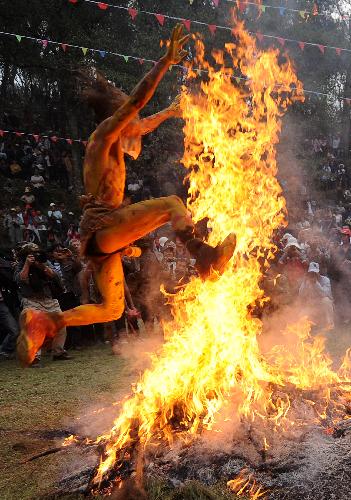
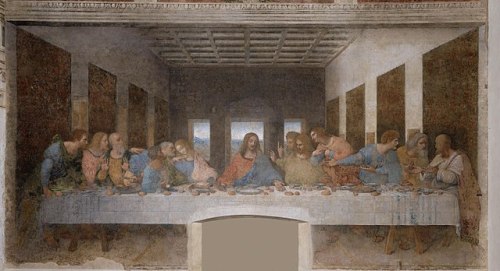
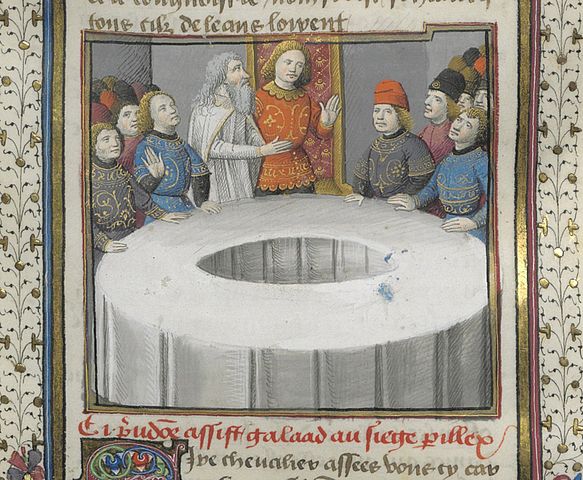
 Long-time readers of this blog know my admiration for Henry David Thoreau (who rhymed his name with “borrow”). I’m well into a new biography* of him, and reminded by a New York Times book review that today is his 200th birthday.
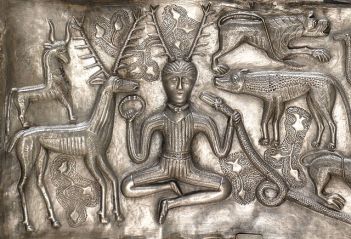 There’s also a wildness in “a certain forest god”, as John Beckett calls
  Or what about a shift of terminology? Would that help at all with any of these themes? If instead of “Baptisms of the Elements”, we called them “Elemental Sacraments”, would that easier name make a difference? Would it make it any easier to move beyond instinctive antipathies and past traumas?


 I’m off to MAGUS, the Mid-Atlantic Gathering, in a few weeks. For those who can manage to attend, Gatherings can give a taste of true community. For Christians, ideally the power of baptism clothes everyone in unity: “There is neither Jew nor Gentile, neither slave nor free, nor is there male and female, for you are all one in Christ Jesus” (Gal. 3:29). A deeper spiritual union does connect people who outwardly appear different, talk differently, live differently. It’s a measure of our struggle how often we lose sight of this profound truth.
 There are many ways to work with assertions like these. We know all too well, on the evidence of centuries, what literalism offers and where it leads. Political religion — the system of creeds and salutes, conformities and genuflections to whoever holds the stick — exists in every culture. To pick just one blatant and current example, North Korea has made a religion and cult of the Kim family. Metaphorical understandings, because they grant freedom to each person, have always been suspect in some quarters. “Power-over” dies hard, keeps dying, never quite dies out.
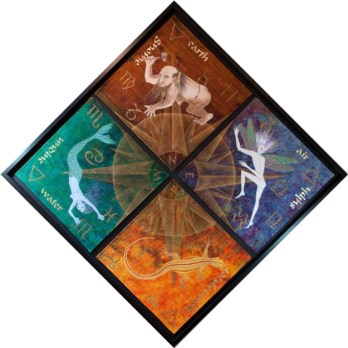 The energies of the elements feature widely in both Druidry and Christianity. John baptizes Jesus in the Jordan River, and water energies characterize the Bardic grade in many Druid traditions — inspiration and intuition, dream and emotion and astral awareness. The place of the Bard is the west, long associated with elemental water. Standing in the west, the bard also faces east — sunrise, beginnings, elemental air, perception and knowledge.
 What more earthy place to be born for a child of god — all of us children of the divine — than a stable? How fitting that in the traditional story, animals surround the holy newborn, with their hay and straw, along with the reek of dung and the puffs of animal breath. The Golden Tarot features the holy magician surrounded by beasts, implements and symbols of the elemental altar at his feet.
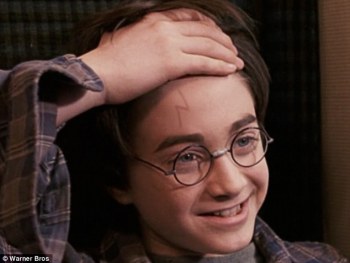 Trace the traditional order and position of each element in that sequence — North to East to West to South — and you describe a zigzag, a Harry Potter lightning flash.

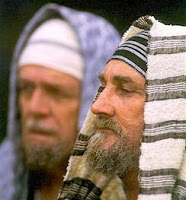
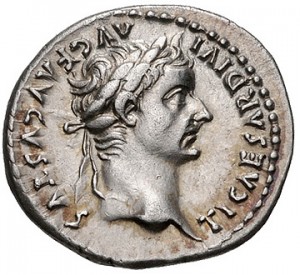




 A Druid Way


.jpg)