Archive for the ‘goddess’ Tag
[You can find Messing with Gods, Part I here.]
“Faith begins as an experiment and ends as an experience” — William Ralph Inge.
I’m feeling contrary: you could just as well aver that the reverse of Inge’s assertion is also true. Faith or awareness often begins with an experience and ends as an experiment — and more importantly, one that may never come to any sort of definitive conclusion. A personal example: without ever seeking her out, I encountered the Goddess — or a goddess* — on my father’s dairy farm in western New York state in 1983. (Those who know her ways might say that this time I was only and — finally — paying attention, because she’d been there all along.)
 I was walking a low-lying and boggy field on the edge of our 170 acres that apparently nobody cultivated in the last several decades. The November afternoon was still but cold, and the ground underfoot was firm after a recent hard frost. I stopped in a half-grove of old tree stumps, fallen branches and new growth, and sat for a while to take in the scene. Late afternoon light leaked out of the sky. The sky loomed above me, overcast with a gray that anyone living in lake-effect country knows well. Look at it this way: the western New York climate where I grew up rivals Seattle’s for fewest sunny days a year.
I’d graduated from college that spring, and this fallow time was a gift, though not an easy one. The great luxury and curse of being the son of a family farmer is that there’s always work: hay each summer to bale and stack in the dark mow over the milking barn, manure to haul and spread daily, fence posts to replace and fencing to strengthen when the ground has thawed, the rhythm of milking morning and night, morning and night, every day of the year, and a hundred minor tasks of repair and maintenance in every season for a semi-skilled hand that easily fill the days. One result is that unlike my peers with degrees in hand I felt no pressing urgency about what to do next. It would clarify, and meantime there were cows to milk and soon, this being November and Wyoming County, New York, the first snowfall of a long winter to shovel and plow.
I sat on a dead log for a while, to take in the quiet. Maybe the sound of a distant car on our country roads, but that was all. Or a dog’s bark, perhaps, from the nearest house, over half a mile distant. Then vision came: a great, towering figure some fifty or sixty feet tall, feminine and indisputably present, though I could still see the grove, unchanged, through it all. Still November afternoon. Still my breath smoking in the chill. No words, just the upsweep of attention to more than the physical, though vision didn’t exclude anything. This was addition, not replacement. Then, after two or three minutes, the sense of her presence subsided and twilight resumed its place as single reality.
What can words do with such a thing? No communication beyond presence. She did not come to prove or disturb, to overwhelm or convert. No summons or command, no benediction even, beyond the ample gift of those minutes, though the experience wrapped itself like a robe around me for hours after. Though I carried it with me, I never spoke of it to anyone till almost two decades later, to a group of students in a campus alternative spirituality group at the school where I used to teach, who asked me a pointed personal question when we were talking about the Goddess in Wicca. And that was a decade ago now. So thirty years ago this fall. Sometimes such things happen seemingly out of time, out of reach of any response beyond memory, vital in itself as shelter or altar, and our lives have to catch up for those experiences and their aftermath to have a place to inhabit. For in forgetting we have just one more way we can censor the divine in its reaching out to us, as it constantly does, in its multitude of forms and means. It is important that awake people stay awake, says Stafford in the poem from a couple of posts ago. We all wake and sleep constantly, shuffling our days and moments to make a kind sense that will not swamp the little boat of the self, but which if we are not careful will also wash us up on a shoal and strand us while the river flows on and on around us.
There’s a place now in my worlds for a goddess. Not that I am yet or maybe ever called to do more, usually, than acknowledge her from time to time. My focuses remain in other places, but she is here in the same way the clouds are that roll overhead and change the face of the sky. But she has on occasion made her potency immediately alive in my awareness: this March ’12 post is one such result.
/|\ /|\ /|\
*When the divine chooses a permanent form which all people encounter the same way, I’ll clarify my terminology. (Not happening!) Or when the particular goddess who reached out to me connects with me again, or I with her, I’ll ask her name. Sometimes I think the gods themselves haven’t got all it sorted out yet.
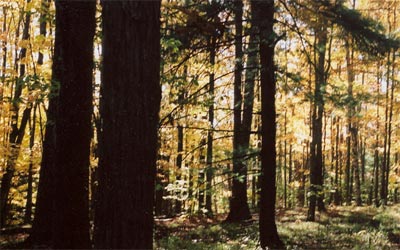
I have no photo, but this image from Pathfinder Ridge will do.
The challenge: to write a coherent and meaningful post in about an hour — before I’m out the door and off to another commitment during a particularly busy couple of weeks — without a topic already in mind. What will get tossed up on the beach of consciousness? The trick is to keep writing, trusting that something will come. Ah, there it is: trust.
I trusted the presence of Skaði sufficiently to create a separate shrine-page for her, as I mentioned a couple of posts ago. To ask whether I believe in her feels like it misses the point: she appeared in my consciousness, amenable for an exchange. I made a choice to engage, she honored her part, and I mine. What’s interesting to me is that we would never ask a similar question about a human-human interaction. Do I “believe” in the shop-clerk who sold me a sandwich at the cafe where my wife and I had lunch yesterday? The question never arises. What do our interactions imply for the future, in the case of either shop clerk or goddess? That’s something we’ll negotiate as we go. From what I can tell, none of us would have it any other way. If I patronize the shop regularly enough, the clerk and I may learn each other’s names, we might make small talk, I might eventually come to have a “usual” that I predictably order, and so on. With the goddess, the terms might be similar: future interactions will build a history between us. With that kind of growing trust, is belief necessary?
Trust is a curious thing. Like water or mustard or fire, too much or not enough suggests there’s a happy middle ground. Trust is also earned: babies may come by it naturally, and the other blessed innocents of the world may not yet have had it betrayed out of them, but usually ya gotta deserve it to get it. I trust the sanity of the clerk not to poison the food the shop sells, and Skaði and I trust each other enough at this point to fulfill any exchanges we have agreed on. Liking may enter the relationship down the road, which may broaden outside the immediate context of simple exchange if both parties are willing. But that’s not a given. Right now we have a starting point — that’s all.
Other kinds of trust operate at deeper levels. There’s a kind of trust, after all, every time you open door of your room, your apartment, your house, when you step outdoors on a sunny today like today is shaping into, a trust that the air is breathable, that the universe, at least in the foreseeable future, is not out to kill you — that it might even cooperate with you long enough that you can accomplish something worthwhile. If you’re fortunate enough, aware enough, lucky enough, or just attentive enough, you might even call it love. I’ll close with Kathleen Raine‘s fine poem “The Marriage of Psyche,” written 60 years ago now, in 1952. It feels like it fits here — the sense of amazement, of wonder at beauty that lifts you out of yourself. A gift. Read it to yourself out loud, to hear its rhythms.
He has married me with a ring, a ring of bright water
Whose ripples travel from the heart of the sea,
He has married me with a ring of light, the glitter
Broadcast on the swift river.
He has married me with the sun’s circle
Too dazzling to see, traced in summer sky.
He has crowned me with the wreath of white cloud
That gathers on the snowy summit of the mountain,
Ringed me round with the world-circling wind,
Bound me to the whirlwind’s centre.
He has married me with the orbit of the moon
And with the boundless circle of stars,
With the orbits that measure years, months, days, and nights,
Set the tides flowing,
Command the winds to travel or be at rest.
At the ring’s centre,
Spirit, or angel troubling the pool,
Causality not in nature,
Finger’s touch that summons at a point, a moment
Stars and planets, life and light
Or gathers cloud about an apex of cold,
Transcendent touch of love summons my world into being.
/|\ /|\ /|\
Updated 25 May 2014: next to last line of Raine’s poem corrected from “gold” to “cold.”
Sometimes you have experiences that just don’t fit. They’re orphans, and like orphans, too often they’re left to fend for themselves, so they end up on the street. Or else they’re stuck in a home by some well-meaning authority, where they may subsist uncomfortably for years in places where everyone else looks and acts and talks different. There may not be enough love to go around, either, and like Oliver in Dickens’ novel Oliver Twist, they’re reduced to pleading, “Please, sir, may I have some more?”
Monday night, before the hard freeze here (19 and windy) that threatened all the burgeoning flowers and trees, I offered up a prayer. I don’t usually pray in this way, but I found myself praying for all the wordless Rooted Ones busy putting out buds and leaves and new growth in response to the warm spell that caressed so much of the U.S. “I cry to the Powers,” I found myself saying. A little more love here, please. The great willow in our back yard has pale leafy fronds. The currants are budding. Crabgrass pushes up from dead mats of last year’s growth. The stems of bushes and the twigs of trees show reddish with sap. At the same time, I took stock in what I knew in some traditions about plant spirits, the personifications of energies that help individual species thrive.* Let the devas and plant guardians sort it out. Serve the larger balance — that sort of thing. Then the nudge to pray came, so I honored it. Everyone has a role to play. Then the goddess Skaði presented herself.
All this took place while I was driving down and then back home with my wife from an out-of-state trip to CT. Bookends to the day. We’d tried to be efficient with our driving and gas use, like the good Greenies that on occasion we actually are, and schedule several appointments for the same day. So we rose early, drove through welcome morning sun and glorious light to have a thermostat and brakes replaced on our car, get eye exams and prescriptions and glasses before a sale ended on April 1, drop off a gift at a friend’s house, and get to an admissions interview for a certificate program I’m interested in. (More about that as it progresses.)
We’d scheduled ourselves fairly loosely, but still the sequence of appointments mattered for times and distances to travel to the next stop. So when the car service that we’d been assured would take no more than two hours now promised to consume most of the day, we got a loaner car from the dealership, rescheduled and shuffled some of our meetings. Ah, modern life. Maybe it’s no more than imagination, but at such times recall of past lives makes horse-and-buggy days seem idyllic and stress-free by contrast. Back then we didn’t do so much because we simply couldn’t. Does being able to do more always mean we should?
So, Skaði.** Not to belabor you with too much detail: she’s a Scandinavian goddess of winter, hunting, mountains and skiing. A sort of northern Diana of the snows, an Artemis of the cold heights and crags. I’d run across her a few years ago, when I was doing some reading and meditation in Northern traditions. She loomed in my consciousness then, briefly. Frankly I found Bragi, the god of eloquence and poetry and patron of bards, much more to my taste. But there she was, for a short time.
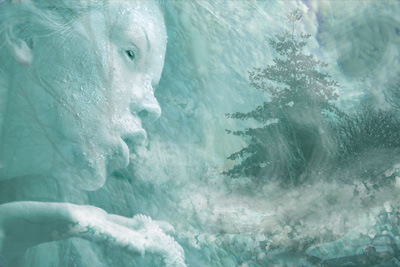 I flashed on an image of Skaði then, and she seemed — and still seems to me — quite literally cold, implacable, uninterested in humans, remote, austere, elegant in the way ice formations and mountain snows and the Himalayas are elegant — and utterly forbidding. Not someone even slightly interested in exchange, in human interaction. Now here she was. If you’ve been pursued by any of the Shining Folk, whether the Morrigan or Thor, Jesus or Apollo, you know that often enough they choose you rather than the other way around. So you make do. You pay no attention. Or you can’t help it and now you have a patron deity. Or something in between. If you’re a bloody fool, you blab about it too much, insisting, and the nice men in white coats fit you for one too. Or maybe you and Thorazine become best friends. It’s at times like this that I’m glad of the comparative anonymity of this blog. I can be that bloody fool, up to a point, and the people who need to will pass me off as just another wacko blogger. And then this post will recede behind the others, and only one or two people will happen on it in another month or two. The gods are out there, and they’re in our heads, too. Both/and. So we deal with it. And I can step back to my normal life. Or not. I’ll keep you posted.
So Skaði of the daunting demeanor wants something. I prayed to the Powers, almost in the Tolkien Valar = “Powers” sense — to anyone who was listening. Open door. Big mistake? I’m a Druid, but here’s the Northern Way inserting itself into my life. My call goes out, and Skaði picks up and we’re having this conversation in my head while I drive north on I-91 with my wife. I’ve gotten used to these kinds of things over time, as much as you can, which often isn’t so much. In a way I suppose it’s revenge — I used to laugh out loud at such accounts when I read them and shake my head at what were “obviously people’s mental projections.” Now I’ve got one saying if you want protection for your shrubbery (God help me, I’m also hearing the scene from Monty Python and the Holy Grail at this point. The Knights of Ni: “Bring me a shrubbery!”), then do something for me. What? I said. A blog post, first, then a website shrine. So here’s the blog post first. I’ll provide the shrine link when I’ve set it up.
/|\ /|\ /|\
*If you’re interested in an excellent account of this, check out The Findhorn Garden, originally published in 1976. This Scottish community, established on a barren piece of land, “inexplicably” flourished with the help of conscious cooperation with nature spirits. It’s documented in photographs and interviews. There are several books with similar titles and later dates, also published by Findhorn Community.
**The ð in her name is the “th” sound in with. I’m slowly realizing that part of my fussing over words, the urge to get it right, the annoyance at others who seem not to care about linguistic details, can be transformed to a gift. So for me part of honoring Skaði is getting her name right.
Image: Skaði. I can’t draw or paint to save my life, so when I came across this stunning representation, a shiver slalomed down my back. Skaði’s footsteps, I guess I should say. This is in the spirit of my experience of the goddess.
 Goddesses are possible again — the word is spreading even to those who aren’t paying attention. The new dream is all about shapes arising where before we thought there was only darkness pooling around our fears and our faces. The old forms aren’t always the ones the goddesses are re-animating. It’s also something new this time, answer to the severity of our need. Need more, and the Goddess answers. How much we need. It’s called her forth.
Who is she? an old man asks. He’s never had truck with goddesses before. I don’t know anything about ’em. You can see it in his face, in his posture. He holds himself like a piece of cloth, something that can spread or crumple easily, at will or whim. But then who has dealt with goddesses recently? Ask around and what answer do you probably get? Yes, a good Catholic says the Rosary, prays to Mary because she’s vastly more approachable than that God made in the image of the old men of the Magisterium. Goddesses are possible, the old man says, doubting his own words, indicted along with the pedophile priests because we can no longer distinguish truth from truthiness, what is from what we wish to exist, to serve our weakness as a shield, so that we needn’t change. The Goddess opens one door after another, doors rusty on their hinges. You can hear them squeaking, maybe late at night when the only other sound is the breathing of sleepers near you in the dark. Who has dealt with goddesses before? We all have.
To breathe in the dark, awake. There you can feel the Goddess. It’s a start, a beginning like the edge of a blade, something sharp you can sense without trying. She is more than possible, more than a shape companionable in the darkness, one that doesn’t move and so isn’t a threat, isn’t alive, but rather a piece of furniture, something you can count on to stay the same as you make your way around in the dark. God the Father, in whom there is no variableness or shadow of turning, the Bible says. Everything she touches changes, say those who have encountered the Goddess. And she touches everything. So how can these two co-exist without canceling each other out, matter and anti-matter colliding and releasing some intense humongous cosmic energy to rival the Big Bang.
And the Cosmic Trickster lounging somewhere near the back door of our brains says That’s it exactly. Put God and Goddess together and you get the Big Bang, the ecstatic copulation, the first orgasm that even now continues, sustaining all that is, energy streaming out from both of them, because we need both. God without Goddess turns out to be a dry old stick, a petty tyrant peering in people’s windows and clicking his tongue at s s s i n. But ignore him long enough and he sends his grunts and heavies to round you up, to snatch you out and shove you up against a wall and shoot you, because you’re not holy enough, because you doubted, because you’re too real for the god-museum image that everybody worships and nobody lives. And tell the truth and it’s only a toss-up whether you’re on the shooting side, or the shot side. Not much difference in the end, it’s you or your best friend, opposite sides. Then neither side is worth the game.
 But the Goddess alone is no better. It’s not the Fear of Feminism you see among some men, as if the ladies will replace us gentlemen in the fine art of hypocrisy and murder. Those men, they’re afraid they’ll get what’s coming to them, because they know deep down what goes around really does come around. But it won’t be like that. Instead, it all collapses into orgy, and everything comes. The definition of a puritan, remember, is a person with the horrible fear that somebody somewhere is actually having fun. God without Goddess is a stick, but Goddess without God is a soft gooey center that melts in your hands, not in your mouth.
Goddesses are possible again because we’ve earned them. We’re opening the door we’re petrified to open, terrified to walk through, but we can’t help it because the imperative we all follow eventually is growth, and if Goddess will give when God holds back, then we need to meet and embody the divine as Goddess in order to live at all. The prod of the god/dess is love for all existence, and we cannot both love and fear. So much fear nowadays, you can smell it.
And love? The Charge of the Goddess reminds us that all acts of love and pleasure are Her rituals. This life is sacrament. Priestess and Priest, be welcome to the rite. Come before the Lord and Lady with gladness and thanksgiving. Not in obedience, but in desire to celebrate what you know to be true, that each day is a gift, that this incarnation, in spite of all its troubles, is a blessing and worth that trouble. Potest Dea. The Goddess is potent, the Goddess can. Praise God, the Goddess is.
/|\ /|\ /|\
Blue Madonna by Carlo Dolci, Ringling Museum, Sarasota, Florida.
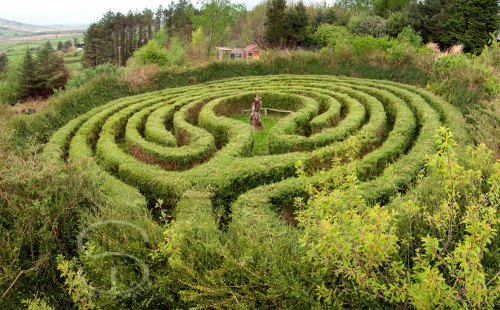
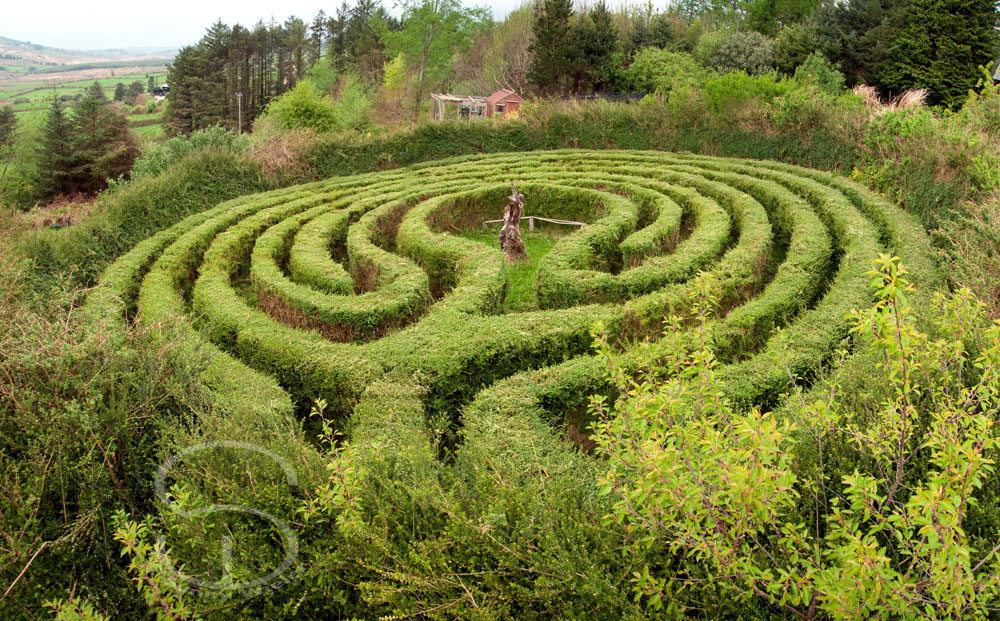
Labyrinth at Hagal’s Farm.
Edited for spelling and grammar 5 Oct 2013

 I was walking a low-lying and boggy field on the edge of our 170 acres that apparently nobody cultivated in the last several decades. The November afternoon was still but cold, and the ground underfoot was firm after a recent hard frost. I stopped in a half-grove of old tree stumps, fallen branches and new growth, and sat for a while to take in the scene. Late afternoon light leaked out of the sky. The sky loomed above me, overcast with a gray that anyone living in lake-effect country knows well. Look at it this way: the western New York climate where I grew up rivals Seattle’s for fewest sunny days a year.



 A Druid Way