This is a post that will become a page on this site, because the topics it addresses raise perennial questions. Its direct inspiration comes from discussions on Druid social media sites, and from your search terms here at A Druid Way.
/|\ /|\ /|\
If you bear in mind the popular saying “Ask three Druids and you’ll get ten answers”, you should be in good shape. This short FAQ arises out of one person’s experience, study and reflection. As with most things, a second – and third – opinion will be very useful and give you a broader and more informed perspective.
What is Druidry?
Druid author J. M. Greer gives an answer that’s held up well over time: Druidry “means following a spiritual path rooted in the green Earth … It means embracing an experiential approach to religious questions, one that abandons rigid belief systems in favor of inner development and individual contact with the realms of nature and spirit”. While beliefs matter, more important is what Druids do each day. An openness to experiences and encounters in nature forms part of the Druid perspective.
Do Druids believe ____ ?
Some probably do. Many may not. No single creed or statement of faith unites all Druids, because Druidry is an individual spiritual practice or way of life rather than a set of beliefs. In this way, it’s like asking “What do carpenters believe?” This sets it apart from many Western monotheistic faiths, and also makes it possible to be a Christian and a Druid, an agnostic and a Druid, etc.
However, it’s possible to talk about what Druids believe using general statements with “most” and “many”. Here’s a Triad that probably characterizes a large number of Druids:
Most Druids are united by a love and respect for nature, and show an attentive attitude towards its rhythms and cycles that they may express in seasonal observances like the solstices and equinoxes. Secondly, many Druids also perceive a spiritual dimension to life, though that may or may not mean belief in a god or gods. Third, many Druids also express their perspectives and experiences creatively, through craft or art, carrying on in modern forms the traditions of the ancient Bards.
Do you have to have Celtic ancestry to be a Druid?
No. The ancient Celts were a culture, or set of related cultures and languages, rather than a single genetic bloodline. Given that the Celtic peoples apparently ranged across much of Europe, from Ireland and Portugal to Germany and Italy, and possibly further east, settling and intermarrying with other peoples, this shouldn’t be too surprising. It’s true there are a few and mostly small Druid groups who require their members to demonstrate a specific ancestry — often Irish or Scottish. But our ability to love and respect and live lightly on the earth certainly doesn’t need or benefit from genetic gate-keeping. Anyone anywhere on the planet can practice Druidry starting right now.
Where do the teachings of modern Druidry come from?
A range of sources. Many traditional stories in surviving Celtic literature like the Welsh Mabinogion point to Druid practices and understandings. In several cases, they also provide teaching stories and initiatory insights which several Druid groups use in their training. While a few individuals and groups claim to preserve ancient or hereditary Druid practices and beliefs, in most cases these are the common folk wisdom of most pre-modern cultures around the world: a knowledge of herbs and natural cycles, animal and plant and star-lore. More important than how old they may be is the question: “Do they work today?”
The Renaissance recovery of Classical sources, the influences of Neo-Platonism, Arabic learning in astronomy and medicine, mathematics and alchemy and astrological lore, and the British Druid Revival beginning in the 1600s, all play their part in helping to deepen Druidry. Practices of meditation and visualization also derive from a variety of sources. Most Druid teachings emphasize learning from our own locale. The trees, plants, animals and landscape, previous inhabitants and climate all have many things to teach.
How do I become a Druid?
For anyone alive today, the path to Druidry has been made smoother and broader by books and the internet. Many Druids are great readers. Books can give you a sense of the range and depth of Druid practice, and inspire you to adapt relevant portions of it to your own life and circumstances. (See Books and Links.) The internet can connect you to active and established Druid groups, who offer events and resources for members and non-members alike. But while these sources can be helpful and inspirational, a walk around one’s home area is an excellent prime starting point. What can I learn about — and from — the trees and animals and plants in my region? Who lived here before me, and what did they know? What local geographical features like mountains or lakes or the ocean influence the weather? How do I “fit” where I live?
Can I be a Druid without joining a Druid organization?
Absolutely. Even those Druids affiliated with an organization are often “solitary” Druids for 350 days out of each year. Curiosity, a willingness to learn and study what interests you, and reverence for the earth are the marks of a Druid, not membership in any group. (See my post Druiding without An Order.)
What do we know about ancient Druids?
Direct evidence is comparatively modest. We have archaeological discoveries and the accounts of Classical authors contemporary with ancient Druids. We can make intelligent guesses from some of these sources, but much remains unknown. The single best book on the subject is Prof. Ronald Hutton’s Blood and Mistletoe: The History of the Druids in Britain.
How can anyone claim to be a Druid today, if we know so little about the ancient Druids or their practices?
Philip Carr-Gomm, former Chief of OBOD, the Order of Bards, Ovates and Druids, addresses this directly:
“Contemporary Druidry draws on a heritage of thousands of years, and yet many of its ideas and practices have only been formed over the last few hundred years. Unlike most of the established religions, which are based on doctrine formulated in the distant past, Druidry is developing its philosophy and practices in response to the spirit of the times. It is being shaped now rather than being preserved or simply passed on, and paradoxically, although it is inspired and informed by an ancient heritage, it is surprisingly free of the weight of the past. This leaves modern Druidry open to the criticism that it has been invented; but it also makes it a thoroughly contemporary spirituality that speaks directly to the needs of today” (What Do Druids Believe?, pgs. 2-3).
I love Druidry but I don’t like ____ . Can I still be a Druid?
If you already know you love Druidry, nothing more needs to be said. You’re in excellent company — the wider “Druid world” require very few things from a Druid except that love and respect for nature.
(For some people, magic or ritual are words they might put in the blank above. Stick with Druidry and you may well find out more of what they’re all about. But again, absolutely neither is any kind of requirement.)
We can apply/adapt the words of Jesus here (as in many cases): “People aren’t made for Druidry; Druidry is made for people”. Go with what truly works for you, and you’re walking a path with heart.
Are there initiations in Druidry?
Because you can be a Druid by yourself, no initiations are necessary. With that said, some Druid groups offer study materials that include self-initiations — opportunities to deepen and hallow your experiences and understanding. And some groups make initiations a prerequisite for advancing within the group.
Life presents us with a few initiations of its own that all of us experience. Practice Druidry over time, and you’ll pass through the initiations of death, sickness, loss, change, love and birth. Your Druidry can help you navigate those experiences with greater understanding, resilience, growth, and compassion for others.
I like what I’ve read about Druidry, but I don’t believe in _____ .
If you love and respect the natural world, you’re ready to practice Druidry. If you’ve read the other parts of this FAQ, you know you don’t need to believe to be a Druid — you need to practice. Many of your beliefs will come from those experiences. More encounters and reflection may help you get a clearer picture of Druidry and what it means for you. Books, experiences with groups, study, and time spent in nature can all help you clarify your next steps.
Which Druid order has the best ____ ?
The inside word on that is ___ .
What about people who say Druidry is ____ ?
You may have noticed that we live in an era where almost everything now has both ardent fans and unrelenting critics. The best way to respond (or ignore) is to practice Druidry yourself over at least a few years — then you’ll know what it is for you. The second best way is to attend some Druid events with practicing Druids, observe thoughtfully, and ask questions. The third best way is reading widely. As Druid leader, Her Majesty’s coroner (anatomical pathologist), actor, author, drag queen and popular speaker Kristoffer Hughes likes to say, “What other people think of you is none of your business” (unless you’re planning on running for office).
If you’d like an objective tool to assess any group, you’ll find Isaac Bonewits’ Cult Danger Evaluation Frame most helpful.
Can I be your student? / Will you teach me?
This blog offers more than enough enough material for you to pick up the practice of Druidry, and to locate diverse sources to answer your questions better than I can, and to guide a beginning practice. Ultimately, your best teacher is the Land you live on.
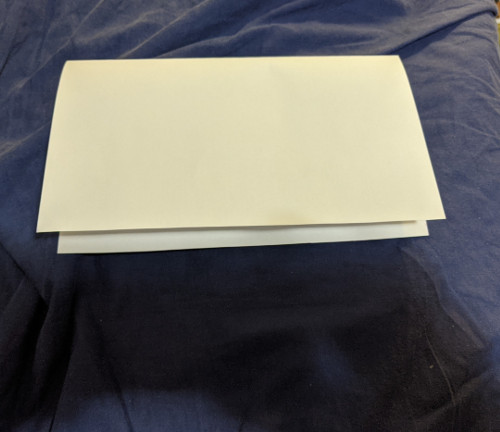
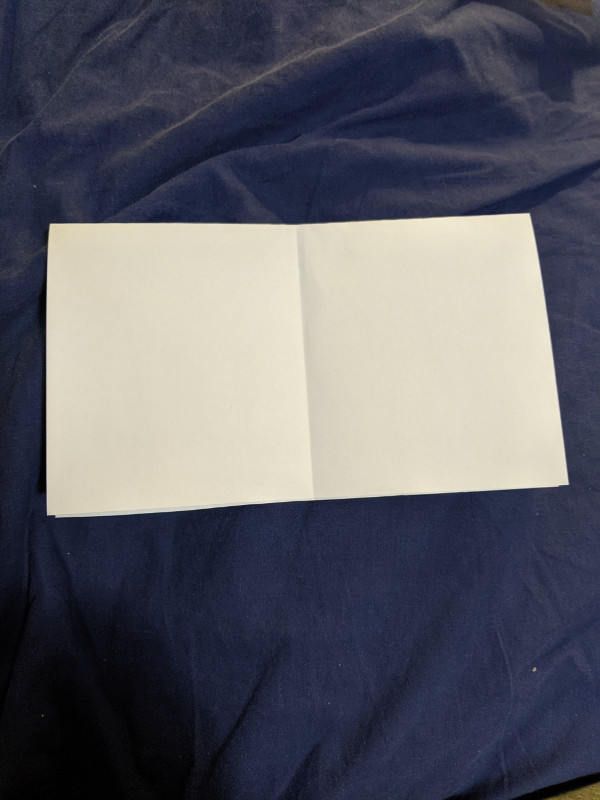
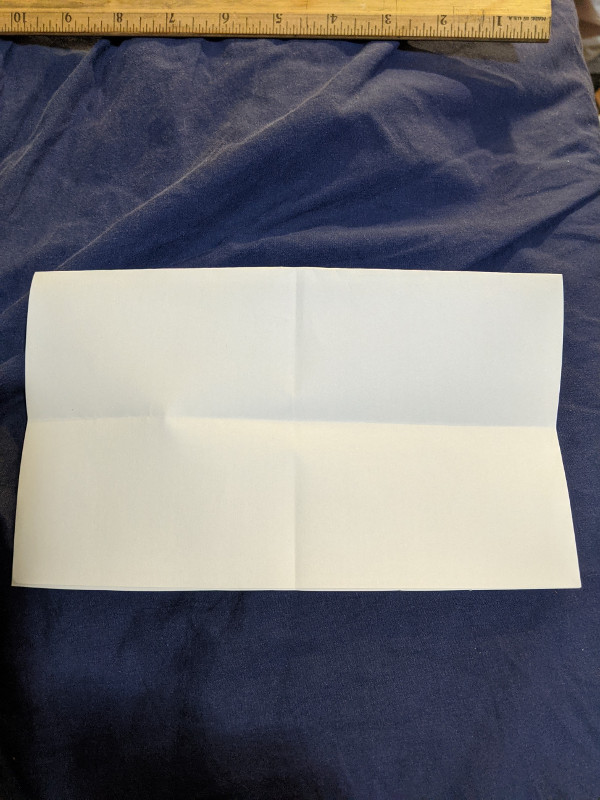
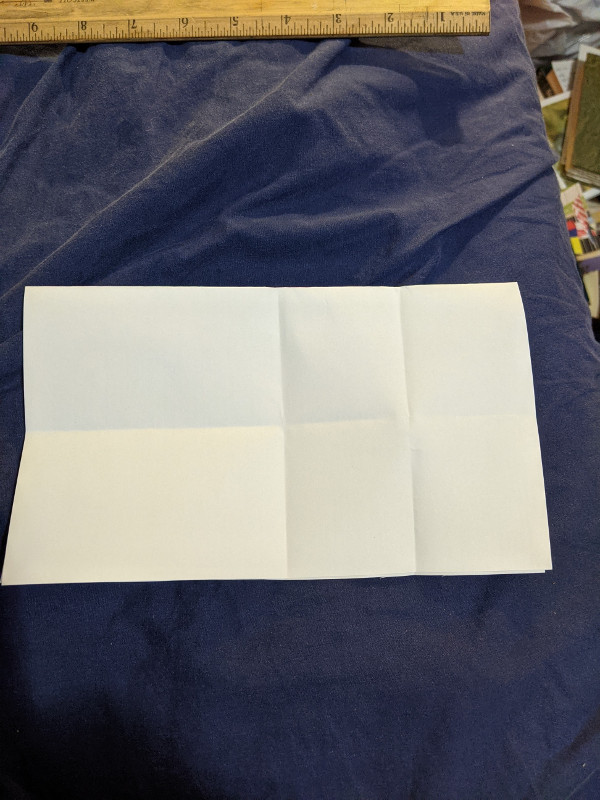
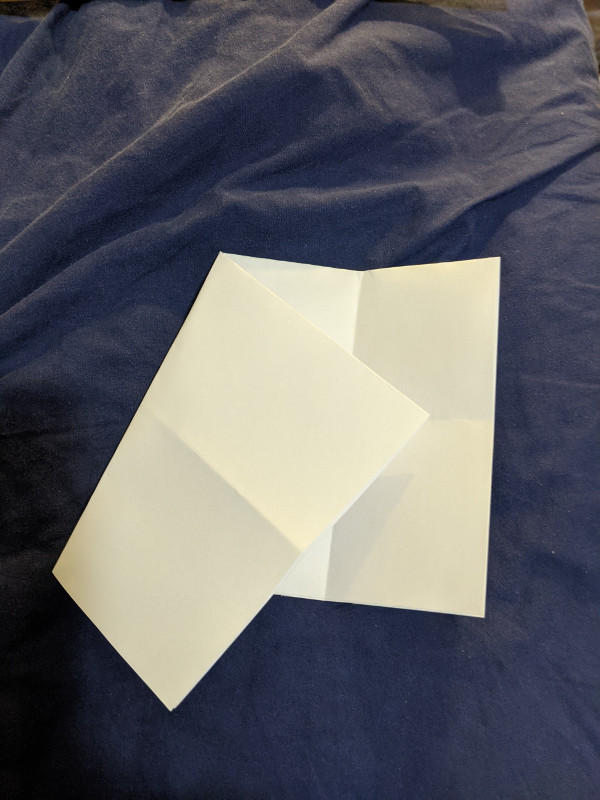
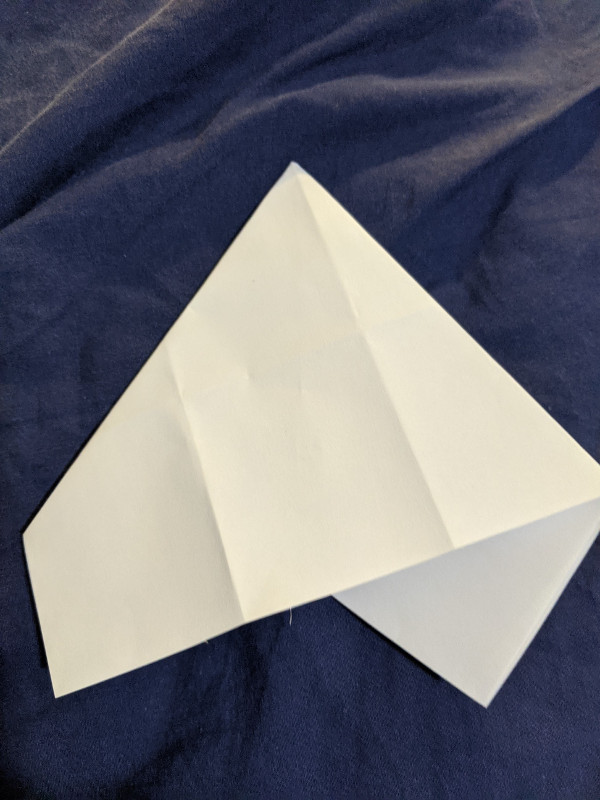
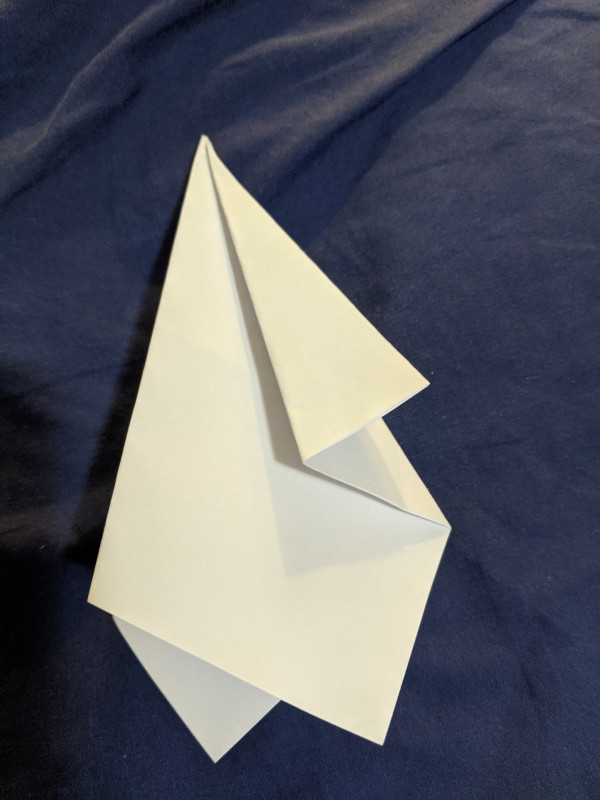
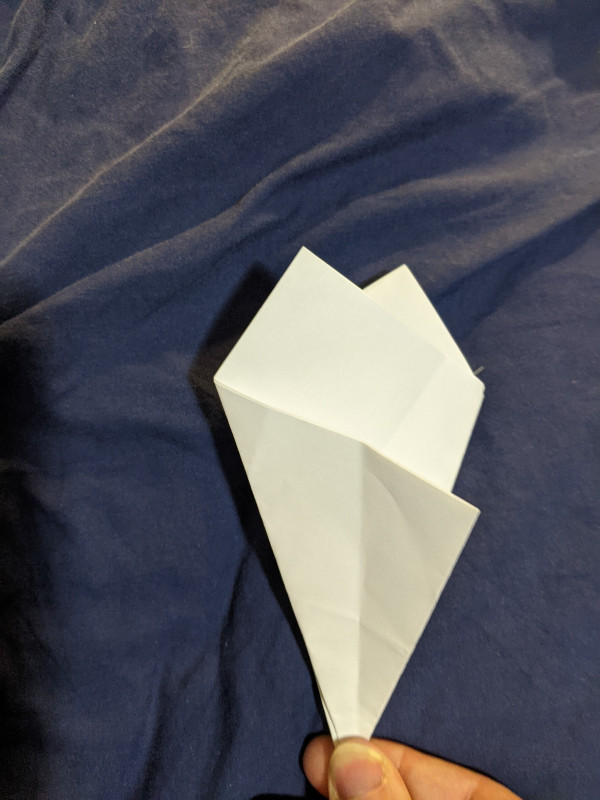
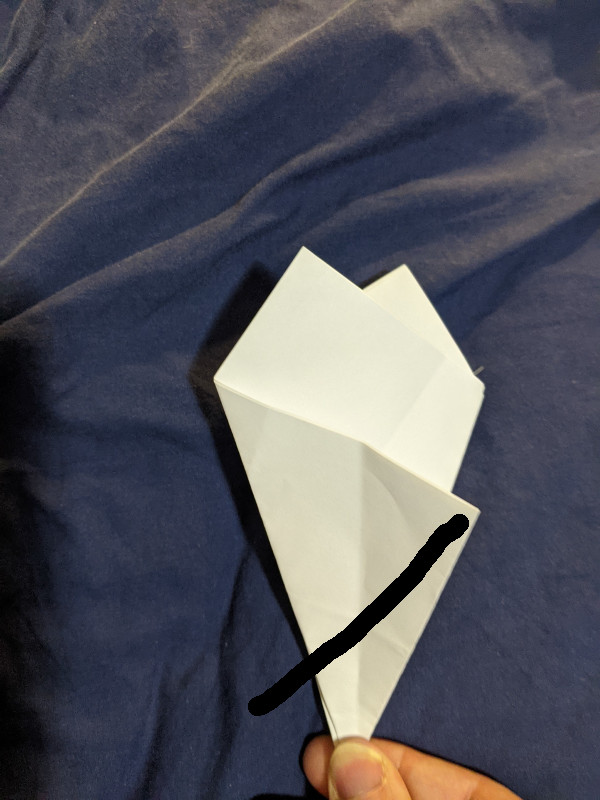
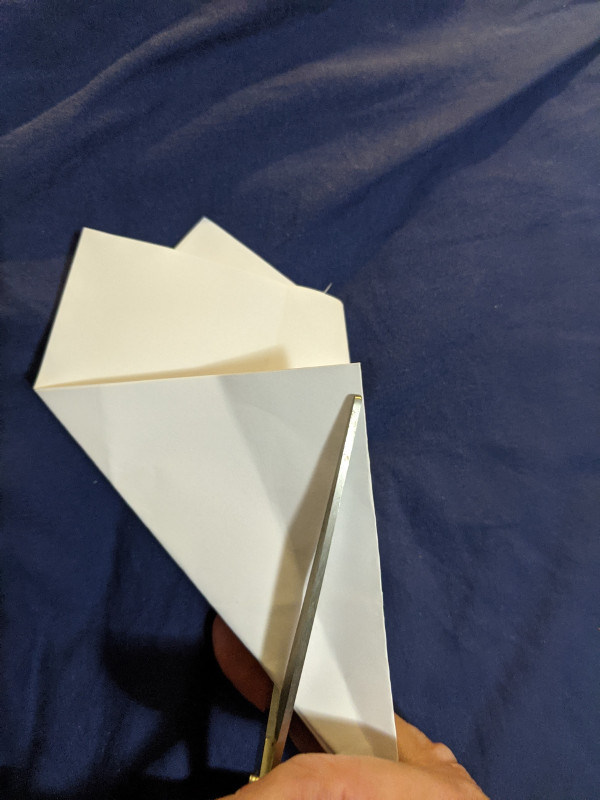
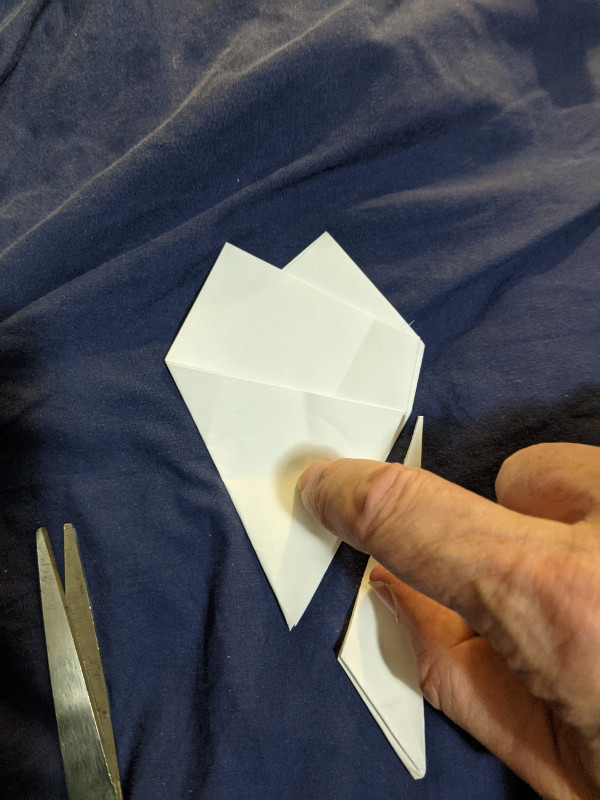
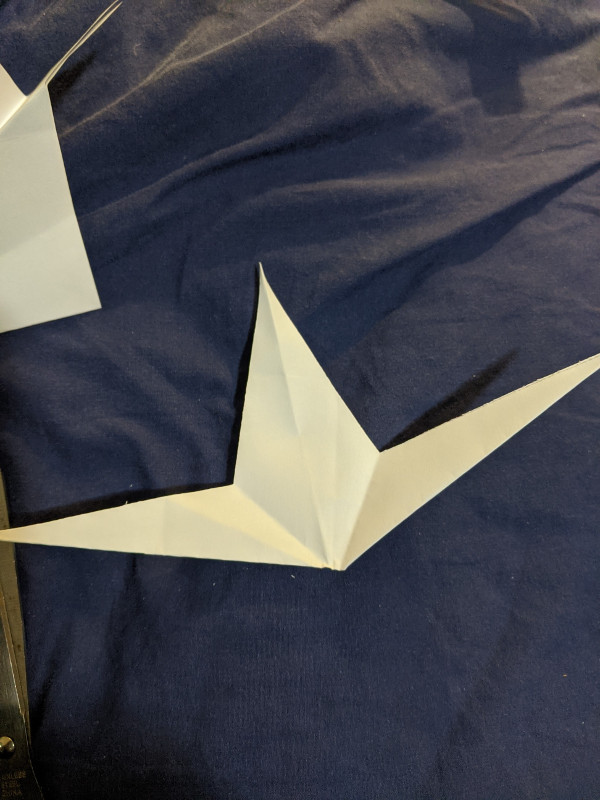
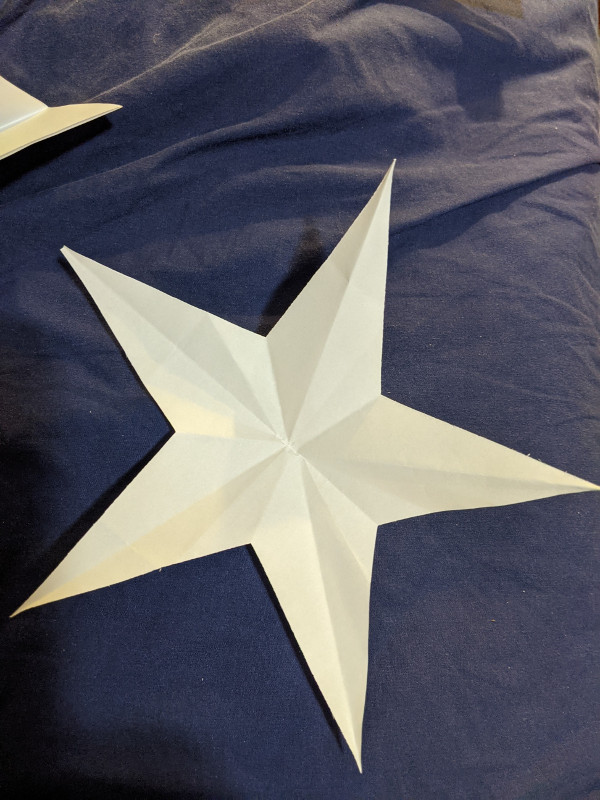
The series of pictures below illustrate the folds to make the 5-pointed Star. There are 9 folds, a good piece of symbolism, and then a single cut of scissors. It may take a few tries till it comes out right it. Start with a piece of scrap paper.
If you like, treat this as a “ritual of making”. As you practice the Nine Folds, try out a prayer, chant, rhyme, etc. This can be a fun exercise to do with a child.
AAAAA
You need a sheet of paper in the proportions of 8.5 x 10. Size is up to you. (For many, that’s almost a standard sheet of loose-leaf or photocopy paper, with the bottom 1 in/2.5 cm cut off.)
BBBBB
FOLD 1: Fold the sheet in half horizontally, top edge to bottom edge.
CCCCC
FOLD 2: Next, fold the sheet in half vertically, left edge to right edge, then open it again.
DDDDD
FOLD 3: Fold the sheet in half vertically, top to bottom, then open it up again.
EEEEE
FFFFF
FOLD 4: Fold the right edge in to the center fold, then open it again.
GGGGG
You now should have these guide-lines for the next folds.
HHHHH
FOLD 5: Fold the top left corner to the center horizontal fold crease.
IIIII
FOLD 6: Fold that same corner back on itself, flush with the left edge.
JJJJJ
KKKKK
FOLD 7: Fold the top right corner back on itself, in the same way. You should have two right triangles of the same size.
LLLLL
Turn the star over, back to front.
MMMMM
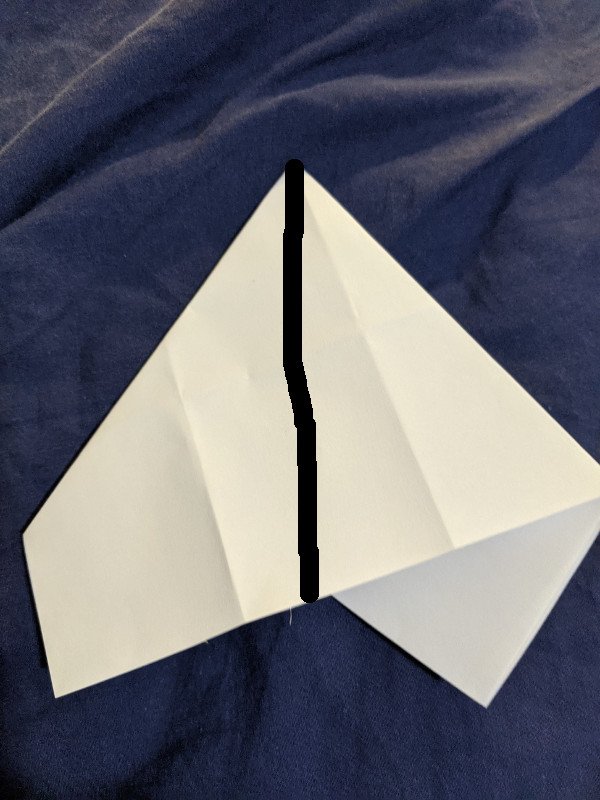
Here’s the vertical guide line for the next fold.
NNNNN
FOLD 8: Fold the star vertically to the right, back onto itself.
OOOOO
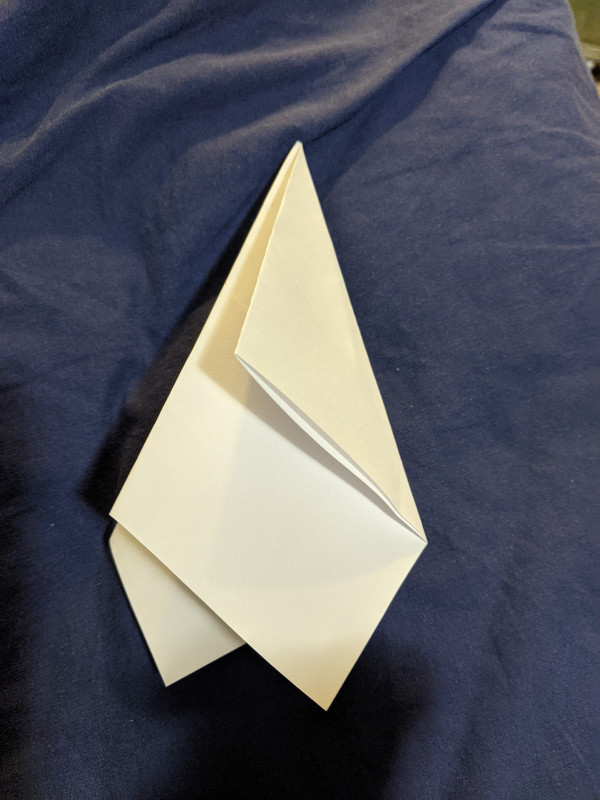
FOLD 9: Fold the top flap to the right, back onto itself. Then open it out again.
PPPPP
Turn the star 180 degrees, so the point faces down. The crease/fold about 1.5 in/3 cm above my thumb is an important guideline for the next step.
QQQQQ
Line up the scissors so you cut across the intersection of lines toward the point to the right.
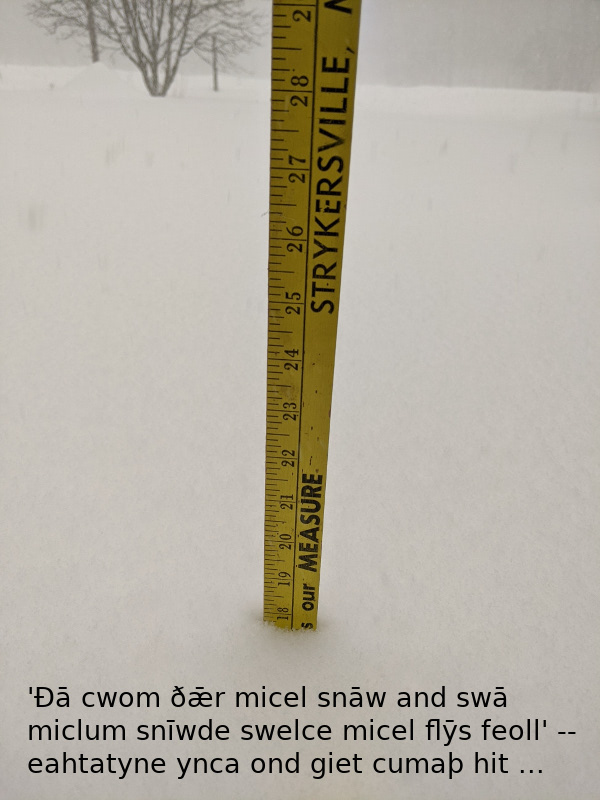
“Then came there a great snow, and so greatly it snowed as if a great fleece had fallen …” The Old English dictionary I use sometimes offers inscrutable abbreviations for its sources of quotations — in this case, simply “Nar”. But I love this description, and I’m (mostly) grateful to live in a region that experiences four distinct seasons.
18 in / 46 cm at 9:40 am this (Thursday) morning, and still coming …
Winter’s finally arrived, ghostly guest. Somehow the whiteness of the snow at winter solstice always feels to me like an outward image of the inner fire burning all winter long. We light it, or it kindles us, at Samhain, when it leaps to and from the inner worlds, and it accompanies us right through to Beltane. I gaze at a candle-flame for a few moments, until I sense something of that world, that companion.
Snow both obliterates and illuminates, like any proper fire. Sometimes the track of spirit, of the presences in our lives, can be difficult to discern. Let snow-fire — or as a friend might write it, snow-fyre — illumine the way, and things can clarify. We see by contrasts — a powerful lesson in and of itself. In these worlds, it can take snow for us to see better.
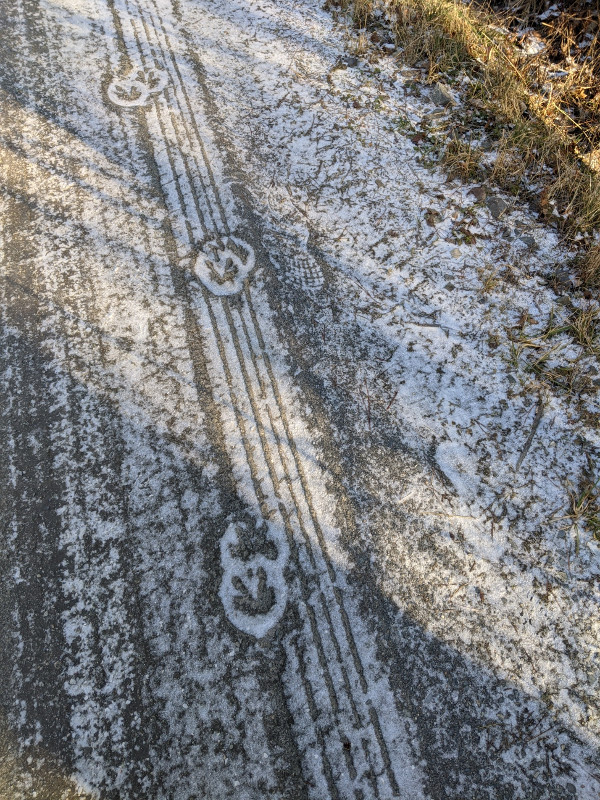
The distinctive horseshoes of neighbourhood animals, tire-tracks and human footprints
Do I step on prints made by those who’ve gone before me? Many four-leggeds do this naturally, rear feet landing nearly where the front have just been. Sometimes weather helps map the trail, the spoor of my predecessors clear to be seen. Other times I walk trusting that when I need to know, I’ll know. Way-showers, as I follow you, let me likewise help show the way to those who come after.
/|\ /|\ /|\
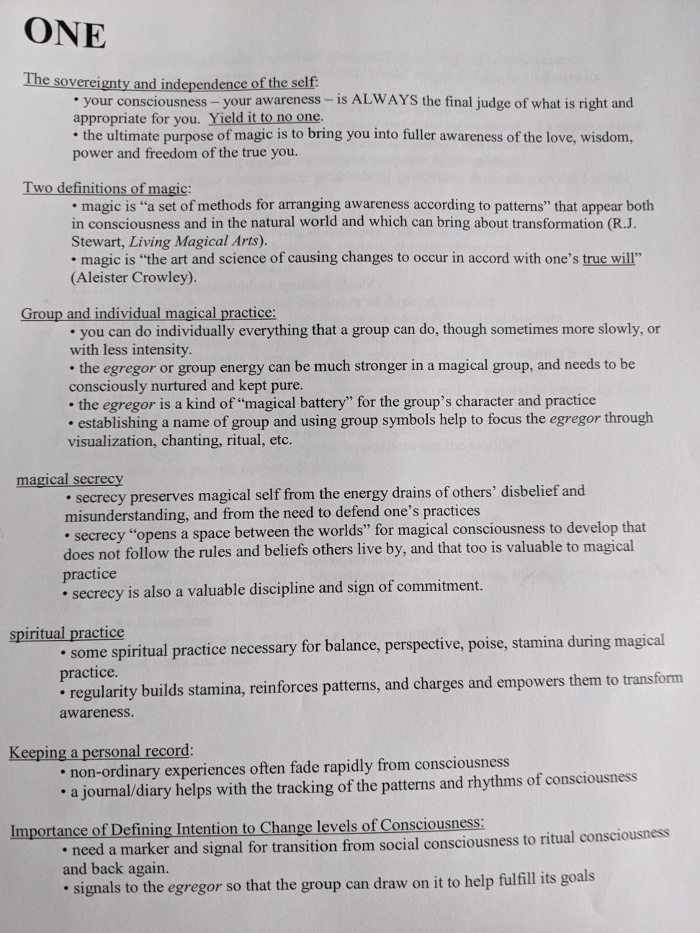
I’m posting below the first page of a rough draft for a workshop. You might find the points helpful, as I do, when you assess where you already place your energies and attention, and consider where they best belong for you, as you look ahead to the coming year.
It feels right to close by repeating the opening from the above image, a piece of dearly-bought wisdom for many: “Your consciousness — your awareness — is ALWAYS the final judge of what is right and appropriate for you. Yield it to no one“.
Sometimes we need to talk ourselves into our discoveries. That’s only fair, because we’ve talked ourselves out of them until now. When we listen to others’ counsel but ignore our own, when we look for dreams anywhere but in our own hearts, when we yield up our Sovereignty, precious possession, to anyone else, then in spite of a cosmos trying at every moment to get us to claim it, we just …
Ah, what to do with beings such as ourselves?
I turn to remembered wisdom, from a praying mantis, from a post in 2017: Often the best sacrifices are ones you can keep doing. The point isn’t burnout. Make it sacred, sacri-fice it, so you can make it sacred again.
One challenge of sacred time, of holy time, is re-integrating it back into what we are pleased to call our “daily lives”. Where to stash the spiritual uplift so I can draw on it when I really need it?
Part of the reason behind a spiritual practice is to help us begin to see just how the “mundane” is also absolutely overflowing with spiritual energy. (It’s another instance of easier said than known.) We need to re-charge, yes: so we can flow again. Or to put it another way, my ability to tune in to a seemingly “ordinary” interaction in line at the supermarket, or pumping gas, or climbing the steps at work can transform the apparently mundane into a spiritual connection. The “apparently mundane” in all its flatness and dullness is our workshop, laboratory, spiritual opportunity. Empty canvas.
It’s easy (or at least easi-er) to perceive and ride the spiritual currents during retreats, workshops, seminars, gatherings. Each of us throws our offerings into the common cauldron and voila! — energy stew. We sup from it throughout the weekend, workshop, gathering. Then I get to return, to practice during “everyday life”. I am transformer, I am catalyst, I am pathway in and of myself. It can always begin again with each of us. Oh, Spirit … just show me how again, one more time?
/|\ /|\ /|\
One of the site searches over the past several days has been in Cyrillic, for звезда шаблон из бумаги zvezda shablon iz bumagi or “star pattern made of paper” as Google-Translate clumsily renders it. Cutting a five-pointed solstice star is an excellent seasonal craft, for reasons that deserve contemplation. We’ve got the planetary conjunction (link to an informative PDF by the Astronomy Club of Asheville, NC) or “great convergence” coming up on the 21st, along with the Solstice, we have the traditional association with stars at Christmas, and we know the star or pentagram is a spiritual symbol with a world-wide spread long preceding modern Pagan associations.
So without further ado, here’s the clearest and most useful guide I’ve yet found for creating a near-perfect 5-pointed star from paper, with a series of folds, and a single snip of the scissors.
Indigenous spirituality draws its strength from what makes it “indigenous” — it comes from inside, not outside. It arises naturally on the land where we live, in the daily and sacred encounters people experience who live there. We breathe it in the air, and drink it in the water. No founder or prophet needs to arrive to announce its truth; no sacred scripture needs to proclaim its right way to live. These are other things, not “wrong”, but also not the same thing: they’re rooted in belief rather than practice.
We start where we are, by paying attention. That’s one reason so many common elements exist world-wide in indigenous forms of spirituality — why elders from different tribes, communities and nations can gather together and recognize in each other similar experiences of the power and spirit of place. They can speak with “one voice” because the Land does. It says similar things wherever we live. Listen! Do you hear its Song?
The Jumiois, a stylized cornflower and a symbol of Estonian nature spirituality. It is also the logo for the research and preservation efforts of Maavalla Koda “House of the Native Land”
Like many of the nations that once comprised the Soviet bloc, with the fall of communism and its official atheism, Estonia enjoyed a re-opening to older native traditions and a revitalization of its national culture. Because a significant part of indigenous spirituality is “paying attention to where you live”, it’s also possible for humans to ignore place for a time, but that doesn’t cause place to disappear or cease to matter. For the same reason, we can always re-connect: it’s still there.
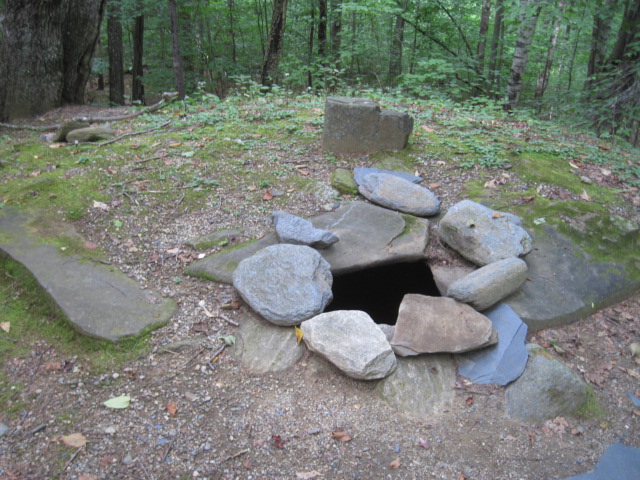
Entrance to Taamealusa Hiis, a sacred site (hiis) near Samma, Estonia, May 2019. / Photo courtesy of Religion News.
Encounter and learn the local gestures and practices, and you keep finding links to practices elsewhere. Sometimes journalists who help raise awareness about such connections are themselves perplexed by them, even as they report them. “While pagan and folk religions may seem archaic to the wider world, they are thriving across the Baltic states” notes a writer for a 2019 Religion News article. But often the “archaic” is part of just what people are seeking — something profoundly, instinctively human that we’ve been doing for centuries and millennia, out of a timeless natural awareness that the sacred is all around us. In that sense, the “archaic” is indeed “thriving”:
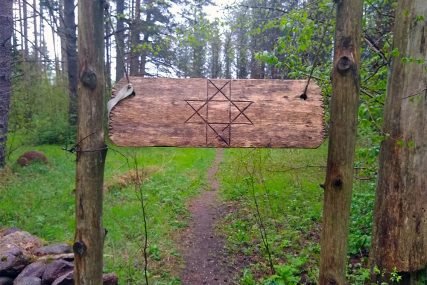
“Hiis” means “sacred grove” in Estonian. Past another wooden board with a runic symbol carved on it — it is customary to knock on this board — is a green clearing where visitors have tied ribbons around trees and placed eggs at their bases as a gift and left the dark remnants of a fire.
“All that is brought there has to be eaten there or burned in the ritual fire,” said 28-year-old Tõnu Rehela, who has been a member of Estonia’s nature-oriented, neopagan Maausk community since he was 16. “Through the fire, the gods eat. Through the holy tree, the gods drink.”
At the start of this third triad of three in this series, I want to address briefly my conscious sidestepping of most current events. Plenty of Pagan and Druid forums are grappling with current events and the often polarizing conversations that have developed around them, and you can engage them there, where there are people much better informed than I am about up-to-the-minute developments, about the unfolding of events, about history and context. My practice of Druidry points me toward tools and strategies for insight, discovery, exploration and survival, so that’s what I’m choosing to focus on and share with you here.
That doesn’t mean Druidry is somehow values-neutral, that it equips you with a wand of power, then stands back as you wave and cast however you want. A wide range of political expressions may follow on Druid experiences and perceptions, but they won’t slot neatly into one or another political party. Extremes within either U.S. party, for instance, while they generate much of the current outrage and controversy, polarize opinions and attitudes, and grab headlines, aren’t especially productive places to find keys to human happiness and growth. It’s at points of balance and equilibrium between poles where creative tension often flourishes most successfully. Druidry reminds us that liminal spaces draw our attention for very good reasons, because that’s where worlds meet. And Samhain is a prime instance of the liminal or boundary experience.
Do the Gates allow me to look through in both directions?
“Gates of Welcome” is an excellent subject for exploration and meditation. A guide to practice: where do I feel welcomed? And where in turn can I make the things and people and experiences I want in my life feel welcome?
And what practices? Journal entry, prayer, wordless communion outdoors, an artistic response to “gates of welcome” in painting, music, sculpture, etc. Each of these can acknowledge the gates right for us, gates where we feel welcome, gates we may indeed already be passing through.
(What is my True Name? What is my Quest? Because this IS a spiritual quest.)
Snow in the forecast for tomorrow/Friday here in Vermont, with a low of 13 F / -10 C. We’ve had a fire in the stove for the past several days, mostly against the damp. The most daily things, preparing and eating a meal, building and maintaining a fire, washing and hanging up clothes (which we do outdoors in warm weather, indoors on racks by the fire in cooler weather) can become chances for epiphany — moments of spiritual transparency where we see that lived life is holy, that incarnation is a gift, that life is sacrament.
What are your triads today? What are the Three Gates of Welcome? What music do you find yourself singing?
What offerings do I bring to the shrine of sleep these days?
In some ways we resist the dark on a national level. In most of North America and much of Europe, the season of time changes is upon us, where we turn back our clocks one hour to bring more daylight to our mornings. But much of the rest of the world doesn’t do this, and some regions even within the time-changing nations don’t change either.
Mystic River Grove ritual
Samhain, like Beltane, is a time when “the veil thins” — when the distinctions and barriers between levels of reality are less sharply defined, and it’s often easier to move back and forth between realities. Many of us have had dream experiences that open us to such possibilities. (Whether and how we choose to respond to these opened doors and gates and windows is another matter.)
Twice a year, potential experiences of a larger cosmos unroll into our awareness, unasked. (The rest of the time we may need to make more effort.) The mingled fear and curiosity we often hold for such enlargements tell us much about the social controls at work in our lives. While some explore lucid dreaming, yoga nidra and similar practices, for many of us the twice-yearly opportunities of vivid and insightful dreams, if we invite them, offer plenty to work with. Anyone who has kept a dream journal, and worked with recurring dreams, dream sequences, symbols, guides and ancestors, knows the value of dreamwork. As with so many practices, what you reap mirrors what you sow.
Animal companions can often walk with us to help us with comfort and reassurance, if we’re exploring other worlds. A familiar object — a photograph, seashell, feather or stone, handled before sleep over several nights, can travel with us into the dream, appearing within our dreams to remind us of our intent and our desire, and help shape the dream experience. Some people find that gazing at their hands, as a reminder of our capacity to effect change, to accomplish tasks, to shape our lives, can be another dream tool.
Personalized affirmations, repeated verbally, written in a journal, kept in the attention during the daylight hours, can also help incubate a dream. Here are a couple of examples:
At the shrine of sleep I dedicate my intent to ___, this object/animal companion to ___, my hands to ___ . Change whatever needs changing for your personal circumstances.
As this candle comes alight, so I seek a dream tonight, a holy gift of deep insight. Meditate with the candle, then extinguish it, knowing you carry the light of your intent into sleep for blessing during this time of Samhain.
Likewise, many have found the dream chalice practice an effective one:
Dedicate a goblet, glass or other cup as your dream chalice, placing it on your nightstand or otherwise near your bed before you sleep. Each morning when you awake, drink from the chalice, knowing you are drinking in the wisdom of your dreams. Keep a record of your impression, thoughts, feelings, memories, and images that occur to you over the next three (or seven) days.
What might moving beyond “Paganism 101” or “Druidry 101” look like?
(The number refers to one common identification system at colleges and universities for introductory courses. Higher levels — with their prerequisites of knowledge, experience and ability — come with higher numbers.)
Part of the difficulty stems from our diversity. The Druid and Pagan circle is an apt metaphor. We stand together facing a small piece of turf, both literal and figurative. That’s our common ground. Our group, our grove, our gathering of friends shares a common goal. We’ve come together to celebrate the harvest or a particular phase of the moon, or hold a handfasting or croning or saging. We’ve got “Purposes”. Turn outward from the group circle, though, and start walking, and we grow farther and farther apart.
That’s not a bad thing in itself.
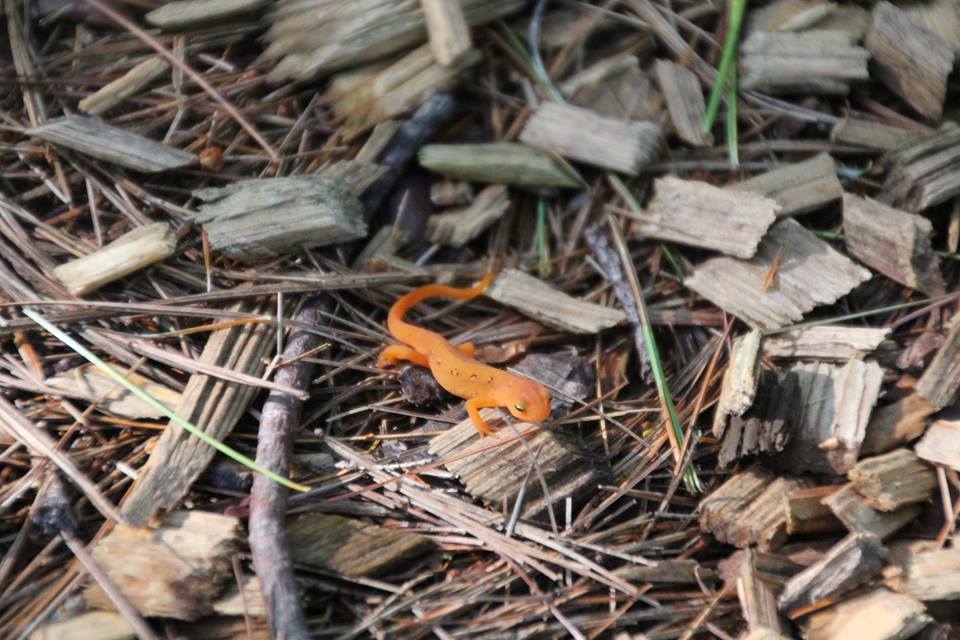
eastern newt / eft in pine woods
Jason Mankey also gets at some of the issues of the “beyond” factor in his post “The Trouble with 101 Books“. Partly it’s a consequence of living in a world of time and space — things keep changing, and so do we.
For Druid bloggers and polytheists like John Beckett, moving beyond 101 means deepening your relationships to the deities you connected to, among other things.
For an herbalist or gardener, it may mean developing your craft by studying nutrition and alternative healing, perhaps offering your skills professionally. It may mean getting a certificate in permaculture, or developing a hardier species to thrive where you live, challenging your ability to grow a larger percentage of your own food, teaching others, and so on.
For some of the members of the Druidry and Christianity Facebook group, the challenge is to find ways of being Christian that honor their spiritual discernment, while also acknowledging the powerful call of spiritual realities and opportunities of the natural world which are often ignored or considered actively suspect in the eyes of mainline churches and congregations and pastors.
Painters, sculptors, musicians work to sharpen their skills and develop their individual styles, and with enough talent coupled with a knack for marketing may even generate some income from their abilities. Some, but usually not enough to quit the day job.
If you don’t recognize yourself and your own experiences in this small handful of descriptions, you understand intimately how far you’ve walked from your own circle or community, just as much as if one of these descriptors more or less captures where you are right now and what you’re doing. Praise for the keepers and participants of circles, for the communal centers they offer!
For a mystic and walker of boundaries, it can mean exploring realms others don’t visit very often, including states of consciousness, ritual approaches, and a growing personal vocabulary to talk about such experiences, along with attempts to find parallels in other traditions and in the work that centuries of Bards in so many cultures have gifted us with. If a Bard somewhere seems to know about what I’m experiencing, I take that as a helpful guide to the terrain I’m walking. But if readers aren’t familiar with that particular association or reference, or if it doesn’t resonate for them, it may not help clarify what I’m talking about very much.
Often the work is so idiosyncratic and personal that it’s hard to share. Or when we do, others don’t quite know what to make of it. I found I learn best when I ask questions. As a ready way to minimize spiritual deception, especially self-deception, I find it unsurpassed. But long ago I also learned that the kinds of questions that interest me most often make other people prickly and defensive, or cause them to look at me strangely, or throw things, or turn away and find somebody else to talk to. So to avoid ostracism and rebuffs and a generalized loathing of my presence, I mostly turn my questions on myself and on my experiences and understandings of the world.
It’s true that such preoccupations can lead to a markedly reclusive lifestyle, so I bless my guides and mentors for nudging me into a career in education and teaching, thereby avoiding even greater eccentricity. If twenty-five years of teaching at the secondary and university level has shown me anything, it’s demonstrated that students like to ask questions of their own on occasion, rather than always answering other peoples’. The same holds true for groups and structures. Young adults are always forming their own groups, with structures that make sense to them, rather than answering to or serving the needs of adult administrators trying to justify their salaries.
When I write about my preoccupations here, I realize I’m writing first for myself, and only secondarily for others, because otherwise I wouldn’t know what to say. Your Druidry 201 and or Paganism 450 Honors will not always overlap with mine. That’s as it should be. Thoreau addresses this phenomenon in the first chapter of Walden with characteristic dry humor:
In most books, the I, or first person, is omitted; in this it will be retained; that, in respect to egotism, is the main difference. We commonly do not remember that it is, after all, always the first person that is speaking. I should not talk so much about myself if there were anybody else whom I knew as well. Unfortunately, I am confined to this theme by the narrowness of my experience.
/|\ /|\ /|\
Thank you to all my readers for helping this blog reach 100,000 page views. While I write first for myself, I wouldn’t have kept going without knowing you were also reading and thinking about these things.
Unknowingly, we also shut most of the gates to Otherworlds ourselves. Hence religion — literally, “re-linking”. Both bad and good news here, for the keys (hidden, discovered, at the end of the quest — pick your legend) are in our hands.
As children all of us spent at least some time peering from the gates of an Otherworld into this one. That’s almost a definition of childhood. Imagination came so readily then that we thought nothing of it — it was our native tongue, our common language. We thought nothing of it because our journeys back and forth between the worlds felt completely natural, for the simple reason that they are. How many of us have heard children endlessly repeating a word or phrase, self-enchanting, practicing one form of word-magic to launch themselves into another world, another state of consciousness? Or the youngster who asks for an adult to read the same bedtime story over and over again, never tiring of it, making it part of the before-sleep ritual, that transition to another world, another state of consciousness? Or watching the same children’s movie day after day, delighting in the ritual of sequence, of beginnings and endings, of transport out of one state of awareness and into others? Or childhood games, with their frequent patterns of losing and finding, of repetition and transformation together. Anyone can be “it” — until the next round. (For whatever “it” may be this time, consult your right hemisphere.)
Almost effortlessly we arrive into this life, knowing firsthand, instinctively, how to make such journeys, only slowly letting go of that precious knowledge as we acclimate to this world.
With enough practice and experience here in this life, we’re able to mock up difficulties and obstacles of all kinds for ourselves in the opposite direction. In fact, we get r e a l l y good at it — when I have time, when I’m not so stressed, later, next weekend, when I finally get a break from work, when the kids are asleep, after the virus retreats, when I’m not so strapped for cash — never perceiving that it’s exactly such priorities which too often shut us off from the very wonder, healing and rebalancing we long for and so desperately need. Rather than slipping in and out of worlds with ease, we root ourselves deeply in just one, then struggle to connect to any others. Rather than tapping into sources and fountains of rejuvenation that would make this life easier, less stressful, more magical, we resolutely “put away childish things”, then wonder why we feel empty and unfulfilled. If we want a clear demonstration of elemental earth out of balance, we can look at its grip on us, holding us back from mingling with the other elements and with spirit. Hence the needful work with elemental ritual.
Through ritual we can let this “apparent world” fade, as OBOD rites describe it. And one strategy for doing that, given our busy lives, is to slip into such ritual spaces and places in the middle of whatever else we’re doing. This practice in itself mimics the between-the-worlds quality we seek, so it models what it induces. Make the intervals and practices small enough we can’t not enter them. They can also become components of the larger rituals we practice.
We don’t need robes, candles, incense, banners, deity and elemental figurines, gongs, bells, swords, wands, altars. True, things like these can help, but they’re not necessary. Sometimes a single short prayer-chant, practiced once an hour through the day, or on some other schedule (every 15 minutes, or each time you get up from your chair, or at each break, etc.), can begin to open doors.
With each breath I take I walk between the worlds.
The previous post offered a somewhat longer prayer: I invoke the three gifts of Mon …
And the usually brief triads are another short piece of poetry and singing, of verbal magic to enchant ourselves into other worlds.
Or if you’re more kinesthetic, and words don’t do it for you, a ritual gesture or kind of movement, or for other sensory orientations, sound, color, smell, and so forth. The previous post offered the infinity symbol as gesture or sign, a way of signaling the openness that always walks with us, the ability to slip in and out of other worlds in an instant, and then return. Drawing it might help. (Doodling is one way many of us enter daydream, another world, and to shift consciousness, etc.)
/|\ /|\ /|\
In another few days this blog will hit 100,000 views — one indication that in the nearly nine years of its existence it’s continued to serve those who read and return to ponder the kinds of things I write about here. The international readership it’s acquired heartens me as well — it’s not speaking merely to a North-American base.
I do a lot of re-reading (“if it was worth reading once, it deserves at least a second go”), and right now I’ve returned to Richard Adams’ Shardik, his 1974 novel about “the power of God in a bear”. Adams, though better known for Watership Down, felt that in Shardik he had written his best work.
Some flavours and expressions of Druidry devote attention to the shape-shifting that can open doors, to the more shamanic aspects of our past and our potential, to the animal-human links that can help restore us to balance and fuller experience of humanity. Books can often point us in such directions.
I wrote a few years back about toasts, boasts and oaths as part of a Lúnasa ritual at Mystic River Grove in Massachusetts, and I’m revisiting the topic here, because it’s a rich one to explore further. Anyone interested in Lugh, his Welsh counterpart Lleu Llaw Gyffes, and associations with Lunasa need only Google for more info than any ritualist could use in 50 rituals. Use the search box on this site for my other posts on the subject.
This triad of ritual actions is especially fitting now, because Lugh is the god whose nasadh “assembly” gives us the name of our current seasonal festival Lughnasadh, or Lúnasa in reformed Irish spelling. Lugh is described as samildánach — “equally skilled in many arts” — certainly reason enough for boasts, toasts and oaths as components of Lunasa ritual. Emulate the god and celebrate the pluses in our lives. His festival includes games of skill, a kind of Celtic Olympics.
Without much squeezing or distortion, we can also see each action as associated with a specific time: past, present and future.
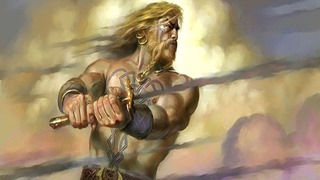
Boasting generally looks to the past, to something already accomplished. “I’ve done it before (and so I’ll do it again)”. We could even see the modern job resume as a kind of contemporary and restrained boast — it highlights our relevant employment history, our training and experience. Likewise, a good job interview is a delicate balance between touting our accomplishments and demonstrating our self-awareness, an understanding of our weaknesses — cleverly transformed, of course, into opportunities for growth in the service of our next employer.
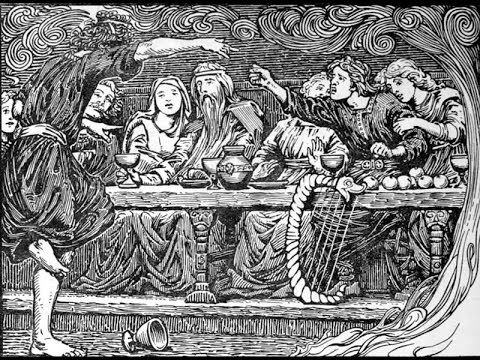
The Flyting of Loki
A boast naturally seeks recognition and praise, or acknowledgement at the very least. (A suspicion of pride and an awareness of its dangers pervade the Judeo-Christian moral heritage of the West, so a Pagan restoration of justified pride is long overdue. The point, after all, is to do something praiseworthy, something that fully deserves boasting about.) As a result, it can also be an occasion that calls for responses from others that tease the boaster, as much as for compliments on an achievement done well. A roast, another rhyming theme that fits well here, is an invitation for just such teasing and carefully-tuned mockery. Through it we test the self-confidence of the boaster, their ability to “take it”, and check their anger, and sometimes to respond in kind. African-American playing the dozens and the Norse, Celtic and Anglo-Saxon flyting each ritualize an exchange of insults. The Norse Lokasenna, sometimes called the Flyting of Loki, is just one historical and literary example. In one form or another, the “rap battle” has long been alive and well.
Toasts are often expressions of gratitude or celebration for something that’s happening now in the present. We salute and celebrate another, whether person or object, event or location. In some way it’s a form of blessing. We toast a newly-married couple, we christen and launch a boat, we hold a ribbon-cutting ceremony for a completed factory or auditorium or museum. As with boasts, toasts often ask for toasts in response, and some cultures formalize such exchanges. Further highlighting the link between boasts and toasts, it’s often considered “good form” to lightly tease a person or couple we’re toasting, as a way of showing affection.
Oaths usually look toward the future, to something we intend to achieve. As a promise or vow, an oath can be an acknowledgement of a debt we’ve garnered in the past, but oriented towards a general time to come. Or it can be more like a promissory note, specifying terms of repayment, the conditions for fulfillment, etc. In the oral cultures where they mostly originate, oaths are a matter of public memory. We make them publicly so that others witness them. A sense of a commitment made with others’ knowledge often helps the oath-maker to fulfill the oath. It’s a way to utilize any shame, any fear of loss of face if we fail, to motivate us, just like we imagine the praise if we succeed, the enhanced reputation and public standing.
This triad of ritual behaviors can feel somewhat contrived in the West, because each is a ritual action less common today than in the past. As an opportunity to revive ceremonial forms and a chance to explore a triad of potent group ritual gestures, boasts, toasts and oaths deserve to be incorporated in our rites and celebrations.
/|\ /|\ /|\
These ritual acts are also chances for growth. Part of the cultural change we’ve undergone in the West over the past several centuries has been a shift toward internalizing these three rites. Rather than boasting publicly, we read books on motivation and struggle to deal with self-esteem issues. We take workshops on resume-building and interview skills and networking. We internalize our weaknesses and strengths, though we now hand over to social media an increasing share of our once-private lives, in a curious reversion to the older cultural patterns of turning towards a community for much of our identity.
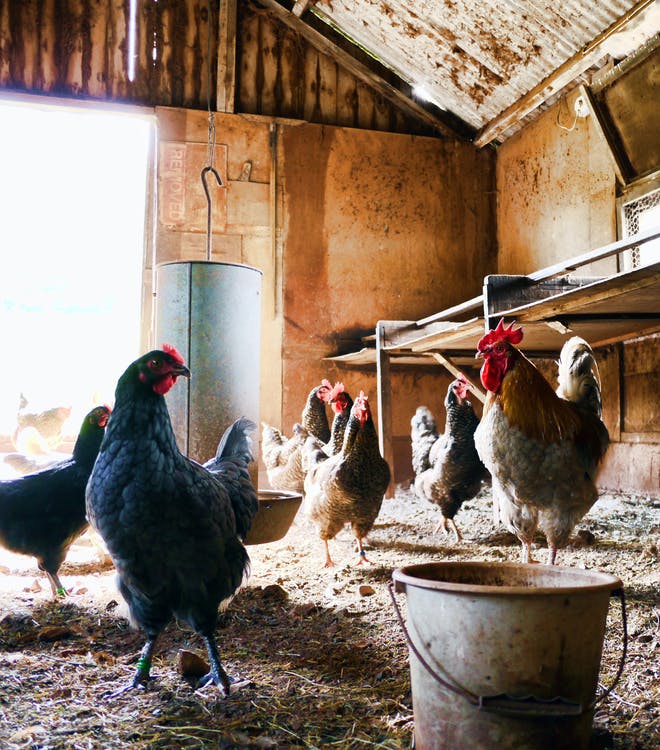
The pecking order of birds, the ranking among herd animals, a usually stylized aggression to establish social position, can shade into bullying among humans, a specific form of cruelty. Animals generally stop once one of them establishes dominance over the other. We see animal rituals in the submissive gestures of wolves, stags, chimps, etc. who yield to a stronger opponent. A human bully doesn’t stop, and equivalent gestures of submission may simply encourage greater cruelty. The point of bullying is not merely to establish dominance, which is the goal of most alphas, both female and male, but to cause pain.
Specifically Druidic responses to bullying are often rooted in community. We look for our values to nature and to what we have in common, and a response to a bully is often a communal one. Isolation, banning, shunning, communal expressions of disgust and repulsion, all can have their effect in awakening shame and regret, or at the minimum ending the behavior and any opportunities for it to continue.
Just as important, however, are opportunities for clearing one’s name, for redemption, for forgiveness, for reparations and restoration. Ritual has a place in this as well. The fear and anger that often underlie bullying behavior can be dis-empowered. Elemental re-balancing can play its part — earth can eat the heaviness and sense of blockage and obstruction that comes from wrong-doing acknowledged. Water can cleanse and purify, air can lift and lighten, and fire can purge and burn away.
is the one you’re actually practicing, as opposed to any ideal in your head. Or least so it looks from where I’m walking through the woods, or sitting at the kitchen table.
From new Druids on one of the OBOD Facebook sites introducing themselves, asking questions, sharing their sense of discovery on this new journey, to battle-scarred Christians on the Druidry and Christianity site, recounting their journeys out of toxic groups and towards a Jesus who’s always been praying in the forest, as well as blessing the tidal basins along the seashore and listening in the desert sands, or standing there in the next room, gazing at the statue of his brother Lugh, or his sister Brighid, we’re walking any number of possible and imagined paths to see what the next steps reveal.
Can we map out some of the characteristics of what “true Druidry” might look like?
incense / Pexels.com
ONE
For a start, we can lay claim to the sense of the Hippocratic oath (NIH website). Though the oath doesn’t include the explicit words “First, do no harm” that are often attributed to it, the sense behind those words is clearly present. One of the signal advantages to walking a solitary path is that no dysfunctional group will muck up your journey. Add to that the reassurances in the study materials of responsible Orders to do what feels right, and simply to set aside any exercises or materials that don’t. Most people connect with a group, if at all, through a friend or acquaintance, and that’s as good a way as most. Likewise, the practice of Druidry should be the practice of non-harming.
Of course, Druidry like any other valid path can be an instrument to help unstick us if we’re stuck. It tends to do this gently, pointing us toward sources of balance and healing. More vigorous and rigorous forms and practices are also available. As we come into healthier balance, we often are drawn to find ways to lighten any undesirable impact of our words, actions, thoughts and feelings. Just as taking up the study of Druidry should do no harm to us, our practice of Druidry should do no harm to Others.
TWO
Good teaching supplies options to students: you can find ways to adapt the course of instruction to your interests, circumstances, and so on. A water-loving tree mentioned in your reading, for instance, may not grow anywhere near you in your home climate, a dry one unlike the British isles, but another tree in your yard or town piques your interest and attention, and can teach you much. Your local tree becomes your teacher for the month (and beyond) as much as your formal written study materials. Knowing this, authors of good materials generally point you toward such teachers, who constitute a central part of earth spirituality. “The Land is your greatest teacher”.
A Druid proverb here might be “Do not overlook teachers you may not expect, or who don’t match your preconceived notions of what a teacher should look like. For these include some of the best teachers you will meet”. Or more succinctly: “Expect the best teachers, whatever forms they may take”.
THREE
Many people recount experiences of synchronicity in their study: the lesson on animal guides arrives when you’ve encountered or been dreaming of an animal, perhaps the animal mentioned in the lesson. A book reaches your hand that opens up a topic you’ve just been thinking about. A conversation with a friend touches on an issue you’ve been struggling with, and that brings its own comfort. Any focus maintained over time tends to provoke such experiences. Are we simply more alert to things already present in our lives? Does our study “cause” them to arrive when we need them? Is the green world listening in some sense to our spoken and unspoken wishes and thoughts? Pondering such questions is also part of Druidry, and helps to shape our response to the synchronicities.
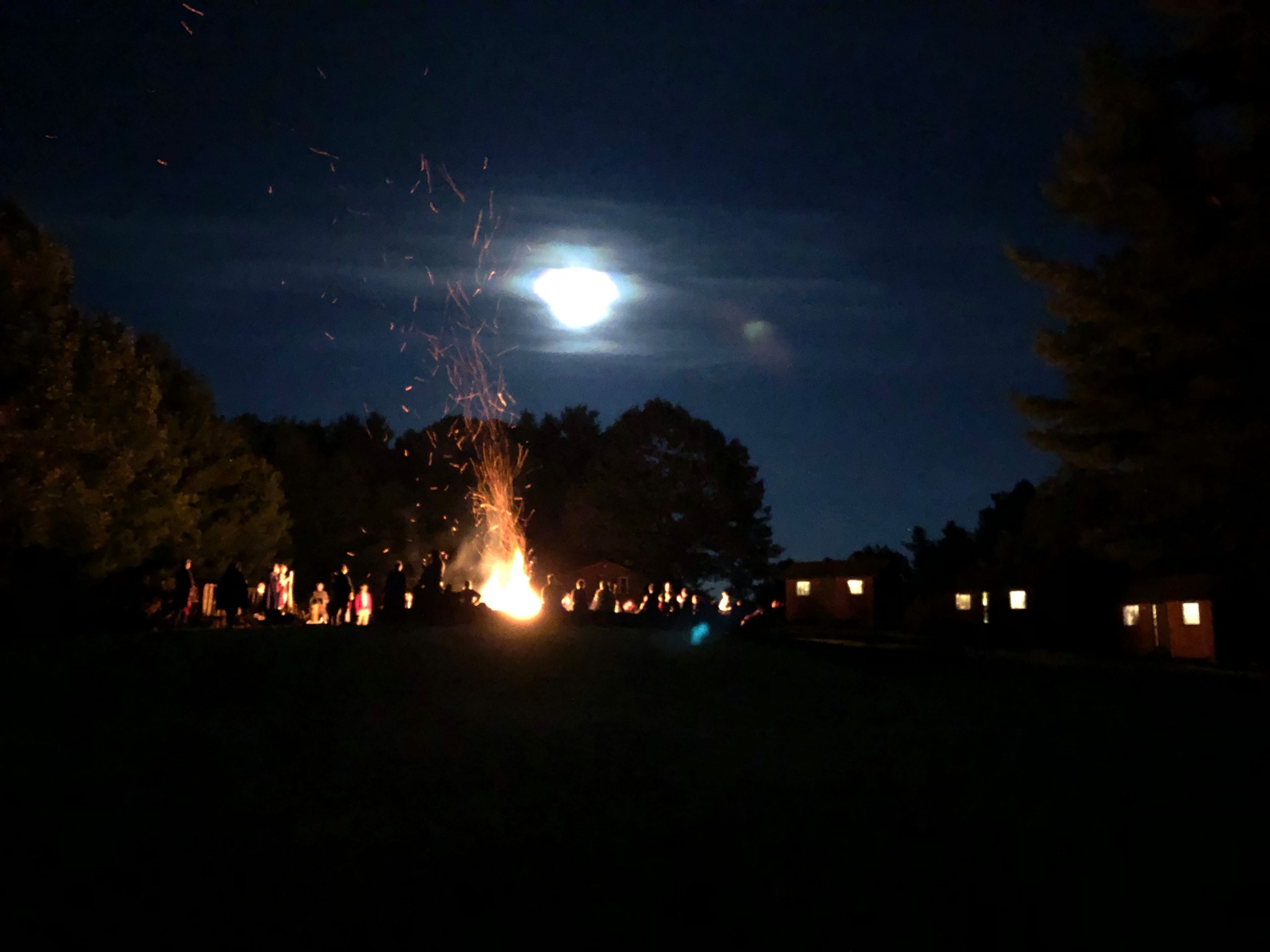
“It takes night to see fire best”. Full moon at BAM gathering, Sept. 2019.
FOUR
Ritual observances as the tides and seasons change, something as simple as a blessing over a harvest, or a libation to the full or new moon in recognition of its beauty and mystery as a door to spirit, deepen our experience of living in time, and also afford us glimpses of timelessness. “The apparent world fades”, says OBOD ritual. (Don’t worry, whisper the flowers on the altar. It hasn’t gone away. It’ll still be there when you return.)
Ritual both intensifies our awareness of the “ordinary” and opens us to the non-ordinary. Often ordinary and non-ordinary share qualities, or merge and blend and shift in ways we hadn’t noticed before. (Are they the “same”? Both no and yes seem true or accurate answers. Compare Tolkien’s proverb: “Go not to the Elves for counsel, for they will say both no and yes” — The Fellowship of the Ring.)
At Lunasa or Imbolc, Brighid may have something to say to Lugh, and vice-versa, and via ritual we find we can listen in to their conversation. Or we turn our words, gestures and ritual elements to one of them and it seems that the other answers. As the Wise have reminded us, just because Brighid or Lugh may not exist, that doesn’t mean they have nothing valuable to say to us. Such categories of things get re-arranged. We start to realize how large and multi-form and marvelous the cosmos can be — a blessing of freedom and possibility in itself.
FIVE
“Guard the mysteries! Constantly reveal them!” wrote Beat poet Lew Welch some 51 years ago now, in 1969, in his poem “Theology”. In one sense, that’s what the experience of doing Druidry feels like. The really profound things can’t be conveyed to other people anyway, but only experienced. Any mystery we “guard” is also something we’re trying to reveal to anybody interested, through our rituals and actions, our stories and our own practices, our urging to others to practice for themselves so they can have the experiences, too.
The act of revealing often takes the form of a kind of guarding. With both mirth and reverence, as Doreen Valiente puts it in her Charge of the Goddess, we approach the sacred at the heart of the world, in ourselves and in other things. We model this as best we can because of our own repeated experiences.
Our approach is a participation and honoring; our participation is an approach. The guarding itself is an invitation — apart from initiations, our Circles are typically open to respectful visitors, and we do what we do “in the eye of the sun” unless the event runs into evening hours, as feels right for Samhain.
SIX
Curiosity seems a common trait many Druids share. Almost always there’s something that sparks their interest. Often it’s an avocation, something done as an amateur in the original sense of the word — out of love. There are many remarkably accomplished and educated people among Druids I know. They take up new studies and practices, pursue training through more formal diploma-ed and certificate programs, as well as less formally, through reading, apprenticing, experimenting, returning to and building on a hobby, study, or passion of their youth or acquiring a new one.
“So many things worth knowing” could serve as a motto for many. Like Gandalf, they often enjoy digging, learning things in the process not yet generally known or accepted. “Among the Wise I am the only one that goes in for hobbit-lore”, remarks Gandalf in The Fellowship of the Ring. The wizard’s specialty proves to be “an obscure branch of knowledge, but full of surprises. Soft as butter as they can be, and yet sometimes as tough as old tree-roots. I think it likely that some would resist the Rings far longer than most of the Wise would believe”.
SEVEN
Transformation and spiraling seem to characterize living teachings. We change, the teachings themselves seem to morph and change and shift, what we thought we were and knew transforms, and we spiral to see the same old things in new ways, encountering higher harmonics of the no longer “same old thing”, so that our experience and wisdom deepen as a result. Another common proverb expresses this well: One thing becomes another in the Mother …
A mundane laundry triad: It needs doing, you do it regularly, and you see the benefit in practical terms: clean clothes.
elemental laundry: water, earth, air, fire …
While people have individual laundry rituals — you must fold clothes a certain way, or you can only wash certain items together, or you sort into whites and colors, while somebody else sorts by fabrics, or gentle versus regular machine cycle, or you use specific detergents on specific categories — laundry everywhere needs washing. It’s a deeply human activity.
I talk so much about spiritual practice for several reasons. Those who do it know its profound value, while those who don’t tend more often than not to busy our political landscape and to make headlines of various less-than-positive kinds. By “less-than-positive”, please note, I don’t mean less-than-comfortable. A spiritual practice worth doing should in fact unsettle us if we’re stuck — and that’s a good thing. If I’m entrenched in a rut, I need to be plucked from it, and a good spiritual practice is a rut-plucker.
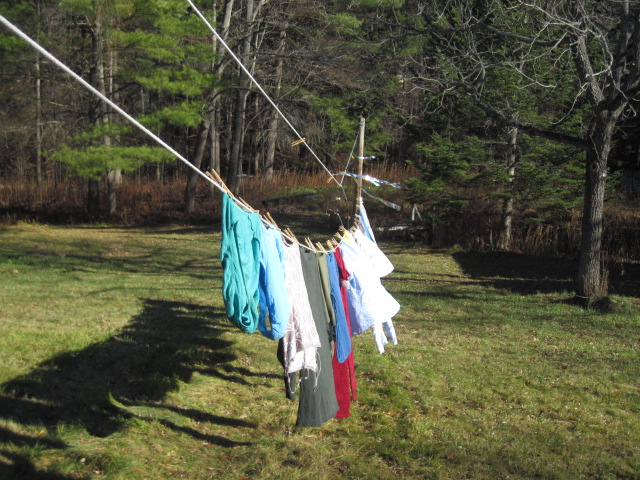
Do laundry long enough and you begin to discover its seasons and rituals, its smaller and larger gestures. During warm weather, hanging clothes outdoors may be an option (as a rural and stingy Yankee, I get to save several hundred dollars each year drying clothes on a line from early April through late October, and gathering in wonderfully sun-breathed clothes besides. Ah, blessed sweat equity). You may wash more in cold weather because you wear more in cold weather. You may also begin at length to practice economies — better (and less) detergent, or scent-free choices, or more efficient machines, or certain days where doing the laundry just makes better sense. You may struggle against housing ordinances which prohibit clotheslines, or you may frequent laundromats or public laundries with their own rules and practices.
Travel or visit others (before these wry, random and ructious covidious times, and hopefully afterwards, too!) and you face different laundry adventures, washing items in a sink, or in your friends’ or sisters’ machines, or in a hotel laundry room. Leave the ritual you know and you discover how much of a habit it has become. Pack a suitcase, and you’re drawing on accumulated clean laundry to see you at least partway through the journey. A good practice grants you just such a reserve you can draw on.
Some practices will shrink or shred or discolor some of your laundry. Note that nothing in such a practice is “wrong” by itself: only the combining of actions and objects that don’t work well together causes the problem. How far I can extrapolate from that lesson is itself a useful meditation.
Water, air, earth … gifted already. Add the fire of my intention. / Photo by ArtHouse Studio on Pexels.com
And I ponder how the goal of laundry isn’t clean clothes by themselves, exactly. It’s more a person well-clothed in fresh apparel. We want to wear the clean clothes, not merely gaze at them in a pile. I can shower twice a day, but if I have to put on dirty clothes again after a shower, I’m working at cross-purposes with myself. Another reflection for meditation, for the place of a practice.
/|\ /|\ /|\
At a certain point, laundry can become a spiritual practice, an apparent reversal of the title of this post. But not really: a sound spiritual practice nourishes our capacity to make a practice out of more and more of our lives. If I’ve been doing a practice for a while, and I can detect how it has enlarged me in good ways, that’s a valuable indicator, a signpost along the way that we often do not learn in schools, or from those who by rights should be conveying to us the keys and secrets to making the most of our decades here in this strange and marvelous world. But I will not fault them: it may well be that they in their turn did not ever learn it themselves. If I’ve caught even a glimpse of that possibility, I’m blessed indeed. A ritual of compassion for the ancestors: share with them this gift, let them sense something of its resonance for me, let it flow backward and forward in time.
If we’re fortunate, we can number among our family or friends or teachers someone who makes a spiritual practice out of daily life. Their company is a gift and a pleasure, because whatever they do, they do with love. Children may experience this around a grandparent or other mentor. What we do in the presence of the loving spiritual practitioner matters far less than the doing of it in that presence. The quality of that presence outflows. It’s like a fragrance or vibration we take with us. Begin with something small that you do often, said my teacher one time. If it’s tying your shoelaces, tie them with love. When you’ve made that a practice, then slowly expand it to other things.
It’s good to take out our beliefs from time to time and lay ’em side by side with our practice. Good, because a disconnect between them is like dirt in an engine — friction wears things down. I can deal with it only if I know about it. We see it most readily in our relationships, but somehow look past it in our own psyches. We grow closer to another person, or we drift further apart, and we can often trace the causes and turning points, but we discern it less easily in other dimensions of our existence. At least in my own experience, such “grit in the works” burns energy, grows stress, sparks illness, ignites irritability, and seeds confusion over goals. So it’s good to pay attention and apply remedies.
Our inner worlds are sometimes less “in our faces”. Photo by Luis Quintero / Pexels.com
I say, for instance, that I want to improve dream recall, and I seem to believe it, yet I ignore my pre-sleep routine. Rather than affirmations, dream review, and care for my late-night reading choices, I read for pure entertainment, falling asleep with glasses on and my finger in a book. Many things lie outside my ability to manage and improve, so why not focus on those I can? Then, paradoxically, the number of things I can manage and improve often enlarges, because I’m not wasting energy on internal conflict.
Back in 2016 I outlined my principal beliefs as I could perceive them then, partly in response to a comment from a reader talking about his sense of the need for a Druid theology:
My correspondent acknowledges he’s a solitary, and such a path can indeed be lonely at times. Alone, I may confront myself more directly and disconcertingly. Alone, I face truths that can be uncomfortable, inconvenient — and profoundly useful to discovery, creativity and growth. Groups can conceal and divert us from the necessary work of the self.
If the tools of Druidry are worth anything, they’re up for the task of helping us grow, both in groups and alone. We find ourselves in a universe of ceaseless growth and change, so it makes sense that both our beliefs and practices should mirror this larger world we inhabit, if they’re to be of any use and value. Daily meditation, time outdoors in nature, ritual observance, ongoing study, and creative expression make up the lives of many Druids who find value in these practices.
Where’s my attention? (Mt. Ascutney, VT, looking southwest)
The “more perfect union” of the title (from the Preamble of the U.S. Constitution) doesn’t automatically mean that practice must conform to belief (or belief to practice, either), but simply that we attend to the harmony between them. That harmony means they can balance and inform and influence each other.
So here are those beliefs, with today’s notations, observations, etc. following after, indented.
/|\ I believe that to be alive is a chance, if I take it, to be part of something vastly larger than my own body, emotions, and thoughts (or if I’ve learned any empathy, the bodies, emotions and thoughts of people I care about). These things have their place, but they are not all.
Not only is it a chance, but my life experiences seem to push and prod me toward that awareness of a “something larger”. Most of my suffering, if I’m honest, also seems to issue from resisting that direction of growth. If compassion — literally, “feeling or suffering with” — doesn’t enlarge in me, I pay for it with a sense of futility, waste, depression, impatience, boredom. But how I might become part of the “something vastly larger” is as varied as each of us is. My practice is for discovering the “how” and embodying it.
/|\ I believe this because when I pay attention to the plants and animals, air, sky, water and the whole wordless living environment in and around me, I am lifted out of the small circle of my personal concerns and into a deeper kinship I want to celebrate. I discover this sense of connection and relationship is itself celebration. Because of these experiences, I believe further that if I focus only on my own body, emotions, and thoughts, I’ve missed most of my life and its possibilities. Ecstasy is ec-stasis, “standing outside.” Ecstatic experiences lift us out of the narrowness of the life that advertisers tell us should be our sole focus and into a world of beauty and harmony and wisdom.
Joy doesn’t get talked about much, but it’s at least as infectious as any virus. We’ve all known and experienced those moments of joy and “outlift”. Again, how I “lift out of the small circle of my personal concerns and into a deeper kinship” is my practice. If my practice isn’t currently helping me achieve that, that’s worth attending to, and changing.
“Stilling the pool of nwyfre is the task of the art of breathing” — J M Greer, The Druidry Handbook.
/|\ I believe likewise that the physicality of this world is something to learn deeply from. The most physical experiences we know, eating and hurting, being ill and making love, dying and being born, all root us in our bodies and focus our attention on now. They take us to wordless places where we know beyond language. Even to witness these things can be a great teacher.
I’ve written before about both the possibilities and limitations of language, out of personal experience and professional training. The “wordless places” we reach and explore don’t necessarily come to us by worry over names and words. Tearing down a Confederate monument, to use a current example, or renaming an airport to drop an association with a politically incorrect person, may apply a dollop of relief to pain, but it won’t address the underlying cause of that pain, which arose, and still arises, from a refusal to do the inner work required.
/|\ I believe in other worlds than this one because, like all of us, I’ve been in them, in dream, reverie, imagination and memory, to name only a few altered states. I believe that our ability to live and love and die and return to many worlds is what keeps us sane, and that the truly insane are those who insist this world is the only one, that imagination is dangerous, metaphor is diabolical, dream is delusion, memory is mistaken, and love? — love, they tell us, is merely a matter of chemical responses.
As inhabitants of multiple worlds, we often neglect the claims they make on us, and also forfeit the advantages they confer if we would only attend to those claims. This world is just one among many. Such statements seem either self-evident to people, or completely obscure. I find there’s almost never much middle ground.
/|\ I believe that humans, like all things, are souls and have bodies, not the other way around — that the whole universe is animate, that all things vibrate and pulse with energy, as science is just beginning to discover, and that we are (or can be) at home everywhere because we are a part of all that is.
“Being at home everywhere” is a kind of vairagya, or not putting all my eggs in a basket that isn’t designed for them. It’s a remarkable and deep practice I’ve been exploring for decades, in various forms, and have only begun to understand.
St. Paul talks about something similar, as far as I can tell, in a challenging passage in Philippians 4:11: “Not that I speak in respect of want: for I have learned, in whatsoever state I am, therewith to be content”. It’s definitely not indifference, or obliviousness to others’ suffering, but something much more profound. In fact it seems to enable me to help more, not less, when I get myself out of the way of what the other person or situation needs. One small example: rather than imposing what I think my hospice client needs, some of my greatest service lies in listening to him. And sometimes that’s very hard, when I want to “fix things”.
/|\ I believe these things because human consciousness, like the human body, is marvelously equipped for living in this universe, because of all its amazing capacities that we can see working themselves out for bad and good in headlines and history. In art and music and literature, in the deceptions and clarities, cruelties and compassions we practice on ourselves and each other, we test and try out our power.
The sense we have from time to time of being both natives and foreigners in our own lives reflects our varying capacity to work with this human consciousness, recognizing its limitations and also its great virtues for growth and discovery. And Druidry provides tools for working with it, and also discovering other kinds of consciousness, each with its own particular strengths. Why limit myself to just one?!
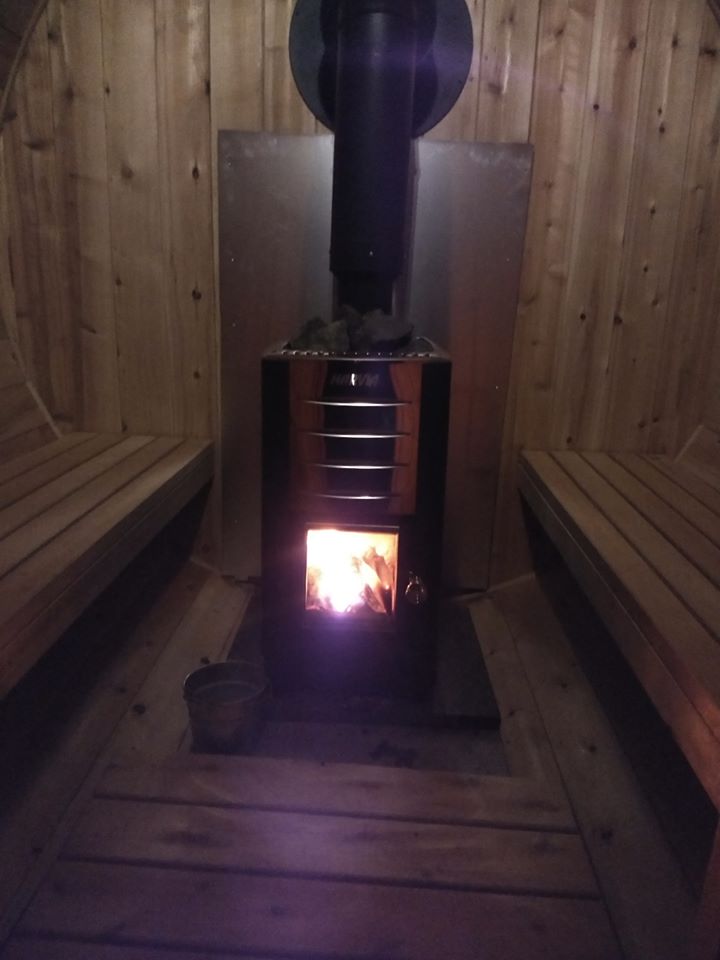
My friend B’s sauna stove — fire in midwinter, fire of midsummer.
Light balancing north and south, nights and days in their interchange, sleep and waking and the opportunities during each for connection and discovery. May we hear the earth speaking, may the Ancestors alive in us show us the good paths, may each encounter give us space to practice our hard-earned wisdom.
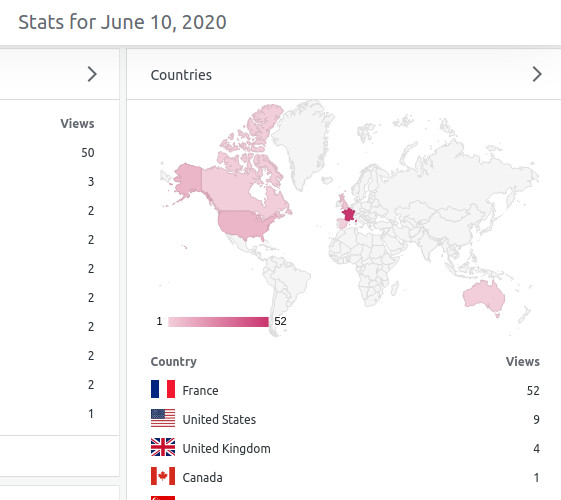
French Visitors
A burst of over 50 views from France so far today! Bienvenus, mes amis! Que les benedictions soient! A quick comment on any post is helpful — something you’re looking for, or would like to see more about in the posts here? Please let me know!
Winter and Summer Solstices
That time again … The solstices, winter and summer, are just a little over a week away. Our solstices — let’s claim them, not as something we “possess”, but as intervals and energies that embrace and sustain us. Alban Arthan, Alban Hefin [links to short posts on the OBOD Druidry.org site], the names OBOD uses for Winter and Summer Solstices, are often rendered respectively as the “Light of Arthur” and the “Light of the Shore”.
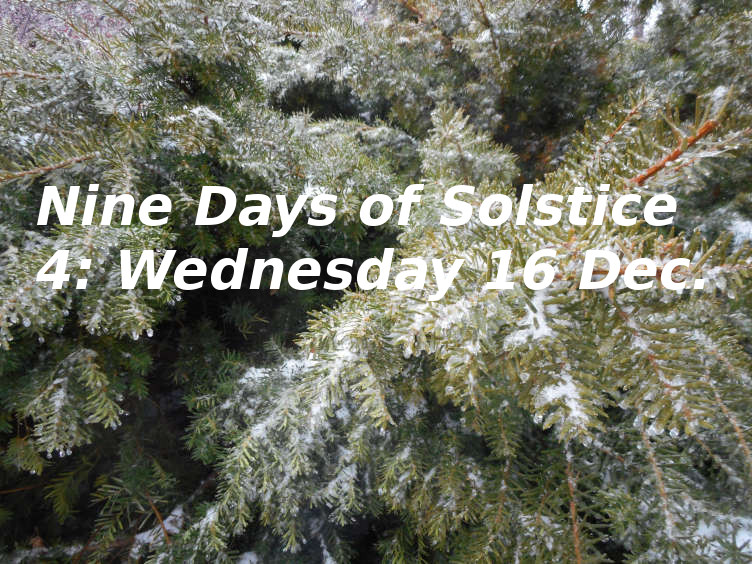
You can find some of my previous posts on Solstice here, for both Winter and Summer seasons. First, a three-part series from last winter, December 2019: Gifts of Solstice 1 | 2 | 3.
Solitaries, ritualists, O.B.O.D.-friendly Druids and anyone interested in ritual surrounding a transition of leadership in Druid Orders may find the recent OBOD installation of Eimear Burke worth time spent with this 25-minute Youtube audio-only recording. Close your eyes as the introduction suggests to increase your attention and you may gain additional insight from that focus.
Welcome, Eimear, and blessings to Philip for his 30+ years of service and leadership.
/|\ /|\ /|\
Please Support A Druid Way
If you’ve found value here, please help me continue to provide it! Visit Paypal.
From the heart of the awen to you, from the love each being manifests simply through existing in its uniqueness, from the possibility the cosmos is always showering forth to this moment in life.
/|\ /|\ /|\
One of the distinctive dynamics of our world is that it appears to function as a stable system. It continually seeks equilibrium or balance. How can that be, I hear myself mutter, when the last 200 years look like some of the most violent and tumultuous in human experience? After all, one of the foundational understandings of Druidry and some other spiritual paths is that human and natural worlds both unfold according to the same patterns and principles, because both exist as parts of the same dynamic flow. How I talk to and treat my garden plants and how I interact with my neighbors come to resemble each other. Douse my plants with pesticides against all manner of worms and bugs; gas, cuff, asphyxiate and shoot the vile Others — many make a direct equation between these acts.
In the words of the Dao De Jing, that old Chinese classic that attempts to make useful observations on how energy flows through both natural and human worlds and institutions, “extremes don’t last long”. Not because they’re “good” or “bad”, but because extremes are inherently unstable and unsustainable. Push for one extreme, and the planet’s tendency towards natural equilibrium will reassert itself. The world will rebalance in the opposite direction, often with just as much vigor as our initial push towards one extreme. Attempt to eliminate all bacteria, and superstrains of the pesky little fellows will emerge, literally to plague us. Oust the Foreign Devils, and then it’s the Communists/Nationalists who polarize the land. Throw off the imperial yoke of the British Empire, and in time those evil Party X or Party Y people will break into our new Eden and foul things up. Round up and imprison-exterminate-exile-convert all those evil Others, and a new Other will take shape. In a demonstrable sense, the (binary) door always slams us in the back on our way in or out.
OUR HUMAN GENIUS is MANIFESTATION
That decidedly does not mean we shouldn’t work for changes we desire. After all, we can each point to successes in manifesting at least some of the things we want — manifesting is what we do each day. It does mean that when we enter a binary dynamic and pursue one side too forcefully and unskillfully, the back-and-forth of rebalancing that results may end up strengthening both sides to roughly the same degree. The result is a feedback loop, a self-reinforcing polarization that builds and builds. But a binary isn’t our only choice, just one among a good range of ’em.
As Exhibit A of an active binary, examine media on both ends of the recent U.S. political spectrum, and you soon see how each pole has come to adopt apocalyptic rhetoric and characterize the victory of the other side, whether in November, or tomorrow, or right now, as “the end of America”. Each chooses a side, dons the appropriate Superman-Batman-Jedi Knight-Righteous Warrior-Crusader costume, and sallies forth to do battle. Eventually, regardless of my current score in the game, I stand convinced of my moral superiority, I keep fighting the good fight, and I exhort others to do the same, or shame them for an uncaring heartlessness almost as bad as siding outright with the Opposition.
Long-time readers of this blog know that over the decades I’ve grown to admire J. M. Greer for his useful and test-able insights. One of his more acute set of observations concerns the kind of polarization we now face. His “Getting Beyond the Narratives: An Open Letter to the Activist Community” is well worth studying. It’s a thoughtful response to a specific book, so you can see previous instances of what we’re facing today, but it’s also a good look at our ongoing tendency to entrap ourselves in binaries of Us vs. Them, Good vs. Evil, Civilians vs. Police — and at productive ways out from such binary prisons. Greer writes at one point:
When activists define their role wholly in terms of resistance and refusal, of “articulat[ing] a NO to the system” rather than pursuing a positive ideal, they guarantee that they’ll perpetually be scrambling to counter some new assault by the system, trying to maintain an inadequate status quo against the threat of further losses, rather than making the system and its defenders scramble to counter efforts to change the status quo for the better.
He reminds us of what Buddhists have called upaya, “skillful means” for moving forward. He looks at binaries, or reifications of a situation, but also at the remarkable energies that can be liberated for our use when we sidestep such polarizations. Such binaries, he notes,
are problematic because they can distract [people] from points of access where their actions can make a difference. Consider George Lakey’s fascinating account of the Otpor movement against Serbian dictator Slobodan Milosevic in his article “Strategizing for a Living Revolution” (pp. 135-160). One of the tactics Otpor members used to halt police violence against them was to take photos of their wounded and make sure the family members, neighbors, and children of the police got to see them. This was a brilliant bit of magic. The individual human beings who made up that reified abstraction, “the police,” were stripped of that identity by a spell of unnaming, and turned back into neighbors, husbands, children, parents: people who were part of civil society, and subject to its standards and social pressures. That couldn’t have been achieved if Otpor had reified and protested “police brutality,” since that act would have strengthened the reification of police as something other than ordinary members of society.
A STRATEGY for BOTH LARGE and SMALL
This potent strategy is one I can apply not only to the kinds of events now convulsing many places in the U.S. but also to other stagnated, reified situations where I’ve labeled myself into a dark place.
irises already flowering — early this year
A similar strategy of depolarization emerges in an NPR segment (link to recording and transcript) broadcast two days ago on 4 June. The segment’s titled “Police Officers, During Protests, Are Resembling Soldiers In War Zones”. In a short 5:02-minute interview, the NPR reporter speaks with Patrick Skinner, a former CIA officer, now a Savannah, Georgia police officer, who has chosen to live in the same neighborhood he polices. Skinner remarks:
But I think that instead of a war … you change it. You have a neighbor mindset. And it sounds really cheesy. (Laughter) It is cheesy. But it’s effective. And that’s what I’m looking for. I’m looking for whatever is kind and effective. I believe that instead of calling people civilians, call them your neighbor because they are. I live here. I work here. I don’t say that police should have to live where they work. This is a personal choice I made. But it really drives home the fact that the people I’m dealing with every day — it’s not a metaphor — they are my neighbors. And so I have to treat them as such.
So many current problems look intractable and unmanageable because we’ve imagined them in a particular way, pumped them full of our doubts and fears at least as much as our optimism and hope. We’re getting back what we’ve been putting in. Greer suggests:
Make an effort to experience the world around you as though today’s global corporate system isn’t a triumphant monster, but a brittle, ungainly, jerry-rigged contraption whose managers are vainly scrambling to hold it together against a rising tide of crises. See the issues that engage your activism in that light, not as though you’re desperate, but as though the system is. It’s a very different perspective from that of most activists, and reaching it even in imagination might take some work, but give it your best try.
The point I’d like to make, once you’ve tried on both stories of the future, is that both of them — the story of corporate triumph and the story of corporate failure — explain the past and present equally well. The actions of the IMF and the World Bank in the last decade or so, for example, can be explained as a power grab by a doomsday economy in the driver’s seat, but they can equally well be explained as desperation moves by a faltering elite faced with a world situation that’s more unsteady and ungovernable by the day.
Which of these stories is true? Wrong question. The events that define either story haven’t happened yet, and which story people believe could well determine which way the ending turns out …
Yet of course these aren’t the only two choices. Philosophers of science have agonized over the hard realization that any given set of facts can be explained by an infinite number of hypotheses. Mages, by contrast, revel in the freedom this implies. The freedom to reinterpret the world, to abandon a story of desperation for one of possibility and hope, is basic to the worldview of magic. It’s a freedom that today’s progressive community might find it useful to embrace as well.
Finally, Greer shifts gears to a magical alternative of a very practical and particular kind, one that opens up options to us for concrete action, rather than closing them down to the brute oppositions of a dysfunctional binary like some of the ones we’re in:
Toward the beginning of this letter I mentioned that the structures of consciousness are tools of magic. In the system of magic I practice, those structures are identified with the numbers from 1 to 10, understood not as quantities but as abstract relationships. You can experience anything through any number (though numbers above 10 denote relationships too complex for the human nervous system to handle). Each number has its strengths and its weaknesses. If you’re working deliberately with the structures of consciousness — which is to say, if you’re a mage — you choose the structure/number you use based on the effects you want to get. Most of the time, for reasons too complex to get into here, you choose one, two, or three.
Anything seen through the filter of the number one is called a unary. When you see something as a unary, you highlight qualities in it such as wholeness, indivisibility, and isolation. See it through the number two, as a binary, and you’ll highlight different qualities such as division, conflict, balance, and complementarity. See it through the number three and still different qualities such as change and complexity will be highlighted. All these have practical implications. If you want people to cooperate and build community, get them to think of themselves as part of a unary; if you want them to quarrel and resist change, convince them they’re on one side of a binary; if you want them to make change, make them think of their community and their world as a ternary.
/|\ /|\ /|\
May our practices, whatever they are, wherever we draw inspiration, help us grow and learn and act wisely and lovingly in the coming weeks and months. May we see and hear the wise teachers already in our lives. May we work for the good of the whole.










 Or if you’re more kinesthetic, and words don’t do it for you, a ritual gesture or kind of movement, or for other sensory orientations, sound, color, smell, and so forth. The previous post offered the infinity symbol as gesture or sign, a way of signaling the openness that always walks with us, the ability to slip in and out of other worlds in an instant, and then return. Drawing it might help. (Doodling is one way many of us enter daydream, another world, and to shift consciousness, etc.)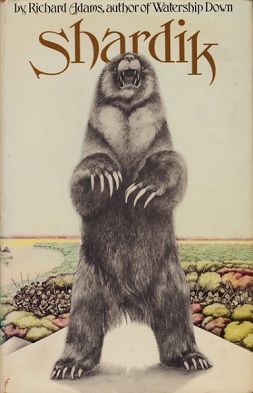
 The pecking order of birds, the ranking among herd animals, a usually stylized aggression to establish social position, can shade into bullying among humans, a specific form of cruelty. Animals generally stop once one of them establishes dominance over the other. We see animal rituals in the submissive gestures of wolves, stags, chimps, etc. who yield to a stronger opponent. A human bully doesn’t stop, and equivalent gestures of submission may simply encourage greater cruelty. The point of bullying is not merely to establish dominance, which is the goal of most alphas, both female and male, but to cause pain.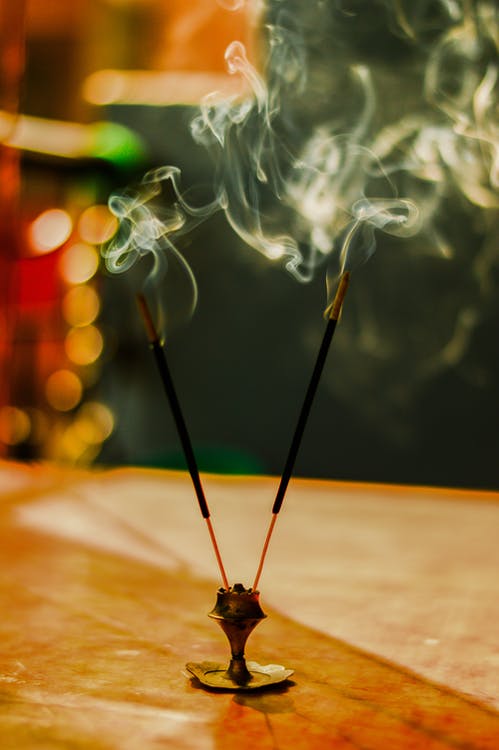





 A Druid Way
