A lot of talk these days about truth or reality and fakeness, almost as if our era was the only one ever so burdened, so challenged, so troubled by discerning the difference. So I cheer when I find a key to help me along the way, one I can hold up to the light and turn in my hands and consider, one I can offer to you and see whether it serves your need, too.
Es ist alles wahr wodurch du besser wirst, runs a German proverb Thoreau quotes in his journal entry for October, 1837 — “Everything is true through which we become better.”
I love this as a test for truth. No abstraction here, but rather a laboratory prompt, a calibration on our internal alethiometers, to use the example of Philip Pullman’s delicate device for measuring truth.
In the first volume of the fantasy trilogy His Dark Materials, Pullman describes the alethiometer like this:
It was very like a clock, or a compass, for there were hands pointing to places around the dial, but instead of the hours or the points of the compass there were several little pictures, each of them painted with the finest and slenderest sable brush (Northern Lights, 1995).
(Do you have your own alethiometer already? You do? Is it in good working order? Or are you looking for one?)
And that in turn should tell me something. As much as it is anything else, truth is an image, a whole set of images, that I carry around. From childhood onward, from experience, from stories, movies and the examples of others, from my culture and the era I was born and grew up in, I gather up and walk with a museum of images. Does what I see and experience right now match those pictures? If not, can it be true? How can it be true?
Everything is true through which we become better. Should I walk around asking, “Have you become better yet?” Well, no: unless I start first with myself. You know this is my principal strategy for avoiding insufferable arrogance, spiritual myopia and self-righteousness. Turn the edge on myself first, before urging the blade on others. A better question is “How did you do it? And can I generalize a principle, extract a technique from your answer, so that I can pull it off, too?”
What am I doing, what have I done, and has it helped? Have I become better? If so, can I do more of it? How Druidic! Rather than an eternal and external standard to which I must somehow conform but which is native, apparently, to nobody, instead I practice one dependent on my life and my experience. Yet we can recognize a shared quality in both our experiences, even though they’re different. What can that tell us? What are we perceiving? Part of an answer seems to lie in the relationship between honoring my own experience even as I honor another’s.
To give a specific example, echinacea consistently upsets my system, but my wife finds it a wonderful aid. My truth doesn’t trump hers, but neither does hers negate mine. One principle does for both: if it helps, if through it I become better, it’s true for me. As with freedom, so with truth: yours ends where mine begins, and vice versa. Force either on me and they cease being what they are, but become their own opposites. (We still endlessly practice this negative magic on ourselves and each other.)
I do ritual alone, or with others, and stand together in a circle with the Visible and the Invisible to welcome the sacred. My wife and I work at our marriage, and it has its good and better years, like anything planted and cultivated, watered and weeded. I fell out of touch with a college friend, and we’ve drifted apart. I remember others regularly, and our relationship still holds true.
I find truth in the quality of such relationships. Improving a relationship is one way I become better.
Oh, uniformity or conformity has its place. Build a house and you want dimensions as close as you can measure and cut them. We also speak of angles, materials and directions as true. True north. We’re dismayed, or gratified, when potentials and promises come true. In a ritual it’s helpful if we work together. The chant grows stronger when we say or sing the words in unison, like any chorus. Unity can be … fun.
Alan Watts (1915-1973)
The principle remains, whatever the design of the structure you build, house or ritual, song or life. As Alan Watts quipped decades ago — I can’t locate the source offhand — most creatures on the planet are endless variations on a single design: tubes with various attachments. (We’re improvisations, like jazz, like the unrepeatable concert version your favorite band performs of its signature song.) What wonderful diversity elaborating and playing with that unitary principle!
But what’s diversity for? I remember my first years at the school where I taught, serving as international student adviser. “Students from 38 countries!” the school brochures and website crowed at the time. “OK,” I said at one faculty meeting, feeling out the parameters of my new position. “We’ve got diversity. Now what do we do with it?” I genuinely wanted to know. No one answered. But I wasn’t being rhetorical. Was “having” diversity enough? Was that the goal, now achieved, box checked, on to the next item on some larger list? Was the school, were we, with our vaunted diversity, somehow now better? If so, how?! Could we measure it? Could we be or do something, anything, better as a result?
“I desire”, says Thoreau in Walden,
that there may be as many different persons in the world as possible; but I would have each one be very careful to find out and pursue his own way, and not his father’s or his mother’s or his neighbor’s instead.
If we respect ourselves in all our quirky uniqueness and individuality, how can we not respect everything else? Your difference affirms mine. The world and all its creatures, the Chinese wan wu, “Ten Thousand Things”, announce this principle every moment. How can we not glory in such diversity?!
Apparently, to judge by what’s happening in so many places, we often can’t. Is it because we don’t trust our own uniqueness? Do we fear ourselves as distinct and free beings, and therefore fear everyone else who is also a unique self, different from us?
Does your difference help me become better? No, it must be said, not if I run from it in fear, or if I feel I must attack you to protect myself, or deny you any way to live your difference, so that it leaves mine alone. Shortsightedly, I could even claim your difference makes me worse, not better, because I don’t like it, or because you remind me of my own freedom and uniqueness. Because all difference urges me to the responsibility to live from that knowledge. No, I don’t want to become better. Save me from any such transformations! I want to be, not become.
I find truth in the quality of relationship. I want to connect to others who help me become, just as I want to help them become more of who they are.
Selfishly, I readily admit, they’re more fun to be around when they’re becoming than when they’re locked in fear and desperately trying to remain who they are. And paradoxically, they become more of who they are when they keep changing and growing. And so, they tell me, do I.
Yes, the Great Self of the Cosmos first says Be! But then its continues, saying Become! I want to hear those Words and live them. Because what else is there? Serving something larger than the self, another paradox here, fulfills the self. All the many species around me live and flourish and die and return because they and I are what the cosmos does.
And ritual, song, art, creativity in solving problems, joy, relationships with other unique beings, are all ways to express and take part in and complete that doing.
Yes, to be national for a moment, the motto on our U.S. currency proclaims E pluribus unum — “Out of many, one”. When you start with states that are nearly independent nations, unity can hold great allure.
In other contexts, too, of course, we seek that uni-verse, that “one-turning”, of one-ness. But if we seek a more whole truth, a “single turning” through which we might become better, we also recognize and acknowledge and begin to live from its other half, too — its complement, which we’ve often overlooked: Ex uno plures — “Out of One, many”. As the old song goes, echo of a cosmic melody, you can’t have one without the other.
Long-time readers of this blog know my admiration for Henry David Thoreau (who rhymed his name with “borrow”). I’m well into a new biography* of him, and reminded by a New York Times book review that today is his 200th birthday.
*Walls, Laura Dassow. Thoreau: A Life. Chicago: The University of Chicago Press, 2017. (Go for the Kindle edition; hardcover is $35!)
Partly from Thoreau (1817-1862) and his Transcendentalist circle, but also of course from vivid Medieval conceptions, Westerners get Nature-with-a-capital-N, that idealized if not deified Presence. In the same millennium-old perception, we get two Books of Wisdom as well. The Book of Scripture, the Bible, yes. But also the Book of Nature. (Ah, but which is volume one and which is sequel?)
From the Concord, Massachusetts man and his most famous book, we learn his credo: “In Wildness is the preservation of the world”. For there is a tameness that allows us to live together at all, that is much but not all of what we mean by “civilization”, and another (or perhaps the same) tameness that makes us lie down in front of the onrushing disasters of the day, provided they don’t touch us too directly and painfully.
Or at least not right away. (Boil me gradually, and I’m a happy frog or lobster.) A few posts ago, I wrote of making coffee in an analogy for doing ritual: any trade deal made or broken is fine with me — until it deprives me of a ready supply of overseas beans. Or let’s say I do step forward, full of fire and righteous indignation (is there any other kind?!) to protest a worthy Druid-y cause, putting my life on the line, what then? Isn’t my life always on the line? As one follower* of a certain wilderness prophet cautioned us long ago: “I may even give away all that I have to the poor, and give up my body to be burned. But if I don’t have love, none of these things will help me”. More to the point, I’d say, will they help anyone else?
There’s also a wildness in “a certain forest god”, as John Beckett calls Cernunnos. As without, so within. There’s a wildness in each of us that politicians are eager to sedate and numb to stasis with material consumption and soundbites and spin. There’s a wildness like that of the Wild Hunt of European legend and myth, which modern Pagans, among others, have elaborated in provocative directions. The wildness of Nature isn’t Sunday-afternoon safe, and direct contact with it (if we survive) can strip away our pretences and excuses, can initiate us into powerful awareness and lasting change.
But like Tolkien’s Ents, we don’t like to be “roused”. I’ll fight tooth and claw for a comfortable cage, if one’s on offer, rather than for freedoms I claim I desire. For someone like Thoreau, Walls declares, “The dilemma that pressed upon him was how to live the American Revolution not as dead history but as living experience that could overturn, and keep overturning, hidebound convention and comfortable habits”. For we humans stand at the hinge, the pivot, the axis, in and of nature and yet able for a time to hold ourselves apart from it. Because where else is there?
Still, we strive to contrive and survive, little Sarumans every one of us. “Once out of nature”, writes W B Yeats in his almost infamous poem “Sailing to Byzantium”,
I shall never take
My bodily form from any natural thing,
But such a form as Grecian goldsmiths make
Of hammered gold and gold enamelling …
Artifice, civilization, nature, justice? Just let me live forever, something in me cries. Just that, and I’ll sacrifice everything else to achieve it. You too can sail to Byzantium — for a price.
“Send lawyers, guns, and money”, says Warren Zevon in a song with the same title. “I’m the innocent bystander. Somehow I got stuck between the rock and a hard place. And I’m down on my luck …” Solutions present themselves. Not all deserve us. Few have anything to do with luck. And innocence or guilt completely misses the point of now. We’re all in it.
But wait …
“Once outof nature”? Are we now in that impossible place? Is that the legacy of the much-bandied about “Anthropocene“, our mythical present day, that time when human action carries geological force? “Health”, said Thoreau, “is a sound relation to nature”. “Physician”, says the Galilean master, quoting wisdom already proverbial in his time, “heal thyself”.
Oh Yeats, let me take bodily form from every living thing, let me know form, let me inhabit nature fully, and I will understand better, I will heal, and I will be healed.
I wrote up a version of the following for my journal, a practice in itself, and now for this post.
John Beckett’s helpful article “A Pagan Framework for Discernment” suggests a three-part approach for anyone doing the hard work of sifting experience and belief for their weight and significance and value. “Religious and spiritual ideas”, he observes, “are notoriously resistant to proof, as our atheist friends like to remind us. But if we wait on absolute proof, we’ll end up abandoning beliefs and practices that are meaningful and helpful to us.”
Divination is a useful practice at such a juncture, for several reasons. First, it acknowledges a need for help. I’m never alone, though too often I face challenges as if I am. [As that Christian triad (Matthew 7) has it, “Ask, and it shall be given you; seek, and ye shall find; knock, and it shall be opened unto you”. No, really!]
Second, divination gives me “something to do” that often relaxes the inner channels sufficiently that I’ll receive guidance “before” I actually do the divination. There’s little support or comprehension in our culture for anyone who talks about “voices in the head” — that kind of talk is one step toward getting you committed. So be careful who you talk to, I hear. Maybe if you started out committed, I hear, you’d know better how to respond to “voices in the head”. Rather than ignoring them, freaking, or heeding them unthinkingly, we’d assume there’s a wider range of options from which to choose.
Third, divination offers suggestions and potential wisdom apart from the usual gossipy, opinionated mechanical self that pretends to conscious awareness most days. Wisdom received often has a qualitative difference from what I’d usually say to myself.
“A belief is true if it works”, Beckett continues, “if it conforms to known facts, and if it’s helpful. But some factors have no bearing on truth even though we might wish they did.”
With such things in my thought as I consider how Thecu initiated communication a couple years ago, and then again recently, I ask for guidance on divination, figuring I’ll draw a card or three from a deck to assess possible directions. To my surprise I’m told to makean impromptu “deck” of nine folded pieces of paper. “Let each be a doorway”, I hear. That’s not quite right; there are no audible words. But the sensation is the same; the words are in my mind.
After I prepare the papers and document the moment with a photograph, almost before I can ask for the next step, I’m given nine words or names to write on them: hampu, lutec, nef, abal, tahilte, renha, lam, tseme, umun. Then, as smoothly as the sense of guidance arrived, it falls away, and I’m left with no further sense of direction. Upheld, then let down.
While the linguist in me putters in the background, turning over the names for a clue to their origin and meanings, I light a small candle and some incense, as much to forestall disappointment as anything else. The incense is homemade, from a workshop some years ago. It needs intermittent relighting, but that’s OK. I send out a silent “thanks and query” with each relighting. It feels right to do so.
Perhaps half an hour later, I receive further instruction, as I’m making some notes about a job lead: “The nine words are associated with the numbers 1 to 9. They are not numbers themselves, but they belong with them. Write the numbers on the cards you made in the order the words came.”
The following day I light candle and incense again, and add a spoken element. As I listen, I try pairing Thecu’s name with each of the nine words, in an impromptu chant, each pair repeated twice, with some playful riffs: “hampu Thecu, hampu Thecu, lutec Thecu, tec, tec Thecu, etc.” In one way, it’s nonsense, but all sound has a quality and an effect, so the practice is not a waste of time in any sense, unless I stupidly insist it is. I will practice this and listen again several more times to test it.
“We are wise”, Beckett closes, repeating his opening assertion,
to focus our attention on our actions rather than on our beliefs. But our actions generate experiences, and in our attempt to interpret and understand our experiences we form beliefs. Our experiences may be so strong or so frequent we are certain our beliefs about them must be right, but if we are honest with ourselves, we can never be completely sure they are right.
But we can ask ourselves if our beliefs work, if they conform to known facts, and if they help us lead better lives. If we can answer yes to these three questions, we can be confident that they are as right as they can be.
How do I pray to you, goddess of storms? Let this my prayer be a litany of questions.
How do I pray to you, goddess of storms?
Let this my prayer be a litany of questions.
How may I best honor you?
You gave me a glimpse, no more,
of landscape, cliffs lapped with green,
mist-hung and mournful,
with this foreign name to call you.
What is your service, what
may I do for you? Why
make yourself known to me?
Unlikely am I, no familiar of shrines,
a god’s service, formal prayer.
Then, too, I know so little of you.
Does naming you for others answer
your purposes? How do I answer you,
goddess of storms? Here are words,
intention, listening. Let this litany
of doubts and questions be first prayer.
/|\ /|\ /|\
In the single experience (see recent post) I had of her, Thecu was particular about the sound of her name: TEH-koo, spelt with a c, not a k. Something bleeding through here of eastern Europe: Thracian, Dacian, Illyrian, Macedonian Greek, Etruscan?
The linguist in me still turns over these very scant details. This is one of those shadowy regions of Europe, where we know so little, mostly echoes from the written histories of neighbors, along with a few hundred words, a handful of inscriptions.
Who knows when odd reading can lead to insight — and material for a blogpost?
Take, for instance, this delicious (to me, anyway) fragment:
“Emotions alert us to specific issues, and they do so without any subterfuge. If we are aware enough … our emotions will be able to contribute the energy we need to move into and out of any situation imaginable, because they contribute the specific energy and information we need to heal ourselves” (Karla McLaren. Emotional Genius: Discovering he Deepest Language of Soul. Laughing Tree Press, 2001).
This kind of statement makes me sit up and pay attention. Partly because any large claim switches on my crap detector, but also because I immediately want to try it out. You know, set up an experiment to test the claim.
In this case, like most of us, I’ve got a running start on just such a test. We can all name stories, movies, songs that grab us and move us. Even — if they reach deep enough, if we’re open and vulnerable to their magic — on the fifth, tenth or thirtieth read, viewing, hearing. Among your top contenders you may count a childhood favorite. The quality of these repeated experiences, at least for me, leaves no doubt: gods are alive, magic is afoot. Magic is alive, gods are afoot. (Leonard Cohen nails it again.)
In fact, so completely may the magic live for you that you guard it zealously and jealously. You watch who you choose to tell about it, because you’ve learned the hard way how another’s misunderstanding or mockery can sting, and even, if it’s carefully targeted, ruin a beloved experience for you.
The number and quality of claims McLaren makes are quite remarkable. Here they are again in list form. Emotions:
— alert us to specific issues.
— don’t lie or mislead — they offer no subterfuge.
— contribute the energy we need to move into and out of any situation imaginable.
— contribute the specific energy and information we need to heal ourselves.
Or, to put it elementally and alchemically, emotions identify what we need to know (Air), clear the way for the will to act (Fire), empower the imagination (Water), and help us heal (Earth).
McLaren also wisely includes a kicker, escape clause, out, safety switch: If we are aware enough … Of course. Isn’t that always the issue at the heart of things?
Stay with me here. (As the Rocky Horror narrator exclaims, “It’s just a jump to the left!”) Working with adolescents in a boarding school for sixteen years let me reflect on my own emotional growth or lack of it, even as I served as an adviser to hundred of students over the years. Because I advised freshman and senior girls, I frequently saw emotion more openly expressed than I might have with boys. How often I’d witness some variation of “I’m so upset/amazed/impressed/in love! Oh my god, I can’t believe X. I was A and now I’m B. I’m so upset/amazed/impressed/in love!”
The lesson here is emotion can be so strong that at first we have no distance from it, no perspective or comparison. We recycle it, loop with it, rehearse it. “All or nothing” is the adolescent’s stereotypical default setting, partly because so many experiences arefirsts and really don’t offer any basis for comparison: first love, first significant failure, first challenging success, first death of a close friend or family member, first major social embarrassment, first large moral choice, and so on. Emotions don’t lie, but when the tide sweeps in and then out again, how do you make your way through the wreckage to picking yourself up and drying out and moving forward?
With some progress towards maturity comes that invaluable ability to detach, step back, gain perspective on one’s own situation and experience. (We might say that IS maturity.) Only then can emotion alert us to specific issues. (If you look at the media and the world right now, we see repeated spikes of emotion with far too little detachment, reflection, proportion, perspective. Keep a person, a community or a nation in the first stage of emotion and they’ll never reach the second stage, let alone any of others. That way mature judgment dies.)
While cooler heads may lament the manipulation of whole groups by the technique of constantly lighting new fires, all while stoking the flames of old ones, there’s a useful lesson in the power of emotion. To lift a line from “Storybook Love”, the theme song to The Princess Bride, “it’s as real as the feelings I feel”.*
And it is. Emotion is real. The gifts of emotion, however, come in what we find after strong feeling. Feel the feeling, yes, I’ve learned. (Can’t do much if I’m repressing it. Genii still in a bottle, that trick.) Then work with it — from outside. Return whenever I need to fine-tune my understanding by checking in with the authenticity of the feeling. Just don’t invite it to take up residence and watch as it tracks in dirt and hangs its laundry over my windows.
Anger. Fear. Lust. Self-pity. Doubt. Feel any of these lately? These are among my top five most potent negative emotions. They’re also five of my teachers. I’ve learned more from anger and fear than I could tell you in any reasonable-sized book.
Awe. Curiosity. Amazement. Gratitude. Love. Another five, among the most potent positive emotions. Also fabulous teachers. Alchemized versions of the preceding negatives, shaped by the spiritual work we’re each called to do in our lives.
Emotion, our elemental Guide of the West, serves us best when we respect its proper domain. Its role is not to usurp our sovereignty by taking the throne.
In the next post I’ll take up ritual and its close alliance with emotion. Through rite and ritual, powered by where emotion can guide me, I can begin to (1) find out what I need to know (Air), (2) clear the way for the will to act (Fire), (3) empower my imagination (Water), and (4) help myself heal (Earth).
That is, I can begin to take McLaren at her word, and try out the claims she makes.
Listening for names. I spend a significant amount of time doing that, between my spiritual practice and my fiction. It’s a curious endeavor, hard to explain, but one a surprising number of people have experience with. What is it we’re hearing?!
Some two years ago in meditation I heard the name of a Storm Goddess, two syllables, beginning with the letter T. I don’t know about you, but the first time I encounter a deity, especially unsought, a being I don’t know, I can feel like I’ve just landed on an island no one’s visited before. No maps, no tourist description, no information to help the next person, because I’m the first one to arrive there. No other footprints on the beach. No electricity. When the sun goes down, I’m left only with this fire I choose to build, a new climate, night noises I don’t recognize, a night sky whose constellations have shifted, or wheel above me wholly new.
Subsequent listening brought me a little more information, a complete name I’m keeping back for now while I pursue additional ritual work and meditation. I do have a general location in eastern Europe where her worship originated. But not a lot more. I’m returning after this interval to pick up the thread, to think out loud here, to see if there’s more to discover. For me, writing about something often activates it in ways nothing else does, blowing hidden embers to flame. (A strong reason for keeping a journal, as I’ve learned. I confess I needed to track down the entry to recover her name. I only have it because I wrote it down.)
Black Sea and eastern Mediterranean
My title for this post isn’t meant to be serious — I have no sense of T “replacing” any other deity. She’s simply new to me, and as far as I can tell, her presence has left no written record. Barring a trip — beyond my resources at this point — to plant my feet on the ground and walk the region west of Black Sea where my meditation showed me her worship once flourished, I’m left with what I can discover from here. No report of divine possession resulting from touching a barrow rising through the mist and contacting ancestors or land spirits. No blaze of insight, no recognizable historical scene unfolding in inner vision. No Hollywood or Bollywood or CGI to dramatize a blogpost. No Industrial Light and Magic courtesy of the Otherworld.
That doesn’t hamstring my search, but it does direct it inward, fitting for a deity whose worship has apparently withdrawn to inner realms.
Why did she make herself known two years ago? That itself forms part of my search. It’s the nature of UPG, unverified personal gnosis, that I can’t yet rule out being played by a spirit. That’s no different than how a phishing advertisement or a fake news article snags a portion of its readers who part with money, belief, a sliver of common sense and integrity. What distinguishes my experience is the approach, if you want to call it that, of T. Reserved, as if testing me. No requests. A trickle of information, a flash image of green and rocky landscape. Enough to hang a meditation session on, enough to ask for a return on the investment of energy involved in making contact with an incarnate being, me, with lots of other demands on his attention and time. Enough to provoke this post.
Now part of the experience is that the writer in me immediately, inevitably jumps aboard and starts playing. Imagine! he says. You were her devotee in a past life and she’s contacting you to revive her worship! Decent premise for a story, right?! Or, or … it’s an inner warning of outer storms to come. Or this isn’t the goddess but a priestess of the goddess reaching out to you for a Dion-Fortuneque revivification of a spiritual energy whose time has now come again to wash over the earth. See what I mean? What to do with such a companion?!
Yes, my writer self is more than a bit of a quicksilver imp, a drama queen, a runaway dreamer who’d sooner spend an hour in reverie than getting words on paper or screen.
But for all that, he’s opened doors and given me words I don’t get any other way. He’s part of the package. I’m talking about all these things to give you a sense of my process. Yours, of course, is your own.
The June full moon, often aptly named the Strawberry Moon, actually reaches its fullest tomorrow (Friday) morning, but most North Americans will see it at its peak tonight.
wild strawberries, north yard — perfect reason not to mow
Tonight I’ll offer my full moon ritual for the health of the hemlocks that line the north border of our property, as well as other beings, “quando la luna è crescente” — while the moon’s still waxing. As the full moon nearest the summer solstice less than two weeks away, Strawberry Moon plays counterpoint to the shortest night and longest day of the year, and governs the first of the true summer months here in New England. I’ll be posting a follow-up in the next weeks.
“queen” hemlock, 50 ft. tall, visible from where I write
As Dana has so passionately documented on her Druid Garden site, including a powerful ogham/galdr healing ritual, the eastern hemlock battles against the hemlock woolly adelgid, widespread enough that it’s gained its own acronym — HWA. The adelgid, an aphid-like insect, is just one of several pests that afflict the trees, but one not native to North America and a factor in near-complete mortality in infested areas. As a commenter on Dana’s blog notes, natural biological agents offer the best and least toxic means of control and containment. The United States Dept of Agriculture site summarizes the situation well.
And if you ask why, Our true self and the land are one, says R. J. Stewart. As always, test and try it out for yourself. That ways lies deep conviction, replacing casual opinion with earth loved, spirit manifest, life full.
9. How well does my spiritual interaction pass through the “Three Gates”?
This, I’ve slowly learned, is a great question to ask both before and after. In other words, any time.
As Matt Auryn notes in his original blogpost, “Rumi is credited with wisdom about three gates of speech. ‘Before you speak, let your words pass through three gates: At the first gate, ask yourself “Is is true?” At the second gate ask, “Is it necessary?” At the third gate ask, “Is it kind?”‘”
These gates, I’ve found over the years, work splendidly as a guide for my spoken interactions and for any other kind, too. They also form a powerful Triad for making decisions.
I need to include myself in the Triad: is my speech, action or decision also true, needful and kind — to me? What about my thoughts? And my feelings?
Often, whatever I’m testing with the Triad, I can get two out of three. Often it’s true and necessary. But it’s not kind. Return, return. Start over.
Standards tighten, I’m discovering. It’s not necessary anymore merely to “do no harm”. Someone — god, ancestor, higher self (same, different?) demands more. As elastic beings, staying where we are almost guarantees that the past stretching we’ve suffered through and learned from and grown into will weather down into slack. I can read the signs — tedium, stagnation and listlessness, if I don’t keep on stretching, letting myself be stretched, seeking out opportunities to stretch not just further, but wisely.
10. What’s my goal for interaction with Spirit? What is Spirit’s goal for me?
Important questions. Sometimes I know, or think I know, what’s needed at the moment. Sometimes it takes some digging to get to honesty with myself.
Other times the answer’s easy: no clue.
Usually that’s an excellent place for me to be. It means I need to listen first, before anything else. Instead of a ready cliche or a stock answer or something I dredge up from my own most recent spiritual slackness, I practice patience.
Sit, sing and wait, counsels one of the Wise. So I find different places and perspectives to sit in. The front entry of our house does duty for a small but useful office. Or a tree-stump from a powerline clearing that Green Mountain Power left beneath the row of hemlocks on our north property line. I sing a word, a name for spirit, a line from a song or poem, a spoken fragment from a dream. And I watch as this moment crystallizes into the next, and shapes of possibility begin to form. Often they scatter, birdlike, flying somewhere along the horizon, not where I’m gazing at all. I stand up and go about my day, and a whisker of insight, if I honor the handshake of spirit, comes.
11. How can I see and describe my understanding as a perspective?
Matt Auryn observes, “One of the best ways to keep your ego in check when discussing different methods and ideas is to claim them as your perspective and not as the dogmatic way to do things”.
So I try to remember to tell myself rather than believing X or Y that I suspect X or Y. Because whether it’s a ripple in the apparent world or a flash in the Otherworld, I almost always under-perceive it. I miss something, and often a lot. I kneel down to study a large footprint in our muddy backyard, never seeing the bear that made it lumbering away to forage among early blackberries. But knowing there’s alway more to perceive doesn’t discourage me. It makes it a game, even and especially when the stakes are high. Sometimes my best contemplations take wing when I begin by asking So what did I miss this time?
backyard black walnut coming into leaf
12. What hints and nudges has spirit sent to me already about fine-tuning my practice?
Every week or so, there’s a tonic that Spirit throws me down for and forces me to swig. “Take as indicated”, the label reads. And the fine print says:
“You’re a slow learner. That’s ample reason to practice humility. Everyone else is a slow learner, too. That’s an excellent reason to practice compassion.”
Funny how I haven’t yet overdosed on either of these.
13. What examples and teaching from the natural world greet and guide me today, right here and now?
A question I need never cease asking.
Yesterday and today, rain. The power out for about 90 minutes. The thermometer reads 46 F (8 C). I lit a fire about an hour ago. And as I set a match to the wadded newspaper and kindling, breathing the faint cold ash of the last fire, I knew Brighid was present, whether I’d invoked her this time or not.
Invocation, I heard/thought as the flame took hold, is my privilege. The gods welcome my service, but they move in the worlds just fine without me. And where there is privilege, and service, there is also wonder.
Every season is in season. Here on June 4, a private foretaste of winter. Not because the world is cruel, or because I’m cynical or confused, or because the nighttime temperatures here in the hills still refuse to budge from the mid-40s F (6 C), but because all possibilities are alive at every moment, even as time sorts them into sequences, into sets of before-and-after.
The first two cords of firewood arrived a couple days ago. I stack wood in June, and I’m reminded that I will lift these pieces again in December to carry in to the woodstove, my hands faintly scented with oak and maple and elm. This comes not as a rush of melancholy, but rather an intuition of a rhythm far larger than any one person or tribe or party. I sweat in the doing of it, and feel a familiar ache in the shoulders after I pause and straighten and stretch, another row done.
All around, we scrabble, dust ourselves off and parade our opinions, we joust and spar, not in our spare time, but in a time always spare of days. Meanwhile the great patterns we could apprentice ourselves to go largely unregarded, day following day, even as we wonder at what’s missing from our lives, and point fingers outward, away from where our lives point us.
At the close of World War 1 in 1919, two years shy of a century past, W. B. Yeats wrote these verses which too easily match today’s headlines:
Things fall apart; the centre cannot hold;
Mere anarchy is loosed upon the world,
The blood-dimmed tide is loosed, and everywhere
The ceremony of innocence is drowned;
The best lack all conviction, while the worst
Are full of passionate intensity.
Meanwhile what I need to know has always looked me in the face every minute of my life. It whispers in my ears, offering itself to my hearing. What I need to do comes to me in breathing, eating, working, sleeping and waking again, watching the worlds around me even as I take part in them and explore their textures with my skin. The moon waxes towards fullness, and birds sing all night long, making counterpoint with the peepers in the pond. The month warms towards the Solstice, and in a few weeks I will gather to celebrate it on a nearby hillside with half a score of others here in southern Vermont who also choose to honor the ancient rhythms.
With this blog I try to avoid “must” and “should”, “ought” and “have to”, except when I’m talking about myself and my own doings. Oh, I’m just as much a busybody as anyone. I have my opinions about what and how, who and when and why. But I also try out a path of wisdom laid down long ago and rein myself in, as much as I can, from dumping mere prejudices on you. And I submit that both of us breathe more easily as a result, and are the better for it. In their place, I strive to listen and reflect and marvel and shape into words what comes of that.
I see my woodpile and I lift, piece by piece, the life that is given to me, and order it as it lies within my power to do. And you, friend — blessedly, you do the same where you are.
“Ceremonies of innocence” have endured all these long millennia — will endure, as long as we practice them. And the Center? The Center has always held, making everything else possible — it’s the edges that fray, that have always frayed. We stitch up, and rip, as we go. So I turn toward that shining Center when I can, I invite you to consider the Center where you are, as it may look to you. And I write about it here.
How do I keep the inward doors open? (How do I even begin to locate them and find their handles?) How do I pick up on subtle nudges? How do I hear the quiet inward speech of things — the “still small voice” as older versions of Christian scripture call it? We all get the big events — no need to go looking for them. They burst on the scene, kicking down the door a few times in a life, unmistakably loud and messy, whether good or bad, and usually a mix. But they break through, and everything shifts.
“Go out and stand on the mountain in the presence of the Lord, for the Lord is about to pass by.” Then a great and powerful wind tore the mountains apart and shattered the rocks before the Lord, but the Lord was not in the wind. After the wind there was an earthquake, but the Lord was not in the earthquake. After the earthquake came a fire, but the Lord was not in the fire. And after the fire came a gentle whisper. When Elijah heard it, he pulled his cloak over his face and went out and stood at the mouth of the cave. Then a voice said to him, “What are you doing here, Elijah?” (1 Kings 19:11-13).
With wind and earthquake and fire, how do we ever catch the whisper? And then, even if we manage to hear the “still small voice”, we may find that instead of resolution or insight or growth, we’re left with questions, like Elijah. Our own lives interrogate us. “What am I doing here? How did things end up like this?”
Most traditions urge a daily practice. As much of Christianity has become focused on belief rather than practice, it has lost much of what monastic practice has preserved. A site on Trappist monasticism notes:
The practice of lectio divina, (divine reading), is foundational to monastic life. So important is divine reading to the spiritual well-being of a monk that, traditionally, we devoted some of the best hours of the day to this practice. Lectio Divina is a discipline whose fruits are experienced over time. One needs to understand the practice and then commit to it with some regularity.
Practice matters. Not because it makes our lives “safe” or “easy”: no life is that I know of. If I think about it, most lives resemble the character throw in role-playing games (RPGs) like Dungeons and Dragons. You toss the game dice for talents, strengths and weaknesses. You may for instance roll a high intelligence, but your physical body is weak. You can’t rely on it. If you’re allowed to roll again, your strength, your vitality, may be high this time, but you’re none too bright. Or on the third throw, both intelligence and strength come up high, but your temper makes your life a train-wreck of impulse and blame.
A daily practice helps build spiritual stamina. It’s something like what our grandparents and great-grandparents used to call “inner resources”, though they may rarely have shown us how to develop ’em. (Merely “following the rules” doesn’t usually help.) But they knew enough to recognize people who had them. (In RPGs like Dungeons and Dragons, you can improve even weak qualities of your character over time, through experience. Funny thing!)
One of my teachers says that even if we could know the future, we’d have a hard time accepting just the good things to come in our lives. (That they might not always resemble “good things” from our present standpoint rarely occurs to us.) We build stamina over time, so that the big lifting is more manageable, and the daily lifting can become a small pleasure in itself.
A daily practice helps us hear that whisper, catch the still small voice. And that in turn can help us ride the worst of the big bad events, and make the most of the big good events (and little ones, too). And that can lead to all kinds of wonderful things. But the practice itself doesn’t deliver them. It catalyzes. It doesn’t guarantee.
One Druid I know makes it a point, whatever the weather, to visit a small outdoor shrine in his backyard each morning, before he heads off to work. He says a short prayer, or holds a meditation, makes an offering, etc. His practice builds over time, with things added or discarded. If, under pressure of a tight schedule or occasional family craziness, he misses his practice one morning, he feels the lack. But that in itself has deep value — it’s one way to recognize the value of a practice. It’s a good habit. The gods know we all cherish enough bad ones.
So working with the habit-forming tendencies we all have, we put them to work here and there. We start small. A daily practice can be a form of magic, of empowering ourselves to live more fully. Because really, what else is there? If we’re so sunk in difficulty that every day is a struggle just to survive, we’ve got nothing extra to share with anyone or anything. Our work is simply to endure. And sometimes that has to be enough. But beyond survival, one goal can be to spend our surplus as we choose, consciously, with intention. The goal is to find ways to get to a surplus in the first place, so we have something to spend, something to give back, to build on, to build up.
As Philip Carr-Gomm has written, “In a world sorely lacking in meaningful ritual, it can feel like a balm to the soul to engage in actions that are not obviously utilitarian, that are designed to help us enter into a deeper sense of engagement with life –- to give expression to our belief in a world of Spirit that infuses this physical world with energies that bring healing and inspiration.” If such ideas seem foreign or strange, that’s a measure of how far we’ve wandered from ways of living proven over millennia to help us make the most of our few decades here.
The Christian “Lord’s Prayer” is brief, and usefully so. Or if you’re a Catholic, the Rosary is comparably short. Most traditions offer short usable rites like prayers or visualizations. Along with similar prayers, OBOD Druids and others may practice a Light Body exercise.
Repetitions done mindfully can be remarkable in their effects over time, hard to describe until you try them out. Like any exercise, they build strength and stamina. We can propose to ourselves any number of fine practices, elaborate rituals, intense mystical exercises. But the small one we actually follow through on every day for a month will be the one that begins to convince us of its value, and of the value of a practice.
The key is to find what works, and what I can stick with. I keep a record. Did this for a week. Liked it. Kept it up for a year. Discarded it. Felt the lack. Picked it up again and added it back in to the mix a year later. Forgotten I’d made that experiment till I re-read my journal from that time.
Finding what works for me, ultimately, is a practice all its own, one of the most “practical practices” I can try.
/|\ /|\ /|\
I’ll close with a Youtube clip of “Pirililou”, which as its description states, is
an old Gaelic Chant sung at the Western ocean’s edge to the soul of the departed, in the first days after death, to assist the soul travelling from this world to the next ones. It is said to imitate the call of a shore bird … a bird dedicated to Bridhe and St Brigit, who assist the birth of souls in this world as well as the next.
As a meditation before sleep (that practice journey we all make nightly), this kind of meditation can lead to deep insight. Have we, after all, been fully born into this world, never mind any other one? Playing (singing, composing) a short devotional song that moves you deeply, and listening (performing) with intention, can make for the beginning of a profound practice.
Happy Beltane! Go here for an enthusiastic if skewed view of the holiday, and here for The Edinburgh Reporter‘s take on this year’s celebration in Scotland’s capital tomorrow evening. As the Chair of the Beltane Fire Society says in the article:
Beltane is an event that cannot be described, it has to be felt, and that’s what makes it so special. We really want to reach out and welcome in the wider community this year, so come and share the beginnings of Summer with us.
Thornborough Henges, Yorkshire, England — site of modern Beltane festivals
If you’ve been following this series on some of the shared imaginal territory between Druidry and Christianity, and you find your hopes both raised and disappointed, this preamble is for you. Of all the themes, festival and holidays are probably the most self-explanatory. Instead of worrying too much about what I’m writing here, go find a good Beltane celebration. You’ll know more afterwards than anything I cover here.
But if you’re kind enough to have stayed and you’re still reading, let’s take a look at the nature of this theme. Now I have something of a handle on the weaknesses in my own understanding and writing ability. Let’s lay that aside for a moment. You and I both bring to this discussion — as we do to everything else — our personal histories of living in societies where Christianity still dominates the scene. After all, for centuries it’s ruled the roost. It’s been the default setting: our laws, values, art, music, vocabulary and ways of thinking all still draw so deeply from Christianity that we can suppose only naively that if we’ve “left the church” we’re “free” of it, and shaped no more by its perspectives and doctrines and worldview. [Yes, you may belong to the growing minority who grew up in a non-Christian household. Still, it’s pretty likely you celebrate Christmas in some way, and get some kind of Easter vacation without even asking.]
We assume, that is, if we no longer subscribe to a handful of Christian doctrines for spiritual guidance and practice, that we’re somehow “post-Christian”. You hear that everywhere. Yet we can acknowledge how much Classical civilization continues to mold the West — we never imagine we’re “post-Roman” or “post-Greek”. To offer the most trivial example, one of our generic insults is “Go to hell!” — a distinctly Christian destination, one that’s unlike to freeze over any time soon. (We can check back in after another 500 years — maybe by then a more clearly post-Christian West will have taken shape. One of the best ways to test this is to live for a time in a non-Christian part of the world. Much of Asia will do, but so will the Middle East, Africa, and parts of South America. Get back to me after that, if you take issue with what I claim about persistent Christian influence in the West. I had to live outside the U.S. for three years to see something of this.)
In a word, we’ve all got baggage. Nothing surprising in that. But if by chance we still long to salvage something from Christian practice that moves us still — if we refuse to throw out an imaginal and spiritual baby, however troubling its family tree, along with an often foul historic bathwater — and we’re walking a non-Christian path, the many links and themes like these past few posts have explored can call to us quite strongly. Parts of the Mass may move you, or you love the lights and cheer of Christmas, or the palm fronds and joy of Easter, or the quiet of candlelight services where words don’t fill your head and your heart has space to expand into the richness of silence.
We can use that fact of emotional and spiritual connection, use it for insight and growth and exploration.
How? Bear with me. I’m suggesting a few ways in what follows.
One of the delights of following a couple of blogs mining the same spiritual or religious vein is the interconnections they can weave over time. Obvious reasons for such common ground are shared experiences, comparable reading lists, current events, and so on. But sometimes you just end up in shared spaces, looking around and talking about what you’re experiencing, as if it’s in the air and water. (Which it is.)
I reviewed John Beckett’s new book in the last post, and John launches the interconnection this time, in his recent April 25th post “Why I Had To Make a Clean Break With Christianity“. If you follow his blog, you know that John has grappled with the lingering after-effects of membership in a fundamentalist church, and its mind-warping power on his worldview. He revisits that experience occasionally for hard-won, balanced insights anyone can use.
If you’re uncertain about the possibility of an rapprochement between Druidry or Paganism and Christianity, in other words, John’s got something to say you may find well worth your while.
There have always been, he notes, Christian groups with a wide range of practices:
Christianity was never a wholly new thing in any of its forms. It has mythical roots in Judaism, intellectual roots in Greek philosophy, and folklore roots in every land in which it was established. Some pagan beliefs and practices survived, but they were Christianized. They had to be –- in medieval and early modern Europe it was impossible to be anything other than a Christian (or possibly a Jew, in some places, at some times, for a while…).
These survivals and continuations include magic –- a lot of magic.
As a Pagan and Druid, John knows magic because he practices it, and from that practice he knows from the inside how pervasive magical practice actually is. If you’re human, in other words, you’ve both done magic yourself and had others practice it on you. The less conscious, and therefore weaker, the more random in its effects. But most Westerners have confronted one extremely common form of debased magic in advertising — the manipulation of emotion, desire, image, sound and verbal conjuring for a specific purpose: to sell you stuff. And though most of the more radical Protestant denominations have worked assiduously to purge their churches from any perceived taint of Catholic magic, it manages to creep back in unseen.
Magic doesn’t care what you believe – magic cares what you do. Work this magic properly and you’ll get results.
But I can’t do this magic. I had to make a clean break with Christianity and I can’t go back, not even to work magic with the aid of powerful spirits.
Wait, you’re saying. The title and theme of this post is Festivals and Holidays. What’s thatgot to do with magic, anyway? You’re always going on about magic. Enough already!
Well, “ritual is poetry in the world of acts“, wrote OBOD founder Ross Nichols. And poetry works with image and emotion. You see where this is going? Poetry is magical art, verbal magic. And rituals and festivals, if they’re potent and memorable, are stuffed with poetry and theater. There’s a reason that a wedding at a justice of the peace can be much less satisfying than a church or temple wedding, regardless of what you believe. (Because what you do is another matter.)
We long for ritual, even as we’ve managed to banish a bunch of it from our lives. So we pour it into wedding planners and other secular makeshifts that can deplete our bank accounts without delivering the goods. (“But do you really feel married to this man?” my mother-in-law asked my wife after our non-church wedding. Note: we had two weddings, secular and spiritual to cover all the bases. Neither one “churched”.)
So. Most of the “Great Eight” holidays of the Pagan Wheel of the Year have their Christian counterparts. We needn’t rehash old arguments about who “stole” whose holiday. If Druids, and Pagans generally, would like to find common ground with Christians, shared celebrations of holy days are one place to look.
Interestingly, of all the Eight, Beltane has perhaps the weakest Christian link. Yes, May 1st is the feast day of two apostles, James and Philip, in the Catholic church. In northern and central Europe Walpurgisnacht on April 30th, the eve of the festival of the eighth-century saint Walpurga, on May 1, came to be associated with witches. Beltane on the other hand was almost exclusively a Celtic holiday until it was claimed by neo-Pagans in the middle of the last century. Six months out from the start of winter at Samhain (“summer’s end”, the Celtic sam– cognate with the sum– of English “summer”), Beltane also fits the rhythms of the year-long cycle of seasonal celebrations, heralding the beginning of summer, of energy and fertility and well-being.
Whatever you do, wherever you are, try to find a way to celebrate the season.
Beckett, John. The Path of Paganism: An Experienced-based Guide to Modern Pagan Practice. Woodbury, Minnesota: Llewellyn, 2017.
[Note: John is a fellow OBOD Druid. We’ve met at several Gatherings, I’ve gratefully used and credited his excellent photos in several previous posts here. We’ve talked on occasion, but I don’t know him well, except as a reader of his excellent blog [link below]. I participated in his moving Cernunnos rite a few years ago.
Usually I only review books I feel I can discuss insightfully and enthusiastically; The Path of Paganism certainly qualifies. I’m adding this personal note as brief background and for completeness.]
John Beckett knows intimately the Pagan call to service. More importantly, he heeds it. On his Patheos blog and in this book, he serves both newcomers and experienced Pagans alike with insights and examples from his own experience at every turn. Rather than adding to the seemingly ever-growing list of “Paganism 101” books for beginners, replete with tables of correspondences, ready-made (and therefore usually too-generic) rituals, how-to’s and endless reading lists, John offers something far more useful.
Here is a book that can guide the reader into a personal exploration of what the path of Paganism can mean and where it may lead. While he sometimes suggests a range of possible answers, he’s more interested in helping us find questions worth asking. He may give us his answer, but it remains his. He never runs afoul of our sovereignty by claiming it’s THE answer. His examples, drawn from his experience, are meant to charge us up to find our own.
Rather than advocating for a particular Pagan ethics, for instance (Recycle! Eat organic! Protest X policy! Boycott Y or Z Company!), he says instead, “Go for a walk … When we establish our connections to the natural world, it begins to affect us. We start to feel the intrinsic value of nature, and we start thinking about what reverent care might look like” (pg. 58). He trusts the integrity of readers to decide for themselves.
Thus in a section on ritual, he writes: “A member of your Pagan group has asked you for an initiation. After some conversation you’re convinced the desire is genuine … You’re not part of an organization that has an established initiation ritual … Now what do you do? As with any new endeavor, begin by educating yourself. Fortunately, even though the details of most initiations are shrouded in secrecy, there’s a lot of information available on the internet – more than enough to give you a good idea of what to do and how to do it” (281). This is solid advice whether you want to self-initiate or initiate others.
As a ‘hard polytheist” or believer in the reality of distinct spiritual entities, John doesn’t shy away from hard questions. In a chapter titled “The Gods,” he notes, “If you’re on the cusp of being ready to hear, you may not know what to listen for. You may be inclined to interpet a religious experience in a nonreligious manner” (pg. 74) Rather than attempting to persuade or convert anyone to belief, however, John offers some useful tests to help anyone understand their experience. “If a god is calling you, odds are good they want you to do something: make an offering, tell a story, do something to help their work, or do something to make yourself ready to do something bigger at some point in the future. Be prepared to respond with action” (pg. 75). This is advice I can use right now: put into practice my current understanding, testing it for its validity.
John opens his book by observing, “No matter how you came to this point right here right now, wanting to learn more about Paganism, you aren’t starting from scratch” (pg. 1). As John makes his intention clear, this book can help activate things you already know. With supportive and enthusiastic reviews from Damh the Bard, Kristoffer Hughes of the Anglesey Druid Order, Kirk Thomas of ADF, and author and blogger Jason Mankey, this book will leave you highlighting parts of the text to try out and check back in with months and years down the road.
I’m off to MAGUS, the Mid-Atlantic Gathering, in a few weeks. For those who can manage to attend, Gatherings can give a taste of true community. For Christians, ideally the power of baptism clothes everyone in unity: “There is neither Jew nor Gentile, neither slave nor free, nor is there male and female, for you are all one in Christ Jesus” (Gal. 3:29). A deeper spiritual union does connect people who outwardly appear different, talk differently, live differently. It’s a measure of our struggle how often we lose sight of this profound truth.
Some two millennia on from Paul’s confident assertion of unity in Christ, issues rooted in social status, privilege, gender, class, ethnicity — all the things that keep rocking today’s headlines — haven’t gone away. Early Christians “held all things in common.” Druidry likewise points us towards our common wealth in each other, in all the millions of species we live with, and the planet we live on. We dimly remember this old understanding, if at all, in the names of things like the Commons, the Commonwealth in the names of states and nations, common ground, Holy Communion, community, even discredited Communism and other old words and ideas misunderstood, abused and abraded by ignorance and human weakness.
Druidry likewise celebrates the essential kinship of all things. “What we do to the land we quite literally do to ourselves”, as we keep discovering to our dismay and bitter relearning. Linked to places and ancestors, we inherit both specific and planetary pasts, and shape the future of our own bloodlines and also the biosphere we live in. “Rain on Roke may be drouth in Osskil … and a calm in the East Reach may be storm and ruin in the West, unless you know what you are about,” says the Master Summoner in Le Guin’s A Wizard of Earthsea.
So often we plainly don’t know what we’re about. But the Web of Things does yield to power regardless, in hands wise and foolish. What have we summoned? Whether knowledge or ignorance launches an action, what goes around still comes around. Simple and difficult: until we value and claim our unity as more important than our differences, it’s the differences that will dog us and define who we are and what matters. Depending on your understanding of the purpose of life at this rung of the spiral, that’s cause for weeping, rage, incomprehension, humble acknowledgment, redoubling of efforts …
When we consider the nationalist fervour sweeping the West, surely we might benefit from wider practice of such awareness of unity. While the broad tolerance of difference that Biblical verse expresses can also appeal broadly to many Druids, side by side with it is a celebration of particularity. Sometimes Christians call this the “scandal of particularity”: the difficulty of accepting a single individual man — Jesus — as the savior for everyone. You know — what traditional Christianity teaches about his exclusivity: “no one comes to the Father except through me”. As in, “my way or the highway”.
There are many ways to work with assertions like these. We know all too well, on the evidence of centuries, what literalism offers and where it leads. Political religion — the system of creeds and salutes, conformities and genuflections to whoever holds the stick — exists in every culture. To pick just one blatant and current example, North Korea has made a religion and cult of the Kim family. Metaphorical understandings, because they grant freedom to each person, have always been suspect in some quarters. “Power-over” dies hard, keeps dying, never quite dies out.
Nonetheless, there are Druids who sit in pews and recite the creeds with no sense of hypocrisy or incongruity. That doesn’t mean that church attendance is anything like the only way to find even a fragile unity. It’s merely one option. Nor does that mean Druids who do sit in Church surreptitiously fingering their pentagrams and awens beneath street clothes have necessarily somehow immersed themselves in any of the myriad alternative understandings of Jesus as great moral teacher, example, political gadfly, Jewish mystic, cleverly-disguised New Age guru, just one of a series of divine avatars* and so on.
[*avatar: (Sanskrit) 1) an incarnation in human form of a god. 2) That icon of your net presence? A second meaning of the word, fast eclipsing the original.]
Options, options. How about Jesus as the inner consciousness in each of us that leads us on the next spiral beyond the apparent world? Or Jesus as a man working within the confines of a monotheism that his ongoing experience of the divine kept bursting at the seams? How many of us are, like him, the sort of people who, “if they keep quiet, the stones will cry out” (Luke 19:40)? Do we even want to be? Why (or why not)? What would such close identification and intensity mean in this coolly detached age?
J. M. Greer in his The Gnostic Celtic Church which I’ve cited here previously offers one valid way among many to experience such kinship between Druid and Christian, noting that
a rich spiritual life supported by meaningful ceremonial and personal practice can readily co-exist with whatever form of outward life is necessary or appropriate to each priest or priestess … and the practice of sacramental spirituality can be pursued apart from the various pathologies of political religion (Greer, The Gnostic Celtic Church: A Manual and Book of Liturgy, AODA, 2013).
To create forms that will answer to widely perceived inner need and aspiration will take devotion and dedication, but the seeds are many, and some have already germinated and flowered and borne fruit, in both likely and unlikely places.
/|\ /|\ /|\
This series of themes points to possible directions, and offers a few leads here and there, but in most cases doesn’t offer anything like a full-grown practice — the thing waiting, a project ready for many hands. (I have my own version of such a project, half-complete, still very much a work in progress. I’ve taken it on as a study of awen and experiment, rather than an urgent spiritual quest. Right now I drink from other wells, myself.)
By way, then, of appendix or commentary or prophecy or something else to this theme, I quote below at some length from Kipling’s Jungle Book, now in public domain. Here Baloo, the wise old brown bear — not the manipulative Bill Murray-voiced version in the recent 2016 film — talks to Bagheera about teaching Mowgli the Master Word of the Jungle:
“A man’s cub is a man’s cub, and he must learn all the Law of the Jungle” [said Baloo].
“But think how small he is,” said the Black Panther, who would have spoiled Mowgli if he had had his own way. “How can his little head carry all thy long talk?”
“Is there anything in the jungle too little to be killed? No. That is why I teach him these things, and that is why I hit him, very softly, when he forgets.”
“Softly! What dost thou know of softness, old Iron-feet?” Bagheera grunted. “His face is all bruised today by thy — softness. Ugh.”
“Better he should be bruised from head to foot by me who love him than that he should come to harm through ignorance,” Baloo answered very earnestly. “I am now teaching him the Master Words of the Jungle that shall protect him with the birds and the Snake People, and all that hunt on four feet, except his own pack. He can now claim protection, if he will only remember the words, from all in the jungle. Is not that worth a little beating?”
“Well, look to it then that thou dost not kill the man-cub. He is no tree trunk to sharpen thy blunt claws upon. But what are those Master Words? I am more likely to give help than to ask it” — Bagheera stretched out one paw and admired the steel-blue, ripping-chisel talons at the end of it — “still I should like to know.”
“I will call Mowgli and he shall say them — if he will. Come, Little Brother!”
“My head is ringing like a bee tree,” said a sullen little voice over their heads, and Mowgli slid down a tree trunk very angry and indignant, adding as he reached the ground: “I come for Bagheera and not for thee, fat old Baloo!”
“That is all one to me,” said Baloo, though he was hurt and grieved. “Tell Bagheera, then, the Master Words of the Jungle that I have taught thee this day.”
“Master Words for which people?” said Mowgli, delighted to show off. “The jungle has many tongues. I know them all.”
“A little thou knowest, but not much. See, O Bagheera, they never thank their teacher. Not one small wolfling has ever come back to thank old Baloo for his teachings. Say the word for the Hunting-People, then — great scholar.”
There was the briefest mention of fire in the previous post, but much more about the other three elements. Why?
Deborah Lipp notes in her The Way of Four Spellbook (Llewellyn, 2006):
Fire has always been set apart from the other elements, because Fire alone has no natural home on the earth; Air has the sky, Water the sea, and Earth the land, but only Fire stands apart from geography. In nature, Fire is the outsider; it is out of control, and it conforms to no known rules (pg. 10).
Now Lipp’s observation both captures the nature of fire and also feeds our stereotypes about impulse, passion, strong feeling. How often we may long — or fear — to be out of control, fearless, spontaneous! Who hasn’t felt like an outsider at some point? Why would the Australian-inspired Outback Steakhouse restaurant chain opt for its advertising slogan “No rules. Just right”? Because there is indeed a rightness to fire — it can only flame up where there’s something to burn, after all. And most of us have been storing combustible material for a long time. How else to explain our explosions, outbursts, flares of temper? Even our language about these things draws on fire for metaphor.
Following the theme from the last post, we can speak of a fire baptism. You’re wholly in it when that happens. The full experience, nothing held back.
John the Baptist, Jesus’s precursor, explains to those asking, “I indeed baptize you in water … but he that cometh after me is mightier than I … he shall baptize you in the Holy Spirit and in fire”. We sense the power in fire, of all the elements closest in so many ways to Spirit. It can purify, transform, forge and anneal. Its extreme heat can also scorch, char, consume and destroy. Each element transforms its own way. “We didn’t start the fire”, sings Billy Joel. “It was always burning since the world’s been turning”. But he goes on: “We didn’t start the fire. No, we didn’t light it, but we tried to fight it”. And sometimes we even try to “fight fire with fire”. Yet we also long for fire to kindle cold hearts, to heat a flagging will, to spark the spirit deepest in us. We yearn to be fire.
“O! for a muse of fire”, cries Shakespeare’s Chorus in the first line of Henry V, “that would ascend the brightest heaven of invention”. We long to blaze, because we feel in fire something native and free. We are both it and other, too, as with all the elements. “Time is the substance from which I am made. Time is a river which carries me along, but I am the river; it is a tiger that devours me, but I am the tiger; it is a fire that consumes me, but I am the fire”, says Jose Luis Borges. The elements are natural sacraments, folds and garments for Spirit all around us. For fire, we light candles in so many traditions, for so many reasons, the flame cheering to the eye and heart.
I both am and am not fire. Self and other: the quest of our days, the distinction we cherish and also long to cast away. Pagan, Christian, Buddhist, Muslim, Jew, atheist, shaman, through all these experiences and intuitions we still ask ourselves, each other and the world: “What makes a good burn?”
/|\ /|\ /|\
Maybe the purest ritual Druids and Christians might share is one which seeks not to fill our ears with answers, but that gives us space and silence to listen to and ponder the questions. In some ways, the long, slow burn of Spirit in us is fire in its most potent form of all.
/|\ /|\ /|\
Beltane approaches, that festival of fire. The Edinburgh-based Beltane Fire Society celebrates 30 years this year of a dramatic festival of thousands, from 8:00 pm to 1:30 am. Here’s the “Drums of Beltane” subpage of the Society’s website. As the page notes,
Beltane may be known as a fire festival, but it may as well be considered to be a drum festival too. Drums are the beating heart of Beltane that create the rhythm of the festival, drive the procession forward, and soundtrack the changing seasons. They have been an integral part of Beltane since our tradition was first re-imagined on Calton Hill in 1988.
Looking for a fix of Beltane energy to get you launched? Here’s a video of the Drum Club which will be among the groups performing this year for the event. Just the first five minutes will give you a fine taste of Beltane fire in sound form. We can spark from anything, but sound and rhythm are powerful keys.
In this post you’ll find me wearing my hat of the linking, connecting and informing Druid, so salt to taste.
Iona Abbey
“My Druid is Christ,” wrote Saint Columba (521-597), among other things the founder of the abbey on Iona. Ask yourself what to make of such a remark from this early Irish missionary, working in what is now Scotland. You can even be Bardic about it, and shape your meditation into a triad of insights. Out of one of my meditations emerged a triad that begins: “Three things we serve, who love both flaming Star and branching Tree …”
/|\ /|\ /|\
And out of such echoes from a distant past comes the Romantic conception that Druidry and Christianity initially co-existed in amity. Evidence exists both to support and refute such a view. But whatever the reality of that period, which we may never know, we can certainly identify its spiritual gold and and continue to create with it in the present.
Although Christianity ostensibly superseded Druidry, in reality it contributed to its survival, and ultimately to its revival after more than a millennium of obscurity. It did this in at least four ways: it continued to make use of certain old sacred sites, such as holy wells; it adopted the festivals and the associated folklore of the pagan calendar; it recorded the tales of the Bards, which encoded the oral teachings of the Druids; and it allowed some of the old gods to live in the memory of the people by co-opting them into the Church as saints. That Christianity provided the vehicle for Druidry’s survival is ironic, since the Church quite clearly did not intend this to be the case (pg. 31).
As I poke around “ironic survival” further in this third (Part 1 | Part 2) reflection on Jesus and Druidry, I note one quite obvious thing many others have of course commented on. The Galilean master is at his most Druidic when he speaks with images of the natural cycle of things:
Truly, I tell you, unless a kernel of wheat falls to the ground and dies, it remains only a seed; but if it dies, it bears much fruit (John 12:24).
An extensive Druid-Christian liturgy could be written with just the nature images that pervade Christian and Jewish scripture. Already many such resources exist. The OBOD website provides “Resources for Exploring Christian Druidry“, which include music, ritual calendars, books, and links to organizations like Forest Church.
Life and death areironic, paradoxical. As integral gestures and movements of the cosmos, they’re also a “human thing”: we long for and fear the change that comes in death as in all such transformations. Initiation prefigures it, and life delivers it without fail. We all live and change, die and change. Druidry offers itself as a prime example of what it teaches, living, dying, changing and living again.
And Druidry, or at least Orders like OBOD, aren’t above borrowing and adapting rich language, Christian or not, attentive to the powers of Three. Nuinn (the Druid name of Ross Nichols, OBOD’s founder) writes:
Druidry is the Western form of an ancient universal philosophy, culture or religion, dating from the days of early man when the three were one (pg. 19).
This careful attention to triads and unities means that their presence in other traditions makes them attractive to Druid ceremony and ritual. Some OBOD rites include versions of the following Trinitarian as well as Druidic language:
May the blessing of the Uncreated One, of the Created Word and of the Spirit that is the Inspirer be always with us. May the world be filled with harmony and Light.
Rev. Alistair Bate, author of the OBOD website article “Reflections on Druidic Christology“, comments from a sensitivity to the contact points of the two traditions:
A more orthodox rendering of Chief Nuinn’s triadic formula might be “May the blessing of the Uncreated One, of the Creative Word and of the Spirit that is the Inspirer be always with us”. This, I believe, would not only be more truly in tune with the bardic experience, but would also resonate with the Om/Creation idea found in the Hindu tradition. As we envision Awen, the primordial sound, echoing out of the void, we connect with our own creative inspiration as part of that first creative Word, which is in Christian terms, at once Christ and his Spirit.
And with greater enthusiasm, perhaps, than comparative or historical theological accuracy, Bate concludes his article, summoning to his aid the words of probably the single most influential Christian thinker and writer:
In the 4th century St Augustine declared, “That which is called the Christian Religion existed among the Ancients, and never did not exist, from the beginning of the Human Race until Christ came in the flesh, at which time true religion, which already existed began to be called Christianity”. That the religion of our most ancient ancestors is in essence very similar to that of our more recent ancestors is the conviction that keeps some of us simultaneously both Druid and Christian.
/|\ /|\ /|\
A Footnote on Orders and Flavors of Druidry
Some readers, writes Philip Carr-Gomm in his foreword to Nuinn’s Book of Druidry,
might be pleased to learn of such a dialogue between Druidry and Christianity, particularly when it results in specific action being taken to initiate a new impulse within the Christian movement. Others might be disappointed, hoping Druidry was exclusively ‘pagan’. But Druidry is a way of working with the natural world, and is not a dogma or religion … Druidry honours, above all, the freedom of the individual to follow his own path through life, offering only guides and suggestions, schemes of understanding, methods of celebration and mythical ideas — which can be used or not as the practitioner sees fit (pg. 14).
It’s important to note that OBOD Druidry differs here from Druid Orders like ADF which are more explicitly religious. There are of course also members of OBOD who practice it as their religion. Carr-Gomm writes from the same universalist Druid strain that shows up repeatedly in OBOD and in its stance toward other traditions and religions. Visit the current ADF homepage and you read:
Ár nDraíocht Féin: A Druid Fellowship (ADF) is a Pagan church based on ancient Indo-European traditions expressed through public worship, study, and fellowship.
Explore further and you find specifics of ADF belief and activity that would exclude dual membership in ADF and a Christian church for all but the most liberal Christian. Among these are
the ADF Initiate Program, a course of training into the ways of magic, seership and trance for ADF, and with it a current of spiritual initiation
together with a cultivation of ancestral seership and contact, and an explicitly duotheistic ritual structure:
As a part of the work of growing our spiritual current the clergy of ADF have been exploring an otherworldly locale and inner Nemeton where we have been forming relationships with beings we call the ‘Ancient Wise’, those of the Sacred Dead who were poets, magicians and priests, and who would be willing to join with us to help us all walk the elder ways. This has been done through the good offices of the two deities who we honor in every sacrifice, the Warders of the Ways, the Earth Mother and the Keeper of Gates.
Compare this to the frequent shifting of language in the opening of OBOD’s “prayer which unites all Druids” but which ADF labels (accurately) a creation of the Druid Revival of the last 300 years, and thus from their perspective inauthentic. Listen closely at any OBOD gathering and you’ll hear these variations and others:
Grant, O Spirit(s)/God/Goddess/Holy Ones, thy protection …

 A lot of talk these days about truth or reality and fakeness, almost as if our era was the only one ever so burdened, so challenged, so troubled by discerning the difference. So I cheer when I find a key to help me along the way, one I can hold up to the light and turn in my hands and consider, one I can offer to you and see whether it serves your need, too.
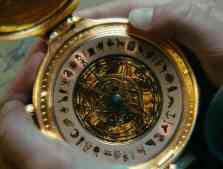 In the first volume of the fantasy trilogy His Dark Materials, Pullman describes the alethiometer like this:
 Yes, to be national for a moment, the motto on our U.S. currency proclaims E pluribus unum — “Out of many, one”. When you start with states that are nearly independent nations, unity can hold great allure.
 Long-time readers of this blog know my admiration for Henry David Thoreau (who rhymed his name with “borrow”). I’m well into a new biography* of him, and reminded by a New York Times book review that today is his 200th birthday.
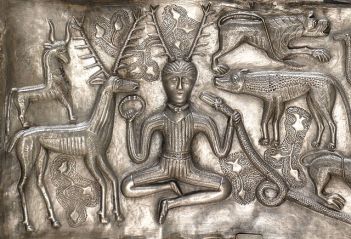 There’s also a wildness in “a certain forest god”, as John Beckett calls
  After I prepare the papers and document the moment with a photograph, almost before I can ask for the next step, I’m given nine words or names to write on them: hampu, lutec, nef, abal, tahilte, renha, lam, tseme, umun. Then, as smoothly as the sense of guidance arrived, it falls away, and I’m left with no further sense of direction. Upheld, then let down.
 In the single experience (see recent
 Listening for names. I spend a significant amount of time doing that, between my spiritual practice and my fiction. It’s a curious endeavor, hard to explain, but one a surprising number of people have experience with. What is it we’re hearing?!
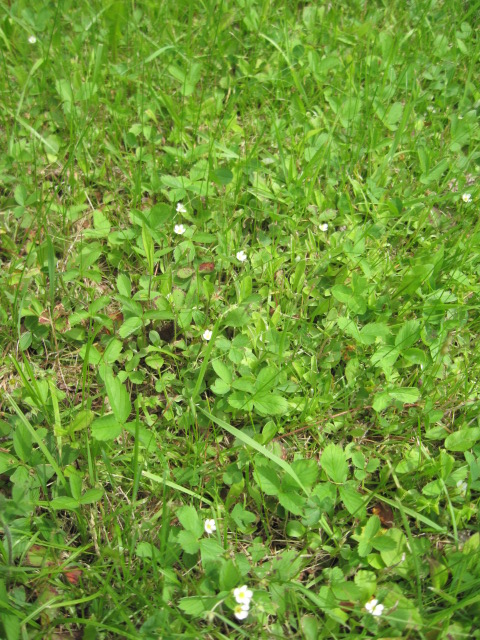
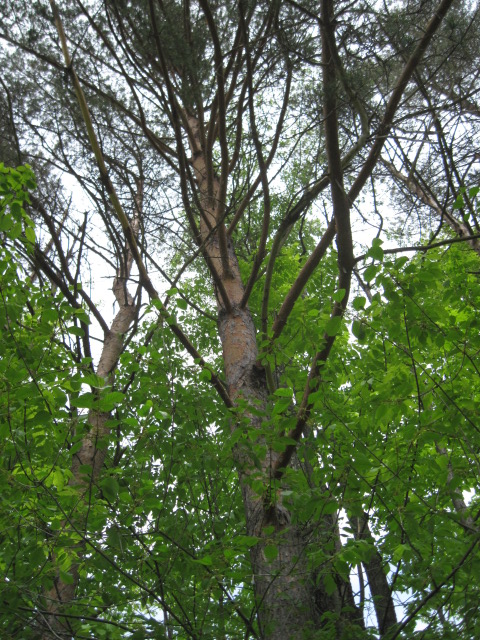

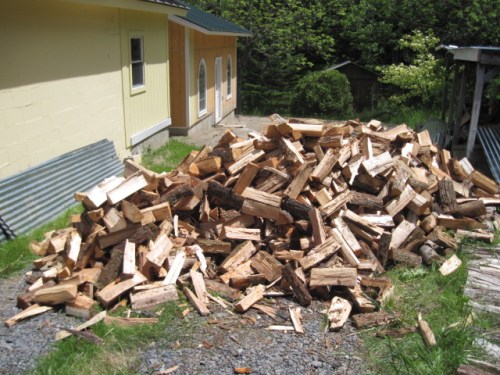
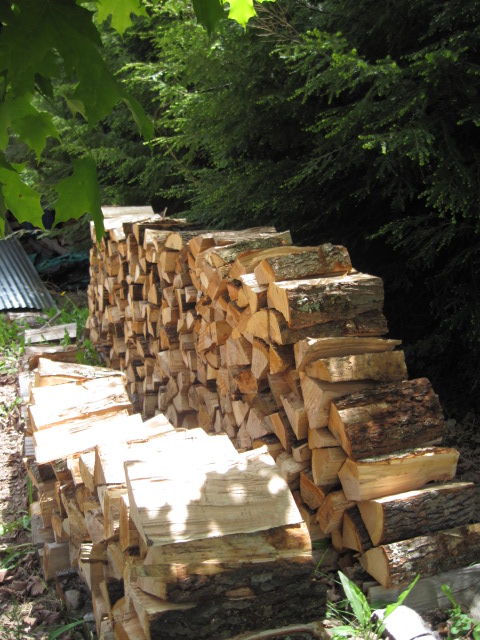


 John Beckett knows intimately the Pagan call to service. More importantly, he heeds it. On his
  I’m off to MAGUS, the Mid-Atlantic Gathering, in a few weeks. For those who can manage to attend, Gatherings can give a taste of true community. For Christians, ideally the power of baptism clothes everyone in unity: “There is neither Jew nor Gentile, neither slave nor free, nor is there male and female, for you are all one in Christ Jesus” (Gal. 3:29). A deeper spiritual union does connect people who outwardly appear different, talk differently, live differently. It’s a measure of our struggle how often we lose sight of this profound truth.
 There are many ways to work with assertions like these. We know all too well, on the evidence of centuries, what literalism offers and where it leads. Political religion — the system of creeds and salutes, conformities and genuflections to whoever holds the stick — exists in every culture. To pick just one blatant and current example, North Korea has made a religion and cult of the Kim family. Metaphorical understandings, because they grant freedom to each person, have always been suspect in some quarters. “Power-over” dies hard, keeps dying, never quite dies out.


 A Druid Way


.jpg)