Archive for the ‘Druidry’ Tag
[Updated 24 Feb 2013; 26 June 2020]
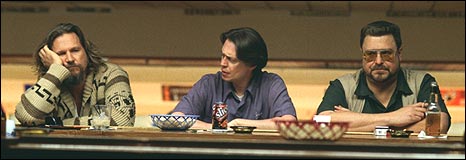 Sometimes I can contrive nothing better to say or do on this blog than simply pass along something I’ve been reading for its surprise or its insight — or at best, both at once. (Why begin with an image of Jake, Donny and Walt? Keep reading. Or call it a Druidic obsession with triads…)
Today’s shamelessly self-indulgent instance of such a something comes from a post on another blog, where I encountered the following passage from The Greek Commonwealth by British scholar, utopian and idealist Alfred Zimmern, first published 1911, and now available online. (It’s also been reprinted at least five times by Oxford, the latest edition I’ve found dating from 1977. Yes, I spent time tracking that info down. It’s better than grading the mountain of essays that sit on my desk and desktop. Call it rationalized procrastination.) In a chapter on poverty, noted the poster, Zimmern “tries to get the reader to imagine, in a poetic passage, the daily life of the Greeks in Classical times.”
Here, then, is Zimmern himself:
We think of the Greeks as pioneers of civilisation and unconsciously credit them with the material blessings and comforts in which we moderns have been taught, and are trying to teach Asiatics and Africans, to think that civilisation consists.
We must imagine houses without drains, beds without sheets or springs, rooms as cold, or as hot, as the open air, only draftier, meals that began and ended with pudding, and cities that could boast neither gentry nor millionaires. We must learn to tell the time without watches, to cross rivers without bridges, and seas without a compass, to fasten our clothes (or rather our two pieces of cloth) with two pins instead of rows of buttons, to wear our shoes or sandals without stockings, to warm ourselves over a pot of ashes, to judge open-air plays or lawsuits on a cold winter’s morning, to study poetry without books, geography without maps, and politics without newspapers. In a word we must learn how to be civilized without being comfortable. Or rather we must learn to enjoy the society of people for whom comfort meant something very different from motor-cars and armchairs, who, although or because they lived plainly and austerely and sat at the table of life without expecting any dessert, saw more of the use and beauty and goodness of the few things which were vouch-safed them – their minds, their bodies and Nature outside and around them.
Greek literature, like the Gospels, is a great protest against the modern view that the really important thing is to be comfortable…
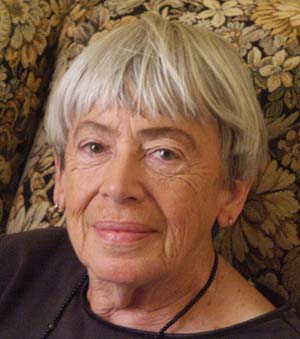
How many Druids would hold this up as an ideal as well, at least at first? But would — or could — we be as happy? Somehow I can imagine Jake Lebowski (from the Coen brothers’ ’98 film The Big Lebowski) would manage better in such conditions than I would. The Stoner might just beat out the Loner. “There are things more important than comfort”, says fantasy author Ursula LeGuin, “unless one is an old woman or a cat.” She’s now an old woman, as her image here shows; I confess that for some years, I’ve noticed a creeping feline-ness of (dis)inclination invade my once radical and rebellious bones …
/|\ /|\ /|\
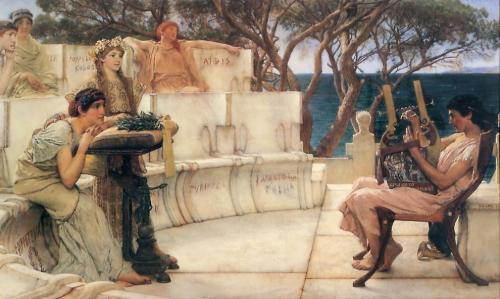
Images: BBC News article on The Big Lebowski (worth reading!); Plato’s Academy; Ursula LeGuin.
Most spam to this site gets deleted without me ever seeing it. Some slips past the filters and I manually delete it after scanning it. The following piece that arrived earlier today felt like I could squeeze it for something bloggy:
“Cheap grace is the grace we bestow upon ourselves. Cheap grace is the preaching of forgiveness without requiring repentance, baptism without church discipline, Communion without confession…Cheap grace is grace without discipleship, grace without the cross, grace without Jesus Christ, living and incarnate…When Christ calls someone, he bids them come and die.” – Dietrich Bonhoeffer.
We like things to be easy. We don’t want to have to think or commit too much to anything. We want to get the most reward for the least amount of effort. We expect it from our technology, our education, and from our God. “I went to church and I even put money in the offering, so we’re cool, right, God?” We did the minimum and we think that should be good enough. Yes, you’re still saved through grace; grace that is a free gift. But that grace is hollow, because you didn’t put yourself on the line for it. For years, our experience of church has been safe. Sit, stand, sing, bread, wine, Jesus loves you. Being a follower of Jesus is mainstream and acceptable. In most cases, we don’t risk anything by being a Christian. We proclaim a cotton candy gospel (that is, mostly sugar and air) and nobody gets stoned to death, crucified, or drawn and quartered. Do you see what I’m getting at? I’m not saying you have to defy the Roman Empire to validate your faith, but if you’re not willing to stand up for it, what is it really worth? What are we worth if we let intolerance and injustice rule over us without a fight?
The message intrigues me. (Learn wherever you can, I tell myself. Don’t turn away from a teacher just because you don’t like the color of her skin or the accent of his voice or the flavor of her wisdom. You might pass up something valuable.) It also spurred a set of responses.
One is how contrary to much preaching, but how common-sensical, it is: ya gotta work at anything worthwhile. Salvation in Christian terms is a gift, unearned, but this post tells a deeper truth. Salvation isn’t enough; it’s just the start. In eco-spiritual terms, Christians may get saved, but Druids get recycled.
The second probably arises out of the time of year. A good number of us are halfway into hibernation mode right now. Yes, we often want the easy path, because we’re lazy. Why expend energy pointlessly? Laziness makes good animal sense, up to a point. Devote your hours and muscles to acquiring food, finding a mate and — later — protecting your offspring. Anything else is likely not worth the effort. If you’re human, add in a few comforts you may have come to expect, if they don’t cost you or the planet too much trouble. Beyond that, it’s almost always diminishing returns for your efforts. OK, that’s one view.
Another is the universality of suffering, as Buddhists like to remind us. It’s not like Christians have any corner on resisting intolerance and injustice. To point out just one example, can anyone say Arab Spring? Any person can reach the tipping point of disgust with tyranny or suffering or despair and rise up to fight it. It need not be a specifically religious struggle at all — though it can be a profoundly spiritual act.
A fourth response (in case you’re counting): plenty of Pagans and Druids are also easy in their practices, just like the “cheap-grace” Christians in the spam above. And we can opt to let them enjoy a space and time where they may practice undisturbed. But others, depending on what part of the world they live in, may face considerable daily risk. Does that make them “better” Druids and Pagans — or Christians? Not necessarily. Maybe more careful, or stronger, or more committed. But these are character traits, present in some practitioners of all spiritualities and religions — and none.
A fifth response: the natural world calls Druids and Pagans to live consciously in it. We all die and are born, along with everything else. We’re compost after just a handful of decades. When the path of Druidry calls, it says wake up to the world we’re in right now. Whether or not it’s the only one, it’s this one, and our lives here, as long as we’re still breathing, are our answers every day. Figuring out what the questions are — well, that’s a task for a lifetime.
/|\ /|\ /|\
updated 22:15 EST 11 Feb 2013
Since the topic of “fake Druidry” sparked several hundred page views, I’m including as a post a link from my Ancient Druids page. Among other ancient writers, Julius Caesar refers at some length to the Druids in his military memoir De Bello Gallico. Other classical authors provide additional information — you can follow links to the originals from the Ancient Druids page.
Here’s a translation of the relevant passage, followed by the original: you can see that the term Druid definitely existed at the time. What it referred to seems clear enough to Caesar, by his description. Whether we would want to resurrect everything he describes I will leave to you to decide.
De Bello Gallico 6.13
Throughout Gaul there are two classes of persons of definite account and dignity. As for the common folk, they are treated almost as slaves, venturing naught of themselves, never taken into counsel. The more part of them, oppressed as they are either by debt, or by the heavy weight of tribute, or by the wrongdoing of the more powerful men, commit themselves in slavery to the nobles, who have, in fact, the same rights over them as masters over slaves. Of the two classes mentioned above, one consists of Druids, the other of knights. The former are concerned with divine worship, the due performance of sacrifices, public and private, and the interpretation of ritual questions: a great number of young men gather about them for the sake of instruction and hold them in great honor. In fact, it is they who decide in almost all disputes, public and private; and if any crime has been committed, or murder done, or there is any dispute about succession or boundaries, they also decide it, determining rewards and penalties: if any person or people does not abide by their decision, they ban such from sacrifice, which is their heaviest penalty. Those that are so banned are reckoned as impious and criminal; all men move out of their path and shun their approach and conversation, for fear that they may get some harm from their contact, and no justice is done if they seek it, no distinction falls to their share. Of all those Druids one is chief, who has the highest authority among them. At his death, either any other that is pre-eminent in position succeeds, or, if there are several of equal standing, they strive for the primacy by the vote of the Druids, or sometimes even with armed force. These Druids, at a certain time of the year, meet within the borders of the Carnutes, whose territory is reckoned as the centre of Gaul, and sit in conclave in a consecrated spot. Thither assemble from every side all that have disputes, and they obey the decisions and judgments of the Druids. It is believed that their discipline was discovered in Britain and transferred thence to Gaul; and today those who would study the subject more accurately journey, as a rule, to Britain to learn it.
In omni Gallia eorum hominum, qui aliquo sunt numero atque honore, genera sunt duo. Nam plebes paene servorum habetur loco, quae nihil audet per se, nullo adhibetur consilio. Plerique, cum aut aere alieno aut magnitudine tributorum aut iniuria potentiorum premuntur, sese in servitutem dicant nobilibus: in hos eadem omnia sunt iura, quae dominis in servos. Sed de his duobus generibus alterum est druidum, alterum equitum. Illi rebus divinis intersunt, sacrificia publica ac privata procurant, religiones interpretantur: ad hos magnus adulescentium numerus disciplinae causa concurrit, magnoque hi sunt apud eos honore. Nam fere de omnibus controversiis publicis privatisque constituunt, et, si quod est admissum facinus, si caedes facta, si de hereditate, de finibus controversia est, idem decernunt, praemia poenasque constituunt; si qui aut privatus aut populus eorum decreto non stetit, sacrificiis interdicunt. Haec poena apud eos est gravissima. Quibus ita est interdictum, hi numero impiorum ac sceleratorum habentur, his omnes decedunt, aditum sermonemque defugiunt, ne quid ex contagione incommodi accipiant, neque his petentibus ius redditur neque honos ullus communicatur. His autem omnibus druidibus praeest unus, qui summam inter eos habet auctoritatem. Hoc mortuo aut si qui ex reliquis excellit dignitate succedit, aut, si sunt plures pares, suffragio druidum, nonnumquam etiam armis de principatu contendunt. Hi certo anni tempore in finibus Carnutum, quae regio totius Galliae media habetur, considunt in loco consecrato. Huc omnes undique, qui controversias habent, conveniunt eorumque decretis iudiciisque parent. Disciplina in Britannia reperta atque inde in Galliam translata esse existimatur, et nunc, qui diligentius eam rem cognoscere volunt, plerumque illo discendi causa proficiscuntur.
Source
/|\ /|\ /|\
I’m a fake Druid. So is everyone else who names Druidry as the path they walk. And I’ve come to love it.
In a guest essay on the ADF website, J. M. Greer notes,
The very last of the ancient Druids went extinct in the ninth century, and the surviving scraps of their teachings and lore are so fragmentary, diffuse, and contradictory that they don’t form anything like a workable system. All modern Druid groups—OBOD, ADF, and everyone else—were invented in the last three centuries by people who used some mix of scholarly writings, personal spiritual insight, speculation, and sheer fantasy as raw material for their concoctions.
Thus if “real Druidry” is defined as the sort that was practiced by Druids in Celtic countries before the arrival of Christianity, all modern Druids practice fake Druidry. That can’t be avoided, since “real Druidry” hasn’t existed anywhere for more than a millennium. What differentiates one modern Druid tradition from another is the particular kind of “fake Druidry” each practices.
Of course, Greer writes here as an outsider might see it, to try on a truth many still feel uncomfortable to admit. As Archdruid of AODA, he obviously doesn’t habitually dwell on his particular flavor of Druidry as “fake.” And when I practice my Druidry, it doesn’t feel like a “concoction” at all. It coheres, because like anything used — steps, coins, dishes, skin, planets — the edges get smoothed, a few chips and dents show up, and everything takes on that “lived-in” look, that patina that makes antiques look antique, that gives worry-stones their shine, and faces their habitual smile or frown lines. I make an offering at an altar, I join my Druid brothers and sisters at a festival, I sit for an hour in moonlight meditating, and whether a group of people 300 years ago rediscovered things most traditional peoples have long known doesn’t really concern me. Clearly, the moment itself offers me better things to do.
Greer continues:
The Druid community has on occasion been racked by squabbles between traditions, caused as often as not by simple misunderstandings that could have been quickly cleared up by people familiar with more than their own tradition. Since none of us have any right to claim possession of the One Genuine Real Live Druidry, a willingness to share the world with other Druid traditions, and to participate with them in celebrating the cycles of nature and the miracle of the living Earth, is a virtue that may well be worth cultivating by Druids of all kinds.
Ah, “One Genuine Real Live Druidry” — Ogreld, I’ll call it. My new tradition, founded right now as you’re reading this. Here we go … unlike every other practice and belief on the planet, Ogreld sprang into existence full-grown and perfect, without parents or kin. To get that essential temporal edge over other faiths and practices, Ogreld is the original “source faith” of humanity, practiced when people first became human. In fact, to top it off, it was Ogreld that made them human. Now we’re cooking! … This is faking with a vengeance. “I’m faker than you are. Na-na-na-na-na!”
In the Egyptian afterlife, the human heart is weighed against the feather of Maat, who personifies truth and justice. The Wise among us understand that whether I acknowledge three elements of earth, water and air, or four elements of earth, air, fire and water, or a god whose elements are bread and wine, my rituals will still work in accordance with the reverence and love I bring to them, and the holy presences that empower them. Whether I have helped or hurt the earth and its inhabitants will matter a lot more than the color of my robes, the rank I’ve achieved, or the number of gods I pray to. The only real Druidry is a “path with heart,” a way of walking the earth that wisely honors all paths with heart. I’m busy faking that wisdom, practicing till I get it “righter” than before. Insofar as faking is doing something, it’s generally better than not doing anything at all. So yes, I’m a fake Druid. Have you met any other kind?!
[Part 1 | Part 2 | Part 3 | Part 4 | Part 5 | Part 6 | Part 7 | Part 8 | Part 9]
To see a World in a Grain of Sand
And a Heaven in a Wild Flower
Hold Infinity in the palm of your hand
And Eternity in an hour.
—William Blake, “Auguries of Innocence”
That kind of seeing and holding requires a special focus, a clear attention, I think, as I hurry to lunch, distinctly UN-focused, a dozen thoughts jangling, after two very different conversations with students during conference period. My freshman advisee Walt has asked about the intricacies of some scheduling for sophomore year, while Ann, a junior and a former student, has come to talk about polishing a remarkable piece of journal writing from her freshman year for possible publication.
At the dining hall table where I often sit, Mr. Madden, Mr. Ritter and Mr. Delahunt are chuckling about an old piece of school gossip concerning the previous administration. Ms. Valenti joins us, and the conversation soon shifts to the deer that appear early almost every morning in the yards of the faculty residences on the campus periphery, where Ms. Valenti and Mr. Madden live in senior faculty houses. Ms. Valenti describes the ten- or eleven-point buck she saw standing motionless in her driveway earlier in the week. Mr. Delahunt mentions that he’s learned a small herd of deer beds down each night in a wooded gully between the new science building and the peripheral faculty housing. I cheer silently for these animal lives thriving, often just beyond our knowledge, in this apparently suburban part of the world.
At first I think all of this is mere distraction, but Blake reminds me yet again there’s a whole world here, eternity and infinity too, if I only see and touch them. We all gobble our food, and I hurry back to my first afternoon class with my seniors. So many grains of sand: underfoot, on the stairwell carpets of the English building, in my second-floor office when I reach down to pick up a fallen paperclip from the floor. Each one a world, if I had time to see it. Next year I will have time, because this is my last here. Voluntary poverty, or insanity, or more than a little of both.
Class goes fast with my fifth period Brit Lit seniors. Many of them read from the satires they’ve written in imitation of Jonathan Swift’s “A Modest Proposal.” We don’t work on Blake, but here is eternity, too. For a few moments we’re all paying attention, laughing at a satire of college admissions, or the sleep deprivation so many students face, not thinking about anyone or anything else — about the test next period, the sick friend, the college rejection letter, deadlines, schedules, midterm tomorrow, the weather, or whether a visionary dead white male Romantic poet may or may not have anything useful to say to us.
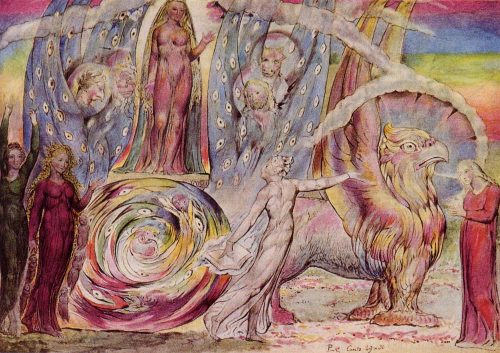
Mr. Blake, we survived the 2012 fake apocalypse, I feel like crowing. His ghost seems to nod, looking out the window at the light fog that huddles over the nearest quad. Maybe that’s the best we can do, right now, our version of eternity: bad apocalypse.
Unwilling to share their satires, the sixth period seniors struggle with Blake. We work through a couple of the easier poems, and soon I can tell it’s “drag” time. I drag them through a few more, trying to open up the sometimes seeming-simplistic usually-complex lines. Blake’s ghost sighs heavily. An uphill climb for everyone, even though I’m working harder than usual to exhume the poet from two centuries of cultural and historic static that seems to buzz between the words on the page and the lives of my students. I give them a creative writing exercise, and one soft-spoken girl produces a lovely poem inspired by the lines at the top of this post. Her lines offer almost all sensory detail, a lovely lyric, with none of the teen angst that normally trails after much adolescent poetry like a homeless dog. I give thanks for such things.
Blake, old sage, tyger-burner, Jerusalem-singer, painter and poet of the 19th century as strange and full of possibility as our 21st … what else do you have to tell me? I listen as I write, content for a moment to hear the voice of silence in and around the clicks and taps of the keyboard. “Hear the voice of the Bard, who past, present and future sees …” With the view out my window circumscribed to the present only, I can tell I have my work cut out for me. Blake’s ghost nods encouragingly. Time to begin again.
/|\ /|\ /|\
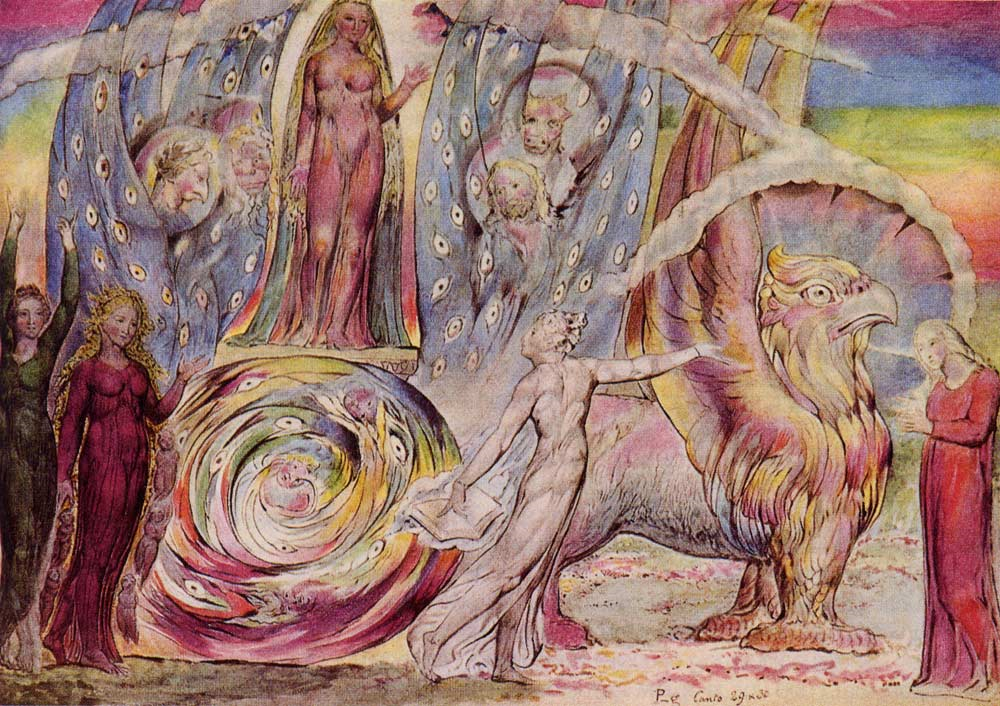
image: “Beatrice addresses Dante”; William Blake
Updated 23 April 2015

Much of my learning before and during the Bardic grade of OBOD Druidry has been about listening. I’ve walked different landscapes here and abroad over the last couple decades, and almost always when there are negative energies, they seemed to issue from human presences that felt negative to me, or disrupted the native energy. The land itself is simply the land, with all its other lives and forces and history and presences. It may not always feel comfortable or easy or familiar, but it has an integrity that asks me to pay attention. And yes, I’ve done that with varying success. But the human is always an overlay, unless the place has been inhabited for a very long time, and the humans there learned to attend to and respect the place they lived. Which is sadly not often enough, though places exist here and there which are dearly loved and cherished, places in which the land spirits dance their joy.
California Druid Gwynt-Siarad tackles this directly in his blog entry, “The Curious Case of American Land Spirits.” I’ve taken the liberty of reposting the whole of his short entry here (Druids are always talking to beings they can’t see):
Recently I was involved in a discussion about land spirits. As the discussion progressed it touched on what I feel is a very important issue to us druids living in the Americas. That being, land spirits are more often then not, tied to the land and thus couldn’t come to us from Europe, and thus how do we treat with the spirits of this “new” land? The natives of this place have a long and good history of working with the land spirits here. Sadly, in most places, and certainly here on the west coast of the lower 48 the natives are almost completely gone. This is a very sad thing, but not the focus of this post. The question is, can those of us of European descent summon, honor, call, and treat with American land spirits? It was suggested that the spirits here are used to being summoned with certain type of ritual, that being those of the local natives. That the land spirits here have native names, and should only be addressed as such. ok…what if the name is not known, and can’t be learned? And what of the idea that they can only be summoned with native American style evocations? Where does this leave the modern druid? Even if I were able to learn, say the dances of the Umpqua Indians to summon the spirit of the Umpqua river, that would most likely be considered cultural appropriation and that’s just not P.C.
I have been tumbling these thoughts over in my head for several days now, and here is what I have come up with. First off, spirits are as individual in personality as people are. What might be ok with one spirit won’t be ok with another. How do we find out? I vote for good old fashioned trial and Error. Go out there and do what druids do in the way druids do it. If the spirit doesn’t like it, I am sure it will let you know, if you bother to listen. Let the spirits be our teacher. I think and feel with but a few exceptions so long as the spirits are approached with offerings, respect and love they are not going to be over critical if you said the right name, pronounced in the correct native dialect or be upset if you didn’t dance in the native way. Using a name the spirit is familiar with would be very helpful in treating with it, but not critical. So those druids that are inclined to work with such spirits, I say do your homework and get out there and get to know your spiritual neighbors!
No surprise that the spiritual world resembles this one — the spirits wish to be treated as individuals, because that’s what they are. What of spirits of a species which was transplanted to the New World by Europeans? Is it the “same” plant or animal? The best way to find out, as Gwynt-Siarad observes, is to start the conversation.
/|\ /|\ /|\
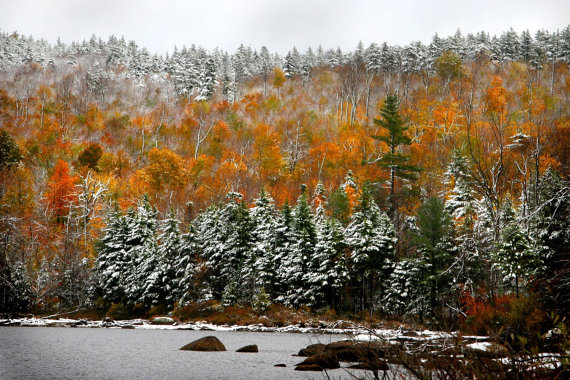
image credit: http://www.etsy.com/listing/59674255/fall-autumn-photography-new-england
(Check out their gorgeous prints.)
Henry David Thoreau wrote in his manifesto, Walden, that he wished to follow “the bent of my genius, which is a very crooked one, every moment.” Let’s suspend belief about the “every moment” part for now. Most of us slack off; we’re not up to full time bent-ness. But I suspect every genius is “bent” by the time it emerges, after the intense discoveries and trials of childhood and adolescence. It is, after all, a time when we each face a personal apocalypse which — apart from recent 2012 apocalypse kerfluffle (a profoundly scientific and precise term), itself only the most recent instance of a few millenia’s worth of end-times hysterias* — is at root not a disaster per se, but an unveiling, a revealing.
That’s why the Biblical apocalypsis, a Greek word, gets translated “Revelations.”** A revelation needn’t be a disaster. We may seek from many sources for revelation or insight into our lives and situations. But as far as adolescence goes, whether it’s some profound additional shock, or the more routine experience of our physical bodies running mad with hormones, hair, smells, urges and general mayhem, it can be a real humdinger of a decade.
Among other things, we begin to come to terms with the full measure of shadow and light we each carry around with us, a personal atmosphere with its own storms and sun, its seasons of gloom and glory. As Hamlet exclaims to Ophelia (Act 3, scene 1): “I am myself indifferent honest; but yet I could accuse me of such things that it were better my mother had not borne me: I am very proud, revengeful, ambitious, with more offences at my beck than I have thoughts to put them in, imagination to give them shape, or time to act them in. What should such fellows as I do crawling between earth and heaven? We are arrant knaves, all; believe none of us.”
Quite a catalog of self-condemnation. But on our “crawl between earth and heaven,” we can choose to do more than indulge in self-loathing. It’s not a competitive sport, after all. No prizes for “arrant-ness,” to use Shakespeare’s word. This being human is a mixed bag, a potluck. We work out our own answers to the question of what to do crawling between earth and heaven. It’s an apt description: we truly are suspended at times, halfway to both realms, too rarely at home in either.
And so, rather than New Year’s resolutions, I prefer to look at themes and nudges. If I take my own advice, courtesy of Yoda, and tell myself “do or do not, there is no try,” then “small moves” becomes the game. Nudge a little here, prod a little there. Few life trajectories change overnight. If yours does, then all bets are off. You’re probably in full-on apocalypse mode right now — and that’s apocalypse in the 2012 “all-hell-about-to-break-loose” sense. It’s time to rewrite the manual, reboot, do over. But the rest of the time, the smallest change can eventually lead to big consequences. Lower expectations. Make it almost impossible for yourself not to follow through.
Now you’re not trying to change; you’re playing with change — which has a very different feel. If you want to commit to half an hour of exercise a day, for instance, make it five minutes instead. Psych yourself out or in, your choice. Small moves. Make it foolishly easy, like using a credit card. It’s just a piece of plastic, just a small thing you’re doing. A game really. I’ve been surprised how I can make changes, as long as I make them small enough, rather than big enough. Seduce yourself into change so small you can’t resist, like those bite-sized pieces of your current favorite snack addiction. “Nobody can eat just one.” And so on.
We think too much of ourselves. I’ll think less, on alternate days, to see how it feels. This is real trying — not an attempt that focuses on probable failure, but the testing, the probing, the experimenting, as in “trying the cookie dough,” or “trying a kiss on the first date,” or “trying on a new set of clothes.” There’s self-forgetfulness available in the fascination of the game-like quality life takes on when we cease to take ourselves quite so seriously. Instead, we may come to revere some other thing than the self. Because one of her insights is apropos of what I’m getting at, I’ll close here with Barbara Brown Taylor, from her 2009 book An Altar in the World:
According to the classical philosopher Paul Woodruff, reverence is the virtue that keeps people from trying to act like gods. ‘To forget that you are only human,’ he says, ‘to think you can act like a god — that is the opposite of reverence.’ While most of us live in a culture that reveres money, reveres power, reveres education and religion, Woodruff argues that true reverence cannot be for anything that human beings can make or manage by ourselves.
By definition, he says, reverence is the recognition of something greater than the self–something that is beyond human creation or control, that transcends full human understanding. God certainly meets those criteria, but so do birth, death, sex, nature, justice, and wisdom. A Native American elder I know says that he begins teaching people reverence by steering them over to the nearest tree.
‘Do you know that you didn’t make this tree?’ he asks them. If they say yes, then he knows that they are on their way (20).
So maybe I’ve seduced you into trying or tasting your life and its possibilities instead of getting hung over changing it. May you find yourself on your way, may you celebrate what you discover there, may you delight in reverence.***
/|\ /|\ /|\
*See John Michael Greer’s Apocalypse Not (Viva Editions, 2011) for an amusing take on our enduring fetish for cataclysm and disaster. You’d think that after Katrina, the Gulf oil spill, the Japanese tsunami and nuclear disaster, hurricane Sandy, and the yearly shootings we endure, we’d be fed up with real actually-documentable apocalypses. But no …
**The name of the Greek sea-nymph Kalypso means “Concealer.” Undo or take off the concealment and you have apo-kalypse, unconcealing: revelation.
***Once my attention is off myself, I find that change often happens with less wear and tear. Reverence can seduce us into other ways of being that don’t involve the stressors we were “trying to change.” We may not even notice until later. I get so busy watching the moon rise I forget what I was angry about. Anger fades. Moon takes it. Reverence, o gift of gods I may not know or worship, I thank you nonetheless …
Updated 2 Jan 13
Compassion has no religion. Silence is not always indifference. O great, listening, witnessing world, you too have something to say, something you always are saying, without words. What comfort we can offer, miles and lives away from the families of the Sandy Hook school victims, and from other, newer sufferers since then, may consist of not filling the airwaves and spiritual spaces further, with our own shock or anger or sadness or dismay, or whatever other responses events may next provoke in us. Even if we do not know the families or victims or any of those touched by an event, we may send sympathy, because we are not stones. This is prayer, too. But every turn of the world changes us because we’re in it together. A great service is to love those who need love, and not merely to feel, to emote. We can do more than relive pain, especially another’s pain, or make it ours. Suffering needs no extra rehearsals, no practice. There’s always more than enough to go around.
We’re not stones, but we may raise them into a cairn, a act that by its solidity and palpable weight can lift suffering even a little, if it may, stone by stone. Let earth bear a portion of the weight. Allow this elemental power of Earth to transmute, to compost and transform, as it does all else that comes to it. The turning of the year again toward light in the middle of winter, the planet doing again what the planet does each year, can be solace too, earth re-establishing its balance. Soothing motion of the familiar, wordless touch with its animal comfort. Moon growing again towards fullness, light on the world in the middle of darkness.
But sometimes we hate comfort. Too often solace can reek of appeasement. We stiffen. One more easing is too many. Intolerable. Like words — already more than enough. With no ready target we seek out whatever will serve, anything to shut up the noise, the roar of raw nerves jangling. Anodyne. Oblivion, even, at least for a while.
Grief is too steady a companion. It knows us, it seems, deeper than a lover. OK, we get it. Pain too has something to say that will not be denied. We make a place for it, and it moves in, gets comfortable, settles down for too long. (How long is memory? Is recollection what we consist of? Do we relive, instead of living new? Does this become our only, instead of our also?)
When words do not do, I bring silence to the altar. When I cannot pray, then that is my prayer, just the act of moving toward the altar, a center, a focus.
/|\ /|\ /|\
The house has cooled overnight when I get up to write this. In between the last two paragraphs, I open the door of the woodstove to put in another two logs. In a turtleneck and sweats, I sit on the floor, feet toward the fire, with my laptop where its name says. Warmth, says the body, unrepentant in loving what it loves. Warmth too, radiating from the electrical current flowing through the machine I write with. So little, but a little. A start.
“there is an altar to a different god,” wrote the Portuguese poet Fernando Pessoa (1888-1935). Perhaps that’s some explanation for the often mercurial quality of being this strange thing we call the self, ourselves. We can’t easily know who we are for the simple reason that (often, at least) we aren’t just one thing — we consist of multiple selves. We’re not individuals so much as hives of all our pasts buzzing around together. Whether you subscribe to the reality of past lives or see it as a possibly useful metaphor, we’re the sum of all we’ve ever been, and that’s a lot of being. And with past lives (or the often active impulses to make alternate lives for ourselves within this one through the dangerous but tempting choices we face) we’ve known ourselves as thieves and priests, saints and villains, women and men, victims and aggressors, ordinary and extraordinary. When we’ve finally done it all, we’re ready to graduate, as a fully-experienced self, a composite unified after much struggle and suffering and delight. All of us, then, are still in school, the school of self-making.
Doesn’t it just feel like that, some days at least?! Even only as a metaphor, it can offer potent insight. The Great Work or magnum opus of magic, seen from such a perspective, is nothing more or less than to integrate this cluster of selves, bang and drag and cajole all the fragments into some kind of coherence, and make of the whole a new thing fit for service, because that’s what we’re best at, once we’ve assembled ourselves into a truly workable self: to give back to life, to serve an ideal larger than our own momentary whims and wishes, and in the giving, to find — paradoxically — our best and deepest fulfillment. “He who loses himself will find it gain,” said a Wise One with a recent birthday we may have noticed. We all learn the hard way, for the most part, because it’s the most profound learning. Certainly it sticks in a way that most book learning alone does not.
/|\ /|\ /|\
[Part 1 | Part 2 | Part 3 | Part 4 | Part 5 | Part 6 | Part 7 | Part 8 | Part 9]
In our last conversation, Aithne had said nothing about needing my help. All this stuff about ancestors and bloodlines, and now I was wondering about that piece. Had she forgotten? But even if she did need me in any way, how could I really help? After several decades of living, I have a pretty clear sense of my talents and abilities. It wasn’t false modesty that told me both Rosmert and Aithne could certainly handle challenges and obstacles I couldn’t. Wasn’t that why they were teaching me, and not the other way around? There’s an innate order to things that we ignore at our own peril but that we can also learn to our advantage — that’s one of the foundations of my worldview. I guess when I thought about it that I saw helping others along the path is a form of payback, or maybe paying it forward. It’s a way to show gratitude, a way to keep the heart open. Gratitude feels good. Just do it.
So it was when all of this was still spinning through my brain that Aithne appeared again. It had been more than a few days since I’d tended to my Sacred Grove. The excuse doesn’t matter; it’s a poor one. But shortly after I returned, there she was. But she certainly was not dressed the same this time. Biker chick was all I could think: leather jacket, torn and faded jeans, bandanna, dark glasses, snake tattoo on her neck, even chains. Again she was gazing off into the distance, and when she turned toward me she took off the sunglasses and winked.
“You ready?” she asked.
“For what?” I replied. That was Aithne, I was beginning to understand. Small talk rated low among her priorities. And it was rubbing off.
“A ride,” she said. “I’ve got an ’86 Harley Sportster, 1100 cc’s. Want to try it out?”
And that was how, maybe an hour later, Aithne and I were roaring down a little-traveled country road that arrowed flat and straight toward the western horizon. After a series of lessons, practice runs, one spill and a bruised right knee, I felt reasonably confident handling the heavy machine. I wasn’t ready for a lot of traffic yet, but the basics were coming along nicely.
“We’ve got clear road,” she said. “Let’s open it up for a couple miles.”
The big bike still ran smooth when we topped 80 mph. I eased back on the throttle, listening to engine as it lost the high-pitched whine of speed. A few minutes later we were sitting on the side of the road, sipping Gatorade. Aithne was studying a ladybug on a blade of grass she held in both hands.
“You can help me, you know,” she said. “We need you healthy for the work, and for your part which only you can do. That’s your focus for now. Get healthy, and balanced.”
“I wanted to ask you about that. What can I do?”
“You can begin again.”
“Begin what?”
“You’ve completed another spiral. The next months may look familiar, but they aren’t the same thing that’s come before. Pay attention to what they can show you.”
“But what am I supposed to be looking for?” I asked.
Aithne paused and looked at me for a moment.
“You’re thinking about quitting your job after this academic year. You’re wondering how little you can live on if you do, how much food you can grow for yourself back in Vermont. Those aren’t bad things by any means, but your principal focus needs to go beyond that. Those aren’t ultimately pathways to the next two decades. You’re looking at surviving. I’m talking about thriving.”
“After the last couple of years, surviving looks pretty good to me.”
“And it is,” she said. “We had to work with your wife to get you to that surgeon in Baltimore. You weren’t listening when you most needed to. Fortunately, she was. So you survived the shift, you kept this body through the turn. You’re still here, and the ancestors aren’t finished with you in this life yet. You’re on commission. Did you know that?”
“Commission for … for what?” I stuttered. “Can I have some clarity just once about what I’m supposed to be doing?”
“You’re confusing clarity with looking back on a path you’ve already walked,” she said. “So often you can know by going. And for as long as you’re here, you’ll find that’s one of the things time’s for.”
And then I was back in my living room. The clock said 9:48 pm. It had been a long day, and I had much to think about.
/|\ /|\ /|\
Updated 23 April 2015
[Part 1 | Part 2 | Part 3 | Part 4 | Part 5 | Part 6 | Part 7 | Part 8 | Part 9]
“The Blood of Veen is a key to new insights for you,” said Aithne. “Your ancestors reach you through the body — your body. You carry them with you wherever you go, in your cell memory, your DNA, your genetic coding, and the energy signatures scientists are just on the edges of discovering, which are part of the bonds that link the physical body to the other worlds.”
“So how does the Blood of Veen connect with me personally?”
“If you visit a place where your ancestors lived, you may have a dream or vision that teaches you something you need to know.” Aithne stood gazing a little above my left shoulder, or head, as if she was watching something move there. “Veen is in the province of Brabant.” She paused, apparently studying empty air. “And some of your mother’s ancestors came from that region,” she added. Aithne’s knowledge startled me. One of my mother’s aunts had traced much of the family line back to medieval France and Belgium. Some of her ancestors came from Brabant, including a noble named Joscelyn de Louvain, when Brabant was a Duchy. (Don’t get the wrong idea here. I have my full share of black sheep in the family, too!) And Louvain is a city in Brabant — its capital, in fact.
“But I can’t just pick up and visit Brabant or anywhere else in the world at the drop of a hat! Most people don’t have the time or money to track down their ancestors in other countries or take some sort of reincarnation tour.”
“You don’t need to,” said Aithne, ignoring my flash of irritation. “Pictures can help. And there are online forums where you can ask questions and find out detailed information about almost anything you want to know. Let your curiosity work for you. After all, how much time do you waste online as it is?!” Her sudden smile was teasing. “Make the first move, and the ancestors will respond. You’ll have a dream, find a book, ‘happen’ to meet someone, make a connection. They will guide you.”
Somehow it surprised me that Aithne knew these things. While I’ve come to expect my inner experiences to bring me general insights and hints and nudges on occasion, whenever I receive specific information it still surprises me. A few years ago in a dream I got the name of a small British town in Devon where some of my father’s family originated. I’d never heard of it before, and it no longer exists today. For that reason I know that no one in my family had ever mentioned it. But there are archaeological records and mentions of the town in chronicles and censuses of the period showing that it once did exist.
That was the outer confirmation of an inner experience. Such validation doesn’t always come, but when it does, I feel a shiver of awe and wonder. These things are real. The worlds link however briefly, and lives change as a result. I know this, I’ve experienced it before enough time to silence any doubt, but my inner doubter doesn’t care. He’s achieved pro status by this point, and just goes about pointing out sly new possibilities of self-deception. I guess my ancestors have to be pretty patient with me to get through at all. I often think they must find other descendants more worth their time. Then I remember they’re working outside of time — at least outside of my time. They can afford a little patience with the stubborn and half-deaf ones like me.
Aithne seemed to be following my thought. She was nodding slightly, and then she said, “Sometimes the act of inquiring leads you to new people and experiences that are beneficial for everyone involved. You know this,” she said.
“I’ll return one more time,” she said. “We have a few more things to discuss.”
/|\ /|\ /|\
Updated 23 April 2015
[Part 1 | Part 2 | Part 3 | Part 4 | Part 5 | Part 6 | Part 7 | Part 8 | Part 9]
Rosmert returned again today, but only briefly, and only, he explained, to introduce Aithne. At first I could not see her clearly, except to note she was only slightly shorter than Rosmert. Then it seemed the space around her sharpened somehow, or — I had the distinct feeling now — she was letting me see her. She wore the hood of her robe up, and it shadowed her face. Freckles dotted her nose, and a few tendrils of chestnut hair slipped from her hood. Then all I knew was her eagle gaze. Two green eyes of startling fierceness regarded me. She grabbed my half-extended hand, shook it vigorously, then promptly pointed out a problem.
“Greetings. You do realize you left the gateway open? Magically careless. Let’s close it immediately. I’ll show you how. But first, let me take a quick look around.”
From her brisk words and tone I could tell that today at least there was no such thing as Druid-business-as-usual. Or maybe this was usual, for her. As she studied the trees and stones, she began to describe one way to seal a grove more effectively against unwanted presences and energies.
Then I saw Rosmert winking at me just before he disappeared. He made a sweeping gesture that seemed to say “You’re in her hands now.” I laughed in spite of myself.
At the sound, Aithne turned from her survey of my grove and regarded me with a frown. “You have made a beginning, but you need practice at defense,” she said. “Now expel me from this space.”
When I hesitated, she exclaimed, “Do it! You did not invite me like you did Rosmert. I came at his bidding, not yours. So you can rid this grove of me quite easily. Do it. When you are quite satisfied I am gone, you may choose to invite me back, or not. But secure the gateway first, whatever you do.”
I centered myself in my grove and sang the Word of Protection. One instant, Aithne stood there, her head tilted to one side, listening. In the next, she vanished.
I walked the inside perimeter of the grove, singing. I walked it three times. I played with the thought of not inviting her back. At length, when I was satisfied with the wards and had formulated the triple seal, I called her by name, just once. A second later she appeared a few meters away.
“Better,” she said. “I tested the gateway several times before you called me. Much better.”
She turned slowly again to take in the trees. Over the past months it had been a fallow time for me while outer things made their demands, and I needed to do some inner work. The space certainly reflected this. It looked, quite frankly, unkempt and overgrown.
“But I did not come to critique your grove or your training,”she said, “or to sight-see. Whatever you might think.” She clapped her hands, and sat down on the same tree-stump Rosmert had occupied when he and I talked. “I need your help.”
Nonplussed, I stuttered, “Well, OK, with wh- … uh, how can I help?”
“It’s a matter of the Blood of Veen.”
“Who — or what — is Veen? Like it sounds? V-E-E-N?” I asked, spelling it. Goddess help me, I thought I could hear capital letters when she said Blood and Veen. It sounded, well, cheesy. Like hack sword-and-sorcery writing.
“It’s a town in the Netherlands. You have an ancestral connection to the region.”
/|\ /|\ /|\
Updated 23 April 2015
[Part 1 | Part 2 | Part 3 | Part 4 | Part 5 | Part 6 | Part 7 | Part 8 | Part 9]
Rosmert had appeared recently during my Inner Grove exercise. I’d been discouraged about my progress. So many setbacks. Autumn had come, and projects I’d set for myself over a year ago remained distant goals. After I recovered from my surprise at his appearance, I realized I had indeed been asking for help. Of course, when it comes, I often don’t recognize it. I nearly snarled at him to go away. I’m glad I didn’t. But that showed me how out of balance I was.
My awareness shifted from inner grove to my living room and back again. Half the time I saw Rosmert sitting on a tree-stump. Half the time he was perched on the edge of the recliner in the living room, facing the woodstove. At first I scolded myself for lack of focus. Then I realized it just didn’t matter. Grove or living room, he was still here. So I just went with it. I told myself I could figure it all out later. Soon we were in it pretty deep.
“You mean there’s a law behind even the randomness of things?” I asked him. So many obstacles, it sometimes came near to breaking my spirit.
“Yes,” said Rosmert, stretching out his legs in front of him. “But it’s not only a physical law, even if it accounts for physical things. Spirit is at work throughout all the worlds, continually keeping everything in balance.”
“That makes it sound like there’s still room for slippage,” I said. Overhead, heavy storm-clouds and sun competed for equal time. “Between one interval of growth and inspiration and another, there can be an awful lot of bad weather.”
He nodded. “In a world of change, the adjustment is continual,” he said after a pause. “So the tests we face, the people we meet, the problems, excitements, opportunities, setbacks, decisions, challenges, sorrows and joys are expressions of spiritual energy finding whatever opening it can into our consciousness to expand our awareness and our understanding of life.”
“Doesn’t it also sometimes shut down, or diminish? Or maybe we do that to ourselves? All I know is that we certainly take a lot of sidesteps, or steps backwards, too.”
Rosmert gazed steadily at me for a moment. “If we’re trying to get a mile further down the road, a flat tire looks like a delay. If we’re learning how to travel, it’s just another lesson. Keep a spare. Have your tools ready. Change your tires before they wear too thin. While you’re in the moment, though, a flat tire can definitely seem like a major setback.” He grinned and leaned forward.
He was about to continue when I interrupted. “What if the ‘flat tire’ is your life? Not just a small setback on the journey, but all-out disaster.”
Unexpectedly, he laughed. “The human consciousness does love drama at times. And Spirit creates as it flows. That’s what it does, what it is. If we choose to create disasters as it flows in and around us, that’s what we’ll usually get.” He laughed again, this time at my scowl. “Yes, we encounter lesser and greater cycles of spiritual movement and flow. Some of them involve a whole lifetime. Some remain small, and fit into the larger cycles. We each work with spiritual energy in our own way, as it flows into us, and as we give it back to situations and people according to our state of consciousness, through our words, deeds, thoughts, feelings, and imagination.”
He stood up, turned slowly in a complete circle, and then faced me again. “Have you ever gone horse-back riding?”
I shook my head at the sudden shift of topic. “What?” I said.
“We can move with the horse, or we can bounce on every up and drop an instant late on every down, out of the rhythm all around us. That makes for one really sore butt at the end of the day. It’s a choice that solidifies into a pattern and then into a destiny. For a while. Then we choose differently, moving from one pattern and trying another, learning, and sometimes crashing and flailing as we go. For a long time, we’re all slow learners. Then we begin to notice the patterns, and finally maybe even look at the choices. What is it you say? ‘Been there, done that’?”
“So is there a way to increase the flow, or does that kind of pushing also throw us out of balance? I guess my question is, can we speed up the process?”
Rosmert didn’t answer right away. He breathed slowly and steadily four or five times. Then he said, “The goal of the most useful spiritual exercises you’ve been learning is ultimately to invite a greater inflow and permit a greater outflow. We need both. We also need balance as we learn to do this more effectively. Bottle it up without letting it out-flow and the result is the same as if you shut the inflow off completely. To put it another way, we need to complete the circuit. As we become more conscious of the movement of Spirit in and around us, we’re able to relax into this current that is always in motion, and live our lives more fully. This is our own individual spiritual path to greater love of all life.”
“So if we stop resisting the complete flow,” I said ruefully, “we won’t get beat up so badly.”
“Right,” he said, chuckling at the expression on my face. “It’s a practice. Who doesn’t have some scars and bruises, and a broken bone or two?! We keep practicing till we get it right. Let’s stop here and go for a walk.”
/|\ /|\ /|\
Updated 23 April 2015
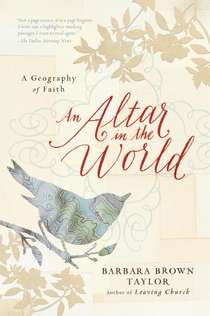
 Author, Episcopal priest and current professor Barbara Brown Taylor has written An Altar in the World, a splendid little book on simple, essential spiritual practices which anyone can begin right now. She writes from a refreshingly humble (close to the humus, the earth) Christian perspective, and a broad vision of spirituality pervades her words. Because of her insight and compassion, her awareness that we are whole beings — both spirits and bodies — because of the earthiness of her wisdom, and her refusal to set herself above any of her readers, she makes an excellent Druid of the Day. I hope I will always remember to apprentice myself gladly to whoever I can learn from. As the blurb on her website page for the book notes, “… no physical act is too earthbound to become a path to the divine.”
Taylor brings a worthy antidote to the bad thinking and fear-mongering so widespread today. Here’s a sample:
… it is wisdom we need to live together in this world. Wisdom is not gained by knowing what is right. Wisdom is gained by practicing what is right, and noticing what happens when that practice succeeds and when it fails. Wise people do not have to be certain what they believe before they act. They are free to act, trusting that the practice itself will teach them what they need to know … If you are not sure what to believe about your neighbor’s faith, then the best way to find out is to practice eating supper together. Reason can only work with the experience available to it. Wisdom atrophies if it is not walked on a regular basis.
Such wisdom is far more than information. To gain it, you need more than a brain. You need a body that gets hungry, feels pain, thrills to pleasure, craves rest. This is your physical pass into the accumulated insight of all who have preceded you on this earth. To gain wisdom, you need flesh and blood, because wisdom involves bodies–and not just human bodies, but bird bodies, tree bodies, water bodies and celestial bodies. According to the Talmud, every blade of grass has its own angel bending over it whispering, “Grow, grow.” How does one learn to see and hear such angels? (14)
/|\ /|\ /|\
Taylor, Barbara Brown. An Altar in the World. New York: Harper One, 2009.
Go to Part 1 | Part 2 | Part 3 | Part 4 | Part 5 | Part 6
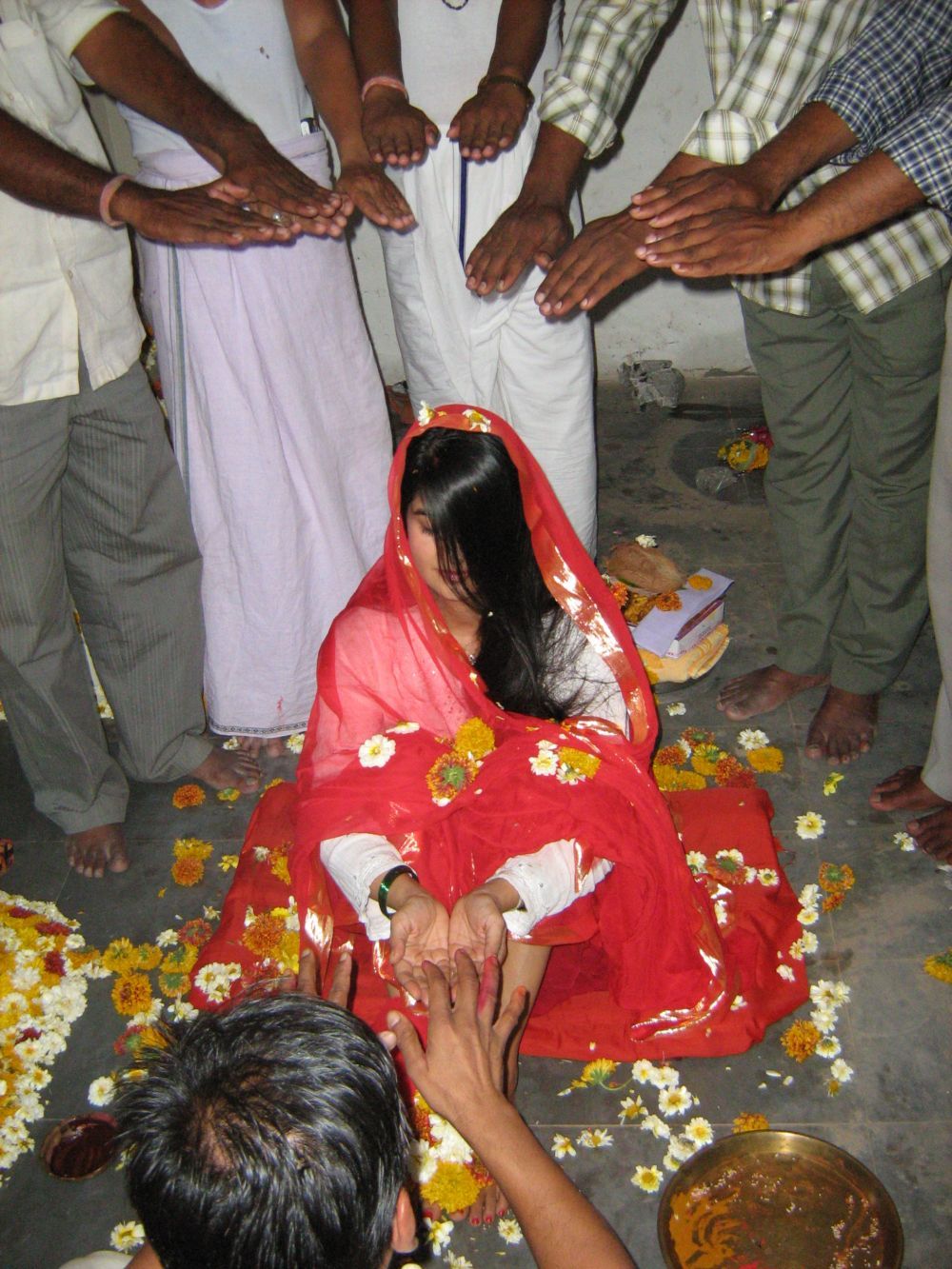
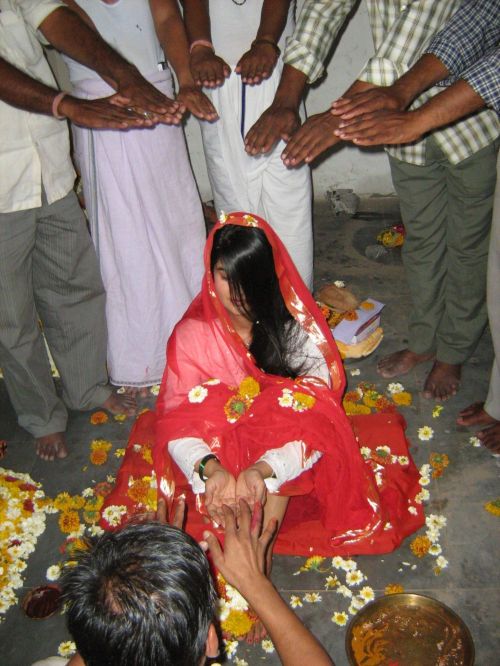 Much of what we can do with initiation consists of bringing the inner experience outward, establishing it in consciousness, so that we can begin to live in and from the new awareness. That can often mean we find ourselves expressing it through light, sound, color, form, in painting, drawing, photography, dance, music, writing, embroidery, etc. — some way to bring that inside stuff into this realm of touch and smell and contact and physical sensation. The correlation doesn’t need to be, won’t be, exact. Doesn’t matter. It’s a bridge to somewhere over the rainbow, where the sidewalk ends, where the path disappears into a pool of still water. Pick(le) your metaphor.

Believing, as the (transformed) saying goes, is seeing. We see it through, we manifest it, because we’ve seen it before, maybe via an inner sense that doesn’t always feel like sight but may come as some other way of knowing. Do we need to be told “what to look for and when” as the cartoon suggests? Only if we’re focused on proof rather than transformation. Only if we’re trying to see somebody else’s vision. Ours, however, is ours — it doesn’t require tricks. (True, it may sneak up on us, or we may be the ones doing the sneaking.) Others may well “believe” it when they see it in our lives, when they have something they can contact that reassures them we’re still grounded here. Even if — or especially when — we’re not, anymore. Or not like we were, exclusively. We’re not freaks (at least usually not obvious ones). But the life that flows through us when we complete the circuit and connect to both poles comes across to everyone. Each person is charged at least a little, whenever any one of us is. The democracy of spirit. The changes come, and with a measure of luck and grace and good weather, we survive this life again, and enough of our loved ones are still with us to carry on.
If it’s a difficult initiation — unwanted or unsought — we may resist the awareness. The divorce, the scary diagnosis, the death of a friend, the chronic pain. But even if it’s the events and timing of the outward initiation that seem to be the launch-pad, the dividing line between our old and new selves, almost always, in my experience, sign-posts and markers of the inner preparation and change have shown up beforehand. We just may not recognize them till later, if at all. Scant consolation when your life falls apart all around. And even less welcome are the well-meaning Others in your life who may let slip that they “saw that one coming a mile away.” (But could we listen, could we hear the warning? Nope. Absolutely not. Don’t want to, don’t tell me, I don’t want to hear it!) Sometimes deafness is protection, the only shield we have at the moment. Compassion for ourselves, for others in that moment, and after.
One of the reasons I maintain this blog is the opportunity it gives me to test and measure some part of my inner worlds against this outer one. After all, this is the world I live in with a physical body, and if I want to use here what I’ve experienced elsewhere and inwardly, it needs to be adapted to the dynamics of this world. This physical life is one pole of the circuit that is our existence. The other pole lies in our inner worlds, but that’s no reason either to discount it or to grant it a superiority over everything else that it doesn’t deserve. Who has explored “everything life has to offer”? I’ve been around for several decades, and I still feel like a rank beginner, like I’m only just starting to do more than scratch the surface. And yet at the same time as doors open, a strange-familiar welcome lies on the other side, like I’m returning to something I’ve always known but haven’t yet walked. Now (first time? second time?) I’m setting foot there.
 In the first branch of the Mabinogion, Pwyll prince of Dyfed encounters Arawn, Lord of the Otherworld, and the exchanges that develop between the two realms profit both of them. It’s a circuit both literal and figurative, as most things are: accessible to the metaphorical part of our minds, but also to our inner senses, if not our physical ones. And sometimes the division falls away and no longer separates the worlds. In the Western Tradition, Samhain or Hallowe’en celebrates just such a thinning of the veil. The Otherworld enters this one, or we journey there in dream or vision, and we become walkers in both worlds. Sometimes this world can then go transparent, and we see both worlds simultaneously, that old double vision that dissolves time and distance and the game of mortality. Then the veil falls again, easy concourse between the worlds slips away, and we resume to our regularly scheduled lives. Except not quite. We’ve changed.
As the old U.S. Emergency Broadcast System (now the EAS) used to say, more or less, “Had this been an actual emergency, you would have received instructions about what to do next,” except that instructions are already hard-wired in our hearts. Listen without listening, and all we get is static. The station has nothing more to say to us. No instructions. It seems like no one’s at the controls. No directions. If we can’t easily access them any longer, out of neglect or fear or ignorance, sometimes there’s a gap between learning about the “emergency” and “receiving instructions ” — a gap of hours, months, years, lives even. Where to go, what to do, how to go on, all become unknowable, impossible, lost to us. And so the ferment works in us, till we’re driven to find out, to quest for wisdom, to cry for vision. And what we ask for, we receive — eventually — as the Great Triad records: Ask and you will receive; seek and you will find; knock and it will open to you. Eventually. Patience, old teacher, maybe the earliest and longest lesson of all. Another face of that strange love that sometimes seems (dare we admit it?) built into things, that will not ever let us go.
Go to Part 1 | Part 2 | Part 3 | Part 4 | Part 5 | Part 6
Updated 15 March 2013
/|\ /|\ /|\
Images: mystical dancer initiation; proof; b&w figures

 Sometimes I can contrive nothing better to say or do on this blog than simply pass along something I’ve been reading for its surprise or its insight — or at best, both at once. (Why begin with an image of Jake, Donny and Walt? Keep reading. Or call it a Druidic obsession with triads…)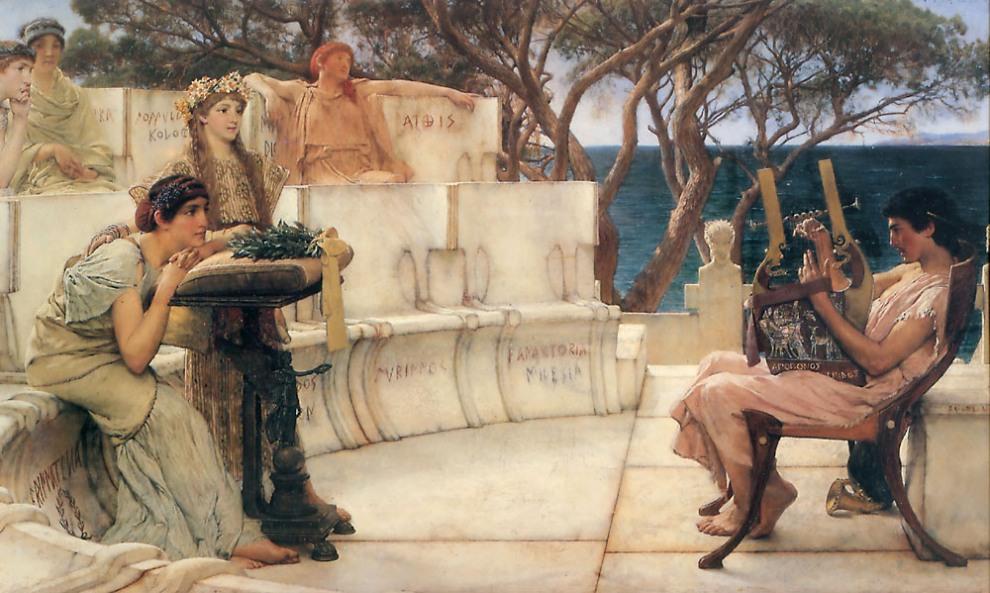



 A Druid Way