Google the title of this post, and chances are you’ll unearth three seemingly disparate connections. One is the title of a recent (2018) book by Edoardo Nesi. You might also find the Youtube trailer of a 2016 Israeli film by Nony Geffen with the same name. The third — the link between them, well down the list of URLs and capsule summaries — is the original, from lyrics by Jim Morrison of The Doors, where this line appears at the end of a stanza in “Ghost Song” off the 1978 album American Prayer.
In their own ways, both book and movie use the lyric line to evoke ghosts. Nesi’s book on economics is subtitled “The Crushing of the Middle Class”, while Geffen’s movie focuses on the story of a soldier suffering from PTSD after the third Lebanon war. In each case it’s the ghost of something lost, which makes living in this glittering, fragmented present of ours a hallucinatory journey. The Door’s album was issued after Morrison’s death, using recordings of his spoken word poetry, so that his ghost also looms over the work.
not here yet — coming, coming …
The prayer of the album title is not just “American”, though some of its song references are. Like any prayer, it grapples with the worlds we live in, worlds of memory and dream and imagination, of the physical senses and of the possible worlds that time and human choice may unfold.
/|\ /|\ /|\
A facile reading of “Ghost Song” might suggest we can dance along with the fragments — make the best of the situation. This is a strategy that may work for some of us — I silently add it to my spiritual toolkit — but the current troubles tug and gnaw at us in ways that dancing may not ease. The loss of jobs and “normal” life, the stress of disease and the threat of disease, put us right in the middle of the break-up and fragmentation.
No single remedy exists. But multiple remedies do, and humans are remarkably resilient creatures. Most of us already have ways for dealing with the present craziness, and we’re always on the lookout for new ones. Yes, the snake-oil sellers and spammers and scammers crawl out of the woodwork in times like this to snare the vulnerable and careless, but that doesn’t negate our search for new practices, solutions, promises. Like any green thing we send out runners and branches questing for new soil, for air and water and light.
For Christians this weekend is about hope, about resurrection. No surprise, the festival comes at the start of spring in the northern hemisphere. Christians in the southern hemisphere might consider matching their festivals to the season — Easter in September, Christmas around the June solstice — in order to align with a natural order they know God established. Likewise with Pagans down under. Samhain in May, and Imbolc in August. While celebrating beginnings as the leaves fall, or endings as the world greens all around us, may teach wisdom and the ability to distinguish other worlds from this apparent one, it’s out of harmony with the dominant dynamic the season is inviting our bodies to join and participate in.
If we look at the rest of “Ghost Song”, the first word commands us: “Awake”. I could stop there, or rather start there, and need nothing else. Awake, and keep awaking. But I keep going.
already past — what’s to come?
“American Prayer” opens with vital questions: “Do you know the warm progress under the stars? Do you know we exist? Have you forgotten the keys to the Kingdom?” Read the rest of the lyrics and you see how Christian imagery pervades the song, how the song itself asks deeply Christian questions, which means questions for everyone, in spite and because of its obscenity and “politics”.
Without the profane there is no sacred. And often enough, though we don’t like to admit it, they trade places.
All right — but what can I do with this possibly useful fact?
/|\ /|\ /|\
One of the headlines in yesterday’s Guardian reads “Sesame Street’s pandemic advice for parents: ‘Find rituals, be flexible, take a breath'”. I take this Triad and meditate on its seven words “for parents”, and for children, too. Right now that boundary shrinks. We’re all parents and children too, looking for comfort and reassurance (assuming we’re not honing our skills at denial) and for the first hints of “what next?” We “parent and child” each other right now in all kinds of ways.
Sometimes the only ritual I can manage is to take a breath. But that’s a good one, because without it I won’t make it to any of the others. Let me re-order the advice: “take a breath, be flexible, find rituals”. Bend, breathe, ritualize. Breathe, ritualize, bend.
/|\ /|\ /|\
Bless, and the blessing spreads outward. We are blessing-bearers.
“What’s your ritual goal?” Celebrating on a beautiful evening? Performing moon magic? Attuning to the rhythms of earth’s nearest neighbor? Healing, banishing, blessing? Charging a ritual implement? Making the most of heightened sensitivity and emotion at this time? Singing a song, or writing a poem? Painting? Finally writing a difficult letter? Making love? A blend of several of these? Which ones are primary for you?
BAM Gathering, Full Moon, Sept. 2019
“What’s your moon?” Is it New, Full, Waxing, Waning? You can see the moon as a guide and also as a “map to manifestation”. What do each of its phases suggest to you?
With some preliminary answers to these two sets of questions, you’re already better prepared to proceed. Journal, do divinations, watch your dreams, doodle, pray, listen and watch the natural world holding your intent in your heart as ways to refine your preparation, and you’ll be rewarded with deepening insight and more possibilities that will come to you.
Moon Names
Different sources of lore will suggest a range of names and associations for each moon and month, depending on the tradition they draw from. One name for the April full moon just past is Pink Moon. Native American names can be evocative, and may help point you toward specific conditions and qualities present in your locale — if you live in North America. But Europe, Asia, Africa and Australia each have their own varied traditions and imagery that do the same thing. Images and stories give you material for your rites: they help you focus attention and emotion and imagination in the service of your ritual intent. They’re also fun!
Melody and Harmony
Just as important in a ritual as the words you choose are any musical instruments, dances, enactments, costumes, gestures. Or try an entire ritual without words. What can you do, rather than say, to perform your ritual? When I performed my Ovate self-initiation, by far the most significant components were flickering candlelight in my dark living-room, my ritual nakedness marked by charcoal runes on skin, and the silence. OBOD materials suggested a ritual. But it was the personal experience, including the details I just mentioned, that made mine memorable and transformative.
A Basic Script
Here’s a sample “barest-bones” mini-script you can elaborate with your own intent, setting, companions and creativity. Treat it as you would the grain of sand that becomes a pearl in an oyster — an irritant that can grow and take shape and become a thing of beauty. Don’t like part or all of it? That’s fine! Change it!
Full/new/dark Moon of (month name), I/we greet you here and now.
I/we bring (specific offering, intention, dedication, vow) as token(s) of my/our intent.
Bless/heal/enlighten (you, your gathered group, a project, an object, the coming day).
You could, for example, fit in non-verbal ritual elements before and after each spoken part. How will you signal your rite has begun? Bells, drums, horns, etc. each have distinctive voices to contribute. Lights, incense, candles, torches all have roles they can play. “Moon foods” — the ancient mangiare in bianco (literally, “to eat in white”) of Italy — comes to mind. White wine, pale fruit juices, bananas, nuts, pasta, pears, apples, beans, bread, other pastries, etc. can all serve — and be served at your rite! “Season to taste” in addition to being a cooking instruction is a wonderful piece of ritual advice.
A Local Lunar Calendar
Consider making a list of each moon for the current year — your own lunar calendar, with room for notes, pictures, additions, poems, etc. Note the dates of the moon phases each month, and also your local season. June in North America is sometimes called “Strawberry Moon” for the fruit coming into season then, but of course that doesn’t work in the Southern Hemisphere — it’s the middle of winter then!
Personalizing
What personal events and associations might you include in your rituals for each moon? May, for instance, is the Moon of my birth, and it’s also Beltane Moon, so any moon ritual with that moon will feel different to other moons, even if I used the “same” script each time. What’s the local weather during each moon? How might land and sky spirits be included? What other rites and celebrations happen where you live? Who do you want to invite to celebrate with you? If you’re typically “alone” for such things, what ancestors feel right to include? When will you walk/dance/play with your animal guide, guardian, etc?
“backyard birch” bark for ritual writing
What props do you already have that can be included, or perhaps dedicated, in a rite? The quartz you picked up on a walk, the statue or bowl or cup that caught your eye in a shop or at a flea market or antique auction and now rests on a shelf? That gift from a relative or friend you’ve had for ages? A ring you’ve inherited from an aunt or grandmother?
The strips of birchbark from our backyard tree, in addition to providing great kindling, are excellent for writing during a ritual: ogham, runes, blessings, “give-aways” of things participants don’t want, commemorations (stitched/bound while still supple into a booklet). These strips can be burnt, composted, or saved as appropriate.
hazelnut necklace
Our Vermont seed-group, the Well of Segais, features the hazel among its mythic associations and symbols — the nut that feeds the Salmon of Wisdom, which some OBOD groves use to represent the Power or Guardian of the West and of Water. Ground symbols in objects and you make the ritual that much more accessible to the senses, imagination and memory. As a group gift, Mary Anna drilled hazelnuts and made up packets with thread for us each to make our own necklaces: “nine hazels of wisdom”. An appropriate and personal piece of ritual gear for a moon ritual!
/|\ /|\ /|\
I bless you in each of your moons,
your fullness and your dark nights.
I bless you in your changing faces,
in the pearl shadow of your twilight.
In between, when I dance or dream,
both or neither, I trade places
with tree, beast, spirit of the grove,
soon or late uncovering
another doorway to your sky.
For a different take on our current world, here’s OBOD chief Philip Carr-Gomm in his most recent “Tea with a Druid” weekly episode from yesterday, 6 April 2020. During the 28:30 broadcast, he offers a number of useful techniques, meditations, prompts and perspectives, as well as his characteristic warmth:
Now that I’ve got the melody of one of the fonn stuck in my head, I’m reminded yet again how we can establish new habits surprisingly easily, and can often re-program ourselves more readily than our rational “But-I-can’t-really-change” argumentative self will admit.
“… the interval created by if“, writes Robert Hass in his poem “Spring Drawing”*, “to which mind and breath attend, nervous as the grazing animals the first brushes painted, has become inhabitable space, lived in beyond wishing”.
TWO
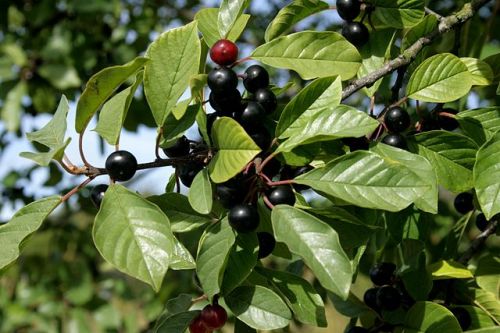
Yesterday I spent time clearing out glossy buckthorn (frangula alnus), a fast-growing invasive in the north and northeastern U.S., along our property lines where it’s been trying to establish a foothold for the last few years. A native of much of Europe, and originally planted as a natural fence in parts of the midwestern U.S., glossy buckthorn’s invasive because it’s so vigorous. It stays in leaf longer, shading out native plants, it reproduces through both berries and runners, it has few or no natural enemies, and it tolerates wet soils and pollution. In some ways you might say it’s exactly a bush for our times, tough and adaptable, if it weren’t so successful. Bees, birds and even a specialized butterfly relish its flowers and fruit.
glossy buckthorn in leaf and fruit
The bush has value to humans, too — as charcoal it contributes to gunpowder production, and its dried bark has been used as a laxative. In older lore, the ancient philosopher and physician Galen asserted its protective qualities against against “witchcraft, demons, poisons, and headaches”. Even his name has an associated value relevant to today: Γαληνός, Galēnos means “calm”. A mini-ritual in the making — invoke Galen’s calm along with the purgative and protective qualities of buckthorn.
THREE
“Is muggle a real word?” runs one popular search on Google. Like most magical and spiritual things, the question holds the key to its own answer.
Consider proper names that have become known in the last few decades. Is Lady Gaga a “real name”? To me anyway, more interesting than the question is what a person will do with the answer. Realness often depends on aptness — on fit. Does the (new) name fit the thing it names? If it does, the name is likely to catch on. If not, it probably won’t. To put it another way, if it ignites interest and attention, it becomes real. This is a key to many insights.
We tend still, in spite of more than a century of training from many directions that should have helped us know better, to think of things magical as pure marvel, a kind of “conjuring out of thin air” — creation ex nihilo, on a par with what the monotheistic God does “in the beginning”.
But a mage, like any creative person concerned with manifestation, studies patterns, tendencies, and energy flows. J. K. Rowling builds her names out of tendencies, patterns, sound symbolism and existing English word-forms. An arbitrary word like zlimpk is much less likely to catch on in English than muggle — it violates English word formation patterns. Magic — and spirituality — follow similar laws or patterns. A quick online look at muggle lists a whole set of antecedent associations at play for Rowling to work with. And a further test? Plenty of people now know the word muggle who have never read a word of the Harry Potter series. A magical act: something there that wasn’t there before.
FOUR
I’ve written several times about Thecu and the runes of storm I received from her — “created out of thin air”, if you ignore section Three above.
Here’s the first image I have of them from my daybook where I wrote them, the entry from 19 July 2017 — nearly three years ago now.
We often surround manifestation with all sorts of coverings, labels, shrouds, mystiques, and shrines, even though in varying forms we all do it all day long. “Thus saith the Lord”, the Biblical prophets write. When the circumstances of manifestation are particularly powerful, it can certainly feel like an external source impels it. If you’re predisposed to think in terms of deity, then a god/dess is a convenient point of origin — and you’re neither “wrong” nor “right”. You made yourself available as a collaborator with the cosmos. The labels you choose to understand and account for your experience and its results may help or hinder you in dealing with manifestation and its consequences.
The next step for me is to incise the nine runes onto the metal sheet I mentioned in a post not too long ago. Eventually it will live on an altar — possibly the lichen-covered altar stone I’m in the process of shifting to my grove. I’ve been looking at the best way to inscribe a nonagon on the metal, and you’ll see my results in a subsequent post.
In part I’m writing this section to reflect on my own experience of manifestation in connection with Thecu, and to understand what it is I’m doing, as well as what it is Thecu wants me to do.
I also reflect that here I held a warning of coming changes three years in advance of their physical appearance. “Nine paths of storm” for “riding change” indeed!
FIVE
Tomorrow night, members of our OBOD Vermont seed-group will hold a virtual “moon-moot”. It’s a full moon later that evening, around 10:30 pm local time, and we’ll have the waxing moon at our shoulders during our gathering. OBOD suggests a peace meditation on full moons. I’ve held my own rites at different phases of the moon, and find the dark and new moons of equal interest to the full.
I don’t need to go any further than the daily, monthly and yearly cycles to find “transparent witnesses” for “what it all means”. One post from a couple years ago has been receiving surprising numbers of readers, I suspect because it contains the words “spiritual meaning”.
Spiritual meaning often isn’t separate from physical ones. The sun rises and sets, coming to its full strength, then diminishing, and returning again. So to does the moon. And the length of days follows the longer annual cycle. A triad of planetary and astronomical pointers toward spiritual meaning: things run in cycles, and have a natural cause or origin, a life cycle, and an end.
Of course spiritual traditions around the world also include expressions like “seeing the sun at midnight” (which isn’t necessarily the same thing as the “land of the midnight sun”). Physical events are always themselves, and may also serve as pointers to things beyond them — at least to human consciousnesses. A great deal of ink (and blood) has been spilt arguing whether these things are “real” — for one take on the matter, see muggle above.
SIX
“All I know is a door into the dark”, writes Seamus Heaney in his poem “The Forge”. Bards like to sound dramatic. Heaney’s both telling the truth and lying through his bardic hat. But if you read through the link above to the “sun at midnight” you might spy a connection.
All I know is a door into the dark.
Outside, old axles and iron hoops rusting;
Inside, the hammered anvil’s short-pitched ring,
The unpredictable fantail of sparks
Or hiss when a new shoe toughens in water.
The anvil must be somewhere in the centre,
Horned as a unicorn, at one end and square,
Set there immoveable: an altar
Where he expends himself in shape and music.
Sometimes, leather-aproned, hairs in his nose,
He leans out on the jamb, recalls a clatter
Of hoofs where traffic is flashing in rows;
Then grunts and goes in, with a slam and flick
To beat real iron out, to work the bellows.
Any teacher knows the frustration of helping students move beyond thinking “Oh, it’s a poem. It can mean anything you want”. Of course: anything can mean anything. But try that out, and you quickly see such an understanding leaves you standing in mud. Rarely is it useful. It’s only when things mean something specific for us that they touch us, move us, arouse us to transformation and manifestation, those quintessential human acts.
Yes, quintessential: the five essences that underlie human activity. We know them as the four elements, and spirit — the pentagon, pentagram, pentangle or pentacle of both Pagan and Christian understandings.
Where is my real iron, to look again at the last line of Heaney’s poem? How do I do the work I need to do?
May you test and find your metal and mettle.
/|\ /|\ /|\
Hass, Robert. Human Wishes. New York: The Echo Press, 1989.
Heaney, Seamus. Door into the Dark. Faber and Faber, 1969.
Image: Frangula alnus — creative commons image by Sten Porse.
The Céile Dé, sometimes Anglicized as Culdee, is one current revival of an ancient and largely monastic Celtic Church of the British isles. If you’re looking for aids to meditation and a means to reduce anxiety, gain focus and know your own core being, a fonn of the Céile Dé may be for you.
[Link takes you to sub-page of three recordings: “Tar a thighearna … Tar a thi”; “Sireadh Thall” and “Mar a tha … moladh do Dhia”, with translations of the titles.]
I was privileged to attend a Céile Dé presentation at Solar Hill in southern Vermont several years ago, and to experience a demonstration of several fuinn (pl. of fonn). As part of a spiritual practice, you too may find these chants potent for healing and balance.
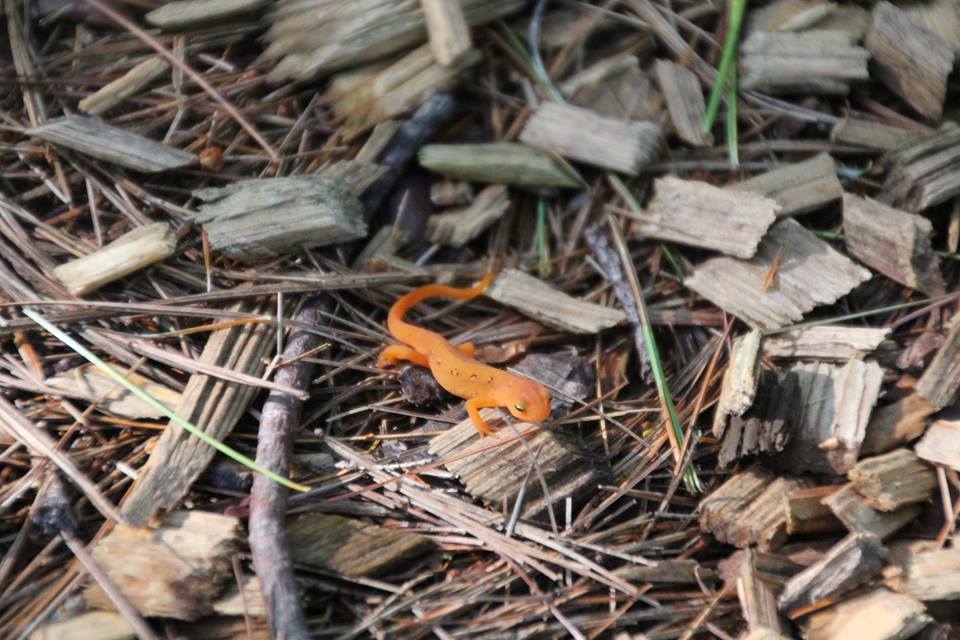
salamander, Camp Ashby, MA
The Ceile De website notes:
The fuinn (plural) are said to bring the three parts of us — Spirit, Psyche and Physical, into harmony. They offer a powerful practice that can help us sink into a deep meditative state … or enflame the heart.
Most of the fuinn are short and repeated over and over. Fuinn can also be “prescribed” as anam leighis (soul medicine).
The three free chants on the website clock in respectively at about 6 minutes, 3:20 and 2:45. Once you’ve listened a few times and harmonized to the energy and rhythm of the chant, you can begin to adapt the form to passages from other poems, songs and prayers that uplift you. A slow, meditative chant works, as the website observes, “because we always have our voices and hearts with us”.
Using the previous sentence, “our voices and our hearts together” can form a group chant.
“The awen … I sing … from the deep … I bring it” serves equally well as an individual chant, which can be effective in alternating periods of silence and chant. Try experimenting with where you divide up the line, into three or four parts, or one longer slow chant.
You can read an OBOD article on the Céile Dé here.
I invite you to post about your experience with these chants.
/|\ /|\ /|\
As of today’s update (18 Nov 2020), nobody’s shared experiences with the fuinn so far, but site stats show that you keep coming back, so I hope they bring you peace and comfort, which is after all my intent.
Heartfelt thank-yous to you, my readers, for bringing page views to 90,000. I’m making a point of posting more regularly during these difficult times.
While this blog seems to be passing through a prolonged dry-spell with few comments, I draw encouragement from a steady international readership that averages about 50 visits a day. If what I write helps, encourages or just entertains you, please leave even a brief comment so I know I should keep doing what I’m doing. Your reaching out really matters and makes a difference!
/|\ /|\ /|\
Watching for seals. No, not the sea-going mammals this time — the marks, glyphs, signs and symbols that we both make ourselves and also perceive in the natural world.
Tabloids regale us endlessly with pop-culture versions of this — for example, the face of Jesus burnt onto a piece of toast. Equivalent perceptions occur in other cultures with equivalent cultural icons (e.g., Buddha in the sky). Even normally restrained scientists have been known to join in: a 2019 article in Popular Mechanics gushes about the “real face” of Jesus, with this tagline “Advances in forensic science reveal the most famous face in history”. Feel the tug of that headline?
We ask “But is it real?” all the time, of a great number of things, many of which can’t (or shouldn’t) answer.
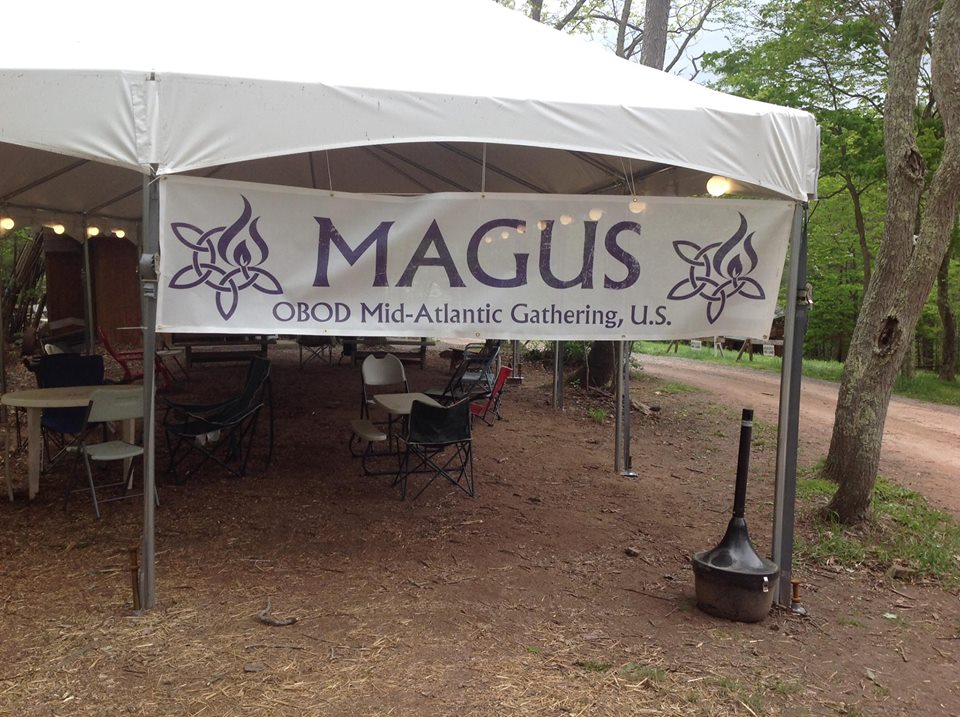
MAGUS banner featuring the Gathering logo
Psychology explains these phenomena as instances of pareidolia — if you see the word “idol” within the word, that’s not a mistake. Pareidolia is, to borrow a rhyme, “seeing faces in unusual places”. You might find this article on the topic from LiveScience interesting. Our human tendency to detect patterns in seemingly random visual inputs is what makes the Rorschach inkplot test possible. It’s also part of a complex human survival skill with multiple consequences.
The ability to attend to a pattern, to give it a meaning, empowers signs and sigils, but of course also makes written language possible. The shapes of the 26 squiggles of the English alphabet have little to no inherent meaning (you might argue that the S is vaguely snake-like, and snakes hiss — hence, the s-sound), but humans can detect and assign meanings to a wide variety of phenomena.
An effective sigil or seal can be created as a doorway to memory, to specific states of awareness, to understandings that may not stay with us while we’re dusting the shelves, changing a diaper, emailing the boss, or cooking a meal. But we can shift consciousness at will with the aid of a seal or sigil and know and do things otherwise beyond our capacity. Our schoolteachers know the value of holding a student’s focus and attention — these make all the difference!
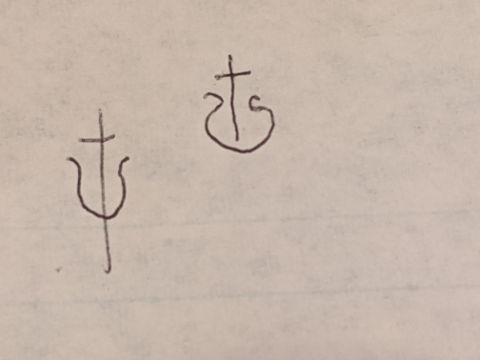
doodles for Druidry and Christianity logo — cross and grail
Christians wear crosses, Jews the Star of David, and followers of other traditions their own meaningful symbols. We also doodle both new and repeated shapes and signs, and we can expand on this human tendency and engage with a whole symbolic language if we choose.
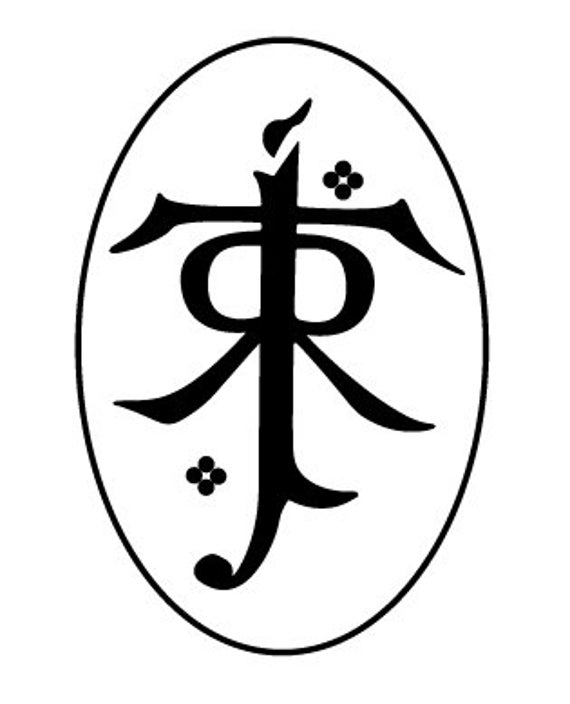
Tolkien’s initials as logo
Books on sigil making and sigil magic — the conscious seeking, design and use of signs and shapes to change consciousness — can of course assist. But the ability already lies in each of us — a birthright.
Tolkien invented a sigil from the initials of his name (JRRT) that now appears on his books and has become a trademark of the Tolkien Estate. Companies and organizations know that a distinctive and readily recognizable logo is often a key component to visibility and reputation and success.
To point to just one immediate use of sigils anyone can put into practice today, in these times of distraction and seduction by social media, and by fear and anxiety, our corresponding ability to attend to what we choose, rather than an advertising campaign or a news outlet or political party, is a priceless human gift.
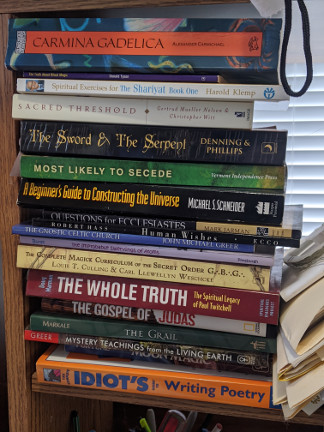
publisher logos on book spines — Pagans know the Llewellyn moon!
Place a meaningful sigil where I can see it during my day, write, paint or carve it on objects I use regularly, or sit with it in meditation, and I have a ready tool for shaping consciousness, guiding it toward my own purposes and desires, and focusing the energies that come through it into channels and actions that help, uplift and empower me.
And Josephine McCarthy, to choose just one author whose books are on my shelves, knows the value of a sigil as a distinctive cover for a book.
May signs point to good things for you!
/|\ /|\ /|\
Images: Magic of the North Gate cover; Wikipedia for JRRT logo.
In between is also prayer, listening to that interval between breaths, then the breath after.
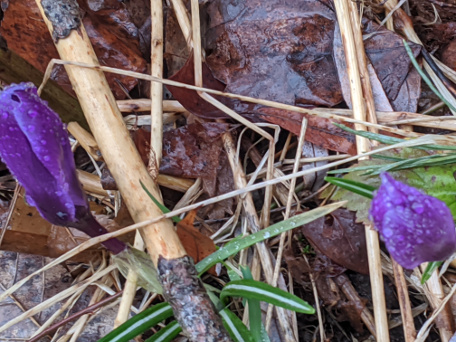
crocuses in rain, yesterday afternoon
Sometimes when I have no words, you are my prayers, my trees.
Nothing I have to say helps, so I stay still, Then I find my body has been praying anyway, heart beating, beating, and breath in, breath out, breath in again.
Sitting with a candle, I am not yet flame. Fire
waits for the moment I light.
I am a prayer the ancestors prayed. Night, cloudy sky, slaps of rain. Wind.
First one star peeks through, then another, impossible sparks of distance.
Only the silence has room enough to hear my heart.
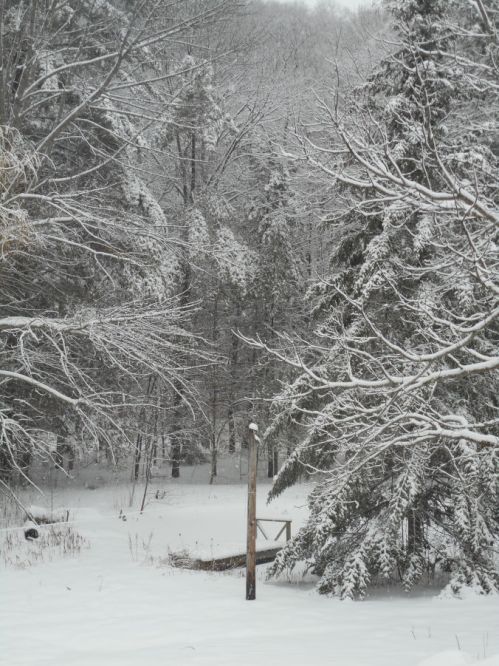
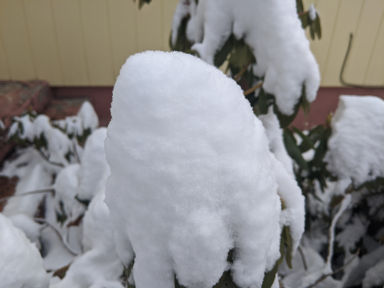
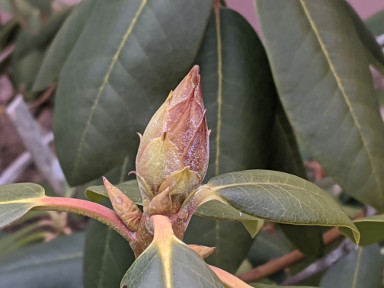
The recent snowfall just after the Equinox brought 8″ (20 cm) to our hilltop. I took these pics several hours apart to capture one particular flowerbud.
If you know rhododendrons, you know they keep their leaves all winter. But you can also tell if the temps have dropped overnight with a quick look out the window — the rhododendron curls and tightens its leaves, as if to say, Cold for me, too!
With even a little searching, you can of course find books and other resources for various ancestor practices.
Chances are good you’ve already begun one. Like so many things, the seeds — and often, the seedlings — already have taken root in your life.
With a family photo, an heirloom, a couple of stories, human memory, and experience of being alive, you’ve placed your hands on your own thread in the Weave, on a branch of the Great Tree, that surpasses any book.
Say you have an interest in genealogy. Or a relative frequently sends out clippings, photos, tidbits of biography about the family tree.
Maybe you’ve inherited old photos and letters, and they’ve sat on a shelf or at the back of a closet in a box or boxes because it’s hard to know what to do with the stuff. You can’t bring yourself to throw it out, but right now it’s just there, taking up space, one more tug whenever you’re looking for something else and there it is: history, image, memory, bonds of time and experience and emotion.
Or perhaps you have a difficult family history. You’re estranged from several living relatives, while deceased members left the scene with issues unresolved, and the family you have now aren’t blood relatives at all, but a family of choice you’ve managed in spite of things to assemble and cherish. Roommates, friends, mentors, colleagues, partners — people you’ve gathered and welcomed into your life at various points, who love and support you in turn.
With luck and grace and a strong constitution you may have one blood relative or spiritual ancestor you’ve started with. That person’s picture on an altar, or a wall, or stored on phone or laptop, serves as your launch point. Maybe not daily, or even weekly, but often enough, the images comes up and you have a moment to reflect on them, to remember.
Maybe you’ve signed up with one of the online genealogy sites, and your profile settings see to it you receive alerts whenever an ancestor date arrives. Your great-grandmother’s birthday, for example, or your great-great-grandfather’s wedding. The site obligingly emails you pictures of headstones, or some other electronic addition you might add to a memory altar, or discard or ignore.
All of these things may be enough. You’re busy, you don’t have time for “one more thing”, or that genealogically-obsessed relative more than makes up for whatever inattention you’ve been paying to the Right Noble Family Tree with their incessant gifs and jpegs and anecdotes, newspaper articles, questionnaires, memorabilia, and so forth.
Or you’re adopted, or orphaned, or otherwise almost entirely separated from your bloodline. Rather than an embarrassment of riches, you experience a dearth of ’em.
We all have arrived where we are today with the help of someone. That person is an ancestor, a fore-runner, a pathmaker, a hand to steady us on our way. And we have performed the same service for someone else, often enough without noticing.
Here are seven seeds for an ancestor practice I’ve explored over time.
1) “The Names of the Survivors”: We’re Here Now.
In my late teens I heard Rochester, NY poet Linda Allardt read her poem “The Names of the Survivors”, and the title as well as the closing lines have stayed with me. Survival makes do for grace, she closes, and at first that can sound grim or dark. But what is survival?
The best reason, if I need one, for an ancestor practice lies in one simple fact: I’m here today. If ever I’ve felt gratitude for simply being alive, there are roots of ancestor practice lying ready to hand. My existence today is tribute and vindication of their joys and struggles, in all their grotty and difficult human-ness. If you have a gratitude practice of any kind (or are looking at starting one), if you give thanks consciously at whatever frequency, it’s a sweet and simple thing to include those who have gone before and contributed to this moment.
2) Keeping up the Bone-House
Allied with my own being-here-now is a chance to do my best to honor and pass along that legacy. One of the Old English kennings or poetic expressions for the physical body is bánhús, bone-house. What I do with this bone-house life passes on my inheritance of it in the most concrete ways.
Every act matters, and an ancestor practice can paradoxically help me recall that. The deeds of now-nameless ancestors each helped bring me to here and now. It wasn’t the “big stuff” most days, though in hindsight each of these things is enormous: lighting a fire, cooking a meal, raising the children, tending the sick, burying the dead, butchering livestock, harvesting the crops, repairing the roof, honoring the lives they in turn received by living them fully. When I do the same, I celebrate and pass along the inheritance. Each life has a weight and presence of infinite value in the world.
When I smile at others and greet them, when I hold the door, pick up an empty soda can, drop off an abandoned wallet or phone to a lost-and-found, by performing such small gestures I lighten another’s life, no matter the degree. If one other person is glad I live today, I have helped branch the ancestral tree, and honored the gift I was given.
3) The Light-and-Shadow Tracery of Faces
You may or may not have (m)any photos of ancestors, depending on your family’s circumstances and the availability of cameras. Other objects may belong on your altar or other details can fill your remembrance.
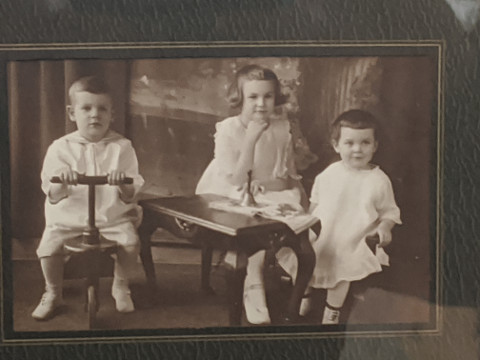
Among my favorite family photos is this one of my uncle, aunt and mother, taken around 1921. (Yes, my mother was born in 1919 — she would have been 100 last year. She had me quite late — she was 40 when I was born, more unusual and risky then than now. An ancestor’s choice I’m obviously grateful for!)
All three have passed over now, all three are people I knew in this life, and I celebrate their birthdays still. How much further you take such celebrations — preparing their favorite foods, inviting them to join you as you partake, including family and ritualising the event in other ways — depends on your own inclination and guidance. Such choices can bring ancestors into our present in potent ways.
Though we live in time, I’ve found we also travel along it in memory and imagination and vision, and we can consciously bless our past and future selves, as well as our ancestors, and descendants. The strength I’ve found to carry on through difficult times — to survive at all — pours forth from the pooling blessings of countless others, including my own. By such acts of compassion, the boundaries between self and other, self-ish and self-less, fall away.
For the good of the whole I offer this to the Sacred Pool …
4) Houses of My Blood and Spirit
The places where my ancestors lived may lie remote from my own, or I may live near or in the same house as one or more of them. When we enlarge such “houses” to include those who have taught and guided and encouraged us, whether living recently or long ago, here or on another spiral of the great journey, such dwellings grow large indeed. I count among my ancestors of spirit those whose words and wisdom inspire me, so that my altar of ancestors potentially extends far and wide. Whose birthdays will I acknowledge, or whose lives will I otherwise recognize and celebrate? It may be a talent I share with an ancestor, an historical interest, a quirk of person and character that allows me unique access to realms a particular ancestor also explored.
When we consider the spiraling DNA of these bodies of ours, all of us still live in very old ancestral houses, heirs to millennia.
Pondering, listening and revisiting these points slowly, over time, can help each person develop an engaging, varied and personal ancestral practice, along with a calendar of “Big Family” observances, of the Trees we each branch from.
And those other trees, which may be the same trees: What else can they teach us, the Tree of Knowledge of Good and Evil, the Tree of Life?
5) The Telling
Recalling the quirks and twitches of our forebears, their idiosyncrasies along with their strengths, helps bring both into sharper focus, and diminishes our tendency to idealize them to the point where we can no longer aspire to be like them.
One of the purposes of ritual is the re-telling and re-enactment of stories. The central ritual feast of Communion or Eucharist in Christianity is anamnesis — “remembrance” in Greek. As often as you do this, says Jesus, do it in remembrance of me. For Christians, Jesus is the Great Ancestor of Spirit, and many traditions include remembrances of their own spiritual ancestors. When we re-member, we put the members back together, we reassemble a life and recount its impact.
Multiple stories mean multiple examples and models of choice and action. Each ancestor points to another possibility today.
6) Be(com)ing an Ancestor
Wants and desires define the ancestors, shape their legacy in us, as they define me and each of us and the legacies we leave. What I want is love and direction and purpose. What I desire may or may not bring me any closer to those things — may well change hour to hour, day to day, with an attractive face on the way to posting a letter, a split-second decision to take a different route through town, that impulse buy that leads to so many further consequences, the online comment that backfires or unfolds a friendship, the unplanned event that proves crucial to so much that follows.
Sorting these things out in worlds of time and space is what makes each of us an ancestor-in-training. What do I know, what do I need to review, what have I not yet discovered or explored?
More spirals await.
7) Regular Samhain
Samhain is the end of the Celtic year, and also — blessed paradox — the beginning of a new year. I witness the cycles of my life, its ends and beginnings, in spirals within spirals. Our normal short-term attention is between 3 and 10 seconds, and that window of awareness has a start and an end, a dimension and rhythm worth studying and exploring. So too does the cycle of waking, daytime experience and sleep.
Beyond that is the lunar cycle, so useful as a model for working with cycles on a scale most can manage, even in busy modern lives. The three days of dark in each monthly cycle encourage a practice of letting go and picking up again, can allow for a physical correlate to deep meditation, for other kinds of work with the pattern of Samhain of endings and beginnings, at different scales than just the calendar year.
Spirals within spirals form a spiritual reality and offer a model for a vital practice that proves flexible and adaptable to individual circumstances, shapes our lives however we live them, and links us to ancestral wisdom and presence in ways I’m still discovering, as are we all.
This is another Druidry-and-Christianity post, so those of you who can feel your blood pressure rising already might want to keep on moving. Please respect your own spiritual digestion! Come back next post. Care for yourself and others in this time, as you uniquely know and are learning how to do.
We have a human need to name causes. We want to know the formative energies behind things. We learn from experience that such knowledge often eases our hearts, even a little, if we can just spot a pattern, detect a design, rustle up a reason.
Often enough, too, knowing a cause helps in shaping a result we desire. With a sense of trajectory, maybe we can define points along the way, formulate strategies, work on means and ends. How to get there from here.
I run into Josh* again, the Green Rabbi. Many have heard of him. His stories are full of birds and beasts, flowers and fields, and often he just gets things, things I know I need to hear. He comes to all kinds of circles and protests, gatherings and prayer sessions, where he doesn’t always immediately stand out in a crowd. Parties, too. Maybe you saw him a few weeks ago, talking with that old guy at the end of the bar. Or sitting with refugees huddled in their tents, listening. Once in a while, you might catch a glimpse of him in the mirror. He doesn’t shy away from the tough questions, or doing what’s needed himself, rather than waiting on somebody else.
One day as Josh passed by, he saw a man he knew, blind from birth. And his students asked him, “Rabbi, who messed up, this man or his parents, so that he was born blind?”
It’s a great question, one you may find yourself asking along with me and many others right about now. Why are things like this?
Twenty centuries ago, the Green Rabbi faces that question-impulse in his students, and fields one of the Big Questions: cause and effect.
This time his students present him with what looks like yet another obvious karmic either-or. It’s gotta be A or B. One or the other. Cut and dried. My bad skin (or my amoral heart) is either my own doing, or it’s the result of bad upbringing. Choose. Nature or nurture, person or person’s parents.
Then, QED. Tell me who’s at fault so I can assign blame, and if it’s not my fault, I can wrap it up neatly in a crimson bow. Put it on a shelf. And all too conveniently forget about it. Not my monkey, not my circus.
Wait, says my life. Not so fast.
Josh answered, “This man hasn’t messed up, and neither have his parents: it’s so Spirit could manifest in him”.
The cause doesn’t always matter as much as we might think. More than we imagine, it’s the seed of possibility in the moment that counts. A potential. The chance for something that wasn’t there before. What chance, and whose? Well, anybody’s — anybody who can help Spirit appear more vividly and effectually right now. And that’s all of us. It is, if we accept it, a spiritual opportunity. Whatever the cause, what can I manifest in the space it has shaped?
More surprise. Josh doesn’t push the responsibility of making the most of such an opportunity onto anybody else. Instead, he applies it to himself, rolls up his sleeves, and starts yet again walking his talk. I know I learn from that kind of model. It’s an ongoing struggle for me, against my tendency to say “other people’s problems” and turn back to my own stuff.
Josh tries to explain:
“I work with what spirit sends me, while it’s still day: the night comes, when nobody can work. As long as I’m in the world, I’m the light of the world”. After he said that, he spat on the ground, and made clay, and he anointed the eyes of the blind man with the clay, and said to him, Go wash in the pool. The blind man went, and washed, and came back able to see.
Light and earth, water and Spirit. Elemental powers we all hold in our hands.
When I “come back”, I’m not always able to see all that clearly. But Josh nods. That, I can see. OK, among everything else these things can mean, for me they signal I’ve got work to do. And — blessed chance! — there’s still light to do it by.
A meditation for the day:
Light: what is spirit showing me right now? What can I do with that insight or perception?
Earth: how can I manifest it in concrete ways? What’s the earth of it?
Water: what is fluid and supple in my life, what is flowing that I can participate in and help to shape for the good of all? Where can I flow for others, helping to unstick the stuckness we all labor with?
Spirit: what humble forms does life use to reach and teach me? How does spirit animate and enliven my life today? How can I open to more opportunities for that to happen? As a Wise One said, When we tune in, our talents and skills are used in ways we enjoy. Let my prayer be full of life, let my life make use of me for my good, yes, mixed with the good of those around me.
And my prayer for you is the same. May you delight in the uses spirit makes of your life. May you name and explore and celebrate some of those uses today.
/|\ /|\ /|\
*Josh, popular short form of Joshua, from Hebrew Yehoshua; related name Yeshua, Greek Jesus. How many of us react automatically to names that have emotional loading for us, as the name Jesus does for people traumatized by bad religion and its practitioners. This is one of my transparent and unoriginal attempts to unload a name, to shift perception, even if only a little. I know I need that. Your mileage may vary.
In recent days, one of the most frequent searches run on this site — no surprise — was for “equinox ritual”. While I don’t have a full rite posted here, it’s a good time to reflect again on crafting our own rites — on ways to access and craft a recognition and remembrance that fits who, and where, and also when we are.
I am a ritual too, says rock, and weather, and grass, and person looking
Awareness of this time of balance — especially in the face of so much upset, anxiety and disturbance around the globe — is ancient, and good to recall, and to bring forward again into conscious attention. A thousand years ago, the Anglo-Saxons observed, On emnihtes dæg, ðæt is ðonne se dæg and seo niht gelíce lange beoþ. On the day of the equinox, that is when the day and the night are equally long.
Emnight, the old word for equinox — a good word to bring back, from *ev(en)-night, Old English efen-niht, emniht, when darkness and light are paired and even.
It’s true that membership in a practicing group equips you with experience of a round of yearly rituals, and after participating in a few rounds, you may begin to play with local versions of your own. If you’re a solitary, there are rituals online to study and ponder. While certainly not everyone has ready access to the internet, and most groups have wisely curtailed physical gatherings for a season, that’s all the more reason to find our own ways to acknowledge and honor the seasons and the holy tides or times. And that includes our own personal times and seasons.
Where do we find balance in uncertain and difficult times? One way is by aligning ourselves with rhythms larger than any one person, but also part of each of us. In such ways we can glimpse and participate in those patterns and re-balancing flows, and re-set ourselves. And reset and reset, at need. For now the need is again great.
Reginald Ray, in his book The Indestructible Truth, puts it this way:
Through ritual, genuinely undertaken, one is led to take a larger view of one’s life and one’s world; one experiences a shift in perspective—sometimes subtle, sometimes dramatic. This shift feels like a diminishing of one’s sense of isolated individuality and an increase in one’s sense of connectedness with other people, with the nonhuman presences of our realm, and with purposes that transcend one’s usual self-serving motivations.
Ritual is a way of reconnecting with the larger and deeper purposes of life, ones that are oriented toward the general good conceived in the largest sense. Ironically, through coming to such a larger and more inclusive sense of connection and purpose, through rediscovering oneself as a member of a much bigger and more inclusive enterprise, one feels that much more oneself and grounded in one’s own personhood. Through ritual, one’s energy and motivation are roused and mobilized so that one can better fulfill the responsibilities, challenges and demands that life presents.
“So what’s my ritual?”, you ask.
Well, who and when and where are you? These answers can open and shape your rite.
I stand here and name your place and time. It’s the equinox, so declare it.
I/we stand here on this ancient land [all lands are ancient and holy when we know them so], gift of spirit, child(ren) of the ancestors, at this time of equal darkness and light.
If you have an image or object that represents the ancestors, so much the better. Or consecrate one as part of this rite: This stone, or cup (or picture, etc.), inheritance of my/our people, I/we place upon my altar.
In this time of equal dark and light, I/we welcome — who do you welcome? Whose presence blesses you? Whose taking-part matters to you right now?
Prayer is always appropriate — what’s your prayer at this moment? There’s a place both for scripted and spontaneous prayer. If you’re alone, a prayer or cry for help may spring to your lips without any forethought needed. You can mingle the two, the planned and the popping-up-in-the-moment. In fact, that’s often ideal.
What gifts can you offer? We all always bring something, even in potential, waiting to give. (Unexpressed, the ungiven can frustrate us. The gift needs to be given.) It may be a vow or promise, it may be continuing to do what you’re already doing — and naming that — it may be something that represents to you the heart of what you do and who you are. Any physical thing that signifies something of this to us can take part in our rite, because it offers a focus for our attention and one more access point for Spirit to reach us. Perhaps you yourself can take on and ritualize the image of someone who inspires you, and you can assume during the ritual the identity of that person, or of someone or something whose legacy you carry and continue. A mask, a word, a ritual gesture or action. It may be something you aspire to be and do over the coming weeks and months. It may be that writing this down is also an appropriate part of the rite itself, alone or with one or two family members, if you’re doing a small ritual together.
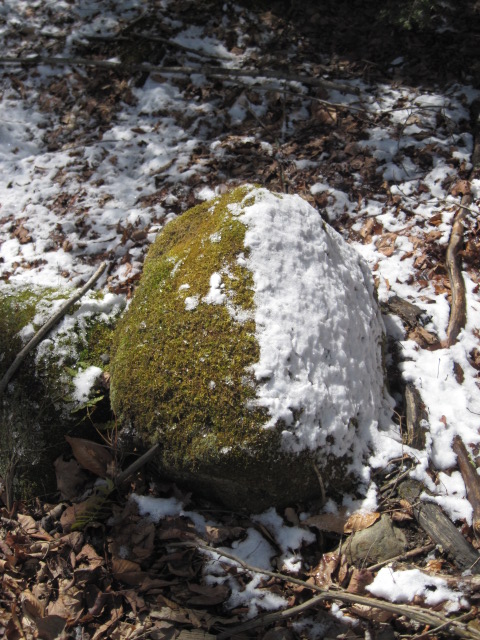
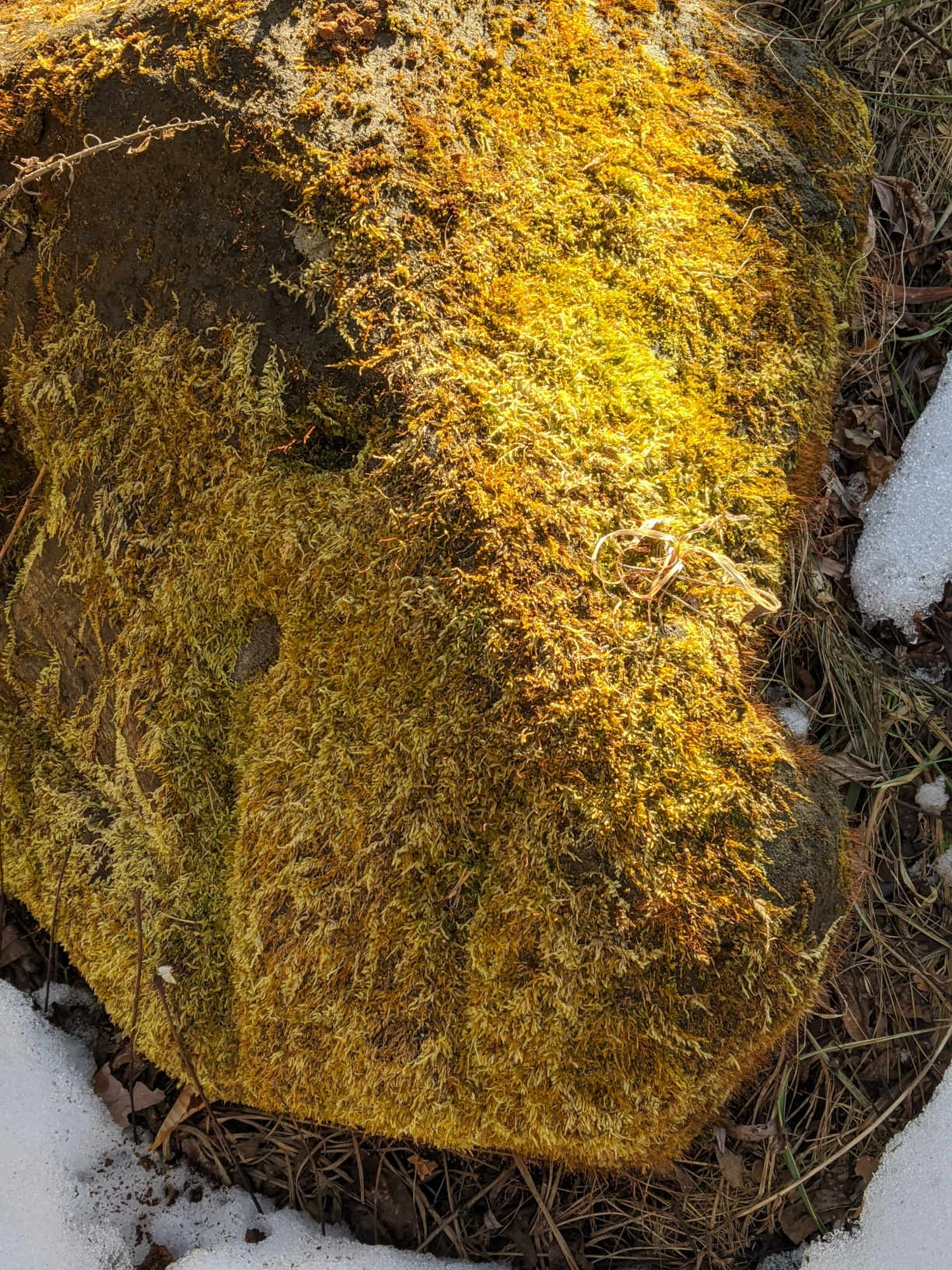
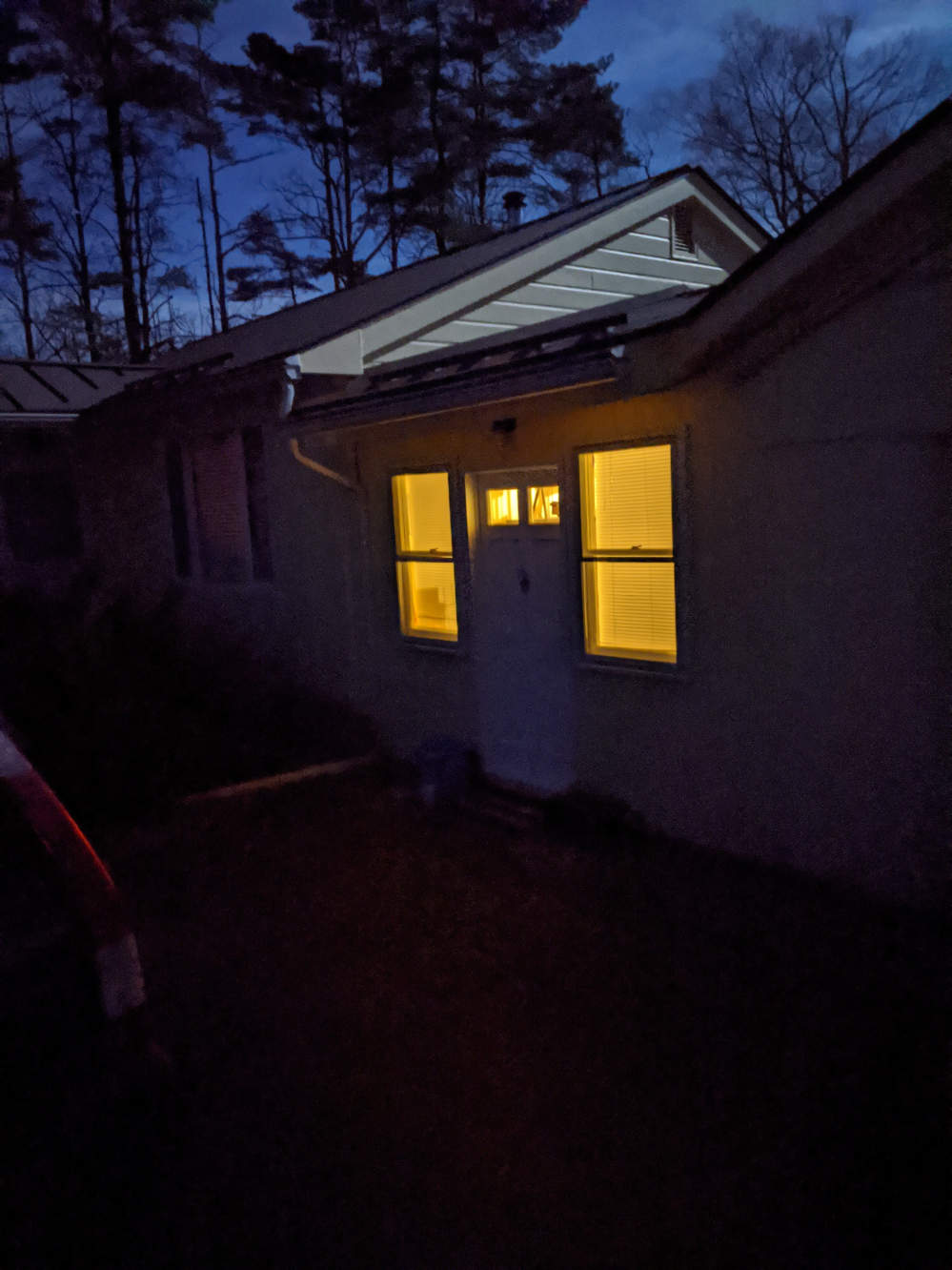
I am moving my altar stone into place, the massive mossy rock I’ve pictured in previous posts (not the one above — that’s the boulder in our front yard, spackled with snow). The physical effort and sweat is a principal part of my rite, the beginning is the first shifting, and the end is positioning it where it needs to be, and acknowledging it in its new place. They sang the stones of Stonehenge into place, goes the legend. Our days are equally legendary, if we let them be, equally redolent of the stuff of worlds speaking to each other, with us a part of it all.
Se emnihtes dæg, says the Leechdom, one of the old books, ys se feorþa dæg þissere worulde — Emnight’s day is the fourth day of this world. A bit cryptic — yes. Mysteries still unfold in our day, though we often turn away from them in search of what we think we already know.
Our equinoxes are beginnings, yes, and also completions, fulfillments. They are the fourth day, the full circle, the manifestation, the revealing of spirit in us, and us in spirit, whatever form that takes.
A blessing on you and your lives and rites, on the forms of revealing spirit.
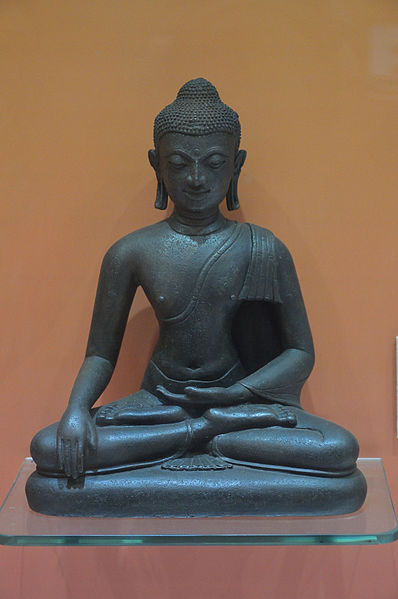
I’ve written intermittently about links between Druidry and Jesus, though of course other traditions have riches of their own that overlap and can nourish Druid practice. I post about them less because I know them less, but one mudra or ritual gesture from Buddhism is asking for some time today. That’s the Bhūmisparśa Mudrā (approx. boo-mee-spar-shah moo-drah), literally the “earth-touching” gesture Buddha makes, calling on the earth to witness his enlightenment.
every level matters, none superior or inferior, all one greening
We need and benefit from witnesses. Legally of course they can help build a court case, but they matter in so many other ways. Friends witness our lives as they unfold, and they participate in that unfolding, just as we do in theirs. We know as we are known. The spiritual witness others offer helps us remember our lives and actions, and help them to matter more. Druidry is an earth religion because our spiritual witness and practice is where we find ourselves right now, here on earth, breathing and eating, sleeping and waking, dying and being born. Living.
Multiple Buddhist websites offer bhumisparsha mudra as a significant ritual gesture than anyone can try out. (Check out number 2 on this site). It features in Buddhist art and makes numerous Buddhist “top-ten” lists as a practice.
With this simple ritual act, Buddha touches the earth, or gestures towards it, with his right hand, all five fingers pointing downward. The other hand, the left, is palm upward in the lap. This is prajna mudra, or the wisdom gesture. Left hand palm up, resting in the lap, is a relaxing gesture. Try it and see.
Together, these two form an appropriate mini-ritual pairing for a person looking for “practical practices”, ones with immediate benefit, simple, easily incorporated into daily life, elements in a spiritual tool-kit that can be combined with other practices.
What you do with your attention as you practice the gestures is yours to explore. Prayer? A blessing? An offering of greeting, gratitude, salutation? Stilling of thoughts and emotions? Attention to birdsong, wind, your breathing?
Looking to calm yourself after too much social media, remembering the earth, opening to our innate human wisdom, these gestures can help us home. (You don’t need to include the lotus posture!) Sitting comfortably in a chair, on the floor, outdoors if you have even a bit of yard, can all help center and align you. If you have an altar, a grove, a ritual space, a candle — whatever scale of acknowledgment that your life is linked to the whole and the holy — here is another place to begin.
By such small steps we can approach and know the sacred (our life task) yet again.
On an online Druid forum I frequent, an atheist Druid recently posted those words. That’s where I aim to live my life, he said (I’m paraphrasing). Between What If? and Impossible. (That part’s verbatim.)
moss rock in backyard, 9 March 2020
It’s a remarkable space, that interval.
“Knowledge is disinfectant”, notes David Ropeik in today’s USA Today apropos of the virus commanding so much of our attention. True enough: knowledge is also a bridge, a compass, a balm for fears, a great gift passed along from ancestors to descendants, our precious long human heritage, built slowly and often with great effort, against fear and superstition and a disinclination to train and refine and amplify these animal instincts into something more than the survival baseline we’re all granted at birth. (What else are these enormous brains for, if not to play with and improve on the given?)
We add, each of us, to the human tapestry, helping to provide each other with experiences of this world. Hail and welcome, Fellow Catalysts.
Knowledge reaches in both directions, towards the What If, illuminating that terrain with often startling results, and also toward the Impossible, doing the same. In fact, serious work in either direction often illuminates the other just as much. Sometimes they trade places, being the highly fluid things they are. Funny how that works.
What do I know, personally? (persona — the thing the sound –sona comes through per-.)
I know cycles within cycles within cycles. I see the lines of my grandmother’s face written in the face of my 5-year old first cousin twice removed, my grandmother’s great-great grand-daughter, two beings separated by five generations. Are they “the same person”? Of course not — no more than I’m the “same person” I was at five, and I’m still here. Along with what if? and impossible, these identities we cling to are also far more supple and fluid than we commonly suppose. Those of you who do ritual and path-working, meditation and visualization, altered states of consciousness of so many kinds — you know what I mean.
I know the moon waxes to full and wanes to dark every month, whether I’m watching or not. The mourning doves are singing again among the bare branches here in Vermont, as they return to do each spring. I know the years, the decades. I know the snow and the green grass, the summer heat and the frost of January. If these are sometimes poetry it’s because they’re always poetry, our heartbeats the meter of the verse and song we only sometimes notice.
I see the lines on my face and my wife’s keep spreading, our hair graying, our bodies — despite the care we try to take of them — accumulating the signs of a cycle’s eventual close that will sweep them away. Rather than despair, I rejoice we’re here at all. Should we be somehow exempt from the same patterning and transformation and cycle that first brought us into manifestation, along with everything else?
I know the tremendous sustaining and healing power of the love and caring of other beings, having seen it in my life and all around me, and offered my own. We all witness human and beast and “those without their skins on” — TWOTSOs — reach out to us each day and night, in waking and dream and in-between, in the inquiring noses of dogs and cats, the human warmth all of us need, the oxygen-gift of green things, the nudges and hints and humor of dreams and visions, the food that some of these other lives provide to sustain us each day.
I know that between What If? and Impossibility — however you and I choose to label them — are hoards of beings, chances, doorways, moments and passages. (Pick something to marvel at today.)
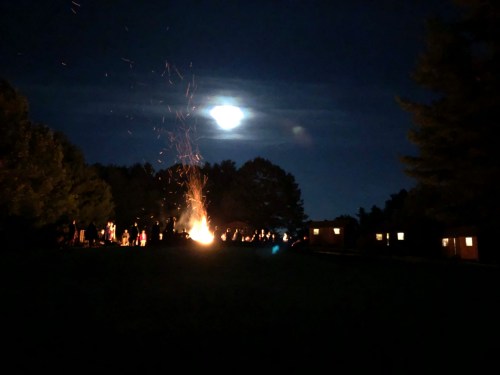
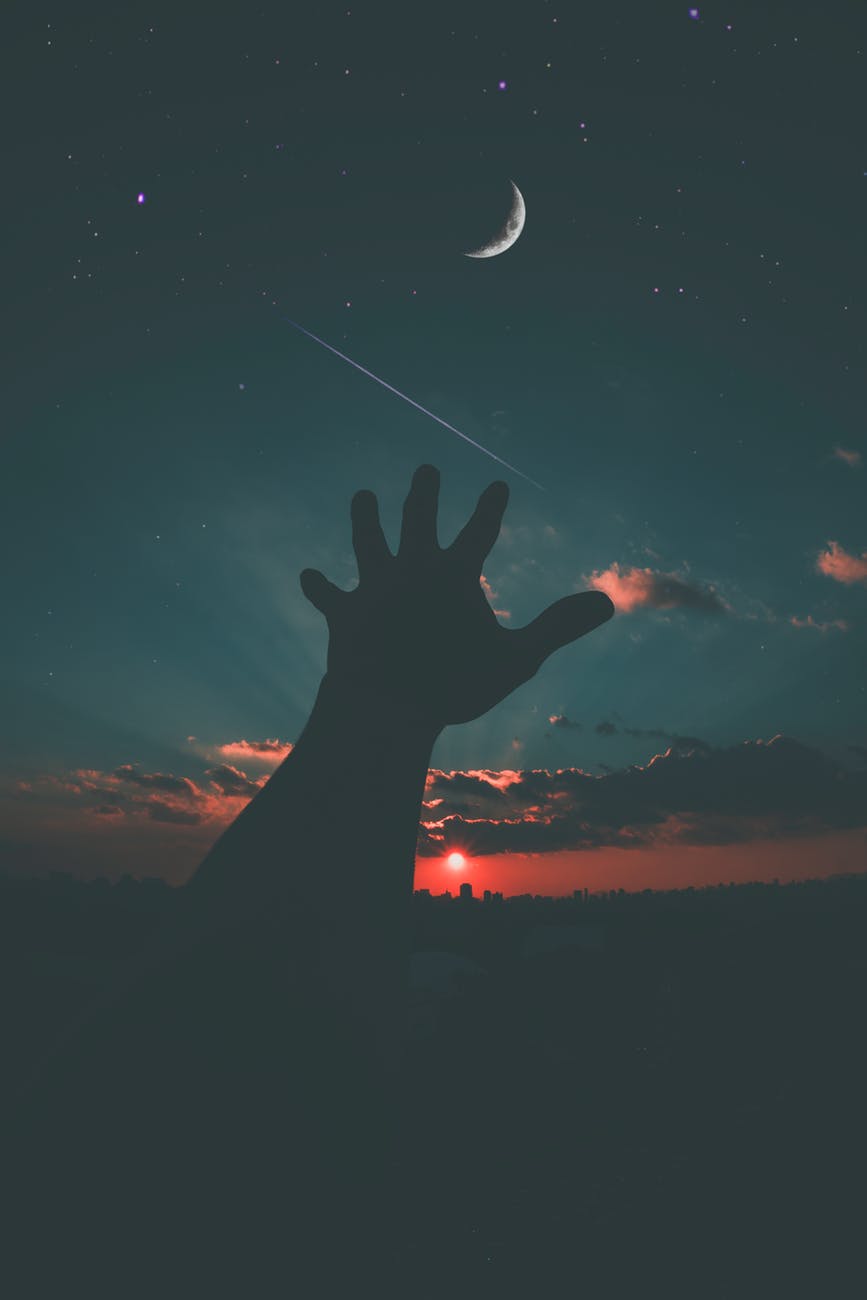
Monday’s full moon, night setting on camera: “light within, and light without”
I know that each day I move through so many states and flavors of consciousness — the fluidity that makes creativity and magic possible: sleep, dream, near waking, day-dreaming, full waking, concentration on a task, creative flow, intense experiences of pain or pleasure, intoxications intentional and unintentional provided by medications and “other” substances. And we all know what is fully possible in one state is inconceivable and (therefore) quite literally un-do-able in another. We know this because we’ve been there.
Between the what if and the impossible is where all of us pass our lives.
I know that both the rough-hewn and the refined spiritual technologies we call “religions” and “practices” and “rituals” and the imaginative embrace of Here and Now have deepened and enriched my life in ways I probably can never fully disentangle from all that I am and do and think and feel and suspect (a verb I infinitely prefer to “believe”). A good chunk of evidence for all these assertions is what I write about and attempt to document on this blog.
I know the wonder and beauty and mystery and love of these things in my own ways, as many of you also do.
/|\ /|\ /|\
A final word about proportion, because the wisdom I aspire to — the best of what I “know” — doesn’t shy from hard truths, but in the act of looking finds they’re not as hard as we make them (I make them) out to be. Amid the wonder and beauty and mystery and love, a dash of fear, never dominating, just enough of that animal survival heritage of ours to keep us alert and focused on what matters, to keen our senses, prod the pulse if need be, but never dominate the day, or cloud the whole scene.
I know that “I” — this funny little ego with its likes and dislikes, its tempers and distempers and moods and whims — doesn’t “have eternal life” (how could such a flimsy thing?), but that life has me, in ways I keep discovering. Has me, holds me up, keeps sending me into the scene, gives me a part to play.
The virus, let me say it up front, isn’t Covid-19 or coronavirus or “the thing that’s swamping nearly every media outlet right now”. The virus is fear, rumor, mis- and dis-information, mental constructs, habits of thought, knee-jerk reaction, path of least (conscious) resistance. Any spiritual path worth its weight in chocolate should offer practices to rein in such human behaviors and put better alternatives — also human behaviors! — in their place. In other words, give us back our power of choice. Teach us ways to disinfect both our hands and our psyches, build resilience and good humor, and be of use to others.
Of course, the great thing about a habit is its efficiency: it’s a shortcut, a “nervous system macro”, so I don’t need to waste energy each time more or less the same choice faces me. The habit says “Just do this — it’s the same as the last time” and I can move on to the next thing. A habit turns off thinking and hands over control to that part of us which is really good at simply reacting. It’s a great help — when simply reacting is appropriate.
The less-than-great thing about a habit is the same thing: its automatic patterns rule parts of our behavior, rather than conscious choice.
Among the gifts of Druidry are the powers of reframing, of conscious thought, of magical choice — because all choices made consciously are magical in that they liberate us from mechanical behavior and open up possibilities for change and growth.
The video below isn’t directly about “dealing with a virus”, but the reframing and reclaiming of automatic behavior it looks at are innately Druidic acts.
No, not “quick fixes” — l o n g fixes instead, gifts to ourselves that keep on giving as long as we practice them. And because most of us have faced the kinds of things that the speaker discusses and knows intimately herself, these long fixes are human skills we can all learn and develop and deploy when life is challenging. When isn’t it?!
Another resource: this excellent Guardianarticle from yesterday, 7 March, with concrete data, and suggestions for where go to look for yourself at the many scientific studies, resources, suggestions and advice already available for dealing with the coronavirus.
(Elizabeth Mayor is one of the artists at Two Rivers Printmaking Studio
85 North Main Street, Suite 160
White River Junction, VT 05001 USA.)
Up to Dartmouth-Hitchcock Medical Center again this morning, for a follow-up to a series of tests and nuclear medicine imaging scans (good news, nothing worrisome at this point: “watchful waiting” for now), I finally remembered on this fourth visit to photograph some striking prints I’d spotted on the walls of one corridor and seek out more info on the artist.
The med center is about as comforting as a hospital can manage to be, with soft colors, open bright spaces, plants, paintings and photographs. You can visit here for a good sample of the art on display.
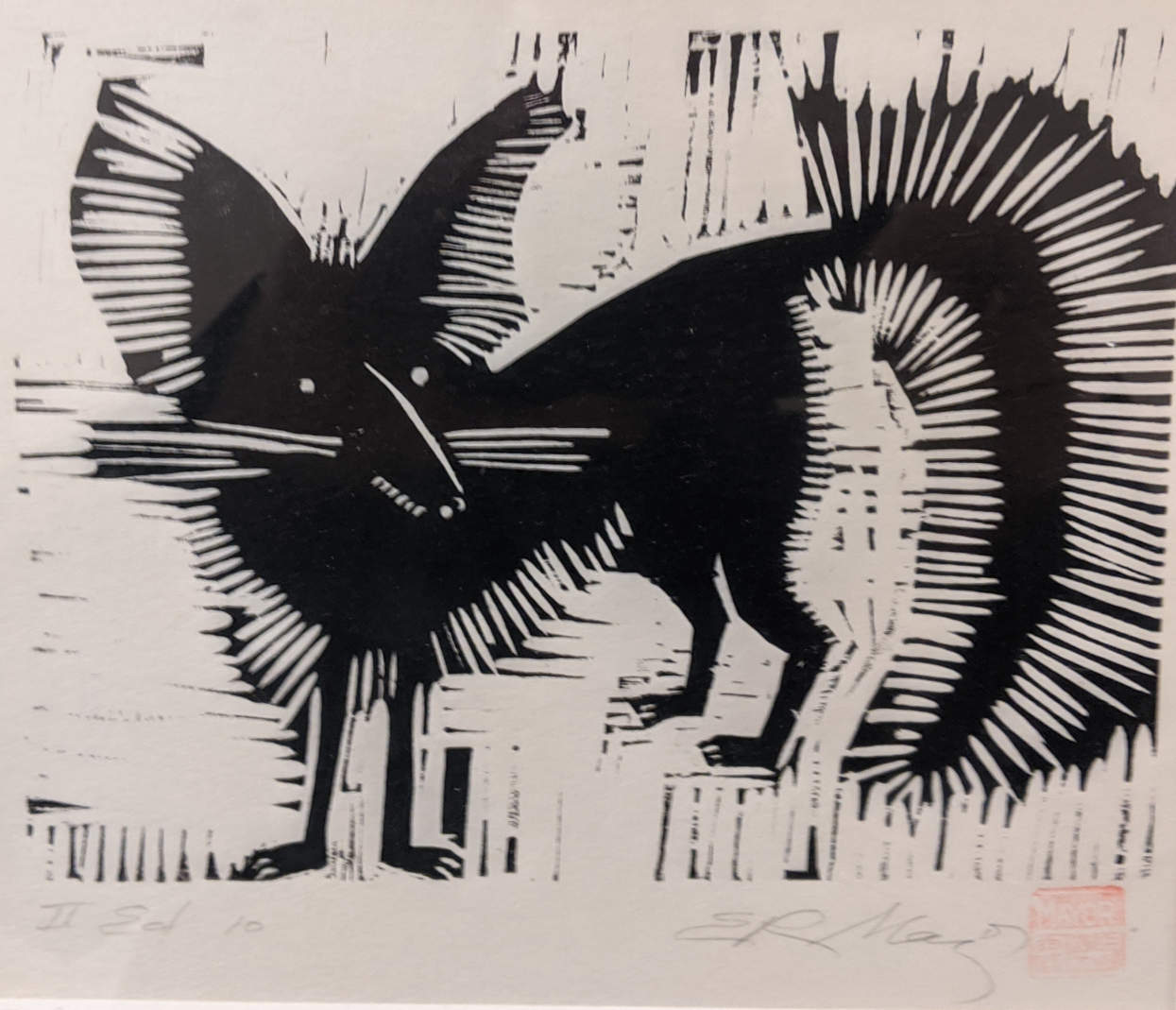
These two images are part of a series of five animals by Lebanon, NH artist Elizabeth Mayor, and labelled “gift of the artist” to the hospital.
I love their energy and lines. They have a kind of shamanic vision quality to them. Fox and owl are my favorites of the five. I’ve emailed a contact person on the med center website for more info on the artist, and will post it here if/when I hear back.
These feel like spirit guides for the dark half of the year.
Two nights ago my wife and I were awakened by coyotes yipping outside our front door. I’d left some spoiled food outside the door, intending to dump it on our midden out back, and forgetting about it altogether in the middle of dishes and writing and stoking the fire and bringing up the laundry to the drying racks — the usual tasks of winter.
The coyotes’ midnight song reminded me.
Here are images for dream-work and meditation. They may not resonate for you like they do for me. I present them as examples of finding art (and supporting artists whose vision moves you) and feeding your imaginal and imagining self. As the intermediary between realms, imagination asks for our loving attention, and I continually try to make space for it and for the imaging-working self, which seeks out representations, doodles them, paints and draws and photographs them if we give it a chance and the materials, carries the images into dreams, and works with them in ways words cannot accomplish.
Praise to the Nameless that looks out through my eyes with me, through all our eyes at the other eyes looking back!
As St. Francis remarked, What we are looking for is what is looking.
I continually try and often forget, till an image grabs me and nourishes a hunger I’d forgotten to attend to, and then I’m off again, the imaging self making and playing with pictures, a language older than words.
/|\ /|\ /|\
Photos of prints by Elizabeth Mayor, Lebanon, New Hampshire.








 Up to Dartmouth-Hitchcock Medical Center again this morning, for a follow-up to a series of tests and nuclear medicine imaging scans (good news, nothing worrisome at this point: “watchful waiting” for now), I finally remembered on this fourth visit to photograph some striking prints I’d spotted on the walls of one corridor and seek out more info on the artist.
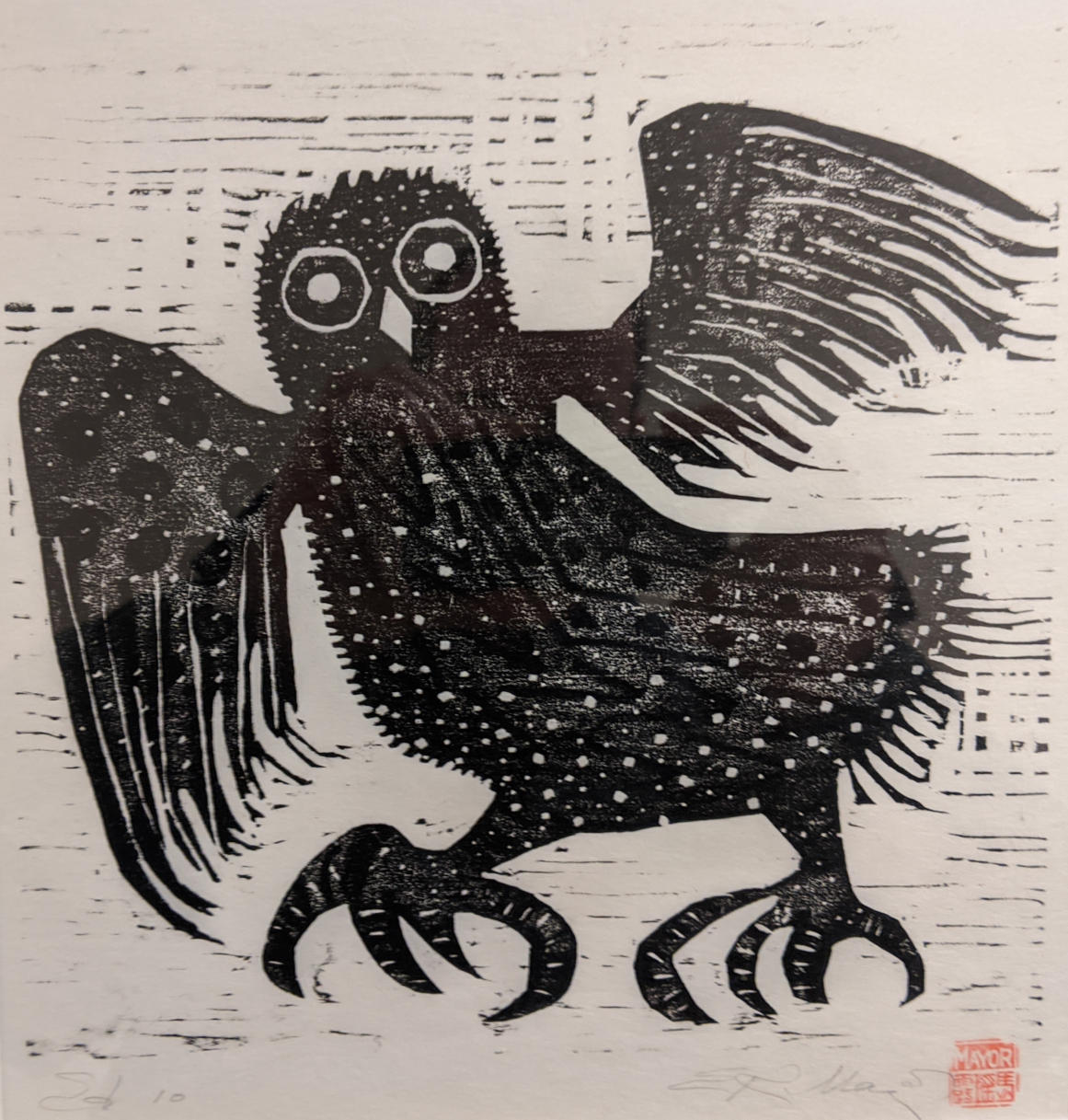 These two images are part of a series of five animals by Lebanon, NH artist Elizabeth Mayor, and labelled “gift of the artist” to the hospital.


 A Druid Way

