Archive for the ‘creativity’ Tag
 So here’s the opening scene of my drafty 2014 Nanowrimo nano-novel. Yes, that means it’s still reeeeeely small. But it’s getting bigger!
Here’s a bantering exchange between 15-year old Emily Zhang-Salzano, the main character, and her father, to set the stage of dark foreboding (not that dark) for what’s to come, when Emily is whisked off to parts unknown by powers unseen. You know, first a light at the end of the tunnel, but then more tunnel. As the Wise have said, if you want interesting characters, make them suffer …
“Emily!”
“Living room, Dad.”
“Honey, I need you to break the law for me.”
“Way to get a girl’s attention. Does it involve removing mattress tags?”
“No.”
“Downloading adult … cat videos?”
“What? No, that’s so last year.” Neil Salzano appeared in the doorway, a towel slung over one arm, and a dusting of flour on his nose. “Listen, your mom will be home soon, we’ll be eating, but I just discovered we’re out of whipping cream and–”
“You want me to steal a cow?”
“Exactly. Preferably one that also gives chocolate milk, so your brother will consider it a fair trade while you’re serving your sentence.”
“Ha! Nobody would miss me. That’s the beauty of your plan.”
“Clever child. Actually I need you to drive to Callahan’s and pick up a pint of cream.”
“You know I just got my permit.”
“I do. I also know you’ve been driving tractors, pickups, sailboats, dirt bikes and Voldemort knows what else since you were eight. You’re a safer driver than your mother. I’d go myself but I’m expecting a call I can’t miss. Strictly land-line. You know the cell reception in these our dearly beloved hills. Hence the highly illegal nature of your mission, should you choose to accept it.”
“You’re contributing to the delinquency of a minor.”
“So don’t get caught. Three miles, on a dirt road.”
“I’m the poster child for family values. Really. Candidates hire me for photo ops.”
“Just the Libertarians. Honor your father, that your days may be long. Look, you can park in Bill and Angie’s driveway, then walk across the highway and the last hundred yards to Callahan’s. No one needs to see you all unchaperoned and teen-terrifying behind the wheel.”
“What would Mom say?”
“She won’t say anything if you get the cream and I manage to finish making dessert.”
“I can’t get into Harvard or Yale with a criminal record.”
“You’re a misdemeanor waiting to happen. This is your chance to demonstrate your obvious maturity and independence.”
“What a sweet-talker!”
“You know it. And no stopping in at the town library on the way. I’m serious, Em. It’s Thursday evening, I know they’re open late tonight, but I’ll drive you into Branston on Saturday and you can have the whole day to hide away in the stacks at State if you want.”
“Ah, ’tis bribery now. ‘The Corruption of Emily’ miniseries, based on a shocking true story. Branston’s a promise? What about all the yard work?”
“Mrs. Breckenridge is our last this year, but she says she wants to compost her leaves herself.”
“OK, then. Deal!”
“You’re my favorite daughter. Here are the keys.”
By the time Emily pulled the battered Honda out of their circular driveway, darkness settled in and was getting comfortable. Recalling the conversation of a few minutes ago, she smiled again. Mom’s English was really good, but she still couldn’t always follow the banter between Emily and her father. It felt wonderful to be this light and easy again with at least one of them, finally, after all the fights and prescriptions and appointments and drama of the last year. St. Swithin’s had officially ended her medical leave with an invitation to return this fall, and classes were going well. Maybe she actually had her life back again.
/|\ /|\ /|\
As Patrick Rothfuss says, “Thou shalt not just think about writing. Seriously. That is not writing. The worst unpublished novel of all-time is better than the brilliant idea you have in your head. Why? Because the worst novel ever is written down. That means it’s a book, while your idea is just an idle fancy. My dog used to dream about chasing rabbits; she didn’t write a novel about chasing rabbits. There is a difference.”
/|\ /|\ /|\
 At it again: another novel in the works with this year’s Nanowrimo, the National Novel Writing Month. Though as the website banner so humbly announces, “the world needs your novel” definitely qualifies as a claim that’s “off the chain,” my students would say.
Still, there’s an undeniable badass nerd adrenalin rush that comes with hitting that daily quota of 1667 words. You watch a story grow in spite of itself. I say in spite of itself because without generous intervals of Muse-seducing, -teasing and -taunting, an idea just as often topples abruptly from its perch like a bad drunk, and sprawls on the floor of a blank page after a day or two of that oh-so-glorious writing high. What vile false hope! No wonder out of the 300,000 or so Nanowrimos*, about a fifth of that number finish the “winning” rough draft minimum of 50,000 words in these thirty days of November. Of those, even fewer go on to revise. But “nothing ventured” still has the same outcome, after all these millennia. Funny thing, that.
Over decades of bad writing, the only kind you can do in order to get to the good stuff, you learn to interrogate your story, go on a date with it, blindfold it, tie it up against the wall and threaten to execute it, propagate its most bizarre roots and shoots and runners, name its characters vividly, trust it implicitly, play fifty-two card pick-up with its themes, and generally treat it like the first 11 lines of the following Billy Collins poem every high school English teacher uses (guilty!) at the start of a poetry unit in order to seem cooler than Antarctica:
Introduction to Poetry
I ask them to take a poem
and hold it up to the light
like a color slide
or press an ear against its hive.
I say drop a mouse into a poem
and watch him probe his way out,
or walk inside the poem’s room
and feel the walls for a light switch.
I want them to waterski
across the surface of a poem
waving at the author’s name on the shore.
But all they want to do
is tie the poem to a chair with rope
and torture a confession out of it.
They begin beating it with a hose
to find out what it really means.
/|\ /|\ /|\
*the addicts of Nanowriming
Yes, I’ve once again* entered that artificial arena of neurotic constraint and gratuitous creativity sponsored by the good (though by now addled) folks at Nanowrimo. National (though it’s gone global) Novel Writing Month. A 50,000 word draft of novel in 30 days. Join nearly 300,000 other dreamers doing the same thing and keeping tabs on each other at the Nanowrimo website, its forums, messages, Q and A, and so on. Giving out free advice, titles, sympathy, inspiration, horror stories and pep talks. The whole project runs on a shoestring. You can read a little more about the details here.
I’m at 10,500-something words right now, some 6000 words short of where I should be, if we were keeping score. Which I am. But not. 1667 words a day is nothing more than many novelists write all year round, so do not take too seriously the self-pity and the indulgent whining heard from your marginally stable neighborhood ‘Wrimo. He or she need do only one thing: keep writing. Nothing else is acceptable. “Someday I’m going to write a novel,” meet your moment (month?) of truth.
And, to tell the truth (available in good novels everywhere), I’m on my second plot, after severe crash-and-burn a few days ago, but at last words and ideas are flowing. All my strategies and tricks from three decades of writing went on strike and picketed my brain. But now I’m back (breakdown averted once again) and I’m on it. And that first story? Not stillborn, just arrested, delayed, challenged, developmentally disabled. “Differently scripted.” I still have hopes for it. With surgery, therapy, time … “Your children will disappoint you. Love them anyway.”
Novelist and blogger Chuck Wendig waxes vulgarly eloquent on the pitfalls of The Nanowrimo Simplification (sounds like a title for The Big Bang Theory) in this 2011 post, “25 things you should know about Nanowrimo.” For anyone interested, he’s dead on target, and the four-letter words underscore the realities of the writerly world.
 Still, if you plant butt on chair and do the writing, in one month you will undeniably clutch in the form of hot little electrons what your dreaming-of-writing-a-novel-before-I die self did not have previously: material to work with, to cudgel and trim, exercise (exorcise) and massage into a draft of what could become a novel. With time and much more effort. O Grasshopper, the draft is only a beginning. But thou art now A Writer.
I’m off to drive my wife to a weaving workshop in Massachusetts. Then it’s back home to move the story forward another 500-1000 words before Sunday turns into Monday and its 1667 additional words. Wish me luck.
/|\ /|\ /|\
Image courtesy of National Novel Writing Month.
*Here’s one of several posts from my 2011 Nanowrimo experience.
[Part 1 | Part 2 | Part 3 | Part 4 | Part 5 | Part 6 | Part 7 | Part 8 | Part 9]
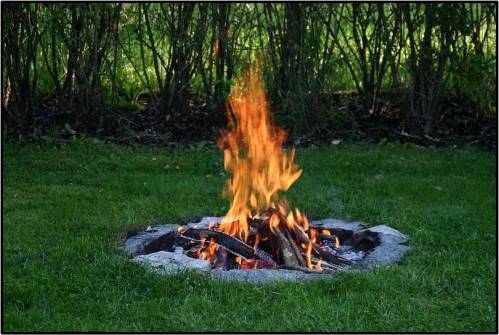
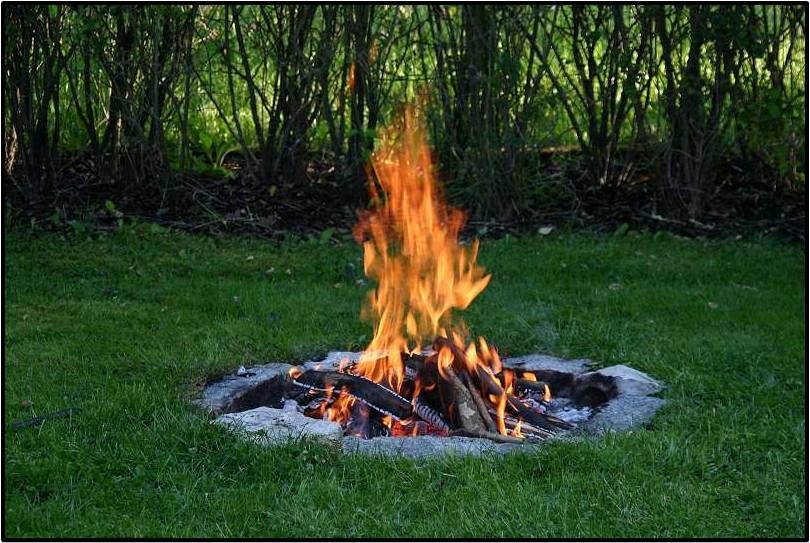
The day was fading into twilight, and I could feel the dew settle around us like a third party at this meeting. “What is your name, master?” I asked him. In a grassy spot near us I made a firepit, seeing and touching the rough gray stones, feeling their weight to make it real. Then I gathered a bundle of sticks and lit a fire, because now there was an evening chill in the air.
“I’ve been given many names. Some of them I even like,” he said in a wry tone, smiling at me.
Suddenly I knew his name. “Wadin Tohangu,” I said. “That’s an African name?”
He nodded.
“You’re an African Druid? Is there even such a thing?!”
He chuckled at my surprise. “I travel a lot. And you’re as much a Druid as I am.”
This wasn’t exactly the answer I expected. And I wondered what he meant.
“Yes, you may call me Wadin Tohangu. Call on me when you need help,” he said, “or if you wish to talk, as we are doing today.” He spoke English clearly and very well, but the way he said his name, with the slightest accent, set off echoes in my head. A familiar name. I knew it somehow. How?
“It’s a name you can use,” he said, as if in reply to my thoughts. He put his hands out toward the heat of the fire. “It’s as magical as you are.”
“Some days I don’t feel very magical,” I said, and paused. Time always seemed to pass differently in the grove, both slowly, and faster than I expected.
“That’s one key, of course. How you choose to feel,” Wadin answered. “Which things are your choices and which are simply given to you would be helpful to contemplate. We confuse those two quite often. And which to be grateful for, we misunderstand even more!”
“How much can we be grateful for?” I asked.
“That’s a question to answer by experimenting,” he replied. The pile of burning twigs and small branches shifted, settling. “Gratitude is another key.”
“Choices and gratitude,” I said, half to myself.
The dog started barking again somewhere in the distance. I swallowed a flash of annoyance. This was important — I wanted to hear everything Wadin was saying.
“Yes,” he said. “And a third point is attention, as we’ve seen.”
I looked at him.
“For you that dog is a most useful guide,” he said, laughing at my expression. “Why not find out his name, too?”
The darkening sky behind him showed several stars. He stood up. “Each moment offers what we need, both for itself, and for moving on to the next one. How else can time pass?” As I watched the firelight flicker on his face, he said, “Remember these things.”
I looked around at the grove one more time, and when I turned back, Wadin was gone. I stood up. Then I moved to touch the altar and said goodbye to the trees. The fire had died down to glowing embers. I stirred them with a stick, pushing them into the sand of the pit.
The dog was still barking. So I followed the sound back to my room, where it was coming in through a screened open window. I heard a car door slam at Jim’s place, and voices. Then everything was still again, except for crickets chirping in the dark. I turned on a light, and sat there quietly for few minutes, thinking about the experience, and writing it down in my journal.
/|\ /|\ /|\
Updated 23 April 2015
[Earth Mysteries 1 | 2 | 3 | 4 | 5 | 6 | 7]
“Everything in existence exists and functions on one of several planes of being or is composed of things from more than one plane acting together as a whole system. These planes are discrete, not continuous, and the passage of influence from one plane to another can take place only under conditions defined by the relationship of the planes involved.”*
One “map” of the planes I’ve found useful also features in many other spiritual teachings (mystical Christianity, Neo-Platonism, and some forms of Hinduism among them), including one I’ve followed for over thirty years, and identifies the physical universe as just one of several other planes. Besides the physical plane which we experience with our physical bodies, we experience the astral (see the third paragraph of Earth Mysteries — 4 of 7) or emotional plane (also sometimes called the etheric plane), the causal plane of memory, and the mental plane of thought. These last two also sometimes have different names — not surprising, considering they can seem more removed from immediate physical sensation and experience — and thus, understanding. Yet we exist in and experience these planes all the time.
Who’s doing the experiencing here? According to this way of perceiving things, that’s the real you, soul or spirit who wears these other bodies like clothes appropriate to different seasons and climates. So if we say “my soul,” who is talking? The experiencer or consciousness is soul, using the mind to think, the causal body to remember, the astral body to feel and imagine, and the physical body to experience physical reality.
While we can’t directly experience the astral world with our physical bodies, given the close proximity of the two planes, we certainly can feel the effects of strong emotions with our physical bodies and the “atmospheres” of places likewise charged with feeling. We’ve all walked into a room where there’s just been an argument, where religious observance has been performed over a sustained period of time, etc. We may pick up the vibe of such places — vibrating at a characteristic frequency, physics tells us, is what everything is doing already anyway — and if we’re inattentive we may internalize it, harmonize with it, and then not understand why we ourselves may feel tired, energized, angry, calm, etc. after spending some time there.
But our astral body is fully capable of experiencing the astral plane, and doing neat things like flying, changing form, and generally responding rapidly to thought, as it does in dreams. (Our physical bodies also respond to thought, but being of a slower vibrational rate, they more often take years or decades to show the effect. You’ve heard the expression “to worry yourself sick,” and that’s one of the more negative uses of focused and intense emotion — a kind of magic turned against ourselves.) The astral is the plane of imagination, where we may see things in “the mind’s eye,” or with “rose-colored glasses,” if we’re particularly optimistic, because pink or rose is one of the dominant colors there, just as green is characteristic (though by no means ubiquitous) in the physical world with its plants and chlorophyll.
The astral plane, according to many traditions, is where most of us transfer our consciousness after the death of our physical bodies. It is certainly possible to open our astral awareness (often without much control, which can make it dangerous without proper guides) with alcohol or drugs. Safer techniques include drumming and trance work, dance (like certain Dervish orders do, for instance), chant, mantra, ritual, physical exhaustion, daydreaming, meditation, creative visualization, and so on.
The causal plane of memory, like the astral plane, has its own rules and qualities, as does the mental plane. We say “that rings a bell” when we’re reminded of something, and each plane has characteristic sounds associated with it as well as colors. When we focus attention on these other planes while physically awake, we tend to tune out the physical world and its body, and are “lost in thought,” or “in another world.” In these and other instances, our languages preserve fragments of ancient wisdom our modern world tends to ignore, though we often intuitively know something of its truth in spite of the habitual skepticism of our current age.
Our contemporary default position of disbelief is no better than the habitual credulity of previous ages, when people believed all sorts of things which, while they may have been true of some other plane, weren’t usually true of this one. And in our turn toward the currently widespread religion of science, we’ve adopted its characteristic blind spots just as wholeheartedly. Ask scientists why the universe exists, for instance, and you can usually reduce them to speechlessness. It’s simply not a question science is equipped to answer.
The ability to manifest consciously the realities of one plane in another — and since we’re focused heavily on the physical world, for the sake of this discussion that usually means bringing something into physical form — is a supremely human accomplishment. Yes, animals are wired with instinct to reproduce their own kind, and in the case of birds and mammals, care for their young, but in addition to such instinctive drives, humans create cultures, with their languages, arts, crafts, technologies, rules, perspectives, and ways of living in the world.
In each of these posts on the seven Laws, I’ve barely scratched the surface. Each Law deserves repeated meditation, and in his book Greer makes several suggestions for experiencing the creative force of each Law and some of its far-reaching implications. Alone, the Laws can seem rather abstract, hard to apply to daily concerns and problems, too generalized to match the specifics of our individual situations. This itself is a powerful realization: to bring things into manifestation, we need the individual, the distinct and unique set of qualities, experiences, memories, talents, perspectives and strengths, in order to achieve what makes and keeps us human.
If it seems that the Laws swallow up individuality in statements about general tendencies, groups and patterns larger than one human life, it’s important to remember that it was humans who first noticed these principles, and humans can choose either to disregard them or to work consciously with them. Conscious and creative cooperation with the spiritual principles of existence is the fulfillment of humanity. Through such means, we can manifest what has not yet been seen or experienced or even imagined, in forms of power and beauty and usefulness, for others as well as for ourselves. That’s one way to repay the gifts we’ve been given.
/|\ /|\ /|\
*Greer, John Michael. Mystery Teachings from the Living Earth. Weiser, 2012.

 So here’s the opening scene of my drafty 2014 Nanowrimo nano-novel. Yes, that means it’s still reeeeeely small. But it’s getting bigger!



 A Druid Way