There was the briefest mention of fire in the previous post, but much more about the other three elements. Why?
Deborah Lipp notes in her The Way of Four Spellbook (Llewellyn, 2006):
Fire has always been set apart from the other elements, because Fire alone has no natural home on the earth; Air has the sky, Water the sea, and Earth the land, but only Fire stands apart from geography. In nature, Fire is the outsider; it is out of control, and it conforms to no known rules (pg. 10).
Now Lipp’s observation both captures the nature of fire and also feeds our stereotypes about impulse, passion, strong feeling. How often we may long — or fear — to be out of control, fearless, spontaneous! Who hasn’t felt like an outsider at some point? Why would the Australian-inspired Outback Steakhouse restaurant chain opt for its advertising slogan “No rules. Just right”? Because there is indeed a rightness to fire — it can only flame up where there’s something to burn, after all. And most of us have been storing combustible material for a long time. How else to explain our explosions, outbursts, flares of temper? Even our language about these things draws on fire for metaphor.
Following the theme from the last post, we can speak of a fire baptism. You’re wholly in it when that happens. The full experience, nothing held back.
John the Baptist, Jesus’s precursor, explains to those asking, “I indeed baptize you in water … but he that cometh after me is mightier than I … he shall baptize you in the Holy Spirit and in fire”. We sense the power in fire, of all the elements closest in so many ways to Spirit. It can purify, transform, forge and anneal. Its extreme heat can also scorch, char, consume and destroy. Each element transforms its own way. “We didn’t start the fire”, sings Billy Joel. “It was always burning since the world’s been turning”. But he goes on: “We didn’t start the fire. No, we didn’t light it, but we tried to fight it”. And sometimes we even try to “fight fire with fire”. Yet we also long for fire to kindle cold hearts, to heat a flagging will, to spark the spirit deepest in us. We yearn to be fire.
“O! for a muse of fire”, cries Shakespeare’s Chorus in the first line of Henry V, “that would ascend the brightest heaven of invention”. We long to blaze, because we feel in fire something native and free. We are both it and other, too, as with all the elements. “Time is the substance from which I am made. Time is a river which carries me along, but I am the river; it is a tiger that devours me, but I am the tiger; it is a fire that consumes me, but I am the fire”, says Jose Luis Borges. The elements are natural sacraments, folds and garments for Spirit all around us. For fire, we light candles in so many traditions, for so many reasons, the flame cheering to the eye and heart.
I both am and am not fire. Self and other: the quest of our days, the distinction we cherish and also long to cast away. Pagan, Christian, Buddhist, Muslim, Jew, atheist, shaman, through all these experiences and intuitions we still ask ourselves, each other and the world: “What makes a good burn?”
/|\ /|\ /|\
Maybe the purest ritual Druids and Christians might share is one which seeks not to fill our ears with answers, but that gives us space and silence to listen to and ponder the questions. In some ways, the long, slow burn of Spirit in us is fire in its most potent form of all.
/|\ /|\ /|\
Beltane approaches, that festival of fire. The Edinburgh-based Beltane Fire Society celebrates 30 years this year of a dramatic festival of thousands, from 8:00 pm to 1:30 am. Here’s the “Drums of Beltane” subpage of the Society’s website. As the page notes,
Beltane may be known as a fire festival, but it may as well be considered to be a drum festival too. Drums are the beating heart of Beltane that create the rhythm of the festival, drive the procession forward, and soundtrack the changing seasons. They have been an integral part of Beltane since our tradition was first re-imagined on Calton Hill in 1988.
Looking for a fix of Beltane energy to get you launched? Here’s a video of the Drum Club which will be among the groups performing this year for the event. Just the first five minutes will give you a fine taste of Beltane fire in sound form. We can spark from anything, but sound and rhythm are powerful keys.
[This post begins a series of explorations of nine themes that can serve as sources of ritual and common ground for Druids and Christians. I’m setting forth on such a series for two reasons. First, reader interest spiked, with visitors from over a dozen countries in the 24 hours after “Jesus and Druidry, Part 3” was posted. Second, I include myself among the interested.
The great majority of us have Christian friends, relatives or co-workers. Also, many of us know Biblical stories and images, and count them as part of our “wisdom-store”. Some of us have also experienced the more toxic forms of institutional religion but nonetheless have managed to hold on to a love for the Light in its Christian garb.]
/|\ /|\ /|\
“Image is more transformational than doctrine”.
As I started to draft a list of Druid-Christian themes, that message came through sharply. How to make generous use of imagery in helping to energize the transformations Druidry — and Christianity — can provide? John Muir writes, “The power of imagination makes us infinite”. I’d amend that: the potential in the wise use of imagination can reveal our limitlessness. Not as snappy, but more accurate, for me.
First on my list of image-themes is “trees”. As a primary Druid focus, trees also link to Christianity. One obvious example appears in the book of Genesis with its two trees in Eden, the tree of knowledge* and the tree of life. If Druids are tree-knowers and seekers of tree-wisdom, these two trees have something to teach.
arbor scientiae — tree of knowledge
One year as I read Genesis with my high school students in freshman English, a student quipped that the real problem was one of sequence. Adam and Eve simply ate from the wrong tree first. “What are we supposed to take away from this? Go for immortality, thenknowledge!” (The other order may leave you wise but dead.)
Wit can take you surprisingly far at times. Perhaps the serpent as well was mistaken in the advice he gave. Why no mention of the other tree? Was immortality in fact already an option at that point? After all, God never banned that second tree. Or did we need it, even then? Was that an early mystery? Isn’t life inherent in all we are and experience? We’ve all sensed the undying in us, even as the physical body faces all the many challenges that will one day wear it out, even as our beloved Druid trees must eventually fall.
We can also see in the two trees a kind of psychic split, perhaps — a split in us, in our consciousness. But together the two name a wholeness that Druidry and other traditions point us towards. The cycle of birth and death reveals an underlying energy or vitality — the thing that makes worlds possible, that greens (and reddens) them with life, with chlorophyll and hemoglobin. “From the One come Two; from the Two, Three; from the Three, the Ten Thousand Things”, says the Tao Te Ching.
A persistent Christian legend has it that the wood for the cross of the Crucifixion originates from the Tree of Knowledge, or in some variants of the story, from a tree that grew from seed that Adam’s third son Seth planted in his father’s corpse. A full circle of ritual story here, or better, a spiral: it’s a tree that stands at the center of the Christian drama. Literally, wood serving as the stage for the unfolding of the human experience of the loss of innocence that comes with maturation, and the return, for those willing to make the effort to learn and grow and change.
The fruit of the tree of knowledge is, after all, desirable, because it holds the power “to make one wise”, as the serpent tells Eve. Life (the Hebrew meaning of Eve) tells us as much.
Why not then a Druidic-Christian “Mass of the Holy Trees”?
“Tree and leaf, breath and fruit, wisdom and life — all these come from you …”
Bring branches and leaves, images of both cross and spiral, Brighid’s cross serving well for a combination of these. A cross — the quartered world of directions and physical energies, the elements, the cycle of death and life. Spiral — an image of eternity, of rebirth and continuity, the cycle continuing.
But wait … there’s more.
The book of Revelation gives us the image of heaven or eternity in the holy city, foursquare (four again!) and whole. And through it runs
… a river of the water of life, as clear as crystal, flowing from the throne of God and of the Lamb, down the middle of the main street of the city. On either side of the river stood a tree of life, producing twelve kinds of fruit and yielding a fresh crop for each month. And the leaves of the tree are for the healing of the nations (Rev. 22:1-2).
“The leaves of the tree are for the healing of the nations”: the tree of knowledge has merged with the tree of life — or rather there is no difference between them. All the healing we have sought in knowledge now issues from a double(d) tree — one on “both sides” of the river. And it is fruitful in every month, a cornucopia, a message that each month has its life and healing energy, freely given, whatever the apparent season. In the middle of a city, a human and humanly-shaped place, grows life in its most potent imaginal form as Tree, the world-tree, a worldwide image and cluster of stories.
Here are powerful images to unite Christian and Druid observance and practice. A second Druid-Christian theme is up next.
*Tree of Knowledge: the illustration comes from Ramon Llull’sArbre de Ciencia or Tree of Knowledge. Llull, aka Raymond Lully (1232-1315), was a renowned medieval writer and thinker, who studied both Latin and Arabic science and mathematics.
I want to do some thinking out loud here. Nothing new, since I do it frequently. But it’s an experiment with a more specific kind of thinking I share less often here, because for many people, negative experiences with Christianity raise painful associations and memories that make even a mention of Jesus or the long, rich, varied and potentially very useful Christian tradition anathema to them. So if you’re still deeply allergic and over-sensitized to some of the more toxic forms of religion, well, here’s your red flag. But if you choose to go forward, simply treat the following as another kind of practice, like tai chi or dancing when no one’s watching, or waving at the moon.
Try it out for what it’s worth, without preconceptions. If you need a prod, here’s one: “I can’t dance” doesn’t cut it. Everybody moves, and everybody can move rhythmically. That’s all that’s needed. The rest is mere practice and polish.
As a Druid I feel almost a compulsion to follow wherever the light leads. I’ve rarely been disappointed, which is why I keep doing it.
/|\ /|\ /|\
One legacy of my Christian upbringing is a fascination with “wisdom from the borders.” Unlike my more fundamentalist cousins, my mother was drawn to Christian Science with its focus on healing, and my World War II vet father was a member of the “God made the world, I farm a small piece of it, I’m grateful for its seasons and gifts, and that’s already enough for me” school of deism. From that initial gift of my parents’ openness to possibility, I learned and grew the most, before I took other paths, through insights from the periphery, or even outside the official “party line,” of Evangelical Christianity, or “EC.”
EC is, after all, just one sub-branch of one faith, but it’s a sub-branch that sometimes gets a bad name for its often unreflective adherence to dogma, especially in the face of good counter-evidence. Because of that, it also gets a lot of press from agnostic and atheist strands in contemporary thought and journalism. One of the regrettable but understandable consequences of the debate is that many people write off a whole religion because one or two particular flavors of it that they happen to know or have experienced just make them gag. It’s a “baby with the bathwater” thang.
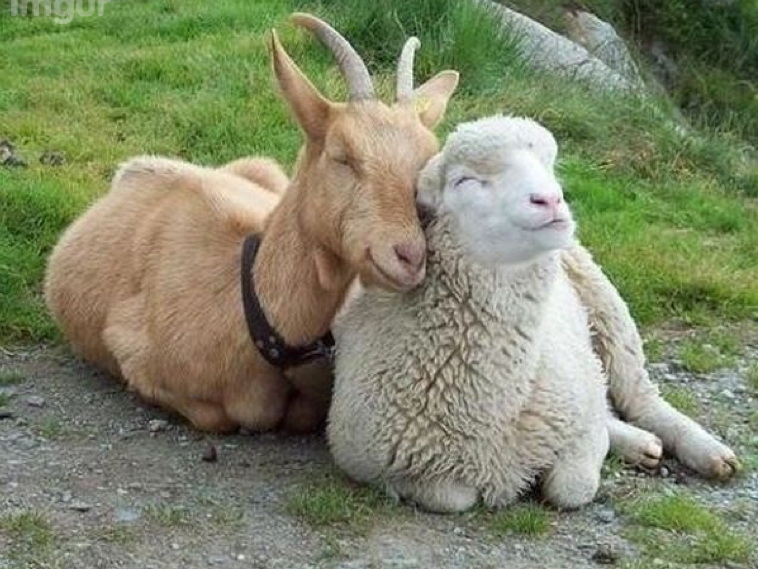
One of the EC dogmas that bothered me the most, from about the age of 8 or 9 onward, and that has set many other people’s teeth on edge as well, is what’s more recently been called “damnationism” — the apparent and deeply problematic need to condemn whole swaths of humanity to eternal torment because they don’t happen to believe the right things required by one stream of orthodoxy, all so we can hang with the sheep and not with the goats for the rest of time. Finally, some writers are even starting to call that out for what it is: a blasphemous perversion of an original truth.**
Hell, MI, 48169 — an actual place, population approx. 260, located 15 miles NW of Ann Arbor.
One of my favorite writers within the universalist stream of Christianity, which doesn’t clutch a self-righteous need to condemn everyone else but Christians to hell, is Thomas Talbott. Universalism can be conveniently summed up in just two words: love wins.
Talbott’s insights do come cloaked in evangelical language, because that’s his particular upbringing. But he looks far beyond the surface, like I hope you will, and like most people learn to do when they realize either a pretty or ugly face is often the least interesting and important part of a person.
Here’s an excerpt I want to work with, from Talbott’s fine book* The Inescapable Love of God:
In fact, our bad choices almost never get us what we really want; this is part of what makes them bad, and also one reason why God is able to bring redemptive good out of them. When we make a mess of our lives and our misery becomes more and more unbearable, the hell we thereby create for ourselves will in the end resolve the very ambiguity and shatter the very illusions that made the bad choices possible in the first place. That is how God works with us as created rational agents. He permits us to choose freely in the ambiguous contexts in which we first emerge as self-aware beings, and he then requires us to learn from experience the hard lessons we sometimes need to learn. So in that way, the consequences of our free choices, both the good ones and the bad ones, are a source of revelation; they reveal sooner or later — in the next life, if not in this one — both the horror of separation from God and the bliss of union with him. And that is why the end is foreordained: all paths finally lead to the same destination, the end is reconciliation, though some are longer, windier, and a lot more painful than others.
When I read sound insights from the Wise working in other traditions that may ring notes that jar a little, I like to try out alternate versions, to see how they work when clothed in other terminology. How much of the wisdom survives the change? How much of the difficulty is merely semantics? Here are Talbott’s words again, re-garbed in non-theist language:
In fact, our bad choices almost never get us what we really want; this is part of what makes them bad for us, and also one reason why our subsequent experiences are able to bring good out of them. When we make a mess of our lives and our misery becomes more and more unbearable, the hell we thereby create for ourselves can eventually resolve the very ambiguity and shatter the very illusions that made the bad choices possible in the first place. That is how the patterns of the universe often respond to us as rational agents. They permit us to choose freely in the ambiguous contexts in which we first emerge as self-aware beings, and then let us learn from experience the hard lessons we sometimes need to learn in order to gain wisdom. So in that way, the consequences of our free choices, both the good ones and the bad ones, are a potential source of growth and discovery; they reveal both the suffering of separation from our own highest good and the bliss of heeding its shaping pattern.
That’s interesting to me. How much did I change? Well, “God” gets replaced with patterns that inhere in lived experience, and “redemption” becomes growth and increased insight. The universe becomes aware of itself in us and in other beings. Is that “true”? Well, let’s be Druidic about it and test it, for years if necessary, rather than bothering with any belief or disbelief about it before we even have a foundation of experience to reflect on. Whether the patterns of the universe tend towards love is an experiential question, and really not a matter that mere belief can adequately resolve either way. And for how many other questions like it is this also true?
These insights issue from what used to be called the “perennial tradition,” or the philosophia perennis, a well of wisdom common to the depths of all valid traditions, part of the heritage of humanity rather than the exclusive possession of any one culture or tradition. It’s also part of folk wisdom in the West that emerges in sayings like “what goes around comes around” and “what you do comes back to you.” The added insight here points to the value of “bad” experiences, just as useful — or misleading! — as the good ones. For ease and comfort can mislead us about the pain and suffering in the world, just as our own pain and suffering can blind us to the beauty and wonder and possibility around us. From all I’ve seen, life, fortunately, is bigger than either.
/|\ /|\ /|\
One of the streams from the early days of the Druid revival and the writings of Iolo Morgannwg*** runs with a Welsh version of such wisdom, offering a vision of a cosmos in which all things move toward growth and increasing consciousness, over countless eons, through every imaginable form, and in every imaginable experience. In this conception, the universe is a flow of energies, and its current sweeps us/we ride it from Annwn (ah-noon) and Abred (ah-bred) to Gwynfyd (gwin-vid) and ultimately on to Ceugant (kye-gahnt), a kind of infinity. Eventually we all experience everything.
Unlike the Christian sense of redemption or heaven, you’ll note, these are simply points along the flow. Another way to see it: the mouth of the river as it enters the sea is not superior to its source in the springs on a distant hillside. All is flow. Things may slow down or speed up as they move along the river, adjusting to the current, to the shore, and to each other.
/|\ /|\ /|\
I had the privilege this last Saturday to take part in an open discussion on the topic “Have You Had a Spiritual Experience?” Those who attended were mostly older than me. Graying or white hair framed almost every face as I looked around the circle of the dozen or so of us who attended. But when the question arose about how many of us kept to some kind of spiritual practice, every hand went up. I found this wonderfully inspiring.
The point that everyone wanted to tackle: what’s next? How do we work with spiritual truths, with the patterns of life we’ve all encountered, and continue to grow in wisdom and love?
Those questions also continue to drive me on my own path and underlie my explorations on this blog. Thank you to all who read this blog for joining me for a few minutes each week and for considering these things, too.
/|\ /|\ /|\
*Talbott, Thomas. The Inescapable Love of God. 2nd ed. Cascade Books, 2014.
**Favager, David. Hell to Pay?: The Blasphemous Absurdity of Damnationism. Amazon Digital/Kindle, 2015.
***Iolo Morgannwg — from the foreword to the Sacred Text Archive to Morgannwg’s collection Barddas:
However, this is one of those visionary texts which is worth reading for its own merits, irrespective of whether it is ‘genuine’ or not. Taken at face value, the Barddas remains a fascinating text. It has resonances with the Upanishads, Kabbalah, and Freemasonry. The Bardic alphabet presented in the ‘Symbol’ section is completely invented, based on Runic and Ogham, and has utility as a magical alphabet. However it is about as genuine as the alphabets of J.R.R. Tolkien. The ‘Theology’ section appears to be based on Iolo’s peculiar Christian views (he described himself as a Unitarian Quaker). ‘Theology’ also contains a great number of Triads, some of which may be from authentic ancient Bardic lore. The ‘Wisdom’ section has a great deal of mythopoetic information, some of which is authentic, some not. The Barddas is great reading if you are at all interested in the ancient Druids, as long as you keep in mind the background of its creation.
With this post, A Druid Way marks its 4th anniversary — I started this blog on October 7, 2011.
I’m also committing to at least a weekly post each Wednesday. A hearty thank-you to you, readers of A Druid Way, for your encouragement and support over the past months and years!
This post and the next one pick up the theme of Arthurian myth and legend from the previous one. The “Matter of Britain” as it’s often called is an inexhaustible well of inspiration, of course. This time, however, I want to transition from King Arthur to his nephew Gawain and the Green Knight (and the Middle English poem by the same name), to the mysterious Lady that Gawain also encounters in between his meetings with her husband Bertilak, and more largely to the peculiar and delicious Medieval blend of Paganism and Christianity that surfaces in their story.
So what do we do until Arthur returns?
In the Arthurian peace and flowering of Britain which underlies much of the initial formation of the legend, the focus shifts from Arthur to his court, and more particularly to his knights and ladies, who leave Camelot to set off on their own adventures. A pattern to consider: first, achievement; but then, further exploration and spiritual challenge. Or the opposite — after a few iterations, it amounts to the same thing.
Round Table and vision of the Grail, from an illustrated manuscript, ca 1470, by Evrard d’Espinques.
After all, once Arthur wins through to his throne, marries, and begins to assemble his court, he himself can seem less interesting (at least until time whirls round again to the Battle of Camlann, his final and fatal engagement with his bastard son Mordred). So singers and storytellers started to look for adventure elsewhere, with knights inspired by Arthur’s example and by the fellowship of the Round Table. King and Queen on the throne, or knight on a noble/ hopeless/ mysterious/ romantic quest — it’s easy to see where the greatest dramatic potential lies.
The Medieval poem Sir Gawain and the Green Knight sets forth one version of the story in 600-year-old English. The language is intermittently still quite comprehensible to us moderns, if you make some allowances for spelling (I’ve done very minimal editing):
Astrid Berges Frisbey as an archetypical young Guinevere in the upcoming (2016) film Knights of the Round Table: King Arthur.
“This kyng lay at Camylot upon Krystmasse” and “was cummen with knyghtes into the halle.” And there Guinevere rules beside him as queen, a Guinevere as yet untouched by the scandal of any affair with Lancelot, “full gay, graythed [arrayed] in the midst” of the noble gathering. And a more lovely lady, “sooth [truly] might no man say.” Here then are the archetypes, before they decline into stereotypes. Here are the originals, magical king and beautiful queen. Part of their appeal is to our own psyches, to the beauty and power we instinctively know both genders possess — or could possess, if only …
The story setting is the three-part holiday of Christmas — New Year’s — Epiphany, the ancient tradition — and ultimate source of the song — of the Twelve Days of Christmas. Midwinter, birth of the Son, rebirth of the sun, the new year at hand. The Court’s right in the middle of its fortnight of feasting. Shortly, it’s New Year’s Day. And as such gatherings and festivals and holidays so often do, this revel has already begun to spin off its own local customs. After all, when does your family open presents on a gift-giving holiday? And what rituals have you perhaps built around it? Or if not you, a relative or friend?
Not surprisingly, in Camelot it’s Arthur himself who starts it, ritualizing the festivities. “The kyng wold not ete til al were served.” It’s a gesture wholly in keeping with the holiday season of generosity and joy. And the king extends the ceremonial atmosphere still further, also refusing to eat before he hears a story: “he wold never ete upon such a dere [dear, special] day ere him devysed were of sum adventurus thyng an uncouthe tale …” Or until someone challenges one of his knights “to joyne with him in joustyng, in jeopardy to lay … life for life …”
And things Medieval and magical being what they are, if you’re Arthur — if you recognize and live from the throne of your spiritual sovereignty — sometimes the “uncouthe tales,” marvelous stories previously unknown — come to you.
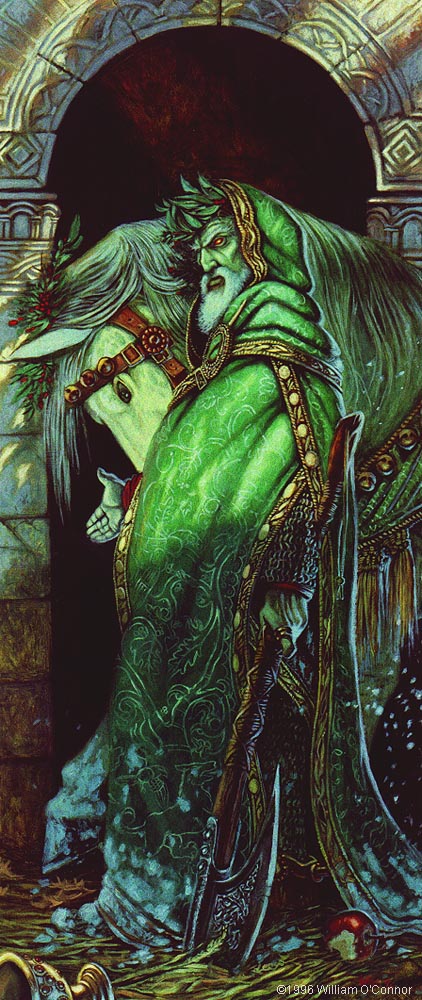
The Green Knight, William O’Connor, 1996
Right in the midst, then, of all the noble knights and fair ladies, heaping platters and heavily laden tables, sprightly servants and bold banners, talk and revelry, the Green Knight suddenly barges in on horseback. For a moment he just sits his mount, framed by the main door, towering over everyone. The perfect Medieval photo op.
Huge and red-eyed and green is he indeed: “for wonder of his hue men had.” Likewise “his strayt cote” and “his hood bothe” and on his legs “hose of that same grene.” A marvel! The hair on his head, “the barres of his belt and other blythe stones,” even the steed he rides, “a grene hors grete and thikke” — everything’s green! In one hand he holds a branch of holly; in the other, an enormous axe.
Then he spurs into the great hall. “Where’s the governor of this gang?” he demands, haughtily. “To knightes he cast his eye.” For an instant — no surprise — silence greets him. “Each mon had marvel what it might mean” that man and horse both shone “grene as the grass, and grener it seemed.”
Green Man, Bamberg Cathedral, Bamberg, Germany, ca 1300s
Green can be unseely — Northern dialect for “unlucky, unholy.” Corpses and cheeses rot to green, metals like bronze corrode, swamps give off their ghostly phosphorence, moss and weed, creeping vines and algae, all overtake things each in their green fashion. Even the Devil himself gets rendered in green in more than one Medieval painting.
With modern commerce and ecology, green is almost wholly a good thing — not so in Medieval times. It represented a mixed bag of lust and youth (we can still be green with envy, too; and an untried youth is still sometimes called a “greenhorn”), nature and fertility, and early versions of the Green Man beloved of Pagans. Another post on this blog, about Beltane, also treats of greenness in some detail.
[Most clearly, perhaps, we see and hear and feel this enchanting but deeply ambiguous green in Dylan Thomas‘s wonderfully Bardic poem “Fern Hill” : “Now as I was young and easy under the apple boughs/About the lilting house and happy as the grass was green” and later “I was green and carefree” and later still “And green and golden I was huntsman and herdsman” and “it was air/And playing, lovely and watery/And fire green as grass” and then nearly done “And nothing I cared, at my sky blue trades, that time allows/In all his tuneful turning so few and such morning songs/Before the children green and golden/Follow him out of grace” and last of all “Oh as I was young and easy in the mercy of his means,/Time held me green and dying/Though I sang in my chains like the sea.” A poem that doesn’t merely describe but evokes … Follow the link to the poem and read it aloud.]
To return to the Medieval poem: Arthur answers the arrogant Knight with courtesy — the Medieval cortaysye — bidding him join the feast and tell his errand later. It’s an age-old gesture of hospitality, one that dates back to Homer, the traditional and trusting host’s welcome to a stranger. Eat and drink first, and only then speak your will, or recount your story.
Still haughty, the Green Knight declares his nature means he has no intention of lingering. I come, he declares, because of the fame of Arthur’s realm: castle and court are called “the worthyest of the worldes kynde.” The axe I carry, he announces, is no threat. Look to the holly sprig. Be sure “bi the braunch I bere here that I pas in peace.” If I wished for war, I’ld have come fully armed. “But if thou be bold as all folk tellen, thou wil grant me goodly the game that I ask bi ryght.” A Christmas challenge: “I crave in this court a Crystemas gomen.”
Besides, if he were spoiling for a bout, he’d win easily, he boasts. All he sees on the benches around the hall are “berdless children.” But if anyone’s got the guts, “leap lightly to me and latch this weapon. I schall give him of my gifte this axe, to hondele as he likes. I quit-clayme it for ever — keep it as his own. And I shall stond him a stroke” and promise “the doom to deal him an other … and yet give him a respite, a twelve-month and a day.” And again we’re into magical territory, the “year and a day” of testing and challenge, mystery — and mastery — and cyclic completion.
The Knight taunts the company further, and when no one rises to accept the challenge, Arthur himself reaches for the axe. But his nephew Gawain intercedes and claims the right, pointing out that with warriors in the Court to uphold its honor and reputation, the king needn’t lower himself to accept such a challenge. Gawain reasons further with him: besides, as your nephew, if I die, the loss is less.
To make short work of the next few stanzas, Gawain readies the axe, the knight stands with neck bared to receive the keen edge, and Gawain gives him a fierce blow that lops off that green head. Through fat and flesh, the blade bites the floor. Blood spatters those nearest, and they kick at the head as it rolls past the benches.
The Knight, however, strides forward undaunted, retrieves his head, and turns back to his horse. “The brydel he cachches, steps into stirrup and strydes aloft, and his hede by the here in his hondes holdes.” And he speaks one last time: “On New Year’s morn, Gawain, come to the Green Chapel, I charge thee, to receive such a dint as thou hast dealt and now deserve …” And then, as British poet Simon Armitage* renders it in his fluent and lively translation, “So come, or be called a coward forever” (pg. 51)!
Knight, horse and now chapel — green and Christian mixed. The whole game’s unseely! The Knight departs, more food, drink and dancing displace everyone’s fears — except Gawain’s.
Thus the original anonymous Middle English poet closes this first of his four sections (here again is Armitage’s translation*): “But mind your mood, Gawain, keep blacker thoughts at bay, or lose this lethal game you’ve promised you will play” (pg. 53).
*Armitage, Simon. Sir Gawain and the Green Knight. New York: W. W. Norton and Company, 2007. (There are other good translations — notably one by J. R. R. Tolkien. But I like this one, partly because my high school seniors liked it when we read it in our British Lit. class, and also because it provides the Middle English text on the facing page, for linguistic nerds like me who enjoy fine language for its own sake. You can find it used and in paperback. Or get thee hence to thy local library.)
It’s almost here: Halloween, All Hallows Eve, Samhain/Samhuinn, Dia del los Muertos, Day of the Dead. Whatever you call it, it’s one of the most unusual festivals in the calendar. In this post I want to take a different tack, exploring history at least somewhat removed from the usual Christian-Pagan fireworks that continue to pop off annually around this time. Because the Druid-pleasing answer* to “Is it Christian?” and “Is it Pagan?” is “Yes.” What matters more, I hope, is what that can mean for us today.
A recent (Tues., Oct 28) issue of the U.K.’s Guardian newspaper features an article on Halloween by British historian Ronald Hutton, who’s well known in Druid circles both for the quality and thorough documentation of his historical work and also his interest in Druidry. Among many other points, Hutton addresses the impression, widespread in Great Britain, that Halloween’s an import from the U.S. It’s not, of course, being instead as English as Monty Python and Earl Grey (and later, as Irish as the Famine, and Bailey’s Irish Cream). Hutton’s observations suggest a connection I’d like to make in this post, in keeping with this time of year. Hence my title, which will become clear in a moment. Just bear with me as I set the stage.
November, rather unimaginatively named “Ninth Month” (Latin novem), was called in Anglo-Saxon Blodmonath, the “blood month” — not for any “evil, nasty and occult” reasons beloved of today’s rabble-rousers, but for the simple fact this was the month for the slaughter of animals and preservation of meat for the coming season of darkness and cold.
Hutton observes that the ancestor to modern Halloween:
… was one of the greatest religious festivals of the ancient northern pagan year, and the obvious question is what rites were celebrated then.
The answer to that is that we have virtually no idea, because northern European pagans were illiterate, and no record remains of their ceremonies. The Anglo-Saxon name for the feast comes down to an agricultural reality, the need to slaughter the surplus livestock at this time and salt down their meat, because they could not be fed through the winter. A Christian monk, Bede, commented that the animals were dedicated to the gods when they were killed, but he did not appear to know how (and they would still have been eaten by people).
Hutton proceeds to examine how we can nevertheless reconstruct something of that time and its practices through careful research. As a Janus-faced holiday, Halloween marked the fullness and completion of the harvest and return home of warriors and travelers — a time to celebrate. It also marked the coming of the hardest season — winter: cold, dark, often miserable and hungry, and sometimes fatal. People then measured their ages not in years but in winters — how many you’d survived. Hutton eloquently conveys all this — do read his article if you have time.
And because so much of North America bears the imprint of English culture, I want to peer at one particular autumn, and the Hallowed Evening that year, in England 948 years ago. It’s 1066, a good year at the outset, as historian David Howarth paints it** in his wonderfully readable 1066: The Year of the Conquest. A year, strangely enough, both like and unlike our own experience so many generations later in 2014:
It was not a bad life to be English when the year began: it was the kind of life that many modern people vainly envy. For the most part, it was lived in little villages, and it was almost completely self-sufficient and self-supporting; the only things most villages had to buy or barter were salt and iron. Of course it was a life of endless labour, as any simple life must be, but the labour was rewarded: there was plenty to eat and drink, and plenty of space, and plenty of virgin land for ambitious people to clear and cultivate. And of course the life had sudden alarms and dangers, as human life has had in every age, but they were less frequent than they had ever been: old men remembered the ravages of marauding armies, but for two generations the land had been at peace. Peace had made it prosperous; taxes had been reduced; people had a chance to be a little richer than their forefathers. Even the weather was improving. For a long time, England had been wetter and colder than it normally is, but it was entering a phase which lasted two centuries when the summers were unusually warm and sunny and the winters mild. Crops flourished, and men and cattle throve. Most of the English were still very poor, but most of the comforts they lacked were things they had never heard of.
Howarth’s account continues, vivid in detail; he chooses the small town of Little Horstede near Hastings that dates from Saxon times for his focus, to examine the immediate and later impact of the Norman Conquest.
Harold in the Bayeux tapesty, with a hawk
By early autumn of the year, things still looked promising for the English. True, their king Harold Godwinson, new to the throne just that past January, faced a dispute with the Norman duke William over the succession after the late king Edward passed. But Harold was Edward’s brother-in-law, he apparently had the late king’s deathbed promise of the throne, he was unanimously elected by the Witan (the English council of royal advisers), and he was a crowned and fully invested king as far as the English were concerned.
He was also proving to be a competent leader and warrior. When an invading army of some 7000*** Norwegians under Harald Hardrada and Harold’s exiled brother Tostig landed in the Northeast of England, Harold rode north in force, covering the 180 miles between London and Yorkshire in just four days, meeting and defeating the Norwegians on September 25 in the Battle of Stamfordbridge. The peace that the English had enjoyed was tested, but as word spread of this English victory, you can imagine the relief and the sense that all might well continue as it had for decades now. The rich harvest of 1066 went forward, and plans could proceed for the annual All Hallows celebration.
Swithun (d. 862), bishop, later saint, of Winchester
England was by this time thoroughly Christian (see St. Swithun, left), though folk memories of older practices doubtless persisted, mixed with a fair helping of legend and fantasy and uneven religious instruction from the local priests. The Christian retrofitting of Pagan holidays, holy sites and practices is well documented, and hardly unique to Christianity — the same thing occurs worldwide as religions encounter each other and strive for dominance or co-exist to varying degrees. To name just a few examples, take for instance Roman polytheism and many faiths in the lands of the ancient Empire, with Roman priests adding one more deity statue to the crowd for each new god they encountered, including the current emperor of course (with most peoples acquiescing happily except for those odd Jewish monotheists and their bizarre prohibition against such images!); Buddhism and the emergence of the Bon faith in Tibet; Shinto and Buddhism in Japan; and mutual influence between Islam, Sufism, and older practices like the Yazidi faith in the Middle East.
In his Guardian article on Halloween, Hutton notes:
All Saints Day, Oswiecim, Poland
It is commonly asserted that the feast was the pagan festival of the dead. In reality feasts to commemorate the dead, where they can be found in ancient Europe, were celebrated by both pagans and early Christians, between March and May, as part of a spring cleaning to close off grieving and go forth into the new summer. On the other hand, the medieval Catholic church did gradually institute a mighty festival of the dead at this time of year, designating 1 November as the feast of All Saints or All Hallows, initially in honour of the early Christian martyrs, and 2 November as All Souls, on which people could pray for their dead friends and relatives. This was associated with the new doctrine of purgatory, by which most people went not straight to hell or heaven but a place of suffering between, where their sins were purged to fit them for heaven. It was also believed that the prayers of the living could lighten and shorten their trials, as could the intercession of saints (which is why it was good to have all of those at hand). The two new Christian feasts were, however, only developed between the ninth and the twelfth centuries, and started in Germanic not Celtic lands.
Yet all was not peace in England. The triumph that was the Battle of Stamfordbridge proved short-lived. Disturbing rumors kept arriving of William assembling an army of invasion across the English Channel on the shores of Normandy, in fact ever since January when Harold received the crown. The English king began preparations for defense. Yet as the days and months passed, and the good weather for such crossings steadily diminished as all of September and then early October came and went without incident, most people began to relax. England would enjoy a breathing space for this winter at least. Whatever might happen next spring, this late in the year no one chanced the storms, fog and rough water, least of all a large army that would have to arrive by boat.
Yet William and his invasion force did just that. After weeks of bad weather, the wind finally shifted to favor the Norman leader, and he and his men set sail on September 27. When word came to the English king of the Norman landing, with ships and troops on the southern shore of England, king Harold and company rode back south, already weary from one major battle, right into another.
Careful excavation, study of contemporary accounts, and site visits mean that resources like the Eyewitness to History website can give us a portrait like this:
Harold rushed his army south and planted his battle standards atop a knoll some five miles from Hastings. During the early morning of the next day, October 14, Harold’s army watched as a long column of Norman warriors marched to the base of the hill and formed a battle line. Separated by a few hundred yards, the lines of the two armies traded taunts and insults. At a signal, the Norman archers took their position at the front of the line. The English at the top of the hill responded by raising their shields above their heads forming a shield-wall to protect them from the rain of arrows. The battle was joined.
Contemporary accounts record how the two armies fought all day, until Harold was dispatched with an arrow through one eye. Shortly after that, the disabled king was cut down by Norman warriors, and England’s fate turned.
Years later the Bayeux Tapestry commemorated a version of the event. But of course at the time there was no Twitter feed, no broadcast of news minutes after it happened by correspondents on the scene. No Fox News and CNN to digest and sort through the implications according to the politics of the day. Word of the battle and what it might mean would take weeks to spread, rippling northward from the coast where the first battles took place. For much of England, the Hallowed Evening, the All Saints Day of 1066 came and went without change.
At this distance, and without knowing the details, most of us may naturally have the impression Hastings was decisive. King Harold dead, battle won, QED. From there, we assume, William advanced toward London, accepted the grudging fealty of a defeated people, and after maybe quelling a few sparks of resistance or rebellion, took firm control of the throne and nation and ruled for the next 21 years, until his death in 1087.
Except not. True, William was crowned king in Westminster on Christmas Day 1066. But the following years brought their own troubles for the Norman king. Here’s the Wikipedia version (accessed 10/30/14; endnotes deleted):
Despite the submission of the English nobles, resistance continued for several years. William left control of England in the hands of his half-brother Odo and one of his closest supporters, William FitzOsbern.In 1067 rebels in Kent launched an unsuccessful attack on Dover Castle in combination with Eustace II of Boulogne. The Shropshire landowner Eadric the Wild, in alliance with the Welsh rulers of Gwynedd and Powys, raised a revolt in western Mercia, fighting Norman forces based in Hereford. These events forced William to return to England at the end of 1067. In 1068 William besieged rebels in Exeter, including Harold’s mother Gytha, and after suffering heavy losses managed to negotiate the town’s surrender. In May, William’s wife Matilda was crowned queen at Westminster, an important symbol of William’s growing international stature. Later in the year Edwin and Morcar raised a revolt in Mercia with Welsh assistance, while Gospatric, the newly appointed Earl of Northumbria, led a rising in Northumbria, which had not yet been occupied by the Normans. These rebellions rapidly collapsed as William moved against them, building castles and installing garrisons as he had already done in the south. Edwin and Morcar again submitted, while Gospatric fled to Scotland, as did Edgar the Ætheling and his family, who may have been involved in these revolts. Meanwhile Harold’s sons, who had taken refuge in Ireland, raided Somerset, Devon and Cornwall from the sea.
Pacification, oddly enough, usually involves violence.
Ideologies and politics trouble us this Halloween just as they did 948 years ago, on a misty green island off the continent of western Europe.
Centuries later, as blended Norman and English cultures formed a new unity, the Protestant Reformation which swept much of Great Britain blotted out the doctrine of purgatory and the practice of prayer for saintly intercession. But as Hutton notes, Halloween “survived in its old form in Ireland, both as the Catholic feast of saints and souls and a great seasonal festival, and massive Irish emigration to America in the 19th century took it over there.”
In fact, having made this a citation-heavy post anyway, I’ll give Hutton nearly the last word, which is also his last word in his article:
In the 20th century [Halloween] developed into a national festivity for Americans, retaining the old custom of dressing up to mock powers of dark, cold and death, and a transforming one by which poor people went door to door to beg for food for a feast of their own, morphing again into the children’s one of trick or treat. By the 1980s this was causing some American evangelical Christians to condemn the festival as a glorification of the powers of evil (thus missing all its historical associations), and both the celebrations and condemnations have spilled over to Britain.
On the whole, though, the ancient feast of Winter’s Eve has regained its ancient character, as a dual time of fun and festivity, and of confrontation of the fears and discomforts inherent in life, and embodied especially in northern latitudes by the season of cold and dark.
There’s a worthwhile Conquest. “Is it Pagan?” “Is it Christian?” Let’s ask “Is it holy?”
*Rather than dualities and polar opposites, ternaries and triples permeate Druidry. As J. M. Greer observes,
Can anything as useful be done with the three elements of Iolo’s Druid philosophy, or for that matter with the four medieval or five Chinese elements?
Nwyfre, gwyar, and calas make poor guides to physics or chemistry, to be sure. Their usefulness lies elsewhere. Like other traditional elemental systems, the three Druid elements make sense of patterns throughout the universe of our experience. Tools for thinking, their power lies in their ability to point the mind toward insights and sidestep common mistakes.
Take the habit, almost universal nowadays, of thinking about the universe purely in terms of physical matter and energy. This works fairly well when applied in certain limited fields, but it works very badly when applied to human beings and other living things. Time and again, well-intentioned experts using the best tools science has to offer have tried to tackle problems outside the laboratory and failed abjectly. Rational architecture and urban planning, scientific agriculture and forestry, and innovative schemes for education and social reform often cause many more problems than they solve, and fail to yield the results predicted by theory.
Why? The theoreticians thought only of gwyar and calas, the elements of change and stability, expressed here as energy and matter. They left something out of the equation: nwyfre, the subtle element of life, feeling, and awareness. They forgot that any change they made would cause living things to respond creatively with unpredictable changes of their own.
In every situation, all three elements need to be taken into account. They can be used almost as a checklist. What is the thing you’re considering, what does it do, and what does it mean? What will stay the same, what will change, and what will respond to the change with changes of its own? This sort of thinking is one of the secrets of the Druid elements.
**Howarth, David. 1066: The Year of the Conquest. Penguin Books, 1981, pgs. 11-12.
***A conservative figure — estimates range as high as 9000.
Many spiritual and religious traditions feature a special language used for ritual purposes. The most visible example in the West is Latin. The Latin Mass remains popular, and though the mid-1960s reforms of Vatican II allowed the use of local vernacular languages for worship, they never prohibited Latin. For some Catholics, the use of vernacular reduced the mystery, the beauty and ultimately, in some sense, the sacredness of the rites. If you visit an Orthodox Christian or Jewish service, you may encounter other languages. Within an hour’s drive of my house in southern Vermont, you can encounter Greek, Hebrew, Russian, Arabic and Tibetan used in prayer and ritual.
Language as Sacrament
The heightened language characteristic of ritual, such as prayer and chant, can be a powerful shaper of consciousness. The 5-minute VedicSanskrit video below can begin to approximate for one watching it a worship experience of sound and image and sensory engagement that transcends mere linguistic meaning. The rhythmic chanting, the ritual fire, the sacrificial gathering, the flowers and other sacred offerings, the memory of past rituals, the complex network of many kinds of meaning all join to form a potentially powerful ritual experience. What the ritual “means” is only partly mediated by the significance of the words. Language used in ritual in such ways transcends verbal meaning and becomes Word — sacrament as language, language as sacrament — a way of manifesting, expressing, reaching, participating in the holy.
And depending on your age and attention at the time, you may recall the renewed popularity of Gregorian chant starting two decades ago in 1994, starting with the simply-titled Chant, a collection by a group of Benedictines.
Issues with Ritual Language
One great challenge is to keep ritual and worship accessible. Does the experience of mystery and holiness need, or benefit from, the aid of a special ritual language? Do mystery and holiness deserve such language as one sign of respect we can offer? Should we expect to learn a new language, or special form of our own language, as part of our dedication and worship? Is hearing and being sacramentally influenced by the language enough, even if we don’t “understand” it? These aren’t always easy questions to answer.
“The King’s English”
For English-speaking Christians and for educated speakers of English in general, the King James Bible* continues to exert remarkable influence more than 400 years after its publication in 1611. What is now the early modern English grammar and vocabulary of Elizabethan England, in the minds of many, contribute to the “majesty of the language,” setting it apart from daily speech in powerful and useful ways. Think of the Lord’s Prayer, with its “thy” and “thine” and “lead us not”: the rhythms of liturgical — in this case, older — English are part of modern Christian worship for many, though more recent translations have also made their way into common use. A surprising number of people make decisions on which religious community to join on the basis of what language(s) are, or aren’t, used in worship.
Druid and Pagan Practice
When it comes to Druid practice (and Pagan practice more generally), attitudes toward special language, like attitudes towards much else, vary considerably. Some find anything that excludes full participation in ritual to be an unnecessary obstacle to be avoided. Of course, the same argument can be made for almost any aspect of Druid practice, or spiritual practice in general. Does the form of any rite inevitably exclude, if it doesn’t speak to all potential participants? If I consider my individual practice, it thrives in part because of improvisation, personal preference and spontaneity. It’s tailor-made for me, open to inspiration at the moment, though still shaped by group experience and the forms of OBOD ritual I have both studied and participated in. Is that exclusionary?
Ritual Primers
Unless they’re Catholic or particularly “high”-church Anglican/Episcopalian, many Westerners, including aspiring Druids, are often unacquainted with ritual. What is it? Why do it? How should or can you do it? What options are there? ADF offers some helpful guidance about ritual more generally in their Druid Ritual Primer page. The observations there are well worth reflecting on, if only to clarify your own sensibility and ideas. To sum up the first part all too quickly: Anyone can worship without clergy. That said, clergy often are the ones who show up! In a world of time and space, ritual has basic limits, like size and start time. Ignore them and the ritual fails, at least for you. Change, even or especially in ritual, is good and healthy. However, “With all this change everyone must still be on the same sheet of music.” As with so much else, what you get from ritual depends on what you give. And finally, people can and will make mistakes. In other words, there’s no “perfect” ritual — or perfect ritualists, either.
(Re)Inventing Ritual Wheels
Let me cite another specific example for illustration, to get at some of these issues in a slightly different way. In the recent Druidcast 82 interview, host Damh the Bard interviews OBOD’s Chosen Chief, Philip Carr-Gomm, who notes that some OBOD-trained Druids seem compelled to write their own liturgies rather than use OBOD rites and language. While he notes that “hiving off” from an existing group is natural and healthy, he asks why we shouldn’t retain beautiful language where it already exists. He also observes that Druidry appeals to many because it coincides with a widespread human tendency in this present period to seek out simplicity. This quest for simplicity has ritual consequences, one of which is that such Druidry can also help to heal the Pagan and Non-Pagan divide by not excluding the Christian Druid or Buddhist Druid, who can join rituals and rub shoulders with their “hard polytheist” and atheist brothers and sisters. (Yes, more exclusionary forms of Druidry do exist, as they do in any human endeavor, but thankfully they aren’t the mainstream.)
About this attitude towards what in other posts I’ve termed OGRELD, a belief in “One Genuine Real Live Druidry,” Carr-Gomm notes, “The idea that you can’t mix practices from different sources or traditions comes from an erroneous idea of purity.” Yes, we should be mindful of cultural appropriation. Of course, as he continues, “Every path is a mixture already … To quote Ronald Hutton, mention purity and ‘you can hear the sound of jackboots and smell the disinfectant.'” An obsession with that elusive One Genuine Real Live Whatever often misses present possibilities for some mythical, fundamentalist Other-time Neverland and Perfect Practice Pleasing to The Powers-That-Be. That said, “there arecertain combinations that don’t work.” But these are better found out in practice than prescribed (or proscribed) up front, out of dogma rather than experience. In Druidry there’s a “recognition that there is an essence that we share,” which includes a common core of practices and values.
As a result, to give another instance, Carr-Gomm says, “If you take Druidry and Wicca, some people love to combine them and find they fit rather well together,” resulting in practices like Druidcraft. After all, boxes are for things, not people. Damh the Bard concurs at that point in the interview, asserting that, “To say you can’t [mix or combine elements] is a fake boundary.”
Yet facing this openness and Universalist tendency in much modern Druidry is the challenge of particularity. When I practice Druidry, it’s myexperience last week, yesterday and tomorrow of the smell of sage smoke, the taste of mead, wine or apple juice, the sounds of drums, song, chant, the feel of wind or sun or rain on my face, the presence of others or Others, Spirit, awen, the god(s) in the rite. The Druid order ADF, after all, is named Ár nDraíocht Féin — the three initials often rendered in English as “A Druid Fellowship” but literally meaning “Our Own Druidry” in Gaelic.
A Human Undersong
Where to go from here? Carr-Gomm notes what Henry David Thoreau called an “undersong” inside all of us, underlying experience. “We sense intuitively that there’s this undersong,” says Carr-Gomm. “It’s your song, inside you. The Order and the course and the trainings [of groups like OBOD] — it’s all about helping you to find that song. It’s universal.” As humans we usually strive to increase such access-points to the universal whenever historical, political and cultural conditions are favorable, as they have been for the last several decades in the West.
Paradoxes of Particularity
Yet the point remains that each of us finds such access in the particulars of our experience. (Christians call it the “scandal of particularity”; in their case, the difficulty of their doctrine that one being, Jesus, is the sole saviour for all people — the single manifestation of the divine available to us.**) And the use of heightened ritual language can be one of those “particulars,” a doorway that can also admittedly exclude, an especially powerful access point, because even ordinary language mediates so much human reality. We quite literally say who and what we are. The stroke victim who cannot speak or speaks only with difficulty, the aphasic, the abused and isolated child who never acquires language beyond rudimentary words or gestures, the foreigner who never learns the local tongue — all demonstrate the degree to which the presence or absence of language enfolds us in or excludes us from human community and culture. And that includes spirituality, where — side by side with art and music — we are at our most human in every sense.
In the second post in this series, I’ll shift modes, moving from the context I’ve begun to outline here, and look at some specific candidates for a DRL — a Druidic Ritual Language.
*Go here for a higher-resolution image of the title page of the first King James Bible pictured above.
**In a 2012 post, Patheos blogger Tim Suttle quotes Franciscan friar and Father Richard Rohr at length on the force of particularity in a Christian context. If Christian imagery and language still work for you at all, you may find his words useful and inspiring. Wonder is at the heart of it. Here Rohr talks about Christmas, incarnation and access to the divine in Christian terms, but pointing to an encounter with the holy — the transforming experience behind why people seek out the holy in the first place:
A human woman is the mother of God, and God is the son of a human mother!
Do we have any idea what this sentence means, or what it might imply? Is it really true? If it is, then we are living in an entirely different universe than we imagine, or even can imagine. If the major division between Creator and creature can be overcome, then all others can be overcome too. To paraphrase Oswald Chambers “this is a truth that dumbly struggles in us for utterance!” It is too much to be true and too good to be true. So we can only resort to metaphors, images, poets, music, and artists of every stripe.
I have long felt that Christmas is a feast which is largely celebrating humanity’s unconscious desire and goal. Its meaning is too much for the rational mind to process, so God graciously puts this Big Truth on a small stage so that we can wrap our mind and heart around it over time. No philosopher would dare to imagine “the materialization of God,” so we are just presented with a very human image of a poor woman and her husband with a newly born child. (I am told that the Madonna is by far the most painted image in Western civilization. It heals all mothers and all children of mothers, if we can only look deeply and softly.)
Pope Benedict, who addressed 250 artists in the Sistine Chapel before Michelangelo’s half-naked and often grotesque images, said quite brilliantly, “An essential function of genuine beauty is that it gives humanity a healthy shock!” And then he went on to quote Simone Weil who said that “Beauty is the experimental proof that incarnation is in fact possible.” Today is our beautiful feast of a possible and even probable Incarnation!
If there is one moment of beauty, then beauty can indeed exist on this earth. If there is one true moment of full Incarnation, then why not Incarnation everywhere? The beauty of this day is enough healthy shock for a lifetime, which leaves us all dumbly struggling for utterance.
But what of the Galilean Rabbi himself? Enough about trends, which I said last time I wasn’t really interested in. We may forget that Jesus is a common enough religious name of the time — a version of Joshua — “God saves.” (It’s a name still popular today among Hispanics.) Thirty, and he’s still not married. A disappointment to his culture, his family. After all, both count immortality at least in part through heirs and bloodlines. His mother tries to understand, received a sign when she conceived him, has her suspicions and hopes.
Reconstruction of Solomon’s Temple in Jerusalem
An itinerant teacher and preacher, one of many, traveling the countryside. On festival days, when he can, like many of his countrymen, he visits the great Temple in Jerusalem. A short career: just a few years. A group of followers who scatter at his death, denying him repeatedly. A promising life, cut short by an ill-timed visit to the capital. The one who betrays him comes from among his own followers. Roman overlords, touchy at the major festival of Passover, the city bulging with visitors and pilgrims, a powder-keg, awaiting a spark to flame into chaos. A summary arrest and trial for the young Rabbi, followed by an ignominious and agonizing death.
Except unlike so many other such preachers, after his death Jesus is not forgotten, is eventually deified, gets elevated to membership in the theologically-problematic Trinity that Christians insist isn’t polytheistic. (If it looks like a duck, and sounds like a duck …) What was it about him that came across as godlike?
As with other spiritual teachers, we can see his divine intoxication ebbing and flowing, peaking and falling away again, a common enough human phenomenon. Most of us have known a peak experience at least once; we’ve also sadly watched it slip away.
At times Jesus is a poor Rabbi working for justice and compassion, firmly ensconced in the tangle that is 1st century Judea, with its liberal agnostic Sadducees, conservative legalistic Pharisees and radical Zealots. Israel, a stand-out nation, with its peculiar and demanding monotheism, an island of faith and practice in a sea of surrounding nations with their many gods. A politically contentious region, one the Romans occupy, “pacifying” it in typically straightforward Roman style, with local career politicians like Pilate. The Romans crucify troublemakers, tax the province for whatever they can squeeze out of it, and garrison it as a staging point for patrolling other legs of an Empire increasingly wobbly and quarrelsome and groping towards revolt.
More and more, this Rabbi draws a crowd when he stops to preach. He’s a vivid speaker, his rural Galilean-accented Aramaic familiar to his audience. He’s one of us, Joseph’s son. Did you hear what he said earlier today, last night, a week ago? Almost always something memorable.
Show me a coin, he asks those gathered around him one day. A natural teacher, using whatever’s on hand to make a point.
Whose image appears on it? he asks them now.
It’s Caesar’s, they answer.
Exactly so, he says. Distinguish rightly what goes where. The coin, the tax, that goes to Caesar. The divine , however, requires something different.
Like what? his listeners wonder.
Good master, somebody else asks him, intent on his own issues. What do I have to do to inherit eternal life?
Don’t call me “good,” the Rabbi replies, after a pause. I’m not. Call nobody good, except God. And that’s not me, not me, not me the silence echoes, in case anyone was wondering.
The fig tree, when he reaches it, has no figs. Of course not — it’s not the season for them. Jesus, hungry, tired and discouraged, curses it anyway, goes to bed with an empty belly. Real son of God material. Not likely. Word of it gets written down, too.
I’ve been with you this long and you still don’t get it? he scolds his closest followers one day. How long must I endure you? Almost losing it. In public. Another low point. Another note that rings humanly true.
Sea of Galilee
That’s “this-world” Jesus. He sweats in the Mediterranean summers, shivers in the damp, rainy winters. Cries when his friend Lazarus dies. Bellows at the merchants and money-changers in the Temple.
Sheep and goats wander the roads as he walks from town to town. It’s hot and dusty, it’s raining, it’s stormy. The Sea of Galilee can turn to whitecaps in a minute, threatening the small fishing boats that work its coves and depths. Workmen hail him, stop and question him, ponder his words. His own people. Fishermen, slaves, tax collectors, soldiers, prostitutes, farmers, widows, children. The sick, the street people, the lepers and beggars, the homeless. His message first of all must reach them, before anybody else. They need it so badly.
But at times we hear a different voice, sense a very different presence. The Otherworld vivid, all around. (“Earth’s crammed with heaven, and every common bush afire with God; but only he who sees, takes off his shoes …” writes Elizabeth Barrett Browning, nineteen centuries later.) The Kingdom, here, now. This Jesus, so drenched with the divine that the rocks sing to him with it. He can be wrapped in a shining cloud and commune with the ex-carnate Moses. Perceive the spiritual temptations of worldly power, available to anyone who begins to walk into the heart of the Great Mystery. He can say, Satan! but he’s really talking to his own human capacity to choose for good or bad. The power that goes with deep awareness and choice.
This Jesus says The divineand I are one. I came to testify to the truth. If you see me, you see the face of the divine. I came so that people can have more abundant lives. I came for you all. And you are all my sisters and brothers. All children of God, all walking the fields and forests of the Kingdom.
This Jesus knows the divine is all-present, that the flow of Spirit sustains everything, that there’s always enough.
How to capture this inner truth in stories? A huge crowd, fed, with left-overs. A leper healed. A poor woman looking for love or a livelihood, taken in adultery or prostitution, forgiven — and no one to say “But wait!” or argue the letter of the law with the Rabbi with the shining eyes. The accusing crowd, unsettled, disperses.
The hick Rabbi, dying a criminal’s death on the cross, thieves and murderers on both sides pf him, gasping as he asks God to forgive those who nailed him up to die a slow death. The palpable sense of his presence after his death.
His consciousness rising and falling in its breadth of awareness of its own divine potential, its union with all things, its kinship with mustard seeds, with the birds of heaven and the foxes of earth and trees that clap their hands. What could be more human? What could be more Druidic?
The world has three levels: heaven, earth and hell. The leaven is divided into three portions and hidden for a time. All things will be revealed. The divine is both different and the same, yesterday, today and forever. Ask, seek, knock. Druidic triads everywhere, once we start looking. No, the carpenter’s son wasn’t necessarily a Druid. No, Jesus maybe didn’t “in ancient time walk upon on England’s mountains green,” as Blake imagines it in his poem “Jerusalem.” Another story to convey the sense of the divine, here. No reason to claim kinship where it doesn’t exist. But every reason to celebrate links and commonalities and similar wisdom, wherever, whenever they appear.
A man who touches the divine and tries to express it in a culture steeped in a monotheistic tradition of necessity will draw on monotheist images and tropes. How else to express his sense of profound communion, except by an image of a family, father and children? How else to communicate the sense of despair and agony of being cut off from every hope and healing, except by images of lasting hell? How else to convey the divine promise rich inside every breathing moment, except by saying something like It’s the Father’s good pleasure to give you the Kingdom?
The gift, already given, given every day, dawn, noon and sunset. The divine never offers less than all. We strain to catch and carry the ocean in a coffee mug. We gaze at dawn and can never hold all that light. We go for water, and it changes to wine, intoxicatingly alive. Each spring, the world practices resurrection. And yes, even the rocks are singing.
Midwinter greetings to you all! It’s sunny and bitter cold here in southern VT. The mourning doves and chickadees mobbing our feeder have fluffed themselves against the chill — the original down jackets — the indoor thermometer says 62, and my main task today, besides writing this post, is keeping our house warm and fussing over the woodstove like a brood hen sitting a nest of chicks. Hope you’re bundled and warm — or if you live on the summer side of the globe, you’re making the most of the sun and heat while it lasts.
/|\ /|\ /|\
The long and complex associations between a dominant religion like Christianity and minority faiths and practices within the dominant religious culture, like Druidry, won’t be my primary focus in this post. I’m more interested in personalities and practices anyway. It’s from spiritual innovators that any transformation of consciousness spreads, and that includes people like Jesus. Or as George Bernard Shaw (1856-1950) quipped in his play Man and Superman, “The reasonable man adapts himself to the world: the unreasonable one persists in trying to adapt the world to himself. Therefore all progress depends on the unreasonable man.” I’m asserting that in the best sense of the word, we can count Jesus among the “unreasonable” men and women we depend on for progress.
Mostly reasonable people like me don’t make waves. Cop out? Maybe. If I chose to stand in the front lines of protests against practices like fracking, wrote blogs and letters decrying the bought votes and cronyism of specific members of Congress, targeted public figures with letter campaigns, founded and led a visible magical or spiritual group or movement, made headlines and provided a ready source of colorful sound-bites, I’d win my quarter-hour of fame, and probably an FBI or NSA file with my name on it.* Maybe it would make a difference. Maybe not. Material for an upcoming post.
Back to the main topic of Jesus and Druidry. As Philip Carr-Gomm notes in his book Druid Mysteries,
Although Christianity ostensibly superseded Druidry, in reality it contributed to its survival, and ultimately to its revival after more than a millennium of obscurity. It did this in at least four ways: it continued to make use of certain old sacred sites, such as holy wells; it adopted the festivals and the associated folklore of the pagan calendar; it recorded the tales of the Bards, which encoded the oral teachings of the Druids; and it allowed some of the old gods to live in the memory of the people by co-opting them into the Church as saints. That Christianity provided the vehicle for Druidry’s survival is ironic, since the Church quite clearly did not intend this to be the case (p. 31).
One somewhat obscure but intriguing survival is the Scots poet Sir Richard Holland’s Buke of the Howlat(e) (Book of the Owlet), dating from the 1450s. Holland’s satirical poem is peopled with birds standing in for humans, and it stars an unhappy owl which has traveled to the Pope (a peacock) to petition for an improved appearance.
In the process of considering the owl’s request, the Pope orders a banquet, and among the entertainments during the feast is a “Ruke” (a rook or raven) in the stanza below, which represents the traditional satirical and mocking bard (named in the poem as Irish, but actually Scots Gaelic), deploying the power of verse to entertain, assert his rights, and reprimand the powerful. Thus, some two centuries before the start of the Druid Revival, Holland’s poem preserves memory of the old bardic tradition. Bear with my adaptation here of stanza 62 of Holland’s long poem. Here, the Rook gives a recitation in mock Gaelic, mixed with the Scots dialect** of the poem, demanding food and drink:
So comes the Rook with a cry, and a rough verse:
A bard out of Ireland with beannachaidh Dhe [God’s blessings (on the house)]
Said, “An cluinn thu guth, a dhuine dhroch, olaidh mise deoch.
Can’t you hear a word, evil man? I can take a drink.
Reach her+ a piece of the roast, or she+ shall tear thee.
[+the speaker’s soul — a feminine noun in Gaelic]
Mise mac Muire/Macmuire (plus indecipherable words)
I am the son of Mary/I am Macmuire.
Set her [it] down. Give her drink. What the devil ails you?
O’ Diarmaid, O’ Donnell, O’ Dougherty Black,
There are Ireland’s kings of the Irishry,
O’ Conallan (?), O’ Conachar, O’ Gregor Mac Craine.
The seanachaid [storyteller], the clarsach [harp],
The ben shean [old woman], the balach [young lad],
The crechaire [plunderer], the corach [champion],
She+ knows them every one.”
[+again, the soul of the speaker]
If you can for a moment overlook the explicit Protestant mockery of the Papacy (the Pope as a Peacock, after all), here, then, is an early Renaissance indication that the Bardic tradition was still recalled and recognized widely enough to work in a poem. Holland’s poem is itself a satire, and in it, the bard demands food and drink as his right as a professional, shows off his knowledge of famous names, and generally makes himself at home, both satirizing and being satirized in Holland’s depiction of bardic arrogance. (For in the following stanza, he’s kicked offstage by two court fools, who then spend another stanza quarreling between themselves.)
Thus, when the first Druid Revivalists began in the 1600s to search for the relics and survivals and outlying remains of Druidry to pair up with what they knew Classical authors had said about the Druids, things like Holland’s poem were among the shards and fragments they worked with. I’ve written (here, here and here) about the tales from the Mabinogion which, as Carr-Gomm points out above, preserve much Druid lore, passed down in story form and preserved by Christian monastics long after the oral teachings (and teachers) apparently passed from the scene. OK, .
More about Revival Druidry, the Revivalists, and Druidic survivals, coming soon.
*It’s likely such a file already exists anyway: I lived and worked for a year in the People’s Republic of China, I had to be fingerprinted and cleared by the Dept. of State for a month-long teaching job in South Korea (a requirement of my S. Korea employer, not the U.S.) a couple of summers ago, and I practice not just one but two minority religions. If you’re reading this, O Agents of Paranoia, give yourselves a coffee break — nothing much continues to happen here.
**Below is Holland’s original stanza 62 from his Buke of the Howlate. With the help of a dated commentary on Google Books, and the online Dictionary of the Scots Language, I’ve worked on a rough translation/adaptation. If you know the poem (or know Scots), corrections are welcome!
Sae come the Ruke with a rerd, and a rane roch,
A bard owt of Irland with ‘Banachadee!’,
Said, ‘Gluntow guk dynyd dach hala mischy doch,
Raike here a rug of the rost, or so sall ryive the.
Mich macmory ach mach mometir moch loch,
Set here doune! Gif here drink! Quhat Dele alis the?
O Deremyne, O Donnall, O Dochardy droch
Thir ar his Irland kingis of the Irischerye,
O Knewlyn, O Conochor, O Gregre Makgrane,
The Schenachy, the Clarschach,
The Ben schene, the Ballach,
The Crekery, the Corach,
Scho kennis thaim ilk ane.
Carr-Gomm, Philip. Druid Mysteries: Ancient Wisdom for the 21st Century. London: Rider, 2002.
Diebler, Arthur. Holland’s Buke of the Houlate, published from the Bannatyne Ms, with Studies in the Plot, Age and Structure of the Poem. Chemnitz, 1897. Google Books edition, pp. 23-24.
Most spam to this site gets deleted without me ever seeing it. Some slips past the filters and I manually delete it after scanning it. The following piece that arrived earlier today felt like I could squeeze it for something bloggy:
“Cheap grace is the grace we bestow upon ourselves. Cheap grace is the preaching of forgiveness without requiring repentance, baptism without church discipline, Communion without confession…Cheap grace is grace without discipleship, grace without the cross, grace without Jesus Christ, living and incarnate…When Christ calls someone, he bids them come and die.” – Dietrich Bonhoeffer.
We like things to be easy. We don’t want to have to think or commit too much to anything. We want to get the most reward for the least amount of effort. We expect it from our technology, our education, and from our God. “I went to church and I even put money in the offering, so we’re cool, right, God?” We did the minimum and we think that should be good enough. Yes, you’re still saved through grace; grace that is a free gift. But that grace is hollow, because you didn’t put yourself on the line for it. For years, our experience of church has been safe. Sit, stand, sing, bread, wine, Jesus loves you. Being a follower of Jesus is mainstream and acceptable. In most cases, we don’t risk anything by being a Christian. We proclaim a cotton candy gospel (that is, mostly sugar and air) and nobody gets stoned to death, crucified, or drawn and quartered. Do you see what I’m getting at? I’m not saying you have to defy the Roman Empire to validate your faith, but if you’re not willing to stand up for it, what is it really worth? What are we worth if we let intolerance and injustice rule over us without a fight?
The message intrigues me. (Learn wherever you can, I tell myself. Don’t turn away from a teacher just because you don’t like the color of her skin or the accent of his voice or the flavor of her wisdom. You might pass up something valuable.) It also spurred a set of responses.
One is how contrary to much preaching, but how common-sensical, it is: ya gotta work at anything worthwhile. Salvation in Christian terms is a gift, unearned, but this post tells a deeper truth. Salvation isn’t enough; it’s just the start. In eco-spiritual terms, Christians may get saved, but Druids get recycled.
The second probably arises out of the time of year. A good number of us are halfway into hibernation mode right now. Yes, we often want the easy path, because we’re lazy. Why expend energy pointlessly? Laziness makes good animal sense, up to a point. Devote your hours and muscles to acquiring food, finding a mate and — later — protecting your offspring. Anything else is likely not worth the effort. If you’re human, add in a few comforts you may have come to expect, if they don’t cost you or the planet too much trouble. Beyond that, it’s almost always diminishing returns for your efforts. OK, that’s one view.
Another is the universality of suffering, as Buddhists like to remind us. It’s not like Christians have any corner on resisting intolerance and injustice. To point out just one example, can anyone say Arab Spring? Any person can reach the tipping point of disgust with tyranny or suffering or despair and rise up to fight it. It need not be a specifically religious struggle at all — though it can be a profoundly spiritual act.
A fourth response (in case you’re counting): plenty of Pagans and Druids are also easy in their practices, just like the “cheap-grace” Christians in the spam above. And we can opt to let them enjoy a space and time where they may practice undisturbed. But others, depending on what part of the world they live in, may face considerable daily risk. Does that make them “better” Druids and Pagans — or Christians? Not necessarily. Maybe more careful, or stronger, or more committed. But these are character traits, present in some practitioners of all spiritualities and religions — and none.
A fifth response: the natural world calls Druids and Pagans to live consciously in it. We all die and are born, along with everything else. We’re compost after just a handful of decades. When the path of Druidry calls, it says wake up to the world we’re in right now. Whether or not it’s the only one, it’s thisone, and our lives here, as long as we’re still breathing, are our answers every day. Figuring out what the questions are — well, that’s a task for a lifetime.
Author, Episcopal priest and current professor Barbara Brown Taylor has written An Altar in the World, a splendid little book on simple, essential spiritual practices which anyone can begin right now. She writes from a refreshingly humble (close to the humus, the earth) Christian perspective, and a broad vision of spirituality pervades her words. Because of her insight and compassion, her awareness that we are whole beings — both spirits and bodies — because of the earthiness of her wisdom, and her refusal to set herself above any of her readers, she makes an excellent Druid of the Day. I hope I will always remember to apprentice myself gladly to whoever I can learn from. As the blurb on her website page for the book notes, “… no physical act is too earthbound to become a path to the divine.”
Taylor brings a worthy antidote to the bad thinking and fear-mongering so widespread today. Here’s a sample:
… it is wisdom we need to live together in this world. Wisdom is not gained by knowing what is right. Wisdom is gained by practicing what is right, and noticing what happens when that practice succeeds and when it fails. Wise people do not have to be certain what they believe before they act. They are free to act, trusting that the practice itself will teach them what they need to know … If you are not sure what to believe about your neighbor’s faith, then the best way to find out is to practice eating supper together. Reason can only work with the experience available to it. Wisdom atrophies if it is not walked on a regular basis.
Such wisdom is far more than information. To gain it, you need more than a brain. You need a body that gets hungry, feels pain, thrills to pleasure, craves rest. This is your physical pass into the accumulated insight of all who have preceded you on this earth. To gain wisdom, you need flesh and blood, because wisdom involves bodies–and not just human bodies, but bird bodies, tree bodies, water bodies and celestial bodies. According to the Talmud, every blade of grass has its own angel bending over it whispering, “Grow, grow.” How does one learn to see and hear such angels? (14)
/|\ /|\ /|\
Taylor, Barbara Brown. An Altar in the World. New York: Harper One, 2009.
Secrecy often emerges as a national issue in times of crisis. Recall the debate over the Patriot Act enacted in the wake of the Sept. 11th attacks, and the kinds of broad governmental powers the Act authorized, including significant reductions of citizen privacy. Secrecy can become central to state security, and exists in uneasy tension with the “need to know.”
President Kennedy declared in an April 27, 1961 speech that unjustifiable secrecy is repellent, dangerous, and virtually un-American:
The very word “secrecy” is repugnant in a free and open society; and we are as a people inherently and historically opposed to secret societies, to secret oaths and to secret proceedings. We decided long ago that the dangers of excessive and unwarranted concealment of pertinent facts far outweighed the dangers which are cited to justify it.*
Of course, he was addressing the American Newspaper Publishers Association, and also standing implicitly against the Communist bloc and its perceived threat to the West. (You can listen to a portion of Kennedy’s speech on Youtube here.) Nevertheless his points are well-made, and still almost painfully applicable today, in the wake of Wikileaks and similar events.
Yet secret societies, in spite of Kennedy’s assertions, do have a long and well-established place in the history of America, and many still thrive today. They flourish at many colleges like Yale, with its Skull and Bones the most famous — or notorious — of several societies for college seniors. Another similar and infamous example, though not affiliated with a school, is the Bohemian Grove. Both have generated entertaining conspiracy theories, books, films, and news articles, all of which occasionally offer pieces of the truth. Both exist, and both count among their membership some of the most powerful and influential people in the world. Bohemian Grove counts among its members George H. W. Bush, Clint Eastwood and the late Walter Cronkite, according to a Univ. of California Santa Cruz website.** Should we be worried?!
Opening Night at Bohemian Grove
Many sororities and fraternities also share elements of secret societies, depending on their charters and missions. Still other similar organizations enjoy spotless reputations, such as the PEO Sisterhood, mostly public in its support for education, but still retaining some secret aspects.
Secret organizations are in fact particularly American, or were in the past. At the nation’s founding, all but two of the signers of the Declaration of Independence were by some accounts members of the Masons or other society. In the late 1800s, roughly 40% of the U.S. population belonged to the Freemasons, Odd Fellows, Knights of Pythias, the Grange, Knights of Columbus, Order of the Eastern Star, or other secret, service, fraternal or social organizations. The 19th century was in many ways the heyday of such groups, which have declined since, even as Americans began to lament the loss of community cohesiveness and devotion to public service, unaware of the irony.
To step even further back in time, secrecy was after all crucial to the survival of Christianity, which took form as a sect within Judaism, and within a generation was perceived as a threat to Rome. Suspected Christians were arrested, forced to worship the reigning Roman emperor (who in some cases claimed divinity) and recant their faith, or face execution in various bloody forms, including by wild animals, in the Circus Maximus, Colosseum or Amphitheater. Until the emperor Constantine in the 300s made the religion a recognized faith of the Empire, Christianity was often an underground practice, with the ichthys (sometimes called the “Jesus fish”) as one of its secret signs, by which fellow believers might recognize each other.
The range of contexts in which secrecy manifests can be surprisingly wide. The discipline of keeping a secret sometimes serves as a test for membership in a group. If you can keep a secret about something insignificant, then you may earn the right to gain access to the greater secrets of the group, because you’ve demonstrated your integrity. Shared secrets are a key element to defining in-groups and out-groups. In the Middle Ages, much knowledge was automatically assumed to be secret. If it was disseminated at all, it appeared in a learned language like Latin or Greek which only literate persons could read and access, and as often it was a zealously-guarded guild or trade secret which only guild members knew. Significantly, the Old French word gramaire meant both “grammar” and “magic book,” and is considered the most likely source of the word grimoire, also meaning a magic book. Inaccessible or secret language and hidden or secret knowledge were the same thing, and occult meant simply “hidden.”
Some kinds of knowledge are experiential and therefore in a different sense hidden or secret from anyone who hasn’t had the experience. Consider sex: there is no way to share such “carnal knowledge” — you simply have to experience it to know it. And thus Adam and Eve “know” each other in the Garden of Eden in order to conceive their children. Many languages routinely distinguish “knowing about” and “knowing” with different words, as for instance German kennen and wissen, French savoir and connaitre, Welsh gwybod and adnabod, Chinese hui/neng/zhidao. The kinds of experiential knowledge humans encounter in a typical lifetime are substantial and significant: first love, first death, first serious illness and so on. Note how these are often connected with the experience of initiation, discussed in a previous post.
It’s vital here to note that it is not secrecy itself but the nature of the secret that is crucial in assessing its significance accurately and dispassionately. I continue to cite J.M. Greer for his lucid and keen observations about the importance and potentials of secrets and secrecy, and the influence of his thinking pervades this series of posts. I mentioned in Part One that though we all take part in the web of communication, there are ways to see it from the outside and more objectively. We can occasionally and briefly free ourselves of its more negative effects and minimize its compulsions, then return to it for its positive benefits of human solidarity and companionship. As I’ve mentioned, solitude can temporarily ease its influence, and grant us a clearer space for reflection. Another group which experiences a consciousness apart from the web are sufferers of mental illness, who are sometimes involuntarily forced outside it. There they may perceive the arbitrary nature of cultural assumptions and behaviors, the “blind spots” inherent in every culture and human institution, and the hollowness of social convention. Their unwitting shift away from the web can make their perceptions, words and actions bizarre, frightening and difficult to manage. Clearly there is danger in breaking the web, or leaving its patterns of coherence that allow us to make sense of the world.
Greer observes:
To have a secret is to keep some item of information outside the web, so that it does not become a part of the map of the world shared by the rest of society. A gap is opened in the web, defined by the secret, and as long as the secret is kept the gap remains. If the secret in question is something painful or destructive, and if secrecy is imposed by force rather than freely chosen, this kind of breach in the web can be just as damaging as the kind opened by madness. If secrecy is freely chosen and freely kept, on the other hand, it becomes a tool for reshaping awareness, one with remarkable powers and a range of constructive uses.**
An examination in the next post of the conscious use of secrecy for positive ends will conclude this series.
/|\ /|\ /|\
*A transcript of Kennedy’s entire speech is available at the JFK Library here. (The quoted portion above begins in section 1, after the prefatory remarks.)
An altar is an important element of very many spiritualities around the world. It gives a structure to space, and orients the practitioner, the worshipper, the participant (and any observers) to objects, symbols and energies. It’s a spiritual signpost, a landmark for identifying and entering sacred space. It accomplishes this without words, simply by existing. The red color of the Taoist altar below immediately alerts the eye to its importance and energy.
As a center of ritual action and visual attention, an altar is positioned to draw the eye as much as any other sense. In Christian churches like the one below, everything is subordinated to the Cross and the altar immediately below it. Church architecture typically highlights this focus through symmetry and lighting. But in every case, enter the sacred space which an altar delineates, and it tells you what matters by how it is shaped and ordered and organized.
Part of OBOD* training is the establishment and maintenance of a personal altar as part of regular spiritual practice. Here’s a Druid altar spread on a tabletop. Nothing “mundane” or arbitrary occupies the space — everything has ritual or spiritual purpose and significance to its creator.
Such obviously physical objects and actions and their appeal to the senses as aids in spiritual practice all spring from human necessity. We need the grounding of our practices in the physical world of words, acts and sensations in order to “bring them home to us,” and make them real or “thingly,” which is what “real” (from Latin res “thing”) means.
Religions and spiritual teachings accomplish this in rich and diverse ways. We have only to think of Christian baptism, communion and the imposition of ashes at Easter; Hindu prasad and tilak; Jewish bris/brit (circumcision) and tallit (prayer shawl) and so on.
Atheists who focus exclusively on belief in their critiques and debates thus forget the very real, concrete and physical aspects of religious and spiritual practice which invest actions, objects and words with spiritual meaning that cannot be dismissed merely by pointing out any logical or rational cracks in a set of beliefs. Though you may present “evidence that God doesn’t exist” that seems irrefutable to you, you haven’t even begun to touch the beauty of an altar or spiritual structure, the warmth of a religious community of people you know and worship with, the power of a liturgy, the smell of incense, the tastes of ritual meals, the sounds of ritual music and song.
Just as we hear people describe themselves as “spiritual without being religious” as they struggle to sift forms of religion from the supposed “heart” of spirituality, plenty of so-called “believers” are “religious without being spiritual.” The forms of their spiritual and religious practice are rich with association, memory and community, and can be as important as — or more so than — a particular creed or set of beliefs.
Having said all of this, I’ve had a set of experiences that incline me away from erecting a physical altar for my Druid practice. So I’m working toward a solution to the spiritual “problem” this presents. Let me approach it indirectly. Once again, and hardly surprising to anyone who’s followed this blog or is as bookish as I am, the trail runs through books.
Damiano, the first volume in a fabulous (and sadly under-known) trilogy by R. A. MacAvoy, and recently reissued as part of an omnibus edition called Trio for Lute, supplies an image for today’s post. Damiano Delstrego is a young Renaissance Italian who happens to be both witch and aspiring musician. His magic depends for its focus on a staff, and we see both the strengths and limitations of such magical tools in various episodes in the novel, and most particularly when he encounters a Finnish woman who practices a singing magic.
When I read the trilogy at its first publication in the 80s, the Finnish magic sans tools seemed to me much superior to “staff-based” power. (Partly in the wake of Harry Potter and the prevalence of wands and wand-wielders in the books and films, there’s a resurgence of interest in this aspect of the art, and an interesting new book just published reflecting that “tool-based” bias, titled Wandlore: the Art of Crafting the Ultimate Magical Tool).
So when I then read news of church burnings, desecrated holy sites, quests for lost spiritual objects (like the Holy Grail) and so on, the wisdom of reposing such power in a physical object seemed to me dubious at best. For whatever your own beliefs, magic energy — whether imbued by intention, Spirit, habit, the Devil, long practice, belief in a bogus or real power — keeps proving perilously vulnerable to misplacement, loss or wholesale destruction. Add to this Jesus’ observation that we are each the temple of Spirit, and my growing sense of the potential of that inner temple of contemplation — also a feature of OBOD practice — and you get my perspective.
Carrying this admitted bias with me over the years, when I came last year to the lesson in the OBOD Bardic series that introduced the personal altar, I realized I would need both contemplation and creativity to find my way.
My solution so far is a work in progress, an alpha or possibly a beta version. My altar is portable, consisting of just five small stones, one for each of the classic European five elements — four plus Spirit. Of course I have other associations, visualizations and a more elaborate (and still evolving) practice I do not share here. But you get the idea. (If you engage in a more Native-American nourished practice, you might choose seven instead: the four horizontal directions, above [the zenith], below [the nadir] and the center.)
I can pocket my altar in a flash, and re-deploy it on a minimal flat space (or — in a pinch — right on the palm of my hand). One indulgence I’ve permitted myself: the stones originate from a ritual gift, so they do in fact have personal symbolic — or magical, if you will — significance for me. But each altar ritual I do includes both an invitation for descent and re-ascent of power or imagery or magic to and away from the particular stones that represent my altar. Lose them, and others can take their place for me with minimal ritual “loss” or disruption. Time and practice will reveal whether this is a serviceable solution.
This post is already long enough, so I’ll defer till later any discussion of the fitness of elemental earth/stone standing in for the other elements.
/|\ /|\ /|\
*OBOD — the particular “flavor” of Druidry I’m studying and practicing.


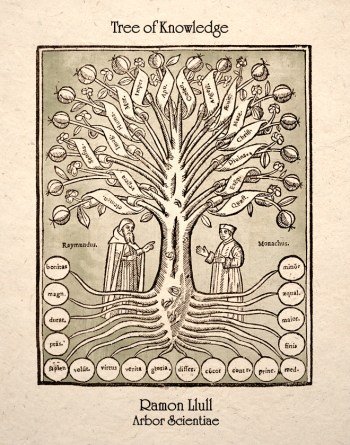
 Bring branches and leaves, images of both cross and spiral, Brighid’s cross serving well for a combination of these. A cross — the quartered world of directions and physical energies, the elements, the cycle of death and life. Spiral — an image of eternity, of rebirth and continuity, the cycle continuing.
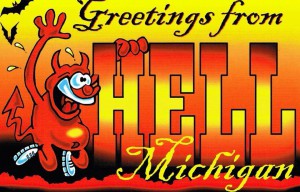
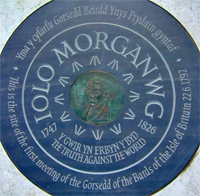

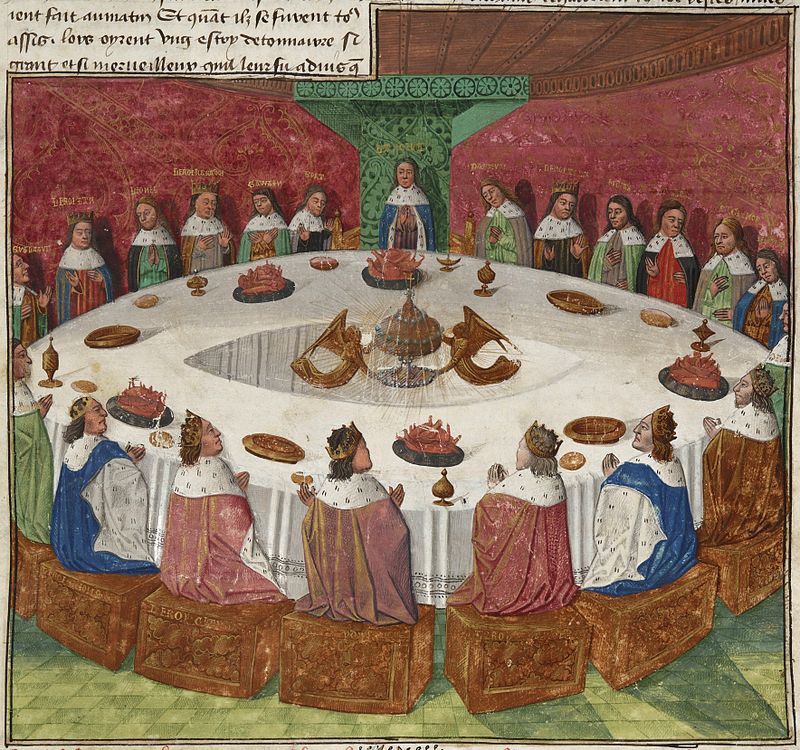

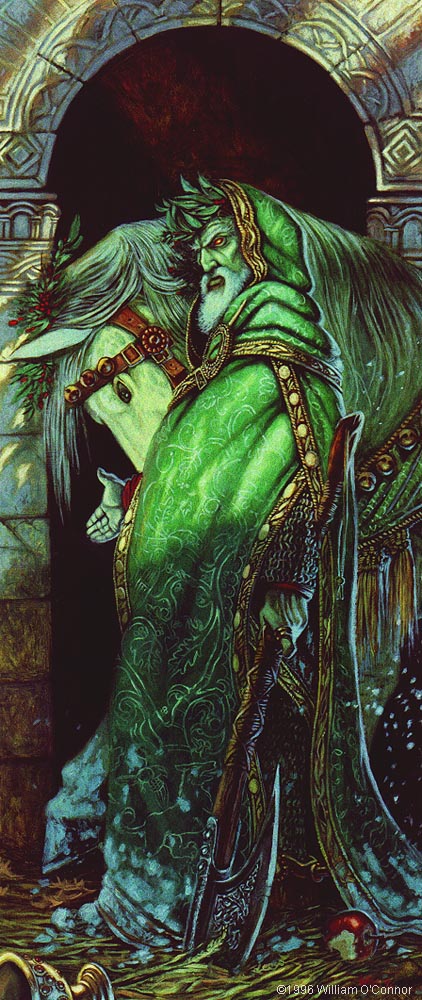
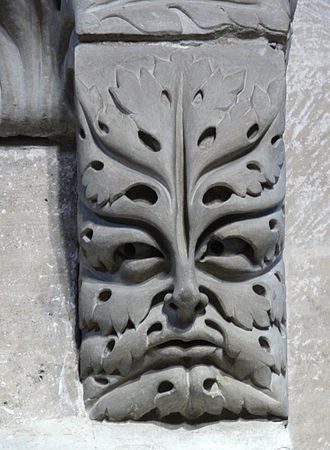
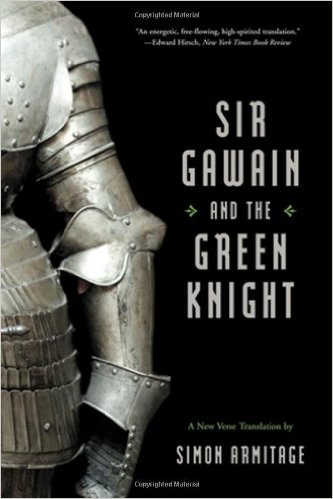
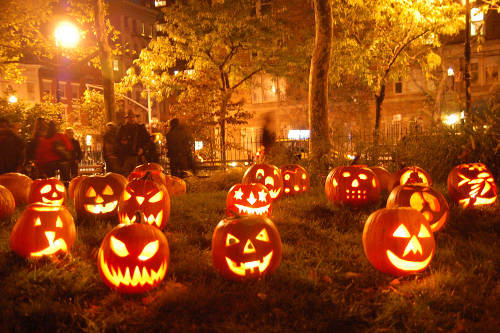
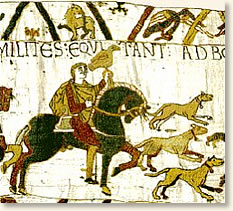


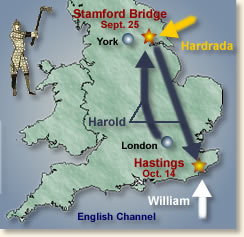
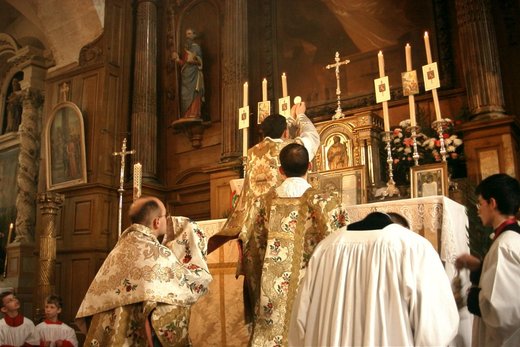
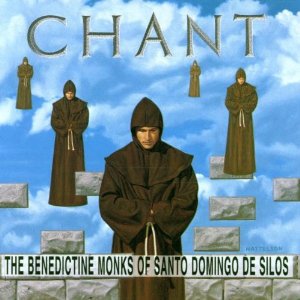
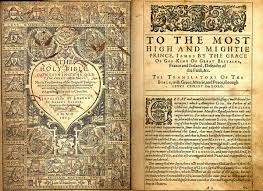
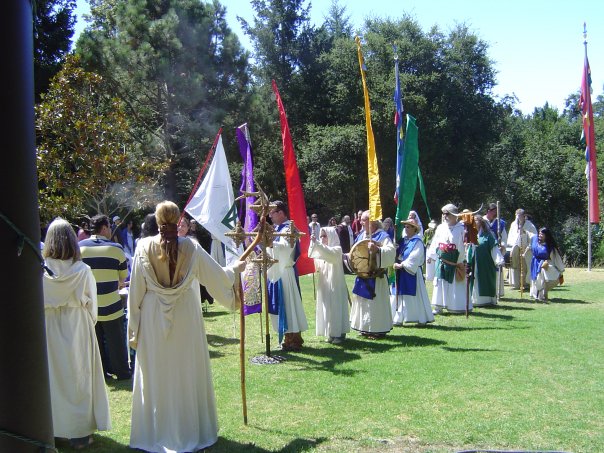

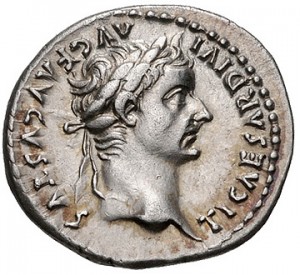







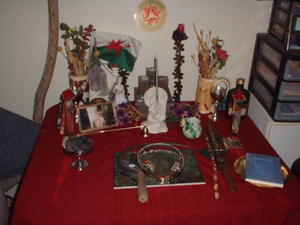


 A Druid Way