Archive for the ‘spiritual practice’ Category
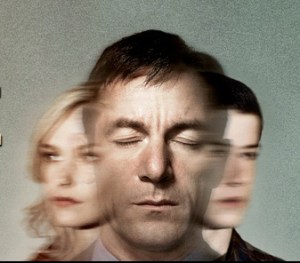 I’ve been thinking over the last several weeks about the NBC midseason replacement series Awake. Maybe you’ve seen it or at least heard about it. (With the continually growing number of networks and choices, it’s become harder to find media experiences to talk about that most of us have in common. Besides, each of us is busy enough as it is, pursuing our own reality show called Life.)
In its eighth episode as of this post, the drama stars Jason Isaacs as L.A. detective Michael Britten. The premise is an intriguing one: after a car accident involving Britten, his wife and son, his reality splits: on alternating mornings he wakes to one life in which his wife Hannah survived the accident but not his son Rex, and in the other reality to a life in which Rex has survived, but not Hannah.
Britten is seeing two different therapists, one in each reality, each attempting to convince him that the current reality is the only “real” one. Britten experiences some “bleed-through” of both similar and different details and situations from each reality to the other. This naturally confuses him at times, but also gives him odd clues and insights into criminal cases he is working on, and into family dynamics that previously had too easily slid past him, until the accident forced him to pay more attention to the surviving family member in each alternate reality.
The series concept is a provocative one on several levels. Who among us hasn’t wondered at least a little how things would be different if (fill in your own blank here)? But more significant in Britten’s case is the immediate matter of his sanity. Is this schizophrenia? Can both of his realities be “real”? Or is one destined to win out, forcing the detective to abandon what one of his therapists insists is an unhealthy clinging to an illusion that is preventing Britten from healing? Which reality might prove “false” — one in which his wife Hannah is gradually coming to terms with their son’s death and planning a new life for them both, or the other, in which Britten is slowly learning to be a better father and to connect with the teenage Rex for the first time? Who could ask a person to choose between these two?
Both realities are internally consistent, and as far as Britten can tell, neither offers any evidence of being “more real.” Several spiritual traditions describe this consensus reality of ours as a kind of dream. By itself, however, that’s never been a useful piece of information as far as I can see. More helpful is guidance about how to live the dream fully and gracefully, and to shift in and out of this dream and other dreams. Most of us try not to leave a trail of dead bodies or broken lives behind us, and we generally see this as a good and admirable thing — not something we’d worry about if this were “merely a dream.”
I remember going through a period in my twenties of perhaps six months of very violent dreams, featuring me both as victim and perpetrator, but the experience didn’t disturb my waking world. No one arrested me as a serial killer, and the dream dismemberments, stabbings, shootings, beheadings and so on didn’t disturb my digestion or emotional life. (They did give me useful material for contemplation and growth, but that’s a separate post.) The whole time of the dreams I was both actor and disinterested spectator in that curious way dreams can have. Obviously the quality of realities is different: waking and dreaming matter as category distinctions. If they didn’t, most of us would face radically different waking lives as a consequence of what we’ve dreamed! Unless you’re seriously repressing, you’ve had at least some dreams that would probably garner an X film rating. And if you don’t remember them, you’re missing out …
So if Britten is truly “awake” in both realities, he doesn’t need to choose, but simply to keep them straight. If you’ve ever had a lucid dream, however, in which internal consistency and conscious awareness approach, equal or even surpass that of waking reality, the distinctions can become much harder to sustain. Britten wears different colored wristbands to help him distinguish which reality he’s currently in. (Curiously, we don’t hear about his dreams. Perhaps “waking twice” consumes enough energy that he doesn’t need to — or can’t — dream.)
I have no idea how the writers of Awake intend to play this through. But it seems to me that it would be an enormous and series-destroying mistake ever to call one reality “true” and the other “false.” For better or worse, Britten logs parallel lives.
For most of us, both dream and waking are normally discontinuous. Each has its own interval of duration, and each eventually ceases before the other resumes. Under the influence of extreme fatigue, illness, or psychotropic substances, we can hallucinate and experience a “bleed-through” of dream-like perception into waking reality. For most of us this is a temporary state of affairs, perhaps useful or insight-producing up to a point, but not something we desire to sustain permanently. A good night’s sleep, a return to health, or the exit from an altered state of consciousness resets consciousness. Generally this is a good thing!
Yet when life goes flat, when the “same-old” of our daily experience — which is almost always a symptom of our inattention and soul-sickness — threatens to bore us literally to death, we need those moments of “awake now!” that may arrive with an accident, death in the family, close escape, or other major transition. Drama is punctuation to life — I don’t seek it habitually (unless I’m a bored teenage girl). Regular spiritual practice, as I’ve learned from experience (positive and negative, in the doing and in the ignoring), can both defuse the sense of “same old” and deliver us to smaller and less life-upsetting moments of insight, inspiration and — yes — transformation. We all dream of becoming more, better, greater, wiser, more loving, more fulfilled. Now is the always and only time to awaken in that dream — to “live twice,” awake both times.*
/|\ /|\ /|\
NBC series image
*Many of us “get” small bursts of at least the potential for transformation from art and music, or from sheer beauty on the playing field, or in a craft or manual skill. The Chinese poet Li Po exchanged poems with his contemporary and friend Tu Fu, and on one occasion exclaimed, “Thank you for letting me read your new poems. It was like being alive twice.”
The challenge: to write a coherent and meaningful post in about an hour — before I’m out the door and off to another commitment during a particularly busy couple of weeks — without a topic already in mind. What will get tossed up on the beach of consciousness? The trick is to keep writing, trusting that something will come. Ah, there it is: trust.
I trusted the presence of Skaði sufficiently to create a separate shrine-page for her, as I mentioned a couple of posts ago. To ask whether I believe in her feels like it misses the point: she appeared in my consciousness, amenable for an exchange. I made a choice to engage, she honored her part, and I mine. What’s interesting to me is that we would never ask a similar question about a human-human interaction. Do I “believe” in the shop-clerk who sold me a sandwich at the cafe where my wife and I had lunch yesterday? The question never arises. What do our interactions imply for the future, in the case of either shop clerk or goddess? That’s something we’ll negotiate as we go. From what I can tell, none of us would have it any other way. If I patronize the shop regularly enough, the clerk and I may learn each other’s names, we might make small talk, I might eventually come to have a “usual” that I predictably order, and so on. With the goddess, the terms might be similar: future interactions will build a history between us. With that kind of growing trust, is belief necessary?
Trust is a curious thing. Like water or mustard or fire, too much or not enough suggests there’s a happy middle ground. Trust is also earned: babies may come by it naturally, and the other blessed innocents of the world may not yet have had it betrayed out of them, but usually ya gotta deserve it to get it. I trust the sanity of the clerk not to poison the food the shop sells, and Skaði and I trust each other enough at this point to fulfill any exchanges we have agreed on. Liking may enter the relationship down the road, which may broaden outside the immediate context of simple exchange if both parties are willing. But that’s not a given. Right now we have a starting point — that’s all.
Other kinds of trust operate at deeper levels. There’s a kind of trust, after all, every time you open door of your room, your apartment, your house, when you step outdoors on a sunny today like today is shaping into, a trust that the air is breathable, that the universe, at least in the foreseeable future, is not out to kill you — that it might even cooperate with you long enough that you can accomplish something worthwhile. If you’re fortunate enough, aware enough, lucky enough, or just attentive enough, you might even call it love. I’ll close with Kathleen Raine‘s fine poem “The Marriage of Psyche,” written 60 years ago now, in 1952. It feels like it fits here — the sense of amazement, of wonder at beauty that lifts you out of yourself. A gift. Read it to yourself out loud, to hear its rhythms.
He has married me with a ring, a ring of bright water
Whose ripples travel from the heart of the sea,
He has married me with a ring of light, the glitter
Broadcast on the swift river.
He has married me with the sun’s circle
Too dazzling to see, traced in summer sky.
He has crowned me with the wreath of white cloud
That gathers on the snowy summit of the mountain,
Ringed me round with the world-circling wind,
Bound me to the whirlwind’s centre.
He has married me with the orbit of the moon
And with the boundless circle of stars,
With the orbits that measure years, months, days, and nights,
Set the tides flowing,
Command the winds to travel or be at rest.
At the ring’s centre,
Spirit, or angel troubling the pool,
Causality not in nature,
Finger’s touch that summons at a point, a moment
Stars and planets, life and light
Or gathers cloud about an apex of cold,
Transcendent touch of love summons my world into being.
/|\ /|\ /|\
Updated 25 May 2014: next to last line of Raine’s poem corrected from “gold” to “cold.”
Go to Part 1 | Part 2 | Part 3 | Part 4 | Part 5 | Part 6
I speak for myself, of course. It’s all that any of us can do. But as I approach what is most deeply true for me, I find I can begin to speak true for others, too. Most of us have had such an experience, and it’s an instance of the deep connections between us that we often forget or discount. I’m adding this Part Two because the site stats say the earlier post on initiation continues to be popular.
/|\ /|\ /|\
Within us are secrets. Not because anyone hides some truths from us, but because we have not yet realized them. The truest initiations we experience seem ultimately to issue from this inner realm of consciousness where the secrets arise. Deeper than any ocean, our inner worlds are often completely unknown to us. “Man is ‘only’ an animal,” we hear. Sometimes that seems the deepest truth we can know. But animals also share in profound connections we have only begun to discover. We can’t escape quite so easily.
Our truest initiations issue from inside us. Sometimes these initiations come unsought. Or so we think. Maybe you go in to work on a day like any other, and yet you come home somehow different. Or you’re doing something physical that does not demand intellect and in that moment you realize a freedom or opening of consciousness. Sometimes it can arrive with a punch of dismay, particularly if you have closed yourself off from the changes on the move in your life. In its more dramatic forms initiation can bring with it a curious sense of vulnerability, or even brokenness — the brokenness of an egg that cracks as this new thing emerges, glistening, trembling. You are not the same, can never be the same again.
The German poet Rilke tries to catch something of this in his poem “Archaic Torso of Apollo.” He’d been blocking at writing the poems he desired, poems of greater depth and substance, instead of the often abstract work he’d composed until then, and his friend the sculptor Rodin sets him to studying animals. Rilke admires Rodin’s intensely physical forms and figures, and Rilke ends up writing about a classic figure of Apollo that is missing the head. Yet this headless torso still somehow looks at him, holds him with eyes that are not there. Initiation is both encounter, and its after-effects.
We cannot know his legendary head
with eyes like ripening fruit. And yet his torso
is still suffused with brilliance from inside,
like a lamp, in which his gaze, now turned to low,
gleams in all its power. Otherwise
the curved breast could not dazzle you so, nor could
a smile run through the placid hips and thighs
to that dark center where procreation flared.
I may witness something that is simply not there for others, but nonetheless it is profoundly present for me. Or I see something that is not for the head to decipher, interpret, judge and comment on. There’s nothing there for the intellect to grasp. In the poem, the head of the sculpture of Apollo is missing, and yet it sees me, and I see or know things not available to my head. I feel the gaze of the sculpture. I encounter a god. Or just a piece of stone someone shaped long ago into a human figure, that somehow crystallizes everything in my life for me right now. Or both.
The sensation of initiation can be as intensely felt and as physical as sexuality, “that dark center where procreation flared.” It hits you in your center, where you attach to your flesh, a mortal blow from a sword or a gesture that never reaches you, but which still leaves you dizzy, bleeding or gasping for breath. Or it comes nothing like this, but like an echo of all these things which have somehow already happened to you, and you didn’t know it at the time — it somehow skipped right past you. But now you’re left to pick up the pieces of this thing that used to be your life.
Otherwise this stone would seem defaced
beneath the translucent cascade of the shoulders
and would not glisten like a wild beast’s fur:
would not, from all the borders of itself,
burst like a star: for here there is no place
that does not see you. You must change your life.
You feel Rilke’s discovery in those last lines*, the urgency, the knowledge arriving from nowhere we can track. I have to change, and I’ve already changed. I know something with my body, in my gut, that my head may have a thousand opinions about. I may try to talk myself out of it, but I must change. Or die in some way. A little death of something I can’t afford to have die. There is no place in my life that does not see me, that feeling rises that I can’t escape, and yet I must escape. It’s part of what drives some people to therapy. Sometimes we fight change until our last breath, and it takes everything from us. Or we change without knowing it, until someone who knows us says, “You’ve changed. There’s something different about you. I can’t put my finger on it,” or they freak at the changes and accuse us, as if we did it specifically to spite them. “You’re not the person you used to be,” meaning you’re no longer part of the old energy dynamic that helps them be who they are, and now they must change too. Initiation ripples outward. John Donne says, “No man is an island, entire of itself. Each man is a piece of the continent, a part of the main.” Sometimes it’s my own initiation, sometime I’m feeling the ripples from somebody else’s. The earthquake is in the neighborhood, right down the street, in the next room, here — or across the ocean. But ripples in each case.
Sometimes we “catch” initiation from others, like a fire igniting. We encounter a shift in our awareness, and now we see something that was formerly obscure. It was there all along, nothing has changed, and yet … now we know something we didn’t before. This happens often enough in matters of love. The other person may have been with us all along, nothing has changed … and yet now we feel today something we didn’t feel yesterday. We know it as surely as we know our bones. We can feel the shift under our skin. The inner door is open. Do we walk through?
Go to Part 1 | Part 2 | Part 3 | Part 4 | Part 5 | Part 6
/|\ /|\ /|\
*Mitchell, Stephen, trans. The Selected Poetry of Rainer Maria Rilke (English and German edition). Vintage, 1989.
Sometimes you have experiences that just don’t fit. They’re orphans, and like orphans, too often they’re left to fend for themselves, so they end up on the street. Or else they’re stuck in a home by some well-meaning authority, where they may subsist uncomfortably for years in places where everyone else looks and acts and talks different. There may not be enough love to go around, either, and like Oliver in Dickens’ novel Oliver Twist, they’re reduced to pleading, “Please, sir, may I have some more?”
Monday night, before the hard freeze here (19 and windy) that threatened all the burgeoning flowers and trees, I offered up a prayer. I don’t usually pray in this way, but I found myself praying for all the wordless Rooted Ones busy putting out buds and leaves and new growth in response to the warm spell that caressed so much of the U.S. “I cry to the Powers,” I found myself saying. A little more love here, please. The great willow in our back yard has pale leafy fronds. The currants are budding. Crabgrass pushes up from dead mats of last year’s growth. The stems of bushes and the twigs of trees show reddish with sap. At the same time, I took stock in what I knew in some traditions about plant spirits, the personifications of energies that help individual species thrive.* Let the devas and plant guardians sort it out. Serve the larger balance — that sort of thing. Then the nudge to pray came, so I honored it. Everyone has a role to play. Then the goddess Skaði presented herself.
All this took place while I was driving down and then back home with my wife from an out-of-state trip to CT. Bookends to the day. We’d tried to be efficient with our driving and gas use, like the good Greenies that on occasion we actually are, and schedule several appointments for the same day. So we rose early, drove through welcome morning sun and glorious light to have a thermostat and brakes replaced on our car, get eye exams and prescriptions and glasses before a sale ended on April 1, drop off a gift at a friend’s house, and get to an admissions interview for a certificate program I’m interested in. (More about that as it progresses.)
We’d scheduled ourselves fairly loosely, but still the sequence of appointments mattered for times and distances to travel to the next stop. So when the car service that we’d been assured would take no more than two hours now promised to consume most of the day, we got a loaner car from the dealership, rescheduled and shuffled some of our meetings. Ah, modern life. Maybe it’s no more than imagination, but at such times recall of past lives makes horse-and-buggy days seem idyllic and stress-free by contrast. Back then we didn’t do so much because we simply couldn’t. Does being able to do more always mean we should?
So, Skaði.** Not to belabor you with too much detail: she’s a Scandinavian goddess of winter, hunting, mountains and skiing. A sort of northern Diana of the snows, an Artemis of the cold heights and crags. I’d run across her a few years ago, when I was doing some reading and meditation in Northern traditions. She loomed in my consciousness then, briefly. Frankly I found Bragi, the god of eloquence and poetry and patron of bards, much more to my taste. But there she was, for a short time.
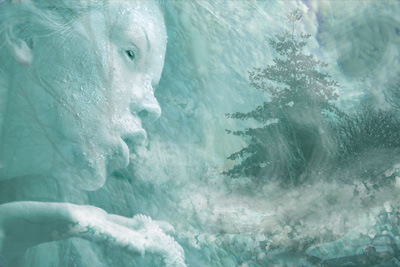 I flashed on an image of Skaði then, and she seemed — and still seems to me — quite literally cold, implacable, uninterested in humans, remote, austere, elegant in the way ice formations and mountain snows and the Himalayas are elegant — and utterly forbidding. Not someone even slightly interested in exchange, in human interaction. Now here she was. If you’ve been pursued by any of the Shining Folk, whether the Morrigan or Thor, Jesus or Apollo, you know that often enough they choose you rather than the other way around. So you make do. You pay no attention. Or you can’t help it and now you have a patron deity. Or something in between. If you’re a bloody fool, you blab about it too much, insisting, and the nice men in white coats fit you for one too. Or maybe you and Thorazine become best friends. It’s at times like this that I’m glad of the comparative anonymity of this blog. I can be that bloody fool, up to a point, and the people who need to will pass me off as just another wacko blogger. And then this post will recede behind the others, and only one or two people will happen on it in another month or two. The gods are out there, and they’re in our heads, too. Both/and. So we deal with it. And I can step back to my normal life. Or not. I’ll keep you posted.
So Skaði of the daunting demeanor wants something. I prayed to the Powers, almost in the Tolkien Valar = “Powers” sense — to anyone who was listening. Open door. Big mistake? I’m a Druid, but here’s the Northern Way inserting itself into my life. My call goes out, and Skaði picks up and we’re having this conversation in my head while I drive north on I-91 with my wife. I’ve gotten used to these kinds of things over time, as much as you can, which often isn’t so much. In a way I suppose it’s revenge — I used to laugh out loud at such accounts when I read them and shake my head at what were “obviously people’s mental projections.” Now I’ve got one saying if you want protection for your shrubbery (God help me, I’m also hearing the scene from Monty Python and the Holy Grail at this point. The Knights of Ni: “Bring me a shrubbery!”), then do something for me. What? I said. A blog post, first, then a website shrine. So here’s the blog post first. I’ll provide the shrine link when I’ve set it up.
/|\ /|\ /|\
*If you’re interested in an excellent account of this, check out The Findhorn Garden, originally published in 1976. This Scottish community, established on a barren piece of land, “inexplicably” flourished with the help of conscious cooperation with nature spirits. It’s documented in photographs and interviews. There are several books with similar titles and later dates, also published by Findhorn Community.
**The ð in her name is the “th” sound in with. I’m slowly realizing that part of my fussing over words, the urge to get it right, the annoyance at others who seem not to care about linguistic details, can be transformed to a gift. So for me part of honoring Skaði is getting her name right.
Image: Skaði. I can’t draw or paint to save my life, so when I came across this stunning representation, a shiver slalomed down my back. Skaði’s footsteps, I guess I should say. This is in the spirit of my experience of the goddess.
“I heard you saw the movie yesterday. So what’s it about?” “Jean and Bill are arguing again. What’s that about?” “OK, he tried to explain and it still doesn’t make sense to me. But you understand those kinds of things, so tell me about it.” And there’s the old-time newspaper seller’s cry: “Extra, extra! Read all about it!!”
This elusive quality of aboutness is core to so many of our ways and days. We spend years in education (and life) dividing things up into their parts and labeling them, and then at least as much time putting them back together, searching for the links and connections between them, so that we can “grasp” them, “get” them, understand them. Re-assemble and it might resemble what it used to be. We crave community, fellowship and friends along the way at least as much as we prize our American individualism and independence and self-reliance. We long for aboutness.
About is near, close, approximately, almost — good enough for daily reckoning, for horseshoes and hand-grenades. It’s about five miles. We’re about out of time. About is sometimes the guts, the innards, the details, all the juicy pieces. About is also the whole, the overview, the heart of the matter. If you know about cars or cooking, you don’t need to know every specific model or recipe to “know your way around them.” What you don’t know you can usually pick up quickly because of family similarities they share. If you under-stand, you know the sub-stance. Position yourself in the right place and time (apparently beneath what you desire to comprehend, according to the peculiar English idiom), and you’ll get the gist.
Layers, strata. This onion-like reality keeps messing us up with its levels. Its aboutness won’t stay put as just one thing, but consists of stuff piled on other stuff below it. Often you gotta dig down through the fossil layer to reach the starting point. Peel it all away, though, and sometimes all you have is peel. You may know the simple and lovely blessing — there are several versions extant:
Back of the loaf is the snowy flour,
back of the flour is the mill;
back of the mill is the wheat and the shower,
the sun and the Maker’s will.
Sometimes if you pay attention you can catch it like a melody on the wind, something that lingers behind the sunlight. We know more than we know we know. This is the natural mysticism that comes with living, however hard we may try to ignore it. This is the aboutness that underlies our lives and our days, while we scurry from one thing to another, in pursuit of happiness. So it follows us, shaking its head at our antics. It could catch up to us if we stopped, looked and listened, if we made space for it to live with us, rather than renting out a room next door, trying vainly to catch our attention.
Robert Frost is one of my go-to guys for insight, as readers of this blog discover. In “Directive” he begins with that sense of constriction, and our partial memory of a past that shines brighter because of what we’ve forgotten about its difficulties. Yes, the poem’s “about” dying New England towns and abandoned houses, but also about us:
Back out of all this now too much for us,
Back in a time made simple by the loss
Of detail, burned, dissolved, and broken off
Like graveyard marble sculpture in the weather …
If there’s a place and home for us, he goes on to say, it’s reachable only by misdirection. “You can’t get there from here,” because the “here” has no more substance than anything else. It won’t serve as a starting point. Time has wrenched it free of its moorings. Things drift.
The road there, if you’ll let a guide direct you
Who only has at heart your getting lost,
May seem as if it should have been a quarry—
Great monolithic knees the former town
Long since gave up pretense of keeping covered.
And there’s a story in a book about it …
Yes, there’s a story, maybe several stories, a hint or two that maybe somewhere else, or someone else, will do it for it us, will finally deliver to us what we’ve been seeking. The stories of art, of music, of the great myths we want to believe even when we can’t. Sometimes the hints are maddening, sometimes the only comfort we can lay hands on in our seeking.
Make yourself up a cheering song of how
Someone’s road home from work this once was,
Who may be just ahead of you on foot
Or creaking with a buggy load of grain.
Aren’t we almost there? Or is it merely illusion? Is this a path anyone else has traveled and succeeded in the end, or our own unique interstate roaring straight toward disaster? What lies are we telling ourselves today? And are we waking up to them at last? You gotta get in to get out, go the Genesis lyrics (the band, not the Bible). You have to get lost in order to be found. That experience is necessary, though painful. Not one of us is the son who stays at home. We’re all prodigals.
And if you’re lost enough to find yourself
By now, pull in your ladder road behind you
And put a sign up CLOSED to all but me.
Then make yourself at home.
Might as well get comfortable being lost, because it’s gonna last a while. Though we never can be wholly comfortable in illusions. No end in sight. The problem is that we don’t know this until the end actually IS in sight. What illusions do we need that will actually bring comfort for a time, at least? They’re not illusions until we outgrow them, live through and past them. In fact we need truths now that only later become illusions precisely because they will be too small for us anymore.
First there’s the children’s house of make-believe,
Some shattered dishes underneath a pine,
The playthings in the playhouse of the children.
Weep for what little things could make them glad.
Then for the house that is no more a house,
But only a belilaced cellar hole,
Now slowly closing like a dent in dough.
This was no playhouse but a house in earnest.
Our house in earnest, playhouse in our childhood, has collapsed, or will. Our old selves won’t do. They don’t fit. We shuffle them off like snake-skins that bear the imprint of what lived in them, down to scar and scale, and we mourn and mistake them for ourselves, another illusion, standing there in the mirror that consciousness provides.
Who then can show us the way? From this perspective, we need, not salvation, but someone to show us where we can walk on our own two feet. Not out of vanity or stiff-necked pride, but because we have to make our way ourselves. Otherwise it doesn’t stick. It vanishes like a dream on waking. Yes, others have carried us there briefly, by art or alcohol or sex or those moments of ecstasy that come on us unannounced and unsought, glimpses of home through the fog.
Tolkien has Gandalf and Pippin touch on it briefly in The Lord of the Rings:
Gandalf: The grey rain-curtain of this world rolls back, and all turns to silver glass. And then you see it.
Pippin: What? Gandalf? See what?
Gandalf: White shores … and beyond, a far green country under a swift sunrise.
Frost continues, wise old poet-guru. (Sigmund Freud once remarked, “Everywhere I go, I find that a poet has been there before me.”)
Your destination and your destiny’s
A brook that was the water of the house,
Cold as a spring as yet so near its source,
Too lofty and original to rage.
We keep flowing — we’re not meant to stay put. Heaven as stasis, as a static destination, an endpoint, a final arrival, nothing beyond, is a false heaven. Enchantments of different kinds surround us. Some deceive, and some actively conceal what we know we must have in order to live at all. Yet what we seek also and paradoxically lies hidden in plain sight. The water was “the water of the house.” It’s right here. What can we use to gather it up?
I have kept hidden in the instep arch
Of an old cedar at the waterside
A broken drinking goblet like the Grail
Under a spell so the wrong ones can’t find it,
So can’t get saved, as Saint Mark says they mustn’t.
(I stole the goblet from the children’s playhouse.)
Here are your waters and your watering place.
Drink and be whole again beyond confusion.
Be whole again. What was lost is now found. Restoration. Return to what is native to you — your watering place. This is the command that drives us onward, the quest buried in our blood and bones. Reach for it. Whole again beyond confusion.
/|\ /|\ /|\
 Yes, secrets can be dangerous. But live long enough and you notice that most things which may be dangerous under certain conditions are often for that very reason also potential sources of valuable insight and energy. Poisons can kill, but also cure. Light can disinfect, and also burn. Different societies almost instinctively identify and isolate their favorite different sources of energy as destructive or at the least unsettling, just as the physical body isolates a pathogen, and for much the same reason: self-preservation.
For many Americans and for our culture in general, sex is one great “unsettler.” We need only look at our history. Problems with appropriate sexual morality have dogged our culture for centuries, and show no signs of letting up, if the current gusts of contention around contraception, abortion, homosexuality and abstinence education mean anything at all. Wall up sexuality and let it out only on a short leash, if at all, our culture seems to say. Release it solely within the bonds of heterosexual monogamy. Then you may escape the worst of its dangerous, unsettling, even diabolical power. You can identify this particular cultural fixation by the attention that even minor sexual miss-steps command, surpassing murder and other far more actually destructive crimes. Let but part of a breast accidentally escape its covering on TV or in a video, even for a moment, and you’d think the end of the world had truly arrived.

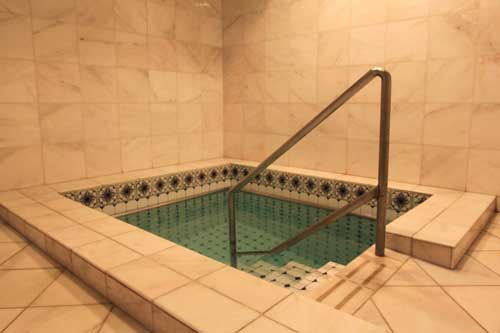
a Mikvah -- ritual bath
Other cultures diagnose the situation differently and thus choose different energy sources to obsess about and wall up, or shroud in ritual and doctrine and taboo. For some, it’s ritual purity. At least some flavors of Judaism focus on this, with the mikvah or ritual bath, various prohibitions and restrictions around menstruation, skin diseases and other forms of impurity, and the importance of continuing the family along carefully recorded bloodlines. The first five Biblical books, from Genesis to Deuteronomy, list such practices and taboos in often minute detail.
The Bible also testifies, in some of its more well-known stories, to the fate of individuals like Jacob’s brother Esau, who married outside the family, and thus forfeited God’s blessings and promises that came with blood descent from their grandfather Abraham. And one need only consider Ishmael, son of Abraham but not of an approved female, who is driven out into the wilderness with his mother Hagar, a slave and not a Hebrew. This Jewish Biblical story accounts for the origins of the Muslims, descendants of Ishmael or Ismail. (The Qur’an, not surprisingly, preserves a different account.) The flare-ups of animosity and sometimes visceral hatred between Jews and Muslims thus originate quite literally in a family inheritance squabble, if we take these stories at their word.
If secrets have at their heart a source of potent energy and culture-shattering power, no wonder Americans in particular suspect them. We like to think we can domesticate everything and turn it to our purposes: name it, own it, market it, even cage it and sell tickets for tourists to see it in captivity, properly chastened by our mastery. But the numinosity of existence defies taming.
Such an oppositional stance of course almost guarantees conflict and misunderstanding and ongoing lack of harmony. But the experience of some human cultures tells us that we can learn to discern, respect and work with primordial forces that do not bow to human will and cleverness. (Likewise, Western and American culture have demonstrated that fatalism and passivity are not the only possible responses to disease, natural disasters, and so on.) Master and servant are not the only relations possible. For a culture that prizes equality, we are curiously indifferent to according respect to sex, divinity, mortality and change, consciousness and dream, creativity and intuition as forces beyond our control, but wonderfully amenable to cooperation and mutual benefit.
So how do secrets fit in here? The ultimate goals of both magical and spiritual work converge. As J. M. Greer characterizes it,
… the work that must be done is much the same–the aspirant has to wake up out of the obsession with purely material experience that blocks awareness of the inner life, resolve the inner conflicts and imbalances that split the self into fragments, and come into contact with the root of the self in the transcendent realms of being (Greer, John Michael. Inside a Magical Lodge, 98).
Of course, much magical and spiritual practice does not (and need not) habitually operate at this level — but it could. “By the simple fact of its secrecy, a secret forms a link between its keeper and the realities that the web does not include; a bridge to a space between worlds,” Greer notes. This space makes room for inner freedom, and so the effort of maintaining secrecy can pay surprising psychological dividends.
Keeping a secret requires keeping a continual watch over what one is saying and how one is saying it, but the process of keeping such a watch has effects that reach far beyond that of simply keeping something secret. Through this kind of constant background attention certain kinds of self-knowledge become not only possible but, in certain situations, inevitable. Furthermore, this same kind of attention can be directed to other areas of one’s life, extending the reach of conscious awareness into fields that are too often left to the more automatic levels of our minds … Used in this way, secrecy is a method of reshaping the self … (Greer, 116-117).
Thus, the actual content of the secret may be quite insignificant, a fact that baffles those who “uncover” secrets and then wonder what the fuss was all about. Is that all there is? they ask, usually missing another aspect of secrecy: “things can be made important–not simply made to look important, but actually made important–by being kept secret” (Greer, 118). The effort of maintaining secrecy and the discoveries that effort allows can mean that the supposed secrets themselves are often next to meaningless without that effort and discovery.
In this case, the danger of secrecy lies in what it reveals rather than what it conceals. Once we discover the often arbitrary and always incomplete nature of the web of communication (and the cultural standards based on that web), we perceive their limitations and ways to step beyond them. Here secrecy has
a protective function on several different levels. To challenge the core elements of the way a culture defines the world is to play with dynamite, after all. There’s almost always a risk that those who benefit from the status quo will respond to too forceful a challenge with ridicule, condemnation or violence. Secrecy helps prevent this from becoming a problem, partly by makng both the challenge and the challengers hard to locate, but also by making the threat look far smaller than it may actually be (Greer, 127).
 Secrecy forms part of the “cauldron of transformation”* available to us all. Most of us balk at true freedom and change. We may have to relinquish comforting illusions — about ourselves and our lives and the priorities we have set for ourselves. So like a mouse I take the cheese from the trap and get caught by the head — I yield up the possibility of growth in consciousness in return for some comfort that seems — and is — easier, less demanding. All it costs is my life.
Guard the mysteries; constantly reveal them, goes an old saying of the Wise. The deepest secrets we already know. That is why awakening confers the sensation of coming home, of return, of reclaiming a birthright, of dying to an old self, of extinction of something small that held us back — so many metaphors that different traditions and cultures and religious and spiritual paths hold out to us, to suggest something of the profound, marvelous and most human experience we can have.
/|\ /|\ /|\
Images: cartoon; mikvah; cauldron;
* See John Beckett’s excellent blog post on this topic here.
If you believe that everything should be “out in the open,” you’ll probably admit to a certain impatience with concealment and secrecy. We’ve heard the old saw: “If you’ve got nothing to hide, you’ve got nothing to fear” and up to a point we believe it. Particularly in the U.S., we equate openness with being “aboveboard” and honest. “Don’t beat around the bush.” “Say what you mean.” “Be upfront about it.” We admire “straight talk.”
The Freedom of Information Act helped make at least some government activities more transparent, and we often welcome “full disclosure” in a variety of situations. We still think of ours as an “Open Society,” and the current practice of large and anonymous campaign contributions from corporate sponsors has some American citizens up in arms. We’re wary of the con, and we tend to suspect anyone who doesn’t “tell it like it is.” We’ve got talk shows where people “spill it all,” and public figures starting at least with Jimmy Carter who began a confessional politics by admitting he had “lust in his heart.” But not all secrets are sinister. They do not automatically concern information anyone else needs to know. Each of us has some things that are innocently private. And in fact, well beyond this concession, secrecy can serve remarkable purposes that conspiracy theorists and even regular citizens rarely acknowledge.
Some secrets, of course, appear to be built into the stuff of the Cosmos. Robert Frost captures this in a brief two-line poem, “The Secret Sits”:
We dance round in a ring and suppose,
But the Secret sits in the middle and knows.
We circle the thing we’re after, all the while convinced it’s there, that something will answer to our seeking, but somehow we still persist in missing it. In spite of a couple of hundred years of scientific exploration, and prior to that, millennia of religious and spiritual investigation, existence and meaning and purpose often remain mysterious and not easily accessible. What matters most to us springs from sources and energies we can’t simply subject to laboratory scrutiny and then write up in learned journals and magazines. As some of the Wise have put it, “the eye sees, but cannot see itself” (at least not without a mirror). Something about the nature of consciousness blocks us from easily comprehending it.
In our search, we reduce matter to atoms (literally, “unsplittables”) and think we’ve arrived at the true building blocks of the universe, only to learn that atoms can indeed split, and that they’re composed of subatomic particles. Quantum physics further reveals that these particles are probabilities and exist only with the help of an observer. Space-time itself is generated by consciousness. We live in a “nesting doll” universe, worlds inside other worlds, an onion-like cosmos of endless layers. True secrets, it appears, can’t be told. They’re simply not part of the world of words. As the Tao Te Ching wryly has it, “The Way that can be talked about isn’t the real Way.” If that doesn’t have you pulling your hair out, it can at least cast you down into a terminal funk. Where can a person get a clear answer?
Serious seekers in every generation come to experiment with some form of solitude, and if they persist, they may discover some very good reasons that underlie the practice of removing themselves even briefly from consensus reality and the web of communication we’re all born into. This web helps us live with each other by building enough common ground that we can understand each other and cooperate in achieving common goals. But it also builds our entire world of consciousness in ways we may not always want to assent to. However, solitude by itself isn’t reasonable for most people as a lifestyle. As my mother liked to remind me, “You have to live in the real world.”
But this “real world” runs surpassingly deep and wide in its influence. Author, blogger and Druid J. M. Greer notes,
The small talk that fills up time at social gatherings is an obvious example. There might seem to be little point in chatting about the weather, say, or the less controversial aspects of politics, business, and daily life, but this sort of talk communicates something crucial. It says, in essence, “I live in the same world you do,” and the world in question is one defined by a particular map of reality, a particular way of looking at the universe of human experience.*
We need maps – there’s a reason we developed them. But they limit as much as they guide. We could even say that this is their genius and power – they guide by limiting, by reducing the “blooming buzzing confusion” of life to something more manageable. Advertizing does this by simplifying our desire for meaning and connection and significance into a desire for an object that will grant us these things. Trade one symbol – money or credit cards, paper or plastic – for another symbol, a status symbol, an object sold to us with a money-back promise to grant wishes like a genie’s lamp or the cintamani, the “wish-fulfilling” gem of the East. (If that’s not magic, and a questionable kind at best, I don’t know what is. How much more wonderful it would be – how much closer it would come to “true magic” — if it actually succeeded in quenching that original desire, which is merely sidetracked for a time, and will re-emerge, only to be distracted again, by another “new and improved”** model, spouse, diet, house, product or lifestyle. We need a remarkably small minimum of things to flourish and be happy. In a territory far beyond the blessed realm of that minimum, the market survives, yes, while the heart slowly dies.***)
Greer continues,
We thus live in an extraordinarily complex web of communication, one that expresses and reinforces specific ways of thinking about the world. This is not necessarily a problem, but it can easily become one whenever the presence and effects of the web are unnoticed. To absorb the web’s promptings without noticing them, after all, is also to absorb the web’s implied world-view without being aware of the process – and what we do not notice we usually cannot counteract.
The very common habit of passivity toward our own inner lives, a habit that is responsible for a very large portion of human misery, shows itself clearly here. It’s one thing to accept a map of the world as a useful convenience, one that can be replaced when it’s no longer useful, and quite another to accept it unthinkingly as the only map there is—or worse, to mistake the map for the world itself.*
A secret breaks the web. It remains something apart, the fragment that doesn’t fit. It’s the puzzle piece left over that doesn’t match the gap in the nearly-finished picture staring up at you, that one annoying bolt or washer or other component remaining after you’ve put together the “easy to assemble” appliance or device. It’s the hangnail, the sore thumb, the mosquito bite of awareness that something’s off-kilter, out of whack, out of step, no longer in synch. We have words for these things — we can name them, at least — because they happen to us frequently enough to break into the web. And we struggle to fix them as soon as we can, or barring that, ignore them as much as possible, that uncomfortable fact, that inconvenient discovery. As Churchill quipped, “Men occasionally stumble over the truth, but most of them pick themselves up and hurry off as if nothing happened.”
I’ll continue this topic in Part Two.
/|\ /|\ /|\
*Greer, John Michael. Inside a Magical Lodge, pp. 114-115. I reread this book about once a year, and its lucid style makes this pleasurable apart from its subject matter. In addition to being a “guided tour” of the workings of lodge dynamics (fraternal, magical and social) and group magical practice (with an example magical lodge that Greer examines in considerable detail), the book is a clear, demystifying meditation on group consciousness, secrecy, and the magical egregore or “group mind” at work in all human organizations, institutions and collectives, including families, churches, political parties, companies, clubs, sports teams — the scope is immense.
**As comedian Chris Rock says, “Which is it, new or improved?!”
***As a teacher at an expensive private school for students whose parents expect them to gain admission to the top colleges and universities in the country, I here acknowledge that I myself participate in another kind of wish-fulfilling enterprise marketed to a considerable degree to that now widely suspect 1%. In defense of the school, however, if not of myself, every year scholarship students are admitted solely on merit. They succeed out of all proportion to their numbers in earning top class rankings and coveted admission letters to the best schools.
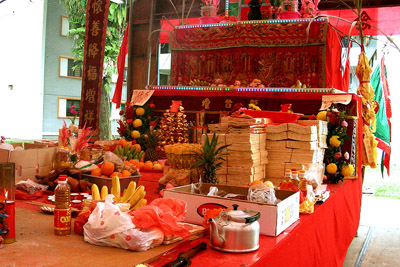
An altar is an important element of very many spiritualities around the world. It gives a structure to space, and orients the practitioner, the worshipper, the participant (and any observers) to objects, symbols and energies. It’s a spiritual signpost, a landmark for identifying and entering sacred space. It accomplishes this without words, simply by existing. The red color of the Taoist altar below immediately alerts the eye to its importance and energy.
As a center of ritual action and visual attention, an altar is positioned to draw the eye as much as any other sense. In Christian churches like the one below, everything is subordinated to the Cross and the altar immediately below it. Church architecture typically highlights this focus through symmetry and lighting. But in every case, enter the sacred space which an altar delineates, and it tells you what matters by how it is shaped and ordered and organized.

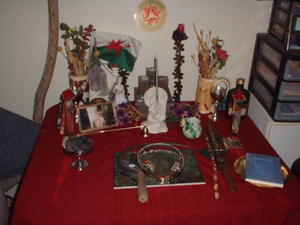
Part of OBOD* training is the establishment and maintenance of a personal altar as part of regular spiritual practice. Here’s a Druid altar spread on a tabletop. Nothing “mundane” or arbitrary occupies the space — everything has ritual or spiritual purpose and significance to its creator.

Such obviously physical objects and actions and their appeal to the senses as aids in spiritual practice all spring from human necessity. We need the grounding of our practices in the physical world of words, acts and sensations in order to “bring them home to us,” and make them real or “thingly,” which is what “real” (from Latin res “thing”) means.
Religions and spiritual teachings accomplish this in rich and diverse ways. We have only to think of Christian baptism, communion and the imposition of ashes at Easter; Hindu prasad and tilak; Jewish bris/brit (circumcision) and tallit (prayer shawl) and so on.
Atheists who focus exclusively on belief in their critiques and debates thus forget the very real, concrete and physical aspects of religious and spiritual practice which invest actions, objects and words with spiritual meaning that cannot be dismissed merely by pointing out any logical or rational cracks in a set of beliefs. Though you may present “evidence that God doesn’t exist” that seems irrefutable to you, you haven’t even begun to touch the beauty of an altar or spiritual structure, the warmth of a religious community of people you know and worship with, the power of a liturgy, the smell of incense, the tastes of ritual meals, the sounds of ritual music and song.
Just as we hear people describe themselves as “spiritual without being religious” as they struggle to sift forms of religion from the supposed “heart” of spirituality, plenty of so-called “believers” are “religious without being spiritual.” The forms of their spiritual and religious practice are rich with association, memory and community, and can be as important as — or more so than — a particular creed or set of beliefs.
Having said all of this, I’ve had a set of experiences that incline me away from erecting a physical altar for my Druid practice. So I’m working toward a solution to the spiritual “problem” this presents. Let me approach it indirectly. Once again, and hardly surprising to anyone who’s followed this blog or is as bookish as I am, the trail runs through books.

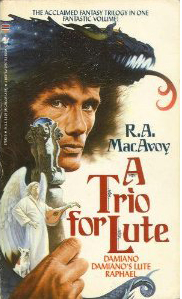
Damiano, the first volume in a fabulous (and sadly under-known) trilogy by R. A. MacAvoy, and recently reissued as part of an omnibus edition called Trio for Lute, supplies an image for today’s post. Damiano Delstrego is a young Renaissance Italian who happens to be both witch and aspiring musician. His magic depends for its focus on a staff, and we see both the strengths and limitations of such magical tools in various episodes in the novel, and most particularly when he encounters a Finnish woman who practices a singing magic.
When I read the trilogy at its first publication in the 80s, the Finnish magic sans tools seemed to me much superior to “staff-based” power. (Partly in the wake of Harry Potter and the prevalence of wands and wand-wielders in the books and films, there’s a resurgence of interest in this aspect of the art, and an interesting new book just published reflecting that “tool-based” bias, titled Wandlore: the Art of Crafting the Ultimate Magical Tool).
So when I then read news of church burnings, desecrated holy sites, quests for lost spiritual objects (like the Holy Grail) and so on, the wisdom of reposing such power in a physical object seemed to me dubious at best. For whatever your own beliefs, magic energy — whether imbued by intention, Spirit, habit, the Devil, long practice, belief in a bogus or real power — keeps proving perilously vulnerable to misplacement, loss or wholesale destruction. Add to this Jesus’ observation that we are each the temple of Spirit, and my growing sense of the potential of that inner temple of contemplation — also a feature of OBOD practice — and you get my perspective.
Carrying this admitted bias with me over the years, when I came last year to the lesson in the OBOD Bardic series that introduced the personal altar, I realized I would need both contemplation and creativity to find my way.
My solution so far is a work in progress, an alpha or possibly a beta version. My altar is portable, consisting of just five small stones, one for each of the classic European five elements — four plus Spirit. Of course I have other associations, visualizations and a more elaborate (and still evolving) practice I do not share here. But you get the idea. (If you engage in a more Native-American nourished practice, you might choose seven instead: the four horizontal directions, above [the zenith], below [the nadir] and the center.)
I can pocket my altar in a flash, and re-deploy it on a minimal flat space (or — in a pinch — right on the palm of my hand). One indulgence I’ve permitted myself: the stones originate from a ritual gift, so they do in fact have personal symbolic — or magical, if you will — significance for me. But each altar ritual I do includes both an invitation for descent and re-ascent of power or imagery or magic to and away from the particular stones that represent my altar. Lose them, and others can take their place for me with minimal ritual “loss” or disruption. Time and practice will reveal whether this is a serviceable solution.
This post is already long enough, so I’ll defer till later any discussion of the fitness of elemental earth/stone standing in for the other elements.
/|\ /|\ /|\
*OBOD — the particular “flavor” of Druidry I’m studying and practicing.
Images: Singapore Taoist altar; Christian altar; Druid altar; Amazon/Trio for Lute.
/|\ /|\ /|\
Updated: 27 July 2013

 I’ve been thinking over the last several weeks about the NBC midseason replacement series Awake. Maybe you’ve seen it or at least heard about it. (With the continually growing number of networks and choices, it’s become harder to find media experiences to talk about that most of us have in common. Besides, each of us is busy enough as it is, pursuing our own reality show called Life.)





 A Druid Way


