
This morning, a post on a constructed language forum I frequent asked how one might go about expressing what we mean by “rights” in English. There’s a lot of talk these days about rights and freedoms, but much less about what these things are. Whenever we use unexamined words in such prominent ways, it pays to take a look at what we’re talking about. We often use words like “rights” and “freedom” to mean something we presume is self-evident, but it seems that much of our disagreement arises because they actually don’t mean the same thing to everyone.
Depending on the era and the culture, rights are given to us by gods or culture heroes; or they’re baked into The Mix from the outset; or they’re balanced — and dependent on — our fulfillment of obligations that are paired with each right we desire; or they’re human creations, meaning they’re entirely under our control. When I look at my own understandings, I see flavors of each of these perspectives. No wonder we’re struggling. (If you’ve figured it out, are you running for office? Or do you have a workshop we can attend for more money than we make in a month?)
If you see rights as something given, they’re not up for revision. But if you think we humans created them, you’re more inclined to tinker, and to recreate them to fit your current vision.
In older cultures like that of Vedic India, the cosmic order or rta is “the principle of natural order which regulates and coordinates the operation of the universe and everything within it”. Rta is something to find out, to discover, to align with. It can’t be legislated into or out of existence. Regardless of human law and laws which may come to overlay it, it persists as a foundation — or the foundation — for how the universe works. It takes in physics as well as morality. We can’t cancel gravity, in spite of its behavior. There may be comparable things at work within humans that we’ve overlooked.
There’s a certain Druidic sympathy for much of this view. The natural world embodies a significant expression of the harmony we aspire to. We choose nature as one of our teachers, birds and beasts and trees as fellow-travelers with us, each possessed of their own truths and gifts. Nature, we’re still learning, offers healing and wisdom for many of our ills, if we can learn to re-apprentice ourselves to it.
Many people feel that morality is much less (or not at all) “built into things” but instead more or entirely a matter of human choice, consciousness and active shaping. There are physical laws, but human society is a created thing, a part of human culture. That means, or should mean, that we can make it whatever we want it to be. Any injustice is a human choice, therefore, as are the inequalities of our social order. If we made them, the thinking goes, we can change and improve them. Resist such an obvious good, goes the thinking, and you’re just on the wrong side of history. You’re selfish, wrong, null and void, past your expiration date, hateful and evil, and above all you deserve to be outed and stopped.
One of the ancient insights of established religions is that there is a force, principle, entity, counter-balance — something or Someone, depending on your predilection to personify — that often causes our best-laid plans to go off the rails, turn awry, flounder and founder and crash and burn. Raven, Loki, Trickster, that strange neighbor — take your pick. We readily find reasons to blame some Other for mucking things up, not ourselves. But many ancient wisdoms would point us to tendencies within each of us that we need to face and work with. Gods know we’ve certainly all had long enough to get it right.
The fault, dear Brutus, is not in our stars but in ourselves, that we are underlings, says Cassius in Julius Caesar. What’s so wonderful about Cassius’ words is that they are both beautifully true in general and evilly true in particular. We want to revolt, but against whom?
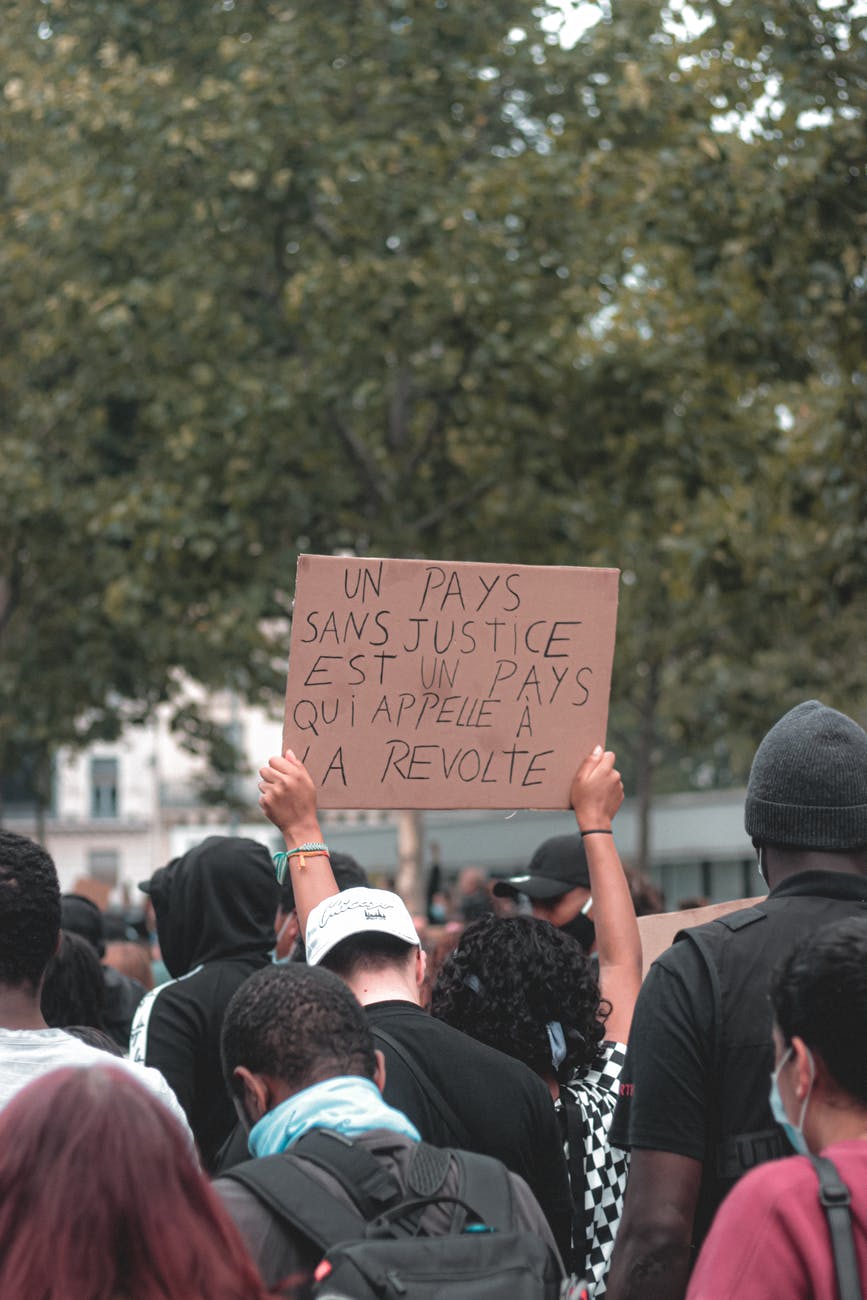
It’s certainly an accurate diagnosis that we often and too readily yield up our sovereignty to others — gods, partners, friends, corporations, the majority, the Party, The Man, the Patriarchy, the evil Leftists/Rightists/Centrists, etc. — and then we complain when they act in their own interests, and make us suffer, whether intentionally or not. We all repeatedly make ourselves “underlings” in amazingly short-sighted ways, then struggle long and bitterly to reclaim our power. Along the way, it seems we have to reinvent the wheel each time, making enough mistakes that at least half the time we’re Part of The Problem we’re trying to fix. Slow learners, every one of us.
Some religions call this tendency in us evil or sin. We might use vocabulary from physics or biology and just as reasonably call it inertia, finiteness, self-preservation and a number of other observable tendencies that carry less judgment with them. As Andy Dufresne says in The Shawshank Redemption, “you get busy living or get busy dying”. How often do we think we know which one we’re doing, only to discover to our dismay that we’ve been doing the opposite. The natural/organic/biologique food we pay more to buy turns out to be slathered in pesticides by an unscrupulous grower. The journalist we abused for critiquing our favorite new governor turns out to have been right after all. Someone oughta pay! Too often, it’s us. And along with us, the planet, the truth and others’ trust.
We’re constantly told to “just be ourselves”. Seems obvious. But do we know how? Why is that apparently so hard? Hundreds of solutions on tap, and not a single one working for everybody. Part of this — THIS — is that we have to find our own path. Though it will — blessedly — intersect many times with the paths of others.
One of the great insights of Druidry is that working with the awen, with our creativity, is a profound and pleasurable way to restore and reclaim much that we have lost. It is not The Sole Solution (though it’s a Soul solution), but it IS a practice that can lead us toward solutions more productively than much else we’ve tried. When we align with Spirit and our own genius and connection to the worlds, beautiful and inspiring things result.
We can always use more of that.
/|\ /|\ /|\
Welcome to Bangladesh as the newest first-time visitor!
Image: Pexels.com


 A Druid Way