I’ll return to A Druid Way (and the fourth post in the “American Shinto” series) when I get back from the annual East Coast Gathering (ECG) this coming weekend. This year’s 5th ECG shares in some of the energy of the OBOD 50th anniversary earlier this summer in Glastonbury, UK. For many U.S. Druids, the Gathering is the principal festival event of the year, a chance to renew old friendships, enter sacred time and space, and reaffirm ties to the special landscape of Camp Netimus in NE Pennsylvania. This year’s Gathering theme is “Connecting with the Goddess.”
In the interim, here are three images from last year’s Gathering — a visual invocation of the Alban Elfed/Autumnal Equinox energies of the Camp.
Camp Netimus sign — photo courtesy Krista Carter
Steps up to fire circle from Main Lodge — photo courtesy of Wanda GhostPeeker
In her comment on a post from August ’13, Lorna Smithers makes a distinction particularly vital for “Bardic types” that I want to take up here, especially in light of my last post:
The division between what remains in the journal and what to communicate is a question I confront continuously as a Bard, for unlike with a path that focuses solely on personal transformation through magic, Bards are expected to share their inspiration.
I find that some experiences are ok to share immediately, others need time to gestate for the meanings to evolve and take on a clearer form, and a select few may always stay secret.
I see good craftmanship to be the key [to] sharing experiences. In contrast to the vomit of ‘compulsive confession’, well-wrought craft lifts the raw material into the realms of art, creating works that affirm the awe and wonder of the magical world.
That Bardic instinct to share inspiration that may or may not have been shaped by art can get us in trouble. The desire to bring into physical expression something that’s going on in your inner worlds can lead to what Lorna accurately calls vomit. Sometimes, of course, awen really does drop a piece of loveliness in your lap. It arrives fully-formed, and you run with it, dazed and delighted and puppy-like in your enthusiasm to share the wonder of it with all and sundry, but that (the gift of inspired loveliness, not the puppy-like response) usually only happens when you’ve done plenty of the hard slog of shaping already, alone or with only yourself and your gods for support of a vision no one else may even know anything about.
Sometimes the time and energy your pour into nurturing your creativity can make you defensive if you haven’t “produced” anything visible. If you’re a writer, for instance, you’re not a “real” writer till you’ve “published.” Few will care about the months, years or decades of work that may lie shelved in boxes or occupy megs of space on a computer. The same holds true in comparable ways for anyone who’s devoted time and energy to a craft or art.
Artists who should know better sometimes like to hint, or let it be inferred, that this business of “awen on command” is how they work all the time, both mystifying us “ordinary mortals” and also doing a disservice to their craft and the nature of inspiration. Talent, oddly enough, responds well to practice, and no one works most of the time without effort.
The Anglo-Saxon bard was called a sceop, pronounced approximately “shop,” “one who shapes” inspiration into language and song. And the word bard comes from an Indo-European root *gwer- that means “to praise” or “to sing,” indicating two of the roles of the Celtic bard. The same root appears in Latin gratia, and English grace— a whole cluster of relationships — the gift and our response, our gratitude, and the quality in things blessed with awen, the loveliness and fluidity and rightness they often evince.
But if I opt to share something that’s not ready or right to share, I’ll usually regret it. Let me enthuse or gab about a story or an inner experience before its proper time, and it may lose its luster. It no longer thrills me enough to work with it, and I take what was a gift and cast it aside, its charm lost. The spell is broken, and I am no longer spell-bound, or able to do anything with it. Like the old fairy story of the goblin jewels, in the daylight of the blog, or the careless conversation with another, the one-time treasures that sparkled and shone under moonlight have turned to dead leaves. One or two such painful experiences is usually enough to teach anyone the virtues of silence, restraint and self-discipline.
Another half (there are almost never just twohalves, but three, four, five or more) of the whole, however, is that keeping the flow going, trusting the awen enough to go with what you get, and allowing the work to manifest, brings in more. Jesus did know what he was talking about when he said (paraphrased to modernize the language), “To people that already have, more will be given, and from people that don’t, even what they have will be taken away.” While this may sound at first like contemporary government policy and destructive legislation and current economics, it holds true on the inner planes, in the worlds of inspiration and imagination.
Lorna herself is an exemplar of this Bardic trust and inspiration. As an Awenydd, one who receives and shapes the gift of awen, she demonstrates in poetry and photography on her blog and in performance the mutual bonds with the Otherworld and spirits of place that make up her path.
And so it was with considerable interest that I read her account “Personal Religion?” well into writing this post, while I was checking that the URLs were right for the links to her blog. She experiences a strong reaction on hearing about the OBOD Golden Anniversary celebrations, and launches into a series of probing personal questions without immediate answers which I urge you to read directly. The challenges she faces are those of one attempting to be faithful to a call, and she follows a path with honor. Her struggles illustrate the living nature of the Pagan path, with its many branches and trails. Her practice flourishes precisely because she strives to be faithful to her own vision, which may not always grow and bloom under the “big tent” of orders like OBOD.
Making that struggle visible is valuable — posting it for others to read, ponder and benefit from.
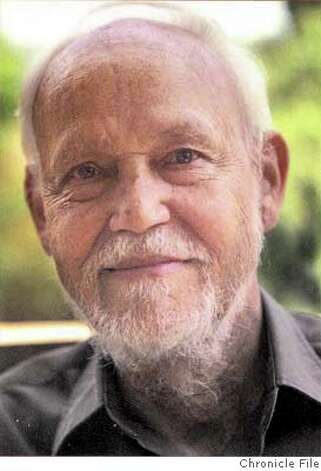
In the lovely and iconic image below, courtesy of Cat Treadwell, Druids climb Glastonbury Tor earlier this month as part of OBOD’s Golden Anniversary. Fifty years ago, Ross Nichols (1902-1975) — poet, Druid and school-teacher — formed the Order of Bards, Ovates and Druids. As a member of the Bardic grade, of course I yearned to attend. For a delightful acccount of the event, go here for Joanna van der Hoeven’s 9 June 2014 post “Celebrating 50 Years of OBOD” on her blog “Down the Forest Path.”
OBOD 50th Celebration — Druids climb Glastonbury Tor. Image Courtesy of Cat Treadwell
Does it matter whether Druids and Glastonbury share a historical connection? Ultimately, only to historians. The lived experience of Druidry, as of any flourishing tradition, means that what we do today shapes our experience more than what may or may not have happened in the past. When my fellow Druids assembled in the town and on the Tor, the sense of community, the sharing of ritual, the reunion of friends, the inspiration of the talks and workshops, the sense of history, and the beauty and much-vaunted “vibe” of Glastonbury, all converged. And the same kind of convergence is true of personal experience as well.
Though OBOD’s Golden Anniversary celebration tugged deeply at me, my wife and I had already committed resources to a trip within the U.S. I couldn’t manage both, so I had to forgo what was by all accounts a moving and delightful celebration. But I couldn’t sustain much self-pity, because our own itinerary included a return to Serpent Mound in southern Ohio. I’d visited before in 2008, and experienced a strong past-life recall there. I saw and heard further details this time. Among them were a specific name (of a tribe? a person? I don’t — yet — know), voices singing, images of the tribe’s shaman, and of my death near the Mound in an inter-tribal conflict.
But these details, while moving and significant to me, matter less than the impact which these kinds of experiences make in general. As an instance of “unverified personal gnosis,” my experiences don’t require any belief on my part, though of course I may choose to believe all sorts of things as a result. Nor do such experiences legitimize any attempts I may make to persuade others that my experience was “real” or that they should act differently towards me — or their own lives — as a result. What the experience did establish for me is a strong personal resonance with a place and a culture, and a doorway to potential future choices and insights about my life and personal circumstances that I might not have been able to access in any other way. Whether I choose to act on that experience is my responsibility. (What is significant to me right now is that the details of my experience form the basis for a decent historical novel, for instance — one way to dramatize my personal experience and — with further hisorical research — turn it into art. I feel I can explore and concretize its significance most vividly and vitally this way. And who knows what further confirmations such research may provide?)
The Serpent is “a 1,348-foot (411 m)-long, three-foot-high prehistoric effigy mound located on a plateau of the Serpent Mound crater along Ohio Brush Creek in Adams County, Ohio” (Wikipedia entry, and the sign above). On the ground, it’s not a particularly impressive structure — at first. A 30-foot viewing tower near the tail of the Serpent allows some height and perspective for the kind of photos I took. Shadows in pictures taken early or late in the day help highlight the shape and outline of the Serpent.
Both the age and purpose of the Mound are a matter of debate. Many published sources estimate the time of its construction around 1000 or 1100 CE. But the Ohio Historical Society guide at the site assured us that recent archeological studies, due to be published later this month, revive the claim (with apparently solid evidence) that the mound dates from an earlier period around 2000 years ago. Artifacts recovered from the mound include charcoal, beads and other jewelry, flint knives and arrow-heads, and deer-bone tools.
Aerial shots like the one below begin to convey the size and significance of the mound:
Add to this the presence, both at Serpent Mound and elsewhere in Ohio, of separate conical mounds like the one below (the picnic table in the foreground gives an approximate yardstick to estimate its size), and for me at least the sense of Adena tribal presence and purposefulness grows in my heart, a living thing.
“In this year of celebration of the Golden Anniversary of the Order,” writes OBOD Chief Philip Carr-Gomm, “it seems fitting that we should turn our attention to celebration as a natural and spiritual response to the fundamental turning-points in life.” (Here, under the the listing for “17-21 September.”)
I’ll be posting over the next day or so from Santa Fe, NM, as part of an extended car trip around the U.S. Now we just have to get there — up and soon to be on Rt. 40 west from Amarillo, TX. Happy (approaching) solstice to all.
[Related posts: Shinto & Shrine Druidry 1 | 2 | 3 || Shinto — Way of the Gods || Renewing the Shrine 1 | 2 || Boku no Shinto — My Shinto 1 | 2 ]
Paramahamsa Yogananda
“Its technique will be your guru.” With these words (ch. 11 of his famous Autobiography, online here), a young Paramahansa Yogananda (1893-1952), founder of Self-Realization Fellowship (SRF) and a principal exponent of Kriya Yoga in the West, counsels a peer he has just initiated into the tradition he follows himself. With these words he also points toward a kind of spiritual path that Westerners, rightly wary of super-sized personalities and god-realized con-men, can approach and walk. A flexible and potent technique can be a trustworthy, profound and endlessly patient guide.
Technique as guru: as a practitioner of OBOD Druidry and Eckankar, I know firsthand that a technique responds to practice and devotion as much as any teacher. Religious and spiritual practice will always be as much art as science, because they welcome (and can profoundly benefit from) our subjectivity, even as they also point to their scientific aspect — definite and repeatable results we can achieve from dedication and regular practice. My emotions, my commitment, my ambition and drive, my struggles and dreams can all contribute to my practice — leaven it and enrich it and make it “mine.”
“other” as double: both of us angry at each other
My anger at the driver who cut me off in traffic last week, on my way back from dropping my wife off to stay with her cousin, can help me uncover other unexplored pools of anger I can work to identify, learn from, and transform. Anger by itself need not be bad, only unconscious anger, anger I act from unthinkingly, little different from a live wire I brush against in the dark, unintentionally — or attach to a light fixture and illuminate another step along the way. Without the experience of anger, I might well miss the wire altogether, and forfeit a chance at illumination.
I can, if I listen, come to see that my whole life is laboratory — not only what I close the door on at 4:00 or 5:00 pm each weekday and return home from. The individualistic-narcissistic-tending “MY spirituality” gets whittled down to more beneficial size through ongoing spiritual practice. And paradoxically reveals a personalized curriculum tailored to me, right now and here. Anger? Yup — that’s on my curriculum, though it may not be on yours. And my life is ideally set up to help me work with precisely that curriculum point, just as yours is for your distinct points. Yes — we share a “common core,” too.
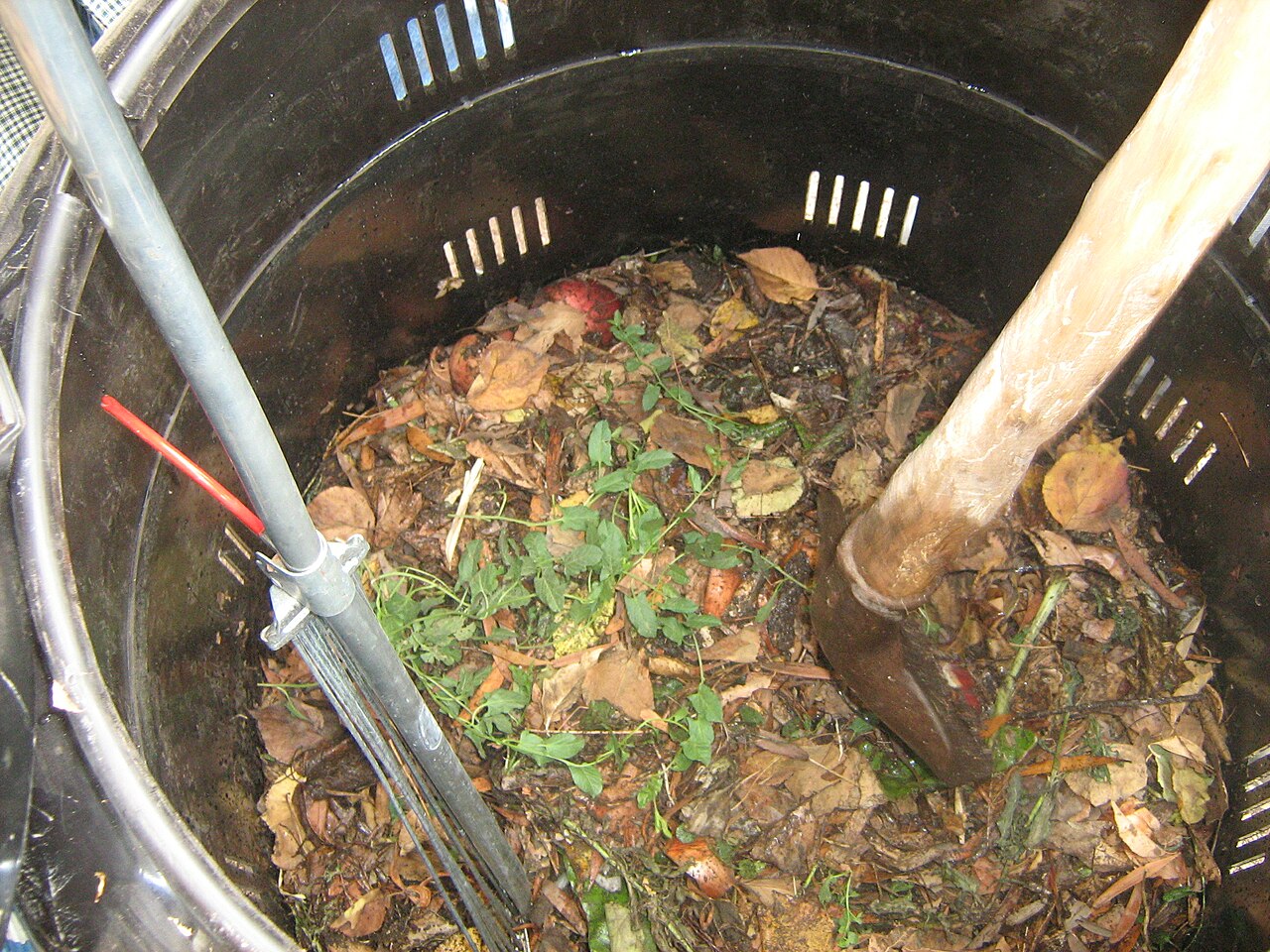
compost: just another point along a transition
A practice like Druidry that places me in the natural world immediately begins to slim down ego in concrete ways and immediately accessible ways: merely walk out the door, and at once it’s clear I’m not the center, nor even the “most important” thing in the universe. I constantly meet the “spirit other”: animals, birds, trees, and beings without skin on — or bark, or fur, or scales. I am a paragraph in a chapter, not the whole story. And that’s a good thing, because the world is guru, too. Hard limits of some kind are the only way a world can work (try seriously to imagine one without them), but if I engage them wisely, they build spiritual strength rather than frustration, nihilism and despair. This physical body is eventual compost, like everything else: but not yet. And this interval is all. (Whether it is also “only” is an experiential question, one which only experience can accurately answer, not some dogma to be believed or rejected.)
“My Shinto,” my Way of the Spiritual Order of Things — let’s call it WOTSOOT — begins with the circumstances of my life today. Here I am, a 55 year-old white male, a teacher, a cancer survivor, married, nearsighted, in fair health. The initial details of your personal WOTSOOT naturally vary less or more from mine. They’re also often quite superficial — party chitchat, gossip in my cul-de-sac. Because I am also a point and vector of conscious energy situated in widening networks of energy exchange. I breathe, and chlorophyll all around me gets inputs it needs. Bacteria on my skin and in my gut flourish, and help me flourish too, if I stay alert to their balance. I sweat and crap and piss, and nutrients move where other beings can begin to use them. I consume some of these other beings — not too many, if the system is to remain in equilibrium — just as some them will consume me. New networks arise, as older ones shift or die. And part of my practice is: all praise* to the WOTSOOT!
Such processes of the physical realm are both fairly well understood and all too rarely incorporated into larger networks that spiritual teachings of all kinds tell us glow and ripple and transform and pervade the universe. Scientific insight begins to catch up here and there with spiritual wisdom. Not dogma, not theology, not creeds — that’s merely paparazzi spirituality — but insights into living networks — the shin-to, the “spirit-way.” As I write and you eventually read this, we use an electronic network we’ve crafted that simulates in surprising ways organically occurring ones, and we can acknowledge the remarkable power and potential of such interactive patterns of energy and information flow as analogs to the ones we are born into.
One valuable key to working with the WOTSOOT that I keep reminding myself of is “small steps. ” This works both as a starting point and a successful process, too. Any attempt at change, on any level, meets what we experience as resistance, because of inertia and equilibrium implicit in networks. (Otherwise, without inertia or resistance, they’d never have a chance to grow and develop at all, shifting and falling apart at the least push or pull from outside. They wouldn’t become “things,” which are semi-lasting whorls and eddies in the flow of WOTSOOT.)
We all have heard that “If it works, don’t fix it,” which is fine, except that a corresponding inherent tendency toward change means that even as it’s working, it’s also changing, or accumulating energy toward change. Often the changes are small, and if we model ourselves on this larger pattern, our small changes will accord with the flow around us. (Small ongoing changes help us avoid really disabling larger ones, that can manage to accumulate a staggering wallop of energy if we don’t make those smaller changes.)
“Change your life,” counsels your friendly neighborhood deity of choice. Okay: but do it in manageable chunks, unless a cataclysm conveniently presents itself to you, ready-made. I have a profoundly messy office right now: too much for a single day of cleaning, without a herculean effort. Sometimes I can muster one. But one box today, one shelf tomorrow? That I can manage most days. Thus both my spiritual paths exhort me to daily practice. (With two paths, as long as I get in at one least set of practices, I’m usually ahead of the game. I double my options — and find overlaps and interweave and insight from such doubled options — the paths are no longer nearly so separate, but feed each other and me.)
our local VT electrical utility
In concrete terms of just one network, in one person’s life? — Let’s choose the physical for convenience, since we’ve established and can understand a set of fairly common labels like physical measures. My wife and I have reduced our “garbage” to an average of 8 pounds a week — mostly non-biodegradable packaging and other non-compostables at this point — and I’m working to bring it down from there. (Why? Throw it “away”? Nothing goes “away” — it always ends up somewhere, and the nastier it is, the deeper it usually sinks its fangs in my butt when it returns. Part of my practice, then, is shrinking my “away” — out of pure self-interest, mind you!) Everything else we’re able to compost or recycle, thanks to recycling options in our region of southern Vermont. We continue to tweak our car and woodstove emissions by wise use, insulation, consolidation of trips, carpooling, etc. Infrastructure shifts will eventually impact these, as mass transit improves and efficiencies increase, or whole modes (like petroleum-sourced energy) eventually fall out of use. Only this February 2014, out of the past 24 months, did we use more electricity than our solar panels generated, so we’re in the black there. But a chunk of that comes from liberal surplus buy-back subsidies from GMP, our local electrical utility company.
Cap’n Henry T.
All told, apart from property taxes, our annual shelter costs run roughly $600 — for firewood. I mention all this as evidence for one person’s start at working with one network among many — by no means an endpoint, nor a claim for any kind of praise or desire for virtue** or self-satisfaction. It’s part of practice, a point along a continuum, remembering my practice is both a “what to live for,” and also a “how to live” at all. And again I repeat: yourpractice, because you areyou, necessarily differs. As H. D. Thoreau observes, “I desire that there may be as many different persons in the world as possible; but I would have each one be very careful to find out and pursue his own way, and not his father’s or his mother’s or his neighbor’s instead.”
*I don’t know about you, but I can feel gratitude without needing a target, a recipient or respondent: a magnificent cloudy sky or bright flash of plumage or swirling blizzard evokes awe and gratitude I love to express. Do I need to say I’m grateful toAnyone? Can’t I simply be grateful for? Of course! Gratitude feels good. Why deny myself such pleasure? There’s a motivation if you need it: practice gratitude out of selfishness, because it makes you feel good, if for no other reason! Or if I choose to thank a spirit or Spirit, that in no way detracts from my gratitude. A target for it is another kind of pleasure I choose not to deny myself.
**Except for virtuein the older sense of “strength” or “power.” This kind of “original virtue” is literally “manliness” — what a vir“man” ideally accomplishes that makes him worthy to be called vir— to de-gender it, “what humans do at their best.” And what’s “best”? That which accords with the Way, the Tao or pattern of the universe.
I’ll be covering a fair bit of ground in this post, and supplying a larger than usual number of links (distractions?), since so many of you, my readers, come from such diverse perspectives and experiences. Thus it is that while some of what I say here will be sure to irritate, confuse or bore some of you, there’s a very fair chance the same sections won’t be the same irritants for everybody. And with a liberal helping of what goes under the names of luck, awen, grace, and chance, some of it might actually be useful to you.
So what do you make of this video?!
Ritual and Ritual Language are Pan-human
One of my points in including the “Biker Blessing” — whatever you think of Pope Francis, the pontiff sure has his own style — is simply to illustrate two important points we keep forgetting: all humans participate in and perform rituals, and they’re both utterly common and rather strange, when you actually begin to examine them more closely.
To give just one common example, if you intend to get hitched in a church, you’re not yet married until right after the presiding clergy says some equivalent of the words “I now pronounce you man and wife.” So what do those words do?! (For the nerds among us, this has been called the performative aspect of language, according to the theory of speech acts in a book with the fine title of How to Do Things with Words by Brit J. L. Austin.)
It’s because the West in particular often lacks (read “threw the baby out with the bathwater over the last century”) meaningful ritual that ritual has come to preoccupy many Druids and Pagans generally. But it bears repeating that ritual isn’t merely a Druid or even a Pagan concern: ritual and ritual languages cover the planet.
Here’s a remarkably respectful video from a 3-minute 2010 BBC broadcast. (Title includes “OBOD” but no mention is made of it in the video itself, so don’t worry — I’m not proselytizing — really!):
“Ceremonies of Innocence”
Another common example. Depending on how you were raised, your parents taught you to say “thank you” and “excuse me.” In the process they likely also taught you that the forms themselves matter, as much as or often more than your heartfelt gratitude or apology. The discipline of saying the words themselves – often — was enough. (If you’re feeling cynical, you could argue that this is one of our first formal lessons in hypocrisy.) We may rail justifiably against “empty language,” but that’s not the fault of ritual. The emptiness of much empty talk issues from a lack of conviction or perspective behind it. As Yeats said in his poem “The Second Coming,” “The blood-dimmed tide is loosed, and everywhere/The ceremony of innocence is drowned;/The best lack all conviction, while the worst/Are full of passionate intensity.” So we get loudness and passion as the daily menu on far too many of our media of choice, while stillness and reflection flee for the hills. But (to mix metaphors) that’s where these two inexhaustible caves of treasures lie waiting. We can, if we desire to, recover the “ceremonies of innocence.”
A Side-note on Definitions
You may have noticed that I carefully sidestepped the issue of what “ritual” is and what a “language” is. If you want more information on these fascinating and often controversial topics than the quick-and-dirty Wikipedia links can give, and you don’t have a good town library handy, just search “magical use of ritual language” on Google Scholar. Earlier today (3/24/14) it returned 168,000 results. So even if upwards of 90% of these prove to be some combination of junk or dead links, you’ll find remarkable studies, academic and amateur and much in between. Enough in fact to launch you into a lifetime of fruitful reading and study on just this one topic, should you wish. (See the end of this post for a detailed excerpt of the Wikipedia entry for “magical language.”
All or Nothing
Of course, using ritual language doesn’t have to be an “all or nothing” proposition. A few words and phrases can often be sufficient to signal important parts of a ritual, or to heighten the charge of ritual atmosphere. Any decent magical training curriculum will show you this. Like all conscious acts, those performed with intention carry power. (Anyone reading this knows, for instance, the difference between a casually tossed-off “I love you” and the same words said with full attention and feeling. If you don’t, don’t come back here until you do. That part of your life obviously deserves more atttention than this blog.)
As an example of this “ritual sprinkle” approach, here’s an excerpt of the ritual use of Welsh from the “Grand Sword” page of the Gorsedd of the Bards (Museum of Wales online):
One of the Gorsedd’s oldest rites is the ceremony of partly unsheathing the Grand Sword. The Archdruid asks the following questions and the audience replies ‘Heddwch’ (Peace) three times:
‘Y Gwir yn erbyn y Byd, A oes Heddwch? (The Truth against the World, Is there Peace?) Calon wrth Galon, A oes Heddwch? (Heart to Heart, Is there Peace?) Gwaedd uwch Adwaedd, A oes Heddwch? (Shout above responding Shout, Is there Peace?)’
Carrying a sword was one of the rites in Iolo Morganwg’s first Gorsedd in 1792. As a pacifist Iolo wanted to emphasise that the Bards met in peace and when a naked sword was placed on the Logan Stone they proceeded to sheath it as a symbol of peace in Gorsedd.
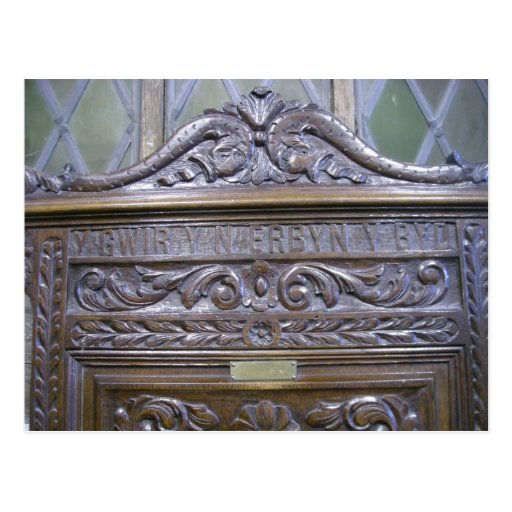
Bardic chair inscription: “the truth against the world”
With no more than this much Welsh in a ritual, or even just Y gwir yn erbyn y Byd [approximately “uh GWEER uhn EHR-been uh BEED”] “the Truth against the World,” you can clearly set apart the language of your rite from ordinary language, and help evoke the heightened state of consciousness characteristic of much (not all) successful ritual.
Benefits of Ritual Language
If you want the John F. Kennedy version – “what ritual language can do for you” – here’s a start.
An FAQ of the Latin Liturgy Association site lists several “important benefits of using Latin” as a “sacral” language, including its close association with worship, as with the Arabic of the Qur’an, the Sanskrit of Hinduism and the Hebrew of Judaism. It also “helps us overcome limitations of time and place” and “participate in the universal reality of the Catholic Church, linking us with the generations” who preceded us. As the language of a sacred musical tradition, it also gives access to the plainsong and chant of the Church.
So Why Use a Distinct Ritual Language?
Huston Smith
OK, you get that ritual and ritual language are powerful and widespread. But why not keep it to your own native tongue and skip the difficulty of learning another language besides? Who has the time for studying and mastering a dedicated language? Isn’t a dedicated practice more important? Aren’t ritual and worship and devotion in [insert your language here] better than none at all? This cry of the heart has a strong appeal. Its human roots are ancient. Huston Smith in his The World’s Religions (p. 34) cites a Hindu prayer, noting, “Even village priests will frequently open their temple ceremonies with the following beloved invocation:
O Lord, forgive three sins that are due to my human limitations:
Thou art everywhere, but I worship you here;
Thou art without form, but I worship you in these forms;
Thou needest no praise, yet I offer you these prayers and salutations,
Lord, forgive three sins that are due to my human limitations.
Surely this is justification, if indeed we need any? You may have seen this prayer incorporated into rituals as part of the reach toward the divine – I have. Of all human failings, surely what language we use in our quest must rank low on the scale of such things?
M. Isadora Forrest notes in her book Isis Magic, “Isis of the Ten Thousand Names provided Her ancient worshippers with a broad range of Divine aspects, functions and affinities” (pg. 8). So if we can approach spirit or divine realm using our own names for it, what’s the need for a separate ritual language? Can’t we reach and communicate with the Goddess [substitute your own preferred name here] using what is, after all, our “mother tongue,” the speech that is most intimate to us? Isn’t this language therefore among the most valid of tools we can use, if we wish to contact and plunge into the Otherworld, the divine realm? It reaches and extends from the heart.
Well, just like you generally appreciate home-baked over store-bought, deities show preferences. Among them are offerings, names and languages. That doesn’t mean that English or whatever your native language is won’t “work” as you lay the roses, pour the mead, light the cedar incense, offer the myrrh or dragonsblood or cinnamon, but it does mean that a more immediate connection is one benefit and advantage of using a ritual language. In part it’s a matter of dedication and devotion. Our efforts please the divine; as someone said – I’m quoting badly here – “the gods enjoy the taste of human sweat in their offerings.”
A tradition can have profound impact on our spiritual paths. Forrest observes (again, insert your preferred designation for “Goddess” and “Isis” as needed):
By examining the evidence this tradition has left us, modern devotees of the Goddess can be connected with and find inspiration in the ancient worship … We can discover the traditional ways Isis was worshipped and learn how her worshippers thought, talked and taught about her. In the stories they told, the religious purposes they agreed upon … we can follow the path of a very ancient religious tradition that can connnect us to our spiritual ancestors. By using the symbols they used and found meaningful– and by finding our own meaning in them – we are empowered by tradition. It can guide us, inpsire us, explain things to us. It provides potent archetypal symbols, sanctified by centuries of use, energized by the meaning invested in them. The devotion of thousands upon thousands of Isis worshippers before us can provide a path we can walk and a context for our own relationship
with the divine. Thus, “tradition can be an extremely valuable tool of connection with the Divine; yet it need not constrain us. Human religious history is a history of change” (9).
Ritual Language and Two Kinds of “Users”
The use of a special ritual language concerns two groups of ritualists in different ways. For writers or composers of rituals and liturgies, the language must be “composable in.” That is, it shouldn’t be so difficult to use that the creation of new rituals and liturgies is so challenging only a few can pull it off. This means that those who know the language can use it creatively. Need a new handfasting ritual, or a rite to plant potatoes? No problem! This also means that the first group can make the ritual accessible to the second and much larger group, the users or participants in rituals and liturgies. This latter groups includes not only the “usual suspects,” the regular participants in rituals, but also any visitors (assuming your rituals with a ritual language are open to them), and readers of any media like your group’s website that explains or presents rituals to a wider audience.
Which Ritual Language?
There are currently some 6000 human languages on the planet, though the number is decreasing dramatically. However, Celtic-inspired Druids need not sort through them; under a dozen ready and suitable options present themselves. (If you want to focus on Asatru and other similar northwestern European Heathen traditions, replace Celtic with Germanic tongues. Likewise, substitute some Slavic options, if you’re into Baltic Heathenism like Romuva, or Hellenismos if you’re a Greek Pagan.etc.).
Welsh, Irish Gaelic, Scots Gaelic, Breton, Cornish, Manx. Throw in Proto-Celtic if you wish. All but the latter have communities of speakers, grammars and dictionaries and various learning resources. (Proto-Celtic lets you try out an ancestral speech in a form that’s still being reconstructed as we speak. Enough exists to compose in it – barely. See the next section for more possibilities.) Admittedly you’re most likely to encounter the modern forms of these, but dive into the modern form, and you can begin to make use of preserved older forms in manuscripts, chronicles, epics and legends, rich with symbolism and myth for rituals, prayers, chants, song lyrics, etc. as yet unborn, unwritten, unchanted, unsung.
Conlangs, Arise!
Game of Thrones
Another option lies in the adaptation of a Celtic language to your purposes. Ritual language is already heightened, altered, shifted. Well, a conlang or constructed language may fit your needs. (For a detailed look at some possibilities, visit Mark Rosenfelder’s online Language Construction Kit.) Conlangers have been modifying adapting, regularizing, extending and creating out of whole cloth an astonishing range of languages. A significant number of them exist in forms complete enough to use for ritual. And you can actually commission a language from the Language Creation Society. You too can do just as the producers of Game of Thrones have done with Dothraki, whose creator David Peterson has created other languages. Visit his website for a sampling.
Perplexed by the contradiction between authentic or historical and concocted or created ex nihilo? You’ve arrived at the classic a priori versus a posteriori nexus – a lively point of debate in the conlang community.
J M Greer
Ends and Beginnings
Had enough? Need a break? Or want to sample the sounds of some 30 European languages? Below is a Youtube clip featuring Celtic, Romance, Germanic and Slavic languages, along with Greek, Albanian and Hungarian to round out the linguistic variety of Europe (see the note below for a complete list of languages and approximate times). You may have visceral reactions to accents, pitches, sounds. I urge you to make note of them. See if you can get down in words what it is that appeals or doesn’t appeal to you in the sounds and overall sprachgefühl, a wonderful German word that literally means “speech-feeling” — the character of a language. This can be helpful as you consider the sound of any ritual language you might want to use. It may also prove useful if you’re wondering what languages you might want to study in the future (if you’re following the language learning advice of John Michael Greer in his talk “A Magical Education”). And there’s a chance it may spark a dream of a past life when you may have spoken a form of one of these languages yourself.
Here’s the 32-language video:
A Next Step
In DRL — A Druid Ritual Language — Part 3, I’ll look specifically at Welsh and then at a couple of conlangs as candidates for ritual languages.
From the Wikipedia entry for “Magical Language“, accessed 3/23/14, which I cite below for its interest:
The performance of magic almost always involves the use of language. Whether spoken out loud or unspoken, words are frequently used to access or guide magical power. In “The Magical Power of Words” (1968) S. J. Tambiah argues that the connection between language and magic is due to a belief in the inherent ability of words to influence the universe. Bronisław Malinowski … suggests that this belief is an extension of man’s basic use of language to describe his surroundings, in which “the knowledge of the right words, appropriate phrases and the more highly developed forms of speech, gives man a power over and above his own limited field of personal action.”Magical speech is therefore a ritual act and is of equal or even greater importance to the performance of magic than non-verbal acts.
Not all speech is considered magical. Only certain words and phrases or words spoken in a specific context are considered to have magical power. Magical language … is distinct from scientific language because it is emotive and it converts words into symbols for emotions; whereas in scientific language words are tied to specific meanings and refer to an objective external reality. Magical language is therefore particularly adept at constructing metaphors that establish symbols and link magical rituals to the world.
Malinowski argues that “the language of magic is sacred, set and used for an entirely different purpose to that of ordinary life.” The two forms of language are differentiated through word choice, grammar, style, or by the use of specific phrases or forms: spells, songs, blessings, or chants, for example. Sacred modes of language often employ archaic words and forms in an attempt to invoke the purity or “truth” of a religious or a cultural “golden age”. The use of Hebrew in Judaism is an example.
Another potential source of the power of words is their secrecy and exclusivity. Much sacred language is differentiated enough from common language that it is incomprehensible to the majority of the population and it can only be used and interpreted by specialized practitioners (magicians, priests, shamans, even mullahs). In this respect, Tambiah argues that magical languages violate the primary function of language: communication. Yet adherents of magic are still able to use and to value the magical function of words by believing in the inherent power of the words themselves and in the meaning that they must provide for those who do understand them. This leads Tambiah to conclude that “the remarkable disjunction between sacred and profane language which exists as a general fact is not necessarily linked to the need to embody sacred words in an exclusive language.”
Video roster of languages and times; “FSI + a number” refers to the U.S. Foreign Service Institute ranking of difficulty for an English speaker, 1 being easier, and higher numbers being comparatively more difficult/requiring more hours of study:
Many spiritual and religious traditions feature a special language used for ritual purposes. The most visible example in the West is Latin. The Latin Mass remains popular, and though the mid-1960s reforms of Vatican II allowed the use of local vernacular languages for worship, they never prohibited Latin. For some Catholics, the use of vernacular reduced the mystery, the beauty and ultimately, in some sense, the sacredness of the rites. If you visit an Orthodox Christian or Jewish service, you may encounter other languages. Within an hour’s drive of my house in southern Vermont, you can encounter Greek, Hebrew, Russian, Arabic and Tibetan used in prayer and ritual.
Language as Sacrament
The heightened language characteristic of ritual, such as prayer and chant, can be a powerful shaper of consciousness. The 5-minute VedicSanskrit video below can begin to approximate for one watching it a worship experience of sound and image and sensory engagement that transcends mere linguistic meaning. The rhythmic chanting, the ritual fire, the sacrificial gathering, the flowers and other sacred offerings, the memory of past rituals, the complex network of many kinds of meaning all join to form a potentially powerful ritual experience. What the ritual “means” is only partly mediated by the significance of the words. Language used in ritual in such ways transcends verbal meaning and becomes Word — sacrament as language, language as sacrament — a way of manifesting, expressing, reaching, participating in the holy.
And depending on your age and attention at the time, you may recall the renewed popularity of Gregorian chant starting two decades ago in 1994, starting with the simply-titled Chant, a collection by a group of Benedictines.
Issues with Ritual Language
One great challenge is to keep ritual and worship accessible. Does the experience of mystery and holiness need, or benefit from, the aid of a special ritual language? Do mystery and holiness deserve such language as one sign of respect we can offer? Should we expect to learn a new language, or special form of our own language, as part of our dedication and worship? Is hearing and being sacramentally influenced by the language enough, even if we don’t “understand” it? These aren’t always easy questions to answer.
“The King’s English”
For English-speaking Christians and for educated speakers of English in general, the King James Bible* continues to exert remarkable influence more than 400 years after its publication in 1611. What is now the early modern English grammar and vocabulary of Elizabethan England, in the minds of many, contribute to the “majesty of the language,” setting it apart from daily speech in powerful and useful ways. Think of the Lord’s Prayer, with its “thy” and “thine” and “lead us not”: the rhythms of liturgical — in this case, older — English are part of modern Christian worship for many, though more recent translations have also made their way into common use. A surprising number of people make decisions on which religious community to join on the basis of what language(s) are, or aren’t, used in worship.
Druid and Pagan Practice
When it comes to Druid practice (and Pagan practice more generally), attitudes toward special language, like attitudes towards much else, vary considerably. Some find anything that excludes full participation in ritual to be an unnecessary obstacle to be avoided. Of course, the same argument can be made for almost any aspect of Druid practice, or spiritual practice in general. Does the form of any rite inevitably exclude, if it doesn’t speak to all potential participants? If I consider my individual practice, it thrives in part because of improvisation, personal preference and spontaneity. It’s tailor-made for me, open to inspiration at the moment, though still shaped by group experience and the forms of OBOD ritual I have both studied and participated in. Is that exclusionary?
Ritual Primers
Unless they’re Catholic or particularly “high”-church Anglican/Episcopalian, many Westerners, including aspiring Druids, are often unacquainted with ritual. What is it? Why do it? How should or can you do it? What options are there? ADF offers some helpful guidance about ritual more generally in their Druid Ritual Primer page. The observations there are well worth reflecting on, if only to clarify your own sensibility and ideas. To sum up the first part all too quickly: Anyone can worship without clergy. That said, clergy often are the ones who show up! In a world of time and space, ritual has basic limits, like size and start time. Ignore them and the ritual fails, at least for you. Change, even or especially in ritual, is good and healthy. However, “With all this change everyone must still be on the same sheet of music.” As with so much else, what you get from ritual depends on what you give. And finally, people can and will make mistakes. In other words, there’s no “perfect” ritual — or perfect ritualists, either.
(Re)Inventing Ritual Wheels
Let me cite another specific example for illustration, to get at some of these issues in a slightly different way. In the recent Druidcast 82 interview, host Damh the Bard interviews OBOD’s Chosen Chief, Philip Carr-Gomm, who notes that some OBOD-trained Druids seem compelled to write their own liturgies rather than use OBOD rites and language. While he notes that “hiving off” from an existing group is natural and healthy, he asks why we shouldn’t retain beautiful language where it already exists. He also observes that Druidry appeals to many because it coincides with a widespread human tendency in this present period to seek out simplicity. This quest for simplicity has ritual consequences, one of which is that such Druidry can also help to heal the Pagan and Non-Pagan divide by not excluding the Christian Druid or Buddhist Druid, who can join rituals and rub shoulders with their “hard polytheist” and atheist brothers and sisters. (Yes, more exclusionary forms of Druidry do exist, as they do in any human endeavor, but thankfully they aren’t the mainstream.)
About this attitude towards what in other posts I’ve termed OGRELD, a belief in “One Genuine Real Live Druidry,” Carr-Gomm notes, “The idea that you can’t mix practices from different sources or traditions comes from an erroneous idea of purity.” Yes, we should be mindful of cultural appropriation. Of course, as he continues, “Every path is a mixture already … To quote Ronald Hutton, mention purity and ‘you can hear the sound of jackboots and smell the disinfectant.'” An obsession with that elusive One Genuine Real Live Whatever often misses present possibilities for some mythical, fundamentalist Other-time Neverland and Perfect Practice Pleasing to The Powers-That-Be. That said, “there arecertain combinations that don’t work.” But these are better found out in practice than prescribed (or proscribed) up front, out of dogma rather than experience. In Druidry there’s a “recognition that there is an essence that we share,” which includes a common core of practices and values.
As a result, to give another instance, Carr-Gomm says, “If you take Druidry and Wicca, some people love to combine them and find they fit rather well together,” resulting in practices like Druidcraft. After all, boxes are for things, not people. Damh the Bard concurs at that point in the interview, asserting that, “To say you can’t [mix or combine elements] is a fake boundary.”
Yet facing this openness and Universalist tendency in much modern Druidry is the challenge of particularity. When I practice Druidry, it’s myexperience last week, yesterday and tomorrow of the smell of sage smoke, the taste of mead, wine or apple juice, the sounds of drums, song, chant, the feel of wind or sun or rain on my face, the presence of others or Others, Spirit, awen, the god(s) in the rite. The Druid order ADF, after all, is named Ár nDraíocht Féin — the three initials often rendered in English as “A Druid Fellowship” but literally meaning “Our Own Druidry” in Gaelic.
A Human Undersong
Where to go from here? Carr-Gomm notes what Henry David Thoreau called an “undersong” inside all of us, underlying experience. “We sense intuitively that there’s this undersong,” says Carr-Gomm. “It’s your song, inside you. The Order and the course and the trainings [of groups like OBOD] — it’s all about helping you to find that song. It’s universal.” As humans we usually strive to increase such access-points to the universal whenever historical, political and cultural conditions are favorable, as they have been for the last several decades in the West.
Paradoxes of Particularity
Yet the point remains that each of us finds such access in the particulars of our experience. (Christians call it the “scandal of particularity”; in their case, the difficulty of their doctrine that one being, Jesus, is the sole saviour for all people — the single manifestation of the divine available to us.**) And the use of heightened ritual language can be one of those “particulars,” a doorway that can also admittedly exclude, an especially powerful access point, because even ordinary language mediates so much human reality. We quite literally say who and what we are. The stroke victim who cannot speak or speaks only with difficulty, the aphasic, the abused and isolated child who never acquires language beyond rudimentary words or gestures, the foreigner who never learns the local tongue — all demonstrate the degree to which the presence or absence of language enfolds us in or excludes us from human community and culture. And that includes spirituality, where — side by side with art and music — we are at our most human in every sense.
In the second post in this series, I’ll shift modes, moving from the context I’ve begun to outline here, and look at some specific candidates for a DRL — a Druidic Ritual Language.
*Go here for a higher-resolution image of the title page of the first King James Bible pictured above.
**In a 2012 post, Patheos blogger Tim Suttle quotes Franciscan friar and Father Richard Rohr at length on the force of particularity in a Christian context. If Christian imagery and language still work for you at all, you may find his words useful and inspiring. Wonder is at the heart of it. Here Rohr talks about Christmas, incarnation and access to the divine in Christian terms, but pointing to an encounter with the holy — the transforming experience behind why people seek out the holy in the first place:
A human woman is the mother of God, and God is the son of a human mother!
Do we have any idea what this sentence means, or what it might imply? Is it really true? If it is, then we are living in an entirely different universe than we imagine, or even can imagine. If the major division between Creator and creature can be overcome, then all others can be overcome too. To paraphrase Oswald Chambers “this is a truth that dumbly struggles in us for utterance!” It is too much to be true and too good to be true. So we can only resort to metaphors, images, poets, music, and artists of every stripe.
I have long felt that Christmas is a feast which is largely celebrating humanity’s unconscious desire and goal. Its meaning is too much for the rational mind to process, so God graciously puts this Big Truth on a small stage so that we can wrap our mind and heart around it over time. No philosopher would dare to imagine “the materialization of God,” so we are just presented with a very human image of a poor woman and her husband with a newly born child. (I am told that the Madonna is by far the most painted image in Western civilization. It heals all mothers and all children of mothers, if we can only look deeply and softly.)
Pope Benedict, who addressed 250 artists in the Sistine Chapel before Michelangelo’s half-naked and often grotesque images, said quite brilliantly, “An essential function of genuine beauty is that it gives humanity a healthy shock!” And then he went on to quote Simone Weil who said that “Beauty is the experimental proof that incarnation is in fact possible.” Today is our beautiful feast of a possible and even probable Incarnation!
If there is one moment of beauty, then beauty can indeed exist on this earth. If there is one true moment of full Incarnation, then why not Incarnation everywhere? The beauty of this day is enough healthy shock for a lifetime, which leaves us all dumbly struggling for utterance.
I mentioned OGRELD in an earlier post — acronym for that “One Genuine Real Live Druidry” that never existed. But for a non-existent thing, it’s proven surprisingly lively in my thoughts. Every time I scratch my head and say about somebody else, “How can you dothat?” when they do or believe or say something that doesn’t match my quirky and partial understanding of the universe, OGRELD raises its fictitious head, pretty frisky for something that isn’t.
But then “existent” and “non-existent” together comprise a pretty useless category anyway, from what I can see. Hit a paradox, seek for a unifying truth behind it: basic tool in my toolkit. Do I really think that what became my mother and my father flashed into existence from nothing some eight decades ago, mucked around, made a life, made me (thank you!!), and disappeared again forever? That’s far less likely, far harder to believe — a major mismatch with my and others’ experience of the universe — than an alternative take on things: that what manifested as my parents, as me, as all the birds and animals and plants and everything here and there and everywhere, the Ten Thousand Things, is something the universe excels at doing.
Rodent of Unusual Size
Why? Because, first of all, it just keeps doing it. Blessedly, bountifully, provocatively, right under our noses, before our eyes, in our ears, right on hand, at the tips of our tongues. And that, more than anything, spells out my sense of any immortality that may be: this wonderful energy keeps changing form, so don’t get too attached to forms. Roll with it. Dance with it. See where it wants to go next, and follow. Get sufficiently intoxicated in the flow, and its apparent ending is just a wave against a rock, a splash in the endless current. Real? Definitely. Splashy and messy? Yup. But not the whole story by any means. The story goes on with the current. The form (the previous chapter, where we left our hero/ine dangling from a rope above the rapid or the ‘gators or the Rodents Of Unusual Size*) gets left behind. Life 101. What do they teach in schools nowadays?! Move along, move along. These aren’t the Druids you’re looking for.*
But our sneaking suspicion of a truth underlying things also brings with it an annoying tendency for us to think that anything out here, in the manifest world, equals that underlying truth completely, finally, once and for all. That’s a mistake in categories — doesn’t work that way. Instead, it arrives provisionally. Approximately. We encounter any “underlying truth” through time, not all at once. You get your piece, I get mine. For today. Tomorrow we need to reconnect, re-source, re-build. Not “two steps forward, one back,” but instead, keep moving or stagnate, bleed and breathe or fossilize, innovate or institutionalize. Where we are today is always somewhere on that continuum (and almost never at either pole, however much the shrillness of current headlines wants us to believe otherwise. Exhibit A: Anti-Christ Obama / Exhibit B: A New Hope).
So OGRELD can seduce us along every one of its points. “One”? Unity is a tough one for human beings. We see it as a goal, but it usually happens intermittently, then we retreat to our local tribes.
“Genuine” and “Real”? Think of the money in both advertising and purchasing for whatever is “authentic, genuine, real.” But in spite of how those qualities have gotten cheapened, or rather because of it, we long for them more than ever. (The Velveteen Rabbit became real because he was loved. Could be we’ve been looking in the wrong places. “Genuine” and “Real” aren’t in other things, but in ourselves, or nowhere. Whether that’s an improvement, a miracle, a discovery, a revelation, Good News, depends on where you’ve been spending your time and energy.)
Even “Live” can be problematic. (That’s one sign of human genius: we can make problems out of everything.) It’s a game — as long as we remember we agreed to play, and as long as we know that the solution or the victory or the endgame is a solution for today. Tomorrow the games reboot. We’re back with the starting pieces and our own ingenuity and creativity. If we know it’s a game, it’s delightful. If we take it too seriously, it’s pure and absolute Hell for everybody. Oh, we know these things. OGRELD (fill in your preferred means of deliverance here: god, sex, liquor, drugs, the Singularity, Progress, Apocalypse), lead us into your truth!
And “Druidry,” the final component? It’s just as problematic as the rest. It’s not for everyone — not because it excludes, tolerant** little sucker that it is — but because, as with most “solutions” we pose to the problems we created, we exclude ourselves from it. We’re better at no than at yes. If you’re looking for an idol to worship (and we all have one or more already), make sure it’s the best damn idol money can’t buy.
So make a list: what do you want in your job/mate/religion/diet/life? Then interrogate that list. If you actually hadX, what would that let you do or be? Keep going through a few more cycles of interrogation: if you then had Y, what would thatlet you do or be? Stop when exhausted, or when you’ve arrived that the truth that underlies the “truth.” (If you don’t know what thatis, there’s a project/problem for you. Have at it!)
/|\ /|\ /|\
*There are times when an excess of pop-culture movie references can mar an otherwise perfectly decent blog post.
**Some brands of Druidry are more tolerant than others. In some forms of Druidry, you’re encouraged to invest your time and energy exploring almost any tradition and practice EXCEPT Christianity — shamanism, Egyptian polytheism, Reiki, permaculture, Hinduism, Voudon, veganism, Asatru, Wicca, Buddhism and onward to the ends of the earth. But not Christianity. (If you think Jesus didn’t also teach good Druid principles, you’ve missed substantial insights from both Druidry AND Christianity.) Not true for all flavors of Druidry by any means, but Christian Druids tend to hang out together, or practice solitary, or stay closeted, or drift away, from what I’ve seen. But see OBOD’s page on Christianity and Druidry.
Images: labyrinth — a fine instance of Druid (Pagan) and Christian imagery working synergistically; “Rodents Of Unusual Size”: photos and accompanying article at The Huffington Post, from an article from June ’13.
Lorna Smithers’ comments about Druid Orders on the last post, “Facing a Critique,” have revolved fruitfully in my thoughts for the last couple of days. I have to laugh at finding myself, if not defending groups and organizations, at least examining their virtues as evenhandedly as possible, given that I’m not much of a “joiner” either, though I’m a member of OBOD.
Smithers reflects:
It was my preconceptions about the middleclassness and conservatism of Druidry that made me steer well clear of it until a couple of years ago until Phil Ryder of The Druid Network gave a talk at my local pagan society, voicing that it isn’t all about robes, ceremony and tradition but forming relationships with the land and communities in which we live. Which identifies it more with radical ecology and grass roots movements than middle class conservatism.
Many people instinctively shy from joining groups for the reasons Smithers gives: they’re confining to the person who wants and needs to do more than follow convention and the group-think that too often can arise from, and mar, such organizations. To many people, the energy and effort required to acclimate to a group don’t equal the advantages that come with belonging. And there are definite advantages, which I’ll talk about later.
A 1906 Breton gorsez (gorsedd)
Druid groups are of course no more exempt from these weaknesses than any other human institution. And for a number of secular Druid groups, some of the satisfactions of belonging are indeed the “robes, ceremony and tradition.” The Welsh, Cornish and Breton gorseddau (the Welsh plural of gorsedd“gathering”) are specifically intended to promote poetry, music and scholarship, and the annual public gatherings are rich with ceremony and symbolism — and robes.
Smithers continues:
I’ve never been able to bring myself to join an Order such as OBOD and pay for their tuition because I don’t want my relationship with nature and the divine to be determined by anybody else’s structure, and I believe one’s local land and community, its spirits and deities are the greatest teachers.
If ever there was a succinct manifesto not just for the solitary Druid, but for all Druids, there it is: “one’s local land and community, its spirits and deities are the greatest teachers.”
Yet we need some kind of structure, even if it’s free-form: a shape for our journeying, a cairn along the forest path. Where to find it? William Blake is credited with saying, “I must create a system, or be enslaved by another man’s.” Sexist pronouns aside, his words ring true. The challenge for the solitary is to be open and receptive enough to perceive what she is being taught, to catch the lessons of the spirits and deities and local land and community. Orders can help in teaching techniques of openness. And the community of the like-minded, of one’s fellows, or of a more formal Order is often the leaven that forms in us an opening to new experience. We catch awen from others’ inspiration, we take flame from neighboring fires.
In my experience, a good half of spirituality is “caught” not “taught.” Or the teaching simply says listen! In the presence of others, human and non-human, we find what we seek when we inhabit fully our ears and eyes and tongues and noses and skins. What we need, to quote Moses at his most Druidic, is right here: “It is not up in heaven, so that you have to ask, ‘Who will ascend into heaven to get it and proclaim it to us so we may obey it?’ Nor is it beyond the sea, so that you have to ask, ‘Who will cross the sea to get it and proclaim it to us so we may obey it?’ No, the word is very near you; it is in your mouth and in your heart so you may obey it.”* To obey is to listen and then to heed what we have heard, to follow what we know in our hearts, what we recognize is present to guide and heal and inspire us.
Emma Restall Orr
Emma Restall Orr, for a decade the joint chief of the British Druid Order (BDO), has pondered deeply some of the challenges of identity, authority, hierarchy and freedom in and outside formal “orders.” Her several short articles in the excellent BDO booklet Druidry: Rekindling the Sacred Fire deserve repeated reading. Here in “So What is the BDO?” she pinpoints the issues:
In keeping with so much of modern Druidry, the BDO exists as a paradox. And like modern Druidry, it is rather difficult to describe. A good place to begin might be to declare that the BDO exists largely as a concept: a means by which things get done, an organized non-organization. Druidry is sometimes easier to define through what it is not, and so is the BDO. It is not a source of teaching for an ancient faith or culture reconstructed. It is not aiming to proclaim a definitive Druidry, be it 3000 years old, 200 or 10. We have a mailing list of subscribers who receive our journal and various other leaves of information, then there are others who belong to our groves but do not subscribe, and many more who attend our affiliated gorseddau [gatherings]. Essentially these are the members and friends of the British Druid Order. Yet the ‘membership’ exists only in this personal way. It is horrifying the number of people, Druid chiefs to media men, who ask what is the membership of the BDO in order to judge its influence and validity. For us, the very existence of a ‘membership’ brings up connotations of an organization to which some people belong and others don’t. And once we find ourselves with an organization with this list of people attached, each one of them investing their energy and their loyalty, those who run the organization begin to find themselves taking responsibility for — and, the gods forbid, speaking on behalf of — that membership, who in turn on some level look to the organizers, and before you know it people are defining positions, and the great confusion of hierarchy and politics ensues. The whole problem of who does represent the membership quickly arises and next comes the democracy or dictatorship debate … Such political considerations are not part of the spiritual tradition that the BDO encourages or practices (65).**
The anti-authoritarian tone of Orr’s words finds a sympathetic reception on both sides of the Atlantic; if anything, Orders like ADF are every bit as structured as OBOD, and many people prefer to remain solitary or at least unaffiliated. John Michael Greer, a member of both orders, and head of a third, AODA, is uniquely positioned to comment about structures and hierarchies. In an article on the ADF website, he notes:
Each type of organization has its advantages and disadvantages. The minimalist approach followed by OBOD has resulted in a streamlined and efficient structure that needs to devote very little time to organizational matters, and has played a large part in helping OBOD go from the edge of extinction to become the largest Druid order in the world in only ten years. On the other hand, its success depends almost entirely on the personal qualities of the Chosen Chief, and members who are dissatisfied with OBOD policies have very few options other than voting with their feet. By contrast, ADF has achieved impressive organizational continuity and has extensive checks and balances in place to prevent malfeasance; this has been paid for by a need for so much involvement in organizational issues that many other matters have had to be neglected for years running.
What this means for actual practice, and what Druids can do whom the land calls and who divine that Orders are not for them, are among the things I’ll tackle in Part 2.
“Druidry is a middle-class phenomenon. What with your workshops, books, weekends and camps, and especially the pricey study materials for groups like OBOD, who else but somebody middle-class could afford it? It’s like so much of the New Age: take away the cash cow that supplies the milk and it’ll collapse. Your ‘nature spirituality’ or ‘green religion’ is just middle-class consumption of good marketing. It’s not the real thing. Where’s the outreach to all levels of society?”
OK, let’s listen to this mostly economic critique. On the face of it, it may seem pretty damning. If Druidry is simple good marketing and money-driven, it’s like so many other trends and fashions: it depends on a manufactured need, or at least a market-boosted one. Take away the marketing and it fades away.
Outdoors the October sky is gray. I gaze out the window, sending a brief acknowledgement to the directions, thanking Spirit for the gift of this life, breathing and being aware of my breath, centering my attention before proceeding with this blog post.
If we look at ancient Druidry, through the filter of its classical recorders who did not always have its best interests at heart, it appears to be a distinct caste. Druids had status and power, and were definitely not the mass of society. They were an elite, with all the pluses and minuses that go with it. There was little we would call “middle-class” about Celtic society. Slaves, warriors, traders, farmers, craftspeople … but no one with that strange combination of material luxury, education, and political clout that looks remotely like what we mean by “middle class” today or for the last 100 years. By our standards or even by Medieval ones when something like a middle class began to emerge, most ancient Celts were wretchedly poor.
As for the over-marketing of the New Age and spirituality and all our current hopes and dreams and fears, that’s one of the creeping plagues of capitalism. If it can be packaged to make money, someone will package it. The retreats and workshops and therapists and healers and “sacred” this and “spiritual” that fill a need, or they wouldn’t exist. But they don’t touch the heart of knowing yourself for part of the world, feeling your body and the earth and trees, birds and insects and fish and animals, sun and clouds and stars all as kindred. The awen that is always streaming out of silence and calling us to sing back does not go away when the money stops clinking and whispering at the cash register. It only becomes more profound. There we can find the heart of Druidry.
Let’s look at the cost of study materials like those of OBOD right up front. If you decide to enroll in the Bardic course, you receive monthly course mailings, access to a tutor, online forums, a subscription to the OBOD magazine Touchstone, and supplemental materials throughout the year. Many people take more than a year — sometimes several years — to complete the work of the grade, but there’s no additional cost. The text-based Bardic study materials cost £215 — at the current exchange rate, that works out to $344 — a little less than a dollar a day. Many people spend more on cigarettes and alcohol. That’s the cost of joining one specific teaching and initiatic order. Printing and mailing cost money. But it is admittedly beyond the reach of many on tight budgets.
Of course, you can be a Druid for free, starting at this moment. You live on this earth, and you can follow your intuition and common sense and spiritual need and shape your own way throughout your own life, paying no one for any teaching, and bowing to no one and nothing except those you feel deserve it. Yes, the support and encouragement of what others have discovered and thought and written is invaluable along the way. Many valuable books and other materials are free online, or available at libraries. But if you want to receive and study OBOD’s Druid teachings, they cost money to reproduce and ship. If you want to study with ADF, or AODA, or the British Druid Order, there are fees because there are administrative costs and physical materials you receive. If you think Druidry is the next big way to make money, form your own order, market your One Genuine Real Live Druidry, and have at it.
One of the joys of living Druidry is a sense in the West at least that we’re recapturing something lost, something beautiful and profound, but also something utterly vital and practical. Many tribal peoples have preserved their traditional wisdom for living on earth without destroying it. Such wisdom is hard won. Tribes that practiced slash-and-burn agriculture, for instance, often found their land damaged after a few cycles and needed to move. Poor farming practices meant not just environmental degradation but often starvation and death.
As one flavor of Druidry, OBOD offers itself as “a spiritual way and practice that speaks to three of our greatest yearnings: to be fully creative in our lives, to commune deeply with the world of Nature, and to gain access to a source of profound wisdom.”* That may on occasion be good marketing, but it’s also uncommonly good sense to live in a way that makes our decades here all they can be, to walk lightly on the earth.
Several other attendees have written fine accounts of this year’s OBOD East Coast Gathering — see Dana’s and John’s posts for two good examples, which are also introductions to their excellent blogs. Here’s mine (with a link to last year’s post, too).
/|\ /|\ /|\
Once I pull off the pavement onto the dirt road to Camp Netimus, I stop the car and get out. Apart from the soft metallic tinkling of the hot engine, there is only wind.
The first year I felt self-conscious about greeting the trees, but this year it comes effortlessly. How to convey the sense of subtle presence, of quiet welcome? Nothing I can “prove” or point to, nothing objective for any journalist who might opt to “cover” the weekend for a human-interest piece in a local paper, except a middle-aged man briefly motionless beside a tree. And yet. I stand with one palm flat against the gray trunk of this Netimus oak, and the sense of familiarity and welcome is palpable. How to explain this sense of return? Others at the Camp mention similar experiences over the course of the weekend. If this is delusion, and “only imagination” (two words that never should go together), it’s healthier than almost any other I can think of. The summer campers are gone, Alban Elfed — the fall equinox — is here, and Druids have returned to honor the spirits of place and the season. I know that a few hundred yards up the hill, I will see again the members of my Druid tribe, who have gathered from Texas and Michigan, Louisiana and Florida, New Hampshire and Georgia to celebrate, reunite, sing, dance, talk, learn, eat, drink, and revere the living green world.
Steps up to fire circle from Main Lodge — photo courtesy of Wanda GhostPeeker
Damh the Bard and Cerri Lee — photo courtesy of John Beckett
In spite of a pesky virus Damh picked up on his way across the pond, he regaled us with two sets around the evening bonfire the first day.
The perfect encounter, fitting for a bard: we know him first by his voice alone, which precedes him, rolling out from his albums, videos and podcasts. Check out his live performances on Youtube, and you get a sense, too, of his warm personality and delightful laugh. Now he is with us in person, a commanding presence, towering over us at 6’4” or 5”.
Susan Jones, OBOD Tutor Coordinator. Photo courtesy John Beckett
Susan Jones, the Tutor Coordinator for OBOD, also returned to the States this year to celebrate with us and lead a fine meditative workshop on the Hermit and Journeyman in Druidry. We need the Elders of our Tribe to help us steer on a “path with heart,” to give us a sense of who and what has gone before. We’re all in training to be Ancestors, after all. What will we contribute when our descendants invoke and welcome us around their bonfires and hearths?
/|\ /|\ /|\
The Cernunnos ritual Friday night proved powerful for many, the presence of the god palpable in the circle of the ceremony. John Beckett, priest of the god, led us in invoking him. The Lord of the Forests has remained on the periphery of my life thus far, a being I respect but have few dealings with. Yet in his grove I reconnected with an animal guide who made his presence known several other times during the weekend — that’s for another post. Two owls called intermittently throughout the rite.
This year was my third time attending the ECG, and the first for my wife. Over the last decade we’ve managed to pursue more deeply our individual paths and interests, while keeping each other apprised of what we’re learning and experiencing. I’d apparently talked up the Gathering enough that she opted this time to see “what I was up to” when I disappeared for several days in late September, to return smelling of woodsmoke and bursting with stories.
/|\ /|\ /|\
After weather forecasts early in the week that would have left most days of the Gathering in rain, the weather shifted. Both Thursday and Friday turned bright and sunny, with cool evenings perfect for what has become a tradition of bonfire, mead, talk, drumming, story and song late into the night.
Four Quarters, we honor you. Hawk of the East, Stag of the South, Salmon of the West, and Bear of the North, you came to be with us once again.
Directional Banner Carriers — photo courtesy John Beckett
I’m a fake Druid. So is everyone else who names Druidry as the path they walk. And I’ve come to love it.
In a guest essay on the ADF website, J. M. Greer notes,
The very last of the ancient Druids went extinct in the ninth century, and the surviving scraps of their teachings and lore are so fragmentary, diffuse, and contradictory that they don’t form anything like a workable system. All modern Druid groups—OBOD, ADF, and everyone else—were invented in the last three centuries by people who used some mix of scholarly writings, personal spiritual insight, speculation, and sheer fantasy as raw material for their concoctions.
Thus if “real Druidry” is defined as the sort that was practiced by Druids in Celtic countries before the arrival of Christianity, all modern Druids practice fake Druidry. That can’t be avoided, since “real Druidry” hasn’t existed anywhere for more than a millennium. What differentiates one modern Druid tradition from another is the particular kind of “fake Druidry” each practices.
Of course, Greer writes here as an outsider might see it, to try on a truth many still feel uncomfortable to admit. As Archdruid of AODA, he obviously doesn’t habitually dwell on his particular flavor of Druidry as “fake.” And when I practice my Druidry, it doesn’t feel like a “concoction” at all. It coheres, because like anything used — steps, coins, dishes, skin, planets — the edges get smoothed, a few chips and dents show up, and everything takes on that “lived-in” look, that patina that makes antiques look antique, that gives worry-stones their shine, and faces their habitual smile or frown lines. I make an offering at an altar, I join my Druid brothers and sisters at a festival, I sit for an hour in moonlight meditating, and whether a group of people 300 years ago rediscovered things most traditional peoples have long known doesn’t really concern me. Clearly, the moment itself offers me better things to do.
Greer continues:
The Druid community has on occasion been racked by squabbles between traditions, caused as often as not by simple misunderstandings that could have been quickly cleared up by people familiar with more than their own tradition. Since none of us have any right to claim possession of the One Genuine Real Live Druidry, a willingness to share the world with other Druid traditions, and to participate with them in celebrating the cycles of nature and the miracle of the living Earth, is a virtue that may well be worth cultivating by Druids of all kinds.
Ah, “One Genuine Real Live Druidry” — Ogreld, I’ll call it. My new tradition, founded right now as you’re reading this. Here we go … unlike every other practice and belief on the planet, Ogreld sprang into existence full-grown and perfect, without parents or kin. To get that essential temporal edge over other faiths and practices, Ogreld is the original “source faith” of humanity, practiced when people first became human. In fact, to top it off, it was Ogreld that madethem human. Now we’re cooking! … This is faking with a vengeance. “I’m faker than you are. Na-na-na-na-na!”
In the Egyptian afterlife, the human heart is weighed against the feather of Maat, who personifies truth and justice. The Wise among us understand that whether I acknowledge three elements of earth, water and air, or four elements of earth, air, fire and water, or a god whose elements are bread and wine, my rituals will still work in accordance with the reverence and love I bring to them, and the holy presences that empower them. Whether I have helped or hurt the earth and its inhabitants will matter a lot more than the color of my robes, the rank I’ve achieved, or the number of gods I pray to. The only real Druidry is a “path with heart,” a way of walking the earth that wisely honors all paths with heart. I’m busy faking that wisdom, practicing till I get it “righter” than before. Insofar as faking is doing something, it’s generally better than not doing anything at all. So yes, I’m a fake Druid. Have you met any other kind?!
The OBOD East Coast Gathering offers a chance for Druids to walk among friends, attend workshops, and (re)connect with a beloved landscape in northeastern Pennsylvania. Here’s the OBOD banner, the color easy to see, the three-rayed Awen symbol of the Order a little harder to make out. (Photo by John Beckett)
The camp which hosts the Gathering offers both tent areas and basic cabins.
With more people attending this year than last, the ample space helped.
The area is splendid for large group rituals as well.
The rainstorm over the weekend brought with it cooler weather, which just made us all the more grateful for hot drinks and the varied meals our staff of Druid volunteers cooked for us.
(Dining room photo by John Beckett)
I didn’t arrive in time for the opening ritual. But the Closing was held on the same grounds, with the same altars. Here are shots of the two entry cairns seen looking south, along with the four directional altars and their banners: Stag of the South, Salmon of the West, Bear of the North and Hawk of the East.
One of the added pleasures this year was the attendance of more Druids from different orders, including ADF. Here are members of Cedar Light Grove assembled around their grove banner (photo by John Beckett).
OBOD groves brought banners too.
And this year, the third Gathering and my second, yet another draw was the chance to meet and learn from both OBOD’s Chosen Chief Philip Carr-Gomm, and AODA’s Archdruid John Michael Greer.
The first photo is of Philip giving a talk in Storyteller’s Grove a little north of camp.
The second shows John Michael during one of his morning talks in the Pavilion.
In the third, both join for a conversation and Q&A. (3 photos by John Beckett)
And of course no Druid gathering would feel complete without the ceremonial garb that makes the rituals visually distinctive and memorable.
Here are JM Greer and John Beckett:
Topping off each day were the evening fire-circles and drumming, music and song and ample home-brewed mead, cyser and sack from our resident firekeeper and brewer, Derek. Then came the Hour of Recall, truly. The Closing ritual, goodbye hugs, departures, promises to keep in touch, to plan events, to meet again. Another remarkable East Coast Gathering comes to an end, with opened hearts and subtle changes to take away and live through for the coming year. Till 2013!
An altar is an important element of very many spiritualities around the world. It gives a structure to space, and orients the practitioner, the worshipper, the participant (and any observers) to objects, symbols and energies. It’s a spiritual signpost, a landmark for identifying and entering sacred space. It accomplishes this without words, simply by existing. The red color of the Taoist altar below immediately alerts the eye to its importance and energy.
As a center of ritual action and visual attention, an altar is positioned to draw the eye as much as any other sense. In Christian churches like the one below, everything is subordinated to the Cross and the altar immediately below it. Church architecture typically highlights this focus through symmetry and lighting. But in every case, enter the sacred space which an altar delineates, and it tells you what matters by how it is shaped and ordered and organized.
Part of OBOD* training is the establishment and maintenance of a personal altar as part of regular spiritual practice. Here’s a Druid altar spread on a tabletop. Nothing “mundane” or arbitrary occupies the space — everything has ritual or spiritual purpose and significance to its creator.
Such obviously physical objects and actions and their appeal to the senses as aids in spiritual practice all spring from human necessity. We need the grounding of our practices in the physical world of words, acts and sensations in order to “bring them home to us,” and make them real or “thingly,” which is what “real” (from Latin res “thing”) means.
Religions and spiritual teachings accomplish this in rich and diverse ways. We have only to think of Christian baptism, communion and the imposition of ashes at Easter; Hindu prasad and tilak; Jewish bris/brit (circumcision) and tallit (prayer shawl) and so on.
Atheists who focus exclusively on belief in their critiques and debates thus forget the very real, concrete and physical aspects of religious and spiritual practice which invest actions, objects and words with spiritual meaning that cannot be dismissed merely by pointing out any logical or rational cracks in a set of beliefs. Though you may present “evidence that God doesn’t exist” that seems irrefutable to you, you haven’t even begun to touch the beauty of an altar or spiritual structure, the warmth of a religious community of people you know and worship with, the power of a liturgy, the smell of incense, the tastes of ritual meals, the sounds of ritual music and song.
Just as we hear people describe themselves as “spiritual without being religious” as they struggle to sift forms of religion from the supposed “heart” of spirituality, plenty of so-called “believers” are “religious without being spiritual.” The forms of their spiritual and religious practice are rich with association, memory and community, and can be as important as — or more so than — a particular creed or set of beliefs.
Having said all of this, I’ve had a set of experiences that incline me away from erecting a physical altar for my Druid practice. So I’m working toward a solution to the spiritual “problem” this presents. Let me approach it indirectly. Once again, and hardly surprising to anyone who’s followed this blog or is as bookish as I am, the trail runs through books.
Damiano, the first volume in a fabulous (and sadly under-known) trilogy by R. A. MacAvoy, and recently reissued as part of an omnibus edition called Trio for Lute, supplies an image for today’s post. Damiano Delstrego is a young Renaissance Italian who happens to be both witch and aspiring musician. His magic depends for its focus on a staff, and we see both the strengths and limitations of such magical tools in various episodes in the novel, and most particularly when he encounters a Finnish woman who practices a singing magic.
When I read the trilogy at its first publication in the 80s, the Finnish magic sans tools seemed to me much superior to “staff-based” power. (Partly in the wake of Harry Potter and the prevalence of wands and wand-wielders in the books and films, there’s a resurgence of interest in this aspect of the art, and an interesting new book just published reflecting that “tool-based” bias, titled Wandlore: the Art of Crafting the Ultimate Magical Tool).
So when I then read news of church burnings, desecrated holy sites, quests for lost spiritual objects (like the Holy Grail) and so on, the wisdom of reposing such power in a physical object seemed to me dubious at best. For whatever your own beliefs, magic energy — whether imbued by intention, Spirit, habit, the Devil, long practice, belief in a bogus or real power — keeps proving perilously vulnerable to misplacement, loss or wholesale destruction. Add to this Jesus’ observation that we are each the temple of Spirit, and my growing sense of the potential of that inner temple of contemplation — also a feature of OBOD practice — and you get my perspective.
Carrying this admitted bias with me over the years, when I came last year to the lesson in the OBOD Bardic series that introduced the personal altar, I realized I would need both contemplation and creativity to find my way.
My solution so far is a work in progress, an alpha or possibly a beta version. My altar is portable, consisting of just five small stones, one for each of the classic European five elements — four plus Spirit. Of course I have other associations, visualizations and a more elaborate (and still evolving) practice I do not share here. But you get the idea. (If you engage in a more Native-American nourished practice, you might choose seven instead: the four horizontal directions, above [the zenith], below [the nadir] and the center.)
I can pocket my altar in a flash, and re-deploy it on a minimal flat space (or — in a pinch — right on the palm of my hand). One indulgence I’ve permitted myself: the stones originate from a ritual gift, so they do in fact have personal symbolic — or magical, if you will — significance for me. But each altar ritual I do includes both an invitation for descent and re-ascent of power or imagery or magic to and away from the particular stones that represent my altar. Lose them, and others can take their place for me with minimal ritual “loss” or disruption. Time and practice will reveal whether this is a serviceable solution.
This post is already long enough, so I’ll defer till later any discussion of the fitness of elemental earth/stone standing in for the other elements.
/|\ /|\ /|\
*OBOD — the particular “flavor” of Druidry I’m studying and practicing.
As editor of a collection of essays, The Rebirth of Druidry, OBOD‘s Chosen Chief Philip Carr-Gomm attempts to characterize something of the appeal of the spirit of Druidry in human terms. I quote his article at length because in its effect it is all of a piece, and because it provides a suitable introduction to some things I want to say about the Goddess:
Druidry is the perfect lover. You fall in love with her so easily because she is so romantic. She whispers to you of the magic and mystery of the turning stars and seasons. She loves trees and Nature above all things, and you yearn for these too. She tells you stories of Gods and Goddesses, the Otherworld and fairies, dragons and giants. She promises secret lore — of sacred trees and animals, of herbs and plants. She points deep into the past, and ahead towards a future which is lived in harmony with the natural world. But just when you are convinced you will marry her, because she is so beautiful, so tantalizing, so romantic, she turns around and there she is, with rotten teeth and hideous face, cackling and shrieking at your naivety. And she disappears, leaving you with just her tattered cloak, made up of a few strands: some lines from the classical authors, whose accounts are probably inaccurate anyway, a few inferences drawn from linguistic and archaeological research, which could be wrong, with the rest of the cloth woven from material written from the eighteenth century onwards, replete with speculation, forgery and fantasy.
You feel a fool. You don’t tell your friends about your lover. You feel tricked and defrauded, and decide to follow something more authentic, more established, more substantial — like Buddhism, or Christianity, or Sufism, or Taoism — something serious. But then you go out walking. You follow the old trackways, you come to the old places. You see the chalk gods and stone circles. You pause and open yourself to the Land, and there She is again. But this time she is even more enchanting because you can see that she is not just a beautiful woman, full of romance and seduction, you can see that she is also a wise woman, who will provoke as well as seduce you, who will make you think as well as make you feel. And then you suddenly know why she has been the object of fascination for so many through the ages. She is the Muse, the Goddess behind Druidry, the bestower of Awen, of inspiration.
Obviously the imagery here from a male author conveys part of how a man may first encounter the “Goddess behind Druidry”; it may not appeal to women, who find their own powerful ways of connecting with Her. In mythic terms, however, this account very much reflects the changeability of the Goddess — what has inaccurately been called her fickleness, and which has caused many accustomed to meeting deity in a single, invariant form to confuse variety with unreliability or untrustworthiness. Westerners in particular have largely been cut off from experience with aspectual deity, which the Goddess so clearly manifests. Rather than manifesting a loving and compassionate presence, “[t]he deity may appear in wrathful or challenging forms, but these should not be considered hostile. She is the kernel of truth at the heart of everything, and if she appears in challenging forms to you, look more deeply, considering why this may be so,” suggests Caitlin Matthews in her slim but potent book, The Elements of the Goddess. “Many of those who venerate the Goddess are unhappy with her supposedly dark aspects because they associate ‘dark’ with ‘evil.’ In order to save her child about to do something dangerous or silly, a mother will get angry, shout or scream, but this doesn’t mean to say she loves her child any less.”
My first encounter with the Goddess came unbidden, unsought, when I was 25. (You need to know: I’m not especially sensitive or psychic. Friends who are say anyone who wants to reach me has to raise quite a ruckus to get my attention. If you’d asked me then I’d say — still would probably, even today — that half of what people experience in such situations is imagination. But now by “imagination” I mean something considerably larger and more potent than I did then. More about that later.) It was a frosty autumn day, and I was wandering the fields and scattered woods of a farm my father had recently bought in western New York, south of Rochester. I paused in a swampy grove of trees, with several fallen and decaying trunks to sit on. A mood or atmosphere of autumn pervaded the place, almost palpable. The air lay perfectly still. The musty-sweet smell of dried dead leaves filled the air, along with a tang of rot and manure from a nearby field, and a hint of woodsmoke. Over the hills from a distance came the faint roar of some town maintenance vehicle — they were always patching roads in the area. But distant sounds simply deepened the stillness by contrast. As this meditative silence spread and enveloped me, I became aware of a presence that filled the grove and towered over me, fifty, sixty feet tall. Immense. One face of the Goddess. Conscious encounter. Her.
She didn’t knock me on my ass, though that might have been useful too, given how dense I can be. But though I describe it here in mild enough terms, the experience was unforgettable, not for any one detail, but for its undeniable — and familiar — quality. This was someone I knew. Not someone or something alien, or to be feared, or a matter of belief, any more than I need to believe in the tree-trunk I sat on. It was like finding a limb which, when you found it, you knew had always been a part of you all along. You just hadn’t been aware of it. As if it had been asleep, but for its waking you finally twitched a muscle in it, and in feeling it respond you felt it.
So what’s the big deal, you say? “He met the Goddess, in some ways it was an anticlimax though also somehow memorable, he got over it, it was years ago. So?”
A year later I was in the throes of my first love affair (can anyone say “late bloomer”?), a tumultuous relationship in which I did get knocked on my ass. Among all the other things this Goddess encounter was, it was preparation, or warning. I needed greater emotional experience, insight, maturity. I was about to get it.
In between the divine and human realms is an archetypal one — a place, often, of dream and vision, and the idealized images of Others for men and women which “haunt our imagination and often make our love-lives incredibly tortuous until we realize that these daimons will never become physical realities. They are messengers between the divine realms and the human levels of our experience” (Matthews, 13). This was part of what I needed to learn firsthand. No book knowledge this time. It was an initiation of its own.
So this fall at OBOD’s East Coast Gathering, in a meditation involving an encounter with the Goddess in her guise as Cerridwen, I felt a surge of panic — again. “Cerridwen is bad. She tricked Gwion Bach in the old Welsh tale.” But it was old programming. Incomplete knowledge. Fear of that “fickleness” I mentioned earlier. “The old, outworn, dualistic concept of the Goddess as cruel and capricious must be viewed for what it is: a reflection of our shadow-side, a terrible polarization of social responsibility with which women have been burdened as a sex” (Matthews, 24). But now I had more tools to begin to deal with it. At Samhain I did specific work with the Goddess. I needed to. Is it any wonder I also spent 15 years working in a freshman girls dorm as a house parent? Training up close and personal. “The Goddess stands at the heart of life, death and further existence and she will assume the forms which are most appropriate in her dealings with our world” (Matthews, 24). Or as a teacher in the other path I follow related, when he talked about his own experiences with inner and outer realities, “They had to get me to stop bowing every time they appeared, so they could actually work with me and get some work out of me.”
Matthews continues, in ways particularly useful for a male bard like me. “Men experience the Goddess through their creative side. She makes manifest their ideas by animating their dormant creativity. There is a strong sense of ebb and flow about these energies which give men an experience of the cyclical nature of the feminine menstrual cycle. This kind of relationship is rarely recognized for what it is, yet all men can discover and welcome this experience. Although the effect of a Goddess upon a man is less immediately physical than in a woman, it is nonetheless potent” (15).
There is much misunderstanding of gender and sexuality, and what constitutes the self and its connection to the world, perhaps nowhere more so than in the West, with its addiction to pornography, its fear of homosexuality, its violence against women, and its frequent indifference to children. I’ll let Matthews have her last word here. “Every human being is a child of the Goddess … The way of the Goddess is one of natural law and natural wisdom … It is primarily the people of the West who are orphans of the Goddess. The social and political reasons for this desolation have been documented in many books … Both women and men need to find their Mother, relating to her and her creation in fresh and balanced ways, for every one of us needs to drink of her wisdom and realign ourselves with her natural laws.” This is not a matter of belief but of incarnation — our own — to live fully, gratefully and passionately in this world, until we leave it.
/|\ /|\ /|\
Nano update time. Is it any wonder, in light of this post, that I’m writing about a succubus?! And sympathetically — as a main character?! Must be some sort of assignment from the Goddess. Further training. God knows if it’s publishable. (Goddess may know, but if she does, she ain’t tellin’.) Reached 17,804 words: over 1/3 of the way there. Need to hit 20,000 today to be fully caught up, including today’s work. Should be able to do it. Major scene yesterday, in which Alza connected with the man she needs for her magical work, showed him her nature in a brief feed and reversal of energies to restore him, bypassing the mental level altogether, where the idea of a succubus would have completely flipped him, and left him with a medallion magically linked to her — ongoing physical contact to reinforce the dynamic. The resulting reactions when he deals mentally and emotionally with what he already knows will be interesting to capture, but the heavy lifting for that scene is done.
I’d been including more fire imagery in description and action, since Alza’s succubus nature seemed increasingly to resemble that of a fire demon. And then, as a break yesterday, doing some research on demons and succubi in other cultures, I happened on this quotation from the Qur’an: “And the jinn, We created aforetime from the smokeless flame of fire” (Al-Hijr, 15:27). And in an email yesterday from the university where I’m taking a seminar, advertising a weekend workshop for men: “FRIDAY, 11/11/11 – SUNDAY, 11/13/11 – ON THE EDGE OF FIRE: A MEN’S SPIRITUALITY RETREAT.” Right between the eyes — the kind of serendipity and synchronicity and happy accident one hopes for in writing. So I’m on some kind of track. I’m just still discovering what it is. And that’s much of the deep pleasure of this verbal marathon.

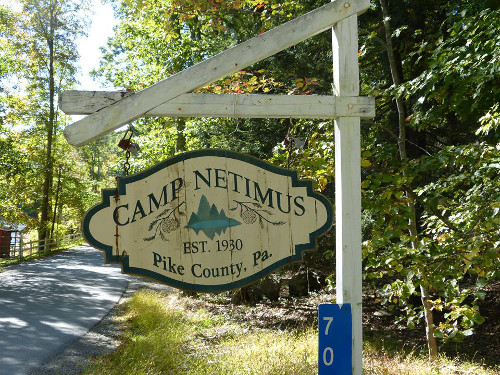

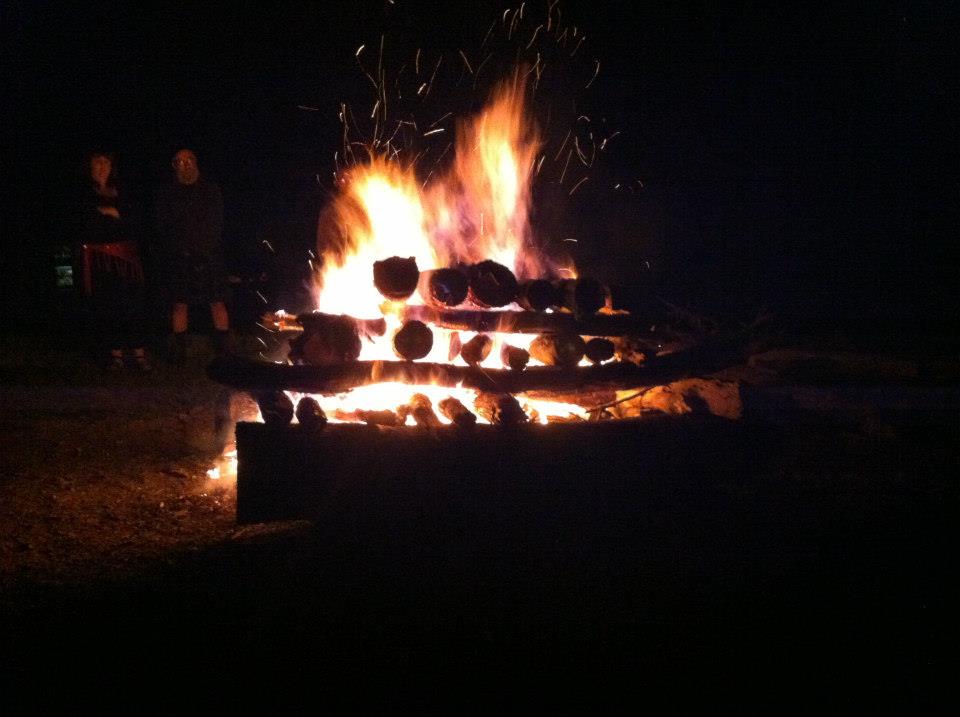





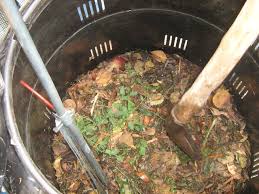


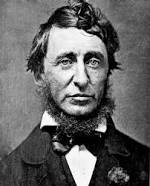

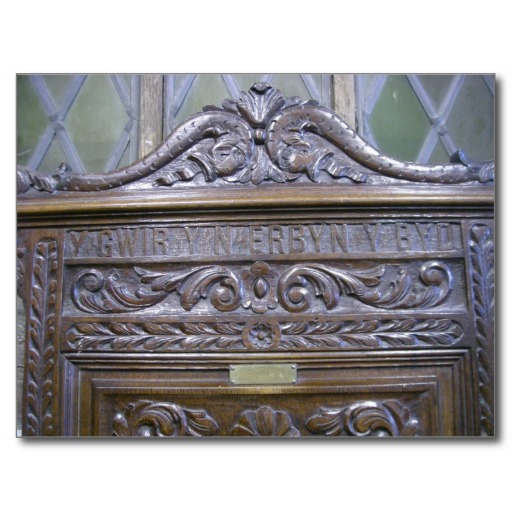


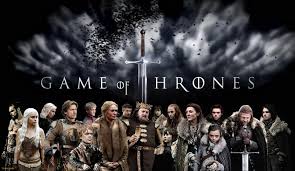
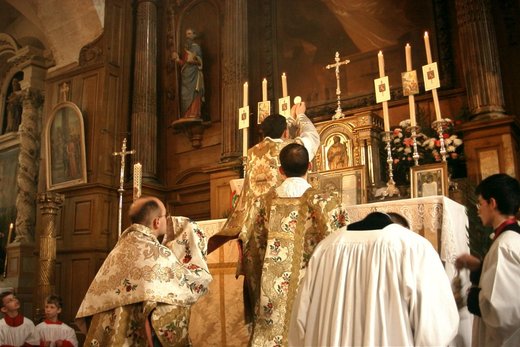
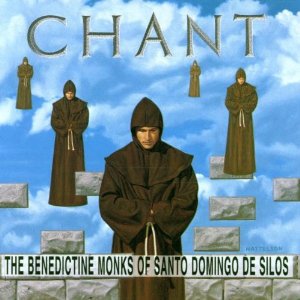
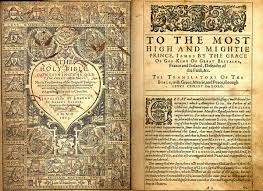
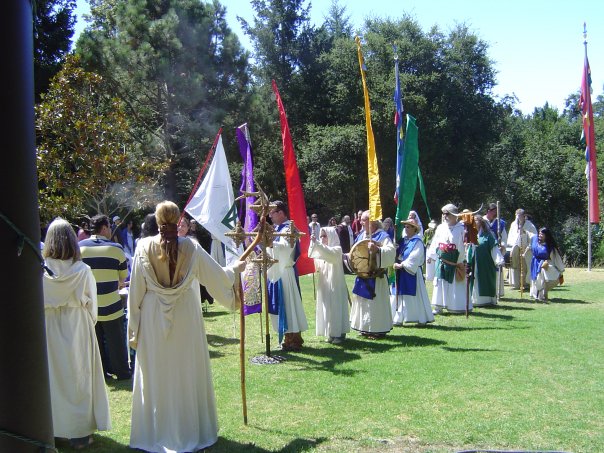
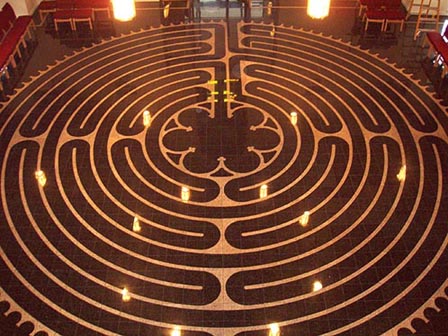
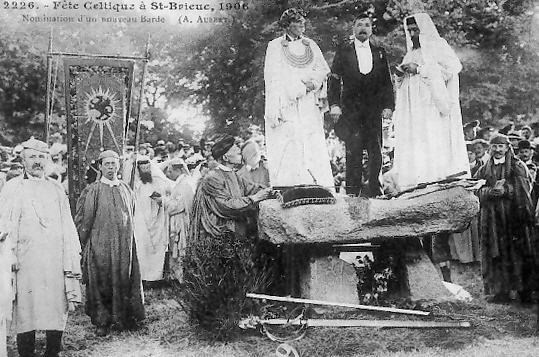





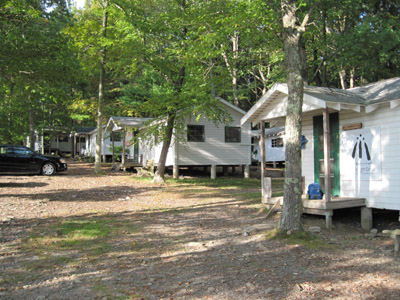
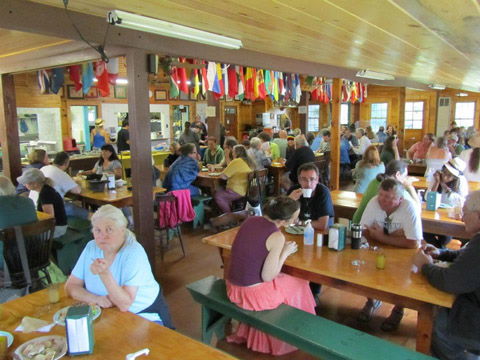


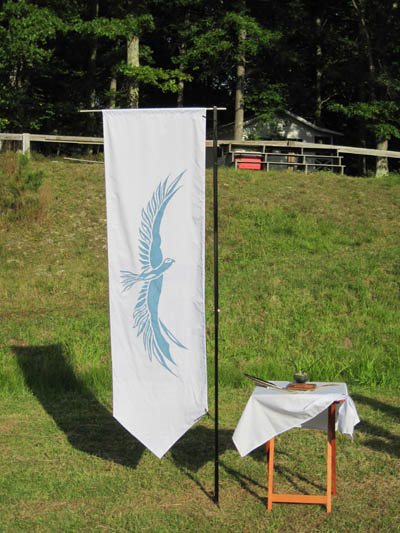

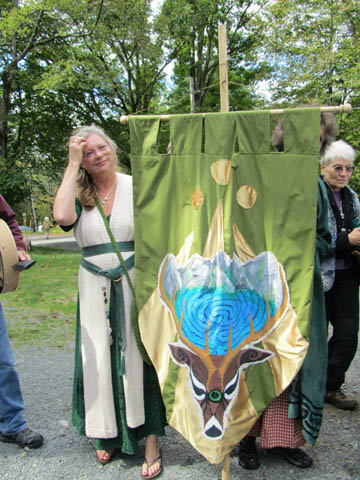



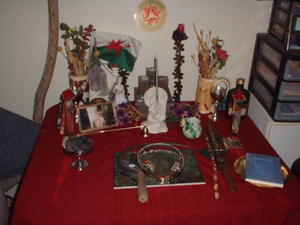


 A Druid Way