Sunlit November trees.
A scarf of woodsmoke curls between the mountains.
Look long enough at beauty, someone says.
You’ll begin to see more things as they are.
/|\ /|\ /|\
So, Nano writing update: was out of town at a conference yesterday, and got no writing done. That means today’s a triple push: tomorrow I have a class, a car appointment, and a (late) Samhain celebration with a friend, so there’ll be less time to write. And catch up from yesterday, along with today’s 1667 words.
I’m grateful they keep coming. You know a story is launched — and this says nothing about its quality, only about whether it’s alive for the author, at least — when characters invade your dreams and begin telling you stuff about themselves. And while exercising this morning on our secondhand treadmill in our breezeway (45 degrees, but warmer than outside), I got another piece of plot. Rather, more a set of questions to ask (and answer), and a couple of flashes of image-ideas. By the end of today, I should be at least at the 10,000 word mark if I’m to stay on track.
My main character has retreated to her house in Santa Fe to take stock. (Why Santa Fe? I’ve no idea. Never been there. Would like to, yes. Have to do some research, to see how I might use the locale.) Now to avoid merely lengthy exposition and instead make things happen. I might be able to get away with some flashback, dramatize bits of the past that are now relevant. I keep picking up the stray question here and there that won’t let go, and it generates backstory — in some cases, gobs of backstory. But no stopping to worry about whether the story should begin somewhere else. That’s for a revision. Right now the point is to keep going, keep seeing new pieces I wouldn’t encounter any other way. In that way it’s like any creative process. The road rises to meet your feet as you keep walking.
Maybe you’ve had the dream version: you’re dreaming, you come to a cliff, you’re aware enough to say, “It’s a dream — I can jump and nothing will happen! Woo-hoo!” So you toss yourself in complete abandon, enjoying the thrill of that reckless plunge you would never take awake, but just as the cliff edge spins away above and behind you, you terrify yourself by asking: what if it’s NOT a dream?!
With luck, at this point, you don’t wake yourself up, heart pounding, breathing hard. Instead, you watch to see how you will land, and where, whether you will sprout wings and fly someplace else, etc. In other words, you’re hungry to know what will happen next?!Don’t let me wake up yet!
In her blog, Alison Leigh Lily writes beautifully about the human body as a holy thing, an altar:
So, too, my body is the altar in the nemeton [sacred grove–ADW] of my soul — that small, solid piece of world that settles down like a stone into my awareness. And that awareness in turn is carved by the spiraling torrents of the sacred world, the sun that crafts the seasons out of mud and wind, the moon that pushes the sea to its extremes, the stars that draw the eye into the great distances that yawn open between us, the deer, the jay, the badger, the rustling oak and every being and body that dances through its longing, hunger, fear, curiosity and sleep. All these things turn about the sculpted edge of my nemeton, the sanctuary my soul has made of itself, the self that calls itself “I” and reaches out into the world to touch the chaos that has given birth to it. Sitting in the center of that nemeton is my body, all surface, the appearance of skin and hair and angles and soft curves of fat and loose muscle. Like a ladder that reaches into the dark. A spine, a wellspring, a single tree, a tongue of flame. My body is the altar around which my spirit gathers itself into stillness. Not a temple, but only a simple, useful table where I sit down to do my work.
And some of the work we are called to do is to recognize that altar. In the Bible I read, “I will go up into the altar of God” — introibo ad altare dei in Latin. I use it as a mantra, a chant, to be mindful of the altar as a place to ascend to. For it feels like we do actually rise up, into the body, out of thought, out of waking, out of the distractions and worries and daily obsessions, the small news that passes for important events that other people call “headlines,” but which are mostly just footnotes — out of the image and into the reality, into this body that is part of the world, not a thought or an idea or a remove from the thing itself, but the place where we experience a universe.
I strive to occupy this body, this world, as fully as I can, to be fully incarnate. Not to forsake this great, unheralded, impossibly large opportunity to know, to dare, to will and to be silent, to listen for the voices of the Others who move all around me, chickadee at the feeder, crows scavenging a dead squirrel on the road early this morning as my wife and I drove through the dark and the fog to her weaving apprenticeship.
And Tom, who introduced himself yesterday afternoon — a neighbor, out chopping wood. He paused from his work and called to my wife and me, walking slowly over to where we were unloading our car. “It’s something I can still do, and it needs doing,” he said to us, as he stood before us, dressed in blue sweat pants, a gray sweatshirt, a blue hoodie, pieces of leaves and bark plastered to this clothes. “I was just recovering from knee surgery when I had a stroke. And I was recovering from the stroke when I lost my job. But I can still chop wood, as long as I don’t have to bend my legs too much.” So I touch that friendliness, and something of the spirit in him, that brought him to our doorstep to chat in the fading afternoon light of a day in early November. Is any song more wonderful?
“Sanctuary my soul has made of itself,” Alison says — a poem, a song, a prayer for this life, this world.
“Prayer is about being hopeful,” says Sister Alice Martin. “It is not a phone call to God’s hotline. It’s not about waiting around for an answer you like, especially since sometimes the answer you’re going to get is NO!” And she continues, “If you are going to pray, then don’t worry. And if you are going to worry, then don’t bother praying. You can’t be doing both.” I know which one I want to choose, often as I can, prayer at this altar of my body.
“But ask the animals, and they will teach you; the birds of the air, and they will tell you; ask the plants of the earth, and they will teach you; and the fish of the sea will declare to you” — Job 12:7-8.
Mourning doves at the feeder this morning, blue jays squabbling on our standing-seam metal roof, shortly before dawn a fox leaping through the snow nearby, mice in the garage foraging on birdseed I spilled and haven’t yet swept up, a few geese lingering and looking forlorn as they forage in the dark water of a lake, made darker by contrast with the surrounding snows.
Visible kin, feathered and furred. Beneath the surface of the pond, a few salamanders who haven’t yet burrowed into the mud to winter there. Scaled kin.
And golden till the end — leafy kin — a young maple in our back yard, shouldering its way up among larger pines.
What can I ask, and what will they teach, tell and declare?
Isn’t everything open and shut at the same time, the glory and the wretched side by side, the fox killing the hare, the wonder of sunrise, a birth and a death both?
But what of the between, where we all live, where it is often neither? The third way we pass over, because it constantly moves with us, never stopping to be wholly seen or felt, a shadow at our backs, a light in front of us, a suspicion of beauty and the marvelous: peering through the grime and fog of a dirty window, a commuter on the way to work, waving; a bare branch with exactly seven sparrows wing to wing, puffed against the cold; the surprise of light on water, perfect mirror; a child’s unflinching gaze. O my world, altar of how many things to see and know and suffer and enjoy and give up and welcome again, how can I do anything else than love you, in the end?
On other blogs, I’ve also looked at practices and perspectives found in many places, Druidry among them, that are forming part of new-old ways of living on earth. The video below captures something of what I’ve found in Druidry. It’s got a nice flute solo and some good nature images. How were you planning to spend the next two and a half minutes, anyway?!
That presence in forest, grove or single tree is something kindred to me, so I walk under the branches, and touch the bark and speak with them, and listen. Their slow gestures move in the air above me. And the silence rings in my hearing. Druids and trees — that was something I understood right away. In childhood my closest friends were trees. What is it about them?
The German poet Rilke captures a piece of it in one of his Sonnets to Orpheus:
A tree ascended there. Oh pure transcendence!
Oh Orpheus sings! Oh tall tree in the ear!
And all things hushed. Yet even in that silence
a new beginning, beckoning, change appeared.
Creatures of stillness crowded from the bright
unbound forest, out of their lairs and nests;
and it was not from any dullness, not
from fear, that they were so quiet in themselves,
but from just listening. Bellow, roar, shriek
seemed small inside their hearts. And where there had been
at most a makeshift hut to receive the music,
a shelter nailed up out of their darkest longing,
with an entryway that shuddered in the wind —
you built a temple deep inside their hearing.
Trees get me to go “quiet in myself,” so that silence is not absence of speech, but a positive space that allows the stillness to unfold and open up and include the listener in it. From it rises the “tall tree in the ear.”
Orpheus, the “you” of the last line, is a musician, a listener who hears the space between notes. He knows sound and silence blend to make possible the third thing of music. Wisdom speech, as opposed to chat and gossip, possesses that same character, emerging out of the silence which makes it possible, and bearing the imprint of its quality.
Such communion is a powerful tool. The rough “shelters” we construct out of our animal longings point us toward knowing these things, toward recognizing and gathering in the temple we can find “inside our hearing.”
I’m picking up on Steve Schwartzman’s recent comment here for a title to this post: “happy hunger.” We usually think of hunger as a “simple” biological drive, the body’s impulse towards food or sex or life. Yes, as sometimes conscious beings we can override our hungers, at least up to a point, for some other purpose. But to think of these or any hungers as “happy” I take as a prod in a good direction — a pointer, a reminder, a prompt that a shift in attention and consciousness is possible and has arrived full of benefit.
So what of other hungers? A hunger for connection, a hunger for the sacred, a hunger for contact with the natural world — all of them vital hungers which we struggle to answer and fill each day. And so many “unhappinesses” when we don’t meet these hungers — crimes and random behavior and restlessness and secondary hungers for stimulation — sugar, fat, salt, second-hand sex (porn), alcohol and drugs (to change awareness any way we can!), gossip, fits of temper, violence — these stem, I know at least in myself, from unfulfilled primary hungers, from attempts to shift consciousness out of the bland, boring, mundane, even unreal sensation of “just existing.” As if life, the most real or literally “thingly” thing we experience, could also be “unreal.”* (Which it also is. And that’s neither a good or bad thing, but part of the way the universe apparently works.)
Those of you familiar with psychologist Abraham Maslow’s hierarchy of needs know that, in his schema, these other hungers, and especially the hunger for the sacred, aren’t considered the “largest” or most “immediate” ones at all. They’re at the top of his hierarchy, most distant from Maslow’s naming of our “primary” needs for food and sex and safety. But I’d argue that in fact the need for the sacred is our primary hunger, and that all the rest fall in line behind it. The less we’re connected to the sacred, the more we’re just flesh machines. Fortunately we’re always connected to some degree — that’s what being alive is. The task is to blow the spark to fire, to nourish and feed that singular flame through and with all the others, so that eating and lovemaking and all the “daily-ness” of our lives, potentially everything, becomes sacrament, a door for the sacred to enter this instant, right here, and transform us. It’s what Christians call the abundant life, what Zen means by satori, and what we all experience in those transcendent moments that do not last because we also live through the (potential) sacrament of time, that sweeps us ever onward to the next, the latest, the new. A physical world can only manifest eternity as time. And our next task is to see time our ally, to make it and to know it as a sacrament as well. Not as endpoint — it can’t be that, in its ceaseless flow — but as ongoing opportunity for practice and reverence and worship.
So the “happy hunger” is the hunger that connects us, the hunger we recognize and welcome and honor. As a Druid I have a tool-kit to make room for the sacred, to invite and witness it around and within me and all whom I meet, to increase its presence in my consciousness, and then to bring more of it into my world and surroundings and atmosphere and aura and presence, so that others may encounter it, too, and access it in their own lives. We all have access points to many ways to do the same thing. The tools aren’t what’s lacking. It’s the courage and love and trust and responsibility to make use of them for our own good, for the good of the whole. This is my prayer and my goal for practice, my ritual and my path. May you strive and realize, delight and rejoice, as you discover and find your own.
/|\ /|\ /|\
*”real,” from Latin re-alis, “real, thingly,” from re-s, “thing, matter, affair.” Thus the “real” means simply whatever is a “thing,” and so the “unreal” is the realm where distinct “things” disappear, where there is a whole, a network, an interplay, an eco-system, and not a collection of separate things to be counted — the “real” is whatever we can count, or assign a number to. And so then of course we turn around and protest that we’re not just numbers to be counted, we’re not just statistics, or collateral damage, we “matter” (odd use of the “material” to point to the sacred!). Here is our recognition that the spark in us is sacred, that it knows more that “this.”
Between legs of my flight back early this morning from my cousin’s wedding, I stood in an airport shuttle at Washington/Dulles, watching for a long minute as the sun edged into view in a glory of red and orange. Then the shuttle turned as it headed towards the main terminal, and I couldn’t see the horizon anymore.
I glanced around at my fellow passengers. Every single one of them was looking down, intent on a cell phone or iPad or some other device. Had they all missed beauty? Then finally I heard one couple directly ahead of me say something about the colors along the skyline. How often have I missed what’s just beyond my vision at the moment, but accessible with just a slight shift of attention — off myself and onto things in the larger circles of the world?
How easy we overlook what’s freely given to us! Would we attend to it, value it more, if we had to pay a small fee each time we wanted to witness a sunrise or a rainbow or a storm?!
It’s true that we often treat what we buy with more respect than what comes to us gratis. It’s also true that by “owning” something we feel we have a right to do with it whatever we wish because it’s “ours.” Nature as entertainment, as a product for consumption. “My” holly bush, “my” yard. Imagine nature a signatory even to one of our decrees concerning it.
Meanwhile, the holly spreads its sharp leaves, unconcerned. Red berries flash into vision, and wind sifts between leaf and fruit.
We’re often disposed toward or away from future experiences by previous ones, and for the bookish and private child I was while growing up, books provided me some of those experiences. One favorite that I still re-read from time to time is the fantasy classic, LeGuin’s A Wizard of Earthsea. And one of my favorite passages is a piece of wisdom that is pure Druidry in its nature-focus. When the main character Ged has spent his power in a desperate attempt at healing a child, and afterward lies comatose, his pet otak, a weasel-like creature, gently licks him:
“It was only the dumb instinctive wisdom of the beast who licks his hurt companion to comfort him, and yet in that wisdom Ged saw something akin to his own power, something that went as deep as wizardry. From that time forth he believed that the wise man is one who never sets himself apart from other living things, whether they have speech or not, and in later years he strove long to learn what can be earned, in silence, from the eyes of animals, the flight of birds, the great slow gestures of trees.”
This is some of the same instinctive wisdom, an inkling or hunch or suspicion about where wisdom may be found. It is bodily wisdom, as least at first, the same kind of wisdom or knowing that helped save lives on Sept. 11, when some people obeyed an impulse to do something different that morning, take a different mode of transportation, or vary the route to work, call in sick, stop for a bite to eat before arriving at work, and so on. We’ve all heard the stories.
If this is instinct, Druidry has no wish to domesticate it, but to extend it, to work in concert with it, to find out its wisdom and humbly listen to it.
I set myself to listen when I can. I’ve long been uncomfortable around bees, wasps and hornets. I got stung badly more than once as a child. But this summer, hanging out laundry, I took myself in hand, and learned to watch them and listen to them and talk quietly to them instead. Below the clothesline of our house, several bees busily gathered pollen from a clump of goldenrod growing there (we let a part of our backyard grow wild every year). I acknowledged them and admired their steady labor and music, never hurrying, but also never pausing. Talking to them did make me feel better. In turn, the bees did not bother me, though they knew I was there. The hum of their wings was steady and assured. A few investigated the damp towels I was pinning up, and several flew around me as they left. We worked in harmony at our respective tasks. By establishing a vibration of peace, we could each do what the moment required.
One of the options for the OBOD course I’m taking is to receive the course materials either as written text, or on CD (or both). I opted for the CD version, and the experience of hearing the various narrating voices, the sound-scape rather than sight-scape (each lesson on the CD includes a musical transition between sections), and the absence of a text to refer to, all contribute to a remarkable different sense of learning from what I’m used to as a reader. While I’m also taking an evening course at a seminary, and though that class is, like many, heavily discussion based, there’s a written syllabus (also online), we generally refer to one or more of the ten assigned class texts, and somehow the greater class experience still feels book-based, even though 95% of the in-class work is informal lecture and discussion.
In sum, the CDs have much of the effect of radio — sound builds different experience than vision. Though the West is at present heavily biased in favor of sight over hearing, there is a primacy to sound that vision cannot touch. In the beginning, we’re told, was the Word, the creative sound. Interestingly, the Hindu tradition also begins with sound — Vac or Vak, the original Word. Hearing wisdom makes it more visceral and immediate.
“Believe one who knows: you will find more in woods than in books. Trees and stones will teach you that which you can never learn from masters” — Bernard of Clairvaux (1090-1153)
Whether we believe Bernard or not, his claim is eminently testable. After testing it for yourself, belief is rather beside the point. So what is it that trees and stones teach, and how does it differ from what we can learn from “masters”? Some of this natural wisdom is difficult to put into words, not out of some obscurantist pseudo-mysticism, but because it is a kind of somatic knowledge — a knowledge the body gains from doing as opposed to what the mind gains from thinking and conceptualizing. How do we know how to ride a bicycle? Once the body acquires the experience, it doesn’t forget — even if the actual knowledge is not something we can usefully put into a set of memorizable “instructions.” That won’t help. Your body has to learn how to ride and learn it by muscle memory, and no amount of intellectual learning will bring us closer to such knowledge. Only experience will do.
The bookish culture of medieval and early modern Europe referred to the “Book of Nature” as a source of great wisdom, alongside holy scripture. For Druids, nature is scripture. While there is plenty of book learning a Druid can acquire, the beginning and ending of Druidry lies in experience of the natural world. If there are things I “can never learn from masters,” nevertheless a good master will turn me loose to experience them for myself. However much I look out my front picture window at the wind bending the ash and the red maple, and the sun shining on them, I know little compared to what I learn feeling the wind on my face and the sun on my skin. A sense of natural presences — of what have been called spirits, devas, elementals — is also something you can’t gain by thinking, any more than you can meet a new person by thinking about people you already know. But time outdoors can deliver this new knowledge to you, if you’re patient and alert, and place this knowledge beyond intellectual argument, because it is at least partly somatic knowledge. The body simply knows. I found this out myself last week, astonished at the number of presences on the small piece of land where our house sits. The back yard teemed with beings. I didn’t have to “believe” in them, anymore than you have to believe in people picnicking near you in a park. The decision at hand for me was whether or not to greet them. They were so perfectly who and where they should be that for me it seemed discourteous not to.
Druids seem to be enjoying a superficial popularity these days. Games like the world-wide phenomenon of World of Warcraft, a massively multi-player game, typically make up the first several listings on most search engines if you type in “druid.” These druids are of course characters or roles that players adopt and then develop or “level up” through prolonged experience of the game, in ways both like and very unlike daily life. Here’s an excerpt from the World of Warcraft Wiki: “Druids are keepers of the world who walk the path of nature, following the wisdom of the Ancients and Cenarius, healing and nurturing the world. To a druid, nature is a delicate balance of actions, in which even the smallest imbalance can create storming turmoil from peaceful skies. Druids draw their power from this wild energy, using it to change their shapes and command the forces of nature.”
The French comic series Asterix, better known in Europe than in the U.S., features the druid Getafix (his name, like those of many of the other characters in different translations, is either a pun or play on words):
In the world of fiction a casual reader can also encounter some engaging and reasonably accurate stories that attempt to portray Druids in a balanced way. Fantasy and historical novelist Morgan Llywelyn has written several fine novels, one of her best being the eponymous Druids. Set in Celtic Gaul (more or less modern France), the story takes place during the growing conflict between Julius Caesar and the Celtic tribes he is “pacifying.”
The tale is narrated by Ainvar, a young apprentice druid of the Carnutes, a historical Celtic tribe whose homeland was in central Gaul, south-west of the modern capital of Paris. Ainvar is a “soul friend” (Gaelic anam cara) of Vercingetorix (82-46 BCE), chief of the neighboring Arverni tribe and another historical figure who stood against the incursion of the Romans under Caesar by attempting to unify the fiercely independent Celtic tribes against the Roman general’s encroaching legions. He is even mentioned in Caesar’s military memoir The Gallic Wars and in a few other ancient sources.
Throughout Llywelyn’s book, several other Druidic practices and beliefs emerge in ways natural to character and story, notably a sense of the sacredness of the land, the interconnectedness of all things, the value of ritual and blessing to imprint events in consciousness and experience, and the balance and pattern of the world, of which humans are a part, and which we ignore at our peril.
and a time to every purpose under the heaven, says Ecclesiastes. Nowadays people say in partial and often unconscious echo, “Everything happens for a reason.” It’s a loaded statement. In the natural world we can find pattern and order, and much of the appeal of Druidry lies in acknowledging and celebrating such patterns. The physical world reflects an order that does not depend on human effort, a pattern which recurs and circles and balances itself: dark with light, death with life, decline with renewal.
These are comforting notions, but what of violent crimes, natural disasters, horrific diseases? Then the words turn glib and facile, if not downright cruel. Tell a burn victim, a family made homeless by a tornado, the target of sexual assault that there’s a reason or purpose behind their suffering. The statements are much less cheery or supportable in such instances.
But the statements assert even more this. A “reason” suggests the “purpose” of the original quotation, an intention and even an intelligence behind it all, perhaps “out there” in the world, perhaps “in here” in human perception and the urge to make sense of experience. Is the universe malevolent? Does it intend us ill? Or, as many suspect, is it in fact not conscious at all, and wholly indifferent to human presence?
[My wife and I found this half-ton boulder two years ago when we dug up a new garden area. It now sits upright in our front lawn, more or less aligned north-south, and it’s starting to acquire a patina of lichen. Unsought. Beautiful.]
My experience with Druidry thus far has pointed me toward a perspective that comes through experience rather than principally through argument or rational process. These questions matter most prior to experience.
It can, for instance, be pleasant to lie in the sun. Actually lying in the sun delivers this realization after the fact. The warmth feels good, and the body responds to the heat and light. But beyond that, the relaxation may bring a discovery about something completely unrelated to sunbathing — a problem or difficulty I’m having. Likewise, the practice of Druidry can put a Druid in the position of discovering and knowing things unsought, without feeling the need to take a position on them either for or against. You simply know.
Of course we can seek out experiences expressly to test the validity of a belief or opinion for ourselves — that is, after all, good scientific method — but the after-the-fact quality of unsought insight allows one to absorb the experience in a less-conditioned way, without expectations or already-formed conclusions. Experience is primary, and all our explanations follow. Otherwise, we’re merely echoing others’ opinions about their experiences. Once you’ve experienced it yourself, any opinions about it start to matter a lot less.
That’s one reason that Druids I’ve met are tolerant of often divergent beliefs — they know that experience can dissolve doubts and contradictions and disagreements and leave us on the far side of mental processes and constructs, where a new landscape has opened up, and the former questions don’t matter so much any more. Or they’ve been transformed. Or new questions have arisen that are much more challenging and engaging. The world itself has changed for us.

 So, Nano writing update: was out of town at a conference yesterday, and got no writing done. That means today’s a triple push: tomorrow I have a class, a car appointment, and a (late) Samhain celebration with a friend, so there’ll be less time to write. And catch up from yesterday, along with today’s 1667 words.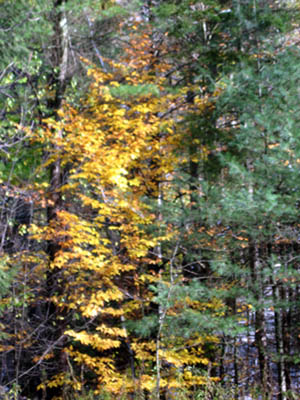




 A Druid Way