Archive for the ‘initiation’ Category
Go to Part 1 | Part 2 | Part 3 | Part 4 | Part 5 | Part 6
 The circle of a dozen or so Druids in the grove ahead wait in silence as I approach with my guide. Half are dressed in ceremonial garb, and the chief Druid, in addition to her white robe, wears a circlet on her brow. Just below it, three streaks of white descend and splay outward — the three rays of awen*, spiritual illumination and inspiration. They stand out on her tanned skin.
 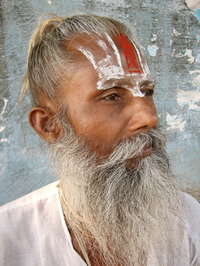 In that instant, other faces flash in my awareness — followers of Vishnu and Shiva, who wear similar ritual tilak, facial markings that identify them as devotees of their god. I know from prior experiences that I have lived past lives in India. Initiation often links us to previous openings of consciousness, a reminder of this long path we walk.
In the same instant, my awareness shifts again. What we do here feels immemorially ancient — the grove, the gathered initiates, the ritual challenge, the spiritual power invoked to seal the rite, the sense of kinship with these people. The circle also feels larger than the number I can see — many who are present come “without their skins on.” The form of the rite is endlessly variable, and yet always the same at heart: Will I accept this opportunity to grow? Even as awe runs its cat-feet up and down my spine, I think how many times I have no doubt answered with my life: “No. I am afraid. Other things matter more. Doing nothing is easier. I don’t like change.” But from these half-beginnings and false starts, and from the times I did inch forward, I have built up a reservoir of spiritual momentum that serves me now. I have grown since those times, willingly and unwillingly. I can do more now, because of what I did then. How much still remains to be seen. But I am newly initiate. I have begun … again.
We cannot readily live in this consciousness all the time without training and discipline. But it serves as a foretaste of what is possible. This is, after all, initiation — a beginning, an open door. How and whether I move forward depends on me.
“You are the best you’ve ever been,” a Wise One tells the disciples gathered to listen and question. I measure this against a nagging sense of having lost much of what I once knew, and could do. Is this an echo of wisdom and achievement I threw away sometime in the past, or an inkling of what lies ahead? If I’m the best now, with the crap I know I have hanging off me, what kind of schmuck was I, oh, say a thousand years ago, or ten lives into the past?! And so we introvert and let our weaknesses decide who we are, rather than knowing they are merely guidelines for where to bring the light, where to put conscious intention rather than unthinking reaction. If I can perceive them, I’m part-way to no longer letting them rule.
Go to Part 1 | Part 2 | Part 3 | Part 4 | Part 5 | Part 6
/|\ /|\ /|\
*Awen (ah-wehn), a Welsh word meaning “inspiration, illumination,” also serves in OBOD some of the same purposes that OM does for meditators in other traditions. As an echo of primordial sound, it is chanted in ceremonies and in private.
The three rays of awen are sometime represented thus: /|\ (I use a triple awen as a text divider and as part of this site’s design.) OBOD uses a three-rayed awen, topped with three dots, as a logo and symbol of the Order.
Image: tilak.
Go to Part 1 | Part 2 | Part 3 | Part 4 | Part 5 | Part 6
I speak for myself, of course. It’s all that any of us can do. But as I approach what is most deeply true for me, I find I can begin to speak true for others, too. Most of us have had such an experience, and it’s an instance of the deep connections between us that we often forget or discount. I’m adding this Part Two because the site stats say the earlier post on initiation continues to be popular.
/|\ /|\ /|\
Within us are secrets. Not because anyone hides some truths from us, but because we have not yet realized them. The truest initiations we experience seem ultimately to issue from this inner realm of consciousness where the secrets arise. Deeper than any ocean, our inner worlds are often completely unknown to us. “Man is ‘only’ an animal,” we hear. Sometimes that seems the deepest truth we can know. But animals also share in profound connections we have only begun to discover. We can’t escape quite so easily.
Our truest initiations issue from inside us. Sometimes these initiations come unsought. Or so we think. Maybe you go in to work on a day like any other, and yet you come home somehow different. Or you’re doing something physical that does not demand intellect and in that moment you realize a freedom or opening of consciousness. Sometimes it can arrive with a punch of dismay, particularly if you have closed yourself off from the changes on the move in your life. In its more dramatic forms initiation can bring with it a curious sense of vulnerability, or even brokenness — the brokenness of an egg that cracks as this new thing emerges, glistening, trembling. You are not the same, can never be the same again.
The German poet Rilke tries to catch something of this in his poem “Archaic Torso of Apollo.” He’d been blocking at writing the poems he desired, poems of greater depth and substance, instead of the often abstract work he’d composed until then, and his friend the sculptor Rodin sets him to studying animals. Rilke admires Rodin’s intensely physical forms and figures, and Rilke ends up writing about a classic figure of Apollo that is missing the head. Yet this headless torso still somehow looks at him, holds him with eyes that are not there. Initiation is both encounter, and its after-effects.
We cannot know his legendary head
with eyes like ripening fruit. And yet his torso
is still suffused with brilliance from inside,
like a lamp, in which his gaze, now turned to low,
gleams in all its power. Otherwise
the curved breast could not dazzle you so, nor could
a smile run through the placid hips and thighs
to that dark center where procreation flared.
I may witness something that is simply not there for others, but nonetheless it is profoundly present for me. Or I see something that is not for the head to decipher, interpret, judge and comment on. There’s nothing there for the intellect to grasp. In the poem, the head of the sculpture of Apollo is missing, and yet it sees me, and I see or know things not available to my head. I feel the gaze of the sculpture. I encounter a god. Or just a piece of stone someone shaped long ago into a human figure, that somehow crystallizes everything in my life for me right now. Or both.
The sensation of initiation can be as intensely felt and as physical as sexuality, “that dark center where procreation flared.” It hits you in your center, where you attach to your flesh, a mortal blow from a sword or a gesture that never reaches you, but which still leaves you dizzy, bleeding or gasping for breath. Or it comes nothing like this, but like an echo of all these things which have somehow already happened to you, and you didn’t know it at the time — it somehow skipped right past you. But now you’re left to pick up the pieces of this thing that used to be your life.
Otherwise this stone would seem defaced
beneath the translucent cascade of the shoulders
and would not glisten like a wild beast’s fur:
would not, from all the borders of itself,
burst like a star: for here there is no place
that does not see you. You must change your life.
You feel Rilke’s discovery in those last lines*, the urgency, the knowledge arriving from nowhere we can track. I have to change, and I’ve already changed. I know something with my body, in my gut, that my head may have a thousand opinions about. I may try to talk myself out of it, but I must change. Or die in some way. A little death of something I can’t afford to have die. There is no place in my life that does not see me, that feeling rises that I can’t escape, and yet I must escape. It’s part of what drives some people to therapy. Sometimes we fight change until our last breath, and it takes everything from us. Or we change without knowing it, until someone who knows us says, “You’ve changed. There’s something different about you. I can’t put my finger on it,” or they freak at the changes and accuse us, as if we did it specifically to spite them. “You’re not the person you used to be,” meaning you’re no longer part of the old energy dynamic that helps them be who they are, and now they must change too. Initiation ripples outward. John Donne says, “No man is an island, entire of itself. Each man is a piece of the continent, a part of the main.” Sometimes it’s my own initiation, sometime I’m feeling the ripples from somebody else’s. The earthquake is in the neighborhood, right down the street, in the next room, here — or across the ocean. But ripples in each case.
Sometimes we “catch” initiation from others, like a fire igniting. We encounter a shift in our awareness, and now we see something that was formerly obscure. It was there all along, nothing has changed, and yet … now we know something we didn’t before. This happens often enough in matters of love. The other person may have been with us all along, nothing has changed … and yet now we feel today something we didn’t feel yesterday. We know it as surely as we know our bones. We can feel the shift under our skin. The inner door is open. Do we walk through?
Go to Part 1 | Part 2 | Part 3 | Part 4 | Part 5 | Part 6
/|\ /|\ /|\
*Mitchell, Stephen, trans. The Selected Poetry of Rainer Maria Rilke (English and German edition). Vintage, 1989.
Secrecy often emerges as a national issue in times of crisis. Recall the debate over the Patriot Act enacted in the wake of the Sept. 11th attacks, and the kinds of broad governmental powers the Act authorized, including significant reductions of citizen privacy. Secrecy can become central to state security, and exists in uneasy tension with the “need to know.”
President Kennedy declared in an April 27, 1961 speech that unjustifiable secrecy is repellent, dangerous, and virtually un-American:
The very word “secrecy” is repugnant in a free and open society; and we are as a people inherently and historically opposed to secret societies, to secret oaths and to secret proceedings. We decided long ago that the dangers of excessive and unwarranted concealment of pertinent facts far outweighed the dangers which are cited to justify it.*
Of course, he was addressing the American Newspaper Publishers Association, and also standing implicitly against the Communist bloc and its perceived threat to the West. (You can listen to a portion of Kennedy’s speech on Youtube here.) Nevertheless his points are well-made, and still almost painfully applicable today, in the wake of Wikileaks and similar events.
Yet secret societies, in spite of Kennedy’s assertions, do have a long and well-established place in the history of America, and many still thrive today. They flourish at many colleges like Yale, with its Skull and Bones the most famous — or notorious — of several societies for college seniors. Another similar and infamous example, though not affiliated with a school, is the Bohemian Grove. Both have generated entertaining conspiracy theories, books, films, and news articles, all of which occasionally offer pieces of the truth. Both exist, and both count among their membership some of the most powerful and influential people in the world. Bohemian Grove counts among its members George H. W. Bush, Clint Eastwood and the late Walter Cronkite, according to a Univ. of California Santa Cruz website.** Should we be worried?!

Opening Night at Bohemian Grove
Many sororities and fraternities also share elements of secret societies, depending on their charters and missions. Still other similar organizations enjoy spotless reputations, such as the PEO Sisterhood, mostly public in its support for education, but still retaining some secret aspects.
 Secret organizations are in fact particularly American, or were in the past. At the nation’s founding, all but two of the signers of the Declaration of Independence were by some accounts members of the Masons or other society. In the late 1800s, roughly 40% of the U.S. population belonged to the Freemasons, Odd Fellows, Knights of Pythias, the Grange, Knights of Columbus, Order of the Eastern Star, or other secret, service, fraternal or social organizations. The 19th century was in many ways the heyday of such groups, which have declined since, even as Americans began to lament the loss of community cohesiveness and devotion to public service, unaware of the irony.
To step even further back in time, secrecy was after all crucial to the survival of Christianity, which took form as a sect within Judaism, and within a generation was perceived as a threat to Rome. Suspected Christians were arrested, forced to worship the reigning Roman emperor (who in some cases claimed divinity) and recant their faith, or face execution in various bloody forms, including by wild animals, in the Circus Maximus, Colosseum or Amphitheater. Until the emperor Constantine in the 300s made the religion a recognized faith of the Empire, Christianity was often an underground practice, with the ichthys (sometimes called the “Jesus fish”) as one of its secret signs, by which fellow believers might recognize each other.
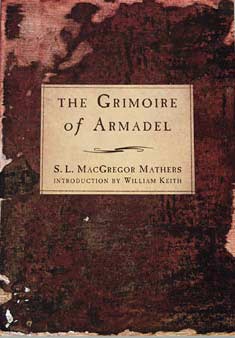 The range of contexts in which secrecy manifests can be surprisingly wide. The discipline of keeping a secret sometimes serves as a test for membership in a group. If you can keep a secret about something insignificant, then you may earn the right to gain access to the greater secrets of the group, because you’ve demonstrated your integrity. Shared secrets are a key element to defining in-groups and out-groups. In the Middle Ages, much knowledge was automatically assumed to be secret. If it was disseminated at all, it appeared in a learned language like Latin or Greek which only literate persons could read and access, and as often it was a zealously-guarded guild or trade secret which only guild members knew. Significantly, the Old French word gramaire meant both “grammar” and “magic book,” and is considered the most likely source of the word grimoire, also meaning a magic book. Inaccessible or secret language and hidden or secret knowledge were the same thing, and occult meant simply “hidden.”
Some kinds of knowledge are experiential and therefore in a different sense hidden or secret from anyone who hasn’t had the experience. Consider sex: there is no way to share such “carnal knowledge” — you simply have to experience it to know it. And thus Adam and Eve “know” each other in the Garden of Eden in order to conceive their children. Many languages routinely distinguish “knowing about” and “knowing” with different words, as for instance German kennen and wissen, French savoir and connaitre, Welsh gwybod and adnabod, Chinese hui/neng/zhidao. The kinds of experiential knowledge humans encounter in a typical lifetime are substantial and significant: first love, first death, first serious illness and so on. Note how these are often connected with the experience of initiation, discussed in a previous post.
It’s vital here to note that it is not secrecy itself but the nature of the secret that is crucial in assessing its significance accurately and dispassionately. I continue to cite J.M. Greer for his lucid and keen observations about the importance and potentials of secrets and secrecy, and the influence of his thinking pervades this series of posts. I mentioned in Part One that though we all take part in the web of communication, there are ways to see it from the outside and more objectively. We can occasionally and briefly free ourselves of its more negative effects and minimize its compulsions, then return to it for its positive benefits of human solidarity and companionship. As I’ve mentioned, solitude can temporarily ease its influence, and grant us a clearer space for reflection. Another group which experiences a consciousness apart from the web are sufferers of mental illness, who are sometimes involuntarily forced outside it. There they may perceive the arbitrary nature of cultural assumptions and behaviors, the “blind spots” inherent in every culture and human institution, and the hollowness of social convention. Their unwitting shift away from the web can make their perceptions, words and actions bizarre, frightening and difficult to manage. Clearly there is danger in breaking the web, or leaving its patterns of coherence that allow us to make sense of the world.
Greer observes:
To have a secret is to keep some item of information outside the web, so that it does not become a part of the map of the world shared by the rest of society. A gap is opened in the web, defined by the secret, and as long as the secret is kept the gap remains. If the secret in question is something painful or destructive, and if secrecy is imposed by force rather than freely chosen, this kind of breach in the web can be just as damaging as the kind opened by madness. If secrecy is freely chosen and freely kept, on the other hand, it becomes a tool for reshaping awareness, one with remarkable powers and a range of constructive uses.**
An examination in the next post of the conscious use of secrecy for positive ends will conclude this series.
/|\ /|\ /|\
*A transcript of Kennedy’s entire speech is available at the JFK Library here. (The quoted portion above begins in section 1, after the prefatory remarks.)
Bohemian Grove dinner image and article.
Grimoire image.
**Greer, John Michael. Inside a Magical Lodge. p. 116.
Nerds talk a lot, one way or another. If they don’t speak, they write. That’s annoying, because it’s often hard to get them to shut up. And now, armed as they are with blogs and email and Twitter and Facebook and Myspace and a myriad of other venues — well, you get where I’m going with this. More words than people on the planet, every single day.
But while not all of us are Nerds, or even nerds, one thing we all face, nerd or otherwise, is fear. Since we often do our level best not to talk about fear, why not put the nerd instinct to good use? Resist the flow. Be awkward, that thing nerds excel at, and talk about it. (Along the way I get to include a Youtube link, and references to the plague, Jesus, and a medieval poem. Good stuff — a regular pot-luck entry.)
One big fear, of course, is fear of death. Reader, if you’ve found a sure-fire way around it, get busy marketing. You’re set to make your fortune. And no, I’m not talking about any Afterwards. That’s a separate post. I mean the process, the whole sucky thang of the roof caving in on the house, the ground floor dropping away into the basement, and the walls tumbling down. The Demolition (or Eviction, depending on your take regarding a Landlord). The Snuff, the Blowout, the Final Exit, the Nobody Home of your life.
Have I got you thoroughly depressed, and on your weekend, too? Sorry for that, though I won’t apologize for the topic. If we’re going to be morbid, let’s do it right, with style and flair, and a literary reference. Here’s your serving for the day. There’s a well-known Middle English poem I keep coming across from time to time which partly inspired this post. I read it in college and I’ve taught it in high school in British Lit. Pause here for a digression — just skip the rest of this paragraph, and the next one, if you’re in an impatient mood when you read this.
Still with me? OK. Yes, I get it — unless you’re also a fan, Middle English is next door to Old English and Beowulf and all that other stuff your high school or college English teacher inflicted on you. Or if it wasn’t English, it was something else. Let’s just acknowledge that at one time or another you’ve been on the receiving end of, and made to suffer for, an intellectual enthusiasm or obsession you didn’t share. And no — I’ve never shed the geek/nerd label since it first attached itself sometime in high school — the difference nowadays is that I make my living from it as a teacher. It’s as if I wrote a book called Nerdiness for Fun and Profit. Which might actually sell. So I’ll apologize in advance for whatever my educational peers have put you through — you and my own students.
So here’s an excerpt from approximately the first half of the poem. The spelling’s been modernized, and the few words that haven’t made it through into modern English are clear enough in context that you should be able to catch the gist without me being even more nerdy and annotating the damn thing. But I’ll do it anyway. And one other note: the Latin tag in italics translates as “The fear of death disturbs me.”
In what estate so ever I be
Timor mortis conturbat me.
As I went on a merry morning,
I heard a bird both weep and sing.
This was the tenor of her talking: [substance, topic]
Timor mortis conturbat me.
I asked that bird what she meant:
“I am a musket both fair and gent; [sparrowhawk/nobly-born]
For dread of death I am all shent: [ashamed, confused]
Timor mortis conturbat me.
When I shall die, I know no day;
What country or place I cannot say;
Wherefore this song sing I may:
Timor mortis conturbat me.”
In medieval Europe death was everywhere. People died at home, people died young, and people died from — among other things — the series of perfectly nasty plagues that swept Europe and took out a good third of the population. Today we’ve got it easy in many ways. Our life expectancy is twice that of the 1400s, we can usually moderate pain through medication, and many medieval diseases have been eliminated. No, I’m not asking you to be ever so grateful and click on over to EasyDeath.com. But what’s interesting is that the speaker of the poem isn’t concerned with pain but with uncertainty. It’s that sense of being ambushed by an invisible assailant that adds to our fear.
There are several things to say, Druidic and otherwise, in response. First, those who’ve had out-of-body experiences often report that they’ve lost their fear of death. You may be one of those people yourself. To quote Genesis (the band this time–not the book–in their song “Carpet Crawlers”), “You’ve got to get in to get out.” Or in this case, get into other states of reality, see that this one is one among many, and that leaving this one is less of a Big Deal. These kinds of experiences are more common than we’re lead to believe, and those who’ve had them often keep quiet about it because of the general atmosphere of fear, skepticism, and materialism that denies whole facets of human existence. What I’ll say for victims of these mindsets is that they deserve compassion for living on the porch and never venturing into the house, never bothering to find out if there even is a house.
A powerful technique I’ve found is to send love to my fears. I can make it a daily prayer. If we’re worried about a difficult dying, send love to that future self which will die. Break down the patterns of fear that sap and sabotage our present possibilities for joy. As Jesus observed, “Perfect love casts out fear.” And don’t worry if your love isn’t “perfect.” Any love is a good start, an improvement on dread. Most fear is learned.
For those of us who believe in or have had experience of other lives, the sense of deja-vu often replaces fear. Gotta go through it all — again!
I’ll close with another citation, which I find Druidic in sensibility. This one I ran across in school, decades back, and copied down into my journal. The paper I’m reading from as I type this is yellowed and crinkling on the edges. It describes a kind of initiation. The quotation is long but I hope worthwhile for the “tough wisdom” it teaches.
The American Indian’s insistence on direct personal religious experience remains preserved when he comes into contact with Christianity: he finds it difficult to accept experiences of the other world which are said to have happened two millennia ago and which are attested to only by a book.
An empirical attitude toward the other world is a difficult one to put into action. It requires an emptying of the mind and the body, a humbling of the self before all other beings, “even the smallest ant.” It is not as though the Indian [you can substitute Druid here — ADW] is “close to nature” and therefore found such an experience easier to come by than ourselves; he speaks of the journey as carrying him “to the edge of the Deep Canyon,” and he feels it as nothing less than death itself. While he is there he sees a universe where everything is not only animate, but a person, and not only a person but a kinsman. On his return from the journey he is reborn; he is no longer the same person he was before. Having seen for himself the reality of the other world, he now has what William Blake called “the double vision,” as opposed to the single vision of Newton. Alfonso Ortiz describes this double vision in the teachings of his Tewa elders, who “saw the whole of life as consisting of the dual quest for wisdom and divinity.” It is not that the Indian has an older, simpler view of the world, to which we an Newtonian thinkers have added another dimension, but that he has a comprehensive, double view of the world, while we have lost sight of one whole dimension.
The way to his understanding is not found with the road maps of the measurable world. One begins by finding four roads that run side by side and choosing the middle one. The Road, once found, is cut by an impassable ravine that extends to the ends of the world. One must go right through. Then there is an impenetrable thicket. Go right through. Then there are birds making a terrible noise. Just listen. Then there is a place where phlegm rains down. Don’t brush it off. Then there is a place where the earth is burning. Pass right through. Then a great cliff face rises up, without a single foothold. Walk straight through. If you travel as far as this and someone threatens you with death, say, “I have already died.” (Teaching of the American Earth, xx.)
/|\ /|\ /|\
So there you have it — one of my stranger posts, oddly organized, with weird tonal shifts. Hope you get something useful from it. Thanks for reading.
Go to Part 1 | Part 2 | Part 3 | Part 4 | Part 5 | Part 6
 With energies flowing around us from so many end-of-year holidays and celebrations, it seemed fitting to think and write about initiation. It’s one more piece of a Religious Operating System (ROS), it’s an important key to Druidry and — most importantly — it’s something we all experience. For good reason, then, the subject cuts a large swath through spiritual, religious and magical thought and practice. As author Isaac Bashevis Singer opens his book The Chosen, “Beginnings are difficult times.” That’s one reason New Year’s resolutions often end up on the cutting room floor of the film version of our lives. (Some ways to keep them alive and well and not merely part of the special extended version of our lives that may not see wide release into the “real” world will be the subject of a post upcoming in the next few days.)
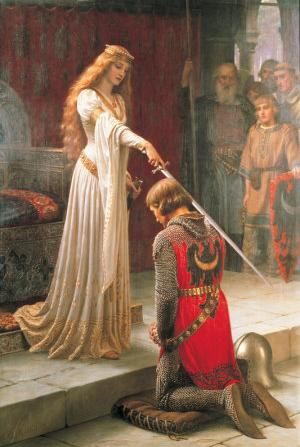
Some opportunities for initiation recur each year, and are built into our cultures. Right now the festival holidays of Hanukkah, Christmas, Diwali, Kwanzaa and so on are opportunities for annual initiation — if we let their celebrations reach into us and change us. As breaks from “profane” or ordinary time, holidays take us into altered if not sacred space, and then return us to our lives somehow — ideally, anyway — changed. Of course, specific religions and spiritual paths each offer their own initiations. For Christians, it’s baptism (and for Catholics and some other denominations, confirmation as well). A Jew passes through a bar or bat mitzvah, and so on.
But we needn’t look so far or so formally. First kiss, first love, first sexual experience, first drink (consider the particular sequence of these in your own life). Driver’s license, prom, graduation, military draft. Each transforms as a rite of passage. We “pass through” and come out on the other side, different, in ways others may or may not notice. We ourselves may not fully absorb the changes until much later.
 As with the kinds of freedom I considered in a previous post, there seem to be both “transitive” and “intransitive” initiations — initiations which enable or empower the initiate to do something — typically in the future — and initiations which recognize a standard or awareness already attained, and put a “seal of approval” on it. Of course these need not be separate. Both kinds can occur simultaneously. Initiation is a “beginning” (from Latin initio “start, beginning”) both a path or direction that another agency, power or person starts us on, and also something one does or experiences oneself.
Some big initiations are inclusive. Like annual holidays, we all experience them. Though we may not often think of it, death — our own, or that of a loved one, or of a public figure with symbolic power, like a John F. Kennedy or a Princess Diana — can be a powerful, transformative initiation. Through the grief and the inevitable breaks in familiar routine that come with the first shock, the family gatherings, the arrangements and the funeral itself, we’re brought to face loss, change, mortality, and endings and beginnings in ways. We may take on new, unfamiliar roles, like caretaker, mourner, survivor, with all the challenge and growth they can bring. The first death we encounter (apart from pets), given the usual number of years between generations, comes almost like clockwork sometime in our teens, with the passing of a grandparent. In the freshman dorm at the boarding school where I teach and serve as adviser, there are four or five deaths of grandparents each year, and all the myriad changes they carry with them for those involved. It’s a close study in family dynamics (and our capacity as advisers to provide support) to witness how kids and their families deal with it all.
 Marriage often seems to occupy a sort of middle ground as far as these categories operate. On the one hand, no one is married in the eyes of either the law or a religious organization until they pass through the requisite ceremony. Yet we all know couples who are already “so married” that the ceremony confers nothing that they don’t already manifest in abundance. In this case, the initiation of marriage simply recognizes and formalizes a connection and a state of relationship that already exists and — if the ritual or ceremony still carries any power — blesses and charges the thing consecrated. My wife and I have two anniversaries, ten days apart, and each conveyed to us different energies. First was a spiritual ceremony by a cleric in our tradition, and second came the state ceremony, performed by a justice of the peace. Interesting, too, who we see as performing or undergoing the initiation. Ideally, to my mind, the one experiencing the initiation should play at least some part, if not an active role, in its enactment. For initiation takes place both outwardly, where it is often witnessed by the state if not also by family, and more importantly inwardly, on the subtle planes (which deserve their own post or series of posts).
“Where is wisdom to be found?” goes the old query. Initiation is one major source. Not all initiations “show” right away, or even ever. What we begin may never end. It can take a lifetime to sort out the effect of even “lesser” initiations, to say nothing of the big ones. Those “long” words, never and always, very much belong with initiations.
Go to Part 1 | Part 2 | Part 3 | Part 4 | Part 5 | Part 6
/|\ /|\ /|\
Image credits: Knighthood — “The Accolade” by Edmund Blair Leighton
Sex and love
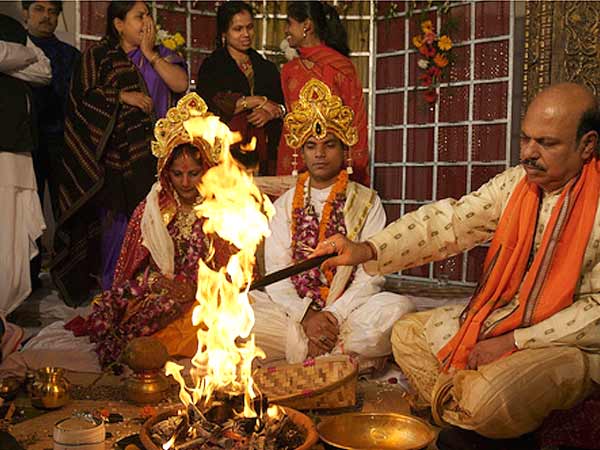
Oriya Indian wedding

 The circle of a dozen or so Druids in the grove ahead wait in silence as I approach with my guide. Half are dressed in ceremonial garb, and the chief Druid, in addition to her white robe, wears a circlet on her brow. Just below it, three streaks of white descend and splay outward — the three rays of awen*, spiritual illumination and inspiration. They stand out on her tanned skin.
  In that instant, other faces flash in my awareness — followers of Vishnu and Shiva, who wear similar ritual tilak, facial markings that identify them as devotees of their god. I know from prior experiences that I have lived past lives in India. Initiation often links us to previous openings of consciousness, a reminder of this long path we walk.



 A Druid Way